SR 75
- Session Year: 2025-2026
- House: Senate
- Latest Version Date: 2026-02-06
Current Status:
In Progress
(2026-02-05: Read. Adopted. (Ayes 29. Noes 0. Page 3363.))
Introduced
In Committee
Awaiting First Chamber Vote
Passed First Chamber
In Committee
Awaiting Second Chamber Vote
Passed Second Chamber
Enacted
WHEREAS, The California Earned Income Tax Credit (CalEITC), a refundable tax credit, was enacted in 2015 and, along with the federal Earned Income Tax Credit (EITC), is one of the most effective tools we have to fight poverty for Californians; and
WHEREAS, The CalEITC provides a range of credits based on household size and income, but eligible filers can receive a maximum credit of $3,756; and
WHEREAS, For the 2024 tax year, over 3,300,000 California tax filers claimed the CalEITC benefit; and
WHEREAS, According to the California Budget and Policy Center, Californias poverty rate remains among the highest in the nation at 17.7 percent, with children, people of color, and renters most affected; and
WHEREAS, Over one in three Californians struggle to meet basic needs, according to United Ways of Californias Real Cost Measure report. Of the estimated 3,800,000 households in California that fall below the Real Cost Measure income, 97 percent have at least one working adult. The CalEITC can help families improve their financial stability now and into the future; and
WHEREAS, Individual taxpayer identification number (ITIN) holders are ineligible for the majority of federal tax benefits, but California has made the groundbreaking decision to open benefits like the CalEITC and Young Child Tax Credit to ITIN holders. This is especially important as 58 percent of households led by someone without United States citizenship live below the Real Cost Measure; and
WHEREAS, Fifty-four percent of households in California with children under six years of age fall below the Real Cost Measure and the Young Child Tax Credit is available to all CalEITC-eligible families with children under six years of age; and
WHEREAS, According to state and national reports, many eligible households in California do not claim their state and federal Earned Income Tax Credits, leaving billions of dollars unclaimed each year. Research suggests that the credit creates local economic impacts equivalent to at least twice the amount of EITC dollars received. Increasing the uptake of tax credits would support households to cover basic expenses such as rent, groceries, and utilities; and
WHEREAS, California can support CalEITC-eligible taxpayers to claim their full tax credits by supporting Volunteer Income Tax Assistance sites that provide high-quality tax preparation, financial stability services, and connections to other community services at no cost. These free services are linguistically and culturally responsive and ensure that tax filers can claim their full tax credit amount without paying unnecessary fees to commercial tax preparers, which can often cost hundreds of dollars; and
WHEREAS, In combination with the federal EITC program and the Young Child Tax Credit, the CalEITC is a proven tool to help fight poverty. Research shows that the EITC can improve child and maternal health and spur local economic growth. Children in families that receive the EITC have better outcomes in both the short and the long term; and
WHEREAS, The state has made a commitment to support low-income families through these programs, which now puts over $1.4 billion into households each year, and must continue to take measures to increase the number of eligible households that claim the benefits they are entitled to; now, therefore, be it
Resolved by the Senate of the State of California, That the Legislature proclaims January 30, 2026, through February 6, 2026, as CalEITC Awareness Week; and be it further
Resolved, That the Secretary of the Senate transmit copies of this resolution to the author for appropriate distribution.
|
Date
|
Status
|
|---|---|
| Feb 5, 2026 | Read. Adopted. (Ayes 29. Noes 0. Page 3363.) |
| Feb 4, 2026 | From committee: Ordered to third reading. |
| Jan 28, 2026 | Introduced. Referred to Com. on RLS. |
|
Date
|
Description
|
Location
|
Votes
|
|
|---|---|---|---|---|
| Feb 5, 2026 | The committee(s) on HRE recommend(s) that the measure be PASSED, UNAMENDED | Senate Floor |
Passed |
This list shows positions taken on this bill by organizations on the date displayed, which is linked to the original source.
Positions by individuals are not included.
SENATE RULES COMMITTEE Office of Senate Floor Analyses (916) 651-4171 | SR 75 |
THIRD READING
Bill No: SR 75
Author: Rubio (D)
Introduced: 1/28/26
Vote: Majority
SUBJECT: CalEITC Awareness Week
SOURCE: Author
DIGEST:
This resolution proclaims January 30, 2026, through February 6, 2026, as CalEITC Awareness Week.
ANALYSIS: This resolution makes the following legislative findings:
- The California Earned Income Tax Credit (CalEITC), a refundable tax credit, was enacted in 2015 and, along with the federal Earned Income Tax Credit (EITC), is one of the most effective tools we have to fight poverty for Californians.
- According to the California Budget and Policy Center, California’s poverty rate remains among the highest in the nation at 17.7%, with children, people of color, and renters most affected.
- The CalEITC provides a range of credits based on household size and income, but eligible filers can receive a maximum credit of $3,756.
- According to state and national reports, many eligible households in California do not claim their state and federal Earned Income Tax Credits, leaving billions of dollars unclaimed each year. Research suggests that the credit creates local economic impacts equivalent to at least twice the amount of EITC dollars received. Increasing the uptake of tax credits would support households to cover basic expenses such as rent, groceries, and utilities.
- The state has made a commitment to support low-income families through these programs, which now puts over $1.4 billion into households each year, and must continue to take measures to increase the number of eligible households that claim the benefits they are entitled to.
This resolution proclaims January 30, 2026, through February 6, 2026, as CalEITC Awareness Week.
Related/Prior Legislation
ACR 132 (Santiago, 2024) – Died on Seante inactive file.
SCR 14 (Caballero, Resolution Chapter 12, Statutes of 2025)
SR 58 (Caballero, 2024) – Adopted in Senate.
FISCAL EFFECT: Appropriation: No Fiscal Com.: No Local: No
SUPPORT: (Verified 2/3/26)
None received
OPPOSITION: (Verified 2/3/26)
None received
Prepared by: Hunter Flynn / SFA / (916) 651-4171
2/4/26 13:50:11
**** END ****
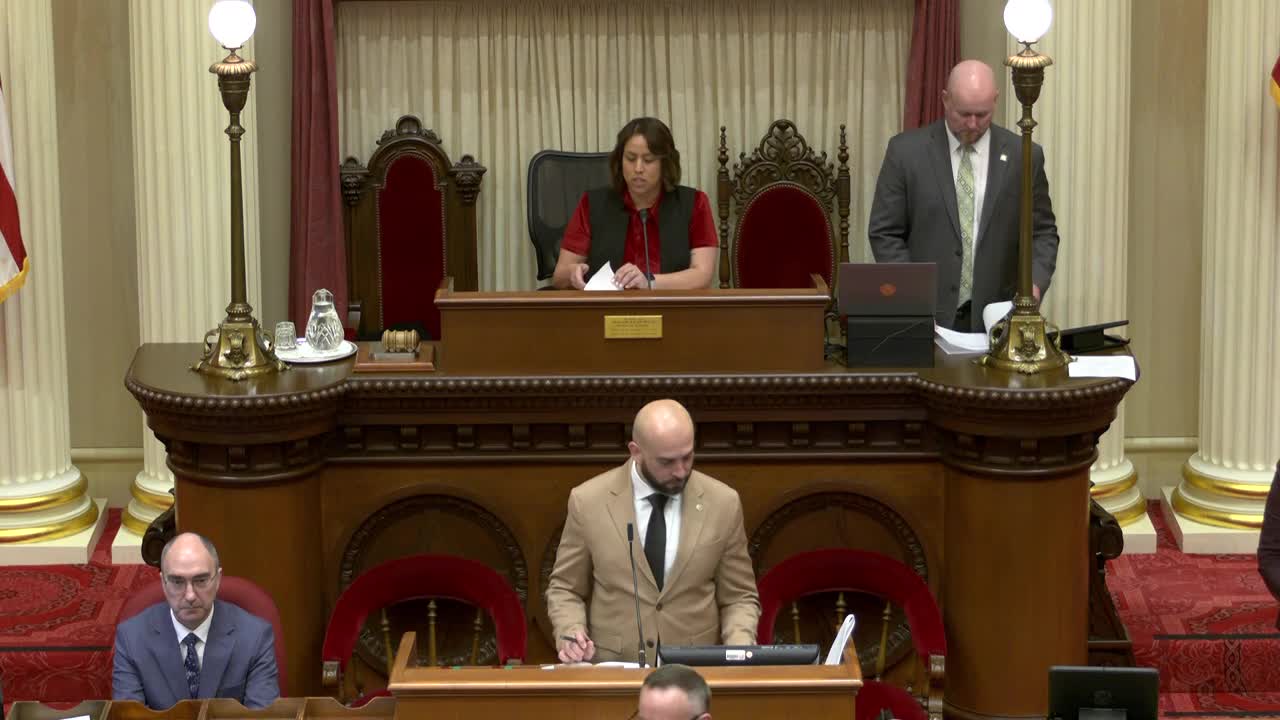
Bill Author

Bill Co-Author(s):