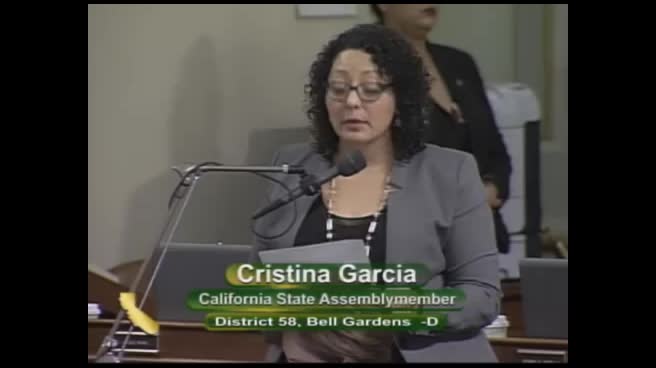
AB 1649: State water policy: priority: surface water storage projects and joint powers authorities.
- Session Year: 2015-2016
- House: Assembly
- Latest Version Date: 2016-05-27
Existing law establishes various state water policies, including that the protection of the public interest in the development of the water resources of the state is of vital concern to the people of the state and that the state shall determine in what way the water of the state, both surface and underground, should be developed for the greatest public benefit.
This bill would require the Department of Water Resources to develop a state water policy that gives priority to the formation of joint powers authorities that are formed to address critical surface water storage needs and to funding of the joint powers authorities surface water projects. The bill would make findings and declarations of the Legislature, including, but not limited to, that, of the water storage projects available, the Temperance Flat Dam and Sites Reservoir will meet statewide goals and provide specified public benefits to the greatest extent.
Existing law, the Water Quality, Supply, and Infrastructure Improvement Act of 2014, approved by the voters as Proposition 1 at the November 4, 2014, statewide general election, authorizes the issuance of general obligation bonds in the amount of $7,545,000,000 to finance a water quality, supply, and infrastructure improvement program. The act continuously appropriates $2,700,000,000 to the California Water Commission for public benefits associated with water storage projects, including, among others, surface storage projects identified in the CALFED Bay-Delta Program Record of Decision, dated August 28, 2000. Funds allocated for this purpose are authorized by the act to be provided to local joint powers authorities formed by irrigation districts and other local water districts and local governments within the applicable hydrologic region to design, acquire, and construct those projects.
This bill would require the California Water Commission to prioritize the funding of those local joint powers authorities surface storage projects and to move expediently to dispense project funds. This provision would become effective only upon approval by the voters at the next statewide election. The bill would make findings and declarations of the Legislature, including, but not limited to, that, of the water storage projects available, the Temperance Flat Dam and Sites Reservoir will meet statewide goals and provide those specified public benefits to the greatest extent.
Existing law, the Water Quality, Supply, and Infrastructure Improvement Act of 2014, approved by the voters as Proposition 1 at the November 4, 2014, statewide general election, authorizes the issuance of general obligation bonds in the amount of $7,545,000,000 to finance a water quality, supply, and infrastructure improvement program. The act continuously appropriates $2,700,000,000 to the California Water Commission for public benefits associated with water storage projects, as specified. including, among others, surface storage projects identified in the CALFED Bay-Delta Program Record of Decision, dated August 28, 2000. Funds allocated for this purpose are authorized by the act to be provided to local joint powers authorities formed by irrigation districts and other local water districts and local governments within the applicable hydrologic region to design, acquire, and construct those projects.
This bill would state the intent of the Legislature to enact legislation to ensure surface water storage is funded and built consistent with the goals of Proposition 1 and that the commission fulfills the original intent of the water storage project provisions of Proposition 1. require the California Water Commission to prioritize the funding of those local joint powers authorities surface storage projects and to move expediently to dispense project funds. This provision would become effective only upon approval by the voters at the next statewide election. The bill would make findings and declarations of the Legislature, including, but not limited to, that, of the water storage projects available, the Temperance Flat Dam and Sites Reservoir will meet statewide goals and provide those specified public benefits to the greatest extent.Existing law, the Water Quality, Supply, and Infrastructure Improvement Act of 2014, approved by the voters as Proposition 1 at the November 4, 2014, statewide general election, authorizes the issuance of general obligation bonds in the amount of $7,545,000,000 to finance a water quality, supply, and infrastructure improvement program. The act continuously appropriates $2,700,000,000 to the California Water Commission for public benefits associated with water storage projects, as specified.
This bill would state the intent of the Legislature to enact legislation to ensure surface water storage is funded and built consistent with the goals of Proposition 1 and that the commission fulfills the original intent of the water storage project provisions of Proposition 1. The bill would make findings and declarations of the Legislature, including, but not limited to, that, of the water storage projects available, the Temperance Flat Dam and Sites Reservoir will meet statewide goals and provide those specified public benefits to the greatest extent.
The Legislature finds and declares all of the following:
(a)According to the United States Drought Monitor, over 90 percent of California is in Severe Drought, raising concerns over water supply dependability and underscoring the need for immediate statewide action.
(b)On November 4, 2014, voters approved Proposition 1, the Water Quality, Supply, and Infrastructure Improvement Act of 2014, which authorizes $7,545,000,000 in general obligation bonds to finance a water quality, supply, and infrastructure improvement program, and continuously appropriates from the revenue of those bonds $2,700,000,000 for water storage projects, including, but not limited to, dams and reservoirs.
(c)With the promise of increased water storage, voters approved Proposition 1 by 67 percent. The argument in favor of Proposition 1 in the states official voter information guide states Proposition 1 invests in new storage increasing the amount of water that can be stored during wet years for the dry years that will continue to challenge California.
(d)Expanding and improving Californias water storage capacity is long overdue. The last time California saw significant state and federal investments in the states water storage and delivery system was in the 1960s, when the states population stood at 16 million. Today, that same system supports 38 million individuals and will need to support 50 million by 2050.
(e)Statewide water storage goals, as outlined in Chapter 8 of Proposition 1 (Chapter 8 (commencing with Section 79750) of Division 26.7 of the Water Code), are necessary to update Californias aging water infrastructure, provide reliable water supply for the public and our agricultural economy, and protect the environmental health of the Delta.
(f)A water storage project may only be funded by Chapter 8 of Proposition 1 (Chapter 8 (commencing with Section 79750) of Division 26.7 of the Water Code) if it provides specified public benefits, including: ecosystem improvements; water quality improvements to the Delta and river systems that provide public trust resources or restore groundwater resources; flood control benefits, including increases in reservoir storage capacity in response to decreasing snow pack; emergency response, including securing emergency water supplies for salinity repulsion; and recreational purposes.
(g)Of the water storage projects available, the Temperance Flat Dam and Sites Reservoir will meet statewide goals and provide all of these public benefits to the greatest extent. These projects will allow California to store more water in years of high rainfall, which will ease pressures placed on the Delta and groundwater supply during years of prolonged drought, and facilitate the storage of snow melt and timed releases of water to improve flow conditions and water temperatures.
SEC. 2.Section 114 is added to the Water Code, to read:114.No later than 60 days after the effective date of the act which added this section, April 30, 2017, the department shall develop a state water policy that gives priority to the formation of joint powers authorities that are formed to address critical surface water storage needs and to the funding of the joint powers authorities surface water storage projects.
The Legislature finds and declares all of the following:
(a)According to the United States Drought Monitor, over 90 percent of California is in Severe Drought, raising concerns over water supply dependability and underscoring the need for immediate statewide action.
(b)On November 4, 2014, voters approved Proposition 1, the Water Quality, Supply, and Infrastructure Improvement Act of 2014, which authorizes $7,545,000,000 in general obligation bonds to finance a water quality, supply, and infrastructure improvement program, and continuously appropriates from the revenue of those bonds $2,700,000,000 for water storage projects, including, but not limited to, dams and reservoirs.
(c)With the promise of increased water storage, voters approved Proposition 1 by 67 percent. The argument in favor of Proposition 1 in the states official voter information guide states Proposition 1 invests in new storage increasing the amount of water that can be stored during wet years for the dry years that will continue to challenge California.
(d)Expanding and improving Californias water storage capacity is long overdue. The last time California saw significant state and federal investments in the states water storage and delivery system was in the 1960s, when the states population stood at 16 million. Today, that same system supports 38 million individuals and will need to support 50 million by 2050.
(e)Statewide water storage goals, as outlined in Chapter 8 of Proposition 1 (Chapter 8 (commencing with Section 79750) of Division 26.7 of the Water Code), are necessary to update Californias aging water infrastructure, provide reliable water supply for the public and our agricultural economy, and protect the environmental health of the Delta.
(f)A water storage project may only be funded by Chapter 8 of Proposition 1 (Chapter 8 (commencing with Section 79750) of Division 26.7 of the Water Code) if it provides specified public benefits, including: ecosystem improvements; water quality improvements to the Delta and river systems that provide public trust resources or restore groundwater resources; flood control benefits, including increases in reservoir storage capacity in response to decreasing snow pack; emergency response, including securing emergency water supplies for salinity repulsion; and recreational purposes.
(g)Of the water storage projects available, the Temperance Flat Dam and Sites Reservoir will meet statewide goals and provide all of these public benefits to the greatest extent. These projects will allow California to store more water in years of high rainfall, which will ease pressures placed on the Delta and groundwater supply during years of prolonged drought, and facilitate the storage of snow melt and timed releases of water to improve flow conditions and water temperatures.
SEC. 2.Section 79759 of the Water Code is amended to read:79759.(a)The funds allocated for the design, acquisition, and construction of surface storage projects identified in the CALFED Bay-Delta Program Record of Decision, dated August 28, 2000, pursuant to this chapter may be provided for those purposes to local joint powers authorities formed by irrigation districts and other local water districts and local governments within the applicable hydrologic region to design, acquire, and construct those projects.
(b)The joint powers authorities described in subdivision (a) may include in their membership governmental partners that are not located within their respective hydrologic regions in financing the surface storage projects, including, as appropriate, cost share participation or equity participation. Notwithstanding Section 6525 of the Government Code, the joint powers agencies described in subdivision (a) shall not include in their membership any for-profit corporation or any mutual water company whose shareholders and members include a for-profit corporation or any other private entity. The department shall be an ex officio member of each joint powers authority subject to this section, but the department shall not control the governance, management, or operation of the surface water storage projects.
(c)A joint powers authority subject to this section shall own, govern, manage, and operate a surface water storage project, subject to the requirement that the ownership, governance, management, and operation of the surface water storage project shall advance the purposes set forth in this chapter.
(d)As local joint powers authorities described in this section form to address critical water storage needs and apply for funding under this chapter, the commission shall prioritize the funding of the local joint powers authorities surface storage projects and shall move expediently to dispense project funds.
SEC. 3.Section 2 of this act would modify the single object or work of a general obligation bond act previously submitted to the voters by the Legislature pursuant to Section 1 of Article XVI of the California Constitution, and subsequently approved by the voters as Proposition 1 at the November 4, 2014, statewide general election. Accordingly, Section 2 of this act shall become effective only upon approval by the voters. The Secretary of State shall submit Section 2 of this act to the voters on the ballot of the next statewide election.
SEC. 2.Section 114 is added to the Water Code, to read:114.No later than 60 days after the effective date of the act which added this section, the department shall develop a state water policy that gives priority to the formation of joint powers authorities that are formed to address critical surface water storage needs and to the funding of the joint powers authorities surface water storage projects.
The Legislature finds and declares all of the following:
(a)According to the United states drought States Drought Monitor, over 90 percent of California is in Severe Drought, raising concerns over water supply dependability and underscoring the need for immediate statewide action.
(b)On November 4, 2014, voters approved Proposition 1, the Water Quality, Supply, and Infrastructure Improvement Act of 2014, which authorizes $7,545,000,000 in general obligation bonds to finance a water quality, supply, and infrastructure improvement program, and continuously appropriates from the revenue of those bonds $2,700,000,000 for water storage projects, including, but not limited to, dams and reservoirs.
(c)With the promise of increased water storage, voters approved Proposition 1 by 67 percent. The argument in favor of Proposition 1 in the states official voter information guide states Proposition 1 invests in new storage increasing the amount of water that can be stored during wet years for the dry years that will continue to challenge California.
(d)Expanding and improving Californias water storage capacity is long overdue. The last time California saw significant state and federal investments in the states water storage and delivery system was in the 1960s, when the states population stood at 16 million. Today, that same system supports 38 million individuals and will need to support 50 million by 2050.
(e)Statewide water storage goals, as outlined in Chapter 8 of Proposition 1 (Chapter 8 (commencing with Section 79750) of Division 26.7 of the Water Code), are necessary to update Californias aging water infrastructure, provide reliable water supply for the public and our agricultural economy, and protect the environmental health of the Delta.
(f)A water storage project may only be funded by Chapter 8 of Proposition 1 (Chapter 8 (commencing with Section 79750) of Division 26.7 of the Water Code) if it provides specified public benefits, including: ecosystem improvements; water quality improvements to the Delta and river systems that provide public trust resources or restore groundwater resources; flood control benefits, including increases in reservoir storage capacity in response to decreasing snow pack; emergency response, including securing emergency water supplies for salinity repulsion; and recreational purposes.
(g)Of the water storage projects available, the Temperance Flat Dam and Sites Reservoir will meet statewide goals and provide all of these public benefits to the greatest extent. These projects will allow California to store more water in years of high rainfall, which will ease pressures placed on the Delta and groundwater supply during years of prolonged drought, and facilitate the storage of snow melt and timed releases of water to improve flow conditions and water temperatures.
SEC. 2.It is the intent of the Legislature to enact legislation to ensure surface water storage is funded and built consistent with the goals of Proposition 1 and that the California Water Commission fulfills the original intent of Chapter 8 of Proposition 1 (Chapter 8 (commencing with Section 79750) of Division 26.7 of the Water Code).
SEC. 2.Section 79759 of the Water Code is amended to read:79759.(a)The funds allocated for the design, acquisition, and construction of surface storage projects identified in the CALFED Bay-Delta Program Record of Decision, dated August 28, 2000, pursuant to this chapter may be provided for those purposes to local joint powers authorities formed by irrigation districts and other local water districts and local governments within the applicable hydrologic region to design, acquire, and construct those projects.
(b)The joint powers authorities described in subdivision (a) may include in their membership governmental partners that are not located within their respective hydrologic regions in financing the surface storage projects, including, as appropriate, cost share participation or equity participation. Notwithstanding Section 6525 of the Government Code, the joint powers agencies described in subdivision (a) shall not include in their membership any for-profit corporation or any mutual water company whose shareholders and members include a for-profit corporation or any other private entity. The department shall be an ex officio member of each joint powers authority subject to this section, but the department shall not control the governance, management, or operation of the surface water storage projects.
(c)A joint powers authority subject to this section shall own, govern, manage, and operate a surface water storage project, subject to the requirement that the ownership, governance, management, and operation of the surface water storage project shall advance the purposes set forth in this chapter.
(d)As local joint powers authorities described in this section form to address critical water storage needs and apply for funding under this chapter, the commission shall prioritize the funding of the local joint powers authorities surface storage projects and shall move expediently to dispense project funds.
SEC. 3.Section 2 of this act would modify the single object or work of a general obligation bond act previously submitted to the voters by the Legislature pursuant to Section 1 of Article XVI of the California Constitution, and subsequently approved by the voters as Proposition 1 at the November 4, 2014, statewide general election. Accordingly, Section 2 of this act shall become effective only upon approval by the voters. The Secretary of State shall submit Section 2 of this act to the voters on the ballot of the next statewide election.
The Legislature finds and declares all of the following:
(a)According to the United states drought Monitor, over 90 percent of California is in Severe Drought, raising concerns over water supply dependability and underscoring the need for immediate statewide action.
(b)On November 4, 2014, voters approved Proposition 1, the Water Quality, Supply, and Infrastructure Improvement Act of 2014, which authorizes $7,545,000,000 in general obligation bonds to finance a water quality, supply, and infrastructure improvement program, and continuously appropriates from the revenue of those bonds $2,700,000,000 for water storage projects, including, but not limited to, dams and reservoirs.
(c)With the promise of increased water storage, voters approved Proposition 1 by 67 percent. The argument in favor of Proposition 1 in the states official voter information guide states Proposition 1 invests in new storage increasing the amount of water that can be stored during wet years for the dry years that will continue to challenge California.
(d)Expanding and improving Californias water storage capacity is long overdue. The last time California saw significant state and federal investments in the states water storage and delivery system was in the 1960s, when the states population stood at 16 million. Today, that same system supports 38 million individuals and will need to support 50 million by 2050.
(e)Statewide water storage goals, as outlined in Chapter 8 of Proposition 1 (Chapter 8 (commencing with Section 79750) of Division 26.7 of the Water Code), are necessary to update Californias aging water infrastructure, provide reliable water supply for the public and our agricultural economy, and protect the environmental health of the Delta.
(f)A water storage project may only be funded by Chapter 8 of Proposition 1 (Chapter 8 (commencing with Section 79750) of Division 26.7 of the Water Code) if it provides specified public benefits, including: ecosystem improvements; water quality improvements to the Delta and river systems that provide public trust resources or restore groundwater resources; flood control benefits, including increases in reservoir storage capacity in response to decreasing snow pack; emergency response, including securing emergency water supplies for salinity repulsion; and recreational purposes.
(g)Of the water storage projects available, the Temperance Flat Dam and Sites Reservoir will meet statewide goals and provide all of these public benefits to the greatest extent. These projects will allow California to store more water in years of high rainfall, which will ease pressures placed on the Delta and groundwater supply during years of prolonged drought, and facilitate the storage of snow melt and timed releases of water to improve flow conditions and water temperatures.
SEC. 2.It is the intent of the Legislature to enact legislation to ensure surface water storage is funded and built consistent with the goals of Proposition 1 and that the California Water Commission fulfills the original intent of Chapter 8 of Proposition 1 (Chapter 8 (commencing with Section 79750) of Division 26.7 of the Water Code).
|
Date
|
Status
|
|---|---|
| May 27, 2016 | From committee: Amend, and do pass as amended. (Ayes 20. Noes 0.) (May 27). |
| Jun 28, 2016 | In committee: Set, first hearing. Failed passage. Reconsideration granted. |
| Jun 16, 2016 | Referred to Com. on N.R. & W. |
| Jun 2, 2016 | In Senate. Read first time. To Com. on RLS. for assignment. |
| Jun 1, 2016 | Read third time. Passed. Ordered to the Senate. (Ayes 72. Noes 6.) |
| Jun 1, 2016 | Read third time. Passed. Ordered to the Senate. (Ayes 72. Noes 6. Page 5086.) |
| Jun 1, 2016 | Read third time. Passed. Ordered to the Senate. |
| May 31, 2016 | Read second time. Ordered to third reading. |
| May 27, 2016 | Read second time and amended. Ordered returned to second reading. |
| Jan 12, 2016 | Read first time. To print. |
| Apr 27, 2016 | In committee: Set, first hearing. Referred to APPR. suspense file. |
| Apr 13, 2016 | From committee: Do pass and re-refer to Com. on APPR. (Ayes 11. Noes 0.) (April 12). Re-referred to Com. on APPR. |
| Apr 6, 2016 | Re-referred to Com. on W., P., & W. |
| Apr 5, 2016 | From committee chair, with author's amendments: Amend, and re-refer to Com. on W., P., & W. Read second time and amended. |
| Mar 28, 2016 | Re-referred to Com. on W., P., & W. |
| Mar 17, 2016 | Referred to Com. on W., P., & W. |
| Mar 17, 2016 | From committee chair, with author's amendments: Amend, and re-refer to Com. on W., P., & W. Read second time and amended. |
| Jan 13, 2016 | From printer. May be heard in committee February 12. |
|
Date
|
Description
|
Location
|
Votes
|
|
|---|---|---|---|---|
| Jun 28, 2016 | [First] hearing set for [06-28-2016]: Failed passage in Committee. Reconsideration granted | Senate Standing Committee on Natural Resources and Water |
Passed |
|
| Jun 28, 2016 | Do pass, but first be re-referred to the Committee on [Appropriations] | Senate Standing Committee on Natural Resources and Water |
Failed |
|
| Jun 1, 2016 | AB 1649 SALAS Assembly Third Reading | Assembly Floor |
Passed |
|
| May 27, 2016 | Do pass as amended. | Assembly Standing Committee on Appropriations |
Passed |
|
| Apr 12, 2016 | Do pass and be re-referred to the Committee on [Appropriations] | Assembly Standing Committee on Water, Parks, and Wildlife |
Passed |
This list shows positions taken on this bill by organizations on the date displayed, which is linked to the original source.
Positions by individuals are not included.
|
Organization
|
Position
|
Date
|
|---|---|---|
| Association Of California Water Agencies | ** Against | Jun 1, 2016 |
| Sierra Club California | ** Against | Jun 1, 2016 |
SENATE COMMITTEE ON NATURAL RESOURCES AND WATER
Senator Fran Pavley, Chair
2015 - 2016 Regular
Bill No: AB 1649 Hearing Date: June 28, 2016
Author: | |||
Version: |
| ||
Urgency: | Fiscal: | ||
Consultant: | |||
Subject: State water policy: priority: surface water storage projects and joint powers authorities
BACKGROUND AND EXISTING LAW
On November 4, 2014, the voters ratified Proposition 1, which authorized $7.12 B in general obligation bonds to fund a variety of water related programs and projects.
Among Prop. 1’s provisions was Chapter 8. Statewide Water System Operational Improvement and Drought Preparedness. That chapter provides a $2.7 B continuous appropriation to the California Water Commission (CWC) for public benefits associated with water storage projects that improve the operation of the state water system, are cost effective, and provide a net improvement in ecosystem and water quality conditions.
Chapter 8 includes provisions that:
- Require the CWC to select projects through a competitive public process that ranks potential projects based on the expected return for public investment as measured by the magnitude of the public benefits provided, pursuant to specified criteria.
- Limits eligible project to:
- Surface storage projects identified in the CALFED Bay-Delta Program Record of Decision, dated August 28, 2000, except for specified prohibited projects.
- Groundwater storage projects and groundwater contamination prevention or remediation projects that provide water storage benefits.
- Conjunctive use and reservoir reoperation projects.
- Local and regional surface storage projects that improve the operation of water systems in the state and provide public benefits.
- Prohibit the CWC from allocating funds for a project before December 15, 2016, and until the CWC approves the project based on the CWC’s determination that all of the following have occurred:
- The CWC has adopted the regulations for quantifying public benefits and specifically quantified and made public the cost of the public benefits associated with the project.
- The project applicant has entered into a contract with each party that will derive benefits, other than public benefits, from the project that ensures the party will pay its share of the total costs of the project. The benefits available to a party shall be consistent with that party’s share of total project costs.
- The project applicant has entered into a contract with each public agency that administers the public benefits, after that agency makes a finding that the public benefits of the project for which that agency is responsible meet all the requirements of this chapter, to ensure that the public contribution of funds pursuant to this chapter achieves the public benefits identified for the project.
- The CWC has held a public hearing for the purposes of providing an opportunity for the public to review and comment on the information required to be prepared pursuant to this subdivision.
- Further prohibit the CWC from allocating funds to a project until of the following additional conditions are met:
- Feasibility studies have been completed.
- The commission has found and determined that the project is feasible, is consistent with all applicable laws and regulations, and will advance the long-term objectives of restoring ecological health and improving water management for beneficial uses of the Delta.
- All environmental documentation associated with the project has been completed, and all other federal, state, and local approvals, certifications, and agreements required to be completed have been obtained.
- Allow funds allocated for surface storage projects to be provided to local joint powers authorities (JPAs) formed by irrigation districts and other local water districts and local governments within the applicable hydrologic region to design, acquire, and construct those projects. Such JPSs shall own, govern, manage, and operate a surface water storage project, subject to the requirement that the ownership, governance, management, and operation of the surface water storage project.
- Declare, that “In approving the Water Quality, Supply, and Infrastructure Improvement Act of 2014, the people were informed and hereby declare that the provisions of this chapter are necessary, integral, and essential to meeting the single object or work of the Water Quality, Supply, and Infrastructure Improvement Act of 2014. As such, any amendment of the provisions of this chapter by the Legislature without voter approval would frustrate the scheme and design that induced voter approval of this act. The people therefore find and declare that any amendment of the provisions of this chapter by the Legislature shall require an affirmative vote of two-thirds of the membership in each house of the Legislature and voter approval.”
PROPOSED LAW
This bill would require the Department of Water Resources (DWR), by April 30, 2017, to develop a state water policy that gives priority to the formation of joint powers authorities that are formed to address critical surface water storage needs and to the funding of the joint powers authorities’ surface water storage projects.
The bill also makes a number of findings regarding the need for new surface storage, and explicitly finds:
Of the water storage projects available, the Temperance Flat Dam and Sites Reservoir will meet statewide goals and provide all of these public benefits to the greatest extent.
ARGUMENTS IN SUPPORT
According to the author, “This bill urges the state to expedite water storage projects. As California continues to combat historic drought conditions, we should be doing everything we can to update our water storage infrastructure. Had investments been made decades ago, we would be prepared to capture the rainfall from recent El Niño storms. Expanding and improving California's water storage capacity is long overdue.”
ARGUMENTS IN OPPOSITION
The Association of California Water Agencies (ACWA) object to the declaration that of the water storage projects available, the Temperance Flat Dam and Sites Reservoir will meet statewide goals and provide all of these public benefits to the greatest extent. ACWA writes that while they advocated for the inclusion of funding for surface storage projects, they also advocated that there be no earmarks. Finally, it writes “In 2015 and 2016, ACWA has been consistent in taking negative positions on bills that were attempting to rewrite Proposition 1 after its enactment.”
A coalition of environmental interests similarly objects to giving priority to the JPAs formed to fund the propose Temperance Flat Dam and Sites Reservoir. Specific objections include:
- “AB 1649 picks ‘winners and losers” among water storage projects. This contravenes the original intent of the Legislature and assurances given California voters that Proposition 1 funding would be competitively allocated. Of the 41 concept papers for water storage projects recently submitted to the California Water Commission, only four are proposed by JPAs.”
- “Without any substantiating evidence, AB 1649 flatly states that the controversial Temperance Flat Dam and the Sites Reservoir “will meet statewide goals” and provide “public benefits to the greatest extent.” There are few public documents available to confirm this statement.”
- “In fact, the Temperance Flat Dam fails to meet statewide goals to increase water supply reliability and provide real public benefits. Based on existing federal environment review documents and public and regulatory agency comments, the proposed dam will cost billions of dollars, produce a paltry 1/10th of 1% increase in the state’s water supply, provide no substantial public benefits, and result in unacceptable environmental harm to the San Joaquin River. In addition, this project has not been subject to environmental review under the California Environmental Quality Act (CEQA), which is required under Prop. 1.”
- “Quantifiable water supply and public benefits that may be provided by the Sites Reservoir project are largely speculative at this point and highly dependent on how the project is operated. No complete CEQA analysis or feasibility report has been released by CDWR or the Sites JPA for review and comment by the public and regulatory agencies. Conservationists are concerned that potential adverse impacts to the Sacramento River caused by Sites diversions are being ignored or glossed over. There is simply no evidence in the public record at this time that Sites deserves prioritized state attention and funding over other projects.”
COMMENTS
Bill Won’t Do What The Author Desires. While the author intends to give a boost to the Temperance Flat Dam and Sites Reservoir, the bill’s approach won’t do that. Prop. 1 continuously appropriated funds to the CWC and gave it specific rules governing how it was to allocate those funds. This bill tells DWR to develop a policy. That presents a problem.
A policy developed by DWR can’t, in and of itself, affect how the CWC allocates its funds. To change the rules for how the CWC allocates the storage funds, one would need to amend Chapter 8 of Proposition 1. And, by the provisions of Chapter 8, any amendment to that chapter by the Legislature requires an affirmative vote of two-thirds of the membership in each house of the Legislature and voter approval.
What About Future Bonds? A future bond might be affected by a policy developed by DWR that gives priority to the funding of the joint powers authorities’ surface water storage projects. However, it would be simplest just to write the bond measure with the desired priorities and considerations in it. Some would argue that is precisely what the legislature did when writing Proposition 1.
How Would DWR Do This? DWR is not well suited to developing such a policy. The CWC advises the Director of DWR, approves rules and regulations, and monitors and reports on the construction and operation of the State Water Project. In 2009, comprehensive water legislation was enacted to give the Commission new responsibilities regarding the distribution of public funds for water storage projects, and the development of regulations for the quantification and management of the public benefits associated with the projects. Because of its regulatory authority, the Commission is in a better position to adopt regulations on funding surface water storage projects.
Additionally, establishing a state policy on funding JPA projects would likely be subject to the regulatory process in the Administrative Procedures Act (APA). Typically, it takes about 18 months to adopt and approve regulations through the Office of Administrative Law. Even with an APA exemption, the 60-day timeline in this bill will have significant costs.
Lastly, DWR does not have expertise or authority over joint powers authorities which typically are formed between public agencies under contractual agreement. DWR would likely require outside legal counsel to formulate the policy and the 60-day deadline would not allow sufficient time for public input.
Would Mostly Benefit Sites. While the findings call out both Temperance Flat Dam and Sites Reservoir, assuming for the sake of argument that this bill did result in an actionable policy that prioritized JPAs for funding, only Sites is proposed to be constructed and operated by a JPA. If Temperance Flat Dam is build, the U.S. Bureau of Reclamation would almost certainly be the project sponsor, as the Bureau issued the Draft Feasibility Report and the Draft Environmental Impact Statement, the dam would inundate federal lands, and it would be directly upstream of the Bureaus Friant Dam.
SUGGESTED AMENDMENTS: None
SUPPORT
Fresno Chamber of Commerce
Madera County Board of Supervisors
OPPOSITION
American Rivers
Association of California Water Agencies
American Whitewater
The Bay Institute
Big Sandy Rancheria Western Mono Indians
Butte Environmental Council
California Sportfishing Protection Alliance
California Wilderness Coalition
Clean Water Action
Foothill Conservancy
Friends of the River
Natural Resources Defense Council
Planning and Conservation League
Revive the San Joaquin River
Sacramento River Preservation Trust
Sierra Club California
South Yuba River Citizens League
Winnemem Wintu Tribe
Private Citizen (1)
-- END --
ASSEMBLY THIRD READING
ATR Bill Id:AB 1649
Author:(Salas and Gallagher)
As Amended Ver:May 27, 2016
Majority
Committee | Votes | Ayes | Noes |
Water | 11-0 | Levine, Gallagher, Bigelow, Dodd, Eduardo Garcia, Gomez, Lopez, Mathis, Medina, Olsen, Salas | |
Appropriations | 20-0 | Gonzalez, Bigelow, Bloom, Bonilla, Bonta, Calderon, Chang, Daly, Eggman, Gallagher, Eduardo Garcia, Roger Hernández, Holden, Jones, Obernolte, Quirk, Santiago, Wagner, Weber, Wood |
|
SUMMARY: Requires the Department of Water Resources (DWR) to develop a state water policy that gives priority to the formation and funding of joint powers authorities (JPAs) established to address surface water storage needs by April 30, 2017.
EXISTING LAW:
- Establishes a Sacramento-San Joaquin Delta policy that among other things lists expanded statewide water storage as an objective.
- Provides that surface storage projects identified in the CALFED Bay-Delta Program Record of Decision, except projects prohibited by the California Wild and Scenic Rivers Act, are eligible for funding under Proposition 1 of 2014.
FISCAL EFFECT: According to the Assembly Appropriations Committee, DWR estimates increased costs of $850,000 to develop a state policy to form JPAs and $2.5 million to develop a state policy to fund JPAs out of the General Fund or special funds.
COMMENTS: AB 1471 (Rendon), Chapter 188, Statutes of 2014, placed Proposition 1, a $7.545 billion general obligation bond for water-related projects and programs on the November 4, 2014, ballot where it passed with 67% of the vote.
Proposition 1 continuously appropriates $2.7 billion to the California Water Commission (Commission) for storage. The Proposition made those funds available for all of the following projects:
- Surface storage projects identified in the CALFED Bay-Delta Program Record of Decision, except projects prohibited by the California Wild and Scenic Rivers Act.
- Groundwater storage projects and groundwater contamination prevention or remediation projects that provide water storage benefits.
- Conjunctive use and reservoir reoperation projects.
- Local and regional surface storage projects that improve the operation of water systems in the state and provide public benefits.
The Commission consists of nine members appointed by the Governor and confirmed by the Senate. Seven members are chosen for their expertise in the control, storage, and beneficial use of water and two are chosen for their knowledge of the environment. In addition to providing funding for storage, Proposition 1 conditioned funding on specific public benefits being met.
Concerns have been raised about the ability to develop the policy in the necessary time frame. Additionally, a surface storage prioritization policy could hinder the ability to make the highest value investments with Water Bond funds.
Analysis Prepared by: Ryan Ojakian / W., P., & W. / (916) 319-2096 FN: 0003357
Date of Hearing: April 27, 2016
ASSEMBLY COMMITTEE ON APPROPRIATIONS
Lorena Gonzalez, Chair
ABPCA Bill Id:AB 1649
Author:(Salas) – As Amended Ver:April 5, 2016
Policy Committee: | Water, Parks and Wildlife | Vote: | 11 - 0 |
|
|
Urgency: No State Mandated Local Program: No Reimbursable: No
SUMMARY:
This bill requires the Department of Water Resources (DWR) to develop a state water policy that gives priority to the formation and funding of joint powers authorities (JPAs) established to address surface water storage needs, as specified, within 60 days of enactment.
FISCAL EFFECT:
Under the current requirements and timeline in this bill, DWR estimates increased costs of $850,000 to develop a state policy to form JPAs and $2.5 million to develop a state policy to fund JPAs (GF or special funds.)
COMMENTS:
- Purpose. According to the author, expanding and improving California's water storage capacity is long overdue. The author states that this bill urges the state to expedite water storage projects.
- Background. AB 1471 (Rendon), Chapter 188, Statutes of 2014, placed Proposition 1, a $7.545 billion general obligation bond for water-related projects and programs on the November 4, 2014, ballot where it passed with 67% of the vote.
Proposition 1 continuously appropriates $2.7 billion to the California Water Commission (Commission) for storage. The Proposition made those funds available for all of the following projects:
- Surface storage projects identified in the CALFED Bay-Delta Program Record of Decision, except projects prohibited by the California Wild and Scenic Rivers Act.
- Groundwater storage projects and groundwater contamination prevention or remediation projects that provide water storage benefits.
- Conjunctive use and reservoir reoperation projects.
- Local and regional surface storage projects that improve the operation of water systems in the state and provide public benefits.
The Commission consists of nine members appointed by the Governor and confirmed by the Senate. Seven members are chosen for their expertise in the control, storage, and beneficial use of water and two are chosen for their knowledge of the environment.
- Implementation Concerns. The Commission advises the Director of DWR, approves rules and regulations, and monitors and reports on the construction and operation of the State Water Project. In 2009, comprehensive water legislation was enacted to give the Commission new responsibilities regarding the distribution of public funds for water storage projects, and the development of regulations for the quantification and management of the public benefits associated with the projects. Because of it regulatory authority, the Commission is in a better position to adopt regulations on funding surface water storage projects.
Additionally, establishing a state policy on funding JPA projects would likely be subject to the regulatory process in the Administrative Procedures Act (APA). Typically, it takes about 18 months to adopt and approve regulations through the Office of Administrative Law. Even with an APA exemption, the 60-day timeline in this bill will have significant costs.
Lastly, DWR does not have expertise or authority over joint powers authorities which typically are formed between public agencies under contractual agreement. DWR would likely require outside legal counsel to formulate the policy and the 60-day deadline would not allow sufficient time for public input.
Analysis Prepared by: Jennifer Galehouse / APPR. / (916) 319-2081
Date of Hearing: April 12, 2016
ASSEMBLY COMMITTEE ON WATER, PARKS, AND WILDLIFE
Marc Levine, Chair
ABPCA Bill Id:AB 1649 (
Author:Salas) – As Amended Ver:April 5, 2016
SUBJECT: Water Quality, Supply, and Infrastructure Improvement Act of 2014: surface storage projects: joint powers authorities: funding
SUMMARY: This bill establishes a state policy to give priority to the formation and funding of joint powers authorities to address surface water storage.
EXISTING LAW:
- Establishes a Sacramento-San Joaquin Delta policy that among other things lists expanded statewide water storage as an objective.
- Provides that surface storage projects identified in the CALFED Bay-Delta Program Record of Decision, except projects prohibited by the California Wild and Scenic Rivers Act, are eligible for funding under Proposition 1 of 2014.
FISCAL EFFECT: Unknown
COMMENTS: Establishes a state policy to prioritize funding joint powers authorities formed for surface water storage projects.
- Author’s Statement: This bill urges the state to expedite water storage projects. As California continues to combat historic drought conditions, we should be doing everything we can to update our water storage infrastructure. Had investments been made decades ago, we would be prepared to capture the rainfall from recent El Niño storms. Expanding and improving California's water storage capacity is long overdue.
- Background: Proposition 1 appropriated $2.7 billion to the Water Commission for storage. The Proposition made those funds available for all of the following projects:
- Surface storage projects identified in the CALFED Bay-Delta Program Record of Decision, except projects prohibited by the California Wild and Scenic Rivers Act.
- Groundwater storage projects and groundwater contamination prevention or remediation projects that provide water storage benefits.
- Conjunctive use and reservoir reoperation projects.
- Local and regional surface storage projects that improve the operation of water systems in the state and provide public benefits.
Much of this storage is tied to improved operations in the Delta. Surface water storage for the State Water Project and Central Valley Project is directly tied to the Delta. The current surface storage projects before the Water Commission come from CALFED Bay-Delta recommendations.
In 1994, after years of uncoordinated efforts to improve fish restoration and reliability of Delta water, state and federal agencies joined together to coordinate activities. This coordination became the CALFED Bay-Delta Program (CALFED). CALFED initiated a long-term planning process. As part of that process, CALFED considered storage that would allow for improved operations for water quality and water flows. On August 28, 2000, CALFED identified several storage projects for further evaluation through a Record of Decision. Those identified projects were ultimately made eligible for funding under Proposition 1.
In addition to providing funding for storage, Proposition 1 conditioned funding on several requirements being met. Among those requirements a project must:
- Provide measurable improvement to the Delta ecosystem or to the tributaries to the Delta.
- Create ecosystem improvements that contribute to restoration of aquatic ecosystems and native fish and wildlife, including those ecosystems and fish and wildlife in the Delta.
- Create water quality improvements that provide significant public trust resources, or that clean up and restore groundwater resources.
This bill would make it a matter of state policy to prioritize funding joint power authorities formed to advance surface storage projects. This priority would apply to all funds that become available not just Proposition 1. It seems likely that policy would serve to emphasize funding eligible surface storage projects out of Proposition 1 funds and provide pressure to accelerate the time frame by which those funds become available for projects.
- Prior and Related Legislation:
- AB 2551 (Gallagher) 2016, allows for CALFED Bay-Delta Program Record of Decision surface storage projects to be constructed using several construction options. AB 2551 is currently pending in this committee.
- AB 1471 (Rendon), Chapter 188, Statutes of 2014, placed Proposition 1, a $7.545 billion general obligation bond for water-related projects and programs on the November 4, 2014, ballot where it passed with 67% of the vote.
- Opposing Arguments: AB 1649 prioritizes the CALFED projects for funding from the Water Bond. The sizeable investments in the Water Bond should be thoughtfully spent on worthwhile projects. The public’s money is best served by investing in groundwater projects. These projects can yield six times the water for the cost of surface storage.
- REGISTERED SUPPORT / OPPOSITION:
Support
None on File
Opposition
Association of California Water Agencies (prior version)
Sierra Club California
Analysis Prepared by: Ryan Ojakian / W., P., & W. / (916) 319-2096