AB 1771: School attendance: school districts of choice: continued enrollment.
- Session Year: 2015-2016
- House: Assembly
- Latest Version Date: 2016-08-19
Existing law, until July 1, 2017, authorizes the governing board of a school district to accept pupils from other school districts by adopting a resolution to become a school district of choice, as defined.
This bill, commencing with July 1, 2017, would authorize a pupil attending a school in a school district of choice on or before July 1, 2017, to continue to attend that school if the school district of choice authorizes the pupil to do so.
(1)Existing law makes a person who directs, supervises, recruits, or otherwise aids another person in the commission of an act of prostitution, or who collects or receives all or part of the proceeds earned from an act of prostitution committed by another person, guilty of a misdemeanor that is punishable by imprisonment in a county jail for no more than 6 months, by a fine not exceeding $1,000, or by both that imprisonment and fine. Existing law specifies circumstances that may be used to determine if a person has committed the offense, including repeatedly speaking or communicating with another person, or repeatedly or continuously monitoring or watching another person, who is loitering in a public place with the intent to commit prostitution.
This bill would establish additional circumstances that may be used to determine if a person has committed that offense, including, but not limited to, repeatedly speaking or communicating with, or repeatedly or continuously monitoring or watching, another person who solicits or agrees to engage in any act of prostitution.
(2)Under existing law, a person who is under 18 years of age when he or she violates the law may be adjudged a ward of the court.
This bill would authorize a court to dismiss the petition against the juvenile upon a finding that he or she committed certain acts of prostitution due to coercion or duress, as defined.
(1)Existing law makes a person who directs, supervises, recruits, or otherwise aids another person in the commission of an act of prostitution, or who collects or receives all or part of the proceeds earned from an act of prostitution committed by another person, guilty of a misdemeanor that is punishable by imprisonment in a county jail for no more than 6 months, by a fine not exceeding $1,000, or by both that imprisonment and fine. Existing law specifies circumstances that may be used to determine if a person has committed the offense, including repeatedly speaking or communicating with another person, or repeatedly or continuously monitoring or watching another person, who is loitering in a public place with the intent to commit prostitution.
This bill would establish additional circumstances that may be used to determine if a person has committed that offense, including, but not limited to, repeatedly speaking or communicating with, or repeatedly or continuously monitoring or watching, another person who solicits or agrees to engage in any act of prostitution.
The bill would also increase the punishment for a person who directs, supervises, recruits, or otherwise aids another person in the commission of an act of prostitution, or who collects or receives all or part of the proceeds earned from an act of prostitution committed by another person, to a misdemeanor punishable by imprisonment in a county jail for no more than one year, by a fine not exceeding $1,000, or by both that imprisonment and fine. The bill would make additional conforming changes.
By increasing the term in a county jail from no more than 6 months to no more than one year, this bill would impose a state-mandated local program.
(2)Under existing law, a person who is under 18 years of age when he or she violates the law may be adjudged a ward of the court.
This bill would authorize a court to dismiss the petition against the juvenile upon a finding that he or she committed certain acts of prostitution due to coercion or duress, as defined.
(3)The California Constitution requires the state to reimburse local agencies and school districts for certain costs mandated by the state. Statutory provisions establish procedures for making that reimbursement.
This bill would provide that no reimbursement is required by this act for a specified reason.
Existing
(1)Existing law makes a person who directs, supervises, recruits, or otherwise aids another person in the commission of an act of prostitution, or who collects or receives all or part of the proceeds earned from an act of prostitution committed by another person, guilty of a misdemeanor that is punishable by imprisonment in a county jail for no more than 6 months, by a fine not exceeding $1,000, or by both that imprisonment and fine. Existing law specifies circumstances that may be used to determine if a person has committed the offense, including repeatedly speaking or communicating with another person, or repeatedly or continuously monitoring or watching another person, who is loitering in a public place with the intent to commit prostitution.
This bill would establish additional circumstances that may be used to determine if a person has committed that offense, including, but not limited to, repeatedly speaking or communicating with, or repeatedly or continuously monitoring or watching, another person who solicits or agrees to engage in any act of prostitution.
The bill would also increase the punishment for a person who directs, supervises, recruits, or otherwise aids another person in the commission of an act of prostitution, or who collects or receives all or part of the proceeds earned from an act of prostitution committed by another person, to a misdemeanor punishable by imprisonment in a county jail for no more than one year, by a fine not exceeding $1,000, or by both that imprisonment and fine. The bill would make additional conforming changes.
By increasing the term in a county jail from no more than 6 months to no more than one year, this bill would impose a state-mandated local program.
(2)Under existing law, a person who is under 18 years of age when he or she violates the law may be adjudged a ward of the court.
This bill would authorize a court to dismiss the petition against the juvenile upon a finding that he or she committed certain acts of prostitution due to coercion or duress, as defined.
The
(3)The California Constitution requires the state to reimburse local agencies and school districts for certain costs mandated by the state. Statutory provisions establish procedures for making that reimbursement.
This bill would provide that no reimbursement is required by this act for a specified reason.
Existing law makes a person who directs, supervises, recruits, or otherwise aids another person in the commission of an act of prostitution, or who collects or receives all or part of the proceeds earned from an act of prostitution committed by another person, guilty of a misdemeanor that is punishable by imprisonment in a county jail for no more than 6 months, by a fine not exceeding $1,000, or by both that imprisonment and fine. Existing law specifies circumstances that may be used to determine if a person has committed the offense, including repeatedly speaking or communicating with another person, or repeatedly or continuously monitoring or watching another person, who is loitering in a public place with the intent to commit prostitution.
This bill would establish additional circumstances that may be used to determine if a person has committed that offense, including, but not limited to, repeatedly speaking or communicating with, or repeatedly or continuously monitoring or watching, another person who solicits or agrees to engage in any act of prostitution, or being convicted of a specified criminal offense within 5 years of the arrest and being an active participant in a criminal street gang, as defined. prostitution.
The bill would also increase the punishment for a person who directs, supervises, recruits, or otherwise aids another person in the commission of an act of prostitution, or who collects or receives all or part of the proceeds earned from an act of prostitution committed by another person, to a misdemeanor punishable by imprisonment in a county jail for no more than one year, by a fine not exceeding $1,000, or by both that imprisonment and fine. The bill would make additional conforming changes.
By increasing the term in a county jail from no more than 6 months to no more than one year, this bill would impose a state-mandated local program.
The California Constitution requires the state to reimburse local agencies and school districts for certain costs mandated by the state. Statutory provisions establish procedures for making that reimbursement.
This bill would provide that no reimbursement is required by this act for a specified reason.
Existing law makes a person who directs, supervises, recruits, or otherwise aids another person in the commission of an act of prostitution, or who collects or receives all or part of the proceeds earned from an act of prostitution committed by another person, guilty of a misdemeanor that is punishable by imprisonment in a county jail for no more than 6 months, by a fine not exceeding $1,000, or by both that imprisonment and fine. Existing law specifies circumstances that may be used to determine if a person has committed the offense, including repeatedly speaking or communicating with another person, or repeatedly or continuously monitoring or watching another person, who is loitering in a public place with the intent to commit prostitution.
This bill would establish additional circumstances that may be used to determine if a person has committed that offense, including, but not limited to, repeatedly speaking or communicating with, or repeatedly or continuously monitoring or watching, another person who solicits or agrees to engage in any act of prostitution, or being convicted of a specified criminal offense within 5 years of the arrest and being an active participant in a criminal street gang, as defined.
The bill would also increase the punishment for a person who directs, supervises, recruits, or otherwise aids another person in the commission of an act of prostitution, or who collects or receives all or part of the proceeds earned from an act of prostitution committed by another person, to a misdemeanor punishable by imprisonment in a county jail for no more than one year, by a fine not exceeding $1,000, or by both that imprisonment and fine.
By increasing the term in a county jail from no more than 6 months to no more than one year, this bill would impose a state-mandated local program.
The California Constitution requires the state to reimburse local agencies and school districts for certain costs mandated by the state. Statutory provisions establish procedures for making that reimbursement.
This bill would provide that no reimbursement is required by this act for a specified reason.
Notwithstanding any other law, a pupil attending a school in a school district of choice on or before July 1, 2017, pursuant to Article 7 (commencing with Section 48300), as that article read on December 31, 2016, may continue to attend that school if the school district of choice authorizes the pupil to do so.
48318.This article shall become operative on July 1, 2017.
SECTION 1.Section 653.23 of the Penal Code is amended to read:653.23.(a)It is unlawful for any person to do either of the following:
(1)Direct, supervise, recruit, or otherwise aid another person in the commission of a violation of subdivision (b) of Section 647 or subdivision (a) of Section 653.22.
(2)Collect or receive all or part of the proceeds earned from an act or acts of prostitution committed by another person in violation of subdivision (b) of Section 647.
(b)Among the circumstances that may be considered in determining whether a person is in violation of subdivision (a) are that the person does the following:
(1)Repeatedly speaks or communicates with another person who is acting in violation of subdivision (b) of Section 647 or subdivision (a) of Section 653.22.
(2)Repeatedly or continuously monitors or watches another person who is acting in violation of subdivision (b) of Section 647 or subdivision (a) of Section 653.22.
(3)Repeatedly engages or attempts to engage in conversation with pedestrians or motorists to solicit, arrange, or facilitate an act of prostitution between the pedestrians or motorists and another person who is acting in violation of subdivision (a) of Section 653.22.
(4)Repeatedly stops or attempts to stop pedestrians or motorists to solicit, arrange, or facilitate an act of prostitution between pedestrians or motorists and another person who is acting in violation of subdivision (a) of Section 653.22.
(5)Circles an area in a motor vehicle and repeatedly beckons to, contacts, or attempts to contact or stop pedestrians or other motorists to solicit, arrange, or facilitate an act of prostitution between the pedestrians or motorists and another person who is acting in violation of subdivision (a) of Section 653.22.
(6)Receives or appears to receive money from another person who is acting in violation of subdivision (b) of Section 647 or subdivision (a) of Section 653.22.
(7)Engages in any of the behavior described in paragraphs (1) to (6), inclusive, in regard to, or on behalf of, two or more persons who are in violation of subdivision (a) of Section 653.22.
(8)Has been convicted of violating this section, subdivision (a) or (b) of Section 647, subdivision (a) of Section 653.22, Section 236.1, 266h, or 266i, or any other offense relating to or involving prostitution within five years of the arrest under this section.
(9)Has engaged, within six months prior to the arrest under subdivision (a), in any behavior described in this subdivision, with the exception of paragraph (8), or in any other behavior indicative of prostitution activity.
(c)The list of circumstances set forth in subdivision (b) is not exclusive. The circumstances set forth in subdivision (b) should be considered particularly salient if they occur in an area that is known for prostitution activity. Any other relevant circumstances may be considered. Moreover, no one circumstance or combination of circumstances is in itself determinative. A violation of subdivision (a) shall be determined based on an evaluation of the particular circumstances of each case.
(d)This section does not preclude the prosecution of a suspect for a violation of Section 236.1, 266h, or 266i, or for any other offense, or for a violation of this section in conjunction with a violation of Section 236.1, 266h, or 266i, or any other offense.
SEC. 2.Section 602 of the Welfare and Institutions Code is amended to read:602.(a)Except as provided in subdivision (b), a person who is under 18 years of age when he or she violates any law of this state or of the United States or any ordinance of any city or county of this state defining crime other than an ordinance establishing a curfew based solely on age, is within the jurisdiction of the juvenile court and may be adjudged a ward of the court.
(b)Any person who is alleged, when he or she was 14 years of age or older, to have committed one of the following offenses shall be prosecuted under the general law in a court of criminal jurisdiction:
(1)Murder, as described in Section 187 of the Penal Code, if one of the circumstances enumerated in subdivision (a) of Section 190.2 of the Penal Code is alleged by the prosecutor, and the prosecutor alleges that the minor personally killed the victim.
(2)The following sex offenses, if the prosecutor alleges that the minor personally committed the offense, and if the prosecutor alleges one of the circumstances enumerated in the One Strike law, subdivision (d) or (e) of Section 667.61 of the Penal Code, applies:
(A)Rape, as described in paragraph (2) of subdivision (a) of Section 261 of the Penal Code.
(B)Spousal rape, as described in paragraph (1) of subdivision (a) of Section 262 of the Penal Code.
(C)Forcible sex offenses in concert with another, as described in Section 264.1 of the Penal Code.
(D)Forcible lewd and lascivious acts on a child under 14 years of age, as described in subdivision (b) of Section 288 of the Penal Code.
(E)Forcible sexual penetration, as described in subdivision (a) of Section 289 of the Penal Code.
(F)Sodomy or oral copulation in violation of Section 286 or 288a of the Penal Code, by force, violence, duress, menace, or fear of immediate and unlawful bodily injury on the victim or another person.
(G)Lewd and lascivious acts on a child under 14 years of age, as defined in subdivision (a) of Section 288, unless the defendant qualifies for probation under subdivision (d) of Section 1203.066 of the Penal Code.
(c)(1)Notwithstanding subdivision (a), the juvenile court may dismiss a petition upon a finding that the juvenile who is alleged to have violated Section 653.23 or subdivision (b) of Section 647 of the Penal Code did so due to coercion or duress.
(2)For purposes of this subdivision, the following definitions apply:
(A)Coercion means a scheme, plan, or pattern intended to cause a person to believe that failure to perform the act would result in serious harm to, or physical restraint against, a person; the abuse or threatened abuse of legal process; debt bondage; or providing and facilitating the possession of a controlled substance to a person with the intent to impair the persons judgment.
(B)Duress means a direct or implied threat of force, violence, danger, hardship, or retribution sufficient to cause a reasonable person to acquiesce in or perform an act that he or she would otherwise not have submitted to or performed; a direct or implied threat to destroy, conceal, remove, confiscate, or possess an actual or purported passport or immigration document of the victim; or knowingly destroying, concealing, removing, confiscating, or possessing an actual or purported passport or immigration document of the victim.
(C)Serious harm means any harm, whether physical or nonphysical, including, but not limited to, psychological, financial, or reputational harm, that is sufficiently serious, under all surrounding circumstances, to compel a reasonable person of the same background and in the same circumstances to perform or to continue to perform labor, services, or commercial sexual acts in order to avoid incurring that harm.
(a)It is unlawful for any person to loiter in any public place with the intent to commit prostitution. This intent is evidenced by acting in a manner and under circumstances which openly demonstrate the purpose of inducing, enticing, or soliciting prostitution, or procuring another to commit prostitution.
(b)Among the circumstances that may be considered in determining whether a person loiters with the intent to commit prostitution are that the person:
(1)Repeatedly beckons to, stops, engages in conversations with, or attempts to stop or engage in conversations with passersby, indicative of soliciting for prostitution.
(2)Repeatedly stops or attempts to stop motor vehicles by hailing the drivers, waving arms, or making any other bodily gestures, or engages or attempts to engage the drivers or passengers of the motor vehicles in conversation, indicative of soliciting for prostitution.
(3)Has been convicted of violating this section, subdivision (a) or (b) of Section 647, or any other offense relating to or involving prostitution, within five years of the arrest under this section.
(4)Circles an area in a motor vehicle and repeatedly beckons to, contacts, or attempts to contact or stop pedestrians or other motorists, indicative of soliciting for prostitution.
(5)Has engaged, within six months prior to the arrest under this section, in any behavior described in this subdivision, with the exception of paragraph (3), or in any other behavior indicative of prostitution activity.
(c)The list of circumstances set forth in subdivision (b) is not exclusive. The circumstances set forth in subdivision (b) should be considered particularly salient if they occur in an area that is known for prostitution activity. Any other relevant circumstances may be considered in determining whether a person has the requisite intent. Moreover, no one circumstance or combination of circumstances is in itself determinative of intent. Intent must be determined based on an evaluation of the particular circumstances of each case.
(d)A violation of this section is a misdemeanor.
SEC. 2.SECTION 1.Section 653.23 of the Penal Code is amended to read:653.23.(a)It is unlawful for any person to do either of the following:
(1)Direct, supervise, recruit, or otherwise aid another person in the commission of a violation of subdivision (b) of Section 647 or subdivision (a) of Section 653.22.
(2)Collect or receive all or part of the proceeds earned from an act or acts of prostitution committed by another person in violation of subdivision (b) of Section 647.
(b)Among the circumstances that may be considered in determining whether a person is in violation of subdivision (a) are that the person does the following:
(1)Repeatedly speaks or communicates with another person who is acting in violation of subdivision (b) of Section 647 or subdivision (a) of Section 653.22.
(2)Repeatedly or continuously monitors or watches another person who is acting in violation of subdivision (b) of Section 647 or subdivision (a) of Section 653.22.
(3)Repeatedly engages or attempts to engage in conversation with pedestrians or motorists to solicit, arrange, or facilitate an act of prostitution between the pedestrians or motorists and another person who is acting in violation of subdivision (a) of Section 653.22.
(4)Repeatedly stops or attempts to stop pedestrians or motorists to solicit, arrange, or facilitate an act of prostitution between pedestrians or motorists and another person who is acting in violation of subdivision (a) of Section 653.22.
(5)Circles an area in a motor vehicle and repeatedly beckons to, contacts, or attempts to contact or stop pedestrians or other motorists to solicit, arrange, or facilitate an act of prostitution between the pedestrians or motorists and another person who is acting in violation of subdivision (a) of Section 653.22.
(6)Receives or appears to receive money from another person who is acting in violation of subdivision (b) of Section 647 or subdivision (a) of Section 653.22.
(7)Engages in any of the behavior described in paragraphs (1) to (6), inclusive, in regard to, or on behalf of, two or more persons who are in violation of subdivision (a) of Section 653.22.
(8)Has been convicted of violating this section, subdivision (a) or (b) of Section 647, subdivision (a) of Section 653.22, Section 236.1, 266h, or 266i, or any other offense relating to or involving prostitution within five years of the arrest under this section.
(9)Has engaged, within six months prior to the arrest under subdivision (a), in any behavior described in this subdivision, with the exception of paragraph (8), or in any other behavior indicative of prostitution activity.
(c)The list of circumstances set forth in subdivision (b) is not exclusive. The circumstances set forth in subdivision (b) should be considered particularly salient if they occur in an area that is known for prostitution activity. Any other relevant circumstances may be considered. Moreover, no one circumstance or combination of circumstances is in itself determinative. A violation of subdivision (a) shall be determined based on an evaluation of the particular circumstances of each case.
(d)This section does not preclude the prosecution of a suspect for a violation of Section 236.1, 266h, or 266i, or for any other offense, or for a violation of this section in conjunction with a violation of Section 236.1, 266h, or 266i, or any other offense.
(e)A violation of this section is a misdemeanor punishable by imprisonment in a county jail not to exceed one year, by a fine not to exceed one thousand dollars ($1,000), or by both that imprisonment and fine.
SEC. 3.Section 653.26 of the Penal Code is repealed.SEC. 4.SEC. 2.Section 602 of the Welfare and Institutions Code is amended to read:602.(a)Except as provided in subdivision (b), a person who is under 18 years of age when he or she violates any law of this state or of the United States or any ordinance of any city or county of this state defining crime other than an ordinance establishing a curfew based solely on age, is within the jurisdiction of the juvenile court and may be adjudged a ward of the court.
(b)Any person who is alleged, when he or she was 14 years of age or older, to have committed one of the following offenses shall be prosecuted under the general law in a court of criminal jurisdiction:
(1)Murder, as described in Section 187 of the Penal Code, if one of the circumstances enumerated in subdivision (a) of Section 190.2 of the Penal Code is alleged by the prosecutor, and the prosecutor alleges that the minor personally killed the victim.
(2)The following sex offenses, if the prosecutor alleges that the minor personally committed the offense, and if the prosecutor alleges one of the circumstances enumerated in the One Strike law, subdivision (d) or (e) of Section 667.61 of the Penal Code, applies:
(A)Rape, as described in paragraph (2) of subdivision (a) of Section 261 of the Penal Code.
(B)Spousal rape, as described in paragraph (1) of subdivision (a) of Section 262 of the Penal Code.
(C)Forcible sex offenses in concert with another, as described in Section 264.1 of the Penal Code.
(D)Forcible lewd and lascivious acts on a child under 14 years of age, as described in subdivision (b) of Section 288 of the Penal Code.
(E)Forcible sexual penetration, as described in subdivision (a) of Section 289 of the Penal Code.
(F)Sodomy or oral copulation in violation of Section 286 or 288a of the Penal Code, by force, violence, duress, menace, or fear of immediate and unlawful bodily injury on the victim or another person.
(G)Lewd and lascivious acts on a child under 14 years of age, as defined in subdivision (a) of Section 288, unless the defendant qualifies for probation under subdivision (d) of Section 1203.066 of the Penal Code.
(c)(1)Notwithstanding subdivision (a), the juvenile court may dismiss a petition upon a finding that the juvenile who is alleged to have violated Section 653.23 or subdivision (b) of Section 647 of the Penal Code did so due to coercion or duress.
(2)For purposes of this subdivision, the following definitions apply:
(A)Coercion means a scheme, plan, or pattern intended to cause a person to believe that failure to perform the act would result in serious harm to, or physical restraint against, a person; the abuse or threatened abuse of legal process; debt bondage; or providing and facilitating the possession of a controlled substance to a person with the intent to impair the persons judgment.
(B)Duress means a direct or implied threat of force, violence, danger, hardship, or retribution sufficient to cause a reasonable person to acquiesce in or perform an act that he or she would otherwise not have submitted to or performed; a direct or implied threat to destroy, conceal, remove, confiscate, or possess an actual or purported passport or immigration document of the victim; or knowingly destroying, concealing, removing, confiscating, or possessing an actual or purported passport or immigration document of the victim.
(C)Serious harm means any harm, whether physical or nonphysical, including, but not limited to, psychological, financial, or reputational harm, that is sufficiently serious, under all surrounding circumstances, to compel a reasonable person of the same background and in the same circumstances to perform or to continue to perform labor, services, or commercial sexual acts in order to avoid incurring that harm.
SEC. 5.No reimbursement is required by this act pursuant to Section 6 of Article XIIIB of the California Constitution because the only costs that may be incurred by a local agency or school district will be incurred because this act creates a new crime or infraction, eliminates a crime or infraction, or changes the penalty for a crime or infraction, within the meaning of Section 17556 of the Government Code, or changes the definition of a crime within the meaning of Section 6 of Article XIIIB of the California Constitution.
(a)It is unlawful for any person to loiter in any public place with the intent to commit prostitution. This intent is evidenced by acting in a manner and under circumstances which openly demonstrate the purpose of inducing, enticing, or soliciting prostitution, or procuring another to commit prostitution.
(b)Among the circumstances that may be considered in determining whether a person loiters with the intent to commit prostitution are that the person:
(1)Repeatedly beckons to, stops, engages in conversations with, or attempts to stop or engage in conversations with passersby, indicative of soliciting for prostitution.
(2)Repeatedly stops or attempts to stop motor vehicles by hailing the drivers, waving arms, or making any other bodily gestures, or engages or attempts to engage the drivers or passengers of the motor vehicles in conversation, indicative of soliciting for prostitution.
(3)Has been convicted of violating this section, subdivision (a) or (b) of Section 647, or any other offense relating to or involving prostitution, within five years of the arrest under this section.
(4)Circles an area in a motor vehicle and repeatedly beckons to, contacts, or attempts to contact or stop pedestrians or other motorists, indicative of soliciting for prostitution.
(5)Has engaged, within six months prior to the arrest under this section, in any behavior described in this subdivision, with the exception of paragraph (3), or in any other behavior indicative of prostitution activity.
(c)The list of circumstances set forth in subdivision (b) is not exclusive. The circumstances set forth in subdivision (b) should be considered particularly salient if they occur in an area that is known for prostitution activity. Any other relevant circumstances may be considered in determining whether a person has the requisite intent. Moreover, no one circumstance or combination of circumstances is in itself determinative of intent. Intent must be determined based on an evaluation of the particular circumstances of each case.
(d)A violation of this section is a misdemeanor.
SEC. 2.Section 653.23 of the Penal Code is amended to read:653.23.(a)It is unlawful for any person to do either of the following:
(1)Direct, supervise, recruit, or otherwise aid another person in the commission of a violation of subdivision (b) of Section 647 or subdivision (a) of Section 653.22.
(2)Collect or receive all or part of the proceeds earned from an act or acts of prostitution committed by another person in violation of subdivision (b) of Section 647.
(b)Among the circumstances that may be considered in determining whether a person is in violation of subdivision (a) are that the person does the following:
(1)Repeatedly speaks or communicates with another person who is acting in violation of subdivision (b) of Section 647 or subdivision (a) of Section 653.22.
(2)Repeatedly or continuously monitors or watches another person who is acting in violation of subdivision (b) of Section 647 or subdivision (a) of Section 653.22.
(3)Repeatedly engages or attempts to engage in conversation with pedestrians or motorists to solicit, arrange, or facilitate an act of prostitution between the pedestrians or motorists and another person who is acting in violation of subdivision (a) of Section 653.22.
(4)Repeatedly stops or attempts to stop pedestrians or motorists to solicit, arrange, or facilitate an act of prostitution between pedestrians or motorists and another person who is acting in violation of subdivision (a) of Section 653.22.
(5)Circles an area in a motor vehicle and repeatedly beckons to, contacts, or attempts to contact or stop pedestrians or other motorists to solicit, arrange, or facilitate an act of prostitution between the pedestrians or motorists and another person who is acting in violation of subdivision (a) of Section 653.22.
(6)Receives or appears to receive money from another person who is acting in violation of subdivision (b) of Section 647 or subdivision (a) of Section 653.22.
(7)Engages in any of the behavior described in paragraphs (1) to (6), inclusive, in regard to, or on behalf of, two or more persons who are in violation of subdivision (a) of Section 653.22.
(8)Has been convicted of violating this section, subdivision (a) or (b) of Section 647, subdivision (a) of Section 653.22, Section 236.1, 266h, or 266i, or any other offense relating to or involving prostitution within five years of the arrest under this section.
(9)Has engaged, within six months prior to the arrest under subdivision (a), in any behavior described in this subdivision, with the exception of paragraph (8), or in any other behavior indicative of prostitution activity.
(c)The list of circumstances set forth in subdivision (b) is not exclusive. The circumstances set forth in subdivision (b) should be considered particularly salient if they occur in an area that is known for prostitution activity. Any other relevant circumstances may be considered. Moreover, no one circumstance or combination of circumstances is in itself determinative. A violation of subdivision (a) shall be determined based on an evaluation of the particular circumstances of each case.
(d)This section does not preclude the prosecution of a suspect for a violation of Section 236.1, 266h, or 266i, or for any other offense, or for a violation of this section in conjunction with a violation of Section 236.1, 266h, or 266i, or any other offense.
(e)A violation of this section is a misdemeanor punishable by imprisonment in a county jail not to exceed one year, by a fine not to exceed one thousand dollars ($1,000), or by both that imprisonment and fine.
SEC. 3.Section 653.26 of the Penal Code is repealed.SEC. 4.Section 602 of the Welfare and Institutions Code is amended to read:602.(a)Except as provided in subdivision (b), a person who is under 18 years of age when he or she violates any law of this state or of the United States or any ordinance of any city or county of this state defining crime other than an ordinance establishing a curfew based solely on age, is within the jurisdiction of the juvenile court and may be adjudged a ward of the court.
(b)Any person who is alleged, when he or she was 14 years of age or older, to have committed one of the following offenses shall be prosecuted under the general law in a court of criminal jurisdiction:
(1)Murder, as described in Section 187 of the Penal Code, if one of the circumstances enumerated in subdivision (a) of Section 190.2 of the Penal Code is alleged by the prosecutor, and the prosecutor alleges that the minor personally killed the victim.
(2)The following sex offenses, if the prosecutor alleges that the minor personally committed the offense, and if the prosecutor alleges one of the circumstances enumerated in the One Strike law, subdivision (d) or (e) of Section 667.61 of the Penal Code, applies:
(A)Rape, as described in paragraph (2) of subdivision (a) of Section 261 of the Penal Code.
(B)Spousal rape, as described in paragraph (1) of subdivision (a) of Section 262 of the Penal Code.
(C)Forcible sex offenses in concert with another, as described in Section 264.1 of the Penal Code.
(D)Forcible lewd and lascivious acts on a child under 14 years of age, as described in subdivision (b) of Section 288 of the Penal Code.
(E)Forcible sexual penetration, as described in subdivision (a) of Section 289 of the Penal Code.
(F)Sodomy or oral copulation in violation of Section 286 or 288a of the Penal Code, by force, violence, duress, menace, or fear of immediate and unlawful bodily injury on the victim or another person.
(G)Lewd and lascivious acts on a child under 14 years of age, as defined in subdivision (a) of Section 288, unless the defendant qualifies for probation under subdivision (d) of Section 1203.066 of the Penal Code.
(c)(1)Notwithstanding subdivision (a), the juvenile court may dismiss a petition upon a finding that the juvenile who is alleged to have violated Section 653.23 or subdivision (b) of Section 647 of the Penal Code did so due to coercion or duress.
(2)For purposes of this subdivision, the following definitions apply:
(A)Coercion means a scheme, plan, or pattern intended to cause a person to believe that failure to perform the act would result in serious harm to, or physical restraint against, a person; the abuse or threatened abuse of legal process; debt bondage; or providing and facilitating the possession of a controlled substance to a person with the intent to impair the persons judgment.
(B)Duress means a direct or implied threat of force, violence, danger, hardship, or retribution sufficient to cause a reasonable person to acquiesce in or perform an act that he or she would otherwise not have submitted to or performed; a direct or implied threat to destroy, conceal, remove, confiscate, or possess an actual or purported passport or immigration document of the victim; or knowingly destroying, concealing, removing, confiscating, or possessing an actual or purported passport or immigration document of the victim.
(C)Serious harm means any harm, whether physical or nonphysical, including, but not limited to, psychological, financial, or reputational harm, that is sufficiently serious, under all surrounding circumstances, to compel a reasonable person of the same background and in the same circumstances to perform or to continue to perform labor, services, or commercial sexual acts in order to avoid incurring that harm.
SEC. 5.No reimbursement is required by this act pursuant to Section 6 of Article XIIIB of the California Constitution because the only costs that may be incurred by a local agency or school district will be incurred because this act creates a new crime or infraction, eliminates a crime or infraction, or changes the penalty for a crime or infraction, within the meaning of Section 17556 of the Government Code, or changes the definition of a crime within the meaning of Section 6 of Article XIIIB of the California Constitution.
(a)It is unlawful for any person to loiter in any public place with the intent to commit prostitution. This intent is evidenced by acting in a manner and under circumstances which openly demonstrate the purpose of inducing, enticing, or soliciting prostitution, or procuring another to commit prostitution.
(b)Among the circumstances that may be considered in determining whether a person loiters with the intent to commit prostitution are that the person:
(1)Repeatedly beckons to, stops, engages in conversations with, or attempts to stop or engage in conversations with passersby, indicative of soliciting for prostitution.
(2)Repeatedly stops or attempts to stop motor vehicles by hailing the drivers, waving arms, or making any other bodily gestures, or engages or attempts to engage the drivers or passengers of the motor vehicles in conversation, indicative of soliciting for prostitution.
(3)Has been convicted of violating this section, subdivision (a) or (b) of Section 647, or any other offense relating to or involving prostitution, within five years of the arrest under this section.
(4)Circles an area in a motor vehicle and repeatedly beckons to, contacts, or attempts to contact or stop pedestrians or other motorists, indicative of soliciting for prostitution.
(5)Has engaged, within six months prior to the arrest under this section, in any behavior described in this subdivision, with the exception of paragraph (3), or in any other behavior indicative of prostitution activity.
(c)The list of circumstances set forth in subdivision (b) is not exclusive. The circumstances set forth in subdivision (b) should be considered particularly salient if they occur in an area that is known for prostitution activity. Any other relevant circumstances may be considered in determining whether a person has the requisite intent. Moreover, no one circumstance or combination of circumstances is in itself determinative of intent. Intent must be determined based on an evaluation of the particular circumstances of each case.
(d)A violation of this section is a misdemeanor.
SEC. 2.Section 653.23 of the Penal Code is amended to read:653.23.(a)It is unlawful for any person to do either of the following:
(1)Direct, supervise, recruit, or otherwise aid another person in the commission of a violation of subdivision (b) of Section 647 or subdivision (a) of Section 653.22.
(2)Collect or receive all or part of the proceeds earned from an act or acts of prostitution committed by another person in violation of subdivision (b) of Section 647.
(b)Among the circumstances that may be considered in determining whether a person is in violation of subdivision (a) are that the person does the following:
(1)Repeatedly speaks or communicates with another person who is acting in violation of subdivision (b) of Section 647 or subdivision (a) of Section 653.22.
(2)Repeatedly or continuously monitors or watches another person who is acting in violation of subdivision (b) of Section 647 or subdivision (a) of Section 653.22.
(3)Repeatedly engages or attempts to engage in conversation with pedestrians or motorists to solicit, arrange, or facilitate an act of prostitution between the pedestrians or motorists and another person who is acting in violation of subdivision (a) of Section 653.22.
(4)Repeatedly stops or attempts to stop pedestrians or motorists to solicit, arrange, or facilitate an act of prostitution between pedestrians or motorists and another person who is acting in violation of subdivision (a) of Section 653.22.
(5)Circles an area in a motor vehicle and repeatedly beckons to, contacts, or attempts to contact or stop pedestrians or other motorists to solicit, arrange, or facilitate an act of prostitution between the pedestrians or motorists and another person who is acting in violation of subdivision (a) of Section 653.22.
(6)Receives or appears to receive money from another person who is acting in violation of subdivision (b) of Section 647 or subdivision (a) of Section 653.22.
(7)Engages in any of the behavior described in paragraphs (1) to (6), inclusive, in regard to, or on behalf of, two or more persons who are in violation of subdivision (a) of Section 653.22.
(8)Has been convicted of violating this section, subdivision (a) or (b) of Section 647, subdivision (a) of Section 653.22, Section 236.1, 266h, or 266i, or any other offense relating to or involving prostitution within five years of the arrest under this section.
(9)Has engaged, within six months prior to the arrest under subdivision (a), in any behavior described in this subdivision, with the exception of paragraph (8), or in any other behavior indicative of prostitution activity.
(c)The list of circumstances set forth in subdivision (b) is not exclusive. The circumstances set forth in subdivision (b) should be considered particularly salient if they occur in an area that is known for prostitution activity. Any other relevant circumstances may be considered. Moreover, no one circumstance or combination of circumstances is in itself determinative. A violation of subdivision (a) shall be determined based on an evaluation of the particular circumstances of each case.
(d)This section does not preclude the prosecution of a suspect for a violation of Section 236.1, 266h, or 266i, or for any other offense, or for a violation of this section in conjunction with a violation of Section 236.1, 266h, or 266i, or any other offense.
(e)A violation of this section is a misdemeanor punishable by imprisonment in a county jail not to exceed one year, by a fine not to exceed one thousand dollars ($1,000), or by both that imprisonment and fine.
SEC. 3.Section 653.26 of the Penal Code is repealed.SEC. 4.Section 602 of the Welfare and Institutions Code is amended to read:602.(a)Except as provided in subdivision (b), any a person who is under 18 years of age when he or she violates any law of this state or of the United States or any ordinance of any city or county of this state defining crime other than an ordinance establishing a curfew based solely on age, is within the jurisdiction of the juvenile court, which may adjudge such person to be court and may be adjudged a ward of the court.
(b)Any person who is alleged, when he or she was 14 years of age or older, to have committed one of the following offenses shall be prosecuted under the general law in a court of criminal jurisdiction:
(1)Murder, as described in Section 187 of the Penal Code, if one of the circumstances enumerated in subdivision (a) of Section 190.2 of the Penal Code is alleged by the prosecutor, and the prosecutor alleges that the minor personally killed the victim.
(2)The following sex offenses, if the prosecutor alleges that the minor personally committed the offense, and if the prosecutor alleges one of the circumstances enumerated in the One Strike law, subdivision (d) or (e) of Section 667.61 of the Penal Code, applies:
(A)Rape, as described in paragraph (2) of subdivision (a) of Section 261 of the Penal Code.
(B)Spousal rape, as described in paragraph (1) of subdivision (a) of Section 262 of the Penal Code.
(C)Forcible sex offenses in concert with another, as described in Section 264.1 of the Penal Code.
(D)Forcible lewd and lascivious acts on a child under 14 years of age, as described in subdivision (b) of Section 288 of the Penal Code.
(E)Forcible sexual penetration, as described in subdivision (a) of Section 289 of the Penal Code.
(F)Sodomy or oral copulation in violation of Section 286 or 288a of the Penal Code, by force, violence, duress, menace, or fear of immediate and unlawful bodily injury on the victim or another person.
(G)Lewd and lascivious acts on a child under 14 years of age, as defined in subdivision (a) of Section 288, unless the defendant qualifies for probation under subdivision (d) of Section 1203.066 of the Penal Code.
(c)(1)Notwithstanding subdivision (a), the juvenile court may dismiss a petition upon a finding that the juvenile who is alleged to have violated Section 653.23 of the Penal Code did so due to coercion or duress.
(2)For purposes of this subdivision, the following definitions apply:
(A)Coercion means a scheme, plan, or pattern intended to cause a person to believe that failure to perform the act would result in serious harm to, or physical restraint against, a person; the abuse or threatened abuse of legal process; debt bondage; or providing and facilitating the possession of a controlled substance to a person with the intent to impair the persons judgment.
(B)Duress means a direct or implied threat of force, violence, danger, hardship, or retribution sufficient to cause a reasonable person to acquiesce in or perform an act that he or she would otherwise not have submitted to or performed; a direct or implied threat to destroy, conceal, remove, confiscate, or possess an actual or purported passport or immigration document of the victim; or knowingly destroying, concealing, removing, confiscating, or possessing an actual or purported passport or immigration document of the victim.
(C)Serious harm means any harm, whether physical or nonphysical, including, but not limited to, psychological, financial, or reputational harm, that is sufficiently serious, under all surrounding circumstances, to compel a reasonable person of the same background and in the same circumstances to perform or to continue to perform labor, services, or commercial sexual acts in order to avoid incurring that harm.
SEC. 4.SEC. 5.No reimbursement is required by this act pursuant to Section 6 of Article XIIIB of the California Constitution because the only costs that may be incurred by a local agency or school district will be incurred because this act creates a new crime or infraction, eliminates a crime or infraction, or changes the penalty for a crime or infraction, within the meaning of Section 17556 of the Government Code, or changes the definition of a crime within the meaning of Section 6 of Article XIIIB of the California Constitution.
(a)It is unlawful for any person to loiter in any public place with the intent to commit prostitution. This intent is evidenced by acting in a manner and under circumstances which openly demonstrate the purpose of inducing, enticing, or soliciting prostitution, or procuring another to commit prostitution.
(b)Among the circumstances that may be considered in determining whether a person loiters with the intent to commit prostitution are that the person:
(1)Repeatedly beckons to, stops, engages in conversations with, or attempts to stop or engage in conversations with passersby, indicative of soliciting for prostitution.
(2)Repeatedly stops or attempts to stop motor vehicles by hailing the drivers, waving arms, or making any other bodily gestures, or engages or attempts to engage the drivers or passengers of the motor vehicles in conversation, indicative of soliciting for prostitution.
(3)Has been convicted of violating this section, subdivision (a) or (b) of Section 647, or any other offense relating to or involving prostitution, within five years of the arrest under this section.
(4)Circles an area in a motor vehicle and repeatedly beckons to, contacts, or attempts to contact or stop pedestrians or other motorists, indicative of soliciting for prostitution.
(5)Has engaged, within six months prior to the arrest under this section, in any behavior described in this subdivision, with the exception of paragraph (3), or in any other behavior indicative of prostitution activity.
(c)The list of circumstances set forth in subdivision (b) is not exclusive. The circumstances set forth in subdivision (b) should be considered particularly salient if they occur in an area that is known for prostitution activity. Any other relevant circumstances may be considered in determining whether a person has the requisite intent. Moreover, no one circumstance or combination of circumstances is in itself determinative of intent. Intent must be determined based on an evaluation of the particular circumstances of each case.
(d)A violation of this section is a misdemeanor.
SECTION 1.SEC. 2.Section 653.23 of the Penal Code is amended to read:653.23.(a)It is unlawful for any person to do either of the following:
(1)Direct, supervise, recruit, or otherwise aid another person in the commission of a violation of subdivision (b) of Section 647 or subdivision (a) of Section 653.22.
(2)Collect or receive all or part of the proceeds earned from an act or acts of prostitution committed by another person in violation of subdivision (b) of Section 647.
(b)Among the circumstances that may be considered in determining whether a person is in violation of subdivision (a) are that the person does the following:
(1)Repeatedly speaks or communicates with another person who is acting in violation of subdivision (b) of Section 647 or subdivision (a) of Section 653.22.
(2)Repeatedly or continuously monitors or watches another person who is acting in violation of subdivision (b) of Section 647 or subdivision (a) of Section 653.22.
(3)Repeatedly engages or attempts to engage in conversation with pedestrians or motorists to solicit, arrange, or facilitate an act of prostitution between the pedestrians or motorists and another person who is acting in violation of subdivision (a) of Section 653.22.
(4)Repeatedly stops or attempts to stop pedestrians or motorists to solicit, arrange, or facilitate an act of prostitution between pedestrians or motorists and another person who is acting in violation of subdivision (a) of Section 653.22.
(5)Circles an area in a motor vehicle and repeatedly beckons to, contacts, or attempts to contact or stop pedestrians or other motorists to solicit, arrange, or facilitate an act of prostitution between the pedestrians or motorists and another person who is acting in violation of subdivision (a) of Section 653.22.
(6)Receives or appears to receive money from another person who is acting in violation of subdivision (b) of Section 647 or subdivision (a) of Section 653.22.
(7)Engages in any of the behavior described in paragraphs (1) to (6), inclusive, in regard to, or on behalf of, two or more persons who are in violation of subdivision (a) of Section 653.22.
(8)Has been convicted of violating this section, subdivision (a) or (b) of Section 647, subdivision (a) of Section 653.22, Section 236.1, 266h, or 266i, or any other offense relating to or involving prostitution within five years of the arrest under this section.
(9)Has engaged, within six months prior to the arrest under subdivision (a), in any behavior described in this subdivision, with the exception of paragraph (8), or in any other behavior indicative of prostitution activity.
(10)Has been convicted of a criminal offense described in subdivision (e) of Section 186.22 under the California Street Terrorism Enforcement and Prevention Act (Chapter 11 (commencing with Section 186.20) of Title 7 of Part 1) within five years of the arrest under subdivision (a), and is an active participant in a criminal street gang as defined in subdivision (f) of Section 186.22.
(c)The list of circumstances set forth in subdivision (b) is not exclusive. The circumstances set forth in subdivision (b) should be considered particularly salient if they occur in an area that is known for prostitution activity. Any other relevant circumstances may be considered. Moreover, no one circumstance or combination of circumstances is in itself determinative. A violation of subdivision (a) shall be determined based on an evaluation of the particular circumstances of each case.
(d)This section does not preclude the prosecution of a suspect for a violation of Section 236.1, 266h, or 266i, or for any other offense, or for a violation of this section in conjunction with a violation of Section 236.1, 266h, or 266i, or any other offense.
(e)A violation of this section is a misdemeanor punishable by imprisonment in a county jail not to exceed one year, by a fine not to exceed one thousand dollars ($1,000), or by both that imprisonment and fine.
SEC. 2.Section 653.26 of the Penal Code is amended to read:653.26.A violation of any provision of this chapter is a misdemeanor punishable by imprisonment in a county jail not to exceed one year, by a fine not to exceed one thousand dollars ($1,000), or by both that imprisonment and fine.
SEC. 3.Section 653.26 of the Penal Code is repealed.653.26.A violation of any provision of this chapter is a misdemeanor.
SEC. 3.SEC. 4.No reimbursement is required by this act pursuant to Section 6 of Article XIIIB of the California Constitution because the only costs that may be incurred by a local agency or school district will be incurred because this act creates a new crime or infraction, eliminates a crime or infraction, or changes the penalty for a crime or infraction, within the meaning of Section 17556 of the Government Code, or changes the definition of a crime within the meaning of Section 6 of Article XIIIB of the California Constitution.
(a)It is unlawful for any person to do either of the following:
(1)Direct, supervise, recruit, or otherwise aid another person in the commission of a violation of subdivision (b) of Section 647 or subdivision (a) of Section 653.22.
(2)Collect or receive all or part of the proceeds earned from an act or acts of prostitution committed by another person in violation of subdivision (b) of Section 647.
(b)Among the circumstances that may be considered in determining whether a person is in violation of subdivision (a) are that the person does the following:
(1)Repeatedly speaks or communicates with another person who is acting in violation of subdivision (b) of Section 647 or subdivision (a) of Section 653.22.
(2)Repeatedly or continuously monitors or watches another person who is acting in violation of subdivision (b) of Section 647 or subdivision (a) of Section 653.22.
(3)Repeatedly engages or attempts to engage in conversation with pedestrians or motorists to solicit, arrange, or facilitate an act of prostitution between the pedestrians or motorists and another person who is acting in violation of subdivision (a) of Section 653.22.
(4)Repeatedly stops or attempts to stop pedestrians or motorists to solicit, arrange, or facilitate an act of prostitution between pedestrians or motorists and another person who is acting in violation of subdivision (a) of Section 653.22.
(5)Circles an area in a motor vehicle and repeatedly beckons to, contacts, or attempts to contact or stop pedestrians or other motorists to solicit, arrange, or facilitate an act of prostitution between the pedestrians or motorists and another person who is acting in violation of subdivision (a) of Section 653.22.
(6)Receives or appears to receive money from another person who is acting in violation of subdivision (b) of Section 647 or subdivision (a) of Section 653.22.
(7)Engages in any of the behavior described in paragraphs (1) to (6), inclusive, in regard to to, or on behalf of of, two or more persons who are in violation of subdivision (a) of Section 653.22.
(8)Has been convicted of violating this section, subdivision (a) or (b) of Section 647, subdivision (a) of Section 653.22, Section 236.1, 266h, or 266i, or any other offense relating to or involving prostitution within five years of the arrest under this section.
(9)Has engaged, within six months prior to the arrest under subdivision (a), in any behavior described in this subdivision, with the exception of paragraph (8), or in any other behavior indicative of prostitution activity.
(10)Has been convicted of a criminal offense described in subdivision (e) of Section 186.22 under the California Street Terrorism Enforcement and Prevention Act (Chapter 11 (commencing with Section 186.20) of Title 7 of Part 1) within five years of the arrest under subdivision (a), and is an active participant in a criminal street gang as defined in subdivision (f) of Section 186.22.
(c)The list of circumstances set forth in subdivision (b) is not exclusive. The circumstances set forth in subdivision (b) should be considered particularly salient if they occur in an area that is known for prostitution activity. Any other relevant circumstances may be considered. Moreover, no one circumstance or combination of circumstances is in itself determinative. A violation of subdivision (a) shall be determined based on an evaluation of the particular circumstances of each case.
(d)Nothing in this This section shall does not preclude the prosecution of a suspect for a violation of Section 266h or 266i 236.1, 266h, or 266i, or for any other offense, or for a violation of this section in conjunction with a violation of Section 266h or 266i 236.1, 266h, or 266i, or any other offense.
SEC. 2.Section 653.26 of the Penal Code is amended to read:653.26.A violation of any provision of this chapter is a misdemeanor. misdemeanor punishable by imprisonment in a county jail not to exceed one year, by a fine not to exceed one thousand dollars ($1,000), or by both that imprisonment and fine.
SEC. 3.No reimbursement is required by this act pursuant to Section 6 of Article XIIIB of the California Constitution because the only costs that may be incurred by a local agency or school district will be incurred because this act creates a new crime or infraction, eliminates a crime or infraction, or changes the penalty for a crime or infraction, within the meaning of Section 17556 of the Government Code, or changes the definition of a crime within the meaning of Section 6 of Article XIIIB of the California Constitution.
|
Date
|
Status
|
|---|---|
| May 31, 2016 | Read third time. Passed. Ordered to the Senate. (Ayes 79. Noes 1. Page 5013.) |
| Aug 22, 2016 | Read second time. Ordered to third reading. |
| Aug 22, 2016 | Re-referred to Com. on RLS. pursuant to Senate Rule 29.10(c). |
| Aug 19, 2016 | Read third time and amended. Ordered to second reading. |
| Aug 16, 2016 | Read second time and amended. Ordered to third reading. |
| Aug 15, 2016 | From committee: Amend, and do pass as amended. (Ayes 7. Noes 0.) (August 11). |
| Aug 8, 2016 | Referred to APPR. suspense file. |
| Aug 2, 2016 | Read second time and amended. Re-referred to Com. on APPR. |
| Aug 1, 2016 | From committee: Amend, and do pass as amended and re-refer to Com. on APPR. (Ayes 7. Noes 0.) (June 28). |
| Jun 9, 2016 | Referred to Com. on PUB. S. |
| Jun 1, 2016 | In Senate. Read first time. To Com. on RLS. for assignment. |
| May 31, 2016 | Read third time. Passed. Ordered to the Senate. (Ayes 79. Noes 1.) |
| Feb 3, 2016 | Read first time. To print. |
| May 31, 2016 | Read third time. Passed. Ordered to the Senate. |
| May 23, 2016 | Read second time. Ordered to third reading. |
| May 19, 2016 | Read second time and amended. Ordered returned to second reading. |
| May 18, 2016 | From committee: Amend, and do pass as amended. (Ayes 19. Noes 1.) (May 18). |
| May 11, 2016 | In committee: Hearing postponed by committee. |
| Apr 13, 2016 | In committee: Hearing postponed by committee. |
| Mar 30, 2016 | Re-referred to Com. on APPR. |
| Mar 29, 2016 | Read second time and amended. |
| Mar 28, 2016 | From committee: Amend, and do pass as amended and re-refer to Com. on APPR. (Ayes 6. Noes 1.) (March 15). |
| Feb 18, 2016 | Referred to Com. on PUB. S. |
| Feb 4, 2016 | From printer. May be heard in committee March 5. |
|
Date
|
Description
|
Location
|
Votes
|
|
|---|---|---|---|---|
| Aug 11, 2016 | Do pass as amended | Senate Standing Committee on Appropriations |
Passed |
|
| Aug 8, 2016 | Placed on suspense file | Senate Standing Committee on Appropriations |
Passed |
|
| Jun 28, 2016 | Do pass as amended, but first amend, and re-refer to the Committee on [Appropriations] | Senate Standing Committee on Public Safety |
Passed |
|
| May 31, 2016 | AB 1771 O'DONNELL Assembly Third Reading | Assembly Floor |
Passed |
|
| May 18, 2016 | Do pass as amended. | Assembly Standing Committee on Appropriations |
Passed |
|
| Mar 15, 2016 | Do pass as amended and be re-referred to the Committee on [Appropriations] | Assembly Standing Committee on Public Safety |
Passed |
This list shows positions taken on this bill by organizations on the date displayed, which is linked to the original source.
Positions by individuals are not included.
|
Organization
|
Position
|
Date
|
|---|---|---|
| American Civil Liberties Union Foundation Of Southern California | * Against | Jun 28, 2016 |
| American Planning Association | * For If Amend | Jun 26, 2018 |
| BRIDGE Housing | * Support | Jun 26, 2018 |
| California Association of Councils of Government | * Support | Jun 26, 2018 |
| California Attorneys For Criminal Justice | * Against | Mar 15, 2016 |
| California Attorneys For Criminal Justice | * Indeterminate | Mar 15, 2016 |
| California District Attorneys Association | * Support | Jun 28, 2016 |
| California Housing Consortium | * Support | Jun 26, 2018 |
| California Peace Officers Association | * Support | Jun 28, 2016 |
| California Public Defender Association | * Against | Jun 28, 2016 |
| California Rural League Assistance Foundation | * Support | Jun 26, 2018 |
| California YIMBY | * Support | Jun 26, 2018 |
| City of Santa Monica | * Support | Jun 26, 2018 |
| Housing California | * Support | Jun 26, 2018 |
| Long Beach City Council | * Support | Aug 8, 2016 |
| Long Beach City Prosecutor | * Support | Mar 15, 2016 |
| Long Beach City PRosecutor's Office | * Support | Aug 8, 2016 |
| Long Beach Human Trafficking Taskforce | ** Support | Mar 15, 2016 |
| Los Angeles County Board of Supervisors | * Support | Aug 8, 2016 |
| Nonprofit Housing Association Northern California | * Support | Jun 26, 2018 |
| PUB. S. | ** Against | Mar 15, 2016 |
| Sacramento Area Council Of Governments | * Indeterminate | Jun 26, 2018 |
| The Western Center on Law and Poverty | * Support | Jun 26, 2018 |
Office of Senate Floor Analyses (916) 651-1520 Fax: (916) 327-4478 | AB |
THIRD READING
Bill No: AB 1771
:
SENATE PUBLIC SAFETY COMMITTEE: 7-0, 6/28/16
AYES: Hancock, Anderson, Glazer, Leno, Liu, Monning, Stone
SENATE APPROPRIATIONS COMMITTEE: 7-0, 8/11/16
AYES: Lara, Bates, Beall, Hill, McGuire, Mendoza, Nielsen
ASSEMBLY FLOOR: 79-1, 5/31/16 - See last page for vote
SOURCE: Long Beach City Prosecutor
DIGEST: This bill 1) provides that repeatedly speaking, watching or monitoring a person soliciting for prostitution, as defined, is evidence of the crime of aiding or supervising a prostitute; 2) provides that receiving money from a person soliciting for prostitution, as defined, is evidence of aiding or supervising a prostitute; and 3) specifically authorizes a juvenile court judge to dismiss a petition for aiding or supervising a prostitute, or for engaging in prostitution, where the minor committed the offense through duress or coercion.
Existing law:
- Provides that any person who lives or derives support or maintenance in whole or in part from the earnings or proceeds from another person's prostitution is guilty of a felony, with a sentence of three, four, or six years in state prison. If the prostitute is under the age of 16, the penalty is three, six, or eight years. (Pen. Code § 266h.)
- Provides that any person who procures, encourages, persuades or induces another person to become a prostitute is guilty of a felony, with a sentence of three, four, or six years in state prison. If the prostitute is under the age of 16, the penalty is three, six, or eight years. (Pen. Code § 266i.)
- Provides that it is unlawful for a person to direct, supervise, recruit, or otherwise aid another person in the commission of a violation of specified prostitution offenses. Additionally, a person may not collect or receive all or part of the proceeds earned from an act or acts of prostitution committed by another person. Violation of these provisions is a misdemeanor punishable by up to six months in the county jail. (Pen. Code § 653.23, subds. (a) & (b); Pen. Code § 653.26.)
- Provides that in determining whether a person is guilty of directing or supervising a prostitute – defined as a person loitering for the purposes of prostitution - the following circumstances may be considered:
- The offender repeatedly speaks or communicates with another person who is acting in violation of loitering for the purpose of engaging in prostitution.
- The offender repeatedly or continuously monitors or watches another person who is acting in violation of loitering for the purpose of engaging in prostitution.
- The offender repeatedly engages or attempts to engage in conversation with pedestrians or motorists to solicit, arrange, or facilitate an act of prostitution between the pedestrians or motorists and another person who is acting in violation of loitering for the purpose of engaging in prostitution.
- The offender repeatedly stops or attempts to stop pedestrians or motorists to solicit, arrange, or facilitate an act of prostitution between pedestrians or motorists and another person who is acting in violation of loitering for the purpose of engaging in prostitution.
- The offender circles an area in a motor vehicle and repeatedly beckons to, contacts, or attempts to contact or stop pedestrians or other motorists to solicit, arrange, or facilitate an act of prostitution between the pedestrians or motorists and another person who is acting in violation of loitering for the purpose of engaging in prostitution.
- The offender receives or appears to receive money from another person who is acting in violation of loitering for the purpose of engaging in prostitution.
- The offender engages in any of the behavior described above, inclusive, in regard to, or on behalf of two or more persons who are in violation of loitering for the purpose of engaging in prostitution.
- The offender has been convicted of violating specified prostitution related offenses.
- The offender has engaged, within six months prior to the arrest in any behavior described in this subdivision, or in any other behavior indicative of prostitution activity.
This bill:
- Specifies that if someone is repeatedly speaking to or communicating with a person who is soliciting sex for money or a person who is offering sexual services for compensation – as prohibited by Penal Code Section 647, subdivision (b) – the person speaking to or communicating with the other party may be guilty of the crime of supervising or aiding a prostitute.
- Specifies that if someone repeatedly or continuously monitors or watches another person who is soliciting sex for money or a person who is offering sexual services for compensation – as prohibited by Penal Code Section 647, subdivision (b) - the person speaking to or communicating with the other party may be guilty of the crime of supervising or aiding a prostitute.
- Specifies that if someone receives or appears to receive money from another person who is soliciting sex for money or a person who is offering sexual services for compensation - as prohibited by Penal Code Section 647, subdivision (b) - they may be guilty of the crime of supervising or aiding a prostitute.
- Permits prior human trafficking convictions to be considered in determining whether a person may be guilty of the crime of supervising or aiding a prostitute.
- Permits a juvenile court, on grounds that the minor was coerced or subject to duress, to dismiss a petition alleging that a minor committed prostitution, or directed or supervised a prostitute.
Background
According to the author:
While law enforcement has had some success curtailing this activity, the nature of human trafficking creates obstacles for prosecutors trying to keep offenders behind bars. While pimping and human trafficking are subject to felony prosecution, this charge is only applied on relatively few occasions because sex trafficking victims often do not cooperate with law enforcement. This is especially true in cases where the victim fears retaliation from her pimp or trafficker. In cases where victims do not provide statements against the pimp or trafficker, only the misdemeanor charge of “supervising a prostitute” can be filed.
On October 4, 2014 an undercover police officer arrested Jerome Hubbard during a bust of an “escort service” acting as a front for prostitution. Despite phone messages on Hubbard’s phone indicating he oversaw multiple acts of prostitution, without the testimony of the victim, Hubbard could only be charged with “supervising a prostitute” and not pimping or human trafficking. Hubbard faced a maximum six-month jail sentence (the same as the “prostitute”) for this misdemeanor charge. Due to the limitations in sentencing options, criminals like Hubbard can be released and free to resume their criminal activity in a matter of months.
The Hubbard case highlights a problem with our ability to keep offenders behind bars when they facilitate the illicit activities of these gangs. Obtaining evidence of the boasts of committing the crime and catching them in the act are not enough to keep these individuals behind bars for a reasonable period of time. The six-month maximum sentence on the misdemeanor of “supervising a prostitute” does not recognize the role this crime plays in human trafficking operations.
Pimping is a felony and may be punished by three, four, or six years in state prison (or three, six, or eight years if the prostitute was under 16 years of age. Aiding a prostitute is a misdemeanor and may be punished by six months in the county jail, a fine of no more than $1,000, or both. Pimping is defined as either soliciting prostitution by finding a customer - “john” - for a prostitute and collecting a fee from the john or some of the prostitute's pay, or collecting some or all of a prostitute's pay even if you played no part in finding the john.
Pimping includes an element that the defendant helped find customers for a prostitute and received some money for his or her role in the transaction. But one can be convicted of aiding a prostitute even if he or she did not find the john or arrange the transaction, and even if he or she received no money for your role. To be convict a defendant of pimping, the prosecutor must show that the defendant lived off of the earnings of a prostitute and knew that the other person was a prostitute. In contrast, a person can be convicted of aiding a prostitute if he or she received any money that was earned from prostitution, for any reason. One cannot be convicted of pimping unless a prostitution transaction actually occurred. But one can be convicted of aiding a prostitute by simply helping another person loiter with the intent to commit prostitution-even without proof that a prostitution offense occurred.
Pandering is similar to pimping. A person can violate California's law against pandering when you encourage or persuade someone to engage in prostitution, and make that person available for the purpose of prostitution. Like pimping, pandering is a felony and may be punished by three, four, or six years in state prison (or three, six, or eight years if the prostitute was under the age of 16. The crime of supervising or aiding a prostitute includes "recruiting" someone to engage in an act of prostitution or to loiter for the purpose of prostitution. Appellate decisions have reversed convictions on the basis that a defendant only violates Penal Code Section 653.23 by recruiting "customers for prostitutes or prostitutes for customers," not by recruiting someone to become a prostitute. In other words, a person is guilty of supervising or otherwise aiding a prostitute only if the person who was recruited actually starts working as a prostitute or loitering for prostitution.
Human trafficking generally includes an element or inherent character of control over the victim. It has been noted that many victims of human trafficking and other exploited minors are coerced into committing crimes to benefit the trafficker or controlling person. Numerous bills have considered authority for courts to clear the records of those who committed offenses under duress. (See, AB 1585, Alejo, Chapter 708, Statutes of 2014.) This bill takes the more direct step of specifically authorizing the juvenile court to dismiss a delinquency petition of the minor committed the crime because of duress or coercion.
FISCAL EFFECT: Appropriation: Fiscal Com.: No Local: No
According to the Senate Appropriations Committee:
Local jails: Potential increase in local incarceration costs for new misdemeanor convictions to county jail under the expanded scope of the offense. The DOJ indicates an average of 236 arrests for this offense in each of the past two years. For every 10 percent of cases that are potentially impacted by this measure, local incarceration costs could increase in the hundreds of thousands of dollars (Local Funds) annually.
Long Beach City Prosecutor (source)
California District Attorneys Association
California Statewide Law Enforcement Association
City of Long Beach
Junior Leagues of California State Public Affairs Committee
Long Beach City Prosecutor
Long Beach Human Trafficking Task Force
Los Angeles County Board of Supervisors
National Council of Jewish Women Long Beach
OPPOSITION: (Verified 8/12/16)
American Civil Liberties Union
California Attorneys for Criminal Justice
California Public Defenders Association
Legal Services for Prisoners with Children
AYES: Achadjian, Alejo, Travis Allen, Arambula, Atkins, Baker, Bigelow, Bloom, Bonilla, Bonta, Brough, Brown, Burke, Calderon, Campos, Chang, Chau, Chávez, Chiu, Chu, Cooley, Cooper, Dababneh, Dahle, Daly, Dodd, Eggman, Frazier, Beth Gaines, Gallagher, Cristina Garcia, Eduardo Garcia, Gatto, Gipson, Gomez, Gonzalez, Gordon, Gray, Grove, Hadley, Harper, Roger Hernández, Holden, Irwin, Jones, Jones-Sawyer, Kim, Lackey, Levine, Linder, Lopez, Low, Maienschein, Mathis, Mayes, McCarty, Medina, Melendez, Mullin, Nazarian, Obernolte, O'Donnell, Olsen, Patterson, Ridley-Thomas, Rodriguez, Salas, Santiago, Steinorth, Mark Stone, Thurmond, Ting, Wagner, Waldron, Weber, Wilk, Williams, Wood, Rendon
NOES: Quirk
8/16/16 18:07:16
**** END ****
SENATE COMMITTEE ON
Senator Ricardo Lara, Chair
2015 - 2016 Regular Session
AB 1771 (O'Donnell) - Prostitution
Version: | Policy Vote: |
Urgency: | Mandate: |
Hearing Date: | Consultant: |
*********** ANALYSIS ADDENDUM – SUSPENSE FILE ***********
The following information is revised to reflect amendments
adopted by the committee on August 11, 2016
Bill Summary:
AB 1771 would expand the scope of the misdemeanor offense of aiding or supervising a prostitute, as specified. This bill would additionally authorize a juvenile court judge to dismiss a petition filed for soliciting or engaging in an act of prostitution, or for aiding or supervising a prostitute where the minor committed the offense through duress or coercion.
Fiscal Impact:
- Local jails: Potential increase in local incarceration costs for new misdemeanor convictions to county jail under the expanded scope of the offense. The DOJ indicates an average of 236 arrests for this offense in each of the past two years. For every 10 percent of cases that are potentially impacted by this measure, local incarceration costs could increase in the hundreds of thousands of dollars (Local Funds) annually.
Committee Amendments:
Remove the enhanced penalty provisions in the bill.
-- END --
SENATE COMMITTEE ON APPROPRIATIONS
Senator Ricardo Lara, Chair
2015 - 2016 Regular Session
AB 1771 (O'Donnell) - Prostitution
Version: August 2, 2016 | Policy Vote: PUB. S. 7 - 0 |
Urgency: No | Mandate: Yes |
Hearing Date: August 8, 2016 | Consultant: Jolie Onodera |
This bill meets the criteria for referral to the Suspense File.
Bill Summary:
AB 1771 would expand the scope of, and increase the penalty for, the misdemeanor offense of aiding or supervising a prostitute, as specified. This bill would additionally authorize a juvenile court judge to dismiss a petition filed for soliciting or engaging in an act of prostitution, or for aiding or supervising a prostitute where the minor committed the offense through duress or coercion.
Fiscal Impact:
Local jails: Potentially significant increase in local incarceration costs for (1) new misdemeanor convictions to county jail under the expanded scope of the offense, and (2) longer jail sentences for applicable convictions under current law impacted by the increase to the maximum jail term from six months to one year. The DOJ indicates an average of 236 arrests for this offense in each of the past two years. For every 10 percent of cases that are potentially impacted by this measure, local incarceration costs could increase in the hundreds of thousands of dollars (Local Funds/General Fund*) annually.
*Proposition 30 (2012) provides that legislation enacted after September 30, 2012, that has an overall effect of increasing the costs already borne by a local agency, as specified, apply to local agencies only to the extent the State provides annual funding for the cost increase. Although legislation creating a new crime or revising the definition of an existing crime is exempt from Proposition 30 state funding requirements, legislation that changes the penalty for an existing crime is not similarly specifically exempt. Aiding or supervising a prostitute is an existing crime. To the extent increasing the county jail sentence for this crime is determined to change the penalty for this crime, the increase in costs to local agencies attributable to provisions of the existing crime could potentially require annual funding from the State.
Background:
Under existing law, any person who loiters in any public place with the intent to commit prostitution is guilty of a misdemeanor that is punishable by imprisonment in a county jail for up to six months, by a fine of up to $1,000, or by both that imprisonment and fine. Existing law enumerates the circumstances that may be considered in determining whether a person loiters with the intent to commit prostitution, as specified. (Penal Code § 653.22 (a)-(b).)
Existing law additionally provides that it is a misdemeanor punishable by up to six months in county jail, a fine of up to $1,000, or both that imprisonment and fine, to do either of the following:
- Direct, supervise, recruit, or otherwise aid another person in the commission of prostitution or loitering in any public place with the intent to commit prostitution.
- Collect or receive all or part of the proceeds earned from an act or acts of prostitution committed by another person who solicits or engages in an act of prostitution.
Among the circumstances that may be considered in determining whether a person is in violation of this provision of law are that the person (1) repeatedly speaks or communicates with, or (2) repeatedly or continuously monitors or watches, or (3) receives or appears to receive money from another person loitering with the intent to commit prostitution. (Penal Code § 653.23 (a)-(b).)
Proposed Law:
This bill would increase the penalty for soliciting or aiding a prostitute from a maximum sentence of six months in county jail to a maximum of one year in county jail. Additionally, this bill:
- Specifies that if someone is repeatedly speaking to or communicating with a person who is soliciting or engaging in any act of prostitution, as prohibited by Penal Code § 647(b), the person speaking to or communicating with the other party may be guilty of the crime of supervising or aiding a prostitute.
- Specifies that if someone repeatedly or continuously monitors or watches another person who is soliciting or engaging in any act of prostitution, as prohibited by Penal Code § 647(b), the person speaking to or communicating with the other party may be guilty of the crime of supervising or aiding a prostitute.
- Specifies that if someone receives or appears to receive money from another person who is soliciting sex for money or a person who is offering sexual services for compensation, as prohibited by Penal Code § 647(b), they may be guilty of the crime of supervising or aiding a prostitute.
- Permits prior human trafficking convictions to be considered in determining whether a person may be guilty of the crime of supervising or aiding a prostitute.
- Permits a juvenile court, on grounds that the minor was coerced or subject to duress, to dismiss a petition alleging that a minor solicited or engaged in an act of prostitution or directed or supervised a prostitute.
Related Legislation:
AB 1695 (Knox) Chapter 981/1998 made it a misdemeanor to supervise, recruit, direct or in any way aid another in an act of prostitution, or to collect proceeds earned from an act of prostitution.
Staff Comments:
By increasing the penalty from a maximum of six months in county jail to a maximum of one year in county jail for the misdemeanor offense of supervising or aiding a person in the commission of an act of prostitution, or collecting all or a portion of the proceeds earned from acts of prostitution, this bill could result in future increases to local agencies for local incarceration costs due to longer jail sentences. This bill additionally establishes additional circumstances that may be used to determine if a person has committed the offense, potentially resulting in new commitments to local jails that otherwise may not have occurred under existing law.
Statistics from the DOJ indicate an average of 236 arrests in each of the past two years for the offense specified in this measure. To the extent the greater penalty results in up to a net three-month increase (assuming good time credits earned) in jail incarceration costs for 10 percent of applicable cases, local incarceration costs could increase by up to about $265,000. The number of additional convictions resulting from the expanded scope of the offense is unknown, but for every 10 new commitments to county jail, a six-month jail term (assuming good time credits earned) would cost about $225,000 annually.
Staff notes that aiding or supervising a prostitute is a crime under existing law. Pursuant to Proposition 30 (2012), legislation enacted after September 30, 2012, that has an overall effect of increasing the costs already borne by a local agency for programs or levels of service mandated by the 2011 Realignment Legislation apply to local agencies only to the extent that the state provides annual funding for the cost increase. Although Proposition 30 specifies that legislation defining a new crime or changing the definition of an existing crime is not subject to this provision, changing the penalty for a crime is not specifically exempted and could potentially require a subvention of funds from the state. To the extent increasing the penalty for aiding or supervising a prostitute is determined to change the penalty for the existing crime, any increase in costs to local agencies attributable to the existing crime could potentially require annual funding from the State.
-- END --
SENATE COMMITTEE ON PUBLIC SAFETY
Senator Loni Hancock, Chair
2015 - 2016 Regular
Bill No: AB 1771 Hearing Date: June 28, 2016
Author: | O'Donnell | ||
Version: | May 19, 2016 | ||
Urgency: | No | Fiscal: | Yes |
Consultant: | JM | ||
Subject: Prostitution
HISTORY
Source: Long Beach City Prosecutor
Prior Legislation: AB 1695 (Knox) Ch. 981, Stats. 1998
Support: California District Attorneys Association; California Statewide Law Enforcement Association; City of Long Beach; Junior Leagues of California State Public Affairs Committee; Long Beach Human Trafficking Task Force; Los Angeles County Board of Supervisors; National Council of Jewish Women Long Beach
Opposition: American Civil Liberties Union; California Attorneys for Criminal Justice; California Public Defenders Association; Legal Services for Prisoners with Children
Assembly Floor Vote: 79 - 1
PURPOSE
The purpose of this bill is to: 1) increase the penalty for the misdemeanor of aiding or supervising a prostitute from six months to one year in jail; 2) provide that repeatedly speaking, watching or monitoring a person soliciting for prostitution, as defined, is evidence of the crime of aiding or supervising a prostitute; 3) provide that receiving money from a person soliciting for prostitution, as defined, is evidence of aiding or supervising a prostitute; and 4) specifically authorize a juvenile court judge to dismiss a petition for aiding or supervising a prostitute where the minor committed the offense through duress or coercion.
Existing law provides that any person who lives or derives support or maintenance in whole or in part from the earnings or proceeds from another person's prostitution is guilty of a felony, with a sentence of 3, 4, or 6 years in state prison. If the prostitute is under the age of 16, the penalty is 3, 6, or 8 years. (Pen. Code § 266h.)
Existing law provides that any person who procures, encourages, persuades or induces another person to become a prostitute is guilty of a felony, with a sentence of 3, 4, or 6 years in state prison. If the prostitute is under the age of 16, the penalty is 3, 6, or 8 years. (Penal Code § 266i.)
Existing law provides that it is unlawful for a person to direct, supervise, recruit, or otherwise aid another person in the commission of a violation of specified prostitution offenses. Additionally, a person may not collect or receive all or part of the proceeds earned from an act or acts of prostitution committed by another person. Violation of these provisions is a misdemeanor punishable by up to six months in the county jail. (Pen. Code § 653.23, subds. (a) & (b); Pen. Code § 653.26.)
Existing law provides that in determining whether a person is guilty of directing or supervising a prostitute – defined as a person loitering for the purposes of prostitution - the following circumstances may be considered:
- The offender repeatedly speaks or communicates with another person who is acting in violation of loitering for the purpose of engaging in prostitution.
- The offender repeatedly or continuously monitors or watches another person who is acting in violation of loitering for the purpose of engaging in prostitution.
- The offender repeatedly engages or attempts to engage in conversation with pedestrians or motorists to solicit, arrange, or facilitate an act of prostitution between the pedestrians or motorists and another person who is acting in violation of loitering for the purpose of engaging in prostitution.
- The offender repeatedly stops or attempts to stop pedestrians or motorists to solicit, arrange, or facilitate an act of prostitution between pedestrians or motorists and another person who is acting in violation of loitering for the purpose of engaging in prostitution.
- The offender circles an area in a motor vehicle and repeatedly beckons to, contacts, or attempts to contact or stop pedestrians or other motorists to solicit, arrange, or facilitate an act of prostitution between the pedestrians or motorists and another person who is acting in violation of loitering for the purpose of engaging in prostitution.
- The offender receives or appears to receive money from another person who is acting in violation of loitering for the purpose of engaging in prostitution.
- The offender engages in any of the behavior described above, inclusive, in regard to, or on behalf of two or more persons who are in violation of loitering for the purpose of engaging in prostitution.
- The offender has been convicted of violating specified prostitution related offenses.
- The offender has engaged, within six months prior to the arrest in any behavior described in this subdivision, or in any other behavior indicative of prostitution activity.
- The offender repeatedly speaks or communicates with another person who is acting in violation of loitering for the purpose of engaging in prostitution.
Existing law provides that where an act is declared to be a public offenses and no penalty is specified, the offense is a misdemeanor. (Pen. Code § 19.4)
Existing law provides, in the absence of any more specific penalty, that a misdemeanor is punishable by imprisonment in a county jail for up to six months, a fine of up to $1,000, or both. (Pen. Code § 19.)
This bill increases the penalty for soliciting or aiding a prostitute from a maximum sentence of 6 months in the county jail to a maximum of one year in the county jail.
This bill specifies that if someone is repeatedly speaking to or communicating with a person who is soliciting sex for money or a person who is offering sexual services for compensation – as prohibited by Penal Code Section 647, subdivision (b) – the person speaking to or communicating with the other party may be guilty of the crime of supervising or aiding a prostitute.
This bill specifies that if someone repeatedly or continuously monitors or watches another person who is soliciting sex for money or a person who is offering sexual services for compensation – as prohibited by Penal Code Section 647, subdivision (b) - the person speaking to or communicating with the other party may be guilty of the crime of supervising or aiding a prostitute.
This bill specifies that if someone receives or appears to receive money from another person who is soliciting sex for money or a person who is offering sexual services for compensation - as prohibited by Penal Code Section 647, subdivision (b) - they may be guilty of the crime of supervising or aiding a prostitute.
This bill permits prior human trafficking convictions to be considered in determining whether a person may be guilty of the crime of supervising or aiding a prostitute.
This bill permits a juvenile court, on grounds that the minor was coerced or subject to duress, to dismiss a petition alleging that a minor directed of supervised a prostitute.
RECEIVERSHIP/OVERCROWDING CRISIS AGGRAVATION
For the past several years this Committee has scrutinized legislation referred to its jurisdiction for any potential impact on prison overcrowding. Mindful of the United States Supreme Court ruling and federal court orders relating to the state’s ability to provide a constitutional level of health care to its inmate population and the related issue of prison overcrowding, this Committee has applied its “ROCA” policy as a content-neutral, provisional measure necessary to ensure that the Legislature does not erode progress in reducing prison overcrowding.
On February 10, 2014, the federal court ordered California to reduce its in-state adult institution population to 137.5% of design capacity by February 28, 2016, as follows:
- 143% of design bed capacity by June 30, 2014;
- 141.5% of design bed capacity by February 28, 2015; and,
- 137.5% of design bed capacity by February 28, 2016.
In December of 2015 the administration reported that as “of December 9, 2015, 112,510 inmates were housed in the State’s 34 adult institutions, which amounts to 136.0% of design bed capacity, and 5,264 inmates were housed in out-of-state facilities. The current population is 1,212 inmates below the final court-ordered population benchmark of 137.5% of design bed capacity, and has been under that benchmark since February 2015.” (Defendants’ December 2015 Status Report in Response to February 10, 2014 Order, 2:90-cv-00520 KJM DAD PC, 3-Judge Court, Coleman v. Brown, Plata v. Brown (fn. omitted).) One year ago, 115,826 inmates were housed in the State’s 34 adult institutions, which amounted to 140.0% of design bed capacity, and 8,864 inmates were housed in out-of-state facilities. (Defendants’ December 2014 Status Report in Response to February 10, 2014 Order, 2:90-cv-00520 KJM DAD PC, 3-Judge Court, Coleman v. Brown, Plata v. Brown (fn. omitted).)
While significant gains have been made in reducing the prison population, the state must stabilize these advances and demonstrate to the federal court that California has in place the “durable solution” to prison overcrowding “consistently demanded” by the court. (Opinion Re: Order Granting in Part and Denying in Part Defendants’ Request For Extension of December 31, 2013 Deadline, NO. 2:90-cv-0520 LKK DAD (PC), 3-Judge Court, Coleman v. Brown, Plata v. Brown (2-10-14). The Committee’s consideration of bills that may impact the prison population therefore will be informed by the following questions:
- Whether a proposal erodes a measure which has contributed to reducing the prison population;
- Whether a proposal addresses a major area of public safety or criminal activity for which there is no other reasonable, appropriate remedy;
- Whether a proposal addresses a crime which is directly dangerous to the physical safety of others for which there is no other reasonably appropriate sanction;
- Whether a proposal corrects a constitutional problem or legislative drafting error; and
- Whether a proposal proposes penalties which are proportionate, and cannot be achieved through any other reasonably appropriate remedy.
COMMENTS
Need for This Bill
According to the author:
While law enforcement has had some success curtailing this activity, the nature of human trafficking creates obstacles for prosecutors trying to keep offenders behind bars. While pimping and human trafficking are subject to felony prosecution, this charge is only applied on relatively few occasions because sex trafficking victims often do not cooperate with law enforcement. This is especially true in cases where the victim fears retaliation from her pimp or trafficker. In cases where victims do not provide statements against the pimp or trafficker, only the misdemeanor charge of “supervising a prostitute” can be filed.
On October 4, 2014 an undercover police officer arrested Jerome Hubbard during a bust of an “escort service” acting as a front for prostitution. Despite phone messages on Hubbard’s phone indicating he oversaw multiple acts of prostitution, without the testimony of the victim, Hubbard could only be charged with “supervising a prostitute” and not pimping or human trafficking. Hubbard faced a maximum six-month jail sentence (the same as the “prostitute”) for this misdemeanor charge. Due to the limitations in sentencing options, criminals like Hubbard can be released and free to resume their criminal activity in a matter of months.
The Hubbard case highlights a problem with our ability to keep offenders behind bars when they facilitate the illicit activities of these gangs. Obtaining evidence of the boasts of committing the crime and catching them in the act are not enough to keep these individuals behind bars for a reasonable period of time. The six-month maximum sentence on the misdemeanor of “supervising a prostitute” does not recognize the role this crime plays in human trafficking operations.
2. Differences Between Supervising or Aiding a Prostitute and Pimping and Pandering
Supervising or aiding a prostitute and pimping or pandering are related crimes, but they have distinct elements.
- Pimping in Contrast with Aiding a Prostitute
Pimping is a felony and may be punished by three, four, or six years in state prison (or three, six, or eight years if the prostitute was under 16 years of age. Aiding a prostitute is a misdemeanor and may be punished by six months in the county jail, a fine of no more than one thousand dollars ($1,000), or both. Pimping is defined as either soliciting prostitution by finding a customer - “john” - for a prostitute and collecting a fee from the john or some of the prostitute's pay, or collecting some or all of a prostitute's pay even if you played no part in finding the john.
Pimping includes an element that the defendant helped find customers for a prostitute and received some money for his or her role in the transaction. But one can be convicted of aiding a prostitute even if he or she did not find the john or arrange the transaction, and even if he or she received no money for your role. To be convict a defendant of pimping, the prosecutor must show that the defendant lived off of the earnings of a prostitute and knew that the other person was a prostitute. In contrast, a person can be convicted of aiding a prostitute if he or she received any money that was earned from prostitution, for any reason. One cannot be convicted of pimping unless a prostitution transaction actually occurred. But one can be convicted of aiding a prostitute by simply helping another person loiter with the intent to commit prostitution-even without proof that a prostitution offense occurred.
- Pandering in Contrast That With Aiding a Prostitute
Pandering is similar to pimping. A person can violate California's law against pandering when you encourage or persuade someone to engage in prostitution, and make that person available for the purpose of prostitution. Like pimping, pandering is a felony and may be punished by three, four, or six years in state prison (or three, six, or eight years if the prostitute was under the age of 16. The crime of supervising or aiding a prostitute includes "recruiting" someone to engage in an act of prostitution or to loiter for the purpose of prostitution. Appellate decisions have reversed convictions on the basis that a defendant only violates Penal Code 653.23 PC by recruiting "customers for prostitutes or prostitutes for customers," not by recruiting someone to become a prostitute. In other words, a person is guilty of supervising or otherwise aiding a prostitute only if the person who was recruited actually starts working as a prostitute or loitering for prostitution.
SHOULD THIS BILL INCLUDE A PROVISION THAT A PROSECUTION FOR SUPERVISING A PROSTITUTE DOES NOT LIMIT PROSECUTION UNDER ANY OTHER PROVISION OF LAW?
3. Dismissal of Juvenile Court Delinquency Petitions for Aiding Prostitution Where the Offense was Committed Under Duress or Coercion
Human trafficking generally includes an element or inherent character of control over the victim. It has been noted that many victims of human trafficking and other exploited minors are coerced into committing crimes to benefit the trafficker or controlling person. Numerous bills have considered authority for courts to clear the records of those who committed offenses under duress. (See, AB 1585 (Alejo) Ch. 708, Stats. 2014.) This bill would take the more direct step of specifically authorizing the juvenile court to dismiss a delinquency petition of the minor committed the crime because of duress or coercion.
-- END –
ASSEMBLY THIRD READING
ATR Bill Id:AB 1771
Author:(O'Donnell)
As Amended Ver:May 19, 2016
Majority vote
Committee | Votes | Ayes | Noes |
Public Safety | 6-1 | Jones-Sawyer, Melendez, Lackey, Lopez, Low, Santiago | Quirk |
Appropriations | 19-1 | Gonzalez, Bigelow, Bloom, Bonilla, Bonta, Calderon, Patterson, Daly, Eggman, Gallagher, Eduardo Garcia, Roger Hernández, Holden, Jones, Obernolte, Santiago, Wagner, Weber, Wood | Quirk |
SUMMARY: Increases the punishment for supervising or aiding a prostitute from up to 6 months in the county jail to up to a year in the county jail, and adds additional circumstances that can be considered in determining whether someone is guilty of a violation of supervising or aiding a prostitute. Specifically, this bill:
- Increases the penalty for soliciting or aiding a prostitute from a maximum sentence of 6 months in the county jail to a maximum of one year in the county jail.
- Specifies that if someone is repeatedly speaking to or communicating with a person who is soliciting sex for money or a person who is offering sexual services for compensation, they may be guilty of the crime of supervising or aiding a prostitute.
- Specifies that if someone repeatedly or continuously monitors or watches another person who is soliciting sex for money or a person who is offering sexual services for compensation, they may be guilty of the crime of supervising or aiding a prostitute.
- Specifies that if someone receives or appears to receive money from another person who is soliciting sex for money or a person who is offering sexual services for compensation, they may be guilty of the crime of supervising or aiding a prostitute.
- Permits prior human trafficking convictions to be considered in determining whether a person may be guilty of the crime of supervising or aiding a prostitute.
- States that a juvenile court may dismiss charges against a juvenile for this offense upon a finding that the juvenile who is alleged to have supervised or aided a prostitute did so due to coercion or duress, as defined.
EXISTING LAW:
- Provides that a person may not direct, supervise, recruit, or otherwise aid another person in the commission of a violation of specified prostitution offenses. Additionally, a person may not collect or receive all or part of the proceeds earned from an act or acts of prostitution committed by another person. Violation of these provisions is a misdemeanor punishable by up to six months in the county jail.
- Provides that in determining whether a person is guilty of directing or supervising a prostitute, the following circumstances may be considered:
- The offender repeatedly speaks or communicates with another person who is acting in violation of loitering for the purpose of engaging in prostitution.
- The offender repeatedly or continuously monitors or watches another person who is acting in violation of loitering for the purpose of engaging in prostitution.
- The offender repeatedly engages or attempts to engage in conversation with pedestrians or motorists to solicit, arrange, or facilitate an act of prostitution between the pedestrians or motorists and another person who is acting in violation of loitering for the purpose of engaging in prostitution.
- The offender repeatedly stops or attempts to stop pedestrians or motorists to solicit, arrange, or facilitate an act of prostitution between pedestrians or motorists and another person who is acting in violation of loitering for the purpose of engaging in prostitution.
- The offender circles an area in a motor vehicle and repeatedly beckons to, contacts, or attempts to contact or stop pedestrians or other motorists to solicit, arrange, or facilitate an act of prostitution between the pedestrians or motorists and another person who is acting in violation of loitering for the purpose of engaging in prostitution.
- The offender receives or appears to receive money from another person who is acting in violation of loitering for the purpose of engaging in prostitution.
- The offender engages in any of the behavior described above, inclusive, in regard to, or on behalf of two or more persons who are in violation of loitering for the purpose of engaging in prostitution.
- The offender has been convicted of violating specified prostitution related offenses.
- The offender has engaged, within six months prior to the arrest in any behavior described in this subdivision, or in any other behavior indicative of prostitution activity.
FISCAL EFFECT: According to the Assembly Appropriations Committee, moderate nonreimbursable costs to cities and counties for enforcement, offset to some extent by fine revenues.
COMMENTS: According to the author, "Criminal street gangs have been continually evolving new methods to fund gang activities for decades. In recent years, they have increasingly migrated to commercial sexual exploitation as a new source of illicit income. These criminals view human trafficking as a more profitable and lower risk enterprise than drug or weapons trafficking. While a trafficker must invest additional resources each time he wants to sell a gun or drugs, he can sell a single person over and over again.
"AB 1771 gives discretion to judges to impose a longer sentence when justified. The bill also makes admissible evidence that can help judges and juries determine when a suspect is an integral piece of gang operations. This will allow us to deal significant damage to the human trafficking operations of these gangs and help protect the victims of this horrible underground sexual abuse."
Analysis Prepared by: Gabriel Caswell/ PUB. S. / (916) 319-3744 FN: 0003029
Date of Hearing: May 18, 2016
ASSEMBLY COMMITTEE ON APPROPRIATIONS
Lorena Gonzalez, Chair
ABPCA Bill Id:AB 1771
Author:(O'Donnell) – As Amended Ver:March 29, 2016
Policy Committee: | Public Safety | Vote: | 6 - 1 |
|
| ||
|
|
Urgency: No State Mandated Local Program: Yes Reimbursable: No
SUMMARY:
This bill increases the punishment for supervising or aiding a prostitute from up to 6 months in the county jail to up to a year in the county jail, and adds additional circumstances that can be considered in determining whether someone is guilty of a violation of supervising or aiding a prostitute.
Committee is proposing amendments to exempt from this section of law minors who supervise or aid due to coercion or duress, as defined.
FISCAL EFFECT:
Moderate nonreimbursable costs to cities and counties for enforcement, offset to some extent by fine revenues.
COMMENTS:
- Background. Current law provides that a person may not direct, supervise, recruit, or otherwise aid another person in the commission of a violation of specified prostitution offenses. Additionally, a person may not collect or receive all or part of the proceeds earned from an act or acts of prostitution committed by another person. Violation of these provisions is a misdemeanor punishable by up to six months in the county jail.
Pimping/Pandering: Pimping and pandering are felonies and may be punished by three, four, or six years in state prison (or three, six, or eight years if the prostitute was under 16). Aiding a prostitute is only a misdemeanor and may be punished by six months in the county jail and/or a fine of no more than one thousand dollars ($1,000). Pimping is defined as either soliciting prostitution by finding a john for a prostitute and collecting a fee from the john or some of the prostitute's pay, or collecting some or all of a prostitute's pay even if you played no part in finding the john.
The California 6th District Court of Appeal has held that a person is guilty of supervising or otherwise aiding a prostitute only if the person who was recruited actually starts working as a prostitute or loitering for prostitution. To be convicted of pimping, you have to have helped find customers for a prostitute and received some money for your role in the transaction. But you can be convicted of aiding a prostitute even if you did not find the john or arrange the transaction, and even if you receive no money for your role.
- Purpose. According to the author, "Criminal street gangs have been continually evolving new methods to fund gang activities for decades. In recent years, they have increasingly migrated to commercial sexual exploitation as a new source of illicit income. These criminals view human trafficking as a more profitable and lower risk enterprise than drug or weapons trafficking. While a trafficker must invest additional resources each time he wants to sell a gun or drugs, he can sell a single person over and over again. "AB 1771 gives discretion to judges to impose a longer sentence when justified.
- Support: According to the Long Beach City Prosecutor, "In 2010, prostitution was reportedly the second largest source of income for gangs in San Diego, California. There is every reason to believe this trend exists in other parts of our state. Although gang members are increasingly becoming involved in prostitution and sex trafficking it is not always possible to prosecute them with felony charges.
"Unfortunately, in many cases the victim (who is detained for suspicion of prostitution) will not cooperate with law enforcement due to fear of her pimp, leaving misdemeanor 'supervising a prostitute' [PC 653.23] as the only viable charging option for prosecutors. Incredibly, violation of this section is only a misdemeanor with a cap of six months in the county jail.
- Opposition: According to the California Public Defenders Association, " AB 1771 would add to the list of circumstances that may be considered in determining if someone is supervising, directing or supervising a prostitute repeatedly speaking or communicating with the working prostitute or watching the working prostitute.
"Our objection to AB 1771 is that it is overbroad and would further criminalize street prostitutes, many of whom are vulnerable runaways, victims of domestic violence or substance abusers.”
Analysis Prepared by: Pedro Reyes / APPR. / (916) 319-2081
Date of Hearing: March 15, 2016
Counsel: Gabriel Caswell
ASSEMBLY COMMITTEE ON
, Sr., Chair
ABPCA Bill Id:
Author:() – As Ver:
SUMMARY:
Increases the punishment for supervising or aiding a prostitute from up to 6 months in the county jail to up to a year in the county jail, and adds additional circumstances that can be considered in determining whether someone is guilty of a violation of supervising or aiding a prostitute. Specifically, this bill:
- Increases the penalty for soliciting or aiding a prostitute from a maximum sentence of 6 months in the county jail to a maximum of one year in the county jail.
- Specifies that if someone is repeatedly speaking to or communicating with a person who is soliciting sex for money or a person who is offering sexual services for compensation, they may be guilty of the crime of supervising or aiding a prostitute.
- Specifies that if someone repeatedly or continuously monitors or watches another person who is soliciting sex for money or a person who is offering sexual services for compensation, they may be guilty of the crime of supervising or aiding a prostitute.
- Specifies that if someone receives or appears to receive money from another person who is soliciting sex for money or a person who is offering sexual services for compensation, they may be guilty of the crime of supervising or aiding a prostitute.
- Permits prior human trafficking convictions to be considered in determining whether a person may be guilty of the crime of supervising or aiding a prostitute.
- Specifies that being an active participant in a criminal street gang and the commission of any gang offense under the California Street Terrorism Enforcement and Prevention Act may be considered in determining whether a person has committed the crime of supervising or aiding a prostitute.
EXISTING LAW:
- Provides that a person may not direct, supervise, recruit, or otherwise aid another person in the commission of a violation of specified prostitution offenses. Additionally, a person may not collect or receive all or part of the proceeds earned from an act or acts of prostitution committed by another person. Violation of these provisions is a misdemeanor punishable by up to six months in the county jail. (Pen. Code § 653.23, subds. (a) & (b); Pen. Code § 653.26.)
- Provides that in determining whether a person is guilty of directing or supervising a prostitute, the following circumstances may be considered:
- The offender repeatedly speaks or communicates with another person who is acting in violation of loitering for the purpose of engaging in prostitution.
- The offender repeatedly or continuously monitors or watches another person who is acting in violation of loitering for the purpose of engaging in prostitution.
- The offender repeatedly engages or attempts to engage in conversation with pedestrians or motorists to solicit, arrange, or facilitate an act of prostitution between the pedestrians or motorists and another person who is acting in violation of loitering for the purpose of engaging in prostitution.
- The offender repeatedly stops or attempts to stop pedestrians or motorists to solicit, arrange, or facilitate an act of prostitution between pedestrians or motorists and another person who is acting in violation of loitering for the purpose of engaging in prostitution.
- The offender circles an area in a motor vehicle and repeatedly beckons to, contacts, or attempts to contact or stop pedestrians or other motorists to solicit, arrange, or facilitate an act of prostitution between the pedestrians or motorists and another person who is acting in violation of loitering for the purpose of engaging in prostitution.
- The offender receives or appears to receive money from another person who is acting in violation of loitering for the purpose of engaging in prostitution.
- The offender engages in any of the behavior described above, inclusive, in regard to, or on behalf of two or more persons who are in violation of loitering for the purpose of engaging in prostitution.
- The offender has been convicted of violating specified prostitution related offenses.
- The offender has engaged, within six months prior to the arrest in any behavior described in this subdivision, or in any other behavior indicative of prostitution activity.
- The offender repeatedly speaks or communicates with another person who is acting in violation of loitering for the purpose of engaging in prostitution.
- Provides that any person who is convicted of a public offense punishable as a felony or a misdemeanor, which is committed for the benefit of, at the direction of, or in association with any criminal street gang, with the specific intent to promote, further, or assist in any criminal conduct by gang members, shall be punished by imprisonment in a county jail not to exceed one year, or by imprisonment in a state prison for one, two, or three years, provided that any person sentenced to imprisonment in the county jail shall be imprisoned for a period not to exceed one year, but not less than 180 days, and shall not be eligible for release upon completion of sentence, parole, or any other basis, until he or she has served 180 days. If the court grants probation or suspends the execution of sentence imposed upon the defendant, it shall require as a condition thereof that the defendant serve 180 days in a county jail. (Pen. Code, § 186.22, subd. (d).)
- Enacts the California Street Terrorism Enforcement and Prevention (STEP) Act which seeks the eradication of criminal activity by street gangs by focusing upon patterns of criminal gang activity and upon the organized nature of street gangs, which together, are the chief source of terror created by street gangs. (Pen. Code, §§ 186.20 & 186.21.)
- States that any person who actively participates in any criminal street gang with knowledge that its members engage in or have engaged in a pattern of criminal gang activity, and who willfully promotes, furthers, or assists in any felonious criminal conduct by members of that gang, shall be punished by imprisonment in a county jail for a period not to exceed one year, or by imprisonment in the state prison for 16 months, or two or three years. (Pen. Code, § 186.22, subd. (a).)
- Adds an additional and consecutive term of confinement to the base term when a person is convicted of a felony committed for the benefit of, at the direction of, or an association with any criminal street gang, with the specific intent to promote, further, or assist in any criminal conduct by gang members. (Pen. Code § 186.22(b).)
- Defines a "criminal street gang" as "any ongoing organization, association, or group of three or more persons, whether formal or informal, having as one of its primary activities the commission of one or more of the criminal acts enumerated in existing law having a common name or common identifying sign or symbol, and whose members individually or collectively engage in or have engaged in a pattern of criminal gang activity." (Pen. Code § 186.22, subd. (f).)
- Contains provisions for punishing gang-related activity as a conspiracy. (Pen. Code., § 182.5.)
- Criminalizes gang recruitment or solicitation to actively participate in a gang. (Pen. Code, § 186.26.)
- Requires convicted criminal gang offenders to register with the local chief of police or sheriff within 10 days of release from custody, as specified. (Pen. Code, §§ 186.30 & 186.32.)
- Provides that a violation of the registration requirements is a crime. (Pen. Code, § 186.33.)
FISCAL EFFECT:
Unknown
COMMENTS:
- Author's Statement: According to the author, "Criminal street gangs have been continually evolving new methods to fund gang activities for decades. In recent years, they have increasingly migrated to commercial sexual exploitation as a new source of illicit income. These criminals view human trafficking as a more profitable and lower risk enterprise than drug or weapons trafficking. While a trafficker must invest additional resources each time he wants to sell a gun or drugs, he can sell a single person over and over again.
"AB 1771 gives discretion to judges to impose a longer sentence when justified. The bill also makes admissible evidence that can help judges and juries determine when a suspect is an integral piece of gang operations. This will allow us to deal significant damage to the human trafficking operations of these gangs and help protect the victims of this horrible underground sexual abuse."
- Existing Law Permits Additional Relevant Evidence: Under existing law, the list of circumstances set forth as circumstances that can be considered as evidence that a person is supervising or aiding a prostitute is not an exclusive list. (Pen. Code § 653.23, subd. (c).) In fact, the code specifies that "any other relevant circumstance may be considered…[m]oreover, no one circumstance or combination of circumstances is in itself determinative. A violation shall be determined based on an evaluation of the particular circumstances of each case." (Pen. Code § 653.23, subd. (c).)
- Relevant Evidence: Under these provisions, prosecutors can already introduce evidence that an alleged offender is a member of a gang if that information is relevant as to whether the offender is guilty of aiding or supervising a prostitute. Under California law, "relevant evidence" means evidence, including evidence relevant to the credibility of a witness or hearsay declarant, having any tendency in reason to prove or disprove any disputed fact that is of consequence to the determination of the action." (Cal. Evid. Code § 210.) The standard of relevance is a rather low standard. Since the passage of Proposition 8 in 1982, California criminal law has operated under a legal concept known as "Truth in Evidence." Following the passage of Proposition 8, Section 28 of Article I of the California Constitution was amended to include a "right to truth in evidence." Under this provision state courts cannot exclude any "relevant evidence" even if gathered in a manner that violates the rights of the accused. The U.S. Constitution takes priority over the California constitution so courts may still be obliged to exclude evidence under the federal Bill of Rights. In practice the law prevented the California courts from interpreting the state constitution so as to impose an exclusionary rule more strict than that required by the federal constitution. Exceptions may be made to the "truth in evidence" rule by a two-thirds vote of both houses of the California Legislature.
- Evidence of Prior Offenses: Prior convictions can be used to enhance a sentence, establish a mandatory minimum sentence, restrict a defendant's license to drive, prohibit the possession of firearms, make otherwise innocent conduct criminal, elevate a misdemeanor to a felony, and eliminate probation as a sentencing choice. Priors can also be used as evidence to prove identity or an element of the crime, such as intent, or to impeach the defendant if he or she testifies. There are a wide variety of methods and reasons to challenge the admission of prior convictions by prosecutors on constitutional grounds. This bill would statutorily authorize the use of prior incidents of gang activity regardless of the existing rules on the admissibility of prior bad acts of the offender.
- Relevant Evidence: Under these provisions, prosecutors can already introduce evidence that an alleged offender is a member of a gang if that information is relevant as to whether the offender is guilty of aiding or supervising a prostitute. Under California law, "relevant evidence" means evidence, including evidence relevant to the credibility of a witness or hearsay declarant, having any tendency in reason to prove or disprove any disputed fact that is of consequence to the determination of the action." (Cal. Evid. Code § 210.) The standard of relevance is a rather low standard. Since the passage of Proposition 8 in 1982, California criminal law has operated under a legal concept known as "Truth in Evidence." Following the passage of Proposition 8, Section 28 of Article I of the California Constitution was amended to include a "right to truth in evidence." Under this provision state courts cannot exclude any "relevant evidence" even if gathered in a manner that violates the rights of the accused. The U.S. Constitution takes priority over the California constitution so courts may still be obliged to exclude evidence under the federal Bill of Rights. In practice the law prevented the California courts from interpreting the state constitution so as to impose an exclusionary rule more strict than that required by the federal constitution. Exceptions may be made to the "truth in evidence" rule by a two-thirds vote of both houses of the California Legislature.
This bill would permit the introduction of gang membership even if the evidence does not meet the liberal California standard of relevancy, and the standard of admitting prior bad acts of the alleged offender. This evidence would go before a jury and they would be able to consider it in determining whether or not a person is guilty of supervising or aiding a prostitute.
- Differences between Supervising or Aiding a Prostitute and Pimping or Pandering: A person may be guilty of both supervising or aiding a prostitute as well as pimping and pandering. However, the crimes are certainly distinct from one another.
- Pimping: Pimping is a felony and may be punished by three, four, or six years in state prison (or three, six, or eight years if the prostitute was under 16). Aiding a prostitute is only a misdemeanor and may be punished by six months in the county jail, a fine of no more than one thousand dollars ($1,000), or both. Pimping is defined as either soliciting prostitution by finding a john for a prostitute and collecting a fee from the john or some of the prostitute's pay, or collecting some or all of a prostitute's pay even if you played no part in finding the john.
To be convicted of pimping, you have to have helped find customers for a prostitute and received some money for your role in the transaction. But you can be convicted of aiding a prostitute even if you did not find the john or arrange the transaction, and even if you receive no money for your role. To be convicted of pimping because you received money from a prostitute, you have to be living off of that person's prostitution earnings. You also need to know that they are a prostitute. In contrast, you can be convicted of aiding a prostitute if you receive any money that was earned from prostitution, for any reason. You can't be convicted of pimping unless a prostitution transaction actually takes place. But you can be convicted of aiding a prostitute even if you only helped someone loiter with the intent to commit prostitution-even if they didn't find any customers. - Pandering: Pandering is similar to pimping. A person can violate California's law against pandering when you encourage or persuade someone to engage in prostitution, and make that person available for the purpose of prostitution. Like pimping, pandering is a felony and may be punished by three, four, or six years in state prison (or three, six, or eight years if the prostitute was under 16). The crime of supervising or aiding a prostitute includes "recruiting" someone to engage in an act of prostitution or to loiter for the purpose of prostitution. But the California 6th District Court of Appeal has held that you only violate Penal Code 653.23 PC when you recruit "customers for prostitutes or prostitutes for customers," not when you recruit someone to become a prostitute. In other words, a person is guilty of supervising or otherwise aiding a prostitute only if the person who was recruited actually starts working as a prostitute or loitering for prostitution.
- Pimping: Pimping is a felony and may be punished by three, four, or six years in state prison (or three, six, or eight years if the prostitute was under 16). Aiding a prostitute is only a misdemeanor and may be punished by six months in the county jail, a fine of no more than one thousand dollars ($1,000), or both. Pimping is defined as either soliciting prostitution by finding a john for a prostitute and collecting a fee from the john or some of the prostitute's pay, or collecting some or all of a prostitute's pay even if you played no part in finding the john.
- Gang Statutes: Penal Code Section 186.22 has three separate charging provisions. First, subdivision (a) of the statute contains the criminal offense of gang participation. It prohibits actively participating in a criminal street gang combined with willfully promoting, furthering, or assisting in any felonious conduct by members of that gang. The gravamen of the offense is the "participation in the gang itself." (People v. Herrera (1999) 70 Cal.App.4th 1456, 1467, fns. omitted.) The second provision is an enhancement allegation contained in subdivision (b)(1). If plead and proven, it increases the sentence for an underlying felony. The allegation is applicable to any felony "committed for the benefit of, at the direction of, or in association with any criminal street gang, with the specific intent to promote, further, or assist in any criminal conduct by gang members." The third, subdivision (d) of the statute, is an alternate penalty allegation which technically applies to all felonies and misdemeanors "committed for the benefit of, at the direction of, or in association with any criminal street gang, with the specific intent to promote, further, or assist in any criminal conduct by gang members," but whose practical application is to raise the sentences only for gang-related misdemeanors.
- People v. Rodriguez (2012) 55 Cal.4th 1125: In Rodriguez, the California Supreme Court resolved conflicting Court of Appeal interpretations of Penal Code Section 186.22(a), the substantive crime of active participation in a criminal street gang. That subdivision provides in full: "Any person who actively participates in any criminal street gang with knowledge that its members engage in or have engaged in a pattern of criminal gang activity, and who willfully promotes, furthers, or assists in any felonious criminal conduct by members of that gang, shall be punished by imprisonment in a county jail for a period not to exceed one year, or by imprisonment in the state prison for 16 months, or two or three years." (Penal Code Section 186.22(a).) The lower courts had split on whether the phrase "criminal conduct by members of that gang" required participation by more than a single gang member.
In Rodriguez, the defendant, a Norteno gang member, acted alone in committing an attempted robbery. Among other offenses, he was convicted of the criminal street gang offense. (People v. Rodriguez, supra, 55 Cal.4th at pp. 1128-1129.) He appealed that conviction. Interpreting the phrase "criminal conduct by members of that gang," the Court held that the plain meaning of the statute requires that the conduct in question be committed by at least two gang members, one of whom may be the defendant if he is a gang member. (Id. at p. 1132.) The Court noted that "members" is a plural noun. (Ibid.) Thus, if the defendant acts alone, he cannot be guilty of violating subdivision (a). The statute requires at least two perpetrators whose felonious conduct benefits the gang. This Court noted that requiring that a defendant commit the underlying felony with at least one other gang member reflects the Legislature's attempt to avoid "any potential due process concerns that might be raised by punishing mere gang membership." [Id. at p. 1133, citing Scales v. United States (1961) 367 U.S. 203.] Penal Code Section 186.22(a) imposes criminal liability not for lawful association, but only when a defendant actively participates in a criminal street gang while also acting with guilty knowledge and intent.
By requiring that a defendant commit an underlying felony with at least one other gang member, the Legislature avoided punishing mere gang membership. (Id. at p. 1134.) Use of the plural word "members" reflects the Legislature's attempt to provide a nexus between the felonious conduct and the gang activity to satisfy due process. (Id. at p. 1135.) The Court also relied heavily on its earlier opinion in People v. Albillar (2010) 51 Cal.4th 47, which interpreted the gang enhancement in subdivision (b) to distinguish the two provisions. The substantive offense, unlike the enhancement, does not require a specific intent to promote the gang, but rather only knowledge of the gang’s pattern of criminal activity. And the enhancement, unlike the substantive offense, requires that the underlying felony be gang related. (Id. at pp. 1134-1135.) The court emphasized the two provisions "strike at different things." (Id. at p. 1138.) The enhancement punishes gang-related conduct, i.e. felonies committed with the specific intent to benefit, further, or promote the gang; whereas the substantive offense punishes gang members who act in concert with other gang members in committing a felony, regardless of whether the felony is gang related. (Ibid.) The Supreme Court noted that a gang member who commits a felony by himself or herself will not go unpunished. Not only will that person be convicted of the underlying felony, but he or she may also be eligible for punishment under the gang enhancement, which carries a longer term of incarceration than the substantive gang crime. (Id. at pp. 1138-1139.)
- Gang Members vs. Active Participants: Under the current language of the statute, in order to prove the elements of the substantive offense, the prosecution must prove that defendant: (a) is an active participant of a criminal street gang, (b) that he or she had knowledge that its members engage in or have engaged in a pattern of criminal gang activity, and (c) he or she willfully promoted, furthered, or assisted in … felonious criminal conduct by members of that gang. [People v. Lamas (2007) 42 Cal.4th 516, 524, italics added.] Thus, the statute distinguishes between gang members and active participants. As to the active participation requirement, that statute says it is not necessary to prove that the defendant is a member of the criminal street gang. (Penal Code Section 186.22(i); see also In re Jose P. (2003) 106 Cal.App.4th 458, 466.) The California Supreme Court has previously construed the phrase "active participation" in Penal Code Section 186.22(a) as being "some enterprise or activity" in which the defendant's participation is more than "nominal or passive." (People v. Castaneda (2000) 23 Cal.4th 743, 747, 749-750; see also In re Jose P. (2003) 106 Cal.App.4th 458, 466.) California jury instructions also echo this definition of "active participant." Relevant portions instruct the jury that "[a]ctive participation means involvement with a criminal street gang in a way that is more than passive or in name only. (See CALCRIM No. 1400.)
- Constitutional Considerations: Gang membership is constitutionally protected activity under the First Amendment. (Dawson v. Delaware (1992) 503 U.S. 159, 163-164.) The United States Supreme Court has held that mere association with a group cannot be punished unless there is proof that the defendant knows of and intends to further its illegal aims. (Scales v. United States, supra, 367 U.S. 203, 229.)
As the Supreme Court noted in Rodriguez, supra, 55 Cal. 4th 1125, requiring that the defendant commit the underlying offense together with another gang member provides a nexus to the gang which avoids punishing mere gang membership. (Id. at pp. 1133-1134.)
This bill seeks to use the mere fact that a person is a member of a gang as evidence that they are supervising a prostitute. The crime in question does not have to meet the statutorily required elements that the conduct be committed at the direction or for the benefit of a criminal street gang.
- Argument in Support: According to the Long Beach City Prosecutor, "In 2010, prostitution was reportedly the second largest source of income for gangs in San Diego, California. There is every reason to believe this trend exists in other parts of our state. Although gang members are increasingly becoming involved in prostitution and sex trafficking it is not always possible to prosecute them with felony charges.
"Unfortunately, in many cases the victim (who is detained for suspicion of prostitution) will not cooperate with law enforcement due to fear of her pimp, leaving misdemeanor 'supervising a prostitute' [PC 653.23] as the only viable charging option for prosecutors. Incredibly, violation of this section is only a misdemeanor with a cap of six months in the county jail.
"AB 1771 fixes the current law to provide for up to twelve months in jail for those convicted of 'supervising a prostitute.' AB 1771 does not require any specific sentence, and judges would still have the discretion to impose lesser sentences, such as probation or a fine. If approved, AB 1771 will also permit the admission of gang-related convictions at trial or sentencing."
- Argument in Opposition: According to the California Public Defenders Association, "AB 1771 proposes to amend Penal Code Section 653.23 which states that it is unlawful to supervise, direct or assist an individual who is soliciting an act of prostitution. AB 1771 would add to the list of circumstances that may be considered in determining if someone is supervising, directing or supervising a prostitute repeatedly speaking or communicating with the working prostitute or watching the working prostitute. The bill also adds a section explicitly bringing the crime into the ambit of Penal Code section 186.22(d) enhanced punishment for activities done for the benefit of, at the direction of, or in association with a street gang.
"Our objection to AB 1771 is that it is overbroad and would further criminalize street prostitutes, many of whom are vulnerable runaways, victims of domestic violence or substance abusers. We suggest that the bill be amended to delete the references to Penal Code Section 647(b) in Penal Code section 653.23 (b)(1) and (b)(2).
"What constitutes repeatedly speaking or communicating? Are individuals exercising their First Amendment right to speech at risk of being arrested for a violation of Penal Code section 653.23? Is talking to someone on a street corner for five minutes okay, but criminal if the conversation lasts 30 minutes?
"What constitutes assisting by watching a working prostitute? Is a sociologist gathering data assisting by watching? What if the prostitute’s mother, sister, daughter is watching to make sure that the prostitute is safe? Is that assisting?
"Prostitutes who congregate together to avoid abduction or worse, under this proposed legislation would be swept up by the enhanced punishments provided for under this bill. For instance, a more street wise prostitute might be able to warn a younger or less experienced prostitute against a known violent customer. If unable to persuade the younger or more desperate woman, the other woman might be able to deter the customer who plans to harm the prostitute by merely witnessing the other woman going with the customer. If nothing else, the more experienced woman could alert the police to the other woman’s plight or serve as a witness after the fact. This proposed legislation would further endanger those whom it seeks to protect.
"We also object to increasing the punishment from 6 months to one year for Penal Code section 653.26. Repeatedly increasing punishment for crimes is not an evidence based practice. It wastes scarce public resources by incarcerating more people for ever longer periods of time."
- Related Legislation: AB 1491 (O’Donnell), sought to make the crime of “supervising a prostitute” punishable as a felony when the defendant is a member of a criminal street gang. The bill was referred and never had a hearing in Assembly Public Safety.
REGISTERED SUPPORT / OPPOSITION:
Support
Long Beach City Prosecutor (Co-Sponsor)
Long Beach Human Trafficking Taskforce (Co-Sponsor)
Opposition
American Civil Liberties Union
California Attorneys for Criminal Justice
California Public Defenders Association
Analysis Prepared by:
Discussed in Hearing
 8MIN
Senate Standing Committee on Transportation and Housing
 5MIN
Senate Standing Committee on Appropriations
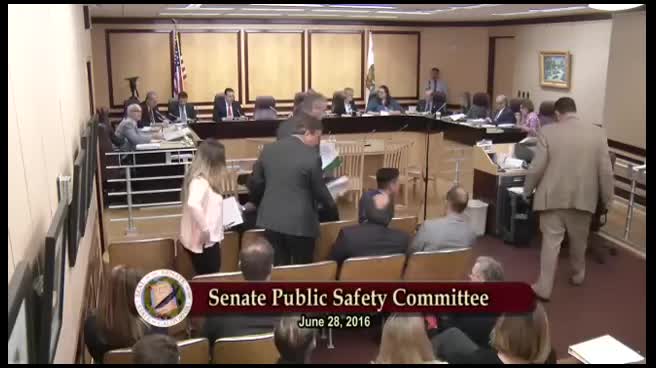 17MIN
Senate Standing Committee on Public Safety
 1MIN
Assembly Floor
 5MIN
Assembly Standing Committee on Appropriations
 12MIN
Assembly Standing Committee on Public Safety


Bill Co-Author(s):