AB 2000: Wards: termination of juvenile court jurisdiction.
- Session Year: 2015-2016
- House: Assembly
- Latest Version Date: 2016-05-31
Existing law establishes the jurisdiction of the juvenile court, which may adjudge a minor to be a ward of the court on the basis of the minors delinquent behavior. Under existing law, the jurisdiction of the juvenile court may continue until the ward attains 21 or 25 years of age, depending on the nature of the offense. Existing law requires the juvenile court to hold a hearing prior to terminating jurisdiction over a ward who is subject to an order of foster care, as specified. Under existing law, whenever the juvenile court terminates jurisdiction over a ward who has also been designated a dependent of the court or previously placed into foster care, the probation or parole officer is required to provide the ward with specified information and documents relating to benefits for former foster children.
This bill would prohibit the juvenile court from terminating jurisdiction over a ward who has attained 17 years of age until the court conducts a hearing and finds that the probation department has provided, or made reasonable efforts to provide, certain information, documents, and services to the ward. The bill would authorize a juvenile court, at its discretion, to make these provisions applicable to a ward under 17 years of age, if requested by the ward, and if the court finds that doing so is in the wards best interest. By imposing this duty duties on probation officers, this bill would impose a state-mandated local program. The bill would also direct the Judicial Council to develop and implement standards and forms necessary to implement these provisions.
The California Constitution requires the state to reimburse local agencies and school districts for certain costs mandated by the state. Statutory provisions establish procedures for making that reimbursement.
This bill would provide that, if the Commission on State Mandates determines that the bill contains costs mandated by the state, reimbursement for those costs shall be made pursuant to these statutory provisions.
Existing law establishes the jurisdiction of the juvenile court, which may adjudge a minor to be a ward of the court on the basis of the minors delinquent behavior. Under existing law, the jurisdiction of the juvenile court may continue until the ward attains 21 or 25 years of age, depending on the nature of the offense. Existing law requires the juvenile court to hold a hearing prior to terminating jurisdiction over a ward who is subject to an order of foster care, as specified. Under existing law, whenever the juvenile court terminates jurisdiction over a ward who has also been designated a dependent of the court or previously placed into foster care, the probation or parole officer is required to provide the ward with specified information and documents relating to benefits for former foster children.
This bill would require the juvenile court to conduct a hearing prior to terminating jurisdiction over a ward who has attained 18 years of age and who is either placed out of the home by the juvenile court or who is returning to an unstable home environment. The bill would require prohibit the juvenile court from terminating jurisdiction over a ward until the court conducts a hearing and finds that the probation department to provide has provided, or made reasonable efforts to provide, certain information, documents, and services to the ward before the court may terminate jurisdiction. ward. By imposing this duty on probation officers, this bill would impose a state-mandated local program. The bill would also direct the Judicial Council to develop and implement standards and forms necessary to implement these provisions.
The California Constitution requires the state to reimburse local agencies and school districts for certain costs mandated by the state. Statutory provisions establish procedures for making that reimbursement.
This bill would provide that, if the Commission on State Mandates determines that the bill contains costs mandated by the state, reimbursement for those costs shall be made pursuant to these statutory provisions.
Existing law establishes the jurisdiction of the juvenile court, which may adjudge a minor to be a ward of the court on the basis of the minors delinquent behavior. Under existing law, the jurisdiction of the juvenile court may continue until the ward attains 21 or 25 years of age, depending on the nature of the offense. Existing law requires the juvenile court to hold a hearing prior to terminating jurisdiction over a ward who is subject to an order of foster care, as specified. Under existing law, whenever the juvenile court terminates jurisdiction over a ward who has also been designated a dependent of the court or previously placed into foster care, the probation or parole officer is required to provide the ward with specified information and documents relating to benefits for former foster children.
This bill would require the juvenile court to conduct a hearing prior to terminating jurisdiction over a ward who has attained 18 years of age and who is either placed out of the home by the juvenile court or who is returning to an unstable home environment. The bill would require the probation department to provide certain information, documents, and services to the ward before the court may terminate jurisdiction. By imposing this duty on probation officers, this bill would impose a state-mandated local program. The bill would also direct the Judicial Council to develop and implement standards and forms necessary to implement these provisions.
The California Constitution requires the state to reimburse local agencies and school districts for certain costs mandated by the state. Statutory provisions establish procedures for making that reimbursement.
This bill would provide that, if the Commission on State Mandates determines that the bill contains costs mandated by the state, reimbursement for those costs shall be made pursuant to these statutory provisions.
(a)The juvenile court shall not terminate jurisdiction over a ward who has attained 17 years of age, and who is not subject to Section 607.3, until a hearing is conducted pursuant to this section and the court finds that the following information, documents, and services have been provided to the ward, or, in any case in which the information, document, or service is unavailable or cannot be provided, that the probation officer has made reasonable efforts to provide the following information, documents, or services to the ward:
(1)Written information concerning the wards case, including any known information regarding the wards Indian heritage or tribal connections, if applicable, directions on how to access the documents the ward is entitled to inspect under Section 827, and the date on which the jurisdiction of the juvenile court would be terminated.
(2)Written information regarding any psychoactive or other medications that the ward is taking, including the dosage, the reason the medications were prescribed, contact information of the prescribing doctor or psychiatrist, and information regarding how to maintain the medication regimen if the ward so chooses.
(3)The following documents:
(A)Social security card, or a photocopy thereof.
(B)Certified copy of his or her birth certificate.
(C)Health and education summary, as described in subdivision (a) of Section 16010, if applicable.
(D)Drivers license, as described in Section 12500 of the Vehicle Code, or identification card, as described in Section 13000 of the Vehicle Code.
(E)A letter prepared by the probation department that includes the following information:
(i)The wards name and date of birth.
(ii)The dates during which the ward was within the jurisdiction of the juvenile court.
(F)If applicable, the death certificate of the parent or parents.
(G)An advance health care directive form.
(4)Assistance with completing an application for Medi-Cal or assistance with obtaining other health insurance, unless the ward has health insurance.
(5)Referrals to transitional housing, if available, or referrals to assistance with securing other housing, unless the ward has housing.
(6)Referrals for assistance with obtaining employment or other financial support.
(7)Referrals for assistance in applying for admission to college or to a vocational training program or other educational institution and in obtaining financial aid, where appropriate.
(8)If the ward has been in out-of-home placement for 90 days or longer from the date the ward entered foster care or was committed or detained for 90 days or longer, contact information in the wards file for individuals who are important to the ward, based on the wards best interests.
(9)Information about the sealing of juvenile records as required by subdivision (h) of Section 781, including information on the sealing provisions of Section 786 and other applicable provisions regarding the sealing of juvenile records.
(10)If the ward has applied for special immigrant juvenile status or otherwise applied for legal residency, and the application is being processed, information on the status of the application and whether an active juvenile court case is required for approval of the application.
(b)The ward shall not be held in physical confinement or subject to any terms or conditions of probation if a continuance of the termination hearing is required solely for the probation department to comply with the requirements of this section.
(c)If the ward has met his or her rehabilitative goal and requests immediate termination of jurisdiction, the termination shall not be delayed for the probation department to comply with this section.
(d)A juvenile court may, in its discretion, make the provision of information, documents, services, and referrals for service required by this section applicable to a ward under 17 years of age, if requested by the ward, and if the court finds that doing so is in the best interest of the ward.
(e)The ward, after having an opportunity to confer with the wards counsel, may waive the right to receive the information, documents, services, and referrals for service specified in this section.
(d)
(f)The Judicial Council shall develop and implement standards, and develop and adopt appropriate forms, necessary to implement this section.
SEC. 2.If the Commission on State Mandates determines that this act contains costs mandated by the state, reimbursement to local agencies and school districts for those costs shall be made pursuant to Part 7 (commencing with Section 17500) of Division 4 of Title 2 of the Government Code.
(a)The juvenile court shall not terminate jurisdiction over a ward who has attained 18 years of age and who is either placed out of the home by the juvenile court in the most recent order or who is returning to an unstable home environment, until a hearing is conducted pursuant to this section and the probation department has submitted a report verifying court finds that the following information, documents, and services have been provided to the ward, or in the case of a ward who, after reasonable efforts by the probation department, cannot be located, verifying the efforts made to make the following available to the ward: or, in any case in which the information, document, or service is unavailable or cannot be provided, that the probation officer has made reasonable efforts to provide the following information, documents, or services to the ward:
(1)Written information concerning the wards case, including any known information regarding the wards Indian heritage or tribal connections, if applicable, directions on how to access the documents the ward is entitled to inspect under Section 827, and the date on which the jurisdiction of the juvenile court would be terminated.
(2)Written information regarding any psychoactive or other medications that the ward is taking, including the dosage, the reason the medications were prescribed, contact information of the prescribing doctor or psychiatrist, and information regarding how to maintain the medication regimen if the ward so chooses.
(3)The following documents:
(A)Social security card. card, or a photocopy thereof.
(B)Certified copy of his or her birth certificate.
(C)Health and education summary, as described in subdivision (a) of Section 16010. 16010, if applicable.
(D)Drivers license, as described in Section 12500 of the Vehicle Code, or identification card, as described in Section 13000 of the Vehicle Code.
(E)A letter prepared by the probation department that includes the following information:
(i)The wards name and date of birth.
(ii)The dates during which the ward was within the jurisdiction of the juvenile court.
(iii)A statement that the ward was a youth in compliance with state and federal financial aid documentation requirements.
(F)If applicable, the death certificate of the parent or parents.
(G)If applicable, proof of the wards citizenship or legal residence.
(H)
(G)An advance health care directive form.
(4)Referrals for assistance Assistance with completing an application for Medi-Cal or referrals for assistance with obtaining other health insurance. insurance, unless the ward has health insurance.
(5)Referrals to transitional housing, if available, or referrals to assistance with securing other housing. housing, unless the ward has housing.
(6)Referrals for assistance with obtaining employment or other financial support.
(7)Assistance Referrals for assistance in applying for admission to college or to a vocational training program or other educational institution and in obtaining financial aid, where appropriate.
(8)If the ward has been in out-of-home placement for six months 90 days or longer from the date the ward entered foster care or a long-term detention facility, committed or detained for 90 days or longer, contact information in the wards file for individuals who are important to the ward, based on the wards best interests.
(9)For wards between 18 and 21 years of age who were placed in foster care, assistance in accessing the Independent Living Aftercare Program in the wards county of residence.
(b)At any hearing for a ward who has turned 18 years of age at which the court is considering terminating jurisdiction, the probation department shall ensure that the nonminor is present in court, unless the nonminor does not wish to appear in court and elects a telephonic appearance, or shall document reasonable efforts made by the probation department to locate the ward when the ward is not available.
(c)At the hearing closest to and before a wards 18th birthday and every review hearing thereafter for nonminor wards, the probation department shall submit a report describing efforts toward completing the items described in subparagraphs (E) to (H), inclusive, of paragraph (2) of subdivision (a).
(9)Information about the sealing of juvenile records as required by subdivision (h) of Section 781, including information on the sealing provisions of Section 786 and other applicable provisions regarding the sealing of juvenile records.
(10)If the ward has applied for special immigrant juvenile status or otherwise applied for legal residency, and the application is being processed, information on the status of the application and whether an active juvenile court case is required for approval of the application.
(b)The ward shall not be held in physical confinement or subject to any terms or conditions of probation if a continuance of the termination hearing is required solely for the probation department to comply with the requirements of this section.
(d)
(c)If the ward has met his or her rehabilitative goal and requests immediate termination of jurisdiction, the termination shall not be delayed if for the probation department has not complied to comply with this section.
(e)
(d)The Judicial Council shall develop and implement standards, and develop and adopt appropriate forms, necessary to implement this section.
SEC. 2.If the Commission on State Mandates determines that this act contains costs mandated by the state, reimbursement to local agencies and school districts for those costs shall be made pursuant to Part 7 (commencing with Section 17500) of Division 4 of Title 2 of the Government Code.
(a)The juvenile court shall not terminate jurisdiction over a ward who has attained 18 years of age and who is either placed out of the home by the juvenile court in the most recent order or who is returning to an unstable home environment, until a hearing is conducted pursuant to this section and the probation department has submitted a report verifying that the following information, documents, and services have been provided to the ward, or in the case of a ward who, after reasonable efforts by the probation department, cannot be located, verifying the efforts made to make the following available to the ward:
(1)Written information concerning the wards case, including any known information regarding the wards Indian heritage or tribal connections, if applicable, directions on how to access the documents the ward is entitled to inspect under Section 827, and the date on which the jurisdiction of the juvenile court would be terminated.
(2)Written information regarding any psychoactive or other medications that the ward is taking, including the dosage, the reason the medications were prescribed, contact information of the prescribing doctor or psychiatrist, and information regarding how to maintain the medication regimen if the ward so chooses.
(3)The following documents:
(A)Social security card.
(B)Certified copy of his or her birth certificate.
(C)Health and education summary, as described in subdivision (a) of Section 16010.
(D)Drivers license, as described in Section 12500 of the Vehicle Code, or identification card, as described in Section 13000 of the Vehicle Code.
(E)A letter prepared by the probation department that includes the following information:
(i)The wards name and date of birth.
(ii)The dates during which the ward was within the jurisdiction of the juvenile court.
(iii)A statement that the ward was a youth in compliance with state and federal financial aid documentation requirements.
(F)If applicable, the death certificate of the parent or parents.
(G)If applicable, proof of the wards citizenship or legal residence.
(H)An advance health care directive form.
(4)Referrals for assistance with completing an application for Medi-Cal or referrals for assistance with obtaining other health insurance.
(5)Referrals to transitional housing, if available, or referrals to other housing.
(6)Referrals for assistance with obtaining employment or other financial support.
(7)Assistance in applying for admission to college or to a vocational training program or other educational institution and in obtaining financial aid, where appropriate.
(8)If the ward has been in out-of-home placement for six months or longer from the date the ward entered foster care or a long-term detention facility, contact information in the wards file for individuals who are important to the ward, based on the wards best interests.
(9)For wards between 18 and 21 years of age who were placed in foster care, assistance in accessing the Independent Living Aftercare Program in the wards county of residence.
(b)At any hearing for a ward who has turned 18 years of age at which the court is considering terminating jurisdiction, the probation department shall ensure that the nonminor is present in court, unless the nonminor does not wish to appear in court and elects a telephonic appearance, or shall document reasonable efforts made by the probation department to locate the ward when the ward is not available.
(c)At the hearing closest to and before a wards 18th birthday and every review hearing thereafter for nonminor wards, the probation department shall submit a report describing efforts toward completing the items described in subparagraphs (E) to (H), inclusive, of paragraph (2) of subdivision (a).
(d)If the ward has met his or her rehabilitative goal and requests immediate termination of jurisdiction, the termination shall not be delayed if the probation department has not complied with this section.
(e)The Judicial Council shall develop and implement standards, and develop and adopt appropriate forms, necessary to implement this section.
SEC. 2.If the Commission on State Mandates determines that this act contains costs mandated by the state, reimbursement to local agencies and school districts for those costs shall be made pursuant to Part 7 (commencing with Section 17500) of Division 4 of Title 2 of the Government Code.
|
Date
|
Status
|
|---|---|
| Jun 1, 2016 | Read second time. Ordered to third reading. |
| Aug 11, 2016 | In committee: Held under submission. |
| Aug 1, 2016 | In committee: Referred to APPR. suspense file. |
| Jun 29, 2016 | From committee: Do pass and re-refer to Com. on APPR. (Ayes 6. Noes 0.) (June 28). Re-referred to Com. on APPR. |
| Jun 15, 2016 | Referred to Com. on PUB. S. |
| Jun 6, 2016 | In Senate. Read first time. To Com. on RLS. for assignment. |
| Jun 2, 2016 | Read third time. Passed. Ordered to the Senate. (Ayes 68. Noes 9.) |
| Jun 2, 2016 | Read third time. Passed. Ordered to the Senate. (Ayes 68. Noes 9. Page 5223.) |
| Jun 2, 2016 | Read third time. Passed. Ordered to the Senate. |
| Feb 16, 2016 | Read first time. To print. |
| May 31, 2016 | Read second time and amended. Ordered returned to second reading. |
| May 27, 2016 | From committee: Amend, and do pass as amended. (Ayes 17. Noes 2.) (May 27). |
| May 11, 2016 | In committee: Set, first hearing. Referred to APPR. suspense file. |
| Mar 29, 2016 | Re-referred to Com. on JUD. |
| Mar 29, 2016 | From committee: Do pass and re-refer to Com. on APPR. (Ayes 9. Noes 1.) (March 29). Re-referred to Com. on APPR. |
| Mar 28, 2016 | From committee chair, with author's amendments: Amend, and re-refer to Com. on JUD. Read second time and amended. |
| Feb 25, 2016 | Referred to Com. on JUD. |
| Feb 17, 2016 | From printer. May be heard in committee March 18. |
|
Date
|
Description
|
Location
|
Votes
|
|
|---|---|---|---|---|
| Aug 1, 2016 | Placed on suspense file | Senate Standing Committee on Appropriations |
Passed |
|
| Jun 28, 2016 | Do pass, but first be re-referred to the Committee on [Appropriations] | Senate Standing Committee on Public Safety |
Passed |
|
| Jun 2, 2016 | AB 2000 CAMPOS Assembly Third Reading | Assembly Floor |
Passed |
|
| May 27, 2016 | Do pass as amended. | Assembly Standing Committee on Appropriations |
Passed |
|
| Mar 29, 2016 | Do pass and be re-referred to the Committee on [Appropriations] | Assembly Standing Committee on Judiciary |
Passed |
This list shows positions taken on this bill by organizations on the date displayed, which is linked to the original source.
Positions by individuals are not included.
|
Organization
|
Position
|
Date
|
|---|---|---|
| Commonweal | ** Support | Jun 2, 2016 |
| Juvenile Court Judges of California | * Support | Jun 28, 2016 |
| National Association of Social Workers | ** Support | Jun 2, 2016 |
| Youth Law Center | ** Support | Jun 2, 2016 |
SENATE COMMITTEE ON
Senator Ricardo Lara, Chair
2015 - 2016 Regular Session
AB 2000 (Campos) - Wards: termination of juvenile court jurisdiction
Version: | Policy Vote: |
Urgency: | Mandate: |
Hearing Date: | Consultant: |
This bill meets the criteria for referral to the Suspense File.
Bill Summary:
AB 2000 would prohibit the juvenile court from terminating jurisdiction over a ward who has attained 17 years of age until the court conducts a hearing and finds that the probation department has provided, or made reasonable efforts to provide, specified information, documents, and services to the ward. This bill would authorize a juvenile court at its discretion to make these provisions applicable to a ward under 17 years of age, as specified.
Fiscal Impact:
- County probation departments: One-time and ongoing potentially state-reimbursable costs ranging from the hundreds of thousands to low millions of dollars (General Fund) annually for increased workload related to the mandated hearing process and the provision of the required documents, information, and services to wards. The magnitude of costs would be dependent on the caseload of wards impacted, and the time required to obtain, or make reasonable efforts to obtain, all of the necessary documents and information, which could vary widely. To the extent courts elect to make the provisions applicable to all wards, regardless of age, ongoing costs to probation departments could be substantial.
- Courts: Potential increase in court costs for additional jurisdictional termination hearings (General Fund*), including continuances for cases in which the mandates of the bill are not met.
- Judicial Council: One-time minor costs (General Fund*) to develop and implement standards, as well as develop and adopt appropriate forms.
*Trial Court Trust Fund
Background:
Existing law establishes the jurisdiction of the juvenile court, which may adjudge a minor to be a ward of the court on the basis of the minor’s delinquent behavior. Under existing law, the jurisdiction of the juvenile court may continue until the ward attains 21 or 25 years of age, depending on the nature of the offense. Existing law requires the juvenile court to hold a hearing prior to terminating jurisdiction over a ward who is subject to an order of foster care, as specified.
Under existing law, whenever the juvenile court terminates jurisdiction over a ward who has also been designated a dependent of the court or previously placed into foster care, the probation or parole officer is required to provide the ward with specified information and documents relating to benefits for former foster children. (Welfare and Institutions Code § 391 (e).)
This bill seeks to ensure that non-dependent wards are provided with the necessary information, documents, and services upon termination of jurisdiction in the delinquency system, similar to the provisions under existing law that require such information to be provided to foster youth transitioning out of the dependency system.
Proposed Law:
This bill would prohibit the juvenile court from terminating jurisdiction over a ward who has attained 17 years of age, and who is not subject to Section 607.3, until a hearing is conducted pursuant to this section and the court finds that the following information, documents, and services have been provided to the ward, or, in any case in which the information, document, or service is unavailable or cannot be provided, that the probation officer has made reasonable efforts to provide the following information, documents, or services to the ward:
- Written information concerning the ward’s case, including any known information regarding the ward’s Indian heritage or tribal connections, if applicable, directions on how to access the documents the ward is entitled to inspect, and the date on which the jurisdiction of the juvenile court would be terminated.
- Written information regarding any psychoactive or other medications that the ward is taking, including the dosage, the reason the medications were prescribed, contact information of the prescribing doctor or psychiatrist, and information regarding how to maintain the medication regimen if the ward so chooses.
- The following documents:
- Social security card, or a photocopy thereof.
- Certified copy of his or her birth certificate.
- Health and education summary, if applicable.
- Driver’s license or identification card, as specified.
- A letter prepared by the probation department that includes the ward’s name and date of birth and the dates during which the ward was within the jurisdiction of the juvenile court.
- If applicable, the death certificate of the parent or parents.
- An advance health care directive form.
- Assistance with completing an application for Medi-Cal or assistance with obtaining other health insurance, unless the ward has health insurance.
- Referrals to transitional housing, if available, or referrals to assistance with securing other housing, unless the ward has housing.
- Referrals for assistance with obtaining employment or other financial support.
- Referrals for assistance in applying for admission to college or to a vocational training program or other educational institution and in obtaining financial aid, where appropriate.
- If the ward has been in out-of-home placement for 90 days or longer from the date the ward entered foster care or was committed or detained for 90 days or longer, contact information in the ward’s file for individuals who are important to the ward, based on the ward’s best interests.
- Information about the sealing of juvenile records as required by subdivision (h) of Section 781, including information on the sealing provisions of Section 786 and other applicable provisions regarding the sealing of juvenile records.
- If the ward has applied for special immigrant juvenile status or otherwise applied for legal residency, and the application is being processed, information on the status of the application and whether an active juvenile court case is required for approval of the application.
This bill provides that the ward shall not be held in physical confinement or subject to any terms or conditions of probation if a continuance of the termination hearing is required solely for the probation department to comply with the requirements of this section. If the ward has met his or her rehabilitative goal and requests immediate termination of jurisdiction, the termination shall not be delayed for the probation department to comply with this section.
This bill provides that a juvenile court may, in its discretion, make the provision of information, documents, services, and referrals for service required by this section applicable to a ward under 17 years of age, if requested by the ward, and if the court finds that doing so is in the best interest of the ward.
This bill provides that the ward, after having an opportunity to confer with the ward’s counsel, may waive the right to receive the information, documents, services, and referrals for service specified in this section.
This bill requires the Judicial Council to develop and implement standards, and develop and adopt appropriate forms, necessary to implement this section.
Prior Legislation:
SB 945 (Liu) Chapter 631/2010 requires probation and parole officers to provide wards of the court formerly in foster care with notification regarding their eligibility for services and benefits available for former foster youth when the court terminates jurisdiction, or upon release of a ward from a non-foster care facility.
Staff Comments:
By imposing additional duties on county probation officers, this bill creates a state-mandated local program, potentially resulting in significant ongoing costs, potentially state-reimbursable, to probation departments to meet the mandates in this bill.
This bill requires specified documents, information, and services to be provided to a ward 17 years of age or older, and potentially to all wards at court discretion, prior to delinquency jurisdiction being terminated. The workload involved in obtaining, or making reasonable efforts to obtain, the specified documents and information could be significant, and would vary based on numerous factors including but not limited to the circumstances of the ward (as some wards may already be in possession of certain documents), the coordination between probation and other local government agencies to obtain the specified documents, and the time involved for each probation officer to provide the documents and information to the ward, as well as costs for travel, document fees, and overtime. The costs could range from the high hundreds of thousands to low millions of dollars (General Fund) annually for increased workload. To the extent courts elect to make the provisions applicable to all wards, regardless of age, costs to probation departments could be substantially higher.
Because the provisions of this measure prohibit a ward from being held in physical confinement or subject to any terms or conditions of probation if a continuance of the termination hearing is required solely for the probation department to comply with the bill’s requirements, the CDCR Division of Juvenile Justice (DJJ) should not experience any delays in the release of wards from its facilities nor incur any additional costs for supervision or incarceration.
-- END --
SENATE COMMITTEE ON PUBLIC SAFETY
Senator Loni Hancock, Chair
2015 - 2016 Regular
Bill No: AB 2000 Hearing Date: June 28, 2016
Author: | Campos | ||
Version: | May 31, 2016 | ||
Urgency: | No | Fiscal: | Yes |
Consultant: | AA | ||
Subject: Wards: Termination of Juvenile Court Jurisdiction
HISTORY
Source: Juvenile Court Judges of California
Prior Legislation: SB 945 (Liu) – Ch. 631, Stats. 2010
Support: Commonweal Juvenile Justice Program; Legal Services for Prisoners with Children; National Association of Social Workers; East Bay Children’s Law Offices; Youth Law Center
Opposition: None known
Assembly Floor Vote: 68 - 9
PURPOSE
The purpose of this bill is to 1) prohibit the juvenile court from terminating jurisdiction over a ward who has attained 17 years of age until the court conducts a hearing and finds that the probation department has provided, or made reasonable efforts to provide, certain information, documents, and services to the ward; 2) authorize a juvenile court at its discretion to make these provisions applicable to a ward under 17 years of age, as specified; and 3) provide circumstances to not delay the termination, as specified.
Under current law the purpose of juvenile court law "is to provide for the protection and safety of the public and each minor under the jurisdiction of the juvenile court and to preserve and strengthen the minor's family ties whenever possible, removing the minor from the custody of his or her parents only when necessary for his or her welfare or for the safety and protection of the public." (Welfare and Institutions Code ("WIC") § 202.)
Current law generally provides for minors to come under the jurisdiction of the juvenile court due to neglect or abuse, as specified (WIC § 300 et seq.), or as a consequence of delinquent conduct. (WIC §§ 601, 602.)
Current law generally describes how long the court may retain jurisdiction over a person found to be a dependent or delinquent ward of the court, as specified. (Welfare and Institutions Code (WIC) §§ 607 et seq.)
Current law requires that whenever the juvenile court terminates jurisdiction over a ward who also has been a dependent ward of the court or in foster care, or upon release of a ward from a facility that is not a foster care facility, a probation officer or parole officer shall provide the person with, at a minimum, all of the following:
- A written notice stating that the person is a former foster child and may be eligible for the services and benefits that are available to a former foster child through public and private programs, including, but not limited to, any independent living program for former foster children, as specified.
- Existing information that informs the person of the availability of assistance to enable the person to apply for, and gain acceptance into, federal and state programs that provide benefits to former foster children, as specified.
- Existing information that informs the person of the availability of assistance to enable the person to apply for, and gain acceptance into, federal and state programs that provide independent living services to youth 16 years of age and over who may be eligible for services, as specified. (WIC § 607.3; see also WIC § 607.5)
This bill would enact a new law to provide that the juvenile court shall not terminate jurisdiction over a ward who has attained 17 years of age, as specified, until a hearing is conducted pursuant to this section and the court finds that the following information, documents, and services have been provided to the ward, or, in any case in which the information, document, or service is unavailable or cannot be provided, that the probation officer has made reasonable efforts to provide the following information, documents, or services to the ward:
- Written information concerning the ward’s case, including any known information regarding the ward’s Indian heritage or tribal connections, if applicable, directions on how to access the documents the ward is entitled to inspect under Section 827, and the date on which the jurisdiction of the juvenile court would be terminated.
- Written information regarding any psychoactive or other medications that the ward is taking, including the dosage, the reason the medications were prescribed, contact information of the prescribing doctor or psychiatrist, and information regarding how to maintain the medication regimen if the ward so chooses.
- The following documents:
- Social security card or a photocopy thereof.
- Certified copy of his or her birth certificate.
- Health and education summary, as described in subdivision (a) of Section 16010, if applicable.
- Driver’s license, as described in Section 12500 of the Vehicle Code, or identification card, as described in Section 13000 of the Vehicle Code.
- A letter prepared by the probation department that includes the following information:
(i) The ward’s name and date of birth.
(ii) The dates during which the ward was within the jurisdiction of the juvenile court.
F. If applicable, the death certificate of the parent or parents.
G. An advance health care directive form.
- Assistance with completing an application for Medi-Cal or assistance with obtaining other health insurance, unless the ward has health insurance.
- Referrals to transitional housing, if available, or referrals to assistance with securing other housing, unless the ward has housing.
- Referrals for assistance with obtaining employment or other financial support.
- Referrals for assistance in applying for admission to college or to a vocational training program or other educational institution and in obtaining financial aid, where appropriate.
- If the ward has been in out-of-home placement for 90 days or longer from the date the ward entered foster care or was committed or detained for 90 days or longer, contact information in the ward’s file for individuals who are important to the ward, based on the ward’s best interests.
- Information about the sealing of juvenile records as required by subdivision (h) of Section 781, including information on the sealing provisions of Section 786 and other applicable provisions regarding the sealing of juvenile records.
- If the ward has applied for special immigrant juvenile status or otherwise applied for legal residency, and the application is being processed, information on the status of the application and whether an active juvenile court case is required for approval of the application.
This bill would provide that the “ward shall not be held in physical confinement or subject to any terms or conditions of probation if a continuance of the termination hearing is required solely for the probation department to comply with the requirements of this section.”
This bill would provide that if “the ward has met his or her rehabilitative goal and requests immediate termination of jurisdiction, the termination shall not be delayed for the probation department to comply with this section.”
This bill would provide that a “juvenile court may, in its discretion, make the provision of information, documents, services, and referrals for service required by this section applicable to a ward under 17 years of age, if requested by the ward, and if the court finds that doing so is in the best interest of the ward.”
This bill would provide that the “ward, after having an opportunity to confer with the ward’s counsel, may waive the right to receive the information, documents, services, and referrals for service specified in this section.”
This bill would require the Judicial Council to develop and implement standards, and develop and adopt appropriate forms, necessary to implement this section.
RECEIVERSHIP/OVERCROWDING CRISIS AGGRAVATION
For the past several years this Committee has scrutinized legislation referred to its jurisdiction for any potential impact on prison overcrowding. Mindful of the United States Supreme Court ruling and federal court orders relating to the state’s ability to provide a constitutional level of health care to its inmate population and the related issue of prison overcrowding, this Committee has applied its “ROCA” policy as a content-neutral, provisional measure necessary to ensure that the Legislature does not erode progress in reducing prison overcrowding.
On February 10, 2014, the federal court ordered California to reduce its in-state adult institution population to 137.5% of design capacity by February 28, 2016, as follows:
- 143% of design bed capacity by June 30, 2014;
- 141.5% of design bed capacity by February 28, 2015; and,
- 137.5% of design bed capacity by February 28, 2016.
In December of 2015 the administration reported that as “of December 9, 2015, 112,510 inmates were housed in the State’s 34 adult institutions, which amounts to 136.0% of design bed capacity, and 5,264 inmates were housed in out-of-state facilities. The current population is 1,212 inmates below the final court-ordered population benchmark of 137.5% of design bed capacity, and has been under that benchmark since February 2015.” (Defendants’ December 2015 Status Report in Response to February 10, 2014 Order, 2:90-cv-00520 KJM DAD PC, 3-Judge Court, Coleman v. Brown, Plata v. Brown (fn. omitted).) One year ago, 115,826 inmates were housed in the State’s 34 adult institutions, which amounted to 140.0% of design bed capacity, and 8,864 inmates were housed in out-of-state facilities. (Defendants’ December 2014 Status Report in Response to February 10, 2014 Order, 2:90-cv-00520 KJM DAD PC, 3-Judge Court, Coleman v. Brown, Plata v. Brown (fn. omitted).)
While significant gains have been made in reducing the prison population, the state must stabilize these advances and demonstrate to the federal court that California has in place the “durable solution” to prison overcrowding “consistently demanded” by the court. (Opinion Re: Order Granting in Part and Denying in Part Defendants’ Request For Extension of December 31, 2013 Deadline, NO. 2:90-cv-0520 LKK DAD (PC), 3-Judge Court, Coleman v. Brown, Plata v. Brown (2-10-14). The Committee’s consideration of bills that may impact the prison population therefore will be informed by the following questions:
- Whether a proposal erodes a measure which has contributed to reducing the prison population;
- Whether a proposal addresses a major area of public safety or criminal activity for which there is no other reasonable, appropriate remedy;
- Whether a proposal addresses a crime which is directly dangerous to the physical safety of others for which there is no other reasonably appropriate sanction;
- Whether a proposal corrects a constitutional problem or legislative drafting error; and
- Whether a proposal proposes penalties which are proportionate, and cannot be achieved through any other reasonably appropriate remedy.
COMMENTS
- Stated Need for This Bill
The author states in part:
Youth who exit the juvenile criminal justice system at age 17 and after lack preparedness and self-sufficiency; they are faced with many barriers that can lead to undesired adult outcomes. Providing this vulnerable population with vital information, documents, referrals for services, and assisting them to regain basic health insurance coverage will help them in their transition to adulthood and decrease the likelihood of incarceration, homelessness, unemployment, and early and unwanted pregnancies. . . .
Currently there is no requirement to provide reentry or aftercare services to youth who are exiting Juvenile Probation and are being released from custody unless they are a current foster youth. The number of juvenile probation youth who leave probation with current foster care status is small. There is no law that the Probation Department or the Court has to ensure that the youth leave with important documents like birth certificates or school and placement history, though most or all of these documents are in the youth’s probation file.
. . . AB 2000 aims to help juvenile justice youth age 17 and over, by providing them with vital documents that they will need in their transition into adulthood. The legislation would provide equity to the young adults who exit the court systems from Juvenile Probation similarly, but on a smaller scale, as for foster youth.
Youth who exit the foster care or juvenile justice system after age 17 are faced with major challenges. For juvenile court youth, transition often results in problems with accessing education, health care benefits, stable housing, and economic supports. Emancipated juvenile court youth are more likely to experience homelessness, unemployment, unplanned pregnancy, adult criminal court involvement, and substance abuse. They are also less likely to earn enough to support themselves, have a high school diploma, and enroll in college or other postsecondary education or training.
Providing services and support to youth reentering society can help reduce recidivism and foster successful reconnections with families and communities. …
- What This Bill Does
Current law (WIC Section 391(e)) provides that foster youth who age out of the dependency system when they become adults (or 21 years of age for “nonminor dependents”) are provided with a number of documents and resources when leaving the dependency system. Prior to termination of the juvenile court’s jurisdiction, the county welfare department is required to do a number of things to help the nonminor transition to living without the support of the juvenile court and the county welfare department.
This bill would provide a structure adopting this general approach for delinquent wards of the juvenile court, so they can receive information that could help them before the court terminates jurisdiction. The information is specified on pages two and three of this analysis.
- Background
The Assembly Appropriations Committee’s analysis of this bill quotes the sponsor, Juvenile Court Judges of California, explaining the need for the legislation:
Information such as medication needs, a Social Security card or copy, a copy of the youth’s birth certificate, driver’s license, and a health and education summary should be in the file. Assistance with obtaining Medi-Cal, and referrals for assistance for housing, employment, financial support, and college or vocational school applications are all resources that most juvenile justice probation departments have at their disposal. This legislation seeks a more concerted effort to rally behind a youth prior to leaving the system and is unlikely to cause a greater burden for the probation department to document or research because most of the information is already in the file or easily obtainable.
This bill does not propose assistance with certain of the items listed above but instead proposes referrals for assistance, for example, a resources print out of options rather than specific assistance to obtain those services. Medi-Cal assistance has been included because many youth lose their Medi-Cal coverage while incarcerated, and upon exit lack the resources and information to resume coverage.
-- END –
ASSEMBLY THIRD READING
ATR Bill Id:
Author:(Campos)
As Amended Ver:May 31, 2016
Majority vote
Committee | Votes | Ayes | Noes |
Judiciary | 9-1 | Mark Stone, Wagner, Alejo, Chau, Chiu, Cristina Garcia, Holden, Maienschein, Ting | Gallagher |
Appropriations | 17-2 | Gonzalez, Bloom, Bonilla, Bonta, Calderon, Chang, Daly, Eggman, Eduardo Garcia, Roger Hernández, Holden, Obernolte, Quirk, Santiago, Wagner, Weber, Wood | Bigelow, Gallagher |
SUMMARY: Requires the juvenile court to conduct a hearing when terminating jurisdiction over a ward who is 17 years of age or older, other than a nonminor dependent, and to ensure that certain information, documents, and services are provided to the ward in conjunction with termination of the court's jurisdiction. Specifically, this bill:
- Prohibits the juvenile court from terminating its jurisdiction over a ward who is 17 years of age or older and not a nonminor dependent until a hearing is conducted pursuant to this bill and the court finds that one of the following is true:
- Specified information, documents, and services have been provided to the ward.
- In any case where the information, document, or service is unavailable or cannot be provided, that the probation officer has made reasonable efforts to provide, specified information, documents, or services to the ward.
- Requires the following information to be provided to the ward:
- Written information concerning the ward's case, including any known information regarding the ward's Indian heritage or tribal connections, if applicable, directions on how to access the documents the ward is entitled to inspect under Welfare and Institutions Code (WIC) Section 827, and the date on which the jurisdiction of the juvenile court would be terminated.
- Written information regarding any psychotropic or other medications that the ward is taking.
- Requires the following documents to be provided to the ward:
- A social security card, or a photocopy thereof.
- A certified copy of his or her birth certificate.
- A health and education summary, if applicable.
- A driver's license, or identification card.
- A letter prepared by the probation department that includes the following information: i) The ward's name and date of birth, and ii) The dates during which the ward was within the jurisdiction of the juvenile court.
- If applicable, the death certificate of the parent or parents.
- An advance health care directive form.
- Requires the probation department to provide the ward with the following services or information:
- Assistance with completing an application for Medi-Cal or assistance with obtaining other health insurance, unless the minor or nonminor has health insurance.
- Referrals to transitional housing, if available, or referrals to assistance with securing other housing, unless the minor or nonminor has housing.
- Referrals for assistance with obtaining employment or other financial support.
- Referrals for assistance in applying for admission to college or to a vocational training program or other educational institution and in obtaining financial aid, where appropriate.
- If the ward has been in out-of-home placement for 90 days or longer, contact information in the ward's file for individuals who are important to the ward, based on the ward's best interests.
- Information about the sealing of juvenile records as required by WIC Section 781(h) and including information on the sealing provisions of WIC Section 786 and any other applicable provision regarding the sealing of juvenile records.
- If the ward has applied for Special Immigrant Juvenile Status or otherwise applied for legal residency, and the application is being processed, information on the status of the application and whether an active juvenile court case is required for approval of the application.
- Allows a Juvenile Court, in its discretion, to make the information, documents, services, and referrals for service described above to a ward who is under the age of 17 years.
- Allows a ward, after having the opportunity to confer with counsel, the right to waive receipt of the information, documents, services, and referrals for service described above.
FISCAL EFFECT: According to the Assembly Appropriations analysis:
- Unknown, but likely in the tens of thousands of dollars, reimbursable mandate costs for county probation departments to provide the required information, documents, and services and to participate in hearings when necessary.
- Minor and absorbable costs to the courts.
COMMENTS: Current law (WIC Section 391(e)) ensures that foster youth who age out of the dependency system when they become adults (or 21 years of age for "nonminor dependents") are provided with a number of documents and resources when leaving the dependency system. Prior to termination of the juvenile court's jurisdiction, the county welfare department is required to do a number of things to help the nonminor transition to living without the support of the juvenile court and the county welfare department.
Adolescents leaving incarceration and juvenile probation supervision are also in critical need of such assistance. Research shows that youth who have been in the juvenile justice system are as much in need of information to assist in transitioning to adulthood as youth in the dependency system. In many instances juvenile justice wards were previously foster youth and even if not, come from unstable homes and families that are unable to support the transitioning youth back into society. Research shows that juvenile justice youth who leave probation supervision do not finish high school, suffer high rates of unemployment, pregnancy, and adult incarceration. Like foster youth, juvenile justice youth all too often leave the juvenile justice system unconnected to family and community.
To increase the opportunity for success for probation youth, this bill requires that a number of those same services and items of information to be provided to probation youth (or "wards") prior to the juvenile delinquency court terminating its jurisdiction over the youth. But in order not to punish the youth, the bill prohibits a probation youth from being detained in confinement while the youth is awaiting those services and items of information. Instead of requiring the county welfare department to provide those services, documents and information, this bill sensibly requires the county probation department to provide similar services, documents, and information to the ward. Because not all of the services and information specified in WIC Section 391(e) that are required to be provided to foster youth are necessary or appropriate for probation youth, some of the requirements have been modified or eliminated. Therefore, this bill requires probation officers to provide certain basic documentation to youth similar to, but not as extensive as what is required for welfare departments to provide to foster youth in WIC Section 391(e). As modified, the documentation should be readily available to the probation department, if not already included in the youth's file.
In addition, some services and information are needed and appropriate for minors and nonminors in the delinquency system but not needed by those in the foster care system, so they have been added to the bill. For example, minors who have records of juvenile adjudications may have difficulty obtaining employment because they are required to disclose information about their juvenile records on employment applications or to qualify for other programs and services, including for entry into the military, for example. Therefore, this bill sensibly requires information about the sealing of juvenile records to be provided to the ward. Also, to ensure that a ward is not detained in confinement in order for a hearing to occur, the bill prohibits the ward from being held in confinement under those circumstances, which is fair and appropriate. Finally, to avoid interference with a ward's application for Special Immigrant Juvenile Status, the bill requires the ward (and the court) to be alerted to the fact that an application for such status has been filed and whether an active juvenile court case is required for approval of the ward's application.
Analysis Prepared by: Alison Merrilees / JUD. / (916) 319-2334 FN: 0003147
Date of Hearing: May 11, 2016
ASSEMBLY COMMITTEE ON APPROPRIATIONS
Lorena Gonzalez, Chair
ABPCA Bill Id:AB 2000
Author:(Campos) – As Amended Ver:March 28, 2016
Policy Committee: | Judiciary | Vote: | 9 - 1 |
|
| ||
|
|
Urgency: No State Mandated Local Program: Yes Reimbursable: Yes
SUMMARY:
This bill requires the juvenile court to conduct a hearing when terminating jurisdiction over a ward and to ensure that certain information, documents, and services are provided by a probation officer to the ward in conjunction with termination of the court’s jurisdiction, similar to those provided to a foster youth transitioning from the dependency system. The bill also requires the Judicial Council to develop and implement standards and adopt appropriate forms.
FISCAL EFFECT:
- Unknown, but likely in the hundreds of thousands of dollars, reimbursable mandate costs for county probation departments to provide the required information, documents, and services and to participate in hearings when necessary.
- Minor and absorbable costs to the courts.
COMMENTS:
- Purpose. The sponsor, Juvenile Court Judges of California explains the need for the legislation as follows:
Information such as medication needs, a Social Security card or copy, a copy of the youth’s birth certificate, driver’s license, and a health and education summary should be in the file. Assistance with obtaining Medi-Cal, and referrals for assistance for housing, employment, financial support, and college or vocational school applications are all resources that most juvenile justice probation departments have at their disposal. This legislation seeks a more concerted effort to rally behind a youth prior to leaving the system and is unlikely to cause a greater burden for the probation department to document or research because most of the information is already in the file or easily obtainable.
This bill does not propose assistance with certain of the items listed above but instead proposes referrals for assistance, for example, a resources print out of options rather than specific assistance to obtain those services. Medi-Cal assistance has been included because many youth lose their Medi-Cal coverage while incarcerated, and upon exit lack the resources and information to resume coverage.
- Background. Current law ensures that foster youth who age out of the dependency system when they become adults (or 21 years of age for “nonminor dependents”) are provided with a number of documents and resources when leaving the dependency system. Prior to termination of the juvenile court’s jurisdiction, the county welfare department is required to do a number of things to help the nonminor transition to living without the support of the juvenile court and the county welfare department.
This bill requires that a number of those same services and items of information to be provided to probation youth prior to the juvenile delinquency court terminating its jurisdiction over the youth. Instead of requiring the county welfare department to provide those services, documents and information, this bill requires the county probation department to provide similar services, documents, and information to the ward. Because not all of the services and information that are required to be provided to foster youth are necessary or appropriate for probation youth, some of the requirements have been modified or eliminated.
Analysis Prepared by: Jennifer Swenson / APPR. / (916) 319-2081
Date of Hearing: March 29, 2016
ASSEMBLY COMMITTEE ON JUDICIARY
Mark Stone, Chair
ABPCA Bill Id:AB 2000
Author:(Campos) – As Amended Ver:March 28, 2016
SUBJECT: WARDS: TERMINATION OF JUVENILE COURT JURISDICTION
KEY ISSUE: SHOULD YOUTH WHO ARE TRANSITIONING OUT OF THE JUVENILE DELINQUENCY SYSTEM BE PROVIDED WITH SPECIFIED DOCUMENTS, INFORMATION, AND SERVICES SIMILAR TO THE SPECIFIED DOCUMENTS, INFORMATION, AND SERVICES THAT ARE GIVEN TO FOSTER YOUTH, PRIOR TO THE JUVENILE COURT TERMINATING ITS JURISDICTION OVER THEM?
SYNOPSIS
Current law (subdivision (e) of Welfare and Institutions Code (WIC) Section 391) ensures that foster youth who age out of the dependency system when they become adults (or 21 years of age for “nonminor dependents”) are provided with a number of documents and resources when leaving the dependency system. Adolescents leaving incarceration and juvenile probation supervision are also in critical need of such assistance. Research shows that youth who have been in the juvenile justice system are as much in need of information to assist in transitioning to adulthood, as are youth in the dependency system. In many instances juvenile justice wards were previously foster youth. Similar to foster youth, many juvenile justice wards come from unstable homes and families that are unable to support the transitioning youth back into society. To increase the opportunity for success for probation youth, this bill requires a number of those same services and items of information required for dependent youth to be provided to a minor (or nonminor) prior to the juvenile delinquency court terminating its jurisdiction. In order not to punish the youth, the bill prohibits a youth from being detained in confinement while the youth is awaiting those services and items of information. Because not all of the services and information specified in subdivision (e) of Section 391 that are required to be provided to dependent minors and nonminors are necessary or appropriate for delinquent minors and nonminors, some of the requirements have been modified or eliminated. Therefore, AB 2000 requires probation officers to provide certain basic documentation to youth similar to, but not as extensive as, that currently required for foster youth in subdivision (e) of Welfare and Institutions Code Section 391. This bill is sponsored by the Juvenile Court Judges of California and supported by Commonweal and the National Association of Social Workers. The Youth Law Center supports the bill if amended to ensure that it does not apply to dual status youth. The author has agreed to work with all stakeholders to ensure that it does not reduce benefits or create any unnecessary barriers for underserved youth. There is no opposition to the bill on file.
SUMMARY: Requires the juvenile court to conduct a hearing when terminating jurisdiction over a ward and to ensure that certain information, documents, and services are provided to the ward in conjunction with termination of the court’s jurisdiction. Specifically, this bill:
- Prohibits the juvenile court from terminating its jurisdiction over a ward until a hearing is conducted pursuant to this bill and the court finds that one of the following is true:
- Specified information, documents, and services have been provided to the ward.
- In any case where the information, document, or service is unavailable or cannot be provided, that the probation officer has made reasonable efforts to provide, specified information, documents, or services to the ward.
- Requires the following information to be provided to the ward:
- Written information concerning the ward’s case, including any known information regarding the ward’s Indian heritage or tribal connections, if applicable, directions on how to access the documents the ward is entitled to inspect under WIC Section 827, and the date on which the jurisdiction of the juvenile court would be terminated.
- Written information regarding any psychotropic or other medications that the ward is taking.
- Requires the following documents to be provided to the ward:
- A social security card, or a photocopy thereof.
- A certified copy of his or her birth certificate.
- A health and education summary, if applicable.
- A driver’s license, or identification card.
- A letter prepared by the probation department that includes the following information: i) The ward’s name and date of birth, and ii) The dates during which the ward was within the jurisdiction of the juvenile court.
- If applicable, the death certificate of the parent or parents.
- An advance health care directive form.
- Requires the probation department to provide the ward with the following services or information:
- Assistance with completing an application for Medi-Cal or assistance with obtaining other health insurance, unless the minor or nonminor has health insurance.
- Referrals to transitional housing, if available, or referrals to assistance with securing other housing, unless the minor or nonminor has housing.
- Referrals for assistance with obtaining employment or other financial support.
- Referrals for assistance in applying for admission to college or to a vocational training program or other educational institution and in obtaining financial aid, where appropriate.
- If the ward has been in out-of-home placement for 90 days or longer, contact information in the ward’s file for individuals who are important to the ward, based on the ward’s best interests.
- Information about the sealing of juvenile records as required by subdivision (h) of WIC Section 781 and including information on the sealing provisions of WIC Section 786 and any other applicable provision regarding the sealing of juvenile records.
- If the ward has applied for Special Immigrant Juvenile Status or otherwise applied for legal residency, and the application is being processed, information on the status of the application and whether an active juvenile court case is required for approval of the application.
- Specifies that the ward shall not be held in physical confinement or subject to any terms or conditions of probation if a continuance of the termination hearing is required solely for probation to comply with the above requirements.
- Provides that if the ward has met his or her rehabilitative goal and requests immediate termination of jurisdiction, the termination shall not be delayed for the probation department to comply with this bill.
- Requires the Judicial Council to develop and implement standards, and develop and adopt appropriate forms, necessary to implement this bill.
EXISTING LAW:
- Provides that any child who has suffered, or is at risk of suffering, serious physical or emotional harm, as defined, shall be within the jurisdiction of the juvenile court which may adjudge that person to be a dependent child of the court, as specified. (Welfare and Institutions Code Section 300. All further statutory references are to the Welfare and Institutions Code, unless otherwise indicated.)
- Permits a court to terminate its dependency, delinquency, or transition jurisdiction over a nonminor dependent between the time the nonminor reaches the age of majority and 21 years of age. (Section 303.)
- Requires, at any termination hearing, a county welfare department to submit a report that verifies that the following information has been provided to the nonminor. (Section 391.)
- Written information about the nonminor’s dependency case, including family history, Indian heritage, available family photographs, except as specified, whereabouts of siblings under the jurisdiction of the juvenile court, except as specified, and information about how to access their case file.
- Essential personal documents including the social security card, a certified copy of the birth certificate, the health and education summary, as specified, driver’s license or identification card, any applicable death certificates for the nonminor’s parents, proof of citizenship, an advance health care directive, forms used to resume dependency, and a written 90-day transition plan.
- A letter containing information about the nonminor including name and date of birth, and the dates during which the nonminor was a foster youth.
- Referrals to transitional housing, assistance in obtaining employment or other financial support, assistance in applying to college or to a vocational education program, assistance in maintaining relationships with individuals who are important to the nonminor, assistance in accessing the Independent Living Aftercare Program, and other information.
- Allows the California Department of Social Services to provide a former dependent or ward who was in foster care, upon request by that person, the proof of dependency of wardship document that was provided to the youth in the dependency or wardship termination hearing report, or any information necessary to provide verification that the person was formerly a dependent or ward and placed in foster care. (Section 826.8.)
FISCAL EFFECT: Unknown
COMMENTS: Current law (subdivision (e) of WIC Section 391) ensures that foster youth who age out of the dependency system when they become adults (or 21 years of age for “nonminor dependents”) are provided with a number of documents and resources when leaving the dependency system. Prior to termination of the juvenile court’s jurisdiction, the county welfare department is required to do a number of things to help the nonminor transition to living without the support of the juvenile court and the county welfare department.
Adolescents leaving incarceration and juvenile probation supervision are also in critical need of such assistance. Research shows that youth who have been in the juvenile justice system are as much in need of information to assist in transitioning to adulthood as youth in the dependency system. In many instances juvenile justice wards were previously foster youth and even if not, come from unstable homes and families that are unable to support the transitioning youth back into society. Research shows that juvenile justice youth who leave probation supervision do not finish high school, suffer high rates of unemployment, pregnancy, and adult incarceration. Like foster youth, juvenile justice youth all too often leave the juvenile justice system unconnected to family and community.
To increase the opportunity for success for probation youth, this bill requires that a number of those same services and items of information to be provided to probation youth (or “wards”) prior to the juvenile delinquency court terminating its jurisdiction over the youth. But in order not to punish the youth, the bill prohibits a probation youth from being detained in confinement while the youth is awaiting those services and items of information. Instead of requiring the county welfare department to provide those services, documents and information, this bill sensibly requires the county probation department to provide similar services, documents, and information to the ward. Because not all of the services and information specified in subdivision (e) of Section 391 that are required to be provided to foster youth are necessary or appropriate for probation youth, some of the requirements have been modified or eliminated. Therefore, AB 2000 requires probation officers to provide certain basic documentation to youth similar to, but not as extensive as what is required for welfare departments to provide to foster youth in subdivision (e) of Section 391. As modified, the documentation should be readily available to the probation department, if not already included in the youth’s file.
The requirements of subdivision (e) of Section 391 (for foster youth), and an explanation of how those requirements are modified by this bill (for probation youth), is explained below:
(e) The court shall not terminate dependency jurisdiction over a nonminor who has attained 18 years of age until a hearing is conducted pursuant to this section and the department has submitted a report verifying that the following information, documents, and services have been provided to the nonminor, or in the case of a nonminor who, after reasonable efforts by the county welfare department, cannot be located, verifying the efforts made to make the following available to the nonminor: This is modified in AB 2000 so that, among other things, the hearing must occur prior to termination of the court’s jurisdiction, regardless of the ward’s age. The modified language also provides that the information and services do not have to be provided by the probation department if the information or services are unavailable and the probation department has made reasonable efforts to provide the information or services to the ward.
(1) Written information concerning the nonminor’s case, including any known information regarding the nonminor’s Indian heritage or tribal connections, if applicable, his or her family history and placement history, any photographs of the nonminor or his or her family in the possession of the county welfare department, other than forensic photographs, the whereabouts of any siblings under the jurisdiction of the juvenile court, unless the court determines that sibling contact would jeopardize the safety or welfare of the sibling, directions on how to access the documents the nonminor is entitled to inspect under Section 827, and the date on which the jurisdiction of the juvenile court would be terminated. This is modified in AB 2000 to eliminate the reference to the minor’s foster placement history and siblings because those issues are not generally included in juvenile court records about wards.
(2) The following documents:
(A) Social security card. This requirement is maintained, but an option is allowed for a copy of the card to be provided to the ward.
(B) Certified copy of his or her birth certificate. This requirement is maintained.
(C) Health and education summary, as described in subdivision (a) of Section 16010. This requirement is maintained, but modified to say “if applicable.”
(D) Driver’s license, as described in Section 12500 of the Vehicle Code, or identification card, as described in Section 13000 of the Vehicle Code. This requirement is maintained.
(E) A letter prepared by the county welfare department that includes the following information: This requirement is maintained, but modified to refer to the “probation department.”
(i) The nonminor’s name and date of birth. This requirement is maintained.
(ii) The dates during which the nonminor was within the jurisdiction of the juvenile court. This requirement is maintained.
(iii) A statement that the nonminor was a foster youth in compliance with state and federal financial aid documentation requirements. This requirement is maintained, but the language is modified to apply to “delinquent youth.”
(F) If applicable, the death certificate of the parent or parents. This requirement is maintained.
(G) If applicable, proof of the nonminor’s citizenship or legal residence. This requirement is not included.
(H) An advance health care directive form. This requirement is maintained.
(I) The Judicial Council form that the nonminor would use to file a petition pursuant to subdivision (e) of Section 388 to resume dependency jurisdiction. This requirement is eliminated because it is not relevant to wards.
(J) The written 90-day transition plan prepared pursuant to Section 16501.1. This requirement is eliminated because it is not relevant to wards.
(3) Assistance in completing an application for Medi-Cal or assistance in obtaining other health insurance. This requirement is maintained, but it is modified to say assistance is not necessary if the ward already has health insurance.
(4) Referrals to transitional housing, if available, or assistance in securing other housing. This requirement is maintained, but it is modified to say assistance is not necessary if the ward already has housing.
(5) Assistance in obtaining employment or other financial support. This requirement is modified to require “Referrals for assistance.”
(6) Assistance in applying for admission to college or to a vocational training program or other educational institution and in obtaining financial aid, where appropriate. This requirement is modified to require “Referrals for assistance.”
(7) Assistance in maintaining relationships with individuals who are important to a nonminor who has been in out-of-home placement for six months or longer from the date the nonminor entered foster care, based on the nonminor’s best interests. This has been modified to apply only to wards who entered foster care or were detained for 90 days or longer.
(8) For nonminors between 18 and 21 years of age, assistance in accessing the Independent Living Aftercare Program in the nonminor’s county of residence, and, upon the nonminor’s request, assistance in completing a voluntary reentry agreement for care and placement pursuant to subdivision (z) of Section 11400 and in filing a petition pursuant to subdivision (e) of Section 388 to resume dependency jurisdiction. This requirement is eliminated because it is not relevant to wards.
(9) Written information notifying the child that current or former dependent children who are or have been in foster care are granted a preference for student assistant or internship positions with state agencies pursuant to Section 18220 of the Government Code. The preference shall be granted to applicants up to 26 years of age. This requirement is eliminated because it is not relevant to wards.
In addition, some services and information are needed and appropriate for minors and nonminors in the delinquency system but not needed by those in the foster care system, so they have been added to the bill. For example, minors who have records of juvenile adjudications may have difficulty obtaining employment because they are required to disclose information about their juvenile records on employment applications or to qualify for other programs and services, including for entry into the military, for example. Therefore, this bill sensibly requires information about the sealing of juvenile records to be provided to the ward. Also, to ensure that a ward is not detained in confinement in order for a hearing to occur, the bill prohibits the ward from being held in confinement under those circumstances, which is fair and appropriate. Finally, to avoid interference with a ward’s application for Special Immigrant Juvenile Status, the bill requires the ward (and the court) to be alerted to the fact that an application for such status has been filed and whether an active juvenile court case is required for approval of the ward’s application.
Writing in support of this bill, the sponsor, Juvenile Court Judges of California explains the need for the legislation as follows:
Information such as medication needs, a Social Security card or copy, a copy of the youth’s birth certificate, driver’s license, and a health and education summary should be in the file. Assistance with obtaining Medi-Cal, and referrals for assistance for housing, employment, financial support, and college or vocational school applications are all resources that most juvenile justice probation departments have at their disposal. This legislation seeks a more concerted effort to rally behind a youth prior to leaving the system and is unlikely to cause a greater burden for the probation department to document or research because most of the information is already in the file or easily obtainable.
Similarly, unlike the services currently required under WIC Sec. 391 and with the exception of Medi-Cal, AB 2000 does not propose assistance with certain of the items listed above but instead proposes referrals for assistance, for example, a resources print out of options rather than specific assistance to obtain those services. Medi-Cal assistance has been included because many youth lose their Medi-Cal coverage while incarcerated, and upon exit lack the resources and information to resume coverage.
Also in support, the National Association of Social Workers explains why the organization supports AB 2000 as follows:
This bill is important as many of these youth have a difficult time transitioning into society once they are released from the juvenile justice system. In fact, 50 percent are rearrested within the first year. Another large portion of them have a difficult time obtaining employment and as a result, become homeless. This bill also includes referrals to assist youth with completing health insurance applications, obtaining employment, and obtaining transitional housing. The bill will also assist youth in applying to colleges and vocational training programs as well as applying for financial aid.
Likewise, Commonweal writes the following in support of the bill:
This bill seeks assure transition support for youth under delinquency jurisdiction that parallels that already provided in law for transitioning foster youth. Too often, young people coming off a term of probation or confinement face an uphill battle to reunite successfully with schools, jobs and communities. AB 2000 requires the Court, upon termination of jurisdiction, to verify that the minor has been provided with identity documents, information about the court and probation process and referrals or assistance for Medi-Cal, housing and educational needs. Pending amendments will further clarify the scope, court role and materials or services to be provided to young people as they graduate from court control.
Expression of Concerns by one Organization and the Author’s Response. The Youth Law Center (YLC) supports the bill, but expresses some concerns about how the bill was worded when it was introduced:
We support efforts to improve transition planning and services for youth in the juvenile justice system. However, several aspects of the bill as currently written raise concerns. Probation-supervised foster youth are entitled to the same transition-planning services and supports as all other foster youth under current law. We are concerned that as currently drafted, the bill could be construed to include probation-supervised foster youth and reduce the services and supports to those listed in the bill, which are more limited than those provided to foster youth. The bill should be amended to clarify that it does not apply to probation-supervised foster youth.
In addition, the Youth Law Center believes it important that AB 2000 appropriately balance the goals of ensuring Probation Departments provide the listed services and ensuring youth are not unnecessarily subjected to continued probation supervision just to obtain services. The Youth Law Center also believes the bill should be amended to ensure that the services and supports required to be provided by Probation Departments are carefully tailored to meet the specific needs of probation-supervised youth, considering age and transition needs when jurisdiction is being terminated.
According to YLC, the recent amendments “are certainly a step in the right direction, they do not fully address our concerns. We are hopeful that future amendments might permit us to fully support the bill.” In response to YLC’s concerns, the author states the following:
The intent of the bill is not to reduce benefits or create any unnecessary barriers for underserved youth. I am committed to continuing the conversations with stakeholders to ensure this does not happen.
The author and sponsor intend to continue working with stakeholders to ensure that this bill will help to empower probation youth to move forward instead of being at a loss of where to collect the documents that they need to finish school or to get employment. This important bill will help ensure that the juvenile justice system fulfills its obligations to these youth by launching them with the vital documentation they need to be productive citizens.
REGISTERED SUPPORT / OPPOSITION:
Support
Juvenile Court Judges of California (sponsor)
Commonweal
National Association of Social Workers
Youth Law Center (if amended)
Opposition
None on file
Analysis Prepared by: Alison Merrilees / JUD. / (916) 319-2334
Discussed in Hearing
View Older Hearings
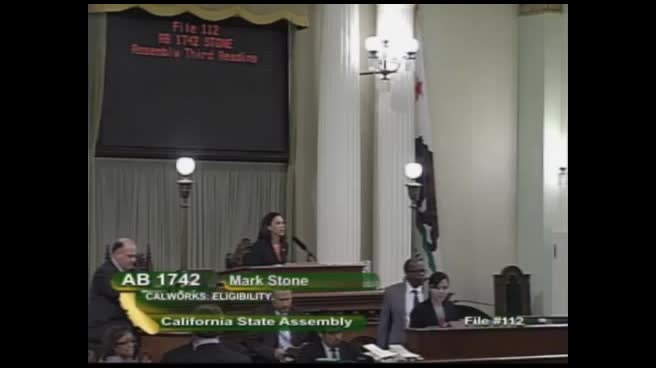
Bill Author

Bill Co-Author(s):