AB 2260: Emergency medical services.
- Session Year: 2015-2016
- House: Assembly
- Latest Version Date: 2016-05-27
Existing law, the Emergency Medical Services System and the Prehospital Emergency Medical Care Personnel Act, governs local emergency medical services (EMS) systems. The act establishes the Emergency Medical Services Authority, which is responsible for the coordination and integration of all state agencies concerning emergency medical services. Existing law requires a local EMS agency to plan, implement, and evaluate an emergency medical services system, as specified, and authorizes the local EMS agency to develop and submit a plan to the authority for an emergency medical services system according to prescribed guidelines that address data collection and evaluation, among other things.
This bill would require the authority, before January 1, 2018, to determine a single set of data elements and formatting for air ambulance providers to submit to local EMS agencies, after consulting with air ambulance providers and local EMS agencies. The bill would authorize the authority to reconvene these stakeholders annually to modify the elements and formatting of the data. The bill would prohibit the authority from mandating that an air ambulance provider use a specific electronic health record system to collect and share data with a local EMS agency. The bill would require an air ambulance provider to ensure that its electronic health record system can be integrated with the local EMS agencys data system, as specified. The bill would prohibit a local EMS agency from requiring additional data reporting from an air ambulance provider once the single data set has been established.
Existing law, the Emergency Medical Services System and the Prehospital Emergency Medical Care Personnel Act, governs local emergency medical services (EMS) systems. The act establishes the Emergency Medical Services Authority, which is responsible for the coordination and integration of all state agencies concerning emergency medical services. Existing law requires a local EMS agency to plan, implement, and evaluate an emergency medical services system, as specified, and authorizes the local EMS agency to develop and submit a plan to the authority for an emergency medical services system according to prescribed guidelines that address data collection and evaluation, among other things.
This bill would require the authority, on or before January 1, 2018, to provide or designate a single central repository for air ambulance providers to submit specified standardized health records, including data elements identified by the authority determine a single set of data elements and formatting for air ambulance providers to submit to local EMS agencies, after consulting with air ambulance providers and local EMS agencies. The bill would authorize the authority to modify those data elements as the authority determines is necessary. reconvene these stakeholders annually to modify the elements and formatting of the data. The bill would prohibit the authority from mandating that an air ambulance provider use a specific electronic health record system to collect and share data with the authority, and would require the authority to provide a local EMS agency with direct access to the data from the single central repository. a local EMS agency. The bill would prohibit a local EMS agency from requiring additional data reporting from an air ambulance provider once the single central repository data set has been established.
Existing law, the Emergency Medical Services System and the Prehospital Emergency Medical Care Personnel Act, governs local emergency medical services (EMS) systems. The act establishes the Emergency Medical Services Authority, which is responsible for the coordination and integration of all state agencies concerning emergency medical services. Existing law requires a local EMS agency to plan, implement, and evaluate an emergency medical services system, as specified, and authorizes the local EMS agency to develop and submit a plan to the authority for an emergency medical services system according to prescribed guidelines that address data collection and evaluation, among other things.
This bill would require the authority, on or before January 1, 2018, to provide or designate a single central repository for air ambulance providers to submit specified standardized health records, including data elements identified by the authority after consulting with local EMS agencies. The bill would authorize the authority to modify those data elements as the authority determines is necessary. The bill would prohibit the authority from mandating that an air ambulance provider use a specific electronic health record system to collect and share data with the authority, and would require the authority to provide a local EMS agency with direct access to the data from the single central repository. The bill would prohibit a local EMS agency from requiring additional data reporting from an air ambulance provider once the single central repository has been established.
(a)(1)Before January 1, 2018, the authority shall determine a single set of data elements and formatting for air ambulance providers to submit to local EMS agencies.
(2)(A)The authority shall convene interested stakeholders for the purpose of determining the single set of data elements and formatting.
(B)Stakeholders shall include representatives of the local EMS agencies, air ambulance providers, and the authority. The authority may reconvene the stakeholders annually to modify the elements and formatting of the data.
(3)The data elements and formatting shall comply with the National EMS Information System (NEMSIS) and California EMS Information System (CEMSIS) electronic health record.
(b)The authority shall not mandate that an air ambulance provider use a specific electronic health record system to collect and share data with the local EMS agency.
(c)In addition to submitting data to the local EMS agency, an air ambulance provider shall submit data directly to the authority if the authority requests it. When submitting data to the local EMS agency, the air ambulance provider shall ensure that the electronic health record system can be integrated with the local EMS agencys NEMSIS and CEMSIS compliant data system, so that the local EMS agency may collect data from the provider.
(d)After the single data set described in subdivision (a) has been established, a local EMS agency shall not require additional data elements or formatting from an air ambulance provider.
(a)On or before January 1, 2018, the authority shall provide or designate a single central repository for air ambulance providers to submit standardized National Emergency Medical Services Information System (NEMSIS) and California Emergency Medical Services Information System (CEMSIS) compliant electronic health records, including data elements identified by the authority after consulting with local EMS agencies. The authority may modify the data elements required by this subdivision as the authority determines is necessary.
1797.228.(a)(1)Before January 1, 2018, the authority shall determine a single set of data elements and formatting for air ambulance providers to submit to local EMS agencies.
(2)(A)The authority shall convene interested stakeholders for the purpose of determining the single set of data elements and formatting.
(B)Stakeholders shall include representatives of the local EMS agencies, air ambulance providers, and the authority. The authority may reconvene the stakeholders annually to modify the elements and formatting of the data.
(3)The data elements and formatting shall comply with the National EMS Information System (NEMSIS) and California EMS Information System (CEMSIS) electronic health record.
(b)The authority shall not mandate that an air ambulance provider use a specific electronic health record system to collect and share data with the authority. local EMS agency.
(c)The authority shall provide a local EMS agency with direct access to the data from the single central repository provided or designated pursuant to subdivision (a).
(d)Once the single central repository described in subdivision (a) has been established, a local EMS agency shall not require additional data reporting from an air ambulance provider.
(c)In addition to submitting data to the local EMS agency, an air ambulance provider shall submit data directly to the authority if the authority requests it.
(d)After the single data set described in subdivision (a) has been established, a local EMS agency shall not require additional data elements or formatting from an air ambulance provider.
(a)On or before January 1, 2018, the authority shall provide or designate a single central repository for air ambulance providers to submit standardized National Emergency Medical Services Information System (NEMSIS) and California Emergency Medical Services Information System (CEMSIS) compliant electronic health records, including data elements identified by the authority after consulting with local EMS agencies. The authority may modify the data elements required by this subdivision as the authority determines is necessary.
(b)The authority shall not mandate that an air ambulance provider use a specific electronic health record system to collect and share data with the authority.
(c)The authority shall provide a local EMS agency with direct access to the data from the single central repository provided or designated pursuant to subdivision (a).
(d)Once the single central repository described in subdivision (a) has been established, a local EMS agency shall not require additional data reporting from an air ambulance provider.
|
Date
|
Status
|
|---|---|
| May 31, 2016 | Read second time. Ordered to third reading. |
| Aug 11, 2016 | In committee: Held under submission. |
| Aug 1, 2016 | In committee: Referred to APPR. suspense file. |
| Jun 23, 2016 | From committee: Do pass and re-refer to Com. on APPR. (Ayes 9. Noes 0.) (June 22). Re-referred to Com. on APPR. |
| Jun 9, 2016 | Referred to Com. on HEALTH. |
| Jun 2, 2016 | In Senate. Read first time. To Com. on RLS. for assignment. |
| Jun 1, 2016 | Read third time. Passed. Ordered to the Senate. (Ayes 79. Noes 0.) |
| Jun 1, 2016 | Read third time. Passed. Ordered to the Senate. (Ayes 79. Noes 0. Page 5103.) |
| Jun 1, 2016 | Read third time. Passed. Ordered to the Senate. |
| Feb 18, 2016 | Read first time. To print. |
| May 27, 2016 | Read second time and amended. Ordered returned to second reading. |
| May 27, 2016 | From committee: Amend, and do pass as amended. (Ayes 20. Noes 0.) (May 27). |
| Apr 27, 2016 | In committee: Set, first hearing. Referred to APPR. suspense file. |
| Apr 13, 2016 | From committee: Do pass and re-refer to Com. on APPR. (Ayes 19. Noes 0.) (April 12). Re-referred to Com. on APPR. |
| Apr 6, 2016 | Re-referred to Com. on HEALTH. |
| Apr 5, 2016 | From committee chair, with author's amendments: Amend, and re-refer to Com. on HEALTH. Read second time and amended. |
| Mar 3, 2016 | Referred to Com. on HEALTH. |
| Feb 19, 2016 | From printer. May be heard in committee March 20. |
|
Date
|
Description
|
Location
|
Votes
|
|
|---|---|---|---|---|
| Aug 1, 2016 | Placed on suspense file | Senate Standing Committee on Appropriations |
Passed |
|
| Jun 22, 2016 | Do pass, but first be re-referred to the Committee on [Appropriations] | Senate Standing Committee on Health |
Passed |
|
| Jun 1, 2016 | AB 2260 WOOD Assembly Third Reading | Assembly Floor |
Passed |
|
| May 27, 2016 | Do pass as amended. | Assembly Standing Committee on Appropriations |
Passed |
|
| Apr 12, 2016 | Do pass and be re-referred to the Committee on [Appropriations] | Assembly Standing Committee on Health |
Passed |
This list shows positions taken on this bill by organizations on the date displayed, which is linked to the original source.
Positions by individuals are not included.
|
Organization
|
Position
|
Date
|
|---|---|---|
| Air Methods | ** Support | Jun 22, 2016 |
| California Association of Air Medical Services | * Support | Jun 22, 2016 |
| California Shock Trauma Air Rescue | ** Support | Jun 22, 2016 |
| Calstar | * Support | Apr 12, 2016 |
| Emergency Medical Services Authority | ** Against | Jun 22, 2016 |
| Mercy Air | ** Support | Jun 22, 2016 |
| PHIR Medical | * Support | Apr 12, 2016 |
SENATE COMMITTEE ON
Senator Ricardo Lara, Chair
2015 - 2016 Regular Session
AB 2260 (Wood) - Emergency medical services
Version: | Policy Vote: |
Urgency: | Mandate: |
Hearing Date: | Consultant: |
This bill meets the criteria for referral to the Suspense File.
Bill Summary:
AB 2260 would require the state Emergency Medical Services Authority to determine a single set of data elements to be used by air ambulance providers to submit data to local emergency medical services agencies.
Fiscal Impact:
- One-time costs of $130,000 over two years for development of the required data elements, consultation with stakeholders, and adoption of regulations by the Emergency Medical Services Authority (General Fund).
- Potential one-time costs of about $500,000 for information technology system changes, if the Emergency Medical Services Authority adopts set of data elements that would require modification of its information technology systems used to accept data from local emergency medical services authorities and EMS providers (General Fund). Whether or not the Authority will incur significant information technology costs will depend on the specifics of the data elements that are developed through the required process.
- Unknown reimbursable mandate costs to the state from local emergency medical services agencies who would be required to upgrade their electronic record systems to comply with the data standards adopted by the Emergency Medical Services Authority under the bill (General Fund). Depending on the data elements adopted by the Authority, local agencies may need to make significant upgrades to their electronic record systems to accept the data reported by EMS providers. Depending on the size of the local agency, those costs could be in the tens of thousands for a small agency to over $1 million for a large agency. If significant upgrades are required, those agencies could file a mandate claim with the state.
Background:
Under current law, the Emergency Medical Services Authority is required to develop planning guidelines for emergency medical services, including training requirements for emergency medical service personnel.
Current law authorizes counties to develop emergency medical services programs and designate a Local Emergency Medical Services Agency to oversee the local system. Current law requires emergency medical services providers to report data to their Local Emergency Medical Services Agency, following specified requirements.
Proposed Law:
AB 2260 would require the state Emergency Medical Services Authority to determine a single set of data elements to be used by air ambulance providers to submit data to local emergency medical services agencies.
Specific provisions of the bill would:
- Require the Authority to determine a single set of data elements and formatting for air ambulances to submit to local emergency medical services agencies, by January 1, 2018;
- Require the Authority to convene stakeholders regarding the data elements and formatting;
- Require the data elements and formatting to be compatible with both the National EMS Information System (NEMSIS) and the California EMS Information Sharing System (CEMSIS);
- Prohibit the Authority from requiring an air ambulance provider to use a specific electronic health record system;
- Require air ambulance providers to submit data directly to the Authority, upon request;
- Prohibit local emergency medical services agencies from requiring additional data from air ambulance providers.
Related Legislation:
- AB 1129 (Burke, Statutes of 2015) requires emergency medical services providers to use an electronic system compatible with NEMSIS and CEMSIS when reporting data to local emergency medical services agencies.
- AB 1621 (Lowenthal, 2014) would have required the Emergency Medical Services Authority to adopt a single, statewide standard for the collection of data relating to prehospital care and would have required local emergency medical services authorities to submit data to the authority using the standard. That bill was held on this committee’s Suspense File.
Staff Comments:
This bill is not keyed as imposing a mandate on local governments. However, the Emergency Medical Services Authority has statutory authority to develop planning and implementation guidelines for the state’s emergency medical services system. To the extent that the Authority adopts the required data elements and formatting through the regulatory process and requires EMS providers to use those data elements to report to local emergency medical services authorities, local agencies may face information technology costs to upgrade their existing systems. Local agencies that experience significant costs to do so are likely to file a reimbursable mandate claim with the Commission on State Mandates.
Under current law, EMS providers are required to use electronic health record systems that are compliant with state and national standards. The Emergency Medical Services Authority is in the process of working with stakeholders to develop policies and recommendations to improve EMS data collection for all types of EMS services.
-- END --
SENATE COMMITTEE ON HEALTH
Senator Ed Hernandez, O.D., Chair
BILL NO: AB 2260
AUTHOR: | Wood | ||
VERSION: | May 27, 2016 | ||
HEARING DATE: | June 22, 2016 | ||
CONSULTANT: | Vince Marchand | ||
SUBJECT: Emergency medical services
SUMMARY:
Requires the Emergency Medical Services Authority to determine a single set of data elements and formatting for air ambulance providers to submit to local emergency medical services agencies.
Existing law:
- Establishes the Emergency Medical Services Authority (EMSA), which is responsible for the coordination and integration of all state activities concerning emergency medical services (EMS), including the establishment of minimum standards, policies, and procedures.
- Requires EMSA to develop planning and implementation guidelines for EMS systems which address specified components, including communications, system organization and management, and data collection and evaluation.
- Authorizes counties to develop an EMS program and designate a local EMS agency (LEMSA) responsible for planning and implementing an EMS system, which includes day-to-day EMS system operations.
- Establishes an 18-member Commission on EMS, within the California Health and Human Services Agency (HHSA). Defines the duties of the Commission to include reviewing regulations, standards, and guidelines developed by EMSA; advising EMSA on a data collection system; advise on emergency facilities and services, emergency communications, medical equipment, personnel training, and various aspects of the EMS system; and, to make recommendations for further development of the EMS system.
- Requires an emergency medical care provider to do both of the following when collecting and submitting data to a LEMSA:
- Use an electronic health record system that exports data in a format that is compliant with the current versions of the California Emergency Medical Services Information System (CEMSIS) and the National Emergency Medical Services Information System (NEMSIS) standards and includes those data elements that are required by the LEMSA; and,
- Ensure that the electronic health record system can be integrated with the LEMSA’s data system, so that the LEMSA can collect data from the provider.
- Prohibits a LEMSA from mandating that an emergency medical provider use a specific electronic health record system to collect and share data with the LEMSA.
This bill:
- Requires EMSA, before January 1, 2018, to determine a single set of data elements and formatting for air ambulance providers to submit to LEMSAs.
- Requires EMSA to convene interested stakeholders for the purpose of determining the single set of data elements and formatting, requires stakeholders to include representatives of the LEMSAs and air ambulance providers, and permits EMSA to reconvene the stakeholders annually to modify the elements and formatting of the data.
- Requires the data elements and formatting to comply with the NEMSIS and CEMSIS electronic health records.
- Prohibits EMSA from mandating that an air ambulance provider use a specific electronic health record system to collect and share data with the LEMSA.
- Requires an air ambulance provider, in addition to submitting data to the LEMSA, to submit data directly to EMSA if the EMSA requests it.
- Requires the air ambulance provider, when submitting data to the LEMSA, to ensure that the electronic health record system can be integrated with the LEMSA’s NEMSIS and CEMSIS compliant data system, so that the LEMSA may collect data from the provider.
- Prohibits a LEMSA, after the single data set has been established by EMSA, from requiring additional data elements or formatting from an air ambulance provider.
FISCAL EFFECT:
According to the Assembly Appropriations Committee:
- One-time General Fund (GF) cost pressure for staff and consulting costs of $100,000 per year for two years, to support the stakeholder and regulatory process to create standardized data elements.
- If EMSA's Information Technology (IT) systems need to be modified in order to handle increased data reporting as a result developing standardized data elements specific to air ambulance providers, potential GF cost pressure in the range of $350,000 for IT changes. The current CEMSIS is already compatible with national standards, but may need to be customized to allow additional data elements to be reported. This cost estimate is approximate; the need for IT changes, the extent of changes, and the corresponding costs would depend on the outcome of the data standardization effort required by this bill.
PRIOR VOTES:
Assembly Floor: | 79 - 0 |
Assembly Appropriations Committee: | 20 - 0 |
Assembly Health Committee: | 19 - 0 |
COMMENTS:
- Author’s statement. According to the author, air ambulance providers are essential emergency service providers. They provide services on a regional or statewide basis, crossing county and local EMS authority lines on a regular basis. All pre-hospital providers must submit incident and patient data information to the local EMS agency. As a result of the multiple LEMSAs, air ambulance providers submit patient data to multiple providers. This can be duplicative, and often the data is not requested or reported in a uniform manner. This places a significant financial burden on air ambulance providers. This bill will require the submission of a single data set in a consistent format. The LEMSAs will be included in the development of the data elements to ensure their concerns are addressed.
- Background. EMSA is the lead agency and centralized resource to oversee emergency and disaster medical services. EMSA is charged with providing leadership in developing and implementing local EMS systems (called local EMS agencies, or LEMSAs) throughout California and setting standards for the training and scope-of-practice of various levels of EMS personnel. Day-to-day EMS system management is the responsibility of the local and regional EMS agency. California has 33 LEMSA systems that provide EMS for California's 58 counties. Regional systems are usually comprised of small, more rural, less-populated counties and single-county systems generally exist in the larger and more urban counties. There are seven regional LEMSAs that encompass multiple counties, and 26 single-county agencies.
- Description of problem addressed by this bill. According to information provided by the author, air ambulances provide services on a regional or statewide basis, crossing county and LEMSA lines on a regular basis. For any given emergency air transport, there may be up to three different LEMSA jurisdictions involved, including: 1) the LEMSA where the air ambulance is based; 2) the LEMSA where the patient was picked up; and 3) the LEMSA where the receiving hospital is located. All of these LEMSAs may have a reasonable basis for obtaining and reviewing the electronic health record. A single helicopter base may provide services to or from more than 10 different LEMSA’s. A single helicopter provider with multiple bases may, over the course of the year, provide services to or from the majority of the 33 LEMSAs in California. According to the author, as a result of the multiple LEMSAs, the data requirements can be duplicative, and often the data is not requested or reported in a uniform manner. The author argues this places a significant financial burden on air ambulance providers, who are asked to modify their processes and software to comply with the specific reporting nuances for each LEMSA. Further, the non-standardized LEMSA reporting methodology, and formatting, results in data that is not compatible or accessible on a regional or statewide basis. This limitation prohibits EMSA from conducting research or evaluation which could lead to improved patient care.
- NEMSIS and CEMSIS. NEMSIS was formed in 2001 by the National Association of State EMS Directors, in conjunction with the National Highway Traffic Safety Administration and the Trauma/EMS Systems program of the Health Resources and Services Administration’s Maternal Child Health Bureau, in order to develop a national EMS database. NEMSIS is the national repository that will be used to potentially store EMS data from every state in the nation, and was developed to help states collect more standardized elements to allow submission to the national database. According to EMSA, CEMSIS is a demonstration project for improving EMS data analysis across California. CEMSIS offers a secure, centralized data system for collecting data about individual EMS requests, patients treated at hospitals, and EMS provider organizations. EMSA states when fully operational with 100% local participation, it is estimated that CEMSIS will catalogue more than three million EMS events per year. According to EMSA, it will use the data to develop and coordinate high quality emergency medical care in California through activities such as healthcare quality programs that monitor patient care outcomes, agency collaboration across jurisdictional boundaries, and public health surveillance.
- Prior legislation. AB 1129 (Burke, Chapter 377, Statutes of 2015), required an EMS provider, when collecting and sharing data with a LEMSA, to use a system compatible with NEMSIS and CEMSIS.
AB 503 (Rodriguez, Chapter 362, Statutes of 2015), permitted a hospital to release patient-identifiable medical information to an EMS provider, to the LEMSA, or to EMSA, for quality assessment and improvement purposes.
AB 1621 (Lowenthal of 2014), would have required the EMSA to adopt a single statewide standard for the collection of information regarding pre-hospital care for CEMSIS, required EMSA to develop standards for electronic patient care records systems used by LEMSAs and local pre-hospital EMS providers to ensure compatibility with CEMSIS, and required LEMSAs to submit patient information to EMSA utilizing the single statewide standard in a timely manner. AB 1621 was held on the Senate Appropriations Committee suspense file.
SB 535 (Nielsen of 2013), would have increased the membership of the EMS Commission from 18 to 20 members, and required the additional members to be an air ambulance representative appointed by the Senate Committee on Rules, and representative appointed by the Speaker of the Assembly from a public agency that provides air rescue and transport. SB 535 was vetoed by the Governor.
- Support. This bill is sponsored by the California Association of Air Medical Services (CAAMS), which states that under the current system, most LEMSAs place varying data reporting requirements on EMS providers, including air ambulance providers, who may enter their jurisdiction to pick up or deliver a patient. CAAMS states that the data requirements can be duplicative, and is often not requested or reported in a uniform manner. CAAMS states that this places a financial burden on air ambulance providers who are asked to modify their processes and software to comply with the specific reporting nuances for each LEMSA. CAAMS states that this bill will provide a single data submission standard and eliminate the duplication amongst LEMSAs. California Shock Trauma Air Rescue, PHI Air Medical, and Mercy Air/Air Methods also all support this bill in order to coordinate and make consistent the data that they must submit to LEMSAs.
- Opposition. EMSA opposes this bill, stating that it would impose non-absorbable costs to EMSA in administrative and technical costs relating to supplementing CEMSIS. EMSA states that moreover, the intended creation of an air ambulance-specific dataset can be achieved administratively, and that it has engaged stakeholders through its Executive Data Advisory Group to improve data collection, quality, and use. According to EMSA, this workgroup is discussing how to address the collection and submission of data elements for all EMS providers.
SUPPORT AND OPPOSITION:
Support: California Association of Air Medical Services (sponsor)
Mercy Air/Air Methods
California Shock Trauma Air Rescue
PHI Air Medical
Oppose: Emergency Medical Services Authority
-- END --
ASSEMBLY THIRD READING
ATR Bill Id:
Author:(Wood)
As Amended Ver:May 27, 2016
Majority vote
Committee | Votes | Ayes | Noes |
Health | 19-0 | Wood, Maienschein, Bonilla, Burke, Campos, Chiu, Dababneh, Gomez, Roger Hernández, Lackey, Nazarian, Olsen, Patterson, Ridley-Thomas, Rodriguez, Santiago, Steinorth, Thurmond, Waldron | |
Appropriations | 20-0 | Gonzalez, Bigelow, Bloom, Bonilla, Bonta, Calderon, Chang, Daly, Eggman, Gallagher, Eduardo Garcia, Roger Hernández, Holden, Jones, Obernolte, Quirk, Santiago, Wagner, Weber, Wood |
|
SUMMARY: Requires the Emergency Medical Services Authority (EMSA) to, before January 1, 2018, determine a single set of data elements and formatting for air ambulance providers to submit to local emergency medical services agencies (LEMSAs). Specifically, this bill:
- Requires EMSA to convene interested stakeholders for the purpose of determining the single set of data elements and formatting. Specifies that the stakeholders include representatives of LEMSAs, air ambulance providers, and EMSA, and allows EMSA to reconvene the stakeholders annually to modify the elements and formatting of the data.
- Requires the data elements and formatting to comply with the National EMS Information System (NEMSIS) and California EMS Information System (CEMSIS) electronic health record.
- Prohibits EMSA from requiring an air ambulance provider to use a specific electronic health record system to collect and share data with LEMSAs.
- Requires air ambulance providers, in addition to submitting data to LEMSAs, to submit data directly to EMSA if requested.
- Requires air ambulance providers, when submitting data to the LEMSA, to ensure that the electronic health record system can be integrated with the LEMSA's NEMSIS and CEMSIS compliant data system, so the LEMSA can collect data from the provider.
- Prohibits a LEMSA from requiring additional data elements or formatting from an air ambulance provider, once the single set of data elements and formatting has been established as described in 1) above.
FISCAL EFFECT: According to the Assembly Appropriations Committee, one-time General Fund (GF) cost pressure for staff and consulting costs of $100,000 per year for two years, to support the stakeholder and regulatory process to create standardized data elements. If EMSA's Information Technology (IT) systems need to be modified in order to handle increased data reporting as a result developing standardized data elements specific to air ambulance providers, potential GF cost pressure in the range of $350,000 for IT changes. The current CEMSIS is already compatible with national standards, but may need to be customized to allow additional data elements to be reported. This cost estimate is approximate; the need for IT changes, the extent of changes, and the corresponding costs would depend on the outcome of the data standardization effort required by this bill.
COMMENTS: According to the author, air ambulance providers are essential EMS providers who provide services on a regional or statewide basis, crossing county and local EMS authority lines on a regular basis. All pre-hospital providers must submit incident and patient data information to the LEMSA with jurisdiction over each service call. As a result of the multiple LEMSAs, air ambulance providers submit patient data to multiple providers. This can be duplicative, and often the data is not requested or reported in a uniform manner. This duplication places a significant financial burden on air ambulance providers, which this bill will ease by requiring the submission of a single data set in a consistent format.
EMSA is charged with providing leadership in developing and implementing EMS systems throughout California and setting standards for the training and scope of practice of various levels of EMS personnel. The 33 LEMSAs throughout the state are responsible for planning, implementing, and managing local trauma care systems, including assessing needs, developing the system design, designating trauma care centers, collecting trauma care data, and quality assurance.
Air ambulances provide services on a regional or statewide basis. For any given emergency air transport, there may be up to three different LEMSA jurisdictions involved, including the LEMSA where the Air Ambulance is based; the LEMSA where the patient was picked up; and, the LEMSA where the receiving hospital is located. All of these LEMSAs may have a reasonable basis for obtaining and reviewing the electronic health record. A single helicopter base may provide services to and from more than 10 different LEMSAs. A single helicopter provider with multiple bases may, over the course of the year, provide services to and from the majority of the 33 LEMSAs.
NEMSIS was formed in 2001 by the National Association of State EMS Directors. NEMSIS is the national repository that will be used to potentially store EMS data from every state in the nation, and was developed to help states collect more standardized elements to allow submission to the national database. CEMSIS is a demonstration project for improving EMS data analysis across California. CEMSIS offers a secure, centralized data system for collecting data about individual EMS requests, patients treated at hospitals, and EMS provider organizations. At least 14 of California's 33 LEMSAs currently send a variety of local data collections to CEMSIS on a voluntary basis, and in return, these local agencies gain access to digital tools for running comprehensive reports on their own data at no cost.
Existing law requires an EMS provider to use an electronic health record system that exports data in a format that is compliant with the current versions of CEMSIS and NEMSIS and includes the data elements that are required by the LEMSA, and specifies that a LEMSA must not mandate that a provider use a specific system to collect and share the data. As noted by the author and sponsors, many LEMSAs have different data reporting requirements.
Analysis Prepared by: Lara Flynn / HEALTH / (916) 319-2097 FN: 0003226
Date of Hearing: April 27, 2016
ASSEMBLY COMMITTEE ON APPROPRIATIONS
Lorena Gonzalez, Chair
ABPCA Bill Id:AB 2260
Author:(Wood) – As Amended Ver:April 5, 2016
Policy Committee: | Health | Vote: | 19 - 0 |
|
|
Urgency: No State Mandated Local Program: No Reimbursable: No
SUMMARY:
This bill requires the Emergency Medical Services Authority (EMSA), before January 1, 2018, to determine a single set of data elements and formatting for air ambulance providers to submit to local emergency medical services agencies (LEMSAs).
It also requires stakeholder involvement in the development of data elements, prohibits LEMSAs from requesting additional data beyond the single data set, and requires providers to submit data to EMSA if requested.
FISCAL EFFECT:
- One-time GF cost pressure for staff and consulting costs of $100,000 per year for two years, to support the stakeholder and regulatory process to create standardized data elements.
- If EMSA's Information Technology (IT) systems need to be modified in order to handle increased data reporting as a result developing standardized data elements specific to air ambulance providers, potential GF cost pressure in the range of $350,000 for IT changes. The current California EMSA Information System (CEMSIS) is already compatible with national standards, but may need to be customized to allow additional data elements to be reported. This cost estimate is approximate; the need for IT changes, the extent of changes, and the corresponding costs would depend on the outcome of the data standardization effort required by this bill.
COMMENTS:
- Purpose. According to the author, air ambulance providers are essential EMS providers who provide services on a regional or statewide basis, crossing county and local EMS authority lines on a regular basis. These providers must submit incident and patient data information to the LEMSA with jurisdiction over each service call, which could be multiple jurisdictions. This bill seeks to standardize data collection in order to streamline reporting for all stakeholders, and allow for better aggregation and comparability of data. This bill is sponsored by the California Association of Air Medical Services and has no opposition.
- Background. EMSA provides leadership in developing and implementing EMS systems throughout California and setting standards for the training and scope of practice of various levels of EMS personnel. EMSA also has responsibility for promoting disaster medical preparedness and coordinating the state's disaster medical response. The 33 LEMSAs throughout the state are responsible for day-to-day management of the local EMS systems.
Prehospital data collection and an emphasis on quality improvement is an area of focus of EMSA, who is working to increase and improve LEMSA and state EMS data capacities and capabilities, and to standardize the collection of prehospital data in LEMSAs.
- Prior Legislation.
- AB 1129 (Burke), Chapter 377, Statutes of 2015, requires an EMS provider, when collecting and sharing data with a LEMSA, to use a system compatible with state and national standards.
- AB 1621 (Lowenthal) of 2014, required EMSA to adopt a single statewide standard for the collection of information regarding pre-hospital care, required EMSA to develop standards for electronic patient care records systems used by LEMSAs and local pre-hospital EMS providers to ensure compatibility, and required LEMSAs to submit patient information to EMSA utilizing the single statewide standard in a timely manner. AB 1621 was held on the Suspense File of the Senate Appropriations Committee.
Analysis Prepared by: Lisa Murawski / APPR. / (916) 319-2081
Date of Hearing: April 12, 2016
ASSEMBLY COMMITTEE ON HEALTH
Jim Wood, Chair
ABPCA Bill Id:AB 2260 (
Author:Wood) – As Amended Ver:April 5, 2016
SUBJECT: Emergency medical services.
SUMMARY: Requires the Emergency Medical Services Authority (EMSA) to, before January 1, 2018, determine a single set of data elements and formatting for air ambulance providers to submit to local emergency medical services agencies (LEMSAs). Specifically, this bill:
- Requires EMSA to convene interested stakeholders for the purpose of determining the single set of data elements and formatting.
- Specifies that the stakeholders include representative of LEMSAs, air ambulance providers, and EMSA, and allows EMSA to reconvene the stakeholders annually to modify the elements and formatting of the data.
- Requires the data elements and formatting to comply with the National EMS Information System (NEMSIS) and California EMS Information System (CEMSIS) electronic health record.
- Prohibits EMSA from requiring an air ambulance provider to use a specific electronic health record system to collect and share data with LEMSAs.
- Requires air ambulance providers, in addition to submitting data to LEMSAs, to submit data directly to EMSA if requested.
- Prohibits a LEMSA from requiring additional data elements or formatting from an air ambulance provider, once the single set of data elements and formatting has been established as described in 1) above.
EXISTING LAW:
- Establishes EMSA, which coordinates and integrates all state activities concerning emergency medical services (EMS), including the establishment of minimum standards, policies, and procedures.
- Requires EMSA to develop planning and implementation guidelines for EMS systems which address specified components, including communications, system organization and management, and data collection, and evaluation.
- Authorizes counties to develop an EMS program and designate a LEMSA responsible for planning and implementing an EMS system, which includes day-to-day EMS system operations.
- Establishes an 18-member Commission on EMS, within the California Health and Human Services Agency. Defines the duties of the Commission to include reviewing regulations, standards, and guidelines developed by EMSA; advising EMSA on a data collection system; advise on emergency facilities and services, emergency communications, medical equipment, personnel training, and various aspects of the EMS system; and, to make recommendations for further development of the EMS system.
- Requires an EMS provider, when collecting and sharing data with a LEMSA, to use a system compatible with CEMSIS and NEMSIS standards. Prohibits a LEMSA from mandating that an EMS provider use a specific system to collect and share this data.
FISCAL EFFECT: This bill has not been analyzed by a fiscal committee.
COMMENTS:
- PURPOSE OF THIS BILL. According to the author, air ambulance providers are essential EMS providers who provide services on a regional or statewide basis, crossing county and local EMS authority lines on a regular basis. The author states, all pre-hospital providers must submit incident and patient data information to the LEMSA with jurisdiction over each service call. As a result of the multiple LEMSA’s, air ambulance providers submit patient data to multiple providers. This can be duplicative, and often the data is not requested or reported in a uniform manner. The author asserts this duplication places a significant financial burden on air ambulance providers, which this bill will ease by requiring the submission of a single data set in a consistent format. The author also notes LEMSAs will be included in the development of the data elements to ensure their concerns are addressed.
- BACKGROUND.
- EMSA and LEMSAs. EMSA is charged with providing leadership in developing and implementing EMS systems throughout California and setting standards for the training and scope of practice of various levels of EMS personnel. EMSA also has responsibility for promoting disaster medical preparedness throughout the state, and, when required, coordinating and supporting the state's medical response to major disasters.
The 33 LEMSAs throughout the state are responsible for planning, implementing, and managing local trauma care systems, including assessing needs, developing the system design, designating trauma care centers, collecting trauma care data, and quality assurance. - Air ambulance providers. Air ambulances provide services on a regional or statewide basis. For any given emergency air transport, there may be up to three different LEMSA jurisdictions involved, including the LEMSA where the Air Ambulance is based; the LEMSA where the patient was picked up; and, the LEMSA where the receiving hospital is located. All of these LEMSAs may have a reasonable basis for obtaining and reviewing the electronic health record. A single helicopter base may provide services to and from more than 10 different LEMSAs. A single helicopter provider with multiple bases may, over the course of the year, provide services to and from the majority of the 33 LEMSAs.
- NEMSIS and CEMSIS. NEMSIS was formed in 2001 by the National Association of State EMS Directors, in conjunction with the National Highway Traffic Safety Administration and the Trauma/EMS Systems program of the Health Resources and Services Administration’s Maternal Child Health Bureau, in order to develop a national EMS database. NEMSIS is the national repository that will be used to potentially store EMS data from every state in the nation, and was developed to help states collect more standardized elements to allow submission to the national database.
- EMSA and LEMSAs. EMSA is charged with providing leadership in developing and implementing EMS systems throughout California and setting standards for the training and scope of practice of various levels of EMS personnel. EMSA also has responsibility for promoting disaster medical preparedness throughout the state, and, when required, coordinating and supporting the state's medical response to major disasters.
CEMSIS is a demonstration project for improving EMS data analysis across California. CEMSIS offers a secure, centralized data system for collecting data about individual EMS requests, patients treated at hospitals, and EMS provider organizations. EMSA states that at least 14 of California’s 33 LEMSAs currently send a variety of local data collections to CEMSIS on a voluntary basis, and in return, these local agencies gain access to digital tools for running comprehensive reports on their own data at no cost.
EMSA states when fully operational with 100% local participation, it is estimated that CEMSIS will catalogue more than 3 million EMS events per year. According to EMSA, it will use the data to develop and coordinate high quality emergency medical care in California through activities such as healthcare quality programs that monitor patient care outcomes, agency collaboration across jurisdictional boundaries, and public health surveillance.
In order to improve local data quality and prepare California EMS for health information exchange, EMSA is planning to adopt new data standards known as NEMSIS Version 3 (V3), which will provide a set of tools that EMS professionals can use to integrate EMS patient care data with electronic medical records at hospitals, leading to better patient outcomes and a smarter system of care. On October 1, 2014, the NEMSIS Technical Advisory Committee announced that California was the first state to successfully transmit NEMESIS V3 EMS data to the national repository using field and state level software “certified compliant” with the V3 standard. According to EMSA, through its partnership with the Inland Counties Emergency Medical Agency, test data from three different software vendors was sent to NEMSIS.
- LEMSA reporting requirements. Existing law requires an EMS provider to use an electronic health record system that exports data in a format that is compliant with the current versions of CEMSIS and NEMSIS and includes the data elements that are required by the LEMSA, and specifies that a LEMSA must not mandate that a provider use a specific system to collect and share the data. As noted by the author and sponsors, many LEMSAs have different data reporting requirements.
- SUPPORT. The California Association of Air Medical Services (CAAMS) is the sponsor of this bill and states, all prehospital EMS providers are coordinated through the 33 LEMSAs in California and overseen by EMSA. CAAMS notes that multiple LEMSAs requesting data in multiple formats require air ambulance providers to modify their processes and software to comply with each LEMSAs specific reporting requirements. CAAMS also notes that the non-standardized LEMSA reporting methodology and formatting results in data that is not compatible or accessible on a region-wide or statewide basis and this limitation prohibits EMSA from conducting research or evaluation which could lead to improved patient care.
- PREVIOUS LEGISLATION.
- AB 1129 (Burke), Chapter 377, Statutes of 2015, requires an EMS provider, when collecting and sharing data with a LEMSA, to use a system compatible with CEMSIS and NEMSIS standards. Prohibits a LEMSA from mandating that an EMS provider use a specific system to collect and share this data.
- AB 1621 (Lowenthal) of 2014, would have required EMSA to adopt a single statewide standard for the collection of information regarding pre-hospital care for CEMSIS, required EMSA to develop standards for electronic patient care records systems used by LEMSAs and local pre-hospital EMS providers to ensure compatibility with CEMSIS, and required LEMSAs to submit patient information to EMSA utilizing the single statewide standard in a timely manner. AB 1621 was held on the Senate Appropriations Committee suspense file.
- SB 535 (Nielsen) of 2013 would have revised the membership of the Commission on EMS by adding one representative from a public agency that provides air rescue and transport to be appointed by the Speaker of the Assembly and one air ambulance representative appointed by the Senate Committee on Rules from a list of three names submitted by CAAMS. SB 535 was vetoed by the Governor.
REGISTERED SUPPORT / OPPOSITION:
Support
California Association of Air Medical Services (sponsor)
California Shock Trauma Air Rescue
Mercy Air/Air Methods
PHI Air Medical
Opposition
None on file.
Analysis Prepared by: Lara Flynn / HEALTH / (916) 319-2097
Discussed in Hearing
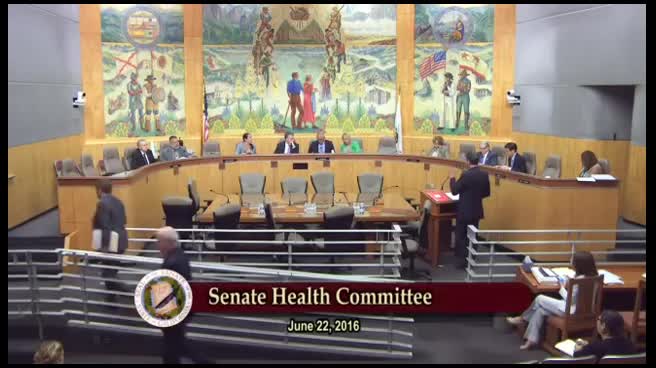 5MIN
Senate Standing Committee on Health
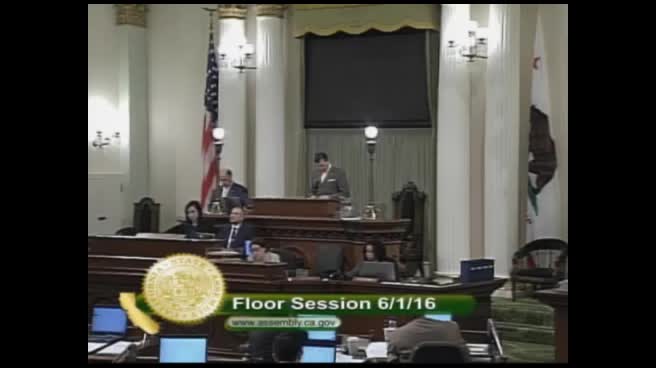 2MIN
Assembly Floor
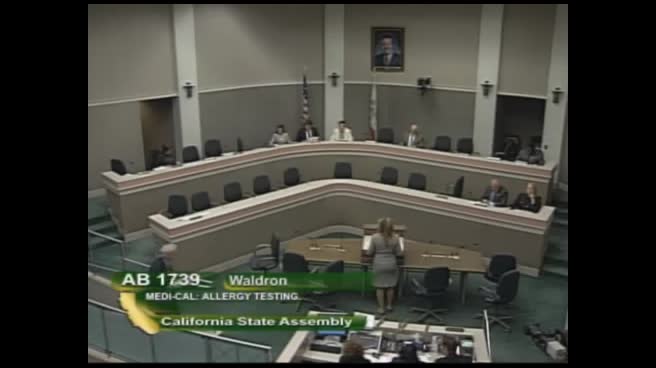 6MIN
Assembly Standing Committee on Health
Bill Author

Bill Co-Author(s):