AB 253: Mental health.
- Session Year: 2015-2016
- House: Assembly
- Latest Version Date: 2015-04-30
Existing law, the Mental Health Services Act, an initiative measure enacted by the voters as Proposition 63 at the November 2, 2004, statewide general election, establishes the Mental Health Services Fund to fund various county mental health programs, and establishes the Mental Health Services Oversight and Accountability Commission, which consists of 16 members, to oversee the administration of various parts of the act. Existing law authorizes the act to be amended by a 2/3 vote of the Legislature if the amendments are consistent with, and further the purposes of, the act.
This bill would expand the commission by 2 additional members who each have specified mental health knowledge and experience, to be appointed by the Governor. By amending the provisions of the Mental Health Services Act, this bill requires a 2/3 vote of the Legislature.
Existing law, the Veterans Housing and Homeless Prevention Bond Act of 2014 (bond act), an initiative measure enacted by the voters as Proposition 41 at the June 3, 2014, primary election, authorized $600 million in bonds to provide multifamily housing to low-income veterans and supportive housing for homeless veterans, through the Veterans Housing and Homeless Prevention Act of 2014. Existing law, the Veterans Housing and Homeless Prevention Act of 2014, provides for the acquisition, construction, rehabilitation, and preservation of affordable multifamily supportive housing, affordable transitional housing, affordable rental housing, and related facilities for veterans and their families to allow veterans to access and maintain housing stability. Existing law requires the California Housing Finance Agency, the Department of Housing and Community Development, and the Department of Veterans Affairs, to work collaboratively for those purposes.
This bill would require those departments to give a preference to applicants for funding pursuant to the bond act for supportive housing projects when the applicant can demonstrate a multiyear commitment of Mental Health Services Act funding for the applicants housing project funding plan.
Existing law requires county mental health plans, whether administered by public or private entities, to be governed by specified guidelines, including, among other things, providing for culturally competent and age-appropriate services, to the extent feasible. Existing law requires a mental health plan to have a cultural competence plan with specified components.
This bill would require the Department of Health Care Services to submit post the cultural competence plan component of each county mental health plan to the Legislature on a dedicated Internet Web page within 30 days of the department receiving the plan. plan and to notify the appropriate fiscal and policy committees of the Legislature when the plan is available on the Internet Web page.
The bill would declare that the amendments to the provisions of the Mental Health Services Act are consistent with, and further the purposes of, that act.
Existing law, the Mental Health Services Act, an initiative measure enacted by the voters as Proposition 63 at the November 2, 2004, statewide general election, establishes the Mental Health Services Fund to fund various county mental health programs, and establishes the Mental Health Services Oversight and Accountability Commission, which consists of 16 members, to oversee the administration of various parts of the act. Existing law authorizes the act to be amended by a 2/3 vote of the Legislature if the amendments are consistent with, and further the purposes of, the act.
This bill would state the intent of the Legislature to enact legislation to ensure the appropriate oversight mechanisms are in place to capture the best practices at the county level in order to ensure that veterans have access to the services provided by the act.
This bill would expand the commission by 2 additional members who each have specified mental health knowledge and experience, to be appointed by the Governor. By amending the provisions of the Mental Health Services Act, this bill requires a 2/3 vote of the Legislature.
Existing law, the Veterans Housing and Homeless Prevention Bond Act of 2014 (bond act), an initiative measure enacted by the voters as Proposition 41 at the June 3, 2014, primary election, authorized $600 million in bonds to provide multifamily housing to low-income veterans and supportive housing for homeless veterans, through the Veterans Housing and Homeless Prevention Act of 2014. Existing law, the Veterans Housing and Homeless Prevention Act of 2014, provides for the acquisition, construction, rehabilitation, and preservation of affordable multifamily supportive housing, affordable transitional housing, affordable rental housing, and related facilities for veterans and their families to allow veterans to access and maintain housing stability. Existing law requires the California Housing Finance Agency, the Department of Housing and Community Development, and the Department of Veterans Affairs, to work collaboratively for those purposes.
This bill would require those departments to give a preference to applicants for funding pursuant to the bond act for supportive housing projects when the applicant can demonstrate a multiyear commitment of Mental Health Services Act funding for the applicants housing project funding plan.
Existing law requires county mental health plans, whether administered by public or private entities, to be governed by specified guidelines, including, among other things, providing for culturally competent and age-appropriate services, to the extent feasible. Existing law requires a mental health plan to have a cultural competence plan with specified components.
This bill would require the Department of Health Care Services to submit the cultural competence plan component of each county mental health plan to the Legislature within 30 days of the department receiving the plan.
The bill would declare that the amendments to the provisions of the Mental Health Services Act are consistent with, and further the purposes of, that act.
Existing law, the Mental Health Services Act, an initiative measure enacted by the voters as Proposition 63 at the November 2, 2004, statewide general election, establishes the Mental Health Services Fund to fund various county mental health programs, and establishes the Mental Health Services Oversight and Accountability Commission to oversee the administration of various parts of the act.
This bill would state the intent of the Legislature to enact legislation to ensure the appropriate oversight mechanisms are in place to capture the best practices at the county level in order to ensure that veterans have access to the services provided by the act.
The departments shall give a preference to applicants for funding from the Veterans Housing and Homeless Prevention Bond Act of 2014 for supportive housing projects when the applicant can demonstrate a multiyear commitment of Mental Health Services Act funding for the applicants project funding plan.
SEC. 2.Section 5845 of the Welfare and Institutions Code is amended to read:5845.(a)The Mental Health Services Oversight and Accountability Commission is hereby established to oversee Part 3 (commencing with Section 5800), the Adult and Older Adult Mental Health System of Care Act; Part 3.1 (commencing with Section 5820), Human Resources, Education, and Training Programs; Part 3.2 (commencing with Section 5830), Innovative Programs; Part 3.6 (commencing with Section 5840), Prevention and Early Intervention Programs; and Part 4 (commencing with Section 5850), the Childrens Mental Health Services Act. The commission shall replace the advisory committee established pursuant to Section 5814. The commission shall consist of 18 voting members as follows:
(1)The Attorney General or his or her designee.
(2)The Superintendent of Public Instruction or his or her designee.
(3)The Chairperson of the Senate Health and Human Services Committee or another member of the Senate selected by the President pro Tempore of the Senate.
(4)The Chairperson of the Assembly Health Committee or another member of the Assembly selected by the Speaker of the Assembly.
(5)Two persons with a severe mental illness, a family member of an adult or senior with a severe mental illness, a family member of a child who has or has had a severe mental illness, a physician specializing in alcohol and drug treatment, a mental health professional, a county sheriff, a superintendent of a school district, a representative of a labor organization, a representative of an employer with less than 500 employees and a representative of an employer with more than 500 employees, a person with knowledge and experience in reducing mental health disparities, a veteran with knowledge about veterans mental health issues, and a representative of a health care services plan or insurer, all appointed by the Governor. In making appointments, the Governor shall seek individuals who have had personal or family experience with mental illness.
(b)Members shall serve without compensation, but shall be reimbursed for all actual and necessary expenses incurred in the performance of their duties.
(c)The term of each member shall be three years, to be staggered so that approximately one-third of the appointments expire in each year.
(d)In carrying out its duties and responsibilities, the commission may do all of the following:
(1)Meet at least once each quarter at any time and location convenient to the public as it may deem appropriate. All meetings of the commission shall be open to the public.
(2)Within the limit of funds allocated for these purposes, pursuant to the laws and regulations governing state civil service, employ staff, including any clerical, legal, and technical assistance as may appear necessary. The commission shall administer its operations separate and apart from the State Department of Health Care Services and the California Health and Human Services Agency.
(3)Establish technical advisory committees such as a committee of consumers and family members.
(4)Employ all other appropriate strategies necessary or convenient to enable it to fully and adequately perform its duties and exercise the powers expressly granted, notwithstanding any authority expressly granted to any officer or employee of state government.
(5)Enter into contracts.
(6)Obtain data and information from the State Department of Health Care Services, the Office of Statewide Health Planning and Development, or other state or local entities that receive Mental Health Services Act funds, for the commission to utilize in its oversight, review, training and technical assistance, accountability, and evaluation capacity regarding projects and programs supported with Mental Health Services Act funds.
(7)Participate in the joint state-county decisionmaking process, as contained in Section 4061, for training, technical assistance, and regulatory resources to meet the mission and goals of the states mental health system.
(8)Develop strategies to overcome stigma and discrimination, and accomplish all other objectives of Part 3.2 (commencing with Section 5830), 3.6 (commencing with Section 5840), and the other provisions of the act establishing this commission.
(9)At any time, advise the Governor or the Legislature regarding actions the state may take to improve care and services for people with mental illness.
(10)If the commission identifies a critical issue related to the performance of a county mental health program, it may refer the issue to the State Department of Health Care Services pursuant to Section 5655.
(11)Assist in providing technical assistance to accomplish the purposes of the Mental Health Services Act, Part 3 (commencing with Section 5800), and Part 4 (commencing with Section 5850) in collaboration with the State Department of Health Care Services and in consultation with the California Mental Health Directors Association.
(12)Work in collaboration with the State Department of Health Care Services and the California Mental Health Planning Council, and in consultation with the California Mental Health Directors Association, in designing a comprehensive joint plan for a coordinated evaluation of client outcomes in the community-based mental health system, including, but not limited to, parts listed in subdivision (a). The California Health and Human Services Agency shall lead this comprehensive joint plan effort.
SEC. 3.Section 14684 of the Welfare and Institutions Code is amended to read:14684.Notwithstanding any other law, and to the extent permitted by federal law, mental health plans, whether administered by public or private entities, shall be governed by the following guidelines:
(a)State and federal Medi-Cal funds identified for the diagnosis and treatment of mental illness shall be used solely for those purposes. Administrative costs incurred by counties for activities necessary for the administration of the mental health plan shall be clearly identified and shall be reimbursed in a manner consistent with federal Medicaid requirements and the approved Medicaid state plan and waivers. Administrative requirements shall be based on and limited to federal Medicaid requirements and the approved Medicaid state plan and waivers, and shall not impose costs exceeding funds available for that purpose.
(b)The development of the mental health plan shall include a public planning process that includes a significant role for Medi-Cal beneficiaries, family members, mental health advocates, providers, and public and private contract agencies.
(c)The mental health plan shall include appropriate standards relating to quality, access, and coordination of services within a managed system of care, and costs established under the plan, and shall provide opportunities for existing Medi-Cal providers to continue to provide services under the mental health plan, as long as the providers meet those standards.
(d)Continuity of care for current recipients of services shall be ensured in the transition to managed mental health care.
(e)Medi-Cal covered specialty mental health services shall be provided in the beneficiarys home community, or as close as possible to the beneficiarys home community. Pursuant to the objectives of the rehabilitation option described in subdivision (a) of Section 14021.4, mental health services may be provided in a facility, a home, or other community-based site.
(f)Medi-Cal beneficiaries whose mental or emotional condition results or has resulted in functional impairment, as defined by the department, shall be eligible for covered specialty mental health services. Emphasis shall be placed on adults with serious and persistent mental illness and children with serious emotional disturbances, as defined by the department.
(g)Mental health plans shall provide specialty mental health services to eligible Medi-Cal beneficiaries, including both adults and children. Specialty mental health services include Early and Periodic Screening, Diagnosis, and Treatment Services to eligible Medi-Cal beneficiaries under the age of 21 years of age pursuant to Section 1396d(a)(4)(B) of Title 42 of the United States Code.
(h)Each mental health plan shall include a mechanism for monitoring the effectiveness of, and evaluating accessibility and quality of, services available. The plan shall utilize and be based upon state-adopted performance outcome measures and shall include review of individual service plan procedures and practices, a beneficiary satisfaction component, and a grievance system for beneficiaries and providers.
(i)Each mental health plan shall provide for culturally competent and age-appropriate services, to the extent feasible. The mental health plan shall assess the cultural competency needs of the program. The mental health plan shall include, as part of the quality assurance program required by Section 14725, a process to accommodate the significant needs with reasonable timeliness. The department shall provide demographic data and technical assistance. Performance outcome measures shall include a reliable method of measuring and reporting the extent to which services are culturally competent and age-appropriate. age appropriate. The department shall submit post the cultural competence plan component of each mental health plan to the Legislature, in compliance with Section 9795 of the Government Code, on a dedicated Internet Web page within 30 days after the mental health plan has been submitted to the department for approval. approval and shall notify the appropriate fiscal and policy committees of the Legislature once the plan is available on the Internet Web page.
SEC. 4.The Legislature finds and declares that Section 2 of this act is consistent with, and furthers the purposes of, the Mental Health Services Act.
The departments shall give a preference to applicants for funding from the Veterans Housing and Homeless Prevention Bond Act of 2014 for supportive housing projects when the applicant can demonstrate a multiyear commitment of Mental Health Services Act funding for the applicants project funding plan.
SEC. 2.Section 5845 of the Welfare and Institutions Code is amended to read:5845.(a)The Mental Health Services Oversight and Accountability Commission is hereby established to oversee Part 3 (commencing with Section 5800), the Adult and Older Adult Mental Health System of Care Act; Part 3.1 (commencing with Section 5820), Human Resources, Education, and Training Programs; Part 3.2 (commencing with Section 5830), Innovative Programs; Part 3.6 (commencing with Section 5840), Prevention and Early Intervention Programs; and Part 4 (commencing with Section 5850), the Childrens Mental Health Services Act. The commission shall replace the advisory committee established pursuant to Section 5814. The commission shall consist of 16 18 voting members as follows:
(1)The Attorney General or his or her designee.
(2)The Superintendent of Public Instruction or his or her designee.
(3)The Chairperson of the Senate Health and Human Services Committee or another member of the Senate selected by the President pro Tempore of the Senate.
(4)The Chairperson of the Assembly Health Committee or another member of the Assembly selected by the Speaker of the Assembly.
(5)Two persons with a severe mental illness, a family member of an adult or senior with a severe mental illness, a family member of a child who has or has had a severe mental illness, a physician specializing in alcohol and drug treatment, a mental health professional, a county sheriff, a superintendent of a school district, a representative of a labor organization, a representative of an employer with less than 500 employees and a representative of an employer with more than 500 employees, a person with knowledge and experience in reducing mental health disparities, a veteran with knowledge about veterans mental health issues, and a representative of a health care services plan or insurer, all appointed by the Governor. In making appointments, the Governor shall seek individuals who have had personal or family experience with mental illness.
(b)Members shall serve without compensation, but shall be reimbursed for all actual and necessary expenses incurred in the performance of their duties.
(c)The term of each member shall be three years, to be staggered so that approximately one-third of the appointments expire in each year.
(d)In carrying out its duties and responsibilities, the commission may do all of the following:
(1)Meet at least once each quarter at any time and location convenient to the public as it may deem appropriate. All meetings of the commission shall be open to the public.
(2)Within the limit of funds allocated for these purposes, pursuant to the laws and regulations governing state civil service, employ staff, including any clerical, legal, and technical assistance as may appear necessary. The commission shall administer its operations separate and apart from the State Department of Health Care Services and the California Health and Human Services Agency.
(3)Establish technical advisory committees such as a committee of consumers and family members.
(4)Employ all other appropriate strategies necessary or convenient to enable it to fully and adequately perform its duties and exercise the powers expressly granted, notwithstanding any authority expressly granted to any officer or employee of state government.
(5)Enter into contracts.
(6)Obtain data and information from the State Department of Health Care Services, the Office of Statewide Health Planning and Development, or other state or local entities that receive Mental Health Services Act funds, for the commission to utilize in its oversight, review, training and technical assistance, accountability, and evaluation capacity regarding projects and programs supported with Mental Health Services Act funds.
(7)Participate in the joint state-county decisionmaking process, as contained in Section 4061, for training, technical assistance, and regulatory resources to meet the mission and goals of the states mental health system.
(8)Develop strategies to overcome stigma and discrimination, and accomplish all other objectives of Part 3.2 (commencing with Section 5830), 3.6 (commencing with Section 5840), and the other provisions of the act establishing this commission.
(9)At any time, advise the Governor or the Legislature regarding actions the state may take to improve care and services for people with mental illness.
(10)If the commission identifies a critical issue related to the performance of a county mental health program, it may refer the issue to the State Department of Health Care Services pursuant to Section 5655.
(11)Assist in providing technical assistance to accomplish the purposes of the Mental Health Services Act, Part 3 (commencing with Section 5800), and Part 4 (commencing with Section 5850) in collaboration with the State Department of Health Care Services and in consultation with the California Mental Health Directors Association.
(12)Work in collaboration with the State Department of Health Care Services and the California Mental Health Planning Council, and in consultation with the California Mental Health Directors Association, in designing a comprehensive joint plan for a coordinated evaluation of client outcomes in the community-based mental health system, including, but not limited to, parts listed in subdivision (a). The California Health and Human Services Agency shall lead this comprehensive joint plan effort.
SEC. 3.Section 14684 of the Welfare and Institutions Code is amended to read:14684.(a)Notwithstanding any other provision of state law, and to the extent permitted by federal law, mental health plans, whether administered by public or private entities, shall be governed by the following guidelines:
(1)
(a)State and federal Medi-Cal funds identified for the diagnosis and treatment of mental illness shall be used solely for those purposes. Administrative costs incurred by counties for activities necessary for the administration of the mental health plan shall be clearly identified and shall be reimbursed in a manner consistent with federal Medicaid requirements and the approved Medicaid state plan and waivers. Administrative requirements shall be based on and limited to federal Medicaid requirements and the approved Medicaid state plan and waivers, and shall not impose costs exceeding funds available for that purpose.
(2)
(b)The development of the mental health plan shall include a public planning process that includes a significant role for Medi-Cal beneficiaries, family members, mental health advocates, providers, and public and private contract agencies.
(3)
(c)The mental health plan shall include appropriate standards relating to quality, access, and coordination of services within a managed system of care, and costs established under the plan, and shall provide opportunities for existing Medi-Cal providers to continue to provide services under the mental health plan, as long as the providers meet those standards.
(4)
(d)Continuity of care for current recipients of services shall be ensured in the transition to managed mental health care.
(5)
(e)Medi-Cal covered specialty mental health services shall be provided in the beneficiarys home community, or as close as possible to the beneficiarys home community. Pursuant to the objectives of the rehabilitation option described in subdivision (a) of Section 14021.4, mental health services may be provided in a facility, a home, or other community-based site.
(6)
(f)Medi-Cal beneficiaries whose mental or emotional condition results or has resulted in functional impairment, as defined by the department, shall be eligible for covered specialty mental health services. Emphasis shall be placed on adults with serious and persistent mental illness and children with serious emotional disturbances, as defined by the department.
(7)
(g)Mental health plans shall provide specialty mental health services to eligible Medi-Cal beneficiaries, including both adults and children. Specialty mental health services include Early and Periodic Screening, Diagnosis, and Treatment Services to eligible Medi-Cal beneficiaries under the age of 21 pursuant to 42 U.S.C. Section 1396d(a)(4)(B) of Title 42 of the United States Code.
(8)
(h)Each mental health plan shall include a mechanism for monitoring the effectiveness of, and evaluating accessibility and quality of, services available. The plan shall utilize and be based upon state-adopted performance outcome measures and shall include review of individual service plan procedures and practices, a beneficiary satisfaction component, and a grievance system for beneficiaries and providers.
(9)
(i)Each mental health plan shall provide for culturally competent and age-appropriate services, to the extent feasible. The mental health plan shall assess the cultural competency needs of the program. The mental health plan shall include, as part of the quality assurance program required by Section 14725, a process to accommodate the significant needs with reasonable timeliness. The department shall provide demographic data and technical assistance. Performance outcome measures shall include a reliable method of measuring and reporting the extent to which services are culturally competent and age-appropriate. The department shall submit the cultural competence plan component of each mental health plan to the Legislature, in compliance with Section 9795 of the Government Code, within 30 days after the mental health plan has been submitted to the department for approval.
(b)This section shall become operative on July 1, 2012.
SEC. 4.The Legislature finds and declares that Section 2 of this act is consistent with, and furthers the purposes of, the Mental Health Services Act.
SECTION 1.It is the intent of the Legislature to enact legislation to ensure the appropriate oversight mechanisms are in place to capture the best practices at the county level in order to ensure that veterans have access to the services provided by the Mental Health Services Act.
It is the intent of the Legislature to enact legislation to ensure the appropriate oversight mechanisms are in place to capture the best practices at the county level in order to ensure that veterans have access to the services provided by the Mental Health Services Act.
|
Date
|
Status
|
|---|---|
| May 4, 2015 | Re-referred to Com. on APPR. |
| Jan 12, 2016 | In committee: Set, first hearing. Hearing canceled at the request of author. |
| Jun 25, 2015 | From committee: Do pass and re-refer to Com. on T. & H. (Ayes 8. Noes 0.) (June 24). Re-referred to Com. on T. & H. |
| Jun 11, 2015 | Referred to Coms. on HEALTH and T. & H. |
| Jun 1, 2015 | Read third time. Passed. Ordered to the Senate. (Ayes 79. Noes 0. Page 1688.) |
| Jun 1, 2015 | Read third time. Passed. Ordered to the Senate. |
| Jun 1, 2015 | In Senate. Read first time. To Com. on RLS. for assignment. |
| May 28, 2015 | Read second time. Ordered to third reading. |
| May 27, 2015 | From committee: Do pass. (Ayes 16. Noes 1.) (May 27). |
| Feb 9, 2015 | Read first time. To print. |
| Apr 30, 2015 | Read second time and amended. |
| Apr 29, 2015 | From committee: Amend, and do pass as amended and re-refer to Com. on APPR. (Ayes 19. Noes 0.) (April 28). |
| Apr 15, 2015 | From committee: Do pass and re-refer to Com. on HEALTH. (Ayes 4. Noes 0.) (April 15). Re-referred to Com. on HEALTH. |
| Apr 6, 2015 | Re-referred to Com. on H. & C.D. |
| Mar 26, 2015 | Referred to Coms. on H. & C.D. and HEALTH. |
| Mar 26, 2015 | From committee chair, with author's amendments: Amend, and re-refer to Com. on H. & C.D. Read second time and amended. |
| Feb 10, 2015 | From printer. May be heard in committee March 12. |
|
Date
|
Description
|
Location
|
Votes
|
|
|---|---|---|---|---|
| Jun 24, 2015 | Do pass, but first be re-referred to the Committee on [Transportation and Housing] | Senate Standing Committee on Health |
Passed |
|
| Jun 1, 2015 | AB 253 HERNÁNDEZ Assembly Third Reading | Assembly Floor |
Passed |
|
| May 27, 2015 | Do pass. | Assembly Standing Committee on Appropriations |
Passed |
|
| Apr 28, 2015 | Do pass as amended and be re-referred to the Committee on [Appropriations] | Assembly Standing Committee on Health |
Passed |
|
| Apr 15, 2015 | Do pass and be re-referred to the Committee on [Health] | Assembly Standing Committee on Housing and Community Development |
Passed |
This list shows positions taken on this bill by organizations on the date displayed, which is linked to the original source.
Positions by individuals are not included.
|
Organization
|
Position
|
Date
|
|---|---|---|
| American Legion-Department of California | ** Support | Jun 24, 2015 |
| AMVETS-Department of California | ** Support | Jun 24, 2015 |
| California Association of County Veteran Service Officers | ** Support | Jun 24, 2015 |
| California Association of Veteran Service Agencies | * Indeterminate | Jun 24, 2015 |
| California Association of Veteran Service Agencies | * Support | Jun 24, 2015 |
| California Association of Veteran Service Agencies- Co-Sponsor | ** Support | Apr 28, 2015 |
| California Military Officer Association of America | ** Support | Jun 24, 2015 |
| California Pan-Ethnic Health Network | ** Support | Jun 24, 2015 |
| California Primary Care Association | * Indeterminate | Jun 24, 2015 |
| California State Commanders Veterans Council | ** Support | Jun 24, 2015 |
| Californians for Disability Rights | * Indeterminate | Jun 24, 2015 |
| Disability Rights California | ** Support | Jun 24, 2015 |
| Little Hoover Commission | ** Support | Jun 24, 2015 |
| Mental Health America of California | ** Support | Jun 24, 2015 |
| National Association of Social Workers of California | * Indeterminate | Jun 24, 2015 |
| National Association Of Social Workers, California Chapter | * Support | Apr 28, 2015 |
| Racial and Ethnic Mental Health Disparities Coalition | ** Support | Jun 24, 2015 |
| REMHDCO | * Support | Apr 28, 2015 |
| Steinberg Institute | * Indeterminate | Jun 24, 2015 |
| Steinberg Institute | * Support | Jun 24, 2015 |
| VFW-Department of California | ** Support | Jun 24, 2015 |
| Vietnam Veterans of America-California State Council | ** Support | Jun 24, 2015 |
SENATE COMMITTEE ON TRANSPORTATION AND HOUSING
Senator Jim Beall, Chair
2015 - 2016 Regular
Bill No: AB 253 Hearing Date: 1/12/2016
Author: | Roger Hernández | ||
Version: | 4/30/2015 | ||
Urgency: | No | Fiscal: | Yes |
Consultant: | Alison Dinmore | ||
SUBJECT: Mental health
DIGEST: This bill requires state agencies to give a preference to applicants for funding under the Veterans Housing and Homeless Prevention Act of 2014 that demonstrate a multiyear commitment of Mental Health Services Act (MHSA) funding for the applicant’s project funding plan. This bill requires the Governor to appoint two additional members to the Mental Health Services Oversight and Accountability Commission with mental health experience, as specified. This bill also requires the Department of Health Care Services to post specified information from mental health plans to a dedicated Internet webpage and to notify appropriate committees of the Legislature, as specified.
ANALYSIS:
Existing law:
- Enacts the Veterans Housing and Homeless Prevention Bond Act of 2014 (VHHP or “the Act”), also known as Proposition 41, which authorized the issuance of $600 million in general obligation bonds to provide multifamily housing to veterans pursuant to the VHHP. The VHHP required the California Housing Finance Agency (CalHFA), California Department of Housing and Community Development (HCD), and California Department of Veterans Affairs (CalVet) to establish and implement a program that focuses on veterans at risk of homelessness or experiencing temporary or chronic homelessness. This program will fund the acquisition, construction, rehabilitation, and preservation of affordable multifamily supportive housing, affordable transitional housing, affordable rental housing, or related facilities for veterans and their families to allow veterans to access and maintain housing stability.
- Requires, pursuant to the VHHP, the program to do the following:
- Leverage public, private, and nonprofit funding sources.
- Prioritize projects that combine housing and supportive services, including but not limited to: job training, mental health, drug treatment, case management, care coordination, or physical rehabilitation.
- Ensure that program guidelines and terms provide requirements or scoring criteria to advance applicants that combine permanent or transitional housing, or both, with supportive services for veterans, or for partnering with housing developers or service providers that offer housing or services to veterans.
- Defines “supportive housing” as housing occupied by the target population and that is linked to on- or off-site services that assist the resident in retaining the housing, improving his or her health status, and maximizing his or her ability to live and, when possible, work in the community. The intent is to enable residents to maintain stable lives and places no limit on the length of stay.
- Defines “transitional housing” and “transitional housing development” as a rental housing development that operates under program requirements that call for the termination of assistance and recirculation of the assisted unit to another eligible program recipient at a predetermined future point in time, but not less than six months.
- Establishes the Mental Health Services Oversight and Accountability Commission (MHSOAC) to oversee the implementation of the MHSA, enacted by voters in 2004 as Proposition 63, which provides funds to counties to expand services and develop innovative programs and integrated service plans for mentally ill children, adults, and seniors through a 1% income tax on personal income above $1 million.
- Specifies that the MHSA can only be amended by a two-thirds vote of both houses of the Legislature and only as long as the amendment is consistent with and furthers the intent of the MHSA. Permits provisions clarifying the procedures and terms of the MHSA to be added by majority vote.
- Requires the MHSOAC to consist of 16 voting members as follows:
- The Attorney General or his or her designee
- The Superintendent of Public Instruction or his or her designee
- The Chair of the Senate Health and Human Services Committee or another member of the Senate selected by the President pro Tempore of the Senate
- The Chair of the Assembly Health Committee or another member of the Assembly selected by the Speaker of the Assembly
- 12 members appointed by the Governor that include:
- Two people with a severe mental illness
- A family member of an adult or senior with a severe mental illness
- A family member of a child who has or has had a severe mental illness
- A physician specializing in alcohol and drug treatment
- A mental health professional
- A county sheriff
- A superintendent of a school district
- A representative of a labor organization
- A representative of an employer with less than 500 employees
- A representative of an employer with more than 500 employees
- A representative of a health care services plan or insurer
- Provides that Department of Health Care Services (DHCS) is responsible for the development and implementation of mental health plans for Medi-Cal beneficiaries.
- Requires mental health plans, whether administered by public or private entities, to provide culturally competent and age-appropriate services, to the extent feasible.
This bill:
- Requires CalHFA, HCD, and CalVet to give preference to applicants for funding from the VHHP for supportive housing projects when the applicant can demonstrate a multiyear commitment of MHSA funding for the applicant’s project funding plan.
- Requires the Governor to appoint two additional members to the MHSOAC: a) a person with knowledge and experience in reducing mental health disparities, and b) a person who is a veteran with knowledge about veteran’s mental health issues.
- Requires DHCS to post the cultural competence plan component of each mental health plan on a dedicated Internet webpage within 30 days after the mental health plan has been submitted to DHCS for approval. DHCS must also notify the appropriate fiscal and policy committees of the Legislature once the plan is available on the Internet webpage.
COMMENTS:
- Purpose of the bill. According to the author, the state faces a conundrum as it invests Proposition 41 funding for the creation of supportive housing for the most vulnerable veterans in our homeless population: veterans with mental health issues. As a state we have money to build the housing structures but no state funds to provide the vital services. It would be like building a hospital with all the equipment but falling short by not providing doctors or nurses. Building schools without providing counselors or teachers. AB 253 bolsters the link between Proposition 41 bond funds that can only be used for the construction of housing and Proposition 63 funds which can be used for services. This important link between state and local partners is fiscally prudent and ensures our promises are kept to veterans under Proposition 41 and Proposition 63.
- VHHP guidance about mental health services. On October 13, 2015, the implementing departments adopted their revised VHHP program guidelines based upon feedback from interested stakeholders following the first round of funding. Among other things, the guidelines: 1) prioritize projects that combine housing and supportive services, and 2) establish application selection criteria that integrate prioritization criteria expressed through preference-point weighting. Under these guidelines, applications are rated with a maximum total score of 133 points for projects including supportive housing or transitional housing, or both, and 80 points for other projects.
Projects that have supportive housing or transitional housing, or both, must comply with the following relevant requirements:
- Provide case-management services on-site, providing direct services to residents.
- Provide the following minimum services, either directly or through commitment letters or formal agreements with other agencies:
- Intensive case management to engage with each veteran and jointly develop an individual service plan
- Benefits counseling and advocacy, including assistance in enrolling in Medi-Cal and obtaining other mainstream services, as well as Veterans Affairs (VA) system navigation and assistance in obtaining discharge upgrade and veterans benefits
- Mental health care, such as assessment, crisis counseling, individual and group therapy, and support groups
- Substance use services, such as treatment, relapse prevention, and support groups
Additionally, supportive housing or transitional housing projects must prepare a Supportive Services Plan that is appropriate for the target populations and a budget to show that the funding is adequate (i.e., a line-item budget with supporting documentation and services staffing charts.).
- Flexibility to applicants. The guidelines currently give preference to projects that can demonstrate that services are adequately funded. If the guidelines were to give preference to one funding source over another, projects that have experience providing services using another funding source or sources would be ranked lower. If this bill were enacted, a project using MHSA funding would be given preference over another project that has traditionally utilized local or federal funding sources, even though the other projects may score higher in accordance with the existing guidelines. Adding such a preference could inadvertently preclude a worthy project from receiving funding from the VHHP program.
Presently, the guidelines do not preclude an applicant from utilizing MHSA funding; in fact, one project in the first round did so. The guidelines as drafted give equal weight to different funding sources with the intent of providing flexibility to applicants to develop an application and program based upon the most appropriate funds available to them.
- Is there a problem to solve? VHHP requires HCD, CalHFA, and CalVet to establish and implement a program that, among other things, leverage public (federal, state, and local), private, and nonprofit services, including mental health and drug treatment; promote public and private partnerships; and foster innovative financing opportunities. Additionally, the guidelines provide flexibility to utilize MHSA funds and the departments have received applications and funded projects that utilize MHSA funds. The committee may wish to consider whether this bill is an answer in search of a problem.
- Too soon? The VHHP program recently received applications for the second round of funding and likely will not make the awards until the second quarter of this year. This second round of funding followed a public process of receiving input from stakeholders on experience from the first round. Generally, with new programs such as this, it takes applicants a couple of funding rounds to fully understand the requirements that a state agency or agencies puts in place. This program in particular places novel requirements that applicants have not seen or experienced before. On January 5, 2016, during a joint Senate oversight hearing on covering the progress of the program, Senators of this committee heard from some stakeholders that they were holding off applying until the third round to fully understand the requirements in the current guidelines. Making changes to the statute will require the departments to make changes to the guidelines and undergo the public review process, which could lead to uncertainty for those seeking funding and further delay the awarding of funding.
- Double-referral. This bill was double-referred. It was heard in the Senate Health Committee on June 24, 2015, and approved 8-0.
Assembly votes:
Floor: 79-0
Appr: 16-1
Health: 19-0
H&CD: 4-0
Related Legislation:
SB 384 (Leyva) — requires on or after January 1, 2017, that a percentage of the state funds under the VHHP be reserved for underserved veterans. This bill is currently in this Committee.
SB 689 (Huff) — requires state agencies to prioritize projects under the VHHP that, for the purposes of providing mental health and drug services, either: 1) accept only residents that are prequalified to receive services from the VA, or 2) if they accept residents who receive services from agencies other than the VA, employ on staff or contract for a qualified mental health professional with at least two years’ full-time relevant experience providing services to veterans. This bill is currently in this Committee.
AB 639 (Perez, Chapter 727, Statutes of 2013) — created the VHHP and allows for $600 million in bonds to be used for housing homeless and low-income veterans.
FISCAL EFFECT: Appropriation: Fiscal Com.: Local:
POSITIONS: (Communicated to the committee before noon on Wednesday,
January 6, 2016.)
SUPPORT:
California Association of Veteran Service Agencies (co-sponsor)
The Racial and Ethnic Mental Health Disparities Coalition (co-sponsor)
The Steinberg Institute (co-sponsor)
American Legion — Department of California
AMVETS — Department of California
California Association of County Veteran Service Officers
California Pan-Ethnic Health Network
California State Commanders of Veterans Council, VFW — Department of California
Disability Rights California
The Little Hoover Commission
Mental Health America of California
Military Officer Association of America, California Council of Chapters
Vietnam Veterans of America — California State Council
OPPOSITION:
California Department of Veterans Affairs
California Housing Finance Agency
ARGUMENTS IN SUPPORT: Supporters of this bill state that veterans are overrepresented in the homeless population and often struggle to receive adequate mental health services. County Mental Health systems are financially strapped and some mentally ill homeless veterans are ineligible for mental health care through the federal VA. AB 253 would establish a more cooperative effort between the state and county behavioral health departments and private non-profits to obtain targeted funding for housing veterans with mental-health conditions.
ARGUMENTS IN OPPOSITION: The opposition states that by providing priority points for projects that include Proposition 63 funding, qualified programs that utilize other funding and service structures, such as grants from the federal government or services provided by the federal VA, would be put at a competitive disadvantage in the scoring process. Additionally, this program already has a clause built into the statute that would “prioritize projects that combine housing and supportive services, including but not limited to, job training, mental health and drug treatment, case management, care coordination, or physical rehabilitation.” This bill is therefore unnecessary because mental health is already a priority factor to be considered under the guidelines required by the program.
-- END --
AB 253 (Roger Hernández) Page 5 of 5
SENATE COMMITTEE ON HEALTH
Senator Ed Hernandez, O.D., Chair
BILL NO: AB 253
AUTHOR: |
Roger Hernández |
||
VERSION: |
April 30, 2015 |
||
HEARING DATE: |
June 24, 2015 |
|
|
CONSULTANT: |
Reyes Diaz |
||
SUBJECT: Mental health.
SUMMARY:
Requires specified government entities responsible for administering the Veterans Housing and Homeless Prevention Act of 2014 (VHHP) to give preference to applicants for funding from the VHHP for supportive housing projects, as specified. Requires the Governor to appoint two additional members to the Mental Health Services Oversight and Accountability Commission with mental health experience, as specified. Requires the Department of Health Care Service to post specified information from mental health plans to a dedicated Internet Web page and to notify appropriate committees of the Legislature, as specified.
Existing law:
Establishes the Mental Health Services Oversight and Accountability Commission (MHSOAC) to oversee the implementation of the Mental Health Services Act (MHSA), enacted by voters in 2004 as Proposition 63, which provides funds to counties to expand services, and develop innovative programs and integrated service plans, for mentally ill children, adults, and seniors through a one percent income tax on personal income above $1 million.
Specifies that the MHSA can only be amended by a two-thirds vote of both houses of the Legislature and only as long as the amendment is consistent with and furthers the intent of the MHSA. Permits provisions clarifying the procedures and terms of the MHSA to be added by majority vote.
Requires the MHSOAC to consist of 16 voting members as follows:
The Attorney General or his or her designee;
The Superintendent of Public Instruction or his or her designee;
The Chair of the Senate Health and Human Services Committee or another member of the Senate selected by the President pro Tempore of the Senate;
The Chair of the Assembly Health Committee or another member of the Assembly selected by the Speaker of the Assembly; and,
12 members appointed by the Governor that include:
Two people with a severe mental illness;
A family member of an adult or senior with a severe mental illness;
A family member of a child who has or has had a severe mental illness;
A physician specializing in alcohol and drug treatment;
A mental health professional;
A county sheriff;
A superintendent of a school district;
A representative of a labor organization;
A representative of an employer with less than 500 employees;
A representative of an employer with more than 500 employees; and,
A representative of a health care services plan or insurer.
Establishes the VHHP, an initiative measure enacted by the voters in 2014 as Proposition 41, authorizing $600 million in bonds for the acquisition, construction, rehabilitation, and preservation of affordable multifamily supportive housing, affordable multifamily transitional housing, or related facilities for veterans and their families.
Requires the California Housing Finance Agency (CalHFA), the Department of Housing and Community Development (HCD), and the Department of Veterans Affairs (CalVet) to work collaboratively to carry out the duties and functions of the VHHP.
Provides that Department of Health Care Services (DHCS) is responsible for the development and implementation of mental health plans for Medi-Cal beneficiaries.
Requires mental health plans, whether administered by public or private entities, to provide culturally competent and age-appropriate services, to the extent feasible.
This bill:
Requires CalHFA, HCD, and CalVet to give preference to applicants for funding from the VHHP for supportive housing projects when the applicant can demonstrate a multi-year commitment of MHSA funding for the applicant’s project funding plan.
Requires the Governor to appoint two additional members to the MHSOAC: a) a person with knowledge and experience in reducing mental health disparities and b) a person who is a veteran with knowledge about veteran’s mental health issues.
Requires DHCS to post the cultural competence plan component of each mental health plan on a dedicated Internet Web page within 30 days after the mental health plan has been submitted to DHCS for approval. Requires DHCS to notify the appropriate fiscal and policy committees of the Legislature once the plan is available on the Internet Web page.
FISCAL EFFECT:
According to the Assembly Appropriations Committee, this bill has no significant new costs to HCD to award preference to specified applicants, and there are minor and absorbable costs to reimburse for travel and lodging for MHSOAC meetings (MHSA administration account).
PRIOR VOTES:
Assembly Floor: |
79 - 0 |
Assembly Appropriations Committee: |
16 - 1 |
Assembly Housing and Community Development Committee: |
4 - 0 |
COMMENTS:
Author’s statement. According to the author, AB 253 strengthens the expertise of the MHSOAC and bolsters the link between bond funds that can be used for constructing housing for veterans and service dollars that can assist in providing services for veterans in those supportive housing projects. AB 253 adds two additional members to the MHSOAC to include a veteran with knowledge about veterans’ mental health issues and a person with knowledge and expertise in reducing mental health disparities. Doing so will help tackle these challenges in these communities. The importance of making sure mental health services and outreach are available to underserved communities continues to be a challenge at the local level. The information from the California Reducing Disparities Project indicates communities are not receiving culturally appropriate services. In fact, in some instances, they are not being reached at all because they might require different approaches to bring them into the system. Many speak about how much they want to help veterans, and all of us are grateful for their service. AB 253 is an opportunity for the Legislature to make it easier to help our veterans.
MHSA. The MHSA provides funding for programs within five components:
Community Services and Supports (CSS): provides direct mental health services to the severely and seriously mentally ill, such as mental health treatment, cost of health care treatment, and housing supports. CSS requires counties to direct the majority of its funds to full-service partnerships, which are county-coordinated plans, in collaboration with the client and the family to provide the full spectrum of community services. These services consist of mental health services and supports, such as peer support and crisis intervention services, and non‑mental health services and supports, such as food, clothing, housing, and the cost of medical treatment;
Prevention and Early Intervention: provides services to mental health clients in order to help prevent mental illness from becoming severe and disabling;
Innovation: provides services and approaches that are creative, in an effort to address mental health clients’ persistent issues, such as improving services for underserved or unserved populations within the community;
Capital Facilities and Technological Needs: creates additional county infrastructure, such as additional clinics and facilities, and/or development of a technological infrastructure for the mental health system, such as electronic health records for mental health services; and;
Workforce Education and Training: provides training for existing county mental health employees, outreach and recruitment to increase employment in the mental health system, and financial incentives to recruit or retain employees within the public mental health system.
The MHSA requires each county mental health department to prepare and submit a three-year plan to DHCS that must be updated each year and approved by DHCS after review and comment by the MHSOAC. In their three-year plans, counties are required to include a list of all programs for which MHSA funding is being requested and that identifies how the funds will be spent and what populations will be served. Counties must submit their plans for approval to the MHSOAC before the counties may spend certain categories of funding.
VHHP. The VHHP restructures $600 million of the $900 million in bonds approved by the voters for the CalVet Home Loan Program in 2008 and uses them instead to fund the acquisition, construction, rehabilitation, and preservation of affordable multifamily supportive housing, affordable multifamily transitional housing, or related facilities for veterans and their families. The VHHP tasks HCD with administering the new funding program in collaboration with CalVet and explicitly restricts the use of bond proceeds to those housing units designated for veterans and their families. The focus of the program is on housing for veterans who are homeless or at risk for homelessness and in need of services, such as mental health counseling, substance abuse treatment, job training, and physical therapy to address injuries. HCD released the first VHHP Program Notice of Funding Availability on February 20, 2015, announcing the availability of approximately $75 million in VHHP funding. The anticipated award date will be in June 2015.
Mental health plan requirements. DHCS is responsible for the development and implementation of mental health plans for Medi-Cal beneficiaries. Mental health plans, whether administered by public or private entities, are governed by specified guidelines, including, but not limited to, how a plan will establish appropriate care standards, how a plan will provide specialty mental health services to eligible adults and children, and other requirements. Mental health plans must also assess the cultural competency needs of the program and must include a process to accommodate the significant needs with reasonable timeliness.
Data on mental illness and homelessness. In the “Current Statistics on the Prevalence and Characteristics of People Experiencing Homelessness in the United States,” last updated in July 2011 by the federal Substance Abuse and Mental Health Services Administration, data from 2010 shows that, nationally, on a given night 407,966 individuals were homeless in shelters, transitional housing programs, or on the streets (not including those who were sleeping at the homes of family or friends), and 109,812 individuals were chronically homeless (a one percent decrease from the previous year). Of these individuals, 26.2% had a severe mental illness, and 34.7% of adults had chronic substance use disorders. Over the course of that year, data shows that a total of 1,593,150 individuals experienced homelessness.
According to HCD’s Web site, California is home to nearly 1.8 million veterans, the largest veteran population in the nation. Nearly 15,000 California veterans experience homelessness on a given night, representing nearly 26% of the nation’s homeless veterans. Homeless veterans are overrepresented in the homeless population, and veteran status is associated with a higher risk of homelessness. Of the state’s extremely low-income veteran renter households, 79% have a severe cost burden, spending more than 50% of their income on housing.
Double referral. This bill is double referred. Should it pass out of this committee, it will be referred to the Senate Committee on Transportation and Housing.
Related legislation. AB 745 (Chau) requires the Governor to appoint an additional member to the MHSOAC who has experience providing supportive housing to persons with a severe mental illness. AB 745 is pending in the Senate Appropriations Committee.
Prior legislation. AB 1929 (Chau, Chapter 674, Statutes of 2014), allowed county mental health departments to deposit MHSA funding with CalHFA, as specified, and allowed CalHFA to use those funds for special housing needs for those with mental illness. Required counties to dedicate funds to provide housing assistance to those with serious mental illness who are homeless or to the mentally ill at risk of being homeless.
AB 639 (Pérez, Chapter 727, Statutes of 2013), established the VHHP.
Support. Supporters of this bill, including veterans’ organizations and mental health advocates, argue that this bill would establish a more cooperative effort between state and county behavioral health departments and private nonprofits to obtain targeted funding for housing for veterans with mental health conditions. Supporters further argue that increasing the availability of housing for veterans, in conjunction with giving them a voice on mental health plans, offers the best chance for stability and reduced homelessness.
SUPPORT AND OPPOSITION:
Support: California Association of Veteran Service Agencies (co-sponsor)
Racial and Ethnic Mental Health Disparities Coalition (co-sponsor)
Steinberg Institute (co-sponsor)
American Legion-Department of California
AMVETS-Department of California
California Association of County Veteran Service Officers
California Chapter of the National Association of Social Workers
California Military Officer Association of America
California Pan-Ethnic Health Network
California State Commanders Veterans Council
Disability Rights California
Little Hoover Commission
Mental Health America of California
VFW-Department of California
Vietnam Veterans of America-California State Council
Oppose: None received.
-- END --
AB 253
Page 3
ASSEMBLY THIRD READING
AB 253
(Roger Hernández)
As Amended April 30, 2015
2/3 vote
Committee |
Votes |
Ayes |
Noes |
Housing |
4-0 |
Steinorth, Beth Gaines, Lopez, Mullin |
|
Health |
19-0 |
Bonta, Maienschein, Bonilla, Burke, Chávez, Chiu, Gomez, Gonzalez, Roger Hernández, Lackey, Nazarian, Patterson, Ridley-Thomas, Rodriguez, Santiago, Steinorth, Thurmond, Waldron, Wood |
|
Appropriations |
16-1 |
Gomez, Bigelow, Bonta, Calderon, Chang, Daly, Eggman, Eduardo Garcia, Gordon, Holden, Jones, Quirk, Rendon, Wagner, Weber, Wood |
Gallagher |
SUMMARY: Makes specified changes to the Mental Health Services Act (MHSA), the Veterans Housing and Homeless Prevention (VHHP) Bond Act of 2014, and mental health plan requirements. Specifically, this bill:
Expands the Mental Health Services Oversight and Accountability Commission (MHSOAC) by requiring the Governor to appoint two additional members:
A person with knowledge and experience in reducing mental health disparities; and
A veteran with knowledge about veteran's mental health issues.
Requires the departments administering the VHHP to give a preference to applicants for supportive housing projects who can demonstrate a multiyear commitment of MHSA funding for the applicant's housing project funding plan.
Requires the Department of Health Care Services (DHCS) to post the cultural competence plan component of each mental health plan for Medi-Cal beneficiaries on their website within 30 days of DHCS receiving the plan, and to notify the Legislature when it is available.
FISCAL EFFECT: According to the Assembly Appropriations Committee:
No significant new costs to the Department of Housing and Community Development (HCD) to award preference to specified applicants.
Minor and absorbable costs to reimburse for travel and lodging for MHSOAC meetings (MHSA administration account).
COMMENTS:
Purpose of this bill: According to the author, "The veteran population continues to experience high levels of mental health issues. It is important that every effort is made to better understand how to provide services to this population. As California's demographics continue to change, it's clear that mental health outreach must be done in culturally knowledgeable ways to be effective."
This bill "adds expertise to the MHSOAC in the areas of veterans' mental health issues and reducing mental health disparities. The bill also requires the departments administering Proposition 41 [2014] funds to give a preference to applicants when the applicant can demonstrate a multiyear commitment of Mental Health Services Act funding." The author points out that "[f]inancing for housing projects are a compilation of various funding sources. Many times the housing projects require gap financing opportunities. While the state has traditionally provided bond funds for the construction and rehabilitation of housing projects, the search for service funds has remained a challenge." To that end, the author notes that currently no state mechanism exists for Proposition 41 funding to leverage Proposition 63 (2004) funding. This bill "remedies that issue by requiring some type of priority for this type of leveraging between these two fund sources."
According to the author, it is also "important that the data and plans submitted by counties to the state regarding their efforts to plan and deliver culturally competent services are shared with the Legislature and currently there is no requirement for the plans to be shared."
MHSOAC: In 2004, California voters approved Proposition 63: the MHSA. The MHSA imposes a 1% tax on personal earnings over $1 million to fund county-run mental health programs. The MHSA also established the MHSOAC to oversee the implementation of the MHSA and advise the Governor or the Legislature on mental health policy. The MHSA consists of 16 voting members with specified mental health knowledge and experience.
This bill would add two additional members to the MHSOAC: a person with knowledge and experience in reducing mental health disparities and a veteran with knowledge about veteran’s mental health issues. Both of these members would be appointed by the Governor.
Mental Health Plans: DHCS is responsible for the development and implementation of mental health plans for Medi-Cal beneficiaries. Mental health plans, whether administered by public or private entities, are governed by specified guidelines, including, among other things, providing for culturally competent and age-appropriate services, to the extent feasible. Mental health plans must also assess the cultural competency needs of the program, and must include a process to accommodate the significant needs with reasonable timeliness.
AB 253 would require DHCS to post the cultural competence plan component of each mental health plan for Medi-Cal beneficiaries on their website within 30 days of DHCS receiving the plan, and to notify the Legislature when it is available.
The VHHP: AB 639 (John A. Pérez), Chapter 727, Statutes of 2013, established the VHHP, an initiative enacted by the voters as Proposition 41 at the June 3, 2014 primary election. The VHHP restructures $600 million of the $900 million in bonds approved by the voters for the California Department of Veterans Affairs (CalVet) Home Loan Program in 2008 and uses them instead to fund the acquisition, construction, rehabilitation, and preservation of affordable multifamily supportive housing, affordable multifamily transitional housing, or related facilities for veterans and their families.
The VHHP tasks HCD with administering the new funding program in collaboration with CalVet and explicitly restricts the use of bond proceeds to those housing units designated for veterans and their families. The focus of the program is on housing for veterans who are homeless or at risk for homelessness and in need of services such as mental health counseling, substance abuse treatment, job training, and physical therapy to address injuries. HCD released the first VHHP Program Notice of Funding Availability on February 20, 2015, announcing the availability of approximately $75 million in VHHP funding. The anticipated award date will be in June 2015.
This bill would require the departments administering the VHHP to give a preference to applicants for supportive housing projects who can demonstrate a multiyear commitment of MHSA funding for the applicant's housing project funding plan. While encouraging the use of MHSA funds for VHHP supportive housing services is understandable, this bill does not define the term "preference," and it is unclear what effect this will have on non-MHSA projects that, under VHHP scoring criteria, score higher than projects with a commitment of MHSA funds. The MHSA is one of a variety of funding sources that may be used to provide assistance to people with mental health disorders, and has its own set of funding requirements. Not all veterans, including veterans with mental illness, may be eligible for MHSA funded services. Additionally, nothing in the VHHP prevents a project from also being funded by the MHSA, and the VHHP already prioritizes projects that combine housing and supportive services, including mental health. This prioritization is reflected in the existing scoring criteria.
Analysis Prepared by: Rebecca Rabovsky / H. & C.D. / (916) 319-2085 FN: 0000553
AB 253
Page 3
Date of Hearing: May 27, 2015
ASSEMBLY COMMITTEE ON APPROPRIATIONS
Jimmy Gomez, Chair
AB 253
(Roger Hernández) – As Amended April 30, 2015
Policy Committee: |
Housing and Community Development |
Vote: |
4 - 0 |
|
Health |
|
19 - 0 |
|
|
|
|
Urgency: No State Mandated Local Program: No Reimbursable: No
SUMMARY: This bill makes specified changes to the Mental Health Services Act (MHSA), the Veterans Housing and Homeless Prevention (VHHP) Bond Act of 2014, and mental health plan requirements. Specifically, this bill:
Expands the Mental Health Services Oversight and Accountability Commission (Commission) by requiring the Governor to appoint two additional members, including a person with knowledge and experience in reducing mental health disparities, and a veteran with knowledge about veteran’s mental health issues.
Requires the departments administering the VHHP to give a preference to applicants for supportive housing projects who can demonstrate a multiyear commitment of MHSA funding for the applicant’s housing project funding plan.
Requires the Department of Health Care Services (DHCS) to post the cultural competence plan component of each mental health plan for Medi-Cal beneficiaries on their website within 30 days of DHCS receiving the plan, and to notify the Legislature when it is available.
FISCAL EFFECT:
No significant new costs to the Department of Housing and Community Development to award preference to specified applicants.
Minor and absorbable costs to reimburse for travel and lodging for Commission meetings (MHSA administration account).
COMMENTS:
Purpose. According to the author, "The veteran population continues to experience high levels of mental health issues. It is important that every effort is made to better understand how to provide services to this population. As California’s demographics continue to change, it’s clear that mental health outreach must be done in culturally knowledgeable ways to be effective."
The author notes that the State must create opportunities to better leverage the investment of Proposition 63 with other voter approved funding sources that share the same policy mission and goals. According to the author, this is especially important as Proposition 41 projects are usually in need of gap financing and service dollars to successfully implement the projects.
Background.
Proposition 41. Passed by the voters in 2014, Proposition 41 established the VHHP. The VHHP restructures $600 million of the $900 million in bonds approved by the voters for the CalVet Home Loan Program in 2008, and uses them instead to fund the acquisition, construction, rehabilitation, and preservation of affordable multifamily supportive housing, affordable multifamily transitional housing, or related facilities for veterans and their families.
The VHHP tasks HCD with administering the new funding program in collaboration with CalVet and explicitly restricts the use of bond proceeds to those housing units designated for veterans and their families. The focus of the program is on housing for veterans who are homeless, or at risk for homelessness, and in need of services such as mental health counseling, substance abuse treatment, job training, and physical therapy to address injuries. HCD released the first VHHP Program Notice of Funding Availability on February 20, 2015, announcing the availability of approximately $75 million in VHHP funding. The anticipated award date will be in June 2015.
This bill would require departments administering the VHHP to give preference to applicants who have a multiyear commitment of MHSA funding for their housing project funding plan.
MHSA. In 2004, California voters approved the MHSA as Proposition 63.The MHSA imposes a 1% tax on personal earnings over $1 million to fund county-run mental health programs. The MHSA also established the Commission to oversee implementation and advise the Governor and the Legislature on mental health policy. The Commission consists of 16 voting members with specified mental health knowledge and experience.
This bill would add two members to the Commission, one of which is a veteran with knowledge about veterans’ mental health issues.
Mental Health Plans. DHCS is responsible for the development and implementation of mental health plans for Medi-Cal beneficiaries. Mental health plans, whether administered by public or private entities, are governed by specified guidelines, including providing for culturally competent and age-appropriate services, to the extent feasible. Mental health plans must also assess the cultural competency needs of the program, and must include a process to accommodate the significant needs with reasonable timeliness.
This
bill requires DHSC to submit the cultural competence plan component
to the Legislature to better inform their decisions.
Related Legislation. AB 745 (Chau) requires the Governor to appoint an additional member to the Commission who has experience providing supportive housing to persons with a severe mental illness. AB 745 is currently pending in the Senate Health Committee.
Previous Legislation. AB 639 (Perez), Chapter 727, Statutes of 2013, establishes the VHHP.
Analysis Prepared by: Jennifer Swenson / APPR. / (916) 319-2081
AB 253
Page 6
Date of Hearing: April 28, 2015
ASSEMBLY COMMITTEE ON HEALTH
Rob Bonta, Chair
AB 253
(Roger Hernández) – As Amended March 26, 2015
SUBJECT: Mental health.
SUMMARY: Makes specified changes to the Mental Health Services Act (MHSA), the Veterans Housing and Homeless Prevention (VHHP) Bond Act of 2014, and the Medi-Cal mental health plan requirements. Specifically, this bill:
Requires the California Housing Finance Agency (CalHFA), the Department of Housing and Community Development (HCD), and the Department of Veterans Affairs (CalVet) to give a preference to applicants for VHHP funding for supportive housing projects when the applicant can demonstrate a multiyear commitment of MHSA funding for the applicant’s project funding plan.
Requires the Governor to appoint two additional members to the Mental Health Services Oversight and Accountability Commission (Commission) including:
A person with knowledge and experience in reducing mental health disparities; and,
A veteran with knowledge about veteran’s mental health issues.
Requires the Department of Health Care Services (DHCS) to submit the cultural competence plan component for Medi-Cal beneficiaries received by each mental health plan to the Legislature within 30 days of DHCS receiving the plan.
EXISTING LAW:
Establishes the MHSA, enacted by voters in 2004 as Proposition 63, to provide funds to counties to expand services, develop innovative programs, and integrated service plans for mentally ill children, adults, and seniors through a 1% income tax on personal income above $1 million.
Establishes the Commission to oversee the implementation of MHSA and provides for the following membership requirements for the Commission, appointed by the Governor unless otherwise specified:
The Attorney General and his or her designee;
The Superintendent of Public Instruction or his or her designee;
A member of the Senate selected by the President pro Tempore of the Senate;
A member of the Assembly selected by the Speaker of the Assembly;
Two persons with a severe mental illness;
A family member of an adult or senior with a severe mental illness;
A family member of a child who has or has had a severe mental illness;
A physician specializing in alcohol and drug treatment;
A mental health professional;
A county sheriff;
A superintendent of a school district;
A representative of a labor organization;
A representative of an employer with less than 500 employees;
A representative of an employer with more than 500 employees; and,
A representative of a health care services plan or insurer.
Specifies that the MHSA can only be amended by a two-thirds vote of both houses of the Legislature and only as long as the amendment is consistent with and furthers the intent of the MHSA. Permits provisions clarifying the procedures and terms of the MHSA to be added by majority vote.
Establishes the VHHP, an initiative measure enacted by the voters in 2014 as Proposition 41, authorizing $600 million in bonds for the acquisition, construction, rehabilitation, and preservation of affordable multifamily supportive housing, affordable multifamily transitional housing, or related facilities for veterans and their families.
Requires CalHFA, HCD, and CalVet to work collaboratively to carry out the duties and functions of the VHHP.
Provides that DHCS is responsible for the development and implementation of mental health plans for Medi-Cal beneficiaries.
Requires mental health plans, whether administered by public or private entities, to be governed by specified guidelines, including providing for culturally competent and age-appropriate services, to the extent feasible.
Requires a mental health plan to assess the cultural competency needs of the program and to include a process to accommodate the significant needs with reasonable timeliness.
FISCAL EFFECT: This bill has not yet been analyzed by a fiscal committee.
COMMENTS:
PURPOSE OF THIS BILL. According to the author, state and local governments must continue to partner together to further the successes of Proposition 63, especially as it pertains to helping veterans and reducing mental health disparities among California’s diverse communities. Currently, the Commission lacks representation by experts on the challenges that veterans face and reducing mental health disparities.
The author notes that the State must create opportunities to better leverage the investment of Proposition 63 with other voter approved funding sources that share the same policy mission and goals. According to the author, this is especially important as Proposition 41 projects are usually in need of gap financing and service dollars to successfully implement the projects. This concept is similar to how the California Tax Credit Allocation Committee provides competitive scoring and first-priority under the non-profit set-aside for projects with MHSA funds.
The author concludes that it is important that the data and plans
submitted by counties to the state regarding their efforts to plan
and deliver culturally competent services is shared with the
Legislature.
BACKGROUND.
MHSA. Proposition 63 was passed by voters in November 2004. The MHSA imposes a 1% income tax on personal income in excess of $1 million and creates a 16 member Commission charged with overseeing the implementation of MHSA.
Commission. MHSA requires each county mental health department to prepare and submit a three-year plan to DHCS that must be updated each year and approved by DHCS after review and comment by the Commission. In their three-year plans, counties are required to include a list of all programs for which MHSA funding is being requested and that identifies how the funds will be spent and which populations will be served. Counties must submit their plans for approval to the Commission before the counties may spend certain categories of funding.
Funding. The MHSA provides funding for programs within five components:
Community Services and Supports: Provides direct mental health services to the severely and seriously mentally ill, such as mental health treatment, cost of health care treatment, and housing supports. Regulation requires counties to direct the majority of its Community Services and Supports funds to Full‑Service Partnerships (FSPs). FSPs are county coordinated plans, in collaboration with the client and the family to provide the full spectrum of community services. These services consist of mental health services and supports, such as peer support and crisis intervention services; and non‑mental health services and supports, such as food, clothing, housing, and the cost of medical treatment;
Prevention and Early Intervention: Provides services to mental health clients in order to help prevent mental illness from becoming severe and disabling;
Innovation: Provides services and approaches that are creative in an effort to address mental health clients’ persistent issues, such as improving services for underserved or unserved populations within the community;
Capital Facilities and Technological Needs: Creates additional county infrastructure such as additional clinics and facilities and/or development of a technological infrastructure for the mental health system, such as electronic health records for mental health services; and,
Workforce Education and Training: Provides training for existing county mental health employees, outreach and recruitment to increase employment in the mental health system, and financial incentives to recruit or retain employees within the public mental health system.
Prop 41. Proposition 41 established the VHHP after its passage in the 2014 primary election. The VHHP restructures $600 million of the $900 million in bonds approved by the voters for the CalVet Home Loan Program in 2008 and uses them instead to fund the acquisition, construction, rehabilitation, and preservation of affordable multifamily supportive housing, affordable multifamily transitional housing, or related facilities for veterans and their families.
The VHHP tasks HCD with administering the new funding program in collaboration with CalVet and explicitly restricts the use of bond proceeds to those housing units designated for veterans and their families. The focus of the program is on housing for veterans who are homeless or at risk for homelessness and in need of services such as mental health counseling, substance abuse treatment, job training, and physical therapy to address injuries. HCD released the first VHHP Program Notice of Funding Availability on February 20, 2015, announcing the availability of approximately $75 million in VHHP funding. The anticipated award date will be in June 2015.
Mental Health Plan Requirements. DHCS is responsible for the development and implementation of mental health plans for Medi-Cal beneficiaries. Mental health plans, whether administered by public or private entities, are governed by specified guidelines, including, but not limited to, how a plan will establish appropriate care standards, how a plan will provide specialty mental health services to eligible adults and children, and other requirements. Mental health plans must also assess the cultural competency needs of the program, and must include a process to accommodate the significant needs with reasonable timeliness.
SUPPORT. The Steinberg Institute states in support that this bill would expand the expertise of the Commission to include members experienced in reducing mental health disparities in diverse communities, and who specialize in veterans' mental health issues. This bill would also require agencies that share policy goals of providing veteran housing to give priority to applicants that have stable funding from the MHSA. To improve oversight, this bill would ensure that county agencies share their mental health plan's cultural competency section with the legislature within 30 days of receipt by DHCS. Over 25% of veterans suffer from depression, PTSD, and related illnesses, and 54% of those are African American or Latino. Lack of housing and often homelessness can be the cause, or the result, or mental illness. Increasing the availability of veteran housing, in conjunction with giving veterans a voice on mental health plans, offers the best chance for stability and reduced homelessness. This bill ensures that these essential services are provided to those who have served our country.
RELATED LEGISLATION. AB 745 (Chau) requires the Governor to appoint an additional member to the Commission who has experience providing supportive housing to persons with a severe mental illness. AB 745 is currently pending in the Assembly Appropriations Committee.
PREVIOUS LEGISLATION. AB 639 (Perez), Chapter 727, Statutes of 2013, establishes the VHHP.
DOUBLE REFERRAL. AB 253 was also referred to the Committee on Housing and Community Development and passed on a vote of 4-0 on April 15, 2015.
POLICY COMMENTS.
Concerns Regarding Implementation. This bill requires the departments administering the VHHP to give a preference to applicants for supportive housing projects who can demonstrate a multiyear commitment of MHSA funding for the applicant’s housing project funding plan. A project would have to be approved first by MHSA, which has requirements built in that it is established as a payer of last resort. This may require projects to demonstrate that they've already been declined for funding from the various grants that the federal Veterans Benefits Administration administers, and it is unclear how funder of last resort can approve a project that, in order to be completed, would require funding approval from another source.
Additionally, projects must be intended to broadly serve individuals with mental health disorders. After a project is approved for MHSA funding, it must then go to VHHP, which has a different set of project requirements. VHHP funds must be used to fund the acquisition, construction, rehabilitation, and preservation of affordable supportive housing; funds are not permitted to be spent on direct services to individuals. The VHHP program funding requirements are evaluated with a scoring rubric, a rubric that already includes consideration of projects that leverage public (federal, state, and local), private, and nonprofit program and fiscal resources and prioritizes projects that combine housing and supportive services, including. While encouraging the use of MHSA funds for VHHP supportive housing services is understandable, the actual implementation may be more onerous and difficult than intended.
Mental Health Plan Requirements. This bill requires DHCS to submit the cultural competence plan component of each mental health plan to the Legislature within 30 days of receipt. Mental health plans have a number of requirements as previously discussed. These requirements are separate from the implementation plans that counties must complete to comply with MHSA requirements. It is unclear how requiring DHCS to submit the cultural competency component of the plan to the legislature meets the stated goals of the bill by the author. The committee recommends removing the requirement that the cultural competency plans be submitted to the legislature, and instead require that DHCS post them on a dedicated web page.
MHSA Expansion. AB 745, a bill that passed out of the Assembly Health Committee on April 21, 2015, also expands the Commission by one individual. These bills will need to be reconciled later in the legislative process. While adding diversity to the Commission is good, it may become too large for Commissioners to be able to fulfill its initial charge of overseeing the implementation of the MHSA.
REGISTERED SUPPORT / OPPOSITION:
Support
Steinberg Institute (sponsor)
American
Legion-Department of California
AMVETS, Department of
California
California Association of County Veteran Service
Officers
California Association of Veteran Service
Agencies
California Military Officer Association of
America
California State Commanders Veterans Council
Racial
and Ethnic Mental Health Disparities Coalition
VFW- Department
of California
Vietnam Veterans of America – California State
Council
Opposition
None on file.
Analysis Prepared by: Paula Villescaz / HEALTH / (916) 319-2097
AB 253
Page 4
Date of Hearing: April 15, 2015
ASSEMBLY COMMITTEE ON HOUSING AND COMMUNITY DEVELOPMENT
Ed Chau, Chair
AB 253
(Roger Hernández) – As Amended March 26, 2015
SUBJECT: Mental health
SUMMARY: Makes specified changes to the Mental Health Services Act (MHSA), the Veterans Housing and Homeless Prevention (VHHP) Bond Act of 2014, and mental health plan requirements. Specifically, this bill:
Expands the Mental Health Services Oversight and Accountability Commission (MHSOAC) by requiring the Governor to appoint two additional members:
A person with knowledge and experience in reducing mental health disparities; and
A veteran with knowledge about veteran’s mental health issues.
Requires the departments administering the VHHP to give a preference to applicants for supportive housing projects who can demonstrate a multiyear commitment of MHSA funding for the applicant’s housing project funding plan.
Requires the Department of Health Care Services (DHCS) to submit the cultural competence plan component of each mental health plan for Medi-Cal beneficiaries to the Legislature within 30 days of DHCS receiving the plan.
EXISTING LAW:
Imposes a tax of 1% on personal earnings over $1 million for the purpose of financing new or expanded mental health services, pursuant to Proposition 63, the MHSA (Revenue and Taxation Code Sections 17043 and 19602.5).
Establishes the MHSOAC to, among other things, oversee the implementation of the MHSA and advise the Governor or the Legislature on mental health policy (Welfare and Institutions Code Section 5845).
Requires the MHSOAC to have 16 voting members with specified mental health knowledge and experience (Welfare and Institutions Code Section 5845).
Establishes the VHHP, an initiative measure enacted by the voters as Proposition 41 at the June 3, 2014, primary election, authorizing $600 million in bonds for the acquisition, construction, rehabilitation, and preservation of affordable multifamily supportive housing, affordable multifamily transitional housing, or related facilities for veterans and their families (Military and Veterans Code Section 998.540, et seq.).
Requires the California Housing Finance Agency (CalHFA), the Department of Housing and Community Development (HCD), and the Department of Veterans Affairs (CalVet), to work collaboratively to carry out the duties and functions of the VHHP (Military and Veterans Code Section 987.002).
Provides that DHCS is responsible for the development and implementation of mental health plans for Medi-Cal beneficiaries (Welfare and Institutions Code Section 14682.1).
Requires mental health plans, whether administered by public or private entities, to be governed by specified guidelines, including providing for culturally competent and age-appropriate services, to the extent feasible (Welfare and Institutions Code Section 14684).
Requires a mental health plan to assess the cultural competency needs of the program and to include a process to accommodate the significant needs with reasonable timeliness (Welfare and Institutions Code Section 14684).
FISCAL EFFECT: Unknown.
COMMENTS:
Purpose of this bill:
According to the author, ""The veteran population continues to experience high levels of mental health issues. It is important that every effort is made to better understand how to provide services to this population. As California’s demographics continue to change, it’s clear that mental health outreach must be done in culturally knowledgeable ways to be effective."
AB 253 "adds expertise to the MHSOAC in the areas of veterans' mental health issues and reducing mental health disparities. The bill also requires the departments administering Proposition 41 funds to give a preference to applicants when the applicant can demonstrate a multiyear commitment of Mental Health Services Act funding." The author points out that "[f]inancing for housing projects are a compilation of various funding sources. Many times the housing projects require gap financing opportunities. While the state has traditionally provided bond funds for the construction and rehabilitation of housing projects, the search for service funds has remained a challenge." To that end, the author notes that currently no state mechanism exists for Proposition 41 funding to leverage Proposition 63 funding. This bill "remedies that issue by requiring some type of priority for this type of leveraging between these two fund sources."
According to the author, it is also "important that the data and plans submitted by counties to the state regarding their efforts to plan and deliver culturally competent services are shared with the Legislature and currently there is no requirement for the plans to be shared."
MHSOAC:
In 2004, California voters approved Proposition 63: the MHSA. The MHSA imposes a 1% tax on personal earnings over $1 million to fund county-run mental health programs. The MHSA also established the MHSOAC to oversee the implementation of the MHSA and advise the Governor or the Legislature on mental health policy. The MHSA consists of 16 voting members with specified mental health knowledge and experience.
AB 253 would add two additional members to the MHSOAC: a person with knowledge and experience in reducing mental health disparities and a veteran with knowledge about veteran’s mental health issues. Both of these members would be appointed by the Governor.
Mental Health Plans:
DHCS is responsible for the development and implementation of mental health plans for Medi-Cal beneficiaries. Mental health plans, whether administered by public or private entities, are governed by specified guidelines, including, among other things, providing for culturally competent and age-appropriate services, to the extent feasible. Mental health plans must also assess the cultural competency needs of the program, and must include a process to accommodate the significant needs with reasonable timeliness.
AB 253 would require DHCS to submit the cultural competence plan component of each mental health plan to the Legislature within 30 days of receipt.
The VHHP:
AB 639 (Perez), Chapter 727, Statutes of 2013, established the VHHP, an initiative enacted by the voters as Proposition 41 at the June 3, 2014 primary election. The VHHP restructures $600 million of the $900 million in bonds approved by the voters for the CalVet Home Loan Program in 2008 and uses them instead to fund the acquisition, construction, rehabilitation, and preservation of affordable multifamily supportive housing, affordable multifamily transitional housing, or related facilities for veterans and their families.
The VHHP tasks HCD with administering the new funding program in collaboration with CalVet and explicitly restricts the use of bond proceeds to those housing units designated for veterans and their families. The focus of the program is on housing for veterans who are homeless or at risk for homelessness and in need of services such as mental health counseling, substance abuse treatment, job training, and physical therapy to address injuries. HCD released the first VHHP Program Notice of Funding Availability on February 20, 2015, announcing the availability of approximately $75 million in VHHP funding. The anticipated award date will be in June 2015.
AB 253 would require the departments administering the VHHP to give a preference to applicants for supportive housing projects who can demonstrate a multiyear commitment of MHSA funding for the applicant’s housing project funding plan. While encouraging the use of MHSA funds for VHHP supportive housing services is understandable, this method is problematic in that it would allow VHHP projects with MHSA funding to jump the line in front of all other project applicants, even though other projects may score higher.
MHSA funds are generally limited to funding programs that provide assistance to people with mental illness, whereas VHHP funds are for veterans. If a project is funded by both MHSA and VHHP funds, it serves a narrower population of veterans than it would under VHHP alone. While MHSA and VHHP eligible populations can and do overlap, counties are generally in a better position to determine the needs of their veteran population. Nothing in the VHHP prevents a project from also being funded by the MHSA, and the VHHP already prioritizes projects that combine housing and supportive services, including mental health. This prioritization is reflected in the existing scoring criteria.
The Committee may wish to consider amending the bill by replacing this provision with a clarification within the VHHP that MHSA funds may be used to provide services in conjunction with VHHP projects, consistent with existing law.
Double-referred: AB 253 was also referred to the Committee on Health, where it will be heard should it pass out of this committee.
REGISTERED SUPPORT / OPPOSITION:
Support
California Association of Veteran Service Agencies- Co-Sponsor
Steinberg Institute - Co-Sponsor
Opposition
None on file.
Analysis Prepared by: Rebecca Rabovsky / H. & C.D. / (916) 319-2085
Discussed in Hearing
 11MIN
Senate Standing Committee on Health
 2MIN
Assembly Floor
 3MIN
Assembly Standing Committee on Appropriations
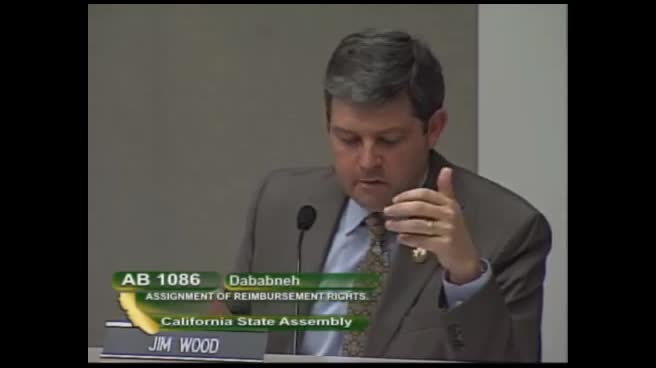 9MIN
Assembly Standing Committee on Health
Bill Author
Bill Co-Author(s):