AB 2533: Public safety officers: recording devices: release of recordings.
- Session Year: 2015-2016
- House: Assembly
- Latest Version Date: 2016-04-14
The Public Safety Officers Procedural Bill of Rights Act grants certain rights to public safety officers, as defined, including that a public safety officer is not required, as a condition of employment, to consent to the use of his or her photograph or identity as a public safety officer on the Internet for any purpose if the public safety officer reasonably believes that the disclosure may result in a threat, harassment, intimidation, or harm to the officer or the officers family. That act authorizes a public safety officer, based upon the above-described reasonable belief, to notify a public agency to cease and desist from disclosing the officers identity on the Internet and authorizes the officer, a district attorney, or a United States Attorney to seek an injunction prohibiting any official or unofficial use by the public agency on the Internet of the officers photograph or identity as a public safety officer.
This bill would require a public safety officer to be provided a minimum of 5 3 business days notice before a public safety department or other public agency releases on the Internet any audio or video of the officer recorded by the officer. The bill authorizes the public safety officer, based upon that reasonable belief, to notify the public safety department or other public agency to cease and desist from disclosing on the Internet any audio or video of the officer that is recorded by the officer and authorizes the officer, a district attorney, or a United States Attorney to seek an injunction to prohibit the release of that audio or video on the Internet.
To the extent that these new requirements would apply to local government employers, the bill would impose a state-mandated local program.
The California Constitution requires the state to reimburse local agencies and school districts for certain costs mandated by the state. Statutory provisions establish procedures for making that reimbursement.
This bill would provide that, if the Commission on State Mandates determines that the bill contains costs mandated by the state, reimbursement for those costs shall be made pursuant to these statutory provisions.
The Public Safety Officers Procedural Bill of Rights Act grants certain rights to public safety officers, as defined, including that a public safety officer is not required, as a condition of employment, to consent to the use of his or her photograph or identity as a public safety officer on the Internet for any purpose if the public safety officer reasonably believes that the disclosure may result in a threat, harassment, intimidation, or harm to the officer or the officers family. That act authorizes a public safety officer, based upon the above-described reasonable belief, to notify a public agency to cease and desist from disclosing the officers identity on the Internet and authorizes the officer, a district attorney, or a United States Attorney to seek an injunction prohibiting any official or unofficial use by the public agency on the Internet of the officers photograph or identity as a public safety officer.
This bill would require a public safety officer to be provided a minimum of 5 business days notice before a public safety department or other public agency releases on the Internet any audio or video of the officer recorded by the officer. The bill authorizes the public safety officer, based upon that reasonable belief, to notify the public safety department or other public agency to cease and desist from disclosing on the Internet any audio or video of the officer that is recorded by the officer and authorizes the officer, a district attorney, or a United States Attorney to seek an injunction to prohibit the release of that audio or video on the Internet.
To the extent that these new requirements would apply to local government employers, the bill would impose a state-mandated local program.
The California Constitution requires the state to reimburse local agencies and school districts for certain costs mandated by the state. Statutory provisions establish procedures for making that reimbursement.
This bill would provide that, if the Commission on State Mandates determines that the bill contains costs mandated by the state, reimbursement for those costs shall be made pursuant to these statutory provisions.
(a)A public safety officer shall not be required as a condition of employment by his or her employing public safety department or other public agency to consent to the use of his or her photograph or identity as a public safety officer on the Internet for any purpose if that officer reasonably believes that the disclosure may result in a threat, harassment, intimidation, or harm to that officer or his or her family.
(b)A public safety officer shall be entitled to a minimum of five three business days notice before a public safety department or other public agency releases on the Internet any audio or video of the officer recorded by the officer.
(c)Based upon his or her reasonable belief that the disclosure of his or her photograph or identity as a public safety officer on the Internet as described in subdivision (a) or (b) may result in a threat, harassment, intimidation, or harm, the officer may notify the department or other public agency to cease and desist from that disclosure. After the notification to cease and desist, the officer, a district attorney, or a United States Attorney may seek an injunction prohibiting any official or unofficial use by the department or other public agency on the Internet of his or her photograph or identity as a public safety officer. The court may impose a civil penalty in an amount not to exceed five hundred dollars ($500) per day commencing two working days after the date of receipt of the notification to cease and desist.
SEC. 2.If the Commission on State Mandates determines that this act contains costs mandated by the state, reimbursement to local agencies and school districts for those costs shall be made pursuant to Part 7 (commencing with Section 17500) of Division 4 of Title 2 of the Government Code.
(a)No A public safety officer shall not be required as a condition of employment by his or her employing public safety department or other public agency to consent to the use of his or her photograph or identity as a public safety officer on the Internet for any purpose if that officer reasonably believes that the disclosure may result in a threat, harassment, intimidation, or harm to that officer or his or her family.
(b)A public safety officer shall be entitled to a minimum of five business days notice before a public safety department or other public agency releases on the Internet any audio or video of the officer recorded by the officer.
(b)
(c)Based upon his or her reasonable belief that the disclosure of his or her photograph or identity as a public safety officer on the Internet as described in subdivision (a) or (b) may result in a threat, harassment, intimidation, or harm, the officer may notify the department or other public agency to cease and desist from that disclosure. After the notification to cease and desist, the officer, a district attorney, or a United States Attorney may seek an injunction prohibiting any official or unofficial use by the department or other public agency on the Internet of his or her photograph or identity as a public safety officer. The court may impose a civil penalty in an amount not to exceed five hundred dollars ($500) per day commencing two working days after the date of receipt of the notification to cease and desist.
SEC. 2.If the Commission on State Mandates determines that this act contains costs mandated by the state, reimbursement to local agencies and school districts for those costs shall be made pursuant to Part 7 (commencing with Section 17500) of Division 4 of Title 2 of the Government Code.
|
Date
|
Status
|
|---|---|
| May 5, 2016 | Read second time. Ordered to Consent Calendar. |
| Jun 28, 2016 | In committee: Set, second hearing. Failed passage. |
| Jun 21, 2016 | In committee: Set, first hearing. Hearing canceled at the request of author. |
| May 26, 2016 | Referred to Com. on PUB. S. |
| May 19, 2016 | Read third time. Passed. Ordered to the Senate. (Ayes 71. Noes 1.) |
| May 19, 2016 | Read third time. Passed. Ordered to the Senate. (Ayes 71. Noes 1. Page 4864.) |
| May 19, 2016 | Read third time. Passed. Ordered to the Senate. |
| May 19, 2016 | In Senate. Read first time. To Com. on RLS. for assignment. |
| May 12, 2016 | Ordered to third reading. |
| May 12, 2016 | From Consent Calendar. |
| Feb 19, 2016 | Introduced. To print. |
| May 4, 2016 | From committee: Do pass. To Consent Calendar. (Ayes 20. Noes 0.) (May 4). |
| Apr 20, 2016 | From committee: Do pass and re-refer to Com. on APPR. (Ayes 10. Noes 0.) (April 19). Re-referred to Com. on APPR. |
| Apr 18, 2016 | Re-referred to Com. on P. & C.P. |
| Apr 14, 2016 | Read second time and amended. |
| Apr 13, 2016 | From committee: Amend, and do pass as amended and re-refer to Com. on P. & C.P. (Ayes 7. Noes 0.) (April 12). |
| Apr 5, 2016 | In committee: Set, first hearing. Hearing canceled at the request of author. |
| Mar 8, 2016 | Referred to Coms. on PUB. S. and P. & C.P. |
| Feb 22, 2016 | Read first time. |
| Feb 21, 2016 | From printer. May be heard in committee March 22. |
|
Date
|
Description
|
Location
|
Votes
|
|
|---|---|---|---|---|
| Jun 28, 2016 | Do pass, but first be re-referred to the Committee on [Appropriations] | Senate Standing Committee on Public Safety |
Failed |
|
| May 19, 2016 | AB 2533 SANTIAGO Assembly Third Reading | Assembly Floor |
Passed |
|
| May 4, 2016 | Do pass. To Consent Calendar. | Assembly Standing Committee on Appropriations |
Passed |
|
| Apr 19, 2016 | Do pass and be re-referred to the Committee on [Appropriations] | Assembly Standing Committee on Privacy and Consumer Protection |
Passed |
|
| Apr 12, 2016 | Do pass as amended and be re-referred to the Committee on [Privacy and Consumer Protection] | Assembly Standing Committee on Public Safety |
Passed |
This list shows positions taken on this bill by organizations on the date displayed, which is linked to the original source.
Positions by individuals are not included.
|
Organization
|
Position
|
Date
|
|---|---|---|
| Americans for Civil Liberties Union of California | ** Against | May 19, 2016 |
| Association For Los Angeles Deputy Sheriffs | * Support | Jun 28, 2016 |
| California Broadcasters Association | ** Against | May 19, 2016 |
| California Newspaper Publishers Association | * Against | Jun 28, 2016 |
| California Public Defender Association | * Support | Jun 28, 2016 |
| California State Sheriffs' Association | * Against | Jun 28, 2016 |
| Los Angeles Police Protective League | * Support | Jun 28, 2016 |
| Peace Officers Research Association Of California | * Support | Jun 28, 2016 |
| Riverside Sheriffs' Association | * Support | Jun 28, 2016 |
SENATE COMMITTEE ON PUBLIC SAFETY
Senator Loni Hancock, Chair
2015 - 2016 Regular
Bill No: AB 2533 Hearing Date: June 28, 2016
Author: | Santiago | ||
Version: | April 14, 2016 | ||
Urgency: | No | Fiscal: | Yes |
Consultant: | JRD | ||
Subject: Public Safety Officers: Recording Devices: Release of Recordings
HISTORY
Source: Peace Officers Research Association of California
Prior Legislation: AB 1246 (Quirk)—2015, never heard in the Assembly
AB 66 (Weber)—2015, held in the Assembly Appropriations Committee
Support: Association for Los Angeles Deputy Sheriffs; Los Angeles Deputy Probation Officers Union, AFSCME Local 685; Los Angeles County Professional Peace Officers Association; Los Angeles Police Protective League; Riverside Sheriffs’ Association
Opposition: American Civil Liberties Union of California; California State Sheriffs’ Association; California Broadcasters Association; California Newspaper Publishers Association; California Police Chiefs Association; California Public Defenders Association; Legal Services for Prisoners with Children
Assembly Floor Vote: 71 - 1
PURPOSE
The purpose of this bill is to require a public safety officer be provided a minimum of three business days’ notice before a public safety department or other public agency releases on the Internet any audio or video of the officer recorded by the officer.
Existing law specifies that no public safety officer shall be required as a condition of employment by his or her employing public safety department or other public agency to consent to the use of his or her photograph or identity as a public safety officer on the Internet for any purpose if that officer reasonably believes that the disclosure may result in a threat, harassment, intimidation, or harm to that officer or his or her family. (Government Code § 3307.5(a).)
Existing law states that based upon his or her reasonable belief that the disclosure of his or her photograph or identity as a public safety officer on the Internet may result in a threat, harassment, intimidation, or harm, the officer may notify the department or other public agency to cease and desist from that disclosure. (Government Code § 3307.5(b).)
Existing law states that after the notification to cease and desist, the officer, a district attorney, or a United States Attorney may seek an injunction prohibiting any official or unofficial use by the department or other public agency on the Internet of his or her photograph or identity as a public safety officer. (Government Code § 3307.5(b).)
Existing law provides that the court may impose a civil penalty in an amount not to exceed five hundred dollars ($500) per day commencing two working days after the date of receipt of the notification to cease and desist. (Government Code § 3307.5(b).)
Existing law defines “public safety officer” as all peace officers, except as specified. (Government Code § 3301.)
Existing law specifies that no public safety officer shall be subjected to punitive action, or denied promotion, or be threatened with any such treatment, because of the lawful exercise of the rights under the Public Safety Officers Procedural Bill of Rights, or the exercise of any rights under any existing administrative grievance procedure. (Government Code § 3304.)
Existing law states that administrative appeal by a public safety officer Public Safety Officers Procedural Bill of Rights shall be conducted in conformance with rules and procedures adopted by the local public agency. (Government Code § 3304.5.)
Under existing law the California Public Records Act generally provides that access to information concerning the conduct of the people’s business is a fundamental and necessary right of every person in this state. (Government Code § 6250 et. seq.)
Existing law provides that public records are open to inspection at all times during the office hours of the state or local agency and every person has a right to inspect any public record, except as provided. Any reasonably segregable portion of a record shall be available for inspection by any person requesting the record after deletion of the portions that are exempted by law. (Government Code § 6253)
Under existing law California Public Records Act does not require disclosure of investigations conducted by the office of the Attorney General and the Department of Justice, the Office of Emergency Services and any state or local police agency, or any investigatory or security files compiled by any other state or local police agency, or any investigatory or security files compiled by any other state or local agency for correctional, law enforcement, or licensing purposes. (Government Code § 6254(f).)
This bill requires a public safety officer be provided a minimum of three business days' notice before a public safety department or other public agency releases on the Internet any audio or video of the officer recorded by the officer.
RECEIVERSHIP/OVERCROWDING CRISIS AGGRAVATION
For the past several years this Committee has scrutinized legislation referred to its jurisdiction for any potential impact on prison overcrowding. Mindful of the United States Supreme Court ruling and federal court orders relating to the state’s ability to provide a constitutional level of health care to its inmate population and the related issue of prison overcrowding, this Committee has applied its “ROCA” policy as a content-neutral, provisional measure necessary to ensure that the Legislature does not erode progress in reducing prison overcrowding.
On February 10, 2014, the federal court ordered California to reduce its in-state adult institution population to 137.5% of design capacity by February 28, 2016, as follows:
- 143% of design bed capacity by June 30, 2014;
- 141.5% of design bed capacity by February 28, 2015; and,
- 137.5% of design bed capacity by February 28, 2016.
In December of 2015 the administration reported that as “of December 9, 2015, 112,510 inmates were housed in the State’s 34 adult institutions, which amounts to 136.0% of design bed capacity, and 5,264 inmates were housed in out-of-state facilities. The current population is 1,212 inmates below the final court-ordered population benchmark of 137.5% of design bed capacity, and has been under that benchmark since February 2015.” (Defendants’ December 2015 Status Report in Response to February 10, 2014 Order, 2:90-cv-00520 KJM DAD PC, 3-Judge Court, Coleman v. Brown, Plata v. Brown (fn. omitted).) One year ago, 115,826 inmates were housed in the State’s 34 adult institutions, which amounted to 140.0% of design bed capacity, and 8,864 inmates were housed in out-of-state facilities. (Defendants’ December 2014 Status Report in Response to February 10, 2014 Order, 2:90-cv-00520 KJM DAD PC, 3-Judge Court, Coleman v. Brown, Plata v. Brown (fn. omitted).)
While significant gains have been made in reducing the prison population, the state must stabilize these advances and demonstrate to the federal court that California has in place the “durable solution” to prison overcrowding “consistently demanded” by the court. (Opinion Re: Order Granting in Part and Denying in Part Defendants’ Request For Extension of December 31, 2013 Deadline, NO. 2:90-cv-0520 LKK DAD (PC), 3-Judge Court, Coleman v. Brown, Plata v. Brown (2-10-14). The Committee’s consideration of bills that may impact the prison population therefore will be informed by the following questions:
- Whether a proposal erodes a measure which has contributed to reducing the prison population;
- Whether a proposal addresses a major area of public safety or criminal activity for which there is no other reasonable, appropriate remedy;
- Whether a proposal addresses a crime which is directly dangerous to the physical safety of others for which there is no other reasonably appropriate sanction;
- Whether a proposal corrects a constitutional problem or legislative drafting error; and
- Whether a proposal proposes penalties which are proportionate, and cannot be achieved through any other reasonably appropriate remedy.
COMMENTS
1. Need for Legislation
According to the author:
When a public agency, such as a law enforcement department, decides or is ordered by a court to release audio or video from an officer-involved incident (Government Code § 2654, the California Public Records Act, clarifies when a law enforcement agency shall or shall not release information about an incident), the release of that information may result in heightened threats against the officer or his/her family.
In most cases, it is the officer’s responsibility to pursue legal action to prevent immediate disclosure of the audio and/or video (Government Code § 3307.5 allows an officer to file an injunction to block the release of an audio or video recording if the officer believes there is a true threat to his/her safety). If the officer is receiving threats, this process can create a state of panic as the officer scrambles to find an attorney, complete all the necessary paperwork, and obtain an injunction. A judge then decides whether the information should be released based on the actual threat level and additional evidence provided by the officer.
AB 2533 ensures officers are provided with three business days’ notice before the release of any audio or video recorded of the officer, allowing the officer to complete the necessary legal arrangements. This measure updates current law to be more appropriate for today’s digital age, while continuing to provide an avenue of safety for threatened officers.
2. The California Public Records Act: Law Enforcement Exception
The California Public Records Act, provides generally that “every person has a right to inspect any public record,” except as specified in that act. It is designed to give the public access to information in possession of public agencies: “public records are open to inspection at all times during the office hours of the…agency and every person has a right to inspect any public record, except as . . . provided, [and to receive] an exact copy” of an identifiable record unless impracticable. (Government Code § 6253.) There are a number of exceptions to disclosure, but to ensure maximum access, they are read narrowly. The agency always bears the burden of justifying nondisclosure, and “any reasonably segregable portion . . . shall be available for inspection…after deletion of the portions which are exempt." (Id.)
Law Enforcement investigative records are currently exempt under the CPRA. (Government Code § 6254.) Records of complaints, preliminary inquiries to determine if a crime has been committed, and full-scale investigations, as well as closure memoranda are investigative records. In addition, records that are not inherently investigatory may be covered by the exemption where they pertain to an enforcement proceeding that has become concrete and definite. Investigative and security records created for law enforcement, correctional or licensing purposes also are covered by the exemption from disclosure. The exemption is permanent and does not terminate once the investigation has been completed. Even though investigative records themselves may be withheld, CPRA mandates that law enforcement agencies disclose specified information about investigative activities. However, the agency’s duty to disclose such information only applies if the request is made contemporaneously with the creation of the record in which the requested information is contained.
CPRA requires that basic information must be disclosed by law enforcement agencies in connection with calls for assistance or arrests, unless to do so would endanger the safety of an individual or interfere with an investigation. With respect to public disclosures concerning calls for assistance and the identification of arrestees, the law restricts disclosure of address information to specified persons. However, CPRA expressly permits agencies to withhold the analysis and conclusions of investigative personnel. Thus, specified facts may be disclosable pursuant to the statutory directive, but the analysis and recommendations of investigative personnel concerning such facts are exempt.
PORAC, which is the sponsor of this legislation, argues that this legislation does not expand law:
AB 2533 does not expand any law; rather it builds in a procedure to provide predictability and civility to an existing law. Currently, the California Public Records Act covers when a law enforcement agency shall or shall not release information about a critical incident within their department. The courts, on a daily basis, also make decisions regarding the release of case information, including audio and video tapes of an incident. . .
Officers currently have the right to go to court and file an injunction so that the department cannot release an audio or video recording if there is a true threat to their safety. These filings by officers are rare, and judicial approval of these injunctions are even more rare. Generally, a judge will decide whether or not the information should be released based on the threat level and evidence of an actual threat to the officer. In most cases, it is the officer’s responsibility to bring legal action to stop the disclosure. If the officer is receiving death threats, this process, understandably, will create a state of panic as the officer rushes to get an attorney, do all the necessary paperwork and get a restraining order before it is released.
In the past, it could take a department a couple of days to release any video/audio to the public or media; thereby, giving the officer a small window to file a court order if threatened. However, because of modern technology, the time frame in which this information can be released is a matter of minutes, instead of days. We are simply building in a reasonable time frame so the officer isn’t forced to file an injunction after the release of a potentially threatening medium.
The California Newspaper Publishers Association, which is opposed to this legislation, disagrees:
Seemingly innocuous at first glance, AB 2533 would allow a self-interested individual to have a stranglehold over information that the public has an overwhelming interest in obtaining and that a law enforcement agency, a city or county may want to disclose immediately for the good of the community.
Under current law, the CPRA presumes that the public has a right of access to documents created, used or maintained in the course of the public’s business unless an exemption applies. This presumption of access allows the public to obtain information in order to monitor government activities and there is no better tool for the public to use when trying to understand government’s role and response to unfolding situations.
When it first enacted the CPRA, the Legislature included a hallmark principle that nothing in the CPRA shall be construed to permit an agency to delay or obstruct the inspection or copying of public records.
AB 2533 would be a radical departure from this principle.
Requiring three business days’ notice to an officer before releasing a record would delay and obstruct an agency’s response for weeks or months irrespective of the 10 day period it would otherwise have to determine whether an exemption applies or whether the agency, in the best interests of the community wants to release it.
They go on to state:
Worse, though, is the harm to the CPRA itself that AB 2533 would cause. The sole purpose in requiring an agency to provide three-business days’ notice to an officer is to allow the officer to go to court to seek a court order preventing the agency from disclosing the footage. In the motion for an injunction, there is no requirement that the requester be notified of the officer’s motion or that the court apply the CPRA as a standard for making its determination.
Moreover, this new process would create an additional delay in getting the information to the public that could take months or years depending how long it takes for the court to first hear the motion and any appeals. The expense could be devastating to both the agency and a requester.
Members may wish to consider what impact this legislation will have on the CPRA.
3. Peace Officer Bill of Rights
POBOR provides peace officers with procedural protections relating to investigation and interrogations of peace officers, self-incrimination, privacy, polygraph exams, searches, personnel files, and administrative appeals. When the Legislature enacted POBOR in 1976 it found and declared “that the rights and protections provided to peace officers under this chapter constitute a matter of statewide concern.” The statute this bill seeks to amend, Government Code § 3307.5, was incorporated into POBOR in 1999.
As described above, under existing law no public safety officer can be required as a condition of employment to consent to the use of his or her photograph or identity as a public safety officer on the Internet for any purpose if that officer reasonably believes that the disclosure may result in a threat, harassment, intimidation, or harm to that officer or his or her family. And, existing law allows the officer to seek a cease and desist order if, based upon his or her reasonable belief that the disclosure of his or her photograph or identity as a public safety officer on the Internet may result in a threat, harassment, intimidation, or harm. This bill would require that a public safety officer be given at least three business days’ notice before a public safety department or other public agency releases on the Internet any audio or video of the officer recorded by the officer. Public safety officers would, additionally, be able to seek a cease and desist order to prevent release of the video.
4. Argument in Support
The Los Angeles County Professional Peace Officers Association states:
When a public agency, such as a law enforcement department, decides or is ordered by a court to release audio or video from an officer-involved incident, the release of that information may result in heightened threats against the officer or his/her family.
Officers are currently able to file an injunction to block the release of an audio or video recording if there is a true threat to his/her safety (Government Code Section 3307.5). A judge then decides whether the information should be released based on the actual threat level and additional evidence provided by the officer. Additionally, the California Public Records Act clarifies when a law enforcement agency shall or shall not release information about an incident (Government Code Section 2654).
AB 2533 ensures that officers are provided with a business days’ notice before the release of any audio or video recorded of the officer, allowing the officer to complete the necessary legal arrangements. This measure updates current law to be more appropriate for today’s digital age, while continuing to provide an avenue for safety for threatened officers.
5. Argument in Opposition
The American Civil Liberties Union of California states:
Government transparency and accountability are cornerstones of our democracy; without an informed public, the obligation of governments to be responsive to the people can never be fulfilled. Within the context of policing, BWC footage aligns with these principles by allowing the public to see police-community interactions, and determine whether officers or community members act appropriately.
We acknowledge that some recordings may appropriately be exempt from the general rule favoring release of public records in those limited situations involving an undue intrusion into personal privacy without an overriding public interest. However, this bill would create a peculiar new rule requiring advance notice to certain government officials who are the subject of a public record before the record can be posted on the Internet. Peace officers do not have the right to advance notice for any other release of public records under existing law – including the Internet posting of their photographs or other identifying documents – nor do any other public officials. While this bill is limited to Internet release, creating such an extraordinary new right of advance notice would be a dangerous and potentially unlimited precedent that could just as easily be applied to obstruct access to public records by any method in addition to posting on the Internet, and by any potential government wrongdoer.
By requiring that officers be given at least five business days’ notice before BWC footage is posted on the Internet, AB 2533 poses a significant threat to transparency by permitting officers to unduly delay and/or obstruct the release of BWC footage. Public trust in law enforcement cannot be improved without true openness about how officers interact with community members. Footage of public importance (such as capturing a serious use of force, or potential misconduct) should be made available to the community, and law enforcement agencies should have the right to post BWC recordings when they determine it is appropriate to do so, in addition to releasing them under the Public Records Act.
Peace officers should have no legitimate concern that law enforcement management will post BWC recordings on the Internet when doing so would subject the officer to harm. However, to the extent that officers are concerned that their safety is not sufficiently protected with respect to BWC images or other audio or video recordings showing their identity, this concern could be addressed directly by revising the bill to amend Government Code section 3307.5 (a) so as to make clear that “identity” may include audio or video recordings by the officer that reveal his or her identity. Moreover, identity can virtually always be masked by anonymization or redaction, such as by video blurring and audio alteration.
As the LA Times recently pointed out, “The reason that the public has embraced body cameras — and supported the not-insignificant associated costs — is because of the transparency and accountability they would bring to high-profile use-of-force cases.”[1] Addressing police secrecy is critical to improving the lack of community trust in our system of justice, especially in communities of color, where people are killed by police at alarming rates. As an example, a recent Pew Research Center poll found that only 30 percent of all Americans believe law enforcement agencies are doing a good or excellent job of holding officers accountable for misconduct and that number drops to a mere 10 percent when the same question is asked of black Americans specifically. Another poll shows that nearly 80 percent of Californians believe the public should have access to information about officer misconduct, and nearly two-thirds believe that the public should have access in all cases in which an officer is accused of misconduct.
-- END –
Don't Hide Police Use-Of-Force Videos, Los Angeles Times Editorial, March 25, 2016. At e://www.latimes.com/opinion/editorials/la-ed-police-video-20160325-story.html ↑
SENATE COMMITTEE ON PUBLIC SAFETY
Senator Loni Hancock, Chair
2015 - 2016 Regular
Bill No: AB 2533 Hearing Date: June 21, 2016
Author: | Santiago | ||
Version: | April 14, 2016 | ||
Urgency: | No | Fiscal: | Yes |
Consultant: | JRD | ||
Subject: Public Safety Officers: Recording Devices: Release of Recordings
HISTORY
Source: Peace Officers Research Association of California
Prior Legislation: AB 1246 (Quirk)—2015, never heard in the Assembly
AB 66 (Weber)—2015, held in the Assembly Appropriations Committee
Support: Association for Los Angeles Deputy Sheriffs; Los Angeles Deputy Probation Officers Union, AFSCME Local 685; Los Angeles County Professional Peace Officers Association; Los Angeles Police Protective League; Riverside Sheriffs’ Association
Opposition: American Civil Liberties Union of California; California State Sheriffs’ Association; California Broadcasters Association; California Newspaper Publishers Association; California Police Chiefs Association; California Public Defenders Association; Legal Services for Prisoners with Children
Assembly Floor Vote: 71 - 1
PURPOSE
The purpose of this bill is to require a public safety officer be provided a minimum of three business days’ notice before a public safety department or other public agency releases on the Internet any audio or video of the officer recorded by the officer.
Existing law specifies that no public safety officer shall be required as a condition of employment by his or her employing public safety department or other public agency to consent to the use of his or her photograph or identity as a public safety officer on the Internet for any purpose if that officer reasonably believes that the disclosure may result in a threat, harassment, intimidation, or harm to that officer or his or her family. (Government Code § 3307.5(a).)
Existing law states that based upon his or her reasonable belief that the disclosure of his or her photograph or identity as a public safety officer on the Internet may result in a threat, harassment, intimidation, or harm, the officer may notify the department or other public agency to cease and desist from that disclosure. (Government Code § 3307.5(b).)
Existing law states that after the notification to cease and desist, the officer, a district attorney, or a United States Attorney may seek an injunction prohibiting any official or unofficial use by the department or other public agency on the Internet of his or her photograph or identity as a public safety officer. (Government Code § 3307.5(b).)
Existing law provides that the court may impose a civil penalty in an amount not to exceed five hundred dollars ($500) per day commencing two working days after the date of receipt of the notification to cease and desist. (Government Code § 3307.5(b).)
Existing law defines “public safety officer” as all peace officers, except as specified. (Government Code § 3301.)
Existing law specifies that no public safety officer shall be subjected to punitive action, or denied promotion, or be threatened with any such treatment, because of the lawful exercise of the rights under the Public Safety Officers Procedural Bill of Rights, or the exercise of any rights under any existing administrative grievance procedure. (Government Code § 3304.)
Existing law states that administrative appeal by a public safety officer Public Safety Officers Procedural Bill of Rights shall be conducted in conformance with rules and procedures adopted by the local public agency. (Government Code § 3304.5.)
Under existing law the California Public Records Act generally provides that access to information concerning the conduct of the people’s business is a fundamental and necessary right of every person in this state. (Government Code § 6250 et. seq.)
Existing law provides that public records are open to inspection at all times during the office hours of the state or local agency and every person has a right to inspect any public record, except as provided. Any reasonably segregable portion of a record shall be available for inspection by any person requesting the record after deletion of the portions that are exempted by law. (Government Code § 6253)
Under existing law California Public Records Act does not require disclosure of investigations conducted by the office of the Attorney General and the Department of Justice, the Office of Emergency Services and any state or local police agency, or any investigatory or security files compiled by any other state or local police agency, or any investigatory or security files compiled by any other state or local agency for correctional, law enforcement, or licensing purposes. (Government Code § 6254(f).)
This bill requires a public safety officer be provided a minimum of three business days' notice before a public safety department or other public agency releases on the Internet any audio or video of the officer recorded by the officer.
RECEIVERSHIP/OVERCROWDING CRISIS AGGRAVATION
For the past several years this Committee has scrutinized legislation referred to its jurisdiction for any potential impact on prison overcrowding. Mindful of the United States Supreme Court ruling and federal court orders relating to the state’s ability to provide a constitutional level of health care to its inmate population and the related issue of prison overcrowding, this Committee has applied its “ROCA” policy as a content-neutral, provisional measure necessary to ensure that the Legislature does not erode progress in reducing prison overcrowding.
On February 10, 2014, the federal court ordered California to reduce its in-state adult institution population to 137.5% of design capacity by February 28, 2016, as follows:
- 143% of design bed capacity by June 30, 2014;
- 141.5% of design bed capacity by February 28, 2015; and,
- 137.5% of design bed capacity by February 28, 2016.
In December of 2015 the administration reported that as “of December 9, 2015, 112,510 inmates were housed in the State’s 34 adult institutions, which amounts to 136.0% of design bed capacity, and 5,264 inmates were housed in out-of-state facilities. The current population is 1,212 inmates below the final court-ordered population benchmark of 137.5% of design bed capacity, and has been under that benchmark since February 2015.” (Defendants’ December 2015 Status Report in Response to February 10, 2014 Order, 2:90-cv-00520 KJM DAD PC, 3-Judge Court, Coleman v. Brown, Plata v. Brown (fn. omitted).) One year ago, 115,826 inmates were housed in the State’s 34 adult institutions, which amounted to 140.0% of design bed capacity, and 8,864 inmates were housed in out-of-state facilities. (Defendants’ December 2014 Status Report in Response to February 10, 2014 Order, 2:90-cv-00520 KJM DAD PC, 3-Judge Court, Coleman v. Brown, Plata v. Brown (fn. omitted).)
While significant gains have been made in reducing the prison population, the state must stabilize these advances and demonstrate to the federal court that California has in place the “durable solution” to prison overcrowding “consistently demanded” by the court. (Opinion Re: Order Granting in Part and Denying in Part Defendants’ Request For Extension of December 31, 2013 Deadline, NO. 2:90-cv-0520 LKK DAD (PC), 3-Judge Court, Coleman v. Brown, Plata v. Brown (2-10-14). The Committee’s consideration of bills that may impact the prison population therefore will be informed by the following questions:
- Whether a proposal erodes a measure which has contributed to reducing the prison population;
- Whether a proposal addresses a major area of public safety or criminal activity for which there is no other reasonable, appropriate remedy;
- Whether a proposal addresses a crime which is directly dangerous to the physical safety of others for which there is no other reasonably appropriate sanction;
- Whether a proposal corrects a constitutional problem or legislative drafting error; and
- Whether a proposal proposes penalties which are proportionate, and cannot be achieved through any other reasonably appropriate remedy.
COMMENTS
1. Need for Legislation
According to the author:
When a public agency, such as a law enforcement department, decides or is ordered by a court to release audio or video from an officer-involved incident (Government Code § 2654, the California Public Records Act, clarifies when a law enforcement agency shall or shall not release information about an incident), the release of that information may result in heightened threats against the officer or his/her family.
In most cases, it is the officer’s responsibility to pursue legal action to prevent immediate disclosure of the audio and/or video (Government Code § 3307.5 allows an officer to file an injunction to block the release of an audio or video recording if the officer believes there is a true threat to his/her safety). If the officer is receiving threats, this process can create a state of panic as the officer scrambles to find an attorney, complete all the necessary paperwork, and obtain an injunction. A judge then decides whether the information should be released based on the actual threat level and additional evidence provided by the officer.
AB 2533 ensures officers are provided with three business days’ notice before the release of any audio or video recorded of the officer, allowing the officer to complete the necessary legal arrangements. This measure updates current law to be more appropriate for today’s digital age, while continuing to provide an avenue of safety for threatened officers.
2. The California Public Records Act: Law Enforcement Exception
The California Public Records Act, provides generally that “every person has a right to inspect any public record,” except as specified in that act. It is designed to give the public access to information in possession of public agencies: “public records are open to inspection at all times during the office hours of the…agency and every person has a right to inspect any public record, except as . . . provided, [and to receive] an exact copy” of an identifiable record unless impracticable. (Government Code § 6253.) There are a number of exceptions to disclosure, but to ensure maximum access, they are read narrowly. The agency always bears the burden of justifying nondisclosure, and “any reasonably segregable portion . . . shall be available for inspection…after deletion of the portions which are exempt." (Id.)
Law Enforcement investigative records are currently exempt under the CPRA. (Government Code § 6254.) Records of complaints, preliminary inquiries to determine if a crime has been committed, and full-scale investigations, as well as closure memoranda are investigative records. In addition, records that are not inherently investigatory may be covered by the exemption where they pertain to an enforcement proceeding that has become concrete and definite. Investigative and security records created for law enforcement, correctional or licensing purposes also are covered by the exemption from disclosure. The exemption is permanent and does not terminate once the investigation has been completed. Even though investigative records themselves may be withheld, CPRA mandates that law enforcement agencies disclose specified information about investigative activities. However, the agency’s duty to disclose such information only applies if the request is made contemporaneously with the creation of the record in which the requested information is contained.
CPRA requires that basic information must be disclosed by law enforcement agencies in connection with calls for assistance or arrests, unless to do so would endanger the safety of an individual or interfere with an investigation. With respect to public disclosures concerning calls for assistance and the identification of arrestees, the law restricts disclosure of address information to specified persons. However, CPRA expressly permits agencies to withhold the analysis and conclusions of investigative personnel. Thus, specified facts may be disclosable pursuant to the statutory directive, but the analysis and recommendations of investigative personnel concerning such facts are exempt.
PORAC, which is the sponsor of this legislation, argues that this legislation does not expand law:
AB 2533 does not expand any law; rather it builds in a procedure to provide predictability and civility to an existing law. Currently, the California Public Records Act covers when a law enforcement agency shall or shall not release information about a critical incident within their department. The courts, on a daily basis, also make decisions regarding the release of case information, including audio and video tapes of an incident. . .
Officers currently have the right to go to court and file an injunction so that the department cannot release an audio or video recording if there is a true threat to their safety. These filings by officers are rare, and judicial approval of these injunctions are even more rare. Generally, a judge will decide whether or not the information should be released based on the threat level and evidence of an actual threat to the officer. In most cases, it is the officer’s responsibility to bring legal action to stop the disclosure. If the officer is receiving death threats, this process, understandably, will create a state of panic as the officer rushes to get an attorney, do all the necessary paperwork and get a restraining order before it is released.
In the past, it could take a department a couple of days to release any video/audio to the public or media; thereby, giving the officer a small window to file a court order if threatened. However, because of modern technology, the time frame in which this information can be released is a matter of minutes, instead of days. We are simply building in a reasonable time frame so the officer isn’t forced to file an injunction after the release of a potentially threatening medium.
The California Newspaper Publishers Association, which is opposed to this legislation, disagrees:
Seemingly innocuous at first glance, AB 2533 would allow a self-interested individual to have a stranglehold over information that the public has an overwhelming interest in obtaining and that a law enforcement agency, a city or county may want to disclose immediately for the good of the community.
Under current law, the CPRA presumes that the public has a right of access to documents created, used or maintained in the course of the public’s business unless an exemption applies. This presumption of access allows the public to obtain information in order to monitor government activities and there is no better tool for the public to use when trying to understand government’s role and response to unfolding situations.
When it first enacted the CPRA, the Legislature included a hallmark principle that nothing in the CPRA shall be construed to permit an agency to delay or obstruct the inspection or copying of public records.
AB 2533 would be a radical departure from this principle.
Requiring three business days’ notice to an officer before releasing a record would delay and obstruct an agency’s response for weeks or months irrespective of the 10 day period it would otherwise have to determine whether an exemption applies or whether the agency, in the best interests of the community wants to release it.
They go on to state:
Worse, though, is the harm to the CPRA itself that AB 2533 would cause. The sole purpose in requiring an agency to provide three-business days’ notice to an officer is to allow the officer to go to court to seek a court order preventing the agency from disclosing the footage. In the motion for an injunction, there is no requirement that the requester be notified of the officer’s motion or that the court apply the CPRA as a standard for making its determination.
Moreover, this new process would create an additional delay in getting the information to the public that could take months or years depending how long it takes for the court to first hear the motion and any appeals. The expense could be devastating to both the agency and a requester.
Members may wish to consider what impact this legislation will have on the CPRA.
3. Peace Officer Bill of Rights
POBOR provides peace officers with procedural protections relating to investigation and interrogations of peace officers, self-incrimination, privacy, polygraph exams, searches, personnel files, and administrative appeals. When the Legislature enacted POBOR in 1976 it found and declared “that the rights and protections provided to peace officers under this chapter constitute a matter of statewide concern.” The statute this bill seeks to amend, Government Code § 3307.5, was incorporated into POBOR in 1999.
As described above, under existing law no public safety officer can be required as a condition of employment to consent to the use of his or her photograph or identity as a public safety officer on the Internet for any purpose if that officer reasonably believes that the disclosure may result in a threat, harassment, intimidation, or harm to that officer or his or her family. And, existing law allows the officer to seek a cease and desist order if, based upon his or her reasonable belief that the disclosure of his or her photograph or identity as a public safety officer on the Internet may result in a threat, harassment, intimidation, or harm. This bill would require that a public safety officer be given at least three business days’ notice before a public safety department or other public agency releases on the Internet any audio or video of the officer recorded by the officer. Public safety officers would, additionally, be able to seek a cease and desist order to prevent release of the video.
4. Argument in Support
The Los Angeles County Professional Peace Officers Association states:
When a public agency, such as a law enforcement department, decides or is ordered by a court to release audio or video from an officer-involved incident, the release of that information may result in heightened threats against the officer or his/her family.
Officers are currently able to file an injunction to block the release of an audio or video recording if there is a true threat to his/her safety (Government Code Section 3307.5). A judge then decides whether the information should be released based on the actual threat level and additional evidence provided by the officer. Additionally, the California Public Records Act clarifies when a law enforcement agency shall or shall not release information about an incident (Government Code Section 2654).
AB 2533 ensures that officers are provided with a business days’ notice before the release of any audio or video recorded of the officer, allowing the officer to complete the necessary legal arrangements. This measure updates current law to be more appropriate for today’s digital age, while continuing to provide an avenue for safety for threatened officers.
5. Argument in Opposition
The American Civil Liberties Union of California states:
Government transparency and accountability are cornerstones of our democracy; without an informed public, the obligation of governments to be responsive to the people can never be fulfilled. Within the context of policing, BWC footage aligns with these principles by allowing the public to see police-community interactions, and determine whether officers or community members act appropriately.
We acknowledge that some recordings may appropriately be exempt from the general rule favoring release of public records in those limited situations involving an undue intrusion into personal privacy without an overriding public interest. However, this bill would create a peculiar new rule requiring advance notice to certain government officials who are the subject of a public record before the record can be posted on the Internet. Peace officers do not have the right to advance notice for any other release of public records under existing law – including the Internet posting of their photographs or other identifying documents – nor do any other public officials. While this bill is limited to Internet release, creating such an extraordinary new right of advance notice would be a dangerous and potentially unlimited precedent that could just as easily be applied to obstruct access to public records by any method in addition to posting on the Internet, and by any potential government wrongdoer.
By requiring that officers be given at least five business days’ notice before BWC footage is posted on the Internet, AB 2533 poses a significant threat to transparency by permitting officers to unduly delay and/or obstruct the release of BWC footage. Public trust in law enforcement cannot be improved without true openness about how officers interact with community members. Footage of public importance (such as capturing a serious use of force, or potential misconduct) should be made available to the community, and law enforcement agencies should have the right to post BWC recordings when they determine it is appropriate to do so, in addition to releasing them under the Public Records Act.
Peace officers should have no legitimate concern that law enforcement management will post BWC recordings on the Internet when doing so would subject the officer to harm. However, to the extent that officers are concerned that their safety is not sufficiently protected with respect to BWC images or other audio or video recordings showing their identity, this concern could be addressed directly by revising the bill to amend Government Code section 3307.5 (a) so as to make clear that “identity” may include audio or video recordings by the officer that reveal his or her identity. Moreover, identity can virtually always be masked by anonymization or redaction, such as by video blurring and audio alteration.
As the LA Times recently pointed out, “The reason that the public has embraced body cameras — and supported the not-insignificant associated costs — is because of the transparency and accountability they would bring to high-profile use-of-force cases.”[1] Addressing police secrecy is critical to improving the lack of community trust in our system of justice, especially in communities of color, where people are killed by police at alarming rates. As an example, a recent Pew Research Center poll found that only 30 percent of all Americans believe law enforcement agencies are doing a good or excellent job of holding officers accountable for misconduct and that number drops to a mere 10 percent when the same question is asked of black Americans specifically. Another poll shows that nearly 80 percent of Californians believe the public should have access to information about officer misconduct, and nearly two-thirds believe that the public should have access in all cases in which an officer is accused of misconduct.
-- END –
Don't Hide Police Use-Of-Force Videos, Los Angeles Times Editorial, March 25, 2016. At e://www.latimes.com/opinion/editorials/la-ed-police-video-20160325-story.html ↑
ASSEMBLY THIRD READING
ATR Bill Id:AB 2533
Author:(Santiago)
As Amended Ver:April 14, 2016
Majority vote
Committee | Votes | Ayes | Noes |
Public Safety | 7-0 | Jones-Sawyer, Melendez, Lackey, Lopez, Low, Quirk, Santiago | |
Privacy | 10-0 | Chau, Wilk, Baker, Calderon, Chang, Cooper, Dababneh, Gatto, Gordon, Low | |
Appropriations | 20-0 | Gonzalez, Bigelow, Bloom, Bonilla, Bonta, Calderon, Chang, Daly, Eggman, Gallagher, Eduardo Garcia, McCarty, Holden, Jones, Obernolte, Quirk, Santiago, Wagner, Weber, Wood |
SUMMARY: Requires a public safety officer to be provided a minimum of three business days' notice before a public safety department or other public agency releases on the Internet any audio or video of the officer recorded by the officer. Specifically, this bill:
- Authorizes the public safety officer, based upon that reasonable belief, to notify the public safety department or other public agency to cease and desist from disclosing on the Internet any audio or video of the officer that is recorded by the officer.
- Allows the officer, a district attorney, or a United States Attorney to seek an injunction to prohibit the release of that audio or video on the Internet.
EXISTING LAW:
- Specifies that no public safety officer shall be required as a condition of employment by his or her employing public safety department or other public agency to consent to the use of his or her photograph or identity as a public safety officer on the Internet for any purpose if that officer reasonably believes that the disclosure may result in a threat, harassment, intimidation, or harm to that officer or his or her family.
- States that based upon his or her reasonable belief that the disclosure of his or her photograph or identity as a public safety officer on the Internet may result in a threat, harassment, intimidation, or harm, the officer may notify the department or other public agency to cease and desist from that disclosure.
- States that after the notification to cease and desist, the officer, a district attorney, or a United States Attorney may seek an injunction prohibiting any official or unofficial use by the department or other public agency on the Internet of his or her photograph or identity as a public safety officer.
- Provides that the court may impose a civil penalty in an amount not to exceed $500 per day commencing two working days after the date of receipt of the notification to cease and desist.
- Defines "public safety officer" as all peace officers, except as specified.
- Specifies that no public safety officer shall be subjected to punitive action, or denied promotion, or be threatened with any such treatment, because of the lawful exercise of the rights under the Public Safety Officers Procedural Bill of Rights, or the exercise of any rights under any existing administrative grievance procedure.
- States that administrative appeal by a public safety officer Public Safety Officers Procedural Bill of Rights shall be conducted in conformance with rules and procedures adopted by the local public agency.
- California Public Records Act generally provides that access to information concerning the conduct of the people's business is a fundamental and necessary right of every person in this state.
- Provides that public records are open to inspection at all times during the office hours of the state or local agency and every person has a right to inspect any public record, except as provided. Any reasonably segregable portion of a record shall be available for inspection by any person requesting the record after deletion of the portions that are exempted by law.
- California Public Records Act does not require disclosure of investigations conducted by the office of the Attorney General and the Department of Justice, the Office of Emergency Services and any state or local police agency, or any investigatory or security files compiled by any other state or local police agency, or any investigatory or security files compiled by any other state or local agency for correctional, law enforcement, or licensing purposes.
FISCAL EFFECT:
According to the Assembly Appropriations Committee, minor costs, if any, to a local agency to provide the three day notice required.
COMMENTS:
According to the author, "When a public agency, such as a law enforcement department, decides or is ordered by a court to release audio or video from an officer-involved incident, the release of that information may result in heightened threats against the officer or his/her family.
"In most cases, it is the officer's responsibility to pursue legal action to prevent immediate disclosure of the audio and/or video. If the officer is receiving threats, this process can create a state of panic as the officer scrambles to find an attorney, complete all the necessary paperwork, and obtain a restraining order before it is released.
"AB 2533 ensures officers are provided with five business days' notice before the release of any audio or video recorded of the officer, allowing the officer to complete the necessary legal arrangements. This measure updates current law to be more appropriate for today's digital age, while continuing to provide an avenue of safety for threatened officers."
Analysis Prepared by: David Billingsley/ PUB. S. / (916) 319-3744 FN: 0002958
Date of Hearing: May 4, 2016
ASSEMBLY COMMITTEE ON APPROPRIATIONS
Lorena Gonzalez, Chair
ABPCA Bill Id:AB 2533
Author:(Santiago) – As Amended Ver:April 14, 2016
Policy Committee: | Public Safety | Vote: | 7 - 0 |
Privacy and Consumer Protection | 10 - 0 |
Urgency: No State Mandated Local Program: Yes Reimbursable: No
SUMMARY:
This bill requires that a public safety officer be given a minimum of three business days' notice before any audio or video data of the officer that was recorded by the officer may be publicly released by the department or other public agency on the Internet.
FISCAL EFFECT:
Minor costs, if any, to a local agency to provide the three day notice required.
COMMENTS:
- Purpose/Background. According to the author, "When a public agency, such as a law enforcement department, decides or is ordered by a court to release audio or video from an officer-involved incident, the release of that information may result in threats against the officer or his/her family."
"In most cases, it is the officer’s responsibility to pursue legal action to prevent immediate disclosure of the audio and/or video. If the officer is receiving threats, this process can create a state of panic as the officer scrambles to find an attorney, complete all the necessary paperwork, and obtain a restraining order before it is released."
Video and audio data produced by peace officers with body-worn cameras is considered a public record under the (California Public Records Act) and is therefore subject to disclosure to the public unless otherwise exempt.
This bill is intended to give a peace officer three days' advance notice that his or her employer intends to publicly release that officer's body-worn camera footage to the Internet so that the officer can take legal action under existing law to stop the release if he or she believes it would lead to threats or harassment.
- Support. According to the sponsor, PORAC, "It is very important to understand that AB 2533 does not expand any law; rather it builds in a procedure to provide predictability and civility to an existing law. … Officers currently have the right to go to court and file an injunction so that the department cannot release an audio or video recording if there is a true threat to their safety.”
- Related Legislation:
- AB 1940 (Cooper) requires law enforcement agencies that deploy body-worn cameras to develop a policy for their use. AB 1940 will be heard in this Committee later this month.
- AB 1957 (Quirk) requires a law enforcement agency to confidentially review body worn camera footage from serious use of force incidents and requires a judicial determination to set the terms of any public release of such footage, while generally requiring the disclosure of footage 60 days after the commencement of a misconduct investigation and restricting the public disclosure of footage depicting domestic violence victims, minors, or witness statements. AB 1957 will be heard in this Committee later this month.
- AB 2611 (Low) would exempt from disclosure under the CPRA records of complaints to, or investigations conducted by, or records of intelligence information or security procedures of, the office of the Attorney General and the Department of Justice, the Office of Emergency Services and any state or local police agency, or any investigatory or security files, including audio or video recordings, compiled by any other state or local police agency, or any investigatory or security files compiled by any other state or local agency for correctional, law enforcement, or licensing purposes. AB 2611 will be heard in this Committee later this month.
- Previous legislation:
- AB 66 (Weber) of 2015 would have imposed specified requirements on a law enforcement agency that requires its officers to use body worn cameras, including a requirement that the policies and procedures being posted online, that peace officers be banned from making personal copies of video footage, that officers be allowed to review their own footage before making an initial statement and report, and exempt footage depicting sexual or domestic violence victims from public disclosure. AB 66 was held in this Committee.
- AB 69 (Rodriguez), Chapter 461, Statutes of 2015, requires law enforcement agencies to consider specified best practices when establishing policies and procedures for downloading and storing data from body-worn cameras.
- AB 1246 (Quirk) would have prohibited the disclosure of a recording made by a body-worn camera, except to the person whose image is recorded by the body worn camera. AB 1246 died in Assembly Public Safety Committee.
- SB 175 (Huff) would require each department or agency that employs peace officers and that elects to require those peace officers to wear body-worn cameras to develop a policy relating to the use of body-worn cameras. SB 175 is currently on the inactive file on the Assembly Floor.
- SB 195 (Anderson) would have stated the intent of the Legislature to enact legislation that protects the privacy of individuals recorded by body-worn cameras utilized by law enforcement officers and the privacy of the officers wearing these cameras. SB 195 died in the Senate Rules Committee.
Analysis Prepared by: Pedro Reyes / APPR. / (916) 319-2081
Date of Hearing: April 19, 2016
ASSEMBLY COMMITTEE ON PRIVACY AND CONSUMER PROTECTION
Ed Chau, Chair
ABPCA Bill Id:AB 2533 (
Author:Santiago) – As Amended Ver:April 14, 2016
SUBJECT: Public safety officers: recording devices: release of recordings
SUMMARY: Requires that a public safety officer be given a minimum of three business days' notice before any audio or video data of the officer that was recorded by the officer may be publicly released by the department or other public agency on the Internet. Specifically, this bill:
- Requires that a public safety officer be given a minimum of three business days’ notice before a public safety department or other public agency releases on the Internet any audio or video of the officer recorded by the officer.
- Authorizes an officer, a district attorney, or a United States Attorney, after the notification to cease and desist, to seek an injunction prohibiting the disclosure by the department or other public agency on the Internet of any audio or video of the officer recorded by the officer. The court may impose a civil penalty in an amount not to exceed five hundred dollars ($500) per day commencing two working days after the date of receipt of the notification to cease and desist.
- Provides that if the Commission on State Mandates determines that these provisions contain costs mandated by the state, then reimbursement to local agencies for those costs must be made, as specified.
EXISTING LAW:
- Generally requires, pursuant to the California Public Records Act (CPRA), that public agencies disclose a government record to the public upon request, unless there is a specific reason to withhold it or if a public agency can establish that the public interest in nondisclosure clearly outweighs the public interest in disclosure. (Government Code (GC) Section 6250, et seq.)
- Provides, pursuant to the Public Safety Officers Procedural Bill of Rights Act, a variety of employment rights and remedies for all public safety officers within California. (GC 3300, et seq.)
- Prohibits a public safety officer from being required, as a condition of employment, by his or her employing public safety department or other public agency to consent to the use of his or her photograph or identity as a public safety officer on the Internet for any purpose if that officer reasonably believes that the disclosure may result in a threat, harassment, intimidation, or harm to that officer or his or her family. (GC 3307.5(a))
- Authorizes an officer, based upon his or her reasonable belief that the disclosure of his or her photograph or identity as a public safety officer on the Internet may result in a threat, harassment, intimidation, or harm, to notify the department or other public agency to cease and desist from that disclosure, as specified. (GC 3307.5(b))
- Authorizes an officer, a district attorney, or a United States Attorney, after the notification to cease and desist, to seek an injunction prohibiting any official or unofficial use by the department or other public agency on the Internet of his or her photograph or identity as a public safety officer. The court may impose a civil penalty in an amount not to exceed five hundred dollars ($500) per day commencing two working days after the date of receipt of the notification to cease and desist. (GC 3307.5(b))
FISCAL EFFECT: Unknown
COMMENTS:
- Purpose of this bill. This bill is intended to give a peace officer three days' advance notice that his or her employer intends to publicly release that officer's body-worn camera footage to the Internet so that the officer can take legal action under existing law to stop the release if he or she believes it would lead to threats or harassment. This bill is sponsored by the Peace Officers Research Association of California (PORAC).
- Author's statement. According to the author, "When a public agency, such as a law enforcement department, decides or is ordered by a court to release audio or video from an officer-involved incident, the release of that information may result in threats against the officer or his/her family."
"In most cases, it is the officer’s responsibility to pursue legal action to prevent immediate disclosure of the audio and/or video. If the officer is receiving threats, this process can create a state of panic as the officer scrambles to find an attorney, complete all the necessary paperwork, and obtain a restraining order before it is released."
"AB 2533 ensures officers are provided with five business days’ notice before the release of any audio or video recorded of the officer, allowing the officer to complete the necessary legal arrangements if they believe there is a threat. This measure updates current law to be more appropriate for today’s digital age, while continuing to provide an avenue of safety for threatened officers." - The use of body-worn cameras in law enforcement. A body-worn camera is a small video camera – typically attached to an officer's clothing, helmet or sunglasses – that can capture, from an officer's point of view, video and audio recordings of activities, including traffic stops, arrests, searches, interrogations, and critical incidents such as officer-involved shootings.
According to a November 2014, report by the U.S. Department of Justice's Office of Community Oriented Policing Services and the Police Executive Research Forum (PERF), a broad survey of police departments that had deployed body-worn cameras has many benefits: "body-worn cameras are useful for documenting evidence; officer training; preventing and resolving complaints brought by members of the public; and strengthening police transparency, performance and accountability...body-worn cameras [also] help police departments ensure events are also captured from an officer's perspective." However, the report also notes that "[t]he use of body-worn cameras also raises important questions about privacy and trust." - The CPRA. As noted above, the video and audio data produced by peace officers with body-worn cameras is considered a public record under the CPRA, and is therefore subject to disclosure to the public unless otherwise exempt.
The CPRA requires public agencies to generally respond to a records request within 10 days, and make eligible public records promptly available to a requester who pays the direct costs of duplication. In order to withhold a record, a public agency must demonstrate that a record is exempt under express provisions of the CPRA, or else must show that "on the facts of the particular case the public interest served by not disclosing the record clearly outweighs the public interest served by disclosure of the record." Whenever a state or local agency discloses a public record that would otherwise be exempt, that disclosure constitutes a waiver of the exemption.
The CPRA provides a detailed list of information and documents that are exempt from disclosure, including personnel files and records of complaints or investigatory or security files complied by state or local law enforcement agencies, although specified written information must be provided regarding the individuals involved in those incidents or investigations. - Law enforcement concerns about the public release of officer names. As evidence of the need for officers to have advance warning of public disclosure of body worn camera footage, the author points to a 2014 California Supreme Court case, Long Beach Police Officers Association v City of Long Beach. The case involved a public request for the names of peace officers involved in a deadly shooting, and the extent to which an officer's name could be withheld from disclosure, and the Court found that any potential harassment of an officer was too speculative to justify withholding "in the absence of a particularized showing regarding a specific officer."
The Court wrote: "We do not hold that the names of officers involved in shootings have to be disclosed in every case, regardless of the circumstances. We merely conclude…that the particularized showing necessary to outweigh the public's interest in disclosure was not made here, where [plaintiffs] relied on only a few vaguely worded declarations making only general assertions about the risks officers face after a shooting."
As the question of risk to an officer sufficient to block disclosure of certain information about that officer will continue being decided on a case-by-case basis, the author contends that the three-day warning period provided by this bill will give officers adequate to seek a judicial determination before the information is released. - Arguments in support. According to the sponsor, PORAC, "It is very important to understand that AB 2533 does not expand any law; rather it builds in a procedure to provide predictability and civility to an existing law. Currently, the California Public Records Act covers when a law enforcement agency shall or shall not release information about a critical incident within their department. The courts, on a daily basis, also make decisions regarding the release of case information, including audio and video tapes of an incident."
"Oftentimes, officers involved in critical incidents face real and tangible threats from criminals or angry members of the public. When a department decides or is required by a court order to release audio or video coverage from an incident, the release of that information may enhance the danger of threats against the officer or his/her family.
"Officers currently have the right to go to court and file an injunction so that the department cannot release an audio or video recording if there is a true threat to their safety. These filings by officers are rare, and judicial approval of these injunctions is even more rare. Generally, a judge will decide whether or not the information should be released based on the threat level and evidence of an actual threat to the officer. In most cases, it is the officer’s responsibility to bring legal action to stop the disclosure. If the officer is receiving death threats, this process, understandably, will create a state of panic as the officer rushes to get an attorney, do all the necessary paperwork and get a restraining order before it is released.
"In the past, it could take a department a couple of days to release any video/audio to the public or media; thereby, giving the officer a small window to file a court order if threatened. However, because of modern technology, the time frame in which this information can be released is a matter of minutes, instead of days. We are simply building in a reasonable time frame so the officer isn’t forced to file an injunction after the release of a potentially threatening medium."
- Related legislation. AB 1940 (Cooper) would require law enforcement agencies that deploy body-worn cameras to develop a policy for use, allow officers to review video footage before making a report or statement, and exempt from public disclosure footage that depicts the use of force until after any civil or criminal adjudication has been made. AB 1940 is currently pending in the Assembly Public Safety Committee.
AB 1957 (Quirk) would require a law enforcement agency to confidentially review body worn camera from serious use of force incidents and require a judicial determination to set the terms of any public release of such footage, while generally requiring the disclosure of footage 60 days after the commencement of a misconduct investigation and restricting the public disclosure of footage depicting domestic violence victims, minors, or witness statements. AB 1957 is currently pending in the Assembly Judiciary Committee.
AB 2611 (Low) would exempt from disclosure under the CPRA records of complaints to, or investigations conducted by, or records of intelligence information or security procedures of, the office of the Attorney General and the Department of Justice, the Office of Emergency Services and any state or local police agency, or any investigatory or security files, including audio or video recordings, compiled by any other state or local police agency, or any investigatory or security files compiled by any other state or local agency for correctional, law enforcement, or licensing purposes. AB 2611 is currently pending in the Assembly Privacy and Consumer Protection Committee.
- Previous legislation. AB 66 (Weber) would have imposed specified requirements on a law enforcement agency that requires its officers to use body worn cameras, including a requirement that the policies and procedures being posted online, that peace officers be banned from making personal copies of video footage, that officers be allowed to review their own footage before making an initial statement and report, and exempt footage depicting sexual or domestic violence victims from public disclosure. AB 66 was held in the Assembly Appropriations Committee.
AB 69 (Rodriguez), Chapter 461, Statutes of 2015, requires law enforcement agencies to consider specified best practices when establishing policies and procedures for downloading and storing data from body-worn cameras.
AB 1246 (Quirk) would have prohibited the disclosure of a recording made by a body-worn camera, except to the person whose image is recorded by the body worn camera. AB 1246 died in Assembly Public Safety Committee.
SB 175 (Huff) would require each department or agency that employs peace officers and that elects to require those peace officers to wear body-worn cameras to develop a policy relating to the use of body-worn cameras. SB 175 is currently on the inactive file on the Assembly Floor.
SB 195 (Anderson) would have stated the intent of the Legislature to enact legislation that protects the privacy of individuals recorded by body-worn cameras utilized by law enforcement officers and the privacy of the officers wearing these cameras. SB 195 died in the Senate Rules Committee.
- Double-referral. This bill was double-referred to the Assembly Public Safety Committee, where it was heard on April 12, 2016, and passed on a 7-0 vote.
REGISTERED SUPPORT / OPPOSITION:
Support
Peace Officers Research Association of California (PORAC) (sponsor)
Association for Los Angeles Deputy Sheriffs
Los Angeles County Deputy Probation Officers Union, AFSCME Local 685
Los Angeles Police Protective League
Riverside Sheriffs' Association
Opposition
None on file.
Analysis Prepared by: Hank Dempsey / P. & C.P. / (916) 319-2200
Date of Hearing: April 12, 2016
Counsel: David Billingsley
ASSEMBLY COMMITTEE ON
Reginald Byron Jones-Sawyer, Sr., Chair
ABPCA Bill Id:
Author:() – As Ver:
As Proposed to be Amended in Committee
SUMMARY:
Requires a public safety officer to be provided a minimum of three business days’ notice before a public safety department or other public agency releases on the Internet any audio or video of the officer recorded by the officer. Specifically, this bill:
- Requires a public safety officer to be provided a minimum of three business days’ notice before a public safety department or other public agency releases on the Internet any audio or video of the officer recorded by the officer.
- Authorizes the public safety officer, based upon that reasonable belief, to notify the public safety department or other public agency to cease and desist from disclosing on the Internet any audio or video of the officer that is recorded by the officer.
- Allows the officer, a district attorney, or a United States Attorney to seek an injunction to prohibit the release of that audio or video on the Internet.
EXISTING LAW:
- Specifies that no public safety officer shall be required as a condition of employment by his or her employing public safety department or other public agency to consent to the use of his or her photograph or identity as a public safety officer on the Internet for any purpose if that officer reasonably believes that the disclosure may result in a threat, harassment, intimidation, or harm to that officer or his or her family. (Gov. Code, § 3307.5, subd. (a).)
- States that based upon his or her reasonable belief that the disclosure of his or her photograph or identity as a public safety officer on the Internet may result in a threat, harassment, intimidation, or harm, the officer may notify the department or other public agency to cease and desist from that disclosure. (Gov. Code, § 3307.5, subd. (b).)
- States that after the notification to cease and desist, the officer, a district attorney, or a United States Attorney may seek an injunction prohibiting any official or unofficial use by the department or other public agency on the Internet of his or her photograph or identity as a public safety officer. (Gov. Code, § 3307.5, subd. (b).)
- Provides that the court may impose a civil penalty in an amount not to exceed five hundred dollars ($500) per day commencing two working days after the date of receipt of the notification to cease and desist. (Gov. Code, § 3307.5, subd. (b).)
- Defines “public safety officer” as all peace officers, except as specified. (Gov. Code, § 3301.)
- Specifies that no public safety officer shall be subjected to punitive action, or denied promotion, or be threatened with any such treatment, because of the lawful exercise of the rights under the Public Safety Officers Procedural Bill of Rights, or the exercise of any rights under any existing administrative grievance procedure. (Gov. Code, § 3304.)
- States that administrative appeal by a public safety officer Public Safety Officers Procedural Bill of Rights shall be conducted in conformance with rules and procedures adopted by the local public agency. (Gov. Code, § 3304.5.)
- California Public Records Act generally provides that access to information concerning the conduct of the people’s business is a fundamental and necessary right of every person in this state. (Gov. Code, § 6250 et. seq.)
- Provides that public records are open to inspection at all times during the office hours of the state or local agency and every person has a right to inspect any public record, except as provided. Any reasonably segregable portion of a record shall be available for inspection by any person requesting the record after deletion of the portions that are exempted by law. (Gov. Code, § 6253)
- California Public Records Act does not require disclosure of investigations conducted by the office of the Attorney General and the Department of Justice, the Office of Emergency Services and any state or local police agency, or any investigatory or security files compiled by any other state or local police agency, or any investigatory or security files compiled by any other state or local agency for correctional, law enforcement, or licensing purposes. (Gov. Code, § 6254, subd. (f).)
FISCAL EFFECT:
Unknown
COMMENTS:
- Author's Statement: According to the author, "When a public agency, such as a law enforcement department, decides or is ordered by a court to release audio or video from an officer-involved incident, the release of that information may result in heightened threats against the officer or his/her family.
“In most cases, it is the officer’s responsibility to pursue legal action to prevent immediate disclosure of the audio and/or video. If the officer is receiving threats, this process can create a state of panic as the officer scrambles to find an attorney, complete all the necessary paperwork, and obtain a restraining order before it is released.
“AB 2533 ensures officers are provided with five business days’ notice before the release of any audio or video recorded of the officer, allowing the officer to complete the necessary legal arrangements. This measure updates current law to be more appropriate for today’s digital age, while continuing to provide an avenue of safety for threatened officers.”
- Peace Officers Bill of Rights (POBOR): POBOR provides peace officers with procedural protections relating to investigation and interrogations of peace officers, self-incrimination, privacy, polygraph exams, searches, personnel files, and administrative appeals. When the Legislature enacted POBOR in 1976 it found and declared “that the rights and protections provided to peace officers under this chapter constitute a matter of statewide concern.” The statute this bill seeks to amend (Gov. Code, § 3307.5.) was incorporated into POBOR in 1999.
- California Public Records Act (CPRA): The Public Records Act generally governs requests for the release of information in the hands of public agencies. It is designed to give the public access to information in possession of public agencies: "public records are open to inspection at all times during the office hours of the…agency and every person has a right to inspect any public record, except as . . . provided, [and to receive] an exact copy” of an identifiable record unless impracticable. (Gov. Code, § 6253.) There are a number of exceptions to disclosure, but to ensure maximum access, they are read narrowly. The agency always bears the burden of justifying nondisclosure, and "any reasonably segregable portion . . . shall be available for inspection…after deletion of the portions which are exempt." (Id.)
Legislation enacting CPRA was signed in 1968. The fundamental precept of the CPRA is that governmental records shall be disclosed to the public, upon request, unless there is a specific reason not to do so. Most of the reasons for withholding disclosure of a record are set forth in specific exemptions contained in the CPRA. However, some confidentiality provisions are incorporated by reference to other laws. Also, the CPRA provides for a general balancing test by which an agency may withhold records from disclosure, if it can establish that the public interest in nondisclosure clearly outweighs the public interest in disclosure. There are two recurring interests that justify most of the exemptions from disclosure. First, several CPRA exemptions are based on a recognition of the individual’s right to privacy (e.g., privacy in certain personnel, medical or similar records). Second, a number of disclosure exemptions are based on the government’s need to perform its assigned functions in a reasonably efficient manner (e.g., maintaining confidentiality of investigative records, official information, records related to pending litigation, and preliminary notes or memoranda). If a record contains exempt information, the agency generally must segregate or redact the exempt information and disclose the remainder of the record. If an agency improperly withholds records, a member of the public may enforce, in court, his or her right to inspect or copy the records and receive payment for court costs and attorney’s fees. (http://ag.ca.gov/publications/summary_public_records_act.pdf)
In response to a request for records, an agency has 10 days to decide if copies of the records will be provided. In "unusual" cases (request is "voluminous," seeks records held off-site, OR requires consultation with other agencies), the agency may, upon written notice to the requesters, give itself an additional 14 days to respond. These time periods may not be used solely to delay access to the records. - Exemptions to CPRA for Law Enforcement Investigative Records: Law Enforcement investigative records are currently exempt under the CPRA. Records of complaints, preliminary inquiries to determine if a crime has been committed, and full-scale investigations, as well as closure memoranda are investigative records. In addition, records that are not inherently investigatory may be covered by the exemption where they pertain to an enforcement proceeding that has become concrete and definite. Investigative and security records created for law enforcement, correctional or licensing purposes also are covered by the exemption from disclosure. The exemption is permanent and does not terminate once the investigation has been completed. Even though investigative records themselves may be withheld, CPRA mandates that law enforcement agencies disclose specified information about investigative activities. However, the agency’s duty to disclose such information only applies if the request is made contemporaneously with the creation of the record in which the requested information is contained.
CPRA requires that basic information must be disclosed by law enforcement agencies in connection with calls for assistance or arrests, unless to do so would endanger the safety of an individual or interfere with an investigation. With respect to public disclosures concerning calls for assistance and the identification of arrestees, the law restricts disclosure of address information to specified persons. However, CPRA expressly permits agencies to withhold the analysis and conclusions of investigative personnel. Thus, specified facts may be disclosable pursuant to the statutory directive, but the analysis and recommendations of investigative personnel concerning such facts are exempt. - As Proposed to Be Amended In Committee: Proposed Amendments shorten the notice requirement from five business days to three business days.
- Argument in Support: According to The Peace Officers Research Association of California, “It is very important to understand that AB 2533 does not expand any law; rather it builds in a procedure to provide predictability and civility to an existing law. Currently, the California Public Records Act covers when a law enforcement agency shall or shall not release information about a critical incident within their department. The courts, on a daily basis, also make decisions regarding the release of case information, including audio and video tapes of an incident.
“Oftentimes, officers involved in critical incidents face real and tangible threats from criminals or angry members of the public. When a department decides or is required by a court order to release audio or video coverage from an incident, the release of that information may enhance the danger of threats against the officer or his/her family.
“Officers currently have the right to go to court and file an injunction so that the department cannot release an audio or video recording if there is a true threat to their safety. These filings by officers are rare, and judicial approval of these injunctions are even more rare. Generally, a judge will decide whether or not the information should be released based on the threat level and evidence of an actual threat to the officer. In most cases, it is the officer’s responsibility to bring legal action to stop the disclosure. If the officer is receiving death threats, this process, understandably, will create a state of panic as the officer rushes to get an attorney, do all the necessary paperwork and get a restraining order before it is released.
“In the past, it could take a department a couple of days to release any video/audio to the public or media; thereby, giving the officer a small window to file a court order if threatened. However, because of modern technology, the time frame in which this information can be released is a matter of minutes, instead of days. We are simply building in a reasonable time frame so the officer isn’t forced to file an injunction after the release of a potentially threatening medium.
“This bill proposes a five business day period before the video/audio can be released, giving the officer time to do the necessary legal preparation to seek judicial review. Again, this bill does not expand a law. This simply updates a current law to be more appropriate for today’s digital age, while continuing to provide an avenue of safety for a threatened officer or his/her family. - Argument in Opposition: According to The California Newspaper Publishers Association, “AB 2533 would allow a self-interested individual to have a stranglehold over information that the public has an overwhelming interest in obtaining and that a law enforcement agency may want to disclose immediately for the good of the community.
“Under current law, the CPRA presumes that the public has a right of access to documents created, used or maintained in the course of the public’s business unless an exemption applies. This presumption of access allows the public to obtain information in order to monitor government activities and there is no better tool for the public to use when trying to understand government’s role and response to unfolding situations.
“When it first enacted the CPRA, the Legislature included a hallmark principle that nothing in the CPRA shall be construed to permit an agency to delay or obstruct the inspection or copying of public records.
“AB 2533 would be a radical departure from this principle.
“Requiring five business days’ notice to an officer before releasing a record would delay and obstruct an agency’s response irrespective of the 10 day period it would otherwise have to determine whether an exemption applies or whether the agency, in the best interests of the community wants to release it.
“The consequences of this mandatory five day delay could be deadly.
“One needs only to look back to the events that followed the beating of Rodney King by LAPD officers as an example. If AB 2533 was to become law, and a similar lightening-rod event occurred, an agency would be absolutely prevented by law from releasing the officer’s body cam recording of the beating while the graphic footage in the videos taken by all of the bystanders would appear on every TV and computer screen in the city. Instead of the outraged community’s suspicion and doubt being allayed by the department’s quick response and disclosure of the official record to avoid rioting and mayhem, it would be stoked by the city’s failure to be forthcoming - for five days.
“Moreover, AB 2533 would allow the officer or officers who recorded footage of the occurrence, who would likely have a self-interest in preventing the city from disclosing potentially embarrassing or criminal behavior, to overcome the public’s overwhelming right to the most crucial piece of information about a watershed event in order to understand what happened.
“As this example demonstrates, AB 2533 would eviscerate the CPRA, wreak havoc on the public’s right to know, decrease public safety and decrease public confidence in law enforcement agencies.
“Last session, in response to an increasing number of confrontations between law enforcement and the public, the Legislature almost unanimously passed SB 411 which established that a person has a right to record an officer engaged in law enforcement activities.
“By delaying and obstructing public access to body cam footage, AB 2533 is a retreat from the strong statement the Legislature made with the passage of SB 411 about the importance of increased transparency of law enforcement agencies. This bill goes the other way.
“By handcuffing state and local law enforcement agency discretion, AB 2533 would produce unforeseen consequences that, as described above, would have lasting and devastating impacts on the public’s ability to know what caused a crisis in a community and an agency’s ability to respond to it.” - Related Legislation:
- AB 1957 (Quirk), would requires a state or local law enforcement agency to make available, upon request, footage from a law enforcement body-worn camera 60 days after the commencement of an investigation into misconduct that uses or involves that footage. AB 1956 is being heard in this committee today.
- AB 1940 (Cooper), would exempt body-worn camera recordings that depict the use of force resulting in serious injury or death from public disclosure pursuant to the act unless a judicial determination is made, after the adjudication of any civil or criminal proceeding related to the use of force incident, that the interest in public disclosure outweighs the need to protect the individual right to privacy. AB 1940 is awaiting hearing in Assembly Public Safety Committee.
- AB 1246 (Quirk), would have prohibited the disclosure of a recording made by a body worn camera, as defined, except for requiring disclosure to the person whose image is recorded by the body worn camera. AB 1246 was never heard in the Assembly Public Safety Committee.
- AB 66 (Weber), would have stated the intent of the Legislature to enact legislation to require local police departments that utilize police body-worn cameras to follow policies and procedures that will streamline best practices to better enhance the quality of the services that those departments provide to Californians. AB 66 was held in the Assembly Appropriations Committee.
- AB 1957 (Quirk), would requires a state or local law enforcement agency to make available, upon request, footage from a law enforcement body-worn camera 60 days after the commencement of an investigation into misconduct that uses or involves that footage. AB 1956 is being heard in this committee today.
- Prior Legislation: AB 1586 (Florez), Chapter 338, Statutes of 1999, prohibits a public safety officer from being required by his or her employer or any other public agency, as a condition of employment, to consent to the use of his or her photograph or identity as a public safety officer on the Internet for any purpose if the officer reasonably believes that the disclosure may result in a threat, harassment, intimidation, or harm to that officer or his or her family.
REGISTERED SUPPORT / OPPOSITION:
Support
Peace Officers Research Association of California (Sponsor)
Opposition
Americans for Civil Liberties Union of California
California Broadcasters Association
California Newspaper Publisher Association
California Police Chiefs Association
California Public Defenders Association
Analysis Prepared by:
Discussed in Hearing
View Older Hearings
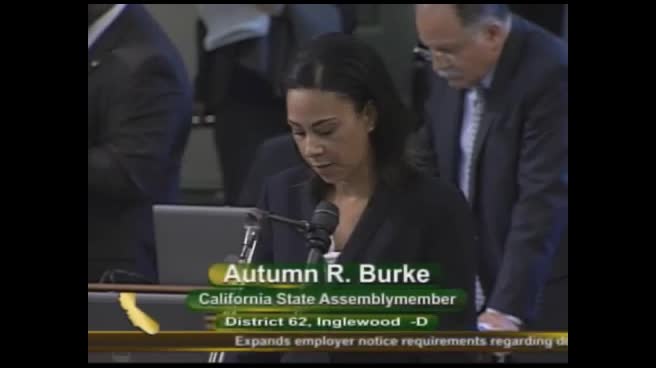
Bill Author

Bill Co-Author(s):