AB 300: Safe Water and Wildlife Protection Act of 2016.
- Session Year: 2015-2016
- House: Assembly
- Latest Version Date: 2015-08-17
Existing law establishes the State Coastal Conservancy and prescribes the membership and functions and duties of the conservancy with respect to preservation of coastal resources in the state.
This bill would enact the Safe Water and Wildlife Protection Act of 2016, which would require the State Water Resources Control Board to establish and coordinate the Algal Bloom Task Force, comprised of specified representatives of state agencies, including the conservancy, in consultation with the Secretary for Environmental Protection, and would prescribe the functions and duties of the task force. The bill would require the task force to review the risks and negative impacts of toxic algal blooms and microcystin pollution and to submit a summary of its findings and recommendations to the appropriate policy and fiscal committees of the Legislature, the Secretary of the Natural Resources Agency, and the secretary on or before January 1, 2017. 2018. The act would require the task force, before providing funding recommendations or submitting a summary of findings, to notify the public about ongoing activities and provide opportunities for public review and comment on applied research, projects, and programs. The act would authorize the conservancy, the Department of Fish and Wildlife, the Wildlife Conservation Board, and the State Water Resources Control Board to enter into contracts and provide grants, upon appropriation, from specified bond funds available under the Water Quality, Supply, and Infrastructure Improvement Act of 2014 or from other appropriate funds for applied research, projects, and programs, recommended by the task force, aimed at preventing or sustainably mitigating toxic blooms of cyanotoxins and microcystin pollution in the waters of the state.
Existing law establishes the State Coastal Conservancy and prescribes the membership and functions and duties of the conservancy with respect to preservation of coastal resources in the state.
This bill would enact the Safe Water and Wildlife Protection Act of 2016, which would require the State Water Resources Control Board to establish and coordinate the Algal Bloom Task Force, comprised of specified representatives of state agencies, including the conservancy, in consultation with the Secretary for Environmental Protection, and would prescribe the functions and duties of the task force. The bill would require the task force to review the risks and negative impacts of toxic algal blooms and microcystin pollution and to submit a summary of its findings and recommendations to the appropriate policy and fiscal committees of the Legislature, the Secretary of the Natural Resources Agency, and the secretary on or before January 1, 2017. The act would require the task force, before providing funding recommendations or submitting a summary of findings, to notify the public about ongoing activities and provide opportunities for public review and comment on applied research, projects, and programs. The act would authorize the conservancy, the Department of Fish and Wildlife, the Wildlife Conservation Board, and the State Water Resources Control Board to enter into contracts and provide grants, upon appropriation, from specified bond funds available under the Water Quality, Supply, and Infrastructure Improvement Act of 2014 or from other appropriate funds for applied research, projects, and programs, recommended by the task force, aimed at preventing or sustainably mitigating toxic blooms of cyanotoxins and microcystin pollution in the waters of the state.
Existing law establishes the State Coastal Conservancy and prescribes the membership and functions and duties of the conservancy with respect to preservation of coastal resources in the state.
This bill would enact the Safe Water and Wildlife Protection Act of 2015, 2016, which would require the State Water Resources Control Board to establish and coordinate the Algal Bloom Task Force, comprised of specified representatives of state agencies, including the conservancy, in consultation with the Secretary for Environmental Protection, and would prescribe the composition and functions and duties of the task force. The bill would require the task force to review the risks and negative impacts of toxic algal blooms and microcystin pollution and to submit a summary of its findings and recommendations to the appropriate policy and fiscal committees of the Legislature, the Secretary of the Natural Resources Agency, and the secretary on or before January 1, 2017. The act would require the task force, before providing funding recommendations or submitting a summary of findings, to notify the public about ongoing activities and provide opportunities for public review and comment on applied research, projects, and programs. The act would authorize the conservancy, the Department of Fish and Wildlife, the Wildlife Conservation Board, and the State Water Resources Control Board to enter into contracts and provide grants, upon appropriation, from the State Water Pollution Cleanup and Abatement Account, from specified bond funds available under the Water Quality, Supply, and Infrastructure Improvement Act of 2014, 2014 or from other appropriate funds for applied research, projects, and programs, recommended by the task force, aimed at preventing or sustainably mitigating toxic blooms of cyanotoxins and microcystin pollution in the waters of the state.
Existing law establishes the State Coastal Conservancy and prescribes the membership and functions and duties of the conservancy with respect to preservation of coastal resources in the state.
This bill would enact the Safe Water and Wildlife Protection Act of 2015, which would require the State Water Resources Control Board to establish and coordinate the Algal Bloom Task Force, comprised of specified representatives of state agencies, including the conservancy, in consultation with the Secretary for Environmental Protection, and would prescribe the composition and functions and duties of the task force. The bill would require the task force to review the risks and negative impacts of toxic algal blooms and microcystin pollution and to submit a summary of its findings and recommendations to the appropriate policy and fiscal committees of the Legislature, the Secretary of the Natural Resources Agency, and the secretary by on or before January 1, 2017. The act would authorize the conservancy, the Department of Fish and Wildlife, the Wildlife Conservation Board, and the State Water Resources Control Board to enter into contracts and provide grants grants, upon appropriation, from the State Water Pollution Cleanup and Abatement Account, from specified bond funds available under the Water Quality, Supply, and Infrastructure Improvement Act of 2014 2014, or from other appropriate funds for applied research, projects, and programs, recommended by the task force, aimed at preventing or sustainably mitigating toxic blooms of cyanotoxins and microcystin pollution in the waters of the state.
Existing law establishes the State Coastal Conservancy and prescribes the membership and functions and duties of the conservancy with respect to preservation of coastal resources in the state.
This bill would enact the Safe Water and Wildlife Protection Act of 2015, which would require the conservancy State Water Resources Control Board to establish and coordinate the Algal Bloom Task Force, comprised of specified representatives of state agencies, including the conservancy, in consultation with the Secretary of the Natural Resources Agency, for Environmental Protection, and would prescribe the composition and functions and duties of the task force. The bill would require the task force to review the risks and negative impacts of toxic algal blooms and microcystin pollution and to submit a summary of its findings and recommendations to the appropriate policy and fiscal committees of the Legislature, the Secretary of the Natural Resources Agency, and the secretary by January 1, 2017. The act would authorize the conservancy, the Department of Fish and Wildlife, the Wildlife Conservation Board, and the State Water Resources Control Board to enter into contracts and provide grants from specified bond funds available under the Water Quality, Supply, and Infrastructure Improvement Act of 2014 for applied research, projects, and programs, recommended by the task force, aimed at preventing or sustainably mitigating toxic blooms of cyanotoxins and microcystin pollution in the waters of the state.
Existing law establishes the State Coastal Conservancy, and prescribes the membership, and functions and duties of the conservancy with respect to preservation of coastal resources in the state.
This bill would enact the Safe Water and Wildlife Protection Act of 2015, which would require the conservancy to establish and coordinate the Algal Bloom Task Force, in consultation with the Secretary of the Natural Resources Agency, and would prescribe the composition and functions and duties of the task force. The bill would require the task force to review the risks and negative impacts of toxic algal blooms and microcystin pollution and to submit a summary of its findings and recommendations to the secretary by January 1, 2017. The act would authorize the conservancy, the Department of Fish and Wildlife, the Wildlife Conservation Board, and the State Water Resources Control Board to enter into contracts and provide grants from specified bond funds available under the Water Quality, Supply, and Infrastructure Improvement Act of 2014 for applied research, projects, and programs, recommended by the task force, aimed at preventing or sustainably mitigating toxic blooms of cyanotoxins and microcystin pollution in the waters of the state.
Existing law establishes the State Coastal Conservancy, and prescribes the membership, and functions and duties of the conservancy with respect to preservation of coastal resources in the state.
This bill would enact the Safe Water and Wildlife Protection Act of 2015, which would require the conservancy to establish and coordinate the Algal Bloom Task Force, in consultation with the Secretary of the Natural Resources Agency, and would prescribe the composition and functions and duties of the task force. The bill would require the task force to review the risks and negative impacts of toxic blooms and microcystin pollution and to submit a summary of its findings and recommendations to the secretary by January 1, 2017. The act would authorize the conservancy, the Department of Fish and Wildlife, the Wildlife Conservation Board, and the State Water Resources Control Board to enter into contracts and provide grants from specified bond funds available under the Water Quality, Supply, and Infrastructure Improvement Act of 2014 for applied research, projects, and programs, recommended by the task force, aimed at preventing or sustainably mitigating toxic blooms of cyanotoxins and microcystin pollution in the waters of the state.
The Legislature finds and declares all of the following:
(a)Toxic blooms of cyanobacteria in the waters of the state, including, but not limited to, coastal lakes, estuaries, rivers and streams, wetlands, and inland lakes and reservoirs, represent a threat to water supplies, human health, endangered wildlife, and recreational activities.
(b)Cyanobacteria are widespread bacteria that are capable of forming toxic blooms and super-blooms in the waters of the state.
(c)Degradation of watersheds, nutrient loading, increased water diversions, and climate change have been linked to the global expansion of cyanobacterial blooms, with high toxin production noted regularly in lakes, rivers, and other waters of the state.
(d)The states waters are especially prone to toxic cyanobacterial blooms due to our warm climate, numerous water diversions, and stressed waterways.
(e)Cyanobacteria produce potent hepatotoxins and neurotoxins, collectively referred to as cyanotoxins. Microcystins are the most commonly found cyanotoxin in the states impacted waters. Other cyanotoxins, such as the neurotoxins anatoxin-a and saxitoxin, are also present in Californias waters, but, at present, little is known about them.
(f)Cyanotoxins are poisonous to humans, pets, livestock, birds, and other wildlife via ingestion, inhalation, or skin exposure. A single dose of microcystin can cause prolonged toxicity by cycling repeatedly between the liver and intestines.
(g)Blooms of microcystins and other toxic cyanobacteria are occurring in waters throughout California, and are threatening our water supply and health. Areas with recurrent and worsening cyanotoxin pollution include the Klamath and Sacramento Rivers, the Sacramento and San Joaquin Rivers (from the Sacramento Delta to San Francisco Bay), and Clear Lake. Pinto Lake, Copco Lake, Iron Gate Reservoir, and three segments of the Klamath River have been listed as impaired due to cyanobacteria. Bird deaths attributed to microcystins have also been reported from the Salton Sea.
(h)The Pinto Lake watershed is being evaluated for total maximum daily load (TMDL) regulation for microcystin, and was considered for remediation as an Environmental Protection Agency superfund site.
(i)Californias southern sea otters, a state and federally listed threatened species, have died from microcystin poisoning. The source of sea otter exposure appears to be microcystin-contaminated freshwater runoff and possibly contaminated prey species.
(j)Sea otters and humans eat some of the same marine foods that can concentrate microcystin in body tissues; hence, food safety is a public health concern. Freshwater and marine fish and shellfish have not been routinely tested for cyanotoxins in California and limited diagnostic testing is available.
(k)The state needs a coordinated multiagency effort to develop actions and projects that will prevent or mitigate toxic blooms and associated cyanotoxin pollution.
SEC. 2.Chapter 10 (commencing with Section 31420) is added to Division 21 of the Public Resources Code, to read:10.Safe Water and Wildlife Protection Act of 201631420.This chapter shall be known, and may be cited, as the Safe Water and Wildlife Protection Act of 2016.
31421.For purposes of this chapter, the following terms have the following meanings:
(a)Board means the State Water Resources Control Board.
(b) Task force means the Algal Bloom Task Force created pursuant to Section 31422.
(c)Waters of the state means any surface waters in the state, including, but not limited to, coastal lakes, lagoons and estuaries, rivers, streams, inland lakes and reservoirs, wetlands, and marine waters.
31422.(a)The board shall establish and coordinate the Algal Bloom Task Force, comprised of a representative of each of the State Department of Public Health, the Department of Fish and Wildlife, the Department of Food and Agriculture, the conservancy, and other relevant agency representatives, to be determined by the chairperson of the board, in consultation with the Secretary for Environmental Protection. The board may augment an existing task force or network to accomplish the requirements of this chapter.
(b)This section shall remain in effect only until January 1, 2019, and as of that date is repealed, unless a later enacted statute, that is enacted before January 1, 2019, deletes or extends that date.
31423.The functions and duties of the task force include all of the following:
(a)Assess and prioritize the actions and research necessary to develop measures that prevent or sustainably mitigate toxic algal blooms in the waters of the state. The assessment shall consider the linked impacts of toxic algal blooms and cyanotoxins on human and animal health, as well as in the context of ecosystem health and water quality.
(b)Solicit and review proposals from universities, local governments, California Native American tribes, and nonprofit organizations for applied research, projects, and programs that accomplish both of the following:
(1)Contribute to development of strategies or implementation of activities that prevent or sustainably mitigate toxic blooms of cyanotoxins and microcystin pollution in the waters of the state.
(2)Establish cyanotoxin monitoring programs or develop laboratory capacity for analyzing water samples for cyanotoxin pollution.
(c)Provide funding recommendations to the chairperson of the board and to the Department of Fish and Wildlife, the Wildlife Conservation Board, the conservancy, other members of the task force, and other relevant agency representatives for those proposals for applied research, projects, and programs, described in subdivision (b), that the task force determines will contribute to the development of prevention strategies and sustainable mitigation actions to address toxic blooms of cyanotoxins and microcystin pollution in waters of the state.
(d)Review the risks and negative impacts of toxic algal blooms and microcystin pollution on humans, wildlife, fisheries, livestock, pets, and aquatic ecosystems, and develop recommendations for prevention and long-term mitigation. The task force shall submit a summary of its findings based on the review, including its recommendations to the appropriate policy and fiscal committees of the Legislature, the Secretary for Environmental Protection, and the Secretary of the Natural Resources Agency on or before January 1, 2017. 2018. The recommendations shall provide guidance on what type of programs or state resources will be required to prevent damaging toxic algal blooms and microcystin pollution in the waters of the state over time.
(e)Organize meetings and workshops of experts and stakeholders as needed to implement this section.
(f)Before providing funding recommendations pursuant to subdivision (c), or submitting a summary of findings pursuant to subdivision (d), the task force shall establish a notification procedure and publish notices to inform the public about ongoing activities, and provide opportunities for public review and comment on applied research, projects, and programs solicited pursuant to subdivision (b).
(g)This section shall remain in effect only until January 1, 2019, and as of that date is repealed, unless a later enacted statute, that is enacted before January 1, 2019, deletes or extends that date.
31424.The conservancy, the Department of Fish and Wildlife, the Wildlife Conservation Board, and the board, or any of them, may enter into contracts and provide grants, upon appropriation, from funds available pursuant to Section 79730 of the Water Code or from other appropriate funds accessible by any of these departments and agencies for applied research, projects, and programs recommended by the task force pursuant to subdivision (c) of Section 31423.
The Legislature finds and declares all of the following:
(a)Toxic blooms of cyanobacteria in the waters of the state, including, but not limited to, coastal lakes, estuaries, rivers and streams, wetlands, and inland lakes and reservoirs, represent a threat to water supplies, human health, endangered wildlife, and recreational activities.
(b)Cyanobacteria are widespread bacteria that are capable of forming toxic blooms and super-blooms in the waters of the state.
(c)Degradation of watersheds, nutrient loading, increased water diversions, and climate change have been linked to the global expansion of cyanobacterial blooms, with high toxin production noted regularly in lakes, rivers, and other waters of the state.
(d)The states waters are especially prone to toxic cyanobacterial blooms due to our warm climate, numerous water diversions, and stressed waterways.
(e)Cyanobacteria produce potent hepatotoxins and neurotoxins, collectively referred to as cyanotoxins. Microcystins are the most commonly found cyanotoxin in the states impacted waters. Other cyanotoxins, such as the neurotoxins anatoxin-a and saxitoxin, are also present in Californias waters, but, at present, little is known about them.
(f)Cyanotoxins are poisonous to humans, pets, livestock, birds, and other wildlife via ingestion, inhalation, or skin exposure. A single dose of microcystin can cause prolonged toxicity by cycling repeatedly between the liver and intestines.
(g)Blooms of microcystins and other toxic cyanobacteria are occurring in waters throughout California, and are threatening our water supply and health. Areas with recurrent and worsening cyanotoxin pollution include the Klamath and Sacramento Rivers, the Sacramento and San Joaquin Rivers (from the Sacramento Delta to San Francisco Bay), and Clear Lake. Pinto Lake, Copco Lake, Iron Gate Reservoir, and three segments of the Klamath River have been listed as impaired due to cyanobacteria. Bird deaths attributed to microcystins have also been reported from the Salton Sea.
(h)The Pinto Lake watershed is being evaluated for total maximum daily load (TMDL) regulation for microcystin, and was considered for remediation as an Environmental Protection Agency superfund site.
(i)Californias southern sea otters, a state and federally listed threatened species, have died from microcystin poisoning. The source of sea otter exposure appears to be microcystin-contaminated freshwater runoff and possibly contaminated prey species.
(j)Sea otters and humans eat some of the same marine foods that can concentrate microcystin in body tissues; hence, food safety is a public health concern. Freshwater and marine fish and shellfish have not been routinely tested for cyanotoxins in California and limited diagnostic testing is available.
(k)The state needs a coordinated multiagency effort to develop actions and projects that will prevent or mitigate toxic blooms and associated cyanotoxin pollution.
SEC. 2.Chapter 10 (commencing with Section 31420) is added to Division 21 of the Public Resources Code, to read:10.Safe Water and Wildlife Protection Act of 201631420.This chapter shall be known, and may be cited, as the Safe Water and Wildlife Protection Act of 2016.
31421.For purposes of this chapter, the following terms have the following meanings:
(a)Board means the State Water Resources Control Board.
(b) Task force means the Algal Bloom Task Force created pursuant to Section 31422.
(c)Waters of the state means any surface waters in the state, including, but not limited to, coastal lakes, lagoons and estuaries, rivers, streams, inland lakes and reservoirs, and wetlands. wetlands, and marine waters.
31422.(a)The board shall establish and coordinate the Algal Bloom Task Force, comprised of a representative of each of the State Department of Public Health, the Department of Fish and Wildlife, the Department of Food and Agriculture, the conservancy, and other relevant agency representatives, to be determined by the chairperson of the board, in consultation with the Secretary for Environmental Protection. The board may augment an existing task force or network to accomplish the requirements of this chapter.
(b)This section shall remain in effect only until January 1, 2019, and as of that date is repealed, unless a later enacted statute, that is enacted before January 1, 2019, deletes or extends that date.
31423.The functions and duties of the task force include all of the following:
(a)Assess and prioritize the actions and research necessary to develop measures that prevent or sustainably mitigate toxic algal blooms in the waters of the state. The assessment shall consider the linked impacts of toxic algal blooms and cyanotoxins on human and animal health, as well as in the context of ecosystem health and water quality.
(b)Solicit and review proposals from universities, local governments, California Native American tribes, and nonprofit organizations for applied research, projects, and programs that accomplish both of the following:
(1)Contribute to development of strategies or implementation of activities that prevent or sustainably mitigate toxic blooms of cyanotoxins and microcystin pollution in the waters of the state.
(2)Establish cyanotoxin monitoring programs or develop laboratory capacity for analyzing water samples for cyanotoxin pollution.
(c)Provide funding recommendations to the chairperson of the board and to the Department of Fish and Wildlife, the Wildlife Conservation Board, the conservancy, other members of the task force, and other relevant agency representatives for those proposals for applied research, projects, and programs, described in subdivision (b), that the task force determines will contribute to the development of prevention strategies and sustainable mitigation actions to address toxic blooms of cyanotoxins and microcystin pollution in waters of the state.
(d)Review the risks and negative impacts of toxic algal blooms and microcystin pollution on humans, wildlife, fisheries, livestock, pets, and aquatic ecosystems, and develop recommendations for prevention and long-term mitigation. The task force shall submit a summary of its findings based on the review, including its recommendations to the appropriate policy and fiscal committees of the Legislature, the Secretary for Environmental Protection, and the Secretary of the Natural Resources Agency on or before January 1, 2017. The recommendations shall provide guidance on what type of programs or state resources will be required to prevent damaging toxic algal blooms and microcystin pollution in the waters of the state over time.
(e)Organize meetings and workshops of experts and stakeholders as needed to implement this section.
(f)Before providing funding recommendations pursuant to subdivision (c), or submitting a summary of findings pursuant to subdivision (d), the task force shall establish a notification procedure and publish notices to inform the public about ongoing activities, and provide opportunities for public review and comment on applied research, projects, and programs solicited pursuant to subdivision (b).
(g)This section shall remain in effect only until January 1, 2019, and as of that date is repealed, unless a later enacted statute, that is enacted before January 1, 2019, deletes or extends that date.
31424.The conservancy, the Department of Fish and Wildlife, the Wildlife Conservation Board, and the board, or any of them, may enter into contracts and provide grants, upon appropriation, from funds available pursuant to Section 79730 of the Water Code or from other appropriate funds accessible by any of these departments and agencies for applied research, projects, and programs recommended by the task force pursuant to subdivision (c) of Section 31423.
The Legislature finds and declares all of the following:
(a)Toxic blooms of cyanobacteria in the waters of the state, including, but not limited to, coastal lakes, estuaries, rivers and streams, wetlands, and inland lakes and reservoirs, represent a threat to water supplies, human health, endangered wildlife, and recreational activities.
(b)Cyanobacteria are widespread bacteria that are capable of forming toxic blooms and super-blooms in the waters of the state.
(c)Degradation of watersheds, nutrient loading, increased water diversions, and climate change have been linked to the global expansion of cyanobacterial blooms, with high toxin production noted regularly in lakes, rivers, and other waters of the state.
(d)The states waters are especially prone to toxic cyanobacterial blooms due to our warm climate, numerous water diversions, and stressed waterways.
(e)Cyanobacteria produce potent hepatotoxins and neurotoxins, collectively referred to as cyanotoxins. Microcystins are the most commonly found cyanotoxin in the states impacted waters. Other cyanotoxins, such as the neurotoxins anatoxin-a and saxitoxin, are also present in Californias waters, but, at present, little is known about them.
(f)Cyanotoxins are poisonous to humans, pets, livestock, birds, and other wildlife via ingestion, inhalation, or skin exposure. A single dose of microcystin can cause prolonged toxicity by cycling repeatedly between the liver and intestines.
(g)Blooms of microcystins and other toxic cyanobacteria are occurring in waters throughout California, and are threatening our water supply and health. Areas with recurrent and worsening cyanotoxin pollution include the Klamath and Sacramento Rivers, the Sacramento and San Joaquin Rivers (from the Sacramento Delta to San Francisco Bay), and Clear Lake. Pinto Lake, Copco Lake, Iron Gate Reservoir, and three segments of the Klamath River have been listed as impaired due to cyanobacteria. Bird deaths attributed to microcystins have also been reported from the Salton Sea.
(h)The Pinto Lake watershed is being evaluated for total maximum daily load (TMDL) regulation for microcystin, and was considered for remediation as an Environmental Protection Agency superfund site.
(i)Californias southern sea otters, a state and federally listed threatened species, have died from microcystin poisoning. The source of sea otter exposure appears to be microcystin-contaminated freshwater runoff and possibly contaminated prey species.
(j)Sea otters and humans eat some of the same marine foods that can concentrate microcystin in body tissues; hence, food safety is a public health concern. Freshwater and marine fish and shellfish have not been routinely tested for cyanotoxins in California and limited diagnostic testing is available.
(k)The state needs a coordinated multiagency effort to develop actions and projects that will prevent or mitigate toxic blooms and associated cyanotoxin pollution.
SEC. 2.Chapter 10 (commencing with Section 31420) is added to Division 21 of the Public Resources Code, to read:10.Safe Water and Wildlife Protection Act of 2015 201631420.This chapter shall be known, and may be cited, as the Safe Water and Wildlife Protection Act of 2015. 2016.
31421.For purposes of this chapter, the following terms have the following meanings:
(a)Board means the State Water Resources Control Board.
(b) Task Force force means the Algal Bloom Task Force created pursuant to Section 31422.
(c)Waters of the state means any surface waters in the state, including, but not limited to, coastal lakes, lagoons and estuaries, rivers, streams, inland lakes and reservoirs, and wetlands.
31422.(a)The board shall establish and coordinate the Algal Bloom Task Force, comprised of a representative of each of the State Department of Public Health, the Department of Fish and Wildlife, the Department of Food and Agriculture, the conservancy, and other relevant agency representatives, to be determined by the chairperson of the board, in consultation with the Secretary for Environmental Protection. The board may augment an existing task force or network to accomplish the requirements of this chapter.
(b)This section shall remain in effect only until January 1, 2019, and as of that date is repealed, unless a later enacted statute, that is enacted before January 1, 2019, deletes or extends that date.
31423.The functions and duties of the task force include all of the following:
(a)Assess and prioritize the actions and research necessary to develop measures that prevent or sustainably mitigate toxic algal blooms in the waters of the state. The assessment shall consider the linked impacts of toxic algal blooms and cyanotoxins on human and animal health, as well as in the context of ecosystem health and water quality.
(b)Solicit and review proposals from universities, local governments, California Native American tribes, and nonprofit organizations for applied research, projects, and programs that accomplish both of the following:
(1)Contribute to development of strategies or implementation of activities that prevent or sustainably mitigate toxic blooms of cyanotoxins and microcystin pollution in the waters of the state.
(2)Establish cyanotoxin monitoring programs or develop laboratory capacity for analyzing water samples for cyanotoxin pollution.
(c)Provide funding recommendations to the chairperson of the board and to the Department of Fish and Wildlife, the Wildlife Conservation Board, the conservancy, other members of the task force, and other relevant agency representatives for those proposals for applied research, projects, and programs, described in subdivision (b), that the task force determines will contribute to the development of prevention strategies and sustainable mitigation actions to address toxic blooms of cyanotoxins and microcystin pollution in waters of the state.
(d)Review the risks and negative impacts of toxic algal blooms and microcystin pollution on humans, wildlife, fisheries, livestock, pets, and aquatic ecosystems, and develop recommendations for prevention and long-term mitigation. The task force shall submit a summary of its findings based on the review, including its recommendations to the appropriate policy and fiscal committees of the Legislature, the Secretary for Environmental Protection, and the Secretary of the Natural Resources Agency on or before January 1, 2017. The recommendations shall provide guidance on what type of programs or state resources will be required to prevent damaging toxic algal blooms and microcystin pollution in the waters of the state over time.
(e)Organize meetings and workshops of experts and stakeholders as needed to implement this section.
(f)Before providing funding recommendations pursuant to subdivision (c), or submitting a summary of findings pursuant to subdivision (d), the task force shall establish a notification procedure and publish notices to inform the public about ongoing activities, and provide opportunities for public review and comment on applied research, projects, and programs solicited pursuant to subdivision (b).
(f)
(g)This section shall remain in effect only until January 1, 2019, and as of that date is repealed, unless a later enacted statute, that is enacted before January 1, 2019, deletes or extends that date.
31424.The conservancy, the Department of Fish and Wildlife, the Wildlife Conservation Board, and the board, or any of them, may enter into contracts and provide grants, upon appropriation, from the State Water Pollution Cleanup and Abatement Account, from funds available pursuant to Section 79730 of the Water Code, Code or from other appropriate funds accessible by any of these departments and agencies, agencies for applied research, projects, and programs recommended by the task force pursuant to subdivision (c) of Section 31423.
The Legislature finds and declares all of the following:
(a)Toxic blooms of cyanobacteria in the waters of the state, including, but not limited to, coastal lakes, estuaries, rivers and streams, wetlands, and inland lakes and reservoirs, represent a threat to water supplies, human health, endangered wildlife, and recreational activities.
(b)Cyanobacteria are widespread bacteria that are capable of forming toxic blooms and super-blooms in the waters of the state.
(c)Degradation of watersheds, nutrient loading, increased water diversions, and climate change have been linked to the global expansion of cyanobacterial blooms, with high toxin production noted regularly in lakes, rivers, and other waters of the state.
(d)The states waters are especially prone to toxic cyanobacterial blooms due to our warm climate, numerous water diversions, and stressed waterways.
(e)Cyanobacteria produce potent hepatoxins hepatotoxins and neurotoxins, collectively referred to as cyanotoxins. Microcystins are the most commonly found cyanotoxin in the states impacted waters. Other cyanotoxins, such as the neurotoxins anatoxin-a and saxitoxin, are also present in Californias waters, but, at present, little is known about them.
(f)Cyanotoxins are poisonous to humans, pets, livestock, birds, and other wildlife via ingestion, inhalation, or skin exposure. A single dose of microcystin can cause prolonged toxicity by cycling repeatedly between the liver and intestines.
(g)Blooms of microcystins and other toxic cyanobacteria are occurring in waters throughout California, and are threatening our water supply and health. Areas with recurrent and worsening cyanotoxin pollution include the Klamath and Sacramento Rivers, the Sacramento and San Joaquin Rivers (from the Sacramento Delta to San Francisco Bay), and Clear Lake. Pinto Lake, Copco Lake, Iron Gate Reservoir, and three segments of the Klamath River have been listed as impaired due to cyanobacteria. Bird deaths attributed to microcystins have also been reported from the Salton Sea.
(h)The Pinto Lake watershed is being evaluated for total maximum daily load (TMDL) regulation for microcystin, and was considered for remediation as an Environmental Protection Agency superfund site.
(i)Californias southern sea otters, a state and federally listed threatened species, have died from microcystin poisoning. The source of sea otter exposure appears to be microcystin-contaminated freshwater runoff and possibly contaminated prey species.
(j)Sea otters and humans eat some of the same marine foods that can concentrate microcystin in body tissues; hence, food safety is a public health concern. Freshwater and marine fish and shellfish have not been routinely tested for cyanotoxins in California and limited diagnostic testing is available.
(k)The state needs a coordinated multiagency effort to develop actions and projects that will prevent or mitigate toxic blooms and associated cyanotoxin pollution.
SEC. 2.Chapter 10 (commencing with Section 31420) is added to Division 21 of the Public Resources Code, to read:10.Safe Water and Wildlife Protection Act of 201531420.This chapter shall be known, and may be cited, as the Safe Water and Wildlife Protection Act of 2015.
31421.For purposes of this chapter, the following terms have the following meanings:
(a) Board means the State Water Resources Control Board.
(b) Task Force means the Algal Bloom Task Force created pursuant to Section 31422.
(c)Waters of the state means any surface waters in the state, including, but not limited to, coastal lakes, lagoons and estuaries, rivers, streams, inland lakes and reservoirs, and wetlands.
31422.(a)The board shall establish and coordinate the Algal Bloom Task Force, comprised of a representative of each of the State Department of Public Health, the Department of Fish and Wildlife, the Department of Food and Agriculture, the conservancy, and other relevant agency representatives, to be determined by the chairperson of the board, in consultation with the Secretary for Environmental Protection. The board may augment an existing taskforce task force or network to accomplish the requirements of this chapter.
(b)This section shall remain in effect only until January 1, 2019, and as of that date is repealed, unless a later enacted statute, that is enacted before January 1, 2019, deletes or extends that date.
31423.The functions and duties of the task force include all of the following:
(a)Assess and prioritize the actions and research necessary to develop measures that prevent or sustainably mitigate toxic algal blooms in the waters of the state. The assessment shall consider the linked impacts of toxic algal blooms and cyanotoxins on human and animal health, as well as in the context of ecosystem health and water quality.
(b)Solicit and review proposals from universities, local governments, California Native American tribes, and nonprofit organizations for applied research, projects, and programs that accomplish both of the following:
(1)Contribute to development of strategies or implementation of activities that prevent or sustainably mitigate toxic blooms of cyanotoxins and microcystin pollution in the waters of the state.
(2)Establish cyanotoxin monitoring programs or develop laboratory capacity for analyzing water samples for cyanotoxin pollution.
(c)Provide funding recommendations to the chairperson of the board and to the Department of Fish and Wildlife, the Wildlife Conservation Board, the conservancy, other members of the task force, and other relevant agency representatives for those proposals for applied research, projects, and programs, described in subdivision (b), that the task force determines will contribute to the development of prevention strategies and sustainable mitigation actions to address toxic blooms of cyanotoxins and microcystin pollution in waters of the state.
(d)Review the risks and negative impacts of toxic algal blooms and microcystin pollution on humans, wildlife, fisheries, livestock, pets, and aquatic ecosystems, and develop recommendations for prevention and long-term mitigation. The task force shall submit a summary of its findings based on the review, including its recommendations to the appropriate policy and fiscal committees of the Legislature, the Secretary for Environmental Protection, and the Secretary of the Natural Resources Agency on or before January 1, 2017. The recommendations shall provide guidance on what type of programs or state resources will be required to prevent damaging toxic algal blooms and microcystin pollution in the waters of the state over time.
(e)Organize meetings and workshops of experts and stakeholders as needed to implement this section.
(f)This section shall remain in effect only until January 1, 2019, and as of that date is repealed, unless a later enacted statute, that is enacted before January 1, 2019, deletes or extends that date.
31424.The conservancy, the Department of Fish and Wildlife, the Wildlife Conservation Board, and the board, or any of them, may enter into contracts and provide grants grants, upon appropriation, from the State Water Pollution Cleanup and Abatement Account, from funds available pursuant to Section 79730 of the Water Code Code, or from other appropriate funds accessible by any of these departments and agencies, for applied research, projects, and programs recommended by the task force pursuant to subdivision (c) of Section 31423.
The Legislature finds and declares all of the following:
(a)Toxic blooms of cyanobacteria in the waters of the state, including, but not limited to, coastal lakes, estuaries, rivers and streams, wetlands, and inland lakes and reservoirs, represent a threat to water supplies, human health, endangered wildlife, and recreational activities.
(b)Cyanobacteria are widespread bacteria that are capable of forming toxic blooms and super-blooms in the waters of the state.
(c)Degradation of watersheds, nutrient loading, increased water diversions, and climate change have been linked to the global expansion of cyanobacterial blooms, with high toxin production noted regularly in lakes, rivers, and other waters of the state.
(d)The states waters are especially prone to toxic cyanobacterial blooms due to our warm climate, numerous water diversions, and stressed waterways.
(e)Cyanobacteria produce potent hepatoxins and neurotoxins, collectively referred to as cyanotoxins. Microcystins are the most commonly found cyanotoxin in the states impacted waters. Other cyanotoxins, such as the neurotoxins anatoxin-a and saxitoxin, are also present in Californias waters, but, at present, little is known about them.
(f)Cyanotoxins are poisonous to humans, pets, livestock, birds, and other wildlife via ingestion, inhalation, or skin exposure. A single dose of microcystin can cause prolonged toxicity by cycling repeatedly between the liver and intestines.
(g)Blooms of microcystins and other toxic cyanobacteria are occurring in waters throughout California, and are threatening our water supply and health. Areas with recurrent and worsening cyanotoxin pollution include the Klamath and Sacramento Rivers, the Sacramento and San Joaquin Rivers (from the Sacramento Delta to San Francisco Bay), and Clear Lake. Pinto Lake, Copco Lake, Iron Gate Reservoir, and three segments of the Klamath River have been listed as impaired due to cyanobacteria. Bird deaths attributed to microcystins have also been reported from the Salton Sea.
(h)The Pinto Lake watershed is being evaluated for total maximum daily load (TMDL) regulation for microcystin, and was considered for remediation as an Environmental Protection Agency superfund site.
(i)Californias southern sea otters, a state and federally listed threatened species, have died from microcystin poisoning. The source of sea otter exposure appears to be microcystin-contaminated freshwater runoff and possibly contaminated prey species.
(j)Sea otters and humans eat some of the same marine foods that can concentrate microcystin in body tissues; hence, food safety is a public health concern. Freshwater and marine fish and shellfish have not been routinely tested for cyanotoxins in California and limited diagnostic testing is available.
(k)A multidisciplinary one-health approach, that considers human, animal, and environmental health components, is appropriate to evaluate impacts and develop comprehensive strategies to prevent cyanotoxin pollution in the waters of the state.
(l)
(k)The state needs a coordinated multiagency effort to develop actions and projects that will prevent or mitigate toxic blooms and associated cyanotoxin pollution.
SEC. 2.Chapter 10 (commencing with Section 31420) is added to Division 21 of the Public Resources Code, to read:10.Safe Water and Wildlife Protection Act of 201531420.This chapter shall be known, and may be cited, as the Safe Water and Wildlife Protection Act of 2015.
31421.For purposes of this chapter, the following terms have the following meanings:
(a)One-health approach means a method of assessment that considers the linked impacts of toxic algal blooms on humans, animals, the ecosystem, and water quality.
(a) Board means the State Water Resources Control Board.
(b) Task Force means the Algal Bloom Task Force created pursuant to Section 31422.
(c)Waters of the state means any surface waters in the state, including, but not limited to, coastal lakes, lagoons and estuaries, rivers, streams, inland lakes and reservoirs, and wetlands.
31422.The conservancy board shall establish and coordinate the Algal Bloom Task Force, comprised of a representative of each of the State Department of Public Health, the Department of Fish and Wildlife, the Department of Food and Agriculture, the State Water Resources Control Board, conservancy, and other relevant agency representatives, to be determined by the executive officer of the conservancy chairperson of the board, in consultation with the Secretary of the Natural Resources Agency. for Environmental Protection. The board may augment an existing taskforce or network to accomplish the requirements of this chapter.
31423.The functions and duties of the task force include all of the following:
(a)Assess and prioritize the actions and research necessary to develop measures that prevent or sustainably mitigate toxic algal blooms in the waters of the state. The assessment shall apply a one-health approach that considers consider the linked impacts of toxic algal blooms and cyanotoxins on human and animal health, as well as in the context of ecosystem health and water quality.
(b)Solicit and review proposals from universities, local governments, California Native American tribes, and nonprofit organizations for applied research, projects, and programs that accomplish both of the following:
(1)Contribute to development of strategies or implementation of activities that prevent or sustainably mitigate toxic blooms of cyanotoxins and microcystin pollution in the waters of the state.
(2)Establish cyanotoxin monitoring programs or develop laboratory capacity for analyzing water samples for cyanotoxin pollution.
(c)Provide funding recommendations to the executive officerof the conservancy chairperson of the board and to the Department of Fish and Wildlife, the Wildlife Conservation Board, and the State Water Resources Control Board the conservancy, other members of the task force, and other relevant agency representatives for those proposals for applied research, projects, and programs, described in subdivision (b), that the task force determines will contribute to the development of prevention strategies and sustainable mitigation actions to address toxic blooms of cyanotoxins and microcystin pollution in waters of the state.
(d)Review the risks and negative impacts of toxic algal blooms and microcystin pollution on humans, wildlife, fisheries, livestock, pets, and aquatic ecosystems, and develop recommendations for prevention and long-term mitigation. The task force shall submit a summary of its findings based on the review, including its recommendations to the appropriate policy and fiscal committees of the Legislature, the Secretary for Environmental Protection, and the Secretary of the Natural Resources Agency on or before January 1, 2017. The recommendations shall provide guidance on what type of programs or state resources will be required to prevent damaging toxic algal blooms and microcystin pollution in the waters of the state over time.
(e)Organize meetings and workshops of experts and stakeholders as needed to implement this section.
31424.The conservancy, the Department of Fish and Wildlife, the Wildlife Conservation Board, and the State Water Resources Control Board, board, or any of them, may enter into contracts and provide grants from funds available pursuant to Section 79730 of the Water Code for applied research, projects, and programs recommended by the task force pursuant to subdivision (c) of Section 31423.
The Legislature finds and declares all of the following:
(a)Toxic blooms of cyanobacteria in the waters of the state, including, but not limited to, coastal lakes, estuaries, rivers and streams, wetlands, and inland lakes and reservoirs, represent a threat to water supplies, human health, endangered wildlife, and recreational activities.
(b)Cyanobacteria are widespread bacteria that are capable of forming toxic blooms and super-blooms in the waters of the state.
(c)Degradation of watersheds, nutrient loading, increased water diversions, and climate change have been linked to the global expansion of cyanobacterial blooms, with high toxin production noted regularly in lakes, rivers, and other waters of the state.
(d)The states waters are especially prone to toxic cyanobacterial blooms due to our warm climate, numerous water diversions, and stressed waterways.
(e)Cyanobacteria produce toxic microcystins and other toxins. Due to their high toxicity, microcystins are a regulated pollutantunder federal law. Other cyanobacterial toxins, such as antitoxin-a, potent hepatoxins and neurotoxins, collectively referred to as cyanotoxins. Microcystins are the most commonly found cyanotoxin in the states impacted waters. Other cyanotoxins, such as the neurotoxins anatoxin-a and saxitoxin, are also present in Californias waters, but, at present, little is known about these toxins. them.
(f)Microcystin and other cyanotoxins Cyanotoxins are poisonous to humans, pets, livestock, birds, and other wildlife via ingestion, inhalation, or skin exposure. A single dose of microcystin can cause prolonged toxicity by cycling repeatedly between the liver and intestines.
(g)Blooms of microcystins and other toxic cyanobacteria are occurring in waters throughout California, and are threatening our water supply and health. Areas with recurrent and worsening microcystin cyanotoxin pollution include the Klamath and Sacramento Rivers, the Sacramento and San Joaquin Rivers (from the Sacramento Delta to San Francisco Bay), and Clear Lake. Pinto Lake, Copco Lake, Iron Gate Reservoir, and three segments of the Klamath River have been listed as impaired due to cyanobacteria. Bird deaths attributed to microcystins have also been reported from the Salton Sea.
(h)The Pinto Lake watershed is being evaluated for total maximum daily load (TMDL) regulation for microcystin, and is recognized as a state and national cyanobacteria hotspot, and was considered for remediation as an Environmental Protection Agency superfund site.
(i)Californias southern sea otters, a state and federally listed threatened species, have died from microcystin poisoning. The source of sea otter exposure appears to be microcystin-contaminated freshwater runoff or mussels, or both, or clams or crabs that concentrate microcystin after being exposedto contaminated freshwater runoff and possibly contaminated prey species.
(j)Sea otters and humans eat some of the same marine foods that can concentrate microcystin in body tissues; hence, food safety is a concern for public health public health concern. Freshwater and marine fish and shellfish have not been routinely tested for cyanotoxins in California and limited diagnostic testing is available.
(k)A One Health approach, that considers human, animal, and environmental health, is appropriate to assess impacts and develop comprehensive strategies to prevent microcystin pollution in the waters of the state. This represents a multidisciplinary approach that considers linkages between human, animal, and environmental health. multidisciplinary one-health approach, that considers human, animal, and environmental health components, is appropriate to evaluate impacts and develop comprehensive strategies to prevent cyanotoxin pollution in the waters of the state.
(l)The state needs a coordinated multiagency effort to develop actions and projects that will prevent or mitigate toxic blooms and associated toxin cyanotoxin pollution.
SEC. 2.Chapter 10 (commencing with Section 31420) is added to Division 21 of the Public Resources Code, to read:10.Safe Water and Wildlife Protection Act of 201531420.This chapter shall be known, and may be cited, as the Safe Water and Wildlife Protection Act of 2015.
31421.For purposes of this chapter, the following terms have the following meanings:
(a)One-health approach means a method of assessment that considers the linked impacts of toxic algal blooms on humans, animals, the ecosystem, and water quality.
(b)Task Force means the Algal Bloom Task Force created pursuant to Section 31422.
(c)Waters of the state means any surface water waters in the state including, but not limited to, coastal lakes, lagoons and estuaries, rivers, streams, inland lakes and reservoirs, and wetlands.
31422.The conservancy shall establish and coordinate the Algal Bloom Task Force, comprised of a representative of each of the State Department of Public Health, the Department of Fish and Wildlife, the State Water Resources Control Board, and other relevant agency representatives, to be determined by the executive officer of the conservancy in consultation with the Secretary of the Natural Resources Agency.
31423.The functions and duties of the task force include all of the following:
(a)Assess and prioritize the actions and research necessary to develop measures that prevent or sustainably mitigate toxic algal blooms in the waters of the state. The assessment shall apply a one-health approach that considers the linked impacts of toxic algal blooms and cyanotoxins on human and animal health, as well as in the context of ecosystem health and water quality.
(b)Solicit and review proposals from universities, local governments, California Native American tribes, and nonprofit organizations for applied research, projects, and programs that contribute accomplish both of the following:
(1)Contribute to development of strategies or implementation of activities that prevent or sustainably mitigate toxic blooms of cyanotoxins and microcystin pollution in the waters of the state.
(2)Establish cyanotoxin monitoring programs or develop laboratory capacity for analyzing water samples for cyanotoxin pollution.
(c)Provide funding recommendations to the executive officer of the conservancy and to the Department of Fish and Wildlife, the Wildlife Conservation Board, and the State Water Resources Control Board for those proposals for applied research, projects, and programs, described in subdivision (b), that the task force determines will contribute to the development of prevention strategies and sustainable mitigation actions to address toxic blooms of cyanotoxins and microcystin pollution in waters of the state.
(d)Review the risks and negative impacts of toxic algae algal blooms and microcystin pollution on humans, wildlife, fisheries, livestock, pets, and aquatic ecosystems, and develop recommendations for prevention and long-term mitigation. The task force shall submit a summary of its findings based on the review, including its recommendations to the Secretary of the Natural Resources Agency on or before January 1, 2017. The recommendations shall provide guidance on what type of programs or state resources will be required to prevent damaging toxic algal blooms and microcystin pollution in the waters of the state over time.
(e)Organize meetings and workshops of experts and stakeholders as needed to implement this section.
31424.The conservancy, the Department of Fish and Wildlife, the Wildlife Conservation Board, and the State Water Resources Control Board, or any of them, may enter into contracts and provide grants from funds available pursuant to Section 79730 of the Water Code for applied research, projects, and programs recommended by the task force pursuant to subdivision (c) of Section 31423.
The Legislature finds and declares all of the following:
(a)Toxic blooms of cyanobacteria in the waters of the state, including, but not limited to, coastal lakes, estuaries, rivers and streams, wetlands, and inland lakes and reservoirs, represent a threat to human health, endangered wildlife, and recreational activities.
(b)Cyanobacteria are widespread bacteria that are capable of forming toxic blooms and super-blooms in the waters of the state.
(c)Degradation of watersheds, nutrient loading, increased water diversions, and climate change have been linked to the global expansion of cyanobacterial blooms, with high toxin production noted regularly in lakes, rivers, and other waters of the state.
(d)The states waters are especially prone to toxic cyanobacterial blooms due to our warm climate, numerous water diversions, and stressed waterways.
(e)Cyanobacteria produce toxic microcystins and other toxins. Due to their high toxicity, microcystins are a regulated pollutant under federal law. Other cyanobacterial toxins, such as antitoxin-a, are also present in Californias waters, but, at present, little is known about these toxins.
(f)Microcystin and other cyanotoxins are poisonous to humans, pets, livestock, birds, and other wildlife via ingestion, inhalation, or skin exposure. A single dose of microcystin can cause prolonged toxicity by cycling repeatedly between the liver and intestines.
(g)Blooms of microcystins and other toxic cyanobacteria are occurring in waters throughout California, and are threatening our water supply and health. Areas with recurrent and worsening microcystin pollution include the Klamath and Sacramento Rivers, the Sacramento and San Joaquin Rivers (from the Sacramento Delta to San Francisco Bay), and Clear Lake. Pinto Lake, Copco Lake, Iron Gate Reservoir, and three segments of the Klamath River have been listed as impaired due to cyanobacteria. Bird deaths attributed to microcystins have also been reported from the Salton Sea.
(h)The Pinto Lake watershed is being evaluated for total maximum daily load (TMDL) regulation for microcystin, and is recognized as a state and national cyanobacteria hotspot, and was considered for remediation as an Environmental Protection Agency superfund site.
(i)Californias southern sea otters, a state and federally listed threatened species, have died from microcystin poisoning. The source of sea otter exposure appears to be microcystin-contaminated freshwater runoff or mussels, or both, or clams or crabs that concentrate microcystin after being exposed to contaminated freshwater runoff.
(j)Sea otters and humans eat some of the same marine foods that can concentrate microcystin in body tissues; hence, food safety is a concern for public health. Freshwater and marine fish and shellfish have not been routinely tested for cyanotoxins in California and limited diagnostic testing is available.
(k)A One Health approach, that considers human, animal, and environmental health, is appropriate to assess impacts and develop comprehensive strategies to prevent microcystin pollution in the waters of the state. This represents a multidisciplinary approach that considers linkages between human, animal, and environmental health.
(l)The state needs a coordinated multiagency effort to develop actions and projects that will prevent or mitigate toxic blooms and associated toxin pollution.
SEC. 2.Chapter 10 (commencing with Section 31420) is added to Division 21 of the Public Resources Code, to read:10.Safe Water and Wildlife Protection Act of 201531420.This chapter shall be known, and may be cited, as the Safe Water and Wildlife Protection Act of 2015.
31421.For purposes of this chapter, the following terms have the following meanings:
(a)One-health approach means a method of assessment that considers the linked impacts of toxic algal blooms on humans, animals, the ecosystem, and water quality.
(b)Task Force means the Algal Bloom Task Force created pursuant to Section 31422.
(c)Waters of the state means any surface water in the state including, but not limited to, coastal lakes, lagoons and estuaries, rivers, streams, inland lakes and reservoirs, and wetlands.
31422.The conservancy shall establish and coordinate the Algal Bloom Task Force, comprised of a representative of each of the State Department of Public Health, the Department of Fish and Wildlife, the State Water Resources Control Board, and other relevant agency representatives, to be determined by the executive officer of the conservancy in consultation with the Secretary of the Natural Resources Agency.
31423.The functions and duties of the task force include all of the following:
(a)Assess and prioritize the actions and research necessary to develop measures that prevent or sustainably mitigate toxic algal blooms in the waters of the state. The assessment shall apply a one-health approach that considers the linked impacts of toxic algal blooms and cyanotoxins on human and animal health, as well as in the context of ecosystem health and water quality.
(b)Solicit and review proposals from universities, local governments, and nonprofit organizations for applied research, projects, and programs that contribute to development of strategies or implementation of activities that prevent or sustainably mitigate toxic blooms of cyanotoxins and microcystin pollution in the waters of the state.
(c)Provide funding recommendations to the executive officer of the conservancy and to the Department of Fish and Wildlife, the Wildlife Conservation Board, and the State Water Resources Control Board for those proposals for applied research, projects, and programs, described in subdivision (b), that the task force determines will contribute to the development of prevention strategies and sustainable mitigation actions to address toxic blooms of cyanotoxins and microcystin pollution in waters of the state.
(d)Review the risks and negative impacts of toxic algae blooms and microcystin pollution on humans, wildlife, fisheries, and aquatic ecosystems, and develop recommendations for prevention and long-term mitigation. The task force shall submit a summary of its findings based on the review, including its recommendations to the Secretary of the Natural Resources Agency on or before January 1, 2017. The recommendations shall provide guidance on what type of programs or state resources will be required to prevent damaging toxic algal blooms and microcystin pollution in the waters of the state over time.
(e)Organize meetings and workshops of experts and stakeholders as needed to implement this section.
31424.The conservancy, the Department of Fish and Wildlife, the Wildlife Conservation Board, and the State Water Resources Control Board, or any of them, may enter into contracts and provide grants from funds available pursuant to Section 79730 of the Water Code for applied research, projects, and programs recommended by the task force pursuant to subdivision (c) of Section 31423.
|
Date
|
Status
|
|---|---|
| Jun 1, 2015 | Read second time. Ordered to third reading. |
| Aug 27, 2015 | In committee: Held under submission. |
| Aug 17, 2015 | In committee: Referred to APPR. suspense file. |
| Aug 17, 2015 | From committee chair, with author's amendments: Amend, and re-refer to committee. Read second time, amended, and re-referred to Com. on APPR. |
| Jul 16, 2015 | From committee: Do pass and re-refer to Com. on APPR. (Ayes 7. Noes 0.) (July 15). Re-referred to Com. on APPR. |
| Jun 25, 2015 | Read second time and amended. Re-referred to Com. on E.Q. |
| Jun 24, 2015 | From committee: Amend, and do pass as amended and re-refer to Com. on E.Q. (Ayes 9. Noes 0.) (June 23). |
| Jun 11, 2015 | Referred to Coms. on N.R. & W. and E.Q. |
| Jun 11, 2015 | From committee chair, with author's amendments: Amend, and re-refer to committee. Read second time, amended, and re-referred to Com. on N.R. & W. |
| Jun 2, 2015 | Read third time. Passed. Ordered to the Senate. (Ayes 77. Noes 0. Page 1799.) |
| Jun 2, 2015 | In Senate. Read first time. To Com. on RLS. for assignment. |
| Feb 12, 2015 | Read first time. To print. |
| May 28, 2015 | Read second time and amended. Ordered returned to second reading. |
| May 28, 2015 | From committee: Amend, and do pass as amended. (Ayes 17. Noes 0.) (May 28). |
| Apr 22, 2015 | In committee: Set, first hearing. Referred to APPR. suspense file. |
| Apr 8, 2015 | Re-referred to Com. on APPR. |
| Apr 7, 2015 | Read second time and amended. |
| Apr 6, 2015 | From committee: Amend, and do pass as amended and re-refer to Com. on APPR. (Ayes 8. Noes 0.) (March 23). |
| Mar 9, 2015 | Re-referred to Com. on NAT. RES. |
| Mar 5, 2015 | From committee chair, with author's amendments: Amend, and re-refer to Com. on NAT. RES. Read second time and amended. |
| Feb 23, 2015 | Referred to Com. on NAT. RES. |
| Feb 13, 2015 | From printer. May be heard in committee March 15. |
|
Date
|
Description
|
Location
|
Votes
|
|
|---|---|---|---|---|
| Aug 17, 2015 | Placed on suspense file | Senate Standing Committee on Appropriations |
Passed |
|
| Jul 15, 2015 | Do pass, but first be re-referred to the Committee on [Appropriations] | Senate Standing Committee on Environmental Quality |
Passed |
|
| Jun 23, 2015 | Do pass as amended, but first amend, and re-refer to the Committee on [Environmental Quality] | Senate Standing Committee on Natural Resources and Water |
Passed |
|
| Jun 2, 2015 | AB 300 ALEJO Assembly Third Reading | Assembly Floor |
Passed |
|
| May 28, 2015 | Do pass as amended. | Assembly Standing Committee on Appropriations |
Passed |
|
| Mar 23, 2015 | Do pass as amended and be re-referred to the Committee on [Appropriations] | Assembly Standing Committee on Natural Resources |
Passed |
This list shows positions taken on this bill by organizations on the date displayed, which is linked to the original source.
Positions by individuals are not included.
|
Organization
|
Position
|
Date
|
|---|---|---|
| City of Long Beach | ** Support | Aug 17, 2015 |
| Defenders Of Wildlife | ** Support | Aug 17, 2015 |
| Karuk Tribe | ** Support | Jun 23, 2015 |
| Save Our Shores | ** Support | Aug 17, 2015 |
| Sierra Club | * Support | Jun 23, 2015 |
| Watsonville, City Of | * Support | Jun 23, 2015 |
| Watsonville, City Of | * Indeterminate | Jun 23, 2015 |
AB 300 (Alejo) Page 3 of 3
SENATE COMMITTEE ON APPROPRIATIONS
Senator Ricardo Lara, Chair
2015 - 2016 Regular Session
AB 300 (Alejo) - Safe Water and Wildlife Protection Act of 2016
|
|
Version: August 17, 2015 |
Policy Vote: N.R. & W. 9 - 0, E.Q. 7 - 0 |
Urgency: No |
Mandate: No |
Hearing Date: August 17, 2015 |
Consultant: Marie Liu |
This bill meets the criteria for referral to the Suspense File.
Bill Summary:
AB 300 would require the State Water Resources Control Board (SWRCB) to establish and coordinate the Algal Bloom Task Force (task force) to assess and prioritize the actions and research necessary to prevent or mitigate toxic algal blooms, to solicit and review project proposals, provide funding recommendation, and to review the risks and impacts of algal blooms. The task force and its responsibilities would sunset on January 1, 2019.
Fiscal Impact:
One-time costs of approximately $150,000 for two years to the Waste Discharge Fund (special) for the SWRCB to lead the task force and generate the required reports.
Cost pressures of up to $143,000 to the General Fund for two years for the Department of Fish and Wildlife for participation in the task force.
Minor and absorbable costs to various special funds for participation in the task force by DPH, CDFA, Coastal Conservancy, and CalEPA.
Unknown cost pressures to various special funds to conduct priority activities identified by the task force. These cost pressures are likely to be approximately $400,000 to the Waste Discharge Fund (special) for SWRCB activities.
Unknown cost pressures, at least in the millions of dollars (General Fund and various special funds) research, project and programs recommended by the task force.
Background:
Algae play an important role in balanced ecosystems as a food base for many organisms. However, when there is an overabundance of nutrients and ideal growth conditions, algae populations can grow rapidly and form blooms. Certain species of algae produce toxins that can harm water quality and animal and human health. These blooms can occur in both marine and freshwater.
Proposed Law:
This bill would require the SWRCB to establish and coordinate the Algal Bloom Task force that would be comprised of a representative of the Department of Public Health (DPH), the Department of Fish and Wildlife (DFW) the Department of Food and Agriculture (CDFA), the State Coastal Conservancy (SCC), and other relevant agency representatives as determined by the SWRCB in consultation with the secretary of the Environmental Protection Agency (CalEPA). The task force would be required to notify the public about its activities and provide opportunities for public review and comment.
The task force would be responsible for the following duties:
Assess and prioritize the actions and research necessary to develop measures that prevent or mitigated toxic algal blooms in the waters of the state.
Solicit and review proposals from universities, local governments, California Native American tribes, and nonprofit organizations for applied research, projects, and programs that contribute to the development of actions to prevent or mitigate toxic blooms or monitor cyanotoxic levels in the waters of the state.
Provide funding recommendations to the SWRCB, DFW, the Wildlife Conservation Board, the Coastal Conservancy, and other task force members for applied research, projects, and programs that will contribute to the development of prevention strategies and sustainable mitigation actions for harmful algal blooms.
Review the risks and negative impacts of toxic algal blooms on humans, wildlife, fisheries, livestock, pets, and aquatic ecosystems.
Organize meetings and workshops of experts and stakeholders as needed.
Submit its findings and recommendations to the Legislature, the secretary of CalEPA, and the secretary of the Natural Resources Agency on or before January 1, 2018.
The task force would sunset on January 1, 2019.
This bill would allow the Coastal Conservancy, DFW, Wildlife Conservation Board, and the SWRCB to enter into contracts and provide grants, upon appropriation from $1.495 billion made available by Proposition 1 for competitive grants for multibenefit ecosystem and watershed protection and restoration projects or any other appropriate funds accessible by that agency.
Staff Comments:
To establish and implement the task force required by this bill the SWRCB would likely need one position at an annual cost of approximately $150,000 until January 1, 2019, when this measure sunsets.
The workload and costs for the coordinating agencies will depend on the frequency of task force meetings and the responsibilities assigned to participants. However, DPH, SCC, and CDFA have estimated that their costs would likely be minor and absorbable. DFW believes that it would need one Senior Environmental Scientist at an annual cost of $143,000 to participate in the task force. DFW notes that algal blooms occur in a wide range of locations and at different scales that affect DFW’s commercial, recreational, and environmental constituencies differently. DFW currently participates in algae-related groups, but it recognizes that it may need to do more, especially should this bill be enacted. As such, staff believes these costs are cost pressures.
The bill would require that the task force prioritize actions necessary to prevent or mitigate the impacts of toxic algal blooms. The SWRCB and DFW in particular are likely to have a role in recommended actions. As such, this bill will likely create cost pressures on those two agencies for implementing recommended actions.
This bill also creates millions of dollars in cost pressures by directing the task force to solicit and review proposals to prevent or mitigate toxic algal blooms. Staff notes that projects to prevent toxic algal blooms can be wide-reaching as it might include any project that reduces runoff of nutrients into the waters of the state. As such, the task force could easily identify projects at least in the millions of dollars that would help prevent algal blooms.
While the bill says that grants and contracts can be funded from $1.495 billion made available for ecosystem and watershed protection and restoration in Proposition 1, this bill does not make an appropriation. Staff notes that there may be other potential funding sources, including the Sea Otter Fund, though the use of Proposition 1 monies is likely appropriate and in-line with the required purposes as a wide variety of projects that reduce nutrient pollution by improving watersheds are likely to assist in the prevention of harmful algal blooms.
Staff notes that the bill contains findings and declarations as well as operative text regarding toxic blooms of cyanobacteria, also known as blue-green algae. However, toxic blooms are not limited to blue-green algae. The deleterious impacts of algal blooms are not limited to the production of toxins, though toxins may be the largest impact in terms of public health. Other existing efforts on algal blooms refer to “harmful algal blooms,” including federal legislation, which is a more inclusive term of the impacts algal blooms may have. Staff recommends that bill be amended to remove the focus on cyanobacteria and instead focus on harmful algal blooms.
-- END --
AB 300 (Alejo) Page 6 of 6
SENATE COMMITTEE ON ENVIRONMENTAL QUALITY
Senator Wieckowski, Chair
2015 - 2016 Regular
Bill No: AB 300
Author: |
Alejo |
||
Version: |
6/25/2015 |
Hearing Date: |
7/15/2015 |
Urgency: |
No |
Fiscal: |
Yes |
Consultant: |
Laurie Harris |
||
SUBJECT: Safe Water and Wildlife Protection Act of 2016.
ANALYSIS:
Existing law:
Establishes the State Water Resources Control Board (SWRCB), under the Porter-Cologne Water Quality Act, in the California Environmental Protection Agency (CalEPA) to formulate and adopt state policy for water quality control and coordinate with regional water boards these responsibilities. (Water Code (WAT) §13000 et seq.)
Establishes the State Coastal Conservancy (Conservancy) with the responsibility for implementing a program of agricultural protection, area restoration, and resource enhancement in the coastal zone. (Public Resources Code §31054 et seq.)
Establishes the Protecting Rivers, Lakes, Streams, Coastal Waters, and Watersheds Fund with $1.495 billion, upon appropriation from the Legislature, for competitive grants for multibenefit ecosystem and watershed protection and restoration projects in accordance with statewide priorities. (WAT §79730 et seq.)
This bill:
States findings and declarations of the Legislature concerning the impact of harmful algal blooms, particularly from cyanobacteria, to wildlife and public health in California, and the need for a multiagency effort to address them.
Establishes the Safe Water and Wildlife Protection Act of 2016 as a new chapter in the Public Resources Code.
Defines “waters of the state” as any surface waters, including coastal lakes, lagoons, estuaries, rivers, streams, inland lakes and reservoirs, wetlands, and marine waters.
Requires the SWRCB to create the Algal Bloom Task Force, comprised of a representative from each of the following: Department of Public Health (DPH), Department of Fish and Wildlife (DFW), California Department of Food and Agriculture (CDFA), the State Coastal Conservancy (Conservancy), and other relevant state agencies. Allows the SWRCB to augment an existing task force to accomplish the requirements of the chapter.
Sets forth the functions and duties of the task force to include all of the following:
Assess and prioritize actions and research to develop prevention or mitigation measures for toxic algal blooms.
Solicit and review proposals from specified groups for research, projects, and programs to prevent, mitigate, and monitor toxins from algal blooms.
Provide funding recommendations to specified groups for proposals.
Review risks and negative impacts of toxic algal blooms on specified groups and submit a summary of findings and recommendations to the Legislature and agencies as specified by January 1, 2017.
Organize meetings and workshops of experts and stakeholders.
Establish a public notification system about task force activities.
Repeals the sections pertaining to the establishment of the task force and its functions and duties as of January 1, 2019.
Allows for the Conservancy, DFW, the Wildlife Conservation Board, and/or the SWRCB to enter into contracts and provide grants from the Protecting Rivers, Lakes, Streams, Coastal Waters, and Watersheds fund ($1.495 billion) or other appropriate funds accessible for the specified applied research, projects, and programs recommended by the task force.
Background
Overview of Harmful Algal Blooms (HABs) and Their Impacts.
In balanced ecosystems, algae are harmless and serve as a food base for many organisms. When there is an overabundance of nutrients and ideal growth conditions, algae populations can grow rapidly and form blooms, and certain species of algae produce toxins that can harm water quality and animal and human health. These blooms can occur in both marine and freshwater.
According to the National Oceanic and Atmospheric Administration’s (NOAA) Center for Sponsored Coastal Ocean Research (CSCOR), HABs have been reported as a recurring event in virtually every coastal state. In marine areas, this has resulted in degradation of coastal habitats, loss of economically and culturally vital shellfish resources, illness and death in marine species, and serious threats to human health from the algal toxics. A conservative average economic estimate for the impacts of HABs is $82 million per year.
Algal blooms produce neurotoxins that accumulate in fish and shellfish which, when ingested by people, can cause paralytic shellfish poisoning (PSP) and amnesic shellfish poisoning (ASP). These same toxins cause wildlife mortality events in fish, birds, and marine mammals, including sea otters and sea lions.
As of last month, the algal bloom spreading off the Pacific coast is one of the largest that scientists have ever seen, reaching from central California to British Columbia. California normally impose a moratorium on shellfish harvesting from May through October when there is the highest chance of toxic poisoning and enforces strict testing of commercial fisheries.
In freshwater systems, human actions that disturb ecosystems, such as nutrient runoff from agricultural lands, pollution, modifications to hydrological systems, and introduction of nonindigenous species have all been linked to the occurrence of some HABs. Most freshwater HABs are caused by a particular group of algae called cyanobacteria. HABs from these bacteria have increased in frequency and geographic locations in the United States and globally in recent decades.
In addition to neurotoxins, freshwater HABs can cause liver damage (from hepatotoxins) and skin damage (from dermatotoxins). They can also cause low oxygen levels in the water, leading to death of fish and other algae that are essential to local food chains. Ingestion of water contaminated from HABs has led to the deaths of livestock and pets, as well.
Federal Research Efforts on HABs.
For marine systems, the NOAA CSCOR administers multiple interdisciplinary and interagency HAB research programs, including an ecology and oceanography program, a monitoring program, and a HAB event response program. Projects include a mix of investigators from academic, state, federal, and nonprofit institutions and lead to management-based outcomes to facilitate HAB prevention, control, and mitigation. CSCOR has previously funded over $6 million in research projects focusing on the two most common algae responsible for HABs in marine environments in California.
For freshwater systems, in 2004, Congress reauthorized the Harmful Algal Bloom and Hypoxia Research and Control Act of 1998, which required a report to examine the causes, consequences, and economic costs of freshwater HABs, establish priorities and guidelines for research programs, and make recommendations to improve coordination of research by federal agencies.
HABs in California.
As reported by UC Davis and the City of Watsonville Water Quality Program, watersheds in California are particularly prone to HABs due to the warm climate, shrinking water supplies, run-off from agricultural and municipal sources, and climate change, and California is lagging behind other states in addressing the environmental problem of high nutrient levels in lakes and rivers. They further report that recurrent cyanobacteria pollution is a problem in the Klamath and Sacramento Rivers, the Sacramento/San Joaquin Rivers, and Clear Lake. Pinto Lake in Santa Cruz County, Copco Lake Iron Gate Reservoir, and parts of the Klamath River are federally listed as impaired waters due to cyanobacteria.
Furthermore, in 2005 and 2006, the Copco and Iron Gate reservoirs along the Klamath River in California experienced prolonged HABs of cyanobacteria, specifically Microcystis. Toxins were present near tribal lands downstream where people rely on subsistence fishing. In response, the U.S. Environmental Protection Agency created a task force of county, state, federal, and tribal authorities tasked with creating statewide guidance for cyanobacteria HABs and a three-year research study.
Comments
Purpose of Bill.
According
to the author, “This bill came about because of the water quality
problems we have seen at Pinto Lake, a small lake in my hometown of
Watsonville. When we began talking about the problems at Pinto Lake,
we learned that toxic
algae blooms are increasingly causing toxic and poisoning events in
coastal lakes, estuaries, and rivers across
California.
The
toxic algae
threaten
water
supplies,
human
health, and animal health. It is a special problem for people
fishing in this lake and taking the fish home to their families to
eat. AB 300 calls for developing a statewide strategy for reducing
the algae, and then ties that strategy to funding sources that the
various agencies like Fish and Wildlife, the Coastal Conservancy, and
the State Water Board already have.”
The Need for a Coordinated Effort.
Given the inextricable links between environmental, human, and wildlife health when considering the causes for, and impacts from, HABs, a coordinated, multi-disciplinary and multiagency approach is warranted to address the ongoing problem in California waterways.
There are currently a number of groups that monitor water quality and toxins from algal blooms, such as the California Coastal Ocean Observing Systems in the northern and central, and southern regions, the DPH, and the Harmful Algal Bloom Monitoring and Alert Program (CalHABMAP).
In response to the HABs in the Klamath River, the California CyanoHAB Network (CCHAB) was originally established as the Statewide Blue-Green Algae Working Group in 2006. The mission of the CCHAB is to create a statewide framework to address cyanobacteria HABs in freshwater and marine systems. Goals of the network are to:
Coordinate monitoring and management of cyanoHABs and their effects.
Develop collaborative relationships among federal, tribal, state, and regional agencies responsible for addressing cyanobacteria concerns.
Make efficient use of resources to share information, avoid duplicative efforts, and promote research, monitoring and assessment.
The CCHAB is composed of federal and state agencies, tribal governments, local agencies, academics and researchers, as well as other stakeholders. State, local, and tribal entities represented include the SWRCB, DPH, OEHHA, DFW, Department of Water Resources, City of Watsonville, Karuk Tribe, and more. As of February 2015, the CCHAB became a workgroup of the California Water Quality Monitoring Council.
The
provisions of the bill would allow for the SWRCB to augment an
existing task force or network, such as the CCHAB, to accomplish the
requirements of this chapter.
DOUBLE REFERRAL:
This measure was heard in the Senate Natural Resources and Water Committee on June 23, 2015, and passed out of committee with a vote of 9-0.
SOURCE:
City of Watsonville & the Karuk Tribe
SUPPORT:
City of Long Beach
Defenders of Wildlife
Save Our Shores
OPPOSITION:
None received
ARGUMENTS IN SUPPORT:
According to the Defenders of Wildlife, “California’s leading sea otter researchers are now linking microcystin poisoning to the deaths of several sea otters every year. These animals call California’s central coast home and depend on their surrounding ecosystem for food and shelter. Unfortunately, humans often consume the same seafood and play in the same coastal waters as sea otters. This poses a direct threat to human health. AB 300 provides tangible actions to investigate and address harmful algal blooms across the state and reduce exposure to humans and wildlife.”
-- END --
AB 300 (Alejo) Page 4 of 4
SENATE COMMITTEE ON NATURAL RESOURCES AND WATER
Senator Fran Pavley, Chair
2015 - 2016 Regular
Bill No: AB 300 Hearing Date: June 23, 2015
Author: |
Alejo |
|
|
Version: |
June 11, 2015 Amended |
||
Urgency: |
No |
Fiscal: |
Yes |
Consultant: |
Angee Doerr |
||
Subject: Safe Water and Wildlife Protection Act of 2016.
BACKGROUND AND EXISTING LAW
Existing law:
1) Under the Porter-Cologne Water Quality Control Act, establishes the State Water Resources Control Board (SWRCB) and regional water quality control boards (RWQCBs) in the California Environmental Protection Agency, which must be “the principal state agencies with primary responsibility for the coordination and control of water quality” (Water Code Division 7).
2) Establishes the State Coastal Conservancy (SCC), and prescribes the membership, and functions and duties of the SCC with respect to preservation of coastal resources in the state (Public Resources Code Division 21, State Coastal Conservancy)
3) Provides a sum of one billion four hundred ninety-five million dollars ($1,495,000,000) that shall be available, upon appropriation by the Legislature, for competitive grants for multibenefit ecosystem and watershed protection and restoration projects in accordance with statewide priorities (Water Code Division 26.7, Chapter 6, Protecting Rivers, Lakes, Streams, Coastal Waters, and Watersheds).
PROPOSED LAW
This bill establishes an Algal Bloom Task Force within the State Water Resources Control Board (SWRCB). Specifically, this bill:
Finds and declares a series of statements relating to the toxicity of cyanobacterial blooms, and the deleterious impacts they have within state waters.
Creates Chapter 10 (commencing with Section 31420) to Division 21 of the Public Resources Code.
Defines, for the purposes of this Chapter:
“Waters of the state” as any surface waters in the state, including, but not limited to, coastal lakes, lagoons and estuaries, rivers, streams, inland lakes and reservoirs, and wetlands.
Establishes the state Algal Bloom Task Force within the SWRCB. The task force will be comprised of a representative from SWRCB, Department of Public Health (DPH), Department of Fish and Wildlife (DFW), Department of Food and Agriculture (DFA), State Coastal Conservancy (SCC), and other relevant agencies to be determined by the chairperson of the board, in consultation with the Secretary for Environmental Protection. The Task Force would have the following responsibilities:
(a) Assess and prioritize the actions and research necessary to develop measures that prevent or sustainably mitigate toxic algal blooms in the waters of the state.
(b) Solicit and review proposals from universities, local governments, California Native American tribes, and nonprofit organizations for applied research, projects, and programs that develop strategies or activities that prevent or mitigate toxic blooms of cyanotoxins and establish cyanotoxin monitoring programs or develop laboratory capacity for analyzing water samples for cyanotoxin pollution.
(c) Provide funding recommendations to the chairperson of the board and to DFW, SCC, other members of the task force, and relevant agency representatives for these proposals.
(d) Review the risks and negative impacts of toxic algal blooms and microcystin pollution on humans, wildlife, fisheries, livestock, pets, and aquatic ecosystems, and develop recommendations for prevention and long-term mitigation.
(e) Submit a summary of findings based on this review, including recommendations on programs or state resources that will be required to prevent damaging toxic algal blooms and microcystin pollution in the waters, to the appropriate policy and fiscal committees of the Legislature, the Secretary for Environmental Protection, and the Secretary of the Natural Resources Agency on or before January 1, 2017.
(e) Organize meetings and workshops of experts and stakeholders as needed to implement this section.
(f) Establish a notification procedure and publish notices to inform the public about ongoing activities, and provide opportunities for public review and comment on applied research, projects, and programs solicited.
Creates a sunset date of January 1, 2019 for the provisions of this bill
ARGUMENTS IN SUPPORT
The co-sponsor of AB300, the City of Watsonville, writes “Many lakes and rivers across the State have tested positive for algal toxins. Unfortunately, there is a significant lack of awareness at the public health, veterinary and local government level regarding the presence of toxic algal blooms and their health effects. It is clear that California needs a more coordinated approach to managing toxic algal blooms to protect the State’s residents, water supplies and natural resources. AB 300 provides that coordination by forming a task force that brings water quality, public health and environmental health experts together”
ARGUMENTS IN OPPOSITION
None received
COMMENTS
What causes algal blooms? Cyanobacteria, or blue-green algae, can live in both marine and freshwater. These bacteria thrive in warm, nutrient rich waters. California’s watersheds are especially prone to toxic algal blooms due to the warm climate, shrinking water supplies, run-off from agricultural and municipal sources, and climate change. Because of this, California has seen algal blooms within rivers, lakes, estuaries, and along our coasts.
Are toxic algal blooms a problem in California? Toxic algal blooms have been reported in multiple locations across California, including Siskiyou County, Humboldt County, Lake County, Kern County, Mono County, Riverside County, San Francisco Bay Delta, San Joaquin, and Santa Cruz County. Toxic algal blooms impact drinking water, human health, wildlife, pets, recreation, and ecosystems.
The cyanobacterium Microcystis produces potent toxins, including microcystin. Microcystis blooms can sicken or kill people and animals through ingestion, inhalation, or skin contact. Larger marine animals, such as sea otters, have been killed by consuming shellfish that has been contaminated with microcystin. These blooms also deplete oxygen in the water, killing fish and other aquatic life. Microcystin is a federally regulated pollutant.
Why is a task force needed? Solving the toxic algal bloom problem requires the coordinated effort of several state departments and requires new multidisciplinary research. Although we have several groups within California that monitor water quality and coastal algal blooms, including Southern California Coastal Water Research Project (SCCWRP), Central and Northern California Ocean Observing System (CeNCOOS), Southern California Coastal Ocean Observing System (SCCOOS), and the Department of Public Health, there is not currently a coordinated effort to track and better understand toxic algal blooms in California.
Double-Referral. The Rules Committee referred this bill to both the Committee on Natural Resources and Water and to the Committee Environmental Quality. Therefore, if this bill passes this committee, it will be referred to the Committee on Environmental Quality, which will consider the issues within their jurisdiction.
SUGGESTED AMENDMENTS
AMENDMENT 1
Currently, AB300 Section 2, reads:
31421(c) “Waters of the state” means any surface waters in the state, including, but not limited to, coastal lakes, lagoons and estuaries, rivers, streams, inland lakes and reservoirs, and wetlands.
However, toxic algal blooms are known to occur (and are occurring) along California’s coasts in marine environments. An amendment is suggested to change this to:
31421(c) “Waters of the state” means any surface waters in the state, including, but not limited to, coastal lakes, lagoons and estuaries, rivers, streams, inland lakes and reservoirs, wetlands, and marine waters, within the boundaries of the state.
SUPPORT
City of Watsonville (co-sponsor)
Karuk Tribe (co-sponsor)
Save Our Shores
Defenders of Wildlife
City of Long Beach
OPPOSITION
None Received
-- END --
AB 300
Page 2
ASSEMBLY THIRD READING
AB 300
(Alejo)
As Amended May 28, 2015
Majority vote
Committee |
Votes |
Ayes |
Noes |
Natural Resources |
8-0 |
Williams, Cristina Garcia, Hadley, Harper, Mark Stone, McCarty, Rendon, Wood |
|
Appropriations |
17-0 |
Gomez, Bigelow, Bonta, Calderon, Chang, Daly, Eggman, Gallagher, Eduardo Garcia, Gordon, Holden, Jones, Quirk, Rendon, Wagner, Weber, Wood |
|
SUMMARY: Establishes an Algal Bloom Task Force to review the risks and negative impacts of toxic algal blooms and make recommendations on funding, prevention, and long-term mitigation. Specifically, this bill:
Requires the SWRCB, until January 1, 2019, to establish the Algal Bloom Task Force or augment an existing task force comprised of a representative of the following:
State Department of Public Health (DPH);
Department of Fish and Wildlife (DFW);
Food and Agriculture;
State Coastal Conservancy (SCC);
Other relevant agency representatives.
Requires the Task Force to:
Assess and prioritize the actions and research necessary to develop measures that prevent or mitigate toxic algal blooms in the waters of the state;
consider linked impacts of toxic algal blooms;
Provide funding recommendations from proposals submitted by universities, local governments and nonprofits organizations for applied research, projects, and programs that will contribute to the development of prevention strategies and sustainable mitigation actions to address toxic blooms of cyanotoxins and microcystin pollution in the waters of the state;
Review the risks and negative impacts of toxic algal blooms on humans, wildlife, fisheries and aquatic ecosystems and develop recommendations for prevention and long-term mitigation;
Develop and submit recommendations by January 1, 2017, to the Secretary of the Natural Resources Agency that provide guidance on what type of programs or state resources will be required to prevent damaging toxic algal blooms in the waters of the state over time.
Authorizes SCC, DFW, Wildlife Conservation Board (WCB), and State Water Resources Control Board (SWRCB), or any of them, to provide grants, upon appropriation, for applied research, projects, and programs recommended by the Task Force from the State Water Pollution Cleanup and Abatement Account, Water Quality, Supply, and Infrastructure Improvement Act of 2014 (Proposition 1), or from other appropriate funds.
FISCAL EFFECT: According to the Assembly Appropriations Committee:
Unknown cost pressures potentially in the millions of dollars to implement the task force recommendations.
Increased administrative costs in the range of $200,000 for SWRCB to convene the task force, conduct research and public outreach, and finalize recommendations (General Fund or special fund). One-time costs in the $150,000 range to meet the reporting requirements.
Increased administrative costs for DFW to participate in the task force.
Minor, absorbable costs for DPH, SCC, and CDFA.
Unknown, likely minor, costs for any other agencies included on the task force.
COMMENTS:
Harmful Algal Blooms. Blue-green algae, or cyanobacteria, are a form of bacteria. These algae are thought to be among the first life forms on Earth. The majority of freshwater harmful algal blooms (HABs) reported in the United States and worldwide are due to one group of algae, cyanobacteria. HABs have been detected in many water bodies throughout the state. Elevated nutrients in water bodies can contribute to HABs. Significant sources of nutrient loads include urban runoff, wastewater treatment plants, fertilizer/manure applications, livestock, septic systems, natural background and atmospheric deposition, and groundwater inflow into streams and lakes. DPH and various county health departments have documented cases of dog fatalities throughout the state from HABs. In addition, HABs have been implicated in the deaths of southern sea otters in central California. Humans have also experienced illness from exposure.
CyanoHAB Network (CCHAB). CCHAB, formally known as the statewide Blue Green Algae Public Working Group, has a diverse membership including the SWRCB, regional water quality boards, Office of Environmental Health Hazard Assessment, DFW, DPH, and the Department of Water Resources. It also includes federal agencies, tribal governments, county agencies, cities, academics, researchers, and utilities. CCHAB has conducted investigations, supported research, and funded planning and pilot projects to address HABs.
This bill allows the SWRCB to augment this or any other existing task force or network to accomplish the requirements of the bill.
Analysis Prepared by: Michael Jarred / NAT. RES. / (916) 319-2092 FN: 0000821
AB 300
Page 2
Date of Hearing: April 22, 2015
ASSEMBLY COMMITTEE ON APPROPRIATIONS
Jimmy Gomez, Chair
AB 300
(Alejo) – As Amended April 7, 2015
Policy Committee: |
Natural Resources |
Vote: |
8 - 0 |
|
|
|
|
|
|
|
|
Urgency: No State Mandated Local Program: No Reimbursable:
SUMMARY:
This bill requires the State Water Resources Control Board (SWRCB) to establish and coordinate the Algal Bloom Task Force to review the risks and negative impacts of toxic algal blooms and make recommendations on funding, prevention and long-term mitigation by January 1, 2017.
The task force includes representatives from the Department of Public Health (DPH), the Department of Fish and Wildlife (DFW), the Department of Food and Agriculture (CDFA), the State Coastal Conservancy (SCC) and any other relevant agency representatives.
This bill also authorizes SCC, DFW and the Wildlife Conservation Board (WCB) and SWRCB to enter into contracts and provide grants from Chapter 6, of Proposition 1, approved by the voters on the November 2014 ballot.
FISCAL EFFECT:
Unknown cost pressures potentially in the millions of dollars to implement the task force recommendations.
Increased ongoing administrative costs in the range of $200,000 for SWRCB to convene the task force, conduct research and public outreach, and finalize recommendations (GF or special fund). One-time costs in the $150,000 range to meet the reporting requirements.
Increased administrative costs for DFW to participate in the task force.
Minor, absorbable costs for DPH, SCC, and CDFA.
Unknown, likely minor, costs for any other agencies included on the task force.
COMMENTS:
Rationale. The majority of freshwater harmful algal blooms (HABs) reported in the United States and worldwide are due to one group of algae, cyanobacteria. Cyanobacteria are widespread bacteria that are capable of forming toxic blooms and super-blooms in the States' waters.
Cyanobacteria produce potent hepatoxins and neurotoxins, collectively referred to as cyanotoxins. Cyanotoxins are poisonous to humans, pets, livestock, birds, and other wildlife via ingestion, inhalation, or skin exposure. A single dose can cause prolonged toxicity by cycling repeatedly between the liver and intestines
According to the author, the state’s waters are especially prone to toxic cyanobacterial blooms due to our warm climate, numerous water diversions, and stressed waterways. Blooms of toxic cyanobacteria are threatening our water supply and health throughout the state.
This bill provides a coordinated multiagency effort to develop actions and projects to prevent or mitigate toxic blooms and the associated cynotoxin pollution.
CyanoHAB Network (CCHAB). CCHAB, formally known as the statewide Blue Green Algae Public Working Group, has a diverse membership including the SWRCB, regional water quality boards, Office of Environmental Health Hazard Assessment, DFW, DPH, and the Department of Water Resources. It also includes federal agencies, tribal governments, county agencies, cities, academics, researchers, and utilities. CCHAB has conducted investigations, supported research, and funded planning and pilot projects to address HABs.
This bill allows the SWRCB to augment this or any other existing task force or network to accomplish the requirements of the bill.
Other Considerations. The recently passed water bond includes funds to protect rivers lakes, stream, coastal waters and watersheds (Chapter 6). Of the $1.495 billion available, all but about $500 million is designated for specific agencies and purposes. The remaining $500 million is available, upon appropriation by the Legislature, for competitive grants for multibenefit ecosystems and watershed protection and restoration projects as specified.
Until the task force completes its work and makes its recommendations, it is unclear if this funding source is appropriate. In the past, work on HABs has been funded through the SWRCB’s Cleanup and Abatement Fund, the Sea Otter Fund and the Ocean Protection Trust Fund.
The author may wish to consider amending this provision to expand potential funding sources and clarify that funds are available only upon appropriation by the Legislature.
It should also be noted that the task force exists beyond the final reporting date. In order to reduce ongoing costs, the author may wish to consider including a sunset date.
Analysis Prepared by: Jennifer Galehouse / APPR. / (916) 319-2081
AB 300
Page 3
Date of Hearing: March 23, 2015
ASSEMBLY COMMITTEE ON NATURAL RESOURCES
Das Williams, Chair
AB 300
(Alejo) – As Amended March 5, 2015
SUBJECT: Safe Water and Wildlife Protection Act of 2015
SUMMARY: Establishes an Algal Bloom Task Force to review the risks and negative impacts of toxic algal blooms and make recommendations on funding, prevention, and long-term mitigation.
EXISTING LAW:
Establishes the State Coastal Conservancy (SCC), and prescribes the membership, and functions and duties of the SCC with respect to preservation of coastal resources in the state.
Creates an option to make a voluntary contribution on a tax return to the Sea Otter Fund, which provides funding to the Department of Fish and Wildlife (DFW) and SCC for actions and research reducing sea otter mortality.
Under the Porter-Cologne Water Quality Control Act (Act), establishes the State Water Resources Control Board (SWRCB) and regional water quality control boards (RWQCBs) in the California Environmental Protection Agency, which must be “the principal state agencies with primary responsibility for the coordination and control of water quality.”
The Act includes requirements for preparation of guidelines to be used by the SWRCB and RWQCBs for the purpose of listing and delisting waters as impaired and developing and implementing the total maximum daily load (TMDL) program, pursuant to the federal Clean Water Act. Implementing a TMDL for an impaired water body involves applying the pollution control practices necessary to reduce the pollutant loads to the extent determined necessary in the TMDL.
THIS BILL:
Requires the SCC to establish and coordinate the Algal Bloom Task Force comprised of a representative of the following:
State Department of Public Health (DPH);
DFW;
SWRCB;
Other relevant agency representatives.
Requires the Task Force to:
Assess and prioritize the actions and research necessary to develop measures that prevent or mitigate toxic algal blooms in the waters of the state;
Apply the “one health” approach that considers linked impacts of toxic algal blooms;
Provide funding recommendations from proposals submitted by universities, local governments and nonprofits organizations for applied research, projects, and programs that will contribute to the development of prevention strategies and sustainable mitigation actions to address toxic blooms of cyanotoxins and microcystin pollution in the waters of the state;
Review the risks and negative impacts of toxic algal blooms on humans, wildlife, fisheries and aquatic ecosystems and develop recommendations for prevention and long-term mitigation;
Develop and submit recommendations by January 1, 2017 to the Secretary of the Natural Resources Agency that provide guidance on what type of programs or state resources will be required to prevent damaging toxic algal blooms in the waters of the state over time.
4.)
Authorizes SCC, DFW, Wildlife Conservation Board (WCB), and SWRCB, or
any of them, to provide grants for applied research, projects, and
programs recommended by the Task Force from $1.495 billion available,
upon appropriation by the Legislature, pursuant to the Water Quality,
Supply, and Infrastructure Improvement Act of 2014 (Proposition 1)
for multibenefit ecosystem and watershed protection and restoration
projects in accordance with statewide priorities.
FISCAL EFFECT: Unknown
COMMENTS:
Harmful Algal Blooms. Blue-green algae, or cyanobacteria, are a form of bacteria. These algae are thought to be among the first life forms on Earth. The majority of freshwater harmful algal blooms (HABs) reported in the United States and worldwide are due to one group of algae, cyanobacteria. HABs have been detected in many water bodies throughout the state. Elevated nutrients in water bodies can contribute to HABs. Significant sources of nutrient loads include urban runoff, wastewater treatment plants, fertilizer/manure applications, livestock, septic systems, natural background and atmospheric deposition, and groundwater inflow into streams and lakes. DPH and various county health departments have documented cases of dog fatalities throughout the state from HABs. In addition, HABs have been implicated in the deaths of southern sea otters in central California. Humans have also experienced illness from exposure.
TMDLs. Both Pinto Lake in Watsonville and the Klamath River have been put on the Clean Water Act 303(d) list for impairment by HABs. A TMDL is being developed for Pinto Lake watershed. In 2010, a TMDL was adopted by the North Coast Regional Water Quality Control Board for the Klamath River to address temperature, dissolved oxygen, nutrients, and HABs. Adopting and implementing these TMDLs will provide control measures to address HABs.
CyanoHAB Network (CCHAB). CCHAB, formally known as the statewide Blue Green Algae Public Working Group, has a diverse membership that include the SWRCB, RWQCBs the Office of Environmental Health Hazard Assessment, DFW, DPH, and the Department of Water Resources. It also includes federal agencies, tribal governments, county agencies, cities, academics, researchers, and utilities. CCHAB has conducted investigations, supported research, and funded planning and pilot projects to address HABs. Rather than creating a new task force the author and the committee may wish to consider amending AB 300 to require the SWRCB’s CCHAB accomplish the goals of AB 300.
One-health approach. The One Health approach, developed by the One Health Institute at University of California at Davis, recognizes the interconnectedness of human, animal, and ecosystem health and encourages collaboration between diverse disciplines to address complex health problems. AB 300 requires the Task Force to apply a one-health approach, yet it is unclear why that should be the exclusive approach and why the Task Force should not consider other approaches. The author and the committee may wish to consider amending the bill to remove all references to the one-health approach while still requiring the consideration of linked impacts of toxic algal blooms and cyanotoxins on human and animal health.
Proposition 1. AB 300 authorizes SCC, DFW, WCB, and SWRCB to enter into contracts and provide grants from the $1.495 billion made available for “competitive grants for multibenefit ecosystem and watershed protection and restoration projects in accordance with statewide priorities” by Proposition 1. This pot of funding is further broken down in chapter 6 of Proposition 1 to fund conservancies and many other priorities and obligations. All of these funds are subject to appropriation by the Legislature. It is unclear if this funding source is appropriate for the applied research, projects and programs the Task Force recommends. In the past, work on HABs has been funded through the SWRCB’s Cleanup and Abatement Fund, the Sea Otter Fund and the Ocean Protection Trust Fund. These funds may be more appropriate. In addition, it is unclear if the groups identified should all have authorization to provide grants to implement the Task Force’s recommendations. If this bill passes out of this committee the author may wish to further refine these fiscal provisions prior to the bill’s hearing in Assembly Appropriations.
REGISTERED SUPPORT / OPPOSITION:
Support
City of Watsonville
Defenders of Wildlife
Save Our Shores
Opposition
None on file
Analysis Prepared by: Michael Jarred / NAT. RES. / (916) 319-2092
Discussed in Hearing
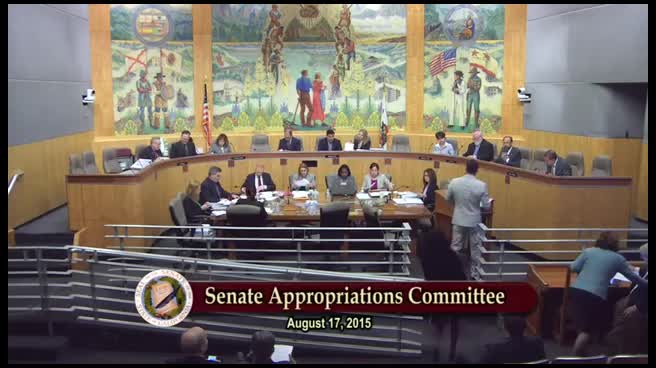 1MIN
Senate Standing Committee on Appropriations
 5MIN
Senate Standing Committee on Natural Resources and Water
 1MIN
Assembly Floor
Bill Author



