AB 390: Criminal law: DNA evidence.
- Session Year: 2015-2016
- House: Assembly
- Latest Version Date: 2015-07-06
Existing law, as amended by the DNA Act, requires a person who has been convicted of a felony offense to provide buccal swab samples, right thumbprints, and a full palm print impression of each hand, and any blood specimens or other biological samples required for law enforcement identification analysis. Existing law makes these provisions retroactive, regardless of when the crime charged or committed became a qualifying offense.
This bill would expand these provisions to require persons convicted of specified misdemeanors, if they have a prior conviction of other specified misdemeanors, misdemeanors to provide buccal swab samples, right thumbprints, and a full palm print impression of each hand, and any blood specimens or other biological samples required for law enforcement identification analysis. By imposing additional duties on local law enforcement agencies to collect and forward these samples, this bill would impose a state-mandated local program.
Existing law prohibits a judge from relieving a person of the separate administrative duty to provide specimens, samples, or print impressions required by the DNA Act if the person has been found guilty of an offense for which DNA collection is required. Existing law, added by Proposition 47, allows a person to petition the court for resentencing if he or she was convicted of a felony that was reduced to a misdemeanor by Proposition 47. Existing law requires the court to resentence the petitioner, unless the court determines that the person would pose an unreasonable risk to public safety.
This bill would clarify that the prohibition on judges relieving a person of the duty to provide specimens, samples, or print impressions is not affected by resentencing under Proposition 47.
The California Constitution requires the state to reimburse local agencies and school districts for certain costs mandated by the state. Statutory provisions establish procedures for making that reimbursement.
This bill would provide that, if the Commission on State Mandates determines that the bill contains costs mandated by the state, reimbursement for those costs shall be made pursuant to these statutory provisions.
Existing law, as amended by the DNA Act, requires a person who has been convicted of a felony offense to provide buccal swab samples, right thumbprints, and a full palm print impression of each hand, and any blood specimens or other biological samples required for law enforcement identification analysis. Existing law makes these provisions retroactive, regardless of when the crime charged or committed became a qualifying offense.
This bill would expand these provisions to require persons convicted of specified misdemeanors misdemeanors, if they have a prior conviction of other specified misdemeanors, to provide buccal swab samples, right thumbprints, and a full palm print impression of each hand, and any blood specimens or other biological samples required for law enforcement identification analysis. By imposing additional duties on local law enforcement agencies to collect and forward these samples, this bill would impose a state-mandated local program.
The California Constitution requires the state to reimburse local agencies and school districts for certain costs mandated by the state. Statutory provisions establish procedures for making that reimbursement.
This bill would provide that, if the Commission on State Mandates determines that the bill contains costs mandated by the state, reimbursement for those costs shall be made pursuant to these statutory provisions.
Existing law, as amended by the DNA Act, requires a person who has been convicted of a felony offense to provide buccal swab samples, right thumbprints, and a full palm print impression of each hand, and any blood specimens or other biological samples required for law enforcement identification analysis. Existing law makes these provisions retroactive, regardless of when the crime charged or committed became a qualifying offense.
This bill would expand these provisions to require persons convicted of specified misdemeanors to provide buccal swab samples, right thumbprints, and a full palm print impression of each hand, and any blood specimens or other biological samples required for law enforcement identification analysis. By imposing additional duties on local law enforcement agencies to collect and forward these samples, this bill would impose a state-mandated local program.
The California Constitution requires the state to reimburse local agencies and school districts for certain costs mandated by the state. Statutory provisions establish procedures for making that reimbursement.
This bill would provide that, if the Commission on State Mandates determines that the bill contains costs mandated by the state, reimbursement for those costs shall be made pursuant to these statutory provisions.
(a)The following persons shall provide buccal swab samples, right thumbprints, and a full palm print impression of each hand, and any blood specimens or other biological samples required pursuant to this chapter for law enforcement identification analysis:
(1)Any person, including any juvenile, who is convicted of or pleads guilty or no contest to any felony offense, or is found not guilty by reason of insanity of any felony offense, or any juvenile who is adjudicated under Section 602 of the Welfare and Institutions Code for committing any felony offense.
(2)Any adult person who is arrested for or charged with any of the following felony offenses:
(A)Any felony offense specified in Section 290 or attempt to commit any felony offense described in Section 290, or any felony offense that imposes upon a person the duty to register in California as a sex offender under Section 290.
(B)Murder or voluntary manslaughter or any attempt to commit murder or voluntary manslaughter.
(C)Commencing on January 1 of the fifth year following enactment of the act that added this subparagraph, as amended, any adult person arrested or charged with any felony offense.
(3)Any person, including any juvenile, who is required to register under Section 290 or 457.1 because of the commission of, or the attempt to commit, a felony or misdemeanor offense, or any person, including any juvenile, who is housed in a mental health facility or sex offender treatment program after referral to such facility or program by a court after being charged with any felony offense.
(4)Any person, excluding a juvenile, who has a prior misdemeanor conviction of Section 136.1, 136.5, 171b, or 186.28, subdivision (b), (c), or (d) of Section 243, Section 243.4, 244.5, 245, 245.5, 417, 417.6, 422, 646.9, or 25300, subdivision (d) of Section 26100, or Section 32625, and who is convicted of, or pleads guilty or no contest to, any of the following offenses:
(A)A misdemeanor violation of Section 459.5.
(B)Any misdemeanor punishable pursuant to subdivision (b) of Section 473.
(C)A violation of subdivision (a) of Section 476a that is punishable as a misdemeanor pursuant to subdivision (b) of Section 476a.
(D)A violation of Section 487 that is punishable as a misdemeanor pursuant to Section 490.2.
(E)A violation of Section 496 that is punishable as a misdemeanor.
(F)A misdemeanor violation of subdivision (a) of Section 11350 of the Health and Safety Code.
(G)A misdemeanor violation of subdivision (a) of Section 11357 of the Health and Safety Code.
(H)A misdemeanor violation of subdivision (a) of Section 11377 of the Health and Safety Code.
(I)A misdemeanor violation of Section 666.
(5)The term felony as used in this subdivision includes an attempt to commit the offense.
(6)Nothing in this chapter shall be construed as prohibiting collection and analysis of specimens, samples, or print impressions as a condition of a plea for nonqualifying offense.
(b)The provisions of this chapter and its requirements for submission of specimens, samples and print impressions as soon as administratively practicable shall apply to all qualifying persons regardless of sentence imposed, including any sentence of death, life without the possibility of parole, or any life or indeterminate term, or any other disposition rendered in the case of an adult or juvenile tried as an adult, or whether the person is diverted, fined, or referred for evaluation, and regardless of disposition rendered or placement made in the case of juvenile who is found to have committed any felony offense or is adjudicated under Section 602 of the Welfare and Institutions Code.
(c)The provisions of this chapter and its requirements for submission of specimens, samples, and print impressions as soon as administratively practicable by qualified persons as described in subdivision (a) shall apply regardless of placement or confinement in any mental hospital or other public or private treatment facility, and shall include, but not be limited to, the following persons, including juveniles:
(1)Any person committed to a state hospital or other treatment facility as a mentally disordered sex offender under Article 1 (commencing with Section 6300) of Chapter 2 of Part 2 of Division 6 of the Welfare and Institutions Code.
(2)Any person who has a severe mental disorder as set forth within the provisions of Article 4 (commencing with Section 2960) of Chapter 7 of Title 1 of Part 3 of the Penal Code.
(3)Any person found to be a sexually violent predator pursuant to Article 4 (commencing with Section 6600) of Chapter 2 of Part 2 of Division 6 of the Welfare and Institutions Code.
(d)The provisions of this chapter are mandatory and apply whether or not the court advises a person, including any juvenile, that he or she must provide the data bank and database specimens, samples, and print impressions as a condition of probation, parole, or any plea of guilty, no contest, or not guilty by reason of insanity, or any admission to any of the offenses described in subdivision (a).
(e)If at any stage of court proceedings the prosecuting attorney determines that specimens, samples, and print impressions required by this chapter have not already been taken from any person, as defined under subdivision (a) of Section 296, the prosecuting attorney shall notify the court orally on the record, or in writing, and request that the court order collection of the specimens, samples, and print impressions required by law. However, a failure by the prosecuting attorney or any other law enforcement agency to notify the court shall not relieve a person of the obligation to provide specimens, samples, and print impressions pursuant to this chapter.
(f)Prior to final disposition or sentencing in the case the court shall inquire and verify that the specimens, samples, and print impressions required by this chapter have been obtained and that this fact is included in the abstract of judgment or dispositional order in the case of a juvenile. The abstract of judgment issued by the court shall indicate that the court has ordered the person to comply with the requirements of this chapter and that the person shall be included in the states DNA and Forensic Identification Data Base and Data Bank program and be subject to this chapter.
However, failure by the court to verify specimen, sample, and print impression collection or enter these facts in the abstract of judgment or dispositional order in the case of a juvenile shall not invalidate an arrest, plea, conviction, or disposition, or otherwise relieve a person from the requirements of this chapter.
SEC. 2.Section 299 of the Penal Code is amended to read:299.(a)A person whose DNA profile has been included in the data bank pursuant to this chapter shall have his or her DNA specimen and sample destroyed and searchable database profile expunged from the data bank program pursuant to the procedures set forth in subdivision (b) if the person has no past or present offense or pending charge which qualifies that person for inclusion within the states DNA and Forensic Identification Database and Data Bank Program and there otherwise is no legal basis for retaining the specimen or sample or searchable profile.
(b)Pursuant to subdivision (a), a person who has no past or present qualifying offense, and for whom there otherwise is no legal basis for retaining the specimen or sample or searchable profile, may make a written request to have his or her specimen and sample destroyed and searchable database profile expunged from the data bank program if:
(1)Following arrest, no accusatory pleading has been filed within the applicable period allowed by law charging the person with a qualifying offense as set forth in subdivision (a) of Section 296 or if the charges which served as the basis for including the DNA profile in the states DNA Database and Data Bank Identification Program have been dismissed prior to adjudication by a trier of fact;
(2)The underlying conviction or disposition serving as the basis for including the DNA profile has been reversed and the case dismissed;
(3)The person has been found factually innocent of the underlying offense pursuant to Section 851.8, or Section 781.5 of the Welfare and Institutions Code; or
(4)The defendant has been found not guilty or the defendant has been acquitted of the underlying offense.
(c)(1)The person requesting the data bank entry to be expunged must send a copy of his or her request to the trial court of the county where the arrest occurred, or that entered the conviction or rendered disposition in the case, to the DNA Laboratory of the Department of Justice, and to the prosecuting attorney of the county in which he or she was arrested or, convicted, or adjudicated, with proof of service on all parties. The court has the discretion to grant or deny the request for expungement. The denial of a request for expungement is a nonappealable order and shall not be reviewed by petition for writ.
(2)Except as provided below, the Department of Justice shall destroy a specimen and sample and expunge the searchable DNA database profile pertaining to the person who has no present or past qualifying offense of record upon receipt of a court order that verifies the applicant has made the necessary showing at a noticed hearing, and that includes all of the following:
(A)The written request for expungement pursuant to this section.
(B)A certified copy of the court order reversing and dismissing the conviction or case, or a letter from the district attorney certifying that no accusatory pleading has been filed or the charges which served as the basis for collecting a DNA specimen and sample have been dismissed prior to adjudication by a trier of fact, the defendant has been found factually innocent, the defendant has been found not guilty, the defendant has been acquitted of the underlying offense, or the underlying conviction has been reversed and the case dismissed.
(C)Proof of written notice to the prosecuting attorney and the Department of Justice that expungement has been requested.
(D)A court order verifying that no retrial or appeal of the case is pending, that it has been at least 180 days since the defendant or minor has notified the prosecuting attorney and the Department of Justice of the expungement request, and that the court has not received an objection from the Department of Justice or the prosecuting attorney.
(d)Upon order from the court, the Department of Justice shall destroy any specimen or sample collected from the person and any searchable DNA database profile pertaining to the person, unless the department determines that the person is subject to the provisions of this chapter because of a past qualifying offense of record or is or has otherwise become obligated to submit a blood specimen or buccal swab sample as a result of a separate arrest, conviction, juvenile adjudication, or finding of guilty or not guilty by reason of insanity for an offense described in subdivision (a) of Section 296, or as a condition of a plea.
The Department of Justice is not required to destroy analytical data or other items obtained from a blood specimen or saliva, or buccal swab sample, if evidence relating to another person subject to the provisions of this chapter would thereby be destroyed or otherwise compromised.
Any identification, warrant, probable cause to arrest, or arrest based upon a data bank or database match is not invalidated due to a failure to expunge or a delay in expunging records.
(e)Notwithstanding any other provision of law, the Department of Justice DNA Laboratory is not required to expunge DNA profile or forensic identification information or destroy or return specimens, samples, or print impressions taken pursuant to this section if the duty to register under Section 290 or 457.1 is terminated.
(f)Notwithstanding any other provision of law, including Sections 17, 1170.18, 1203.4, and 1203.4a, a judge is not authorized to relieve a person of the separate administrative duty to provide specimens, samples, or print impressions required by this chapter if a person has been found guilty or was adjudicated a ward of the court by a trier of fact of a qualifying offense as defined in subdivision (a) of Section 296, or was found not guilty by reason of insanity or pleads no contest to a qualifying offense as defined in subdivision (a) of Section 296.
SEC. 2.SEC. 3.If the Commission on State Mandates determines that this act contains costs mandated by the state, reimbursement to local agencies and school districts for those costs shall be made pursuant to Part 7 (commencing with Section 17500) of Division 4 of Title 2 of the Government Code.
(a)The following persons shall provide buccal swab samples, right thumbprints, and a full palm print impression of each hand, and any blood specimens or other biological samples required pursuant to this chapter for law enforcement identification analysis:
(1)Any person, including any juvenile, who is convicted of or pleads guilty or no contest to any felony offense, or is found not guilty by reason of insanity of any felony offense, or any juvenile who is adjudicated under Section 602 of the Welfare and Institutions Code for committing any felony offense.
(2)Any adult person who is arrested for or charged with any of the following felony offenses:
(A)Any felony offense specified in Section 290 or attempt to commit any felony offense described in Section 290, or any felony offense that imposes upon a person the duty to register in California as a sex offender under Section 290.
(B)Murder or voluntary manslaughter or any attempt to commit murder or voluntary manslaughter.
(C)Commencing on January 1 of the fifth year following enactment of the act that added this subparagraph, as amended, any adult person arrested or charged with any felony offense.
(3)Any person, including any juvenile, who is required to register under Section 290 or 457.1 because of the commission of, or the attempt to commit, a felony or misdemeanor offense, or any person, including any juvenile, who is housed in a mental health facility or sex offender treatment program after referral to such facility or program by a court after being charged with any felony offense.
(4)Any person, excluding a juvenile, who has a prior misdemeanor conviction of Section 136.1, 136.5, 171b, or 186.28, subdivision (b), (c), or (d) of Section 243, Section 243.4, 244.5, 245, 245.5, 417, 417.6, 422, 646.9, or 25300, subdivision (d) of Section 26100, or Section 32625, and who is convicted of, or pleads guilty or no contest to, any of the following offenses:
(A)A misdemeanor violation of Section 459.5.
(B)Any misdemeanor punishable pursuant to subdivision (b) of Section 473.
(C)A violation of subdivision (a) of Section 476a that is punishable as a misdemeanor pursuant to subdivision (b) of Section 476a.
(D)A violation of Section 487 that is punishable as a misdemeanor pursuant to Section 490.2.
(E)A violation of Section 496 that is punishable as a misdemeanor.
(F)A misdemeanor violation of subdivision (a) of Section 11350 of the Health and Safety Code.
(G)A misdemeanor violation of subdivision (a) of Section 11357 of the Health and Safety Code.
(H)A misdemeanor violation of subdivision (a) of Section 11377 of the Health and Safety Code.
(I)A misdemeanor violation of Section 666.
(5)The term felony as used in this subdivision includes an attempt to commit the offense.
(6)Nothing in this chapter shall be construed as prohibiting collection and analysis of specimens, samples, or print impressions as a condition of a plea for nonqualifying offense.
(b)The provisions of this chapter and its requirements for submission of specimens, samples and print impressions as soon as administratively practicable shall apply to all qualifying persons regardless of sentence imposed, including any sentence of death, life without the possibility of parole, or any life or indeterminate term, or any other disposition rendered in the case of an adult or juvenile tried as an adult, or whether the person is diverted, fined, or referred for evaluation, and regardless of disposition rendered or placement made in the case of juvenile who is found to have committed any felony offense or is adjudicated under Section 602 of the Welfare and Institutions Code.
(c)The provisions of this chapter and its requirements for submission of specimens, samples, and print impressions as soon as administratively practicable by qualified persons as described in subdivision (a) shall apply regardless of placement or confinement in any mental hospital or other public or private treatment facility, and shall include, but not be limited to, the following persons, including juveniles:
(1)Any person committed to a state hospital or other treatment facility as a mentally disordered sex offender under Article 1 (commencing with Section 6300) of Chapter 2 of Part 2 of Division 6 of the Welfare and Institutions Code.
(2)Any person who has a severe mental disorder as set forth within the provisions of Article 4 (commencing with Section 2960) of Chapter 7 of Title 1 of Part 3 of the Penal Code.
(3)Any person found to be a sexually violent predator pursuant to Article 4 (commencing with Section 6600) of Chapter 2 of Part 2 of Division 6 of the Welfare and Institutions Code.
(d)The provisions of this chapter are mandatory and apply whether or not the court advises a person, including any juvenile, that he or she must provide the data bank and database specimens, samples, and print impressions as a condition of probation, parole, or any plea of guilty, no contest, or not guilty by reason of insanity, or any admission to any of the offenses described in subdivision (a).
(e)If at any stage of court proceedings the prosecuting attorney determines that specimens, samples, and print impressions required by this chapter have not already been taken from any person, as defined under subdivision (a) of Section 296, the prosecuting attorney shall notify the court orally on the record, or in writing, and request that the court order collection of the specimens, samples, and print impressions required by law. However, a failure by the prosecuting attorney or any other law enforcement agency to notify the court shall not relieve a person of the obligation to provide specimens, samples, and print impressions pursuant to this chapter.
(f)Prior to final disposition or sentencing in the case the court shall inquire and verify that the specimens, samples, and print impressions required by this chapter have been obtained and that this fact is included in the abstract of judgment or dispositional order in the case of a juvenile. The abstract of judgment issued by the court shall indicate that the court has ordered the person to comply with the requirements of this chapter and that the person shall be included in the states DNA and Forensic Identification Data Base and Data Bank program and be subject to this chapter.
However, failure by the court to verify specimen, sample, and print impression collection or enter these facts in the abstract of judgment or dispositional order in the case of a juvenile shall not invalidate an arrest, plea, conviction, or disposition, or otherwise relieve a person from the requirements of this chapter.
SEC. 2.If the Commission on State Mandates determines that this act contains costs mandated by the state, reimbursement to local agencies and school districts for those costs shall be made pursuant to Part 7 (commencing with Section 17500) of Division 4 of Title 2 of the Government Code.
(a)The following persons shall provide buccal swab samples, right thumbprints, and a full palm print impression of each hand, and any blood specimens or other biological samples required pursuant to this chapter for law enforcement identification analysis:
(1)Any person, including any juvenile, who is convicted of or pleads guilty or no contest to any felony offense, or is found not guilty by reason of insanity of any felony offense, or any juvenile who is adjudicated under Section 602 of the Welfare and Institutions Code for committing any felony offense.
(2)Any adult person who is arrested for or charged with any of the following felony offenses:
(A)Any felony offense specified in Section 290 or attempt to commit any felony offense described in Section 290, or any felony offense that imposes upon a person the duty to register in California as a sex offender under Section 290.
(B)Murder or voluntary manslaughter or any attempt to commit murder or voluntary manslaughter.
(C)Commencing on January 1 of the fifth year following enactment of the act that added this subparagraph, as amended, any adult person arrested or charged with any felony offense.
(3)Any person, including any juvenile, who is required to register under Section 290 or 457.1 because of the commission of, or the attempt to commit, a felony or misdemeanor offense, or any person, including any juvenile, who is housed in a mental health facility or sex offender treatment program after referral to such facility or program by a court after being charged with any felony offense.
(4)Any person, excluding a juvenile, who is convicted of, or pleads guilty or no contest to, any of the following offenses:
(A)A misdemeanor violation of Section 459.5.
(B)A violation of subdivision (a) of Section 473 that is punishable as a misdemeanor pursuant ot Any misdemeanor punishable pursuant to subdivision (b) of Section 473.
(C)A violation of subdivision (a) of Section 476a that is punishable as a misdemeanor pursuant ot to subdivision (b) of Section 476a.
(D)A violation of Section 487 that is punishable as a misdemeanor pursuant to Section 490.2.
(E)A violation of Section 496 that is punishable as a misdemeanor.
(F)A misdemeanor violation of subdivision (a) of Section 11350 of the Health and Safety Code.
(G)A misdemeanor violation of subdivision (a) of Section 11357 of the Health and Safety Code.
(H)A misdemeanor violation of subdivision (a) of Section 11377 of the Health and Safety Code.
(I)A misdemeanor violation of Section 666.
(5)The term felony as used in this subdivision includes an attempt to commit the offense.
(6)Nothing in this chapter shall be construed as prohibiting collection and analysis of specimens, samples, or print impressions as a condition of a plea for nonqualifying offense.
(b)The provisions of this chapter and its requirements for submission of specimens, samples and print impressions as soon as administratively practicable shall apply to all qualifying persons regardless of sentence imposed, including any sentence of death, life without the possibility of parole, or any life or indeterminate term, or any other disposition rendered in the case of an adult or juvenile tried as an adult, or whether the person is diverted, fined, or referred for evaluation, and regardless of disposition rendered or placement made in the case of juvenile who is found to have committed any felony offense or is adjudicated under Section 602 of the Welfare and Institutions Code.
(c)The provisions of this chapter and its requirements for submission of specimens, samples, and print impressions as soon as administratively practicable by qualified persons as described in subdivision (a) shall apply regardless of placement or confinement in any mental hospital or other public or private treatment facility, and shall include, but not be limited to, the following persons, including juveniles:
(1)Any person committed to a state hospital or other treatment facility as a mentally disordered sex offender under Article 1 (commencing with Section 6300) of Chapter 2 of Part 2 of Division 6 of the Welfare and Institutions Code.
(2)Any person who has a severe mental disorder as set forth within the provisions of Article 4 (commencing with Section 2960) of Chapter 7 of Title 1 of Part 3 of the Penal Code.
(3)Any person found to be a sexually violent predator pursuant to Article 4 (commencing with Section 6600) of Chapter 2 of Part 2 of Division 6 of the Welfare and Institutions Code.
(d)The provisions of this chapter are mandatory and apply whether or not the court advises a person, including any juvenile, that he or she must provide the data bank and database specimens, samples, and print impressions as a condition of probation, parole, or any plea of guilty, no contest, or not guilty by reason of insanity, or any admission to any of the offenses described in subdivision (a).
(e)If at any stage of court proceedings the prosecuting attorney determines that specimens, samples, and print impressions required by this chapter have not already been taken from any person, as defined under subdivision (a) of Section 296, the prosecuting attorney shall notify the court orally on the record, or in writing, and request that the court order collection of the specimens, samples, and print impressions required by law. However, a failure by the prosecuting attorney or any other law enforcement agency to notify the court shall not relieve a person of the obligation to provide specimens, samples, and print impressions pursuant to this chapter.
(f)Prior to final disposition or sentencing in the case the court shall inquire and verify that the specimens, samples, and print impressions required by this chapter have been obtained and that this fact is included in the abstract of judgment or dispositional order in the case of a juvenile. The abstract of judgment issued by the court shall indicate that the court has ordered the person to comply with the requirements of this chapter and that the person shall be included in the states DNA and Forensic Identification Data Base and Data Bank program and be subject to this chapter.
However, failure by the court to verify specimen, sample, and print impression collection or enter these facts in the abstract of judgment or dispositional order in the case of a juvenile shall not invalidate an arrest, plea, conviction, or disposition, or otherwise relieve a person from the requirements of this chapter.
SEC. 2.If the Commission on State Mandates determines that this act contains costs mandated by the state, reimbursement to local agencies and school districts for those costs shall be made pursuant to Part 7 (commencing with Section 17500) of Division 4 of Title 2 of the Government Code.
(a)The following persons shall provide buccal swab samples, right thumbprints, and a full palm print impression of each hand, and any blood specimens or other biological samples required pursuant to this chapter for law enforcement identification analysis:
(1)Any person, including any juvenile, who is convicted of or pleads guilty or no contest to any felony offense, or is found not guilty by reason of insanity of any felony offense, or any juvenile who is adjudicated under Section 602 of the Welfare and Institutions Code for committing any felony offense.
(2)Any adult person who is arrested for or charged with any of the following felony offenses:
(A)Any felony offense specified in Section 290 or attempt to commit any felony offense described in Section 290, or any felony offense that imposes upon a person the duty to register in California as a sex offender under Section 290.
(B)Murder or voluntary manslaughter or any attempt to commit murder or voluntary manslaughter.
(C)Commencing on January 1 of the fifth year following enactment of the act that added this subparagraph, as amended, any adult person arrested or charged with any felony offense.
(3)Any person, including any juvenile, who is required to register under Section 290 or 457.1 because of the commission of, or the attempt to commit, a felony or misdemeanor offense, or any person, including any juvenile, who is housed in a mental health facility or sex offender treatment program after referral to such facility or program by a court after being charged with any felony offense.
(4)Any person, excluding a juvenile, who is convicted of, or pleads guilty or no contest to, any of the following offenses:
(A)A misdemeanor violation of Section 459.5.
(B)A violation of subdivision (a) of Section 473 that is punishable as a misdemeanor pursuant ot subdivision (b) of Section 473.
(C)A violation of subdivision (a) of Section 476a that is punishable as a misdemeanor pursuant ot subdivision (b) of Section 476a.
(D)A violation of Section 487 that is punishable as a misdemeanor pursuant to Section 490.2.
(E)A violation of Section 496 that is punishable as a misdemeanor.
(F)A misdemeanor violation of subdivision (a) of Section 11350 of the Health and Safety Code.
(G)A misdemeanor violation of subdivision (a) of Section 11357 of the Health and Safety Code.
(H)A misdemeanor violation of subdivision (a) of Section 11377 of the Health and Safety Code.
(4)
(5)The term felony as used in this subdivision includes an attempt to commit the offense.
(5)
(6)Nothing in this chapter shall be construed as prohibiting collection and analysis of specimens, samples, or print impressions as a condition of a plea for a non-qualifying nonqualifying offense.
(b)The provisions of this chapter and its requirements for submission of specimens, samples and print impressions as soon as administratively practicable shall apply to all qualifying persons regardless of sentence imposed, including any sentence of death, life without the possibility of parole, or any life or indeterminate term, or any other disposition rendered in the case of an adult or juvenile tried as an adult, or whether the person is diverted, fined, or referred for evaluation, and regardless of disposition rendered or placement made in the case of juvenile who is found to have committed any felony offense or is adjudicated under Section 602 of the Welfare and Institutions Code.
(c)The provisions of this chapter and its requirements for submission of specimens, samples, and print impressions as soon as administratively practicable by qualified persons as described in subdivision (a) shall apply regardless of placement or confinement in any mental hospital or other public or private treatment facility, and shall include, but not be limited to, the following persons, including juveniles:
(1)Any person committed to a state hospital or other treatment facility as a mentally disordered sex offender under Article 1 (commencing with Section 6300) of Chapter 2 of Part 2 of Division 6 of the Welfare and Institutions Code.
(2)Any person who has a severe mental disorder as set forth within the provisions of Article 4 (commencing with Section 2960) of Chapter 7 of Title 1 of Part 3 of the Penal Code.
(3)Any person found to be a sexually violent predator pursuant to Article 4 (commencing with Section 6600) of Chapter 2 of Part 2 of Division 6 of the Welfare and Institutions Code.
(d)The provisions of this chapter are mandatory and apply whether or not the court advises a person, including any juvenile, that he or she must provide the data bank and database specimens, samples, and print impressions as a condition of probation, parole, or any plea of guilty, no contest, or not guilty by reason of insanity, or any admission to any of the offenses described in subdivision (a).
(e)If at any stage of court proceedings the prosecuting attorney determines that specimens, samples, and print impressions required by this chapter have not already been taken from any person, as defined under subdivision (a) of Section 296, the prosecuting attorney shall notify the court orally on the record, or in writing, and request that the court order collection of the specimens, samples, and print impressions required by law. However, a failure by the prosecuting attorney or any other law enforcement agency to notify the court shall not relieve a person of the obligation to provide specimens, samples, and print impressions pursuant to this chapter.
(f)Prior to final disposition or sentencing in the case the court shall inquire and verify that the specimens, samples, and print impressions required by this chapter have been obtained and that this fact is included in the abstract of judgment or dispositional order in the case of a juvenile. The abstract of judgment issued by the court shall indicate that the court has ordered the person to comply with the requirements of this chapter and that the person shall be included in the states DNA and Forensic Identification Data Base and Data Bank program and be subject to this chapter.
However, failure by the court to verify specimen, sample, and print impression collection or enter these facts in the abstract of judgment or dispositional order in the case of a juvenile shall not invalidate an arrest, plea, conviction, or disposition, or otherwise relieve a person from the requirements of this chapter.
SEC. 2.If the Commission on State Mandates determines that this act contains costs mandated by the state, reimbursement to local agencies and school districts for those costs shall be made pursuant to Part 7 (commencing with Section 17500) of Division 4 of Title 2 of the Government Code.
|
Date
|
Status
|
|---|---|
| May 28, 2015 | Read second time and amended. Ordered returned to second reading. |
| Jul 14, 2015 | In committee: Set, second hearing. Failed passage. Reconsideration granted. |
| Jul 6, 2015 | From committee chair, with author's amendments: Amend, and re-refer to committee. Read second time, amended, and re-referred to Com. on PUB. S. |
| Jun 30, 2015 | In committee: Set, first hearing. Hearing canceled at the request of author. |
| Jun 11, 2015 | Referred to Com. on PUB. S. |
| Jun 2, 2015 | Read third time. Passed. Ordered to the Senate. (Ayes 74. Noes 2. Page 1802.) |
| Jun 2, 2015 | Read third time. Passed. Ordered to the Senate. |
| Jun 2, 2015 | In Senate. Read first time. To Com. on RLS. for assignment. |
| Jun 1, 2015 | Read second time. Ordered to third reading. |
| Feb 18, 2015 | Read first time. To print. |
| May 28, 2015 | From committee: Amend, and do pass as amended. (Ayes 15. Noes 0.) (May 28). |
| May 6, 2015 | In committee: Set, first hearing. Referred to APPR. suspense file. |
| Apr 22, 2015 | From committee: Do pass and re-refer to Com. on APPR. (Ayes 5. Noes 1.) (April 21). Re-referred to Com. on APPR. |
| Apr 7, 2015 | Re-referred to Com. on PUB. S. |
| Apr 7, 2015 | In committee: Set, first hearing. Hearing canceled at the request of author. |
| Apr 6, 2015 | From committee chair, with author's amendments: Amend, and re-refer to Com. on PUB. S. Read second time and amended. |
| Mar 5, 2015 | Referred to Com. on PUB. S. |
| Feb 19, 2015 | From printer. May be heard in committee March 21. |
|
Date
|
Description
|
Location
|
Votes
|
|
|---|---|---|---|---|
| Jul 14, 2015 | [Second] hearing set for [07-15-2015]: Failed passage in Committee. Reconsideration granted | Senate Standing Committee on Public Safety |
Passed |
|
| Jul 14, 2015 | Do pass, but first be re-referred to the Committee on [Appropriations] | Senate Standing Committee on Public Safety |
Failed |
|
| Jun 2, 2015 | AB 390 COOPER Assembly Third Reading | Assembly Floor |
Passed |
|
| May 28, 2015 | Do pass as amended. | Assembly Standing Committee on Appropriations |
Passed |
|
| Apr 21, 2015 | Do pass and be re-referred to the Committee on [Appropriations] | Assembly Standing Committee on Public Safety |
Passed |
This list shows positions taken on this bill by organizations on the date displayed, which is linked to the original source.
Positions by individuals are not included.
|
Organization
|
Position
|
Date
|
|---|---|---|
| American Civil Liberties Union of California | ** Against | Jun 2, 2015 |
| American Friends Service Committee | ** Against | Jun 2, 2015 |
| Association of Deputy District Attorneys | ** Support | Jun 2, 2015 |
| California Association Of Code Enforcement Officers | ** Support | Jun 2, 2015 |
| California Attorneys For Criminal Justice | ** Against | Jun 2, 2015 |
| California College And University Police Chiefs Association | ** Support | Jun 2, 2015 |
| California District Attorneys Association | ** Support | Jun 2, 2015 |
| California Police Chiefs Association | ** Support | Jun 2, 2015 |
| California Public Defenders Association | ** Against | Jun 2, 2015 |
| California State Sheriffs' Association | ** Support | Jun 2, 2015 |
| Chief Probation Officers Of California | ** Support | Jun 2, 2015 |
| Fraternal Order of Police | ** Support | Jun 2, 2015 |
| Insurance Commissioner Dave Jones | ** Support | Jun 2, 2015 |
| Long Beach Police Officers Association | ** Support | Jun 2, 2015 |
| Los Angeles County Professional Peace Officers Association | ** Support | Jun 2, 2015 |
| Los Angeles Deputy Sheriffs | ** Support | Jun 2, 2015 |
| Los Angeles Police Protective League | ** Support | Jun 2, 2015 |
| Sacramento County Deputy Sheriffs' Association | ** Support | Jun 2, 2015 |
| Sacramento County District Attorney Anne Marie Schubert | ** Support | Jun 2, 2015 |
| San Bernardino County District Attorney Mike Ramos | ** Support | Jun 2, 2015 |
| Santa Ana Police Officers Association | ** Support | Jun 2, 2015 |
AB 390 (Cooper ) Page 10 of 10
SENATE COMMITTEE ON PUBLIC SAFETY
Senator Loni Hancock, Chair
2015 - 2016 Regular
Bill No: AB 390 Hearing Date: July 14, 2015
Author: |
Cooper |
||
Version: |
July 6, 2015 |
||
Urgency: |
No |
Fiscal: |
Yes |
Consultant: |
MK |
||
Subject: Criminal Law: DNA Evidence
HISTORY
Source: Sacramento County District Attorney
Prior Legislation: Proposition 69 November 2, 2004
SB 883 (Margett) not heard Assembly Public Safety 2004
SB 284 (Brulte) - failed Senate Public Safety 2003
SB 1242 (Brulte) - Chapter 632, Stats. 2002
AB 2105 (La Suer) - Chapter 160, Stats. 2002
AB 673 (Migden) - Chapter 906, Stats. 2001
AB 2814 (Machado) - Chapter 823, Stats. 2000
AB 557 (Nakano) - not heard in Senate Public Safety 1999-2000
SB 654 (Schiff) - Chapter 475, Stats. 1999
AB 1332 (Murray) - Chapter 696, Stats. 1998
Support: Dave Jones, Insurance Commissioner; Alameda County District Attorney; Association of Deputy District Attorneys; Association for Los Angeles Deputy Sheriffs; California Association of Code Enforcement Officers; California Association of Crime Laboratory Directors; California College and University Police Chiefs Association; California District Attorneys Association; California Fraternal Order of Police; California Narcotic Officers Association; California Peace Officers’ Association; California Police Chiefs Association; California State Association of Counties; California State Sheriffs’ Crime Victims United; Chief Probation Officers of California; Fresno County District Attorney; Kern County District Attorney; Long Beach Police Officers Association; Los Angeles Deputy Sheriffs; Los Angeles County District Attorney’s Office; Los Angeles County Professional Peace Officers Association; Los Angeles County Sheriff’s Department; The Los Angeles Police Protective League; Orange County District Attorney; Peace Officers Research Association; Riverside Sheriffs Association; Rural County Representatives of California; Sacramento County Deputy Sheriffs’ Association; San Luis Obispo District Attorney; San Diego County District Attorney; Santa Ana Police Officers Association; Santa Clara District Attorney
Opposition: ACLU; Alameda County Public Defender; American Friends Committee; California Attorneys for Criminal Justice; California Civil Liberties Advocacy; California Public Defenders Association; Californians for Safety and Justice; Ella Baker Center for Human Rights; Friends Committee on Legislation of California; Justice Now; Legal Services for Prisoners with Children
Assembly Floor Vote: 74 - 2
PURPOSE
The purpose of this bill is to require DNA collection of people who commit the crimes that used to be wobblers but are now misdemeanors after the passage of Proposition 47.
Existing law requires the following persons provide buccal swab samples, right thumbprints, and a full palm print impression of each hand, and any blood specimens or other biological samples required pursuant to this chapter for law enforcement identification analysis:
Any person, including any juvenile, who is convicted of or pleads guilty or no contest to any felony offense, or is found not guilty by reason of insanity of any felony offense, or any juvenile where a court has found that they have committed any felony offense. (Penal Code § 296 (a)(1).)
Any adult person who is arrested for or charged with a felony offense. (Penal Code § 296 (a)(2)(C).)
Any person, including any juvenile, who is required to register as a sex offender or arson offender because of the commission of, or the attempt to commit, a felony or misdemeanor offense, or any person, including any juvenile, who is housed in a mental health facility or sex offender treatment program after referral to such facility or program by a court after being charged with any felony offense. (Penal Code, § 296 (a)(3).)
Existing law provides that the term “felony” includes an attempt to commit the offense. (Penal Code, §296 (a)(4).)
Existing law allows the collection and analysis of specimens, samples, or print impressions as a condition of a plea for a non-qualifying offense. (Penal Code §296 (a)(5).)
Existing law requires submission of specimens, samples, and print impressions as soon as administratively practicable by qualified persons and shall apply regardless of placement or confinement in any mental hospital or other public or private treatment facility, and shall include, but not be limited to, the following persons, including juveniles:
Any person committed to a state hospital or other treatment facility as a mentally disordered sex offender.
Any person who is designated a mentally ordered offenders
Any person found to be a sexually violent predator. (Penal Code, §296 (c)(3).)
Existing law specifies that the court shall inquire and verify, prior to final disposition or sentencing in the case, that the specimens, samples, and print impressions have been obtained and that this fact is included in the abstract of judgment or dispositional order in the case of a juvenile. (Penal Code §296 (f).)
Existing law provides that failure by the court to verify specimen, sample, and print impression collection or enter these facts in the abstract of judgment or dispositional order in the case of a juvenile shall not invalidate an arrest, plea, conviction, or disposition, or otherwise relieve a person from the requirements to provide samples. (Penal Code §296(f).)
Existing law provides that The Department of Justice (DOJ), through its DNA Laboratory, is responsible for the management and administration of the state’s DNA and Forensic Identification Database and Data Bank Program and for liaising with the Federal Bureau of Investigation (FBI) regarding the state’s participation in a national or international DNA database and data bank program such as the Combined DNA Index System (CODIS) that allows the storage and exchange of DNA records submitted by state and local forensic DNA laboratories nationwide. (Penal Code, § 295 (g).)
Existing law provides that DOJ can perform DNA analysis, other forensic identification analysis, and examination of palm prints pursuant to the Act only for identification purposes. (Penal Code § 295.1 (a) & (b).)
Existing law provides that the DOJ DNA Laboratory is to serve as a repository for blood specimens, buccal swab, and other biological samples collected and is required to analyze specimens and samples and store, compile, correlate, compare, maintain, and use DNA and forensic identification profiles and records related to the following:
Forensic casework and forensic unknowns;
Known and evidentiary specimens and samples from crime scenes or criminal investigations;
Missing or unidentified persons;
Persons required to provide specimens, samples, and print impressions;
Legally obtained samples; and
Anonymous DNA records used for training, research, statistical analysis of populations, quality assurance, or quality control.
Existing law specifies that the Director of Corrections, or the Chief Administrative Officer of the detention facility, jail, or other facility at which the blood specimens, buccal swab samples, and thumb and palm print impressions were collected send them promptly to the DOJ.(Penal Code § 298.)
Existing law requires the DNA Laboratory of DOJ to establish procedures for entering data bank and database information. (Penal Code § 298(b)(6).)
Existing law specifies that a person whose DNA profile has been included in the data bank pursuant to this chapter shall have his or her DNA specimen and sample destroyed and searchable database profile expunged from the data bank program if the person has no past or present offense or pending charge which qualifies that person for inclusion within the state’s DNA and Forensic Identification Database and Data Bank Program and there otherwise is no legal basis for retaining the specimen or sample or searchable profile.
Following arrest, no accusatory pleading has been filed within the applicable period allowed by law charging the person with a qualifying offense or if the charges which served as the basis for including the DNA profile in the state’s DNA Database and Data Bank Identification Program have been dismissed prior to adjudication by a trier of fact;
The underlying conviction or disposition serving as the basis for including the DNA profile has been reversed and the case dismissed;
The person has been found factually innocent of the underlying offense; or,
The defendant has been found not guilty or the defendant has been acquitted of the underlying offense. (Penal Code § 299 (b).)
Existing law requires the person requesting the data bank entry to be expunged send a copy of his or her request to the trial court of the county where the arrest occurred, or that entered the conviction or rendered disposition in the case, to the DNA Laboratory of the Department of Justice, and to the prosecuting attorney of the county in which he or she was arrested or, convicted, or adjudicated, with proof of service on all parties. The court has the discretion to grant or deny the request for expungement. The denial of a request for expungement is a nonappealable order and shall not be reviewed by petition for writ. (Penal Code, § 299 (c)(1).)
Existing law requires DOJ destroy a specimen and sample and expunge the searchable DNA database profile pertaining to the person who has no present or past qualifying offense of record upon receipt of a court order that verifies the applicant has made the necessary showing at a noticed hearing, and that includes all of the following:
The written request for expungement pursuant to this section;
A certified copy of the court order reversing and dismissing the conviction or case, or a letter from the district attorney certifying that no accusatory pleading has been filed or the charges which served as the basis for collecting a DNA specimen and sample have been dismissed prior to adjudication by a trier of fact, the defendant has been found factually innocent, the defendant has been found not guilty, the defendant has been acquitted of the underlying offense, or the underlying conviction has been reversed and the case dismissed;
Proof of written notice to the prosecuting attorney and the Department of Justice that expungement has been requested; and
A court order verifying that no retrial or appeal of the case is pending, that it has been at least 180 days since the defendant or minor has notified the prosecuting attorney and the Department of Justice of the expungement request, and that the court has not received an objection from the Department of Justice or the prosecuting attorney . (Penal Code, § 299 (c)(2).):
Existing law states that the DOJ shall not destroy any specimen or sample collected from the person and any searchable DNA database profile pertaining to the person, if department determines that the person is subject to the provisions of this chapter because of a past qualifying offense of record or is or has otherwise become obligated to submit a blood specimen or buccal swab sample as a result of a separate arrest, conviction, juvenile adjudication, or finding of guilty or not guilty by reason of insanity for an offense requiring a DNA sample, or as a condition of a plea. (Penal Code, § 299 (d).)
Existing law provides that the DOJ is not required to destroy analytical data or other items obtained from a blood specimen or saliva, or buccal swab sample, if evidence relating to another person subject to the provisions of this chapter would thereby be destroyed or otherwise compromised. (Penal Code, § 299 (d).)
Existing law states that a judge is not authorized to relieve a person of the separate administrative duty to provide specimens, samples, or print impressions required, including reduction to a misdemeanor(Penal Code § 17.), or dismissal following conviction. (Penal Code §§ 1203.4, 1203.4a.) (Penal Code § 299(f).)
This bill expands these provisions to require persons convicted of specified misdemeanors to provide buccal swab samples (DNA), right thumbprints, and a full palm print impression of each hand, and any blood specimens or other biological samples required for law misdemeanor offenses, to the list of individuals required to provide DNA cheek swab samples, right thumbprints, and a full palm print impression of each hand, and any blood specimens or other biological samples chapter for law enforcement identification analysis.
This bill provides that the following misdemeanor offenses will be included in the DNA Databank :
Shoplifting; forgery where the value for the forged document does not exceed $950;
Check fraud where the total amount of checks does not exceed $950;
Grand theft that is punishable as a misdemeanor; possession of stolen property that is punishable as a misdemeanor;
A misdemeanor violation for possession of a list of specified drugs, including cocaine, methamphetamine, concentrated cannabis; and
A misdemeanor violation of petty theft with specified prior theft convictions, and prior convictions for serious or violent felonies, or required to register as a sex offender.
Existing law provides that notwithstanding any other provision of law, including specified sections, a judge is not authorized to relieve a person of the separate administrative duty to provide specimens, samples, or print impressions required if a person has been found guilty or was adjudicated a ward of the court by a trier of fact of an offense requiring the submission of a DNA sample, or was found not guilty by reason of insanity or pleads no contest to an offense requiring the submission of a DNA sample. (Penal Code § 299)
This bill includes the provision allowing the recall of a sentence where a person was convicted of a felony that has been reduced to a misdemeanor after Proposition 47, as one of the specified sections in Penal Code Section 299.
RECEIVERSHIP/OVERCROWDING CRISIS AGGRAVATION
For the past eight years, this Committee has scrutinized legislation referred to its jurisdiction for any potential impact on prison overcrowding. Mindful of the United States Supreme Court ruling and federal court orders relating to the state’s ability to provide a constitutional level of health care to its inmate population and the related issue of prison overcrowding, this Committee has applied its “ROCA” policy as a content-neutral, provisional measure necessary to ensure that the Legislature does not erode progress in reducing prison overcrowding.
On February 10, 2014, the federal court ordered California to reduce its in-state adult institution population to 137.5% of design capacity by February 28, 2016, as follows:
143% of design bed capacity by June 30, 2014;
141.5% of design bed capacity by February 28, 2015; and,
137.5% of design bed capacity by February 28, 2016.
In February of this year the administration reported that as “of February 11, 2015, 112,993 inmates were housed in the State’s 34 adult institutions, which amounts to 136.6% of design bed capacity, and 8,828 inmates were housed in out-of-state facilities. This current population is now below the court-ordered reduction to 137.5% of design bed capacity.”( Defendants’ February 2015 Status Report In Response To February 10, 2014 Order, 2:90-cv-00520 KJM DAD PC, 3-Judge Court, Coleman v. Brown, Plata v. Brown (fn. omitted).
While significant gains have been made in reducing the prison population, the state now must stabilize these advances and demonstrate to the federal court that California has in place the “durable solution” to prison overcrowding “consistently demanded” by the court. (Opinion Re: Order Granting in Part and Denying in Part Defendants’ Request For Extension of December 31, 2013 Deadline, NO. 2:90-cv-0520 LKK DAD (PC), 3-Judge Court, Coleman v. Brown, Plata v. Brown (2-10-14). The Committee’s consideration of bills that may impact the prison population therefore will be informed by the following questions:
Whether a proposal erodes a measure which has contributed to reducing the prison population;
Whether a proposal addresses a major area of public safety or criminal activity for which there is no other reasonable, appropriate remedy;
Whether a proposal addresses a crime which is directly dangerous to the physical safety of others for which there is no other reasonably appropriate sanction;
Whether a proposal corrects a constitutional problem or legislative drafting error; and
Whether a proposal proposes penalties which are proportionate, and cannot be achieved through any other reasonably appropriate remedy.
COMMENTS
1. Need for This Bill
According to the author:
AB 390 will allow for restoration of DNA sample collection for crimes which were previously felonies but were reclassified as misdemeanors by Proposition 47. The passage or Proposition created an unintended consequence which will limit the ability of law enforcement to solve rapes, murders, robberies and other serious and violent crimes through reliable DNA evidence. With one of the largest databases in the world, California has been able to accurately identify those who have committed prior unsolved violent crimes. This has benefited the people of California by allowing for the introduction of reliable scientific evidence that provides powerful proof of identity, both in exonerating some individuals and convicting others.
It has been said that DNA technology “constitutes the single greatest advance in the ‘search for truth’, and the goal of convicting the guilty and acquitting the innocent, since the advent of cross-examination.” (See United States v. Kincade (9th Cir. 2004) 379 F. 3d 813; People v. Robinson (2010) 47 Cal. 4th 1104; People v. Wesley (1998) 533 N.YS. 2d 643, 644)
AB 390 reaffirms Proposition 69 by making the criminal justice system more reliable and more just thorough accurate and expeditious identification using DNA of recidivist criminal offenders, and by focusing investigations on existing unsolved rapes, murders, robberies and other serious and violent cases.
2. California DNA Database
The profile derived from a DNA sample is uploaded into the state's DNA databank, which is part of the national Combined DNA Index System (CODIS), and can be accessed by local, state and federal law enforcement agencies and officials. When a DNA profile is uploaded, it is compared to profiles contained in the Convicted Offender and Arrestee Indices; if there is a "hit," the laboratory conducts procedures to confirm the match and, if confirmed, obtains the identity of the suspect. The uploaded profile is also compared to crime scene profiles contained in the Forensic Index; again, if there is a hit, the match is confirmed by the laboratory. CODIS also performs weekly searches of the entire system. In CODIS, the profile does not include the name of the person from whom the DNA was collected or any case-related information, but only a specimen identification number, an identifier for the agency that provided the sample, and the name of the personnel associated with the analysis. CODIS is also the name of the related computer software program. CODIS's national component is the National DNA Index System (NDIS), the receptacle for all DNA profiles submitted by federal, state, and local forensic laboratories. DNA profiles typically originate at the Local DNA Index System (LDIS), then migrate to the State DNA Index System (SDIS), containing forensic profiles analyzed by local and state laboratories, and then to NDIS.
3. Proposition 69
Proposition 69 was passed by the voters in 2004. That proposition expanded the categories of people required to provide DNA samples for law enforcement identification analysis to include any adult person arrested or charged with any felony offense. Proposition 69 provided for an expungement process for those individuals who were not convicted of a qualifying offense and had no prior qualifying offense.
4. Proposition 47
Proposition 47 was passed by the voters in 2014. By passing Proposition 47, the voters determined that certain offense can only be charged and punished as misdemeanors. The offenses that were affected by the voters in Prop. 47 were predominantly “wobblers.” A wobbler is an offense which can be charged as a felony, or a misdemeanor, at the discretion of the district attorney’s office responsible for charging the crime. The only offense affected by Proposition 47, that was chargeable exclusively as a felony, was possession of specified drugs, primarily cocaine. (Health and Safety Code, § 11350(a).)
5. Expansion of DNA Data Bank to Include Misdemeanors
This bill would expand the collection of DNA to include misdemeanors that used to be wobblers or felonies pre-Proposition 47. Currently in California the only misdemeanors that are included are those for which a person must register as a sex offender or as an arsonist.
According to the National Conference on State Legislatures, while 29 states collect DNA from at least some felonies only eight states collect DNA from specified misdemeanors. Of those states, Alabama, Arizona, Kansas, Louisiana, Minnesota, North Carolina, South Carolina and South Dakota, in all but Kansas and Minnesota the misdemeanors that are collected are misdemeanor sex offenses. Minnesota does not include all felonies and includes specifies misdemeanors that are either sex offenses or things like stalking. (http://www.ncsl.org/Documents/cj/ArresteeDNALaws.pdf)
This legislation requires that DNA samples be taken from individuals convicted of misdemeanors that were all affected by Prop. 47. Before Prop 47 these offenses were wobblers (except possession of cocaine), and thus an individual arrested for one of these offenses, could have been arrested for a felony or a misdemeanor, at the discretion of the officer. Similarly, these offenses could have been charged as either misdemeanors or felonies at the discretion of the district attorney’s offices responsible for making charging decisions. Thus, many instances covered by the proposed legislation would not have triggered DNA collection prior to Proposition 47.
Assembly Appropriations Committee limited the Proposition 47 misdemeanors that will be included in the data bank to those instances where the person has a prior conviction for one of specified misdemeanors; that limitations was taken out of the bill with the last set of amendments.
6. Can’t Have DNA Removed if Felony is Now a Misdemeanor
Proposition 47 set up a process for people currently serving a sentence for a conviction of a felony, who would have been guilty of a misdemeanor now that Proposition 47 has passed, to have his or her sentence recalled and to be resentenced as a misdemeanor under specified circumstances. (Penal Code § 1170.18)
This bill provides that even if a person is resentenced under the above provision, a court could not relieve their duty to give a DNA sample and thus the person could not seek to have his or her DNA removed from the data bank.
7. Support
According to one of the sponsors, the Sacramento County District Attorney’s Office:
With the passage of recently enacted Proposition 47(the Safe Neighborhoods and Schools Act), many of the goals of the State DNA Act have been thwarted by allowing serious offenders to escape detection and entry into the DNA database. AB 390 links the goals of Proposition 69, passed in 2004 with Proposition 47 and ensures that dangerous criminals do not get an unintended benefit by reclassification of certain felony crimes to misdemeanors.
Allowing collection of DNA samples from adults convicted of recently reduced “Prop 47” misdemeanor crimes and other specified sex and violent offenses will better protect public safety and allow improved allocation of law enforcement resources to focus on serious violent offenders.
The California Department of Justice, Bureau of Forensic Services has had tremendous success in identifying recidivist sex offenders and violent offenders. Limiting the number of collections, as Proposition 47, did by making serious violent and sexual offenders to conceal their identities for their serious crimes and repeat them again. If collection of samples is allowed to remain severely limited, many more sexual and violent offenders will never be identified for their crimes and other innocent individuals may be investigated while the real perpetrator goes free.
In support of this bill the Los Angeles County District Attorney’s Office states:
According to the Attorney General’s Office, 61% of the DNA samples entered into California DNA Datatbank that resulted in a “cold hit” were for non-violent, “lower-level” felony crimes such as drug offenses, fraud or other property crimes. Without legislative correction Proposition 47’s unintended consequence would lead to a disastrous reduction in “cold hits.” Solving rapes, murders and other violent crimes through reliable DNA evidence will help meet Prop 47’s safety goals by keeping neighborhoods safe from dangerous recidivist sex and vi9oletn offenders who would otherwise remain undetected for their worst offenses.
8. Opposition
The ACLU opposes this bill stating in part:
DNA collection has very serious privacy implications. Unlike fingerprints – which are merely two dimensional representations of the surface of a person’s finger and reveal nothing other than a person’s identity – DNA contains our genetic codes, which reveal the most intimate, private information, not only about the person whose DNA is collected but for everyone else in that person’s extended family. Permanent collection and storage of our genetic blueprints represents a serious threat of governmental intrusion when this database is inevitably used for other purposes. A single breach of security could divulge sensitive information that a person might not even know about him or herself to employers, insurance companies, and identity thieves. For this reason, most state legislatures and the United States Supreme Court have taken great care to limit collection of DNA to more serious crimes.1
AB 390 – which seeks to add minor misdemeanor offenses, such as simple drug possession and shoplifting, to the list of crimes that trigger DNA collection – goes far beyond the scope of what most of the country has determined is necessary or reasonable. In 2013, while 41 other states required DNA collection from people convicted of misdemeanor sex offenses, only 18 required DNA samples from people convicted of misdemeanors other than sex offenses.2 Of those, most states limit collection to individuals convicted of serious misdemeanors.3 Alabama, for example, collects misdemeanor DNA samples only from people convicted of offenses involving danger to the person.4 North Carolina limits its misdemeanor collection to people convicted of certain sex offenses, certain arson-related offenses, assaults on handicapped persons, and stalking.5
Californians for Safety and Justice oppose this bill stating:
Our sister 501(c)(4) organization, Vote Safe, was the sponsor of Proposition 47, the Safe Neighborhoods and Schools Act. California voters overwhelmingly passed Proposition 47 in November 2014, a measure that reclassified six low--‐level nonviolent drug possession and petty theft crimes from potential felonies to misdemeanors and reallocates prison cost savings to mental health treatment, school programs and victim services.
We are concerned about AB 390 because it seeks to require DNA testing specifically for the six crimes Proposition 47 changed to misdemeanors, without clarity as to how these particular crimes are more deserving of DNA testing than any of the other hundreds of misdemeanors that exist in California’s Penal Code.
9. Other legislation
AB 1492 (Gatto) also set for hearing today, authorizes samples collected during felony arrests to be forwarded to Department of Justice (DOJ) upon a judicial finding of probable cause, if the California Supreme Court upholds the decision in People v. Buza. It also streamlines the process to expunge DNA samples and profiles, if the California Supreme Court upholds the decision in People v. Buza and it allows DNA searches against any a “publicly available” database.
-- END –
1 See Maryland v. King (U.S. 2013) 133 S. Ct. 1958.
2 Convicted Offenders Required to Submit DNA Samples: National Conference of State Legislatures, available at http://www.ncsl.org/Documents/cj/ConvictedOffendersDNALaws.pdf (data based on 2013 numbers).
3 Id.
4 Ala. Code §§ 36-18-25; 36-18-24; 13a, et seq. .
5 N.C. Gen. Stat. Ann. §15A-266.4.
AB 390
Page 4
ASSEMBLY THIRD READING
AB 390
(Cooper)
As Amended May 28, 2015
Majority vote
Committee |
Votes |
Ayes |
Noes |
Public Safety |
5-1 |
Melendez, Lackey, Low, Santiago, Thurmond |
Quirk |
Appropriations |
15-0 |
Gomez, Bigelow, Bonta, Calderon, Chang, Daly, Eggman, Gallagher, Eduardo Garcia, Gordon, Holden, Jones, Rendon, Wagner, Wood |
|
SUMMARY:
Requires persons convicted of misdemeanor Proposition 47 (2014) offenses, who have previously been convicted of specified violent misdemeanors, to provide deoxyribonucleic acid (DNA) cheek swab samples, right thumbprints, and a full palm print impression of each hand, and any blood specimens or other biological samples for law enforcement identification analysis. The specified prior violent misdemeanor offenses are as follows:
Intimidating a witness or victim.
Preventing or dissuading a witness or victim from giving testimony at trial.
Bringing a firearm, or specified weapon, into a state or local building, or open meeting.
Supplying a firearm to a person to use in a felony while actively participating in a criminal street gang.
Battery against specified individuals, including peace officers and firefighters, engaged in the performance of their duties.
Battery with serious bodily injury.
Assault with a stun gun.
Assault with force likely to produce great bodily injury, or with a firearm or deadly weapon.
Assault on a school employee with force likely to produce great bodily injury, or with a firearm or deadly weapon.
Brandishing a firearm of deadly weapon.
Brandishing a firearm or deadly weapon that inflicts serious bodily injury.
Threatening to commit a crime that will result in death or great bodily injury.
Stalking.
Carrying a firearm in public while masked.
Discharging a firearm from a vehicle.
Possession of a machine gun.
EXISTING LAW:
Requires the following persons provide buccal swab samples, right thumbprints, and a full palm print impression of each hand, and any blood specimens or other biological samples required pursuant to this chapter for law enforcement identification analysis.
Any person, including any juvenile, who is convicted of or pleads guilty or no contest to any felony offense, or is found not guilty by reason of insanity of any felony offense, or any juvenile where a court has found that they have committed any felony offense.
Any adult person who is arrested for or charged with a felony offense.
Any person, including any juvenile, who is required to register as a sex offender or arson offender because of the commission of, or the attempt to commit, a felony or misdemeanor offense, or any person, including any juvenile, who is housed in a mental health facility or sex offender treatment program after referral to such facility or program by a court after being charged with any felony offense.
The term "felony" includes an attempt to commit the offense.
Allows the collection and analysis of specimens, samples, or print impressions as a condition of a plea for a non-qualifying offense.
Requires submission of specimens, samples, and print impressions as soon as administratively practicable by qualified persons and shall apply regardless of placement or confinement in any mental hospital or other public or private treatment facility, and shall include, but not be limited to, the following persons, including juveniles
Any person committed to a state hospital or other treatment facility as a mentally disordered sex offender.
Any person who is designated a mentally ordered offender.
Any person found to be a sexually violent predator.
Specifies that the court shall inquire and verify, prior to final disposition or sentencing in the case, that the specimens, samples, and print impressions have been obtained and that this fact is included in the abstract of judgment or dispositional order in the case of a juvenile.
Provides that failure by the court to verify specimen, sample, and print impression collection or enter these facts in the abstract of judgment or dispositional order in the case of a juvenile shall not invalidate an arrest, plea, conviction, or disposition, or otherwise relieve a person from the requirements to provide samples.
Specifies that a person whose DNA profile has been included in the data bank pursuant to this chapter shall have his or her DNA specimen and sample destroyed and searchable database profile expunged from the data bank program if the person has no past or present offense or pending charge which qualifies that person for inclusion within the state's DNA and Forensic Identification Database and Data Bank Program and there otherwise is no legal basis for retaining the specimen or sample or searchable profile.
Following arrest, no accusatory pleading has been filed within the applicable period allowed by law charging the person with a qualifying offense or if the charges which served as the basis for including the DNA profile in the state's DNA Database and Data Bank Identification Program have been dismissed prior to adjudication by a trier of fact; or
The underlying conviction or disposition serving as the basis for including the DNA profile has been reversed and the case dismissed; or,
The person has been found factually innocent of the underlying offense; or,
The defendant has been found not guilty or the defendant has been acquitted of the underlying offense.
Requires the person requesting the data bank entry to be expunged send a copy of his or her request to the trial court of the county where the arrest occurred, or that entered the conviction or rendered disposition in the case, to the DNA Laboratory of the Department of Justice, and to the prosecuting attorney of the county in which he or she was arrested or, convicted, or adjudicated, with proof of service on all parties. The court has the discretion to grant or deny the request for expungement. The denial of a request for expungement is a nonappealable order and shall not be reviewed by petition for writ.
States that the Department of Justice shall destroy not any specimen or sample collected from the person and any searchable DNA database profile pertaining to the person, if department determines that the person is subject to the provisions of this chapter because of a past qualifying offense of record or is or has otherwise become obligated to submit a blood specimen or buccal swab sample as a result of a separate arrest, conviction, juvenile adjudication, or finding of guilty or not guilty by reason of insanity for an offense requiring a DNA sample, or as a condition of a plea.
The Department of Justice is not required to destroy analytical data or other items obtained from a blood specimen or saliva, or buccal swab sample, if evidence relating to another person subject to the provisions of this chapter would thereby be destroyed or otherwise compromised.
States that a judge is not authorized to relieve a person of the separate administrative duty to provide specimens, samples, or print impressions required, including reduction to a misdemeanor, or dismissal following conviction.
FISCAL EFFECT:
According to the Assembly Appropriations Committee:
Potential reimbursable state mandated costs in the hundreds of thousands (General Fund) for the additional requirements on misdemeanors offenses. Some of these costs may not be covered under Proposition 69 (2004) funding because the misdemeanors identified in this bill were not violent felonies.
Minor absorbable costs to the Department of Justice.
COMMENTS:
According to the author, "AB 390 will allow for restoration of DNA sample collection for crimes which were previously felonies but were reclassified as misdemeanors by Proposition 47. The passage of Proposition 47 created an unintended consequence which will limit the ability of law enforcement to solve rapes, murders, robberies and other serious and violent crimes through reliable DNA evidence. With one of the largest databases in the world, California has been able to accurately identify those who have committed prior unsolved violent crimes. This has benefitted the people of California by allowing for the introduction of reliable scientific evidence that provides powerful proof of identity, both in exonerating some individuals and convicting others.
"It has been said that DNA technology "constitutes the single greatest advance in the 'search for truth', and the goal of convicting the guilty and acquitting the innocent, since the advent of cross-examination." (See United States v. Kincade (9th Cir. 2004) 379F.3d 813; People v. Robinson (2010) 47 Cal. 4th 1104; People v. Wesley (1998) 533 N.YS. 2d 643, 644.)
"AB 390 reaffirms Proposition 69 by making the criminal justice system more reliable and more just through accurate and expeditious identification using DNA of recidivist criminal offenders, and by focusing investigations on existing unsolved rapes, murders, robberies and other serious and violent cases."
Analysis Prepared by: David Billingsley / PUB. S. / (916) 319-3744 FN: 0000732
AB 390
Page 2
Date of Hearing: May 6, 2015
ASSEMBLY COMMITTEE ON APPROPRIATIONS
Jimmy Gomez, Chair
AB 390
(Cooper) – As Amended April 6, 2015
Policy Committee: |
Public Safety |
Vote: |
5 - 1 |
|
|
|
|
|
|
|
|
Urgency: No State Mandated Local Program: Yes Reimbursable: Yes
SUMMARY:
This bill includes individuals convicted of specified misdemeanors (such as shoplifting, forgery, check fraud, etc.) to the list of convicted individuals who must provide buccal swab samples (DNA), right thumbprints, and a full palm print impression of each hand, and any blood specimens or other biological samples, for law enforcement identification analysis.
FISCAL EFFECT:
Potential reimbursable state mandated costs in the hundreds of thousands (GF) for the additional requirements on misdemeanors offenses. Some of these costs may not be covered under Proposition 69 funding because the misdemeanors identified in this bill were not violent felonies.
Minor absorbable costs to the Department of Justice.
COMMENTS:
Purpose. According to the author, "AB 390 will allow for restoration of DNA sample collection for crimes which were previously felonies but were reclassified as misdemeanors by Proposition 47. The passage of Proposition 47 created an unintended consequence which will limit the ability of law enforcement to solve rapes, murders, robberies and other serious and violent crimes through reliable DNA evidence. With one of the largest databases in the world, California has been able to accurately identify those who have committed prior unsolved violent crimes. This has benefitted the people of California by allowing for the introduction of reliable scientific evidence that provides powerful proof of identity, both in exonerating some individuals and convicting others."
“AB 390 reaffirms Proposition 69 by making the criminal justice system more reliable and more just through accurate and expeditious identification using DNA of recidivist criminal offenders, and by focusing investigations on existing unsolved rapes, murders, robberies and other serious and violent cases.”
Proposition 69: Proposition 69 was passed by the voters in 2004. That proposition expanded the categories of people required to provide DNA samples for law enforcement identification analysis to include any adult person arrested or charged with any felony offense. Proposition 69 provided for an expungement process for those individuals who were not convicted of a qualifying offense and had no prior qualifying offense.
Proposition 47, passed by the voters in 2014, provided that certain offense can only be charged and punished as misdemeanors. The offenses that were affected were predominantly “wobblers” an offense which can be charged as a felony, or a misdemeanor, at the discretion of the district attorney’s office responsible for charging the crime. The only offense affected by Proposition 47 that was chargeable exclusively as a felony was possession of specified drugs, primarily cocaine.
The proposed legislation requires that DNA samples be taken from individuals convicted of misdemeanors that were all affected by Prop. 47. Given that these offenses were wobblers (except possession of cocaine), an individual arrested for one of these offenses, could have been arrested for a felony or a misdemeanor, at the discretion of the arresting officer or the district attorney’s offices responsible for making charging decisions. Thus, many instances covered by the proposed legislation would not have triggered DNA collection prior to Proposition 47.
Argument in Support. According to the California Peace Officers Association (CPOA), “AB 390 will enhance California’s DNA Fingerprint, Unsolved Crime and Innocent Protection Act to include specified misdemeanor convictions subject to DNA sample database collection when such crimes are committed by adult offenders. Solving rapes, murders, and other serious or violent crimes through reliable DNA evidence will help keep neighborhoods safe from dangerous recidivist offenders who would otherwise remain undetected. The Association for Los Angeles Deputy Sheriffs, the Association of Deputy District Attorneys, the California Association of Code Enforcement Officers, the California College and University Police Chiefs Association, the California Narcotic Officers Association, the Los Angeles Police Protective League and the Riverside Sheriffs Association are all in favor of Assembly Bill 390. We commend you for bringing this bill forward.”
Argument in Opposition. According to The American Civil Liberties Union of California, “AB 390 is an unnecessary invasion of our privacy and undermines the will of California voters who, by passing Proposition 47, determined that the minor crimes targeted by AB 390 should not be treated like felonies.
Related Legislation: AB 84 (Gatto), in this committee, expands the collection of DNA samples to include persons convicted of specified misdemeanors; authorizes samples collected during felony arrests to be forwarded to Department of Justice (DOJ) upon a judicial finding of probable cause, if the California Supreme Court upholds the decision in People v. Buza; and streamlines the process to expunge DNA samples and profiles, if the California Supreme Court upholds the decision in People v. Buza.
Analysis Prepared by: Pedro R. Reyes / APPR. / (916) 319-2081
AB 390
Page 10
Date of Hearing: April 21, 2015
Counsel: David Billingsley
ASSEMBLY COMMITTEE ON PUBLIC SAFETY
Bill Quirk, Chair
AB 390
(Cooper) – As Amended April 6, 2015
SUMMARY:
Expands provisions to require persons convicted of specified misdemeanors to provide buccal swab samples (DNA), right thumbprints, and a full palm print impression of each hand, and any blood specimens or other biological samples required for law misdemeanor offenses, to the list of individuals required to provide DNA cheek swab samples, right thumbprints, and a full palm print impression of each hand, and any blood specimens or other biological samples chapter for law enforcement identification analysis. The specified offenses are as follows:
Shoplifting.
Forgery where the value for the forged document does not exceed $950.
Check fraud where the total amount of checks does not exceed $950.
Grand theft that is punishable as a misdemeanor.
Possession of stolen property that is punishable as a misdemeanor.
A misdemeanor violation for possession of a list of specified drugs, including cocaine, methamphetamine, concentrated cannabis.
A misdemeanor violation of petty theft with specified prior theft convictions, and prior convictions for serious or violent felonies, or required to register as a sex offender.
EXISTING LAW:
Requires the following persons provide buccal swab samples, right thumbprints, and a full palm print impression of each hand, and any blood specimens or other biological samples required pursuant to this chapter for law enforcement identification analysis.
Any person, including any juvenile, who is convicted of or pleads guilty or no contest to any felony offense, or is found not guilty by reason of insanity of any felony offense, or any juvenile where a court has found that they have committed any felony offense. (Pen. Code, § 296, subd. (a)(1).)
Any adult person who is arrested for or charged with a felony offense. (Pen. Code, § 296, subd. (a)(2)(C).)
Any person, including any juvenile, who is required to register as a sex offender or arson offender because of the commission of, or the attempt to commit, a felony or misdemeanor offense, or any person, including any juvenile, who is housed in a mental health facility or sex offender treatment program after referral to such facility or program by a court after being charged with any felony offense. (Pen. Code, § 296, subd. (a)(3).)
The term “felony” includes an attempt to commit the offense. (Pen. Code, § 296, subd. (a)(4).)
Allows the collection and analysis of specimens, samples, or print impressions as a condition of a plea for a non-qualifying offense. (Pen. Code, § 296, subd. (a)(5).)
Requires submission of specimens, samples, and print impressions as soon as administratively practicable by qualified persons and shall apply regardless of placement or confinement in any mental hospital or other public or private treatment facility, and shall include, but not be limited to, the following persons, including juveniles (Pen. Code, § 296, subd. (c).)
Any person committed to a state hospital or other treatment facility as a mentally disordered sex offender. (Pen. Code, § 296, subd. (c)(1).)
Any person who is designated a mentally ordered offender. (Pen. Code, § 296, subd. (c)(2).)
Any person found to be a sexually violent predator. (Pen. Code, § 296, subd. (c)(3).)
Specifies that the court shall inquire and verify, prior to final disposition or sentencing in the case, that the specimens, samples, and print impressions have been obtained and that this fact is included in the abstract of judgment or dispositional order in the case of a juvenile. (Pen. Code, § 296, subd. (f).)
Provides that failure by the court to verify specimen, sample, and print impression collection or enter these facts in the abstract of judgment or dispositional order in the case of a juvenile shall not invalidate an arrest, plea, conviction, or disposition, or otherwise relieve a person from the requirements to provide samples. (Pen. Code, § 296, subd. (f).)
Provides that The Department of Justice(DOJ), through its DNA Laboratory, is responsible for the management and administration of the state’s DNA and Forensic Identification Database and Data Bank Program and for liaising with the Federal Bureau of Investigation (FBI) regarding the state’s participation in a national or international DNA database and data bank program such as the Combined DNA Index System (CODIS) that allows the storage and exchange of DNA records submitted by state and local forensic DNA laboratories nationwide. (Pen. Code, § 295, subd. (g).)
Provides that DOJ can perform DNA analysis, other forensic identification analysis, and examination of palm prints pursuant to the Act only for identification purposes. (Pen. Code, § 295.1, subds. (a) & (b).)
Provides that the DOJ DNA Laboratory is to serve as a repository for blood specimens, buccal swab, and other biological samples collected and is required to analyze specimens and samples and store, compile, correlate, compare, maintain, and use DNA and forensic identification profiles and records related to the following (Pen. Code, § 295.1, subd. (c).):
Forensic casework and forensic unknowns. (Pen. Code, § 295.1, subd. (c)(1).)
Known and evidentiary specimens and samples from crime scenes or criminal investigations. (Pen. Code, § 295.1, subd. (c)(2).)
Missing or unidentified persons. (Pen. Code, § 295.1, subd. (c)(3).)
Persons required to provide specimens, samples, and print impressions. (Pen. Code, § 295.1, subd. (c)(4).)
Legally obtained samples. (Pen. Code, § 295.1, subd. (c)(5).)
Anonymous DNA records used for training, research, statistical analysis of populations, quality assurance, or quality control. (Pen. Code, § 295.1, subd. (c)(6).)
Specifies the Director of Corrections, or the Chief Administrative Officer of the detention facility, jail, or other facility at which the blood specimens, buccal swab samples, and thumb and palm print impressions were collected send them promptly to the Department of Justice.(Pen. Code, § 298.)
Requires the DNA Laboratory of DOJ to establish procedures for entering data bank and database information. (Cal. Penal Code § 298(b)(6).)
Specifies that a person whose DNA profile has been included in the data bank pursuant to this chapter shall have his or her DNA specimen and sample destroyed and searchable database profile expunged from the data bank program if the person has no past or present offense or pending charge which qualifies that person for inclusion within the state’s DNA and Forensic Identification Database and Data Bank Program and there otherwise is no legal basis for retaining the specimen or sample or searchable profile. (Cal. Pen. Code § 299, subd. (b).)
Following arrest, no accusatory pleading has been filed within the applicable period allowed by law charging the person with a qualifying offense or if the charges which served as the basis for including the DNA profile in the state’s DNA Database and Data Bank Identification Program have been dismissed prior to adjudication by a trier of fact (Pen. Code, § 299, subd.(b)(1).); or
The underlying conviction or disposition serving as the basis for including the DNA profile has been reversed and the case dismissed (Pen. Code, § 299, subd.(b)(2).),; or,
The person has been found factually innocent of the underlying offense (Pen. Code, § 299, subd.(b)(3).); or,
The defendant has been found not guilty or the defendant has been acquitted of the underlying offense. (Pen. Code, § 299, subd.(b)(4).)
Requires the person requesting the data bank entry to be expunged send a copy of his or her request to the trial court of the county where the arrest occurred, or that entered the conviction or rendered disposition in the case, to the DNA Laboratory of the Department of Justice, and to the prosecuting attorney of the county in which he or she was arrested or, convicted, or adjudicated, with proof of service on all parties. The court has the discretion to grant or deny the request for expungement. The denial of a request for expungement is a nonappealable order and shall not be reviewed by petition for writ. (Pen. Code, § 299, subd. (c)(1).)
Requires DOJ destroy a specimen and sample and expunge the searchable DNA database profile pertaining to the person who has no present or past qualifying offense of record upon receipt of a court order that verifies the applicant has made the necessary showing at a noticed hearing, and that includes all of the following (Pen. Code, § 299, subd. (c)(2).):
The written request for expungement pursuant to this section. (Pen. Code, § 299, subd.(c)(2)(A).);
A certified copy of the court order reversing and dismissing the conviction or case, or a letter from the district attorney certifying that no accusatory pleading has been filed or the charges which served as the basis for collecting a DNA specimen and sample have been dismissed prior to adjudication by a trier of fact, the defendant has been found factually innocent, the defendant has been found not guilty, the defendant has been acquitted of the underlying offense, or the underlying conviction has been reversed and the case dismissed. (Pen. Code, § 299, subd.(c)(2)(B).)
Proof of written notice to the prosecuting attorney and the Department of Justice that expungement has been requested. (Pen. Code, § 299, subd.(c)(2)(C).)
A court order verifying that no retrial or appeal of the case is pending, that it has been at least 180 days since the defendant or minor has notified the prosecuting attorney and the Department of Justice of the expungement request, and that the court has not received an objection from the Department of Justice or the prosecuting attorney . (Pen. Code, § 299, subd.(c)(2)(D).)
States that the Department of Justice shall destroy not any specimen or sample collected from the person and any searchable DNA database profile pertaining to the person, if department determines that the person is subject to the provisions of this chapter because of a past qualifying offense of record or is or has otherwise become obligated to submit a blood specimen or buccal swab sample as a result of a separate arrest, conviction, juvenile adjudication, or finding of guilty or not guilty by reason of insanity for an offense requiring a DNA sample, or as a condition of a plea. (Pen. Code, § 299, subd. (d).)
The Department of Justice is not required to destroy analytical data or other items obtained from a blood specimen or saliva, or buccal swab sample, if evidence relating to another person subject to the provisions of this chapter would thereby be destroyed or otherwise compromised. (Pen. Code, § 299, subd. (d).)
States that a judge is not authorized to relieve a person of the separate administrative duty to provide specimens, samples, or print impressions required, including reduction to a misdemeanor(Cal. Penal Code § 17.), or dismissal following conviction. (Cal. Penal Code §§ 1203.4, 1203.4a.) (Cal. Penal Code § 299(f).)
FISCAL EFFECT:
Unknown
COMMENTS:
Author's Statement: According to the author, "AB 390 will allow for restoration of DNA sample collection for crimes which were previously felonies but were reclassified as misdemeanors by Proposition 47. The passage of Proposition 47 created an unintended consequence which will limit the ability of law enforcement to solve rapes, murders, robberies and other serious and violent crimes through reliable DNA evidence. With one of the largest databases in the world, California has been able to accurately identify those who have committed prior unsolved violent crimes. This has benefitted the people of California by allowing for the introduction of reliable scientific evidence that provides powerful proof of identity, both in exonerating some individuals and convicting others.
“It has been said that DNA technology “constitutes the single greatest advance in the ‘search for truth’, and the goal of convicting the guilty and acquitting the innocent, since the advent of cross-examination.” (See United States v. Kincade (9th Cir. 2004) 379F.3d 813; People v. Robinson (2010) 47 Cal. 4th 1104; People v. Wesley (1998) 533 N.YS. 2d 643, 644.)
“AB 390 reaffirms Proposition 69 by making the criminal justice system more reliable and more just through accurate and expeditious identification using DNA of recidivist criminal offenders, and by focusing investigations on existing unsolved rapes, murders, robberies and other serious and violent cases.”
California DNA Database: The profile derived from the DNA sample is uploaded into the state's DNA databank, which is part of the national Combined DNA Index System (CODIS), and can be accessed by local, state and federal law enforcement agencies and officials. When a DNA profile is uploaded, it is compared to profiles contained in the Convicted Offender and Arrestee Indices; if there is a "hit," the laboratory conducts procedures to confirm the match and, if confirmed, obtains the identity of the suspect. The uploaded profile is also compared to crime scene profiles contained in the Forensic Index; again, if there is a hit, the match is confirmed by the laboratory. CODIS also performs weekly searches of the entire system. In CODIS, the profile does not include the name of the person from whom the DNA was collected or any case-related information, but only a specimen identification number, an identifier for the agency that provided the sample, and the name of the personnel associated with the analysis. CODIS is also the name of the related computer software program. CODIS's national component is the National DNA Index System (NDIS), the receptacle for all DNA profiles submitted by federal, state, and local forensic laboratories. DNA profiles typically originate at the Local DNA Index System (LDIS), then migrate to the State DNA Index System (SDIS), containing forensic profiles analyzed by local and state laboratories, and then to NDIS.
Proposition 69: Proposition 69 was passed by the voters in 2004. That proposition expanded the categories of people required to provide DNA samples for law enforcement identification analysis to include any adult person arrested or charged with any felony offense. Proposition 69 provided for an expungement process for those individuals who were not convicted of a qualifying offense and had no prior qualifying offense.
Proposition 47: Proposition 47 was passed by the voters in 2014. By passing Proposition 47, the voters determined that certain offense can only be charged and punished as misdemeanors. The offenses that were affected by the voters in Prop. 47 were predominantly “wobblers.” A wobbler is an offense which can be charged as a felony, or a misdemeanor, at the discretion of the district attorney’s office responsible for charging the crime. The only offense affected by Proposition 47, that was chargeable exclusively as a felony, was possession of specified drugs, primarily cocaine. (Health and Saf. Code, § 11350(a).)
The Proposed Legislation Would Result in DNA Samples Being Taken From Individuals that Would Not Have Been Required to Provide DNA Prior to Proposition 47. The proposed legislation requires that DNA samples be taken from individuals convicted of misdemeanors that were all affected by Prop. 47. Given that these offenses were wobblers (except possession of cocaine), an individual arrested for one of these offenses, could have been arrested for a felony or a misdemeanor, at the discretion of the officer. Similarly, these offenses could have been charged as either misdemeanors or felonies at the discretion of the district attorney’s offices responsible for making charging decisions. Thus, many instances covered by the proposed legislation would not have triggered DNA collection prior to Proposition 47.
Argument in Support: According to the California Peace Officers Association (CPOA), “California voters in November 2004 passed Proposition 69, the "DNA Fingerprint, Unsolved Crime and Innocence Protection Act”, to expand and modify state law regarding the collection and use of criminal offender DNA samples and palm print impressions. Proposition 69 was aimed at making the criminal justice system a more reliable, accurate and expeditious identification system through the use of DNA from recidivist criminal offenders and by focusing investigations on existing unsolved rapes, murders, and other serious and violent cases. The impact of Proposition 69 has helped solve many old murders, rapes, assaults, home burglaries and other serious and violent crimes and has insured the integrity of convictions so that innocent individuals are not needlessly arrested, prosecuted or convicted.
“Proposition 47, The Safe Neighborhoods and Schools Act, approved in November 2014, reclassified as misdemeanors a number of felonies including drug offenses, fraud crimes, theft and forgery. The reclassification of felony offenses to misdemeanors will result in a significant reduction of DNA samples collected from offenders and will negatively impact the ability of law enforcement to solve rapes, murders and other serious and violent crimes through reliable DNA evidence. It is estimated that approximately 255,000 DNA samples of criminal offenders could be affected by the passage of Proposition 47. Prior to Proposition 47, the DNA database was expanding and had tremendous success accurately identifying individuals who have committed prior unsolved violent crimes while exonerating others.
“In Sacramento County, DNA helped solve a 20-year old murder of an elderly woman. Sophia McAllister, 80 years old, was brutally raped, robbed and murdered in her home in 1989. The killing went unsolved for 20 years until Donald Carter was arrested in 2009 on an unrelated low level drug possession charge. A DNA sample was taken and entered into the DNA database resulting in a match with the forensic sample taken at the scene of the murder. A jury found Carter guilty in the murder.
“In Santa Cruz County, a young woman was kidnapped, beaten and sexually assaulted. A DNA sample was collected and entered into the database without any matches. A few months later Octavio Castillo was arrested in Watsonville for receiving stolen property and auto burglary and a DNA sample was collected. When the sample was entered into the DNA database, a match was made with the assault of the young woman. The suspect was arrested for the sexual assault and was convicted for assault, sodomy and false personation.
“Both cases are examples of the many cases which have been solved through the DNA database by connecting low level offenders to unsolved crimes of the past. Under Proposition 47, neither case would have been solved.
“AB 390 will enhance California’s DNA Fingerprint, Unsolved Crime and Innocent Protection Act to include specified misdemeanor convictions subject to DNA sample database collection when such crimes are committed by adult offenders. Solving rapes, murders, and other serious or violent crimes through reliable DNA evidence will help keep neighborhoods safe from dangerous recidivist offenders who would otherwise remain undetected. The Association for Los Angeles Deputy Sheriffs, the Association of Deputy District Attorneys, the California Association of Code Enforcement Officers, the California College and University Police Chiefs Association, the California Narcotic Officers Association, the Los Angeles Police Protective League and the Riverside Sheriffs Association are all in favor of Assembly Bill 390. We commend you for bringing this bill forward.”
Argument in Opposition: According to The American Civil Liberties Union of California, “AB 390 is an unnecessary invasion of our privacy and undermines the will of California voters who, by passing Proposition 47, determined that the minor crimes targeted by AB 390 should not be treated like felonies.
“Expanding the DNA database will not necessarily make our communities safer.
“Historically, increasing the number of people from whom DNA is collected in California has not increased the overall rate at which law enforcement have been able to identify perpetrators of violent crimes. In fact, just the opposite is true. According to the California Department of Justice (DOJ), the clearance rate for unsolved violent crimes in California was higher in 2004 – the year voters passed Prop 69, expanding the database – than it was nearly 10 years later, in 2013. This means that while more people have been added to the DNA database, and additional taxpayer dollars have gone towards greater collection efforts, the rate at which law enforcement officers have been able to solve violent crimes has not increased.
“The use of DNA in solving crimes is limited by our ability to detect and collect DNA at crime scenes, not by the number of profiles in the DNA database. Needless expansion of the database could further overwhelm already backlogged crime labs, delaying investigations and forcing victims of crimes to wait even longer for evidence from their crime to be processed.
“Law enforcement and governmental agencies often point towards higher “hit” rates as evidence of successful DNA database expansion. However, hit rates are misleading. Hits only indicate that a match was made – not whether the hit resulted in a person being apprehended and prosecuted, or, more importantly, whether the right person was apprehended and prosecuted. In addition, hit rates are not an accurate measure of cases solved by DNA evidence because such figures include cases in which individuals were charged and convicted without the use of DNA – for example, if the hit occurs subsequent to the conviction.
“DNA evidence is not infallible.
“Like any procedure that relies on human precision, DNA testing is susceptible to human error. There are already innumerable opportunities for error in the DNA sampling process, and putting more people into the DNA database could create backlogs and undermine quality control at crime laboratories. Even without the thousands of new samples that would require testing under AB 390, a number of cases have already come to light in which people have been wrongly convicted because of mishandled DNA evidence or mistakes made in DNA testing. Most notably, in Santa Clara County in 2013, Lukis Anderson – a 26-year-old man of color – spent six months in jail for a murder he could not possibly have committed, after paramedics accidentally transferred his DNA to the body of the crime victim. At the time the mistake was discovered, Mr. Lukis was facing life in prison and possibly the death penalty for the crime.
“AB 390 seeks to expand California’s DNA database beyond what most of the country has determined is necessary or reasonable.
“DNA collection has very serious privacy implications. Unlike fingerprints – which are merely two dimensional representations of the surface of a person’s finger and reveal nothing other than a person’s identity – DNA contains our genetic codes, which reveal the most intimate, private information, not only about the person whose DNA is collected but for everyone else in that person’s extended family. Permanent collection and storage of our genetic blueprints represents a serious threat of governmental intrusion when this database is inevitably used for other purposes. A single breach of security could divulge sensitive information that a person might not even know about him or herself to employers, insurance companies, and identity thieves. For this reason, most state legislatures and the United States Supreme Court have taken great care to limit collection of DNA to more serious crimes.”
“AB 390 – which seeks to add minor misdemeanor offenses, such as simple drug possession and shoplifting, to the list of crimes that trigger DNA collection – goes far beyond the scope of what most of the country has determined is necessary or reasonable. In 2013, while 41 other states required DNA collection from people convicted of misdemeanor sex offenses, only 18 required DNA samples from people convicted of misdemeanors other than sex offenses. Of those, most states limit collection to individuals convicted of serious misdemeanors. Alabama, for example, collects misdemeanor DNA samples only from people convicted of offenses involving danger to the person. North Carolina limits its misdemeanor collection to people convicted of certain sex offenses, certain arson-related offenses, assaults on handicapped persons, and stalking.
“Expansion of the DNA database will reinforce racial disparities, and could lead to greater numbers of people of color being accused and convicted of crimes they did not commit.
“People of color – who are stopped, searched, and arrested at much higher rates than white people – are disproportionately represented in DNA databases. This racial disparity means that communities of color will be exposed to the negative effects of crime lab error and intrusive police investigations far more often than white people.
“Expanding the DNA database as AB 390 proposes to include low level, nonviolent misdemeanors could result in additional people of color being falsely accused and convicted of crimes they did not commit. This will only add to the existing racial inequalities in our criminal justice system.”
Related Legislation: AB 84 (Gatto) expands the collection of DNA samples to include persons convicted of specified misdemeanors. Authorizes samples collected during felony arrests to be forwarded to Department of Justice (DOJ) upon a judicial finding of probable cause, if the California Supreme Court upholds the decision in People v. Buza. Streamlines the process to expunge DNA samples and profiles, if the California Supreme Court upholds the decision in People v. Buza. Pending hearing in Assembly Appropriations.
REGISTERED SUPPORT / OPPOSITION:
Support
Association of Deputy District Attorneys
California Association of Code Enforcement Officers
California College and University Police chiefs Association
California District Attorneys Association
California Narcotic Officers Association
California Peace Officers’ Association
California Police Chiefs Association
California State Sheriffs’ Association
Chief Probation Officers of California
Fraternal Order of Police
Insurance Commissioner Dave Jones
Long Beach Police Officers Association
Los Angeles County Professional Peace Officers Association
Los Angeles Deputy Sheriffs
Los Angeles Police Protective League
Riverside Sheriffs Association
Sacramento County Deputy Sheriffs’ Association
Sacramento County District Attorney Anne Marie Schubert
San Bernardino County District Attorney Mike Ramos
Santa Ana Police officers Association
Opposition
American Civil Liberties Union of California
American Friends Service Committee
California Attorneys for Criminal Justice
California Public Defenders Association
Justice Now
Legal
Services for Prisoners with Children
Analysis Prepared by:
David Billingsley / PUB. S. / (916) 319-3744
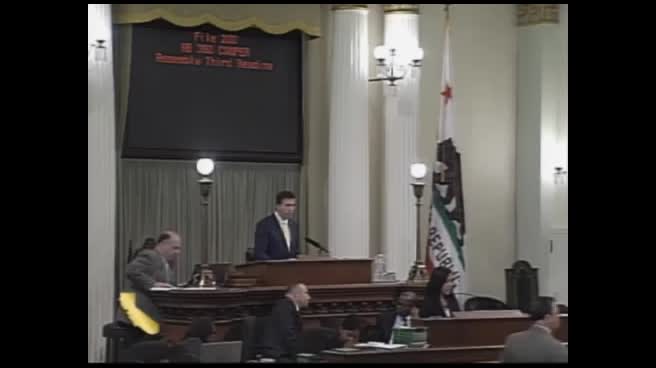
Bill Author