AB 988: Outdoor Environmental Education and Recreation Grants Program.
- Session Year: 2015-2016
- House: Assembly
- Latest Version Date: 2015-06-30
Existing law authorizes the expenditure of state funds for local assistance grants to cities, counties, and districts for the acquisition and development of various park and recreational areas and facilities. Existing law, the State Urban Parks and Healthy Communities Act, requires the Director of Parks and Recreation, in consultation with the State Department of Education, to develop a competitive grant program to assist state parks, state conservancies in existence as of January 1, 2003, urbanized and heavily urbanized local agencies, and community-based organizations within those jurisdictions, to provide outdoor educational opportunities to children.
This bill would require the Department of Parks and Recreation to establish, on or before March 30, 2016, an Outdoor Environmental Education and Recreation Grants Program with the purpose of increasing the ability of underserved and at-risk populations to participate in outdoor recreation and educational experiences by awarding grants to public organizations, nonprofit organizations, or both. The bill would require the director to develop criteria criteria, procedures, and accountability measures as may be necessary to implement the program and to administer the program to ensure that priority is given to underserved populations, as specified. The bill would authorize the director to develop an advisory task force to assist in the development of the program and would require the director to give priority funding to outdoor environmental education and recreation programs that have specified attributes.
This bill would authorize the director to accept private donations made for the support of the program and would authorize the director to solicit and accept private funding sources to help supplement offset the costs of the program. The bill would provide that, to the extent specified bond funds are available for grants under the program, those funds shall be awarded to programs that meet the criteria of the State Urban Parks and Healthy Communities Act. The bill would require that all moneys received for the purposes of the program be deposited into the California Youth Outdoor Education Account, which would be created by the bill and would be continuously appropriated for purposes of the program, thereby making an appropriation.
This bill would require the department to gather specified information from applicants each award year and to annually report this information, commencing on or before September 1, 2017, to the appropriate budget and fiscal committees of the Legislature.
Existing law authorizes the expenditure of state funds for local assistance grants to cities, counties, and districts for the acquisition and development of various park and recreational areas and facilities. Existing law, the State Urban Parks and Healthy Communities Act, requires the Director of Parks and Recreation, in consultation with the State Department of Education, to develop a competitive grant program to assist state parks, state conservancies in existence as of January 1, 2003, urbanized and heavily urbanized local agencies, and community-based organizations within those jurisdictions, to provide outdoor educational opportunities to children.
This bill would require the Department of Parks and Recreation to establish, on or before March 30, 2016, an Outdoor Environmental Education and Recreation Grants Program with the purpose of increasing the ability of underserved and at-risk populations to participate in outdoor recreation and educational experiences by awarding grants to public organizations, nonprofit organizations, or both. The bill would require the director to develop criteria as may be necessary to implement the program and to administer the program to ensure that priority is given to underserved populations, as specified. The bill would authorize the director to develop an advisory task force to assist in the development of the program and would require the director to give priority funding to outdoor environmental education and recreation programs that have specified attributes.
This bill would authorize the director to accept private donations made for the support of the program and would authorize the director to solicit and accept private funding sources to help supplement the costs of the program. The bill would provide that, to the extent specified, bond funds are available for grants under the program, those funds shall be awarded to programs that meet the criteria of the State Urban Parks and Healthy Communities Act. The bill would require that all moneys received for the purposes of the program be deposited into the California Youth Outdoor Education Account, which would be created by the bill and would be continuously appropriated for purposes of the program, thereby making an appropriation.
Existing law authorizes the expenditure of state funds for local assistance grants to cities, counties, and districts for the acquisition and development of various park and recreational areas and facilities. Existing law, the State Urban Parks and Healthy Communities Act, requires the Director of Parks and Recreation, in consultation with the State Department of Education, to develop a competitive grant program to assist state parks, state conservancies in existence as of January 1, 2003, urbanized and heavily urbanized local agencies, and community-based organizations within those jurisdictions, to provide outdoor educational opportunities to children.
This bill would require the Department of Parks and Recreation to establish, on or before March 30, 2016, an Outdoor Environmental Education and Recreation Grants Program with the purpose of increasing the ability of underserved and at-risk populations to participate in outdoor recreation and educational experiences by awarding grants to public organizations, nonprofit organizations, or both. In developing the program, the The bill would require the director to ensure that the program meets the criteria of the State Urban Parks and Healthy Communities Act and would require the director develop criteria as may be necessary to implement the program and to administer the program to ensure that priority is given to underserved populations, as specified. The bill would permit authorize the director to develop an advisory task force to assist in the development of the program and would require the director to give priority funding to outdoor environmental education and recreation programs that have specified attributes.
This bill would authorize the director to accept private donations made for the support of the program and would authorize the director to solicit and accept private funding sources to help supplement the costs of the program. The bill would provide that, to the extent specified, bond funds are available for grants under the program, those funds shall be awarded to programs that meet the criteria of the State Urban Parks and Healthy Communities Act. The bill would require that all moneys received for the purposes of the program be deposited into the California Youth Outdoor Education Account, which would be created by the bill and would be continuously appropriated for purposes of the program, thereby making an appropriation.
Existing law authorizes the expenditure of state funds for local assistance grants to cities, counties, and districts for the acquisition and development of various park and recreational areas and facilities. Existing law, the State Urban Parks and Healthy Communities Act, requires the Director of Parks and Recreation, in consultation with the State Department of Education, to develop a competitive grant program to assist state parks, state conservancies in existence as of January 1, 2003, urbanized and heavily urbanized local agencies, and community-based organizations within those jurisdictions, to provide outdoor educational opportunities to children.
This bill would require the Department of Parks and Recreation to establish, on or before March 30, 2016, an Outdoor Environmental Education and Recreation Grants Program with the purpose of increasing the ability of underserved and at-risk populations to participate in outdoor recreation and educational experiences by awarding grants to public organizations, nonprofit organizations, or both. In developing the program, the bill would require the director to ensure that the program meets the criteria of the State Urban Parks and Healthy Communities Act and would require the director to administer the program to ensure that priority is given to underserved populations, as specified. The bill would permit the director to develop an advisory task force to assist in the development of the program and would require the director to give priority funding to outdoor environmental education and recreation programs that have specified attributes.
This bill would authorize the director to accept private donations made for the support of the program and would authorize the director to solicit and accept private funding sources to help supplement the costs of the program. The bill would require that all moneys received for the purposes of the program be deposited into the California Youth Outdoor Education Account, which would be created by the bill and would be continuously appropriated for purposes of the program, thereby making an appropriation.
(a)The Legislature finds and declares all of the following:
(1)Park access, outdoor education, and outdoor recreational experiences are important to the health and well-being of all California citizens as well as the continuing stewardship of our natural resources. Many California communities, however, lack equitable access to parks and other open-space areas. This lack of access to the outdoors contributes to higher incidences of certain health ailments, such as diabetes, hypertension, obesity, and nature deficit disorder, and other negative social indicators, especially in low-income communities.
(2)According to the recent Parks Forward Commission report, released in February 2015, improving access to parks, outdoor experiences, and recreational opportunities, particularly for youth and young adults in disadvantaged communities, will lead to more healthy lifestyles, better educational outcomes, and improvements to the overall well-being of California citizens, Californias citizens and communities, and as well as our natural environment.
(3)The Legislature enacted Chapter 663 of the Statutes of 2003, which 2003 established the Outdoor Environmental Education Program and required a study on the benefits of outdoor environmental education for at-risk youth and underserved demographic groups. The study found that the science test scores of children who participated in the program were raised by 27 percent, and that these children also had improved conflict resolution and problem solving skills, better self-esteem, and were more motivated to learn. The program ended on July 1, 2005.
(4)The Legislature enacted Resolution Chapter 101 of the Statutes of 2006, which 2006 recognized the importance of local recreational and park agencies in the effort to reverse negative trends in inactivity, obesity, diabetes, and other health problems among Californians and encouraged the state to use, and partner with, local recreation and park providers to create a healthier state.
(b)It is the intent of the Legislature to expand access to parks and other outdoor educational and recreational opportunities in underserved areas by, among other things, convening and developing strategic partnerships to facilitate, promote, and enhance access to parks, as well as outdoor educational and recreational experiences in underserved communities.
SEC. 2.Chapter 14 (commencing with Section 5880) is added to Division 5 of the Public Resources Code, to read:14.Outdoor Environmental Education and Recreation Grants Program5880.(a)On or before March 30, 2016, the department director shall establish an Outdoor Environmental Education and Recreation Grants Program to increase the ability of underserved and at-risk populations to participate in outdoor recreation and educational experiences by awarding grants to public organizations, including local governments and local education agencies, nonprofit organizations, or both.
(b)In developing the grant program, the director shall do both of the following:
(1)Develop criteria and procedures criteria, procedures, and accountability measures as may be necessary to implement the grant program.
(2)Administer the grant program to ensure that priority is given to underserved populations, including both urban and rural areas and low-income communities where participation in an outdoor environmental education and recreation program programs has been limited.
(c)The director may develop an advisory task force composed comprised of public, private, nonprofit, academic, and other entities and individuals to assist in the development of the grant program, including representatives of the California Environmental Education Interagency Network.
(d)The director shall give priority for funding to an outdoor environmental education and recreation program programs that primarily serves provide outreach to and serve students who are eligible for free or reduced-price meals, foster youth, or pupils of limited English proficiency, as defined in Section 42238.01 of the Education Code, and has at least have one or more of the following attributes:
(1)Demonstrates Demonstrate partnerships between public, private, and nonprofit entities.
(2)Contributes Contribute to healthy lifestyles, sound nutritional habits, and improved outdoor educational and recreational experiences.
(3)Maximizes Maximize the number of participants that can be served.
(4)Commits Commit in-kind resources.
(5)Has Have a curriculum that is aligned to the science content standards for California public schools adopted by the State Board of Education.
(6)Fosters Foster stewardship of the environment and includes, include when available, curriculum established pursuant to Part 4 (commencing with Section 71300) of Division 34.
(7)Integrates Integrate instruction in science, technology, engineering, and mathematics.
(8)Includes Include service learning and community outreach components for purposes of building partnerships between participants and local communities.
(e)Reverted and unencumbered funds from the California Clean Water, Clean Air, Safe Neighborhood Parks, and Coastal Protection Act of 2002 may be appropriated by the Legislature for the purpose of this chapter, if consistent with the requirements of the California Clean Water, Clean Air, Safe Neighborhood Parks, and Coastal Protection Act of 2002. To the extent that grants may be awarded from those funds, they shall be awarded only to programs that meet all of the criteria specified in Section 5095.4.
(f)The director may also accept private donations made for the support of the program. The director may solicit and accept private funding to help supplement offset the costs of the program. These funding sources may include, but are not limited to, foundations, corporate funding, crowdfunding resources, donation drives, or any other funding sources that may be available.
(g)All moneys received pursuant to subdivisions (e) and (f) for the purpose of this program shall be deposited in the California Youth Outdoor Education Account, which is hereby created within the State Park and Recreation Fund. Notwithstanding Section 13340 of the Government Code, moneys in the California Youth Outdoor Education Account shall be continuously appropriated to the department for the purposes of this chapter.
(h)(1)The department shall gather information from applicants each award year for purposes of evaluating the effectiveness of outdoor environmental education and recreation programs in achieving the objectives of the grant program. The department shall annually summarize and report this information for the previous award year, commencing on or before September 1, 2017, to the appropriate budget and fiscal committees of the Legislature. The information in the annual report shall include the total number of children served, the total number and types of entities that received grant awards, appropriate recommendations to improve the grant program, partnerships formed, educational objectives achieved, the total number of applications received, and the total number of children who would have been served had all applicants for the award year received grant awards.
(2)A report pursuant to paragraph (1) shall be submitted in compliance with Section 9795 of the Government Code.
SEC. 3.Section 5095.4 of the Public Resources Code is amended to read:5095.4.(a)The director, in consultation with the State Department of Education, shall develop a competitive grant program to assist state parks, state conservancies in existence as of January 1, 2003, urbanized and heavily urbanized local agencies, and community-based organizations within those jurisdictions, working in collaboration, to provide outdoor educational opportunities to children.
(1)Applicant entities shall provide a 25-percent matching contribution in community resources. The matching contributions may be in the form of money, including funds from other state or local assistance programs, gifts of real property, equipment, and consumable supplies, volunteer services, free or reduced-cost use of land, facilities, or equipment, and bequests and income from wills, estates, and trusts. The department may establish findings for hardships to waive the matching requirement when an applicant cannot meet the requirement.
(2)The department may give additional consideration to applicant entities collaborating with other entities, including, but not limited to, school districts, faith-based groups, and others providing outreach programs to identify and attract urbanized youth most in need of organized, constructive recreational activities.
(b)The department shall make one-third of any funds appropriated for the purposes of this chapter available to give special priority to providing increased access for elementary schoolage children in grades 2 to 8, inclusive, to conservancy or state, community, and regional park properties, including public properties within the coastal zone, and, in addition, shall give priority, in awarding a grant pursuant to this section, to all of the following:
(1)Programs that use curriculum tied to the science content standards and science framework adopted by the State Board of Education.
(2)Applicants that serve children with family incomes below the statewide average, based on the most recent figures computed and established by the Department of Finance.
(3)Applicants that provide access to children who are underserved or lack access to parks or other outdoor venues suitable to conduct appropriate environmental education instruction.
(4)Applicants that have developed working collaboratives to develop environmental education partnerships.
(5)Applicants working in collaboration with local educational agencies to identify those children lacking adequate opportunities to access outdoor environmental education curriculum or innovative or alternative recreation programming.
(c)The amount of a grant awarded pursuant to this section may not be less than twenty thousand dollars ($20,000) or more than two hundred thousand dollars ($200,000). A grant may be expended for any of the following purposes:
(1)Staffing that is directly associated with the programming.
(2)Staff training or development directly associated with the programming.
(3)Costs associated with transporting youth between a community or school and the proposed environmental education venue.
(4)Medical insurance for the participants, only if the insurance is a requirement pursuant to the activity.
(5)Operational costs, such as the rental equipment, food, and supplies.
(6)Applicants that can demonstrate that the administrative costs associated with this activity will not exceed more than 7.5 percent of the amount of the grant.
(d)The department may gather information from the applicants as to the effectiveness of these programs in meeting program objectives. The department shall summarize this information and report to the appropriate budget and fiscal committees of both houses of the Legislature as to the number of children served, the educational objectives met, and the level of demand.
(e)Applicant agencies may enter into contracts with other public agencies or entities to provide unique interpretive skills or to present authentic, curriculum-based programs in units of conservancy properties or state, community, or regional park systems for services not otherwise provided. The purpose of this subdivision is to authorize the applicants to provide programming services, equipment, and materials that assist in the curriculum program or provide educational activities that assist in the presentation of cultural traditions.
(a)The Legislature finds and declares all of the following:
(1)Park access, outdoor education, and outdoor recreational experiences are important to the health and well-being of all California citizens as well as the continuing stewardship of our natural resources. Many California communities, however, lack equitable access to parks and other open-space areas. This lack of access to the outdoors contributes to higher incidences of certain health ailments, such as diabetes, hypertension, and nature deficit disorder, and other negative social indicators, especially in low-income communities.
(2)According to the recent Parks Forward Commission report, improving access to parks, outdoor experiences, and recreational opportunities, particularly for youth and young adults in disadvantaged communities, will lead to more healthy lifestyles, better educational outcomes, and improvements to the overall well-being of California citizens, communities, and our natural environment.
(3)The Legislature enacted Chapter 663 of the Statutes of 2003, which established the Outdoor Environmental Education Program and required a study on the benefits of outdoor environmental education for at-risk youth and underserved demographic groups. The study found that the science test scores of children who participated in the program were raised by 27 percent, and that these children also had improved conflict resolution and problem solving skills, better self-esteem, and were more motivated to learn. The program ended on July 1, 2005.
(4)The Legislature enacted Resolution Chapter 101 of the Statutes of 2006, which recognized the importance of local recreational and park agencies in the effort to reverse negative trends in inactivity, obesity, diabetes, and other health problems among Californians and encouraged the state to use, and partner with, local recreation and park providers to create a healthier state.
(b)It is the intent of the Legislature to expand access to parks and other outdoor educational and recreational opportunities in underserved areas by, among other things, convening and developing strategic partnerships to facilitate, promote, and enhance access to parks, as well as outdoor educational and recreational experiences in underserved communities.
SEC. 2.Chapter 14 (commencing with Section 5880) is added to Division 5 of the Public Resources Code, to read:14.Outdoor Environmental Education and Recreation Grants Program5880.(a)On or before March 30, 2016, the department shall establish an Outdoor Environmental Education and Recreation Grants Program to increase the ability of underserved and at-risk populations to participate in outdoor recreation and educational experiences by awarding grants to public organizations, nonprofit organizations, or both.
(b)In developing the program, the director shall do both of the following:
(1)Develop criteria and procedures as may be necessary to implement the grant program.
(2)Administer the program to ensure that priority is given to underserved populations, including both urban and rural areas and low-income communities where participation in an outdoor environmental education and recreation program has been limited.
(c)The director may develop an advisory task force composed of public, private, nonprofit, academic, and other entities and individuals to assist in the development of the program, including representatives of the California Environmental Education Interagency Network.
(d)The director shall give priority for funding to an outdoor environmental education and recreation program that has primarily serves students who are eligible for free or reduced-price meals, foster youth, or pupils of limited English proficiency, as defined in Section 42238.01 of the Education Code, and has at least one of the following attributes:
(1)Serves at-risk youth and underserved demographic groups.
(2)
(1)Demonstrates partnerships between public, private, and nonprofit entities.
(3)
(2)Contributes to healthy lifestyles, sound nutritional habits, and improved outdoor educational and recreational experiences.
(4)
(3)Maximizes the number of participants that can be served.
(5)
(4)Commits in-kind resources.
(6)
(5)Has a curriculum that is aligned to the science content standards for California public schools adopted by the State Board of Education.
(7)
(6)Fosters stewardship of the environment and includes, when available, curriculum established pursuant to Part 4 (commencing with Section 71300) of Division 34.
(8)
(7)Integrates instruction in science, technology, engineering, and mathematics.
(9)
(8)Includes service learning and community outreach components for purposes of building partnerships between participants and local communities.
(e)Reverted and unencumbered funds from the California Clean Water, Clean Air, Safe Neighborhood Parks, and Coastal Protection Act of 2002 may be appropriated by the Legislature for the purpose of this chapter, if consistent with the requirements of the California Clean Water, Clean Air, Safe Neighborhood Parks, and Coastal Protection Act of 2002. To the extent that grants may be awarded from those funds, they shall be awarded only to programs that meet all of the criteria specified in Section 5095.4.
(f)The director may also accept private donations made for the support of the program. The director may solicit and accept private funding to help supplement the costs of the program. These funding sources may include, but are not limited to, foundations, corporate funding, crowd funding crowdfunding resources, donation drives, or any other funding sources that may be available.
(g)All moneys received pursuant to subdivisions (e) and (f) for the purpose of this program shall be deposited in the California Youth Outdoor Education Account, which is hereby created within the State Park and Recreation Fund. Notwithstanding Section 13340 of the Government Code, moneys in the California Youth Outdoor Education Account shall be continuously appropriated to the department for the purposes of this chapter.
SEC. 3.Section 5095.4 of the Public Resources Code is amended to read:5095.4.(a)The director, in consultation with the State Department of Education, shall develop a competitive grant program to assist state parks, state conservancies in existence as of January 1, 2003, urbanized and heavily urbanized local agencies, and community-based organizations within those jurisdictions, working in collaboration, to provide outdoor educational opportunities to children.
(1)Applicant entities shall provide a 25-percent matching contribution in community resources. The matching contributions may be in the form of money, including funds from other state or local assistance programs, gifts of real property, equipment, and consumable supplies, volunteer services, free or reduced-cost use of land, facilities, or equipment, and bequests and income from wills, estates, and trusts. The department may establish findings for hardships to waive the matching requirement when an applicant cannot meet the requirement.
(2)The department may give additional consideration to applicant entities collaborating with other entities, including, but not limited to, school districts, faith-based groups, and others providing outreach programs to identify and attract urbanized youth most in need of organized, constructive recreational activities.
(b)The department shall make one-third of any funds appropriated for the purposes of this chapter available to give special priority to providing increased access for elementary schoolage children in grades 2 to 8, inclusive, to conservancy or state, community, and regional park properties, including public properties within the coastal zone, and, in addition, shall give priority, in awarding a grant pursuant to this section, to all of the following:
(1)Programs that use curriculum tied to the science content standards and science framework adopted by the State Board of Education.
(2)Applicants that serve children with family incomes below the statewide average, based on the most recent figures computed and established by the Department of Finance.
(3)Applicants that provide access to children who are underserved or lack access to parks or other outdoor venues suitable to conduct appropriate environmental education instruction.
(4)Applicants that have developed working collaboratives to develop environmental education partnerships.
(5)Applicants working in collaboration with local educational agencies to identify those children lacking adequate opportunities to access outdoor environmental education curriculum or innovative or alternative recreation programming.
(c)The amount of a grant awarded pursuant to this section may not be less than twenty thousand dollars ($20,000) or more than two hundred thousand dollars ($200,000). A grant may be expended for any of the following purposes:
(1)Staffing that is directly associated with the programming.
(2)Staff training or development directly associated with the programming.
(3)Costs associated with transporting youth between a community or school and the proposed environmental education venue.
(4)Medical insurance for the participants, only if the insurance is a requirement pursuant to the activity.
(5)Operational costs, such as the rental equipment, food, and supplies.
(6)Applicants that can demonstrate that the administrative costs associated with this activity will not exceed more than 7.5 percent of the amount of the grant.
(d)The department may gather information from the applicants as to the effectiveness of these programs in meeting program objectives. The department shall summarize this information and report to the appropriate budget and fiscal committees of both houses of the Legislature as to the number of children served, the educational objectives met, and the level of demand.
(e)Applicant agencies may enter into contracts with other public agencies or entities to provide unique interpretive skills or to present authentic, curriculum-based programs in units of conservancy properties or state, community, or regional park systems for services not otherwise provided. The purpose of this subdivision is to authorize the applicants to provide programming services, equipment, and materials that assist in the curriculum program or provide educational activities that assist in the presentation of cultural traditions.
(a)The Legislature finds and declares all of the following:
(1)Park access, outdoor education, and outdoor recreational experiences are important to the health and well-being of all California citizens as well as the continuing stewardship of our natural resources. Many California communities, however, lack equitable access to parks and other open-space areas. This lack of access to the outdoors contributes to higher incidences of certain health ailments, such as diabetes, hypertension, and nature deficit disorder, and other negative social indicators, especially in low-income communities.
(2)According to the recent Parks Forward Commission report, improving access to parks, outdoor experiences, and recreational opportunities, particularly for youth and young adults in disadvantaged communities, will lead to more healthy lifestyles, better educational outcomes, and improvements to the overall well-being of California citizens, communities, and our natural environment.
(3)The Legislature enacted Chapter 663 of the Statutes of 2003, which established the Outdoor Environmental Education Program and required a study on the benefits of outdoor environmental education for at-risk youth and underserved demographic groups. The study found that the science test scores of children who participated in the program were raised by 27 percent, and that these children also had improved conflict resolution and problem solving skills, better self-esteem, and were more motivated to learn. The program ended on July 1, 2005.
(4)The Legislature enacted Resolution Chapter 101 of the Statutes of 2006, which recognized the importance of local recreational and park agencies in the effort to reverse negative trends in inactivity, obesity, diabetes, and other health problems among Californians and encouraged the state to use, and partner with, local recreation and park providers to create a healthier state.
(b)It is the intent of the Legislature to expand access to parks and other outdoor educational and recreational opportunities in underserved areas by, among other things, convening and developing strategic partnerships to facilitate, promote, and enhance access to parks, as well as outdoor educational and recreational experiences in underserved communities.
SEC. 2.Chapter 14 (commencing with Section 5880) is added to Division 5 of the Public Resources Code, to read:14.Outdoor Environmental Education and Recreation Grants Program5880.(a)On or before March 30, 2016, the department shall establish an Outdoor Environmental Education and Recreation Grants Program to increase the ability of underserved and at-risk populations to participate in outdoor recreation and educational experiences by awarding grants to public organizations, nonprofit organizations, or both.
(b)In developing the program, the director shall do both of the following:
(1)Ensure that the program meets the criteria specified in Section 5095.4 and develop additional Develop criteria and procedures as may be necessary to implement the grant program.
(2)Administer the program to ensure that priority is given to underserved populations, including both urban and rural areas and low-income communities where participation in an outdoor environmental education and recreation program has been limited.
(c)The director may develop an advisory task force composed of public, private, nonprofit, academic, and other entities and individuals to assist in the development of the program, including representatives of the California Environmental Education Interagency Network.
(d)The director shall give priority for funding, where feasible and where consistent with the criteria specified in Section 5095.4, funding to an outdoor environmental education and recreation program that has at least one of the following attributes:
(1)Serves at-risk youth and underserved demographic groups.
(2)Demonstrates partnerships between public, private, and nonprofit entities.
(3)Contributes to healthy lifestyles, sound nutritional habits, and improved outdoor educational and recreational experiences.
(4)Maximizes the number of participants that can be served.
(5)Commits in-kind resources.
(6)Has a curriculum that is aligned to the science content standards for California public schools adopted by the State Board of Education.
(7)Fosters stewardship of the environment and includes, when available, curriculum established pursuant to Part 4 (commencing with Section 71300) of Division 34.
(8)Integrates instruction in science, technology, engineering, and mathematics.
(9)Includes service learning and community outreach components for purposes of building partnerships between participants and local communities.
(e)Reverted and unencumbered funds from the California Clean Water, Clean Air, Safe Neighborhood Parks, and Coastal Protection Act of 2002 may be appropriated by the Legislature for the purpose of this chapter, if consistent with the requirements of the California Clean Water, Clean Air, Safe Neighborhood Parks, and Coastal Protection Act of 2002. The To the extent that grants may be awarded from those funds, they shall be awarded only to programs that meet all of the criteria specified in Section 5095.4.
(f)The director may also accept private donations made for the support of the program. The director may solicit and accept private funding to help supplement the costs of the program. These funding sources may include, but are not limited to, foundations, corporate funding, crowd funding resources, donation drives, or any other funding sources that may be available.
(f)
(g)All moneys received pursuant to subdivision (e) subdivisions (e) and (f) for the purpose of this program shall be deposited in the California Youth Outdoor Education Account, which is hereby created within the State Park and Recreation Fund. Notwithstanding Section 13340 of the Government Code, moneys in the California Youth Outdoor Education Account shall be continuously appropriated to the department for purposes of this chapter.
SEC. 3.Section 5095.4 of the Public Resources Code is amended to read:5095.4.(a)The director, in consultation with the State Department of Education, shall develop a competitive grant program to assist state parks, state conservancies in existence as of January 1, 2003, urbanized and heavily urbanized local agencies, and community-based organizations within those jurisdictions, working in collaboration, to provide outdoor educational opportunities to children.
(1)Applicant entities shall provide a 25-percent matching contribution in community resources. The matching contributions may be in the form of money, including funds from other state or local assistance programs, gifts of real property, equipment, and consumable supplies, volunteer services, free or reduced-cost use of land, facilities, or equipment, and bequests and income from wills, estates, and trusts. The department may establish findings for hardships to waive the matching requirement when an applicant cannot meet the requirement.
(2)The department may give additional consideration to applicant entities collaborating with other entities, including, but not limited to, school districts, faith-based groups and others providing outreach programs to identify and attract urbanized youth most in need of organized, constructive recreational activities.
(b)The department shall make one-third of any funds appropriated for the purposes of this chapter available to give special priority to providing increased access for elementary schoolage children in grades 2 to 8, inclusive, to conservancy or state, community, and regional park properties, including public properties within the coastal zone, and, in addition, shall give priority, in awarding a grant pursuant to this section, to all of the following:
(1)Programs that use curriculum tied to the science content standards and science framework adopted by the State Board of Education.
(2)Applicants that serve children with family incomes below the statewide average, based on the most recent figures computed and established by the Department of Finance.
(3)Applicants that provide access to children who are underserved or lack access to parks or other outdoor venues suitable to conduct appropriate environmental education instruction.
(4)Applicants that have developed working collaboratives to develop environmental education partnerships.
(5)Applicants working in collaboration with local educational agencies to identify those children lacking adequate opportunities to access outdoor environmental education curriculum or innovative or alternative recreation programming.
(c)The amount of a grant awarded pursuant to this section may not be less than twenty thousand dollars ($20,000) or more than two hundred thousand dollars ($200,000). A grant may be expended for any of the following purposes:
(1)Staffing that is directly associated with the programming.
(2)Staff training or development directly associated with the programming.
(3)Costs associated with transporting youth between a community or school and the proposed environmental education venue.
(4)Medical insurance for the participants, only if the insurance is a requirement pursuant to the activity.
(5)Operational costs, such as the rental equipment, food, and supplies.
(6)Applicants that can demonstrate that the administrative costs associated with this activity will not exceed more than 7.5 percent of the amount of the grant.
(d)The department may gather information from the applicants as to the effectiveness of these programs in meeting program objectives. The department shall summarize this information and report to the appropriate budget and fiscal committees of both houses of the Legislature as to the number of children served, the educational objectives met, and the level of demand.
(e)Applicant agencies may enter into contracts with other public agencies or entities to provide unique interpretive skills or to present authentic, curriculum-based programs in units of conservancy properties or state, community, or regional park systems for services not otherwise provided. The purpose of this subdivision is to authorize the applicants to provide programming services, equipment, and materials that assist in the curriculum program or provide educational activities that assist in the presentation of cultural traditions.
(a)The Legislature finds and declares all of the following:
(1)Park access, outdoor education, and outdoor recreational experiences are important to the health and well-being of all California citizens as well as the continuing stewardship of our natural resources. Many California communities, however, lack equitable access to parks and other open-space areas. This lack of access to the outdoors contributes to higher incidences of certain health ailments, such as diabetes, hypertension, and nature deficit disorder, and other negative social indicators, especially in low-income communities.
(2)According to the recent Parks Forward Commission report, improving access to parks, outdoor experiences, and recreational opportunities, particularly for youth and young adults in disadvantaged communities, will lead to more healthy lifestyles, better educational outcomes, and improvements to the overall well-being of California citizens, communities, and our natural environment.
(3)The Legislature enacted Chapter 663 of the Statutes of 2003, which established the Outdoor Environmental Education Program and required a study on the benefits of outdoor environmental education for at-risk youth and underserved demographic groups. The study found that the science test scores of children who participated in the program were raised by 27 percent, and that these children also had improved conflict resolution and problem solving skills, better self-esteem, and were more motivated to learn. The program ended on July 1, 2005.
(4)The Legislature enacted Resolution Chapter 101 of the Statutes of 2006, which recognized the importance of local recreational and park agencies in the effort to reverse negative trends in inactivity, obesity, diabetes, and other health problems among Californians and encouraged the state to use, and partner with, local recreation and park providers to create a healthier state.
(b)It is the intent of the Legislature to expand access to parks and other outdoor educational and recreational opportunities in underserved areas by, among other things, convening and developing strategic partnerships to facilitate, promote, and enhance access to parks, as well as outdoor educational and recreational experiences in underserved communities.
SEC. 2.Chapter 14 (commencing with Section 5880) is added to Division 5 of the Public Resources Code, to read:14.Outdoor Environmental Education and Recreation Grants Program5880.(a)On or before March 30, 2016, the department shall establish an Outdoor Environmental Education and Recreation Grants Program to increase the ability of underserved and at-risk populations to participate in outdoor recreation and educational experiences by awarding grants to public organizations, nonprofit organizations, or both.
(b)In developing the program, the director shall do both of the following:
(1)Ensure that the program meets the criteria specified in Section 5095.4 and develop additional criteria and procedures as may be necessary to implement the grant program.
(2)Administer the program to ensure that priority is given to underserved populations, including both urban and rural areas and low-income communities where participation in an outdoor environmental education and recreation program has been limited.
(c)The director may develop an advisory task force composed of public, private, nonprofit, academic, and other entities and individuals to assist in the development of the program, including representatives of the California Environmental Education Interagency Network.
(d)The director shall give priority for funding, where feasible and where consistent with the criteria specified in Section 5095.4, to an outdoor environmental education and recreation program that has at least one of the following attributes:
(1)Serves at-risk youth and underserved demographic groups.
(2)Demonstrates partnerships between public, private, and nonprofit entities.
(3)Contributes to healthy lifestyles, sound nutritional habits, and improved outdoor educational and recreational experiences.
(4)Maximizes the number of participants that can be served.
(5)Commits in-kind resources.
(6)Has a curriculum that is aligned to the science content standards for California public schools adopted by the State Board of Education.
(7)Fosters stewardship of the environment and includes, when available, curriculum established pursuant to Part 4 (commencing with Section 71300) of Division 34.
(8)Integrates instruction in science, technology, engineering, and mathematics.
(9)Includes service learning and community outreach components for purposes of building partnerships between participants and local communities.
(e)Reverted and unencumbered funds from the California Clean Water, Clean Air, Safe Neighborhood Parks, and Coastal Protection Act of 2002 may be appropriated by the Legislature for the purpose of this chapter, if consistent with the requirements of California Clean Water, Clean Air, Safe Neighborhood Parks, and Coastal Protection Act of 2002. The director may also accept private donations made for the support of the program. The director may solicit and accept private funding to help supplement the costs of the program. These funding sources may include, but are not limited to, foundations, corporate funding, crowd funding resources, donation drives, or any other funding sources that may be available.
(f)All moneys received pursuant to subdivision (e) for the purpose of this program shall be deposited in the California Youth Outdoor Education Account, which is hereby created within the State Park and Recreation Fund. Notwithstanding Section 13340 of the Government Code, moneys in the California Youth Outdoor Education Account shall be continuously appropriated to the department for purposes of this chapter.
|
Date
|
Status
|
|---|---|
| Jun 2, 2015 | Read second time. Ordered to third reading. |
| Aug 27, 2015 | In committee: Held under submission. |
| Aug 17, 2015 | In committee: Referred to APPR. suspense file. |
| Jul 15, 2015 | From committee: Do pass and re-refer to Com. on APPR. (Ayes 8. Noes 1.) (July 14). Re-referred to Com. on APPR. |
| Jun 30, 2015 | From committee chair, with author's amendments: Amend, and re-refer to committee. Read second time, amended, and re-referred to Com. on N.R. & W. |
| Jun 18, 2015 | Referred to Com. on N.R. & W. |
| Jun 3, 2015 | Read third time. Passed. Ordered to the Senate. (Ayes 73. Noes 3. Page 1873.) |
| Jun 3, 2015 | Read third time. Passed. Ordered to the Senate. |
| Jun 3, 2015 | In Senate. Read first time. To Com. on RLS. for assignment. |
| Feb 26, 2015 | Read first time. To print. |
| Jun 1, 2015 | Read second time and amended. Ordered returned to second reading. |
| May 28, 2015 | From committee: Amend, and do pass as amended. (Ayes 12. Noes 1.) (May 28). |
| May 13, 2015 | In committee: Set, first hearing. Referred to APPR. suspense file. |
| Apr 30, 2015 | Re-referred to Com. on APPR. |
| Apr 29, 2015 | Read second time and amended. |
| Apr 28, 2015 | From committee: Amend, and do pass as amended and re-refer to Com. on APPR. (Ayes 12. Noes 2.) (April 28). |
| Mar 16, 2015 | Referred to Com. on W., P., & W. |
| Feb 27, 2015 | From printer. May be heard in committee March 29. |
|
Date
|
Description
|
Location
|
Votes
|
|
|---|---|---|---|---|
| Aug 17, 2015 | Placed on suspense file | Senate Standing Committee on Appropriations |
Passed |
|
| Jul 14, 2015 | Do pass, but first be re-referred to the Committee on [Appropriations] | Senate Standing Committee on Natural Resources and Water |
Passed |
|
| Jun 3, 2015 | AB 988 STONE Assembly Third Reading | Assembly Floor |
Passed |
|
| May 28, 2015 | Do pass as amended. | Assembly Standing Committee on Appropriations |
Passed |
|
| Apr 28, 2015 | Do pass as amended and be re-referred to the Committee on [Appropriations] | Assembly Standing Committee on Water, Parks, and Wildlife |
Passed |
This list shows positions taken on this bill by organizations on the date displayed, which is linked to the original source.
Positions by individuals are not included.
|
Organization
|
Position
|
Date
|
|---|---|---|
| Audubon California | ** Support | Aug 17, 2015 |
| Big Sur Land Trust | ** Support | Aug 17, 2015 |
| California Association Of Local Conservation Corps | ** Support | Aug 17, 2015 |
| California Black Health Network | ** Support | Aug 17, 2015 |
| California Coastal Protection Network | ** Support | Aug 17, 2015 |
| California Council Of Land Trusts | ** Support | Aug 17, 2015 |
| California League Of Conservation Voters | ** Support | Aug 17, 2015 |
| California Outdoor School Association | ** Support | Aug 17, 2015 |
| California Park and Recreation Society | ** Support | Aug 17, 2015 |
| California Special Districts Association | ** Support | Aug 17, 2015 |
| California State Parks Association | ** Support | Aug 17, 2015 |
| California State Parks Foundation | ** Support | Jun 3, 2015 |
| California State Parks Rangers Association | ** Support | Aug 17, 2015 |
| California State PTA | ** Support | Aug 17, 2015 |
| City of Vista | ** Support | Aug 17, 2015 |
| Defenders Of Wildlife | ** Support | Aug 17, 2015 |
| East Bay Regional Park District | ** Support | Aug 17, 2015 |
| Environment California | ** Support | Aug 17, 2015 |
| Environmental Action Committee of West Marin | ** Support | Aug 17, 2015 |
| Fairfield, City Of | ** Support | Aug 17, 2015 |
| Latino Coalition for a Healthy California | ** Support | Jun 3, 2015 |
| League Of California Cities | ** Support | Aug 17, 2015 |
| League To Save Lake Tahoe | ** Support | Aug 17, 2015 |
| Los Angeles Neighborhood Land Trust | ** Support | Aug 17, 2015 |
| Mountains Recreation And Conservation Authority | ** Support | Aug 17, 2015 |
| O'Neill Sea Odyssey | ** Support | Aug 17, 2015 |
| ReLeaf | ** Support | Aug 17, 2015 |
| San Diego County Board of Supervisors | ** Support | Aug 17, 2015 |
| San Diego County Office of Education | ** Support | Aug 17, 2015 |
| Santa Cruz County Office Of Education | ** Support | Aug 17, 2015 |
| Save the Redwoods League | ** Support | Aug 17, 2015 |
| Sierra Club California | ** Support | Aug 17, 2015 |
| Sonoma County Water Agency | ** Support | Aug 17, 2015 |
| Tahoe Resource Conservation District | ** Support | Aug 17, 2015 |
| Thousand Oaks, City Of | ** Support | Aug 17, 2015 |
AB 988 (Mark Stone) Page 3 of 3
SENATE COMMITTEE ON APPROPRIATIONS
Senator Ricardo Lara, Chair
2015 - 2016 Regular Session
AB 988 (Mark Stone) - Outdoor Environmental Education and Recreation Grants Program
|
|
Version: June 30, 2015 |
Policy Vote: N.R. & W. 8 - 1 |
Urgency: No |
Mandate: No |
Hearing Date: August 17, 2015 |
Consultant: Marie Liu |
This bill meets the criteria for referral to the Suspense File.
Bill Summary:
AB 988 would create a new grant program to increase the ability of underserved and at-risk populations to participate in outdoor recreation and educational experiences.
Fiscal Impact:
Initial costs of $230,000 and ongoing annual costs of $216,000 to the General Fund to develop the required grant program.
Unknown ongoing costs, likely in the hundreds of thousands of dollars, to the General Fund to administer the required grant program.
Cost pressures in the millions to tens of millions of dollars to the General Fund to fund outdoor recreation and education.
Background:
The State Urban Parks and Healthy Communities Act established a competitive grant program at DPR to assist state parks, certain state conservancies, urbanized and heavily urbanized local agencies, and community-based organizations within those jurisdictions to provide outdoor educational opportunities to children. At least one-third of any funds appropriated for this program were to be prioritized for increasing access for elementary school-age children to conservancy or state, community and regional park priorities. In signing SB 359 (Murray) Chapter 877, Statutes of 2001, Governor Davis included a signing message indicating that there would been no General Fund allocations to support the program in the following budget year due to a decrease in state revenues. Additionally, Governor Davis noted that Proposition 40, should it pass, would make $350 million available for various local assistant grant programs for the development of neighborhood, community, and recreational parks and recreation lands and facilities in urban and rural areas, but that these funds cannot be used for non-capital outlay programs such as outdoor education curriculum development. Instead, these programs require General Fund appropriations.
Proposition 40, approved by the voters in March 2002, made available $2.6 billion for various purposes, including $23.337 million for the acquisition and/or development of properties for active recreational purposes under the State Urban Parks and Health Communities Program. No Proposition 40 monies were made available for programmatic outdoor education purposes.
Government Code §16727 provides that general obligation bonds are to be used for capital purposes. This provision aims to ensure that the benefits of a project at least roughly match the period during which the bond must be repaid.
Proposed Law:
This bill would create the Outdoor Environmental Education and Recreation Grants Program at DPR aimed to increase the ability of underserved and at-risk populations to participate in outdoor recreation and educational experiences.
Eligible entities would be public organizations including local governments, local education agencies, and nonprofit organizations. Priority would be given to fund programs that primarily provide outreach to and serve students who are eligible for free or reduced-priced meals, foster youth, or pupils of limited English proficiency, and have at least one of the following attributes:
Demonstrate partnerships between public, private, and nonprofit entities
Contribute to health lifestyles, sound nutritional habits, and improved outdoor educational and recreational experiences
Maximize the number of participants that can be served
Commit in-kind resources
Have a curriculum that is aligned to the science content standards for California Public Schools
Foster stewardship of the environment
Integrate instruction in science, technology, engineering, and mathematics
Include service learning and community outreach components
DPR would be authorized to develop an advisory task force to assist in the development of the grant program.
If a grantee meets the requirements of this program and the criteria specified in the State Urban Parks and Healthy Communities Act, the grant may be funded by Proposition 40 monies that have been reverted and unencumbered. The author intends to amend the bill to also require that the Proposition 40 be spent on grants for capital outlay. The program would also be authorized to receive private donations.
All funding for this program would be deposited into the California Youth Outdoor Education Account within the State Park and Recreation Fund (SPRF), which would be created under this bill. All monies in the account would be continuously appropriated to DPR for this program.
DPR would be required to gather information from applications each award year for the purpose of evaluating the effectiveness of outdoor environmental education and recreation programs. This information would be summarized and reported annually to the Legislature.
This bill would also amend the State Urban Parks and Healthy Communities Act to specify that programs on public properties within the coastal zone are included in the programs that are prioritized for funding.
Staff Comments:
The author intends to submit amendments to the bill that specify that any funds from Proposition 40 received by this program must be spent on capital outlay. This analysis considers this future amendment.
To develop the required grant program, DPR anticipates needing two PYs at a first-year cost of $230,000, and $216,000 ongoing. Additional staff would be needed to implement the program depending on how much money is allocated to the program. As a general indicator, grant programs usually require about 5% of the total amount for administration. Thus, a $10 million grant program would need approximately $500,000 for administration. As this bill does not make an appropriation to this program and it is unknown how much private donations DPR would receive for this purpose, the ongoing administrative costs are unknown but likely to be in the hundreds of thousands of dollars
This year, through SB 83 (Committee on Budget and Fiscal Review) Chapter 24, Statutes of 2015, the Legislature made available $10 million of Proposition 40 monies that have been reverted, upon appropriation, for outdoor environmental education and recreation programs that are consistent with the Proposition 40 guidelines for local assistance grants. These funds could be distributed under the grant program outlined in this bill, to the extent that the program is funding capital outlay projects. In addition to the possibility of Proposition 40 monies, this bill would also allow DPR to receive private donations to fund the program. The bill is silent on whether this restriction applies to other funding sources.
Staff notes that because the two potential funding sources for the grant program have different requirements, DPR would either have to administer two grant programs with slightly different criteria- perhaps one program for operational costs and another for capital outlay – or design the program so that all projects meet the more stringent requirements of the two funding sources, that is, in the case of this bill, all grants would be restricted to capital outlay. Staff recommends that the bill specify whether the whole program is to be for capital outlay or whether DPR should run two grant programs.
This bill would continuously appropriate funds in the California Youth Outdoor Education Account. Presumably this provision is to allow private donations to flow to the program without legislative action. However, while a continuous appropriation might be appropriate for private donations, continuously appropriating state funds restricts legislative oversight of the programs. Staff recommends that the special fund be limited to only receive funds from private donations.
Proposed Author Amendments:
The author intends on amending this measure to require that all Proposition 40 monies expended by this program be for the purpose of funding capital outlay projects.
-- END --
AB 988 (Mark Stone) Page 6 of 6
SENATE COMMITTEE ON NATURAL RESOURCES AND WATER
Senator Fran Pavley, Chair
2015 - 2016 Regular
Bill No: AB 988 Hearing Date: July 14, 2015
Author: |
Mark Stone |
|
|
Version: |
June 30, 2015 Amended |
||
Urgency: |
No |
Fiscal: |
Yes |
Consultant: |
Angee Doerr |
||
Subject: Outdoor Environmental Education and Recreation Grants Program.
BACKGROUND AND EXISTING LAW
Existing law:
Establishes the Department of Parks and Recreation (DPR), which is responsible for administering the state park system. DPR has also been directed under prior bond acts to administer grant programs for local and regional parks and related programs. DPR is authorized to provide spaces within the state park system for schools to use for environmental education (Public Resources Code (PRC) Division 1, Chapter 1, Article 1, commencing with Section 500).
Establishes guidelines for DPR to use in granting funds for programs that provide outdoor environmental education experiences to low-income students on public properties (PRC Division 5, Chapter 1.55, commencing with Section 5095).
Establishes a statewide environmental education program, to be administered by the Office of Education and Environment within the Department of Resources, Recycling and Recovery (CalRecycle), in cooperation with other agencies. The program, among other things, calls for development of a unified education strategy on the environment for elementary and secondary schools, including environmental education principles (PRC Section 71300).
Requires the Office of Education and Environment to develop a model environmental education curriculum, to submit the curriculum to the Instructional Quality Commission for review, to make the curriculum available electronically, and to coordinate with other state agencies to facilitate its use (PRC Section 71302).
Establishes the Environmental Education Account in the State Treasury and authorizes CalRecycle to expend funds in the Account (PRC Section 71305).
States legislative findings and declarations that the State’s model Education and the Environment Curriculum is the first of its kind in the nation to receive State Board of Education approval. Declares that CalRecycle should collaborate across agencies and disciplines, including the California Environmental Education Protection Agency (CalEPA), the California Department of Education (CDE), and the Natural Resources Agency (CNRA), to achieve the goal of promoting environmental literacy and use of the curriculum (Chapter 356, Statutes of 2013).
Dictates reporting requirements for all program reports required by the Legislature (Government Code (GOV) Section 9795).
PROPOSED LAW
This bill:
States legislative findings and declarations regarding the importance of park access, outdoor education, and outdoor recreational experiences to the health and well being of California citizens and for continuing stewardship of our natural resources, and regarding the public health problems exacerbated by the lack of equitable access to these places and experiences in many communities. Makes further declarations regarding the findings of the Parks Forward Commission, and the outcomes and benefits of other state environmental education and local park programs.
States the intent of the Legislature to expand access to parks and other outdoor educational and recreational opportunities in underserved areas by convening and developing strategic partnerships to facilitate, promote and enhance park access as well as outdoor educational and recreational experiences in underserved communities.
Requires DPR to establish an Outdoor Environmental Education and Recreation Grants Program to increase the ability of underserved and at-risk populations to participate in outdoor recreation and educational experiences by awarding grants to public and nonprofit organizations.
Requires the director of DPR in developing the program to meet specified criteria and give priority to underserved populations, including both urban and rural areas, and low-income communities where participation in outdoor environmental education and recreation programs has been limited.
Authorizes the director of DPR to develop an advisory task force, as specified, to assist in developing the program.
Requires that priority be given in funding to programs that have one of the following attributes:
Serve at-risk youth and underserved demographic groups
Include public, private, and nonprofit partnerships.
Contribute to healthy lifestyles
Maximize numbers of participants
Commit in-kind resources
Have a curriculum aligned to the science content standards for California public schools adopted by the State Board of Education
Foster stewardship of the environment and includes curriculum developed under the statewide environmental education program
Integrates instruction in science, technology, engineering and mathematics
Includes service learning and community outreach to build partnerships between participants and local communities.
Provides that reverted and unencumbered funds from the California Clean Water, Clean Air, Safe Neighborhood Parks, and Coastal Protection Act of 2002 (Proposition 40) may be appropriated by the Legislature for the purpose of this bill, if consistent with the requirements of that Act.
Authorizes the director of DPR to additionally accept private donations made for support of the program, and to solicit and accept private funding to help supplement the costs of the program. Specifies that such funding sources may include, but are not limited to, foundations, corporate funding, crowd funding resources, donation drives, and other sources.
Requires that all moneys received for these purposes be deposited in the California Youth Outdoor Education Account, which this bill creates within the State Park and Recreation Fund, and be continuously appropriated to DPR for purposes of the program.
Requires the department to gather information from applicants each award year in order to evaluate the effectiveness of outdoor environmental education and recreation programs in achieving the program’s objectives. The information must be compiled into a report for the budget and fiscal committees of the Legislature, in compliance with GOV Section 9795.
Amends the State Urban Parks and Healthy Communities Act to clarify that funds appropriated for purposes of that Act may include programs in public park properties in the coastal zone.
ARGUMENTS IN SUPPORT
California State Parks Foundation writes that “promoting quality outdoor education and recreation programs is a way to help bring the California Children’s Outdoor Bill of Rights to life, which includes 10 rights that every child should have in accessing nature and the outdoors…Exposure to the natural environment affords unique opportunities for children to learn about biology, astronomy, ecology, earth sciences, and other science-based principles in ways that are spontaneous and occur informally. Providing access to outdoor recreation opportunities helps children have an outlet for fitness and learn skills that will help them become self-sufficient in later years.”
Mountains Recreation and Conservation Authority adds, “AB 988 seeks to fill a gap in California’s education programs that fail to connect underserved and low-income students with nature. The bill would provide funding to public entities and nonprofit organizations with environmental and recreational education programs to fund opportunities for California youth from all economic backgrounds to benefit from outdoor environmental education.”
ARGUMENTS IN OPPOSITION
None Received
COMMENTS
Is outdoor environmental education beneficial? AB 1330 (Simitian, Chapter 633, Statutes of 2003) established the Outdoor Environmental Education Program, administered by CDE, to support outdoor environmental programs serving primarily at-risk youth. The program involved participation in outdoor environmental activities, including service learning and community outreach components. The program was in effect for one year, sunset on January 1, 2005, and was repealed on January 1, 2006.
AB 1330 called for an independent study of the benefits of the program. The study was performed by the American Institutes for Research and focused on 255 sixth-grade students from four elementary schools who attended three outdoor education programs in Tulare, Los Angeles, and San Diego Counties in 2004. The study found that, among other things, the science test scores of children who participated in these programs were raised by 27%. The children also exhibited measurable improvements in conflict resolution and problem solving, self-esteem, and learning motivation. Children who attended the outdoor science programs showed statistically significant positive gains in all eight constructs on which they were rated. Also of note, 56% of the participants reported that the outdoor school experience represented the first time they had spent time in a natural setting. The study did note that due to the small sample size, “findings cannot be generalized to all students attending outdoor education programs in California, particularly because of the range of programs that exist. However, this research indicates a large number of positive outcomes for at-risk children who attend resident outdoor science schools certified by the California Department of Education.”
Similar DPR Grant Programs: Since 2000, over 90% of the grant funds administered by DPR have come from bond acts approved by the voters. The most recent of these was Proposition 84 (Safe Drinking Water, Water Quality and Supply, Flood Control, River and Coastal Protection Bond Act of 2006), which, among other things, made $368 million available for a statewide park program emphasizing creation of park space for underserved communities. Those funds have all been awarded at this point. DPR indicates that over 900 applications were received requesting over $3 billion in funding for the $368 million available.
DPR also administers several outdoor education and recreation programs funded entirely with outside private donations. For example, DPR's Office of Community Involvement administers a youth leadership program entitled "Outdoor Youth Connection" which trains youth leaders to conduct outdoor recreational outings, DPR's FamCamp® Program which introduces families from low income urban communities to camping, and an Outdoor Recreational Leadership Training program that trains community leaders of other organizations to lead their own outdoor recreational activities. DPR indicates that over the past four years these programs collectively have been funded through an average of $125,000 received annually in donations from private sources. While these programs have been well received by participants, they have been limited in scope and capacity due to the limited nature of the funding.
Finally, DPR's Division of Interpretation and Education offers a summer learning program for urban schools funded through a grant from the Packard Foundation and the California State Parks Foundation, and administers a distance learning videoconferencing program known as PORTS which brings park interpretation to kids in K-12 public school classrooms through their computers.
Other state Environmental Education Programs: While there are other existing state programs related to environmental education, few if any of these are focused specifically on providing grant funding for actual development and implementation of outdoor environmental education programs serving at-risk youth. In addition to the programs mentioned above, the CDE develops curricula for use by educators in the classroom, and the Office of Environment and Education in the Department of Resources Recycling and Recovery coordinates the development of model environmental education curricula. However, neither of these offices provides grants for actual development and implementation of outdoor environmental education programs. Some county offices of education and local school districts operate outdoor environmental education resident science programs. However, these programs are generally operated as fee for service programs, which not all schools can afford, and are not available statewide.
California Environmental Education Interagency Network (CEEIN): The bill authoriszes the director of DPR to develop an advisory task force, which may include representatives from CEEIN. CEEIN is a state government consortium of environmental educators representing departments, boards, and commissions of the CDE, CalEPA, Resources, and Department of Food and Agriculture (CDFA). The partnership is solidified by a memorandum of understanding, which has been signed by the state Superintendent of Public Instruction and the secretaries of CalEPA, Resources, and CDFA. The California Coastal Commission currently hosts the CEEIN Web site.
Parks Forward Commission Report: The Parks Forward Commission is an independent commission that was appointed by the Secretary of the Natural Resources Agency to conduct a comprehensive review of the state park system. The Commission issued its final report and recommendation on January 30, 2015. One of the top priority recommendations of the Commission was that the state should improve park access to underserved communities, with a particular emphasis on the needs of younger generations. As the legislative findings in this bill indicate, the Commission found, among other things, that improving access to parks, outdoor experiences, and recreational opportunities, particularly for youth in disadvantaged communities, will lead to more healthy lifestyles, better educational outcomes, and improvements to the overall well-being of California citizens, communities, and our natural environment.
Prior and Related Legislation:
AB 1603 (Stone, 2014) was a similar bill but was held in the Assembly Appropriations Committee. One significant difference between AB 1603 and this bill is that AB 1603 proposed to fund the program from the General Fund, whereas this bill proposes that the program be funded from private funding sources and reverted and unencumbered Proposition 40 bond funds, which specifically authorized a portion of the proceeds from the sale of the bonds to be used to fund outdoor environmental education and recreation programs serving disadvantaged youth.
AB 2989 (Fuentes, 2008) was similar to this bill but was held in the Senate Appropriations Committee. AB 2989 initially proposed that funding for the program come from the Environmental License Plate Fund (ELPF) but was later amended to make implementation contingent on funding being provided in the annual budget act, without a specific source being identified.
SB 207 (Padilla, 2007) was also substantially similar to this bill but was held in the Senate Appropriations Committee. SB 207 proposed that funding come from the General Fund and donations.
SB 1649 (Alarcon, 2006) proposed to fund the program from the Resources Trust Fund (tidelands revenue) and the ELPF. SB 1649 was held in the Senate Appropriations Committee.
AB 1330 (Simitian, Chapter 633, Statutes of 2003) enacted the original pilot program, and provided that the program and its evaluation would be implemented only if the Department of Finance determined that private funds were made available for purposes of the costs of the program and its evaluation.
AB 2150 (Rendon, 2014) would have created a new division of community initiatives and park access within DPR, and called for the development of a strategic action plan for improving park access and relevancy for underserved populations. It also included an emphasis on development of partnerships to address park and recreational needs of underserved youth and young adults, and to connect youth with nature and the outdoors. AB 2150 was vetoed by the Governor.
SB 204 (Pavley, 2015), which is currently before Assembly Appropriates, authorizes, among other things, DPR to accept donations of money from public or private sources to fund programs to benefit youth, and to enter into agreements with public or nonprofit organizations to provide service and learning opportunities for youth.
SUPPORT
Audubon California
Big Sur Land Trust
Bolsa Chica Land Trust
California Association of Local Conservation Corps
California Black Health Network
California Coastal Protection Network
California Council of Land Trusts
California League of Conservation Voters
California Outdoor School Association
California Park and Recreation Society
California Special Districts Association
California State Parks Association
California State Parks Rangers Association
California State PTA
City of Fairfield
City of Thousand Oaks
City of Vista
Defenders of Wildlife
East Bay Regional Park District
Environmental Action Committee of West Marin
Environment California
Laborers' International Union of North America (LIUNA) Locals 777 & 792
League of California Cities
League to Save Lake Tahoe
Los Angeles Neighborhood Land Trust
Mountains Recreation and Conservation Authority
O’Neill Sea Odyssey
ReLeaf
San Diego County Board of Supervisors
San Diego County Office of Education
Santa Cruz County Office of Education
Save the Redwoods League
Sierra Club California
Sonoma County Water Agency
Tahoe Resource Conservation District
OPPOSITION
None Received
-- END --
AB 988
Page 5
ASSEMBLY THIRD READING
AB 988
(Mark Stone and Atkins)
As Amended June 1, 2015
Majority vote
Committee |
Votes |
Ayes |
Noes |
Water |
12-2 |
Levine, Dababneh, Dahle, Dodd, Cristina Garcia, Gomez, Lopez, Mathis, Medina, Rendon, Salas, Williams |
Beth Gaines, Harper |
Appropriations |
12-1 |
Gomez, Bonta, Calderon, Daly, Eggman, Eduardo Garcia, Gordon, Holden, Quirk, Rendon, Weber, Wood |
Bigelow |
SUMMARY: Requires the Department of Parks & Recreation (DPR) to establish an Outdoor Environmental Education and Recreation Grants Program to increase the ability of underserved at-risk populations to participate in outdoor recreation and educational experiences. Specifically, this bill:
States legislative findings and declarations regarding the importance of park access, outdoor education, and outdoor recreational experiences to the health and well-being of California citizens and for continuing stewardship of our natural resources, and regarding the public health problems exacerbated by the lack of equitable access to these places and experiences in many communities. Makes further declarations regarding the findings of the Parks Forward Commission, and the outcomes and benefits of other state environmental education and local park programs.
States the intent of the Legislature to expand access to parks and other outdoor educational and recreational opportunities in underserved areas by convening and developing strategic partnerships to facilitate, promote, and enhance park access as well as outdoor educational and recreational experiences in underserved communities.
Requires DPR to establish an Outdoor Environmental Education and Recreation Grants Program to increase the ability of underserved and at-risk populations to participate in outdoor recreation and educational experiences by awarding grants to public and nonprofit organizations.
Requires the director of DPR to develop criteria and procedures to implement the program that give priority to underserved populations, including both urban and rural areas and low-income communities where participation in outdoor environmental education and recreation programs has been limited.
Authorizes the director of DPR to develop an advisory task force, as specified, to assist in developing the program.
Requires that funding priority be given to programs that primarily serve students who are eligible for free or reduced-price meals, foster youth, or pupils of limited English proficiency, and have one of the following attributes:
Serve at-risk youth and underserved demographic groups.
Include public, private, and nonprofit partnerships.
Contribute to healthy lifestyles.
Maximize numbers of participants.
Commit in-kind resources.
Have a curriculum aligned to the science content standards for California public schools adopted by the State Board of Education.
Foster stewardship of the environment and includes curriculum developed under the statewide environmental education program.
Integrate instruction in science, technology, engineering and mathematics.
Include service learning and community outreach to build partnerships between participants and local communities.
Provides that reverted and unencumbered funds from the California Clean Water, Clean Air, Safe Neighborhood Parks, and Coastal Protection Act of 2002 (Proposition 40) may be appropriated by the Legislature for the purpose of this bill, if consistent with the requirements of that Act, and that grants awarded from those funds shall be awarded only to programs that meet specified criteria.
Authorizes the director of DPR to additionally accept private donations made for support of the program, and to solicit and accept private funding to help supplement the costs of the program. Specifies that such funding sources may include, but are not limited to, foundations, corporate funding, crowd funding resources, donation drives, and other sources.
Requires that all moneys received for these purposes shall be deposited in the California Youth Outdoor Education Account, which this bill creates within the State Park and Recreation Fund, and shall be continuously appropriated to DPR for purposes of the program.
Amends the State Urban Parks and Healthy Communities Act to clarify that funds appropriated for purposes of that Act may include programs in public park properties in the coastal zone.
EXISTING LAW:
Establishes DPR which is responsible for administering the state park system. DPR has also been directed under prior bond acts to administer grant programs for local and regional parks and related programs. Authorizes DPR to provide spaces within the state park system for schools to use for environmental education.
Establishes guidelines for DPR to use in granting funds for programs that provide outdoor environmental education experiences to low-income students on public properties.
Establishes a statewide environmental education program, to be administered by the Office of Education and Environment within the Department of Resources, Recycling and Recovery (CalRecycle), in cooperation with other agencies. The program, among other things, calls for development of a unified education strategy on the environment for elementary and secondary schools, including environmental education principles.
Requires the Office of Education and Environment to develop a model environmental education curriculum, to submit the curriculum to the Instructional Quality Commission for review, to make the curriculum available electronically, and to coordinate with other state agencies to facilitate its use.
Establishes the Environmental Education Account in the State Treasury and authorizes CalRecycle to expend funds in the Account.
States legislative findings and declarations (contained in SB 96 (Leno), the Resources Budget trailer bill of 2013) that the State’s model Education and the Environment Curriculum is the first of its kind in the nation to receive State Board of Education approval. Declares that CalRecycle should collaborate across agencies and disciplines, including the California Environmental Education Protection Agency (CalEPA), the California Department of Education (CDE), and the Natural Resources Agency, to achieve the goal of promoting environmental literacy and use of the curriculum.
FISCAL EFFECT: According to the Assembly Appropriations Committee:
Substantial cost pressures, about $1 million annually, to fund grants awarded by the DPR under the outdoor program. (The Outdoor Environmental Education and Recreation Fund created by this bill to include reverted bond funds and private donations.)
Moderate one-time costs, in the range of $200,000 for DPR to develop the program grant process (General Fund (GF), special or private funds)
Moderate ongoing costs, in the range of $400,000 annually, to DPR to administer the outdoor program grant process, provide technical assistance and perform site visits and audits (GF, special or private funds.)
COMMENTS: This bill would establish a grant program to be administered by DPR to provide funding for outdoor environmental education and recreation programs operated by public entities or nonprofit organizations. Priority would be given in awarding the grants to programs serving at-risk youth and underserved populations, including low-income students, foster youth, and pupils with limited English proficiency, in addition to other factors. Priority would also be given to programs using curricula aligned with approved state educational standards. The director of DPR would be responsible for developing and administering the program.
The author notes that "in many underserved communities outdoor environmental education and recreation programs provide the only exposure that children have to nature and the environment. Outdoor environmental education provides students with memorable real-world experiences which increase interest in science and environmental stewardship. Encouraging such interests may also help students increase their interest and abilities in science, technology, engineering and mathematics (STEM) subjects, which will help ensure that California remains a leader in these fields in the future."
AB 1330 (Simitian), Chapter 633, Statutes of 2003, established the Outdoor Environmental Education Program, administered by the CDE, to support outdoor environmental programs serving primarily at-risk youth. The program involved participation in outdoor environmental activities, including service learning and community outreach components. The program was in effect for one year, sunset on January 1, 2005, and was repealed on January 1, 2006.
AB 1330 called for an independent study of the benefits of the program. The study was performed by the American Institutes for Research and focused on 255 sixth-grade students from four elementary schools who attended three outdoor education programs in Tulare, Los Angeles, and San Diego Counties in 2004. The study found that, among other things, the science test scores of children who participated in these programs were raised by 27%. The children also exhibited measurable improvements in conflict resolution and problem solving, self-esteem, and learning motivation. Children who attended the outdoor science programs showed statistically significant positive gains in all eight constructs on which they were rated. Also of note, 56% of the participants reported that the outdoor school experience represented the first time they had spent time in a natural setting. The study did note that due to the small sample size, "findings cannot be generalized to all students attending outdoor education programs in California, particularly because of the range of programs that exist. However, this research indicates a large number of positive outcomes for at-risk children who attend resident outdoor science schools certified by the California Department of Education."
This bill furthers one of the priority recommendations of the Parks Forward Commission, an independent commission appointed by the Secretary of the Natural Resources Agency to conduct a comprehensive review of the state park system. The Commission issued its final report and recommendations on January 30, 2015. One of the top priority recommendations of the Commission was that the state should improve park access to underserved communities, with a particular emphasis on the needs of younger generations. As the legislative findings in this bill indicate, the Commission found, among other things, that improving access to parks, outdoor experiences, and recreational opportunities, particularly for youth in disadvantaged communities, will lead to more healthy lifestyles, better educational outcomes, and improvements to the overall well-being of California citizens, communities, and our natural environment.
This bill is similar to a number of past bills considered by the Legislature, including AB 1603 (Stone) of 2014 which was held in the Assembly Appropriations Committee. One significant difference between AB 1603 and this bill is that AB 1603 proposed to fund the program from the GF, whereas this bill proposes that the program be funded from, among other sources, reverted and unencumbered Proposition 40 bond funds. Other substantially similar past bills on this issue include AB 2989 (Fuentes) of 2008, SB 207 (Padilla) of 2007, and SB 1649 (Alarcon) of 2006, each of which proposed funding from various sources and were held in the Senate Appropriations Committee. More recently, AB 2150 (Rendon) of 2014 proposed to create a new division of community initiatives and park access within DPR, and called for the development of a strategic action plan for improving park access and relevancy for underserved populations. It also included an emphasis on development of partnerships to address park and recreational needs of underserved youth and young adults, and to connect youth with nature and the outdoors. AB 2150 was vetoed by the Governor. SB 204 (Pavley) of the currently legislative session, authorizes DPR to accept donations from public or private sources to fund programs to benefit youth, and to enter into cooperative agreements with public or nonprofit organizations to provide service and learning opportunities for youth.
Supporters of this bill emphasize that this bill will fill a gap in California's education programs by connecting underserved and low-income students with nature. They note that studies show participating in outdoor education leads to increased learning motivation and self-esteem, encouraging interest in science, environmental stewardship, mathematics, and other STEM subjects. Supporters also cite studies and reports documenting the many benefits of outdoor education programs, including more positive social relationships, learning conflict resolution, academic success, improved mental health, and civic engagement.
There is no known opposition to this bill.
Analysis Prepared by: Diane Colborn / W., P., & W. / (916) 319-2096 FN: 0000789
AB 988
Page 2
Date of Hearing: May 13, 2015
ASSEMBLY COMMITTEE ON APPROPRIATIONS
Jimmy Gomez, Chair
AB 988
(Mark Stone) – As Amended April 29, 2015
Policy Committee: |
Water, Parks and Wildlife |
Vote: |
12 - 2 |
|
|
|
|
|
|
|
|
Urgency: No State Mandated Local Program: No Reimbursable: No
SUMMARY:
This bill requires the Department of Parks and Recreation (DPR) to establish an Outdoor Environmental Education and Recreation Grants program to increase the ability of underserved at-risk populations to participate in outdoor recreation and educational experiences by awarding grants to public and nonprofit organizations. Additionally, this bill:
Authorizes the DPR director to develop an advisory task force, as specified, to assist in developing the program. Prioritizes funding for programs with specified attributes.
Provides that reverted and unencumbered funds from the California Clean Water, Clean Air, Safe Neighborhood Parks, and Coastal Protection Act of 2002 (Proposition 40) may be appropriated by the Legislature for the purpose of this bill, if consistent with the requirements of that Act.
FISCAL EFFECT:
Substantial cost pressures, about $1 million annually, to fund grants awarded by the DPR under the outdoor program. (The Outdoor Environmental Education and Recreation Fund created by this bill to include reverted bond funds and private donations.)
Moderate one-time costs, in the range of $200,000 for DPR to develop the program grant process (GF, special or private funds)
Moderate ongoing costs, in the range of $400,000 annually, to DPR to administer the outdoor program grant process, provide technical assistance and perform site visits and audits (GF, special or private funds.)
COMMENTS:
Purpose. According to the author, in many underserved communities, outdoor environmental education and recreation programs provide the only exposure that children have to nature and the environment. Outdoor environmental education provides students with memorable real-world experiences which increase interest in science and environmental stewardship. Encouraging such interests may also help students increase their interest and abilities in science, technology, engineering and mathematics (STEM) subjects, which will help ensure that California remains a leader in these fields in the future.
Background. AB 1330 (Simitian) – Chapter 663, Statutes of 2003, established a comprehensive research study to examine the scholastic and behavioral impacts of outdoor environmental education on underserved populations.
AB 1330 provided the program and evaluation would be implemented only if the Department of Finance determined that private funds were available to pay for the program. At the time, the Sierra Club intended to fund four programs to give youngsters an appreciation of the diversity of California's natural environment. AB 1330 sunsetted January 1, 2006.
Interagency Network. The California Environmental Education Interagency Network (CEEIN) is guided by a memorandum of understanding among a state government consortium of environmental educators representing entities of the California Department of Education, CalEPA, Natural Resources Agency, and Department of Food and Agriculture. The CEEIN meets monthly.
The primary goals of CEEIN are to develop a unified response to the environmental needs of California's educators and local government. The CEEIN also provides assistance with statewide educational reform initiatives.
This bill allows CEEIN to advise DPR in developing the program.
Bond Funds. Proposition 40, passed by the voters in 2002, authorized $2.6 billion in general obligation bonds for the development, restoration, and acquisition of state and local parks, recreation areas and historical resources, and for land, air, and water conservation programs.
According to DPR, there is a total of $26.46 million in reverted funds that may be used for this program. In addition to reverted funds, this bill allows for specified private funding sources.
Prior Legislation. AB 1603 (Stone) of 2014, similar to this bill, was held in this Committee on suspense. Unlike this bill, AB 1603 did not suggest an available funding source.
Analysis Prepared by: Jennifer Galehouse / APPR. / (916) 319-2081
Discussed in Hearing
View Older Hearings
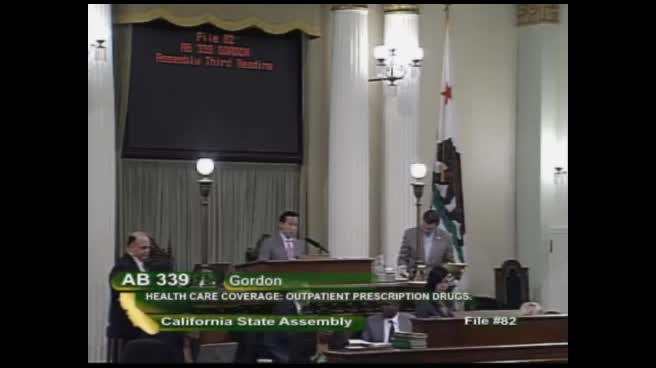


Bill Co-Author(s):
