ACR 76: Magna Carta: 800th anniversary.
- Session Year: 2015-2016
- House: Assembly
- Latest Version Date: 2015-07-01
This measure would commemorate the 800th anniversary of Magna Carta.
This measure would commemorate the 800th anniversary of Magna Carta.
This measure would commemorate the 800th anniversary of Magna Carta.
This measure would commemorate the 800th anniversary of Magna Carta.
WHEREAS, In response to the accumulation of grievances, heavy taxation, and unsuccessful wars, a group of rebellious barons forced King John of England to agree to limitations on royal power and submit to the rule of law by affixing his seal to a charter of liberties known to posterity as Magna Carta, Latin for the Great Charter, on June 15, 1215, at a meadow beside the river Thames called Runnymede, near Windsor; and
WHEREAS, While many of Magna Cartas 63 clauses relate to specific grievances and long-defunct feudal practices of little contemporary relevance, several of its provisions have had a lasting significance as precedents guaranteeing fundamental rights and liberties; and
WHEREAS, Clause 39 of Magna Carta provides, No freeman shall be taken, or imprisoned, or disseised, or outlawed, or exiled, or in any way harmed - nor will we go upon or send upon him - save by the lawful judgment of his peers or by the law of land; and
WHEREAS, Clause 40 of the Magna Carta provides, To none will we sell, to none deny or delay, right or justice; and
WHEREAS, Magna Carta embodies the principle that no person, and no government, is above the law; and
WHEREAS, The phrase due process of law first appeared as a substitute for Magna Cartas phrase law of the land in a 1354 statute of King Edward III that restated Magna Cartas guarantee of liberty of the subject and, therefore, Magna Carta created a precedent in guaranteeing due process of law that was later embodied in the Fifth and Fourteenth Amendments to the United States Constitution, the sources of key constitutional liberties for Americans; and
WHEREAS, Other clauses of Magna Carta state important principles, such as the right to impartial and competent judges, reasonable taxes, courts held in fixed places, fixed weights and measures, criminal penalties that are proportionate to the seriousness of the crime, and limitations on taking private property for public use; and
WHEREAS, King John later repudiated Magna Carta, and a civil war followed, but it was reissued, with revisions, numerous times by subsequent monarchs, and though many provisions fell into disuse or were superseded by subsequent legislation, Magna Carta remains as an inspirational precedent for the proposition that government power is not absolute and that the people possess fundamental rights which government cannot violate; and
WHEREAS, Magna Carta is an early milestone along the path toward freedom and constitutional government, followed by the development of Parliament in the 1260s, the 1606 First Charter of Virginia, the 1620 Mayflower Compact and other colonial charters, the 1628 Petition of Right, the 1679 Habeas Corpus Act, and 1689 English Bill of Rights, the 1776 American Declaration of Independence, the 1787 United States Constitution, the 1789 United States Bill of Rights, and the 1948 United Nations Universal Declaration of Human Rights; and
WHEREAS, In a History of the English-Speaking Peoples, Winston Churchill summarized Magna Cartas achievement, stating, In place of the Kings arbitrary despotism, they proposed, not the withering anarchy of feudal separatism, but a system of checks and balances which would accord the monarchy its necessary strength, but would prevent its perversion by a tyrant or a fool. The leaders of the barons in 1215 groped in the dim light towards a fundamental principle. Government must henceforth mean something more than the arbitrary rule of any man, and custom and the law must stand even above the king. It was this idea, perhaps only half understood, that gave unity and force to the barons opposition and made the Charter which they now demanded imperishable; and
WHEREAS, In his third inaugural address, delivered on January 20, 1941, as continental Europe groaned under the yoke of Nazi tyranny, President Franklin D. Roosevelt said, Democracy is not dying. ... The democratic aspiration is no mere recent phase in human history. It is human history. It permeated the ancient life of early peoples. It blazed anew in the middle ages. It was written in Magna [Carta]. ... Its vitality was written into our own Mayflower Compact, into the Declaration of Independence, into the Constitution of the United States, into the Gettysburg Address; and
WHEREAS, In too many parts of the world, the right to jury trial, habeas corpus, the rule of law, fair legal procedures, reasonable taxation, and the proposition that no government is above the law, principles either enshrined in or foreshadowed by Magna Carta, remain goals yet to be attained, rather than a legacy to be celebrated; and
WHEREAS, For as long as people celebrate freedom under law, Magna Carta will remain an inspiring example of a peoples ability to resist tyranny and arbitrary government and will remain the Great Charter of liberties; now, therefore, be it
Resolved by the Assembly of the State of California, the Senate thereof concurring, That the 800th anniversary of Magna Carta hereby be commemorated and the residents of the State of California be encouraged to observe this important milestone in the history of freedom and development of modern constitutional government; and be it further
Resolved by the Assembly of the State of California, the Senate thereof concurring, That the Chief Clerk of the Assembly transmit copies of this resolution to the author for appropriate distribution.
|
Date
|
Status
|
|---|---|
| May 19, 2015 | Introduced. To print. |
| May 20, 2015 | From printer. |
| May 28, 2015 | Referred to Com. on RLS. |
| Jun 4, 2015 | From committee: Be adopted. Ordered to Third Reading. (Ayes 10. Noes 0.) (June 4). |
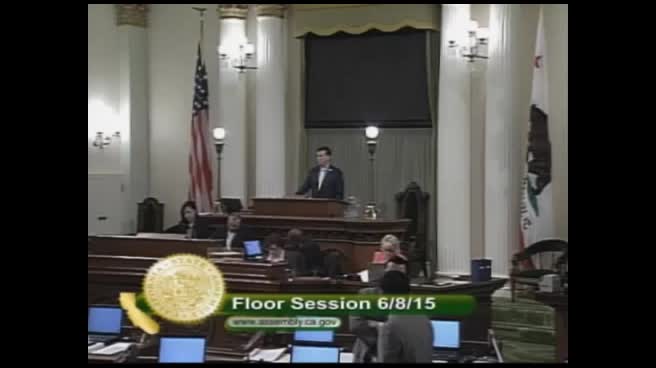
| Jun 8, 2015 | Amended, adopted, and to Senate. |
| Jun 8, 2015 | Amended, adopted, and to Senate. (Page 1944.) |
| Jun 9, 2015 | In Senate. To Com. on RLS. |
| Jun 18, 2015 | From committee: Ordered to third reading. |
| Jun 25, 2015 | Adopted and to Assembly. |
| Jun 25, 2015 | Adopted and to Assembly. (Ayes 38. Noes 0. Page 1617.) |
| Jun 25, 2015 | In Assembly. Ordered to Engrossing and Enrolling. |
| Jul 1, 2015 | Chaptered by Secretary of State - Res. Chapter 88, Statutes of 2015. |
| Jul 1, 2015 | Enrolled and filed with the Secretary of State at 4 p.m. |
|
Date
|
Description
|
Location
|
Votes
|
|
|---|---|---|---|---|
| Jun 25, 2015 | Assembly 3rd Reading ACR76 Jones By Hall | Senate Floor |
Passed |
|
| Jun 4, 2015 | Be adopted. To third reading. | Assembly Standing Committee on Rules |
Passed |
This list shows positions taken on this bill by organizations on the date displayed, which is linked to the original source.
Positions by individuals are not included.
ACR 76
Page 2
|
Office of Senate Floor Analyses (916) 651-1520 Fax: (916) 327-4478 |
THIRD READING
Bill No: ACR 76
Amended: 6/8/15 in Assembly
ASSEMBLY FLOOR: Read and adopted, 6/8/15
SUBJECT: Magna Carta: 800th anniversary
DIGEST: This resolution commemorates the 800th anniversary of Magna Carta.
ANALYSIS: This resolution makes the following legislative findings:
In response to the accumulation of grievances, heavy taxation, and unsuccessful wars, a group of rebellious barons forced King John of England to agree to limitations on royal power and submit to the rule of law by affixing his seal to a charter of liberties known to posterity as Magna Carta, Latin for the Great Charter, on June 15, 1215, at a meadow beside the river Thames called Runnymede, near Windsor.
Magna Carta is an early milestone along the path toward freedom and constitutional government, followed by the development of Parliament in the 1260s, the 1606 First Charter of Virginia, the 1620 Mayflower Compact and other colonial charters, the 1628 Petition of Rights, the 1679 Habeas Corpus Act, and 1689 English Bill of Rights, the 1776 American Declaration of Independence, the 1787 United States Constitution, the 1789 United States Bill of Rights, and the 1948 United Nations' Universal Declaration of Human Rights.
In too many parts of the world, the right to jury trial, habeas corpus, the rule of law, fair legal procedures, reasonable taxation, and the proposition that no government is above the law, principles either enshrined or foreshadowed by Magna Carta, remain goals yet to be attained.
For as long as people celebrate freedom under law, Magna Carta will remain an inspiring example of a people's ability to resist tyranny and arbitrary government and will remain "the Great Charter" of liberties.
This resolution commemorates the 800th anniversary of Magna Carta and encourages the residents of California to observe this important milestone in the history of freedom and development of modern constitutional government.
FISCAL EFFECT: Appropriation: No Fiscal Com.: No Local: No
None received
OPPOSITION: (Verified 6/15/15)
None received
Prepared by: Melissa Ward / SFA / (916) 651-1520
6/15/15 14:19:22
**** END ****
ACR 76
Page 1
ASSEMBLY THIRD READING
ACR 76
(Jones)
As Introduced May 19, 2015
Majority vote
Committee |
Votes |
Ayes |
Noes |
Rules |
10-0 |
Gordon, Chang, Campos, Cooley, Dodd, Jones, Mayes, Rodriguez, Waldron, Wood |
|
SUMMARY: Commemorates the 800th anniversary of the Magna Carta. Specifically, this resolution makes the following legislative findings:
In response to the accumulation of grievances, heavy taxation, and unsuccessful wars, a group of rebellious barons forced King John of England to agree to limitations on royal power and submit to the rule of law by affixing his seal to a charter of liberties known to posterity as Magna Carta, Latin for the Great Charter, on June 15, 1215, at a meadow beside the river Thames called Runnymede, near Windsor.
Magna Carta is an early milestone along the path toward freedom and constitutional government, followed by the development of Parliament in the 1260s, the 1606 First Charter of Virginia, the 1620 Mayflower Compact and other colonial charters, the 1628 Petition of Rights, the 1679 Habeas Corpus Act, and 1689 English Bill of Rights, the 1776 American Declaration of Independence, the 1787 United States Constitution, the 1789 United States Bill of Rights, and the 1948 United Nations' Universal Declaration of Human Rights.
In too many parts of the world, the right to jury trial, habeas corpus, the rule of law, fair legal procedures, reasonable taxation, and the proposition that no government is above the law, principles either enshrined or foreshadowed by Magna Carta, remain goals yet to be attained.
For as long as people celebrate freedom under law, Magna Carta will remain an inspiring example of a people's ability to resist tyranny and arbitrary government and will remain "the Great Charter" of liberties.
FISCAL EFFECT: None
Analysis Prepared by: Nicole Willis / RLS. / (916) 319-2800 FN: 0000914
ACR 76
Page 1
Date of Hearing: June 4, 2015
ASSEMBLY COMMITTEE ON RULES
Richard Gordon, Chair
ACR 76 (
Jones) – As Introduced May 19, 2015
SUBJECT: Magna Carta: 800th anniversary.
SUMMARY: Commemorates the 800th anniversary of the Magna Carta. Specifically, this bill: makes the following legislative findings:
In response to the accumulation of grievances, heavy taxation, and unsuccessful wars, a group of rebellious barons forced King John of England to agree to limitations on royal power and submit to the rule of law by affixing his seal to a charter of liberties known to posterity as Magna Carta, Latin for the Great Charter, on June 15, 1215, at a meadow beside the river Thames called Runnymede, near Windsor.
Magna Carta is an early milestone along the path toward freedom and constitutional government, followed by the development of Parliament in the 1260s, the 1606 First Charter of Virginia, the 1620 Mayflower Compact and other colonial charters, the 1628 Petition of Rights, the 1679 Habeas Corpus Act, and 1689 English Bill of Rights, the 1776 American Declaration of Independence, the 1787 United States Constitution, the 1789 United States Bill of Rights, and the 1948 United Nations' Universal Declaration of Human Rights.
In too many parts of the world, the right to jury trial, habeas corpus, the rule of law, fair legal procedures, reasonable taxation, and the proposition that no government is above the law, principles either enshrined or foreshadowed by Magna Carta, remain goals yet to be attained.
For as long as people celebrate freedom under law, Magna Carta will remain an inspiring example of a people's ability to resist tyranny and arbitrary government and will remain "the Great Charter" of liberties.
FISCAL EFFECT: None
REGISTERED SUPPORT / OPPOSITION:
Support
None on file
Opposition
None on file
Analysis Prepared by: Nicole Willis / RLS. / (916) 319-2800
Discussed in Hearing
View Older Hearings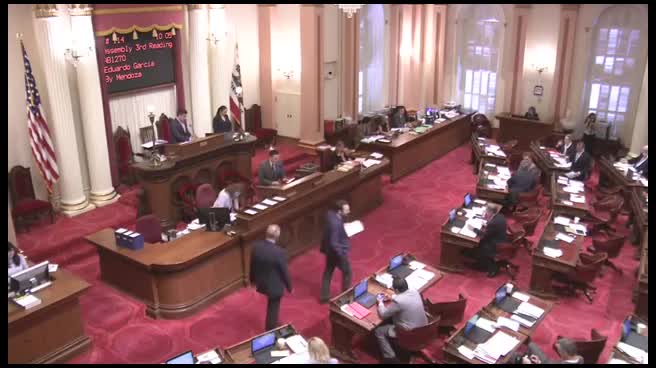
Bill Author

Bill Co-Author(s):