ACR 219: Second Chances Month.
- Session Year: 2017-2018
- House:
- Latest Version Date: 2018-06-26
This measure would designate June 2018 as Second Chances Month in California, highlighting existing services and events to support reentry.
This measure would designate June 2018 as Second Chances Month in California, highlighting existing services and events to support reentry.
This measure would designate June 2018 as Second Chances Month in California, highlighting existing services and events to support reentry.
WHEREAS, Mass incarceration and failed criminal justice policies have emphasized incarceration over rehabilitation and prevention for years, resulting in as many as one in four Californians having a criminal record; and
WHEREAS, After completing a jail or prison sentence and prescribed supervision requirements by the court, individuals face difficulties in successfully returning to their communities. Known as second prison, individuals who have served their time are treated as second-class citizens, barred from housing, employment, and the democratic process; and
WHEREAS, Reducing barriers contributes to public safety by reducing recidivism, increasing the economic well-being of entire communities, and allowing individuals the opportunity to seek a better life for themselves and their families and contribute to society in a positive and meaningful way; and
WHEREAS, Nationally, 80 percent of employers perform criminal background checks on prospective employees. However, some agencies that perform background checks report inaccurate information, causing employers to be less likely to hire system-impacted individuals. Sixty percent of formerly incarcerated individuals are unemployed a year after their release. Those who do find jobs are paid 40 percent less than those without criminal records; and
WHEREAS, Californias criminal justice reform efforts are moving from a system focused on punishment, exclusion, economic barriers, and lifetime bans to a system focused on prevention, rehabilitation, upward mobility, reintegration, and economic stability. The reform efforts recognize that these changes create economic and other opportunities for system-impacted individuals; and
WHEREAS, In 2014, California voters passed Proposition 47 at the November 4, 2014, statewide general election, which reduced certain low-level, nonviolent offenses to misdemeanors, and Assembly Bill 1115 of the 201718 Regular Session and Assembly Bill 651 of the 201314 Regular Session created a process for an individual to remove felony convictions from his or her criminal record. Many system-impacted individuals are still not aware of this opportunity; and
WHEREAS, California continues to encourage enhanced collaboration between counties and law enforcement agencies, including district attorneys, public defenders, probation departments, and trial judges. The state recognizes that a system for identifying eligible Proposition 47 applicants is essential to enhancing the link between record correction and employment opportunities, creating an accurate and efficient background check process, and increasing access to mental health treatment, substance abuse treatment, health services, supportive housing, and support services for the formerly incarcerated; now, therefore, be it
Resolved by the Assembly of the State of California, the Senate thereof concurring, That the Legislature acknowledges and commends the following organization for its efforts in supporting our system-impacted community: Californians for Safety and Justice; and be it further
Resolved, That the Legislature designates June 2018 as Second Chances Month in California, highlighting existing services and events to support reentry, such as access to free RAP sheets, employment support, fair chance hiring, and the Summer of Second Chances to be held during the summer of 2018; and be it further
Resolved, That the Chief Clerk of the Assembly transmit copies of this resolution to the author for appropriate distribution.
|
Date
|
Status
|
|---|---|
| Jun 26, 2018 | Chaptered by Secretary of State - Res. Chapter 107, Statutes of 2018. |
| Jun 26, 2018 | Enrolled and filed with the Secretary of State at 11:30 a.m. |
| Jun 21, 2018 | In Assembly. Ordered to Engrossing and Enrolling. |
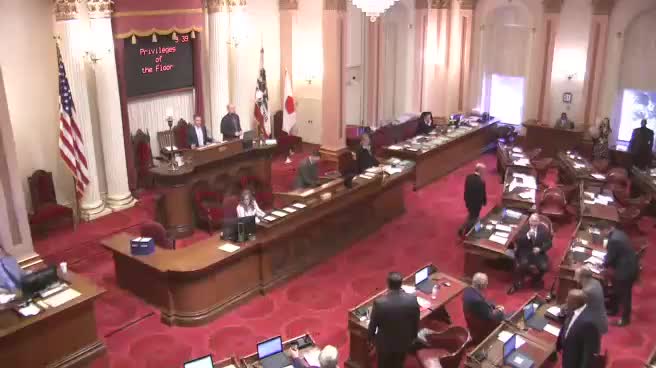
| Jun 21, 2018 | Adopted and to Assembly. |
| May 23, 2018 | From committee: Ordered to third reading. |
| May 14, 2018 | In Senate. To Com. on RLS. |
| May 10, 2018 | Coauthors revised. |
| May 8, 2018 | From committee: Be adopted. Ordered to Third Reading. (Ayes 5. Noes 0.) (May 8). |
| Apr 19, 2018 | Referred to Com. on PUB. S. |
| Apr 13, 2018 | From printer. |
| Apr 12, 2018 | Introduced. To print. |
|
Date
|
Description
|
Location
|
Votes
|
|
|---|---|---|---|---|
| Jun 21, 2018 | Assembly 3rd Reading ACR219 Jones-Sawyer et al. By Skinner | Senate Floor |
Passed |
|
| May 8, 2018 | Be adopted. To third reading. | Assembly Standing Committee on Public Safety |
Passed |
This list shows positions taken on this bill by organizations on the date displayed, which is linked to the original source.
Positions by individuals are not included.
|
Organization
|
Position
|
Date
|
|---|---|---|
| #cut50 | ** Support | May 24, 2018 |
| Building Opportunities for Self-Sufficiency | ** Support | May 24, 2018 |
| Californians for Safety and Justice | ** Support | May 24, 2018 |
| Californians United for a Responsible Budget | ** Support | May 24, 2018 |
| East Bay Community Law Center | ** Support | May 24, 2018 |
| Homie Up | ** Support | May 7, 2018 |
| Los Angeles Regional Reentry Partnership | ** Support | May 24, 2018 |
| Pillars of the Community | ** Support | May 24, 2018 |
| Restore Ink | ** Support | May 24, 2018 |
| ron finley project | ** Support | May 7, 2018 |
| Safe Return Project | ** Support | May 24, 2018 |
| San Joaquin Pride Center | ** Support | May 24, 2018 |
| Silicon Valley De-Bug | ** Support | May 24, 2018 |
| The Ron Finley Project | ** Support | May 24, 2018 |
Office of Senate Floor Analyses (916) 651-1520 Fax: (916) 327-4478 | ACR 219 |
THIRD READING
Bill No: ACR 219
Author: Jones-Sawyer (D), et al.
Introduced: 4/12/18
ASSEMBLY FLOOR: Read and adopted, 5/10/18
SOURCE: Californians for Safety and Justice
DIGEST:
This resolution designates June 2018 as Second Chances Month in California, highlighting existing services and events to support reentry.
ANALYSIS: This resolution makes the following legislative findings:
- Mass incarceration and failed criminal justice policies have emphasized incarceration over rehabilitation and prevention for years, resulting in as many as one in four Californians having a criminal record.
- After completing a jail or prison sentence and prescribed supervision requirements by the court, individuals face difficulties in successfully returning to their communities. Known as second prison, individuals who have served their time are treated as second-class citizens, barred from housing, employment, and the democratic process.
- Reducing barriers contributes to public safety by reducing recidivism, increasing the economic well-being of entire communities, and allowing individuals the opportunity to seek a better life for themselves and their families and contribute to society in a positive and meaningful way.
- California’s criminal justice reform efforts are moving from a system focused on punishment, exclusion, economic barriers, and lifetime bans to a system focused on prevention, rehabilitation, upward mobility, reintegration, and economic stability. The reform efforts recognize that these changes create economic and other opportunities for system-impacted individuals.
This resolution designates June 2018 as Second Chances Month in California, highlighting existing services and events to support reentry, such as access to free RAP sheets, employment support, fair chance hiring, and the Summer of Second Chances to be held during the summer of 2018.
FISCAL EFFECT: Appropriation: No Fiscal Com.: No Local: No
Californians for Safety and Justice (source)
#cut50
Building Opportunities for Self-Sufficiency
Californians United for a Responsible Budget
East Bay Community Law Center
Los Angeles Regional Reentry Partnership
Pillars of the Community
Restore INK
Safe Return Project
San Joaquin Pride Center
Silicon Valley De-Bug
The Ron Finley Project
OPPOSITION: (Verified 5/21/18)
None received
Prepared by: Karen Chow / SFA / (916) 651-1520
5/24/18 14:49:37
**** END ****
ASSEMBLY THIRD READING
ATR Bill Id:ACR 219
Author:(Jones-Sawyer)
As Introduced Ver:April 12, 2018
Majority vote
Committee | Votes | Ayes | Noes |
Public Safety | 5-0 | Jones-Sawyer, Carrillo, Kamlager-Dove, Quirk, Santiago |
|
SUMMARY: Designates June 2018 as Second Chances Month which highlights services and events to support reentry from incarceration. Specifically, this resolution:
- States that mass incarceration and failed criminal justice policies have emphasized incarceration over rehabilitation and prevention for years, resulting in as many as one in four Californians having a criminal record.
- States that after completing a jail or prison sentence and prescribed supervision requirements by the court, individuals face difficulties in successfully returning to their communities.
- States that reducing barriers to reentry contributes to public safety by reducing recidivism, increasing the economic well-being of entire communities, and allowing individuals the opportunity to seek a better life for themselves and their families and contribute to society in a positive and meaningful way.
- States that nationally 80% of employers perform criminal background checks on prospective employees. However, some agencies that perform background checks report inaccurate information, causing employers to be less likely to hire system-impacted individuals. Sixty percent of formerly incarcerated individuals are unemployed a year after their release. Those who do find jobs are paid 40% less than those without criminal records.
- States that California's criminal justice reform efforts are moving from a system focused on punishment, exclusion, economic barriers, and lifetime bans to a system focused on prevention, rehabilitation, upward mobility, reintegration, and economic stability. The reform efforts recognize that these changes create economic and other opportunities for system-impacted individuals.
- States that in 2014, California voters passed Proposition 47 which reduced certain low-level, nonviolent offenses to misdemeanors.
- States that AB 1115 (Jones-Sawyer), Chapter 207, Statutes of 2017, and AB 651 (Bradford), Chapter 787, Statutes of 2013, created a process for an individual to remove felony convictions from his or her criminal record. However, many system-impacted individuals are still not aware of this opportunity.
- States that California continues to encourage enhanced collaboration between counties and law enforcement agencies. The state recognizes that a system for identifying eligible Proposition 47 applicants is essential to enhancing the link between record correction and employment opportunities, creating an accurate and efficient background check process, and increasing access to mental health treatment, substance abuse treatment, health services, supportive housing, and support services for the formerly incarcerated.
- Resolves that the Legislature acknowledge and commend Californians for Safety and Justice for its efforts in supporting our system-impacted community.
- Resolves that the Legislature designate June 2018 as Second Chances Month in California, highlighting existing services and events to support reentry, such as access to free rap sheets, employment support, fair chance hiring, and the Summer of Second Chances to be held during the summer of 2018.
- Resolves that Chief Clerk of the Assembly transmit copies of this resolution to the author for appropriate distribution.
FISCAL EFFECT: Unknown. This resolution is keyed non-fiscal by the Legislative Counsel.
COMMENTS: According to the author, ''As Chair of the Public Safety Committee and The Select Committee on the Status of Boys and Men of Color, I am committed to making sure we are providing every tool and resource available to prevent recidivism and to give the formerly incarcerated a second chance. It is unfair to expect them to thrive in society upon their reentry, when they are faced with barriers that prevent them from being successful. If someone cannot get a good paying job the legal way, they will revert back to what they know would provide them the ability to feed their family.''
Analysis Prepared by: Sandy Uribe / PUB. S. / (916) 319-3744 FN: 0002814
Date of Hearing: May 8, 2018
Counsel: Sandra Uribe
ASSEMBLY COMMITTEE ON PUBLIC SAFETY
Reginald Byron Jones-Sawyer, Sr., Chair
ABPCA Bill Id:ACR 219
Author:(Jones-Sawyer) – As Introduced Ver:April 12, 2018
SUMMARY:
Designates June 2018 as Second Chances Month which highlights services and events to support reentry from incarceration. Specifically, this resolution:
- States that mass incarceration and failed criminal justice policies have emphasized incarceration over rehabilitation and prevention for years, resulting in as many as one in four Californians having a criminal record.
- States that after completing a jail or prison sentence and prescribed supervision requirements by the court, individuals face difficulties in successfully returning to their communities.
- States that reducing barriers to reentry contributes to public safety by reducing recidivism, increasing the economic well-being of entire communities, and allowing individuals the opportunity to seek a better life for themselves and their families and contribute to society in a positive and meaningful way.
- States that nationally 80 percent of employers perform criminal background checks on prospective employees. However, some agencies that perform background checks report inaccurate information, causing employers to be less likely to hire system-impacted individuals. Sixty percent of formerly incarcerated individuals are unemployed a year after their release. Those who do find jobs are paid 40 percent less than those without criminal records.
- States that California’s criminal justice reform efforts are moving from a system focused on punishment, exclusion, economic barriers, and lifetime bans to a system focused on prevention, rehabilitation, upward mobility, reintegration, and economic stability. The reform efforts recognize that these changes create economic and other opportunities for system-impacted individuals.
- States that in 2014, California voters passed Proposition 47 which reduced certain low-level, nonviolent offenses to misdemeanors.
- States that AB 1115 (Jones-Sawyer), of the 2017–18 Legislative Session, and AB 651 (Bradford), of the 2013–14 Legislative Session, created a process for an individual to remove felony convictions from his or her criminal record. However, many system-impacted individuals are still not aware of this opportunity.
- States that California continues to encourage enhanced collaboration between counties and law enforcement agencies. The state recognizes that a system for identifying eligible Proposition 47 applicants is essential to enhancing the link between record correction and employment opportunities, creating an accurate and efficient background check process, and increasing access to mental health treatment, substance abuse treatment, health services, supportive housing, and support services for the formerly incarcerated.
- Resolves that the Legislature acknowledge and commend Californians for Safety and Justice for its efforts in supporting our system-impacted community.
- Resolves that the Legislature designate June 2018 as Second Chances Month in California, highlighting existing services and events to support reentry, such as access to free RAP sheets, employment support, fair chance hiring, and the Summer of Second Chances to be held during the summer of 2018.
- Resolves that Chief Clerk of the Assembly transmit copies of this resolution to the author for appropriate distribution.
EXISTING LAW:
FISCAL EFFECT:
Unknown
COMMENTS:
- Author's Statement: According to the author, “As Chair of the Public Safety Committee and The Select Committee on the Status of Boys and Men of Color, I am committed to making sure we are providing every tool and resource available to prevent recidivism and to give the formerly incarcerated a second chance. It is unfair to expect them to thrive in society upon their reentry, when they are faced with barriers that prevent them from being successful. If someone cannot get a good paying job the legal way, they will revert back to what they know would provide them the ability to feed their family.”
- Argument in Support: According to Californians for Safety and Justice, the sponsor of this resolution, “A criminal conviction exposes individuals to numerous collateral consequences that will follow them long after the successful completion of their sentence. These collateral consequences serve as substantial, lifelong barriers to stability and safety for the 8 million Californians who are living with a criminal record. The Survey of California Victims and Populations Affected by Mental Health, Substance Issues, and Convictions found that 76 percent of individuals with a criminal conviction report instability in finding a job or housing, obtaining a license, paying for fines or fees, and having health issues.
“In 2014, California voters passed Proposition 47 at the November 4, 2014, statewide general election, which reduced certain low-level, nonviolent offenses to misdemeanors, and Assembly Bill 1115 of the 2017–18 Regular Session and Assembly Bill 651 of the 2013–14 Regular Session created a process for an individual to remove felony convictions from his or her criminal record. Many system-impacted individuals are still not aware of this opportunity.
“California continues to encourage enhanced collaboration between counties and law enforcement agencies, including district attorneys, public defenders, probation departments, and trial judges. The state recognizes that a system for identifying eligible Proposition 47 applicants is essential to enhancing the link between record correction and employment opportunities, creating an accurate and efficient background check process, and increasing access to mental health treatment, substance abuse treatment, health services, supportive housing, and support services for the formerly incarcerated.
“ACR 219 will acknowledge that many California voters, businesses, community leaders, labor unions, faith leaders, and community based organizations want smart safety solutions that highlight intervention, prevention, second chances, and fair chance employment over failed tough on crime policies. It is for that reason we strongly support ACR 219.” - Related Legislation:
- AB 1793 (Bonta) requires the court to automatically resentence, redesignate, or dismiss cannabis-related convictions. AB 1793 is pending in the Assembly Appropriations Committee.
- AB 2438 (Ting) requires automatic expungements of certain convictions, as specified. AB 2438 is pending in Assembly Appropriations Committee.
- SB 1298 (Skinner) clarifies that when a criminal conviction has been expunged or dismissed it shall not be released as part of a criminal records check, and provide that a person shall get a copy of his or her Criminal Offender Record Information before it is sent to the third party that requested it. SB 1298 is pending hearing in the Senate Appropriations Committee.
- AB 1793 (Bonta) requires the court to automatically resentence, redesignate, or dismiss cannabis-related convictions. AB 1793 is pending in the Assembly Appropriations Committee.
- Prior Legislation:
- AB 1115 (Jones-Sawyer), Chapter 207, Statutes of 2017, enables individuals sentenced to state prison for a felony, that if committed after enactment of the 2011 Realignment legislation would have been eligible for county jail sentencing, to obtain expungement relief.
- AB 651 (Bradford), Chapter 787, Statutes of 2013, authorizes a court, in its discretion and in the interests of justice, to grant expungement relief for a conviction of a petitioner sentenced to county jail pursuant to criminal justice realignment if specified conditions are satisfied.
- AB 1115 (Jones-Sawyer), Chapter 207, Statutes of 2017, enables individuals sentenced to state prison for a felony, that if committed after enactment of the 2011 Realignment legislation would have been eligible for county jail sentencing, to obtain expungement relief.
REGISTERED SUPPORT / OPPOSITION:
Support
Californians for Safety and Justice (Sponsor)
Building Opportunities for Self-Sufficiency
Californians United for a Responsible Budget
#cut50
East Bay Community Law Center
Homie UP
Los Angeles Regional Reentry Partnership
Pillars of the Community
Restore INK
Ron Finley Project
Safe Return Project
San Joaquin Pride Center
Silicon Valley De-Bug
Opposition
None
Analysis Prepared by:
Sandy Uribe / PUB. S. / (916) 319-3744
Discussed in Hearing
 9MIN
Senate Floor
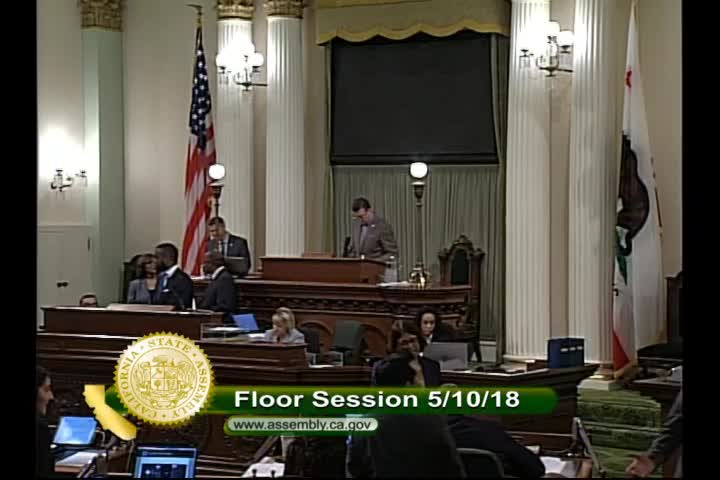 1MIN
Assembly Floor
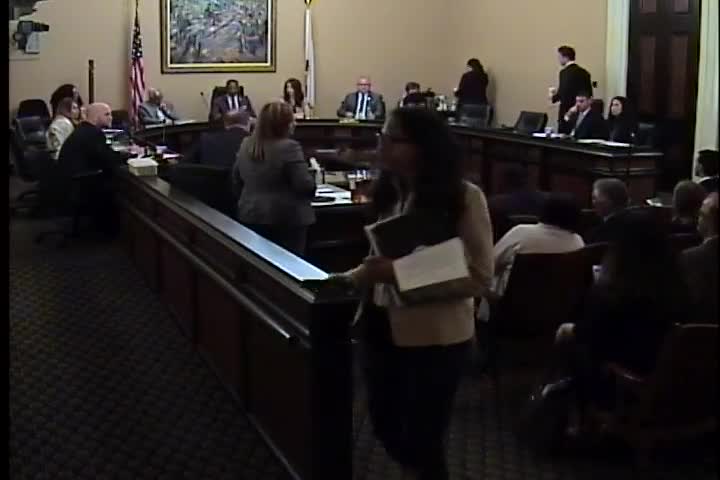 2MIN
Assembly Standing Committee on Public Safety
Bill Author

Bill Co-Author(s):