SB 1078: Language access.
- Session Year: 2023-2024
- House: Senate
- Latest Version Date: 2024-06-27
Current Status:
Failed
(2024-08-15: August 15 hearing: Held in committee and under submission.)
Introduced
In Committee
First Chamber
In Committee
Second Chamber
Enacted
Existing law, the Dymally-Alatorre Bilingual Services Act, requires every state agency directly involved in the furnishing of information or the rendering of services to the public where contact is made with a substantial number of non-English-speaking people to employ a sufficient number of qualified bilingual persons in public contact positions to ensure provision of information and services to the public in the language of the non-English-speaking person, except as specified.
This bill would establish the Office of Language Access, within the California Health and Human Services Agency, to ensure individuals with limited English proficiency have meaningful access to government programs and services. This bill would require the Office of Language Access to, among other things, lead the development, monitoring, and periodic updating of every Language Access Plan within the agency and coordinate with language access coordinators throughout the agency to implement each Language Access Plan. The bill would require the Office of Language Access to maintain an internet website containing specified information. information, including every current Language Action Plan and all corrective action plans. The bill would require the Office of Language Access, commencing November 1, 2026, and every other year thereafter, to submit a report to the Legislature and the relevant policy committees that contains specific information, including challenges encountered while implementing Language Access Plans, lessons learned, best practices, and metrics regarding individuals with limited English proficiency who use agency services.
This bill would require the California Health and Human Services Agency to develop a Language Access Plan Guidance Document to support its various departments and offices in the development of their Language Access Plans. The bill would require each department and office within the agency to develop a Language Access Plan, as specified. The bill would require the agency to develop a correction for a department or office that fails to implement and achieve the goals set forth in its Language Access Plan. This bill would also require the agency to make those corrective action plans publicly available on its internet website and submit annual compliance reports to the Office of Language Access regarding the progress made with Language Access Plans and corrective action plans.
The bill would require, commencing January 1, 2025, the agency to commence the Language Access Advisory Workgroup, to meet on a prescribed schedule, with specified membership. This bill would require the workgroup to share the progress of the various Language Access Plans, address relevant issues, and obtain community input.
Existing law, the Dymally-Alatorre Bilingual Services Act, requires every state agency directly involved in the furnishing of information or the rendering of services to the public where contact is made with a substantial number of non-English-speaking people to employ a sufficient number of qualified bilingual persons in public contact positions to ensure provision of information and services to the public in the language of the non-English-speaking person, except as specified.
This bill would establish the Office of Language Access, within the California Health and Human Services Agency, to ensure individuals with limited English proficiency have meaningful access to government programs and services. This bill would require the Office of Language Access to, among other things, lead the development, monitoring, and periodic updating of every Language Access Plan within the agency and coordinate with language access coordinators throughout the agency to implement each Language Access Plan. The bill would require the Office of Language Access to maintain an internet website containing specified information. The bill would require the Office of Language Access, commencing November 1, 2026, and every other year thereafter, to submit a report to the Legislature and the relevant policy committees that contains specific information, including challenges encountered while implementing Language Access Plans, lessons learned, best practices, and metrics regarding individuals with limited English proficiency who use agency services.
This bill would require the California Health and Human Services Agency to develop a Language Access Plan Guidance Document to support its various departments and offices in the development of their Language Access Plans. The bill would require each department and office within the agency to develop a Language Access Plan, as specified. The bill would require the agency to develop a correction for a department or office that fails to implement and achieve the goals set forth in its Language Access Plan. This bill would also require the agency to make those corrective action plans publicly available on its internet website and submit annual compliance reports to the Office of Language Access regarding the progress made with Language Access Plans and corrective action plans.
The bill would require, commencing January 1, 2025, the agency to commence the Language Access Advisory Workgroup, to meet on a prescribed schedule, with specified membership. This bill would require the workgroup to share the progress of the various Language Access Plans, address relevant issues, and obtain community input.
Existing law, the Dymally-Alatorre Bilingual Services Act, requires every state agency directly involved in the furnishing of information or the rendering of services to the public where contact is made with a substantial number of non-English-speaking people to employ a sufficient number of qualified bilingual persons in public contact positions to ensure provision of information and services to the public in the language of the non-English-speaking person, except as specified.
This bill would establish the Office of Language Access, within the California Health and Human Services Agency, to ensure individuals with limited English proficiency have meaningful access to government programs and services. This bill would require the Office of Language Access to, among other things, lead the development, monitoring, and periodic updating of every Language Access Plan within the agency and coordinate with language access coordinators throughout the agency to implement each Language Access Plan. The bill would require the Office of Language Access to maintain an internet website containing specified information. The bill would require the Office of Language Access, on or before November 1 of each year, commencing November 1, 2026, and every other year thereafter, to submit a report to the Legislature and the relevant policy committees that contains specific information, including challenges encountered while implementing Language Access Plans, lessons learned, best practices, and metrics regarding individuals with limited English proficiency who use agency services.
This bill would require the California Health and Human Services Agency to develop a Language Access Plan Guidance Document to support its various departments and offices in the development of their Language Access Plans. The bill would require each department and office within the agency to develop a Language Access Plan, as specified. The bill would require the agency to develop a correction for a department or office that fails to implement and achieve the goals set forth in its Language Access Plan. This bill would also require the agency to make those corrective action plans publicly available on its internet website and submit annual compliance reports to the Office of Language Access regarding the progress made with Language Access Plans and corrective action plans.
The bill would require, commencing January 1, 2025, the agency to commence the Language Access Advisory Workgroup, to meet at least quarterly, on a prescribed schedule, with specified membership. This bill would require the workgroup to share the progress of the various Language Access Plans, address relevant issues, and obtain community input.
The bill would authorize the agency to utilize funds from the Health Care Services Plan Fines and Penalties Fund to implement those provisions. By expanding the purposes for which continuously appropriated funds may be used, this bill would make an appropriation.Existing law, the Dymally-Alatorre Bilingual Services Act, requires every state agency directly involved in the furnishing of information or the rendering of services to the public where contact is made with a substantial number of non-English-speaking people to employ a sufficient number of qualified bilingual persons in public contact positions to ensure provision of information and services to the public in the language of the non-English-speaking person, except as specified.
This bill would state the intent of the Legislature to create an Office of Language Access to provide critical oversight, accountability, and coordination across various state agencies to ensure limited-English-proficient individuals have meaningful access to government programs and services, as specified.This bill would establish the Office of Language Access, within the California Health and Human Services Agency, to ensure individuals with limited English proficiency have meaningful access to government programs and services. This bill would require the Office of Language Access to, among other things, lead the development, monitoring, and periodic updating of every Language Access Plan within the agency and coordinate with language access coordinators throughout the agency to implement each Language Access Plan. The bill would require the Office of Language Access to maintain an internet website containing specified information. The bill would require the Office of Language Access, on or before November 1 of each year, to submit a report to the Legislature and the relevant policy committees that contains specific information, including challenges encountered while implementing Language Access Plans, lessons learned, best practices, and metrics regarding individuals with limited English proficiency who use agency services.
This bill would require the California Health and Human Services Agency to develop a Language Access Plan Guidance Document to support its various departments and offices in the development of their Language Access Plans. The bill would require each department and office within the agency to develop a Language Access Plan, as specified. The bill would require the agency to develop a correction for a department or office that fails to implement and achieve the goals set forth in its Language Access Plan. This bill would also require the agency to make those corrective action plans publicly available on its internet website and submit annual compliance reports to the Office of Language Access regarding the progress made with Language Access Plans and corrective action plans.
The bill would require, commencing January 1, 2025, the agency to commence the Language Access Advisory Workgroup, to meet at least quarterly, with specified membership. This bill would require the workgroup to share the progress of the various Language Access Plans, address relevant issues, and obtain community input.
The bill would authorize the agency to utilize funds from the Health Care Services Plan Fines and Penalties Fund to implement those provisions. By expanding the purposes for which continuously appropriated funds may be used, this bill would make an appropriation.
Existing law, the Dymally-Alatorre Bilingual Services Act, requires every state agency directly involved in the furnishing of information or the rendering of services to the public where contact is made with a substantial number of non-English-speaking people to employ a sufficient number of qualified bilingual persons in public contact positions to ensure provision of information and services to the public in the language of the non-English-speaking person, except as specified.
This bill would state the intent of the Legislature to create an Office of Language Access to provide critical oversight, accountability, and coordination across various state agencies to ensure limited-English-proficient individuals have meaningful access to government programs and services, as specified.
The Legislature finds and declares that this act aligns with Executive Order No. N-16-22, which committed to strengthening equity and language access, and the California Health and Human Services Agencys Language Access Plan Guidance.
SEC. 2.Division 115 (commencing with Section 135000) is added to the Health and Safety Code, to read:115.Language Access1.Office of Language Access135000.There is hereby established within the California Health and Human Services Agency the Office of Language Access to provide critical oversight, accountability, and coordination across various state departments and agencies to ensure individuals with limited English proficiency have meaningful access to government programs and services.
135001.The Office of Language Access shall do all of the following:
(a)Lead the development, monitoring, and periodic updating of Language Access Plans within the California Health and Human Services Agency, which shall include both of the following:
(1)A Language Access Plan for each department and office within the California Health and Human Services Agency as required by Section 135010.
(2)The California Health and Human Services Agencys Language Access Plan Guidance Document as required by Section 135010.
(b)Coordinate with the language access coordinators from the various departments and offices within the California Health and Human Services Agency to implement each departments and offices Language Access Plan.
(c)Increase the provision of language assistance services, including translation and interpreter services, through various options, which may include, but are not limited to, hiring bilingual staff and contracting with community-based organizations and third-party vendors.
(d)Ensure each Language Access Plan, as required pursuant to Part 2 (commencing with Section 135010), includes all of the following:
(1)Methods to identify individuals with limited English proficiency who require language assistance, including both of the following:
(A)A demographic assessment of the departments service population.
(B)An effective system of recording and utilizing spoken, sign, or written language preferences.
(2)Language assistance measures and information about the ways that language assistance will be provided, including all of the following:
(A)The types of services available, including both of the following:
(i)How a department or office will provide free sign language interpretation and oral interpretation services in a language, upon request, for all public contacts, including sign translation of vital documents pursuant to the California Health and Human Services Agencys Language Access Plan Guidance.
(ii)How the department or office will use the safe harbor provisions described in pages 41455 and 41463-64 in Volume 67 of the Federal Register to determine the languages that a vital document shall be translated into.
(B)How staff can obtain those services.
(C)How to respond to an individual with limited English proficiency, including via telephone, written communication, and inperson contact.
(D)Ensuring the competency of interpreters and translation services.
(3)(A)Training for staff to ensure they know about limited English proficiency policies and procedures.
(B)Ensuring staff who have contact with the public are trained to work effectively with inperson, video, and telephone interpreters.
(4)Notice for individuals with limited English proficiency containing the services that are available for an individual with limited English proficiency or, to the extent that a service area exists, who reside in its service area and are eligible for services.
(5)A mechanism to do both of the following:
(A)Monitor the implementation of the plan.
(B)(i)Update the plan every two years, which shall include whether new documents, programs, services, and activities shall be made accessible for individuals with limited English proficiency.
(ii)When reviewing a plan for updates, the Office of Language Access may also consider all of the following:
(I)Changed demographics.
(II)An analysis of internal and external data.
(III)Responses to new and unexpected language needs.
(IV)Complaints received and how they were resolved.
(V)Assessment and measures of client satisfaction.
(VI)Capacity building efforts regarding funding, staffing, and training.
(e)Collect data from the various departments and offices within the California Health and Human Services Agency to create the report required in Section 135003. This includes, but is not limited to, all of the information described in subdivision (b) of Section 135003.
(f)Ensure a document is translated if an individual with limited English proficiency submits a written request to the California Health and Human Services Agency, or any of its departments or offices, that the document be translated into the individuals preferred language.
(g)Investigate the number of language access complaints received by each department and office within the California Health and Human Services Agency, as well as by other relevant agencies that may receive a language access complaint regarding the California Health and Human Services Agency or a department or office within the California Health and Human Services Agency.
135002.The Office of Language Access shall maintain a language access internet website that contains all of the following:
(a)A publicly available list of translated California Health and Human Services Agency materials and forms.
(b)A directory of qualified interpreters, translators, and other similar resources within the California Health and Human Services Agency.
(c)Every current California Health and Human Services Agency Language Access Plan, every update to those plans, and all corrective action plans.
(d)Notices, instructions, and information for the public regarding both of the following:
(1)An individuals language access rights.
(2)How to submit a complaint if a department or office within the California Health and Human Services Agency has failed to provide language services, which may include, but is not limited to, filing a complaint with any of the following:
(A)A managed care plan.
(B)A health care provider.
(C)The California Health and Human Services Agency.
(D)The State Department of Health Care Services.
(E)The Department of Managed Health Care.
(F)The Department of Insurance.
(G)The Civil Rights Department.
(H)The United States Department of Health and Human Services Office for Civil Rights.
135003.(a)Commencing November 1, 2026, and every other year thereafter, the Office of Language Access shall submit a report for the prior fiscal year to the Legislature and the relevant policy committees containing the information described in subdivision (b).
(b)The report shall provide information by fiscal year and, at a minimum, contain all of the following:
(1)Challenges encountered while implementing the various Language Access Plans.
(2)The Office of Language Access efforts to address the problems it encountered, if any.
(3)Lessons learned and best practices.
(4)The number and percentage of individuals with limited English proficiency who use each departments or offices services, listed by language other than English, in comparison to the estimated population with limited English proficiency who are eligible for the departments or offices services, including a description of the methodology or data collection system used to make this determination.
(5)The number of multilingual employees in public contact positions that includes all of the following for each individual:
(A)Job title.
(B)Qualifications for bilingual or multilingual capacity.
(C)Office location.
(D)The language or languages they speak in addition to English.
(6)The name and contact information for each language access coordinator.
(7)A list of ongoing employee development and training strategies to maintain well-trained multilingual employees and general staff, including a description of both of the following:
(A)Quality control protocols for multilingual employees.
(B)Language service protocols for individuals with limited English proficiency who are in crisis situations.
(8)A list of goals for the upcoming year and, except for the first year of the report, an assessment of each departments and offices success at meeting the prior years goals.
(9)The number of translation requests received and provided, the languages used to translate materials, and which materials were translated and completed during the prior fiscal year.
(10)The number of interpretation requests received and the number of interpretation services provided, by language, including services provided in person, by video, and via telephone, for services provided by department and office staff, as well as by contracted vendors.
(11)The number of language access complaints received by each department or office within the California Health and Human Services Agency, or other relevant agency that may receive a language access complaint, including, but not limited to, the Civil Rights Department and the United States Department of Health and Human Services Office for Civil Rights. This data shall include all of the following:
(A)The total number of complaints received.
(B)The number of complaints investigated.
(C)The number of complaints resolved.
(D)Summaries of the investigation results and resolution agreements.
(12)The number of staff, total dollar amount, and breakdown of annual expenditures, including services provided by vendors, that each department and office spent on language access services.
(c)The report shall be submitted in accordance with Section 9795 of the Government Code.
2.CALIFORNIA HEALTH AND HUMAN SERVICES AGENCY LANGUAGE ACCESS135010.(a)Each department and office within the California Health and Human Services Agency shall do both of the following:
(1)Develop a Language Access Plan as described in subdivision (d) of Section 135001.
(2)Delegate a coordinator to work with the Office of Language Access to achieve the purposes of this division.
(b)The California Health and Human Services Agency shall develop a Language Access Plan Guidance Document to support its various departments and offices in their development of a Language Access Plan pursuant to subdivision (a).
135011.The California Health and Human Services Agency shall do all of the following:
(a)Develop a corrective action plan for a department or office that fails to implement and achieve the goals set forth in its Language Access Plan. A corrective action plan shall include both of the following:
(1)A plan to address any deficiencies.
(2)Resolutions to improve language access.
(b)Make these corrective action plans publicly available on its internet website.(c)(b)Submit annual compliance reports to the Office of Language Access regarding the progress its departments and offices have made with their Language Access Plans and any corrective action plans.
135012.(a)(1)Commencing January 1, 2025, the California Health and Human Services Agency shall commence the Language Access Advisory Workgroup.
(2)The workgroup shall meet at least quarterly until January 1, 2027, annually until January 1, 2035, and as needed thereafter to share the progress of the various Language Access Plans, address relevant issues, and obtain community input.
(b)The workgroup shall be comprised of a minimum of five, but no more than ten, individuals who have limited English proficiency or who have direct experience working with individuals who have limited English proficiency.
(c)The California Health and Human Services Agency shall make a good faith effort to ensure the workgroup is diverse in the following ways:
(1)Workgroup members represent diverse language groups that are not represented in the five threshold languages.
(2)Workgroup members have diverse geographic representation.
The Legislature finds and declares that this act aligns with Executive Order No. N-16-22, which committed to strengthening equity and language access, and the California Health and Human Services Agencys Language Access Plan Guidance.
SEC. 2.Division 115 (commencing with Section 135000) is added to the Health and Safety Code, to read:115.Language Access1.Office of Language Access135000.There is hereby established within the California Health and Human Services Agency the Office of Language Access to provide critical oversight, accountability, and coordination across various state departments and agencies to ensure individuals with limited English proficiency have meaningful access to government programs and services.
135001.The Office of Language Access shall do all of the following:
(a)Lead the development, monitoring, and periodic updating of Language Access Plans within the California Health and Human Services Agency, which shall include all both of the following:
(1)A Language Access Plan for each department and office within the California Health and Human Services Agency as required by Section 135010.
(2)The California Health and Human Services Agencys Language Access Plan Guidance Document as required by Section 135010.
(b)Coordinate with the language access coordinators from the various departments and offices within the California Health and Human Services Agency to implement each departments and offices Language Access Plan.
(c)Increase the provision of language assistance services, including translation and interpreter services services, through various options, which may include, but are not limited to, hiring bilingual staff and contracting with community-based organizations and third-party vendors.
(d)Ensure each Language Access Plan, as required pursuant to Part 2 (commencing with Section 135010), includes all of the following:
(1)Methods to identify individuals with limited English proficiency who require language assistance, including both of the following:
(A)A demographic assessment of the departments service population.
(B)An effective system of recording and utilizing spoken, sign, or written language preferences.
(2)Language assistance measures and information about the ways that language assistance will be provided, including all of the following:
(A)The types of services available, including both of the following:
(i)How a department or office will provide free sign language interpretation and oral interpretation services in a language, upon request, for all public contacts, including sign translation of vital documents pursuant to the California Health and Human Services Agencys Language Access Plan Guidance.
(ii)How the department or office will use the safe harbor provisions described in pages 41455 and 41463-64 in Volume 67 of the Federal Register to determine the languages that a vital document shall be translated into.
(B)How staff can obtain those services.
(C)How to respond to an individual with limited English proficiency, including via telephone, written communications, communication, and inperson contacts. contact.
(D)Ensuring the competency of interpreters and translation services.
(3)(A)Training for staff to ensure they know about limited English proficiency policies and procedures.
(B)Ensuring staff who have contact with the public are trained to work effectively with inperson, video, and telephone interpreters.
(4)Notice for individuals with limited English proficiency containing the services that are available for an individual with limited English proficiency or, to the extent that a service area exists, who reside in its service area and are eligible for services.
(5)A mechanism to do both of the following:
(A)Monitor the implementation of the plan.
(B)(i)Update the plan every two years, which shall include whether new documents, programs, services, and activities shall be made accessible for individuals with limited English proficiency.
(ii)When reviewing a plan for updates, the Office of Language Access may also consider all of the following:
(I)Changed demographics.
(II)An analysis of internal and external data.
(III)Responses to new and unexpected language needs.
(IV)Complaints received and how they were resolved.
(V)Assessment and measures of client satisfaction.
(VI)Capacity building efforts regarding funding, staffing, and training.
(e)Collect data from the various departments and offices within the California Health and Human Services Agency to create the report required in Section 135003. This includes, but is not limited to, all of the information described in subdivision (b) of Section 135003.
(f)Ensure a document is translated if an individual with limited English proficiency submits a written request to the California Health and Human Services Agency, or any of its departments or offices, that a the document be translated into the individuals preferred language.
(g)Investigate the number of language access complaints received by each department and office within the California Health and Human Services Agency, as well as by other relevant agencies that may receive a language access complaint regarding the California Health and Human Services Agency or a department or office within the California Health and Human Services Agency.
135002.The Office of Language Access shall maintain a language access internet website that contains all of the following:
(a)A publicly available list of translated California Health and Human Services Agency materials and forms.
(b)A directory of qualified interpreters, translators, and other similar resources within the California Health and Human Services Agency.
(c)Every current California Health and Human Services Agency Language Access Plan, every update to those plans, and all corrective action plans.
(d)Notices, instructions, and information for the public regarding both of the following:
(1)An individuals language access rights.
(2)How to submit a complaint if a department or office within the California Health and Human Services Agency has failed to provide language services, which may include, but is not limited to, filing a complaint with any of the following:
(A)A managed care plan.
(B)A health care provider.
(C)The California Health and Human Services Agency.
(D)The State Department of Health Care Services.
(E)The Department of Managed Health Care.
(F)The Department of Insurance.
(G)The Civil Rights Department.
(H)The United States Department of Health and Human Services Office for Civil Rights.
135003.(a)Commencing November 1, 2026, and every other year thereafter, the Office of Language Access shall submit a report for the prior fiscal year to the Legislature and the relevant policy committees containing the information described in subdivision (b).
(b)The report shall provide information by fiscal year and, at a minimum, contain all of the following:
(1)Challenges encountered while implementing the various Language Access Plans.
(2)The Office of Language Access efforts to address the problems it encountered, if any.
(3)Lessons learned and best practices.
(4)The number and percentage of individuals with limited English proficiency who use each departments or offices services, listed by language other than English, in comparison to the estimated population with limited English proficiency who are eligible for the departments or offices services, including a description of the methodology or data collection system used to make this determination.
(5)The number of multilingual employees in public contact positions that includes all of the following for each individual:
(A)Job title.
(B)Qualifications for bilingual or multilingual capacity.
(C)Office location.
(D)The language or languages they speak in addition to English.
(6)The name and contact information for each language access coordinator.
(7)A list of ongoing employee development and training strategies to maintain well-trained multilingual employees and general staff, including a description of both of the following:
(A)Quality control protocols for multilingual employees.
(B)Language service protocols for individuals with limited English proficiency who are in crisis situations.
(8)A list of goals for the upcoming year and, except for the first year of the report, an assessment of each departments and offices success at meeting the prior years goals.
(9)The number of translation requests received and provided, the languages used to translate materials, and which materials were translated and completed during the prior fiscal year.
(10)The number of interpretation requests received and the number of interpretation services provided, by language, including services provided in person, by video, and via telephone, for services provided by department and office staff, as well as by contracted vendors.
(11)The number of language access complaints received by each department or office within the California Health and Human Services Agency, or other relevant agency that may receive a language access complaint, including, but not limited to, the Civil Rights Department and the United States Department of Health and Human Services Office for Civil Rights. This data shall include all of the following:
(A)The total number of complaints received.
(B)The number of complaints investigated.
(C)The number of complaints resolved.
(D)Summaries of the investigation results and resolution agreements.
(12)The number of staff, total dollar amount, and breakdown of annual expenditures, including services provided by vendors, that each department and office spent on language access services.
(c)The report shall be submitted in accordance with Section 9795 of the Government Code.
2.CALIFORNIA HEALTH AND HUMAN SERVICES AGENCY LANGUAGE ACCESS135010.(a)Each department and office within the California Health and Human Services Agency shall do both of the following:
(1)Develop a Language Access Plan as described in subdivision (d) of Section 135001.
(2)Delegate a coordinator to work with the Office of Language Access to achieve the purposes of this division.
(b)The California Health and Human Services Agency shall develop a Language Access Plan Guidance Document to support its various departments and offices in their development of a Language Access Plan pursuant to subdivision (a).
135011.The California Health and Human Services Agency shall do all of the following:
(a)Develop a corrective action plan for a department or office that fails to implement and achieve the goals set forth in its Language Access Plan. These A corrective action plans plan shall include both of the following:
(1)A plan to address any deficiencies.
(2)Resolutions to improve language access.
(b)Make these corrective action plans publicly available on its internet website.
(c)Submit annual compliance reports to the Office of Language Access regarding the progress its departments and offices have made with their Language Access Plans and any corrective action plans.
135012.(a)(1)Commencing January 1, 2025, the California Health and Human Services Agency shall commence the Language Access Advisory Workgroup.
(2)The workgroup shall meet at least quarterly until January 1, 2027, annually until January 1, 2035, and as needed thereafter to share the progress of the various Language Access Plans, address relevant issues, and obtain community input.
(b)The workgroup shall be comprised of a minimum of five, but no more than ten, individuals who have limited English proficiency or who have direct experience working with individuals who have limited English proficiency.
(c)The California Health and Human Services Agency shall make a good faith effort to ensure the workgroup is diverse in the following ways:
(1)Workgroup members represent diverse language groups that are not represented in the five threshold languages.
(2)Workgroup members have diverse geographic representation.
The Legislature finds and declares that this act aligns with Executive Order No. N-16-22, which committed to strengthening equity and language access, and the California Health and Human Service Services Agencys Language Access Plan Guidance.
SEC. 2.Division 115 (commencing with Section 135000) is added to the Health and Safety Code, to read:115.Language Access1.Office of Language Access135000.There is hereby established within the California Health and Human Services Agency the Office of Language Access to provide critical oversight, accountability, and coordination across various state departments and agencies to ensure individuals with limited English proficiency have meaningful access to government programs and services.
135001.The Office of Language Access shall do all of the following:
(a)Lead the development, monitoring, and periodic updating of Language Access Plans within the California Health and Human Services Agency, which shall include all of the following:
(1)A Language Access Plan for each department and office within the California Health and Human Services Agency as required by Section 135010.
(2)The California Health and Human Services Agencys Language Access Plan Guidance Document as required by Section 135010.
(b)Coordinate with and supervise the language access coordinators from the various departments and offices within the California Health and Human Services Agency to implement each departments and offices Language Access Plan.
(c)Increase the provision of language assistance services, including translation and interpreter services through various options, which may include, but are not limited to, hiring bilingual staff and contracting with community-based organizations and third-party vendors.
(d)Ensure each Language Access Plan, as required pursuant to Part 2 (commencing with Section 135010), includes all of the following:
(1)Methods to identify individuals with limited English proficiency who require language assistance, including both of the following:
(A)A demographic assessment of the departments service population.
(B)An effective system of recording and utilizing spoken, sign, or written language preferences.
(2)Language assistance measures and information about the ways that language assistance will be provided, including all of the following:
(A)The types of services available, including both of the following:
(i)How a department or office will provide free sign language interpretation and oral interpretation services in a language, upon request, for all public contacts, including sign translation of vital documents pursuant to the California Health and Human Services Agencys Language Access Plan Guidance.
(ii)How the department or office will use the safe harbor provisions described in pages 41455 and 41463-64 in Volume 67 of the Federal Register to determine the languages that a vital document shall be translated into.
(B)How staff can obtain those services.
(C)How to respond to an individual with limited English proficiency, including via telephone, written communications, and inperson contacts.
(D)Ensuring the competency of interpreters and translation services.
(3)(A)Training for staff to ensure they know about limited English proficiency policies and procedures.
(B)Ensuring staff who have contact with the public are trained to work effectively with inperson, video, and telephone interpreters.
(4)Notice for individuals with limited English proficiency containing the services that are available for an individual with limited English proficiency or, to the extent that a service area exists, who reside in its service area and are eligible for services.
(5)A mechanism to do both of the following:
(A)Monitor the implementation of the plan.
(B)(i)Update the plan every two years, which shall include determinations of both of the following:
(I)Whether whether new documents, programs, services, and activities shall be made accessible for individuals with limited English proficiency.
(II)Whether changes are required to services for the limited English proficiency public and employees.(ii)When reviewing a plan for updates, the Office of Language Access may also consider all of the following:
(I)Changed demographics.
(II)An analysis of internal and external data.
(III)Responses to new and unexpected language needs.
(IV)Complaints received and how they were resolved.
(V)Assessment and measures of client satisfaction.
(VI)Capacity building efforts regarding funding, staffing, and training.
(e)Collect data from the various departments and offices within the California Health and Human Services Agency to create the report required in Section 135003. This includes, but is not limited to, all of the information described in subdivision (b) of Section 135003.
(f)Ensure a document is translated if an individual with limited English proficiency submits a written request to the California Health and Human Services Agency, or any of its departments or offices, that a document be translated into the individuals preferred language.
(g)Investigate the number of language access complaints received by each department and office within the California Health and Human Services Agency, as well as by other relevant agencies that may receive a language access complaint. complaint regarding the California Health and Human Services Agency or a department or office within the California Health and Human Services Agency.
135002.The Office of Language Access shall maintain a language access internet website that contains all of the following:
(a)A publicly available list of translated California Health and Human Services Agency materials and forms.
(b)A directory of qualified interpreters, translators, and other similar resources. resources within the California Health and Human Services Agency.
(c)Every current California Health and Human Services Agency Language Access Plan, every update to those plans, and all corrective action plans.
(d)Notices, instructions, and information for the public regarding both of the following:
(1)An individuals language access rights.
(2)How to submit a complaint if a department or office within the California Health and Human Services Agency has failed to provide language services, which may include, but is not limited to, filing a complaint with any of the following:
(A)A managed care plan.
(B)A health care provider.
(C)The California Health and Human Services Agency.
(D)The State Department of Health Care Services.
(E)The Department of Managed Health Care.
(F)The Department of Insurance.
(G)The Civil Rights Department.
(H)The United States Department of Health and Human Services Office for Civil Rights.
135003.(a)On or before November 1 of each year, Commencing November 1, 2026, and every other year thereafter, the Office of Language Access shall submit a report for the prior fiscal year to the Legislature and the relevant policy committees containing the information described in subdivision (b).
(b)The report shall provide information by fiscal year and, at a minimum, contain all of the following:
(1)Challenges encountered while implementing the various Language Access Plans.
(2)The Office of Language Accesss Access efforts to address the problems it encountered, if any.
(3)Lessons learned and best practices.
(4)The number and percentage of individuals with limited English proficiency who use each departments or offices services, listed by language other than English, in comparison to the estimated population with limited English proficiency who are eligible for the departments or offices services, including a description of the methodology or data collection system used to make this determination.
(5)A roster The number of multilingual employees in public contact positions that includes all of the following for each individual:
(A)Job title.
(B)Qualifications for bilingual or multilingual capacity.
(C)Office location.
(D)The language or languages they speak in addition to English.
(6)The name and contact information for each language access coordinator.
(7)A list of ongoing employee development and training strategies to maintain well-trained multilingual employees and general staff, including a description of both of the following:
(A)Quality control protocols for multilingual employees.
(B)Language service protocols for individuals with limited English proficiency who are in crisis situations.
(8)A list of goals for the upcoming year and, except for the first year of the report, an assessment of each departments and offices success at meeting the prior years goals.
(9)The number of translation requests received and provided, the languages used to translate materials, and which materials were translated and completed during the prior fiscal year.
(10)The number of interpretation requests received and the number of interpretation services provided, by language, including services provided in person, by video, and telephone, for services provided by department and office staff, as well as by contracted vendors.
(11)The number of language access complaints received by each department or office within the California Health and Human Services Agency, or other relevant agency that may receive a language access complaint, including, but not limited to, the Civil Rights Department and the United States Department of Health and Human Services Office for Civil Rights. This data shall include all of the following:
(A)The total number of complaints received.
(B)The number of complaints investigated.
(C)The number of complaints resolved.
(D)Copies Summaries of the investigation results and resolution agreements.
(12)The number of staff, total dollar amount, and breakdown of annual expenditures, including services provided by vendors, that each department and office spent on language access services.
(c)The report shall be submitted in accordance with Section 9795 of the Government Code.
135004.The California Health and Human Services Agency may utilize funds from the Health Care Services Plan Fines and Penalties Fund to implement this part.2.CALIFORNIA HEALTH AND HUMAN SERVICES AGENCY LANGUAGE ACCESS 135010.(a)Each department and office within the California Health and Human Services Agency shall do both of the following:
(1)Develop a Language Access Plan as described in subdivision (d) of Section 135001.
(2)Delegate a coordinator to work with the Office of Language Access to achieve the purposes of this division.
(b)The California Health and Human Services Agency shall develop a Language Access Plan Guidance Document to support its various departments and offices in their development of a Language Access Plan pursuant to subdivision (a).
135011.The California Health and Human Services Agency shall do all of the following:
(a)Develop a corrective action plan for a department or office that fails to implement and achieve the goals set forth in its Language Access Plan. These corrective action plans shall include both of the following:
(1)A plan to address any deficiencies.
(2)Resolutions to improve language access.
(b)Make these corrective action plans publicly available on its internet website.
(c)Submit annual compliance reports to the Office of Language Access regarding the progress its departments and offices have made with their Language Access Plans and any corrective action plans.
135012.(a)(1)Commencing January 1, 2025, the California Health and Human Services Agency shall commence the Language Access Advisory Workgroup.
(2)The workgroup shall meet at least quarterly until January 1, 2027, annually until January 1, 2035, and as needed thereafter to share the progress of the various Language Access Plans, address relevant issues, and obtain community input.
(b)The workgroup shall be comprised of a minimum of five, but no more than ten, individuals who have limited English proficiency or who have direct experience working with individuals who have limited English proficiency.
(c)The California Health and Human Services Agency shall make a good faith effort to ensure the workgroup is diverse in the following ways:
(1)Workgroup members represent diverse language groups that are not represented in the five threshold languages.
(2)Workgroup members have diverse geographic representation.
135013.The California Health and Human Services Agency may utilize funds from the Health Care Services Plan Fines and Penalties Fund to implement this part.The Legislature finds and declares that this act aligns with Executive Order No. N-16-22, which committed to strengthening equity and language access, and the California Health and Human Service Agencys Language Access Plan Guidance.
SEC. 2.Division 115 (commencing with Section 135000) is added to the Health and Safety Code, to read:115.Language Access1.Office of Language Access135000.There is hereby established within the California Health and Human Services Agency the Office of Language Access to provide critical oversight, accountability, and coordination across various state departments and agencies to ensure individuals with limited English proficiency have meaningful access to government programs and services.
135001.The Office of Language Access shall do all of the following:
(a)Lead the development, monitoring, and periodic updating of Language Access Plans within the California Health and Human Services Agency, which shall include all of the following:
(1)A Language Access Plan for each department and office within the California Health and Human Services Agency as required by Section 135010.
(2)The California Health and Human Services Agencys Language Access Plan Guidance Document as required by Section 135010.
(b)Coordinate with and supervise the language access coordinators from the various departments and offices within the California Health and Human Services Agency to implement each departments and offices Language Access Plan.
(c)Increase the provision of language assistance services, including translation and interpreter services through various options, which may include, but are not limited to, hiring bilingual staff and contracting with community-based organizations and third-party vendors.
(d)Ensure each Language Access Plan, as required pursuant to Part 2 (commencing with Section 135010), includes all of the following:
(1)Methods to identify individuals with limited English proficiency who require language assistance, including both of the following:
(A)A demographic assessment of the departments service population.
(B)An effective system of recording and utilizing spoken, sign, or written language preferences.
(2)Language assistance measures and information about the ways that language assistance will be provided, including all of the following:
(A)The types of services available, including both of the following:
(i)How a department or office will provide free sign language interpretation and oral interpretation services in a language, upon request, for all public contacts, including sign translation of vital documents pursuant to the California Health and Human Services Agencys Language Access Plan Guidance.
(ii)How the department or office will use the safe harbor provisions described in pages 41455 and 41463-64 in Volume 67 of the Federal Register to determine the languages that a vital document shall be translated into.
(B)How staff can obtain those services.
(C)How to respond to an individual with limited English proficiency, including via telephone, written communications, and inperson contacts.
(D)Ensuring the competency of interpreters and translation services.
(3)(A)Training for staff to ensure they know about limited English proficiency policies and procedures.
(B)Ensuring staff who have contact with the public are trained to work effectively with inperson, video, and telephone interpreters.
(4)Notice for individuals with limited English proficiency containing the services that are available for an individual with limited English proficiency or, to the extent that a service area exists, who reside in its service area and are eligible for services.
(5)A mechanism to do both of the following:
(A)Monitor the implementation of the plan.
(B)(i)Update the plan every two years, which shall include determinations of both of the following:
(I)Whether new documents, programs, services, and activities shall be made accessible for individuals with limited English proficiency.
(II)Whether changes are required to services for the limited English proficiency public and employees.
(ii)When reviewing a plan for updates, the Office of Language Access may also consider all of the following:
(I)Changed demographics.
(II)An analysis of internal and external data.
(III)Responses to new and unexpected language needs.
(IV)Complaints received and how they were resolved.
(V)Assessment and measures of client satisfaction.
(VI)Capacity building efforts regarding funding, staffing, and training.
(e)Collect data from the various departments and offices within the California Health and Human Services Agency to create the report required in Section 135003. This includes, but is not limited to, all of the information described in subdivision (b) of Section 135003.
(f)Ensure a document is translated if an individual with limited English proficiency submits a written request to the California Health and Human Services Agency, or any of its departments or offices, that a document be translated into the individuals preferred language.
(g)Investigate the number of language access complaints received by each department and office within the California Health and Human Services Agency, as well as by other relevant agencies that may receive a language access complaint.
135002.The Office of Language Access shall maintain a language access internet website that contains all of the following:
(a)A publicly available list of translated California Health and Human Services Agency materials and forms.
(b)A directory of qualified interpreters, translators, and other similar resources.
(c)Every current California Health and Human Services Agency Language Access Plan, every update to those plans, and all corrective action plans.
(d)Notices, instructions, and information for the public regarding both of the following:
(1)An individuals language access rights.
(2)How to submit a complaint if a department or office within the California Health and Human Services Agency has failed to provide language services, which may include, but is not limited to, filing a complaint with any of the following:
(A)A managed care plan.
(B)A health care provider.
(C)The California Health and Human Services Agency.
(D)The State Department of Health Care Services.
(E)The Department of Managed Health Care.
(F)The Department of Insurance.
(G)The Civil Rights Department.
(H)The United States Department of Health and Human Services Office for Civil Rights.
135003.(a)On or before November 1 of each year, the Office of Language Access shall submit a report for the prior fiscal year to the Legislature and the relevant policy committees containing the information described in subdivision (b).
(b)The report shall provide information by fiscal year and, at a minimum, contain all of the following:
(1)Challenges encountered while implementing the various Language Access Plans.
(2)The Office of Language Accesss efforts to address the problems it encountered, if any.
(3)Lessons learned and best practices.
(4)The number and percentage of individuals with limited English proficiency who use each departments or offices services, listed by language other than English, in comparison to the population with limited English proficiency who are eligible for the departments or offices services, including a description of the methodology or data collection system used to make this determination.
(5)A roster of multilingual employees in public contact positions that includes all of the following for each individual:
(A)Job title.
(B)Qualifications for bilingual or multilingual capacity.
(C)Office location.
(D)The language or languages they speak in addition to English.
(6)The name and contact information for each language access coordinator.
(7)A list of ongoing employee development and training strategies to maintain well-trained multilingual employees and general staff, including a description of both of the following:
(A)Quality control protocols for multilingual employees.
(B)Language service protocols for individuals with limited English proficiency who are in crisis situations.
(8)A list of goals for the upcoming year and, except for the first year of the report, an assessment of each departments and offices success at meeting the prior years goals.
(9)The number of translation requests received and provided, the languages used to translate materials, and which materials were translated and completed during the prior fiscal year.
(10)The number of interpretation requests received and the number of interpretation services provided, by language, including services provided in person, by video, and telephone, for services provided by department and office staff, as well as by contracted vendors.
(11)The number of language access complaints received by each department or office within the California Health and Human Services Agency, or other relevant agency that may receive a language access complaint, including, but not limited to, the Civil Rights Department and the United States Department of Health and Human Services Office for Civil Rights. This data shall include all of the following:
(A)The total number of complaints received.
(B)The number of complaints investigated.
(C)The number of complaints resolved.
(D)Copies of the investigation results and resolution agreements.
(12)The number of staff, total dollar amount, and breakdown of annual expenditures, including services provided by vendors, that each department and office spent on language access services.
(c)The report shall be submitted in accordance with Section 9795 of the Government Code.
135004.The California Health and Human Services Agency may utilize funds from the Health Care Services Plan Fines and Penalties Fund to implement this part.
2.CALIFORNIA HEALTH AND HUMAN SERVICES AGENCY LANGUAGE ACCESS 135010.(a)Each department and office within the California Health and Human Services Agency shall do both of the following:
(1)Develop a Language Access Plan as described in subdivision (d) of Section 135001.
(2)Delegate a coordinator to work with the Office of Language Access to achieve the purposes of this division.
(b)The California Health and Human Services Agency shall develop a Language Access Plan Guidance Document to support its various departments and offices in their development of a Language Access Plan pursuant to subdivision (a).
135011.The California Health and Human Services Agency shall do all of the following:
(a)Develop a corrective action plan for a department or office that fails to implement and achieve the goals set forth in its Language Access Plan. These corrective action plans shall include both of the following:
(1)A plan to address any deficiencies.
(2)Resolutions to improve language access.
(b)Make these corrective action plans publicly available on its internet website.
(c)Submit annual compliance reports to the Office of Language Access regarding the progress its departments and offices have made with their Language Access Plans and any corrective action plans.
135012.(a)(1)Commencing January 1, 2025, the California Health and Human Services Agency shall commence the Language Access Advisory Workgroup.
(2)The workgroup shall meet at least quarterly to share the progress of the various Language Access Plans, address relevant issues, and obtain community input.
(b)The workgroup shall be comprised of a minimum of five, but no more than ten, individuals who have limited English proficiency or who have direct experience working with individuals who have limited English proficiency.
(c)The California Health and Human Services Agency shall make a good faith effort to ensure the workgroup is diverse in the following ways:
(1)Workgroup members represent diverse language groups that are not represented in the five threshold languages.
(2)Workgroup members have diverse geographic representation.
135013.The California Health and Human Services Agency may utilize funds from the Health Care Services Plan Fines and Penalties Fund to implement this part.
SECTION 1.It is the intent of the Legislature to create an Office of Language Access to provide critical oversight, accountability, and coordination across various state agencies to ensure limited-English-proficient individuals have meaningful access to government programs and services. It is the intent of the Legislature that the office will do both of the following:(a)Be responsible for leading the development, monitoring, and periodic updating of agency language access plans with effective policies to ensure meaningful access to their services.(b)Serve a central coordinating role for agencies language access coordinators with a focus on building a language services infrastructure to implement each agencys language access plans and increase the provision of language assistance services, including translation and interpreting services, of the agencies through a range of options, including hiring in-house bilingual staff and contracting with third-party vendors and community-based organizations.It is the intent of the Legislature to create an Office of Language Access to provide critical oversight, accountability, and coordination across various state agencies to ensure limited-English-proficient individuals have meaningful access to government programs and services. It is the intent of the Legislature that the office will do both of the following:
(a)Be responsible for leading the development, monitoring, and periodic updating of agency language access plans with effective policies to ensure meaningful access to their services.
(b)Serve a central coordinating role for agencies language access coordinators with a focus on building a language services infrastructure to implement each agencys language access plans and increase the provision of language assistance services, including translation and interpreting services, of the agencies through a range of options, including hiring in-house bilingual staff and contracting with third-party vendors and community-based organizations.
|
Date
|
Status
|
|---|---|
| Aug 15, 2024 | August 15 hearing: Held in committee and under submission. |
| Aug 7, 2024 | August 7 set for first hearing. Placed on suspense file. |
| Jun 27, 2024 | Read second time and amended. Re-referred to Com. on APPR. |
| Jun 26, 2024 | From committee: Do pass as amended and re-refer to Com. on APPR. (Ayes 4. Noes 0.) (June 25). |
| Jun 12, 2024 | From committee: Do pass and re-refer to Com. on HUM. S. (Ayes 16. Noes 0.) (June 11). Re-referred to Com. on HUM. S. |
| Jun 3, 2024 | Referred to Coms. on HEALTH and HUM. S. |
| May 24, 2024 | In Assembly. Read first time. Held at Desk. |
| May 23, 2024 | Read third time. Passed. (Ayes 36. Noes 0. Page 4191.) Ordered to the Assembly. |
| May 21, 2024 | Read second time. Ordered to third reading. |
| May 20, 2024 | Read third time and amended. |
| May 20, 2024 | Ordered to second reading. |
| May 16, 2024 | From committee: Do pass. (Ayes 7. Noes 0. Page 3970.) (May 16). |
| May 16, 2024 | Read second time. Ordered to third reading. |
| May 10, 2024 | Set for hearing May 16. |
| Apr 29, 2024 | April 29 hearing: Placed on APPR suspense file. |
| Apr 22, 2024 | Set for hearing April 29. |
| Apr 17, 2024 | Read second time and amended. Re-referred to Com. on APPR. |
| Apr 16, 2024 | From committee: Do pass as amended and re-refer to Com. on APPR. (Ayes 5. Noes 0. Page 3606.) (April 15). |
| Apr 11, 2024 | From committee: Do pass and re-refer to Com. on HUMAN S. (Ayes 11. Noes 0. Page 3561.) (April 10). Re-referred to Com. on HUMAN S. |
| Apr 5, 2024 | Set for hearing April 15 in HUMAN S. pending receipt. |
| Apr 4, 2024 | Set for hearing April 10. |
| Apr 3, 2024 | Re-referred to Coms. on HEALTH and HUMAN S. |
| Mar 19, 2024 | From committee with author's amendments. Read second time and amended. Re-referred to Com. on RLS. |
| Feb 21, 2024 | Referred to Com. on RLS. |
| Feb 13, 2024 | From printer. May be acted upon on or after March 14. |
| Feb 12, 2024 | Introduced. Read first time. To Com. on RLS. for assignment. To print. |
|
Date
|
Description
|
Location
|
Votes
|
|
|---|---|---|---|---|
| Jun 25, 2024 | Do pass as amended and be re-referred to the Committee on [Appropriations] | Assembly Standing Committee on Human Services |
Passed |
|
| Jun 11, 2024 | Do pass and be re-referred to the Committee on [Human Services] | Assembly Standing Committee on Health |
Passed |
|
| May 23, 2024 | Senate 3rd Reading SB1078 Min et al. | Senate Floor |
Passed |
|
| May 16, 2024 | Do pass | Senate Standing Committee on Appropriations |
Passed |
|
| Apr 29, 2024 | Placed on suspense file | Senate Standing Committee on Appropriations |
Passed |
|
| Apr 15, 2024 | Do pass as amended, but first amend, and re-refer to the Committee on [Appropriations] | Senate Standing Committee on Human Services |
Passed |
|
| Apr 10, 2024 | Do pass, but first be re-referred to the Committee on [Human Services] | Senate Standing Committee on Health |
Passed |
This list shows positions taken on this bill by organizations on the date displayed, which is linked to the original source.
Positions by individuals are not included.
|
Organization
|
Position
|
Date
|
|---|---|---|
| AANHPI Advocacy Coalition | * Support | Jun 11, 2024 |
| AAPI Equity Alliance | ** Support | |
| ACCESS California | ** Support | |
| Activist San Diego | * Support | Jun 25, 2024 |
| Afghan American Muslim Outreach | ** Support | |
| Alameda County | * Support | Apr 15, 2024 |
| Alameda Health Consortium | ** Support | |
| Almeda County | * Support | Apr 15, 2024 |
| APA Family Support Services | ** Support | |
| APLA Health | ** Support | |
| ARTogether | ** Support | |
| Asian American Drug Abuse Program, Inc. | ** Support | |
| Asian American Research Center on Health | * Support | Apr 15, 2024 |
| Asian Americans Advancing Justice, Southern California | * Support | Jun 25, 2024 |
| Asian Health Services | * Support | Jun 25, 2024 |
| Asian Law Alliance | ** Support | |
| Asian Pacific American Public Affairs | * Support | Jun 11, 2024 |
| Asian Pacific Community Counselling | * Support | Jun 11, 2024 |
| Asian Pacific Environmental Network | ** Support | |
| Asian Pacific Fund | ** Support | |
| Asian Pacific Fund | * Support | Jun 11, 2024 |
| Asian Pacific Institute on Gender-Based Violence | ** Support | |
| asian pacific islander forward movement | ** Support | |
| Asian Pacific Partners for Empowerment, Advocacy and Leadership | ** Support | |
| Asian Prisoner Support Community | ** Support | |
| Asian Resources, Inc | * Support | Jun 25, 2024 |
| Association of Asian Pacific Community Health Organizations | ** Support | |
| Association of Community Health Organization | * Support | Jun 25, 2024 |
| Black Alliance for Just Immigration | ** Support | |
| BPSOS Center for Community Advancement | ** Support | |
| Buen Vecino | ** Support | |
| Burma Refugee Families and Newcomers | ** Support | |
| California Association For Bilingual Education | ** Support | |
| California Healthy Nail Salon Collaborative | ** Support | |
| California Immigrant Policy Center | * Support | Jun 25, 2024 |
| California Pan Ethnic Health Network | * Support | Jun 11, 2024 |
| California Panagne Health Network | * Support | Jun 25, 2024 |
| California Physicians Alliance | ** Support | |
| California Primary Care Association | * Support | Jun 26, 2024 |
| California Rural Legal Assistance, Inc. | ** Support | |
| Center for Asian Americans in Action | * Support | Jun 25, 2024 |
| Center for Empowering Refugees and Immigrants | ** Support | |
| Centro Binacional Para El Desarrollo Indígena Oaxaqueño | ** Support | |
| Children Now | ** Support | |
| Chinese American Citizens Alliance, Oakland Lodge | ** Support | |
| Chinese for Affirmative Action | * Support | Jun 25, 2024 |
| City Of Oakland | * Support | Apr 15, 2024 |
| Clean Earth 4 Kids | * Support | Jun 25, 2024 |
| Coalition California Welfare Rights Organization | * Support | Apr 15, 2024 |
| Coalition for Humane Immigrant Rights | ** Support | |
| Contra Costa County | * Support | Apr 15, 2024 |
| Courage California | ** Support | |
| East Bay Asian Local Development Corporation | ** Support | |
| Eco Sustainability Peeps | * Support | Jun 25, 2024 |
| Embassy of the Republic of the Marshall Islands to the United States, Charles R. Paul, Ambassador | ** Support | |
| Empowering Pacific Islander Communities | ** Support | |
| Families in Good Health | ** Support | |
| Family Bridges | ** Support | |
| Fa’atasiga o Usos Movement | ** Support | |
| Filipino Advocates for Justice | ** Support | |
| Grandparents Acting Together | * Support | Jun 25, 2024 |
| Having Our Say Coalition | * Support | Jun 25, 2024 |
| Hayward, California | * Support | Apr 15, 2024 |
| Hayward, California | * Support | Apr 15, 2024 |
| Health Access California | * Support | Jun 25, 2024 |
| In Fact | * Support | Jun 25, 2024 |
| Instituto Familiar de la Raza | ** Support | |
| Integral Community Solutions Institute | ** Support | |
| Justice in Aging | * Support | Jun 11, 2024 |
| Korean American Coalition - Los Angeles | ** Support | |
| Korean Center of the East Bay | * Support | Jun 25, 2024 |
| Korean Community Center of East Bay | * Support | Jun 11, 2024 |
| Korean Community Center of the East Bay | * Support | Jun 11, 2024 |
| korean community services | ** Support | |
| Kutturan Chamoru Foundation | ** Support | |
| Lao Seri Association | ** Support | |
| Latino Coalition for a Healthy California | * Support | Jun 11, 2024 |
| LEAD Filipino | * Support | Jun 11, 2024 |
| Legal Aid Foundation of Los Angeles | ** Support | |
| Little Tokyo Service Center | * Support | Jun 25, 2024 |
| Los Angeles Language Justice Coalition | * Support | Jun 25, 2024 |
| Marshallese Youth of Orange County | ** Support | |
| Mental Health Association for Chinese Communities | * Support | Jun 11, 2024 |
| mental health associations for Chinese Community | * Support | Jun 11, 2024 |
| Merced Lao Family Community, Inc. | ** Support | |
| Mixteco Indigena Community Organizing Project | * Support | Jun 11, 2024 |
| MX ACC | * Support | Jun 25, 2024 |
| National Alliance on Mental Illness, Fresno | ** Support | |
| National Health Law Program | ** Support | |
| National Immigration Law Center | ** Support | |
| National Pacific Islander Education Network | ** Support | |
| Native Hawaiian and Pacific Islander Alliance | ** Support | |
| Native Hawaiian and Pacific Islander Data Policy Lab | ** Support | |
| Native Hawaiian Pacific Islander Data Policy Lab | * Support | Apr 15, 2024 |
| NCCA | * Support | Jun 25, 2024 |
| NICOS Chinese Health Coalition | ** Support | |
| North County Equity and Justice | * Support | Jun 25, 2024 |
| Oakland Asian Cultural Center | ** Support | |
| Oakland City Councilmember Janani Ramachandran | ** Support | |
| Oakland Vietnamese Chamber of Commerce | ** Support | |
| Oakland Vietnamese Chamber of Commerce | * Support | Jun 11, 2024 |
| Oasis Legal Services | ** Support | |
| OMID Multicultural Institute for Development | ** Support | |
| Orange County Asian and Pacific Islander Community Alliance | ** Support | |
| Orange County Asian Pacific Islander Alliance | * Support | Jun 25, 2024 |
| Orange County Herald Center | ** Support | |
| Otofa Inc | * Support | Jun 11, 2024 |
| Pacific Asian Counseling Services | ** Support | |
| Pacific Islander Collective | ** Support | |
| progressive Vietnamese American organization | * Support | Jun 11, 2024 |
| Racial and Ethnic Mental Health Disparities Coalition | ** Support | |
| RAMS, Inc. | * Support | Apr 15, 2024 |
| Regional Pacific Islander Task Force | * Support | Jun 25, 2024 |
| Richmond Area Multi Services RAMS | * Support | Apr 15, 2024 |
| Richmond Area Multi-Services | * Support | Jun 11, 2024 |
| Richmond Area Multi-Services, INC. | ** Support | |
| San Francisco Community Health Center | ** Support | |
| San Mateo County | * Support | Apr 15, 2024 |
| Solano County | * Support | Apr 15, 2024 |
| South Asian Mental Health Consortium | * Support | Apr 15, 2024 |
| South Asian Network | ** Support | |
| South Coast Chinese Cultural Center | ** Support | |
| Southeast Asia Resource Action Center | ** Support | |
| Southern California Pacific Islander Community Response Team | ** Support | |
| Southland Integrated Services Inc. | ** Support | |
| Special Service For Groups, Inc. | ** Support | |
| Taulama For Tongans | ** Support | |
| Thai Community Development Center | ** Support | |
| The Cambodian Family | ** Support | |
| The Fresno Center | ** Support | |
| The Wall las Memorias | ** Support | |
| Tongan American Youth Foundation | ** Support | |
| Tongan Community of Southern California | ** Support | |
| Vietnamese American Cancer Foundation | ** Support | |
| western center on law and poverty | * Support | Jun 25, 2024 |
Date of Hearing: August 7, 2024
ASSEMBLY COMMITTEE ON APPROPRIATIONS
Buffy Wicks, Chair
SBPCA Bill Id:SB 1078
Author:(Min) – As Amended Ver:June 27, 2024
Policy Committee: | Health | Vote: | 16 - 0 |
Human Services | 4 - 0 | ||
|
|
Urgency: No State Mandated Local Program: No Reimbursable: No
SUMMARY:
This bill establishes the Office of Language Access (OLA) within the California Health and Human Services Agency (CalHHS) to ensure individuals with limited English proficiency have meaningful access to government programs and services. The bill requires each department and office within CalHHS to develop a Language Access Plan (LAP), as specified, and requires CalHHS to develop a LAP Guidance Document the development of LAPs. The bill also requires OLA to maintain a website to provide language access information.
Specifically, this bill:
- Establishes the OLA within CalHHS to ensure individuals with limited English proficiency have meaningful access to government programs and services, and requires OLA to do the following, among other things:
- Lead the development, monitoring, and periodic updating of a LAP for each department and office within CalHHS.
- Develop CalHHS’s LAP Guidance Document.
- Coordinate with the language access coordinators from departments and offices within CalHHS to implement each LAP.
- Increase the provision of language assistance services.
- Ensure a document is translated if an individual with limited English proficiency submits a written request to the CHHS, or any of its departments or offices, that a document be translated into the individual’s preferred language.
- Ensure a document is translated if an individual with limited English proficiency submits a request to CalHHS, or any of its departments or offices, that the document be translated.
- Provide staff training on English proficiency policies and procedures.
- Ensure staff who have contact with the public are trained to work effectively with in-person, video, and telephone interpreters.
- Investigate anguage access complaints received by each department and office within CalHHS, as well as by other agencies that receive a language access complaint regarding CalHHS or one of its departments or offices.
- Maintain a language access website that contains a directory of qualified interpreters, translators, and other similar resources within CalHHS; every current CalHHS LAP, LAP update, and corrective action plan for a LAP; and information regarding language access rights and how to submit a complaint, among other specified items.
- Commencing November 1, 2026, and every other year thereafter, submit a report containing specified information to the Legislature and relevant policy committees.
- Requires each department and office within CalHHS to develop a LAP and delegate a coordinator to work with OLA to achieve the purposes of this division.
- Requires CalHHS to do the following:
- Develop a LAP Guidance Document to support each of its departments and offices in developing a LAP.
- Develop a corrective action plan for a department or office that fails to implement and achieve the goals set forth in its LAP, as specified.
- Commencing January 1, 2025, convene the Language Access Advisory Workgroup, as specified, to share the progress of the various LAPs, address relevant issues, and obtain community input.
FISCAL EFFECT:
- CalHHS will incur state operations costs for staff for OLA. CalHHS estimates total state operations costs for the current budget year are at least $14,260,000, and $14,088,000 ongoing (General Fund), as follows:
- OLA will require at least 33 positions, including an executive, various staff services managers and supervisors, program analysts, a research data specialist, an information technology specialist, and others. Staffing costs account for over $6 million per year.
- Contract costs to cover translation, language interpretation, and web content translation services requiring third-party vendor contracts to support the departments and offices, amounting to approximately $8,000,000 annually.
- The Civil Rights Department (CRD) expects this bill will lead to additional language access complaints being filed with CRD. According to CRD, language-access complaints against public agencies are particularly resource-intensive; therefore, CRD estimates costs potentially in the hundreds of thousands of dollars annually to investigate, mediate, and prosecute additional complaints related to language access, as well as for state administration to provide data on language access complaints to CalHHS (General Fund).
According to the Legislative Analyst’s Office, the General Fund faces a structural deficit in the tens of billions of dollars over the next several fiscal years.
COMMENTS:
- Purpose. This bill is sponsored by Asian Health Services, Asian Resources, Inc., Center for Asian Americans in Action, Orange County Asian and Pacific Islander Community Alliance, and Regional Pacific Islander Taskforce. According to the author:
California is home to the one the most diverse populations in the country, with residents who speak over 200 languages, variants, and dialects, and the largest limited English proficiency (LEP) population in the United States. For the nearly 6.4 million Californians with LEP, language barriers pose a significant challenge to their ability to have meaningful access to quality health care coverage and services. Inadequate language services have resulted in longer hospital stays and higher likelihood of hospital readmissions for LEP patients, along with difficulties understanding instructions for post-discharge care, medication and follow-up. These avoidable clinical costs can be significantly reduced with improved interpreting and translation services. The Office of Language Access would serve as a central hub for building multilingual capacity within the state’s healthcare delivery system and ensure LEP individuals have access to government services. Not only will SB 1078 close an important gap for those seeking a broad spectrum of health services, it will bolster California’s ability to meet statutory language requirements that apply to Medi-Cal health plans.
- Background. Existing state law, the Dymally-Alatorre Bilingual Services Act, requires every state department involved in providing information or services to the public to employ a sufficient number of qualified bilingual staff in public contact positions to ensure information and services are provided in the language of the non- or limited-English speaking person if 5% of contact with the public is made with non- or limited-English speaking people.
In 2021, Governor Newsom proposed a new Equity-Centered Programs initiative that included a Language Access Policy Framework with an accompanying request of budget resources to support two limited-term positions to develop and implement an agency-wide language access policy and a protocol framework that considers numerous aspects of language access. The policy framework built on an internal Language Access Work Group that had been working to develop a language access policy and operations framework to improve language assistance services by CalHHS departments. In September 2022, the Governor also ordered CalHHS to develop recommendations to improve language and communications access to state government services and programs. In May 2023, CalHHS released a memo to department directors outlining a policy based on the work of the initiative and the work group and requiring the departments to submit LAPs to CalHHS by December 1, 2023, and review and update the plans as necessary every two years. Departments under CalHHS have posted LAPs to their websites. The CalHHS memo also stated the work group would issue guidance to departments to support the development of LAPs. CalHHS received a one-time $20 million investment for improving language access, and indicates the funds are supporting the current development and implementation of a CalHHS Language Access Policy and are not available to support the implementation of this bill.
Analysis Prepared by: Allegra Kim / APPR. / (916) 319-2081
Date of Hearing: June 25, 2024
ASSEMBLY COMMITTEE ON HUMAN SERVICES
Alex Lee, Chair
SBPCA Bill Id:SB 1078
Author:(Min) – As Amended Ver:May 20, 2024
SENATE VOTE: 36-0
SUBJECT: Language access
SUMMARY: Establishes the Office of Language Access (OLA) within the California Health and Human Services Agency (CalHHS) to lead the development, monitoring, and updating of department Language Access Plans and establish a Language Access Advisory Workgroup. Specifically, this bill:
- Establishes the OLA within CalHHS to provide critical oversight, accountability, and coordination across various state departments and agencies to ensure individuals with limited English proficiency (LEP) have meaningful access to government programs and services.
- Requires the OLA to do all of the following:
- Lead the development, monitoring, and periodic updating of Language Access Plans within CalHHS to include both of the following:
- A Language Access Plan for each department and office within CalHHS, as specified in 5) below; and,
- The CalHHS’ Language Access Plan Guidance Document, as specified in 5) below.
- Coordinate with the language access coordinators from the various departments and offices within CalHHS to implement each departments’ and offices’ Language Access Plan;
- Increase the provision of language assistance services, including translation and interpreter services, through various options, which may include, but are not limited to, hiring bilingual staff and contracting with community-based organizations and third-party vendors;
- Ensure each Language Access Plan, as specified in 5) below, includes all of the following:
- Methods to identify individuals with LEP who require language assistance, including both of the following:
- A demographic assessment of a department’s service population; and,
- An effective system of recording and utilizing spoken, sign, or written language preferences.
- Language assistance measures and information about the ways that language assistance will be provided, including all of the following:
- The types of services available, including both of the following:
- How a department or office will provide free sign language interpretation and oral interpretation services in a language, upon request, for all public contacts, including sign translation of vital documents pursuant to CalHHS’ Language Access Plan Guidance; and,
- How the department or office will use the safe harbor provisions, as described, to determine the languages that a vital document shall be translated into.
- How staff can obtain these services;
- How to respond to an individual with LEP, including via telephone, written communication, and inperson contact; and,
- Ensuring the competency of interpreters and translation services;
- The types of services available, including both of the following:
- Training for staff to ensure they know about LEP policies and procedures and ensuring staff who have contact with the public are trained to work effectively with inperson, video, and telephone interpreters;
- Notice for individuals with LEP containing the services that are available for an individual with LEP, or to the extent that a services area exists, who resides in its service area and are eligible for services;
- A mechanism to do both of the following:
- Monitor the implementation of the plan;
- Update the plan every two years, which shall include whether new documents, programs, services and activities shall be made accessible for individuals with LEP. Permits, when reviewing a plan for updates, the OLA to also consider all of the following:
- Changed demographics;
- An analysis of internal and external data;
- Responses to new and unexpected language needs;
- Complaints received and how they are resolved;
- Assessment and measures of client satisfaction; and,
- Capacity-building efforts regarding funding, staffing, and training.
- Methods to identify individuals with LEP who require language assistance, including both of the following:
- Collect data from the various departments and offices within CalHHS to create a report, which includes, but is not limited to, all of the information specified in 4) below;
- Ensure a document is translated if an individual with LEP submits a written request to CalHHS, or any of its departments or offices, that the document be translated into the individuals preferred language; and,
- Investigate the number of language access complaints received by each department and office within CalHHS, as well as by other relevant agencies that may receive a language access complaint regarding CalHHS or a department or office within CalHHS.
- Lead the development, monitoring, and periodic updating of Language Access Plans within CalHHS to include both of the following:
- Requires the OLA to maintain a language access website that contains all of the following:
- A publicly available list of translated CalHHS materials and forms;
- A directory of qualified interpreters, translators, and other similar resources within CalHHS;
- Every current CalHHS Language Access Plan, every update to those plans, and all corrective action plans;
- Notices, instructions, and information for the public regarding both of the following:
- An individual’s language access rights;
- How to submit a complaint if a department or office within CalHHS has failed to provide language services, which may include, but is not limited to, filing a complaint with any of the following:
- A managed care plan;
- A health care provider;
- CalHHS;
- The Department of Health Care Services;
- The Department of Managed Health Care (DMHC);
- The Department of Insurance;
- The Civil Rights Department; and,
- The United States (U.S.) Department of Health and Human Services’ Office for Civil Rights.
- Requires, commencing November 1, 2026, and every other year thereafter, the OLA to submit a report for the prior fiscal year to the Legislature and the relevant policy committees containing the information in a) l) below. Requires the report to provide information by fiscal year and, at a minimum, contain all of the following:
- Challenges encountered while implementing the various Language Access Plans;
- The OLA’s efforts to address the problems it encountered, if any;
- Lessons learned and best practices;
- The number and percentage of individuals with LEP who use each department’s or office’s services, listed by language other than English, in comparison to the estimated population with LEP who are eligible for the department’s or office’s services including a description of the methodology or data collection system used to make this determination;
- The number of multilingual employees in public contact positions that includes all of the following for each individual:
- Job title;
- Qualifications for bilingual or multilingual capacity;
- Office location; and,
- The language or languages they speak in addition to English;
- The name and contact information for each language access coordinator;
- A list of ongoing employee development and training strategies to maintain well-trained multilingual employees and general staff, including a description of both of the following:
- Quality control protocols for multilingual employees;
- Language service protocols for individuals with LEP who are in crisis situations;
- A list of goals for the upcoming year and, except for the first year of the report, an assessment of each department’s and office’s success at meeting the prior year’s goals;
- The number of translation requests received and provided, the languages used to translate materials, and which materials were translated and completed during the prior fiscal year;
- The number of interpretation requests received and the number of interpretation services provided, by language, including services provided in person, by video, and via telephone, for services provided by department and office staff, as well as contracted vendors; and,
- The number of language access complaints received by each department or office within CalHHS, or other relevant agency that may receive a language access complaint, including, but not limited to, the Civil Rights Department and the U.S. Department of Health and Human Services’ Office of Civil Rights. This data shall include all of the following:
- The total number of complaints received;
- The number of complaints investigated;
- The number of complaints resolved; and,
- Summaries or the investigation results and resolution agreements; and,
- The number of staff, total dollar amount, and breakdown of annual expenditures, including services provided by vendors, that each department and office spent on language access services.
- Requires each department and office within CalHHS to do both of the following:
- Develop a Language Access Plan, as described in 2) above; and,
- Delegate a coordinator to work with OLA to achieve the purpose of these provisions related to language access.
- Requires CalHHS to develop a Language Access Plan Guidance Document to support its various departments and offices in their development of a Language Access Plan.
- Requires CalHHS to do all of the following:
- Develop a corrective action plan for a department or office that fails to implement and achieve the goals set forth in its Language Access Plan. Requires a corrective action plan to include both of the following:
- A plan to address any deficiencies; and,
- Resolutions to improve language access.
- Make these corrective action plans publicly available on its website; and,
- Submit annual compliance reports to the OLA regarding the progress its departments and offices have made with their Language Access Plans and any corrective action plans.
- Develop a corrective action plan for a department or office that fails to implement and achieve the goals set forth in its Language Access Plan. Requires a corrective action plan to include both of the following:
- Requires, commencing January 1, 2025, CalHHS to commence the Language Access Advisory Workgroup.
- Requires the workgroup to meet at least quarterly until January 1, 2027, annually until January 1, 2035, and as needed thereafter to share the progress of the various Language Access Plans, address relevant issues, and obtain community input;
- Requires the workgroup to comprise a minimum of five, but no more than 10, individuals who have LEP or who have direct experience working with individuals who have LEP.
- Requires CalHSS to make a good faith effort to ensure the workgroup is diverse in the following ways:
- Workgroup members represent diverse language groups that are not represented in the five threshold languages; and,
- Workgroup members have diverse geographic representation.
- Makes legislative findings and declarations that this act aligns with Executive Order No. N-16-22, which committed to strengthening equity and language access, and CalHHS’ Language Access Plan Guidance.
EXISTING LAW:
- Establishes CalHHS, which consists of the following departments and offices (hereinafter “departments”): Aging, Child Support Services, Community Services and Development, Developmental Services, Health Care Access and Information, Health Care Services, DMHC, Public Health (CDPH), Rehabilitation, Social Services (CDSS), State Hospitals, the Center for Data Insights and Innovation, the Emergency Medical Services Authority, the Office of Technology and Solutions Integration, the Office of Law Enforcement Support, the Office of the Surgeon General, the Office of Youth and Community Restoration, and the State Council on Developmental Disabilities. (Government Code [GOV] § 12803)
- Establishes the Dymally-Alatorre Bilingual Services Act to provide for effective communication between all levels of government in California and the people of the state who are prevented from utilizing public services due to language barriers. (GOV § 7290 et seq.)
- Requires every local public agency, as defined, serving a substantial number of non-English-speaking people to employ a sufficient number of qualified bilingual persons in public contact positions or as interpreters to assist those in such positions to ensure provision of information and services in the language of the non-English-speaking person. (GOV § 7293)
- Requires state agencies involved in providing information or services to the public, where a substantial portion is non-English-speaking (at least 5%), to provide information and services to the public in the language of the non-English-speaking person. (GOV § 7295; 7296.2)
- Requires a state agency subject to the Act to translate and make accessible on the homepage of its website, forms, and processes for submitting complaints of alleged violations of this Act by July 1, 2015. (GOV § 7299.3)
- Requires, every odd-numbered year, each agency that served a substantial number of non-English speaking people to develop an implementation plan that provides a detailed description of how the agency plans to address any deficiencies in meeting the requirements of this Act, including, but not limited to, failure to translate written materials or employ sufficient numbers of qualified bilingual employees in public contact positions at statewide and local offices, the proposed actions to be taken to address the deficiencies, and the proposed dates by when the deficiencies will be remedied. (GOV § 7299.4(d))
FISCAL EFFECT: According to the Senate Appropriations Committee on April 29, 2024:
- The CalHHS estimates ongoing General Fund costs, likely low millions, for administration. This includes costs for staffing resources and vendor contracts.
- The Civil Rights Department (CRD) indicates unknown potential costs, likely hundreds of thousands, to investigate, mediate, and prosecute additional complaints related to language access, as well as for state administration to provide data on language access complaints to CalHHS.
COMMENTS:
Background: Limited English Proficiency in California. California is one of the most linguistically diverse states in the U.S., with a significant proportion of its population speaking languages other than English at home. According to data from the Survey by the Census, about 44% of California residents older than five years of age speak a language other than English at home and 17.1% speak English less than very well. Specifically, 28.2% speak only Spanish at home, and of this group, 38.2% speak English less than very well; 9.9% speak a language from Asia and the Pacific Islands such as Chinese, Tagalog, Vietnamese, and Korean, and 4.6% speak English less than very well; and, 1.1% speak other languages (200+), including over 100 indigenous languages.
California has long been a destination for immigrants from around the world seeking economic opportunities, refuge, and reunification with family members. Accordingly, many immigrant communities from Latin America, Asia, Europe, and other regions have brought this multitude of languages and cultures to California, and have established deep roots over multiple generations, maintaining their native languages and cultural practices while also integrating into broader American society.
Federal and State Anti-Discrimination Law. Title VI of the federal Civil Rights Act of 1964 prohibits discrimination based on race, color, or national origin in programs receiving federal assistance. The U.S. Supreme Court case Lau v. Nichols (1974) clarified that national origin discrimination includes a person’s LEP. President Clinton issued Executive Order 13166 in 2020 further requiring that organizations receiving federal assistance must ensure meaningful access to their programs for individuals with LEP.
Existing state law establishes the Dymally-Alatorre Bilingual Services Act to provide for effective communication between all levels of government in California and the people of the state who struggle to utilize public assistance programs due to language barriers. The Act requires state agencies involved in providing information or services to the public to have bilingual staff and translated documents available when the office services an area where more than 5% of the population speaks a non-English language. For example, the Department of Motor Vehicles’ offices that service Koreatown, Los Angeles ensure accessibility for Spanish and Korean by providing translated documents and employing bilingual staff.
On the federal level, Volume 67 of the Federal Register outlines a “safe harbor” provision. It stipulates that if an agency provides written translations of vital documents for each eligible LEP language group that makes up 5% or 1,000 persons, whichever is less, of the total population eligible to be served or likely to be affected, then such actions will be considered strong evidence of compliance with the recipient’s written translation obligations. This bill requires departments and offices within CalHHS to consider how they will use safe harbor provisions to determine the languages that a vital document is to be translated into.
Impacts of Language Barriers. Despite the requirements by federal and state law, language barriers for individuals with LEP continue to persist when accessing government services. For example, an article by KQED highlighted how poor language accessibility was at the California Division of Occupational Safety and Health with only one bilingual safety inspector for Cantonese and Vietnamese out of 214 inspectors, and none in any other Asian and Pacific Islander language. LEP CalFresh applicants report challenges to participation due to language barriers.
Research also shows a relationship between LEP and health disparities; LEP individuals are less likely to have health insurance, visit a physician, or attain high-quality care compared to English proficient speakers. LEP individuals are also less likely to receive care, indicated by fewer physician visits and fewer preventive services, and more likely to receive poorer quality of care due to inadequate communication. For instance, according to the 2021 CalMatters article, “COVID misinformation plagues California’s Indigenous speakers,” during the height of the COVID-19 pandemic, Indigenous communities from Latin America reported not having access to timely and reliable information to access vaccines in California due to language barriers, which can mean life or death for many of these Indigenous communities.
Language Access Policy. In 2021, Governor Newsom introduced equity-centered programs as part of the 2021-22 budget, which included a Language Access Policy Framework. This initiative allocated one-time funding of $20 million for the development and implementation of a comprehensive language access policy and protocol framework, addressing legal compliance, operational aspects of translation and interpretation, bilingual staff requirements, and community engagement. The framework aimed to establish consistent language access standards across all programs and services, building on the efforts of an internal Language Access Workgroup established in 2020 to enhance language assistance services within CalHHS departments.
On September 13, 2022, Governor Newsom issued Executive Order N-16-22 citing the state’s investment to improve language access across health and human services programs. The Executive Order also ordered CalHHS to develop recommendations to improve language and communications access to state government services and programs by September 30, 2023, among other things.
On May 22, 2023, CalHHS adopted a Language Access Policy, and issued a memo to department directors outlining policies regarding department-level Language Access Plans with the following requirements, regardless of the funding source of the department:
- Align with the U.S. Department of Justice’s 2022 guidance for agencies concerning Title VI’s prohibition against national origin discrimination affecting LEP persons and any relevant federal funding agency;
- Include an analysis for determining reasonable steps to ensure meaningful access for persons with LEP, considering the number and frequency of contact with LEP individuals, the nature and importance of the program or service, and the available resources and costs of translation services;
- Identify and address specific language access legal requirements for that department and its programs, and evaluate whether the Title VI analysis necessitates additional language assistance beyond state law or program requirements; and,
- Departments were required to submit their draft plans to CalHHS by December 1, 2023, and review and update these plans as needed every two years.
The CalHHS Language Access Policy also required specific minimum language access standards that all CalHHS departments and offices must meet or exceed in their Language Access Plans:
- Interpretation Services: Provide free sign language interpretation and oral interpretation services in any spoken language upon request for all public contacts, including sight translation of vital documents, fully implemented by January 29, 2024;
- Translation Services: Translate all vital documents intended for statewide use, including essential public website content, into at least the top five threshold languages spoken by LEP individuals in California, according to the latest Census data (currently Spanish, Chinese, Tagalog, Vietnams, and Korean). Vital documents and essential website content are to be identified by each department in their Language Access Plans and follow CalHHS guidelines. Vital documents include critical outreach materials, program applications, eligibility notices, participant rights and responsibilities notices, emergency information, and hearing notices. The determination of a document “vital” status depends on its importance to program access and the consequences of not providing accurate, timely information;
- Essential Website Content: Introductory web pages with basic program information and non-English language taglines in the top five threshold languages, along with ASL advisories about free interpretation and translation services must be included. Essential content must also be provided in ASL video clips. The identification and translation of vital documents and website content were to be completed by June 1, 2024; and,
- CalHHS’ Language Access Work Group is required to reevaluate the list of threshold languages and consider increasing the number of languages every two years, starting one year after the policy’s adoption.
The policy memo indicated that the CalHHS Language Access Workgroup would provide guidance to departments in developing their Language Access Plans, and that CDSS would administer additional funds to support interpretation and translation activities. According to the memo, departments were required to post their final, public-facing Language Access Plans on their websites by June 1, 2024, and departments under CalHHS have complied by posting their Language Access Plan online. To date, all departments, but the Office of the Patient Advocate and the Office of Youth and Community Restoration have posted their plans.
Currently, each department is required to appoint a language access coordinator as a part of the directive from CalHHS. Depending on the department’s size, more than one person may be needed to implement the department-level Language Access Plans. This bill creates the Office of Language Access to lead, coordinate, and oversee the development, monitoring, and periodic updating of Language Access Plans within CalHHS, aimed at enhancing accountability and oversight of the state’s language access efforts. This bill seeks to codify existing efforts, including the requirement for CalHHS departments and offices to develop Language Access Plan and the requirement for CalHHS to develop a Language Access Plan Guidance Document to support its departments and office in Language Access Plan development. Additionally, this bill seeks to introduce new requirements, such as establishing an advisory workgroup with public members, requiring CalHHS to develop a corrective action plan for a department that fails to implement its Language Access Plan, investigating the number of language access complaints received by each department and office, translating documents into the preferred language of individuals upon request, and establishing a language access internet website that serves as a central hub providing information and a directory of qualified interpreters and translators within CalHHS, among other provisions.
Author’s Statement: According to the Author, “California is home to one [of] the most diverse populations in the country, with residents who speak over 200 languages, variants, and dialects, and the largest LEP population in the United States. For the nearly 6.4 million Californians with LEP, language barriers pose a significant challenge to their ability to have meaningful access to quality health care coverage and services. Inadequate language services have resulted in longer hospital stays and higher likelihood of hospital readmissions for LEP patients, along with difficulties understanding instructions for post-discharge care, medication and follow-up. These avoidable clinical costs can be significantly reduced with improved interpreting and translation services. The Office of Language Access would serve as a central hub for building multilingual capacity within the state’s healthcare delivery system and ensure LEP individuals have access to government services. Not only will [this bill] close an important gap for those seeking a broad spectrum of health services, it will bolster California's ability to meet statutory language requirements that apply to Medi-Cal health plans.”
Equity Implications: This bill seeks to address language accessibility inequities that disproportionately affect individuals with LEP who are predominately people of color. By establishing the Office of Language Access within CalHHS, this bill aims to ensure equitable access to vital government programs and services for all residents, regardless of their English proficiency. Individuals with LEP will receive linguistically appropriate support, leading to better outcomes.
This bill codifies many existing efforts CalHHS has started to embark on which provides continuity of policies for future Administrations.
Proposed Committee Amendments: In order to address the above policy considerations, the Committee proposes the author take the following amendments:
On page 8, strike lines 9 and 10, in line 11, strike out “(c)” and insert: (b)
Double referral: This bill was previously heard in the Assembly Health Committee on June 11, 2024, and was approved on a 16-0 vote.
RELATED AND PRIOR LEGISLATION:
SB 1016 (Gonzalez) of the current legislative session, requires CDPH, whenever collecting demographic data as to the ancestry or ethnic origin of California residents for specified reports, to use separate collection and tabulation categories for each major Latino group, Mesoamerican Indigenous nation, and Mesoamerican Indigenous language group, as specified. SB 1016 is pending before the Assembly Appropriations Committee.
AB 2155 (Ting) of 2023, would have established the Bilingual-Oriented Social Equity Services Grant Program within CDSS to distribute funding to nonprofit community-based organizations (CBOs) to provide a pay differential to direct service professionals who communicate in a language or medium other than English as part of their job duties. AB 2155 was held on the Assembly Appropriations Committee suspense file.
SB 101 (Skinner), Chapter 12, Statutes of 2023, authorized nonprofits or CBOs to request additional funds to provide a pay differential of up to $1,000 each year to each direct service professional whose primary job responsibilities include communicating in a language or medium other than English.
SB 435 (Gonzalez) of 2023, would have required CDSS, in the course of collecting demographic data as to the ancestry or ethnic origin of California residents for any report on the CalFresh program, to use separate collection categories and tabulations for each major Latino group, Mesoamerican Indigenous nation, and Mesoamerican Indigenous language, as specified. SB 435 was vetoed by Governor Newsom.
AB 1084 (Nguyen) of 2023, would have established the BOSES Grant Program within CDSS to distribute funding to nonprofit CBOs to provide a pay differential to direct service professionals who communicate in a language or medium other than English as part of their job duties.
AB 1084 was held on the Assembly Appropriations Committee suspense file.
AB 136 (Committee on Budget), Chapter 76, Statutes of 2021, provided for the statutory changes necessary to enact developmental-services-related provisions of the 2021 Budget Act. Included provisions related to language access and required the Department of Developmental Services to establish and implement a system that promotes equity in access to services for consumers by providing a pay differential to direct service professionals who can communicate in a language or medium other than English.
SB 17 (Pan) of 2022, would have established the Racial Equity Commission (REC) within the Governor's Office of Planning and Research (OPR) to evaluate and recommend strategies for advancing racial equity across state agencies and departments. The REC would have developed a statewide Racial Equity Framework for the state, offer technical assistance to departments and local governments, engage in community outreach via quarterly stakeholder meetings, and publish annual reports on racial disparities in the state and recommendations to reduce such disparities. SB 17 was ordered to the Assembly inactive file.
AB 2253 (Ting), Chapter 469, Statutes of 2014, made substantive changes to the Dymally-Alatorre Bilingual Services Act, including requiring a state agency subject to the Act to translate and make accessible on the homepage if its internet website, forms, and processes for submitting complaints of alleged violations of the Act by July 1, 2015. Required that the forms and processes be translated into all languages spoken by a substantial number of non-English speaking people served by the state agency, among other things.
REGISTERED SUPPORT / OPPOSITION:
Support
Asian Health Services (Co-Sponsor)
Asian Resources, INC. (Co-Sponsor)
Center for Asian Americans in Action (Co-Sponsor)
Orange County Asian and Pacific Islander Community Alliance, INC. (OCAPICA) (Co-Sponsor)
Regional Pacific Islander Taskforce (Co-Sponsor)
Alameda Health Consortium - San Leandro, CA
All of Us or None Bakersfield
American Alliance of Professional Translators and Interpreters
API Forward Movement
Asian Health Services (UNREG)
Asian Pacific Islander American Public Affairs Association (APAPA)
Asian Pacific Partners for Empowerment, Advocacy and Leadership (APPEAL)
Association of Asian Pacific Community Health Organizations (AAPCHO)
Buen Vecino
California Association for Bilingual Education (CABE)
California Democratic Party
California Healthy Nail Salons Collaborative
California Pan - Ethnic Health Network
Children Now
Chinese for Affirmative Action
CleanEarth4Kids.org
Coalition for Humane Immigrant Rights (CHIRLA)
Community Clinic Association of Los Angeles County (CCALAC)
Council on American-Islamic Relations, California
Courage California
CPCA Advocates
Empowering Pacific Islander Communities (EPIC) Fiscally Sponsored by Community Partners
Families in Good Health
Family Bridges
Having Our Say Coalition
Health Access California
Hmong Innovating Politics
Korean American Coalition - Los Angeles
Korean Community Center of The East Bay
Korean Community Services
Latino Coalition for A Healthy California
Lead Filipino
Little Tokyo Service Center
Marshallese Youth of Orange County Myoc
Mixteco/Indígena Community Organizing Project (MICOP)
National Association of Community Health Centers
National Health Law Program
NICOS Chinese Health Coalition
North East Medical Services (NEMS)
Pacific Asian Counseling Services
Pacific Islander Health Partnership
Racial and Ethnic Mental Health Disparities Coalition
Richmond Area Multi-Services, INC.
San Francisco Community Health Center
South Asian Network
The Black Alliance for Just Immigration
The Fresno Center
The Fund for Santa Barbara
Western Center on Law & Poverty, INC.
Young Invincibles
Opposition
None on file.
Analysis Prepared by: Bri-Ann Hernández / HUM. S. / (916) 319-2089
Date of Hearing: June 11, 2024
ASSEMBLY COMMITTEE ON HEALTH
Mia Bonta, Chair
SBPCA Bill Id:SB 1078
Author:(Min) – As Amended Ver:May 20, 2024
SENATE VOTE: 36-0
SUBJECT: Language access.
SUMMARY: Establishes the Office of Language Access (OLA) within the California Health and Human Services Agency (CalHHS) to lead the development, monitoring, and updating of department Language Access Plans (LAPs), maintain a website with language access information and resources, and submit a report to the Legislature on language access issues within CalHHS departments. Requires CalHHS to develop a LAP Guidance for its departments, review each department’s LAP, issue corrective action plans for departments that fail to achieve the goals in their LAP, and establish a Language Access Advisory Workgroup. Specifically, this bill:
- Requires the OLA to do all of the following:
- Provide critical oversight, accountability, and coordination across various state departments and agencies to ensure individuals with limited English proficiency (LEP) have meaningful access to government programs and services;
- Lead the development, monitoring, and periodic updating of LAP within the CalHHS, which must include:
- A LAP for each department and office within CalHHS; and,
- CalHHS’ LAP Guidance Document.
- Coordinate with the language access coordinators from the various CalHHS departments to implement each department’s LAP.
- Increase the provision of language assistance services, including translation and interpreter services, through various options, which may include hiring bilingual staff and contracting with community-based organizations and third-party vendors;
- Collect data from the various departments and offices within CalHHS to create the report required in i) below;
- Ensure a document is translated if an individual with LEP submits a written request to CalHHS, or any of its departments, that a document be translated into the individual’s preferred language;
- Investigate the number of language access complaints received by each CalHHS department, as well as by other relevant agencies that may receive a language access complaint regarding CalHHS or any of its departments;
- Maintain a language access website that contains all of the following:
- A publicly available list of translated CalHHS materials and forms;
- A directory of qualified interpreters, translators, and other similar resources within CalHHS;
- Every current CalHHS LAP, every update to those plans, and all corrective action plans; and,
- Notices, instructions, and information for the public regarding an individual’s language access rights and how to submit a complaint if a CalHHS department has failed to provide language services.
- Submit a report for the prior fiscal year to the Legislature containing all of the following, on or before November 1, 2026 and every other year thereafter:
- Challenges encountered while implementing the various LAPs;
- The OLA’s efforts to address the problems it encountered, if any;
- Lessons learned and best practices;
- The number and percentage of individuals with LEP who use each service, listed by language, in comparison to the estimated population with LEP who are eligible for the department’s services, including a description of the methodology or data collection system used to make this determination;
- The number of multilingual employees in public contact positions that includes job title, qualifications for bilingual or multilingual capacity, office location, languages spoken in addition to English;
- The name and contact information for each language access coordinator;
- A list of ongoing employee development and training strategies to maintain well-trained multilingual employees and general staff, including quality control protocols for multilingual employees and language service protocols for individuals with LEP who are in crisis situations;
- A list of goals for the upcoming year and an assessment of each department’s success at meeting the prior year’s goals;
- The number of translation requests received and provided, the languages used to translate materials, and which materials were translated and completed during the prior fiscal year;
- The number of interpretation requests received and the number of interpretation services provided, by language, for services provided by department staff, as well as by contracted vendors;
- The number of language access complaints received, investigated, and resolved by each department within CalHHS, or other relevant agency that may receive a language access complaint, including, but not limited to, the Civil Rights Department, and the U.S. Department of Health and Human Services’ Office for Civil Rights. Summaries of the investigation results and resolution agreements are also required; and, the number of staff, total dollar amount, and breakdown of annual expenditures, including services provided by vendors, that each department spent on language access services.
- Develop a LAP containing the following:
- Methods to identify individuals with LEP who require language assistance, including a demographic assessment of the department’s service population and an effective system of recording and utilizing spoken, sign, or written language preferences;
- Language assistance measures and information about the ways that language assistance will be provided, including all of the following:
- The types of services available, including how a department will provide free sign language interpretation and oral interpretation services in a language, upon request, for all public contacts, including sign language translation of vital documents pursuant to the CalHHS’s LAP Guidance 2) below, and how the department will use the federal Department of Justice’s safe harbor provisions to determine the languages that a vital document shall be translated into;
- How staff can obtain those services;
- How to respond to an individual with LEP, including via telephone, written communications, and in person contact; and,
- Ensuring the competency of interpreters and translation services.
- Training for staff on LEP policies and procedures, including how to work effectively with in person, video, and telephone interpreters;
- Notice for individuals with LEP containing the services that are available for an individual with LEP and who is eligible for services; Requires LAPs to contain a mechanism to monitor the implementation of the plan and to be updated every two years, taking into consideration whether new documents, programs, services, and activities shall be made accessible for individuals with LEP; and,
- Authorizes OLA, when reviewing an LAP for updates, to consider changed demographics, an analysis of internal and external data, and responses to new and unexpected language needs, complaints received and how they were resolved, assessments and measures of client satisfaction, and capacity building efforts regarding funding, staffing and training.
- Requires CalHHS to:
- Delegate a coordinator to work with the OLA.
- Develop a LAP Guidance, under the leadership of OLA to support its various departments in their development of a LAP.
- Develop a corrective action plan for a department that fails to implement and achieve the goals set forth in its LAP. Requires a corrective action plan to include a plan to address any deficiencies and resolutions to improve language access and to be available on its website.
- Submit annual compliance reports to the OLA regarding the progress its departments have made with their LAPs and any corrective action plans.
- Convene a Language Access Advisory Workgroup consisting of five to ten individuals with LEP or who have direct experience working with individuals with LEP, commencing January 1, 2025, that meets at least quarterly until January 1, 2028, annually until January 1, 2035, and as needed thereafter, to share the progress of the various LAPs, address relevant issues, and obtain community input.
EXISTING LAW:
- Establishes CalHHS, which consists of the following departments and offices (hereinafter “departments”): Aging, Child Support Services, Community Services and Development, Developmental Services, Health Care Access and Information, Health Care Services, Managed Health Care (DMHC), Public Health (DPH), Rehabilitation, Social Services (DSS), State Hospitals, the Center for Data Insights and Innovation, the Emergency Medical Services Authority, the Office of Technology and Solutions Integration, the Office of Law Enforcement Support, the Office of the Surgeon General, the Office of Youth and Community Restoration, and the State Council on Developmental Disabilities. [Government Code (GOV) §12803, §12806]
- Requires, under the Dymally-Alatorre Bilingual Services Act, that each state agency, defined as every state office, department, division, bureau, board, or commission directly involved in the furnishing of information or the rendering of services to the public that includes a substantial number of people with LEP, to employ a sufficient number of qualified bilingual persons in public contact positions. Defines “public contact position” as a position determined by the agency to be one, which emphasizes the ability to meet, contact, and deal with the public in the performance of the agency’s functions. Allows state agencies to contract for telephone-based interpretation services in addition to employing qualified bilingual persons in public contact positions. [GOV §7292, §7297, §7299.1]
- Requires any materials explaining services available to the public to be translated into any non-English language spoken by a substantial number of people with LEP served by the agency. Defines substantial number people with LEP as members of a group who compromise 5% or more of the people served by the statewide or any local office or facility of a state agency. [GOV §7295, §7295.2]
- Requires state agencies to translate or furnish translation assistance for written materials whenever the following factors are met:
- The written materials require the furnishing of information from an individual or provide that individual with information;
- The information required or furnished affects or may affect the individual’s rights, duties, or privileges with regard to that agency’s services or benefits; and,
- The statewide or local office or facility or the agency with which the individual is dealing serves a substantial number of persons with LEP. [GOV §7295.4]
- Requires state agencies to conduct a language survey and develop an implementation plan every other year that includes, among other things: the number of public contact positions and qualified bilingual employees in these positions; the number and percentage of people with LEP served by each statewide and local office; a list of all written materials required to be translated, a list of the materials that have been translated, what languages they are translated into, and procedures for identifying which materials should be translated; a description of how the agency recruits and trains bilingual staff; and, a description of agency complaints regarding language access and procedures for accepting and resolving complaints. [GOV §7299.4]
- Requires the Department of Human Resources to review state agency surveys and implementations plans, order agencies to supplement or make changes to plans that are deficient, compile data, and provide a report to the Legislature every two years. [GOV §7299.4, §7299.6]
- Requires state agencies to translate and make accessible on its website forms and processes for submitting complaints of alleged violations of 2) through 5) above. Requires the forms and processes to be translated into all languages spoken by a substantial number of LEP people served by the state agency. Requires translated copies of the forms to be printed and made available in the agency’s statewide office and any of its local offices or facilities. [GOV §7299.3]
- Establishes DMHC to regulate health plans under the Knox-Keene Health Care Service Plan Act. Authorizes the DMHC Director, after appropriate notice and opportunity for a hearing, to suspend or revoke any health plan license or to assess administrative penalties if the director determines that the licensee has committed any of the acts or omissions constituting grounds for disciplinary action. [Health and Safety Code (HSC) §1340, §1386]
- Requires fines and administrative penalties to be deposited into the Managed Care Administrative Fines and Penalties Fund and to be transferred by DMHC annually, as follows:
- One million dollars to the Medically Underserved Account for Physicians within the Health Professions Education Fund and, upon appropriation by the Legislature, to be used for the purposes of the Steven M. Thompson Physician Corps Loan Repayment Program, as specified; and,
- Any amount over the $1,000,000, including accrued interest, in the fund to be transferred to the Health Care Services Plan Fines and Penalties Fund created to be continuously appropriated for the Major Risk Medical Insurance Program and health care services for people eligible for the Medi-Cal program. [HSC §1341.45]
FISCAL EFFECT: According to the Senate Appropriations Committee, CalHHS estimates ongoing General Fund costs, likely low millions, for administration. This includes costs for staffing resources and vendor contracts. The Civil Rights Department (CRD) indicates unknown potential costs, likely hundreds of thousands, to investigate, mediate, and prosecute additional complaints related to language access, as well as for state administration to provide data on language access complaints to CalHHS.
COMMENTS:
- PURPOSE OF THIS BILL. According to the author, California is home to the one the most diverse populations in the country with residents who speak over 200 languages, variants, and dialects, and the largest LEP population in the United States. The author states that for the nearly 6.4 million Californians with LEP, language barriers pose a significant challenge to their ability to have meaningful access to quality health care coverage and services. Inadequate language services have resulted in longer hospital stays and higher likelihood of hospital readmissions for patients with LEP, and difficulties understanding instructions for post-discharge care, medication and follow-up. The author contends that these avoidable clinical costs can be significantly reduced with improved interpreting and translation services. The author states the OLA would serve as a central hub for building multilingual capacity within the state’s healthcare delivery system and ensure LEP individuals have access to government services. The author concludes that this bill will not only close an important gap for those seeking a broad spectrum of health services, but also bolster California’s ability to meet statutory language requirements that apply to Medi-Cal health plans.
- BACKGROUND.
- LEP in California. According to the U.S. Census Bureau, of people older than five years old living in California from 2018 to 2022, 43.9% spoke a language other than English at home, and 17.1% reported they did not speak English “very well”. Despite anti-discrimination and language access requirements in federal and state law, not all requirements have been implemented, monitored, or enforced. For example, according to an administrative complaint filed with the U.S. Department of Health and Human Services Office for Civil Rights, local agencies in the counties of Alameda, Los Angeles, Orange, Riverside, and San Bernardino failed to provide individuals with LEP meaningful access to COVID services during the pandemic. This complaint cited poor translations through Google Translate and dependence on volunteer interpreters rather than hiring qualified interpretation staff.
- Association between LEP and Health Care Access. A 2022 study published in the Journal of Immigrant and Minority Health investigates healthcare access and utilization among patients with LEP. The researchers analyzed aggregated data from the 2018 California Health Interview Survey, a large population-based survey. A total of 21,177 participants were included with 8.2% having LEP. Compared to participants with proficient English, LEP participants were less likely to have a usual place to go to when sick other than the emergency room or have a preventive care visit in the past year after adjusting for sociodemographic characteristics. However, LEP participants were also less likely to need to see a medical specialist and less likely to delay necessary medical care compared to English proficient participants. While patients with LEP were less likely to have access to preventative care, they were also less likely to delay necessary care.
Another 2020 study published in the Oman Medical Journal found that language barriers are a key cause of miscommunication between medical providers and patients, and negatively affect the quality of healthcare services and patient satisfaction. Hospital medical professionals perceive language barriers to be a source of workplace stress and an impediment to the delivery of high-quality healthcare. Much evidence shows a significant association between workplace stress and lower satisfaction among medical providers. In addition, studies indicate that language barriers contribute to medical professionals’ incomplete understanding of patients’ situations, delayed treatment or misdiagnoses, poor patient assessment and incomplete prescribed treatment.
- Federal and State Anti-Discrimination Law. In federal law, Title VI of the Civil Rights Act of 1964 prohibits discrimination on the basis of race, color, or national origin in any program or activity that receives federal financial assistance. A U.S. Supreme Court case, Lau v. Nichols (1974) later specified that national origin discrimination includes discrimination based on a person’s inability to speak, read, write, or understand English. Executive Order 13166, issued by President Clinton in 2000, expanded upon these protections by requiring any organization that receives federal financial assistance to provide meaningful access to programs and activities for persons who are LEP.
In state law, the Dymally-Alatorre Bilingual Services Act requires all state departments involved in providing information or services to the public, when 5% of contact with the public is made with non- or limited-English speaking people, to employ a sufficient number of qualified bilingual staff in public contact positions to ensure information and services are provided in the language of the non- or limited-English speaking person. - Language Access Policy in California. In 2021, Governor Newsom proposed a new Equity-Centered Programs initiative, which was included in the 2021–22 budget. The initiative included a Language Access Policy Framework with an accompanying request of budget resources to support two limited-term positions to develop and implement an agency-wide language access policy and a protocol framework that considers legal compliance, operational aspects of translation and interpretation; bilingual staff testing, classification, and related human resources requirements; and engagement with community stakeholders and partners. The agency-wide policy framework was intended to ensure consistent language access standards across all programs and services and build off an internal Language Access Work Group that had been convened in 2020 to develop a language access policy and operations framework to improve language assistance services by CalHHS departments. The Governor also issued Executive Order No. N-16-22 in September 2022, citing the state’s investment to improve language access across health and human services programs and ordering CalHHS to develop recommendations to improve language and communications access to state government services and programs.
- Federal and State Anti-Discrimination Law. In federal law, Title VI of the Civil Rights Act of 1964 prohibits discrimination on the basis of race, color, or national origin in any program or activity that receives federal financial assistance. A U.S. Supreme Court case, Lau v. Nichols (1974) later specified that national origin discrimination includes discrimination based on a person’s inability to speak, read, write, or understand English. Executive Order 13166, issued by President Clinton in 2000, expanded upon these protections by requiring any organization that receives federal financial assistance to provide meaningful access to programs and activities for persons who are LEP.
In May 2023, CalHHS released a memo to department directors outlining a policy based on the work of the initiative and the work group. The policy outlines department-level language assistance plans with the following requirements, regardless of the funding source of the department:
- Be consistent with the U.S. Department of Justice’s 2002 guidance to agencies receiving federal financial assistance regarding Title VI’s prohibition against national origin discrimination affecting limited English proficient persons and any applicable federal funding agency;
- Address Title VI’s analysis for determining reasonable steps to ensure meaningful access for persons with LEP. The analysis includes a weighing of the number of people with limited English eligible to be served by the program and the frequency of contact they would have with the program, the nature and importance of the program or service, and the resources available to the program and the costs of translation services;
- Identify and address language access legal requirements specific to that department and its programs and analyze whether the Title VI analysis requires additional language assistance beyond what is otherwise required by state law or the department’s programs; and,
- The departments were required to submit plans to CalHHS by December 1, 2023, and review and update the plans as necessary every two years.
- Be consistent with the U.S. Department of Justice’s 2002 guidance to agencies receiving federal financial assistance regarding Title VI’s prohibition against national origin discrimination affecting limited English proficient persons and any applicable federal funding agency;
CalHHS also issued minimum language access standards and required each department’s LAP to address how it would meet or exceed the standards:
- Provide free sign language interpretation and oral interpretation in any spoken language, upon request for all public contact, including sight translation of vital documents by January 29, 2024;
- Translate all vital documents intended for use statewide, including essential public website content, into at least the top five threshold languages spoken by persons with LEP in California, per the most recent available Census data (currently Spanish, Chinese, Tagalog, Vietnamese, and Korean). Vital documents and essential public website content are to be identified by each department within its Language Assistance Plan. Essential public website content includes one or more introductory web pages with basic information about the department and its programs and non-English taglines advising of the availability of free oral interpretation services and written translations. Essential public website content is also to be provided in American Sign Language video clips;
- Identification and translation of vital documents into the top five languages is to be completed by June 1, 2024; and,
- CalHHS and the Language Access Work Group are to reevaluate the list of statewide threshold languages and the feasibility of adding more than five within one year and then every two years thereafter.
The policy memo additionally stated that CalHHS Language Access Work Group would issue guidance to CalHHS departments to support the development of their Language Assistance Plans and that DSS would administer additional funds for interpretation and translation activities to supplement CalHHS departments’ existing language services capacity.
According to a CalHHS policy memo to department directors, departments and offices are required to post their final, public-facing LAPs to their websites by June 1, 2024. Departments under CalHHS have posted LAPs to their websites.
This bill is intended to add accountability and oversight of the state’s language access work by establishing an advisory workgroup including members of the public, and requiring the Office of Language Access to submit regular reports to the Legislature.
- SUPPORT. According to Asian Health Services, Asian Resources, Inc., Center for Asian Americans in Action, Orange County Asian and Pacific Islander Community Alliance, and Regional Pacific Islander Taskforce, the cosponsors of this bill, although California has enacted numerous laws and policies recognizing the importance of providing culturally and linguistically competent resources and services for individuals with LEP, there remains a need to improve language access in many state agencies. Most recently, in recognition of this need, the Governor’s Executive Order No. N-16-22 directed CalHHS to develop recommendations to improve language and communications access to state government services and programs. Since then, CalHHS has created a Language Access Policy and LAP Guidance and designated Language Access Coordinators to assist all of CalHHS’ 12 departments and five offices to develop their own LAPs. The cosponsors contend that there is no mechanism for requiring or monitoring the implementation of the LAPs, coordinating language services across the agency, or enforcing the provisions of the LAPs. This bill would codify CalHHS’ current Language Access Policy and LAP Guidance, including its efforts to create LAPs within each department and office. The cosponsors conclude that this bill will help address the systemic language barriers faced by our communities and improve language access to enhance health outcomes, reduce health care disparities, and promote the health and well-being of AANHPI and other marginalized communities across California.
- RELATED LEGISLATION.
- SB 1016 (Gonzalez) requires DPH and DSS, whenever collecting demographic data as to the ancestry or ethnic origin of California residents for specified reports, to use separate collection and tabulation categories for each major Latino group, Mesoamerican Indigenous nation, and Mesoamerican Indigenous language group, as specified. SB 1016 is pending in Assembly Health Committee.
- AB 2155 (Ting) would have required DSS to establish and administer a Bilingual-Oriented Social Equity Services Grant Program to distribute funding to community-based organizations that provide social services to pay a differential to services professionals who can communicate in a language other than English as part of their job duties. AB 2155 was held on the Assembly Appropriations suspense file.
- PREVIOUS LEGISLATION.
- AB 1084 (Nguyen) of 2023 was substantially similar to AB 2155. AB 1084 was held on the Assembly Appropriations Committee suspense file.
- AB 135 (Committee on Budget), Chapter 85, Statutes of 2021. Requires, among other things, that DSS administer an enhanced language access and cultural competency initiative for individuals with developmental disabilities and their caregivers that includes identification of vital documents and internet content for translation, regular and periodic language needs assessments to determine threshold languages for translation, and coordinating and streamlining of interpretation and translation services.
- AB 1531 (Salas) of 2019 would have lowered the calculation, from 5% to 3%, for determining the threshold languages for a state agency. AB 1531 died on the Assembly Appropriations Committee suspense file.
- AB 2253 (Ting), Chapter 469, Statutes of 2014, requires the Department of Human Resources to issue orders to compel and agency to comply with the Dymally-Alatorre Bilingual Services Act, requires agencies to translate and make accessible information about submitting language access complaints on their websites and as available forms in offices, requires each agency to conduct a bilingual services survey, and revises how threshold languages are determined by state agencies.
- AB 1084 (Nguyen) of 2023 was substantially similar to AB 2155. AB 1084 was held on the Assembly Appropriations Committee suspense file.
- DOUBLE REFERRAL. This bill is double-referred, upon passage of this committee, it will be referred to the Assembly Committee on Human Services.
- POLICY COMMENTS. According to the Senate Appropriations analysis, while the CalHHS received a one-time $20 million investment for related purposes, the CalHHS indicates the funds are supporting the current development and implementation of a CalHHS Language Access Policy and therefore the funds are not available to support the implementation of this bill. Additionally, some of the activities in this bill duplicate the activities of the Dymally-Alatorre Bilingual Services Act. The author may wish to consider working with CalHHS and the Department of Human Resources to prevent duplication of existing efforts and streamline efforts to promote language access in line with the goals of this bill.
REGISTERED SUPPORT / OPPOSITION:
Support
Asian Health Services (cosponsor)
Asian Resources, Inc. (cosponsor)
Center for Asian Americans in Action (cosponsor)
Orange County Asian and Pacific Islander Community Alliance (OCAPICA) (cosponsor)
Regional Pacific Islander Taskforce (cosponsor)
Access Reproductive Justice
All of Us or None Bakersfield
API Forward Movement
Artogether
Asian American Drug Abuse Program, INC.
Asian Americans Advancing Justice - Asian Law Caucus
Asian Americans Advancing Justice-Southern California
Asian Law Alliance
Asian Pacific Islander American Public Affairs Association (APAPA)
Asian Pacific Islander Forward Movement
Asian Prisoner Support Committee
Association of Asian Pacific Community Health Organizations (AAPCHO)
Buen Vecino
Burma Refugee Families and Newcomers
California Association for Bilingual Education (CABE)
California Pan - Ethnic Health Network
Children Now
Chinese American Citizens Alliance, Oakland Lodge
Chinese for Affirmative Action/aacre
Cleanearth4kids.org
Coalition for Humane Immigrant Rights (CHIRLA)
Community Clinic Association of Los Angeles County (CCALAC)
Council on American-Islamic Relations, California
Courage California
CPCA Advocates, Subsidiary of The California Primary Care Association
East Bay Asian Local Development Corporation
Empowering Pacific Islander Communities (EPIC) Fiscally Sponsored by Community Partners
Families in Good Health
Health Access California
Hmong Innovating Politics
Justice in Aging
Korean American Coalition - Los Angeles
Korean Community Center of The East Bay
Korean Community Services
Latino Coalition for A Healthy California
Little Tokyo Service Center
Marshallese Youth of Orange County Myoc
Merced Lao Family Community INC.
Mixteco/Indígena Community Organizing Project (MICOP)
National Health Law Program
Nicos Chinese Health Coalition
North East Medical Services
Oakland Vietnamese Chamber of Commerce
Pacific Asian Counseling Services
Pacific Islander Health Partnership
Racial and Ethnic Mental Health Disparities Coalition
Richmond Area Multi-services, INC.
San Francisco Community Health Center
South Asian Network
The Black Alliance for Just Immigration
The Fresno Center
The Fund for Santa Barbara
Western Center on Law & Poverty, INC.
Young Invincibles
Opposition
None on file.
Analysis Prepared by: Eliza Brooks / HEALTH / (916) 319-2097
SENATE RULES COMMITTEE Office of Senate Floor Analyses (916) 651-1520 Fax: (916) 327-4478 | SB 1078 |
THIRD READING
Bill No: SB 1078
Author: Min (D), et al.
Amended: 5/20/24
Vote: 21
SENATE HEALTH COMMITTEE: 11-0, 4/10/24
AYES: Roth, Nguyen, Glazer, Gonzalez, Grove, Hurtado, Limón, Menjivar, Rubio, Smallwood-Cuevas, Wiener
SENATE HUMAN SERVICES COMMITTEE: 5-0, 4/15/24
AYES: Alvarado-Gil, Ochoa Bogh, Blakespear, Hurtado, Menjivar
SENATE APPROPRIATIONS COMMITTEE: 7-0, 5/16/24
AYES: Caballero, Jones, Ashby, Becker, Bradford, Seyarto, Wahab
SUBJECT: Language access
SOURCE: Asian Health Services
Asian Resources, Inc.
Center for Asian Americans in Action
Orange County Asian and Pacific Islander Community Alliance
Regional Pacific Islander Taskforce
DIGEST:
This bill establishes the Office of Language Access within the California Health and Human Services Agency (CHHS) to lead the development, monitoring, and updating of department Language Access Plans, maintains a website with language access information and resources, and submits a report to the legislature on language access issues within CHHS departments. Requires CHHS to develop a Language Access Plan Guidance for its departments, review each department’s Language Access Plan, issue corrective action plans for departments that fail to achieve the goals in their Language Access Plans, and establish a Language Access Advisory Workgroup.
Senate Floor Amendments of 5/20/24 add co-authors and make technical, nonsubstantive changes.
ANALYSIS:
Existing law:
- Establishes CHHS, which consists of the following departments and offices (hereinafter “departments”): Aging, Child Support Services, Community Services and Development, Developmental Services, Health Care Access and Information, Health Care Services, Managed Health Care (DMHC), Public Health (CDPH), Rehabilitation, Social Services (CDSS), State Hospitals, the Center for Data Insights and Innovation, the Emergency Medical Services Authority, the Office of Technology and Solutions Integration, the Office of Law Enforcement Support, the Office of the Surgeon General, the Office of Youth and Community Restoration, and the State Council on Developmental Disabilities. [GOV §12803, §12806]
- Requires, under the Dymally-Alatorre Bilingual Services Act, that each state agency, defined as every state office, department, division, bureau, board, or commission directly involved in the furnishing of information or the rendering of services to the public that includes a substantial number of people with limited-English proficiency (LEP), to employ a sufficient number of qualified bilingual persons in public contact positions. Defines “public contact position” as a position determined by the agency to be one, which emphasizes the ability to meet, contact, and deal with the public in the performance of the agency’s functions. Allows state agencies to contract for telephone-based interpretation services in addition to employing qualified bilingual persons in public contact positions. [GOV §7292, §7297, §7299.1]
- Requires any materials explaining services available to the public to translate into any non-English language spoken by a substantial number of people with LEP served by the agency. Defines substantial number people with LEP as members of a group who compromise 5% or more of the people served by the statewide or any local office or facility of a state agency. [GOV §7295, §7295.2]
- Requires state agencies to translate or furnish translation assistance for written materials whenever the following factors are met:
- The written material requires the furnishing of information from an individual or provide that individual with information;
- The information requires or furnished affects or may affect the individual’s rights, duties, or privileges with regard to that agency’s services or benefits; and
- The statewide or local office or facility or the agency with which the individual is dealing serves a substantial number of persons with LEP. [GOV § 7295.4]
- Requires state agencies to conduct a language survey and develop an implementation plan every other year that includes, among other things: the number of public contact positions and qualified bilingual employees in these positions; the number and percentage of people with LEP served by each statewide and local office; a list of all written materials required to be translated, a list of the materials that have been translated, what languages they are translated into, and procedures for identifying which materials should be translated; a description of how the agency recruits and trains bilingual staff; and, a description of agency complaints regarding language access and procedures for accepting and resolving complaints. [GOV §7299.4]
- Requires the Department of Human Resources to review state agency surveys and implementations plans, order agencies to supplement or make changes to plans that are deficient, compile data, and provide a report to the Legislature every two years. [GOV §7299.4, § 7299.6]
- Requires state agencies to translate and make accessible on its website forms and processes for submitting complaints of alleged violations of 2) through 5) above. Requires the forms and processes to be translated into all languages spoken by a substantial number of LEP people served by the state agency. Requires translated copies of the forms to be printed and made available in the agency’s statewide office and any of its local offices or facilities. [GOV §7299.3]
This bill:
- Establishes an Office of Language Access (OLA) within CHHS to provide critical oversite, accountability, and coordination across various state departments and agencies to ensure individuals with LEP have meaningful access to government programs and services.
- Coordinates with the language access coordinators from the various CHHS departments to implement each department’s Language Access Plan as described in 9) below.
- Increases the provision of language assistance services, including translation and interpreter services, through various options, which may include hiring bilingual staff and contracting with community-based organizations and third-party vendors.
- Collects data from CHHS departments to create the report required in 8) below.
- Ensures a document is translated if an individual with LEP submits a written request to CHHS, or any of its departments, that a document be translated into the individual’s preferred language.
- Investigates the number of language access complaints received by each CHHS department, as well as by other relevant agencies that may receive a language access complaint regarding CHHS or any of its departments.
- Maintains a language access website that contains all of the following:
- A publicly available list of translated CHHS materials and forms;
- A directory of qualified interpreters, translators, and other similar resources within CHHS;
- Every current CHHS Language Access Plan, every update to those plans, and all corrective action plans; and,
- Notices, instructions, and information for the public regarding an individual’s language access rights and how to submit a complaint if a CHHS department has failed to provide language services.
- Submit a report for the prior fiscal year to the Legislature containing all of the following, on or before November 1, 2026 and every other year thereafter:
- Challenges encountered while implementing the various Language Access Plans;
- The OLA’s efforts to address the problems it encountered, if any;
- Lessons learned and best practices;
- The number and percentage of individuals with LEP who use each service, listed by language, in comparison to the estimated population with LEP who are eligible for the department’s services, including a description of the methodology or data collection system used to make this determination;
- The number of multilingual employees in public contact positions that includes job title, qualifications for bilingual or multilingual capacity, office location, languages spoken in addition to English;
- The name and contact information for each language access coordinator;
- A list of ongoing employee development and training strategies to maintain well-trained multilingual employees and general staff, including quality control protocols for multilingual employees and language service protocols for individuals with LEP who are in crisis situations;
- A list of goals for the upcoming year and an assessment of each department’s success at meeting the prior year’s goals;
- The number of translation requests received and provided, the languages used to translate materials, and which materials were translated and completed during the prior fiscal year;
- The number of interpretation requests received and the number of interpretation services provided, by language, for services provided by department staff, as well as by contracted vendors;
- The number of language access complaints received, investigated, and resolved by each department within CHHS, or other relevant agency that may receive a language access complaint, including, but not limited to, the Civil Rights Department, and the U.S. Department of Health and Human Services’ Office for Civil Rights. Summaries of the investigation results and resolution agreements are also required; and,
- The number of staff, total dollar amount, and breakdown of annual expenditures, including services provided by vendors, that each department spent on language access services.
- Develops a Language Access Plan containing the following:
- Methods to identify individuals with LEP who require language assistance, including a demographic assessment of the department’s service population and an effective system of recording and utilizing spoken, sign, or written language preferences;
- Language assistance measures and information about the ways that language assistance will be provided, including all of the following:
- The types of services available, including how a department will provide free sign language interpretation and oral interpretation services in a language, upon request, for all public contacts, including sign language translation of vital documents pursuant to the CHHS’s Language Access Plan Guidance described in 11) below, and how the department will use the federal Department of Justice’s safe harbor provisions to determine the languages that a vital document shall be translated into;
- How staff can obtain those services;
- How to respond to an individual with LEP, including via telephone, written communications, and in person contact;
- Ensuring the competency of interpreters and translation services;
- Training for staff on LEP policies and procedures, including how to work effectively with in person, video, and telephone interpreters;
- Notice for individuals with LEP containing the services that are available for an individual with LEP and who is eligible for services; and,
- Requires Language Access Plans to contain a mechanism to monitor the implementation of the plan and to be updated every two years, taking into consideration whether new documents, programs, services, and activities shall be made accessible for individuals with LEP.
- Delegates a coordinator to work with the OLA.
- Develops a Language Access Plan Guidance, under the leadership of OLA to
support its various departments in their development of a Language Access Plan.
- Develops a corrective action plan for a department that fails to implement and achieve the goals set forth in its Language Access Plan. Requires a corrective action plan to include a plan to address any deficiencies and resolutions to improve language access and to be available on its website.
- Submits annual compliance reports to the OLA regarding the progress its departments have made with their Language Access Plans and any corrective action plans.
- Convenes a Language Access Advisory Workgroup consisting of five to ten individuals with LEP or who have direct experience working with individuals with LEP, commencing January 1, 2025, that meets at least quarterly until January 1, 2028, annually until January 1, 2035, and as needed thereafter, to share the progress of the various Language Access Plans, address relevant issues, and obtain community input.
Comments
- Author’s statement. According to the author:
California is home to the one the most diverse populations in the country with residents who speak over 200 languages, variants, and dialects, and the largest LEP population in the United States. For the nearly 6.4 million Californians with LEP, language barriers pose a significant challenge to their ability to have meaningful access to quality health care coverage and services. Inadequate language services have resulted in longer hospital stays and higher likelihood of hospital readmissions for patients with LEP, and difficulties understanding instructions for post-discharge care, medication and follow-up. These avoidable clinical costs can be significantly reduced with improved interpreting and translation services. The OLA would serve as a central hub for building multilingual capacity within the state’s healthcare delivery system and ensure limited-English proficient individuals have access to government services. Not only will this bill close an important gap for those seeking a broad spectrum of health services, it will bolster California’s ability to meet statutory language requirements that apply to Medi-Cal health plans.
(NOTE: Please see the Health Committee analysis for full background discussion on this bill.)
FISCAL EFFECT: Appropriation: No Fiscal Com.: Yes Local: No
According to the Senate Appropriations Committee:
This bill would have the following fiscal impact:
- CHHS estimates ongoing General Fund costs, likely low millions, for administration. This includes costs for staffing resources and vendor contracts.
- The Civil Rights Department indicates unknown potential costs, likely hundreds of thousands, to investigate, mediate, and prosecute additional complaints related to language access, as well as for state administration to provide data on language access complaints to CHHS.
SUPPORT: (Verified 5/21/24)
Asian Health Services (source)
Asian Resources, Inc. (source)
Center for Asian Americans in Action (source)
Orange County Asian and Pacific Islander Community Alliance (source)
Regional Pacific Islander Taskforce (source)
AAPI Equity Alliance
Access California
Afghan American Muslim Outreach
Alameda Health Consortium
APA Family Support Services
APLA Health
ARTogether
Asian American Drug Abuse Program, Inc.
Asian Americans Advancing Justice-Southern California
Asian Law Alliance
Asian Pacific Environmental Network
Asian Pacific Fund
Asian Pacific Institute on Gender-Based Violence
Asian Pacific Islander Forward Movement
Asian Pacific Partners for Empowerment, Advocacy and Leadership
Asian Prisoner Support Community
Association of Asian Pacific Community Health Organizations
Black Alliance for Just Immigration
BPSOS Center for Community Advancement
Buen Vecino
Burma Refugee Families and Newcomers
California Association for Bilingual Education
California Healthy Nail Salons Collaborative
California Pan-Ethnic Health Network
California Physicians Alliance
California Rural Legal Assistance, Inc.
Center for Empowering Refugees and Immigrants
Centro Binancional para el Desarrollo Indígena Oaxaqueño
Children Now
Chinese American Citizens Alliance, Oakland Lodge
Chinese for Affirmative Action
Coalition for Humane Immigrant Rights
Courage California
East Bay Asian Local Development Corporation
Embassy of the Republic of the Marshall Islands to the United States, Charles R. Paul, Ambassador
Empowering Pacific Islander Communities
Fa’atasiga o Usos Movement
Families in Good Health
Family Bridges
Filipino Advocates for Justice
Health Access California
Instituto Familiar de la Raza
Integral Community Solutions Institute
Justice in Aging
Korean American Coalition - Los Angeles
Korean Community Center of The East Bay
Korean Community Services
Kutturan Chamoru Foundation
Lao Seri Association
Latino Coalition for a Healthy California
Legal Aid Foundation of Los Angeles
Little Tokyo Service Center
Marshallese Youth of Orange County
Mental Health Association for Chinese Communities
Merced Lao Family Community, Inc.
Mixteco/Indigena Community Organizing Project
National Alliance on Mental Illness, Fresno
National Health Law Program
National Immigration Law Center
National Pacific Islander Education Network
Native Hawaiian and Pacific Islander Alliance
NICOS Chinese Health Coalition
Oasis Legal Services
Oakland Asian Cultural Center
Oakland City Councilmember Janani Ramachandran
Oakland Vietnamese Chamber of Commerce
OMID Multicultural Institute for Development
Orange County Herald Center
Pacific Asian Counseling Services
Pacific Islander Collective
Progressive Vietnamese American Organization
Racial and Ethnic Mental Health Disparities Coalition
Richmond Area Multi-Services, Inc.
San Francisco Community Health Center
South Asian Network
South Coast Chinese Cultural Center
Southeast Asia Resource Action Center
Southern California Pacific Islander Community Response Team
Southland Integrated Services Inc.
Special Service for Groups, Inc.
Taulama for Tongans
Thai Community Development Center
The Cambodian Family
The Fresno Center
The Wall Las Memorias
Tongan American Youth Foundation
Tongan Community of Southern California
Vietnamese American Cancer Foundation
Western Center on Law & Poverty
Three individuals
OPPOSITION: (Verified 5/21/24)
None received
ARGUMENTS IN SUPPORT: The co-sponsors of this bill write:
Numerous research studies have documented the health disparities and adverse experiences individuals with LEP have had during provider visits and with health care systems due to the absence of culturally and linguistically appropriate health care services. These are avoidable, clinical costs that can be significantly reduced with improved interpreting and translation services. They also state that California has enacted numerous laws and policies recognizing the importance of providing culturally and linguistically competent resources and services for individuals with LEP, including a recent Governor’s Executive Order directing CHHS to develop recommendations to improve language and communications access to state government services and program. However, CHHS’s recent policy requiring departmental Language Access Plans contains no mechanism for requiring or monitoring the implementation of these plans, coordinating language services across the agency, or enforcing the provisions of the plans.
Prepared by: Jen Flory / HEALTH / (916) 651-4111
5/21/24 18:07:48
**** END ****
SENATE RULES COMMITTEE Office of Senate Floor Analyses (916) 651-1520 Fax: (916) 327-4478 | SB 1078 |
THIRD READING
Bill No: SB 1078
Author: Min (D)
Amended: 4/17/24
Vote: 21
SENATE HEALTH COMMITTEE: 11-0, 4/10/24
AYES: Roth, Nguyen, Glazer, Gonzalez, Grove, Hurtado, Limón, Menjivar, Rubio, Smallwood-Cuevas, Wiener
SENATE HUMAN SERVICES COMMITTEE: 5-0, 4/15/24
AYES: Alvarado-Gil, Ochoa Bogh, Blakespear, Hurtado, Menjivar
SENATE APPROPRIATIONS COMMITTEE: 7-0, 5/16/24
AYES: Caballero, Jones, Ashby, Becker, Bradford, Seyarto, Wahab
SUBJECT: Language access
SOURCE: Asian Health Services (co-sponsor)
Asian Resources, Inc. (co-sponsor)
Center for Asian Americans in Action (co-sponsor)
Orange County Asian and Pacific Islander Community Alliance (co-sponsor)
Regional Pacific Islander Taskforce (co-sponsor)
DIGEST:
Establishes the Office of Language Access within the California Health and Human Services Agency (CHHS) to lead the development, monitoring, and updating of department Language Access Plans, maintain a website with language access information and resources, and submit a report to the legislature on language access issues within CHHS departments. Requires CHHS to develop a Language Access Plan Guidance for its departments, review each department’s Language Access Plan, issue corrective action plans for departments that fail to achieve the goals in their Language Access Plans, and establish a Language Access Advisory Workgroup.
ANALYSIS:
Existing law:
- Establishes CHHS, which consists of the following departments and offices (hereinafter “departments”): Aging, Child Support Services, Community Services and Development, Developmental Services, Health Care Access and Information, Health Care Services, Managed Health Care (DMHC), Public Health (CDPH), Rehabilitation, Social Services (CDSS), State Hospitals, the Center for Data Insights and Innovation, the Emergency Medical Services Authority, the Office of Technology and Solutions Integration, the Office of Law Enforcement Support, the Office of the Surgeon General, the Office of Youth and Community Restoration, and the State Council on Developmental Disabilities. [GOV §12803, §12806]
- Requires, under the Dymally-Alatorre Bilingual Services Act, that each state agency, defined as every state office, department, division, bureau, board, or commission directly involved in the furnishing of information or the rendering of services to the public that includes a substantial number of people with limited-English proficiency (LEP), to employ a sufficient number of qualified bilingual persons in public contact positions. Defines “public contact position” as a position determined by the agency to be one, which emphasizes the ability to meet, contact, and deal with the public in the performance of the agency’s functions. Allows state agencies to contract for telephone-based interpretation services in addition to employing qualified bilingual persons in public contact positions. [GOV §7292, §7297, §7299.1]
- Requires any materials explaining services available to the public to be translated into any non-English language spoken by a substantial number of people with LEP served by the agency. Defines substantial number people with LEP as members of a group who compromise 5% or more of the people served by the statewide or any local office or facility of a state agency. [GOV §7295, §7295.2]
- Requires state agencies to translate or furnish translation assistance for written materials whenever the following factors are met:
- The written materials require the furnishing of information from an individual or provide that individual with information;
- The information required or furnished affects or may affect the individual’s rights, duties, or privileges with regard to that agency’s services or benefits; and
- The statewide or local office or facility or the agency with which the individual is dealing serves a substantial number of persons with LEP. [GOV § 7295.4]
- Requires state agencies to conduct a language survey and develop an implementation plan every other year that includes, among other things: the number of public contact positions and qualified bilingual employees in these positions; the number and percentage of people with LEP served by each statewide and local office; a list of all written materials required to be translated, a list of the materials that have been translated, what languages they are translated into, and procedures for identifying which materials should be translated; a description of how the agency recruits and trains bilingual staff; and, a description of agency complaints regarding language access and procedures for accepting and resolving complaints. [GOV §7299.4]
- Requires the Department of Human Resources to review state agency surveys and implementations plans, order agencies to supplement or make changes to plans that are deficient, compile data, and provide a report to the Legislature every two years. [GOV §7299.4, § 7299.6]
- Requires state agencies to translate and make accessible on its website forms and processes for submitting complaints of alleged violations of 2) through 5) above. Requires the forms and processes to be translated into all languages spoken by a substantial number of LEP people served by the state agency. Requires translated copies of the forms to be printed and made available in the agency’s statewide office and any of its local offices or facilities. [GOV §7299.3]
- Establishes DMHC to regulate health plans under the Knox-Keene Health Care Service Plan Act. Authorizes the DMHC director, after appropriate notice and opportunity for a hearing, to suspend or revoke any health plan license or to assess administrative penalties if the director determines that the licensee has committed any of the acts or omissions constituting grounds for disciplinary action. [HSC § 1340, §1386]
- Requires fines and administrative penalties to be deposited into the Managed Care Administrative Fines and Penalties Fund and to be transferred by DMHC annually, as follows:
a) $1,000,000 to the Medically Underserved Account for Physicians within the Health Professions Education Fund and, upon appropriation by the Legislature, to be used for the purposes of the Steven M. Thompson Physician Corps Loan Repayment Program, as specified; and,
b) Any amount over the $1,000,000, including accrued interest, in the fund to be transferred to the Health Care Services Plan Fines and Penalties Fund created to be continuously appropriated for the Major Risk Medical Insurance Program and health care services for people eligible for the Medi-Cal program. [HSC §1341.45]
This bill:
- Establishes an Office of Language Access (OLA) within CHHS to provide critical oversite, accountability, and coordination across various state departments and agencies to ensure individuals with LEP have meaningful access to government programs and services.
Requires OLA to:
- Coordinate with the language access coordinators from the various CHHS departments to implement each department’s Language Access Plan as described in 9) below.
- Increase the provision of language assistance services, including translation and interpreter services, through various options, which may include hiring bilingual staff and contracting with community-based organizations and third-party vendors.
- Collect data from CHHS departments to create the report required in 8) below.
- Ensure a document is translated if an individual with LEP submits a written request to CHHS, or any of its departments, that a document be translated into the individual’s preferred language.
- Investigate the number of language access complaints received by each CHHS department, as well as by other relevant agencies that may receive a language access complaint regarding CHHS or any of its departments.
- Maintain a language access website that contains all of the following:
- A publicly available list of translated CHHS materials and forms;
- A directory of qualified interpreters, translators, and other similar resources within CHHS;
- Every current CHHS Language Access Plan, every update to those plans, and all corrective action plans; and,
- Notices, instructions, and information for the public regarding an individual’s language access rights and how to submit a complaint if a CHHS department has failed to provide language services.
- Submit a report for the prior fiscal year to the Legislature containing all of the following, on or before November 1, 2026 and every other year thereafter:
- Challenges encountered while implementing the various Language Access Plans;
- The OLA’s efforts to address the problems it encountered, if any;
- Lessons learned and best practices;
- The number and percentage of individuals with LEP who use each service, listed by language, in comparison to the estimated population with LEP who are eligible for the department’s services, including a description of the methodology or data collection system used to make this determination;
- The number of multilingual employees in public contact positions that includes job title, qualifications for bilingual or multilingual capacity, office location, languages spoken in addition to English;
- The name and contact information for each language access coordinator;
- A list of ongoing employee development and training strategies to maintain well-trained multilingual employees and general staff, including quality control protocols for multilingual employees and language service protocols for individuals with LEP who are in crisis situations;
- A list of goals for the upcoming year and an assessment of each department’s success at meeting the prior year’s goals;
- The number of translation requests received and provided, the languages used to translate materials, and which materials were translated and completed during the prior fiscal year;
- The number of interpretation requests received and the number of interpretation services provided, by language, for services provided by department staff, as well as by contracted vendors;
- The number of language access complaints received, investigated, and resolved by each department within CHHS, or other relevant agency that may receive a language access complaint, including, but not limited to, the Civil Rights Department, and the U.S. Department of Health and Human Services’ Office for Civil Rights. Summaries of the investigation results and resolution agreements are also required; and,
- The number of staff, total dollar amount, and breakdown of annual expenditures, including services provided by vendors, that each department spent on language access services.
Requires CHHS departments to:
- Develop a Language Access Plan containing the following:
a) Methods to identify individuals with LEP who require language assistance, including a demographic assessment of the department’s service population and an effective system of recording and utilizing spoken, sign, or written language preferences;
b) Language assistance measures and information about the ways that language assistance will be provided, including all of the following:
i) The types of services available, including how a department will provide free sign language interpretation and oral interpretation services in a language, upon request, for all public contacts, including sign language translation of vital documents pursuant to the CHHS’s Language Access Plan Guidance described in 11) below, and how the department will use the federal Department of Justice’s safe harbor provisions to determine the languages that a vital document shall be translated into;
ii) How staff can obtain those services;
iii) How to respond to an individual with LEP, including via telephone, written communications, and in person contacts; and,
iv) Ensuring the competency of interpreters and translation services;
c) Training for staff on LEP policies and procedures, including how to work effectively with in person, video, and telephone interpreters;
d) Notice for individuals with LEP containing the services that are available for an individual with LEP and who is eligible for services; and,
e) Requires Language Access Plans to contain a mechanism to monitor the implementation of the plan and to be updated every two years, taking into consideration whether new documents, programs, services, and activities shall be made accessible for individuals with LEP.
10) Delegate a coordinator to work with the OLA.
Requires CHHS to:
- Develop a Language Access Plan Guidance, under the leadership of OLA to support its various departments in their development of a Language Access Plan.
- Develop a corrective action plan for a department that fails to implement and achieve the goals set forth in its Language Access Plan. Requires the corrective action plans to include a plan to address any deficiencies and resolutions to improve language access and to be available on its website.
- Submit annual compliance reports to the OLA regarding the progress its departments have made with their Language Access Plans and any corrective action plans.
- Convene a Language Access Advisory Workgroup consisting of five to ten individuals with LEP or who have direct experience working with individuals with LEP, commencing January 1, 2025, that meets at least quarterly until January 1, 2028, annually until January 1, 2035, and as needed thereafter, to share the progress of the various Language Access Plans, address relevant issues, and obtain community input.
COMMENTS:
- Author’s statement. According to the author:
California is home to the one the most diverse populations in the country with residents who speak over 200 languages, variants, and dialects, and the largest LEP population in the United States. For the nearly 6.4 million Californians with LEP, language barriers pose a significant challenge to their ability to have meaningful access to quality health care coverage and services. Inadequate language services have resulted in longer hospital stays and higher likelihood of hospital readmissions for patients with LEP, and difficulties understanding instructions for post-discharge care, medication and follow-up. These avoidable clinical costs can be significantly reduced with improved interpreting and translation services. The OLA would serve as a central hub for building multilingual capacity within the state’s healthcare delivery system and ensure limited-English proficient individuals have access to government services. Not only will this bill close an important gap for those seeking a broad spectrum of health services, it will bolster California’s ability to meet statutory language requirements that apply to Medi-Cal health plans.
(Please see the Health Committee analysis for full background discussion on this bill.)
FISCAL EFFECT: Appropriation: No Fiscal Com.: Yes Local: No
According to the Senate Appropriations Committee:
This bill would have the following fiscal impact:
- CHHS estimates ongoing General Fund costs, likely low millions, for administration. This includes costs for staffing resources and vendor contracts.
- The Civil Rights Department indicates unknown potential costs, likely hundreds of thousands, to investigate, mediate, and prosecute additional complaints related to language access, as well as for state administration to provide data on language access complaints to CHHS.
SUPPORT: (Verified 5/16/24)
Asian Health Services (co-sponsor)
Asian Resources, Inc. (co-sponsor)
Center for Asian Americans in Action (co-sponsor)
Orange County Asian and Pacific Islander Community Alliance (co-sponsor)
Regional Pacific Islander Taskforce (co-sponsor)
AAPI Equity Alliance
Access California
Afghan American Muslim Outreach
Alameda Health Consortium
APA Family Support Services
APLA Health
ARTogether
Asian American Drug Abuse Program, Inc.
Asian Americans Advancing Justice-Southern California
Asian Law Alliance
Asian Pacific Environmental Network
Asian Pacific Fund
Asian Pacific Institute on Gender-Based Violence
Asian Pacific Islander Forward Movement
Asian Pacific Partners for Empowerment, Advocacy and Leadership
Asian Prisoner Support Community
Association of Asian Pacific Community Health Organizations
Black Alliance for Just Immigration
BPSOS Center for Community Advancement
Buen Vecino
Burma Refugee Families and Newcomers
California Association for Bilingual Education
California Healthy Nail Salons Collaborative
California Pan-Ethnic Health Network
California Physicians Alliance
California Rural Legal Assistance, Inc.
Center for Empowering Refugees and Immigrants
Centro Binancional para el Desarrollo Indígena Oaxaqueño
Children Now
Chinese American Citizens Alliance, Oakland Lodge
Chinese for Affirmative Action
Coalition for Humane Immigrant Rights
Courage California
East Bay Asian Local Development Corporation
Embassy of the Republic of the Marshall Islands to the United States, Charles R. Paul, Ambassador
Empowering Pacific Islander Communities
Fa’atasiga o Usos Movement
Families in Good Health
Family Bridges
Filipino Advocates for Justice
Health Access California
Instituto Familiar de la Raza
Integral Community Solutions Institute
Justice in Aging
Korean American Coalition - Los Angeles
Korean Community Center of The East Bay
Korean Community Services
Kutturan Chamoru Foundation
Lao Seri Association
Latino Coalition for a Healthy California
Legal Aid Foundation of Los Angeles
Little Tokyo Service Center
Marshallese Youth of Orange County
Mental Health Association for Chinese Communities
Merced Lao Family Community, Inc.
Mixteco/Indigena Community Organizing Project
National Alliance on Mental Illness, Fresno
National Health Law Program
National Immigration Law Center
National Pacific Islander Education Network
Native Hawaiian and Pacific Islander Alliance
NICOS Chinese Health Coalition
Oasis Legal Services
Oakland Asian Cultural Center
Oakland City Councilmember Janani Ramachandran
Oakland Vietnamese Chamber of Commerce
OMID Multicultural Institute for Development
Orange County Herald Center
Pacific Asian Counseling Services
Pacific Islander Collective
Progressive Vietnamese American Organization
Racial and Ethnic Mental Health Disparities Coalition
Richmond Area Multi-Services, Inc.
San Francisco Community Health Center
South Asian Network
South Coast Chinese Cultural Center
Southeast Asia Resource Action Center
Southern California Pacific Islander Community Response Team
Southland Integrated Services Inc.
Special Service for Groups, Inc.
Taulama for Tongans
Thai Community Development Center
The Cambodian Family
The Fresno Center
The Wall Las Memorias
Tongan American Youth Foundation
Tongan Community of Southern California
Vietnamese American Cancer Foundation
Western Center on Law & Poverty
Three individuals
OPPOSITION: (Verified 5/16/24)
None received
ARGUMENTS IN SUPPORT: The co-sponsors of this bill write:
Numerous research studies have documented the health disparities and adverse experiences individuals with LEP have had during provider visits and with health care systems due to the absence of culturally and linguistically appropriate health care services. These are avoidable, clinical costs that can be significantly reduced with improved interpreting and translation services. They also state that California has enacted numerous laws and policies recognizing the importance of providing culturally and linguistically competent resources and services for individuals with LEP, including a recent Governor’s Executive Order directing CHHS to develop recommendations to improve language and communications access to state government services and program. However, CHHS’s recent policy requiring departmental Language Access Plans contains no mechanism for requiring or monitoring the implementation of these plans, coordinating language services across the agency, or enforcing the provisions of the plans.
Prepared by: Jen Flory / HEALTH / (916) 651-4111
5/17/24 15:28:58
**** END ****
SENATE COMMITTEE ON
Senator Anna Caballero, Chair
2023 - 2024 Regular Session
SB 1078 (Min) - Language access
Version: | Policy Vote: |
Urgency: | Mandate: |
Hearing Date: | Consultant: |
Bill Summary:
SB 1078 would establish the Office of Language Access within the California Health and Human Services Agency (CHHS).
Fiscal Impact:
- The CHHS estimates ongoing General Fund costs, likely low millions, for administration. This includes costs for staffing resources and vendor contracts.
- The Civil Rights Department (CRD) indicates unknown potential costs, likely hundreds of thousands, to investigate, mediate, and prosecute additional complaints related to language access, as well as for state administration to provide data on language access complaints to CHHS.
Background:
The Budget Act of 2021-22 included a one-time $20 million General Fund investment to improve and deliver language access services across the spectrum of health and human services programs. The funding would support the CHHS to develop and implement an CHHS agency-wide policy framework to improve language access standards across programs and services. The agency-wide policy framework was building off a Language Access Work Group that had been convened in 2020. The Governor also issued an executive order in September 2022, citing the state’s investment to improve language access across health and human services programs and ordering CHHS to develop recommendations to improve language and communications access to state government services and programs.
In May 2023, CHHS released a memo to its department directors outlining department-level language assistance plans. The departments were required to submit plans to CHHS by December 1, 2023 and review and update the plans, as necessary every two years. CHHS issued minimum language access standards and required each department’s language access plan to address how it would meet or exceed the standards. The policy memo also stated that the CHHS Language Access Work Group would issue guidance to CHHS departments to support the development of their language assistance plans.
Proposed Law:
Specific provisions of the bill would:
- Establish the Office of Language Access within the CHHS and require the office to do the following:
- Lead the development, monitoring, and periodic updating of Language Access Plans within the CHHS, as specified.
- Increase the provision of language assistance services, including translation and interpreter services through various options, which may include, but are not limited to, hiring bilingual staff and contracting with community-based organizations and third-party vendors.
- Ensure each Language Access Plan includes specified components.
- Ensure a document is translated if an individual with limited English proficiency submits a written request to the CHHS, or any of its departments or offices, that a document be translated into the individual’s preferred language.
- Investigate the number of language access complaints received by each department and office within the CHHS, as well as by other relevant agencies that may receive a language access complaint regarding CHHS or one of its departments or offices.
- Maintain a language access internet website, as specified.
- Submit reports to the Legislature, as specified.
- Require each department and office within the CHHS to develop a Language Access Plan, as specified.
- Require the CHHS to do the following:
- Develop a Language Access Plan Guidance Document to support its various departments and offices in their development of a Language Access Plan.
- Develop a corrective action plan for a department or office that fails to implement and achieve the goals set forth in its Language Access Plan.
- Submit annual compliance reports to the Office of Language Access regarding the progress its departments and offices have made with their Language Access Plans and any corrective action plans.
- Establish the Language Access Advisory Workgroup, as specified.
Staff Comments: While the CHHS received a one-time $20 million investment for related purposes, the CHHS indicates the funds are supporting the current development and implementation of a CHHS Language Access Policy and therefore the funds are not available to support the implementation of SB 1078.
-- END --
SENATE COMMITTEE ON HUMAN SERVICES
Senator Alvarado-Gil, Chair
2023 - 2024 Regular
Bill No: | SB 1078 | ||
Author: | Min | ||
Version: | March 19, 2024 | Hearing Date: | April 15, 2024 |
Urgency: | No | Fiscal: | Yes |
Consultant: | Diana Dominguez | ||
Subject: Language access
SUMMARY
This bill would establish the Office of Language Access within the California Health and Human Service Agency (CalHHS), and require the Office of Language Access to increase language assistance services, collect specified data, investigate language access complaints, maintain a language access internet website, submit an annual report to the Legislature, and establish a Language Access Advisory Workgroup, among other things. This bill would require each department and office within CalHHS to develop a language access plan, and require CalHHS to develop a corrective action plan for a department or office that fails to implement and achieve the goals set forth in its Language Access Plan.
ABSTRACT
Existing Law:
- Establishes CalHHS, which consists of the following departments and offices: Aging, Child Support Services, Community Services and Development, Developmental Services, Health Care Access and Information, Health Care Services, Managed Health Care, Public Health, Rehabilitation, Social Services, State Hospitals, the Center for Data Insights and Innovation, the Emergency Medical Services Authority, the Office of Technology and Solutions Integration, the Office of Law Enforcement Support, the Office of the Surgeon General, the Office of Youth and Community Restoration, and the State Council on Developmental Disabilities. (GOV 12803 and 12806)
- Establishes the Dymally-Alatorre Bilingual Services Act, which requires each state agency, defined as every state office, department, division, bureau, board, or commission directly involved in the furnishing of information or the rendering of services to the public that includes a substantial number of people with limited English proficiency, to employ a sufficient number of qualified bilingual persons in public contact positions. Defines “public contact position” as a position determined by the agency to be one which emphasized the ability to meet, contact, and deal with the public in the performance of the agency’s functions. Allows state agencies to contract for telephone-based interpretation services in addition to employing qualified bilingual persons in public contact positions. (GOV 7292, 7297, and 7299.1)
- Requires any materials explaining services available to the public to be translated into any non-English language spoken by a substantial number of people with limited English proficiency served by the agency. Defines substantial number people with limited English proficiency as members of a group who compromise 5% or more of the people served by the statewide or any local office or facility of a state agency. (GOV 7295 and 7295.2)
- Requires state agencies to translate or furnish translation assistance for written materials whenever the following factors are met:
- The written materials require the furnishing of information from an individual or provide that individual with information;
- The information required or furnished affects or may affect the individual’s rights, duties, or privileges with regard to that agency’s services or benefits; and
- The statewide or local office or facility or the agency with which the individual is dealing serves a substantial number of persons with limited English proficiency. (GOV 7295.4)
- Requires state agencies to conduct a language survey and develop an implementation plan every other year that includes, among other things: the number of public contact positions and qualified bilingual employees in these positions; the number and percentage of people with limited English proficiency served by each statewide and local office; a list of all written materials required to be translated, a list of the materials that have been translated, what languages they are translated into, and procedures for identifying which materials should be translated; a description of how the agency recruits and trains bilingual staff; and, a description of agency complaints regarding language access and procedures for accepting and resolving complaints. (GOV 7299.4)
- Requires the Department of Human Resources to review state agency surveys and implementations plans, order agencies to supplement or make changes to plans that are deficient, compile data, and provide a report to the Legislature every two years. (GOV 7299.4 and 7299.6)
- Requires state agencies to translate and make accessible on its website forms and processes for submitting complaints of alleged violations of 2) through 5). Requires the forms and processes to be translated into all languages spoken by a substantial number of limited English proficiency people served by the state agency. Requires translated copies of the forms to be printed and made available in the agency’s statewide office and any of its local offices or facilities. (GOV 7299.3)
This Bill:
- Makings findings and declarations that this act aligns with Executive Order No. N-16-22, which committed to strengthening equity and language access, and CalHHS’s Language Access Plan Guidance.
- Establishes the Office of Language Access within CalHHS to provide critical oversight, accountability, and coordination across various state departments and agencies to ensure individuals with limited English proficiency have meaningful access to government programs and services.
- Allows CalHHS to utilize funds from the Health Care Services Plan Fines and Penalties Fund to implement this bill.
Office of Language Access
- Requires the Office of Language Access to do all of the following:
- Lead the development, monitoring, and periodic updating of Language Access Plans within CalHHS, which shall include all of the following:
- A Language Access Plan for each department and office within CalHHS.
- CalHHS’s Language Access Plan Guidance Document.
- Coordinate with and supervise the language access coordinators from the various departments and offices within CalHHS to implement each departments’ and offices’ Language Access Plan.
- Increase the provision of language assistance services, including translation and interpreter services through various options, which may include, but are not limited to, hiring bilingual staff and contracting with community-based organizations and third-party vendors.
- Ensure each Language Access Plan includes the following:
- Methods to identify individuals with limited English proficiency who require language assistance, including a demographic assessment of the department’s service population and an effective system of recording and utilizing spoken, sign, or written language preferences.
- Language assistance measures and information about the ways that language assistance will be provided, as specified.
- Training for staff to ensure they know about limited English proficiency policies and procedures, and ensuring staff who have contact with the public are trained to work effectively with in-person, video, and telephone interpreters.
- Notice for individuals with limited English proficiency containing the services that are available for an individual with limited English proficiency or, to the extent that a service area exists, who reside in its service area and are eligible for services.
- A mechanism to both monitor the implementation plan and update the plan every two years, as specified.
- Collect data from the various departments and offices within CalHHS to create the annual report described in 6).
- Ensure a document is translated if an individual with limited English proficiency submits a written request to CalHHS, or any of its departments or offices, that a document be translated into the individual’s preferred language.
- Investigate the number of language access complaints received by each department and office within CalHHS, as well as by other relevant agencies that may receive a language access complaint.
- Lead the development, monitoring, and periodic updating of Language Access Plans within CalHHS, which shall include all of the following:
- Requires the Office of Language Access to maintain a language access internet website that contains all of the following:
- A publicly available list of translated CalHHS materials and forms.
- A directory of qualified interpreters, translators, and other similar resources.
- Every current CalHHS Language Access Plan, every update to those plans, and all corrective action plans.
- Notices, instructions, and information for the public regarding both an individual’s language access rights, and how to submit a complaint if a department or office within CalHHS has failed to provide language services, which may include, but is not limited to, filing a complaint with any of the following:
- A managed care plan.
- A health care provider.
- CalHHS.
- The State Department of Health Care Services.
- The Department of Managed Health Care.
- The Department of Insurance.
- The Civil Rights Department.
- The United States Department of Health and Human Services’ Office for Civil Rights.
- On or before November 1 of each year, requires the Office of Language Access to submit a report for the prior fiscal year to the Legislature containing all of the following information:
- Challenges encountered while implementing the various Language Access Plans.
- The Office of Language Access’s efforts to address the problems it encountered, if any.
- Lessons learned and best practices.
- The number and percentage of individuals with limited English proficiency who use each department’s or office’s services, listed by language other than English, in comparison to the population with limited English proficiency who are eligible for the department’s or office’s services, including a description of the methodology or data collection system used to make this determination.
- A roster of multilingual employees in public contact positions that includes all of the following for each individual: job title, qualifications for bilingual or multilingual capacity, office location, and the language or languages they speak in addition to English.
- The name and contact information for each language access coordinator.
- A list of ongoing employee development and training strategies to maintain well-trained multilingual employees and general staff, including a description of both of the following: quality control protocols for multilingual employees, and language service protocols for individuals with limited English proficiency who are in crisis situations.
- A list of goals for the upcoming year and, except for the first year of the report, an assessment of each department’s and office’s success at meeting the prior year’s goals.
- The number of translation requests received and provided, the languages used to translate materials, and which materials were translated and completed during the prior fiscal year.
- The number of interpretation requests received and the number of interpretation services provided, by language, including services provided in person, by video, and telephone, for services provided by department and office staff, as well as by contracted vendors.
- The number of language access complaints received by each department or office within CalHHS, or other relevant agency that may receive a language access complaint, including, but not limited to, the Civil Rights Department and the United States Department of Health and Human Services’ Office for Civil Rights. This data shall include all of the following: the total number of complaints receives, the number of complaints investigated, the number of complaints resolved, copies of the investigation results and resolution agreements.
- The number of staff, total dollar amount, and breakdown of annual expenditures, including services provided by vendors, that each department and office spent on language access services.
- Requires the report described in 6) to be submitted in accordance with GOV 9795.
CalHHS and Departments:
- Requires each department and office within CalHHS to do both of the following:
- Develop a Language Access Plan, as described in 4d).
- Delegate a coordinator to work with the Office of Language Access.
- Requires CalHHS to develop a Language Access Plan Guidance Document to support its various departments and offices in their development of a Language Access Plan.
- Requires CalHHS to do all of the following:
- Develop a corrective action plan for a department or office that fails to implement and achieve the goals set forth in its Language Access Plan. Requires the corrective action plan to include both a plan to address any deficiencies and resolutions to improve language access.
- Make these corrective action plans publicly available on its internet website.
- Submit annual compliance reports to the Office of Language Access regarding the progress its departments and offices have made with their Language Access Plans and any corrective action plans.
- Commencing January 1, 2025, requires CalHHS to commence the Language Access Advisory Workgroup. Requires the workgroup to meet at least quarterly to share the progress of the various Language Access Plans, address relevant issues, and obtain community input.
- Requires the workgroup to be comprised of a minimum of five, but no more than ten, individuals who have limited English proficiency or who have direct experience working with individuals who have limited English proficiency.
- Requires CalHHS to make a good faith effort to ensure the workgroup is diverse in the following ways: workgroup members represent diverse language groups that are not represented in the five threshold languages, and workgroup members have diverse geographic representation.
FISCAL IMPACT
This bill has not yet been analyzed by a fiscal committee.
BACKGROUND AND DISCUSSION
Purpose of the Bill:
According to the author, “California is home to the one the most diverse populations in the country with residents who speak over 200 languages, variants, and dialects, and the largest limited English proficiency (limited English proficiency) population in the United States. For the nearly 6.4 million Californians with limited English proficiency, language barriers pose a significant challenge to their ability to have meaningful access to quality health care coverage and services. Inadequate language services have resulted in longer hospital stays and higher likelihood of hospital readmissions for limited English proficiency patients, along with difficulties understanding instructions for post-discharge care, medication and follow-up. These avoidable clinical costs can be significantly reduced with improved interpreting and translation services. The Office of Language Access (OLA) would serve as a central hub for building multilingual capacity within the state’s healthcare delivery system and ensure limited English proficiency individuals have access to government services. Not only will SB 1078 close an important gap for those seeking a broad spectrum of health services, it will bolster California’s ability to meet statutory language requirements that apply to Medi-Cal health plans.”
Federal and State Anti-Discrimination Law
In federal law, Title VI of the Civil Rights Act of 1964 prohibits discrimination on the basis of race, color, or national origin in any program or activity that receives federal financial assistance. A U.S. Supreme Court case, Lau v. Nichols (1974) later specified that national origin discrimination includes discrimination based on a person’s inability to speak, read, write, or understand English. Executive Order 13166, issued by President Clinton in 2000, expanded upon these protections by requiring any organization that receives federal financial assistance to provide meaningful access to programs and activities for persons who are limited English proficiency.
In state law, the Dymally-Alatorre Bilingual Services Act requires all state departments involved in providing information or services to the public, when five percent of contact with the public is made with non- or limited-English speaking people, to employ a sufficient number of qualified bilingual staff in public contact positions to ensure information and services are provided in the language of the non- or limited-English speaking person.
Language Access Policy in California
In 2021, Governor Newsom proposed a new Equity-Centered Programs initiative, which was included in the 2021–22 budget. The initiative included a Language Access Policy Framework with an accompanying request of budget resources to support two limited-term positions to develop and implement an agency-wide language access policy and a protocol framework that considers legal compliance, operational aspects of translation and interpretation; bilingual staff testing, classification, and related human resources requirements; and engagement with community stakeholders and partners. The agency-wide policy framework was intended to ensure consistent language access standards across all programs and services and build off an internal Language Access Work Group that had been convened in 2020 to develop a language access policy and operations framework to improve language assistance services by CalHHS departments. The Governor also issued Executive Order No. N-16-22 in September 2022, citing the state’s investment to improve language access across health and human services programs and ordering CalHHS to develop recommendations to improve language and communications access to state government services and programs.
In May 2023, CalHHS released a memo to department directors outlining a policy based on the work of the initiative and the work group. The policy outlines department-level language assistance plans with the following requirements, regardless of the funding source of the department:
- Be consistent with the U.S. Department of Justice’s 2002 guidance to agencies receiving federal financial assistance regarding Title VI’s prohibition against national origin discrimination affecting limited English proficient persons and any applicable federal funding agency;
- Address Title VI’s analysis for determining reasonable steps to ensure meaningful access for persons with limited English proficiency. The analysis includes a weighing of the number of people with limited English eligible to be served by the program and the frequency of contact they would have with the program, the nature and importance of the program or service, and the resources available to the program and the costs of translation services; and
- Identify and address language access legal requirements specific to that department and its programs and analyze whether the Title VI analysis requires additional language assistance beyond what is otherwise required by state law or the department’s programs.
The departments were required to submit plans to CalHHS by December 1, 2023, and review and update the plans as necessary every two years.
CalHHS also issued minimum language access standards and required each department’s language access plan to address how it would meet or exceed the standards:
- Provide free sign language interpretation and oral interpretation in any spoken language, upon request for all public contact, including sight translation of vital documents by January 29, 2024;
- Translate all vital documents intended for use statewide, including essential public website content, into at least the top five threshold languages spoken by persons with limited English proficiency in California, per the most recent available Census data (currently Spanish, Chinese, Tagalog, Vietnamese, and Korean). Vital documents and essential public website content are to be identified by each department within its Language Assistance Plan. Essential public website content includes one or more introductory web pages with basic information about the department and its programs and non-English taglines advising of the availability of free oral interpretation services and written translations. Essential public website content is also to be provided in American Sign Language video clips;
- Identification and translation of vital documents into the top five languages is to be completed by Jun 1, 2024; and
- CalHHS and the Language Access Work Group are to reevaluate the list of statewide threshold languages and the feasibility of adding more than five within one year and then every two years thereafter.
The policy memo additionally stated that CalHHS Language Access Work Group would issue guidance to CalHHS departments to support the development of their Language Assistance Plans and that the Department of Social Services (CDSS) would administer additional funds for interpretation and translation activities to supplement CalHHS departments’ existing language services capacity.
The funding for these activities was a $20 million one-time request to be spent over three years, ending this fiscal year. CalHHS has indicated that some of the activities did not start immediately, so the spending period for funding has been extended through the 2024-25 fiscal year. The continuation of CalHHS’s role in these activities beyond this date is uncertain.
Language Access Experience
According to the U.S. Census Bureau, of people older than five years old living in California in 2018–2022, 43.9% spoke a language other than English at home, and 17.1% reported they did not speak English “very well”[1]. According to sponsors of the bill, despite anti-discrimination and language access requirements in federal and state law, not all requirements have been implemented, monitored, or enforced. For example, according to an administrative complaint filed with the U.S. Department of Health and Human Services Office for Civil Rights[2], local agencies in the counties of Alameda, Los Angeles, Orange, Riverside, and San Bernardino failed to provide individuals with limited English proficiency meaningful access to COVID services during the pandemic. This complaint cited poor translations through Google Translate and dependence on volunteer interpreters rather than hiring qualified interpretation staff.
This bill seeks to add accountability and oversight of the state’s language access work by establishing an advisory workgroup including members of the public, and requiring the Office of Language Access to submit regular reports to the Legislature.
Related/Prior Legislation:
SB 1016 (Gonzalez), as heard by this Committee, would require the CDSS for any report on the CalFresh program and the California Department of Public Health for any report on major diseases, cause of death per demographic, pregnancy, housing, or mental health rates to use separate collection categories and tabulations for each major Latino group, Mesoamerican Indigenous nation, and Mesoamerican language. SB 1016 is set to be heard in the Senate Appropriations Committee.
SB 2155 (Ting) would require the CDSS to establish and administer a Bilingual-Oriented Social Equity Services Grant Program to distribute funding to community-based organizations that provide social services to pay a differential to services professionals who can communicate in a language other than English as part of their job duties. AB 2155 is pending in the Assembly Human Services Committee.
AB 1084 (Nguyen, 2023) was substantially similar to AB 2155. AB 1083 died in the Assembly Appropriations Committee.
SB 17 (Pan, 2021) would have established a Racial Equity Commission to develop resources, best practices, and tools for advancing racial equity by developing a statewide Racial Equity Framework that includes methodologies and tools that can be used to advance racial equity and address structural racism in California. SB 17 was ordered to the Assembly inactive file.
AB 135 (Committee on Budget, Chapter 85, Statutes of 2021), a budget trailer bill, requires the CDSS to administer an enhanced language access and cultural competency initiative for individuals with developmental disabilities and their caregivers that includes identification of vital documents and internet content for translation, regular and periodic language needs assessments to determine threshold languages for translation, and coordinating and streamlining of interpretation and translation services.
AB 1531 (Salas, 2019) would have lowered the calculation, from 5 percent to 3 percent, for determining the threshold languages for a state agency. AB 1531 died in the Assembly Appropriations Committee.
AB 2253 (Ting, Chapter 469, Statues of 2014) requires the Department of Human Resources to issue orders to compel an agency to comply with the Dymally-Alatorre Bilingual Services Act, requires agencies to translate and make accessible information about submitting language access complaints on their websites and as forms available in offices, requires each agency to conduct a bilingual services survey, and revises how threshold languages are determined by state agencies.
COMMENTS
This bill seeks to codify CalHHS activities related to supporting language access planning at departments. This bill would also create infrastructure, accountability, and transparency for these activities by establishing a new Office of Language Access, creating an advisory work group, requiring regular reports to the Legislature, and creating a new public website, among other things. The author may wish to add a date of implementation for the creation of the new Office of Language Access at CalHHS.
Some of the bill’s requirements may be pre-emptive. According to a CalHHS policy memo to department directors, departments and offices are required to post their final, public-facing plans to their websites by June 1, 2024. The author may wish to consider waiting to see the outcomes of current CalHHS activities before imposing additional requirements upon CalHHS and departments.
Proposed Amendments: The bill passed out of Senate Health Committee with the following amendments:
- Remove the Health Care Services Plan Fines and Penalties Fund as a source of funding for this bill, which funds physician loan repayments, the Major Risk Medical Insurance Program for people who cannot get insurance on the individual market, and the Medi-Cal program;
- Reduce the language access workgroup meeting requirements after the initial implementation period;
- Reduce the frequency of the reports to the Legislature and remove the requirement to include entire documents in the report; and
- Other technical cleanup for clarity and to reduce redundancy.
PRIOR VOTES
Senate Health Committee: | 11 - 0 |
POSITIONS
Support:
Asian Health Services (Sponsor)
Asian Resources, INC. (Sponsor)
Center for Asian Americans in Action (Sponsor)
Orange County Asian and Pacific Islander Community Alliance (Sponsor)
Regional Pacific Islander Taskforce (Sponsor)
Artogether
Asian American Drug Abuse Program, INC.
Asian Americans Advancing Justice - Asian Law Caucus
Asian Americans Advancing Justice-southern California
Asian Law Alliance
Asian Pacific Islander Forward Movement
Asian Prisoner Support Committee
Association of Asian Pacific Community Health Organizations (AAPCHO)
California Pan - Ethnic Health Network
Chinese for Affirmative Action/aacre
East Bay Asian Local Development Corporation
Families in Good Health
Justice in Aging
National Health Law Program
Native Hawaiian and Pacific Islander Data Policy Lab
Richmond Area Multi-services, INC.
The Wall Las Memorias Project
Western Center on Law & Poverty, INC.
Oppose:
None
Senate Health Committee Amendments
Amended Mock-up for 2023-2024 SB-1078 (Min (S))
Mock-up based on Version Number 98 - Amended Senate 3/19/24
The people of the State of California do enact as follows:
SECTION 1. The Legislature finds and declares that this act aligns with Executive Order No. N-16-22, which committed to strengthening equity and language access, and the California Health and Human Service Agency’s Language Access Plan Guidance.
SEC. 2. Division 115 (commencing with Section 135000) is added to the Health and Safety Code, to read:
DIVISION 115. Language Access
PART 1. Office of Language Access
135000. There is hereby established within the California Health and Human Services Agency the Office of Language Access to provide critical oversight, accountability, and coordination across various state departments and agencies to ensure individuals with limited English proficiency have meaningful access to government programs and services.
135001. The Office of Language Access shall do all of the following:
(a) Lead the development, monitoring, and periodic updating of Language Access Plans within the California Health and Human Services Agency, which shall include all of the following:
(1) A Language Access Plan for each department and office within the California Health and Human Services Agency as required by Section 135010.
(2) The California Health and Human Services Agency’s Language Access Plan Guidance Document as required by Section 135010.
(b) Coordinate with and supervise the language access coordinators from the various departments and offices within the California Health and Human Services Agency to implement each departments’ and offices’ Language Access Plan.
(c) Increase the provision of language assistance services, including translation and interpreter services through various options, which may include, but are not limited to, hiring bilingual staff and contracting with community-based organizations and third-party vendors.
(d) Ensure each Language Access Plan, as required pursuant to Part 2 (commencing with Section 135010), includes all of the following:
(1) Methods to identify individuals with limited English proficiency who require language assistance, including both of the following:
(A) A demographic assessment of the department’s service population.
(B) An effective system of recording and utilizing spoken, sign, or written language preferences.
(2) Language assistance measures and information about the ways that language assistance will be provided, including all of the following:
(A) The types of services available, including both of the following:
(i) How a department or office will provide free sign language interpretation and oral interpretation services in a language, upon request, for all public contacts, including sign translation of vital documents pursuant to the California Health and Human Services Agency’s Language Access Plan Guidance.
(ii) How the department or office will use the safe harbor provisions described in pages 41455 and 41463-64 in Volume 67 of the Federal Register to determine the languages that a vital document shall be translated into.
(B) How staff can obtain those services.
(C) How to respond to an individual with limited English proficiency, including via telephone, written communications, and in-person contacts.
(D) Ensuring the competency of interpreters and translation services.
(3) (A) Training for staff to ensure they know about limited English proficiency policies and procedures.
(B) Ensuring staff who have contact with the public are trained to work effectively with in-person, video, and telephone interpreters.
(4) Notice for individuals with limited English proficiency containing the services that are available for an individual with limited English proficiency or, to the extent that a service area exists, who reside in its service area and are eligible for services.
(5) A mechanism to do both of the following:
(A) Monitor the implementation of the plan.
(B) (i) Update the plan every two years, which shall include determinations of both of the following:
(I) Whether whether new documents, programs, services, and activities shall be made accessible for individuals with limited English proficiency.
(II) Whether changes are required to services for the limited English proficiency public and employees.
(ii) When reviewing a plan for updates, the Office of Language Access may also consider all of the following:
(I) Changed demographics.
(II) An analysis of internal and external data.
(III) Responses to new and unexpected language needs.
(IV) Complaints received and how they were resolved.
(V) Assessment and measures of client satisfaction.
(VI) Capacity building efforts regarding funding, staffing, and training.
(e) Collect data from the various departments and offices within the California Health and Human Services Agency to create the report required in Section 135003. This includes, but is not limited to, all of the information described in subdivision (b) of Section 135003.
(f) Ensure a document is translated if an individual with limited English proficiency submits a written request to the California Health and Human Services Agency, or any of its departments or offices, that a document be translated into the individual’s preferred language.
(g) Investigate the number of language access complaints received by each department and office within the California Health and Human Services Agency, as well as by other relevant agencies that may receive a language access complaint regarding CHHS or one of its departments or offices.
135002. The Office of Language Access shall maintain a language access internet website that contains all of the following:
(a) A publicly available list of translated California Health and Human Services Agency materials and forms.
(b) A directory of qualified interpreters, translators, and other similar resources within CalHHS.
(c) Every current California Health and Human Services Agency Language Access Plan, every update to those plans, and all corrective action plans.
(d) Notices, instructions, and information for the public regarding both of the following:
(1) An individual’s language access rights.
(2) How to submit a complaint if a department or office within the California Health and Human Services Agency has failed to provide language services, which may include, but is not limited to, filing a complaint with any of the following:
(A) A managed care plan.
(B) A health care provider.
(C) The California Health and Human Services Agency.
(D) The State Department of Health Care Services.
(E) The Department of Managed Health Care.
(F) The Department of Insurance.
(G) The Civil Rights Department.
(H) The United States Department of Health and Human Services’ Office for Civil Rights.
135003. (a) Starting November 1, 2026 and every other year thereafter On or before November 1 of each year, the Office of Language Access shall submit a report for the prior fiscal year to the Legislature and the relevant policy committees containing the information described in subdivision (b).
(b) The report shall provide information by fiscal year and, at a minimum, contain all of the following:
(1) Challenges encountered while implementing the various Language Access Plans.
(2) The Office of Language Access’s efforts to address the problems it encountered, if any.
(3) Lessons learned and best practices.
(4) The number and percentage of individuals with limited English proficiency who use each department’s or office’s services, listed by language other than English, in comparison to the estimated population with limited English proficiency who are eligible for the department’s or office’s services, including a description of the methodology or data collection system used to make this determination.
(5) A roster The number of multilingual employees in public contact positions that includes all of the following for each individual:
(A) Job title.
(B) Qualifications for bilingual or multilingual capacity.
(C) Office location.
(D) The language or languages they speak in addition to English.
(6) The name and contact information for each language access coordinator.
(7) A list of ongoing employee development and training strategies to maintain well-trained multilingual employees and general staff, including a description of both of the following:
(A) Quality control protocols for multilingual employees.
(B) Language service protocols for individuals with limited English proficiency who are in crisis situations.
(8) A list of goals for the upcoming year and, except for the first year of the report, an assessment of each department’s and office’s success at meeting the prior year’s goals.
(9) The number of translation requests received and provided, the languages used to translate materials, and which materials were translated and completed during the prior fiscal year.
(10) The number of interpretation requests received and the number of interpretation services provided, by language, including services provided in person, by video, and telephone, for services provided by department and office staff, as well as by contracted vendors.
(11) The number of language access complaints received by each department or office within the California Health and Human Services Agency, or other relevant agency that may receive a language access complaint, including, but not limited to, the Civil Rights Department and the United States Department of Health and Human Services’ Office for Civil Rights. This data shall include all of the following:
(A) The total number of complaints received.
(B) The number of complaints investigated.
(C) The number of complaints resolved.
(D) Copies Summaries of the investigation results and resolution agreements.
(12) The number of staff, total dollar amount, and breakdown of annual expenditures, including services provided by vendors, that each department and office spent on language access services.
(c) The report shall be submitted in accordance with Section 9795 of the Government Code.
135004. The California Health and Human Services Agency may utilize funds from the Health Care Services Plan Fines and Penalties Fund to implement this part.
PART 2. CALIFORNIA HEALTH AND HUMAN SERVICES AGENCY LANGUAGE ACCESS
135010. (a) Each department and office within the California Health and Human Services Agency shall do both of the following:
(1) Develop a Language Access Plan as described in subdivision (d) of Section 135001.
(2) Delegate a coordinator to work with the Office of Language Access to achieve the purposes of this division.
(b) The California Health and Human Services Agency shall develop a Language Access Plan Guidance Document to support its various departments and offices in their development of a Language Access Plan pursuant to subdivision (a).
135011. The California Health and Human Services Agency shall do all of the following:
(a) Develop a corrective action plan for a department or office that fails to implement and achieve the goals set forth in its Language Access Plan. These corrective action plans shall include both of the following:
(1) A plan to address any deficiencies.
(2) Resolutions to improve language access.
(b) Make these corrective action plans publicly available on its internet website.
(c) Submit annual compliance reports to the Office of Language Access regarding the progress its departments and offices have made with their Language Access Plans and any corrective action plans.
135012. (a) (1) Commencing January 1, 2025, the California Health and Human Services Agency shall commence the Language Access Advisory Workgroup.
(2) The workgroup shall meet at least quarterly until January 1, 2027 and then annually until 2035, and as needed after 2035 to share the progress of the various Language Access Plans, address relevant issues, and obtain community input.
(b) The workgroup shall be comprised of a minimum of five, but no more than ten, individuals who have limited English proficiency or who have direct experience working with individuals who have limited English proficiency.
(c) The California Health and Human Services Agency shall make a good faith effort to ensure the workgroup is diverse in the following ways:
(1) Workgroup members represent diverse language groups that are not represented in the five threshold languages.
(2) Workgroup members have diverse geographic representation.
135013. The California Health and Human Services Agency may utilize funds from the Health Care Services Plan Fines and Penalties Fund to implement this part.
-- END --
SENATE COMMITTEE ON HEALTH
Senator Richard Roth, Chair
BILL NO: SB 1078
AUTHOR: | Min | ||
VERSION: | March 19, 2024 | ||
HEARING DATE: | April 10, 2024 | ||
CONSULTANT: | Jen Flory | ||
SUBJECT: Language access.
SUMMARY:
Establishes the Office of Language Access within the California Health and Human Services Agency (CHHS) to lead the development, monitoring, and updating of department Language Access Plans, maintain a website with language access information and resources, and submit a report to the legislature on language access issues within CHHS departments. Requires CHHS to develop a Language Access Plan Guidance for its departments, review each department’s Language Access Plan, issue corrective action plans for departments that fail to achieve the goals in their Language Access Plans, and establish a Language Access Advisory Workgroup.
Existing law:
- Establishes CHHS, which consists of the following departments and offices (hereinafter “departments”): Aging, Child Support Services, Community Services and Development, Developmental Services, Health Care Access and Information, Health Care Services, Managed Health Care (DMHC), Public Health (CDPH), Rehabilitation, Social Services (CDSS), State Hospitals, the Center for Data Insights and Innovation, the Emergency Medical Services Authority, the Office of Technology and Solutions Integration, the Office of Law Enforcement Support, the Office of the Surgeon General, the Office of Youth and Community Restoration, and the State Council on Developmental Disabilities. [GOV §12803, §12806]
- Requires, under the Dymally-Alatorre Bilingual Services Act, that each state agency, defined as every state office, department, division, bureau, board, or commission directly involved in the furnishing of information or the rendering of services to the public that includes a substantial number of people with limited-English proficiency (LEP), to employ a sufficient number of qualified bilingual persons in public contact positions. Defines “public contact position” as a position determined by the agency to be one, which emphasizes the ability to meet, contact, and deal with the public in the performance of the agency’s functions. Allows state agencies to contract for telephone-based interpretation services in addition to employing qualified bilingual persons in public contact positions. [GOV §7292, §7297, §7299.1]
- Requires any materials explaining services available to the public to be translated into any non-English language spoken by a substantial number of people with LEP served by the agency. Defines substantial number people with LEP as members of a group who compromise 5% or more of the people served by the statewide or any local office or facility of a state agency. [GOV §7295, §7295.2]
- Requires state agencies to translate or furnish translation assistance for written materials whenever the following factors are met:
- The written materials require the furnishing of information from an individual or provide that individual with information;
- The information required or furnished affects or may affect the individual’s rights, duties, or privileges with regard to that agency’s services or benefits; and
- The statewide or local office or facility or the agency with which the individual is dealing serves a substantial number of persons with LEP. [GOV § 7295.4]
- Requires state agencies to conduct a language survey and develop an implementation plan every other year that includes, among other things: the number of public contact positions and qualified bilingual employees in these positions; the number and percentage of people with LEP served by each statewide and local office; a list of all written materials required to be translated, a list of the materials that have been translated, what languages they are translated into, and procedures for identifying which materials should be translated; a description of how the agency recruits and trains bilingual staff; and, a description of agency complaints regarding language access and procedures for accepting and resolving complaints. [GOV §7299.4]
- Requires the Department of Human Resources to review state agency surveys and implementations plans, order agencies to supplement or make changes to plans that are deficient, compile data, and provide a report to the Legislature every two years. [GOV §7299.4, § 7299.6]
- Requires state agencies to translate and make accessible on its website forms and processes for submitting complaints of alleged violations of 2) through 5) above. Requires the forms and processes to be translated into all languages spoken by a substantial number of LEP people served by the state agency. Requires translated copies of the forms to be printed and made available in the agency’s statewide office and any of its local offices or facilities. [GOV §7299.3]
- Establishes DMHC to regulate health plans under the Knox-Keene Health Care Service Plan Act. Authorizes the DMHC director, after appropriate notice and opportunity for a hearing, to suspend or revoke any health plan license or to assess administrative penalties if the director determines that the licensee has committed any of the acts or omissions constituting grounds for disciplinary action. [HSC § 1340, §1386]
- Requires fines and administrative penalties to be deposited into the Managed Care Administrative Fines and Penalties Fund and to be transferred by DMHC annually, as follows:
a) $1,000,000 to the Medically Underserved Account for Physicians within the Health Professions Education Fund and, upon appropriation by the Legislature, to be used for the purposes of the Steven M. Thompson Physician Corps Loan Repayment Program, as specified; and,
b) Any amount over the $1,000,000, including accrued interest, in the fund to be transferred to the Health Care Services Plan Fines and Penalties Fund created to be continuously appropriated for the Major Risk Medical Insurance Program and health care services for people eligible for the Medi-Cal program. [HSC §1341.45]
This bill:
- Establishes an Office of Language Access (OLA) within CHHS to provide critical oversite, accountability, and coordination across various state departments and agencies to ensure individuals with LEP have meaningful access to government programs and services.
- Allows CHHS to utilize funds from the Health Care Services Plan Fines and Penalties Fund to implement this bill.
Requires OLA to:
- Coordinate with and supervise the language access coordinators from the various CHHS departments to implement each department’s Language Access Plan as described in 10) below.
- Increase the provision of language assistance services, including translation and interpreter services, through various options, which may include hiring bilingual staff and contracting with community-based organizations and third-party vendors.
- Collect data from CHHS departments to create the report required in 9) below.
- Ensure a document is translated if an individual with LEP submits a written request to CHHS, or any of its departments, that a document be translated into the individual’s preferred language.
- Investigate the number of language access complaints received by each CHHS department, as well as by other relevant agencies that may receive a language access complaint.
- Maintain a language access website that contains all of the following:
- A publicly available list of translated CHHS materials and forms;
- A directory of qualified interpreters, translators, and other similar resources;
- Every current CHHS Language Access Plan, every update to those plans, and all corrective action plans; and,
- Notices, instructions, and information for the public regarding an individual’s language access rights and how to submit a complaint if a CHHS department has failed to provide language services.
- Submit a report for the prior fiscal year to the Legislature containing all of the following, on or before November 1 of each year:
- Challenges encountered while implementing the various Language Access Plans;
- The OLA’s efforts to address the problems it encountered, if any;
- Lessons learned and best practices;
- The number and percentage of individuals with LEP who use each service, listed by language, in comparison to the population with LEP who are eligible for the department’s services, including a description of the methodology or data collection system used to make this determination;
- A roster of multilingual employees in public contact positions that includes job title, qualifications for bilingual or multilingual capacity, office location, languages spoken in addition to English;
- The name and contact information for each language access coordinator;
- A list of ongoing employee development and training strategies to maintain well-trained multilingual employees and general staff, including quality control protocols for multilingual employees and language service protocols for individuals with LEP who are in crisis situations;
- A list of goals for the upcoming year and an assessment of each department’s success at meeting the prior year’s goals;
- The number of translation requests received and provided, the languages used to translate materials, and which materials were translated and completed during the prior fiscal year;
- The number of interpretation requests received and the number of interpretation services provided, by language, for services provided by department staff, as well as by contracted vendors;
- The number of language access complaints received, investigated, and resolved by each department within CHHS, or other relevant agency that may receive a language access complaint, including, but not limited to, the Civil Rights Department, and the U.S. Department of Health and Human Services’ Office for Civil Rights. Copies of the investigation results and resolution agreements are also required; and,
- The number of staff, total dollar amount, and breakdown of annual expenditures, including services provided by vendors, that each department spent on language access services.
Requires CHHS departments to:
- Develop a Language Access Plan containing the following:
a) Methods to identify individuals with LEP who require language assistance, including a demographic assessment of the department’s service population and an effective system of recording and utilizing spoken, sign, or written language preferences;
b) Language assistance measures and information about the ways that language assistance will be provided, including all of the following:
i) The types of services available, including how a department will provide free sign language interpretation and oral interpretation services in a language, upon request, for all public contacts, including sign language translation of vital documents pursuant to the CHHS’s Language Access Plan Guidance described in 12) below, and how the department will use the federal Department of Justice’s safe harbor provisions to determine the languages that a vital document shall be translated into;
ii) How staff can obtain those services;
iii) How to respond to an individual with LEP, including via telephone, written communications, and in person contacts; and,
iv) Ensuring the competency of interpreters and translation services;
c) Training for staff on LEP policies and procedures, including how to work effectively with in person, video, and telephone interpreters;
d) Notice for individuals with LEP containing the services that are available for an individual with LEP and who is eligible for services; and,
e) Requires Language Access Plans to contain a mechanism to monitor the implementation of the plan and to be updated every two years, taking into consideration whether new documents, programs, services, and activities shall be made accessible for individuals with LEP or whether changes are required for services to the public and employees.
11) Delegate a coordinator to work with the OLA.
Requires CHHS to:
- Develop a Language Access Plan Guidance, under the leadership of OLA to support its various departments in their development of a Language Access Plan.
- Develop a corrective action plan for a department that fails to implement and achieve the goals set forth in its Language Access Plan. Requires the corrective action plans to include a plan to address any deficiencies and resolutions to improve language access and to be available on its website.
- Submit annual compliance reports to the OLA regarding the progress its departments have made with their Language Access Plans and any corrective action plans.
- Convene a Language Access Advisory Workgroup consisting of five to ten individuals with LEP or who have direct experience working with individuals with LEP, commencing January 1, 2025, that meets at least quarterly to share the progress of the various Language Access Plans, address relevant issues, and obtain community input.
FISCAL EFFECT:
This bill has not yet been analyzed by a fiscal committee.
COMMENTS:
- Author’s statement. According to the author, California is home to the one the most diverse populations in the country with residents who speak over 200 languages, variants, and dialects, and the largest LEP population in the United States. For the nearly 6.4 million Californians with LEP, language barriers pose a significant challenge to their ability to have meaningful access to quality health care coverage and services. Inadequate language services have resulted in longer hospital stays and higher likelihood of hospital readmissions for patients with LEP, and difficulties understanding instructions for post-discharge care, medication and follow-up. These avoidable clinical costs can be significantly reduced with improved interpreting and translation services. The OLA would serve as a central hub for building multilingual capacity within the state’s healthcare delivery system and ensure limited-English proficient individuals have access to government services. Not only will this bill close an important gap for those seeking a broad spectrum of health services, it will bolster California’s ability to meet statutory language requirements that apply to Medi-Cal health plans.
- Current CHHS Language Access Policy. In 2021, the Governor proposed a new Equity-Centered Programs initiative in his proposed budget and related budget change proposal that was approved by the Legislature and included in the 2021-2022 budget. The initiative included a Language Access Policy Framework with an accompanying request of budget resources to support two limited-term positions to develop and implement an agency-wide language access policy and protocol framework that considers legal compliance, operational aspects of translation and interpretation; bilingual staff testing, classification, and related human resources requirements; and engagement with community stakeholders and partners. The agency-wide policy framework was intended to ensure consistent language access standards across all programs and services and build off a Language Access Work Group that had been convened in 2020 to develop a language access policy and operations framework to improve language assistance services by CHHS departments. The Governor also issued Executive Order No. N-16-22 in September 2022, citing the state’s investment to improve language access across health and human services programs and ordering CHHS to develop recommendations to improve language and communications access to state government services and programs.
In May 2023, CHHS released a memo to its department directors outlining a policy based off the work of the initiative and the work group. The policy outlines department-level language assistance plans with the following requirements, regardless of the funding source of the department:
- Be consistent with the U.S. Department of Justice’s 2002 guidance to agencies receiving federal financial assistance regarding Title VI’s prohibition against national origin discrimination affecting persons with LEP and any applicable federal funding agency;
- Address Title VI’s analysis for determining reasonable steps to ensure meaningful access for persons with LEP. The analysis includes a weighing of the number of people with LEP eligible to be served by the program and the frequency of contact they would have with the program, the nature and importance of the program or service, and the resources available to the program and the costs of translation services; and,
- Identify and address and language access legal requirements specific to that department or its programs and analyze whether the Title VI analysis requires additional language assistance beyond what is otherwise required by state law or the department’s programs.
The departments were required to submit plans to CHHS by December 1, 2023 and review and update the plans, as necessary every two years.
CHHS also issued minimum language access standards and required each department’s language access plan to address how it would meet or exceed the standards:
- Provide free sign language interpretation and oral interpretation in any spoken language, upon request for all public contact, including sight translation of vital documents by January 29, 2024;
- Translate all vital documents intended for use statewide, including essential public website content, into at least the top five threshold languages spoken by persons with LEP in California, per the most recent available Census data (currently Spanish, Chinese, Tagalog, Vietnamese, and Korean). Vital documents and essential public website content are to be identified by each department within its language assistance plan. Essential public website content includes one or more introductory web pages with basic information about the department and its programs and non-English taglines advising of the availability of free oral interpretation services and written translations. Essential public website content is also to be provided in American Sign Language video clips;
- Identification and translation of vital documents into the top five languages is to be completed by Jun 1, 2024; and,
- CHHS and the Language Access Work Group are to reevaluate the list of statewide threshold languages and the feasibility of adding more than five within one year and then every two years thereafter.
Finally, the policy memo stated that the CHHS Language Access Work Group would issue guidance to CHHS departments to support the development of their Language Assistance Plans and that CDSS is administering additional funds for interpretation and translation activities to supplement the CHHS departments’ existing language services capacity.
The funding for these activities was a $20 million one-time request to be spent over three years ending this fiscal year. CHHS indicates some of the activities did not start right away, so the funding is slightly extended, but beyond that, the continuation of CHHS’s role in these activities is uncertain.
- Double referral. This bill is double referred. Should it pass out of this Committee, it will be referred to the Senate Human Services Committee.
- Related legislation. SB 1016 (Gonzalez) Requires CDPH and CDSS, whenever collecting demographic data as to the ancestry or ethnic origin of California residents for specified reports, to use separate collection and tabulation categories for each major Latino group, Mesoamerican Indigenous nation, and Mesoamerican Indigenous language group, as specified. SB 1016 is set for hearing on April 10, 2024 in this Committee.
AB 2155 (Ting) would require CDSS to establish and administer a Bilingual-Oriented Social Equity Services Grant Program to distribute funding to community-based organizations that provide social services to pay a differential to services professionals who can communicate in a language other than English as part of their job duties. AB 2155 is pending in the Assembly Human Services Committee.
- Prior legislation. AB 1084 (Nguyen of 2023) was substantially similar to AB 2155. AB 1084 was held on the Assembly Appropriations Committee suspense file.
AB 135 (Committee on Budget, Chapter 85, Statutes of 2021) Human services trailer bill that requires, among other things, that CDSS administer an enhanced language access and cultural competency initiative for individuals with developmental disabilities and their caregivers that includes identification of vital documents and internet content for translation, regular and periodic language needs assessments to determine threshold languages for translation, and coordinating and streamlining of interpretation and translation services.
AB 1531 (Salas of 2019) would have lowered the calculation, from 5% to 3%, for determining the threshold languages for a state agency. AB 1531 died on the Assembly Appropriations Committee suspense file.
AB 2253 (Ting, Chapter 469, Statutes of 2014) requires the Department of Human Resources to issue orders to compel and agency to comply with the Dymally-Alatorre Bilingual Services Act, requires agencies to translate and make accessible information about submitting language access complaints on their websites and as available forms in offices, requires each agency to conduct a bilingual services survey, and revises how threshold languages are determined by state agencies.
- Support. The co-sponsors of this bill write that numerous research studies have documented the health disparities and adverse experiences individuals with LEP have had during provider visits and with health care systems due to the absence of culturally and linguistically appropriate health care services. These are avoidable, clinical costs that can be significantly reduced with improved interpreting and translation services. They also state that California has enacted numerous laws and policies recognizing the importance of providing culturally and linguistically competent resources and services for individuals with LEP, including a recent Governor’s Executive Order directing CHHS to develop recommendations to improve language and communications access to state government services and program. However, CHHS’s recent policy requiring departmental Language Access Plans contains no mechanism for requiring or monitoring the implementation of these plans, coordinating language services across the agency, or enforcing the provisions of the plans.
- Policy comments. This bill allows for funding Managed Care Administrative Fines and Penalties Fund, which funds (in this order): the Steven M. Thompson Physician Corps Loan Repayment Program; the Major Risk Medical Insurance Program (which provides health insurance for Californians unable to obtain coverage in the individual health market); and, the Medi-Cal program. Diverting these funds from these programs could have an adverse impact health care in California, and in some cases the same populations this bill is intended to help.
Additionally, this bill is intended to codify and extend the current activities of CHHS in coordinating language access across its departments, in particular with regards to the enforcement of the language assistance plan requirements, as well as additional activities regarding a website, reports to the legislature, a stakeholder workgroup and additional language access services. Nonetheless, some of the activities in this bill may duplicate existing obligations of the Department of Human Resources with regards to the enforcement of the Dymally-Alatorre Bilingual Services Act. Moving forward, the author should coordinate with both CHHS and the Department of Human Resources to ensure that the bill complements, rather than duplicates any existing efforts, while at the same time ensures that the activities started by CHHS can continue.
- Amendments. The author and committee have agreed to amendments removing the Managed Care Administrative Fines and Penalties Fund as well as a number of other technical clarifying or simplifying amendments. These amendments will be taken in the Senate Human Services Committee.
SUPPORT AND OPPOSITION:
Support: Asian Health Services (co-sponsor)
Asian Resources, Inc. (co-sponsor)
Center for Asian Americans in Action (co-sponsor)
Orange County Asian and Pacific Islander Community Alliance (co-sponsor)
Regional Pacific Islander Taskforce (co-sponsor)
AAPI Equity Alliance
Access California
APA Family Support Services
APLA Health
ARTogether
Asian American Drug Abuse Program, Inc.
Asian Americans Advancing Justice-Southern California
Asian Pacific Environmental Network
Asian Pacific Fund
Asian Pacific Institute on Gender-Based Violence
Asian Pacific Islander Forward Movement
Asian Pacific Partners for Empowerment, Advocacy and Leadership
Association of Asian Pacific Community Health Organizations
BPSOS Center for Community Advancement
California Association for Bilingual Education
California Healthy Nail Salons Collaborative
Center for Empowering Refugees and Immigrants
Children Now
Chinese for Affirmative Action
Courage California
East Bay Asian Local Development Corporation
Empowering Pacific Islander Communities
Family Bridges
Filipino Advocates for Justice
Instituto Familiar de la Raza
Justice in Aging
Korean American Coalition - Los Angeles
Korean Community Center of The East Bay
Korean Community Services
Kutturan Chamoru Foundation
Lao Seri Association
Little Tokyo Service Center
Marshallese Youth of Orange County
National Pacific Islander Education Network
Native Hawaiian and Pacific Islander Alliance
NICOS Chinese Health Coalition
Oakland Asian Cultural Center
Oakland City Councilmember Janani Ramachandran
Oakland Vietnamese Chamber of Commerce
OMID Multicultural Institute for Development
Orange County Herald Center
Pacific Asian Counseling Services
PIVOT - the Progressive Vietnamese American Organization
Richmond Area Multi-Services, Inc.
San Francisco Community Health Center
South Asian Network
South Coast Chinese Cultural Center
Southeast Asia Resource Action Center
Southern California Pacific Islander Community Response Team
Southland Integrated Services Inc.
Special Service for Groups, Inc.
Taulama for Tongans
Thai Community Development Center
The Cambodian Family
The Fresno Center
Tongan American Youth Foundation
Vietnamese American Cancer Foundation
Western Center on Law & Poverty
Two individuals
Oppose: None received.
-- END --
Discussed in Hearing
 12MIN
Assembly Standing Committee on Human Services
 15MIN
Assembly Standing Committee on Health
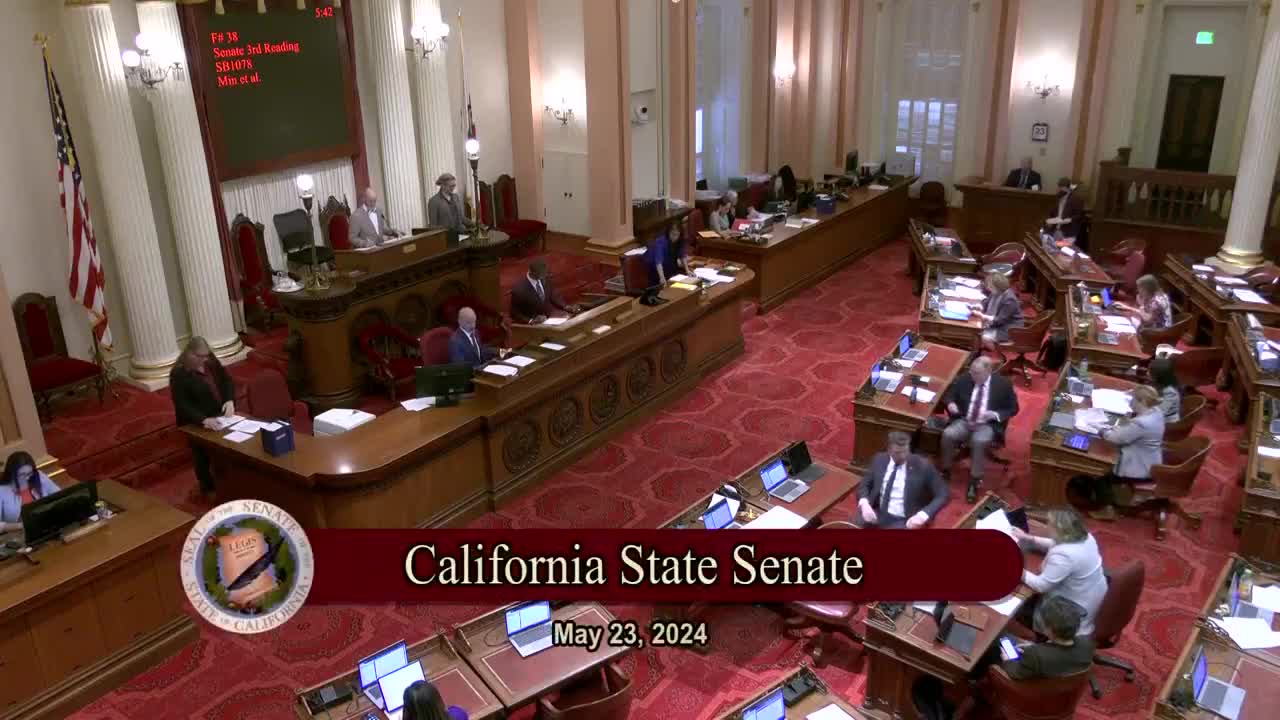 1MIN
Senate Floor
 12MIN
Senate Standing Committee on Human Services
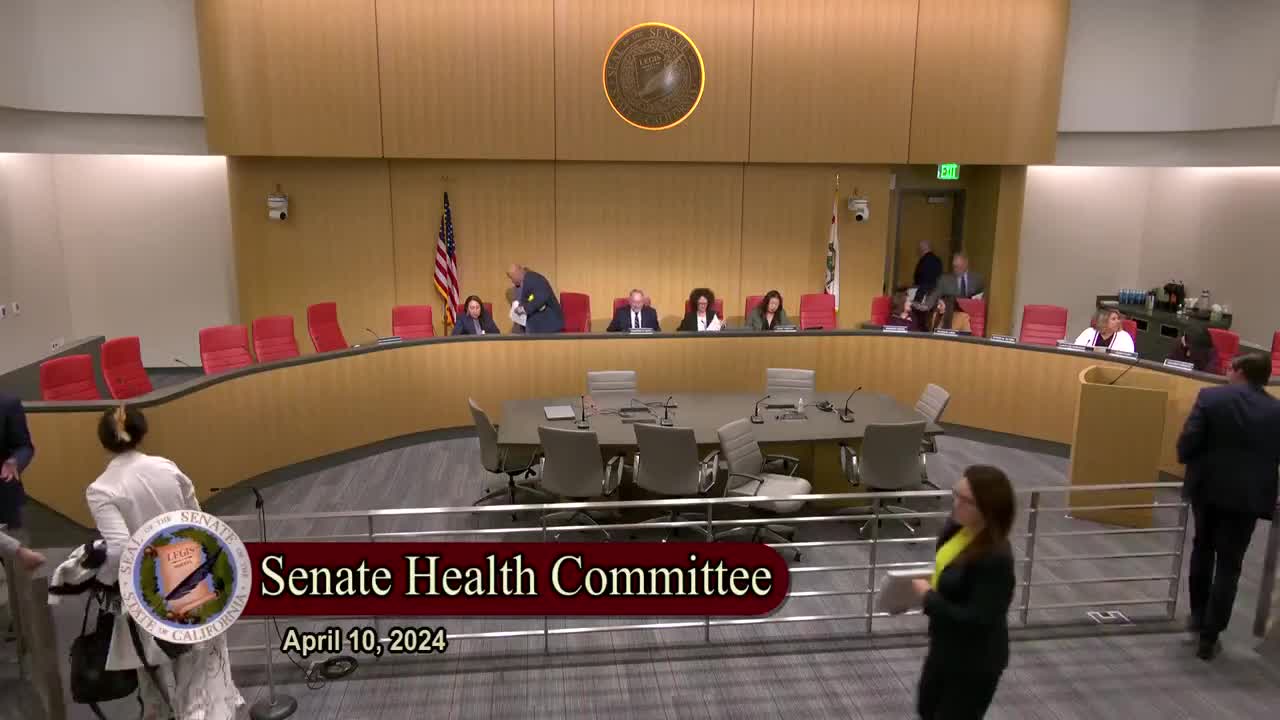 11MIN
Senate Standing Committee on Health
Bill Author





