SB 80: Retail installment contracts.
- Session Year: 2023-2024
- House: Senate
- Latest Version Date: 2023-01-12
Current Status:
Failed
(2023-09-07: Ordered to inactive file on request of Assembly Member Bryan.)
Introduced
In Committee
First Chamber
In Committee
Second Chamber
Enacted
What does this bill do?
The bill increases the minimum printed type size for the printed portion of retail installment contracts from 8-point to 12-point, affecting businesses that issue those contracts (such as car dealers and lenders) and the consumers who receive them.
The summary is provided by generative AI which can make mistakes. For original language, please view the details in the table below.
Existing law, the Unruh Act, requires a retail installment contract to be dated and in writing. Existing law also requires the printed portion of the contract to be in 8-point type. A violation of the act is a crime.
This bill, beginning July 1, 2024, would require the printed portion of the contract to be in 12-point font. By expanding the scope of a crime, the bill would impose a state-mandated program.
The California Constitution requires the state to reimburse local agencies and school districts for certain costs mandated by the state. Statutory provisions establish procedures for making that reimbursement.
This bill would provide that no reimbursement is required by this act for a specified reason.
A retail installment contract shall be dated and in writing; writing. Commencing July 1, 2024, the printed portion thereof shall be in at least eight-point 12-point type.
SEC. 2.No reimbursement is required by this act pursuant to Section 6 of Article XIIIB of the California Constitution because the only costs that may be incurred by a local agency or school district will be incurred because this act creates a new crime or infraction, eliminates a crime or infraction, or changes the penalty for a crime or infraction, within the meaning of Section 17556 of the Government Code, or changes the definition of a crime within the meaning of Section 6 of Article XIIIB of the California Constitution.
|
Date
|
Status
|
|---|---|
| Sep 7, 2023 | Ordered to inactive file on request of Assembly Member Bryan. |
| Jun 22, 2023 | Read second time. Ordered to third reading. |
| Jun 21, 2023 | From committee: Do pass. (Ayes 9. Noes 3.) (June 21). |
| Jun 6, 2023 | From committee: Do pass and re-refer to Com. on APPR. (Ayes 8. Noes 1.) (June 6). Re-referred to Com. on APPR. |
| May 4, 2023 | Referred to Com. on JUD. |
| Apr 17, 2023 | In Assembly. Read first time. Held at Desk. |
| Apr 13, 2023 | Read third time. Passed. (Ayes 36. Noes 0. Page 699.) Ordered to the Assembly. |
| Apr 11, 2023 | Read second time. Ordered to consent calendar. |
| Apr 10, 2023 | From committee: Be ordered to second reading pursuant to Senate Rule 28.8 and ordered to consent calendar. |
| Apr 3, 2023 | Set for hearing April 10. |
| Mar 29, 2023 | From committee: Do pass and re-refer to Com. on APPR with recommendation: To consent calendar. (Ayes 9. Noes 0. Page 576.) (March 28). Re-referred to Com. on APPR. |
| Mar 6, 2023 | Set for hearing March 28. |
| Jan 25, 2023 | Referred to Com. on JUD. |
| Jan 13, 2023 | From printer. May be acted upon on or after February 12. |
| Jan 12, 2023 | Introduced. Read first time. To Com. on RLS. for assignment. To print. |
|
Date
|
Description
|
Location
|
Votes
|
|
|---|---|---|---|---|
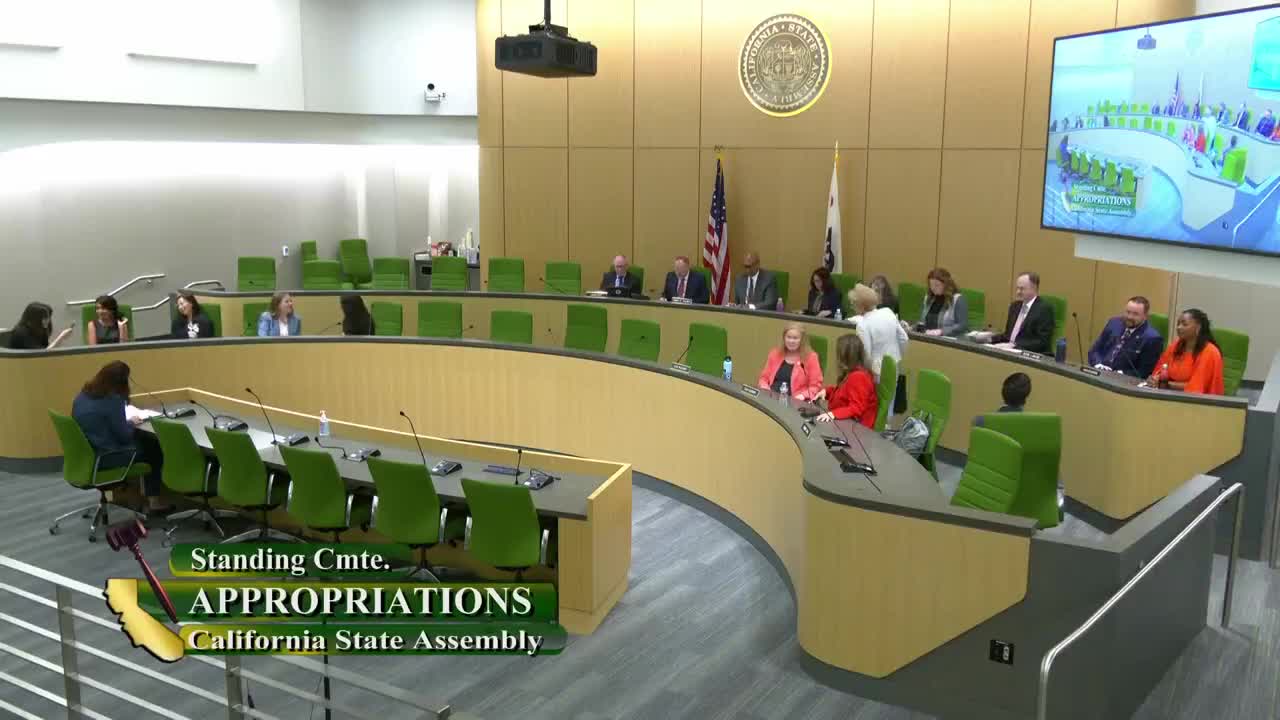
| Jun 21, 2023 | Do pass. | Assembly Standing Committee on Appropriations |
Passed |
|
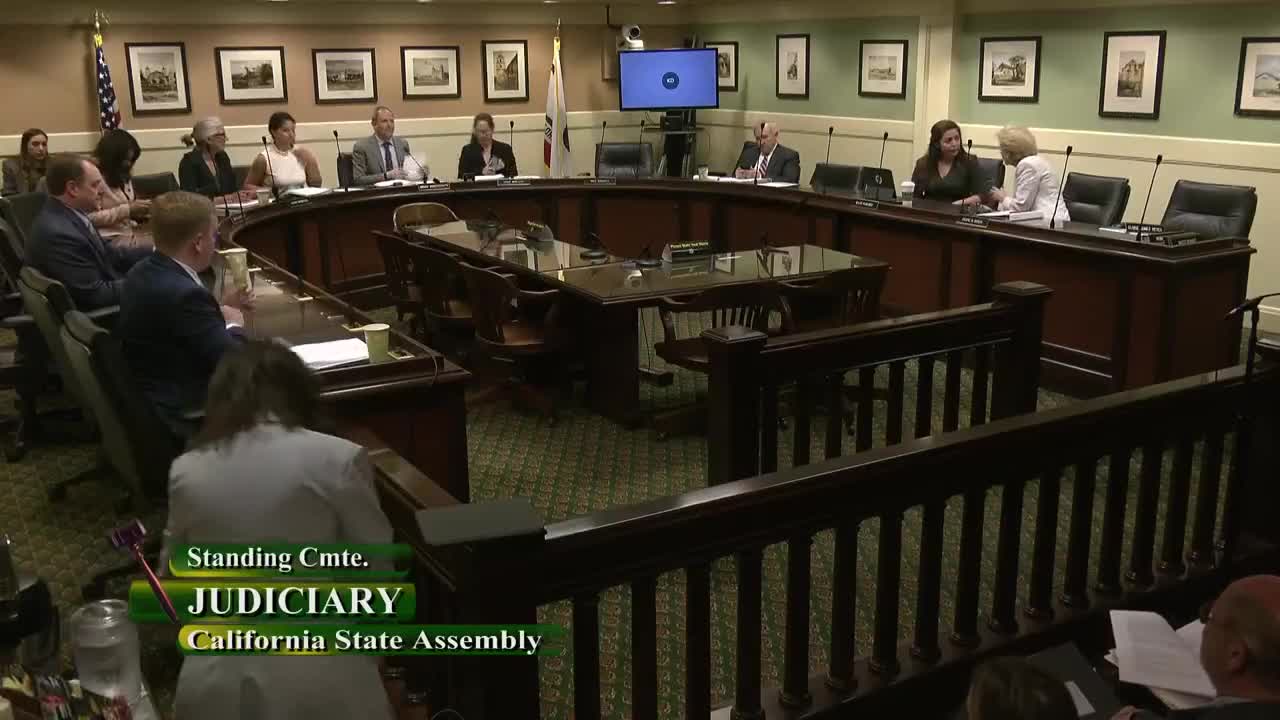
| Jun 6, 2023 | Do pass and be re-referred to the Committee on [Appropriations] | Assembly Standing Committee on Judiciary |
Passed |
|
| Apr 13, 2023 | Consent Calendar SB80 Laird | Senate Floor |
Passed |
|
| Mar 28, 2023 | Do pass, but first be re-referred to the Committee on [Appropriations] with the recommendation: To Consent Calendar | Senate Standing Committee on Judiciary |
Passed |
This list shows positions taken on this bill by organizations on the date displayed, which is linked to the original source.
Positions by individuals are not included.
|
Organization
|
Position
|
Date
|
|---|---|---|
| California Retailers Association | * Against Unless Amend | Jun 6, 2023 |
| Consumer Federation Of California | * Support | Jun 6, 2023 |
| CTIA | ** Against |
SENATE THIRD READING
STR Bill Id:SB 80
Author:(Laird)
As Introduced Ver:January 12, 2023
Majority vote
SUMMARY
Changes the required font size to increase awareness of the terms and consumer obligations under retail installment contracts.
Major Provisions
Requires retail installment contracts to be printed in at least 12-point, as opposed to 8-point font, beginning July 1, 2024.
COMMENTS
Existing law requires the contract to be in writing, dated, and in at least 8-point font. These contracts, where used, contain pertinent information such as interest rates and fees, if any. Although the Committee is unaware of any specific problems unique to this current law, which has been in place since 1959, the problem with "fine print" is well known. A recent article in the Stanford Law Review examined a defining feature of modern-day contracts: almost no one reads the terms before signing. (Furth-Matzkin, Meirav, Sommers, Roseanna, Consumer Psychology and the Problem of Fine-Print Fraud, 72 Stan. L. Rev. 503 (March 2020).) The authors of that academic article argue that consumers are confronted with an impossible amount of fine print in their daily lives, and it is neither practical nor efficient for them to read all of their contracts thoroughly. (Id.) This bill attempts to address the problem of non-readership by requiring terms to be more legible vis-a-vis larger print.
This is 12-point font.
This is 8-point font.
While it is axiomatic that in this instance, bigger is better (and smaller is objectively very hard to read), it is unclear how much, or whether, larger font size will have the desired effect of ensuring that a consumer is aware of the terms of a retail installment contract.
According to the Author
Contracts written in eight-point type can be challenging for consumers to read; worse, they could inaccurately interpret the terms. SB 80 remedies this problem by requiring retail installment contracts to be twelve-point type. This bill will help all parties be aware of and mutually agreeable to the provisions within the agreement.
Arguments in Support
None on file.
Arguments in Opposition
The California Retailers Association and the CTIA oppose this bill unless amended, and propose the following language:
A retail installment contract shall be dated and in writing. Commencing July 1, 2024, a retail installment contract shall be:
(a) (1) In at least 12-point type; or
(2) In at least 8-point type and accompanied by one-page summary in at least 12-point type that contains the following terms:
i) the annual percentage rate;
ii) the periodic rate;
iii) the annual fee, if any;
iv) the late payment fee, if any;
v) the returned check fee, if any;
(b) In electronic format.
They argue that their proposed language "has the benefit of not requiring retailers to discard existing contracts and reprint them on 50% more pages. One retailer has shared that their contract would increase from 12 to 18 pages. It also reflects many retailers' current practice."
FISCAL COMMENTS
According to the Assembly Appropriations analysis, negligible state costs, if any.
VOTES
SENATE FLOOR: 36-0-4
YES: Allen, Alvarado-Gil, Archuleta, Ashby, Atkins, Becker, Bradford, Cortese, Dahle, Dodd, Durazo, Eggman, Glazer, Gonzalez, Grove, Hurtado, Jones, Laird, Limón, McGuire, Menjivar, Min, Newman, Nguyen, Niello, Ochoa Bogh, Padilla, Portantino, Rubio, Seyarto, Skinner, Smallwood-Cuevas, Umberg, Wahab, Wiener, Wilk
ABS, ABST OR NV: Blakespear, Caballero, Roth, Stern
ASM JUDICIARY: 8-1-2
YES: Maienschein, Connolly, Haney, Kalra, Pacheco, Papan, Reyes, Robert Rivas
NO: Dixon
ABS, ABST OR NV: Essayli, Sanchez
ASM APPROPRIATIONS: 9-3-4
YES: Holden, Calderon, Wendy Carrillo, Mike Fong, Hart, Pellerin, Robert Rivas, Weber, Wilson
NO: Megan Dahle, Dixon, Mathis
ABS, ABST OR NV: Bryan, Lowenthal, Papan, Sanchez
UPDATED
VERSION: January 12, 2023
CONSULTANT: Shiran Zohar / JUD. / (916) 319-2334 FN: 0001088
Date of Hearing: June 21, 2023
ASSEMBLY COMMITTEE ON APPROPRIATIONS
Chris Holden, Chair
SBPCA Bill Id:SB 80
Author:(Laird) – As Introduced Ver:January 12, 2023
Policy Committee: | Judiciary | Vote: | 8 - 1 |
|
| ||
|
|
Urgency: No State Mandated Local Program: Yes Reimbursable: No
SUMMARY:
This bill requires retail installment contracts to be printed in at least 12-point font, rather than 8-point font as required by existing law.
FISCAL EFFECT:
Negligible state costs, if any.
COMMENTS:
- Author’s Statement. According to the author:
Contracts written in eight-point type can be challenging for consumers to read; worse, they could inaccurately interpret the terms. SB 80 remedies this problem by requiring retail installment contracts to be twelve-point type. This bill will help all parties be aware of and mutually agreeable to the provisions within the agreement.
- Background. Retail installment contracts are contracts for the sale of goods or provision of services where the buyer pays the seller in installments over time. Today, retail installment contracts are commonly used for cell phone contracts. Existing law requires that retail installment contracts be printed in at least 8-point font. Willful violation of this requirement is punishable as a misdemeanor. This bill requires all printed retail installment contracts be in at least 12-point font beginning on July 1, 2024.
- Prior Legislation. SB 1259 (Laird) Chapter 245, Statutes of 2022, originally sought to increase the font size on retail installment contracts to 12-point font. The bill was later gut-and-amended to allow pharmacists to furnish FDA-approved opioid antagonists, as specified.
Analysis Prepared by: Annika Carlson / APPR. / (916) 319-2081
Date of Hearing: June 6, 2023
ASSEMBLY COMMITTEE ON JUDICIARY
Brian Maienschein, Chair
SBPCA Bill Id:SB 80
Author:(Laird) – As Introduced Ver:January 12, 2023
SENATE VOTE: 36-0
SUBJECT: RETAIL INSTALLMENT CONTRACTS
KEY ISSUE: SHOULD RETAIL INSTALLMENT CONTRACTS be required to be printed in at least 12-point font?
SYNOPSIS
Under existing law, a “retail installment contract” provides for the specified charges or payment conditions of a retail installment sale between a buyer and a seller. Installment contracts are agreements in which payments, performance of services, or the delivery of goods are made in a series instead of all at once. Today, the most common type of retail installment contract is for cellular phone sales and services. This type of contract used to be much more prevalent, covering retail transactions for things like furniture and other consumer goods. In instances where these retail contracts are still used, the existing 8-point font minimum requirement may be problematic for consumers as they may overlook or inaccurately interpret essential provisions. This author-sponsored bill would change the required font size to 12-point font to increase awareness of the terms and consumer obligations under these contracts. This bill has no support on file and is opposed by the California Retailers Association and the Wireless Industry (CTIA), who ask for amendments that would not require them to discard existing contracts.
SUMMARY: Requires retail installment contracts to be printed in at least 12-point, as opposed to 8-point font, beginning July 1, 2024.
EXISTING LAW:
- Establishes the Unruh Act, which institutes guidelines for retail installment contracts. (Civil Code Section 1801 et seq. Unless otherwise noted, all further references are to the Civil Code.)
- Defines a “retail installment contract” to mean any contract for a retail installment sale between a buyer and seller, entered into or performed in this state, which provides for repayment in installments, whether or not such contract contains a title retention provision, and in which certain charges or conditions are attached. (Section 1802.6.)
- Defines a “retail installment sale” as the sale of goods or the furnishing of services by a retail seller to a retail buyer for a deferred payment price payable in installments. (Section 1802.5.)
- Requires a retail installment contract to be dated and in writing; the printed portion thereof shall be in at least eight-point type. (Section 1803.1.)
FISCAL EFFECT: As currently in print this bill is keyed fiscal.
COMMENTS: This bill seeks to ensure that a retail installment contract is reasonably legible by increasing the minimum font size from 8-point to 12-point font. According to the author:
Contracts written in eight-point type can be challenging for consumers to read; worse, they could inaccurately interpret the terms. SB 80 remedies this problem by requiring retail installment contracts to be twelve-point type. This bill will help all parties be aware of and mutually agreeable to the provisions within the agreement.
Existing law requires the contract to be in writing, dated, and in at least 8-point font. These contracts, where used, contain pertinent information such as interest rates and fees, if any. Although the Committee is unaware of any specific problems unique to this current law, which has been in place since 1959, the problem with “fine print” is well known. A recent article in the Stanford Law Review examined a defining feature of modern-day contracts: almost no one reads the terms before signing. (Furth-Matzkin, Meirav, Sommers, Roseanna, Consumer Psychology and the Problem of Fine-Print Fraud, 72 Stan. L. Rev. 503 (March 2020).) The authors of that academic article argue that consumers are confronted with an impossible amount of fine print in their daily lives, and it is neither practical nor efficient for them to read all of their contracts thoroughly. (Id.) This bill attempts to address the problem of non-readership by requiring terms to be more legible vis-a-vis larger print.
This is 12-point font.
This is 8-point font.
While it is axiomatic that in this instance, bigger is better (and smaller is objectively very hard to read), it is unclear how much, or whether, larger font size will have the desired effect of ensuring that a consumer is aware of the terms of a retail installment contract.
Opponents of the bill, the California Retailers Association and CTIA, propose amendments that the author has yet to accept, which would provide consumers with a one-page summary of the key terms in 12-point font, along with a copy of the full contract in 8-point font. Arguably, this proposal provides even more disclosure, as consumers would receive only key information as opposed to a dozen pages of boilerplate contract language punctured with key terms throughout. Therefore, the author may wish to consider amending the bill in line with the opposition’s proposed language as this bill moves through the legislative process.
ARGUMENTS IN OPPOSITION: The California Retailers Association and the CTIA oppose this bill unless amended, and propose the following language:
A retail installment contract shall be dated and in writing. Commencing July 1, 2024, a retail installment contract shall be:
(a) (1) In at least 12-point type; or
(2) In at least 8-point type and accompanied by one-page summary in at least 12-point type that contains the following terms:
i) the annual percentage rate;
ii) the periodic rate;
iii) the annual fee, if any;
iv) the late payment fee, if any;
v) the returned check fee, if any;
(b) In electronic format.
They argue that their proposed language “has the benefit of not requiring retailers to discard existing contracts and reprint them on 50% more pages. One retailer has shared that their contract would increase from 12 to 18 pages. It also reflects many retailers’ current practice.”
REGISTERED SUPPORT / OPPOSITION:
Support
None on file
Opposition
California Retailers Association
CTIA
Analysis Prepared by: Shiran Zohar / JUD. / (916) 319-2334
SENATE RULES COMMITTEE Office of Senate Floor Analyses (916) 651-1520 Fax: (916) 327-4478 | SB 80 |
CONSENT
Bill No: SB 80
Author: Laird (D)
Introduced: 1/12/23
Vote: 21
SENATE JUDICIARY COMMITTEE: 9-0, 3/28/23
AYES: Umberg, Wilk, Allen, Ashby, Caballero, Durazo, Laird, Niello, Wiener
NO VOTE RECORDED: Min, Stern
SENATE APPROPRIATIONS COMMITTEE: Senate Rule 28.8
SUBJECT: Retail installment contracts
SOURCE: Author
DIGEST:
This bill requires retail installment contracts to be printed in at least 12-point type.
ANALYSIS:
Existing law:
- Establishes the Unruh Act, which establishes guidelines for retail installment contracts. (Civ. Code § 1801 et seq.)
- Defines a “retail installment contract” to mean any contract for a retail installment sale between a buyer and seller, entered into or performed in this state, which provides for repayment in installments, whether or not such contract contains a title retention provision, and in which certain charges or conditions are attached. (Civ. Code § 1802.6.)
- Defines a “retail installment sale” as the sale of goods or the furnishing of services by a retail seller to a retail buyer for a deferred payment price payable in installments. (Civ. Code § 1802.5.)
- Requires a retail installment contract to be dated and in writing; the printed portion thereof shall be in at least eight-point type. (Civ. Code § 1803.1.)
This bill requires the printed portion of a retail installment contract to be in at least 12-point type.
Background
Executive Summary. Under existing law, a “retail installment contract” is any contract for a retail installment sale between a buyer and seller, which provides for repayment in installments and includes specified charges or payment conditions. A “retail installment sale” is the sale of goods or the furnishing of services by a retail seller to a retail buyer for a deferred payment price payable in installments.
The Unruh Act, Civil Code Section 1801 et seq., not to be confused with the Unruh Civil Rights Act, provides a regulatory structure for the formation and operation of retail installment contracts in California. One such provision requires a retail installment contract to be dated and in writing. The printed portion thereof is required to be in at least eight-point type.
To ensure greater legibility, this bill requires such materials to be in at least 12-point type.
Comments
Easing the weary eyes of consumers. Existing law places a series of requirements and restrictions on retail installment contracts in order to inform, empower, and protect consumers. (Civ. Code § 1801 et seq.) Such contracts must include the names of the seller and the buyer, the place of business of the seller, the residence or place of business of the buyer as specified by the buyer and a description of the goods or services sufficient to identify them. The contracts must also include an itemization of the amount financed and there are limitations on the finance charges that can be applied. Such contracts cannot include provisions by which a buyer agrees not to assert against a seller a claim or defense arising out of the sale other than as provided.
The law also requires a retail installment contract to be dated and in writing. In order to ensure a baseline of legibility, the printed portion must be in at least eight-point type. This bill strengthens this provision by requiring this portion to be in at least 12-point type.
Health Literacy Online is a research-based guide that advises on how to effectively present critical health information:
The font you choose is important because it affects your site’s readability… . Choose a font that’s at least … 12 points. If many of your users are older adults, consider using an even larger font size—…14 points. A small font size is more difficult to read, especially for users with limited literacy skills and older adults.[1]
If the intention of the law is to ensure consumers are informed, than switching to a more reasonable sized font furthers that end.
Stated intent of this bill. According to the author, “Contracts written in eight-point type can be challenging for consumers to read; worse, they could inaccurately interpret the terms. SB 80 remedies this problem by requiring retail installment contracts to be twelve-point type. This bill will help all parties be aware of and mutually agreeable to the provisions within the agreement.”
FISCAL EFFECT: Appropriation: No Fiscal Com.: Yes Local: Yes
SUPPORT: (Verified 4/10/23)
None received
OPPOSITION: (Verified 4/10/23)
None received
Prepared by: Christian Kurpiewski / JUD. / (916) 651-4113
4/12/23 14:04:13
**** END ****
Health Literacy Online (June 8, 2016) Office of Disease Prevention and Health Promotion, https://health.gov/healthliteracyonline/display/section-3-3/ [as of April 10, 2023]. ↑
Senator Thomas Umberg, Chair
2023-2024 Regular Session
Bill No: SB 80 (Author:Laird)
Version: January 12, 2023
Hearing Date: March 28, 2023
Fiscal: Yes
Urgency: No
Consultant: CK
SUBJECT
Retail installment contracts
DIGEST
This bill requires retail installment contracts to be printed in at least 12-point type.
EXECUTIVE SUMMARY
Under existing law, a “retail installment contract” is any contract for a retail installment sale between a buyer and seller, which provides for repayment in installments and includes specified charges or payment conditions. A “retail installment sale” is the sale of goods or the furnishing of services by a retail seller to a retail buyer for a deferred payment price payable in installments.
The Unruh Act, Civil Code section 1801 et seq., not to be confused with the Unruh Civil Rights Act, provides a regulatory structure for the formation and operation of retail installment contracts in California. One such provision requires a retail installment contract to be dated and in writing. The printed portion thereof is required to be in at least eight-point type.
To ensure greater legibility, this bill requires such materials, commencing July 1, 2024, to be in at least 12-point type.
This bill is author-sponsored. There is no known support or opposition.
PROPOSED CHANGES TO THE LAW
Existing law:
- Establishes the Unruh Act, which institutes guidelines for retail installment contracts. (Civ. Code § 1801 et seq.)
- Defines a “retail installment contract” to mean any contract for a retail installment sale between a buyer and seller, entered into or performed in this state, which provides for repayment in installments, whether or not such contract contains a title retention provision, and in which certain charges or conditions are attached. (Civ. Code § 1802.6.)
- Defines a “retail installment sale” as the sale of goods or the furnishing of services by a retail seller to a retail buyer for a deferred payment price payable in installments. (Civ. Code § 1802.5.)
- Requires a retail installment contract to be dated and in writing; the printed portion thereof shall be in at least eight-point type. (Civ. Code § 1803.1.)
This bill requires, commencing July 1, 2024, the printed portion of a retail installment contract to be in at least 12-point type.
COMMENTS
- Easing the weary eyes of consumers
Existing law places a series of requirements and restrictions on retail installment contracts in order to inform, empower, and protect consumers. (Civ. Code § 1801 et seq.) Such contracts must include the names of the seller and the buyer, the place of business of the seller, the residence or place of business of the buyer as specified by the buyer and a description of the goods or services sufficient to identify them. The contracts must also include an itemization of the amount financed and there are limitations on the finance charges that can be applied. Such contracts cannot include provisions by which a buyer agrees not to assert against a seller a claim or defense arising out of the sale other than as provided.
The law also requires a retail installment contract to be dated and in writing. In order to ensure a baseline of legibility, the printed portion must be in at least eight-point type. This bill strengthens this provision by requiring this portion to be in at least 12-point type starting in July 2024.
Health Literacy Online is a research-based guide that advises on how to effectively present critical health information:
The font you choose is important because it affects your site’s readability. . . . Choose a font that’s at least . . . 12 points. If many of your users are older adults, consider using an even larger font size—. . . 14 points. A small font size is more difficult to read, especially for users with limited literacy skills and older adults.[1]
If the intention of the law is to ensure consumers are informed, then switching to a more reasonable sized font furthers that end.
- Stated intent of the bill
According to the author:
Contracts written in eight-point type can be challenging for consumers to read; worse, they could inaccurately interpret the terms. SB 80 remedies this problem by requiring retail installment contracts to be twelve-point type. This bill will help all parties be aware of and mutually agreeable to the provisions within the agreement.
SUPPORT
None known
OPPOSITION
None known
RELATED LEGISLATION
Pending Legislation: None known
Prior Legislation:
SB 1259 (Laird, Ch. 245, Stats. 2022), originally sought to increase the font size on retail installment contracts to 12-point type. It was later gut and amended to deal with the furnishing of opioid antagonists by pharmacists, as specified.
SB 633 (Limón, 2021) requires a statutorily prescribed notice to be provided to prospective cosigners of consumer credit contracts and vehicle leases before they sign these agreements, and that this notice be written both in English and in the languages that the Civil Code already requires certain contracts and agreements to be translated into (currently Spanish, Chinese, Tagalog, Vietnamese, and Korean).
AB 3019 (Reyes, Ch. 268, Stats. 2018) required a notice of oral deposition to be written in at least 12-point type.
**************
Health Literacy Online (June 8, 2016) Office of Disease Prevention and Health Promotion, https://health.gov/healthliteracyonline/display/section-3-3/ [as of Mar. 15, 2023]. ↑
Discussed in Hearing
 1MIN
Assembly Standing Committee on Appropriations
 8MIN
Assembly Standing Committee on Judiciary
Bill Author

Bill Co-Author(s):