SB 980: The Smile Act.
- Session Year: 2023-2024
- House: Senate
- Latest Version Date: 2024-06-10
Current Status:
Failed
(2024-08-15: August 15 hearing: Held in committee and under submission.)
Introduced
In Committee
First Chamber
In Committee
Second Chamber
Enacted
What does this bill do?
The bill expands Medi‑Cal dental benefits by allowing laboratory‑processed crowns for people aged 13 and older and removing the rule that crowns be only on back (posterior) teeth. It also adds dental implants as a covered benefit for beneficiaries of any age when a tooth is missing or must be removed, but implants need prior authorization (advance approval), must be used only if no other covered replacement would restore function, and the person must be medically eligible; federal approvals and funding and existing child EPSDT rules still apply.
The summary is provided by generative AI which can make mistakes. For original language, please view the details in the table below.
Existing law establishes the Medi-Cal program, which is administered by the State Department of Health Care Services and under which qualified low-income individuals receive health care services, including certain dental services. The Medi-Cal program is, in part, governed and funded by federal Medicaid program provisions. Under existing law, early and periodic screening, diagnostic, and treatment (EPSDT) services are covered under Medi-Cal for an individual under 21 years of age in accordance with certain federal provisions.
Under existing law, for persons 21 years of age or older, laboratory-processed crowns on posterior teeth are a covered benefit when medically necessary to restore a posterior tooth back to normal function based on the criteria specified in the Medi-Cal Dental Manual of Criteria.
This bill, The Smile Act, for purposes of the above-described Medi-Cal coverage for laboratory-processed crowns, would remove the condition that the tooth be posterior and would apply the coverage to persons 13 years of age or older.
The bill would also add, as a covered Medi-Cal benefit for persons of any age, subject to prior authorization, a dental implant if tooth extraction or removal is medically necessary or if the corresponding tooth is missing. The bill would condition this coverage on there being no other covered functional alternatives for prosthetic replacement to correct the persons dental condition, as specified, on the person being without medical conditions for which dental implant surgery would be contraindicated, on receipt of any necessary federal approvals, and on the availability of federal financial participation.
Under the bill, the above-described provisions would not be construed to exclude Medi-Cal coverage for laboratory-processed crowns on teeth or dental implants if otherwise required under EPSDT services.
Existing law establishes the Medi-Cal program, which is administered by the State Department of Health Care Services and under which qualified low-income individuals receive health care services, including certain dental services. The Medi-Cal program is, in part, governed and funded by federal Medicaid program provisions. Under existing law, early and periodic screening, diagnostic, and treatment (EPSDT) services are covered under Medi-Cal for an individual under 21 years of age in accordance with certain federal provisions.
Under existing law, for persons 21 years of age or older, laboratory-processed crowns on posterior teeth are a covered benefit when medically necessary to restore a posterior tooth back to normal function based on the criteria specified in the Medi-Cal Dental Manual of Criteria.
This bill, for purposes of the above-described Medi-Cal coverage for laboratory-processed crowns, would remove the condition that the tooth be posterior and would apply the coverage to persons 13 years of age or older. Under the bill, this provision would not be construed to exclude Medi-Cal coverage for laboratory-processed crowns on teeth if otherwise required under EPSDT services.
The bill would also add, as a covered Medi-Cal benefit for persons of any age, subject to prior authorization, a dental implant if tooth extraction or removal is medically necessary or if the corresponding tooth is missing. The bill would condition this coverage on there being no other covered functional alternatives for prosthetic replacement to correct the persons dental condition, as specified, on the person being without medical conditions for which dental implant surgery would be contraindicated, on receipt of any necessary federal approvals, and on the availability of federal financial participation.
Under the bill, the above-described provisions would not be construed to exclude Medi-Cal coverage for laboratory-processed crowns on teeth or dental implants if otherwise required under EPSDT services.
Existing law establishes the Medi-Cal program, which is administered by the State Department of Health Care Services and under which qualified low-income individuals receive health care services, including certain dental services. The Medi-Cal program is, in part, governed and funded by federal Medicaid program provisions. Under existing law, early and periodic screening, diagnostic, and treatment (EPSDT) services are covered under Medi-Cal for an individual under 21 years of age in accordance with certain federal provisions.
Under existing law, for persons 21 years of age or older, laboratory-processed crowns on posterior teeth are a covered benefit when medically necessary to restore a posterior tooth back to normal function based on the criteria specified in the Medi-Cal Dental Manual of Criteria.
This bill would instead provide Medi-Cal coverage, for persons 13 years of age or older, for laboratory-processed crowns on teeth when a lesser service would not suffice because of extensive coronal destruction and a crown is medically necessary to restore the tooth back to normal function based on the criteria specified in the Medi-Cal Dental Manual of Criteria.This bill, for purposes of the above-described Medi-Cal coverage for laboratory-processed crowns, would remove the condition that the tooth be posterior and would apply the coverage to persons 13 years of age or older. Under the bill, this provision would not be construed to exclude Medi-Cal coverage for laboratory-processed crowns on teeth if otherwise required under EPSDT services.
The bill would also add, as a covered Medi-Cal benefit for persons of any age, a dental implant if tooth extraction or removal is medically necessary or if the corresponding tooth is missing.
Existing law establishes the Medi-Cal program, which is administered by the State Department of Health Care Services and under which qualified low-income individuals receive health care services, including certain dental services. The Medi-Cal program is, in part, governed and funded by federal Medicaid program provisions.
Under existing law, for persons 21 years of age or older, laboratory-processed crowns on posterior teeth are a covered benefit when medically necessary to restore a posterior tooth back to normal function based on the criteria specified in the Medi-Cal Dental Manual of Criteria.
This bill would instead provide Medi-Cal coverage, for persons 13 years of age or older, for laboratory-processed crowns on teeth when a lesser service would not suffice because of extensive coronal destruction and a crown is medically necessary to restore the tooth back to normal function based on the criteria specified in the Medi-Cal Dental Manual of Criteria.
The bill would also add, as a covered Medi-Cal benefit for persons of any age, a dental implant if tooth extraction or removal is medically necessary or if the corresponding tooth is missing.
This act shall be known, and may be cited, as The Smile Act.
SECTION 1.SEC. 2.Section 14132.88 of the Welfare and Institutions Code is amended to read:14132.88.(a)Notwithstanding subdivision (h) of Section 14132 and to the extent funds are made available in the annual Budget Act for this purpose, the following are covered benefits for beneficiaries 21 years of age or older under this chapter:
(1)One dental prophylaxis cleaning per year.
(2)One initial dental examination by a dentist.
(b)The following are covered benefits for beneficiaries under 21 years of age under this chapter:
(1)Two dental prophylaxis cleanings per year.
(2)Two periodic dental examinations per year.
(c)(1)For persons 13 years of age or older, laboratory-processed crowns on teeth are a covered benefit when if medically necessary to restore the tooth back to normal function based on the criteria specified in the Medi-Cal Dental Manual of Criteria.
(2)Paragraph (1) shall not be construed to exclude Medi-Cal coverage for laboratory-processed crowns on teeth if otherwise required under early and periodic screening, diagnostic, and treatment (EPSDT) services pursuant to federal or state law.
(d)Any prefabricated crown made from ADA-approved materials may be used on posterior teeth and may be reimbursed as a stainless steel crown.
(e)(1)Subject to paragraphs (3) and (4), for qualified persons of any age, a dental implant is a covered benefit under this chapter if extraction or removal of the corresponding tooth is medically necessary.
(2)Subject to paragraphs (3) and (4), for qualified persons of any age, a dental implant is a covered benefit under this chapter if the corresponding tooth is missing.
(3)A dental implant is covered pursuant to paragraph (1) or (2) if no other covered functional alternatives for prosthetic replacement would correct the persons dental condition, as determined by the provider in consultation with an oral surgeon or periodontist.
(4)A dental implant is covered pursuant to paragraph (1) or (2) subject to prior authorization.
(5)This subdivision shall not be construed to exclude Medi-Cal coverage for dental implants if otherwise required under early and periodic screening, diagnostic, and treatment (EPSDT) services pursuant to federal or state law.
(6)For purposes of this subdivision, qualified means a person without medical conditions for which dental implant surgery would be contraindicated.
(f)Covered dental benefits and accompanying criteria for receipt of those dental benefits under the Medi-Cal program shall be identified in the Medi-Cal Dental Manual of Criteria. Notwithstanding subdivision (h) of Section 14132, the department shall evaluate all covered dental benefits, including those listed in this section and in the Medi-Cal Dental Manual of Criteria, for evidence-based practices consistent with the American Academy of Pediatric Dentistry and the American Dental Association guidelines.
(g)(1)Except as provided in paragraph (2), the department shall require pretreatment radiograph documentation on posttreatment claims to establish the medical necessity for dental restorations. The pretreatment documentation required under this subdivision is intended to reduce fraudulent claims for unnecessary dental fillings. In order to avoid any undue barriers to accessing dental care, the department shall stipulate that the pretreatment radiograph documentation for posttreatment claims will be required only when if there are four or more dental fillings being completed in any 12-month period.
(2)For any beneficiary who is under four years of age, or who, regardless of age, has a developmental disability, as defined in subdivision (a) of Section 4512, radiographs or photographs that indicate decay on any tooth surface shall be considered sufficient documentation to establish the medical necessity for treatment provided.
(3)Notwithstanding Chapter 3.5 (commencing with Section 11340) of Part 1 of Division 3 of Title 2 of the Government Code, the department may implement, interpret, or make specific this section, in whole or in part, by means of provider bulletins, plan letters, or other similar instructions, without taking regulatory action.
(h)This section shall be implemented only to the extent that any necessary federal approvals are obtained and federal financial participation is available.
(a)Notwithstanding subdivision (h) of Section 14132 and to the extent funds are made available in the annual Budget Act for this purpose, the following are covered benefits for beneficiaries 21 years of age or older under this chapter:
(1)One dental prophylaxis cleaning per year.
(2)One initial dental examination by a dentist.
(b)The following are covered benefits for beneficiaries under 21 years of age under this chapter:
(1)Two dental prophylaxis cleanings per year.
(2)Two periodic dental examinations per year.
(c)(1)For persons 13 years of age or older, laboratory-processed crowns on teeth are a covered benefit when medically necessary to restore the tooth back to normal function based on the criteria specified in the Medi-Cal Dental Manual of Criteria.
(2)Paragraph (1) shall not be construed to exclude Medi-Cal coverage for laboratory-processed crowns on teeth if otherwise required under early and periodic screening, diagnostic, and treatment (EPSDT) services pursuant to federal or state law.
(d)Any prefabricated crown made from ADA-approved materials may be used on posterior teeth and may be reimbursed as a stainless steel crown.
(e)(1)For Subject to paragraphs (3) and (4), for qualified persons of any age, a dental implant is a covered benefit under this chapter if extraction or removal of the corresponding tooth is medically necessary.
(2)For Subject to paragraphs (3) and (4), for qualified persons of any age, a dental implant is a covered benefit under this chapter if the corresponding tooth is missing.
(3)A dental implant is covered pursuant to paragraph (1) or (2) if no other covered functional alternatives for prosthetic replacement would correct the persons dental condition, as determined by the provider in consultation with an oral surgeon or periodontist.
(4)A dental implant is covered pursuant to paragraph (1) or (2) subject to prior authorization.
(5)This subdivision shall not be construed to exclude Medi-Cal coverage for dental implants if otherwise required under early and periodic screening, diagnostic, and treatment (EPSDT) services pursuant to federal or state law.
(6)For purposes of this subdivision, qualified means a person without medical conditions for which dental implant surgery would be contraindicated.
(f) Covered dental benefits and accompanying criteria for receipt of those dental benefits under the Medi-Cal program shall be identified in the Medi-Cal Dental Manual of Criteria. Notwithstanding subdivision (h) of Section 14132, the department shall evaluate all covered dental benefits, including those listed in this section and in the Medi-Cal Dental Manual of Criteria, for evidence-based practices consistent with the American Academy of Pediatric Dentistry and the American Dental Association guidelines.
(g)(1)Except as provided in paragraph (2), the department shall require pretreatment radiograph documentation on posttreatment claims to establish the medical necessity for dental restorations. The pretreatment documentation required under this subdivision is intended to reduce fraudulent claims for unnecessary dental fillings. In order to avoid any undue barriers to accessing dental care, the department shall stipulate that the pretreatment radiograph documentation for posttreatment claims will be required only when there are four or more dental fillings being completed in any 12-month period.
(2)For any beneficiary who is under four years of age, or who, regardless of age, has a developmental disability, as defined in subdivision (a) of Section 4512, radiographs or photographs that indicate decay on any tooth surface shall be considered sufficient documentation to establish the medical necessity for treatment provided.
(3)Notwithstanding Chapter 3.5 (commencing with Section 11340) of Part 1 of Division 3 of Title 2 of the Government Code, the department may implement, interpret, or make specific this section, in whole or in part, by means of provider bulletins, plan letters, or other similar instructions, without taking regulatory action.
(h)This section shall be implemented only to the extent that any necessary federal approvals are obtained and federal financial participation is available.
(a)Notwithstanding subdivision (h) of Section 14132 and to the extent funds are made available in the annual Budget Act for this purpose, the following are covered benefits for beneficiaries 21 years of age or older under this chapter:
(1)One dental prophylaxis cleaning per year.
(2)One initial dental examination by a dentist.
(b)The following are covered benefits for beneficiaries under 21 years of age under this chapter:
(1)Two dental prophylaxis cleanings per year.
(2)Two periodic dental examinations per year.
(c)(1)For persons 13 years of age or older, laboratory-processed crowns on teeth are a covered benefit when a lesser service will not suffice because of extensive coronal destruction and a crown is medically necessary to restore the tooth back to normal function based on the criteria specified in the Medi-Cal Dental Manual of Criteria.
(2)Paragraph (1) shall not be construed to exclude Medi-Cal coverage for laboratory-processed crowns on teeth if otherwise required under early and periodic screening, diagnostic, and treatment (EPSDT) services pursuant to federal or state law.
(d)Any prefabricated crown made from ADA-approved materials may be used on posterior teeth and may be reimbursed as a stainless steel crown.
(e)(1)For persons of any age, a dental implant is a covered benefit if extraction or removal of the corresponding tooth is medically necessary.
(2)For persons of any age, a dental implant is a covered benefit if the corresponding tooth is missing.
(f) Covered dental benefits and accompanying criteria for receipt of those dental benefits under the Medi-Cal program shall be identified in the Medi-Cal Dental Manual of Criteria. Notwithstanding subdivision (h) of Section 14132, the department shall evaluate all covered dental benefits, including those listed in this section and in the Medi-Cal Dental Manual of Criteria, for evidence-based practices consistent with the American Academy of Pediatric Dentistry and the American Dental Association guidelines.
(g)(1)Except as provided in paragraph (2), the department shall require pretreatment radiograph documentation on posttreatment claims to establish the medical necessity for dental restorations. The pretreatment documentation required under this subdivision is intended to reduce fraudulent claims for unnecessary dental fillings. In order to avoid any undue barriers to accessing dental care, the department shall stipulate that the pretreatment radiograph documentation for posttreatment claims will be required only when there are four or more dental fillings being completed in any 12-month period.
(2)For any beneficiary who is under four years of age, or who, regardless of age, has a developmental disability, as defined in subdivision (a) of Section 4512, radiographs or photographs that indicate decay on any tooth surface shall be considered sufficient documentation to establish the medical necessity for treatment provided.
(3)Notwithstanding Chapter 3.5 (commencing with Section 11340) of Part 1 of Division 3 of Title 2 of the Government Code, the department may implement, interpret, or make specific this section, in whole or in part, by means of provider bulletins, plan letters, or other similar instructions, without taking regulatory action.
(h)This section shall be implemented only to the extent that any necessary federal approvals are obtained and federal financial participation is available.
(a)Notwithstanding subdivision (h) of Section 14132 and to the extent funds are made available in the annual Budget Act for this purpose, the following are covered benefits for beneficiaries 21 years of age or older under this chapter:
(1)One dental prophylaxis cleaning per year.
(2)One initial dental examination by a dentist.
(b)The following are covered benefits for beneficiaries under 21 years of age under this chapter:
(1)Two dental prophylaxis cleanings per year.
(2)Two periodic dental examinations per year.
(c)For persons 21 13 years of age or older, laboratory-processed crowns on posterior teeth are a covered benefit when a lesser service will not suffice because of extensive coronal destruction and a crown is medically necessary to restore a posterior the tooth back to normal function based on the criteria specified in the Medi-Cal Dental Manual of Criteria.
(d)Any prefabricated crown made from ADA-approved materials may be used on posterior teeth and may be reimbursed as a stainless steel crown.
(e)(1)For persons of any age, a dental implant is a covered benefit if extraction or removal of the corresponding tooth is medically necessary.
(2)For persons of any age, a dental implant is a covered benefit if the corresponding tooth is missing.
(e)(f) Covered dental benefits and accompanying criteria for receipt of those dental benefits under the Medi-Cal program shall be identified in the Medi-Cal Dental Manual of Criteria. Notwithstanding subdivision (h) of Section 14132, the department shall evaluate all covered dental benefits, including those listed in this section and in the Medi-Cal Dental Manual of Criteria, for evidence-based practices consistent with the American Academy of Pediatric Dentistry and the American Dental Association guidelines.
(f)(g)(1)Except as provided in paragraph (2), the department shall require pretreatment radiograph documentation on posttreatment claims to establish the medical necessity for dental restorations. The pretreatment documentation required under this subdivision is intended to reduce fraudulent claims for unnecessary dental fillings. In order to avoid any undue barriers to accessing dental care, the department shall stipulate that the pretreatment radiograph documentation for posttreatment claims will be required only when there are four or more dental fillings being completed in any 12-month period.
(2)For any beneficiary who is under four years of age, or who, regardless of age, has a developmental disability, as defined in subdivision (a) of Section 4512, radiographs or photographs that indicate decay on any tooth surface shall be considered sufficient documentation to establish the medical necessity for treatment provided.
(3)Notwithstanding Chapter 3.5 (commencing with Section 11340) of Part 1 of Division 3 of Title 2 of the Government Code, the department may implement, interpret, or make specific this section, in whole or in part, by means of provider bulletins, plan letters, or other similar instructions, without taking regulatory action.
(g)(h)This section shall be implemented only to the extent that any necessary federal approvals are obtained and federal financial participation is available.
|
Date
|
Status
|
|---|---|
| Aug 15, 2024 | August 15 hearing: Held in committee and under submission. |
| Aug 7, 2024 | August 7 set for first hearing. Placed on suspense file. |
| Jun 19, 2024 | From committee: Do pass and re-refer to Com. on APPR. (Ayes 16. Noes 0.) (June 18). Re-referred to Com. on APPR. |
| Jun 10, 2024 | From committee with author's amendments. Read second time and amended. Re-referred to Com. on HEALTH. |
| Jun 3, 2024 | Referred to Com. on HEALTH. |
| May 24, 2024 | In Assembly. Read first time. Held at Desk. |
| May 24, 2024 | Read third time. Passed. (Ayes 38. Noes 0. Page 4208.) Ordered to the Assembly. |
| May 22, 2024 | Ordered to special consent calendar. |
| May 20, 2024 | Read second time. Ordered to third reading. |
| May 16, 2024 | Read second time and amended. Ordered to second reading. |
| May 16, 2024 | From committee: Do pass as amended. (Ayes 7. Noes 0. Page 3966.) (May 16). |
| May 10, 2024 | Set for hearing May 16. |
| Apr 8, 2024 | April 8 hearing: Placed on APPR suspense file. |
| Mar 28, 2024 | Set for hearing April 8. |
| Mar 21, 2024 | Read second time and amended. Re-referred to Com. on APPR. |
| Mar 20, 2024 | From committee: Do pass as amended and re-refer to Com. on APPR. (Ayes 11. Noes 0. Page 3380.) (March 20). |
| Mar 1, 2024 | Set for hearing March 20. |
| Feb 14, 2024 | Referred to Com. on HEALTH. |
| Jan 30, 2024 | From printer. May be acted upon on or after February 29. |
| Jan 29, 2024 | Introduced. Read first time. To Com. on RLS. for assignment. To print. |
|
Date
|
Description
|
Location
|
Votes
|
|
|---|---|---|---|---|
| Jun 18, 2024 | Do pass and be re-referred to the Committee on [Appropriations] | Assembly Standing Committee on Health |
Passed |
|
| May 24, 2024 | Special Consent SB980 Wahab et al. | Senate Floor |
Passed |
|
| May 16, 2024 | Do pass as amended | Senate Standing Committee on Appropriations |
Passed |
|
| Apr 8, 2024 | Placed on suspense file | Senate Standing Committee on Appropriations |
Passed |
|
| Mar 20, 2024 | Do pass as amended, but first amend, and re-refer to the Committee on [Appropriations] | Senate Standing Committee on Health |
Passed |
This list shows positions taken on this bill by organizations on the date displayed, which is linked to the original source.
Positions by individuals are not included.
|
Organization
|
Position
|
Date
|
|---|---|---|
| AARP | ** Support | |
| Advisory Council for Sourcewise | ** Support | |
| Alameda County Democratic Party | ** Support | |
| California Alliance For Retired Americans | * Support | Jun 18, 2024 |
| California Alternative Payment Program Association | ** Support | |
| California Association Of Oral And Maxillofacial Surgeons | * Support | Jun 18, 2024 |
| California Association Of Orthodontists | * Support | Jun 18, 2024 |
| California Conference Of Machinists | ** Support | |
| California Dental Association | * For If Amend | Jun 18, 2024 |
| california in-home supportive services consumer alliance | ** Support | |
| California OneCare | ** Support | |
| Californians for Disability Rights | ** Support | Mar 20, 2024 |
| Californians for Supplemental Security Income Coalition | ** Support | |
| Caring Across Generations | ** Support | |
| County Health Executives Association Of California | * Support | Jun 18, 2024 |
| Courage California | ** Support | |
| Educate. Advocate. | ** Support | |
| Health Access California | * Support | Jun 18, 2024 |
| Healthy California Now | ** Support | |
| Jewish Family Service of Los Angeles | ** Support | |
| Justice in Aging | ** Support | |
| Movement to End Privatization of Medicare | ** Support | |
| National Union Of Healthcare Workers | ** Support | |
| North East Medical Services | ** Support | |
| On Lok Senior Health Services | ** Support | |
| One Payer States | * Support | Mar 20, 2024 |
| San Francisco Senior and Disability Action | ** Support | |
| SEIU 521 | * Support | Mar 20, 2024 |
| SEIU 721 | * Support | Mar 20, 2024 |
| Senior Services Coalition | * Support | Mar 20, 2024 |
| Senior Services Coalition of Alameda County | * Support | Jun 18, 2024 |
| Sourcewise | ** Support | |
| Unite Here | ** Support | |
| United Domestic Workers/AFSCME, Local 3930 | ** Support | |
| western center on law & poverty | ** Support |
Date of Hearing: August 7, 2024
ASSEMBLY COMMITTEE ON APPROPRIATIONS
Buffy Wicks, Chair
SBPCA Bill Id:SB 980
Author:(Wahab) – As Amended Ver:June 10, 2024
Policy Committee: | Health | Vote: | 16 - 0 |
|
| ||
|
|
Urgency: No State Mandated Local Program: No Reimbursable: No
SUMMARY:
This bill requires the Medi-Cal Dental program to cover dental implants and aligns statute with current policy related to age criteria for coverage of laboratory-processed crowns and coverage of such crowns for anterior teeth.
Specifically, this bill:
- Requires Medi-Cal Dental to cover dental implants for a qualified person of any age if extraction or removal of the corresponding tooth is medically necessary or the corresponding tooth is missing, subject to prior authorization and on the condition that no other covered functional alternatives for prosthetic replacement would correct the person’s dental condition, as determined by the provider in consultation with an oral surgeon or periodontist.
- Defines a “qualified person” as a person who has no medical contraindications to dental implant surgery.
- Requires Medi-Cal Dental to cover laboratory-processed (lab-processed) crowns on all teeth for individuals 13 and older, consistent with current policy.
- Prohibits coverage of dental implants or lab-processed crowns, as specified above, from being construed to exclude Medi-Cal coverage for the same, if otherwise required under early and periodic screening, diagnostic, and treatment services pursuant to federal or state law.
- May be implemented only to the extent any necessary federal approvals are obtained and federal financial participation is available.
FISCAL EFFECT:
The Department of Health Care Services estimates annual, ongoing costs of this bill could be billions of dollars (50% General Fund, 50% federal funds). However, given the shortage of available dental providers, actual costs would likely be much lower.
According to the Legislative Analyst’s Office, the General Fund faces a structural deficit in the tens of billions of dollars over the next several fiscal years.
COMMENTS:
- Purpose. This bill is sponsored by California Alliance for Retired Americans (CARA). According to the author:
Nearly forty percent of the state’s population is enrolled in Medi-Cal, which means nearly half of the state is living at the poverty threshold without having meaningful dental care. We have a growing aging population that demands deeper investments in all systems that protect and support our vulnerable communities. Medi-Cal offers tooth extractions as well as dental implant removals as a covered benefit, however, dental implants are not a covered benefit. Today, Californians are suffering from dental issues by simply having teeth removed without having a functional option for replacement. This leads to other oral health issues, creating quality of life issues and other health concerns. The Smile Act is a step toward ensuring fair and equitable access to dental services, save millions in healthcare costs through its preventative and early intervention efforts, and allow for a better quality of life.
- Background.
Medi-Cal Adult Dental Coverage. Medi‑Cal will pay up to $1,800 in a year for covered dental services for adults, although there are exceptions for pregnancy and medically necessary services that exceed the $1,800 limit. In 2018, adult dental benefits that had been covered before being eliminated were restored, including additional exams, deep cleanings, lab-processed crowns, partial dentures, and root canals in posterior teeth.
According to the current Medi-Cal Dental Manual of Criteria that specifies Medi-Cal Dental coverage policy, dental implant services are a covered benefit only when exceptional medical conditions are documented and pursuant to a finding of medical necessity. Implants are considered medically necessary only when other medical prostheses (such as full or partial dentures and bridges without an implant) cannot be used due to underlying medical problems such as skeletal deformities, oral cancer, or traumatic injury such that a dental implant is the only prosthesis that will work. Single implants are not covered, but implant removals and tooth extractions are covered. This bill significantly expands coverage of dental implants.
Medi-Cal Coverage of Lab-Processed Crowns. Until SB 184 (Committee on Budget and Fiscal Review), Chapter 47, Statutes of 2022, updated Medi-Cal Dental criteria for lab-processed crowns, Medi-Cal coverage of lab-processed crowns was very restrictive. SB 184 allowed a person 21 years or older to receive lab-processed crowns on posterior teeth when medically necessary to restore a posterior tooth to normal function. The Medi-Cal Dental Manual of Criteria extends this coverage to children 13 years or older and does not limit lab-processed crowns to posterior teeth. This bill codifies the current policy.
- Policy Concern. The Assembly Health Committee analysis notes this bill requires broad coverage for dental implants, while other procedures to replace a tooth, such as fixed partial dentures (dental bridges), are covered on a very limited basis by Medi-Cal Dental. Dental implants require placement of the device into the bone, typically by dental specialists such as oral surgeons and prosthodontists, making them often more invasive, time-consuming, and costly than alternatives. The analysis notes that requiring broad coverage of implants without considering coverage of dental prostheses holistically may create incongruity in Medi-Cal Dental coverage. For instance, an individual may face a situation where a dental bridge is appropriate, less costly, and less invasive, but Medi-Cal Dental will not cover the bridge, and yet the individual might receive coverage for a dental implant. The analysis also questions how reimbursement levels and the shortage of dental providers may affect this bill’s proposed expansion of Medi-Cal Dental.
Analysis Prepared by: Allegra Kim / APPR. / (916) 319-2081
Date of Hearing: June 18, 2024
ASSEMBLY COMMITTEE ON HEALTH
Mia Bonta, Chair
SBPCA Bill Id:SB 980
Author:(Wahab) – As Amended Ver:June 10, 2024
SENATE VOTE: 38-0
SUBJECT: The Smile Act.
SUMMARY: Requires Medi-Cal Dental coverage of dental implants and aligns statute with current policy related to age criteria for coverage of laboratory-processed crowns and coverage of such crowns on anterior teeth. Specifically, this bill:
- Covers dental implants for qualified persons of any age if extraction or removal of the corresponding tooth is medically necessary or if the corresponding tooth is missing, subject to conditions specified in 2) below. Defines “qualified” as a person who has no medical contraindications to dental implant surgery.
- Specifies that a dental implant is covered subject to prior authorization and on the condition that no other covered functional alternatives for prosthetic replacement would correct the person’s dental condition, as determined by the provider in consultation with an oral surgeon or periodontist.
- Covers laboratory-processed (lab-processed) crowns on all teeth for individuals 13 and over, consistent with current Department of Health Care Services (DHCS) policy.
- Prohibits coverage of dental implants or lab-processed crowns, as specified above, from being construed to exclude Medi-Cal coverage for the same, if otherwise required under early and periodic screening, diagnostic, and treatment services pursuant to federal or state law.
EXISTING LAW:
- Establishes the Medi-Cal program, administered by DHCS, to provide comprehensive health benefits to low-income individuals who meet specified eligibility criteria. [Welfare and Institutions Code (WIC) § 14000 et seq.]
- Establishes a schedule of benefits under the Medi-Cal program, which includes federally required and optional Medicaid benefits. [WIC §14132]
- Specifies coverage of adult dental benefits. [WIC § 14131.10]
- Covers, to the extent funds are made available in the annual Budget Act, for persons 21 years of age or older, lab-processed crowns on posterior teeth when medically necessary to restore a posterior tooth back to normal function based on the criteria specified in the Medi-Cal Dental Manual of Criteria. [WIC § 14132.88]
- Requires covered dental benefits and accompanying criteria for receipt of those dental benefits under the Medi-Cal program to be identified in the Medi-Cal Dental Manual of Criteria. Requires DHCS to evaluate all covered dental benefits for evidence-based practices consistent with the American Academy of Pediatric Dentistry and the American Dental Association guidelines. [Ibid.]
FISCAL EFFECT: According to the Senate Committee on Appropriations:
- Unknown, ongoing costs to provide Medi-Cal benefit coverage for dental implants, as specified (General Fund and federal funds).
- DHCS indicates no fiscal impact related to the coverage of lab-processed dental crowns, since the Medi-Cal program currently provides this coverage.
COMMENTS:
- PURPOSE OF THIS BILL. Today, the author notes, Californians are suffering from dental issues by simply having teeth removed without having a functional option for replacement. According to the author, we have a growing aging population that demands deeper investments in all systems that protect and support our vulnerable communities. The author cites the large number of people covered by Medi-Cal and asserts they lack meaningful dental care. The author indicates Medi-Cal offers tooth extractions as well as dental implant removals as a covered benefit, however, dental implants are not a covered benefit. This leads to other oral health issues, creating quality of life issues and other health concerns. The author concludes that the Smile Act is a step toward ensuring fair and equitable access to dental services and allow a better quality of life.
- BACKGROUND.
- Tooth Loss. Tooth loss is a debilitating and irreversible condition that one recent study described as the “final marker of disease burden for oral health.” Tooth loss can impact facial physiology and lead to bone loss, as well as affect one’s speech, ability to eat and chew, and quality of life. People with lower income and education levels, poorer oral health, and poorer general health are more likely to have tooth loss.
- Dental Prosthesis Devices. Dental prosthesis devices can replace or repair missing or damaged teeth. These devices include fixed appliances, such as crowns, bridges, and implants; and removable devices, such as full or partial dentures:
- Dental Crowns. A tooth is trimmed down and a new covering is placed upon the tooth. Dental crowns may be provided as either prefabricated crowns or lab-processed crowns that are custom built.
- Dental Bridges. Crowns are placed on either side of a missing tooth or missing teeth, and artificial teeth are connected to the crowns to “bridge” the gap created by the missing tooth or teeth. Bridges are also called fixed partial dentures or bridgework.
- Dental Implants. A dental implant replaces the root of a tooth, and is installed into the bone. The process includes several steps: removing the tooth and potentially doing a bone graft, implanting a screw or other device to take the place of a root, healing, potentially placing a temporary tooth, and later installing the artificial tooth.
- Dentures. A denture is a removable replacement for missing teeth and surrounding tissues. Dentures can be complete, when all the teeth are missing, or partial.
- Medicaid Requirements and State Optional Benefits. Medicaid programs are required to cover dental services for all child enrollees. Adult dental benefits are optional for states, meaning they have flexibility to determine what dental benefits are provided to adult Medicaid enrollees. According to the Centers for Medicare and Medicaid Services, while most states provide at least emergency dental services for adults, less than half of the states currently provide comprehensive dental care. There are no minimum federal requirements for adult dental coverage.
- Medi-Cal Adult Dental Coverage and Recent Adult Dental Changes. Medi-Cal now covers a fairly comprehensive set of adult dental benefits at the state’s option. However, along with a list of other optional Medi-Cal benefits, adult dental benefits were eliminated from Medi-Cal in 2009 as a budget cost-cutting solution. In May 2014, Medi-Cal adult dental benefits were partially restored. The 2014 restored benefits included basic preventive, diagnostic, restorative, anterior tooth endodontic treatment, complete dentures and complete denture reline/repair services. Effective January 1, 2018, the remaining adult optional dental benefits that were previously covered were restored, including additional exams, deep cleanings, lab-processed crowns, partial dentures, and root canals in posterior teeth. SB 184 (Committee on Budget and Fiscal Review), Chapter 47, Statutes of 2022, updated Medi-Cal Dental criteria for lab-processed crowns.
Medi‑Cal will pay up to $1,800 in a year for covered dental services for adults, although there are exceptions for pregnancy and medically necessary services that exceed the $1,800 limit on a case by case basis. - Medi-Cal Current Coverage of Dental Implants. According to the current Medi-Cal Dental Manual of Criteria that specifies Medi-Cal Dental coverage policy, dental implant services are a covered benefit only when exceptional medical conditions are documented and pursuant to a finding of medical necessity by the Medi-Cal Dental program. Implants are only considered medically necessary when other medical prostheses (e.g., full or partial dentures and bridges without an implant) cannot be used due to underlying medical problems such as skeletal deformities, oral cavity cancer, or traumatic injury such that a dental implants are the only prosthesis that will work. The policy also specifies that single implants are not covered, but that implant removals are a covered service, as is tooth extraction generally. This bill significantly expands coverage of dental implants.
- Medi-Cal Coverage of Lab-Processed Crowns. Until 2022, Medi-Cal coverage of lab-processed crowns was very restrictive. As noted in d) above, SB 184 updated Medi-Cal Dental criteria for lab-processed crowns. Specifically, the update changed the criteria to allow a person 21 years of age or older receive lab-processed crowns on posterior teeth when medically necessary to restore a posterior tooth back to normal function. The Medi-Cal Dental Manual of Criteria extends this coverage to children aged 13 or older and does not limit lab-processed crowns to posterior teeth. This bill codifies this current policy.
- Dental Provider Shortage and Low Utilization. It is important to consider the expansion of adult dental benefits in context of current utilization of the Medi-Cal dental program and overall challenges in access to dental providers. According to the February 2024 Dental Fee-For-Service and Dental Managed Care Performance Fact Sheet published by DHCS, Dental Utilization in Adults Ages 21+, only about a quarter of adults have had an annual dental visit over the last several years. This is among adults enrolled in fee-for-service Medi-Cal Dental (the majority of Medi-Cal enrollees), while utilization among adults enrolled in most dental plans in Sacramento and Los Angeles counties were even lower. To sum up, every year, three-quarters of Medi-Cal enrolled adults are not receiving basic preventive dental care.
According to the Health Services Resource Administration, 2.9 million Californians live in 535 designated health professional shortage areas. Dentists even in areas with an adequate workforce are less likely to accept new patients insured by Medicaid.
- Tooth Loss. Tooth loss is a debilitating and irreversible condition that one recent study described as the “final marker of disease burden for oral health.” Tooth loss can impact facial physiology and lead to bone loss, as well as affect one’s speech, ability to eat and chew, and quality of life. People with lower income and education levels, poorer oral health, and poorer general health are more likely to have tooth loss.
- SUPPORT. This bill is supported by a long list of consumer and aging advocates, who point to the positive impact of replacing a lost tooth with a dental implant on a patient’s health and quality of life. According to California Alliance for Retired Americans (CARA), this bill’s sponsor, families on Medi-Cal are already at the poverty threshold, so they have no financial means to pay thousands of dollars out of pocket for a dental procedure that should be a covered benefit under Medi-Cal. CARA asserts the lack of accessible dental services across the state means everyday Californians who are suffering from dental issues are simply having teeth removed without having that tooth replaced. According to the Western Center on Law and Poverty (WCLP), although lab-processed crowns for back teeth are narrowly covered by Medi-Cal, the very high standards DHCS imposes means that essentially no custom crowns are approved. WCLP indicates this bill would improve access by including front teeth and expanding access to people ages 13 and over.
- SUPPORT IF AMENDED. California Dental Association (CDA) has a support if amended position on this bill, and seeks amendments to expand coverage for basic prevention and treatment services and make strategic investments in improving reimbursement rates for existing services. CDA notes that dental implants are a costly benefit. In the commercial market, CDA states, implants can cost several thousand dollars. Furthermore, CDA indicates that while implants are becoming more commonly utilized, they are often not covered by commercial dental insurance and there are other, less invasive, and lower-cost options for replacing missing teeth, including bridges and partial dentures. While California’s Medi-Cal dental benefit covers many adult dental services, CDA argues there are still significant gaps in coverage, including basic prevention and treatment that would better support Medi-Cal beneficiaries in maintaining existing teeth and replacing lost teeth.
CDA also has significant concerns about the state’s ability to fully fund a benefit as costly and extensive as dental implants, given the historically low Medi-Cal reimbursement rates. Accordingly, CDA argues underfunding a benefit like dental implants will further compromise the Medi-Cal Dental program without increasing access for patients. For instance, CDA notes a lab-processed crown can cost a dental office upwards of $1,200, including materials, lab fee and dental team staff time, but that Medi-Cal reimburses far less. CDA requests that this bill be amended to also increase the rate for lab-processed crowns.
- RELATED LEGISLATION. AB 2701 (Villapudua) requires Medi-Cal dental coverage of one additional prophylaxis cleaning and periodic dental exam per year (a total of two per year) for adults age 21 and over, when medically necessary. AB 2701 is pending in the Senate Health Committee.
- PREVIOUS LEGISLATION.
- SB 184 requires DHCS to consider evidence-based practices consistent with the American Academy of Pediatric Dentistry and the American Dental Association guidelines for all covered dental benefits, and provides Medi-Cal dental coverage of lab-processed crowns on posterior teeth for adults older when medically necessary to restore a posterior tooth back to normal function.
- AB 82 (Committee on Budget), Chapter 23, Statutes of 2013, partially restored Medi-Cal adult dental benefits including basic preventive, diagnostic, and restorative services.
- SB 97 (Committee on Budget and Fiscal Review), Chapter 52, Statutes of 2017, fully restored adult optional dental benefits that were not restored through AB 82.
- SB 184 requires DHCS to consider evidence-based practices consistent with the American Academy of Pediatric Dentistry and the American Dental Association guidelines for all covered dental benefits, and provides Medi-Cal dental coverage of lab-processed crowns on posterior teeth for adults older when medically necessary to restore a posterior tooth back to normal function.
- POLICY COMMENT. This bill requires broad coverage for dental implants, which are often more complicated and involved than other procedures that are covered on a very limited basis by Medi-Cal Dental, such as fixed partial dentures (dental bridges). Dental implants also require placement of the device into the bone and are generally placed by dental specialists like oral surgeons and prosthodontists, making them often more invasive, time-consuming, and costly than alternatives.
Similar to concerns expressed by CDA, staff notes that requiring broad coverage of implants without considering coverage of dental prosthesis more holistically may create incongruity in Medi-Cal Dental coverage that may seem illogical in the field. For instance, an individual may be faced with a situation where a dental bridge is appropriate, less costly, and less invasive, but Medi-Cal Dental coverage is not available, and yet the individual could potentially receive coverage for a dental implant. Staff does not have a specific recommendation on amendments to this bill to address this issue, since this more holistic analysis would represent a fundamentally different approach than that of this bill. However, the author may wish to consider ways to resolve this issue so that the Medi-Cal Dental benefit remains coherent and balanced overall across various prosthetic options, as well as consider, on a practical basis, how reimbursement levels and the shortage of dental providers may impact the effectiveness of this proposed expansion to Medi-Cal Dental.
REGISTERED SUPPORT / OPPOSITION:
Support
AARP
Advisory Council for Sourcewise
Alameda County Democratic Central Committee
California Alliance for Retired Americans
California Alternative Payment Program Association
California Association of Orthodontists
California Commission on Aging
California Conference of Machinists
California IHSS Consumer Alliance
California Long Term Care Ombudsman Association (CLTCOA)
California OneCare
California State Council of Service Employees International Union
Californians for SSI
Caring Across Generations
County Health Executives Association of California (CHEAC)
Courage California
Educate. Advocate.
Health Access California
Healthy California Now
Jewish Family Service of Los Angeles (UNREG)
Justice in Aging
Movement to End Privatization of Medicare
National Union of Healthcare Workers (NUHW)
North East Medical Services
On Lok Senior Health Services
San Francisco Senior and Disability Action
Sourcewise
UDW/AFSCME Local 3930
UNITE HERE, AFL-CIO
Western Center on Law & Poverty, INC.
Opposition
None on file.
Analysis Prepared by: Lisa Murawski / HEALTH / (916) 319-2097
SENATE RULES COMMITTEE Office of Senate Floor Analyses (916) 651-1520 Fax: (916) 327-4478 | SB 980 |
THIRD READING
Bill No: SB 980
Author: Wahab (D), et al.
Amended: 5/16/24
Vote: 21
SENATE HEALTH COMMITTEE: 11-0, 3/20/24
AYES: Roth, Nguyen, Glazer, Gonzalez, Grove, Hurtado, Limón, Menjivar, Rubio, Smallwood-Cuevas, Wiener
SENATE APPROPRIATIONS COMMITTEE: 7-0, 5/16/24
AYES: Caballero, Jones, Ashby, Becker, Bradford, Seyarto, Wahab
SUBJECT: Medi-Cal: dental crowns and implants
SOURCE: California Alliance for Retired Americans
DIGEST:
Adds dental implants as a covered Medi-Cal benefit. Codifies existing criteria for the provision of laboratory-processed dental crowns.
ANALYSIS:
Existing law:
- Establishes the Medi-Cal program, administered by the Department of Health Care Services (DHCS), and under which qualified low-income individuals receive health care services. [WIC §14000 et seq.]
- Establishes a schedule of benefits under the Medi-Cal program, which includes benefits required under federal law and benefits provided at state option but for which federal financial participation through Medicaid is available, including specified dental benefits. [WIC §14132]
- Covers prefabricated crowns for all beneficiaries and laboratory-processed crowns for persons 21 years of age or older when medically necessary to restore a posterior tooth back to normal function based on the criteria specified in the Medi-Cal Dental Manual of Criteria. [WIC § 14132.88]
- Limits dental services to individuals 21years of age or older to $1,800 per beneficiary in any calendar year except for emergency dental services, services federally mandated to pregnant individuals; dentures; maxillofacial and complex oral surgery; maxillofacial services, including dental implants and implant-retained prostheses; and services provided in long-term care facilities. [WIC § 14080]
This bill:
- Changes the criteria for laboratory-processed crowns so that it is not limited to posterior teeth and specifies that coverage is for persons 13 years of age or older.
- Prohibits 1) from being construed to exclude coverage for laboratory-processed crowns on teeth if otherwise required under the early and periodic screening, diagnostic, and treatment (EPSDT) services pursuant to federal or state law.
- Adds dental implants as a covered benefit if the extraction or removal of the corresponding tooth is medically necessary or the corresponding tooth is missing.
- Conditions the coverage of dental implants for qualified persons of any age upon a finding that no other covered functional alternatives for prosthetic replacement would correct the person’s denal condition, as determined by the provider in consultation with an oral surgeon or periodontist and upon prior authorization.
Defines “qualified” person as a person without medical conditions for which dental implant surgery would be contraindicated.
- Prohibits 4) from being construed to exclude coverage for dental implants if otherwise required under the EPSDT services pursuant to federal or state law.
COMMENTS:
Author’s statement. According to the author:
One third of the state is enrolled in Medi-Cal, which means millions of Californians are living at the poverty threshold without having meaningful dental care. We have a growing aging population that demands deeper investments in all systems that protect and support our vulnerable communities. Medi-Cal offers tooth extractions as a covered benefit; however, dental implants are not a covered benefit. Today, Californians are suffering from dental issues are simply having teeth removed without having a fair option for replacement. This leads to other oral health issues and further creates quality of life issues and other health concerns. The Smile Act is a step toward ensuring fair and equitable access to dental services, save millions in healthcare costs through its preventative and early intervention efforts, and allow for a better quality of life.
- Medi-Cal coverage of dental services. Dental services for children are a mandatory benefit of the Medicaid program that participating states must provide if they participate in Medicaid. Adult dental services are an optional state benefit. Thus, in times of budget shortfall, most dental services for adults have been cut from California’s Medicaid program Medi-Cal. In 2009, all adult dental services excluding certain surgical services that are also considered physician services were cut. In 2014, a limited amount of services were restored, including preventive, diagnostic, restorative, anterior tooth endodontic treatment, complete dentures and complete denture reline/repair services. An unintended consequence of this partial restoration included a number of cases where Medi-Cal beneficiaries had healthy teeth removed to obtain full dentures as partial dentures were not covered. In 2017, the remaining optional adult benefits were restored. While these benefits were again slated for reduction in 2021, that same year, the sunset on the benefits was removed.
- Dental implants. According to the Food and Drug Administration, which regulates dental implants as medical devices, dental implant systems consist of a dental implant body and dental implant abutment and may also include an abutment fixation screw. The dental implant body is surgically inserted in the jawbone in place of the tooth's root. The dental implant abutment is usually attached to the implant body by the abutment fixation screw and extends through gums into the mouth to support the attached artificial teeth, which can include a crown, bridge, or dentures. When a tooth is lost due to injury or disease, a person can experience complications such as rapid bone loss, defective speech, or changes to chewing patterns that result in discomfort. Replacing a lost tooth with a dental implant can significantly improve the patient's quality of life and health.
According to a 2018 article in the Journal of Dental Research, tooth loss affects about 52% of adults in the United States and is unequally distributed among the population, with adults from disadvantaged groups consistently experiencing a greater burden of this condition. Tooth loss negatively affects chewing ability, quality of life, and aesthetics, and the extent of this impact depends on the number of missing teeth and their location. Options for dental treatments to replace missing teeth vary depending on the severity of tooth loss, the condition of remaining teeth, alveolar ridge condition, patients’ financial ability, and providers’ expertise. Among the various treatment options, including traditional fixed and removable prostheses, dental implants have become the most desirable treatment due to their functional and aesthetic advantages. However, similar persistent disparities exist for receiving implant treatment. Thus, disadvantaged groups are most vulnerable to having missing teeth and also appear to lack access to this dental treatment option.
According to a 2009 literature review published in the journal Dental Clinics of North America, when a tooth is missing, it may be replaced by a fixed partial denture (more commonly known as a bridge), a removable prosthesis, or a single implant-supported crown. The use of a removable prosthesis is considered a compromise in all situations. The success rate of an implant versus a bridge is slightly better, though highly dependent on the patient’s particular situation and the materials used as implants technology is rapidly evolving. The decision to get dental implants versus a bridge can be based on many things including cost, whether there is sufficient healthy jawbone to support an implant, whether the potential abutment teeth have periodontal disease, sufficient patient health to undergo a more complex surgery, comfort, durability, and the impact on nearby teeth. In addition, while implants may be more invasive to place, they are easier for the average patient to care for than a bridge, which can be hard to clean around. Clinicians also cite reluctance to use a bridge when the neighboring teeth have never been restored as using those teeth for abutment damages the teeth. On the flipside, if the neighboring teeth have had recurring cavities, they also may not be good candidates for a bridge as the bridge would likely need replacing more often.
- Medi-Cal coverage of dental implants. According to the current Medi-Cal Dental Manual of Criteria, dental implant services are a covered benefit only when exceptional medical conditions are documented and pursuant to a finding of medical necessity by the Medi-Cal Dental Program. Implants are only considered medically necessary when other medical prostheses (e.g. full or partial dentures and bridges without an implant) cannot be used due to underlying medical problems such as skeletal deformities, oral cavity cancer, or traumatic injury such that a dental implants are the only prosthesis that will work. This policy does not allow for the use of implants when they are the best clinical option given the other considerations described above, because even when other options might not be advisable, they are still considered possible. The policy also specifies that single implants are not covered, but that implant removals are a covered service, as is tooth extraction generally. Implants are exempted from the $1800 annual cap on dental services provided by Medi-Cal.
- Medi-Cal coverage of lab-processed crowns. Dental crowns may be provided as either prefabricated crowns (sometimes called “same-day crowns”) or laboratory-processed crowns that are custom built. Until 2022, Medi-Cal coverage of lab-processed crowns was very restrictive. Effective July 1, 2022, Medi-Cal Dental criteria was updated for lab-processed crowns pursuant to SB 184 (Committee on Budget and Fiscal Review, Chapter 47, Statutes of 2022) to align standards of dental care with evidence-based practices and guidelines consistent with the American Dental Association. Specifically, the update changed the criteria for persons 21 years of age or older to receive laboratory-processed crowns on posterior teeth when medically necessary to restore a posterior tooth back to normal function. Posterior teeth in persons 21 years of age or older are no longer required to serve as abutments for removable partial dentures to qualify for laboratory-processed crowns. The Medi-Cal Dental Manual of Criteria extends this coverage to children aged 13 or older and this bill codifies this current practice. This bill also removes the limitation for lab-processed crowns to posterior teeth.
FISCAL EFFECT: Appropriation: No Fiscal Com.: Yes Local: No
According to the Senate Appropriations Committee:
Unknown, ongoing costs to provide Medi-Cal benefit coverage for dental implants, as specified (General Fund and federal funds).
The Department of Health Care Services indicates no fiscal impact related to the coverage of laboratory-processed dental crowns, since the Medi-Cal program currently provides this coverage.
SUPPORT: (Verified 5/14/2024)
California Alliance for Retired Americans (sponsor)
AARP
Advisory Council for Sourcewise
Alameda County Democratic Party
California Alternative Payment Program Association
California Association of Orthodontists
California Conference of Machinists
California In-Home Supportive Services Consumer Alliance
California OneCare
Californians for Supplemental Security Income Coalition
Caring Across Generations
County Health Executives Association of California
Courage California
Educate. Advocate.
Healthy California Now
Jewish Family Service of Los Angeles
Justice in Aging
Movement to End Privatization of Medicare
National Union of Healthcare Workers
North East Medical Services
On Lok Senior Health Services
San Francisco Senior and Disability Action
Sourcewise
United Domestic Workers/AFSCME Local 3930
UNITE HERE
Western Center on Law & Poverty
Three individuals
OPPOSITION: (Verified 5/14/2024)
None received
ARGUMENTS IN SUPPORT: The California Alliance for Retired Americans (source) and other supporters write:
Although Medi-Cal offers a comprehensive list of services, single tooth implants are not covered and for any implant to be covered they have to have an exceptional medical condition such as mouth cancer or severe jaw bone loss. For anyone else that may need an implant, they must pay out of pocket thus many Californians are simply having teeth removed without having that tooth replaced. They state that this bill is an important step toward ensuring fair and equitable access to dental services for all Californians by guaranteeing dental implants are a covered Medi-Cal benefit and aligning law with existing practice regarding crowns by lowering the statutory age to 13.
Support if amended. The California Dental Association (CDA) writes in support of the expansion of lab-processed crowns to individuals under age 21 wants the bill amended to increase the rate for such crowns. CDA also opposes the inclusion of dental implants in the bill unless the bill includes corresponding investments to support a reimbursement rate that is sufficient to ensure access. They also note that there are often other, less invasive, and lower cost options for replacing missing teeth, including bridges and partial dentures and note that the cost of implementing a dental benefit would be better spent expanding coverage of basic prevention and treatment services and investing in increasing existing reimbursement rates.
Prepared by: Jen Flory / HEALTH / (916) 651-4111
5/18/24 16:20:45
**** END ****
SENATE COMMITTEE ON APPROPRIATIONS
Senator Anna Caballero, Chair
2023 - 2024 Regular Session
SB 980 (Wahab) - Medi-Cal: dental crowns and implants
Version: March 21, 2024 | Policy Vote: HEALTH 11 - 0 |
Urgency: No | Mandate: No |
Hearing Date: May 16, 2024 | Consultant: Agnes Lee |
Bill Summary:
SB 980 would add dental implants as a covered Medi-Cal benefit and codify existing criteria for the provision of laboratory-processed dental crowns.
*********** ANALYSIS ADDENDUM – SUSPENSE FILE ***********
The following information is revised to reflect amendments
adopted by the committee on May 16, 2024
Fiscal Impact:
- Unknown, ongoing costs to provide Medi-Cal benefit coverage for dental implants, as specified (General Fund and federal funds).
- The Department of Health Care Services indicates no fiscal impact related to the coverage of laboratory-processed dental crowns, since the Medi-Cal program currently provides this coverage.
Author Amendments:
Narrow the scope of the Medi-Cal dental implant benefit, as specified.
Committee Amendments: Subject the dental implant benefit to prior authorization.
-- END --
SENATE COMMITTEE ON
Senator Anna Caballero, Chair
2023 - 2024 Regular Session
SB 980 (Wahab) - Medi-Cal: dental crowns and implants
Version: | Policy Vote: |
Urgency: | Mandate: |
Hearing Date: April 8, 2024 | Consultant: |
Bill Summary:
SB 980 would add dental implants as a covered Medi-Cal benefit and codify existing criteria for the provision of laboratory-processed dental crowns.
Fiscal Impact:
- Unknown, ongoing costs, likely millions, to provide expanded Medi-Cal benefit coverage for dental implants; and unknown, ongoing costs, likely hundreds of thousands, for the Department of Health Care Services for related state administration costs (General Fund and federal funds).
- Unknown, potential ongoing costs, likely minimal, to the extent the proposed changes to the benefit for laboratory-processed dental crowns exceed current Medi-Cal program criteria (General Fund and federal funds).
Background:
The state’s Medi-Cal program provides health care services to eligible low-income individuals. The federal Medicaid program provides matching federal funds for various Medi-Cal services, including dental services.
Current law does not include dental implants as a covered Medi-Cal benefit. However, the Medi-Cal Dental Program currently offers dental implant services as a covered benefit only when exceptional medical conditions are documented and pursuant to a finding of medical necessity by the Medi-Cal Dental Program. Implants are only considered medically necessary when other medical prostheses (e.g. full or partial dentures and bridges without an implant) cannot be used due to underlying medical problems such as skeletal deformities, oral cavity cancer, or traumatic injury such that dental implants are the only prostheses that will work.
Under current law, laboratory-processed crowns on posterior teeth are a covered Medi-Cal benefit for persons 21 years of age or older when medically necessary to restore a posterior tooth back to normal function based on the criteria specified in the Medi-Cal Dental Manual of Criteria. Beyond this statutory requirement, the Medi-Cal Dental Program also currently offers laboratory-processed crowns as a covered benefit for individuals ages 13 or older when a lesser service will not suffice due to extensive coronal destruction and a crown is medically necessary to restore the tooth to its normal function.
Proposed Law:
Specific provisions of the bill would:
- Add dental implants as a Medi-Cal covered benefit if the extraction or removal of the corresponding tooth is medically necessary or if the corresponding tooth is missing.
- Change the existing Medi-Cal benefit for laboratory-processed crowns so that it is not limited to posterior teeth and is available for persons 13 years of age or older.
-- END --
SENATE COMMITTEE ON HEALTH
Senator Richard Roth, Chair
BILL NO: SB 980
AUTHOR: | Wahab | ||
VERSION: | January 29, 2024 | ||
HEARING DATE: | March 20, 2024 | ||
CONSULTANT: | Jen Flory | ||
SUBJECT: Medi-Cal: dental crowns and implants
SUMMARY:
Adds dental implants as a covered Medi-Cal benefit. Codifies existing criteria for the provision of laboratory-processed dental crowns.
Existing law:
- Establishes the Medi-Cal program, administered by the Department of Health Care Services (DHCS), and under which qualified low-income individuals receive health care services. [WIC §14000 et seq.]
- Establishes a schedule of benefits under the Medi-Cal program, which includes benefits required under federal law and benefits provided at state option but for which federal financial participation through Medicaid is available, including specified dental benefits. [WIC §14132]
- Covers prefabricated crowns for all beneficiaries and laboratory-processed crowns for persons 21 years of age or older when medically necessary to restore a posterior tooth back to normal function based on the criteria specified in the Medi-Cal Dental Manual of Criteria. [WIC § 14132.88]
- Limits dental services to individuals 21years of age or older to $1,800 per beneficiary in any calendar year except for emergency dental services, services federally mandated to pregnant individuals; dentures; maxillofacial and complex oral surgery; maxillofacial services, including dental implants and implant-retained prostheses; and services provided in long-term care facilities. [WIC § 14080]
This bill:
- Changes the criteria for laboratory-processed crowns so that it is not limited to posterior teeth; requires that a lesser service will not suffice because of extensive coronal destruction; and, specifies that coverage is for persons 13 years of age or older.
- Adds dental implants as a covered benefit if the extraction or removal of the corresponding tooth is medically necessary or the corresponding tooth is missing.
FISCAL EFFECT:
This bill has not been analyzed by a fiscal committee.
COMMENTS:
- Author’s statement. According to the author, one third of the state is enrolled in Medi-Cal, which means millions of Californians are living at the poverty threshold without having meaningful dental care. We have a growing aging population that demands deeper investments in all systems that protect and support our vulnerable communities. Medi-Cal offers tooth extractions as a covered benefit; however, dental implants are not a covered benefit. Today, Californians are suffering from dental issues are simply having teeth removed without having a fair option for replacement. This leads to other oral health issues and further creates quality of life issues and other health concerns. The Smile Act is a step toward ensuring fair and equitable access to dental services, save millions in healthcare costs through its preventative and early intervention efforts, and allow for a better quality of life.
- Medi-Cal coverage of dental services. Dental services for children are a mandatory benefit of the Medicaid program that participating states must provide if they participate in Medicaid. Adult dental services are an optional state benefit. Thus, in times of budget shortfall, most dental services for adults have been cut from California’s Medicaid program Medi-Cal. In 2009, all adult dental services excluding certain surgical services that are also considered physician services were cut. In 2014, a limited amount of services were restored, including preventive, diagnostic, restorative, anterior tooth endodontic treatment, complete dentures and complete denture reline/repair services. An unintended consequence of this partial restoration included a number of cases where Medi-Cal beneficiaries had healthy teeth removed to obtain full dentures as partial dentures were not covered. In 2017, the remaining optional adult benefits were restored. While these benefits were again slated for reduction in 2021, that same year, the sunset on the benefits was removed.
- Dental implants. According to the Food and Drug Administration, which regulates dental implants as medical devices, dental implant systems consist of a dental implant body and dental implant abutment and may also include an abutment fixation screw. The dental implant body is surgically inserted in the jawbone in place of the tooth's root. The dental implant abutment is usually attached to the implant body by the abutment fixation screw and extends through gums into the mouth to support the attached artificial teeth, which can include a crown, bridge, or dentures. When a tooth is lost due to injury or disease, a person can experience complications such as rapid bone loss, defective speech, or changes to chewing patterns that result in discomfort. Replacing a lost tooth with a dental implant can significantly improve the patient's quality of life and health.
According to a 2018 article in the Journal of Dental Research, tooth loss affects about 52% of adults in the United States and is unequally distributed among the population, with adults from disadvantaged groups consistently experiencing a greater burden of this condition. Tooth loss negatively affects chewing ability, quality of life, and aesthetics, and the extent of this impact depends on the number of missing teeth and their location. Options for dental treatments to replace missing teeth vary depending on the severity of tooth loss, the condition of remaining teeth, alveolar ridge condition, patients’ financial ability, and providers’ expertise. Among the various treatment options, including traditional fixed and removable prostheses, dental implants have become the most desirable treatment due to their functional and aesthetic advantages. However, similar persistent disparities exist for receiving implant treatment. Thus, disadvantaged groups are most vulnerable to having missing teeth and also appear to lack access to this dental treatment option.
According to a 2009 literature review published in the journal Dental Clinics of North America, when a tooth is missing, it may be replaced by a fixed partial denture (more commonly known as a bridge), a removable prosthesis, or a single implant-supported crown. The use of a removable prosthesis is considered a compromise in all situations. The success rate of an implant versus a bridge is slightly better, though highly dependent on the patient’s particular situation and the materials used as implants technology is rapidly evolving. The decision to get dental implants versus a bridge can be based on many things including cost, whether there is sufficient healthy jawbone to support an implant, whether the potential abutment teeth have periodontal disease, sufficient patient health to undergo a more complex surgery, comfort, durability, and the impact on nearby teeth. In addition, while implants may be more invasive to place, they are easier for the average patient to care for than a bridge, which can be hard to clean around. Clinicians also cite reluctance to use a bridge when the neighboring teeth have never been restored as using those teeth for abutment damages the teeth. On the flipside, if the neighboring teeth have had recurring cavities, they also may not be good candidates for a bridge as the bridge would likely need replacing more often.
- Medi-Cal coverage of dental implants. According to the current Medi-Cal Dental Manual of Criteria, dental implant services are a covered benefit only when exceptional medical conditions are documented and pursuant to a finding of medical necessity by the Medi-Cal Dental Program. Implants are only considered medically necessary when other medical prostheses (e.g. full or partial dentures and bridges without an implant) cannot be used due to underlying medical problems such as skeletal deformities, oral cavity cancer, or traumatic injury such that a dental implants are the only prosthesis that will work. This policy does not allow for the use of implants when they are the best clinical option given the other considerations described above, because even when other options might not be advisable, they are still considered possible. The policy also specifies that single implants are not covered, but that implant removals are a covered service, as is tooth extraction generally. Implants are exempted from the $1800 annual cap on dental services provided by Medi-Cal.
- Medi-Cal coverage of lab-processed crowns. Dental crowns may be provided as either prefabricated crowns (sometimes called “same-day crowns”) or laboratory-processed crowns that are custom built. Until 2022, Medi-Cal coverage of lab-processed crowns was very restrictive. Effective July 1, 2022, Medi-Cal Dental criteria was updated for lab-processed crowns pursuant to SB 184 (Committee on Budget and Fiscal Review, Chapter 47, Statutes of 2022) to align standards of dental care with evidence-based practices and guidelines consistent with the American Dental Association. Specifically, the update changed the criteria for persons 21 years of age or older to receive laboratory-processed crowns on posterior teeth when medically necessary to restore a posterior tooth back to normal function. Posterior teeth in persons 21 years of age or older are no longer required to serve as abutments for removable partial dentures to qualify for laboratory-processed crowns. The Medi-Cal Dental Manual of Criteria extends this coverage to children aged 13 or older and this bill codifies this current practice. This bill also removes the limitation for lab-processed crowns to posterior teeth.
- Related legislation. AB 2701 (Villapudua) would allow for a second annual dental cleaning and examination for adults in the Medi-Cal program, in parity with the current children’s benefit. AB 2701 is in the Assembly Health Committee.
The following bills add services to the Medi-Cal program:
- SB 953 (Menjivar) adds menstrual products as a covered Medi-Cal benefit, subject to federal approval and financial participation. SB 953 is being heard in this Committee on March 20, 2024.
- AB 1975 (Bonta) would make medically supportive food and nutrition interventions a Medi-Cal benefit in both the Medi-Cal managed care and fee-for-service delivery systems. AB 1975 is in the Assembly Health Committee.
- AB 2446 (Ortega) would expand the circumstances in which diapers are a Medi-Cal covered benefit. AB 2446 is set to be heard in the Assembly Health Committee on April 2, 2024.
- Prior legislation. SB 184 (Committee on Budget and Fiscal Review, Chapter 47, Statutes of 2022) provided for the coverage of lab-processed crowns on posterior teeth when medically necessary to restore a posterior tooth back to normal function.
AB 133 (Committee on Budget, Chapter 143, Statutes of 2021) removed the requirement to suspend optional Medi-Cal benefits, including adult optional benefits, absent a state budget surplus.
SB 78 (Committee on Budget and Fiscal Review, Chapter 38, Statutes of 2019) suspended the restoration of optional Medi-Cal benefits including optional adult dental benefits on December 31, 2021 unless the state budget had a surplus.
SB 97 (Committee on Budget and Fiscal Review, Chapter 52, Statutes of 2017) restored many Medi-Cal optional benefits including the remaining optional adult dental services.
AB 82 (Committee on Budget, Chapter 23, Statutes of 2013) partially restored some optional adult dental services in Medi-Cal.
AB X3-5 (Evans, Chapter 20, Statutes of 2009) eliminated certain Medi-Cal optional benefits, including most optional adult dental services, effective July 1, 2009.
AB 999 (Horton, J., Chapter 747, Statutes of 2003) allowed fillings other than mercury amalgam to be used in the Medi-Cal program.
- Support. Sponsors the California Alliance for Retired Americans and other supporters write that although Medi-Cal offers a comprehensive list of services, single tooth implants are not covered and for any implant to be covered they have to have an exceptional medical condition such as mouth cancer or severe jaw bone loss. For anyone else that may need an implant, they must pay out of pocket thus many Californians are simply having teeth removed without having that tooth replaced. They state that this bill is an important step toward ensuring fair and equitable access to dental services for all Californians by guaranteeing dental implants are a covered Medi-Cal benefit and aligning law with existing practice regarding crowns by lowering the statutory age to 13.
- Support if amended. The California Dental Association (CDA) writes in support of the expansion of lab-processed crowns to individuals under age 21 wants the bill amended to increase the rate for such crowns. CDA also opposes the inclusion of dental implants in the bill unless the bill includes corresponding investments to support a reimbursement rate that is sufficient to ensure access. They also note that there are often other, less invasive, and lower cost options for replacing missing teeth, including bridges and partial dentures and note that the cost of implementing a dental benefit would be better spent expanding coverage of basic prevention and treatment services and investing in increasing existing reimbursement rates.
- Policy comment. Restorative dental procedures is an evolving area with many considerations in choosing the best option. Current Medi-Cal policy eliminates implants as an option in all but the most extreme cases, even when implants would likely be the best therapeutic option, and completely eliminates the use single implants, which is perhaps where implants are more commonly used. Current Medi-Cal policy also does not take into consideration whether the use of another option would potentially be harming perfectly healthy teeth. On the other hand, there are plenty of situations where the use of implants would be contraindicated even if theoretically possible, as the likelihood of failure would be higher than for other options. The author should consider language to ensure that the use of implants is targeted to those situations where an implant would truly be the best option.
Additionally, in codifying the existing practice for the provision of lab-processed crowns, the author should be certain as to not unintentionally limit the provision of such crowns for children that might otherwise be entitled to a lab-processed crown under the existing EPSDT standard. Similarly, some of the language added from the current provider manual may unintentionally restrict the provision of laboratory-processed crowns as compared to the existing statute and prevent DHCS from changing the criteria in the future.
SUPPORT AND OPPOSITION:
Support: California Alliance for Retired Americans (sponsor)
AARP
Advisory Council for Sourcewise
California Alternative Payment Program Association
California Conference of Machinists
California In-Home Supportive Services Consumer Alliance
California OneCare
Californians for Supplemental Security Income Coalition
Caring Across Generations
County Health Executives Association of California
Courage California
Educate. Advocate.
Healthy California Now
Jewish Family Service of Los Angeles
Justice in Aging
Movement to End Privatization of Medicare
National Union of Healthcare Workers
San Francisco Senior and Disability Action
Sourcewise
United Domestic Workers/AFSCME Local 3930
UNITE HERE
Western Center on Law & Poverty
Three individuals
Oppose: None received
-- END --
Discussed in Hearing
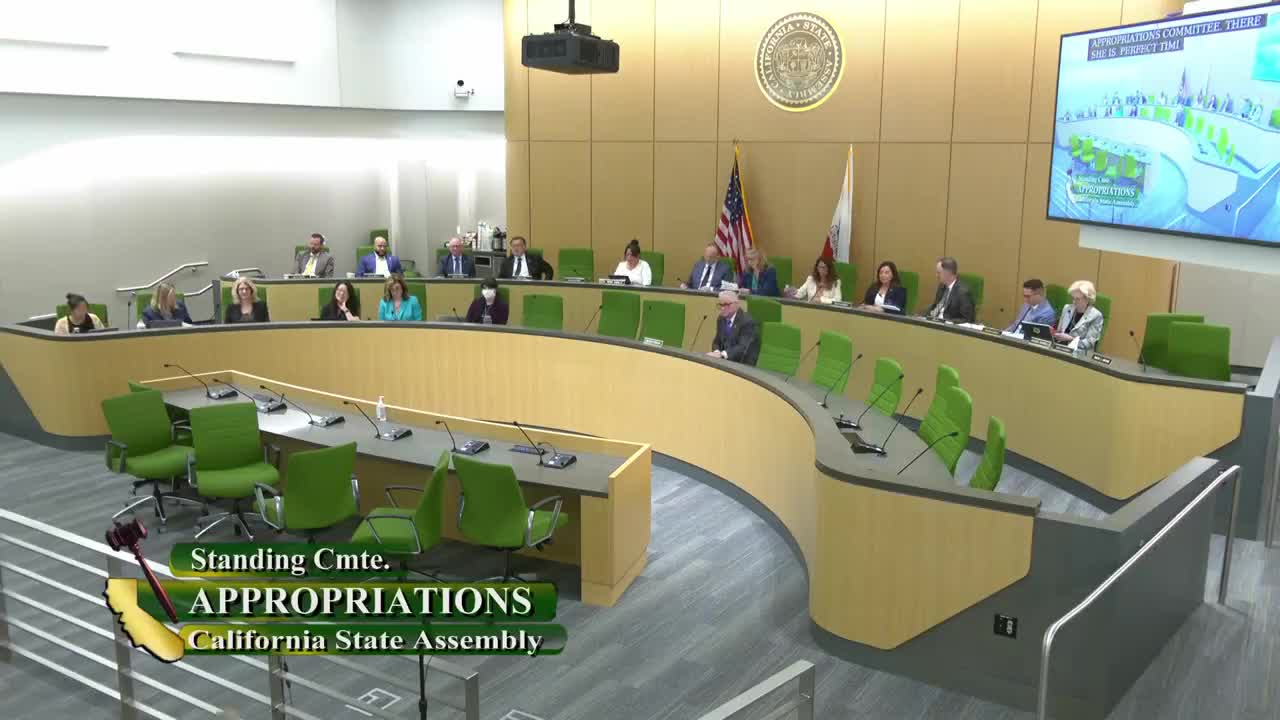 11SEC
Assembly Standing Committee on Appropriations
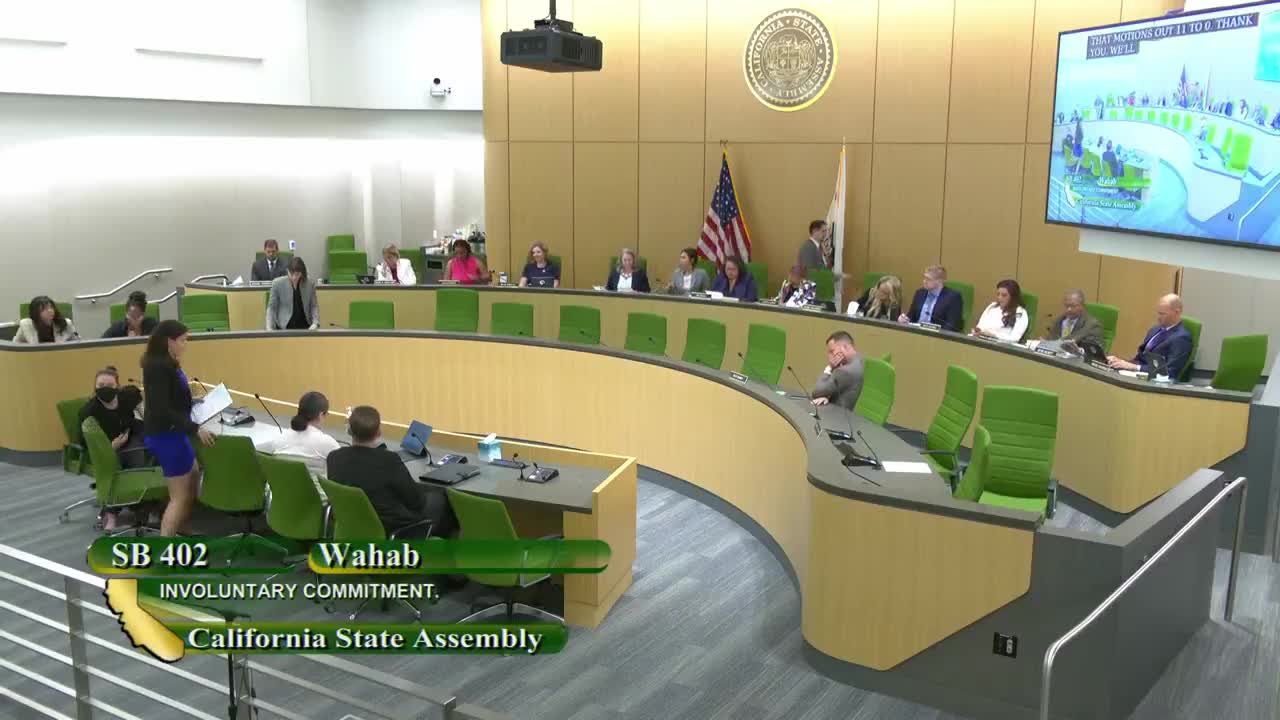 10MIN
Assembly Standing Committee on Health
 2MIN
Senate Standing Committee on Appropriations
 16MIN
Senate Standing Committee on Health
Bill Author

Bill Co-Author(s):