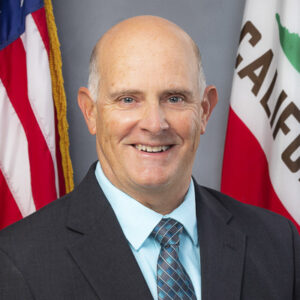
SB 353: Income tax: credits: food banks.
- Session Year: 2025-2026
- House: Senate
- Latest Version Date: 2025-06-16
Current Status:
In Progress
(2026-06-30: June 29 hearing. Held in committee and under submission.)
Introduced
In Committee
Awaiting First Chamber Vote
Passed First Chamber
In Committee
Awaiting Second Chamber Vote
Passed Second Chamber
Enacted
The Personal Income Tax Law and the Corporation Tax Law allow various credits against the taxes imposed by those laws, including, for taxable years beginning on or after January 1, 2017, and before January 1, 2027, a credit for qualified taxpayers in an amount equal to 15% of the qualified value of fresh fruits or vegetables and specified raw agricultural products or processed foods donated to a food bank.
This bill would extend the authorization for those tax credits indefinitely. for taxable years beginning before January 1, 2032.
Existing law requires any bill authorizing a new tax expenditure to contain, among other things, specific goals that the tax expenditure will achieve, detailed performance indicators, and data collection requirements. For purposes of complying with these requirements, existing law requires the Franchise Tax Board to submit a report to the Legislature regarding the utilization of the credit on or before December 1 of each year until January 1, 2026.
This bill would extend that reporting requirement to December 1, 2035.
This bill would take effect immediately as a tax levy.
The Personal Income Tax Law and the Corporation Tax Law allow various credits against the taxes imposed by those laws, including, for taxable years beginning on or after January 1, 2017, and before January 1, 2027, a credit for qualified taxpayers in an amount equal to 15% of the qualified value of fresh fruits or vegetables and specified raw agricultural products or processed foods donated to a food bank.
This bill would extend the authorization for those tax credits indefinitely.
Existing law requires any bill authorizing a new tax expenditure to contain, among other things, specific goals that the tax expenditure will achieve, detailed performance indicators, and data collection requirements. For purposes of complying with these requirements, existing law requires the Franchise Tax Board to submit a report to the Legislature regarding the utilization of the credit on or before December 1 of each year until January 1, 2026.
This bill would extend that reporting requirement to December 1, 2035.
This bill would take effect immediately as a tax levy.
The Personal Income Tax Law and the Corporation Tax Law allow various credits against the taxes imposed by those laws, including, for taxable years beginning on or after January 1, 2017, and before January 1, 2027, a credit for qualified taxpayers in an amount equal to 15% of the qualified value of fresh fruits or vegetables and specified raw agricultural products or processed foods donated to a food bank.
This bill would extend the authorization for those tax credits indefinitely.
This bill would take effect immediately as a tax levy.
(a)In the case of a qualified taxpayer who donates qualified donation items to a food bank located in California under Chapter 5 (commencing with Section 58501) of Part 1 of Division 21 of the Food and Agricultural Code, for taxable years beginning on or after January 1, 2017, and before January 1, 2032, there shall be allowed as a credit against the net tax, defined by Section 17039, an amount equal to 15 percent of the qualified value of those qualified donation items.
(b)For purposes of this section:
(1)Qualified donation item means fresh fruits or fresh vegetables and the following raw agricultural products or processed foods:
(A)All of the following:
(i)Fruits, nuts, or vegetables as defined in Section 42510 of the Food and Agricultural Code.
(ii)Meat food product as defined in Section 18665 of the Food and Agricultural Code.
(iii)Poultry as defined in Section 18675 of the Food and Agricultural Code.
(iv)Eggs as defined in Section 75027 of the Food and Agricultural Code.
(v)Fish as defined in Section 58609 of the Food and Agricultural Code.
(B)All of the following food as defined in Section 109935 of the Health and Safety Code:
(i)Rice.
(ii)Beans.
(iii)Fruits, nuts, and vegetables in canned, frozen, dried, dehydrated, and 100 percent juice forms.
(iv)Any cheese, milk, yogurt, butter, and dehydrated milk meeting the requirements in Division 15 (commencing with Section 32501) of the Food and Agricultural Code.
(v)Infant formula subject to Section 114094.5 of the Health and Safety Code.
(vi)Vegetable oil and olive oil.
(vii)Soup, pasta sauce, and salsa.
(viii)Bread and pasta.
(ix)Canned meats and canned seafood.
(2)(A)Qualified taxpayer means the person responsible for planting a crop, managing the crop, and harvesting the crop from the land.
(B)(i)Qualified taxpayer also means the person responsible for growing or raising a qualified donation item, or harvesting, packing, or processing a qualified donation item, provided that person is not a retailer.
(ii)As used in this subparagraph, retailer means a person primarily engaged in the business of making retail sales directly to the public.
(3)(A)Qualified value shall be calculated by using the weighted average wholesale price based on the qualified taxpayers total like grade wholesale sales of the donated item sold within the calendar month of the qualified taxpayers donation.
(B)If no wholesale sales of the donated item have occurred in the calendar month of the qualified taxpayers donation, the qualified value shall be equal to the nearest regional wholesale market price for the calendar month of the donation based upon the same grade products as published by the United States Department of Agricultures Agricultural Marketing Service or its successor.
(c)If the credit allowed by this section is claimed by the qualified taxpayer, any deduction otherwise allowed under this part for that amount of the cost paid or incurred by the qualified taxpayer that is eligible for the credit shall be reduced by the amount of the credit provided in subdivision (a).
(d)The qualified taxpayer shall provide to the food bank the qualified value of the qualified donation items and information regarding the origin of where the qualified donation items were grown, processed, or both grown and processed. Upon receipt of the qualified donation items, the food bank shall provide a certificate to the qualified taxpayer. The certificate shall contain a statement signed and dated by a person authorized by that food bank that the item is donated under Chapter 5 (commencing with Section 58501) of Part 1 of Division 21 of the Food and Agricultural Code. The certificate shall also contain the type and quantity of items donated, the name of the qualified taxpayer or qualified taxpayers, the name and address of the food bank, and, as provided by the qualified taxpayer, the qualified value of the qualified donation items and their origins. Upon the request of the Franchise Tax Board, the qualified taxpayer shall provide a copy of the certification to the Franchise Tax Board.
(e)The credit allowed by this section may be claimed only on a timely filed original return.
(f)In the case where the credit allowed by this section exceeds the net tax, the excess may be carried over to reduce the net tax in the following year, and for the six succeeding years if necessary, until the credit has been exhausted.
(g)(1)In accordance with Section 41, the purpose of the credit is to increase donations to food banks. Using the information available to the Franchise Tax Board from the certificates required under subdivision (d) and subdivision (d) of Section 23688.5, the Franchise Tax Board shall report to the Legislature on or before December 1, 2019, and each December 1 thereafter until December 1, 2035, regarding the utilization of the credit authorized by this section and Section 23688.5. The Franchise Tax Board shall also include in the report the qualified value of the qualified donation items, the county in which the qualified donation items originated, and the month the donation was made.
(2)A report required to be submitted pursuant to paragraph (1) shall be submitted in compliance with Section 9795 of the Government Code.
(h)The amendments made to this section by Chapter 431 of the Statutes of 2019 shall apply to taxable years beginning on or after January 1, 2020.
(i)(1)Except for the reporting requirements of subdivision (g), this section shall remain operative only until December 1, 2032.
(2)This section is repealed as of December 1, 2035.
SEC. 2.Section 23688.5 of the Revenue and Taxation Code is amended to read:23688.5.(a)In the case of a qualified taxpayer who donates qualified donation items to a food bank located in California under Chapter 5 (commencing with Section 58501) of Part 1 of Division 21 of the Food and Agricultural Code, for taxable years beginning on or after January 1, 2017, and before January 1, 2032, there shall be allowed as a credit against the tax, defined by Section 23036, an amount equal to 15 percent of the qualified value of those qualified donation items.
(b)For purposes of this section:
(1)Qualified donation item means fresh fruits or fresh vegetables and the following raw agricultural products or processed foods:
(A)All of the following:
(i)Fruits, nuts, or vegetables as defined in Section 42510 of the Food and Agricultural Code.
(ii)Meat food product as defined in Section 18665 of the Food and Agricultural Code.
(iii)Poultry as defined in Section 18675 of the Food and Agricultural Code.
(iv)Eggs as defined in Section 75027 of the Food and Agricultural Code.
(v)Fish as defined in Section 58609 of the Food and Agricultural Code.
(B)All of the following food as defined in Section 109935 of the Health and Safety Code:
(i)Rice.
(ii)Beans.
(iii)Fruits, nuts, and vegetables in canned, frozen, dried, dehydrated, and 100 percent juice forms.
(iv)Any cheese, milk, yogurt, butter, and dehydrated milk meeting the requirements in Division 15 (commencing with Section 32501) of the Food and Agricultural Code.
(v)Infant formula subject to Section 114094.5 of the Health and Safety Code.
(vi)Vegetable oil and olive oil.
(vii)Soup, pasta sauce, and salsa.
(viii)Bread and pasta.
(ix)Canned meats and canned seafood.
(2)(A)Qualified taxpayer means the person responsible for planting a crop, managing the crop, and harvesting the crop from the land.
(B)(i)Qualified taxpayer also means the person responsible for growing or raising a qualified donation item, or harvesting, packing, or processing a qualified donation item, provided that person is not a retailer.
(ii)As used in this subparagraph, retailer means a person primarily engaged in the business of making retail sales directly to the public.
(3)(A)Qualified value shall be calculated by using the weighted average wholesale price based on the qualified taxpayers total like grade wholesale sales of the donated item sold within the calendar month of the qualified taxpayers donation.
(B)If no wholesale sales of the donated item have occurred in the calendar month of the qualified taxpayers donation, the qualified value shall be equal to the nearest regional wholesale market price for the calendar month of the donation based upon the same grade products as published by the United States Department of Agricultures Agricultural Marketing Service or its successor.
(c)If the credit allowed by this section is claimed by the qualified taxpayer, any deduction otherwise allowed under this part for that amount of the cost paid or incurred by the qualified taxpayer that is eligible for the credit shall be reduced by the amount of the credit provided in subdivision (a).
(d)The qualified taxpayer shall provide to the food bank the qualified value of the qualified donation items and information regarding the origin of where the qualified donation items were grown, processed, or both grown and processed. Upon receipt of the qualified donation items, the food bank shall provide a certificate to the qualified taxpayer. The certificate shall contain a statement signed and dated by a person authorized by that food bank that the item is donated under Chapter 5 (commencing with Section 58501) of Part 1 of Division 21 of the Food and Agricultural Code. The certificate shall also contain the type and quantity of items donated, the name of the qualified taxpayer or the qualified taxpayers, the name and address of the food bank, and, as provided by the qualified taxpayer, the qualified value of the qualified donation items and their origins. Upon the request of the Franchise Tax Board, the qualified taxpayer shall provide a copy of the certification to the Franchise Tax Board.
(e)The credit allowed by this section may be claimed only on a timely filed original return.
(f)In the case where the credit allowed by this section exceeds the tax, the excess may be carried over to reduce the tax in the following year, and for the six succeeding years if necessary, until the credit has been exhausted.
(g)The amendments made to this section by Chapter 431 of the Statutes of 2019 shall apply to taxable years beginning on or after January 1, 2020.
(h)This section shall remain operative only until December 1, 2032, and as of that date is repealed.
SEC. 3.This act provides for a tax levy within the meaning of Article IV of the California Constitution and shall go into immediate effect.
(a)In the case of a qualified taxpayer who donates qualified donation items to a food bank located in California under Chapter 5 (commencing with Section 58501) of Part 1 of Division 21 of the Food and Agricultural Code, for taxable years beginning on or after January 1, 2017, there shall be allowed as a credit against the net tax, defined by Section 17039, an amount equal to 15 percent of the qualified value of those qualified donation items.
(b)For purposes of this section:
(1)Qualified donation item means fresh fruits or fresh vegetables and the following raw agricultural products or processed foods:
(A)All of the following:
(i)Fruits, nuts, or vegetables as defined in Section 42510 of the Food and Agricultural Code.
(ii)Meat food product as defined in Section 18665 of the Food and Agricultural Code.
(iii)Poultry as defined in Section 18675 of the Food and Agricultural Code.
(iv)Eggs as defined in Section 75027 of the Food and Agricultural Code.
(v)Fish as defined in Section 58609 of the Food and Agricultural Code.
(B)All of the following food as defined in Section 109935 of the Health and Safety Code:
(i)Rice.
(ii)Beans.
(iii)Fruits, nuts, and vegetables in canned, frozen, dried, dehydrated, and 100 percent juice forms.
(iv)Any cheese, milk, yogurt, butter, and dehydrated milk meeting the requirements in Division 15 (commencing with Section 32501) of the Food and Agricultural Code.
(v)Infant formula subject to Section 114094.5 of the Health and Safety Code.
(vi)Vegetable oil and olive oil.
(vii)Soup, pasta sauce, and salsa.
(viii)Bread and pasta.
(ix)Canned meats and canned seafood.
(2)(A)Qualified taxpayer means the person responsible for planting a crop, managing the crop, and harvesting the crop from the land.
(B)(i)Qualified taxpayer also means the person responsible for growing or raising a qualified donation item, or harvesting, packing, or processing a qualified donation item, provided that person is not a retailer.
(ii)As used in this subparagraph, retailer means a person primarily engaged in the business of making retail sales directly to the public.
(3)(A)Qualified value shall be calculated by using the weighted average wholesale price based on the qualified taxpayers total like grade wholesale sales of the donated item sold within the calendar month of the qualified taxpayers donation.
(B)If no wholesale sales of the donated item have occurred in the calendar month of the qualified taxpayers donation, the qualified value shall be equal to the nearest regional wholesale market price for the calendar month of the donation based upon the same grade products as published by the United States Department of Agricultures Agricultural Marketing Service or its successor.
(c)If the credit allowed by this section is claimed by the qualified taxpayer, any deduction otherwise allowed under this part for that amount of the cost paid or incurred by the qualified taxpayer that is eligible for the credit shall be reduced by the amount of the credit provided in subdivision (a).
(d)The qualified taxpayer shall provide to the food bank the qualified value of the qualified donation items and information regarding the origin of where the qualified donation items were grown, processed, or both grown and processed. Upon receipt of the qualified donation items, the food bank shall provide a certificate to the qualified taxpayer. The certificate shall contain a statement signed and dated by a person authorized by that food bank that the item is donated under Chapter 5 (commencing with Section 58501) of Part 1 of Division 21 of the Food and Agricultural Code. The certificate shall also contain the type and quantity of items donated, the name of the qualified taxpayer or qualified taxpayers, the name and address of the food bank, and, as provided by the qualified taxpayer, the qualified value of the qualified donation items and their origins. Upon the request of the Franchise Tax Board, the qualified taxpayer shall provide a copy of the certification to the Franchise Tax Board.
(e)The credit allowed by this section may be claimed only on a timely filed original return.
(f)In the case where the credit allowed by this section exceeds the net tax, the excess may be carried over to reduce the net tax in the following year, and for the six succeeding years if necessary, until the credit has been exhausted.
(g)(1)In accordance with Section 41, the purpose of the credit is to increase donations to food banks. Using the information available to the Franchise Tax Board from the certificates required under subdivision (d) and subdivision (d) of Section 23688.5, the Franchise Tax Board shall report to the Legislature on or before December 1, 2019, and each December 1 thereafter until the inoperative date specified in subdivision (h), December 1, 2035, regarding the utilization of the credit authorized by this section and Section 23688.5. The Franchise Tax Board shall also include in the report the qualified value of the qualified donation items, the county in which the qualified donation items originated, and the month the donation was made.
(h)(1)(2)A report required to be submitted pursuant to subdivision (g) paragraph (1) shall be submitted in compliance with Section 9795 of the Government Code.
(2)The requirement for submitting a report imposed under subdivision (g) is inoperative on January 1, 2026, pursuant to Section 10231.5 of the Government Code.(i)(h)The amendments made to this section by Chapter 431 of the Statutes of 2019 shall apply to taxable years beginning on or after January 1, 2020.
SEC. 2.Section 23688.5 of the Revenue and Taxation Code is amended to read:23688.5.(a)In the case of a qualified taxpayer who donates qualified donation items to a food bank located in California under Chapter 5 (commencing with Section 58501) of Part 1 of Division 21 of the Food and Agricultural Code, for taxable years beginning on or after January 1, 2017, there shall be allowed as a credit against the tax, defined by Section 23036, an amount equal to 15 percent of the qualified value of those qualified donation items.
(b)For purposes of this section:
(1)Qualified donation item means fresh fruits or fresh vegetables and the following raw agricultural products or processed foods:
(A)All of the following:
(i)Fruits, nuts, or vegetables as defined in Section 42510 of the Food and Agricultural Code.
(ii)Meat food product as defined in Section 18665 of the Food and Agricultural Code.
(iii)Poultry as defined in Section 18675 of the Food and Agricultural Code.
(iv)Eggs as defined in Section 75027 of the Food and Agricultural Code.
(v)Fish as defined in Section 58609 of the Food and Agricultural Code.
(B)All of the following food as defined in Section 109935 of the Health and Safety Code:
(i)Rice.
(ii)Beans.
(iii)Fruits, nuts, and vegetables in canned, frozen, dried, dehydrated, and 100 percent juice forms.
(iv)Any cheese, milk, yogurt, butter, and dehydrated milk meeting the requirements in Division 15 (commencing with Section 32501) of the Food and Agricultural Code.
(v)Infant formula subject to Section 114094.5 of the Health and Safety Code.
(vi)Vegetable oil and olive oil.
(vii)Soup, pasta sauce, and salsa.
(viii)Bread and pasta.
(ix)Canned meats and canned seafood.
(2)(A)Qualified taxpayer means the person responsible for planting a crop, managing the crop, and harvesting the crop from the land.
(B)(i)Qualified taxpayer also means the person responsible for growing or raising a qualified donation item, or harvesting, packing, or processing a qualified donation item, provided that person is not a retailer.
(ii)As used in this subparagraph, retailer means a person primarily engaged in the business of making retail sales directly to the public.
(3)(A)Qualified value shall be calculated by using the weighted average wholesale price based on the qualified taxpayers total like grade wholesale sales of the donated item sold within the calendar month of the qualified taxpayers donation.
(B)If no wholesale sales of the donated item have occurred in the calendar month of the qualified taxpayers donation, the qualified value shall be equal to the nearest regional wholesale market price for the calendar month of the donation based upon the same grade products as published by the United States Department of Agricultures Agricultural Marketing Service or its successor.
(c)If the credit allowed by this section is claimed by the qualified taxpayer, any deduction otherwise allowed under this part for that amount of the cost paid or incurred by the qualified taxpayer that is eligible for the credit shall be reduced by the amount of the credit provided in subdivision (a).
(d)The qualified taxpayer shall provide to the food bank the qualified value of the qualified donation items and information regarding the origin of where the qualified donation items were grown, processed, or both grown and processed. Upon receipt of the qualified donation items, the food bank shall provide a certificate to the qualified taxpayer. The certificate shall contain a statement signed and dated by a person authorized by that food bank that the item is donated under Chapter 5 (commencing with Section 58501) of Part 1 of Division 21 of the Food and Agricultural Code. The certificate shall also contain the type and quantity of items donated, the name of the qualified taxpayer or the qualified taxpayers, the name and address of the food bank, and, as provided by the qualified taxpayer, the qualified value of the qualified donation items and their origins. Upon the request of the Franchise Tax Board, the qualified taxpayer shall provide a copy of the certification to the Franchise Tax Board.
(e)The credit allowed by this section may be claimed only on a timely filed original return.
(f)In the case where the credit allowed by this section exceeds the tax, the excess may be carried over to reduce the tax in the following year, and for the six succeeding years if necessary, until the credit has been exhausted.
(g)The amendments made to this section by Chapter 431 of the Statutes of 2019 shall apply to taxable years beginning on or after January 1, 2020.
SEC. 3.This act provides for a tax levy within the meaning of Article IV of the California Constitution and shall go into immediate effect.
(a)In the case of a qualified taxpayer who donates qualified donation items to a food bank located in California under Chapter 5 (commencing with Section 58501) of Part 1 of Division 21 of the Food and Agricultural Code, for taxable years beginning on or after January 1, 2017, and before January 1, 2027, there shall be allowed as a credit against the net tax, defined by Section 17039, an amount equal to 15 percent of the qualified value of those qualified donation items.
(b)For purposes of this section:
(1)Qualified donation item means fresh fruits or fresh vegetables and the following raw agricultural products or processed foods:
(A)All of the following:
(i)Fruits, nuts, or vegetables as defined in Section 42510 of the Food and Agricultural Code.
(ii)Meat food product as defined in Section 18665 of the Food and Agricultural Code.
(iii)Poultry as defined in Section 18675 of the Food and Agricultural Code.
(iv)Eggs as defined in Section 75027 of the Food and Agricultural Code.
(v)Fish as defined in Section 58609 of the Food and Agricultural Code.
(B)All of the following food as defined in Section 109935 of the Health and Safety Code:
(i)Rice.
(ii)Beans.
(iii)Fruits, nuts, and vegetables in canned, frozen, dried, dehydrated, and 100 percent juice forms.
(iv)Any cheese, milk, yogurt, butter, and dehydrated milk meeting the requirements in Division 15 (commencing with Section 32501) of the Food and Agricultural Code.
(v)Infant formula subject to Section 114094.5 of the Health and Safety Code.
(vi)Vegetable oil and olive oil.
(vii)Soup, pasta sauce, and salsa.
(viii)Bread and pasta.
(ix)Canned meats and canned seafood.
(2)(A)Qualified taxpayer means the person responsible for planting a crop, managing the crop, and harvesting the crop from the land.
(B)(i)Qualified taxpayer also means the person responsible for growing or raising a qualified donation item, or harvesting, packing, or processing a qualified donation item, provided that person is not a retailer.
(ii)As used in this subparagraph, retailer means a person primarily engaged in the business of making retail sales directly to the public.
(3)(A)Qualified value shall be calculated by using the weighted average wholesale price based on the qualified taxpayers total like grade wholesale sales of the donated item sold within the calendar month of the qualified taxpayers donation.
(B)If no wholesale sales of the donated item have occurred in the calendar month of the qualified taxpayers donation, the qualified value shall be equal to the nearest regional wholesale market price for the calendar month of the donation based upon the same grade products as published by the United States Department of Agricultures Agricultural Marketing Service or its successor.
(c)If the credit allowed by this section is claimed by the qualified taxpayer, any deduction otherwise allowed under this part for that amount of the cost paid or incurred by the qualified taxpayer that is eligible for the credit shall be reduced by the amount of the credit provided in subdivision (a).
(d)The qualified taxpayer shall provide to the food bank the qualified value of the qualified donation items and information regarding the origin of where the qualified donation items were grown, processed, or both grown and processed. Upon receipt of the qualified donation items, the food bank shall provide a certificate to the qualified taxpayer. The certificate shall contain a statement signed and dated by a person authorized by that food bank that the item is donated under Chapter 5 (commencing with Section 58501) of Part 1 of Division 21 of the Food and Agricultural Code. The certificate shall also contain the type and quantity of items donated, the name of the qualified taxpayer or qualified taxpayers, the name and address of the food bank, and, as provided by the qualified taxpayer, the qualified value of the qualified donation items and their origins. Upon the request of the Franchise Tax Board, the qualified taxpayer shall provide a copy of the certification to the Franchise Tax Board.
(e)The credit allowed by this section may be claimed only on a timely filed original return.
(f)In the case where the credit allowed by this section exceeds the net tax, the excess may be carried over to reduce the net tax in the following year, and for the six succeeding years if necessary, until the credit has been exhausted.
(g)In accordance with Section 41, the purpose of the credit is to increase donations to food banks. Using the information available to the Franchise Tax Board from the certificates required under subdivision (d) and subdivision (d) of Section 23688.5, the Franchise Tax Board shall report to the Legislature on or before December 1, 2019, and each December 1 thereafter until the inoperative date specified in subdivision (h), regarding the utilization of the credit authorized by this section and Section 23688.5. The Franchise Tax Board shall also include in the report the qualified value of the qualified donation items, the county in which the qualified donation items originated, and the month the donation was made.
(h)(1)A report required to be submitted pursuant to subdivision (g) shall be submitted in compliance with Section 9795 of the Government Code.
(2)The requirement for submitting a report imposed under subdivision (g) is inoperative on January 1, 2026, pursuant to Section 10231.5 of the Government Code.
(i)This section shall be repealed on December 1, 2027.(j)(i)The amendments made to this section by Chapter 431 of the Statutes of 2019 shall apply to taxable years beginning on or after January 1, 2020.
SEC. 2.Section 23688.5 of the Revenue and Taxation Code is amended to read:23688.5.(a)In the case of a qualified taxpayer who donates qualified donation items to a food bank located in California under Chapter 5 (commencing with Section 58501) of Part 1 of Division 21 of the Food and Agricultural Code, for taxable years beginning on or after January 1, 2017, and before January 1, 2027, there shall be allowed as a credit against the tax, defined by Section 23036, an amount equal to 15 percent of the qualified value of those qualified donation items.
(b)For purposes of this section:
(1)Qualified donation item means fresh fruits or fresh vegetables and the following raw agricultural products or processed foods:
(A)All of the following:
(i)Fruits, nuts, or vegetables as defined in Section 42510 of the Food and Agricultural Code.
(ii)Meat food product as defined in Section 18665 of the Food and Agricultural Code.
(iii)Poultry as defined in Section 18675 of the Food and Agricultural Code.
(iv)Eggs as defined in Section 75027 of the Food and Agricultural Code.
(v)Fish as defined in Section 58609 of the Food and Agricultural Code.
(B)All of the following food as defined in Section 109935 of the Health and Safety Code:
(i)Rice.
(ii)Beans.
(iii)Fruits, nuts, and vegetables in canned, frozen, dried, dehydrated, and 100 percent juice forms.
(iv)Any cheese, milk, yogurt, butter, and dehydrated milk meeting the requirements in Division 15 (commencing with Section 32501) of the Food and Agricultural Code.
(v)Infant formula subject to Section 114094.5 of the Health and Safety Code.
(vi)Vegetable oil and olive oil.
(vii)Soup, pasta sauce, and salsa.
(viii)Bread and pasta.
(ix)Canned meats and canned seafood.
(2)(A)Qualified taxpayer means the person responsible for planting a crop, managing the crop, and harvesting the crop from the land.
(B)(i)Qualified taxpayer also means the person responsible for growing or raising a qualified donation item, or harvesting, packing, or processing a qualified donation item, provided that person is not a retailer.
(ii)As used in this subparagraph, retailer means a person primarily engaged in the business of making retail sales directly to the public.
(3)(A)Qualified value shall be calculated by using the weighted average wholesale price based on the qualified taxpayers total like grade wholesale sales of the donated item sold within the calendar month of the qualified taxpayers donation.
(B)If no wholesale sales of the donated item have occurred in the calendar month of the qualified taxpayers donation, the qualified value shall be equal to the nearest regional wholesale market price for the calendar month of the donation based upon the same grade products as published by the United States Department of Agricultures Agricultural Marketing Service or its successor.
(c)If the credit allowed by this section is claimed by the qualified taxpayer, any deduction otherwise allowed under this part for that amount of the cost paid or incurred by the qualified taxpayer that is eligible for the credit shall be reduced by the amount of the credit provided in subdivision (a).
(d)The qualified taxpayer shall provide to the food bank the qualified value of the qualified donation items and information regarding the origin of where the qualified donation items were grown, processed, or both grown and processed. Upon receipt of the qualified donation items, the food bank shall provide a certificate to the qualified taxpayer. The certificate shall contain a statement signed and dated by a person authorized by that food bank that the item is donated under Chapter 5 (commencing with Section 58501) of Part 1 of Division 21 of the Food and Agricultural Code. The certificate shall also contain the type and quantity of items donated, the name of the qualified taxpayer or the qualified taxpayers, the name and address of the food bank, and, as provided by the qualified taxpayer, the qualified value of the qualified donation items and their origins. Upon the request of the Franchise Tax Board, the qualified taxpayer shall provide a copy of the certification to the Franchise Tax Board.
(e)The credit allowed by this section may be claimed only on a timely filed original return.
(f)In the case where the credit allowed by this section exceeds the tax, the excess may be carried over to reduce the tax in the following year, and for the six succeeding years if necessary, until the credit has been exhausted.
(g)This section shall be repealed on December 1, 2027.(h)(g)The amendments made to this section by Chapter 431 of the Statutes of 2019 shall apply to taxable years beginning on or after January 1, 2020.
SEC. 3.This act provides for a tax levy within the meaning of Article IV of the California Constitution and shall go into immediate effect.
|
Date
|
Status
|
|---|---|
| Jun 30, 2026 | June 29 hearing. Held in committee and under submission. |
| Jul 15, 2025 | July 14 hearing: Retained in suspense file. |
| Jun 24, 2025 | June 23 set for first hearing. Placed on REV. & TAX. suspense file. |
| Jun 16, 2025 | From committee with author's amendments. Read second time and amended. Re-referred to Com. on REV. & TAX. |
| Jun 5, 2025 | Referred to Com. on REV. & TAX. |
| May 29, 2025 | In Assembly. Read first time. Held at Desk. |
| May 29, 2025 | Read third time. Passed. (Ayes 38. Noes 0. Page 1325.) Ordered to the Assembly. |
| May 27, 2025 | Ordered to special consent calendar. |
| May 23, 2025 | From committee: Do pass. (Ayes 6. Noes 0. Page 1197.) (May 23). |
| May 23, 2025 | Read second time. Ordered to third reading. |
| May 20, 2025 | Set for hearing May 23. |
| May 19, 2025 | May 19 hearing: Placed on APPR. suspense file. |
| May 15, 2025 | Set for hearing May 19. |
| May 14, 2025 | From committee: Do pass and re-refer to Com. on APPR. (Ayes 5. Noes 0. Page 1082.) (May 14). Re-referred to Com. on APPR. |
| May 6, 2025 | From committee with author's amendments. Read second time and amended. Re-referred to Com. on REV. & TAX. |
| Mar 18, 2025 | Set for hearing May 14. |
| Feb 19, 2025 | Referred to Com. on REV. & TAX. |
| Feb 13, 2025 | From printer. May be acted upon on or after March 15. |
| Feb 12, 2025 | Introduced. Read first time. To Com. on RLS. for assignment. To print. |
|
Date
|
Description
|
Location
|
Votes
|
|
|---|---|---|---|---|
| May 29, 2025 | Special Consent SB353 Alvarado-Gil et al. | Senate Floor |
Passed |
|
| May 23, 2025 | Do pass | Senate Standing Committee on Appropriations |
Passed |
|
| May 19, 2025 | Placed on suspense file | Senate Standing Committee on Appropriations |
Passed |
|
| May 14, 2025 | Do pass, but first be re-referred to the Committee on [Appropriations] | Senate Standing Committee on Revenue and Taxation |
Passed |
This list shows positions taken on this bill by organizations on the date displayed, which is linked to the original source.
Positions by individuals are not included.
|
Organization
|
Position
|
Date
|
|---|---|---|
| 350 Humboldt | ** Support | |
| A.V. Thomas Produce | ** Support | |
| Abound Food Care | ** Support | |
| Alena's Lab Kitchen | ** Support | |
| Alena’s Lab Kitchen | ** Support | |
| Bayview Senior Services | ** Support | |
| Berkeley Food Network | ** Support | |
| California Association Of Food Banks | ** Support | |
| California Farm Bureau Federation | ** Support | |
| Californians Against Waste | ** Support | |
| Careit | ** Support | |
| Ceres Community Project | ** Support | |
| City of Woodland | ** Support | |
| Climate Action California | ** Support | |
| Climate Reality Project - Silicon Valley Chapter | ** Support | |
| Community Action Partnership of Orange County | ** Support | |
| Crop Swap LA | ** Support | |
| Dr. Bronner'S | ** Support | |
| Dr. Bronner’s | ** Support | |
| Ecology Center | ** Support | |
| Elders Climate Action, Northern California Chapter | ** Support | |
| Elders Climate Action, Southern California Chapter | ** Support | |
| Extrafood | ** Support | |
| Farm2people | ** Support | |
| Food Bank of El Dorado County | ** Support | |
| Food Forward, Inc. | ** Support | |
| Foodcycle | ** Support | |
| Franciscan Workers of Junipero Serra, dba Dorothy's Place | ** Support | |
| Fullwell | ** Support | |
| Gaia | ** Support | |
| Global Alliance for Incinerator Alternatives | ** Support | |
| Howard Jarvis Taxpayers Association (HJTA) | ** Support | |
| Loaves & Fishes Family Kitchen | ** Support | |
| Los Angeles Food Policy Council | ** Support | |
| Los Angeles Regional Food Bank | ** Support | |
| Mountain Bounty Farm | ** Support | |
| Natural Resources Defense Council | ** Support | |
| Orange County Food Bank | ** Support | |
| Public Health Advocates | ** Support | |
| Replate | ** Support | |
| Roots of Change | ** Support | |
| Sacramento Food Bank & Family Services | ** Support | |
| Salinas Valley Recycles | ** Support | |
| San Diego Food System Alliance | ** Support | |
| San Francisco Marin Food Bank | ** Support | |
| Santa Cruz Climate Action Network | ** Support | |
| Second Harvest Food Bank of Orange County | ** Support | |
| Second Harvest of Silicon Valley | ** Support | |
| Sierra Harvest | ** Support | |
| Sierra Orchards | ** Support | |
| Silvia Organic Farm | ** Support | |
| Solana Center for Environmental Innovation | ** Support | |
| StopWaste | ** Support | |
| Sustainable Entrepreneurial Ecosystem Development | ** Support | |
| The Food Initiative of Greater Stanislaus, Inc. | ** Support | |
| The Resource Connection Food Bank | ** Support | |
| Twin Tree Farms | ** Support | |
| zero waste marin | ** Support | |
| Zero Waste Sonoma | ** Support |
Date of Hearing: June 29, 2026
ASSEMBLY COMMITTEE ON REVENUE AND TAXATION
Mike Gipson, Chair
SBPCA Bill Id:SB 353
Author:(Alvarado-Gil) – As Amended Ver:June 16, 2025
SUSPENSE
Majority vote. Tax levy. Fiscal committee.
SENATE VOTE: 38-0
SUBJECT: Income tax: credits: food banks
SUMMARY: Extends the sunset date of the Donated Fresh Fruits and Vegetables Credit by 5 years, from taxable years beginning before January 1, 2027, to taxable years beginning before January 1, 2032.
EXISTING LAW:
- Allows various tax credits, which are generally designed to encourage socially beneficial behavior or to provide relief to taxpayers who incur specified expenses.
- Conforms generally to federal law regarding the deduction of all ordinary and necessary expenses of a trade or business. (Revenue and Taxation Code (R&TC) Section 17201 et seq.)
- Conforms generally to federal law regarding deductions for charitable contributions, but does not conform to an enhanced deduction for donations of food inventory that federal law provides.[1] (R&TC Section 17275.2.)
- Allows taxpayers to claim a deduction for charitable contributions made to qualified organizations. For corporations, the deduction is generally limited to 10% of net income. (R&TC Sections 17201 and 24358.)
- Allows a 50% tax credit for costs to transport donated agricultural products to nonprofit charitable organizations. (R&TC Sections 17053.12 and 23608.)
- Allows a tax credit, under the Personal Income Tax (PIT) Law and the Corporation Tax (CT) Laws, to "qualified taxpayers" equal to 15% of the "qualified value" of "qualified donation items" donated to food banks located in California. (R&TC Sections 17053.88.5 and 23688.5.) Specifically, these credits do all of the following:
- Define a "qualified taxpayer" as the person responsible for planting a crop, managing the crop, and harvesting the crop from the land, as well as the person responsible for growing or raising a qualified donation item, or harvesting, packing, or processing a qualified donation item, provided that person is not a retailer. For these purposes, "retailer" is a person primarily engaged in the business of making retail sales directly to the public.
- Define "qualified donation item" as fresh fruits or fresh vegetables and includes all of the following raw agricultural products or processed foods:
- "Fruits, nuts, or vegetables" as defined in Food and Agricultural Code (F&AC) Section 42510;
- "Meat food product" as defined in F&AC Section 18665;
- "Poultry" as defined in F&AC Section 18675;
- "Eggs" as defined in F&AC Section 75027;
- "Fish" as defined in F&AC Section 58609; and,
- All of the following as defined in Health and Safety Code (H&SC) Section 109935:
- Rice;
- Beans;
- Fruits, nuts, and vegetables in canned, frozen, dried, dehydrated, and 100% juice forms;
- Any cheese, milk, yogurt, butter, and dehydrated milk meeting the requirements of F&AC Section 32501 et seq.;
- Infant formula subject to H&SC Section 114094.5;
- Vegetable oil and olive oil;
- Soup, pasta sauce, and salsa;
- Bread and pasta; and,
- Canned meats and seafood.
- Specify the calculation of "qualified value" by using:
- The weighted average wholesale price based on the taxpayer's total like grade wholesale sales of the donated items sold within the same month as the donation; or, if no wholesale sales occurred in the same month as the donation,
- The nearest regional wholesale market price based upon the same grade products for the same month as the donation, as published by U.S. Department of Agriculture's Agricultural Marketing Service.
- Requires the credit for donated fresh fruits and vegetables to be claimed on a timely filed original return.
- Reduces any deduction otherwise allowed under the PIT or CT Law for that amount of cost paid or incurred by the qualified taxpayer for the fresh fruits and vegetables by the credit amount provided.
- Provides that any unused credit amounts may be carried over for up to 7 years if necessary, until the credit is exhausted.
- Requires the Franchise Tax Board (FTB) to produce an annual report to the Legislature on or before December 1 regarding the utilization of the credit, including the qualified value of the qualified donation items, the county in which the qualified donation items originated, and the month the donation was made.
FISCAL EFFECT: The FTB estimates General Fund revenue losses of $400,000 in fiscal year (FY) 2026-27 and $1 million in FY 2027-28.
COMMENTS:
- The author has provided the following statement in support of this bill:
The Farm to Food Bank Tax Credit, also known as the Donated Fresh Fruits and Vegetables Credit, was first enacted in 2012 under AB 152 (Fuentes). This credit allows a qualified taxpayer to receive a credit for qualified donation items to a California food bank. Qualified taxpayers can receive a credit of 15% of the qualified value of the donation. Donations can include fresh fruits and vegetables, eggs, meat products, dairy products and grains. The current program is set to sunset in 2027. Many farmers have taken part in this program with the most recent numbers showing that $8.2 million in donations were made in 2023, and $769,499 in tax credits were given. The credit should be extended for another 5 years in order to continue to encourage farmers to donate fresh fruits and vegetables as well as other agricultural products to local California food banks in order for recipients to have access to healthy foods. Extending the sunset out will ensure farmers will continue to provide fresh produce, dairy, eggs and meat products to food banks to provide healthy foods to their clients.
- This bill is supported by the California Farm Bureau Federation, which notes, in part:
Farm Bureau is committed to addressing food insecurity in our state, we believe this bill is a critical step in encouraging more donations to food banks, ensuring that individuals and families in need continue to have access to healthy, nutritious food. Moreover, our members face uncertainty in accessing open export markets, increasing financial pressures on California’s farmers and ranchers. SB 353 ensures an important pathway for managing yields – that food has a place to go – so that the economics of production agriculture work. The Farm to Food Bank Tax Credit, also known as the Donated Fresh Fruits and Vegetables Credit, was first enacted in 2012 under AB 152 (Fuentes) and will expire in 2027. The law allows a qualified taxpayer to receive a 15% tax credit for qualified donation items, such as fresh fruits and vegetables, eggs, meat products, dairy products and grains. In 2023 alone, over $8m in donations were made to local California food banks and $769,000.00 in tax credits were allowed.
- Committee Staff Comments:
- What is a "tax expenditure"? Existing law provides various credits, deductions, exclusions, and exemptions for particular taxpayer groups. In the late 1960s, U.S. Treasury officials began arguing that these features of the tax law should be referred to as "expenditures" since they are generally enacted to accomplish some governmental purpose and there is a determinable cost associated with each (in the form of foregone revenues).
As the Department of Finance notes in its annual Tax Expenditure Report, there are several key differences between tax expenditures and direct expenditures. First, tax expenditures are typically reviewed less frequently than direct expenditures. Second, there is generally no control over the amount of revenue losses associated with any given tax expenditure. Finally, it should also be noted that, once enacted, it takes a two-thirds vote to rescind an existing tax expenditure absent a sunset date. This effectively results in a "one-way ratchet" whereby tax expenditures can be conferred by majority vote, but cannot be rescinded, irrespective of their efficacy or cost, without a supermajority vote.
- Prior iterations: The Donated Fresh Fruits or Vegetables Tax Credit was created in 2011 when the Legislature passed AB 152 (Fuentes), Chapter 503, Statutes of 2011. This credit was available under the PIT and CT Laws for tax years beginning on January 1, 2012, and before January 1, 2017. The credit was equal to 10% of the inventory cost of fresh fruits or vegetables donated by a qualified taxpayer to a California food bank. To be eligible for the credit, the qualified taxpayer was required to be the person responsible for planting the crop, managing the crop, and harvesting the crop from the land. In other words, the qualified taxpayer had a direct role in growing and cultivating the fruits and vegetables that were donated.
To claim the credit, a food bank was required to provide a certificate to the qualified taxpayer that verified the donation was made in accordance with the Food and Agricultural Code and the type and quantity of fresh fruits or vegetables donated. The credit also required taxpayers to provide the FTB with the estimated value of the donated fresh fruits or vegetables and information regarding the origin of where the donated fruits or vegetables were grown. Upon request of the FTB, a taxpayer claiming the credit was required to provide a copy of the certificate provided by the food bank that received the donation.
- Prior iterations: The Donated Fresh Fruits or Vegetables Tax Credit was created in 2011 when the Legislature passed AB 152 (Fuentes), Chapter 503, Statutes of 2011. This credit was available under the PIT and CT Laws for tax years beginning on January 1, 2012, and before January 1, 2017. The credit was equal to 10% of the inventory cost of fresh fruits or vegetables donated by a qualified taxpayer to a California food bank. To be eligible for the credit, the qualified taxpayer was required to be the person responsible for planting the crop, managing the crop, and harvesting the crop from the land. In other words, the qualified taxpayer had a direct role in growing and cultivating the fruits and vegetables that were donated.
In response to the credit's expiration, the Legislature enacted a new Donated Fresh Fruit or Vegetables Credit as part of SB 837 (Committee on Budget & Fiscal Review), Chapter 32, Statutes of 2016. The revised Donated Fresh Fruit or Vegetables Credit was similar to the prior credits, but it increased the credit's amount from 10% of the cost of fresh fruits or vegetables donated by the taxpayer to 15%. Additionally, instead of the credit amount being calculated on an inventory cost basis – which can raise questions about indirect costs – SB 837 provided that the credit amount must be calculated using the weighted average of the wholesale price.
- Sunset extension and expansion: The Donated Fresh Fruits or Vegetables Tax Credit was significantly expanded by AB 614 (Eggman), Chapter 431, Statutes of 2019. First, AB 614 expanded the types of food products eligible for the credit beyond fresh fruit and vegetables to include donations of specified food items such as soup, bread, and canned meats; processed foods such as infant formula and olive oil; and raw agricultural products such as rice, beans, nuts, and various dairy items.
Additionally, AB 614 expanded the definition of a qualified taxpayer to include those harvesting, packing, or processing a qualified donation item. This change made additional taxpayers involved in the food supply chain eligible for the credit. AB 150 (Committee on Budget), Chapter 82, Statutes of 2021, extended the credit from January 1, 2022, to January 1, 2027.
- Steady flow of donations: The below chart summarizes the total amount of credits allowed, the value of the donated items, and the number of returns claiming the credit by tax year:
* Not all timely 2023 tax year returns had been processed as of report publishing. Source: Donated Fresh Fruit or Vegetables Annual Reports 2019-2023, FTB Economic and Statistical Research Bureau. https://www.ftb.ca.gov/about-ftb/data-reports-plans/index.html.
Existing law also requires the FTB's annual report to include monthly breakdowns of when donations were made and the estimated market value of those donations. Committee staff's review of this data finds that donations are at their highest during the summer harvesting season and winter holiday season.
Additionally, the FTB must provide information regarding the counties in which the donated items originated. However, the FTB's data privacy policies do not allow for the release of statistical summaries when the underlying data is the result of fewer than 20 returns. Thus, county-level totals are not available for the large majority of counties. Only three counties exceeded the disclosure restrictions across a multi-year window:
- Tax year 2021: County of Fresno, $543,789;
- Tax year 2022: County of Fresno, $698,748; and,
- Tax year 2023: County of Los Angeles, $130,350.
Given these considerations, the Committee may wish to consider amending the performance indicators that are required to be included in the FTB's annual report.
- Committee's tax expenditure policy: Both R&TC Section 41 and Committee policy require any tax expenditure bill to outline specific goals, purposes, and objectives that the tax expenditure will achieve, along with detailed performance indicators for the Legislature to use when measuring whether the tax expenditure meets those stated goals, purposes, and objectives. A tax expenditure bill will not be eligible for a Committee vote unless it has complied with these requirements.
In addition to the R&TC Section 41 requirements, this Committee's policy also requires that all tax expenditure proposals contain an appropriate sunset provision to be eligible for a vote. According to this policy, an "appropriate sunset provision" means five years, except in the case of a tax expenditure measure providing relief to California veterans, in which case "appropriate sunset provision" means ten years.
Absent a sunset date, tax expenditure programs cannot be revoked without a supermajority vote. Thus, this Committee has a longstanding practice of including sunset dates in tax expenditure bills to allow the Legislature periodically to review the cost and efficacy of such expenditures, as well as whether technical changes are needed due to evolving circumstances. As recently amended, this bill complies with the Committee's sunset policy. - Prior legislation:
- AB 150 (Committee on Budget), Chapter 82, Statutes of 2021, extended the credit from January 1, 2022, to January 1, 2027.
- AB 614 (Eggman), Chapter 431, Statutes of 2019, expanded the types of food products that qualified as contributions for purposes of the Donated Fresh Fruit or Vegetables Credit.
- SB 837 (Committee on Budget & Fiscal Review), Chapter 32, Statutes of 2016, established the fresh fruit and vegetable tax credit for taxable years beginning on or after January 1, 2017, and before January 1, 2022.
- AB 152 (Fuentes), Chapter 503, Statutes of 2011, created a 10% tax credit for fresh fruit and fresh vegetables for taxable years beginning on January 1, 2012, and before January 1, 2017. This credit sunset on December 1, 2017.
- Committee's tax expenditure policy: Both R&TC Section 41 and Committee policy require any tax expenditure bill to outline specific goals, purposes, and objectives that the tax expenditure will achieve, along with detailed performance indicators for the Legislature to use when measuring whether the tax expenditure meets those stated goals, purposes, and objectives. A tax expenditure bill will not be eligible for a Committee vote unless it has complied with these requirements.
REGISTERED SUPPORT / OPPOSITION:
Support
350 Humboldt
Berkeley Food Network
California Association of Food Banks
California Farm Bureau Federation
Californians Against Waste
City of Woodland
Climate Reality Project - Silicon Valley Chapter
Community Action Partnership of Orange County
Ecology Center
Foodcycle
Franciscan Workers of Junipero Serra, Dba Dorothy's Place
Gaia
Howard Jarvis Taxpayers Association (HJTA)
Los Angeles Regional Food Bank
Replate
Roots of Change
Salinas Valley Recycles
San Diego Food System Alliance
Santa Cruz Climate Action Network
Second Harvest Food Bank of Orange County
Second Harvest of Silicon Valley
Sierra Harvest
Sierra Orchards
Stopwaste
Opposition
None on file
Analysis Prepared by: Wesley Whitaker / REV. & TAX. / (916) 319-2098
The federal enhanced deduction is provided by Internal Revenue Code (IRC) Section 170(e)(3)(C). ↑
Date of Hearing: July 14, 2025
ASSEMBLY COMMITTEE ON REVENUE AND TAXATION
Mike Gipson, Chair
SBPCA Bill Id:SB 353
Author:(Alvarado-Gil) – As Amended Ver:June 16, 2025
SUSPENSE
Majority vote. Tax levy. Fiscal committee.
SENATE VOTE: 38-0
SUBJECT: Income tax: credits: food banks
SUMMARY: Extends the sunset date of the Donated Fresh Fruits and Vegetables Credit by 5 years, from taxable years beginning before January 1, 2027, to taxable years beginning before January 1, 2032.
EXISTING LAW:
- Allows various tax credits, which are generally designed to encourage socially beneficial behavior or to provide relief to taxpayers who incur specified expenses.
- Conforms generally to federal law regarding the deduction of all ordinary and necessary expenses of a trade or business. (Revenue and Taxation Code (R&TC) Section 17201 et seq.)
- Conforms generally to federal law regarding deductions for charitable contributions, but does not conform to an enhanced deduction for donations of food inventory that federal law provides.[1] (R&TC Section 17275.2.)
- Allows taxpayers to claim a deduction for charitable contributions made to qualified organizations. For corporations, the deduction is generally limited to 10% of net income. (R&TC Sections 17201 and 24358.)
- Allows a 50% tax credit for costs to transport donated agricultural products to nonprofit charitable organizations. (R&TC Sections 17053.12 and 23608.)
- Allows a tax credit, under the Personal Income Tax (PIT) Law and the Corporation Tax (CT) Laws, to "qualified taxpayers" equal to 15% of the "qualified value" of "qualified donation items" donated to food banks located in California. (R&TC Sections 17053.88.5 and 23688.5.) Specifically, these credits do all of the following:
- Define a "qualified taxpayer" as the person responsible for planting a crop, managing the crop, and harvesting the crop from the land, as well as the person responsible for growing or raising a qualified donation item, or harvesting, packing, or processing a qualified donation item, provided that person is not a retailer. For these purposes, "retailer" is a person primarily engaged in the business of making retail sales directly to the public.
- Define "qualified donation item" as fresh fruits or fresh vegetables and includes all of the following raw agricultural products or processed foods:
- "Fruits, nuts, or vegetables" as defined in Food and Agricultural Code (F&AC) Section 42510;
- "Meat food product" as defined in F&AC Section 18665;
- "Poultry" as defined in F&AC Section 18675;
- "Eggs" as defined in F&AC Section 75027;
- "Fish" as defined in F&AC Section 58609; and,
- All of the following as defined in Health and Safety Code (H&SC) Section 109935:
- Rice;
- Beans;
- Fruits, nuts, and vegetables in canned, frozen, dried, dehydrated, and 100% juice forms;
- Any cheese, milk, yogurt, butter, and dehydrated milk meeting the requirements of F&AC Section 32501 et seq.;
- Infant formula subject to H&SC Section 114094.5;
- Vegetable oil and olive oil;
- Soup, pasta sauce, and salsa;
- Bread and pasta; and,
- Canned meats and seafood.
- Specify the calculation of "qualified value" by using:
- The weighted average wholesale price based on the taxpayer's total like grade wholesale sales of the donated items sold within the same month as the donation; or, if no wholesale sales occurred in the same month as the donation,
- The nearest regional wholesale market price based upon the same grade products for the same month as the donation, as published by U.S. Department of Agriculture's Agricultural Marketing Service.
- Requires the credit for donated fresh fruits and vegetables to be claimed on a timely filed original return.
- Reduces any deduction otherwise allowed under the PIT or CT Law for that amount of cost paid or incurred by the qualified taxpayer for the fresh fruits and vegetables by the credit amount provided.
- Provides that any unused credit amounts may be carried over for up to 7 years if necessary, until the credit is exhausted.
- Requires the Franchise Tax Board (FTB) to produce an annual report to the Legislature on or before December 1 regarding the utilization of the credit, including the qualified value of the qualified donation items, the county in which the qualified donation items originated, and the month the donation was made.
FISCAL EFFECT: The FTB estimates General Fund revenue losses of $400,000 in fiscal year (FY) 2026-27 and $1 million in FY 2027-28.
COMMENTS:
- The author has provided the following statement in support of this bill:
The Farm to Food Bank Tax Credit, also known as the Donated Fresh Fruits and Vegetables Credit, was first enacted in 2012 under AB 152 (Fuentes). This credit allows a qualified taxpayer to receive a credit for qualified donation items to a California food bank. Qualified taxpayers can receive a credit of 15% of the qualified value of the donation. Donations can include fresh fruits and vegetables, eggs, meat products, dairy products and grains. The current program is set to sunset in 2027. Many farmers have taken part in this program with the most recent numbers showing that $8.2 million in donations were made in 2023, and $769,499 in tax credits were given. The credit should be extended for another 5 years in order to continue to encourage farmers to donate fresh fruits and vegetables as well as other agricultural products to local California food banks in order for recipients to have access to healthy foods. Extending the sunset out will ensure farmers will continue to provide fresh produce, dairy, eggs and meat products to food banks to provide healthy foods to their clients.
- This bill is supported by the California Farm Bureau Federation, which notes, in part:
Farm Bureau is committed to addressing food insecurity in our state, we believe this bill is a critical step in encouraging more donations to food banks, ensuring that individuals and families in need continue to have access to healthy, nutritious food. Moreover, our members face uncertainty in accessing open export markets, increasing financial pressures on California’s farmers and ranchers. SB 353 ensures an important pathway for managing yields – that food has a place to go – so that the economics of production agriculture work. The Farm to Food Bank Tax Credit, also known as the Donated Fresh Fruits and Vegetables Credit, was first enacted in 2012 under AB 152 (Fuentes) and will expire in 2027. The law allows a qualified taxpayer to receive a 15% tax credit for qualified donation items, such as fresh fruits and vegetables, eggs, meat products, dairy products and grains. In 2023 alone, over $8m in donations were made to local California food banks and $769,000.00 in tax credits were allowed.
- Committee Staff Comments:
- What is a "tax expenditure"? Existing law provides various credits, deductions, exclusions, and exemptions for particular taxpayer groups. In the late 1960s, U.S. Treasury officials began arguing that these features of the tax law should be referred to as "expenditures" since they are generally enacted to accomplish some governmental purpose and there is a determinable cost associated with each (in the form of foregone revenues).
As the Department of Finance notes in its annual Tax Expenditure Report, there are several key differences between tax expenditures and direct expenditures. First, tax expenditures are typically reviewed less frequently than direct expenditures. Second, there is generally no control over the amount of revenue losses associated with any given tax expenditure. Finally, it should also be noted that, once enacted, it takes a two-thirds vote to rescind an existing tax expenditure absent a sunset date. This effectively results in a "one-way ratchet" whereby tax expenditures can be conferred by majority vote, but cannot be rescinded, irrespective of their efficacy or cost, without a supermajority vote.
- Prior iterations: The Donated Fresh Fruits or Vegetables Tax Credit was created in 2011 when the Legislature passed AB 152 (Fuentes), Chapter 503, Statutes of 2011. This credit was available under the PIT and CT Laws for tax years beginning on January 1, 2012, and before January 1, 2017. The credit was equal to 10% of the inventory cost of fresh fruits or vegetables donated by a qualified taxpayer to a California food bank. To be eligible for the credit, the qualified taxpayer was required to be the person responsible for planting the crop, managing the crop, and harvesting the crop from the land. In other words, the qualified taxpayer had a direct role in growing and cultivating the fruits and vegetables that were donated.
To claim the credit, a food bank was required to provide a certificate to the qualified taxpayer that verified the donation was made in accordance with the Food and Agricultural Code and the type and quantity of fresh fruits or vegetables donated. The credit also required taxpayers to provide the FTB with the estimated value of the donated fresh fruits or vegetables and information regarding the origin of where the donated fruits or vegetables were grown. Upon request of the FTB, a taxpayer claiming the credit was required to provide a copy of the certificate provided by the food bank that received the donation.
- Prior iterations: The Donated Fresh Fruits or Vegetables Tax Credit was created in 2011 when the Legislature passed AB 152 (Fuentes), Chapter 503, Statutes of 2011. This credit was available under the PIT and CT Laws for tax years beginning on January 1, 2012, and before January 1, 2017. The credit was equal to 10% of the inventory cost of fresh fruits or vegetables donated by a qualified taxpayer to a California food bank. To be eligible for the credit, the qualified taxpayer was required to be the person responsible for planting the crop, managing the crop, and harvesting the crop from the land. In other words, the qualified taxpayer had a direct role in growing and cultivating the fruits and vegetables that were donated.
In response to the credit's expiration, the Legislature enacted a new Donated Fresh Fruit or Vegetables Credit as part of SB 837 (Committee on Budget & Fiscal Review), Chapter 32, Statutes of 2016. The revised Donated Fresh Fruit or Vegetables Credit was similar to the prior credits, but it increased the credit's amount from 10% of the cost of fresh fruits or vegetables donated by the taxpayer to 15%. Additionally, instead of the credit amount being calculated on an inventory cost basis – which can raise questions about indirect costs – SB 837 provided that the credit amount must be calculated using the weighted average of the wholesale price.
- Sunset extension and expansion: The Donated Fresh Fruits or Vegetables Tax Credit was significantly expanded by AB 614 (Eggman), Chapter 431, Statutes of 2019. First, AB 614 expanded the types of food products eligible for the credit beyond fresh fruit and vegetables to include donations of specified food items such as soup, bread, and canned meats; processed foods such as infant formula and olive oil; and raw agricultural products such as rice, beans, nuts, and various dairy items.
Additionally, AB 614 expanded the definition of a qualified taxpayer to include those harvesting, packing, or processing a qualified donation item. This change made additional taxpayers involved in the food supply chain eligible for the credit. AB 150 (Committee on Budget), Chapter 82, Statutes of 2021, extended the credit from January 1, 2022, to January 1, 2027.
- Steady flow of donations: The below chart summarizes the total amount of credits allowed, the value of the donated items, and the number of returns claiming the credit by tax year:
* Not all timely 2023 tax year returns had been processed as of report publishing. Source: Donated Fresh Fruit or Vegetables Annual Reports 2019-2023, FTB Economic and Statistical Research Bureau. https://www.ftb.ca.gov/about-ftb/data-reports-plans/index.html.
Existing law also requires the FTB's annual report to include monthly breakdowns of when donations were made and the estimated market value of those donations. Committee staff's review of this data finds that donations are at their highest during the summer harvesting season and winter holiday season.
Additionally, the FTB must provide information regarding the counties in which the donated items originated. However, the FTB's data privacy policies do not allow for the release of statistical summaries when the underlying data is the result of fewer than 20 returns. Thus, county-level totals are not available for the large majority of counties. Only three counties exceeded the disclosure restrictions across a multi-year window:
- Tax year 2021: County of Fresno, $543,789;
- Tax year 2022: County of Fresno, $698,748; and,
- Tax year 2023: County of Los Angeles, $130,350.
Given these considerations, the Committee may wish to consider amending the performance indicators that are required to be included in the FTB's annual report.
- Committee's tax expenditure policy: Both R&TC Section 41 and Committee policy require any tax expenditure bill to outline specific goals, purposes, and objectives that the tax expenditure will achieve, along with detailed performance indicators for the Legislature to use when measuring whether the tax expenditure meets those stated goals, purposes, and objectives. A tax expenditure bill will not be eligible for a Committee vote unless it has complied with these requirements.
In addition to the R&TC Section 41 requirements, this Committee's policy also requires that all tax expenditure proposals contain an appropriate sunset provision to be eligible for a vote. According to this policy, an "appropriate sunset provision" means five years, except in the case of a tax expenditure measure providing relief to California veterans, in which case "appropriate sunset provision" means ten years.
Absent a sunset date, tax expenditure programs cannot be revoked without a supermajority vote. Thus, this Committee has a longstanding practice of including sunset dates in tax expenditure bills to allow the Legislature periodically to review the cost and efficacy of such expenditures, as well as whether technical changes are needed due to evolving circumstances. As recently amended, this bill complies with the Committee's sunset policy. - Prior legislation:
- AB 150 (Committee on Budget), Chapter 82, Statutes of 2021, extended the credit from January 1, 2022, to January 1, 2027.
- AB 614 (Eggman), Chapter 431, Statutes of 2019, expanded the types of food products that qualified as contributions for purposes of the Donated Fresh Fruit or Vegetables Credit.
- SB 837 (Committee on Budget & Fiscal Review), Chapter 32, Statutes of 2016, established the fresh fruit and vegetable tax credit for taxable years beginning on or after January 1, 2017, and before January 1, 2022.
- AB 152 (Fuentes), Chapter 503, Statutes of 2011, created a 10% tax credit for fresh fruit and fresh vegetables for taxable years beginning on January 1, 2012, and before January 1, 2017. This credit sunset on December 1, 2017.
- Committee's tax expenditure policy: Both R&TC Section 41 and Committee policy require any tax expenditure bill to outline specific goals, purposes, and objectives that the tax expenditure will achieve, along with detailed performance indicators for the Legislature to use when measuring whether the tax expenditure meets those stated goals, purposes, and objectives. A tax expenditure bill will not be eligible for a Committee vote unless it has complied with these requirements.
REGISTERED SUPPORT / OPPOSITION:
Support
350 Humboldt
Berkeley Food Network
California Association of Food Banks
California Farm Bureau Federation
Californians Against Waste
City of Woodland
Climate Reality Project - Silicon Valley Chapter
Community Action Partnership of Orange County
Ecology Center
Foodcycle
Franciscan Workers of Junipero Serra, Dba Dorothy's Place
Gaia
Howard Jarvis Taxpayers Association (HJTA)
Los Angeles Regional Food Bank
Replate
Roots of Change
Salinas Valley Recycles
San Diego Food System Alliance
Santa Cruz Climate Action Network
Second Harvest Food Bank of Orange County
Second Harvest of Silicon Valley
Sierra Harvest
Sierra Orchards
Stopwaste
Opposition
None on file
Analysis Prepared by: Wesley Whitaker / REV. & TAX. / (916) 319-2098
The federal enhanced deduction is provided by Internal Revenue Code (IRC) Section 170(e)(3)(C). ↑
Date of Hearing: June 23, 2025
ASSEMBLY COMMITTEE ON REVENUE AND TAXATION
Mike Gipson, Chair
SBPCA Bill Id:SB 353
Author:(Alvarado-Gil) – As Amended Ver:June 16, 2025
Majority vote. Tax levy. Fiscal committee.
SENATE VOTE: 38-0
SUBJECT: Income tax: credits: food banks
SUMMARY: Extends the sunset date of the Donated Fresh Fruits and Vegetables Credit by 5 years, from taxable years beginning before January 1, 2027, to taxable years beginning before January 1, 2032.
EXISTING LAW:
- Allows various tax credits, which are generally designed to encourage socially beneficial behavior or to provide relief to taxpayers who incur specified expenses.
- Conforms generally to federal law regarding the deduction of all ordinary and necessary expenses of a trade or business. (Revenue and Taxation Code (R&TC) Section 17201 et seq.)
- Conforms generally to federal law regarding deductions for charitable contributions, but does not conform to an enhanced deduction for donations of food inventory that federal law provides.[1] (R&TC Section 17275.2.)
- Allows taxpayers to claim a deduction for charitable contributions made to qualified organizations. For corporations, the deduction is generally limited to 10% of net income. (R&TC Sections 17201 and 24358.)
- Allows a 50% tax credit for costs to transport donated agricultural products to nonprofit charitable organizations. (R&TC Sections 17053.12 and 23608.)
- Allows a tax credit, under the Personal Income Tax (PIT) Law and the Corporation Tax (CT) Laws, to "qualified taxpayers" equal to 15% of the "qualified value" of "qualified donation items" donated to food banks located in California. (R&TC Sections 17053.88.5 and 23688.5.) Specifically, these credits do all of the following:
- Define a "qualified taxpayer" as the person responsible for planting a crop, managing the crop, and harvesting the crop from the land, as well as the person responsible for growing or raising a qualified donation item, or harvesting, packing, or processing a qualified donation item, provided that person is not a retailer. For these purposes, "retailer" is a person primarily engaged in the business of making retail sales directly to the public.
- Define "qualified donation item" as fresh fruits or fresh vegetables and includes all of the following raw agricultural products or processed foods:
- "Fruits, nuts, or vegetables" as defined in Food and Agricultural Code (F&AC) Section 42510;
- "Meat food product" as defined in F&AC Section 18665;
- "Poultry" as defined in F&AC Section 18675;
- "Eggs" as defined in F&AC Section 75027;
- "Fish" as defined in F&AC Section 58609; and,
- All of the following as defined in Health and Safety Code (H&SC) Section 109935:
- Rice;
- Beans;
- Fruits, nuts, and vegetables in canned, frozen, dried, dehydrated, and 100% juice forms;
- Any cheese, milk, yogurt, butter, and dehydrated milk meeting the requirements of F&AC Section 32501 et seq.;
- Infant formula subject to H&SC Section 114094.5;
- Vegetable oil and olive oil;
- Soup, pasta sauce, and salsa;
- Bread and pasta; and,
- Canned meats and seafood.
- Specify the calculation of "qualified value" by using:
- The weighted average wholesale price based on the taxpayer's total like grade wholesale sales of the donated items sold within the same month as the donation; or, if no wholesale sales occurred in the same month as the donation,
- The nearest regional wholesale market price based upon the same grade products for the same month as the donation, as published by U.S. Department of Agriculture's Agricultural Marketing Service.
- Requires the credit for donated fresh fruits and vegetables to be claimed on a timely filed original return.
- Reduces any deduction otherwise allowed under the PIT or CT Law for that amount of cost paid or incurred by the qualified taxpayer for the fresh fruits and vegetables by the credit amount provided.
- Provides that any unused credit amounts may be carried over for up to 7 years if necessary, until the credit is exhausted.
- Requires the Franchise Tax Board (FTB) to produce an annual report to the Legislature on or before December 1 regarding the utilization of the credit, including the qualified value of the qualified donation items, the county in which the qualified donation items originated, and the month the donation was made.
FISCAL EFFECT: The FTB estimates General Fund revenue losses of $400,000 in fiscal year (FY) 2026-27 and $1 million in FY 2027-28.
COMMENTS:
- The author has provided the following statement in support of this bill:
The Farm to Food Bank Tax Credit, also known as the Donated Fresh Fruits and Vegetables Credit, was first enacted in 2012 under AB 152 (Fuentes). This credit allows a qualified taxpayer to receive a credit for qualified donation items to a California food bank. Qualified taxpayers can receive a credit of 15% of the qualified value of the donation. Donations can include fresh fruits and vegetables, eggs, meat products, dairy products and grains. The current program is set to sunset in 2027. Many farmers have taken part in this program with the most recent numbers showing that $8.2 million in donations were made in 2023, and $769,499 in tax credits were given. The credit should be extended for another 5 years in order to continue to encourage farmers to donate fresh fruits and vegetables as well as other agricultural products to local California food banks in order for recipients to have access to healthy foods. Extending the sunset out will ensure farmers will continue to provide fresh produce, dairy, eggs and meat products to food banks to provide healthy foods to their clients.
- This bill is supported by the California Farm Bureau Federation, which notes, in part:
Farm Bureau is committed to addressing food insecurity in our state, we believe this bill is a critical step in encouraging more donations to food banks, ensuring that individuals and families in need continue to have access to healthy, nutritious food. Moreover, our members face uncertainty in accessing open export markets, increasing financial pressures on California’s farmers and ranchers. SB 353 ensures an important pathway for managing yields – that food has a place to go – so that the economics of production agriculture work. The Farm to Food Bank Tax Credit, also known as the Donated Fresh Fruits and Vegetables Credit, was first enacted in 2012 under AB 152 (Fuentes) and will expire in 2027. The law allows a qualified taxpayer to receive a 15% tax credit for qualified donation items, such as fresh fruits and vegetables, eggs, meat products, dairy products and grains. In 2023 alone, over $8m in donations were made to local California food banks and $769,000.00 in tax credits were allowed.
- Committee Staff Comments:
- What is a "tax expenditure"? Existing law provides various credits, deductions, exclusions, and exemptions for particular taxpayer groups. In the late 1960s, U.S. Treasury officials began arguing that these features of the tax law should be referred to as "expenditures" since they are generally enacted to accomplish some governmental purpose and there is a determinable cost associated with each (in the form of foregone revenues).
As the Department of Finance notes in its annual Tax Expenditure Report, there are several key differences between tax expenditures and direct expenditures. First, tax expenditures are typically reviewed less frequently than direct expenditures. Second, there is generally no control over the amount of revenue losses associated with any given tax expenditure. Finally, it should also be noted that, once enacted, it takes a two-thirds vote to rescind an existing tax expenditure absent a sunset date. This effectively results in a "one-way ratchet" whereby tax expenditures can be conferred by majority vote, but cannot be rescinded, irrespective of their efficacy or cost, without a supermajority vote.
- Prior iterations: The Donated Fresh Fruits or Vegetables Tax Credit was created in 2011 when the Legislature passed AB 152 (Fuentes), Chapter 503, Statutes of 2011. This credit was available under the PIT and CT Laws for tax years beginning on January 1, 2012, and before January 1, 2017. The credit was equal to 10% of the inventory cost of fresh fruits or vegetables donated by a qualified taxpayer to a California food bank. To be eligible for the credit, the qualified taxpayer was required to be the person responsible for planting the crop, managing the crop, and harvesting the crop from the land. In other words, the qualified taxpayer had a direct role in growing and cultivating the fruits and vegetables that were donated.
To claim the credit, a food bank was required to provide a certificate to the qualified taxpayer that verified the donation was made in accordance with the Food and Agricultural Code and the type and quantity of fresh fruits or vegetables donated. The credit also required taxpayers to provide the FTB with the estimated value of the donated fresh fruits or vegetables and information regarding the origin of where the donated fruits or vegetables were grown. Upon request of the FTB, a taxpayer claiming the credit was required to provide a copy of the certificate provided by the food bank that received the donation.
- Prior iterations: The Donated Fresh Fruits or Vegetables Tax Credit was created in 2011 when the Legislature passed AB 152 (Fuentes), Chapter 503, Statutes of 2011. This credit was available under the PIT and CT Laws for tax years beginning on January 1, 2012, and before January 1, 2017. The credit was equal to 10% of the inventory cost of fresh fruits or vegetables donated by a qualified taxpayer to a California food bank. To be eligible for the credit, the qualified taxpayer was required to be the person responsible for planting the crop, managing the crop, and harvesting the crop from the land. In other words, the qualified taxpayer had a direct role in growing and cultivating the fruits and vegetables that were donated.
In response to the credit's expiration, the Legislature enacted a new Donated Fresh Fruit or Vegetables Credit as part of SB 837 (Committee on Budget & Fiscal Review), Chapter 32, Statutes of 2016. The revised Donated Fresh Fruit or Vegetables Credit was similar to the prior credits, but it increased the credit's amount from 10% of the cost of fresh fruits or vegetables donated by the taxpayer to 15%. Additionally, instead of the credit amount being calculated on an inventory cost basis – which can raise questions about indirect costs – SB 837 provided that the credit amount must be calculated using the weighted average of the wholesale price.
- Sunset extension and expansion: The Donated Fresh Fruits or Vegetables Tax Credit was significantly expanded by AB 614 (Eggman), Chapter 431, Statutes of 2019. First, AB 614 expanded the types of food products eligible for the credit beyond fresh fruit and vegetables to include donations of specified food items such as soup, bread, and canned meats; processed foods such as infant formula and olive oil; and raw agricultural products such as rice, beans, nuts, and various dairy items.
Additionally, AB 614 expanded the definition of a qualified taxpayer to include those harvesting, packing, or processing a qualified donation item. This change made additional taxpayers involved in the food supply chain eligible for the credit. AB 150 (Committee on Budget), Chapter 82, Statutes of 2021, extended the credit from January 1, 2022, to January 1, 2027.
- Steady flow of donations: The below chart summarizes the total amount of credits allowed, the value of the donated items, and the number of returns claiming the credit by tax year:
* Not all timely 2023 tax year returns had been processed as of report publishing. Source: Donated Fresh Fruit or Vegetables Annual Reports 2019-2023, FTB Economic and Statistical Research Bureau. https://www.ftb.ca.gov/about-ftb/data-reports-plans/index.html.
Existing law also requires the FTB's annual report to include monthly breakdowns of when donations were made and the estimated market value of those donations. Committee staff's review of this data finds that donations are at their highest during the summer harvesting season and winter holiday season.
Additionally, the FTB must provide information regarding the counties in which the donated items originated. However, the FTB's data privacy policies do not allow for the release of statistical summaries when the underlying data is the result of fewer than 20 returns. Thus, county-level totals are not available for the large majority of counties. Only three counties exceeded the disclosure restrictions across a multi-year window:
- Tax year 2021: County of Fresno, $543,789;
- Tax year 2022: County of Fresno, $698,748; and,
- Tax year 2023: County of Los Angeles, $130,350.
Given these considerations, the Committee may wish to consider amending the performance indicators that are required to be included in the FTB's annual report.
- Committee's tax expenditure policy: Both R&TC Section 41 and Committee policy require any tax expenditure bill to outline specific goals, purposes, and objectives that the tax expenditure will achieve, along with detailed performance indicators for the Legislature to use when measuring whether the tax expenditure meets those stated goals, purposes, and objectives. A tax expenditure bill will not be eligible for a Committee vote unless it has complied with these requirements.
In addition to the R&TC Section 41 requirements, this Committee's policy also requires that all tax expenditure proposals contain an appropriate sunset provision to be eligible for a vote. According to this policy, an "appropriate sunset provision" means five years, except in the case of a tax expenditure measure providing relief to California veterans, in which case "appropriate sunset provision" means ten years.
Absent a sunset date, tax expenditure programs cannot be revoked without a supermajority vote. Thus, this Committee has a longstanding practice of including sunset dates in tax expenditure bills to allow the Legislature periodically to review the cost and efficacy of such expenditures, as well as whether technical changes are needed due to evolving circumstances. As recently amended, this bill complies with the Committee's sunset policy. - Prior legislation:
- AB 150 (Committee on Budget), Chapter 82, Statutes of 2021, extended the credit from January 1, 2022, to January 1, 2027.
- AB 614 (Eggman), Chapter 431, Statutes of 2019, expanded the types of food products that qualified as contributions for purposes of the Donated Fresh Fruit or Vegetables Credit.
- SB 837 (Committee on Budget & Fiscal Review), Chapter 32, Statutes of 2016, established the fresh fruit and vegetable tax credit for taxable years beginning on or after January 1, 2017, and before January 1, 2022.
- AB 152 (Fuentes), Chapter 503, Statutes of 2011, created a 10% tax credit for fresh fruit and fresh vegetables for taxable years beginning on January 1, 2012, and before January 1, 2017. This credit sunset on December 1, 2017.
- Committee's tax expenditure policy: Both R&TC Section 41 and Committee policy require any tax expenditure bill to outline specific goals, purposes, and objectives that the tax expenditure will achieve, along with detailed performance indicators for the Legislature to use when measuring whether the tax expenditure meets those stated goals, purposes, and objectives. A tax expenditure bill will not be eligible for a Committee vote unless it has complied with these requirements.
REGISTERED SUPPORT / OPPOSITION:
Support
350 Humboldt
Berkeley Food Network
California Association of Food Banks
California Farm Bureau Federation
Californians Against Waste
City of Woodland
Climate Reality Project - Silicon Valley Chapter
Community Action Partnership of Orange County
Ecology Center
Foodcycle
Franciscan Workers of Junipero Serra, Dba Dorothy's Place
Gaia
Howard Jarvis Taxpayers Association (HJTA)
Los Angeles Regional Food Bank
Replate
Roots of Change
Salinas Valley Recycles
San Diego Food System Alliance
Santa Cruz Climate Action Network
Second Harvest Food Bank of Orange County
Second Harvest of Silicon Valley
Sierra Harvest
Sierra Orchards
Stopwaste
Opposition
None on file
Analysis Prepared by: Wesley Whitaker / REV. & TAX. / (916) 319-2098
The federal enhanced deduction is provided by Internal Revenue Code (IRC) Section 170(e)(3)(C). ↑
SENATE RULES COMMITTEE Office of Senate Floor Analyses (916) 651-1520 Fax: (916) 327-4478 | SB 353 |
THIRD READING
Bill No: SB 353
Author: Alvarado-Gil (R), et al.
Amended: 5/6/25
Vote: 21
SENATE REVENUE AND TAXATION COMMITTEE: 5-0, 5/14/25
AYES: McNerney, Valladares, Ashby, Grayson, Umberg
SENATE APPROPRIATIONS COMMITTEE: 6-0, 5/23/25
AYES: Caballero, Seyarto, Cabaldon, Grayson, Richardson, Wahab
NO VOTE RECORDED: Dahle
SUBJECT: Income tax: credits: food banks
SOURCE: Author
DIGEST:
This bill repeals the January 1, 2027, sunset date on the New Donated Fresh Fruit or Vegetables Credit.
ANALYSIS:
Existing law:
- Allows various income tax credits, deductions, exemptions, and exclusions.
- Allows taxpayers to claim a deduction for charitable contributions made to qualified organizations.
- Allows the New Donated Fresh Fruits or Vegetables Tax Credit (Credit), under the Personal Income Tax (PIT) and the Corporation Tax (CT) Laws, to qualified taxpayers in an amount equal to 15% of the qualified value of qualified donation items donated to food banks, as defined.
- Defines qualified donation item to include the following specified raw agricultural products, processed foods, and food items: fruits; nuts; vegetables; meat food product; poultry; eggs; fish; rice; beans; fruits, nuts, and vegetables in canned, frozen, dried, dehydrated, and 100% juice forms; cheese; milk; yogurt; butter; dehydrated milk; infant formula; vegetable oil; olive oil; soup; pasta sauce; salsa; bread; pasta; canned meats; and canned seafood.
- Defines a “qualified taxpayer” as the person responsible for growing or raising a qualified donation item, or harvesting, packing, or processing a qualified donation item, provided that the person is not a retailer.
- Defines “qualified value” by using the weighted average wholesale price, based on the taxpayer’s total same-grade wholesale sales of the donated items sold within the same month as the donation. If no wholesale sales occurred in the same month as the donation, then the qualified value is equal to the nearest regional wholesale market price based upon the same grade products for the same month as the donation, as published by US Department of Agriculture’s Agricultural Marketing Service.
- Requires the food bank to provide a certificate to the taxpayer that includes specified information including, but not limited to, the type and quantity of fresh fruits or vegetables donated, and the name of the qualified taxpayer.
- Requires the qualified taxpayer to provide a copy of the certificate to the Franchise Tax Board (FTB) upon request.
- Stipulates that the Credit is nonrefundable, be claimed on a timely filed original return, and that any excess credit may be carried over up to seven years tax years, until exhausted.
- Stipulates that a qualified taxpayer must reduce any deduction otherwise allowed under the PIT Law or the CT Law for the amount of cost paid or incurred by the qualified taxpayer for the Credit.
- Sunsets the credit after the 2026 tax year.
This bill:
- Repeals the January 1, 2027, sunset date on the New Donated Fresh Fruit or Vegetables Credit.
- Makes legislative findings and declarations supporting its purposes to comply with Section 41 of the Revenue and Taxation Code, specifically to direct FTB to submit a report to the Legislature annually by December 1 until January 1, 2035 regarding the utilization of the credit, the qualified value of the qualified donation items, the county in which the qualified donation items originated, and the month the donation was made.
Background
Donated Fresh Fruits or Vegetables Tax Credit. In 2011, the Legislature passed AB 152 (Fuentes, Chapter 503, Statutes of 2011), which created the credit. The credit was equal to 10% of the cost of fresh fruits or vegetables donated by a qualified taxpayer to a California food bank and was authorized until tax year 2016.
In response to the credit’s expiration, the Legislature enacted the New Donated Fresh Fruit or Vegetables Credit (SB 837, Committee on Budget and Fiscal Review, Chapter 32, Statutes of 2016). SB 837 established a similar credit to AB 152 under the Personal Income and Corporation Tax Law, but increased the previous credit’s amount from 10% of the cost of fresh fruits or vegetables donated by the taxpayer to 15%. SB 837 authorized the credit for taxable years beginning on or after January 1, 2017, and before January 1, 2022. The credit was modified and expanded in 2019 and 2021 the sunset was extended to January 1, 2027 (AB 614, Eggman, Chapter 431, Statutes of 2019 and AB 150 Committee on Budget, Chapter 82, Statutes of 2021).
New Donated Fresh Fruit or Vegetables Credit Report. Pursuant to Section 41 of AB 150, FTB has issued annual reports on the New Donated Fresh Fruits or Vegetables Credit. According to their November 2024 report, taxpayers reported approximately $11.8 million in donations in 2021, $10.7 million in 2022, and $8.3 million in tax year 2023. Between 2021 and 2023, $4.2 million in Donated Fresh Fruit or Vegetable Credits offset tax liability on 1,992 tax returns.
FISCAL EFFECT: Appropriation: No Fiscal Com.: Yes Local: No
According to the Senate Appropriations Committee, the FTB estimates that this bill would result in General Fund revenue losses of $400,000 in 2026-27, and $1 million in 2027-28. FTB’s administrative costs have yet to be identified.
SUPPORT: (Verified 5/23/25)
A.V. Thomas Produce
Abound Food Care
Alena’s Lab Kitchen
Bayview Senior Services
Berkeley Food Network
California Association of Food Banks
California Farm Bureau Federation
Californians Against Waste
Careit
Ceres Community Project
City of Woodland
Climate Action California
Climate Reality Project - Silicon Valley Chapter
Crop Swap LA
Dr. Bronner’s
Ecology Center
Elders Climate Action, Northern California Chapter
Elders Climate Action, Southern California Chapter
Extrafood
Farm2People
Food Bank of El Dorado County
Food Forward, Inc.
FoodCycle
Franciscan Workers of Junipero Serra, dba Dorothy’s Place
Fullwell
Global Alliance for Incinerator Alternatives
Howard Jarvis Taxpayers Association
Loaves & Fishes Family Kitchen
Los Angeles Food Policy Council
Los Angeles Regional Food Bank
Mountain Bounty Farm
Natural Resources Defense Council
Orange County Food Bank
Public Health Advocates
Replate
Roots of Change
Sacramento Food Bank & Family Services
Salinas Valley Recycles
San Diego Food System Alliance
San Francisco Marin Food Bank
Santa Cruz Climate Action Network
Second Harvest Food Bank of Orange County
Second Harvest of Silicon Valley
Sierra Harvest
Sierra Orchards
Silvia Organic Farm
Solana Center for Environmental Innovation
Sustainable Entrepreneurial Ecosystem Development
The Food Initiative of Greater Stanislaus, Inc.
The Resource Connection Food Bank
Twin Tree Farms
Zero Waste Marin
Zero Waste Sonoma
350 Humboldt
350 Sacramento
OPPOSITION: (Verified 5/23/25)
None received
ARGUMENTS IN SUPPORT: According to the author, “The Farm to Food Bank Tax Credit, also known as the Donated Fresh Fruits and Vegetables Credit, was first enacted in 2017 under AB 152 (Fuentes). This credit allows a qualified taxpayer to receive a credit for qualified donation items to a California food bank. Qualified taxpayers can receive a credit of 15% of the qualified value of the donation. Donations can include fresh fruits and vegetables, eggs, meat products, dairy products and grains. The current program is set to sunset in 2027. Many farmers have taken part in this program with the most recent numbers showing that $8.2m in donations were made in 2023, and $769,499 in tax credits were given. The program should be extended indefinitely in order to continue to encourage farmers to donate fresh fruits and vegetables as well as other agricultural products to local California food banks in order for recipients to have access to healthy foods. Extending the sunset out indefinitely will ensure farmers will continue to provide fresh produce, dairy, eggs and meat products to food banks to provide healthy foods to their clients. Additionally, an indefinite extension will improve legislative efficiency and remove the need to renew the tax credit periodically.”
Prepared by: Haley Summers / REV. & TAX. / (916) 651-4117
5/25/25 16:15:07
**** END ****
SENATE COMMITTEE ON APPROPRIATIONS
Senator Anna Caballero, Chair
2025 - 2026 Regular Session
SB 353 (Alvarado-Gil) - Income tax: credits: food banks
Version: May 6, 2025 | Policy Vote: REV. & TAX. 5 - 0 |
Urgency: No | Mandate: No |
Hearing Date: May 19, 2025 | Consultant: Robert Ingenito |
Bill Summary:
SB 353 would repeal the January 1, 2027, sunset date on the New Donated Fresh Fruit or Vegetables Credit.
Fiscal Impact:
The Franchise Tax Board (FTB) estimates that this bill would result in General Fund revenue losses of $400,000 in 2026-27, and $1 million in 2027-28. FTB’s administrative costs have yet to be identified.
Background:
Tax expenditure programs (TEPs) are special tax provisions that reduce the amount of revenues the “basic” tax system would otherwise generate in order to provide (1) benefits to certain groups of taxpayers, and/or (2) incentives to encourage certain types of behavior and activities, such as charitable giving. Specifically, current law provides for, among other things, various income and corporation tax credits and deductions, as well as exemptions from the sales and use tax. The Department of Finance is required to publish a list of TEPs (currently totaling several hundred), which currently exceed $91 billion annually.
Tax credits reduce a taxpayer’s liability on a dollar-for-dollar basis. Credit amounts that exceed the taxpayer’s current tax year liability can either be (1) refunded to the taxpayer, or (2) carried forward to reduce tax in future years. State tax credits are generally nonrefundable; exceptions include the Earned Income Tax Credit, the Young Child Tax Credit, the Foster Youth Tax Credit, and the Motion Picture and Television Production Credit.
A tax deduction is generally permitted for charitable contributions, subject to limitations dependent upon the type of taxpayer, the property contributed, and the organization receiving the donation. The amount of any charitable contribution deduction usually equals the fair market value of the contributed property on the date the donation was made. The State conforms to the federal rules relating to charitable contributions as of January 1, 2015. However, it does not conform to the enhanced charitable deduction, enacted with the passage of the federal tax changes in 2017.
California’s personal income tax law (PITL) generally conforms to the federal rules relating to charitable contributions as of January 1, 2015, but specifically does not conform to the enhanced deduction for a contribution of food inventory enacted by the Protecting Americans from Tax Hikes Act of 2015. The deduction under the PITL for charitable contributions of inventory is limited to the taxpayer’s basis in the inventory, generally its cost. Additionally, the State’s Corporation Tax Law (CTL) does not adopt the general federal rules that allow enhanced deductions for corporate contributions of inventory and does not adopt the enhanced deduction for a contribution of food inventory. The deduction under the CTL for contributions of inventory is limited to the taxpayer’s basis in the inventory, generally its cost, and may not exceed 10 percent of the corporation’s net income. Any excess may be carried forward for up to five years.
In 2011, the Legislature passed AB 152 (Fuentes), which created the Donated Fresh Fruits or Vegetables Tax Credit. The Credit was equal to 10 percent of the cost of fresh fruits or vegetables donated by a qualified taxpayer to a California food bank, as defined. That bill defined the cost of donated produce as the cost of the produce that would be included in inventory costs, which generally includes both the direct and allocated indirect costs required to produce the fresh produce. To be eligible for the Credit, the taxpayer must be the person responsible for planting the crop, managing it, and harvesting it from the land. To claim the Credit, the food bank must provide a certificate to the taxpayer that includes specified information.
The Credit also requires taxpayers to provide the estimated value of the donated fresh fruits or vegetables to food banks, as well as information regarding the origin of where the donated fruits or vegetables were grown. The taxpayer is required to provide a copy of the certificate to FTB upon request. A taxpayer claiming the credit cannot take a deduction for costs used to calculate the credit, and any remaining unused credit can be carried forward for the next six years, until the credit has been exhausted. AB 152 was repealed by its own provisions on December 1, 2017.
However, the Legislature enacted the New Donated Fresh Fruit or Vegetables Credit in 2016 (SB 837, Committee on Budget & Fiscal Review). SB 837 established credit similar to AB 152, but increased the credit amount by five percentage points, to 15 percent. SB 837 authorized the credit for taxable years 2017 to 2021.
In 2019, the Legislature enacted AB 614 (Eggman), which modified the Credit by expanding the definition of qualified donation items. AB 614 also clarified that the Credit is for donations made to food banks by striking “nonprofit organization” and substituting “food bank” in its place and expanded the definition of qualified taxpayer to also means the person responsible for growing or raising a qualified donation item, or harvesting, packing, or processing a qualified donation item, provided that person is not a retailer. In 2021, AB 150 (Committee on Budget) extended the credit through taxable year 2026.
The New Donated Fresh Fruit or Vegetables Credit is nonrefundable, and must be claimed on a timely filed original return. Taxpayers may carry over any excess credit for up to seven years, until exhausted.
Proposed Law:
This bill would repeal the January 1, 2027, sunset date on the New Donated Fresh Fruit or Vegetables Credit.
Related Legislation:
- AB 150 (Assembly Committee on Budget, Chapter 82, Statutes of 2021), among other things, modified the credit for agricultural product donations to food banks by extending the operative date by five years, and extended FTB’s existing reporting requirement for this credit by five years.
- SB 240 (Eggman, 2021) would have modified the credit for agriculture product donations to food banks (Agriculture Product Donations Credit) by extending by five years the date the credit becomes inoperative. SB 240 died on the Senate Inactive File.
Staff Comments: According to an FTB November 2024 report, taxpayers reported approximately $12 million in donations in 2021, $11 million in 2022, and $8 million in 2023. Between 2021 and 2023, $4.2 million in Donated Fresh Fruit or Vegetable Credits offset tax liability on 1,992 tax returns.
-- END --
SENATE COMMITTEE ON REVENUE AND TAXATION
Senator Jerry McNerney, Chair
2025 - 2026 Regular
Bill No: | SB 353 | Hearing Date: | 5/14/25 |
Author: | Alvarado-Gil | Tax Levy: | Yes |
Version: | 5/6/25 Amended | Fiscal: | Yes |
Consultant: | Summers | ||
Income tax: credits: food banks
Repeals the January 1, 2027, sunset date on the New Donated Fresh Fruit or Vegetables Credit.
Background
Tax expenditures. California law allows various income tax credits, deductions, exemptions, and exclusions. When a tax law is determined to have a cost in the form of foregone revenues, such as a tax exemption, state law refers to them as “tax expenditures.” The Legislature enacts such tax incentives to compensate taxpayers for incurring certain expenses, such as child adoption, or to influence certain behaviors, such as participating in charitable giving. The Legislature uses tax incentives to encourage taxpayers to do something they would otherwise not do “but for” the tax incentive. The Department of Finance must publish a list of tax expenditures annually, currently totaling around $91.5 billion.
Credits. Tax credits reduce the amount of tax owed by a taxpayer on a dollar-for-dollar basis. Credit amounts that exceed the taxpayer’s current tax year liability can either be refunded to the taxpayer or carried forward to reduce tax in future years. However, except for the Earned Income Tax Credit, the Young Child Tax Credit, the Foster Youth Tax Credit, and the Motion Picture and Television Production Credit, all credits against California Personal Income and Corporation Tax are nonrefundable.
Charitable contributions. Under current federal law, a deduction is generally permitted for charitable contributions, subject to limitations dependent upon the type of taxpayer, the property contributed, and the donor organization. The amount of any deduction generally equals the fair market value of the contributed property on the date of the contribution.
California’s personal income tax law (PITL) generally conforms to the federal rules relating to charitable contributions as of the specified date of January 1, 2015, but specifically does not conform to the enhanced deduction for a contribution of food inventory enacted by the Protecting Americans from Tax Hikes Act of 2015. The deduction under the PITL for charitable contributions of inventory is limited to the taxpayer’s basis in the inventory, generally its cost. Additionally, the state’s Corporation Tax Law (CTL) does not adopt the general federal rules that allow enhanced deductions for corporate contributions of inventory and does not adopt the enhanced deduction for a contribution of food inventory. The deduction under the CTL for contributions of inventory is limited to the taxpayer’s basis in the inventory, generally its cost, and may not exceed 10% of the corporation’s net income. Any excess may be carried forward for up to five years.
Donated Fresh Fruits or Vegetables credit. In 2011, the Legislature passed AB 152 (Fuentes), which created the Donated Fresh Fruits or Vegetables Tax Credit. The credit was equal to 10 percent of the cost of fresh fruits or vegetables donated by a qualified taxpayer to a California food bank, as defined in the state’s Food and Agriculture Code. This credit was available for tax years beginning January 1, 2012, and before January 1, 2017.
AB 152 defined the cost of donated produce as the cost of the produce that would be included in inventory costs, which generally includes both the direct and allocated indirect costs required to produce the fresh produce. To be eligible for the credit, the qualified taxpayer must be the person responsible for planting the crop, managing the crop, and harvesting the crop from the land. To claim the credit, the food bank must provide a certificate to the qualified taxpayer that includes the following:
- A statement signed and dated by a person authorized by the food bank, which states the donation was made under the Food and Agricultural Code as specified;
- The type and quantity of fresh fruits or fresh vegetables donated; and
- The name(s) of the taxpayer(s).
The credit also requires taxpayers to provide the estimated value of the donated fresh fruits or vegetables to food banks and information regarding the origin of where the donated fruits or vegetables were grown. The credit requires the taxpayer to provide a copy of the certificate to the Franchise Tax Board (FTB) upon request. If a taxpayer claims the credit, then they cannot take a deduction for costs used to calculate the credit, and any remaining unused credit can be carried forward in the following year, and for the six succeeding years if necessary, until the credit has been exhausted. AB 152 was repealed by its own provisions on December 1, 2017.
In response to the credit's expiration, the Legislature enacted the New Donated Fresh Fruit or Vegetables Credit (SB 837, Committee on Budget & Fiscal Review, 2016). SB 837 established a similar credit to AB 152 under the Personal Income and Corporation Tax Law, but increased the previous credit’s amount from 10% of the cost of fresh fruits or vegetables donated by the taxpayer to 15%. Further, SB 837 modified the costs for calculating the 15% credit amount to the weighted average of the wholesale price. SB 837 authorized the credit for taxable years beginning on or after January 1, 2017, and before January 1, 2022.
In 2019, the Legislature enacted AB 614 (Eggman), which modified the credit by expanding the definition of qualified donation items to include the following raw agricultural products, processed foods, and food items:
- Fruits; nuts; vegetables; meat food product; poultry; eggs; fish; rice; beans; fruits, nuts, and vegetables in canned, frozen, dried, dehydrated, and 100% juice forms; cheese; milk; yogurt; butter; dehydrated milk; infant formula; vegetable oil; olive oil; soup; pasta sauce; salsa; bread; pasta; canned meats; and canned seafood.
AB 614 also clarified that the credit is for donations made to food banks by striking “nonprofit organization” and substituting “food bank” in its place and expanded the definition of qualified taxpayer to also means the person responsible for growing or raising a qualified donation item, or harvesting, packing, or processing a qualified donation item, provided that person is not a retailer. In 2021, AB 150 (Committee on Budget) extended the credit from January 1, 2022, to January 1, 2027.
The New Donated Fresh Fruit or Vegetables Credit is nonrefundable, and must be claimed on a timely filed original return. Taxpayers may carry over any excess credit for up to seven years, until exhausted.
The author wants to repeal the current sunset date for the tax credit for donated fruits or vegetables under the PITL and CTL to encourage taxpayers to donate other edible items to food banks.
Proposed Law
Senate Bill 353 repeals the January 1, 2027, sunset date on the New Donated Fresh Fruit or Vegetables Credit. The bill also makes legislative findings and declarations supporting its purposes, defines several terms, and complies with Section 41 of the Revenue and Taxation Code.
State Revenue Impact
According to the Franchise Tax Board (FTB), SB 353 will result in a revenue loss of $0.4 million in 2026-27 and $1.0 million in FY 2027-28.
Comments
- Purpose of the bill. According to the author, “The Farm to Food Bank Tax Credit, also known as the Donated Fresh Fruits and Vegetables Credit, was first enacted in 2017 under AB 152 (Fuentes). This credit allows a qualified taxpayer to receive a credit for qualified donation items to a California food bank. Qualified taxpayers can receive a credit of 15% of the qualified value of the donation. Donations can include fresh fruits and vegetables, eggs, meat products, dairy products and grains. The current program is set to sunset in 2027. Many farmers have taken part in this program with the most recent numbers showing that $8.2m in donations were made in 2023, and $769,499 in tax credits were given. The program should be extended indefinitely in order to continue to encourage farmers to donate fresh fruits and vegetables as well as other agricultural products to local California food banks in order for recipients to have access to healthy foods. Extending the sunset out indefinitely will ensure farmers will continue to provide fresh produce, dairy, eggs and meat products to food banks to provide healthy foods to their clients. Additionally, an indefinite extension will improve legislative efficiency and remove the need to renew the tax credit periodically.”
- “Windfall” or “but for” tax benefit? Tax expenditures produce two different outcomes. The first outcome is a “windfall,” where the tax expenditure rewards behavior that would have occurred without the tax benefit. The second outcome is a “but for tax benefit,” where a particular activity would not have occurred without the incentive created by the tax expenditure. It is unclear whether SB 353 will produce a windfall benefit or if extending it will encourage new taxpayers to make donations. However, the absence of this credit may dissuade former donors from making continued donations. On balance, this credit may be a windfall for those who would continue to donate in the absence of this credit, but may be a “but for” incentive in the instances where new taxpayers are motivated to donate because of this credit.
- Revenue loss. Existing tax law provides various credits, deductions, exclusions, and exemptions for certain taxpayers. By extending a credit against personal and corporate income tax, SB 353 will result in the State General Fund receiving less revenue. As a result, the state will have to reduce spending or increase taxes to account for the loss.
- Precedent. Income is generally taxable, regardless of the source from which it is derived. If the Legislature allows a credit for donated fruits and vegetables, why should it not extend the same treatment for other life necessities? This may lead to a slippery slope where other donations are credited again from net income, thereby eroding the income tax base.
- Equity. SB 353 promotes social equity by incentivizing donations of fresh and nutritious foods to food banks, helping address food insecurity in low-income and disadvantaged communities. By extending the tax credit for donations indefinitely, the bill encourages long-term participation from agricultural producers and food processors, thereby improving the consistency and volume of charitable food supplies.
- Donated Fresh Fruit or Vegetables Credit Report. Pursuant to Section 41 of AB 150, FTB has issued annual reports on the Donated Fresh Fruits or Vegetables credit. According to their November 2024 report, taxpayers reported approximately $11.8 million in donations in 2021, $10.7 million in 2022, and $8.3 million in tax year 2023.[1] Between 2021 and 2023, $4.2 million in Donated Fresh Fruit or Vegetable Credits offset tax liability on 1,992 tax returns.
- Section 41. Section 41 of the Revenue and Taxation Code requires any bill enacting a new tax expenditure to contain, among other things, specific goals, purposes, and objectives that the tax expenditure will achieve and detailed performance indicators, along with data collection and reporting requirements (SB 1335, Leno, 2014). To satisfy these requirements, SB 353 states its purpose to increase donations to food banks and performance indicators to be the utilization of the credit authorized, the qualified value of the qualified donation items, the county in which the qualified donation items originated, and the month the donation was made. To aid the Legislature in determining whether this act meets the goals, purposes, and objectives, SB 353 directs the FTB to submit a report to the Legislature annually by December 1 until January 1, 2035.
Support and Opposition
(5/9/25)
Support: A.V. Thomas Produce
Abound Food Care
Alena's Lab Kitchen
Bayview Senior Services
Berkeley Food Network
California Association of Food Banks
California Farm Bureau Federation
Californians Against Waste
Careit
Ceres Community Project
City of Woodland
Climate Action California
Climate Reality Project - Silicon Valley Chapter
Crop Swap LA
Dr. Bronner's
Ecology Center
Elders Climate Action, Northern California Chapter
Elders Climate Action, Southern California Chapter
Extrafood
Farm2People
Food Bank of El Dorado County
Food Forward, Inc.
FoodCycle
Franciscan Workers of Junipero Serra, dba Dorothy's Place
Fullwell
Global Alliance for Incinerator Alternatives (GAIA)
Howard Jarvis Taxpayers Association
Loaves & Fishes Family Kitchen
Los Angeles Food Policy Council
Los Angeles Regional Food Bank
Mountain Bounty Farm
Natural Resources Defense Council (NRDC)
Orange County Food Bank
Public Health Advocates
Replate
Roots of Change
Sacramento Food Bank & Family Services
Salinas Valley Recycles
San Diego Food System Alliance
San Francisco Marin Food Bank
Santa Cruz Climate Action Network
Second Harvest Food Bank of Orange County
Second Harvest of Silicon Valley
Sierra Harvest
Sierra Orchards
Silvia Organic Farm
Solana Center for Environmental Innovation
Sustainable Entrepreneurial Ecosystem Development
The Food Initiative of Greater Stanislaus, Inc.
The Resource Connection Food Bank
Twin Tree Farms
Zero Waste Marin
Zero Waste Sonoma
350 Humboldt
350 Sacramento
Opposition: None received.
-- END --
Franchise Tax Board. (2024, November). California donated fruits or vegetables tax credit report. State of California. https://www.ftb.ca.gov/about-ftb/data-reports-plans/California-Donated-Fruits-or-Vegetables-Tax-Credit-Report-November-2024.pdf ↑
Discussed in Hearing
 4MIN
Assembly Standing Committee on Revenue and Taxation
 6MIN
Senate Standing Committee on Revenue and Taxation
Bill Author