SB 743: Education finance: Education Equalization Act: Equalization Reserve Account.
- Session Year: 2025-2026
- House: Senate
- Latest Version Date: 2025-07-07
Current Status:
In Progress
(2025-08-29: August 29 hearing: Held in committee and under submission.)
Introduced
In Committee
Awaiting First Chamber Vote
Passed First Chamber
In Committee
Awaiting Second Chamber Vote
Passed Second Chamber
Enacted
Existing law establishes a public school financing system that requires state funding for county superintendents of schools, school districts, and charter schools to be calculated pursuant to a local control funding formula (LCFF), as specified. Under existing law, school districts that receive local revenues that exceed the LCFF amount do not receive a specified apportionment of LCFF funds, as provided, and are known as basic aid school districts or excess tax entities.
The Classroom Instructional Improvement and Accountability Act, an initiative approved by the voters as Proposition 98 at the November 8, 1988, statewide general election, amended the California Constitution to, among other things, set forth a formula for computing the minimum amount of revenues that the state is required to appropriate for the support of school districts and community college districts in any given fiscal year.
The California Constitution creates the Public School System Stabilization Account in the General Fund and requires the Controller to transfer, pursuant to a schedule provided by the Director of Finance, a specified amount from the General Fund to the account in each fiscal year, except as provided.
The California Constitution generally prohibits the total annual appropriations subject to limitation of the state and each local government from exceeding the appropriations limit of the entity of government for the prior fiscal year, adjusted for the change in the cost of living and the change in population. The California Constitution defines appropriations subject to limitation for these purposes.
This bill would establish the Equalization Reserve Account in the General Fund. The bill would require interest earned on funds in the account to be available, upon appropriation by the Legislature, to increase per-pupil funding in non-basic aid school districts, defined as school districts that received the above-described apportionment of LCFF funds in any of the then preceding 3 fiscal years, in a manner prescribed by the Legislature. The bill would require the Controller, in any fiscal year in which there is an increase over the preceding fiscal year in the minimum amount of revenues the state is required to appropriate for the support of school districts and community college districts, to transfer from the General Fund to the Equalization Reserve Account an amount equal to the total amount transferred from the General Fund to the Public School System Stabilization Account in that fiscal year, as provided.
These provisions would become operative only if a constitutional amendment, approved by the voters, (1) excludes funds transferred to or allocated from the account from computations of the minimum amount of revenues that the state is required to appropriate for the support of school districts and community college districts, from the moneys allocated for purposes of meeting that minimum funding obligation, and from the total annual state appropriations subject to the limitation described above, and (2) requires the Legislature, in each fiscal year in which funds are transferred to the Equalization Reserve Account, year, to allocate a percentage of funds the interest that has been deposited in the account to increase per-pupil funding in non-basic aid school districts.
Existing law establishes a public school financing system that requires state funding for county superintendents of schools, school districts, and charter schools to be calculated pursuant to a local control funding formula (LCFF), as specified. Under existing law, school districts that receive local revenues that exceed the LCFF amount do not receive a specified apportionment of LCFF funds, as provided, and are known as basic aid school districts or excess tax entities.
The Classroom Instructional Improvement and Accountability Act, an initiative approved by the voters as Proposition 98 at the November 8, 1988, statewide general election, amended the California Constitution to, among other things, set forth a formula for computing the minimum amount of revenues that the state is required to appropriate for the support of school districts and community college districts in any given fiscal year. The California Constitution requires the Legislature to apportion to school districts from the State School Fund in each fiscal year basic state aid of at least $120 per pupil in average daily attendance, except that the total amount apportioned to each school district in each fiscal year must be at least $2,400.
The California Constitution creates the Public School System Stabilization Account in the General Fund and requires the Controller to transfer, pursuant to a schedule provided by the Director of Finance, a specified amount from the General Fund to the account in each fiscal year, except as provided.
The California Constitution generally prohibits the total annual appropriations subject to limitation of the state and each local government from exceeding the appropriations limit of the entity of government for the prior fiscal year, adjusted for the change in the cost of living and the change in population. The California Constitution defines appropriations subject to limitation for these purposes.
This bill would establish the Equalization Reserve Account in the General Fund. The bill would require funds in the account to be available, upon appropriation by the Legislature, to increase per-pupil funding in non-basic aid school districts, as defined, defined as school districts that received the above-described apportionment of LCFF funds in any of the then preceding 3 fiscal years, in a manner prescribed by the Legislature. The bill would require the Controller, in any fiscal year in which there is an increase over the preceding fiscal year in the minimum amount of revenues the state is required to appropriate for the support of school districts and community college districts, to transfer from the General Fund to the Equalization Reserve Account an amount equal to the total amount transferred from the General Fund to the Public School System Stabilization Account in that fiscal year, as provided.
These provisions would become operative only if a constitutional amendment, approved by the voters, (1) excludes funds transferred to or allocated from the account from computations of the minimum amount of revenues that the state is required to appropriate for the support of school districts and community college districts, from the moneys allocated for purposes of meeting that minimum funding obligation, and from the total annual state appropriations subject to the limitation described above, and (2) requires the Legislature, in each fiscal year in which funds are transferred to the Equalization Reserve Account, to allocate a percentage of funds in the account to increase per-pupil funding in non-basic aid school districts.
The Classroom Instructional Improvement and Accountability Act, an initiative approved by the voters as Proposition 98 at the November 8, 1988, statewide general election, amended the California Constitution to, among other things, set forth a formula for computing the minimum amount of revenues that the state is required to appropriate for the support of school districts and community college districts in any given fiscal year. The California Constitution requires the Legislature to apportion to school districts from the State School Fund in each fiscal year basic state aid of at least $120 per pupil in average daily attendance, except that the total amount apportioned to each school district in each fiscal year must be at least $2,400.
The California Constitution creates the Public School System Stabilization Account in the General Fund and requires the Controller to transfer, pursuant to a schedule provided by the Director of Finance, a specified amount from the General Fund to the account in each fiscal year, except as provided.
The California Constitution generally prohibits the total annual appropriations subject to limitation of the state and each local government from exceeding the appropriations limit of the entity of government for the prior fiscal year, adjusted for the change in the cost of living and the change in population. The California Constitution defines appropriations subject to limitation for these purposes.
This bill would establish the Equalization Reserve Account in the General Fund. The bill would require funds in the account to be available, upon appropriation by the Legislature, to increase per-pupil funding in non-basic aid school districts, as defined, in a manner prescribed by the Legislature. The bill would require the Controller, in any fiscal year in which there is an increase over the preceding fiscal year in the minimum amount of revenues the state is required to appropriate for the support of school districts and community college districts, to transfer from the General Fund to the Equalization Reserve Account an amount equal to the total amount transferred from the General Fund to the Public School System Stabilization Account in that fiscal year, as provided.
These provisions would become operative only if a constitutional amendment, approved by the voters, (1) excludes funds transferred to or allocated from the account from computations of the minimum amount of revenues that the state is required to appropriate for the support of school districts and community college districts, from the moneys allocated for purposes of meeting that minimum funding obligation, and from the total annual state appropriations subject to the limitation described above, and (2) requires the Legislature, in each fiscal year in which funds are transferred to the Equalization Reserve Account, to allocate a percentage of funds in the account to increase per-pupil funding in non-basic aid school districts.
The Planning and Zoning Law, until January 1, 2036, authorizes a development proponent to submit an application for a multifamily housing development that is subject to a streamlined, ministerial approval process, as provided, and not subject to a conditional use permit, if the development satisfies specified objective planning standards, including, among others, that the development proponent has committed to record a land use restriction or covenant providing that any lower or moderate-income housing units remain available at affordable housing costs, as specified.This bill would declare the Legislatures intent to enact subsequent legislation to expand the above-described authorization for streamlined, ministerial approval of a multifamily housing development to include workforce housing for teachers.The Planning and Zoning Law, until January 1, 2036, authorizes a development proponent to submit an application for a multifamily housing development that is subject to a streamlined, ministerial approval process, as provided, and not subject to a conditional use permit, if the development satisfies specified objective planning standards, including, among others, that the development proponent has committed to record a land use restriction or covenant providing that any lower or moderate-income housing units remain available at affordable housing costs, as specified.
This bill would declare the Legislatures intent to enact subsequent legislation to expand the above-described authorization for streamlined, ministerial approval of a multifamily housing development to include workforce housing for teachers.
(a)The Equalization Reserve Account is hereby established in the General Fund.
(b)(1)Funds Interest earned on funds in the Equalization Reserve Account shall be available, upon appropriation by the Legislature, for the support of non-basic aid school districts. Funds These funds shall be allocated from the account to increase per-pupil funding in non-basic aid school districts in a manner prescribed by the Legislature.
(2)It is the intent of the Legislature in proposing this section to establish a dedicated source of state funding to close the gaps in per-pupil spending among school districts without reducing the amount of state funding that any school district receives.
(3)It is the intent of the Legislature that interest be allocated in a manner that allows the account balance to continue to grow.
(c)(1)(A)Except as provided in subparagraph (B), in any fiscal year in which there is an increase over the preceding fiscal year in the moneys to be applied by the state for support of the public school system and public institutions of higher education pursuant to Section 8 of Article XVI of the California Constitution, the Controller shall transfer from the General Fund to the Equalization Reserve Account an amount equal to the total amount transferred pursuant to subdivision (b) of Section 21 of Article XVI of the California Constitution for that fiscal year. The calculation of this amount shall include all reductions, suspensions, and other adjustments pursuant to any other provision of Section 21 of Article XVI of the California Constitution, or paragraph (3) of subdivision (a) of Section 22 of Article XVI of the California Constitution.
(B)If Section 21 of Article XVI of the California Constitution is amended after January 1, 2025, in any fiscal year in which there is an increase over the preceding fiscal year in the moneys to be applied by the state for support of the public school system and public institutions of higher education pursuant to Section 8 of Article XVI of the California Constitution, the Controller shall, instead of the amount prescribed in subparagraph (A), transfer from the General Fund to the Equalization Reserve Account an amount equal to the total amount that would have been transferred pursuant to subdivision (b) of Section 21 of Article XVI of the California Constitution for that fiscal year, had Section 21 of Article XVI of the California Constitution not been amended. The calculation of this amount shall include all reductions, suspensions, and other adjustments that would have been made pursuant to any other provision of Section 21 of Article XVI of the California Constitution, as it read on January 1, 2025, or paragraph (3) of subdivision (a) of Section 22 of Article XVI of the California Constitution, as it read on January 1, 2025.
(2)Interest earned on funds in the Equalization Reserve Account shall be deposited in the account.
(d)For purposes of this section, non-basic aid school district means a school district that, in any of the then preceding three fiscal years, received an apportionment of state funds pursuant to Section 42238.02.
(e)This section shall become operative only if a constitutional amendment, approved by the voters, includes both of the following conditions:
(1)The exclusion of funds transferred to or allocated from the Equalization Reserve Account pursuant to this section from both of the following designations:
(A)Moneys to be applied by the State for the support of school districts and community college districts, as that phrase is used in Section 8 of Article XVI of the California Constitution.
(B)Total annual appropriations subject to limitation of each entity of government, as that phrase is used in Article XIIIB of the California Constitution.
(2)A requirement that the Legislature allocate, in each fiscal year in which funds are transferred to the Equalization Reserve Account pursuant to paragraph (1) of subdivision (c), year, a percentage of funds the interest that has been deposited in the account to increase per-pupil funding in non-basic aid school districts.
(a)The Equalization Reserve Account is hereby established in the General Fund.
(b)(1)Funds in the Equalization Reserve Account shall be available, upon appropriation by the Legislature, for the support of non-basic aid school districts. Funds shall be allocated from the account to increase per-pupil funding in non-basic aid school districts in a manner prescribed by the Legislature.
(2)It is the intent of the Legislature in proposing this section to establish a dedicated source of state funding to close the gaps in per-pupil spending among school districts without reducing the amount of state funding that any school district receives.
(c)(1)(A)Except as provided in subparagraph (B), in any fiscal year in which there is an increase over the preceding fiscal year in the moneys to be applied by the state for support of the public school system and public institutions of higher education pursuant to Section 8 of Article XVI of the California Constitution, the Controller shall transfer from the General Fund to the Equalization Reserve Account an amount equal to the total amount transferred pursuant to subdivision (b) of Section 21 of Article XVI of the California Constitution for that fiscal year. The calculation of this amount shall include all reductions, suspensions, and other adjustments pursuant to any other provision of Section 21 of Article XVI of the California Constitution, or paragraph (3) of subdivision (a) of Section 22 of Article XVI of the California Constitution.
(B)If Section 21 of Article XVI of the California Constitution is amended after January 1, 2025, in any fiscal year in which there is an increase over the preceding fiscal year in the moneys to be applied by the state for support of the public school system and public institutions of higher education pursuant to Section 8 of Article XVI of the California Constitution, the Controller shall, instead of the amount prescribed in subparagraph (A), transfer from the General Fund to the Equalization Reserve Account an amount equal to the total amount that would have been transferred pursuant to subdivision (b) of Section 21 of Article XVI of the California Constitution for that fiscal year, had Section 21 of Article XVI of the California Constitution not been amended. The calculation of this amount shall include all reductions, suspensions, and other adjustments that would have been made pursuant to any other provision of Section 21 of Article XVI of the California Constitution, as it read on January 1, 2025, or paragraph (3) of subdivision (a) of Section 22 of Article XVI of the California Constitution, as it read on January 1, 2025.
(2)Interest earned on funds in the Equalization Reserve Account shall be deposited in the account.
(d)For purposes of this section, non-basic aid school district means a school district that, in the applicable fiscal year, receives an apportionment from Section A of the State School Fund that exceeds the basic state aid requirement in Section 6 of Article IX of the California Constitution. any of the then preceding three fiscal years, received an apportionment of state funds pursuant to Section 42238.02.
(e)This section shall become operative only if a constitutional amendment, approved by the voters, includes both of the following conditions:
(1)The exclusion of funds transferred to or allocated from the Equalization Reserve Account pursuant to this section from both of the following designations:
(A)Moneys to be applied by the State for the support of school districts and community college districts, as that phrase is used in Section 8 of Article XVI of the California Constitution.
(B)Total annual appropriations subject to limitation of each entity of government, as that phrase is used in Article XIIIB XIIIB of the California Constitution.
(2)A requirement that the Legislature allocate, in each fiscal year in which funds are transferred to the Equalization Reserve Account pursuant to paragraph (1) of subdivision (c), a percentage of funds in the account to increase per-pupil funding in non-basic aid school districts.
(a)The Equalization Reserve Account is hereby established in the General Fund.
(b)(1)Funds in the Equalization Reserve Account shall be available, upon appropriation by the Legislature, for the support of non-basic aid school districts. Funds shall be allocated from the account to increase per-pupil funding in non-basic aid school districts in a manner prescribed by the Legislature.
(2)It is the intent of the Legislature in proposing this section to establish a dedicated source of state funding to close the gaps in per-pupil spending among school districts without reducing the amount of state funding that any school district receives.
(c)(1)(A)Except as provided in subparagraph (B), in any fiscal year in which there is an increase over the preceding fiscal year in the moneys to be applied by the state for support of the public school system and public institutions of higher education pursuant to Section 8 of Article XVI of the California Constitution, the Controller shall transfer from the General Fund to the Equalization Reserve Account an amount equal to the total amount transferred pursuant to subdivision (b) of Section 21 of Article XVI of the California Constitution for that fiscal year. The calculation of this amount shall include all reductions, suspensions, and other adjustments pursuant to any other provision of Section 21 of Article XVI of the California Constitution, or paragraph (3) of subdivision (a) of Section 22 of Article XVI of the California Constitution.
(B)If Section 21 of Article XVI of the California Constitution is amended after January 1, 2025, in any fiscal year in which there is an increase over the preceding fiscal year in the moneys to be applied by the state for support of the public school system and public institutions of higher education pursuant to Section 8 of Article XVI of the California Constitution, the Controller shall, instead of the amount prescribed in subparagraph (A), transfer from the General Fund to the Equalization Reserve Account an amount equal to the total amount that would have been transferred pursuant to subdivision (b) of Section 21 of Article XVI of the California Constitution for that fiscal year, had Section 21 of Article XVI of the California Constitution not been amended. The calculation of this amount shall include all reductions, suspensions, and other adjustments that would have been made pursuant to any other provision of Section 21 of Article XVI of the California Constitution, as it read on January 1, 2025, or paragraph (3) of subdivision (a) of Section 22 of Article XVI of the California Constitution, as it read on January 1, 2025.
(2)Interest earned on funds in the Equalization Reserve Account shall be deposited in the account.
(d)For purposes of this section, non-basic aid school district means a school district that, in the applicable fiscal year, receives an apportionment from Section A of the State School Fund that exceeds the basic state aid requirement in Section 6 of Article IX of the California Constitution.
(e)This section shall become operative only if a constitutional amendment, approved by the voters, includes both of the following conditions:
(1)The exclusion of funds transferred to or allocated from the Equalization Reserve Account pursuant to this section from both of the following designations:
(A)Moneys to be applied by the State for the support of school districts and community college districts, as that phrase is used in Section 8 of Article XVI of the California Constitution.
(B)Total annual appropriations subject to limitation of each entity of government, as that phrase is used in Article XIIIB of the California Constitution.
(2)A requirement that the Legislature allocate, in each fiscal year in which funds are transferred to the Equalization Reserve Account pursuant to paragraph (1) of subdivision (c), a percentage of funds in the account to increase per-pupil funding in non-basic aid school districts.
SECTION 1.It is the intent of the Legislature to enact subsequent legislation that expands the authorization for a development proponent to submit an application for a multifamily housing development that is subject to a streamlined, ministerial approval process pursuant to Section 65913.4 of the Government Code to include workforce housing for teachers.It is the intent of the Legislature to enact subsequent legislation that expands the authorization for a development proponent to submit an application for a multifamily housing development that is subject to a streamlined, ministerial approval process pursuant to Section 65913.4 of the Government Code to include workforce housing for teachers.
|
Date
|
Status
|
|---|---|
| Aug 29, 2025 | August 29 hearing: Held in committee and under submission. |
| Aug 20, 2025 | August 20 set for first hearing. Placed on APPR. suspense file. |
| Jul 17, 2025 | From committee: Do pass and re-refer to Com. on APPR. (Ayes 7. Noes 0.) (July 16). Re-referred to Com. on APPR. |
| Jul 7, 2025 | From committee with author's amendments. Read second time and amended. Re-referred to Com. on ED. |
| Jun 9, 2025 | Referred to Com. on ED. |
| Jun 4, 2025 | In Assembly. Read first time. Held at Desk. |
| Jun 3, 2025 | Read third time. Passed. (Ayes 30. Noes 2. Page 1448.) Ordered to the Assembly. |
| Jun 2, 2025 | Read second time. Ordered to third reading. |
| May 29, 2025 | Read third time and amended. |
| May 29, 2025 | Ordered to second reading. |
| May 23, 2025 | From committee: Do pass. (Ayes 5. Noes 0. Page 1211.) (May 23). |
| May 23, 2025 | Read second time. Ordered to third reading. |
| May 16, 2025 | Set for hearing May 23. |
| Apr 21, 2025 | April 21 hearing: Placed on APPR. suspense file. |
| Apr 10, 2025 | Set for hearing April 21. |
| Apr 9, 2025 | From committee: Do pass and re-refer to Com. on APPR. (Ayes 4. Noes 0. Page 736.) (April 9). Re-referred to Com. on APPR. |
| Apr 4, 2025 | Set for hearing April 9. |
| Apr 2, 2025 | Re-referred to Com. on ED. |
| Mar 26, 2025 | From committee with author's amendments. Read second time and amended. Re-referred to Com. on RLS. |
| Mar 12, 2025 | Referred to Com. on RLS. |
| Feb 24, 2025 | Read first time. |
| Feb 24, 2025 | From printer. May be acted upon on or after March 24. |
| Feb 21, 2025 | Introduced. To Com. on RLS. for assignment. To print. |
|
Date
|
Description
|
Location
|
Votes
|
|
|---|---|---|---|---|
| Jul 16, 2025 | Do pass and be re-referred to the Committee on [Appropriations] | Assembly Standing Committee on Education |
Passed |
|
| Jun 3, 2025 | Senate 3rd Reading SB743 Cortese | Senate Floor |
Passed |
|
| May 23, 2025 | Do pass | Senate Standing Committee on Appropriations |
Passed |
|
| Apr 21, 2025 | Placed on suspense file | Senate Standing Committee on Appropriations |
Passed |
|
| Apr 9, 2025 | Do pass, but first be re-referred to the Committee on [Appropriations] | Senate Standing Committee on Education |
Passed |
This list shows positions taken on this bill by organizations on the date displayed, which is linked to the original source.
Positions by individuals are not included.
|
Organization
|
Position
|
Date
|
|---|---|---|
| Advanced Consulting | ** Support | |
| Alum Rock Union Elementary School District | ** Support | |
| American Youth Association | ** Support | |
| Berryessa Union School District | ** Support | |
| California Association Of School Business Officials | ** Against | |
| California Charter Schools Association | ** Against | |
| California School Boards Association | ** Against | |
| DJM CAPITAL PARTNERS | ** Support | |
| East Side Union High School District | ** Support | |
| Fair Funding CA | ** Support | |
| Franklin-Mckinley School District | ** Support | |
| Hispanic Foundation of Silicon Valley | ** Support | |
| Latino Education Advancement Foundation | ** Support | |
| Legislative Action Committee - Santa Clara County School Boards Association | ** Support | |
| Milpitas Unified School District | ** Support | |
| Morgan Hill Unified School District | ** Support | |
| Mountain View Los Altos High School District | ** Support | |
| Oak Grove School District | ** Support | |
| Oak Grove Union Elementary School District | ** Support | |
| San Francisco State University | ** Support | |
| Silicon Valley Education Foundation | ** Support | |
| Silicon Valley Leadership Group | ** Support | |
| Somos Mayfair | ** Support | |
| Teach for America | ** Support | |
| Veggielution | ** Support |
Date of Hearing: August 20, 2025
ASSEMBLY COMMITTEE ON APPROPRIATIONS
Buffy Wicks, Chair
SBPCA Bill Id:SB 743
Author:(Cortese) – As Amended Ver:July 7, 2025
Policy Committee: | Education | Vote: | 7 - 0 |
|
| ||
|
|
Urgency: No State Mandated Local Program: No Reimbursable: No
SUMMARY:
This bill establishes the Equalization Reserve Account (ERA) in the General Fund to, upon appropriation by the Legislature, provide additional funding to non-basic aid school districts to increase per-pupil funding in such districts.
Specifically, this bill requires a deposit into the ERA in a year in which the state makes a constitutionally required deposit into the Public School System Stabilization Account (PSSSA) of an equal amount. The bill requires that only interest earned on funds deposited into the ERA be used for appropriation to schools and excludes deposits into and allocations from the ERA from counting towards the Proposition 98 minimum guarantee calculation or the state appropriations limit.
FISCAL EFFECT:
While the bill’s provisions are contingent upon a constitutional amendment approved by the voters, it creates ongoing General Fund costs of an unknown amount but likely in the hundreds of millions to billions of dollars, during years in which a deposit into the PSSSA is statutorily required, thereby triggering a deposit into the ERA. Because the bill exempts both funds transferred into and appropriated from the ERA from counting towards the Proposition 98 calculation or the state appropriations limit (Gann limit), deposits into the ERA would represent an extremely volatile General Fund cost exposure within the state budget in addition to the Proposition 98 minimum guarantee on an annual basis.
COMMENTS:
- Purpose. According to the author:
SB 743 establishes the Equalization Reserve Account designed to provide additional dollars to underfunded school districts, fixing long-standing funding inequities in California’s public schools. For far too long, where a child lives has determined how much funding their school receives. This bill ensures that all students no matter their zip code, have access to the same quality education. According to data from the Legislative Analyst Office, there is a funding deficiency of about $34 billion dollars in underserved districts. Research shows that an increase in per-pupil spending leads to improved student achievement—higher test scores, better graduation rates, and greater college readiness. This is a long-term solution that will help close the funding gap and improve student outcomes, particularly for those in the most disadvantaged communities.
Background. Proposition 98. Approved by voters in 1988, Proposition 98 constitutionally guarantees K-12 public schools and community colleges with a minimum annual funding amount equal to approximately 40% of state general fund revenues (plus local property taxes dedicated to schools) which is adjusted annually for changes in economic conditions and public school enrollment. The total Proposition 98 funded amount for fiscal year 2025-26 is $114.6 billion.
In 2014, voters approved Proposition 2, which created the PSSSA, a reserve within Proposition 98 designed to require deposits in years where the calculated minimum guarantee exceeded the prior year’s spending adjusted for inflation and changes in attendance. These deposits are calculated within the total Proposition 98 minimum guarantee and are not in excess of the total minimum guarantee requirement. This bill creates the ERA, into which the state would make matching deposits commensurate with PSSSA deposit amounts, with the interest earned on the ERA appropriated by the Legislature to equalize funding between basic aid districts and non-basic aid districts.
Basic Aid Districts. School districts receive funding for TK under the LCFF within the kindergarten-through-grade-three grade span as well as a per TK ADA add-on to support staffing ratio requirements. The LCFF calculates a funding entitlement for every school district based on ADA and demographic factors, funded first by available local property tax revenues and any remaining amount provided by the state from Proposition 98 General Fund. In about 10% of school districts, local property tax revenues exceed the school district’s LCFF entitlement. State law terms these districts as “basic aid” or “excess tax.”
Basic aid refers to a constitutional requirement for no school district to receive less than $120 per ADA in any given year. Most basic aid districts receive state funding for other categorical programs, such as AB 602 special education funding, well in excess of this minimum amount. To the extent a basic aid district exits excess tax status (its LCFF entitlement exceeds available local property tax revenues) the state provides Proposition 98 General Fund to cover the difference. Per-ADA revenue at basic aid districts may range from as low as $11,000 to as high as $99,000. Because basic aid districts get to keep property taxes in excess of their LCFF entitlement, different districts within the same county (if home to both basic aid and non-basic aid districts) may receive significantly different per-pupil revenues.
Analysis Prepared by: Aaron Heredia / APPR. / (916) 319-2081
Date of Hearing: July 16, 2025
ASSEMBLY COMMITTEE ON EDUCATION
Al Muratsuchi, Chair
SBPCA Bill Id:SB 743
Author:(Cortese) – As Amended Ver:July 7, 2025
SENATE VOTE: 30-2
SUBJECT: Education finance: Education Equalization Act: Equalization Reserve Account
SUMMARY: Establishes the Equalization Reserve Account (ERA) in the General Fund to, upon appropriation, provide additional per-pupil funding for non-basic aid school districts, as defined. Requires funding for the ERA to be transferred from the General Fund in years when Proposition 98 increases from the prior year, subject to voter approval of an unspecified constitutional amendment. Specifically, this bill:
- Establishes the ERA in the General Fund.
- Requires interest earned on the funds in the ERA to be available, upon appropriation by the Legislature, for the support of non-basic aid school districts. Requires funds to be allocated from the account to increase per-pupil funding in non-basic aid school districts in a manner prescribed by the Legislature.
- Requires, in any fiscal year in which there is an increase over the preceding fiscal year in the moneys to be applied by the state for support of the public school system and public institutions of higher education pursuant the California Constitution, the Controller to transfer from the General Fund to the ERA an amount equal to the total amount transferred pursuant to the Public School System Stabilization Account (PSSSA) for that fiscal year. Requires the calculation of this amount to include all reductions, suspensions, and other adjustments pursuant to the PSSSA, or the Governor’s proclamation declaring a budget emergency, as specified.
- Requires, if the PSSSA is amended after January 1, 2025, in any fiscal year in which there is an increase over the preceding fiscal year in the moneys to be applied by the state for support of the public school system and public institutions of higher education pursuant to the California Constitution, the Controller to, instead of the amount prescribed (4), transfer from the General Fund to the ERA an amount equal to the total amount that would have been transferred pursuant to the PSSSA for that fiscal year, had that section of the California Constitution not been amended. Requires the calculation of this amount to include all reductions, suspensions, and other adjustments pursuant to the PSSSA, or the Governor’s proclamation declaring a budget emergency, as specified, as it read on January 1, 2025.
- Requires interest earned on funds in the ERA to be deposited in the account.
- Defines “non-basic aid school district” to mean a school district that, in any of the then preceding three fiscal years, received an apportionment of state funds pursuant to the Local Control Funding Formula (LCFF), as specified.
- Requires these provisions to become operative only if a constitutional amendment, approved by the voters, includes both of the following conditions:
- The exclusion of funds transferred to or allocated from the ERA from both of the following designations; and
- “Moneys to be applied by the State for the support of school districts and community college districts,” as that phrase is used in Section 8 of Article XVI of the California Constitution; and
- “Total annual appropriations subject to limitation” of each entity of government, as that phrase is used in Article XIII B of the California Constitution.
- A requirement that the Legislature allocate, in each fiscal year, a percentage of interest that has been deposited in the account to increase per-pupil funding in non-basic aid school districts.
- States that it is the intent of the Legislature to establish a dedicated source of state funding to close the gaps in per-pupil spending among school districts without reducing the amount of state funding that any school district receives.
- States that it is the intent of the Legislature that interest be allocated in a manner that allows the account balance to continue to grow.
EXISTING LAW:
- Establishes proposition 98, approved by voters in 1988, constitutionally guarantees minimum annual funding for K-14 education, adjusted annually based on specific economic conditions. (California Constitution Article XVI)
- Imposes a limit on annual appropriations through the California Constitution (known as the Gann Limit), which restricts the total spending of state and local governments to a specified amount, adjusted annually for population growth and inflation. (California Constitution Article XIII B)
- Implements the LCFF, adopted in 2013, which allocates state education funding to school districts primarily based on average daily attendance (ADA) and student characteristics, including base grants and supplemental and concentration grants for districts serving higher percentages of low-income students, English learners, and foster youth. (Education Code, Division 2, Title 2, Part 24, Chapter 7, Article 2)
- Specifies that a school district that does not receive an apportionment of state funds pursuant to the LCFF, excluding funds apportioned as minimum state aid, as defined, are considered a “basic aid school district” or “excess tax entity.” (EC 42238.02)
- Creates the PSSSA through Proposition 2 (2014), a state-level reserve within the Proposition. (California Constitution Article XVI, Section 20)
FISCAL EFFECT: According to the Senate Appropriations Committee, the bill’s provisions would be contingent upon an appropriation and also require voter approval of a constitutional amendment that excludes funds transferred to, or appropriated from, the ERA from the Proposition 98 calculation and the Gann Limit. A deposit into the new ERA would only occur in years in which the state receives significant capital gains revenues which is difficult to predict. Further, the deposits into the new account would be linked to the deposits into the PSSSA. However, based on the history of the PSSSA deposits since the 2019-20 fiscal year, this bill could result in General Fund costs that could be anywhere from zero (when the conditions required for a deposit are not triggered) to an amount in the low billions of dollars each year.
COMMENTS:
Need for the bill. According to the author, “SB 743 establishes the Equalization Reserve Account designed to provide additional dollars to underfunded school districts, fixing long-standing funding inequities in California’s public schools. For far too long, where a child lives has determined how much funding their school receives. This bill ensures that all students no matter their zip code, have access to the same quality education. According to data from the Legislative Analyst Office, there is a funding deficiency of about $34 billion dollars in underserved districts. Research shows that an increase in per-pupil spending leads to improved student achievement—higher test scores, better graduation rates, and greater college readiness. This is a long-term solution that will help close the funding gap and improve student outcomes, particularly for those in the most disadvantaged communities.”
Key provisions of the bill. This bill would establish the ERA in the General Fund to, upon appropriation of the interest earned on the funds in the account, provide additional per-pupil funding for non-basic aid school districts, with the goal of equalizing funding between non-basic aid and basic aid school districts. Funding for this account would be transferred from the non-Proposition 98 side of the General Fund in years when Proposition 98 increases from the prior year, subject to voter approval of a future, unspecified constitutional amendment. The Committee may wish to consider that if fully enacted the ERA would be funded with non-Proposition 98 General Fund, a component of the state budget with multiple competing demands and priorities, including healthcare. As noted in the Senate Education analysis of this bill, matching deposits to both the PSSSA and the newly-created ERA could significantly limit General Fund flexibility, potentially restricting available funding for other critical state programs and services. The bill proposes to exempt the ERA from the state’s appropriation limit (Gann Limit) and from Proposition 98 calculations, which will require both careful constitutional consideration and implementation of the ERA in order to avoid triggering unintended budget constraints.
Background of California public school funding. Proposition 98, approved by voters in 1988, constitutionally guarantees minimum annual funding for K-14 education, adjusted annually based on specific economic conditions.
The California Constitution also imposes appropriations limits (the Gann Limit), restricting the total annual appropriations of the state and local governments from exceeding a specified amount, adjusted annually for population and inflation.
In 2013, California significantly restructured school finance through the LCFF. The LCFF simplified the allocation of state funds to school districts based primarily on ADA and student needs, providing base grants and additional supplemental and concentration grants for districts serving higher proportions of disadvantaged students (low-income, foster youth, and English learners).
In 2014, California voters approved Proposition 2, which created the PSSSA, a state-level reserve within Proposition 98 designed to mitigate volatility in school funding.
What is a basic aid school district? Basic aid districts generate more local property taxes than would be required to fully fund their LCFF allocation. According to the Legislative Analyst’s Office (LAO) in 2024-25, there are approximately 157 basic aid districts serving a total ADA of 311,353, representing approximately 5-6% of the total statewide ADA.
Basic aid districts receive other state funds. Basic aid school districts receive other state funds to support the educational programs in their school district. The California Constitution requires the state to apportion at least $120 per student for public education. For most districts, their LCFF appropriation far exceeds the Constitutional minimum. For a small number of districts, their LCFF entitlement is met entirely with local property tax funds. However, the state provides funds above this as a means of meeting the $120 per student minimum, designated as Minimum State Aid to fund certain categorical programs, including the Expanded Learning Opportunity Program (ELOP), Proposition 28 funding for the arts, mandates block grant, transportation reimbursement, and the equity multiplier. The LAO estimates that in the 2024-25 school year, approximately $450 million was allocated to basic aid districts for Minimum State Aid and these categorical programs. This figure does not include funding that basic aid districts receive from the state for special education or school nutrition programs.
Basic aid districts range in per-pupil funding from as low as $11,000 to as high as $99,000. The Committee may wish to consider that there is a wide variance of fiscal conditions in basic aid districts, however this bill treats all basic aid school districts the same. Some basic aid districts consistently generate local property tax revenues substantially exceeding their LCFF entitlements, while marginal basic aid districts (“basic aid flippers”) exceed their state entitlements by only a slim margin and frequently alternate between basic and non-basic aid status. Of the 127 districts that were basic aid sometime between 2021-22 and 2023-24, 110 of those districts were basic aid in all three years. In other words, there were 17 flipper districts over the past three years.
Of the basic aid districts, where data was available for the 2024-25 school year, the table on this page shows how many earned different rates of excess taxes above their LCFF entitlement.
Legislative Analyst Office (LAO), 2024-25 Data.
At least 30 of these districts are earning 100% or more above what they would be entitled to under the LCFF. This bill does not address the variance among basic aid districts, which may lead to unintended fiscal disparities for the basic aid flippers during the implementation of the ERA.
Inequities in funding between school districts. Before the LCFF was enacted in 2013, California’s education finance system relied on revenue limits and categorical funding streams, resulting in significant funding disparities between districts. These categorical programs each had unique restrictions, complicating district budgeting and limiting local discretion. The LCFF represented a significant shift toward funding simplicity, transparency, equity, and local flexibility, consolidating many categorical programs and targeting additional resources explicitly toward specific student populations: low-income students, those eligible for Free or Reduced Price Meals (FRPM), English learners, and foster youth. These are categorized as unduplicated pupils (UPP).
As recent research has emphasized, the LCFF was a major step forward in educational equity, empowering districts to align funding decisions with local priorities and student needs. At the same time, it is widely recognized that the LCFF has limitations, and ongoing research and policy discussions continue to explore ways to strengthen the formula to better support all students.
The 2023 Learning Policy Institute (LPI) report, School Funding Effectiveness: Evidence From California’s Local Control Funding Formula, stated that LCFF-induced increases in per-pupil spending have improved students’ math and reading achievement, reduced the probability of grade repetition, increased the likelihood of high school graduation and college readiness, and decreased suspensions and expulsions. Improvements in student outcomes have been more pronounced for cohorts exposed to funding increases for more of their school-age years.
However, none of the recent major reports on LCFF have directly addressed funding disparities between basic aid and non-basic aid districts. In recent research, the absence of attention to this issue suggests that equity efforts under LCFF have primarily focused on system-wide structural reforms, rather than inter-district funding differences tied to local property tax variations.
Addressing fiscal volatility for funding K-12 education. Proposition 98 constitutionally guarantees minimum education funding, yet annual fiscal volatility remains challenging. To mitigate this volatility, Proposition 2 (2014) established the PSSSA, a reserve account designed to stabilize school funding. Deposits into the PSSSA are triggered only under specific fiscal conditions: notably, state capital gains tax revenues must exceed a certain threshold (8% of General Fund revenues), the Proposition 98 “Test 1” funding scenario must apply (typically occurring during strong economic periods), no outstanding Proposition 98 maintenance factor obligations may exist, and overall Proposition 98 funding must have increased compared to the previous fiscal year. If all conditions are met, the portion of capital gains revenues above the 8% threshold must be deposited—up to a maximum of 10% of the Proposition 98 guarantee for that year.
Given these narrow conditions, PSSSA deposits have been infrequent and unpredictable since eligibility began in 2019-20:
Fiscal year | PSSSA activity |
2019-20 | No deposit |
2020-21 | $3.3 billion deposit |
2021-22 | $4.8 billion deposit |
2022-23 | $272 million deposit |
2023-24 | No deposit; withdrawal of $8.4 billion |
2024-25 (revised) | $455 million deposit |
2025-26 (enacted) | No deposit, withdrawal of $455 million |
This bill would utilize the PSSSA formula to determine the annual contribution amount into the ERA. The distinction is that while the PSSSA deposits use dollars generated by Proposition 98, the ERA deposits would be generated by non-Proposition 98 General Fund. The author made recent amendment to the bill that would require that interested earned on funds in the ERA be available, upon an appropriation, rather than funds from the principle. This variability underscores ongoing challenges with relying solely on the PSSSA to address fiscal volatility and stabilize funding for districts. The Committee may wish to consider that due to the variability of the PSSSA, the ERA may similarly become unpredictable and make multi-year planning challenging and uncertain for school districts.
Arguments in support. The Santa Clara County School Boards Association writes, “Our social and economic systems work best when ALL children are provided with excellent educators, a breadth of educational opportunities, enrichment in the science, technology, engineering, math, and career education, along with first class physical and mental health support. It is long past time for the richest state in the richest country in the world to maximize the opportunities for ALL students by providing schools with the funding we can already see provides outstanding opportunities for some. SB 743 is an excellent step in that direction and we hope to be an integral part of the effort.
SB 743 Education Equalization Endowment Act would ensure when Prop 98 minimum guarantee increases, a portion of those funds are allocated to non-basic-aid districts to help close the per-pupil spending gap. Importantly, this additional funding does not take money away from existing school budgets but supplements underfunded districts, helping to create more equitable educational opportunities. For these reasons, we are proud to co-sponsor SB 743 Education Equalization Endowment Act and respectfully ask for your AYE vote.”
Arguments in opposition. The California School Boards Association writes, “The bill would also require an amendment to Proposition 98 to exclude deposits to and transfers from this account from the calculation of the minimum funding guarantee. This would not only remove Proposition 98’s protections from the reserve, but also raises a larger question about the ability of the state to adopt mechanisms that fund schools contrary to the intent of Proposition 98, thereby weakening Proposition 98 overall.
A second issue is the consistency of the funding. Deposits into this new reserve would be commensurate with any deposit into the Public School System Stabilization Account. Unfortunately, the Public School System Stabilization Account is extremely volatile.
CSBA recognizes the disparities that can arise in per-pupil spending between basic aid and non-basic aid districts, and that those disparities can be especially stark when in close proximity to one another. We believe that the issue of equalization is one that the Legislature should address, but that it must be done in such a way that results in increased funding for Proposition 98, not in-lieu of Proposition 98. This would allow non-basic aid districts to meaningfully expand their offerings to more closely align with those of basic-aid districts by providing consistent, and guaranteed, funding.
A more sustainable solution would be to increase the LCFF base grant, which would provide both guaranteed and predictable funding to districts, with a commensurate increase in Proposition 98 funding.”
Related legislation. AB 477 (Muratsuchi) of the 2025-26 Session would establish LCFF funding target levels for the 2036-37 fiscal year for the purpose of increasing school site employee salaries.
AB 1204 (Alvarez) of the 2025-26 Session would require numerous changes to the calculation of the LCFF including, increasing the eligibility for the supplemental and concentration grants, adding “pupils experiencing homeless” as an unduplicated pupil, requiring some unduplicated pupils to be counted more than once for the purpose of calculation of the supplemental and concentration grants, requiring the annual LCFF statutory cost of living adjustments (COLA) to be at least 4%, requiring the California Department of Education (CDE) to establish regional COLAs, requiring the CDE to develop recommendations for adequacy adjustments to the grade span adjustments, and requiring the Superintendent of Public Instruction (SPI) to compute and provide an annual LCFF transition adjustment for each school district and charter school.
AB 938 (Muratsuchi), Chapter 345, Statutes of 2024, requires schools to report certificated and classified staff salaries annually; and requires the CDE to report the changes in school staff wages over time to the Legislature.
AB 1607 (Muratsuchi) of the 2021-22 Session would have, commencing with the 2022-23 school year, required any calculation of ADA for school districts, COE and charter schools to be based on the quotient of the sum of the ADA for the current fiscal year and each of the previous two fiscal years, divided by three. This bill was held in the Assembly Education Committee.
AB 1609 (Muratsuchi) of the 2021-22 Session would have required for the 2022-23 school year, the CDE to use the greater of the ADA from fiscal years 2019-20, 2020-21, 2021-22, or 2022-23 for purposes of apportionment under the LCFF for school districts, COEs, and charter schools.
AB 1614 (Muratsuchi) of the 2021-22 Session would have increased the LCFF base grant amounts, as specified, commencing with the 2022-23 fiscal year. This bill was held in the Assembly Education Committee.
AB 1948 (Ting) of the 2021-22 Session would require, commencing with the 2022–23 fiscal year, numerous changes to the calculation of the LCFF. This bill was held in the Senate Education Committee.
AB 39 (Muratsuchi) of the 2019-20 Session would have increased the school district and charter school LCFF base grant funding targets, and would have created a new grant-add on. This bill was held on the Senate Floor.
REGISTERED SUPPORT / OPPOSITION:
Support
Advanced Consulting
Alum Rock Union Elementary School District
American Youth Association
Berryessa Union School District
DJM Capital Partners
Fair Funding CA
Franklin-McKinley School District
Hispanic Foundation of Silicon Valley
Latino Education Advancement Foundation
Legislative Action Committee - Santa Clara County School Boards Association
Milpitas Unified School District
Morgan Hill Unified School District
Mountain View Los Altos High School District
Oak Grove School District
Oak Grove Union Elementary School District
San Francisco State University
Silicon Valley Education Foundation
Silicon Valley Leadership Group
Somos Mayfair
Teach for America
Veggielution
28 individuals
Opposition
California Association of School Business Officials (CASBO)
California Charter Schools Association
California School Boards Association
1 individual
Analysis Prepared by: Marguerite Ries / ED. / (916) 319-2087
Date of Hearing: July 2, 2025
ASSEMBLY COMMITTEE ON EDUCATION
Al Muratsuchi, Chair
SBPCA Bill Id:SB 743
Author:(Cortese) – As Amended Ver:July 7, 2025
SENATE VOTE: 30-2
SUBJECT: Education finance: Education Equalization Act: Equalization Reserve Account
SUMMARY: Establishes the Equalization Reserve Account (ERA) in the General Fund to, upon appropriation, provide additional per-pupil funding for non-basic aid school districts, as defined. Requires funding for the ERA to be transferred from the General Fund in years when Proposition 98 increases from the prior year, subject to voter approval of an unspecified constitutional amendment. Specifically, this bill:
- Establishes the ERA in the General Fund.
- Requires interest earned on the funds in the ERA to be available, upon appropriation by the Legislature, for the support of non-basic aid school districts. Requires funds to be allocated from the account to increase per-pupil funding in non-basic aid school districts in a manner prescribed by the Legislature.
- Requires, in any fiscal year in which there is an increase over the preceding fiscal year in the moneys to be applied by the state for support of the public school system and public institutions of higher education pursuant the California Constitution, the Controller to transfer from the General Fund to the ERA an amount equal to the total amount transferred pursuant to the Public School System Stabilization Account (PSSSA) for that fiscal year. Requires the calculation of this amount to include all reductions, suspensions, and other adjustments pursuant to the PSSSA, or the Governor’s proclamation declaring a budget emergency, as specified.
- Requires, if the PSSSA is amended after January 1, 2025, in any fiscal year in which there is an increase over the preceding fiscal year in the moneys to be applied by the state for support of the public school system and public institutions of higher education pursuant to the California Constitution, the Controller to, instead of the amount prescribed (4), transfer from the General Fund to the ERA an amount equal to the total amount that would have been transferred pursuant to the PSSSA for that fiscal year, had that section of the California Constitution not been amended. Requires the calculation of this amount to include all reductions, suspensions, and other adjustments pursuant to the PSSSA, or the Governor’s proclamation declaring a budget emergency, as specified, as it read on January 1, 2025.
- Requires interest earned on funds in the ERA to be deposited in the account.
- Defines “non-basic aid school district” to mean a school district that, in any of the then preceding three fiscal years, received an apportionment of state funds pursuant to the Local Control Funding Formula (LCFF), as specified.
- Requires these provisions to become operative only if a constitutional amendment, approved by the voters, includes both of the following conditions:
- The exclusion of funds transferred to or allocated from the ERA from both of the following designations; and
- “Moneys to be applied by the State for the support of school districts and community college districts,” as that phrase is used in Section 8 of Article XVI of the California Constitution; and
- “Total annual appropriations subject to limitation” of each entity of government, as that phrase is used in Article XIII B of the California Constitution.
- A requirement that the Legislature allocate, in each fiscal year, a percentage of interest that has been deposited in the account to increase per-pupil funding in non-basic aid school districts.
- States that it is the intent of the Legislature to establish a dedicated source of state funding to close the gaps in per-pupil spending among school districts without reducing the amount of state funding that any school district receives.
- States that it is the intent of the Legislature that interest be allocated in a manner that allows the account balance to continue to grow.
EXISTING LAW:
- Establishes proposition 98, approved by voters in 1988, constitutionally guarantees minimum annual funding for K-14 education, adjusted annually based on specific economic conditions. (California Constitution Article XVI)
- Imposes a limit on annual appropriations through the California Constitution (known as the Gann Limit), which restricts the total spending of state and local governments to a specified amount, adjusted annually for population growth and inflation. (California Constitution Article XIII B)
- Implements the LCFF, adopted in 2013, which allocates state education funding to school districts primarily based on average daily attendance (ADA) and student characteristics, including base grants and supplemental and concentration grants for districts serving higher percentages of low-income students, English learners, and foster youth. (Education Code, Division 2, Title 2, Part 24, Chapter 7, Article 2)
- Specifies that a school district that does not receive an apportionment of state funds pursuant to the LCFF, excluding funds apportioned as minimum state aid, as defined, are considered a “basic aid school district” or “excess tax entity.” (EC 42238.02)
- Creates the PSSSA through Proposition 2 (2014), a state-level reserve within the Proposition. (California Constitution Article XVI, Section 20)
FISCAL EFFECT: According to the Senate Appropriations Committee, the bill’s provisions would be contingent upon an appropriation and also require voter approval of a constitutional amendment that excludes funds transferred to, or appropriated from, the ERA from the Proposition 98 calculation and the Gann Limit. A deposit into the new ERA would only occur in years in which the state receives significant capital gains revenues which is difficult to predict. Further, the deposits into the new account would be linked to the deposits into the PSSSA. However, based on the history of the PSSSA deposits since the 2019-20 fiscal year, this bill could result in General Fund costs that could be anywhere from zero (when the conditions required for a deposit are not triggered) to an amount in the low billions of dollars each year.
COMMENTS:
Need for the bill. According to the author, “SB 743 establishes the Equalization Reserve Account designed to provide additional dollars to underfunded school districts, fixing long-standing funding inequities in California’s public schools. For far too long, where a child lives has determined how much funding their school receives. This bill ensures that all students no matter their zip code, have access to the same quality education. According to data from the Legislative Analyst Office, there is a funding deficiency of about $34 billion dollars in underserved districts. Research shows that an increase in per-pupil spending leads to improved student achievement—higher test scores, better graduation rates, and greater college readiness. This is a long-term solution that will help close the funding gap and improve student outcomes, particularly for those in the most disadvantaged communities.”
Key provisions of the bill. This bill would establish the ERA in the General Fund to, upon appropriation of the interest earned on the funds in the account, provide additional per-pupil funding for non-basic aid school districts, with the goal of equalizing funding between non-basic aid and basic aid school districts. Funding for this account would be transferred from the non-Proposition 98 side of the General Fund in years when Proposition 98 increases from the prior year, subject to voter approval of a future, unspecified constitutional amendment. The Committee may wish to consider that if fully enacted the ERA would be funded with non-Proposition 98 General Fund, a component of the state budget with multiple competing demands and priorities, including healthcare. As noted in the Senate Education analysis of this bill, matching deposits to both the PSSSA and the newly-created ERA could significantly limit General Fund flexibility, potentially restricting available funding for other critical state programs and services. The bill proposes to exempt the ERA from the state’s appropriation limit (Gann Limit) and from Proposition 98 calculations, which will require both careful constitutional consideration and implementation of the ERA in order to avoid triggering unintended budget constraints.
Background of California public school funding. Proposition 98, approved by voters in 1988, constitutionally guarantees minimum annual funding for K-14 education, adjusted annually based on specific economic conditions.
The California Constitution also imposes appropriations limits (the Gann Limit), restricting the total annual appropriations of the state and local governments from exceeding a specified amount, adjusted annually for population and inflation.
In 2013, California significantly restructured school finance through the LCFF. The LCFF simplified the allocation of state funds to school districts based primarily on ADA and student needs, providing base grants and additional supplemental and concentration grants for districts serving higher proportions of disadvantaged students (low-income, foster youth, and English learners).
In 2014, California voters approved Proposition 2, which created the PSSSA, a state-level reserve within Proposition 98 designed to mitigate volatility in school funding.
What is a basic aid school district? Basic aid districts generate more local property taxes than would be required to fully fund their LCFF allocation. According to the Legislative Analyst’s Office (LAO) in 2024-25, there are approximately 157 basic aid districts serving a total ADA of 311,353, representing approximately 5-6% of the total statewide ADA.
Basic aid districts receive other state funds. Basic aid school districts receive other state funds to support the educational programs in their school district. The California Constitution requires the state to apportion at least $120 per student for public education. For most districts, their LCFF appropriation far exceeds the Constitutional minimum. For a small number of districts, their LCFF entitlement is met entirely with local property tax funds. However, the state provides funds above this as a means of meeting the $120 per student minimum, designated as Minimum State Aid to fund certain categorical programs, including the Expanded Learning Opportunity Program (ELOP), Proposition 28 funding for the arts, mandates block grant, transportation reimbursement, and the equity multiplier. The LAO estimates that in the 2024-25 school year, approximately $450 million was allocated to basic aid districts for Minimum State Aid and these categorical programs. This figure does not include funding that basic aid districts receive from the state for special education or school nutrition programs.
Basic aid districts range in per-pupil funding from as low as $11,000 to as high as $99,000. The Committee may wish to consider that there is a wide variance of fiscal conditions in basic aid districts, however this bill treats all basic aid school districts the same. Some basic aid districts consistently generate local property tax revenues substantially exceeding their LCFF entitlements, while marginal basic aid districts (“basic aid flippers”) exceed their state entitlements by only a slim margin and frequently alternate between basic and non-basic aid status. Of the 127 districts that were basic aid sometime between 2021-22 and 2023-24, 110 of those districts were basic aid in all three years. In other words, there were 17 flipper districts over the past three years.
Of the basic aid districts, where data was available for the 2024-25 school year, the table on this page shows how many earned different rates of excess taxes above their LCFF entitlement.
Legislative Analyst Office (LAO), 2024-25 Data.
At least 30 of these districts are earning 100% or more above what they would be entitled to under the LCFF. This bill does not address the variance among basic aid districts, which may lead to unintended fiscal disparities for the basic aid flippers during the implementation of the ERA.
Inequities in funding between school districts. Before the LCFF was enacted in 2013, California’s education finance system relied on revenue limits and categorical funding streams, resulting in significant funding disparities between districts. These categorical programs each had unique restrictions, complicating district budgeting and limiting local discretion. The LCFF represented a significant shift toward funding simplicity, transparency, equity, and local flexibility, consolidating many categorical programs and targeting additional resources explicitly toward specific student populations: low-income students, those eligible for Free or Reduced Price Meals (FRPM), English learners, and foster youth. These are categorized as unduplicated pupils (UPP).
As recent research has emphasized, the LCFF was a major step forward in educational equity, empowering districts to align funding decisions with local priorities and student needs. At the same time, it is widely recognized that the LCFF has limitations, and ongoing research and policy discussions continue to explore ways to strengthen the formula to better support all students.
The 2023 Learning Policy Institute (LPI) report, School Funding Effectiveness: Evidence From California’s Local Control Funding Formula, stated that LCFF-induced increases in per-pupil spending have improved students’ math and reading achievement, reduced the probability of grade repetition, increased the likelihood of high school graduation and college readiness, and decreased suspensions and expulsions. Improvements in student outcomes have been more pronounced for cohorts exposed to funding increases for more of their school-age years.
However, none of the recent major reports on LCFF have directly addressed funding disparities between basic aid and non-basic aid districts. In recent research, the absence of attention to this issue suggests that equity efforts under LCFF have primarily focused on system-wide structural reforms, rather than inter-district funding differences tied to local property tax variations.
Addressing fiscal volatility for funding K-12 education. Proposition 98 constitutionally guarantees minimum education funding, yet annual fiscal volatility remains challenging. To mitigate this volatility, Proposition 2 (2014) established the PSSSA, a reserve account designed to stabilize school funding. Deposits into the PSSSA are triggered only under specific fiscal conditions: notably, state capital gains tax revenues must exceed a certain threshold (8% of General Fund revenues), the Proposition 98 “Test 1” funding scenario must apply (typically occurring during strong economic periods), no outstanding Proposition 98 maintenance factor obligations may exist, and overall Proposition 98 funding must have increased compared to the previous fiscal year. If all conditions are met, the portion of capital gains revenues above the 8% threshold must be deposited—up to a maximum of 10% of the Proposition 98 guarantee for that year.
Given these narrow conditions, PSSSA deposits have been infrequent and unpredictable since eligibility began in 2019-20:
Fiscal year | PSSSA activity |
2019-20 | No deposit |
2020-21 | $3.3 billion deposit |
2021-22 | $4.8 billion deposit |
2022-23 | $272 million deposit |
2023-24 | No deposit; withdrawal of $8.4 billion |
2024-25 (revised) | $455 million deposit |
2025-26 (enacted) | No deposit, withdrawal of $455 million |
This bill would utilize the PSSSA formula to determine the annual contribution amount into the ERA. The distinction is that while the PSSSA deposits use dollars generated by Proposition 98, the ERA deposits would be generated by non-Proposition 98 General Fund. The author made recent amendment to the bill that would require that interested earned on funds in the ERA be available, upon an appropriation, rather than funds from the principle. This variability underscores ongoing challenges with relying solely on the PSSSA to address fiscal volatility and stabilize funding for districts. The Committee may wish to consider that due to the variability of the PSSSA, the ERA may similarly become unpredictable and make multi-year planning challenging and uncertain for school districts.
Arguments in support. The Santa Clara County School Boards Association writes, “Our social and economic systems work best when ALL children are provided with excellent educators, a breadth of educational opportunities, enrichment in the science, technology, engineering, math, and career education, along with first class physical and mental health support. It is long past time for the richest state in the richest country in the world to maximize the opportunities for ALL students by providing schools with the funding we can already see provides outstanding opportunities for some. SB 743 is an excellent step in that direction and we hope to be an integral part of the effort.
SB 743 Education Equalization Endowment Act would ensure when Prop 98 minimum guarantee increases, a portion of those funds are allocated to non-basic-aid districts to help close the per-pupil spending gap. Importantly, this additional funding does not take money away from existing school budgets but supplements underfunded districts, helping to create more equitable educational opportunities. For these reasons, we are proud to co-sponsor SB 743 Education Equalization Endowment Act and respectfully ask for your AYE vote.”
Arguments in opposition. The California School Boards Association writes, “The bill would also require an amendment to Proposition 98 to exclude deposits to and transfers from this account from the calculation of the minimum funding guarantee. This would not only remove Proposition 98’s protections from the reserve, but also raises a larger question about the ability of the state to adopt mechanisms that fund schools contrary to the intent of Proposition 98, thereby weakening Proposition 98 overall.
A second issue is the consistency of the funding. Deposits into this new reserve would be commensurate with any deposit into the Public School System Stabilization Account. Unfortunately, the Public School System Stabilization Account is extremely volatile.
CSBA recognizes the disparities that can arise in per-pupil spending between basic aid and non-basic aid districts, and that those disparities can be especially stark when in close proximity to one another. We believe that the issue of equalization is one that the Legislature should address, but that it must be done in such a way that results in increased funding for Proposition 98, not in-lieu of Proposition 98. This would allow non-basic aid districts to meaningfully expand their offerings to more closely align with those of basic-aid districts by providing consistent, and guaranteed, funding.
A more sustainable solution would be to increase the LCFF base grant, which would provide both guaranteed and predictable funding to districts, with a commensurate increase in Proposition 98 funding.”
Related legislation. AB 477 (Muratsuchi) of the 2025-26 Session would establish LCFF funding target levels for the 2036-37 fiscal year for the purpose of increasing school site employee salaries.
AB 1204 (Alvarez) of the 2025-26 Session would require numerous changes to the calculation of the LCFF including, increasing the eligibility for the supplemental and concentration grants, adding “pupils experiencing homeless” as an unduplicated pupil, requiring some unduplicated pupils to be counted more than once for the purpose of calculation of the supplemental and concentration grants, requiring the annual LCFF statutory cost of living adjustments (COLA) to be at least 4%, requiring the California Department of Education (CDE) to establish regional COLAs, requiring the CDE to develop recommendations for adequacy adjustments to the grade span adjustments, and requiring the Superintendent of Public Instruction (SPI) to compute and provide an annual LCFF transition adjustment for each school district and charter school.
AB 938 (Muratsuchi), Chapter 345, Statutes of 2024, requires schools to report certificated and classified staff salaries annually; and requires the CDE to report the changes in school staff wages over time to the Legislature.
AB 1607 (Muratsuchi) of the 2021-22 Session would have, commencing with the 2022-23 school year, required any calculation of ADA for school districts, COE and charter schools to be based on the quotient of the sum of the ADA for the current fiscal year and each of the previous two fiscal years, divided by three. This bill was held in the Assembly Education Committee.
AB 1609 (Muratsuchi) of the 2021-22 Session would have required for the 2022-23 school year, the CDE to use the greater of the ADA from fiscal years 2019-20, 2020-21, 2021-22, or 2022-23 for purposes of apportionment under the LCFF for school districts, COEs, and charter schools.
AB 1614 (Muratsuchi) of the 2021-22 Session would have increased the LCFF base grant amounts, as specified, commencing with the 2022-23 fiscal year. This bill was held in the Assembly Education Committee.
AB 1948 (Ting) of the 2021-22 Session would require, commencing with the 2022–23 fiscal year, numerous changes to the calculation of the LCFF. This bill was held in the Senate Education Committee.
AB 39 (Muratsuchi) of the 2019-20 Session would have increased the school district and charter school LCFF base grant funding targets, and would have created a new grant-add on. This bill was held on the Senate Floor.
REGISTERED SUPPORT / OPPOSITION:
Support
Advanced Consulting
Alum Rock Union Elementary School District
American Youth Association
Berryessa Union School District
DJM Capital Partners
Fair Funding CA
Franklin-McKinley School District
Hispanic Foundation of Silicon Valley
Latino Education Advancement Foundation
Legislative Action Committee - Santa Clara County School Boards Association
Milpitas Unified School District
Morgan Hill Unified School District
Mountain View Los Altos High School District
Oak Grove School District
Oak Grove Union Elementary School District
San Francisco State University
Silicon Valley Education Foundation
Silicon Valley Leadership Group
Somos Mayfair
Teach for America
Veggielution
28 individuals
Opposition
California Association of School Business Officials (CASBO)
California Charter Schools Association
California School Boards Association
1 individual
Analysis Prepared by: Marguerite Ries / ED. / (916) 319-2087
SENATE RULES COMMITTEE Office of Senate Floor Analyses (916) 651-1520 Fax: (916) 327-4478 | SB 743 |
THIRD READING
Bill No: SB 743
Author: Cortese (D)
Amended: 5/29/25
Vote: 21
SENATE EDUCATION COMMITTEE: 4-0, 4/9/25
AYES: Pérez, Cortese, Gonzalez, Laird
NO VOTE RECORDED: Ochoa Bogh, Cabaldon, Choi
SENATE APPROPRIATIONS COMMITTEE: 5-0, 5/23/25
AYES: Caballero, Cabaldon, Grayson, Richardson, Wahab
NO VOTE RECORDED: Seyarto, Dahle
SUBJECT: Education finance: Education Equalization Act: Equalization Reserve Account
SOURCE: DJM Capital Partners
East Side Union High School District
Latino Education Advancement Foundation
Santa Clara County School Boards Association Legislative Action Committee
Silicon Valley Education Foundation
DIGEST:
This bill establishes the Equalization Reserve Account in the General Fund to, upon appropriation, provide additional per-pupil funding for non-basic aid school districts, as defined. Funding for this account would be transferred from the General Fund in years when Proposition 98 increases from the prior year, subject to voter approval of an unspecified constitutional amendment.
Senate Floor Amendments of 5/29/25 clarify that school districts that have non-basic aid in any of the prior three consecutive years are eligible to receive funds from the Equalization Reserve Account.
ANALYSIS:
Existing Law:
- Establishes proposition 98, approved by voters in 1988, constitutionally guarantees minimum annual funding for K-14 education, adjusted annually based on specific economic conditions.
- Imposes a limit on annual appropriations through the California Constitution (known as the Gann Limit), which restricts the total spending of state and local governments to a specified amount, adjusted annually for population growth and inflation.
- Implements the Local Control Funding Formula (LCFF), adopted in 2013, which allocates state education funding to school districts primarily based on average daily attendance and student characteristics, including base grants and supplemental and concentration grants for districts serving higher percentages of low-income students, English learners, and foster youth.
- Creates the Public School System Stabilization Account (PSSSA) through Proposition 2 (2014), a state-level reserve within the Proposition 98 funding structure designed to reduce volatility in school funding.
This bill:
- Establishes the Equalization Reserve Account within the state General Fund, dedicated explicitly to addressing per-pupil funding disparities between basic aid and non-basic aid school districts.
- In each fiscal year, when Proposition 98 increases relative to the prior fiscal year, requires the Controller to transfer funds from the General Fund into the Equalization Reserve Account. The amount transferred must be equal to the total amount transferred that same fiscal year from the General Fund into the PSSSA.
- Requires funds deposited into the Equalization Reserve Account to only be appropriated by the Legislature specifically to increase per-pupil funding for non-basic aid school districts. However, the exact manner of distribution and eligibility criteria for these appropriations would be determined by future legislative action.
- Defines “non-basic aid school districts”, for purposes of the bill, as districts that, in any of the then preceding three fiscal years, received a state apportionment under the LCFF.
- Becomes operative only upon voter approval of a constitutional amendment that excludes funds transferred to, or appropriated from, the Equalization Reserve Account from the Proposition 98 calculation and the Gann Limit.
- Specifies that the required constitutional amendment must obligate the Legislature, whenever funds are transferred to the Equalization Reserve Account, to allocate a specified percentage of those funds in each fiscal year directly to increase per-pupil funding levels in non-basic aid districts.
Comments
- Need for this bill. According to the author, “Despite the state’s efforts to equalize school funding, districts primarily in high-income communities where property values generate per-student funding beyond what the state funds, known as basic aid districts, are widening the student achievement gap by outpacing non-basic aid schools. According to California Department of Education data, Palo Alto Unified, one of the wealthiest regions of the state, has a total local property tax Revenue of $230 million and a per-pupil expenditure of $29,876. Milpitas Unified, roughly twenty minutes east, has a total property tax revenue of $75 million and a per-pupil Expenditure of $16,504.
“Districts with higher spending per pupil tend to have a higher percentage of students meeting math, English, language, and arts standards. According to a study by the Learning Policy Institute, a $1,000 per pupil increase over three years boosted math and reading achievement by an entire grade level, raised high school graduation rates by 8.2 percentage points, and improved college readiness. Additionally, suspension and expulsion rates decreased, especially for Black students, while investments in smaller classes and higher teacher pay further improved outcomes.
“Discrepancies in funding based on where a student lives are unjust and will have longer-term impacts on our most vulnerable student populations. Providing an additional funding source to non-basic aid districts will ensure that we are in alignment with our state’s equity goals and ensure economic mobility for students, no matter their zip code.”
- LCFF: Major Advances in Equity, With Room for Further Progress. Before the LCFF was enacted in 2013, California’s education finance system relied on revenue limits and categorical funding streams, resulting in substantial and widespread funding disparities across all districts. These categorical programs each had unique restrictions, complicating district budgeting and limiting local discretion. The LCFF represented a transformative shift toward funding simplicity, transparency, equity, and local flexibility, consolidating many categorical programs and targeting additional resources explicitly toward disadvantaged student populations (low-income, English learners, and foster youth).
As recent analyses have emphasized, the LCFF was a major step forward in educational equity, empowering districts to align funding decisions with local priorities and student needs. At the same time, it is widely recognized that the LCFF has limitations, and ongoing research and policy discussions continue to explore ways to strengthen the formula to better support all students.
- Ongoing LCFF Research Highlights Areas for Improvement—But Not Basic Aid Disparities. Recent LCFF reports—including the 2021 analysis by Hahnel and Humphrey and both the 2023 and 2025 reports from the Learning Policy Institute (LPI)—have focused on improving base funding levels, increasing support for districts with high concentrations of disadvantaged students, and transitioning from attendance-based to enrollment-based funding to promote greater fiscal stability and equity. These analyses reflect a sustained effort to build upon the LCFF’s equity-centered foundation.
However, none of these major reports have directly addressed funding disparities between basic aid and non-basic aid districts. The absence of attention to this issue in recent research suggests that equity efforts under LCFF have primarily focused on system-wide structural reforms, rather than inter-district funding differences tied to local property tax variations. As such, this bill raises a funding issue that has not been a central focus in recent LCFF policy discussions.
- Proposition 98, the PSSSA, and Fiscal Volatility. Proposition 98 constitutionally guarantees minimum education funding, yet annual fiscal volatility remains challenging. To mitigate this volatility, Proposition 2 (2014) established the PSSSA, a reserve account designed to stabilize school funding. Deposits into the PSSSA are triggered only under specific fiscal conditions: notably, state capital gains tax revenues must exceed a certain threshold (8% of General Fund revenues), the Proposition 98 “Test 1” funding scenario must apply (typically occurring during strong economic periods), no outstanding Proposition 98 maintenance factor obligations may exist, and overall Proposition 98 funding must have increased compared to the previous fiscal year. If all conditions are met, the portion of capital gains revenues above the 8% threshold must be deposited—up to a maximum of 10% of the Proposition 98 guarantee for that year.
Given these narrow conditions, PSSSA deposits have been infrequent and unpredictable since eligibility began in 2019-20:
- 2019-20: No deposit
- 2020-21: $3.3 billion deposit
- 2021-22: $4.8 billion deposit
- 2022-23: $272 million deposit
- 2023-24: No deposit; withdrawal of $8.4 billion
- 2024-25 (revised): $1.2 billion deposit
- 2025-26 (proposed): $376 million deposit
This variability underscores ongoing challenges with relying solely on the PSSSA to address fiscal volatility and stabilize funding for districts.
- Constitutional and Appropriations Limit Interactions. Beyond budgetary implications, implementing the Equalization Reserve Account requires careful consideration of constitutional constraints and spending limits. This bill proposes exempting the Equalization Reserve Account from Proposition 98 calculations and the state’s appropriations limit (the Gann Limit), pending voter approval. California’s appropriations limit restricts state spending growth based on population and inflation, complicating budgeting for sustained educational investments. Exempting the Equalization Reserve Account from these limits would avoid triggering unintended budget constraints and might provide greater fiscal predictability, but it requires careful constitutional consideration and voter endorsement.
- Addressing Marginal Basic Aid Districts through Recent Amendments. When heard by the policy and fiscal committees, this bill treated all basic aid districts uniformly, regardless of how far above the LCFF entitlement they stood. This raised concerns about districts that are only marginally basic aid—sometimes called “basic aid flippers”—which alternate between basic and non-basic aid status due to minor changes in local property tax revenues or student enrollment.
According to 2023–24 state funding data, 139 school districts are basic aid. Of these, 16 exceeded their LCFF entitlement by less than 5%, and 32 by less than 10%, indicating a significant share are only narrowly above the basic aid threshold. Similarly, 20 non-basic aid districts received less than 5% of their LCFF entitlement from the state, and 40 received less than 10%, suggesting that some state-funded districts are not far below the basic aid line. These figures underscore the fluidity of basic aid status for many districts and the limitations of a binary funding distinction.
In response, the author recently adopted floor amendments that expand Equalization Reserve Account funding eligibility to districts that have been non-basic aid in any of the prior three consecutive years. This amendment aims to exclude districts with sustained access to substantial local property tax revenues while allowing marginal or newly shifted basic aid districts to be eligible. Although the mechanics of how funding from the reserve would be distributed will be determined in future legislation, the amendment reflects a more refined approach that better accounts for variation among basic aid districts and responds to concerns raised in policy committee.
FISCAL EFFECT: Appropriation: No Fiscal Com.: Yes Local: No
According to the Senate Appropriations Committee, the bill’s provisions would be contingent upon an appropriation and also require voter approval of a constitutional amendment that excludes funds transferred to, or appropriated from, the Equalization Reserve Account from the Proposition 98 calculation and the Gann Limit. A deposit into the new Equalization Reserve Account would only occur in years in which the state receives significant capital gains revenues which is difficult to predict. Further, the deposits into the new account would be linked to the deposits into the Public School System Stabilization Account (PSSSA). However, based on the history of the PSSSA deposits since the 2019-20 fiscal year, this bill could result in General Fund costs that could be anywhere from zero (when the conditions required for a deposit are not triggered) to an amount in the low billions of dollars each year.
SUPPORT: (Verified 6/2/25)
DJM Capital Partners (co-source)
East Side Union High School District (co-source)
Latino Education Advancement Foundation (co-source)
Santa Clara County School Boards Association Legislative Action Committee (co-source)
Silicon Valley Education Foundation (co-source)
Advanced Consulting
Alum Rock Union Elementary School District
Berryessa Union School District
Franklin-Mckinley School District
Hispanic Foundation of Silicon Valley
Mountain View Los Altos High School District
Oak Grove School District
San Francisco State University
Silicon Valley Leadership Group
Teach for America
Veggielution
8 Individuals
OPPOSITION: (Verified 6/2/25)
Prepared by: Ian Johnson / ED. / (916) 651-4105
6/2/25 23:06:14
**** END ****
SENATE RULES COMMITTEE Office of Senate Floor Analyses (916) 651-1520 Fax: (916) 327-4478 | SB 743 |
THIRD READING
Bill No: SB 743
Author: Cortese (D)
Amended: 3/26/25
Vote: 21
SENATE EDUCATION COMMITTEE: 4-0, 4/9/25
AYES: Pérez, Cortese, Gonzalez, Laird
NO VOTE RECORDED: Ochoa Bogh, Cabaldon, Choi
SENATE APPROPRIATIONS COMMITTEE: 5-0, 5/23/25
AYES: Caballero, Cabaldon, Grayson, Richardson, Wahab
NO VOTE RECORDED: Seyarto, Dahle
SUBJECT: Education finance: Education Equalization Act: Equalization Reserve Account
SOURCE: DJM Capital Partners
East Side Union High School District
Latino Education Advancement Foundation
Santa Clara County School Boards Association Legislative Action Committee
Silicon Valley Education Foundation
DIGEST:
This bill establishes the Equalization Reserve Account in the General Fund to, upon appropriation, provide additional per-pupil funding for non-basic aid school districts. Funding for this account would be transferred from the General Fund in years when Proposition 98 increases from the prior year, subject to voter approval of an unspecified constitutional amendment.
ANALYSIS:
Existing Law:
- Establishes proposition 98, approved by voters in 1988, constitutionally guarantees minimum annual funding for K-14 education, adjusted annually based on specific economic conditions.
- Imposes a limit on annual appropriations through the California Constitution (known as the Gann Limit), which restricts the total spending of state and local governments to a specified amount, adjusted annually for population growth and inflation.
- Implements the Local Control Funding Formula (LCFF), adopted in 2013, which allocates state education funding to school districts primarily based on average daily attendance (ADA) and student characteristics, including base grants and supplemental and concentration grants for districts serving higher percentages of low-income students, English learners, and foster youth.
- Creates the Public School System Stabilization Account (PSSSA) through Proposition 2 (2014), a state-level reserve within the Proposition 98 funding structure designed to reduce volatility in school funding.
This bill:
- Establishes the Equalization Reserve Account within the state General Fund, dedicated explicitly to addressing per-pupil funding disparities between basic aid and non-basic aid school districts.
- In each fiscal year, when Proposition 98 increases relative to the prior fiscal year, requires the Controller to transfer funds from the General Fund into the Equalization Reserve Account. The amount transferred must be equal to the total amount transferred that same fiscal year from the General Fund into the PSSSA.
- Requires funds deposited into the Equalization Reserve Account to only be appropriated by the Legislature specifically to increase per-pupil funding for non-basic aid school districts. However, the exact manner of distribution and eligibility criteria for these appropriations would be determined by future legislative action.
- Becomes operative only upon voter approval of a constitutional amendment that excludes funds transferred to, or appropriated from, the Equalization Reserve Account from the Proposition 98 calculation and the Gann Limit.
- Specifies that the required constitutional amendment must obligate the Legislature, whenever funds are transferred to the Equalization Reserve Account, to allocate a specified percentage of those funds in each fiscal year directly to increase per-pupil funding levels in non-basic aid districts.
Comments
- Need for the bill. According to the author, “Despite the state’s efforts to equalize school funding, districts primarily in high-income communities where property values generate per-student funding beyond what the state funds, known as basic aid districts, are widening the student achievement gap by outpacing non-basic aid schools. According to California Department of Education data, Palo Alto Unified, one of the wealthiest regions of the state, has a total local property tax Revenue of $230 million and a per-pupil expenditure of $29,876. Milpitas Unified, roughly twenty minutes east, has a total property tax revenue of $75 million and a per-pupil Expenditure of $16,504.
“Districts with higher spending per pupil tend to have a higher percentage of students meeting math, English, language, and arts standards. According to a study by the Learning Policy Institute, a $1,000 per pupil increase over three years boosted math and reading achievement by an entire grade level, raised high school graduation rates by 8.2 percentage points, and improved college readiness. Additionally, suspension and expulsion rates decreased, especially for Black students, while investments in smaller classes and higher teacher pay further improved outcomes.
“Discrepancies in funding based on where a student lives are unjust and will have longer-term impacts on our most vulnerable student populations. Providing an additional funding source to non-basic aid districts will ensure that we are in alignment with our state’s equity goals and ensure economic mobility for students, no matter their zip code.”
- LCFF: Major Advances in Equity, With Room for Further Progress. Before the LCFF was enacted in 2013, California’s education finance system relied on revenue limits and categorical funding streams, resulting in substantial and widespread funding disparities across all districts. These categorical programs each had unique restrictions, complicating district budgeting and limiting local discretion. The LCFF represented a transformative shift toward funding simplicity, transparency, equity, and local flexibility, consolidating many categorical programs and targeting additional resources explicitly toward disadvantaged student populations (low-income, English learners, and foster youth).
As recent analyses have emphasized, the LCFF was a major step forward in educational equity, empowering districts to align funding decisions with local priorities and student needs. At the same time, it is widely recognized that the LCFF has limitations, and ongoing research and policy discussions continue to explore ways to strengthen the formula to better support all students.
- Ongoing LCFF Research Highlights Areas for Improvement—But Not Basic Aid Disparities. Recent LCFF reports—including the 2021 analysis by Hahnel and Humphrey and both the 2023 and 2025 reports from the Learning Policy Institute (LPI)—have focused on improving base funding levels, increasing support for districts with high concentrations of disadvantaged students, and transitioning from attendance-based to enrollment-based funding to promote greater fiscal stability and equity. These analyses reflect a sustained effort to build upon the LCFF’s equity-centered foundation.
However, none of these major reports have directly addressed funding disparities between basic aid and non-basic aid districts. The absence of attention to this issue in recent research suggests that equity efforts under LCFF have primarily focused on system-wide structural reforms, rather than inter-district funding differences tied to local property tax variations. As such, this bill raises a funding issue that has not been a central focus in recent LCFF policy discussions.
- Proposition 98, the PSSSA, and Fiscal Volatility. Proposition 98 constitutionally guarantees minimum education funding, yet annual fiscal volatility remains challenging. To mitigate this volatility, Proposition 2 (2014) established the PSSSA, a reserve account designed to stabilize school funding. Deposits into the PSSSA are triggered only under specific fiscal conditions: notably, state capital gains tax revenues must exceed a certain threshold (8% of General Fund revenues), the Proposition 98 “Test 1” funding scenario must apply (typically occurring during strong economic periods), no outstanding Proposition 98 maintenance factor obligations may exist, and overall Proposition 98 funding must have increased compared to the previous fiscal year. If all conditions are met, the portion of capital gains revenues above the 8% threshold must be deposited—up to a maximum of 10% of the Proposition 98 guarantee for that year.
Given these narrow conditions, PSSSA deposits have been infrequent and unpredictable since eligibility began in 2019-20:
- 2019-20: No deposit
- 2020-21: $3.3 billion deposit
- 2021-22: $4.8 billion deposit
- 2022-23: $272 million deposit
- 2023-24: No deposit; withdrawal of $8.4 billion
- 2024-25 (revised): $1.2 billion deposit
- 2025-26 (proposed): $376 million deposit
This variability underscores ongoing challenges with relying solely on the PSSSA to address fiscal volatility and stabilize funding for districts.
- Constitutional and Appropriations Limit Interactions. Beyond budgetary implications, implementing the Equalization Reserve Account requires careful consideration of constitutional constraints and spending limits. This bill proposes exempting the Equalization Reserve Account from Proposition 98 calculations and the state’s appropriations limit (the Gann Limit), pending voter approval. California’s appropriations limit restricts state spending growth based on population and inflation, complicating budgeting for sustained educational investments. Exempting the Equalization Reserve Account from these limits would avoid triggering unintended budget constraints and might provide greater fiscal predictability, but it requires careful constitutional consideration and voter endorsement.
- Potential Unintended Consequences for Districts that are Very close to the Basic Aid Threshold. This bill’s proposed Equalization Reserve Account treats all basic aid districts the same, failing to acknowledge that basic aid districts vary significantly in their fiscal conditions. Some basic aid districts consistently generate local property tax revenues substantially exceeding their LCFF entitlements, while others—known as “basic aid flippers” or marginal basic aid districts—exceed their state entitlements by only a slim margin and frequently alternate between basic and non-basic aid status.
According to 2023–24 state funding data, 139 school districts are basic aid. Among them, 16 districts exceeded their LCFF entitlement by less than 5%, and 32 districts by less than 10%, indicating a sizable number of basic aid districts are only narrowly above the threshold. On the other side, 20 non-basic aid districts received less than 5% of their LCFF entitlement from the state, and 40 received less than 10%, placing them just below the threshold and similarly vulnerable to small shifts in property tax revenue or enrollment.
Although future legislation would be required to determine how funds in the Equalization Reserve Account would be distributed, this bill draws a hard line that excludes all basic aid districts from eligibility—regardless of how far above the LCFF threshold they fall. By doing so, the bill does not account for the full spectrum of basic aid districts and risks leaving out districts that may not be significantly wealthier than their non-basic aid peers. The author should consider whether a more tailored policy approach is needed to avoid unintended fiscal disparities and ensure a more equitable distribution framework.
FISCAL EFFECT: Appropriation: No Fiscal Com.: Yes Local: No
According to the Senate Appropriations Committee, the bill’s provisions would be contingent upon an appropriation and also require voter approval of a constitutional amendment that excludes funds transferred to, or appropriated from, the Equalization Reserve Account from the Proposition 98 calculation and the Gann Limit. A deposit into the new Equalization Reserve Account would only occur in years in which the state receives significant capital gains revenues which is difficult to predict. Further, the deposits into the new account would be linked to the deposits into the Public School System Stabilization Account (PSSSA). However, based on the history of the PSSSA deposits since the 2019-20 fiscal year, this bill could result in General Fund costs that could be anywhere from zero (when the conditions required for a deposit are not triggered) to an amount in the low billions of dollars each year.
SUPPORT: (Verified 5/23/25)
DJM Capital Partners (co-source)
East Side Union High School District (co-source)
Latino Education Advancement Foundation (co-source)
Santa Clara County School Boards Association Legislative Action Committee (co-source)
Silicon Valley Education Foundation (co-source)
Advanced Consulting
Alum Rock Union Elementary School District
Berryessa Union School District
Franklin-Mckinley School District
Hispanic Foundation of Silicon Valley
Mountain View Los Altos High School District
Oak Grove School District
San Francisco State University
Silicon Valley Leadership Group
Teach for America
Veggielution
8 Individuals
OPPOSITION: (Verified 5/23/25)
Prepared by: Ian Johnson / ED. / (916) 651-4105
5/26/25 13:45:46
**** END ****
SENATE COMMITTEE ON APPROPRIATIONS
Senator Anna Caballero, Chair
2025 - 2026 Regular Session
SB 743 (Cortese) - Education finance: Education Equalization Act: Equalization Reserve Account
Version: March 26, 2025 | Policy Vote: ED. 4 - 0 |
Urgency: No | Mandate: No |
Hearing Date: April 21, 2025 | Consultant: Lenin Del Castillo |
Bill Summary:
This bill establishes the Equalization Reserve Account in the General Fund to, upon appropriation, provide additional per-pupil funding for non-basic aid school districts. Funding for this account would be transferred from the General Fund in years when Proposition 98 increases from the prior year, subject to voter approval of an unspecified constitutional amendment.
Fiscal Impact:
The bill’s provisions would be contingent upon an appropriation and also require voter approval of a constitutional amendment that excludes funds transferred to, or appropriated from, the Equalization Reserve Account from the Proposition 98 calculation and the Gann Limit. A deposit into the new Equalization Reserve Account would only occur in years in which the state receives significant capital gains revenues which is difficult to predict. Further, the deposits into the new account would be linked to the deposits into the Public School System Stabilization Account (PSSSA). However, based on the history of the PSSSA deposits since the 2019-20 fiscal year, this bill could result in General Fund costs that could be anywhere from zero (when the conditions required for a deposit are not triggered) to an amount in the low billions of dollars each year.
Background:
Proposition 98, a voter-approved initiative, guarantees a minimum funding level for K-14 education each year. It is adjusted annually based on specific economic conditions. The California Constitution also imposes an appropriations limits (the Gann Limit), restricting the total annual appropriations of the state and local governments from exceeding a specified amount, adjusted annually for population and inflation.
In 2014, California voters approved Proposition 2, which created the Public School System Stabilization Account (PSSSA), a state-level reserve within Proposition 98 designed to mitigate volatility in school funding. Deposits into the PSSSA are triggered only under specific fiscal conditions: state capital gains tax revenues must exceed a certain threshold (8% of General Fund revenues), the Proposition 98 “Test 1” funding scenario must apply (typically occurring during strong economic periods), no outstanding Proposition 98 maintenance factor obligations may exist, and overall Proposition 98 funding must have increased compared to the previous fiscal year. If all of these conditions are met, the portion of capital gains revenues above the 8% threshold must be deposited, up to a maximum of 10% of the Proposition 98 guarantee for that year.
Proposed Law:
This bill establishes the Equalization Reserve Account within the state General Fund, dedicated explicitly to addressing per-pupil funding disparities between basic aid and non-basic aid school districts. In each fiscal year, when Proposition 98 increases relative to the prior fiscal year, requires the Controller to transfer funds from the General Fund into the Equalization Reserve Account. The amount transferred must be equal to the total amount transferred that same fiscal year from the General Fund into the PSSSA.
This bill requires funds deposited into the Equalization Reserve Account to only be appropriated by the Legislature specifically to increase per-pupil funding for non-basic aid school districts. However, the exact manner of distribution and eligibility criteria for these appropriations would be determined by future legislative action.
The bill’s provisions would become operative only upon voter approval of a constitutional amendment that excludes funds transferred to, or appropriated from, the Equalization Reserve Account from the Proposition 98 calculation and the Gann Limit.
This bill specifies that the required constitutional amendment must obligate the Legislature, whenever funds are transferred to the Equalization Reserve Account, to allocate a specified percentage of those funds in each fiscal year directly to increase per-pupil funding levels in non-basic aid districts.
Staff Comments:
This bill would create an Equalization Reserve Account, requiring annual transfers equal to the mandatory deposit into the PSSSA if specific conditions are met. The following deposits have been made into the PSSSA since eligibility began in the 2019-20 fiscal year:
- 2020-21: $3.3 billion deposit
- 2021-22: $4.8 billion deposit
- 2022-23: $272 million deposit
- 2024-25: $1.2 billion deposit
No deposits were made in 2019-20 and 2023-24, and a $376 million deposit is proposed for 2025-26.
Based on the history of deposits into the PSSSA over the past six years, a deposit into the Equalization Reserve Account could range from zero to the low billions of dollars each year. These deposits would be made from the General Fund and also be exempt from Proposition 98 calculations and the state’s Gann Limit, pending voter approval. Future legislation would be required to determine how funds in the Equalization Reserve Account would be distributed to non-basic aid districts.
-- END --
SENATE COMMITTEE ON EDUCATION
Senator Sasha Renée Pérez, Chair
2025 - 2026 Regular
Bill No: Hearing Date: April 9, 2025
Author: | Cortese | ||
Version: |
| ||
Urgency: | Fiscal: | ||
Consultant: | |||
Subject:
SUMMARY
This bill establishes the Equalization Reserve Account in the General Fund to, upon appropriation, provide additional per-pupil funding for non-basic aid school districts. Funding for this account would be transferred from the General Fund in years when Proposition 98 increases from the prior year, subject to voter approval of an unspecified constitutional amendment.
BACKGROUND
Proposition 98, approved by voters in 1988, constitutionally guarantees minimum annual funding for K-14 education, adjusted annually based on specific economic conditions.
The California Constitution also imposes appropriations limits (the Gann Limit), restricting the total annual appropriations of the state and local governments from exceeding a specified amount, adjusted annually for population and inflation.
In 2013, California significantly restructured school finance through the Local Control Funding Formula (LCFF). The LCFF simplified the allocation of state funds to school districts based primarily on average daily attendance (ADA) and student needs, providing base grants and additional supplemental and concentration grants for districts serving higher proportions of disadvantaged students (low-income, foster youth, and English learners).
In 2014, California voters approved Proposition 2, which created the Public School System Stabilization Account (PSSSA), a state-level reserve within Proposition 98 designed to mitigate volatility in school funding.
ANALYSIS
This bill:
- Establishes the Equalization Reserve Account within the state General Fund, dedicated explicitly to addressing per-pupil funding disparities between basic aid and non-basic aid school districts.
- In each fiscal year, when Proposition 98 increases relative to the prior fiscal year, requires the Controller to transfer funds from the General Fund into the Equalization Reserve Account. The amount transferred must be equal to the total amount transferred that same fiscal year from the General Fund into the PSSSA.
- Requires funds deposited into the Equalization Reserve Account to only be appropriated by the Legislature specifically to increase per-pupil funding for non-basic aid school districts. However, the exact manner of distribution and eligibility criteria for these appropriations would be determined by future legislative action.
- Becomes operative only upon voter approval of a constitutional amendment that excludes funds transferred to, or appropriated from, the Equalization Reserve Account from the Proposition 98 calculation and the Gann Limit.
- Specifies that the required constitutional amendment must obligate the Legislature, whenever funds are transferred to the Equalization Reserve Account, to allocate a specified percentage of those funds in each fiscal year directly to increase per-pupil funding levels in non-basic aid districts.
STAFF COMMENTS
- Need for the bill. According to the author, “Despite the state’s efforts to equalize school funding, districts primarily in high-income communities where property values generate per-student funding beyond what the state funds, known as basic aid districts, are widening the student achievement gap by outpacing non-basic aid schools. According to California Department of Education data, Palo Alto Unified, one of the wealthiest regions of the state, has a total local property tax Revenue of $230 million and a per-pupil expenditure of $29,876. Milpitas Unified, roughly twenty minutes east, has a total property tax revenue of $75 million and a per-pupil Expenditure of $16,504.
“Districts with higher spending per pupil tend to have a higher percentage of students meeting math, English, language, and arts standards. According to a study by the Learning Policy Institute, a $1,000 per pupil increase over three years boosted math and reading achievement by an entire grade level, raised high school graduation rates by 8.2 percentage points, and improved college readiness. Additionally, suspension and expulsion rates decreased, especially for Black students, while investments in smaller classes and higher teacher pay further improved outcomes.
“Discrepancies in funding based on where a student lives are unjust and will have longer-term impacts on our most vulnerable student populations. Providing an additional funding source to non-basic aid districts will ensure that we are in alignment with our state’s equity goals and ensure economic mobility for students, no matter their zip code.”
- LCFF: Major Advances in Equity, With Room for Further Progress. Before the LCFF was enacted in 2013, California’s education finance system relied on revenue limits and categorical funding streams, resulting in substantial and widespread funding disparities across all districts. These categorical programs each had unique restrictions, complicating district budgeting and limiting local discretion. The LCFF represented a transformative shift toward funding simplicity, transparency, equity, and local flexibility, consolidating many categorical programs and targeting additional resources explicitly toward disadvantaged student populations (low-income, English learners, and foster youth).
As recent analyses have emphasized, the LCFF was a major step forward in educational equity, empowering districts to align funding decisions with local priorities and student needs. At the same time, it is widely recognized that the LCFF has limitations, and ongoing research and policy discussions continue to explore ways to strengthen the formula to better support all students.
- Ongoing LCFF Research Highlights Areas for Improvement—But Not Basic Aid Disparities. Recent LCFF reports—including the 2021 analysis by Hahnel and Humphrey and both the 2023 and 2025 reports from the Learning Policy Institute (LPI)—have focused on improving base funding levels, increasing support for districts with high concentrations of disadvantaged students, and transitioning from attendance-based to enrollment-based funding to promote greater fiscal stability and equity. These analyses reflect a sustained effort to build upon the LCFF’s equity-centered foundation.
However, none of these major reports have directly addressed funding disparities between basic aid and non-basic aid districts. The absence of attention to this issue in recent research suggests that equity efforts under LCFF have primarily focused on system-wide structural reforms, rather than inter-district funding differences tied to local property tax variations. As such, this bill raises a funding issue that has not been a central focus in recent LCFF policy discussions.
- Proposition 98, the PSSSA, and Fiscal Volatility. Proposition 98 constitutionally guarantees minimum education funding, yet annual fiscal volatility remains challenging. To mitigate this volatility, Proposition 2 (2014) established the PSSSA, a reserve account designed to stabilize school funding. Deposits into the PSSSA are triggered only under specific fiscal conditions: notably, state capital gains tax revenues must exceed a certain threshold (8% of General Fund revenues), the Proposition 98 “Test 1” funding scenario must apply (typically occurring during strong economic periods), no outstanding Proposition 98 maintenance factor obligations may exist, and overall Proposition 98 funding must have increased compared to the previous fiscal year. If all conditions are met, the portion of capital gains revenues above the 8% threshold must be deposited—up to a maximum of 10% of the Proposition 98 guarantee for that year.
Given these narrow conditions, PSSSA deposits have been infrequent and unpredictable since eligibility began in 2019-20:
- 2019-20: No deposit
- 2020-21: $3.3 billion deposit
- 2021-22: $4.8 billion deposit
- 2022-23: $272 million deposit
- 2023-24: No deposit; withdrawal of $8.4 billion
- 2024-25 (revised): $1.2 billion deposit
- 2025-26 (proposed): $376 million deposit
This variability underscores ongoing challenges with relying solely on the PSSSA to address fiscal volatility and stabilize funding for districts.
- Fiscal Impact: A Second PSSSA Payment from Non-Proposition 98 Funds. This bill would create an Equalization Reserve Account, requiring annual transfers equal to the mandatory deposit into the PSSSA. By effectively establishing a double payment—this time funded from outside the Proposition 98 guarantee—the bill substantially increases the state’s total fiscal commitments during certain, and unpredictable, economic periods.
Key implications of this approach include:
- Budgetary Constraints: Matching deposits to both reserves could significantly limit General Fund flexibility, potentially restricting available funding for other critical state programs and services.
- Predictability and Stability: Due to the historical infrequency and volatility of PSSSA deposits, funding for non-basic aid districts via the proposed Equalization Reserve Account may similarly become unpredictable, complicating long-term planning for districts.
- Equity and Consistency Concerns: In years without PSSSA deposits, non-basic aid districts would receive no additional resources, possibly exacerbating fiscal uncertainties rather than resolving them.
The author should assess these fiscal and practical considerations when evaluating the overall effectiveness of this policy approach in achieving sustained equity improvements across school districts.
- Constitutional and Appropriations Limit Interactions. Beyond budgetary implications, implementing the Equalization Reserve Account requires careful consideration of constitutional constraints and spending limits. This bill proposes exempting the Equalization Reserve Account from Proposition 98 calculations and the state’s appropriations limit (the Gann Limit), pending voter approval. California’s appropriations limit restricts state spending growth based on population and inflation, complicating budgeting for sustained educational investments. Exempting the Equalization Reserve Account from these limits would avoid triggering unintended budget constraints and might provide greater fiscal predictability, but it requires careful constitutional consideration and voter endorsement.
- Potential Unintended Consequences for Districts that are Very close to the Basic Aid Threshold. This bill’s proposed Equalization Reserve Account treats all basic aid districts the same, failing to acknowledge that basic aid districts vary significantly in their fiscal conditions. Some basic aid districts consistently generate local property tax revenues substantially exceeding their LCFF entitlements, while others—known as “basic aid flippers” or marginal basic aid districts—exceed their state entitlements by only a slim margin and frequently alternate between basic and non-basic aid status.
According to 2023–24 state funding data, 139 school districts are basic aid. Among them, 16 districts exceeded their LCFF entitlement by less than 5%, and 32 districts by less than 10%, indicating a sizable number of basic aid districts are only narrowly above the threshold. On the other side, 20 non-basic aid districts received less than 5% of their LCFF entitlement from the state, and 40 received less than 10%, placing them just below the threshold and similarly vulnerable to small shifts in property tax revenue or enrollment.
Although future legislation would be required to determine how funds in the Equalization Reserve Account would be distributed, this bill draws a hard line that excludes all basic aid districts from eligibility—regardless of how far above the LCFF threshold they fall. By doing so, the bill does not account for the full spectrum of basic aid districts and risks leaving out districts that may not be significantly wealthier than their non-basic aid peers. The author should consider whether a more tailored policy approach is needed to avoid unintended fiscal disparities and ensure a more equitable distribution framework.
SUPPORT
DJM Capital Partners (co-sponsor)
Latino Education Advancement Foundation (co-sponsor)
Legislative Action Committee - Santa Clara County School Boards Association (co-sponsor)
Silicon Valley Education Foundation (co-sponsor)
Advanced Consulting
Berryessa Union School District
Franklin-Mckinley School District
Hispanic Foundation of Silicon Valley
Mountain View Los Altos High School District
Oak Grove School District
San Francisco State University
Silicon Valley Leadership Group
Veggielution
One Individual
OPPOSITION
None received
-- END --
Discussed in Hearing
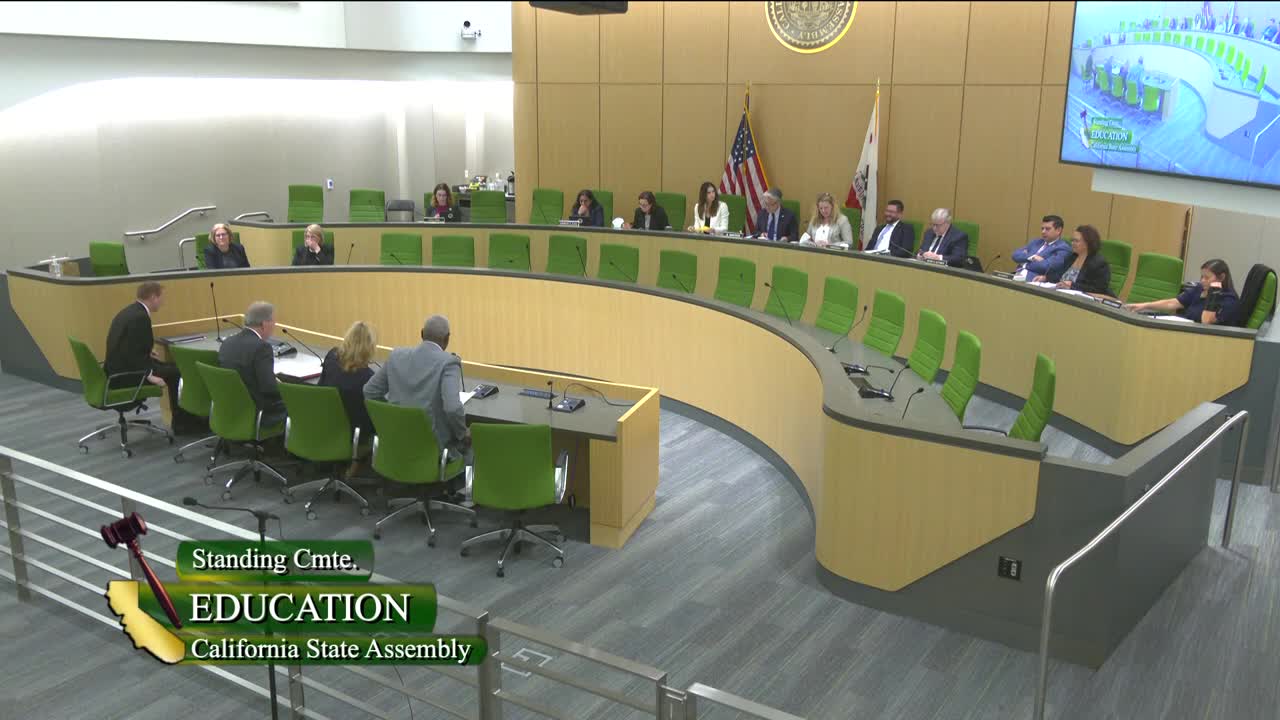 32MIN
Assembly Standing Committee on Education
 2MIN
Senate Floor
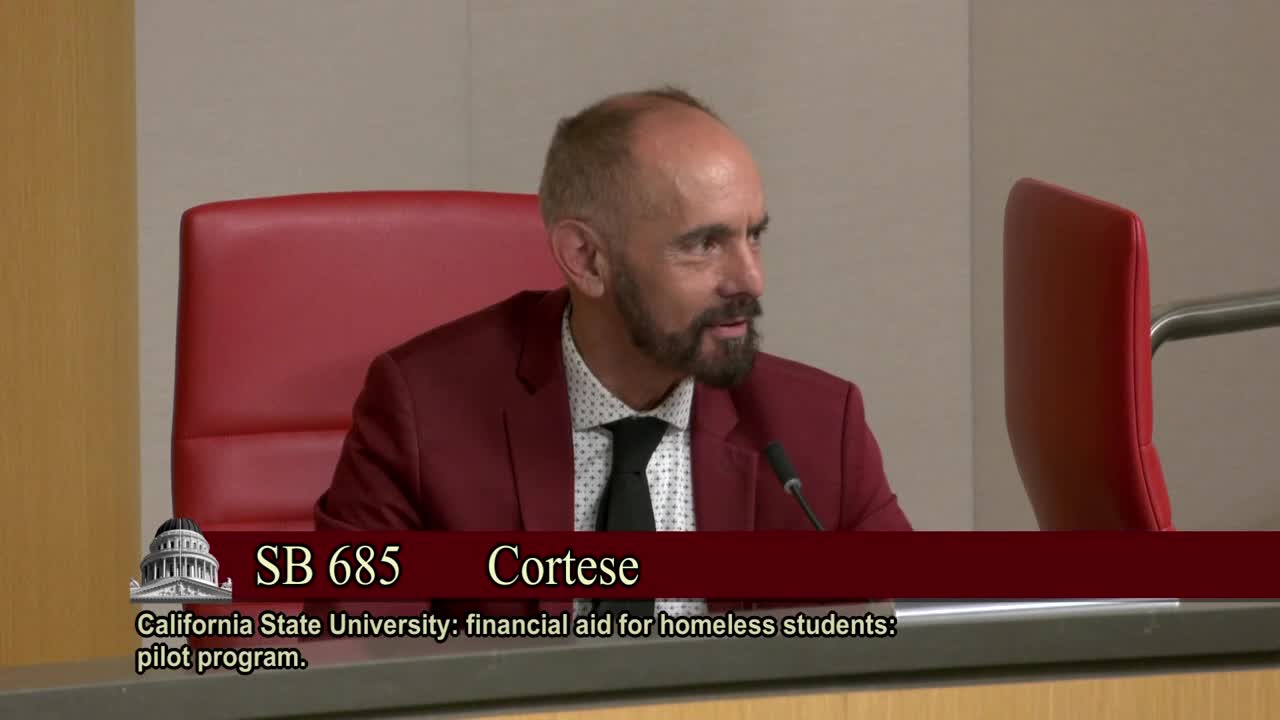 46MIN
Senate Standing Committee on Education
Bill Author
Bill Co-Author(s):