AB 435: California Environmental Protection Agency: Natural Resources Agency: Web casts of public meetings and workshops.
- Session Year: 2015-2016
- House: Assembly
- Latest Version Date: 2015-08-18
Existing law establishes the California Environmental Protection Agency and the Natural Resources Agency as agencies in the state government. Existing law, the Bagley-Keene Open Meeting Act, generally requires that all meetings of a state body be open and public.
This bill would require that each department, board, and commission of the Natural Resources Agency, except as specified, and each department, board, and office of the California Environmental Protection Agency Web cast all onsite public meetings, in a manner that enables listeners and viewers to ask questions and provide public comment by telephone or electronic communication commensurate with those attending the meeting. The bill would require the agencies to make the recording of a Web cast available online for no less than 3 years for subsequent viewing by interested members of the public.
Existing law establishes the California Environmental Protection Agency and the Natural Resources Agency as agencies in the state government. Existing law, the Bagley-Keene Open Meeting Act, generally requires that all meetings of a state body be open and public.
This bill would require that each department, board, and commission of the Natural Resources Agency and each department, board, and office of the California Environmental Protection Agency Web cast all onsite public meetings, in a manner that enables listeners and viewers to ask questions and provide public comment by telephone or electronic communication commensurate with those attending the meeting. The bill would require the agencies to make the recording of a Web cast available online for no less than 3 years for subsequent viewing by interested members of the public.
Existing law establishes the California Environmental Protection Agency and the Natural Resources Agency as agencies in the state government. Existing law, the Bagley-Keene Open Meeting Act, generally requires that all meetings of a state body be open and public.
This bill would require that each department, board, and commission of the Natural Resources Agency and each department, board, and office of the California Environmental Protection Agency Web cast all onsite public meetings and workshops, in a manner that enables listeners and viewers to ask questions and provide public comment by telephone or electronic communication commensurate with those attending the meeting or workshop. The bill would require the agencies to archive the recording of a Web cast make the recording of a Web cast available online for no less than 3 years for subsequent reasonable viewing by interested members of the public.
Existing law establishes the California Environmental Protection Agency and the Natural Resources Agency as agencies in the state government. Existing law, the Bagley-Keene Open Meeting Act, generally requires that all meetings of a state body be open and public.
This bill would require that each department, board, and commission of the Natural Resources Agency and each department, board, and office of the California Environmental Protection Agency Web cast all public meetings and workshops, in a manner that enables listeners and viewers to ask questions and provide public comment by telephone or email electronic communication commensurate with those attending the meeting or workshop. The bill would require the agencies to archive the recording of a Web cast for subsequent reasonable viewing by interested members of the public.
Existing law establishes the California Environmental Protection Agency and the Natural Resources Agency as agencies in the state government. Existing law, the Bagley-Keene Open Meeting Act, generally requires that all meetings of a state body be open and public.
This bill would require that each department, board, and commission of the Natural Resources Agency and each department, board, and office of the California Environmental Protection Agency Web cast all public meetings and workshops, in a manner that enables listeners and viewers to ask questions and provide public comment by telephone or email commensurate with those attending the meeting or workshop. The bill would require the agencies to archive the recording of a Web cast for subsequent reasonable viewing by interested members of the public.
(a)For purposes of this section, the following terms have the following meaning: meanings:
(1)Nonagency site means a location other than agency headquarters or state government buildings or facilities where the primary operations of the agency or any of its departments, boards, or commissions take place.
(2)Web cast means a media presentation distributed over the Internet using live streaming media technology to distribute content to listeners and viewers.
(b)Each Except as provided in subdivisions (c) and (d), each department, board, and commission of the Natural Resources Agency shall Web cast all public meetings in a manner that enables listeners and viewers to ask questions and provide public comment by telephone or electronic communication commensurate with those persons attending the meeting. The agency shall make the recording of a Web cast available online for no less than three years for subsequent viewing by interested members of the public.
(c)The requirements of subdivision (b) do not apply to a conservancy or the California Science Center. This subdivision does not limit the authority of the agency to Web cast meetings of a conservancy or the California Science Center.
(d)The requirements of subdivision (b) do not apply to public meetings held at nonagency sites. This subdivision does not limit the authority of the agency to Web cast meetings of any department, board, or commission held at a nonagency site.
(e)It is not a violation of this section if technical failures prevent a department, board, or commission from providing, archiving, or posting a Web cast, so long as the entity exercises reasonable diligence.
SEC. 2.Section 12812.4 is added to the Government Code, to read:12812.4.(a)For purposes of this section, the following terms have the following meaning: meanings:
(1)Nonagency site means a location other than agency headquarters or state government buildings or facilities where the primary operations of the agency or any of its departments, boards, or offices take place.
(2)Web cast means a media presentation distributed over the Internet using live streaming media technology to distribute content to listeners and viewers.
(b)Each Except as provided in subdivision (d), each department, board, and office of the California Environmental Protection Agency shall Web cast all public meetings in a manner that enables listeners and viewers to ask questions and provide public comment by telephone or electronic communication commensurate with those persons attending the meeting. The agency shall make the recording of a Web cast available online for no less than three years for subsequent viewing by interested members of the public.
(c)The deputy secretary for external affairs shall be responsible for implementation of this section.
(d)The requirements of subdivision (b) do not apply to public meetings held at nonagency sites. This subdivision does not limit the authority of the agency to Web cast meetings of any department, board, or office held at a nonagency site.
(e)It is not a violation of this section if technical failures prevent a department, board, or office from providing, archiving, or posting a Web cast, so long as the entity exercises reasonable diligence.
(a)For purposes of this section, Web the following terms have the following meaning:
(1)Nonagency site means a location other than agency headquarters or state government buildings or facilities where the primary operations of the agency or any of its departments, boards, or commissions take place.
(2)Web cast means a media presentation distributed over the Internet using live streaming media technology to distribute content to listeners and viewers.
(b)Each department, board, and commission of the Natural Resources Agency shall Web cast all public meetings in a manner that enables listeners and viewers to ask questions and provide public comment by telephone or electronic communication commensurate with those persons attending the meeting. The agency shall make the recording of a Web cast available online for no less than three years for subsequent viewing by interested members of the public.
(c)The requirements of subdivision (b) do not apply to a conservancy or the California Science Center. This subdivision does not limit the authority of the agency to Web cast meetings of a conservancy or the California Science Center.
(d)The requirements of subdivision (b) do not apply to public meetings held at nonagency sites. This subdivision does not limit the authority of the agency to Web cast meetings of any department, board, or commission held at a nonagency site.
SEC. 2.Section 12812.4 is added to the Government Code, to read:12812.4.(a)For purposes of this section, Web the following terms have the following meaning:
(1)Nonagency site means a location other than agency headquarters or state government buildings or facilities where the primary operations of the agency or any of its departments, boards, or offices take place.
(2)Web cast means a media presentation distributed over the Internet using live streaming media technology to distribute content to listeners and viewers.
(b)Each department, board, and office of the California Environmental Protection Agency shall Web cast all public meetings in a manner that enables listeners and viewers to ask questions and provide public comment by telephone or electronic communication commensurate with those persons attending the meeting. The agency shall make the recording of a Web cast available online for no less than three years for subsequent viewing by interested members of the public.
(c)The deputy secretary for external affairs shall be responsible for implementation of this section.
(d)The requirements of subdivision (b) do not apply to public meetings held at nonagency sites. This subdivision does not limit the authority of the agency to Web cast meetings of any department, board, or commission office held at a nonagency site.
(a)For purposes of this section, Web cast means a media presentation distributed over the Internet using live streaming media technology to distribute content to listeners and viewers.
(b)Each department, board, and commission of the Natural Resources Agency shall Web cast all public meetings and workshops in a manner that enables listeners and viewers to ask questions and provide public comment by telephone or electronic communication commensurate with those persons attending the meeting or workshop. meeting. The agency shall archive the recording of a Web cast make the recording of a Web cast available online for no less than three years for subsequent reasonable viewing by interested members of the public.
(c)The requirements of subdivision (b) do not apply to a conservancy or the California Science Center. This subdivision does not limit the authority of the agency to Web cast meetings or workshops of a conservancy or the California Science Center.
(d)The requirements of subdivision (b) do not apply to public meetings held at nonagency sites. This subdivision does not limit the authority of the agency to Web cast meetings of any department, board, or commission held at a nonagency site.
SEC. 2.Section 12812.4 is added to the Government Code, to read:12812.4.(a)For purposes of this section, Web cast means a media presentation distributed over the Internet using live streaming media technology to distribute content to listeners and viewers.
(b)Each department, board, and office of the California Environmental Protection Agency shall Web cast all public meetings and workshops in a manner that enables listeners and viewers to ask questions and provide public comment by telephone or electronic communication commensurate with those persons attending the meeting or workshop. meeting. The agency shall archive the recording of a Web cast make the recording of a Web cast available online for no less than three years for subsequent reasonable viewing by interested members of the public.
(c)The deputy secretary for external affairs shall be responsible for implementation of this section.
(d)The requirements of subdivision (b) do not apply to public meetings held at nonagency sites. This subdivision does not limit the authority of the agency to Web cast meetings of any department, board, or commission held at a nonagency site.
(a)For purposes of this section, Web cast means a media presentation distributed over the Internet using live streaming media technology to distribute content to listeners and viewers.
(b)Each department, board, and commission of the Natural Resources Agency shall Web cast all public meetings and workshops in a manner that enables listeners and viewers to ask questions and provide public comment by telephone or email electronic communication commensurate with those persons attending the meeting or workshop. The agency shall archive the recording of a Web cast for subsequent reasonable viewing by interested members of the public.
(c)The requirements of subdivision (b) do not apply to a conservancy or the California Science Center. This subdivision does not limit the authority of the agency to Web cast meetings or workshops of a conservancy or the California Science Center.
SEC. 2.Section 12812.4 is added to the Government Code, to read:12812.4.(a)For purposes of this section, Web cast means a media presentation distributed over the Internet using live streaming media technology to distribute content to listeners and viewers.
(b)Each department, board, and office of the California Environmental Protection Agency shall Web cast all public meetings and workshops in a manner that enables listeners and viewers to ask questions and provide public comment by telephone or email electronic communication commensurate with those persons attending the meeting or workshop. The agency shall archive the recording of a Web cast for subsequent reasonable viewing by interested members of the public.
(c)The deputy secretary for external affairs shall be responsible for implementation of this section.
(a)For purposes of this section, Web cast means a media presentation distributed over the Internet using live streaming media technology to distribute content to listeners and viewers.
(b)Each department, board, and commission of the Natural Resources Agency shall Web cast all public meetings and workshops in a manner that enables listeners and viewers to ask questions and provide public comment by telephone or email commensurate with those persons attending the meeting or workshop. The agency shall archive the recording of a Web cast for subsequent reasonable viewing by interested members of the public.
(c)The requirements of subdivision (b) do not apply to a conservancy or the California Science Center. This subdivision does not limit the authority of the agency to Web cast meetings or workshops of a conservancy or the California Science Center.
SEC. 2.Section 12812.4 is added to the Government Code, to read:12812.4.(a)For purposes of this section, Web cast means a media presentation distributed over the Internet using live streaming media technology to distribute content to listeners and viewers.
(b)Each department, board, and office of the California Environmental Protection Agency shall Web cast all public meetings and workshops in a manner that enables listeners and viewers to ask questions and provide public comment by telephone or email commensurate with those persons attending the meeting or workshop. The agency shall archive the recording of a Web cast for subsequent reasonable viewing by interested members of the public.
(c)The deputy secretary for external affairs shall be responsible for implementation of this section.
|
Date
|
Status
|
|---|---|
| Jun 2, 2015 | In Senate. Read first time. To Com. on RLS. for assignment. |
| Aug 27, 2015 | In committee: Held under submission. |
| Aug 24, 2015 | In committee: Referred to APPR. suspense file. |
| Aug 18, 2015 | Read second time and amended. Re-referred to Com. on APPR. |
| Aug 17, 2015 | From committee: Amend, and do pass as amended and re-refer to Com. on APPR. (Ayes 7. Noes 0.) (July 15). |
| Jun 25, 2015 | Read second time and amended. Re-referred to Com. on E.Q. |
| Jun 24, 2015 | From committee: Amend, and do pass as amended and re-refer to Com. on E.Q. with recommendation: To Consent Calendar. (Ayes 9. Noes 0.) (June 23). |
| Jun 11, 2015 | Referred to Coms. on N.R. & W. and E.Q. |
| Jun 2, 2015 | Read third time. Passed. Ordered to the Senate. (Ayes 78. Noes 0. Page 1803.) |
| Jun 2, 2015 | Read third time. Passed. Ordered to the Senate. |
| Feb 19, 2015 | Read first time. To print. |
| Jun 1, 2015 | Read second time. Ordered to third reading. |
| May 28, 2015 | Read second time and amended. Ordered returned to second reading. |
| May 28, 2015 | From committee: Amend, and do pass as amended. (Ayes 17. Noes 0.) (May 28). |
| Apr 15, 2015 | In committee: Set, first hearing. Referred to suspense file. |
| Mar 25, 2015 | From committee: Do pass and re-refer to Com. on APPR. (Ayes 9. Noes 0.) (March 25). Re-referred to Com. on APPR. |
| Mar 19, 2015 | Re-referred to Com. on A. & A.R. |
| Mar 18, 2015 | From committee chair, with author's amendments: Amend, and re-refer to Com. on A. & A.R. Read second time and amended. |
| Mar 2, 2015 | Referred to Com. on A. & A.R. |
| Feb 20, 2015 | From printer. May be heard in committee March 22. |
|
Date
|
Description
|
Location
|
Votes
|
|
|---|---|---|---|---|
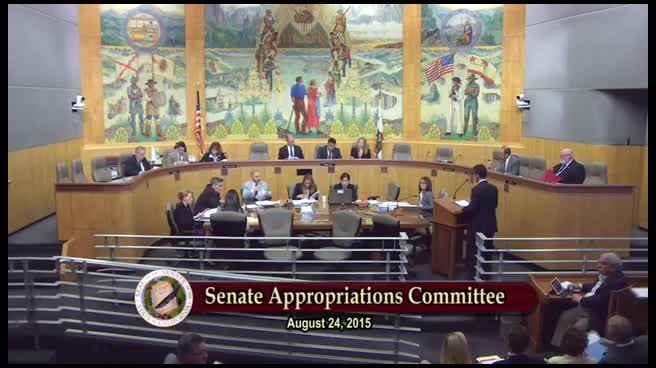
| Aug 24, 2015 | Placed on suspense file | Senate Standing Committee on Appropriations |
Passed |
|
| Jul 15, 2015 | Do pass as amended, but first amend, and re-refer to the Committee on [Appropriations] | Senate Standing Committee on Environmental Quality |
Passed |
|
| Jun 23, 2015 | Do pass as amended, but first amend, and re-refer to the Committee on [Environmental Quality] with the recommendation: To Consent Calendar | Senate Standing Committee on Natural Resources and Water |
Passed |
|
| Jun 2, 2015 | AB 435 CHANG Assembly Third Reading | Assembly Floor |
Passed |
|
| May 28, 2015 | Do pass as amended. | Assembly Standing Committee on Appropriations |
Passed |
|
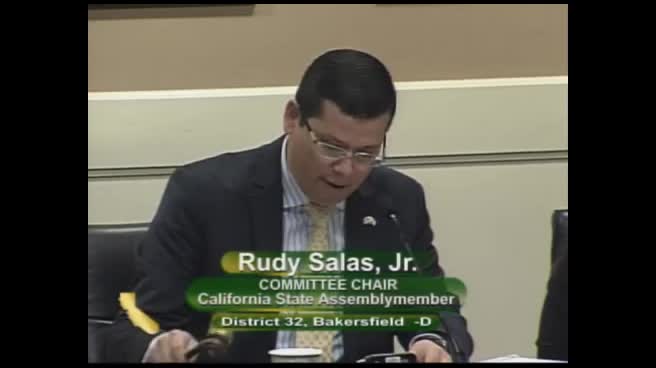
| Mar 25, 2015 | Do pass and be re-referred to the Committee on [Appropriations] | Assembly Standing Committee on Accountability and Administrative Review |
Passed |
This list shows positions taken on this bill by organizations on the date displayed, which is linked to the original source.
Positions by individuals are not included.
|
Organization
|
Position
|
Date
|
|---|---|---|
| American Federation Of State, County And Municipal Employees, Afl-Cio | ** Support | Aug 24, 2015 |
| Associated Builders And Contractors Of California | ** Support | Aug 24, 2015 |
| Association Builders and Contractors of California | ** Support | Aug 24, 2015 |
| Building Owners and Managers Association of California | ** Support | Aug 24, 2015 |
| CalChamber | ** Support | Aug 24, 2015 |
| California Business Properties Association | ** Support | Aug 24, 2015 |
| California Chamber Of Commerce | ** Support | Aug 24, 2015 |
| California League of Food Processors | ** Support | Aug 24, 2015 |
| California Manufacturers And Technology Association | * Support | Mar 25, 2015 |
| Center on Race, Poverty & the Environment | ** Support | Aug 24, 2015 |
| Commercial Real Estate Development Association, NAIOP of California | ** Support | Aug 24, 2015 |
| Consumer Specialty Products Association | ** Support | Aug 24, 2015 |
| Industrial Environmental Association | ** Support | Aug 24, 2015 |
| International Council of Shopping Centers | ** Support | Aug 24, 2015 |
| National Tank Truck Carriers | ** Support | Aug 24, 2015 |
| Rural County Representatives of California | ** Support | Aug 24, 2015 |
| Western Plastics Association | ** Support | Aug 24, 2015 |
AB 435 (Chang) Page 2 of 2
SENATE COMMITTEE ON APPROPRIATIONS
Senator Ricardo Lara, Chair
2015 - 2016 Regular Session
AB 435 (Chang) - California Environmental Protection Agency: Natural Resources Agency: Web casts of public meetings and workshops
|
|
Version: June 25, 2015 |
Policy Vote: N.R. & W. 9 - 0, E.Q. 7 - 0 |
Urgency: No |
Mandate: No |
Hearing Date: August 24, 2015 |
Consultant: Marie Liu |
This bill meets the criteria for referral to the Suspense File.
Bill Summary:
AB 435 would require each department, board, commission, and office within the Natural Resources Agency (CNRA) and the Environmental Protection Agency (CalEPA) to web cast all public meetings in a manner that enables listeners and viewers to ask questions and provide public comment by telephone or electronic communication. The bill would also require that recordings be available online for at least three-years.
Fiscal Impact:
One-time costs of approximately $1.9 million and ongoing costs of up to $745,000 annually to the General Fund and various special funds for the boards, departments, and offices of CalEPA to provide 2-way webcasting and archive all meetings at “agency sites.”
Ongoing costs of approximately $2 million to the General Fund and various special funds for the boards, departments, and commissions of the CNRA to contract for 2-way webcasting and archive all meetings at “agency sites.”
Background:
The Bagley-Keene Open Meeting Act requires that all meetings of a state body be open and public. The act also requires that broadcasting and recordings must be allowed to long as they do not disrupt the meeting.
Proposed Law:
This bill would require each department, board, commission, and office within the Natural Resources Agency (CNRA) and the Environmental Protection Agency (CalEPA) to web cast all public meetings in a manner that enables listeners and viewers to ask questions and provide public comment by telephone or electronic communication. The bill would also require that recordings be available for at least three-years on-line.
This requirement would not apply to public agencies held at “nonagency sites” that are defined as a location other than agency headquarters or state government buildings or facilities where the primary operations of the agency or any of its departments, boards, or commissions take place.
Staff Comments:
While many departments, boards, commissions, and offices within the CNRA and CalEPA currently webcast or record their meetings, none appear to have the regular capacity for 2-way webcasting that allows remote participants to participate in the meeting in the same manner as a person attending the meeting physically.
To add this capacity for 2-way webcasting, the agencies would need significant investments in technology as well as information technology staff to operate the technology and to make the recordings available for three-years on their websites or an increase in contracting costs to provide for these services.
In order to estimate these costs, both agencies made a number of assumptions such as the number of public meetings and workshops annually held excluding those held at “nonagency sites.” There could be some cost reductions depending on the extent that contracts can be made to support multiple boards, departments, commissions, and offices.
Staff notes that these costs would be spread over multiple special funds in addition to the General Fund. A number of the special funds do not have balances that could support these additional costs. Depending on how the these accounts are funded, this bill could result in increased fees, fines, and taxes, or pressures to do so. In particular, CalEPA identified the Waste Discharge Permit Fund as fund that would likely see an increase in fees to cover these costs.
-- END --
AB 435 (Chang) Page 5 of 5
SENATE COMMITTEE ON ENVIRONMENTAL QUALITY
Senator Wieckowski, Chair
2015 - 2016 Regular
Bill No: AB 435
Author: |
Chang |
||
Version: |
6/25/2015 |
Hearing Date: |
7/15/2015 |
Urgency: |
No |
Fiscal: |
Yes |
Consultant: |
Laurie Harris |
||
SUBJECT: California Environmental Protection Agency: Natural Resources Agency: Web casts of public meetings and workshops.
ANALYSIS:
Existing law:
Requires, under the Bagley-Keene Open Meeting Act, that all meetings of a state body shall be open and public, and all persons shall be permitted to attend any meeting, except as provided. The Act also requires that broadcasting and recordings must be allowed so long as they do not disrupt the meeting. (Government Code (GOV) §11120 et seq.)
Defines the following bodies within the California Environmental Protection Agency (CalEPA): Air Resources Board (ARB), the Department of Pesticide Regulation (DPR), the Department of Resources Recycling and Recovery (CalRecycle), the Department of Toxic Substances Control (DTSC), the Office of Environmental Health Hazard Assessment (OEHHA), and the State Water Resources Control Board (SWRCB). (GOV §71011)
Requires that CalEPA authorize a deputy secretary for external affairs to provide public outreach, communication to individuals and communities impacted by permitted activities, and technical support to businesses subject to regulation by one or more boards, departments, or agencies. (GOV §12812.3)
Establishes the California Natural Resources Agency (CNRA) as consisting of the California Science Center (CSC), the California Conservation Corps, five departments, three boards, six commissions, and nine conservancies, as specified. (GOV §12805)
This bill:
Defines:
A“nonagency site” as a location other than agency headquarters or state government buildings or facilities where primary operations occur.
A “web cast” as a media presentation distributed over the Internet using live streaming media technology to distribute content to listeners and viewers.
Requires that each department, board, and commission in the CNRA (excluding conservancies and the CSC), as well as each department, board, and office in the CalEPA, web cast all public meetings, enabling listeners and viewers to ask questions and provide comment via telephone or electronic communication commensurate with those attending in person, excluding meetings held at nonagency sites.
Requires the agencies to make recordings of web casts available online for a minimum of three years.
Requires, for CalEPA, that the deputy secretary for external affairs be responsible for implementation of the web cast requirements.
Background
Current Webcasts of Public Meetings.
According to the CalEPA website, the agency began to offer audio webcasts of various meetings and hearings from the CalEPA headquarters and elsewhere beginning in March 2002. A listing of archived webcasts from the agency and its boards, departments, and offices are currently available on the agency’s website. The listing from June 2015 includes 31 archived webcasts with both audio and video recording. There are options to view up to three months of archived webcasts and up to six months of upcoming scheduled webcasts. For the CNRA, webcasts are available on the individual board, office, and commission websites.
According
to the Assembly Committee on Accountability and Administrative
Review’s analysis of this bill, both CalEPA and CNRA have said that
they support the concept of offering web casts to encourage public
participation, though doing so for all meetings and workshops could
be difficult because of limited resources and technological
challenges. In regards to enabling listeners and viewers to ask
questions and provide comment via telephone or electronic
communication, CalEPA’s Chief Information Officer notes that
currently, “CalEPA’s headquarter webcast environment does not
have an integrated phone or email environment that will allow for
this.”
Types of Meetings Currently Webcast.
A range of meetings, workshops, and webinars are included on CalEPA’s website. From June 2015, webcasts included “Water Quality Fees Stakeholder Meeting,” “Tribal Prop 1 Consultation,” and “Governor’s Office of Planning and Research Workshop on Government Decision-Making and Open Meetings.” Many of the meetings were located at the CalEPA headquarters, though some were located in regional offices, including San Diego.
Comments
Purpose of Bill.
According to the author, “Regulations debated and promulgated by the Environmental Protection Agency and the Natural Resources Agency regulate important issues like the environment, California businesses and their ability to promote job growth. Individuals throughout the state have a direct interest in these polices created by state agencies but few have the geographic advantage of being close enough to attend meetings and provide direct input. While these meetings may be open to the public, it is unrealistic to expect that the average Californian will be able to put their life on hold to attend and voice their concerns or ideas.
“Transparency and accessibility should be a priority for all parts of government. As technology improves, our opportunities to make government more accessible are increasing. AB 435 will require the Environmental Protection Agency and the Natural Resources agency, as well as the boards and commissions they encompass, to webcast their public meetings and make those recording available online for the public to view. Additionally, they will have to provide those viewing these meetings remotely the ability to participate in public comment or ask questions via electronic communication. In the event that an agency, board or commission affected by this legislation currently webcasts their meetings, they will need only to add the accessibility component of AB 435.”
Public Interest and Participation.
One
meeting included a “Public Workshop to Discuss Funding Guidelines
for Agencies Administering GHG Reduction Fund Programs.” As there
have been two bills moving through the Legislature this year on
establishing technical assistance programs for disadvantaged and
low-income communities in applying for funds from those programs,
access to, and ability to participate in, such webcasts is likely of
interest to many parties. However, given that the majority of listed
meetings are held in Sacramento and on weekdays, it is likely that
these meetings are difficult to attend in person for many members of
the public.
What Happens in the Event of Technical Problems?
There may be times when technical problems preclude an agency from web casting a meeting and/or creating a recording for archiving in the future. This could happen through no fault of the agency. Section 66020.5 of the Education Code addresses this in regards to live video and audio transmissions and archives for specified entities by noting, “It is not a violation of this section if technical failures prevent an entity from providing a live video or audio transmission, or archiving or posting the video and audio transmission, so long as the entity exercised reasonable diligence in making a live video or audio transmission available and archiving and posting the video and audio transmission.”
Therefore, an amendment is needed in both sections of the bill to add language specifying that the agencies would not be in violation of the specified provisions in the event of technical failures, so long as they have exercised reasonable diligence.
Related/Prior Legislation
AB 1723 (Fuentes, Chapter 580, Statutes of 2011) required the Board of Governors of the California Community Colleges, Trustees of the California State University, and Student Aid Commission to provide live video and audio transmission of all meetings which are open to the public, to provide public notice, and to archive the transmissions for at least one year.
SB 312 (Romero, Chapter 179, Statutes of 2009) required the State Board of Education and the State Allocation Board to provide live video and audio transmission of all meetings and hearings open to the public.
DOUBLE REFERRAL:
This measure was heard in the Senate Natural Resources and Water Committee on June 23, 2015, and passed out of committee with a vote of 9-0.
SOURCE:
Author
SUPPORT:
American Federation of State, County and Municipal Employees (AFSCME), AFL-CIO
Associated Builders and Contractors of California
Building Owners and Managers Association of California
California Business Properties Association
California Chamber of Commerce
California League of Food Processors
California Manufacturers & Technology Association
Center on Race, Poverty & the Environment (CRPE)
Commercial Real Estate Development Association, NAIOP of California
Consumer Specialty Products Association
Family Business Association
Industrial Environmental Association
International Council of Shopping Centers
National Tank Truck Carriers
Rural County Representatives of California (RCRC)
Western Plastics Association
OPPOSITION:
None received
ARGUMENTS IN SUPPORT:
According to a coalition of business and manufacturing interests, “AB 435 takes advantage of major advances in telecommunication technology to make it easier for members of the public to participate in board meetings that often take place hundreds of miles from where they live and work. These meetings deal with regulations and matters that directly affect them and their businesses, so making participation easier strengthens the voice of all Californians.”
-- END --
AB 435 (Chang) Page 4 of 4
SENATE COMMITTEE ON NATURAL RESOURCES AND WATER
Senator Fran Pavley, Chair
2015 - 2016 Regular
Bill No: AB 435 Hearing Date: June 23, 2015
Author: |
Chang |
|
|
Version: |
May 28, 2015 Amended |
||
Urgency: |
No |
Fiscal: |
Yes |
Consultant: |
Angee Doerr |
||
Subject: California Environmental Protection Agency: Natural Resources Agency: Web casts of public meetings and workshops.
BACKGROUND AND EXISTING LAW
Existing Law:
Establishes the Natural Resources Agency (Resources) (Government Code (GC) Section 12805). Resources consists of:
Departments of Forestry and Fire Protection; Conservation; Fish and Wildlife; Parks and Recreation; and Water Resources;
Colorado River Board; Central Valley Flood Protection Board; and Wildlife Conservation Board;
State Lands Commission; San Francisco Bay Conservation and Development Commission; Energy Resources Conservation and Development Commission; Delta Protection Commission; Native American Heritage Commission; and California Coastal Commission;
State Coastal Conservancy; California Tahoe Conservancy; Santa Monica Mountains Conservancy; Coachella Valley Mountains Conservancy; San Joaquin River Conservancy; San Gabriel and Lower Los Angeles Rivers and Mountains Conservancy; Baldwin Hills Conservancy; San Diego River Conservancy; and Sierra Nevada Conservancy; and
California Science Center; and the California Conservation Corps.
Defines the California Environmental Protection Agency (CalEPA) as (Public Resources Code (PRC) Section 71011):
Departments of Pesticide Regulation; Resources Recycling and Recovery (CalRecycle); Toxic Substances Control;
State Water Resources Control Board; Air Resources Board; Regional Water Quality Control Boards; and
Offices of the Secretary; and Environmental Health Hazard Assessment.
Creates a deputy secretary for external affairs with CalEPA, tasked with providing public outreach, communication to individuals and communities impacted by permitted activities, and technical support to businesses subject to regulation by one or more boards, departments, or offices within CalEPA (GC Section 12812.3).
PROPOSED LAW
This bill would:
Add Sections 12805.4 and 12812.4 to the Government Code, relating to state government.
Require each department, board, and commission of the Natural Resources Agency (Resources) to webcast all public meetings.
Require each department, board, and office of the California Environmental Protection Agency (CalEPA) to webcast all public meetings.
Define a Webcast to mean a presentation over the Internet using live streaming media technology.
Require the Webcasts to include a method for viewers or listeners to participate remotely.
Require recordings of Webcasts to be available online for at least three years.
Exclude public meetings held at non-agency sites from Webcast requirements.
Exclude conservancies and the California Science Center from Webcast requirements.
ARGUMENTS IN SUPPORT
The Center on Race, Poverty & the Environment states “California’s most vulnerable residents have few resources to travel to Sacramento to attend meetings and hearings that affect their communities. But these under-resourced residents often bear a disproportionate pollution burden and have the greatest stake in sound and reasoned decision-making from the state’s environmental agencies. By increasing public access to agency meetings, this bill will increase transparency and accountability in CalEPA and Natural Resources Agency boards and departments. And by providing alternative methods to submit public comment, this bill will foster greater dialogue between agencies and the public and improve agency responsiveness.”
ARGUMENTS IN OPPOSITION
None Received
COMMENTS
What is a “nonagency” site? It is currently unclear what is meant by the term “nonagency” site. The Committee may wish to direct staff to work with the author to provide clarity regarding what is or is not included in this term in order to achieve the author’s intent (Amendment 1).
Do these agencies currently webcast public hearings? Currently both CalEPA and Resources offer webcasts of some public meetings and allow for remote participation when able. For example, CalEPA recently had 35 live webcasts listed on its website during a 30-day period. Public webcasts for CalEPA are advertised in advance and can be viewed for three months after being broadcast (http://www.calepa.ca.gov/Broadcast/). Public webcasts for Resources are offered through individual Departments and Boards rather than through Resources.
Double-Referral. The Rules Committee referred this bill to both the Committee on Natural Resources and Water and to the Committee Environmental Quality. Therefore, if this bill passes this committee, it will be referred to the Committee on Environmental Quality, which will consider the issues within their jurisdiction.
Similar Legislation:
SB312 (Romero, c.179, Statutes of 2009) required the State Board of Education and the State Allocation Board to provide for live video and audio transmission of all meetings and hearings that are open to the public through a technology accessible to as large a segment of the public as possible.
AB1723 (Fuentes, c. 580, Statutes of 2011) required the Board of Governors of the California Community Colleges, the Trustees of the California State University, and the Student Aid Commission, and requested that the Regents of the University of California, to provide live video and audio transmission of all public meetings, through a technology accessible to as large a segment of the public as possible. It also required these broadcasts to be archived and posted within 48 hours and maintained for at least 12 months.
SUGGESTED AMENDMENTS
AMENDMENT 1
Currently, the bill exempts hearings held at “nonagency sites” from the webcast requirement. However, it is unclear specifically what would and would not qualify as a “nonagency” site. A definition of this term should be included within GC Sections 12805.4 and 12812.4.
SUPPORT
American Federation of State, County and Municipal Employees, AFL-CIO
Association Builders and Contractors of California
Building Owners and Managers Association of California
California Business Properties Association
CalChamber
California League of Food Processors
California Manufacturers & Technology Association
Center on Race, Poverty & the Environment
Commercial Real Estate Development Association, NAIOP of California
Consumer Specialty Products Association
Family Business Association
Industrial Environmental Association
International Council of Shopping Centers
National Tank Truck Carriers
Rural County Representatives of California
Western Plastics Association
OPPOSITION
None Received
-- END --
AB 435
Page 2
ASSEMBLY THIRD READING
AB 435
(Chang)
As Amended May 28, 2015
Majority vote
Committee |
Votes |
Ayes |
Noes |
Accountability |
9-0 |
Salas, Lackey, Beth Gaines, Brough, Burke, Frazier, Irwin, Medina, Rodriguez |
|
Appropriations |
17-0 |
Gomez, Bigelow, Bonta, Calderon, Chang, Daly, Eggman, Gallagher, Eduardo Garcia, Gordon, Holden, Jones, Quirk, Rendon, Wagner, Weber, Wood |
|
SUMMARY: Requires the California Environmental Protection Agency (CalEPA) and Natural Resources Agency (Resources) to webcast all public meetings. Specifically, this bill:
Requires each department, board, and commission of Resources, and each department, board, and office of the CalEPA to provide these Webcasts.
Defines a Webcast to mean a presentation over the Internet using live streaming media technology.
Requires the Webcasts to include a method for viewers or listeners to participate remotely.
Requires recordings of Webcasts to be available online for at least three years.
Excludes public meetings held at non-agency sites from Webcast requirements.
Excludes conservancies and the California Science Center from Webcast requirements.
EXISTING LAW generally requires all meetings of a state body to be open and public.
FISCAL EFFECT: According to the Assembly Appropriations Committee:
One-time costs of approximately $250,000 (General Fund (GF)) to upgrade or acquire webcasting equipment and software for the CalEPA headquarters building in Sacramento to enable webcasting of all public meetings conducted at any CalEPA or any board, department, and office of CalEPA throughout the state, with ongoing equipment and software maintenance costs of $38,000 (GF) annually.
On-going costs or approximately $176,000 (GF) annually for two additional Television Specialist positions at CalEPA headquarters to staff the expanded webcast services.
Unknown costs for CalEPA boards, department, or offices and Resources departments and commissions to equip remote locations with audio-video capabilities or contract for the necessary services.
COMMENTS: This bill requires the CalEPA and Resources to Webcast public meetings. The Webcasts will include live streaming over the Internet and will allow remote participation. Specifically, the technology must allow listeners and viewers to ask questions and provide public comment by telephone or electronic communications in line with the participation opportunities of those physically attending the meeting.
According to the author, this bill will increase transparency and allow for more public participation. "Individuals throughout the state have a direct interest in these policies created by state agencies but few have the geographic advantage of being close enough to attend meetings and provide direct input," the author stated. "While these meetings may be open to the public, it is unrealistic to expect that the average Californian will be able to put their life on hold to attend and voice their concerns or ideas."
Currently both CalEPA and Resources offer Webcasts of public meetings and some allow for remote participation. To provide context, CalEPA recently had 35 live Webcasts listed on its Web site during a 30-day period. However, not all public meetings of CalEPA and Resources are provided in this manner.
In addition to creating Webcasts, this bill also requires the agencies to make the recording of a Webcast available online for at least three years.
This bill does not require Webcasting of public meetings held at non-agency sites, or meetings of conservancies or the California Science Center.
Analysis Prepared by: Scott Herbstman / A. & A.R. / (916) 319-3600 FN: 0000635
AB 435
Page 2
Date of Hearing: April 15, 2015
ASSEMBLY COMMITTEE ON APPROPRIATIONS
Jimmy Gomez, Chair
AB 435
(Chang) – As Amended March 18, 2015
Policy Committee: |
Accountability and Administrative Review |
Vote: |
9 - 0 |
|
|
|
|
|
|
|
|
Urgency: No State Mandated Local Program: No Reimbursable: No
SUMMARY: This bill requires the California Environmental Protection Agency (CalEPA) and the California Natural Resources Agency (Resources) to web cast all public meetings and workshops and provide for public participation. Specifically, this bill:
Requires each department, board, and commission of Resources, and each department, board, and office of the CalEPA to provide these web casts, as defined.
Requires the web casts to include a method for viewers or listeners to participate remotely.
Requires recordings of web casts to be archived for future viewings.
Excludes conservancies and the California Science Center from web cast requirements.
FISCAL EFFECT:
One-time costs of approximately $250,000 (GF) to upgrade or acquire webcasting equipment and software for the CalEPA headquarters building in Sacramento to enable webcasting of all public meetings and all workshops conducted at any CalEPA or any board, department, and office of CalEPA throughout the state, with ongoing equipment and software maintenance costs of $38,000 (GF) annually.
On-going costs or approximately $176,000 (GF) annually for two additional Television Specialist positions at Cal EPA headquarters to staff the expanded webcast services.
Unknown, but likely major costs, for CalEPA boards, department, or offices and Resources departments and commissions to equip remote locations with audio-video capabilities or contract for the necessary services.
On-going costs of approximately $150,000 (GF) annually for one Information Systems Analyst position at Resources to staff the archiving services.
One-time minor costs, approximately $15,000 (GF), for Resources to acquire and maintain equipment necessary for shelf storage archiving. The bill does not specify for how long the recordings must be kept and whether or not they must be available online. Costs will vary depending on these factors.
COMMENTS:
Purpose. According to the author, this bill will increase transparency and allow for greater public participation. "Individuals throughout the state have a direct interest in these policies created by state agencies but few have the geographic advantage of being close enough to attend meetings and provide direct input," the author stated. "While these meetings may be open to the public, it is unrealistic to expect that the average Californian will be able to put their life on hold to attend and voice their concerns or ideas."
Agency Web Casts. Currently, both CalEPA and Resources offer web casts of public meetings and some allow for remote participation. However, not all public meetings or workshops of CalEPA and Resources are provided in this manner. Both agencies indicate they support the concept of offering web casts to encourage public participation, but doing so for all meeting and workshop locations could be difficult because of resource and technology challenges. They note that some capabilities to create web casts and allow for participation at remote agency sites could be made available from an agency's headquarters, with additional equipment and resources at both the headquarters and the remote site. However, these services cannot necessarily be made available for meetings held at non-agency sites, such as a library or community center. The bill does not distinguish between these situations, and costs will vary greatly depending on the reach of the bill.
Archiving. This bill also requires Resources and CalEPA to archive the recordings of web casts to allow for public viewing. However, the bill does not specify how long each web cast must be retained and whether or not it must be available online or stored in some other manner. Both of these issues affect the cost of archiving and need to be clarified.
Prior Legislation. AB 1723 (Fuentes), Chapter 580, Statutes of 2012, requires California Community Colleges, California State University and the Student Aid Commission, and requests that the University of California provide live video and audio transmission of all open meetings through widely available technology like television or web casts.
Analysis Prepared by: Jennifer Swenson / APPR. / (916) 319-2081
AB 435
Page 2
Date of Hearing: March 25, 2015
ASSEMBLY COMMITTEE ON ACCOUNTABILITY AND ADMINISTRATIVE REVIEW
Rudy Salas, Chair
AB 435
(Chang) – As Amended March 18, 2015
SUBJECT: California Environmental Protection Agency: Natural Resources Agency: Web casts of public meetings and workshops
SUMMARY: Requires the California Environmental Protection Agency (EPA) and Natural Resources Agency (Resources) to web cast all public meetings and workshops. Specifically, this bill:
Requires each department, board, and commission of Resources, and each department, board, and office of the EPA to provide these web casts.
Defines a web cast to mean a presentation over the internet using live streaming media technology.
Requires the web casts to include a method for viewers or listeners to participate remotely.
Requires recordings of web casts to be archived for future viewings.
Excludes conservancies and the California Science Center from web cast requirements.
EXISTING LAW generally requires all meetings of a state body to be open and public.
FISCAL EFFECT: Unknown
COMMENTS: This bill requires the EPA and Resources to web cast all public meetings and workshops. The web casts will include live streaming over the internet and will allow remote participation. Specifically, the technology must allow listeners and viewers to ask questions and provide public comment by telephone or electronic communications in line with the participation opportunities of those physically attending the meeting or workshop.
According to the author, this bill will increase transparency and allow for more public participation. "Individuals throughout the state have a direct interest in these policies created by state agencies but few have the geographic advantage of being close enough to attend meetings and provide direct input," the author stated. "While these meetings may be open to the public, it is unrealistic to expect that the average Californian will be able to put their life on hold to attend and voice their concerns or ideas."
Currently both EPA and Resources offer web casts of public meetings and some allow for remote participation. To provide context, EPA has 35 upcoming live web casts listed on its website during the next 30 days.
However, not all public meetings or workshops of EPA and Resources are provided in this manner. While both agencies said they support the concept of offering web casts to encourage public participation, they said doing so for all meetings and workshops could be difficult because of limited resources and technology challenges. They note that some capabilities to create web casts could be available from an agency's headquarters, but might not be available when a meeting is held away from the building, like at a library or community center.
In addition to creating web casts, this bill also requires the agencies to archive the recordings of web casts to allow for public viewing. It does not specify how long they should be retained.
Supporters of this bill state that requiring web casts will help more Californians participate and increase transparency in government. There is no opposition on file.
PREVIOUS LEGISLATION: AB 1723 (Fuentes), Chapter 580, Statutes of 2012, requires California Community Colleges, California State University and the Student Aid Commission, and requests that the University of California provide live video and audio transmission of all open meetings through widely available technology like television or web casts.
REGISTERED SUPPORT / OPPOSITION:
Support
American Federation of State, County and Municipal Employees, AFL-CIO
California Manufacturers & Technology Association
Opposition
None on file
Analysis Prepared by: Scott Herbstman / A. & A.R. / (916) 319-3600
Discussed in Hearing
 7MIN
Senate Standing Committee on Appropriations
 1MIN
Assembly Floor
 6MIN
Assembly Standing Committee on Accountability and Administrative Review
Bill Author




