AB 1250: Counties: contracts for personal services.
- Session Year: 2017-2018
- House: Assembly
- Latest Version Date: 2017-09-05
Existing law authorizes the board of supervisors of a county to contract for special services on behalf of various public entities with persons who are specially trained, experienced, expert, and competent to perform the special services, as prescribed. These services include financial, economic, accounting, engineering, legal, and other specified services.
This bill would establish specific standards for the use of personal services contracts by counties. Beginning January 1, 2018, the The bill would allow a county or county agency to contract for personal services currently or customarily performed by employees, as applicable, when specified conditions are met. Among other things, the bill would require the county to clearly demonstrate that the proposed contract will result in actual overall costs savings to the county and also to show that the contract does not cause the displacement of county workers. The bill would require a contract entered into under these provisions to specify that it may be terminated upon material breach, if notice is provided, as specified. Additionally, the bill would require the county to conduct an audit of contracts for personal services in excess of $100,000 annually to determine whether cost savings have been realized and would require the contractor to reimburse the county for the cost of the audit. The bill also would impose additional disclosure requirements for contracts exceeding $100,000 annually. The bill would exempt certain types of contracts from its provisions, and would exempt a city and county from its provisions. By placing new duties on local government agencies, the bill would impose a state-mandated local program.
The bill also would provide that its provisions are severable.
The California Constitution requires the state to reimburse local agencies and school districts for certain costs mandated by the state. Statutory provisions establish procedures for making that reimbursement.This bill would provide that, if the Commission on State Mandates determines that the bill contains costs mandated by the state, reimbursement for those costs shall be made pursuant to the statutory provisions noted above.The California Constitution requires the state to reimburse local agencies and school districts for certain costs mandated by the state. Statutory provisions establish procedures for making that reimbursement.
This bill would provide that with regard to certain mandates no reimbursement is required by this act for a specified reason.
With regard to any other mandates, this bill would provide that, if the Commission on State Mandates determines that the bill contains costs so mandated by the state, reimbursement for those costs shall be made pursuant to the statutory provisions noted above.
Existing law authorizes the board of supervisors of a county to contract for special services on behalf of various public entities with persons who are specially trained, experienced, expert, and competent to perform the special services, as prescribed. These services include financial, economic, accounting, engineering, legal, and other specified services. Existing law also authorizes legislative bodies of cities to contract with any specially trained and experienced person, firm, or corporation for special services and advice in financial, economic, accounting, engineering, legal, or administrative matters.
This bill would establish specific standards for the use of personal services contracts by counties and cities. counties. Beginning January 1, 2018, the bill would allow a county or county agency, or a city or city agency, agency to contract for personal services currently or customarily performed by employees, as applicable, when specified conditions are met. Among other things, the bill would require the county or city to clearly demonstrate that the proposed contract will result in actual overall costs savings to the county or city and also to show that the contract does not cause the displacement of county or city workers. The bill would require a contract entered into under these provisions to specify that it may be terminated upon material breach, if notice is provided, as specified. Additionally, the bill would require the county or city to conduct an audit of the contract contracts for personal services in excess of $100,000 annually to determine whether cost savings have been realized and would require the contractor to reimburse the county for the cost of the audit. The bill also would impose additional disclosure requirements for contracts exceeding $100,000 annually. The bill would exempt certain types of contracts from its provisions, and would exempt a charter city and county from its provisions. By placing new duties on local government agencies, the bill would impose a state-mandated local program.
The bill also would provide that its provisions are severable.
The California Constitution requires the state to reimburse local agencies and school districts for certain costs mandated by the state. Statutory provisions establish procedures for making that reimbursement.
This bill would provide that, if the Commission on State Mandates determines that the bill contains costs mandated by the state, reimbursement for those costs shall be made pursuant to the statutory provisions noted above.
Existing law authorizes the board of supervisors of a county to contract for special services on behalf of various public entities with persons who are specially trained, experienced, expert, and competent to perform the special services, as prescribed. These services include financial, economic, accounting, engineering, legal, and other specified services. Existing law also authorizes legislative bodies of cities to contract with any specially trained and experienced person, firm, or corporation for special services and advice in financial, economic, accounting, engineering, legal, or administrative matters.
This bill would establish specific standards for the use of personal services contracts by counties and cities. Beginning January 1, 2018, the bill would allow a county or county agency, or a city or city agency, to contract for personal services currently or customarily performed by employees, as applicable, when specified conditions are met. Among other things, the bill would require the county or city to clearly demonstrate that the proposed contract will result in actual overall costs savings to the county or city and also to show that the contract does not cause the displacement of county or city workers. The bill would require a contract entered into under these provisions to specify that it may be terminated upon material breach, if notice is provided, as specified. Additionally, the bill would require the county or city to conduct an audit of the contract to determine whether cost savings have been realized and would require the contractor to reimburse the cost of the audit. The bill would impose additional disclosure requirements for contracts exceeding $100,000 annually. The bill would exempt certain types of contracts from its provisions, and would exempt a chapter charter city from its provisions. By placing new duties on local government agencies, the bill would impose a state-mandated local program.
The bill also would provide that its provisions are severable.
The California Constitution requires the state to reimburse local agencies and school districts for certain costs mandated by the state. Statutory provisions establish procedures for making that reimbursement.
This bill would provide that, if the Commission on State Mandates determines that the bill contains costs mandated by the state, reimbursement for those costs shall be made pursuant to the statutory provisions noted above.
Existing law authorizes the board of supervisors of a county to contract for special services on behalf of various public entities with persons who are specially trained, experienced, expert, and competent to perform the special services, as prescribed. These services include financial, economic, accounting, engineering, legal, and other specified services. Existing law also authorizes legislative bodies of cities to contract with any specially trained and experienced person, firm, or corporation for special services and advice in financial, economic, accounting, engineering, legal, or administrative matters.
This bill would establish specific standards for the use of personal services contracts by counties and cities. Beginning January 1, 2018, the bill would allow a county or county agency, or a city or city agency, to contract for personal services currently or customarily performed by county employees, as applicable, when specified conditions are met. Among other things, the bill would require the county or city to clearly demonstrate that the proposed contract will result in actual overall costs savings to the county or city and also to show that the contract does not cause the displacement of county or city workers. The bill would require a contract entered into under these provisions to specify that it may be terminated upon material breach, if notice is provided, as specified. Additionally, the bill would require the county or city to provide an orientation to employees of the contractor who would perform services pursuant to the contract, among other conditions. The bill would require that the county or city conduct a cost-benefit analysis prior to entering into the contract and would require the prospective contractors to reimburse the cost of the analysis. The bill would also require the county or city to conduct an audit of the contract to determine whether cost savings have been realized and would require the contractor to reimburse the cost of the audit. The bill would impose additional disclosure requirements for contracts exceeding $5,000,000 annually, $100,000 annually. The bill would exempt certain types of contracts from its provisions, and would require each county or city to maintain on its Internet Web site a searchable database of all of its contracts exceeding $5,000,000. exempt a chapter city from its provisions. By placing new duties on local government agencies, the bill would impose a state-mandated local program.
The bill also would provide that its provisions are severable.
The California Constitution requires the state to reimburse local agencies and school districts for certain costs mandated by the state. Statutory provisions establish procedures for making that reimbursement.
This bill would provide that, if the Commission on State Mandates determines that the bill contains costs mandated by the state, reimbursement for those costs shall be made pursuant to the statutory provisions noted above.
Existing law authorizes the board of supervisors of a county to contract for special services on behalf of various public entities with persons who are specially trained, experienced, expert, and competent to perform the special services, as prescribed. These services include financial, economic, accounting, engineering, legal, and other specified services. Existing law also authorizes legislative bodies of cities to contract with any specially trained and experienced person, firm, or corporation for special services and advice in financial, economic, accounting, engineering, legal, or administrative matters.
This bill would establish specific standards for the use of personal services contracts by counties and cities. Beginning January 1, 2018, the bill would allow a county or county agency, or a city or city agency, to contract for personal services currently or customarily performed by county employees, as applicable, when specified conditions are met. Among other things, the bill would require the county or city to clearly demonstrate that the proposed contract will result in actual overall costs savings to the county or city and also to show that the contract does not cause the displacement of county or city workers. The bill would require a contract entered into under these provisions to specify that it may be terminated upon material breach, if notice is provided, as specified. Additionally, the bill would require the county or city to provide an orientation to employees of the contractor who would perform services pursuant to the contract, and would establish liability provisions for employment law violations and torts committed in the course of providing services under contract, among other conditions. The bill would require that the county or city conduct a cost-benefit analysis prior to entering into the contract and would require the prospective contractors to reimburse the cost of the analysis. The bill would also require the county or city to conduct an audit of the contract to determine whether cost savings have been realized and would require the contractor to reimburse the cost of the audit. The bill would impose additional disclosure requirements for contracts exceeding $100,000 $5,000,000 annually, would exempt certain types of contracts from its provisions, and would require each county or city to maintain on its Internet Web site a searchable database of all of its contracts exceeding $100,000. $5,000,000. By placing new duties on local government agencies, the bill would impose a state-mandated local program.
The bill also would provide that its provisions are severable.
The California Constitution requires the state to reimburse local agencies and school districts for certain costs mandated by the state. Statutory provisions establish procedures for making that reimbursement.
This bill would provide that, if the Commission on State Mandates determines that the bill contains costs mandated by the state, reimbursement for those costs shall be made pursuant to the statutory provisions noted above.
Existing law authorizes the board of supervisors of a county to contract for special services on behalf of various public entities with persons who are specially trained, experienced, expert, and competent to perform the special services, as prescribed. These services include financial, economic, accounting, engineering, legal, and other specified services. Existing law also authorizes legislative bodies of cities to contract with any specially trained and experienced person, firm, or corporation for special services and advice in financial, economic, accounting, engineering, legal, or administrative matters.
This bill would establish specific standards for the use of personal services contracts by counties and cities. Beginning January 1, 2018, the bill would allow a county or county agency, or a city, city or city agency, to contract for personal services currently or customarily performed by county employees, as applicable, when specified conditions are met. Among other things, the bill would require the county or city to clearly demonstrate that the proposed contract will result in actual overall costs savings to the county or city and also to show that the contract does not cause the displacement of county or city workers. The bill would require a contract entered into under these provisions to specify that it may be terminated upon material breach, if notice is provided, as specified. Additionally, the bill would require the county or city to provide an orientation to employees of the contractor who would perform services pursuant to the contract, and would establish liability provisions for employment law violations and torts committed in the course of providing services under contract, among other conditions. The bill would impose additional disclosure requirements for contracts exceeding $100,000 annually, would exempt certain types of contracts from its provisions, and would require each county or city to maintain on its Internet Web site a searchable database of all of its contracts exceeding $100,000. By placing new duties on local government agencies, the bill would impose a state-mandated local program.
The bill also would provide that its provisions are severable.
The California Constitution requires the state to reimburse local agencies and school districts for certain costs mandated by the state. Statutory provisions establish procedures for making that reimbursement.
This bill would provide that, if the Commission on State Mandates determines that the bill contains costs mandated by the state, reimbursement for those costs shall be made pursuant to the statutory provisions noted above.
Existing law authorizes the board of supervisors of a county to contract for special services on behalf of various public entities with persons who are specially trained, experienced, expert, and competent to perform the special services, as prescribed. These services include financial, economic, accounting, engineering, legal, and other specified services. Existing law also authorizes legislative bodies of cities to contract with any specially trained and experienced person, firm, or corporation for special services and advice in financial, economic, accounting, engineering, legal, or administrative matters.
This bill would establish specific standards for the use of personal services contracts by counties and cities. Beginning January 1, 2018, the bill would allow a county or county agency, or a city, to contract for personal services currently or customarily performed by county employees, as applicable, when specified conditions are met. Among other things, the bill would require the county or city to clearly demonstrate that the proposed contract will result in actual overall costs savings to the county or city and also to show that the contract does not cause the displacement of county or city workers. The bill would require a contract entered into under these provisions to specify that it may be terminated upon material breach, if notice is provided, as specified. Additionally, the bill would require the county or city to provide an orientation to employees of the contractor who would perform services pursuant to the contract, and would establish liability provisions for employment law violations and torts committed in the course of providing services under contract, among other conditions. The bill would impose additional disclosure requirements for contracts exceeding $100,000 annually, would exempt certain types of contracts from its provisions, and would require each county or city to maintain on its Internet Web site a searchable database of all of its contracts exceeding $100,000. By placing new duties on local government agencies, the bill would impose a state-mandated local program.
The bill also would provide that its provisions are severable.
The California Constitution requires the state to reimburse local agencies and school districts for certain costs mandated by the state. Statutory provisions establish procedures for making that reimbursement.
This bill would provide that, if the Commission on State Mandates determines that the bill contains costs mandated by the state, reimbursement for those costs shall be made pursuant to the statutory provisions noted above.
Existing law authorizes a county board of supervisors to contract for special services on behalf of specified public entities.This bill would make nonsubstantive changes to that provision.Existing law authorizes a county board of supervisors to contract for special services on behalf of specified public entities.
This bill would make nonsubstantive changes to that provision.
The purpose of this section is to establish standards for the use of personal services contracts by counties.
(a)If otherwise permitted by law, a county or county agency may contract for personal services currently or customarily performed by that countys employees when all the following conditions are met:
(1)The board of supervisors or county agency clearly demonstrates that the proposed contract will result in actual overall cost savings to the county for the duration of the entire contract as compared with the countys actual costs of providing the same services, provided that:
(A)In comparing costs, there shall be included the countys additional cost of providing the same service as proposed by a contractor. These additional costs shall include the salaries and benefits of additional staff that would be needed and the cost of additional space, equipment, and materials needed to perform the function.
(B)In comparing costs, there shall not be included the countys indirect overhead costs unless these costs can be attributed solely to the function in question and would not exist if that function was not performed in county service. Indirect overhead costs shall mean the pro rata share of existing administrative salaries and benefits, rent, equipment costs, utilities, and materials.
(C)In comparing costs, there shall be included in the cost of a contractor providing a service any continuing county costs that would be directly associated with the contracted function. These continuing county costs shall include, but not be limited to, those for inspection, supervision, and monitoring.
(2)Proposals to contract out work shall not be approved solely on the basis that savings will result from lower contractor pay rates or benefits. Proposals to contract out work shall be eligible for approval if the contractors wages are at the industrys level and do not significantly undercut county pay rates.
(3)The contract does not cause the displacement of county employees. Displacement includes layoff, demotion, involuntary transfer to a new class, involuntary transfer to a new location requiring a change of residence, and time base reductions. Displacement does not include changes in shifts or days off or reassignment to other positions within the same class and general location.
(4)The contract does not cause vacant positions in county employment to remain unfilled. unfilled for positions in which employees perform the same services.
(5)The contract does not adversely affect any of the countys nondiscrimination, affirmative action efforts.
(6)The savings shall be large enough to ensure that they will not be eliminated by private sector and county cost fluctuations that could normally be expected during the contracting period.(7)(6)The amount of savings clearly justifies the size and duration of the contracting agreement.
(8)(7)The contract is awarded through a publicized, competitive bidding process. The county shall reserve the right to reject any and all bids or proposals.
(9)(8)The contract includes specific provisions pertaining to the qualifications of the staff that will perform the work under the contract, as well as assurance that the contractors hiring practices meet any applicable nondiscrimination, affirmative action standards.
(10)(9)The potential for future economic risk to the county from potential contractor rate increases is minimal.
(11)(10)The contract is with a firm. Firm means a corporation, limited liability company, partnership, nonprofit organization, or sole proprietorship.
(12)The potential economic advantage of contracting is not outweighed by the publics interest in having a particular function performed directly by county government.(13)The contract shall provide that it may be terminated at any time by the county without penalty if there is a material breach of the contract and notice is provided at least 30 days before termination.(14)If the contract is for personal services in excess of one hundred thousand dollars ($100,000) annually, all of the following shall occur:(A)The county shall require the contractor to disclose all of the following information as part of its bid, application, or answer to a request for proposal:(i)A description of all charges, claims, or complaints filed against the contractor with any federal, state, or local administrative agency during the prior 10 years.(ii)A description of all civil complaints filed against the contractor in any state or federal court during the prior 10 years.(iii)A description of all state or federal criminal complaints or indictments filed against the contractor, or any of its officers, directors, or managers, at any time.(iv)A description of any debarments of the contractor by any public agency or licensing body at any time.(v)The total compensation, including salaries and benefits, the contractor provides to workers performing work similar to that to be provided under the contract.(vi)The total compensation, including salaries, benefits, options, and any other form of compensation, provided to the five highest compensated officers, directors, executives, or employees of the contractor.(vii)Any other information the county deems necessary to ensure compliance with this section.(B)(b)The contract shall provide that the county is entitled to receive a copy of any records related to the contractors or any subcontractors performance of the contract, and that, in addition to records specifically requested by the county, every month the contractor shall furnish the county with: (i) the names of any subcontractors providing services under the contract; (ii) the names of the employees of the contractor and any subcontractors providing services pursuant to the contract and their hourly rates; and (iii) the names of any workers providing services pursuant to the contract as independent contractors and the compensation rates for those workers. The contract shall provide that all records provided to the county by the contractor shall be subject to the California Public Records Act (Chapter 3.5 (commencing with Section 6250) of Division 7 of Title 1). In furtherance of this subdivision, contractors and any subcontractors shall maintain records related to performance of the contract that ordinarily would be maintained by the county in performing the same functions.
(C)The county shall include in the contract specific, measurable performance standards and provisions for a performance audit by the county, or an independent auditor approved by the county, to determine whether the performance standards are being met and whether the contractor is in compliance with applicable laws and regulations. The county shall not renew or extend the contract prior to receiving and considering the audit report.(D)The contract shall include provisions for an audit by the county, or an independent auditor approved by the county, to determine whether and to what extent the anticipated cost savings have actually been realized. The county shall not renew or extend the contract before receiving and considering the audit report. The contractor shall reimburse the county for the cost of the audit. Contractors shall be prohibited from factoring the costs of the audit into the contract costs with the county.(b)This section does not preclude a county from adopting more restrictive rules regarding the contracting of public services.(c) When otherwise permitted by law, the absence of any requirement of subdivision (a) shall not prevent personal services contracting shall also be permissible when any of the following conditions are met:
(1)The contract is for a new county function and the Legislature has specifically mandated or authorized the performance of the work by independent contractors.
(2)The contract is between the county and another government entity for services to be performed by employees of the other government entity. An entity established pursuant to Section 9400 of the Welfare and Institutions Code shall be deemed a government entity for purposes of this section when contracting with the county to provide for the delivery of in-home supportive services pursuant to Section 12301.6 of the Welfare and Institutions Code.
(3)The contract is between the county and a local health care district, within the meaning of Section 32001 of the Health and Safety Code, for services to be provided by the local health care district.
(3)(4)The services contracted cannot be performed satisfactorily by county employees, or are of such a highly specialized or technical nature that the necessary expert knowledge, experience, workforce sufficiency, and ability are not available among county employees.
(4)(5)The services are incidental to a contract for the purchase or lease of real or personal property. Contracts under this criterion, known as service agreements, shall include, but not be limited to, agreements to service or maintain office equipment or computers that are leased or rented.
(5)(6)The legislative, administrative, or legal goals and purposes cannot be accomplished through the utilization of county employees. Contracts are permissible under this criterion to protect against a conflict of interest or to ensure independent and unbiased findings in cases where there is a clear need for a different, outside perspective. These contracts shall include, but not be limited to, obtaining expert witnesses in litigation.
(7)A contract paid exclusively with taxes, assessments, fees, or charges imposed or levied by a county solely for the countys purposes.
(6)(8)The nature of the work is such that the standards of this part for emergency appointments apply. These contracts shall conform with Section 31000.4.
(7)(9)Public entities or officials need private counsel because a conflict of interest on the part of the county counsels office prevents it from representing the public entity or official without compromising its position. These contracts shall require the written consent of the county counsel.
(8)(10)The contractor will provide legal services to the county solely on a contingency fee or hourly basis.
(9)(11)The contractor will provide equipment, materials, facilities, or support services that could not feasibly be provided by the county in the location where the services are to be performed.
(10)(12)The contractor will conduct training courses for which appropriately qualified county employee instructors are not available, provided that permanent instructor positions in academies or similar settings shall be filled by county employees.
(11)(13)The services are of such an urgent, temporary, or occasional nature that the delay incumbent in their implementation by county employees would frustrate their very purpose.
(d)This section shall apply to all counties, including counties that have adopted a merit or civil service system, but shall not apply to a city and county.
(e)This section does not apply to any of the following contracts:
(1)A contract for services described in Section 4525 or 4529.10.
(2)A contract for construction, alteration, demolition, installation, repair, or maintenance work that is subject to Chapter 1 (commencing with Section 1720) of Part 7 of Division 2 of the Labor Code. Code or a contract for highly specialized data, software, or services related to that construction, alteration, demolition, installation, repair, or maintenance work.
(3)A contract for public transit services, including paratransit services, if the countys transit services are fully funded by Federal Transit Administration assistance and the county is thereby subject to the guidelines established in FTA Circular 4220.1F or any subsequent guidelines or revisions issued by the Federal Transit Administration.
(4)A contract for street sweeping services.
(5)A contract for solid waste handling services authorized by or made pursuant to Section 40059 of the Public Resources Code. As used in this paragraph, solid waste handling services means the collection, transportation, storage, transfer, conversion, processing, recycling, composting, or disposal of solid wastes.
(6)Any contract, regardless of funding source, with a contractor that provides health services to any department, agency, unit, or other component of a countys integrated health and hospital system, including, but not limited to, hospitals and clinics, public health, health plans, substance abuse treatment, emergency medical services, or behavioral and mental health. This paragraph shall broadly apply to those contractors, including contracts with those contractors for other services by departments, agencies, units, or components separate from a countys integrated health and hospital system. This paragraph shall only apply to a county that, on July 1, 2017, operated a health plan as part of the Covered California exchange established pursuant to Title 22 (commencing with Section 100500). This paragraph shall not apply to contracts that would cause the displacement of county employee or loss of county employee positions. For the purposes of this paragraph, displacement shall have the same meaning as in paragraph (3) of subdivision (a).
(f)This section shall not be construed to authorize or otherwise permit the contracting out of fire protection services, other than the contracts between public agencies that are explicitly authorized by Chapter 4 (commencing with Section 55600) of Part 2 of Division 2 of Title 5 of this code or by Article 4 (commencing with Section 4141) of Chapter 1 of Part 2 of Division 4 of the Public Resources Code.
(g)This section shall apply to contracts for personal services currently or customarily performed by the employees of a county entered into, renewed, or extended on or after January 1, 2018.SEC. 2.The provisions of this act are severable. If any provision of this act or its application is held invalid, that invalidity shall not affect other provisions or applications that can be given effect without the invalid provision or application.
SEC. 3.If the Commission on State Mandates determines that this act contains costs mandated by the state, reimbursement to local agencies and school districts for those costs shall be made pursuant to Part 7 (commencing with Section 17500) of Division 4 of Title 2 of the Government Code.SEC. 3.To the extent that this act has an overall effect of increasing certain costs already borne by a local agency for programs or levels of service mandated by the 2011 Realignment Legislation within the meaning of Section 36 of Article XIII of the California Constitution, it shall apply to local agencies only to the extent that the state provides annual funding for the cost increase. Any new program or higher level of service provided by a local agency pursuant to this act above the level for which funding has been provided shall not require a subvention of funds by the state or otherwise be subject to Section 6 of Article XIIIB of the California Constitution.
However, if the Commission on State Mandates determines that this act contains other costs mandated by the state, reimbursement to local agencies and school districts for those costs shall be made pursuant to Part 7 (commencing with Section 17500) of Division 4 of Title 2 of the Government Code.
The purpose of this section is to establish standards for the use of personal services contracts by counties.
(a)If otherwise permitted by law, a county or county agency may contract for personal services currently or customarily performed by that countys employees when all the following conditions are met:
(1)The board of supervisors or county agency clearly demonstrates that the proposed contract will result in actual overall cost savings to the county for the duration of the entire contract as compared with the countys actual costs of providing the same services, provided that:
(A)In comparing costs, there shall be included the countys additional cost of providing the same service as proposed by a contractor. These additional costs shall include the salaries and benefits of additional staff that would be needed and the cost of additional space, equipment, and materials needed to perform the function.
(B)In comparing costs, there shall not be included the countys indirect overhead costs unless these costs can be attributed solely to the function in question and would not exist if that function was not performed in county service. Indirect overhead costs shall mean the pro rata share of existing administrative salaries and benefits, rent, equipment costs, utilities, and materials.
(C)In comparing costs, there shall be included in the cost of a contractor providing a service any continuing county costs that would be directly associated with the contracted function. These continuing county costs shall include, but not be limited to, those for inspection, supervision, and monitoring.
(2)Proposals to contract out work shall not be approved solely on the basis that savings will result from lower contractor pay rates or benefits. Proposals to contract out work shall be eligible for approval if the contractors wages are at the industrys level and do not significantly undercut county pay rates.
(3)The contract does not cause the displacement of county employees. Displacement includes layoff, demotion, involuntary transfer to a new class, involuntary transfer to a new location requiring a change of residence, and time base reductions. Displacement does not include changes in shifts or days off or reassignment to other positions within the same class and general location.
(4)The contract does not cause vacant positions in county employment to remain unfilled.
(5)The contract does not adversely affect any of the countys nondiscrimination, affirmative action efforts.
(6)The savings shall be large enough to ensure that they will not be eliminated by private sector and county cost fluctuations that could normally be expected during the contracting period.
(7)The amount of savings clearly justifies the size and duration of the contracting agreement.
(8)The contract is awarded through a publicized, competitive bidding process. The county shall reserve the right to reject any and all bids or proposals.
(9)The contract includes specific provisions pertaining to the qualifications of the staff that will perform the work under the contract, as well as assurance that the contractors hiring practices meet any applicable nondiscrimination, affirmative action standards.
(10)The potential for future economic risk to the county from potential contractor rate increases is minimal.
(11)The contract is with a firm. Firm means a corporation, partnership, nonprofit organization, or sole proprietorship.
(12)The potential economic advantage of contracting is not outweighed by the publics interest in having a particular function performed directly by county government.
(13)The contract shall provide that it may be terminated at any time by the county without penalty if there is a material breach of the contract and notice is provided at least 30 days before termination.
(14)If the contract is for personal services in excess of one hundred thousand dollars ($100,000) annually, all of the following shall occur:
(A)The county shall require the contractor to disclose all of the following information as part of its bid, application, or answer to a request for proposal:
(i)A description of all charges, claims, or complaints filed against the contractor with any federal, state, or local administrative agency during the prior 10 years.
(ii)A description of all civil complaints filed against the contractor in any state or federal court during the prior 10 years.
(iii)A description of all state or federal criminal complaints or indictments filed against the contractor, or any of its officers, directors, or managers, at any time.
(iv)A description of any debarments of the contractor by any public agency or licensing body at any time.
(v)The total compensation, including salaries and benefits, the contractor provides to workers performing work similar to that to be provided under the contract.
(vi)The total compensation, including salaries, benefits, options, and any other form of compensation, provided to the five highest compensated officers, directors, executives, or employees of the contractor.
(vii)Any other information the county deems necessary to ensure compliance with this section.
(B)The contract shall provide that the county is entitled to receive a copy of any records related to the contractors or any subcontractors performance of the contract, and that, in addition to records specifically requested by the county, every month the contractor shall furnish the county with: (i) the names of any subcontractors providing services under the contract; (ii) the names of the employees of the contractor and any subcontractors providing services pursuant to the contract and their hourly rates; and (iii) the names of any workers providing services pursuant to the contract as independent contractors and the compensation rates for those workers. The contract shall provide that all records provided to the county by the contractor shall be subject to the California Public Records Act (Chapter 3.5 (commencing with Section 6250) of Division 7 of Title 1). In furtherance of this subdivision, contractors and any subcontractors shall maintain records related to performance of the contract that ordinarily would be maintained by the county in performing the same functions.
(C)The county shall include in the contract specific, measurable performance standards and provisions for a performance audit by the county, or an independent auditor approved by the county, to determine whether the performance standards are being met and whether the contractor is in compliance with applicable laws and regulations. The county shall not renew or extend the contract prior to receiving and considering the audit report.
(D)The contract shall include provisions for an audit by the county, or an independent auditor approved by the county, to determine whether and to what extent the anticipated cost savings have actually been realized. The county shall not renew or extend the contract before receiving and considering the audit report. The contractor shall reimburse the county for the cost of the audit. Contractors shall be prohibited from factoring the costs of the audit into the contract costs with the county.
(b)This section does not preclude a county from adopting more restrictive rules regarding the contracting of public services.
(c)When otherwise permitted by law, the absence of any requirement of subdivision (a) shall not prevent personal services contracting when any of the following conditions are met:
(1)The contract is for a new county function and the Legislature has specifically mandated or authorized the performance of the work by independent contractors.
(2)The contract is between the county and another government entity for services to be performed by employees of the other government entity.
(3)The services contracted cannot be performed satisfactorily by county employees, or are of such a highly specialized or technical nature that the necessary expert knowledge, experience, and ability are not available among county employees.
(4)The services are incidental to a contract for the purchase or lease of real or personal property. Contracts under this criterion, known as service agreements, shall include, but not be limited to, agreements to service or maintain office equipment or computers that are leased or rented.
(5)The legislative, administrative, or legal goals and purposes cannot be accomplished through the utilization of county employees. Contracts are permissible under this criterion to protect against a conflict of interest or to ensure independent and unbiased findings in cases where there is a clear need for a different, outside perspective. These contracts shall include, but not be limited to, obtaining expert witnesses in litigation.
(6)The nature of the work is such that the standards of this part for emergency appointments apply. These contracts shall conform with Section 31000.4.
(7)Public entities or officials need private counsel because a conflict of interest on the part of the county counsels office prevents it from representing the public entity or official without compromising its position. These contracts shall require the written consent of the county counsel.
(8)The contractor will provide legal services to the county solely on a contingency fee or hourly basis.
(9)The contractor will provide equipment, materials, facilities, or support services that could not feasibly be provided by the county in the location where the services are to be performed.
(10)The contractor will conduct training courses for which appropriately qualified county employee instructors are not available, provided that permanent instructor positions in academies or similar settings shall be filled by county employees.
(11)The services are of such an urgent, temporary, or occasional nature that the delay incumbent in their implementation by county employees would frustrate their very purpose.
(d)This section shall apply to all counties, including counties that have adopted a merit or civil service system. system, but shall not apply to a city and county.
(e)This section does not apply to any of the following contracts:
(1)A contract for services described in Section 4525 or 4529.10.
(2)A contract for construction, alteration, demolition, installation, repair, or maintenance work that is subject to Chapter 1 (commencing with Section 1720) of Part 7 of Division 2 of the Labor Code.
(3)A contract for public transit services, including paratransit services, if the countys transit services are fully funded by Federal Transit Administration assistance and the county is thereby subject to the guidelines established in FTA Circular 4220.1F or any subsequent guidelines or revisions issued by the Federal Transit Administration.
(4)A contract for street sweeping services.
(5)A contract for solid waste handling services authorized by or made pursuant to Section 40059 of the Public Resources Code. As used in this paragraph, solid waste handling services means the collection, transportation, storage, transfer, conversion, processing, recycling, composting, or disposal of solid wastes.
(f)This section shall not be construed to authorize or otherwise permit the contracting out of fire protection services, other than the contracts between public agencies that are explicitly authorized by Chapter 4 (commencing with Section 55600) of Part 2 of Division 2 of Title 5 of this code or by Article 4 (commencing with Section 4141) of Chapter 1 of Part 2 of Division 4 of the Public Resources Code.
(g)This section shall apply to contracts for personal services currently or customarily performed by the employees of a county entered into, renewed, or extended on or after January 1, 2018.
SEC. 2.Section 37103.1 is added to the Government Code, to read:37103.1.The purpose of this section is to establish standards for the use of personal services contracts by cities.(a)If otherwise permitted by law, a city or city agency may contract for personal services currently or customarily performed by that citys employees when all the following conditions are met:(1)The city council or city agency clearly demonstrates that the proposed contract will result in actual overall cost savings to the city for the duration of the entire contract as compared with the citys actual costs of providing the same services, provided that:(A)In comparing costs, there shall be included the citys additional cost of providing the same service as proposed by a contractor. These additional costs shall include the salaries and benefits of additional staff that would be needed and the cost of additional space, equipment, and materials needed to perform the function.(B)In comparing costs, there shall not be included the citys indirect overhead costs unless these costs can be attributed solely to the function in question and would not exist if that function was not performed in city service. Indirect overhead costs shall mean the pro rata share of existing administrative salaries and benefits, rent, equipment costs, utilities, and materials.(C)In comparing costs, there shall be included in the cost of a contractor providing a service any continuing city costs that would be directly associated with the contracted function. These continuing city costs shall include, but not be limited to, those for inspection, supervision, and monitoring.(2)Proposals to contract out work shall not be approved solely on the basis that savings will result from lower contractor pay rates or benefits. Proposals to contract out work shall be eligible for approval if the contractors wages are at the industrys level and do not significantly undercut city pay rates.(3)The contract does not cause the displacement of city employees. Displacement includes layoff, demotion, involuntary transfer to a new class, involuntary transfer to a new location requiring a change of residence, and time base reductions. Displacement does not include changes in shifts or days off or reassignment to other positions within the same class and general location.(4)The contract does not cause vacant positions in city employment to remain unfilled.(5)The contract does not adversely affect any of the citys nondiscrimination, affirmative action efforts.(6)The savings shall be large enough to ensure that they will not be eliminated by private sector and city cost fluctuations that could normally be expected during the contracting period.(7)The amount of savings clearly justifies the size and duration of the contracting agreement.(8)The contract is awarded through a publicized, competitive bidding process. The city shall reserve the right to reject any and all bids or proposals.(9)The contract includes specific provisions pertaining to the qualifications of the staff that will perform the work under the contract, as well as assurance that the contractors hiring practices meet any applicable nondiscrimination, affirmative action standards.(10)The potential for future economic risk to the city from potential contractor rate increases is minimal.(11)The contract is with a firm. Firm means a corporation, partnership, nonprofit organization, or sole proprietorship.(12)The potential economic advantage of contracting is not outweighed by the publics interest in having a particular function performed directly by city government.(13)The contract shall provide that it may be terminated at any time by the city without penalty if there is a material breach of the contract and notice is provided at least 30 days before termination.(14)If the contract is for personal services in excess of one hundred thousand dollars ($100,000) annually, all of the following shall occur:(A)The city shall require the contractor to disclose all of the following information as part of its bid, application, or answer to a request for proposal:(i)A description of all charges, claims, or complaints filed against the contractor with any federal, state, or local administrative agency during the prior 10 years.(ii)A description of all civil complaints filed against the contractor in any state or federal court during the prior 10 years.(iii)A description of all state or federal criminal complaints or indictments filed against the contractor, or any of its officers, directors, or managers, at any time.(iv)A description of any debarments of the contractor by any public agency or licensing body at any time.(v)The total compensation, including salaries and benefits, the contractor provides to workers performing work similar to that to be provided under the contract.(vi)The total compensation, including salaries, benefits, options, and any other form of compensation, provided to the five highest compensated officers, directors, executives, or employees of the contractor.(vii)Any other information the city deems necessary to ensure compliance with this section.(B)The contract shall provide that the city is entitled to receive a copy of any records related to the contractors or any subcontractors performance of the contract, and that, in addition to records specifically requested by the city, every month the contractor shall furnish the county with: (i) the names of any subcontractors providing services under the contract; (ii) the names of the employees of the contractor and any subcontractors providing services pursuant to the contract and their hourly rates; and (iii) the names of any workers providing services pursuant to the contract as independent contractors and the compensation rates for those workers. The contract shall provide that all records provided to the city by the contractor shall be subject to the California Public Records Act (Chapter 3.5 (commencing with Section 6250) of Division 7 of Title 1). In furtherance of this subdivision, contractors and any subcontractors shall maintain records related to performance of the contract that ordinarily would be maintained by the city in performing the same functions.(C)(1)The city shall include in the contract specific, measurable performance standards and provisions for a performance audit by the city, or an independent auditor approved by the city, to determine whether the performance standards are being met and whether the contractor is in compliance with applicable laws and regulations. The legislative body shall not renew or extend the contract prior to receiving and considering the audit report.(2)The contractor shall reimburse the city for the cost of the audit. (D)The contract shall include provisions for an audit by the city, or an independent auditor approved by the city, to determine whether and to what extent the anticipated cost savings have actually been realized. The city shall not renew or extend the contract before receiving and considering the audit report. The contractor shall reimburse the city for the cost of the audit. Contractors shall be prohibited from factoring the costs of the audit into their contract costs with the city.(b)This section does not preclude a city from adopting more restrictive rules regarding the contracting of public services.(c)When otherwise permitted by law, the absence of any requirement of subdivision (a) shall not prevent personal services contracting when any of the following conditions are met:(1)The contract is for a new city function and the Legislature has specifically mandated or authorized the performance of the work by independent contractors.(2)The contract is between a city and other government entity for services to be performed by employees of the other government entity.(3)The services contracted cannot be performed satisfactorily by city employees, or are of such a highly specialized or technical nature that the necessary expert knowledge, experience, and ability are not available among city employees.(4)The services are incidental to a contract for the purchase or lease of real or personal property. Contracts under this criterion, known as service agreements, shall include, but not be limited to, agreements to service or maintain office equipment or computers that are leased or rented.(5)The legislative, administrative, or legal goals and purposes cannot be accomplished through the utilization of city employees. Contracts are permissible under this criterion to protect against a conflict of interest or to ensure independent and unbiased findings in cases where there is a clear need for a different, outside perspective. These contracts shall include, but not be limited to, obtaining expert witnesses in litigation.(6)The nature of the work is such that the standards of this title for emergency appointments apply. These contracts shall conform with Section 45080.(7)Public entities or officials need private counsel because a conflict of interest on the part of the city attorneys office prevents it from representing the public entity or official without compromising its position. These contracts shall require the written consent of the city attorney.(8)The contract will provide legal services to the city solely on a contingency fee basis.(9)The contractor will provide equipment, materials, facilities, or support services that could not feasibly be provided by the city in the location where the services are to be performed.(10)The contractor will conduct training courses for which appropriately qualified city employee instructors are not available, provided that permanent instructor positions in academies or similar settings shall be filled by city employees.(11)The services are of such an urgent, temporary, or occasional nature that the delay incumbent in their implementation by city employees would frustrate their very purpose.(d)(1)Except as provided in paragraph (2), this section shall apply to all cities, including cities that have adopted a merit or civil service system.(2)This section does not apply to a charter city formed pursuant to Section 3 of Article XI of the California Constitution.(e)This section does not apply to any of the following contracts:(1)A contract for services described in Section 4525 or 4529.10.(2)A contract that is subject to Chapter 1 (commencing with Section 1720) of Part 7 of Division 2 of the Labor Code.(3)A contract for public transit services, including paratransit services, if the citys transit services are fully funded by Federal Transit Administration assistance and the city is thereby subject to the guidelines established in FTA Circular 4220.1F or any subsequent guidelines or revisions issued by the Federal Transit Administration.(4)A contract for street sweeping services.(5)A contract for solid waste handling services authorized by or made pursuant to Section 40059 of the Public Resources Code. As used in this paragraph, solid waste handling services means the collection, transportation, storage, transfer, conversion, processing, recycling, composting, or disposal of solid wastes.(f)This section shall not be construed to authorize or otherwise permit the contracting out of fire protection services other than the contracts between public agencies that are explicitly authorized by Chapter 4 (commencing with Section 55600) of Part 2 of Division 2 of Title 5 of this code or by Article 4 (commencing with Section 4141) of Chapter 1 of Part 2 of Division 4 of the Public Resources Code.(g)This section shall not apply to the renewal of existing contracts or awards of contracts to perform the same services as other contractors, if those contracts cause neither the displacement of city employees nor the reduction of city employee positions. SEC. 3.SEC. 2.The provisions of this act are severable. If any provision of this act or its application is held invalid, that invalidity shall not affect other provisions or applications that can be given effect without the invalid provision or application.
SEC. 4.SEC. 3.If the Commission on State Mandates determines that this act contains costs mandated by the state, reimbursement to local agencies and school districts for those costs shall be made pursuant to Part 7 (commencing with Section 17500) of Division 4 of Title 2 of the Government Code.
The purpose of this section is to establish standards for the use of personal services contracts by counties.
(a)If otherwise permitted by law, a county or county agency may contract for personal services currently or customarily performed by county that countys employees when all the following conditions are met:
(1)The board of supervisors or county agency clearly demonstrates that the proposed contract will result in actual overall cost savings to the county for the duration of the entire contract as compared with the countys actual costs of providing the same services, provided that:
(A)In comparing costs, there shall be included the countys additional cost of providing the same service as proposed by a contractor. These additional costs shall include the salaries and benefits of additional staff that would be needed and the cost of additional space, equipment, and materials needed to perform the function.
(B)In comparing costs, there shall not be included the countys indirect overhead costs unless these costs can be attributed solely to the function in question and would not exist if that function was not performed in county service. Indirect overhead costs shall mean the pro rata share of existing administrative salaries and benefits, rent, equipment costs, utilities, and materials.
(C)In comparing costs, there shall be included in the cost of a contractor providing a service any continuing county costs that would be directly associated with the contracted function. These continuing county costs shall include, but not be limited to, those for inspection, supervision, and monitoring.
(2)Proposals to contract out work shall not be approved solely on the basis that savings will result from lower contractor pay rates or benefits. Proposals to contract out work shall be eligible for approval if the contractors wages are at the industrys level and do not significantly undercut county pay rates.
(3)The contract does not cause the displacement of county employees. Displacement includes layoff, demotion, involuntary transfer to a new class, involuntary transfer to a new location requiring a change of residence, and time base reductions. Displacement does not include changes in shifts or days off or reassignment to other positions within the same class and general location.
(4)The contract does not cause vacant positions in county employment to remain unfilled.
(5)The contract does not adversely affect any of the countys nondiscrimination, affirmative action efforts.
(6)The savings shall be large enough to ensure that they will not be eliminated by private sector and county cost fluctuations that could normally be expected during the contracting period.
(7)The amount of savings clearly justifies the size and duration of the contracting agreement.
(8)The contract is awarded through a publicized, competitive bidding process. The county shall reserve the right to reject any and all bids or proposals.
(9)The contract includes specific provisions pertaining to the qualifications of the staff that will perform the work under the contract, as well as assurance that the contractors hiring practices meet any applicable nondiscrimination, affirmative action standards.
(10)The potential for future economic risk to the county from potential contractor rate increases is minimal.
(11)The contract is with a firm. Firm means a corporation, partnership, nonprofit organization, or sole proprietorship.
(12)The potential economic advantage of contracting is not outweighed by the publics interest in having a particular function performed directly by county government.
(13)The contract shall provide that it may be terminated at any time by the county without penalty if there is a material breach of the contract and notice is provided at least 30 days before termination.
(14)If the contract is for personal services in excess of one hundred thousand dollars ($100,000) annually, all of the following shall occur:
(A)The county shall require the contractor to disclose all of the following information as part of its bid, application, or answer to a request for proposal:
(i)A description of all charges, claims, or complaints filed against the contractor with any federal, state, or local administrative agency during the prior 10 years.
(ii)A description of all civil complaints filed against the contractor in any state or federal court during the prior 10 years.
(iii)A description of all state or federal criminal complaints or indictments filed against the contractor, or any of its officers, directors, or managers, at any time.
(iv)A description of any debarments of the contractor by any public agency or licensing body at any time.
(v)The total compensation, including salaries and benefits, the contractor provides to workers performing work similar to that to be provided under the contract.
(vi)The total compensation, including salaries, benefits, options, and any other form of compensation, provided to the five highest compensated officers, directors, executives, or employees of the contractor.
(vii)Any other information the county deems necessary to ensure compliance with this section.
(B)The contract shall provide that the county is entitled to receive a copy of any records related to the contractors or any subcontractors performance of the contract, and that, in addition to records specifically requested by the county, every month the contractor shall furnish the county with: (i) the names of any subcontractors providing services under the contract; (ii) the names of the employees of the contractor and any subcontractors providing services pursuant to the contract and their hourly rates; and (iii) the names of any workers providing services pursuant to the contract as independent contractors and the compensation rates for those workers. The contract shall provide that all records provided to the county by the contractor shall be subject to the California Public Records Act (Chapter 3.5 (commencing with Section 6250) of Division 7 of Title 1). In furtherance of this subdivision, contractors and any subcontractors shall maintain records related to performance of the contract that ordinarily would be maintained by the county in performing the same functions.
(C)The county shall include in the contract specific, measurable performance standards and provisions for a performance audit by the county, or an independent auditor approved by the county, to determine whether the performance standards are being met and whether the contractor is in compliance with applicable laws and regulations. The county shall not renew or extend the contract prior to receiving and considering the audit report.
(D)The contract shall include provisions for an audit by the county, or an independent auditor approved by the county, to determine whether and to what extent the anticipated cost savings have actually been realized. The county shall not renew or extend the contract before receiving and considering the audit report. The contractor shall reimburse the county for the cost of the audit. Contractors shall be prohibited from factoring the costs of the audit into the contract costs with the county.
(b)This section does not preclude a county from adopting more restrictive rules regarding the contracting of public services.
(c)When otherwise permitted by law, the absence of any requirement of subdivision (a) shall not prevent personal services contracting when any of the following conditions are met:
(1)The contract is for a new county function and the Legislature has specifically mandated or authorized the performance of the work by independent contractors.
(2)The contract is between the county and another government entity for services to be performed by employees of the other government entity.
(3)The services contracted cannot be performed satisfactorily by county employees, or are of such a highly specialized or technical nature that the necessary expert knowledge, experience, and ability are not available among county employees.
(4)The services are incidental to a contract for the purchase or lease of real or personal property. Contracts under this criterion, known as service agreements, shall include, but not be limited to, agreements to service or maintain office equipment or computers that are leased or rented.
(5)The legislative, administrative, or legal goals and purposes cannot be accomplished through the utilization of county employees. Contracts are permissible under this criterion to protect against a conflict of interest or to ensure independent and unbiased findings in cases where there is a clear need for a different, outside perspective. These contracts shall include, but not be limited to, obtaining expert witnesses in litigation.
(6)The nature of the work is such that the standards of this part for emergency appointments apply. These contracts shall conform with Section 31000.4.
(7)Public entities or officials need private counsel because a conflict of interest on the part of the county counsels office prevents it from representing the public entity or official without compromising its position. These contracts shall require the written consent of the county counsel.
(8)The contractor will provide legal services to the county solely on a contingency fee basis.
(9)The contractor will provide equipment, materials, facilities, or support services that could not feasibly be provided by the county in the location where the services are to be performed.
(10)The contractor will conduct training courses for which appropriately qualified county employee instructors are not available, provided that permanent instructor positions in academies or similar settings shall be filled by county employees.
(11)The services are of such an urgent, temporary, or occasional nature that the delay incumbent in their implementation by county employees would frustrate their very purpose.
(d)This section shall apply to all counties, including counties that have adopted a merit or civil service system.
(e)(1)This section does not apply to any contract for services described in Section 4525 or 4529.10.(2)This section does not apply to any contract that is subject to Chapter 1 (commencing with Section 1720) of Part 7 of Division 2 of the Labor Code.(3)This section does not apply to a contract for public transit services, including paratransit services, if the countys transit services are fully funded by Federal Transit Administration assistance and the county is thereby subject to the guidelines established in FTA Circular 4220.1F or any subsequent guidelines or revisions issued by the Federal Transit Administration.(e)This section does not apply to any of the following contracts:
(1)A contract for services described in Section 4525 or 4529.10.
(2)A contract that is subject to Chapter 1 (commencing with Section 1720) of Part 7 of Division 2 of the Labor Code.
(3)A contract for public transit services, including paratransit services, if the countys transit services are fully funded by Federal Transit Administration assistance and the county is thereby subject to the guidelines established in FTA Circular 4220.1F or any subsequent guidelines or revisions issued by the Federal Transit Administration.
(4)A contract for street sweeping services.
(5)A contract for solid waste handling services authorized by or made pursuant to Section 40059 of the Public Resources Code. As used in this paragraph, solid waste handling services means the collection, transportation, storage, transfer, conversion, processing, recycling, composting, or disposal of solid wastes.
(f)This section shall not be construed to authorize or otherwise permit the contracting out of fire protection services, other than the contracts between public agencies that are explicitly authorized by Chapter 4 (commencing with Section 55600) of Part 2 of Division 2 of Title 5 of this code or by Article 4 (commencing with Section 4141) of Chapter 1 of Part 2 of Division 4 of the Public Resources Code.
(g)This section shall apply to contracts for personal services currently or customarily performed by county employees the employees of a county entered into, renewed, or extended on or after January 1, 2018.
SEC. 2.Section 37103.1 is added to the Government Code, to read:37103.1.The purpose of this section is to establish standards for the use of personal services contracts by cities.
(a)If otherwise permitted by law, a city or city agency may contract for personal services currently or customarily performed by city that citys employees when all the following conditions are met:
(1)The city council or city agency clearly demonstrates that the proposed contract will result in actual overall cost savings to the city for the duration of the entire contract as compared with the citys actual costs of providing the same services, provided that:
(A)In comparing costs, there shall be included the citys additional cost of providing the same service as proposed by a contractor. These additional costs shall include the salaries and benefits of additional staff that would be needed and the cost of additional space, equipment, and materials needed to perform the function.
(B)In comparing costs, there shall not be included the citys indirect overhead costs unless these costs can be attributed solely to the function in question and would not exist if that function was not performed in city service. Indirect overhead costs shall mean the pro rata share of existing administrative salaries and benefits, rent, equipment costs, utilities, and materials.
(C)In comparing costs, there shall be included in the cost of a contractor providing a service any continuing city costs that would be directly associated with the contracted function. These continuing city costs shall include, but not be limited to, those for inspection, supervision, and monitoring.
(2)Proposals to contract out work shall not be approved solely on the basis that savings will result from lower contractor pay rates or benefits. Proposals to contract out work shall be eligible for approval if the contractors wages are at the industrys level and do not significantly undercut city pay rates.
(3)The contract does not cause the displacement of city employees. Displacement includes layoff, demotion, involuntary transfer to a new class, involuntary transfer to a new location requiring a change of residence, and time base reductions. Displacement does not include changes in shifts or days off or reassignment to other positions within the same class and general location.
(4)The contract does not cause vacant positions in city employment to remain unfilled.
(5)The contract does not adversely affect any of the citys nondiscrimination, affirmative action efforts.
(6)The savings shall be large enough to ensure that they will not be eliminated by private sector and city cost fluctuations that could normally be expected during the contracting period.
(7)The amount of savings clearly justifies the size and duration of the contracting agreement.
(8)The contract is awarded through a publicized, competitive bidding process. The city shall reserve the right to reject any and all bids or proposals.
(9)The contract includes specific provisions pertaining to the qualifications of the staff that will perform the work under the contract, as well as assurance that the contractors hiring practices meet any applicable nondiscrimination, affirmative action standards.
(10)The potential for future economic risk to the city from potential contractor rate increases is minimal.
(11)The contract is with a firm. Firm means a corporation, partnership, nonprofit organization, or sole proprietorship.
(12)The potential economic advantage of contracting is not outweighed by the publics interest in having a particular function performed directly by city government.
(13)The contract shall provide that it may be terminated at any time by the city without penalty if there is a material breach of the contract and notice is provided at least 30 days before termination.
(14)If the contract is for personal services in excess of one hundred thousand dollars ($100,000) annually, all of the following shall occur:
(A)The city shall require the contractor to disclose all of the following information as part of its bid, application, or answer to a request for proposal:
(i)A description of all charges, claims, or complaints filed against the contractor with any federal, state, or local administrative agency during the prior 10 years.
(ii)A description of all civil complaints filed against the contractor in any state or federal court during the prior 10 years.
(iii)A description of all state or federal criminal complaints or indictments filed against the contractor, or any of its officers, directors, or managers, at any time.
(iv)A description of any debarments of the contractor by any public agency or licensing body at any time.
(v)The total compensation, including salaries and benefits, the contractor provides to workers performing work similar to that to be provided under the contract.
(vi)The total compensation, including salaries, benefits, options, and any other form of compensation, provided to the five highest compensated officers, directors, executives, or employees of the contractor.
(vii)Any other information the city deems necessary to ensure compliance with this section.
(B)The contract shall provide that the city is entitled to receive a copy of any records related to the contractors or any subcontractors performance of the contract, and that, in addition to records specifically requested by the city, every month the contractor shall furnish the county with: (i) the names of any subcontractors providing services under the contract; (ii) the names of the employees of the contractor and any subcontractors providing services pursuant to the contract and their hourly rates; and (iii) the names of any workers providing services pursuant to the contract as independent contractors and the compensation rates for those workers. The contract shall provide that all records provided to the city by the contractor shall be subject to the California Public Records Act (Chapter 3.5 (commencing with Section 6250) of Division 7 of Title 1). In furtherance of this subdivision, contractors and any subcontractors shall maintain records related to performance of the contract that ordinarily would be maintained by the city in performing the same functions.
(C)(1)The city shall include in the contract specific, measurable performance standards and provisions for a performance audit by the city, or an independent auditor approved by the city, to determine whether the performance standards are being met and whether the contractor is in compliance with applicable laws and regulations. The legislative body shall not renew or extend the contract prior to receiving and considering the audit report.
(2)The contractor shall reimburse the city for the cost of the audit.
(D)The contract shall include provisions for an audit by the city, or an independent auditor approved by the city, to determine whether and to what extent the anticipated cost savings have actually been realized. The city shall not renew or extend the contract before receiving and considering the audit report. The contractor shall reimburse the city for the cost of the audit. Contractors shall be prohibited from factoring the costs of the audit into their contract costs with the city.
(b)This section does not preclude a city from adopting more restrictive rules regarding the contracting of public services.
(c)When otherwise permitted by law, the absence of any requirement of subdivision (a) shall not prevent personal services contracting when any of the following conditions are met:
(1)The contract is for a new city function and the Legislature has specifically mandated or authorized the performance of the work by independent contractors.
(2)The contract is between a city and other government entity for services to be performed by employees of the other government entity.
(3)The services contracted cannot be performed satisfactorily by city employees, or are of such a highly specialized or technical nature that the necessary expert knowledge, experience, and ability are not available among city employees.
(4)The services are incidental to a contract for the purchase or lease of real or personal property. Contracts under this criterion, known as service agreements, shall include, but not be limited to, agreements to service or maintain office equipment or computers that are leased or rented.
(5)The legislative, administrative, or legal goals and purposes cannot be accomplished through the utilization of city employees. Contracts are permissible under this criterion to protect against a conflict of interest or to ensure independent and unbiased findings in cases where there is a clear need for a different, outside perspective. These contracts shall include, but not be limited to, obtaining expert witnesses in litigation.
(6)The nature of the work is such that the standards of this title for emergency appointments apply. These contracts shall conform with Section 45080.
(7)Public entities or officials need private counsel because a conflict of interest on the part of the city attorneys office prevents it from representing the public entity or official without compromising its position. These contracts shall require the written consent of the city attorney.
(8)The contract will provide legal services to the city solely on a contingency fee basis.
(9)The contractor will provide equipment, materials, facilities, or support services that could not feasibly be provided by the city in the location where the services are to be performed.
(10)The contractor will conduct training courses for which appropriately qualified city employee instructors are not available, provided that permanent instructor positions in academies or similar settings shall be filled by city employees.
(11)The services are of such an urgent, temporary, or occasional nature that the delay incumbent in their implementation by city employees would frustrate their very purpose.
(d)(1)Except as provided in paragraph (2), this section shall apply to all cities, including cities that have adopted a merit or civil service system.
(2)This section does not apply to a charter city formed pursuant to Section 3 of Article XI of the California Constitution.
(e)(1)This section does not apply to any contract for services described in Section 4525 or 4529.10.(2)This section does not apply to any contract that is subject to Chapter 1 (commencing with Section 1720) of Part 7 of Division 2 of the Labor Code.(3)This section does not apply to a contract for public transit services, including paratransit services, if the countys transit services are fully funded by Federal Transit Administration assistance and the county is thereby subject to the guidelines established in FTA Circular 4220.1F or any subsequent guidelines or revisions issued by the Federal Transit Administration.(e)This section does not apply to any of the following contracts:
(1)A contract for services described in Section 4525 or 4529.10.
(2)A contract that is subject to Chapter 1 (commencing with Section 1720) of Part 7 of Division 2 of the Labor Code.
(3)A contract for public transit services, including paratransit services, if the citys transit services are fully funded by Federal Transit Administration assistance and the city is thereby subject to the guidelines established in FTA Circular 4220.1F or any subsequent guidelines or revisions issued by the Federal Transit Administration.
(4)A contract for street sweeping services.
(5)A contract for solid waste handling services authorized by or made pursuant to Section 40059 of the Public Resources Code. As used in this paragraph, solid waste handling services means the collection, transportation, storage, transfer, conversion, processing, recycling, composting, or disposal of solid wastes.
(f)This section shall not be construed to authorize or otherwise permit the contracting out of fire protection services other than the contracts between public agencies that are explicitly authorized by Chapter 4 (commencing with Section 55600) of Part 2 of Division 2 of Title 5 of this code or by Article 4 (commencing with Section 4141) of Chapter 1 of Part 2 of Division 4 of the Public Resources Code.
(g)This section shall apply to contracts for personal services currently or customarily performed by city employees entered into, renewed, or extended on or after January 1, 2018. not apply to the renewal of existing contracts or awards of contracts to perform the same services as other contractors, if those contracts cause neither the displacement of city employees nor the reduction of city employee positions.
SEC. 3.The provisions of this act are severable. If any provision of this act or its application is held invalid, that invalidity shall not affect other provisions or applications that can be given effect without the invalid provision or application.
SEC. 4.If the Commission on State Mandates determines that this act contains costs mandated by the state, reimbursement to local agencies and school districts for those costs shall be made pursuant to Part 7 (commencing with Section 17500) of Division 4 of Title 2 of the Government Code.
The purpose of this section and Section 31000.11 is to establish standards for the use of personal services contracts by counties.
(a)If otherwise permitted by law, a county or county agency may contract for personal services currently or customarily performed by county employees when all the following conditions are met:
(1)The board of supervisors or county agency clearly demonstrates that the proposed contract will result in actual overall cost savings to the county for the duration of the entire contract as compared with the countys actual costs of providing the same services, provided that:
(A)In comparing costs, there shall be included the countys additional cost of providing the same service as proposed by a contractor. These additional costs shall include the salaries and benefits of additional staff that would be needed and the cost of additional space, equipment, and materials needed to perform the function.
(B)In comparing costs, there shall not be included the countys indirect overhead costs unless these costs can be attributed solely to the function in question and would not exist if that function was not performed in county service. Indirect overhead costs shall mean the pro rata share of existing administrative salaries and benefits, rent, equipment costs, utilities, and materials.
(C)In comparing costs, there shall be included in the cost of a contractor providing a service any continuing county costs that would be directly associated with the contracted function. These continuing county costs shall include, but not be limited to, those for inspection, supervision, and monitoring.
(2)Proposals to contract out work shall not be approved solely on the basis that savings will result from lower contractor pay rates or benefits. Proposals to contract out work shall be eligible for approval if the contractors wages are at the industrys level and do not significantly undercut county pay rates.
(3)The contract does not cause the displacement of county employees. Displacement includes layoff, demotion, involuntary transfer to a new class, involuntary transfer to a new location requiring a change of residence, and time base reductions. Displacement does not include changes in shifts or days off or reassignment to other positions within the same class and general location.
(4)The contract does not cause vacant positions in county employment to remain unfilled.
(5)The contract does not adversely affect any of the countys nondiscrimination, affirmative action efforts.
(6)The savings shall be large enough to ensure that they will not be eliminated by private sector and county cost fluctuations that could normally be expected during the contracting period.
(7)The amount of savings clearly justifies the size and duration of the contracting agreement.
(8)The contract is awarded through a publicized, competitive bidding process. The county shall reserve the right to reject any and all bids or proposals.
(9)The contract includes specific provisions pertaining to the qualifications of the staff that will perform the work under the contract, as well as assurance that the contractors hiring practices meet any applicable nondiscrimination, affirmative action standards.
(10)The potential for future economic risk to the county from potential contractor rate increases is minimal.
(11)The contract is with a firm. Firm means a corporation, partnership, nonprofit organization, or sole proprietorship.
(12)The potential economic advantage of contracting is not outweighed by the publics interest in having a particular function performed directly by county government. Before executing a contract for personal services under this section, the county shall demonstrate that outsourcing the particular functions at issue is in the public interest, addressing the cost of the contract, the cost of administering the contract, the effect on the quality of services provided to the public, and any other relevant circumstances.
(13)The contract shall provide that it may be terminated at any time by the county without penalty if there is a material breach of the contract and notice is provided at least 30 days before termination.
(14)The county shall provide an orientation to employees of the contractor who will perform services pursuant to the contract. The orientation shall include, but is not limited to, all of the following:(A)A description of the services to be provided pursuant to the contract.(B)A description of the function and goals of the public agency responsible for providing the services in the absence of the contract.(C)Any applicable rules governing provision of the services and how the employee may report violations of applicable rules or contractual requirements. (15)(14)If the contract is for personal services in excess of one hundred thousand dollars ($100,000) annually, all of the following shall occur:
(A)The county shall require the contractor to disclose all of the following information as part of its bid, application, or answer to a request for proposal:
(i)A description of all charges, claims, or complaints filed against the contractor with any federal, state, or local administrative agency during the prior 10 years.
(ii)A description of all civil complaints filed against the contractor in any state or federal court during the prior 10 years.
(iii)A description of all state or federal criminal complaints or indictments filed against the contractor, or any of its officers, directors, or managers, at any time.
(iv)A description of any debarments of the contractor by any public agency or licensing body at any time.
(v)The total compensation, including salaries and benefits, the contractor provides to workers performing work similar to that to be provided under the contract.
(vi)The total compensation, including salaries, benefits, options, and any other form of compensation, provided to the five highest compensated officers, directors, executives, or employees of the contractor.
(vii)Any other information the county deems necessary to ensure compliance with this section.
(B)Prior to entering into the contract, the county shall conduct, and make public, a cost-benefit analysis considering the potential impact of outsourcing the work covered by the contract. The analysis shall include:(i)The potential loss of employment opportunities within the county and resultant loss of income to workers.(ii)The impact on local businesses if consumer spending power is reduced as a result of reduced wages under the contract.(iii)The impact on the countys ability to provide social services and the effect of any reduction in social services on county residents. (iv)Potential impacts on the environment, if any.(C)Prospective contractors shall reimburse the county for the cost of the cost-benefit analysis. (D)(B)The contract shall provide that the county is entitled to receive a copy of any records related to the contractors or any subcontractors performance of the contract, and that any of those records shall be subject to the California Public Records Act (Chapter 3.5 (commencing with Section 6250) of Division 7 of Title 1). that, in addition to records specifically requested by the county, every month the contractor shall furnish the county with: (i) the names of any subcontractors providing services under the contract; (ii) the names of the employees of the contractor and any subcontractors providing services pursuant to the contract and their hourly rates; and (iii) the names of any workers providing services pursuant to the contract as independent contractors and the compensation rates for those workers. The contract shall provide that all records provided to the county by the contractor shall be subject to the California Public Records Act (Chapter 3.5 (commencing with Section 6250) of Division 7 of Title 1). In furtherance of this subdivision, contractors and any subcontractors shall maintain records related to performance of the contract that ordinarily would be maintained by the county in performing the same functions.
(E)(C)The county shall include in the contract specific, measurable performance standards and provisions for a performance audit by the county, or an independent auditor approved by the county, to determine whether the performance standards are being met and whether the contractor is in compliance with applicable laws and regulations. The county shall not renew or extend the contract prior to receiving and considering the audit report.
(F)(1)(D)The contract shall include provisions for an audit by the county, or an independent auditor approved by the county, to determine whether and to what extent the anticipated cost savings have actually been realized. The county shall not renew or extend the contract before receiving and considering the audit report. The contractor shall reimburse the county for the cost of the audit. Contractors shall be prohibited from factoring the costs of the audit into the contract costs with the county.
(2)The contractor shall reimburse the county for the cost of the audit.(b)This section does not preclude a county from adopting more restrictive rules regarding the contracting of public services.
(c)When otherwise permitted by law, the absence of any requirement of subdivision (a) shall not prevent personal services contracting when any of the following conditions are met:
(1)The contract is for a new county function and the Legislature has specifically mandated or authorized the performance of the work by independent contractors.
(2)The contract is between the county and another government entity for services to be performed by employees of the other government entity.
(3)The services contracted cannot be performed satisfactorily by county employees, or are of such a highly specialized or technical nature that the necessary expert knowledge, experience, and ability are not available among county employees.
(4)The services are incidental to a contract for the purchase or lease of real or personal property. Contracts under this criterion, known as service agreements, shall include, but not be limited to, agreements to service or maintain office equipment or computers that are leased or rented.
(5)The legislative, administrative, or legal goals and purposes cannot be accomplished through the utilization of county employees. Contracts are permissible under this criterion to protect against a conflict of interest or to ensure independent and unbiased findings in cases where there is a clear need for a different, outside perspective. These contracts shall include, but not be limited to, obtaining expert witnesses in litigation.
(6)The nature of the work is such that the standards of this part for emergency appointments apply. These contracts shall conform with Section 31000.4.
(7)Public entities or officials need private counsel because a conflict of interest on the part of the county counsels office prevents it from representing the public entity or official without compromising its position. These contracts shall require the written consent of the county counsel.
(8)The contractor will provide legal services to the county solely on a contingency fee basis.
(8)(9)The contractor will provide equipment, materials, facilities, or support services that could not feasibly be provided by the county in the location where the services are to be performed.
(9)(10)The contractor will conduct training courses for which appropriately qualified county employee instructors are not available, provided that permanent instructor positions in academies or similar settings shall be filled by county employees.
(10)(11)The services are of such an urgent, temporary, or occasional nature that the delay incumbent in their implementation by county employees would frustrate their very purpose.
(d)All persons who provide services to a county under conditions constituting an employment relationship shall be employed directly by the county.(e)(d)(1)Except as provided in paragraph (2), this This section shall apply to all counties, including counties that have adopted a merit or civil service system.
(2)This section does not apply to a charter county formed pursuant to Section 3 of Article XI of the California Constitution.(f)(e)(1)This section does not apply to any contract for services described in Section 4525 or 4529.10.
(2)This section does not apply to any contract that is subject to Chapter 1 (commencing with Section 1720) of Part 7 of Division 2 of the Labor Code.
(3)This section does not apply to a contract for public transit services, including paratransit services, if the countys transit services are fully funded by Federal Transit Administration assistance and the county is thereby subject to the guidelines established in FTA Circular 4220.1F or any subsequent guidelines or revisions issued by the Federal Transit Administration.
(f)This section shall not be construed to authorize or otherwise permit the contracting out of fire protection services, other than the contracts between public agencies that are explicitly authorized by Chapter 4 (commencing with Section 55600) of Part 2 of Division 2 of Title 5 of this code or by Article 4 (commencing with Section 4141) of Chapter 1 of Part 2 of Division 4 of the Public Resources Code.
(g)This section shall apply to contracts for personal services contracts currently or customarily performed by county employees entered into, renewed, or extended on or after January 1, 2018.
SEC. 2.Section 31000.11 is added to the Government Code, to read:31000.11.(a)Each county shall maintain on its Internet Web site a searchable database of all contracts of an annual value in excess of five million dollars ($5,000,000) entered into pursuant to Section 31000.10. The database shall include, but is not limited to, the following:(1)A description of the services provided under the contract.(2)The name of the agency, department, or division responsible for providing the service in the absence of the contract.(3)The name of the contractor and any subcontractors providing services under the contract.(4)The effective and expiration dates of the contract.(5)The annual amount paid pursuant to the contract to the contractor in the past three fiscal years and the current fiscal year, including the funding source for all amounts paid.(6)The annual amount expected to be paid pursuant to the contract to the contractor in the next three fiscal years.(7)The total projected cost of the contract for all fiscal years and the funding source for all amounts to be paid.(8)The names of the employees of the contractor and any subcontractors providing services pursuant to the contract and their hourly pay rates, and the total number of full-time equivalent positions involved in performing the services under the contract.(9)The names of any workers providing services pursuant to the contract as independent contractors and the compensation rates for such workers.(b)The information identified in subdivision (a) shall be compiled in an annual service contractor expenditure budget accompanying the county budget, reflecting all spending on personal services contracts by the county.SEC. 3.SEC. 2.Section 37103.1 is added to the Government Code, to read:37103.1.The purpose of this section and Section 37103.2 is to establish standards for the use of personal services contracts by cities.
(a)If otherwise permitted by law, a city or city agency may contract for personal services currently or customarily performed by city employees when all the following conditions are met:
(1)The city council or city agency clearly demonstrates that the proposed contract will result in actual overall cost savings to the city for the duration of the entire contract as compared with the citys actual costs of providing the same services, provided that:
(A)In comparing costs, there shall be included the citys additional cost of providing the same service as proposed by a contractor. These additional costs shall include the salaries and benefits of additional staff that would be needed and the cost of additional space, equipment, and materials needed to perform the function.
(B)In comparing costs, there shall not be included the citys indirect overhead costs unless these costs can be attributed solely to the function in question and would not exist if that function was not performed in city service. Indirect overhead costs shall mean the pro rata share of existing administrative salaries and benefits, rent, equipment costs, utilities, and materials.
(C)In comparing costs, there shall be included in the cost of a contractor providing a service any continuing city costs that would be directly associated with the contracted function. These continuing city costs shall include, but not be limited to, those for inspection, supervision, and monitoring.
(2)Proposals to contract out work shall not be approved solely on the basis that savings will result from lower contractor pay rates or benefits. Proposals to contract out work shall be eligible for approval if the contractors wages are at the industrys level and do not significantly undercut city pay rates.
(3)The contract does not cause the displacement of city employees. Displacement includes layoff, demotion, involuntary transfer to a new class, involuntary transfer to a new location requiring a change of residence, and time base reductions. Displacement does not include changes in shifts or days off or reassignment to other positions within the same class and general location.
(4)The contract does not cause vacant positions in city employment to remain unfilled.
(5)The contract does not adversely affect any of the citys nondiscrimination, affirmative action efforts.
(6)The savings shall be large enough to ensure that they will not be eliminated by private sector and city cost fluctuations that could normally be expected during the contracting period.
(7)The amount of savings clearly justifies the size and duration of the contracting agreement.
(8)The contract is awarded through a publicized, competitive bidding process. The city shall reserve the right to reject any and all bids or proposals.
(9)The contract includes specific provisions pertaining to the qualifications of the staff that will perform the work under the contract, as well as assurance that the contractors hiring practices meet any applicable nondiscrimination, affirmative action standards.
(10)The potential for future economic risk to the city from potential contractor rate increases is minimal.
(11)The contract is with a firm. Firm means a corporation, partnership, nonprofit organization, or sole proprietorship.
(12)The potential economic advantage of contracting is not outweighed by the publics interest in having a particular function performed directly by city government. Before executing a contract for personal services under this section, the city shall demonstrate that outsourcing the particular functions at issue is in the public interest, addressing the cost of the contract, the cost of administering the contract, the effect on the quality of services provided to the public, and any other relevant circumstances.
(13)The contract shall provide that it may be terminated at any time by the city without penalty if there is a material breach of the contract and notice is provided at least 30 days before termination.
(14)The city shall provide an orientation to employees of the contractor who will perform services pursuant to the contract. The orientation shall include, but is not limited to, all of the following:(A)A description of the services to be provided pursuant to the contract.(B)A description of the function and goals of the public agency responsible for providing the services in the absence of the contract.(C)Any applicable rules governing provision of the services and how the employee may report violations of applicable rules or contractual requirements. (15)(14)If the contract is for personal services in excess of one hundred thousand dollars ($100,000) annually, all of the following shall occur:
(A)The city shall require the contractor to disclose all of the following information as part of its bid, application, or answer to a request for proposal:
(i)A description of all charges, claims, or complaints filed against the contractor with any federal, state, or local administrative agency during the prior 10 years.
(ii)A description of all civil complaints filed against the contractor in any state or federal court during the prior 10 years.
(iii)A description of all state or federal criminal complaints or indictments filed against the contractor, or any of its officers, directors, or managers, at any time.
(iv)A description of any debarments of the contractor by any public agency or licensing body at any time.
(v)The total compensation, including salaries and benefits, the contractor provides to workers performing work similar to that to be provided under the contract.
(vi)The total compensation, including salaries, benefits, options, and any other form of compensation, provided to the five highest compensated officers, directors, executives, or employees of the contractor.
(vii)Any other information the city deems necessary to ensure compliance with this section.
(B)Prior to entering into the contract, the city shall conduct, and make public, a cost-benefit analysis considering the potential impact of outsourcing the work covered by the contract. The analysis shall include:(i)The potential loss of employment opportunities within the city and resultant loss of income to workers.(ii)The impact on local businesses if consumer spending power is reduced as a result of reduced wages under the contract.(iii)The impact on the citys ability to provide social services and the effect of any reduction in social services on city residents.(iv)Potential impacts on the environment, if any.(C)Prospective contractors shall reimburse the city for the cost of the cost-benefit analysis.(D)(B)The contract shall provide that the city is entitled to receive a copy of any records related to the contractors or any subcontractors performance of the contract, and that any such records shall be subject to the California Public Records Act (Chapter 5 (commencing with Section 6250) of Division 7 of Title 1). that, in addition to records specifically requested by the city, every month the contractor shall furnish the county with: (i) the names of any subcontractors providing services under the contract; (ii) the names of the employees of the contractor and any subcontractors providing services pursuant to the contract and their hourly rates; and (iii) the names of any workers providing services pursuant to the contract as independent contractors and the compensation rates for those workers. The contract shall provide that all records provided to the city by the contractor shall be subject to the California Public Records Act (Chapter 3.5 (commencing with Section 6250) of Division 7 of Title 1). In furtherance of this subdivision, contractors and any subcontractors shall maintain records related to performance of the contract that ordinarily would be maintained by the city in performing the same functions.
(E)(C)(1)The city shall include in the contract specific, measurable performance standards and provisions for a performance audit by the city, or an independent auditor approved by the city, to determine whether the performance standards are being met and whether the contractor is in compliance with applicable laws and regulations. The legislative body shall not renew or extend the contract prior to receiving and considering the audit report.
(2)The contractor shall reimburse the city for the cost of the audit.
(F)(D)The contract shall include provisions for an audit by the city, or an independent auditor approved by the city, to determine whether and to what extent the anticipated cost savings have actually been realized. The city shall not renew or extend the contract before receiving and considering the audit report. The contractor shall reimburse the city for the cost of the audit. Contractors shall be prohibited from factoring the costs of the audit into their contract costs with the city.
(b)This section does not preclude a city from adopting more restrictive rules regarding the contracting of public services.
(c)When otherwise permitted by law, the absence of any requirement of subdivision (a) shall not prevent personal services contracting when any of the following conditions are met:
(1)The contract is for a new city function and the Legislature has specifically mandated or authorized the performance of the work by independent contractors.
(2)The contract is between a city and other government entity for services to be performed by employees of the other government entity.
(2)(3)The services contracted cannot be performed satisfactorily by city employees, or are of such a highly specialized or technical nature that the necessary expert knowledge, experience, and ability are not available among city employees.
(3)(4)The services are incidental to a contract for the purchase or lease of real or personal property. Contracts under this criterion, known as service agreements, shall include, but not be limited to, agreements to service or maintain office equipment or computers that are leased or rented.
(4)(5)The legislative, administrative, or legal goals and purposes cannot be accomplished through the utilization of city employees. Contracts are permissible under this criterion to protect against a conflict of interest or to ensure independent and unbiased findings in cases where there is a clear need for a different, outside perspective. These contracts shall include, but not be limited to, obtaining expert witnesses in litigation.
(5)(6)The nature of the work is such that the standards of this title for emergency appointments apply. These contracts shall conform with Section 45080.
(6)(7)Public entities or officials need private counsel because a conflict of interest on the part of the city attorneys office prevents it from representing the public entity or official without compromising its position. These contracts shall require the written consent of the city attorney.
(8)The contract will provide legal services to the city solely on a contingency fee basis.
(7)(9)The contractor will provide equipment, materials, facilities, or support services that could not feasibly be provided by the city in the location where the services are to be performed.
(8)(10)The contractor will conduct training courses for which appropriately qualified city employee instructors are not available, provided that permanent instructor positions in academies or similar settings shall be filled by city employees.
(9)(11)The services are of such an urgent, temporary, or occasional nature that the delay incumbent in their implementation by city employees would frustrate their very purpose.
(d)All persons who provide services to a city under conditions constituting an employment relationship shall be employed directly by the city.(e)(d)(1)Except as provided in paragraph (2), this section shall apply to all cities, including cities that have adopted a merit or civil service system.
(2)This section does not apply to a charter city formed pursuant to Section 3 of Article XI of the California Constitution.
(f)(e)(1)This section does not apply to any contract for services described in Section 4525 or 4529.10.
(2)This section does not apply to any contract that is subject to Chapter 1 (commencing with Section 1720) of Part 7 of Division 2 of the Labor Code.
(3)This section does not apply to a contract for public transit services, including paratransit services, if the countys transit services are fully funded by Federal Transit Administration assistance and the county is thereby subject to the guidelines established in FTA Circular 4220.1F or any subsequent guidelines or revisions issued by the Federal Transit Administration.
(f)This section shall not be construed to authorize or otherwise permit the contracting out of fire protection services other than the contracts between public agencies that are explicitly authorized by Chapter 4 (commencing with Section 55600) of Part 2 of Division 2 of Title 5 of this code or by Article 4 (commencing with Section 4141) of Chapter 1 of Part 2 of Division 4 of the Public Resources Code.
(g)This section shall apply to contracts for personal services contracts currently or customarily performed by city employees entered into, renewed, or extended on or after January 1, 2018.
SEC. 4.Section 37103.2 is added to the Government Code, to read:37103.2.(a)Each city shall maintain on its Internet Web site a searchable database of all contracts of an annual value in excess of five million dollars ($5,000,000) entered into pursuant to Section 37103.1. The database shall include, but is not limited to, the following:(1)A description of the services provided under the contract.(2)The name of the agency, department, or division responsible for providing the service in the absence of the contract.(3)The name of the contractor and any subcontractors providing services under the contract.(4)The effective and expiration dates of the contract.(5)The annual amount paid pursuant to the contract to the contractor in the past three fiscal years and the current fiscal year, including the funding source for all amounts paid.(6)The annual amount expected to be paid pursuant to the contract to the contractor in the next three fiscal years.(7)The total projected cost of the contract for all fiscal years and the funding source for all amounts to be paid.(8)The names of the employees of the contractor and any subcontractors providing services pursuant to the contract and their hourly pay rates, and the total number of full-time equivalent positions involved in performing the services under the contract.(9)The names of any workers providing services pursuant to the contract as independent contractors and the compensation rates for such workers.(b)The information identified in subdivision (a) shall be compiled in an annual service contractor expenditure budget accompanying the county budget, reflecting all spending on personal services contracts by the county.SEC. 5.SEC. 3.The provisions of this act are severable. If any provision of this act or its application is held invalid, that invalidity shall not affect other provisions or applications that can be given effect without the invalid provision or application.
SEC. 6.SEC. 4.If the Commission on State Mandates determines that this act contains costs mandated by the state, reimbursement to local agencies and school districts for those costs shall be made pursuant to Part 7 (commencing with Section 17500) of Division 4 of Title 2 of the Government Code.
The purpose of this section and Section 31000.11 is to establish standards for the use of personal services contracts by counties.
(a)If otherwise permitted by law, a county or county agency may contract for personal services currently or customarily performed by county employees when all the following conditions are met:
(1)The board of supervisors or county agency clearly demonstrates that the proposed contract will result in actual overall cost savings to the county for the duration of the entire contract as compared with the countys actual costs of providing the same services, provided that:
(A)In comparing costs, there shall be included the countys additional cost of providing the same service as proposed by a contractor. These additional costs shall include the salaries and benefits of additional staff that would be needed and the cost of additional space, equipment, and materials needed to perform the function.
(B)In comparing costs, there shall not be included the countys indirect overhead costs unless these costs can be attributed solely to the function in question and would not exist if that function was not performed in county service. Indirect overhead costs shall mean the pro rata share of existing administrative salaries and benefits, rent, equipment costs, utilities, and materials.
(C)In comparing costs, there shall be included in the cost of a contractor providing a service any continuing county costs that would be directly associated with the contracted function. These continuing county costs shall include, but not be limited to, those for inspection, supervision, and monitoring.
(2)Proposals to contract out work shall not be approved solely on the basis that savings will result from lower contractor pay rates or benefits. Proposals to contract out work shall be eligible for approval if the contractors wages are at the industrys level and do not significantly undercut county pay rates.
(3)The contract does not cause the displacement of county employees. Displacement includes layoff, demotion, involuntary transfer to a new class, involuntary transfer to a new location requiring a change of residence, and time base reductions. Displacement does not include changes in shifts or days off or reassignment to other positions within the same class and general location.
(4)The contract does not cause vacant positions in county employment to remain unfilled.
(5)The contract does not adversely affect the countys affirmative action efforts.
(6)The savings shall be large enough to ensure that they will not be eliminated by private sector and county cost fluctuations that could normally be expected during the contracting period.
(7)The amount of savings clearly justifies the size and duration of the contracting agreement.
(8)The contract is awarded through a publicized, competitive bidding process. The county shall reserve the right to reject any and all bids or proposals.
(9)The contract includes specific provisions pertaining to the qualifications of the staff that will perform the work under the contract, as well as assurance that the contractors hiring practices meet applicable nondiscrimination, affirmative action standards.
(10)The potential for future economic risk to the county from potential contractor rate increases is minimal.
(11)The contract is with a firm. Firm means a corporation, partnership, nonprofit organization, or sole proprietorship.
(12)The potential economic advantage of contracting is not outweighed by the publics interest in having a particular function performed directly by county government. Before executing a contract for personal services under this section, the county shall demonstrate that outsourcing the particular functions at issue is in the public interest, addressing the cost of the contract, the cost of administering the contract, the effect on the quality of services provided to the public, and any other relevant circumstances.
(13)The contract shall provide that it may be terminated at any time by the county without penalty if there is a material breach of the contract and notice is provided at least 30 days before termination.
(14)The county shall provide an orientation to employees of the contractor who will perform services pursuant to the contract. The orientation shall include, but is not limited to, all of the following:
(A)A description of the services to be provided pursuant to the contract.
(B)A description of the function and goals of the public agency responsible for providing the services in the absence of the contract.
(C)Any applicable rules governing provision of the services and how the employee may report violations of applicable rules or contractual requirements.
(15)The county shall be jointly and severally liable with the contractor and any of its subcontractors for:(A)Employment law violations arising from performance of the contract, unless otherwise provided by a bona fide collective bargaining agreement covering the affected employees.(B)Torts committed by the contractor or its subcontractors in the course of providing services under the contract. (16)(15)If the contract is for personal services in excess of one hundred thousand dollars ($100,000) annually, all of the following shall occur:
(A)The county shall require the contractor to disclose all of the following information as part of its bid, application, or answer to a request for proposal:
(i)A description of all charges, claims, or complaints filed against the contractor with any federal, state, or local administrative agency during the prior 10 years.
(ii)A description of all civil complaints filed against the contractor in any state or federal court during the prior 10 years.
(iii)A description of all state or federal criminal complaints or indictments filed against the contractor, or any of its officers, directors, or managers, at any time.
(iv)A description of any debarments of the contractor by any public agency or licensing body at any time.
(v)The total compensation, including salaries and benefits, the contractor provides to workers performing work similar to that to be provided under the contract.
(vi)The total compensation, including salaries, benefits, options, and any other form of compensation, provided to the five highest compensated officers, directors, executives, or employees of the contractor.
(vii)Any other information the county deems necessary to ensure compliance with this section.
(B)Prior to entering into the contract, the county shall conduct, and make public, a study of cost-benefit analysis considering the potential impact of outsourcing the work covered by the contract, including, but not limited to: contract. The analysis shall include:
(i)The potential loss of employment opportunities within the county and resultant loss of income to workers.
(ii)The economic impact on local businesses if consumer spending power is reduced as a result of reduced wages under the contract.
(iii)The impact on the countys ability to provide social services and the effect of any reduction in social services on county residents.
(iv)Any environmental impact caused by contracting for the services at issue.(iv)Potential impacts on the environment, if any.
(C)Prospective contractors shall reimburse the county for the cost of the cost-benefit analysis.
(C)(D)The contract shall provide that the county is entitled to receive a copy of any records related to the contractors or any subcontractors performance of the contract, and that any of those records shall be subject to the California Public Records Act (Chapter 3.5 (commencing with Section 6250) of Division 7 of Title 1). In furtherance of this subdivision, contractors and any subcontractors shall maintain records related to performance of the contract that ordinarily would be maintained by the county in performing the same functions.
(D)(E)The county shall include in the contract specific, measurable performance standards and provisions for a performance audit by the county, or an independent auditor approved by the county, to determine whether the performance standards are being met and whether the contractor is in compliance with applicable laws and regulations. The county shall not renew or extend the contract prior to receiving and considering the audit report.
(E)(F)(1)The contract shall include provisions for an audit by the county, or an independent auditor approved by the county, to determine whether and to what extent the anticipated cost savings have actually been realized. The county shall not renew or extend the contract before receiving and considering the audit report.
(2)The contractor shall reimburse the county for the cost of the audit.
(b)This section does not preclude a county from adopting more restrictive rules regarding the contracting of public services.
(c)When otherwise permitted by law, the absence of any requirement of subdivision (a) shall not prevent personal services contracting when any of the following conditions are met:
(1)The contract is for a new county function and the Legislature has specifically mandated or authorized the performance of the work by independent contractors.
(2)The contract is between the county and another government entity for services to be performed by employees of the other government entity.
(2)(3)The services contracted cannot be performed satisfactorily by county employees, or are of such a highly specialized or technical nature that the necessary expert knowledge, experience, and ability are not available among county employees.
(3)(4)The services are incidental to a contract for the purchase or lease of real or personal property. Contracts under this criterion, known as service agreements, shall include, but not be limited to, agreements to service or maintain office equipment or computers that are leased or rented.
(4)(5)The legislative, administrative, or legal goals and purposes cannot be accomplished through the utilization of county employees. Contracts are permissible under this criterion to protect against a conflict of interest or to ensure independent and unbiased findings in cases where there is a clear need for a different, outside perspective. These contracts shall include, but not be limited to, obtaining expert witnesses in litigation.
(5)(6)The nature of the work is such that the standards of this part for emergency appointments apply. These contracts shall conform with Section 31000.4.
(6)(7)Public entities or officials need private counsel because a conflict of interest on the part of the county counsels office prevents it from representing the public entity or official without compromising its position. These contracts shall require the written consent of the county counsel.
(7)(8)The contractor will provide equipment, materials, facilities, or support services that could not feasibly be provided by the county in the location where the services are to be performed.
(8)(9)The contractor will conduct training courses for which appropriately qualified county employee instructors are not available, provided that permanent instructor positions in academies or similar settings shall be filled by county employees.
(9)(10)The services are of such an urgent, temporary, or occasional nature that the delay incumbent in their implementation by county employees would frustrate their very purpose.
(d)All persons who provide services to a county under conditions constituting an employment relationship shall be employed directly by the county.
(e)(1)Except as provided in paragraph (2), this section shall apply to all counties, including counties that have adopted a merit or civil service system.
(2)This section does not apply to a charter county formed pursuant to Section 3 of Article XI of the California Constitution.
(f)(1)This section does not apply to any contract for services described in Section 4525 or 4529.10.
(2)This section does not apply to any contract that is subject to Chapter 1 (commencing with Section 1720) of Part 7 of Division 2 of the Labor Code.
(3)This section does not apply to a contract for public transit services, including paratransit services, if the countys transit services are fully funded by Federal Transit Administration assistance and the county is thereby subject to the guidelines established in FTA Circular 4220.1F or any subsequent guidelines or revisions issued by the Federal Transit Administration.
(g)This section shall apply to personal services contracts entered into, renewed, or extended on or after January 1, 2018.
SEC. 2.Section 31000.11 is added to the Government Code, to read:31000.11.(a)Each county shall maintain on its Internet Web site a searchable database of all contracts of an annual value in excess of one hundred thousand dollars ($100,000) five million dollars ($5,000,000) entered into pursuant to Section 31000.10. The database shall include, but is not limited to, the following:
(1)A description of the services provided under the contract.
(2)The name of the agency, department, or division responsible for providing the service in the absence of the contract.
(3)The name of the contractor and any subcontractors providing services under the contract.
(4)The effective and expiration dates of the contract.
(5)The annual amount paid pursuant to the contract to the contractor in the past three fiscal years and the current fiscal year, including the funding source for all amounts paid.
(6)The annual amount expected to be paid pursuant to the contract to the contractor in the next three fiscal years.
(7)The total projected cost of the contract for all fiscal years and the funding source for all amounts to be paid.
(8)The names of the employees of the contractor and any subcontractors providing services pursuant to the contract and their hourly pay rates, and the total number of full-time equivalent positions involved in performing the services under the contract.
(9)The names of any workers providing services pursuant to the contract as independent contractors and the compensation rates for such workers.
(b)The information identified in subdivision (a) shall be compiled in an annual service contractor expenditure budget accompanying the county budget, reflecting all spending on personal services contracts by the county.
SEC. 3.Section 37103.1 is added to the Government Code, to read:37103.1.The purpose of this section and Section 37103.2 is to establish standards for the use of personal services contracts by cities.
(a)If otherwise permitted by law, a city or city agency may contract for personal services currently or customarily performed by city employees when all the following conditions are met:
(1)The city council or city agency clearly demonstrates that the proposed contract will result in actual overall cost savings to the city for the duration of the entire contract as compared with the citys actual costs of providing the same services, provided that:
(A)In comparing costs, there shall be included the citys additional cost of providing the same service as proposed by a contractor. These additional costs shall include the salaries and benefits of additional staff that would be needed and the cost of additional space, equipment, and materials needed to perform the function.
(B)In comparing costs, there shall not be included the citys indirect overhead costs unless these costs can be attributed solely to the function in question and would not exist if that function was not performed in city service. Indirect overhead costs shall mean the pro rata share of existing administrative salaries and benefits, rent, equipment costs, utilities, and materials.
(C)In comparing costs, there shall be included in the cost of a contractor providing a service any continuing city costs that would be directly associated with the contracted function. These continuing city costs shall include, but not be limited to, those for inspection, supervision, and monitoring.
(2)Proposals to contract out work shall not be approved solely on the basis that savings will result from lower contractor pay rates or benefits. Proposals to contract out work shall be eligible for approval if the contractors wages are at the industrys level and do not significantly undercut city pay rates.
(3)The contract does not cause the displacement of city employees. Displacement includes layoff, demotion, involuntary transfer to a new class, involuntary transfer to a new location requiring a change of residence, and time base reductions. Displacement does not include changes in shifts or days off or reassignment to other positions within the same class and general location.
(4)The contract does not cause vacant positions in city employment to remain unfilled.
(5)The contract does not adversely affect the citys affirmative action efforts.
(6)The savings shall be large enough to ensure that they will not be eliminated by private sector and city cost fluctuations that could normally be expected during the contracting period.
(7)The amount of savings clearly justifies the size and duration of the contracting agreement.
(8)The contract is awarded through a publicized, competitive bidding process. The city shall reserve the right to reject any and all bids or proposals.
(9)The contract includes specific provisions pertaining to the qualifications of the staff that will perform the work under the contract, as well as assurance that the contractors hiring practices meet applicable nondiscrimination, affirmative action standards.
(10)The potential for future economic risk to the city from potential contractor rate increases is minimal.
(11)The contract is with a firm. Firm means a corporation, partnership, nonprofit organization, or sole proprietorship.
(12)The potential economic advantage of contracting is not outweighed by the publics interest in having a particular function performed directly by city government. Before executing a contract for personal services under this section, the city shall demonstrate that outsourcing the particular functions at issue is in the public interest, addressing the cost of the contract, the cost of administering the contract, the effect on the quality of services provided to the public, and any other relevant circumstances.
(13)The contract shall provide that it may be terminated at any time by the city without penalty if there is a material breach of the contract and notice is provided at least 30 days before termination.
(14)The city shall provide an orientation to employees of the contractor who will perform services pursuant to the contract. The orientation shall include, but is not limited to, all of the following:
(A)A description of the services to be provided pursuant to the contract.
(B)A description of the function and goals of the public agency responsible for providing the services in the absence of the contract.
(C)Any applicable rules governing provision of the services and how the employee may report violations of applicable rules or contractual requirements.
(15)The city shall be jointly and severally liable with the contractor and any of its subcontractors for:(A)Employment law violations arising from performance of the contract, unless otherwise provided by a bona fide collective bargaining agreement covering the affected employees.(B)Torts committed by the contractor or any of its subcontractors in the course of providing services under the contract. (16)(15)If the contract is for personal services in excess of one hundred thousand dollars ($100,000) annually, all of the following shall occur:
(A)The city shall require the contractor to disclose all of the following information as part of its bid, application, or answer to a request for proposal:
(i)A description of all charges, claims, or complaints filed against the contractor with any federal, state, or local administrative agency during the prior 10 years.
(ii)A description of all civil complaints filed against the contractor in any state or federal court during the prior 10 years.
(iii)A description of all state or federal criminal complaints or indictments filed against the contractor, or any of its officers, directors, or managers, at any time.
(iv)A description of any debarments of the contractor by any public agency or licensing body at any time.
(v)The total compensation, including salaries and benefits, the contractor provides to workers performing work similar to that to be provided under the contract.
(vi)The total compensation, including salaries, benefits, options, and any other form of compensation, provided to the five highest compensated officers, directors, executives, or employees of the contractor.
(vii)Any other information the city deems necessary to ensure compliance with this section.
(B)Prior to entering into the contract, the city shall conduct, and make public, a study of cost-benefit analysis considering the potential impact of outsourcing the work covered by the contract, including, but not limited to: contract. The analysis shall include:
(i)The potential loss of employment opportunities within the city and resultant loss of income to workers.
(ii)The economic impact on local businesses if consumer spending power is reduced as a result of reduced wages under the contract.
(iii)The impact on the citys ability to provide social services and the effect of any reduction in social services on city residents.
(iv)Any environmental impact caused by contracting for the services at issue.(iv)Potential impacts on the environment, if any.
(C)Prospective contractors shall reimburse the city for the cost of the cost-benefit analysis.
(C)(D)The contract shall provide that the city is entitled to receive a copy of any records related to the contractors or any subcontractors performance of the contract, and that any such records shall be subject to the California Public Records Act (Chapter 5 (commencing with Section 6250) of Division 7 of Title 1). In furtherance of this subdivision, contractors and any subcontractors shall maintain records related to performance of the contract that ordinarily would be maintained by the city in performing the same functions.
(D)(E)(1)The city shall include in the contract specific, measurable performance standards and provisions for a performance audit by the city, or an independent auditor approved by the city, to determine whether the performance standards are being met and whether the contractor is in compliance with applicable laws and regulations. The legislative body shall not renew or extend the contract prior to receiving and considering the audit report.
(2)The contractor shall reimburse the city for the cost of the audit.
(E)(F)The contract shall include provisions for an audit by the city, or an independent auditor approved by the city, to determine whether and to what extent the anticipated cost savings have actually been realized. The city shall not renew or extend the contract before receiving and considering the audit report.
(b)This section does not preclude a city from adopting more restrictive rules regarding the contracting of public services.
(c)When otherwise permitted by law, the absence of any requirement of subdivision (a) shall not prevent personal services contracting when any of the following conditions are met:
(1)The contract is for a new city function and the Legislature has specifically mandated or authorized the performance of the work by independent contractors.
(2)The services contracted cannot be performed satisfactorily by city employees, or are of such a highly specialized or technical nature that the necessary expert knowledge, experience, and ability are not available among city employees.
(3)The services are incidental to a contract for the purchase or lease of real or personal property. Contracts under this criterion, known as service agreements, shall include, but not be limited to, agreements to service or maintain office equipment or computers that are leased or rented.
(4)The legislative, administrative, or legal goals and purposes cannot be accomplished through the utilization of city employees. Contracts are permissible under this criterion to protect against a conflict of interest or to ensure independent and unbiased findings in cases where there is a clear need for a different, outside perspective. These contracts shall include, but not be limited to, obtaining expert witnesses in litigation.
(5)The nature of the work is such that the standards of this title for emergency appointments apply. These contracts shall conform with Section 45080.
(6)Public entities or officials need private counsel because a conflict of interest on the part of the city attorneys office prevents it from representing the public entity or official without compromising its position. These contracts shall require the written consent of the city attorney.
(7)The contractor will provide equipment, materials, facilities, or support services that could not feasibly be provided by the city in the location where the services are to be performed.
(8)The contractor will conduct training courses for which appropriately qualified city employee instructors are not available, provided that permanent instructor positions in academies or similar settings shall be filled by city employees.
(9)The services are of such an urgent, temporary, or occasional nature that the delay incumbent in their implementation by city employees would frustrate their very purpose.
(d)All persons who provide services to a city under conditions constituting an employment relationship shall be employed directly by the city.
(e)(1)Except as provided in paragraph (2), this section shall apply to all cities, including cities that have adopted a merit or civil service system.
(2)This section does not apply to a charter city formed pursuant to Section 3 of Article XI of the California Constitution.
(f)(1)This section does not apply to any contract for services described in Section 4525 or 4529.10.
(2)This section does not apply to any contract that is subject to Chapter 1 (commencing with Section 1720) of Part 7 of Division 2 of the Labor Code.
(3)This section does not apply to a contract for public transit services, including paratransit services, if the countys transit services are fully funded by Federal Transit Administration assistance and the county is thereby subject to the guidelines established in FTA Circular 4220.1F or any subsequent guidelines or revisions issued by the Federal Transit Administration.
(g)This section shall apply to personal services contracts entered into, renewed, or extended on or after January 1, 2018.
SEC. 4.Section 37103.2 is added to the Government Code, to read:37103.2.(a)Each city shall maintain on its Internet Web site a searchable database of all contracts of an annual value in excess of one hundred thousand dollars ($100,000) five million dollars ($5,000,000) entered into pursuant to Section 37103.1. The database shall include, but is not limited to, the following:
(1)A description of the services provided under the contract.
(2)The name of the agency, department, or division responsible for providing the service in the absence of the contract.
(3)The name of the contractor and any subcontractors providing services under the contract.
(4)The effective and expiration dates of the contract.
(5)The annual amount paid pursuant to the contract to the contractor in the past three fiscal years and the current fiscal year, including the funding source for all amounts paid.
(6)The annual amount expected to be paid pursuant to the contract to the contractor in the next three fiscal years.
(7)The total projected cost of the contract for all fiscal years and the funding source for all amounts to be paid.
(8)The names of the employees of the contractor and any subcontractors providing services pursuant to the contract and their hourly pay rates, and the total number of full-time equivalent positions involved in performing the services under the contract.
(9)The names of any workers providing services pursuant to the contract as independent contractors and the compensation rates for such workers.
(b)The information identified in subdivision (a) shall be compiled in an annual service contractor expenditure budget accompanying the county budget, reflecting all spending on personal services contracts by the county.
SEC. 5.The provisions of this act are severable. If any provision of this act or its application is held invalid, that invalidity shall not affect other provisions or applications that can be given effect without the invalid provision or application.
SEC. 6.If the Commission on State Mandates determines that this act contains costs mandated by the state, reimbursement to local agencies and school districts for those costs shall be made pursuant to Part 7 (commencing with Section 17500) of Division 4 of Title 2 of the Government Code.
The purpose of this section and Section 31000.11 is to establish standards for the use of personal services contracts by counties.
(a)If otherwise permitted by law, a county or county agency may contract for personal services currently or customarily performed by county employees when all the following conditions are met:
(1)The board of supervisors or county agency clearly demonstrates that the proposed contract will result in actual overall cost savings to the county for the duration of the entire contract as compared with the countys actual costs of providing the same services, provided that:
(A)In comparing costs, there shall be included the countys additional cost of providing the same service as proposed by a contractor. These additional costs shall include the salaries and benefits of additional staff that would be needed and the cost of additional space, equipment, and materials needed to perform the function.
(B)In comparing costs, there shall not be included the countys indirect overhead costs unless these costs can be attributed solely to the function in question and would not exist if that function was not performed in county service. Indirect overhead costs shall mean the pro rata share of existing administrative salaries and benefits, rent, equipment costs, utilities, and materials.
(C)In comparing costs, there shall be included in the cost of a contractor providing a service any continuing county costs that would be directly associated with the contracted function. These continuing county costs shall include, but not be limited to, those for inspection, supervision, and monitoring.
(2)Proposals to contract out work shall not be approved solely on the basis that savings will result from lower contractor pay rates or benefits. Proposals to contract out work shall be eligible for approval if the contractors wages are at the industrys level and do not significantly undercut county pay rates.
(3)The contract does not cause the displacement of county employees. Displacement includes layoff, demotion, involuntary transfer to a new class, involuntary transfer to a new location requiring a change of residence, and time base reductions. Displacement does not include changes in shifts or days off or reassignment to other positions within the same class and general location.
(4)The contract does not cause vacant positions in county employment to remain unfilled.
(5)The contract does not adversely affect the countys affirmative action efforts.
(6)The savings shall be large enough to ensure that they will not be eliminated by private sector and county cost fluctuations that could normally be expected during the contracting period.
(7)The amount of savings clearly justifies the size and duration of the contracting agreement.
(8)The contract is awarded through a publicized, competitive bidding process. The county shall reserve the right to reject any and all bids or proposals.
(9)The contract includes specific provisions pertaining to the qualifications of the staff that will perform the work under the contract, as well as assurance that the contractors hiring practices meet applicable nondiscrimination, affirmative action standards.
(10)The potential for future economic risk to the county from potential contractor rate increases is minimal.
(11)The contract is with a firm. Firm means a corporation, partnership, nonprofit organization, or sole proprietorship.
(12)The potential economic advantage of contracting is not outweighed by the publics interest in having a particular function performed directly by county government. Before executing a contract for personal services under this section, the county shall demonstrate that outsourcing the particular functions at issue is in the public interest, addressing the cost of the contract, the cost of administering the contract, the effect on the quality of services provided to the public, and any other relevant circumstances.
(13)The contract shall provide that it may be terminated at any time by the county without penalty if there is a material breach of the contract and notice is provided at least 30 days before termination.
(14)The county shall provide an orientation to employees of the contractor who will perform services pursuant to the contract. The orientation shall include, but is not limited to, all of the following:
(A)A description of the services to be provided pursuant to the contract.
(B)A description of the function and goals of the public agency responsible for providing the services in the absence of the contract.
(C)Any applicable rules governing provision of the services and how the employee may report violations of applicable rules or contractual requirements.
(15)The county shall be jointly and severally liable with the contractor and any of its subcontractors for:
(A)Employment law violations arising from performance of the contract, unless otherwise provided by a bona fide collective bargaining agreement covering the affected employees.
(B)Torts committed by the contractor or its subcontractors in the course of providing services under the contract.
(16)If the contract is for personal services in excess of one hundred thousand dollars ($100,000) annually, all of the following shall occur:
(A)The county shall require the contractor to disclose all of the following information as part of its bid, application, or answer to a request for proposal:
(i)A description of all charges, claims, or complaints filed against the contractor with any federal, state, or local administrative agency during the prior 10 years.
(ii)A description of all civil complaints filed against the contractor in any state or federal court during the prior 10 years.
(iii)A description of all state or federal criminal complaints or indictments filed against the contractor, or any of its officers, directors, or managers, at any time.
(iv)A description of any debarments of the contractor by any public agency or licensing body at any time.
(v)The total compensation, including salaries and benefits, the contractor provides to workers performing work similar to that to be provided under the contract.
(vi)The total compensation, including salaries, benefits, options, and any other form of compensation, provided to the five highest compensated officers, directors, executives, or employees of the contractor.
(vii)Any other information the county deems necessary to ensure compliance with this section.
(B)Prior to entering into the contract, the county shall conduct, and make public, a study of the potential impact of outsourcing the work covered by the contract, including, but not limited to:
(i)The potential loss of employment opportunities within the county and resultant loss of income to workers.
(ii)The economic impact on local businesses if consumer spending power is reduced as a result of reduced wages under the contract.
(iii)The impact on the countys ability to provide social services and the effect of any reduction in social services on county residents.
(iv)Any environmental impact caused by contracting for the services at issue.
(C)The contract shall provide that the county is entitled to receive a copy of any records related to the contractors or any subcontractors performance of the contract, and that any of those records shall be subject to the California Public Records Act (Chapter 3.5 (commencing with Section 6250) of Division 7 of Title 1). In furtherance of this subdivision, contractors and any subcontractors shall maintain records related to performance of the contract that ordinarily would be maintained by the county in performing the same functions.
(D)The county shall include in the contract specific, measurable performance standards and provisions for a performance audit by the county, or an independent auditor approved by the county, to determine whether the performance standards are being met and whether the contractor is in compliance with applicable laws and regulations. The county shall not renew or extend the contract prior to receiving and considering the audit report.
(E)The contract shall include provisions for an audit by the county, or an independent auditor approved by the county, to determine whether and to what extent the anticipated cost savings have actually been realized. The county shall not renew or extend the contract before receiving and considering the audit report.
(b)This section does not preclude a county from adopting more restrictive rules regarding the contracting of public services.
(c)When otherwise permitted by law, the absence of any requirement of subdivision (a) shall not prevent personal services contracting when any of the following conditions are met:
(1)The contract is for a new county function and the Legislature has specifically mandated or authorized the performance of the work by independent contractors.
(2)The services contracted cannot be performed satisfactorily by county employees, or are of such a highly specialized or technical nature that the necessary expert knowledge, experience, and ability are not available among county employees.
(3)The services are incidental to a contract for the purchase or lease of real or personal property. Contracts under this criterion, known as service agreements, shall include, but not be limited to, agreements to service or maintain office equipment or computers that are leased or rented.
(4)The legislative, administrative, or legal goals and purposes cannot be accomplished through the utilization of county employees. Contracts are permissible under this criterion to protect against a conflict of interest or to ensure independent and unbiased findings in cases where there is a clear need for a different, outside perspective. These contracts shall include, but not be limited to, obtaining expert witnesses in litigation.
(5)The nature of the work is such that the standards of this part for emergency appointments apply. These contracts shall conform with Section 31000.4.
(6)Public entities or officials need private counsel because a conflict of interest on the part of the county counsels office prevents it from representing the public entity or official without compromising its position. These contracts shall require the written consent of the county counsel.
(7)The contractor will provide equipment, materials, facilities, or support services that could not feasibly be provided by the county in the location where the services are to be performed.
(8)The contractor will conduct training courses for which appropriately qualified county employee instructors are not available, provided that permanent instructor positions in academies or similar settings shall be filled by county employees.
(9)The services are of such an urgent, temporary, or occasional nature that the delay incumbent in their implementation by county employees would frustrate their very purpose.
(d)All persons who provide services to a county under conditions constituting an employment relationship shall by be employed directly by the county.
(e)(1)Except as provided in paragraph (2), this section shall apply to all counties, including counties that have adopted a merit or civil service system.
(2)This section does not apply to a charter county formed pursuant to Section 3 of Article XI of the California Constitution.
(f)(1)This section does not apply to any contract for services described in Section 4525 or 4529.10.
(2)This section does not apply to any contract that is subject to Chapter 1 (commencing with Section 1720) of Part 7 of Division 2 of the Labor Code.
(3)This section does not apply to a contract for public transit services, including paratransit services, if the countys transit services are fully funded by Federal Transit Administration assistance and the county is thereby subject to the guidelines established in FTA Circular 4220.1F or any subsequent guidelines or revisions issued by the Federal Transit Administration.
(g)This section shall apply to personal services contracts entered into, renewed, or extended on or after January 1, 2018.
SEC. 2.Section 31000.11 is added to the Government Code, to read:31000.11.(a)Each county shall maintain on its Internet Web site a searchable database of all contracts of an annual value in excess of one hundred thousand dollars ($100,000) entered into pursuant to Section 31000.10. The database shall include, but is not limited to, the following:
(1)A description of the services provided under the contract.
(2)The name of the agency, department, or division responsible for providing the service in the absence of the contract.
(3)The name of the contractor and any subcontractors providing services under the contract.
(4)The effective and expiration dates of the contract.
(5)The annual amount paid pursuant to the contract to the contractor in the past three fiscal years and the current fiscal year, including the funding source for all amounts paid.
(6)The annual amount expected to be paid pursuant to the contract to the contractor in the next three fiscal years.
(7)The total projected cost of the contract for all fiscal years and the funding source for all amounts to be paid.
(8)The names of the employees of the contractor and any subcontractors providing services pursuant to the contract and their hourly pay rates, and the total number of full-time equivalent positions involved in performing the services under the contract.
(9)The names of any workers providing services pursuant to the contract as independent contractors and the compensation rates for such workers.
(b)The information identified in subdivision (a) shall be compiled in an annual service contractor expenditure budget accompanying the county budget, reflecting all spending on personal services contracts by the county.
SEC. 3.Section 37103.1 is added to the Government Code, to read:37103.1.The purpose of this section and Section 37103.2 is to establish standards for the use of personal services contracts by cities.
(a)If otherwise permitted by law, a city or city agency may contract for personal services currently or customarily performed by city employees when all the following conditions are met:
(1)The city council or city agency clearly demonstrates that the proposed contract will result in actual overall cost savings to the city for the duration of the entire contract as compared with the citys actual costs of providing the same services, provided that:
(A)In comparing costs, there shall be included the citys additional cost of providing the same service as proposed by a contractor. These additional costs shall include the salaries and benefits of additional staff that would be needed and the cost of additional space, equipment, and materials needed to perform the function.
(B)In comparing costs, there shall not be included the citys indirect overhead costs unless these costs can be attributed solely to the function in question and would not exist if that function was not performed in city service. Indirect overhead costs shall mean the pro rata share of existing administrative salaries and benefits, rent, equipment costs, utilities, and materials.
(C)In comparing costs, there shall be included in the cost of a contractor providing a service any continuing city costs that would be directly associated with the contracted function. These continuing city costs shall include, but not be limited to, those for inspection, supervision, and monitoring.
(2)Proposals to contract out work shall not be approved solely on the basis that savings will result from lower contractor pay rates or benefits. Proposals to contract out work shall be eligible for approval if the contractors wages are at the industrys level and do not significantly undercut city pay rates.
(3)The contract does not cause the displacement of city employees. Displacement includes layoff, demotion, involuntary transfer to a new class, involuntary transfer to a new location requiring a change of residence, and time base reductions. Displacement does not include changes in shifts or days off or reassignment to other positions within the same class and general location.
(4)The contract does not cause vacant positions in city employment to remain unfilled.
(5)The contract does not adversely affect the citys affirmative action efforts.
(6)The savings shall be large enough to ensure that they will not be eliminated by private sector and city cost fluctuations that could normally be expected during the contracting period.
(7)The amount of savings clearly justifies the size and duration of the contracting agreement.
(8)The contract is awarded through a publicized, competitive bidding process. The city shall reserve the right to reject any and all bids or proposals.
(9)The contract includes specific provisions pertaining to the qualifications of the staff that will perform the work under the contract, as well as assurance that the contractors hiring practices meet applicable nondiscrimination, affirmative action standards.
(10)The potential for future economic risk to the city from potential contractor rate increases is minimal.
(11)The contract is with a firm. Firm means a corporation, partnership, nonprofit organization, or sole proprietorship.
(12)The potential economic advantage of contracting is not outweighed by the publics interest in having a particular function performed directly by city government. Before executing a contract for personal services under this section, the city shall demonstrate that outsourcing the particular functions at issue is in the public interest, addressing the cost of the contract, the cost of administering the contract, the effect on the quality of services provided to the public, and any other relevant circumstances.
(13)The contract shall provide that it may be terminated at any time by the city without penalty if there is a material breach of the contract and notice is provided at least 30 days before termination.
(14)The city shall provide an orientation to employees of the contractor who will perform services pursuant to the contract. The orientation shall include, but is not limited to, all of the following:
(A)A description of the services to be provided pursuant to the contract.
(B)A description of the function and goals of the public agency responsible for providing the services in the absence of the contract.
(C)Any applicable rules governing provision of the services and how the employee may report violations of applicable rules or contractual requirements.
(15)The city shall be jointly and severally liable with the contractor and any of its subcontractors for:
(A)Employment law violations arising from performance of the contract, unless otherwise provided by a bona fide collective bargaining agreement covering the affected employees.
(B)Torts committed by the contractor or any of its subcontractors in the course of providing services under the contract.
(16)If the contract is for personal services in excess of one hundred thousand dollars ($100,000) annually, all of the following shall occur:
(A)The city shall require the contractor to disclose all of the following information as part of its bid, application, or answer to a request for proposal:
(i)A description of all charges, claims, or complaints filed against the contractor with any federal, state, or local administrative agency during the prior 10 years.
(ii)A description of all civil complaints filed against the contractor in any state or federal court during the prior 10 years.
(iii)A description of all state or federal criminal complaints or indictments filed against the contractor, or any of its officers, directors, or managers, at any time.
(iv)A description of any debarments of the contractor by any public agency or licensing body at any time.
(v)The total compensation, including salaries and benefits, the contractor provides to workers performing work similar to that to be provided under the contract.
(vi)The total compensation, including salaries, benefits, options, and any other form of compensation, provided to five highest compensated officers, directors, executives, or employees of the contractor.
(vii)Any other information the city deems necessary to ensure compliance with this section.
(B)Prior to entering into the contract, the city shall conduct, and make public, a study of the potential impact of outsourcing the work covered by the contract, including, but not limited to:
(i)The potential loss of employment opportunities within the city and resultant loss of income to workers.
(ii)The economic impact on local businesses if consumer spending power is reduced as a result of reduced wages under the contract.
(iii)The impact on the citys ability to provide social services and the effect of any reduction in social services on city residents.
(iv)Any environmental impact caused by contracting for the services at issue.
(C)The contract shall provide that the city is entitled to receive a copy of any records related to the contractors or any subcontractors performance of the contract, and that any such records shall be subject to the California Public Records Act (Chapter 5 (commencing with Section 6250) of Division 7 of Title 1). In furtherance of this subdivision, contractors and any subcontractors shall maintain records related to performance of the contract that ordinarily would be maintained by the city in performing the same functions.
(D)The city shall include in the contract specific, measurable performance standards and provisions for a performance audit by the city, or an independent auditor approved by the city, to determine whether the performance standards are being met and whether the contractor is in compliance with applicable laws and regulations. The legislative body shall not renew or extend the contract prior to receiving and considering the audit report.
(E)The contract shall include provisions for an audit by the city, or an independent auditor approved by the city, to determine whether and to what extent the anticipated cost savings have actually been realized. The city shall not renew or extend the contract before receiving and considering the audit report.
(b)This section does not preclude a city from adopting more restrictive rules regarding the contracting of public services.
(c)When otherwise permitted by law, the absence of any requirement of subdivision (a) shall not prevent personal services contracting when any of the following conditions are met:
(1)The contract is for a new city function and the Legislature has specifically mandated or authorized the performance of the work by independent contractors.
(2)The services contracted cannot be performed satisfactorily by city employees, or are of such a highly specialized or technical nature that the necessary expert knowledge, experience, and ability are not available among city employees.
(3)The services are incidental to a contract for the purchase or lease of real or personal property. Contracts under this criterion, known as service agreements, shall include, but not be limited to, agreements to service or maintain office equipment or computers that are leased or rented.
(4)The legislative, administrative, or legal goals and purposes cannot be accomplished through the utilization of city employees. Contracts are permissible under this criterion to protect against a conflict of interest or to ensure independent and unbiased findings in cases where there is a clear need for a different, outside perspective. These contracts shall include, but not be limited to, obtaining expert witnesses in litigation.
(5)The nature of the work is such that the standards of this title for emergency appointments apply. These contracts shall conform with Section 45080.
(6)Public entities or officials need private counsel because a conflict of interest on the part of the city attorneys office prevents it from representing the public entity or official without compromising its position. These contracts shall require the written consent of the city attorney.
(7)The contractor will provide equipment, materials, facilities, or support services that could not feasibly be provided by the city in the location where the services are to be performed.
(8)The contractor will conduct training courses for which appropriately qualified city employee instructors are not available, provided that permanent instructor positions in academies or similar settings shall be filled by city employees.
(9)The services are of such an urgent, temporary, or occasional nature that the delay incumbent in their implementation by city employees would frustrate their very purpose.
(d)All persons who provide services to a city under conditions constituting an employment relationship shall by be employed directly by the city.
(e)(1)Except as provided in paragraph (2), this section shall apply to all cities, including cities that have adopted a merit or civil service system.
(2)This section does not apply to a charter city formed pursuant to Section 3 of Article XI of the California Constitution.
(f)(1)This section does not apply to any contract for services described in Section 4525 or 4529.10.
(2)This section does not apply to any contract that is subject to Chapter 1 (commencing with Section 1720) of Part 7 of Division 2 of the Labor Code.
(3)This section does not apply to a contract for public transit services, including paratransit services, if the countys transit services are fully funded by Federal Transit Administration assistance and the county is thereby subject to the guidelines established in FTA Circular 4220.1F or any subsequent guidelines or revisions issued by the Federal Transit Administration.
(g)This section shall apply to personal services contracts entered into, renewed, or extended on or after January 1, 2018.
SEC. 4.Section 37103.2 is added to the Government Code, to read:37103.2.(a)Each city shall maintain on its Internet Web site a searchable database of all contracts of an annual value in excess of one hundred thousand dollars ($100,000) entered into pursuant to Section 37103.1. The database shall include, but is not limited to, the following:
(1)A description of the services provided under the contract.
(2)The name of the agency, department, or division responsible for providing the service in the absence of the contract.
(3)The name of the contractor and any subcontractors providing services under the contract.
(4)The effective and expiration dates of the contract.
(5)The annual amount paid pursuant to the contract to the contractor in the past three fiscal years and the current fiscal year, including the funding source for all amounts paid.
(6)The annual amount expected to be paid pursuant to the contract to the contractor in the next three fiscal years.
(7)The total projected cost of the contract for all fiscal years and the funding source for all amounts to be paid.
(8)The names of the employees of the contractor and any subcontractors providing services pursuant to the contract and their hourly pay rates, and the total number of full-time equivalent positions involved in performing the services under the contract.
(9)The names of any workers providing services pursuant to the contract as independent contractors and the compensation rates for such workers.
(b)The information identified in subdivision (a) shall be compiled in an annual service contractor expenditure budget accompanying the county budget, reflecting all spending on personal services contracts by the county.
SEC. 5.The provisions of this act are severable. If any provision of this act or its application is held invalid, that invalidity shall not affect other provisions or applications that can be given effect without the invalid provision or application.
SEC. 6.If the Commission on State Mandates determines that this act contains costs mandated by the state, reimbursement to local agencies and school districts for those costs shall be made pursuant to Part 7 (commencing with Section 17500) of Division 4 of Title 2 of the Government Code.
The purpose of this section and Section 31000.11 is to establish standards for the use of personal services contracts by counties.
(a)If otherwise permitted by law, a county or county agency may contract for personal services currently or customarily performed by county employees when all the following conditions are met:
(1)The board of supervisors or county agency clearly demonstrates that the proposed contract will result in actual overall cost savings to the county for the duration of the entire contract as compared with the countys actual costs of providing the same services, provided that:
(A)In comparing costs, there shall be included the countys additional cost of providing the same service as proposed by a contractor. These additional costs shall include the salaries and benefits of additional staff that would be needed and the cost of additional space, equipment, and materials needed to perform the function.
(B)In comparing costs, there shall not be included the countys indirect overhead costs unless these costs can be attributed solely to the function in question and would not exist if that function was not performed in county service. Indirect overhead costs shall mean the pro rata share of existing administrative salaries and benefits, rent, equipment costs, utilities, and materials.
(C)In comparing costs, there shall be included in the cost of a contractor providing a service any continuing county costs that would be directly associated with the contracted function. These continuing county costs shall include, but not be limited to, those for inspection, supervision, and monitoring.
(2)Proposals to contract out work shall not be approved solely on the basis that savings will result from lower contractor pay rates or benefits. Proposals to contract out work shall be eligible for approval if the contractors wages are at the industrys level and do not significantly undercut county pay rates.
(3)The contract does not cause the displacement of county employees. Displacement includes layoff, demotion, involuntary transfer to a new class, involuntary transfer to a new location requiring a change of residence, and time base reductions. Displacement does not include changes in shifts or days off or reassignment to other positions within the same class and general location.
(4)The contract does not cause vacant positions in county employment to remain unfilled.
(5)The contract does not adversely affect the countys affirmative action efforts.
(6)The savings shall be large enough to ensure that they will not be eliminated by private sector and county cost fluctuations that could normally be expected during the contracting period.
(7)The amount of savings clearly justifies the size and duration of the contracting agreement.
(8)The contract is awarded through a publicized, competitive bidding process. The county shall reserve the right to reject any and all bids or proposals.
(9)The contract includes specific provisions pertaining to the qualifications of the staff that will perform the work under the contract, as well as assurance that the contractors hiring practices meet applicable nondiscrimination, affirmative action standards.
(10)The potential for future economic risk to the county from potential contractor rate increases is minimal.
(11)The contract is with a firm. Firm means a corporation, partnership, nonprofit organization, or sole proprietorship.
(12)The potential economic advantage of contracting is not outweighed by the publics interest in having a particular function performed directly by county government. Before executing a contract for personal services under this section, the county shall demonstrate that outsourcing the particular functions at issue is in the public interest, addressing the cost of the contract, the cost of administering the contract, the effect on the quality of services provided to the public, and any other relevant circumstances.
(13)The contract shall provide that it may be terminated at any time by the county without penalty if there is a material breach of the contract and notice is provided at least 30 days before termination.
(14)The county shall provide an orientation to employees of the contractor who will perform services pursuant to the contract. The orientation shall include, but is not limited to, all of the following:
(A)A description of the services to be provided pursuant to the contract.
(B)A description of the function and goals of the public agency responsible for providing the services in the absence of the contract.
(C)Any applicable rules governing provision of the services and how the employee may report violations of applicable rules or contractual requirements.
(15)The county shall be jointly and severally liable with the contractor and any of its subcontractors for:
(A)Employment law violations arising from performance of the contract, unless otherwise provided by a bona fide collective bargaining agreement covering the affected employees.
(B)Torts committed by the contractor or its subcontractors in the course of providing services under the contract.
(16)If the contract is for personal services in excess of one hundred thousand dollars ($100,000) annually, all of the following shall occur:
(A)The county shall require the contractor to disclose all of the following information as part of its bid, application, or answer to a request for proposal:
(i)A description of all charges, claims, or complaints filed against the contractor with any federal, state, or local administrative agency during the prior 10 years.
(ii)A description of all civil complaints filed against the contractor in any state or federal court during the prior 10 years.
(iii)A description of all state or federal criminal complaints or indictments filed against the contractor, or any of its officers, directors, or managers, at any time.
(iv)A description of any debarments of the contractor by any public agency or licensing body at any time.
(v)The total compensation, including salaries and benefits, the contractor provides to workers performing work similar to that to be provided under the contract.
(vi)The total compensation, including salaries, benefits, options, and any other form of compensation, provided to the five highest compensated officers, directors, executives, or employees of the contractor.
(vii)Any other information the county deems necessary to ensure compliance with this section.
(B)Prior to entering into the contract, the county shall conduct, and make public, a study of the potential impact of outsourcing the work covered by the contract, including, but not limited to:
(i)The potential loss of employment opportunities within the county and resultant loss of income to workers.
(ii)The economic impact on local businesses if consumer spending power is reduced as a result of reduced wages under the contract.
(iii)The impact on the countys ability to provide social services and the effect of any reduction in social services on county residents.
(iv)Any environmental impact caused by contracting for the services at issue.
(C)The contract shall provide that the county is entitled to receive a copy of any records related to the contractors or any subcontractors performance of the contract, and that any of those records shall be subject to the California Public Records Act (Chapter 3.5 (commencing with Section 6250) of Division 7 of Title 1). In furtherance of this subdivision, contractors and any subcontractors shall maintain records related to performance of the contract that ordinarily would be maintained by the county in performing the same functions.
(D)The county shall include in the contract specific, measurable performance standards and provisions for a performance audit by the county, or an independent auditor approved by the county, to determine whether the performance standards are being met and whether the contractor is in compliance with applicable laws and regulations. The county shall not renew or extend the contract prior to receiving and considering the audit report.
(E)The contract shall include provisions for an audit by the county, or an independent auditor approved by the county, to determine whether and to what extent the anticipated cost savings have actually been realized. The county shall not renew or extend the contract before receiving and considering the audit report.
(b)This section does not preclude a county from adopting more restrictive rules regarding the contracting of public services.
(c)When otherwise permitted by law, the absence of any requirement of subdivision (a) shall not prevent personal services contracting when any of the following conditions are met:
(1)The contract is for a new county function and the Legislature has specifically mandated or authorized the performance of the work by independent contractors.
(2)The services contracted cannot be performed satisfactorily by county employees, or are of such a highly specialized or technical nature that the necessary expert knowledge, experience, and ability are not available among county employees.
(3)The services are incidental to a contract for the purchase or lease of real or personal property. Contracts under this criterion, known as service agreements, shall include, but not be limited to, agreements to service or maintain office equipment or computers that are leased or rented.
(4)The legislative, administrative, or legal goals and purposes cannot be accomplished through the utilization of county employees. Contracts are permissible under this criterion to protect against a conflict of interest or to ensure independent and unbiased findings in cases where there is a clear need for a different, outside perspective. These contracts shall include, but not be limited to, obtaining expert witnesses in litigation.
(5)The nature of the work is such that the standards of this part for emergency appointments apply. These contracts shall conform with Section 31000.4.
(6)Public entities or officials need private counsel because a conflict of interest on the part of the county counsels office prevents it from representing the public entity or official without compromising its position. These contracts shall require the written consent of the county counsel.
(7)The contractor will provide equipment, materials, facilities, or support services that could not feasibly be provided by the county in the location where the services are to be performed.
(8)The contractor will conduct training courses for which appropriately qualified county employee instructors are not available, provided that permanent instructor positions in academies or similar settings shall be filled by county employees.
(9)The services are of such an urgent, temporary, or occasional nature that the delay incumbent in their implementation by county employees would frustrate their very purpose.
(d)All persons who provide services to a county under conditions constituting an employment relationship shall by employed directly by the county.
(e)(1)Except as provided in paragraph (2), this section shall apply to all counties, including counties that have adopted a merit or civil service system.
(2)This section does not apply to a charter county formed pursuant to Section 3 of Article XI of the California Constitution.
(f)(1)This section does not apply to any contract for services described in Section 4525 or 4529.10.
(2)This section does not apply to any contract that is subject to Chapter 1 (commencing with Section 1720) of Part 7 of Division 2 of the Labor Code.
(3)This section does not apply to a contract for public transit services, including paratransit services, if the countys transit services are fully funded by Federal Transit Administration assistance and the county is thereby subject to the guidelines established in FTA Circular 4220.1F or any subsequent guidelines or revisions issued by the Federal Transit Administration.
(g)This section shall apply to personal services contracts entered into, renewed, or extended on or after January 1, 2018.
SEC. 2.Section 31000.11 is added to the Government Code, to read:31000.11.(a)Each county shall maintain on its Internet Web site a searchable database of all contracts of an annual value in excess of one hundred thousand dollars ($100,000) entered into pursuant to Section 31000.10. The database shall include, but is not limited to, the following:
(1)A description of the services provided under the contract.
(2)The name of the agency, department, or division responsible for providing the service in the absence of the contract.
(3)The name of the contractor and any subcontractors providing services under the contract.
(4)The effective and expiration dates of the contract.
(5)The annual amount paid pursuant to the contract to the contractor in the past three fiscal years and the current fiscal year, including the funding source for all amounts paid.
(6)The annual amount expected to be paid pursuant to the contract to the contractor in the next three fiscal years.
(7)The total projected cost of the contract for all fiscal years and the funding source for all amounts to be paid.
(8)The names of the employees of the contractor and any subcontractors providing services pursuant to the contract and their hourly pay rates, and the total number of full-time equivalent positions involved in performing the services under the contract.
(9)The names of any workers providing services pursuant to the contract as independent contractors and the compensation rates for such workers.
(b)The information identified in subdivision (a) shall be compiled in an annual service contractor expenditure budget accompanying the county budget, reflecting all spending on personal services contracts by the county.
SEC. 3.Section 37103.1 is added to the Government Code, to read:37103.1.The purpose of this section and Section 37103.2 is to establish standards for the use of personal services contracts by cities.
(a)If otherwise permitted by law, a city may contract for personal services currently or customarily performed by city employees when all the following conditions are met:
(1)The city council or city agency clearly demonstrates that the proposed contract will result in actual overall cost savings to the city for the duration of the entire contract as compared with the citys actual costs of providing the same services, provided that:
(A)In comparing costs, there shall be included the citys additional cost of providing the same service as proposed by a contractor. These additional costs shall include the salaries and benefits of additional staff that would be needed and the cost of additional space, equipment, and materials needed to perform the function.
(B)In comparing costs, there shall not be included the citys indirect overhead costs unless these costs can be attributed solely to the function in question and would not exist if that function was not performed in city service. Indirect overhead costs shall mean the pro rata share of existing administrative salaries and benefits, rent, equipment costs, utilities, and materials.
(C)In comparing costs, there shall be included in the cost of a contractor providing a service any continuing city costs that would be directly associated with the contracted function. These continuing city costs shall include, but not be limited to, those for inspection, supervision, and monitoring.
(2)Proposals to contract out work shall not be approved solely on the basis that savings will result from lower contractor pay rates or benefits. Proposals to contract out work shall be eligible for approval if the contractors wages are at the industrys level and do not significantly undercut city pay rates.
(3)The contract does not cause the displacement of city employees. Displacement includes layoff, demotion, involuntary transfer to a new class, involuntary transfer to a new location requiring a change of residence, and time base reductions. Displacement does not include changes in shifts or days off or reassignment to other positions within the same class and general location.
(4)The contract does not cause vacant positions in city employment to remain unfilled.
(5)The contract does not adversely affect the citys affirmative action efforts.
(6)The savings shall be large enough to ensure that they will not be eliminated by private sector and city cost fluctuations that could normally be expected during the contracting period.
(7)The amount of savings clearly justifies the size and duration of the contracting agreement.
(8)The contract is awarded through a publicized, competitive bidding process. The city shall reserve the right to reject any and all bids or proposals.
(9)The contract includes specific provisions pertaining to the qualifications of the staff that will perform the work under the contract, as well as assurance that the contractors hiring practices meet applicable nondiscrimination, affirmative action standards.
(10)The potential for future economic risk to the city from potential contractor rate increases is minimal.
(11)The contract is with a firm. Firm means a corporation, partnership, nonprofit organization, or sole proprietorship.
(12)The potential economic advantage of contracting is not outweighed by the publics interest in having a particular function performed directly by city government. Before executing a contract for personal services under this section, the city shall demonstrate that outsourcing the particular functions at issue is in the public interest, addressing the cost of the contract, the cost of administering the contract, the effect on the quality of services provided to the public, and any other relevant circumstances.
(13)The contract shall provide that it may be terminated at any time by the city without penalty if there is a material breach of the contract and notice is provided at least 30 days before termination.
(14)The city shall provide an orientation to employees of the contractor who will perform services pursuant to the contract. The orientation shall include, but is not limited to, all of the following:
(A)A description of the services to be provided pursuant to the contract.
(B)A description of the function and goals of the public agency responsible for providing the services in the absence of the contract.
(C)Any applicable rules governing provision of the services and how the employee may report violations of applicable rules or contractual requirements.
(15)The city shall be jointly and severally liable with the contractor and any of its subcontractors for:
(A)Employment law violations arising from performance of the contract, unless otherwise provided by a bona fide collective bargaining agreement covering the affected employees.
(B)Torts committed by the contractor or any of its subcontractors in the course of providing services under the contract.
(16)If the contract is for personal services in excess of one hundred thousand dollars ($100,000) annually, all of the following shall occur:
(A)The city shall require the contractor to disclose all of the following information as part of its bid, application, or answer to a request for proposal:
(i)A description of all charges, claims, or complaints filed against the contractor with any federal, state, or local administrative agency during the prior 10 years.
(ii)A description of all civil complaints filed against the contractor in any state or federal court during the prior 10 years.
(iii)A description of all state or federal criminal complaints or indictments filed against the contractor, or any of its officers, directors, or managers, at any time.
(iv)A description of any debarments of the contractor by any public agency or licensing body at any time.
(v)The total compensation, including salaries and benefits, the contractor provides to workers performing work similar to that to be provided under the contract.
(vi)The total compensation, including salaries, benefits, options, and any other form of compensation, provided to five highest compensated officers, directors, executives, or employees of the contractor.
(vii)Any other information the city deems necessary to ensure compliance with this section.
(B)Prior to entering into the contract, the city shall conduct, and make public, a study of the potential impact of outsourcing the work covered by the contract, including, but not limited to:
(i)The potential loss of employment opportunities within the city and resultant loss of income to workers.
(ii)The economic impact on local businesses if consumer spending power is reduced as a result of reduced wages under the contract.
(iii)The impact on the citys ability to provide social services and the effect of any reduction in social services on city residents.
(iv)Any environmental impact caused by contracting for the services at issue.
(C)The contract shall provide that the city is entitled to receive a copy of any records related to the contractors or any subcontractors performance of the contract, and that any such records shall be subject to the California Public Records Act (Chapter 5 (commencing with Section 6250) of Division 7 of Title 1). In furtherance of this subdivision, contractors and any subcontractors shall maintain records related to performance of the contract that ordinarily would be maintained by the city in performing the same functions.
(D)The city shall include in the contract specific, measurable performance standards and provisions for a performance audit by the city, or an independent auditor approved by the city, to determine whether the performance standards are being met and whether the contractor is in compliance with applicable laws and regulations. The legislative body shall not renew or extend the contract prior to receiving and considering the audit report.
(E)The contract shall include provisions for an audit by the city, or an independent auditor approved by the city, to determine whether and to what extent the anticipated cost savings have actually been realized. The city shall not renew or extend the contract before receiving and considering the audit report.
(b)This section does not preclude a city from adopting more restrictive rules regarding the contracting of public services.
(c)When otherwise permitted by law, the absence of any requirement of subdivision (a) shall not prevent personal services contracting when any of the following conditions are met:
(1)The contract is for a new city function and the Legislature has specifically mandated or authorized the performance of the work by independent contractors.
(2)The services contracted cannot be performed satisfactorily by city employees, or are of such a highly specialized or technical nature that the necessary expert knowledge, experience, and ability are not available among city employees.
(3)The services are incidental to a contract for the purchase or lease of real or personal property. Contracts under this criterion, known as service agreements, shall include, but not be limited to, agreements to service or maintain office equipment or computers that are leased or rented.
(4)The legislative, administrative, or legal goals and purposes cannot be accomplished through the utilization of city employees. Contracts are permissible under this criterion to protect against a conflict of interest or to ensure independent and unbiased findings in cases where there is a clear need for a different, outside perspective. These contracts shall include, but not be limited to, obtaining expert witnesses in litigation.
(5)The nature of the work is such that the standards of this title for emergency appointments apply. These contracts shall conform with Section 45080.
(6)Public entities or officials need private counsel because a conflict of interest on the part of the city attorneys office prevents it from representing the public entity or official without compromising its position. These contracts shall require the written consent of the city attorney.
(7)The contractor will provide equipment, materials, facilities, or support services that could not feasibly be provided by the city in the location where the services are to be performed.
(8)The contractor will conduct training courses for which appropriately qualified city employee instructors are not available, provided that permanent instructor positions in academies or similar settings shall be filled by city employees.
(9)The services are of such an urgent, temporary, or occasional nature that the delay incumbent in their implementation by city employees would frustrate their very purpose.
(d)All persons who provide services to a city under conditions constituting an employment relationship shall by employed directly by the city.
(e)(1)Except as provided in paragraph (2), this section shall apply to all cities, including cities that have adopted a merit or civil service system.
(2)This section does not apply to a charter city formed pursuant to Section 3 of Article XI of the California Constitution.
(f)(1)This section does not apply to any contract for services described in Section 4525 or 4529.10.
(2)This section does not apply to any contract that is subject to Chapter 1 (commencing with Section 1720) of Part 7 of Division 2 of the Labor Code.
(3)This section does not apply to a contract for public transit services, including paratransit services, if the countys transit services are fully funded by Federal Transit Administration assistance and the county is thereby subject to the guidelines established in FTA Circular 4220.1F or any subsequent guidelines or revisions issued by the Federal Transit Administration.
(g)This section shall apply to personal services contracts entered into, renewed, or extended on or after January 1, 2018.
SEC. 4.Section 37103.2 is added to the Government Code, to read:37103.2.(a)Each city shall maintain on its Internet Web site a searchable database of all contracts of an annual value in excess of one hundred thousand dollars ($100,000) entered into pursuant to Section 37103.1. The database shall include, but is not limited to, the following:
(1)A description of the services provided under the contract.
(2)The name of the agency, department, or division responsible for providing the service in the absence of the contract.
(3)The name of the contractor and any subcontractors providing services under the contract.
(4)The effective and expiration dates of the contract.
(5)The annual amount paid pursuant to the contract to the contractor in the past three fiscal years and the current fiscal year, including the funding source for all amounts paid.
(6)The annual amount expected to be paid pursuant to the contract to the contractor in the next three fiscal years.
(7)The total projected cost of the contract for all fiscal years and the funding source for all amounts to be paid.
(8)The names of the employees of the contractor and any subcontractors providing services pursuant to the contract and their hourly pay rates, and the total number of full-time equivalent positions involved in performing the services under the contract.
(9)The names of any workers providing services pursuant to the contract as independent contractors and the compensation rates for such workers.
(b)The information identified in subdivision (a) shall be compiled in an annual service contractor expenditure budget accompanying the county budget, reflecting all spending on personal services contracts by the county.
SEC. 5.The provisions of this act are severable. If any provision of this act or its application is held invalid, that invalidity shall not affect other provisions or applications that can be given effect without the invalid provision or application.
SEC. 6.If the Commission on State Mandates determines that this act contains costs mandated by the state, reimbursement to local agencies and school districts for those costs shall be made pursuant to Part 7 (commencing with Section 17500) of Division 4 of Title 2 of the Government Code.
SECTION 1.Section 31000 of the Government Code is amended to read:31000.The board of supervisors may contract for special services on behalf of the following public entities: the county, any county officer or department, or any district or court in the county. These contracts shall be with persons specially trained, experienced, expert and competent to perform the special services. The special services shall consist of services, advice, education or training for these public entities or the employees thereof. The special services shall be in financial, economic, accounting (including the preparation and issuance of payroll checks or warrants), engineering, legal, medical, therapeutic, administrative, architectural, airport or building security matters, laundry services or linen services. The special services may include maintenance or custodial matters, if the board finds that the site is remote from available county employee resources and that the countys economic interests are served by such a contract rather than by paying additional travel and subsistence expenses to existing county employees. The board may pay from any available funds compensation as it deems proper for these special services. The board of supervisors may, by ordinance, direct the purchasing agent to enter into contracts authorized by this section within the monetary limit specified in Section 25502.5.The board of supervisors may contract for special services on behalf of the following public entities: the county, any county officer or department, or any district or court in the county. Such These contracts shall be with persons specially trained, experienced, expert and competent to perform the special services. The special services shall consist of services, advice, education or training for such these public entities or the employees thereof. The special services shall be in financial, economic, accounting (including the preparation and issuance of payroll checks or warrants), engineering, legal, medical, therapeutic, administrative, architectural, airport or building security matters, laundry services or linen services. They The special services may include maintenance or custodial matters matters, if the board finds that the site is remote from available county employee resources and that the countys economic interests are served by such a contract rather than by paying additional travel and subsistence expenses to existing county employees. The board may pay from any available funds such compensation as it deems proper for these special services. The board of supervisors may, by ordinance, direct the purchasing agent to enter into contracts authorized by this section within the monetary limit specified in Section 25502.5 of the Government Code. 25502.5.
|
Date
|
Status
|
|---|---|
| Sep 5, 2017 | Read second time and amended. Re-referred to Com. on RLS. |
| Sep 1, 2017 | From committee: Amend, and do pass as amended and re-refer to Com. on RLS. (Ayes 5. Noes 0.) (September 1). |
| Aug 21, 2017 | In committee: Referred to APPR. suspense file. |
| Jul 13, 2017 | Withdrawn from committee. |
| Jul 12, 2017 | From committee: Do pass and re-refer to Com. on RLS. (Ayes 4. Noes 2.) (July 12). Re-referred to Com. on RLS. |
| Jul 5, 2017 | In committee: Hearing postponed by committee. |
| Jun 21, 2017 | From committee chair, with author's amendments: Amend, and re-refer to committee. Read second time, amended, and re-referred to Com. on GOV. & F. |
| Jun 14, 2017 | Referred to Com. on GOV. & F. |
| Jun 5, 2017 | In Senate. Read first time. To Com. on RLS. for assignment. |
| Jun 1, 2017 | Read third time. Passed. Ordered to the Senate. (Ayes 45. Noes 30. Page 2085.) |
| May 30, 2017 | Read second time and amended. Ordered returned to second reading. |
| May 26, 2017 | From committee: Amend, and do pass as amended. (Ayes 9. Noes 5.) (May 26). |
| May 10, 2017 | In committee: Set, first hearing. Referred to APPR. suspense file. |
| Apr 27, 2017 | From committee: Do pass and re-refer to Com. on APPR. (Ayes 4. Noes 1.) (April 27). Re-referred to Com. on APPR. |
| Apr 26, 2017 | Re-referred to Com. on P.E., R., & S.S. |
| Apr 25, 2017 | From committee chair, with author's amendments: Amend, and re-refer to Com. on P.E., R., & S.S. Read second time and amended. |
| Apr 19, 2017 | In committee: Set, first hearing. Failed passage. Reconsideration granted. |
| Apr 18, 2017 | Re-referred to Com. on P.E., R., & S.S. |
| Apr 17, 2017 | From committee chair, with author's amendments: Amend, and re-refer to Com. on P.E., R., & S.S. Read second time and amended. |
| Apr 5, 2017 | Re-referred to Com. on P.E., R., & S.S. |
| Apr 4, 2017 | From committee chair, with author's amendments: Amend, and re-refer to Com. on P.E., R., & S.S. Read second time and amended. |
| Apr 3, 2017 | Referred to Com. on P.E., R., & S.S. |
| Feb 19, 2017 | From printer. May be heard in committee March 21. |
| Feb 17, 2017 | Read first time. To print. |
|
Date
|
Description
|
Location
|
Votes
|
|
|---|---|---|---|---|
| Sep 1, 2017 | Do pass as amended, but first amend, and re-refer to the Committee on [Rules] | Senate Standing Committee on Appropriations |
Passed |
|
| Aug 21, 2017 | Placed on suspense file | Senate Standing Committee on Appropriations |
Passed |
|
| Jul 12, 2017 | Do pass, but first be re-referred to the Committee on [Rules] | Senate Standing Committee on Governance and Finance |
Passed |
|
| Jun 1, 2017 | AB 1250 JONES-SAWYER Assembly Third Reading | Assembly Floor |
Passed |
|
| May 26, 2017 | Do pass as amended. | Assembly Standing Committee on Appropriations |
Passed |
|
| Apr 27, 2017 | Do pass and be re-referred to the Committee on [Appropriations] | Assembly Standing Committee on Public Employees, Retirement, and Social Security |
Passed |
|
| Apr 19, 2017 | Do pass and be re-referred to the Committee on [Appropriations] | Assembly Standing Committee on Public Employees, Retirement, and Social Security |
Failed |
This list shows positions taken on this bill by organizations on the date displayed, which is linked to the original source.
Positions by individuals are not included.
|
Organization
|
Position
|
Date
|
|---|---|---|
| American Federation Of State, County & Municiple Employees (Afscme) | * Support | Apr 27, 2017 |
| American Planning Association, California Chapter | ** Against | Apr 26, 2017 |
| Bill Wilson Center | * Against | Jul 12, 2017 |
| California Business Properties Association | ** Against | Apr 26, 2017 |
| California Chamber Of Commerce | * Against | Apr 27, 2017 |
| California Contract Cities | * Against | Apr 19, 2017 |
| California Contract Cities Association | * Against | Apr 19, 2017 |
| California Labor Federation, Afl-Cio | * Support | Apr 27, 2017 |
| California State Association Of Counties | * Against | Apr 27, 2017 |
| City of Arcadia | ** Against | Apr 26, 2017 |
| City of Bellflower | ** Against | Apr 26, 2017 |
| City of Brisbane | ** Against | Apr 26, 2017 |
| City of Calimesa | ** Against | Apr 26, 2017 |
| City of Camarillo | ** Against | Apr 26, 2017 |
| City of Chino Hills | ** Against | Apr 26, 2017 |
| City of Citrus Heights | ** Against | Apr 26, 2017 |
| City of Claremont | ** Against | Apr 26, 2017 |
| City Of Clovis | ** Against | Apr 26, 2017 |
| City of Danville | ** Against | Apr 26, 2017 |
| City of Diamond Bar | ** Against | Apr 26, 2017 |
| City Of Dinuba | ** Against | Apr 26, 2017 |
| City of Downey | ** Against | Apr 26, 2017 |
| City of Duarte | ** Against | Apr 26, 2017 |
| City of Dublin | ** Against | Apr 26, 2017 |
| City Of Eastvale | ** Against | Apr 26, 2017 |
| City of Elk Grove | ** Against | Apr 26, 2017 |
| City of Fremont | ** Against | Apr 26, 2017 |
| City of Glendale | ** Against | Apr 26, 2017 |
| City of Hanford | ** Against | Apr 26, 2017 |
| City of Huntington Park | ** Against | Apr 26, 2017 |
| City of Indian Wells | ** Against | Apr 26, 2017 |
| City Of Industry | ** Against | Apr 26, 2017 |
| City Of Jurupa Valley | ** Against | Apr 26, 2017 |
| City of La Mirada | ** Against | Apr 26, 2017 |
| City Of La Quinta | ** Against | Apr 26, 2017 |
| City of Lafayette | ** Against | Apr 26, 2017 |
| City of Lakewood | ** Against | Apr 26, 2017 |
| City of Lawndale | ** Against | Apr 26, 2017 |
| City of Malibu | * Against | Apr 19, 2017 |
| City of Montclair | ** Against | Apr 26, 2017 |
| City of Murrieta | * Against | Apr 19, 2017 |
| City of Norco | ** Against | Apr 26, 2017 |
| City of Norwalk | ** Against | Apr 26, 2017 |
| City Of Ontario | * Against | Apr 27, 2017 |
| City of Oroville | ** Against | Apr 26, 2017 |
| City of Palos Verdes | ** Against | Apr 26, 2017 |
| City of Pico Rivera | ** Against | Apr 26, 2017 |
| City of Piedmont | ** Against | Apr 26, 2017 |
| City Of Pleasanton | ** Against | Apr 26, 2017 |
| City Of Rancho Cordova | ** Against | Apr 26, 2017 |
| City of Rancho Cucamonga | ** Against | Apr 26, 2017 |
| City of Redding | ** Against | Apr 26, 2017 |
| City of Riverside | * Against | Apr 19, 2017 |
| City of Rocklin | ** Against | Apr 26, 2017 |
| City of Rolling Hills Estates | ** Against | Apr 26, 2017 |
| City Of San Carlos | ** Against | Apr 26, 2017 |
| City of Santa Fe Springs | ** Against | Apr 26, 2017 |
| City Of Santee | ** Against | Apr 26, 2017 |
| City Of Signal Hill | ** Against | Apr 26, 2017 |
| City of Temple City | ** Against | Apr 26, 2017 |
| City of Thousand Oaks | ** Against | Apr 26, 2017 |
| City of Torrence | ** Against | Apr 26, 2017 |
| City of Whittier | ** Against | Apr 26, 2017 |
| Family Paths, Inc. | * Against | Jul 12, 2017 |
| Howard Jarvis Taxpayers Association | * Against | Apr 27, 2017 |
| Laborers International Union of North America, Local 777 | ** Support | Apr 26, 2017 |
| Laborers International Union of North America, Local 792 | ** Support | Apr 26, 2017 |
| Laborers' International Union of North America, Local 777 | ** Support | Apr 26, 2017 |
| Laborers' International Union Of North America, Local 792 | ** Support | Apr 26, 2017 |
| League Of California Cities | * Against | Apr 27, 2017 |
| Los Angeles County Professional Peace Officers Association | ** Support | Apr 26, 2017 |
| Los Angeles Internal Services Department | * Support | Apr 19, 2017 |
| Mountain Valley Child and Family Services | * Against | Jul 12, 2017 |
| Muniservices | ** Against | Apr 26, 2017 |
| Orange County Employees Association | ** Support | Apr 26, 2017 |
| Organization Of Smud Employees | ** Support | Apr 26, 2017 |
| Rebekah Children's Services | * Against | Jul 12, 2017 |
| Rural County Representatives of California | ** Against | Apr 26, 2017 |
| San Diego County Court Employees Association | ** Support | Apr 26, 2017 |
| San Luis Obispo County Employees Association | ** Support | Apr 26, 2017 |
| Santa Clara County | * Support | Jul 12, 2017 |
| Santa Monica, City Of | * Against | Apr 27, 2017 |
| SEIU 100 | * Support | Jul 12, 2017 |
| SEIU LOCAL 721 | * Support | Jul 12, 2017 |
| TLC Child and Family Services | * Against | Jul 12, 2017 |
| Union of American Physician and Dentists | * Support | Apr 19, 2017 |
| Urban Counties of California | ** Against | Apr 26, 2017 |
| Willdan Group, Inc. | ** Against | Apr 26, 2017 |
SENATE COMMITTEE ON
Senator Ricardo Lara, Chair
2017 - 2018 Regular Session
AB 1250 (Jones-Sawyer) - Counties: contracts for personal services
Version: | Policy Vote: |
Urgency: | Mandate: |
Hearing Date: | Consultant: |
*********** ANALYSIS ADDENDUM – SUSPENSE FILE ***********
The following information is revised to reflect amendments
adopted by the committee on September 1, 2017
Bill Summary:
AB 1250 would establish various standards for the use of personal services contracts by counties. These standards include specific conditions and requirements that would apply when a county enters into a new contract or renews or extends an existing contract on or after January 1, 2018, and also specifies the conditions that must be met in order to permit a personal services contract.
Fiscal Impact:
- Unknown, potentially major local cost increases or service reductions. The bill could impact a broad array of services, including some state services that have been realigned to counties, that are currently provided by private firms, including nonprofits that provide services on the community level on behalf of counties. The bill would require counties that wish to contract for specified non-exempt services to conduct cost/benefit analyses prior to entering into a contract, and ongoing contract performance evaluations. It is unlikely that the Commission on State Mandates (Commission) would deem many of the requirements in the bill to be state-reimbursable, since the mandatory activities are typically associated with an inherently discretionary action (contracting for personal services), but the Commission may find that counties are “practically compelled” to perform some mandated functions (which would be subject to state-reimbursement). At a minimum, the bill would likely result in significant reimbursable mandate costs for counties to draft and adopt revised personal services contracting procedures. Ultimately, however, the Commission would determine what local mandated costs imposed by the bill are reimbursable. (General Fund)
- Unknown, significant costs and cost pressures on state funds that support services realigned to counties, including public safety programs, child welfare services, foster care and adoption assistance, specialty mental health services, and adult protective services, among others. (General Fund, special funds, federal funds)
Author Amendments:
- Revise the conditions under which a county may contract for personal services to:
- Delete a provision that requires contract savings to be large enough to ensure that they will not be eliminated by private sector and county cost fluctuations that could normally be expecting during the contracting period.
- Delete a provision that requires the potential economic advantage of contracting is not outweighed by the public interest in having a function performed directly by county government.
- Delete a provision that requires a contract must contain provisions that authorize termination by the county without penalty for material breaches of the contract, with specified notice.
- Delete specified additional conditions that would apply for contracts in excess of $100,000 annually, including disclosure of specified previous adverse actions, a requirement that contracts include specified measurable performance standards, and a requirement that contracts provide for an audit that is paid for by the contractor.
- Require all contracts (not just those for over $100,000 annually) to provide that the county is entitled to a copy of any records related to the performance of any contractor and any subcontractor, and require the contractor to provide the county with specified information on a monthly basis, including the names and compensation of any workers on a contract.
- Revise the exemptions to the contracting limitations to:
- Clarify that an area agency established to provide for the delivery of in-home supportive services is deemed a government entity, and therefore exempt from the contract limitations.
- Provide that contracts between a county and a local health care district for services provided by the district are expressly permissible.
- Provide that contracts paid exclusively with taxes, assessments, fees, or charges imposed or levied by a county solely for the county’s purposes are expressly permissible.
- Specify that the bill does not apply to contracts for specialized data, software, or services related to specified work.
- Specify that the bill does not apply to contracts in Santa Clara County for health services related to a county’s integrated health and hospital system, as specified.
- Delete a provision that requires the bill to apply to personal services contracts entered into, renewed or extended on or after January 1, 2018 that are currently or customarily performed by county employees.
- Make several clarifying changes.
-- END --
SENATE COMMITTEE ON
Senator Ricardo Lara, Chair
2017 - 2018 Regular Session
AB 1250 (Jones-Sawyer) - Counties: contracts for personal services
Version: | Policy Vote: |
Urgency: | Mandate: |
Hearing Date: | Consultant: |
This bill meets the criteria for referral to the Suspense File.
Bill Summary:
AB 1250 would establish various standards for the use of personal services contracts by counties. These standards include specific conditions and requirements that would apply when a county enters into a new contract or renews or extends an existing contract on or after January 1, 2018, and also specifies the conditions that must be met in order to permit a personal services contract
Fiscal Impact:
- Unknown, potentially major local cost increases or service reductions. The bill could impact a broad array of services that are currently provided by private firms, including nonprofits that provide services on the community level on behalf of counties. The bill would require counties that wish to contract for specified non-exempt services to conduct cost/benefit analyses prior to entering into a contract, performance evaluations, and audits (costs for the latter must be paid by the contractor). It is unlikely that the Commission on State Mandates would deem many of the requirements in the bill to be state-reimbursable, since the mandatory activities are typically associated with an inherently discretionary action (contracting for personal services). At a minimum, the bill would likely result in significant reimbursable mandate costs for counties to draft and adopt revised personal services contracting procedures. Ultimately, however, the Commission on State Mandates would determine what local mandated costs imposed by the bill are reimbursable. (General Fund)
- Unknown, significant costs and cost pressures on state funds that support services realigned to counties, including public safety programs, child welfare services, foster care and adoption assistance, specialty mental health services, and adult protective services, among others. See staff comments. (General Fund, special funds, federal funds)
Background:
Counties are general purpose governments that provide a variety of public goods and services to their residents. From law enforcement, public health, health care, social services, and child protective services to libraries, parks, flood control, and fire protection, among others, counties provide these services through a variety of personnel and financial arrangements, including contracting out to the private sector. For charter counties, contracting arrangements can be governed by their charters. General law counties must follow the standards and procedures in the state statutes and are generally restricted to contracting out for a limited list of specialized services identified in state law, such as legal, financial, medical, therapeutic, and other special services.
Unless restricted by a specific provision of the state Constitution, the Legislature may delegate to the counties any of the functions that belong to the state itself.
Existing law provides standards for the use of personal service contracts by state agencies with specific criteria for contracting outside state service. The criteria includes demonstration of cost savings, definition of costs, and requirements that work is not contracted out solely on the basis of lower pay rates or benefits, and justification of savings based on the size and duration of the contract. Existing law also requires school districts and community college districts, as well as county free libraries, to comply with standards similar to those that apply to state agencies.
Proposed Law:
AB 1250 would establish standards for the use of personal services contracts by counties, specify contractor disclosure requirements, and identify circumstances under which a county may contract for services. Specifically, this bill would do the following:
- Prohibit a county from contracting for personal services currently or customarily performed by that county’s employees unless it makes specified findings, and all of the following conditions are met:
- The board of supervisors demonstrates that the contract will result in cost savings for the duration of the contract, as compared with the county’s actual costs of providing the same services.
- Contract proposals are not solely based on savings related to lower contractor pay rates or benefits, and contractor wages are at the industry’s level and do not undercut county pay rates.
- The contract does not displace county employees, as specified, or cause vacant positions to remain unfilled
- Contract savings are large enough to ensure they will not be eliminated by normal cost fluctuations, the amount of savings clearly justifies the size and duration of the agreement, and the potential for future economic risk to the county from rate increases is minimal.
- The economic advantage of contracting is not outweighed by the public’s interest in having a function performed directly by county government.
- The contract is with a “firm,” it may be terminated by the county for material breach, it is awarded through a public competitive bid process, and it includes provisions pertaining to the qualifications of the staff that will perform the work.
- Require all of the following for personal services contracts of over $100,000 annually:
- The contractor must disclose as part of its bid any charges, claims, or complaints filed against the contractor with any federal, state, or local administrative agency, and a description of any civil complaints or criminal charges filed against the contractor, as specified.
- The contractor must disclose the total compensation, including salaries and benefits, the contractor provides to workers for the same work, compensation provided to the five highest compensated officers or employees, and any other information the county deems necessary.
- The contract must provide that the county is entitled to a copy of any records related to the contractor’s or any subcontractor’s performance of the contract, and require the contractor to provide the county with the following information on a monthly basis:
- The names of any subcontractors providing services.
- The name of the employees of the contractor or subcontractor and their hourly rates.
- The names of any workers providing services as independent contractors and their compensation rates.
- The contract must provide that all contractor records provided by the county are subject to the California Public Records Act.
- The contract must include measurable performance standards and provisions for a performance audit by the county or an independent auditor to determine to what extent the anticipated cost savings have actually been realized. Contracts cannot be renewed or extended before the county receives and considers the audit.
- The contractor must reimburse the costs for the audit and cannot factor the costs of the audit into the contract costs with the county.
- Exempt the City and County of San Francisco from the bill’s provisions.
- Specify that the bill does not apply to contracts for architectural or engineering services, public transit, street sweeping, solid waste hauling, or construction, alteration, demolition, installation, repair, or maintenance work that is considered a public works project.
- Specify that the bill applies to contracts entered into, renewed, or extended on or after January 1, 2018 for personal services currently or customarily provided by county employees.
AB 1250 does not preclude a county from contracting for personal services when any of the following occur:
- The contract is for a new county function and the Legislature has mandated or authorized independent contractors to perform the work.
- The contract is between the county and another government entity for services performed by employees of the other entity.
- The services are incidental to a contract for the purchase or lease of real or personal property, as specified.
- The legislative, administrative, or legal goals cannot be accomplished through county employees because of a conflict of interest or to ensure unbiased findings where there is a clear need for a different or outside perspective.
- The work is needed due to an emergency.
- Private counsel is needed because of a conflict of interest if the county counsel represents the county or an official. These contracts require the written consent of the county counsel.
- The contractor will provide legal services to the county solely on a contingency fee or hourly basis.
- The contractor will provide equipment, materials, facilities, or support services that could not feasibly be provided by the county in the location where the service are performed.
- The contractor will conduct training courses when qualified county employee instructors are not available, provided that the permanent instructor positions are filled by county employees.
- The services are of such an urgent, temporary, or occasional nature if implementation by county employees would frustrate their purpose.
Staff Comments:
Under current law, numerous state services have been realigned to counties. Generally, this requires counties to provide the non-federal share of program costs using realigned funds. However, Proposition 30 of 2012 provides that any legislation enacted after September 30, 2012 that has an overall effect of increasing the costs already borne by a local agency for realigned services applies to local agencies only to the extent that the State provides annual funding for the cost increase. Thus, any additional costs incurred by counties for the provision of realigned services as a result of the bill could be a state responsibility.
-- END --
SENATE COMMITTEE ON GOVERNANCE AND FINANCE
Senator Mike McGuire, Chair
2017 - 2018 Regular
Bill No: | AB 1250 | Hearing Date: | 7/12/17 |
Author: | Jones-Sawyer | Tax Levy: | No |
Version: | 6/21/17 | Fiscal: | Yes |
Consultant: | MacDonald | ||
Counties: contracts for personal services
Establishes specific standards for the use of personal service contracts by counties, among other provisions.
Background
Counties are general purpose governments that provide a variety of public goods and services to their residents. From law enforcement, public health, and child protective services to libraries, parks, and fire protection, counties provide these services through a variety of personnel and financial arrangements--including contracting out to the private sector. For charter counties, contracting arrangements can be governed by their charters. General law counties must follow the standards and procedures in the state statutes and are generally restricted to contracting out for a limited list of specialized services identified in state law.
State law requires state departments that contract for personal services to follow comparable criteria: a clear demonstration of cost savings, a clear definition of costs, ensuring that work will not be contracted out solely on the basis of lower pay rates or benefits, and justification of savings based on the size and duration of the contract. The Legislature has also required school districts and community college districts to comply with the same standards that apply to state departments (AB 1419, Alarcon, 2002). Lastly, AB 438 (Williams, 2011) and AB 583 (Gomez, 2013) imposed similar requirements on county free libraries.
Labor organizations worry that current contracting rules allow local officials to misuse and waste taxpayer dollars. They state contracting for services has resulted in losses of efficiency and wasted public money. To improve accountability, the Service Employees International Union and the American Federation of State, County, and Municipal Employees want to extend contracting standards to counties that are similar to those that apply to state departments, schools, community colleges, and county free libraries.
Proposed Law
County Requirements. Assembly Bill 1250 prohibits a county from contracting for personal services currently or customarily performed by that county’s employees unless it makes all of the following findings:
- The board of supervisors must clearly demonstrate the contract will result in actual cost savings for the duration of the contract, as compared with the county’s actual costs of providing the same services.
- Contract proposals must not be approved solely on the basis that saving will result from lower contractor pay rates or benefits. Contracts must be eligible for approval if the contractor’s wages are at the industry’s level and do not significantly undercut county pay rates.
- The contract does not cause the displacement of county employees, including layoffs, demotion, involuntary transfer to a new class, involuntary transfer to a new location requiring a change of residence, and time base reductions.
- The contract does not cause vacant positions to remain unfilled.
- The contract does not adversely affect any nondiscrimination and affirmative action efforts.
- The savings shall be large enough to ensure that they will not be eliminated by private sector and county cost fluctuations that can normally be expected.
- The amount of savings clearly justifies the size and duration of the agreement.
- The potential for future economic risk to county from rate increases is minimal.
- The potential economic advantage of contracting is not outweighed by the public’s interest in having a particular function performed directly by county government.
Assembly Bill 1250 prohibits a county from contracting for personal services currently or customarily performed by that county’s employees unless all of the following apply:
- The contract provide that it may be terminated at any time by the county if there is a material breach of contract and notice is provided at least 30 days in advance.
- The contract is awarded through a publicized and competitive bidding process.
- The contract is with a “firm,” which includes a corporation, partnership, nonprofit organization, or sole proprietorship.
- The contract includes specific provisions pertaining to the qualifications of the staff that will perform the work as well as assurance that the contractor’s hiring practices meet all nondiscrimination and affirmative action standards.
This bill applies only to contracts entered into, renewed, or extended on or after January 1, 2018.
Contractor requirements. AB 1250 provides that if the contract is for personal services in excess of $100,000 annually, the contractor must disclose the following:
- A description of all charges, claims, or complaints filed against the contractor with any federal, state, or local administrative agency during the prior 10 years.
- A description of all civil complaints filed against the contractor in any state or federal court during the prior 10 years.
- A description of all state or federal criminal complaints filed against the contractor or any of its officers or managers at any time.
- The total compensation, including salaries and benefits, the contractor provides to workers for the same work.
- Any other information the county deems necessary to comply with these requirements.
This bill provides that the county is entitled to receive a copy of any records related to the contractor’s or any subcontractor’s performance. The contractor must furnish the county with the following information every month:
- The names of any subcontractors providing services.
- The name of the employees of the contractor or subcontractor and their hourly rates.
- The names of any workers providing services as independent contractors and their compensation rates.
AB 1250 requires that all records provided to the county by the contractor are subject to the California Public Records Act, and that the contractors maintain performance related records that would be maintained by the county when performing the same tasks.
This bill requires a contractor to fund an audit by the county, or an independent auditor approved by the county, to determine to what extent the anticipated cost savings have actually been realized. Contracts cannot be renewed or extended before the county receives and considers the audit. The contractor must reimburse the costs for the audit and cannot factor the costs of the audit into the contract costs with the county.
Exceptions. AB 1250 does not preclude a county from contracting for personal services when any of the following occur:
- The contract is for a new county function and the Legislature has mandated or authorized independent contractors to perform the work.
- The contract is between the county and another government entity for services performed by employees of the other entity.
- The services are incidental to a contract for the purchase or lease of real or personal property. Also known as “service agreements,” these include agreements to service or maintain office equipment or computers that are leased or rented.
- The legislative, administrative, or legal goals cannot be accomplished through county employees. The bill declares that contracts such as these are permissible to protect against a conflict of interest or to ensure unbiased findings where there is a clear need for a different or outside perspective. This includes, but is not limited to, obtaining expert witnesses in litigation.
- The work is needed due to an emergency.
- Private counsel is needed because of a conflict of interest if the county counsel represents the county or an official. These contracts require the written consent of the county counsel.
- The contractor will provide legal services to the county solely on a contingency fee or hourly basis.
- The contractor will provide equipment, materials, facilities, or support services that could not feasibly be provided by the county in the location where the service are performed.
- The contractor will conduct training courses when qualified county employee instructors are not available, provided that the permanent instructor positions are filled by county employees.
- The services are of such an urgent, temporary, or occasional nature if implementation by county employees would frustrate their purpose.
This bill does not apply to the following contracts:
- Architectural or engineering contracts.
- Construction, alteration, demolition, installation, repair, or maintenance work that is considered a public works project under the Labor Code.
- A contract for public transit services, including paratransit services if the service is fully funded by the Federal Transit Administration.
- Street sweeping.
- Solid waste hauling, which includes the collection, transportation, storage, transfer, conversion, processing, recycling, composting, or disposal of solid wastes.
State Revenue Impact
No estimate.
Comments
- Purpose of the bill. According to the author, “Current law authorizes county outsourcing when contracting out for ‘special services,’ such as: financial and accounting, engineering, legal, medical, architectural, therapeutic, airport or building security matters, and laundry services. A county may also outsource maintenance or custodial services if the site is remote from available county employee resources. In recent years, some cities and counties have sought to outsource critical public services under the guise of saving money. There have been many well-documented instances of how short-sighted decisions to outsource have had negative impacts on taxpayers. While cheaper services and employee layoffs may appear to save dollars in the short term, the savings are often illusory with hidden costs that are not accounted for and diminished services or contractor failures that require cities and counties to ultimately re-hire and/or re-train staff to provide the outsourced service. In many sectors of government, California requires that due diligence standards be satisfied prior to outsourcing public services. Under current law for instance, state agencies are required to show how outsourcing will achieve savings, not cause the displacement of civil service employees and ensure that contracts are awarded through a publicized competitive bidding process. Cities and counties are currently exempt from these types of accountability measures. Given the scarcity of tax dollars and the right of the public to demand and receive quality public services, cities and counties should be held to meaningful standards of due diligence.”
- De facto ban? Counties contract for services for many reasons. The most common reasons are to procure certain services, like behavioral health, that are highly specialized and therefore difficult to attract qualified applicants to county service, and to ensure it fulfills its fiduciary duty to taxpayers to create cost savings when possible without decreasing the level of service as required by law. Costs savings can be realized by contracting out for services because staff needs for certain services can change from week to week, and contractors can adjust more quickly for limited duration projects. Secondly, state and federal laws require employers to provide certain benefits, purchase unemployment insurance, pay payroll taxes, among others mandates; costs that are borne by the contractor instead of the public agency, saving taxpayer dollars. However, these contractors may not provide similar benefits. Six years after AB 438 (Williams) imposed similar conditions on county free libraries’ service contracts, no county free library has contracted with a private firm using the requirements they now have to follow. Similarly, the ability of school districts and community colleges to contract for services was severely limited. Experience suggests, and according to the counties opposing this bill, AB 1250 is likely a de facto prohibition against a county’s ability to contract with a private firm or nonprofit for many of its services.
- Cost to counties. The sponsors maintain that there have been instances where certain decisions regarding contracting for services have had negative impacts on taxpayers. They argue that these contracts come with hidden costs that are not accounted for, such as diminished services or contractor failures that ultimately require counties to re-hire and re-train staff. However, counties and many nonprofits contend that this bill will ultimately lead to a reduction in service levels, including services that support some of California’s most sensitive populations. Financial resources are limited, and by restricting a county’s ability to provide services in the most efficient manner, this bill may increase costs and reduce the funding available for other local services. For example, Ventura County estimates that costs will increase 10% to 30% for many of the services it provides. Mendocino County estimates that the increased staff time needed for contract review and analysis, implementation of auditing and reporting requirements, and contractors passing through their increased costs is estimated to be between $250,000 and $500,000 annually. According to counties, these additional costs will make it significantly more difficult to achieve cost savings, limiting a county’s ability to contract for many of the services they currently provide.
- Home rule. Deciding how to provide municipal services to county residents is what county supervisors are elected to do. AB 1250 erodes local officials' ability to manage local affairs, making it hard for them to preserve essential public services during tough financial times. Local elected officials are well-positioned to judge the merits of a service contract and can either negotiate better terms or reject a contract altogether. The Committee may wish to consider whether AB 1250 sets a precedent that will make it easier to impose similar conditions on local government contracts for other services, further eroding local control.
- Is there a problem? Counties serve their residents with a vast array of services, using a variety of tools and arrangements. State statutes and federal laws already limit their contracting out efforts. AB 1250 adds even more restrictions and administrative costs, raising costs without boosting real accountability. While some anecdotal evidence of fraud, abuse, or negligence exists, there is no evidence of a systematic problem. The Committee may wish to consider if there is enough evidence of county negligence or willful misconduct to support the need for such sweeping changes.
- Balancing act. AB 1250 may not balance the public’s interest in carefully scrutinizing contracts with private organizations with local officials’ authority to make contracting decisions that respond to their community’s needs. While the measure is intended to increase transparency and accountability by dictating the terms that county officials must include in service contracts, the Committee may wish to consider alternative ways of achieving this goal. Specifically, other options include to:
- Increase public notice requirements.
- Increase competitive bidding mandates.
- Further limit contract lengths, requiring contracts to be renewed on a more regular basis.
- One size does not fit all. The requirements in AB 1250 apply evenly to every county regardless of size or need for certain services. Larger counties with a larger population and tax base can likely maximize economies of scale, and may be able to meet this bill’s requirements better than the smaller counties. For example, less populated counties may have a greater need to contract for certain services because of a lack of specialists within the area. Secondly, not all counties have the same demand for each type of service, and long term investment in certain services often reflect that demand. For instance, some counties may have a larger veteran population and therefore have a greater need for investing in veterans’ services. As this bill contains many exemptions for service types, some counties may be disproportionately burdened as every county has different investment needs. The Committee may wish to consider if a statewide, one-size-fits-all approach is appropriate.
- Ambiguity. AB 1250 contains a number of requirements or terms that will make it difficult for county officials to comply. For instance, “potential economic risk” or “potential economic advantage of contracting is not outweighed by the public’s interest in having a particular function performed directly by county government” are not defined. This ambiguity will only make it more difficult for counties to conform to this bill’s requirements and potentially placing contracts at legal risk, making it even more likely that counties are unable to contract for services.
- Mandate. The California Constitution generally requires the state to reimburse local agencies for their costs when the state imposes new programs or additional duties on them. According to the Legislative Counsel’s Office, AB 1250 creates a new state-mandated local program. Ultimately, the Commission on State Mandates determines if a mandate is reimbursable and the amount of reimbursement to be provided.
Assembly Actions
Assembly Public Employees, Retirement, and Social Security 4-1
Assembly Appropriations 9-5
Assembly Floor 45-30
Support and Opposition
(6/30/17)
Support: American Federation of State, County and Municipal Employees, AFL-CIO (Sponsor); California State Council of the Service Employees International Union (Sponsor); Association for Los Angeles Deputy Sheriffs; California Association of Professional Employees; California Compost Coalition; California Labor Federation; California Professional Firefighters; California School Employees Association; California Teachers Association; California Teamster Public Affairs Council; International Longshore and Warehouse Union; International Union of Operating Engineers; Los Angeles County Probation Officers Union; LIUNA, Locals 777 & 792; Orange County Employees Association; Professional and Technical Engineers, Local 21; San Diego County Court Employees Association; San Luis Obispo County Employees Association; State Building and Construction Trades Council; The Los Angeles County Professional Peace Officers Association; The Organization of SMUD Employees; UNITE; Utility Workers Union of America.
Opposition: Advent Group Ministries; Alameda County Community Food Bank; Alameda County Industries; Alliance Supporting Persons with Intellectual and Developmental Disabilities; Alternative Family Services, Amador Valley Industries; American Staffing Association; Aspirnet; Associated Builders and Contractors Inc., Association of Community Human Service Agencies; Aviva Family and Children’s Services; Barry E Knight Speaks; Central Valley Chapter; Associated Builders and Contractors Inc., San Diego Chapter; Associated Builders and Contractors Inc., Southern California Chapter; Association for Los Angeles Deputy Sheriffs; Athens Services; Bay Counties SMaRT; Behavioral Health Contractors’ Association; BLT Enterprises; Blue Line Transfer, Inc.; BMS Technologies; Bondurant Enterprises, Inc., DBA, Probar a Women; California Alliance of Child and Family Services; California Alternative Payment Program Association; California Ambulance Association; California Association of Alcohol and Drug Program Executives; California Association of Collectors; California Association of Food Banks; California Association of Joint Powers Authorities; California Association for Local Economic Development; California Association of Nonprofits; California Association of Professional Employees; California Association of Public Hospitals and Health Systems; California Business Properties Association; California Building Industry Association; California Business Properties Association; Califonria Catholic Conference, Inc.; California Council of Community Behavioral Health Agencies; California Coalition for Youth; California Court Appointed Special Advocate Association; California District Attorneys Association; California Hospital Association; California Manufacturers and Technology Association; California Manufacturers and Technology Council; California Retailers Association; California Staffing Professionals; California State Association of Counties; California State Sheriff’s Association; California Trucking Association; California Workforce Association; CASC Engineering and Consulting, Inc.; Centro la Familia Advocacy Services; Chambers of Commerce: California Chamber of Commerce, Alliance Ventura and Santa Barbara Counties, Camarillo, Cerritos, Culver City, Fresno, Fresno Area, Garden Grove, Greater Irvine, Greater Lakewood, Greater Riverside, Hesperia, Lodi, Long Beach, Los Angeles Area, North Orange County, Oxnard, Palm Desert Area, Pleasant Hill, Rancho Cordova, Redondo Beach and Tourist Bureau, Santa Maria, Santa Barbara Region, Simi Valley, South Bay, Torrence, Vacaville, Visalia; Chief Probation Officers of California; Child Abuse Prevention Council of Contra Costa County; Child Advocates of Silicon Valley; Community Action Partnership of San Luis Obispo County; Community Bridges; Community Pantry; Computing Technology Industry Association; Contra Costa Health Services; Contra Costa Crisis Center; Counties: Alameda, Alpine, Amador, Butte, Colusa, Contra Costa, Del Norte, El Dorado, Fresno, Glenn; Humboldt, Imperial, Kern, Kings, Lassen, Los Angeles, Madera, Marin, Mariposa, Mendocino, Merced, Modoc, Mono, Napa, Nevada, Orange, Placer, Riverside, Sacramento, San Bernardino, San Diego, San Joaquin, San Luis Obispo, San Mateo, Santa Barbara, Santa Cruz, Shasta, Sierra, Siskiyou, Solano, Sonoma, Stanislaus, Tulare, Tuolumne, Ventura, Yolo, Yuba; County Behavioral Health Directors Association of California; County Health Executives Association of California; County of Kern Sheriff’s Office; County of Los Angeles Department of Public Social Services; County Welfare Directors Association of California; CR&R, Inc.; David and Margaret Youth and Family Services; Desert Valley Disposal, Inc., East Bay Sanitary District; EDCO; Edgewood Center for Children and Families; Eminence Healthcare, Inc.; Emergency Food Bank Stockton/San Joaquin; Emergency Medical Directors Association of California; Emergency Medical Services Administrators Association of California; Escondido Disposal, Inc.; Extraordinary Families; Family Health and Support Network, Inc.; Families in Transition of Santa Cruz County; Family Care Network, Inc.; Firest 5 Association of California; First Place for Youth; Food Bank of Contra Costa and Solano; Food foor People Inc; Fresno County Economic Development Corporation; Garaventa Enterprises; Gateway Chamber Alliance; Glenn County Health and Human Services Agency; Hathaway-Sycamores Child and Family Services; HdL Companies; Hillsides; Hillview Mental Health Center Inc.; Howard Jarvis Taxpayers Association; Humboldt County Sheriff’s Office; Information Technology Alliance for Public Sector; Inland Empire Disposal Association; Jarvis Fay Doporto & Gibson, LLP; Kern County Behavioral Health and Recovery Services; Kern Refuse Disposal, Inc.; Library Systems Services; Los Angeles County Business Federation; Los Angeles Regional Food Bank; Marin County Council of Mayors and Councilmembers; Mental Health America of Los Angeles; Maryvale; Mendocino County Health Centers; Monarch Services in Santa Cruz County; Monterey County Sheriff’s Office; Mt. Diablo Resource Recovery; Muniservices, LLC.; National Federation and Independent Business; OC Food Bank; Olive Crest; Optimist Youth Homes & Family Services; Orange County Business Council; Orange County Sanitation District; Penny Lane Centers; Reading and Beyond; Rebekah Children’s Services; Recology, Inc.; Redwood Community Services, Inc.; Redwood Empire Food Bank; Regional Access Project Foundation; Republic Services, Inc.; Rural County Representatives of California; SafeHouse; San Bernardino County Sheriff’s Department; San Diego Food Bank; San Francisco CASA; Second Harvest Food Bank; Seneca Family of Agencies; SF-Marin Food Bank; Shasta Health Assessment and Redesign Collaborative; Silicon Valley Council of Nonprofits; Smiles and Tears Children and Family Services, Inc.; Soft-Pak Integrated Software Solutions; South San Francisco Scavenger Company, Inc.; Southern Humboldt Community Park; Southwest California Legislative Council; StarVista; State Association of County Auditors; State Humane Association of California; Tarzana Treatment Centers; TechNet; Tehama County Social Services; The Child Abuse Prevention Center; The Heart Matters Foster Family Agency; The Riverside Area Rape Crisis Center; The Silicon Valley Organization; The Transportation Agency for Monterey County; Trinity County Health and Human Services, Turlock Scavenger; Turlock Transfer; Turning Point of Central California; United Advocates for Children and Families; United Ways of California; Uplift Family Services; Urban Counties of California; Valley Industry and Commerce Association; Varner Bros., Inc.; Ventura Council of Governments; Victor Treatment Centers; Vista Del Mar Child and Family Services; VT Accounting Associates, LLP; Walden Family Services; WestCoast Children’s Clinic; Without Permission; Whole Person Learning.
(Some of the opposition listed above may be in regards to previous versions of the bill, and the Committee has not received removal of opposition letters)
-- END --
SENATE COMMITTEE ON GOVERNANCE AND FINANCE
Senator Mike McGuire, Chair
2017 - 2018 Regular
Bill No: | AB 1250 | Hearing Date: | 7/5/17 |
Author: | Jones-Sawyer | Tax Levy: | No |
Version: | 6/21/17 | Fiscal: | Yes |
Consultant: | MacDonald | ||
Counties: contracts for personal services
Establishes specific standards for the use of personal service contracts by counties, among other provisions.
Background
Counties are general purpose governments that provide a variety of public goods and services to their residents. From law enforcement, public health, and child protective services to libraries, parks, and fire protection, counties provide these services through a variety of personnel and financial arrangements--including contracting out to the private sector. For charter counties, contracting arrangements can be governed by their charters. General law counties must follow the standards and procedures in the state statutes and are generally restricted to contracting out for a limited list of specialized services identified in state law.
State law requires state departments that contract for personal services to follow comparable criteria: a clear demonstration of cost savings, a clear definition of costs, ensuring that work will not be contracted out solely on the basis of lower pay rates or benefits, and justification of savings based on the size and duration of the contract. The Legislature has also required school districts and community college districts to comply with the same standards that apply to state departments (AB 1419, Alarcon, 2002). Lastly, AB 438 (Williams, 2011) and AB 583 (Gomez, 2013) imposed similar requirements on county free libraries.
Labor organizations worry that current contracting rules allow local officials to misuse and waste taxpayer dollars. They state contracting for services has resulted in losses of efficiency and wasted public money. To improve accountability, the Service Employees International Union and the American Federation of State, County, and Municipal Employees want to extend contracting standards to counties that are similar to those that apply to state departments, schools, community colleges, and county free libraries.
Proposed Law
County Requirements. Assembly Bill 1250 prohibits a county from contracting for personal services currently or customarily performed by that county’s employees unless it makes all of the following findings:
- The board of supervisors must clearly demonstrate the contract will result in actual cost savings for the duration of the contract, as compared with the county’s actual costs of providing the same services.
- Contract proposals must not be approved solely on the basis that saving will result from lower contractor pay rates or benefits. Contracts must be eligible for approval if the contractor’s wages are at the industry’s level and do not significantly undercut county pay rates.
- The contract does not cause the displacement of county employees, including layoffs, demotion, involuntary transfer to a new class, involuntary transfer to a new location requiring a change of residence, and time base reductions.
- The contract does not cause vacant positions to remain unfilled.
- The contract does not adversely affect any nondiscrimination and affirmative action efforts.
- The savings shall be large enough to ensure that they will not be eliminated by private sector and county cost fluctuations that can normally be expected.
- The amount of savings clearly justifies the size and duration of the agreement.
- The potential for future economic risk to county from rate increases is minimal.
- The potential economic advantage of contracting is not outweighed by the public’s interest in having a particular function performed directly by county government.
Assembly Bill 1250 prohibits a county from contracting for personal services currently or customarily performed by that county’s employees unless all of the following apply:
- The contract provide that it may be terminated at any time by the county if there is a material breach of contract and notice is provided at least 30 days in advance.
- The contract is awarded through a publicized and competitive bidding process.
- The contract is with a “firm,” which includes a corporation, partnership, nonprofit organization, or sole proprietorship.
- The contract includes specific provisions pertaining to the qualifications of the staff that will perform the work as well as assurance that the contractor’s hiring practices meet all nondiscrimination and affirmative action standards.
This bill applies only to contracts entered into, renewed, or extended on or after January 1, 2018.
Contractor requirements. AB 1250 provides that if the contract is for personal services in excess of $100,000 annually, the contractor must disclose the following:
- A description of all charges, claims, or complaints filed against the contractor with any federal, state, or local administrative agency during the prior 10 years.
- A description of all civil complaints filed against the contractor in any state or federal court during the prior 10 years.
- A description of all state or federal criminal complaints filed against the contractor or any of its officers or managers at any time.
- The total compensation, including salaries and benefits, the contractor provides to workers for the same work.
- Any other information the county deems necessary to comply with these requirements.
This bill provides that the county is entitled to receive a copy of any records related to the contractor’s or any subcontractor’s performance. The contractor must furnish the county with the following information every month:
- The names of any subcontractors providing services.
- The name of the employees of the contractor or subcontractor and their hourly rates.
- The names of any workers providing services as independent contractors and their compensation rates.
AB 1250 requires that all records provided to the county by the contractor are subject to the California Public Records Act, and that the contractors maintain performance related records that would be maintained by the county when performing the same tasks.
This bill requires a contractor to fund an audit by the county, or an independent auditor approved by the county, to determine to what extent the anticipated cost savings have actually been realized. Contracts cannot be renewed or extended before the county receives and considers the audit. The contractor must reimburse the costs for the audit and cannot factor the costs of the audit into the contract costs with the county.
Exceptions. AB 1250 does not preclude a county from contracting for personal services when any of the following occur:
- The contract is for a new county function and the Legislature has mandated or authorized independent contractors to perform the work.
- The contract is between the county and another government entity for services performed by employees of the other entity.
- The services are incidental to a contract for the purchase or lease of real or personal property. Also known as “service agreements,” these include agreements to service or maintain office equipment or computers that are leased or rented.
- The legislative, administrative, or legal goals cannot be accomplished through county employees. The bill declares that contracts such as these are permissible to protect against a conflict of interest or to ensure unbiased findings where there is a clear need for a different or outside perspective. This includes, but is not limited to, obtaining expert witnesses in litigation.
- The work is needed due to an emergency.
- Private counsel is needed because of a conflict of interest if the county counsel represents the county or an official. These contracts require the written consent of the county counsel.
- The contractor will provide legal services to the county solely on a contingency fee or hourly basis.
- The contractor will provide equipment, materials, facilities, or support services that could not feasibly be provided by the county in the location where the service are performed.
- The contractor will conduct training courses when qualified county employee instructors are not available, provided that the permanent instructor positions are filled by county employees.
- The services are of such an urgent, temporary, or occasional nature if implementation by county employees would frustrate their purpose.
This bill does not apply to the following contracts:
- Architectural or engineering contracts.
- Construction, alteration, demolition, installation, repair, or maintenance work that is considered a public works project under the Labor Code.
- A contract for public transit services, including paratransit services if the service is fully funded by the Federal Transit Administration.
- Street sweeping.
- Solid waste hauling, which includes the collection, transportation, storage, transfer, conversion, processing, recycling, composting, or disposal of solid wastes.
State Revenue Impact
No estimate.
Comments
- Purpose of the bill. According to the author, “Current law authorizes county outsourcing when contracting out for ‘special services,’ such as: financial and accounting, engineering, legal, medical, architectural, therapeutic, airport or building security matters, and laundry services. A county may also outsource maintenance or custodial services if the site is remote from available county employee resources. In recent years, some cities and counties have sought to outsource critical public services under the guise of saving money. There have been many well-documented instances of how short-sighted decisions to outsource have had negative impacts on taxpayers. While cheaper services and employee layoffs may appear to save dollars in the short term, the savings are often illusory with hidden costs that are not accounted for and diminished services or contractor failures that require cities and counties to ultimately re-hire and/or re-train staff to provide the outsourced service. In many sectors of government, California requires that due diligence standards be satisfied prior to outsourcing public services. Under current law for instance, state agencies are required to show how outsourcing will achieve savings, not cause the displacement of civil service employees and ensure that contracts are awarded through a publicized competitive bidding process. Cities and counties are currently exempt from these types of accountability measures. Given the scarcity of tax dollars and the right of the public to demand and receive quality public services, cities and counties should be held to meaningful standards of due diligence.”
- De facto ban? Counties contract for services for many reasons. The most common reasons are to procure certain services, like behavioral health, that are highly specialized and therefore difficult to attract qualified applicants to county service, and to ensure it fulfills its fiduciary duty to taxpayers to create cost savings when possible without decreasing the level of service as required by law. Costs savings can be realized by contracting out for services because staff needs for certain services can change from week to week, and contractors can adjust more quickly for limited duration projects. Secondly, state and federal laws require employers to provide certain benefits, purchase unemployment insurance, pay payroll taxes, among others mandates; costs that are borne by the contractor instead of the public agency, saving taxpayer dollars. However, these contractors may not provide similar benefits. Six years after AB 438 (Williams) imposed similar conditions on county free libraries’ service contracts, no county free library has contracted with a private firm using the requirements they now have to follow. Similarly, the ability of school districts and community colleges to contract for services was severely limited. Experience suggests, and according to the counties opposing this bill, AB 1250 is likely a de facto prohibition against a county’s ability to contract with a private firm or nonprofit for many of its services.
- Cost to counties. The sponsors maintain that there have been instances where certain decisions regarding contracting for services have had negative impacts on taxpayers. They argue that these contracts come with hidden costs that are not accounted for, such as diminished services or contractor failures that ultimately require counties to re-hire and re-train staff. However, counties and many nonprofits contend that this bill will ultimately lead to a reduction in service levels, including services that support some of California’s most sensitive populations. Financial resources are limited, and by restricting a county’s ability to provide services in the most efficient manner, this bill may increase costs and reduce the funding available for other local services. For example, Ventura County estimates that costs will increase 10% to 30% for many of the services it provides. Mendocino County estimates that the increased staff time needed for contract review and analysis, implementation of auditing and reporting requirements, and contractors passing through their increased costs is estimated to be between $250,000 and $500,000 annually. According to counties, these additional costs will make it significantly more difficult to achieve cost savings, limiting a county’s ability to contract for many of the services they currently provide.
- Home rule. Deciding how to provide municipal services to county residents is what county supervisors are elected to do. AB 1250 erodes local officials' ability to manage local affairs, making it hard for them to preserve essential public services during tough financial times. Local elected officials are well-positioned to judge the merits of a service contract and can either negotiate better terms or reject a contract altogether. The Committee may wish to consider whether AB 1250 sets a precedent that will make it easier to impose similar conditions on local government contracts for other services, further eroding local control.
- Is there a problem? Counties serve their residents with a vast array of services, using a variety of tools and arrangements. State statutes and federal laws already limit their contracting out efforts. AB 1250 adds even more restrictions and administrative costs, raising costs without boosting real accountability. While some anecdotal evidence of fraud, abuse, or negligence exists, there is no evidence of a systematic problem. The Committee may wish to consider if there is enough evidence of county negligence or willful misconduct to support the need for such sweeping changes.
- Balancing act. AB 1250 may not balance the public’s interest in carefully scrutinizing contracts with private organizations with local officials’ authority to make contracting decisions that respond to their community’s needs. While the measure is intended to increase transparency and accountability by dictating the terms that county officials must include in service contracts, the Committee may wish to consider alternative ways of achieving this goal. Specifically, other options include to:
- Increase public notice requirements.
- Increase competitive bidding mandates.
- Further limit contract lengths, requiring contracts to be renewed on a more regular basis.
- One size does not fit all. The requirements in AB 1250 apply evenly to every county regardless of size or need for certain services. Larger counties with a larger population and tax base can likely maximize economies of scale, and may be able to meet this bill’s requirements better than the smaller counties. For example, less populated counties may have a greater need to contract for certain services because of a lack of specialists within the area. Secondly, not all counties have the same demand for each type of service, and long term investment in certain services often reflect that demand. For instance, some counties may have a larger veteran population and therefore have a greater need for investing in veterans’ services. As this bill contains many exemptions for service types, some counties may be disproportionately burdened as every county has different investment needs. The Committee may wish to consider if a statewide, one-size-fits-all approach is appropriate.
- Ambiguity. AB 1250 contains a number of requirements or terms that will make it difficult for county officials to comply. For instance, “potential economic risk” or “potential economic advantage of contracting is not outweighed by the public’s interest in having a particular function performed directly by county government” are not defined. This ambiguity will only make it more difficult for counties to conform to this bill’s requirements and potentially placing contracts at legal risk, making it even more likely that counties are unable to contract for services.
- Mandate. The California Constitution generally requires the state to reimburse local agencies for their costs when the state imposes new programs or additional duties on them. According to the Legislative Counsel’s Office, AB 1250 creates a new state-mandated local program. Ultimately, the Commission on State Mandates determines if a mandate is reimbursable and the amount of reimbursement to be provided.
Assembly Actions
Assembly Public Employees, Retirement, and Social Security 4-1
Assembly Appropriations 9-5
Assembly Floor 45-30
Support and Opposition
(6/30/17)
Support: American Federation of State, County and Municipal Employees, AFL-CIO (Sponsor); California State Council of the Service Employees International Union (Sponsor); Association for Los Angeles Deputy Sheriffs; California Association of Professional Employees; California Compost Coalition; California Labor Federation; California Professional Firefighters; California School Employees Association; California Teachers Association; California Teamster Public Affairs Council; International Longshore and Warehouse Union; International Union of Operating Engineers; Los Angeles County Probation Officers Union; LIUNA, Locals 777 & 792; Orange County Employees Association; Professional and Technical Engineers, Local 21; San Diego County Court Employees Association; San Luis Obispo County Employees Association; State Building and Construction Trades Council; The Los Angeles County Professional Peace Officers Association; The Organization of SMUD Employees; UNITE; Utility Workers Union of America.
Opposition: Advent Group Ministries; Alameda County Community Food Bank; Alameda County Industries; Alternative Family Services, Amador Valley Industries; American Staffing Association; Aspirnet; Associated Builders and Contractors Inc., Barry E Knight Speaks; Central Valley Chapter; Associated Builders and Contractors Inc., San Diego Chapter; Associated Builders and Contractors Inc., Southern California Chapter; Association for Los Angeles Deputy Sheriffs; Athens Services; Bay Counties SMaRT; Behavioral Health Contractors’ Association; BLT Enterprises; Blue Line Transfer, Inc.; BMS Technologies; Bondurant Enterprises, Inc., DBA, Probar a Women; California Alliance of Child and Family Services; California Alternative Payment Program Association; California Ambulance Association; California Association of Collectors; California Association of Food Banks; California Association of Joint Powers Authorities; California Association for Local Economic Development; California Association of Nonprofits; California Association of Professional Employees; California Association of Public Hospitals and Health Systems; California Business Properties Association; California Building Industry Association; California Business Properties Association; California Council of Community Behavioral Health Agencies; California Coalition for Youth; California Court Appointed Special Advocate Association; California District Attorneys Association; California Hospital Association; California Manufacturers and Technology Association; California Manufacturers and Technology Council; California Retailers Association; California Staffing Professionals; California State Association of Counties; California State Sheriff’s Association; California Trucking Association; CASC Engineering and Consulting, Inc.; Centro la Familia Advocacy Services; Chambers of Commerce: California Chamber of Commerce, Alliance Ventura and Santa Barbara Counties, Camarillo, Culver City, Fresno, Fresno Area, Garden Grove, Greater Lakewood, Greater Riverside, Hisperia, Long Beach, Los Angeles Area, North Orange County, Oxnard, Palm Desert Area, Pleasant Hill, Rancho Cordova, Redondo Beach and Tourist Bureau, Santa Maria, Santa Barbara Region, Simi Valley, South Bay, Vacaville, Visalia; Chief Probation Officers of California; Child Abuse Prevention Council of Contra Costa County; Child Advocates of Silicon Valley; Community Action Partnership of San Luis Obispo County; Community Bridges; Community Pantry; Computing Technology Industry Association; Contra Costa Health Services; Contra Costa Crisis Center; Counties: Alameda, Alpine, Amador, Butte, Colusa, Contra Costa, Del Norte, El Dorado, Fresno, Glenn; Humboldt, Imperial, Kern, Kings, Lassen, Los Angeles, Madera, Marin, Mariposa, Mendocino, Merced, Modoc, Mono, Napa, Nevada, Orange, Placer, Riverside, Sacramento, San Bernardino, San Diego, San Joaquin, San Luis Obispo, San Mateo, Santa Barbara, Santa Cruz, Shasta, Sierra, Siskiyou, Solano, Sonoma, Stanislaus, Tulare, Tuolumne, Ventura, Yolo, Yuba; County Behavioral Health Directors Association of California; County Health Executives Association of California; County of Kern Sheriff’s Office; County of Los Angeles Department of Public Social Services; County of San Bernardino; County of Santa Cruz; County of Ventura; County of Mendocino; County Welfare Directors Association of California; CR&R, Inc.; David and Margaret Youth and Family Services; Desert Valley Disposal, Inc., East Bay Sanitary District; EDCO; Edgewood Center for Children and Families; Eminence Healthcare, Inc.; Emergency Food Bank Stockton/San Joaquin; Emergency Medical Directors Association of California; Emergency Medical Services Administrators Association of California; Escondido Disposal, Inc.; Family Health and Support Network, Inc.; Families in Transition of Santa Cruz County; Family Care Network, Inc.; First Place for Youth; Food Bank of Contra Costa and Solano; Food foor People Inc; Fresno County Economic Development Corporation; Garaventa Enterprises; Gateway Chamber Alliance; Glenn County Health and Human Services Agency; Hathaway-Sycamores Child and Family Services; HdL Companies; Hillsides; Howard Jarvis Taxpayers Association; Humboldt County Sheriff’s Office; Information Technology Alliance for Public Sector; Inland Empire Disposal Association; Jarvis Fay Doporto & Gibson, LLP; Kern County Behavioral Health and Recovery Services; Kern Refuse Disposal, Inc.; Library Systems Services; Los Angeles County Business Federation; Los Angeles Regional Food Bank; Marin County Council of Mayors and Councilmembers (MCCMC); Maryvale; Monarch Services in Santa Cruz County; Monterey County Sheriff’s Office; Mt. Diablo Resource Recovery; Muniservices, LLC.; National Federation and Independent Business; OC Food Bank; Olive Crest; Orange County Business Council; Orange County Sanitation District; Penny Lane Centers; Reading and Beyond; Rebekah Children’s Services; Recology, Inc.; Redwood Community Services, Inc.; Redwood Empire Food Bank; Republic Services, Inc.; Rural County Representatives of California; SafeHouse; San Bernardino County Sheriff’s Department; San Diego Food Bank; San Francisco CASA; Second Harvest Food Bank; Seneca Family of Agencies; SF-Marin Food Bank; Silicon Valley Council of Nonprofits; Smiles and Tears Children and Family Services, Inc.; Soft-Pak Integrated Software Solutions; South San Francisco Scavenger Company, Inc.; Southern Humboldt Community Park; Southwest California Legislative Council; State Association of County Auditors; State Humane Association of California; TechNet; Tehama County Social Services; The Child Abuse Prevention Center; The Heart Matters Foster Family Agency; The Riverside Area Rape Crisis Center; The Silicon Valley Organization; The Transportation Agency for Monterey County; Trinity County Health and Human Services, Turlock Scavenger; Turlock Transfer; Turning Point of Central California; United Advocates for Children and Families; United Ways of California; Uplift Family Services; Urban Counties of California; Valley Industry and Commerce Association; Varner Bros., Inc.; Ventura Council of Governments; VT Accounting Associates, LLP; Walden Family Services; WestCoast Children’s Clinic; Without Permission; Whole Person Learning.
(Some of the opposition listed above may be in regards to previous versions of the bill, and the Committee has not received removal of opposition letters)
-- END --
ASSEMBLY THIRD READING
ATR Bill Id:AB 1250
Author:(Jones-Sawyer)
As Amended Ver:May 30, 2017
Majority vote
Committee | Votes | Ayes | Noes |
Public Employees | 3-3 | Rodriguez, Cooper, O'Donnell | Travis Allen, Gallagher, Cooley |
Public Employees | 4-1 | Rodriguez, Bonta, Cooper, O'Donnell | Travis Allen |
Appropriations | 9-5 | Gonzalez Fletcher, Bloom, Bocanegra, Bonta, Calderon, McCarty, Quirk, Eduardo Garcia, Reyes | Bigelow, Brough, Fong, Gallagher, Obernolte |
SUMMARY: Establishes standards for the use of personal service contracts by counties and cities. Specifically, this bill:
- Authorizes a county, county agency, city, or city agency to contract for personal services currently or customarily performed by county or city employees when the following conditions are met:
- The board of supervisors, county agency, city council, or city agency clearly demonstrate that the proposed contract will result in actual cost savings to the county or city for the duration of the contract as compared with the county's actual costs of providing the same services, provided that, in comparing costs:
- The additional cost of providing the same service as proposed by the contract to be included, and specifies that the required costs to be included are the salaries and benefits of additional staff, space, equipment, and materials needed to perform the function.
- Indirect overhead costs are not to be included, and defines "indirect overhead costs" to mean the pro rata share of existing administrative salaries and benefits, rent, equipment costs, utilities, and materials.
- Requires the cost of a contractor providing a service that would be directly associated with the contracted function to be included, and specifies such costs to include, but not limited to, those for inspection, supervision and monitoring.
- Requires that proposals to contract out work must not be approved solely on the basis that savings would result from lower contractor pay rates or benefits, and that proposals must be eligible for approval if the contractor's wages are at the industry's level and do not significantly undercut county or city pay rates.
- The contract does not cause the displacement of county or city employees, and specifies "displacement" to include layoff, demotion, involuntary transfer to a new location requiring a change of residence, and time base reductions, and not include changes in shifts, days off, reassignment to other positions within the same class, and general location.
- The contract does not cause vacant positions in county or city employment to remain unfilled, and does not adversely affect the county's nondiscrimination, affirmative action efforts.
- The savings must be large enough to ensure against their elimination by private sector and county or city cost fluctuations that could normally be expected during the contracting period, and the savings clearly justify the size and duration of the contracting agreement.
- The contract is awarded through a publicized, competitive building process, while granting the county's or city's right to reject bids or proposals, and that the contract includes specific provisions related to the qualifications of the staff that will perform the work under the contract, and assurance as to the contractor's hiring practices related to nondiscrimination, affirmative action standards.
- The potential for future economic risk is minimal in relation to rate increases by the potential contractor, and that the contract is with a firm, and defines "firm" to mean a corporation, partnership, nonprofit organization, or sole proprietorship.
- The potential economic advantage of contracting is not outweighed by the public's interest in having a particular function performed directly by county or city government.
- The contract must include provisions for termination at any time by the county or city without penalty if there is a material breach, and that notice is provided at least 30 days prior to termination.
- The contract must provide that the county or city is entitled to receive records related to the performance of the contractor or subcontractor, and that in addition to other records requested by the city or county, the contractor must furnish each month, the following information for those providing services under the contract: (i) the names of subcontractors, (ii) the names of employees of the contractor and subcontractor and their hourly rates of pay, and (iii) the names of any workers who are independent contractors and the compensation rates for those workers.
- The board of supervisors, county agency, city council, or city agency clearly demonstrate that the proposed contract will result in actual cost savings to the county or city for the duration of the contract as compared with the county's actual costs of providing the same services, provided that, in comparing costs:
Specifies that the contract must provide that all records provided to the city or county by the contractor are subject to the California Public Records Act, and that contractors must maintain records related to performance of the contract that ordinarily would be maintained by the county or city performing the same functions.
- The county or city must include in the contract specific and measureable performance standards, and provisions for audit for purposes of ensuring that performance standards are met, and compliance with applicable laws and regulations.
Prohibits counties and cities from renewing or extending the contract prior to receiving and considering the audit report, and permits them to adopt more restrictive rules related to contracting of public services.
Provides that the costs of the audit are to be reimbursed to the county or city by the contractor, and prohibits the contractor from factoring the costs of the audit into its contract costs.
- Provides that, in the absence of meeting the specified requirements, contracting for personal services is permitted under limited circumstances, including a contract between a county or city and other government entity for services to be performed by employees of the other government entity.
- Specifies that these provisions apply to all counties and cities that have adopted a merit or civil service system, and exempts contracts for:
- Public transit services, if they are fully funded by Federal Transit Administration (FTA) assistance and the county or city is subject to guidelines issued by the FTA.
- Private architects, engineering, land surveying, construction management firms, and public works projects.
- Street sweeping services, or authorized solid waste handling services provided by means of nonexclusive franchise, partially exclusive or wholly exclusive franchise, contract, license, permit, or other, including with or without competitive bid.
i) Defines "solid waste handling services" to mean the collection, transportation, storage, transfer, conversion, processing, recycling, composting, or disposal of solid waste.
- Exempts contracts by cities that renew existing contracts or award of contracts to perform the same services to other contractors, where the contract will not cause the displacement of city employees, nor reduce the number of employee positions.
- Specifies that these provisions are not to be construed to authorize or permit the contracting out of fire protection services, other than contracts between public agencies that are explicitly authorized.
- Provides that these provisions do not apply to a charter city, but do apply to a charter county.
- Makes its provisions severable if this measure's application or any of its provisions are held to be invalid.
- Provides that if the Commission on State Mandates determines that the measure contains costs mandated by the state, reimbursement to local agencies and school districts are required.
EXISTING LAW:
- Authorizes a county board of supervisors to contract for special services on behalf of the county, county officers or departments, and district courts in the county, and requires that the contract be with persons specially trained, experienced, and have expertise and competence to perform the special services, among other provisions.
Requires that special services consist of services, advice, education or training for financial, economic, accounting (including the preparation and issuance of payroll checks or warrants), engineering, legal, medical, therapeutic, administrative, architectural, airport or building security matters, laundry services, or linen services.
Additional special services may include maintenance or custodial matters if the board finds that the site is remote from available county employees, and contracting better serves the county's economic interests, among other provisions.
- Authorizes cities to contract with any specially trained and experienced person, firm or corporation for special services and advice in financial, economic, accounting, engineering, legal, or administrative matters.
- Authorizes the legislative body of any public or municipal corporation to contract with, and employ any persons for district special services and advice in financial, economic, accounting, engineering, legal, or administrative matters if such persons are specially trained, experienced and competent to perform the special services required, among other provisions.
- Authorizes the state, school districts and community college districts to enter into personal services contracts, and establishes the conditions that must be met when procuring such contracts.
- Authorizes the board of trustees, common council, or other legislative body of a city or the board of trustees of a library district in which a withdrawal from the county free library system becomes effective on or after January 1, 2012, must comply with specified conditions prior to entering into a contract to operate the city's or district's library or libraries with a private contractor that will employ library staff.
FISCAL EFFECT: According to the Assembly Appropriations Committee, this bill has unknown costs to local agencies to comply with the provisions of this bill. Costs would depend on how often affected cities and counties utilize these contracts, and these costs are not likely to be reimbursable.
COMMENTS:
Please see the policy committee analysis for a full discussion of this bill.
Prior legislation:
AB 583 (Gomez), Chapter 196, Statutes of 2013
AB 438 (Williams), Chapter 611, Statutes of 2011
SB 906 (Alarcon) of 2003, failed passage by the Assembly
SB 1419 (Alarcon), Chapter 894, Statutes of 2002
Analysis Prepared by: Michael Bolden / P.E.,R., & S.S. / (916) 319-3957 FN: 0000924
Date of Hearing: May 10, 2017
ASSEMBLY COMMITTEE ON APPROPRIATIONS
Lorena Gonzalez Fletcher, Chair
ABPCA Bill Id:AB 1250
Author:(Jones-Sawyer) – As Amended Ver:April 25, 2017
Policy Committee: | Public Employees, Retirement/Soc Sec | Vote: | 4 - 1 |
|
|
Urgency: No State Mandated Local Program: Yes Reimbursable: Yes
SUMMARY:
This bill authorizes a county, county agency, city, or city agency to contract for personal services currently or customarily performed by county or city employees when specified conditions are met. Specifically, this bill:
- Defines the conditions under which a county and city can contract for personal services. These conditions include:
- That the city or county can demonstrated that the contract will result in actual cost savings, as specified, and that the contract does not cause the displacement of county or city employees or that the contract is awarded through a competitive bidding process.
- That employees of the contractor are provided an orientation by the city or county, which will include a description on the services to be provided and the functions and goals of the public agency responsible for providing the services in the absence of the contract.
- That, if the contract annually exceed $100,000, a city or county must conduct a cost-benefit analysis, the cost of which is to be reimbursed by the prospective contractors.
- Requires counties and cities to maintain a searchable database with specified information on all contracts having an annual value in excess of $5 million.
FISCAL EFFECT:
- Significant, potentially reimbursable, state mandated costs to local agencies in excess of $10 million to comply with the requirement to maintain a searchable database on specified contract information.
- Additional costs to local agencies, likely in excess of $15 million, to comply with the other provisions of this bill. These costs reflect the additional workload and requirements associated with securing contracts for personal services, and aggregate costs to local agencies would depend how often affected cities and counties pursue utilize these contracts. These costs are likely not reimbursable.
COMMENTS:
- Background. Existing law establishes a set of standards around personal service contracts utilized by state agencies. Personal services are allowed to achieve cost savings when certain conditions are met, including that the contracting agency demonstrated that the contract will result in overall cost savings, cannot be done within the services, and does not result in the displacement of civil service employees. Other standards include that the contract is awarded through a competitive bidding process, the contract does not adversely affect the state’s affirmative action efforts, and the contract includes provisions pertaining to the qualifications of the staff.
While there are a robust set of standards around personal service contracts at the state level, similar contracts do not necessarily exist at the local level. There are some explicit standards set for various local entities. For example, existing law sets standards around when a local government can enter into a contract to operate a local library.
- Purpose. According to the author, AB 1250 will ensure cities and counties adhere to due diligence standards when opting to outsource public services. The author states that in recent years, some local governments have sought to outsource critical public services, but this outsourcing has carried hidden costs and has resulted in diminished services.
Analysis Prepared by: Luke Reidenbach / APPR. / (916) 319-2081
Discussed in Hearing
 1H
Senate Standing Committee on Appropriations
 16MIN
Senate Standing Committee on Appropriations
 1H
Senate Standing Committee on Governance and Finance
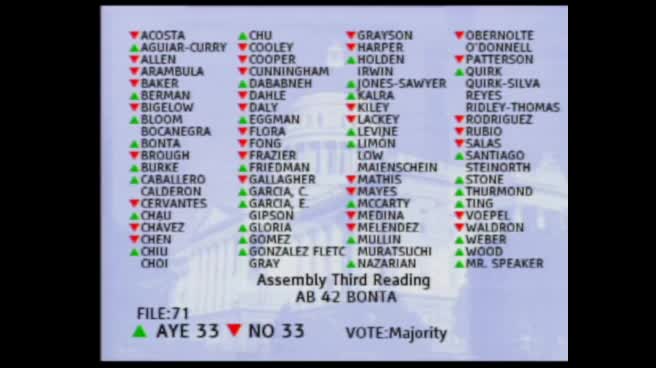 10MIN
Assembly Floor
 45SEC
Assembly Floor
 1H
Assembly Standing Committee on Appropriations
 16MIN
Assembly Standing Committee on Public Employees, Retirement, and Social Security
 31MIN
Assembly Standing Committee on Public Employees, Retirement, and Social Security
Bill Author


