AB 1324: Transportation: local transportation authorities: transactions and use taxes.
- Session Year: 2017-2018
- House: Assembly
- Latest Version Date: 2018-01-29
Existing law authorizes the establishment of a local transportation authority in any county and authorizes the authority, with a 2/3 vote of the authority and upon approval of 2/3 of the voters, to impose a retail transactions and use tax for specified transportation purposes if a county transportation expenditure plan is adopted.
This bill would authorize an authority to impose a tax applicable to only a portion of its county if 2/3 of the voters voting on the measure within the portion of the county to which the tax would apply vote to approve the tax, as specified, and other requirements are met, including that the revenues derived from the tax be spent within, or for the benefit of, the portion of the county to which the tax would apply. The bill would also make conforming changes.
This bill would enact similar provisions specifically applicable to the authority of the San Diego Association of Governments, also known as the consolidated agency, to impose a transactions and use tax for transportation purposes.
Existing law authorizes various local governmental entities, subject to certain limitations and approval requirements, to levy a transactions and use tax in accordance with the procedures and requirements set forth in the Transactions and Use Tax Law. Existing federal law provides for the designation of some of these entities as metropolitan planning organizations.This bill would authorize a metropolitan planning organization or regional transportation planning agency that is authorized by law to levy, expand, increase, or extend a transactions and use tax to levy, expand, increase, or extend that tax in only a portion of the jurisdiction, as an alternative to the entire jurisdiction, in which the organization or agency is authorized to levy, expand, increase, or extend the tax, if approved by the required percentage of the voters in that portion of the jurisdiction. The bill would require the revenues derived from the levy, expansion, increase, or extension to be used only within the area for which the levy, expansion, increase, or extension was approved by the voters.Existing law authorizes various local governmental entities, subject to certain limitations and approval requirements, to levy a transactions and use tax in accordance with the procedures and requirements set forth in the Transactions and Use Tax Law. Existing federal law provides for the designation of some of these entities as metropolitan planning organizations.
This bill would authorize a metropolitan planning organization or regional transportation planning agency that is authorized by law to levy, expand, increase, or extend a transactions and use tax to levy, expand, increase, or extend that tax in only a portion of the jurisdiction, as an alternative to the entire jurisdiction, in which the organization or agency is authorized to levy, expand, increase, or extend the tax, if approved by the required percentage of the voters in that portion of the jurisdiction. The bill would require the revenues derived from the levy, expansion, increase, or extension to be used only within the area for which the levy, expansion, increase, or extension was approved by the voters.
Existing law authorizes various local governmental entities, subject to certain limitations and approval requirements, to levy a transactions and use tax in accordance with the procedures and requirements set forth in the Transactions and Use Tax Law. Existing federal law provides for the designation of some of these entities as metropolitan planning organizations.
This bill would authorize a metropolitan planning organization authorized by law to levy, expand, increase, or extend a transactions and use tax to levy, expand, increase, or extend that tax in only a portion of the jurisdiction, as an alternative to the entire jurisdiction, in which the organization is authorized to levy, expand, increase, or extend the tax, if approved by the required percentage of the voters in that portion of the jurisdiction. The bill would require the revenues derived from the levy, expansion, increase, or extension to be used only within the area for which the levy, expansion, increase, or extension was approved by the voters.
(a)A retail transactions and use tax ordinance applicable in to the entirety of, or a portion of, the incorporated and unincorporated territory of the county shall be imposed by the commission in accordance with Section 132307 and Part 1.6 (commencing with Section 7251) of Division 2 of the Revenue and Taxation Code, if two-thirds of the electors voting on the measure within the portion of the county to which the tax would apply, vote to approve its imposition at a special election called for that purpose by the commission. The tax ordinance shall take effect at the close of the polls on the day of election at which the proposition is adopted. The initial collection of the transactions and use tax shall take place in accordance with Section 132304.
If,(b)If, at any time, the voters do not approve the imposition of the transactions and use tax, this chapter remains in full force and effect. The commission may, at any time thereafter, submit the same, or a different, measure to the voters in accordance with this chapter.
(c)The portion of the county to which the tax would apply shall be determined by the commission prior to the electors voting on the measure.
(d)If the tax only applies to a portion of the county, the incorporated area of each city within the county shall be either wholly included within that portion or wholly excluded from that portion.
(e)The revenues derived from the tax shall be spent within, or for the benefit of, the portion of the county to which the tax applies.
(f)Any revenues derived from the tax shall supplement, and not supplant, other transportation revenues available to the portion of the county to which the tax applies.
(g)As used in this section, commission shall refer to the consolidated agency if the tax is to be imposed by the consolidated agency pursuant to Section 132360.6.
SEC. 2.Section 132322 of the Public Utilities Code is amended to read:132322.(a)An ordinance expanding, extending, or increasing the retail transactions and use tax imposed under this chapter shall be imposed by the commission and shall be applicable in to the entirety of, or a portion of, the incorporated and unincorporated territory of the county, if the constitutionally required percentage of the electors voting on the measure within the portion of the county to which the tax would apply, vote to approve its imposition at a special election called for that purpose by the commission. The ordinance shall take effect on the day immediately following the day of the election at which the proposition is adopted.
(b)If at any time the voters do not approve the imposition of the expansion, extension, or increase of the transactions and use tax, the commission may, at any time thereafter, submit the same, or a different, measure to the voters in accordance with this article.
(c)As used in this section, commission shall refer to the consolidated agency if the tax is to be imposed by the consolidated agency pursuant to Section 132360.6.
SEC. 3.Section 180201 of the Public Utilities Code is amended to read:180201.(a)A retail transactions and use tax ordinance applicable in to the entirety of, or a portion of, the incorporated and unincorporated territory of a county may be imposed by the authority in accordance with this chapter and Part 1.6 (commencing with Section 7251) of Division 2 of the Revenue and Taxation Code, if the tax ordinance is adopted by a two-thirds vote of the authority and imposition of the tax is subsequently approved by a majority of the electors voting on the measure, or by any otherwise within the portion of the county to which the tax would apply, consistent with the applicable voter approval requirement, requirement under the California Constitution, at a special election called for that purpose by the board of supervisors, at the request of the authority, and a county transportation expenditure plan is adopted pursuant to Section 180206.
A(b)The retail transactions and use tax approved by the electors shall remain in effect for the period of time specified in the tax ordinance. The tax may be continued in effect, or reimposed, by a tax ordinance adopted by a two-thirds vote of the authority and the reimposition of the tax is approved by any applicable majority of the electors. electors consistent with subdivision (a).
(c)The portion of the county to which the tax would apply shall be determined by the authority prior to its adoption of the tax ordinance.
(d)If the tax only applies to a portion of the county, the incorporated area of each city within the county shall be either wholly included within that portion or wholly excluded from that portion.
(e)The revenues derived from the tax shall be spent within, or for the benefit of, the portion of the county to which the tax applies.
(f)Consistent with Section 180200, any revenues derived from the tax shall supplement, and not supplant, other transportation revenues available to the portion of the county to which the tax applies.
SEC. 4.Section 180206 of the Public Utilities Code is amended to read:180206.(a)A county transportation expenditure plan shall be prepared for the expenditure of the revenues expected to be derived from the tax imposed pursuant to this chapter, together with other federal, state, and local funds expected to be available for transportation improvements, for the period during which the tax is to be imposed.
(b)A county transportation expenditure plan shall not be adopted until it has received the approval of the board of supervisors and of the city councils representing both a majority of the cities in the portion of the county to which the tax would apply and a majority of the population residing in the incorporated areas of the county. portion of the county to which the tax would apply.
(c)The plan shall be adopted prior to the call of the election provided for in Section 180201.
SEC. 5.Section 180207 of the Public Utilities Code is amended to read:180207.(a)The authority may annually review and propose amendments to the county transportation expenditure plan adopted pursuant to Section 180206 to provide for the use of additional federal, state, and local funds, to account for unexpected revenues, or to take into consideration unforeseen circumstances.
(b)The authority shall notify the board of supervisors and the city council of each city in the portion of the county to which the tax applies and provide them with a copy of the proposed amendments.
(c)The proposed amendments shall become effective 45 days after notice is given.
SECTION 1.Chapter 2.55 (commencing with Section 65087) is added to Division 1 of Title 7 of the Government Code, to read:2.55.Metropolitan Planning Organizations and Regional Transportation Planning Agencies65087.(a)Notwithstanding any other law, a metropolitan planning organization or regional transportation planning agency that is authorized by law to levy, expand, increase, or extend a transactions and use tax in accordance with the Transactions and Use Tax Law (Part 1.6 (commencing with Section 7251) of Division 2 of the Revenue and Taxation Code) may levy, expand, increase, or extend the tax on any portion of the jurisdiction in which the metropolitan planning organization or regional transportation planning agency is authorized to levy, expand, increase, or extend the tax if the levy, expansion, increase, or extension is approved by the required percentage of the voters of that portion of the jurisdiction who vote on the issue.(b)The revenues derived from the levy, expansion, increase, or extension of the tax in a portion of the jurisdiction of a metropolitan planning organization or regional transportation planning agency pursuant to this section shall be used only within the area for which the levy, expansion, increase, or extension was approved by the voters.(a)Notwithstanding any other law, a metropolitan planning organization or regional transportation planning agency that is authorized by law to levy, expand, increase, or extend a transactions and use tax in accordance with the Transactions and Use Tax Law (Part 1.6 (commencing with Section 7251) of Division 2 of the Revenue and Taxation Code) may levy, expand, increase, or extend the tax on any portion of the jurisdiction in which the metropolitan planning organization or regional transportation planning agency is authorized to levy, expand, increase, or extend the tax if the levy, expansion, increase, or extension is approved by the required percentage of the voters of that portion of the jurisdiction who vote on the issue.
(b)The revenues derived from the levy, expansion, increase, or extension of the tax in a portion of the jurisdiction of a metropolitan planning organization or regional transportation planning agency pursuant to this section shall be used only within the area for which the levy, expansion, increase, or extension was approved by the voters.
(a)Notwithstanding any other law, a metropolitan planning organization authorized by law to levy, expand, increase, or extend a transactions and use tax in accordance with the Transactions and Use Tax Law (Part 1.6 (commencing with Section 7251) of Division 2 of the Revenue and Taxation Code) may levy, expand, increase, or extend the tax on any portion of the jurisdiction in which the metropolitan planning organization is authorized to levy, expand, increase, or extend the tax if the levy, expansion, increase, or extension is approved by the required percentage of the voters of that portion of the jurisdiction who vote on the issue.
(b)The revenues derived from the levy, expansion, increase, or extension of the tax in a portion of the jurisdiction of a metropolitan planning organization pursuant to this section shall be used only within the area for which the levy, expansion, increase, or extension was approved by the voters.
|
Date
|
Status
|
|---|---|
| Feb 1, 2018 | Died on third reading file. |
| Jan 29, 2018 | Read third time and amended. Ordered to third reading. |
| Jan 11, 2018 | Read second time. Ordered to third reading. |
| Jan 10, 2018 | From committee: Do pass. (Ayes 5. Noes 3.) (January 10). |
| Mar 21, 2017 | Re-referred to Com. on L. GOV. |
| Mar 20, 2017 | From committee chair, with author's amendments: Amend, and re-refer to Com. on L. GOV. Read second time and amended. |
| Mar 13, 2017 | Referred to Com. on L. GOV. |
| Feb 19, 2017 | From printer. May be heard in committee March 21. |
| Feb 17, 2017 | Read first time. To print. |
|
Date
|
Description
|
Location
|
Votes
|
|
|---|---|---|---|---|
| Jan 29, 2018 | AB 1324 GLORIA Assembly Third Reading Amend By GLORIA Set #1 | Assembly Floor |
Passed |
|
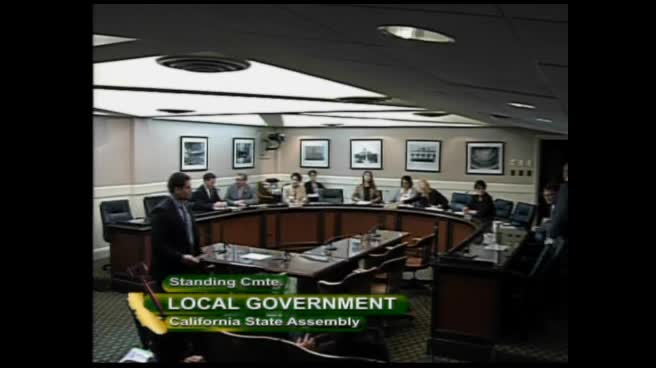
| Jan 10, 2018 | Do pass. | Assembly Standing Committee on Local Government |
Passed |
This list shows positions taken on this bill by organizations on the date displayed, which is linked to the original source.
Positions by individuals are not included.
|
Organization
|
Position
|
Date
|
|---|---|---|
| California Taxpayers Association | ** Against | Jan 8, 2018 |
| California Transportation Commission | ** Support | Jan 8, 2018 |
| City of Encinitas | ** Support | Jan 8, 2018 |
| Howard Jarvis Taxpayers Association | ** Against | Jan 8, 2018 |
| Placer County Regional Transportation Authority | * Support | Jan 10, 2018 |
| Placer County Transportation Planning Agency | ** Support | Jan 8, 2018 |
ASSEMBLY THIRD READING
ATR Bill Id:AB 1324
Author:(Gloria)
As Amended Ver:January 29, 2018
Majority vote
Committee | Votes | Ayes | Noes |
Local Government | 5-3 | Aguiar-Curry, Bloom, Cooley, Eduardo Garcia, Grayson | Waldron, Lackey, Voepel |
SUMMARY: Authorizes a local transportation authority, which has existing transactions and use tax authority, to levy a transactions and use tax in any portion of its jurisdiction, with voter approval. Specifically, this bill:
- Authorizes a local transportation authority that has existing transactions and use tax authority to levy a transactions and use tax in a portion of its jurisdiction, with voter approval.
- Requires the local transportation authority to determine the portion of the county in which the tax would apply prior to its adoption of the tax ordinance.
- Requires, if the tax only applies to a portion of the county, the incorporated area of each city within the county to be either wholly included or wholly excluded from that portion.
- Requires the tax revenues to be spent within or for the benefit of the portion of the county to which the tax applies.
- Requires any tax revenues to supplement, and not supplant, other transportation revenues available to the portion of the county to which the tax applies.
- Makes technical and clarifying changes to the requirements in existing law for a county transportation expenditure plan.
- Authorizes the San Diego Association of Governments (SANDAG), which has existing transactions and use tax authority, to levy a transactions and use tax in a portion of its jurisdiction, with voter approval, subject to 2) through 5), above.
FISCAL EFFECT: None
COMMENTS:
- Background. Current law authorizes a local transportation authority to impose a transactions and use tax ordinance in the incorporated and unincorporated territory of a county in accordance with existing law which governs transactions and use taxes. The local transportation authority must adopt the tax ordinance by a two-thirds vote, request the county to call a special election, and adopt an expenditure plan, as specified. Current law requires the expenditure plan to be prepared for the expenditure of the transactions and use tax revenues, and federal, state, and local funds expected to be available for transportation improvements for the period during which the tax is imposed.
State law has been amended multiple times to authorize cities, counties, special districts and local transportation authorities, including SANDAG, to impose a transactions and use tax, if voters approve the transactions and use tax in 0.125% increments in addition to the state's 7.25% sales tax, provided that the combined rate in the county does not exceed 2%. Transactions and use taxes are taxes imposed on the total retail price of any tangible personal property and the use or storage of such property when sales tax is not paid.
According to the State Board of Equalization, as of April 1, 2017, 257 local agencies impose their own transactions and use taxes: six of 54 county-imposed taxes are general purpose taxes and 48 are special purpose taxes with 35 dedicated for transportation purposes.
- Bill Summary. This bill authorizes a local transportation authority which has existing transaction and use tax authority to levy a transactions and use tax in any portion of its jurisdiction, with two-thirds voter approval. Under this bill, the local transportation authority must identify the portion of the county in which the tax would apply prior to its adoption of a tax ordinance. Additionally, this bill requires that revenues must only be used in the area or for the benefit of the portion of the county where the tax applies. Any transactions and use tax revenues must supplement, and not supplant, other transportation revenues available to that portion of the county. This bill also grants SANDAG the authority to levy a transactions and use tax in any portion of its jurisdiction, with two-thirds voter approval, subject to the same requirements as local transportation authorities. This bill is author-sponsored.
- Author's Statement. According to the author, "Existing law authorizes a county board of supervisors to either create an authority, or to designate a transportation planning agency, to, among other things, administer a transactions and use tax on its behalf. In 2016, we saw a number of proposed transactions and use taxes in California that did not receive the required two-thirds vote of the people. However, there were geographic regions that overwhelmingly supported such measures. AB 1324 allows subregions within a county to band together to approve proposed tax levies, while excluding those regions which are neither interested in the additional tax nor the services that would result from the tax levy. AB 1324 provides more flexibility to local jurisdictions and voters to fund improvements."
- Prior Legislation. AB 805 (Gonzalez Fletcher), Chapter 658, Statutes of 2017, made changes to the governance structure for SANDAG, Metropolitan Transportation System (MTS), and North County Transit District (NCTD), and authorized MTS and NCTD to impose a transactions and use tax. Additionally, AB 805 required the MTS and NCTD Boards to contract with the California Department of Tax and Fee Administration (CDTFA) to administer a transactions and use tax, and provide CDTFA with a complete alphabetical list of all streets within the affected unincorporated area under the jurisdiction of the Board within 45 days from the date the ordinance is approved by the voters.
AB 431 (Mullin) of 2013 would have authorized a transportation planning agency that is designated as an MPO to impose a transaction and use tax within all or a portion of its jurisdiction for the purpose of achieving the goals of the sustainable communities strategy, at a rate of no more than 0.5 %, subject to specified conditions. AB 431 was subsequently amended into a different subject matter.
AB 2119 (Stone), Chapter 148, Statutes of 2014, authorized a county board of supervisors to levy, increase, or extend a transactions and use tax, for general or specific purposes, within the unincorporated area of the county. The Local Government Committee is not aware of any county that has utilized this authority.
- Policy Consideration. This bill requires, if a transactions and use tax only applies to a portion of the county, the incorporated area of each city within the county to be wholly included or excluded from that portion where the tax applies. This bill allows the unincorporated area of a county to be divided and the tax to be imposed in a portion of the county. The Legislature may wish to consider that while transportation needs do not necessarily align with jurisdictional boundaries, whether this bill may create potential equity issues within the county. Therefore, the Legislature may wish to encourage the author to take a narrow approach by explicitly naming a few local transportation authorities to utilize the authority granted by this bill.
- Arguments in Support. The Placer County Transportation Planning Agency states, "Obtaining the required two-thirds majority support for a local transportation sales tax is made even more difficult in a county as diverse as Placer, as the needs in the suburban areas of South Placer are very different from those in the more rural foothills and those at the North Shore of Lake Tahoe. AB 1324 would allow Placer County to build on the districting approach by permitting the designated authority to identify a portion of a county in which a tax ordinance and related tax expenditure would apply. Placer County is reviewing and considering such a tax authority for the suburban areas of South Placer and the rural areas of Auburn and the Sierra Foothills. These districts that could be formed within these portion of the county would allow for targeted expenditure plans that speak to the critical transportation needs of those areas, with assurance that the funds generated would be spent in that same district."
- Arguments in Opposition. Unknown.
Analysis Prepared by: Misa Lennox / L. GOV. / (916) 319-3958 FN: 0002562
ASSEMBLY THIRD READING
ATR Bill Id:AB 1324
Author:(Gloria)
As Amended Ver:March 20, 2017
Majority vote
Committee | Votes | Ayes | Noes |
Local Government | 5-3 | Aguiar-Curry, Bloom, Cooley, Eduardo Garcia, Grayson | Waldron, Lackey, Voepel |
SUMMARY: Authorizes a metropolitan planning organization or regional transportation planning agency that has existing transactions and use tax authority to levy a transactions and use tax in any portion of its jurisdiction, with voter approval. Specifically, this bill:
- Authorizes a metropolitan planning organization (MPO) or regional transportation planning agency (RTPA) that is authorized by existing law to levy, expand, increase, or extend a transactions and use tax to levy, expand, increase, or extend the tax in any portion of the jurisdiction in which the MPO or RTPA is authorized to levy, expand, increase, or extend the tax, if approved by the required percentage of the voters of that portion of the jurisdiction who vote on the issue.
- Requires the revenues derived from the levy, expansion, increase, or extension of the tax in a portion of the jurisdiction of an MPO or RTPA to only be used within the area for which the tax (levy, expansion, increase or extension) was approved by the voters.
FISCAL EFFECT: None
COMMENTS:
- MPOs and RTPAs in California. Existing federal law requires any urbanized area with a population greater than 50,000 to establish an MPO that, among other things, is responsible for ensuring that regional transportation planning is cohesive across local jurisdictions. Existing state law requires the 18 MPOs and 26 RTPAs to prepare and adopt long-range regional transportation plans which identify the region's vision and goals and how to implement a coordinated and balanced regional transportation system. Generally, regional planning is conducted by MPOs in urbanized areas and RTPAs in rural areas. According to the California Association of Councils of Governments (CALCOG), only one MPO is established by California law, Metropolitan Transportation Commission (MTC), which includes the nine counties in the San Francisco Bay Area. The other 16 MPOs were established by local decisions creating either a state-required county transportation commission to serve as an RTPA under state law, or a previously existing Council of Governments (COG) established for review of federal grant applications by local governments. MPOs generally follow county boundaries, with the exception of the Tahoe Regional Planning Agency, a bi-state agency created by Congress and compact between California and Nevada.
- Taxing Authority. Existing law does not explicitly provide all MPOs or RTPAs with the authority to levy transactions and use taxes. An exception, the San Diego Association of Governments (SANDAG), is explicitly authorized to impose a transactions and use tax. Other MPOs and RTPA have been designated by the county as the local transportation authority. A local transportation authority may be a statutorily created RTPA (like the Placer County Transportation Planning Agency), a COG, a local transportation commission, or a multicounty designated planning agency. Current law authorizes a local transportation authority to impose a transactions and use tax ordinance in the incorporated and unincorporated territory of a county in accordance with existing law which governs transactions and use taxes. The local transportation authority must adopt the tax ordinance by a two-thirds vote, request the county to call a special election, and adopt an expenditure plan, as specified. Current law requires the expenditure plan to be prepared for the expenditure of the transactions and use tax revenues, and federal, state, and local funds expected to be available for transportation improvements for the period during which the tax is imposed.
- Transactions and Use Taxes. Existing law authorizes cities and counties to impose transactions and use taxes in 0.125% increments in addition to the state's 7.5% sales tax, provided that the combined rate in the county does not exceed 2%. Transactions and use taxes are taxes imposed on the total retail price of any tangible personal property and the use or storage of such property when sales tax is not paid. State law has been amended multiple times to authorize specific cities, counties, special districts and local transportation authorities, including SANDAG, to impose a transactions and use tax, if voters approve the tax.
According to the State Board of Equalization, as of April 1, 2017, 257 local agencies impose their own transactions and use taxes: six of 54 county-imposed taxes are general purpose taxes and 48 are special purpose taxes with 35 dedicated for transportation purposes.
- Bill Summary. This bill authorizes an MPO or RTPA that has existing transaction and use tax authority to levy a transactions and use tax in any portion of its jurisdiction, with two-thirds voter approval. Under this bill, revenues must only be used in the area where voters approved the tax. This bill is author-sponsored.
- Author's Statement. According to the author, "AB 1324 allows MPOs or RTPAs, who already have tax proposal authorization, to place before the voters a transactions and use tax for only a portion of their geographic jurisdiction. In 2016, we saw a number of proposed transactions and use taxes in California that did not receive the required two-thirds vote of the people. However, there were geographic regions that overwhelmingly supported such measures. AB 1324 allows regions within an MPO's area to band together to approve proposed tax levies, while excluding those regions which are neither interested in the additional tax nor the services that would result from the tax levy. AB 1324 provides more flexibility to local jurisdictions and voters to fund improvements."
- Prior Legislation. AB 805 (Gonzalez Fletcher), Chapter 658, Statutes of 2017, made changes to the governance structure for SANDAG, Metropolitan Transportation System (MTS), and North County Transit District (NCTD), and authorized MTS and NCTD to impose a transactions and use tax. Additionally, AB 805 required the MTS and NCTD Boards to contract with the California Department of Tax and Fee Administration (CDTFA) to administer a transactions and use tax, and provide CDTFA with a complete alphabetical list of all streets within the affected unincorporated area under the jurisdiction of the Board within 45 days from the date the ordinance is approved by the voters.
AB 431 (Mullin) of 2013 would have authorized a transportation planning agency that is designated as an MPO to impose a transaction and use tax within all or a portion of its jurisdiction for the purpose of achieving the goals of the sustainable communities strategy,
at a rate of no more than 0.5 %, subject to specified conditions. AB 431 was subsequently amended into a different subject matter.
AB 2119 (Stone), Chapter 148, Statutes of 2014, authorized a county board of supervisors to levy, increase, or extend a transactions and use tax, for general or specific purposes, within the unincorporated area of the county. The Local Government Committee is not aware of any county that has utilized this authority.
- Policy Considerations. The Legislature may wish to encourage the author to address several issues moving forward:
- Defining the Universe. The Legislature may wish to consider the lack of explicit authority under existing law granting an MPO or RTPA to levy a transactions and use tax, and encourage the author to utilize a different approach in order to define which MPOs and RTPAs this bill applies to. For example:
- The narrowest approach would be to explicitly name a few MPOs or RTPAs that have the explicit statutory authority or have already been designated by the county as the local transportation authority; or,
- A broader, but more concise alternative to current language, would remove the current MPO and RTPA language and instead make it explicit that if a county designates a transportation planning agency to serve as the local transportation authority, that this bill authorizes that MPO or RTPA, serving as the local transportation authority, to levy a transactions and use tax in a portion of its jurisdiction.
- Defining the Universe. The Legislature may wish to consider the lack of explicit authority under existing law granting an MPO or RTPA to levy a transactions and use tax, and encourage the author to utilize a different approach in order to define which MPOs and RTPAs this bill applies to. For example:
The Legislature may wish to consider if these alternatives may provide MPOs and RTPAs with more solid legal footing to utilize the authority granted by this bill. Additionally, the Legislature may wish to consider how and if this bill should apply to multi-county MPOs or RTPAs.
- Defining Boundaries. The Legislature may wish to consider that this bill does not place any parameters around a portion of a jurisdiction in which an MPO or RTPA can levy a tax. This portion of a jurisdiction does not have to follow city or county boundaries. The Legislature may wish to consider that while transportation needs do not necessarily align with jurisdictional boundaries, whether this policy may create potential equity issues. At a minimum, the Legislature may wish to encourage the author to ensure that incorporated cities are not divided.
Additionally, the Legislature may wish to encourage the author to require the boundaries of the jurisdiction in which a proposed transactions and use tax may be imposed to be clearly identified on the ballot measure.
- Arguments in Support. The Placer County Transportation Planning Agency states, "Obtaining the required two-thirds majority support for a local transportation sales tax is made even more difficult in a county as diverse as Placer, as the needs in the suburban areas of South Placer are very different from those in the more rural foothills and those at the North Shore of Lake Tahoe. AB 1324 would allow Placer County to build on the districting approach by designating sales tax districts for the suburban areas of South Placer and the rural areas of Auburn and the Sierra Foothills. These districts would allow for targeted expenditure plans that speak to the critical transportation needs of those areas, with assurance that the funds generated would be spent in that same district."
The California Transportation Commission states, "AB 1324 enables counties that have been unsuccessful in achieving the required two-thirds voter approval for transportation funding measure to bifurcate their jurisdictions, increasing the likelihood of passing transportation funding measures in areas where voters may support them."
- Arguments in Opposition. The Howard Jarvis Taxpayers Association (HJTA) states, "HJTA is troubled by this bill because it would allow county/regional agencies to essentially 'cherry-pick' its electorate to get a sales tax approved. AB 1324 also includes a disingenuous promise that the funds will only be used to support the portion of the electorate that voted for the tax. While this may be true in theory, it doesn't square with reality. The fact is, everyone in the county uses the same roads and should have the same responsibility in caring for them."
The California Taxpayers Association states, "Authorizing smaller sales tax jurisdictions complicates compliance for retailers in the districts, and creates winners and losers in the marketplace, since consumer behavior will be affected by taxes. In addition, smaller tax jurisdictions create competitive disadvantages between retails that may be separated by only a couple of streets."
Analysis Prepared by: Misa Lennox / L. GOV. / (916) 319-3958 FN: 0002520
Date of Hearing: January 10, 2018
ASSEMBLY COMMITTEE ON LOCAL GOVERNMENT
Cecilia Aguiar-Curry, Chair
ABPCA Bill Id:AB 1324 (
Author:Gloria) – As Amended Ver:March 20, 2017
SUBJECT: Metropolitan planning organizations: transactions and use taxes.
SUMMARY: Authorizes a metropolitan planning organization or regional transportation planning agency that has existing transactions and use tax authority to levy a transactions and use tax in any portion of its jurisdiction, with voter approval. Specifically, this bill:
- Authorizes a metropolitan planning organization (MPO) or regional transportation planning agency (RTPA) that is authorized by existing law to levy, expand, increase, or extend a transactions and use tax to levy, expand, increase, or extend the tax in any portion of the jurisdiction in which the MPO or RTPA is authorized to levy, expand, increase, or extend the tax, if approved by the required percentage of the voters of that portion of the jurisdiction who vote on the issue.
- Requires the revenues derived from the levy, expansion, increase, or extension of the tax in a portion of the jurisdiction of an MPO or RTPA to only be used within the area for which the tax (levy, expansion, increase or extension) was approved by the voters.
FISCAL EFFECT: None
COMMENTS:
- MPOs and RTPAs in California. Existing federal law requires any urbanized area with a population greater than 50,000 to establish an MPO that, among other things, is responsible for ensuring that regional transportation planning is cohesive across local jurisdictions. Existing state law requires the 18 MPOs and 26 RTPAs to prepare and adopt long-range regional transportation plans which identify the region's vision and goals and how to implement a coordinated and balanced regional transportation system. Generally, regional planning is conducted by MPOs in urbanized areas and RTPAs in rural areas. According to the California Association of Councils of Governments (CALCOG), only one MPO is established by California law, Metropolitan Transportation Commission (MTC), which includes the nine counties in the San Francisco Bay Area. The other 16 MPOs were established by local decisions creating either a state-required county transportation commission to serve as an RTPA under state law, or a previously existing Council of Governments (COG) established for review of federal grant applications by local governments. MPOs generally follow county boundaries, with the exception of the Tahoe Regional Planning Agency, a bi-state agency created by Congress and compact between California and Nevada.
- Taxing Authority. Existing law does not explicitly provide all MPOs or RTPAs with the authority to levy transactions and use taxes. An exception, the San Diego Association of Governments (SANDAG), is explicitly authorized to impose a transactions and use tax. Other MPOs and RTPA have been designated by the county as the local transportation authority. A local transportation authority may be a statutorily created RTPA (like the Placer County Transportation Planning Agency), a COG, a local transportation commission, or a multicounty designated planning agency. Current law authorizes a local transportation authority to impose a transactions and use tax ordinance in the incorporated and unincorporated territory of a county in accordance with existing law which governs transactions and use taxes. The local transportation authority must adopt the tax ordinance by a two-thirds vote, request the county to call a special election, and adopt an expenditure plan, as specified. Current law requires the expenditure plan to be prepared for the expenditure of the transactions and use tax revenues, and federal, state, and local funds expected to be available for transportation improvements for the period during which the tax is imposed.
- Transactions and Use Taxes. Existing law authorizes cities and counties to impose transactions and use taxes in 0.125% increments in addition to the state's 7.5% sales tax, provided that the combined rate in the county does not exceed 2%. Transactions and use taxes are taxes imposed on the total retail price of any tangible personal property and the use or storage of such property when sales tax is not paid. State law has been amended multiple times to authorize specific cities, counties, special districts and local transportation authorities, including SANDAG, to impose a transactions and use tax, if voters approve the tax.
According to the State Board of Equalization, as of April 1, 2017, 257 local agencies impose their own transactions and use taxes: six of 54 county-imposed taxes are general purpose taxes and 48 are special purpose taxes with 35 dedicated for transportation purposes.
- Bill Summary. This bill authorizes an MPO or RTPA that has existing transaction and use tax authority to levy a transactions and use tax in any portion of its jurisdiction, with two-thirds voter approval. Under this bill, revenues must only be used in the area where voters approved the tax. This bill is author-sponsored.
- Author's Statement. According to the author, "AB 1324 allows MPOs or RTPAs, who already have tax proposal authorization, to place before the voters a transactions and use tax for only a portion of their geographic jurisdiction. In 2016, we saw a number of proposed transactions and use taxes in California that did not receive the required two-thirds vote of the people. However, there were geographic regions that overwhelmingly supported such measures. AB 1324 allows regions within an MPO’s area to band together to approve proposed tax levies, while excluding those regions which are neither interested in the additional tax nor the services that would result from the tax levy. AB 1324 provides more flexibility to local jurisdictions and voters to fund improvements."
- Prior Legislation. AB 805 (Gonzalez Fletcher), Chapter 658, Statutes of 2017, made changes to the governance structure for SANDAG, Metropolitan Transportation System (MTS), and North County Transit District (NCTD), and authorized MTS and NCTD to impose a transactions and use tax. Additionally, AB 805 required the MTS and NCTD Boards to contract with the California Department of Tax and Fee Administration (CDTFA) to administer a transactions and use tax, and provide CDTFA with a complete alphabetical list of all streets within the affected unincorporated area under the jurisdiction of the Board within 45 days from the date the ordinance is approved by the voters.
AB 431 (Mullin) of 2013 would have authorized a transportation planning agency that is designated as an MPO to impose a transaction and use tax within all or a portion of its jurisdiction for the purpose of achieving the goals of the sustainable communities strategy, at a rate of no more than 0.5 %, subject to specified conditions. The contents of AB 431 (Mullin) were subsequently amended into a different subject matter.
AB 2119 (Stone), Chapter 148, Statutes of 2014, authorized a county board of supervisors to levy, increase, or extend a transactions and use tax, for general or specific purposes, within the unincorporated area of the county. The Committee is not aware of any county that has utilized this authority.
- Policy Considerations. The Committee may wish to encourage the author to address several issues moving forward:
- Defining the Universe. The Committee may wish to consider the lack of explicit authority under existing law granting an MPO or RTPA to levy a transactions and use tax, and encourage the author to utilize a different approach in order to define which MPOs and RTPAs this bill applies to. For example:
- The narrowest approach would be to explicitly name a few MPOs or RTPAs that have the explicit statutory authority or have already been designated by the county as the local transportation authority; or,
- A broader, but more concise alternative to current language, would remove the current MPO and RTPA language and instead make it explicit that if a county designates a transportation planning agency to serve as the local transportation authority, that this bill authorizes that MPO or RTPA, serving as the local transportation authority, to levy a transactions and use tax in a portion of its jurisdiction.
- Defining the Universe. The Committee may wish to consider the lack of explicit authority under existing law granting an MPO or RTPA to levy a transactions and use tax, and encourage the author to utilize a different approach in order to define which MPOs and RTPAs this bill applies to. For example:
The Committee may wish to consider if these alternatives may provide MPOs and RTPAs with more solid legal footing to utilize the authority granted by this bill. Additionally, the Committee may wish to consider how and if this bill should apply to multi-county MPOs or RTPAs.
- Defining Boundaries. The Committee may wish to consider that this bill does not place any parameters around a portion of a jurisdiction in which an MPO or RTPA can levy a tax. This portion of a jurisdiction does not have to follow city or county boundaries. The Committee may wish to consider that while transportation needs do not necessarily align with jurisdictional boundaries, whether this policy may create potential equity issues. At a minimum, the Committee may wish to encourage the author to ensure that incorporated cities are not divided.
Additionally, the Committee may wish to encourage the author to require the boundaries of the jurisdiction in which a proposed transactions and use tax may be imposed to be clearly identified on the ballot measure.
- Arguments in Support. The Placer County Transportation Planning Agency states, "Obtaining the required two-thirds majority support for a local transportation sales tax is made even more difficult in a county as diverse as Placer, as the needs in the suburban areas of South Placer are very different from those in the more rural foothills and those at the North Shore of Lake Tahoe. AB 1324 would allow Placer County to build on the districting approach by designating sales tax districts for the suburban areas of South Placer and the rural areas of Auburn and the Sierra Foothills. These districts would allow for targeted expenditure plans that speak to the critical transportation needs of those areas, with assurance that the funds generated would be spent in that same district."
The California Transportation Commission states, "AB 1324 enables counties that have been unsuccessful in achieving the required two-thirds voter approval for transportation funding measure to bifurcate their jurisdictions, increasing the likelihood of passing transportation funding measures in areas where voters may support them."
- Arguments in Opposition. The Howard Jarvis Taxpayers Association (HJTA) states, "HJTA is troubled by this bill because it would allow county/regional agencies to essentially 'cherry-pick' its electorate to get a sales tax approved. AB 1324 also includes a disingenuous promise that the funds will only be used to support the portion of the electorate that voted for the tax. While this may be true in theory, it doesn't square with reality. The fact is, everyone in the county uses the same roads and should have the same responsibility in caring for them."
The California Taxpayers Association states, "Authorizing smaller sales tax jurisdictions complicates compliance for retailers in the districts, and creates winners and losers in the marketplace, since consumer behavior will be affected by taxes. In addition, smaller tax jurisdictions create competitive disadvantages between retails that may be separated by only a couple of streets."
REGISTERED SUPPORT / OPPOSITION:
Support
California Transportation Commission
City of Encinitas
Placer County Transportation Planning Agency
Opposition
California Taxpayers Association
Howard Jarvis Taxpayers Association
Analysis Prepared by: Misa Lennox / L. GOV. / (916) 319-3958
Discussed in Hearing
View Older Hearings
Bill Author
Bill Co-Author(s):