AB 1395: State highways: Department of Transportation: litter cleanup and abatement: report.
- Session Year: 2017-2018
- House: Assembly
- Latest Version Date: 2018-08-06
Existing law provides that the Department of Transportation has full possession and control of all state highways and associated property, and sets forth the powers and duties of the department with respect to the operation, maintenance, and improvement of state highways.
This bill would require each district within the department for its highway the department, within its maintenance programs relating to litter cleanup and abatement programs to assign the highest priority to segments along the state highway system that receive the highest volume of complaints and with the greatest incidence of litter and to prioritize funding appropriated for highway litter maintenance in order to implement this priority. abatement, to prioritize its litter cleanup and abatement efforts based on certain key indicators. The bill would also require the department, on or before January 1, 2020, to conduct an assessment of the problem of litter on state highways and to make a specified report to the Legislature on its findings. The bill would require the department to consult with interested stakeholders that may include city and county officials in the development of the report.
Existing law provides that the Department of Transportation has full possession and control of all state highways and associated property, and sets forth the powers and duties of the department with respect to the operation, maintenance, and improvement of state highways.
This bill would require the department, within its maintenance each district within the department for its highway litter cleanup and abatement programs relating to litter cleanup and abatement, to assign the highest priority to litter deposited along state highway segments along the state highway system that carry the highest traffic volumes and the segments found by the department to have the highest incidences receive the highest volume of complaints and with the greatest incidence of litter and to reallocate existing litter cleanup resources as necessary prioritize funding appropriated for highway litter maintenance in order to implement this priority. The bill would also require the department, on or before January 1, 2020, to conduct an assessment of the problem of litter on state highways and to make a specified report to the Legislature on its findings. The bill would require the department to consult with interested stakeholders that may include city and county officials in the development of the report.
Existing law provides that the Department of Transportation has full possession and control of all state highways and associated property, and sets forth the powers and duties of the department with respect to the operation, maintenance, and improvement of state highways.
This bill would require the department, on or before January 1, 2020, to develop a litter, debris, and graffiti remediation plan, which would address the buildup of litter and debris along state highways and freeways, the graffiti along state highways and freeways, and the delay between when the department is notified that an area contains litter, debris, or graffiti and when the area is remediated.This bill would require the department, within its maintenance programs relating to litter cleanup and abatement, to assign the highest priority to litter deposited along state highway segments that carry the highest traffic volumes and the segments found by the department to have the highest incidences of litter and to reallocate existing litter cleanup resources as necessary in order to implement this priority. The bill would also require the department, on or before January 1, 2020, to conduct an assessment of the problem of litter on state highways and to make a specified report to the Legislature on its findings. The bill would require the department to consult with interested stakeholders that may include city and county officials in the development of the report.
Existing law provides that the Department of Transportation has full possession and control of all state highways and associated property, and sets forth the powers and duties of the department with respect to the operation, maintenance, and improvement of state highways.
This bill would require the department, on or before January 1, 2020, to develop a litter, debris, and graffiti remediation plan, which would both address the buildup of litter and debris along state highways and freeways, the graffiti along state highways and freeways, and the delay between when the department is notified that an area contains litter, debris, or graffiti and when the area is remediated, and include recommendations to modify or establish state processes or policy to allow a municipality to carry out obligations specified in the plan with reimbursement provided by the state. remediated.
Existing law provides that the Department of Transportation has full possession and control of all state highways and associated property, and sets forth the powers and duties of the department with respect to the operation, maintenance, and improvement of state highways.
This bill would require the department, on or before January 1, 2019, 2020, to develop a uniform financial plan to remediate debris to maintain and preserve the state highway and freeway systems. The bill would require the uniform financial plan to litter, debris, and graffiti remediation plan, which would both address the buildup of litter and debris along state highways and freeways, the graffiti along state highways and freeways, and the delay between when the department is notified that an area contains litter, debris, or graffiti and when the area is remediated, and include recommendations that to modify or establish state processes or policy to allow a municipality to carry out obligations specified in the plan with reimbursement provided by the state. By imposing new duties on local municipalities, the bill would impose a state-mandated local program.
The California Constitution requires the state to reimburse local agencies and school districts for certain costs mandated by the state. Statutory provisions establish procedures for making that reimbursement.This bill would provide that, if the Commission on State Mandates determines that the bill contains costs mandated by the state, reimbursement for those costs shall be made pursuant to the statutory provisions noted above.Existing law provides that the Department of Transportation has full possession and control of all state highways and associated property, and sets forth the powers and duties of the department with respect to the operation, maintenance, and improvement of state highways.
This bill would state the intent of the Legislature to enact legislation to create a pilot project that consists of the Division of Maintenance of the Department of Transportation working with a local jurisdiction to effectively address blight on state highway property. require the department, on or before January 1, 2019, to develop a uniform financial plan to remediate debris to maintain and preserve the state highway and freeway systems. The bill would require the uniform financial plan to include recommendations that allow a municipality to carry out obligations specified in the plan with reimbursement provided by the state. By imposing new duties on local municipalities, the bill would impose a state-mandated local program.
The California Constitution requires the state to reimburse local agencies and school districts for certain costs mandated by the state. Statutory provisions establish procedures for making that reimbursement.
This bill would provide that, if the Commission on State Mandates determines that the bill contains costs mandated by the state, reimbursement for those costs shall be made pursuant to the statutory provisions noted above.
Existing law provides that the Department of Transportation has full possession and control of all state highways and associated property, and sets forth the powers and duties of the department with respect to the operation, maintenance, and improvement of state highways.
This bill would state the intent of the Legislature to enact legislation to create a pilot project that consists of the Division of Maintenance of the Department of Transportation working with a local jurisdiction to effectively address blight on state highway property.
The Legislature finds and declares all both of the following:
(a)Maintenance of our state highways and freeways is a long-standing problem in California.
(b)Litter, debris, and graffiti along California highways and freeways create unsightly scenes.
SEC. 2.Section 92.1 is added to the Streets and Highways Code, to read:92.1.(a)(1)Each district within the department shall, for its highway litter cleanup and abatement programs, assign the highest priority within each district to segments along the state highway system that receive the highest volume of complaints and with the greatest incidence of litter.(2)Each district within the department shall prioritize funding appropriated for highway litter maintenance in order to carry out the requirements of paragraph (1).92.1.(a)(1)The department shall, within its maintenance programs relating to litter cleanup and abatement, prioritize its litter cleanup and abatement efforts based on all of the following key indicators of need:
(A)Traffic volume.
(B)Climate.
(C)Service scores.
(2)The department shall reallocate litter cleanup resources as necessary for highway litter maintenance to implement this subdivision.
(3)Nothing in this subvision subdivision shall prevent the department from also prioritizing litter cleanup in environmentally sensitive areas pursuant to Section 91.6.
(b)On or before January 1, 2020, the department shall conduct an assessment of the problem of litter on state highways and report to the Legislature pursuant to Section 9795 of the Government Code on its findings. The department shall consult with interested stakeholders that may include city and county officials in the development of the report. The report shall include all of the following elements:
(1)An assessment of the levels of litter on state highways by categories of high-traffic volume, medium-traffic volume, and low traffic low-traffic volume.
(2)An assessment of the causes of litter on highways by categories of the most frequent type of litter complaint, the medium type of litter complaint, and the lowest type of litter complaint. high-traffic volume, medium-traffic volume, and low-traffic volume.
(3)Changes to the maintenance practices the department has made in order to prioritize litter cleanup on high-traffic volume highways and abatement efforts pursuant to paragraph (1) of subdivision (a) and the outcome of those changes.
(c)The requirement for submitting a report imposed under subdivison (b) is inoperative on January 1, 2024, pursuant to Section 10231.5 of the Government Code.
The Legislature finds and declares all of the following:
(a)Maintenance of our state highways and freeways is a long-standing problem in California.
(b)Litter, debris, and graffiti along California highways and freeways create unsightly scenes.
SEC. 2.Section 92.1 is added to the Streets and Highways Code, to read:92.1.(a)(1)The department shall, within its maintenance programs relating to litter cheanup and abatement, Each district within the department shall, for its highway litter cleanup and abatement programs, assign the highest priority to litter deposited along state highway within each district to segments along the state highway system that carry the highest traffic volumes and the segments found by the department to have the highest incidences receive the highest volume of complaints and with the greatest incidence of litter.
(2)The department shall reallocate existing litter cleanup resources as necessary in order to implement this subdivision.(2)Each district within the department shall prioritize funding appropriated for highway litter maintenance in order to carry out the requirements of paragraph (1).
(3)Nothing in this subvision shall prevent the department from also prioritizing litter cleanup in environmentally sensitive areas pursuant to Section 91.6.
(b)On or before January 1, 2020, the department shall conduct an assessment of the problem of litter on state highways and report to the Legislature pursuant to Section 9795 of the Government Code on its findings. The department shall consult with interested stakeholders that may include city and county officials in the development of the report. The report shall include all of the following elements:
(1)A An assessment of the levels of litter on state highways by categories of high-traffic volume, medium-traffic volume, and low traffic volume.
(2)An assessment of the causes of litter on highways by categories of high-traffic volume, medium-traffic volume, and low traffic volume. the most frequent type of litter complaint, the medium type of litter complaint, and the lowest type of litter complaint.
(3)Changes to the maintenance practices the department has made in order to prioritize litter cleanup on high-traffic volume highways and the outcome of those changes.
(c)The requirement for submitting a report imposed under subdivison (b) is inoperative on January 1, 2024, pursuant to Section 10231.5 of the Government Code.
The Legislature finds and declares all of the following:
(a)Maintenance of our state highways and freeways is a long-standing problem in California.
(b)Litter, debris, and graffiti along California highways and freeways create unsightly scenes.
(c)When the Department of Transportation is unable to clean up the litter, debris, and graffiti, or falls behind with its remediation efforts, often times cities are left to fulfill those responsibilities.SEC. 2.Section 92.1 is added to the Streets and Highways Code, to read:92.1.(a)(1)On or before January 1, 2020, the department shall develop a litter, debris, and graffiti remediation plan.(2)The department shall consult with interested stakeholders, which may include city and county officials, to develop the plan.(b)The plan shall address all of the following problems:(1)The buildup of litter and debris along state highways and freeways.(2)The graffiti along state highways and freeways.(3)The delay between when the department is notified that an area contains litter, debris, or graffiti and when the area is remediated.SEC. 2.Section 92.1 is added to the Streets and Highways Code, to read:92.1.(a)(1)The department shall, within its maintenance programs relating to litter cheanup and abatement, assign the highest priority to litter deposited along state highway segments that carry the highest traffic volumes and the segments found by the department to have the highest incidences of litter.
(2)The department shall reallocate existing litter cleanup resources as necessary in order to implement this subdivision.
(3)Nothing in this subvision shall prevent the department from also prioritizing litter cleanup in environmentally sensitive areas pursuant to Section 91.6.
(b)On or before January 1, 2020, the department shall conduct an assessment of the problem of litter on state highways and report to the Legislature pursuant to Section 9795 of the Government Code on its findings. The department shall consult with interested stakeholders that may include city and county officials in the development of the report. The report shall include all of the following elements:
(1)A assessment of the levels of litter on state highways by categories of high-traffic volume, medium-traffic volume, and low traffic volume.
(2)An assessment of the causes of litter on highways by categories of high-traffic volume, medium-traffic volume, and low traffic volume.
(3)Changes to the maintenance practices the department has made in order to prioritize litter cleanup on high-traffic volume highways and the outcome of those changes.
(c)The requirement for submitting a report imposed under subdivison (b) is inoperative on January 1, 2024, pursuant to Section 10231.5 of the Government Code.
The Legislature finds and declares all of the following:
(a)Maintenance of our state highways and freeways is a long-standing problem in California.
(b)Litter, debris, and graffiti along California highways and freeways create unsightly scenes.
(c)When the Department of Transportation is unable to clean up the litter, debris, and graffiti, or falls behind with its remediation efforts, often times cities are left to fulfill those responsibilities.
SEC. 2.Section 92.1 is added to the Streets and Highways Code, to read:92.1.(a)(1)On or before January 1, 2020, the department shall develop a litter, debris, and graffiti remediation plan.
(2)The department shall consult with interested stakeholders, which may include city and county officials, to develop the plan.
(b)The plan shall address all of the following problems:
(1)The buildup of litter and debris along state highways and freeways.
(2)The graffiti along state highways and freeways.
(3)The delay between when the department is notified that an area contains litter, debris, or graffiti and when the area is remediated.
(c)The plan shall include recommendations to modify or establish state processes or policy to allow a municipality to carry out obligations specified in the plan with reimbursement provided by the state.The Legislature finds and declares all of the following:
(a)Maintenance of our state highways and freeways is a long-standing problem in California.
(b)Litter, debris, and graffiti along California highways and freeways create unsightly scenes.
(c)When the Department of Transportation is unable to clean up the litter, debris, and graffiti, or falls behind with its remediation efforts, often times cities are left to fulfill those responsibilities.
SECTION 1.SEC. 2.Section 92.1 is added to the Streets and Highways Code, to read:92.1.(a)(1)On or before January 1, 2019, 2020, the department shall develop a uniform financial plan to remediate debris to maintain and preserve the state highway and freeway systems. litter, debris, and graffiti remediation plan.
(2)The department may update the plan. shall consult with interested stakeholders, which may include city and county officials, to develop the plan.
(b)The plan shall address all of the following problems:
(1)The buildup of litter and debris along state highways and freeways.
(2)The graffiti along state highways and freeways.
(3)The delay between when the department is notified that an area contains litter, debris, or graffiti and when the area is remediated.
(b)(c)The uniform financial plan shall include recommendations that to modify or establish state processes or policy to allow a municipality to carry out obligations specified in the plan with reimbursement provided by the state.
SEC. 2.If the Commission on State Mandates determines that this act contains costs mandated by the state, reimbursement to local agencies and school districts for those costs shall be made pursuant to Part 7 (commencing with Section 17500) of Division 4 of Title 2 of the Government Code.(a)(1)On or before January 1, 2019, the department shall develop a uniform financial plan to remediate debris to maintain and preserve the state highway and freeway systems.
(2)The department may update the plan.
(b)The uniform financial plan shall include recommendations that allow a municipality to carry out obligations specified in the plan with reimbursement provided by the state.
SEC. 2.If the Commission on State Mandates determines that this act contains costs mandated by the state, reimbursement to local agencies and school districts for those costs shall be made pursuant to Part 7 (commencing with Section 17500) of Division 4 of Title 2 of the Government Code.
SECTION 1.It is the intent of the Legislature to enact legislation to create a pilot project that consists of the Division of Maintenance of the Department of Transportation working with a local jurisdiction to effectively address blight on state highway property.It is the intent of the Legislature to enact legislation to create a pilot project that consists of the Division of Maintenance of the Department of Transportation working with a local jurisdiction to effectively address blight on state highway property.
|
Date
|
Status
|
|---|---|
| Aug 16, 2018 | In committee: Held under submission. |
| Aug 13, 2018 | In committee: Referred to APPR. suspense file. |
| Aug 6, 2018 | From committee chair, with author's amendments: Amend, and re-refer to committee. Read second time, amended, and re-referred to Com. on APPR. |
| Jun 27, 2018 | From committee: Do pass and re-refer to Com. on APPR. (Ayes 9. Noes 2.) (June 26). Re-referred to Com. on APPR. |
| Jun 18, 2018 | From committee chair, with author's amendments: Amend, and re-refer to committee. Read second time, amended, and re-referred to Com. on T. & H. |
| May 8, 2018 | In committee: Hearing postponed by committee. |
| Apr 19, 2018 | Referred to Com. on T. & H. |
| Jan 29, 2018 | In Senate. Read first time. To Com. on RLS. for assignment. |
| Jan 29, 2018 | Read third time. Passed. Ordered to the Senate. |
| Jan 23, 2018 | Read second time. Ordered to third reading. |
| Jan 22, 2018 | Read second time and amended. Ordered returned to second reading. |
| Jan 18, 2018 | In committee: Set, first hearing. Referred to APPR. suspense file. |
| Jan 16, 2018 | Re-referred to Com. on APPR. |
| Jan 12, 2018 | Read second time and amended. |
| Jan 11, 2018 | From committee: Amend, and do pass as amended and re-refer to Com. on APPR. (Ayes 13. Noes 0.) (January 8). |
| Jan 4, 2018 | Re-referred to Com. on TRANS. |
| Jan 3, 2018 | From committee chair, with author's amendments: Amend, and re-refer to Com. on TRANS. Read second time and amended. |
| Apr 24, 2017 | In committee: Set, first hearing. Hearing canceled at the request of author. |
| Apr 3, 2017 | Re-referred to Com. on TRANS. |
| Mar 30, 2017 | From committee chair, with author's amendments: Amend, and re-refer to Com. on TRANS. Read second time and amended. |
| Mar 30, 2017 | Referred to Com. on TRANS. |
| Feb 19, 2017 | From printer. May be heard in committee March 21. |
| Feb 17, 2017 | Read first time. To print. |
|
Date
|
Description
|
Location
|
Votes
|
|
|---|---|---|---|---|
| Aug 13, 2018 | Placed on suspense file | Senate Standing Committee on Appropriations |
Passed |
|
| Jun 26, 2018 | Do pass, but first be re-referred to the Committee on [Appropriations] | Senate Standing Committee on Transportation and Housing |
Passed |
|
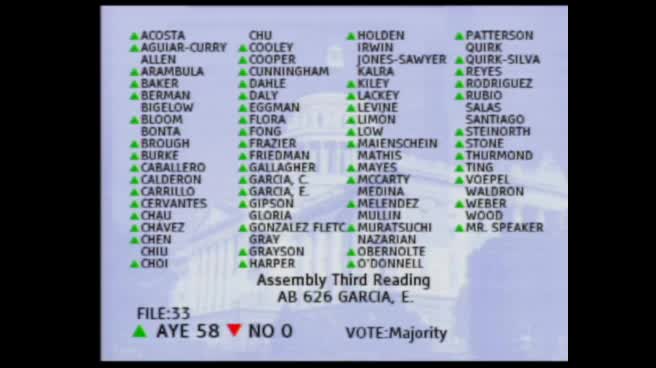
| Jan 29, 2018 | AB 1395 CHU Assembly Third Reading | Assembly Floor |
Passed |
|
| Jan 18, 2018 | Do pass as amended. | Assembly Standing Committee on Appropriations |
Passed |
|
| Jan 8, 2018 | Do pass as amended and be re-referred to the Committee on [Appropriations] | Assembly Standing Committee on Transportation |
Passed |
This list shows positions taken on this bill by organizations on the date displayed, which is linked to the original source.
Positions by individuals are not included.
|
Organization
|
Position
|
Date
|
|---|---|---|
| Berryessa Citizens Advisory Council | ** Support | Jun 21, 2018 |
| Board of Supervisors in the County of Santa Clara | * Support | Jan 8, 2018 |
| Californians Against Waste | * Support | Jun 26, 2018 |
| City Of Newark | ** Support | Jun 21, 2018 |
| League Of California Cities | ** Against | Jun 21, 2018 |
| Operating Engineers | * Support | Jan 8, 2018 |
| Penitencia Neighborhood Association | ** Support | Jun 21, 2018 |
| Santa Clara County Board of Supervisors | ** Support | Jun 21, 2018 |
| Transportation Agency of Monterey County | * Support | Jun 26, 2018 |
SENATE COMMITTEE ON APPROPRIATIONS
Senator Anthony Portantino, Chair
2017 - 2018 Regular Session
AB 1395 (Chu) - State highways: Department of Transportation: litter cleanup and abatement: report
Version: August 6, 2018 | Policy Vote: T. & H. 9 - 2 |
Urgency: No | Mandate: No |
Hearing Date: August 13, 2018 | Consultant: Mark McKenzie |
This bill meets the criteria for referral to the Suspense File.
Bill Summary:
AB 1395 would require the Department of Transportation (Caltrans) to conduct an assessment of the level and causes of litter on state highways and report findings to the Legislature by January 1, 2020. The bill would also require Caltrans to prioritize litter cleanup and abatement based on traffic volume, climate, and service scores, as specified.
Fiscal Impact:
- Caltrans would incur unknown significant costs, likely in excess of $1 million, to conduct a statewide assessment of the levels and causes of litter on the state highway system and report to the Legislature by 2020. (State Highway Account)
Background:
Existing law specifies that Caltrans is responsible for constructing, improving, and maintaining the state highway system. Caltrans’ Division of Maintenance performs both highway maintenance, which includes repairs to pavement, bridges, and culverts, and field maintenance, which includes minor pavement repairs, clearing vegetation, and litter and graffiti abatement work. In 2016-17, Caltrans reports spending $67 million statewide on litter abatement alone.
The California State Auditor issued a report in March of 2016 indicating that the allocations and spending on field maintenance by Caltrans’ Maintenance Division did not match key indicators of need (Report 2015-120). Specifically, the report found that the maintenance division did not implement zone-level evaluations of service scores but instead sampled conditions broadly across each district, and distributed funding based on a simple historical average of spending in each district, which did not align with key indicators of field maintenance needs. The Auditor recommended that the Legislature include Budget Act language that requires Caltrans to develop and implement a budget model for field maintenance by June 30, 2017 that takes into account key indicators of maintenance need, such as traffic volume, climate, service scores, and other need-based factors.
Caltrans implemented a Budget Allocation Tool (BAT) in July of 2017 and used it to allocate resources in 2017-18 for the ten highest priority field maintenance activities. The State Auditor reviewed the BAT and found that it takes into account traffic volumes, climate, service scores, and other factors to determine field maintenance allocations. The Auditor indicates that its recommendation has been fully implemented.
Proposed Law:
AB 1395 would require Caltrans, within its maintenance programs relating to litter abatement, to prioritize its litter cleanup and abatement efforts based on traffic volume, climate, and service scores. Caltrans would be required to reallocate litter cleanup resources for highway litter maintenance, as necessary.
The bill would also require Caltrans to consult with interested stakeholders, including local officials, to conduct an assessment of the problem of litter on state highways and report to the Legislature by January 1, 2020. The report must include the following elements:
- An assessment of the levels of litter on state highways by categories of high-, medium-, and low-traffic volume.
- An assessment of the causes of litter on highways by categories of high-, medium-, and low-traffic volume.
- Changes to Caltrans’ maintenance practices that have been made to prioritize litter cleanup and abatement efforts and the outcome of those changes.
Staff Comments:
Caltrans indicates that it spends approximately $160,000 annually to make determinations of litter “level of service” scores based on a 20% sample of the state highway system. This bill will require Caltrans to consult with stakeholders, conduct an assessment of the entire highway system, investigate the causes of litter, and develop and implementation plan. So as not to divert staff from critical maintenance work, Caltrans indicates that it will use contracted staff for the one-time work required by the bill. Overall costs to assess the levels and causes of litter on the state highway system by high-, medium-, and low-traffic volumes, and to document the changes to maintenance practices to implementation of the prioritization requirements are unknown at this time, but likely to exceed $1 million.
-- END --
SENATE COMMITTEE ON TRANSPORTATION AND HOUSING
Senator Jim Beall, Chair
2017 - 2018 Regular
Bill No: AB 1395 Hearing Date: 6/26/2018
Author: | Chu | ||
Version: | 6/18/2018 Amended | ||
Urgency: | No | Fiscal: | Yes |
Consultant: | Manny Leon | ||
SUBJECT: State highways: Department of Transportation: litter cleanup and abatement: report
DIGEST: This bill requires the Department of Transportation (Caltrans) to prioritize litter clean up and abatement programs to specific segments of the state highway system, as specified.
ANALYSIS:
Existing law:
- Grants Caltrans broad authority to have full possession and control of all state highways, all property and rights in property acquired for state highway purposes.
- Defines "maintenance" (with regard to the state highway system) to mean, among other things, the preservation and keeping of rights-of-way, and each type of roadway, structure, safety convenience or device, planting, illumination equipment, and other facility, in the safe and usable condition to which it has been improved or constructed, but does not include reconstruction or other improvement.
- Provides that the degree and type of maintenance for each highway, or portion thereof, shall be determined in the discretion of the authorities charged with the maintenance thereof, taking into consideration traffic requirements and available funding.
- Directs Caltrans to assign a high priority to litter deposited along state highway segments adjoining storm drains, streams, rivers, waterways, beaches, the ocean, and other environmentally sensitive areas.
- Makes it unlawful to do any of the following:
- Throw or discharge onto a highway any lighted or non-lighted cigarette, cigar, match, or any flaming or glowing substance.
- Throw or deposit on a highway any bottle, can, garbage, glass, nail, offal, paper, wire, any substance likely to injure or damage traffic, or any noisome, nauseous, or offensive matter of any kind.
- Dump or spill hazardous material without appropriately notifying authorities, as prescribed.
- Authorizes the government agency that is responsible for the maintenance of the highway to remove the material and charge the cost of removal from the person responsible for the dumping.
This bill:
Requires each Caltrans district to assign the highest priority for litter cleanup and abatement programs to segments of the highway within each district that receive the highest volume of complaints and greatest incidence of litter.
Requires each Caltrans district to prioritize funding for highway litter maintenance and abatement programs to the abovementioned highway segments.
Requires Caltrans to conduct an assessment of litter on the state highway system and submit a report of its findings to the Legislature on or before January 1, 2020. Further specifies Caltrans to consult with stakeholders in the development of the report.
COMMENTS
- Purpose. According to the author, “trash and litter buildup along our highways has been a constant issue in my district and across the state, creating an eyesore for commuters, residents and tourists, as well as safety and environmental hazards. Too often this debris distracts drivers and ends up in California’s waterways. AB 1395 directs Caltrans to use need-based criteria to prioritize most impacted areas.”
- Highway litter. Litter on California's state highways is a notorious problem. For example, Caltrans has reported that the department spent over $67 million in the 2016-2017 fiscal year picking up litter along state highways - enough litter to fill 9,000 garbage trucks. Additionally, Caltrans administers an Adopt-a-Highway Program that provides opportunities for individuals, organizations, or businesses to help maintain sections of roadside the state highway system. Groups have the option to participate as volunteers or to hire a maintenance service provider to perform the work on their behalf. According to Caltrans, more than 120,000 Californians have cleaned and enhanced over 15,000 shoulder-miles of roadside, and the Adopt-a-Highway Program provides litter and graffiti abatement valued at approximately $18 million annually. Lastly, Caltrans uses state inmates and county corrections prisoners to supplement its own forces in litter removal activities. In 2016, Caltrans reported that its level of service for litter and debris abatement exceeded its goal for each of the previous seven years.
- Public opinion. In 2016, Caltrans released survey data that showed nearly half of all motorists surveyed admitted to sometimes littering along the state's highways. Nearly one in five California motorists reported intentionally dumping something on the side of the highway. Survey respondents confirmed they improperly disposed of items ranging from old furniture and appliances to green waste from their yard such as lawn clippings, branches, or leaves. According to Caltrans, these findings indicate that litter was generally not an accidental public behavior, but rather a conscious decision to improperly discard or leave behind debris along California freeways.
- Rural vs. Urban. The provisions specified in this bill require each Caltrans district to prioritize funding within their districts to highway segments that receive the highest number of complaints and experience the greatest incidents of litter. This could lead to a disproportionate amount of resources being allocated to highways in urban areas where the number of daily vehicles and motorist are greater than highways that run through smaller cities and rural areas. For example, Caltrans District 3 includes Sacramento and Yolo counties, but also counties such as Nevada and Sierra. While in less populated counties, State Routes (SR) 49 and 89 cut through both Nevada and Sierra counties and are popular routes for travel to various parts of Tahoe National forest. If this bill were to be enacted, SR 49 and SR 89 could potentially lose most or all funding for litter abatement to the greater Sacramento region. Under this bill, scenarios such as the one mentioned above could occur in most Caltrans districts throughout the state.
While litter on highways continues to be an ongoing problem throughout the state, prioritizing resources to high traffic urban areas over smaller rural areas which also experience litter issues, may not accomplish the ultimate goal of minimizing litter throughout the state’s highway system.
FISCAL EFFECT: Appropriation: Fiscal Com.: Local:
Assembly votes:
Floor: 62-12
Approps: 17-0
Trans: 13-0
POSITIONS: (Communicated to the committee before noon on Wednesday,
June 20, 2018.)
SUPPORT:
Berryessa Citizens Advisory Council
Californians Against Waste
City of Newark
Penitencia Neighborhood Association
Santa Clara County Board of Supervisors
OPPOSITION:
League of California Cities
Transportation Agency for Monterey County
-- END --
ASSEMBLY THIRD READING
ATR Bill Id:
Author:(Chu)
As Amended Ver:January 22, 2018
Majority vote
Committee | Votes | Ayes | Noes |
Transportation | 13-0 | Frazier, Fong, Aguiar-Curry, Baker, Berman, Chu, Daly, Friedman, Harper, Mathis, Medina, Nazarian, O'Donnell | |
Appropriations | 17-0 | Gonzalez Fletcher, Bigelow, Bloom, Bonta, Brough, Calderon, Carrillo, Chau, Eggman, Fong, Friedman, Gallagher, Eduardo Garcia, Jones-Sawyer, Obernolte, Quirk, Reyes |
|
SUMMARY: Requires the California Department of Transportation (Caltrans), within its maintenance programs related to litter cleanup and abatement, to prioritize addressing litter deposited along state highway segments with the highest incidences of litter and that carry the highest traffic volumes. Caltrans must reallocate existing resources as necessary in order to implement this requirement. By January 1, 2020, Caltrans must conduct an assessment of the litter problem on the state highway and report to the Legislature an assessment of the levels and causes of litter by categories of high-, medium-, and low-traffic volume segments.
EXISTING LAW:
- Grants Caltrans broad authority to have full possession and control of all state highways, all property and rights in property acquired for state highway purposes.
- Defines "maintenance" (with regard to the state highway system) to mean, among other things, the preservation and keeping of rights-of-way, and each type of roadway, structure, safety convenience or device, planting, illumination equipment, and other facility, in the safe and usable condition to which it has been improved or constructed, but does not include reconstruction or other improvement.
- Provides that the degree and type of maintenance for each highway, or portion thereof, shall be determined in the discretion of the authorities charged with the maintenance thereof, taking into consideration traffic requirements and available funding.
- Directs Caltrans to assign a high priority to litter deposited along state highway segments adjoining storm drains, streams, rivers, waterways, beaches, the ocean, and other environmentally sensitive areas.
- Makes it unlawful to do any of the following:
- Throw or discharge onto a highway any lighted or non-lighted cigarette, cigar, match, or any flaming or glowing substance.
- Throw or deposit on a highway any bottle, can, garbage, glass, nail, offal, paper, wire, any substance likely to injure or damage traffic, or any noisome, nauseous, or offensive matter of any kind.
- Dump or spill hazardous material without appropriately notifying authorities, as prescribed.
- Authorizes the government agency that is responsible for the maintenance of the highway to remove the material and charge the cost of removal from the person responsible for the dumping.
FISCAL EFFECT: According to the Assembly Appropriations Committee, costs of $88,500 (transportation special funds) for Caltrans to develop the plan required by this bill.
COMMENTS: The author introduced this bill out of concern for what seems to be a pervasive litter problem in San Jose. The author reports that the city found litter to be such a problem that the city council tried to fine Caltrans for failure to keep clean the city’s freeways.
In 2016, Caltrans released survey data that showed nearly half of all motorists surveyed admitted to sometimes littering along the state's highways. Nearly one in five California motorists reported intentionally dumping something on the side of the highway. Survey respondents confirmed they improperly disposed of items ranging from old furniture and appliances to green waste from their yard such as lawn clippings, branches, or leaves. According to Caltrans, these findings indicate that litter was generally not an accidental public behavior, but rather a conscious decision to improperly discard or leave behind debris along California freeways.
Litter on California's state highways is, indeed, a pervasive problem, To illustrate, earlier this year Caltrans reported that it had spent over $67 million in the previous fiscal year picking up litter along state highways – enough litter to fill 9,000 garbage trucks. Additionally, Caltrans administers an Adopt-a-Highway Program that provides an avenue for individuals, organizations, or businesses to help maintain sections of roadside the state highway system. Groups have the option to participate as volunteers or to hire a maintenance service provider to perform the work on their behalf. According to Caltrans, more than 120,000 Californians have cleaned and enhanced over 15,000 shoulder-miles of roadside, and the Adopt-a-Highway Program provides litter and graffiti abatement valued at approximately $18 million annually. Furthermore, Caltrans uses state inmates and county corrections prisoners to supplement its own forces in litter removal activities. In 2016, Caltrans reported that its level of service for litter and debris abatement exceeded its goal for each of the previous seven years.
This bill requires Caltrans to prioritize its existing litter abatement resources in order to ensure that its efforts are targeting the most litter-strewn, highest volume segments of the state highway system in order to make the most meaningful impact possible. In addition, the bill directs Caltrans to accurately assess the problem and the causes and to report this information to the Legislature.
Analysis Prepared by: Eric Thronson / TRANS. / (916) 319-2093 FN: 0002545
Date of Hearing: January 18, 2018
ASSEMBLY COMMITTEE ON APPROPRIATIONS
Lorena Gonzalez Fletcher, Chair
ABPCA Bill Id:AB 1395
Author:(Chu) – As Amended Ver:January 12, 2018
Policy Committee: | Transportation | Vote: | 13 - 0 |
Urgency: No State Mandated Local Program: No Reimbursable: No
SUMMARY:
This bill requires the California Department of Transportation (Caltrans), by January 1, 2020, to develop a litter and graffiti remediation plan to address debris buildup on the state highway systems. Specifically, this bill:
- Directs the department to consult with interested stakeholders in the development of the plan.
- Specifically directs the plan to address the following:
- The buildup of litter and debris along state highways and freeways;
- Graffiti along state highways and freeways; and,
- The delay between the notification to the department that there is a litter or graffiti problem and the remediation actually occurring.
- Directs Caltrans to include in the plan recommendations to allow a municipality to carry out obligations specified in the plan and to be reimbursed by the state for doing so.
FISCAL EFFECT:
- Costs of $88,500 (transportation special funds) for Caltrans to develop the plan required by this bill.
- Unknown, but potentially significant cost pressures (transportation special funds) to provide a higher level of litter removal service, depending on the plan that is developed. For example, providing a 10% increase in service could cost $6.7 million, based on the department’s current funding of $67 million for litter removal activities.
COMMENTS:
- Background. Litter is a pervasive problem along many state highways. Caltrans currently spends $67 million annually on litter removal and operates an “adopt-a-highway” program that allows volunteers to clean up the shoulder and roadside along many highways. Additionally, Caltrans enters into agreements with local agencies for litter and graffiti removal and has a program that employs parolees to remove litter and perform other roadside clean-up functions in some regions of the state. Caltrans currently measures the department’s performance at removing litter with regular assessments that assign a level of service score to a stretch of highway in order to meet certain goals for litter removal. In addition, in 2007 Caltrans developed a litter abatement plan the department continues to implement.
- Purpose. The author introduced this bill out of concern for what seems to be a pervasive litter problem in San Jose. The author reports that the city found litter to be such a problem that the city council tried to fine Caltrans for failure to keep freeways in the city clean. Frustrated by the situation, the author has introduced this bill to allow local municipalities to perform cleanup activities on state highways and then to be reimbursed for the cost. The bill was amended in the Assembly Transportation Committee to remove the requirement to reimburse local municipalities for cleanup activities and instead only includes this potential solution in the plan that is required by this bill.
Analysis Prepared by: Jessica Peters / APPR. / (916) 319-2081
Date of Hearing: January 8, 2018
ASSEMBLY COMMITTEE ON TRANSPORTATION
Jim Frazier, Chair
ABPCA Bill Id:AB 1395 (
Author:Chu) – As Amended Ver:January 3, 2018
SUBJECT: State highways: debris and graffiti abatement
SUMMARY: Requires, by January 1, 2020, the California Department of Transportation (Caltrans) to develop a litter and graffiti remediation plan to address debris buildup on the state highway and freeway systems. Specifically, this bill:
- Makes legislative findings regarding the impact of trash and graffiti along California highways and the burden these impose on local governments.
- Requires Caltrans to develop a litter and graffiti remediation plan to address the buildup of debris on the state highway system, and directs the department to consult with interested stakeholders in the development of the plan.
- Specifically directs the plan to address the following:
- The buildup of litter and debris along state highways and freeways;
- Graffiti along state highways and freeways; and,
- The delay between the notification to the department that there is a litter or graffiti problem and the remediation actually occurring.
- Directs Caltrans to include in the plan recommendations that allow a municipality to carry out obligations specified in the plan and to be reimbursed by the state for doing so.
EXISTING LAW:
- Grants Caltrans broad authority to have full possession and control of all state highways, all property and rights in property acquired for state highway purposes.
- Defines "maintenance" (with regard to the state highway system) to mean, among other things, the preservation and keeping of rights-of-way, and each type of roadway, structure, safety convenience or device, planting, illumination equipment, and other facility, in the safe and usable condition to which it has been improved or constructed, but does not include reconstruction or other improvement.
- Provides that the degree and type of maintenance for each highway, or portion thereof, shall be determined in the discretion of the authorities charged with the maintenance thereof, taking into consideration traffic requirements and available funding.
- Directs Caltrans to assign a high priority to litter deposited along state highway segments adjoining storm drains, streams, rivers, waterways, beaches, the ocean, and other environmentally sensitive areas.
- Requires Caltrans to remove graffiti from signs “as soon as reasonably possible.”
- Authorizes Caltrans to enter into an agreement to accept funds, materials, equipment, or services from any person for maintenance or roadside enhancement, including the cleanup and abatement of litter, of a section of a state highway.
- Makes it unlawful to do any of the following:
- Throw or discharge onto a highway any lighted or non-lighted cigarette, cigar, match, or any flaming or glowing substance.
- Throw or deposit on a highway any bottle, can, garbage, glass, nail, offal, paper, wire, any substance likely to injure or damage traffic, or any noisome, nauseous, or offensive matter of any kind.
- Dump or spill hazardous material without appropriately notifying authorities, as prescribed.
- Provides that a vehicle used for illegal dumping of waste matter on public property is subject to impoundment.
- Requires that any person that drops, dumps, deposits, places, or throws onto a highway any bottle, can, garbage, glass, nail, offal, paper, wire, any substance likely to injure or damage traffic, any noisome, nauseous, offensive matter of any kind, or aggregate material must immediately remove the material or cause it to be removed; failure to do so is punishable by a base fine of $100.
- Authorizes the government agency that is responsible for the maintenance of the highway to remove the material and charge the cost of removal from the person responsible for the dumping.
FISCAL EFFECT: Unknown
COMMENTS: The author introduced this bill out of concern for what seems to be a pervasive litter problem in San Jose. The author reports that the city found litter to be such a problem that the city council tried to fine Caltrans for failure to keep freeways in the city clean. Frustrated by the situation, the author has introduced this bill to allow local municipalities to perform cleanup activities on state highways and then to be reimbursed for the cost of doing so.
In 2016, Caltrans released survey data that showed nearly half of all motorists surveyed admitted to sometimes littering along the state's highways. Nearly one in five California motorists reported intentionally dumping something on the side of the highway. Survey respondents confirmed they improperly disposed of items ranging from old furniture and appliances to green waste from their yard such as lawn clippings, branches, or leaves. According to Caltrans, these findings indicate that litter was generally not an accidental public behavior, but rather a conscious decision to improperly discard or leave behind debris along California freeways.
Litter on California's state highways is, indeed, a pervasive problem, To illustrate, earlier this year Caltrans reported that it had spent over $67 million in the previous fiscal year picking up litter along state highways—enough litter to fill 9,000 garbage trucks. Additionally, Caltrans administers an Adopt-a-Highway Program that provides an avenue for individuals, organizations, or businesses to help maintain sections of roadside the state highway system. Groups have the option to participate as volunteers or to hire a maintenance service provider to perform the work on their behalf. According to Caltrans, more than 120,000 Californians have cleaned and enhanced over 15,000 shoulder-miles of roadside, and the Adopt-a-Highway Program provides litter and graffiti abatement valued at approximately $18 million annually. Furthermore, Caltrans uses state inmates and county corrections prisoners to supplement its own forces in litter removal activities. In 2016, Caltrans reported that its level of service for litter and debris abatement exceeded its goal for each of the previous seven years.
In 2007, Caltrans developed a litter abatement plan that sought to provide a balanced and comprehensive approach to effectively reduce litter in California through many preventive and proactive measures. The plan set forth an objective to, where possible and where interest exists, enter into agreement with local public works agencies to reimburse them for more frequent sweeping of interchanges. Since then, Caltrans has entered into approximately 195 maintenance agreements with local agencies related to litter and graffiti abatement.
Committee concern: This bill seems unnecessary. According to Caltrans, it routinely measures litter and debris abatement performance using level of service scores and uses these measures to plan and budget resources for debris and graffiti abatement activities. Furthermore, it already enters into agreements with local agencies related to debris and graffiti abatement activities, for which is has authority to provide reimbursement.
Related legislation: AB 971 (Choi) increases fines for failing to secure a load (in a vehicle) and clarifies that a death caused by an object falling from a vehicle is grounds for a vehicular manslaughter conviction. AB 971 is scheduled to be heard in Assembly Transportation Committee on January 8, 2018.
AB 972 (Choi) requires items carried in a vehicle cargo area to be labeled so that the owner can be identified should the item fall from the vehicle. AB 972 is scheduled to be heard in Assembly Transportation Committee on January 8, 2018.
REGISTERED SUPPORT / OPPOSITION:
Support
Californians Against Waste
Opposition
None on file
Analysis Prepared by: Janet Dawson / TRANS. /
Discussed in Hearing
 1H
Senate Standing Committee on Appropriations
 26SEC
Senate Standing Committee on Appropriations
 7MIN
Senate Standing Committee on Transportation and Housing
 4MIN
Assembly Floor
 21MIN
Assembly Standing Committee on Appropriations
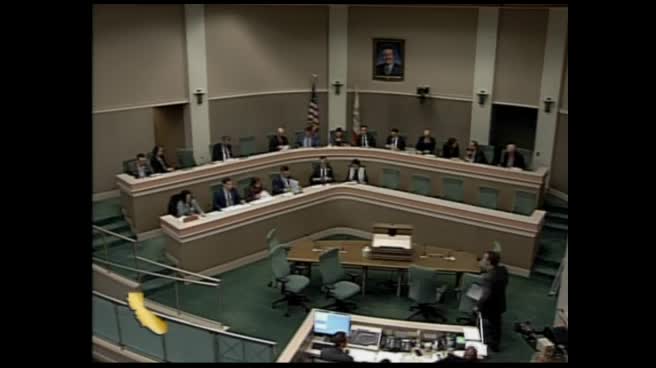 8MIN
Assembly Standing Committee on Transportation
Bill Author

Bill Co-Author(s):