AB 1458: Political Reform Act of 1974: Secretary of State: online filing and disclosure system.
- Session Year: 2017-2018
- House: Assembly
- Latest Version Date: 2017-04-18
The Political Reform Act of 1974 generally requires elected officials, candidates for elective office, and committees formed primarily to support or oppose a candidate for public office or a ballot measure, along with other entities, to file periodic campaign statements. The act requires that these campaign statements contain prescribed information related to campaign contributions and expenditures of the filing entities. Existing law, the Online Disclosure Act, requires the Secretary of State, in consultation with the Fair Political Practices Commission, to develop online and electronic filing processes for use by these persons and entities. That act also requires the Secretary of State to make prescribed information from those filings available on the Internet in a user-friendly, easily understandable format that provides the greatest public access, as specified.
This bill would require a candidate for elective state office to include and conspicuously display on the homepage of any his or her campaign Internet Web site of the candidate a hyperlink to the Secretary of States Cal-Access Internet Web site page that displays the candidates campaign finance information. This requirement would not apply to social media.
A willful violation of the Political Reform Acts provisions is punishable as a misdemeanor. By expanding the scope of a crime, the bill would impose a state-mandated local program.
The California Constitution requires the state to reimburse local agencies and school districts for certain costs mandated by the state. Statutory provisions establish procedures for making that reimbursement.
This bill would provide that no reimbursement is required by this act for a specified reason.
The Political Reform Act of 1974, an initiative measure, provides that the Legislature may amend the act to further the acts purposes upon a 2/3 vote of each house of the Legislature and compliance with specified procedural requirements.
This bill would declare that it furthers the purposes of the act.
The Political Reform Act of 1974 generally requires elected officials, candidates for elective office, and committees formed primarily to support or oppose a candidate for public office or a ballot measure, along with other entities, to file periodic campaign statements. The act requires that these campaign statements contain prescribed information related to campaign contributions and expenditures of the filing entities. Existing law, the Online Disclosure Act, requires the Secretary of State, in consultation with the Fair Political Practices Commission, to develop online and electronic filing processes for use by these persons and entities. That act also requires the Secretary of State to make prescribed information from those filings available on the Internet in a user-friendly, easily understandable format that provides the greatest public access, as specified.
This bill would require a candidate for elective office to include and conspicuously display on the homepage of any campaign Internet Web site of the candidate a hyperlink to the Secretary of States Cal-Access Internet Web site page that displays the candidates campaign finance information.
A willful violation of the Political Reform Acts provisions is punishable as a misdemeanor. By expanding the scope of a crime, the bill would impose a state-mandated local program.
The California Constitution requires the state to reimburse local agencies and school districts for certain costs mandated by the state. Statutory provisions establish procedures for making that reimbursement.
This bill would provide that no reimbursement is required by this act for a specified reason.
The Political Reform Act of 1974, an initiative measure, provides that the Legislature may amend the act to further the acts purposes upon a 2/3 vote of each house of the Legislature and compliance with specified procedural requirements.
This bill would declare that it furthers the purposes of the act.
(a)A candidate for elective state office shall include and conspicuously display on the homepage of any his or her campaign Internet Web site of the candidate a hyperlink to the Secretary of States Cal-Access Internet Web site page that displays the candidates campaign finance information. information pursuant to Section 84602.
(b)Subdivision (a) does not apply to social media.
SEC. 2.No reimbursement is required by this act pursuant to Section 6 of Article XIIIB of the California Constitution because the only costs that may be incurred by a local agency or school district will be incurred because this act creates a new crime or infraction, eliminates a crime or infraction, or changes the penalty for a crime or infraction, within the meaning of Section 17556 of the Government Code, or changes the definition of a crime within the meaning of Section 6 of Article XIIIB of the California Constitution.
SEC. 3.The Legislature finds and declares that this bill furthers the purposes of the Political Reform Act of 1974 within the meaning of subdivision (a) of Section 81012 of the Government Code.
A candidate for elective office shall include and conspicuously display on the homepage of any campaign Internet Web site of the candidate a hyperlink to the Secretary of States Cal-Access Internet Web site page that displays the candidates campaign finance information.
SEC. 2.No reimbursement is required by this act pursuant to Section 6 of Article XIIIB of the California Constitution because the only costs that may be incurred by a local agency or school district will be incurred because this act creates a new crime or infraction, eliminates a crime or infraction, or changes the penalty for a crime or infraction, within the meaning of Section 17556 of the Government Code, or changes the definition of a crime within the meaning of Section 6 of Article XIIIB of the California Constitution.
SEC. 3.The Legislature finds and declares that this bill furthers the purposes of the Political Reform Act of 1974 within the meaning of subdivision (a) of Section 81012 of the Government Code.
|
Date
|
Status
|
|---|---|
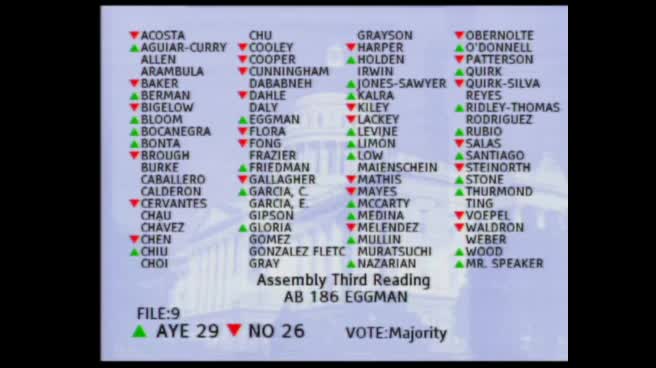
| Jun 1, 2017 | Read third time. Refused passage. (Ayes 53. Noes 17. Page 2082.). |
| May 11, 2017 | Read second time. Ordered to third reading. |
| May 10, 2017 | From committee: Do pass. (Ayes 12. Noes 5.) (May 10). |
| Apr 26, 2017 | In committee: Hearing postponed by committee. |
| Apr 19, 2017 | Re-referred to Com. on APPR. |
| Apr 18, 2017 | Read second time and amended. |
| Apr 17, 2017 | From committee: Amend, and do pass as amended and re-refer to Com. on APPR. (Ayes 4. Noes 2.) (April 5). |
| Mar 13, 2017 | Referred to Com. on E. & R. |
| Feb 19, 2017 | From printer. May be heard in committee March 21. |
| Feb 17, 2017 | Read first time. To print. |
|
Date
|
Description
|
Location
|
Votes
|
|
|---|---|---|---|---|
| Jun 1, 2017 | AB 1458 FRIEDMAN Assembly Third Reading | Assembly Floor |
Failed |
|
| May 10, 2017 | Do pass. | Assembly Standing Committee on Appropriations |
Passed |
|
| Apr 5, 2017 | Do pass as amended and be re-referred to the Committee on [Appropriations] | Assembly Standing Committee on Elections and Redistricting |
Passed |
This list shows positions taken on this bill by organizations on the date displayed, which is linked to the original source.
Positions by individuals are not included.
ASSEMBLY THIRD READING
ATR Bill Id:AB 1458
Author:(Friedman)
As Amended Ver:April 18, 2017
2/3 vote
Committee | Votes | Ayes | Noes |
Elections | 4-2 | Low, Berman, Medina, Weber | Harper, Cunningham |
Appropriations | 12-5 | Gonzalez Fletcher, Bloom, Bocanegra, Bonta, Calderon, Chau, Eggman, Friedman, Eduardo Garcia, Gray, Muratsuchi, Reyes | Bigelow, Brough, Fong, Gallagher, Obernolte |
SUMMARY: Requires a candidate for elective office to include and conspicuously place on the homepage of his or her campaign Internet Web site a hyperlink to the Secretary of State's (SOS) Internet Web site that displays the candidate's campaign finance information pursuant to existing law. Provides that these provisions do not apply to social media.
EXISTING LAW:
- Requires, pursuant to the Political Reform Act of 1974 (PRA) that elected officials, candidates for state elective office, and committees formed primarily to support or oppose a candidate for public office or a ballot measure, file periodic campaign statements, as specified.
- Requires campaign statements to contain prescribed information related to campaign contributions and expenditures, as specified.
- Requires the SOS, in consultation with the Fair Political Practice Commission (FPPC), to develop and certify for public use a new online filing and disclosure system for statements and reports that provides public disclosure of campaign finance and lobbying information in a user-friendly, easily understandable format, as specified.
FISCAL EFFECT: According to the Assembly Appropriations Committee, minor and absorbable costs to the FPPC to enforce the provisions of this bill.
COMMENTS: According to the author, "Transparency is always a good thing, especially during campaign season. California has been recognized as a leader in campaign finance disclosure requirements and transparency. The state's role as a leader hinges on two main components – the requirements in place for candidates and contributors to disclose contributions, and an accessible system for the public to easily view the data. As voters increasingly turn to online sources for information on candidates and the entities funding their campaigns, and as the state modernizes its online disclosure system, the California Automated Lobby Activity and Campaign Contribution and Expenditure Search System (Cal-Access), maintaining and improving transparency and accessibility of data is essential. AB 1458 requires all candidates to include on their campaign website a link to the California Secretary of State's campaign finance report website – giving voters a clear view of the individuals and organizations funding their campaign."
California voters passed an initiative, Proposition 9, in 1974 that created the FPPC and codified significant restrictions and prohibitions on candidates, officeholders and lobbyists. That initiative is commonly known as the PRA. Amendments to the PRA that are not submitted to the voters, such as those contained in this bill, must further the purposes of the initiative and require a two-thirds vote of both houses of the Legislature.
Please see the policy committee analysis for a full discussion of this bill.
Analysis Prepared by: Nichole Becker / E. & R. / (916) 319-2094 FN: 0000348
Date of Hearing: May 10, 2017
ASSEMBLY COMMITTEE ON APPROPRIATIONS
Lorena Gonzalez Fletcher, Chair
ABPCA Bill Id:AB 1458
Author:(Friedman) – As Amended Ver: April 18, 2017
Policy Committee: | Elections and Redistricting | Vote: | 4 - 2 |
|
|
Urgency: No State Mandated Local Program: Yes Reimbursable: No
SUMMARY:
This bill requires a candidate for elective state office to include on the homepage of any campaign internet website a hyperlink to the Secretary of State (SOS)’s California Automated Lobby Activity and Campaign Contribution Expenditure Search System (Cal-Access) internet website page (or successor site) that displays the candidate's campaign finance information. This bill also specifies that the provisions would not apply to social media sites.
FISCAL EFFECT:
Minor and absorbable costs to the Fair Political Practices Commission (FPPC) to enforce the provisions of this bill.
COMMENTS:
- Background. In 1997, the SOS, in consultation with the FPPC, was required to develop and certify for public use an online filing and disclosure system for statements and reports that provides public disclosure of campaign finance and lobbying information. This system is known as Cal-Access. While campaign finance information is publicly available online through the Cal-Access website, some voter’s may not be aware of the website, or may not know how to find the website.
- Purpose. According to the author, “Transparency is always a good thing, especially during campaign season. California has been recognized as a leader in campaign finance disclosure requirements and transparency. The state’s role as a leader hinges on two main components – the requirements in place for candidates and contributors to disclose contributions, and an accessible system for the public to easily view the data. As voters increasingly turn to online sources for information on candidates and the entities funding their campaigns, and as the state modernizes its online disclosure system, the California Automated Lobby Activity and Campaign Contribution and Expenditure Search System (Cal-Access), maintaining and improving transparency and accessibility of data is essential. AB 1458 requires all candidates to include on their campaign website a link to the California Secretary of State’s campaign finance report website – giving voters a clear view of the individuals and organizations funding their campaign.
Analysis Prepared by: Jessica Peters / APPR. / (916) 319-2081
Date of Hearing: April 5, 2017
ASSEMBLY COMMITTEE ON ELECTIONS AND REDISTRICTING
Evan Low, Chair
ABPCA Bill Id:AB 1458 (
Author:Friedman) – As Introduced Ver:February 17, 2017
SUBJECT: Political Reform Act of 1974: Secretary of State: online filing and disclosure system.
SUMMARY: Requires a candidate for elective office to include and conspicuously place on the homepage of any campaign Internet Web site of the candidate a hyperlink to the Secretary of State's (SOS) Cal-Access Internet Web site page that displays the candidate's campaign finance information.
EXISTING LAW:
- Requires, pursuant to the Political Reform Act of 1974 (PRA) that elected officials, candidates for state elective office, and committees formed primarily to support or oppose a candidate for public office or a ballot measure, file periodic campaign statements, as specified.
- Requires campaign statements to contain prescribed information related to campaign contributions and expenditures, as specified.
- Requires the SOS, in consultation with the Fair Political Practice Commission (FPPC), to develop and certify for public use a new online filing and disclosure system for statements and reports that provides public disclosure of campaign finance and lobbying information in a user-friendly, easily understandable format, as specified.
FISCAL EFFECT: Unknown. State-mandated local program; contains crimes and infractions disclaimer.
COMMENTS:
- Purpose of the Bill: According to the Author:
Transparency is always a good thing, especially during campaign season. California has been recognized as a leader in campaign finance disclosure requirements and transparency. The state’s role as a leader hinges on two main components – the requirements in place for candidates and contributors to disclose contributions, and an accessible system for the public to easily view the data. As voters increasingly turn to online sources for information on candidates and the entities funding their campaigns, and as the state modernizes its online disclosure system, the California Automated Lobby Activity and Campaign Contribution and Expenditure Search System (Cal-Access), maintaining and improving transparency and accessibility of data is essential. AB 1458 requires all candidates to include on their campaign website a link to the California Secretary of State’s campaign finance report website – giving voters a clear view of the individuals and organizations funding their campaign.
- Political Reform Act and Cal-Access: In 1974, California voters approved Proposition 9, also known as the PRA, which among other things, requires the disclosure of campaign contributions and expenditures and state lobbying activities. The requirements are intended to ensure that "Receipts and expenditures in election campaigns [are] fully and truthfully disclosed in order that the voters may be fully informed and improper practices may be inhibited," and that "The activities of lobbyists [are] regulated and their finances disclosed in order that improper influences will not be directed at public officials."
In 1997, the Legislature passed and Governor Pete Wilson signed SB 49 (Karnette), Chapter 866, Statutes of 1997, which amended the PRA and established the Online Disclosure Act of 1997. SB 49 required the SOS, in consultation with the FPPC, to develop and implement, by the year 2000, an online filing and disclosure system for reports and statements required to be filed under the PRA, as specified. As a result, the SOS created and deployed a system called the California Automated Lobby Activity and Campaign Contribution and Expenditure Search System, commonly referred to as Cal-Access.
To interpret and enforce the requirements of the PRA, the FPPC was established. The FPPC has primary responsibility for the impartial administration, implementation and enforcement of the PRA. The FPPC works closely with the SOS, which is the primary filing office for the state campaign and lobbying disclosure documents required under the PRA. The SOS and the FPPC also work closely with the Franchise Tax Board, which is responsible for carrying out mandatory and random audits of filers and the disclosure data filed with the SOS.
3) Previous Legislation and Cal-Access Status: As mentioned above, Cal-Access is a database and filing system the SOS has used to make lobbying and campaign finance information available online at no cost to users. According to the SOS, the Cal-Access system is fueled by a complex array of computer applications written in 14 different programming languages including hardware, firmware, and software – some no longer supported by their vendor – that are beyond their useful age. As a result, the Cal-Access system has denied public access, gone offline, and put strain on SOS staff resources. In November 2011, the Cal-Access system went down, and the system was unavailable for most of the month of December.
Although the system has remained online since the cause of the failure was addressed, frequent concerns have been expressed by users and other observers regarding the current state and usefulness of Cal-Access. In an effort to modernize the Cal-Access system, last year the Legislature passed and the Governor signed SB 1349 (Hertzberg), Chapter 845, Statutes of 2016, which requires the SOS, in consultation with the FPPC, to develop and certify for public use a new online filing and disclosure system for statements and reports that provides public disclosure of campaign finance and lobbying information in a user-friendly, easily understandable format, as specified.
The SOS has already started the process to replace the Cal-Access system. In compliance with the provisions of SB 1349, earlier this year the SOS held two public meetings to gather public input about the functionality and features a new system should include.
- Suggested Amendments: The PRA generally requires elected officials, candidates for state elective office, and committees formed primarily to support or oppose a candidate for public office or a ballot measure to file periodic campaign statements. Additionally, the PRA requires campaign statements to contain prescribed information related to campaign contributions and expenditures, as specified. This bill requires a candidate for elective office to include and conspicuously place on the homepage of any campaign Internet Web site of the candidate a hyperlink to the SOS’s Cal-Access Internet web site page that displays the candidate’s campaign finance information. The practical effect of this bill would require all candidates for elective office – local and state –to display a hyperlink to the Cal-Access webpage on the home page of the candidate’s campaign web site. Because only candidates for state elective office file campaign contribution and expenditure filings with the SOS, committee staff recommends amending the bill to apply only to candidates for state elective office.
Additionally, this bill requires the hyperlink to be displayed on the homepage of any of the candidate's Internet web sites. This language is broad and could be interpreted to include the homepage of a candidate's social media Internet web site, such as Facebook, Twitter, Instagram and SnapChat. According to the author’s office, it’s the author’s intent to apply the provisions of this bill only to the candidate’s main campaign web site homepage and not to include social media homepages. Consequently, the committee staff recommends amending the bill to clarify that the provisions of this bill only apply to the candidate’s campaign Internet web site homepage and not social media web pages.
- Political Reform Act of 1974: California voters passed an initiative, Proposition 9, in 1974 that created the FPPC and codified significant restrictions and prohibitions on candidates, officeholders and lobbyists. That initiative is commonly known as the PRA. Amendments to the PRA that are not submitted to the voters, such as those contained in this bill, must further the purposes of the initiative and require a two-thirds vote of both houses of the Legislature.
REGISTERED SUPPORT / OPPOSITION:
Support
None on file.
Opposition
None on file.
Analysis Prepared by: Nichole Becker / E. & R. / (916) 319-2094
Discussed in Hearing
 4MIN
Assembly Floor
 1MIN
Assembly Standing Committee on Appropriations
 2MIN
Assembly Standing Committee on Elections and Redistricting
Bill Author

Bill Co-Author(s):