AB 1546: Public contracts: information technology: contractor performance assessment report.
- Session Year: 2017-2018
- House: Assembly
- Latest Version Date: 2017-07-05
Existing law establishes in state government the Department of Technology within the Government Operations Agency. Existing law provides that the Department of Technology is responsible for the approval and oversight of specified information technology projects. Existing law requires specified contracts for the acquisition of information technology projects to be made by or under the supervision of the Department of Technology.
Existing law sets forth requirements for the acquisition of goods and services by state agencies and sets forth the various responsibilities of the Department of General Services and other state agencies in overseeing and implementing state contracting procedures and policies. Existing law requires, unless otherwise expressly provided, that all contracts for the acquisition of information technology goods or services be made by or under the supervision of the Department of General Services.
This bill would require the Director of Technology, by January 1, 2019, to develop a standardized contractor performance assessment report system to evaluate the performance of a contractor on any information technology contract or project reportable to the Department of Technology, as provided. The bill would require the Director of Technology to implement that evaluation system for all reportable information technology contracts and projects, as specified, and would require that system to be used in addition to any other procurement procedures when evaluating or awarding those contracts or projects. Technology.
Existing law establishes in state government the Department of Technology within the Government Operations Agency. Existing law provides that the Department of Technology is responsible for the approval and oversight of specified information technology projects. Existing law requires specified contracts for the acquisition of information technology projects to be made by or under the supervision of the Department of Technology.
Existing law sets forth requirements for the acquisition of goods and services by state agencies and sets forth the various responsibilities of the Department of General Services and other state agencies in overseeing and implementing state contracting procedures and policies. Existing law requires, unless otherwise expressly provided, that all contracts for the acquisition of information technology goods or services be made by or under the supervision of the Department of General Services.
This bill would require the Director of Technology, by January 1, 2019, to develop a standardized contractor performance assessment report system to evaluate the performance of a contractor on any information technology contract or project reportable to the Department of Technology, as provided. The bill would require the Director of Technology to implement that evaluation system for all reportable information technology contracts and projects, as specified, and would require that system to be used in addition to any other procurement procedures when evaluating or awarding those contracts or projects.
Existing law, the Model State Trademark Law, provides for the registration of trademarks and service marks with the Secretary of State. Existing law authorizes the assignment of a mark and its registration with the good will of the business in which the mark is used, or with that part of the good will of the business connected with the use of and symbolized by the mark, by instrument in writing duly executed and recorded with the secretary upon the payment of a recording fee, as specified. This bill would make nonsubstantive changes to these provisions.Existing law, the Model State Trademark Law, provides for the registration of trademarks and service marks with the Secretary of State. Existing law authorizes the assignment of a mark and its registration with the good will of the business in which the mark is used, or with that part of the good will of the business connected with the use of and symbolized by the mark, by instrument in writing duly executed and recorded with the secretary upon the payment of a recording fee, as specified.
This bill would make nonsubstantive changes to these provisions.
(a)(1)On or before January 1, 2019, the Director of Technology shall develop a standardized contractor performance assessment report system to evaluate the performance of a contractor on any information technology contract or project reportable under Chapter 4800 of the State Administrative Manual entered into pursuant to this chapter.
(2)The contractor performance assessment report system shall include, but is not limited to, multiple evaluations before the final evaluation, a minimum 30-day response period for the contractor to respond to the final evaluation, an objective evaluation of the performance of the contractor, information about the type of contract or project and whether or not that contract or project was completed on time and within scope and budget, and information about the number of completed contracts or projects by the contractor.(b)(1)Upon the development of the contractor performance assessment report system described in subdivision (a), the Director of Technology shall implement the contractor performance assessment report system for all information technology contracts and projects reportable under Chapter 4800 of the State Administrative Manual entered into pursuant to this chapter.(2)The contractor performance assessment report system shall, in addition to any other applicable information technology procurement procedures, be utilized to evaluate and award any information technology contract or project reportable under Chapter 4800 of the State Administrative Manual awarded pursuant to this chapter.(a)(1)On or before January 1, 2019, the Director of Technology shall develop a standardized contractor performance assessment report system to evaluate the performance of a contractor on any information technology contract or project reportable under Chapter 4800 of the State Administrative Manual entered into pursuant to this chapter.
(2)The contractor performance assessment report system shall include, but is not limited to, multiple evaluations before the final evaluation, a minimum 30-day response period for the contractor to respond to the final evaluation, an objective evaluation of the performance of the contractor, information about the type of contract or project and whether or not that contract or project was completed on time, time and within scope and budget, and information about the number of completed contracts or projects by the contractor.
(b)(1)Upon the development of the contractor performance assessment report system described in subdivision (a), the Director of Technology shall implement the contractor performance assessment report system for all information technology contracts and projects reportable under Chapter 4800 of the State Administrative Manual entered into pursuant to this chapter.
(2)The contractor performance assessment report system shall, in addition to any other applicable information technology procurement procedures, be utilized to evaluate and award any information technology contract or project reportable under Chapter 4800 of the State Administrative Manual awarded pursuant to this chapter.
(a)(1)On or before January 1, 2019, the Director of Technology shall develop a standardized contractor performance assessment report system to evaluate the performance of a contractor on any information technology contract or project reportable under Chapter 4800 of the State Administrative Manual entered into pursuant to this chapter.
(2)The contractor performance assessment report system shall include, but is not limited to, multiple evaluations before the final evaluation, a minimum 30-day response period for the contractor to respond to the final evaluation, an objective evaluation of the performance of the contractor, information about the type of contract or project and whether or not that contract or project was completed on time, and information about the number of completed contracts or projects by the contractor.
(b)(1)Upon the development of the contractor performance assessment report system described in subdivision (a), the Director of Technology shall implement the contractor performance assessment report system for all information technology contracts and projects reportable under Chapter 4800 of the State Administrative Manual entered into pursuant to this chapter.
(2)The contractor performance assessment report system shall, in addition to any other applicable information technology procurement procedures, be utilized to evaluate and award any information technology contract or project reportable under Chapter 4800 of the State Administrative Manual awarded pursuant to this chapter.
SECTION 1.Section 14220 of the Business and Professions Code is amended to read:14220.(a)A mark and its registration hereunder shall be assignable with the good will of the business in which the mark is used, or with that part of the good will of the business connected with the use of, and symbolized by, the mark. Assignment shall be payable to the secretary as set forth in subdivision (b) of Section 12193 of the Government Code, who, upon recording of the assignment, shall issue in the name of the assignee a new certificate for the remainder of the term of the registration or of the last renewal thereof. An assignment of any registration under this chapter shall be void as against any subsequent purchaser for valuable consideration without notice, unless it is recorded with the secretary within three months after the date thereof or prior to the subsequent purchase.(b)A registrant or applicant effecting a change of the name of the person to whom the mark was issued or for whom an application was filed may, on a form prescribed by the secretary, record a certificate of change of name of the registrant or applicant with the secretary upon the payment of the recording fee. The secretary may issue in the name of the assignee a certificate of registration of an assigned application or a new certificate or registration for the remainder of the term of the registration or last renewal thereof.(c)Other instruments that relate to a mark registered or application pending pursuant to this chapter, including, but not limited to, licenses, may be recorded at the discretion of the secretary, provided that the instrument is in writing and is duly executed.(d)Acknowledgment shall be prima facie evidence of the execution of an assignment or other instrument and, when recorded by the secretary, the record shall be prima facie evidence of the execution of an assignment.(e)A photocopy of any instrument referred to in subdivision (a), (b), or (c) shall be accepted for recording if it is certified by any of the parties thereto, or their successors, to be a true and correct copy of the original.(f)Neither this chapter nor the recordation of any instrument received by the secretary pursuant to this chapter shall have any effect, including, but not limited to, any effect relating to attachment, perfection, priority, or enforcement, on any security interest governed by Division 9 (commencing with Section 9101) of the Uniform Commercial Code.(a)Any A mark and its registration hereunder shall be assignable with the good will of the business in which the mark is used, or with that part of the good will of the business connected with the use of of, and symbolized by by, the mark. Assignment shall be payable to the secretary as set forth in subdivision (b) of Section 12193 of the Government Code, who, upon recording of the assignment, shall issue in the name of the assignee a new certificate for the remainder of the term of the registration or of the last renewal thereof. An assignment of any registration under this chapter shall be void as against any subsequent purchaser for valuable consideration without notice, unless it is recorded with the secretary within three months after the date thereof or prior to the subsequent purchase.
(b)Any A registrant or applicant effecting a change of the name of the person to whom the mark was issued or for whom an application was filed may, on a form prescribed by the secretary, record a certificate of change of name of the registrant or applicant with the secretary upon the payment of the recording fee. The secretary may issue in the name of the assignee a certificate of registration of an assigned application or a new certificate or registration for the remainder of the term of the registration or last renewal thereof.
(c)Other instruments that relate to a mark registered or application pending pursuant to this chapter, including, but not limited to, licenses, may be recorded at the discretion of the secretary, provided that the instrument is in writing and is duly executed.
(d)Acknowledgment shall be prima facie evidence of the execution of an assignment or other instrument and, when recorded by the secretary, the record shall be prima facie evidence of the execution of an assignment.
(e)A photocopy of any instrument referred to in subdivision (a), (b), or (c) shall be accepted for recording if it is certified by any of the parties thereto, or their successors, to be a true and correct copy of the original.
(f)Neither this chapter nor the recordal recordation of any instrument received by the secretary pursuant to this chapter shall have any effect, including, but not limited to, any effect relating to attachment, perfection, priority, or enforcement, on any security interest governed by Division 9 (commencing with Section 9101) of the Uniform Commercial Code.
|
Date
|
Status
|
|---|---|
| Sep 1, 2017 | In committee: Held under submission. |
| Aug 21, 2017 | In committee: Referred to APPR. suspense file. |
| Jul 11, 2017 | From committee: Do pass and re-refer to Com. on APPR. (Ayes 13. Noes 0.) (July 11). Re-referred to Com. on APPR. |
| Jul 5, 2017 | From committee chair, with author's amendments: Amend, and re-refer to committee. Read second time, amended, and re-referred to Com. on G.O. |
| Jun 14, 2017 | Referred to Com. on G.O. |
| Jun 5, 2017 | In Senate. Read first time. To Com. on RLS. for assignment. |
| Jun 1, 2017 | Read third time. Passed. Ordered to the Senate. (Ayes 78. Noes 0. Page 2046.) |
| May 26, 2017 | From committee: Do pass. (Ayes 17. Noes 0.) (May 26). |
| May 10, 2017 | In committee: Set, first hearing. Referred to APPR. suspense file. |
| May 3, 2017 | Re-referred to Com. on APPR. |
| May 2, 2017 | Read second time and amended. |
| May 1, 2017 | From committee: Amend, and do pass as amended and re-refer to Com. on APPR. with recommendation: To Consent Calendar. (Ayes 10. Noes 0.) (April 25). |
| Mar 29, 2017 | Re-referred to Com. on P. & C.P. |
| Mar 28, 2017 | From committee chair, with author's amendments: Amend, and re-refer to Com. on P. & C.P. Read second time and amended. |
| Mar 27, 2017 | Referred to Com. on P. & C.P. |
| Feb 19, 2017 | From printer. May be heard in committee March 21. |
| Feb 17, 2017 | Read first time. To print. |
|
Date
|
Description
|
Location
|
Votes
|
|
|---|---|---|---|---|
| Aug 21, 2017 | Placed on suspense file | Senate Standing Committee on Appropriations |
Passed |
|
| Jul 11, 2017 | Do pass, but first be re-referred to the Committee on [Appropriations] | Senate Standing Committee on Governmental Organization |
Passed |
|
| Jun 1, 2017 | AB 1546 BURKE Assembly Third Reading | Assembly Floor |
Passed |
|
| May 26, 2017 | Do pass. | Assembly Standing Committee on Appropriations |
Passed |
|
| Apr 25, 2017 | Do pass as amended, and be re-referred to the Committee on [Appropriations] with recommendation: To Consent Calendar | Assembly Standing Committee on Privacy and Consumer Protection |
Passed |
This list shows positions taken on this bill by organizations on the date displayed, which is linked to the original source.
Positions by individuals are not included.
|
Organization
|
Position
|
Date
|
|---|---|---|
| CompTIA | ** Against | Jul 7, 2017 |
| IT Alliance for Public Sector | * Neutral | Jul 11, 2017 |
| natoma technologies | ** Support | Jul 7, 2017 |
SENATE COMMITTEE ON APPROPRIATIONS
Senator Ricardo Lara, Chair
2017 - 2018 Regular Session
AB 1546 (Burke) - Public contracts: information technology: contractor performance assessment report
Version: July 5, 2017 | Policy Vote: G.O. 13 - 0 |
Urgency: No | Mandate: No |
Hearing Date: August 21, 2017 | Consultant: Debra Cooper |
This bill meets the criteria for referral to the Suspense File.
Bill Summary:
AB 1546 would Director of the California Department of Technology (CDT), by January 1, 2019, to develop a standardized contractor performance assessment report system to evaluate the performance of a contractor on any information technology contract or project reportable to the department.
Fiscal Impact:
- One-time, potentially significant costs (GF) to CDT to develop and implement the vendor performance assessment system. CDT has begun the process of developing a performance assessment system; however, additional workload costs may be incurred to develop the system by January 1, 2019.
- Ongoing costs to CDT of $350,000 per year for additional staff for system maintenance and oversight. (GF)
Background:
CDT is responsible for the approval and oversight of statewide IT projects, IT professional development, and the provision of IT services to state and local governments, as well as some non-governmental entities. IT projects that meet one or more of the following characteristics are reportable to CDT:
- Estimated project cost exceeds departmental delegated cost threshold authority assigned by CDT. The delegated cost threshold ranges from $200,000 to $5 million.
- Projects for which the costs are not absorbable by the sponsoring department and therefore require an appropriation.
- Projects that are specifically mandated by the Legislature.
- Projects that meet previously imposed conditions for reportability set by CDT.
Reportable projects generally face a higher level of scrutiny, as they are approved by and under the oversight of CDT; whereas, non-reportable projects are completely within the authority of sponsoring departments to manage. IT projects remain reportable until the project’s sponsoring department submits a Post-Implementation Evaluation Report to CDT, at which point the IT project becomes an IT system operated by the state.
A March 2015 California State Auditor report found that between 1994 and 2013, the state terminated or suspended seven IT projects after spending approximately $1 billion. The report also stated that the state currently has 45 projects under development, which are subject to oversight by CDT, with a reported cost of more than $4 billion. Six of these projects with total costs of over $575 million have problems that are negatively impacting the project’s progress, which could result in delays and cost overruns.
Proposed Law:
This bill would require, on or before January 1, 2019, the Director of CDT to develop a standardized contractor performance assessment report system to evaluate the performance of a contractor on any IT contract or project reportable to CDT.
Related Legislation:
AB 1680 (Burke, 2017) would require the Director of CDT, in cooperation with the Director of the Department of General Services, to establish and oversee the implementation of a training program and curriculum for persons engaged in the procurement of IT. This bill is pending in the Senate Appropriations Committee.
AB 522 (Burke, 2015) would have required the Director of CDT to develop a standardized contractor performance assessment report system to evaluate the performance of a contractor on any IT contract or project reportable to CDT. This bill was vetoed by Governor Brown with the veto message: “While holding technology contractors accountable for their performance is important, this bill is not necessary because it duplicates what the Department of Technology is already doing.”
AB 2523 (Cooley, Chapter 391, Statutes of 2014) required Caltech to review a specified project management methodology manual and, based on that review, provide a report to the Legislature by July 1, 2016, recommending how a team of senior consulting IT experts can assist senior department executives charged with oversight of major IT projects.
Staff Comments:
AB 522 (Burke, 2015) was vetoed by Governor Brown because it was found to be duplicative of efforts that CDT was already developing. It should be noted that since that bill was vetoed, the system has yet to be finalized by CDT. Though CDT is in the process of developing the system within its existing resources, additional resources would be needed to ensure the assessment system is completed by January 1, 2019.
-- END --
SENATE COMMITTEE ON GOVERNMENTAL ORGANIZATION
Senator Bill Dodd
Chair
2017 - 2018 Regular
Bill No: 1546 Hearing Date: 7/11/17
Author: | |||
Version: | 7/5/2017 Amended | ||
Urgency: | No | Fiscal: | Yes |
Consultant: | Felipe Lopez | ||
SUBJECT: Public contracts: information technology: contractor performance assessment report
DIGEST: This bill requires the Director of the California Department of Technology (CDT), on or before January 1, 2019, to develop a standardized contract performance assessment report system to evaluate the performance of a contract on any IT contractor or project reportable to CDT.
ANALYSIS:
Existing law:
- Establishes CDT, within the Government Operations Agency, and generally requires CDT to be responsible for the approval and oversight of IT projects by, among other things, consulting with state agencies during initial project planning to ensure that project proposals are based on well-defined programmatic needs.
- Sets forth requirements for the acquisition of goods and services by state agencies and sets forth the various responsibilities of the Department of General Services (DGS) and other state agencies in overseeing and implementing state contracting procedures and policies.
- Generally, requires that all contracts for the acquisition of IT goods or services be made by or under the supervision of DGS.
This bill requires the Director of CDT, on or before January 1, 2019, to develop a standardized contractor performance assessment report system to evaluate the performance of a contractor on any IT contract or project reportable to CDT.
Background
Purpose of the bill. According to the author’s office, “over the past several years, the State of California has experienced many difficulties with IT projects that have resulted in the projects going over budget, over time, and in some cases not working at all.”
The author’s office further points out that, “providing a means to collect real-time data on a vendor’s performance during an IT project offers a significant benefit to California by offering a relevant way to assess the quality of work, gauging actual customer satisfaction, and creating an incentive to maximize performance on contracts. Having this data available when evaluating an IT procurement project will serve as a valuable tool to ensure vendor quality and additionally increase competition in the marketplace.”
Reportable State IT projects. Reportable projects generally face a higher level of scrutiny, as they are approved by and under the oversight of CDT, whereas non-reportable projects are completely within the authority of sponsoring departments to manage. Projects that meet one or more of the following characteristics are reportable:
- Estimated project cost exceeds departmental delegated cost threshold authority assigned by CDT. The delegated cost thresholds range from $200,000 to $5 million.
- Projects for which the costs are not absorbable by the sponsoring department and therefore require an appropriation.
- Projects that are specifically mandated by the Legislature.
- Projects that meet previously imposed conditions for reportability set by CDT.
Non-reportable projects either do not meet these criteria or are sponsored by state entities outside of CDT’s jurisdictions such as Covered California. Projects remain reportable until the project’s sponsoring department has submitted a Post-Implementation Evaluation Report (PIER) to CDT. A PIER details whether and how the project objectives were accomplished, documents lessons learned, and provides a final summary of actual versus expected costs. Once the PIER is submitted, the project becomes an IT system, as opposed to an IT project, operated by the state and is no longer subject to reporting.
IT projects challenges. It has been well-documented that the state has experienced considerable challenges realizing the potential benefits of modern technology. Recently, there have been various high profile State IT project failures that have received considerable media and legislative attention, where projects have been terminated our suspended by CDT before they were completed. In other cases, projects have ultimately been completed, but only after significant cost overruns and multiyear delays.
In a March 2015 report (2014-602), the California State Auditor found that between 1994 and 2013, the State terminated or suspended seven IT projects after spending approximately $1 billion. Furthermore, the State Auditor found that, “currently, the State has 45 projects under development with a reported cost of more than $4 billion that are subject to oversight by CDT. Six of these projects with total costs of over $575 million have problems that are negatively impacting the progress of the projects, which could result in delays and cost overruns.”
The author’s office argues that, “this bill will ensure that California has an accurate picture of the vendor it is entering into contracts with, by using the data collected by the performance assessment in addition to other procurement procedures to evaluate and award any future IT contract or project.”
Governor’s previous veto. In 2015, the Legislature passed AB 522 (Burke, 2015) which, like this bill, also required CDT to develop a standardized contract performance assessment report system. However, unlike this bill, AB 522 also included specific details that the system was required to incorporate. Governor Brown vetoed the measure and stated that, “while holding technology contractors accountable for their performance is important, this bill is not necessary because it duplicates what CDT is already doing.”
It should be noted that it has been approximately two years since Governor Brown vetoed the measure and the system has yet to be finalized by CDT.
Prior/Related Legislation
AB 1680 (Burke, 2017) requires the Director of CDT, in cooperation with the Director of DGS, to establish and oversee the implementation of a training program and curriculum for persons engaged in the procurement of IT. (Pending in Senate Governmental Organization Committee)
AB 522 (Burke, 2015) would have required the Director of CDT to develop a standardized contractor performance assessment report system to evaluate the performance of a contractor on any IT contract or project reportable to CDT. (Vetoed by Governor Brown)
SB 624 (Anderson, 2015) would have established the Office of Accessible Technology within Caltech to monitor and facilitate compliance with state and federal laws relating to the accessibility of technology. (Held on the Senate Appropriations Suspense File)
AB 573 (Pan, 2015) would have established the position of Chief Data Officer (CDO) in state government and requires the CDO to create a statewide open data portal by January 1, 2017. (Held on the Assembly Appropriations Suspense File)
AB 2523 (Cooley, Chapter 391, Statutes of 2014) required Caltech to review a specified project management methodology manual and, based on that review, provide a report to the Legislature by July 1, 2016, recommending how a team of senior consulting IT experts can assist senior department executives charged with oversight of major IT projects.
FISCAL EFFECT: Appropriation: Fiscal Com.: Local:
SUPPORT:
Natoma Technologies
OPPOSITION:
CompTIA
IT Alliance for Public Sector
ARGUMENTS IN SUPPORT: According to Natoma Technologies, “over the past several years, the State of California has experienced a high number of IT failures, resulting in billions of wasted taxpayer dollars. Many of these failures involved vendors with previous large-scale IT failures on record. Shockingly, state agencies that contracted with these vendors never considered the vendor’s previous failures, because State IT procurements currently provide no method of analyzing a vendor’s past performance in any meaningful way. Vendor’s with repeated failures are continually hired for project work, perpetuating this costly cycle.”
ARGUMENTS IN OPPOSITION: Opponents of the bill argue that, “as an industry, we are currently working with CDT to ensure that current project oversight mechanisms are adhered to, and we are working to further bolster those mechanisms to address the concerns of this legislation. While we appreciate the author’s interest in driving the state towards successful IT projects, CDT already has authority to establish the required system and to do so on a timeline that makes sense for the department given the rapidly changing landscape in IT project procurements, including a new project approval process and the introduction of agile procurement processes across State government. We firmly believe that it is unnecessary to legislate this issue and think it is best to have the vendor community continue to work with CDT as opposed to rigidly placing this language into statute.”
ASSEMBLY THIRD READING
ATR Bill Id:AB 1546
Author:(Burke)
As Amended Ver:May 2, 2017
Majority vote
Committee | Votes | Ayes | Noes |
Privacy | 10-0 | Chau, Kiley, Baker, Berman, Gloria, Dababneh, Irwin, Kalra, Obernolte, Reyes | |
Appropriations | 17-0 | Gonzalez Fletcher, Bigelow, Bloom, Bocanegra, Bonta, Brough, Calderon, McCarty, Quirk, Fong, Friedman, Gallagher, Eduardo Garcia, Gray, Muratsuchi, Obernolte, Reyes |
|
SUMMARY: Requires the California Department of Technology (CDT) to develop and implement a standardized contractor performance assessment report system, commonly known as a "vendor scorecard" to evaluate vendor performance on information technology (IT) projects and to incorporate the scorecard system into the IT procurement process. Specifically, this bill:
- Requires CDT, by January 1, 2019, to develop a standardized vendor performance assessment reporting system to evaluate the performance of IT vendors on reportable IT projects.
- Requires the scorecard system to include:
- Multiple evaluations of a vendor before the final evaluation;
- A minimum 30-day response period for vendors to respond to the final evaluation;
- An objective evaluation of the vendor's performance;
- Information about the type of project and whether or not the project was completed on time and within scope and budget; and
- Information about the number of completed contracts or projects by the vendor.
- Requires CDT to implement the system for all existing IT contracts that are reportable to CDT, as specified.
- Requires CDT to use the scorecard system to evaluate and award future IT contracts for reportable projects, as specified.
FISCAL EFFECT: According to the Assembly Appropriations Committee:
One-time costs of $350,000 General Fund (GF) to support three positions at CDT to develop the performance assessment system. CDT is in the process of developing an assessment system within its existing resources. However, additional resources would be needed to ensure the assessment system is completed by January 1, 2019, which is sooner than CDT is otherwise expecting to complete the assessment system.
COMMENTS:
- Purpose of this bill: This bill is intended to improve the state's success in IT procurement and IT project implementation by requiring CDT to develop and implement a system of scoring IT vendors based on their current and past performance on state IT projects. This bill is author-sponsored.
- California Department of Technology and procurement: CDT is responsible for the approval and oversight of statewide IT projects, IT professional development across the Executive Branch, and the provision of IT services to state and local governments as well as some non-governmental entities. CDT also sets statewide IT security standards and procedures to ensure state agencies use best practices in IT management.
Specifically, CDT is responsible for reviewing and approving major, or "reportable," IT project proposals developed by state agencies. CDT is currently responsible for 28 reportable projects across the Executive Branch, totaling roughly $3.1 billion. Non‑reportable projects are completely within the authority of a given state agency to manage and are not subject to CDT approval and oversight.
CDT has authority to intervene when projects fall too far off track. CDT has specific authority to suspend or terminate an IT project based on poor performance and can hold state agencies and departments accountable by restricting future project approvals until the agency or department corrects specific performance failures or weaknesses.
- Improving CDT oversight of IT procurement and implementation: Unfortunately, over the last two decades, the state has experienced several high-profile IT project failures, and IT projects that have been successfully completed have still experienced major cost overruns and time delays. The State Auditor has documented several of these failures and made several recommendations to CDT on how to improve its IT project approval and oversight functions.
Recently, CDT rolled out a new IT project approval process, known as the Project Approval Lifecycle. With an improved procurement process, CDT hopes to prevent or reduce the likelihood of future IT project failures.
This bill would provide an additional tool to help CDT and state agencies be successful on future IT projects. The bill requires CDT to create a standardized IT contractor performance assessment report system, commonly known as a "vendor scorecard" system, by January 1, 2019. The system is designed to evaluate the current and past performance of IT vendors on reportable IT projects in California.
The bill requires the system to include an objective evaluation of the performance of the vendor, an opportunity for the vendor to respond to the evaluation, information about the type of project and whether the project was completed on time, and information about the total number of completed projects by the vendor for the state. Once the vendor scorecard system is developed, the bill requires CDT to incorporate it into the IT procurement process, so that a vendor's current and past performance is formally weighted in the vendor evaluation and contract award process for new IT projects.
Analysis Prepared by: Jennie Bretschneider / P. & C.P. / (916) 319-2200 FN: 0000691
Date of Hearing: May 10, 2017
ASSEMBLY COMMITTEE ON APPROPRIATIONS
Lorena Gonzalez Fletcher, Chair
ABPCA Bill Id:AB 1546
Author:(Burke) – As Amended Ver:May 2, 2017
Policy Committee: | Privacy and Consumer Protection | Vote: | 10 - 0 |
Urgency: No State Mandated Local Program: No Reimbursable: No
SUMMARY:
This bill requires the California Department of Technology (CDT) to develop and implement a standardized contractor performance assessment report system to evaluate vendor performance on information technology (IT) projects and to incorporate the performance assessment system into the IT procurement process. This bill specifies certain requirements of the assessment system and requires CDT to complete the development of the system by January 1, 2019.
FISCAL EFFECT:
One-time costs of $350,000 (GF) to support three positions at CDT to develop the performance assessment system. CDT is in the process of developing an assessment system within its existing resources. However, additional resources would be needed to ensure the assessment system is completed by January 1, 2019, which is sooner than CDT is otherwise expecting to complete the assessment system.
COMMENTS:
- Background. CDT is responsible for the approval and oversight of statewide IT projects, IT professional development across the executive branch, and the provision of IT services to state and local governments as well as some non-governmental entities. CDT also sets statewide IT security standards and procedures to ensure state agencies use best practices in IT management.
- Purpose. This bill is intended to improve the state’s success in IT procurement and IT project implementation. According to the author, this bill “creates a report card for IT vendors and requires the state’s procurement process to take into account a bidder’s past performance when awarding projects. Results matter and with [this bill] companies will have an incentive to deliver quality projects that are on time and on budget. This bill will ensure that California has an accurate picture of the vendor it is entering into contracts with by using the data collected by the performance assessment in addition to other procurement procedures to evaluate and award any future IT contract or project.”
- Related Legislation. AB 1681 (Burke), which is also in this committee, requires CDT to submit a report by January 1, 2019, regarding the development of a performance assessment system to evaluate vendor performance on IT procurement projects.
Analysis Prepared by: Jessica Peters / APPR. / (916) 319-2081
Date of Hearing: April 25, 2017
ASSEMBLY COMMITTEE ON PRIVACY AND CONSUMER PROTECTION
Ed Chau, Chair
ABPCA Bill Id:AB 1546 (
Author:Burke) – As Amended Ver:March 28, 2017
SUBJECT: Public contracts: information technology: contractor performance assessment report
SUMMARY: Requires the California Department of Technology (CDT) to develop and implement a standardized contractor performance assessment report system, commonly known as a “vendor scorecard” to evaluate vendor performance on information technology (IT) projects and to incorporate the scorecard system into the IT procurement process. Specifically, this bill:
- Requires CDT, by January 1, 2019, to develop a standardized vendor performance assessment reporting system to evaluate the performance of IT vendors on reportable IT projects.
- Requires the scorecard system to include:
- Multiple evaluations of a vendor before the final evaluation;
- A minimum 30-day response period for vendors to respond to the final evaluation;
- An objective evaluation of the vendor’s performance;
- Information about the type of project and whether or not the project was completed on time; and
- Information about the number of completed contracts or projects by the vendor.
- Requires CDT to implement the system for all existing IT contracts that are reportable to CDT, as specified.
- Requires CDT to use the scorecard system to evaluate and award future IT contracts for reportable projects, as specified.
EXISTING LAW:
- Establishes within the Government Operations Agency the CDT, under the supervision of the Director of Technology, also known as the State Chief Information Officer. (Government Code Section (GC) 11545(a))
- Requires the Director to, among other things, approve IT projects and provide technology direction to agency and department chief information officers to ensure the integration of statewide technology initiatives. (GC 11545(b))
- Requires CDT to improve the governance and implementation of IT by standardizing reporting relationships, roles, and responsibilities for setting IT priorities. (GC 11546.1)
- Requires the heads of state agencies and entities to appoint chief information officers, requires state agencies and entities to report certain information to the department, and further requires state agencies to take all necessary steps to achieve the targets set forth by the department in its IT performance management framework and report their progress to the department on a quarterly basis. (GC 11545)
FISCAL EFFECT: Unknown
COMMENTS:
- Purpose of this bill: This bill is intended to improve the state’s success in IT procurement and IT project implementation by requiring CDT to develop and implement a system of scoring IT vendors based on their current and past performance on state IT projects. This bill is author-sponsored.
- Author's statement: According to the author, this bill “creates a report card for IT vendors and requires the state’s procurement process to take into account a bidder’s past performance when awarding projects. Results matter and with [this bill] companies will have an incentive to deliver quality projects that are on time and on budget. This bill will ensure that California has an accurate picture of the vendor it is entering into contracts with by using the data collected by the performance assessment in addition to other procurement procedures to evaluate and award any future IT contract or project.”
- California Department of Technology and procurement: CDT is responsible for the approval and oversight of statewide IT projects, IT professional development across the Executive Branch, and the provision of IT services to state and local governments as well as some non-governmental entities. CDT also sets statewide IT security standards and procedures to ensure state agencies use best practices in IT management.
Specifically, CDT is responsible for reviewing and approving major, or “reportable,” IT project proposals developed by state agencies. A project is “reportable” if:
- The estimated project cost exceeds the state agency or department’s cost threshold (also called “delegated authority”), which is assigned by CDT. The cost thresholds generally range from $200,000 to $2 million, depending on a given agency’s delegated authority, and reflect CDT’s assessment of the agency or department’s past performance with IT projects.
- The project cost falls under the cost threshold but is not absorbable, so the agency or department had to get an appropriation from the Legislature; or
- The project itself is specifically mandated through legislation.
CDT is currently responsible for 28 reportable projects across the Executive Branch, totaling roughly $3.1 billion. Non‑reportable projects are completely within the authority of a given state agency to manage and are not subject to CDT approval and oversight.
Once CDT approves a reportable IT project its role changes to project oversight. CDT provides ongoing independent project oversight of projects to determine if the project is on track according to the planned scope, budget and timeline for the project. Sometimes projects change in scope over time, suffer schedule delays, or experience cost overruns. When a project changes significantly, i.e., 10% or more in one of those categories, then the changes are documented in a Special Project Report , which must be submitted to CDT for approval.
CDT has authority to intervene when projects fall too far off track. CDT has specific authority to suspend or terminate an IT project based on poor performance and can hold state agencies and departments accountable by restricting future project approvals until the agency or department corrects specific performance failures or weaknesses.
- The federal government already uses vendor scorecards: Currently, the federal government relies on the past performance of vendors as an evaluation criterion and has implemented a system known as the Contractor Performance Assessment Reporting System (CPARS). CPARS is a web-based application that collects and manages vendor performance assessment reports. The federal system provides real-time data collected through the use of a “report card” that evaluates vendor performance in key areas that are directly correlated to the quality of work, including project schedule, cost control, project management, communication, and compliance. Whether the information is positive or negative, the information is available for federal agencies to evaluate as part of the past performance consideration and the report card provides an accurate representation of a vendor’s track record of performance.
The author contends that providing a means for collecting real-time data on a vendor’s performance during an IT project offers a significant benefit to California by offering a relevant way to assess quality of work, gauge actual customer satisfaction, and create an incentive to maximize performance on contracts. While CDT certainly has information on the current and past performance of vendors, the state currently does not have a formal system of analyzing, comparing, and weighing this data as part of the state’s IT procurement process.
- Improving CDT oversight of IT procurement and implementation: Unfortunately, over the last two decades, the state has experienced several high-profile IT project failures, and IT projects that have been successfully completed have still experienced major cost overruns and time delays.
The State Auditor has documented several of these failures and made several recommendations to CDT on how to improve its IT project approval and oversight functions. (See “California Department of Veterans Affairs: The State Paid Nearly $28 million for a Flawed System That Fails to Meet the Needs of its Veterans Homes (Report 2015-121); “California Department of Consumer Affairs’ BreEZe System: Inadequate Planning and Oversight Led to Implementation at Far Fewer Regulatory Entities at a Significantly Higher Cost (Report 2014-116)” and “High Risk Update—California Department of Technology: Lack of Guidance, Potentially Conflicting Roles, and Staffing Issues Continue to Make Oversight of State Information Technology Projects High Risk (Report 2014-602)”)
Recently, CDT rolled out a new IT project approval process, known as the Project Approval Lifecycle. With an improved procurement process, CDT hopes to prevent or reduce the likelihood of future IT project failures.
This bill would provide an additional tool to help CDT and state agencies be successful on future IT projects. The bill requires CDT to create a standardized IT contractor performance assessment report system, commonly known as a “vendor scorecard” system, by January 1, 2019. The system is designed to evaluate the current and past performance of IT vendors on reportable IT projects in California.
The bill requires the system to include an objective evaluation of the performance of the vendor, an opportunity for the vendor to respond to the evaluation, information about the type of project and whether the project was completed on time, and information about the total number of completed projects by the vendor for the state. Once the vendor scorecard system is developed, the bill requires CDT to incorporate it into the IT procurement process, so that a vendor’s current and past performance is formally weighted in the vendor evaluation and contract award process for new IT projects.
This bill is related to AB 1681 (Burke) which is also pending before this committee. While this bill requires CDT to create and implement a vendor scorecard system, AB 1681 requires CDT to report to the Legislature on the vendor scorecard system once it is implemented. The author and the committee may wish to consider whether it is necessary to have two bills or whether one bill could contain the requirements of both bills.
CDT has indicated it is already working to create an IT contractor performance system and plans to work with IT vendors during its development. CDT publicly discussed the vendor scorecard concept as early as July 2014 at an oversight hearing held by the Assembly Accountability and Administrative Review Committee.
- Technical amendment: A technical amendment is needed to clarify that the information evaluated should include not only whether a project was completed on time, but also whether a project was completed within the project’s scope and budget. On page 2, line 15 after “on time,” insert:
“and within scope and budget,”
In addition, the author may wish to consider adding language to the bill to address whether CDT or another entity is to complete the “objective evaluation” of the performance of the contractor.
- Governor Brown vetoed prior legislation as “not necessary:” In 2015, the Legislature approved AB 522 (Burke), which was identical to this bill, but Governor Brown vetoed the bill, stating that: “While holding technology contractors accountable for their performance is important, this bill is not necessary because it duplicates what the Department of Technology is already doing.”
- Related legislation: AB 1680 (Burke) would require CDT to establish and oversee the implementation of a training program for persons engaged in the procurement of complex IT. AB 1680 is currently pending in this Committee.
AB 1681 (Burke) would require CDT to submit a report to the Governor and the Legislature by January 1, 2019, on its development of a standardized performance assessment system for IT vendors. AB 1681 is currently pending in this Committee.
- Prior legislation: AB 522 (Burke) of 2015 was similar to AB 1546. AB 522 was vetoed by Governor Brown.
REGISTERED SUPPORT / OPPOSITION:
Support
None on file
Opposition
None on file
Analysis Prepared by: Jennie Bretschneider / P. & C.P. /
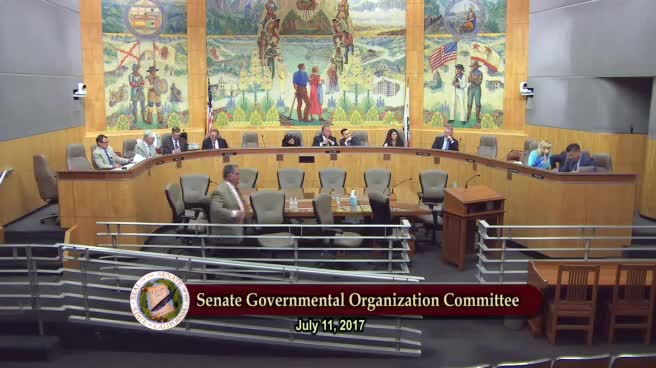
Discussed in Hearing
 9MIN
Senate Standing Committee on Governmental Organization
 1MIN
Assembly Floor
 1H
Assembly Standing Committee on Appropriations
Bill Author

Bill Co-Author(s):