AB 1594: Infrastructure financing: transportation: Los Angeles County Metropolitan Transportation Authority: contracting.
- Session Year: 2017-2018
- House: Assembly
- Latest Version Date: 2018-06-18
(1)Existing law authorizes a governmental agency, as defined, to solicit proposals and enter into agreements with private entities for the design, construction, or reconstruction by, and to lease to, private entities for specified types of fee-producing infrastructure projects, including commuter and light rail.
This bill would additionally include passenger rapid transit, subways, and heavy rail within the types of fee-producing infrastructure projects authorized pursuant to this provision. The bill would provide that all construction, alteration, demolition, installation, repair, and maintenance work on projects subject to these agreements shall comply with labor requirements applicable to public works.
(2)Existing law creates the Los Angeles County Metropolitan Transportation Authority, with specified powers and duties. Existing law authorizes the authority to enter into contracts with private entities that combine into a single contract all or some of the planning, design, permitting, development, joint development, construction, construction management, acquisition, leasing, installation, and warranty of some or all components of transit systems and certain facilities. Existing law authorizes the authority to award a contract under these provisions after a finding, by a 2/3 vote of the members of the authority, that awarding the contract will achieve for the authority, among other things, certain private sector efficiencies in the integration of design, project work, and components.
This bill would eliminate the requirement to make the above-described finding by a 2/3 vote of the members of the authority in order to award contracts under these provisions.
(1)Existing law authorizes a governmental agency, as defined, to solicit proposals and enter into agreements with private entities for the design, construction, or reconstruction by, and to lease to, private entities for specified types of fee-producing infrastructure projects, including commuter and light rail.
This bill would additionally include passenger rapid transit, subways, and heavy rail within the types of fee-producing infrastructure projects authorized pursuant to this provision.
(2)Existing law creates the Los Angeles County Metropolitan Transportation Authority, with specified powers and duties. Existing law authorizes the authority to enter into contracts with private entities that combine into a single contract all or some of the planning, design, permitting, development, joint development, construction, construction management, acquisition, leasing, installation, and warranty of some or all components of transit systems and certain facilities. Existing law authorizes the authority to award a contract under these provisions after a finding, by a 2/3 vote of the members of the authority, that awarding the contract will achieve for the authority, among other things, certain private sector efficiencies in the integration of design, project work, and components.
This bill would eliminate the requirement to make the above-described finding by a 2/3 vote of the members of the authority in order to award contracts under these provisions.
The California Ocean Protection Act establishes the Ocean Protection Council in state government and prescribes the functions and duties of the council with regard to the protection and conservation of coastal waters and ocean ecosystems.Existing law provides that any action to increase recycling taken by the Division of Recycling in the Department of Resources Recycling and Recovery, or by any person or entity, affecting, among other things, the method of invoicing the sale of beverages as provided is not a violation of specified laws relating to business practices.This bill would provide that any action to increase recycling taken by the Division of Recycling in the Department of Resources Recycling and Recovery, or by any person or entity, affecting, among other things, the method of invoicing the sale of any food or drinks for the purposes of increasing food and drink packaging recycling is not a violation of specified laws relating to business practices. The bill would also make findings and declarations regarding plastic and packaging waste in the states waste stream and would state that it is the intent of the Legislature to increase the diversion of single-use takeout food packaging while reducing a primary source of permanent litter and marine debris.The California Ocean Protection Act, Act establishes the Ocean Protection Council in state government, government and prescribes the functions and duties of the council with regard to the protection and conservation of coastal waters and ocean ecosystems.
This bill would require the council, on or before March 1, 2018, to compile existing data identifying the primary sources and types of ocean plastic pollution, as determined by an analysis of beach cleanup efforts in the state, including recommendations to be provided to the Legislature regarding legislative action or other strategies that may be implemented by the state to reduce plastic pollution on state beaches and in ocean waters. The bill would require the council, by the same date, to provide a report to the Legislature on the status of a 2007 council resolution that outlined a 13-point plan of action to prevent and reduce marine debris. The bill would also make related legislative findings and declarations regarding the need to prevent and clean up ocean waste, including plastic pollution.Existing law provides that any action to increase recycling taken by the Division of Recycling in the Department of Resources Recycling and Recovery, or by any person or entity, affecting, among other things, the method of invoicing the sale of beverages as provided is not a violation of specified laws relating to business practices.
This bill would provide that any action to increase recycling taken by the Division of Recycling in the Department of Resources Recycling and Recovery, or by any person or entity, affecting, among other things, the method of invoicing the sale of any food or drinks for the purposes of increasing food and drink packaging recycling is not a violation of specified laws relating to business practices. The bill would also make findings and declarations regarding plastic and packaging waste in the states waste stream and would state that it is the intent of the Legislature to increase the diversion of single-use takeout food packaging while reducing a primary source of permanent litter and marine debris.
Existing law, the California Ocean Protection Act, establishes the Ocean Protection Council in state government, and prescribes the functions and duties of the council with regard to the protection and conservation of coastal waters and ocean ecosystems.
This bill would require the council, on or before January 1, 2019, to complete a study March 1, 2018, to compile existing data identifying the primary sources and types of ocean plastic pollution, as determined by an analysis of beach clean-up cleanup efforts in the state, including recommendations to be provided to the Legislature regarding legislative action or other strategies that may be implemented by the state to reduce plastic pollution on state beaches and in oceanwaters. ocean waters. The bill would require the council, by the same date, to provide a report to the Legislature on the status of a 2007 council resolution that outlined a 13-point plan of action to prevent and reduce marine debris. The bill would also make related legislative findings and declarations regarding the need to prevent and clean up ocean waste, including plastic pollution.
Existing law, the California Ocean Protection Act, establishes the Ocean Protection Council in state government, and prescribes the functions and duties of the council with regard to the protection and conservation of coastal waters and ocean ecosystems.
This bill would require the council, on or before January 1, 2019, to complete a study identifying the primary sources and types of ocean plastic pollution, as determined by an analysis of beach clean-up efforts in the state, including recommendations to be provided to the Legislature regarding legislative action or other strategies that may be implemented by the state to reduce plastic pollution on state beaches and in oceanwaters. The bill would also make related legislative findings and declarations regarding the need to prevent and clean up ocean waste, including plastic pollution.
A governmental agency may solicit proposals and enter into agreements with private entities for the design, construction, or reconstruction by, and may lease to, private entities for the following types of fee-producing infrastructure projects:
(a)Irrigation.
(b)Drainage.
(c)Energy or power production.
(d)Water supply, treatment, and distribution.
(e)Flood control.
(f)Inland waterways.
(g)Harbors.
(h)Municipal improvements.
(i)Commuter rail, passenger rapid transit, subways, heavy rail, and light rail.
(j)Highways or bridges.
(k)Tunnels.
(l)Airports and runways.
(m)Purification of water.
(n)Sewage treatment, disposal, and water recycling.
(o)Refuse disposal.
(p)Structures or buildings, except structures or buildings that are to be utilized primarily for sporting or entertainment events.
SEC. 2.Section 5956.8 of the Government Code is amended to read:5956.8.The plans and specifications for each project constructed pursuant to this chapter shall comply with all applicable governmental design standards for that particular infrastructure project. The private entity designing, constructing, operating, and maintaining infrastructure facilities pursuant to this chapter shall utilize private sector design and construction firms to design and construct the infrastructure facilities. However, a facility subject to this chapter and leased to a private entity shall, during the term of the lease, be deemed to be public property for purposes of identification, maintenance, enforcement of laws and for purposes of Division 3.6 (commencing with Section 810). All public works constructed construction, alteration, demolition, installation, repair, and maintenance work on projects subject to agreements entered into pursuant to this chapter shall comply with Chapter 1 (commencing with Section 1720) of Part 7 of Division 2 of the Labor Code.
SEC. 2.SEC. 3.Section 130242 of the Public Utilities Code is amended to read:130242.(a)In addition to the other powers it possesses, the Los Angeles County Metropolitan Transportation Authority may enter into contracts with private entities, the scope of which may combine within a single contract all or some of the planning, design, permitting, development, joint development, construction, construction management, acquisition, leasing, installation, and warranty of all or components of (1) transit systems, including, without limitation, passenger loading or intermodal station facilities, and (2) facilities on real property owned or to be owned by the authority.
(b)A contract awarded pursuant to this section may include operation and maintenance elements, if the inclusion of those elements (1) is necessary, in the reasonable judgment of the authority, to assess vendor representations and warranties, performance guarantees, or life-cycle efficiencies, and (2) does not conflict with collective bargaining agreements to which the authority is a party.
(c)Any construction, alteration, demolition, repairs, or other works of improvement performed under a contract awarded pursuant to this section shall be considered a public works project subject to Chapter 1 (commencing with Section 1720) of Part 7 of Division 2 of the Labor Code, and shall be enforced by the Department of Industrial Relations in the same way it carries out this responsibility under the Labor Code.
(d)A contract under this section shall be let to the lowest responsible bidder whose bid is responsive to the criteria set forth in the invitation for bids, or, at the authoritys discretion, to a contractor chosen by a competitive bidding process that employs objective selection criteria that may include, but are not limited to, the proposed design approach, features, functions, life-cycle costs, and other criteria deemed appropriate by the authority, in addition to price. Notice requesting bids or proposals shall be published at least once in a newspaper of general circulation. For contracts estimated to exceed ten million dollars ($10,000,000), publication shall be made at least 60 days before the receipt of the bids or price proposals. For contracts estimated not to exceed ten million dollars ($10,000,000), publication shall be made at least 30 days before the receipt of the bids or price proposals. The authority, at its discretion, may reject any and all bids and proposals, and may readvertise. All bids and price proposals submitted pursuant to this section shall be presented under sealed cover and shall be accompanied by one of the following forms of bidder security: (1) cash, (2) a cashiers check made payable to the authority, (3) a certified check made payable to the authority, or (4) a bidders bond executed by an admitted surety insurer, made payable to the authority. Upon an award, the security of each unsuccessful bidder shall be returned in a reasonable period of time, but in no event shall that security be held by the authority beyond 60 days from the time the award is made.
(e)When the design of portions of the project permits the selection of subcontractors, the contractor shall competitively bid those portions. The contractor shall provide to the authority a list of subcontractors whose work is in excess of one-half of 1 percent of the total project cost as soon as the subcontractors are identified. Once listed, the subcontractors shall have the rights provided in the Subletting and Subcontracting Fair Practices Act (Chapter 4 (commencing with Section 4100) of Part 1 of Division 2 of the Public Contract Code).
A governmental agency may solicit proposals and enter into agreements with private entities for the design, construction, or reconstruction by, and may lease to, private entities for the following types of fee-producing infrastructure projects:
(a)Irrigation.
(b)Drainage.
(c)Energy or power production.
(d)Water supply, treatment, and distribution.
(e)Flood control.
(f)Inland waterways.
(g)Harbors.
(h)Municipal improvements.
(i)Commuter rail, passenger rapid transit, subways, heavy rail, and light rail.
(j)Highways or bridges.
(k)Tunnels.
(l)Airports and runways.
(m)Purification of water.
(n)Sewage treatment, disposal, and water recycling.
(o)Refuse disposal.
(p)Structures or buildings, except structures or buildings that are to be utilized primarily for sporting or entertainment events.
SEC. 2.Section 130242 of the Public Utilities Code is amended to read:130242.(a)In addition to the other powers it possesses, the Los Angeles County Metropolitan Transportation Authority may enter into contracts with private entities, the scope of which may combine within a single contract all or some of the planning, design, permitting, development, joint development, construction, construction management, acquisition, leasing, installation, and warranty of all or components of (1) transit systems, including, without limitation, passenger loading or intermodal station facilities, and (2) facilities on real property owned or to be owned by the authority.
(b)The authority may award contracts pursuant to subdivision (a) after a finding, by a two-thirds vote of the members of the authority, that awarding the contract under this section will achieve for the authority, among other things, certain private sector efficiencies in the integration of design, project work, and components. (c)(b)A contract awarded pursuant to this section may include operation and maintenance elements, if the inclusion of those elements (1) is necessary, in the reasonable judgment of the authority, to assess vendor representations and warranties, performance guarantees, or life-cycle efficiencies, and (2) does not conflict with collective bargaining agreements to which the authority is a party.
(d)(c)Any construction, alteration, demolition, repairs, or other works of improvement performed under a contract awarded pursuant to this section shall be considered a public works project subject to Chapter 1 (commencing with Section 1720) of Part 7 of Division 2 of the Labor Code, and shall be enforced by the Department of Industrial Relations in the same way it carries out this responsibility under the Labor Code.
(e)(d)A contract under this section shall be let to the lowest responsible bidder whose bid is responsive to the criteria set forth in the invitation for bids, or, at the authoritys discretion, to a contractor chosen by a competitive bidding process that employs objective selection criteria that may include, but are not limited to, the proposed design approach, features, functions, life-cycle costs, and other criteria deemed appropriate by the authority, in addition to price. Notice requesting bids or proposals shall be published at least once in a newspaper of general circulation. For contracts estimated to exceed ten million dollars ($10,000,000), publication shall be made at least 60 days before the receipt of the bids or price proposals. For contracts estimated not to exceed ten million dollars ($10,000,000), publication shall be made at least 30 days before the receipt of the bids or price proposals. The authority, at its discretion, may reject any and all bids and proposals, and may readvertise. All bids and price proposals submitted pursuant to this section shall be presented under sealed cover and shall be accompanied by one of the following forms of bidder security: (1) cash, (2) a cashiers check made payable to the authority, (3) a certified check made payable to the authority, or (4) a bidders bond executed by an admitted surety insurer, made payable to the authority. Upon an award, the security of each unsuccessful bidder shall be returned in a reasonable period of time, but in no event shall that security be held by the authority beyond 60 days from the time the award is made.
(f)(e)When the design of portions of the project permits the selection of subcontractors, the contractor shall competitively bid those portions. The contractor shall provide to the authority a list of subcontractors whose work is in excess of one-half of 1 percent of the total project cost as soon as the subcontractors are identified. Once listed, the subcontractors shall have the rights provided in the Subletting and Subcontracting Fair Practices Act (Chapter 4 (commencing with Section 4100) of Part 1 of Division 2 of the Public Contract Code).
SECTION 1.Section 35626 is added to the Public Resources Code, to read:35626.(a)The Legislature finds and declares all of the following:(1)Plastic and packaging waste represents a significant and fast growing component of the states waste stream. California disposes of more than three million tons of plastic packaging waste annually.(2)With the sole exception of plastic beverage containers covered by the California Beverage Container Recycling and Litter Reduction Act (Division 12.1 (commencing with Section 14500)), little of generated plastic is currently recycled. Excluding beverage containers, less than 5 percent of plastic packaging is currently recycled.(3)Plastic, including, but not limited to, polystyrene and disposable food service packaging litter and the resulting marine debris present more than an aesthetic problem as this litter can be a danger to marine organisms through ingestion and entanglement.(4)This litter and marine debris also present a serious and growing threat to water quality, the beneficial uses of the waters of the state, and marine recreational human use, and they threaten the ability of Californias waters and the Pacific Ocean to sustain aquatic life.(5)According to a report published by the World Economic Forum and the Ellen MacArthur Foundation, there could be more plastic than fish, by weight, in the ocean by 2050, if we continue on our current track.(6)Each year thousands of Californians volunteer countless hours to clean up plastic and disposable food service packaging litter from public roadways, beaches, parks, and other areas of the state.(7)Californias aquatic and marine environments are increasingly threatened by the amount of plastic and disposable food service packaging that is carried by stormwater runoff.(8)Under a consent decree, a Total Maximum Daily Load (TMDL) for trash is required to be developed for all impaired waters within the state within the next decade. For example, the TMDL for the Los Angeles River and the Ballona Creek Watershed requires that the amount of trash be reduced to zero to protect beneficial uses.(9)The costs to state agencies and local governments to comply with existing TMDL requirements, pending TMDL requirements, or the TMDL requirements yet to be developed will run into billions of dollars.(10)Data collected during Californias annual Coastal Cleanup and the 1999 Pilot Litter Study by the Department of Conservation indicate that plastic and disposable food service packaging represent some of the most commonly littered items.(11)Disposable food service packaging is used on the go when access to trash and recycling receptacles is most limited. Plastics generally can become inadvertent litter even if initially properly discarded, when they are carried by wind from uncovered trash cans and dumpsters, vehicles, and solid waste facilities, including landfills.(12)The benefits of reducing, recycling, and composting plastics and disposable food service packaging will have a direct positive impact on Californias economy.(13)A 1993 study by the California Research Bureau concluded that ocean-dependent industries add approximately seventeen billion three hundred thousand dollars ($17,000,300,000) and 370,000 jobs to Californias economy, almost ten billion dollars ($10,000,000,000) of which is related to nonresident coastal-based tourism.(14)Compounding the problem of plastic packaging waste is that this material is nonbiodegradable and litter prone. Even when properly disposed, lightweight plastic packaging can be blown from trash cans, garbage trucks, and landfills.(15)Nonbiodegradable plastic litter poses a real and growing threat to water quality and the marine environment.(16)While more than 100 jurisdictions in California have addressed this problem in part by phasing out the use of nonrecyclable, noncompostable polystyrene takeout food packaging, thus far only a few jurisdictions have extended phase outs to include other nonrecyclable and noncompostable plastic takeout food packaging.(17)On February 8, 2007, the California Ocean Protection Council adopted a resolution outlining a 13-point plan of action to prevent and reduce marine debris.(18)Consistent with the California Ocean Protection Councils plan of action described in paragraph (17), it is the intent of the Legislature to increase the diversion of single-use takeout food packaging while reducing a primary source of permanent litter and marine debris.(b)Any action to increase recycling taken by the Division of Recycling in the Department of Resources Recycling and Recovery, or by any person or entity, affecting scrap values, the quantities of materials being recycled, or the method of invoicing the sale of any food or drinks for the purposes of increasing food and drink packaging recycling is not a violation of the so-called Cartwright Act (Chapter 2 (commencing with Section 16700) of Part 2 of Division 7 of the Business and Professions Code) and the Unfair Practices Act (Chapter 4 (commencing with Section 17000) of Part 2 of Division 7 of the Business and Professions Code). This section does not apply to any action taken by a recycling center to increase the recycling of beverage containers.(a)The Legislature finds and declares all of the following:
(1)Plastic and packaging waste represents a significant and fast growing component of the states waste stream. California disposes of more than three million tons of plastic packaging waste annually.
(2)With the sole exception of plastic beverage containers covered by the California Beverage Container Recycling and Litter Reduction Act (Division 12.1 (commencing with Section 14500)), little of generated plastic is currently recycled. Excluding beverage containers, less than 5 percent of plastic packaging is currently recycled.
(3)Plastic, including, but not limited to, polystyrene and disposable food service packaging litter and the resulting marine debris present more than an aesthetic problem as this litter can be a danger to marine organisms through ingestion and entanglement.
(4)This litter and marine debris also present a serious and growing threat to water quality, the beneficial uses of the waters of the state, and marine recreational human use, and they threaten the ability of Californias waters and the Pacific Ocean to sustain aquatic life.
(5)According to a report published by the World Economic Forum and the Ellen MacArthur Foundation, there could be more plastic than fish, by weight, in the ocean by 2050, if we continue on our current track.
(6)Each year thousands of Californians volunteer countless hours to clean up plastic and disposable food service packaging litter from public roadways, beaches, parks, and other areas of the state.
(7)Californias aquatic and marine environments are increasingly threatened by the amount of plastic and disposable food service packaging that is carried by stormwater runoff.
(8)Under a consent decree, a Total Maximum Daily Load (TMDL) for trash is required to be developed for all impaired waters within the state within the next decade. For example, the TMDL for the Los Angeles River and the Ballona Creek Watershed requires that the amount of trash be reduced to zero to protect beneficial uses.
(9)The costs to state agencies and local governments to comply with existing TMDL requirements, pending TMDL requirements, or the TMDL requirements yet to be developed will run into billions of dollars.
(10)Data collected during Californias annual Coastal Cleanup and the 1999 Pilot Litter Study by the Department of Conservation indicate that plastic and disposable food service packaging represent some of the most commonly littered items.
(11)Disposable food service packaging is used on the go when access to trash and recycling receptacles is most limited. Plastics generally can become inadvertent litter even if initially properly discarded, when they are carried by wind from uncovered trash cans and dumpsters, vehicles, and solid waste facilities, including landfills.
(12)The benefits of reducing, recycling, and composting plastics and disposable food service packaging will have a direct positive impact on Californias economy.
(13)A 1993 study by the California Research Bureau concluded that ocean-dependent industries add approximately seventeen billion three hundred thousand dollars ($17,000,300,000) and 370,000 jobs to Californias economy, almost ten billion dollars ($10,000,000,000) of which is related to nonresident coastal-based tourism.
(14)Compounding the problem of plastic packaging waste is that this material is nonbiodegradable and litter prone. Even when properly disposed, lightweight plastic packaging can be blown from trash cans, garbage trucks, and landfills.
(15)Nonbiodegradable plastic litter poses a real and growing threat to water quality and the marine environment.
(16)While more than 100 jurisdictions in California have addressed this problem in part, part by phasing out the use of nonrecyclable, noncompostable polystyrene takeout food packaging, thus far only a few jurisdictions have extended phase-outs phase outs to include other nonrecyclable and noncompostable plastic takeout food packaging.
(17)On February 8, 2007, the California Ocean Protection Council adopted a resolution outlining a 13-point plan of action to prevent and reduce marine debris.
(18)Consistent with the California Ocean Protection Councils plan of action described in paragraph (17), it is the intent of the Legislature to increase the diversion of single use single-use takeout food packaging while reducing a primary source of permanent litter and marine debris.
(b)(1)On or before March 1, 2018, the council shall do both of the following:(A)Provide a report to the Legislature on the status of the items identified in the resolution adopted by the California Ocean Protection Council described in paragraph (17) of subdivision (a).(B)Compile existing data identifying the primary sources and types of ocean plastic pollution, as determined by an analysis of statewide beach cleanup efforts, including recommendations to be provided to the Legislature regarding legislative action or other strategies that may be implemented by the state to reduce plastic pollution on state beaches and in oceanwaters.(2)(A)A report submitted to the Legislature pursuant to subparagraph (A) of paragraph (1) shall be submitted in compliance with Section 9795 of the Government Code.(3)(B)The requirement for submitting a report imposed under subparagraph (A) of paragraph (1) is inoperative on March 1, 2022, pursuant to Section 10231.5 of the Government Code.(b)Any action to increase recycling taken by the Division of Recycling in the Department of Resources Recycling and Recovery, or by any person or entity, affecting scrap values, the quantities of materials being recycled, or the method of invoicing the sale of any food or drinks for the purposes of increasing food and drink packaging recycling is not a violation of the so-called Cartwright Act (Chapter 2 (commencing with Section 16700) of Part 2 of Division 7 of the Business and Professions Code) and the Unfair Practices Act (Chapter 4 (commencing with Section 17000) of Part 2 of Division 7 of the Business and Professions Code). This section does not apply to any action taken by a recycling center to increase the recycling of beverage containers.
(a)The Legislature finds and declares all of the following:
(1)Plastic and packaging waste represents a significant and fast growing component of the states waste stream. California disposes of more than three million tons of plastic packaging waste annually.
(2)With the sole exception of plastic beverage containers covered by the California Beverage Container Recycling and Litter Reduction Act (Division 12.1 (commencing with Section 14500)), little of generated plastic is currently recycled. Excluding beverage containers, less than 5 percent of plastic packaging is currently recycled.
(3)Plastic, including, but not limited to, polystyrene and disposable food service packaging litter and the resulting marine debris present more than an aesthetic problem as this litter marine can be a danger to marine organisms through ingestion and entanglement.
(4)This litter and marine debris also present a serious and growing threat to water quality, the beneficial uses of the waters of the state, and marine recreational human use, and they threaten the ability of Californias waters and the Pacific Ocean to sustain aquatic life.
(5)According to a report published by the World Economic Forum and the Ellen MacArthur Foundation, there could be more plastic than fish, by weight, in the ocean by 2050, if we continue on our current track.
(6)Each year thousands of Californians volunteer countless hours to cleanup clean up plastic and disposable food service packaging litter from public roadways, beaches, parks, and other areas of the state.
(7)Californias aquatic and marine environments are increasingly threatened by the amount of plastic and disposable food service packaging that is carried by stormwater runoff.
(8)Under a consent decree, a Total Maximum Daily Load (TMDL) for trash is required to be developed for all impaired waters within the state within the next decade. For example, the TMDL for the Los Angeles River and the Ballona Creek Watershed requires that the amount of trash be reduced to zero to protect beneficial uses.
(9)The costs to state agencies and local governments to comply with existing TMDL requirements, pending TMDL requirements, or the TMDL requirements yet to be developed, developed will run into billions of dollars.
(10)Data collected during Californias annual Coastal Cleanup and the 1999 Pilot Litter Study by the Department of Conservation indicate that plastic and disposable food service packaging represent some of the most commonly littered items.
(11)Disposable food service packaging is used on the go when access to trash and recycling receptacles is most limited. Plastics generally can become inadvertent litter even if initially properly discarded, when they are carried by wind from uncovered trash cans and dumpsters, vehicles, and solid waste facilities, including landfills.
(12)The benefits of reducing, recycling, and composting plastics and disposable food service packaging will have a direct positive impact on Californias economy.
(13)A 1993 study by the California Research Bureau concluded that ocean-dependent industries add approximately $17,000,300,000 seventeen billion three hundred thousand dollars ($17,000,300,000) and 370,000 jobs to Californias economy, almost $10 billion ten billion dollars ($10,000,000,000) of which is related to nonresident coastal-based tourism.
(14)Compounding the problem of plastic packaging waste is that this material is nonbiodegradable and litter prone. Even when properly disposed, lightweight plastic packaging can be blown from trash cans, garbage trucks, and landfills.
(15)Nonbiodegradable plastic litter poses a real and growing threat to water quality and the marine environment.
(16)While more than 100 jurisdictions in California have addressed this problem in part, by phasing out the use of nonrecyclable, noncompostable polystyrene takeout food packaging, thus far only a few jurisdictions have extended phase-outs to include other nonrecyclable and noncompostable plastic takeout food packaging.
(17)On February 8, 2007, the California Ocean Protection Council adopted a resolution outlining a 13-point plan of action to prevent and reduce marine debris.
(16)It(18)Consistent with the California Ocean Protection Councils plan of action described in paragraph (17), is the intent of the Legislature to increase the diversion of single use take-out takeout food packaging while reducing a primary source of permanent litter and marine debris.
(b)(1)On or before January 1, 2019, March 1, 2018, the council shall complete astudy do both of the following:
(A)Provide a report to the Legislature on the status of the items identified in the resolution adopted by the California Ocean Protection Council described in paragraph (17) of subdivision (a).
(B)Compile existing data identifying the primary sources and types of ocean plastic pollution, as determined by an analysis of statewide beach cleanup efforts, including recommendations to be provided to the Legislature regarding legislative action or other strategies that may be implemented by the state to reduce plastic pollution on state beaches and in oceanwaters.
(2)(A)A report submitted to the Legislature pursuant to subparagraph (A) of paragraph (1) shall be submitted in compliance with Section 9795 of the Government Code.
(3)(B)The requirement for submitting a report imposed under subparagraph (A) of paragraph (1) is inoperative on March 1, 2022, pursuant to Section 10231.5 of the Government Code.
(a)The Legislature finds and declares all of the following:
(1)Plastic and packaging waste represents a significant and fast growing component of the states waste stream. California disposes of more than three million tons of plastic packaging waste annually.
(2)With the sole exception of plastic beverage containers covered by the California Beverage Container Recycling and Litter Reduction Act (Division 12.1 (commencing with Section 14500)), little of generated plastic is currently recycled. Excluding beverage containers, less than 5 percent of plastic packaging is currently recycled.
(3)Plastic, including, but not limited to, polystyrene and disposable food service packaging litter and the resulting marine debris present more than an aesthetic problem as this litter marine a danger to marine organisms through ingestion and entanglement.
(4)This litter and marine debris also present a serious and growing threat to water quality, the beneficial uses of the waters of the state, and marine recreational human use, and they threaten the ability of Californias waters and the Pacific Ocean to sustain aquatic life.
(5)According to a report published by the World Economic Forum and the Ellen MacArthur Foundation, there could be more plastic than fish, by weight, in the ocean by 2050, if we continue on our current track.
(6)Each year thousands of Californians volunteer countless hours to cleanup plastic and disposable food service packaging litter from public roadways, beaches, parks, and other areas of the state.
(7)Californias aquatic and marine environments are increasingly threatened by the amount of plastic and disposable food service packaging that is carried by stormwater runoff.
(8)Under a consent decree, a Total Maximum Daily Load (TMDL) for trash is required to be developed for all impaired waters within the state within the next decade. For example, the TMDL for the Los Angeles River and the Ballona Creek Watershed requires that the amount of trash be reduced to zero to protect beneficial uses.
(9)The costs to state agencies and local governments to comply with existing TMDL requirements, pending TMDL requirements, or the TMDL requirements yet to be developed, will run into billions of dollars.
(10)Data collected during Californias annual Coastal Cleanup and the 1999 Pilot Litter Study by the Department of Conservation indicate that plastic and disposable food service packaging represent some of the most commonly littered items.
(11)Disposable food service packaging is used on the go when access to trash and recycling receptacles is most limited. Plastics generally can become inadvertent litter even if initially properly discarded, when they are carried by wind from uncovered trash cans and dumpsters, vehicles, and solid waste facilities, including landfills.
(12)The benefits of reducing, recycling, and composting plastics and disposable food service packaging will have a direct positive impact on Californias economy.
(13)A 1993 study by the California Research Bureau concluded that ocean-dependent industries add approximately $17,000,300,000 and 370,000 jobs to Californias economy, almost $10 billion of which is related to nonresident coastal-based tourism.
(14)Compounding the problem of plastic packaging waste is that this material is nonbiodegradable and litter prone. Even when properly disposed, lightweight plastic packaging can be blown from trash cans, garbage trucks, and landfills.
(15)Nonbiodegradable plastic litter poses a real and growing threat to water quality and the marine environment.
(16)It is the intent of the Legislature to increase the diversion of single use take-out food packaging while reducing a primary source of permanent litter and marine debris.
(b)On or before January 1, 2019, the council shall complete a study identifying the primary sources and types of ocean plastic pollution, as determined by an analysis of statewide beach cleanup efforts, including recommendations to be provided to the Legislature regarding legislative action or other strategies that may be implemented by the state to reduce plastic pollution on state beaches and in oceanwaters.
|
Date
|
Status
|
|---|---|
| Aug 24, 2018 | Ordered to inactive file at the request of Senator Allen. |
| Aug 9, 2018 | Ordered to third reading. |
| Aug 1, 2018 | Ordered to special consent calendar. |
| Jun 28, 2018 | Read second time. Ordered to third reading. |
| Jun 27, 2018 | From committee: Do pass. (Ayes 12. Noes 0.) (June 26). |
| Jun 18, 2018 | From committee chair, with author's amendments: Amend, and re-refer to committee. Read second time, amended, and re-referred to Com. on T. & H. |
| Jun 13, 2018 | From committee: Do pass and re-refer to Com. on T. & H. (Ayes 7. Noes 0.) (June 13). Re-referred to Com. on T. & H. |
| May 10, 2018 | Re-referred to Coms. on GOV. & F. and T. & H. |
| May 2, 2018 | Withdrawn from committee. |
| May 1, 2018 | In committee: Set, first hearing. Hearing canceled at the request of author. |
| May 1, 2018 | From committee chair, with author's amendments: Amend, and re-refer to committee. Read second time, amended, and re-referred to Com. on EQ. |
| Jul 6, 2017 | Re-referred to Com. on EQ. |
| Jun 26, 2017 | From committee chair, with author's amendments: Amend, and re-refer to committee. Read second time, amended, and re-referred to Com. on RLS. |
| Jun 8, 2017 | Referred to Com. on RLS. |
| May 30, 2017 | In Senate. Read first time. To Com. on RLS. for assignment. |
| May 30, 2017 | Read third time. Passed. Ordered to the Senate. (Ayes 74. Noes 0. Page 1800.) |
| May 25, 2017 | Read second time. Ordered to third reading. |
| May 24, 2017 | From committee: Do pass. (Ayes 17. Noes 0.) (May 24). |
| Apr 25, 2017 | From committee: Do pass and re-refer to Com. on APPR. (Ayes 10. Noes 0.) (April 24). Re-referred to Com. on APPR. |
| Apr 18, 2017 | Re-referred to Com. on NAT. RES. |
| Apr 17, 2017 | From committee chair, with author's amendments: Amend, and re-refer to Com. on NAT. RES. Read second time and amended. |
| Mar 16, 2017 | Referred to Com. on NAT. RES. |
| Feb 19, 2017 | From printer. May be heard in committee March 21. |
| Feb 17, 2017 | Read first time. To print. |
|
Date
|
Description
|
Location
|
Votes
|
|
|---|---|---|---|---|
| Jun 26, 2018 | Do pass | Senate Standing Committee on Transportation and Housing |
Passed |
|
| Jun 13, 2018 | Do pass, but first be re-referred to the Committee on [Transportation and Housing] | Senate Standing Committee on Governance and Finance |
Passed |
|
| May 30, 2017 | AB 1594 BLOOM Assembly Third Reading | Assembly Floor |
Passed |
|
| May 24, 2017 | Do pass. | Assembly Standing Committee on Appropriations |
Passed |
|
| Apr 24, 2017 | Do pass and be re-referred to the Committee on [Appropriations] | Assembly Standing Committee on Natural Resources |
Passed |
This list shows positions taken on this bill by organizations on the date displayed, which is linked to the original source.
Positions by individuals are not included.
|
Organization
|
Position
|
Date
|
|---|---|---|
| 7th Generation Advisors | ** Support | Apr 21, 2017 |
| AFSCME, AFL-CIO | ** Against | Aug 20, 2018 |
| American Chemistry Council | * Against Unless Amend | May 24, 2017 |
| American Council of Engineering Companies, California | ** Support | Aug 20, 2018 |
| Audobon California | * Support | Apr 24, 2017 |
| Azul | * Support | Apr 24, 2017 |
| California Products Stewardship Council | * Support | May 24, 2017 |
| Californians Against Waste | * Support | Apr 24, 2017 |
| Excellent Packaging and Supply | ** Support | Apr 21, 2017 |
| Heal The Bay | * Support | May 24, 2017 |
| Los Angeles County Metropolitan Transportation Authority | ** Support | Aug 20, 2018 |
| Napa Recycling and Waste Services | ** Support | Apr 21, 2017 |
| Sierra Club | * Support | Apr 24, 2017 |
| State Building and Construction Trades Council of California | ** Support | Aug 20, 2018 |
| Stop Waste | * Support | Apr 24, 2017 |
| Tri-City Economic Development Corporation | ** Support | Apr 21, 2017 |
| Trust For Public Land, The | * Support | May 24, 2017 |
| Unknown. | ** Against | Jun 8, 2018 |
| World Centric | ** Support | Apr 21, 2017 |
Office of Senate Floor Analyses (916) 651-1520 Fax: (916) 327-4478 | AB |
THIRD READING
Bill No: AB 1594
:
SENATE GOVERNANCE & FIN. COMMITTEE: 7-0, 6/13/18
AYES: McGuire, Nguyen, Beall, Hernandez, Hertzberg, Lara, Moorlach
SENATE TRANS. & HOUSING COMMITTEE: 12-0, 6/26/18
AYES: Beall, Cannella, Allen, Dodd, Gaines, Galgiani, McGuire, Morrell, Roth, Skinner, Vidak, Wiener
NO VOTE RECORDED: Wieckowski
ASSEMBLY FLOOR: 74-0, 5/30/17 - See last page for vote
SOURCE: Los Angeles County Metropolitan Transportation Authority
State Building and Construction Trades Council of California
DIGEST:
This bill makes certain changes to the use of public-private partnership (P3) statutes and repeals 2/3rds vote requirement for Los Angeles County Metropolitan Transportation Authority (LA Metro) to use alternative procurement methods.
Existing law:
- Authorizes government agencies to enter into P3s for certain types of fee producing infrastructure projects including, but not limited to, commuter and light rail.
- Requires all public works constructed under the P3 statutes to comply with specified labor requirements that apply to public works projects.
- Establishes the County Transportation Commissions Act, which provides for the creation of county transportation commissions in the Counties of Los Angeles, Orange, Riverside, San Bernardino, and Ventura, with various powers and duties relative to transportation planning and funding, as specified.
- Establishes LA Metro as a county transportation commission to fund, plan for, coordinate, build, and operate public transportation systems within Los Angeles County.
- Requires the approval of a finding by two-thirds of the LA Metro Board of Directors prior to issuing a design-build or P3 contract, as specified.
This bill:
- Adds passenger rapid transit (also known as bus rapid transit), subways, and heavy rail to the types of fee-producing infrastructure for which a local government can enter into a P3.
- Repeals the requirement for Metro, prior to awarding a contract for a P3, to adopt a finding with a 2/3rds vote that awarding the contract will achieve efficiencies in the integration of design, project work, and components.
- Provides that all construction, alteration, demolition, installation, repair, and maintenance work on projects subject to a P3 agreement is to be in compliance with labor requirements relative to public works projects.
Background
P3. In 1996, the Legislature allowed local governments to solicit proposals and enter into agreements with private entities for the study, planning, design, financing, construction, maintenance, rebuilding, improvement, repair, or operation by private entities of specific types of fee-producing infrastructure (AB 2660, Aguiar). This type of arrangement is typically referred to as a P3.
A local agency may enter into P3s for various types of fee-producing infrastructure projects, including commuter and light rail, highways, bridges, and tunnels. However, other forms of transportation infrastructure are not specifically authorized by state law, and state law explicitly prohibits the use of P3s for tollroads on state highways and certain other state projects. A P3 must provide for the lease of fee-producing facilities to, or ownership by, the private entity for up to 35 years. Fees imposed by the local government for the use of the infrastructure pay the cost of the lease or fund the purchase of the infrastructure over time. The P3 agreement must ensure a local government’s authority to impose user fees that are sufficient to protect the revenue streams necessary to cover the costs of projects or facilities. A local government must use a private sector contractor’s “demonstrated competence and qualifications” as the primary selection criterion when selecting a private-sector contractor with which to enter into an agreement for the study, planning, design, financing, construction, maintenance, rebuilding, improvement, repair, or operation of fee-producing infrastructure.
The P3 statutes also require all public works constructed under these laws to comply with the labor laws applicable to public works, including paying prevailing wage. Public works include construction, alteration, demolition, installation, or repair work done under contract and paid for in whole or in part out of public funds.
LA Metro. State law establishes LA Metro as a county transportation commission to fund, plan for, coordinate, build, and operate public transportation systems within Los Angeles County. LA Metro also serves as the regional transportation planning agency for the county and administers the local sales tax levied to fund transportation projects within the county.
Among other powers, LA Metro may enter into P3s or use the design-build method of procurement to develop transit systems and facilities on property owned by the authority. These P3s may include operation and maintenance within the contract and may be awarded to either the lowest bidder or the bidder that offers the best value based on objective selection criteria, including proposed design approach and live-cycle costs of the project. State law prescribes the manner in which LA Metro must solicit bids, deems the projects to be public works, and establishes other requirements for any P3s entered into by LA Metro, including making specific findings before awarding a contract. Specifically, prior to awarding a contract for a P3 or other alternatives to the design-bid-build method, LA Metro’s governing board must adopt, by 2/3rds vote, a finding that awarding the contract will achieve certain private sector efficiencies in the integration of design, project work, and components.
Additional funding sources have become available to LA Metro in recent years. Specifically, SB 1 (Beall, Chapter 5, Statutes of 2017) increased the excise tax on gasoline to fund additional transportation projects, and Los Angeles County voters approved Measure M in November 2016 to increase the local sales and use tax by 0.5 percent to fund additional local transportation projects. In addition, LA Metro has recently received three unsolicited bids for P3 projects from private entities that see the potential for business opportunities from a partnership with LA Metro. To fully take advantage of new funding sources and expand the use of its P3 authority, LA Metro wants the Legislature to revise the relevant P3 statutes.
Comments
Purpose of the bill. Confronted by aging infrastructure, growing populations, and limited revenue sources, local governments want to use innovative financing techniques to pay for the construction of new public infrastructure and the replacement of existing facilities. In 1996, the Legislature authorized local governments to enter into P3s for specific fee-producing infrastructure projects that might not be feasible without private-sector involvement. These statutes have largely remained unchanged since then, even as the types of infrastructure that local governments seek to develop have evolved. AB 1594 updates the P3 statutes to allow the use of this procurement method to develop additional types of transportation projects, such as passenger rapid transit and heavy rail, which is capable of handling larger volumes of passengers than light rail. This change enables LA Metro to make use of recently approved new revenues from the recent increases in the gas tax increase and voter-approved sales taxes for these types of projects. It also removes an outdated requirement for a 2/3rds vote of LA Metro’s board to use P3 or design-build procurement to ensure that it can leverage private-sector participation, financing, and efficiencies to stretch taxpayer dollars to the maximum extent. Finally, current P3 law contains a circular provision that requires public works to comply with labor laws that apply to public works. AB 1594 fixes this provision to clarify the scope of projects that must comply with prevailing wage requirements.
FISCAL EFFECT: Appropriation: Fiscal Com.: Local:
Los Angeles County Metropolitan Transportation Authority (co-source)
State Building and Construction Trades Council of California (co-source)
American Council of Engineering Companies, California
OPPOSITION: (Verified 8/20/18)
AFSCME, AFL-CIO
ASSEMBLY FLOOR: 74-0, 5/30/17
AYES: Acosta, Aguiar-Curry, Travis Allen, Arambula, Baker, Berman, Bigelow, Bloom, Bocanegra, Bonta, Burke, Caballero, Calderon, Cervantes, Chávez, Chiu, Chu, Cooley, Cooper, Cunningham, Dababneh, Dahle, Daly, Flora, Fong, Frazier, Friedman, Gallagher, Cristina Garcia, Eduardo Garcia, Gipson, Gloria, Gomez, Gonzalez Fletcher, Gray, Grayson, Harper, Holden, Irwin, Jones-Sawyer, Kalra, Kiley, Lackey, Levine, Limón, Low, Maienschein, Mathis, Mayes, McCarty, Medina, Melendez, Mullin, Muratsuchi, Nazarian, Obernolte, O'Donnell, Patterson, Quirk, Quirk-Silva, Reyes, Ridley-Thomas, Rodriguez, Rubio, Salas, Santiago, Steinorth, Mark Stone, Thurmond, Ting, Waldron, Weber, Wood, Rendon
NO VOTE RECORDED: Brough, Chau, Chen, Choi, Eggman, Voepel
8/20/18 11:41:25
**** END ****
SENATE COMMITTEE ON TRANSPORTATION AND HOUSING
Senator Jim Beall, Chair
2017 - 2018 Regular
Bill No: Hearing Date: 6/26/2018
Author: | Bloom | ||
Version: | 6/18/2018 Amended | ||
Urgency: | No | Fiscal: | No |
Consultant: | Manny Leon | ||
SUBJECT:
DIGEST: This bill authorizes the use of public-private partnerships (P3) for passenger rapid transit and heavy rail infrastructure and repeals 2/3rds vote requirement for Los Angeles County Metropolitan Transportation Authority (Metro) to use alternative procurement methods.
ANALYSIS:
Metro is a multimodal transportation agency providing a variety of transportation-related services and functions for Los Angeles County. These services/functions include transportation planning, transit services (both bus and light rail), capital construction projects, and administering several local sales tax measures.
Among its other abilities, Metro may enter into P3’s or use the design-build method of procurement to develop transit systems and facilities on property owned by the authority. These P3s may include operation and maintenance within the contract and may be awarded to either the lowest bidder or the bidder that offers the best value based on objective selection criteria, including proposed design approach and life-cycle costs of the project. State law prescribes the manner in which Metro must solicit bids, deems the projects to be public works, and establishes other requirements for any P3s entered into by Metro, including making specific findings before awarding a contract.
Specifically, prior to awarding a contract for a P3 or other alternatives to the design-bid-build method, Metro’s governing board must adopt, by 2/3rds vote, a finding that awarding the contract will achieve certain private sector efficiencies in the integration of design, project work, and components.
Existing law:
- Establishes the County Transportation Commissions Act, which provides for the creation of county transportation commissions in the Counties of Los Angeles, Orange, Riverside, San Bernardino, and Ventura, with various powers and duties relative to transportation planning and funding, as specified.
- Establishes Metro as a county transportation commission to fund, plan for, coordinate, build, and operate public transportation systems within Los Angeles County.
- Authorizes government agencies to enter into P3’s for certain types of fee producing infrastructure projects including but not limited to commuter and light rail.
- Requires the approval of a finding by two-thirds of the Metro Board of Directors prior to issuing a design-build or P3 contract, as specified.
This bill:
- Adds passenger rapid transit (also known as bus rapid transit), subways, and heavy rail to the types of fee-producing infrastructure for which a local government can enter into a P3.
- Repeals the requirement for Metro, prior to awarding a contract for a P3, to adopt a finding with a 2/3rds vote that awarding the contract will achieve efficiencies in the integration of design, project work, and components.
- Provides that all construction, alteration, demolition, installation, repair, and maintenance work on projects subject to a P3 agreement is to be in compliance with labor requirements relative to public works projects.
COMMENTS
- Purpose. According to the author, “AB 1594 helps LA County better optimize the transportation dollars recently authorized by voters through Measure M by allowing Metro to streamline their transit project processes.”
- What are P3’s? P3’s are typically used in transportation infrastructure projects such as highways, airports, railroads, bridges and tunnels. P3’s are set up between a government agency and a private-sector company where the private entity is responsible for designing, completing, implementing and funding the project. Under a P3 project, procurement of two or more of the project phases are integrated. These project phases range from design and construction to operation and maintenance. Often a consortium of companies with different areas of expertise relating to the various phases is organized. This consortium determines how to complete the project. Additionally, P3 contracts typically have outcome-based specifications, meaning that the public sector owner specifies their requirements and the private sector partner determines the best way to meet them. Another key characteristic of P3’s is that the payment structure is normally such that payments are made upon completion of a specific activity, milestone, or after the project is completed (e.g. toll revenues). For public agencies, one of the most attractive features of P3’s is that these arrangements aim to distribute the financial, technical, and operational risk optimally between both the private and public sector partners.
- Metro Projects. Currently, Metro has three potential P3 transportation projects that are in various planning phases:
- West Santa Ana Branch Transit Center: a 20 mile light rail transit corridor that would connect the Gateway Cities (Southeast Los Angeles County) to Downtown Los Angeles.
- Sepulveda Transit Corridor Project: Metro is currently studying rail options to connect the San Fernando Valley to LAX. This project is in its very early stages with Metro considering a variety of rail options to provide congestion relief for Interstate 405 commuters.
- Regional Express Lanes Network: Metro has developed an Express Lanes Strategic Plan which builds on the success of the I-110 and I-10 Congestion Reduction Demonstration pilot program. The Plan identifies the most promising express lane corridors and proposes a phased implementation plan over a 25-plus year period.
The provisions specified in this bill will remove a duplicative Metro Board approval process when considering P3 as a preferred project delivery method and clarifies certain transportation projects can be constructed using P3 authority.
- Double Referral. This bill passed out of the Senate Governance and Finance Committee on June 13th on a 7-0 vote.
FISCAL EFFECT: Appropriation: No Fiscal Com.: No Local: No
POSITIONS: (Communicated to the committee before noon on Wednesday,
June 20, 2018.)
SUPPORT:
Los Angeles Metropolitan Transportation Authority (co-sponsor)
State Building and Construction Trades Council of California (co-sponsor)
American Council of Engineering Companies, California
OPPOSITION:
None received.
-- END --
SENATE COMMITTEE ON GOVERNANCE AND FINANCE
Senator Mike McGuire, Chair
2017 - 2018 Regular
Bill No: | AB 1594 | Hearing Date: | 6/13/18 |
Author: | Bloom | Tax Levy: | No |
Version: | 5/1/18 | Fiscal: | No |
Consultant: | Favorini-Csorba | ||
Infrastructure financing: transportation: Los Angeles County Metropolitan Transportation Authority: contracting
Authorizes the use of public-private partnerships for passenger rapid transit and heavy rail infrastructure; repeals 2/3rds vote requirement for Los Angeles County Metropolitan Transportation Authority to use alternative procurement methods.
Background
The Local Agency Public Construction Act requires local officials to invite bids for construction projects and then award contracts to the lowest responsible bidder. This design-bid-build method is the traditional, and most widely-used, approach to public works construction. This approach splits construction projects into two distinct phases: design and construction. During the design phase, the local agency prepares detailed project plans and specifications using its own employees or by hiring outside architects and engineers. Once project designs are complete, local officials invite bids from the construction industry and award the contract to the lowest responsible bidder. Although design-bid-build generally results in the lowest cost construction contract, it is not without its drawbacks, including:
- Project delivery can be slow because designs must be entirely completed, permits obtained, and right-of-way acquired before the construction contract can be bid and awarded;
- Designs prepared for a competitive low-bid procurement are developed to allow for a broad range of construction approaches. As a result, low-bid designs do not always equate to the most efficient design possible, depending on a particular contractor's strengths or capabilities;
- Because the project designer does not have the benefit of consulting with the entity that will ultimately be responsible for construction of the project, there may be significant issues that the designer does not anticipate, particularly issues affecting constructability. This can result in change orders that ultimately drive up the price of the contract; and
- Low-bid is not always the least expensive option, once change orders and contractor claims are factored into the overall project costs.
Public-private partnerships. In the early 1990s, public works agencies grew frustrated with design-bid-build and began experimenting with other project delivery methods. One such method is design-build, where a public agency contracts with a single entity—which can be a single firm, a consortium, or a joint venture—to design and construct a project. However, under design-build the public agency owns, finances, and operates the project.
In 1996, the Legislature allowed local governments to solicit proposals and enter into agreements with private entities for the study, planning, design, financing, construction, maintenance, rebuilding, improvement, repair, or operation by private entities of specific types of fee-producing infrastructure (AB 2660, Aguiar). This type of arrangement is typically referred to as a public-private partnership (P3).
A local agency may enter into P3s for various types of fee-producing infrastructure projects, including commuter and light rail, highways, bridges, and tunnels. However, other forms of transportation infrastructure are not specifically authorized by state law, and state law explicitly prohibits the use of P3s for tollroads on state highways and certain other state projects. A P3 must provide for the lease of fee-producing facilities to, or ownership by, the private entity for up to 35 years. Fees imposed by the local government for the use of the infrastructure pay the cost of the lease or fund the purchase of the infrastructure over time. The P3 agreement must ensure a local government’s authority to impose user fees that are sufficient to protect the revenue streams necessary to cover the costs of projects or facilities. A local government must use a private sector contractor’s “demonstrated competence and qualifications” as the primary selection criterion when selecting a private-sector contractor with which to enter into an agreement for the study, planning, design, financing, construction, maintenance, rebuilding, improvement, repair, or operation of fee-producing infrastructure.
Los Angeles County Metropolitan Transportation Authority. State law establishes the Los Angeles County Metropolitan Transportation Authority (LA Metro) as a county transportation commission to fund, plan for, coordinate, build, and operate public transportation systems within Los Angeles County. LA Metro also serves as the regional transportation planning agency for the county and administers the local sales tax levied to fund transportation projects within the county.
Among other powers, LA Metro may enter into P3s or use the design-build method of procurement to develop transit systems and facilities on property owned by the authority. These P3s may include operation and maintenance within the contract and may be awarded to either the lowest bidder or the bidder that offers the best value based on objective selection criteria, including proposed design approach and live-cycle costs of the project. State law prescribes the manner in which LA Metro must solicit bids, deems the projects to be public works, and establishes other requirements for any P3s entered into by LA Metro, including making specific findings before awarding a contract. Specifically, prior to awarding a contract for a P3 or other alternatives to the design-bid-build method, LA Metro’s governing board must adopt, by 2/3rds vote, a finding that awarding the contract will achieve certain private sector efficiencies in the integration of design, project work, and components.
Additional funding sources have become available to LA Metro in recent years. Specifically, SB 1 (Beall, 2017) increased the excise tax on gasoline to fund additional transportation projects, and Los Angeles County voters approved Measure M in November 2016 to increase the local sales and use tax by 0.5 percent to fund additional local transportation projects. In addition, LA Metro has recently received three unsolicited bids for P3 projects from private entities that see the potential for business opportunities from a partnership with LA Metro. To fully take advantage of new funding sources and expand the use of its P3 authority, LA Metro wants the Legislature to revise the relevant P3 statutes.
Proposed Law
Assembly Bill 1594 adds passenger rapid transit (also known as bus rapid transit), subways, and heavy rail to the types of fee-producing infrastructure for which a local government can enter into a P3.
AB 1594 also repeals the requirement for LA Metro, prior to awarding a contract for a P3, to adopt a finding with a 2/3rds vote that awarding the contract will achieve efficiencies in the integration of design, project work, and components.
State Revenue Impact
No estimate.
Comments
1. Purpose of the bill. Confronted by aging infrastructure, growing populations, and limited revenue sources, local governments want to use innovative financing techniques to pay for the construction of new public infrastructure and the replacement of existing facilities. In 1996, the Legislature authorized local governments to enter into P3s for specific fee-producing infrastructure projects that might not be feasible without private-sector involvement. These statutes have largely remained unchanged since then, even as the types of infrastructure that local governments seek to develop have evolved. AB 1594 updates the P3 statutes to allow the use of this procurement method to develop additional types of transportation projects, such as passenger rapid transit and heavy rail, which is capable of handling larger volumes of passengers than light rail. This change enables LA Metro to make use of recently approved new revenues from the recent increases in the gas tax increase and voter-approved sales taxes for these types of projects. It also removes an outdated requirement for a 2/3rds vote of LA Metro’s board to use P3 or design-build procurement to ensure that it can leverage private-sector participation, financing, and efficiencies to stretch taxpayer dollars to the maximum extent.
2. Double-referred. The Senate Rules Committee has ordered a double referral of AB 1594: first to the Senate Governance and Finance Committee to hear issues related to local government procurement, and then to the Senate Transportation and Housing Committee, which has jurisdiction over transportation planning.
3. Gut and amend. As introduced and passed by the Assembly, AB 1594 contained provisions relating to ocean pollution by plastic. The Senate Governance & Finance Committee never heard that version of the bill. The May 1st amendments deleted AB 1594's contents and inserted the current language relating to LA Metro.
Assembly Actions
Not relevant to the May 1st, 2018 version of the bill.
Support and Opposition
(6/8/18)
Support: Los Angeles County Metropolitan Transportation Authority (sponsor).
Opposition: Unknown.
-- END --
ASSEMBLY THIRD READING
ATR Bill Id:AB 1594
Author:(Bloom)
As Amended Ver:April 17, 2017
Majority vote
Committee | Votes | Ayes | Noes |
Natural Resources | 10-0 | Cristina Garcia, Acosta, Travis Allen, Chau, Eggman, Flora, Limón, McCarty, Muratsuchi, Mark Stone | |
Appropriations | 17-0 | Gonzalez Fletcher, Bigelow, Bloom, Bocanegra, Bonta, Brough, Gloria, Chau, Quirk, Fong, Friedman, Gallagher, Eduardo Garcia, Jones-Sawyer, Muratsuchi, Obernolte, Reyes |
SUMMARY: Requires the Ocean Protection Council (OPC) to report to the Legislature on the status of items identified in its 2007 Resolution on Reducing and Preventing Marine Debris and compile data identifying the primary sources and types of ocean plastic pollution.
FISCAL EFFECT: According to the Assembly Appropriations Committee, this bill has absorbable costs to report to the Legislature.
COMMENTS: Plastics are estimated to comprise 60-80% of all marine debris and 90% of all floating debris, which includes expanded polystyrene. According to the California Coastal Commission, the primary source of marine debris is urban runoff (i.e., litter). By 2050, plastics in the ocean will outweigh fish pound for pound if we keep producing (and failing to properly manage) plastics at predicted rates, according to a January, 2016, report by the World Economic Forum, The New Plastics Economy: Rethinking the Future of Plastics.
Due to the interplay of ocean currents, marine debris preferentially accumulates in certain areas throughout the ocean. Between 2007 and 2013, 24 expeditions estimated that there are approximately 96,400 metric tons of floating plastic in the Northern Pacific Ocean. The North Pacific Central Gyre is the ultimate destination for much of the marine debris originating from the California coast. A study by the Algalita Marine Research Foundation found an average of more than 300,000 plastic pieces per square mile of the Gyre and that the mass of plastic was 6 times greater than zooplankton floating on the water's surface.
Most plastic marine debris exists as small plastic particles due to excessive Ultraviolet (UV) radiation exposure and subsequent photo-degradation. These plastic pieces are confused with small fish, plankton, or krill and ingested by birds and marine animals. Over 600 marine animal species have been negatively affected by ingesting plastic worldwide. Last year, scientists at the Australian Research Council Centre of Excellence for Coral Reef Studies at James Cook University found that corals are also ingesting small plastic particles, which remain in their small stomach cavities and impede their ability to consume and digest normal food.
In addition to the physical impacts of plastic pollution, hydrophobic chemicals present in the ocean in trace amounts (e.g., from contaminated runoff and oil and chemical spills) have an affinity for, and can bind to, plastic particles where they enter and accumulate in the food chain.
California Coastal Cleanup Day was first organized by the California Coastal Commission in 1985. The Coastal Commission continues to organize the event annually and track the items collected. According to the Coastal Commission, the top ten items collected since 1984 are cigarette butts; food wrappers and containers; caps and lids; bags; cups, plates, and utensils; straws; glass bottles; plastic bottles; cans; and, construction material.
In 2007, the OPC adopted a resolution on "reducing and preventing marine debris." A year later, OPC released the Implementation Strategy for the [OPC] Resolution to Reduce and Prevent Ocean Litter, which established four broad objectives to reduce marine debris: 1) Reduce single-use packaging and promote sustainable alternatives; 2) Prevent and control litter and plastic debris; 3) Clean up and remove ocean litter; and, 4) Coordinate with other jurisdictions in the pacific region.
A National Oceanic and Atmospheric Administration Marine Debris Program economic study published in 2014 examined the costs of marine debris to Californians. The study focused on Orange County, and found that residents lose millions of dollars each year avoiding littered, local beaches in favor of choosing cleaner beaches that are father away and more costly to reach. In one scenario, the study found that reducing marine debris by just 25% would save Orange County residents $32 million in June-August; eliminating marine debris entirely, that savings reaches an estimated $148 million.
A 2013 report produced for the Natural Resources Defense Council by Keir Associates estimates that Californians are shouldering $428 million annually to try to prevent litter from becoming marine debris that damages the environment, tourism, and other economic activities.
Analysis Prepared by: Elizabeth MacMillan / NAT. RES. / (916) 319-2092 FN: 0000502
Date of Hearing: May 24, 2017
ASSEMBLY COMMITTEE ON APPROPRIATIONS
Lorena Gonzalez Fletcher, Chair
ABPCA Bill Id:AB 1594
Author:(Bloom) – As Amended Ver:April 17, 2017
Policy Committee: | Natural Resources | Vote: | 10 - 0 |
|
| ||
|
|
Urgency: No State Mandated Local Program: No Reimbursable: No
SUMMARY:
This bill requires the Ocean Protection Council (OPC) to report to the Legislature on the status of items identified in its 2007 Resolution on Reducing and Preventing Marine Debris, and to compile data identifying the primary sources and types of ocean plastic pollution.
FISCAL EFFECT:
Absorbable costs to report to the Legisalture.
COMMENTS:
- Purpose. In 2007, the OPC adopted a resolution on "reducing and preventing marine debris." A year later, OPC released the Implementation Strategy for the [OPC] Resolution to Reduce and Prevent Ocean Litter, which established four broad objectives to reduce marine debris: a) Reduce single-use packaging and promote sustainable alternatives; b) Prevent and control litter and plastic debris; c) Clean up and remove ocean litter; and, d) Coordinate with other jurisdictions in the pacific region.
This requires OPC to follow up and report to the Legislature on the status of items identified in its 2007 plan to address plastic pollution.
- Background. Plastics are estimated to comprise 60-80% of all marine debris and 90% of all floating debris, which includes expanded polystyrene (EPS). According to the California Coastal Commission, the primary source of marine debris is urban runoff (i.e., litter). By 2050, plastics in the ocean will outweigh fish pound for pound if we keep producing (and failing to properly manage) plastics at predicted rates, according to a January, 2016, report by the World Economic Forum, The New Plastics Economy: Rethinking the Future of Plastics.
Due to the interplay of ocean currents, marine debris preferentially accumulates in certain areas throughout the ocean. Between 2007 and 2013, 24 expeditions estimated that there are approximately 96,400 metric tons of floating plastic in the Northern Pacific Ocean. The North Pacific Central Gyre is the ultimate destination for much of the marine debris originating from the California coast. A study by the Algalita Marine Research Foundation found an average of more than 300,000 plastic pieces per square mile of the Gyre and that the mass of plastic was 6 times greater than zooplankton floating on the water’s surface.
Most plastic marine debris exists as small plastic particles due to excessive UV radiation exposure and subsequent photo-degradation. These plastic pieces are confused with small fish, plankton, or krill and ingested by birds and marine animals. Over 600 marine animal species have been negatively affected by ingesting plastic worldwide. Last year, scientists at the Australian Research Council Centre of Excellence for Coral Reef Studies at James Cook University found that corals are also ingesting small plastic particles, which remain in their small stomach cavities and impede their ability to consume and digest normal food.
In addition to the physical impacts of plastic pollution, hydrophobic chemicals present in the ocean in trace amounts (e.g., from contaminated runoff and oil and chemical spills) have an affinity for, and can bind to, plastic particles where they enter and accumulate in the food chain.
Analysis Prepared by: Jennifer Galehouse / APPR. / (916) 319-2081
Date of Hearing: April 24, 2017
ASSEMBLY COMMITTEE ON NATURAL RESOURCES
Cristina Garcia, Chair
ABPCA Bill Id:AB 1594 (
Author:Bloom) – As Amended Ver:April 17, 2017
SUBJECT: Ocean protection: plastic pollution
SUMMARY: Requires the Ocean Protection Council (OPC) to report to the Legislature on the status of items identified in its 2007 Resolution on Reducing and Preventing Marine Debris and compile data identifying the primary sources and types of ocean plastic pollution.
EXISTING LAW:
- Requires the state to identify a list of impaired water-bodies and develop and implement Total Maximum Daily Loads (TMDLs) for impaired water bodies.
- Regulates discharges of pollutants in storm water and urban runoff by regulating, through the National Pollution Discharge Elimination System (NPDES), industrial discharges and discharges through the municipal storm drain systems.
FISCAL EFFECT: Unknown
COMMENTS:
- Plastic seas. Plastics are estimated to comprise 60-80% of all marine debris and 90% of all floating debris, which includes expanded polystyrene (EPS). According to the California Coastal Commission, the primary source of marine debris is urban runoff (i.e., litter). By 2050, plastics in the ocean will outweigh fish pound for pound if we keep producing (and failing to properly manage) plastics at predicted rates, according to a January, 2016, report by the World Economic Forum, The New Plastics Economy: Rethinking the Future of Plastics.
Due to the interplay of ocean currents, marine debris preferentially accumulates in certain areas throughout the ocean. Between 2007 and 2013, 24 expeditions estimated that there are approximately 96,400 metric tons of floating plastic in the Northern Pacific Ocean. The North Pacific Central Gyre is the ultimate destination for much of the marine debris originating from the California coast. A study by the Algalita Marine Research Foundation found an average of more than 300,000 plastic pieces per square mile of the Gyre and that the mass of plastic was 6 times greater than zooplankton floating on the water’s surface.
Most plastic marine debris exists as small plastic particles due to excessive UV radiation exposure and subsequent photo-degradation. These plastic pieces are confused with small fish, plankton, or krill and ingested by birds and marine animals. Over 600 marine animal species have been negatively affected by ingesting plastic worldwide. Last year, scientists at the Australian Research Council Centre of Excellence for Coral Reef Studies at James Cook University found that corals are also ingesting small plastic particles, which remain in their small stomach cavities and impede their ability to consume and digest normal food.
In addition to the physical impacts of plastic pollution, hydrophobic chemicals present in the ocean in trace amounts (e.g., from contaminated runoff and oil and chemical spills) have an affinity for, and can bind to, plastic particles where they enter and accumulate in the food chain.
California Coastal Cleanup Day was first organized by the California Coastal Commission in 1985. The Coastal Commission continues to organize the event annually and track the items collected. According to the Coastal Commission, the top ten items collected since 1984 are cigarette butts; food wrappers and containers; caps and lids; bags; cups, plates, and utensils; straws; glass bottles; plastic bottles; cans; and, construction material.
In 2007, the OPC adopted a resolution on "reducing and preventing marine debris." A year later, OPC released the Implementation Strategy for the [OPC] Resolution to Reduce and Prevent Ocean Litter, which established four broad objectives to reduce marine debris: 1) Reduce single-use packaging and promote sustainable alternatives; 2) Prevent and control litter and plastic debris; 3) Clean up and remove ocean litter; and, 4) Coordinate with other jurisdictions in the pacific region.
- Economic impacts to California. A National Oceanic and Atmospheric Administration Marine Debris Program economic study published in 2014 examined the costs of marine debris to Californians. The study focused on Orange County, and found that residents lose millions of dollars each year avoiding littered, local beaches in favor of choosing cleaner beaches that are father away and more costly to reach. In one scenario, the study found that reducing marine debris by just 25% would save Orange County residents $32 million in June-August; eliminating marine debris entirely, that savings reaches an estimated $148 million.
A 2013 report produced for the Natural Resources Defense Council by Keir Associates estimates that Californians are shouldering $428 million annually to try to prevent litter from becoming marine debris that damages the environment, tourism, and other economic activities. Specific examples include:- Los Angeles spends $9.50 per person, for a total of over $36.3 million annually;
- San Diego spends $10.84 per person, for a total of $14.1 million annually;
- The community of Commerce in Los Angeles County spends $69 per person, for a total of $890,000 annually; and,
- Long Beach spends $28 per person, for a total of nearly $13 million annually.
- Los Angeles spends $9.50 per person, for a total of over $36.3 million annually;
- This bill. This bill asks OPC to follow up and report to the Legislature on the status of items identified in its 2007 plan to address plastic pollution.
REGISTERED SUPPORT / OPPOSITION:
Support
7th Generation Advisors
Excellent Packaging and Supply
Napa Recycling and Waste Services
Tri-City Economic Development Corporation
World Centric
Opposition
None on file
Analysis Prepared by: Elizabeth MacMillan / NAT. RES. /
Discussed in Hearing
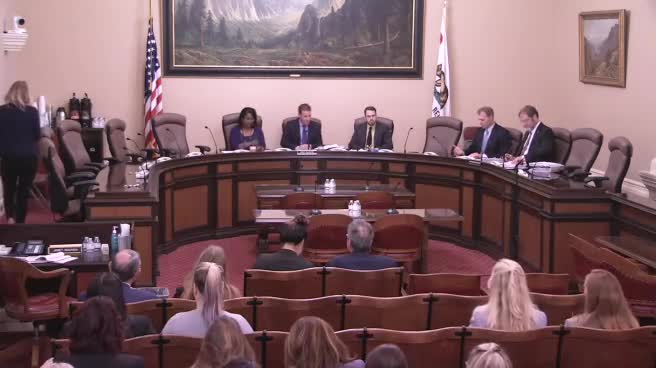 3MIN
Senate Standing Committee on Governance and Finance
 1MIN
Assembly Floor
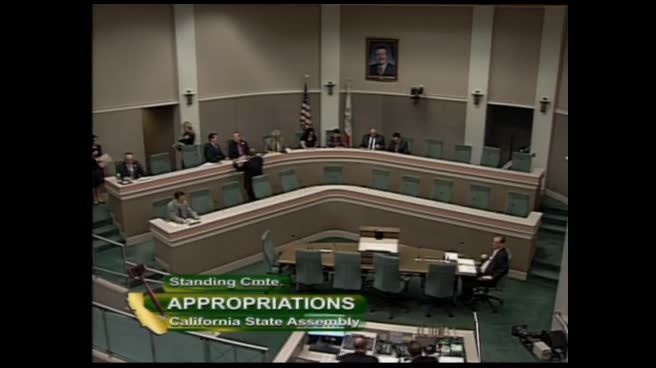 3MIN
Assembly Standing Committee on Appropriations
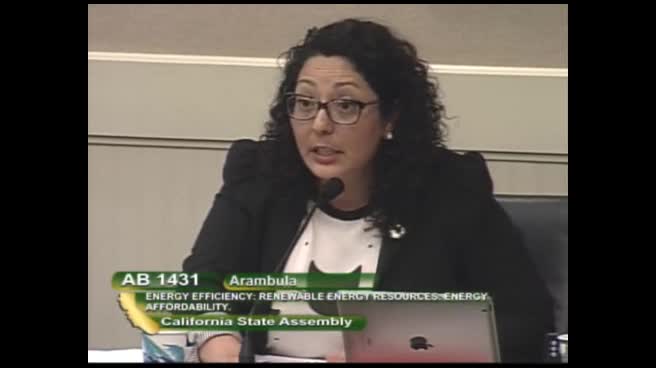 6MIN
Assembly Standing Committee on Natural Resources
Bill Author

Bill Co-Author(s):