AB 1784: Resource families: pilot program: supportive services.
- Session Year: 2017-2018
- House: Assembly
- Latest Version Date: 2018-06-28
Existing law provides for the implementation, by counties and foster family agencies, of the resource family approval process, which is a unified, family friendly, and child-centered approval process that replaces the multiple processes for licensing foster family homes, approving relatives and nonrelative extended family members as foster care providers, and approving adoptive families.
This bill would require the State Department of Social Services to establish and facilitate a pilot program, as specified, in up to five counties that voluntarily apply and are selected by the department, to increase placement stability for foster youth and facilitate greater resource family retention through strengths-based, skills-based, trauma-informed coaching. The bill would set forth the components of the pilot program and would require the department, by June 30, 2019, to consult with relevant stakeholders and to consider the stakeholders recommendations to the department regarding certain parameters of the pilot program, as specified. The bill would require a county that elects to participate in the pilot program to conduct at least one evaluation of the programs impact and effectiveness on increasing placement stability for foster youth and retaining resource families in accordance with, and upon issuance of guidance from, the department, and to submit the evaluation to the department, no later than December 31, 2021. The bill would require the department to report the information provided by the counties to the Legislature, as prescribed. The provisions of the bill would be repealed on January 1, 2022.
This bill would require the department to inform resource families of all available state and county supportive services, and would require that information to be posted on the Internet Web sites of the department and applicable county departments, as specified.Existing law provides for the implementation, by counties and foster family agencies, of the resource family approval process, which is a unified, family friendly, and child-centered approval process that replaces the multiple processes for licensing foster family homes, approving relatives and nonrelative extended family members as foster care providers, and approving adoptive families.
This bill would require the State Department of Social Services to establish and facilitate a pilot program, as specified, for counties that elect to participate, in up to five counties that voluntarily apply and are selected by the department, to increase placement stability for foster youth and facilitate greater resource family retention through strengths-based, skills-based, trauma-informed coaching. The bill would set forth the components of the pilot program and would require the department, by June 30, 2019, to convene a work group, including individual and stakeholder members, to provide consult with relevant stakeholders and to consider the stakeholders recommendations to the department regarding certain parameters of the pilot program, as specified. The bill would require a county that elects to participate in the pilot program to conduct at least one evaluation of the programs impact and effectiveness on increasing placement stability for foster youth and retaining resource families in accordance with, and upon issuance of guidance from, the department, and to submit the evaluation to the department, no later than December 31, 2021. The bill would require the department to report the information provided by the counties to the Legislature, as prescribed.
This bill would require the department to inform resource families of all available state and county supportive services, and would require that information to be posted on the Internet Web sites of the department and applicable county departments, as specified.
Existing law provides for the implementation, by counties and foster family agencies, of the resource family approval process, which is a unified, family friendly, and child-centered approval process that replaces the multiple processes for licensing foster family homes, approving relatives and nonrelative extended family members as foster care providers, and approving adoptive families.
This bill would require the State Department of Social Services to establish and facilitate a 2-year pilot program pilot program, as specified, for counties that elect to participate, to increase the support resources available to resource families, as specified. placement stability for foster youth and facilitate greater resource family retention through strengths-based, skills-based, trauma-informed coaching. The bill would set forth the components of the pilot program and would require the department department, by June 30, 2019, to convene a workgroup, work group, including individual and stakeholder members, to evaluate existing supportive services and training, and to develop and implement the improved resources provided under the pilot program. provide recommendations to the department regarding certain parameters of the pilot program, as specified. The bill would require the department to measure and track the effectiveness of the supportive and training services offered to resource families in participating counties, as specified, and to report to the Legislature regarding the results of the pilot program. a county that elects to participate in the pilot program to conduct at least one evaluation of the programs impact and effectiveness on increasing placement stability for foster youth and retaining resource families in accordance with, and upon issuance of guidance from, the department, and to submit the evaluation to the department, no later than December 31, 2021. The bill would require the department to report the information provided by the counties to the Legislature, as prescribed.
This bill would require the department to inform resource families of all available state and county supportive services, and would require that information to be posted on the Internet Web sites of the department and applicable county departments, as specified.
Existing law provides for the implementation, by counties and foster family agencies, of the resource family approval process, which is a unified, family friendly, and child-centered approval process that replaces the multiple processes for licensing foster family homes, approving relatives and nonrelative extended family members as foster care providers, and approving adoptive families.
This bill would require the State Department of Social Services to establish and facilitate a 2-year pilot program for counties that elect to participate, to increase the support resources available to resource families, as specified. The bill would set forth the components of the pilot program and would require the department to convene a workgroup, including individual and stakeholder members, to evaluate existing supportive services and training, and to develop and implement the improved resources provided under the pilot program. The bill would require the department to measure and track the effectiveness of the supportive and training services offered to resource families in participating counties, as specified, and to report to the Legislature regarding the results of the pilot program.
(a)(1)The department shall establish and facilitate a pilot program in up to five counties, including both rural and urban counties, that voluntarily apply and are selected by the department, to increase placement stability for foster youth and facilitate greater resource family retention through strengths-based, skills-based, trauma-informed coaching.
(2)Implementation of the pilot project shall commence after the department has received and reviewed the recommendations of the stakeholder work group described in subdivision (c), but no later than January 1, 2020.
(3)(A)A participating county shall first seek to employ current social workers who meet the criteria established by the department under subdivision (c) to serve as coaches for the pilot program, or program. A participating county may hire new social workers who meet the established criteria, if necessary. A social worker with a current caseload shall not be eligible to serve as a coach.
(B)A county that is unable to fill a coach position with a current social worker or new hire as provided in subparagraph (A) may contract with a private individual or entity to fill the position. A coach hired under this subparagraph shall meet the criteria established by the department under subdivision (c).
(b)The pilot program shall provide coaching to resource families who volunteer to participate in the pilot project through a trained mentor, social worker, or mental health care provider who has received the pilot program coaching training.
(1)Coaches shall assist resource families to effectively utilize and implement skills and information covered in their preapproval training pursuant to subdivision (g) of Section 16519.5 in order to promote a stable and nurturing home environment for youth placed in the resource family home.
(2)Coaches shall inform participating resource families of available state and county supportive services, including, but not limited to, the availability of respite services for emergency and nonemergency situations, availability of, and access to, 24-hour resource hotlines where available, and mental health services for foster youth, among others.
(2)(3)Participation in the pilot program shall not be a condition of resource family approval or a requirement for a resource family to receive or maintain the placement of a youth.
(c)No later than June 30, 2019, the department shall consult relevant stakeholders, including, but not limited to, foster youth, resource families, biological families, representatives of child and family services agencies, and foster family agencies. The department shall consider stakeholder recommendations regarding certain parameters of the pilot program, including, but not limited to, all of the following:
(1)Application and selection criteria for participating counties.
(2)A skills-based, strengths-based, trauma-informed coaching program curriculum, which may include trauma-informed principles and skills for improving attachment, empathy, and self-esteem, as well as practices from Californias core practice model.
(3)Application and selection criteria for coaches.
(4)Criteria used by counties to evaluate the effectiveness of the program in achieving the overall goals of the pilot program.
(d)(1)A county that elects to participate in the pilot program pursuant to this section shall conduct at least one evaluation of the programs impact and effectiveness on increasing placement stability for foster youth and retaining resource families in accordance with, and upon issuance of guidance from, the department. The evaluation also may include a survey of resource families exiting the program. A participating county shall submit its evaluation to the department no later than December 31, 2021.
(2)The department shall report the information provided by counties under paragraph (1) to the Legislature. The report shall be submitted in compliance with Section 9795 of the Government Code.
(e)This section shall remain in effect only until January 1, 2022, and as of that date is repealed.
SEC. 2.Section 16519.67 is added to the Welfare and Institutions Code, to read:16519.67.The department shall inform resource families of all available state and county supportive services, including, but not limited to, the availability of respite services for emergency and nonemergency situations, availability of and access to 24-hour resource hotlines, where available, and mental health services for foster youth, among others. This information shall be made available to resource families both orally and in writing, and shall be posted on the Internet Web sites of the department and applicable county departments in a manner consistent with all applicable state and federal privacy and confidentiality laws.(a)(1)The department shall establish and facilitate a pilot program in any county that elects to participate up to five counties, including both rural and urban counties, that voluntarily apply and are selected by the department, to increase placement stability for foster youth and facilitate greater resource family retention through strengths-based, skills-based, trauma-informed coaching.
(2)Implementation of the pilot project shall commence after the department has received and reviewed the recommendations of the stakeholder work group described in subdivision (c), but no later than January 1, 2020.
(3)(A)A participating county shall first seek to employ current social workers who meet the criteria established by the department under subdivision (c) to serve as coaches for the pilot program, or may hire new social workers who meet the established criteria, if necessary. A social worker with a current caseload shall not be eligible to serve as a coach.
(B)A county that is unable to fill a coach position with a current social worker or new hire as provided in subparagraph (A) may contract with a private individual or entity to fill the position. A coach hired under this subparagraph shall meet the criteria established by the department under subdivision (c).
(b)The pilot program shall provide coaching to resource families who volunteer to participate in the pilot project through a trained mentor, social worker, or mental health care provider who has received the pilot program coaching training.
(1)Coaches shall assist resource families to effectively utilize and implement skills and information covered in their preapproval training pursuant to subdivision (g) of Section 16519.5 in order to promote a stable and nurturing home environment for youth placed in the resource family home.
(2)Participation in the pilot program shall not be a condition of resource family approval or a requirement for a resource family to receive or maintain the placement of a youth.
(c)No later than June 30, 2019, the department shall convene a work group composed of consult relevant stakeholders, including, but not limited to, foster youth, resource families, biological families, representatives of child and family services agencies, and foster family agencies. The work group shall provide recommendations to the department department shall consider stakeholder recommendations regarding certain parameters of the pilot program, including, but not limited to, all of the following:
(1)Application and selection criteria for participating counties.
(2)A skills-based, strengths-based, trauma-informed coaching program curriculum, which may include trauma-informed principles and skills for improving attachment, empathy, and self-esteem, as well as practices from Californias core practice model.
(3)Application and selection criteria for coaches.
(4)Criteria used by counties to evaluate the effectiveness of the program in achieving the overall goals of the pilot program.
(d)(1)A county that elects to participate in the pilot program pursuant to this section shall conduct at least one evaluation of the programs impact and effectiveness on increasing placement stability for foster youth and retaining resource families in accordance with, and upon issuance of guidance from, the department. The evaluation also may include a survey of resource families exiting the program. A participating county shall submit its evaluation to the department no later than December 31, 2021.
(2)The department shall report the information provided by counties under paragraph (1) to the Legislature. The report shall be submitted in compliance with Section 9795 of the Government Code.
(e)This section shall remain in effect only until January 1, 2022, and as of that date is repealed.
SEC. 2.Section 16519.67 is added to the Welfare and Institutions Code, to read:16519.67.The department shall inform resource families of all available state and county supportive services, including, but not limited to, the availability of respite services for emergency and nonemergency situations, availability of and access to 24-hour resource hotlines, where available, and mental health services for foster youth, among others. This information shall be made available to resource families both orally and in writing, and shall be posted on the Internet Web sites of the department and applicable county departments in a manner consistent with all applicable state and federal privacy and confidentiality laws.
(a)(1)The department shall establish and facilitate a pilot program in any county that elects to participate to increase placement stability for foster youth and facilitate greater resource family retention through strengths-based, skills-based, trauma-informed coaching.
(2)Implementation of the pilot project shall commence after the department has received and reviewed the recommendations of the stakeholder work group described in subdivision (c), but no later than January 1, 2020.
(b)The pilot program shall provide coaching to resource families who volunteer to participate in the pilot project through a trained mentor, social worker, or mental health care provider who has received the pilot program coaching training.
(1)Coaches shall assist resource families to effectively utilize and implement skills and information covered in their preapproval training pursuant to subdivision (g) of Section 16519.5 in order to promote a stable and nurturing home environment for youth placed in the resource family home.
(2)Participation in the pilot program shall not be a condition of resource family approval or a requirement for a resource family to receive or maintain the placement of a youth.
(c)No later than June 30, 2019, the department shall convene a work group composed of relevant stakeholders, including, but not limited to, foster youth, resource families, representatives of child and family services agencies, and foster family agencies. The work group shall provide recommendations to the department regarding certain parameters of the pilot program, including, but not limited to, all of the following:
(1)Application and selection criteria for participating counties.
(2)A skills-based, strengths-based, trauma-informed coaching program curriculum, which may include trauma-informed principles and skills for improving attachment, empathy, and self-esteem, as well as practices from Californias core practice model.
(3)Application and selection criteria for coaches.
(4)Criteria used by counties to evaluate the effectiveness of the program in achieving the overall goals of the pilot program.
(d)(1)A county that elects to participate in the pilot program pursuant to this section shall conduct at least one evaluation of the programs impact and effectiveness on increasing placement stability for foster youth and retaining resource families in accordance with, and upon issuance of guidance from, the department. The evaluation also may include a survey of resource families exiting the program. A participating county shall submit its evaluation to the department no later than December 31, 2021.
(2)The department shall report the information provided by counties under paragraph (1) to the Legislature. The report shall be submitted in compliance with Section 9795 of the Government Code.
(e)This section shall remain in effect only until January 1, 2022, and as of that date is repealed.
SEC. 2.Section 16519.67 is added to the Welfare and Institutions Code, to read:16519.67.The department shall inform resource families of all available state and county supportive services, including, but not limited to, the availability of respite services for emergency and nonemergency situations, availability of and access to 24-hour resource hotlines, where available, and mental health services for foster youth, among others. This information shall be made available to resource families both orally and in writing, and shall be posted on the Internet Web sites of the department and applicable county departments in a manner consistent with all applicable state and federal privacy and confidentiality laws.
SECTION 1.Section 16519.66 is added to the Welfare and Institutions Code, to read:16519.66.(a)The department shall establish and facilitate a 2-year pilot program, for counties that elect to participate, to increase the support resources available to resource families. The pilot program shall include the following elements:(1)Transfer of learning through coaching. Resource families shall receive formal and informal coaching through a trained mentor, social worker, or mental health care provider. Coaches shall assist resource families with transitioning children to new resource family homes, and promoting an ongoing stable family environment for children in foster care by helping families transfer knowledge from their preapproval training to implementation with the children placed in their home.(2)Respite services. Resource families shall be informed verbally and in writing how to access respite services in emergency and nonemergency situations.(3)A 24-hour resource family hotline telephone number. Resource families shall be informed how to access supportive services available 24 hours a day. The hotline number shall be staffed by persons with appropriate knowledge regarding these services.(4)The support resources and support structure to be utilized for each resource family shall be in writing and made available on both state and county child welfare services Internet Web sites, in a manner procedures consistent with applicable state and federal privacy and confidentiality laws.(b)In order to achieve the goals and objectives of pilot program described in this section, the department shall convene a work group composed of stakeholders and individuals, including, but not limited to, representatives of child and family services agencies, foster family agencies, and resource families, with demonstrated expertise in improving supportive and training services offered to resource families. The work group shall be responsible for evaluation of existing supportive services and training, as well as the development and implementation of improved resources, including, but not limited to, those described in subdivision (a). The department, in conjunction with stakeholder groups, shall measure and track the effectiveness of the supportive and training services offered to resource families in participating counties, which may include evaluating retention of resource families and the stability of the placements of children within the resource family homes.(c)No later than six months after the conclusion of the pilot program, the department shall submit a report to the Legislature, in accordance with the requirements of Section 9795 of the Government Code, regarding the results of the pilot program. The report shall do all of the following:(1)Document the effect of the pilot program on increasing placement stability for foster children.(2)Identify methods to expand the pilot program to additional counties or statewide.(3)Identify funding opportunities to support the expansion of the pilot program including, but not limited to, federal and state funding sources.(a)The department shall establish and facilitate a 2-year pilot program, for counties that elect to participate, to increase the support resources available to resource families. The pilot program shall include the following elements:
(1)Transfer of learning through coaching. Resource families shall receive formal and informal coaching through a trained mentor, social worker, or mental health care provider. Coaches shall assist resource families with transitioning children to new resource family homes, and promoting an ongoing stable family environment for children in foster care by helping families transfer knowledge from their preapproval training to implementation with the children placed in their home.
(2)Respite services. Resource families shall be informed verbally and in writing how to access respite services in emergency and nonemergency situations.
(3)A 24-hour resource family hotline telephone number. Resource families shall be informed how to access supportive services available 24 hours a day. The hotline number shall be staffed by persons with appropriate knowledge regarding these services.
(4)The support resources and support structure to be utilized for each resource family shall be in writing and made available on both state and county child welfare services Internet Web sites, in a manner procedures consistent with applicable state and federal privacy and confidentiality laws.
(b)In order to achieve the goals and objectives of pilot program described in this section, the department shall convene a work group composed of stakeholders and individuals, including, but not limited to, representatives of child and family services agencies, foster family agencies, and resource families, with demonstrated expertise in improving supportive and training services offered to resource families. The work group shall be responsible for evaluation of existing supportive services and training, as well as the development and implementation of improved resources, including, but not limited to, those described in subdivision (a). The department, in conjunction with stakeholder groups, shall measure and track the effectiveness of the supportive and training services offered to resource families in participating counties, which may include evaluating retention of resource families and the stability of the placements of children within the resource family homes.
(c)No later than six months after the conclusion of the pilot program, the department shall submit a report to the Legislature, in accordance with the requirements of Section 9795 of the Government Code, regarding the results of the pilot program. The report shall do all of the following:
(1)Document the effect of the pilot program on increasing placement stability for foster children.
(2)Identify methods to expand the pilot program to additional counties or statewide.
(3)Identify funding opportunities to support the expansion of the pilot program including, but not limited to, federal and state funding sources.
|
Date
|
Status
|
|---|---|
| Aug 16, 2018 | In committee: Held under submission. |
| Aug 6, 2018 | In committee: Referred to APPR. suspense file. |
| Jun 28, 2018 | Read second time and amended. Re-referred to Com. on APPR. |
| Jun 27, 2018 | From committee: Amend, and do pass as amended and re-refer to Com. on APPR. with recommendation: To Consent Calendar. (Ayes 6. Noes 0.) (June 26). |
| Jun 7, 2018 | Referred to Com. on HUMAN S. |
| May 31, 2018 | In Senate. Read first time. To Com. on RLS. for assignment. |
| May 30, 2018 | Read third time. Passed. Ordered to the Senate. |
| May 29, 2018 | Read second time. Ordered to third reading. |
| May 25, 2018 | From committee: Amend, and do pass as amended. (Ayes 16. Noes 0.) (May 25). |
| Apr 4, 2018 | In committee: Set, first hearing. Referred to suspense file. |
| Mar 14, 2018 | Re-referred to Com. on APPR. |
| Mar 13, 2018 | Read second time and amended. |
| Mar 12, 2018 | From committee: Amend, and do pass as amended and re-refer to Com. on APPR. (Ayes 7. Noes 0.) (March 6). |
| Jan 22, 2018 | Referred to Com. on HUM. S. |
| Jan 9, 2018 | From printer. May be heard in committee February 8. |
| Jan 8, 2018 | Read first time. To print. |
|
Date
|
Description
|
Location
|
Votes
|
|
|---|---|---|---|---|
| Aug 6, 2018 | Placed on suspense file | Senate Standing Committee on Appropriations |
Passed |
|
| Jun 26, 2018 | Do pass as amended, but first amend, and re-refer to the Committee on [Appropriations] with the recommendation: To Consent Calendar | Senate Standing Committee on Human Services |
Passed |
|
| May 30, 2018 | AB 1784 MAIENSCHEIN Assembly Third Reading | Assembly Floor |
Passed |
|
| May 25, 2018 | Do pass as amended. | Assembly Standing Committee on Appropriations |
Passed |
|
| Mar 6, 2018 | Do pass as amended and be re-referred to the Committee on [Appropriations] | Assembly Standing Committee on Human Services |
Passed |
This list shows positions taken on this bill by organizations on the date displayed, which is linked to the original source.
Positions by individuals are not included.
|
Organization
|
Position
|
Date
|
|---|---|---|
| California Academy of Child and Adolescent Psychiatry | ** Support | Jun 22, 2018 |
| California Alliance of Caregivers | ** Support | Jun 22, 2018 |
| California Alliance Of Child And Family Services | ** Support | Jun 22, 2018 |
| County Behavioral Health Directors Association of California | ** Support | Jun 22, 2018 |
| County Welfare Directors Association of California | ** Support | Jun 22, 2018 |
| Dependency Legal Services | ** Support | Jun 22, 2018 |
| Fieldstead And Company | ** Support | Jun 22, 2018 |
| McGeorge School of Law | * Support | Mar 6, 2018 |
| SEIU California | ** Support | Jun 22, 2018 |
| The Juvenile Court Judges Of California | ** Support | Jun 22, 2018 |
| The National Association of Social Workers, California Chapter | ** Support | Jun 22, 2018 |
| Ticket To Dream Foundation | ** Support | Jun 22, 2018 |
SENATE COMMITTEE ON
Senator Anthony Portantino, Chair
2017 - 2018 Regular Session
AB 1784 (Maienschein) - Resource families: pilot program: supportive services
Version: | Policy Vote: |
Urgency: | Mandate: |
Hearing Date: | Consultant: |
This bill meets the criteria for referral to the Suspense File.
Bill Summary:
AB 1784 would require the California Department of Social Services (CDSS) to establish a pilot program to provide additional supports and services to resource families through coaching. The bill would also require CDSS to inform resource families of all available state and county supportive services orally and in writing, and to make the information available on the Internet Web sites of the department and applicable county departments.
Fiscal Impact:
- Ongoing costs to CDSS of between $200,000 to $250,000 per year for increased workload to operate the pilot program, for stakeholder engagement, and to produce the required report. (GF)
- Because this pilot program is optional for counties, counties will not be reimbursed for their involvement in the program.
Background:
California’s child welfare services (CWS) system is an essential component of the state’s safety net. Social workers in each county receive reports of abuse or neglect, investigate and resolve those reports. Abused and neglected children who have been removed from their homes fall under the jurisdiction of the County’s juvenile dependency court. The CWS system provides multiple opportunities for the custody of the child, or the child’s placement outside of the home, to be evaluated, reviewed and determined by the judicial system, in consultation with the child’s social worker, to help provide the best possible services to the child. It is the state’s goal to reunify a foster child or youth with their biological family whenever possible. In instances where reunification is not possible, it is the state’s goal to provide a permanent placement alternative, such as adoption or guardianship.
Continuum of Care Reform (CCR) intends to reduce the numbers of foster children placed in congregate settings by improving assessments of children and families, emphasizing home-based family placements of foster children, and changing the goals of congregate care placements. In 2015, the Legislature passed the first of three CDSS-sponsored bills enacting the CCR, AB 403 (Mark Stone, Chapter 773, Statutes of 2015). Among the essential components of the CCR is the establishment a child and family team for each child in foster care, as well as the elimination of the group home category, and its replacement with short term residential therapeutic programs.
As of January 1, 2017, as result of CCR, the Resource Family Approval (RFA) program is the statewide processes for licensing or certifying foster family homes, approving relatives and nonrelative extended family members (NREFMs) as caregivers, and approving legal guardians and adoptive families. Components of the new RFA process include a review of the home environment, background checks of adults in the home, training topics and a new psychosocial assessment of the family, which is designed to provide the caseworker and court with a broad picture of that family’s life. An expedited process is considered for family members and NREFMs who step forward to take a child, but a background clearance is still required prior to placement. Current law requires resource families to undergo a minimum of 12 hours of preapproval caregiver training in order to ensure caregivers possess the necessary knowledge, skills, and abilities to serve children placed in their care. Current law also requires resource families complete a minimum of eight hours of caregiver training annually, and includes a variety of topics for the purpose of this ongoing education.
The UC Davis Extension, Center for Human Services partners with CDSS in the Northern California Training Academy (Academy), which seeks to develop new skills for social workers and child welfare practitioners in rural counties through a coaching model. The Academy, with CDSS funding, offers online and in-person training for child welfare workers covering a range of topics, from mandatory core education to specialized topics in social services practices. Twenty-nine counties currently utilize Academy services. Additionally, coaching is currently utilized by the San Francisco Human Services Agency (SFHSA). SFHSA’s coaching strategy includes: training supervisors and program managers in coaching practices to familiarize them with the model and its tools, and hiring external contractors to serve as coaches to work with staff transitioning to new child welfare practice models.
Proposed Law:
This bill would establish a pilot program to increase placement stability for foster youth and facilitate greater resource family retention through strengths-based, skills-based, trauma-informed coaching. Specifically, this bill would:
- Require CDSS to establish the pilot program in up to five counties;
- Require the program to be implemented by January 1, 2020, after CDSS has received and reviewed the recommendations of the stakeholder work group;
- Require a participating county to first seek to employ current social workers who meet the criteria established by CDSS to serve as coaches for the pilot, but authorizes a county to hire new social workers who fit the criteria or contract with a private individual if there is no current or new social worker can fill the position;
- Require the program to provide coaching to resource families who volunteer to participate in the pilot project through a trained mentor, social worker, or mental health care provider who has received the pilot program coaching training;
- Require coaches to assist resource families to effectively utilize and implement skills and information covered in their preapproval training in order to promote a stable and nurturing home environment for youth placed in the resource family home and to inform participating resource families of available state and county supportive services;
- Prohibit participation in the program from being a condition of resource family approval or a requirement for a resource family to receive or maintain the placement of a youth;
- Require CDSS, by June 30, 2019, to consult with stakeholders and consider stakeholder recommendations regarding certain parameters of the pilot program, as specified;
- Require a county that participates in the pilot program to conduct at least one evaluation of the program’s impact and effectiveness on increasing placement stability for foster youth and retaining resource families in accordance with, and upon issuance of guidance from CDSS, and submit its evaluation to CDSS by December 31, 2021. This bill would require CDSS to report the information provided by counties;
- Repeal the provision of this bill on January 1, 2022.
Related Legislation:
AB 1811 (Committee on Budget and Fiscal Review, Chapter 35, Statutes of 2018) among other things, authorized funding for various human services programs, including a CCR Long-Term Funding Solution and CCR Placement Contingency Plan.
AB 1006 (Maienschein, Chapter 714, Statutes of 2017) required the provision of information about mental health treatment information to prospective adoptive families or guardians of foster youth, and required specialized permanency services be provided to certain youth.
AB 403 (Stone, Chapter 773, Statutes of 2015) began implementation of CCR by sunsetting existing licensure, rate setting and other provisions for group homes and creating new models of care. It also required implementation of child and family teams for every child in foster care statewide. AB 1997 (Stone, Chapter 612, Statutes of 2016), AB 404 (Stone, Chapter 732, Statutes of 2017), and AB 1930 (Stone, 2018) further CCR efforts made by AB 403.
Staff Comments:
A budget proposal was heard during the 2018 legislative budget hearings requesting local assistance costs of $4.8 million General Fund over two years to implement a resource family coaching pilot project. This request, however, was not included in the 2018 Budget Act. The pilot project as described in this bill is optional for counties, and therefore would not require General Fund reimbursement to counties. However, this bill could create a future General Fund cost pressure to provide funding for the pilot to participating counties.
-- END --
SENATE COMMITTEE ON HUMAN SERVICES
Senator Wiener, Chair
2017 - 2018 Regular
Bill No: AB 1784
Author: | Maienschein | ||
Version: | May 25, 2018 | Hearing Date: | June 26, 2018 |
Urgency: | No | Fiscal: | Yes |
Consultant: | Marisa Shea | ||
Subject: Resource families: pilot program: supportive services
SUMMARY
This bill requires the California Department of Social Services (CDSS) to establish a pilot program to provide additional supports and services to resource families through coaching, as provided. Additionally, this bill requires CDSS to inform resource families of all available state and county supportive services orally and in writing, and make the information available on the Internet Web sites of the department and applicable county departments.
ABSTRACT
Existing law:
- States that the purpose of foster care law is to provide maximum safety and protection for children who are currently being physically, sexually, or emotionally abused, neglected, or exploited, and to ensure the safety, protection, and physical and emotional well-being of children who are at risk of harm. (WIC 300.2)
- Declares the intent of the Legislature to, whenever possible, preserve and strengthen a child's family ties and, when a child must be removed from the physical custody of his or her parents, to give preferential consideration to placement with relatives. States the intent of the Legislature to reaffirm its commitment to children who are in out-of-home placement to live in the least restrictive family setting and as close to the child's family as possible, as specified. Further states the intent of the Legislature that all children live with a committed, permanent, nurturing family and states that services and supports should be tailored to meet the specific needs of the individual child and family being served, as specified. (WIC 16000)
- Establishes the Child Welfare Training Program with the purpose of developing and implementing statewide coordinated training programs designed to meet the needs of foster youth, as specified. (WIC 16206 et seq.)
- States the intent of the Legislature that foster parents, and potential foster parents, receive training in order to assist them in being effective caregivers and to enhance the safety and growth of children placed with them. Further states the need to develop a basic curriculum, a program for continuing education, and specialized training for parents caring for children with unique needs. (HSC 1529.1)
- Requires a resource family to demonstrate an understanding of the safety, permanence, and well-being needs of children who have been victims of child abuse and neglect, and the willingness to make use of support resources by the agency, or support structure in place, or both. (WIC 16519.5(c)(1)(A))
- Requires every licensed foster parent to complete a minimum of 12 hours of foster parent training, as specified, prior to any foster youth being placed with him or her. Further requires a licensed foster parent to complete at least eight hours of foster parent training, as specified, annually. (WIC 16519.5 (g)(13)-(14)) (HSC 1529.2(b))
- Allows a county to provide supportive services to all licensed foster family homes, relatives, and nonrelative extended family members with a child in placement to assist with the resource family transition and to minimize placement disruptions. (WIC 16519.5(o)(5))
This bill:
- Requires CDSS to establish and facilitate a pilot program, by January 1, 2020, in up to five counties, including both rural and urban counties, which voluntarily apply and are selected by the department to increase placement stability for foster youth and facilitate greater resource family retention through strengths-based, skills-based, trauma-informed coaching.
- Requires a participating county first seek to employ current social workers to serve as coaches for the pilot program. Further provides that the participating county may hire new social workers who meet the established criteria, if necessary, and prohibits a social worker with a current caseload from being eligible to serve as a coach.
- Allows a county that is unable to fill a coach position with a current social worker or a new hire to contract with a private individual or entity to fill the position.
- Requires all coaches, whether existing social workers, new hires, or a private individual or entity, to meet criteria established by CDSS, as provided.
- Requires the pilot program provide coaching to resource families who volunteer to participate in the pilot project through a trained mentor, social worker, or mental health care provider who has received the pilot program coaching training.
- Requires coaches assist resource families to effectively utilize and implement skills and information covered in their preapproval training, as provided, in order to promote a safe and nurturing home environment for foster youth.
- Prohibits participation in the pilot program from being a condition of resource family approval or a requirement for a resource family to receive or maintain the placement of a youth.
- Requires CDSS, no later than June 30, 2019, to consult relevant stakeholders, as specified, and consider stakeholder recommendations regarding certain parameters of the pilot program, including, but not limited to, the following:
- Application and selection criteria for participating counties;
- A skills-based, strengths-based, trauma-informed coaching program curriculum, as specified;
- Application and selection criteria for coaches; and
- Criteria used by counties to evaluate the effectiveness of the program in achieving the overall goals of the pilot program.
- Requires participating counties to conduct at least one evaluation of the program's impact and effectiveness on increasing placement stability for foster youth and retaining resource families, as specified, and to submit this evaluation to CDSS by December 31, 2021.
- Requires CDSS to report the information provided by counties pursuant to provisions of this bill to the Legislature, as specified.
- Sunsets this pilot program as of January 1, 2022.
- Requires CDSS to inform resource families of all available state and county supportive services, as specified, and further requires the information be made available to resource families both orally and in writing, and be posted on the Internet Web sites of the department and applicable county departments consistent with state and federal privacy and confidentiality laws.
FISCAL IMPACT
According to the Assembly Committee on Appropriations on May 25, 2018, this bill may result in the following costs:
- Unknown costs, but likely in the low-hundreds of thousands of dollars (General Fund), to CDSS to establish and facilitate the required pilot program; and
- Unknown, but likely minor, costs to participating counties to conduct and submit the required evaluation.
BACKGROUND AND DISCUSSION
Purpose of the bill:
According to the author, “This bill will address a major need in the foster care system by creating a coaching program for resource families in the pilot project, allowing them to be better prepared and assisted in real time to meet the needs of the foster youth in their homes. By receiving material and moral support, these resource families will better be able to meet the needs of foster youth.”
Child Welfare Services
California’s child welfare services (CWS) system is an essential component of the state’s safety net. Social workers in each county receive reports of abuse or neglect, investigate and resolve those reports. Abused and neglected children who have been removed from their homes fall under the jurisdiction of the County’s juvenile dependency court. The dependency court holds legal jurisdiction over the child, while the child is served by the CWS system social worker. This system seeks to ensure the safety and protection of these children, and where possible, preserve and strengthen families through visitation and family reunification. The CWS system provides multiple opportunities for the custody of the child, or the child’s placement outside of the home, to be evaluated, reviewed and determined by the judicial system, in consultation with the child’s social worker, to help provide the best possible services to the child. It is the state’s goal to reunify a foster child or youth with their biological family whenever possible. In instances where reunification is not possible, it is the state’s goal to provide a permanent placement alternative, such as adoption or guardianship, with the second highest placement priority of the CWS system being to unite children with other relatives or nonrelative extended family members (NREFMs).
As of October 1, 2017, there were 60,354 children in California’s child welfare system.
Continuum of Care Reform Effort
For more than a decade, researchers have documented poor outcomes for foster children, especially for those who are placed in group care. CCR intends to reduce the numbers of foster children placed in congregate settings by improving assessments of children and families, emphasizing home-based family placements of foster children, and changing the goals of congregate care placements.
“Children should live in their communities in home-based family care settings,” according to a 2015 report by CDSS entitled “California’s Child Welfare Continuum of Care Reform,” which forms the basis of the CCR. In 2015, the Legislature passed the first of three CDSS-sponsored bills enacting the CCR, AB 403 (Mark Stone, Chapter 773, Statutes of 2015). Among the essential components of the CCR is the establishment a child and family team for each child in foster care, as well as the elimination of the group home category, and its replacement with short term residential therapeutic programs.
Resource Family Approval (RFA)
As of January 1, 2017, as result of CCR, the RFA program is the statewide processes for licensing or certifying foster family homes, approving relatives and NREFMs as caregivers, and approving legal guardians and adoptive families. It combines elements of each of these processes into a single approval standard, regardless of the child’s case plan. The goal of the RFA process is to eliminate the duplication of former processes such as background checks and streamline the placement process for children. RFA was originally enacted as a pilot project by legislation sponsored by the County Welfare Directors Association in 2007. The pilot project was expanded through SB 1013 (Budget and Fiscal Review, Chapter 35, Statutes of 2012).
Components of the new RFA process include a review of the home environment, background checks of adults in the home, training topics and a new psychosocial assessment of the family, which is designed to provide the caseworker and court with a broad picture of that family’s life. An expedited process is considered for family members and NREFMs who step forward to take a child, but a background clearance is still required prior to placement.
Current law requires resource families to undergo a minimum of 12 hours of preapproval caregiver training in order to ensure caregivers possess the necessary knowledge, skills, and abilities to serve children placed in their care. This training often includes: an overview of the child protective and probation systems; the effects of trauma, including grief, loss, and child abuse and neglect on a child's development and behavior; health issues in foster care; the rights of a child in foster care; and the cultural needs of children, among others. Additionally, prior to approval, applicants must have an understanding of a youth’s needs and development, effective parenting skills or knowledge about parenting, and an ability to act as a reasonable and prudent parent in day-to-day decision making. Current law also requires resource families complete an minimum of eight hours of caregiver training annually, and includes a variety of topics for the purpose of this ongoing education.
Child and Family Teams
A CFT is a group of individuals who are convened by a placing agency and engaged through a variety of team-based processes to help identify the strengths and needs of a child or youth and their family. The goal of a CFT is to have the members help achieve positive outcomes for the child or youth’s safety, permanency, and well-being, instead of relying on a single social worker to assess, plan and coordinate care. Team members include the youth, the youth’s family and extended family members, current caregiver, placing agency social worker and other individuals who are identified by the family as being important. Composition of the team is driven by the family and youth’s preferences. This may include coaches, teachers, tribal members, behavioral health staff and others who have relationships with the child and can help with case planning, and placement decisions that are made to best support the family’s success.
Child Welfare Coaching Models in California
The UC Davis Extension, Center for Human Services (Center) defines coaching as “the process by which the coach creates structured, focused interaction, and uses appropriate strategies, tools, and techniques to promote desirable and sustainable change for the benefit of the learner, in turn making a positive impact on the organization.”[1] The Center sees coaching in the child welfare context as a way to improve an agency’s success in working with children and families by improving systemic implementation of practice, creating positive changes in behavior, and embedding professional development in the agency’s culture. The Center puts this theory into practice through their partnership with CDSS in the Northern California Training Academy (Academy), which seeks to develop new skills for social workers and child welfare practitioners in rural counties through a coaching model. The Academy, with CDSS funding, offers online and in-person training for child welfare workers covering a range of topics, from mandatory core education to specialized topics in social services practices. The Academy also aids in providing administrative and logistical support to assist counties coordinate, research, and program evaluations. Twenty-nine counties currently utilize Academy services.
In addition to the Academy’s program, coaching is currently utilized by the San Francisco Human Services Agency (SFHSA). As of 2013, SFHSA instituted coaching throughout their agency to support workforce development and bolster changes resulting from implementation of the California Core Practice Model, which seeks to improve access to intensive home-based and community-based mental health services to foster youth. SFHSA’s coaching strategy includes: training supervisors and program managers in coaching practices to familiarize them with the model and its tools, and hiring external contractors to serve as coaches to work with staff transitioning to new child welfare practice models.
According to the author’s office this bill is loosely based on the coaching models used by the Academy and SFHSA. Currently, California law does not prevent counties from utilizing coaching to train or provide additional support to their resource families. At this time, Committee staff is aware of no counties or FFAs currently utilizing coaching to train or support resource families.
Related legislation:
SB 845 (Senate Committee on Budget and Fiscal Review, 2018) would authorize funding for various human services programs, including a CCR Long-Term Funding Solution and CCR Placement Contingency Plan. This bill is at the Governor’s desk.
AB 1930 (Stone, 2018) furthers the CCR efforts made by AB 403, AB 1997, and AB 404. It is currently awaiting hearing in the Assembly Human Services Committee.
AB 404 (Stone, Chapter 732, Statutes of 2017) furthered CCR efforts made by AB 403 and AB 1997.
AB 1006 (Maienschein, Chapter 714, Statutes of 2017) required the provision of information about mental health treatment information to prospective adoptive families or guardians of foster youth, and required specialized permanency services be provided to certain youth.
AB 1997 (Stone, Chapter 612, Statutes of 2016) furthered CCR efforts made by AB 403.
AB 403 (Stone, Chapter 773, Statutes of 2015) began implementation of CCR by sunsetting existing licensure, rate setting and other provisions for group homes and creating new models of care. It also required implementation of child and family teams for every child in foster care statewide.
COMMENTS
With the implementation of CCR, California has drastically restructured how California’s child welfare system interacts with resource families. Counties are implementing various efforts to better serve their resource families, increased recruitment efforts, RFAs, and CFTs. Due to the implementation process, and many of these programs not fully going into effect until 2017, the Legislature does not yet have a full picture of the impact these reforms have had.
It has been suggested that these processes provide resource families with a plethora of information, applicable to their unique locality and situation. Thus, it may be prudent to encourage the continued implementation of these reforms without further restrictions and requirements.
The Committee suggests the following amendments that will; 1) remove the requirements that CDSS inform resource families of all available state and county supportive services; 2) require the coach provide resource families information regarding available resources and 3) clarify requirements as to who may serve as a coach.
On page 4, strike lines 9 through 20:
SEC. 2. Section 16519.67 is added to the Welfare and Institutions Code, to read:
16519.67. The department shall inform resource families of all available state and county supportive services, including, but not limited to, the availability of respite services for emergency and nonemergency situations, availability of and access to 24-hour resource hotlines, where available, and mental health services for foster youth, among others. This information shall be made available to resource families both orally and in writing, and shall be posted on the Internet Web sites of the department and applicable county departments in a manner consistent with all applicable state and federal privacy and confidentiality laws.
On page 3, between lines 14 and 15:
(b) The pilot program shall provide coaching to resource families who volunteer to participate in the pilot project through a trained mentor, social worker, or mental health care provider who has received the pilot program coaching training.
(1) Coaches shall assist resource families to effectively utilize and implement skills and information covered in their preapproval training pursuant to subdivision (g) of Section 16519.5 in order to promote a stable and nurturing home environment for youth placed in the resource family home.
(2) Coaches shall inform participating resource families of available state and county supportive services, including, but not limited to, the availability of respite services for emergency and nonemergency situations, availability of and access to 24-hour resource hotlines, where available, and mental health services for foster youth, among others.
(2) (3)Participation in the pilot program shall not be a condition of resource family approval or a requirement for a resource family to receive or maintain the placement of a youth.
On page 2, line 14, make the following changes:
16519.66 (3) (A) A participating county shall first seek to employ current social workers who meet the criteria established by the department under subdivision (c) to serve as coaches for the pilot program, or. A county may hire new social workers who meet the established criteria, if necessary. A social worker with a current caseload shall not be eligible to serve as a coach.
PRIOR VOTES
Assembly Floor: | 78 - 0 |
Assembly Appropriations Committee: | 16 - 0 |
Assembly Human Services Committee: | 7 - 0 |
POSITIONS
Support:
County Behavioral Health Directors Association of California
The National Association of Social Workers, California Chapter
California Academy of Child and Adolescent Psychiatry
The Juvenile Court Judges of California
California Alliance of Child and Family Services
California Alliance of Caregivers
Dependency Legal Services
Fieldstead and Company
County Welfare Directors Association of California
SEIU California
Ticket to Dream Foundation
2 individuals
Oppose:
None received
-- END --
Coaching in the Field of Child Welfare, Northern California Training Academy, UC Davis Extension <https://extensiononline.ucdavis.edu/courses/705/pages/coaching-in-the-field-of-child-welfare> (as of June 18, 2018). ↑
ASSEMBLY THIRD READING
ATR Bill Id:AB 1784
Author:(Maienschein)
As Amended Ver:May 25, 2018
Majority vote
Committee | Votes | Ayes | Noes |
Human Services | 7-0 | Rubio, Choi, Arambula, Maienschein, Reyes, Mark Stone, Thurmond | |
Appropriations | 16-0 | Gonzalez Fletcher, Bigelow, Bloom, Bonta, Calderon, Carrillo, Chau, Eggman, Fong, Friedman, Gallagher, Eduardo Garcia, Nazarian, Obernolte, Quirk, Reyes |
|
SUMMARY: Requires the Department of Social Services (DSS) to: establish a pilot program to provide additional supports and services to resource families through coaching; consult relevant stakeholders and consider stakeholder recommendations regarding certain parameters of the pilot program; and inform resource families of all available state and county supportive services orally and in writing, and make the information available on the Internet Web sites of the department and applicable county departments.
Specifically, this bill:
- Requires DSS to establish and facilitate a pilot program in no more than five counties, including both rural and urban counties that voluntarily apply and are selected by DSS, in order to increase placement stability for foster youth and facilitate greater resource family retention, as specified.
- Delays implementation of the pilot program until after DSS has received and reviewed the recommendations of the stakeholder work group established by the provisions of this bill, but stipulates that implementation shall commence no later than January 1, 2020.
- Requires a participating county to first seek to employ current social workers who meet the eligibility criteria established by DSS, as specified, to serve as coaches for the pilot program, and further allows a county to hire new social workers who are eligible, if necessary.
- Prohibits a social worker with a current caseload from being eligible to serve as a coach.
- Allows a county that is unable to fill a coach position with a current social worker or new hire to contract with a private individual or entity to fill the position, and provided the coach meets all eligibility criteria, as specified.
- Requires the pilot program to provide coaching to resource families who volunteer to participate in the project through a trained mentor, social worker, or mental health care provider who has received the pilot program coaching.
- Specifies that coaches shall assist resource families to effectively utilize and implement skills and information covered in preapproval training, as specified, in order to promote a stable and nurturing home environment for youth placed in the resource family home.
- Prohibits participation in the pilot program from being a condition of resource family approval or a requirement for a resource family to receive or maintain the placement of a youth.
- Requires DSS, no later than June 30, 2019, to consult relevant stakeholders, as specified, and consider stakeholder recommendations regarding certain parameters of the pilot program, including, but not limited to, the following:
- Application and selection criteria for participating counties;
- A skills-based, strengths-based, trauma-informed coaching program curriculum, as specified;
- Application and selection criteria for coaches; and
- Criteria used by counties to evaluate the effectiveness of the program in achieving the overall goals of the pilot program.
- Requires participating counties to conduct at least one evaluation of the program's impact and effectiveness on increasing placement stability for foster youth and retaining resource families, as specified, and to submit this evaluation to DSS by December 31, 2021.
- Requires DSS to report the information provided by counties pursuant to provisions of this bill to the Legislature, as specified.
- Repeals the provisions of this bill related to the pilot program as of January 1, 2022.
- Requires DSS to inform resource families of all available state and county supportive services, as specified, and further requires the information be made available to resource families both orally and in writing, and be posted on the Internet Web sites of the department and applicable county departments consistent with state and federal privacy and confidentiality laws.
EXISTING LAW:
- States that the purpose of foster care law is to provide maximum safety and protection for children who are currently being physically, sexually, or emotionally abused, neglected, or exploited, and to ensure the safety, protection, and physical and emotional well-being of children who are at risk of harm. (Welfare and Institutions Code Section (WIC) 300.2)
- Declares the intent of the Legislature to, whenever possible, preserve and strengthen a child's family ties and, when a child must be removed from the physical custody of his or her parents, to give preferential consideration to placement with relatives. States the intent of the Legislature to reaffirm its commitment to children who are in out-of-home placement to live in the least restrictive family setting and as close to the child's family as possible, as specified. Further states the intent of the Legislature that all children live with a committed, permanent, nurturing family and states that services and supports should be tailored to meet the specific needs of the individual child and family being served, as specified. (WIC 16000)
- Establishes the Child Welfare Training Program with the purpose of developing and implementing statewide coordinated training programs designed to meet the needs of foster youth, as specified. (WIC 16206 et seq.)
- States the intent of the Legislature that foster parents, and potential foster parents, receive training in order to assist them in being effective caregivers and to enhance the safety and growth of children placed with them. Further states the need to develop a basic curriculum, a program for continuing education, and specialized training for parents caring for children with unique needs. (HSC 1529.1)
- Requires a resource family to demonstrate an understanding of the safety, permanence, and well-being needs of children who have been victims of child abuse and neglect, and the willingness to make use of support resources by the agency, or support structure in place, or both. (WIC 16519.5 (c)(1)(A))
- Requires every licensed foster parent to complete a minimum of 12 hours of foster parent training, as specified, prior to any foster youth being placed with him or her. Further requires a licensed foster parent to complete at least 8 hours of foster parent training, as specified, annually. (WIC 16519.5 (g)(13) and (14), HSC 1529.2(b))
- Allows a county to provide supportive services to all licensed foster family homes, relatives, and nonrelative extended family members with a child in placement to assist with the resource family transition and to minimize placement disruptions. (WIC 16519.5 (o)(5))
FISCAL EFFECT: According to the Appropriations Committee on May 25, 2018, this bill may result in the following costs:
- Unknown costs, but likely in the low-hundreds of thousands of dollars (General Fund), to DSS to establish and facilitate the required pilot program; and
- Unknown, but likely minor, costs to participating counties to conduct and submit the required evaluation.
COMMENTS:
Child Welfare Services: The primary objective of California's Child Welfare Services (CWS) system is to protect children from abuse and neglect while also providing for their health, safety, and overall well-being. When it is determined that a child is at risk of abuse, neglect, or abandonment, county juvenile courts hold legal jurisdiction and the CWS system appoints a social worker in order to best serve the needs of the child. Through CWS, multiple opportunities arise for the judicial system to evaluate, review and determine the custody of the child, or determine the best out of home placement for the youth. Together, the judicial system and the child's social worker work to ensure that the best possible services are provided to the child. The CWS system also, when appropriate, works to reunite children who have been removed from the custody of their parents or guardians with individuals they consider to be family. California's child welfare system currently serves over 60,000 children and youth.
Continuum of Care Reform (CCR): In response to a growing consensus among child welfare advocates at both the national and state level, DSS sponsored AB 403 (Stone), Chapter 773, Statutes of 2015, which reformed placement and treatment options for youth in foster care. Called "Continuum of Care Reform," the legislation sought to improve outcomes for children and youth served by California's Child Welfare System by reducing the reliance on congregate care as a placement option for foster youth. CCR reforms work to ensure that youth in foster care have their day-to-day physical, mental, and emotional needs met, and that they have the opportunity to grow up in permanent and supportive homes in order to grow into self-sufficient and successful adults. In 2016, AB 1997 (Stone), Chapter 612, Statutes of 2016, and in 2017, AB 404 (Stone), Chapter 732, Statutes of 2017, were signed into law and adopted changes to further facilitate implementation of CCR efforts.
Resource Family Approval: process and requirements: AB 340 (Hancock), Chapter 645, Statutes of 2007, authorized DSS to implement the resource family approval (RFA) program, which is a unified, family-friendly, and child-centered resource family approval process that combines elements of foster parent licensing, relative approval, and approvals for adoption and guardianship process. Initially, five counties, including San Luis Obispo, Kings, Santa Barbara, Santa Clara, and San Francisco, were selected to implement the RFA program between November 2013 and August 2014. Between January and July of 2016, an additional 9 counties volunteered to implement RFA, and on January 1, 2017, through CCR efforts, RFA was implemented statewide.
The RFA process includes a psychosocial assessment, home environment check, and training for all families, including relatives, in order to prepare families to better meet the needs of vulnerable children in the foster care system. RFA also allows for more direct routes to permanency for foster youth as the RFA process includes elements of adoption and guardianship processes. Combined with the Quality Parenting Initiative (QPI), which aims to recruit, support, and retain quality caregivers that can effectively parent foster youth, RFA works to better meet the needs of foster youth as California continues to implement CCR reforms and move away from placing vulnerable youth in congregate care settings.
Training requirements for resource families: Current law requires resource families to undergo a minimum of 12 hours of preapproval caregiver training in order to ensure caregivers possess the necessary knowledge, skills, and abilities to serve children placed in their care. This training often includes: an overview of the child protective and probation systems; the effects of trauma, including grief, loss, and child abuse and neglect on a child's development and behavior; health issues in foster care; the rights of a child in foster care; and the cultural needs of children, among others. Prior to approval as a resource family, applicants must have an understanding of a youth's needs and development, effective parenting skills or knowledge about parenting, and an ability to act as a reasonable and prudent parent in day-to-day decision making. Current law also requires resource families to complete a minimum of eight hours of caregiver training annually, and includes topics such as health issues in foster care, promoting normal childhood experiences, permanence, well-being, and the cultural and education needs of children, among others.
Coaching models: The pilot program created by the provisions of this bill seeks to provide training to resource families through coaching, and is loosely based on the coaching models used by two organizations in particular, described below.
Northern California Training Academy: Started as a partnership between the University of California, Davis, and state government, The Northern California Training Academy seeks to develop new skills for social workers and child welfare practitioners in rural counties through a coaching model. Funded by DSS, the Northern California Training Academy offers training for child welfare workers that ranges from mandatory core education to specialized topics in social services practices both online and in-person. The Academy also aids in providing administrative and logistical support to assist counties coordinate research and program evaluations. Currently, 29 counties utilize services offered by the Academy including Sacramento, Humboldt, San Joaquin, Siskiyou, and Inyo.
San Francisco Human Services Agency: As of 2013, the San Francisco Human Services Agency (SFHSA) began instituting coaching throughout their agency to support workforce development and bolster changes resulting from implementation of the California Core Practice Model, which seeks to improve access to intensive home- and community-based mental health services to foster youth. Components of SFHSA's coaching strategy include: training supervisors and program managers in coaching practices to familiarize them with the model and its tools, and hiring external contractors to serve as coaches to work with staff transitioning to new child welfare practice models.
Need for this bill: According to the author, "Many of our youth in foster care suffer unnecessarily by undergoing numerous placements because resource families lack much-needed post-placement support. This bill will address a major need in the foster care system by creating a coaching program for resource families in the pilot project, allowing them to be better prepared and assisted in real time to meet the needs of the foster youth in their homes. By receiving material and moral support, these resource families will better be able to meet the needs of foster youth. This bill helps to further the goals of the Continuum of Care Reform by providing support and training for resource families that will help them more effectively fulfill their roles in child and family team meetings, in parenting youth, and in assisting reunification efforts. The training will also parallel key components of the CPM [Core Practice Model] significant to assist resource families to fully and effectively contribute to the CPM process."
Analysis Prepared by: Kelsy Castillo / HUM. S. / (916) 319-2089 FN: 0003391
Date of Hearing: April 4, 2018
ASSEMBLY COMMITTEE ON APPROPRIATIONS
Lorena Gonzalez Fletcher, Chair
ABPCA Bill Id:AB 1784
Author:(Maienschein) – As Amended Ver:March 13, 2018
Policy Committee: | Human Services | Vote: | 7 - 0 |
|
| ||
|
|
Urgency: No State Mandated Local Program: No Reimbursable: No
SUMMARY:
This bill requires the Department of Social Services (DSS) to establish and facilitate a pilot program, until January 1, 2022, in any county that elects to participate, to increase placement stability for foster youth and facilitate greater resource family retention through skills-based, trauma-informed coaching. Specifically, this bill:
- Requires DSS to convene a working group of relevant stakeholders to provide recommendations to DSS regarding certain parameters of the pilot program.
- Requires DSS to implement the pilot program after it has received and reviewed the recommendations of the stakeholder working group, but not later than January 1, 2020.
- Requires the pilot program to provide coaching to resource families who volunteer to participate though a trained mentor, social worker, or mental health care provider who has received the pilot program coaching training.
- Requires counties that elect to participate in the pilot program to conduct and submit an evaluation of the program’s impact and effectiveness to DSS no later than December 31, 2021, and further requires DSS to report the submitted information to the Legislature.
FISCAL EFFECT:
- Unknown costs, but likely in the mid-hundreds of thousands of dollars (GF), to DSS to establish and facilitate the required pilot program. Exact costs will depend on the complexity of the working group recommendations and the number of counties electing to participate.
- Unknown costs, but likely in the tens of thousands of dollars (GF), to DSS to convene a working group and to review the recommendations for the pilot program.
- Unknown, but likely minor, costs to participating counties to conduct and submit the required evaluation.
COMMENTS:
- Purpose. This bill seeks to augment the efforts of the Continuum of Care Reform (CCR) by providing increased support to foster children through a pilot program to provide post-placement coaching to resource families. According to the author:
Many of our youth in foster care suffer unnecessarily by undergoing numerous placements because resource families lack much-needed post-placement support. This bill will address a major need in the foster care system by creating a coaching program for resource families in the pilot project, allowing them to be better prepared and assisted in real time to meet the needs of the foster youth in their homes. By receiving material and moral support, these resource families will better be able to meet the needs of foster youth. This bill helps to further the goals of the Continuum of Care Reform by providing support and training for resource families that will help them more effectively fulfill their roles in child and family team meetings, in parenting youth, and in assisting reunification efforts. The training will also parallel key components of the CPM (Core Practice Model) significant to assist resource families to fully and effectively contribute to the CPM process.
- Background. DSS sponsored AB 403 (Stone), Chapter 773, Statutes of 2015, which reformed placement and treatment options for youth in foster care. Called Continuum of Care Reform (CCR), AB 403 sought to improve outcomes for children and youth served by California’s Child Welfare System by reducing the reliance on congregate care as a placement option for foster youth. CCR reforms work to ensure that youth in foster care have their day-to-day physical, mental, and emotional needs met and that they have the opportunity to grow up in permanent and supportive homes in order to grow into self-sufficient and successful adults. In 2016, AB 1997 (Stone), Chapter 612, Statutes of 2016, and in 2017, and AB 404 (Stone), Chapter 732, Statutes of 2017, each adopted changes to further facilitate implementation of CCR efforts.
AB 340 (Hancock), Chapter 340, Statutes of 2007, authorized DSS to implement the resource family approval (RFA) program, which is a unified, family-friendly, and child-centered resource family approval process that combines elements of foster parent licensing, relative approval, and approvals for adoption and guardianship process. Initially, five counties implemented the RFA program between November 2013 and August 2014. Between January and July of 2016, an additional nine counties volunteered to implement RFA, and on January 1, 2017, through CCR efforts, RFA was implemented statewide.
The RFA process includes a psychosocial assessment, home environment check, and training for all families, including relatives, in order to prepare families to better meet the needs of children in the foster care system. RFA also allows for more direct routes to permanency (e.g. adoption) for foster youth by including elements of adoption and guardianship processes. Combined with the Quality Parenting Initiative (QPI), which aims to recruit, support, and retain quality caregivers that can effectively parent foster youth, RFA works to better meet the needs of foster youth as California continues to implement CCR reforms and move away from placing youth in congregate care settings.
Current law also requires resource families to undergo a minimum of 12 hours of preapproval caregiver training to ensure caregivers possess the necessary knowledge, skills, and abilities to serve children placed in their care. This training often includes: an overview of the child protective and probation systems; the effects of trauma and child abuse and neglect on a child’s development and behavior; health issues in foster care; the rights of a child in foster care; and the cultural needs of children, among other topics. Prior to approval as a resource family, applicants must have an understanding of a youth’s needs and development, effective parenting skills or knowledge about parenting, and an ability to act as a reasonable and prudent parent in day-to-day decision making. Current law also requires resource families to complete a minimum of eight hours of caregiver training annually.
- Related Legislation. AB 1930 (Stone), of the 2017-18 Legislative Session, will further Continuum of Care Reform efforts made by AB 403, AB 1997, and AB 404. It is currently awaiting hearing in the Assembly Human Services Committee.
Analysis Prepared by: Jennifer Swenson / APPR. / (916) 319-2081
Date of Hearing: March 6, 2018
ASSEMBLY COMMITTEE ON HUMAN SERVICES
Blanca Rubio, Chair
ABPCA Bill Id:AB 1784 (
Author:Maienschein) – As Introduced Ver:January 8, 2018
SUBJECT: Resource family approval: pilot program
SUMMARY: Requires the Department of Social Services (DSS) to establish a two-year pilot program in consultation with stakeholders to provide additional supports and services to resource families through coaching and provide information to resource families regarding the availability of supportive services.
Specifically, this bill:
- Requires DSS to establish and facilitate a two-year pilot program for counties that choose to participate in order to provide additional supports for resource families.
- Requires the pilot program established by this bill to, as specified:
- Provide formal and informal coaching through a trained mentor, social worker, or mental health care provider in order to assist resource families with transitioning children to new resource family homes and promote an ongoing stable family environment;
- Inform resource families verbally and in writing about how to access respite services;
- Include a 24-hour resource family hotline telephone number and inform resource families about how to access supportive services 24 hours a day; and
- Ensure that supports to be utilized by each resource family be in writing and made available on both state and county child welfare services Internet Web sites, in a manner consistent with applicable state and federal privacy and confidentiality laws.
- Requires DSS to convene a work group composed of stakeholders in order to achieve the goals and objectives of the pilot program, and further requires the work group to evaluate existing supportive services and training, and develop and implement improved resources, as specified.
- Instructs DSS, in conjunction with stakeholders, to measure and track the effectiveness of the supportive and training services offered to resource families in participating counties, as specified.
- Requires DSS to submit a report to the Legislature, no later than six months after the conclusion of the pilot program, regarding the results of the pilot program, and requires the report to document impacts of the pilot program, identify methods for expanding it statewide, and identify potential funding sources to support an expansion of the pilot program.
EXISTING LAW:
- States that the purpose of foster care law is to provide maximum safety and protection for children who are currently being physically, sexually, or emotionally abused, neglected, or exploited, and to ensure the safety, protection, and physical and emotional well-being of children who are at risk of harm. (WIC 300.2)
- Declares the intent of the Legislature to, whenever possible, preserve and strengthen a child’s family ties and, when a child must be removed from the physical custody of his or her parents, to give preferential consideration to placement with relatives. States the intent of the Legislature to reaffirm its commitment to children who are in out-of-home placement to live in the least restrictive family setting and as close to the child’s family as possible, as specified. Further states the intent of the Legislature that all children live with a committed, permanent, nurturing family and states that services and supports should be tailored to meet the specific needs of the individual child and family being served, as specified. (WIC 16000)
- Establishes the Child Welfare Training Program with the purpose of developing and implementing statewide coordinated training programs designed to meet the needs of foster youth, as specified. (WIC 16206 et seq.)
- States the intent of the Legislature that foster parents, and potential foster parents, receive training in order to assist them in being effective caregivers and to enhance the safety and growth of children placed with them. Further states the need to develop a basic curriculum, a program for continuing education, and specialized training for parents caring for children with unique needs. (HSC 1529.1)
- Requires a resource family to demonstrate an understanding of the safety, permanence, and well-being needs of children who have been victims of child abuse and neglect, and the willingness to make use of support resources by the agency, or support structure in place, or both. (WIC 16519.5 (c)(1)(A))
- Requires every licensed foster parent to complete a minimum of 12 hours of foster parent training, as specified, prior to any foster youth being placed with him or her. Further requires a licensed foster parent to complete at least 8 hours of foster parent training, as specified, annually. (WIC 16519.5 (g)(13) and (14), HSC 1529.2(b))
- Allows a county to provide supportive services to all licensed foster family homes, relatives, and nonrelative extended family members with a child in placement to assist with the resource family transition and to minimize placement disruptions. (WIC 16519.5 (o)(5))
FISCAL EFFECT: Unknown.
COMMENTS:
Child Welfare Services: The primary objective of California’s Child Welfare Services (CWS) system is to protect children from abuse and neglect while also providing for their health, safety, and overall well-being. When it is determined that a child is at risk of abuse, neglect, or abandonment, county juvenile courts hold legal jurisdiction and the CWS system appoints a social worker in order to best serve the needs of the child. Through CWS, multiple opportunities arise for the judicial system to evaluate, review and determine the custody of the child, or determine the best out of home placement for the youth. Together, the judicial system and the child’s social worker work to ensure that the best possible services are provided to the child. The CWS system also, when appropriate, works to reunite children who have been removed from the custody of their parents or guardians with individuals they consider to be family. California’s child welfare system currently serves over 60,000 children and youth.
Continuum of Care Reform (CCR): In response to a growing consensus among child welfare advocates at both the national and state level, DSS sponsored AB 403 (Stone), Chapter 773, Statutes of 2015, which reformed placement and treatment options for youth in foster care. Called “Continuum of Care Reform,” the legislation sought to improve outcomes for children and youth served by California’s Child Welfare System by reducing the reliance on congregate care as a placement option for foster youth. CCR reforms work to ensure that youth in foster care have their day-to-day physical, mental, and emotional needs met, and that they have the opportunity to grow up in permanent and supportive homes in order to grow into self-sufficient and successful adults. In 2016, AB 1997 (Stone), Chapter 612, Statutes of 2016, and in 2017, AB 404 (Stone), Chapter 732, Statutes of 2017, were signed into law and adopted changes to further facilitate implementation of CCR efforts.
Resource Family Approval: process and requirements: AB 340 (Hancock), Chapter 340, Statutes of 2007 authorized DSS to implement the resource family approval (RFA) program, which is a unified, family-friendly, and child-centered resource family approval process that combines elements of foster parent licensing, relative approval, and approvals for adoption and guardianship process. Initially, five counties, including San Luis Obispo, Kings, Santa Barbara, Santa Clara, and San Francisco, were selected to implement the RFA program between November 2013 and August 2014. Between January and July of 2016, an additional 9 counties volunteered to implement RFA, and on January 1, 2017, through CCR efforts, RFA was implemented statewide.
The RFA process includes a psychosocial assessment, home environment check, and training for all families, including relatives, in order to prepare families to better meet the needs of vulnerable children in the foster care system. RFA also allows for more direct routes to permanency for foster youth as the RFA process includes elements of adoption and guardianship processes. Combined with the Quality Parenting Initiative (QPI), which aims to recruit, support, and retain quality caregivers that can effectively parent foster youth, RFA works to better meet the needs of foster youth as California continues to implement CCR reforms and move away from placing vulnerable youth in congregate care settings.
Training requirements for resource families: Current law requires resource families to undergo a minimum of 12 hours of preapproval caregiver training in order to ensure caregivers possess the necessary knowledge, skills, and abilities to serve children placed in their care. This training often includes: an overview of the child protective and probation systems; the effects of trauma, including grief, loss, and child abuse and neglect on a child’s development and behavior; health issues in foster care; the rights of a child in foster care; and the cultural needs of children, among others. Prior to approval as a resource family, applicants must have an understanding of a youth’s needs and development, effective parenting skills or knowledge about parenting, and an ability to act as a reasonable and prudent parent in day-to-day decision making. Current law also requires resource families to complete a minimum of eight hours of caregiver training annually, and includes topics such as health issues in foster care, promoting normal childhood experiences, permanence, well-being, and the cultural and education needs of children, among others.
Coaching models: The pilot program created by the provisions of this bill seeks to provide training to resource families through coaching, and is loosely based on the coaching models used by two organizations in particular, described below.
Northern California Training Academy: Started as a partnership between the University of California, Davis, and state government, The Northern California Training Academy seeks to develop new skills for social workers and child welfare practitioners in rural counties through a coaching model. Funded by DSS, the Northern California Training Academy offers training for child welfare workers that ranges from mandatory core education to specialized topics in social services practices both online and in-person. The Academy also aids in providing administrative and logistical support to assist counties coordinate research and program evaluations. Currently, 29 counties utilize services offered by the Academy including Sacramento, Humboldt, San Joaquin, Siskiyou, and Inyo.
San Francisco Human Services Agency: As of 2013, the San Francisco Human Services Agency (SFHSA) began instituting coaching throughout their agency to support workforce development and bolster changes resulting from implementation of the California Core Practice Model, which seeks to improve access to intensive home- and community-based mental health services to foster youth. Components of SFHSA’s coaching strategy include: training supervisors and program managers in coaching practices to familiarize them with the model and its tools, and hiring external contractors to serve as coaches to work with staff transitioning to new child welfare practice models.
Need for this bill: According to the author, “Many of our youth in foster care suffer unnecessarily by undergoing numerous placements because resource families lack much-needed post-placement support. This bill will address a major need in the foster care system by creating a coaching program for resource families in the pilot project, allowing them to be better prepared and assisted in real time to meet the needs of the foster youth in their homes. By receiving material and moral support, these resource families will better be able to meet the needs of foster youth. This bill helps to further the goals of the Continuum of Care Reform by providing support and training for resource families that will help them more effectively fulfill their roles in child and family team meetings, in parenting youth, and in assisting reunification efforts. The training will also parallel key components of the CPM [Core Practice Model] significant to assist resource families to fully and effectively contribute to the CPM process.”
Recommended committee amendments: In order to clarify the scope of the pilot program, the role of the work group, and the reporting requirements mandated by the provisions of this bill, committee staff recommends the following amendments:
- Strike lines 3 through 35 on page 2 of the bill and strike page 3 of the bill.
- Following line 2 on page 2 of the bill, insert the following:
16519.66. (a) The department shall establish and facilitate a pilot program in any county that is selected to participate in order to increase placement stability for foster youth and facilitate greater resource family retention through strengths-based, skill-based, trauma-informed coaching.
(b) The pilot program shall provide coaching to resource families who volunteer to participate in the pilot project through a trained mentor, social worker, or mental health care provider who has received the pilot program coaching training.
- Coaches shall assist resource families to effectively utilize and implement skills and information covered in their preapproval training pursuant to subdivision (g) of Section 16519.5 of the Welfare and Institutions Code in order to promote a stable and nurturing home environment for youth placed in the resource family home.
- Participation in the pilot program shall not be a condition of resource family approval or a requirement for a resource family to receive or maintain the placement of a youth.
- Coaches shall assist resource families to effectively utilize and implement skills and information covered in their preapproval training pursuant to subdivision (g) of Section 16519.5 of the Welfare and Institutions Code in order to promote a stable and nurturing home environment for youth placed in the resource family home.
(c) The department shall, no later than June 30, 2019, convene a work group composed of relevant stakeholders, including, but not limited to, foster youth, resource families, representatives of child and family services agencies, and foster family agencies. The work group shall:
- Provide recommendations to DSS regarding certain parameters of the pilot program, including, but not limited to, the:
- application and selection criteria for participating counties;
- skill-based, strengths-based, trauma-informed coaching program curriculum, which may include trauma-informed principles and skills for improving attachment, empathy, self-esteem, as well as practices from California’s Core Practice Model;
- application and selection criteria for coaches; and
- criteria used by counties to evaluate the effectiveness of the program in achieving the overall goals of the pilot program.
- application and selection criteria for participating counties;
(d) A county that elects to participate in the pilot program pursuant to this section shall conduct at least one evaluation of the program’s impact and effectiveness on increasing placement stability for foster youth and retaining resource families in accordance with and upon issuance of guidance from DSS. The evaluation may also include a survey of resource families exiting the program. Participating counties shall submit the evaluation to the department and the Legislature no later than December 31, 2021. The report submitted to the Legislature shall be submitted in accordance with Section 9795 of the Government Code.
(e) This section shall remain in effect until December 31, 2021, and as of that date is repealed.
SECTION 2. Section 16519.67 is added to the Welfare and Institutions Code, to read:
16519.67.
- The department shall inform resource families of all available state and county supportive services, including, but not limited to, the availability of respite services for emergency and nonemergency situations, availability of and access to 24-hour resource hotlines, where available, and mental health services for foster youth, among others. This information shall be made available to resource families verbally and in writing and shall be posted on both the state and county Internet Web sites in a manner consistent with all applicable state and federal privacy and confidentiality laws.
PRIOR/RELATED LEGISLATION:
AB 1930 (Stone), 2018, this bill will further Continuum of Care Reform efforts made by AB 403, AB 1997, and AB 404. It is currently awaiting hearing in the Assembly Human Services Committee.
AB 404 (Stone), Chapter 732, Statutes of 2017, furthered Continuum of Care Reform efforts made by AB 403 and AB 1997.
AB 1006 (Maienschein), Chapter 714, Statutes of 2017, required the provision of information about mental health treatment information to prospective adoptive families or guardians of foster youth, and required specialized permanency services be provided to certain youth.
AB 1997 (Stone), Chapter 612, Statutes of 2016, furthered Continuum of Care Reform efforts made by AB 403.
AB 403 (Stone), Chapter 773, Statutes of 2015, implemented Continuum of Care Reform recommendations to better serve children and youth in California’s child welfare services system.
REGISTERED SUPPORT / OPPOSITION:
Support
California Alliance of Caregivers
Opposition
None on File.
Analysis Prepared by: Kelsy Castillo / HUM. S. / (916) 319-2089
Discussed in Hearing
 1H
Senate Standing Committee on Appropriations
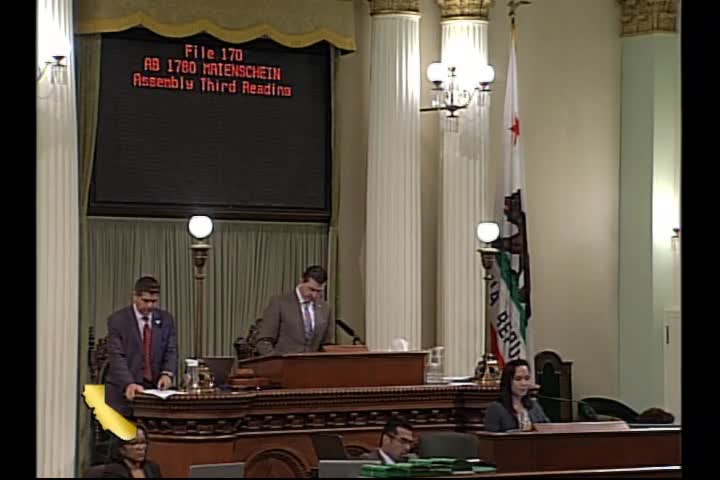 1MIN
Assembly Floor
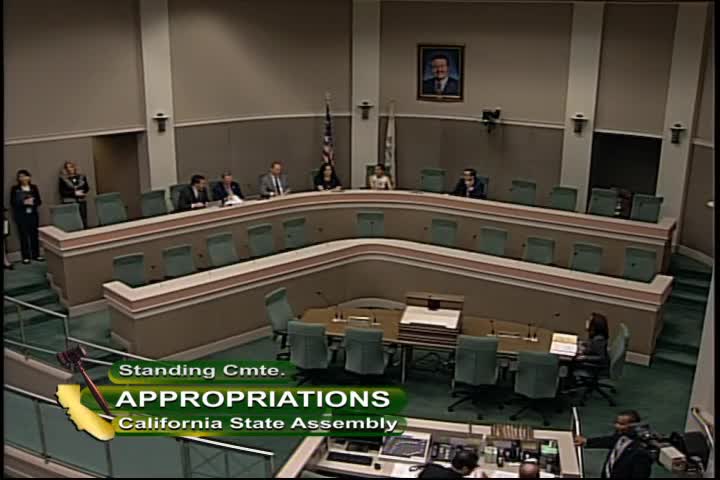 6MIN
Assembly Standing Committee on Appropriations
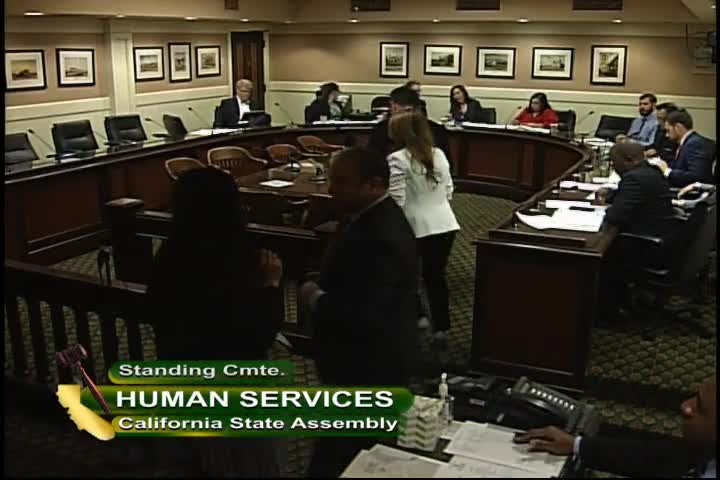 8MIN
Assembly Standing Committee on Human Services
Bill Author