AB 185: School/Law Enforcement Partnership: stakeholder workgroup.
- Session Year: 2017-2018
- House: Assembly
- Latest Version Date: 2018-06-13
Existing law establishes the School/Law Enforcement Partnership, composed of the Superintendent of Public Instruction and the Attorney General. Existing law requires the partnership to, among other things, develop programs and policies necessary to implement laws relating to comprehensive school safety plans.
This bill, no later than June 30, 2019, would require the School/Law Enforcement Partnership to convene a stakeholder workgroup, with specified members, to identify or develop specified resources to be made available to high schools and middle schools on a minors rights and responsibilities during interactions with law enforcement officials, as specified. The bill, no later than June 30, 2020, would require the Superintendent and the Attorney General to post those resources on specified Internet Web sites. The bill also would require the Superintendent and the Attorney General to notify specified entities of the availability of those resources.
Existing law authorizes the governing board of a school district to accept pupils from other school districts by adopting a resolution to become a school district of choice, as defined, in accordance with specified procedural requirements and limitations. Existing law makes the school district of choice program inoperative on July 1, 2017, and repeals the program on January 1, 2018.This bill would authorize a school district of choice established pursuant to the school district of choice program to continue to operate for pupils enrolled in the program on or before June 30, 2017.Existing law authorizes the governing board of a school district to accept pupils from other school districts by adopting a resolution to become a school district of choice, as defined, in accordance with specified procedural requirements and limitations. Existing law makes the school district of choice program inoperative on July 1, 2017, and repeals the program on January 1, 2018.
This bill would repeal the provisions of the school district of choice program, effective immediately, but would authorize a school district of choice established pursuant to the school district of choice program to continue to operate for pupils enrolled in the program on or before June 30, 2017.
This bill would declare that it is to take effect immediately as an urgency statute.Existing law authorizes the governing board of a school district to accept pupils from other school districts by adopting a resolution to become a school district of choice, as defined, in accordance with specified procedural requirements and limitations. Existing law makes the school district of choice program inoperative on July 1, 2017, and repeals the program on January 1, 2018.
This bill would revise and recast these provisions. The bill would, among other things, expand the list of pupil characteristics that a school district of choice is prohibited from considering in selecting pupils for admission and would revise the requirements for admitting or rejecting and the manner of selecting pupils who apply to transfer to a school district of choice. The bill would revise the limit that a school district of residence may impose on the number of pupils transferring to school districts of choice. The bill would revise the procedural requirements for becoming a school district of choice, including requiring a school district to register as a school district of choice with both the Superintendent of Public Instruction and the county board of education, and would set forth a procedure for hearing complaints or appeals by a school district of choice, a school district of residence, or a pupil who is denied a transfer, as specified. The bill would delete provisions requiring apportionments of state funds to be reduced for school districts of choice that are basic aid school districts. The bill would require a school district of choice to design and implement a transportation program for eligible pupils who enroll in a school district of choice program and would require the school district of choice to provide a pupil who is eligible for free and reduced-price meals free transportation assistance, subject to specified requirements. To the extent the bill would impose additional duties on school districts and other local educational agencies, the bill would impose a state-mandated local program. The bill would revise data, information, and reporting requirements relating to the school district of choice program, including requiring the Superintendent to maintain a list of the school districts of choice in the state and to collect specified other information relating to school districts of choice, and by requiring the Superintendent rather than the Legislative Analyst to make specified information available to the Legislature and the Governor each year. The bill would require the Legislative Analyst to complete and submit an evaluation and recommendations regarding the program to the appropriate education policy committees of the Legislature and the Governor by January 31, 2021. The bill would require the Superintendent to conduct a review of at least 100 randomly selected school districts that enroll pupils through interdistrict transfer and to withhold a specified amount of the school districts apportionment if the school district is accepting pupils through a school district of choice program without being registered or if the Superintendent finds that a school district of choice is not reporting required data.(2)Existing law makes the school district of choice program inoperative on July 1, 2017, and repeals the program on January 1, 2018.This bill would extend the inoperative date to July 1, 2023, and the repeal date to January 1, 2024. repeal the provisions of the school district of choice program, effective immediately, but would authorize a school district of choice established pursuant to the school district of choice program to continue to operate for pupils enrolled in the program on or before June 30, 2017.
(3)The California Constitution requires the state to reimburse local agencies and school districts for certain costs mandated by the state. Statutory provisions establish procedures for making that reimbursement.This bill would provide that, if the Commission on State Mandates determines that the bill contains costs mandated by the state, reimbursement for those costs shall be made pursuant to these statutory provisions.(4)ThisThis bill would declare that it is to take effect immediately as an urgency statute.
(1)Existing law authorizes the governing board of a school district to accept pupils from other school districts by adopting a resolution to become a school district of choice, as defined, in accordance with specified procedural requirements and limitations.
This bill would revise and recast these provisions. The bill would, among other things, expand the list of pupil characteristics that a school district of choice is prohibited from considering in selecting pupils for admission, admission and would revise the requirements for admitting or rejecting and the manner of selecting pupils who apply to transfer to a school district of choice. The bill would revise the limit that a school district of residence may impose on the number of pupils transferring to school districts of choice. The bill would revise the procedural requirements for becoming a school district of choice, including requiring a school district to register as a school district of choice with both the Superintendent of Public Instruction and the county board of education, and would set forth a procedure for hearing complaints or appeals by a school district of choice, a school district of residence, or a pupil who is denied a transfer, as specified. The bill would delete provisions requiring apportionments of state funds to be reduced for school districts of choice that are basic aid school districts. The bill would require a school district of choice to design and implement a transportation program for eligible pupils who enroll in a school district of choice program and would require the school district of choice to provide a pupil who is eligible for free and reduced-price meals free transportation assistance, subject to specified requirements. To the extent the bill would impose additional duties on school districts and other local educational agencies, the bill would impose a state-mandated local program. The bill would revise data, information, and reporting requirements relating to the school district of choice program, including requiring the Superintendent to maintain a list of the school districts of choice in the state and to collect specified other information relating to school districts of choice, and by requiring the Superintendent rather than the Legislative Analyst to make specified information available to the Legislature and the Governor each year. The bill would require the Legislative Analyst to complete and submit an evaluation and recommendations regarding the program to the appropriate education policy committees of the Legislature and the Governor by January 31, 2021. The bill would require the Superintendent to conduct a review of at least 100 randomly selected school districts that enroll pupils through interdistrict transfer and to withhold a specified amount of the school districts apportionment if the school district is accepting pupils through a school district of choice program without being registered or if the Superintendent finds that a school district of choice is not reporting required data.
(2)Existing law makes the school district of choice program inoperative on July 1, 2017, and repeals the program on January 1, 2018.
This bill would extend the inoperative date to July 1, 2023, and the repeal date to January 1, 2024.
(3)The California Constitution requires the state to reimburse local agencies and school districts for certain costs mandated by the state. Statutory provisions establish procedures for making that reimbursement.
This bill would provide that, if the Commission on State Mandates determines that the bill contains costs mandated by the state, reimbursement for those costs shall be made pursuant to these statutory provisions.
(4)This bill would declare that it is to take effect immediately as an urgency statute.
(1)Existing law authorizes the governing board of a school district to accept pupils from other school districts by adopting a resolution to become a school district of choice, as defined, in accordance with specified procedural requirements and limitations.
This bill would revise and recast these provisions. The bill would, among other things, expand the list of pupil characteristics that a school district of choice is prohibited from considering in selecting pupils for admission, and would revise the requirements for admitting and or rejecting and the manner of selecting pupils who apply to transfer to a school district of choice. The bill would revise the limit that a school district of residence may impose on the number of pupils transferring to school districts of choice. The bill would revise the procedural requirements for becoming a school district of choice, including requiring a school district to register as a school district of choice with both the Superintendent of Public Instruction and the county board of education, and would set forth a procedure for hearing complaints or appeals by a school district of choice, a school district of residence, or a pupil who is denied a transfer, as specified. The bill would delete provisions requiring apportionments of state funds to be reduced for school districts of choice that are basic aid school districts. The bill would revise requirements for providing transportation assistance for transfer pupils, including requiring require a school district of choice to design and implement a transportation program for eligible pupils who enroll in a school district of choice program and would require the school district of choice to provide a pupil who is eligible for free and reduced-price meals free transportation assistance, subject to specified requirements. To the extent the bill would impose additional duties on school districts and other local educational agencies, the bill would impose a state-mandated local program. The bill would revise data, information, and reporting requirements relating to the school district of choice program, including requiring the Superintendent to maintain a list of the school districts of choice in the state and to collect specified other information relating to school districts of choice, and by requiring the Superintendent rather than the Legislative Analyst to make specified information available to the Legislature and the Governor each year. The bill would require the Legislative Analyst to complete and submit an evaluation and recommendations regarding the program to the appropriate education policy committees of the Legislature and the Governor by January 31, 2021. The bill would require the Superintendent to conduct a review of at least 100 randomly selected school districts that enroll pupils through interdistrict transfer and to withhold a specified amount of the school districts apportionment if the school district is accepting pupils through a school district of choice program without being registered. registered or if the Superintendent finds that a school district of choice is not reporting required data.
(2)Existing law makes the school district of choice program inoperative on July 1, 2017, and repeals the program on January 1, 2018.
This bill would extend the inoperative date to July 1, 2023, and the repeal date to January 1, 2024.
(3)The California Constitution requires the state to reimburse local agencies and school districts for certain costs mandated by the state. Statutory provisions establish procedures for making that reimbursement.
This bill would provide that, if the Commission on State Mandates determines that the bill contains costs mandated by the state, reimbursement for those costs shall be made pursuant to these statutory provisions.
(4)This bill would declare that it is to take effect immediately as an urgency statute.
(1)Existing law authorizes the governing board of a school district to accept pupils from other school districts by adopting a resolution to become a school district of choice, as defined, in accordance with specified procedural requirements and limitations.
This bill would revise and recast these provisions. The bill would, among other things, expand the list of pupil characteristics that a school district of choice is prohibited from considering in selecting pupils for admission, and would revise the requirements for admitting and rejecting and the manner of selecting pupils who apply to transfer to a school district of choice. The bill would revise the procedural requirements for becoming a school district of choice, including requiring a school district to register as a school district of choice with both the Superintendent of Public Instruction and the county board of education, and would set forth a procedure for hearing complaints or appeals by a school district of choice, a school district of residence, or a pupil who is denied a transfer, as specified. The bill would delete provisions requiring apportionments of state funds to be reduced for school districts of choice that are basic aid school districts. The bill would revise requirements for providing transportation assistance for transfer pupils, including requiring a school district of choice to provide a pupil who is eligible for free and reduced-price meals free transportation assistance, subject to specified requirements. To the extent the bill would impose additional duties on school districts and other local educational agencies, the bill would impose a state-mandated local program. The bill would revise data, information, and reporting requirements relating to the school district of choice program, including requiring the Superintendent to maintain a list of the school districts of choice in the state and to collect specified other information relating to school districts of choice, and by requiring the Superintendent rather than the Legislative Analyst to make specified information available to the Legislature and the Governor each year. The bill would require the Legislative Analyst to complete and submit an evaluation and recommendations regarding the program to the appropriate education policy committees of the Legislature and the Governor by January 31, 2021. The bill would require the Superintendent to conduct a review of at least 100 randomly selected school districts that enroll pupils through interdistrict transfer and to withhold a specified amount of the school districts apportionment if the school district is accepting pupils through a school district of choice program without being registered.
(2)Existing law makes the school district of choice program inoperative on July 1, 2017, and repeals the program on January 1, 2018.
This bill would extend the inoperative date to July 1, 2023, and the repeal date to January 1, 2024.
(3)The California Constitution requires the state to reimburse local agencies and school districts for certain costs mandated by the state. Statutory provisions establish procedures for making that reimbursement.
This bill would provide that, if the Commission on State Mandates determines that the bill contains costs mandated by the state, reimbursement for those costs shall be made pursuant to these statutory provisions.
(4)This bill would declare that it is to take effect immediately as an urgency statute.
(a)No later than June 30, 2019, the partnership shall convene a stakeholder workgroup to identify or develop resources to be made available to high schools and middle schools on a minors rights and responsibilities during interactions with law enforcement officials.
(b)The stakeholder workgroup shall include, but need not be limited to, representatives of organizations representing all of the following:
(1)Teachers.
(2)School administrators.
(3)Pupils.
(4)Parents.
(5)Law enforcement.
(6)Civil rights advocates.
(7)Immigrant rights advocates.
(c)(1)The stakeholder workgroup shall develop resources that may include, but need not be limited to, any of the following:
(A)Presentation templates.
(B)Video modules.
(C)Brochures.
(D)Any accompanying materials the workgroup deems appropriate.
(2)The content of the resources described in paragraph (1) may include, but need not be limited to, any of the following:
(A)What to do if you are stopped by police.
(B)What to do if you are stopped in your car.
(C)What to do if you are asked about your immigration status.
(D)What to do if you are arrested.
(E)What to do if you are taken into custody by immigration officials.
(F)What to do if you feel your rights have been violated.
(d)(1)The partnership shall post the resources developed pursuant to subdivision (c) on the Internet Web sites of their respective organizations no later than June 30, 2020.
(2)The Superintendent shall notify school districts, charter schools, and county boards of education of the availability of the resources.
(3)The Attorney General shall notify local law enforcement agencies of the availability of the resources.
SECTION 1.Article 7.1 (commencing with Section 48317) is added to Chapter 2 of Part 27 of Division 4 of Title 2 of the Education Code, to read:7.1.Pupil Attendance Alternatives48317.(a)A school district of choice established pursuant to Article 7 (commencing with Section 48300), as it read on December 31, 2016, may continue to operate under those provisions, as they read on December 31, 2016, except that a school district of choice shall not, on or after July 1, 2017, accept or enroll any pupils for attendance during the 201718 school year other than pupils enrolled before July 1, 2017, for attendance during the 201718 school year.(b)Except as provided in Section 48318, a school district of choice shall not enroll new pupils through the school district of choice program on or after July 1, 2017.(c)This section shall become inoperative on July 1, 2018, and, as of January 1, 2019, is repealed.48318.(a)A pupil enrolled in a school district of choice on or before June 30, 2017, pursuant to Article 7 (commencing with Section 48300), as it read on December 31, 2016, may continue to enroll in that same school district of choice if the school district of choice authorizes the pupil to do so.(b)A sibling of a pupil attending a school district of choice pursuant to subdivision (a) may enroll in any school in the school district of choice if the school district of choice authorizes the sibling of the pupil to do so.(a)A school district of choice established pursuant to Article 7 (commencing with Section 48300), as it read on December 31, 2016, may continue to operate under those provisions, as they read on December 31, 2016, except that a school district of choice shall not, on or after July 1, 2017, accept or enroll any pupils for attendance during the 201718 school year other than pupils enrolled before July 1, 2017, for attendance during the 201718 school year.
(b)Except as provided in Section 48318, a school district of choice shall not enroll new pupils through the school district of choice program on or after July 1, 2017.
(c)This section shall become inoperative on July 1, 2018, and, as of January 1, 2019, is repealed.
48318.(a)A pupil enrolled in a school district of choice on or before June 30, 2017, pursuant to Article 7 (commencing with Section 48300), as it read on December 31, 2016, may continue to enroll in that same school district of choice if the school district of choice authorizes the pupil to do so.
(b)A sibling of a pupil attending a school district of choice pursuant to subdivision (a) may enroll in any school in the school district of choice if the school district of choice authorizes the sibling of the pupil to do so.
SECTION 1.Section 48300 of the Education Code is repealed.SEC. 2.Section 48301 of the Education Code is repealed.SEC. 3.Section 48302 of the Education Code is repealed.SEC. 4.Section 48303 of the Education Code is repealed.SEC. 5.Section 48304 of the Education Code is repealed.SEC. 6.Section 48305 of the Education Code is repealed.SEC. 7.Section 48306 of the Education Code is repealed.SEC. 8.Section 48307 of the Education Code is repealed.SEC. 9.Section 48308 of the Education Code is repealed.SEC. 10.Section 48309 of the Education Code is repealed.SEC. 11.Section 48310 of the Education Code is repealed.SEC. 12.Section 48311 of the Education Code is repealed.SEC. 13.Section 48312 of the Education Code is repealed.SEC. 14.Section 48313 of the Education Code is repealed.SEC. 15.Section 48314 of the Education Code is repealed.SEC. 16.Section 48315 of the Education Code is repealed.SEC. 17.Section 48316 of the Education Code is repealed.SEC. 18.Section 48317 is added to the Education Code, to read:48317.(a)A school district of choice established pursuant to this article, as it read on December 31, 2016, may continue to operate under those provisions, as they read on December 31, 2016, except that a school district of choice shall not, on or after July 1, 2017, accept or enroll any pupils for attendance during the 201718 school year other than pupils enrolled before July 1, 2017, for attendance during the 201718 school year.(b)This section shall become inoperative on July 1, 2018, and, as of January 1, 2019, is repealed.SEC. 19.Section 48318 is added to the Education Code, to read:48318.(a)A pupil enrolled in a school district of choice on or before June 30, 2017, pursuant to this article, as it read on December 31, 2016, may continue to enroll in that same school district of choice if the school district of choice authorizes the pupil to do so.(b)Siblings of pupils attending a school district of choice pursuant to subdivision (a) may enroll in any school in the school district of choice if the school district of choice authorizes the sibling of the pupil to do so.SEC. 20.This act is an urgency statute necessary for the immediate preservation of the public peace, health, or safety within the meaning of Article IV of the California Constitution and shall go into immediate effect. The facts constituting the necessity are:In order to continue the school district of choice program for pupils currently participating in the program without disruption, it is necessary that this act take immediate effect.(a)A school district of choice established pursuant to this article, as it read on December 31, 2016, may continue to operate under those provisions, as they read on December 31, 2016, except that a school district of choice shall not, on or after July 1, 2017, accept or enroll any pupils for attendance during the 201718 school year other than pupils enrolled before July 1, 2017, for attendance during the 201718 school year.
(b)This section shall become inoperative on July 1, 2018, and, as of January 1, 2019, is repealed.
SEC. 19.Section 48318 is added to the Education Code, to read:48318.(a)A pupil enrolled in a school district of choice on or before June 30, 2017, pursuant to this article, as it read on December 31, 2016, may continue to enroll in that same school district of choice if the school district of choice authorizes the pupil to do so.
(b)Siblings of pupils attending a school district of choice pursuant to subdivision (a) may enroll in any school in the school district of choice if the school district of choice authorizes the sibling of the pupil to do so.
SEC. 20.This act is an urgency statute necessary for the immediate preservation of the public peace, health, or safety within the meaning of Article IV of the California Constitution and shall go into immediate effect. The facts constituting the necessity are:
In order to continue the school district of choice program for pupils currently participating in the program without disruption, it is necessary that this act take immediate effect.
SECTION 1.Section 48301 of the Education Code is amended to read:48301.(a)(1)The governing board of any school district may elect to operate the school district as a school district of choice and may accept transfers from school districts of residence pursuant to this article. If the governing board of a school district elects to accept transfers as authorized under this article, it shall, by resolution, determine and adopt the number of transfers it is willing to accept under this article and shall accept all pupils who apply to transfer until the school district is at maximum capacity. The school district of choice shall ensure that pupils admitted under this article are selected through an unbiased process that prohibits an inquiry into or evaluation or consideration of whether or not a pupil should be enrolled based upon his or her academic or athletic performance, physical condition, proficiency in English, family income, or any of the individual characteristics set forth in Section 200.(2)If the number of transfer applications exceeds the number of transfers the governing board of a school district of choice elects to accept under this article, approval for transfer pursuant to this article shall be determined by a random drawing held in public at a regularly scheduled meeting of the governing board of the school district of choice.(b)Communications to parents by school districts of choice shall be factually accurate and not target individual parents, residential neighborhoods, or any other specific ascertainable cohort on the basis of a pupil or pupils actual or perceived academic or athletic skill or other personal characteristic.(c)A school district of choice, with respect to compliance with subdivisions (a) and (b), shall be subject to the audit conducted pursuant to Section 41020.(d)A school district of choice shall post application information on its Internet Web site. This information shall include, at a minimum, any applicable form, information about the transportation program, and the timeline for a transfer pursuant to this article. It also shall include an explanation of the selection process the school district of choice implements pursuant to subdivision (a).(e)A pupil attending a school in a school district of choice shall be deemed to have fulfilled the requirements of Section 48204.(f)All communication from the school district of choice regarding the transfer opportunities under the program and regarding the transportation program shall be available in all languages for which translations are required in the school district of residence pursuant to Section 48985.(g)On or before July 1, 2018, a school district of choice shall register as a school district of choice with both the Superintendent through the California Longitudinal Pupil Achievement Data System or another system specified by the Superintendent and with the county board of education where the school district of choice is located.(h)A school district of choice shall not enroll pupils under this article until the school district has registered pursuant to subdivision (g).SEC. 2.Section 48302 of the Education Code is amended to read:48302.School districts are encouraged to hold informational meetings and make public announcements on the current educational programs the school district is offering so that parents may provide input to the school district on methods to improve the current programs and so that parents may make informed decisions regarding their childrens education.SEC. 3.Section 48306 of the Education Code is amended to read:48306.(a)A school district of choice shall give first priority for attendance to siblings of children already in attendance in that district.(b)A school district of choice shall give second priority for attendance to pupils eligible for free or reduced-price meals.(c)A school district of choice may give priority for attendance to children of military personnel.SEC. 4.Section 48307 of the Education Code is amended to read:48307.(a)A school district of residence with an average daily attendance greater than 50,000 may limit the number of pupils transferring out each year to 1 percent of its current year estimated average daily attendance.(b)(1)Before the 201819 school year, a school district of residence with an average daily attendance of 50,000 or less may limit the number of pupils transferring out to 3 percent of its current year estimated average daily attendance and may limit the maximum number of pupils transferring out for the duration of the program authorized by this article to 10 percent of the average daily attendance for that period.(2)Beginning with the 201819 school year, a school district of residence with an average daily attendance of 50,000 or less may limit the number of pupils transferring out to 3 percent of its estimated average daily attendance in any single school year and may limit the number of pupils enrolled in all school districts of choice at any given time to 6 percent of the average daily attendance of the school district of residence at that point in time. A school district of residence with an average daily attendance of 50,000 or less shall authorize additional pupils to participate in the program authorized by this article as program participants leave or graduate, provided that the total number of pupils does not exceed the school districts 6-percent limit.(3)A pupil who enrolls in a school district of choice before the 201819 school year may continue enrollment in the school district of choice without regard to whether the school district of residence has achieved the 6-percent limit for the current fiscal year. If a school district of residence calculates the percentage of pupils enrolled in all school districts of choice to be greater than 6 percent, no additional transfers shall begin until that percentage is below 6 percent.(4)A school district of residence that, before January 1, 2018, implemented the 10-percent limit and stopped transferring pupils for the duration of the program pursuant to this subdivision, as it read on January 1, 2017, shall authorize 1 percent of the school district average daily attendance to transfer beginning with the 201718 school year and, each school year thereafter, shall authorize an additional 1 percent of the school district average daily attendance to transfer until the 6-percent limit specified in paragraph (2) is reached.(c)A school district of residence that has a negative status on the most recent budget certification completed by the county superintendent of schools in any fiscal year may limit the number of pupils who transfer out of the district in that fiscal year, and once the school district of residence has received notification from a school district of choice or school districts of choice that the number of pupils that the school district of residence calculates to be equal to that limit have been accepted into that school district of choice or those school districts of choice, the school district of residence may, by resolution in a public meeting of the governing board of the school district of residence, restrict any further pupils from transferring under this article for the upcoming school year.(d)Notwithstanding any prior or existing certification of a school district of residence pursuant to Article 3 (commencing with Section 42130) of Chapter 6 of Part 24, if a county superintendent of schools determines that a school district of residence would not meet the standards and criteria for fiscal stability specified in Section 42131 for the subsequent fiscal year, the school district of residence may limit the number of pupils who transfer pursuant to this article in the upcoming school year.(e)A school district of residence, upon receiving notification of a pupils acceptance into the school district of choice, may prohibit the transfer of a pupil under this article or limit the number of pupils so transferred if the governing board of the school district of residence determines that the transfer would negatively impact any of the following:(1)The court-ordered desegregation plan of the school district of residence.(2)The voluntary desegregation plan of the school district of residence, consistent with the provisions of Proposition 209, an initiative measure adopted by the voters at the November 5, 1996, General Election.(3)The racial and ethnic balance of the school district of residence, consistent with the provisions of Proposition 209, an initiative measure adopted by the voters at the November 5, 1996, General Election.(f)Notwithstanding any other provision of this article, a school district of residence shall not prohibit the transfer of a pupil who is a child of an active military duty parent.(g)A school district of residence shall not adopt policies that in any way block or discourage pupils from applying for transfer to a school district of choice.(h)Notwithstanding any other provision of this article, a pupil attending a school district of choice or a pupil who received a notice of acceptance into a school district of choice before the resolution by the school district of residence to restrict further transfers shall be permitted to attend the school district of choice.SEC. 5.Section 48308 of the Education Code is amended to read:48308.(a)(1)An application requesting a transfer pursuant to this article shall be submitted by the parent of a pupil to the school district of choice before January 1 of the school year preceding the school year for which the pupil is requesting to be transferred. This application deadline may be waived upon agreement of the school district of residence of the pupil and the school district of choice.(2)The application deadline specified in paragraph (1) does not apply to an application requesting a transfer if the parent of the pupil, with whom the pupil resides, is enlisted in the military and was relocated by the military less than 90 days before submitting the application.(b)The application may be submitted on a form provided for this purpose by the department and may request enrollment of the pupil in a specific school or program of the school district of choice.(c)(1)No later than February 15 of the school year preceding the school year for which the pupil is requesting to be transferred, the governing board of the school district of choice shall notify the parent in writing whether the application has been provisionally accepted or rejected or of the placement of the pupil on a waiting list. The governing board of the school district of choice may fill vacancies from the waiting list until May 1 preceding the school year for which the pupil is requesting to be transferred. No pupils shall be accepted at a school district of choice after May 1 preceding the school year for which the pupil is requesting to be transferred.(2)If the application is rejected, the governing board of the school district of choice shall include in the written notification to the parent that the number of pupils applying to transfer exceeded the capacity of the school district of choice and that the pupil was not selected during the random drawing. The determination shall be accurately recorded in the minutes of the board meeting in which the determination was made.(3)If a pupil is accepted into a school district of choice, the school district of choice shall notify the school district of residence of the pupil no later than February 15 of the school year preceding the school year for which the pupil is requesting to be transferred. On or before February 15, the school district of choice shall provide the school district of residence the number of pupils accepted, by school and grade level, by the school district of choice. On or before May 2, the school district of choice shall provide the school district of residence with the final number of pupils enrolled, by school, in the school district of choice, the grade levels of the pupils, and the names of the pupils.(4)(A)Notwithstanding paragraph (1), the governing board of a school district of choice shall, not later than 90 days after receipt of an application submitted according to paragraph (2) of subdivision (a), make a final acceptance or rejection of that application. A pupil may enroll in a school in the school district of choice immediately upon his or her acceptance.(B)If an application submitted according to paragraph (2) of subdivision (a) is submitted less than 90 days before the beginning of the school year for which the pupil seeks to be transferred, the governing board of the school district of choice shall accept or deny the application before the commencement of the school year. A pupil may enroll in a school in the school district of choice immediately upon his or her acceptance.(d)Final acceptance of the transfer is applicable for one school year and will be renewed automatically each year unless the school district of choice through the adoption of a resolution elects to no longer accept any transfer pupils pursuant to this article. However, if a school district of choice elects to no longer accept pupils under this article, high school pupils admitted under this article may continue to attend the same school in the school district of choice until they graduate from high school.SEC. 6.Section 48309.5 is added to the Education Code, to read:48309.5.(a)The parent of a pupil who is denied a transfer pursuant to this article may appeal that decision to the county board of education of the county in which the school district issuing the denial is located.(b)A school district of choice may bring a complaint alleging a violation of this article by a school district of residence to the county board of education of the county in which the school district of residence is located.(c)A school district of residence may bring a complaint alleging a violation of this article by a school district of choice to the county board of education of the county in which the school district of choice is located.(d)In considering an appeal or a complaint brought pursuant to this section, a county board of education shall consider only the provisions of this article and determine only whether the provisions were applied accurately.(e)Nothing in this section shall be interpreted to limit or restrict any entity from seeking a judicial remedy for a violation of this article.SEC. 7.Section 48310 of the Education Code is amended to read:48310.(a)The average daily attendance for pupils admitted by a school district of choice pursuant to this article shall be credited to that school district pursuant to Section 46607. The attendance report for the school district of choice may include an identification of the school district of residence.(b)Notwithstanding any other law, state aid for categorical education programs for pupils admitted under this article shall be apportioned to the school district of choice.(c)The average daily attendance of pupils admitted by a school district of choice pursuant to this article shall be credited to that school district for purposes of any determination under Article 2 (commencing with Section 17010) of Chapter 12 of Part 10 of Division 1 of Title 1 that uses an average daily attendance calculation.SEC. 8.Section 48311 of the Education Code is amended to read:48311.(a)Upon request of the pupils parents, each school district of choice that admits a pupil under this section to any school or program of the school district may provide to the pupil free transportation assistance.(b)This section shall become inoperative on July 1, 2020, and, as of January 1, 2021, is repealed.SEC. 9.Section 48311 is added to the Education Code, to read:48311.(a)Upon request of the pupils parent, a school district of choice shall provide free transportation assistance to the school or program to a pupil who is eligible for free or reduced-price meals and has transferred to a school district of choice.(b)A school district of choice shall provide transportation assistance to pupils pursuant to subdivision (a) who live up to 10 miles from the school district boundary.(c)A school district of choice may provide transportation assistance to any pupil admitted under this article.(d)A school district of choice shall not charge any fees for transportation.(e)The school district of choice shall design and implement a transportation program to provide reasonable access to all eligible pupils pursuant to subdivision (a) enrolled in the school district of choice who reside within 10 miles of the school district boundary.(f)This section shall become operative on July 1, 2020.SEC. 10.Section 48312 of the Education Code is amended to read:48312.(a)Each school district may make information regarding its schools, programs, policies, and procedures available to any interested person upon request.(b)A school district of choice shall make public announcements regarding its schools, programs, including the transportation program, policies, and procedures during the enrollment period.SEC. 11.Section 48313 of the Education Code is amended to read:48313.(a)(1)Pursuant to this article, each school district of choice shall keep an accounting of all requests made for transfers pursuant to this article and records of all disposition of those requests that shall include, but are not limited to, all of the following:(A)The number of requests granted, denied, or withdrawn. In the case of denied requests, the records shall indicate the reasons for the denials.(B)The number of pupils transferred out of the school district of choice pursuant to this article.(C)The number of pupils transferred into the school district of choice pursuant to this article.(D)The race, ethnicity, gender, self-reported socioeconomic status, eligibility for free or reduced-price meals, and the school district of residence of each of the pupils described in subparagraphs (B) and (C).(E)The number of pupils described in subparagraphs (B) and (C) who are classified as English learners or identified as individuals with exceptional needs, as defined in Section 56026.(F)The number of pupils eligible for free or reduced-price meals transported pursuant to subdivision (a) of Section 48311 and the total number of pupils transported under this article.(2)Each school district of choice shall keep records of the transportation plan and map of bus stops, if applicable, for transportation pursuant to Section 48311.(b)The information maintained pursuant to subdivision (a) shall be reported to the governing board of the school district of choice at a regularly scheduled meeting of the governing board of the school district of choice. No later than October 15 of each year, the school district of choice shall report the information maintained pursuant to subdivision (a) for the current school year in addition to information regarding the districts status as a school district of choice for the upcoming school year to each school district that is geographically adjacent to the school district of choice, the county office of education in which the school district of choice is located, and the Superintendent in a manner consistent with subdivision (e).(c)A school district of choice shall not enroll a pupil under this article if the school district does not report all the data required pursuant to subdivision (b).(d)The Superintendent shall do all of the following:(1)Maintain a list of the school districts of choice in the state.(2)Collect the information specified in subdivision (a) from each school district of choice. The Superintendent shall ensure school districts of choice provide this information in a complete format. The Superintendent may provide a template for school districts of choice to use and may issue guidance regarding the procedures for collecting and reporting data.(3)Post the information collected under paragraphs (1) and (2) on the Internet Web site of the department. The information shall be accompanied by explanation of the transfers authorized by this article. The Superintendent shall make this information available by request to any school district.(4)Post a single list of all school choice programs, including, but not limited to, school districts of choice, on the Internet Web site of the department.(e)(1)The Superintendent may require information specified in subdivision (a) to be provided through the California Longitudinal Pupil Achievement Data System, another data collection system administered by the department, or another manner authorized by the Superintendent. It is the intent of the Legislature that the Superintendent collect data in the manner that minimizes the administrative burden for school districts and the state.(2)No later than July 1, 2018, the Superintendent shall report to the appropriate fiscal and policy committees of the Legislature, the Governor, and the Legislative Analysts Office with a description of the plan for collecting the data specified in subdivision (a).(f)The Superintendent annually shall make all of the following information available to the appropriate fiscal and policy committees of the Legislature, the Governor, and the Legislative Analysts Office:(1)The number and characteristics of pupils who use the school district of choice option pursuant to this article.(2) Assessment scores of school districts of choice and school districts of residence pursuant to subdivision (b) of Section 60640.(3)The graduation rates of school districts of residence and school districts of choice.(4)The enrollment of school districts of residence and school districts of choice for the previous five years.(5)The fiscal health of school districts of residence and school districts of choice, including, but not limited to, both of the following:(A)Increasing or declining enrollment.(B)Whether a school district received a negative or qualified rating pursuant to Section 42131.(6)Whether a school district of residence has exceeded the transfer limits specified in Section 48307.(7)On and after July 1, 2020, the number of pupils eligible for free or reduced-price meals transported and the total number of pupils transported under this article pursuant to subdivision (a) of Section 48311.(8)Other information the Superintendent deems appropriate.SEC. 12.Section 48314 of the Education Code is amended to read:48314.It is the intent of the Legislature that every parent in this state be informed of his or her opportunity for currently existing school district of choice options under this article regardless of ethnicity, primary language, literacy, or special needs.SEC. 13.Section 48315 of the Education Code is amended to read:48315.This article shall become inoperative on July 1, 2023, and, as of January 1, 2024, is repealed, unless a later enacted statute, which becomes effective on or before January 1, 2024, deletes or extends the dates on which it becomes inoperative and is repealed.SEC. 14.Section 48316 of the Education Code is amended to read:48316.The Legislative Analyst shall conduct, after consulting with appropriate legislative staff, a comprehensive evaluation of the interdistrict transfer program established pursuant to this article and prepare recommendations regarding the extension of the program. The evaluation shall incorporate the data described in Section 48313 and shall be completed and submitted, along with the recommendations regarding extension and recommendations for improvements for the transportation requirement to ensure equal access to the program for low-income pupils, to the appropriate education policy committees of the Legislature and to the Governor by January 31, 2021.SEC. 15.Section 48317 is added to the Education Code, to read:48317.Commencing with the 201718 school year, and each year thereafter, the Superintendent shall conduct a review of not fewer than 100 randomly selected school districts that enroll pupils through interdistrict transfer to determine whether the school district is operating as a school district of choice. If the Superintendent finds that a school district is accepting pupils through a school district of choice program and the school district is not registered pursuant to Section 48301 or finds that a school district of choice is not reporting the required data to the designated agencies pursuant to Section 48313, the Superintendent shall withhold from the school districts apportionment pursuant to Section 42238.02 an amount attributable to the average daily attendance of pupils enrolled through the school district of choice in the previous year. The Superintendent shall withhold this amount of the school districts apportionment until the school district registers pursuant to Section 48301 or provides the required data pursuant to Section 48313.SEC. 16.If the Commission on State Mandates determines that this act contains costs mandated by the state, reimbursement to local agencies and school districts for those costs shall be made pursuant to Part 7 (commencing with Section 17500) of Division 4 of Title 2 of the Government Code.SEC. 17.This act is an urgency statute necessary for the immediate preservation of the public peace, health, or safety within the meaning of Article IV of the California Constitution and shall go into immediate effect. The facts constituting the necessity are:In order to keep the school district of choice program running without disruption to pupils and school districts, it is necessary that this act take immediate effect.(a)(1)The governing board of any school district may elect to operate the school district as a school district of choice and may accept transfers from school districts of residence pursuant to this article. If the governing board of a school district elects to accept transfers as authorized under this article, it shall, by resolution, determine and adopt the number of transfers it is willing to accept under this article and shall accept all pupils who apply to transfer until the school district is at maximum capacity. The school district of choice shall ensure that pupils admitted under this article are selected through an unbiased process that prohibits an inquiry into or evaluation or consideration of whether or not a pupil should be enrolled based upon his or her academic or athletic performance, physical condition, proficiency in English, family income, or any of the individual characteristics set forth in Section 200.
(2)If the number of transfer applications exceeds the number of transfers the governing board of a school district of choice elects to accept under this article, approval for transfer pursuant to this article shall be determined by a random drawing held in public at a regularly scheduled meeting of the governing board of the school district of choice.
(b)Communications to parents by school districts of choice shall be factually accurate and not target individual parents, residential neighborhoods, or any other specific ascertainable cohort on the basis of a pupil or pupils actual or perceived academic or athletic skill or other personal characteristic.
(c)A school district of choice, with respect to compliance with subdivisions (a) and (b), shall be subject to the audit conducted pursuant to Section 41020.
(d)A school district of choice shall post application information on its Internet Web site. This information shall include, at a minimum, any applicable form, information about the transportation program, and the timeline for a transfer pursuant to this article. It also shall include an explanation of the selection process the school district of choice implements pursuant to subdivision (a).
(e)A pupil attending a school in a school district of choice shall be deemed to have fulfilled the requirements of Section 48204.
(f)All communication from the school district of choice regarding the transfer opportunities under the program and regarding the transportation program shall be available in all languages for which translations are required in the school district of residence pursuant to Section 48985.
(g)On or before July 1, 2018, a school district of choice shall register as a school district of choice with both the Superintendent through the California Longitudinal Pupil Achievement Data System or another system specified by the Superintendent and with the county board of education where the school district of choice is located.
(h)A school district of choice shall not enroll pupils under this article until the school district has registered pursuant to subdivision (g).
SEC. 2.Section 48302 of the Education Code is amended to read:48302.School districts are encouraged to hold informational meetings and make public announcements on the current educational programs the school district is offering so that parents may provide input to the school district on methods to improve the current programs and so that parents may make informed decisions regarding their childrens education.
SEC. 3.Section 48306 of the Education Code is amended to read:48306.(a)A school district of choice shall give first priority for attendance to siblings of children already in attendance in that district.
(b)A school district of choice shall give second priority for attendance to pupils eligible for free or reduced-price meals.
(c)A school district of choice may give priority for attendance to children of military personnel.
SEC. 4.Section 48307 of the Education Code is amended to read:48307.(a)A school district of residence with an average daily attendance greater than 50,000 may limit the number of pupils transferring out each year to 1 percent of its current year estimated average daily attendance.
(b)(1)Before the 201819 school year, a school district of residence with an average daily attendance of 50,000 or less may limit the number of pupils transferring out to 3 percent of its current year estimated average daily attendance and may limit the maximum number of pupils transferring out for the duration of the program authorized by this article to 10 percent of the average daily attendance for that period.
(b)(1) A(2)Beginning with the 201819 school year, a school district of residence with an average daily attendance of 50,000 or less may limit the number of pupils transferring out to 3 percent of its estimated average daily attendance in any single school year and may limit the number of pupils enrolled in all school districts of choice at any given time to 6 percent of the average daily attendance of the school district of residence at that point in time. A school district of residence with an average daily attendance of 50,000 or less shall authorize additional pupils to participate in the program authorized by this article as program participants leave or graduate, provided that the total number of pupils does not exceed the school districts 6-percent limit.
(2)(3)A pupil who enrolls in a school district of choice before the 201819 school year may continue enrollment in the school district of choice without regard to whether the school district of residence has achieved the 6-percent limit for the current fiscal year. If a school district of residence calculates the percentage of pupils enrolled in all school districts of choice to be greater than 6 percent, no additional transfers shall begin until that percentage is below 6 percent.
(4)A school district of residence that, before January 1, 2018, implemented the 10-percent limit and stopped transferring pupils for the duration of the program pursuant to this subdivision, as it read on January 1, 2017, shall authorize 1 percent of the school district average daily attendance to transfer beginning with the 201718 school year and, each school year thereafter, shall authorize an additional 1 percent of the school district average daily attendance to transfer until the 6-percent limit specified in paragraph (2) is reached.
(c)A school district of residence that has a negative status on the most recent budget certification completed by the county superintendent of schools in any fiscal year may limit the number of pupils who transfer out of the district in that fiscal year, and once the school district of residence has received notification from a school district of choice or school districts of choice that the number of pupils that the school district of residence calculates to be equal to that limit have been accepted into that school district of choice or those school districts of choice, the school district of residence may, by resolution in a public meeting of the governing board of the school district of residence, restrict any further pupils from transferring under this article for the upcoming school year.
(d)Notwithstanding any prior or existing certification of a school district of residence pursuant to Article 3 (commencing with Section 42130) of Chapter 6 of Part 24, if a county superintendent of schools determines that a school district of residence would not meet the standards and criteria for fiscal stability specified in Section 42131 for the subsequent fiscal year, the school district of residence may limit the number of pupils who transfer pursuant to this article in the upcoming school year.
(e)A school district of residence, upon receiving notification of a pupils acceptance into the school district of choice, may prohibit the transfer of a pupil under this article or limit the number of pupils so transferred if the governing board of the school district of residence determines that the transfer would negatively impact any of the following:
(1)The court-ordered desegregation plan of the school district of residence.
(2)The voluntary desegregation plan of the school district of residence, consistent with the provisions of Proposition 209, an initiative measure adopted by the voters at the November 5, 1996, General Election.
(3)The racial and ethnic balance of the school district of residence, consistent with the provisions of Proposition 209, an initiative measure adopted by the voters at the November 5, 1996, General Election.
(f)Notwithstanding any other provision of this article, a school district of residence shall not prohibit the transfer of a pupil who is a child of an active military duty parent.
(g)A school district of residence shall not adopt policies that in any way block or discourage pupils from applying for transfer to a school district of choice.
(h)Notwithstanding any other provision of this article, a pupil attending a school district of choice or a pupil who received a notice of acceptance into a school district of choice before the resolution by the school district of residence to restrict further transfers shall be permitted to attend the school district of choice.
SEC. 5.Section 48308 of the Education Code is amended to read:48308.(a)(1)An application requesting a transfer pursuant to this article shall be submitted by the parent of a pupil to the school district of choice before January 1 of the school year preceding the school year for which the pupil is requesting to be transferred. This application deadline may be waived upon agreement of the school district of residence of the pupil and the school district of choice.
(2)The application deadline specified in paragraph (1) does not apply to an application requesting a transfer if the parent of the pupil, with whom the pupil resides, is enlisted in the military and was relocated by the military less than 90 days before submitting the application.
(b)The application may be submitted on a form provided for this purpose by the department and may request enrollment of the pupil in a specific school or program of the school district of choice.
(c)(1)No later than February 15 of the school year preceding the school year for which the pupil is requesting to be transferred, the governing board of the school district of choice shall notify the parent in writing whether the application has been provisionally accepted or rejected or of the placement of the pupil on a waiting list. Final acceptance or rejection shall be made by May 15 The governing board of the school district of choice may fill vacancies from the waiting list until May 1 preceding the school year for which the pupil is requesting to be transferred. No pupils shall be accepted at a school district of choice after May 1 preceding the school year for which the pupil is requesting to be transferred.
(2)If the application is rejected, the governing board of the school district of choice shall include in the written notification to the parent that the number of pupils applying to transfer exceeded the capacity of the school district of choice and that the pupil was not selected during the random drawing. The determination shall be accurately recorded in the minutes of the board meeting in which the determination was made.
(3)If a pupil is accepted or provisionally accepted into a school district of choice, the school district of choice shall notify the school district of residence of the pupil no later than March 1 February 15 of the school year preceding the school year for which the pupil is requesting to be transferred. On or before February 15, the school district of choice shall provide the school district of residence the number of pupils accepted, by school and grade level, by the school district of choice. On or before May 2, the school district of choice shall provide the school district of residence with the final number of pupils enrolled, by school, in the school district of choice, the grade levels of the pupils, and the names of the pupils.
(4)(A)Notwithstanding paragraph (1), the governing board of a school district of choice shall, not later than 90 days after receipt of an application submitted according to paragraph (2) of subdivision (a), make a final acceptance or rejection of that application. A pupil may enroll in a school in the school district of choice immediately upon his or her acceptance.
(B)If an application submitted according to paragraph (2) of subdivision (a) is submitted less than 90 days before the beginning of the school year for which the pupil seeks to be transferred, the governing board of the school district of choice shall accept or deny the application before the commencement of the school year. A pupil may enroll in a school in the school district of choice immediately upon his or her acceptance.
(d)Final acceptance of the transfer is applicable for one school year and will be renewed automatically each year unless the school district of choice through the adoption of a resolution elects to no longer accept any transfer pupils pursuant to this article. However, if a school district of choice elects to no longer accept pupils under this article, high school pupils admitted under this article may continue to attend the same school in the school district of choice until they graduate from high school.
SEC. 6.Section 48309.5 is added to the Education Code, to read:48309.5.(a)The parent of a pupil who is denied a transfer pursuant to this article may appeal that decision to the county board of education of the county in which the school district issuing the denial is located.
(b)A school district of choice may bring a complaint alleging a violation of this article by a school district of residence to the county board of education of the county in which the school district of residence is located.
(c)A school district of residence may bring a complaint alleging a violation of this article by a school district of choice to the county board of education of the county in which the school district of choice is located.
(d)In considering an appeal or a complaint brought pursuant to this section, a county board of education shall consider only the provisions of this article and determine only whether the provisions were applied accurately.
(e)Nothing in this section shall be interpreted to limit or restrict any entity from seeking a judicial remedy for a violation of this article.
SEC. 7.Section 48310 of the Education Code is amended to read:48310.(a)The average daily attendance for pupils admitted by a school district of choice pursuant to this article shall be credited to that school district pursuant to Section 46607. The attendance report for the school district of choice may include an identification of the school district of residence.
(b)Notwithstanding any other law, state aid for categorical education programs for pupils admitted under this article shall be apportioned to the school district of choice.
(c)The average daily attendance of pupils admitted by a school district of choice pursuant to this article shall be credited to that school district for purposes of any determination under Article 2 (commencing with Section 17010) of Chapter 12 of Part 10 of Division 1 of Title 1 that uses an average daily attendance calculation.
SEC. 8.Section 48311 of the Education Code is amended to read:48311.(a)Upon request of the pupils parents, each school district of choice that admits a pupil under this section to any school or program of the school district may provide to the pupil free transportation assistance.
(b)This section shall become inoperative on July 1, 2020, and, as of January 1, 2021, is repealed.
SEC. 9.Section 48311 is added to the Education Code, to read:48311.(a)Upon request of the pupils parent, a school district of choice shall provide free transportation assistance to the school or program to a pupil who is eligible for free or reduced-price meals and has transferred to a school district of choice.
(b)A school district of choice shall provide transportation assistance to pupils pursuant to subdivision (a) who live up to 10 miles from the school district boundary.
(c)A school district of choice may provide transportation assistance to any pupil admitted under this article.
(d)A school district of choice shall not charge any fees for transportation.
(e)The school district of choice shall design and implement a transportation program to provide reasonable access to all eligible pupils pursuant to subdivision (a) enrolled in the school district of choice who reside within 10 miles of the school district boundary.
(f)This section shall become operative on July 1, 2020.
SEC. 10.Section 48312 of the Education Code is amended to read:48312.(a)Each school district may make information regarding its schools, programs, policies, and procedures available to any interested person upon request.
(b)A school district of choice shall make public announcements regarding its schools, programs, including the transportation program, policies, and procedures during the enrollment period.
SEC. 11.Section 48313 of the Education Code is amended to read:48313.(a)(1)Pursuant to this article, each school district of choice shall keep an accounting of all requests made for transfers pursuant to this article and records of all disposition of those requests that shall include, but are not limited to, all of the following:
(A)The number of requests granted, denied, or withdrawn. In the case of denied requests, the records shall indicate the reasons for the denials.
(B)The number of pupils transferred out of the school district of choice pursuant to this article.
(C)The number of pupils transferred into the school district of choice pursuant to this article.
(D)The race, ethnicity, gender, self-reported socioeconomic status, eligibility for free or reduced-price meals, and the school district of residence of each of the pupils described in subparagraphs (B) and (C).
(E)The number of pupils described in subparagraphs (B) and (C) who are classified as English learners or identified as individuals with exceptional needs, as defined in Section 56026.
(F)The number of pupils eligible for free or reduced-price meals transported pursuant to subdivision (a) of Section 48311 and the total number of pupils transported under this article.
(2)Each school district of choice shall keep records of the transportation plan and map of bus stops, if applicable, for transportation pursuant to Section 48311.
(b)The information maintained pursuant to subdivision (a) shall be reported to the governing board of the school district of choice at a regularly scheduled meeting of the governing board of the school district of choice. No later than May October 15 of each year, the school district of choice shall report the information maintained pursuant to subdivision (a) for the current school year in addition to information regarding the districts status as a school district of choice for the upcoming school year to each school district that is geographically adjacent to the school district of choice, the county office of education in which the school district of choice is located, and the Superintendent in a manner consistent with subdivision (e).
(c)A school district of choice shall not enroll a pupil under this article if the school district does not report all the data required pursuant to subdivision (b).
(d)The Superintendent shall do all of the following:
(1)Maintain a list of the school districts of choice in the state.
(2)Collect the information specified in subdivision (a) from each school district of choice. The Superintendent shall ensure school districts of choice provide this information in a complete format. The Superintendent may provide a template for school districts of choice to use and may issue guidance regarding the procedures for collecting and reporting data.
(3)Post the information collected under paragraphs (1) and (2) on the Internet Web site of the department. The information shall be accompanied by explanation of the transfers authorized by this article. The Superintendent shall make this information available by request to any school district.
(4)Post a single list of all school choice programs, including, but not limited to, school districts of choice, on the Internet Web site of the department.
(e)(1)The Superintendent may require information specified in subdivision (a) to be provided through the California Longitudinal Pupil Achievement Data System, another data collection system administered by the department, or another manner authorized by the Superintendent. It is the intent of the Legislature that the Superintendent collect data in the manner that minimizes the administrative burden for school districts and the state.
(2)No later than July 1, 2018, the Superintendent shall report to the appropriate fiscal and policy committees of the Legislature, the Governor, and the Legislative Analysts Office with a description of the plan for collecting the data specified in subdivision (a).
(f)The Superintendent annually shall make all of the following information available to the appropriate fiscal and policy committees of the Legislature, the Governor, and the Legislative Analysts Office:
(1)The number and characteristics of pupils who use the school district of choice option pursuant to this article.
(2) Assessment scores of school districts of choice and school districts of residence pursuant to subdivision (b) of Section 60640.
(3)The graduation rates of school districts of residence and school districts of choice.
(4)The enrollment of school districts of residence and school districts of choice for the previous five years.
(5)The fiscal health of school districts of residence and school districts of choice, including, but not limited to, both of the following:
(A)Increasing or declining enrollment.
(B)Whether a school district received a negative or qualified rating pursuant to Section 42131.
(6)Whether a school district of residence has exceeded the transfer limits specified in Section 48307.
(7)On and after July 1, 2020, the number of pupils eligible for free or reduced-price meals transported and the total number of pupils transported under this article pursuant to subdivision (a) of Section 48311.
(8)Other information the Superintendent deems appropriate.
SEC. 12.Section 48314 of the Education Code is amended to read:48314.It is the intent of the Legislature that every parent in this state be informed of his or her opportunity for currently existing school district of choice options under this article regardless of ethnicity, primary language, literacy, or special needs.
SEC. 13.Section 48315 of the Education Code is amended to read:48315.This article shall become inoperative on July 1, 2023, and, as of January 1, 2024, is repealed, unless a later enacted statute, which becomes effective on or before January 1, 2024, deletes or extends the dates on which it becomes inoperative and is repealed.
SEC. 14.Section 48316 of the Education Code is amended to read:48316.The Legislative Analyst shall conduct, after consulting with appropriate legislative staff, a comprehensive evaluation of the interdistrict transfer program established pursuant to this article and prepare recommendations regarding the extension of the program. The evaluation shall incorporate the data described in Section 48313 and shall be completed and submitted, along with the recommendations regarding extension and recommendations for improvements for the transportation requirement to ensure equal access to the program for low-income pupils, to the appropriate education policy committees of the Legislature and to the Governor by January 31, 2021.
SEC. 15.Section 48317 is added to the Education Code, to read:48317.Commencing with the 201718 school year, and each year thereafter, the Superintendent shall conduct a review of not fewer than 100 randomly selected school districts that enroll pupils through interdistrict transfer to determine whether the school district is operating as a school district of choice. If the Superintendent finds that a school district is accepting pupils through a school district of choice program and the school district is not registered pursuant to Section 48301 or finds that a school district of choice is not reporting the required data to the designated agencies pursuant to Section 48313, the Superintendent shall withhold from the school districts apportionment pursuant to Section 42238.02 an amount attributable to the average daily attendance of pupils enrolled through the school district of choice in the previous year. The Superintendent shall withhold this amount of the school districts apportionment until the school district registers pursuant to Section 48301 or provides the required data pursuant to Section 48313.
SEC. 16.If the Commission on State Mandates determines that this act contains costs mandated by the state, reimbursement to local agencies and school districts for those costs shall be made pursuant to Part 7 (commencing with Section 17500) of Division 4 of Title 2 of the Government Code.
SEC. 17.This act is an urgency statute necessary for the immediate preservation of the public peace, health, or safety within the meaning of Article IV of the California Constitution and shall go into immediate effect. The facts constituting the necessity are:
In order to keep the school district of choice program running without disruption to pupils and school districts, it is necessary that this act take immediate effect.
(a)(1)The governing board of any school district may elect to operate the school district as a school district of choice and may accept transfers from school districts of residence pursuant to this article. If the governing board of a school district elects to accept transfers as authorized under this article, it shall, by resolution, determine and adopt the number of transfers it is willing to accept under this article and shall accept all pupils who apply to transfer until the school district is at maximum capacity. The school district of choice shall ensure that pupils admitted under this article are selected through an unbiased process that prohibits an inquiry into or evaluation or consideration of whether or not a pupil should be enrolled based upon his or her academic or athletic performance, physical condition, proficiency in English, family income, or any of the individual characteristics set forth in Section 200.
(2)If the number of transfer applications exceeds the number of transfers the governing board of a school district of choice elects to accept under this article, approval for transfer pursuant to this article shall be determined by a random drawing held in public at a regularly scheduled meeting of the governing board of the school district of choice.
(b)Communications to parents by school districts of choice shall be factually accurate and not target individual parents, residential neighborhoods, or any other specific ascertainable cohort on the basis of a pupil or pupils actual or perceived academic or athletic skill or other personal characteristic.
(c)A school district of choice, with respect to compliance with subdivisions (a) and (b), shall be subject to the audit conducted pursuant to Section 41020.
(d)A school district of choice shall post application information on its Internet Web site. This information shall include, at a minimum, any applicable form form, information about the transportation program, and the timeline for a transfer pursuant to this article. It also shall include an explanation of the selection process the school district of choice implements pursuant to subdivision (a).
(e)A pupil attending a school in a school district of choice shall be deemed to have fulfilled the requirements of Section 48204.
(f)All communication from the school district of choice regarding the transfer opportunities under the program and regarding the transportation program shall be available in all languages for which translations are required in the school district of residence pursuant to Section 48985.
(g)On or before July 1, 2018, a school district of choice shall register as a school district of choice with both the Superintendent through the California Longitudinal Pupil Achievement Data System or another system specified by the Superintendent and with the county board of education where the school district of choice is located.
(h)A school district of choice shall not enroll pupils under this article until the school district has registered pursuant to subdivision (g).
SEC. 2.Section 48302 of the Education Code is amended to read:48302.School districts are encouraged to hold informational meetings and make public announcements on the current educational programs the school district is offering so that parents may provide input to the school district on methods to improve the current programs and so that parents may make informed decisions regarding their childrens education.
SEC. 3.Section 48306 of the Education Code is amended to read:48306.(a)A school district of choice shall give first priority for attendance to siblings of children already in attendance in that district.
(b)A school district of choice shall give second priority for attendance to pupils eligible for free or reduced-price meals.
(b)(c)A school district of choice may give priority for attendance to children of military personnel.
SEC. 3.SEC. 4.Section 48307 of the Education Code is amended to read:48307.(a)A school district of residence with an average daily attendance greater than 50,000 may limit the number of pupils transferring out each year to 1 percent of its current year estimated average daily attendance.
(b)(1)A school district of residence with an average daily attendance of less than 50,000 or less may limit the number of pupils transferring out to 3 percent of its current year estimated average daily attendance and may limit the maximum number of pupils transferring out for the duration of the program authorized by this article to 10 percent of the average daily attendance for that period. enrolled in all school districts of choice at any given time to 6 percent of the average daily attendance of the school district of residence at that point in time. A school district of residence with an average daily attendance of 50,000 or less shall authorize additional pupils to participate in the program authorized by this article as program participants leave or graduate, provided that the total number of pupils does not exceed the school districts 6-percent limit.
(2)A pupil who enrolls in a school district of choice before the 201819 school year may continue enrollment in the school district of choice without regard to whether the school district of residence has achieved the 6-percent limit for the current fiscal year. If a school district of residence calculates the percentage of pupils enrolled in all school districts of choice to be greater than 6 percent, no additional transfers shall begin until that percentage is below 6 percent.
(c)A school district of residence that has a negative status on the most recent budget certification completed by the county superintendent of schools in any fiscal year may limit the number of pupils who transfer out of the district in that fiscal year, and once the school district of residence has received notification from a school district of choice or school districts of choice that the number of pupils that the school district of residence calculates to be equal to that limit have been accepted into that school district of choice or those school districts of choice, the school district of residence may, by resolution in a public meeting of the governing board of the school district of residence, restrict any further pupils from transferring under this article for the upcoming school year.
(d)Notwithstanding any prior or existing certification of a school district of residence pursuant to Article 3 (commencing with Section 42130) of Chapter 6 of Part 24, if a county superintendent of schools determines that a school district of residence would not meet the standards and criteria for fiscal stability specified in Section 42131 for the subsequent fiscal year, the school district of residence may limit the number of pupils who transfer pursuant to this article in the upcoming school year.
(e)A school district of residence, upon receiving notification of a pupils acceptance into the school district of choice, may prohibit the transfer of a pupil under this article or limit the number of pupils so transferred if the governing board of the school district of residence determines that the transfer would negatively impact any of the following:
(1)The court-ordered desegregation plan of the school district of residence.
(2)The voluntary desegregation plan of the school district of residence, consistent with the provisions of Proposition 209, an initiative measure adopted by the voters at the November 5, 1996, General Election.
(3)The racial and ethnic balance of the school district of residence, consistent with the provisions of Proposition 209, an initiative measure adopted by the voters at the November 5, 1996, General Election.
(f)Notwithstanding any other provision of this article, a school district of residence shall not prohibit the transfer of a pupil who is a child of an active military duty parent.
(g)A school district of residence shall not adopt policies that in any way block or discourage pupils from applying for transfer to a school district of choice.
(h)Notwithstanding any other provision of this article, a pupil attending a school district of choice or a pupil who received a notice of acceptance into a school district of choice before the resolution by the school district of residence to restrict further transfers shall be permitted to attend the school district of choice.
SEC. 4.SEC. 5.Section 48308 of the Education Code is amended to read:48308.(a)(1)An application requesting a transfer pursuant to this article shall be submitted by the parent of a pupil to the school district of choice before January 1 of the school year preceding the school year for which the pupil is requesting to be transferred. This application deadline may be waived upon agreement of the school district of residence of the pupil and the school district of choice.
(2)The application deadline specified in paragraph (1) does not apply to an application requesting a transfer if the parent of the pupil, with whom the pupil resides, is enlisted in the military and was relocated by the military less than 90 days before submitting the application.
(b)The application may be submitted on a form provided for this purpose by the department and may request enrollment of the pupil in a specific school or program of the school district of choice.
(c)(1)No later than February 15 of the school year preceding the school year for which the pupil is requesting to be transferred, the governing board of the school district of choice shall notify the parent in writing whether the application has been provisionally accepted or rejected or of the placement of the pupil on a waiting list. Final acceptance or rejection shall be made by May 15 preceding the school year for which the pupil is requesting to be transferred.
(2)If the application is rejected, the governing board of the school district of choice shall include in the written notification to the parent that the number of pupils applying to transfer exceeded the capacity of the school district of choice and that the pupil was not selected during the random drawing. The determination shall be accurately recorded in the minutes of the board meeting in which the determination was made.
(3)If a pupil is accepted or provisionally accepted into a school district of choice, the school district of choice shall notify the school district of residence of the pupil no later than March 1 of the school year preceding the school year for which the pupil is requesting to be transferred.
(4)(A)Notwithstanding paragraph (1), the governing board of a school district of choice shall, not later than 90 days after receipt of an application submitted according to paragraph (2) of subdivision (a), make a final acceptance or rejection of that application. A pupil may enroll in a school in the school district of choice immediately upon his or her acceptance.
(B)If an application submitted according to paragraph (2) of subdivision (a) is submitted less than 90 days before the beginning of the school year for which the pupil seeks to be transferred, the governing board of the school district of choice shall accept or deny the application before the commencement of the school year. A pupil may enroll in a school in the school district of choice immediately upon his or her acceptance.
(d)Final acceptance of the transfer is applicable for one school year and will be renewed automatically each year unless the school district of choice through the adoption of a resolution elects to no longer accept any transfer pupils pursuant to this article. However, if a school district of choice elects to no longer accept pupils under this article, high school pupils admitted under this article may continue to attend the same school in the school district of choice until they graduate from high school.
SEC. 5.SEC. 6.Section 48309.5 is added to the Education Code, to read:48309.5.(a)The parent of a pupil who is denied a transfer pursuant to this article may appeal that decision to the county board of education of the county in which the school district issuing the denial is located.
(b)A school district of choice may bring a complaint alleging a violation of this article by a school district of residence to the county board of education of the county in which the school district of residence is located.
(c)A school district of residence may bring a complaint alleging a violation of this article by a school district of choice to the county board of education of the county in which the school district of choice is located.
(d)In considering an appeal or a complaint brought pursuant to this section, a county board of education shall consider only the provisions of this article and determine only whether the provisions were applied accurately.
(e)Nothing in this section shall be interpreted to limit or restrict any entity from seeking a judicial remedy for a violation of this article.
SEC. 6.SEC. 7.Section 48310 of the Education Code is amended to read:48310.(a)The average daily attendance for pupils admitted by a school district of choice pursuant to this article shall be credited to that school district pursuant to Section 46607. The attendance report for the school district of choice may include an identification of the school district of residence.
(b)Notwithstanding any other law, state aid for categorical education programs for pupils admitted under this article shall be apportioned to the school district of choice.
(c)The average daily attendance of pupils admitted by a school district of choice pursuant to this article shall be credited to that school district for purposes of any determination under Article 2 (commencing with Section 17010) of Chapter 12 of Part 10 of Division 1 of Title 1 that uses an average daily attendance calculation.
SEC. 7.SEC. 8.Section 48311 of the Education Code is amended to read:48311.(a)Upon request of the pupils parents, each school district of choice that admits a pupil under this section to any school or program of the school district may provide to the pupil free transportation assistance.
(b)This section shall become inoperative on July 1, 2020, and, as of January 1, 2021, is repealed.
SEC. 8.SEC. 9.Section 48311 is added to the Education Code, to read:48311.(a)Upon request of the pupils parent, a school district of choice shall provide free transportation assistance to the school or program to a pupil who is eligible for free or reduced-price meals and has transferred to a school district of choice.
(b)A school district of choice shall provide transportation assistance to pupils pursuant to subdivision (a) who live up to 10 miles from the school district boundary.
(c)A school district of choice may provide transportation assistance to any pupil admitted under this article.
(d)A school district of choice shall not charge any fees for transportation required by this section. transportation.
(e)The school district of choice shall design and implement a transportation program to provide reasonable access to all eligible pupils enrolled in the school district of choice who reside within 10 miles of the school district boundary.
(e)(f)This section shall become operative on July 1, 2020.
SEC. 9.SEC. 10.Section 48312 of the Education Code is amended to read:48312.(a)Each school district may make information regarding its schools, programs, policies, and procedures available to any interested person upon request.
(b)A school district of choice shall make public announcements regarding its schools, programs, including the transportation program, policies, and procedures during the enrollment period.
SEC. 10.SEC. 11.Section 48313 of the Education Code is amended to read:48313.(a)(1)Pursuant to this article, each school district of choice shall keep an accounting of all requests made for transfers pursuant to this article and records of all disposition of those requests that shall include, but are not limited to, all of the following:
(1)(A)The number of requests granted, denied, or withdrawn. In the case of denied requests, the records shall indicate the reasons for the denials.
(2)(B)The number of pupils transferred out of the school district of choice pursuant to this article.
(3)(C)The number of pupils transferred into the school district of choice pursuant to this article.
(4)(D)The race, ethnicity, gender, self-reported socioeconomic status, eligibility for free or reduced-price meals, and the school district of residence of each of the pupils described in paragraphs (2) and (3). subparagraphs (B) and (C).
(5)(E)The number of pupils described in paragraphs (2) and (3) subparagraphs (B) and (C) who are classified as English learners or identified as individuals with exceptional needs, as defined in Section 56026.
(F)The number of pupils eligible for free or reduced-price meals transported pursuant to subdivision (a) of Section 48311 and the total number of pupils transported under this article.
(2)Each school district of choice shall keep records of the transportation plan and map of bus stops, if applicable, for transportation pursuant to Section 48311.
(b)The information maintained pursuant to subdivision (a) shall be reported to the governing board of the school district of choice at a regularly scheduled meeting of the governing board of the school district of choice. No later than May 15th 15 of each year, the school district of choice shall report the information maintained pursuant to subdivision (a) for the current school year in addition to information regarding the districts status as a school district of choice for the upcoming school year to each school district that is geographically adjacent to the school district of choice, the county office of education in which the school district of choice is located, and the Superintendent in a manner consistent with subdivision (e).
(c)A school district of choice shall not enroll a pupil under this article if the school district does not report all the data required pursuant to subdivision (b).
(d)The Superintendent shall do all of the following:
(1)Maintain a list of the school districts of choice in the state.
(2)Collect the information specified in subdivision (a) from each school district of choice. The Superintendent shall ensure school districts of choice provide this information in a complete format. The Superintendent may provide a template for school districts of choice to use and may issue guidance regarding the procedures for collecting and reporting data.
(3)Post the information collected under paragraphs (1) and (2) on the Internet Web site of the department. The information shall be accompanied by explanation of the transfers authorized by this article. The Superintendent shall make this information available by request to any school district.
(4)Post a single list of all school choice programs, including, but not limited to, school districts of choice, on the Internet Web site of the department.
(e)(1)The Superintendent may require information specified in subdivision (a) to be provided through the California Longitudinal Pupil Achievement Data System, another data collection system administered by the department, or another manner authorized by the Superintendent. It is the intent of the Legislature that the Superintendent collect data in the manner that minimizes the administrative burden for school districts and the state.
(2)No later than July 1, 2018, the Superintendent shall report to the appropriate fiscal and policy committees of the Legislature, the Governor, and the Legislative Analysts Office with a description of the plan for collecting the data specified in subdivision (a).
(f)The Superintendent annually shall make all of the following information available to the appropriate fiscal and policy committees of the Legislature, the Governor, and the Legislative Analysts Office:
(1)The number and characteristics of pupils who use the school district of choice option pursuant to this article.
(2) Assessment scores of school districts of choice and school districts of residence pursuant to subdivision (b) of Section 60640.
(3)The graduation rates of school districts of residence and school districts of choice.
(4)The enrollment of school districts of residence and school districts of choice for the previous five years.
(5)The fiscal health of school districts of residence and school districts of choice, including, but not limited to, both of the following:
(A)Increasing or declining enrollment.
(B)Whether a school district received a negative or qualified rating pursuant to Section 42131.
(6)Whether a school district of residence has exceeded the transfer limits specified in Section 48307.
(7)On and after July 1, 2020, the average cost per pupil for transporting pupils admitted number of pupils eligible for free or reduced-price meals transported and the total number of pupils transported under this article pursuant to subdivision (a) of Section 48311.
(8)Other information the Superintendent deems appropriate.
SEC. 11.SEC. 12.Section 48314 of the Education Code is amended to read:48314.It is the intent of the Legislature that every parent in this state be informed of their his or her opportunity for currently existing school district of choice options under this article regardless of ethnicity, primary language, literacy, or special needs.
SEC. 12.SEC. 13.Section 48315 of the Education Code is amended to read:48315.This article shall become inoperative on July 1, 2023, and, as of January 1, 2024, is repealed, unless a later enacted statute, which becomes effective on or before January 1, 2024, deletes or extends the dates on which it becomes inoperative and is repealed.
SEC. 13.SEC. 14.Section 48316 of the Education Code is amended to read:48316.The Legislative Analyst shall conduct, after consulting with appropriate legislative staff, a comprehensive evaluation of the interdistrict transfer program established pursuant to this article and prepare recommendations regarding the extension of the program. The evaluation shall incorporate the data described in Section 48313 and shall be completed and submitted, along with the recommendations regarding extension and recommendations for improvements for the transportation requirement to ensure equal access to the program for low-income pupils, to the appropriate education policy committees of the Legislature and to the Governor by January 31, 2021.
SEC. 14.SEC. 15.Section 48317 is added to the Education Code, to read:48317.Commencing with the 201718 school year, and each year thereafter, the Superintendent shall conduct a review of not fewer than 100 randomly selected school districts that enroll pupils through interdistrict transfer to determine whether the school district is operating as a school district of choice. If the Superintendent finds that a school district is accepting pupils through a school district of choice program and the school district is not registered pursuant to Section 48301, 48301 or finds that a school district of choice is not reporting the required data to the designated agencies pursuant to Section 48313, the Superintendent shall withhold from the school districts apportionment pursuant to Section 42238.02 an amount attributable to the average daily attendance of pupils enrolled through the school district of choice in the previous year. The Superintendent shall withhold this amount of the school districts apportionment until the school district registers pursuant to Section 48301. 48301 or provides the required data pursuant to Section 48313.
SEC. 15.SEC. 16.If the Commission on State Mandates determines that this act contains costs mandated by the state, reimbursement to local agencies and school districts for those costs shall be made pursuant to Part 7 (commencing with Section 17500) of Division 4 of Title 2 of the Government Code.
SEC. 16.SEC. 17.This act is an urgency statute necessary for the immediate preservation of the public peace, health, or safety within the meaning of Article IV of the California Constitution and shall go into immediate effect. The facts constituting the necessity are:
In order to keep the school district of choice program running without disruption to pupils and school districts, it is necessary that this act take immediate effect.
(a)(1)The governing board of any school district may accept interdistrict transfers. A elect to operate the school district that receives an application for attendance under this article is not required as a school district of choice and may accept transfers from school districts of residence pursuant to admit pupils to its schools. If, however, this article. If the governing board of a school district elects to accept transfers as authorized under this article, it may, shall, by resolution, elect to accept transfer pupils, determine and adopt the number of transfers it is willing to accept under this article, article and shall accept all pupils who apply to transfer until the school district is at maximum capacity. The school district of choice shall ensure that pupils admitted under the policy this article are selected through a random, an unbiased process that prohibits an inquiry into or evaluation or consideration of whether or not the a pupil should be enrolled based upon his or her academic or athletic performance. Any pupil accepted for transfer shall be deemed to have fulfilled the requirements of Section 48204. If the number of transfer applications exceeds the number of transfers the governing board of a school district elects to accept under this article, approval for transfer pursuant to this article shall be determined by a random drawing held performance, physical condition, proficiency in public at a regularly scheduled meeting English, family income, or any of the governing board of the school district. individual characteristics set forth in Section 200.
(b)Either(2)If the pupils school district number of residence, upon notification transfer applications exceeds the number of transfers the pupils acceptance to the governing board of a school district of choice elects to accept under this article, approval for transfer pursuant to subdivision (c) of Section 48308, or the school district of choice may prohibit the transfer of a pupil under this article or limit the number of pupils so transferred if shall be determined by a random drawing held in public at a regularly scheduled meeting of the governing board of the school district determines that the transfer would negatively impact any of the following: choice.
(1)The court-ordered desegregation plan of the school district. (2)The voluntary desegregation plan of the school district. (3)The racial and ethnic balance of the school district. (c)The school district of residence may not adopt policies that in any way block or discourage pupils from applying for transfer to another school district. (d)(b)Communications to parents or guardians by school districts electing to enroll pupils under the of choice options provided by this article shall be factually accurate and not target individual parents parents, residential neighborhoods, or guardians or residential neighborhoods any other specific ascertainable cohort on the basis of a childs pupil or pupils actual or perceived academic or athletic performance skill or any other personal characteristic.
(e)(c)A school district of choice, at its expense, shall ensure that the auditor who conducts the annual audit pursuant with respect to Section 41020, at the same time that he or she is conducting that annual audit, reviews compliance with the provisions in this section regarding a random, unbiased selection process subdivisions (a) and appropriate communications. The compliance review specified in this subdivision is not (b), shall be subject to the requirements in subdivision (d) of Section 41020. The school district of choice shall notify the auditor regarding this compliance review specified in this subdivision before the commencement of the annual audit. The governing board of the school district of choice shall include a summary of audit exceptions, if any, resulting from the compliance review conducted pursuant to this subdivision in the report it provides pursuant to subdivision (b) of Section 48313. 41020.
(d)A school district of choice shall post application information on its Internet Web site. This information shall include, at a minimum, any applicable form and timeline for a transfer pursuant to this article. It also shall include an explanation of the selection process the school district of choice implements pursuant to subdivision (a).
(e)A pupil attending a school in a school district of choice shall be deemed to have fulfilled the requirements of Section 48204.
(f)All communication from the school district of choice regarding the transfer opportunities under the program shall be available in all languages for which translations are required in the school district of residence pursuant to Section 48985.
(f)A(g)On or before July 1, 2018, a school district of residence choice shall not prohibit register as a school district of choice with both the transfer of a pupil who is a child of an active military duty parent to a school in any school district, if Superintendent through the California Longitudinal Pupil Achievement Data System or another system specified by the Superintendent and with the county board of education where the school district to which the parent of the pupil applies approves the application for transfer. choice is located.
(h)A school district of choice shall not enroll pupils under this article until the school district has registered pursuant to subdivision (g).
SEC. 2.Section 48302 of the Education Code is amended to read:48302.School districts are encouraged to hold informational hearings meetings and make public announcements on the current educational program programs the school district is offering so that parents may provide input to the school district on methods to improve the current program programs and so that parents may make informed decisions regarding their childrens education.
SEC. 3.Section 48307 of the Education Code is amended to read:48307.(a)A school district of residence with an average daily attendance greater than 50,000 may limit the number of pupils transferring out each year to 1 percent of its current year estimated average daily attendance.
(b)A school district of residence with an average daily attendance of less than 50,000 may limit the number of pupils transferring out to 3 percent of its current year estimated average daily attendance and may limit the maximum number of pupils transferring out for the duration of the program authorized by this article to 10 percent of the average daily attendance for that period.
(c)A school district of residence that has a negative status on the most recent budget certification completed by the county superintendent of schools in any fiscal year may limit the number of pupils who transfer out of the district in that fiscal year, and once the school district of residence has received notification from a school district of choice or school districts of choice that the number of pupils that the school district of residence calculates to be equal to that limit have been accepted into that school district of choice or those school districts of choice, the school district of residence may, by resolution in a public meeting of the governing board of the school district of residence, restrict any further pupils from transferring under this article for the upcoming school year.
(d)Notwithstanding any prior or existing certification of a school district of residence pursuant to Article 3 (commencing with Section 42130) of Chapter 6 of Part 24, only if the a county superintendent of schools determines that the a school district of residence would not meet the standards and criteria for fiscal stability specified in Section 42131 for the subsequent fiscal year exclusively due to the impact of additional pupil transfers pursuant to this article in that year, the school district of residence may limit the number of additional pupils who transfer in the upcoming school year pursuant to this article up to the number that the county superintendent identifies beyond which number of additional transfers would result in a qualified or negative certification in that year exclusively as a result of additional transfers pursuant to this article. in the upcoming school year.
(e)If a A school district of residence limits residence, upon receiving notification of a pupils acceptance into the school district of choice, may prohibit the transfer of a pupil under this article or limit the number of pupils who transfer out of so transferred if the district pursuant to subdivision (c) or (d), pupils who have already been enrolled or notified governing board of eligibility for enrollment, including through the random, public selection process prior to school district of residence determines that the action by the district to limit transfers shall be permitted to attend the school district of choice. transfer would negatively impact any of the following:
(1)The court-ordered desegregation plan of the school district of residence.
(2)The voluntary desegregation plan of the school district of residence, consistent with the provisions of Proposition 209, an initiative measure adopted by the voters at the November 5, 1996, General Election.
(3)The racial and ethnic balance of the school district of residence, consistent with the provisions of Proposition 209, an initiative measure adopted by the voters at the November 5, 1996, General Election.
(f)Notwithstanding any other provision of this article, a school district of residence shall not prohibit the transfer of a pupil who is a child of an active military duty parent.
(g)A school district of residence shall not adopt policies that in any way block or discourage pupils from applying for transfer to a school district of choice.
(f)(h)Notwithstanding any other provision of this article, a pupil attending a school district of choice or a pupil who received a notice of eligibility to enroll in acceptance into a school district of choice, including a pupil selected by means of a random selection process conducted on or choice before June 30, 2009, pursuant the resolution by the school district of residence to this article, as it read on June 30, 2009, restrict further transfers shall be permitted to attend the school district of choice.
SEC. 4.Section 48308 of the Education Code is amended to read:48308.(a)(1)An application requesting a transfer pursuant to this article shall be submitted by the parent or guardian of a pupil to the school district of choice that has elected to accept transfer pupils pursuant to Section 48301 prior to before January 1 of the school year preceding the school year for which the pupil is requesting to be transferred. This application deadline may be waived upon agreement of the school district of residence of the pupil and the school district of choice.
(2)The application deadline specified in paragraph (1) does not apply to an application requesting a transfer if the parent or guardian of the pupil, with whom the pupil resides, is enlisted in the military and was relocated by the military within less than 90 days prior to before submitting the application.
(b)The application may be submitted on a form provided for this purpose by the department and may request enrollment of the pupil in a specific school or program of the school district. district of choice.
(c)(1)Not No later than 90 days after February 15 of the receipt by a school district of an application year preceding the school year for transfer, which the pupil is requesting to be transferred, the governing board of the school district may of choice shall notify the parent or guardian in writing whether the application has been provisionally accepted or rejected or of the placement of the pupil on a waiting list. Final acceptance or rejection shall be made by May 15 preceding the school year for which the pupil is requesting to be transferred.
(2)If the application is rejected, the governing board of the school district of choice shall include in the written notification to the parent that the number of pupils applying to transfer exceeded the capacity of the school district of choice and that the pupil was not selected during the random drawing. The determination shall be accurately recorded in the minutes of the board meeting in which the determination was made.
(3)If a pupil is accepted or provisionally accepted into a school district of choice, the school district of choice shall notify the school district of residence of the pupil no later than March 1 of the school year preceding the school year for which the pupil is requesting to be transferred.
(2)(4)(A)Notwithstanding paragraph (1), the governing board of a school district of choice shall, not later than 90 days after receipt of an application submitted according to paragraph (2) of subdivision (a), make a final acceptance or rejection of that application. A pupil may enroll in a school in the school district of choice immediately upon his or her acceptance.
(B)If an application submitted according to paragraph (2) of subdivision (a) is submitted less than 90 days prior to before the beginning of the school year for which the pupil seeks to be transferred, the governing board of the school district of choice shall accept or deny the application prior to before the commencement of the school year. A pupil may enroll in a school in the school district of choice immediately upon his or her acceptance.
(3)If the application is accepted, the notice required by this subdivision may be provided to the school district of residence. If the application is rejected, the district governing board may set forth in the written notification to the parent or guardian the specific reason or reasons for that determination, and may ensure that the determination, and the specific reason or reasons therefor, are accurately recorded in the minutes of a regularly scheduled board meeting in which the determination was made.(d)Final acceptance of the transfer is applicable for one school year and will be renewed automatically each year unless the school district of choice through the adoption of a resolution withdraws from participation in the program and elects to no longer will accept any transfer pupils from other districts. pursuant to this article. However, if a school district of choice withdraws from participation in the program, elects to no longer accept pupils under this article, high school pupils admitted under this article may continue to attend the same school in the school district of choice until they graduate from high school.
SEC. 5.Section 48309.5 is added to the Education Code, to read:48309.5.(a)The parent of a pupil who is denied a transfer pursuant to this article may appeal that decision to the county board of education of the county in which the school district issuing the denial is located.
(b)A school district of choice may bring a complaint alleging a violation of this article by a school district of residence to the county board of education of the county in which the school district of residence is located.
(c)A school district of residence may bring a complaint alleging a violation of this article by a school district of choice to the county board of education of the county in which the school district of choice is located.
(d)In considering an appeal or a complaint brought pursuant to this section, a county board of education shall consider only the provisions of this article and determine only whether the provisions were applied accurately.
(e)Nothing in this section shall be interpreted to limit or restrict any entity from seeking a judicial remedy for a violation of this article.
SEC. 6.Section 48310 of the Education Code is amended to read:48310.(a)The average daily attendance for pupils admitted by a school district of choice pursuant to this article shall be credited to that school district pursuant to Section 46607. The attendance report for the school district of choice may include an identification of the school district of residence.
(b)Notwithstanding any other law, state aid for categorical education programs for pupils admitted under this article shall be apportioned to the school district of choice.
(c)(1)For a school district of choice that is a basic aid school district, the apportionment of state funds for average daily attendance credited pursuant to this section shall be 70 percent of the school district local control funding formula base grant computed pursuant to subdivision (d) of Section 42238.02, as implemented by Section 42238.03, that would have been apportioned to the school district of residence.(2)Notwithstanding paragraph (1), until the Superintendent determines that the school district of residence is funded pursuant to Section 42238.02 in the prior fiscal year, the Superintendent shall apportion, for average daily attendance pursuant to this article, the lesser of the amount calculated pursuant to paragraph (1) or 70 percent of the sum of the entitlements for the school district of residence for the specified fiscal year as computed pursuant to paragraphs (1) to (4), inclusive, of subdivision (a), and paragraph (3) of subdivision (b), of Section 42238.03, divided by the average daily attendance pursuant to this article for that fiscal year and then multiplied by the ratio of local control funding formula base grant funding computed pursuant to subdivision (d) of Section 42238.02 to the local control funding formula amount for the fiscal year computed pursuant to Section 42238.02.(3)If the entitlements for the school district of residence computed pursuant to paragraphs (1) to (4), inclusive, of subdivision (a), and paragraph (3) of subdivision (b), of Section 42238.03, include funding calculated pursuant to Article 4 (commencing with Section 42280) of Chapter 7 of Part 24 of Division 3 for a fiscal year, paragraph (2) shall not apply and the apportionment of state funds for the average daily attendance credited pursuant to this section for that fiscal year shall be calculated pursuant to paragraph (1).(4)For purposes of this subdivision, the term basic aid school district means a school district that does not receive from the state, for a fiscal year in which this subdivision is applied, an apportionment of state funds as described in subdivision (o) of Section 42238.02. (d)(c)The average daily attendance of pupils admitted by a school district of choice pursuant to this article shall be credited to that school district for purposes of any determination under Article 2 (commencing with Section 17010) of Chapter 12 of Part 10 of Division 1 of Title 1 that uses an average daily attendance calculation.
SEC. 7.Section 48311 of the Education Code is amended to read:48311.(a)Upon request of the pupils parent or guardian, parents, each school district of choice that admits a pupil under this section to any school or program of the school district may provide to the pupil free transportation assistance within the boundaries of the district to that school or program, to the extent that the district otherwise provides transportation assistance to pupils. assistance.
(b)This section shall become inoperative on July 1, 2020, and, as of January 1, 2021, is repealed.
SEC. 8.Section 48311 is added to the Education Code, to read:48311.(a)Upon request of the pupils parent, a school district of choice shall provide free transportation assistance to the school or program to a pupil who is eligible for free or reduced-price meals and has transferred to a school district of choice.
(b)A school district of choice shall provide transportation assistance to pupils pursuant to subdivision (a) who live up to 10 miles from the school district boundary.
(c)A school district of choice may provide transportation assistance to any pupil admitted under this article.
(d)A school district of choice shall not charge any fees for transportation required by this section.
(e)This section shall become operative on July 1, 2020.
SEC. 9.Section 48312 of the Education Code is amended to read:48312.(a)Each school district may make information regarding its schools, programs, policies, and procedures available to any interested person upon request.
(b)A school district of choice shall make public announcements regarding its schools, programs, policies, and procedures during the enrollment period.
SEC. 10.Section 48313 of the Education Code is amended to read:48313.(a)Pursuant to this article, each school district electing to accept transfer pupils of choice shall keep an accounting of all requests made for alternative attendance transfers pursuant to this article and records of all disposition of those requests that shall include, but are not limited to, all of the following:
(1)The number of requests granted, denied, or withdrawn. In the case of denied requests, the records shall indicate the reasons for the denials.
(2)The number of pupils transferred out of the school district of choice pursuant to this article.
(3)The number of pupils transferred into the school district of choice pursuant to this article.
(4)The race, ethnicity, gender, self-reported socioeconomic status, eligibility for free or reduced-price meals, and the school district of residence of each of the pupils described in paragraphs (2) and (3).
(5)The number of pupils described in paragraphs (2) and (3) who are classified as English learners or identified as individuals with exceptional needs, as defined in Section 56026.
(b)The information maintained pursuant to subdivision (a) shall be reported to the governing board of the school district of choice at a regularly scheduled meeting of the governing board. board of the school district of choice. No later than May 15th of each year, the school district of choice shall report the information maintained pursuant to subdivision (a) for the current school year in addition to information regarding the districts status as a school district of choice in for the upcoming school year to each school district that is geographically adjacent to the school district electing to accept transfer pupils, of choice, the county office of education in which the school district of choice is located, the Superintendent, and the Department of Finance. The Department of Finance shall make the information reported to it pursuant to this Superintendent in a manner consistent with subdivision available upon request to the Legislative Analyst. (e).
(c)A school district of choice shall not enroll a pupil under this article if the school district does not report all the data required pursuant to subdivision (b).
(d)The Superintendent shall do all of the following:
(1)Maintain a list of the school districts of choice in the state.
(2)Collect the information specified in subdivision (a) from each school district of choice. The Superintendent shall ensure school districts of choice provide this information in a complete format. The Superintendent may provide a template for school districts of choice to use and may issue guidance regarding the procedures for collecting and reporting data.
(3)Post the information collected under paragraphs (1) and (2) on the Internet Web site of the department. The information shall be accompanied by explanation of the transfers authorized by this article. The Superintendent shall make this information available by request to any school district.
(4)Post a single list of all school choice programs, including, but not limited to, school districts of choice, on the Internet Web site of the department.
(e)(1)The Superintendent may require information specified in subdivision (a) to be provided through the California Longitudinal Pupil Achievement Data System, another data collection system administered by the department, or another manner authorized by the Superintendent. It is the intent of the Legislature that the Superintendent collect data in the manner that minimizes the administrative burden for school districts and the state.
(2)No later than July 1, 2018, the Superintendent shall report to the appropriate fiscal and policy committees of the Legislature, the Governor, and the Legislative Analysts Office with a description of the plan for collecting the data specified in subdivision (a).
(c)(f)The Legislative Analyst Superintendent annually shall make all of the following information available to the Governor and the appropriate fiscal and policy committees of the Legislature: Legislature, the Governor, and the Legislative Analysts Office:
(1)The number and characteristics of pupils who use the school district of choice option pursuant to this article.
(2) The Academic Performance Index Assessment scores of schools in school districts of residence choice and school districts of choice. residence pursuant to subdivision (b) of Section 60640.
(3)The graduation rates of school districts of residence and school districts of choice.
(4)The enrollment of school districts of residence and school districts of choice for the previous five years.
(5)The fiscal health of school districts of residence and school districts of choice, including, but not limited to, both of the following:
(A)Increasing or declining enrollment.
(B)Whether a school district received a negative or qualified rating pursuant to Section 42131.
(6)Whether a school district of residence has exceeded the transfer limits specified in Section 48307.
(7)On and after July 1, 2020, the average cost per pupil for transporting pupils admitted under this article pursuant to subdivision (a) of Section 48311.
(7)(8)Other information the Legislative Analyst Superintendent deems appropriate.
(d)As necessary and practicable, the Legislative Analyst shall survey school districts of residence and school districts of choice to gather the information described in subdivision (c). SEC. 11.Section 48314 of the Education Code is amended to read:48314.It is the intent of the Legislature that every parent in this state be informed of their opportunity for currently existing school district of choice options under this article regardless of ethnicity, primary language, literacy, or literacy. special needs.
SEC. 12.Section 48315 of the Education Code is amended to read:48315.This article shall become inoperative on July 1, 2017, 2023, and, as of January 1, 2018, 2024, is repealed, unless a later enacted statute, which becomes effective on or before January 1, 2018, 2024, deletes or extends the dates on which it becomes inoperative and is repealed.
SEC. 13.Section 48316 of the Education Code is amended to read:48316.The Legislative Analyst shall conduct, after consulting with appropriate legislative staff, a comprehensive evaluation of the interdistrict transfer program established pursuant to this article and prepare recommendations regarding the extension of the program. The evaluation shall incorporate the data described in Section 48313 and shall be completed and submitted, along with the recommendations regarding extension, extension and recommendations for improvements for the transportation requirement to ensure equal access to the program for low-income pupils, to the appropriate education policy committees of the Legislature and to the Governor by January 31, 2016. 2021.
SEC. 14.Section 48317 is added to the Education Code, to read:48317.Commencing with the 201718 school year, and each year thereafter, the Superintendent shall conduct a review of not fewer than 100 randomly selected school districts that enroll pupils through interdistrict transfer to determine whether the school district is operating as a school district of choice. If the Superintendent finds that a school district is accepting pupils through a school district of choice program and the school district is not registered pursuant to Section 48301, the Superintendent shall withhold from the school districts apportionment pursuant to Section 42238.02 an amount attributable to the average daily attendance of pupils enrolled through the school district of choice in the previous year. The Superintendent shall withhold this amount of the school districts apportionment until the school district registers pursuant to Section 48301.
SEC. 15.If the Commission on State Mandates determines that this act contains costs mandated by the state, reimbursement to local agencies and school districts for those costs shall be made pursuant to Part 7 (commencing with Section 17500) of Division 4 of Title 2 of the Government Code.
SEC. 16.This act is an urgency statute necessary for the immediate preservation of the public peace, health, or safety within the meaning of Article IV of the California Constitution and shall go into immediate effect. The facts constituting the necessity are:
In order to keep the school district of choice program running without disruption to pupils and school districts, it is necessary that this act take immediate effect.
|
Date
|
Status
|
|---|---|
| Aug 16, 2018 | In committee: Held under submission. |
| Aug 6, 2018 | In committee: Referred to APPR. suspense file. |
| Jun 28, 2018 | From committee: Do pass and re-refer to Com. on APPR. (Ayes 7. Noes 0.) (June 27). Re-referred to Com. on APPR. |
| Jun 14, 2018 | In committee: Hearing postponed by committee. |
| Jun 13, 2018 | From committee chair, with author's amendments: Amend, and re-refer to committee. Read second time, amended, and re-referred to Com. on ED. |
| Jun 14, 2017 | Referred to Com. on ED. |
| Jun 5, 2017 | In Senate. Read first time. To Com. on RLS. for assignment. |
| Jun 1, 2017 | Read third time. Passed. Ordered to the Senate. (Ayes 50. Noes 26. Page 2066.) |
| May 31, 2017 | Assembly Rule 69(d) suspended. (Page 1990.) |
| May 30, 2017 | Read second time and amended. Ordered returned to second reading. |
| May 26, 2017 | From committee: Amend, and do pass as amended. (Ayes 12. Noes 0.) (May 26). |
| Apr 26, 2017 | In committee: Set, first hearing. Referred to APPR. suspense file. |
| Apr 17, 2017 | Re-referred to Com. on APPR. |
| Apr 6, 2017 | From committee chair, with author's amendments: Amend, and re-refer to Com. on APPR. Read second time and amended. |
| Mar 16, 2017 | From committee: Do pass and re-refer to Com. on APPR. (Ayes 7. Noes 0.) (March 15). Re-referred to Com. on APPR. |
| Mar 8, 2017 | Re-referred to Com. on ED. |
| Mar 7, 2017 | From committee chair, with author's amendments: Amend, and re-refer to Com. on ED. Read second time and amended. |
| Jan 30, 2017 | Referred to Com. on ED. |
| Jan 20, 2017 | From printer. May be heard in committee February 19. |
| Jan 19, 2017 | Read first time. To print. |
|
Date
|
Description
|
Location
|
Votes
|
|
|---|---|---|---|---|
| Aug 6, 2018 | Placed on suspense file | Senate Standing Committee on Appropriations |
Passed |
|
| Jun 27, 2018 | Do pass, but first be re-referred to the Committee on [Appropriations] | Senate Standing Committee on Education |
Passed |
|
| Jun 1, 2017 | AB 185 O'DONNELL Assembly Third Reading | Assembly Floor |
Passed |
|
| May 30, 2017 | AB 185 O'DONNELL Assembly Second Reading Amendment Set #1 | Assembly Floor |
Passed |
|
| May 26, 2017 | Do pass as amended. | Assembly Standing Committee on Appropriations |
Passed |
|
| Mar 15, 2017 | Do pass and be re-referred to the Committee on [Appropriations] | Assembly Standing Committee on Education |
Passed |
This list shows positions taken on this bill by organizations on the date displayed, which is linked to the original source.
Positions by individuals are not included.
|
Organization
|
Position
|
Date
|
|---|---|---|
| Association Of Orange County Deputy Sheriffs | ** Support | Jun 26, 2018 |
| California Statewide Law Enforcement Association, California Lodge | ** Support | Jun 26, 2018 |
| Fraternal Order Of The Police | ** Support | Jun 26, 2018 |
| Long Beach Police Officers Association | ** Support | Jun 26, 2018 |
| Sacramento County Deputy Sheriffs' Association | ** Support | Jun 26, 2018 |
SENATE COMMITTEE ON
Senator Anthony Portantino, Chair
2017 - 2018 Regular Session
AB 185 (O'Donnell) - School/Law Enforcement Partnership: stakeholder workgroup
Version: | Policy Vote: |
Urgency: | Mandate: |
Hearing Date: | Consultant: |
This bill meets the criteria for referral to the Suspense File.
Bill Summary:
This bill requires the School/Law Enforcement Partnership to convene a stakeholder workgroup by June 30, 2019, to identify or develop resources to be made available to high schools and middle schools on a minor’s rights and responsibilities during interactions with law enforcement officials.
Fiscal Impact:
- The California Department of Education estimates one-time General Fund costs of $368,000 and one position to convene the partnership for purposes of this measure which includes $200,000 for the development and purchase of resource materials.
- The Department of Justice estimates General Fund costs of approximately $1.87 million and four positions over a three-year period for various activities to comply with this measure, including the development of resource materials, legal issues relating to the materials, publishing the resource materials, and travel costs.
Background:
Existing law establishes the School/Law Enforcement Partnership (the partnership), comprised of the Superintendent of Public Instruction and the Attorney General. The duties of the partnership to consist of all of the following:
- The development of programs and policies necessary to implement the comprehensive school safety plan provisions.
- The administration of safe school programs and all training, procedures, and activities conducted pursuant to Interagency School Safety Demonstration Act of 1985.
- Cooperating with other states and state and federal agencies on matters relating to school safety.
Existing law establishes the Interagency School Safety Demonstration Act of 1985, which requires the partnership to sponsor at least two regional conferences for school districts, county offices of education, agencies serving youth, allied agencies, community-based organizations, and law enforcement agencies to identify exemplary programs and techniques that have been effectively used to reduce school crime, including hate crimes, vandalism, drug and alcohol abuse, gang membership and gang violence, truancy, and excessive absenteeism. It also requires the partnership to establish a statewide school safety cadre for the purpose of facilitating interagency coordination and collaboration among school districts, county offices of education, agencies serving youth, allied agencies, community-based organizations, and law enforcement agencies to improve school attendance, encourage good citizenship, and to reduce school violence, school crime, including hate crimes, vandalism, drug and alcohol abuse, gang membership and gang violence, truancy rates, bullying, including acts that are committed personally or by means of an electronic act, teen relationship violence, and discrimination and harassment, including, but not limited to, sexual harassment.
Proposed Law:
This bill requires the School/Law Enforcement Partnership to convene a stakeholder workgroup by June 30, 2019, to identify or develop resources to be made available to high schools and middle schools on a minor’s rights and responsibilities during interactions with law enforcement officials. The stakeholder workgroup shall include, but not be limited to, representatives of organizations representing teachers, school administrators, pupils, parents, law enforcement, civil rights advocates, and immigrant rights advocates.
This bill requires the stakeholder workgroup to develop resources that may include, but need not be limited to presentation templates, video modules, brochures, and any accompanying materials the workgroup deems appropriate. This bill authorizes the content of the resources developed by the stakeholder workgroup to include, but not be limited to, any of the following:
- What to do if you are stopped by police.
- What to do if you are stopped in your car.
- What to do if you are asked about your immigration status.
- What to do if you are arrested.
- What to do if you are taken into custody by immigration officials.
- What to do if you feel your rights have been violated.
This bill requires the partnership to post the resources developed by the stakeholder workgroup on the California Department of Education and the California Department of Justice Internet Web sites by June 30, 2020.
This bill requires the Superintendent of Public Instruction to notify school districts, charter schools, and county boards of education of the availability of the resources developed by the stakeholder workgroup, and also requires the Attorney General to notify local law enforcement agencies of the availability of the resources developed by the stakeholder workgroup.
-- END --
SENATE COMMITTEE ON EDUCATION
Senator Benjamin Allen, Chair
2017 - 2018 Regular
Bill No: Hearing Date: June 27, 2018
Author: | O'Donnell | ||
Version: |
| ||
Urgency: | Fiscal: | ||
Consultant: | Brandon Darnell | ||
Subject: .
NOTE: This bill has been amended to replace its contents and this is the first time the bill is being heard in its current form.
SUMMARY
This bill requires the School/Law Enforcement Partnership to convene a stakeholder workgroup by June 30, 2019, to identify or develop resources to be made available to high schools and middle schools on a minor’s rights and responsibilities during interactions with law enforcement officials.
BACKGROUND
Existing law:
1) Establishes the School/Law Enforcement Partnership (the partnership), comprised of the Superintendent of Public Instruction and the Attorney General. (Education Code § 32262)
2) Requires the duties of the partnership to consist of all of the following:
a) The development of programs and policies necessary to implement the comprehensive school safety plan provisions.
b) The administration of safe school programs and all training, procedures, and activities conducted pursuant to Interagency School Safety Demonstration Act of 1985.
c) Cooperating with other states and state and federal agencies on matters relating to school safety. (EC § 32262)
3) Establishes the Interagency School Safety Demonstration Act of 1985, which:
a) Requires the partnership to sponsor at least two regional conferences for school districts, county offices of education, agencies serving youth, allied agencies, community-based organizations, and law enforcement agencies to identify exemplary programs and techniques that have been effectively used to reduce school crime, including hate crimes, vandalism, drug and alcohol abuse, gang membership and gang violence, truancy, and excessive absenteeism. (EC § 32265)
b) Requires the partnership to establish a statewide school safety cadre for the purpose of facilitating interagency coordination and collaboration among school districts, county offices of education, agencies serving youth, allied agencies, community-based organizations, and law enforcement agencies to improve school attendance, encourage good citizenship, and to reduce school violence, school crime, including hate crimes, vandalism, drug and alcohol abuse, gang membership and gang violence, truancy rates, bullying, including acts that are committed personally or by means of an electronic act, teen relationship violence, and discrimination and harassment, including, but not limited to, sexual harassment. (EC § 32270)
c) Requires the School/Law Enforcement Partnership (the partnership) to annually assess the programs and activities under the Interagency School Safety Demonstration Act of 1985. (EC § 32275)
d) States that is the intent of the Legislature that all California public schools, in kindergarten, and grades 1 to 12, inclusive, operated by school districts, in cooperation with local law enforcement agencies, community leaders, parents, pupils, teachers, administrators, and other persons who may be interested in the prevention of campus crime and violence, develop a comprehensive school safety plan that addresses the safety concerns identified through a systematic planning process. (EC § 32280, et seq.)
e) Requires the partnership to discuss with providers of telephone equipment and services, and to acquire information regarding, the availability of no-cost or reduced-cost cellular telephones and services to be provided on a statewide basis to each public school teacher for use as a classroom safety device. (EC § 32290)
f) Requires the partnership to provide information to school districts and county offices of education about teen or peer court programs.
(EC § 32295.5)
ANALYSIS
This bill requires the School/Law Enforcement Partnership to convene a stakeholder workgroup by June 30, 2019, to identify or develop resources to be made available to high schools and middle schools on a minor’s rights and responsibilities during interactions with law enforcement officials. Specifically, this bill:
1) Requires the stakeholder workgroup to include, but not be limited to, representatives of organizations representing all of the following:
a) Teachers.
b) School administrators.
c) Pupils.
d) Parents.
e) Law enforcement.
f) Civil rights advocates.
g) Immigrant rights advocates.
2) Requires the stakeholder workgroup to develop resources that may include, but need not be limited to, any of the following:
a) Presentation templates.
b) Video modules.
c) Brochures.
d) Any accompanying materials the workgroup deems appropriate.
3) Authorizes the content of the resources developed by the stakeholder workgroup to include, but not be limited to, any of the following:
a) What to do if you are stopped by police.
b) What to do if you are stopped in your car.
c) What to do if you are asked about your immigration status.
d) What to do if you are arrested.
e) What to do if you are taken into custody by immigration officials.
f) What to do if you feel your rights have been violated.
4) Requires the School/Law Enforcement Partnership to post the resources developed by the stakeholder workgroup on the California Department of Education and the California Department of Justice Internet Web sites by June 30, 2020.
5) Requires the Superintendent to notify school districts, charter schools, and county boards of education of the availability of the resources developed by the stakeholder workgroup.
6) Requires the Attorney General to notify local law enforcement agencies of the availability of the resources developed by the stakeholder workgroup.
STAFF COMMENTS
- Need for the bill. According to the author, “Children growing up today can expect their first interactions with law enforcement to happen very early. Whether through officers stationed on school campuses, or through a routine traffic stop, most youths will have their first interaction with police before they graduate high school. Given that these students are forming opinions that may last the rest of their lives, these early interactions are crucial to developing positive relationships with law enforcement.
Unfortunately, many students do not know what to expect from an encounter with police or what they should or should not do. They frequently lack basic knowledge of their rights during an encounter or the goals and expectations of the officer. These can lead to negative interactions. It is critical for students to understand their right and responsibilities, in order to promote positives interactions between community members and the police.”
2) Responds to the current environment. This bill appears to be intended to ensure that interactions between police and youth begin and end as positively as possible. A 2013 American Bar Association article, “Improving Police-Youth Interactions,” notes several important statistics:
- Since 1985, there has been a 109 percent increase in the number of juvenile arrests for public disorder offenses.
- Second, police are more likely to use force with youth, particularly youth of color; although 16- to 19-year-olds represent only 7.5 percent of police contacts, they make up 30 percent of contacts involving force, with police initiating the use of force in 80 percent of those incidents. Black youth have a police contact rate of 1 in 10, but a use of force rate of 1 in 4.
- Third, youth are more likely to be held in detention facilities, with the use of detention for arrested youth increasing by 140 percent between 1995 and 2005.
As the ABA notes, “Throughout the country, police frequently find themselves caught between the dwindling social safety net and a justice system that often lacks the will, resources, and flexibility to best meet youths’ needs.” Moreover, we also know that “functional MRIs and CAT brain scans offer definitive evidence that teen brains perceive, process, and therefore respond differently than the brains of adults. In four juvenile decisions since 2005, the U.S. Supreme Court has taken judicial notice of these scientific discoveries.”
3) What resources might be available? Strategies for Youth (SFY) is a national organization that “exists solely for the purpose of improving police/youth interactions, advancing the cause of training public safety officers in the science of child and youth development and mental health, and supporting communities partnering to promote strong police/youth relationships.” SFY has developed police trainings as well as youth trainings to help foster these positive relationships. For example, Juvenile Justice Jeopardy “is aimed at teaching teens the workings of the juvenile justice system, their rights and obligations, and how to interact with officers respectfully and avoid confrontations. The game takes 90 minutes to play and is aimed at being realistic: that is, it focuses on what happens in police/youth interactions.” For police, SFY has developed Policing the Teen Brain, a training based on cutting-edge psychiatric practice and neurological research. Through interactive discussions with adolescent-development experts and psychiatrists, and with community youth who serve as “teaching assistants,” officers learn how to assert authority using alternative techniques to increase teen compliance and de-escalate and defuse volatile situations. They learn evidence-based strategies for working with teens: how to calm them, help them focus, and encourage them to rethink their typically headstrong assertions and behaviors. Particularly critical is developing the ability to “read” youths’ mental stability. This training has implications for a variety of subgroups, most especially school resource officers; SFY has adapted the training to include Policing the Teen Brain in Schools and Policing Youth Chronically Exposed to Trauma & Violence.
SFY has conducted Policing the Teen Brain trainings in Salinas and San Diego, and Juvenile Justice Jeopardy in Los Angeles, Fresno, San Francisco, Sacramento, Richmond, and in Solano County.
SUPPORT
Association of Orange County Deputy Sheriffs
California Statewide Law Enforcement Association, California Lodge
Fraternal Order of the Police
Long Beach Police Officers Association
Sacramento County Deputy Sheriffs’ Association
OPPOSITION
None received
-- END --
ASSEMBLY THIRD READING
ATR Bill Id:AB 185
Author:(O'Donnell and Irwin)
As Amended Ver:May 30, 2017
Majority vote
Committee | Votes | Ayes | Noes |
Education | 7-0 | O'Donnell, Chávez, Gloria, Kiley, McCarty, Thurmond, Weber | |
Appropriations | 12-0 | Gonzalez Fletcher, Bloom, Bocanegra, Bonta, Calderon, McCarty, Quirk, Friedman, Eduardo Garcia, Gray, Muratsuchi, Reyes |
SUMMARY: Authorizes the district of choice (DOC) program to continue through the 2017-18 school year; authorizes students enrolled in a district of choice prior to June 30, 2017 to continue to enroll in that district of choice; and authorizes siblings of students enrolled in a district of choice to enroll in that district of choice. Specifically, this bill authorizes:
- A school district of choice established pursuant to Education Code (EDC) Article 7, as that article read on December 31, 2016, to continue to operate under the provisions of Article 7, except that a school district of choice operating under this section shall not, on or after July 1, 2017, accept or enroll any pupils for attendance during the 2017-18 school year, using the transfer authority provided under this section, beyond those pupils enrolled prior to July 1, 2017 for attendance during the 2017-18 school year; specifies that except as provided in subdivision (a) and (b) in Section 48318, a school district of choice shall not enroll new pupils through the district of choice program on or after July 1, 2017; and, specifies that this provision shall be inoperative on July 1, 2018 and as of January 1, 2019 is repealed.
- A pupil enrolled in a school in a school district of choice on or before June 30, 2017, pursuant to Article 7 (commencing with EDC Section 48300), as that article read on December 31, 2016, may continue to enroll in that same school district of choice, if the school district of choice authorizes the pupil to do so.
- Siblings of pupils attending a school district of choice may enroll in any school in the district of choice if the school district of choice authorizes the pupil to do so.
EXISTING LAW: Under the DOC authorization, established by AB 19 (Quackenbush), Chapter 160, Statutes of 1993, a school board may declare the district to be a DOC willing to accept a specified number of inter-district transfers. A DOC is not required to admit pupils but it is required to select those pupils that it does elect to admit through a random process that does not choose pupils based upon academic or athletic talent. Either the district of residence or DOC may prevent a transfer under this law if the transfer would exacerbate racial segregation. Each DOC is required to keep records of: 1) The number of requests granted, denied, or withdrawn as well as the reasons for the denials; 2) The number of pupils transferred out of the district; 3) The number of pupils transferred into the district; 4) The race, ethnicity, gender, socioeconomic status and the district of residence for each student in #2 and #3 above; and, 5) The number of pupils in #2 and #3 above who are English Learners or individuals with exceptional needs. The DOC program becomes inoperative on July 1, 2017 and repealed on January 1, 2018. (Education Code Section 48300-48316)
FISCAL EFFECT: According to the Assembly Appropriations Committee, no overall state fiscal impact. To the extent this bill results in continued or increased movement of students between Districts of Choice and their District of Residence, state costs are shifted from one district to another.
COMMENTS: Under the DOC law, the governing board of any school district may declare the district to be a DOC willing to accept a specified number of inter-district transfers. A DOC is not required to admit pupils but is required to select those pupils that it does elect to admit through a random process and they are prohibited from choosing pupils based upon academic or athletic talent.
This bill authorizes the district of choice program to continue only through the 2017-18 school year; authorizes students enrolled in a district of choice prior to June 30, 2017 to continue to enroll in that district of choice; and authorizes siblings of students enrolled in a district of choice to enroll in that district of choice. This will extend the program by one year before phasing out the program at the end of the 2017-18 school year and grandfathering in all existing students who are enrolled in a district of choice. Further, it would authorize any future siblings of existing students who attend a district of choice to also enroll in that district of choice.
Racial Inequities in the DOC program: Azusa Unified School District has collected data to show that there is a significant difference in the percentages for low-income students who utilize this program – only 18% of students that used DOC were low-income vs 82% total of students in Azusa are considered low-income as they qualify for the free and reduced priced meal program (FRPM). Azusa Unified's data also shows an overrepresentation of White and Asian students that utilize DOC, and underrepresentation of Hispanic students that utilize DOC. According to Glendora Unified School District, they receive 37% low income students from Azusa Unified School District, not the 18% that was reported by Azusa Unified.
Other districts of residence can demonstrate similar variances in the demographics of the students who transfer out of their district to attend DOCs. Rowland Unified School District borders Walnut Valley Unified School District, which is a DOC. As of 2009, 1,649 students had transferred out of Rowland Unified and transferred into Walnut Valley Unified under the DOC law. According to the California Department of Education (CDE) data, the overall demographic characteristics of Rowland Unified in 2008-09 included 60.9% Hispanic students and 20.9% Asian students. Rowland Unified School District calculated, based on 727 students of the 1,649 total students who had transferred out of the district under the DOC law in 2009, that Walnut Valley had enrolled 52% Asian students and only 20% Hispanic students from Rowland Unified. One could argue that the percentages of students, by ethnic background, who transferred out of Rowland Unified do not appear to be random since they do not reflect the demographic characteristics of the district overall. In fact, the percentage of Asian students who transferred out of Rowland Unified was more than twice the total percentage of Asian students in the entire district. Conversely, the percentage of Hispanic students who transferred out of Rowland Unified was 1/3 of the total percentage of Hispanic students in the entire district. In 2006-07, Rowland Unified reached the maximum cap of 10%, and the district utilized the authority granted in statute to stop any future students from transferring out of their district under the DOC law, due to concerns that Walnut Valley's DOC program had negatively impacted the demographic profile of Rowland Unified.
Kern County Office of Education: Data from several Districts of Choice in Kern County show that Hispanic students and low income (Free and Reduced Price eligible) students are not utilizing the District of Choice program at the same rates as wealthy students.
Elk Hills School District:
Elk Hills receives approximately 5% Hispanic students from Taft City, but the population of Hispanic students at Taft City is approximately 54%. Similarly, Elk Hills receives approximately 57% low income students from Taft City, but the population of low income students at Taft City is 83%.
McKittrick Elementary School District:
McKittrick receives approximately 10% low income students from Taft City, but the population of low income students at Taft City is 83%.
Maple Elementary School District:
Maple receives approximately 30% low income students from Wasco, but Wasco's population is 89% low income. Similarly, Maple receives approximately 47% low income students from Richland, but Richland's population of low income students is approximately 87%.
These examples are consistent with the 2016 analysis done by the Legislative Analyst's Office (LAO), and they highlight the long time concerns of the DOC program, that low income and minority students are not able to access to benefits of the program due to a lack of transportation and other program challenges. Based on this evidence, one could argue that the DOC program is segregating California public schools.
Racial Segregation in Schools. According to an April 2016 Government Accountability Office report entitled, Better Use of Information Could Help Agencies Identify Disparities and Address Racial Discrimination, "The percentage of K-12 public schools in the United States with students who are poor and are mostly Black or Hispanic is growing and these schools share a number of challenging characteristics. From school years 2000-01 to 2013-14 (the most recent data available), the percentage of all K-12 public schools that had high percentages of poor and Black or Hispanic students grew from 9 to 16 percent, according to the Government Accountability Office's (GAO's) analysis of data from the Department of Education (Education). These schools were the most racially and economically concentrated: 75 to 100 percent of the students were Black or Hispanic and eligible for free or reduced-price lunch—a commonly used indicator of poverty. GAO's analysis of Education data also found that compared with other schools, these schools offered disproportionately fewer math, science, and college preparatory courses and had disproportionately higher rates of students who were held back in 9th grade, suspended, or expelled."
History of District of Choice Evaluations. Under current law, districts establish themselves as a DOC by adopting a local school board resolution. Since in 2008, DOCs have been required to collect data on the numbers of transfers they accept or deny and this data is required to be reported to the Superintendent of Public Instruction (SPI), the county board of education and the Department of Finance annually.
SB 80 (Committee on Budget and Fiscal Review), Chapter 174, Statutes of 2007, required the California Department of Education (CDE) to report to the Legislature by November 30, 2008 on the effectiveness of the interdistrict transfer program using data provided by school districts to the SPI on the disposition of all interdistrict transfer requests. CDE did not provide the complete report due to lack of funding. In lieu of the report, CDE conducted a survey of 100 schools that receive the most inter-district transfers in the state and found only three districts that have elected to declare themselves a DOC. It is important to note the survey was not a complete assessment of all DOCs. The CDE report recommends, however, "Given that only 3.9% of the responding districts indicated an active participation in the DOC program, it seems to be a small program with very limited impact. The CDE sees no significant negative consequences to the program's lapse as scheduled for July 1, 2009."
Interestingly, in a report by the CDE in 2003, the only solid indicator of a district being a DOC was if the district was a basic aid district that received state apportionment for its transfer students. CDE had to use district self-identification and a survey done by the California Association of School Business Officials to determine the total number or DOCs. As of 2002, CDE was able to identify 18 small, mostly rural districts as DOCs. One-half of these districts were basic aid districts. In 2007, it was reported that there were 11 basic aid districts that were DOCs, according to CDE.
An evaluation was due to the Legislature by the LAO on November 1, 2014. Due to lack of data sharing between various agencies, the evaluation did not get completed. In 2015, the sunset date of the DOC program was extended by one year, so that the LAO's evaluation could be completed by January 31, 2016.
2016 LAO Evaluation: As the LAO compiled the 2016 report, once again, insufficient data was collected due to DOC's not reporting the required data to the State. The LAO's report found there to be 47 DOC's statewide and the report recommends the program's sunset date be extended. Because the data in the report was collected by statewide survey and direct communication between the LAO and 100 districts, it is unclear whether the number of DOCs statewide is an accurate number. Despite the potentially limited data, the LAO found evidence of higher rates of student transfers among certain racial populations. The LAO report states, "Overall, participating transfer students tend to mirror the profile of the Districts of Choice they attend. Some differences emerged when we compared these students with their home districts. As shown…Hispanic students transfer at relatively low rates compared with their share of home district enrollment. These students account for 66 percent of the students attending home districts but only 32 percent of participating transfer students. Conversely, white students and Asian students transfer at relatively high rates."
One could argue that if DOC's are failing to report the transfer data that has been required to be reported annually since 2008, that the program may not be having a significant impact at the local level, and should be allowed to sunset.
Analysis Prepared by: Chelsea Kelley / ED. / (916) 319-2087 FN: 0000914
Date of Hearing: April 26, 2017
ASSEMBLY COMMITTEE ON APPROPRIATIONS
Lorena Gonzalez Fletcher, Chair
ABPCA Bill Id:AB 185
Author:(O'Donnell) – As Amended Ver:April 6, 2017
Policy Committee: | Education | Vote: | 7 - 0 |
|
|
Urgency: Yes State Mandated Local Program: Yes Reimbursable: Yes
SUMMARY:
This bill revises provisions of the District of Choice (DOC) program and extends the program through July 1, 2023. Specifically, this bill:
- Requires, on or before July 1, 2018, a school district that chooses to be a DOC, to register this status with the Superintendent of Public Instruction (SPI) through the existing school data system (CALPADS) or another system specified by the SPI. Prohibits a district from enrolling students through the DOC program unless the district has registered with the SPI.
- Requires a DOC to post student transfer information online, including any applicable forms or timelines and an explanation of the DOC selection process for admittance and to make public announcements about programs and policies during the enrollment period.
- Requires the DOC to provide free transportation assistance to students eligible for free and reduced price meals starting July 1, 2020, if the parent requests the transportation and the student lives not more than 10 miles from the school district boundary.
- Replaces the 10% hard cap on transfers from a district of residence with a 6% rolling cap. Grandfathers in students enrolled prior to the 2018-19 school year without regard to the 6% cap.
- Authorizes a school district of residence with a negative fiscal status, by resolution at a public meeting, to limit the number of students who may transfer out of the district in that fiscal year and restrict any further pupils from transferring for the upcoming school year.
- Eliminates the 70% apportionment of state funds for average daily attendance (ADA) for DOC students enrolled at a basic aid school district.
- Provides for an appeal process through the county board of education for students that are denied a transfer, similar to the current interdistrict transfer appeals process and authorizes a district of residence or a DOC to file complaints of law violations with the county board.
- Requires the SPI to maintain and post a list of all DOCs in the state; collect specified transfer data from each DOC and post information on the department website.
- Shifts annual reporting requirements, such as pupil performance and the costs of providing transportation, from the Legislative Analyst Office (LAO) to the SPI, but continues to require the LAO to provide a comprehensive evaluation of the program. The LAO report is due January 31, 2021.
- Requires the SPI to conduct a review of not fewer than 100 randomly selected school districts to determine whether the school district is operating as a DOC; and if the SPI finds that the school district is operating as a DOC or is not reporting the required data, the SPI shall withhold from the district's apportionment an amount attributable to the ADA of pupils enrolled through the DOC program.
FISCAL EFFECT:
- Annual administrative cost to the California Department of Education (CDE) of approximately $283,000 General Fund (GF). Administrative costs include the development of the data collection process and one data analyst to maintain the list of DOCs, collect and report data, post information online, respond to inquiries and provide technical assistance to districts. The CDE also notes that the evaluation of 100 randomly selected school districts in the 2017-18 school year will be impossible as the data will not be available.
- Unknown, potentially reimbursable, state mandated costs to county boards of education to process appeals made by parents regarding a denied transfer and to process complaints made by school districts of choice and school districts of residence purporting a violation of law.
- Between $75,000 to $150,000 GF in cost to the LAO to provide a comprehensive evaluation of the DOC program. Without an increase in appropriation, the LAO will have to de-prioritize other reports.
- Unknown cost pressures for districts of residence, but likely Prop 98 savings from eliminating the 70% apportionment of ADA for DOC’s that are basic aid. This bill extends the district of choice program, which further exasperates fiscal distress for district of residence that are already experiencing decreases in eligibility for supplemental or concentration grant funding under the Local Control Funding Formula. Amounts vary based on the type of participating district and the number of students that transfer.
- Cost pressures for DOCs to comply with the additional program requirements. DOC programs are optional and thus, not a reimbursable state mandate.
COMMENTS:
- Background. Under current law, established by AB 19 (Quackenbush), Chapter 160, Statutes of 1993, a school board may declare the district to be a DOC willing to accept a specified number of transfers. Unlike the main interdistrict transfer law, the DOC law does not require agreement between the district of residence and the DOC to admit transfers.
The district of residence has little say in the transfer process, except, districts with 50,000 or less ADA may limit the maximum number of transfers each year to 3% of their ADA and may limit transfers for the duration of the program to 10% of their ADA. Districts with more than 50,000 pupils in attendance may refuse to transfer more than 1% of their ADA. A district of residence may also prevent a transfer under this law if the transfer would have a negative impact on a court-ordered or voluntary desegregation plan or the racial and ethnic balance of the district.
State law authorizes three other types of choice options: (1) Interdistrict permits, which allow a student to transfer from one district to another provided both districts consent; (2) Parental employment transfers; and (3) Open Enrollment Act transfers, which allows a student attending a school with low performance on state tests to transfer to another school inside or outside the district that has a higher level of performance and space.
- Purpose. This bill modifies the DOC program and extends the sunset on the program for an additional five years. This bill also includes several LAO recommendations from a 2015 report of the program. Specifically, the bill repeals the hard cap on program participation and instead provides for a rolling cap; assigns the CDE with more administrative responsibilities, such as maintaining a list of DOCs. This bill also includes a process to allow DOCs and districts of residence to bring concerns of law violations to the county board of education and an appeal process for parents whose children are denied a transfer.
- Opposition. Azusa Unified School District, Duarte Unified School District, Rowland Unified School District, Mountain View Unified School District, Charter Oak Unified School District, Pomona Unified School District and Simi Valley Unified School District oppose this bill. Largely, they are opposed to the elimination of the 10% hard cap. Under the new 6% rolling cap, districts who reached the 10% hard cap will be able to once again take students from district of residence. Azusa Unified School District and Duarte Unified School District are experiencing declined enrollment and are concerned about unpredictable and perpetual unlimited loss of ADA.
- Staff comments. Data from districts of residence that have lost significant numbers of students to DOCs show racial and socio-economic disparities among those who transfer. A recent report by the LAO confirms that low income and minority students are not accepted to DOC programs at the same rate as wealthy students. Recent amendments to the bill attempt to address barriers to participation. For example, the bill now requires DOCs to provide transportation services to low income students who request the service. The LAO report also notes that “DOC’s often use the program as a strategy to avoid declines in their enrollment.” This bill allows for DOC’s to continue to grow by removing the 10% hard cap with a rolling 6% cap. The new rolling cap will have a negative impact on districts of residents that are experiencing fiscal distress due to declining enrollment. Simi Valley Unified School District reports a loss of $4.2 million annually due to DOC student transfers.
Analysis Prepared by: Daisy Gonzales / APPR. / (916) 319-2081
Date of Hearing: March 15, 2017
ASSEMBLY COMMITTEE ON EDUCATION
Patrick O'Donnell, Chair
ABPCA Bill Id:AB 185 (
Author:O'Donnell and Irwin) – As Amended Ver:March 7, 2017
SUBJECT: School attendance: pupil transfer options: school districts of choice
SUMMARY: Revises provisions of the District of Choice (DOC) program and extends the program through July 1, 2023. Specifically, this bill:
- Requires, on or before July 1, 2018, a school district that chooses to be a DOC, to register this status with the Superintendent of Public Instruction (SPI) through the existing school data system (CALPADS) or another system specified by the SPI. Prohibits a district from enrolling students through the DOC program unless the district has registered with the SPI.
- Requires a DOC to post student transfer information online, including any applicable forms or timelines and an explanation of the DOC selection process for admittance. Requires communications to be provided in all languages, consistent with provisions of existing law regarding translations. Requires the DOC to make public announcements about programs and policies during the enrollment period.
- Requires that a DOC to give first priority for attendance to siblings of children already in attendance at the district and to give second priority for attendance to pupils eligible for free or reduced-price meals.
- Replaces the 10% hard cap on transfers from a district of residence with a 6% rolling cap. A school district of residence must authorize additional students to participate in the DOC program when current program participants leave or graduate, provided that the total number of pupils does not exceed the school district’s 6% cap. Grandfathers in students enrolled prior to the 2018-19 school year without regard to the 6% cap.
- Authorizes a school district of residence with a negative fiscal status, by resolution at a public meeting, to limit the number of students who may transfer out of the district in that fiscal year and restrict any further pupils from transferring for the upcoming school year.
- Eliminates the 70% apportionment of state funds for average daily attendance for DOC students enrolled at a basic aid school district.
- Provides for an appeal process through the county board of education for students that are denied a transfer, similar to the current interdistrict transfer appeals process and authorizes a district of residence or a DOC to file complaints of law violations with the county board.
- Requires the DOC to provide free transportation assistance to students eligible for free and reduced price meals starting July 1, 2020, if the parent requests the transportation and the student lives not more than 10 miles from the school district boundary.
- Requires the SPI to maintain and post a list of all DOCs in the state; collect specified transfer data from each DOC and post information on the department website. Specifies Legislative intent that the SPI collect data in the manner that minimizes the administrative burden for school districts and the state. Requires the SPI to report their plan for collecting data to the Legislature, Governor, and Legislative Analyst's Office by July 1, 2018.
- Shifts annual reporting requirements, such as pupil performance and the costs of providing transportation, from the LAO to the SPI, but continues to require the LAO to provide a comprehensive evaluation of the program. The LAO report is due January 31, 2021.
- Requires the SPI to conduct a review of not fewer than 100 randomly selected school districts to determine whether the school district is operating as a DOC; and if the SPI finds that the school district is operating as a DOC or is not reporting the required data, the SPI shall withhold from the district's apportionment an amount attributable to the average daily attendance of pupils enrolled through the DOC program.
EXISTING LAW:
- Under the DOC authorization, established by AB 19 (Quackenbush), Chapter 160, Statutes of 1993, a school board may declare the district to be a DOC willing to accept a specified number of inter-district transfers. A DOC is not required to admit pupils but it is required to select those pupils that it does elect to admit through a random process that does not choose pupils based upon academic or athletic talent. Either the district of residence or DOC may prevent a transfer under this law if the transfer would exacerbate racial segregation. Each DOC is required to keep records of: 1) The number of requests granted, denied, or withdrawn as well as the reasons for the denials; 2) The number of pupils transferred out of the district; 3) The number of pupils transferred into the district; 4) The race, ethnicity, gender, socioeconomic status and the district of residence for each student in #2 and #3 above; and, 5) The number of pupils in #2 and #3 above who are English Learners or individuals with exceptional needs. The DOC program becomes inoperative on July 1, 2017 and repealed on January 1, 2018. (Education Code Section 48300-48316)
- Requires a DOC to give priority for attendance to siblings of children already in attendance in that district, and authorizes a DOC to give priority for attendance to children of military personnel. (Education Code 48306)
FISCAL EFFECT: Unknown
COMMENTS: Under the DOC law, the governing board of any school district may declare the district to be a DOC willing to accept a specified number of inter-district transfers. A DOC is not required to admit pupils but is required to select those pupils that it does elect to admit through a random process and they are prohibited from choosing pupils based upon academic or athletic talent.
This bill extends the sunset date for the DOC program, and makes several changes to the program to provide more equitable access for all students to the transfer opportunities within the DOC program.
Racial Inequities in the DOC program: Azusa Unified School District has collected data to show that there is a significant difference in the percentages for low-income students who utilize this program--only 18% of students that used DOC were low-income vs 82% total of students in Azusa are considered low-income as they qualify for the free and reduced priced meal program (FRPM). Azusa Unified's data also shows an overrepresentation of White and Asian students that utilize DOC, and underrepresentation of Hispanic students that utilize DOC. According to Glendora Unified School District, they receive 37% low income students from Azusa Unified School District, not the 18% that was reported by Azusa Unified.
Other districts of residence can demonstrate similar variances in the demographics of the students who transfer out of their district to attend DOCs. Rowland Unified School District borders Walnut Valley Unified School District, which is a DOC. As of 2009, 1,649 students had transferred out of Rowland Unified and transferred into Walnut Valley Unified under the DOC law. According to CDE data, the overall demographic characteristics of Rowland Unified in 2008-09 included 60.9% Hispanic students and 20.9% Asian students. Rowland Unified School District calculated, based on 727 students of the 1,649 total students who had transferred out of the district under the DOC law in 2009, that Walnut Valley had enrolled 52% Asian students and only 20% Hispanic students from Rowland Unified. One could argue that the percentages of students, by ethnic background, who transferred out of Rowland Unified do not appear to be random since they do not reflect the demographic characteristics of the district overall. In fact, the percentage of Asian students who transferred out of Rowland Unified was more than twice the total percentage of Asian students in the entire district. Conversely, the percentage of Hispanic students who transferred out of Rowland Unified was 1/3 of the total percentage of Hispanic students in the entire district. In 2006-07, Rowland Unified reached the maximum cap of 10%, and the district utilized the authority granted in statute to stop any future students from transferring out of their district under the DOC law, due to concerns that Walnut Valley’s DOC program had negatively impacted the demographic profile of Rowland Unified.
Kern County Office of Education: Data from several Districts of Choice in Kern County show that Hispanic students and low income (Free and Reduced Price eligible) students are not utilizing the District of Choice program at the same rates as wealthy students.
Elk Hills School District:
Elk Hills receives approximately 5% Hispanic students from Taft City, but the population of Hispanic students at Taft City is approximately 54%. Similarly, Elk Hills receives approximately 57% low income students from Taft City, but the population of low income students at Taft City is 83%.
McKittrick Elementary School District:
McKittrick receives approximately 10% low income students from Taft City, but the population of low income students at Taft City is 83%.
Maple Elementary School District:
Maple receives approximately 30% low income students from Wasco, but Wasco's population is 89% low income. Similarly, Maple receives approximately 47% low income students from Richland, but Richland's population of low income students is approximately 87%.
These examples are consistent with the 2016 analysis done by the LAO, and they highlight the long time concerns of the DOC program, that low income and minority students are not able to access to benefits of the program due to a lack of transportation and other program challenges. Based on this evidence, one could argue that the DOC program is segregating California public schools.
Transportation. Pond Union School District is a District of Choice and the data from their district tells a different story. In some cases, Pond enrolls a higher percentage of low income and Hispanic students than the sending district's corresponding percentage of those student populations. Pond pays for a bus to pick up students in the districts where they enroll children. Pond receives 94% Hispanic students from Delano, and the population of Hispanic students in Delano is 88%. Pond also receives 96% low income students from Delano, and the population of low income students at Delano is 92%. Pond receives 80% low income students from McFarland, and the population of low income students at McFarland is 87%. Pond receives 76% Hispanic students from McFarland, and the population of Hispanic students at McFarland is 98%.
This bill requires DOC's to provide free transportation to students eligible for the free and reduced priced meal program who live within 10 miles of the district boundary, which will assist in providing equitable access to the District of Choice program. It is the author's intent that districts have the discretion to design their own transportation program to provide reasonable access to all students who qualify for transportation. The transportation program could include any combination of district busses or public transportation.
Racial Segregation in Schools. According to an April 2016 Government Accountability Office report entitled, Better Use of Information Could Help Agencies Identify Disparities and Address Racial Discrimination, "The percentage of K-12 public schools in the United States with students who are poor and are mostly Black or Hispanic is growing and these schools share a number of challenging characteristics. From school years 2000-01 to 2013-14 (the most recent data available), the percentage of all K-12 public schools that had high percentages of poor and Black or Hispanic students grew from 9 to 16 percent, according to GAO’s analysis of data from the Department of Education (Education). These schools were the most racially and economically concentrated: 75 to 100 percent of the students were Black or Hispanic and eligible for free or reduced-price lunch—a commonly used indicator of poverty. GAO’s analysis of Education data also found that compared with other schools, these schools offered disproportionately fewer math, science, and college preparatory courses and had disproportionately higher rates of students who were held back in 9th grade, suspended, or expelled."
Priority Enrollment. This bill requires DOC's to provide first priority for attendance to siblings of children already in attendance at the district and to give second priority for attendance to pupils eligible for free or reduced-price meals.
Communication to Parents. This bill regulates how DOC's communicate with parents of prospective students with the intent that DOC's not target recruitment efforts to any particular neighborhood or any student with particular demographics, academic or athletic achievement level. The bill specifies that DOC's must communicate with parents in all languages for which translations are required in the district of residence.
History of District of Choice Evaluations. Under current law, districts establish themselves as a DOC by adopting a local school board resolution. Since in 2008, DOCs have been required to collect data on the numbers of transfers they accept or deny and this data is required to be reported to the Superintendent of Public Instruction (SPI), the county board of education and the Department of Finance annually.
SB 80 (Committee on Budget and Fiscal Review), Chapter 174, Statutes of 2007, required the California Department of Education (CDE) to report to the Legislature by November 30, 2008 on the effectiveness of the interdistrict transfer program using data provided by school districts to the SPI on the disposition of all interdistrict transfer requests. CDE did not provide the complete report due to lack of funding. In lieu of the report, CDE conducted a survey of 100 schools that receive the most inter-district transfers in the state and found only three districts that have elected to declare themselves a DOC. It is important to note the survey was not a complete assessment of all DOCs. The CDE report recommends, however, “Given that only 3.9% of the responding districts indicated an active participation in the DOC program, it seems to be a small program with very limited impact. The CDE sees no significant negative consequences to the program’s lapse as scheduled for July 1, 2009.”
Interestingly, in a report by the CDE in 2003, the only solid indicator of a district being a DOC was if the district was a basic aid district that received state apportionment for its transfer students. CDE had to use district self-identification and a survey done by the California Association of School Business Officials to determine the total number or DOCs. As of 2002, CDE was able to identify 18 small, mostly rural districts as DOCs. One-half of these districts were basic aid districts. In 2007, it was reported that there were 11 basic aid districts that were DOCs, according to CDE.
An evaluation was due to the Legislature by the Legislative Analyst's Office (LAO) on November 1, 2014. Due to lack of data sharing between various agencies, the evaluation did not get completed. In 2015, the sunset date of the DOC program was extended by one year, so that the LAO's evaluation could be completed by January 31, 2016.
2016 LAO Evaluation: As the LAO compiled the 2016 report, once again, insufficient data was collected due to DOC's not reporting the required data to the State. The LAO's report found there to be 47 DOC's statewide and the report recommends the program's sunset date be extended. Because the data in the report was collected by statewide survey and direct communication between the LAO and 100 districts, it is unclear whether the number of DOCs statewide is an accurate number. Despite the potentially limited data, the LAO found evidence of higher rates of student transfers among certain racial populations. The LAO report states, "Overall, participating transfer students tend to mirror the profile of the Districts of Choice they attend. Some differences emerged when we compared these students with their home districts. As shown…Hispanic students transfer at relatively low rates compared with their share of home district enrollment. These students account for 66 percent of the students attending home districts but only 32 percent of participating transfer students. Conversely, white students and Asian students transfer at relatively high rates."
One could argue that if DOC's are failing to report the transfer data that has been required to be reported annually since 2008, that the program may not be having a significant impact at the local level, and should be allowed to sunset. This bill requires the SPI to withhold the school district's apportionment equivalent to the average daily attendance of the students enrolled through the DOC program, if the district does not report the required data or if they do not register as a DOC.
Differences between the DOC program and other interdistrict transfer options. Unlike the main interdistrict transfer law, the DOC law does not require agreement between the district of residence and the receiving district in order for the receiving district (DOC) to admit interdistrict transfers. The district of residence has little say in the transfer process, except, districts with 50,000 or less ADA may limit the maximum number of transfers each year to 3% of their ADA and may limit transfers for the duration of the program to 10% of their ADA. Districts with more than 50,000 pupils in attendance may refuse to transfer more than 1% of their ADA. A district of residence may also prevent a transfer under this law if the transfer would have a negative impact on a court-ordered or voluntary desegregation plan or the racial and ethnic balance of the district.
Other differences include: A DOC that is also a basic aid district is apportioned 70% of the amount the state revenue limit for ADA that otherwise would have gone to the district of residence. Transfer priority is given to the siblings of transfer students already attending school in the DOC. Students with special needs are admitted despite additional incurred costs unless the transfer of those students would require the creation of a new program. This exception does not apply to special education students or English learners.
Basic Aid Districts. This bill conforms the DOC program to the interdistrict transfer law with regard to funding for students transferring into a basic aid district. The bill eliminates the 70% apportionment of state funds for average daily attendance for DOC students enrolled at a basic aid school district. Basic aid school districts generate more revenue through local property taxes than the district would generate through the local control funding formula (LCFF). Therefore, these school districts do not receive a LCFF apportionment. Under current law, if a basic aid district is a DOC, they receive 70% of the LCFF base grant for the students they enroll through that program. Non-DOC basic aid districts do not receive this incentive funding for transfer students. Because basic aid districts generate more local revenue than they would receive under LCFF, the author argues that these districts do not need a financial incentive to enroll more students. Many basic aid districts are high wealth districts, some that receive well over $100,000 per student in local property taxes. It is hard to argue why such districts need 70% of the LCFF base grant (which is approximately $5,000-6,100) to enroll each additional student through the DOC program. The financial incentive basic aid districts receive under the DOC program isn't necessary.
Repealing the 10% Lifetime Cap. The bill repeals the authorization for districts with less than 50,000 ADA to cap the maximum number of students transferring out at 10% for the duration of the program and instead makes the cap a 6% rolling cap. This means that as seniors graduate, more students could transfer out of the district. Without a maximum cap for the duration of the program, districts will be unable to cap the total number of students transferring out of their district over time. The committee should consider the negative fiscal impacts on districts this change will bring. A handful of districts have hit the 10% lifetime cap and have stopped transfers. For those districts, this policy change would be like pulling the fiscal rug out from under them. Their enrollment has only recently started to recover and this will end that financial stability. The committee should consider whether to reinstate the 10% lifetime cap or reduce the rolling cap to a lower percentage of ADA.
Previous legislation: SB 1432 (Huff) from 2016, was held on the Assembly Appropriations Committee Suspense file, would have revised and recasted provisions of the District of Choice (DOC) program and extended the program through January 1, 2022.
SB 597 (Huff), Chapter 421, Statutes of 2015, provided a one year extension of the sunset date for the District of Choice (DOC) Program and requires the Legislative Analyst Office (LAO) to complete their evaluation of the program by January 31, 2016.
SB 680 (Romero & Huff), Chapter 198, Statutes of 2009, extended the sunset and repeal date for the School District of Choice (DOC) program from July 1, 2009 to July 1, 2016 and January 1, 2010 to January 1, 2017, respectively; repealed the prohibition on new districts electing to become DOCs; and, required the Legislative Analyst (LAO) to complete an evaluation of the DOC program and report to the Legislature by November 1, 2014.
AB 1407 (Huffman) from 2009, was held on the Assembly Appropriations Committee Suspense file, would have extended the sunset and repeal dates for the DOC program for 5 years and required a census report on DOC by CDE by November 2010.
AB 270 (Huff) from 2007, extended the authority for DOC inter-district transfers from July 1, 2007 to July 1, 2009, prohibited additional districts from becoming DOCs, and required school districts (electing to accept transfers) to maintain records on the number of requests it receives and annually report the number of requests it receives to the SPI. The language in this bill was incorporated into SB 80 (Committee on Budget and Fiscal Review), Chapter 174, Statutes of 2007.
AB 97 (Nation), Chapter 21, Statutes of 2004, extended the sunset date for one year for the DOC authorization and required the SPI to continue the calculation for the Special Disabilities Adjustment using the current incidence multiplier to allow special education local plan areas to continue to receive funds provided through 2003-04 until a new multiplier is calculated.
AB 1993 (Quackenbush), Chapter 160, Statutes of 1993, established school DOC and allowed the governing board of any school district to declare the district to be a DOC willing to accept a specified number of inter-district transfers.
REGISTERED SUPPORT / OPPOSITION:
Support
None on file
Opposition
None on file
Analysis Prepared by: Chelsea Kelley / ED. / (916) 319-2087
Discussed in Hearing
 1H
Senate Standing Committee on Appropriations
 10MIN
Assembly Floor
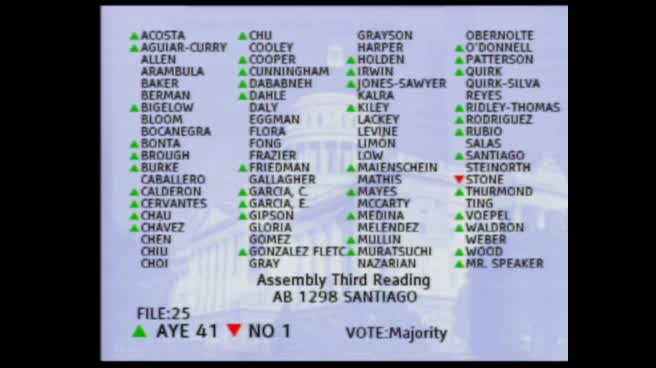 2MIN
Assembly Floor
 45SEC
Assembly Floor
 1H
Assembly Standing Committee on Appropriations
 23MIN
Assembly Standing Committee on Education


Bill Co-Author(s):