AB 2087: State government operations: technology modernization.
- Session Year: 2017-2018
- House: Assembly
- Latest Version Date: 2018-07-02
Existing law establishes the Department of Technology within the Government Operations Agency, under the supervision of the Director of Technology. Existing law requires state agencies, as defined, as required by the director, to cooperate with the department in the development of an annual information technology strategic plan that guides the acquisition, management, and use of information technology. Existing law gives state agencies and entities various other responsibilities relating to their use of technology, including submission of a report on actual and projected costs of information technology, telecommunications, and information security, and development of a plan to leverage cost-effective strategies to reduce the total amount of energy utilized by information technology and telecommunications equipment, as provided.
This bill would require each state agency, as defined, including the Legislature, agency, not later than January 1, 2020, to to, in consultation with the Department of Technology, establish modernization goals that will achieve specified objectives. The bill would require those goals to include, but not be limited to, goals for modernization of the agencys information technology system and for usage of technologies that will improve the efficiency of the agency. The bill would require an agency, upon establishing those goals, to create an implementation and cost assessment plan for achieving them. The bill would define state agency for these purposes to include the Legislature.
Existing law establishes the Department of Technology within the Government Operations Agency, under the supervision of the Director of Technology. Existing law requires state agencies, as defined, as required by the director, to cooperate with the department in the development of an annual information technology strategic plan that guides the acquisition, management, and use of information technology. Existing law gives state agencies and entities various other responsibilities relating to their use of technology, including submission of a report on actual and projected costs of information technology, telecommunications, and information security, and development of a plan to leverage cost-effective strategies to reduce the total amount of energy utilized by information technology and telecommunications equipment, as provided.
This bill would require each state agency, as defined, including the Legislature, not later than January 1, 2020, to establish modernization goals that will achieve specified objectives. The bill would require those goals to include, but not be limited to, goals for modernization of the agencys information technology system and for usage of technologies that will improve the efficiency of the agency. The bill would require an agency, upon establishing those goals, to create an implementation and cost assessment plan for achieving them.
(a)This chapter shall be known, and may be cited, as the Modernizing Government Technology Act of 2018.
(b)The Legislature finds and declares the following:
(1)Technology is constantly advancing and changing the ways in which the working world operates.
(2)In most organizations, it is necessary to have the latest technologies to achieve the level of productivity required to meet the demands of a modern, fast-paced working environment.
(3)Californias state government has fallen behind on the incorporation of technology into its daily operations and cannot take advantage of the many benefits that derive from modernization of the workplace.
(c)The objectives of this chapter are as follows:
(1)To create flexible, family friendly workplaces.
(2)To establish efficient and streamlined processes.
(3)To achieve cost savings.
(4)To reduce carbon emissions.
(5)To enhance the transparency of public information.
(6)To increase cybersecurity.
(7)To encourage the use of cloud computing and other innovative platforms and technologies.
7589.For purposes of this chapter, state agency means every state office, department, division, bureau, board, and commission, and the Legislature.
7590.(a)Not later than January 1, 2020, each state agency shall shall, in consultation with the Department of Technology, establish modernization goals that will achieve one or more of the objectives set forth in Section 7588, including, but not limited to, goals for the following:
(1)Modernization of the agencys information technology system.
(2)Usage of technologies that will improve the efficiency of the agency.
(b)Upon establishment of modernization goals pursuant to subdivision (a), an agency shall create an implementation and cost assessment plan for achieving those goals.
(a)This chapter shall be known, and may be cited, as the Modernizing Government Technology Act of 2018.
(b)The Legislature finds and declares the following:
(1)Technology is constantly advancing and changing the ways in which the working world operates.
(2)In most organizations, it is necessary to have the latest technologies to achieve the level of productivity required to meet the demands of a modern, fast-paced working environment.
(3)Californias state government has fallen behind on the incorporation of technology into its daily operations and cannot take advantage of the many benefits that derive from modernization of the workplace.
(c)The objectives of this chapter are as follows:
(1)To create flexible, family friendly workplaces.
(2)To establish efficient and streamlined processes.
(3)To achieve cost savings.
(4)To reduce carbon emissions.
(5)To enhance the transparency of public information.
(6)To increase cybersecurity.
(7)To encourage the use of cloud computing and other innovative platforms and technologies.
7589.For purposes of this chapter, state agency means every state office, department, division, bureau, board, and commission, and the Legislature.
7590.(a)Not later than January 1, 2020, each state agency shall establish modernization goals that will achieve one or more of the objectives set forth in Section 7588, including, but not limited to, goals for the following:
(1)Modernization of the agencys information technology system.
(2)Usage of technologies that will improve the efficiency of the agency.
(b)Upon establishment of modernization goals pursuant to subdivision (a), an agency shall create an implementation and cost assessment plan for achieving those goals.
REVISIONS: HeadingLine 2.|
Date
|
Status
|
|---|---|
| Aug 16, 2018 | In committee: Held under submission. |
| Aug 6, 2018 | In committee: Referred to APPR. suspense file. |
| Jul 2, 2018 | Read second time and amended. Re-referred to Com. on APPR. |
| Jun 28, 2018 | From committee: Amend, and do pass as amended and re-refer to Com. on APPR. (Ayes 13. Noes 0.) (June 26). |
| Jun 7, 2018 | Referred to Com. on G.O. |
| May 30, 2018 | In Senate. Read first time. To Com. on RLS. for assignment. |
| May 29, 2018 | Read third time. Passed. Ordered to the Senate. |
| May 24, 2018 | Read second time. Ordered to Consent Calendar. |
| May 23, 2018 | From committee: Do pass. To Consent Calendar. (Ayes 16. Noes 0.) (May 23). |
| May 21, 2018 | From committee: Do pass and re-refer to Com. on APPR. (Ayes 9. Noes 0.) (May 21). Re-referred to Com. on APPR. |
| Apr 25, 2018 | Coauthors revised. |
| Apr 16, 2018 | Referred to Coms. on A. & A.R. and RLS. |
| Feb 8, 2018 | From printer. May be heard in committee March 10. |
| Feb 7, 2018 | Read first time. To print. |
|
Date
|
Description
|
Location
|
Votes
|
|
|---|---|---|---|---|
| Aug 6, 2018 | Placed on suspense file | Senate Standing Committee on Appropriations |
Passed |
|
| Jun 26, 2018 | Do pass as amended, but first amend, and re-refer to the Committee on [Appropriations] | Senate Standing Committee on Governmental Organization |
Passed |
|
| May 29, 2018 | AB 2087 WALDRON Consent Calendar Second Day Regular Session | Assembly Floor |
Passed |
|
| May 23, 2018 | Do pass. To Consent Calendar. | Assembly Standing Committee on Appropriations |
Passed |
|
| May 21, 2018 | Do pass and be re-referred to the Committee on [Appropriations] | Assembly Standing Committee on Rules |
Passed |
|
| Apr 25, 2018 | Do pass and be re-referred to the Committee on [Rules] | Assembly Standing Committee on Accountability and Administrative Review |
Passed |
This list shows positions taken on this bill by organizations on the date displayed, which is linked to the original source.
Positions by individuals are not included.
|
Organization
|
Position
|
Date
|
|---|---|---|
| CalChamber | ** Support | Jun 25, 2018 |
| California Manufacturers & Technology Association | ** Support | Jun 25, 2018 |
| City of Santa Monica | ** Support | Jun 25, 2018 |
| Industrial Environmental Association | ** Support | Jun 25, 2018 |
| National Federation Of Independent Business | ** Support | Jun 25, 2018 |
| Southwest California Legislative Council | ** Support | Jun 25, 2018 |
SENATE COMMITTEE ON APPROPRIATIONS
Senator Anthony Portantino, Chair
2017 - 2018 Regular Session
AB 2087 (Waldron) - State government operations: technology modernization
Version: July 2, 2018 | Policy Vote: G.O. 13 - 0 |
Urgency: No | Mandate: No |
Hearing Date: August 6, 2018 | Consultant: Debra Cooper |
This bill meets the criteria for referral to the Suspense File.
Bill Summary:
AB 2087 would establish the Modernizing Government Technology Act of 2018 which would require that, no later than January 1, 2020, each state agency, in consultation with the California Department of Technology (CDT), establish modernization goals that will achieve specified objectives and create an implementation and cost assessment plan for achieving them.
Fiscal Impact:
- Potential costs to state agencies totaling in the millions of dollars for increased workload to identify objectives, to meet goals, and to develop cost estimation plans. See staff comments. (GF/special fund)
- Potentially minor costs to CDT to consult with state agencies to develop modernization goals.
- Unknown, potentially significant future cost pressures for state agencies to implement their established goals. (GF/special fund)
Background:
CDT is the state’s central IT organization. It has the lead responsibility for approval and oversight of state IT projects, managing IT procurements, developing statewide IT expertise, providing data center and telecommunications services, and establishing and enforcing IT policies and procedures. Current law requires the Director of CDT to advise the Governor on the strategic management and direction of the state’s IT resources and provide technology direction to state agencies and departments to ensure the integration of statewide technologies initiatives.
According to CDT's 2020 California Technology Strategic Plan, "California state government primarily operates in organizational and technology silos, limiting our ability to provide customers with a simple, streamlined and responsive experience." To address this, the plan envisions one digital government for California that involves improving the agility and responsiveness of state technology operations; accelerating the use of common technology platforms and shared services; embracing user-centered design concepts; and, leveraging technology to transform and simplify government processes and operations. It also includes a number of priorities aimed at ensuring the secure delivery of information across state government.
Proposed Law:
This bill would establish the Modernizing Government Technology Act of 2018. The Act would require each state agency, as defined, in consultation with CDT, to establish modernization goals, by January 1, 2020, that will achieve specified goals. Upon establishment of modernization goals, an agency would be required to create an implementation and cost assessment plan for achieving those goals.
Staff Comments:
This bill would require agencies to review and assess their information technology systems, identify objectives to meet goals, and develop a plan to change and update their systems by January 1, 2020. Many agencies have complex systems that support a variety of functions and operations within the agency. For instance, the Department of Health Care Services (DHCS) operates a large, complex set of systems to support Medi-Cal operations and would be required to complete a comprehensive assessment. DHCS does not have the staffing resources to reassign these tasks, and current staff do not have the technical expertise and skills required to perform this assessment. As such, DHCS would need additional personnel to cover the administrative and contractor costs. Other agencies with complex systems, and lacking staff with the appropriate expertise would also need additional personnel to complete the required assessments.
Much of what the bill seeks to accomplish already exists in the State Administrative Manual (SAM) and the Statewide Information Management Manual (SIMM), in addition to Technology Letters (TL), Policies and Guidelines – all of which are published by CDT. This includes pursuing information technology (IT) system efficiencies, cost savings, carbon emission reductions, transparency, increased cybersecurity, and cloud computing.
-- END --
SENATE COMMITTEE ON GOVERNMENTAL ORGANIZATION
Senator Bill Dodd
Chair
2017 - 2018 Regular
Bill No: 2087 Hearing Date: 6/26/2018
Author: | , et al. | ||
Version: | 2/7/2018 Introduced | ||
Urgency: | No | Fiscal: | Yes |
Consultant: | Felipe Lopez | ||
SUBJECT: State government operations: technology modernization
DIGEST: This bill requires, no later than January 1, 2020, each state agency, as defined, including the Legislature to establish modernization goals that will achieve specified objectives.
ANALYSIS:
Existing law:
- Establishes the California Department of Technology (CDT) within the Government Operations Agency, under the supervision of the Director of Technology.
- Specifies that the duties of the Director of CDT includes:
- Providing technology direction to agency and departments to ensure the integration of statewide of statewide technology initiatives.
- Minimizing overlap, redundancy, and cost in state information technology (IT) operations by promoting the efficient and effective use of IT.
- Establishing performance management and improvement processes to ensure state IT systems and services are efficient and effective.
- Requires CDT to produce an annual IT performance report with specified information, including cost savings and avoidances achieved through improvements to the way the state acquires, develops, implements, manages, and operates state technology assets, infrastructure, and systems.
- Requires state agencies, as defined, and as required by the Director of CDT, to cooperate with CDT in the development of an annual IT strategic plan that guides the acquisition, management, and use of IT.
- Gives state agencies and entities various other responsibilities relating to their use of technology, including submission of a report on actual and projected costs of IT, telecommunications, and information security, and development of a plan to leverage cost-effective strategies to reduce the total amount of energy utilized by IT and telecommunications equipment, as provided.
This bill:
- Requires, no later than January 1, 2020, each state agency, including the Legislature to establish modernization goals that will achieve specified objectives, including, but not limited to, goals for the following:
- Modernization of the agency’s IT system.
- Usage of technologies that will improve the efficiency of the agency.
- Describes the objectives of this bill as follows:
- To create flexible, family friendly workplaces.
- To establish efficient and streamlined processes.
- To achieve cost savings.
- To reduce carbon emissions.
- To enhance the transparency of public information.
- To increase cybersecurity.
- To encourage the use of cloud computing and other innovative platforms and technologies.
- Defines a “state agency” to mean every state office, department, bureau, board, and commission, and the legislature.
- Requires an agency, upon establishment of modernization goals, to create an implementation and cost assessment plan for achieving those goals.
- Makes legislative findings pertaining to the importance of modernization in the workplace.
Background
Purpose of the bill. According to the author’s office, “California government is woefully behind in making use of technology to streamline operations and public transparency. Our state must encourage the modernization of IT in order to create family-friendly workplaces, reduce spending, increase cybersecurity, streamline processes, and reduce carbon emissions.”
California Department of Technology. The Department of Technology is the state’s central IT organization. It has the lead responsibility for approval and oversight of state IT projects, managing IT procurements, developing statewide IT expertise, providing data center and telecommunications services, and establishing and enforcing IT policies and procedures. The department is the result of three Governor’s Reorganization Plans (GRPs)—in 2005, 2009, and 2012—and related legislation that ultimately consolidated statewide IT functions in a single entity. The most recent GRP established CDT within the newly created Government Operations Agency. The department’s director—the State Chief Information Officer—has a seat on the Governor’s cabinet and reports directly to the Governor on issues relating to IT.
Current law requires the Director of CDT to advise the Governor on the strategic management and direction of the state’s IT resources and provide technology direction to state agencies and departments to ensure the integration of statewide technologies initiatives.
CDT’s 2020 California Technology Strategic Plan. According to CDT's 2020 California Technology Strategic Plan, "California state government primarily operates in organizational and technology silos, limiting our ability to provide customers with a simple, streamlined and responsive experience." To address this, the plan envisions one digital government for California that involves improving the agility and responsiveness of state technology operations; accelerating the use of common technology platforms and shared services; embracing user-centered design concepts; and, leveraging technology to transform and simplify government processes and operations. It also includes a number of priorities aimed at ensuring the secure delivery of information across state government.
Suggested amendments. As previously stated, CDT has a significant role in the state in guiding state agencies on technology policy. In addition, CDT is already required to provide technology direction to state agencies and departments to ensure the integration of statewide technologies initiatives.
As such, the author may wish to amend the bill to require state agencies, as defined in the bill, to consult with CDT in establishing the modernization goals provided by this bill. Such an amendment would ensure that CDT continues to provide the adequate IT expertise to all state agencies and more importantly ensure that all modernization goals established by this bill would be consistent with CDT’s 2020 Strategic Plan.
Prior/Related Legislation
AB 1546 (Burke, 2018) would have required CDT, on or before January 1, 2019, to develop a standardized contract performance assessment report system to evaluate the performance of a contract on any IT contractor or project reportable to CDT. (Held in the Senate Appropriations Suspense File)
AB 1680 (Burke, 2017) would have required CDT, in cooperation with the Department of General Services, to establish and oversee the implementation of a professional development training program and curriculum within the California Procurement and Contracting Academy for persons engaged in the procurement of IT, as specified. (Held in the Senate Inactive File)
AB 2623 (Gordon, Chapter 389, Statutes of 2016) required state agencies to report their information security expenditures on an annual basis to CDT on or before February 1, 2017, and annually thereafter.
AB 2523 (Cooley, Chapter 391, Statutes of 2014) requires the Director of the Department of Technology to review a specified manual and draft a report to the Legislature by July 1, 2016.
FISCAL EFFECT: Appropriation: Fiscal Com.: Local:
SUPPORT:
CalChamber
California Manufacturers & Technology Association
City of Santa Monica
Industrial Environmental Association
National Federation of Independent Business
Southwest California Legislative Council
OPPOSITION:
None received
ARGUMENTS IN SUPPORT: Supporters of the bill argue that “smart investment and the adoption of new technologies enhance California’s ability to deliver services and improve stakeholders’ ability to meaningfully participate. Failing to modernize results in state agencies operating or supporting systems that are duplicative, inefficient, not well-integrated, costly to maintain, and vulnerable to cyber-attack[s].”
Date of Hearing: May 23, 2018
ASSEMBLY COMMITTEE ON APPROPRIATIONS
Lorena Gonzalez Fletcher, Chair
ABPCA Bill Id:AB 2087
Author:(Waldron) – As Introduced Ver:February 7, 2018
Policy Committee: | Accountability and Administrative Review | Vote: | 7 - 0 |
Rules | 9 - 0 | ||
|
|
Urgency: No State Mandated Local Program: No Reimbursable: No
SUMMARY:
This bill requires each “state agency”—meaning every state office, department division, bureau, board, and the Legislature—to, no later than January 1, 2020, establish modernization goals that will achieve at least one of several goals. The bill requires each state agency, upon establishment its modernization goals, to create an implementation plan.
FISCAL EFFECT:
Costs to each state agency will be absorbable within existing resources.
COMMENTS:
- Purpose. According to the author, California’s government is lagging in its use of technology and cannot take advantage of the many benefits that derive from modernization of the workplace.
- The California Department of Technology (CDT) describes itself as “the guardian of public data, a leader in IT services and solutions, and has broad responsibility and authority over all aspects of technology in California state government, including: policy formation, inter-agency coordination, IT project oversight, information security, technology service delivery, and advocacy.” Many state agencies, if not all, likely perform some level of planning around modernization, though, in some cases, the planning is informal. This analysis assumes each state agency will use existing resources to perform the planning required by this bill, to the extent they need to do additional work to do so.
Analysis Prepared by: Jay Dickenson / APPR. / (916) 319-2081
Date of Hearing: May 21, 2018
ASSEMBLY COMMITTEE ON RULES
Ken Cooley, Chair
ABPCA Bill Id:AB 2087 (
Author:Waldron) – As Introduced Ver:February 7, 2018
SUBJECT: State government operations: technology modernization
SUMMARY: Requires each state agency, and the Legislature, to establish technology modernization goals that will improve the efficiency of the agency by January 1, 2020. Specifically, this bill:
- Defines “state agency” as every state office, department, division, bureau, board, and commission, and the Legislature.
- Requires each state agency to establish modernization goals that will achieve one or more specified objectives by January 1, 2020.
- Requires each state agency to create an implementation and cost assessment plan for achieving those goals.
- Makes a number of findings and declarations.
EXISTING LAW:
- Establishes the California Department of Technology (CDT) within the Government Operations Agency, under the supervision of the Director of Technology, also known as the State Chief Information Officer (CIO).
- Specifies that the duties of the Director of CDT include the following, among other things:
- Advise the Governor on the strategic management and direction of the state’s IT resources;
- Provide technology direction to agency and department CIOs to ensure the integration of statewide technology initiatives;
- Minimize overlap, redundancy, and cost in state IT operations by promoting the efficient and effective use of IT; and,
- Establish performance management and improvement processes to ensure state IT systems and services are efficient and effective.
- Requires CDT to produce an annual IT performance report with specified information, including cost savings and avoidances achieved through improvements to the way the state acquires, develops, implements, manages, and operates state technology assets, infrastructure, and systems.
- Requires state agencies to take all necessary steps to achieve the performance targets established by CDT and report their progress to CDT on a quarterly basis.
FISCAL EFFECT: Unknown
COMMENTS:
- Purpose of the bill: According to the author, this bill is an effort to modernize California’s government by requiring each state agency, including the Legislature, to establish modernization goals no later than January 1, 2020. These goals shall include, but are not limited to, establishing goals towards modernization of the agency’s IT system and for usage of technologies that will improve efficiency.
- Need for the bill: According to the author, California’s government is lagging in its use of technology within its daily operations, and is consequently missing out on the many benefits associated with a modernized workplace. In addition, statewide government agencies need to rethink how they operate and focus on finding a way to have both environmentally and family friendly workplaces.
- Background: The Legislature’s information technology is managed and maintained by the Legislative Data Center (LDC) under the Office of Legislative Counsel. LDC works with the Assembly and Senate on infrastructure technology modernization planning. The bill’s definition of “state agency” does not distinguish between the two houses of the Legislature and their distinct technological needs.
Over the past five years, the Assembly has already implemented a number of changes to modernize technology and improve efficiency. Examples include: a paperless technology initiative for policy committees and floor session, digital advocacy for constituents and advocates to submit position letters, and ongoing cybersecurity best practices and preventative measures. Given the steps that have already been taken, it may not be necessary to include the Legislature in the bill’s definition of “state agency.” Furthermore, additional modernization should be consistent with Assembly priorities, and be implemented in a cost effective manner to minimize taxpayer implications.
- Telecommuting: The Personnel Policy Manual for Assembly Employees explicitly states that “the Assembly does not permit telecommuting.” Telecommuting is not permitted because of the unique political nature of working in the Legislature and to ensure that taxpayer dollars are not misspent. Some of the objectives specified in AB 2087 may contradict this policy.
- Double referred: AB 2087 was double referred to Accountability and Administrative Review Committee and Rules Committee. The bill was heard in Accountability and Administrative Review Committee on April 25th and passed 7-0.
REGISTERED SUPPORT / OPPOSITION:
Support
None on file
Opposition
None on file
Analysis Prepared by: Michael Erke / RLS. / (916) 319-2800
Date of Hearing: April 25, 2018
ASSEMBLY COMMITTEE ON ACCOUNTABILITY AND ADMINISTRATIVE REVIEW
Susan Talamantes Eggman, Chair
ABPCA Bill Id:AB 2087 (
Author:Waldron) – As Introduced Ver:February 7, 2018
SUBJECT: State government operations: technology modernization
SUMMARY: Directs each state agency, including the Legislature, to establish goals for modernizing the agency's information technology (IT) system and using technologies to improve the agency's efficiency by January 1, 2020. Specifically, this bill:
- Requires each state agency to establish goals for the modernization of the agency's IT system and usage of technologies to improve the agency's efficiency no later than January 1, 2020.
- Directs an agency to create an implementation and cost assessment plan for achieving the established goals.
- Defines "state agency" to mean every state office, department, division, bureau, board, and commission, and the Legislature.
EXISTING LAW:
- Establishes the California Department of Technology (CDT) within the Government Operations Agency, under the supervision of the Director of Technology, also known as the State Chief Information Officer (CIO).
- Specifies that the duties of the Director of CDT include the following, among other things:
- Advise the Governor on the strategic management and direction of the state’s IT resources;
- Provide technology direction to agency and department CIOs to ensure the integration of statewide technology initiatives;
- Minimize overlap, redundancy, and cost in state IT operations by promoting the efficient and effective use of IT; and,
- Establish performance management and improvement processes to ensure state IT systems and services are efficient and effective.
- Requires CDT to produce an annual IT performance report with specified information, including cost savings and avoidances achieved through improvements to the way the state acquires, develops, implements, manages, and operates state technology assets, infrastructure, and systems.
- Requires state agencies to take all necessary steps to achieve the performance targets established by CDT and report their progress to CDT on a quarterly basis.
FISCAL EFFECT: Unknown
COMMENTS: This bill establishes a target of January 1, 2020, for state agencies and the Legislature to develop goals for modernizing their IT systems and to create cost assessment and implementation plans to achieve those goals.
The author states that "California’s government is lagging in its use of technology within its daily operations, and is consequently missing out on the many benefits associated with a modernized workplace. By using innovative new technological capabilities such as telecommuting, digital systems, and electronic calendars, the government can drastically increase efficiency, reduce emissions, and save taxpayer money."
According to CDT's 2020 California Technology Strategic Plan, "California state government primarily operates in organizational and technology silos, limiting our ability to provide customers with a simple, streamlined and responsive experience." To address this, the plan envisions one digital government for California that involves improving the agility and responsiveness of state technology operations; accelerating the use of common technology platforms and shared services; embracing user-centered design concepts; and, leveraging technology to transform and simplify government processes and operations. It also includes a number of priorities aimed at ensuring the secure delivery of information across state government.
Given the significant leadership role of CDT in guiding state technology policy, the author may wish to specify in future amendments that state agencies work with CDT when establishing the goals required in this bill.
DOUBLE REFERRAL: This bill is double referred. Should it pass this committee, it will be re-referred to the Assembly Rules Committee.
REGISTERED SUPPORT / OPPOSITION:
Support
California Chamber of Commerce
California Manufacturers & Technology Association
Industrial Environmental Association
National Federation of Independent Business
Opposition
None on file.
Analysis Prepared by: Cassie Royce / A. & A.R. / (916) 319-3600
Discussed in Hearing
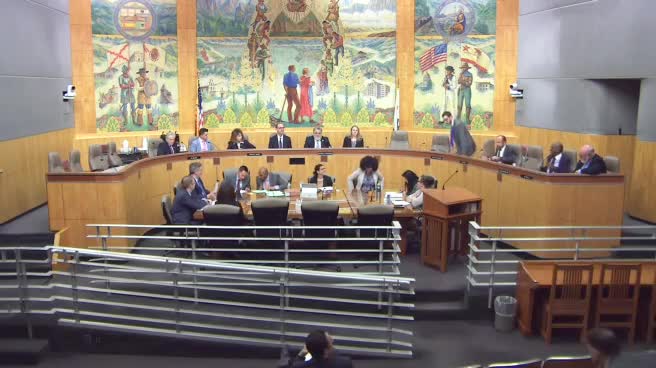 1H
Senate Standing Committee on Appropriations
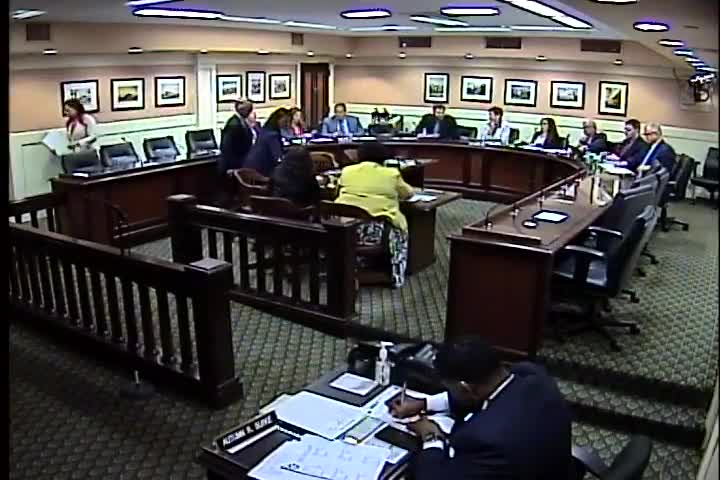 5MIN
Assembly Standing Committee on Accountability and Administrative Review
Bill Author



