AB 2217: Income taxes: credits: Bridget “Biddy” Mason Golden State Credit Program.
- Session Year: 2017-2018
- House: Assembly
- Latest Version Date: 2018-08-24
The Personal Income Tax Law and the Corporation Tax Law allow various credits against the taxes imposed by those laws.
This bill, before January 1, 2020, 2021, would require the Treasurer to establish a procedure to accept monetary transfers from qualified entities and to transfer golden state credits (GSC) to qualified entities. This bill, on and after January 1, 2020, 2021, and before January, 1, 2025, 2026, would allow the Treasurer to transfer to a qualified entity one GSC for each $0.90 that the qualified entity transfers to the Treasurer, and would limit the amount of GSCs to be transferred to $50,000,00 per calendar year, as provided. This bill would require any moneys received by the Treasurer, less costs, to be deposited into the General Fund. This bill, on and after January 1, 2020, 2021, and before January 1, 2025, 2026, would allow a qualified entity to transfer to a donating taxpayer one GSC for each $1 that the donating taxpayer contributes to the qualified entity. This bill would define a qualified entity to include, among others, an organization exempt from federal income taxation as an organization described in Section 501(c)(3) of the Internal Revenue Code that is in active status, as provided, a private college or university that participates in the Cal Grant program, as provided, a California Community College, a nonprofit charter school located in the state, or a K12 public school district located in the state.
The bill would allow a qualified entity to submit a claim for refund to the Treasurer equal to the amount that the qualified entity transferred to the Treasurer for GSCs that the qualified entity was unable to transfer to a donating taxpayer before the end of the calendar year in which the GSC was received. The bill, upon appropriation by the Legislature from the General Fund to the Treasurer of an amount necessary to make refunds claimed, would require the Treasurer to make refunds to qualified entities, as specified.
This bill, for each taxable year beginning on or after January 1, 2020, 2021, and before January 1, 2025, 2026, would allow a credit against the taxes imposed by the Personal Income Tax Law and the Corporation Tax Law in an amount equal to 80% of the amount contributed during the taxable year by the taxpayer to a qualified entity from which the taxpayer was transferred GSCs.
The bill would further provide that the Bridget Biddy Mason Golden State Credit Program would become inoperative if the Treasurer, upon consultation with the Franchise Tax Board, determines that donations made pursuant to the program do not qualify for a deduction under federal income tax law.
This bill would take effect immediately as a tax levy.
The Personal Income Tax Law and the Corporation Tax Law allow various credits against the taxes imposed by those laws.
This bill, before January 1, 2019, 2020, would require the Treasurer to establish a procedure to accept monetary transfers from qualified entities and to transfer golden state credits (GSC) to qualified entities. This bill, on and after January 1, 2019, 2020, and before January, 1, 2024, 2025, would allow the Treasurer to transfer to a qualified entity one GSC for each $0.90 that the qualified entity transfers to the Treasurer. Treasurer, and would limit the amount of GSCs to be transferred to $50,000,00 per calendar year, as provided. This bill would require any moneys received by the Treasurer, less costs, to be deposited into the General Fund. This bill, on and after January 1, 2019, 2020, and before January 1, 2024, 2025, would allow a qualified entity to transfer to a donating taxpayer one GSC for each $1 that the donating taxpayer contributes to the qualified entity. This bill would define a qualified entity to include, among others, an organization exempt from federal income taxation as an organization described in Section 501(c)(3) of the Internal Revenue Code that is in active status, as provided, an independent a private college or university that participates in the Cal Grant program, as provided, a California Community College, a nonprofit charter school, school located in the state, or a K12 public school district located in the state.
The bill would allow a qualified entity to submit a claim for refund to the Treasurer equal to the amount that the qualified entity transferred to the Treasurer for GSCs that the qualified entity was unable to transfer to a donating taxpayer before the end of the calendar year in which the GSC was received. The bill, upon appropriation by the Legislature from the General Fund to the Treasurer of an amount necessary to make refunds claimed, would require the Treasurer to make refunds to qualified entities, as specified.
This bill, for each taxable year beginning on or after January 1, 2019, 2020, and before January 1, 2024, 2025, would allow a credit against the taxes imposed by the Personal Income Tax Law and the Corporation Tax Law in an amount equal to 80% of the amount contributed during the taxable year by the taxpayer to a qualified entity from which the taxpayer was transferred GSCs.
The bill would further provide that the Bridget Biddy Mason Golden State Credit Program would become inoperative if the Treasurer, upon consultation with the Franchise Tax Board, determines that donations made pursuant to the program do not qualify for a deduction under federal income tax law.
This bill would take effect immediately as a tax levy.
The Personal Income Tax Law and the Corporation Tax Law allow various credits against the taxes imposed by those laws.
This bill, before January 1, 2019, would require the Treasurer to establish a procedure to accept monetary transfers from qualified entities and to transfer golden state credits (GSC) to qualified entities. This bill, on and after January 1, 2019, and before January, 1, 2024, would allow the Treasurer to transfer to a qualified entity one GSC for each $0.90 that the qualified entity transfers to the Treasurer. This bill would require any moneys received by the Treasurer, less costs, to be deposited into the General Fund. This bill, on and after January 1, 2019, and before January 1, 2024, would allow a qualified entity to transfer to a donating taxpayer one GSC for each $1 that the donating taxpayer contributes to the qualified entity. This bill would define a qualified entity to include include, among others, an organization exempt from federal income taxation as an organization described in Section 501(c)(3) of the Internal Revenue Code that is in active status, as provided, a postsecondary educational institution an independent college or university that participates in the Cal Grant program, as provided, a California Community College, a nonprofit charter school, or a K12 public school district located in the state.
The bill would allow a qualified entity to submit a claim for refund to the Treasurer equal to the amount that the qualified entity transferred to the Treasurer for GSCs that the qualified entity was unable to transfer to a donating taxpayer before the end of the calendar year in which the GSC was received. The bill, upon appropriation by the Legislature from the General Fund to the Treasurer of an amount necessary to make refunds claimed, would require the Treasurer to make refunds to qualified entities, as specified.
This bill, for each taxable year beginning on or after January 1, 2019, and before January 1, 2024, would allow a credit against the taxes imposed by the Personal Income Tax Law and the Corporation Tax Law in an amount equal to 80% of the amount contributed during the taxable year by the taxpayer to a qualified entity from which the taxpayer was transferred GSCs.
This bill would take effect immediately as a tax levy.
The Personal Income Tax Law and the Corporation Tax Law allow various credits against the taxes imposed by those laws.
This bill, before January 1, 2019, would require the Treasurer to establish a procedure to accept monetary transfers from qualified entities and to transfer golden state credits (GSC) to qualified entities. This bill, on and after January 1, 2019, and before January, 1, 2024, would allow the Treasurer to transfer to a qualified entity one GSC for each $0.90 that the qualified entity transfers to the Treasurer. This bill would require any moneys received by the Treasurer, less costs, to be deposited into the General Fund. This bill, on and after January 1, 2019, and before January 1, 2024, would allow a qualified entity to transfer to a donating taxpayer one GSC for each $1 that the donating taxpayer contributes to the qualified entity. This bill would define a qualified entity to include an organization exempt from federal income taxation as an organization described in Section 501(c)(3) of the Internal Revenue Code that is in active status, as provided, a postsecondary educational institution that participates in the Cal Grant program, a California Community College, or a K12 public school district located in the state.
The bill would allow a qualified entity to submit a claim for refund to the Treasurer equal to the amount that the qualified entity transferred to the Treasurer for GSCs that the qualified entity was unable to transfer to a donating taxpayer before the end of the calendar year in which the GSC was received. The bill, upon appropriation by the Legislature from the General Fund to the Treasurer of an amount necessary to make refunds claimed, would require the Treasurer to make refunds to qualified entities, as specified.
This bill, for each taxable year beginning on or after January 1, 2019, and before January 1, 2024, would allow a credit against the taxes imposed by the Personal Income Tax Law and the Corporation Tax Law in an amount equal to 80% of the price of Golden State Coins (GSCs) purchased by the taxpayer during the taxable year. The bill would authorize a qualified entity, defined to include an organization exempt from federal income taxation as an organization described in Section 501(c)(3) of the Internal Revenue Code that is in active status, as provided, a postsecondary educational institution that participates in the Cal Grant program, a California Community College, or a K12 public school district located in the state, to purchase GSCs from the State Treasurer and sell those GSCs to taxpayers, as provided. amount contributed during the taxable year by the taxpayer to a qualified entity from which the taxpayer was transferred GSCs.
This bill would take effect immediately as a tax levy.
The Personal Income Tax Law and the Corporation Tax Law allow various credits against the taxes imposed by those laws.
This bill, for each taxable year beginning on or after January 1, 2019, and before January 1, 2024, would allow a credit in an amount equal to 80% of the price of Golden State Coins (GSCs) purchased by the taxpayer during the taxable year. The bill would authorize a qualified entity, defined to include an organization exempt from federal income taxation as an organization described in Section 501(c)(3) of the Internal Revenue Code that is in active status, as provided, a postsecondary educational institution that participates in the Cal Grant program, a California Community College, or a K12 public school district located in the state, to purchase GSCs from the State Treasurer and sell those GSCs to taxpayers, as provided.
This bill would take effect immediately as a tax levy.
The Personal Income Tax Law and the Corporation Tax Law allow various credits against the taxes imposed by those laws, including for taxable years beginning on or after January 1, 2017, and before January 1, 2022, a credit to a qualified taxpayer, defined as a person responsible for planting, managing, and harvesting a crop, in an amount equal to 15% of the qualified value, as defined, of fresh fruits or fresh vegetables donated to a food bank located in California. The Personal Income Tax Law requires the Franchise Tax Board to report to the Legislature on or before December 1, 2019, and each December 1 thereafter until the specified inoperative date, regarding the utilization of that credit.This bill would require the Franchise Tax Board to report to the Legislature on or before July 1, 2019, and each July 1 thereafter until the specified inoperative date.The Personal Income Tax Law and the Corporation Tax Law allow various credits against the taxes imposed by those laws, including for taxable years beginning on or after January 1, 2017, and before January 1, 2022, a credit to a qualified taxpayer, defined as a person responsible for planting, managing, and harvesting a crop, in an amount equal to 15% of the qualified value, as defined, of fresh fruits or fresh vegetables donated to a food bank located in California. The Personal Income Tax Law requires the Franchise Tax Board to report to the Legislature on or before December 1, 2019, and each December 1 thereafter until the specified inoperative date, regarding the utilization of that credit.
This bill would require the Franchise Tax Board to report to the Legislature on or before July 1, 2019, and each July 1 thereafter until the specified inoperative date.
The Personal Income Tax Law imposes taxes on the entire taxable income of California residents and on the taxable income of nonresidents derived from sources in California.This bill would make nonsubstantive changes to the provision that names that law.The Personal Income Tax Law imposes taxes on the entire taxable income of California residents and on the taxable income of nonresidents derived from sources in California.
This bill would make nonsubstantive changes to the provision that names that law.
It is the intent of the Legislature by enacting this act to do both of the following:
(a)Encourage increased civic engagement and philanthropy through voluntary contributions to both qualifying nonprofits or organizations and educational institutions.
(b)Raise additional revenues for vital services that increase social welfare, provide critical educational opportunities, and support public goods.
SEC. 2.Part 10.4 (commencing with Section 20400) is added to Division 2 of the Revenue and Taxation Code, to read:10.4.Bridget Biddy Mason Golden State Credit Program20400.This part shall be known, and may be cited, as the Bridget Biddy Mason Golden State Credit Program.
20401.For purposes of this part:
(a)GSC means a Golden State Credit.
(b)(1)Qualified entity means an organization exempt from federal income taxation as an organization described in Section 501(c)(3) of the Internal Revenue Code that is in active status as listed on the Secretary of States Internet Web site, a private college or university that participates in the Cal Grant program and is an organization described in Section 501(c)(3) of the Internal Revenue Code that is in active status as listed on the Secretary of States Internet Web site, the California State University Chancellors Office, the University of California or its campuses, a community college located in the state, a nonprofit charter school located in the state, or a K12 public school district located in the state.
(2)Notwithstanding paragraph (1), a qualified entity shall not include a private foundation as defined in Section 509 of the Internal Revenue Code.
20402.(a)(1)Before January 1, 2020, 2021, the Treasurer shall establish a procedure to accept monetary transfers from qualified entities and to transfer GSCs to those qualified entities. On and after January 1, 2020, 2021, and before January 1, 2025, 2026, the Treasurer may transfer to a qualified entity one GSC for each ninety cents ($0.90) that the qualified entity transfers to the Treasurer.
(2)Moneys received by the Treasurer pursuant to paragraph (1) shall first be allocated to the Treasurer for reimbursement of all costs incurred by the Treasurer in connection with the Treasurers duties under this part. All remaining moneys shall be deposited into the General Fund.
(3)The aggregate amount of GSCs that may be transferred to qualified entities in any calendar year pursuant to this section shall be an amount equal to the sum of both of the following:
(A)Fifty million dollars ($50,000,000) in GSCs for the 2020 2021 calendar year and each calendar year thereafter.
(B)The unused transfer amount, if any, for the preceding calendar year.
(b)On and after January 1, 2020, 2021, and before January 1, 2025, 2026, a qualified entity may transfer to a donating taxpayer one GSC for each dollar ($1) that the donating taxpayer contributes to the qualified entity. The qualified entity shall provide the donating taxpayer with documentation reflecting the amount of GSCs transferred to the donating taxpayer for the contribution.
(c)A qualified entitys net revenues derived from contributions from donating taxpayers receiving GSCs shall supplement, and shall not supplant, any revenues received by the qualified entity for any other purpose.
(d)(1)A qualified entity may submit a claim for refund to the Treasurer equal to the amount that the qualified entity transferred to the Treasurer for GSCs that the qualified entity was unable to transfer to a donating taxpayer before the end of the calendar year in which the GSC was received by the qualified entity. A claim for refund shall be submitted on or before the February 1 next following the calendar year in which the GSC was received by the qualified entity, and shall be submitted in the form and manner as determined by the Treasurer.
(2)The Treasurer shall verify that a GSC for which a refund is requested was not transferred to a donating taxpayer before the refund is made. No refund shall exceed the amount transferred by the qualified entity to the Treasurer.
(3)Upon appropriation by the Legislature from the General Fund to the Treasurer of an amount necessary to make refunds claimed pursuant to this section, the Treasurer shall make refunds to qualified entities.
20403.(a)(1)For each taxable year beginning on or after January 1, 2020, 2021, and before January 1, 2025, 2026, a credit in an amount as determined pursuant to paragraph (2) shall be allowed against the net tax, as defined in Section 17039, or tax, as defined in Section 23036, as applicable, to a taxpayer that contributed to a qualified entity and was transferred GSCs from that qualified entity during the taxable year.
(2)The credit allowed by this section shall be in an amount equal to 80 percent of the amount contributed during the taxable year by the taxpayer to a qualified entity from which the taxpayer was transferred GSCs.
(3)Notwithstanding subdivision (a) of Section 23803, no credit under this section shall be allowed to an S corporation at the entity level.
(b)The taxpayer shall provide the documentation provided by a qualified entity pursuant to subdivision (b) of Section 20402 at the request of the Franchise Tax Board.
(c)In the case where the credit allowed by this section exceeds the net tax or tax, as applicable, the excess may be carried over to reduce the net tax or tax in the following year, and succeeding six years, if necessary, until the credit is exhausted.
(d)A credit allowed by this section shall be in lieu of any charitable deduction otherwise allowed by this division.
20404.(a)It is the intent of the Legislature to comply with Section 41.
(b)It is the further intent of the Legislature that the Legislature shall not consider potential reductions in the minimum education funding guarantee pursuant to Proposition 98 as a result of this part in future decisions regarding education funding.
20405.The Franchise Tax Board and the State Treasurer may prescribe any regulations that may be necessary or appropriate to implement the purposes of this part. Chapter 3.5 (commencing with Section 11340) of Part 1 of Division 3 of Title 2 of the Government Code shall not apply to any rule, guideline, or procedure prescribed by the Franchise Tax Board or the Treasurer pursuant to this section.
20406.(a)This part shall become inoperative if the Treasurer, in consultation with the Franchise Tax Board, determines that donations made pursuant to this part do not qualify for an income tax deduction pursuant to federal income tax law. The Treasurer shall post the determination on its Internet Web site and the credit described in Section 20403 shall not be allowed beginning in the taxable year in which the determination is posted.
(b)This part shall remain in effect only until December 1, 2025, 2026, and as of that date is repealed.
SEC. 3.This act provides for a tax levy within the meaning of Article IV of the California Constitution and shall go into immediate effect.
It is the intent of the Legislature by enacting this act to do both of the following:
(a)Encourage increased civic engagement and philanthropy through voluntary contributions to both qualifying nonprofits or organizations and educational institutions.
(b)Raise additional revenues for vital services that increase social welfare, provide critical educational opportunities, and support public goods.
SEC. 2.Part 10.4 (commencing with Section 20400) is added to Division 2 of the Revenue and Taxation Code, to read:10.4.Bridget Biddy Mason Golden State Credit Program20400.This part shall be known, and may be cited, as the Bridget Biddy Mason Golden State Credit Program.
20401.For purposes of this part:
(a)GSC means a Golden State Credit.
(b)(1)Qualified entity means an organization exempt from federal income taxation as an organization described in Section 501(c)(3) of the Internal Revenue Code that is in active status as listed on the Secretary of States Internet Web site, an independent a private college or university that participates in the Cal Grant program and is either a public institution or an organization described in Section 501(c)(3) of the Internal Revenue Code that is in active status as listed on the Secretary of States Internet Web site, the California State University Chancellors Office, the University of California or its campuses that participate in the Cal Grant program, campuses, a community college located in the state, a nonprofit charter school, school located in the state, or a K12 public school district located in the state.
(2)Notwithstanding paragraph (1), a qualified entity shall not include a private foundation as defined in Section 509 of the Internal Revenue Code.
20402.(a)(1)Before January 1, 2019, 2020, the Treasurer shall establish a procedure to accept monetary transfers from qualified entities and to transfer GSCs to those qualified entities. On and after January 1, 2019, 2020, and before January 1, 2024, 2025, the Treasurer may transfer to a qualified entity one GSC for each ninety cents ($0.90) that the qualified entity transfers to the Treasurer.
(2)Moneys received by the Treasurer pursuant to paragraph (1) shall first be allocated to the Treasurer for reimbursement of all costs incurred by the Treasurer in connection with the Treasurers duties under this part. All remaining moneys shall be deposited into the General Fund.
(3)The aggregate amount of GSCs that may be transferred to qualified entities in any calendar year pursuant to this section shall be an amount equal to the sum of both of the following:
(A)Fifty million dollars ($50,000,000) in GSCs for the 2020 calendar year and each calendar year thereafter.
(B)The unused transfer amount, if any, for the preceding calendar year.
(b)On and after January 1, 2019, 2020, and before January 1, 2024, 2025, a qualified entity may transfer to a donating taxpayer one GSC for each dollar ($1) that the donating taxpayer contributes to the qualified entity. The qualified entity shall provide the donating taxpayer with documentation reflecting the amount of GSCs transferred to the donating taxpayer for the contribution.
(c)A qualified entitys net revenues derived from contributions from donating taxpayers receiving GSCs shall supplement, and shall not supplant, any revenues received by the qualified entity for any other purpose.
(d)(1)A qualified entity may submit a claim for refund to the Treasurer equal to the amount that the qualified entity transferred to the Treasurer for GSCs that the qualified entity was unable to transfer to a donating taxpayer before the end of the calendar year in which the GSC was received by the qualified entity. A claim for refund shall be submitted on or before the February 1 next following the calendar year in which the GSC was received by the qualified entity, and shall be submitted in the form and manner as determined by the Treasurer.
(2)The Treasurer shall verify that a GSC for which a refund is requested was not transferred to a donating taxpayer before the refund is made. No refund shall exceed the amount transferred by the qualified entity to the Treasurer.
(3)Upon appropriation by the Legislature from the General Fund to the Treasurer of an amount necessary to make refunds claimed pursuant to this section, the Treasurer shall make refunds to qualified entities.
20403.(a)(1)For each taxable year beginning on or after January 1, 2019, 2020, and before January 1, 2024, 2025, a credit in an amount as determined pursuant to paragraph (2) shall be allowed against the net tax, as defined in Section 17039, or tax, as defined in Section 23036, as applicable, to a taxpayer that contributed to a qualified entity and was transferred GSCs from that qualified entity during the taxable year.
(2)The credit allowed by this section shall be in an amount equal to 80 percent of the amount contributed during the taxable year by the taxpayer to a qualified entity from which the taxpayer was transferred GSCs.
(3)Notwithstanding subdivision (a) of Section 23803, no credit under this section shall be allowed to an S corporation at the entity level.
(b)The taxpayer shall provide the documentation provided by a qualified entity pursuant to subdivision (b) of Section 20402 at the request of the Franchise Tax Board.
(c)In the case where the credit allowed by this section exceeds the net tax or tax, as applicable, the excess may be carried over to reduce the net tax or tax in the following year, and succeeding six years, if necessary, until the credit is exhausted.
(d)A credit allowed by this section shall be in lieu of any charitable deduction otherwise allowed by this division.
20404.(a)It is the intent of the Legislature to comply with Section 41.
(b)It is the further intent of the Legislature that the Legislature shall not consider potential reductions in the minimum education funding guarantee pursuant to Proposition 98 as a result of this part in future decisions regarding education funding.
20405.The Franchise Tax Board and the State Treasurer may prescribe any regulations that may be necessary or appropriate to implement the purposes of this part. Chapter 3.5 (commencing with Section 11340) of Part 1 of Division 3 of Title 2 of the Government Code shall not apply to any rule, guideline, or procedure prescribed by the Franchise Tax Board or the Treasurer pursuant to this section.
20406.This part shall remain in effect only until December 1, 2024, and as of that date is repealed.20406.(a)This part shall become inoperative if the Treasurer, in consultation with the Franchise Tax Board, determines that donations made pursuant to this part do not qualify for an income tax deduction pursuant to federal income tax law. The Treasurer shall post the determination on its Internet Web site and the credit described in Section 20403 shall not be allowed beginning in the taxable year in which the determination is posted.
(b)This part shall remain in effect only until December 1, 2025, and as of that date is repealed.
SEC. 3.This act provides for a tax levy within the meaning of Article IV of the California Constitution and shall go into immediate effect.
It is the intent of the Legislature by enacting this act to do both of the following:
(a)Encourage increased civic engagement and philanthropy through voluntary contributions to both qualifying nonprofits or organizations and educational institutions.
(b)Raise additional revenues for vital services that increase social welfare, provide critical educational opportunities, and support public goods.
SEC. 2.Part 10.4 (commencing with Section 20400) is added to Division 2 of the Revenue and Taxation Code, to read:10.4.Bridget Biddy Mason Golden State Credit Program20400.This part shall be known, and may be cited, as the Bridget Biddy Mason Golden State Credit Program.
20401.For purposes of this part:
(a)GSC means a Golden State Credit.
(b)(1)Qualified entity means an organization exempt from federal income taxation as an organization described in Section 501(c)(3) of the Internal Revenue Code that is in active status as listed on the Secretary of States Internet Web site, a postsecondary educational institution an independent college or university that participates in the Cal Grant program and is either a public institution or an organization described in Section 501(c)(3) of the Internal Revenue Code that is in active status as listed on the Secretary of States Internet Web site, the California State University Chancellors Office, the University of California or its campuses that participates participate in the Cal Grant program, a community college located in the state, a nonprofit charter school, or a K12 public school district located in the state.
(2)Notwithstanding paragraph (1), a qualified entity shall not include a private foundation as defined in Section 509 of the Internal Revenue Code.
20402.(a)(1)Before January 1, 2019, the Treasurer shall establish a procedure to accept monetary transfers from qualified entities and to transfer GSCs to those qualified entities. On and after January 1, 2019, and before January, January 1, 2024, the Treasurer may transfer to a qualified entity one GSC for each ninety cents ($0.90) that the qualified entity transfers to the Treasurer.
(2)Moneys received by the Treasurer pursuant to paragraph (1) shall first be allocated to the Treasurer for reimbursement of all costs incurred by the Treasurer in connection with the Treasurers duties under this part. All remaining moneys shall be deposited into the General Fund.
(b)On and after January 1, 2019, and before January 1, 2024, a qualified entity may transfer to a donating taxpayer one GSC for each dollar ($1) that the donating taxpayer contributes to the qualified entity. The qualified entity shall provide the donating taxpayer with documentation reflecting the amount of GSCs transferred to the donating taxpayer for the contribution.
(c)A qualified entitys net revenues derived from contributions from donating taxpayers receiving GSCs shall supplement, and shall not supplant, any revenues received by the qualified entity for any other purpose.
(d)(1)A qualified entity may submit a claim for refund to the Treasurer equal to the amount that the qualified entity transferred to the Treasurer for GSCs that the qualified entity was unable to transfer to a donating taxpayer before the end of the calendar year in which the GSC was received by the qualified entity. A claim for refund shall be submitted on or before the February 1 next following the calendar year in which the GSC was received by the qualified entity, and shall be submitted in the form and manner as determined by the Treasurer.
(2)The Treasurer shall verify that a GSC for which a refund is requested was not transferred to a donating taxpayer before the refund is made. No refund shall exceed the amount transferred by the qualified entity to the Treasurer.
(3)Upon appropriation by the Legislature from the General Fund to the Treasurer of an amount necessary to make refunds claimed pursuant to this section, the Treasurer shall make refunds to qualified entities.
20403.(a)(1)For each taxable year beginning on or after January 1, 2019, and before January 1, 2024, a credit in an amount as determined pursuant to paragraph (2) shall be allowed against the net tax, as defined in Section 17039, or tax, as defined in Section 23036, as applicable, to a taxpayer that contributed to a qualified entity and was transferred GSCs from that qualified entity during the taxable year.
(2)The credit allowed by this section shall be in an amount equal to 80 percent of the amount contributed during the taxable year by the taxpayer to a qualified entity from which the taxpayer was transferred GSCs.
(3)Notwithstanding subdivision (a) of Section 23803, no credit under this section shall be allowed to an S corporation at the entity level.
(b)The taxpayer shall provide the documentation provided by a qualified entity pursuant to subdivision (b) of Section 20402 at the request of the Franchise Tax Board.
(c)In the case where the credit allowed by this section exceeds the net tax or tax, as applicable, the excess may be carried over to reduce the net tax or tax in the following year, and succeeding six years, if necessary, until the credit is exhausted.
(d)A credit allowed by this section shall be in lieu of any charitable deduction otherwise allowed by this division.
(e)This section shall remain in effect only until December 1, 2024, and as of that date is repealed.20404.It is the intent of the Legislature to comply with Section 41.
20405.The Franchise Tax Board and the State Treasurer may prescribe any regulations that may be necessary or appropriate to implement the purposes of this part. Chapter 3.5 (commencing with Section 11340) of Part 1 of Division 3 of Title 2 of the Government Code shall not apply to any rule, guideline, or procedure prescribed by the Franchise Tax Board or the Treasurer pursuant to this section.
20406.This part shall remain in effect only until December 1, 2024, and as of that date is repealed.
SEC. 3.This act provides for a tax levy within the meaning of Article IV of the California Constitution and shall go into immediate effect.
It is the intent of the Legislature by enacting this act to do both of the following:
(a)Encourage increased civic engagement and philanthropy through voluntary contributions to both qualifying nonprofits or organizations and educational institutions.
(b)Raise additional revenues for vital services that increase social welfare, provide critical educational opportunities, and support public goods.
SECTION 1.SEC. 2.Part 10.4 (commencing with Section 20400) is added to Division 2 of the Revenue and Taxation Code, to read:10.4.Bridget Biddy Mason Golden State Coin Credit Program20400.This part shall be known, and may be cited, as the Bridget Biddy Mason Golden State Coin Credit Program.
20401.For purposes of this part:
(a)GSC means a Golden State Coin. Credit.
(b)(1)Qualified entity means an organization exempt from federal income taxation as an organization described in Section 501(c)(3) of the Internal Revenue Code that is in active status as listed on the Secretary of States Internet Web site, a postsecondary educational institution that participates in the Cal Grant program, a community college located in the state, or a K12 public school district located in the state.
(2)Notwithstanding paragraph (1), a qualified entity shall not include a private foundation as defined in Section 509 of the Internal Revenue Code.
20402.(a)On and after January 1, 2019, and before January, 1, 2024, a qualified entity may purchase GSCs from the State Treasurer at a cost of ninety cents ($0.90) per GSC.(b)A qualified entity may sell GSCs to purchasers at a price of one dollar ($1.00) per GSC. The qualified entity shall provide the purchaser with documentation of the amount of GSCs sold to that purchaser.(c)Revenues derived from the sale of GSCs shall supplement, and shall not supplant, any revenues received by the qualified entity for any other purpose.20402.(a)(1)Before January 1, 2019, the Treasurer shall establish a procedure to accept monetary transfers from qualified entities and to transfer GSCs to those qualified entities. On and after January 1, 2019, and before January, 1, 2024, the Treasurer may transfer to a qualified entity one GSC for each ninety cents ($0.90) that the qualified entity transfers to the Treasurer.
(2)Moneys received by the Treasurer pursuant to paragraph (1) shall first be allocated to the Treasurer for reimbursement of all costs incurred by the Treasurer in connection with the Treasurers duties under this part. All remaining moneys shall be deposited into the General Fund.
(b)On and after January 1, 2019, and before January 1, 2024, a qualified entity may transfer to a donating taxpayer one GSC for each dollar ($1) that the donating taxpayer contributes to the qualified entity. The qualified entity shall provide the donating taxpayer with documentation reflecting the amount of GSCs transferred to the donating taxpayer for the contribution.
(c)A qualified entitys net revenues derived from contributions from donating taxpayers receiving GSCs shall supplement, and shall not supplant, any revenues received by the qualified entity for any other purpose.
(d)(1)A qualified entity may submit a claim for refund to the Treasurer equal to the amount that the qualified entity transferred to the Treasurer for GSCs that the qualified entity was unable to transfer to a donating taxpayer before the end of the calendar year in which the GSC was received by the qualified entity. A claim for refund shall be submitted on or before the February 1 next following the calendar year in which the GSC was received by the qualified entity, and shall be submitted in the form and manner as determined by the Treasurer.
(2)The Treasurer shall verify that a GSC for which a refund is requested was not transferred to a donating taxpayer before the refund is made. No refund shall exceed the amount transferred by the qualified entity to the Treasurer.
(3)Upon appropriation by the Legislature from the General Fund to the Treasurer of an amount necessary to make refunds claimed pursuant to this section, the Treasurer shall make refunds to qualified entities.
20403.(a)(1)For each taxable year beginning on or after January 1, 2019, and before January 1, 2024, a credit in an amount as determined pursuant to paragraph (2) shall be allowed against the net tax, as defined in Section 17039, or tax, as defined in Section 23036, as applicable, to a taxpayer that purchased GSCs contributed to a qualified entity and was transferred GSCs from that qualified entity during the taxable year.
(2)The credit allowed by this section shall be in an amount equal to 80 percent of the costs paid or incurred by the taxpayer for the purchase of GSCs during the taxable year. amount contributed during the taxable year by the taxpayer to a qualified entity from which the taxpayer was transferred GSCs.
(3)Notwithstanding subdivision (a) of Section 23803, no credit under this section shall be allowed to an S corporation at the entity level.
(b)The taxpayer shall provide the documentation provided by a qualified entity pursuant to subdivision (b) of Section 20402 at the request of the Franchise Tax Board.
(c)In the case where the credit allowed by this section exceeds the net tax or tax, as applicable, the excess may be carried over to reduce the net tax or tax in the following year, and succeeding six years, if necessary, until the credit is exhausted.
(d)A credit allowed by this section shall be in lieu of any charitable deduction otherwise allowed by this division.
(e)This section shall remain in effect only until December 1, 2024, and as of that date is repealed.
20404.It is the intent of the Legislature to comply with Section 41.
20405.The Franchise Tax Board and the State Treasurer may prescribe any regulations that may be necessary or appropriate to implement the purposes of this part. Chapter 3.5 (commencing with Section 11340) of Part 1 of Division 3 of Title 2 of the Government Code shall not apply to any rule, guideline, or procedure prescribed by the Franchise Tax Board or the Treasurer pursuant to this section.
20406.(a)The State Treasurer shall not issue a physical object to a qualified entity pursuant to this part. If any physical object is issued it is commemorative in nature and not a coin or any other form of money.(b)Any physical object sold by a qualified entity pursuant to this part is commemorative in nature and not a medium of exchange.SEC. 2.SEC. 3.This act provides for a tax levy within the meaning of Article IV of the California Constitution and shall go into immediate effect.
This part shall be known, and may be cited, as the Golden State Coin Program.
20401.For purposes of this part:
(a)GSC means a Golden State Coin.
(b)Qualified entity means an organization exempt from federal income taxation as an organization described in Section 501(c)(3) of the Internal Revenue Code that is in active status as listed on the Secretary of States Internet Web site, a postsecondary educational institution that participates in the Cal Grant program, a community college located in the state, or a K12 public school district located in the state.
20402.(a)On and after January 1, 2019, and before January, 1, 2024, a qualified entity may purchase GSCs from the State Treasurer at a cost of ninety cents ($0.90) per GSC.
(b)A qualified entity may sell GSCs to purchasers at a price of one dollar ($1.00) per GSC. The qualified entity shall provide the purchaser with documentation of the amount of GSCs sold to that purchaser.
(c)Revenues derived from the sale of GSCs shall supplement, and shall not supplant, any revenues received by the qualified entity for any other purpose.
20403.(a)(1)For each taxable year beginning on or after January 1, 2019, and before January 1, 2024, a credit in an amount as determined pursuant to paragraph (2) shall be allowed against the net tax, as defined in Section 17039, or tax, as defined in Section 23036, as applicable, to a taxpayer that purchased GSCs during the taxable year.
(2)The credit allowed by this section shall be in an amount equal to 80 percent of the costs paid or incurred by the taxpayer for the purchase of GSCs during the taxable year.
(b)The taxpayer shall provide the documentation provided by a qualified entity pursuant to subdivision (b) of Section 20402 at the request of the Franchise Tax Board.
(c)In the case where the credit allowed by this section exceeds the net tax or tax, as applicable, the excess may be carried over to reduce the net tax or tax in the following year, and succeeding six years, if necessary, until the credit is exhausted.
(d)A credit allowed by this section shall be in lieu of any charitable deduction otherwise allowed by this division.
(e)This section shall remain in effect only until December 1, 2024, and as of that date is repealed.
20404.It is the intent of the Legislature to comply with Section 41.
20405.The Franchise Tax Board and the State Treasurer may prescribe any regulations that may be necessary or appropriate to implement the purposes of this part.
20406.(a)The State Treasurer shall not issue a physical object to a qualified entity pursuant to this part. If any physical object is issued it is commemorative in nature and not a coin or any other form of money.
(b)Any physical object sold by a qualified entity pursuant to this part is commemorative in nature and not a medium of exchange.
SEC. 2.This act provides for a tax levy within the meaning of Article IV of the California Constitution and shall go into immediate effect.
SECTION 1.Section 17053.88.5 of the Revenue and Taxation Code is amended to read:17053.88.5.(a)In the case of a qualified taxpayer who donates fresh fruits or fresh vegetables to a food bank located in California under Chapter 5 (commencing with Section 58501) of Part 1 of Division 21 of the Food and Agricultural Code, for taxable years beginning on or after January 1, 2017, and before January 1, 2022, there shall be allowed as a credit against the net tax, defined by Section 17039, an amount equal to 15 percent of the qualified value of those fresh fruits or fresh vegetables.(b)For purposes of this section:(1)Qualified taxpayer means the person responsible for planting a crop, managing the crop, and harvesting the crop from the land.(2)(A)Qualified value shall be calculated by using the weighted average wholesale price based on the qualified taxpayers total like grade wholesale sales of the donated item sold within the calendar month of the qualified taxpayers donation.(B)If no wholesale sales of the donated item have occurred in the calendar month of the qualified taxpayers donation, the qualified value shall be equal to the nearest regional wholesale market price for the calendar month of the donation based upon the same grade products as published by the United States Department of Agricultures Agricultural Marketing Service or its successor.(c)If the credit allowed by this section is claimed by the qualified taxpayer, any deduction otherwise allowed under this part for that amount of the cost paid or incurred by the qualified taxpayer that is eligible for the credit shall be reduced by the amount of the credit provided in subdivision (a).(d)The donor shall provide to the nonprofit organization the qualified value of the donated fresh fruits or fresh vegetables and information regarding the origin of where the donated fruits or vegetables were grown, and upon receipt of the donated fresh fruits or fresh vegetables, the nonprofit organization shall provide a certificate to the donor. The certificate shall contain a statement signed and dated by a person authorized by that organization that the product is donated under Chapter 5 (commencing with Section 58501) of Part 1 of Division 21 of the Food and Agricultural Code. The certificate shall also contain the type and quantity of product donated, the name of donor or donors, the name and address of the donee nonprofit organization, and, as provided by the donor, the qualified value of the donated fresh fruits or fresh vegetables and its origins. Upon the request of the Franchise Tax Board, the qualified taxpayer shall provide a copy of the certification to the Franchise Tax Board.(e)The credit allowed by this section may be claimed only on a timely filed original return.(f)In the case where the credit allowed by this section exceeds the net tax, the excess may be carried over to reduce the net tax in the following year, and for the six succeeding years if necessary, until the credit has been exhausted.(g)In accordance with Section 41, the purpose of the credit is to increase fresh fruits and vegetable donations to food banks. Using the information available to the Franchise Tax Board from the certificates required under subdivision (d) and subdivision (d) of Section 23688.5, the Franchise Tax Board shall report to the Legislature on or before July 1, 2019, and each July 1 thereafter until the inoperative date specified in subdivision (h), regarding the utilization of the credit authorized by this section and Section 23688.5. The Franchise Tax Board shall also include in the report the qualified value of the fresh fruits and fresh vegetables donated, the county in which the products originated, and the month the donation was made.(h)(1)A report required to be submitted pursuant to subdivision (g) shall be submitted in compliance with Section 9795 of the Government Code.(2)The requirement for submitting a report imposed under subdivision (g) is inoperative on January 1, 2021, pursuant to Section 10231.5 of the Government Code.(i)This section shall be repealed on December 1, 2022.(a)In the case of a qualified taxpayer who donates fresh fruits or fresh vegetables to a food bank located in California under Chapter 5 (commencing with Section 58501) of Part 1 of Division 21 of the Food and Agricultural Code, for taxable years beginning on or after January 1, 2017, and before January 1, 2022, there shall be allowed as a credit against the net tax, defined by Section 17039, an amount equal to 15 percent of the qualified value of those fresh fruits or fresh vegetables.
(b)For purposes of this section:
(1)Qualified taxpayer means the person responsible for planting a crop, managing the crop, and harvesting the crop from the land.
(2)(A)Qualified value shall be calculated by using the weighted average wholesale price based on the qualified taxpayers total like grade wholesale sales of the donated item sold within the calendar month of the qualified taxpayers donation.
(B)If no wholesale sales of the donated item have occurred in the calendar month of the qualified taxpayers donation, the qualified value shall be equal to the nearest regional wholesale market price for the calendar month of the donation based upon the same grade products as published by the United States Department of Agricultures Agricultural Marketing Service or its successor.
(c)If the credit allowed by this section is claimed by the qualified taxpayer, any deduction otherwise allowed under this part for that amount of the cost paid or incurred by the qualified taxpayer that is eligible for the credit shall be reduced by the amount of the credit provided in subdivision (a).
(d)The donor shall provide to the nonprofit organization the qualified value of the donated fresh fruits or fresh vegetables and information regarding the origin of where the donated fruits or vegetables were grown, and upon receipt of the donated fresh fruits or fresh vegetables, the nonprofit organization shall provide a certificate to the donor. The certificate shall contain a statement signed and dated by a person authorized by that organization that the product is donated under Chapter 5 (commencing with Section 58501) of Part 1 of Division 21 of the Food and Agricultural Code. The certificate shall also contain the type and quantity of product donated, the name of donor or donors, the name and address of the donee nonprofit organization, and, as provided by the donor, the qualified value of the donated fresh fruits or fresh vegetables and its origins. Upon the request of the Franchise Tax Board, the qualified taxpayer shall provide a copy of the certification to the Franchise Tax Board.
(e)The credit allowed by this section may be claimed only on a timely filed original return.
(f)In the case where the credit allowed by this section exceeds the net tax, the excess may be carried over to reduce the net tax in the following year, and for the six succeeding years if necessary, until the credit has been exhausted.
(g)In accordance with Section 41, the purpose of the credit is to increase fresh fruits and vegetable donations to food banks. Using the information available to the Franchise Tax Board from the certificates required under subdivision (d) and subdivision (d) of Section 23688.5, the Franchise Tax Board shall report to the Legislature on or before December July 1, 2019, and each December July 1 thereafter until the inoperative date specified in subdivision (h), regarding the utilization of the credit authorized by this section and Section 23688.5. The Franchise Tax Board shall also include in the report the qualified value of the fresh fruits and fresh vegetables donated, the county in which the products originated, and the month the donation was made.
(h)(1)A report required to be submitted pursuant to subdivision (g) shall be submitted in compliance with Section 9795 of the Government Code.
(2)The requirement for submitting a report imposed under subdivision (g) is inoperative on January 1, 2021, pursuant to Section 10231.5 of the Government Code.
(i)This section shall be repealed on December 1, 2022.
SECTION 1.Section 17001 of the Revenue and Taxation Code is amended to read:17001.This part shall be known, and may be cited, as the Personal Income Tax Law.This part is known shall be known, and may be cited cited, as the Personal Income Tax Law.
|
Date
|
Status
|
|---|---|
| Aug 31, 2018 | Ordered to inactive file at the request of Senator McGuire. |
| Aug 27, 2018 | Read second time. Ordered to third reading. |
| Aug 24, 2018 | Read third time and amended. Ordered to second reading. |
| Aug 24, 2018 | Read second time. Ordered to third reading. |
| Aug 23, 2018 | Read third time and amended. Ordered to second reading. |
| Aug 20, 2018 | Read second time. Ordered to third reading. |
| Aug 17, 2018 | From committee: Amend, and do pass as amended. (Ayes 5. Noes 2.) (August 16). |
| Aug 13, 2018 | In committee: Referred to APPR. suspense file. |
| Aug 8, 2018 | From committee: Do pass and re-refer to Com. on APPR. (Ayes 5. Noes 1.) (August 8). Re-referred to Com. on APPR. |
| Jun 7, 2018 | Referred to Com. on GOV. & F. |
| May 31, 2018 | In Senate. Read first time. To Com. on RLS. for assignment. |
| May 25, 2018 | From committee: Do pass. (Ayes 14. Noes 0.) (May 25). |
| May 30, 2018 | Read third time. Passed. Ordered to the Senate. |
| May 25, 2018 | Joint Rule 62(a), file notice suspended. |
| May 23, 2018 | In committee: Set, first hearing. Referred to APPR. suspense file. |
| May 15, 2018 | From committee: Do pass and re-refer to Com. on APPR. (Ayes 7. Noes 0.) (May 14). Re-referred to Com. on APPR. |
| May 3, 2018 | Re-referred to Com. on REV. & TAX. |
| May 2, 2018 | From committee chair, with author's amendments: Amend, and re-refer to Com. on REV. & TAX. Read second time and amended. |
| Apr 23, 2018 | In committee: Set, first hearing. Hearing canceled at the request of author. |
| Apr 9, 2018 | Re-referred to Com. on REV. & TAX. |
| Apr 5, 2018 | From committee chair, with author's amendments: Amend, and re-refer to Com. on REV. & TAX. Read second time and amended. |
| Mar 21, 2018 | Re-referred to Com. on REV. & TAX. |
| Mar 20, 2018 | From committee chair, with author's amendments: Amend, and re-refer to Com. on REV. & TAX. Read second time and amended. |
| Mar 19, 2018 | Referred to Com. on REV. & TAX. |
| Feb 13, 2018 | From printer. May be heard in committee March 15. |
| Feb 12, 2018 | Read first time. To print. |
|
Date
|
Description
|
Location
|
Votes
|
|
|---|---|---|---|---|
| Aug 16, 2018 | Do pass as amended | Senate Standing Committee on Appropriations |
Passed |
|
| Aug 13, 2018 | Placed on suspense file | Senate Standing Committee on Appropriations |
Passed |
|
| Aug 8, 2018 | Do pass, but first be re-referred to the Committee on [Appropriations] | Senate Standing Committee on Governance and Finance |
Passed |
|
| May 30, 2018 | AB 2217 BURKE Assembly Third Reading | Assembly Floor |
Passed |
|
| May 25, 2018 | Do pass. | Assembly Standing Committee on Appropriations |
Passed |
|
| May 14, 2018 | Do pass and be re-referred to the Committee on [Appropriations] | Assembly Standing Committee on Revenue and Taxation |
Passed |
This list shows positions taken on this bill by organizations on the date displayed, which is linked to the original source.
Positions by individuals are not included.
|
Organization
|
Position
|
Date
|
|---|---|---|
| California Association Of Nonprofits | ** Support | Aug 27, 2018 |
| California Charter Schools Association | ** Support | Aug 27, 2018 |
| California Teachers Association | ** Against | Aug 27, 2018 |
| Larry Brown Kids And Veteran Fishing Programs | ** Support | Aug 27, 2018 |
| UC Davis | * Support | May 14, 2018 |
| UC Davis Law | * Support | Aug 8, 2018 |
| University of Chicago | * Support | May 14, 2018 |
Office of Senate Floor Analyses (916) 651-1520 Fax: (916) 327-4478 | AB 2217 |
THIRD READING
Bill No: AB 2217
Amended: 8/24/18 in Senate
SENATE GOVERNANCE & FIN. COMMITTEE: 5-1, 8/8/18
AYES: McGuire, Nguyen, Beall, Hertzberg, Lara
NOES: Moorlach
NO VOTE RECORDED: Hernandez
SENATE APPROPRIATIONS COMMITTEE: 5-2, 8/16/18
AYES: Portantino, Beall, Bradford, Hill, Wiener
NOES: Bates, Nielsen
ASSEMBLY FLOOR: 65-0, 5/30/18 - See last page for vote
SUBJECT: Income taxes: credits: Bridget “Biddy” Mason Golden State Credit Program
DIGEST:
This bill creates the Bridget “Biddy” Mason Golden State Credit Program, which requires the State Treasurer to create a process to accept monetary contributions from entities in exchange for Golden State Credits; and enacts a credit equal to 80% of amounts donated that generate Golden State Credits.
Senate Floor Amendments of 8/24/18 (1) delay the measure’s effective date from January 1, 2020, to January 1, 2021, with a corresponding one-year extension of the measure’s sunset date, (2) make a conforming delay to the measure’s tax credit from beginning in the 2020 taxable year and ending after the 2024 taxable year, to beginning in the 2021 taxable year and ending after the 2025 taxable year, and (3) make a conforming change.
Senate Floor Amendments of 8/23/18 (1) clarify that private colleges and universities who participate in the Cal Grant program are included in the measure’s definition of “qualified entity,” (2) require that a nonprofit charter school must be located in the state to be included in the measure’s definition of “qualified entity,” (3) change the measure’s effective date from January 1, 2019, to January 1, 2020, with a corresponding one-year extension of the measure’s sunset date, (4) cap the amount of Golden State Credits (GSCs) that the Treasurer can transfer to $50 million annually, (5) state legislative intent that the Legislature shall not consider potential reductions in the Proposition 98 minimum funding guarantee as a result of the bill, and (6) direct the Treasurer to render the program inoperative if donations made under the bill do not qualify for deductions under federal income tax law.
Existing law:
- Allows various income tax credits, deductions, and sales and use tax exemptions to provide incentives to compensate taxpayers that incur certain expenses, such as child adoption, or to influence behavior, including business practices and decisions, such as research and development credits.
- Allows credits against state tax for specified donations, which when combined with the federal charitable deduction can afford tax benefits almost equal to the amount of the contribution. Among these:
- The Natural Heritage Preservation Tax Credit, which compensates landowners who donate land to the state for preservation purposes (SB 1647, O’Connell, Chapter 113, Statutes of 2000), and extended it until 2020 (SB 355, Beall, Chapter 620, Statues of 2014). To qualify for the credit, landowners must apply to the Wildlife Conservation Board (WCB) for approval to donate a parcel of property, and for certification that the property meets certain requirements. If the WCB approves the contribution, the landowner may claim a tax credit equal to 55% of the property’s fair market value and carryover the credit for eight years.
- The College Access Tax Credit, which helps to fund the Cal Grant B High School Entitlement Program (SB 798, De Leon, Chapter 367, Statutes of 2014), and extended it last year through the 2022 taxable year (AB 490, Quirk-Silva, Chapter 527, Statutes of 2017). The California Educational Facilities Authority (CEFA), housed in the Office of the Treasurer, administers the tax credit. Taxpayers make cash contributions to CEFA, who then issues the taxpayer a credit certificate with a credit of 50% of the value of the contribution, which the taxpayer keeps after claiming the credit on his or her return. CEFA then deposits contribution proceeds into the College Access Tax Credit Fund, which first offset the foregone General Fund revenue resulting from the credit, and then are appropriated to reimburse any administrative costs. CEFA can allocate up to a total of $500 million in credits each year on a first-come, first-served, basis.
This bill:
- Enacts the Bridget “Biddy” Mason Golden State Credit Program, which:
- Requires the Treasurer to create a process by January 1, 2021, to accept monetary contributions from qualified entities, defined as a private college or university that participates in the Cal-Grant program and is an active 501(c) (3) charitable organization, the California State University’s Chancellor’s Office, the University of California or its campuses, a community college located in the state, a nonprofit charter school located in the state, or K-12 public school district in the state;
- Allows the Treasurer to transfer one Golden State Credit to a qualified entity for each $0.90 received between January 1, 2021, and January 1, 2026, up to $50 million per calendar year, plus any unused transfer from the previous year;
- Directs the Treasurer to deposit monetary contributions generating GSCs into the General Fund after deducting his or her costs incurred implementing the measure;
- Provides that the qualified entity must transfer to a taxpayer making a monetary contribution between January 1, 2021, and January 1, 2026, one GSC for each $1 he or she contributes to the qualified entity, and supply the taxpayer with documentation reflecting the amount of GSCs transferred;
- Requires that funds donated in exchange for GSCs must supplement, and not supplant, revenues received by the qualified entity;
- Permits qualified entities to submit a claim for refund to the Treasurer equal to the amount transferred to the Treasurer for GSCs that the qualified entity was unable to transfer before the end of the calendar year on or before February 1st of the following year, directs the Treasurer to verify claims for refund, and provides that any refunds must be appropriated by the Legislature; and,
- Allows the taxpayer a credit against the Personal Income Tax equal to 80% of the amount donated which generates GSCs, which can be carried forward to the subsequent six taxable years, but does not qualify for the charitable contribution deduction for state purposes, and cannot be allowed for an “S” corporation at the entity level. The credit begins in the 2021 taxable year, and sunsets after the 2025 taxable year.
- Allows the Franchise Tax Board (FTB) and the Treasurer to issue regulations necessary to implement the bill.
- Directs the Treasurer, in consultation with the FTB, to make the program inoperative if donations made under the bill do not qualify for deductions under federal income tax law. If the State makes this determination, the Treasurer must post the determination on its Web site, and no tax credit shall be allowed in the taxable year in which the Treasurer posts the determination.
- Sunsets on December 1, 2026.
- Makes legislative findings and declarations supporting its purposes, including that the Legislature shall not consider potential reductions in the Proposition 98 minimum funding guarantee as a result of the bill.
Background
The Internal Revenue Code allows a deduction from income for any charitable contribution made within the taxable year. California conforms to this deduction. A charitable contribution includes a contribution to public agencies, not just charitable organizations, but only if the contribution or gift is made for exclusively public purposes. However, federal law limits the deduction when the donor receives consideration in exchange for the contribution, as the contribution can lose part of its charitable nature. If the benefits expected to be received by a donor are greater than those to the general public, then the transferor has received a quid pro quo sufficient to deny the deduction. Treasury regulations clarify that no part of a payment that a taxpayer makes in consideration for goods or services qualifies for the deduction unless the taxpayer intends to make, or makes, a payment that exceeds the fair market value of the consideration. For example, a taxpayer donating $100 to the Public Broadcasting Service can claim a $100 deduction, but only an $80 deduction if he or she received a $20 tote bag as a result of the donation.
Treasury regulations don’t address whether a reduction in state tax liability constitutes a good or service, instead defining “goods and services” to mean “cash, property, services, benefits, and privileges.” However, Internal Revenue Service (IRS) Chief Counsel Advice Memoranda from February, 2011 (CCA 201105010), states that the payment of cash to a state agency “is treated for federal tax purposes as a reduction or potential reduction in tax liability,’’ and not as consideration, based on its legal analysis of the relevant case law. CCA 201105010 additionally states that “the tax benefit of a federal or state charitable contribution deduction is not regarded as a return benefit that negates charitable intent, reducing or eliminating the deduction itself.” While the memo appears to allow contributions made to public agencies that also generate state tax benefits to qualify for the federal charitable deduction without any reduction for consideration received, it does contain a caveat, namely that “there may be unusual circumstances in which it would be appropriate to recharacterize a payment of cash or property that was, in form, a charitable contribution as, in substance, a satisfaction of tax liability.” Additionally, the IRS website states that chief counsel advice memos “have no precedential value and cannot be relied on by taxpayers. Nonetheless, they may be useful for background or insight into a position the IRS might take on an undecided or novel issue for which no other agency guidance is available.”
On December 22, 2017, President Trump signed HR 1, which enacted fundamental changes to the federal income tax. Among them, HR 1:
- Increased the standard deduction from inflation-indexed amounts of $6,350 (single)/$12,700 (joint) in 2017 to $12,000 (single)/$24,000 (joint), adjusted annually for inflation, but using the chained consumer price index (CPI) for all urban consumers instead of the traditional CPI.
- Limited the deduction from income for state and local taxes paid by individuals to $10,000 per taxable year, not indexed for inflation. HR 1 did not affect the deduction for state and local taxes paid when carrying out a trade or business.
- Raised the general percentage limit for charitable contributions, which disallows deductions for charitable contributions above a specified percentage of the taxpayer’s modified adjusted gross income, from 50% to 60%, among other changes.
Several states have enacted a creative model pairing state tax credits with the federal charitable deduction to ameliorate the effects of HR 1’s cap on deductions for state and local taxes paid. For example, New York offers taxpayers an 85% nonrefundable credit for donations to state-operated funds devoted to education and health care. A New York taxpayer can contribute $10,000 to the fund, generating an $8,500 credit, that when combined with a $10,000 federal charitable deduction applied at the top federal marginal income tax rate of 37%, yields a total of $122,000 in tax benefits for a net benefit of $22,000. As a result, previously deductible taxes are converted to fully deductible donations, and a hopefully equal amount of revenue materializes as donations as would’ve been paid in taxes but for the credit. Additionally, several states have for many years offered state tax credits equal to 100% of donations made to private nonprofit scholarship-granting organizations that issue scholarships to K-12 students to attend private schools, or public schools outside of the district. However, critics argue that IRS will deny any federal deductions claimed by taxpayers making contributions to these state programs. Jared Walczak of the Tax Foundation states “that charitable contributions have a charitable aspect is a significant challenge for this approach” as the donor gets two benefits in exchange for the contribution: government services, and lower tax liability. Walczak argues that contributions may not qualify as meeting the “solely for public purposes” standard, as the contribution serves no public purpose, has no net effect on state revenue, and is intended to leave the giver in better shape financially. Additionally, on May 23, 2018, IRS published notice 2018-54, which stated it intends to propose regulations addressing the deductibility of state and local tax payments for federal income tax purpose in response to state efforts to make payments to specified entities in exchange for a tax credit against state and local taxes owed.
FISCAL EFFECT: Appropriation: No Fiscal Com.: Yes Local: No
According to the Senate Appropriations Committee, the FTB notes that the impact of the bill with respect to the timing of state tax receipts would be driven by taxpayer response, which cannot be modeled. FTB notes five potential revenue impacts that would result from taxpayer behavioral changes and potential tax consequences. Although the overall impact is unknown, FTB estimates that this bill would result in a net increase in General Fund revenues FTB’s administrative costs resulting from the bill would be minor and absorbable. The State Treasurer’s Office (STO) indicates that its administrative costs to implement the bill are unknown. Specifically, STO notes that estimating the number of staff needed cannot be reliably determined, as there is no basis on which it can realistically project the volume of additional workload that would result. However, STO would be reimbursed for its administrative costs.
California Association of Nonprofits
California Charter Schools Association
Larry Brown Kids and Veteran Fishing Programs
OPPOSITION: (Verified 8/27/18)
California Teachers Association
ARGUMENTS IN SUPPORT: According to the author, “AB 2217 enacts the Bridget ‘Biddy’ Mason Golden State Credit Program to mitigate the cost pressures the new federal tax law puts on our government programs and encourage greater civic engagement. Bridget ‘Biddy’ Mason was born in 1818 as a slave on a plantation in Georgia. In 1850, Bridget Mason came to California as a slave. After gaining her freedom, Mason went on to work as a successful midwife who assisted in hundreds of births to mothers of all walks of life. Additionally, Mason founded the First African Methodist Episcopal Church in Los Angeles, California which has since grown to 18,000 members and spends $2 million annually to support over 40 community programs. In recognition of Mason’s commitment and contributions to her community, AB 2217 establishes the Golden State Credit Program in her honor. The Bridget ‘Biddy’ Mason Golden State Credit Program, established in AB 2217, will offer taxpayers the option of which schools or non-profits to pick when donating through the program. This choice can increase civic engagement as taxpayers will have greater say in directing funding dollars to their preferred schools and non-profits. Additionally, AB 2217 will work to counter the disincentive to engage in philanthropic contributions created by the new federal tax law. Unfortunately, the new federal tax law passed late last year will have a negative impact on approximately 2.5 million California households. The $1.5 trillion increase in the federal deficit will pressure Washington D.C. to cut and eliminate federally funded programs, leaving our state and local governments with an even greater responsibility to provide necessary services. AB 2217 addresses this consequence by authorizing the Treasurer to transfer Biddy Mason Golden State Credits to non-profits and schools for $0.90 of every dollar donated by a taxpayer to non-profits and schools. The non-profits and schools may then transfer those credits to the donating taxpayer, who may then take an $0.80 credit on their state tax liability. The qualified entity, non-profits or schools, and the state are both $0.10 better off. The donating taxpayer can take an $0.80 tax credit on their state tax liability for every dollar donated to a school or non-profit and deduct the total donation amount from their federal tax liability. This creates a three-fold, mutually beneficial contributory system which promotes civic engagement and encourages taxpayers to continue donating to causes near to their heart.”
ARGUMENTS IN OPPOSITION: According to the California Teachers Association, “Education funding derived from Proposition 98 calculations are entirely dependent on General Fund proceeds of taxes as established in the California Constitution. Unfortunately, this measure provides funding to the State in the form of charitable contributions, which do not count as General Fund proceeds of taxes for purposes of calculating the Proposition 98 guarantee. Additionally, tax credits provided to the donors would lower their tax bill and thus lower the amount of General Fund proceeds of taxes that will be available to fund the Proposition 98 guarantee. This measure would harm education funding by lowering the Proposition 98 guarantee on a permanent and ongoing basis, reducing the state level of support for public education in California.”
ASSEMBLY FLOOR: 65-0, 5/30/18
AYES: Aguiar-Curry, Arambula, Baker, Berman, Bloom, Bonta, Burke, Caballero, Calderon, Carrillo, Cervantes, Chau, Chiu, Chu, Cooper, Cunningham, Daly, Eggman, Flora, Fong, Frazier, Friedman, Gallagher, Cristina Garcia, Eduardo Garcia, Gipson, Gloria, Gonzalez Fletcher, Gray, Grayson, Holden, Irwin, Jones-Sawyer, Kalra, Kamlager-Dove, Lackey, Levine, Limón, Low, Maienschein, Mayes, McCarty, Medina, Melendez, Mullin, Muratsuchi, Nazarian, Obernolte, O'Donnell, Patterson, Quirk, Quirk-Silva, Reyes, Rodriguez, Rubio, Salas, Santiago, Steinorth, Mark Stone, Thurmond, Ting, Waldron, Weber, Wood, Rendon
NO VOTE RECORDED: Acosta, Travis Allen, Bigelow, Brough, Chávez, Chen, Choi, Cooley, Dahle, Harper, Kiley, Mathis, Voepel
Prepared by: Colin Grinnell / GOV. & F. / (916) 651-4119
8/27/18 19:46:00
Office of Senate Floor Analyses (916) 651-1520 Fax: (916) 327-4478 | AB |
THIRD READING
Bill No: AB 2217
:
SENATE GOVERNANCE & FIN. COMMITTEE: 5-1, 8/8/18
AYES: McGuire, Nguyen, Beall, Hertzberg, Lara
NOES: Moorlach
NO VOTE RECORDED: Hernandez
SENATE APPROPRIATIONS COMMITTEE: 5-2, 8/16/18
AYES: Portantino, Beall, Bradford, Hill, Wiener
NOES: Bates, Nielsen
ASSEMBLY FLOOR: 65-0, 5/30/18 - See last page for vote
SUBJECT: Income taxes: credits: Bridget “Biddy” Mason Golden State Credit Program
DIGEST:
This bill creates the Bridget “Biddy” Mason Golden State Credit Program, which requires the State Treasurer to create a process to accept monetary contributions from entities in exchange for Golden State Credits; and enacts a credit equal to 80% of amounts donated that generate Golden State Credits.
Senate Floor Amendments of 8/23/18 (1) clarify that private colleges and universities who participate in the Cal Grant program are included in the measure’s definition of “qualified entity,” (2) require that a nonprofit charter school must be located in the state to be included in the measure’s definition of “qualified entity,” (3) change the measure’s effective date from January 1, 2019, to January 1, 2020, with a corresponding one-year extension of the measure’s sunset date, (4) cap the amount of Golden State Credits (GSCs) that the Treasurer can transfer to $50 million annually, (5) state legislative intent that the Legislature shall not consider potential reductions in the Proposition 98 minimum funding guarantee as a result of the bill, and (6) direct the Treasurer to render the program inoperative if donations made under the bill do not qualify for deductions under federal income tax law.
Existing law:
- Allows various income tax credits, deductions, and sales and use tax exemptions to provide incentives to compensate taxpayers that incur certain expenses, such as child adoption, or to influence behavior, including business practices and decisions, such as research and development credits.
- Allows credits against state tax for specified donations, which when combined with the federal charitable deduction can afford tax benefits almost equal to the amount of the contribution. Among these:
- The Natural Heritage Preservation Tax Credit, which compensates landowners who donate land to the state for preservation purposes (SB 1647, O’Connell, Chapter 113, Statutes of 2000), and extended it until 2020 (SB 355, Beall, Chapter 620, Statues of 2014). To qualify for the credit, landowners must apply to the Wildlife Conservation Board (WCB) for approval to donate a parcel of property, and for certification that the property meets certain requirements. If the WCB approves the contribution, the landowner may claim a tax credit equal to 55% of the property’s fair market value and carryover the credit for eight years.
- The College Access Tax Credit, which helps to fund the Cal Grant B High School Entitlement Program (SB 798, De Leon, Chapter 367, Statutes of 2014), and extended it last year through the 2022 taxable year (AB 490, Quirk-Silva, Chapter 527, Statutes of 2017). The California Educational Facilities Authority (CEFA), housed in the Office of the Treasurer, administers the tax credit. Taxpayers make cash contributions to CEFA, who then issues the taxpayer a credit certificate with a credit of 50% of the value of the contribution, which the taxpayer keeps after claiming the credit on his or her return. CEFA then deposits contribution proceeds into the College Access Tax Credit Fund, which first offset the foregone General Fund revenue resulting from the credit, and then are appropriated to reimburse any administrative costs. CEFA can allocate up to a total of $500 million in credits each year on a first-come, first-served, basis.
This bill:
- Enacts the Bridget “Biddy” Mason Golden State Credit Program, which:
- Requires the Treasurer to create a process by January 1, 2019, to accept monetary contributions from qualified entities, defined as a private college or university that participates in the Cal-Grant program and is an active 501(c) (3) charitable organization, the California State University’s Chancellor’s Office, the University of California or its campuses, a community college located in the state, a nonprofit charter school located in the state, or K-12 public school district in the state;
- Allows the Treasurer to transfer one Golden State Credit to a qualified entity for each $0.90 received between January 1, 2020, and January 1, 2025, up to $50 million per calendar year, plus any unused transfer from the previous year;
- Directs the Treasurer to deposit monetary contributions generating GSCs into the General Fund after deducting his or her costs incurred implementing the measure;
- Provides that the qualified entity must transfer to a taxpayer making a monetary contribution between January 1, 2020, and January 1, 2025, one GSC for each $1 he or she contributes to the qualified entity, and supply the taxpayer with documentation reflecting the amount of GSCs transferred;
- Requires that funds donated in exchange for GSCs must supplement, and not supplant, revenues received by the qualified entity;
- Permits qualified entities to submit a claim for refund to the Treasurer equal to the amount transferred to the Treasurer for GSCs that the qualified entity was unable to transfer before the end of the calendar year on or before February 1st of the following year, directs the Treasurer to verify claims for refund, and provides that any refunds must be appropriated by the Legislature; and,
- Allows the taxpayer a credit against the Personal Income Tax equal to 80% of the amount donated which generates GSCs, which can be carried forward to the subsequent six taxable years, but does not qualify for the charitable contribution deduction for state purposes, and cannot be allowed for an “S” corporation at the entity level. The credit begins in the 2019 taxable year, and sunsets after the 2023 taxable year.
- Allows the Franchise Tax Board (FTB) and the Treasurer to issue regulations necessary to implement the bill.
- Directs the Treasurer, in consultation with the FTB, to make the program inoperative if donations made under the bill do not qualify for deductions under federal income tax law. If the State makes this determination, the Treasurer must post the determination on its Web site, and no tax credit shall be allowed in the taxable year in which the Treasurer posts the determination.
- Sunsets on December 1, 2025.
- Makes legislative findings and declarations supporting its purposes, including that the Legislature shall not consider potential reductions in the Proposition 98 minimum funding guarantee as a result of the bill.
Background
The Internal Revenue Code allows a deduction from income for any charitable contribution made within the taxable year. California conforms to this deduction. A charitable contribution includes a contribution to public agencies, not just charitable organizations, but only if the contribution or gift is made for exclusively public purposes. However, federal law limits the deduction when the donor receives consideration in exchange for the contribution, as the contribution can lose part of its charitable nature. If the benefits expected to be received by a donor are greater than those to the general public, then the transferor has received a quid pro quo sufficient to deny the deduction. Treasury regulations clarify that no part of a payment that a taxpayer makes in consideration for goods or services qualifies for the deduction unless the taxpayer intends to make, or makes, a payment that exceeds the fair market value of the consideration. For example, a taxpayer donating $100 to the Public Broadcasting Service can claim a $100 deduction, but only an $80 deduction if he or she received a $20 tote bag as a result of the donation.
Treasury regulations don’t address whether a reduction in state tax liability constitutes a good or service, instead defining “goods and services” to mean “cash, property, services, benefits, and privileges.” However, Internal Revenue Service (IRS) Chief Counsel Advice Memoranda from February, 2011 (CCA 201105010), states that the payment of cash to a state agency “is treated for federal tax purposes as a reduction or potential reduction in tax liability,’’ and not as consideration, based on its legal analysis of the relevant case law. CCA 201105010 additionally states that “the tax benefit of a federal or state charitable contribution deduction is not regarded as a return benefit that negates charitable intent, reducing or eliminating the deduction itself.” While the memo appears to allow contributions made to public agencies that also generate state tax benefits to qualify for the federal charitable deduction without any reduction for consideration received, it does contain a caveat, namely that “there may be unusual circumstances in which it would be appropriate to recharacterize a payment of cash or property that was, in form, a charitable contribution as, in substance, a satisfaction of tax liability.” Additionally, the IRS website states that chief counsel advice memos “have no precedential value and cannot be relied on by taxpayers. Nonetheless, they may be useful for background or insight into a position the IRS might take on an undecided or novel issue for which no other agency guidance is available.”
On December 22, 2017, President Trump signed HR 1, which enacted fundamental changes to the federal income tax. Among them, HR 1:
- Increased the standard deduction from inflation-indexed amounts of $6,350 (single)/$12,700 (joint) in 2017 to $12,000 (single)/$24,000 (joint), adjusted annually for inflation, but using the chained consumer price index (CPI) for all urban consumers instead of the traditional CPI.
- Limited the deduction from income for state and local taxes paid by individuals to $10,000 per taxable year, not indexed for inflation. HR 1 did not affect the deduction for state and local taxes paid when carrying out a trade or business.
- Raised the general percentage limit for charitable contributions, which disallows deductions for charitable contributions above a specified percentage of the taxpayer’s modified adjusted gross income, from 50% to 60%, among other changes.
Several states have enacted a creative model pairing state tax credits with the federal charitable deduction to ameliorate the effects of HR 1’s cap on deductions for state and local taxes paid. For example, New York offers taxpayers an 85% nonrefundable credit for donations to state-operated funds devoted to education and health care. A New York taxpayer can contribute $10,000 to the fund, generating an $8,500 credit, that when combined with a $10,000 federal charitable deduction applied at the top federal marginal income tax rate of 37%, yields a total of $122,000 in tax benefits for a net benefit of $22,000. As a result, previously deductible taxes are converted to fully deductible donations, and a hopefully equal amount of revenue materializes as donations as would’ve been paid in taxes but for the credit. Additionally, several states have for many years offered state tax credits equal to 100% of donations made to private nonprofit scholarship-granting organizations that issue scholarships to K-12 students to attend private schools, or public schools outside of the district. However, critics argue that IRS will deny any federal deductions claimed by taxpayers making contributions to these state programs. Jared Walczak of the Tax Foundation states “that charitable contributions have a charitable aspect is a significant challenge for this approach” as the donor gets two benefits in exchange for the contribution: government services, and lower tax liability. Walczak argues that contributions may not qualify as meeting the “solely for public purposes” standard, as the contribution serves no public purpose, has no net effect on state revenue, and is intended to leave the giver in better shape financially. Additionally, on May 23, 2018, IRS published notice 2018-54, which stated it intends to propose regulations addressing the deductibility of state and local tax payments for federal income tax purpose in response to state efforts to make payments to specified entities in exchange for a tax credit against state and local taxes owed.
FISCAL EFFECT: Appropriation: Fiscal Com.: Local:
According to the Senate Appropriations Committee, the FTB notes that the impact of the bill with respect to the timing of state tax receipts would be driven by taxpayer response, which cannot be modeled. FTB notes five potential revenue impacts that would result from taxpayer behavioral changes and potential tax consequences. Although the overall impact is unknown, FTB estimates that this bill would result in a net increase in General Fund revenues FTB’s administrative costs resulting from the bill would be minor and absorbable. The State Treasurer’s Office (STO) indicates that its administrative costs to implement the bill are unknown. Specifically, STO notes that estimating the number of staff needed cannot be reliably determined, as there is no basis on which it can realistically project the volume of additional workload that would result. However, STO would be reimbursed for its administrative costs.
California Association of Nonprofits
California Charter Schools Association
Larry Brown Kids and Veteran Fishing Programs
OPPOSITION: (Verified 8/24/18)
California Teachers Association
ARGUMENTS IN SUPPORT: According to the author, “AB 2217 enacts the Bridget ‘Biddy’ Mason Golden State Credit Program to mitigate the cost pressures the new federal tax law puts on our government programs and encourage greater civic engagement. Bridget ‘Biddy’ Mason was born in 1818 as a slave on a plantation in Georgia. In 1850, Bridget Mason came to California as a slave. After gaining her freedom, Mason went on to work as a successful midwife who assisted in hundreds of births to mothers of all walks of life. Additionally, Mason founded the First African Methodist Episcopal Church in Los Angeles, California which has since grown to 18,000 members and spends $2 million annually to support over 40 community programs. In recognition of Mason’s commitment and contributions to her community, AB 2217 establishes the Golden State Credit Program in her honor. The Bridget ‘Biddy’ Mason Golden State Credit Program, established in AB 2217, will offer taxpayers the option of which schools or non-profits to pick when donating through the program. This choice can increase civic engagement as taxpayers will have greater say in directing funding dollars to their preferred schools and non-profits. Additionally, AB 2217 will work to counter the disincentive to engage in philanthropic contributions created by the new federal tax law. Unfortunately, the new federal tax law passed late last year will have a negative impact on approximately 2.5 million California households. The $1.5 trillion increase in the federal deficit will pressure Washington D.C. to cut and eliminate federally funded programs, leaving our state and local governments with an even greater responsibility to provide necessary services. AB 2217 addresses this consequence by authorizing the Treasurer to transfer Biddy Mason Golden State Credits to non-profits and schools for $0.90 of every dollar donated by a taxpayer to non-profits and schools. The non-profits and schools may then transfer those credits to the donating taxpayer, who may then take an $0.80 credit on their state tax liability. The qualified entity, non-profits or schools, and the state are both $0.10 better off. The donating taxpayer can take an $0.80 tax credit on their state tax liability for every dollar donated to a school or non-profit and deduct the total donation amount from their federal tax liability. This creates a three-fold, mutually beneficial contributory system which promotes civic engagement and encourages taxpayers to continue donating to causes near to their heart.”
ARGUMENTS IN OPPOSITION: According to the California Teachers Association, “Education funding derived from Proposition 98 calculations are entirely dependent on General Fund proceeds of taxes as established in the California Constitution. Unfortunately, this measure provides funding to the State in the form of charitable contributions, which do not count as General Fund proceeds of taxes for purposes of calculating the Proposition 98 guarantee. Additionally, tax credits provided to the donors would lower their tax bill and thus lower the amount of General Fund proceeds of taxes that will be available to fund the Proposition 98 guarantee. This measure would harm education funding by lowering the Proposition 98 guarantee on a permanent and ongoing basis, reducing the state level of support for public education in California.”
ASSEMBLY FLOOR: 65-0, 5/30/18
AYES: Aguiar-Curry, Arambula, Baker, Berman, Bloom, Bonta, Burke, Caballero, Calderon, Carrillo, Cervantes, Chau, Chiu, Chu, Cooper, Cunningham, Daly, Eggman, Flora, Fong, Frazier, Friedman, Gallagher, Cristina Garcia, Eduardo Garcia, Gipson, Gloria, Gonzalez Fletcher, Gray, Grayson, Holden, Irwin, Jones-Sawyer, Kalra, Kamlager-Dove, Lackey, Levine, Limón, Low, Maienschein, Mayes, McCarty, Medina, Melendez, Mullin, Muratsuchi, Nazarian, Obernolte, O'Donnell, Patterson, Quirk, Quirk-Silva, Reyes, Rodriguez, Rubio, Salas, Santiago, Steinorth, Mark Stone, Thurmond, Ting, Waldron, Weber, Wood, Rendon
NO VOTE RECORDED: Acosta, Travis Allen, Bigelow, Brough, Chávez, Chen, Choi, Cooley, Dahle, Harper, Kiley, Mathis, Voepel
8/24/18 14:39:54
Office of Senate Floor Analyses (916) 651-1520 Fax: (916) 327-4478 | AB |
THIRD READING
Bill No: AB 2217
:
SENATE GOVERNANCE & FIN. COMMITTEE: 5-1, 8/8/18
AYES: McGuire, Nguyen, Beall, Hertzberg, Lara
NOES: Moorlach
NO VOTE RECORDED: Hernandez
SENATE APPROPRIATIONS COMMITTEE: 5-2, 8/16/18
AYES: Portantino, Beall, Bradford, Hill, Wiener
NOES: Bates, Nielsen
ASSEMBLY FLOOR: 65-0, 5/30/18 - See last page for vote
DIGEST:
This bill creates the Bridget “Biddy” Mason Golden State Credit Program, which requires the Treasurer to create a process to accept monetary contributions from entities in exchange for Golden State Credits; and enacts a credit equal to 80% of amounts donated that generate Golden State Credits.
Existing law:
- Allows various income tax credits, deductions, and sales and use tax exemptions to provide incentives to compensate taxpayers that incur certain expenses, such as child adoption, or to influence behavior, including business practices and decisions, such as research and development credits.
- Allows credits against state tax for specified donations, which when combined with the federal charitable deduction can afford tax benefits almost equal to the amount of the contribution. Among these:
- The Natural Heritage Preservation Tax Credit, which compensates landowners who donate land to the state for preservation purposes (SB 1647, O’Connell, Chapter 113, Statutes of 2000), and extended it until 2020 (SB 355, Beall, Chapter 620, Statues of 2014). To qualify for the credit, landowners must apply to the Wildlife Conservation Board (WCB) for approval to donate a parcel of property, and for certification that the property meets certain requirements. If the WCB approves the contribution, the landowner may claim a tax credit equal to 55% of the property’s fair market value and carryover the credit for eight years.
- The College Access Tax Credit, which helps to fund the Cal Grant B High School Entitlement Program (SB 798, De Leon, Chapter 367, Statutes of 2014), and extended it last year through the 2022 taxable year (AB 490, Quirk-Silva, Chapter 527, Statutes of 2017). The California Educational Facilities Authority (CEFA), housed in the Office of the State Treasurer, administers the tax credit. Taxpayers make cash contributions to CEFA, who then issues the taxpayer a credit certificate with a credit of 50% of the value of the contribution, which the taxpayer keeps after claiming the credit on his or her return. CEFA then deposits contribution proceeds into the College Access Tax Credit Fund, which first offset the foregone General Fund revenue resulting from the credit, and then are appropriated to reimburse any administrative costs. CEFA can allocate up to a total of $500 million in credits each year on a first-come, first-served, basis.
This bill:
- Enacts the Bridget “Biddy” Mason Golden State Credit Program, which:
- Requires the State Treasurer to create a process by January 1, 2019, to accept monetary contributions from qualified entities, defined as an independent college or university that participates in the Cal-Grant program that is also either a public institution or an active 501(c) (3) charitable organization in active status, the California State University’s Chancellor’s Office, the University of California and its campuses that participates in the Cal Grant program; a community college located in the state, a nonprofit charter school, or K-12 public school district in the state;
- Allows the Treasurer to transfer one Golden State Credit to a qualified entity for each $0.90 received between January 1, 2019, and January 1, 2024;
- Directs the Treasurer to deposit monetary contributions generating Golden State Credits (GSCs) into the General Fund after deducting his or her costs incurred implementing the measure;
- Provides that the qualified entity must transfer to a taxpayer making a monetary contribution between January 1, 2019, and January 1, 2024, one GSC for each $1 he or she contributes to the qualified entity, and supply the taxpayer with documentation reflecting the amount of GSCs transferred;
- Requires that funds donated in exchange for GSCs must supplement, and not supplant, revenues received by the qualified entity;
- Permits qualified entities to submit a claim for refund to the Treasurer equal to the amount transferred to the Treasurer for GSCs that the qualified entity was unable to transfer before the end of the calendar year on or before February 1st of the following year, directs the Treasurer to verify claims for refund, and provides that any refunds must be appropriated by the Legislature; and,
- Allows the taxpayer a credit against the Personal Income Tax equal to 80% of the amount donated which generates GSCs, which can be carried forward to the subsequent six taxable years, but does not qualify for the charitable contribution deduction for state purposes, and cannot be allowed for an “S” corporation at the entity level. The credit begins in the 2019 taxable year, and sunsets after the 2023 taxable year.
- Allows the Franchise Tax Board (FTB) and the State Treasurer to issue regulations necessary to implement the bill.
- Sunsets on December 1, 2024.
- Makes legislative findings and declarations supporting its purposes.
Background
The Internal Revenue Code allows a deduction from income for any charitable contribution made within the taxable year. California conforms to this deduction. A charitable contribution includes a contribution to public agencies, not just charitable organizations, but only if the contribution or gift is made for exclusively public purposes. However, federal law limits the deduction when the donor receives consideration in exchange for the contribution, as the contribution can lose part of its charitable nature. If the benefits expected to be received by a donor are greater than those to the general public, then the transferor has received a quid pro quo sufficient to deny the deduction. Treasury regulations clarify that no part of a payment that a taxpayer makes in consideration for goods or services qualifies for the deduction unless the taxpayer intends to make, or makes, a payment that exceeds the fair market value of the consideration. For example, a taxpayer donating $100 to the Public Broadcasting Service can claim a $100 deduction, but only an $80 deduction if he or she received a $20 tote bag as a result of the donation.
Treasury regulations don’t address whether a reduction in state tax liability constitutes a good or service, instead defining “goods and services” to mean “cash, property, services, benefits, and privileges.” However, Internal Revenue Service (IRS) Chief Counsel Advice Memoranda from February, 2011 (CCA 201105010), states that the payment of cash to a state agency “is treated for federal tax purposes as a reduction or potential reduction in tax liability,’’ and not as consideration, based on its legal analysis of the relevant case law. CCA 201105010 additionally states that “the tax benefit of a federal or state charitable contribution deduction is not regarded as a return benefit that negates charitable intent, reducing or eliminating the deduction itself.” While the memo appears to allow contributions made to public agencies that also generate state tax benefits to qualify for the federal charitable deduction without any reduction for consideration received, it does contain a caveat, namely that “there may be unusual circumstances in which it would be appropriate to recharacterize a payment of cash or property that was, in form, a charitable contribution as, in substance, a satisfaction of tax liability.” Additionally, the IRS website states that chief counsel advice memos “have no precedential value and cannot be relied on by taxpayers. Nonetheless, they may be useful for background or insight into a position the IRS might take on an undecided or novel issue for which no other agency guidance is available.”
On December 22, 2017, President Trump signed HR 1, which enacted fundamental changes to the federal income tax. Among them, HR 1:
- Increased the standard deduction from inflation-indexed amounts of $6,350 (single)/$12,700 (joint) in 2017 to $12,000 (single)/$24,000 (joint), adjusted annually for inflation, but using the chained consumer price index (CPI) for all urban consumers instead of the traditional CPI.
- Limited the deduction from income for state and local taxes paid by individuals to $10,000 per taxable year, not indexed for inflation. HR 1 did not affect the deduction for state and local taxes paid when carrying out a trade or business.
- Raised the general percentage limit for charitable contributions, which disallows deductions for charitable contributions above a specified percentage of the taxpayer’s modified adjusted gross income, from 50% to 60%, among other changes.
Several states have enacted a creative model pairing state tax credits with the federal charitable deduction to ameliorate the effects of HR 1’s cap on deductions for state and local taxes paid. For example, New York offers taxpayers an 85% nonrefundable credit for donations to state-operated funds devoted to education and health care. A New York taxpayer can contribute $10,000 to the fund, generating an $8,500 credit, that when combined with a $10,000 federal charitable deduction applied at the top federal marginal income tax rate of 37%, yields a total of $122,000 in tax benefits for a net benefit of $22,000. As a result, previously deductible taxes are converted to fully deductible donations, and a hopefully equal amount of revenue materializes as donations as would’ve been paid in taxes but for the credit. Additionally, several states have for many years offered state tax credits equal to 100% of donations made to private nonprofit scholarship-granting organizations that issue scholarships to K-12 students to attend private schools, or public schools outside of the district. However, critics argue that IRS will deny any federal deductions claimed by taxpayers making contributions to these state programs. Jared Walczak of the Tax Foundation states “that charitable contributions have a charitable aspect is a significant challenge for this approach” as the donor gets two benefits in exchange for the contribution: government services, and lower tax liability. Walczak argues that contributions may not qualify as meeting the “solely for public purposes” standard, as the contribution serves no public purpose, has no net effect on state revenue, and is intended to leave the giver in better shape financially. Additionally, on May 23, 2018, IRS published notice 2018-54, which stated it intends to propose regulations addressing the deductibility of state and local tax payments for federal income tax purpose in response to state efforts to make payments to specified entities in exchange for a tax credit against state and local taxes owed.
FISCAL EFFECT: Appropriation: Fiscal Com.: Local:
According to the Senate Appropriations Committee, the FTB notes that the impact of the bill with respect to the timing of state tax receipts would be driven by taxpayer response, which cannot be modeled. FTB notes five potential revenue impacts that would result from taxpayer behavioral changes and potential tax consequences. Although the overall impact is unknown, FTB estimates that this bill would result in a net increase in General Fund revenues FTB’s administrative costs resulting from the bill would be minor and absorbable. The State Treasurer’s Office (STO) indicates that its administrative costs to implement the bill are unknown. Specifically, STO notes that estimating the number of staff needed cannot be reliably determined, as there is no basis on which it can realistically project the volume of additional workload that would result. However, STO would be reimbursed for its administrative costs.
California Association of Nonprofits
California Charter Schools Association
Larry Brown Kids and Veteran Fishing Programs
OPPOSITION: (Verified 8/17/18)
California Teachers Association
ARGUMENTS IN SUPPORT: According to the author, “AB 2217 enacts the Bridget ‘Biddy’ Mason Golden State Credit Program to mitigate the cost pressures the new federal tax law puts on our government programs and encourage greater civic engagement. Bridget ‘Biddy’ Mason was born in 1818 as a slave on a plantation in Georgia. In 1850, Bridget Mason came to California as a slave. After gaining her freedom, Mason went on to work as a successful midwife who assisted in hundreds of births to mothers of all walks of life. Additionally, Mason founded the First African Methodist Episcopal Church in Los Angeles, California which has since grown to 18,000 members and spends $2 million annually to support over 40 community programs. In recognition of Mason’s commitment and contributions to her community, AB 2217 establishes the Golden State Credit Program in her honor. The Bridget ‘Biddy’ Mason Golden State Credit Program, established in AB 2217, will offer taxpayers the option of which schools or non-profits to pick when donating through the program. This choice can increase civic engagement as taxpayers will have greater say in directing funding dollars to their preferred schools and non-profits. Additionally, AB 2217 will work to counter the disincentive to engage in philanthropic contributions created by the new federal tax law. Unfortunately, the new federal tax law passed late last year will have a negative impact on approximately 2.5 million California households. The $1.5 trillion increase in the federal deficit will pressure Washington D.C. to cut and eliminate federally funded programs, leaving our state and local governments with an even greater responsibility to provide necessary services. AB 2217 addresses this consequence by authorizing the Treasurer to transfer Biddy Mason Golden State Credits to non-profits and schools for $0.90 of every dollar donated by a taxpayer to non-profits and schools. The non-profits and schools may then transfer those credits to the donating taxpayer, who may then take an $0.80 credit on their state tax liability. The qualified entity, non-profits or schools, and the state are both $0.10 better off. The donating taxpayer can take an $0.80 tax credit on their state tax liability for every dollar donated to a school or non-profit and deduct the total donation amount from their federal tax liability. This creates a three-fold, mutually beneficial contributory system which promotes civic engagement and encourages taxpayers to continue donating to causes near to their heart.”
ARGUMENTS IN OPPOSITION: According to the California Teachers Association, “Education funding derived from Proposition 98 calculations are entirely dependent on General Fund proceeds of taxes as established in the California Constitution. Unfortunately, this measure provides funding to the State in the form of charitable contributions, which do not count as General Fund proceeds of taxes for purposes of calculating the Proposition 98 guarantee. Additionally, tax credits provided to the donors would lower their tax bill and thus lower the amount of General Fund proceeds of taxes that will be available to fund the Proposition 98 guarantee. This measure would harm education funding by lowering the Proposition 98 guarantee on a permanent and ongoing basis, reducing the state level of support for public education in California.”
ASSEMBLY FLOOR: 65-0, 5/30/18
AYES: Aguiar-Curry, Arambula, Baker, Berman, Bloom, Bonta, Burke, Caballero, Calderon, Carrillo, Cervantes, Chau, Chiu, Chu, Cooper, Cunningham, Daly, Eggman, Flora, Fong, Frazier, Friedman, Gallagher, Cristina Garcia, Eduardo Garcia, Gipson, Gloria, Gonzalez Fletcher, Gray, Grayson, Holden, Irwin, Jones-Sawyer, Kalra, Kamlager-Dove, Lackey, Levine, Limón, Low, Maienschein, Mayes, McCarty, Medina, Melendez, Mullin, Muratsuchi, Nazarian, Obernolte, O'Donnell, Patterson, Quirk, Quirk-Silva, Reyes, Rodriguez, Rubio, Salas, Santiago, Steinorth, Mark Stone, Thurmond, Ting, Waldron, Weber, Wood, Rendon
NO VOTE RECORDED: Acosta, Travis Allen, Bigelow, Brough, Chávez, Chen, Choi, Cooley, Dahle, Harper, Kiley, Mathis, Voepel
8/20/18 10:06:35
SENATE COMMITTEE ON
Senator Anthony Portantino, Chair
2017 - 2018 Regular Session
AB 2217 (Burke) - Income taxes: credits: Bridget “Biddy” Mason Golden State Credit Program
Version: | Policy Vote: |
Urgency: | Mandate: |
Hearing Date: | Consultant: |
Bill Summary:
AB 2217 would create the Bridget “Biddy” Mason Golden State Credit Program, which (1) would require the State Treasurer to create a process to accept monetary contributions from entities in exchange for Golden State Credits (GSCs), and (2) enact a credit equal to 80 percent of amounts donated that generate GSCs.
*********** ANALYSIS ADDENDUM – SUSPENSE FILE ***********
The following information is revised to reflect amendments
adopted by the committee on August 16, 2018
Fiscal Impact:
- The Franchise Tax Board (FTB) notes that the impact of the bill with respect to the timing of state tax receipts would be driven by taxpayer response, which cannot be modeled. FTB notes five potential revenue impacts that would result from taxpayer behavioral changes and potential tax consequences. Although the overall impact is unknown, FTB estimates that this bill would result in a net increase in General Fund revenues (See Staff Comments). FTB’s administrative costs resulting from the bill would be minor and absorbable.
- The State Treasurer’s Office (STO) indicates that its administrative costs to implement the bill are unknown. Specifically, STO notes that estimating the number of staff needed cannot be reliably determined, as there is no basis on which it can realistically project the volume of additional workload that would result. However, STO would be reimbursed for its administrative costs.
Author Amendments:
Clarify the eligibility of non-profit charter schools and add a co-author.
-- END --
SENATE COMMITTEE ON APPROPRIATIONS
Senator Anthony Portantino, Chair
2017 - 2018 Regular Session
AB 2217 (Burke) - Income taxes: credits: Bridget “Biddy” Mason Golden State Credit Program
Version: May 2, 2018 | Policy Vote: GOV. & F. 5 - 1 |
Urgency: No | Mandate: No |
Hearing Date: August 13, 2018 | Consultant: Robert Ingenito |
This bill meets the criteria for referral to the Suspense File.
Bill Summary: AB 2217 would create the Bridget “Biddy” Mason Golden State Credit Program, which (1) would require the State Treasurer to create a process to accept monetary contributions from entities in exchange for Golden State Credits (GSCs), and (2) enact a credit equal to 80 percent of amounts donated that generate GSCs.
Fiscal Impact:
- The Franchise Tax Board (FTB) notes that the impact of the bill with respect to the timing of state tax receipts would be driven by taxpayer response, which cannot be modeled. FTB notes five potential revenue impacts that would result from taxpayer behavioral changes and potential tax consequences. Although the overall impact is unknown, FTB estimates that this bill would result in a net increase in General Fund revenues (See Staff Comments). FTB’s administrative costs resulting from the bill would be minor and absorbable.
- The State Treasurer’s Office (STO) indicates that its administrative costs to implement the bill are unknown. Specifically, STO notes that estimating the number of staff needed cannot be reliably determined, as there is no basis on which it can realistically project the volume of additional workload that would result. However, STO would be reimbursed for its administrative costs.
Background: Federal law permits a deduction from income for any charitable contribution made within a given taxable year, and California conforms to this deduction. A charitable contribution includes a contribution to public agencies, not solely charitable organizations, but only if the contribution or gift is made exclusively for public purposes. Under federal law, the deduction is limited when the donor receives consideration in exchange for the contribution.
In response to questions from taxpayers regarding whether cash payments to state agencies can be considered charitable contributions, an Internal Revenue Service (IRS) Chief Counsel Advice Memoranda from February, 2011 (CCA 201105010), states that the payment of cash to a state agency “is treated for federal tax purposes as a reduction or potential reduction in tax liability,’’ and not as consideration, based on its legal analysis of the relevant case law. CCA 201105010 additionally states that “the tax benefit of a federal or state charitable contribution deduction is not regarded as a return benefit that negates charitable intent, reducing or eliminating the deduction itself,” and that the IRS has no reason to distinguish between a state tax deduction and a credit based on the amount of the benefit, even transferable tax credits. While the memo appears to allow contributions made to public agencies that also generate state tax benefits to qualify for the federal charitable deduction without any reduction for consideration received, it does contain a caveat, namely that “there may be unusual circumstances in which it would be appropriate to recharacterize a payment of cash or property that was, in form, a charitable contribution as, in substance, a satisfaction of tax liability.” Additionally, the IRS internet site states that chief counsel advice memos “have no precedential value and cannot be relied on by taxpayers. Nonetheless, they may be useful for background or insight into a position the IRS might take on an undecided or novel issue for which no other agency guidance is available.”
Additionally, federal law allows a deduction for certain taxes paid to state and local governments. This deduction was part of the federal income tax system when it was created 100 years ago. However, the deduction can be limited by the federal Alternative Minimum Tax. Available data indicate that in 2015, more than five million Californians deducted more than $80 billion in state and local taxes from their federal returns.
Federal tax law changed significantly in December, 2017 with the passage of HR1. Amongst its numerous provisions, the law capped the deduction from income for state and local taxes paid by individuals at $10,000 per taxable year, not indexed for inflation. HR 1 did not affect the deduction for state and local taxes paid when carrying out a trade or business.
Current state tax law includes various tax credits designed (1) to provide incentives for taxpayers that incur certain expenses, such as child adoption, or (2) to influence behavior, including business practices and decisions, such as research and development credits and motion picture production credits. The Legislature typically enacts such tax incentives to encourage taxpayers to behave in a manner that would generally not happen on the natural. The Department of Finance is required to annually publish a list of tax expenditures, currently totaling $57 billion in 2016-17.
Similar to other states, California law allows credits against state tax for specified donations to state government, that when combined with the federal charitable deduction can result in tax benefits nearly equal to the amount of the contribution. One example is the College Access Tax Credit, originally enacted in 2014, and subsequently extended through 2022. This credit was enacted help to fund the Cal Grant B High School Entitlement Program, and it is administered by The California Educational Facilities Authority (CEFA), housed within STO. Taxpayers make contributions to CEFA, who then issues the taxpayer a credit certificate with a credit of 50 percent of the value of the contribution, which the taxpayer keeps after claiming the credit on his or her return. CEFA then deposits contribution proceeds into the College Access Tax Credit Fund. Fund proceeds first offset the foregone General Fund revenue resulting from the credit, and then are appropriated by the Legislature to FTB, CEFA, the State Controller, and the Student Aid Commission to reimburse any administrative costs. The remaining funds are then continuously appropriated to the California Student Aid Commission to supplement other moneys funding Cal Grants. CEFA can allocate up to a total of $500 million in credits each year on a first-come, first-served, basis.
Proposed Law: This bill would create the Bridget “Biddy” Mason Golden State Credit Program, which, among other things, would do the following:
- Require STO to create a process to accept monetary contributions from qualified entities, defined as an active 501(c) (3) charitable organization, postsecondary educational institution, or K-12 school district.
- Direct STO to transfer one GSC to a qualified entity for each $0.90 received.
- State that STO must deposit monetary contributions generating GSCs into the General Fund after deducting implementing costs.
- Provide that the qualified entity must transfer to a taxpayer making a monetary contribution one GSC for each $1 contributed to the qualified entity, and supply the taxpayer with documentation reflecting the amount of GSCs transferred.
- Permit qualified entities to submit a claim for refund to STO equal to the amount transferred to STO for GSCs that the qualified entity was unable to transfer before the end of the calendar year on or before February 1st of the following year, direct STO to verify claims for refund, and provide that any refunds must be appropriated by the Legislature.
- Allow the taxpayer a credit against the Personal Income Tax equal to 80 percent of the amount donated which generates GSCs, which can be carried forward to the subsequent six taxable years, but does not qualify for the charitable contribution deduction for state purposes. The credit would be effective for taxable years 2019 through 2023.
- Allow FTB and STO to issue regulations necessary to implement the bill.
Staff Comments: Earlier this year, FTB released an analysis of the recent changes to federal tax law and their impact on California taxpayers, using a stratified random sample of over 300,000 California tax returns. FTB concluded that the federal changes in totality, including (1) the limitation on the deductibility of state and local taxes, and (2) the increase in the standard deduction and reduction in tax rates would impact the 2.6 million California taxpayers with more than $10,000 in previously deductible state and local taxes as follows: (1) decreases taxes for around 1.5 million taxpayers by more than $100, (2) negligible change for about 100,000 taxpayers, but (3) increased taxes on more than one million taxpayers.
As noted above, this bill would allow a qualifying entity to transfer one GSC for each dollar contributed by a donating taxpayer to qualified entity. The donating taxpayer would receive a credit of 80 percent of the amount contributed.
Although the magnitude of the overall impact is unknown, it is estimated that this bill would result in a net increase General Fund revenues. For example, for every $1 million that a taxpayer contributes to and receives GSCs from a qualified entity, the entity would pay $900,000 to STO and the taxpayer would be eligible for $800,000 of tax credits. Assuming that participating taxpayers have sufficient tax liability to fully utilize the credit in the year purchased, there would be a decrease in tax revenue of $800,000. The net effect to the state would be a gain of $100,000 ($900,000 payment from the qualified entity minus $800,000 reduction in taxes).
FTB notes that, respect to state revenues, the bill could result in five specific behavioral changes, each of which would have a unique impact. First, some taxpayers may generate credits that are larger than their tax liability before credits. Since the credit is nonrefundable, any excess credits not used in the year would result in an acceleration of receipts to the state from the time of the purchase until the taxpayer is ultimately able to apply the credit. We anticipate this effect to be small.
Second, some taxpayers could continue to make regular estimated payments and withholding, in addition to receiving a credit for GSCs from qualifying entities. Consequently, they could receive refunds of their estimated payments and withholding overpayments after filing their tax return. To the extent that GSCs are transferred to taxpayers in the second half of the calendar year and refunds are issued in the first half of the following calendar year, a minimal General Fund impact would result, as all activity would occur in the same fiscal year. If, however, transfers are made in the first half of the calendar year or if refunds are not issued until the second half of the subsequent year (as is commonly the case for taxpayers who file for extensions beyond April 15th), an acceleration of receipts to the General Fund would result.
Third, some taxpayers could reduce withholding and estimated payments in the first half of the calendar year (fiscal year 1), then subsequently make a large contribution and receives GSCs near the end of the calendar year (fiscal year 2). Under this scenario, receipts would be shifted from fiscal year 1 to fiscal year 2. FTB notes that taxpayers would not owe an estimated tax penalty as long as their withholding and estimated payments are sufficient to cover their after-credit liability.
Fourth, a qualified entity may submit a claim for refund to STO equal to the amount that the qualified entity transferred to STO for GSCs that a qualified entity was unable to transfer to a donating taxpayer. Upon appropriation by the Legislature from the General Fund to STO, STO would make refunds to the qualified entities. This would result in an unknown offset to the General Fund since the amount of claims for refunds are unknown.
Fifth, the IRS may rule that the transfer of credits by qualified entities would be considered “non-essential governmental function” or unrelated business income. If so, the difference between the amount transferred to STO by the qualified entity and the amount contributed by the donating taxpayer for GSCs may be taxable to the entity. As a result, there could be a revenue gain in an unknown amount.
FTB indicates that it cannot predict the magnitude of any of these behavioral responses. However, it notes that “if the majority of itemizing taxpayers shift the majority of their payments from the first half of the year to the end of the year, the revenue transfer across fiscal years would be in the low tens of billions of dollars. FTB expects the actual revenue transfer to be significantly less than that by an unknown amount.”
-- END --
SENATE COMMITTEE ON GOVERNANCE AND FINANCE
Senator Mike McGuire, Chair
2017 - 2018 Regular
Bill No: | AB 2217 | Hearing Date: | 8/8/18 |
Author: | Burke | Tax Levy: | Yes |
Version: | 5/2/18 | Fiscal: | Yes |
Consultant: | Grinnell | ||
Income taxes: credits: Bridget “Biddy” Mason Golden State Credit Program
Creates the Bridget “Biddy” Mason Golden State Credit Program, which requires the Treasurer to create a process to accept monetary contributions from entities in exchange for Golden State Credits; enacts a credit equal to 80% of amounts donated that generate Golden State Credits.
Background
Federal Charitable Deduction. The Internal Revenue Code allows a deduction from income for any charitable contribution made within the taxable year. California conforms to this deduction. A charitable contribution includes a contribution to public agencies, not just charitable organizations, but only if the contribution or gift is made for exclusively public purposes.
Federal law limits the deduction when the donor receives consideration in exchange for the contribution, as the contribution can lose part of its charitable nature. If the benefits expected to be received by a donor are greater than those to the general public, then the transferor has received a quid pro quo sufficient to deny the deduction. Treasury regulations clarify that no part of a payment that a taxpayer makes in consideration for goods or services qualifies for the deduction unless the taxpayer intends to make, or makes, a payment that exceeds the fair market value of the consideration. For example, a taxpayer donating $100 to the Public Broadcasting Service can claim a $100 deduction, but only an $80 deduction if he or she received a $20 tote bag as a result of the donation.
Treasury regulations don’t specifically address whether a reduction in state tax liability constitutes a good or service, instead defining “goods and services” to mean “cash, property, services, benefits, and privileges.” In response to questions from taxpayers regarding whether cash payments to state agencies can be considered charitable contributions, an Internal Revenue Service (IRS) Chief Counsel Advice Memoranda from February, 2011 (CCA 201105010), states that the payment of cash to a state agency “is treated for federal tax purposes as a reduction or potential reduction in tax liability,’’ and not as consideration, based on its legal analysis of the relevant case law, most notably McLennan v. United States, 23 Cl. Ct. 99 (1991). CCA 201105010 additionally states that “the tax benefit of a federal or state charitable contribution deduction is not regarded as a return benefit that negates charitable intent, reducing or eliminating the deduction itself,” and that the IRS has no reason to distinguish between a state tax deduction and a credit based on the amount of the benefit, even transferable tax credits. While the memo appears to allow contributions made to public agencies that also generate state tax benefits to qualify for the federal charitable deduction without any reduction for consideration received, it does contain a caveat, namely that “there may be unusual circumstances in which it would be appropriate to recharacterize a payment of cash or property that was, in form, a charitable contribution as, in substance, a satisfaction of tax liability.” Additionally, the IRS website states that chief counsel advice memos “have no precedential value and cannot be relied on by taxpayers. Nonetheless, they may be useful for background or insight into a position the IRS might take on an undecided or novel issue for which no other agency guidance is available.”
State Tax Credits. California law allows various income tax credits, deductions, and sales and use tax exemptions to provide incentives to compensate taxpayers that incur certain expenses, such as child adoption, or to influence behavior, including business practices and decisions, such as research and development credits. The Legislature typically enacts such tax incentives to encourage taxpayers to do something that but for the tax credit, they would not do. The Department of Finance is required to annually publish a list of tax expenditures, currently totaling around $61 billion per year.
Similar to other states, California law allows credits against state tax for specified donations to state government, that when combined with the federal charitable deduction can afford tax benefits almost equal to the amount of the contribution, specifically the Natural Heritage Preservation Credit, and the College Access Tax Credit:
- The Legislature enacted the Natural Heritage Preservation Tax Credit to compensate landowners who donate land to the state for preservation purposes (SB 1647, O’Connell, 2000), and extended it until 2020 (SB 355, Beall, 2014). To qualify for the credit, landowners must apply to the Wildlife Conservation Board (WCB) for approval to donate a parcel of property, and for certification that the property meets certain requirements. If the WCB approves the contribution, the landowner may claim a tax credit equal to 55% of the property’s fair market value and carryover the credit for eight years.
- In 2014, the Legislature enacted a new tax credit to induce taxpayers into contributing to the College Access Tax Credit Fund, which helps to fund the Cal Grant B High School Entitlement Program (SB 798, De Leon, 2014), and extended it last year through the 2022 taxable year (AB 490, Quirk-Silva). The California Educational Facilities Authority (CEFA), housed in the Office of the State Treasurer, administers the tax credit. Taxpayers make cash contributions to CEFA, who then issues the taxpayer a credit certificate with a credit of 50% of the value of the contribution, which the taxpayer keeps after claiming the credit on his or her return. CEFA then deposits contribution proceeds into the College Access Tax Credit Fund. Fund proceeds first offset the foregone General Fund revenue resulting from the credit, and then are appropriated by the Legislature to the Franchise Tax Board (FTB), CEFA, the State Controller, and the Student Aid Commission to reimburse any administrative costs. Any funds remaining are then continuously appropriated to the California Student Aid Commission to supplement other moneys funding Cal Grants. CEFA can allocate up to a total of $500 million in credits each year on a first-come, first-served, basis.
HR 1. On December 22nd, 2017, President Trump signed HR 1, which enacted fundamental changes to the federal income tax. Among them, HR 1:
- Increased the standard deduction from inflation-indexed amounts of $6,350 (single)/$12,700 (joint) in 2017 to $12,000 (single)/$24,000 (joint), adjusted annually for inflation, but using the chained consumer price index (CPI) for all urban consumers instead of the traditional CPI.
- Limited the deduction from income for state and local taxes paid by individuals to $10,000 per taxable year, not indexed for inflation. HR 1 did not affect the deduction for state and local taxes paid when carrying out a trade or business.
- Raised the general percentage limit for charitable contributions, which disallows deductions for charitable contributions above a specified percentage of the taxpayer’s modified adjusted gross income, from 50% to 60%, among other changes.
Seeking to ameliorate the effects on Californians of HR 1’s cap on deductions for state and local taxes paid, the author wants the Treasurer to create a process to accept monetary contributions from qualified entities in exchange for Golden State Credits, and allow recipients of Golden State Credits to claim a credit equal to 80% of amounts donated to qualified entities.
Proposed Law
Assembly Bill 2217 creates the Bridget “Biddy” Mason Golden State Credit Program, which:
- Requires the State Treasurer to create a process to accept monetary contributions from qualified entities, defined as an active 501(c) (3) charitable organization, postsecondary educational institution, or K-12 school district;
- Directs the Treasurer to transfer one Golden State Credit to a qualified entity for each $0.90 received;
- States that the Treasurer must deposit monetary contributions generating Golden State Credits (GSCs) into the General Fund after deducting his or her costs incurred implementing the measure;
- Provides that the qualified entity must transfer to a taxpayer making a monetary contribution one GSC for each $1 he or she contributes to the qualified entity, and supply the taxpayer with documentation reflecting the amount of GSCs transferred;
- Permits qualified entities to submit a claim for refund to the Treasurer equal to the amount transferred to the Treasurer for GSCs that the qualified entity was unable to transfer before the end of the calendar year on or before February 1st of the following year, directs the Treasurer to verify claims for refund, and provides that any refunds must be appropriated by the Legislature; and,
- Allows the taxpayer a credit against the Personal Income Tax equal to 80% of the amount donated which generates GSCs, which can be carried forward to the subsequent six taxable years, but does not qualify for the charitable contribution deduction for state purposes. The credit begins in the 2019 taxable year, and sunsets after the 2023 taxable year.
AB 2217 allows FTB and the Treasurer to issue regulations necessary to implement the bill. The measure also makes legislative findings and declarations supporting its purposes.
State Revenue Impact
According to FTB, “FTB notes five potential revenue impacts that would result from taxpayer behavioral changes and potential tax consequences. Although the overall impact to the general fund is unknown, it is estimated that this bill would result in a net increase in the general fund. Unfortunately, FTB has no way to predict the magnitude of any of these behavioral responses. If the majority of itemizing taxpayers shift the majority of their payments from the first half of the year to the end of the year, the revenue transfer across fiscal years would be in the low tens of billions of dollars. FTB expects the actual revenue transfer to be significantly less than that by an unknown amount.”
Comments
1. Purpose of the bill. According to the author, “AB 2217 enacts the Bridget ‘Biddy’ Mason Golden State Credit Program to mitigate the cost pressures the new federal tax law puts on our government programs and encourage greater civic engagement. Bridget ‘Biddy’ Mason was born in 1818 as a slave on a plantation in Georgia. In 1850, Bridget Mason came to California as a slave. After gaining her freedom, Mason went on to work as a successful midwife who assisted in hundreds of births to mothers of all walks of life. Additionally, Mason founded the First African Methodist Episcopal Church in Los Angeles, California which has since grown to 18,000 members and spends $2 million annually to support over 40 community programs. In recognition of Mason’s commitment and contributions to her community, AB 2217 establishes the Golden State Credit Program in her honor. The Bridget ‘Biddy’ Mason Golden State Credit Program, established in AB 2217, will offer taxpayers the option of which schools or non-profits to pick when donating through the program. This choice can increase civic engagement as taxpayers will have greater say in directing funding dollars to their preferred schools and non-profits. Additionally, AB 2217 will work to counter the disincentive to engage in philanthropic contributions created by the new federal tax law. Unfortunately, the new federal tax law passed late last year will have a negative impact on approximately 2.5 million California households. The $1.5 trillion increase in the federal deficit will pressure Washington D.C. to cut and eliminate federally funded programs, leaving our state and local governments with an even greater responsibility to provide necessary services. AB 2217 addresses this consequence by authorizing the Treasurer to transfer Biddy Mason Golden State Credits to non-profits and schools for $0.90 of every dollar donated by a taxpayer to non-profits and schools. The non-profits and schools may then transfer those credits to the donating taxpayer, who may then take an $0.80 credit on their state tax liability. The qualified entity, non-profits or schools, and the state are both $0.10 better off. The donating taxpayer can take an $0.80 tax credit on their state tax liability for every dollar donated to a school or non-profit and deduct the total donation amount from their federal tax liability. This creates a three-fold, mutually beneficial contributory system which promotes civic engagement and encourages taxpayers to continue donating to causes near to their heart.”
2. Sure, but will it work? In 2013, Phillip Blackman of Penn State School of Law and Kirk Stark of the UCLA School of Law outlined a roadmap for states to capture federal moneys by creating a state tax credit for cash contributions to a state entity, with very little cost to the state.[1] California already implements this roadmap with the College Access and the Natural Heritage Preservation Credits. In addition to California, many other states have similar tax credit programs, including credits equal to 100% of donations made to private nonprofit scholarship-granting organizations that issue scholarships to K-12 students to attend private schools, or public schools outside of the district, approved by the scholarship organizations, according to the National Conference on State Legislatures.
In response to HR 1, several states have enacted measures seeking to ameliorate the effects of HR 1’s SALT cap, including allowing credits against state taxes for donations made to the state at a percentage sufficient that when combined with the federal charitable deduction leave the taxpayer either in the same financial position or better off for having made the donation. For example New York offers taxpayers an 85% nonrefundable credit for donations to state-operated funds devoted to education and health care. A New York taxpayer can contribute $10,000 to the fund, generating an $8,500 credit, that when combined with a $10,000 federal charitable deduction applied at the top federal marginal income tax rate of 37%, yields a total of $122,000 in tax benefits for a net benefit of $22,000. As a result, previously deductible taxes are converted to fully deductible donations, and a hopefully equal amount of revenue materializes as donations as would’ve been paid in taxes but for the credit. As noted below, the Committee approved SB 227 (De Leon) earlier this year that enacts a state tax credit similar to New York’s.
However, critics argue that IRS will deny any federal deductions claimed by taxpayers making contributions to these state programs. Jared Walczak of the Tax Foundation states “that charitable contributions have a charitable aspect is a significant challenge for this approach” as the donor gets two benefits in exchange for the contribution: government services, and lower tax liability, which runs afoul of IRS publication 526’s exclusion from deduction for contributions for which the donor benefits.[2] Walczak argues that contributions may not qualify as meeting the “solely for public purposes” standard, as the contribution serves no public purpose, has no net effect on state revenue, and is intended to leave the giver in better shape financially.
3. Not the same. AB 2217 has the same goal as New York’s credit and SB 227; however, the measure could be on stronger ground because contributions must be directly made from taxpayers to qualified entities, not to the state or a state-controlled fund. IRS would have more difficulty distinguishing AB 2217’s approach from current high-percentage state tax credit programs for donations to private nonprofit scholarship-granting organizations that issue scholarships to K-12 students to attend private schools, or public schools outside of the district, approved by the scholarship organizations. In a July, 2018, article “The Charitable Contribution Strategy: An Ineffective SALT Substitute,” Amandeep Grewal states:
“But whatever the proper federal tax consequence under the private credit model might be, they need not be settled through regulations on the charitable contribution strategy. If the IRS follows a substance over form approach, then only nominal donations made to state-controlled funds, not private charities, will be characterized as taxes. As noted earlier, one does not “pay” taxes to the American Red Cross or a private school, and Section 164 (the SALT deduction cap) will not reach donations made to them.”
However, IRS will ultimately decide whether any donation qualifies for the federal charitable deduction, and could even impose accuracy related penalties on taxpayers claiming deductions under these state programs.
4. Trouble ahead? On May 23, 2018, IRS published notice 2018-54, which stated it intends to propose regulations addressing the deductibility of state and local tax payments for federal income tax purpose in response to state efforts to make payments to specified entities in exchange for a tax credit against state and local taxes owed. In the notice, IRS stated that:
“The upcoming proposed regulations, to be issued in the near future, will help taxpayers understand the relationship between federal charitable contribution deductions and the new statutory limitation on the deduction of state and local taxes. Taxpayers should also be aware the U.S. Department of the Treasury and the Internal Revenue Service are continuing to monitor other legislative proposals being considered to ensure that federal law controls the characterization of deductions for federal income tax filings.”
While IRS has not yet issued regulations, and AB 2217’s model qualitatively differs from the model pursued by other states, the Committee may wish to consider deferring action on AB 2217 until the state receives IRS guidance.
5. Proposition 98. Enacted by voters in 1988, Proposition 98 sets a Constitutional minimum funding guarantee for the state to fund K-14 education. The minimum spending level under Proposition 98 is determined by one of three “tests” or formulas, and several factors influence which test is used to set the minimum guarantee, including per capita General Fund revenues. Opponents to the bill argue that the Proposition 98 guarantee will be negatively affected if AB 2217’s is successful in converting into donations tax revenue currently used to calculate the guarantee, and the measure’s tax credit will also reduce those revenues.
6. How does this work? AB 2217 uses a creative approach that relies on “qualified entities,” which are 501(c)(3) charities as well as schools and school districts, to make the approach effective. For example, Jane donates $10,000 to the Sacramento Unified School District. The District retains 10% of the donated funds ($1,000), and remits the rest ($9,000) to the Treasurer. The Treasurer deducts any administrative cost, deposits the balance in the General Fund, and sends the District 10,000 Golden State Credits. The District then passes through the 10,000 in Golden State Credits to Jane, who can claim a tax credit equal to 80% of the Credits ($8,000), and then claim the $10,000 as a federal charitable deduction, which at the highest federal marginal rate (37%) leaves Jane better off by $1,700, all else equal. Qualified entities will have to be willing to incur the costs necessary to create a process to accept donations, swap funds with the Treasurer for Credits, and send Credits to taxpayers in exchange for retaining 10% of donations for the measure to be effective.
7. Generous Incentive. At 80%, AB 2217 enacts the most generous tax credit ever allowed in California, which when combined with the federal charitable deduction, would afford the donating taxpayer benefits that exceed the amount contributed. The Committee may wish to consider whether SB 227’s credit percentage is appropriate.
8. HR 1 and California. Part of the federal income tax since its inception, the deduction for state and local income taxes paid permits taxpayers who itemize deductions on their federal income tax to deduct certain taxes paid to state and local governments for federal tax purposes. Taxpayers may deduct their property taxes plus either their state income or sales taxes, but not both. However, the deduction can be limited by the federal Alternative Minimum Tax. In 2015, more than five million Californians deducted more than $80 billion in state and local taxes from their federal returns, according to the IRS. Proponents of the deduction argue that it prevents both the federal government and the state from taxing the same income twice, while critics assert that it primarily benefits higher-income individuals. HR 1 capped the deductions at $10,000 per year, and provided a significantly higher standard deduction, which will reduce the number of filers who itemize. The Tax Policy Center states that residents of high-tax states, such as New York, California, and New Jersey, generally would face the biggest tax increases.
In March, the Franchise Tax Board (FTB) issued a “Preliminary Report on the Specific Provisions of the Tax Cuts and Jobs Act.” The report included an analysis of HR 1’s impact on California taxpayers using a stratified random sample of over 300,000 California tax returns. FTB states that while the model has limitations, HR 1 contains provisions that will reduce the federal tax paid by individual California taxpayers and other provisions that will increase their taxes, depending on taxpayer’s income, deductions, and other specific circumstances. FTB cites that in addition to HR 1’s limitation on the deductibility of state local taxes, the measure’s increase in the standard deduction and reduction in tax rates are also important. FTB estimates that for the 2.6 million California taxpayers with more than $10,000 in previously deductible state and local taxes:
- Decreases taxes for around 1.5 million taxpayers by more than $100,
- Stay about the same for 100,000 taxpayers, but
- Increase taxes on more than one million of these taxpayers.
9. Redirecting? Because AB 2217 provides an 80% credit for donations made to qualified entities in exchange for Golden State Credits, taxpayers may redirect some of their current charitable giving to obtain the credit. However, these taxpayers may end up giving more overall if it leaves taxpayers better off.
10. Related legislation. In January, the Committee approved SB 227 (De Leon), which is currently pending in the Assembly Appropriations Committee. The author has amended the measure to reduce the credit percentage to 85%, made its enactment contingent on SCA 23 (De leon), and limited contributions that qualify for the credit solely to those made to the Local Schools and Colleges Voluntary Contributions Fund administered by the County Office Fiscal Crisis and Management Assistance Team. SCA 23 amends Proposition 98’s Constitutional minimum funding guarantee to account for contributions made under the bill, and is currently pending in the Assembly Education Committee.
Assembly Actions
Assembly Revenue and Taxation Committee: 7-0
Assembly Appropriations Committee: 14-0
Assembly Floor: 65-0
Support and Opposition
(8/6/18)
Support: California Association of Nonprofits, Larry Brown Kids and Veteran Fishing Programs.
Opposition: California Teachers Association.
-- END --
ASSEMBLY THIRD READING
ATR Bill Id:AB 2217
Author:(Burke)
As Amended Ver:May 2, 2018
Majority vote
Committee | Votes | Ayes | Noes |
Revenue & Taxation | 7-0 | Burke, Bonta, Chu, Gray, McCarty, Mullin, Quirk | |
Appropriations | 14-0 | Gonzalez Fletcher, Bloom, Bonta, Calderon, Carrillo, Chau, Eggman, Fong, Friedman, Eduardo Garcia, Nazarian, Obernolte, Quirk, Reyes |
|
SUMMARY: Enacts the Bridget "Biddy" Mason Golden State Credit (GSC) Program. Specifically, this bill:
- Requires the Treasurer, before January 1, 2019, to establish a procedure to accept monetary transfers from "qualified entities" and to transfer GSCs to those "qualified entities".
- Defines a "qualified entity" as any of the following:
- An organization exempt from federal income taxation as an organization described in Internal Revenue Code (IRC) Section 501(c)(3) that is in active status as listed on the Secretary of State's Web Site;
- A postsecondary educational institution that participates in the Cal Grant program;
- A community college located in the state; or,
- A K-12 public school district located in the state.
- Specifies that a "qualified entity" shall not include a private foundation as defined in IRC Section 509.
- Authorizes the Treasurer, on and after January 1, 2019, and before January 1, 2024, to transfer to a qualified entity one GSC for each $0.90 that the qualified entity transfers to the Treasurer.
- Provides that moneys received by the Treasurer shall first be allocated to the Treasurer for reimbursement of all costs incurred in connection with the Treasurer's duties under this bill. All remaining moneys shall be deposited into the General Fund.
- Allows a qualified entity, on and after January 1, 2019, and before January 1, 2024, to transfer to a donating taxpayer one GSC for each $1 that the donating taxpayer contributes to the qualified entity.
- Requires a qualified entity to provide the donating taxpayer with documentation reflecting the amount of GSCs transferred to the donating taxpayer for the contribution.
- Specifies that a qualified entity's net revenues derived from contributions from donating taxpayers receiving GSCs shall supplement, and shall not supplant, any revenues received by the qualified entity for any other purpose.
- Permits a qualified entity to submit a claim for refund to the Treasurer equal to the amount that the qualified entity transferred to the Treasurer for GSCs that the qualified entity was unable to transfer to a donating taxpayer before the end of the calendar year in which the GSC was received by the qualified entity.
- Requires a claim for refund to be submitted on or before the February 1 next following the calendar year in which the GSC was received by the qualified entity. Moreover, the claim must be submitted in the form and manner as determined by the Treasurer.
- Requires the Treasurer to verify that a GSC for which a refund is requested was not transferred to a donating taxpayer before the refund is made. Additionally, no refund shall exceed the amount transferred by the qualified entity to the Treasurer.
- Allows a tax credit, for taxable years beginning on or after January 1, 2019, and before January 1, 2024, to a taxpayer that contributed to a qualified entity and was transferred GSCs from that qualified entity during the taxable year.
- Provides that the credit shall be equal to 80% of the amount contributed during the taxable year by the taxpayer to a qualified entity from which the taxpayer was transferred GSCs.
- Allows the credit under both the Personal Income Tax (PIT) Law and the Corporation Tax (CT) Law.
- Provides that, notwithstanding existing law, this credit shall not be allowed to an "S" corporation at the entity level.
- Requires a taxpayer to furnish the substantiating documentation provided by a qualified entity at the request of the Franchise Tax Board (FTB).
- Provides that, in cases where the credit amount exceeds the taxpayer's tax liability, the excess credit amount may be carried forward to the following year, and succeeding six years, if necessary, until the credit is exhausted.
- Specifies that a credit allowed by this bill shall be in lieu of any charitable deduction otherwise allowed.
- Provides that it is the Legislature's intent to comply with Revenue and Taxation Code (R&TC) Section 41.
- Authorizes the FTB and the Treasurer to prescribe any regulations that may be necessary or appropriate to implement the purposes of this bill. Furthermore, Government Code Section 11340 et seq. shall not apply to any such rule, guideline, or procedure prescribed by the FTB or the Treasurer.
- Takes immediate effect as a tax levy.
- Sunsets automatically on December 1, 2024.
EXISTING FEDERAL LAW allows as a deduction any charitable contribution payment made within the taxable year. Generally, to be deductible as a charitable contribution under IRC Section 170, a transfer to a charitable organization or government entity must be a gift. A gift, in turn, is a transfer of money or property without receipt of adequate consideration, made with charitable intent.
EXISTING STATE LAW allows various tax credits under both the PIT Law and the CT Law. These credits are generally designed to encourage socially beneficial behavior or to provide relief to taxpayers who incur specified expenses.
FISCAL EFFECT: According to the Assembly Appropriations Committee:
- Unknown revenue increase as a result of taxpayers participating in the program.
- Significant costs to the State treasurer to develop the GSC Program. While specific start-up costs are unknown, those initial costs are likely to exceed $500,000. AB 2217 specifies that the State Treasurer will be reimbursed through the monetary transfers received from qualified entities.
COMMENTS:
- The author notes the following in support of this bill:
AB 2217 enacts the Bridget "Biddy" Mason Golden State Credit Program to mitigate the cost pressures the new federal tax law puts on our government programs and to encourage greater civic engagement.
Bridget "Biddy" Mason was born in 1818 as a slave on a plantation in Georgia. In 1850, Bridget Mason came to California as a slave. After gaining her freedom, Mason went on to work as a successful midwife who assisted in hundreds of births to mothers of all walks of life. Additionally, Mason founded the First African Methodist Episcopal Church in Los Angeles, California which has since grown to 18,000 members and spends $2 million annually to support over 40 community programs. In recognition of Mason's commitment and contributions to her community, AB 2217 establishes the Golden State Credit Program in her honor.
The Bridget "Biddy" Mason Golden State Credit Program, established in AB 2217, will offer taxpayers the option of which schools or non-profits to pick when donating through the program. This choice can increase civic engagement as taxpayers will have greater say in directing funding dollars to their preferred schools and non-profits. Additionally, AB 2217 will work to counter the disincentive to engage in philanthropic contributions created by the new federal tax law.
Unfortunately, the new federal tax law passed late last year will have a negative impact on approximately 2.5 million California households. The $1.5 trillion increase in the federal deficit will pressure Washington D.C. to cut and eliminate federally funded programs, leaving our state and local governments with an even greater responsibility to provide necessary services.
AB 2217 addresses this consequence by authorizing the Treasurer to transfer Biddy Mason Golden State Credits to non-profits and schools for $0.90 of every dollar donated by a taxpayer to non-profits and schools. The non-profits and schools may then transfer those credits to the donating taxpayer, who may then take a $0.80 credit on their state tax liability. The qualified entity, non-profits or schools, and the state are both $0.10 better off. The donating taxpayer can take an $0.80 tax credit on their state tax liability for every dollar donated to a school or non-profit and deduct the total donation amount from their federal tax liability. This creates a three-fold, mutually beneficial contributory system which promotes civic engagement and encourages taxpayers to continue donating to causes near to their heart.
- Committee Staff Comments:
- Federal tax overhaul: On December 22, 2017, President Trump signed the Tax Cuts and Jobs Act of 2017 (the "Act"), which dramatically restructured the federal tax system for both individuals and businesses. For individuals, the Act adjusts tax rates, increases the standard deduction, and eliminates personal exemptions. The Act also imposes a new $10,000 cap on the deductibility of state and local tax (SALT) payments. Critics of this provision note that eliminating the full deductibility of SALT payments "rolls back a basic tenet of federal tax law that has been part of the modern federal income tax since it was created in 1913, more than a century ago."[1] Critics of the new $10,000 cap on SALT deductions also note that this provision will negatively impact millions of California households currently claiming more than $10,000 in SALT deductions on their federal tax returns. In this case, as in so many others, an example might be helpful:
A single filer annually pays $8,000 in state income taxes and $6,000 in local property taxes, for a total of $14,000 in SALT payments. This individual also pays $9,000 per year in mortgage interest on his home loan, and annually contributes $2,000 to nonprofit charities. Under prior federal law, this individual would have been able to take $25,000 in itemized deductions on his federal tax return. Under the Act, however, the picture changes significantly. Specifically, this individual would only be able to deduct $10,000 in SALT payments. When this amount is combined with the $9,000 in mortgage interest payments and the $2,000 in charitable contributions, this taxpayer would now have a total of $21,000 in itemized deductions. As such, this individual would have $4,000 less to deduct on his federal return, representing a potentially significant increase in his federal tax bill (e.g., $960 assuming a marginal tax rate of 24%).[2]
As such, critics argue that the Act's $10,000 cap on SALT deductions raises the after-tax price of state- and local government-provided public goods and services for millions of Californians. This, in turn, could make it more difficult for state and local governments to raise future revenues. At the same time, the nearly $1.5 trillion projected increase in the federal deficit caused by the Act will likely lead to reductions in federal funding for education and healthcare, along with other spending priorities. With the federal government poised to disinvest from the public sector, states such as California will be tasked with making up the difference at the very moment the new federal Act undermines state fiscal capacity.
The Act not only represents a potential threat to taxpayers and state and local governments; nonprofit charities will also likely feel the brunt. With fewer taxpayers itemizing their deductions because of the expanded standard deduction, millions of households in California and across the country will also see their tax incentive for charitable giving eliminated.
- Seizing the opportunity: The author has chosen to address this challenging national landscape by proposing the enactment of the Bridget "Biddy" Mason Golden State Credit Program. Put simply, this program aims to increase civic engagement and philanthropy by stimulating voluntary taxpayer contributions to qualified nonprofits, school districts, community colleges, and universities (collectively referred to as "qualified entities"). To demonstrate how this program would work, another example may be useful:
The same taxpayer described above decided to make a $10,000 contribution to the American Cancer Society. As a 501(c)(3), the American Cancer Society would qualify for participation in this program. Upon paying $9,000 to the Treasurer, the American Cancer Society would receive $10,000 in "Golden State Credits" or GSCs. The taxpayer, in turn, would receive these GSCs after making a $10,000 contribution to the American Cancer Society. The taxpayer would then receive a tax credit on his state personal income tax return equal to 80% of the face value of the GSCs (i.e., $8,000).
This arrangement is a win-win-win for the state, the American Cancer Society, and the donating taxpayer, as follows:
- The state is $1,000 better off because it received $9,000 for the GSCs and allowed a tax credit of $8,000 to the donating taxpayer;
- The American Cancer Society is $1,000 better off because it transferred $9,000 to the Treasurer but received $10,000 from the donating taxpayer; and,
- The donating taxpayer, in turn, would receive an $8,000 tax credit on his state return and a $10,000 charitable contribution deduction on his federal return. If this taxpayer fell into the 24% marginal tax bracket, this deduction could lower his federal tax bill by $2,400. When added to his $8,000 state tax credit, he would see his federal and state taxes reduced by $10,400 in connection with a $10,000 contribution, representing a net benefit of $400.
As this example demonstrates, the GSC program addresses the dangers posed by the federal tax law in three ways. First, the program generates additional revenues for the state at a time when California will likely be tasked with backfilling the federal government’s disinvesting in domestic spending. Second, the program generates additional revenues for charities, schools, community colleges, and universities at a time when these entities will likely face constraints on their fundraising capacities and – in light of federal disinvestment – will be challenged with additional social responsibilities. And finally, the program partially offsets the financial consequences of the SALT cap for donating taxpayers that avail themselves of the program.
Analysis Prepared by: M. David Ruff / REV. & TAX. / (916) 319-2098 FN: 0003098
Date of Hearing: May 23, 2018
ASSEMBLY COMMITTEE ON APPROPRIATIONS
Lorena Gonzalez Fletcher, Chair
ABPCA Bill Id:AB 2217
Author:(Burke) – As Amended Ver:May 2, 2018
Policy Committee: | Revenue and Taxation | Vote: | 7 - 0 |
|
| ||
|
|
Urgency: No State Mandated Local Program: No Reimbursable: No
SUMMARY:
This bill enacts the Bridget “Biddy” Mason Golden State Credit (GS Credit) Program. Specifically, this bill:
- Defines “qualified entity” as a 501(c3) nonprofit, a community college, a K-12 public school district, or a postsecondary education institution that participates in the Cal Grant program
- Requires the treasurer to establish procedures and to accept monetary transfers from a qualified entity and to transfer GS Credits to those entities. The treasures is then authorized to transfer one GS Credit to a qualified entity for each $.90 received by that entity.
- Authorizes a qualified entity to transfer one GS Credit to a donating taxpayer for every $1 donated.
- Allows, for tax years 2019 through 2023, a tax credit equal to 80% of the amount contributed during the taxable year to a qualified entity from which the taxpayer was transferred GS Credits.
FISCAL EFFECT:
- Unknown revenue increase as a result of taxpayers participating in the program.
- Significant costs to the treasurer to develop the GS Credit Program. While specific start-up costs are unknown, those initial costs are likely to exceed $500,000. AB 2217 specifies that the treasurer will be reimbursed through the monetary transfers received from qualified entities.
COMMENTS:
- Purpose. According to the author, AB 2217 will create a new program to mitigate the cost pressures the new federal tax law puts on government programs and to encourage civic engagement.
- How the GS Credit Program works. AB 2217 creates a program designed to leverage the federal charitable giving deduction so that California taxpayers may donate funds to eligible programs while leaving the taxpayer and the state better off than before.
The GS Credit Program uses “credits” that are exchanged for donated dollars and used to claim a state tax credit. For example, under the GS Credit Program, a taxpayer donates $10,000 to a school district, and the school district then sends $9,000 of that donation to the treasurer, keeping $1,000. In exchange, the treasurer provides the district with 10,000 GS Credits, and the district provides those credits to the donating taxpayer. The taxpayer may then claim a tax credit worth 80% of the face value of those credits ($10,000). The state has received $9,000 in exchange for providing an $8,000 credit.
The GS Credit Program benefits California taxpayers because of the additional tax benefits from the federal deduction for charitable giving. In addition to receiving an $8,000 credit for an original $10,000 donation, the taxpayer cited above may also deduct that original $10,000 donation from their federal income tax. If that taxpayer is at the 24% tax bracket, this amounts to $2,400 in tax savings. Thus, for $10,000 in donations, the taxpayer receives $10,400 in tax benefits.
- Federal tax reform. The GS Credit Program is partly a response to recent federal tax reform that greatly curtailed the potential use of the state and local tax (SALT) deduction. The Tax Cuts and Jobs Act of 2017 limited the use of this itemized deduction to $10,000 per year. While taxpayers may also itemize their charitable donations and their mortgage interest payments, the SALT cap greatly reduces the value of itemizing overall for many California households. With the GS Credit Program, households could theoretically donate additional funds in exchange for a more robust charitable giving deduction, therefore offsetting the impact of the SALT cap.
- Related legislation. SB 227 (De Leon), of the 2017-18 Legislative Session, creates the California Excellence Fund Tax Credit. SB 227 allows for an income tax credit wroth 85% of the contribution to the California Excellence Fund, and contributed funds must be used for public purposes when appropriated by the Legislature. SB 227 is pending referral in the Assembly.
Analysis Prepared by: Luke Reidenbach / APPR. / (916) 319-2081
Date of Hearing: May 14, 2018
ASSEMBLY COMMITTEE ON REVENUE AND TAXATION
Autumn R. Burke, Chairwoman
ABPCA Bill Id:AB 2217 (
Author:Burke) – As Amended Ver:May 2, 2018
Majority vote. Tax levy. Fiscal committee.
SUBJECT: Income taxes: credits: Bridget "Biddy" Mason Golden State Credit Program
SUMMARY: Enacts the Bridget "Biddy" Mason Golden State Credit (GSC) Program. Specifically, this bill:
- Specifies legislative intent, by enacting this bill, to do both of the following:
- Encourage increased civic engagement and philanthropy through voluntary contributions to both qualifying nonprofits or organizations and educational institutions; and,
- Raise additional revenues for vital services that increase social welfare, provide critical educational opportunities, and support public goods.
- Requires the Treasurer, before January 1, 2019, to establish a procedure to accept monetary transfers from "qualified entities" and to transfer GSCs to those "qualified entities".
- Defines a "qualified entity" as any of the following:
- An organization exempt from federal income taxation as an organization described in Internal Revenue Code (IRC) Section 501(c)(3) that is in active status as listed on the Secretary of State's Web Site;
- A postsecondary educational institution that participates in the Cal Grant program;
- A community college located in the state; or,
- A K-12 public school district located in the state.
- Specifies that a "qualified entity" shall not include a private foundation as defined in IRC Section 509.
- Authorizes the Treasurer, on and after January 1, 2019, and before January 1, 2024, to transfer to a qualified entity one GSC for each $0.90 that the qualified entity transfers to the Treasurer.
- Provides that moneys received by the Treasurer shall first be allocated to the Treasurer for reimbursement of all costs incurred in connection with the Treasurer's duties under this bill. All remaining moneys shall be deposited into the General Fund.
- Allows a qualified entity, on and after January 1, 2019, and before January 1, 2024, to transfer to a donating taxpayer one GSC for each $1 that the donating taxpayer contributes to the qualified entity.
- Requires a qualified entity to provide the donating taxpayer with documentation reflecting the amount of GSCs transferred to the donating taxpayer for the contribution.
- Specifies that a qualified entity's net revenues derived from contributions from donating taxpayers receiving GSCs shall supplement, and shall not supplant, any revenues received by the qualified entity for any other purpose.
- Permits a qualified entity to submit a claim for refund to the Treasurer equal to the amount that the qualified entity transferred to the Treasurer for GSCs that the qualified entity was unable to transfer to a donating taxpayer before the end of the calendar year in which the GSC was received by the qualified entity.
- Requires a claim for refund to be submitted on or before the February 1 next following the calendar year in which the GSC was received by the qualified entity. Moreover, the claim must be submitted in the form and manner as determined by the Treasurer.
- Requires the Treasurer to verify that a GSC for which a refund is requested was not transferred to a donating taxpayer before the refund is made. Additionally, no refund shall exceed the amount transferred by the qualified entity to the Treasurer.
- Allows a tax credit, for taxable years beginning on or after January 1, 2019, and before January 1, 2024, to a taxpayer that contributed to a qualified entity and was transferred GSCs from that qualified entity during the taxable year.
- Provides that the credit shall be equal to 80% of the amount contributed during the taxable year by the taxpayer to a qualified entity from which the taxpayer was transferred GSCs.
- Allows the credit under both the Personal Income Tax (PIT) Law and the Corporation Tax (CT) Law.
- Provides that, notwithstanding existing law, this credit shall not be allowed to an "S" corporation at the entity level.
- Requires a taxpayer to furnish the substantiating documentation provided by a qualified entity at the request of the Franchise Tax Board (FTB).
- Provides that, in cases where the credit amount exceeds the taxpayer's tax liability, the excess credit amount may be carried forward to the following year, and succeeding six years, if necessary, until the credit is exhausted.
- Specifies that a credit allowed by this bill shall be in lieu of any charitable deduction otherwise allowed.
- Provides that it is the Legislature's intent to comply with Revenue and Taxation Code (R&TC) Section 41.
- Authorizes the FTB and the Treasurer to prescribe any regulations that may be necessary or appropriate to implement the purposes of this bill. Furthermore, Government Code Section 11340 et seq. shall not apply to any such rule, guideline, or procedure prescribed by the FTB or the Treasurer.
- Takes immediate effect as a tax levy.
- Sunsets automatically on December 1, 2024.
EXISTING FEDERAL LAW allows as a deduction any charitable contribution payment made within the taxable year. Generally, to be deductible as a charitable contribution under IRC Section 170, a transfer to a charitable organization or government entity must be a gift. A gift, in turn, is a transfer of money or property without receipt of adequate consideration, made with charitable intent.
EXISTING STATE LAW:
- Allows various tax credits under both the PIT Law and the CT Law. These credits are generally designed to encourage socially beneficial behavior or to provide relief to taxpayers who incur specified expenses.
- Requires any bill authorizing a new credit to contain all of the following:
- Specific goals, purposes, and objectives that the tax credit will achieve;
- Detailed performance indicators for the Legislature to use when measuring whether the tax credit meets the goals, purposes, and objectives stated in the bill; and,
- Data collection requirements to enable the Legislature to determine whether the tax credit is meeting, failing to meet, or exceeding those specific goals, purposes, and objectives. The requirements shall include the specific data and baseline measurements to be collected and remitted in each year the credit is in effect, for the Legislature to measure the change in performance indicators, and the specific taxpayers, state agencies, or other entities required to collect and remit data. (R&TC Section 41.)
FISCAL EFFECT: Unknown increase to General Fund revenues
COMMENTS:
- The author notes the following in support of this bill:
AB 2217 enacts the Bridget "Biddy" Mason Golden State Credit Program to mitigate the cost pressures the new federal tax law puts on our government programs and to encourage greater civic engagement.
Bridget "Biddy" Mason was born in 1818 as a slave on a plantation in Georgia. In 1850, Bridget Mason came to California as a slave. After gaining her freedom, Mason went on to work as a successful midwife who assisted in hundreds of births to mothers of all walks of life. Additionally, Mason founded the First African Methodist Episcopal Church in Los Angeles, California which has since grown to 18,000 members and spends $2 million annually to support over 40 community programs. In recognition of Mason's commitment and contributions to her community, AB 2217 establishes the Golden State Credit Program in her honor.
The Bridget "Biddy" Mason Golden State Credit Program, established in AB 2217, will offer taxpayers the option of which schools or non-profits to pick when donating through the program. This choice can increase civic engagement as taxpayers will have greater say in directing funding dollars to their preferred schools and non-profits. Additionally, AB 2217 will work to counter the disincentive to engage in philanthropic contributions created by the new federal tax law.
Unfortunately, the new federal tax law passed late last year will have a negative impact on approximately 2.5 million California households. The $1.5 trillion increase in the federal deficit will pressure Washington D.C. to cut and eliminate federally funded programs, leaving our state and local governments with an even greater responsibility to provide necessary services.
AB 2217 addresses this consequence by authorizing the Treasurer to transfer Biddy Mason Golden State Credits to non-profits and schools for $0.90 of every dollar donated by a taxpayer to non-profits and schools. The non-profits and schools may then transfer those credits to the donating taxpayer, who may then take a $0.80 credit on their state tax liability. The qualified entity, non-profits or schools, and the state are both $0.10 better off. The donating taxpayer can take an $0.80 tax credit on their state tax liability for every dollar donated to a school or non-profit and deduct the total donation amount from their federal tax liability. This creates a three-fold, mutually beneficial contributory system which promotes civic engagement and encourages taxpayers to continue donating to causes near to their heart.
- Committee Staff Comments:
- Federal tax overhaul: On December 22, 2017, President Trump signed the Tax Cuts and Jobs Act of 2017 (the "Act"), which dramatically restructured the federal tax system for both individuals and businesses. For individuals, the Act adjusts tax rates, increases the standard deduction, and eliminates personal exemptions. The Act also imposes a new $10,000 cap on the deductibility of state and local tax (SALT) payments. Critics of this provision note that eliminating the full deductibility of SALT payments "rolls back a basic tenet of federal tax law that has been part of the modern federal income tax since it was created in 1913, more than a century ago."[1] Critics of the new $10,000 cap on SALT deductions also note that this provision will negatively impact millions of California households currently claiming more than $10,000 in SALT deductions on their federal tax returns. In this case, as in so many others, an example might be helpful:
- Federal tax overhaul: On December 22, 2017, President Trump signed the Tax Cuts and Jobs Act of 2017 (the "Act"), which dramatically restructured the federal tax system for both individuals and businesses. For individuals, the Act adjusts tax rates, increases the standard deduction, and eliminates personal exemptions. The Act also imposes a new $10,000 cap on the deductibility of state and local tax (SALT) payments. Critics of this provision note that eliminating the full deductibility of SALT payments "rolls back a basic tenet of federal tax law that has been part of the modern federal income tax since it was created in 1913, more than a century ago."[1] Critics of the new $10,000 cap on SALT deductions also note that this provision will negatively impact millions of California households currently claiming more than $10,000 in SALT deductions on their federal tax returns. In this case, as in so many others, an example might be helpful:
A single filer annually pays $8,000 in state income taxes and $6,000 in local property taxes, for a total of $14,000 in SALT payments. This individual also pays $9,000 per year in mortgage interest on his home loan, and annually contributes $2,000 to nonprofit charities. Under prior federal law, this individual would have been able to take $25,000 in itemized deductions on his federal tax return. Under the Act, however, the picture changes significantly. Specifically, this individual would only be able to deduct $10,000 in SALT payments. When this amount is combined with the $9,000 in mortgage interest payments and the $2,000 in charitable contributions, this taxpayer would now have a total of $21,000 in itemized deductions. As such, this individual would have $4,000 less to deduct on his federal return, representing a potentially significant increase in his federal tax bill (e.g., $960 assuming a marginal tax rate of 24%).[2]
As such, critics argue that the Act's $10,000 cap on SALT deductions raises the after-tax price of state- and local government-provided public goods and services for millions of Californians. This, in turn, could make it more difficult for state and local governments to raise future revenues. At the same time, the nearly $1.5 trillion projected increase in the federal deficit caused by the Act will likely lead to reductions in federal funding for education and healthcare, along with other spending priorities. With the federal government poised to disinvest from the public sector, states such as California will be tasked with making up the difference at the very moment the new federal Act undermines state fiscal capacity.
The Act not only represents a potential threat to taxpayers and state and local governments; nonprofit charities will also likely feel the brunt. With fewer taxpayers itemizing their deductions because of the expanded standard deduction, millions of households in California and across the country will also see their tax incentive for charitable giving eliminated.
- Seizing the opportunity: The author has chosen to address this challenging national landscape by proposing the enactment of the Bridget "Biddy" Mason Golden State Credit Program. Put simply, this program aims to increase civic engagement and philanthropy by stimulating voluntary taxpayer contributions to qualified nonprofits, school districts, community colleges, and universities (collectively referred to as "qualified entities"). To demonstrate how this program would work, another example may be useful:
- Seizing the opportunity: The author has chosen to address this challenging national landscape by proposing the enactment of the Bridget "Biddy" Mason Golden State Credit Program. Put simply, this program aims to increase civic engagement and philanthropy by stimulating voluntary taxpayer contributions to qualified nonprofits, school districts, community colleges, and universities (collectively referred to as "qualified entities"). To demonstrate how this program would work, another example may be useful:
The same taxpayer described above decided to make a $10,000 contribution to the American Cancer Society. As a 501(c)(3), the American Cancer Society would qualify for participation in this program. Upon paying $9,000 to the Treasurer, the American Cancer Society would receive $10,000 in "Golden State Credits" or GSCs. The taxpayer, in turn, would receive these GSCs after making a $10,000 contribution to the American Cancer Society. The taxpayer would then receive a tax credit on his state personal income tax return equal to 80% of the face value of the GSCs (i.e., $8,000).
This arrangement is a win-win-win for the state, the American Cancer Society, and the donating taxpayer, as follows:
- The state is $1,000 better off because it received $9,000 for the GSCs and allowed a tax credit of $8,000 to the donating taxpayer;
- The American Cancer Society is $1,000 better off because it transferred $9,000 to the Treasurer but received $10,000 from the donating taxpayer; and,
- The donating taxpayer, in turn, would receive an $8,000 tax credit on his state return and a $10,000 charitable contribution deduction on his federal return. If this taxpayer fell into the 24% marginal tax bracket, this deduction could lower his federal tax bill by $2,400. When added to his $8,000 state tax credit, he would see his federal and state taxes reduced by $10,400 in connection with a $10,000 contribution, representing a net benefit of $400.
- The state is $1,000 better off because it received $9,000 for the GSCs and allowed a tax credit of $8,000 to the donating taxpayer;
As this example demonstrates, the GSC program addresses the dangers posed by the federal tax law in three ways. First, the program generates additional revenues for the state at a time when California will likely be tasked with backfilling the federal government’s disinvesting in domestic spending. Second, the program generates additional revenues for charities, schools, community colleges, and universities at a time when these entities will likely face constraints on their fundraising capacities and – in light of federal disinvestment – will be challenged with additional social responsibilities. And finally, the program partially offsets the financial consequences of the SALT cap for donating taxpayers that avail themselves of the program.
- Federal deductibility: The GSC program's approach depends upon the premise that federal tax authorities will recognize the donating taxpayer's contribution to the qualified entity as a charitable contribution eligible for deduction under IRC Section 170. This premise enjoys robust support. Courts have consistently held that a donor's receipt of tax benefits in exchange for a charitable contribution "cannot be used as a basis for disallowing the deduction for that charitable contribution." (See Allen v. Commissioner, 92 T.C. 1, 7 (1989); Skirpak v. Commissioner, 84 T.C. 285, 319 (1985); see also McLennan v. Commissioner, 994 F.2d 839 (Fed. Cir. 1993) (holding that the receipt of tax benefits for charitable contributions does not undermine the "donative intent" required for a charitable contribution deduction under IRC Section 170).) These decisions are reflected in IRS Chief Counsel Advice 201105010, which concludes that a payment of cash to a state agency or charitable organization constitutes a charitable contribution under IRC Section 170 notwithstanding the fact that the payment entitles the donor to a transferable state tax credit.
REGISTERED SUPPORT / OPPOSITION:
Support
None on file
Opposition
None on file
Analysis Prepared by: M. David Ruff / REV. & TAX. / (916) 319-2098
Discussed in Hearing
 1H
Senate Standing Committee on Appropriations
 25MIN
Senate Standing Committee on Governance and Finance
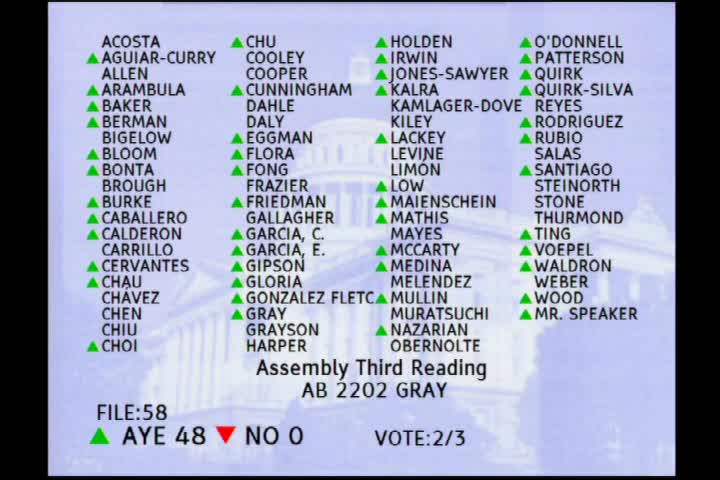 2MIN
Assembly Floor
 11MIN
Assembly Standing Committee on Revenue and Taxation
Bill Author

Bill Co-Author(s):
