AB 224: California Housing Finance Agency: financing agreements: affordable rental housing for school employees.
- Session Year: 2017-2018
- House: Assembly
- Latest Version Date: 2018-08-22
Existing law establishes the California Housing Finance Agency, within the Department of Housing and Community Development, with the primary purpose of meeting the housing needs of persons and families of low or moderate income. Existing law authorizes the agency to make, or undertake commitments to make, loans to housing sponsors to finance certain types of housing developments and residential structures, as provided, and requires the agency to enter into regulatory contracts and other agreements with housing sponsors receiving these loans. Existing law, the Teacher Housing Act of 2016, authorizes school districts to establish and implement programs that address the housing needs of teachers and school district employees who face challenges in securing affordable housing.
This bill would specifically authorize the agency to enter into financing agreements with school districts, and developers that have partnered with school districts, for the creation of affordable rental housing, as defined, for school district employees, including teachers. The bill would require that payment on a loan provided pursuant to these provisions be deferred until the affordable rental housing financed by that loan is put into service and the school district begins collecting rent from the occupants of that affordable rental housing.
Existing law establishes the California Housing Finance Fund and continuously appropriates all money in the fund to the agency for purposes of financing the various programs that it administers. Existing law requires that all moneys accruing to the agency pursuant to specified provisions, including proceeds from revenue bonds and taxable securities issued by the agency, be deposited in the fund.
This bill, notwithstanding these provisions, would make funds available for its purposes only upon appropriation by the Legislature.
The Dental Practice Act provides for the licensure and regulation of dentists by the Dental Board of California, which is within the Department of Consumer Affairs. The act governs the use of general anesthesia, conscious sedation, and oral conscious sedation for pediatric and adult patients. The act makes it unprofessional conduct for a dentist to engage in certain conduct, including failing to obtain written consent prior to administering general anesthesia or conscious sedation. The act also makes a willful violation of its provisions, including practicing without a valid certificate or license, a crime, and defines various terms relating to anesthesia and sedation. This bill, on or before January 1, 2019, would require the board to contract with a nonprofit research organization for the purpose of obtaining high-quality pediatric sedation and anesthesia-related data.This bill, on and after January 1, 2019, would redefine general anesthesia for these purposes. The bill would define deep sedation to mean a drug-induced depression of consciousness during which patients cannot be easily aroused but respond purposefully following repeated or painful stimulation, as specified.The Dental Practice Act prohibits a dentist from administering or ordering the administration of general anesthesia on an outpatient basis for dental patients unless the dentist meets certain licensing criteria.This bill would extend that licensing criteria to dentists administering deep sedation. The bill would require dentists to have a pediatric endorsement of their general anesthesia permit and have completed a Commission on Dental Accreditation accredited or equivalent residency training program providing competency in the administration of deep sedation or general anesthesia to be eligible to administer these drugs to patients under 13 years of age. The bill also would require dentists to have completed at least 20 cases to establish competency for patients under 7 years of age, and would require dentists to perform a physical evaluation and a medical history before administering deep sedation or general anesthesia. The bill would further require that, for any procedure involving deep sedation or general anesthesia for patients between 7 and 13 years of age, the dentist and at least 2 support staff be present, except as specified, and would require the dentist and at least one support staff to have certain advanced life support and airway management training, as specified. The bill also would require an operating dentist, an assistant, and a dedicated monitor, as defined, to be present during procedures on children under 7 years of age, and would require the dedicated monitor to have certain advanced life support and airway management training, as specified. The bill would make these provisions operative on January 1, 2019.The Dental Practice Act prohibits a dentist from administering or ordering the administration of conscious sedation, as defined, on an outpatient basis unless the dentist meets certain licensing criteria.This bill would replace the term conscious sedation with moderate sedation and, on and after January 1, 2020, would define moderate sedation as a drug-induced depression of consciousness during which a patient responds purposefully to verbal commands and meets other criteria. The bill would prohibit a dentist from administering or ordering the administration of moderate sedation on an outpatient basis to a dental patient unless the dentist meets specified licensing criteria and has applied to the board, submitted an application fee, and shown successful completion of training in moderate sedation. The bill would require a dentist who orders the administration of moderate sedation to be physically present in the treatment facility while the patient is sedated. The bill would specify that training in the administration of moderate sedation for patients 13 years of age or older is acceptable if it consists of a certain number of instructional hours and completion of cases and complies with certain guidelines for teaching pain control and sedation. The bill would require a dentist, prior to performing any procedure involving moderate sedation of a patient under 13 years of age, to obtain a pediatric endorsement, requiring a specified number of didactic instruction and clinical cases as well as advanced life support and airway management training. The bill also would require for a child under 7 years of age that there be at least 2 support staff persons in addition to the practicing dentist present at all times during the procedure, with one staff person member serving as a dedicated patient monitor. The bill would make these provisions operative on January 1, 2020.This bill also would establish new requirements for dentists administering or ordering the administration of minimal sedation, defined as a drug-induced state during which patients respond normally to verbal commands, as specified, for pediatric patients under 13 years of age. These new requirements would include that the dentist possess specified licensing credentials, and would require any dentist who desires to administer or order the administration of minimal sedation to apply to the board, as specified, and to submit an application fee. The bill would make a violation of these provisions governing minimal sedation unprofessional conduct, constituting grounds for the revocation or suspension of the dentists permit or other forms of reprimand. The bill would make these provisions operative on January 1, 2020.By placing new requirements on dentists and other practitioners, this bill would expand the scope of an existing crime for violations of the Dental Practice Act, and would, therefore, impose a state-mandated local program.The California Constitution requires the state to reimburse local agencies and school districts for certain costs mandated by the state. Statutory provisions establish procedures for making that reimbursement.This bill would provide that no reimbursement is required by this act for a specified reason.The Dental Practice Act provides for the licensure and regulation of dentists by the Dental Board of California, which is within the Department of Consumer Affairs. The act governs the use of general anesthesia, conscious sedation, and oral conscious sedation for pediatric and adult patients. The act makes it unprofessional conduct for a dentist to engage in certain conduct, including failing to obtain written consent prior to administering general anesthesia or conscious sedation. The act also makes a willful violation of its provisions, including practicing without a valid certificate or license, a crime, and defines various terms relating to anesthesia and sedation.
This bill, on or before January 1, 2019, would require the board to contract with a nonprofit research organization for the purpose of obtaining high-quality pediatric sedation and anesthesia-related data.
This bill bill, on and after January 1, 2019, would redefine general anesthesia for these purposes and additionally purposes. The bill would define deep sedation to mean a drug-induced depression of consciousness during which patients cannot be easily aroused but respond purposefully following repeated or painful stimulation, as specified.
The Dental Practice Act prohibits a dentist from administering or ordering the administration of general anesthesia on an outpatient basis for dental patients unless the dentist meets certain licensing criteria.
This bill would extend that licensing criteria to dentists administering deep sedation. The bill would require dentists to have a pediatric endorsement of their general anesthesia permit and have completed a Commission on Dental Accreditation accredited or equivalent residency training program providing competency in the administration of deep sedation or general anesthesia to be eligible to administer these drugs to patients under 13 years of age. The bill also would require dentists to have completed at least 52 20 cases to establish competency for patients under 7 years of age, and would require dentists to perform a physical evaluation and a medical history before administering deep sedation or general anesthesia. The bill would further require that, for any procedure involving deep sedation or general anesthesia for patients between 7 and 13 years of age, the dentist and at least 2 support staff be present, except as specified, and would require the dentist and at least one support staff to have certain advanced life support and airway management training, as specified. The bill also would require an operating dentist, an assistant, and a dedicated monitor, as defined, to be present during procedures on children under 7 years of age, and would require the dedicated monitor to have certain advanced life support and airway management training, as specified. The bill would make these provisions operative on January 1, 2019.
The Dental Practice Act prohibits a dentist from administering or ordering the administration of conscious sedation, as defined, on an outpatient basis unless the dentist meets certain licensing criteria.
This bill would replace the term conscious sedation with moderate sedation, meaning sedation and, on and after January 1, 2020, would define moderate sedation as a drug-induced depression of consciousness during which a patient responds purposefully to verbal commands and meets other criteria. The bill would prohibit a dentist from administering or ordering the administration of moderate sedation on an outpatient basis to a dental patient unless the dentist meets specified licensing criteria and has applied to the board, submitted an application fee, and shown successful completion of training in moderate sedation. The bill would require a dentist who orders the administration of moderate sedation to be physically present in the treatment facility while the patient is sedated. The bill would specify that training in the administration of moderate sedation for patients 13 years of age or older is acceptable if it consists of a certain number of instructional hours and completion of cases and complies with certain guidelines for teaching pain control and sedation. The bill would require a dentist, prior to performing any procedure involving moderate sedation of a patient under 13 years of age, to obtain a pediatric endorsement, requiring a specified number of didactic instruction and clinical cases as well as advanced life support and airway management training. The bill also would require for a child under 7 years of age that there be at least 2 support staff persons in addition to the practicing dentist present at all times during the procedure, with one staff person member serving as a dedicated patient monitor. The bill would make these provisions operative on January 1, 2020.
TheThis bill also would establish new requirements for dentists administering or ordering the administration of minimal sedation, defined as a drug-induced state during which patients respond normally to verbal commands, as specified, for pediatric patients under 13 years of age. These new requirements would include that the dentist possess specified licensing credentials, and would require any dentist who desires to administer or order the administration of minimal sedation to apply to the board, as specified, and to submit an application fee. The bill would make a violation of these provisions governing minimal sedation unprofessional conduct, constituting grounds for the revocation or suspension of the dentists permit or other forms of reprimand. Additionally, by expanding The bill would make these provisions operative on January 1, 2020.
By placing new requirements on dentists and other practitioners, this bill would expand the scope of an existing crime for violations of the Dental Practice Act, the bill would and would, therefore, impose a state-mandated local program. This bill also would authorize the board to contract with a nonprofit research organization for the purpose of obtaining high-quality pediatric sedation and anesthesia-related data.
The California Constitution requires the state to reimburse local agencies and school districts for certain costs mandated by the state. Statutory provisions establish procedures for making that reimbursement.
This bill would provide that no reimbursement is required by this act for a specified reason.
The Dental Practice Act provides for the licensure and regulation of dentists by the Dental Board of California, which is within the Department of Consumer Affairs. The act governs the use of general anesthesia, conscious sedation, and oral conscious sedation for pediatric and adult patients. The act makes it unprofessional conduct for a dentist to engage in certain conduct, including failing to obtain written consent prior to administering general anesthesia or conscious sedation. The act also makes a willful violation of its provisions, including practicing without a valid certificate or license, a crime, and defines various terms relating to anesthesia and sedation.
This bill would redefine general anesthesia for these purposes and additionally would define deep sedation to mean a drug-induced depression of consciousness during which patients cannot be easily aroused but respond purposefully following repeated or painful stimulation, as specified.
The Dental Practice Act prohibits a dentist from administering or ordering the administration of general anesthesia on an outpatient basis for dental patients unless the dentist meets certain licensing criteria.
This bill would extend that licensing criteria to dentists administering deep sedation. The bill would require dentists to have a pediatric endorsement of their general anesthesia permit and have completed a Commission on Dental Accreditation accredited or equivalent residency training program providing competency in the administration of deep sedation or general anesthesia to be eligible to administer these drugs to patients under 13 years of age. The bill also would require dentists to have completed at least 52 cases to establish competency for patients under 7 years of age, and would require dentists to perform a physical evaluation and a medical history before administering deep sedation or general anesthesia. The bill would further require that, for any procedure involving deep sedation or general anesthesia for patients between 7 and 13 years of age, the dentist and at least 2 support staff be present, except as specified, and would require the dentist and at least one support staff to have certain advanced life support and airway management training, as specified. The bill also would require an operating dentist, a dental sedation assistant permitholder, an assistant, and a dedicated monitor, as defined, to be present during procedures on children under 7 years of age, and would require all of the persons present during the procedure to the dedicated monitor to have certain advanced life support and airway management training, as specified.
The Dental Practice Act prohibits a dentist from administering or ordering the administration of conscious sedation, as defined, on an outpatient basis unless the dentist meets certain licensing criteria.
This bill would replace the term conscious sedation conscious sedation with moderate sedation, moderate sedation, meaning a drug-induced depression of consciousness during which a patient responds purposefully to verbal commands and meets other criteria. The bill would prohibit a dentist from administering or ordering the administration of moderate sedation on an outpatient basis to a dental patient unless the dentist meets specified licensing criteria and has applied to the board, submitted an application fee, and shown successful completion of training in moderate sedation. The bill would require a dentist who orders the administration of moderate sedation to be physically present in the treatment facility while the patient is sedated. The bill would specify that training in the administration of moderate sedation for patients 13 years of age or older is acceptable if it consists of a certain number of instructional hours and completion of cases and complies with certain guidelines for teaching pain control and sedation. The bill would require a dentist, prior to performing any procedure involving moderate sedation of a patient under 13 years of age, to obtain a pediatric endorsement, requiring a specified number of didactic instruction and clinical cases as well as advanced life support and airway management training. The bill also would require an operating dentist, a dental sedation assistant permitholder, and a dedicated monitor, as defined, to be present during a procedure on children for a child under 7 years of age, and would require all of the persons present during the procedure to have certain advanced life support and airway management training, as specified. age that there be at least 2 support staff persons in addition to the practicing dentist present at all times during the procedure, with one staff person member serving as a dedicated patient monitor.
The bill also would establish new requirements for dentists administering or ordering the administration of minimal sedation, defined as a drug-induced state during which patients respond normally to verbal commands, as specified, for pediatric patients under 13 years of age. These new requirements would include that the dentist possess specified licensing credentials, and would require any dentist who desires to administer or order the administration of minimal sedation to apply to the board, as specified, and to submit an application fee. The bill would make a violation of these provisions governing minimal sedation unprofessional conduct, constituting grounds for the revocation or suspension of the dentists permit or other forms of reprimand. Additionally, by expanding the scope of an existing crime for violations of the Dental Practice Act, the bill would impose a state-mandated local program. This bill also would authorize the board to contract with a nonprofit research organization for the purpose of obtaining high-quality pediatric sedation and anesthesia-related data.
The California Constitution requires the state to reimburse local agencies and school districts for certain costs mandated by the state. Statutory provisions establish procedures for making that reimbursement.
This bill would provide that no reimbursement is required by this act for a specified reason.
The Dental Practice Act provides for the licensure and regulation of dentists by the Dental Board of California, which is within the Department of Consumer Affairs. The act governs the use of general anesthesia, conscious sedation, and oral conscious sedation for pediatric and adult patients. The act makes it unprofessional conduct for a dentist to engage in certain conduct, including failing to obtain written consent prior to administering general anesthesia or conscious sedation. The act also makes a willful violation of its provisions, including practicing without a valid certificate or license, a crime, and defines various terms relating to anesthesia and sedation.
This bill would redefine general anesthesia for these purposes and additionally would define deep sedation to mean a drug-induced depression of consciousness during which patients cannot be easily aroused but respond purposefully following repeated or painful stimulation, as specified.
The Dental Practice Act prohibits a dentist from administering or ordering the administration of general anesthesia on an outpatient basis for dental patients unless the dentist meets certain licensing criteria.
This bill would extend that licensing criteria to dentists administering deep sedation. The bill would require dentists to have a pediatric endorsement of their general anesthesia permit and have completed a Commission on Dental Accreditation accredited or equivalent residency training program providing competency in the administration of deep sedation or general anesthesia to be eligible to administer these drugs to patients under 13 years of age. The bill also would require dentists to have completed at least 52 cases to establish competency for patients under 7 years of age, and would require dentists to perform a physical evaluation and a medical history before administering deep sedation or general anesthesia. The bill would further require that, for any procedure involving deep sedation or general anesthesia for patients between 7 and 13 years of age, the dentist and at least 2 support staff be present, except as specified, and would require the dentist and at least one support staff to have certain advanced life support and airway management training, as specified. The bill also would require at least 2 people an operating dentist, a dental sedation assistant permitholder, and a dedicated monitor, as defined, to be present during procedures on children under 7 years of age with one being the operating dentist and the other being either a general anesthesia permitholder or a nurse anesthetist directly supervised by a general anesthesia permitholder. age, and would require all of the persons present during the procedure to have certain advanced life support and airway management training, as specified.
The Dental Practice Act prohibits a dentist from administering or ordering the administration of conscious sedation, as defined, on an outpatient basis unless the dentist meets certain licensing criteria.
This bill would replace the term conscious sedation with moderate sedation, meaning a drug-induced depression of consciousness during which a patient responds purposefully to verbal commands and meets other criteria. The bill would prohibit a dentist from administering or ordering the administration of moderate sedation on an outpatient basis to a dental patient unless the dentist meets specified licensing criteria and has applied to the board, submitted an application fee, and shown successful completion of training in moderate sedation. The bill would require a dentist who orders the administration of moderate sedation to be physically present in the treatment facility while the patient is sedated. The bill would specify that training in the administration of moderate sedation for patients 13 years of age or older is acceptable if it consists of a certain number of instructional hours and completion of cases and complies with certain guidelines for teaching pain control and sedation. The bill would require a dentist, prior to performing any procedure involving moderate sedation of a patient under 13 years of age, to obtain a pediatric endorsement, requiring a specified number of didactic instruction and clinical cases as well as advanced life support and airway management training. The bill also would require for a child an operating dentist, a dental sedation assistant permitholder, and a dedicated monitor, as defined, to be present during a procedure on children under 7 years of age that there be at least 2 support staff persons in addition to the practicing dentist at all times during the procedure, with one staff member serving as a dedicated patient monitor. age, and would require all of the persons present during the procedure to have certain advanced life support and airway management training, as specified.
The bill also would establish new requirements for dentists administering or ordering the administration of minimal sedation, defined as a drug-induced state during which patients respond normally to verbal commands, as specified, for pediatric patients under 13 years of age. These new requirements would include that the dentist possess specified licensing credentials, and would require any dentist who desires to administer or order the administration of minimal sedation to apply to the board, as specified, and to submit an application fee. The bill would make a violation of these provisions governing minimal sedation unprofessional conduct, constituting grounds for the revocation or suspension of the dentists permit or other forms of reprimand. Additionally, by expanding the scope of an existing crime for violations of the Dental Practice Act, the bill would impose a state-mandated local program. This bill also would authorize the board to contract with a nonprofit research organization for the purpose of obtaining high-quality pediatric sedation and anesthesia-related data.
The California Constitution requires the state to reimburse local agencies and school districts for certain costs mandated by the state. Statutory provisions establish procedures for making that reimbursement.
This bill would provide that no reimbursement is required by this act for a specified reason.
The Dental Practice Act provides for the licensure and regulation of dentists by the Dental Board of California California, which is within the Department of Consumer Affairs. The act governs the use of general anesthesia, conscious sedation, and oral conscious sedation for pediatric and adult patients. The act makes it unprofessional conduct for a dentist to engage in certain conduct, including failing to obtain written consent prior to administering general anesthesia or conscious sedation. The act also makes a willful violation of its provisions, including practicing without a valid certificate or license, a crime, and defines various terms relating to anesthesia and sedation.
This bill would redefine general anesthesia for these purposes and additionally would define deep sedation to mean a drug-induced depression of consciousness during which patients cannot be easily aroused but respond purposefully following repeated or painful stimulation, as specified.
The Dental Practice Act prohibits a dentist from administering or ordering the administration of general anesthesia on an outpatient basis for dental patients unless the dentist meets certain licensing criteria.
This bill would extend that licensing criteria to dentists administering deep sedation. The bill would require dentists to have a pediatric endorsement of their general anesthesia permit and have completed a Commission on Dental Accreditation accredited or equivalent residency training program providing competency in the administration of deep sedation or general anesthesia to be eligible to administer these drugs to patients under 13 years of age. The bill also would require dentists to have completed at least 52 cases to establish competency for patients under 7 years of age, and would require dentists to perform a physical evaluation and a medical history before administering deep sedation or general anesthesia. The bill would further require that, for any procedure involving deep sedation or general anesthesia for patients between 7 and 13 years of age, the dentist and at least 2 support staff be present, except as specified, and would require the dentist and at least one support staff to have certain advanced life support and airway management training, as specified. The bill also would require at least 3 2 people to be present during procedures on children under 7 years of age with one being the operating dentist, another dentist and the other being either a general anesthesiaholder anesthesia permitholder or a nurse anesthetist directly supervised by a general anesthesia permitholder, and one an anesthesia support staff. permitholder.
The Dental Practice Act prohibits a dentist from administering or ordering the administration of conscious sedation, as defined, on an outpatient basis unless the dentist meets certain licensing criteria.
This bill would replace the term conscious sedation with moderate sedation, meaning a drug-induced depression of consciousness during which a patient responds purposefully to verbal commands and meets other criteria. The bill would prohibit a dentist from administering or ordering the administration of moderate sedation on an outpatient basis to a dental patient unless the dentist meets specified licensing criteria and has applied to the board, submitted an application fee, and shown successful completion of training in moderate sedation. The bill would require a dentist who orders the administration of moderate sedation to be physically present in the treatment facility while the patient is sedated. The bill would specify that training in the administration of moderate sedation for patients 13 years of age or older is acceptable if it consists of a certain number of instructional hours and completion of cases and complies with certain guidelines for teaching pain control and sedation. The bill would require a dentist, prior to performing any procedure involving moderate sedation of a patient under 13 years of age, to obtain a pediatric endorsement, requiring a specified number of didactic instruction and clinical cases as well as advanced life support and airway management training. The bill also would require for a child under 7 years of age that there be at least 2 support staff persons in addition to the practicing dentist at all times during the procedure, with one staff member serving as a dedicated patient monitor.
The bill also would establish new requirements for dentists administering or ordering the administration of minimal sedation, defined as a drug-induced state during which patients respond normally to verbal commands, as specified, for pediatric patients under 13 years of age. These new requirements would include that the dentist possess specified licensing credentials, and would require any dentist who desires to administer or order the administration of minimal sedation to apply to the board, as specified, and to submit an application fee. The bill would make a violation of these provisions governing minimal sedation unprofessional conduct, constituting grounds for the revocation or suspension of the dentists permit or other forms of reprimand. Additionally, by expanding the scope of an existing crime for violations of the Dental Practice Act, the bill would impose a state-mandated local program. This bill also would authorize the board to contract with a nonprofit research organization for the purpose of obtaining high-quality pediatric sedation and anesthesia-related data.
The California Constitution requires the state to reimburse local agencies and school districts for certain costs mandated by the state. Statutory provisions establish procedures for making that reimbursement.
This bill would provide that no reimbursement is required by this act for a specified reason.
The Dental Practice Act provides for the licensure and regulation of dentists by the Dental Board of California within the Department of Consumer Affairs. The act governs the use of general anesthesia, conscious sedation, and oral conscious sedation for pediatric and adult patients. The act makes it unprofessional conduct for a dentist to engage in certain conduct, including failing to obtain written consent prior to administering general anesthesia or conscious sedation. The act also makes a willful violation of its provisions, including practicing without a valid certificate or license, a crime, and defines various terms relating to anesthesia and sedation.
This bill would redefine general anesthesia for these purposes and additionally would define deep sedation to mean a drug-induced depression of consciousness during which patients cannot be easily aroused but respond purposefully following repeated or painful stimulation, as specified.
The Dental Practice Act prohibits a dentist from administering or ordering the administration of general anesthesia on an outpatient basis for dental patients unless the dentist meets certain licensing criteria.
This bill would extend that licensing criteria to dentists administering deep sedation. The bill would require dentists to have a pediatric endorsement of their general anesthesia permit and have completed a Commission on Dental Accreditation accredited or equivalent residency training program providing competency in the administration of deep sedation or general anesthesia to be eligible to administer these drugs to patients under 13 years of age. The bill also would require dentists to have completed at least 52 cases to establish competency for patients under 7 years of age, and would require dentists to perform a physical evaluation and a medical history before administering deep sedation or general anesthesia. The bill would further require that, for any procedure involving deep sedation or general anesthesia for patients between 7 and 13 years of age, the dentist and at least 2 support staff be present, except as specified, and would require the dentist and at least one support staff to have certain advanced life support and airway management training, as specified. The bill also would require at least 3 people to be present during procedures on children under 7 years of age with one being the operating dentist, another being either a general anesthesiaholder or a nurse anesthetist supervised by a general anesthesia permitholder, and one an anesthesia support staff.
The Dental Practice Act prohibits a dentist from administering or ordering the administration of conscious sedation, as defined, on an outpatient basis unless the dentist meets certain licensing criteria.
This bill would replace the term conscious sedation with moderate sedation, meaning a drug-induced depression of consciousness during which a patient responds purposefully to verbal commands and meets other criteria. The bill would prohibit a dentist from administering or ordering the administration of moderate sedation on an outpatient basis to a dental patient unless the dentist meets specified licensing criteria and has applied to the board, submitted an application fee, and shown successful completion of training in moderate sedation. The bill would require a dentist who orders the administration of moderate sedation to be physically present in the treatment facility while the patient is sedated. The bill would specify that training in the administration of moderate sedation for patients 13 years of age or older is acceptable if it consists of a certain number of instructional hours and completion of cases and complies with certain guidelines for teaching pain control and sedation. The bill would require a dentist, prior to performing any procedure involving moderate sedation of a patient under 13 years of age, to obtain a pediatric endorsement, requiring a specified number of didactic instruction and clinical cases as well as advanced life support and airway management training. The bill also would require for a child under 7 years of age that there be at least 2 support staff persons in addition to the practicing dentist at all times during the procedure, with one staff member serving as a dedicated patient monitor.
The bill also would establish new requirements for dentists administering or ordering the administration of minimal sedation, defined as a drug-induced state during which patients respond normally to verbal commands, as specified, for pediatric patients under 13 years of age. These new requirements would include that the dentist possess specified licensing credentials, and would require any dentist who desires to administer or order the administration of minimal sedation to apply to the board, as specified, and to submit an application fee. The bill would make a violation of these provisions governing minimal sedation unprofessional conduct, constituting grounds for the revocation or suspension of the dentists permit or other forms of reprimand. Additionally, by expanding the scope of an existing crime for violations of the Dental Practice Act, the bill would impose a state-mandated local program. This bill also would authorize the board to contract with a nonprofit research organization for the purpose of obtaining high-quality pediatric sedation and anesthesia-related data.
The California Constitution requires the state to reimburse local agencies and school districts for certain costs mandated by the state. Statutory provisions establish procedures for making that reimbursement.
This bill would provide that no reimbursement is required by this act for a specified reason.
The Dental Practice Act provides for the licensure and regulation of persons engaged in the practice of dentistry by the Dental Board of California, which is within the Department of Consumer Affairs, and requires, on or before January 1, 2017, the board to provide the Legislature with a report regarding whether current statutes and regulations for the administration and monitoring of pediatric anesthesia in dentistry provide adequate protection for pediatric dental patients.This bill would make nonsubstantive changes to these provisions.The Dental Practice Act provides for the licensure and regulation of persons engaged in the practice of dentistry by the Dental Board of California, which is within the Department of Consumer Affairs, and requires, on or before January 1, 2017, the board to provide the Legislature with a report regarding whether current statutes and regulations for the administration and monitoring of pediatric anesthesia in dentistry provide adequate protection for pediatric dental patients.
This bill would make nonsubstantive changes to these provisions.
For purposes of this chapter:
(a)Affordable rental housing means housing that serves persons and families of low or moderate income.
(b)Qualified developer means a developer that has partnered with a school district to create affordable rental housing for school district employees.
(c)School district employees includes teachers.
51516.(a)The agency may enter into long-term financing agreements with school districts and qualified developers for the creation of affordable rental housing for school district employees.
(b)Payment on a loan provided pursuant to this chapter shall be deferred until the affordable rental housing that is financed by that loan is put into service and the school district begins collecting rent from the occupants of that affordable rental housing.
51517.Notwithstanding Section 51000, moneys shall be available for purposes of this chapter only upon appropriation by the Legislature.
All matter omitted in this version of the bill appears in the bill as amended in the Assembly, May 30, 2017. (JR11)On or before January 1, 2019, the board shall contract with a nonprofit research organization for the purpose of obtaining high-quality data about outcomes and complications related to pediatric dental sedation and anesthesia. It is the intent of this section that the collection of data shall lead to further quality improvement and safety.
SEC. 2.The heading of Article 2.7 (commencing with Section 1646) of Chapter 4 of Division 2 of the Business and Professions Code is amended to read:2.7.Use of Deep Sedation and General AnesthesiaSEC. 3.Section 1646 of the Business and Professions Code is amended to read:1646.As used in this article, the following definitions shall apply:
(a)Deep sedation means a drug-induced depression of consciousness during which patients cannot be easily aroused but respond purposefully following repeated or painful stimulation. The ability to independently maintain ventilatory function may be impaired. Patients may require assistance in maintaining a patent airway, and spontaneous ventilation may be inadequate. Cardiovascular function is usually maintained.
(b)(1)(A)General anesthesia means as used in this article, means a controlled state of depressed consciousness or unconsciousness, accompanied by partial or complete loss of protective reflexes, produced by a pharmacologic or nonpharmacologic method, or a combination thereof.
(B)This paragraph shall become inoperative on January 1, 2019.
(2)On and after January 1, 2019, general anesthesia means a drug-induced loss of consciousness during which patients are not arousable, even by painful stimulation. The ability to independently maintain ventilatory function is often impaired. Patients often require assistance in maintaining a patent airway, and positive pressure ventilation may be required because of depressed spontaneous ventilation or drug-induced depression of neuromuscular function. Cardiovascular function may be impaired.
SEC. 4.Section 1646.1 of the Business and Professions Code is amended to read:1646.1.(a)A dentist shall not administer or order the administration of deep sedation or general anesthesia on an outpatient basis for dental patients unless the dentist either possesses a current license in good standing to practice dentistry in this state and holds a valid general anesthesia permit issued by the board or possesses a current permit under Section 1638 or 1640 and holds a valid general anesthesia permit issued by the board.
(b)A On and after January 1, 2019, a dentist shall not administer or order the administration of deep sedation or general anesthesia to patients under 13 years of age unless that dentist holds a pediatric endorsement for the general anesthesia permit, as required by the board, allowing the administration of deep sedation or general anesthesia for patients 12 years of age or younger.
(c)A dentist shall not order the administration of general anesthesia unless the dentist is physically within the dental office at the time of the administration.
(d)A general anesthesia permit shall expire on the date provided in Section 1715 that next occurs after its issuance, unless it is renewed as provided in this article.
(e)The On and after January 1, 2019, a dentist shall have completed a Commission on Dental Accreditation (CODA) accredited or equivalent residency training program that provides competency in the administration of deep sedation and general anesthesia in order to be eligible to perform deep sedation or general anesthesia on children under 13 years of age. For On and after January 1, 2019, for patients under seven years of age, the applicant shall provide proof of completion of at least 52 20 cases to establish competency, both at the time of initial application and at renewal.
(f)This article does not apply to the administration of local anesthesia, minimal sedation, or moderate sedation.
SEC. 5.Section 1646.2 of the Business and Professions Code is amended to read:1646.2.(a)A dentist who desires to administer or order the administration of deep sedation or general anesthesia anesthesia, or, on and after January 1, 2019, to administer or order the administration of deep sedation or general anesthesia, shall apply to the board on an application form prescribed by the board. The dentist must shall submit an application fee and produce evidence showing that he or she has successfully completed a minimum of one year of advanced training in anesthesiology and related academic subjects approved by the board, or equivalent training or experience approved by the board, beyond the undergraduate school level.
(b)The application for a permit shall include documentation that equipment and drugs required by the board are on the premises.
SEC. 6.Section 1646.3 of the Business and Professions Code is amended to read:1646.3.(a)A physical evaluation and medical history shall be taken before the administration of deep sedation or general anesthesia. Any (1)Any dentist holding a permit shall maintain medical history, physical evaluation, and deep sedation and general anesthesia records as required by board regulations.
(2)On and after January 1, 2019, a physical evaluation and medical history shall be taken before the administration of deep sedation or general anesthesia. On and after January 1, 2019, any dentist holding a permit shall, in addition to the requirements in paragraph (1), maintain deep sedation records as required by board regulations.
(b)For On and after January 1, 2019, for patients 7 to 13 years of age, inclusive, the dentist and at least two support staff shall be present, unless there is a dedicated general anesthesia provider present. The On and after January 1, 2019, the dentist and at least one support staff member shall be trained in Pediatric Advanced Life Support (PALS) and airway management, equivalent to the American Academy of Pediatrics and American Academy of Pediatric Dentistry (AAP-AAPD) Guidelines or as determined by the board. That On and after January 1, 2019, that staff member shall be dedicated to monitoring the patient throughout the procedure.
(c)For On and after January 1, 2019, for children under seven years of age, there shall be present during the procedure all of the following:
(1)An operating dentist.
(2)An assistant.
(3)A dedicated monitor. For purposes of this paragraph, dedicated monitor means a person licensed under Division 2 of this code whose license authorizes the person to monitor the patients airway through recovery. The dedicated monitor shall be trained in PALS and airway management, equivalent to the AAP-AAPD Guidelines or as determined by the board.
SEC. 7.Section 1646.4 of the Business and Professions Code is amended to read:1646.4.(a)(1)Prior to the issuance or renewal of a permit for the use of deep sedation or general anesthesia, the board may, at its discretion, require an onsite inspection and evaluation of the licentiate and the facility, equipment, personnel, and procedures utilized by the licentiate. This subdivision shall not be construed to require, as a condition of issuance or renewal of a permit, an onsite inspection and evaluation by the board. The permit of any dentist who has failed an onsite inspection and evaluation shall be automatically suspended 30 days after the date on which the board notifies the dentist of the failure, unless within that time period the dentist has retaken and passed an onsite inspection and evaluation. Every dentist issued a permit under this article shall have an onsite inspection and evaluation at least once every five years. Refusal to submit to an inspection shall result in automatic denial or revocation of the permit.
(2)On and after January 1, 2019, paragraph (1) shall also apply to the issuance or renewal of a permit for the use of deep sedation.
(b)The board may contract with public or private organizations or individuals expert in dental outpatient general anesthesia to perform onsite inspections and evaluations. The board may not, however, delegate its authority to issue permits or to determine the persons or facilities to be inspected.
SEC. 8.Section 1646.5 of the Business and Professions Code is amended to read:1646.5.(a)(1)A permittee shall be required to complete 24 hours of approved courses of study related to deep sedation or general anesthesia as a condition of renewal of a permit. Those courses of study shall be credited toward any continuing education required by the board pursuant to Section 1645.
(2)This subdivision shall become inoperative on January 1, 2019.
(b)On and after January 1, 2019, a permittee shall be required to complete 24 hours of approved courses of study related to deep sedation or general anesthesia as a condition of renewal of a permit. On and after January 1, 2019, those courses of study shall be credited toward any continuing education required by the board pursuant to Section 1645.
SEC. 9.Section 1646.8 of the Business and Professions Code is amended to read:1646.8.Nothing in this chapter shall be construed to authorize a dentist to administer or directly supervise the administration of general anesthesia or deep sedation for reasons other than dental treatment, as defined in Section 1625.
SEC. 10.Section 1646.9 of the Business and Professions Code is amended to read:1646.9.(a)(1)Notwithstanding any other law, including, but not limited to, Section 1646.1, a physician and surgeon licensed pursuant to Chapter 5 (commencing with Section 2000) may administer deep sedation or general anesthesia in the office of a licensed dentist for dental patients, without regard to whether the dentist possesses a permit issued pursuant to this article, if both of the following conditions are met:
(1)(A)The physician and surgeon possesses a current license in good standing to practice medicine in this state.
(2)(B)The physician and surgeon holds a valid general anesthesia permit issued by the Dental Board of California pursuant to subdivision (b).
(2)This subdivision shall become inoperative on January 1, 2019.
(b)(1)A physician and surgeon who desires to administer deep sedation or general anesthesia as set forth in subdivision (a) shall apply to the Dental Board of California on an application form prescribed by the board and shall submit all of the following:
(A)The payment of an application fee prescribed by this article.
(B)Evidence satisfactory to the Medical Board of California showing that the applicant has successfully completed a postgraduate residency training program in anesthesiology that is recognized by the American Council on Graduate Medical Education, as set forth in Section 2079.
(C)Documentation demonstrating that all equipment and drugs required by the Dental Board of California are possessed by the applicant and shall be available for use in any dental office in which he or she administers deep sedation or general anesthesia.
(D)Information relative to the current membership of the applicant on hospital medical staffs.
(2)Prior to issuance or renewal of a permit pursuant to this section, the Dental Board of California may, at its discretion, require an onsite inspection and evaluation of the facility, equipment, personnel, including, but not limited to, the physician and surgeon, and procedures utilized. This subdivision shall not be construed to require, as a condition of issuance or renewal of a permit, an onsite inspection and evaluation by the board. At least one of the persons evaluating the procedures utilized by the physician and surgeon shall be a licensed physician and surgeon expert in outpatient deep sedation or general anesthesia who has been authorized or retained under contract by the Dental Board of California for this purpose.
(3)The permit of a physician and surgeon who has failed an onsite inspection and evaluation shall be automatically suspended 30 days after the date on which the board notifies the physician and surgeon of the failure unless within that time period the physician and surgeon has retaken and passed an onsite inspection and evaluation. Every physician and surgeon issued a permit under this article shall have an onsite inspection and evaluation at least once every six years. Refusal to submit to an inspection shall result in automatic denial or revocation of the permit.
(4)This subdivision shall become inoperative on January 1, 2019.
(c)On and after January 1, 2019, notwithstanding any other law, including, but not limited to, Section 1646.1, a physician and surgeon licensed pursuant to Chapter 5 (commencing with Section 2000) may administer deep sedation or general anesthesia in the office of a licensed dentist for dental patients, without regard to whether the dentist possesses a permit issued pursuant to this article, if both of the following conditions are met:
(1)The physician and surgeon possesses a current license in good standing to practice medicine in this state.
(2)The physician and surgeon holds a valid general anesthesia permit issued by the Dental Board of California pursuant to subdivision (d).
(d)(1)On and after January 1, 2019, a physician and surgeon who desires to administer deep sedation or general anesthesia as set forth in subdivision (c) shall apply to the Dental Board of California on an application form prescribed by the board and shall submit all of the following:
(A)The payment of an application fee prescribed by this article.
(B)Evidence satisfactory to the Medical Board of California showing that the applicant has successfully completed a postgraduate residency training program in anesthesiology that is recognized by the American Council on Graduate Medical Education, as set forth in Section 2079.
(C)Documentation demonstrating that all equipment and drugs required by the Dental Board of California are possessed by the applicant and shall be available for use in any dental office in which he or she administers deep sedation or general anesthesia.
(D)Information relative to the current membership of the applicant on hospital medical staffs.
(2)On and after January 1, 2019, prior to issuance or renewal of a permit pursuant to this section, the Dental Board of California may, at its discretion, require an onsite inspection and evaluation of the facility, equipment, personnel, including, but not limited to, the physician and surgeon, and procedures utilized. This subdivision shall not be construed to require, as a condition of issuance or renewal of a permit, an onsite inspection and evaluation by the board. On and after January 1, 2019, at least one of the persons evaluating the procedures utilized by the physician and surgeon shall be a licensed physician and surgeon expert in outpatient deep sedation or general anesthesia who has been authorized or retained under contract by the Dental Board of California for this purpose.
(3)On and after January 1, 2019, the permit of a physician and surgeon who has failed an onsite inspection and evaluation shall be automatically suspended 30 days after the date on which the board notifies the physician and surgeon of the failure unless within that time period the physician and surgeon has retaken and passed an onsite inspection and evaluation. On and after January 1, 2019, every physician and surgeon issued a permit under this article shall have an onsite inspection and evaluation at least once every six years. Refusal to submit to an inspection shall result in automatic denial or revocation of the permit.
SEC. 11.The heading of Article 2.8 (commencing with Section 1647) of Chapter 4 of Division 2 of the Business and Professions Code is amended to read:2.8.Use of Moderate SedationSEC. 12.Section 1647 of the Business and Professions Code is amended to read:1647.(a)The Legislature finds and declares that a commendable patient safety record has been maintained in the past by dentists and those other qualified providers of anesthesia services who, pursuant to a dentists authorization, administer patient sedation, and that the increasing number of pharmaceuticals and techniques used to administer them for patient sedation require additional regulation to maintain patient safety in the future.
(b)The Legislature further finds and declares all of the following:
(1)That previous laws enacted in 1980 contained separate and distinct definitions for general anesthesia and the state of consciousness.
(2)That in dental practice, there is a continuum of sedation used which cannot be adequately defined in terms of consciousness and general anesthesia.
(3)That the administration of sedation through this continuum results in different states of consciousness that may or may not be predictable in every instance.
(4)That in most instances, the level of sedation will result in a predictable level of consciousness during the entire time of sedation.
(c)The Legislature further finds and declares that the educational standards presently required for deep sedation and general anesthesia should be required when the degree of sedation in the continuum of sedation is such that there is a reasonable possibility that loss of consciousness may result, even if unintended. However, achieving the degree of moderate sedation, previously referred to as conscious sedation, where a margin of safety exists wide enough to render unintended loss of consciousness unlikely, requires educational standards appropriate to the administration of the resulting predictable level of consciousness.
SEC. 13.Section 1647.1 of the Business and Professions Code is amended to read:1647.1.(a)(1)(A)As used in this article, moderate sedation means a drug-induced minimally depressed level of consciousness produced by a pharmacologic or nonpharmacologic method, or a combination thereof, that retains the patients ability to maintain independently and continuously an airway, and respond appropriately to physical stimulation or verbal command.
(B)Moderate sedation does not include the administration of oral medications or the administration of a mixture of nitrous oxide and oxygen, whether administered alone or in combination with each other.
(C)This paragraph shall become inoperative on January 1, 2020.
(2)On and after January 1, 2020, as used in this article, moderate sedation means a drug-induced depression of consciousness during which a patient responds purposefully to verbal commands, either alone or accompanied by light tactile stimulation, no interventions are required to maintain a patients airway, spontaneous ventilation is adequate, and cardiovascular function is usually maintained.
(b)The drugs and techniques used in moderate sedation shall have a margin of safety wide enough to render unintended loss of consciousness unlikely. Further, patients whose only response is reflex withdrawal from painful stimuli shall not be considered to be in a state of moderate sedation.
(c)For the very young or patients with intellectual disabilities, incapable of the usually expected verbal response, a minimally depressed level of consciousness for that individual should be maintained.
SEC. 14.Section 1647.2 of the Business and Professions Code is amended to read:1647.2.(a)A dentist shall not administer or order the administration of moderate sedation on an outpatient basis for a dental patient unless one of the following conditions is met:
(1)The dentist possesses a current license in good standing to practice dentistry in California and either holds a valid general anesthesia permit or obtains a permit issued by the board authorizing the dentist to administer moderate sedation.
(2)The dentist possesses a current permit under Section 1638 or 1640 and either holds a valid general anesthesia permit or obtains a permit issued by the board authorizing the dentist to administer moderate sedation.
(b)A moderate sedation permit shall expire on the date specified in Section 1715 that next occurs after its issuance, unless it is renewed as provided in this article.
(c)A dentist who orders the administration of moderate sedation shall be physically present in the treatment facility while the patient is sedated.
(d)This article shall not apply to the administration of local anesthesia, minimal sedation, deep sedation, or general anesthesia.
SEC. 15.Section 1647.3 of the Business and Professions Code is amended to read:1647.3.(a)A dentist who desires to administer or to order the administration of moderate sedation shall apply to the board on an application form prescribed by the board. The dentist shall submit an application fee and produce evidence showing that he or she has successfully completed training in moderate sedation that meets the requirements of subdivision (c). (c) or (d), as applicable.
(b)The application for a permit shall include documentation that equipment and drugs required by the board are on the premises.
(c)(1)Training in the administration of moderate sedation for patients 13 years of age or older shall be acceptable if it meets all of the following as approved by the board:
(1)(A)Consists of at least 60 hours of instruction.
(2)(B)Requires satisfactory completion of at least 20 cases of administration of moderate sedation for a variety of dental procedures.
(3)(C)Complies with the requirements of the Guidelines for Teaching Pain Control and Sedation to Dentists and Dental Students of the American Dental Association, including, but not limited to, certification of competence in rescuing patients from a deeper level of sedation than intended, and managing the airway, intravascular or intraosseous access, and reversal medications. the Comprehensive Control of Anxiety and Pain in Dentistry of the American Dental Association.
(2)This subdivision shall become inoperative on January 1, 2020.
(d)On and after January 1, 2020, training in the administration of moderate sedation for patients 13 years of age or older shall be acceptable if it meets all of the following as approved by the board:
(1)Consists of at least 60 hours of instruction.
(2)Requires satisfactory completion of at least 20 cases of administration of moderate sedation for a variety of dental procedures.
(3)Complies with the requirements of the Guidelines for Teaching Pain Control and Sedation to Dentists and Dental Students of the American Dental Association, including, but not limited to, certification of competence in rescuing patients from a deeper level of sedation than intended, and managing the airway, intravascular or intraosseous access, and reversal medications.
(d)Before(e) On and after January 1, 2020, before performing any procedure involving moderate sedation of a patient under 13 years of age, the dentist shall obtain a pediatric endorsement of his or her moderate sedation permit. To On and after January 1, 2020, to be eligible for the pediatric moderate sedation permit, the dentist shall have completed any of the following:
(1)A moderate sedation course consisting of at least 60 hours of didactic instruction and at least 20 clinical cases, as described in subdivision (c), (d), but that is directed at treating pediatric patients under 13 years of age.
(2)A moderate sedation course, as described in subdivision (c), (d), that is directed at treating patients 13 years of age or older, in addition to at least 24 hours of didactic instruction in pediatric moderate sedation and at least 10 clinical cases in pediatric moderate sedation.
(3)A moderate sedation course that is directed at treating patients 13 years of age or older, as described in subdivision (c), (d), in addition to completion of an accredited pediatric dental residency program. The pediatric moderate sedation permitholder shall provide proof of completion of at least 52 20 cases to establish competency, both at the time of the initial application and at renewal.
(e)The(f)On and after January 1, 2020, the dentist and at least one member of the support staff shall be trained in Pediatric Advanced Life Support (PALS) and airway management, equivalent to the American Academy of Pediatrics and the American Academy of Pediatric Dentistry (AAP-AAPD) Guidelines, or as determined by the board.
(f)For(g) On and after January 1, 2020, for a child under seven years of age, there shall be at least two support staff persons, in addition to the practicing dentist, present at all times during the procedure. One On and after January 1, 2020, one staff member shall serve as a dedicated patient monitor.
SEC. 16.Section 1647.5 of the Business and Professions Code is amended to read:1647.5.A permittee shall be required to complete 15 hours of approved courses of study related to moderate sedation as a condition of renewal of a permit. Those courses of study shall be credited toward any continuing education required by the board pursuant to Section 1645.
SEC. 17.Section 1647.6 of the Business and Professions Code is amended to read:1647.6.A physical evaluation and medical history shall be taken before the administration of moderate sedation. Any dentist holding a permit shall maintain records of the physical evaluation, medical history, and moderate sedation procedures used as required by board regulations.
SEC. 18.Section 1647.7 of the Business and Professions Code is amended to read:1647.7.(a)Prior to the issuance or renewal of a permit to administer moderate sedation, the board may, at its discretion, require an onsite inspection and evaluation of the licentiate and the facility, equipment, personnel, and procedures utilized by the licentiate. This subdivision shall not be construed to require, as a condition of issuance or renewal of a permit, an onsite inspection and evaluation by the board. The permit of any dentist who has failed an onsite inspection and evaluation shall be automatically suspended 30 days after the date on which the board notifies the dentist of the failure unless, within that time period, the dentist has retaken and passed an onsite inspection and evaluation. Every dentist issued a permit under this article shall have an onsite inspection and evaluation at least once in every six years. Refusal to submit to an inspection shall result in automatic denial or revocation of the permit.
(b)An applicant who has successfully completed the course required by Section 1647.3 may be granted a one-year temporary permit by the board prior to the onsite inspection and evaluation. Failure to pass the inspection and evaluation shall result in the immediate and automatic termination of the temporary permit.
(c)The board may contract with public or private organizations or individuals expert in dental outpatient moderate sedation to perform onsite inspections and evaluations. The board may not, however, delegate its authority to issue permits or to determine the persons or facilities to be inspected.
SEC. 19.Section 1647.11 of the Business and Professions Code is amended to read:1647.11.(a)Notwithstanding subdivision (a) of Section 1647.2, a dentist may not administer oral conscious sedation on an outpatient basis to a minor patient unless one of the following conditions is met:
(1)The dentist possesses a current license in good standing to practice dentistry in California and either holds a valid general anesthesia permit, moderate sedation permit, or has been certified by the board, pursuant to Section 1647.12, to administer oral sedation to minor patients.
(2)The dentist possesses a current permit issued under Section 1638 or 1640 and either holds a valid general anesthesia permit, moderate sedation permit, or possesses a certificate as a provider of oral conscious sedation to minor patients in compliance with, and pursuant to, this article.
(b)Certification as a provider of oral conscious sedation to minor patients expires at the same time the license or permit of the dentist expires unless renewed at the same time the dentists license or permit is renewed after its issuance, unless certification is renewed as provided in this article.
(c)This article shall not apply to the administration of local anesthesia or a mixture of nitrous oxide and oxygen or to the administration, dispensing, or prescription of postoperative medications.
SEC. 20.Section 1647.12 of the Business and Professions Code is amended to read:1647.12.A dentist who desires to administer, or order the administration of, oral conscious sedation for minor patients, who does not hold a general anesthesia permit, as provided in Sections 1646.1 and 1646.2, or a moderate sedation permit, as provided in Sections 1647.2 and 1647.3, shall register his or her name with the board on a board-prescribed registration form. The dentist shall submit the registration fee and evidence showing that he or she satisfies any of the following requirements:
(a)Satisfactory completion of a postgraduate program in oral and maxillofacial surgery or pediatric dentistry approved by either the Commission on Dental Accreditation or a comparable organization approved by the board.
(b)Satisfactory completion of a periodontics or general practice residency or other advanced education in a general dentistry program approved by the board.
(c)Satisfactory completion of a board-approved educational program on oral medications and sedation.
SEC. 21.Section 1647.19 of the Business and Professions Code is amended to read:1647.19.(a)Notwithstanding subdivision (a) of Section 1647.2, a dentist may not administer oral conscious sedation on an outpatient basis to an adult patient unless the dentist possesses a current license in good standing to practice dentistry in California, and one of the following conditions is met:
(1)The dentist holds a valid general anesthesia permit, holds a moderate sedation permit, has been certified by the board, pursuant to Section 1647.20, to administer oral sedation to adult patients, or has been certified by the board, pursuant to Section 1647.12, to administer oral conscious sedation to minor patients.
(2)The dentist possesses a current permit issued under Section 1638 or 1640 and either holds a valid general anesthesia permit, or moderate sedation permit, or possesses a certificate as a provider of oral conscious sedation to adult patients in compliance with, and pursuant to, this article.
(b)Certification as a provider of oral conscious sedation to adult patients expires at the same time the license or permit of the dentist expires unless renewed at the same time the dentists license or permit is renewed after its issuance, unless certification is renewed as provided in this article.
(c)This article shall not apply to the administration of local anesthesia or a mixture of nitrous oxide and oxygen, or to the administration, dispensing, or prescription of postoperative medications.
SEC. 22.Article 2.87 (commencing with Section 1647.30) is added to Chapter 4 of Division 2 of the Business and Professions Code, to read:2.87.Use of Pediatric Minimal Sedation1647.30.(a)As used in this article, minimal sedation means a drug-induced state during which patients respond normally to verbal commands. Cognitive function and physical coordination may be impaired, but airway reflexes, ventilatory functions, and cardiovascular functions are unaffected.
(b)The drugs and techniques used in minimal sedation shall have a margin of safety wide enough to render unintended loss of consciousness unlikely. Further, patients whose only response is reflex withdrawal from painful stimuli shall not be considered to be in a state of minimal sedation.
(c)For the very young or developmentally delayed individual, incapable of the usually expected verbal response, a minimally depressed level of consciousness should be maintained.
1647.31.(a)A dentist shall not administer or order the administration of minimal sedation on an outpatient basis for pediatric dental patients, defined as under 13 years of age, unless one of the following conditions is met:
(1)The dentist possesses a current license in good standing to practice dentistry in California and either holds a valid pediatric minimal sedation permit or obtains a permit issued by the board authorizing the dentist to administer minimal sedation.
(2)The dentist possesses a current permit under Section 1638 or 1640 and either holds a valid anesthesia permit or obtains a permit issued by the board authorizing the dentist to administer moderate sedation, deep sedation, or general anesthesia.
(b)A dentist who orders the administration of minimal sedation shall be physically present in the treatment facility while the patient is sedated.
(c)This article does not apply to the administration of local anesthesia, moderate sedation, deep sedation, or general anesthesia.
1647.32.(a)A dentist who desires to administer or order the administration of pediatric minimal sedation shall apply to the board on an application form prescribed by the board. The dentist shall submit an application fee and produce evidence showing that he or she has successfully completed training in minimal sedation that meets the requirements of subdivision (c).
(b)The application for a permit shall include documentation that equipment and drugs required by the board are on the premises.
(c)Training in the administration of minimal sedation shall be acceptable if it meets both of the following as approved by the board:
(1)Consists of at least 24 hours of pediatric sedation instruction in addition to one clinical case. The pediatric sedation instruction shall include training in airway management and patient rescue from moderate sedation.
(2)Includes completion of an accredited residency in pediatric dentistry.
(d)A dentist is limited to administering a single dose of a single drug via the oral route, plus a mix of nitrous oxide and oxygen that is unlikely to produce a state of unintended moderate sedation.
(e)A minimum of one staff member, in addition to the dentist, trained in the monitoring and resuscitation of pediatric patients shall be present.
1647.33.(a)The application fee for a pediatric minimal sedation permit or renewal under this article shall not exceed the amount prescribed in Section 1724.
(b)It is the intent of the Legislature that the board hire sufficient staff to administer the program and that the fees established pursuant to this section be equivalent to administration and enforcement costs incurred by the board in carrying out this article.
1647.34.A violation of any provision of this article constitutes unprofessional conduct and is grounds for the revocation or suspension of the dentists permit or license, or both, or the dentist may be reprimanded or placed on probation. The proceedings under this section shall be conducted in accordance with Chapter 5 (commencing with Section 11500) of Part 1 of Division 3 of Title 2 of the Government Code, and the board shall have all the powers granted therein.
1647.35.This article shall become operative on January 1, 2020.
SEC. 23.Section 1682 of the Business and Professions Code is amended to read:1682.In addition to other acts constituting unprofessional conduct under this chapter, it is unprofessional conduct for:
(a)Any dentist performing dental procedures to have more than one patient undergoing moderate sedation or general anesthesia on an outpatient basis at any given time unless each patient is being continuously monitored on a one-to-one ratio while sedated by either the dentist or another licensed health professional authorized by law to administer moderate sedation or general anesthesia.
(b)Any dentist with patients recovering from moderate sedation or general anesthesia to fail to have the patients closely monitored by licensed health professionals experienced in the care and resuscitation of patients recovering from moderate sedation or general anesthesia. If one licensed professional is responsible for the recovery care of more than one patient at a time, all of the patients shall be physically in the same room to allow continuous visual contact with all patients and the patient to recovery staff ratio should not exceed three to one.
(c)Any dentist with patients who are undergoing moderate sedation to fail to have these patients continuously monitored during the dental procedure with a pulse oximeter or similar or superior monitoring equipment required by the board.
(d)Any dentist with patients who are undergoing moderate sedation to have dental office personnel directly involved with the care of those patients who are not certified in basic cardiac life support (CPR) and recertified biennially.
(e)(1)Any dentist to fail to obtain the written informed consent of a patient prior to administering general anesthesia or moderate sedation. In the case of a minor, the consent shall be obtained from the childs parent or guardian.
(2)The written informed consent, in the case of a minor, shall include, but not be limited to, the following information:
The administration and monitoring of general anesthesia may vary depending on the type of procedure, the type of practitioner, the age and health of the patient, and the setting in which anesthesia is provided. Risks may vary with each specific situation. You are encouraged to explore all the options available for your childs anesthesia for his or her dental treatment, and consult with your dentist or pediatrician as needed.
(3)Nothing in this subdivision shall be construed to establish the reasonable standard of care for administering or monitoring oral conscious sedation, moderate sedation, or general anesthesia.
SEC. 24.Section 1724 of the Business and Professions Code is amended to read:1724.The amount of charges and fees for dentists licensed pursuant to this chapter shall be established by the board as is necessary for the purpose of carrying out the responsibilities required by this chapter as it relates to dentists, subject to the following limitations:
(a)The fee for an application for licensure qualifying pursuant to paragraph (1) of subdivision (c) of Section 1632 shall not exceed one thousand five hundred dollars ($1,500). The fee for an application for licensure qualifying pursuant to paragraph (2) of subdivision (c) of Section 1632 shall not exceed one thousand dollars ($1,000).
(b)The fee for an application for licensure qualifying pursuant to Section 1634.1 shall not exceed one thousand dollars ($1,000).
(c)The fee for an application for licensure qualifying pursuant to Section 1635.5 shall not exceed one thousand dollars ($1,000).
(d)The fee for an initial license and for the renewal of a license is five hundred twenty-five dollars ($525). On and after January 1, 2016, the fee for an initial license shall not exceed six hundred fifty dollars ($650), and the fee for the renewal of a license shall not exceed six hundred fifty dollars ($650). On and after January 1, 2018, the fee for an initial license shall not exceed eight hundred dollars ($800), and the fee for the renewal of a license shall not exceed eight hundred dollars ($800).
(e)The fee for an application for a special permit shall not exceed one thousand dollars ($1,000), and the renewal fee for a special permit shall not exceed six hundred dollars ($600).
(f)The delinquency fee shall be 50 percent of the renewal fee for such a license or permit in effect on the date of the renewal of the license or permit.
(g)The penalty for late registration of change of place of practice shall not exceed seventy-five dollars ($75).
(h)The fee for an application for an additional office permit shall not exceed seven hundred fifty dollars ($750), and the fee for the renewal of an additional office permit shall not exceed three hundred seventy-five dollars ($375).
(i)The fee for issuance of a replacement pocket license, replacement wall certificate, or replacement engraved certificate shall not exceed one hundred twenty-five dollars ($125).
(j)The fee for a provider of continuing education shall not exceed five hundred dollars ($500) per year.
(k)The fee for application for a referral service permit and for renewal of that permit shall not exceed twenty-five dollars ($25).
(l)The fee for application for an extramural facility permit and for the renewal of a permit shall not exceed twenty-five dollars ($25).
(m)The fee for an application for an elective facial cosmetic surgery permit shall not exceed four thousand dollars ($4,000), and the fee for the renewal of an elective facial cosmetic surgery permit shall not exceed eight hundred dollars ($800).
(n)The fee for an application for an oral and maxillofacial surgery permit shall not exceed one thousand dollars ($1,000), and the fee for the renewal of an oral and maxillofacial surgery permit shall not exceed one thousand two hundred dollars ($1,200).
(o)The fee for an application for a general anesthesia permit shall not exceed one thousand dollars ($1,000), and the fee for the renewal of a general anesthesia permit shall not exceed six hundred dollars ($600).
(p)The fee for an onsite inspection and evaluation related to a general anesthesia or conscious sedation permit shall not exceed four thousand five hundred dollars ($4,500).
(q)The fee for an application for a moderate sedation permit shall not exceed one thousand dollars ($1,000), and the fee for the renewal of a moderate sedation permit shall not exceed six hundred dollars ($600).
(r)The fee for an application for an oral conscious sedation permit shall not exceed one thousand dollars ($1,000), and the fee for the renewal of an oral conscious sedation permit shall not exceed six hundred dollars ($600).
(s)The fee for a certification of licensure shall not exceed one hundred twenty-five dollars ($125).
(t)The fee for an application for the law and ethics examination shall not exceed two hundred fifty dollars ($250).
The board shall report to the appropriate fiscal committees of each house of the Legislature whenever the board increases any fee pursuant to this section and shall specify the rationale and justification for that increase.
SEC. 25.Section 1750.5 of the Business and Professions Code is amended to read:1750.5.A person holding a dental sedation assistant permit pursuant to Section 1750.4 may perform the following duties under the direct supervision of a licensed dentist or other licensed health care professional authorized to administer conscious sedation or general anesthesia in the dental office:
(a)All duties that a dental assistant is allowed to perform.
(b)Monitor patients undergoing moderate sedation or general anesthesia utilizing data from noninvasive instrumentation such as pulse oximeters, electrocardiograms, capnography, blood pressure, pulse, and respiration rate monitoring devices. Evaluation of the condition of a sedated patient shall remain the responsibility of the dentist or other licensed health care professional authorized to administer conscious sedation or general anesthesia, who shall be at the patients chairside while conscious sedation or general anesthesia is being administered.
(c)Drug identification and draw, limited to identification of appropriate medications, ampule and vial preparation, and withdrawing drugs of correct amount as verified by the supervising licensed dentist.
(d)Add drugs, medications, and fluids to intravenous lines using a syringe, provided that a supervising licensed dentist is present at the patients chairside, limited to determining patency of intravenous line, selection of injection port, syringe insertion into injection port, occlusion of intravenous line and blood aspiration, line release and injection of drugs for appropriate time interval. The exception to this duty is that the initial dose of a drug or medication shall be administered by the supervising licensed dentist.
(e)Removal of intravenous lines.
(f)Any additional duties that the board may prescribe by regulation.
(g)The duties listed in subdivisions (b) to (e), inclusive, may not be performed in any setting other than a dental office or dental clinic.
SEC. 26.No reimbursement is required by this act pursuant to Section 6 of Article XIIIB of the California Constitution because the only costs that may be incurred by a local agency or school district will be incurred because this act creates a new crime or infraction, eliminates a crime or infraction, or changes the penalty for a crime or infraction, within the meaning of Section 17556 of the Government Code, or changes the definition of a crime within the meaning of Section 6 of Article XIIIB of the California Constitution.
On or before January 1, 2019, the board shall contract with a nonprofit research organization for the purpose of obtaining high-quality data about outcomes and complications related to pediatric dental sedation and anesthesia. It is the intent of this section that the collection of data shall lead to further quality improvement and safety.
SEC. 2.The heading of Article 2.7 (commencing with Section 1646) of Chapter 4 of Division 2 of the Business and Professions Code is amended to read:2.7.Use of Deep Sedation and General AnesthesiaSEC. 3.Section 1646 of the Business and Professions Code is amended to read:1646.As used in this article, the following definitions shall apply:
(a)Deep sedation means a drug-induced depression of consciousness during which patients cannot be easily aroused but respond purposefully following repeated or painful stimulation. The ability to independently maintain ventilatory function may be impaired. Patients may require assistance in maintaining a patent airway, and spontaneous ventilation may be inadequate. Cardiovascular function is usually maintained.
(b)General anesthesia means a drug-induced loss of consciousness during which patients are not arousable, even by painful stimulation. The ability to independently maintain ventilatory function is often impaired. Patients often require assistance in maintaining a patent airway, and positive pressure ventilation may be required because of depressed spontaneous ventilation or drug-induced depression of neuromuscular function. Cardiovascular function may be impaired.
SEC. 4.Section 1646.1 of the Business and Professions Code is amended to read:1646.1.(a)A dentist shall not administer or order the administration of deep sedation or general anesthesia on an outpatient basis for dental patients unless the dentist either possesses a current license in good standing to practice dentistry in this state and holds a valid general anesthesia permit issued by the board or possesses a current permit under Section 1638 or 1640 and holds a valid general anesthesia permit issued by the board.
(b)A dentist shall not administer or order the administration of deep sedation or general anesthesia to patients under 13 years of age unless that dentist holds a pediatric endorsement for the general anesthesia permit, as required by the board, allowing the administration of deep sedation or general anesthesia for patients 12 years of age or younger.
(c)A dentist shall not order the administration of general anesthesia unless the dentist is physically within the dental office at the time of the administration.
(d)A general anesthesia permit shall expire on the date provided in Section 1715 that next occurs after its issuance, unless it is renewed as provided in this article.
(e)The dentist shall have completed a Commission on Dental Accreditation (CODA) accredited or equivalent residency training program that provides competency in the administration of deep sedation and general anesthesia in order to be eligible to perform deep sedation or general anesthesia on children under 13 years of age. For patients under seven years of age, the applicant shall provide proof of completion of at least 52 cases to establish competency, both at the time of initial application and at renewal.
(f)This article does not apply to the administration of local anesthesia, minimal sedation, or moderate sedation.
SEC. 5.Section 1646.2 of the Business and Professions Code is amended to read:1646.2.(a)A dentist who desires to administer or order the administration of deep sedation or general anesthesia shall apply to the board on an application form prescribed by the board. The dentist must submit an application fee and produce evidence showing that he or she has successfully completed a minimum of one year of advanced training in anesthesiology and related academic subjects approved by the board, or equivalent training or experience approved by the board, beyond the undergraduate school level.
(b)The application for a permit shall include documentation that equipment and drugs required by the board are on the premises.
SEC. 6.Section 1646.3 of the Business and Professions Code is amended to read:1646.3.(a)A physical evaluation and medical history shall be taken before the administration of deep sedation or general anesthesia. Any dentist holding a permit shall maintain medical history, physical evaluation, and deep sedation and general anesthesia records as required by board regulations.
(b)For patients 7 to 13 years of age, inclusive, the dentist and at least two support staff shall be present, unless there is a dedicated general anesthesia provider present. The dentist and at least one support staff member shall be trained in Pediatric Advanced Life Support (PALS) and airway management, equivalent to the American Academy of Pediatrics and American Academy of Pediatric Dentistry (AAP-AAPD) Guidelines or as determined by the board. That staff member shall be dedicated to monitoring the patient throughout the procedure.
(c)For children under seven years of age, there shall be present during the procedure all of the following:
(1)An operating dentist. Both the dentist and at least one staff member shall be trained in PALS and airway management, equivalent to the AAP-AAPD Guidelines or as determined by the board.
(2)A dental sedation assistant permitholder that is trained in PALS and airway management, equivalent to the AAP-AAPD Guidelines or as determined by the board.(2)An assistant.
(3)A dedicated monitor. For purposes of this paragraph, dedicated monitor means a surgeon, dental sedation assistant permitholder, general anesthesia permitholder, or a nurse anesthetist directly supervised by a general anesthesia permitholder. The dedicated monitor shall be solely dedicated to administering anesthesia, monitoring the patient, and managing the airway through recovery. person licensed under Division 2 of this code whose license authorizes the person to monitor the patients airway through recovery. The dedicated monitor shall be trained in PALS and airway management, equivalent to the AAP-AAPD Guidelines or as determined by the board.
SEC. 7.Section 1646.4 of the Business and Professions Code is amended to read:1646.4.(a)Prior to the issuance or renewal of a permit for the use of deep sedation or general anesthesia, the board may, at its discretion, require an onsite inspection and evaluation of the licentiate and the facility, equipment, personnel, and procedures utilized by the licentiate. The permit of any dentist who has failed an onsite inspection and evaluation shall be automatically suspended 30 days after the date on which the board notifies the dentist of the failure, unless within that time period the dentist has retaken and passed an onsite inspection and evaluation. Every dentist issued a permit under this article shall have an onsite inspection and evaluation at least once every five years. Refusal to submit to an inspection shall result in automatic denial or revocation of the permit.
(b)The board may contract with public or private organizations or individuals expert in dental outpatient general anesthesia to perform onsite inspections and evaluations. The board may not, however, delegate its authority to issue permits or to determine the persons or facilities to be inspected.
SEC. 8.Section 1646.5 of the Business and Professions Code is amended to read:1646.5.A permittee shall be required to complete 24 hours of approved courses of study related to deep sedation or general anesthesia as a condition of renewal of a permit. Those courses of study shall be credited toward any continuing education required by the board pursuant to Section 1645.
SEC. 9.Section 1646.8 of the Business and Professions Code is amended to read:1646.8.Nothing in this chapter shall be construed to authorize a dentist to administer or directly supervise the administration of general anesthesia or deep sedation for reasons other than dental treatment, as defined in Section 1625.
SEC. 10.Section 1646.9 of the Business and Professions Code is amended to read:1646.9.(a)Notwithstanding any other law, including, but not limited to, Section 1646.1, a physician and surgeon licensed pursuant to Chapter 5 (commencing with Section 2000) may administer deep sedation or general anesthesia in the office of a licensed dentist for dental patients, without regard to whether the dentist possesses a permit issued pursuant to this article, if both of the following conditions are met:
(1)The physician and surgeon possesses a current license in good standing to practice medicine in this state.
(2)The physician and surgeon holds a valid general anesthesia permit issued by the Dental Board of California pursuant to subdivision (b).
(b)(1)A physician and surgeon who desires to administer deep sedation or general anesthesia as set forth in subdivision (a) shall apply to the Dental Board of California on an application form prescribed by the board and shall submit all of the following:
(A)The payment of an application fee prescribed by this article.
(B)Evidence satisfactory to the Medical Board of California showing that the applicant has successfully completed a postgraduate residency training program in anesthesiology that is recognized by the American Council on Graduate Medical Education, as set forth in Section 2079.
(C)Documentation demonstrating that all equipment and drugs required by the Dental Board of California are possessed by the applicant and shall be available for use in any dental office in which he or she administers deep sedation or general anesthesia.
(D)Information relative to the current membership of the applicant on hospital medical staffs.
(2)Prior to issuance or renewal of a permit pursuant to this section, the Dental Board of California may, at its discretion, require an onsite inspection and evaluation of the facility, equipment, personnel, including, but not limited to, the physician and surgeon, and procedures utilized. At least one of the persons evaluating the procedures utilized by the physician and surgeon shall be a licensed physician and surgeon expert in outpatient deep sedation or general anesthesia who has been authorized or retained under contract by the Dental Board of California for this purpose.
(3)The permit of a physician and surgeon who has failed an onsite inspection and evaluation shall be automatically suspended 30 days after the date on which the board notifies the physician and surgeon of the failure unless within that time period the physician and surgeon has retaken and passed an onsite inspection and evaluation. Every physician and surgeon issued a permit under this article shall have an onsite inspection and evaluation at least once every six years. Refusal to submit to an inspection shall result in automatic denial or revocation of the permit.
SEC. 11.The heading of Article 2.8 (commencing with Section 1647) of Chapter 4 of Division 2 of the Business and Professions Code is amended to read:2.8.Use of Conscious Moderate SedationSEC. 11.SEC. 12.Section 1647 of the Business and Professions Code is amended to read:1647.(a)The Legislature finds and declares that a commendable patient safety record has been maintained in the past by dentists and those other qualified providers of anesthesia services who, pursuant to a dentists authorization, administer patient sedation, and that the increasing number of pharmaceuticals and techniques used to administer them for patient sedation require additional regulation to maintain patient safety in the future.
(b)The Legislature further finds and declares all of the following:
(1)That previous laws enacted in 1980 contained separate and distinct definitions for general anesthesia and the state of consciousness.
(2)That in dental practice, there is a continuum of sedation used which cannot be adequately defined in terms of consciousness and general anesthesia.
(3)That the administration of sedation through this continuum results in different states of consciousness that may or may not be predictable in every instance.
(4)That in most instances, the level of sedation will result in a predictable level of consciousness during the entire time of sedation.
(c)The Legislature further finds and declares that the educational standards presently required for deep sedation and general anesthesia should be required when the degree of sedation in the continuum of sedation is such that there is a reasonable possibility that loss of consciousness may result, even if unintended. However, achieving the degree of moderate sedation, previously referred to as conscious sedation, where a margin of safety exists wide enough to render unintended loss of consciousness unlikely, requires educational standards appropriate to the administration of the resulting predictable level of consciousness.
SEC. 12.SEC. 13.Section 1647.1 of the Business and Professions Code is amended to read:1647.1.(a)As used in this article, moderate sedation means a drug-induced depression of consciousness during which a patient responds purposefully to verbal commands, either alone or accompanied by light tactile stimulation, no interventions are required to maintain a patients airway, spontaneous ventilation is adequate, and cardiovascular function is usually maintained.
(b)The drugs and techniques used in moderate sedation shall have a margin of safety wide enough to render unintended loss of consciousness unlikely. Further, patients whose only response is reflex withdrawal from painful stimuli shall not be considered to be in a state of moderate sedation.
(c)For the very young or patients with intellectual disabilities, incapable of the usually expected verbal response, a minimally depressed level of consciousness for that individual should be maintained.
SEC. 13.SEC. 14.Section 1647.2 of the Business and Professions Code is amended to read:1647.2.(a)A dentist shall not administer or order the administration of moderate sedation on an outpatient basis for a dental patient unless one of the following conditions is met:
(1)The dentist possesses a current license in good standing to practice dentistry in California and either holds a valid general anesthesia permit or obtains a permit issued by the board authorizing the dentist to administer moderate sedation.
(2)The dentist possesses a current permit under Section 1638 or 1640 and either holds a valid general anesthesia permit or obtains a permit issued by the board authorizing the dentist to administer moderate sedation.
(b)A moderate sedation permit shall expire on the date specified in Section 1715 that next occurs after its issuance, unless it is renewed as provided in this article.
(c)A dentist who orders the administration of moderate sedation shall be physically present in the treatment facility while the patient is sedated.
(d)This article shall not apply to the administration of local anesthesia, minimal sedation, deep sedation, or general anesthesia.
SEC. 14.SEC. 15.Section 1647.3 of the Business and Professions Code is amended to read:1647.3.(a)A dentist who desires to administer or to order the administration of moderate sedation shall apply to the board on an application form prescribed by the board. The dentist shall submit an application fee and produce evidence showing that he or she has successfully completed training in moderate sedation that meets the requirements of subdivision (c).
(b)The application for a permit shall include documentation that equipment and drugs required by the board are on the premises.
(c)Training in the administration of moderate sedation for patients 13 years of age or older shall be acceptable if it meets all of the following as approved by the board:
(1)Consists of at least 60 hours of instruction.
(2)Requires satisfactory completion of at least 20 cases of administration of moderate sedation for a variety of dental procedures.
(3)Complies with the requirements of the Guidelines for Teaching Pain Control and Sedation to Dentists and Dental Students of the American Dental Association, including, but not limited to, certification of competence in rescuing patients from a deeper level of sedation than intended, and managing the airway, intravascular or intraosseous access, and reversal medications.
(d)Before performing any procedure involving moderate sedation of a patient under 13 years of age, the dentist shall obtain a pediatric endorsement of his or her moderate sedation permit. To be eligible for the pediatric moderate sedation permit, the dentist shall have completed any of the following:
(1)A moderate sedation course consisting of at least 60 hours of didactic instruction and at least 20 clinical cases, as described in subdivision (c), but that is directed at treating pediatric patients under 13 years of age.
(2)A moderate sedation course, as described in subdivision (c), that is directed at treating patients 13 years of age or older, in addition to at least 24 hours of didactic instruction in pediatric moderate sedation and at least 10 clinical cases in pediatric moderate sedation.
(3)A moderate sedation course that is directed at treating patients 13 years of age or older, as described in subdivision (c), in addition to completion of an accredited pediatric dental residency program. The pediatric moderate sedation permitholder shall provide proof of completion of at least 52 cases to establish competency, both at the time of the initial application and at renewal.
(e)The dentist and at least one member of the support staff shall be trained in Pediatric Advanced Life Support (PALS) and airway management, equivalent to the American Academy of Pediatrics and the American Academy of Pediatric Dentistry (AAP-AAPD) Guidelines, or as determined by the board.
(f)For a child under seven years of age, there shall be present during the procedure all of the following: at least two support staff persons, in addition to the practicing dentist, present at all times during the procedure. One staff member shall serve as a dedicated patient monitor.
(1)An operating dentist. Both the dentist and at least one staff member shall be trained in PALS and airway management, equivalent to the AAP-AAPD Guidelines or as determined by the board.(2)A dental sedation assistant permitholder that is trained in PALS and airway management, equivalent to the AAP-AAPD Guidelines or as determined by the board.(3)A dedicated monitor. For purposes of this paragraph, dedicated monitor means a surgeon, dental sedation assistant permitholder, general anesthesia permitholder, or a nurse anesthetist directly supervised by a general anesthesia permitholder. The dedicated monitor shall be solely dedicated to administering anesthesia, monitoring the patient, and managing the airway through recovery. The dedicated monitor shall be trained in PALS and airway management, equivalent to the AAP-AAPD Guidelines or as determined by the board.SEC. 15.SEC. 16.Section 1647.5 of the Business and Professions Code is amended to read:1647.5.A permittee shall be required to complete 15 hours of approved courses of study related to moderate sedation as a condition of renewal of a permit. Those courses of study shall be credited toward any continuing education required by the board pursuant to Section 1645.
SEC. 16.SEC. 17.Section 1647.6 of the Business and Professions Code is amended to read:1647.6.A physical evaluation and medical history shall be taken before the administration of moderate sedation. Any dentist holding a permit shall maintain records of the physical evaluation, medical history, and moderate sedation procedures used as required by board regulations.
SEC. 17.SEC. 18.Section 1647.7 of the Business and Professions Code is amended to read:1647.7.(a)Prior to the issuance or renewal of a permit to administer moderate sedation, the board may, at its discretion, require an onsite inspection and evaluation of the licentiate and the facility, equipment, personnel, and procedures utilized by the licentiate. The permit of any dentist who has failed an onsite inspection and evaluation shall be automatically suspended 30 days after the date on which the board notifies the dentist of the failure unless, within that time period, the dentist has retaken and passed an onsite inspection and evaluation. Every dentist issued a permit under this article shall have an onsite inspection and evaluation at least once in every six years. Refusal to submit to an inspection shall result in automatic denial or revocation of the permit.
(b)An applicant who has successfully completed the course required by Section 1647.3 may be granted a one-year temporary permit by the board prior to the onsite inspection and evaluation. Failure to pass the inspection and evaluation shall result in the immediate and automatic termination of the temporary permit.
(c)The board may contract with public or private organizations or individuals expert in dental outpatient moderate sedation to perform onsite inspections and evaluations. The board may not, however, delegate its authority to issue permits or to determine the persons or facilities to be inspected.
SEC. 19.Section 1647.11 of the Business and Professions Code is amended to read:1647.11.(a)Notwithstanding subdivision (a) of Section 1647.2, a dentist may not administer oral conscious sedation on an outpatient basis to a minor patient unless one of the following conditions is met:
(1)The dentist possesses a current license in good standing to practice dentistry in California and either holds a valid general anesthesia permit, conscious moderate sedation permit, or has been certified by the board, pursuant to Section 1647.12, to administer oral sedation to minor patients.
(2)The dentist possesses a current permit issued under Section 1638 or 1640 and either holds a valid general anesthesia permit, or conscious moderate sedation permit, or possesses a certificate as a provider of oral conscious sedation to minor patients in compliance with, and pursuant to, this article.
(b)Certification as a provider of oral conscious sedation to minor patients expires at the same time the license or permit of the dentist expires unless renewed at the same time the dentists license or permit is renewed after its issuance, unless certification is renewed as provided in this article.
(c)This article shall not apply to the administration of local anesthesia or a mixture of nitrous oxide and oxygen or to the administration, dispensing, or prescription of postoperative medications.
SEC. 20.Section 1647.12 of the Business and Professions Code is amended to read:1647.12.A dentist who desires to administer, or order the administration of, oral conscious sedation for minor patients, who does not hold a general anesthesia permit, as provided in Sections 1646.1 and 1646.2, or a conscious moderate sedation permit, as provided in Sections 1647.2 and 1647.3, shall register his or her name with the board on a board-prescribed registration form. The dentist shall submit the registration fee and evidence showing that he or she satisfies any of the following requirements:
(a)Satisfactory completion of a postgraduate program in oral and maxillofacial surgery or pediatric dentistry approved by either the Commission on Dental Accreditation or a comparable organization approved by the board.
(b)Satisfactory completion of a periodontics or general practice residency or other advanced education in a general dentistry program approved by the board.
(c)Satisfactory completion of a board-approved educational program on oral medications and sedation.
SEC. 21.Section 1647.19 of the Business and Professions Code is amended to read:1647.19.(a)Notwithstanding subdivision (a) of Section 1647.2, a dentist may not administer oral conscious sedation on an outpatient basis to an adult patient unless the dentist possesses a current license in good standing to practice dentistry in California, and one of the following conditions is met:
(1)The dentist holds a valid general anesthesia permit, holds a conscious moderate sedation permit, has been certified by the board, pursuant to Section 1647.20, to administer oral sedation to adult patients, or has been certified by the board, pursuant to Section 1647.12, to administer oral conscious sedation to minor patients.
(2)The dentist possesses a current permit issued under Section 1638 or 1640 and either holds a valid general anesthesia permit, or conscious moderate sedation permit, or possesses a certificate as a provider of oral conscious sedation to adult patients in compliance with, and pursuant to, this article.
(b)Certification as a provider of oral conscious sedation to adult patients expires at the same time the license or permit of the dentist expires unless renewed at the same time the dentists license or permit is renewed after its issuance, unless certification is renewed as provided in this article.
(c)This article shall not apply to the administration of local anesthesia or a mixture of nitrous oxide and oxygen, or to the administration, dispensing, or prescription of postoperative medications.
SEC. 18.SEC. 22.Article 2.87 (commencing with Section 1647.30) is added to Chapter 4 of Division 2 of the Business and Professions Code, to read:2.87.Use of Pediatric Minimal Sedation1647.30.(a)As used in this article, minimal sedation means a drug-induced state during which patients respond normally to verbal commands. Cognitive function and physical coordination may be impaired, but airway reflexes, ventilatory functions, and cardiovascular functions are unaffected.
(b)The drugs and techniques used in minimal sedation shall have a margin of safety wide enough to render unintended loss of consciousness unlikely. Further, patients whose only response is reflex withdrawal from painful stimuli shall not be considered to be in a state of minimal sedation.
(c)For the very young or developmentally delayed individual, incapable of the usually expected verbal response, a minimally depressed level of consciousness should be maintained.
1647.31.(a)A dentist shall not administer or order the administration of minimal sedation on an outpatient basis for pediatric dental patients, defined as under 13 years of age, unless one of the following conditions is met:
(1)The dentist possesses a current license in good standing to practice dentistry in California and either holds a valid pediatric minimal sedation permit or obtains a permit issued by the board authorizing the dentist to administer minimal sedation.
(2)The dentist possesses a current permit under Section 1638 or 1640 and either holds a valid anesthesia permit or obtains a permit issued by the board authorizing the dentist to administer moderate sedation, deep sedation, or general anesthesia.
(b)A dentist who orders the administration of minimal sedation shall be physically present in the treatment facility while the patient is sedated.
(c)This article does not apply to the administration of local anesthesia, moderate sedation, deep sedation, or general anesthesia.
1647.32.(a)A dentist who desires to administer or order the administration of pediatric minimal sedation shall apply to the board on an application form prescribed by the board. The dentist shall submit an application fee and produce evidence showing that he or she has successfully completed training in minimal sedation that meets the requirements of subdivision (c).
(b)The application for a permit shall include documentation that equipment and drugs required by the board are on the premises.
(c)Training in the administration of minimal sedation shall be acceptable if it meets both of the following as approved by the board:
(1)Consists of at least 24 hours of pediatric sedation instruction in addition to one clinical case. The pediatric sedation instruction shall include training in airway management and patient rescue from moderate sedation.
(2)Includes completion of an accredited residency in pediatric dentistry.
(d)A dentist is limited to administering a single dose of a single drug via the oral route, plus a mix of nitrous oxide and oxygen that is unlikely to produce a state of unintended moderate sedation.
(e)A minimum of one staff member, in addition to the dentist, trained in the monitoring and resuscitation of pediatric patients shall be present.
1647.33.(a)The application fee for a pediatric minimal sedation permit or renewal under this article shall not exceed the amount prescribed in Section 1724.
(b)It is the intent of the Legislature that the board hire sufficient staff to administer the program and that the fees established pursuant to this section be equivalent to administration and enforcement costs incurred by the board in carrying out this article.
1647.34.A violation of any provision of this article constitutes unprofessional conduct and is grounds for the revocation or suspension of the dentists permit or license, or both, or the dentist may be reprimanded or placed on probation. The proceedings under this section shall be conducted in accordance with Chapter 5 (commencing with Section 11500) of Part 1 of Division 3 of Title 2 of the Government Code, and the board shall have all the powers granted therein.
SEC. 23.Section 1682 of the Business and Professions Code is amended to read:1682.In addition to other acts constituting unprofessional conduct under this chapter, it is unprofessional conduct for:
(a)Any dentist performing dental procedures to have more than one patient undergoing conscious moderate sedation or general anesthesia on an outpatient basis at any given time unless each patient is being continuously monitored on a one-to-one ratio while sedated by either the dentist or another licensed health professional authorized by law to administer conscious moderate sedation or general anesthesia.
(b)Any dentist with patients recovering from conscious moderate sedation or general anesthesia to fail to have the patients closely monitored by licensed health professionals experienced in the care and resuscitation of patients recovering from conscious moderate sedation or general anesthesia. If one licensed professional is responsible for the recovery care of more than one patient at a time, all of the patients shall be physically in the same room to allow continuous visual contact with all patients and the patient to recovery staff ratio should not exceed three to one.
(c)Any dentist with patients who are undergoing conscious moderate sedation to fail to have these patients continuously monitored during the dental procedure with a pulse oximeter or similar or superior monitoring equipment required by the board.
(d)Any dentist with patients who are undergoing conscious moderate sedation to have dental office personnel directly involved with the care of those patients who are not certified in basic cardiac life support (CPR) and recertified biennially.
(e)(1)Any dentist to fail to obtain the written informed consent of a patient prior to administering general anesthesia or conscious moderate sedation. In the case of a minor, the consent shall be obtained from the childs parent or guardian.
(2)The written informed consent, in the case of a minor, shall include, but not be limited to, the following information:
The administration and monitoring of general anesthesia may vary depending on the type of procedure, the type of practitioner, the age and health of the patient, and the setting in which anesthesia is provided. Risks may vary with each specific situation. You are encouraged to explore all the options available for your childs anesthesia for his or her dental treatment, and consult with your dentist or pediatrician as needed.
(3)Nothing in this subdivision shall be construed to establish the reasonable standard of care for administering or monitoring oral conscious sedation, conscious moderate sedation, or general anesthesia.
SEC. 24.Section 1724 of the Business and Professions Code is amended to read:1724.The amount of charges and fees for dentists licensed pursuant to this chapter shall be established by the board as is necessary for the purpose of carrying out the responsibilities required by this chapter as it relates to dentists, subject to the following limitations:
(a)The fee for an application for licensure qualifying pursuant to paragraph (1) of subdivision (c) of Section 1632 shall not exceed one thousand five hundred dollars ($1,500). The fee for an application for licensure qualifying pursuant to paragraph (2) of subdivision (c) of Section 1632 shall not exceed one thousand dollars ($1,000).
(b)The fee for an application for licensure qualifying pursuant to Section 1634.1 shall not exceed one thousand dollars ($1,000).
(c)The fee for an application for licensure qualifying pursuant to Section 1635.5 shall not exceed one thousand dollars ($1,000).
(d)The fee for an initial license and for the renewal of a license is five hundred twenty-five dollars ($525). On and after January 1, 2016, the fee for an initial license shall not exceed six hundred fifty dollars ($650), and the fee for the renewal of a license shall not exceed six hundred fifty dollars ($650). On and after January 1, 2018, the fee for an initial license shall not exceed eight hundred dollars ($800), and the fee for the renewal of a license shall not exceed eight hundred dollars ($800).
(e)The fee for an application for a special permit shall not exceed one thousand dollars ($1,000), and the renewal fee for a special permit shall not exceed six hundred dollars ($600).
(f)The delinquency fee shall be 50 percent of the renewal fee for such a license or permit in effect on the date of the renewal of the license or permit.
(g)The penalty for late registration of change of place of practice shall not exceed seventy-five dollars ($75).
(h)The fee for an application for an additional office permit shall not exceed seven hundred fifty dollars ($750), and the fee for the renewal of an additional office permit shall not exceed three hundred seventy-five dollars ($375).
(i)The fee for issuance of a replacement pocket license, replacement wall certificate, or replacement engraved certificate shall not exceed one hundred twenty-five dollars ($125).
(j)The fee for a provider of continuing education shall not exceed five hundred dollars ($500) per year.
(k)The fee for application for a referral service permit and for renewal of that permit shall not exceed twenty-five dollars ($25).
(l)The fee for application for an extramural facility permit and for the renewal of a permit shall not exceed twenty-five dollars ($25).
(m)The fee for an application for an elective facial cosmetic surgery permit shall not exceed four thousand dollars ($4,000), and the fee for the renewal of an elective facial cosmetic surgery permit shall not exceed eight hundred dollars ($800).
(n)The fee for an application for an oral and maxillofacial surgery permit shall not exceed one thousand dollars ($1,000), and the fee for the renewal of an oral and maxillofacial surgery permit shall not exceed one thousand two hundred dollars ($1,200).
(o)The fee for an application for a general anesthesia permit shall not exceed one thousand dollars ($1,000), and the fee for the renewal of a general anesthesia permit shall not exceed six hundred dollars ($600).
(p)The fee for an onsite inspection and evaluation related to a general anesthesia or conscious sedation permit shall not exceed four thousand five hundred dollars ($4,500).
(q)The fee for an application for a conscious moderate sedation permit shall not exceed one thousand dollars ($1,000), and the fee for the renewal of a conscious moderate sedation permit shall not exceed six hundred dollars ($600).
(r)The fee for an application for an oral conscious sedation permit shall not exceed one thousand dollars ($1,000), and the fee for the renewal of an oral conscious sedation permit shall not exceed six hundred dollars ($600).
(s)The fee for a certification of licensure shall not exceed one hundred twenty-five dollars ($125).
(t)The fee for an application for the law and ethics examination shall not exceed two hundred fifty dollars ($250).
The board shall report to the appropriate fiscal committees of each house of the Legislature whenever the board increases any fee pursuant to this section and shall specify the rationale and justification for that increase.
SEC. 25.Section 1750.5 of the Business and Professions Code is amended to read:1750.5.A person holding a dental sedation assistant permit pursuant to Section 1750.4 may perform the following duties under the direct supervision of a licensed dentist or other licensed health care professional authorized to administer conscious sedation or general anesthesia in the dental office:
(a)All duties that a dental assistant is allowed to perform.
(b)Monitor patients undergoing conscious moderate sedation or general anesthesia utilizing data from noninvasive instrumentation such as pulse oximeters, electrocardiograms, capnography, blood pressure, pulse, and respiration rate monitoring devices. Evaluation of the condition of a sedated patient shall remain the responsibility of the dentist or other licensed health care professional authorized to administer conscious sedation or general anesthesia, who shall be at the patients chairside while conscious sedation or general anesthesia is being administered.
(c)Drug identification and draw, limited to identification of appropriate medications, ampule and vial preparation, and withdrawing drugs of correct amount as verified by the supervising licensed dentist.
(d)Add drugs, medications, and fluids to intravenous lines using a syringe, provided that a supervising licensed dentist is present at the patients chairside, limited to determining patency of intravenous line, selection of injection port, syringe insertion into injection port, occlusion of intravenous line and blood aspiration, line release and injection of drugs for appropriate time interval. The exception to this duty is that the initial dose of a drug or medication shall be administered by the supervising licensed dentist.
(e)Removal of intravenous lines.
(f)Any additional duties that the board may prescribe by regulation.
(g)The duties listed in subdivisions (b) to (e), inclusive, may not be performed in any setting other than a dental office or dental clinic.
SEC. 19.SEC. 26.No reimbursement is required by this act pursuant to Section 6 of Article XIIIB of the California Constitution because the only costs that may be incurred by a local agency or school district will be incurred because this act creates a new crime or infraction, eliminates a crime or infraction, or changes the penalty for a crime or infraction, within the meaning of Section 17556 of the Government Code, or changes the definition of a crime within the meaning of Section 6 of Article XIIIB of the California Constitution.
On or before January 1, 2019, the board shall contract with a nonprofit research organization for the purpose of obtaining high quality high-quality data about outcomes and complications related to pediatric dental sedation and anesthesia. It is the intent of this section that the collection of data shall lead to further quality improvement and safety.
SEC. 2.The heading of Article 2.7 (commencing with Section 1646) of Chapter 4 of Division 2 of the Business and Professions Code is amended to read:2.7.Use of Deep Sedation and General AnesthesiaSEC. 3.Section 1646 of the Business and Professions Code is amended to read:1646.As used in this article, the following definitions shall apply:
(a)Deep sedation means a drug-induced depression of consciousness during which patients cannot be easily aroused but respond purposefully following repeated or painful stimulation. The ability to independently maintain ventilatory function may be impaired. Patients may require assistance in maintaining a patent airway, and spontaneous ventilation may be inadequate. Cardiovascular function is usually maintained.
(b)General anesthesia means a drug-induced loss of consciousness during which patients are not arousable, even by painful stimulation. The ability to independently maintain ventilatory function is often impaired. Patients often require assistance in maintaining a patent airway, and positive pressure ventilation may be required because of depressed spontaneous ventilation or drug-induced depression of neuromuscular function. Cardiovascular function may be impaired.
SEC. 4.Section 1646.1 of the Business and Professions Code is amended to read:1646.1.(a)A dentist shall not administer or order the administration of deep sedation or general anesthesia on an outpatient basis for dental patients unless the dentist either possesses a current license in good standing to practice dentistry in this state and holds a valid general anesthesia permit issued by the board or possesses a current permit under Section 1638 or 1640 and holds a valid general anesthesia permit issued by the board.
(b)A dentist shall not administer or order the administration of deep sedation or general anesthesia to patients under 13 years of age unless that dentist holds a pediatric endorsement for the general anesthesia permit, as required by the board, allowing the administration of deep sedation or general anesthesia for patients 12 years of age or younger.
(c)A dentist shall not order the administration of general anesthesia unless the dentist is physically within the dental office at the time of the administration.
(d)A general anesthesia permit shall expire on the date provided in Section 1715 that next occurs after its issuance, unless it is renewed as provided in this article.
(e)The dentist shall have completed a Commission on Dental Accreditation (CODA) accredited or equivalent residency training program that provides competency in the administration of deep sedation and general anesthesia in order to be eligible to perform deep sedation or general anesthesia on children under 13 years of age. For patients under seven years of age, the applicant shall provide proof of completion of at least 52 cases to establish competency, both at the time of initial application and at renewal.
(f)This article does not apply to the administration of local anesthesia, minimal sedation, or moderate sedation.
SEC. 5.Section 1646.2 of the Business and Professions Code is amended to read:1646.2.(a)A dentist who desires to administer or order the administration of deep sedation or general anesthesia shall apply to the board on an application form prescribed by the board. The dentist must submit an application fee and produce evidence showing that he or she has successfully completed a minimum of one year of advanced training in anesthesiology and related academic subjects approved by the board, or equivalent training or experience approved by the board, beyond the undergraduate school level.
(b)The application for a permit shall include documentation that equipment and drugs required by the board are on the premises.
SEC. 6.Section 1646.3 of the Business and Professions Code is amended to read:1646.3.(a)A physical evaluation and medical history shall be taken before the administration of deep sedation or general anesthesia. Any dentist holding a permit shall maintain medical history, physical evaluation, and deep sedation and general anesthesia records as required by board regulations.
(b)For patients 7 to 13 years of age, inclusive, the dentist and at least two support staff shall be present, unless there is a dedicated general anesthesia provider present. The dentist and at least one support staff member shall be trained in Pediatric Advanced Life Support (PALS) and airway management, equivalent to the American Academy of Pediatrics and American Academy of Pediatric Dentistry (AAP-AAPD) Guidelines or as determined by the board. That staff member shall be dedicated to monitoring the patient throughout the procedure.
(c)For children under seven years of age, there shall be present an operating dentist and either a general anesthesia permitholder or a nurse anesthetist directly supervised by a general anesthesia permitholder. The general anesthesia permitholder or the nurse anesthetist directly supervised by a general anesthesia permitholder shall be solely dedicated to administering anesthesia, monitoring the patient, and managing the airway through recovery. When a dedicated anesthesia provider is utilized, in addition to the operating dentist, both the dentist and at least one staff member shall be trained in PALS and airway management, equivalent to the AAP-AAPD Guidelines or as determined by the board. during the procedure all of the following:
(1)An operating dentist. Both the dentist and at least one staff member shall be trained in PALS and airway management, equivalent to the AAP-AAPD Guidelines or as determined by the board.
(2)A dental sedation assistant permitholder that is trained in PALS and airway management, equivalent to the AAP-AAPD Guidelines or as determined by the board.
(3)A dedicated monitor. For purposes of this paragraph, dedicated monitor means a surgeon, dental sedation assistant permitholder, general anesthesia permitholder, or a nurse anesthetist directly supervised by a general anesthesia permitholder. The dedicated monitor shall be solely dedicated to administering anesthesia, monitoring the patient, and managing the airway through recovery. The dedicated monitor shall be trained in PALS and airway management, equivalent to the AAP-AAPD Guidelines or as determined by the board.
SEC. 7.Section 1646.4 of the Business and Professions Code is amended to read:1646.4.(a)Prior to the issuance or renewal of a permit for the use of deep sedation or general anesthesia, the board may, at its discretion, require an onsite inspection and evaluation of the licentiate and the facility, equipment, personnel, and procedures utilized by the licentiate. The permit of any dentist who has failed an onsite inspection and evaluation shall be automatically suspended 30 days after the date on which the board notifies the dentist of the failure, unless within that time period the dentist has retaken and passed an onsite inspection and evaluation. Every dentist issued a permit under this article shall have an onsite inspection and evaluation at least once every five years. Refusal to submit to an inspection shall result in automatic denial or revocation of the permit.
(b)The board may contract with public or private organizations or individuals expert in dental outpatient general anesthesia to perform onsite inspections and evaluations. The board may not, however, delegate its authority to issue permits or to determine the persons or facilities to be inspected.
SEC. 8.Section 1646.5 of the Business and Professions Code is amended to read:1646.5.A permittee shall be required to complete 24 hours of approved courses of study related to deep sedation or general anesthesia as a condition of renewal of a permit. Those courses of study shall be credited toward any continuing education required by the board pursuant to Section 1645.
SEC. 9.Section 1646.8 of the Business and Professions Code is amended to read:1646.8.Nothing in this chapter shall be construed to authorize a dentist to administer or directly supervise the administration of general anesthesia or deep sedation for reasons other than dental treatment, as defined in Section 1625.
SEC. 10.Section 1646.9 of the Business and Professions Code is amended to read:1646.9.(a)Notwithstanding any other law, including, but not limited to, Section 1646.1, a physician and surgeon licensed pursuant to Chapter 5 (commencing with Section 2000) may administer deep sedation or general anesthesia in the office of a licensed dentist for dental patients, without regard to whether the dentist possesses a permit issued pursuant to this article, if both of the following conditions are met:
(1)The physician and surgeon possesses a current license in good standing to practice medicine in this state.
(2)The physician and surgeon holds a valid general anesthesia permit issued by the Dental Board of California pursuant to subdivision (b).
(b)(1)A physician and surgeon who desires to administer deep sedation or general anesthesia as set forth in subdivision (a) shall apply to the Dental Board of California on an application form prescribed by the board and shall submit all of the following:
(A)The payment of an application fee prescribed by this article.
(B)Evidence satisfactory to the Medical Board of California showing that the applicant has successfully completed a postgraduate residency training program in anesthesiology that is recognized by the American Council on Graduate Medical Education, as set forth in Section 2079.
(C)Documentation demonstrating that all equipment and drugs required by the Dental Board of California are possessed by the applicant and shall be available for use in any dental office in which he or she administers deep sedation or general anesthesia.
(D)Information relative to the current membership of the applicant on hospital medical staffs.
(2)Prior to issuance or renewal of a permit pursuant to this section, the Dental Board of California may, at its discretion, require an onsite inspection and evaluation of the facility, equipment, personnel, including, but not limited to, the physician and surgeon, and procedures utilized. At least one of the persons evaluating the procedures utilized by the physician and surgeon shall be a licensed physician and surgeon expert in outpatient deep sedation or general anesthesia who has been authorized or retained under contract by the Dental Board of California for this purpose.
(3)The permit of a physician and surgeon who has failed an onsite inspection and evaluation shall be automatically suspended 30 days after the date on which the board notifies the physician and surgeon of the failure unless within that time period the physician and surgeon has retaken and passed an onsite inspection and evaluation. Every physician and surgeon issued a permit under this article shall have an onsite inspection and evaluation at least once every six years. Refusal to submit to an inspection shall result in automatic denial or revocation of the permit.
SEC. 11.Section 1647 of the Business and Professions Code is amended to read:1647.(a)The Legislature finds and declares that a commendable patient safety record has been maintained in the past by dentists and those other qualified providers of anesthesia services who, pursuant to a dentists authorization, administer patient sedation, and that the increasing number of pharmaceuticals and techniques used to administer them for patient sedation require additional regulation to maintain patient safety in the future.
(b)The Legislature further finds and declares all of the following:
(1)That previous laws enacted in 1980 contained separate and distinct definitions for general anesthesia and the state of consciousness.
(2)That in dental practice, there is a continuum of sedation used which cannot be adequately defined in terms of consciousness and general anesthesia.
(3)That the administration of sedation through this continuum results in different states of consciousness that may or may not be predictable in every instance.
(4)That in most instances, the level of sedation will result in a predictable level of consciousness during the entire time of sedation.
(c)The Legislature further finds and declares that the educational standards presently required for deep sedation and general anesthesia should be required when the degree of sedation in the continuum of sedation is such that there is a reasonable possibility that loss of consciousness may result, even if unintended. However, achieving the degree of moderate sedation, previously referred to as conscious sedation, where a margin of safety exists wide enough to render unintended loss of consciousness unlikely, requires educational standards appropriate to the administration of the resulting predictable level of consciousness.
SEC. 12.Section 1647.1 of the Business and Professions Code is amended to read:1647.1.(a)As used in this article, moderate sedation means a drug-induced depression of consciousness during which a patient responds purposefully to verbal commands, either alone or accompanied by light tactile stimulation, no interventions are required to maintain a patients airway, spontaneous ventilation is adequate, and cardiovascular function is usually maintained.
(b)The drugs and techniques used in moderate sedation shall have a margin of safety wide enough to render unintended loss of consciousness unlikely. Further, patients whose only response is reflex withdrawal from painful stimuli shall not be considered to be in a state of moderate sedation.
(c)For the very young or patients with intellectual disabilities individual, disabilities, incapable of the usually expected verbal response, a minimally depressed level of consciousness for that individual should be maintained.
SEC. 13.Section 1647.2 of the Business and Professions Code is amended to read:1647.2.(a)A dentist shall not administer or order the administration of moderate sedation on an outpatient basis for a dental patient unless one of the following conditions is met:
(1)The dentist possesses a current license in good standing to practice dentistry in California and either holds a valid general anesthesia permit or obtains a permit issued by the board authorizing the dentist to administer moderate sedation.
(2)The dentist possesses a current permit under Section 1638 or 1640 and either holds a valid general anesthesia permit or obtains a permit issued by the board authorizing the dentist to administer moderate sedation.
(b)A moderate sedation permit shall expire on the date specified in Section 1715 that next occurs after its issuance, unless it is renewed as provided in this article.
(c)A dentist who orders the administration of moderate sedation shall be physically present in the treatment facility while the patient is sedated.
(d)This article shall not apply to the administration of local anesthesia, minimal sedation, deep sedation, or general anesthesia.
SEC. 14.Section 1647.3 of the Business and Professions Code is amended to read:1647.3.(a)A dentist who desires to administer or to order the administration of moderate sedation shall apply to the board on an application form prescribed by the board. The dentist shall submit an application fee and produce evidence showing that he or she has successfully completed training in moderate sedation that meets the requirements of subdivision (c).
(b)The application for a permit shall include documentation that equipment and drugs required by the board are on the premises.
(c)Training in the administration of moderate sedation for patients 13 years of age or older shall be acceptable if it meets all of the following as approved by the board:
(1)Consists of at least 60 hours of instruction.
(2)Requires satisfactory completion of at least 20 cases of administration of moderate sedation for a variety of dental procedures.
(3)Complies with the requirements of the Guidelines for Teaching Pain Control and Sedation to Dentists and Dental Students of the American Dental Association, including, but not limited to, certification of competence in rescuing patients from a deeper level of sedation than intended, and managing the airway, intravascular or intraosseous access, and reversal medications.
(d)Before performing any procedure involving moderate sedation of a patient under 13 years of age, the dentist shall obtain a pediatric endorsement of his or her moderate sedation permit. To be eligible for the pediatric moderate sedation permit, the dentist shall have completed any of the following:
(1)A moderate sedation course consisting of at least 60 hours of didactic instruction and at least 20 clinical cases, as described in subdivision (c), but that is directed at treating pediatric patients under 13 years of age.
(2)A moderate sedation course, as described in subdivision (c), that is directed at treating patients 13 years of age or older, in addition to at least 24 hours of didactic instruction in pediatric moderate sedation and at least 10 clinical cases in pediatric moderate sedation.
(3)A moderate sedation course that is directed at treating patients 13 years of age or older, as described in subdivision (c), in addition to completion of an accredited pediatric dental residency program. The pediatric moderate sedation permitholder shall provide proof of completion of at least 52 cases to establish competency, both at the time of the initial application and at renewal.
(e)The dentist and at least one member of the support staff shall be trained in Pediatric Advanced Life Support (PALS) and airway management, equivalent to the American Academy of Pediatrics and the American Academy of Pediatric Dentistry (AAP-AAPD) Guidelines, or as determined by the board.
(f)For a child under seven years of age, there shall be at least two support staff persons, in addition to the practicing dentist, present at all times during the procedure. One staff member shall serve as a dedicated patient monitor. present during the procedure all of the following:
(1)An operating dentist. Both the dentist and at least one staff member shall be trained in PALS and airway management, equivalent to the AAP-AAPD Guidelines or as determined by the board.
(2)A dental sedation assistant permitholder that is trained in PALS and airway management, equivalent to the AAP-AAPD Guidelines or as determined by the board.
(3)A dedicated monitor. For purposes of this paragraph, dedicated monitor means a surgeon, dental sedation assistant permitholder, general anesthesia permitholder, or a nurse anesthetist directly supervised by a general anesthesia permitholder. The dedicated monitor shall be solely dedicated to administering anesthesia, monitoring the patient, and managing the airway through recovery. The dedicated monitor shall be trained in PALS and airway management, equivalent to the AAP-AAPD Guidelines or as determined by the board.
SEC. 15.Section 1647.5 of the Business and Professions Code is amended to read:1647.5.A permittee shall be required to complete 15 hours of approved courses of study related to moderate sedation as a condition of renewal of a permit. Those courses of study shall be credited toward any continuing education required by the board pursuant to Section 1645.
SEC. 16.Section 1647.6 of the Business and Professions Code is amended to read:1647.6.A physical evaluation and medical history shall be taken before the administration of moderate sedation. Any dentist holding a permit shall maintain records of the physical evaluation, medical history, and moderate sedation procedures used as required by board regulations.
SEC. 17.Section 1647.7 of the Business and Professions Code is amended to read:1647.7.(a)Prior to the issuance or renewal of a permit to administer moderate sedation, the board may, at its discretion, require an onsite inspection and evaluation of the licentiate and the facility, equipment, personnel, and procedures utilized by the licentiate. The permit of any dentist who has failed an onsite inspection and evaluation shall be automatically suspended 30 days after the date on which the board notifies the dentist of the failure unless, within that time period, the dentist has retaken and passed an onsite inspection and evaluation. Every dentist issued a permit under this article shall have an onsite inspection and evaluation at least once in every six years. Refusal to submit to an inspection shall result in automatic denial or revocation of the permit.
(b)An applicant who has successfully completed the course required by Section 1647.3 may be granted a one-year temporary permit by the board prior to the onsite inspection and evaluation. Failure to pass the inspection and evaluation shall result in the immediate and automatic termination of the temporary permit.
(c)The board may contract with public or private organizations or individuals expert in dental outpatient moderate sedation to perform onsite inspections and evaluations. The board may not, however, delegate its authority to issue permits or to determine the persons or facilities to be inspected.
SEC. 18.Article 2.87 (commencing with Section 1647.30) is added to Chapter 4 of Division 2 of the Business and Professions Code, to read:2.87.Use of Pediatric Minimal Sedation1647.30.(a)As used in this article, minimal sedation means a drug-induced state during which patients respond normally to verbal commands. Cognitive function and physical coordination may be impaired, but airway reflexes, ventilatory functions, and cardiovascular functions are unaffected.
(b)The drugs and techniques used in minimal sedation shall have a margin of safety wide enough to render unintended loss of consciousness unlikely. Further, patients whose only response is reflex withdrawal from painful stimuli shall not be considered to be in a state of minimal sedation.
(c)For the very young or developmentally delayed individual, incapable of the usually expected verbal response, a minimally depressed level of consciousness should be maintained.
1647.31.(a)A dentist shall not administer or order the administration of minimal sedation on an outpatient basis for pediatric dental patients, defined as under 13 years of age, unless one of the following conditions is met:
(1)The dentist possesses a current license in good standing to practice dentistry in California and either holds a valid pediatric minimal sedation permit or obtains a permit issued by the board authorizing the dentist to administer minimal sedation.
(2)The dentist possesses a current permit under Section 1638 or 1640 and either holds a valid anesthesia permit or obtains a permit issued by the board authorizing the dentist to administer moderate sedation, deep sedation, or general anesthesia.
(b)A dentist who orders the administration of minimal sedation shall be physically present in the treatment facility while the patient is sedated.
(c)This article does not apply to the administration of local anesthesia, moderate sedation, deep sedation, or general anesthesia.
1647.32.(a)A dentist who desires to administer or order the administration of pediatric minimal sedation shall apply to the board on an application form prescribed by the board. The dentist shall submit an application fee and produce evidence showing that he or she has successfully completed training in minimal sedation that meets the requirements of subdivision (c).
(b)The application for a permit shall include documentation that equipment and drugs required by the board are on the premises.
(c)Training in the administration of minimal sedation shall be acceptable if it meets both of the following as approved by the board:
(1)Consists of at least 24 hours of pediatric sedation instruction in addition to one clinical case. The pediatric sedation instruction shall include training in airway management and patient rescue from moderate sedation.
(2)Includes completion of an accredited residency in pediatric dentistry.
(d)A dentist is limited to administering a single dose of a single drug via the oral route, plus a mix of nitrous oxide and oxygen that is unlikely to produce a state of unintended moderate sedation.
(e)A minimum of one staff member, in addition to the dentist, trained in the monitoring and resuscitation of pediatric patients shall be present.
1647.33.(a)The application fee for a pediatric minimal sedation permit or renewal under this article shall not exceed the amount prescribed in Section 1724.
(b)It is the intent of the Legislature that the board hire sufficient staff to administer the program and that the fees established pursuant to this section be equivalent to administration and enforcement costs incurred by the board in carrying out this article.
1647.34.A violation of any provision of this article constitutes unprofessional conduct and is grounds for the revocation or suspension of the dentists permit or license, or both, or the dentist may be reprimanded or placed on probation. The proceedings under this section shall be conducted in accordance with Chapter 5 (commencing with Section 11500) of Part 1 of Division 3 of Title 2 of the Government Code, and the board shall have all the powers granted therein.
SEC. 19.No reimbursement is required by this act pursuant to Section 6 of Article XIIIB of the California Constitution because the only costs that may be incurred by a local agency or school district will be incurred because this act creates a new crime or infraction, eliminates a crime or infraction, or changes the penalty for a crime or infraction, within the meaning of Section 17556 of the Government Code, or changes the definition of a crime within the meaning of Section 6 of Article XIIIB of the California Constitution.
On or before January 1, 2019, the board shall contract with a nonprofit research organization for the purpose of obtaining high quality data about outcomes and complications related to pediatric dental sedation and anesthesia. It is the intent of this section that the collection of data shall lead to further quality improvement and safety.
SEC. 2.The heading of Article 2.7 (commencing with Section 1646) of Chapter 4 of Division 2 of the Business and Professions Code is amended to read:2.7.Use of Deep Sedation and General AnesthesiaSEC. 3.Section 1646 of the Business and Professions Code is amended to read:1646.As used in this article, the following definitions shall apply:
(a)Deep sedation means a drug-induced depression of consciousness during which patients cannot be easily aroused but respond purposefully following repeated or painful stimulation. The ability to independently maintain ventilatory function may be impaired. Patients may require assistance in maintaining a patent airway, and spontaneous ventilation may be inadequate. Cardiovascular function is usually maintained.
(b)General anesthesia means a drug-induced loss of consciousness during which patients are not arousable, even by painful stimulation. The ability to independently maintain ventilatory function is often impaired. Patients often require assistance in maintaining a patent airway, and positive pressure ventilation may be required because of depressed spontaneous ventilation or drug-induced depression of neuromuscular function. Cardiovascular function may be impaired.
SEC. 4.Section 1646.1 of the Business and Professions Code is amended to read:1646.1.(a)A dentist shall not administer or order the administration of deep sedation or general anesthesia on an outpatient basis for dental patients unless the dentist either possesses a current license in good standing to practice dentistry in this state and holds a valid general anesthesia permit issued by the board or possesses a current permit under Section 1638 or 1640 and holds a valid general anesthesia permit issued by the board.
(b)A dentist shall not administer or order the administration of deep sedation or general anesthesia to patients under 13 years of age unless that dentist holds a pediatric endorsement for the general anesthesia permit, as required by the board, allowing the administration of deep sedation or general anesthesia for patients 12 years of age or younger.
(c)A dentist shall not order the administration of general anesthesia unless the dentist is physically within the dental office at the time of the administration.
(d)A general anesthesia permit shall expire on the date provided in Section 1715 that next occurs after its issuance, unless it is renewed as provided in this article.
(e)The dentist shall have completed a Commission on Dental Accreditation (CODA) accredited or equivalent residency training program that provides competency in the administration of deep sedation and general anesthesia in order to be eligible to perform deep sedation or general anesthesia on children under 13 years of age. For patients under seven years of age, the applicant shall provide proof of completion of at least 52 cases to establish competency, both at the time of initial application and at renewal.
(f)This article does not apply to the administration of local anesthesia, minimal sedation, or moderate sedation.
SEC. 5.Section 1646.2 of the Business and Professions Code is amended to read:1646.2.(a)A dentist who desires to administer or order the administration of deep sedation or general anesthesia shall apply to the board on an application form prescribed by the board. The dentist must submit an application fee and produce evidence showing that he or she has successfully completed a minimum of one year of advanced training in anesthesiology and related academic subjects approved by the board, or equivalent training or experience approved by the board, beyond the undergraduate school level.
(b)The application for a permit shall include documentation that equipment and drugs required by the board are on the premises.
SEC. 6.Section 1646.3 of the Business and Professions Code is amended to read:1646.3.(a)A physical evaluation and medical history shall be taken before the administration of deep sedation or general anesthesia. Any dentist holding a permit shall maintain medical history, physical evaluation, and deep sedation and general anesthesia records as required by board regulations.
(b)For patients 7 to 13 years of age, inclusive, the dentist and at least two support staff shall be present, unless there is a dedicated general anesthesia provider present. The dentist and at least one support staff member shall be trained in Pediatric Advanced Life Support (PALS) and airway management, equivalent to the American Academy of Pediatrics and American Academy of Pediatric Dentistry (AAP-AAPD) Guidelines or as determined by the board. That staff member shall be dedicated to monitoring the patient throughout the procedure.
(c)For children under seven years of age, there shall be at least three people present during the procedure. One person shall be the operating dentist. One person shall be present an operating dentist and either a general anesthesia permitholder, permitholder or a nurse anesthetist directly supervised by a general anesthesia permitholder, who permitholder. The general anesthesia permitholder or the nurse anesthetist directly supervised by a general anesthesia permitholder shall be solely dedicated to administering anesthesia, monitoring the patient, and managing the airway through recovery. One person shall be an anesthesia support staff, dedicated to the anesthesia process, and shall be trained in PALS and airway management, equivalent to the AAP-AAPD Guidelines or as determined by the board. When a dedicated anesthesia provider is utilized, in addition to the operating dentist, both the dentist and at least one staff member shall be trained in PALS and airway management, equivalent to the AAP-AAPD Guidelines or as determined by the board.
SEC. 7.Section 1646.4 of the Business and Professions Code is amended to read:1646.4.(a)Prior to the issuance or renewal of a permit for the use of deep sedation or general anesthesia, the board may, at its discretion, require an onsite inspection and evaluation of the licentiate and the facility, equipment, personnel, and procedures utilized by the licentiate. The permit of any dentist who has failed an onsite inspection and evaluation shall be automatically suspended 30 days after the date on which the board notifies the dentist of the failure, unless within that time period the dentist has retaken and passed an onsite inspection and evaluation. Every dentist issued a permit under this article shall have an onsite inspection and evaluation at least once every five years. Refusal to submit to an inspection shall result in automatic denial or revocation of the permit.
(b)The board may contract with public or private organizations or individuals expert in dental outpatient general anesthesia to perform onsite inspections and evaluations. The board may not, however, delegate its authority to issue permits or to determine the persons or facilities to be inspected.
SEC. 8.Section 1646.5 of the Business and Professions Code is amended to read:1646.5.A permittee shall be required to complete 24 hours of approved courses of study related to deep sedation or general anesthesia as a condition of renewal of a permit. Those courses of study shall be credited toward any continuing education required by the board pursuant to Section 1645.
SEC. 9.Section 1646.8 of the Business and Professions Code is amended to read:1646.8.Nothing in this chapter shall be construed to authorize a dentist to administer or directly supervise the administration of general anesthesia or deep sedation for reasons other than dental treatment, as defined in Section 1625.
SEC. 10.Section 1646.9 of the Business and Professions Code is amended to read:1646.9.(a)Notwithstanding any other provision of law, including, but not limited to, Section 1646.1, a physician and surgeon licensed pursuant to Chapter 5 (commencing with Section 2000) may administer deep sedation or general anesthesia in the office of a licensed dentist for dental patients, without regard to whether the dentist possesses a permit issued pursuant to this article, if both of the following conditions are met:
(1)The physician and surgeon possesses a current license in good standing to practice medicine in this state.
(2)The physician and surgeon holds a valid general anesthesia permit issued by the Dental Board of California pursuant to subdivision (b).
(b)(1)A physician and surgeon who desires to administer deep sedation or general anesthesia as set forth in subdivision (a) shall apply to the Dental Board of California on an application form prescribed by the board and shall submit all of the following:
(A)The payment of an application fee prescribed by this article.
(B)Evidence satisfactory to the Medical Board of California showing that the applicant has successfully completed a postgraduate residency training program in anesthesiology that is recognized by the American Council on Graduate Medical Education, as set forth in Section 2079.
(C)Documentation demonstrating that all equipment and drugs required by the Dental Board of California are possessed by the applicant and shall be available for use in any dental office in which he or she administers deep sedation or general anesthesia.
(D)Information relative to the current membership of the applicant on hospital medical staffs.
(2)Prior to issuance or renewal of a permit pursuant to this section, the Dental Board of California may, at its discretion, require an onsite inspection and evaluation of the facility, equipment, personnel, including, but not limited to, the physician and surgeon, and procedures utilized. At least one of the persons evaluating the procedures utilized by the physician and surgeon shall be a licensed physician and surgeon expert in outpatient deep sedation or general anesthesia who has been authorized or retained under contract by the Dental Board of California for this purpose.
(3)The permit of a physician and surgeon who has failed an onsite inspection and evaluation shall be automatically suspended 30 days after the date on which the board notifies the physician and surgeon of the failure unless within that time period the physician and surgeon has retaken and passed an onsite inspection and evaluation. Every physician and surgeon issued a permit under this article shall have an onsite inspection and evaluation at least once every six years. Refusal to submit to an inspection shall result in automatic denial or revocation of the permit.
SEC. 11.Section 1647 of the Business and Professions Code is amended to read:1647.(a)The Legislature finds and declares that a commendable patient safety record has been maintained in the past by dentists and those other qualified providers of anesthesia services who, pursuant to a dentists authorization, administer patient sedation, and that the increasing number of pharmaceuticals and techniques used to administer them for patient sedation require additional regulation to maintain patient safety in the future.
(b)The Legislature further finds and declares all of the following:
(1)That previous laws enacted in 1980 contained separate and distinct definitions for general anesthesia and the state of consciousness.
(2)That in dental practice, there is a continuum of sedation used which cannot be adequately defined in terms of consciousness and general anesthesia.
(3)That the administration of sedation through this continuum results in different states of consciousness that may or may not be predictable in every instance.
(4)That in most instances, the level of sedation will result in a predictable level of consciousness during the entire time of sedation.
(c)The Legislature further finds and declares that the educational standards presently required for deep sedation and general anesthesia should be required when the degree of sedation in the continuum of sedation is such that there is a reasonable possibility that loss of consciousness may result, even if unintended. However, achieving the degree of moderate sedation, previously referred to as conscious sedation, where a margin of safety exists wide enough to render unintended loss of consciousness unlikely, requires educational standards appropriate to the administration of the resulting predictable level of consciousness.
SEC. 12.Section 1647.1 of the Business and Professions Code is amended to read:1647.1.(a)As used in this article, moderate sedation means a drug-induced depression of consciousness during which a patient responds purposefully to verbal commands, either alone or accompanied by light tactile stimulation, no interventions are required to maintain a patients airway, spontaneous ventilation is adequate, and cardiovascular function is usually maintained.
(b)The drugs and techniques used in moderate sedation shall have a margin of safety wide enough to render unintended loss of consciousness unlikely. Further, patients whose only response is reflex withdrawal from painful stimuli shall not be considered to be in a state of moderate sedation.
(c)For the very young or patients with intellectual disabilities individual, incapable of the usually expected verbal response, a minimally depressed level of consciousness for that individual should be maintained.
SEC. 13.Section 1647.2 of the Business and Professions Code is amended to read:1647.2.(a)A dentist shall not administer or order the administration of moderate sedation on an outpatient basis for a dental patient unless one of the following conditions is met:
(1)The dentist possesses a current license in good standing to practice dentistry in California and either holds a valid general anesthesia permit or obtains a permit issued by the board authorizing the dentist to administer moderate sedation.
(2)The dentist possesses a current permit under Section 1638 or 1640 and either holds a valid general anesthesia permit or obtains a permit issued by the board authorizing the dentist to administer moderate sedation.
(b)A moderate sedation permit shall expire on the date specified in Section 1715 that next occurs after its issuance, unless it is renewed as provided in this article.
(c)A dentist who orders the administration of moderate sedation shall be physically present in the treatment facility while the patient is sedated.
(d)This article shall not apply to the administration of local anesthesia, minimal sedation, deep sedation, or general anesthesia.
SEC. 14.Section 1647.3 of the Business and Professions Code is amended to read:1647.3.(a)A dentist who desires to administer or to order the administration of moderate sedation shall apply to the board on an application form prescribed by the board. The dentist shall submit an application fee and produce evidence showing that he or she has successfully completed training in moderate sedation that meets the requirements of subdivision (c).
(b)The application for a permit shall include documentation that equipment and drugs required by the board are on the premises.
(c)Training in the administration of moderate sedation for patients 13 years of age or older shall be acceptable if it meets all of the following as approved by the board:
(1)Consists of at least 60 hours of instruction.
(2)Requires satisfactory completion of at least 20 cases of administration of moderate sedation for a variety of dental procedures.
(3)Complies with the requirements of the Guidelines for Teaching Pain Control and Sedation to Dentists and Dental Students of the American Dental Association, including, but not limited to, certification of competence in rescuing patients from a deeper level of sedation than intended, and managing the airway, intravascular or intraosseous access, and reversal medications.
(d)Before performing any procedure involving moderate sedation of a patient under 13 years of age, the dentist shall obtain a pediatric endorsement of his or her moderate sedation permit. To be eligible for the pediatric moderate sedation permit, the dentist shall have completed any of the following:
(1)A moderate sedation course consisting of at least 60 hours of didactic instruction and at least 20 clinical cases, as described in subdivision (c), but that is directed at treating pediatric patients under 13 years of age.
(2)A moderate sedation course, as described in subdivision (c), that is directed at treating patients 13 years of age or older, in addition to at least 24 hours of didactic instruction in pediatric moderate sedation and at least 10 clinical cases in pediatric moderate sedation.
(3)A moderate sedation course that is directed at treating patients 13 years of age or older, as described in subdivision (c), in addition to completion of an accredited pediatric dental residency program. The pediatric moderate sedation permitholder shall provide proof of completion of at least 52 cases to establish competency, both at the time of the initial application and at renewal.
(e)The dentist and at least one member of the support staff shall be trained in Pediatric Advanced Life Support (PALS) and airway management, equivalent to the American Academy of Pediatrics and the American Academy of Pediatric Dentistry (AAP-AAPD) Guidelines, or as determined by the board.
(f)For a child under seven years of age, there shall be at least two support staff persons, in addition to the practicing dentist, present at all times during the procedure. One staff member shall serve as a dedicated patient monitor.
SEC. 15.Section 1647.5 of the Business and Professions Code is amended to read:1647.5.A permittee shall be required to complete 15 hours of approved courses of study related to moderate sedation as a condition of renewal of a permit. Those courses of study shall be credited toward any continuing education required by the board pursuant to Section 1645.
SEC. 16.Section 1647.6 of the Business and Professions Code is amended to read:1647.6.A physical evaluation and medical history shall be taken before the administration of moderate sedation. Any dentist holding a permit shall maintain records of the physical evaluation, medical history, and moderate sedation procedures used as required by board regulations.
SEC. 17.Section 1647.7 of the Business and Professions Code is amended to read:1647.7.(a)Prior to the issuance or renewal of a permit to administer moderate sedation, the board may, at its discretion, require an onsite inspection and evaluation of the licentiate and the facility, equipment, personnel, and procedures utilized by the licentiate. The permit of any dentist who has failed an onsite inspection and evaluation shall be automatically suspended 30 days after the date on which the board notifies the dentist of the failure unless, within that time period, the dentist has retaken and passed an onsite inspection and evaluation. Every dentist issued a permit under this article shall have an onsite inspection and evaluation at least once in every six years. Refusal to submit to an inspection shall result in automatic denial or revocation of the permit.
(b)An applicant who has successfully completed the course required by Section 1647.3 may be granted a one-year temporary permit by the board prior to the onsite inspection and evaluation. Failure to pass the inspection and evaluation shall result in the immediate and automatic termination of the temporary permit.
(c)The board may contract with public or private organizations or individuals expert in dental outpatient moderate sedation to perform onsite inspections and evaluations. The board may not, however, delegate its authority to issue permits or to determine the persons or facilities to be inspected.
SEC. 18.Article 2.87 (commencing with Section 1647.30) is added to Chapter 4 of Division 2 of the Business and Professions Code, to read:2.87.Use of Pediatric Minimal Sedation1647.30.(a)As used in this article, minimal sedation means a drug-induced state during which patients respond normally to verbal commands. Cognitive function and physical coordination may be impaired, but airway reflexes, ventilatory functions, and cardiovascular functions are unaffected.
(b)The drugs and techniques used in minimal sedation shall have a margin of safety wide enough to render unintended loss of consciousness unlikely. Further, patients whose only response is reflex withdrawal from painful stimuli shall not be considered to be in a state of minimal sedation.
(c)For the very young or developmentally delayed individual, incapable of the usually expected verbal response, a minimally depressed level of consciousness should be maintained.
1647.31.(a)A dentist shall not administer or order the administration of minimal sedation on an outpatient basis for pediatric dental patients, defined as under 13 years of age, unless one of the following conditions is met:
(1)The dentist possesses a current license in good standing to practice dentistry in California and either holds a valid pediatric minimal sedation permit or obtains a permit issued by the board authorizing the dentist to administer minimal sedation.
(2)The dentist possesses a current permit under Section 1638 or 1640 and either holds a valid anesthesia permit or obtains a permit issued by the board authorizing the dentist to administer moderate sedation, deep sedation, or general anesthesia.
(b)A dentist who orders the administration of minimal sedation shall be physically present in the treatment facility while the patient is sedated.
(c)This article does not apply to the administration of local anesthesia, moderate sedation, deep sedation, or general anesthesia.
1647.32.(a)A dentist who desires to administer or order the administration of pediatric minimal sedation shall apply to the board on an application form prescribed by the board. The dentist shall submit an application fee and produce evidence showing that he or she has successfully completed training in minimal sedation that meets the requirements of subdivision (c).
(b)The application for a permit shall include documentation that equipment and drugs required by the board are on the premises.
(c)Training in the administration of minimal sedation shall be acceptable if it meets both of the following as approved by the board:
(1)Consists of at least 24 hours of pediatric sedation instruction in addition to one clinical case. The pediatric sedation instruction shall include training in airway management and patient rescue from moderate sedation.
(2)Includes completion of an accredited residency in pediatric dentistry.
(d)A dentist is limited to administering a single dose of a single drug via the oral route, plus a mix of nitrous oxide and oxygen that is unlikely to produce a state of unintended moderate sedation.
(e)A minimum of one staff member, in addition to the dentist, trained in the monitoring and resuscitation of pediatric patients shall be present.
1647.33.(a)The application fee for a pediatric minimal sedation permit or renewal under this article shall not exceed the amount prescribed in Section 1724.
(b)It is the intent of the Legislature that the board hire sufficient staff to administer the program and that the fees established pursuant to this section be equivalent to administration and enforcement costs incurred by the board in carrying out this article.
1647.34.A violation of any provision of this article constitutes unprofessional conduct and is grounds for the revocation or suspension of the dentists permit or license, or both, or the dentist may be reprimanded or placed on probation. The proceedings under this section shall be conducted in accordance with Chapter 5 (commencing with Section 11500) of Part 1 of Division 3 of Title 2 of the Government Code, and the board shall have all the powers granted therein.
SEC. 19.No reimbursement is required by this act pursuant to Section 6 of Article XIIIB of the California Constitution because the only costs that may be incurred by a local agency or school district will be incurred because this act creates a new crime or infraction, eliminates a crime or infraction, or changes the penalty for a crime or infraction, within the meaning of Section 17556 of the Government Code, or changes the definition of a crime within the meaning of Section 6 of Article XIIIB of the California Constitution.
On or before January 1, 2019, the board shall contract with a nonprofit research organization for the purpose of obtaining high quality data about outcomes and complications related to pediatric dental sedation and anesthesia. It is the intent of this section that the collection of data shall lead to further quality improvement and safety.
SEC. 2.The heading of Article 2.7 (commencing with Section 1646) of Chapter 4 of Division 2 of the Business and Professions Code is amended to read:2.7.Use of Deep Sedation and General AnesthesiaSEC. 3.Section 1646 of the Business and Professions Code is amended to read:1646.General anesthesia, as used in As used in this article, means the following definitions apply:
(a)Deep sedation means a drug-induced depression of consciousness during which patients cannot be easily aroused but respond purposefully following repeated or painful stimulation. The ability to independently maintain ventilatory function may be impaired. Patients may require assistance in maintaining a patent airway, and spontaneous ventilation may be inadequate. Cardiovascular function is usually maintained.
(b)General anesthesia means a controlled state of depressed consciousness or unconsciousness, accompanied by partial or complete loss of protective reflexes, produced by a pharmacologic or nonpharmacologic method, or a combination thereof. drug-induced loss of consciousness during which patients are not arousable, even by painful stimulation. The ability to independently maintain ventilatory function is often impaired. Patients often require assistance in maintaining a patent airway, and positive pressure ventilation may be required because of depressed spontaneous ventilation or drug-induced depression of neuromuscular function. Cardiovascular function may be impaired.
SEC. 4.Section 1646.1 of the Business and Professions Code is amended to read:1646.1.(a)No A dentist shall shall not administer or order the administration of deep sedation or general anesthesia on an outpatient basis for dental patients unless the dentist either possesses a current license in good standing to practice dentistry in this state and holds a valid general anesthesia permit issued by the board or possesses a current permit under Section 1638 or 1640 and holds a valid general anesthesia permit issued by the board.
(b)A dentist shall not administer or order the administration of deep sedation or general anesthesia to patients under 13 years of age unless that dentist holds a pediatric endorsement for the general anesthesia permit, as required by the board, allowing the administration of deep sedation or general anesthesia for patients 12 years of age or younger.
(b)No(c)A dentist shall not order the administration of general anesthesia unless the dentist is physically within the dental office at the time of the administration.
(c)(d)A general anesthesia permit shall expire on the date provided in Section 1715 which that next occurs after its issuance, unless it is renewed as provided in this article.
(e)The dentist shall have completed a Commission on Dental Accreditation (CODA) accredited or equivalent residency training program that provides competency in the administration of deep sedation and general anesthesia in order to be eligible to perform deep sedation or general anesthesia on children under 13 years of age. For patients under seven years of age, the applicant shall provide proof of completion of at least 52 cases to establish competency, both at the time of initial application and at renewal.
(d)(f)This article does not apply to the administration of local anesthesia anesthesia, minimal sedation, or to conscious-patient moderate sedation.
SEC. 5.Section 1646.2 of the Business and Professions Code is amended to read:1646.2.(a)A dentist who desires to administer or order the administration of deep sedation or general anesthesia shall apply to the board on an application form prescribed by the board. The dentist must submit an application fee and produce evidence showing that he or she has successfully completed a minimum of one year of advanced training in anesthesiology and related academic subjects approved by the board, or equivalent training or experience approved by the board, beyond the undergraduate school level.
(b)The application for a permit shall include documentation that equipment and drugs required by the board are on the premises.
SEC. 6.Section 1646.3 of the Business and Professions Code is amended to read:1646.3.(a)A physical evaluation and medical history shall be taken before the administration of deep sedation or general anesthesia. Any dentist holding a permit shall maintain medical history, physical evaluation, and deep sedation and general anesthesia records as required by board regulations.
(b)For patients 7 to 13 years of age, inclusive, the dentist and at least two support staff shall be present, unless there is a dedicated general anesthesia provider present. The dentist and at least one support staff member shall be trained in Pediatric Advanced Life Support (PALS) and airway management, equivalent to the American Academy of Pediatrics and American Academy of Pediatric Dentistry (AAP-AAPD) Guidelines or as determined by the board. That staff member shall be dedicated to monitoring the patient throughout the procedure.
(c)For children under seven years of age, there shall be at least three people present during the procedure. One person shall be the operating dentist. One person shall be a general anesthesia permitholder, or a nurse anesthetist supervised by a general anesthesia permitholder, who shall be solely dedicated to administering anesthesia, monitoring the patient, and managing the airway through recovery. One person shall be an anesthesia support staff, dedicated to the anesthesia process, and shall be trained in PALS and airway management, equivalent to the AAP-AAPD Guidelines or as determined by the board. When a dedicated anesthesia provider is utilized, in addition to the operating dentist, both the dentist and at least one staff member shall be trained in PALS and airway management, equivalent to the AAP-AAPD Guidelines or as determined by the board.
SEC. 7.Section 1646.4 of the Business and Professions Code is amended to read:1646.4.(a)Prior to the issuance or renewal of a permit for the use of deep sedation or general anesthesia, the board may, at its discretion, require an onsite inspection and evaluation of the licentiate and the facility, equipment, personnel, and procedures utilized by the licentiate. The permit of any dentist who has failed an onsite inspection and evaluation shall be automatically suspended 30 days after the date on which the board notifies the dentist of the failure, unless within that time period the dentist has retaken and passed an onsite inspection and evaluation. Every dentist issued a permit under this article shall have an onsite inspection and evaluation at least once every five years. Refusal to submit to an inspection shall result in automatic denial or revocation of the permit.
(b)The board may contract with public or private organizations or individuals expert in dental outpatient general anesthesia to perform onsite inspections and evaluations. The board may not, however, delegate its authority to issue permits or to determine the persons or facilities to be inspected.
SEC. 8.Section 1646.5 of the Business and Professions Code is amended to read:1646.5.A permittee shall be required to complete 24 hours of approved courses of study related to deep sedation or general anesthesia as a condition of renewal of a permit. Those courses of study shall be credited toward any continuing education required by the board pursuant to Section 1645.
SEC. 9.Section 1646.8 of the Business and Professions Code is amended to read:1646.8.Nothing in this chapter shall be construed to authorize a dentist to administer or directly supervise the administration of general anesthesia or deep sedation for reasons other than dental treatment, as defined in Section 1625.
SEC. 10.Section 1646.9 of the Business and Professions Code is amended to read:1646.9.(a)Notwithstanding any other provision of law, including, but not limited to, Section 1646.1, a physician and surgeon licensed pursuant to Chapter 5 (commencing with Section 2000) may administer deep sedation or general anesthesia in the office of a licensed dentist for dental patients, without regard to whether the dentist possesses a permit issued pursuant to this article, if both of the following conditions are met:
(1)The physician and surgeon possesses a current license in good standing to practice medicine in this state.
(2)The physician and surgeon holds a valid general anesthesia permit issued by the Dental Board of California pursuant to subdivision (b).
(b)(1)A physician and surgeon who desires to administer deep sedation or general anesthesia as set forth in subdivision (a) shall apply to the Dental Board of California on an application form prescribed by the board and shall submit all of the following:
(A)The payment of an application fee prescribed by this article.
(B)Evidence satisfactory to the Medical Board of California showing that the applicant has successfully completed a postgraduate residency training program in anesthesiology that is recognized by the American Council on Graduate Medical Education, as set forth in Section 2079.
(C)Documentation demonstrating that all equipment and drugs required by the Dental Board of California are possessed by the applicant and shall be available for use in any dental office in which he or she administers deep sedation or general anesthesia.
(D)Information relative to the current membership of the applicant on hospital medical staffs.
(2)Prior to issuance or renewal of a permit pursuant to this section, the Dental Board of California may, at its discretion, require an onsite inspection and evaluation of the facility, equipment, personnel, including, but not limited to, the physician and surgeon, and procedures utilized. At least one of the persons evaluating the procedures utilized by the physician and surgeon shall be a licensed physician and surgeon expert in outpatient deep sedation or general anesthesia who has been authorized or retained under contract by the Dental Board of California for this purpose.
(3)The permit of a physician and surgeon who has failed an onsite inspection and evaluation shall be automatically suspended 30 days after the date on which the board notifies the physician and surgeon of the failure unless within that time period the physician and surgeon has retaken and passed an onsite inspection and evaluation. Every physician and surgeon issued a permit under this article shall have an onsite inspection and evaluation at least once every six years. Refusal to submit to an inspection shall result in automatic denial or revocation of the permit.
SEC. 11.Section 1647 of the Business and Professions Code is amended to read:1647.(a)The Legislature finds and declares that a commendable patient safety record has been maintained in the past by dentists and those other qualified providers of anesthesia services who, pursuant to a dentists authorization, administer patient sedation, and that the increasing number of pharmaceuticals and techniques used to administer them for patient sedation require additional regulation to maintain patient safety in the future.
(b)The Legislature further finds and declares all of the following:
(1)That previous laws enacted in 1980 contained separate and distinct definitions for general anesthesia and the state of consciousness.
(2)That in dental practice, there is a continuum of sedation used which cannot be adequately defined in terms of consciousness and general anesthesia.
(3)That the administration of sedation through this continuum results in different states of consciousness that may or may not be predictable in every instance.
(4)That in most instances, the level of sedation will result in a predictable level of consciousness during the entire time of sedation.
(c)The Legislature further finds and declares that the educational standards presently required for deep sedation and general anesthesia should be required when the degree of sedation in the continuum of sedation is such that there is a reasonable possibility that loss of consciousness may result, even if unintended. These degrees of sedation have been referred to as deep sedation and light general anesthesia in dental literature. However, achieving the degree of sedation commonly moderate sedation, previously referred to as light conscious sedation, where a margin of safety exists wide enough to render unintended loss of consciousness unlikely, requires educational standards appropriate to the administration of the resulting predictable level of consciousness.
SEC. 12.Section 1647.1 of the Business and Professions Code is amended to read:1647.1.(a)As used in this article, conscious moderate sedation means a minimally depressed level of consciousness produced by a pharmacologic or nonpharmacologic method, or a combination thereof, that retains the patients ability to maintain independently and continuously an airway, and respond appropriately to physical stimulation or verbal command. drug-induced depression of consciousness during which a patient responds purposefully to verbal commands, either alone or accompanied by light tactile stimulation, no interventions are required to maintain a patients airway, spontaneous ventilation is adequate, and cardiovascular function is usually maintained.
Conscious sedation does not include the administration of oral medications or the administration of a mixture of nitrous oxide and oxygen, whether administered alone or in combination with each other.(b)The drugs and techniques used in conscious moderate sedation shall have a margin of safety wide enough to render unintended loss of consciousness unlikely. Further, patients whose only response is reflex withdrawal from painful stimuli shall not be considered to be in a state of conscious moderate sedation.
(c)For the very young or handicapped patients with intellectual disabilities individual, incapable of the usually expected verbal response, a minimally depressed level of consciousness for that individual should be maintained.
SEC. 13.Section 1647.2 of the Business and Professions Code is amended to read:1647.2.(a)No dentist A dentist shall not administer or order the administration of, conscious of moderate sedation on an outpatient basis for a dental patients patient unless one of the following conditions is met:
(1)The dentist possesses a current license in good standing to practice dentistry in California and either holds a valid general anesthesia permit or obtains a permit issued by the board authorizing the dentist to administer conscious moderate sedation.
(2)The dentist possesses a current permit under Section 1638 or 1640 and either holds a valid general anesthesia permit or obtains a permit issued by the board authorizing the dentist to administer conscious moderate sedation.
(b)A conscious moderate sedation permit shall expire on the date specified in Section 1715 which that next occurs after its issuance, unless it is renewed as provided in this article.
(c)A dentist who orders the administration of moderate sedation shall be physically present in the treatment facility while the patient is sedated.
(c)(d)This article shall not apply to the administration of local anesthesia or to anesthesia, minimal sedation, deep sedation, or general anesthesia.
(d)A dentist who orders the administration of conscious sedation shall be physically present in the treatment facility while the patient is sedated.SEC. 14.Section 1647.3 of the Business and Professions Code is amended to read:1647.3.(a)A dentist who desires to administer or to order the administration of conscious sedation, moderate sedation shall apply to the board on an application form prescribed by the board. The dentist shall submit an application fee and produce evidence showing that he or she has successfully completed a course of training in conscious moderate sedation that meets the requirements of subdivision (c).
(b)The application for a permit shall include documentation that equipment and drugs required by the board are on the premises.
(c)A course Training in the administration of conscious moderate sedation for patients 13 years of age or older shall be acceptable if it meets all of the following as approved by the board:
(1)Consists of at least 60 hours of instruction.
(2)Requires satisfactory completion of at least 20 cases of administration of conscious moderate sedation for a variety of dental procedures.
(3)Complies with the requirements of the Guidelines for Teaching the Comprehensive Control of Anxiety and Pain in Dentistry of the American Dental Association Pain Control and Sedation to Dentists and Dental Students of the American Dental Association, including, but not limited to, certification of competence in rescuing patients from a deeper level of sedation than intended, and managing the airway, intravascular or intraosseous access, and reversal medications.
(d)Before performing any procedure involving moderate sedation of a patient under 13 years of age, the dentist shall obtain a pediatric endorsement of his or her moderate sedation permit. To be eligible for the pediatric moderate sedation permit, the dentist shall have completed any of the following:
(1)A moderate sedation course consisting of at least 60 hours of didactic instruction and at least 20 clinical cases, as described in subdivision (c), but that is directed at treating pediatric patients under 13 years of age.
(2)A moderate sedation course, as described in subdivision (c), that is directed at treating patients 13 years of age or older, in addition to at least 24 hours of didactic instruction in pediatric moderate sedation and at least 10 clinical cases in pediatric moderate sedation.
(3)A moderate sedation course that is directed at treating patients 13 years of age or older, as described in subdivision (c), in addition to completion of an accredited pediatric dental residency program. The pediatric moderate sedation permitholder shall provide proof of completion of at least 52 cases to establish competency, both at the time of the initial application and at renewal.
(e)The dentist and at least one member of the support staff shall be trained in Pediatric Advanced Life Support (PALS) and airway management, equivalent to the American Academy of Pediatrics and the American Academy of Pediatric Dentistry (AAP-AAPD) Guidelines, or as determined by the board.
(f)For a child under seven years of age, there shall be at least two support staff persons, in addition to the practicing dentist, present at all times during the procedure. One staff member shall serve as a dedicated patient monitor.
SEC. 15.Section 1647.5 of the Business and Professions Code is amended to read:1647.5.A permittee shall be required to complete 15 hours of approved courses of study related to conscious moderate sedation as a condition of renewal of a permit. Those courses of study shall be credited toward any continuing education required by the board pursuant to Section 1645.
SEC. 16.Section 1647.6 of the Business and Professions Code is amended to read:1647.6.A physical evaluation and medical history shall be taken before the administration of conscious moderate sedation. Any dentist holding a permit shall maintain records of the physical evaluation, medical history, and conscious moderate sedation procedures used as required by board regulations.
SEC. 17.Section 1647.7 of the Business and Professions Code is amended to read:1647.7.(a)Prior to the issuance or renewal of a permit to administer conscious moderate sedation, the board may, at its discretion, require an onsite inspection and evaluation of the licentiate and the facility, equipment, personnel, and procedures utilized by the licentiate. The permit of any dentist who has failed an onsite inspection and evaluation shall be automatically suspended 30 days after the date on which the board notifies the dentist of the failure unless, within that time period, the dentist has retaken and passed an onsite inspection and evaluation. Every dentist issued a permit under this article shall have an onsite inspection and evaluation at least once in every six years. Refusal to submit to an inspection shall result in automatic denial or revocation of the permit.
(b)An applicant who has successfully completed the course required by Section 1647.3 may be granted a one-year temporary permit by the board prior to the onsite inspection and evaluation. Failure to pass the inspection and evaluation shall result in the immediate and automatic termination of the temporary permit.
(c)The board may contract with public or private organizations or individuals expert in dental outpatient conscious moderate sedation to perform onsite inspections and evaluations. The board may not, however, delegate its authority to issue permits or to determine the persons or facilities to be inspected.
SEC. 18.Article 2.87 (commencing with Section 1647.30) is added to Chapter 4 of Division 2 of the Business and Professions Code, to read:2.87.Use of Pediatric Minimal Sedation1647.30.(a)As used in this article, minimal sedation means a drug-induced state during which patients respond normally to verbal commands. Cognitive function and physical coordination may be impaired, but airway reflexes, ventilatory functions, and cardiovascular functions are unaffected.
(b)The drugs and techniques used in minimal sedation shall have a margin of safety wide enough to render unintended loss of consciousness unlikely. Further, patients whose only response is reflex withdrawal from painful stimuli shall not be considered to be in a state of minimal sedation.
(c)For the very young or developmentally delayed individual, incapable of the usually expected verbal response, a minimally depressed level of consciousness should be maintained.
1647.31.(a)A dentist shall not administer or order the administration of minimal sedation on an outpatient basis for pediatric dental patients, defined as under 13 years of age, unless one of the following conditions is met:
(1)The dentist possesses a current license in good standing to practice dentistry in California and either holds a valid pediatric minimal sedation permit or obtains a permit issued by the board authorizing the dentist to administer minimal sedation.
(2)The dentist possesses a current permit under Section 1638 or 1640 and either holds a valid anesthesia permit or obtains a permit issued by the board authorizing the dentist to administer moderate sedation, deep sedation, or general anesthesia.
(b)A dentist who orders the administration of minimal sedation shall be physically present in the treatment facility while the patient is sedated.
(c)This article does not apply to the administration of local anesthesia, moderate sedation, deep sedation, or general anesthesia.
1647.32.(a)A dentist who desires to administer or order the administration of pediatric minimal sedation shall apply to the board on an application form prescribed by the board. The dentist shall submit an application fee and produce evidence showing that he or she has successfully completed training in minimal sedation that meets the requirements of subdivision (c).
(b)The application for a permit shall include documentation that equipment and drugs required by the board are on the premises.
(c)Training in the administration of minimal sedation shall be acceptable if it meets both of the following as approved by the board:
(1)Consists of at least 24 hours of pediatric sedation instruction in addition to one clinical case. The pediatric sedation instruction shall include training in airway management and patient rescue from moderate sedation.
(2)Includes completion of an accredited residency in pediatric dentistry.
(d)A dentist is limited to administering a single dose of a single drug via the oral route, plus a mix of nitrous oxide and oxygen that is unlikely to produce a state of unintended moderate sedation.
(e)A minimum of one staff member, in addition to the dentist, trained in the monitoring and resuscitation of pediatric patients shall be present.
1647.33.(a)The application fee for a pediatric minimal sedation permit or renewal under this article shall not exceed the amount prescribed in Section 1724.
(b)It is the intent of the Legislature that the board hire sufficient staff to administer the program and that the fees established pursuant to this section be equivalent to administration and enforcement costs incurred by the board in carrying out this article.
1647.34.A violation of any provision of this article constitutes unprofessional conduct and is grounds for the revocation or suspension of the dentists permit or license, or both, or the dentist may be reprimanded or placed on probation. The proceedings under this section shall be conducted in accordance with Chapter 5 (commencing with Section 11500) of Part 1 of Division 3 of Title 2 of the Government Code, and the board shall have all the powers granted therein.
SEC. 19.No reimbursement is required by this act pursuant to Section 6 of Article XIIIB of the California Constitution because the only costs that may be incurred by a local agency or school district will be incurred because this act creates a new crime or infraction, eliminates a crime or infraction, or changes the penalty for a crime or infraction, within the meaning of Section 17556 of the Government Code, or changes the definition of a crime within the meaning of Section 6 of Article XIIIB of the California Constitution.
SECTION 1.Section 1601.4 of the Business and Professions Code is amended to read:1601.4.(a)On or before January 1, 2017, the board shall provide to the Legislature a report on whether current statutes and regulations for the administration and monitoring of pediatric anesthesia in dentistry provide adequate protection for pediatric dental patients and shall make the report publicly available on the boards Internet Web Site.(b)The report shall be submitted in compliance with Section 9795 of the Government Code.(c)The requirement for submitting a report imposed by subdivision (a) shall be inoperative on December 1, 2021, pursuant to Section 10231.5 of the Government Code.(d)The board shall provide a report on pediatric deaths related to general anesthesia in dentistry at the time of its sunset review pursuant to subdivision (d) of Section 1601.1.(a)On or before January 1, 2017, the board shall provide to the Legislature a report on whether current statutes and regulations for the administration and monitoring of pediatric anesthesia in dentistry provide adequate protection for pediatric dental patients. The patients and shall make the report publicly available on the boards Internet Web Site.
(b)The report shall be submitted in compliance with Section 9795 of the Government Code. The
(c)The requirement for submitting a report imposed by this subdivision is (a) shall be inoperative on December 1, 2021, pursuant to Section 10231.5 of the Government Code. The board shall make the report publicly available on the boards Internet Web site.
(b)(d)The board shall provide a report on pediatric deaths related to general anesthesia in dentistry at the time of its sunset review pursuant to subdivision (d) of Section 1601.1.
|
Date
|
Status
|
|---|---|
| Aug 23, 2018 | Withdrawn from committee. |
| Aug 22, 2018 | From committee chair, with author's amendments: Amend, and re-refer to committee. Read second time, amended, and re-referred to Com. on B., P. & E.D. |
| Jul 10, 2017 | In committee: Set, first hearing. Testimony taken. Further hearing to be set. |
| Jun 14, 2017 | Referred to Com. on B., P. & E.D. |
| Jun 1, 2017 | In Senate. Read first time. To Com. on RLS. for assignment. |
| May 31, 2017 | Read third time. Passed. Ordered to the Senate. (Ayes 41. Noes 16. Page 1994.) |
| May 30, 2017 | Read second time and amended. Ordered returned to second reading. |
| May 26, 2017 | From committee: Amend, and do pass as amended. (Ayes 12. Noes 1.) (May 26). |
| May 24, 2017 | Joint Rule 62(a), file notice suspended. |
| May 24, 2017 | In committee: Set, first hearing. Referred to APPR. suspense file. |
| May 18, 2017 | Re-referred to Com. on APPR. |
| May 17, 2017 | From committee chair, with author's amendments: Amend, and re-refer to Com. on APPR. Read second time and amended. |
| May 3, 2017 | Re-referred to Com. on APPR. |
| May 2, 2017 | Read second time and amended. |
| May 1, 2017 | From committee: Amend, and do pass as amended and re-refer to Com. on APPR. (Ayes 11. Noes 1.) (April 25). |
| Apr 24, 2017 | Re-referred to Com. on B. & P. |
| Apr 20, 2017 | From committee chair, with author's amendments: Amend, and re-refer to Com. on B. & P. Read second time and amended. |
| Mar 28, 2017 | Re-referred to Com. on B. & P. |
| Mar 27, 2017 | From committee chair, with author's amendments: Amend, and re-refer to Com. on B. & P. Read second time and amended. |
| Mar 23, 2017 | Referred to Com. on B. & P. |
| Jan 27, 2017 | From printer. May be heard in committee February 26. |
| Jan 26, 2017 | Read first time. To print. |
|
Date
|
Description
|
Location
|
Votes
|
|
|---|---|---|---|---|
| May 31, 2017 | AB 224 THURMOND Assembly Third Reading | Assembly Floor |
Passed |
|
| May 26, 2017 | Do pass as amended. | Assembly Standing Committee on Appropriations |
Passed |
|
| Apr 25, 2017 | Do pass as amended and be re-referred to the Committee on [Appropriations] | Assembly Standing Committee on Business and Professions |
Passed |
This list shows positions taken on this bill by organizations on the date displayed, which is linked to the original source.
Positions by individuals are not included.
|
Organization
|
Position
|
Date
|
|---|---|---|
| American Academy Of Pediatrics, California | ** Support | Jul 7, 2017 |
| American Airlines | * Against | Apr 25, 2017 |
| California Association Of Oral And Maxillofacial Surgeons | ** Against | Jul 7, 2017 |
| California Dental Association | ** Against | Jul 7, 2017 |
| California Dental Board Association | * Against Unless Amend | Apr 25, 2017 |
| California Permanente Medical Groups | * Support | Apr 25, 2017 |
| California Society Of Anesthesiologists, Inc. | * Support | Apr 25, 2017 |
| California Society Of Dentist Anesthesiologists | ** Support | Jul 7, 2017 |
| Happy Bear Surgery Center | ** Support | Jul 7, 2017 |
| pediatric dental initiative surgery center | ** Support | Jul 7, 2017 |
| Several individuals | ** Support | Jul 7, 2017 |
| Stanford Medical School | * Support | Apr 25, 2017 |
| UCSF | * Support | Apr 25, 2017 |
SENATE COMMITTEE ON
BUSINESS, PROFESSIONS AND ECONOMIC DEVELOPMENT
Senator Jerry Hill, Chair
2017 - 2018 Regular
Bill No: Hearing Date: July 10, 2017
Author: | |||
Version: | May 30, 2017 | ||
Urgency: | No | Fiscal: | Yes |
Consultant: | Sarah Huchel | ||
Subject:
SUMMARY:
Establishes new definitions and a revised permitting structure for the administration of deep sedation, general anesthesia (GA), moderate sedation, and minimal sedation for patients under 13 years of age after January 1, 2019 and January 1, 2020.
Existing law:
- Establishes the Dental Board of California (DBC) within the Department of Consumer Affairs to administer the Dental Practice Act. (Business and Professions Code (BPC) § 1601.1)
- Requires the DBC to, on or before January 1, 2017, provide the Legislature with a report on whether current statutes and regulations for the administration and monitoring of pediatric anesthesia in dentistry provide adequate protection for pediatric dental patients. Requires the report to be submitted in compliance with applicable statute. Declares that the requirement for submitting a report imposed by this subdivision is inoperative on December 1, 2021. Requires the DBC to make the report publicly available on the DBC’s Internet Web site. (BPC § 1601.4(a))
- Requires the DBC to provide a report on pediatric deaths related to GA in dentistry at the time of its sunset review. (BPC § 1601.4(b))
- States that protection of the public shall be the DBC’s highest priority in exercising its licensing, regulatory, and disciplinary functions. Whenever the protection of the public is inconsistent with other interests sought to be promoted, the protection of the public shall be paramount. (BPC § 1601.2)
- Defines the practice of “oral and maxillofacial surgery” as the diagnosis and surgical and adjunctive treatment of diseases, injuries, and defects which involve both functional and esthetic aspects of the hard and soft tissues of the oral and maxillofacial region. (BPC § 1638 (a))
- Authorizes the DBC to issue an oral and maxillofacial surgery permit to an applicant who has furnished evidence satisfactory to the DBC that he or she is currently certified or eligible for certification in oral and maxillofacial surgery by a specialty DBC recognized by the Commission on Accreditation of the American Dental Association and holds a current license in good standing to practice medicine in the state. (BPC § 1638 (c))
- Defines “GA” as a controlled state of depressed consciousness or unconsciousness, accompanied by partial or complete loss of protective reflexes, produced by a pharmacologic or nonpharmacologic method, or a combination thereof.
(BPC § 1646) - Requires, for the administration of GA to dental patients on an outpatient basis, a dentist to either: (BPC § 1646.1 (a))
- Possess a current license in good standing to practice dentistry and holds a valid GA permit issued by the DBC
- Possesses a current oral and maxillofacial surgery permit or a permit to perform elective facial cosmetic surgery and holds a valid GA permit issued by the DBC.
- Requires a dentist ordering the administration of GA to be physically within the dental office at the time of the administration. (BPC § 1646.1 (b))
- Authorizes the DBC to require an onsite inspection and evaluation of the licentiate and the facility, equipment, personnel, and procedures utilized by the licentiate prior to the issuance or renewal of a permit for the use of GA or conscious sedation. (BPC §§ 1646.4; 1647.7)
- Requires a dentist holding a permit to administer GA to maintain medical history, physical evaluation, and GA records as required by the DBC’s regulations. (BPC § 1646.3)
- Authorizes a physician and surgeon to administer GA in the office of a licensed dentist for dental patients, without regard to whether the dentist possesses a GA permit, if the physician and surgeon holds a current license to practice medicine in California and holds a valid GA permit issued by the DBC. (BPC § 1646.9)
- Defines “conscious sedation” as a minimally depressed level of consciousness produced by a pharmacologic or nonpharmacologic method, or a combination thereof, that retains the patient’s ability to maintain independently and continuously an airway, and respond appropriately to physical stimulation or verbal command. “Conscious sedation” does not include the administration of oral medications or the administration of a mixture of nitrous oxide and oxygen, whether administered alone or in combination with each other. (BPC § 1647.1)
- Requires a dentist administering or ordering the administration of conscious sedation on an outpatient basis for dental patients to have either: (BPC § 1647.2(a))
- A current license in good standing to practice dentistry in California and either holds a valid anesthesia permit or obtains a permit issued by the DBC authorizing the dentist to administer conscious sedation; or,
- A current oral and maxillofacial surgery permit or a permit to perform elective facial cosmetic surgery and either holds a valid GA permit or a permit to administer conscious sedation.
- Requires a dentist ordering the administration of conscious sedation to be physically present in the treatment facility while the patient is sedated. (BPC § 1647.2 (d))
- Requires a dentist to take a physical evaluation and medical history prior to the administration of conscious sedation and oral conscious sedation of a minor, and maintain records of the physical evaluation, medical history, and conscious sedation procedures as required by the DBC. (BPC §§ 1647.6; 1647.14)
- Defines “oral conscious sedation” as a minimally depressed level of consciousness produced by oral medication that retains the patient’s ability to maintain independently and continuously an airway, and respond appropriately to physical stimulation or verbal command. The drugs and techniques used in oral conscious sedation shall have a margin of safety wide enough to render unintended loss of consciousness unlikely. Further, patients whose only response is reflex withdrawal from painful stimuli would not be considered to be in a state of oral conscious sedation. (BPC § 1647.10 (a))
- Declares that, for very young or handicapped individuals, incapable of the usually expected verbal response, a minimally depressed level of consciousness should be maintained. (BPC § 1647.10 (a))
This bill:
- Requires the DBC to contract with a nonprofit research organization for the purpose of obtaining high-quality data about outcomes and complications related to dental sedation and anesthesia by January 1, 2019.
- Defines “deep sedation” as a drug-induced depression of consciousness during which patients cannot be easily aroused but respond purposefully following repeated or painful stimulation. The ability to independently maintain ventilatory function may be impaired. Patients may require assistance in maintaining a patent airway, and spontaneous ventilation may be inadequate. Cardiovascular function is usually maintained.
- Defines “GA,” after January 1, 2019, to mean a drug-induced loss of consciousness during which patients are not arousable, even by painful stimulation. The ability to independently maintain ventilatory function is often impaired. Patients often require assistance in maintaining a patent airway, and positive pressure ventilation may be required because of depressed spontaneous ventilation or drug-induced depression of neuromuscular function. Cardiovascular function may be impaired.
- Requires a dentist to have a GA permit or an oral and maxillofacial surgery permit and a specialty permit to order deep sedation on an outpatient basis for dental patients.
- After January 1, 2019, requires a dentist to have a pediatric endorsement on a GA permit to administer or order the administration of deep sedation or GA to patients under 13 years of age.
- Requires, on and after January 1, 2019, a dentist to have completed a Commission on Dental Accreditation (CODA) accredited or equivalent residency training program that provides competency in the administration of deep sedation and GA in order to be eligible to perform deep sedation or GA on children under 13 years of age. On and after January 1, 2019, for patients under seven years of age, the applicant shall provide proof of completion of at least 20 cases to establish competency, both at the time of initial application and at renewal.
- Requires, on and after January 1, 2019, a physical evaluation and medical history to be taken before the administration of deep sedation or GA. On and after January 1, 2019, any dentist holding a permit shall maintain deep sedation records as required by board regulations.
- Requires, on and after January 1, 2019, for patients 7 to 13 years of age, inclusive, the dentist and at least two support staff be present, unless there is a dedicated GA provider present.
- On and after January 1, 2019, the dentist and at least one support staff member shall be trained in Pediatric Advanced Life Support (PALS) and airway management, equivalent to the American Academy of Pediatrics and American Academy of Pediatric Dentistry (AAP-AAPD) Guidelines or as determined by the board. On and after January 1, 2019, that staff member shall be dedicated to monitoring the patient throughout the procedure.
- On and after January 1, 2019, for children under seven years of age, there shall be present during the procedure all of the following:
- An operating dentist.
- An assistant.
- A dedicated monitor, who will be a person licensed under BPC Division 2 whose license authorizes the person to monitor the patient’s airway through recovery. The dedicated monitor shall be trained in PALS and airway management, equivalent to the AAP-AAPD Guidelines or as determined by the board.
- Clarifies that the issuance or renewal of a permit for the use of GA, moderate sedation, or minimal sedation does not require an onsite inspection and evaluation by the board.
- Requires, on and after January 1, 2019, a permittee to be required to complete 24 hours of approved courses of study related to deep sedation or GA as a condition of renewal of a permit. On and after January 1, 2019, those courses of study shall be credited toward any continuing education required by the board.
- Establishes the following requirements, on and after January 1, 2019, for a physician and surgeon to administer deep sedation or GA in the office of a licensed dentist for dental patients, without regard to whether the dentist possesses a permit issued pursuant to this article:
- The physician and surgeon possesses a current license in good standing to practice medicine in this state.
- The physician and surgeon holds a valid GA permit issued by board.
- Requires, on and after January 1, 2019, a physician and surgeon who desires to administer deep sedation or GA to apply to the board on an application form prescribed by the board and shall submit all of the following:
- The payment of an application fee.
- Evidence satisfactory to the Medical Board of California showing that the applicant has successfully completed a postgraduate residency training program in anesthesiology that is recognized by the American Council on Graduate Medical Education.
- Documentation demonstrating that all equipment and drugs required by the board are possessed by the applicant and shall be available for use in any dental office in which he or she administers deep sedation or GA.
- Information relative to the current membership of the applicant on hospital medical staffs.
- Requires, on and after January 1, 2019, at least one of the persons evaluating the procedures utilized by the physician and surgeon to be a licensed physician and surgeon expert in outpatient deep sedation or GA who has been authorized or retained under contract by the board for this purpose.
- Requires, on and after January 1, 2019, the permit of a physician and surgeon who has failed an onsite inspection and evaluation to be automatically suspended
30 days after the date on which the board notifies the physician and surgeon of the failure unless within that time period the physician and surgeon has retaken and passed an onsite inspection and evaluation. On and after January 1, 2019, every physician and surgeon issued a permit under this article shall have an onsite inspection and evaluation at least once every six years. Refusal to submit to an inspection shall result in automatic denial or revocation of the permit. - Replaces reference to “conscious sedation” with “moderate sedation.”
- Defines, on and after January 1, 2020, “moderate sedation” to mean a drug-induced depression of consciousness during which a patient responds purposefully to verbal commands, either alone or accompanied by light tactile stimulation, no interventions are required to maintain a patient’s airway, spontaneous ventilation is adequate, and cardiovascular function is usually maintained.
- Establishes the following training requirements, on and after January 1, 2020, for the administration of moderate sedation for patients 13 years of age or older:
- Consists of at least 60 hours of instruction.
- Requires satisfactory completion of at least 20 cases of administration of moderate sedation for a variety of dental procedures.
- Complies with the requirements of the Guidelines for Teaching Pain Control and Sedation to Dentists and Dental Students of the American Dental Association, including, but not limited to, certification of competence in rescuing patients from a deeper level of sedation than intended, and managing the airway, intravascular or intraosseous access, and reversal medications.
- Requires, on and after January 1, 2020, before performing any procedure involving moderate sedation of a patient under 13 years of age, the dentist to obtain a pediatric endorsement of his or her moderate sedation permit.
- Requires, on and after January 1, 2020, to be eligible for the pediatric moderate sedation permit, the dentist to have completed any of the following:
- A moderate sedation course consisting of at least 60 hours of didactic instruction and at least 20 clinical cases directed at treating pediatric patients under
13 years of age. - A moderate sedation course that is directed at treating patients 13 years of age or older, in addition to at least 24 hours of didactic instruction in pediatric moderate sedation, and at least 10 clinical cases in pediatric moderate sedation.
- A moderate sedation course that is directed at treating patients 13 years of age or older, in addition to completion of an accredited pediatric dental residency program. The pediatric moderate sedation permitholder shall provide proof of completion of at least 20 cases to establish competency, both at the time of the initial application and at renewal.
- A moderate sedation course consisting of at least 60 hours of didactic instruction and at least 20 clinical cases directed at treating pediatric patients under
- Requires, on and after January 1, 2020, the dentist and at least one member of the support staff to be trained in PALS and airway management, equivalent to the AAP-AAPD Guidelines, or as determined by the DBC.
- Requires, on and after January 1, 2020, for a child under seven years of age, there be at least two support staff persons, in addition to the practicing dentist, present at all times during the procedure. On and after January 1, 2020, one staff member shall serve as a dedicated patient monitor.
- Defines “minimal sedation” to mean a drug-induced state during which patients respond normally to verbal commands. Cognitive function and physical coordination may be impaired, but airway reflexes, ventilatory functions, and cardiovascular functions are unaffected.
- States that the drugs and techniques used in minimal sedation must have a margin of safety wide enough to render unintended loss of consciousness unlikely. Further, patients whose only response is reflex withdrawal from painful stimuli shall not be considered to be in a state of minimal sedation.
- Recommends, for the very young or developmentally delayed individual, incapable of the usually expected verbal response, maintenance of a minimally depressed level of consciousness.
- Prohibits a dentist from administering or ordering the administration of minimal sedation on an outpatient basis for pediatric dental patients, defined as under
13 years of age, unless one of the following conditions is met:- The dentist possesses a current license in good standing to practice dentistry in California and either holds a valid pediatric minimal sedation permit or obtains a permit issued by the board authorizing the dentist to administer minimal sedation.
- The dentist possesses an oral and maxillofacial permit or other specialty permit and either holds a valid anesthesia permit or obtains a permit issued by the board authorizing the dentist to administer moderate sedation, deep sedation, or GA.
- Requires a dentist who orders the administration of minimal sedation to be physically present in the treatment facility while the patient is sedated.
- Requires a dentist who desires to administer or order the administration of pediatric minimal sedation to apply to the DBC on an application form prescribed by the board. The dentist shall submit an application fee and produce evidence showing that he or she has successfully completed training in minimal sedation that meets the specified requirements.
- Requires the permit application to include documentation that equipment and drugs required by the board are on the premises.
- States that training in the administration of minimal sedation shall be acceptable if it meets both of the following as approved by the board:
- Consists of at least 24 hours of pediatric sedation instruction in addition to one clinical case. The pediatric sedation instruction shall include training in airway management and patient rescue from moderate sedation.
- Includes completion of an accredited residency in pediatric dentistry.
- Limits a dentist to administering a single dose of a single drug via the oral route, plus a mix of nitrous oxide and oxygen that is unlikely to produce a state of unintended moderate sedation.
- Requires a minimum of one staff member, in addition to the dentist, trained in the monitoring and resuscitation of pediatric patients shall be present for the administration of minimal sedation.
- Establishes a fee for a pediatric minimal sedation permit or renewal.
- States the intent of the Legislature that the DBC hire sufficient staff to administer the program and that the fees established pursuant to this section be equivalent to administration and enforcement costs incurred by the board in carrying out this article.
- States that a violation of any provision of this bill constitutes unprofessional conduct and is grounds for the revocation or suspension of the dentist’s permit or license, or both, or the dentist may be reprimanded or placed on probation.
FISCAL EFFECT:
This measure has been keyed fiscal by Legislative Counsel. According to the Assembly Appropriations Committee analysis dated May 24, 2017, this bill has the following costs:
- Information technology costs of $360,000 in 2019-20, $130,000 in 2020-21 and $40,000 and ongoing to adjust and add sedation and anesthesia permits.
- Staff costs to review applications and contract with Subject Matter Experts to review cases of $1.1 million per year, and costs to perform inspections of about $3.6 million per year, assuming 1,400 inspections are performed. DBC assumes all current permit-holders will have to reapply under the new rules.
- Costs estimated at $1 million over a two-year period to contract with a research or obtain high quality data related to pediatric dental sedation.
- DBC notes a significant influx of new staff may necessitate locating a larger facility space.
COMMENTS:
- Purpose. This bill is sponsored by American Academy of Pediatrics, California. According to the Author’s office, “The American Academy of Pediatrics and the American Academy of Pediatric Dentistry jointly publish guidelines (AAP/AAPD Guidelines) that set the standard of care for sedation and anesthesia in dentistry. They updated these guidelines most recently in 2016.
“These guidelines specifically call for a dedicated patient monitor capable of performing certain potentially life-saving procedures when a child is undergoing deep sedation and anesthesia. ‘During deep sedation, there must be 1 person whose only responsibility is to constantly observe the patient’s vital signs, airway patency, and adequacy of ventilation and to either administer drugs or direct their administration. This individual must, at a minimum, be trained in PALS and capable of assisting with any emergency event.”
This bill specifies, among other issues related to pediatric sedation in dental offices, the requirements of an individual responsible for monitoring a patient under 7 years of age undergoing GA or deep sedation.
- Background. This bill broadly enacts the recommendations of the Pediatric Subcommittee (Subcommittee) of the DBC, which authored the DBC’s 2016 Pediatric Anesthesia Study. This study was undertaken in response to a tragedy in which an otherwise healthy child died under sedation for a dental procedure. Senator Jerry Hill, Chair of this Committee, requested on February 8, 2016 that DBC investigate California’s present laws, regulations and policies related to pediatric dental anesthesia to determine whether they were sufficient to ensure patient safety.
The study determined that California dental sedation and anesthesia laws are similar to those in other states and differ primarily in the area of personnel requirements. Although the Subcommittee drafting the report noted that there are few, if any, high quality studies of pediatric dental sedation, they reviewed the available medical and dental literature and found that available data do not reveal an association between adverse outcomes and the type of provider or practice model.
DBC recommended updating terminology, staffing requirements, educational requirements, and monitoring standards in an effort to improve the safety of pediatric dental anesthesia and sedation. However, the Subcommittee that wrote the report issued recommendations that differed from the full board recommendations in that the Subcommittee did not require the presence of a separate GA provider for children under seven.
This bill requires the presence of a “dedicated monitor” during the administration of GA or deep sedation for a patient under seven years of age. This bill defines the dedicated monitor as an individual licensed under Division 2 of the BPC whose license authorizes the person to monitor the patient’s airway through recovery. However, there is no healing arts licensee whose scope of practice explicitly authorizes this practice.
- Related Legislation. SB 501 (Glazer) is substantially similar to this bill, but does not require the same personnel to monitor a patient under seven years of age for deep sedation or GA. (Status: This bill is pending in the Assembly Business and Professions Committee.)
SB 392 (Bates) requires the DBC to provide a report on access to care for pediatric patients requiring GA by January 1, 2019. (Status: This bill is pending in the Assembly Business and Professions Committee.)
- Prior Legislation. AB 2235 (Thurmond, Chapter 519, Statutes of 2016) enacted “Caleb’s Law” which required the DBC to investigate the state of pediatric dental anesthesia and provide recommendations to the legislature.
- Arguments in Support. The American Academy of Pediatrics, California writes, “We decided to sponsor this legislation because we believe that all children, regardless of income, deserve one standard of care when they require sedation and anesthesia. The California Dental Board has recognized the need for higher standards of care for our state’s youngest residents by recommending further safety measures be taken in the administration of pediatric dental anesthesia, which would help bring state law in line with the AAP-AAPD guidelines. AB 224 (Thurmond) would do right by our state’s children by requiring a qualified dedicated monitor for any child under age seven when they undergo deep sedation and general anesthesia in dental offices and by updating the anesthesia permitting system in dentistry to more closely adhere to current definitions and safety recommendations.”
- Arguments in Opposition. The California Dental Association writes, “While
AB 224 seeks to improve the safety of pediatric anesthesia, it fails to address some of the complexities and complications that the specifics in the proposal may create. Given that in most instances neither a family’s dental plan nor their medical plan covers the cost of anesthesia, they will be borne out-of-pocket by the child’s family, the state, and through additional strains on the dental care delivery system.”
The California Association of Oral and Maxillofacial Surgeons write, “AB 224, which is set to be heard on July 10, would require additional personnel be dedicated to monitoring the patient and that they be currently trained in Pediatric Advanced Life Support (PALS) or other board approved training in pediatric life support and airway management. We are supportive of the monitor having that training, but cannot support the bill because it places limits on who that monitor can be, which will further limit patient access to care. The bill would mandate a dentist holding a general anesthesia permit, a physician and surgeon, a clinical nurse specialist, a nurse anesthetist or a nurse practitioner, to perform the sole duty of being the dedicated monitor. In addition to increasing the cost to provide care, the bill as drafted, would essentially eliminate OMSs from providing these types of procedures to patients under the age of seven, further exacerbating the issue of patient access, putting at risk thousands of children that obtain needed care by OMSs across the state.
“Many of these professionals also lack any training that would prepare them to perform these duties during a pediatric procedure in an outpatient setting, which poses significant danger to patients, and therefore, does not promote patient safety.” - Proposed Author’s Amendments. DBC recommended that, for patients under 7 years of age, the dentist and at least one support staff, the dedicated monitor, be trained in advanced life support and airway management, equivalent to AAP-AAPD guidelines or as determined by the DBC. AAP-AAPD guidelines state that “This individual must, at a minimum, be trained in PALS and capable of assisting with any emergency event. At least 1 individual must be present who is trained in and capable of providing advanced pediatric life support and who is skilled to rescue a child with apnea, laryngospasm, and/or airway obstruction. Required skills include the ability to open the airway, suction secretions, provide CPAP, insert supraglottic devices (oral airway, nasal trumpet, LMA), and perform successful bag-valve-mask ventilation, tracheal intubation, and cardiopulmonary resuscitation.”
Dental assistants, registered dental assistants, and dental sedation assistants (DSAs), currently the primary allied personnel in dental offices, are not authorized to handle these duties.
The DBC’s report further cites the following: “The physician/dentist or his or her designee shall document the name, route, site, time of administration, and dosage of all drugs administered. If sedation is being directed by a physician who is not personally administering the medications, then recommended practice is for the nurse administering the medication to confirm the dose verbally before administration. The inspired concentrations of inhalation sedation agents and oxygen and the duration of administration shall be documented.” This contemplates that a nurse is an appropriate dental team member.
The Author is proposing amendments that further specify the credentials of the individual authorized to monitor patients under 7 years of age for GA and deep sedation, and elaborates on acceptable safety methods for patient monitoring, among other changes.
The Author’s amendments authorize the following individuals to be the dedicated monitor for patients under 7 years of age undergoing deep sedation or GA:
- a dentist holding an oral surgery or specialty permit, as specified.
- an anesthesiologist.
- a clinical nurse specialist (CNS) with a minimum of two years of pediatric critical care or pediatric recovery room experience.
- a registered nurse anesthetist (RNA).
- a nurse practitioner (NP) with a minimum of two years of pediatric critical care or pediatric recovery room experience.
According to the Board of Registered Nursing, there are presently 3,512 active CNSs, 2,417 active RNAs, and 23,385 active NPs, of which 19,601 who are authorized to furnish drugs.
SUPPORT AND OPPOSITION:
Support:
American Academy of Pediatrics, California (Sponsor)
California Society of Dentist Anesthesiologists
Happy Bear Surgery Center
Pediatric Dental Initiative Surgery Center
Several individuals
Opposition:
California Dental Association
California Association of Oral and Maxillofacial Surgeons
-- END --
ASSEMBLY THIRD READING
ATR Bill Id:AB 224
Author:(Thurmond)
As Amended Ver:May 30, 2017
Majority vote
Committee | Votes | Ayes | Noes |
Business & Professions | 11-1 | Low, Brough, Arambula, Baker, Bloom, Chiu, Eggman, Grayson, Irwin, Mullin, Steinorth | Cunningham |
Appropriations | 12-1 | Gonzalez Fletcher, Bloom, Bocanegra, Bonta, Brough, Calderon, McCarty, Quirk, Friedman, Eduardo Garcia, Muratsuchi, Reyes | Fong |
SUMMARY: This bill modifies requirements for dental anesthesia and sedation, with specific requirements for pediatric anesthesia and sedation. Specifically, this bill:
- Requires the Dental Board of California, on or before January 1, 2019, to contract with a nonprofit research organization for the purpose of obtaining high-quality pediatric sedation and anesthesia-related data.
- Redefines general anesthesia and requires the new definition to take effect on and after January 1, 2019.
- Defines "deep sedation" to mean a drug-induced depression of consciousness during which patients cannot be easily aroused but respond purposefully following repeated or painful stimulation, as specified.
- Prohibits dentists administering deep sedation from administering or ordering the administration of general anesthesia on an outpatient basis for dental patients unless the dentist meets certain licensing criteria.
- Requires dentists to have a pediatric endorsement of their general anesthesia permit and have completed a Commission on Dental Accreditation accredited or equivalent residency training program providing competency in the administration of deep sedation or general anesthesia to be eligible to administer these drugs to patients under 13 years of age.
- Requires dentists to have completed at least 20 cases to establish competency for patients under seven years of age, and would require dentists to perform a physical evaluation and a medical history before administering deep sedation or general anesthesia.
- Requires for any procedure involving deep sedation or general anesthesia for patients between seven and 13 years of age, the dentist and at least two support staff be present, except as specified, and would require the dentist and at least one support staff to have certain advanced life support and airway management training, as specified.
- Requires an operating dentist, an assistant, and a dedicated monitor, as defined, to be present during procedures on children under seven years of age, and would require the dedicated monitor to have certain advanced life support and airway management training, as specified and makes these provisions operative on January 1, 2019.
- Replaces the term "conscious sedation" with "moderate sedation" and, on and after January 1, 2020, would define "moderate sedation" as a drug-induced depression of consciousness during which a patient responds purposefully to verbal commands and meets other criteria.
- Prohibits a dentist from administering or ordering the administration of moderate sedation on an outpatient basis to a dental patient unless the dentist meets specified licensing criteria and has applied to the board, submitted an application fee, and shown successful completion of training in moderate sedation.
- Requires a dentist who orders the administration of moderate sedation to be physically present in the treatment facility while the patient is sedated.
- Specifies that training in the administration of moderate sedation for patients 13 years of age or older is acceptable if it consists of a certain number of instructional hours and completion of cases and complies with certain guidelines for teaching pain control and sedation.
- Requires a dentist, prior to performing any procedure involving moderate sedation of a patient under 13 years of age, to obtain a pediatric endorsement, requiring a specified number of didactic instruction and clinical cases as well as advanced life support and airway management training.
- Requires for a child under seven years of age that there be at least two support staff persons in addition to the practicing dentist present at all times during the procedure, with one staff person member serving as a dedicated patient monitor and makes these provisions operative on January 1, 2020.
- Establishes new requirements for dentists administering or ordering the administration of minimal sedation, defined as a drug-induced state during which patients respond normally to verbal commands, as specified, for pediatric patients under 13 years of age. These new requirements would include that the dentist possess specified licensing credentials, and would require any dentist who desires to administer or order the administration of minimal sedation to apply to the board, as specified, and to submit an application fee.
- Makes a violation of the provisions governing minimal sedation unprofessional conduct, constituting grounds for the revocation or suspension of the dentist's permit or other forms of reprimand and makes these provisions operative on January 1, 2020.
FISCAL EFFECT: According to the Assembly Appropriations Committee, all costs are State Dentistry Fund.
- Information technology costs of $360,000 in 2019-20, $130,000 in 2020-21 and $40,000 and ongoing to adjust and add sedation and anesthesia permits.
- Staff costs to review applications and contract with Subject Matter Experts to review cases of up to approximately $1 million per year. The board may also incur significant costs to conduct inspections, subject to board discretion. The Dental Board of California assumes all current permit-holders will have to reapply under the new rules, but inspections are not mandatory.
- Costs estimated at $1 million over a two-year period to contract with a research organization to obtain high-quality data related to pediatric dental sedation.
COMMENTS:
Purpose. This bill is sponsored by the American Academy of Pediatrics, California. According to the author, "Healthy children are dying or suffering injury because dentists are administering anesthesia with outdated safety precautions in place. Last year, AB 2235, (which passed with unanimous support in both houses) tasked the DBC to perform an in-depth study, gather expert opinion, and provide recommendations to the California legislature that would increase the safety of administering sedation and anesthesia to children during dental procedures. This bill will simply implement the recommendations resulting from their study. Opponents may say that implementing these vital safety measures will harm access to care; however, there is no evidence that it will. The most important portion of the bill is the recommendation to ban the single operator-anesthetist model for children under age seven. There are currently only 530 oral surgeons, compared to nearly 10,000 other anesthesia providers in California, and many of the oral surgeons do not provide pediatric care. In addition, the affected patient population—children under age seven who require deep sedation/general anesthesia for oral surgery—is very small. Because there are more than enough anesthesia providers for this small patient population, AB 224 will not impair access to care. Last year we let the Dental DBC do their work and come back with their recommendations. Now is the right time to implement these common-sense safety measures and strive to prevent another unnecessary death of a healthy child due to dental anesthesia."
Background. Regulation of Dentists by the DBC. The DBC is charged with regulating over 70,000 licensees including dentists, registered dental assistants, dental sedation assistants, and orthodontic assistants. The DBC also provides a number of permits for those who are licensed and permitted. The table below provides an accounting of the type and number of providers regulated by the DBC.
LICENSE OR PERMIT | NUMBER OF PRACTITIONERS |
Dental License | 34,111 |
Elective Facial Cosmetic Surgery Permit | 28 |
General Anesthesia Permit | 853 |
Medical General Anesthesia Permit | 79 |
Conscious Sedation Permit | 517 |
Oral Conscious Sedation Permit | 2,466 |
Oral & Maxillofacial Surgery Permit | 86 |
Registered Dental Assistant | 29,185 |
Registered Dental Assistant with Extended Functions | 1,367 |
Orthodontic Assistant | 646 |
Dental Sedation Assistant | 29 |
TOTAL | 79,655 |
Use of Anesthesia. Pursuant to Business and Professions Code Section 1647(a), the Legislature found, "A commendable patient safety record has been maintained in the past by dentists and those other qualified providers of anesthesia services who, pursuant to a dentist's authorization, administer patient sedation, and that the increasing number of pharmaceuticals and techniques used to administer them for patient sedation require additional regulation to maintain patient safety in the future."
Previous to 1980, state laws described separate and distinct definitions for general anesthesia and the state of consciousness. Since then, the Legislature has declared that there exists a continuum of consciousness that may not be predictable in every case. However, in most instances, the level of consciousness is correlated with the level of sedation.
Currently, the state does not delineate the minimum number of people involved in administering general anesthesia during a dental procedure, only that the operating room be large enough to accommodate at least three people.
AAP-AAPD Guidelines. According to the AAP-AAPD publication: Guidelines for Monitoring and Management of Pediatric Patients Before, During, and After Sedation for Diagnostic and Therapeutic Procedures: Update 2016:
"The sedation of children is different from the sedation of adults. Sedation in children is often administered to relieve pain and anxiety as well as to modify behavior (e.g., immobility) so as to allow the safe completion of a procedure. A child's ability to control his or her own behavior to cooperate for a procedure depends both on his or her chronologic age and cognitive/emotional development. Many brief procedures, such as suture of a minor laceration, may be accomplished with distraction and guided imagery techniques, along with the use of topical/local anesthetics and minimal sedation, if needed. However, longer procedures that require immobility involving children younger than six years or those with developmental delay often require an increased depth of sedation to gain control of their behavior."
The AAP further suggests for moderate sedation procedures, the presence of a practitioner and support personnel for observation. For deep sedation procedures, the AAP recommends an additional independent observer to monitor the patient's vital signs, administer drugs and assist in an emergency.
DBC Subcommittee Recommendations. On February 8, 2016, the Chair of the Senate Committee on Business, Professions and Economic Development (BP&ED) sent a letter to the DBC requesting that the DBC form a subcommittee to investigate pediatric anesthesia in dentistry, and requested that information from that investigation be reported back to the Legislature no later than January 1, 2017.
In the DBC subcommittee's report, it writes:
"California dental sedation and anesthesia laws are similar to laws in other states, and differ primarily in the area of personnel requirements. Approximately half of other states specify the number of staff who must be present, in addition to the dentist, when general anesthesia or moderate sedation is administered. No state requires the presence of an individual dedicated to both the monitoring and administration of general anesthesia or moderate sedation.
California policies, laws and regulations are generally consistent with professional dental association guidelines with the exception of a recommendation in the American Academy of Pediatrics-American Academy of Pediatric Dentistry Guidelines for a person dedicated to the monitoring and administration of deep sedation and general anesthesia."
The DBC concluded that California's present laws, regulations and policies are sufficient to provide protection of pediatric patients during dental sedation. However, it recommended several enhancements to current statute and regulations to provide an even greater level of public protection. Of these is a recommendation that, for children under seven years of age, there shall be at least three people present during procedures where anesthesia is used. One person shall be the practicing dentist. One person shall be a general anesthesia permit holder, who shall be solely dedicated to administering anesthesia, monitoring the patient, and managing the airway through recovery. One person shall be an anesthesia support staff, dedicated to the anesthesia process, and shall be trained in PALS and Airway Management, equivalent to the AAP-AAPD Guidelines or as determined by the DBC.
Analysis Prepared by: Le Ondra Clark Harvey, Ph.D. / B. & P. / (916) 319-3301 FN: 0000929
Date of Hearing: May 24, 2017
ASSEMBLY COMMITTEE ON APPROPRIATIONS
Lorena Gonzalez Fletcher, Chair
ABPCA Bill Id:AB 224
Author:(Thurmond) – As Amended Ver:May 17, 2017
Policy Committee: | Business and Professions | Vote: | 11 - 1 |
Urgency: No State Mandated Local Program: Yes Reimbursable: No
SUMMARY:
This bill modifies requirements for dental anesthesia and sedation, with specific requirements for pediatric anesthesia and sedation. Specifically, this bill:
Deep Sedation and General Anesthesia
- Defines "deep sedation" as a state separate from general anesthesia (GA), and requires the same protections for deep sedation as apply to GA.
- Requires a pediatric endorsement for a GA permit, in order to perform deep sedation or GA on patients under 13 years of age, and establishes education and experience requirements needed to earn an endorsement.
- Establishes minimum personnel requirements to perform deep sedation and GA on children, including:
- For children under age 7, requires an operating dentist, an assistant, and a dedicated monitor (defined as a healing arts licensee, whose license authorizes the person to monitor the patient’s airway through recovery, and who is trained in Pediatric Advanced Life Support (PALS) and airway management).
- For children ages 7-13, requires an operating dentist and at least two support staff, one of whom must be trained in PALS and airway management, and serve as a dedicated patient monitor.
Moderate Sedation
- Replaces references to "conscious sedation" with the term "moderate sedation," redefines it, and establishes requirements similar to those listed in (2), but specific to moderate sedation.
- For children under age 7, requires at least two support staff persons, in addition to the practicing dentist, present at all times during the procedure, one of whom must serve as a dedicated patient monitor.
Minimal Sedation
- Defines a new level of "minimal" sedation, and establishes requirements similar to those listed in (2) and (3), but specific to minimal sedation, and without separate requirements for younger and older children. Establishes a fee for a pediatric minimal sedation permit.
Other Provisions
- Requires the Dental Board of California (DBC), under the Department of Consumer Affairs (DCA), to contract with a with a nonprofit research organization for the purpose of obtaining high-quality data about outcomes and complications related to pediatric dental sedation and anesthesia, in order to inform further improvements in safety.
- States legislative intent that DBC hire sufficient staff to administer the program, and that the fees established be equivalent to the administration and enforcement costs to carry out the article.
- Makes a violation of the new requirements unprofessional conduct, and stipulates potential remedies.
FISCAL EFFECT:
All costs are State Dentistry Fund.
- Information technology costs of $360,000 in 2019-20, $130,000 in 2020-21 and $40,000 and ongoing to adjust and add sedation and anesthesia permits.
- Staff costs to review applications and contract with Subject Matter Experts to review cases of $1.1 million per year, and costs to perform inspections of about $3.6 million per year, assuming 1,400 inspections are performed. DBC assumes all current permit-holders will have to reapply under the new rules.
- Costs estimated at $1 million over a two-year period to contract with a research or obtain high quality data related to pediatric dental sedation.
- DBC notes a significant influx of new staff may necessitate locating a larger facility space.
COMMENTS:
- Purpose. According to the author, current law is insufficient to protect children from the risks of dental anesthesia. This bill implements recommendations resulting from a DBC study on the topic, aside from a recommendation to conduct a cost and access study prior to legislative changes. The study was conducted pursuant to a request made by Senator Jerry Hill in February 2016 as well as the requirements of AB 2235 (Thurmond), Chapter 519, Statutes of 2016. The author indicates the most important portion of the bill is the recommendation to ban the single operator-anesthetist model for children under age seven.
- Background. Significant adverse effects from pediatric anesthesia are relatively rare as a percentage of total cases, although they are highly concerning. Any sedation or anesthesia procedure carries some risk of serious side effects.
- DBC Report. The DBC study on this topic generally indicates current data appear too limited to draw evidence-based recommendations about best practices, and that California's laws and regulations are generally in line with other states, but differ from some states in the area of minimum personnel requirements. Approximately half of other states specify the number of staff who must be present, in addition to the dentist, when general anesthesia or moderate sedation is administered.
- DBC Recommendations. The DBC recommended updating terminology, staffing requirements, educational requirements, and monitoring standards in an effort to improve the safety of pediatric dental anesthesia and sedation. However, they warned it would be critical to perform an analysis on the effects of new legislation or regulations on cost and access to care, prior to the implementation of changes. Aside from implementing significant changes without the benefit of further study on cost and access, this bill appears fairly consistent with the DBC recommendations, save for some minor places where the bill appears to exceed the DBC recommendations. For example, it requires completion of an accredited residency in pediatric dentistry in order to use minimal sedation, whereas the DBC recommendations only require this for higher levels of sedation. It also is more specific with respect to the number of cases needed to establish competency.
- Support. This bill is sponsored by American Academy of Pediatrics, California.
- Opposition. The California Dental Association writes in opposition about three main concerns: 1) The personnel requirements in this bill go beyond national guidelines, adding training and personnel that increase costs and threaten to reduce services. 2) There may be unintended consequences of aggressive changes to the system of care, and they agree with the DBC in its final recommendations that cost and access should be studied, prior to changes. 3) The requirement for DBC to “contract with a nonprofit research organization for the purpose of obtaining high-quality data about outcomes and complications related to pediatric dental sedation and anesthesia” raises significant questions about the scope, intent, and cost of that work.
California Association of Oral and Maxillofacial Surgeons writes in opposition (unless amended) to the requirement for 52 cases upon initial application and renewal, which would eliminate most anesthesia providers from being able to provide care and dramatically contribute to the issue of patient access. They also believe PALS training is unnecessary in light of existing training in place, and urge the Legislature to examine the effects of new legislation or regulation on access to care prior to implementation of any changes to current statute.
- Related Legislation. SB 501 (Glazer) is similar to this bill, and revises the DBC requirements for the administration of various levels of outpatient sedation. SB 501 is sponsored by the California Association of Oral and Maxillofacial Surgeons.
- Prior Legislation. AB 2235 (Thurmond), Chapter 519, Statutes of 2016, required the DBC to provide a report on whether current statutes and regulations for the administration and monitoring of pediatric anesthesia in dentistry provide adequate protection for pediatric dental patients, among other provisions. The DBC report pursuant to AB 2235 and Senator Hill's request is the basis for this bill.
- Staff Comments.
- Phase-in? New restrictions and requirements are placed on the ability to perform anesthesia without a phase-in period, which could result in a lack of ability to perform the procedures legally when the bill goes into effect in January 1, 2018. Although adverse events have been noted, including at least one tragic fatality, no evidence has been presented that suggests a widespread safety crisis of a magnitude that necessitates a shutdown of the ability of dentists to perform anesthesia prior to the new permit process going into place. Thus, the author may want to consider allowing time for individuals to meet the enhanced criteria, and for DBC to begin issuing the proper permits. The DBC notes it would expect a significant slowdown in application/renewal time for anesthesia permits.
- Necessary to overhaul the entire sedation/anesthesia permit structure? The Dental Board has recently right-sized its fees to prevent insolvency. This bill results in significant costs and workload for DBC, which indicates it will go insolvent in 2020-21 based on this bill's requirements. The author may wish to consider whether it is necessary to address the entire permit structure all at once, or may wish to consider providing a longer phase-in period for moderate sedation and minimal sedation, in order to focus first on the perceived safety issues related to general anesthesia. In addition, some of the requirements seem excessive and also result in significant costs, such as the requirement to document 52 cases in order to establish competency for patients under 7 years of age upon both initial and renewal.
- Costs and access to care impacts still unknown. DBC recommended a study examining the likely effect of their recommendations on cost and access, prior to the Legislature implementing their recommendations. It is unclear what effect this bill would have on cost and access to care, but theoretically, such a study would provide a higher level of certainty that the recommendations improve patient safety without resulting in unintended consequences that outweigh the benefits gained.
- Fees Cover Administrative Costs? This bill states legislative intent that the Board hire sufficient staff to administer the program, and that the fees established be equivalent to the administration and enforcement costs to carry out the article. If this is the intent, staff suggests codifying it as a requirement instead of as intent language.
- Research study. The author may wish to specify a public research organization is allowable, in addition to a not-profit research organization.
- Technical correction? The pediatric endorsement and the personnel requirements age limits do not match with respect to someone age 13. The pediatric endorsement is necessary for patients under age 13, while the personnel requirements apply through age 13 inclusive. It is unclear if this is inadvertent. If so, the author should consider a correction amendment.
Analysis Prepared by: Lisa Murawski / APPR. / (916) 319-2081
Date of Hearing:
ASSEMBLY COMMITTEE ON BUSINESS AND PROFESSIONS
Evan Low, Chair
ABPCA Bill Id:AB 224
Author:(Thurmond) – As Amended Ver:April 20, 2017
SUBJECT: Dentistry: anesthesia and sedation.
SUMMARY: Requires a separate, qualified anesthesia provider to administer deep sedation or general anesthesia to children under seven years old; updates the permit structure for minimal, moderate, and deep sedation, and general anesthesia; and updates the definitions of anesthesia.
EXISTING LAW:
- Authorizes the Dental Board of California (DBC) under the Department of Consumer Affairs (DCA) to regulate the practice of dentistry. (Business and Professions Code (BPC) § 1600 et seq.)
- Specifies that no dentist shall administer or order the administration of general anesthesia on an outpatient basis for dental patients unless the dentist either possesses a current license in good standing to practice dentistry in this state and holds a valid general anesthesia permit issued by the DBC or possesses a current permit and holds a valid general anesthesia permit issued by the DBC. (BPC § 1646.1(a))
- Prohibits a dentist from administering or ordering the administration of deep sedation or general anesthesia to patients under 13 years of age unless that dentist holds a pediatric endorsement for the general anesthesia permit, as required by the DBC, allowing the administration of deep sedation or general anesthesia for patients 12 years of age or younger. (BPC § 1646.1 (b))
- States that no dentist shall order the administration of general anesthesia unless the dentist is physically within the dental office at the time of the administration.
- Requires the dentist to have completed a Commission on Dental Accreditation (CODA) accredited or equivalent residency training program that provides competency in the administration of deep sedation and general anesthesia in order to be eligible to perform deep sedation or general anesthesia on children under 13 years of age. For patients under seven years of age, the applicant shall provide proof of completion of at least 52 cases to establish competency, both at the time of initial application and at renewal. (BPC § 1646.1(e))
- Specifies that a dentist who desires to administer or order the administration of general anesthesia shall apply to the DBC on an application form prescribed by the DBC. The dentist must submit an application fee and produce evidence showing that he or she has successfully completed a minimum of one year of advanced training in anesthesiology and related academic subjects approved by the DBC, or equivalent training or experience approved by the DBC, beyond the undergraduate school level. (BPC § 1646.2(a))
- Requires that the application for a permit shall include documentation that equipment and drugs required by the DBC are on the premises. (BPC § 1646.2(b))
- Requires any dentist holding a permit to maintain medical history, physical evaluation, and general anesthesia records as required by DBC regulations. (BPC § 1646.3)
- Specifies that for patients seven to 13 years of age, the dentist and at least two support staff shall be present, unless there is a dedicated general anesthesia provider present. The dentist and at least one support staff member shall be trained in Pediatric Advanced Life Support (PALS) and airway management, equivalent to the American Academy of Pediatrics and American Academy of Pediatric Dentistry (AAP-AAPD) Guidelines or as determined by the DBC. That staff member shall be dedicated to monitoring the patient throughout the procedure. (BPC § 1646.3(b))
- Specifies that for children under seven years of age, there shall be present an operating dentist and either a general anesthesia permit holder or a nurse anesthetist directly supervised by a general anesthesia permit holder. The general anesthesia permit holder or the nurse anesthetist directly supervised by a general anesthesia permit holder shall be solely dedicated to administering anesthesia, monitoring the patient, and managing the airway through recovery. When a dedicated anesthesia provider is utilized, in addition to the operating dentist, both the dentist and at least one staff member shall be trained in PALS and airway management, equivalent to the AAP-AAPD Guidelines or as determined by the DBC. (BPC § 1646.3(c))
- Prior to the issuance or renewal of a permit for the use of general anesthesia, the DBC may, at its discretion, require an onsite inspection and evaluation of the licentiate and the facility, equipment, personnel, and procedures utilized by the licentiate. The permit of any dentist who has failed an onsite inspection and evaluation shall be automatically suspended 30 days after the date on which the DBC notifies the dentist of the failure, unless within that time period the dentist has retaken and passed an onsite inspection and evaluation. Every dentist issued a permit under this article shall have an onsite inspection and evaluation at least once every five years. Refusal to submit to an inspection shall result in automatic denial or revocation of the permit. (BPC § 1646.4(a))
- Requires the DBC to contract with public or private organizations or individuals expert in dental outpatient general anesthesia to perform onsite inspections and evaluations. The DBC may not, however, delegate its authority to issue permits or to determine the persons or facilities to be inspected. (BPC § 1646.4(b))
- Requires a permittee to complete 24 hours of approved courses of study related to general anesthesia as a condition of renewal of a permit. Those courses of study shall be credited toward any continuing education required by the DBC. (BPC § 1646.5)
- Requires a physician and surgeon to administer general anesthesia in the office of a licensed dentist for dental patients, without regard to whether the dentist possesses a permit issued pursuant to this article, if both of the following conditions are met: (BPC § 1646.9)
- The physician and surgeon possesses a current license in good standing to practice medicine in this state.
- The physician and surgeon holds a valid general anesthesia permit issued by the DBC.
- States that a physician and surgeon who desires to administer general anesthesia shall apply to the DBC on an application form prescribed by the DBC and shall submit all of the following: (BPC § 1646.9 (b))
- The payment of an application fee.
- Evidence satisfactory to the Medical Board of California showing that the applicant has successfully completed a postgraduate residency training program in anesthesiology that is recognized by the American Council on Graduate Medical Education.
- Documentation demonstrating that all equipment and drugs required by the DBC are possessed by the applicant and shall be available for use in any dental office in which he or she administers general anesthesia.
- Information relative to the current membership of the applicant on hospital medical staffs.
- States that prior to issuance or renewal of a permit pursuant to this section, the DBC may, at its discretion, require an onsite inspection and evaluation of the facility, equipment, personnel, including, but not limited to, the physician and surgeon, and procedures utilized. At least one of the persons evaluating the procedures utilized by the physician and surgeon shall be a licensed physician and surgeon expert in outpatient general anesthesia who has been authorized or retained under contract by the DBC for this purpose.
- Includes findings and declarations as follows:
“The Legislature further finds and declares that the educational standards presently required for general anesthesia should be required when the degree of sedation in the continuum of sedation is such that there is a reasonable possibility that loss of consciousness may result, even if unintended. These degrees of sedation have been referred to as ‘deep sedation’ and ‘light general anesthesia’ in dental literature. However, achieving the degree of sedation commonly referred to as ‘light conscious sedation,’ where a margin of safety exists wide enough to render unintended loss of consciousness unlikely, requires educational standards appropriate to the administration of the resulting predictable level of consciousness.”
- Defines “conscious sedation” as a minimally depressed level of consciousness produced by a pharmacologic or nonpharmacologic method, or a combination thereof, that retains the patient’s ability to maintain independently and continuously an airway, and respond appropriately to physical stimulation or verbal command. (BPC § 1647.1)
- Specifies that “conscious sedation” does not include the administration of oral medications or the administration of a mixture of nitrous oxide and oxygen, whether administered alone or in combination with each other.
- Requires the drugs and techniques used in conscious sedation to have a margin of safety wide enough to render unintended loss of consciousness unlikely. Further, patients whose only response is reflex withdrawal from painful stimuli shall not be considered to be in a state of conscious sedation. (BPC § 1647.1(b))
- Requires for the very young or handicapped individual, incapable of the usually expected verbal response, a minimally depressed level of consciousness for that individual should be maintained.
- Requires no dentist to administer or order the administration of, conscious sedation on an outpatient basis for dental patients unless one of the following conditions is met: (BPC § 1647.2)
- The dentist possesses a current license in good standing to practice dentistry in California and either holds a valid general anesthesia permit or obtains a permit issued by the DBC authorizing the dentist to administer conscious sedation.
- The dentist possesses a current permit and either holds a valid anesthesia permit or obtains a permit issued by the DBC authorizing the dentist to administer conscious sedation.
- Specifies that a dentist who desires to administer or order the administration of conscious sedation shall apply to the DBC on an application form prescribed by the DBC. The dentist shall submit an application fee and produce evidence showing that he or she has successfully completed a course of training in conscious sedation (BPC § 1647.3 (a)).
- Requires the application for a permit shall include documentation that equipment and drugs required by the DBC are on the premises.
- A course in the administration of conscious sedation shall be acceptable if it meets all of the following as approved by the DBC: (BPC § 1647.3(c))
- Consists of at least 60 hours of instruction.
- Requires satisfactory completion of at least 20 cases of administration of conscious sedation for a variety of dental procedures.
- Complies with the requirements of the Guidelines for Teaching the Comprehensive Control of Anxiety and Pain in Dentistry Association.
- Requires a permittee to complete 15 hours of approved courses of study related to conscious sedation as a condition of renewal of a permit. Those courses of study shall be credited toward any continuing education required by the DBC. (BPC § 1647.5)
- A physical evaluation and medical history shall be taken before the administration of conscious sedation. Any dentist holding a permit shall maintain records of the physical evaluation, medical history, and conscious sedation procedures used as required by DBC regulations. (BPC § 1647.6)
- States that prior to the issuance or renewal of a permit to administer conscious sedation, the DBC may, at its discretion, require an onsite inspection and evaluation of the licentiate and the facility, equipment, personnel, and procedures utilized by the licentiate. The permit of any dentist who has failed an onsite inspection and evaluation shall be automatically suspended 30 days after the date on which the DBC notifies the dentist of the failure unless, within that time period, the dentist has retaken and passed an onsite inspection and evaluation. Every dentist issued a permit under this article shall have an onsite inspection and evaluation at least once in every six years. Refusal to submit to an inspection shall result in automatic denial or revocation of the permit. (BPC § 1647.7 (a))
- Specifies that an applicant who has successfully completed the course may be granted a one-year temporary permit by the DBC prior to the onsite inspection and evaluation. Failure to pass the inspection and evaluation shall result in the immediate and automatic termination of the temporary permit. (BPC § 1647 (c))
- The DBC may contract with public or private organizations or individuals expert in dental outpatient conscious sedation to perform onsite inspections and evaluations. The DBC may not, however, delegate its authority to issue permits or to determine the persons or facilities to be inspected. (BPC § 1647 (c))
THIS BILL:
- Defines “deep sedation” as a drug-induced depression of consciousness during which patients cannot be easily aroused but respond purposefully following repeated or painful stimulation. The ability to independently maintain ventilatory function may be impaired. Patients may require assistance in maintaining a patent airway, and spontaneous ventilation may be inadequate. Cardiovascular function is usually maintained.
- Defines “general anesthesia” as a drug-induced loss of consciousness during which patients are not arousable, even by painful stimulation. The ability to independently maintain ventilatory function is often impaired. Patients often require assistance in maintaining a patent airway, and positive pressure ventilation may be required because of depressed spontaneous ventilation or drug-induced depression of neuromuscular function. Cardiovascular function may be impaired.
- Prohibits a dentist from administering or ordering the administration of deep sedation or general anesthesia on an outpatient basis for dental patients unless the dentist either possesses a current license in good standing to practice dentistry in this state and holds a valid general anesthesia permit issued by the DBC or possesses a current permit and holds a valid general anesthesia permit issued by the DBC.
- Prohibits a dentist from administering or ordering the administration of deep sedation or general anesthesia to patients under 13 years of age unless that dentist holds a pediatric endorsement for the general anesthesia permit, as required by the DBC, allowing the administration of deep sedation or general anesthesia for patients 12 years of age or younger.
- Prohibits a dentist from administering or ordering general anesthesia unless the dentist is physically within the dental office at the time of the administration.
- Specifies that a general anesthesia permit shall expire on a specified date that next occurs after its issuance.
- Requires a dentist to have completed a Commission on Dental Accreditation (CODA) accredited or equivalent residency training program that provides competency in the administration of deep sedation and general anesthesia in order to be eligible to perform deep sedation or general anesthesia on children under 13 years of age. For patients under seven years of age, the applicant must provide proof of completion of at least 52 cases to establish competency, both at the time of initial application and at renewal.
- Specifies that the provisions above do not apply to the administration of local anesthesia, minimal sedation, or moderate sedation.
- Indicates that a dentist who desires to administer or order the administration of deep sedation or general anesthesia shall apply to the DBC on an application form prescribed by the DBC. The dentist must submit an application fee and produce evidence showing that he or she has successfully completed a minimum of one year of advanced training in anesthesiology and related academic subjects approved by the DBC, or equivalent training or experience approved by the DBC, beyond the undergraduate school level.
- Requires a physical evaluation and medical history be taken before the administration of deep sedation or general anesthesia. Any dentist holding a permit shall maintain medical history, physical evaluation, and deep sedation and general anesthesia records as required by DBC regulations.
- Requires, for patients seven to 13 years of age, the dentist and at least two support staff shall be present, unless there is a dedicated general anesthesia provider present. The dentist and at least one support staff member shall be trained in PALS and airway management, equivalent to the AAP-AAPD Guidelines or as determined by the DBC. That staff member shall be dedicated to monitoring the patient throughout the procedure.
- Specifies that for children under seven years of age, there shall be present an operating dentist and either a general anesthesia permit holder or a nurse anesthetist directly supervised by a general anesthesia permit holder. The general anesthesia permit holder or the nurse anesthetist directly supervised by a general anesthesia permit holder shall be solely dedicated to administering anesthesia, monitoring the patient, and managing the airway through recovery. When a dedicated anesthesia provider is utilized, in addition to the operating dentist, both the dentist and at least one staff member shall be trained in PALS and airway management, equivalent to the AAP-AAPD Guidelines or as determined by the DBC.
- Specifies that prior to the issuance or renewal of a permit for the use of deep sedation or general anesthesia, the DBC may, at its discretion, require an onsite inspection and evaluation of the licentiate and the facility, equipment, personnel, and procedures utilized by the licentiate. The permit of any dentist who has failed an onsite inspection and evaluation shall be automatically suspended 30 days after the date on which the DBC notifies the dentist of the failure, unless within that time period the dentist has retaken and passed an onsite inspection and evaluation. Every dentist issued a permit under this article shall have an onsite inspection and evaluation at least once every five years. Refusal to submit to an inspection shall result in automatic denial or revocation of the permit.
- Requires a permittee to complete 24 hours of approved courses of study related to deep sedation or general anesthesia as a condition of renewal of a permit. Those courses of study shall be credited toward any continuing education required by the DBC.
- Specifies that nothing in this chapter shall be construed to authorize a dentist to administer or directly supervise the administration of general anesthesia or deep sedation for reasons other than dental treatment.
- Specifies that a physician and surgeon who desires to administer deep sedation or general anesthesia shall apply to the DBC on an application form prescribed by the DBC and shall submit all of the following:
- The payment of an application fee prescribed by this article.
- Evidence satisfactory to the Medical Board of California showing that the applicant has successfully completed a postgraduate residency training program in anesthesiology that is recognized by the American Council on Graduate Medical Education.
- Documentation demonstrating that all equipment and drugs required by the DBC are possessed by the applicant and shall be available for use in any dental office in which he or she administers deep sedation or general anesthesia.
- Information relative to the current membership of the applicant on hospital medical staffs.
- Permits the DBC, prior to issuance or renewal of a permit, at its discretion, to require an onsite inspection and evaluation of the facility, equipment, personnel, including, but not limited to, the physician and surgeon, and procedures utilized. At least one of the persons evaluating the procedures utilized by the physician and surgeon shall be a licensed physician and surgeon expert in outpatient deep sedation or general anesthesia who has been authorized or retained under contract by the DBC for this purpose.
- Makes the following findings and declarations:
“The Legislature further finds and declares that the educational standards presently required for deep sedation and general anesthesia should be required when the degree of sedation in the continuum of sedation is such that there is a reasonable possibility that loss of consciousness may result, even if unintended moderate sedation, previously referred to as ‘conscious sedation,’ where a margin of safety exists wide enough to render unintended loss of consciousness unlikely, requires educational standards appropriate to the administration of the resulting predictable level of consciousness.”
- Replaces "conscious sedation" with “moderate sedation” and defines it as a drug-induced depression during which a patient responds purposefully to verbal commands, either alone or accompanied by light tactile stimulation, no interventions are required to maintain a patient’s airway, spontaneous ventilation is adequate, and cardiovascular function is usually maintained.
- States that the drugs and techniques used in moderate sedation have a margin of safety wide enough to render unintended loss of consciousness unlikely. Further, patients whose only response is reflex withdrawal from painful stimuli shall not be considered to be in a state of moderate sedation.
- States that for the very young or patients with intellectual disabilities individual, incapable of the usually expected verbal response, a minimally depressed level of consciousness for that individual should be maintained.
- Prohibits a dentist from administering or ordering the administration of moderate sedation on an outpatient basis for a dental patient unless one of the following conditions is met:
- The dentist possesses a current license in good standing to practice dentistry in California and either holds a valid general anesthesia permit or obtains a permit issued by the DBC authorizing the dentist to administer moderate sedation.
- The dentist possesses a current permit and either holds a valid general anesthesia permit or obtains a permit issued by the DBC authorizing the dentist to administer moderate sedation.
- Specifies that a moderate sedation permit expires on a specified date that next occurs after its issuance, unless it is renewed as, as specified.
- Requires that a dentist who orders the administration of moderate sedation be physically present in the treatment facility while the patient is sedated.
- Requires a dentist who desires to administer or to order the administration of moderate sedation to apply to the DBC on an application form prescribed by the DBC. The dentist shall submit an application fee and produce evidence showing that he or she has successfully completed training in moderate sedation.
- States that training in the administration of moderate sedation for patients 13 years of age or older shall be acceptable if it meets all of the following as approved by the DBC:
- Consists of at least 60 hours of instruction.
- Requires satisfactory completion of at least 20 cases of administration of moderate sedation for a variety of dental procedures.
- Complies with the requirements of the Guidelines for Teaching Pain Control and Sedation to Dentists and Dental Students of the American Dental Association, including, but not limited to, certification of competence in rescuing patients from a deeper level of sedation than intended, and managing the airway, intravascular or intraosseous access, and reversal medications.
- Specifies that before performing any procedure involving moderate sedation of a patient under 13 years of age, the dentist shall obtain a pediatric endorsement of his or her moderate sedation permit. To be eligible for the pediatric moderate sedation permit, the dentist shall have completed any of the following:
- A moderate sedation course consisting of at least 60 hours of didactic instruction and at least 20 clinical cases, but that is directed at treating pediatric patients under 13 years of age.
- A moderate sedation course, that is directed at treating patients 13 years of age or older, in addition to at least 24 hours of didactic instruction in pediatric moderate sedation and at least ten clinical cases in pediatric moderate sedation.
- A moderate sedation course that is directed at treating patients 13 years of age or older, in addition to completion of an accredited pediatric dental residency program. The pediatric moderate sedation permitholder shall provide proof of completion of at least 52 cases to establish competency, both at the time of the initial application and at renewal.
- Requires that the dentist and at least one member of the support staff shall be trained in PALS and airway management, equivalent to the AAP-AAPD Guidelines, or as determined by the DBC.
- Requires that there be at least two support staff, in addition to the practicing dentist, present at all times during the procedure for a child under seven years of age. One staff member shall serve as a dedicated patient monitor.
- Requires a permittee to complete 15 hours of approved courses of study related to moderate sedation as a condition of renewal of a permit. Those courses of study shall be credited toward any continuing education required by the DBC.
- Requires that a physical evaluation and medical history be taken before the administration of moderate sedation. Any dentist holding a permit shall maintain records of the physical evaluation, medical history, and moderate sedation procedures used as required by DBC regulations.
- Specifies that prior to the issuance or renewal of a permit to administer moderate sedation, the DBC may, at its discretion, require an onsite inspection and evaluation of the licentiate and the facility, equipment, personnel, and procedures utilized by the licentiate. The permit of any dentist who has failed an onsite inspection and evaluation shall be automatically suspended 30 days after the date on which the DBC notifies the dentist of the failure unless, within that time period, the dentist has retaken and passed an onsite inspection and evaluation. Every dentist issued a permit under this article shall have an onsite inspection and evaluation at least once in every six years. Refusal to submit to an inspection shall result in automatic denial or revocation of the permit.
- Permits the DBC to contract with public or private organizations or individuals expert in dental outpatient moderate sedation to perform onsite inspections and evaluations. The DBC may not, however, delegate its authority to issue permits or to determine the persons or facilities to be inspected.
- Defines “minimal sedation” as a drug-induced state during which patients respond normally to verbal commands. Cognitive function and physical coordination may be impaired, but airway reflexes, ventilatory functions, and cardiovascular functions are unaffected.
- Specifies that the drugs and techniques used in minimal sedation shall have a margin of safety wide enough to render unintended loss of consciousness unlikely. Further, patients whose only response is reflex withdrawal from painful stimuli shall not be considered to be in a state of minimal sedation.
- Specifies that for the very young or developmentally delayed individual, incapable of the usually expected verbal response, a minimally depressed level of consciousness should be maintained.
- Prohibits a dentist from administering or ordering the administration of minimal sedation on an outpatient basis for pediatric dental patients, defined as under 13 years of age, unless one of the following conditions is met:
- The dentist possesses a current license in good standing to practice dentistry in California and either holds a valid pediatric minimal sedation permit or obtains a permit issued by the DBC authorizing the dentist to administer minimal sedation.
- The dentist possesses a current permit and either holds a valid anesthesia permit or obtains a permit issued by the DBC authorizing the dentist to administer moderate sedation, deep sedation, or general anesthesia.
- Requires the dentist who orders the administration of minimal sedation to be physically present in the treatment facility while the patient is sedated.
- Specifies that this article does not apply to the administration of local anesthesia, moderate sedation, deep sedation, or general anesthesia.
- Requires a dentist who desires to administer or order the administration of pediatric minimal sedation to apply to the DBC on an application form prescribed by the DBC. The dentist shall submit an application fee and produce evidence showing that he or she has successfully completed training in minimal sedation.
- Requires the application for a permit to include documentation that equipment and drugs required by the DBC are on the premises.
- Specifies that training in the administration of minimal sedation shall be acceptable if it meets both of the following as approved by the DBC:
- Consists of at least 24 hours of pediatric sedation instruction in addition to one clinical case. The pediatric sedation instruction shall include training in airway management and patient rescue from moderate sedation.
- Includes completion of an accredited residency in pediatric dentistry.
- States that a dentist is limited to administering a single dose of a single drug via the oral route, plus a mix of nitrous oxide and oxygen that is unlikely to produce a state of unintended moderate sedation.
- Requires a minimum of one staff member, in addition to the dentist, trained in the monitoring and resuscitation of pediatric patients to be present.
- Specifies that the application fee for a pediatric minimal sedation permit or renewal under this article shall not exceed a specified amount.
FISCAL EFFECT: Unknown. This bill is keyed fiscal by the Legislative Counsel.
COMMENTS:
Purpose. This bill is sponsored by the American Academy of Pediatrics, California. According to the author, “Healthy children are dying or suffering injury because dentists are administering anesthesia with outdated safety precautions in place. Last year, AB 2235, (which passed with unanimous support in both houses) tasked the DBC to perform an in-depth study, gather expert opinion, and provide recommendations to the California legislature that would increase the safety of administering sedation and anesthesia to children during dental procedures. This bill will simply implement the recommendations resulting from their study. Opponents may say that implementing these vital safety measures will harm access to care; however, there is no evidence that it will. The most important portion of the bill is the recommendation to ban the single operator-anesthetist model for children under age seven. There are currently only 530 oral surgeons, compared to nearly 10,000 other anesthesia providers in California, and many of the oral surgeons do not provide pediatric care. In addition, the affected patient population—children under age seven who require deep sedation/general anesthesia for oral surgery—is very small. Because there are more than enough anesthesia providers for this small patient population, AB 224 will not impair access to care. Last year we let the Dental DBC do their work and come back with their recommendations. Now is the right time to implement these common-sense safety measures and strive to prevent another unnecessary death of a healthy child due to dental anesthesia.”
Background. Regulation of Dentists by the DBC. The DBC is charged with regulating over 70,000 licensees including dentists, registered dental assistants, dental sedation assistants, and orthodontic assistants. The DBC also provides a number of permits for those who are licensed and permitted. The table below provides an accounting of the type and number of providers regulated by the DBC.
LICENSE OR PERMIT | NUMBER OF PRACTITIONERS |
Dental License | 34,111 |
Elective Facial Cosmetic Surgery Permit | 28 |
General Anesthesia Permit | 853 |
Medical General Anesthesia Permit | 79 |
Conscious Sedation Permit | 517 |
Oral Conscious Sedation Permit | 2,466 |
Oral & Maxillofacial Surgery Permit | 86 |
Registered Dental Assistant | 29,185 |
Registered Dental Assistant with Extended Functions | 1,367 |
Orthodontic Assistant | 646 |
Dental Sedation Assistant | 29 |
TOTAL | 79,655 |
Use of Anesthesia. Pursuant to BPC §1647(a), the Legislature found, “A commendable patient safety record has been maintained in the past by dentists and those other qualified providers of anesthesia services who, pursuant to a dentist’s authorization, administer patient sedation, and that the increasing number of pharmaceuticals and techniques used to administer them for patient sedation require additional regulation to maintain patient safety in the future.”
Previous to 1980, state laws described separate and distinct definitions for general anesthesia and the state of consciousness. Since then, the Legislature has declared that there exists a continuum of consciousness that may not be predictable in every case. However, in most instances, the level of consciousness is correlated with the level of sedation.
Currently, the state does not delineate the minimum number of people involved in administering general anesthesia during a dental procedure, only that the operating room be large enough to accommodate at least three people.
AAP-AAPD Guidelines. According to the AAP-AAPD publication: Guidelines for Monitoring and Management of Pediatric Patients Before, During, and After Sedation for Diagnostic and Therapeutic Procedures: Update 2016:
“The sedation of children is different from the sedation of adults. Sedation in children is often administered to relieve pain and anxiety as well as to modify behavior (e.g., immobility) so as to allow the safe completion of a procedure. A child’s ability to control his or her own behavior to cooperate for a procedure depends both on his or her chronologic age and cognitive/emotional development. Many brief procedures, such as suture of a minor laceration, may be accomplished with distraction and guided imagery techniques, along with the use of topical/local anesthetics and minimal sedation, if needed. However, longer procedures that require immobility involving children younger than six years or those with developmental delay often require an increased depth of sedation to gain control of their behavior.”
The AAP further suggests for moderate sedation procedures, the presence of a practitioner and support personnel for observation. For deep sedation procedures, the AAP recommends an additional independent observer to monitor the patient’s vital signs, administer drugs and assist in an emergency.
DBC Subcommittee Recommendations. On February 8, 2016, the Chair of the Senate Committee on Business, Professions and Economic Development (BP&ED) sent a letter to the DBC requesting that the DBC form a subcommittee to investigate pediatric anesthesia in dentistry, and requested that information from that investigation be reported back to the Legislature no later than January 1, 2017.
In the DBC subcommittee’s report, it writes:
“California dental sedation and anesthesia laws are similar to laws in other states, and differ primarily in the area of personnel requirements. Approximately half of other states specify the number of staff who must be present, in addition to the dentist, when general anesthesia or moderate sedation is administered. No state requires the presence of an individual dedicated to both the monitoring and administration of general anesthesia or moderate sedation.
California policies, laws and regulations are generally consistent with professional dental association guidelines with the exception of a recommendation in the American Academy of Pediatrics-American Academy of Pediatric Dentistry Guidelines for a person dedicated to the monitoring and administration of deep sedation and general anesthesia.”
The DBC concluded that California's present laws, regulations and policies are sufficient to provide protection of pediatric patients during dental sedation. However, it recommended several enhancements to current statute and regulations to provide an even greater level of public protection. Of these is a recommendation that, for children under seven years of age, there shall be at least three people present during procedures where anesthesia is used. One person shall be the practicing dentist. One person shall be a general anesthesia permit holder, who shall be solely dedicated to administering anesthesia, monitoring the patient, and managing the airway through recovery. One person shall be an anesthesia support staff, dedicated to the anesthesia process, and shall be trained in PALS and Airway Management, equivalent to the AAP-AAPD Guidelines or as determined by the DBC.
Current Related Legislation. SB 501 (Glazer) of the current Legislative Session updates the definition of “general anesthesia.” STATUS: This bill is currently in the Senate Committee on Business, Professions, and Economic Development.
Prior Related Legislation. AB 2235 (Thurmond), Chapter 519, Statutes of 2016, enacted “Caleb’s Law” which required the DBC to investigate the state of pediatric dental anesthesia and provide recommendations to the legislature.
POLICY ISSUES FOR CONSIDERATION:
What is the Impact of This Measure on Access to Care? The author asserts that the goal of this measure is to implement the recommendations made by the DBC, “to prevent the unnecessary death of a healthy child due to dental anesthesia.” Though the DBC found little evidence of deaths attributed to the lack of personnel present during procedures where anesthesia is used, they recommended changing the model for children under the age of seven. However, the DBC was careful to recommend a study of access to care issues prior to pursuing legislation as cited below:
“Few topics generate more controversy than the use of anesthesia, especially for children; and the challenge of reaching a consensus among interested parties on this issue is difficult. Although patient safety is always the foremost concern, the effects of regulatory change on healthcare can be fraught with unintended consequences. Any proposal should, therefore, strike a balance between established practice and evidence based changes that provide greater patient safety.
The Board recognizes that the manpower and economic considerations for pediatric dental sedation are beyond the scope of the present report. These considerations will be critical to the successful implementation of any changes to dental sedation laws. The Board therefore recommends that there be an analysis of the effects of any proposed new legislation or regulation on access to care for pediatric dental patients prior to the implementation of any changes. Factors such as whether the costs of sedation and anesthesia are reasonable depends on how cost effectiveness is defined and calculated, and on the perspective taken. For example, clinicians often view cost implications differently than would payers or society at large. There needs to be consideration of the resource constraints of the healthcare system (for example, DentiCal versus private insurance). Feasibility issues must be considered, including the time, skills, staff, and equipment necessary for the provider to carry out the recommendations, and the ability of patients and systems of care to implement them.”
AMENDMENTS:
In light of the dispute between the proponents and opponents of this measure regarding the cost of access, and the lack of evidence to support the claims about cost, the author should amend the bill to require three people present for a procedure on a child under seven years of age including: a dentist, an assistant, and a dedicated monitor, e.g. surgeon, anesthesiologist, nurse anesthetist, dental sedation assistant, with special training such as PALS. This model will expand the array of providers available to perform procedures until a study of access to care is completed.
REGISTERED SUPPORT:
American Academy of Pediatrics, California (sponsor)
California Society of Anesthesiologists
California Society of Dentist Anesthesiologists
Happy Bear Surgery Center
PDI Surgery Center
1 individual
REGISTERED OPPOSITION:
California Association of Nurse Anesthetists, Inc.
California Association of Oral and Maxillofacial Surgeons
California Dental Association
Analysis Prepared by: Le Ondra Clark Harvey, Ph.D. / B. & P. / 916-319-3301
Discussed in Hearing
 1H
Senate Standing Committee on Business, Professions and Economic Development
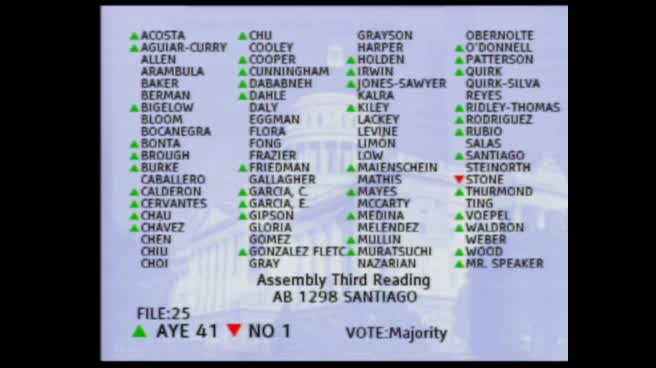 1MIN
Assembly Floor
 1H
Assembly Standing Committee on Appropriations
 1H
Assembly Standing Committee on Business and Professions
Bill Author

Bill Co-Author(s):