AB 2481: State employees: Infant at Work programs.
- Session Year: 2017-2018
- House: Assembly
- Latest Version Date: 2018-04-10
Existing law establishes various employment protections to promote parent-infant bonds and infant health. The Moore-Brown-Roberti Family Rights Act, or California Family Rights Act, makes it an unlawful employment practice for an employer, as defined, to refuse to grant a request by an eligible employee to take up to 12 workweeks of unpaid protected leave during any 12-month period to care for a child born to, adopted by, or placed for foster care with, the employee. The New Parent Leave Act prohibits an employer, as defined, from refusing to allow eligible employees to take up to 12 weeks of parental leave to bond with a new child within one year of the childs birth, adoption, or foster care placement. Other existing law requires both public and private employers to provide accommodations for maternal lactation, including a reasonable amount of break time to employees desiring to express breast milk and a reasonable effort to provide the employee use of a room or other location in close proximity to the employees work area for that purpose.
This bill, until January 1, 2020, would authorize a state agency, as defined, to adopt an Infant at Work program to allow an employee of the agency who is a new parent or caregiver to an infant to bring the infant to the workplace. The bill would establish certain required elements for such a program. The bill would authorize a state agency to adopt regulations that it determines necessary to establish the program. The bill would prohibit a state agency from adopting the program in circumstances that are inappropriate based on safety, health, or other concerns for the infant or adult, as specified.
Existing law establishes various employment protections to promote parent-infant bonds and infant health. The Moore-Brown-Roberti Family Rights Act, or California Family Rights Act, makes it an unlawful employment practice for an employer, as defined, to refuse to grant a request by an eligible employee to take up to 12 workweeks of unpaid protected leave during any 12-month period to care for a child born to, adopted by, or placed for foster care with, the employee. The New Parent Leave Act prohibits an employer, as defined, from refusing to allow eligible employees to take up to 12 weeks of parental leave to bond with a new child within one year of the childs birth, adoption, or foster care placement. Other existing law requires both public and private employers to provide accommodations for maternal lactation, including a reasonable amount of break time to employees desiring to express breast milk and a reasonable effort to provide the employee use of a room or other location in close proximity to the employees work area for that purpose.
This bill, until January 1, 2020, would authorize a state agency, as defined, to adopt an Infant at Work program to allow an employee of the agency who is a new parent or caregiver to an infant to bring the infant to the workplace. The bill would establish certain required elements for such a program. The bill would authorize a state agency to adopt regulations that it determines necessary to establish the program.
(a)It is the intent of the Legislature in enacting this act to improve infant bonding time among new parents, which has been found crucial to both brain development and the long-term health of the child.
(b)The Legislature finds and declares this act promotes the health of infants by supporting breastfeeding, encourages state employees to return to work sooner than they otherwise might, and is community and family friendly.
SEC. 2.Chapter 2.7 (commencing with Section 19991.20) is added to Part 2.6 of Division 5 of Title 2 of the Government Code, to read:2.7Infant at Work Programs19991.20.(a)A state agency may adopt an Infant at Work program in accordance with this article to allow an employee of the agency who is a new parent or caregiver to an infant to bring the infant to the workplace.
(b)A program adopted pursuant to subdivision (a) shall include, but is not limited to, the following elements:
(1)The program shall be for infants from six weeks of age to six months of age, inclusive, or until the infant is crawling, whichever is earlier.
(2)An infant shall be cleared for participation in the program by a physician. physician and surgeon.
(3)The program shall establish a clear process for application and approval to participate in the program, including eligibility requirements and designation of the person or office with the responsibility to approve or disapprove an application.
(4)The parent or caregiver shall have the sole responsibility for the safety of the infant at the workplace.
(c)A state agency may adopt regulations that it determines necessary to establish the program in accordance with Chapter 3.5 (commencing with Section 11340) of Part 1 of Division 3.
(d)A state agency shall not adopt the program if the work environment is inappropriate for infants, for safety, health, or other concerns regarding the infant, the adult, or both.
19991.21.This article chapter shall remain in effect only until January 1, 2020, and as of that date is repealed.
REVISIONS: HeadingLine 1.(a)It is the intent of the Legislature in enacting this act to improve infant bonding time among new parents, which has been found crucial to both brain development and the long-term health of the child.
(b)The Legislature finds and declares this act promotes the health of infants by supporting breastfeeding, encourages state employees to return to work sooner than they otherwise might, and is community and family friendly.
SEC. 2.Chapter 2.7 (commencing with Section 19991.20) is added to Part 2.6 of Division 5 of Title 2 of the Government Code, to read:2.7Infant at Work Programs19991.20.(a)A state agency may adopt an Infant at Work program in accordance with this article to allow an employee of the agency who is a new parent or caregiver to an infant to bring the infant to the workplace.
(b)A program adopted pursuant to subdivision (a) shall include, but is not limited to, the following elements:
(1)The program shall be for infants from six weeks of age to six months of age, inclusive, or until the infant is crawling, whichever is earlier.
(2)An infant shall be cleared for participation in the program by a physician.
(3)The program shall establish a clear process for application and approval to participate in the program, including eligibility requirements and designation of the person or office with the responsibility to approve or disapprove an application.
(4)The parent or caregiver shall have the sole responsibility for the safety of the infant at the workplace.
(c)A state agency may adopt regulations that it determines necessary to establish the program in accordance with Chapter 3.5 (commencing with Section 11340) of Part 1 of Division 3.
19991.21.This article shall remain in effect only until January 1, 2020, and as of that date is repealed.
|
Date
|
Status
|
|---|---|
| Aug 16, 2018 | In committee: Held under submission. |
| Aug 6, 2018 | In committee: Referred to APPR. suspense file. |
| Jun 26, 2018 | From committee: Do pass and re-refer to Com. on APPR. (Ayes 5. Noes 0.) (June 25). Re-referred to Com. on APPR. |
| Jun 7, 2018 | Referred to Com. on P.E. & R. |
| May 31, 2018 | In Senate. Read first time. To Com. on RLS. for assignment. |
| May 30, 2018 | Read third time. Passed. Ordered to the Senate. |
| May 25, 2018 | Coauthors revised. |
| Apr 18, 2018 | In committee: Set, first hearing. Referred to APPR. suspense file. |
| Apr 11, 2018 | Re-referred to Com. on APPR. |
| Apr 10, 2018 | From committee chair, with author's amendments: Amend, and re-refer to Com. on APPR. Read second time and amended. |
| Apr 4, 2018 | From committee: Do pass and re-refer to Com. on APPR. with recommendation: To Consent Calendar. (Ayes 5. Noes 0.) (April 4). Re-referred to Com. on APPR. |
| Mar 8, 2018 | Referred to Com. on P.E., R., & S.S. |
| Feb 15, 2018 | From printer. May be heard in committee March 17. |
| Feb 14, 2018 | Read first time. To print. |
|
Date
|
Description
|
Location
|
Votes
|
|
|---|---|---|---|---|
| Aug 6, 2018 | Placed on suspense file | Senate Standing Committee on Appropriations |
Passed |
|
| Jun 25, 2018 | Do pass, but first be re-referred to the Committee on [Appropriations] | Senate Standing Committee on Public Employment and Retirement |
Passed |
|
| May 30, 2018 | AB 2481 VOEPEL Assembly Third Reading | Assembly Floor |
Passed |
|
| May 25, 2018 | Do pass. | Assembly Standing Committee on Appropriations |
Passed |
|
| Apr 4, 2018 | Do pass and be re-referred to the Committee on [Appropriations] with recommendation: To Consent Calendar | Assembly Standing Committee on Public Employees, Retirement, and Social Security |
Passed |
This list shows positions taken on this bill by organizations on the date displayed, which is linked to the original source.
Positions by individuals are not included.
|
Organization
|
Position
|
Date
|
|---|---|---|
| Common Sense Kids Action | ** Support | Jun 21, 2018 |
SENATE COMMITTEE ON APPROPRIATIONS
Senator Anthony Portantino, Chair
2017 - 2018 Regular Session
AB 2481 (Voepel) - State employees: Infant at Work programs
Version: April 10, 2018 | Policy Vote: P.E. & R. 5 - 0 |
Urgency: No | Mandate: No |
Hearing Date: August 6, 2018 | Consultant: Robert Ingenito |
This bill meets the criteria for referral to the Suspense File.
Bill Summary:
AB 2481 would authorize a state agency to adopt an Infant at Work pilot program until January 1, 2020, permitting an employee who is a new parent or caregiver to bring an infant to the workplace.
Fiscal Impact:
This bill would result in annual costs across the General Fund and several special funds. The magnitude of these costs is unknown, but potentially significant (in excess of $150,000), and would include (1) infrastructure improvements at state owned and leased buildings, (2) the California Department of Human Resources (CalHR) drafting regulations and providing guidance to other state departments regarding implementation, (3) resolving potential workplace accidents involving infants, and (4) the cashing out of increased vacation balances for civil servants to the extent that they take less vacation time as a result of the bill than would have occurred on the natural.
Background:
Current law requires a state employer to grant non-excluded state employees an unpaid leave of absence up to one year for the purposes of pregnancy, childbirth, or recovery from childbirth for permanent female employees. After the employee has notified the employer as to the period of leave required, any change shall not be effective until approved by the employer. If existing law conflicts with the provisions of a memorandum of understanding (MOU), the MOU supersedes.
Other Western states have Infant at Work programs that allow parents or legal guardians to bring their infants into the office. Specifically, the Arizona Department of Health Services developed an Infant at Work program in 2009, permitting some parents to bring their infants to work. Other Arizona state entities subsequently adopted similar programs, and over 250 infants have participated across ten Arizona state agencies. Likewise, the state of Washington’s Department of Health’s pilot program permits participants to bring infants between the age of six weeks and six months. As of early June, 2018, over seventy infants have participated in the program.
Proposed Law:
This bill would, among other things do the following:
- Authorize a state agency to adopt an Infant at Work program to allow an employee of the agency who is a new parent or caregiver to an infant to bring the infant to the workplace. This program shall include, but is not limited to, the following elements:
- The program shall be for infants from six weeks to six months of age, inclusive, or until the infant is crawling, whichever is earlier.
- The infant shall be cleared for participation in the program by a physician and surgeon.
- The program shall establish a clear process for application and approval to participate in the program, including eligibility requirements and designation of the person or office with the responsibility to approve or disapprove an application.
- The parent or caregiver shall have the sole responsibility for the safety of the infant at the workplace.
- Permit a state agency to adopt regulations deemed necessary to establish the program, as specified.
- Prohibit a state agency from adopting an Infant at Work program if the work environment is inappropriate for infants, for safety, health, or other concerns regarding the infant, the adult, or both.
- Repeal these provisions on January 1, 2020.
Related Legislation:
SB 63 (Jackson, Chapter 686, Statutes of 2017), requires public and private employers, as defined, to allow an eligible employee to take up to 12 weeks of job protected parental leave to bond with a new child within one year of the child’s birth, adoption, or foster care placement. Employers are also prohibited from refusing to maintain and pay for the employee’s group health coverage during the duration of the leave. Additionally, the bill creates a parental leave mediation pilot program until January 1, 2020 to cover specified provisions.
Staff Comments:
As noted above, the major cost drivers for this bill are infrastructure improvements to equip state buildings to accommodate infants (such as baby-proofing), drafting regulations, the aftermath of workplace accidents involving infants, and fiscal stress to state department budgets resulting from additional employee unused leave credits, which would ultimately be cashed out.
As noted above, this bill would sunset on January 1, 2020. This is likely an insufficient time period to (1) design and implement a program (including conferring with state unions), and (2) evaluate its effectiveness.
-- END --
SENATE COMMITTEE ON
PUBLIC EMPLOYMENT AND RETIREMENT
Dr. Richard Pan, Chair
2017 - 2018 Regular
Bill No: AB 2481 Hearing Date: 6/25/18
Author: | Voepel and Gonzalez Fletcher | ||
Version: | 4/10/18 As amended | ||
Urgency: | No | Fiscal: | Yes |
Consultant: | Korinne Sugasawara | ||
Subject: State employees: Infant at Work programs.
SOURCE: Author
ASSEMBLY VOTES:
Assembly Floor: | 78 - 0 |
Assembly Appropriations Committee: | 16 - 0 |
Assembly Public Employees, Retirement, and Social Security Committee: | 5 - 0 |
DIGEST: This bill authorizes a state agency to adopt an Infant at Work pilot program until January 1, 2020, permitting an agency employee who is a new parent or caregiver to bring an infant to the workplace, among other provisions.
ANALYSIS:
Existing law:
- Requires a state employer to grant non-excluded state employees an unpaid leave of absence up to one year for the purposes of pregnancy, childbirth, or recovery from childbirth for permanent female employees. After the employee has notified the employer as to the period of leave required, any change shall not be effective until approved by the employer. If existing law conflicts with the provisions of a memorandum of understanding (MOU), the MOU is controlling.
- Provides female excluded state employees who are permanent employees with the same rights as their non-excluded employee counterparts for an unpaid leave of absence for the purposes of pregnancy, childbirth, or recovery from childbirth.
- Requires an employer to grant a male spouse who is a permanent employee or a male parent who is a permanent employee with an unpaid leave of absence, up to one year, to care for the newborn child. Any changes in the length of leave shall not be effective until approved by the employer.
- Permits an employer to grant any permanent employee’s request for an unpaid leave period of up to one year for the adoption of a child, as specified. Any change in the length of the period of leave shall not be effective until approved by the employer.
- Prohibits an employer from refusing to allow an employee, as specified, to take up to twelve weeks of parental leave to bond with a new child within one year of the child’s birth, adoption, or foster care placement.
- Forbids an employer from refusing to maintain and pay for group health coverage for an eligible employee who takes up to twelve weeks of parental leave, as specified.
- Provides that if both parents work for the same employer, and are entitled to parental leave for the same child, the employer is not required to grant more than the twelve-week leave period, as specified.
This bill:
- Authorizes a state agency to adopt an Infant at Work program to allow an employee of the agency who is a new parent or caregiver to an infant to bring the infant to the workplace. This program shall include, but is not limited to, the following elements:
- The program shall be for infants from six weeks to six months of age, inclusive, or until the infant is crawling, whichever is earlier.
- The infant shall be cleared for participation in the program by a physician and surgeon.
- The program shall establish a clear process for application and approval to participate in the program, including eligibility requirements and designation of the person or office with the responsibility to approve or disapprove an application.
- The parent or caregiver shall have the sole responsibility for the safety of the infant at the workplace.
- Permits a state agency to adopt regulations deemed necessary to establish the program, as specified.
- Prohibits a state agency from adopting an Infant at Work program if the work environment is inappropriate for infants, for safety, health, or other concerns regarding the infant, the adult, or both.
- Repeals these provisions on January 1, 2020.
- States that it is the intent of the Legislature to promote infant bonding time among new parents, which has been found to be crucial to the brain development and health of the child.
- Makes the legislative finding and declaration that this bill promotes the health of infants by supporting breastfeeding, encourages state employees to return to work sooner than they otherwise might, and is community and family friendly.
Background
According to the author’s office,
“AB 2481 is intended to help alleviate the burden of cost-prohibitive childcare facing parents and caregivers by allowing infants, age six weeks to six months, to come to work with their parent or caregiver [who works] in a specified state department.
AB 2481 is intended to expand options to parents and may encourage employees to come back to work before the end of parental leave. Finally, [this bill] is intended to raise happy, healthy babies and an increase in bonding among parents and infants has been shown to have long-term effects on the child.”
Infant at Work Programs in Other States
Both the states of Washington and Arizona have Infant at Work programs that allow parents or legal guardians to bring their infants into the office.
In 2009 the Arizona Department of Health Services developed an Infant at Work program permitting some parents to bring their infants to work. Other agencies adopted similar programs, and over 250 infants have participated across ten Arizona state agencies.
In Washington the Department of Health’s pilot program permits participants to bring infants between the age of six weeks and six months, and as of June 7, 2018, over seventy infants have participated in the program.
Related/Prior Legislation
SB 63 (Jackson, Chapter 686, Statutes of 2017), requires public and private employers, as defined, to allow an eligible employee to take up to 12 weeks of job protected parental leave to bond with a new child within one year of the child’s birth, adoption, or foster care placement. Employers are also prohibited from refusing to maintain and pay for the employee’s group health coverage during the duration of the leave. Creates a parental leave mediation pilot program until January 1, 2020 to cover specified provisions.
SB 654 (Jackson, 2016), was almost identical to Senate Bill 63. Vetoed by Governor Brown.
I am returning Senate Bill 654 without my signature.
This bill establishes an unpaid, job protected parental leave requirement that applies to businesses with 20 or more employees and allows workers to take up to 6 weeks of parental leave to bond with a new child.
It goes without saying that allowing new parents to bond with a child is very important and the state has a number of paid and unpaid benefit programs to provide for that leave. I am concerned, however, about the impact of this leave particularly on small businesses and the potential liability that could result. As I understand, an amendment was offered that would allow an employee and employer to pursue mediation prior to a lawsuit being brought. I believe this is a viable option that should be explored by the author.
Sincerely,
Edmund G. Brown Jr.
FISCAL EFFECT: Appropriation: No Fiscal Com.: Yes Local: No
According to the Assembly Appropriations Committee, this bill would result in
General Fund costs in excess of $150,000 for the Department of Human Resources (CalHR) to develop a standardized program that state agencies may adopt. Having CalHR meet and confer with employee organizations and develop a boilerplate program is likely the most affordable way to implement this bill. In addition, the bill would result in unknown costs to state agencies participating in the program. Costs would ultimately be determined by program design and the number of employees participating.
SUPPORT:
American College of Obstetricians and Gynecologists, District IX California
Common Sense Kids Action
OPPOSITION:
None received.
ARGUMENTS IN SUPPORT:
Common Sense Kids Action writes, the Infant at Work Program would encourage a productive workforce without focus being shifted to the constant worry of their child’s safety or outlandish daycare costs. The current standing leaves California ranked 8th in the least affordable states for infant care. This is problematic to the near 13 million families in our state…We hope California will be the third state in implementing an infant work program to give families across our great state a chance at happiness and financial security.
The American College of Obstetricians and Gynecologists, District IX writes, California is ranked in the top 10 of least affordable states for infant care. Data from a 2015 Childcare Aware America Report found that in comparison to California’s median income, a married couple spends roughly 14.5 percent of their income annually on infant care, while single parents spend nearly 45 percent of their annual income. Benefits following similar pilot programs in Arizona and Washington include infant/parent bonding, potential relief of financial strain due to the high cost of childcare, increased productivity among employees, and easier breastfeeding accessibility for mothers.
ASSEMBLY THIRD READING
ATR Bill Id:AB 2481
Author:(Voepel)
As Amended Ver:April 10, 2018
Majority vote
Committee | Votes | Ayes | Noes |
Public Employees | 5-0 | Rodriguez, Cervantes, Cooley, Cooper, O'Donnell | |
Appropriations | 16-0 | Gonzalez Fletcher, Bigelow, Bloom, Bonta, Calderon, Carrillo, Chau, Eggman, Fong, Friedman, Gallagher, Eduardo Garcia, Nazarian, Obernolte, Quirk, Reyes |
|
SUMMARY: Authorizes until January 1, 2020, a state agency to adopt an Infant at Work pilot program to allow an employee of the agency who is a new parent or caregiver to an infant to bring the infant to the workplace, among other provisions. Specifically, this bill:
- Expresses legislative intent as to the benefits of new parents having bonding time with an infant; the beneficial effects that such time has on the development and health of the child; and, a legislative finding and declaration that this measure promotes the health of infants by supporting breastfeeding, and encourages states employees to return to work sooner than they otherwise might, while being community and family friendly.
- Authorizes a state agency to adopt an Infant at Work program to allow an employee of the agency who is a new parent or caregiver to an infant to bring the infant to work, and a state agency to adopt regulations necessary to establish the program.
- Requires, if adopted by a state agency, the program to include, but not be limited to, the following elements:
- The program must be for infants aged six weeks to six months, inclusive, or until the infant is crawling, whichever is earlier;
- The infant must be cleared for participation in the program by a physician and surgeon;
- The program must establish a clear process for application and approval to participate in the program, including eligibility requirements and designation of the person or office with responsibility to approve or disprove an application; and,
- The parent or caregiver must have the sole responsibility for the safety of the infant at work.
- Authorizes state agencies to adopt regulations deemed necessary to establish the program.
- Prohibits a state agency from adopting the program if the work environment is inappropriate for infants, safety, health, or other concerns regarding the infant, adult, or both.
- Repeals these provisions on January 1, 2020.
EXISTING LAW:
1) Requires, for nonexcluded state employees, a state employer to grant a leave of absence without pay for the purposes of pregnancy, childbirth, or recovery from childbirth, for up to one year for permanent female employees. If the employee notifies the employer of a need to change the length of the period, the leave is not effective unless the employer has approved; and, if existing law is in conflict with the provisions of a memorandum of understanding (MOU), the MOU is controlling.
2) Provides, for state excluded employees, the same rights for a leave of absence without pay for the same purposes, and requires the state employer to grant the request for a leave of absence by a male spouse who is a permanent state employee or parent, for up to one year without compensation, to care for the newborn child. Similar to those for nonexcluded employees, a change in the length of time of the leave of absence is not effective unless the employer has approved.
3) Permits a state employer to grant a permanent employee's request for a leave of absence for up to one year, without pay, for the adoption of a child. A change in the length of time of the leave of absence is not effective unless the employer has approved.
4) Permits a state employee to request a paid leave of absence for other purposes including, but not limited to, taking a civil service examination during working hours, or providing service in a technical cooperation program, or nonprofit organization. A leave of absence for these other purposes may be with or without compensation, as specified.
FISCAL EFFECT: According to the Assembly Appropriations Committee, this bill would result in "General Fund costs in excess of $150,000 for the Department of Human Resources (CalHR) to develop a standardized program that state agencies may adopt. Having CalHR meet and confer with employee organizations and develop a boilerplate program is likely the most affordable way to implement this bill. In addition, the bill would result in unknown costs to state agencies participating in the program. Costs would ultimately be determined by program design and the number of employees participating."
COMMENTS: According to the author, "[t]he first year of a child's life is crucial to brain development and growth and it is evident that parent/infant bonding has long term effects on a person's life. The Infant at Work pilot program hopes to create a solution to the challenging elements parents are facing today by encouraging a strong parent/infant bond, easier access to breastfeeding mothers, and saving money on the high cost of infant childcare. A program that is intended to remedy all three is at least worth piloting."
Analysis Prepared by: Michael Bolden / P.E.,R., & S.S. / (916) 319-3957 FN: 0003122
Date of Hearing: April 18, 2018
ASSEMBLY COMMITTEE ON APPROPRIATIONS
Lorena Gonzalez Fletcher, Chair
ABPCA Bill Id:AB 2481
Author:(Voepel) – As Amended Ver:April 10, 2018
Policy Committee: | Public Employees, Retirement, and Social Security | Vote: | 5 - 0 |
|
| ||
|
|
Urgency: No State Mandated Local Program: No Reimbursable: No
SUMMARY:
This bill authorizes a state agency to adopt an Infant at Work pilot program (Program) to allow new parents or caregivers to bring an infant to the workplace. The Program, if adopted by a state agency, must be for infants aged six weeks to six months or until the infant is crawling, and the Program must establish a clear process for participation. The Program is only available to state agencies that have a safe and appropriate work environment, and it will end on January 1, 2020.
FISCAL EFFECT:
- General Fund costs in excess of $150,000 for the California Department of Human Resources (CalHR) to develop a standardized Program that state agencies may adopt. Having CalHR meet and confer with employee organizations and develop a boilerplate Program is likely the most affordable way to implement this bill.
- Unknown costs to state agencies participating in the Program. Costs would ultimately be determined by Program design and the number of employees participating.
COMMENTS:
- Purpose. According to the author, AB 2481 will encourage a strong bond between infants and their parents while helping families cope with the high cost of child care. Common Sense Kids Action, a supporter of the bill, notes allowing parents to bring their infants into the office encourages a productive workforce through improved morale.
- Arizona program. In 2009, the Arizona Department of Health Services (ADHS) developed an Infant at Work Program that allowed some parents to bring their infants into the office. Since then, other Arizona state agencies have developed similar programs and, in total more, than 250 babies have participated across 10 state agencies. According to Arizona’s governor, the public health benefits of this program have included empowering new mothers to come back to work sooner and allowing babies more time to bond with their caregiver.
- Implementation timeline. AB 2481 sunsets the Program on January 1, 2020. This is likely not enough time to design and implement a Program and to evaluate its effectiveness. The Committee may wish to extend the sunset an additional year.
Analysis Prepared by: Luke Reidenbach / APPR. / (916) 319-2081
Date of Hearing: April 4, 2018
ASSEMBLY COMMITTEE ON PUBLIC EMPLOYEES, RETIREMENT, AND SOCIAL SECURITY
Freddie Rodriguez, Chair
ABPCA Bill Id:AB 2481 (
Author:Voepel) – As Introduced Ver:February 14, 2018
SUBJECT: State employees: Infant at Work programs
SUMMARY: Authorizes, until January 1, 2020, a state agency, as defined, to adopt an Infant at Work pilot program to allow an employee of the agency who is a new parent or caregiver to an infant to bring the infant to the workplace, among other provisions. Specifically, this bill:
1) Expresses legislative intent as to the benefits of new parents having bonding time with an infant; the beneficial effects that such time has on the development and health of the child; and, a legislative finding and declaration that this measure promotes the health of infants by supporting breastfeeding, and encourages states employees to return to work sooner than they otherwise might, while being community and family friendly.
2) Authorizes a state agency to adopt an Infant at Work program, as specified, to allow an employee of the agency who is a new parent or caregiver to an infant to bring the infant to work.
3) Requires, if adopted by a state agency, the program to include, but not be limited to, the following elements:
a) The program must be for infants aged six weeks to six months, inclusive, or until the infant is crawling, whichever is earlier;
b) The infant must be cleared for participation in the program by a physician; and,
c) The program must establish a clear process for application and approval to participate in the program, including eligibility requirements and designation of the person or office with responsibility to approve or disprove an application.
4) Provides that the parent or caregiver must have the sole responsibility for the safety of the infant at work.
5) Authorizes a state agency to adopt regulations determined necessary to establish the program, as specified.
6) Repeals these provisions on January 1, 2020.
EXISTING LAW:
1) Requires, for nonexcluded state employees, as defined, a state employer to grant a leave of absence without pay for the purposes of pregnancy, childbirth, or recovery from childbirth, for up to one year for permanent female employees.
In addition, if the employee notifies the employer of a need to change the length of the period, the leave is not effective unless the employer has approved; and, if existing law is in conflict with the provisions of a memorandum of understanding (MOU), the MOU is controlling, as specified.
2) Provides, for state excluded employees, as specified, the same rights for a leave of absence without pay for the same purposes, and requires the state employer to grant the request for a leave of absence by a male spouse who is a permanent state employee or parent, for up to one year without compensation, to care for the newborn child. Similar to those for nonexcluded employees, a change in the length of time of the leave of absence is not effective unless the employer has approved.
3) Permits a state employer to grant a permanent employee’s request for a leave of absence for up to one year, without pay, for the adoption of a child. A change in the length of time of the leave of absence is not effective unless the employer has approved.
4) Permits a state employee to request a paid leave of absence for other purposes including, but not limited to, taking a civil service examination during working hours, or providing service in a technical cooperation program, or nonprofit organization. A leave of absence for these other purposes may be with or without compensation, as specified.
FISCAL EFFECT: Unknown. This bill has been flagged as fiscal by Legislative Counsel.
COMMENTS: According to the author “[t]he first year of a child’s life is crucial to brain development and growth and it is evident that parent/infant bonding has long term effects on a person’s life. The Infant at Work pilot program hopes to create a solution to the challenging elements parents are facing today by encouraging a strong parent/infant bond, easier access to breastfeeding mothers, and saving money on the high cost of infant childcare. A program that is intended to remedy all three is at least worth piloting.”
1) Comments by Supporters
In part, Common Sense Kids Action state that, “Assembly Bill 2481 would assist in the heavy financial burden that pressures many working families. The Infant at Work Program would encourage a productive workforce without focus being shifted to the constant worry of their child’s safety or outlandish daycare costs. The current standing leave California ranked eighth in the least affordable states for infant care. This is problematic to approximately 13 million families in our state. This bill would not only benefit families by reducing financial pressure, strengthening infant-parent relationships, it would also benefit employers by boosting employee morale as findings in the State of Arizona’s pilot program.”
REGISTERED SUPPORT / OPPOSITION:
Support
Common Sense Kids Action
Opposition
None on file.
Analysis Prepared by: Michael Bolden / P.E.,R., & S.S. / (916) 319-3957
Discussed in Hearing
 1H
Senate Standing Committee on Appropriations
 5MIN
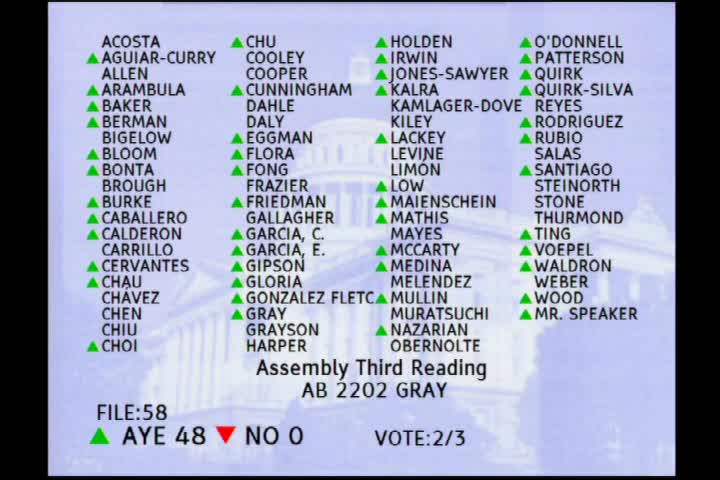
Senate Standing Committee on Public Employment and Retirement
 2MIN






