AB 2597: Programs in Medical Education.
- Session Year: 2017-2018
- House: Assembly
- Latest Version Date: 2018-05-25
Existing provisions of the California Constitution establish the University of California as a public trust under the administration of the Regents of the University of California. The University of California system includes 10 campuses, which are located in Berkeley, Davis, Irvine, Los Angeles, Merced, Riverside, San Diego, San Francisco, Santa Barbara, and Santa Cruz.
This bill would appropriate $9,350,000 from the General Fund to the Regents of the University of California for allocation to the University of California to support Programs in Medical Education (PRIME), and would require the university, as a condition of receipt of this appropriation, to (1) fully fund, at minimum, the 201819 level of full-time student enrollment in PRIME for the 201920 academic year and (2) (PRIME) and would request the university to submit, on or before January 1, 2020, a report to the Legislature on how the university can expand that assesses the feasibility of future full-time student enrollment in PRIME by, at minimum, 50% from the 201819 level by the commencement of the 202223 academic year. growth in PRIME.
Existing provisions of the California Constitution establish the University of California as a public trust under the administration of the Regents of the University of California. The University of California system includes 10 campuses, which are located in Berkeley, Davis, Irvine, Los Angeles, Merced, Riverside, San Diego, San Francisco, Santa Barbara, and Santa Cruz.
This bill would appropriate $9,350,000 from the General Fund to the Regents of the University of California for allocation to the University of California to support Programs in Medical Education (PRIME), and would require the university, as a condition of receipt of this appropriation, to (1) fully fund, at minimum, the 201819 level of full-time student enrollment in PRIME for the 201920 academic year. The bill would require the university, as a condition of receipt of future appropriated moneys for PRIME, to year and (2) submit, on or before January 1, 2020, a report to the Legislature on how the university can expand full-time student enrollment in PRIME for the 202021, 202122, and 202223 academic years by 25, 50, and 100%, respectively, from the 201819 level. by, at minimum, 50% from the 201819 level by the commencement of the 202223 academic year.
Existing provisions of the California Constitution establish the University of California as a public trust under the administration of the Regents of the University of California. The University of California system includes 10 campuses, which are located in Berkeley, Davis, Irvine, Los Angeles, Merced, Riverside, San Diego, San Francisco, Santa Barbara, and Santa Cruz.
This bill would state the intent of the Legislature to appropriate moneys appropriate $9,350,000 from the General Fund to the Regents of the University of California in the Budget Act each fiscal year for allocation to the University of California for the support of Programs in Medical Education for full-time students. to support Programs in Medical Education (PRIME), and would require the university, as a condition of receipt of this appropriation, to fully fund, at minimum, the 201819 level of full-time student enrollment in PRIME for the 201920 academic year. The bill would require the university, as a condition of receipt of future appropriated moneys for PRIME, to expand full-time student enrollment in PRIME for the 202021, 202122, and 202223 academic years by 25, 50, and 100%, respectively, from the 201819 level.
Existing provisions of the California Constitution establish the University of California as a public trust under the administration of the Regents of the University of California. The University of California system includes 10 campuses, which are located in Berkeley, Davis, Irvine, Los Angeles, Merced, Riverside, San Diego, San Francisco, Santa Barbara, and Santa Cruz.
This bill would state the intent of the Legislature to appropriate moneys to the Regents of the University of California in the Budget Act each fiscal year for allocation to the University of California for the support of Programs in Medical Education for full-time students.
(a)For purposes of this section, PRIME means Programs in Medical Education at the University of California.
(b)The sum of nine million three hundred fifty thousand dollars ($9,350,000) is hereby appropriated from the General Fund to the regents for allocation to the University of California to support PRIME. As a condition of receipt of this appropriation, the university shall fully fund, at minimum, the 201819 level of full-time student enrollment in PRIME for the 201920 academic year.
(c)(1)As a condition of receipt of the appropriation specified in this section, the University of California shall agree to submit, and shall submit, on or before January 1, 2020, a report to the Legislature, pursuant to Section 9795 of the Government Code, on how the university can expand full-time student enrollment growth in PRIME by, at minimum, 50 percent by the commencement of the 202223 academic year.(c)(1)On or before January 1, 2020, the University of California is requested to submit a report to the Legislature, pursuant to Section 9795 of the Government Code, that assesses the feasibility of future full-time student enrollment growth in PRIME.
(2)The requirement for submitting a report under paragraph (1) is inoperative on January 1, 2024, pursuant to Section 10231.5 of the Government Code.
(d)PRIME enrollment for the 201819 academic year shall be the baseline from which the university shall report on how it can increase PRIME enrollment pursuant to subdivision (c).
(a)For purposes of this section, PRIME means Programs in Medical Education at the University of California.
(b)The sum of nine million three hundred fifty thousand dollars ($9,350,000) is hereby appropriated from the General Fund to the regents for allocation to the University of California to support PRIME. As a condition of receipt of this appropriation, the university shall fully fund, at minimum, the 201819 level of full-time student enrollment in PRIME for the 201920 academic year.
(c)Upon appropriation by the Legislature of moneys to expand enrollment of full-time students in PRIME in subsequent years, the University of California shall, as a condition of receipt of the moneys, expand enrollment of full-time students in PRIME as follows:(1)By 25 percent for the 202021 academic year.(2)By 50 percent for the 202122 academic year.(3)By 100 percent for the 202223 academic year.(c)(1)As a condition of receipt of the appropriation specified in this section, the University of California shall agree to submit, and shall submit, on or before January 1, 2020, a report to the Legislature, pursuant to Section 9795 of the Government Code, on how the university can expand full-time student enrollment growth in PRIME by, at minimum, 50 percent by the commencement of the 202223 academic year.
(2)The requirement for submitting a report under paragraph (1) is inoperative on January 1, 2024, pursuant to Section 10231.5 of the Government Code.
(d)PRIME enrollment for the 201819 academic year shall be the baseline from which the university increases shall report on how it can increase PRIME enrollment pursuant to subdivision (c).
(a)For purposes of this section, PRIME means Programs in Medical Education at the University of California.
(b)The sum of nine million three hundred fifty thousand dollars ($9,350,000) is hereby appropriated from the General Fund to the regents for allocation to the University of California to support PRIME. As a condition of receipt of this appropriation, the university shall fully fund, at minimum, the 201819 level of full-time student enrollment in PRIME for the 201920 academic year.
(c)Upon appropriation by the Legislature of moneys to expand enrollment of full-time students in PRIME in subsequent years, the University of California shall, as a condition of receipt of the moneys, expand enrollment of full-time students in PRIME as follows:
(1)By 25 percent for the 202021 academic year.
(2)By 50 percent for the 202122 academic year.
(3)By 100 percent for the 202223 academic year.
(d)PRIME enrollment for the 201819 academic year shall be the baseline from which the university increases PRIME enrollment pursuant to subdivision (c).
SECTION 1.It is the intent of the Legislature to enact legislation to appropriate moneys to the Regents of the University of California in the Budget Act each fiscal year for allocation to the University of California for the support of Programs in Medical Education (PRIME) for full-time students. It is the intent of the Legislature to increase the funding for PRIME for each of the subsequent years as follows:(a)For the first year, by an appropriate amount.(b)For the second year, by 25 percent.(c)For the third year, by 50 percent.(d)For the fourth year, by 100 percent.It is the intent of the Legislature to enact legislation to appropriate moneys to the Regents of the University of California in the Budget Act each fiscal year for allocation to the University of California for the support of Programs in Medical Education (PRIME) for full-time students. It is the intent of the Legislature to increase the funding for PRIME for each of the subsequent years as follows:
(a)For the first year, by an appropriate amount.
(b)For the second year, by 25 percent.
(c)For the third year, by 50 percent.
(d)For the fourth year, by 100 percent.
|
Date
|
Status
|
|---|---|
| Aug 16, 2018 | In committee: Held under submission. |
| Aug 6, 2018 | In committee: Referred to APPR. suspense file. |
| Jun 28, 2018 | From committee: Do pass and re-refer to Com. on APPR. with recommendation: To Consent Calendar. (Ayes 7. Noes 0.) (June 27). Re-referred to Com. on APPR. |
| Jun 13, 2018 | Referred to Com. on ED. |
| Jun 4, 2018 | In Senate. Read first time. To Com. on RLS. for assignment. |
| May 31, 2018 | Read third time. Passed. Ordered to the Senate. |
| May 29, 2018 | Read second time. Ordered to third reading. |
| May 25, 2018 | From committee: Amend, and do pass as amended. (Ayes 16. Noes 0.) (May 25). |
| May 16, 2018 | In committee: Set, first hearing. Referred to APPR. suspense file. |
| May 10, 2018 | Re-referred to Com. on APPR. |
| May 9, 2018 | From committee chair, with author's amendments: Amend, and re-refer to Com. on APPR. Read second time and amended. |
| Apr 25, 2018 | From committee: Do pass and re-refer to Com. on APPR. (Ayes 13. Noes 0.) (April 24). Re-referred to Com. on APPR. |
| Apr 2, 2018 | Re-referred to Com. on HIGHER ED. |
| Mar 23, 2018 | From committee chair, with author's amendments: Amend, and re-refer to Com. on HIGHER ED. Read second time and amended. |
| Mar 22, 2018 | Referred to Com. on HIGHER ED. |
| Feb 16, 2018 | From printer. May be heard in committee March 18. |
| Feb 15, 2018 | Read first time. To print. |
|
Date
|
Description
|
Location
|
Votes
|
|
|---|---|---|---|---|
| Aug 6, 2018 | Placed on suspense file | Senate Standing Committee on Appropriations |
Passed |
|
| Jun 27, 2018 | Do pass, but first be re-referred to the Committee on [Appropriations] with the recommendation: To Consent Calendar | Senate Standing Committee on Education |
Passed |
|
| May 31, 2018 | AB 2597 ARAMBULA Assembly Third Reading | Assembly Floor |
Passed |
|
| May 25, 2018 | Do pass as amended. | Assembly Standing Committee on Appropriations |
Passed |
|
| Apr 24, 2018 | Do pass and be re-referred to the Committee on [Appropriations] | Assembly Standing Committee on Higher Education |
Passed |
This list shows positions taken on this bill by organizations on the date displayed, which is linked to the original source.
Positions by individuals are not included.
|
Organization
|
Position
|
Date
|
|---|---|---|
| Afsme-Local 206 | ** Support | Jun 26, 2018 |
| American Federation of State, County and Municipal Employees | ** Support | Jun 26, 2018 |
| Association of California Healthcare Districts | ** Support | Jun 26, 2018 |
| California Academy Of Family Physicians | ** Support | Jun 26, 2018 |
| California Health+ Advocates | ** Support | Jun 26, 2018 |
| Union Of American Physicians And Dentists | ** Support | Jun 26, 2018 |
| University of California Office of the President | * Support | Apr 24, 2018 |
SENATE COMMITTEE ON
Senator Anthony Portantino, Chair
2017 - 2018 Regular Session
AB 2597 (Arambula) - Programs in Medical Education
Version: | Policy Vote: |
Urgency: | Mandate: |
Hearing Date: | Consultant: |
This bill meets the criteria for referral to the Suspense File.
Bill Summary:
This bill appropriates $9.35 million from the General Fund to the University of California (UC) Regents to support the Programs in Medical Education (PRIME) and requests that the UC submit a report to the Legislature, on or before January 1, 2020, that assesses the feasibility of future full-time student enrollment growth in PRIME.
Fiscal Impact:
This bill includes a General Fund appropriation of $9.35 million to support the UC PRIME program for the 2018-19 academic year. For the 2019-20 academic year and beyond, the bill would result in similar cost pressure each year to fund the program. According to UC, this is the amount necessary to fully fund the program at the size and enrollment level of 393 systemwide that was originally planned in 2004.
Background:
Existing law establishes the UC, a public trust to be administered by the Regents of the UC and grants the Regents full powers of organization and government, subject only to such legislative control as may be necessary to insure security of its funds, compliance with the terms of its endowments, statutory requirements around competitive bidding and contracts, sales of property and the purchase of materials, goods and services. Existing law grants the UC Regents regulatory authority over the UC.
The UC PRIME is an innovative training program focused on meeting the needs of California’s underserved populations in both rural communities and urban areas by combining specialized coursework, structured clinical experiences, advanced independent study, and mentoring. These activities are organized and structured to prepare highly motivated, socially conscious students as future clinicians, leaders, and policymakers. Each new program has an area of focus that is selected based upon faculty expertise, the populations served by each school and its medical center, and other local considerations. Each continues to develop and improve its guidelines for admission and recruitment of students and its new curriculum designed to educate and train future physician leaders, researchers and advocates for the communities they will serve.
UC PRIME program trains medical students at six campuses: Davis, Irvine, Los Angeles, Merced, San Diego and San Francisco. The first PRIME program was launched at UC Irvine in 2004 to address the growing needs of the Latino community. Davis, San Diego and San Francisco admitted their first classes in 2007 and in 2008 UC Los Angeles (UCLA) launched their program to proactively address the needs of diverse disadvantaged communities. Finally, the sixth PRIME program was launched in 2011 at UC Merced to focus on the health needs of the San Joaquin Valley. The curriculum highlights the specific needs of the valley like the region’s high rates of obesity and diabetes and students will acquire skills to reduce health disparities and care for the area’s diverse population.
According to the UC, 361 students systemwide were enrolled in PRIME programs during the 2017-18 academic year. Of the 361 students enrolled in PRIME, 113 students (or approximately 31 percent) are funded by the state.
Proposed Law:
This bill appropriates $9.35 million from the General Fund to the UC Regents to support the PRIME and requests the UC to submit a report to the legislature on or before January 1, 2020, about how it can increase PRIME enrollment. The bill requires that the PRIME enrollment for the 2018-19 academic year be the baseline to report on how the university can increase PRIME enrollment and deems the reporting request inoperable on January 1, 2024.
Related Legislation:
AB 2202 (Gray), provides an unspecified amount of GF to establish and construct a branch campus of the UC San Francisco (UCSF) School of Medicine, in partnership with the University of California, Merced and UCSF Fresno Medical Education Program. The bill is currently pending before this Committee.
-- END --
SENATE COMMITTEE ON EDUCATION
Senator Benjamin Allen, Chair
2017 - 2018 Regular
Bill No: Hearing Date: June 27, 2018
Author: | Arambula | ||
Version: |
| ||
Urgency: | Fiscal: | ||
Consultant: | |||
Subject:
SUMMARY
This bill appropriates $9.35 million from the General Fund (GF) to the University of California (UC) Regents to support the Programs in Medical Education (PRIME) and requests that the UC submit a report to the Legislature, on or before January 1, 2020, that assesses the feasibility of future full-time student enrollment growth in PRIME.
BACKGROUND
Existing law:
- Establishes the UC, a public trust to be administered by the Regents of the UC and grants the Regents full powers of organization and government, subject only to such legislative control as may be necessary to insure security of its funds, compliance with the terms of its endowments, statutory requirements around competitive bidding and contracts, sales of property and the purchase of materials, goods and services (California Constitution Article IX, § 9(a)).
- Grants the UC Regents regulatory authority over the UC (Education Code § 92440, et seq.).
ANALYSIS
This bill appropriates $9.35 million from the GF to the UC Regents to support the PRIME and requests the UC to submit a report to the legislature on or before January 1, 2020, about how it can increase PRIME enrollment. The bill requires that the PRIME enrollment for the 2018-19 academic year be the baseline to report on how the university can increase PRIME enrollment and deems the reporting request inoperable on January 1, 2024.
STAFF COMMENTS
- Need for the bill. According to the author, “Rural residents experience barriers to healthcare that limit their ability to get the care they need. Physician shortages will only increase as the Valley’s diverse population continues to grow and age and existing physicians retire. Currently the PRIME program is not funded to full levels and can be expanded. The UC PRIME programs are one way to address the shortages in underserved areas of our state.” This bill seeks funding for the UC PRIME program in order to expand the number of physicians that can serve the state and address the need of quality health care in underserved areas of the state.
- Background on Programs in Medical Education (PRIME). In January 2007, the University of California (UC) system completed a multiyear comprehensive health sciences planning effort. The plan called for the development of new programs that will increase enrollment.
The UC Programs in Medical Education (PRIME) is an innovative training program focused on meeting the needs of California’s underserved populations in both rural communities and urban areas by combining specialized coursework, structured clinical experiences, advanced independent study, and mentoring. These activities are organized and structured to prepare highly motivated, socially conscious students as future clinicians, leaders, and policymakers. Each new program has an area of focus that is selected based upon faculty expertise, the populations served by each school and its medical center, and other local considerations. Each continues to develop and improve its guidelines for admission and recruitment of students and its new curriculum designed to educate and train future physician leaders, researchers and advocates for the communities they will serve.
UC PRIME program trains medical students at six campuses: Davis, Irvine, Los Angeles, Merced, San Diego and San Francisco. The first PRIME program was launched at UC Irvine in 2004 to address the growing needs of the Latino community. Davis, San Diego and San Francisco admitted their first classes in 2007 and in 2008 UC Los Angeles (UCLA) launched their program to proactively address the needs of diverse disadvantaged communities. Finally, the sixth PRIME program was launched in 2011 at UC Merced to focus on the health needs of the San Joaquin Valley. The curriculum highlights the specific needs of the valley like the region’s high rates of obesity and diabetes and students will acquire skills to reduce health disparities and care for the area’s diverse population.
- Students in PRIME. According to the UC, systemwide, 361 students were enrolled in PRIME programs during the 2017-18 academic year. Of the 361 students enrolled in PRIME, 113 students (or approximately 31 percent) are funded by the state. The UC contends that by utilizing the current estimated marginal cost support of approximately $35,000 per UC medical student (which does not fully cover the cost per student), an estimated $9,350,000 would be needed to fully fund PRIME at the size and enrollment levels originally planned (393 systemwide) in 2004.
- Projected physician shortage. According to a UC San Francisco report released on August 15, 2017, California is expected to face a potential shortfall of 4,700 primary care physicians by 2025. The researchers found that the Central Valley and Central Coast region and the Southern Border regions are projected to have the worst shortages. The shortages are projected at 18 percent and 17 percent, respectively, by 2030. The study recommends multiple strategies to fill this gap, which include actively recruiting primary care physicians, expanding primary care residency programs and improving retention of physicians, particularly younger physicians.
- State investment in medical education? A recently-released University of California (UC) report, "Improving Health Care Access in the San Joaquin Valley (SJV)” notes that the most significant barrier to expanding UC-sponsored residency positions in the SJV is obtaining additional funding from the state and/or from hospital resources, to cover residency salaries and benefits in addition to the costs of faculty and related infrastructure needs. Notably, AB 2597 seeks $9.35 million in funding, which matches the UC estimate to fully fund the UC Programs in Medical Education (PRIME) program at the originally planned size and enrollment levels. The UC report also notes that the two strongest predictors of where physicians will practice are (a) where the physician finishes their residency training and (b) where the individual was raised. Therefore state investment in this program could also help with future retention of physicians in the Central Valley.
An objective of the PRIME program is to widen the pipeline for students from diverse backgrounds interested in pursuing careers in healthcare. This bill requests that the UC report back to the Legislature on how it can increase PRIME enrollment. This information could be useful if the state considers future planning on how to reduce the projected primary physician shortage in the Central Valley.
- Fiscal effect. According to the Assembly Appropriations Committee:
- $9.4 million one-time General Fund (GF) to the UC to fund PRIME student enrollments in the 2018-19 academic year.
- One-time GF cost pressures to the UC, likely in the high tens-of-thousands to low hundreds-of-thousands of dollars to submit a report to the Legislature.
Staff notes that this appropriation was not included in the 2018 Budget Act.
- Related legislation. AB 2202 (Gray), provides an unspecified amount of GF to establish and construct a branch campus of the UC San Francisco (UCSF) School of Medicine, in partnership with the University of California, Merced (UCM) and UCSF Fresno Medical Education Program. The bill currently is pending before this committee.
AB 133 (Assembly Committee on Budget, Chapter 2, Statutes of 2016) amended the Budget Act of 2015, to provide $1.9 million to expand total enrollment in the SJV PRIME program to 48 students (12 students per year across the four-year curriculum).
SB 131 (Cannella, 2015-16 Session) appropriates $1.855 million annually from the General Fund (GF) to the UC Regents to support the expansion of the SJV PRIME. SB 131 was held in the Senate Appropriations Committee.
AB 174 (Gray, 2015-16 Session) appropriated $1.255 annually from the GF to
the University of California Regents from the General Fund for the San Joaquin Valley (SJV) Programs in Medical Education (PRIME) program. AB 174 was held in the Senate Appropriations Committee.
SB 841 (Canella, 2013-14 Session) was identical to SB 131. SB 841 was held in the Senate Appropriations Committee.
AB 2232 (Gray, 2013-14 Session) was identical to AB 174. AB 2232 was held in the Senate Appropriations Committee.
AB 2458 (Bonilla, 2013- 14 session) establishes the Graduate Medical Education Fund to fund grants to graduate medical education residency programs at California hospitals and teaching health centers. AB 2458 was held in Assembly the Appropriations Committee.
SUPPORT
Union of American Physicians and Dentists/AFSME-Local 206 (Sponsor)
American Federation of State, County and Municipal Employees (AFSCME)
Association of California Healthcare Districts
California Academy of Family Physicians
California Chapter of the American College of Emergency Physicians
California Health+ Advocates
OPPOSITION
None received
-- END --
ASSEMBLY THIRD READING
ATR Bill Id:AB 2597
Author:()
As Amended Ver:
2/3 vote
Committee | Votes | Ayes | Noes |
Higher Education | 13-0 | Medina, Baker, Arambula, Bloom, Chávez, Irwin, Kiley, Levine, Low, Patterson, Quirk-Silva, Santiago, Weber | |
Appropriations | 16-0 | Gonzalez Fletcher, Bigelow, Bloom, Bonta, Calderon, Carrillo, Chau, Eggman, Fong, Friedman, Gallagher, Eduardo Garcia, Nazarian, Obernolte, Quirk, Reyes |
|
SUMMARY: Appropriates $9,350,000 from the General Fund (GF) to the University of California (UC) Regents for allocation to the UC to support Programs in Medical Education (PRIME), and requests the UC, on or before January 1, 2020, to submit a report to the Legislature, that assesses the feasibility of future full-time student enrollment growth in PRIME.
EXISTING LAW:
- Establishes the UC, a public trust to be administered by the Regents of the UC and grants the Regents full powers of organization and government, subject only to such legislative control as may be necessary to insure security of its funds, compliance with the terms of its endowments, statutory requirements around competitive bidding and contracts, sales of property and the purchase of materials, goods and services (California Constitution Article IX, Section 9(a)).
- Grants the UC Regents regulatory authority over the UC (Education Code Section 92440, et seq.).
FISCAL EFFECT: According to the Assembly Appropriations Committee:
- $9.4 million one-time GF to the UC to fund PRIME student enrollments in the 2018-19 academic year.
- One-time GF cost pressures to the UC, likely in the high tens-of-thousands to low hundreds-of-thousands of dollars to submit a report to the Legislature.
COMMENTS: Background on PRIME. In January 2007, the UC system completed a multiyear comprehensive health sciences planning effort. The plan calls for the development of new programs that will increase enrollment. The first phase of the growth has been underway for the last several years at UC medical schools through PRIME.
UC PRIME is an innovative training program focused on meeting the needs of California's underserved populations in both rural communities and urban areas by combining specialized coursework, structured clinical experiences, advanced independent study, and mentoring. The activities are organized and structured to prepare highly motivated, socially conscious students as future clinicians, leaders, and policy makers. Each new program has an area of focus that is selected based upon faculty expertise, the populations served by each school and its medical center, and other local considerations. Each program continues to develop and improve its guidelines for admission and recruitment of students.
Focusing on the growing needs of California's Latino communities, UC Irvine launched the first UC PRIME program in 2004 and graduated its first class in 2009.
Three other UC Schools (Davis, San Diego, and San Francisco) admitted their first classes in fall 2007. UC Los Angeles launched its PRIME program, in coordination with its partners UC Riverside and the Charles R. Drew University of Medicine and Science, in 2008.
A sixth PRIME program opened at UC Merced in 2011, in partnership with UC Davis and UC San Francisco. UC Merced's PRIME program focuses on the health needs of the San Joaquin Valley (SJV).
To note, according to the UC, systemwide, 361 students were enrolled in PRIME programs during the 2017-18 academic year. The table below shows the enrollment breakdown by each campus or entity with PRIME programs:
Location | Number of PRIME Students Enrolled |
UC Davis | 38 |
UC Irvine | 63 |
UCLA | 97 |
UC San Diego | 53 |
UCSF | 75 |
SJV | 35 |
How many PRIME students are funded by California and how many more could be added with additional funding? According to the UC, of the 361 students enrolled in PRIME, 113 students (or approximately 31%) are funded by the state.
The UC contends that by utilizing the current estimated marginal cost support of approximately $35,000 per UC medical student (which does not fully cover the cost per student), an estimated $9,350,000 would be needed to fully fund PRIME at the size and enrollment levels originally planned (393 systemwide) in 2004.
To note, Committee Staff understands that with full funding, 32 more PRIME slots could be added; all schools have the space and infrastructure necessary to increase enrollments to planned levels.
Evaluation of new programs. Prior to 2011, the California Postsecondary Education Commission (CPEC) was charged with reviewing and making recommendations regarding proposals for new programs at California’s public colleges and universities. Specifically, CPEC's review was intended to determine whether the costs of a program are justified by societal need and student demand for that program. Since the de-funding of CPEC in 2011, no additional state program reviews have occurred. The Legislature is now placed in the position of examining and reviewing the academic, programmatic, and fiscal implications of new programs.
Purpose of this measure. According to the author, "Rural residents often experience barriers to healthcare that limit their ability to get the care they need. Physician shortages will only increase as the Valley's diverse population continues to grow and age and existing physicians retire".
The author contends that the PRIME program is not fully funded; more spots are needed in the PRIME program in order to address the growing demand for physicians.
This measure appropriates $9,350,000 from the GF to the UC Regents for allocation to the UC to support PRIME.
Prior legislation. AB 133 (Assembly Committee on Budget), Chapter 2, Statutes of 2016, amended the Budget Act of 2015, provided $1.9 million to expand total enrollment in the SJV PRIME program to 48 students (12 students per year across the four-year curriculum).
AB 174 (Gray) of 2015, which was held on the Senate Appropriations Committee Suspense File, would, in part, make an annual GF appropriation of $1.255 million to UC to support the expansion of UC Merced’s SJV PRIME.
SB 131 (Cannella) of 2015, which was held on the Senate Appropriations Committee Suspense File, would, in part, commencing with the 2016-17 fiscal year, appropriate $1.86 million GF annually to the UC Regents to support the expansion of the SJV PRIME.
SB 841 (Budget and Fiscal Review Committee) of 2014, which was held on the Senate Appropriations Committee Suspense File, was substantially similar to SB 131 (as described above).
Analysis Prepared by: Jeanice Warden / HIGHER ED. / (916) 319-3960 FN: 0003325
Date of Hearing: May 16, 2018
ASSEMBLY COMMITTEE ON APPROPRIATIONS
Lorena Gonzalez Fletcher, Chair
ABPCA Bill Id:AB 2597
Author:(Arambula) – As Amended Ver:May 9, 2018
Policy Committee: | Higher Education | Vote: | 13 - 0 |
|
| ||
|
|
Urgency: No State Mandated Local Program: No Reimbursable: No
SUMMARY: This bill appropriates $9.4 million from the General Fund (GF) to the University of California (UC) Regents for allocation to the UC to support Programs in Medical Education (PRIME). As condition of funding, the bill required UC to fund this same level of students in the 2019-20 school year. The bill also requires the UC to submit, by January 1, 2020, a report to the Legislature on how the UC can expand enrollment in PRIME by a minimum of 50% by the end of the 2022-23 academic year.
FISCAL EFFECT:
- $9.4 million one-time GF to the UC to fund PRIME student enrollments in the 2018-19 academic year.
- $9.4 million GF cost pressure to UC to fund PRIME student enrollments in the 2019-20 academic year.
- One-time GF cost pressures to the UC, likely in the high tens-of-thousands to low hundreds-of-thousands of dollars to submit a report to the Legislature.
COMMENTS:
- Purpose. The author indicates the PRIME program requires state funding to address physician shortages in the central valley.
- Background. In January 2007, the UC system completed a multiyear health sciences planning effort. The UC adopted a plan, which called for the development of new health programs to increase medical school enrollment. The first phase of the plan is to use PRIME – a physician training program that focuses on specific populations who experience health disparities by preparing doctors to serve these populations – at UC medical schools. The UC began using PRIME in recent years. PRIME programs combine specialized coursework, clinical experiences, independent study, and mentoring.
UC Irvine launched the first UC PRIME program, Program in Medical Education for the Latino Community (PRIME-LC), in 2004 and graduated its first class in 2009. PRIME-LC is a five-year, dual-degree MD/Master’s program offered at the UC Irvine School of Medicine. Three other UC schools (Davis, San Diego, and San Francisco) admitted their first PRIME classes in fall 2007. UC Los Angeles launched its PRIME program, in coordination with partners at UC Riverside and the Charles R. Drew University of Medicine and Science, in 2008. A sixth PRIME program opened, at UC Merced, in 2011, in partnership with UC Davis and UC San Francisco. UC Merced's PRIME program focuses on the health needs of the San Joaquin Valley (SJV). A total of 361 students were enrolled in PRIME programs during the 2017-18 academic year.
According to the UC, it received state enrollment support in academic years 2005-06, 2006-07, and 2007-08 of about $1.8 million for 78 PRIME enrollments. In academic years 2008-09 to 2014-15 UC did not receive state GF for the program and instead continued the program by redirecting funding from traditional MD programs. In the 2015-16 academic year, UC received $1.9 million GF to enroll 48 students in the SJV PRIME program.
Currently, the UC enrolls 361 students in PRIME, with 113 students (about 30%) funded by the state. UC indicates the marginal cost to support each student is about $35,000 annually. If the state were to provide GF for all PRIME enrollments at the level planned when the program was created (393 students systemwide), the state would need to provide $9.4 million annually.
Because UC currently is supporting about 70% of PRIME students with resources from regular medical programs, this bill would free up those funds (about $8.7 million) for regular medical programs.
- Staff Comments. The bill requires the UC fund enrollment in 2019-20 at the same level as 2018-19 as a condition of receiving funds. The author indicates this is not the intent of the measure to require this of UC and the bill should be amended to clarify the author’s intent.
UC indicates the bill’s requirement that they submit a plan on increasing enrollment by 50% should be modified because they will not be able to increase enrollment so significantly by the 2022-23 academic year.
- Related Legislation. AB 2202 (Gray), of this legislative session, provides an unspecified amount of GF to establish and construct a branch campus of the University of California San Francisco (UCSF) School of Medicine, in partnership with the University of California, Merced (UCM) and UCSF Fresno Medical Education Program. The bill currently is pending before this committee.
AB 133 (Assembly Committee on Budget), Chapter 2, Statutes of 2016, amended the Budget Act of 2015, to provide $1.9 million to expand total enrollment in the SJV PRIME program to 48 students (12 students per year across the four-year curriculum).
Analysis Prepared by: Natasha Collins / APPR. / (916) 319-2081
Date of Hearing: April 24, 2018
ASSEMBLY COMMITTEE ON HIGHER EDUCATION
Jose Medina, Chair
ABPCA Bill Id:AB 2597 (
Author:Arambula) – As Amended Ver:March 23, 2018
SUBJECT: Programs in Medical Education.
SUMMARY: Appropriates $9,350,000 from the General Fund (GF) to the University of California (UC) Regents for allocation to the UC to support Programs in Medical Education (PRIME), and requires the UC, as a condition of receiving the funds, to expand enrollment of full-time students in PRIME by certain percentages by specified academic years. Specifically, this bill:
- Appropriates $9,350,000 from the GF to the UC Regents for allocation to the UC to support PRIME.
- Requires UC, as a condition of receipt of the appropriation in (1), to fully fund, at a minimum, the 2018–19 level of full-time student enrollment in PRIME for the 2019–20 academic year.
- Requires the UC, as a condition of receipt of the moneys, to expand enrollment of full-time students in PRIME in subsequent years, upon appropriation by the Legislature, as follows:
- By 25 percent for the 2020–21 academic year;
- By 50 percent for the 2021–22 academic year; and,
- By 100 percent for the 2022–23 academic year.
- Requires PRIME enrollment for the 2018-19 academic year to be the baseline from which the UC increases PRIME enrollment, as outlined in (3)(a-c).
EXISTING LAW:
- Establishes the UC, a public trust to be administered by the Regents of the UC and grants the Regents full powers of organization and government, subject only to such legislative control as may be necessary to insure security of its funds, compliance with the terms of its endowments, statutory requirements around competitive bidding and contracts, sales of property and the purchase of materials, goods and services (Article IX, Section (9)(a) of the California Constitution).
- Grants the UC Regents regulatory authority over the UC (Education Code Section 92440, et seq.).
FISCAL EFFECT: Unknown. However, at least $9,350,000 from the GF to support the program outlined in this bill.
COMMENTS: Background on PRIME. In January 2007, the UC system completed a multiyear comprehensive health sciences planning effort. The plan calls for the development of new programs that will increase enrollment. The first phase of the growth has been underway for the last several years at UC medical schools through PRIME.
UC PRIME is an innovative training program focused on meeting the needs of California's underserved populations in both rural communities and urban areas by combining specialized coursework, structured clinical experiences, advanced independent study, and mentoring. The activities are organized and structured to prepare highly motivated, socially conscious students as future clinicians, leaders, and policy makers. Each new program has an area of focus that is selected based upon faculty expertise, the populations served by each school and its medical center, and other local considerations. Each program continues to develop and improve its guidelines for admission and recruitment of students.
Focusing on the growing needs of California's Latino communities, UC Irvine launched the first UC PRIME program in 2004 and graduated its first class in 2009.
Three other UC Schools (Davis, San Diego, and San Francisco) admitted their first classes in fall 2007. UC Los Angeles launched its PRIME program, in coordination with its partners UC Riverside and the Charles R. Drew University of Medicine and Science, in 2008.
A sixth PRIME program opened at UC Merced in 2011, in partnership with UC Davis and UC San Francisco. UC Merced's PRIME program focuses on the health needs of the San Joaquin Valley (SJV).
To note, according to the UC, systemwide, 361 students were enrolled in PRIME programs during the 2017-18 academic year. The table below shows the enrollment breakdown by each campus or entity with PRIME programs:
Location | Number of PRIME Students Enrolled |
UC Davis | 38 |
UC Irvine | 63 |
UCLA | 97 |
UC San Diego | 53 |
UCSF | 75 |
SJV | 35 |
How many PRIME students are funded by California and how many more could be added with additional funding? According to the UC, of the 361 students enrolled in PRIME, 113 students (or approximately 31 percent) are funded by the state.
The UC contends that by utilizing the current estimated marginal cost support of approximately $35,000 per UC medical student (which does not fully cover the cost per student), an estimated $9,350,000 would be needed to fully fund PRIME at the size and enrollment levels originally planned (393 systemwide) in 2004.
To note, Committee Staff understands that with full funding, 32 more PRIME slots could be added; all schools have the space and infrastructure necessary to increase enrollments to planned levels.
Evaluation of new programs. Prior to 2011, the California Postsecondary Education Commission (CPEC) was charged with reviewing and making recommendations regarding proposals for new programs at California’s public colleges and universities. Specifically, CPEC's review was intended to determine whether the costs of a program are justified by societal need and student demand for that program. Since the de-funding of CPEC in 2011, no additional state program reviews have occurred. The Legislature is now placed in the position of examining and reviewing the academic, programmatic, and fiscal implications of new programs.
Purpose of this measure. According to the author, "Rural residents often experience barriers to healthcare that limit their ability to get the care they need. Physician shortages will only increase as the Valley's diverse population continues to grow and age and existing physicians retire".
The author contends that the PRIME program is not fully funded; more spots are needed in the PRIME program in order to address the growing demand for physicians.
This measure appropriates $9,350,000 from the GF to the UC Regents for allocation to the UC to support PRIME. Additionally, this measure specifies, the UC, as a condition of receiving the funds, to expand enrollment of full-time students in PRIME by certain percentages by specified academic years.
Prior legislation. AB 133 (Assembly Committee on Budget), Chapter 2, Statutes of 2016, amended the Budget Act of 2015, provided $1.9 million to expand total enrollment in the SJV PRIME program to 48 students (12 students per year across the four-year curriculum).
AB 174 (Gray) of 2015, which was held on the Senate Appropriations Committee Suspense File, would, in part, make an annual GF appropriation of $1.255 million to UC to support the expansion of UC Merced’s SJV PRIME.
SB 131 (Cannella) of 2015, which was held on the Senate Appropriations Committee Suspense File, would, in part, commencing with the 2016-17 fiscal year, appropriate $1.86 million GF annually to the UC Regents to support the expansion of the SJV PRIME.
SB 841 (Cannella) of 2014, which was held on the Senate Appropriations Committee Suspense File, was substantially similar to SB 131 (as described above).
REGISTERED SUPPORT / OPPOSITION:
Support
American Federation of State, County and Municipal employees, AFL-CIO
Association of California Healthcare Districts
California Academy of Family Physicians
California Health+ Advocates
Union of American Physicians and Dentists (Sponsor)
Opposition
None on file.
Analysis Prepared by: Jeanice Warden / HIGHER ED. / (916) 319-3960
Discussed in Hearing
 1H
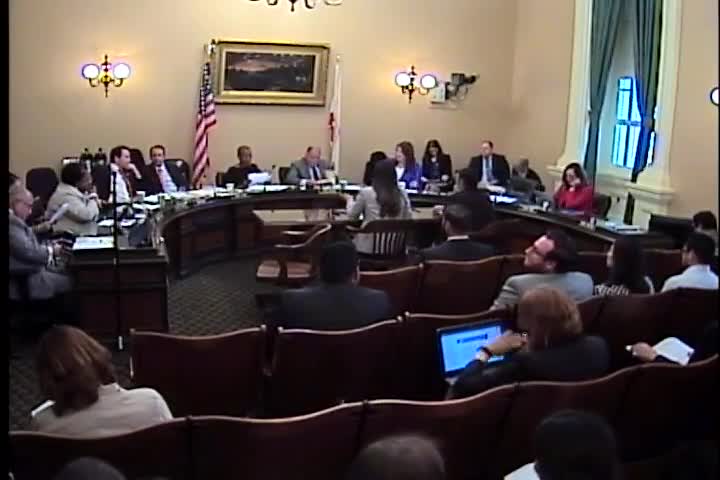
Senate Standing Committee on Appropriations
 3MIN
Assembly Floor
 6MIN
Assembly Standing Committee on Higher Education
Bill Author






