AB 2771: Education finance: Higher Education Facilities Bond Act of 2018.
- Session Year: 2017-2018
- House: Assembly
- Latest Version Date: 2018-08-17
(1)Under the Higher Education Facilities Bond Act of 1986, the Higher Education Facilities Bond Act of 1988, and the Higher Education Facilities Bond Act of June 1992, the issuance, pursuant to the State General Obligation Bond Law, of bonds in an amount not to exceed $400,000,000, $600,000,000, and $900,000,000, respectively, and the expenditure of the revenues therefrom, were authorized for the purpose of aid to the University of California and the California State University for, among other things, the construction and equipping of educational facilities, as specified. Existing law establishes the Higher Education Facilities Finance Committee to administer those acts, and to authorize the issuance and sale of bonds to the extent necessary to fund the education facilities construction apportionments expressly authorized by the Legislature in the annual Budget Act.
More recently, the Class Size Reduction Kindergarten-University Public Education Facilities Bond Act of 1998, the Kindergarten-University Public Education Facilities Bond Act of 2002, the Kindergarten-University Public Education Facilities Bond Act of 2004, and the Kindergarten-University Public Education Facilities Bond Act of 2006 authorized the issuance of bonds and the expenditure of revenues therefrom for the University of California and the California State University, as well as for public elementary and secondary schools.
Article XVI of the California Constitution requires measures authorizing general obligation bonds to specify the single object or work to be funded by the bonds and further requires a bond act to be approved by a 2/3 vote of each house of the Legislature and a majority of the voters.
This bill would enact the Higher Education Facilities Bond Act of 2018 which, upon approval by the state electorate, would authorize the issuance of state general obligation bonds in the total amount of $7,000,000,000. The proceeds of the bonds issued and sold under the bill would be available for the construction, reconstruction, and remodeling of existing or new facilities, as specified, at the University of California, the Hastings College of the Law, and the California State University.
(2)This bill would provide for the submission of the Higher Education Facilities Bond Act of 2018 to the voters at the November 6, 2018, 3, 2020, statewide general election.
(3)This bill would declare that it is to take effect immediately as an urgency statute.(1)Under the Higher Education Facilities Bond Act of 1986, the Higher Education Facilities Bond Act of 1988, and the Higher Education Facilities Bond Act of June 1992, the issuance, pursuant to the State General Obligation Bond Law, of bonds in an amount not to exceed $400,000,000, $600,000,000, and $900,000,000, respectively, and the expenditure of the revenues therefrom, were authorized for the purpose of aid to the University of California and the California State University for, among other things, the construction and equipping of educational facilities, as specified. Existing law establishes the Higher Education Facilities Finance Committee to administer those acts, and to authorize the issuance and sale of bonds to the extent necessary to fund the education facilities construction apportionments expressly authorized by the Legislature in the annual Budget Act.
More recently, the Class Size Reduction Kindergarten-University Public Education Facilities Bond Act of 1998, the Kindergarten-University Public Education Facilities Bond Act of 2002, the Kindergarten-University Public Education Facilities Bond Act of 2004, and the Kindergarten-University Public Education Facilities Bond Act of 2006 authorized the issuance of bonds and the expenditure of revenues therefrom for the University of California and the California State University, as well as for public elementary and secondary schools.
This bill would enact the Higher Education Facilities Bond Act of 2018 which, upon approval by the state electorate, would authorize the issuance of state general obligation bonds in the total amount of $7,000,000,000. The proceeds of the bonds issued and sold under the bill would be available for the construction, reconstruction, and remodeling of existing or new facilities, as specified, at the University of California, the Hastings College of the Law, and the California State University.
(2)This bill would provide for the submission of the Higher Education Facilities Bond Act of 2018 to the voters at the November 6, 2018, statewide general election.
(3)This bill would declare that it is to take effect immediately as an urgency statute.
(1)Under the Higher Education Facilities Bond Act of 1986, the Higher Education Facilities Bond Act of 1988, and the Higher Education Facilities Bond Act of June 1992, the issuance, pursuant to the State General Obligation Bond Law, of bonds in an amount not to exceed $400,000,000, $600,000,000, and $900,000,000, respectively, and the expenditure of the revenues therefrom, were authorized for the purpose of aid to the University of California and the California State University for, among other things, the construction and equipping of educational facilities, as specified. Existing law establishes the Higher Education Facilities Finance Committee to administer those acts, and to authorize the issuance and sale of bonds to the extent necessary to fund the education facilities construction apportionments expressly authorized by the Legislature in the annual Budget Act.
More recently, the Class Size Reduction Kindergarten-University Public Education Facilities Bond Act of 1998, the Kindergarten-University Public Education Facilities Bond Act of 2002, the Kindergarten-University Public Education Facilities Bond Act of 2004, and the Kindergarten-University Public Education Facilities Bond Act of 2006 authorized the issuance of bonds and the expenditure of revenues therefrom for the University of California and the California State University, as well as for public elementary and secondary schools.
This bill would enact the Higher Education Facilities Bond Act of 2018 which, upon approval by the state electorate, would authorize the issuance of state general obligation bonds in the total amount of $7,000,000,000. The proceeds of the bonds issued and sold under the bill would be available for the construction, reconstruction, and remodeling of existing or new facilities, as specified, at the University of California, the Hastings College of the Law, and the California State University.
(2)This bill would provide for the submission of the Higher Education Facilities Bond Act of 2018 to the voters at the November 6, 2018, statewide election.
(3)This bill would declare that it is to take effect immediately as an urgency statute.
(1)Under the Higher Education Facilities Bond Act of 1986, the Higher Education Facilities Bond Act of 1988, and the Higher Education Facilities Bond Act of June 1992, the issuance, pursuant to the State General Obligation Bond Law, of bonds in an amount not to exceed $400,000,000, $600,000,000, and $900,000,000, respectively, and the expenditure of the revenues therefrom, were authorized for the purpose of aid to the University of California and the California State University for, among other things, the construction and equipping of educational facilities, as specified. Existing law establishes the Higher Education Facilities Finance Committee to administer those acts, and to authorize the issuance and sale of bonds to the extent necessary to fund the education facilities construction apportionments expressly authorized by the Legislature in the annual Budget Act.
More recently, the Class Size Reduction Kindergarten-University Public Education Facilities Bond Act of 1998, the Kindergarten-University Public Education Facilities Bond Act of 2002, the Kindergarten-University Public Education Facilities Bond Act of 2004, and the Kindergarten-University Public Education Facilities Bond Act of 2006 authorized the issuance of bonds and the expenditure of revenues therefrom for the University of California and the California State University, as well as for public elementary and secondary schools.
This bill would express the intent of the Legislature to enact the Higher Education Facilities Bond Act of 2018 to assist in meeting the capital outlay financing needs of the University of California and the California State University. enact the Higher Education Facilities Bond Act of 2018 which, upon approval by the state electorate, would authorize the issuance of state general obligation bonds in the total amount of $7,000,000,000. The proceeds of the bonds issued and sold under the bill would be available for the construction, reconstruction, and remodeling of existing or new facilities, as specified, at the University of California, the Hastings College of the Law, and the California State University.
(2)This bill would provide for the submission of the Higher Education Facilities Bond Act of 2018 to the voters at the November 6, 2018, statewide election.
Under the Higher Education Facilities Bond Act of 1986, the Higher Education Facilities Bond Act of 1988, and the Higher Education Facilities Bond Act of June 1992, the issuance, pursuant to the State General Obligation Bond Law, of bonds in an amount not to exceed $400,000,000, $600,000,000, and $900,000,000, respectively, and the expenditure of the revenues therefrom, were authorized for the purpose of aid to the University of California and the California State University for, among other things, the construction and equipping of educational facilities, as specified. Existing law establishes the Higher Education Facilities Finance Committee to administer those acts, and to authorize the issuance and sale of bonds to the extent necessary to fund the education facilities construction apportionments expressly authorized by the Legislature in the annual Budget Act.
More recently, the Class Size Reduction Kindergarten-University Public Education Facilities Bond Act of 1998, the Kindergarten-University Public Education Facilities Bond Act of 2002, the Kindergarten-University Public Education Facilities Bond Act of 2004, and the Kindergarten-University Public Education Facilities Bond Act of 2006 authorized the issuance of bonds and the expenditure of revenues therefrom for the University of California and the California State University, as well as for public elementary and secondary schools.
This bill would express the intent of the Legislature to enact the Higher Education Facilities Bond Act of 2018 to assist in meeting the capital outlay financing needs of the University of California and the California State University.
This part shall be known and may be cited as the Higher Education Facilities Bond Act of 2018.
101301.The incorporation of, or reference to, any provisions of California statutory law in this part includes all acts amendatory thereof and supplementary thereto.
101302.The Legislature finds and declares all of the following:
(a)Californias economic and social prosperity relies on a higher education system that keeps pace with Californias growth.
(b)By 2030, California is estimated to fall short of demand in the job market by 1,100,000 college graduates.
(c)Despite the need for more college graduates, California is turning away tens of thousands of qualified residents for admission to its four-year universities.
(d)Thousands of potential students are place-bound without adequate access to a four-year public university.
(e)There is an acute need for increased student housing, and the inadequate availability of such housing serves as an obstacle to the ability of students to pursue and complete their degrees.
(f)The purposes of this part include assisting in meeting the capital outlay financing needs of Californias public higher education system.
101303.The 2018 Higher Education Facilities Bond Act Finance Committee is hereby created. The committee shall consist of the Governor, the Controller, the Treasurer, the Director of Finance, the President of the University of California, and the Chancellor of the California State University, or their designees. The Treasurer shall serve as chairperson of the committee, a majority of the membership of which shall constitute a quorum.
2.Fiscal Provisions101310.(a)Bonds in the total amount of seven billion dollars ($7,000,000,000), not including the amount of any refunding bonds issued in accordance with Section 101320, or so much thereof as is necessary, may be issued and sold for the purposes expressed in this part and to reimburse the General Obligation Bond Expense Revolving Fund pursuant to Section 16724.5 of the Government Code. The bonds, when sold, issued, and delivered, shall be and constitute a valid and binding obligation of the State of California, and the full faith and credit of the State of California is hereby pledged for the punctual payment of the principal of, and interest on, the bonds as the principal and interest become due and payable.
(b)Pursuant to this section, the Treasurer shall sell the bonds authorized by the 2018 Higher Education Facilities Bond Act Finance Committee at any different times necessary to service expenditures required by the apportionments.
(c)The proceeds of bonds, exclusive of refunding bonds issued in accordance with Section 101320, issued and sold pursuant to this part shall be deposited in the 2018 Higher Education Capital Outlay Bond Fund, which is hereby created in the State Treasury.
101311.(a)The 2018 Higher Education Facilities Bond Act Finance Committee established pursuant to Section 101303 is hereby authorized to create a debt or debts, liability or liabilities, of the State of California pursuant to this part for the purpose of providing funds to aid the University of California, the Hastings College of the Law, and the California State University.
(b)The inclusion of the Hastings College of the Law in this section is not intended to mark a change from the funding authorizations made by Section 67354, as contained in the Higher Education Facilities Bond Act of 1986, or by Section 67334, as contained in the Higher Education Facilities Bond Act of 1988, but is intended to state more clearly what was intended by the Legislature in those sections as well.
101312.(a)The bonds authorized by this part shall be prepared, executed, issued, sold, paid, and redeemed as provided in the State General Obligation Bond Law (Chapter 4 (commencing with Section 16720) of Part 3 of Division 4 of Title 2 of the Government Code), as amended from time to time, and all of the provisions of that law, except subdivisions (a) and (b) of Section 16727 of the Government Code, apply to the bonds and to this part and are hereby incorporated in this part as though set forth in full in this part.
(b)For the purposes of the State General Obligation Bond Law, each state agency administering an appropriation of the 2018 Higher Education Capital Outlay Bond Fund is designated as the board for projects funded pursuant to this part.
(c)The proceeds of the bonds issued and sold pursuant to this part shall be available for the construction, reconstruction, and remodeling of existing or new facilities, including the construction of buildings and the acquisition of related fixtures; the equipping of new, renovated, or reconstructed facilities; funding for the payment of preconstruction costs, including, but not necessarily limited to, preliminary plans and working drawings; renovation and reconstruction of facilities; and the construction or improvement of off-campus facilities of the California State University approved by the Trustees of the California State University on or before July 1, 2014, including the acquisition of sites upon which these facilities are to be constructed.
101313.The 2018 Higher Education Facilities Bond Act Finance Committee established pursuant to Section 101303 shall authorize the issuance of bonds under this part only to the extent necessary to fund the appropriations for the purposes described in this part that are expressly authorized by the Legislature in the annual Budget Act. Pursuant to that legislative direction, the committee shall determine whether or not it is necessary or desirable to issue bonds authorized pursuant to this part in order to carry out the purposes described in this part and, if so, the amount of bonds to be issued and sold. Successive issues of bonds may be authorized and sold to carry out those actions progressively, and it is not necessary that all of the bonds authorized to be issued be sold at any one time.
101314.There shall be collected each year and in the same manner and at the same time as other state revenue is collected, in addition to the ordinary revenues of the state, a sum in an amount required to pay the principal of, and interest on, the bonds each year. It is the duty of all officers charged by law with any duty in regard to the collection of the revenue to do and perform each and every act which is necessary to collect that additional sum.
101315.Notwithstanding Section 13340 of the Government Code, there is hereby appropriated from the General Fund in the State Treasury, for the purposes of this part, an amount that will equal the total of the following:
(a)The sum annually necessary to pay the principal of, and interest on, bonds issued and sold pursuant to this part, as the principal and interest become due and payable.
(b)The sum necessary to carry out subdivision (a) of Section 101318, appropriated without regard to fiscal years.
101316.The board, as defined in subdivision (b) of Section 101312, may request the Pooled Money Investment Board to make a loan from the Pooled Money Investment Account or any other approved form of interim financing, in accordance with Section 16312 of the Government Code, for the purpose of carrying out this part. The amount of the request shall not exceed the amount of the unsold bonds, exclusive of refunding bonds issued in accordance with Section 101320, less any amount loaned pursuant to this section and not yet repaid, and any amount loaned from the General Fund pursuant to Section 101318 and not yet returned to the General Fund, that the committee, by resolution, has authorized to be sold for the purpose of carrying out this part. The board, as defined in subdivision (b) of Section 101312, shall execute any documents required by the Pooled Money Investment Board to obtain and repay the loan. Any amounts loaned shall be deposited in the fund to be allocated by the board in accordance with this part.
101317.Notwithstanding any other provision of this part, or of the State General Obligation Bond Law, if the Treasurer sells bonds pursuant to this part that include a bond counsel opinion to the effect that the interest on the bonds is excluded from gross income for federal tax purposes, subject to designated conditions, the Treasurer may maintain separate accounts for the investment of bond proceeds and for the investment earnings on those proceeds. The Treasurer may use or direct the use of those proceeds or earnings to pay any rebate, penalty, or other payment required under federal law or take any other action with respect to the investment and use of those bond proceeds required or desirable under federal law to maintain the tax-exempt status of those bonds and to obtain any other advantage under federal law on behalf of the funds of this state.
101318.(a)For the purposes of carrying out this part, the Director of Finance may authorize the withdrawal from the General Fund of an amount not to exceed the amount of the unsold bonds, exclusive of refunding bonds issued in accordance with Section 101320, less any amount loaned pursuant to Section 101316 and not yet repaid and any amount loaned from the General Fund pursuant to this section and not yet returned to the General Fund, that have been authorized by the 2018 Higher Education Facilities Bond Act Finance Committee to be sold for the purpose of carrying out this part. Any amounts withdrawn shall be deposited in the 2018 Higher Education Capital Outlay Bond Fund consistent with this part. Any money made available under this section shall be returned to the General Fund, plus an amount equal to the interest that the money would have earned in the Pooled Money Investment Account, from proceeds received from the sale of bonds for the purpose of carrying out this part.
(b)Any request forwarded to the Legislature and the Department of Finance for funds from this bond issue for expenditure for the purposes described in this part by the University of California, the California State University, or the Hastings College of the Law shall be accompanied by the five-year capital outlay plan. Requests forwarded by a university or college shall include a schedule that prioritizes the seismic retrofitting needed to significantly reduce, by the 202223 fiscal year, in the judgment of the particular university or college, seismic hazards in buildings identified as high priority by the university or college.
101319.All money deposited in the 2018 Higher Education Capital Outlay Bond Fund that is derived from premium and accrued interest on bonds sold shall be reserved in the fund and shall be available for transfer to the General Fund as a credit to expenditures for bond interest, except that amounts derived from premium may be used to pay the cost of bond issuance.
101320.The bonds may be refunded in accordance with Article 6 (commencing with Section 16780) of Chapter 4 of Part 3 of Division 4 of Title 2 of the Government Code, which is a part of the State General Obligation Bond Law. Approval by the voters of the state for the issuance of the bonds described in this part includes the approval of the issuance of any bonds issued to refund any bonds originally issued under this part or any previously issued refunding bonds to refund bonds in accordance with this section.
101321.The Legislature hereby finds and declares that, inasmuch as the proceeds from the sale of bonds authorized by this part are not proceeds of taxes as that term is used in Article XIII B of the California Constitution, the disbursement of these proceeds is not subject to the limitations imposed by that article.
SEC. 2.Section 1 of this act shall take effect upon the adoption by the voters of the Higher Education Facilities Bond Act of 2018, as set forth in Section 1 of this act.
SEC. 3.Section 1 of this act shall be submitted to the voters at the November 6, 2018, 3, 2020, statewide general election.
SEC. 4.This act is an urgency statute necessary for the immediate preservation of the public peace, health, or safety within the meaning of Article IV of the California Constitution and shall go into immediate effect. The facts constituting the necessity are:In order for the Higher Education Facilities Bond Act of 2018 to be presented to the voters at the November 6, 2018, statewide general election, it is necessary that this act take effect immediately.This part shall be known and may be cited as the Higher Education Facilities Bond Act of 2018.
101301.The incorporation of, or reference to, any provisions of California statutory law in this part includes all acts amendatory thereof and supplementary thereto.
101302.The Legislature finds and declares all of the following:
(a)Californias economic and social prosperity relies on a higher education system that keeps pace with Californias growth.
(b)By 2030, California is estimated to fall short of demand in the job market by 1,100,000 college graduates.
(c)Despite the need for more college graduates, California is turning away tens of thousands of qualified residents for admission to its four-year universities.
(d)Thousands of potential students are place-bound without adequate access to a four-year public university.
(e)There is an acute need for increased student housing, and the inadequate availability of such housing serves as an obstacle to the ability of students to pursue and complete their degrees.
(f)The purposes of this article part include assisting in meeting the capital outlay financing needs of Californias public higher education system.
101303.The 2018 Higher Education Facilities Bond Act Finance Committee is hereby created. The committee shall consist of the Governor, the Controller, the Treasurer, the Director of Finance, the President of the University of California, and the Chancellor of the California State University, or their designees. The Treasurer shall serve as chairperson of the committee. committee, a majority of the membership of which shall constitute a quorum.
2.Fiscal Provisions101310.(a)Bonds in the total amount of seven billion dollars ($7,000,000,000), not including the amount of any refunding bonds issued in accordance with Section 101320, or so much thereof as is necessary, may be issued and sold to provide a fund to be used for carrying out for the purposes expressed in this part and to reimburse the General Obligation Bond Expense Revolving Fund pursuant to Section 16724.5 of the Government Code. The bonds, when sold, issued, and delivered, shall be and constitute a valid and binding obligation of the State of California, and the full faith and credit of the State of California is hereby pledged for the punctual payment of the principal of, and interest on, the bonds as the principal and interest become due and payable.
(b)Pursuant to this section, the Treasurer shall sell the bonds authorized by the 2018 Higher Education Facilities Bond Act Finance Committee established pursuant to Section 101303 at any different times necessary to service expenditures required by the apportionments.
(c)The proceeds of bonds bonds, exclusive of refunding bonds issued in accordance with Section 101320, issued and sold pursuant to this part shall be deposited in the 2018 Higher Education Capital Outlay Bond Fund, which is hereby created. created in the State Treasury.
101311.(a)The 2018 Higher Education Facilities Bond Act Finance Committee established pursuant to Section 101303 is hereby authorized to create a debt or debts, liability or liabilities, of the State of California pursuant to this chapter part for the purpose of providing funds to aid the University of California, the Hastings College of the Law, and the California State University.
(b)The inclusion of the Hastings College of the Law in this section is not intended to mark a change from the funding authorizations made by Section 67354, as contained in the Higher Education Facilities Bond Act of 1986, or by Section 67334, as contained in the Higher Education Facilities Bond Act of 1988, but is intended to state more clearly what was intended by the Legislature in those sections as well.
101312.(a)The bonds authorized by this chapter part shall be prepared, executed, issued, sold, paid, and redeemed as provided in the State General Obligation Bond Law (Chapter 4 (commencing with Section 16720) of Part 3 of Division 4 of Title 2 of the Government Code), as amended from time to time, and all of the provisions of that law, except subdivisions (a) and (b) of Section 16727 of the Government Code, apply to the bonds and to this chapter part and are hereby incorporated in this chapter part as though set forth in full in this chapter. part.
(b)For the purposes of the State General Obligation Bond Law, each state agency administering an appropriation of the 2018 Higher Education Capital Outlay Bond Fund is designated as the board for projects funded pursuant to this chapter. part.
(c)The proceeds of the bonds issued and sold pursuant to this chapter part shall be available for the construction, reconstruction, and remodeling of existing or new facilities, including the construction of buildings and the acquisition of related fixtures; the equipping of new, renovated, or reconstructed facilities; funding for the payment of preconstruction costs, including, but not necessarily limited to, preliminary plans and working drawings; renovation and reconstruction of facilities; and the construction or improvement of off-campus facilities of the California State University approved by the Trustees of the California State University on or before July 1, 2014, including the acquisition of sites upon which these facilities are to be constructed. The addition of the Hastings College of the Law to this section is not intended to mark a change from the funding authorizations made by Section 67354, as contained in the Higher Education Facilities Bond Act of 1986, or by Section 67334, as contained in the Higher Education Facilities Bond Act of 1988, but is intended to state more clearly what was intended by the Legislature in those sections as well.
101313.The 2018 Higher Education Facilities Bond Act Finance Committee established pursuant to Section 101303 shall authorize the issuance of bonds under this chapter part only to the extent necessary to fund the apportionments appropriations for the purposes described in this chapter part that are expressly authorized by the Legislature in the annual Budget Act. Pursuant to that legislative direction, the committee shall determine whether or not it is necessary or desirable to issue bonds authorized pursuant to this chapter part in order to carry out the purposes described in this chapter part and, if so, the amount of bonds to be issued and sold. Successive issues of bonds may be authorized and sold to carry out those actions progressively, and it is not necessary that all of the bonds authorized to be issued be sold at any one time.
101314.There shall be collected each year and in the same manner and at the same time as other state revenue is collected, in addition to the ordinary revenues of the state, a sum in an amount required to pay the principal of, and interest on, the bonds each year. It is the duty of all officers charged by law with any duty in regard to the collection of the revenue to do and perform each and every act which is necessary to collect that additional sum.
101315.Notwithstanding Section 13340 of the Government Code, there is hereby appropriated from the General Fund in the State Treasury, for the purposes of this chapter, part, an amount that will equal the total of the following:
(a)The sum annually necessary to pay the principal of, and interest on, bonds issued and sold pursuant to this chapter, part, as the principal and interest become due and payable.
(b)The sum necessary to carry out subdivision (a) of Section 101318, appropriated without regard to fiscal years.
101316.The board, as defined in subdivision (b) of Section 101312, may request the Pooled Money Investment Board to make a loan from the Pooled Money Investment Account or any other approved form of interim financing, in accordance with Section 16312 of the Government Code, for the purpose of carrying out this chapter. part. The amount of the request shall not exceed the amount of the unsold bonds bonds, exclusive of refunding bonds issued in accordance with Section 101320, less any amount loaned pursuant to this section and not yet repaid, and any amount loaned from the General Fund pursuant to Section 101318 and not yet returned to the General Fund, that the committee, by resolution, has authorized to be sold for the purpose of carrying out this chapter. part. The board, as defined in subdivision (b) of Section 101312, shall execute any documents required by the Pooled Money Investment Board to obtain and repay the loan. Any amounts loaned shall be deposited in the fund to be allocated by the board in accordance with this chapter. part.
101317.Notwithstanding any other provision of this chapter, part, or of the State General Obligation Bond Law, if the Treasurer sells bonds pursuant to this chapter part that include a bond counsel opinion to the effect that the interest on the bonds is excluded from gross income for federal tax purposes, subject to designated conditions, the Treasurer may maintain separate accounts for the investment of bond proceeds and for the investment earnings on those proceeds. The Treasurer may use or direct the use of those proceeds or earnings to pay any rebate, penalty, or other payment required under federal law or take any other action with respect to the investment and use of those bond proceeds required or desirable under federal law to maintain the tax-exempt status of those bonds and to obtain any other advantage under federal law on behalf of the funds of this state.
101318.(a)For the purposes of carrying out this chapter, part, the Director of Finance may authorize the withdrawal from the General Fund of an amount not to exceed the amount of the unsold bonds bonds, exclusive of refunding bonds issued in accordance with Section 101320, less any amount loaned pursuant to Section 101316 and not yet repaid and any amount loaned from the General Fund pursuant to this section and not yet returned to the General Fund, that have been authorized by the 2018 Higher Education Facilities Bond Act Finance Committee to be sold for the purpose of carrying out this chapter. part. Any amounts withdrawn shall be deposited in the 2018 Higher Education Capital Outlay Bond Fund consistent with this chapter. part. Any money made available under this section shall be returned to the General Fund, plus an amount equal to the interest that the money would have earned in the Pooled Money Investment Account, from proceeds received from the sale of bonds for the purpose of carrying out this chapter. part.
(b)Any request forwarded to the Legislature and the Department of Finance for funds from this bond issue for expenditure for the purposes described in this chapter part by the University of California or California, the California State University University, or the Hastings College of the Law shall be accompanied by the five-year capital outlay plan. Requests forwarded by a university or college shall include a schedule that prioritizes the seismic retrofitting needed to significantly reduce, by the 202223 fiscal year, in the judgment of the particular university or college, seismic hazards in buildings identified as high priority by the university or college.
101319.All money deposited in the 2018 Higher Education Capital Outlay Bond Fund that is derived from premium and accrued interest on bonds sold shall be reserved in the fund and shall be available for transfer to the General Fund as a credit to expenditures for bond interest. interest, except that amounts derived from premium may be used to pay the cost of bond issuance.
101320.The bonds may be refunded in accordance with Article 6 (commencing with Section 16780) of Chapter 4 of Part 3 of Division 4 of Title 2 of the Government Code, which is a part of the State General Obligation Bond Law. Approval by the voters of the state for the issuance of the bonds described in this chapter part includes the approval of the issuance of any bonds issued to refund any bonds originally issued under this chapter part or any previously issued refunding bonds. bonds to refund bonds in accordance with this section.
101321.The Legislature hereby finds and declares that, inasmuch as the proceeds from the sale of bonds authorized by this chapter part are not proceeds of taxes as that term is used in Article XIII B of the California Constitution, the disbursement of these proceeds is not subject to the limitations imposed by that article.
SEC. 2.Section 1 of this act shall take effect upon the adoption by the voters of the Higher Education Facilities Bond Act of 2018, as set forth in Section 1 of this act.
SEC. 3.Section 1 of this act shall be submitted to the voters at the November 6, 2018, statewide general election.
SEC. 4.This act is an urgency statute necessary for the immediate preservation of the public peace, health, or safety within the meaning of Article IV of the California Constitution and shall go into immediate effect. The facts constituting the necessity are:
In order for the Higher Education Facilities Bond Act of 2018 to be presented to the voters at the November 6, 2018, statewide general election, it is necessary that this act take effect immediately.
This part shall be known and may be cited as the Higher Education Facilities Bond Act of 2018.
101301.The incorporation of, or reference to, any provisions of California statutory law in this part includes all acts amendatory thereof and supplementary thereto.
101302.The Legislature finds and declares all of the following:
(a)Californias economic and social prosperity relies on a higher education system that keeps pace with Californias growth.
(b)By 2030, California is estimated to fall short of demand in the job market by 1,100,000 college graduates.
(c)Despite the need for more college graduates, California is turning away tens of thousands of qualified residents for admission to its four-year universities.
(d)Thousands of potential students are place-bound without adequate access to a four-year public university.
(e)There is an acute need for increased student housing, and the inadequate availability of such housing serves as an obstacle to the ability of students to pursue and complete their degrees.
(f)The purposes of this article include assisting in meeting the capital outlay financing needs of Californias public higher education system.
101303.The 2018 Higher Education Facilities Bond Act Finance Committee is hereby created. The committee shall consist of the Governor, the Controller, the Treasurer, the Director of Finance, the President of the University of California, and the Chancellor of the California State University, or their designees. The Treasurer shall serve as chairperson of the committee.
2.Fiscal Provisions101310.(a)Bonds in the total amount of seven billion dollars ($7,000,000,000), not including the amount of any refunding bonds issued in accordance with Section 101320, or so much thereof as is necessary, may be issued and sold to provide a fund to be used for carrying out the purposes expressed in this part and to reimburse the General Obligation Bond Expense Revolving Fund pursuant to Section 16724.5 of the Government Code. The bonds, when sold, shall be and constitute a valid and binding obligation of the State of California, and the full faith and credit of the State of California is hereby pledged for the punctual payment of the principal of, and interest on, the bonds as the principal and interest become due and payable.
(b)Pursuant to this section, the Treasurer shall sell the bonds authorized by the 2018 Higher Education Facilities Bond Act Finance Committee established pursuant to Section 101303 at any different times necessary to service expenditures required by the apportionments.
(c)The proceeds of bonds issued and sold pursuant to this part shall be deposited in the 2018 Higher Education Capital Outlay Bond Fund, which is hereby created.
101311.The 2018 Higher Education Facilities Bond Act Finance Committee established pursuant to Section 101303 is hereby authorized to create a debt or debts, liability or liabilities, of the State of California pursuant to this chapter for the purpose of providing funds to aid the University of California, the Hastings College of the Law, and the California State University.
101312.(a)The bonds authorized by this chapter shall be prepared, executed, issued, sold, paid, and redeemed as provided in the State General Obligation Bond Law (Chapter 4 (commencing with Section 16720) of Part 3 of Division 4 of Title 2 of the Government Code), and all of the provisions of that law, except Section 16727 of the Government Code, apply to the bonds and to this chapter and are hereby incorporated in this chapter as though set forth in full in this chapter.
(b)For the purposes of the State General Obligation Bond Law, each state agency administering an appropriation of the 2018 Higher Education Capital Outlay Bond Fund is designated as the board for projects funded pursuant to this chapter.
(c)The proceeds of the bonds issued and sold pursuant to this chapter shall be available for the construction, reconstruction, and remodeling of existing or new facilities, including the construction of buildings and the acquisition of related fixtures; the equipping of new, renovated, or reconstructed facilities; funding for the payment of preconstruction costs, including, but not necessarily limited to, preliminary plans and working drawings; renovation and reconstruction of facilities; and the construction or improvement of off-campus facilities of the California State University approved by the Trustees of the California State University on or before July 1, 2014, including the acquisition of sites upon which these facilities are to be constructed. The addition of the Hastings College of the Law to this section is not intended to mark a change from the funding authorizations made by Section 67354, as contained in the Higher Education Facilities Bond Act of 1986, or by Section 67334, as contained in the Higher Education Facilities Bond Act of 1988, but is intended to state more clearly what was intended by the Legislature in those sections as well.
101313.The 2018 Higher Education Facilities Bond Act Finance Committee established pursuant to Section 101303 shall authorize the issuance of bonds under this chapter only to the extent necessary to fund the apportionments for the purposes described in this chapter that are expressly authorized by the Legislature in the annual Budget Act. Pursuant to that legislative direction, the committee shall determine whether or not it is necessary or desirable to issue bonds authorized pursuant to this chapter in order to carry out the purposes described in this chapter and, if so, the amount of bonds to be issued and sold. Successive issues of bonds may be authorized and sold to carry out those actions progressively, and it is not necessary that all of the bonds authorized to be issued be sold at any one time.
101314.There shall be collected each year and in the same manner and at the same time as other state revenue is collected, in addition to the ordinary revenues of the state, a sum in an amount required to pay the principal of, and interest on, the bonds each year. It is the duty of all officers charged by law with any duty in regard to the collection of the revenue to do and perform each and every act which is necessary to collect that additional sum.
101315.Notwithstanding Section 13340 of the Government Code, there is hereby appropriated from the General Fund in the State Treasury, for the purposes of this chapter, an amount that will equal the total of the following:
(a)The sum annually necessary to pay the principal of, and interest on, bonds issued and sold pursuant to this chapter, as the principal and interest become due and payable.
(b)The sum necessary to carry out Section 101318, appropriated without regard to fiscal years.
101316.The board, as defined in subdivision (b) of Section 101312, may request the Pooled Money Investment Board to make a loan from the Pooled Money Investment Account or any other approved form of interim financing, in accordance with Section 16312 of the Government Code, for the purpose of carrying out this chapter. The amount of the request shall not exceed the amount of the unsold bonds that the committee, by resolution, has authorized to be sold for the purpose of carrying out this chapter. The board, as defined in subdivision (b) of Section 101312, shall execute any documents required by the Pooled Money Investment Board to obtain and repay the loan. Any amounts loaned shall be deposited in the fund to be allocated by the board in accordance with this chapter.
101317.Notwithstanding any other provision of this chapter, or of the State General Obligation Bond Law, if the Treasurer sells bonds pursuant to this chapter that include a bond counsel opinion to the effect that the interest on the bonds is excluded from gross income for federal tax purposes, subject to designated conditions, the Treasurer may maintain separate accounts for the investment of bond proceeds and for the investment earnings on those proceeds. The Treasurer may use or direct the use of those proceeds or earnings to pay any rebate, penalty, or other payment required under federal law or take any other action with respect to the investment and use of those bond proceeds required or desirable under federal law to maintain the tax-exempt status of those bonds and to obtain any other advantage under federal law on behalf of the funds of this state.
101318.(a)For the purposes of carrying out this chapter, the Director of Finance may authorize the withdrawal from the General Fund of an amount not to exceed the amount of the unsold bonds that have been authorized by the 2018 Higher Education Facilities Bond Act Finance Committee to be sold for the purpose of carrying out this chapter. Any amounts withdrawn shall be deposited in the 2018 Higher Education Capital Outlay Bond Fund consistent with this chapter. Any money made available under this section shall be returned to the General Fund, plus an amount equal to the interest that the money would have earned in the Pooled Money Investment Account, from proceeds received from the sale of bonds for the purpose of carrying out this chapter.
(b)Any request forwarded to the Legislature and the Department of Finance for funds from this bond issue for expenditure for the purposes described in this chapter by the University of California or the California State University shall be accompanied by the five-year capital outlay plan. Requests forwarded by a university or college shall include a schedule that prioritizes the seismic retrofitting needed to significantly reduce, by the 202223 fiscal year, in the judgment of the particular university or college, seismic hazards in buildings identified as high priority by the university or college.
101319.All money deposited in the 2018 Higher Education Capital Outlay Bond Fund that is derived from premium and accrued interest on bonds sold shall be reserved in the fund and shall be available for transfer to the General Fund as a credit to expenditures for bond interest.
101320.The bonds may be refunded in accordance with Article 6 (commencing with Section 16780) of Chapter 4 of Part 3 of Division 4 of Title 2 of the Government Code, which is a part of the State General Obligation Bond Law. Approval by the voters of the state for the issuance of the bonds described in this chapter includes the approval of the issuance of any bonds issued to refund any bonds originally issued under this chapter or any previously issued refunding bonds.
101321.The Legislature hereby finds and declares that, inasmuch as the proceeds from the sale of bonds authorized by this chapter are not proceeds of taxes as that term is used in Article XIII B of the California Constitution, the disbursement of these proceeds is not subject to the limitations imposed by that article.
SEC. 2.Section 1 of this act shall take effect upon the adoption by the voters of the Higher Education Facilities Bond Act of 2018, as set forth in Section 1 of this act.
SEC. 3.Section 1 of this act shall be submitted to the voters at the November 6, 2018, statewide election.
SEC. 4.This act is an urgency statute necessary for the immediate preservation of the public peace, health, or safety within the meaning of Article IV of the California Constitution and shall go into immediate effect. The facts constituting the necessity are:
In order for the Higher Education Facilities Bond Act of 2018 to be presented to the voters at the November 6, 2018, statewide election, it is necessary that this act take effect immediately.
REVISIONS: HeadingLine 2.This part shall be known and may be cited as the Higher Education Facilities Bond Act of 2018.
101301.The incorporation of, or reference to, any provisions of California statutory law in this part includes all acts amendatory thereof and supplementary thereto.
101302.The Legislature finds and declares all of the following:
(a)Californias economic and social prosperity relies on a higher education system that keeps pace with Californias growth.
(b)By 2030, California is estimated to fall short of demand in the job market by 1,100,000 college graduates.
(c)Despite the need for more college graduates, California is turning away tens of thousands of qualified residents for admission to its four-year universities.
(d)Thousands of potential students are place-bound without adequate access to a four-year public university.
(e)There is an acute need for increased student housing, and the inadequate availability of such housing serves as an obstacle to the ability of students to pursue and complete their degrees.
(f)The purposes of this article include assisting in meeting the capital outlay financing needs of Californias public higher education system.
101303.The 2018 Higher Education Facilities Bond Act Finance Committee is hereby created. The committee shall consist of the Governor, the Controller, the Treasurer, the Director of Finance, the President of the University of California, and the Chancellor of the California State University, or their designees. The Treasurer shall serve as chairperson of the committee.
2.Fiscal Provisions101310.(a)Bonds in the total amount of seven billion dollars ($7,000,000,000), not including the amount of any refunding bonds issued in accordance with Section 101320, or so much thereof as is necessary, may be issued and sold to provide a fund to be used for carrying out the purposes expressed in this part and to reimburse the General Obligation Bond Expense Revolving Fund pursuant to Section 16724.5 of the Government Code. The bonds, when sold, shall be and constitute a valid and binding obligation of the State of California, and the full faith and credit of the State of California is hereby pledged for the punctual payment of the principal of, and interest on, the bonds as the principal and interest become due and payable.
(b)Pursuant to this section, the Treasurer shall sell the bonds authorized by the 2018 Higher Education Facilities Bond Act Finance Committee established pursuant to Section 101303 at any different times necessary to service expenditures required by the apportionments.
(c)The proceeds of bonds issued and sold pursuant to this part shall be deposited in the 2018 Higher Education Capital Outlay Bond Fund, which is hereby created.
101311.The 2018 Higher Education Facilities Bond Act Finance Committee established pursuant to Section 101303 is hereby authorized to create a debt or debts, liability or liabilities, of the State of California pursuant to this chapter for the purpose of providing funds to aid the University of California, the Hastings College of the Law, and the California State University.
101312.(a)The bonds authorized by this chapter shall be prepared, executed, issued, sold, paid, and redeemed as provided in the State General Obligation Bond Law (Chapter 4 (commencing with Section 16720) of Part 3 of Division 4 of Title 2 of the Government Code), and all of the provisions of that law, except Section 16727 of the Government Code, apply to the bonds and to this chapter and are hereby incorporated in this chapter as though set forth in full in this chapter.
(b)For the purposes of the State General Obligation Bond Law, each state agency administering an appropriation of the 2018 Higher Education Capital Outlay Bond Fund is designated as the board for projects funded pursuant to this chapter.
(c)The proceeds of the bonds issued and sold pursuant to this chapter shall be available for the construction, reconstruction, and remodeling of existing or new facilities, including the construction of buildings and the acquisition of related fixtures; the equipping of new, renovated, or reconstructed facilities; funding for the payment of preconstruction costs, including, but not necessarily limited to, preliminary plans and working drawings; renovation and reconstruction of facilities; and the construction or improvement of off-campus facilities of the California State University approved by the Trustees of the California State University on or before July 1, 2014, including the acquisition of sites upon which these facilities are to be constructed. The addition of the Hastings College of the Law to this section is not intended to mark a change from the funding authorizations made by Section 67354, as contained in the Higher Education Facilities Bond Act of 1986, or by Section 67334, as contained in the Higher Education Facilities Bond Act of 1988, but is intended to state more clearly what was intended by the Legislature in those sections as well.
101313.The 2018 Higher Education Facilities Bond Act Finance Committee established pursuant to Section 101303 shall authorize the issuance of bonds under this chapter only to the extent necessary to fund the apportionments for the purposes described in this chapter that are expressly authorized by the Legislature in the annual Budget Act. Pursuant to that legislative direction, the committee shall determine whether or not it is necessary or desirable to issue bonds authorized pursuant to this chapter in order to carry out the purposes described in this chapter and, if so, the amount of bonds to be issued and sold. Successive issues of bonds may be authorized and sold to carry out those actions progressively, and it is not necessary that all of the bonds authorized to be issued be sold at any one time.
101314.There shall be collected each year and in the same manner and at the same time as other state revenue is collected, in addition to the ordinary revenues of the state, a sum in an amount required to pay the principal of, and interest on, the bonds each year. It is the duty of all officers charged by law with any duty in regard to the collection of the revenue to do and perform each and every act which is necessary to collect that additional sum.
101315.Notwithstanding Section 13340 of the Government Code, there is hereby appropriated from the General Fund in the State Treasury, for the purposes of this chapter, an amount that will equal the total of the following:
(a)The sum annually necessary to pay the principal of, and interest on, bonds issued and sold pursuant to this chapter, as the principal and interest become due and payable.
(b)The sum necessary to carry out Section 101318, appropriated without regard to fiscal years.
101316.The board, as defined in subdivision (b) of Section 101312, may request the Pooled Money Investment Board to make a loan from the Pooled Money Investment Account or any other approved form of interim financing, in accordance with Section 16312 of the Government Code, for the purpose of carrying out this chapter. The amount of the request shall not exceed the amount of the unsold bonds that the committee, by resolution, has authorized to be sold for the purpose of carrying out this chapter. The board, as defined in subdivision (b) of Section 101312, shall execute any documents required by the Pooled Money Investment Board to obtain and repay the loan. Any amounts loaned shall be deposited in the fund to be allocated by the board in accordance with this chapter.
101317.Notwithstanding any other provision of this chapter, or of the State General Obligation Bond Law, if the Treasurer sells bonds pursuant to this chapter that include a bond counsel opinion to the effect that the interest on the bonds is excluded from gross income for federal tax purposes, subject to designated conditions, the Treasurer may maintain separate accounts for the investment of bond proceeds and for the investment earnings on those proceeds. The Treasurer may use or direct the use of those proceeds or earnings to pay any rebate, penalty, or other payment required under federal law or take any other action with respect to the investment and use of those bond proceeds required or desirable under federal law to maintain the tax-exempt status of those bonds and to obtain any other advantage under federal law on behalf of the funds of this state.
101318.(a)For the purposes of carrying out this chapter, the Director of Finance may authorize the withdrawal from the General Fund of an amount not to exceed the amount of the unsold bonds that have been authorized by the 2018 Higher Education Facilities Bond Act Finance Committee to be sold for the purpose of carrying out this chapter. Any amounts withdrawn shall be deposited in the 2018 Higher Education Capital Outlay Bond Fund consistent with this chapter. Any money made available under this section shall be returned to the General Fund, plus an amount equal to the interest that the money would have earned in the Pooled Money Investment Account, from proceeds received from the sale of bonds for the purpose of carrying out this chapter.
(b)Any request forwarded to the Legislature and the Department of Finance for funds from this bond issue for expenditure for the purposes described in this chapter by the University of California or the California State University shall be accompanied by the five-year capital outlay plan. Requests forwarded by a university or college shall include a schedule that prioritizes the seismic retrofitting needed to significantly reduce, by the 202223 fiscal year, in the judgment of the particular university or college, seismic hazards in buildings identified as high priority by the university or college.
101319.All money deposited in the 2018 Higher Education Capital Outlay Bond Fund that is derived from premium and accrued interest on bonds sold shall be reserved in the fund and shall be available for transfer to the General Fund as a credit to expenditures for bond interest.
101320.The bonds may be refunded in accordance with Article 6 (commencing with Section 16780) of Chapter 4 of Part 3 of Division 4 of Title 2 of the Government Code, which is a part of the State General Obligation Bond Law. Approval by the voters of the state for the issuance of the bonds described in this chapter includes the approval of the issuance of any bonds issued to refund any bonds originally issued under this chapter or any previously issued refunding bonds.
101321.The Legislature hereby finds and declares that, inasmuch as the proceeds from the sale of bonds authorized by this chapter are not proceeds of taxes as that term is used in Article XIII B of the California Constitution, the disbursement of these proceeds is not subject to the limitations imposed by that article.
SEC. 2.Section 1 of this act shall take effect upon the adoption by the voters of the Higher Education Facilities Bond Act of 2018, as set forth in Section 1 of this act.
SEC. 3.Section 1 of this act shall be submitted to the voters at the November 6, 2018, statewide election.
SECTION 1.This act shall be known, and may be cited, as the Higher Education Facilities Bond Act of 2018.SEC. 2.The Legislature finds and declares all of the following:(a)Californias economic and social prosperity depends on a higher education system that keeps pace with Californias growth.(b)By 2030, California is estimated to fall 1,100,000 college graduates short of demand in the job market.(c)Despite the need for more college graduates, California is turning away tens of thousands of qualified residents for admission to its four-year universities.(d)Thousands of potential students are place-bound without adequate access to a four-year public university.(e)There is an acute need for increased student housing, and the inadequate availability of such housing serves as an obstacle to the ability of students to pursue and complete their degrees.SEC. 3.It is the intent of the Legislature to enact legislation to adopt the Higher Education Facilities Bond Act of 2018 to assist in meeting the capital outlay financing needs of the University of California and the California State University systems. Specifically, funding from this act is intended to be used to fund student housing, facility improvements on existing campuses, and the establishment of a fund to develop new campuses.This act shall be known, and may be cited, as the Higher Education Facilities Bond Act of 2018.
SEC. 2.The Legislature finds and declares all of the following:
(a)Californias economic and social prosperity depends on a higher education system that keeps pace with Californias growth.
(b)By 2030, California is estimated to fall 1,100,000 college graduates short of demand in the job market.
(c)Despite the need for more college graduates, California is turning away tens of thousands of qualified residents for admission to its four-year universities.
(d)Thousands of potential students are place-bound without adequate access to a four-year public university.
(e)There is an acute need for increased student housing, and the inadequate availability of such housing serves as an obstacle to the ability of students to pursue and complete their degrees.
SEC. 3.It is the intent of the Legislature to enact legislation to adopt the Higher Education Facilities Bond Act of 2018 to assist in meeting the capital outlay financing needs of the University of California and the California State University systems. Specifically, funding from this act is intended to be used to fund student housing, facility improvements on existing campuses, and the establishment of a fund to develop new campuses.
|
Date
|
Status
|
|---|---|
| Aug 31, 2018 | Ordered to inactive file at the request of Senator Monning. |
| Aug 20, 2018 | Read second time. Ordered to third reading. |
| Aug 17, 2018 | From committee: Amend, and do pass as amended. (Ayes 5. Noes 1.) (August 16). |
| Aug 6, 2018 | In committee: Referred to APPR. suspense file. |
| Jul 5, 2018 | Read second time and amended. Re-referred to Com. on APPR. |
| Jul 3, 2018 | From committee: Amend, and do pass as amended and re-refer to Com. on APPR. (Ayes 5. Noes 1.) (June 27). |
| Jun 20, 2018 | From committee: Do pass and re-refer to Com. on GOV. & F. (Ayes 7. Noes 0.) (June 20). Re-referred to Com. on GOV. & F. |
| Jun 13, 2018 | Referred to Coms. on ED. and GOV. & F. |
| Jun 4, 2018 | In Senate. Read first time. To Com. on RLS. for assignment. |
| May 31, 2018 | Read third time. Urgency clause adopted. Passed. Ordered to the Senate. |
| May 25, 2018 | Coauthors revised. |
| May 9, 2018 | In committee: Set, first hearing. Referred to APPR. suspense file. |
| Apr 30, 2018 | Re-referred to Com. on APPR. |
| Apr 26, 2018 | Read second time and amended. |
| Apr 25, 2018 | From committee: Amend, and do pass as amended and re-refer to Com. on APPR. (Ayes 11. Noes 0.) (April 24). |
| Apr 2, 2018 | Re-referred to Com. on HIGHER ED. |
| Mar 23, 2018 | From committee chair, with author's amendments: Amend, and re-refer to Com. on HIGHER ED. Read second time and amended. |
| Mar 22, 2018 | Referred to Com. on HIGHER ED. |
| Feb 17, 2018 | From printer. May be heard in committee March 19. |
| Feb 16, 2018 | Read first time. To print. |
|
Date
|
Description
|
Location
|
Votes
|
|
|---|---|---|---|---|
| Aug 16, 2018 | Do pass as amended | Senate Standing Committee on Appropriations |
Passed |
|
| Aug 6, 2018 | Placed on suspense file | Senate Standing Committee on Appropriations |
Passed |
|
| Jun 27, 2018 | Do pass as amended, but first amend, and re-refer to the Committee on [Appropriations] | Senate Standing Committee on Governance and Finance |
Passed |
|
| Jun 20, 2018 | Do pass, but first be re-referred to the Committee on [Governance and Finance] | Senate Standing Committee on Education |
Passed |
|
| May 31, 2018 | AB 2771 EGGMAN Third Reading Urgency | Assembly Floor |
Passed |
|
| May 25, 2018 | Do pass. | Assembly Standing Committee on Appropriations |
Passed |
|
| Apr 24, 2018 | Do pass as amended and be re-referred to the Committee on [Appropriations] | Assembly Standing Committee on Higher Education |
Passed |
This list shows positions taken on this bill by organizations on the date displayed, which is linked to the original source.
Positions by individuals are not included.
|
Organization
|
Position
|
Date
|
|---|---|---|
| Cal State Student Association | ** Support | Aug 19, 2018 |
| California Faculty Association | ** Support | Aug 19, 2018 |
| California Teamsters Public Affairs Council | ** Support | Aug 19, 2018 |
| Howard Jarvis Taxpayers Association | ** Against | Aug 19, 2018 |
| Mobile Modular | ** Support | Aug 19, 2018 |
Office of Senate Floor Analyses (916) 651-1520 Fax: (916) 327-4478 | AB |
THIRD READING
Bill No: AB 2771
Amended: 8/17/18 in Senate
SENATE EDUCATION COMMITTEE: 7-0, 6/20/18
AYES: Allen, Wilk, Galgiani, Leyva, McGuire, Pan, Vidak
SENATE GOVERNANCE & FIN. COMMITTEE: 5-1, 6/27/18
AYES: McGuire, Beall, Hernandez, Hertzberg, Lara
NOES: Moorlach
NO VOTE RECORDED: Nguyen
SENATE APPROPRIATIONS COMMITTEE: 5-1, 8/16/18
AYES: Portantino, Beall, Bradford, Hill, Wiener
NOES: Nielsen
NO VOTE RECORDED: Bates
ASSEMBLY FLOOR: 58-12, 5/31/18 - See last page for vote
DIGEST:
This bill, an urgency measure, places a $7 billion general obligation bond on the November 2020 ballot for the construction, reconstruction, and remodeling of existing or new facilities at the University of California (UC), the California State University (CSU), and the Hastings College of the Law.
Existing law:
- Stipulates that the Legislature shall not, in any manner create any debt or debts, liability or liabilities, which shall, singly or in the aggregate with any previous debts or liabilities, exceed $300,000 unless enactment has been passed by a two-thirds vote of all the members elected to each house of the Legislature and until, at a general election or at a direct primary, it shall have been submitted to the people and shall have received a majority of all the votes cast for and against it at such election (California Constitution Article XVI, Section 1.).
- Requires the Governor to annually submit to the Legislature, in conjunction with the Governor's Budget, a proposed five-year infrastructure plan, which among other things, shall include the instructional and support facilities needs of UC and CSU (Government Code Section 13102.).
This bill, an urgency measure, places a $7 billion general obligation bond on the November 2020 ballot for the construction, reconstruction, and remodeling of existing or new facilities at the UC, the CSU, and the Hastings College of the Law. Specifically, this bill:
- Enacts the Higher Education Facilities Bond Act of 2020, which, upon approval at the November 2020 statewide election, authorizes no more than $7 billion of state general obligation bonds for the construction, reconstruction, and remodeling of existing or new facilities at the UC, the CSU, and the Hastings College of the Law.
- Specifies that allowable uses of the funds include the following: (1) construction of buildings and the acquisition of related fixtures, (2) the equipping of new, renovated, or reconstructed facilities, including preconstruction costs, including, but not necessarily limited to, preliminary plans and working drawings, (3) renovation and reconstruction of facilities, and (4) the construction or improvement of off-campus facilities of CSU, approved by the CSU Trustees on or before July 1, 2014, including the acquisition of sites upon which these facilities are to be constructed.
- Authorizes the Higher Education Facilities Finance Committee (committee), consisting of the Governor, the Controller, the Treasurer, the Director of Finance, the UC President, the CSU Chancellor, and the Chancellor of the California Community Colleges, to create debt or debts, liability or liabilities, of the State of California pursuant to this measure.
- States that any request forwarded to the Legislature and the Department of Finance for funds from this bond issue for expenditure by the UC or CSU shall be accompanied by the five-year capital outlay plan of the particular university or college, and shall include a schedule that prioritizes the seismic retrofitting needed to significantly reduce, by the 2022–23 fiscal year, in the judgment of the particular university or college, seismic hazards in buildings identified as high priority by the university or college.
- Specifies that the Treasurer shall sell the bonds authorized by the committee at times necessary to service expenditures required by the apportionments and bonds authorized by this part shall be prepared, executed, issued, sold, paid, and redeemed as provided in the State General Obligation Bond Law (Chapter 4 (commencing with Section 16720) of Part 3 of Division 4 of Title 2 of the Government Code).
- Requires the committee to authorize the issuance of bonds only to the extent necessary to fund the apportionments that are expressly authorized by the Legislature in the annual Budget Act, as specified.
Comments
- Need for the bill. According to the author, while the voters recently approved bonds for K-14 facilities, UC and CSU were not included in that bond measure, yet these systems have multi-billion dollar capital outlay needs and multi-billion dollar deferred maintenance backlogs. Noting that the last general obligation bond to benefit UC and CSU was in 2006, the author believes it is time for the state to invest in this other importance part of our higher education system and its facilities.
- What are the facilities needs of the segments? The UC and CSU report the following capital needs:
- The UC reported that combining the projects included in its Capital Financial Plan with its current deferred maintenance backlog puts the five- year capital need at nearly $14 billion. However, UC conceded that, of this amount, about $6 billion could be funded with existing resources.
- The CSU reported their capital needs for academic programs total about $8.4 billion. However, about $200 million of the need was anticipated to be met with current revenue bonds.
The last statewide general obligation bond supporting the higher education segments, Proposition 1D, provided $890 million for UC and $690 million for CSU. After accounting for the available resources at UC and CSU, the capital needs of the segments appear to be equivalent.
- How are the segments funded for their facilities needs currently? Over the past few years, the responsibility for capital outlay projects has shifted from the state to the UC and CSU through the state’s annual budget. The segments are now able to use their general fund to support capital outlay projects or to fund revenue bond debt service, with the expectation that they prioritize their capital expenditures within their overall operating budgets. However, UC and CSU maintain that this shift does not preclude them from participating in a state general obligation bond. Further, the segments have expressed that they are not funded adequately for their operations currently, let alone at a level that can also support all of their facilities costs.
FISCAL EFFECT: Appropriation: Fiscal Com.: Local:
According to the Senate Appropriations Committee, the authorization of $7 billion in general obligation bonds is expected to result in General Fund costs of approximately $12.14 billion to repay, including $5.14 billion in interest, at an annual cost of $405 million.
Cal State Student Association
California Faculty Association
California Teamsters Public Affairs Council
Mobile Modular
OPPOSITION: (Verified 8/17/18)
Howard Jarvis Taxpayers Association
ASSEMBLY FLOOR: 58-12, 5/31/18
AYES: Acosta, Aguiar-Curry, Arambula, Baker, Berman, Bloom, Bonta, Burke, Caballero, Calderon, Carrillo, Cervantes, Chau, Chávez, Chiu, Chu, Cooley, Cooper, Daly, Eggman, Frazier, Friedman, Cristina Garcia, Eduardo Garcia, Gipson, Gloria, Gonzalez Fletcher, Gray, Grayson, Holden, Irwin, Jones-Sawyer, Kalra, Kamlager-Dove, Lackey, Levine, Limón, Low, Maienschein, McCarty, Medina, Mullin, Muratsuchi, Nazarian, O'Donnell, Quirk, Quirk-Silva, Reyes, Rodriguez, Rubio, Salas, Santiago, Mark Stone, Thurmond, Ting, Weber, Wood, Rendon
NOES: Travis Allen, Bigelow, Brough, Chen, Cunningham, Dahle, Gallagher, Harper, Melendez, Obernolte, Voepel, Waldron
NO VOTE RECORDED: Choi, Flora, Fong, Kiley, Mathis, Mayes, Patterson, Steinorth
8/19/18 13:43:21
**** END ****
SENATE COMMITTEE ON APPROPRIATIONS
Senator Anthony Portantino, Chair
2017 - 2018 Regular Session
AB 2771 (Eggman) - Education finance: Higher Education Facilities Bond Act of 2018
Version: July 5, 2018 | Policy Vote: ED. 7 - 0, GOV. & F. 5 - 1 |
Urgency: Yes | Mandate: No |
Hearing Date: August 16, 2018 | Consultant: Lenin Del Castillo |
Bill Summary:
This bill, an urgency measure, places a $7 billion general obligation bond on the November 2018 ballot for the construction, reconstruction, and remodeling of existing or new facilities at the University of California (UC), the California State University (CSU), and the Hastings College of the Law.
*********** ANALYSIS ADDENDUM – SUSPENSE FILE ***********
The following information is revised to reflect amendments
adopted by the committee on August 16, 2018
Fiscal Impact:
The authorization of $7 billion in general obligation bonds is expected to result in General Fund costs of approximately $12.14 billion to repay, including $5.14 billion in interest, at an annual cost of $405 million.
Author Amendments:
Place the bond measure on the 2020 ballot.
-- END --
SENATE COMMITTEE ON APPROPRIATIONS
Senator Anthony Portantino, Chair
2017 - 2018 Regular Session
AB 2771 (Eggman) - Education finance: Higher Education Facilities Bond Act of 2018
Version: July 5, 2018 | Policy Vote: ED. 7 - 0, GOV. & F. 5 - 1 |
Urgency: Yes | Mandate: No |
Hearing Date: August 6, 2018 | Consultant: Lenin Del Castillo |
This bill meets the criteria for referral to the Suspense File.
Bill Summary:
This bill, an urgency measure, places a $7 billion general obligation bond on the November 2018 ballot for the construction, reconstruction, and remodeling of existing or new facilities at the University of California (UC), the California State University (CSU), and the Hastings College of the Law.
Fiscal Impact:
The authorization of $7 billion in general obligation bonds is expected to result in General Fund costs of approximately $12.14 billion to repay, including $5.14 billion in interest, at an annual cost of $405 million.
Background:
From the late 1980s to 2006, the Legislature placed on the ballot and voters approved bonds that have included support for public higher education every two to four years. The last statewide general obligation bond to include support for public higher education was Proposition 1D (AB 127, Núñez and Perata, Chapter 35, Statutes of 2006), authorizing the sale of $10.4 billion in general obligation bonds, of which $3.087 billion was earmarked for higher education facilities. Of this amount, $1.5 billion was provided for the community colleges, $890 million for UC, and $690 million for CSU. All Proposition 1D higher education facilities funds have been depleted.
Since 2006, no general obligation bonds supporting higher education have been enacted. Instead, the higher education segments have received capital funding from lease-revenue bonds through the annual budget acts. Bond funds, whether lease-revenue or general obligation, are allocated through the budget process in accordance with the segments' five-year capital facility plans.
Proposed Law:
This bill:
- Enacts the Higher Education Facilities Bond Act of 2018, which, upon approval at the November 2018 statewide election, authorizes no more than $7 billion of state general obligation bonds for the construction, reconstruction, and remodeling of existing or new facilities at the UC, the CSU, and the Hastings College of the Law.
- Specifies that allowable uses of the funds include the following: (1) construction of buildings and the acquisition of related fixtures, (2) the equipping of new, renovated, or reconstructed facilities, including preconstruction costs, including, but not necessarily limited to, preliminary plans and working drawings, (3) renovation and reconstruction of facilities, and (4) the construction or improvement of off-campus facilities of CSU, approved by the CSU Trustees on or before July 1, 2014, including the acquisition of sites upon which these facilities are to be constructed.
- Authorizes the Higher Education Facilities Finance Committee, consisting of the Governor, the Controller, the Treasurer, the Director of Finance, the UC President, the CSU Chancellor, and the Chancellor of the California Community Colleges, to create debt or debts, liability or liabilities, of the State of California pursuant to this measure.
- States that any request forwarded to the Legislature and the Department of Finance for funds from this bond issue for expenditure by the UC or CSU shall be accompanied by the five-year capital outlay plan of the particular university or college, and shall include a schedule that prioritizes the seismic retrofitting needed to significantly reduce, by the 2022–23 fiscal year, in the judgment of the particular university or college, seismic hazards in buildings identified as high priority by the university or college.
- Specifies that the Treasurer shall sell the bonds authorized by the committee at times necessary to service expenditures required by the apportionments and bonds authorized by this part shall be prepared, executed, issued, sold, paid, and redeemed as provided in the State General Obligation Bond Law (Chapter 4 (commencing with Section 16720) of Part 3 of Division 4 of Title 2 of the Government Code).
- Requires the Committee to authorize the issuance of bonds only to the extent necessary to fund the apportionments that are expressly authorized by the Legislature in the annual Budget Act, as specified.
Related Legislation:
SB 1225 (Glazer) would place a $4 billion general obligation bond on the November 2018 ballot for the construction, reconstruction, and remodeling of existing or new facilities at the UC, the CSU, and the Hastings College of the Law. This measure is currently pending in the Assembly Appropriations Committee.
Staff Comments:
The UC reports that combining the projects included in its Capital Financial Plan with its current deferred maintenance backlog puts the five- year capital need at nearly $10 billion. However, of this amount, about $3.6 billion can be funded with existing resources. The CSU reports that its capital needs for academic programs total about $6.2 billion for which approximately $1 billion is anticipated to be met with current revenue bonds. The last statewide general obligation bond supporting the segments, Proposition 1D, provided $890 million for UC and $690 million for CSU.
This bill places a $7 billion general obligation bond on the November 2018 ballot for the construction, reconstruction, and remodeling of existing or new facilities at the UC, the CSU, and the Hastings College of the Law. However, it does not specify how this amount would be split among the segments.
-- END --
SENATE COMMITTEE ON GOVERNANCE AND FINANCE
Senator Mike McGuire, Chair
2017 - 2018 Regular
Bill No: | AB 2771 | Hearing Date: | 6/27/18 |
Author: | Eggman | Tax Levy: | No |
Version: | 4/26/18 | Fiscal: | Yes |
Consultant: | Grinnell | ||
Education finance: Higher Education Facilities Bond Act of 2018
Enacts the Higher Education Facilities Bond Act of 2018, which places a $7 billion bond before voters at the November, 2018, general election ballot.
Background
When public agencies issue bonds, they borrow money from investors, who provide cash in exchange for the agencies’ commitment to repay the principal amount of the bond plus interest. Bonds are usually either revenue bonds, which repay investors out of revenue generated from the project the agency buys with bond proceeds, or general obligation bonds, which the public agency pays out of general revenues and are guaranteed by its full faith and credit.
Section One of Article XVI of the California Constitution and the state’s General Obligation Bond Law guide the issuance of the state’s general obligation debt. The Constitution allows the Legislature to place general obligation bonds on the ballot for specific purposes with a two-thirds vote of the Assembly and Senate. Voters also can place bonds on the ballot by initiative, as they have for parks, water projects, high-speed rail, and stem cell research, among others. Either way, general obligation bonds must be ratified by majority vote of the state’s electorate. Unlike local general obligation bonds, approval by the state’s electorate doesn’t automatically trigger an increased tax to repay the bond. The Constitution commits the state to repay investors from general revenues above all other claims, except payments to public education. California voters approved $38.4 billion of general obligation bonds between 1974 and 1999, which increased significantly to $112 billion between 2000 and 2010, but receded to $17 billion between 2011 and 2018. Additionally, voters recently approved the $4 billion California Drought, Water, Parks, Climate, Coastal Protection, and Outdoor Access for All Act of 2018 (SB 5, De Leon, 2017), and will consider the $3 billion Veterans and Affordable Housing Bond Act (SB 3, Beall, 2017), at the November, 2018, general election.
Bond acts have standard provisions that authorize the State Treasurer to sell a specified amount of bonds, and generally include several uniform provisions that:
- Establish the state’s obligation to repay them, and pledge its full faith and credit to repayment,
- Set forth issuance procedures, and link the bond act to the state’s General Obligation Bond Law,
- Create a finance committee with specified membership, chaired by the State Treasurer,
- Charge the committee to determine whether it is “necessary or desirable” to issue the bonds, and
- Add other mechanisms necessary for the State Treasurer and the Department of Finance to implement the bond act, including allowing the board to request a loan from the Pooled Money Investment Board to advance funds for bond-funded programs prior to the bond sale, among others.
In bond acts, the Legislature generally:
- Sets forth categories of projects eligible for bond funds, such as library construction or school facility modernization,
- Chooses an administrative agency to award the funds, such as the State Librarian or the State Allocation Board,
- Details the criteria to guide the administrative agency’s funding in each category,
- Enacts enforcement and audit provisions, and
- Provides for an election to approve the bond act.
Should the voters approve the bond act, the Legislature then appropriates funds to the chosen agencies to fund projects consistent with the criteria, generally as part of the Budget Act. The Department of Finance then surveys agencies to determine the need for bond funds based on a project’s readiness, and then asks the State Treasurer to sell bonds in a specified amount. After the bond sale, the Department of Finance determines which bond acts and agencies receive bond proceeds.
The University of California (UC) offers both undergraduate and graduate education, with its ten campuses enrolling approximately 238,000 students. In the 2016-17 fiscal year, UC awarded approximately 72,322 degrees. Nine of its ten campuses are governed by the Board of Regents; while not governed by the Board of Regents, the UC Hastings College of Law in San Francisco is the state’s oldest law school, with an enrollment of approximately 945 students.
The California State University (CSU) provides undergraduate and graduate instruction generally through the master’s degree, and its 23 campuses enroll approximately 484,000 students. In the 2015-16 fiscal year, CSU awarded approximately 113,000 degrees. CSU is governed by a 25-member Board of Regents.
Both CSU and UC have authority to issue their own revenue bonds, which are bonds repaid and secured by a specified pledge of revenues, such as student housing or parking fees, and not backed by the full faith and credit of the state like general obligation bonds. Additionally, the State Public Works Board (SPWB) can also issue lease revenue bonds where CSU or UC lease facilities from the Board, and the Legislature appropriates funds to pay the leases. These bonds are not general obligations because the Legislature is not obligated to pay the lease rentals if the building is not available for use and occupancy. CSU currently has $154 million in outstanding lease revenue bonds.
Historically, general obligation bonds and SPWB lease revenue bonds have financed many UC and CSU capital improvements. However, the Governor and the Legislature in recent years changed the way the state funds UC and CSU capital outlay; previously, each system would distinguish capital outlay from other costs when requesting funding as part of the Budget Act. Today, UC and CSU include capital outlay with all of its other spending. To implement this change, the Legislature recently provided UC with increased flexibility to pursue capital outlay projects outside of the annual budget process, after approval by the Department of Finance (DOF) and review by the Joint Legislative Budget Committee (AB 94, Committee on Budget, 2013).
AB 94 allowed UC to pledge up to 15% of the state funds provided in its General Fund support budget less general obligation debt payments and lease payments towards capital outlay, lease revenue bond debt, and pay as you go. The Legislature also added almost identical authority for CSU to finance capital projects in 2014 (SB 860, Committee on Budget and Fiscal Review). The Governor’s Five-Year Infrastructure Plan further reflects this change by stating:
“Successful strategies to more efficiently fund infrastructure projects for the University of California (UC) and the California State University (CSU) systems have been implemented. Legislation was enacted in 2014 and 2015 that provided both UC and CSU with the authority to fund capital projects and debt service from their annual support budgets. This provides the universities with the flexibility to prioritize funding sources for their entire operations, including infrastructure development.”
The Plan notes that UC and CSU both submit annual capital outlay proposals for Legislative review and DOF approval to comply with statute. UC submitted 2018-19 capital outlay proposals totaling $266 million, while CSU submitted capital proposals totaling $1.4 billion. The Plan does not assume the proceeds of general obligation bonds will be used for UC or CSU.
UC reports that combining the projects included in its Capital Financial Plan with its current deferred maintenance backlog puts the five-year capital need at nearly $14 billion. However, UC conceded that, of this amount, about $6 billion could be funded with existing resources. CSU reports their capital needs for academic programs total about $8.4 billion. However, about $200 million of the need was anticipated to be met with current revenue bonds.
The last statewide general obligation bond to include support for public higher education was Proposition 1D (AB 127, Núñez and Perata, 2006), which authorized the sale of $10.4 billion in general obligation bonds, of which $3 billion was earmarked for higher education facilities. Of this amount, $1.5 billion was provided for the community colleges, $890 million for UC, and $690 million for CSU. The Governor’s Bond Accountability website (www.bondaccountability.ca.gov) indicates that almost all of these funds have been committed. The author wants the state to issue general obligation bonds to fund additional higher education improvements.
Proposed Law
Assembly Bill 2771 enacts the Higher Education Facilities Bond Act of 2018, which places a $7 billion bond before voters at the November, 2018, general election ballot. The measure creates the 2018 Higher Education Capital Outlay Bond Fund, and requires that all bond proceeds be deposited in the Fund. The measure creates a finance committee to administer the bond, consisting of the Treasurer as Chair, the Governor, the Controller, the Director of Finance, the President of the University of California, the Chancellor of the California State University, and the Chancellor of the California Community Colleges, or their designees.
The bill authorizes the Committee to create debts and liabilities on behalf of the state for the purposes of funding aid to UC, CSU, and the Hastings College of the Law for the construction, reconstruction, and remodeling of existing or new facilities authorized in the Budget Act, including:
- Preliminary plans and drawings,
- Acquisition of related fixtures,
- Equipping of new, renovated, or reconstructed facilities,
- Funding for payment of preconstruction costs, or
- Construction of off-campus facilities of CSU, so long as the Trustees approved the construction on or before July 1, 2014, including acquisition of sites upon which the facilities are to be built.
AB 2771 charges the Committee, pursuant to legislative direction, with the duty to authorize the issuance and sale of its bonds, and incorporates standard provisions in general obligation bond law, either explicitly or by reference, with some modifications.
The measure contains legislative findings and declarations supporting its purposes, and language stating that its provisions clarify authorizations made in the 1986 and 1988 Bond Acts, and is not intended to mark a change.
State Revenue Impact
No estimate.
Comments
1. Purpose of the bill. According to the author, “AB 2771 would generate $7 billion dollars in revenue for construction of new facilities and improvements to existing facilities. Historically, bonds have been used to fund large capital investments in our education system, both k-12 and higher education. As funding for projects through the budget has failed to keep pace with need, the CSU and UC have been left out of recent bond measures. In 2016, the voters passed Proposition 51, a nine billion dollar bond for primary school through community college. We need to also invest in the rest of our public higher education system. Not only are our current facilities lacking necessary maintenance, but our system is also turning away tens of thousands of students. We are projected to fall millions of graduates short of the job market need by 2030, and must expand our capacity to offer opportunities to California’s students. My community is now home to more than 300,000 people and we have no public university within 50 miles. The needs all over the state are continuing to grow. If we want to have the resources to meet future need, we have to expand existing schools and invest in new campus construction.”
2. Role reversal? AB 2771 authorizes the sale of $7 billion in general obligation bonds contingent on voter approval to fund capital improvements for UC and CSU authorized in the Budget Act. However, the Legislature recently changed UC and CSU’s capital outlay programs for a future in which no general obligation bond funding would be available; instead, UC and CSU had to integrate capital outlay funding into their general request for resources, and use that funding as security when issuing revenue bonds under its own name. The Legislature increased funding for both systems to compensate. While UC and CSU have significant capital outlay needs, and student fees have escalated significantly in the past decade, should the Legislature again turn to general obligation bonds so soon after making the change? The Committee may wish to consider whether general obligation bonds are the right source to fund UC and CSU capital outlay given its recent shift away from that source.
3. Sixteen tons. Setting the right amount of state general obligation debt is difficult; both the State Treasurer and the Legislative Analyst’s Office state that there’s no correct level. Instead, experts suggest that states should look at three criteria: affordability, comparability, and optimality:[1]
California currently has $74.8 billion of general obligation and $13.5 billion of lease revenue debt outstanding, which is affordable. The Governor’s 2017 Five-Year Infrastructure Plan states that the Debt Service Ratio, or the ratio between debt service and general fund revenues, as 6.46% in 2016-17 and 5.74% in 2017-18. The State Treasurer calculates a debt service ratio of 6.57% in 2016-17 and 6.4% in 2017-18; the percentages differ because the State Treasurer accounts for offsets of federal government subsidies or transfers from special funds. Annual expenditures on debt service have grown from $2.9 billion in 2000-01 to $7.3 billion in 2017-18, and are estimated to increase to $8.5 billion in 2021-22, assuming voters approve the two proposed bonds pending this year. Additionally, 95% of outstanding debt is paid at a fixed rate of interest. While debt service percentages are reasonable, every dollar spent on debt service reduces the funding that is available for other priorities. The Plan proposes only $848 million in new general obligation bonds.
California’s comparability to other states is less favorable, but improving. The State Treasurer’s 2017 Debt Affordability Report, issued last October, contains the following chart:
Debt Ratios Of 10 Most Populous States, Ranked By Ratio Of Debt To Personal Income | ||||
State | Moody’s/ S&P/ | Debt to personal income(b) | Debt per capita(b) | Debt as a % |
Texas | Aaa/AAA/AAA | 0.8% | $383 | .66% |
North Carolina | Aaa/AAA/AAA | 1.6% | $659 | 1.35% |
Michigan | Aa1/AA-/AA | 1.6% | $689 | 1.46% |
Florida | Aa1/AAA/AAA | 2.2% | $961 | 2.23% |
Ohio | Aa1/AA+/AA+ | 2.5% | $1,087 | 2.07% |
Georgia | Aaa/AAA/AAA | 2.5% | $992 | 2.05% |
Pennsylvania | Aa3/AA-/AA- | 2.7% | $1,337 | 2.41% |
California Illinois | Aa3/AA-/AA- Baa3/BBB-/BBB+ | 4.2% 5.1% | $2,217 $2,511 | 3.41% 4.14% |
New York | Aa1/AA+/AA+ | 5.4% | $3,070 | 4.23% |
Moody’s Median All States | 2.3% | $1,006 | 2.23% | |
Median For The 10 Most Populous States | 2.5% | $1,040 | 2.15% | |
(a) Moody’s, Standard & Poor’s, and Fitch Ratings as of August, 2017 (b) Figures as reported by Moody’s in its 2017 State Debt Medians Report released June 2016. As of calendar year end 2015. (c) State GDP numbers have a one-year lag. | ||||
Determining optimality or whether government is investing in the quantity and quality of public capital desired by residents, and financing the appropriate share with debt, is more difficult. LAO recommends that the Legislature consider the Five-Year Infrastructure Plan as a starting point to developing a coordinated approach to infrastructure funding, and establish a committee to focus on statewide infrastructure.
4. The good news. Ratings issued from the three major credit rating agencies often inform investors and the public regarding the state’s creditworthiness, and assess any investment risk from investing in California general obligation bonds. Rating agencies Fitch, Standard and Poor’s, and Moody’s praise California’s deep and diverse economy, recent balanced and on-time budgets, reduced budget deficits, and improved reserves and liquidity. However, the agencies also state that California faces challenges: a highly volatile revenue system, constitutionally-imposed governance restrictions, high housing costs that threaten economic growth, minimal prefunding of retiree health care benefits, and a large backlog of maintenance and infrastructure needs, among others. Once considered an outlier, the difference between California bonds and other states as measured by the benchmark 30-year Municipal Market Data Index has tightened from a high of more than 150 basis points at the end of 2009 to around 10 basis points at the end of June 2016, although it increased slightly in 2017. On March 8, 2018, State Treasurer Chiang sold $1.52 billion in bonds for new borrowing, and $663 million to refund outstanding general obligation bonds for debt service savings. Interest rates on the bonds ranged from 2% to 5.25% while yields ranged from 1.3% to 3.72%. The overall true interest cost for the sale was 3.53%, which was almost the same as the interest cost from last March’s bond sale, but higher than the 3.01% from the sale in September, 2017. On April 20, 2018, the Treasurer sold $2.15 in taxable general obligation bonds, included $947 million in new borrowing authorized by 10 different bond acts and $1.2 billion to refund outstanding general obligation bonds for debt service savings. Maturities for the bonds ranged from 2020 to 2038, while final yields ranged from 2.53% to 3.94%. The overall true interest cost for the sale was 3.91%.
5. The bad news. California has a distinct problem: of the $149 billion in general obligation bonds that voters have authorized, more than $29 billion hasn’t been issued yet, with voters approving the $4 billion Drought, Water, Parks, Climate, Coastal Protection, and Outdoor Access for All Act of 2018 in June, and the $3 billion Veterans and Affordable Housing Bond Act of 2018 pending before voters in November. Among others, the state hasn’t issued more than $6.6 billion to fund high speed rail, $6.9 billion from the recent water bond, and $6.4 billion more education bonds (Proposition 51, 2016), among others. While the state has made great progress reducing the amount of authorized, unissued bonds in recent years, many bond-funded projects have not yet received required approvals. While the Treasurer estimates the state will issue a combined $10.5 billion of new money General Fund-supported bonds in 2017-18 and 2018-19, AB 2771 would add $7 billion more in authorized debt to the total.
6. Related legislation. Earlier this year, the Senate approved SB 1225 (Glazer), which was almost identical to this bill. One difference is that SB 1225 authorized only $4 billion to this measure’s $7 billion, and contained a requirement that half of the total amount of bonds must be designated for UC and the Hastings College of the Law, and the other half for CSU. SB 1225 is currently pending in the Assembly Higher Education Committee.
7. Incoming! On June 20th, the Committee on Education approved AB 2771 by a vote of 7 to 0. The Committee is hearing the bill as the Committee of second reference.
8. Urgency. As an urgency statute, AB 2771 must be approved by 2/3rds vote of each house of the Legislature. Regular legislation takes effect on the January 1 following its passage, but urgency bills take effect as soon as they're passed, signed, and chaptered.
9. Technicals. Committee staff recommends the following technical amendments:
- Change all references from “Chapter” to “Part.”
- On P. 3, L. 21, add “a majority of whom shall constitute a quorum” after “committee”
- On P. 3, L. 28, strike out “to provide a fund to be to carry out,” and insert “for.”
- On P. 3, L. 22, add “issued and delivered” after “sold.”
- On P. 3, L. 39, strike out “established pursuant to Section 101303
- On P. 4, L. 3, add “(exclusive of refunding bonds issued in accordance with Section 101320)” after “bonds.”
- On P. 4, L. 5, add “in the State Treasury” after “created.”
- On P. 4, L.16, after the first comma, insert “as amended from time to time.”
- On P. 4, L. 17, after “except” insert “subdivisions (a) and (b),”
- Move language relating to the Hastings College of Law commencing on P. 4, L. 36, to the end of §101311 on P. 4, L.11.
- Change “apportionments” to “appropriations” on P.5, L.6.
- On P.5, L.30, add “subdivision (a) of” before “Section.”
- On P.5, L. 38, after “bonds,” add “(exclusive of refunding bonds to be issued in accordance with Section 101320), less any amount loaned pursuant to this section and not yet repaid and any amount loaned from the General Fund pursuant to Section 101318 and not yet returned to the General Fund.”
- On P. 6, at the end of L. 21, add “(exclusive of refunding bonds to be issued in accordance with Section 101320), less any amount loaned pursuant to Section 101316 and not yet repaid and any amount loaned from the General Fund pursuant to this section and not yet returned to the General Fund.”
- On P. 6, at the end of L. 34, add “Hastings College of the Law”
- On P. 7, L. 5, after “interest” add “except amounts derived from premium may be used to pay the cost of bond issuance.”
- On P. 7, L. 13, after “bonds,” add “to refund bonds in accordance with section.”
Assembly Actions
Assembly Higher Education Committee: 11-0
Assembly Appropriations Committee: 12-3
Assembly Floor: 58-12
Support and Opposition
(6/22/18)
Support: California Faculty Association, California State Students Association, California Teamsters Public Affairs Council, Mobile Modular.
Opposition: Howard Jarvis Taxpayers Association.
-- END --
Robert Wassmer and Ronald Fisher “Debt Burdens of California State and Local Governments: Past, Present and Future.” As requested and supported by the California Debt and Investment Advisory Commission. July 2011. ↑
SENATE COMMITTEE ON EDUCATION
Senator Benjamin Allen, Chair
2017 - 2018 Regular
Bill No: AB 2771 Hearing Date: June 20, 2018
Author: | |||
Version: | April 26, 2018 | ||
Urgency: | Yes | Fiscal: | Yes |
Consultant: | Ian Johnson | ||
Subject: Education finance: Higher Education Facilities Bond Act of 2018.
NOTE: This bill has been referred to the Committees on Education and Governance and Finance. A "do pass" motion should include referral to the Committee on Governance and Finance.
SUMMARY
This bill, an urgency measure, places a $7 billion general obligation bond on the November 2018 ballot for the construction, reconstruction, and remodeling of existing or new facilities at the University of California (UC), the California State University (CSU), and the Hastings College of the Law.
BACKGROUND
From the late 1980s to 2006, the Legislature placed on the ballot and voters approved bonds that have included support for public higher education every two to four years. The last statewide general obligation bond to include support for public higher education was Proposition 1D (AB 127, Núñez and Perata, Chapter 35, Statutes of 2006), authorizing the sale of $10.4 billion in general obligation bonds, of which $3.087 billion was earmarked for higher education facilities. Of this amount, $1.5 billion was provided for the community colleges, $890 million for UC, and $690 million for CSU. All Proposition 1D higher education facilities funds have been depleted.
Since 2006, no general obligation bonds supporting higher education have been enacted. Instead, the higher education segments have received capital funding from lease-revenue bonds through the annual budget acts. Bond funds, whether lease-revenue or general obligation, are allocated through the budget process in accordance with the segments' five-year capital facility plans.
ANALYSIS
This bill, an urgency measure, places a $7 billion general obligation bond on the November 2018 ballot for the construction, reconstruction, and remodeling of existing or new facilities at the UC, the CSU, and the Hastings College of the Law. Specifically, this bill:
- Enacts the Higher Education Facilities Bond Act of 2018, which, upon approval at the November 2018 statewide election, authorizes no more than $7 billion of state general obligation bonds for the construction, reconstruction, and remodeling of existing or new facilities at the University of California (UC), the California State University (CSU), and the Hastings College of the Law.
- Specifies that allowable uses of the funds include the following: (1) construction of buildings and the acquisition of related fixtures, (2) the equipping of new, renovated, or reconstructed facilities, including preconstruction costs, including, but not necessarily limited to, preliminary plans and working drawings, (3) renovation and reconstruction of facilities, and (4) the construction or improvement of off-campus facilities of CSU, approved by the CSU Trustees on or before July 1, 2014, including the acquisition of sites upon which these facilities are to be constructed.
- Authorizes the Higher Education Facilities Finance Committee, consisting of the Governor, the Controller, the Treasurer, the Director of Finance, the UC President, the CSU Chancellor, and the Chancellor of the California Community Colleges, to create debt or debts, liability or liabilities, of the State of California pursuant to this measure.
- States that any request forwarded to the Legislature and the Department of Finance for funds from this bond issue for expenditure by the UC or CSU shall be accompanied by the five-year capital outlay plan of the particular university or college, and shall include a schedule that prioritizes the seismic retrofitting needed to significantly reduce, by the 2022–23 fiscal year, in the judgment of the particular university or college, seismic hazards in buildings identified as high priority by the university or college.
- Specifies that the Treasurer shall sell the bonds authorized by the committee at times necessary to service expenditures required by the apportionments and bonds authorized by this part shall be prepared, executed, issued, sold, paid, and redeemed as provided in the State General Obligation Bond Law (Chapter 4 (commencing with Section 16720) of Part 3 of Division 4 of Title 2 of the Government Code).
- Requires the Committee to authorize the issuance of bonds only to the extent necessary to fund the apportionments that are expressly authorized by the Legislature in the annual Budget Act, as specified.
STAFF COMMENTS
- Need for the bill. According to the author, while the voters recently approved bonds for K-14 facilities, UC and CSU were not included in that bond measure, yet these systems have multi-billion dollar capital outlay needs and multi-billion dollar deferred maintenance backlogs. Noting that the last general obligation bond to benefit UC and CSU was in 2006, the author believes it is time for the state to invest in this other importance part of our higher education system and its facilities.
- What are the facilities needs of the segments? The UC and CSU report the following capital needs:
- The University of California (UC) reported that combining the projects included in its Capital Financial Plan with its current deferred maintenance backlog puts the five- year capital need at nearly $14 billion. However, UC conceded that, of this amount, about $6 billion could be funded with existing resources.
- The California State University (CSU) reported their capital needs for academic programs total about $8.4 billion. However, about $200 million of the need was anticipated to be met with current revenue bonds.
The last statewide general obligation bond supporting the higher education segments, Proposition 1D, provided $890 million for UC and $690 million for CSU. After accounting for the available resources at UC and CSU, the capital needs of the segments appear to be equivalent.
- How are the segments funded for their facilities needs currently? Over the past few years, the responsibility for capital outlay projects has shifted from the state to the UC and CSU through the state’s annual budget. The segments are now able to use their general fund to support capital outlay projects or to fund revenue bond debt service, with the expectation that they prioritize their capital expenditures within their overall operating budgets. However, UC and CSU maintain that this shift does not preclude them from participating in a state general obligation bond. Further, the segments have expressed that they are not funded adequately for their operations currently, let alone at a level that can also support all of their facilities costs.
- Related Legislation
SB 1225 (Glazer) would place a $4 billion general obligation bond on the November 2018 ballot for the construction, reconstruction, and remodeling of existing or new facilities at the UC, the CSU, and the Hastings College of the Law. The measure is currently pending in the Assembly Higher Education Committee.
- Previous Legislation
SB 483 (Glazer and Allen, 2017) would have placed a $2 billion general obligation bond on the November 2018 ballot for the construction, reconstruction, and remodeling of existing or new facilities at the UC, the CSU, and the Hastings College of the Law. The measure was held in the Senate Appropriations Committee.
AB 1433 (Gray, 2016) would have authorized an unspecified amount of state general obligation bonds for the California Community Colleges (CCC), the UC, the Hastings College of the Law, and the CSU to construct and modernize education facilities. The measure was held in the Assembly Appropriations Committee.
AB 1088 (O'Donnell, 2015), would have authorized an unspecified amount of state general obligation bonds for school districts, county superintendents of schools, county boards of education, charter schools, the California Community College, the University of California, the Hastings College of the Law, and the California State University to construct and modernize education facilities. The measure was held in the Assembly Appropriations Committee.
SUPPORT
Cal State Student Association
California Faculty Association
California Teamsters Public Affairs Council
Mobile Modular
OPPOSITION
Howard Jarvis Taxpayers Association
-- END --
ASSEMBLY THIRD READING
ATR Bill Id:AB 2771
Author:(Eggman, et al.)
As Amended Ver:April 26, 2018
2/3 vote. Urgency
Committee | Votes | Ayes | Noes |
Higher Education | 11-0 | Medina, Baker, Arambula, Bloom, Chávez, Irwin, Levine, Low, Quirk-Silva, Santiago, Weber | |
Appropriations | 12-3 | Gonzalez Fletcher, Bloom, Bonta, Calderon, Carrillo, Chau, Eggman, Friedman, Eduardo Garcia, Nazarian, Quirk, Reyes | Bigelow, Gallagher, Obernolte |
SUMMARY: Enacts a $7 billion general obligation bond for higher education facilities, to be considered by the voters at the November 2018 ballot to fund capital outlay projects for the University of California (UC), the Hastings College of the Law (Hastings), and the California State University (CSU); requires the issuance of bonds be only be for the purpose of funding projects authorized by the Legislature in the annual budget act; and, requires any request to the Legislature and the Department of Finance by UC and CSU for funding from this bond measure include a five-year capital outlay plan
EXISTING LAW:
- Stipulates that the Legislature shall not, in any manner create any debt or debts, liability or liabilities, which shall, singly or in the aggregate with any previous debts or liabilities, exceed $300,000 unless enactment has been passed by a two-thirds vote of all the members elected to each house of the Legislature and until, at a general election or at a direct primary, it shall have been submitted to the people and shall have received a majority of all the votes cast for and against it at such election (California Constitution Article XVI, Section 1.).
- Requires the Governor to annually submit to the Legislature, in conjunction with the Governor's Budget, a proposed five-year infrastructure plan, which among other things, shall include the instructional and support facilities needs of UC and CSU (Government Code Section 13102.).
- Authorizes UC to use up to 15% of its General Fund (GF) support budget, less the amount required to fund general obligation bond payments and State Public Works Board rental payments, to fund capital outlay projects, either on a pay-as-you-go approach or to pay principal and interest on university-issued revenue bonds (Education Code (EC) Section 92943, et seq.).
- Authorizes CSU to use up to 12% of its General Fund support budget, less the amount required to fund general obligation bond payments and State Public Works Board rental payments, to fund capital outlay projects, either on a pay-as-you-go approach or to pay principal and interest on university-issued revenue bonds (EC Section 89770, et seq.).
- Under the State University Revenue Bond Act of 1947, authorizes the CSU Board of Trustees to construct operate and control certain facilities, including student housing and boarding facilities, and to establish charges for use of such facilities (EC Section 90010, et seq.).
- Under the University of California (UC) Dormitory Revenue Bond Act of 1947, authorizes the UC Board of Regents to construct operate and control certain facilities, including student housing and boarding facilities, and to establish charges for use of such facilities (EC Section 92400, et seq.).
- The Kindergarten-University Public Education Facilities Bond Act of 2006, authorized $10.4 billion in general obligation bonds, including $3.1 billion for higher education facilities, of which UC received $890 million and CSU received $690 million (EC Section 101000, et seq.).
- The Kindergarten Through Community College Public Education Facilities Bond Act of 2016, approved by the voters in November 2016 (Proposition 51), authorized $9 billion state general obligation bonds for K-12 facilities ($7 billion) and California Community College (CCC) facilities ($2 billion) (EC Section 101110, et seq.).
FISCAL EFFECT: According to the Assembly Appropriations Committee:
- Total principal and interest costs of approximately $11.3 billion to pay off the bonds ($7 billion in principal and $4.3 billion in interest), with average annual debt service payments of $404 million GF, when all bonds are sold. (Assumes 30-year maturity and an interest rate of 3.5 %.)
- One-time GF costs in the mid hundreds of thousands of dollars to the Secretary of State for printing and mailing costs to place the measure on the ballot in the November 2018 statewide election.
COMMENTS: Purpose. The author notes that, while the voters recently approved bonds for K-14 facilities, UC and CSU were not included in that bond measure, yet these systems have multi-billion dollar capital outlay needs and multi-billion dollar deferred maintenance backlogs. Noting that the last general obligation bond to benefit UC and CSU was in 2006, the author believes it is time for the state to invest in this other importance part of our higher education system and its facilities.
Background. From the late 1980s through to 2006, the Legislature placed on the ballot and voters approved bonds every two to four years that included support for public higher education facilities. In addition, the Legislature has supplemented this funding by appropriating several billion dollars in lease-revenue bonds for specific projects at UC and CSU (and, to a lesser extent, at the CCC). Over recent years, the responsibility for capital outlay projects has shifted from the state to UC and CSU through the state's annual budget. The segments are now able to use their General Fund allocation to support pay-as-you-go capital outlay projects or to fund revenue bond debt service for projects that they have financed. The expectation is for UC and CSU to prioritize their capital expenditures within their overall operating budgets. The segments have expressed, however, that they are not adequately funded for their operations currently, let alone at a level that can also support all of their facilities costs.
Summary of Capital Needs.
- UC's inventory of capital assets totals approximately 137 million gross square feet in 6,000 buildings. More than half of UC's space is at least 30 years old. UC's capital plan estimates capital needs totaling $27.6 billion through 2022-23. Of this total, UC indicates that $10.9 billion constitute projects eligible for state funding. (Excluded from this amount are capital outlays for UC's medical centers and for auxiliary enterprises, such student housing and parking facilities, which are historically funded with revenue bonds repaid through user fees.) UC indicates that it lacks a fund source for $5.1 billion in state-supportable projects identified in its plan.
While indicating that it is fulfilling a portion of its funding needs, even for state supportable projects, with private donations and the implementation of public-private partnerships (P3s), as well as through its support budget, UC maintains that it cannot sustain its capital program solely with this approach. UC notes that, while state support for capital outlay, through specific capital appropriations, averaged almost $500 million between 1996 and 2012, state support since that time has been only $190 million annually, all of which is a reallocation of operating funds for debt service. According to UC, "Without an infusion of additional funding, the ability to fully implement the capital program is uncertain and in many cases, unlikely. This funding gap highlights the urgency for new State funding. A new State General Obligation Bond would provide much needed resources to support the University's important mission."
- CSU's inventory of capital assets totals approximately 86 million gross square feet in 2,100 buildings. More than half of CSU's space is over 40 years old, and its deferred maintenance backlog exceeds $2 billion. CSU's most recent five-year plan identifies a funding need $14.1 billion, consisting of $8.2 billion for academic facilities and $5.9 billion for self-supporting facilities (dormitories, parking, etc.).
CSU indicates that the need for campus academic projects and infrastructure is much greater than the available funds. A request to increase the permanent base operating budget by $15 million was included in the CSU's 2018-19 budget request to the state as a means to finance additional capital outlays. CSU estimates that over $400 million per year is needed to renew existing academic facilities, provide improvements needed to support the academic program, and address life, safety, and seismic deficiencies.
How Will Bond-Funded Projects be Selected? When general obligation bonds and lease-revenue bonds were the funding sources for UC's and CSU's capital outlay programs, the segments would submit their respective project proposals, based on their determination of systemwide priorities, for inclusion in the Governor's Budget. Each project eventually approved by both the Governor and the Legislature would be included as a separate appropriation in the annual Budget Act.
In conjunction with providing UC and CSU with authority of fund capital outlay projects through their respective support budgets instead of with state bonds, legislation was also enacted to streamline the segments' capital outlay approval process. Under the new process, UC and CSU submit a list of capital projects to the Department of Finance for approval. The segments must continue to submit written documentation to the Legislature – commonly referred to as "capital outlay budget change proposals" – that provides detailed information on each project request (including a description of the proposed project, what problem the project is intended to address, the proposed phases to be funded in the budget year and future years, estimated costs and proposed funding sources, and alternatives considered). Legislative budget subcommittees have an opportunity to review the projects and, by April 1 of each year, signal to the administration whether to approve or reject projects. The Department of Finance, however, makes final project approval decisions, and must do so by April 1.
Upon approval by the voters, AB 2771 authorizes the issuance of the bonds "only to the extent necessary to fund the apportionments for the purposes described in this chapter that are expressly authorized by the Legislature in the annual Budget Act." Based on this language, it appears that the projects to be funded with the bonds will be considered according to the former capital outlay process, and thus will be appropriated separately as part of the annual Budget Act.
Related Legislation/Initiative. This year's statewide elections already include $8.1 billion, and potentially $17 billion in general obligation bond measures for voter consideration. The Legislature has placed two bond measures on the ballots and an initiative bond measure may soon qualify:
- Chapter 852, Statutes of 2017 (SB 5, De Leon) placed a $4.1 billion general obligation measure bond on the June 2018 statewide ballot to fund parks and water-related projects and habitat conservation.
- Chapter 365, Statutes of 2017 (SB 3, Beall), placed a $4 billion general obligation bond measure on the November 2018 statewide ballot to fund various affordable housing programs ($3 billion) and $1 billion in self-liquidating bonds for veterans' home purchases.
- Water Supply and Water Quality Act of 2018. Signatures have been submitted to county elections officials, and are awaiting verification, for this initiative measure proposing $8.9 billion in general obligation bonds for water-related infrastructure.
SB 1225 (Glazer), pending on the Senate Floor, proposes a $4 billion general obligation bond measure for UC, CSU and Hastings to be placed on the November 2018 statewide ballot.
Prior Legislation. Several bond measures have been proposed since 2009 to fund higher education facilities. The most recent of these are:
SB 483 (Glazer and Allen) of 2017, which proposed a $2 billion facilities bond for the UC, CSU, and Hastings, to be placed on the November 2018 statewide ballot, was held on Suspense in Senate Appropriations.
AB 1433 (Gray) of 2016, which authorized an unspecified of bonds for the UC, CSU, CCC and Hastings, was held on Suspense in the Assembly Appropriations.
AB 1088 (O'Donnell) of 2015, which authorized an unspecified amount of bonds for school districts, county superintendents of schools, county boards of education, charter schools, the CCC, CSU, Hastings, and UC, was held on Suspense in Assembly Appropriations.
Analysis Prepared by: Jeanice Warden / HIGHER ED. / (916) 319-3960 FN: 0003182
Date of Hearing: May 9, 2018
ASSEMBLY COMMITTEE ON APPROPRIATIONS
Lorena Gonzalez Fletcher, Chair
ABPCA Bill Id:AB 2771
Author:(Eggman) – As Amended Ver:April 26, 2018
Policy Committee: | Higher Education | Vote: | 11 - 0 |
Urgency: Yes State Mandated Local Program: No Reimbursable: No
SUMMARY: This bill enacts a $7 billion general obligation bond for higher education facilities, to be considered by the voters at the November 2018 ballot to fund capital outlay projects for the University of California (UC), the Hastings College of the Law (Hastings), and the California State University (CSU). It states that the issuance of bonds shall only be for the purpose of funding projects authorized by the Legislature in the annual budget act and requires any request to the Legislature and the Department of Finance by UC and CSU for funding from this bond measure include a five-year capital outlay plan.
FISCAL EFFECT:
- Total principal and interest costs of approximately $11.3 billion to pay off the bonds ($7 billion in principal and $4.3 billion in interest), with average annual debt service payments of $404 million GF, when all bonds are sold. (Assumes 30-year maturity and an interest rate of 3.5%.)
- One-time GF costs in the mid hundreds of thousands of dollars to the Secretary of State for printing and mailing costs to place the measure on the ballot in the November 2018 statewide election.
COMMENTS:
- Purpose. The author indicates a bond is needed to for UC and CSU systems to address their capital outlay needs and deferred maintenance backlogs.
- Background. From the late 1980s through to 2006, the Legislature placed on the ballot and voters approved bonds every two to four years that included support for public higher education facilities. In addition, the Legislature has supplemented this funding by appropriating several billion dollars in lease-revenue bonds for specific projects at UC and CSU (and, to a lesser extent, at the CCC). In recent years, UC and CSU have been allowed to use their General Fund allocation to support pay-as-you-go capital outlay projects or to fund revenue bond debt service for projects that they have financed. The expectation is for UC and CSU to prioritize their capital expenditures within their overall operating budgets. The segments have expressed their operating budgets are insufficient to support all of their facilities costs.
- Segment Capital Outlay Summary. UC's inventory of capital assets totals approximately 137 million gross square feet in 6,000 buildings. More than half of UC's space is at least 30 years old. UC's capital plan estimates capital needs totaling $27.6 billion through 2022-23. Of this total, UC indicates that $10.9 billion constitute projects eligible for state funding. (Excluded from this amount are capital outlays for UC's medical centers and for auxiliary enterprises, such student housing and parking facilities, which are historically funded with revenue bonds repaid through user fees.) UC indicates that it lacks a fund source for $5.1 billion in state-supportable projects identified in its plan.
CSU's inventory of capital assets totals approximately 86 million gross square feet in 2,100 buildings. More than half of CSU's space is over 40 years old, and its deferred maintenance backlog exceeds $2 billion. CSU's most recent five-year plan identifies a funding need $14.1 billion, consisting of $8.2 billion for academic facilities and $5.9 billion for self-supporting facilities (dormitories, parking, etc.).
- Urgency Clause. This bill includes an urgency clause because it is proposed for the November 2018 statewide ballot.
- Related Legislation/Initiatives. SB 5 (De Leon), of this legislative session, placed a $4.1 billion general obligation bond measure on the June 2018 statewide ballot to fund parks and water-related projects and habitat conservation.
SB 3 (Beall), of this legislative session, placed a $4 billion general obligation bond measure on the November 2018 statewide ballot to fund various affordable housing programs ($3 billion) and $1 billion in self-liquidating bonds for veterans' home purchases.
Water Supply and Water Quality Act of 2018. This initiative places a $8.9 billion in general obligation bonds for water-related infrastructure on the November 2018 statewide ballot.
SB 1225 (Glazer), pending in the Senate Appropriations Committee, proposes a $4 billion general obligation bond measure for UC, CSU and Hastings to be placed on the November 2018 statewide ballot.
SB 483 (Glazer and Allen), of this legislative session, would have passed a $2 billion bond for the November 2018 ballot facilities at UC, CSU, and Hastings, was held on suspense in Senate Appropriations.
AB 1433 (Gray), of the 2015-16 Legislative Session, which would have authorized an unspecified of bonds for the UC, CSU, CCC, and Hastings, was held on suspense in the Assembly Appropriations.
AB 1088 (O'Donnell), of the 2015-16 Legislative Session, which authorized an unspecified amount of bonds for school districts, county superintendents of schools, county boards of education, charter schools, the CCC, CSU, Hastings, and UC, was held on suspense in Assembly Appropriations.
Analysis Prepared by: Natasha Collins / APPR. / (916) 319-2081
Date of Hearing: April 24, 2018
ASSEMBLY COMMITTEE ON HIGHER EDUCATION
Jose Medina, Chair
ABPCA Bill Id:AB 2771 (
Author:Eggman) – As Amended Ver:March 23, 2018
SUBJECT: Education finance: Higher Education Facilities Bond Act of 2018
SUMMARY: Enacts a $7 billion general obligation bond for higher education facilities, to be considered by the voters at the November 2018 ballot. Specifically, this bill:
- Enacts the Higher Education Facilities Bond Act of 2018, which, upon approval by the voters, provides $7 billion to fund capital outlay projects for the University of California (UC), the Hastings College of the Law (Hastings), and the California State University (CSU).
- Stipulates that these general obligation bonds constitute a binding obligation of the State of California, and pledges the State's full faith and credit for timely payment of principal and interest on the bonds.
- Specifies that the bond proceeds shall be available for the construction, reconstruction, and remodeling of existing or new facilities, including the construction of buildings and acquisition of related fixtures; the equipping of new, renovated, or reconstructed facilities; funding for payment of preconstruction costs; and the construction or improvement of CSU off-campus facilities approved by the CSU Trustees on or before July 1, 2014, including the acquisition of sites.
- States that the issuance of bonds shall only be for the purpose of funding projects authorized by the Legislature in the annual Budget Act.
- Requires that any request forwarded to the Legislature and the Department of Finance by UC and CSU for funding from this bond measure shall be accompanied by a five-year capital outlay plan.
- States that all of the above shall only take effect upon adoption by the voters, and that the act shall be submitted to the voters at the November 6, 2018 statewide election.
EXISTING LAW:
- Stipulates that the Legislature shall not, in any manner create any debt or debts, liability or liabilities, which shall, singly or in the aggregate with any previous debts or liabilities, exceed $300,000 unless enactment has been passed by a two-thirds vote of all the members elected to each house of the Legislature and until, at a general election or at a direct primary, it shall have been submitted to the people and shall have received a majority of all the votes cast for and against it at such election. (California Constitution, Article XVI, Section 1.)
- Requires the Governor to annually submit to the Legislature, in conjunction with the Governor's Budget, a proposed five-year infrastructure plan, which among other things, shall include the instructional and support facilities needs of UC and CSU. (Government Code Sect. 13102.)
- Authorizes UC to use up to 15% of its General Fund support budget, less the amount required to fund general obligation bond payments and State Public Works Board rental payments, to fund capital outlay projects, either on a pay-as-you-go approach or to pay principal and interest on university-issued revenue bonds. (Education Code (EC) Sect. 92943 et seq.)
- Authorizes CSU to use up to 12% of its General Fund support budget, less the amount required to fund general obligation bond payments and State Public Works Board rental payments, to fund capital outlay projects, either on a pay-as-you-go approach or to pay principal and interest on university-issued revenue bonds. (Education Code (EC) Sect. 89770 et seq.)
- Under the State University Revenue Bond Act of 1947, authorizes the CSU Board of Trustees to construct operate and control certain facilities, including student housing and boarding facilities, and to establish charges for use of such facilities. (EC Sect. 90010 et seq.)
- Under the University of California (UC) Dormitory Revenue Bond Act of 1947, authorizes the UC Board of Regents to construct operate and control certain facilities, including student housing and boarding facilities, and to establish charges for use of such facilities. (EC Sect. 92400 et seq.)
- The Kindergarten-University Public Education Facilities Bond Act of 2006, authorized $10.4 billion in general obligation bonds, including $3.1 billion for higher education facilities, of which UC received $890 million and CSU received $690 million. (EC Sect. 101000 et seq.)
- The Kindergarten Through Community College Public Education Facilities Bond Act of 2016, approved by the voters in November 2016 (Proposition 51), authorized $9 billion state general obligation bonds for K-12 facilities ($7 billion) and California Community College (CCC) facilities ($2 billion). (EC Sect. 101110 et seq.)
FISCAL EFFECT: General Fund costs for debt service payments would be several hundred million dollars annually for at least 30 years.
COMMENTS: Purpose. The author notes that, while the voters recently approved bonds for K-14 facilities, UC and CSU were not included in that bond measure, yet these systems have multi-billion dollar capital outlay needs and multi-billion dollar deferred maintenance backlogs. Noting that the last general obligation bond to benefit UC and CSU was in 2006, the author believes it is time for the state to invest in this other importance part of our higher education system and its facilities.
Background. From the late 1980s through to 2006, the Legislature placed on the ballot and voters approved bonds every two to four years that included support for public higher education facilities. In addition, the Legislature has supplemented this funding by appropriating several billion dollars in lease-revenue bonds for specific projects at UC and CSU (and, to a lesser extent, at the CCC). Over recent years, the responsibility for capital outlay projects has shifted from the state to UC and CSU through the state’s annual budget. The segments are now able to use their General Fund allocation to support pay-as-you-go capital outlay projects or to fund revenue bond debt service for projects that they have financed. The expectation is for UC and CSU to prioritize their capital expenditures within their overall operating budgets. The segments have expressed, however, that they are not adequately funded for their operations currently, let alone at a level that can also support all of their facilities costs.
Summary of Capital Needs.
- UC's inventory of capital assets totals approximately 137 million gross square feet in 6,000 buildings. More than half of UC's space is at least 30 years old. UC's capital plan estimates capital needs totaling $27.6 billion through 2022-23. Of this total, UC indicates that $10.9 billion constitute projects eligible for state funding. (Excluded from this amount are capital outlays for UC's medical centers and for auxiliary enterprises, such student housing and parking facilities, which are historically funded with revenue bonds repaid through user fees.) UC indicates that it lacks a fund source for $5.1 billion in state-supportable projects identified in its plan.
While indicating that it is fulfilling a portion of its funding needs, even for state supportable projects, with private donations and the implementation of public-private partnerships (P3s), as well as through its support budget, UC maintains that it cannot sustain its capital program solely with this approach. UC notes that, while state support for capital outlay, through specific capital appropriations, averaged almost $500 million between 1996 and 2012, state support since that time has been only $190 million annually, all of which is a reallocation of operating funds for debt service. According to UC, "Without an infusion of additional funding, the ability to fully implement the capital program is uncertain and in many cases, unlikely. This funding gap highlights the urgency for new State funding. A new State General Obligation Bond would provide much needed resources to support the University's important mission."
- CSU's inventory of capital assets totals approximately 86 million gross square feet in 2,100 buildings. More than half of CSU's space is over 40 years old, and its deferred maintenance backlog exceeds $2 billion. CSU's most recent five-year plan identifies a funding need $14.1 billion, consisting of $8.2 billion for academic facilities and $5.9 billion for self-supporting facilities (dormitories, parking, etc.).
CSU indicates that the need for campus academic projects and infrastructure is much greater than the available funds. A request to increase the permanent base operating budget by $15 million was included in the CSU's 2018-19 budget request to the state as a means to finance additional capital outlays. CSU estimates that over $400 million per year is needed to renew existing academic facilities, provide improvements needed to support the academic program, and address life, safety, and seismic deficiencies.
Urgency Request. Given that this measure is proposed for the November 2018 statewide ballot, the author requests that the committee adopt an urgency clause.
How Will Bond-Funded Projects be Selected? When general obligation bonds and lease-revenue bonds were the funding sources for UC's and CSU's capital outlay programs, the segments would submit their respective project proposals, based on their determination of systemwide priorities, for inclusion in the Governor's Budget. Each project eventually approved by both the Governor and the Legislature would be included as a separate appropriation in the annual Budget Act.
In conjunction with providing UC and CSU with authority of fund capital outlay projects through their respective support budgets instead of with state bonds, legislation was also enacted to streamline the segments' capital outlay approval process. Under the new process, UC and CSU submit a list of capital projects to the Department of Finance for approval. The segments must continue to submit written documentation to the Legislature – commonly referred to as “capital outlay budget change proposals” – that provides detailed information on each project request (including a description of the proposed project, what problem the project is intended to address, the proposed phases to be funded in the budget year and future years, estimated costs and proposed funding sources, and alternatives considered). Legislative budget subcommittees have an opportunity to review the projects and, by April 1 of each year, signal to the administration whether to approve or reject projects. The Department of Finance, however, makes final project approval decisions, and must do so by April 1.
Upon approval by the voters, AB 2771 authorizes the issuance of the bonds "only to the extent necessary to fund the apportionments for the purposes described in this chapter that are expressly authorized by the Legislature in the annual Budget Act." Based on this language, it appears that the projects to be funded with the bonds will be considered according to the former capital outlay process, and thus will be appropriated separately as part of the annual Budget Act.
Erroneous Reference to Student Housing. Among the findings and declarations in AB 2771 is the statement that "There is an acute need for increased student housing, and the inadequate availability of such housing serves as an obstacle to the ability of students to pursue and complete their degrees." As mentioned above, student housing, along with dining facilities, parking structures, and student unions have traditionally been funded by UC and CSU using revenue bond authority, first established in 1947, with the bonds being paid off with user fee revenues – room rental charges, parking fees, etc. While it is very unlikely that either UC or CSU would request funding from this bond measure to build student housing, as both segments already have an overwhelming need related to academic facilities traditionally funded by state bonds, it would be imprudent to even imply that this bond measure should encompass facilities, like student housing, which enjoy an alternative fund source.
The author should therefore strike this finding as this bill moves forward.
Related Legislation/Initiative. This year's statewide elections already include $8.1 billion, and potentially $17 billion in general obligation bond measures for voter consideration. The Legislature has placed two bond measures on the ballots and an initiative bond measure may soon qualify:
- Chapter 852, Statutes of 2017 (SB 5, De Leon) placed a $4.1 billion general obligation measure bond on the June 2018 statewide ballot to fund parks and water-related projects and habitat conservation.
- Chapter 365, Statutes of 2017 (SB 3, Beall), placed a $4 billion general obligation bond measure on the November 2018 statewide ballot to fund various affordable housing programs ($3 billion) and $1 billion in self-liquidating bonds for veterans' home purchases.
- Water Supply and Water Quality Act of 2018. Signatures have been submitted to county elections officials, and are awaiting verification, for this initiative measure proposing $8.9 billion in general obligation bonds for water-related infrastructure.
SB 1225 (Glazer), pending in Senate Governance and Finance, proposes a $4 billion general obligation bond measure for UC, CSU and Hastings to be placed on the November 2018 statewide ballot.
Prior Legislation. Several bond measures have been proposed since 2009 to fund higher education facilities. The most recent of these are:
SB 483 (Glazer and Allen, 2017), a $2 billion bond for the November 2018 ballot facilities at UC, CSU, and Hastings, was held on Suspense in Senate Appropriations.
AB 1433 (Gray, 2016), which authorized an unspecified of bonds for the UC, CSU, CCC and Hastings, was held on Suspense in the Assembly Appropriations.
AB 1088 (O'Donnell, 2015), which authorized an unspecified amount of bonds for school districts, county superintendents of schools, county boards of education, charter schools, the CCC, CSU, Hastings, and UC, was held on Suspense in Assembly Appropriations.
REGISTERED SUPPORT / OPPOSITION:
Support
None on file.
Opposition
Howard Jarvis Taxpayers Association
Analysis Prepared by: Chuck Nicol / HIGHER ED. / (916) 319-3960
Discussed in Hearing
 1H
Senate Standing Committee on Appropriations
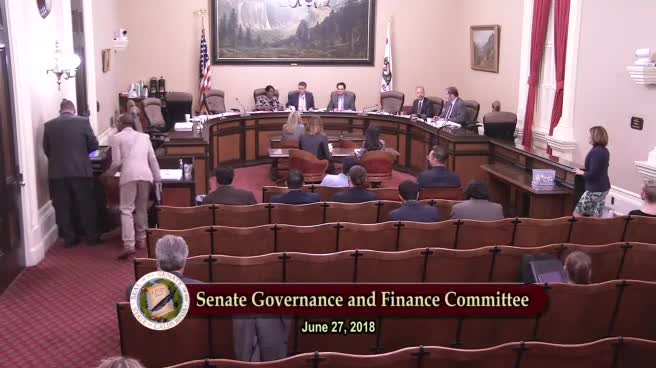 3MIN
Senate Standing Committee on Governance and Finance
 9MIN
Assembly Floor
 20MIN
Assembly Standing Committee on Higher Education



Bill Co-Author(s):
