AB 2904: Pupil health: mobile vision care services: schoolsites.
- Session Year: 2017-2018
- House: Assembly
- Latest Version Date: 2018-07-05
Existing law requires the governing board of a school district to provide for the adequate testing of the sight and hearing of each pupil enrolled in the schools of the school district to be given only by specified persons.
Existing law requires a school nurse or other authorized person to appraise the vision of a pupil during kindergarten, or upon first enrollment or entry of that pupil in a California school district at an elementary school, and in grades 2, 5, and 8, as specified.
This bill would authorize a public school to enter into a memorandum of understanding with a nonprofit mobile vision care services provider to provide noninvasive vision care services consisting of providing vision examinations and eyeglasses to pupils at the schoolsite of the public school. The bill would require vision screenings provided pursuant to the bills provisions to be supplemental to, and to not replace, the above-referenced vision appraisals or screenings provided pursuant to existing law. The bill would require a public school to provide parents and guardians with an opportunity to opt out of his or her child receiving these vision care services, as provided.
Existing law requires the governing board of a school district to provide for the adequate testing of the sight and hearing of each pupil enrolled in the schools of the school district to be given only by specified persons.
Existing law requires a school nurse or other authorized person to appraise the vision of a pupil during kindergarten, or upon first enrollment or entry of that pupil in a California school district at an elementary school, and in grades 2, 5, and 8, as specified.
This bill would authorize a public school to enter into a memorandum of understanding with a nonprofit mobile vision care services provider to provide noninvasive vision care services consisting of providing vision examinations and eyeglasses to pupils at the schoolsite of the public school. The bill would require a public school to provide parents and guardians with an opportunity to opt out of his or her child receiving these vision care services, as provided.
Under existing law, telehealth is defined as the mode of delivering health care services and public health via information and communication technologies to facilitate the diagnosis, consultation, treatment, education, care management, and self-management of a patients health care while the patient is at the originating site and the health care provider is at a distant site, and health care provider is defined as a person who is licensed under specified provisions of law relating to healing arts. Existing law requires a health care provider, prior to the delivery of health care via telehealth, to inform the patient about the use of telehealth, obtain verbal or written consent from the patient for the use of telehealth, and document that consent. Under existing law, the failure of a health care provider to comply with these provisions constitutes unprofessional conduct.This bill would require a health care provider to document the consent of the patient to use telehealth in either printed or electronic form.Under existing law, telehealth is defined as the mode of delivering health care services and public health via information and communication technologies to facilitate the diagnosis, consultation, treatment, education, care management, and self-management of a patients health care while the patient is at the originating site and the health care provider is at a distant site, and health care provider is defined as a person who is licensed under specified provisions of law relating to healing arts. Existing law requires a health care provider, prior to the delivery of health care via telehealth, to inform the patient about the use of telehealth, obtain verbal or written consent from the patient for the use of telehealth, and document that consent. Under existing law, the failure of a health care provider to comply with these provisions constitutes unprofessional conduct.
This bill would require a health care provider to document the consent of the patient to use telehealth in either printed or electronic form.
Existing law provides for the regulation of equipment dealers and makes related findings and declarations.This bill would make a nonsubstantive change to those findings and declarations.Existing law provides for the regulation of equipment dealers and makes related findings and declarations.
This bill would make a nonsubstantive change to those findings and declarations.
(a)A public school maintaining kindergarten or any of grades 1 to 12, inclusive, may enter into a memorandum of understanding with a nonprofit mobile vision care services provider to provide vision care services to pupils at the schoolsite of the public school. Vision screenings provided under this section shall be supplemental to, and shall not replace, the vision screenings provided pursuant to Section 49455, and shall be provided exclusively for the purpose of identifying pupils in need of vision examinations and eyeglasses. Vision care services shall be noninvasive, and shall consist only of providing vision examinations and eyeglasses.
(b)Before vision care services are provided at the schoolsite of a public school pursuant to subdivision (a), the public school shall have a memorandum of understanding in place with a nonprofit mobile vision care services provider and the public school shall notify parents and guardians, in accordance with Section 48985, of the upcoming provision of vision care services at the schoolsite. Notification shall include a form on which a parent or guardian may indicate that he or she does not consent to vision care services being provided, pursuant to subdivision (a), to his or her child. The parent or guardian may opt out of his or her child receiving vision care services, pursuant to subdivision (a), by submitting the completed form to the public school before vision care services are provided at the schoolsite. A parent or guardian who has already submitted a written statement in accordance with Section 49451 is deemed to have opted out of his or her child receiving vision care services pursuant to subdivision (a).
The governing board of any a school district shall, subject to Section 49451, provide for the testing of the sight and hearing of each pupil enrolled in the schools of the school district. The test shall be adequate in nature and shall be given only by duly qualified supervisors of health employed by the school district; or by certificated employees of the school district or of the county superintendent of schools who possess the qualifications prescribed by the Commission for on Teacher Preparation and Licensing; or Credentialing; by contract with an agency duly authorized to perform those services by the county superintendent of schools of the county in which the school district is located, under guidelines established by the State Board of Education; or state board; by accredited schools or colleges of optometry, osteopathic medicine, or medicine. medicine; or, for testing of sight only, by a nonprofit mobile vision care services provider pursuant to Section 49455.5. The records of the tests shall serve as evidence of the need of the pupils for the educational facilities provided physically handicapped individuals. The equipment necessary to conduct the tests may be purchased or rented by governing boards of school districts. The state, any agency, or political subdivision thereof may sell or rent any such equipment owned by it to the governing board of any a school district upon terms as may be mutually agreeable.
SEC. 2.Section 49455.5 is added to the Education Code, to read:49455.5.(a)A public school maintaining kindergarten or any of grades 1 to 12, inclusive, may enter into a memorandum of understanding with a nonprofit mobile vision care services provider to provide vision care services to pupils at the schoolsite of the public school. Vision care services shall be noninvasive, and shall consist only of providing vision examinations and eyeglasses.
(b)Before vision care services are provided at the schoolsite of a public school pursuant to subdivision (a), the public school shall notify parents and guardians, in accordance with Section 48985, of the upcoming provision of vision care services at the schoolsite. Notification shall include a form on which a parent or guardian may indicate that he or she does not consent to vision care services being provided, pursuant to subdivision (a), to his or her child. The parent or guardian may opt out of his or her child receiving vision care services, pursuant to subdivision (a), by submitting the completed form to the public school before vision care services are provided at the schoolsite. A parent or guardian who has already submitted a written statement in accordance with Section 49451 is deemed to have opted out of his or her child receiving vision care services pursuant to subdivision (a).
SECTION 1.Section 2290.5 of the Business and Professions Code is amended to read:2290.5.(a)For purposes of this division, the following definitions shall apply:(1)Asynchronous store and forward means the transmission of a patients medical information from an originating site to the health care provider at a distant site without the presence of the patient.(2)Distant site means a site where a health care provider who provides health care services is located while providing these services via a telecommunications system.(3)Health care provider means either of the following:(A)A person who is licensed under this division.(B)A marriage and family therapist intern or trainee functioning pursuant to Section 4980.43.(4)Originating site means a site where a patient is located at the time health care services are provided via a telecommunications system or where the asynchronous store and forward service originates.(5)Synchronous interaction means a real-time interaction between a patient and a health care provider located at a distant site.(6)Telehealth means the mode of delivering health care services and public health via information and communication technologies to facilitate the diagnosis, consultation, treatment, education, care management, and self-management of a patients health care while the patient is at the originating site and the health care provider is at a distant site. Telehealth facilitates patient self-management and caregiver support for patients and includes synchronous interactions and asynchronous store and forward transfers.(b)Prior to the delivery of health care via telehealth, the health care provider initiating the use of telehealth shall inform the patient about the use of telehealth and obtain verbal or written consent from the patient for the use of telehealth as an acceptable mode of delivering health care services and public health. The consent shall be documented by the health care provider in either printed or electronic form.(c)Nothing in this section shall preclude a patient from receiving in-person health care delivery services during a specified course of health care and treatment after agreeing to receive services via telehealth.(d)The failure of a health care provider to comply with this section shall constitute unprofessional conduct. Section 2314 shall not apply to this section.(e)This section shall not be construed to alter the scope of practice of any health care provider or authorize the delivery of health care services in a setting, or in a manner, not otherwise authorized by law.(f)All laws regarding the confidentiality of health care information and a patients rights to his or her medical information shall apply to telehealth interactions.(g)This section shall not apply to a patient under the jurisdiction of the Department of Corrections and Rehabilitation or any other correctional facility.(h)(1)Notwithstanding any other provision of law and for purposes of this section, the governing body of the hospital whose patients are receiving the telehealth services may grant privileges to, and verify and approve credentials for, providers of telehealth services based on its medical staff recommendations that rely on information provided by the distant-site hospital or telehealth entity, as described in Sections 482.12, 482.22, and 485.616 of Title 42 of the Code of Federal Regulations.(2)By enacting this subdivision, it is the intent of the Legislature to authorize a hospital to grant privileges to, and verify and approve credentials for, providers of telehealth services as described in paragraph (1).(3)For the purposes of this subdivision, telehealth shall include telemedicine as the term is referenced in Sections 482.12, 482.22, and 485.616 of Title 42 of the Code of Federal Regulations.(a)For purposes of this division, the following definitions shall apply:
(1)Asynchronous store and forward means the transmission of a patients medical information from an originating site to the health care provider at a distant site without the presence of the patient.
(2)Distant site means a site where a health care provider who provides health care services is located while providing these services via a telecommunications system.
(3)Health care provider means either of the following:
(A)A person who is licensed under this division.
(B)A marriage and family therapist intern or trainee functioning pursuant to Section 4980.43.
(4)Originating site means a site where a patient is located at the time health care services are provided via a telecommunications system or where the asynchronous store and forward service originates.
(5)Synchronous interaction means a real-time interaction between a patient and a health care provider located at a distant site.
(6)Telehealth means the mode of delivering health care services and public health via information and communication technologies to facilitate the diagnosis, consultation, treatment, education, care management, and self-management of a patients health care while the patient is at the originating site and the health care provider is at a distant site. Telehealth facilitates patient self-management and caregiver support for patients and includes synchronous interactions and asynchronous store and forward transfers.
(b)Prior to the delivery of health care via telehealth, the health care provider initiating the use of telehealth shall inform the patient about the use of telehealth and obtain verbal or written consent from the patient for the use of telehealth as an acceptable mode of delivering health care services and public health. The consent shall be documented. documented by the health care provider in either printed or electronic form.
(c)Nothing in this section shall preclude a patient from receiving in-person health care delivery services during a specified course of health care and treatment after agreeing to receive services via telehealth.
(d)The failure of a health care provider to comply with this section shall constitute unprofessional conduct. Section 2314 shall not apply to this section.
(e)This section shall not be construed to alter the scope of practice of any health care provider or authorize the delivery of health care services in a setting, or in a manner, not otherwise authorized by law.
(f)All laws regarding the confidentiality of health care information and a patients rights to his or her medical information shall apply to telehealth interactions.
(g)This section shall not apply to a patient under the jurisdiction of the Department of Corrections and Rehabilitation or any other correctional facility.
(h)(1)Notwithstanding any other provision of law and for purposes of this section, the governing body of the hospital whose patients are receiving the telehealth services may grant privileges to, and verify and approve credentials for, providers of telehealth services based on its medical staff recommendations that rely on information provided by the distant-site hospital or telehealth entity, as described in Sections 482.12, 482.22, and 485.616 of Title 42 of the Code of Federal Regulations.
(2)By enacting this subdivision, it is the intent of the Legislature to authorize a hospital to grant privileges to, and verify and approve credentials for, providers of telehealth services as described in paragraph (1).
(3)For the purposes of this subdivision, telehealth shall include telemedicine as the term is referenced in Sections 482.12, 482.22, and 485.616 of Title 42 of the Code of Federal Regulations.
SECTION 1.Section 22900 of the Business and Professions Code is amended to read:22900.The Legislature finds and declares that the retail distribution, sales, and rental of agricultural, construction, utility, industrial, mining, outdoor power, forestry, and lawn and garden equipment, utilizing independent dealers operating under contract with the supplier vitally affects the general economy of the state, the public interest, and the public welfare. Therefore, the Legislature has determined that it is necessary to regulate the business relations between the dealers and suppliers as described by this chapter.The Legislature finds and declares that the retail distribution, sales, and rental of agricultural, construction, utility, industrial, mining, outdoor power, forestry, and lawn and garden equipment, utilizing independent dealers operating under contract with the supplier vitally affects the general economy of the state, the public interest, and the public welfare. Therefore, the Legislature has determined that it is necessary to regulate the business relations between the dealers and suppliers as described in by this chapter.
|
Date
|
Status
|
|---|---|
| Aug 23, 2018 | Ordered to inactive file at the request of Senator Allen. |
| Aug 6, 2018 | From Consent Calendar. |
| Jul 5, 2018 | Read second time and amended. Ordered to consent calendar. |
| Jul 3, 2018 | From committee: Amend, and do pass as amended. To Consent Calendar. (Ayes 7. Noes 0.) (June 27). |
| Jun 20, 2018 | Re-referred to Com. on ED. |
| Jun 14, 2018 | Withdrawn from committee. |
| Jun 13, 2018 | From committee chair, with author's amendments: Amend, and re-refer to committee. Read second time, amended, and re-referred to Com. on HEALTH. |
| Jun 7, 2018 | Referred to Com. on HEALTH. |
| May 30, 2018 | In Senate. Read first time. To Com. on RLS. for assignment. |
| May 29, 2018 | Read third time. Passed. Ordered to the Senate. |
| May 24, 2018 | Read second time. Ordered to Consent Calendar. |
| May 23, 2018 | From committee: Do pass. To Consent Calendar. (Ayes 16. Noes 0.) (May 23). |
| Apr 18, 2018 | From committee: Do pass and re-refer to Com. on APPR. with recommendation: To Consent Calendar. (Ayes 15. Noes 0.) (April 17). Re-referred to Com. on APPR. |
| Apr 2, 2018 | Re-referred to Com. on HEALTH. |
| Mar 23, 2018 | From committee chair, with author's amendments: Amend, and re-refer to Com. on HEALTH. Read second time and amended. |
| Mar 22, 2018 | Referred to Com. on HEALTH. |
| Feb 17, 2018 | From printer. May be heard in committee March 19. |
| Feb 16, 2018 | Read first time. To print. |
|
Date
|
Description
|
Location
|
Votes
|
|
|---|---|---|---|---|
| Jun 27, 2018 | Do pass as amended, and be ordered to the Consent Calendar | Senate Standing Committee on Education |
Passed |
|
| May 29, 2018 | AB 2904 CARRILLO Consent Calendar Second Day Regular Session | Assembly Floor |
Passed |
|
| May 23, 2018 | Do pass. To Consent Calendar. | Assembly Standing Committee on Appropriations |
Passed |
|
| Apr 17, 2018 | Do pass and be re-referred to the Committee on [Appropriations] with recommendation: To Consent Calendar | Assembly Standing Committee on Health |
Passed |
This list shows positions taken on this bill by organizations on the date displayed, which is linked to the original source.
Positions by individuals are not included.
|
Organization
|
Position
|
Date
|
|---|---|---|
| California School Employees Association | ** Support | Aug 8, 2018 |
| Vision to Learn | ** Support | Aug 8, 2018 |
Office of Senate Floor Analyses (916) 651-1520 Fax: (916) 327-4478 | AB |
THIRD READING
Bill No: AB 2904
:
SENATE EDUCATION COMMITTEE: 7-0, 6/27/18
AYES: Allen, Wilk, Galgiani, Leyva, McGuire, Pan, Vidak
ASSEMBLY FLOOR: 78-0, 5/29/18 (Consent) - See last page for vote
DIGEST:
This bill authorizes the governing board of a school district to enter into memorandum of understanding with a nonprofit mobile vision care services provider to provide vision care services to pupils at the schoolsite of a public school that are supplemental to required vision screenings.
Existing law:
1) Requires the governing board of any school district to provide for the testing of the sight and hearing of each pupil enrolled in the schools of the district. (Education Code § 49452)
2) Requires those tests be adequate in nature and to be given only by:
a) Duly qualified supervisors of health employed by the district.
b) Certificated employees of the district or of the county superintendent of schools who possess the qualifications prescribed by the Commission for Teacher Preparation and Licensing.
c) Contract with an agency duly authorized to perform those services by the county superintendent of schools of the county in which the district is located, under guidelines established by the State Board of Education.
d) Accredited schools or colleges of optometry, osteopathic medicine, or medicine.
3) Authorizes the governing boards of school districts to purchase or rent the equipment necessary to conduct the tests. (Education Code § 49452)
4) Authorizes a parent or guardian having control or charge of any child enrolled in the public schools to file annually with the principal of the school in which the child is enrolled a statement in writing, signed by the parent or guardian, stating that he will not consent to a physical examination of his or her child. (EC § 49451)
5) Requires a student’s vision to be appraised by the school nurse of other authorized person during the kindergarten year or upon first enrollment or entry in a California school district, and in grades 2, 5, and 8. (EC § 49455)
This bill authorizes the governing board of a school district to enter into memorandum of understanding with a nonprofit mobile vision care services provider to provide vision care services to pupils at the schoolsite of a public school that are supplemental to required vision screenings. Specifically, this bill:
1) Authorizes a public school maintaining kindergarten or any of grades 1 to 12, inclusive, to enter into a memorandum of understanding with a nonprofit mobile vision care services provider to provide vision care services to pupils at the schoolsite of the public school.
2 Requires the vision screenings to be supplemental to, and to not replace, required vision screenings, and to be provided exclusively for the purpose of identifying pupils in need of vision examinations and eyeglasses.
3) Requires the vision care services to be noninvasive, and to consist only of providing vision examinations and eyeglasses.
4) Requires the public school, before vision care services are provided at the schoolsite of a public school, to have a memorandum of understanding in place with a nonprofit mobile vision care services provider and to notify parents and guardians of the upcoming provision of vision care services at the schoolsite, and requires that notification to include a form on which a parent or guardian may indicate that he or she does not consent to vision care services being provided to his or her child.
5) Authorizes the parent or guardian to opt out of his or her child receiving the vision care services by submitting the completed form to the public school before the vision care services are provided at the schoolsite.
6) Specifies that a parent or guardian who has already submitted an annual statement opting out of physical examinations is deemed to have opted out of his or her child receiving the vision care services.
Comments
1) Need for the bill. According to the author, “Vision impairment in children is common and uncorrected vision problems can impair child development, lead to behavioral problems in the classroom, interfere with early developing literacy and learning, and even cause permanent vision loss. A study conducted by the National Center for Children’s Vision and Eye Health found that nearly 3% of children younger than 18 years are blind or visually impaired. In California we have over 9 million children so at that rate about 270,000 have some form of vision impairment.
“Visual functioning is a strong indicator of academic performance in school-age children and vision disorders can continue to affect health and well-being throughout adulthood. It is critical to detect these symptoms and treat them as early as possible, especially for children whose families cannot afford, or do not have access to, optometric services.
“According to a study published in the Journal of Public Health Management and Practices, 95% of first-graders in California who need glasses don’t have them. Additionally, nearly one in four (24%) adolescents with correctable vision impairment is currently not receiving competent vision correction.
“These issues compound as racial and socioeconomic inequities persist, as the likelihood of experiencing vision impairment is significantly greater for Latino and non-Hispanic black youth. In the face of this vision gap it is imperative to connect schools and students in need with qualified non-profits who can conduct proper eye exams and provide eye glasses.”
2) Los Angeles County pilot program. In an effort to determine whether children’s access to, and utilization of, vision care services can be increased by providing vision care services at schools, existing law required the California Department of Health Care Services to establish a pilot program in the County of Los Angeles that enables school districts to allow students enrolled in Medi-Cal managed care plans to receive vision care services at the schoolsite through the use of a mobile vision service provider. The vision care services available under this pilot program were limited to vision examinations and providing eyeglasses and are supplemental to the vision testing required by schools in the Education Code. The pilot program operated for two years from January 1, 2015, to January 1, 2017. The Budget Act of 2018 appropriates $1,000,000 to reimburse a qualifying mobile vision service provider for furnishing mobile vision care services previously covered under the pilot program and not otherwise reimbursable under the Medi-Cal program for dates of service on or after July 1, 2018, through December 31, 2018.
3) 2011 study. A 7-year study, “Uncorrected refractive error among first-grade students of different racial/ethnic groups in southern California: results a year after school-mandated vision screening,” of 11,332 first-grade students published in the Journal of Public Health Management and Practice, concluded that “95% of children with decreased visual acuity (858 of 906 children) lacked eyeglasses that would have helped them attain normal vision. The lack of eyeglasses was more common in boys and African American/Latino children compared with that in girls and non-Hispanic white children, respectively.”
Related/Prior Legislation
SB 870 (Senate Budget and Fiscal Review Committee, Chapter 40, Statutes of 2014), among other things, implemented a pilot program in Los Angeles County starting no sooner than January 1, 2015, and concluding December 31, 2017, to expand pediatric vision examinations and services through the use of mobile vision providers.
SB 1172 (Steinberg, Chapter 925, Statutes of 2014) deleted the existing vision screening requirements and instead, required, during the kindergarten year or upon first enrollment or entry in a California school district of a pupil at an elementary school, and in grades 2, 5, and 8, the pupil’s vision to be appraised by the school nurse or other authorized person.
AB 1840 (Campos, Chapter 803, Statutes of 2014) clarified that a child’s vision is permitted to be appraised by using an eye chart or any scientifically validated photoscreening test, and required photoscreening tests to be performed, under an agreement with, or the supervision of, an optometrist or ophthalmologist, by the school nurse or a trained individual who meets requirements established by the California Department of Education.
SB 430 (Wright, 2013) would have required a pupil to receive a vision examination from a physician, optometrist, or ophthalmologist and required that screening to include a test for binocular function, refraction, and eye health. SB 430 was never heard in the Assembly Health Committee.
FISCAL EFFECT: Appropriation: Fiscal Com.: Local:
California School Employees Association
Vision to Learn
OPPOSITION: (Verified 7/12/18)
None received
ASSEMBLY FLOOR: 78-0, 5/29/18
AYES: Acosta, Aguiar-Curry, Travis Allen, Arambula, Baker, Berman, Bigelow, Bloom, Bonta, Brough, Burke, Caballero, Calderon, Carrillo, Cervantes, Chau, Chávez, Chen, Chiu, Choi, Chu, Cooley, Cooper, Cunningham, Dahle, Daly, Eggman, Flora, Fong, Frazier, Friedman, Gallagher, Cristina Garcia, Eduardo Garcia, Gipson, Gloria, Gonzalez Fletcher, Gray, Grayson, Harper, Holden, Irwin, Jones-Sawyer, Kalra, Kamlager-Dove, Kiley, Lackey, Levine, Limón, Low, Maienschein, Mathis, Mayes, McCarty, Medina, Melendez, Mullin, Muratsuchi, Nazarian, Obernolte, O'Donnell, Patterson, Quirk, Quirk-Silva, Reyes, Rodriguez, Rubio, Salas, Santiago, Steinorth, Mark Stone, Thurmond, Ting, Voepel, Waldron, Weber, Wood, Rendon
8/8/18 9:55:45
SENATE COMMITTEE ON EDUCATION
Senator Benjamin Allen, Chair
2017 - 2018 Regular
Bill No: Hearing Date: June 27, 2018
Author: | Carrillo | ||
Version: |
| ||
Urgency: | Fiscal: | ||
Consultant: | |||
Subject:
NOTE: This bill has been amended to replace its contents and this is the first time the bill is being heard in its current form.
SUMMARY
This bill adds nonprofit mobile vision care service providers to the list of persons or entities authorized to provide the required testing of students’ sight, and authorizes the governing board of a school district to enter into memorandum of understanding with a nonprofit mobile vision care services provider to provide vision care services to pupils at the schoolsite of the public school.
BACKGROUND
Existing law:
1) Requires the governing board of any school district to provide for the testing of the sight and hearing of each pupil enrolled in the schools of the district.
2) Requires those tests be adequate in nature and shall be given only by:
a) Duly qualified supervisors of health employed by the district.
b) Certificated employees of the district or of the county superintendent of schools who possess the qualifications prescribed by the Commission for Teacher Preparation and Licensing.
c) Contract with an agency duly authorized to perform those services by the county superintendent of schools of the county in which the district is located, under guidelines established by the State Board of Education.
d) Accredited schools or colleges of optometry, osteopathic medicine, or medicine.
3) Requires the records of the tests to serve as evidence of the need of the pupils for the educational facilities provided physically handicapped individuals.
4) Authorizes the governing boards of school districts to purchase or rent the equipment necessary to conduct the tests may be purchased or rented by governing boards of school districts. (Education Code § 49452)
5) Authorizes a parent or guardian having control or charge of any child enrolled in the public schools to file annually with the principal of the school in which the child is enrolled a statement in writing, signed by the parent or guardian, stating that he will not consent to a physical examination of his or her child.
(EC § 49451)
6) Requires a student’s vision to be appraised by the school nurse of other authorized person during the kindergarten year or upon first enrollment or entry in a California school district, and in grades 2, 5, and 8. (EC § 49455)
ANALYSIS
This bill adds nonprofit mobile vision care service providers to the list of persons or entities authorized to provide the required testing of students’ sight, and authorizes the governing board of a school district to enter into memorandum of understanding with a nonprofit mobile vision care services provider to provide vision care services to pupils at the schoolsite of the public school. Specifically, this bill:
1) Adds nonprofit mobile vision care service providers to the list of persons or entities authorized to provide the testing of students’ sight that the governing board of a school district is required to conduct for each student enrolled in the schools of the school district.
2) Authorizes a public school maintaining kindergarten or any of grades 1 to 12, inclusive, to enter into a memorandum of understanding with a nonprofit mobile vision care services provider to provide vision care services to pupils at the schoolsite of the public school.
3) Requires the vision care services to be noninvasive, and to consist only of providing vision examinations and eyeglasses.
4) Requires the public school, before vision care services are provided at the schoolsite of a public school, to notify parents and guardians of the upcoming provision of vision care services at the schoolsite, and requires that notification to include a form on which a parent or guardian may indicate that he or she does not consent to vision care services being provided to his or her child.
5) Authorizes the parent or guardian to opt out of his or her child receiving the vision care services by submitting the completed form to the public school before the vision care services are provided at the schoolsite.
6) Specifies that a parent or guardian who has already submitted an annual statement opting out of physical examinations is deemed to have opted out of his or her child receiving the vision care services.
STAFF COMMENTS
- Need for the bill. According to the author, “Vision impairment in children is common and uncorrected vision problems can impair child development, lead to behavioral problems in the classroom, interfere with early developing literacy and learning, and even cause permanent vision loss. A study conducted by the National Center for Children’s Vision and Eye Health found that nearly 3% of children younger than 18 years are blind or visually impaired. In California we have over 9 million children so at that rate about 270,000 have some form of vision impairment.
Visual functioning is a strong indicator of academic performance in school-age children and vision disorders can continue to affect health and well-being throughout adulthood. It is critical to detect these symptoms and treat them as early as possible, especially for children whose families cannot afford, or do not have access to, optometric services.
According to a study published in the Journal of Public Health Management and Practices, 95% of first-graders in California who need glasses don’t have them. Additionally, nearly one in four (24%) adolescents with correctable vision impairment is currently not receiving competent vision correction.
These issues compound as racial and socioeconomic inequities persist, as the likelihood of experiencing vision impairment is significantly greater for Latino and non-Hispanic black youth. In the face of this vision gap it is imperative to connect schools and students in need with qualified non-profits who can conduct proper eye exams and provide eye glasses.”
- Los Angeles County pilot program. In an effort to determine whether children’s access to, and utilization of, vision care services can be increased by providing vision care services at schools, existing law required the California Department of Health Care Services to establish a pilot program in the County of Los Angeles that enables school districts to allow students enrolled in Medi-Cal managed care plans to receive vision care services at the schoolsite through the use of a mobile vision service provider. The vision care services available under this pilot program were limited to vision examinations and providing eyeglasses and are supplemental to the vision testing required by schools in the Education Code. The pilot program operated for two years from January 1, 2015, to January 1, 2017. The Budget Act of 2018 appropriates $1,000,000 to reimburse a qualifying mobile vision service provider for furnishing mobile vision care services previously covered under the pilot program and not otherwise reimbursable under the Medi-Cal program for dates of service on or after July 1, 2018, through December 31, 2018.
- 2011 study. A 7-year study, “Uncorrected refractive error among first-grade students of different racial/ethnic groups in southern California: results a year after school-mandated vision screening,” of 11,332 first-grade students published in the Journal of Public Health Management and Practice, concluded that “95% of children with decreased visual acuity (858 of 906 children) lacked eyeglasses that would have helped them attain normal vision. The lack of eyeglasses was more common in boys and African American/Latino children compared with that in girls and non-Hispanic white children, respectively.”
- Author’s amendments. This bill authorizes nonprofit mobile vision care service providers to provide the state-mandated vision testing for students enrolled in public school. This was not the author’s intent. Accordingly, the author would like to amend the bill to only authorize nonprofit mobile vision care service providers to provide supplement vision care on school campuses. Staff recommends that the bill be amended to reflect the author’s intent, as shown below:
- Delete Section 1 from the bill.
- Amended Section 49452.5, as follows:
“(a) A public school maintaining kindergarten or any of grades 1 to 12, inclusive, may enter into a memorandum of understanding with a nonprofit mobile vision care services provider to provide vision care services to pupils at the schoolsite of the public school. Supplemental vision screenings provided under this section shall not replace the vision screening pursuant to section 49455 and are exclusively for the purpose of identifying pupils in need of an eye examination. Vision care services shall be noninvasive, and shall consist only of providing vision examinations and eyeglasses.
(b) Before vision care services are provided at the schoolsite of a public school pursuant to subdivision (a), the public school shall have a memorandum of understanding in place with a nonprofit mobile vision care services provider and the public school shall notify parents and guardians, in accordance with Section 48985, of the upcoming provision of vision care services at the schoolsite. Notification shall include a form on which a parent or guardian may indicate that he or she does not consent to vision care services being provided, pursuant to subdivision (a), to his or her child. The parent or guardian may opt out of his or her child receiving vision care services, pursuant to subdivision (a), by submitting the completed form to the public school before vision care services are provided at the schoolsite. A parent or guardian who has already submitted a written statement in accordance with Section 49451 is deemed to have opted out of his or her child receiving vision care services pursuant to subdivision (a).”
5) Previous legislation. SB 870 (Senate Budget and Fiscal Review Committee, Chapter 40, Statutes of 2014) Among other things, implements a pilot program in Los Angeles County no sooner than January 1, 2015, and concluding December 31, 2017, to expand pediatric vision examinations and services through the use of mobile vision providers.
SB 1172 (Steinberg, Chapter 925, Statutes of 2014) deletes the existing vision screening requirements and instead, requires, during the kindergarten year or upon first enrollment or entry in a California school district of a pupil at an elementary school, and in grades 2, 5, and 8, the pupil’s vision to be appraised by the school nurse or other authorized person.
AB 1840 (Campos, Chapter 803, Statutes of 2014) clarifies that a child’s vision is permitted to be appraised by using an eye chart or any scientifically validated photoscreening test. This bill requires photoscreening tests to be performed, under an agreement with, or the supervision of, an optometrist or ophthalmologist, by the school nurse or a trained individual who meets requirements established by the Department of Education.
SB 430 (Wright, 2013) would have required a pupil to receive a vision examination from a physician, optometrist, or ophthalmologist and requires that screening to include a test for binocular function, refraction, and eye health. SB 430 was never heard in the Assembly Health Committee.
SUPPORT
California School Employees Association
Vision to Learn
OPPOSITION
None received
-- END --
Date of Hearing: May 23, 2018
ASSEMBLY COMMITTEE ON APPROPRIATIONS
Lorena Gonzalez Fletcher, Chair
ABPCA Bill Id:AB 2904
Author:(Carrillo) – As Amended Ver:March 23, 2018
Policy Committee: | Health | Vote: | 15 - 0 |
Urgency: No State Mandated Local Program: No Reimbursable: No
SUMMARY:
This bill provides additional specificity to a current patient consent requirement for the use of telehealth—specifically, it requires a health care provider's documentation of consent to be "in either printed or electronic form."
FISCAL EFFECT:
Negligible.
COMMENTS:
- Purpose. This bill requires patient consent for telehealth be documented in either printed or electronic form.
- Background. Telehealth is health care delivery through a telecommunication tool or technology. Existing law requires, prior to the delivery of care through telehealth, a health care provider initiating the use of telehealth to inform the patient about the use of telehealth and obtain verbal or written consent from the patient for the use of telehealth as an acceptable mode of delivering health care services. This consent must be documented in the patient’s medical record. This bill would require it to be in printed or electronic form, as opposed to another form of documentation.
- Staff Comment. It is likely patient consent is currently being documented through printed (written) or electronic form through electronic health records.
Analysis Prepared by: Lisa Murawski / APPR. / (916) 319-2081
Date of Hearing: April 17, 2018
ASSEMBLY COMMITTEE ON HEALTH
Jim Wood, Chair
ABPCA Bill Id:AB 2904
Author:(Carrillo) – As Amended Ver:March 23, 2018
SUBJECT: Healing arts: telehealth.
SUMMARY: Requires a health care provider to document the consent of a patient to use telehealth in either printed or electronic form.
EXISTING LAW:
- Defines telehealth as the mode of delivering health care services and public health via information and communication technologies to facilitate the diagnosis, consultation, treatment, education, care management, and self-management of a patient's health care while the patient is at the originating site and the health care provider is at a distant site. States that telehealth facilitates patient self-management and caregiver support for patients and includes synchronous interactions and asynchronous store and forward transfers.
- Requires prior to the delivery of telehealth, a health care provider initiating the use of telehealth to inform the patient about the use of telehealth and obtain verbal or written consent from the patient for the use of telehealth as an acceptable mode of delivering health care services and public health. Requires the consent to be documented in the patient’s medical record.
- States that all laws regarding the confidentiality of health care information and a patient's rights to his or her medical information apply to telehealth interactions.
- States that "telehealth" includes "telemedicine," as specified.
- Makes the failure of a health care provider to comply with 1) through 4) above unprofessional conduct.
- Provides that 1) through 5) above shall not be construed to alter the scope of practice of any health care provider or authorize the delivery of health care services in a setting or in a manner not otherwise authorized by law.
- Prohibits a health plan from requiring in-person contact to occur between a health care provider and a patient and limiting the type of setting where services are provided for the patient or by the health care provider before payment is made for the covered services appropriately provided through telehealth, subject to the terms and conditions of the contract entered into between the enrollee or subscriber and the health plan, and between the health plan and its participating providers or provider groups.
- Defines a health care provider as a person who is a licensed health arts practitioner, as specified.
FISCAL EFFECT: This bill has not been analyzed by a fiscal committee.
COMMENTS:
- PURPOSE OF THIS BILL. According to the author, existing law requires a health care provider, before the delivery of health care via telehealth, to inform the patient about the use of telehealth, obtain verbal or written consent from the patient for the use of telehealth, and document that consent. This bill would require a health care provider to document the consent of the patient to use telehealth in either printed or electronic form.
- BACKGROUND.
- Telehealth. Access to providers and health care services is an ongoing concern among stakeholders and policymakers throughout the state. In an effort to ensure quality services are accessible to patients, health reform policies have focused on innovative methods, such as telehealth, to deliver care. Telehealth uses telecommunication tools and technologies to connect providers to patients who may otherwise have limited access to care. In doing so, it provides a means of delivering care and services, including diagnosis, treatment, and patient education. The California HealthCare Foundation reports that health plans, providers, and information technology vendors are currently using telehealth applications to increase quality of care, reduce costs, and increase access for the underserved, and that studies have demonstrated telehealth services have improved outcomes and continuity of care for patients, particularly in rural settings. AB 415 (Logue), Chapter 547, Statutes of 2011, established the Telehealth Advancement Act to revise and update existing law to facilitate the advancement of telehealth as a service delivery mode in managed care and the Medi-Cal program.
- Consent requirements. Existing law requires a health care provider initiating the use of telehealth to inform the patient about the use of telehealth and obtain verbal or written consent from the patient for the use of telehealth. Existing law also requires the health care provider to document a patient’s consent in the patient’s medical records. This bill would allow the health care provider to document consent in either printed or electronic form.
- Modalities. According to the Center for Connected Health Policy, there are four traditional modalities of telehealth in which services can be delivered:
- Live Video is the use of video technology where patients and providers (or in some cases provider to provider) interact in real time (synchronous). This is the modality most frequently used in delivering services and also the most commonly reimbursed by both public and private payers.
- Store and Forward is the capturing and relaying of information to a provider when the patient is not immediately involved. The information is not looked at in “real time” so it is an asynchronous interaction. For example, an image of a skin condition is captured in a high-resolution photograph and then sent over a secure system to a dermatologist who will reply to the primary care provider with a diagnosis or further instructions. Electronic consultation, or eConsult, an asynchronous dialogue initiated by a physician or other qualified health care professional seeking a specialist consultant's expert opinion, and includes a written report to the initiator, is also a form of this modality.
- Remote Patient Monitoring (RPM) is the continuous monitoring of a patient by a provider from a distance. This can take place in real time (for example when an intensivist monitors an Intensive Care Unit patient form another location) or not in real time (for example, when a patient has hypertension and sends to his/her provider daily blood pressure readings who may look at the week’s information at the end of the week). Studies have shown potential health benefits and savings, especially in treating chronic diseases where issues could be identified before they deteriorate into more serious and costly episodes. RPM is not as widely used partly due to the limited reimbursement available.
- mHealth refers to the use of a mobile device to receive either some health service or education/information many times using an application. mHealth encompasses all three of the previous modalities, but it is how those services are accessed that makes it different. This is the modality with the least amount of specific established policy for it, either in California or in other states and federally.
Health systems and institutions, large and small, offer telehealth-delivered services in a wide variety of specialties such as mental and behavior health, cardiology, dermatology, endocrinology, dentistry and others. Live video telehealth can be found in hospitals, university health systems, the California Department of Corrections, and community health centers like federally qualified health centers though the size and types of services offered can vary widely as well as the type of modality(ies) used.
- RELATED LEGISLATION.
- AB 2576 (Aguiar-Curry) provides, only to the extent that federal financial participation is available, that neither face-to-face contact nor a patient’s physical presence on the premises of an enrolled community clinic, is required for services provided by the clinic to a Medi-Cal beneficiary during or immediately following a state of emergency, as specified. Requires that telehealth services, telephonic services, and other specified services be reimbursable when provided by an enrolled community clinic during a state of emergency. AB 2576 is pending in Assembly Appropriations.
- AB 2861 (Salas) requires the Department of Health Care Services (DHCS) to allow a licensed practitioner of the healing arts or a certified substance use disorder counselor to receive Medi-Cal reimbursement for substance use disorder services provided through telehealth in accordance with the Medicaid state plan. AB 2861 is pending in Assembly Health Committee.
- SB 1023 (Ed Hernandez) requires the Family Planning, Access, Care, and Treatment (PACT) program to cover services provided by a Family PACT provider through direct video and telephonic communications with a provider and direct or asynchronous care provided through a smart phone application that is appropriate to be delivered remotely based on current clinical guidelines. SB 1023 is pending in Senate Health Committee.
- PREVIOUS LEGISLATION.
- AB 205 (Wood), Chapter 738, Statutes of 2017, authorizes the use of clinically appropriate telecommunications technology, including telehealth, as a means of determining annual compliance with the time and distance standards established in the bill or the DHCS’s approval of a request for alternative access standards.
- AB 2507 (Gordon) of 2016 would have added video communications and telephone communications to the definition of telehealth. AB 2507 would have provided that the required prior consent for telehealth services may be digital as well as oral or written. AB 2507 was held in the Assembly Appropriations Committee.
- SB 289 (Mitchell) of 2015, would have required health plans or health insurers to cover telephonic and electronic patient management services provided by a physician or non-physician health care provider and reimburse those services based on their complexity and time expenditure. SB 289 was held in the Senate Appropriations Committee.
- AB 1771 (V. Manuel Pérez), of 2014, would have required health plans and health insurers, with respect to plan contracts and insurance policies issued, amended, or renewed on or after January 1, 2016, to cover telephone visits provided by a physician. AB 1771 was held in the Senate Appropriations Committee.
- AB 809 (Logue), Chapter 404, Statutes of 2014, revises the informed consent requirements relating to the delivery of health care via telehealth by permitting consent to be made verbally or in writing, and by deleting the requirement that the health care provider who obtains the consent be at the originating site where the patient is physically located.
- AB 1733 (Logue), Chapter 782, Statutes of 2012, specifies that the prohibition on requiring in-person contact also applies to other health care service plan contracts with the DHCS for services under the Medi-Cal program, and publicly supported programs other than Medi-Cal, as well as to the organizations implementing Programs of All-Inclusive Care for the Elderly.
- AB 415 (Logue), Chapter 547, Statutes of 2011, among other provisions, prohibits DHCS from requiring that a health care provider document a barrier to an in-person visit prior to paying for services provided via telehealth to a Medi-Cal beneficiary. Repeals the prohibition of paying for a service provided by telephone or facsimile and would instead prohibit DHCS from limiting the type of setting where services are provided for the patient. Prohibits health plans and insurers from requiring that in-person contact occur between a health care provider and a patient before payment is made for the services appropriately provided through telehealth, subject to the terms of the relevant contract. Repeals the prohibition for paying for a service provided by telephone or facsimile and would instead prohibit health plans and insurers from limiting the type of setting where services are provided for the patient or by the health care provider.
- SB 1665 (Thompson), Chapter 864, Statutes of 1996, established the Telemedicine Development Act (TDA) to set standards for the use of telemedicine by health care practitioners and insurers. TDA specifies, in part, that face-to-face contact between a health care provider and a patient shall not be required under the Medi-Cal program for services appropriately provided through telemedicine, when those services are otherwise covered by the Medi-Cal program, and requires a health care practitioner to obtain verbal and written consent prior to providing services through telemedicine.
REGISTERED SUPPORT / OPPOSITION:
Support
None on file.
Opposition
None on file.
Analysis Prepared by: Kristene Mapile / HEALTH / (916) 319-2097
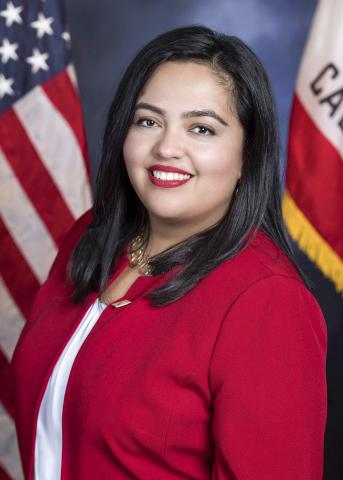
Bill Author
Bill Co-Author(s):