AB 3217: Legal services: advertising.
- Session Year: 2017-2018
- House: Assembly
- Latest Version Date: 2018-05-10
Existing law, the Consumer Legal Remedies Act, makes unlawful certain unfair methods of competition and unfair or deceptive acts or practices undertaken by any person in a transaction intended to result or which results in the sale or lease of goods or services to any consumer. Existing law authorizes any consumer who suffers damages as a result of these unlawful practices to bring an action against that person to recover damages, among other things.
This bill would include, as an unlawful practice prohibited under the Consumer Legal Remedies Act, advertising legal services to persons who may allege an injury from either a prescription drug or a medical device that is designed and intended to be implanted in the body, that is currently approved by the United States Food and Drug Administration, where the advertisement contains a material misrepresentation of fact or law, or omits a fact necessary to make the communication as a whole not materially misleading.
Existing law, the State Bar Act, provides for the licensure and regulation of attorneys by the State Bar of California, a public corporation. The State Bar Act also provides for the regulation of legal advertising, as defined, and, among other things, prohibits an advertisement from containing any false, misleading, or deceptive statement.The Unfair Competition Law (UCL) establishes a statutory cause of action for unfair competition, including any unlawful, unfair, or fraudulent business act or practice and unfair, deceptive, untrue, or misleading advertising.This bill would require under the UCL that an advertisement for legal services soliciting clients who may allege an injury from a prescription drug to include a statement advising the client not to stop taking the medication, as specified.This bill would also prohibit a person to use, cause to be used, obtain, sell, transfer, or disclose to another person without written authorization, protected health information, as defined, for the purpose of soliciting an individual for legal services.Existing law, the State Bar Act, provides for the licensure and regulation of attorneys by the State Bar of California, a public corporation. The State Bar Act also provides for the regulation of legal advertising, as defined, and, among other things, prohibits an advertisement from containing any false, misleading, or deceptive statement.
The Unfair Competition Law (UCL) establishes a statutory cause of action for unfair competition, including any unlawful, unfair, or fraudulent business act or practice and unfair, deceptive, untrue, or misleading advertising.
This bill would require under the UCL that an advertisement for legal services soliciting clients who may allege an injury from a prescription drug to include a statement advising the client not to stop taking the medication, as specified.
This bill would also prohibit a person to use, cause to be used, obtain, sell, transfer, or disclose to another person without written authorization, protected health information, as defined, for the purpose of soliciting an individual for legal services.
Existing law requires the Commission on Teacher Credentialing, among other duties, to establish standards for the issuance and renewal of credentials, certificates, and permits. Existing law, in order to ensure excellence in teaching in specific subjects, authorizes the commission to issue a multiple or single subject teaching credential with a specified concentration in a particular subject, as provided.This bill would make nonsubstantive changes to the latter provision.Existing law requires the Commission on Teacher Credentialing, among other duties, to establish standards for the issuance and renewal of credentials, certificates, and permits. Existing law, in order to ensure excellence in teaching in specific subjects, authorizes the commission to issue a multiple or single subject teaching credential with a specified concentration in a particular subject, as provided.
This bill would make nonsubstantive changes to the latter provision.
(a)The following unfair methods of competition and unfair or deceptive acts or practices undertaken by any person in a transaction intended to result or that results in the sale or lease of goods or services to any consumer are unlawful:
(1)Passing off goods or services as those of another.
(2)Misrepresenting the source, sponsorship, approval, or certification of goods or services.
(3)Misrepresenting the affiliation, connection, or association with, or certification by, another.
(4)Using deceptive representations or designations of geographic origin in connection with goods or services.
(5)Representing that goods or services have sponsorship, approval, characteristics, ingredients, uses, benefits, or quantities that they do not have or that a person has a sponsorship, approval, status, affiliation, or connection that he or she does not have.
(6)Representing that goods are original or new if they have deteriorated unreasonably or are altered, reconditioned, reclaimed, used, or secondhand.
(7)Representing that goods or services are of a particular standard, quality, or grade, or that goods are of a particular style or model, if they are of another.
(8)Disparaging the goods, services, or business of another by false or misleading representation of fact.
(9)Advertising goods or services with intent not to sell them as advertised.
(10)Advertising goods or services with intent not to supply reasonably expectable demand, unless the advertisement discloses a limitation of quantity.
(11)Advertising furniture without clearly indicating that it is unassembled if that is the case.
(12)Advertising the price of unassembled furniture without clearly indicating the assembled price of that furniture if the same furniture is available assembled from the seller.
(13)Making false or misleading statements of fact concerning reasons for, existence of, or amounts of, price reductions.
(14)Representing that a transaction confers or involves rights, remedies, or obligations that it does not have or involve, or that are prohibited by law.
(15)Representing that a part, replacement, or repair service is needed when it is not.
(16)Representing that the subject of a transaction has been supplied in accordance with a previous representation when it has not.
(17)Representing that the consumer will receive a rebate, discount, or other economic benefit, if the earning of the benefit is contingent on an event to occur subsequent to the consummation of the transaction.
(18)Misrepresenting the authority of a salesperson, representative, or agent to negotiate the final terms of a transaction with a consumer.
(19)Inserting an unconscionable provision in the contract.
(20)Advertising that a product is being offered at a specific price plus a specific percentage of that price unless (A) the total price is set forth in the advertisement, which may include, but is not limited to, shelf tags, displays, and media advertising, in a size larger than any other price in that advertisement, and (B) the specific price plus a specific percentage of that price represents a markup from the sellers costs or from the wholesale price of the product. This subdivision shall not apply to in-store advertising by businesses that are open only to members or cooperative organizations organized pursuant to Division 3 (commencing with Section 12000) of Title 1 of the Corporations Code where more than 50 percent of purchases are made at the specific price set forth in the advertisement.
(21)Selling or leasing goods in violation of Chapter 4 (commencing with Section 1797.8) of Title 1.7.
(22)(A)Disseminating an unsolicited prerecorded message by telephone without an unrecorded, natural voice first informing the person answering the telephone of the name of the caller or the organization being represented, and either the address or the telephone number of the caller, and without obtaining the consent of that person to listen to the prerecorded message.
(B)This subdivision does not apply to a message disseminated to a business associate, customer, or other person having an established relationship with the person or organization making the call, to a call for the purpose of collecting an existing obligation, or to any call generated at the request of the recipient.
(23)(A)The home solicitation, as defined in subdivision (h) of Section 1761, of a consumer who is a senior citizen where a loan is made encumbering the primary residence of that consumer for purposes of paying for home improvements and where the transaction is part of a pattern or practice in violation of either subsection (h) or (i) of Section 1639 of Title 15 of the United States Code or paragraphs (1), (2), and (4) of subdivision (a) of Section 226.34 of Title 12 of the Code of Federal Regulations.
(B)A third party shall not be liable under this subdivision unless (i) there was an agency relationship between the party who engaged in home solicitation and the third party, or (ii) the third party had actual knowledge of, or participated in, the unfair or deceptive transaction. A third party who is a holder in due course under a home solicitation transaction shall not be liable under this subdivision.
(24)(A)Charging or receiving an unreasonable fee to prepare, aid, or advise any prospective applicant, applicant, or recipient in the procurement, maintenance, or securing of public social services.
(B)For purposes of this paragraph, the following definitions shall apply:
(i)Public social services means those activities and functions of state and local government administered or supervised by the State Department of Health Care Services, the State Department of Public Health, or the State Department of Social Services, and involved in providing aid or services, or both, including health care services, and medical assistance, to those persons who, because of their economic circumstances or social condition, are in need of that aid or those services and may benefit from them.
(ii)Public social services also includes activities and functions administered or supervised by the United States Department of Veterans Affairs or the California Department of Veterans Affairs involved in providing aid or services, or both, to veterans, including pension benefits.
(iii)Unreasonable fee means a fee that is exorbitant and disproportionate to the services performed. Factors to be considered, if appropriate, in determining the reasonableness of a fee, are based on the circumstances existing at the time of the service and shall include, but not be limited to, all of the following:
(I)The time and effort required.
(II)The novelty and difficulty of the services.
(III)The skill required to perform the services.
(IV)The nature and length of the professional relationship.
(V)The experience, reputation, and ability of the person providing the services.
(C)This paragraph shall not apply to attorneys licensed to practice law in California, who are subject to the California Rules of Professional Conduct and to the mandatory fee arbitration provisions of Article 13 (commencing with Section 6200) of Chapter 4 of Division 3 of the Business and Professions Code, when the fees charged or received are for providing representation in administrative agency appeal proceedings or court proceedings for purposes of procuring, maintaining, or securing public social services on behalf of a person or group of persons.
(25)(A)Advertising or promoting any event, presentation, seminar, workshop, or other public gathering regarding veterans benefits or entitlements that does not include the following statement in the same type size and font as the term veteran or any variation of that term:
(i)I am not authorized to file an initial application for Veterans Aid and Attendance benefits on your behalf, or to represent you before the Board of Veterans Appeals within the United States Department of Veterans Affairs in any proceeding on any matter, including an application for such benefits. It would be illegal for me to accept a fee for preparing that application on your behalf. The requirements of this clause do not apply to a person licensed to act as an agent or attorney in proceedings before the Agency of Original Jurisdiction and the Board of Veterans Appeals within the United States Department of Veterans Affairs when that person is offering those services at the advertised event.
(ii)The statement in clause (i) shall also be disseminated, both orally and in writing, at the beginning of any event, presentation, seminar, workshop, or public gathering regarding veterans benefits or entitlements.
(B)Advertising or promoting any event, presentation, seminar, workshop, or other public gathering regarding veterans benefits or entitlements that is not sponsored by, or affiliated with, the United States Department of Veterans Affairs, the California Department of Veterans Affairs, or any other congressionally chartered or recognized organization of honorably discharged members of the Armed Forces of the United States, or any of their auxiliaries that does not include the following statement, in the same type size and font as the term veteran or the variation of that term:
This event is not sponsored by, or affiliated with, the United States Department of Veterans Affairs, the California Department of Veterans Affairs, or any other congressionally chartered or recognized organization of honorably discharged members of the Armed Forces of the United States, or any of their auxiliaries. None of the insurance products promoted at this sales event are endorsed by those organizations, all of which offer free advice to veterans about how to qualify and apply for benefits.
(i)The statement in this subparagraph shall be disseminated, both orally and in writing, at the beginning of any event, presentation, seminar, workshop, or public gathering regarding veterans benefits or entitlements.
(ii)The requirements of this subparagraph shall not apply in a case where the United States Department of Veterans Affairs, the California Department of Veterans Affairs, or other congressionally chartered or recognized organization of honorably discharged members of the Armed Forces of the United States, or any of their auxiliaries have granted written permission to the advertiser or promoter for the use of its name, symbol, or insignia to advertise or promote the event, presentation, seminar, workshop, or other public gathering.
(26)Advertising, offering for sale, or selling a financial product that is illegal under state or federal law, including any cash payment for the assignment to a third party of the consumers right to receive future pension or veterans benefits.
(27)Representing that a product is made in California by using a Made in California label created pursuant to Section 12098.10 of the Government Code, unless the product complies with Section 12098.10 of the Government Code.
(28)Advertising legal services to persons who may allege an injury from either a prescription drug or a medical device that is designed and intended to be implanted in the body, that is currently approved by the United States Food and Drug Administration, where the advertisement contains a material misrepresentation of fact or law, or omits a fact necessary to make the communication as a whole not materially misleading. An advertisement may be considered materially misleading if it materially understates the benefits of a drug or device, or materially overstates the risk associated with the drug or device.
(b)(1)It is an unfair or deceptive act or practice for a mortgage broker or lender, directly or indirectly, to use a home improvement contractor to negotiate the terms of any loan that is secured, whether in whole or in part, by the residence of the borrower and that is used to finance a home improvement contract or any portion of a home improvement contract. For purposes of this subdivision, mortgage broker or lender includes a finance lender licensed pursuant to the California Finance Lenders Law (Division 9 (commencing with Section 22000) of the Financial Code), a residential mortgage lender licensed pursuant to the California Residential Mortgage Lending Act (Division 20 (commencing with Section 50000) of the Financial Code), or a real estate broker licensed under the Real Estate Law (Division 4 (commencing with Section 10000) of the Business and Professions Code).
(2)This section shall not be construed to either authorize or prohibit a home improvement contractor from referring a consumer to a mortgage broker or lender by this subdivision. However, a home improvement contractor may refer a consumer to a mortgage lender or broker if that referral does not violate Section 7157 of the Business and Professions Code or any other law. A mortgage lender or broker may purchase an executed home improvement contract if that purchase does not violate Section 7157 of the Business and Professions Code or any other law. Nothing in this paragraph shall have any effect on the application of Chapter 1 (commencing with Section 1801) of Title 2 to a home improvement transaction or the financing of a home improvement transaction.
SECTION 1.Section 17539.7 is added to the Business and Professions Code, to read:17539.7.(a)An advertisement for legal services soliciting clients who may allege an injury from a prescription drug approved, cleared, or the subject of a monograph authorized by the United States Food and Drug Administration shall include the following warning: DO NOT STOP TAKING A PRESCRIBED MEDICATION WITHOUT FIRST CONSULTING WITH YOUR DOCTOR. DISCONTINUING A PRESCRIBED MEDICATION WITHOUT YOUR DOCTORS ADVICE CAN RESULT IN INJURY OR DEATH.(b)(1)The disclosure required pursuant to subdivision (a) shall be presented clearly and conspicuously.(2)Written disclosures shall be clearly legible and, if televised or displayed electronically, shall be displayed for a sufficient time to enable the viewer to easily see and fully read the disclosure or disclaimer.(3)Spoken disclosures shall be plainly audible and clearly intelligible.(c)As used in this section, advertising or advertisement means a solicitation for legal services through television, radio, internet, including domain name, newspaper or other periodical, outdoor display, or other written, electronic, or recorded communication.(d)This section shall apply to any attorney, law firm, or individual, partnership, corporation, association, or any other entity that advertises legal services or identifies potential clients for attorneys or law firms.(e)Nothing in this section may be construed to limit or otherwise affect the application of the State Bar Act (Chapter 4 (commencing with Section 6000) of Division 3).SEC. 2.Section 17539.8 is added to the Business and Professions Code, to read:17539.8.(a)It is unlawful for a person to use, cause to be used, obtain, sell, transfer, or disclose to another person without written authorization, protected health information, as defined in Parts 160 and 164 of Title 45 of the Code of Federal Regulations, for the purpose of soliciting an individual for legal services.(b)This section shall apply to any attorney, law firm, or individual, partnership, corporation, association, or any other entity that advertises legal services or identifies potential clients for attorneys or law firms.(c)As used in this section, solicit means offer to provide legal services by written, recorded, or electronic communications or by in-person, telephone, or real-time electronic contact.(d)Nothing in this section may be construed to limit or otherwise affect the application of the State Bar Act (Chapter 4 (commencing with Section 6000) of Division 3).(a)An advertisement for legal services soliciting clients who may allege an injury from a prescription drug approved, cleared, or the subject of a monograph authorized by the United States Food and Drug Administration shall include the following warning: DO NOT STOP TAKING A PRESCRIBED MEDICATION WITHOUT FIRST CONSULTING WITH YOUR DOCTOR. DISCONTINUING A PRESCRIBED MEDICATION WITHOUT YOUR DOCTORS ADVICE CAN RESULT IN INJURY OR DEATH.
(b)(1)The disclosure required pursuant to subdivision (a) shall be presented clearly and conspicuously.
(2)Written disclosures shall be clearly legible and, if televised or displayed electronically, shall be displayed for a sufficient time to enable the viewer to easily see and fully read the disclosure or disclaimer.
(3)Spoken disclosures shall be plainly audible and clearly intelligible.
(c)As used in this section, advertising or advertisement means a solicitation for legal services through television, radio, internet, including domain name, newspaper or other periodical, outdoor display, or other written, electronic, or recorded communication.
(d)This section shall apply to any attorney, law firm, or individual, partnership, corporation, association, or any other entity that advertises legal services or identifies potential clients for attorneys or law firms.
(e)Nothing in this section may be construed to limit or otherwise affect the application of the State Bar Act (Chapter 4 (commencing with Section 6000) of Division 3).
SEC. 2.Section 17539.8 is added to the Business and Professions Code, to read:17539.8.(a)It is unlawful for a person to use, cause to be used, obtain, sell, transfer, or disclose to another person without written authorization, protected health information, as defined in Parts 160 and 164 of Title 45 of the Code of Federal Regulations, for the purpose of soliciting an individual for legal services.
(b)This section shall apply to any attorney, law firm, or individual, partnership, corporation, association, or any other entity that advertises legal services or identifies potential clients for attorneys or law firms.
(c)As used in this section, solicit means offer to provide legal services by written, recorded, or electronic communications or by in-person, telephone, or real-time electronic contact.
(d)Nothing in this section may be construed to limit or otherwise affect the application of the State Bar Act (Chapter 4 (commencing with Section 6000) of Division 3).
SECTION 1.Section 44257.2 of the Education Code is amended to read:44257.2.(a)In order to ensure excellence in teaching in specific subjects, the commission may issue a multiple or single subject teaching credential with a specified concentration in a particular subject based upon the depth of an applicants preparation in an important subject of the school curriculum. The commission shall establish and maintain standards for concentrations in particular subjects, as necessary.(b)The commission shall determine the authorizations of teaching credentials with concentrations. The commission shall ensure that, with the exception of the single subject teaching credential specified in subdivision (c), the authorization of a credential with a specified concentration shall not be more restrictive than the authorization of the same credential without the specified concentration.(c)The commission shall issue the single subject teaching credential in science with a specified concentration in a particular subject. The commission shall establish and maintain standards for concentrations in science that shall consist of biological sciences, chemistry, geosciences, and physics. The holder of the single subject teaching credential in science shall be qualified and authorized to teach courses in general science, introductory science, integrated science, and coordinated science in kindergarten and grades 1 to 12, inclusive.(a)In order to ensure excellence in teaching in specific subjects, the commission may issue a multiple or single subject teaching credential with a specified concentration in a particular subject based upon the depth of an applicants preparation in an important subject of the school curriculum. The commission shall establish and maintain standards for concentrations in particular subjects, as necessary.
(b)The commission shall determine the authorizations of teaching credentials with concentrations. The commission shall ensure that that, with the exception of the single subject teaching credential specified in subdivision (c) of this section, (c), the authorization of a credential with a specified concentration shall not be more restrictive than the authorization of the same credential without the specified concentration.
(c)The commission shall issue the single subject teaching credential in science with a specified concentration in a particular subject. The commission shall establish and maintain standards for concentrations in science that shall consist of biological sciences, chemistry, geosciences, and physics. The holder of the single subject teaching credential in science shall be qualified and authorized to teach courses in general science, introductory science, integrated science, and coordinated science in kindergarten and grades 1 to 12, inclusive.
|
Date
|
Status
|
|---|---|
| Jul 3, 2018 | In committee: Set, first hearing. Hearing canceled at the request of author. |
| May 30, 2018 | Referred to Com. on JUD. |
| May 17, 2018 | In Senate. Read first time. To Com. on RLS. for assignment. |
| May 17, 2018 | Read third time. Passed. Ordered to the Senate. |
| May 14, 2018 | Read second time. Ordered to third reading. |
| May 10, 2018 | Read second time and amended. Ordered returned to second reading. |
| May 9, 2018 | From committee: Amend, and do pass as amended. (Ayes 10. Noes 0.) (May 8). |
| Apr 2, 2018 | From committee chair, with author's amendments: Amend, and re-refer to Com. on JUD. Read second time and amended. |
| Apr 3, 2018 | Re-referred to Com. on JUD. |
| Apr 2, 2018 | Referred to Com. on JUD. |
| Feb 17, 2018 | From printer. May be heard in committee March 19. |
| Feb 16, 2018 | Read first time. To print. |
|
Date
|
Description
|
Location
|
Votes
|
|
|---|---|---|---|---|
| May 17, 2018 | AB 3217 BERMAN Assembly Third Reading | Assembly Floor |
Passed |
|
| May 8, 2018 | Do pass as amended. | Assembly Standing Committee on Judiciary |
Passed |
This list shows positions taken on this bill by organizations on the date displayed, which is linked to the original source.
Positions by individuals are not included.
|
Organization
|
Position
|
Date
|
|---|---|---|
| California Medical Association | * Support | May 8, 2018 |
| Civil Justice Association | * Support | May 8, 2018 |
| Consumer Attorneys Of California | * Indeterminate | May 8, 2018 |
| Opposition: | ** Support | May 4, 2018 |
ASSEMBLY THIRD READING
ATR Bill Id:AB 3217
Author:(Berman)
As Amended Ver:May 10, 2018
Majority vote
Committee | Votes | Ayes | Noes |
Judiciary | 10-0 | Mark Stone, Cunningham, Chau, Chiu, Gonzalez Fletcher, Holden, Kalra, Kiley, Maienschein, Reyes |
|
SUMMARY: Specifies that advertising legal services by making a material misrepresentation about an FDA-approved prescription medication or a medical device, or omitting a fact necessary to make the advertisement, as a whole, not materially misleading is a violation of the Consumer Legal Remedies Act. Specifically, this bill:
- Specifies that the following is an unfair method of competition, act or practice by any person which either results in or is intended to result in the sale or lease of goods or services to any consumer:
Advertising legal services to persons who may allege an injury from either a prescription drug, or a medical device that is designed and intended to be implanted in the body, that is currently approved by the United States Food and Drug Administration (FDA), where the advertisement contains a material misrepresentation of fact or law, or omits a fact necessary to make the communication as a whole not materially misleading.
- Provides that an advertisement may be considered materially misleading if it materially understates the benefits of a drug or device, or materially overstates the risk associated with the drug or device.
EXISTING LAW:
- Prohibits, under the Consumer Legal Remedies Act (CLRA), any unfair methods of competition, acts or practices by any person which either results in or is intended to result in the sale or lease of goods or services to any consumer. (Civil Code Section (CIV) 1770.)
- Provides, under the CLRA, that any consumer who suffers damage as a result of a practice declared to be unlawful under the CLRA may bring an action against that person to recover damages, as specified, and allows for a class action suit to be filed on behalf of a class of consumers adversely affected by an unfair method of competition, act or practice. (CIV 1780, 1781.)
- Requires, under the CLRA, thirty days or more prior to the commencement of an action for damages, the consumer to do the following:
- Notify the person alleged to have employed or committed methods, acts, or practices that are alleged to be violations of the CLRA in writing (sent by certified or registered mail, return receipt requested, to the place where the transaction occurred or to the person's principal place of business within California). (CIV 1782(a).)
- Demand that the person correct, repair, replace, or otherwise rectify the goods or services alleged to be in violation of the CLRA. (Ibid.)
FISCAL EFFECT: None
COMMENTS: The Legislature has long considered consumer protection from deceptive or misleading advertisements to be a matter of high public importance. State law is replete with statutes aimed at protecting California consumers from unfair, dishonest, or harmful market practices. For example, the CLRA in Civil Code Section 1770 et seq. was enacted "to protect the statute's beneficiaries from deceptive and unfair business practices," and to provide aggrieved consumers with "strong remedial provisions for violations of the statute." (Am. Online, Inc. v. Superior Court (2001) 90 Cal.App.4th 1, 11.) Among other things, the CLRA prohibits merchants from representing that goods have "characteristics, ingredients, uses, benefits, or quantities which they do not have," or representing that goods "are of a particular standard, quality, or grade" when they are of another. (CIV 1750 et seq.) Consumers who are harmed by unlawful practices specified in the Act may recover damages and other remedies.
Specific Limits in Existing Law on Advertising and Solicitation by Attorneys. Regarding attorneys in particular, existing law limits how attorneys can obtain clients, including through advertising and by solicitation. For example, Business and Professions Code Section (BPC) 6152 makes it illegal for any person to act as a "runner or capper" (a person or entity that is compensated for acting as an agent of an attorney) for an attorney or to solicit any business for an attorney in and about specified places (state prisons, county jails, city jails, city prisons, or other places of detention of persons; hospitals; superior courts; any public institution or in any public place or upon any public street or highway). Existing law (BPC 6157.1) also prohibits attorneys from making false, misleading, and deceptive statements in an advertisement, or omitting any fact from an advertisement that is necessary to make a claim therein not "false, misleading, or deceptive." Likewise, existing law (BPC 6158.1) creates a rebuttal presumption that certain claims made by an attorney in an advertisement are false, misleading or deceptive. For example, subdivision (a) of that section states that a message about the ultimate result of a specific case presented out of context is presumed to be false, deceptive or misleading (such as a TV advertisement that touts an example of a firm obtaining a successful multi-million dollar judgment without also revealing the critical fact that the plaintiff had suffered devastating permanent injuries).
In addition, Rules of Professional Conduct (Rules) govern the behavior, including communication, of attorneys. Rule 1-400 (D), for example, prohibits a communication or solicitation by an attorney that, among other things, contains "any untrue statement; or . . . any matter, or present or arrange any matter in a manner or format which is false, deceptive, or which tends to confuse, deceive, or mislead the public" or that omits "any fact necessary to make the statements made, in the light of circumstances under which they are made, not misleading to the public." An attorney who violates the Rules is subject to discipline by the State Bar.
The State Bar's Board of Trustees has proposed revising the Rules. Its proposed revisions, including revisions to the Rule regarding advertising, are currently pending approval by the Supreme Court. While they do not materially change the core standard in current rule 1-400, or the fact that a lawyer is subject to discipline for false and misleading advertisements, the revisions would create a series of rules (organized as rules 7.1 through 7.5) that track the organization of the comparable American Bar Association (ABA) Model Rules of Professional Conduct and the substance of those new rules would be different in some respects from current Rule 1-400. The Bar explained that updating the Rules as follows:
The partitioning of current rule 1-400 into several rules corresponding to Model Rule counterparts is recommended because advertising of legal services and the solicitation of potential clients is an area of lawyer regulation where greater national uniformity would be helpful to the public, practicing lawyers, and the courts. The current widespread use of the Internet by lawyers and law firms to market their services and the trend in most jurisdictions, including California, toward permitting some form of multijurisdictional practice, warrants such national uniformity. In addition, a degree of uniformity should follow from the fact that all jurisdictions are bound by the constitutional commercial speech doctrine when seeking to regulate lawyer advertising and solicitation.
Given the pending approval of the revised Rules of Professional Conduct, governing communication by attorneys, it could be argued that it would be prudent to delay enacting major statutory reforms that govern such conduct to ensure that policy proposals are consistent with the revised Rules.
Nevertheless, this bill seeks to regulate advertisement of legal services to ensure such ads, especially those advertising legal services related to injuries from FDA-approved drugs and medical devices, are not misleading. The bill would add the following to subdivision (a) of Civil Code Section 1770 as a specific type of misleading advertisement:
(28) Advertising legal services to persons who may allege an injury from either a prescription drug, or a medical device that is designed and intended to be implanted in the body, that is currently approved by the United States FDA, where the advertisement contains a material misrepresentation of fact or law, or omits a fact necessary to make the communication as a whole not materially misleading.
In addition, the bill would allow, but not require, a court to find that an advertisement is misleading "if it materially understates the benefits of a drug or device, or materially overstates the risk associated with the drug or device."
Analysis Prepared by: Alison Merrilees / JUD. / (916) 319-2334 FN: 0002896
Date of Hearing: May 8, 2018
ASSEMBLY COMMITTEE ON JUDICIARY
Mark Stone, Chair
ABPCA Bill Id:AB 3217
Author:(Berman) – As Amended Ver:April 2, 2018
As Proposed to be Amended
SUBJECT: LEGAL SERVICES: MISLEADING ADVERTISEMENTS
KEY ISSUES:
- SHOULD THE CONSUMER LEGAL REMEDIES ACT BE AMENDED TO CLARIFY THAT ADVERTISING OF LEGAL SERVICES BY MAKING A MATERIAL MISREPRESENTATION ABOUT AN FDA-APPROVED PRESCRIPTION MEDICATION OR MEDICAL DEVICE, OR OMITTING A FACT NECESSARY TO MAKE THE ADVERTISEMENT, AS A WHOLE, NOT MATERIALLY MISLEADING, IS A VIOLATION OF THE ACT?
- SHOULD THE ACT, IF AMENDED, SPECIFY THAT AN ADVERTISEMENT MAY BE CONSIDERED MISLEADING IF IT MATERIALLY UNDERSTATES THE BENEFITS OF THE FDA-APPROVED PRESCRIPTION MEDICATION OR MEDICAL DEVICE, OR OVERSTATES THE RISK ASSOCIATED WITH THE MEDICATION OR DEVICE?
SYNOPSIS
The Legislature has long considered consumer protection from deceptive or misleading advertisements to be a matter of high public importance. State law is replete with statutes aimed at protecting California consumers from unfair, dishonest, or harmful market practices. For example, the Consumer Legal Remedies Act (CLRA) in Civil Code Section 1770 et seq. was enacted “to protect the statute’s beneficiaries from deceptive and unfair business practices,” and to provide aggrieved consumers with “strong remedial provisions for violations of the statute.” Likewise, California's False Advertising Law (Sections 17500-17606) makes it unlawful for any person doing business in California to make false or misleading advertising claims to California consumers. Regarding attorneys in particular, existing law—in statutory provisions, as well as Rules of Professional Conduct that govern attorneys--limits how attorneys can obtain clients, including through advertising and by solicitation.
This bill, sponsored by the Civil Justice Association of California (CJAC), seeks to regulate advertisement of legal services to ensure such ads, especially those advertising legal services related to injuries from FDA-approved drugs and medical devices, are not misleading. The analysis reviews the background about FDA-approved prescription medications and medical devices that were later determined to be dangerous and even deadly, including the legitimate legal claims that victims of such dangerous drugs and medications have pursued. The analysis also summarizes recent reports of some unscrupulous individuals—including, but not by any means limited to attorneys—who took advantage of persons who may have claims against makers of FDA-approved prescription drugs and medications, including a recent investigative report in the New York Times about surgical mesh. In that story, the Times uncovered a network of legal, medical, and finance professionals who preyed on women who had surgical mesh implanted in their bodies to treat pelvic organ prolapse (POP) in response to FDA findings that the mesh used for that purpose could cause serious injuries.
The analysis discusses how the U.S. Chamber of Commerce is reportedly working with the pharmaceutical industry on a nation-wide effort to restrict attorney advertising about FDA-approved prescription medications and medical devices. This effort includes advocating in state legislatures for the enactment of laws that require attorneys to make specific disclaimers—warning consumers not to stop taking prescribed medication without consulting a physician, virtually identical to the original language of this bill—in any advertisements for legal services regarding alleged injuries from such medications and medical devices. The analysis also discusses other perspectives of the issue, including of those who believe that attorneys are appropriately and effectively regulated by state bar associations, and those who point out that it makes no sense to focus on attorney advertisement, given that most advertisement of legal services related to FDA-approved prescription medications and medical devices is not conducted by attorneys.
Finally, the analysis discusses the author’s proposed amendments that, in response to concerns by the Committee, omit the current content of the bill in its entirety, and add a new provision to the CLRA to specify that an advertisement of legal services that contains a material misrepresentation about an FDA-approved prescription medication or a medical device is a violation of the Consumer Legal Remedies Act. That new provision deals specifically with legal services and FDA-approved medication and medical devices, but does not require any disclaimer. Arguably, the type of misleading statements sought to be prohibited by the bill--materially understating the benefits of a drug or device, or materially overstating the risk associated with the drug or device—is already unlawful under the CLRA. The bill in print is supported by the California Medical Association. The Consumer Attorneys of California (CAOC) oppose the bill in print. It is unclear to the Committee, as of the time of the drafting of this analysis, if and how the proposed amendments affect CMA’s and CAOC’s positions on the bill.
SUMMARY: Specifies that advertising legal services by making a material misrepresentation about an FDA-approved prescription medication or a medical device, or omitting a fact necessary to make the advertisement, as a whole, not materially misleading is a violation of the Consumer Legal Remedies Act. Specifically, this bill:
- Specifies that the following is an unfair method of competition, act or practice by any person which either results in or is intended to result in the sale or lease of goods or services to any consumer:
Advertising legal services to persons who may allege an injury from either a prescription drug, or a medical device that is designed and intended to be implanted in the body, that is currently approved by the United States Food and Drug Administration, where the advertisement contains a material misrepresentation of fact or law, or omits a fact necessary to make the communication as a whole not materially misleading.
- Provides that an advertisement may be considered materially misleading if it materially understates the benefits of a drug or device, or materially overstates the risk associated with the drug or device.
EXISTING LAW:
- Makes it unlawful for a person doing business and advertising in this state from making any false or misleading advertising claim. (Business & Professions Code Section 17508 (a); all further statutory references are to this code, unless otherwise indicated.)
- Provides that, upon written request by the Director of Consumer Affairs, the Attorney General, any city attorney, or any district attorney, any person doing business and advertising in California shall provide to the official making the request, evidence of the facts upon which the challenged advertising claims are based. Specifies that the request shall be made within one year of the last day on which the advertising claim is made. If the advertiser to whom the request is made fails to adequately respond to the request for information, or if the official making the request has reasons to believe that the advertising claim is false or misleading, the official making the request may do either or both of the following:
- Seek an injunction, ordering an immediate termination or modification of the false or misleading advertisement.
- Disseminate information, taking due care to protect legitimate trade secrets, concerning the veracity of the claims or why the claims are misleading to consumers of this state. (Section 17508 (b)-(c).)
- Specifies that the above provisions shall not be construed to hold any newspaper publisher or radio or television broadcaster liable for publishing or broadcasting any advertising claims, unless the publisher or broadcaster is the person making the claims. (Section 17508 (e).)
- Authorizes the following entities to seek an injunction ordering an immediate termination or modification of the false or misleading advertising claim: the Attorney General, any district attorney, county counsel, city attorney, or city prosecutor in this state. Specifies that the injunction shall be sought in the name of the people of the State of California, or upon the complaint of any board, officer, person, corporation or association, by any person who has suffered injury in fact and has lost money or property as a result of the false or misleading advertising claim. (Section 17535.)
- Provides that any person who violates the False Advertising Law shall be liable for a civil penalty not to exceed two thousand five hundred dollars ($2,500) for each violation, which shall be assessed and recovered in a civil action brought in the name of the people of the State of California by the Attorney General or by any district attorney, county counsel, or city attorney in any court of competent jurisdiction. (Section 17536.)
- Makes it unlawful for any person to do either of the following:
- To act as a runner or capper for any attorneys or to solicit any business for any attorneys in and about the state prisons, county jails, city jails, city prisons, or other places of detention of persons, city receiving hospitals, city and county receiving hospitals, county hospitals, superior courts, or in any public institution or in any public place or upon any public street or highway or in and about private hospitals, sanitariums or in and about any private institution or upon private property of any character whatsoever.
- To solicit another person to commit or join in the commission of a violation of a), above. (Section 6152 (a).)
- Prohibits any advertisement by an attorney from containing any false, misleading, or deceptive statement or omit to state any fact necessary to make the statements made, in light of circumstances under which they are made, not false, misleading, or deceptive. (Section 6157.1.)
- Prohibits, under the Consumer Legal Remedies Act (CLRA), any unfair methods of competition, acts or practices by any person which either results in or is intended to result in the sale or lease of goods or services to any consumer. (Civil Code Section 1770.)
- Provides, under the CLRA, that any consumer who suffers damage as a result of a practice declared to be unlawful under the CLRA may bring an action against that person to recover damages, as specified, and allows for a class action suit to be filed on behalf of a class of consumers adversely affected by an unfair method of competition, act or practice. (Civil Code Sections 1780, 1781.)
- Requires, under the CLRA, thirty days or more prior to the commencement of an action for damages, the consumer to do the following:
- Notify the person alleged to have employed or committed methods, acts, or practices that are alleged to be violations of the CLRA in writing (sent by certified or registered mail, return receipt requested, to the place where the transaction occurred or to the person’s principal place of business within California). (Civil Code Section 1782 (a).)
- Demand that the person correct, repair, replace, or otherwise rectify the goods or services alleged to be in violation of the CLRA. (Ibid.)
- Prohibits, under the CLRA, any action for damages if an appropriate correction, repair, replacement, or other remedy is given, or agreed to be given within a reasonable time, to the consumer within 30 days after receipt of the notice. (Civil Code Section 1782 (b).)
- Prohibits, under the CLRA, any action for damages upon a showing by a person alleged to have employed or committed methods, acts, or practices declared unlawful by the CLRA that all of the following exist:
- All consumers similarly situated have been identified, or a reasonable effort to identify such other consumers has been made.
- All consumers so identified have been notified that upon their request the person shall make the appropriate correction, repair, replacement, or other remedy of the goods and services.
- The correction, repair, replacement, or other remedy requested by the consumers has been, or, in a reasonable time, shall be, given.
- The person has ceased from engaging, or if immediate cessation is impossible or unreasonably expensive under the circumstances, the person will, within a reasonable time, cease to engage, in the methods, act, or practices. (Civil Code Section 1782 (c).)
- Allows, under the CLRA, an action for injunctive relief to be commenced without compliance with 8), above, and allows a consumer to amend his or her complaint without leave of court to include a request for damages 30 days after the commencement of an action for injunctive relief after compliance with 8), above. (Civil Code Section 1782 (d).)
- Specifies that attempts to comply with the CLRA by a person receiving a demand shall be construed to be an offer to compromise and shall be inadmissible as evidence pursuant to Section 1152 of the Evidence Code, but that such attempts to comply with a demand shall not be considered an admission of engaging in an act or practice declared unlawful by the CLRA and that evidence of compliance or attempts to comply with this section may be introduced by a defendant for the purpose of establishing good faith or to show compliance with the CLRA. (Civil Code Section 1782 (d).)
FISCAL EFFECT: As currently in print this bill is keyed non-fiscal.
COMMENTS: The Legislature has long considered consumer protection from deceptive or misleading advertisements to be a matter of high public importance. State law is replete with statutes aimed at protecting California consumers from unfair, dishonest, or harmful market practices. For example, the Consumer Legal Remedies Act (CLRA) in Civil Code Section 1770 et seq. was enacted “to protect the statute’s beneficiaries from deceptive and unfair business practices,” and to provide aggrieved consumers with “strong remedial provisions for violations of the statute.” (Am. Online, Inc. v. Superior Court (2001) 90 Cal.App.4th 1, 11.) Among other things, the CLRA prohibits merchants from representing that goods have “characteristics, ingredients, uses, benefits, or quantities which they do not have,” or representing that goods “are of a particular standard, quality, or grade” when they are of another. (Civil Code Section 1750 et seq.) Consumers who are harmed by unlawful practices specified in the Act may recover damages and other remedies. Similarly, California’s Unfair Practices Act protects California consumers from “unlawful, unfair or fraudulent business act[s] or practice[s].” (Section 17000 et seq.)
Likewise, California's False Advertising Law (Sections 17500-17606) makes it unlawful for any person doing business in California to make false or misleading advertising claims to California consumers. In addition to potential civil liability to a person who is harmed by false or misleading advertising claim, a person or business that engages in false or misleading advertising can also be subject to civil actions brought by various government officials for injunctive relief or civil penalties. The public officials who may bring an action under the False Advertising Law include the California Attorney General, any district attorney, county counsel, or city attorney. Prior to bringing an action based upon false or misleading advertising, a public official may request that a person or business suspected of engaging in false or misleading advertising provide evidence to support the veracity of specific advertising claims. If the person or business to whom the request is made fails to respond or provide satisfactory evidence in support of the claim, the public official may do either or both of the following: (1) seek an injunction ordering the person or business to terminate or modify the false or misleading claim; (2) disseminate information to consumers about the nature of the false or misleading claim.
Specific Limits in Existing Law on Advertising and Solicitation by Attorneys. Regarding attorneys in particular, existing law limits how attorneys can obtain clients, including through advertising and by solicitation. For example, Section 6152 makes it illegal for any person to act as a “runner or capper” (a person or entity that is compensated for acting as an agent of an attorney) for an attorney or to solicit any business for an attorney in and about specified places (state prisons, county jails, city jails, city prisons, or other places of detention of persons; hospitals; superior courts; any public institution or in any public place or upon any public street or highway). Existing law (Section 6157.1) also prohibits attorneys from making false, misleading, and deceptive statements in an advertisement, or omitting any fact from an advertisement that is necessary to make a claim therein not “false, misleading, or deceptive.” Likewise, existing law (Section 6158.1) creates a rebuttal presumption that certain claims made by an attorney in an advertisement are false, misleading or deceptive. For example, subdivision (a) of that section states that a message about the ultimate result of a specific case presented out of context is presumed to be false, deceptive or misleading (such as a TV advertisement that touts an example of a firm obtaining a successful multi-million dollar judgment without also revealing the critical fact that the plaintiff had suffered devastating permanent injuries).
In addition, Rules of Professional Conduct (Rules) govern the behavior, including communication, of attorneys. Rule 1-400 (D), for example, prohibits a communication or solicitation by an attorney that, among other things, contains “any untrue statement; or . . . any matter, or present or arrange any matter in a manner or format which is false, deceptive, or which tends to confuse, deceive, or mislead the public” or that omits “any fact necessary to make the statements made, in the light of circumstances under which they are made, not misleading to the public.” An attorney who violates the Rules is subject to discipline by the State Bar.
The State Bar’s Board of Trustees has proposed revising the Rules. Its proposed revisions, including revisions to the Rule regarding advertising, are currently pending approval by the Supreme Court. While they do not materially change the core standard in current rule 1-400, or the fact that a lawyer is subject to discipline for false and misleading advertisements, the revisions would create a series of rules (organized as rules 7.1 through 7.5) that track the organization of the comparable ABA Model Rules of Professional Conduct and the substance of those new rules would be different in some respects from current Rule 1-400. The Bar explained that updating the Rules as follows:
The partitioning of current rule 1-400 into several rules corresponding to Model Rule counterparts is recommended because advertising of legal services and the solicitation of potential clients is an area of lawyer regulation where greater national uniformity would be helpful to the public, practicing lawyers, and the courts. The current widespread use of the Internet by lawyers and law firms to market their services and the trend in most jurisdictions, including California, toward permitting some form of multijurisdictional practice, warrants such national uniformity. In addition, a degree of uniformity should follow from the fact that all jurisdictions are bound by the constitutional commercial speech doctrine when seeking to regulate lawyer advertising and solicitation.
Given the pending approval of the revised Rules of Professional Conduct, governing communication by attorneys, it could be argued that it would be prudent to delay enacting major statutory reforms that govern such conduct to ensure that policy proposals are consistent with the revised Rules.
Nevertheless, this bill seeks to regulate advertisement of legal services to ensure such ads, especially those advertising legal services related to injuries from FDA-approved drugs and medical devices, are not misleading.
Background –Litigation About FDA-Approved Medications and Medical Devices Determined to be Dangerous; Unsavory Tactics to Exploit Persons Potentially Injured by Such Drugs and Devices. In a perfect world, a medication or medical device that was approved by the U.S. Food and Drug Administration (FDA), which according to its website is “responsible for protecting the public health by ensuring the safety, efficacy, and security of human and veterinary drugs, biological products, and medical devices,” would be absolutely safe. But clearly, the approval of the FDA is not a guarantee that an approved drug or device will never cause injury, illness, or even death to the public. There are many examples of such products, unfortunately, from DES which was prescribed to at least two million pregnant women in the U.S. alone from about 1940 through the early 1970s, to the Dalkon Shield, which was revealed in the mid-1970s to be linked to the risk of pelvic inflammatory disease, loss of fertility, and spontaneous abortion-related death, a significant number of FDA-approved medications and medical devices have tragically proved to be unsafe.
One more recent medical device determined to be dangerous in some circumstances is a product called surgical mesh that is used to treat pelvic organ prolapse (POP) and stress incontinence in women. Due to reports of complications during or after surgery, the FDA began investigating those reports in 2008. In 2011, the FDA issued a report finding that, “Mesh-associated complications are not rare.” In 2016 the FDA changed the classification of surgical mesh to repair POP from a moderate-risk device to a high-risk device. The FDA orders applied only to surgical mesh to treat POP, based upon research showing that surgical mesh used for repair of POP can cause complications such as mesh erosion, pain, infection, bleeding, organ perforation and urinary problems. Many of these complications require additional treatment, including surgery. Not surprisingly or inappropriately, many women injured by surgical mesh sued the maker for damages caused by their injuries. In September of 2017, a Philadelphia jury awarded $57.1 million to a single plaintiff who purchased a pelvic mesh device made by Johnson & Johnson. Six months earlier, another pelvic mesh plaintiff won $20 million from Johnson & Johnson, which reportedly is still facing tens of thousands of mesh-related product liability suits.
Unfortunately, some unscrupulous individuals—including, but not by any means limited to attorneys—took advantage of women who had surgery with surgical mesh to treat POP. Perhaps most disturbingly, medical doctors took part in a complicated and profitable scheme that involved not only unnecessary surgery, but also could result in debilitating injuries far worse than POP. According to a recent investigative report by the New York Times:
Lawyers building such cases sometimes turn to marketing firms to drum up clients. The marketers turn to finance companies to provide high-interest loans to the clients that have to be repaid only if the clients receive money from the case. Those loans are then used to pay for surgery performed by doctors who are often lined up by the marketers.
Interviews with dozens of women, lawyers, finance executives and marketers, as well as a review of court records and confidential documents, indicate that hundreds, perhaps thousands, of women have been sucked into this assembly-line-like system. It is fueled by banks, private equity firms and hedge funds, which provide financial backing.
The profits are immense. So are the costs to women. Some suffer physical problems from the surgery. Others say they have become depressed or unable to work. Still others have to get mesh reinserted. (Goldstein, Matthew, and Jessica Silver-Greenberg. “How Profiteers Lure Women Into Often-Unneeded Surgery,” The New York Times, 14 Apr. 2018; found at: www.nytimes.com/2018/04/14/business/vaginal-mesh-surgery-lawsuits-financing.html.)
Nationwide Effort by the Pharmaceutical Industry to Require Disclaimers in Attorney Advertising. According to Bloomberg Law, the U.S. Chamber of Commerce blames this phenomenon of class-action lawsuits alleging injuries caused by FDA-approved drugs and medical devices on attorneys who solicit clients via advertising. According to Bloomberg:
The U.S. Chamber of Commerce is taking aim at the advertisements attorneys use to recruit plaintiffs for lucrative mass tort cases against medical device and pharmaceutical companies.
The double-barreled legislative and public relations campaign—which will include a push to have the Federal Trade Commission “prohibit” certain lawsuit ads that are ubiquitous on daytime and late-night TV—was previewed at the Chamber’s “Legal Reform Summit,” an annual event at which business leaders gather to discuss legislative priorities and litigation developments.
An Oct. 25 session at [2017’s] summit was dedicated to what organizers described as the “active volcano” of “trial lawyer advertising” that has been used to aggregate plaintiffs and “affect jury pools” in big product liability cases, including a number of high-stakes actions against manufacturers of pelvic mesh devices and producers of drugs like the anticoagulent Xarelto. (Habte, Samson, “Chamber, Big Pharma Ask FTC to Rein in Lawsuit Ads.” Bloomberg Law, 31 Oct. 2017, accessed at: www.bna.com/chamber-big-pharma-n73014471569/.)
Bloomberg also cited a 67-page white paper released in conjunction with the October 2017 Chamber summit in which the Chamber said there is “mounting evidence” that “misleading information and exaggerated claims made in lawsuit ads prevent people from seeking treatment or lead them to stop taking a prescribed medication without consulting a doctor.” According to Bloomberg, the white paper also claimed that “60 doctors reported their patients had ‘viewed an advertisement and then discontinued’ use of an anticoagulant, and that two of those patients died while 28 others suffered serious medical events.” (Ibid.) According to the Bloomberg article:
One part of [the Chamber’s] plan, detailed in the Chamber’s white paper, is to convince the FTC to “prohibit” certain “fearmongering” ads used to solicit plaintiffs for mass tort claims against drugmakers and device manufacturers. The paper said the FTC should find that producers of those ads “engage in an unfair or deceptive practice when an ad does not include needed disclosures,” including a disclaimer warning viewers not to stop taking a drug without consulting a doctor. (Ibid.)
The bill in print is entirely consistent with the legislative effort outlined, according to Bloomberg, by the U.S. Chamber in October of 2017, because it requires that the following disclaimer be included in any advertisement of legal services regarding injuries from FDA-approved drugs and devices:
An advertisement for legal services soliciting clients who may allege an injury from a prescription drug approved, cleared, or the subject of a monograph authorized by the United States Food and Drug Administration shall include the following warning: “DO NOT STOP TAKING A PRESCRIBED MEDICATION WITHOUT FIRST CONSULTING WITH YOUR DOCTOR. DISCONTINUING A PRESCRIBED MEDICATION WITHOUT YOUR DOCTOR’S ADVICE CAN RESULT IN INJURY OR DEATH.”
Other Views of Efforts to Restrict Attorney Advertising. Not surprisingly, not everyone agrees that it is appropriate to impose additional requirements for disclaimers by attorneys who advertise their services to people who may need or want them, or to limit the ability of attorneys to advertise beyond what is already provided under existing laws and rules of professional conduct. First, many defend advertisements for legal services in conjunction with FDA-approved drugs and devices that are known to be dangerous. In general, attorneys have no reason or rationale to run ads about a drug or device until there has been a legitimate medical study concluding that there have been bad side effects or significant reported cases of bad side effects from the drug or device. One critic of imposing limits on attorney advertising was quoted in the Bloomberg Law article as observing that “I guess what they’d like to do is ban advertising alerting consumers to quantifiable, bad side effects. I don’t think they’re going to be able to do that—or I certainly hope not—under the First Amendment.”
Second, other critics note that regulation of lawyer advertising traditionally falls under the authority of state bar associations, all of which have ethics rules that forbid false or misleading advertisements. Committee staff reached out to the State Bar in an effort to determine whether the Bar has received complaints from the public about attorney advertisements related to FDA-approved drugs or medical devices, alleging that such ads are misleading, deceptive, or otherwise unlawful. But the Bar does not appear to track complaints in this granular of a manner and was unable to provide the Committee with data about such complaints, or any discipline imposed as a result of substantiated complaints, in the timeframe required by the Committee. Along those lines, a former Arizona bar ethics counsel was cited in the Bloomberg Law article observing that, based on the results of a survey of state bar authorities that she conducted before testifying at a congressional hearing on lawsuit ads, “In all of my years advising law firms, and being involved in lawyer regulation across the country, I have literally never heard of anybody filing a bar complaint saying … this [ad] made my patient stop taking their medication.”
It is also worth noting that, as pointed out in the Bloomberg Law article, and also mentioned in the New York Times article above, most advertising about legal services related to potential injuries caused by drugs and medical devices is not by attorneys. Elizabeth Tippett, a University of Oregon law professor who was quoted in the Bloomberg article, has reportedly studied drug injury advertising. She was quoted by Bloomberg Law as saying that her research has shown “that many of the ‘top 10 advertisers’ in the legal advertising market ‘are not law firms.’” This complicates regulatory efforts, according to Professor Tippett, because “states may find it difficult to police the conduct of entities that may not be run by lawyers, and thus not subject to the jurisdiction of bar authorities.” It is difficult to conceive how a law could regulate an industry which happens to do business with attorneys and law firms, but is not under contract with them or acting on their behalf, other than by imposing generally applicable laws that prohibit deceptive and misleading advertisement of goods and services (as the CLRA and False Advertising Act already do in California).
This Bill in Print, and as Proposed to be Amended – Clarification about Misleading Advertisements of FDA-Approved Drugs and Devices, but no Mandatory Disclaimers. The bill in print has two basic components. First, it requires advertisements for legal services that seek clients who may have been injured by a prescription drug approved by the FDA to include the disclaimer described above. Second, the bill would make it unlawful for any person to “use, cause to be used, obtain, sell, transfer, or disclose to another person without written authorization, protected health information . . . for the purpose of soliciting an individual for legal services.”
The Committee expressed concerns to the author that both of these provisions focus solely on attorneys, rather than seeking to respond to all parties who are responsible for the exploitive conduct that harms consumers, such as the conduct exposed in the New York Times article described above. The mandated disclosure provision raises not only First Amendment concerns, but also questions about whether it was a safe or appropriate medical advice. For example, if the FDA has advised consumers to immediately stop taking a particular medication, as it has the authority to do and previously has done, it may not be safe or prudent to tell consumers “DO NOT STOP” taking the drug. Regarding the bill’s original provision about disclosure of protected health information, the Committee was surprised to learn that the limitations on disclosure of health information in current law appear to apply only to entities that have legal authority to possess the information, such as health care providers and health care plans. Existing law does not appear to place limits on the use, including the use for commercial purposes, of personal health information that is acquired by third parties, even when the third party who acquires the information knows that it is obtained in an unlawful or unauthorized manner.
The Committee believes this policy issue is worth exploration and investigation, but does not have the necessary time or subject matter expertise to craft a solution to this apparent loophole in existing law prior to the deadline for this bill to be heard by all relevant policy committees in the Assembly. The author may wish to continue work on this important issue as the bill moves forward.
In order to advance the issue of misleading advertising, the author proposes to delete the current contents of the bill in its entirety and, as an alternative, amend a section of existing law, specifically the Consumer Legal Remedies Act, to deal with the issue of advertising legal services related to injuries from FDA-approved drugs and medical devices. The author’s proposed amendments would add the following to subdivision (a) of Civil Code Section 1770 as a specific type of misleading advertisement:
(28) Advertising legal services to persons who may allege an injury from either a prescription drug, or a medical device that is designed and intended to be implanted in the body, that is currently approved by the United States Food and Drug Administration, where the advertisement contains a material misrepresentation of fact or law, or omits a fact necessary to make the communication as a whole not materially misleading.
In addition, the bill would allow, but not require, a court to find that an advertisement is misleading “if it materially understates the benefits of a drug or device, or materially overstates the risk associated with the drug or device.”
As explained above, numerous provisions of existing law already make it unlawful to advertise services or products in a misleading or deceptive manner. And existing law also makes it unethical for an attorney to engage in specific acts of communication regarding legal services, including when advertisements make misleading claims, or omit facts that are necessary for a claim to not be misleading. Nevertheless, the bill, as proposed to be amended, will amend the CLRA in a manner that deals specifically with legal services and specifically with FDA-approved drugs and medical devices. By doing so, a number of remedies that are available to consumers under the CRLA would also be available to a party who brings an action related to an advertisement to persons who allege an injury from an FDA-approved drug or medical device that contains a material misrepresentation of fact or law, or omits a fact necessary to make the communication as a whole not materially misleading.
Author’s Statement. According to the author, AB 3217, as proposed to be amended, will make a small but important addition to existing state law regarding misleading advertisement:
AB 3217 proposes a narrow addition to California law to address the problem of misleading legal services advertising.
To protect California’s consumers from the potential harm to their health, this bill would add a provision to the deceptive practices statute under the Consumer Legal Remedies Act, providing that advertising for legal services to a person who may allege an injury from an FDA-approved prescription drug or implantable medical device may be considered materially misleading if it materially understates the benefits of a drug or device or if it materially overstates the risk associated with the drug or device.
By doing so, consumers would have a right of action under the CLRA to recover damages and other remedies, including actual damages; an order to enjoin the unlawful practices; restitution; punitive damages; or any other relief that the court deems proper.
ARGUMENTS IN SUPPORT: Sponsor Civil Justice Association of California (CJAC) cites the New York Times article, discussed above, as a reason why the bill is needed, writing that “The article described the practice of law firms (and the marketing companies they employ) obtaining and exploiting confidential medical records to target women who have undergone vaginal mesh implant surgery” and omitting the misconduct of numerous other licensed professionals, including doctors who performed damaging and unnecessary surgery, who also engaged in misconduct. CJAC also observes that although the FDA “heavily regulates advertisements for prescription drugs paid for by pharmaceutical companies” and requires such advertisements by drug companies to present a “fair balance” between effectiveness of the drug and potential side effects, it does not “regulate or monitor information disseminated in lawsuit advertisements that either understate (or do not recognize at all) the benefits of either a medical device and/or prescription drugs and instead grossly overstates their respective risks.” Finally, CJAC points out that the Federal Trade Commission (FTC) has authority over false advertising, but “has traditionally deferred to the state bars and attorney disciplinary authorities for false or deceptive advertising practices engaged in by attorneys” and that the State Bar does not focus on whether “the content of the advertisement itself is false or misleading” and “has no authority over non-lawyer marketing entities law firms often hire that sponsor such advertisements.” CJAC concludes that, “With an absence of effective oversight by the FDA, FTC and state bar, the need for the basic rules set forth in AB 3217 is clear.”
Writing in support of the bill in print, the California Medical Association (CMA) opines that, “It is important for a patient to consult a physician before discontinuing the current course of treatment.” CMA observes that, “Failure to adhere to the prescribed course of treatment could have profound consequences and come with its own health risks, and should only be done consistent with advice from a medical professional.”
ARGUMENTS IN OPPOSITION: Writing in opposition to the bill in print, the Consumer Attorneys of California (CAOC) write that strict rules of professional responsibility already prohibit attorneys from engaging in misleading advertising. They object to the mandatory disclaimer provisions in the bill in print on grounds that the disclaimer would not only constitute an unconstitutional infringement on the First Amendment, but also because it would be misleading and dangerous to tell consumers not to stop taking medication in some circumstances.
CAOC also argues that AB 3217 is “a solution seeking a problem; the Association of Professional Responsibility Lawyers, issued a 2015 report finding that complaints about lawyer advertising are rare,” while ironically “harm from properly prescribed drugs is unfortunately a problem” and cites a Harvard Center for Ethics article, finding that about 1.9 million hospitalizations a year are caused by properly prescribed drugs, as support for its position. Regarding the medical privacy provisions that the author has agreed to remove from the bill, CAOC says that they are unprecedented and inconsistent with existing law, given that they use a standard which is only applicable to a patient when seeking legal services and that “HIPPA already covers medical privacy.” Finally, CAOC argues that the bill “disrupts current law which protects the public from false or deceptive advertisements” and mentions that the “California State Bar has currently proposed a comprehensive set of state bar ethics rules on communications regarding (1) a lawyer’s services, (2) advertising, and (3) supervising non-lawyer assistance including vendors.”
REGISTERED SUPPORT / OPPOSITION:
Support
Civil Justice Association of California (sponsor)
California Medical Association (to the bill in print)
Opposition
Consumer Attorneys of California (to the bill in print)
Analysis Prepared by: Alison Merrilees / JUD. / (916) 319-2334
Discussed in Hearing
View Older Hearings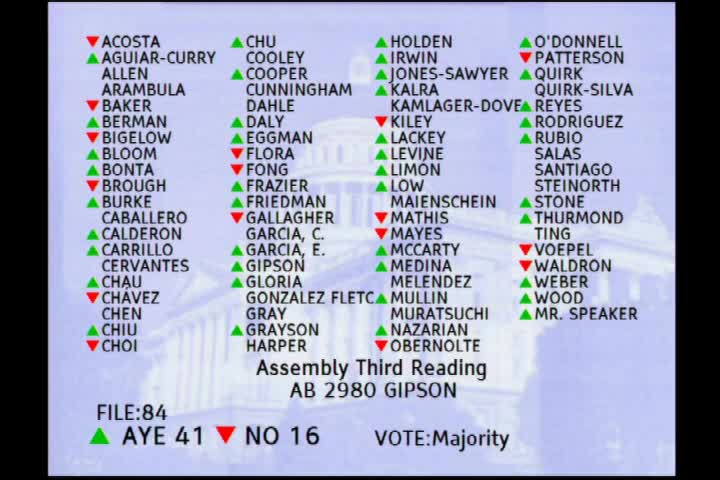
Bill Author

Bill Co-Author(s):