AB 389: Cannabis: consumer guide.
- Session Year: 2017-2018
- House: Assembly
- Latest Version Date: 2017-07-05
The Medical Cannabis Regulation and Safety Act (MCRSA) provides for the licensure and regulation of medical marijuana. The Control, Regulate and Tax Adult Use of Marijuana Act of 2016 (AUMA), an initiative measure enacted by the approval of Proposition 64 at the November 8, 2016, statewide general election, authorizes the consumption of nonmedical marijuana nonmedicinal cannabis by persons over 21 years of age age, referred to as adult-use cannabis, and provides for the licensure and regulation of certain commercial nonmedical marijuana adult-use cannabis activities. AUMA The Medicinal and Adult-Use Cannabis Regulation and Safety Act (MAUCRSA), among other things, consolidates the licensure and regulation of commercial medicinal and adult-use cannabis activities. MAUCRSA establishes the administrative and enforcement responsibilities of the Bureau of Marijuana, Cannabis Control, within the Department of Consumer Affairs, and the Director of Consumer Affairs with regard to both AUMA and MCRSA. that act.
This bill would require the bureau, by July 1, 2018, to establish and make available on its Internet Web site a consumer guide to educate serve as a resource for the public on the regulation of medical and nonmedical marijuana. California laws and regulations applicable to medicinal and adult-use cannabis.
The Medical Cannabis Regulation and Safety Act (MCRSA) provides for the licensure and regulation of medical marijuana. The Control, Regulate and Tax Adult Use of Marijuana Act of 2016 (AUMA), an initiative measure enacted by the approval of Proposition 64 at the November 8, 2016, statewide general election, authorizes the consumption of nonmedical marijuana by persons over 21 years of age and provides for the licensure and regulation of certain commercial nonmedical marijuana activities. AUMA establishes the administrative and enforcement responsibilities of the Bureau of Marijuana, within the Department of Consumer Affairs, and the Director of Consumer Affairs with regard to both AUMA and MCRSA.
This bill would require the bureau, by July 1, 2018, to establish and make available on its Internet Web site a consumer guide to educate the public on the regulation of medical and nonmedical marijuana.
(a)On or before July 1, 2018, the bureau shall establish and make available on its Internet Web site a consumer guide to educate serve as a resource for the public on the regulation of medical and nonmedical marijuana. California laws and regulations applicable to medicinal and adult-use cannabis.
(b)The consumer guide shall include, but is not limited to, the following information:
(1)The difference between medical marijuana and nonmedical marijuana. medicinal cannabis and adult-use cannabis.
(2)Where nonmedical marijuana may be legally purchased. Licensing requirements for facilities to engage in commercial cannabis activities.
(3)Rules on the public consumption of medical marijuana and nonmedical marijuana. medicinal cannabis and adult-use cannabis.
(4)How much marijuana cannabis may be purchased at one time.
(5)Penalties for violating marijuana cannabis laws.
(6)The process for reporting consumer concerns or complaints.
(7)Laws and regulations applicable to both medicinal and adult-use cannabis-infused edibles including measures to keep cannabis products safely out of the reach of children or pets.
(a)On or before July 1, 2018, the bureau shall establish and make available on its Internet Web site a consumer guide to educate the public on the regulation of medical and nonmedical marijuana.
(b)The consumer guide may shall include, but is not limited to, the following information:
(1)The difference between medical marijuana and nonmedical marijuana.
(2)Where nonmedical mariuana marijuana may be legally purchased.
(3)Rules on the public consumption of medical marijuana and nonmedical marijuana.
(4)How much marijuana may be purchased at one time.
(5)Penalties for violating marijuana laws.
(6)The process for reporting consumer concerns or complaints.
(a)On or before July 1, 2018, the bureau shall establish and make available on its Internet Web site a consumer guide to educate the public on the regulation of medical and nonmedical marijuana.
(b)The consumer guide may include, but is not limited to, the following information:
(1)The difference between medical marijuana and nonmedical marijuana.
(2)Where nonmedical mariuana may be legally purchased.
(3)Rules on the public consumption of medical marijuana and nonmedical marijuana.
(4)How much marijuana may be purchased at one time.
(5)Penalties for violating marijuana laws.
(6)The process for reporting consumer concerns or complaints.
|
Date
|
Status
|
|---|---|
| Sep 1, 2017 | In committee: Held under submission. |
| Aug 21, 2017 | In committee: Referred to APPR. suspense file. |
| Jul 5, 2017 | From committee chair, with author's amendments: Amend, and re-refer to committee. Read second time, amended, and re-referred to Com. on APPR. |
| Jun 13, 2017 | From committee: Do pass and re-refer to Com. on APPR. (Ayes 9. Noes 0.) (June 12). Re-referred to Com. on APPR. |
| Jun 6, 2017 | From committee chair, with author's amendments: Amend, and re-refer to committee. Read second time, amended, and re-referred to Com. on B., P. & E.D. |
| May 24, 2017 | Referred to Com. on B., P. & E.D. |
| May 11, 2017 | In Senate. Read first time. To Com. on RLS. for assignment. |
| May 11, 2017 | Read third time. Passed. Ordered to the Senate. (Ayes 77. Noes 0. Page 1487.) |
| May 4, 2017 | Read second time. Ordered to Consent Calendar. |
| May 3, 2017 | From committee: Do pass. To Consent Calendar. (Ayes 16. Noes 0.) (May 3). |
| Apr 26, 2017 | From committee: Do pass and re-refer to Com. on APPR. (Ayes 15. Noes 0.) (April 25). Re-referred to Com. on APPR. |
| Mar 27, 2017 | Referred to Com. on B. & P. |
| Feb 10, 2017 | From printer. May be heard in committee March 12. |
| Feb 9, 2017 | Read first time. To print. |
|
Date
|
Description
|
Location
|
Votes
|
|
|---|---|---|---|---|
| Aug 21, 2017 | Placed on suspense file | Senate Standing Committee on Appropriations |
Passed |
|
| Jun 12, 2017 | Do pass, but first be re-referred to the Committee on [Appropriations] | Senate Standing Committee on Business, Professions and Economic Development |
Passed |
|
| May 11, 2017 | AB 389 SALAS Consent Calendar Second Day Regular Session | Assembly Floor |
Passed |
|
| May 3, 2017 | Do pass. To Consent Calendar. | Assembly Standing Committee on Appropriations |
Passed |
|
| Apr 25, 2017 | Do pass and be re-referred to the Committee on [Appropriations] | Assembly Standing Committee on Business and Professions |
Passed |
This list shows positions taken on this bill by organizations on the date displayed, which is linked to the original source.
Positions by individuals are not included.
SENATE COMMITTEE ON APPROPRIATIONS
Senator Ricardo Lara, Chair
2017 - 2018 Regular Session
AB 389 (Salas) - Cannabis: consumer guide
Version: July 5, 2017 | Policy Vote: B., P. & E.D. 9 - 0 |
Urgency: No | Mandate: No |
Hearing Date: August 21, 2017 | Consultant: Brendan McCarthy |
This bill does not meet the criteria for referral to the Suspense File.
Bill Summary:
AB 389 would require the Bureau of Cannabis Control to develop a consumer guide to state law and regulation regarding cannabis.
Fiscal Impact:
Minor costs for the Bureau to develop the required consumer guide, post it to the Bureau’s website, and make changes as needed (Cannabis Control Fund).
Background:
The Medical Cannabis Regulation and Safety Act (MCRSA) was enacted by the legislature to regulate the production and sale of medical cannabis. The MCRSA created a regulatory structure and licensing requirements for a variety of entities involved in the production, distribution, and sale of medical cannabis.
The Control, Regulate, and Tax Adult Use of Marijuana Act (AUMA, Proposition 64 of 2016) legalized the sale, possession, and use of marijuana for individuals over the age of 21. The AUMA created a regulatory structure for the recreational marijuana industry, similar to that created under the MCRSA, but with some differences in licensing requirements.
SB 94 (Committee on Budget and Fiscal Review, Statutes of 2017) consolidated and harmonized the requirements of the two bodies of law relating to both medicinal and recreational cannabis (and changed the official terminology to cannabis).
Several other boards and bureaus within the Department of Consumer Affairs have developed consumer guides, to explain the laws and regulations governing certain professions and to educate consumers about their rights and protections
Proposed Law:
AB 389 would require the Bureau of Cannabis Control to develop a consumer guide to state law and regulation regarding cannabis.
The bill would require the consumer guide to be made available by July 1, 2018.
Related Legislation:
There are a number of other bills that generally relate to cannabis and its regulation that will be heard in this committee.
-- END --
SENATE COMMITTEE ON
BUSINESS, PROFESSIONS AND ECONOMIC DEVELOPMENT
Senator Jerry Hill, Chair
2017 - 2018 Regular
Bill No: Hearing Date: June 12, 2017
Author: | |||
Version: |
| ||
Urgency: | Fiscal: | ||
Consultant: | |||
Subject:
SUMMARY:
Requires the Bureau of Marijuana Control (Bureau) to establish a consumer guide to educate the public on the regulation of medical and nonmedical marijuana and make it available on the Bureau’s Internet Web site by July 1, 2018.
Existing law:
- Establishes the Bureau under the Department of Consumer Affairs (DCA) to regulate the medical and recreational cannabis industry through the Medical Cannabis Regulation and Safety Act (Act) and the Control, Regulate and Tax Adult Use of Marijuana Act (Prop 64). (Business and Professions Code (BPC §§ 19302, 26010)
- States that the boards, bureaus, and commissions in the DCA are established for the purpose of ensuring that those private businesses and professions deemed to engage in activities which have potential impact upon the public health, safety, and welfare are adequately regulated in order to protect the people of California.
(BPC § 101.6) - Requires every state marijuana licensing authority to prioritize the protection of the public above all other values when exercising its licensing, regulatory, and disciplinary functions. (BPC § 19303)
- Authorizes the State Department of Public Health (DPH) to notify the public regarding any medical cannabis product when DPH deems it necessary for the protection of the health and safety of the consumer or for his or her protection from fraud. (BPC § 19347.4)
This bill:
- Requires the Bureau to establish a consumer guide to educate the public on the regulation of medical and nonmedical marijuana, and publish it on the Bureau’s Internet Web site by July 1, 2018.
- Requires, but does not limit the consumer guide, to the following subjects:
- The difference between medical marijuana and nonmedical marijuana.
- Where nonmedical marjuana may be legally purchased.
- Rules on the public consumption of medical marijuana and nonmedical marijuana.
- How much marijuana may be purchased at one time.
- Penalties for violating marijuana laws.
- The process for reporting consumer concerns or complaints.
FISCAL EFFECT:
According to the Assembly Appropriations analysis dated May 3, 2017, the costs of this bill to the Bureau are expected to be minor and absorbable. The Bureau also notes minor information technology costs (Marijuana Control Fund).
COMMENTS:
- Purpose. This bill is sponsored by the Author. According to the Author’s office: “AB 389 seeks to provide consumers and businesses with a comprehensive consumer guide that includes the basics facts about the medical marijuana and recreational marijuana laws and regulations and consumer safety information as we approach the January 1, 2018 implementation date.”
- Background. In 2015, the Legislature passed, and the Governor signed, three bills that created a licensing and regulatory framework for medical cannabis through the Medical Cannabis Regulation and Safety Act. It also divided the responsibility for state licensing between three state entities – the CA Department of Food and Agriculture, the CA Department of Public Health and the Bureau of Medical Cannabis Regulation, with the Bureau designated as the lead agency in regulating the cannabis industry in California. In 2016, California citizens passed Prop 64, which regulates recreational marijuana. The Bureau remains the lead agency for regulating both medical and recreational marijuana. The licensing and regulation of medical and nonmedical marijuana is set to begin on January 1, 2018.
Boards and bureaus under the DCA are required to prioritize consumer safety above all other factors in carrying out their regulatory duties. Many DCA boards and bureaus publish consumer guides to educate individuals on various aspects of their respective regulated environments, but statutory authorization is not required to do so.
- Related Legislation. AB 350 (Salas) prohibits marijuana edibles from being made in certain shapes. (Status: This bill is pending in the Senate Business, Professions, and Economic Development Committee.)
AB 823 (Chau) requires a serving of edible marijuana product to include a stamp, mark, or an imprint on each single serving with a universal symbol, to be designed by the Bureau. (Status: This bill is pending in the Senate Business, Professions, and Economic Development Committee.)
AB 1002 (Cooley) modifies several provisions related to the California Marijuana Research Program, currently known as the "Center for Medicinal Cannabis Research," including a name change to "Center for Cannabis Research."
(Status: This bill is pending in the Senate Business, Professions, and Economic Development Committee.)
SB 794 (Stern) requires recreational marijuana products to be stamped with a universal symbol and sold in packaging that is tamperproof, and if the product contains more than one serving, resealable. ." (Status: This bill is pending at the Assembly desk.)
- Prior Legislation. AB 2679 (Cooley, Bonta, Jones-Sawyer, Lackey, Wood, Chapter 828, Statutes of 2016) required marijuana licensing authorities to include annual reports about the number of appeals for license denials, disciplinary actions, and complaints. Authorizes the University of California’s California Marijuana Research Program (Program) to develop and conduct studies to ascertain the effect of marijuana on motor skills.
AB 243 (Wood, Chapter 688, Statutes of 2015) requires CDFA, DPR, the State Department of Public Health, the Department of Fish and Wildlife, and the State Water Resources Control Board to promulgate regulations or standards relating to medical cannabis and its cultivation, as specified, and establishes licensing fees, fines, and penalties.
AB 266 (Bonta et al., Chapter 689, Statutes of 2015) established the Act for the licensure and regulation of medical cannabis and establishes the Bureau of Medical Cannabis Regulation within the DCA.
SB 643 (McGuire, Chapter 719, Statutes of 2015) set standards for the licensed cultivation and physician prescription of medical cannabis; establishes a track and trace program for the transportation of medical cannabis; and authorizes counties to impose a tax on medical cannabis.
SUPPORT AND OPPOSITION:
Support:
None on file as of June 6, 2017.
Opposition:
None on file as of June 6, 2017.
-- END --
Date of Hearing: May 3, 2017
ASSEMBLY COMMITTEE ON APPROPRIATIONS
Lorena Gonzalez Fletcher, Chair
ABPCA Bill Id:AB 389
Author:(Salas) – As Introduced Ver:February 9, 2017
Policy Committee: | Business and Professions | Vote: | 15 - 0 |
|
| ||
|
|
Urgency: No State Mandated Local Program: No Reimbursable: No
SUMMARY:
This bill requires the Bureau of Marijuana Control (Bureau) to create and make available on its website a consumer guide to educate the public on the regulation of medical and recreational marijuana, as specified, by July 1, 2018.
FISCAL EFFECT:
Costs to the Bureau are expected to be minor and absorbable. The Bureau also notes minor information technology costs (Marijuana Control Fund).
COMMENTS:
Purpose and Background. Pursuant to voter propositions, medical and non-medical use of marijuana (also called cannabis) is now legal in the state. Beginning on January 1, 2018, the state is to issue licenses for cultivation, manufacturing, retail sale, transportation, storage, delivery and testing of medical and non-medical cannabis. This bill requires the guide to explain difference between medical and recreational cannabis, where recreational cannabis may be purchased, rules on cannabis consumption, quantities allowable, penalties for violation, and the process for reporting concerns or complaints.
Analysis Prepared by: Lisa Murawski / APPR. / (916) 319-2081
Date of Hearing: April 25, 2017
ASSEMBLY COMMITTEE ON BUSINESS AND PROFESSIONS
Evan Low, Chair
ABPCA Bill Id:AB 389
Author:(Salas) – As Introduced Ver:February 9, 2017
SUBJECT: Marijuana: consumer guide.
SUMMARY: Requires the Bureau of Cannabis Regulation (Bureau) to create and make available on its website a consumer guide to educate the public on the regulation of medical and recreational marijuana, and specifies that the guide is to be available July 1, 2018, and must include: the difference between medical and recreational cannabis, where recreational cannabis may be purchased, rules on cannabis consumption, quantities allowable, penalties for violation, and the process for reporting concerns or complaints.
EXISTING LAW:
- Establishes the Bureau under the Department of Consumer Affairs (DCA), to establish a comprehensive system to control and regulate the cultivation, distribution, transport, storage, manufacturing, processing, and sale of cannabis products. (Business and Professions Code (BPC) § 26000 et seq.; BPC § 19302)
THIS BILL:
- Requires the Bureau to create and make available on its website a consumer guide to educate the public on the regulation of medical and recreational marijuana.
- Requires the guide to be available on or before July 1, 2018.
- Requires the guide to include the following: the difference between medical and recreational cannabis, where recreational cannabis may be purchased, rules on cannabis consumption, quantities allowable, penalties for violation, and the process for reporting concerns or complaints.
FISCAL EFFECT: Unknown. This bill has been keyed fiscal from the Legislative Counsel.
COMMENTS:
Purpose. This bill is author sponsored. According to the author, “AB 389 seeks to provide consumers and businesses with a comprehensive consumer guide that includes the basics facts about the medical marijuana and recreational marijuana laws and regulations and consumer safety information as we approach the January 1, 2018 implementation date.”
Background. This bill requires the Bureau to create and make available on its website a consumer guide to educate the public on the regulation of medical and recreational marijuana. This guide must be available on or before July 1, 2018, and must include information on the difference between medical and recreational cannabis, where recreational cannabis may be purchased, rules on cannabis consumption, quantities allowable, penalties for violation, and the process for reporting concerns or complaints.
Cannabis Regulation in California. In 1996, California voters passed Proposition 215, legalizing the use of medical cannabis (MC) in the state. In October 2015, nearly 20 years after the authorization of the use of MC, Governor Jerry Brown signed into law a trio of bills [AB 243 (Wood), Chapter 688, Statutes of 2015, AB 266 (Bonta, Cooley, Jones-Sawyer, Lackey, and Wood), Chapter 689, Statutes of 2015, and SB 643 (McGuire), Chapter 719, Statutes of 2015] collectively known as MCRSA. MCRSA established the state's first regulatory framework for MC. In 2016, the voters of California passed Proposition 64, the Adult Use of Marijuana Act (AUMA), to legalize the recreational use of cannabis in the state by 2018.
The authors of AUMA sought to make use of much of the regulatory structure and authorities set out by MCRSA while making a few notable changes to the structure being implemented. In addition, the AUMA approved by the voters adopted the January 1, 2018 deadline for state implementation of recreational cannabis in addition to the regulations required in MCRSA that are scheduled to take effect on the same date. The same agencies as under MCRSA remain responsible for implementing regulations for adult use.
Under AUMA, the Department of Consumer Affairs (DCA), continues to serve as the lead regulatory agency for all cannabis, both medical and non-medical, and renames the existing Bureau of Medical Cannabis Regulation as the Bureau of Marijuana Control. AUMA includes 19 different license types compared to the 17 in MCRSA and authorizes DCA (and the Bureau) the exclusive authority to create and regulate a license for transportation of cannabis.
Regulation of Cannabis in Other States. As of 2016, 28 states, the District of Columbia, and Guam have MC programs. Though California was the first to authorize the medical use of cannabis, it was the only state that allowed cannabis-use without a robust state regulatory framework until passage of MCRSA. To date, eight states, Alaska, Colorado, Oregon, Washington, California, Nevada, Massachusetts, Maine, and the District of Columbia have legalized recreational cannabis.
As cannabis enters the sunlight as a fully legal and regulated product, it is important that consumers and the public in general be fully educated about not only the allowances for cannabis consumption, but also the restrictions on engaging with the product. The creation of a readily available consumer guide will support public education and may serve to prevent misunderstandings of the law.
Current Related Legislation. AB 64 (Bonta, Cooley, Jones-Sawyer, Lackey, Wood) of the current session, amends and adds provisions to the Medical Cannabis Regulation and Safety Act (MCRSA) and Adult Use of Marijuana Act (AUMA) relating to: not for profit entities; delivery of cannabis; state and local licenses; trademarks; offenses for being under the influence of cannabis; grant money disbursement for the California Highway Patrol and the Board of State and Community Corrections; and fund disbursement to the General Fund for enforcement purposes. STATUS: This bill was heard by the Assembly Committee on Business and Professions on April 18, 2017and referred to the Committee on Appropriations.
Prior Related Legislation. AB 1575 (Bonta, Cooley, Jones-Sawyer, Lackey, Wood) of 2015 contained language on non-storefront dispensaries, corporate restructuring, and intellectual property. NOTE: This bill was held in the Senate Appropriations Committee.
AB 266 (Bonta, Cooley, Jones-Sawyer, Lackey, Wood) Chapter 689, Statutes of 2015. This bill, enacted the Medical Marijuana Regulation and Safety Act for the licensure and regulation of medical marijuana and established within the Department of Consumer Affairs the Bureau of Medical Marijuana Regulation, under the supervision and control of the Director of Consumer Affairs. Required the director to administer and enforce the provisions of the act.
REGISTERED SUPPORT:
None on file
REGISTERED OPPOSITION:
None on file
Analysis Prepared by: Jimmy Fremgen / B. & P. / 916-319-3301
Discussed in Hearing
 1MIN
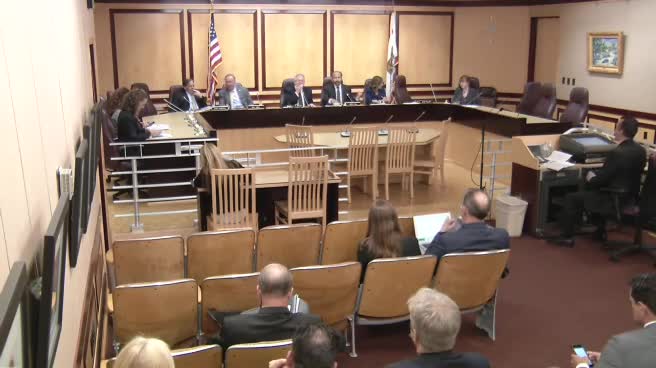
Senate Standing Committee on Business, Professions and Economic Development
 1MIN
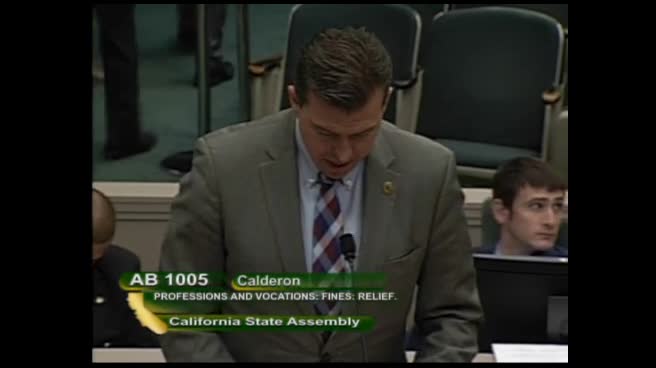
Assembly Standing Committee on Business and Professions



Bill Co-Author(s):