AB 423: Residential real property: rent control: withdrawal of accommodations.
- Session Year: 2017-2018
- House: Assembly
- Latest Version Date: 2017-02-09
(1)Existing law, commonly known as the Ellis Act, generally prohibits public entities from adopting any statute, ordinance, or regulation, or taking any administrative action, as specified, to compel the owner of residential real property to offer or to continue to offer accommodations, as defined, in the property for rent or lease. Existing law excepts from this prohibition residential hotels with certain characteristics.
This bill, on and after January 1, 2018, would except from the Ellis Act residential hotels in the City of Oakland.
(2)This bill would make legislative findings and declarations as to the necessity of a special statute for the City of Oakland.
(a)No public entity, as defined in Section 811.2, shall, by statute, ordinance, or regulation, or by administrative action implementing any statute, ordinance or regulation, compel the owner of any residential real property to offer, or to continue to offer, accommodations in the property for rent or lease, except for guestrooms or efficiency units within a residential hotel, as defined in Section 50519 of the Health and Safety Code, if the residential hotel meets all of the following conditions: the conditions specified paragraph (1) or (2):
(1)(A)The residential hotel is located in a city and county, or in a city with a population of over 1,000,000.
(2)(B)The residential hotel has a permit of occupancy issued prior to January 1, 1990.
(3)(C)The residential hotel did not send a notice of intent to withdraw the accommodations from rent or lease pursuant to subdivision (a) of Section 7060.4 that was delivered to the public entity prior to January 1, 2004.
(2)On and after January 1, 2018, the residential hotel is located in the City of Oakland.
(b)For the purposes of this chapter, the following definitions apply:
(1)Accommodations means either of the following:
(A)The residential rental units in any detached physical structure containing four or more residential rental units.
(B)With respect to a detached physical structure containing three or fewer residential rental units, the residential rental units in that structure and in any other structure located on the same parcel of land, including any detached physical structure specified in subparagraph (A).
(2)Disabled means a person with a disability, as defined in Section 12955.3 of the Government Code.
SEC. 2.The Legislature finds and declares that a special statute is necessary and that a general statute cannot be made applicable within the meaning of Section 16 of Article IV of the California Constitution because of the unique demands facing the City of Oakland with its rising homeless population and affordable housing crisis.
|
Date
|
Status
|
|---|---|
| Feb 1, 2018 | Died on inactive file. |
| Sep 11, 2017 | Reconsideration granted. |
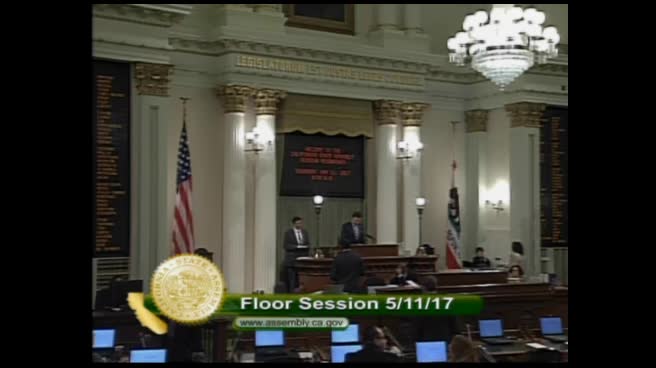
| May 11, 2017 | Read third time. Refused passage. (Ayes 22. Noes 34. Page 1493.). |
| Apr 6, 2017 | Read second time. Ordered to third reading. |
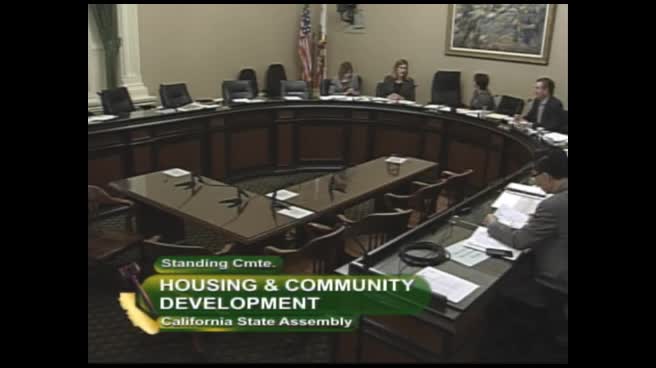
| Apr 5, 2017 | From committee: Do pass. (Ayes 4. Noes 3.) (April 5). |
| Feb 21, 2017 | Referred to Com. on H. & C.D. |
| Feb 10, 2017 | From printer. May be heard in committee March 12. |
| Feb 9, 2017 | Read first time. To print. |
|
Date
|
Description
|
Location
|
Votes
|
|
|---|---|---|---|---|
| May 11, 2017 | AB 423 BONTA Assembly Third Reading | Assembly Floor |
Failed |
|
| Apr 5, 2017 | Do pass. | Assembly Standing Committee on Housing and Community Development |
Passed |
This list shows positions taken on this bill by organizations on the date displayed, which is linked to the original source.
Positions by individuals are not included.
|
Organization
|
Position
|
Date
|
|---|---|---|
| Abode Services | ** Support | Apr 3, 2017 |
| Alameda County Board of Supervisors | ** Support | Apr 3, 2017 |
| Asian Pacific Environmental Network | ** Support | Apr 3, 2017 |
| Bay Area Community Services | ** Support | Apr 3, 2017 |
| California Apartment Association | ** Against | Apr 3, 2017 |
| California Association Of Realtors | ** Against | Apr 3, 2017 |
| California Building Industry Association | ** Against | Apr 3, 2017 |
| California Business Properties Association | ** Against | Apr 3, 2017 |
| California Chamber Of Commerce | ** Against | Apr 3, 2017 |
| City Of Oakland | ** Support | Apr 3, 2017 |
| Community Economics | ** Support | Apr 3, 2017 |
| Covenant House California | ** Support | Apr 3, 2017 |
| East Bay Asian Local Development Corporation | ** Support | Apr 3, 2017 |
| East Bay Housing Organizations | ** Support | Apr 3, 2017 |
| HCEB | ** Support | Apr 3, 2017 |
| Housing California | ** Support | Apr 3, 2017 |
| Non-Profit Housing Association of Northern California | ** Support | Apr 3, 2017 |
| Public Advocates | ** Support | Apr 3, 2017 |
| Resources for Community Development | ** Support | Apr 3, 2017 |
| St. Mary's Center | ** Support | Apr 3, 2017 |
ASSEMBLY THIRD READING
ATR Bill Id:AB 423
Author:()
As Introduced Ver:February 9, 2017
Majority vote
Committee | Votes | Ayes | Noes |
Housing | 4-3 | Chiu, Chau, Kalra, Limón | Steinorth, Bocanegra, Choi |
SUMMARY: Exempts residential hotels in the City of Oakland from the Ellis Act (Act) beginning January 1, 2018.
FISCAL EFFECT: None
COMMENTS:
Need for this bill: According to the author,
"Residential Hotels, also called Single Room Occupancy hotels, or SROs, were constructed during the late 19th and early 20th century to house transient workers. As the name implies, they are composed of a single room for residents. They are distinguished from studio or efficiency units in that they typically do not include a private bathroom or kitchen in the room. Historically, residential hotels have also differed from other dwelling units in the type of population that they house. Residential hotel tenants have traditionally been primarily itinerant male workers, rather than women, couples, or families.
"Residential hotels provide an essential housing option for low and extremely low income Oaklanders. These rooms are a vital source of housing because they do not require credit checks, proof of income, large security deposits or a long-term lease that may disqualify some from accessing other forms of long term housing. For many, the loss of a residential hotel room creates an undue hardship and may result in homelessness or permanent dislocation from the community.
"Most residents of Oakland's SROs are permanent tenants. A full 85% of current residents have occupied their rooms at least one month, and 65% have been tenants for at least one year. An estimated 26% of residents have been tenants for five years or more.
"In the wake of an unprecedented housing crisis, the demand for high income/market rate units is placing pressure on owners to abandon this vulnerable population by converting the units to boutique hotel use, high-income rental or for sale condominiums. This would be disastrous for the approximately 25% of residential hotel tenants who have lived in their units for more than five years and would be displaced by such projects. Additionally, the loss of this source of short term housing could lead to an increase in Oakland's already large and growing population of unsheltered individuals."
The Ellis Act and SROs: The Act was adopted in 1985 by SB 505 (Ellis), Chapter 1509, Statutes of 1985, following the California Supreme Court's decision in Nash v. City of Santa Monica (1984) 37 Cal. 3d 97, which upheld the power of a city, in the context of a land use ordinance, to require a residential property owner to obtain a removal permit under specified criteria before the owner could demolish the rental property and remove it from the rental marketplace.
The Act allows owners of rental housing to exit the rental housing business. Under the Act, an owner of rental property in a rent control jurisdiction may exit the rental market by terminating the tenancies of tenants and removing the property from the rental market for a minimum of five years. State law requires that the landlord must give renters who are disabled or over 62 one year's notice, and others renters must be given a minimum 120 days' notice.
In 2003, the Legislature amended the Act with the passage of AB 1217 (Leno), Chapter 766, Statutes of 2003, which exempted guestrooms and efficiency units in pre-1990 SROs in San Francisco and in cities with populations over 1,000,000 (currently Los Angeles, San Diego and San Jose). According to supporters of that bill, SRO owners in San Francisco were not invoking the Act for reasons such as owner move-ins. Rather, supporters contended that the real purpose was to change the use of the SRO to another more profitable use.
Supporters of this bill point to similar concerns in Oakland, which does not qualify for the Act's SRO exemption because it has a population of less than one million. According to the 2015 SRO Report by the Oakland Housing and Community Development Department, the number of SRO units in Oakland has continued to decline since the department's first SRO report in 1985, but the reasons for such loss are multifaceted. Thirty-one SROs were operating in downtown Oakland in 2004; only 18 are left. While many former SROs continue to house or serve low-income populations, the report shows three out of nine SROs closed post- 2004 reentered the market as market-rate condos or student apartments.
Under existing law, Oakland has limited authority to address SRO conversions. In 2003, Oakland's Redevelopment Agency passed a resolution adopting a replacement housing policy for SRO units. The policy stated that any redevelopment project which resulted in the loss of SRO units from the market required a one-for-one replacement elsewhere within the city. After the dissolution of redevelopment agencies in 2012, this policy only applies to the City to the extent that former redevelopment funds are being used to assist a project that results in the loss of SRO units.
In January 2017, Oakland secured a moratorium on the conversion, demolition, reconfiguration, and rehabilitation of SROs through December 2018, or whenever permanent regulations are adopted. However, the moratorium cannot override the Act's prohibition on a city preventing a landlord from evicting tenants in order to take the property out of residential rental use, as the Act preempts local laws prohibiting such evictions. This bill would specifically exempt SROs in Oakland from the Act.
Arguments in opposition: Opponents argue that this bill will force SRO owners to stay in business even when it does not make economic sense. This, opponents contend, will work against the supply of affordable housing, as it will discourage new investment in rental housing and exacerbate shortages. Opponents also point to situations where property owners face mandated improvements to older buildings, which may be costly. Unless a city can provide funding to assist with these upgrades, it may be a struggle to keep these buildings viable for tenants. In opponents' view, this bill will remove the incentive for cities to help ensure that properties are financially feasible.
Related legislation:
AB 982 (Bloom) of the current legislative session: Would extend the term for withdrawal of accommodations to one year for all tenants and lessees without regard to age or disability. This bill is pending in the Assembly Committee on Housing and Community Development.
SB 1267 (Allen) of 2016: Would have required a city or county by ordinance, when the city or county requires notice of intent to withdraw accommodations pursuant to the Act, to give one year's notice to a tenant with a custodial or family relationship with a pupil enrolled in a primary or secondary school who lives in an accommodation before terminating a tenancy. This bill died in the Senate Transportation and Housing Committee.
SB 364 (Leno) of 2015: Would have allowed the city and county of San Francisco to prohibit, by ordinance or ballot measure, a rental housing owner from removing a building from the market pursuant to the Act unless all owners in the property have held their ownership interest for at least five years. This bill failed passage in the Senate Transportation and Housing Committee.
SB 1439 (Leno) of 2014: Would have allowed the city and county of San Francisco to prohibit, by ordinance or ballot measure, a rental housing owner from removing a building from the market pursuant to the Act unless all owners in the property have held their ownership interest for at least five years. This bill failed passage in the Assembly Housing and Community Development Committee.
AB 1171 (Ammiano) of 2010: Would have defined, for purposes of the Act, "to go out of business" to mean to discontinue in the business or occupation of being a landlord. Would have specified that the rent control system of a public entity may require that the one-year extension applies to all tenancies in the applicable accommodations if a tenant or lessee who is at least 62 years of age or disabled has lived in the accommodations for at least one year prior to the delivery of notice to a public entity and gives the required 60-day notice to the owner. Would have required an owner to notify all tenants of the one-year extension. This bill died in the Assembly Housing and Community Development Committee.
SB 464 (Kuehl) of 2007: Would have limited the ability of a rental property owner to exercise their rights under the Act to cases where the owner has owned the property for at least three years and acquired ownership of the property on or after March 27, 2007. This bill died on the Senate Floor.
AB 781 (Leno) of 2005: Would have provided that a tenant or lessee who is at least 62 years of age or disabled and has lived in the accommodations for at least five years prior to the date of delivery to the public entity of the notice of intent to withdraw under the Act, is entitled to at least five years' notice prior to an owner terminating the tenancy. This bill died in the Assembly Housing and Community Development Committee.
AB 1217 (Leno) Chapter 766, Statutes of 2003: Created an exemption from the Act for guestrooms and efficiency units within a residential hotel, as specified.
Analysis Prepared by: Rebecca Rabovsky / H. & C.D. / (916) 319-2085 FN: 0000119
Date of Hearing: April 5, 2017
ASSEMBLY COMMITTEE ON HOUSING AND COMMUNITY DEVELOPMENT
David Chiu, Chair
ABPCA Bill Id:AB 423 (
Author:Bonta) – As Introduced Ver:February 9, 2017
SUBJECT: Residential real property: rent control: withdrawal of accommodations
SUMMARY: Exempts residential hotels in the City of Oakland from the Ellis Act (Act) beginning January 1, 2018.
EXISTING LAW:
- Prohibits, under the Act, a public entity, by statute, ordinance, or regulation, from compelling an owner of any residential real property, except for a residential hotel meeting specified requirements, to continue to offer the rental units for rental housing (Govt. Code Section 7060 et. seq.).
- Provides that the Act only applies when an owner seeks to remove all units from rent or lease in a building, or all units on a property with a building containing three or fewer units (Govt. Code Section 7060).
- Provides authority for a public entity to regulate the subsequent use of the property and mitigate any adverse impacts on people who are displaced by the withdrawal of a property from the rental market (Govt. Code Section 7060.1).
- Provides that in rent-control jurisdictions, the rent control ordinance may require owners to give notice before withdrawing the building from the market. The owner must provide 120 days’ notice — or one year’s notice in the case of tenants who are disabled or more than 62 years old — before terminating the tenancy. The Act also permits the city to impose other restrictions, conditions and requirements upon the property (Govt. Code Section 7060.4).
- Exempts guestrooms and efficiency units in residential hotels from the Act, provided they meet the following requirements:
- Are located in a city and county, or a city, with a population over 1,000,000.
- Have a permit of occupancy issued prior to January 1, 1990.
- The owner did not send a notice of intent to withdraw the accommodations from rent or lease that was delivered to the relevant public entity prior to January 1, 2004.
(Govt. Code Section 7060)
- Defines "residential hotel" as any building containing six or more guestrooms or efficiency units intended or designed to be used, or which are used, rented, or hired out, to be occupied, or which are occupied, for sleeping purposes by guests, which is also the primary residence of those guests, but does not mean any building containing six or more guestrooms or efficiency units which is primarily used by transient guests who do not occupy that building as their primary residence (Health & Safety Code Section 50519).
FISCAL EFFECT: None
COMMENTS:
Need for this bill: According to the author,
"Residential Hotels, also called Single Room Occupancy hotels, or SROs, were constructed during the late 19th and early 20th century to house transient workers. As the name implies, they are composed of a single room for residents. They are distinguished from studio or efficiency units in that they typically do not include a private bathroom or kitchen in the room. Historically, residential hotels have also differed from other dwelling units in the type of population that they house. Residential hotel tenants have traditionally been primarily itinerant male workers, rather than women, couples, or families.
"Residential hotels provide an essential housing option for low and extremely low income Oaklanders. These rooms are a vital source of housing because they do not require credit checks, proof of income, large security deposits or a long-term lease that may disqualify some from accessing other forms of long term housing. For many, the loss of a residential hotel room creates an undue hardship and may result in homelessness or permanent dislocation from the community.
"Most residents of Oakland’s SROs are permanent tenants. A full 85% of current residents have occupied their rooms at least one month, and 65% have been tenants for at least one year. An estimated 26% of residents have been tenants for five years or more.
"In the wake of an unprecedented housing crisis, the demand for high income/market rate units is placing pressure on owners to abandon this vulnerable population by converting the units to boutique hotel use, high-income rental or for sale condominiums. This would be disastrous for the approximately 25% of residential hotel tenants who have lived in their units for more than five years and would be displaced by such projects. Additionally, the loss of this source of short term housing could lead to an increase in Oakland’s already large and growing population of unsheltered individuals."
The Ellis Act and SROs: The Act was adopted in 1985 by SB 505 (Ellis), Chapter 1509, Statutes of 1985, following the California Supreme Court’s decision in Nash v. City of Santa Monica (1984) 37 Cal. 3d 97, which upheld the power of a city, in the context of a land use ordinance, to require a residential property owner to obtain a removal permit under specified criteria before the owner could demolish the rental property and remove it from the rental marketplace.
The Act allows owners of rental housing to exit the rental housing business. Under the Act, an owner of rental property in a rent control jurisdiction may exit the rental market by terminating the tenancies of tenants and removing the property from the rental market for a minimum of five years. State law requires that the landlord must give renters who are disabled or over 62 one year's notice, and others renters must be given a minimum 120 days' notice.
In 2003, the Legislature amended the Act with the passage of AB 1217 (Leno), Chapter 766, Statutes of 2003, which exempted guestrooms and efficiency units in pre-1990 SROs in San Francisco and in cities with populations over 1,000,000 (currently Los Angeles, San Diego and San Jose). According to supporters of that bill, SRO owners in San Francisco were not invoking the Act for reasons such as owner move-ins. Rather, supporters contended that the real purpose was to change the use of the SRO to another more profitable use.
Supporters of this bill point to similar concerns in Oakland, which does not qualify for the Act's SRO exemption because it has a population of less than one million. According to the 2015 SRO Report by the Oakland Housing and Community Development Department, the number of SRO units in Oakland has continued to decline since the department's first SRO report in 1985, but the reasons for such loss are multifaceted. Thirty-one SROs were operating in downtown Oakland in 2004; only 18 are left. While many former SROs continue to house or serve low-income populations, the report shows three out of nine SROs closed post- 2004 reentered the market as market-rate condos or student apartments.
Under existing law, Oakland has limited authority to address SRO conversions. In 2003, Oakland’s Redevelopment Agency passed a resolution adopting a replacement housing policy for SRO units. The policy stated that any redevelopment project which resulted in the loss of SRO units from the market required a one-for-one replacement elsewhere within the city. After the dissolution of redevelopment agencies in 2012, this policy only applies to the City to the extent that former redevelopment funds are being used to assist a project that results in the loss of SRO units.
In January 2017, Oakland secured a moratorium on the conversion, demolition, reconfiguration, and rehabilitation of SROs through December 2018, or whenever permanent regulations are adopted. However, the moratorium cannot override the Act's prohibition on a city preventing a landlord from evicting tenants in order to take the property out of residential rental use, as the Act preempts local laws prohibiting such evictions. This bill would specifically exempt SROs in Oakland from the Act.
Arguments in opposition: Opponents argue that this bill will force SRO owners to stay in business even when it does not make economic sense. This, opponents contend, will work against the supply of affordable housing, as it will discourage new investment in rental housing and exacerbate shortages. Opponents also point to situations where property owners face mandated improvements to older buildings, which may be costly. Unless a city can provide funding to assist with these upgrades, it may be a struggle to keep these buildings viable for tenants. In opponents' view, this bill will remove the incentive for cities to help ensure that properties are financially feasible.
Related legislation:
AB 982 (Bloom, 2017): Would extend the term for withdrawal of accommodations to one year for all tenants and lessees without regard to age or disability. This bill is pending in the Assembly Committee on Housing and Community Development.
SB 1267 (Allen, 2016): Would have required a city or county by ordinance, when the city or county requires notice of intent to withdraw accommodations pursuant to the Act, to give one year’s notice to a tenant with a custodial or family relationship with a pupil enrolled in a primary or secondary school who lives in an accommodation before terminating a tenancy. This bill died in the Senate Transportation and Housing Committee.
SB 364 (Leno, 2015): Would have allowed the city and county of San Francisco to prohibit, by ordinance or ballot measure, a rental housing owner from removing a building from the market pursuant to the Act unless all owners in the property have held their ownership interest for at least five years. This bill failed passage in the Senate Transportation and Housing Committee.
SB 1439 (Leno, 2014): Would have allowed the city and county of San Francisco to prohibit, by ordinance or ballot measure, a rental housing owner from removing a building from the market pursuant to the Act unless all owners in the property have held their ownership interest for at least five years. This bill failed passage in the Assembly Housing and Community Development Committee.
AB 1171 (Ammiano, 2010): Would have defined, for purposes of the Act, “to go out of business” to mean to discontinue in the business or occupation of being a landlord. Would have specified that the rent control system of a public entity may require that the one-year extension applies to all tenancies in the applicable accommodations if a tenant or lessee who is at least 62 years of age or disabled has lived in the accommodations for at least one year prior to the delivery of notice to a public entity and gives the required 60-day notice to the owner. Would have required an owner to notify all tenants of the one-year extension. This bill died in the Assembly Housing and Community Development Committee.
SB 464 (Kuehl, 2007): Would have limited the ability of a rental property owner to exercise their rights under the Act to cases where the owner has owned the property for at least three years and acquired ownership of the property on or after March 27, 2007. This bill died on the Senate Floor.
AB 781 (Leno, 2005): Would have provided that a tenant or lessee who is at least 62 years of age or disabled and has lived in the accommodations for at least 5 years prior to the date of delivery to the public entity of the notice of intent to withdraw under the Act, is entitled to at least 5 years' notice prior to an owner terminating the tenancy. This bill died in the Assembly Housing and Community Development Committee.
AB 1217 (Leno) Chapter 766, Statutes of 2003: Created an exemption from the Act for guestrooms and efficiency units within a residential hotel, as specified.
REGISTERED SUPPORT / OPPOSITION:
Support
City of Oakland (sponsor)
Abode Services
Alameda County Board of Supervisors
Asian Pacific Environmental Network
Bay Area Community Services
Community Economics
Covenant House California
East Bay Asian Local Development Corporation
East Bay Housing Organizations
HCEB
Housing California
Non-Profit Housing Association of Northern California
Public Advocates
Resources for Community Development
St. Mary's Center
Opposition
California Apartment Association
California Association of Realtors
California Building Industry Association
California Business Properties Association
California Chamber of Commerce
Analysis Prepared by: Rebecca Rabovsky / H. & C.D. / (916) 319-2085
Discussed in Hearing
 4MIN
Assembly Floor
 13MIN
Assembly Standing Committee on Housing and Community Development
Bill Author

Bill Co-Author(s):