AB 663: Coastal resources: low- and moderate-income housing.
- Session Year: 2017-2018
- House: Assembly
- Latest Version Date: 2017-05-30
(1)Existing law, the California Coastal Act of 1976, establishes the California Coastal Commission and prescribes the powers and responsibilities of the commission with regard to the regulation of development along the California coast. The act requires any person wishing to perform or undertake any development in the coastal zone, as defined, to obtain a coastal development permit, except as provided. The act requires that lower cost visitor and recreational facilities be protected, encouraged, and, where feasible, provided.
This bill would, until January 1, 2023, also require housing opportunities for persons of low and moderate income in the coastal zone to be protected, encouraged, and, where feasible, provided. The bill would require the commission, no later than January 1, 2019, to adopt interpretive guidelines for the development, implementation, and construction of housing opportunities for persons of low- and moderate-income in the coastal zone.
(2)The act prescribes procedures for the approval and certification of a local coastal program by the commission, and provides for the delegation of development review authority to a local government, as defined, with a certified local coastal program. The act provides that no local coastal program shall be required to include housing policies and programs.
This bill would suspend the operation of that provision specifying that local coastal programs are not required to include housing policies and programs beginning January 1, 2018, until January 1, 2023.
(3)Provisions of the Planning and Zoning Law, known as the Mello Act, prohibit the conversion or demolition of residential dwelling units within a coastal zone, as defined and delineated in the Coastal Act, occupied by persons and families of low or moderate income unless provision has been made for the replacement of those dwelling units, as specified, and also requires that new housing developments constructed within a coastal zone provide, where feasible, housing units for persons and families of low or moderate income. That law also prohibits the conversion or demolition of any residential structure for purposes of a nonresidential use which is not coastal dependent, as that term is defined in the Coastal Act, unless the local government first determines that residential use is no longer feasible in that location.
In the event an application for a coastal development permit has not been acted upon prior to January 1, 1982, existing law prohibits the commission from imposing any condition or requirement with respect to housing for persons or families of low or moderate income on the proposed development when processing an application for a coastal development permit. Existing law requires an applicant for a coastal development permit to apply to the appropriate local government, as provided, to have that local government apply the requirements of the Mello Act to the proposed development.
This bill would provide that the above provisions do not apply to a coastal development permit application acted upon between January 1, 2018, and January 1, 2023.
(4)Existing property tax law establishes a partial exemption for properties used exclusively for rental housing and related facilities that are owned and operated by certain types of nonprofit entities or veterans organizations and that meet specified requirements. Existing law, on or after January 1, 2015, prohibits a local government from entering into a payment in lieu of taxes (PILOT) agreement with a property owner of a low-income housing project that is eligible for the exemption described above, and makes any PILOT agreement entered into in violation of this provision void and unenforceable.
This bill would, on or after January 1, 2018, prohibit the commission from entering into a PILOT agreement with a property owner of a low-income housing project that is eligible for that exemption, and would make any PILOT agreement entered into in violation of that provision void and unenforceable.
(1)Existing law, the California Coastal Act of 1976, establishes the California Coastal Commission and prescribes the powers and responsibilities of the commission with regard to the regulation of development along the California coast. The act requires any person wishing to perform or undertake any development in the coastal zone, as defined, to obtain a coastal development permit, except as provided. The act requires that lower cost visitor and recreational facilities be protected, encouraged, and, where feasible, provided.
This bill would would, until January 1, 2023, also require housing opportunities for persons of low and moderate income to be protected, encouraged, and, where feasible, provided.
The(2)The act prescribes procedures for the approval and certification of a local coastal program by the commission, and provides for the delegation of development review authority to a local government, as defined, with a certified local coastal program. The act provides that no local coastal program shall be required to include housing policies and programs.
This bill would repeal suspend the operation of that provision specifying that local coastal programs are not required to include housing policies and programs. programs beginning January 1, 2018, until January 1, 2023.
(3)Provisions of the Planning and Zoning Law, known as the Mello Act, prohibit the conversion or demolition of residential dwelling units within a coastal zone, as defined and delineated in the Coastal Act, occupied by persons and families of low or moderate income unless provision has been made for the replacement of those dwelling units, as specified, and also requires that new housing developments constructed within a coastal zone provide, where feasible, housing units for persons and families of low or moderate income. That law also prohibits the conversion or demolition of any residential structure for purposes of a nonresidential use which is not coastal dependent, as that term is defined in the Coastal Act, unless the local government first determines that residential use is no longer feasible in that location.
In the event an application for a coastal development permit has not been acted upon prior to January 1, 1982, existing law prohibits the commission from imposing any condition or requirement with respect to housing for persons or families of low or moderate income on the proposed development when processing an application for a coastal development permit. Existing law requires an applicant for a coastal development permit to apply to the appropriate local government, as provided, to have that local government apply the requirements of the Mello Act to the proposed development.
This bill would provide that the above provisions do not apply to a coastal development permit application acted upon between January 1, 2018, and January 1, 2023.
Existing law, the California Coastal Act of 1976, establishes the California Coastal Commission and prescribes the powers and responsibilities of the commission with regard to the regulation of development along the California coast. The act requires any person wishing to perform or undertake any development in the coastal zone, as defined, to obtain a coastal development permit, except as provided. The act requires that lower cost visitor and recreational facilities be protected, encouraged, and, where feasible, provided.
This bill would also require housing opportunities for persons of low and moderate income to be protected, encouraged, and, where feasible, provided.
The act prescribes procedures for the approval and certification of a local coastal program by the commission, and provides for the delegation of development review authority to a local government, as defined, with a certified local coastal program. The act provides that no local coastal program shall be required to include housing policies and programs.
This bill would repeal that provision specifying that local coastal programs are not required to include housing policies and programs.
(a)Lower cost visitor and recreational facilities, and housing opportunities for persons of low and moderate income in the coastal zone shall be protected, encouraged, and, where feasible, provided. Developments providing public recreational opportunities are preferred.
(b)The commission shall not: (1) require that overnight room rentals be fixed at an amount certain for any privately owned and operated hotel, motel, or other similar visitor-serving facility located on either public or private lands; or (2) establish or approve any method for the identification of low or moderate income persons for the purpose of determining eligibility for overnight room rentals in any such facilities.
(c)The commission shall, no later than January 1, 2019, adopt interpretive guidelines for the development, implementation, and construction of housing opportunities for persons of low- and moderate-income in the coastal zone.
(d)Nothing in this section authorizes the commission to permit residential uses on filled or unfilled tidelands or submerged lands in this state.
(d)
(e)This section shall remain in effect only until January 1, 2023, and as of that date is repealed.
SEC. 2.Section 30213 is added to the Public Resources Code, to read:30213.(a)Lower cost visitor and recreational facilities shall be protected, encouraged, and, where feasible, provided. Developments providing public recreational opportunities are preferred.
(b)The commission shall not: (1) require that overnight room rentals be fixed at an amount certain for any privately owned and operated hotel, motel, or other similar visitor-serving facility located on either public or private lands; or (2) establish or approve any method for the identification of low or moderate income persons for the purpose of determining eligibility for overnight room rentals in any such facilities.
(c)This section shall become operative on January 1, 2023.
SEC. 3.Section 30500.1 of the Public Resources Code is amended to read:30500.1.(a)No local coastal program shall be required to include housing policies and programs.
(b)This section shall become inoperative beginning January 1, 2018, until January 1, 2023.
SEC. 4.Section 30600.1 of the Public Resources Code is amended to read:30600.1.(a)In the event that an applicant for a coastal development permit had, prior to January 1, 1982, received from the appropriate local government final discretionary approval to proceed with a proposed development, but had not been issued a coastal development permit prior to that date, the provisions of subdivision (b) or (c) shall apply to any requirements for housing for persons or families of low or moderate income which may be applicable to the proposed development.
(b)In the event that the commission has approved an application for a coastal development permit, but the applicant has not complied with conditions in regard to such housing that were imposed by the commission as part of its approval, the applicant shall do either of the following:
(1)Comply with the housing and other applicable conditions imposed by the commission, in which event the coastal development permit shall be issued and the provisions of Section 65590 of the Government Code shall not apply to the development.
(2)Apply to the appropriate local government as provided in Section 65590.1 of the Government Code to have that local government apply the requirements of Section 65590 of the Government Code to the proposed development, in which event, no condition previously imposed by the commission with respect to such housing shall be applicable to the proposed development.
(c)In the event that application has not been acted upon prior to January 1, 1982, the commission shall process the application as otherwise required by this division, but shall not impose any condition or requirement with respect to housing for persons or families of low or moderate income on the proposed development. The applicant shall apply to the appropriate local government as provided in Section 65590.1 of the Government Code to have that local government apply the requirements of Section 65590 of the Government Code to the proposed development. The commission, at its discretion, may defer action on this application until the local government has acted to apply the requirements of Section 65590 of the Government Code. The time limits otherwise applicable to commission action on this application shall be stayed during any such period of deferral. If however any such application is for a conversion of a residential dwelling as defined in paragraph (1) of subdivision (g) of Section 65590 of the Government Code, the commission shall not defer processing of such application but shall defer the final issuance of a coastal development permit until the local government has applied the requirements of Section 65590 of the Government Code.
(d)This section shall not apply to any coastal development permit application acted upon between January 1, 2018, and January 1, 2023.
SEC. 5.Section 214.06 of the Revenue and Taxation Code, as added by Section 3 of Chapter 693 of the Statutes of 2014, is amended to read:214.06.(a)(1)Notwithstanding any other law, on or after January 1, 2015, a local government shall not enter into a payment in lieu of taxes (PILOT) agreement with a property owner of a low-income housing project. Any PILOT agreement entered into in violation of this subdivision shall be void and unenforceable.
(2)An inference shall not be drawn from the enactment of this section with regard to whether the law, as it read prior to January 1, 2015, authorized a local government to enter into a PILOT agreement.
(b)Notwithstanding any other law, on or after January 1, 2018, the California Coastal Commission shall not enter into a PILOT agreement with a property owner of a low-income housing project. Any PILOT agreement entered into in violation of this subdivision shall be void and unenforceable.
(a)Lower cost visitor and recreational facilities, and housing opportunities for persons of low and moderate income in the coastal zone shall be protected, encouraged, and, where feasible, provided. Developments providing public recreational opportunities are preferred.
(b)The commission shall not: (1) require that overnight room rentals be fixed at an amount certain for any privately owned and operated hotel, motel, or other similar visitor-serving facility located on either public or private lands; or (2) establish or approve any method for the identification of low or moderate income persons for the purpose of determining eligibility for overnight room rentals in any such facilities.
(c)The commission shall, no later than January 1, 2019, adopt interpretive guidelines for the development, implementation, and construction of housing opportunities for persons of low- and moderate-income in the coastal zone.
(c)(d)This section shall remain in effect only until January 1, 2023, and as of that date is repealed.
SEC. 2.Section 30213 is added to the Public Resources Code, to read:30213.(a)Lower cost visitor and recreational facilities shall be protected, encouraged, and, where feasible, provided. Developments providing public recreational opportunities are preferred.
(b)The commission shall not: (1) require that overnight room rentals be fixed at an amount certain for any privately owned and operated hotel, motel, or other similar visitor-serving facility located on either public or private lands; or (2) establish or approve any method for the identification of low or moderate income persons for the purpose of determining eligibility for overnight room rentals in any such facilities.
(c)This section shall become operative on January 1, 2023.
SEC. 3.Section 30500.1 of the Public Resources Code is amended to read:30500.1.(a)No local coastal program shall be required to include housing policies and programs.
(b)This section shall become inoperative beginning January 1, 2018, until January 1, 2023.
SEC. 4.Section 30600.1 of the Public Resources Code is amended to read:30600.1.(a)In the event that an applicant for a coastal development permit had, prior to January 1, 1982, received from the appropriate local government final discretionary approval to proceed with a proposed development, but had not been issued a coastal development permit prior to that date, the provisions of subdivision (b) or (c) shall apply to any requirements for housing for persons or families of low or moderate income which may be applicable to the proposed development.
(b)In the event that the commission has approved an application for a coastal development permit, but the applicant has not complied with conditions in regard to such housing which that were imposed by the commission as part of its approval, the applicant shall do either of the following:
(1)Comply with the housing and other applicable conditions imposed by the commission, in which event the coastal development permit shall be issued and the provisions of Section 65590 of the Government Code shall not apply to the development.
(2)Apply to the appropriate local government as provided in Section 65590.1 of the Government Code to have that local government apply the requirements of Section 65590 of the Government Code to the proposed development, in which event, no condition previously imposed by the commission with respect to such housing shall be applicable to the proposed development.
(c)In the event that application has not been acted upon prior to January 1, 1982, the commission shall process the application as otherwise required by this division, but shall not impose any condition or requirement with respect to housing for persons or families of low or moderate income on the proposed development. The applicant shall apply to the appropriate local government as provided in Section 65590.1 of the Government Code to have that local government apply the requirements of Section 65590 of the Government Code to the proposed development. The commission, at its discretion, may defer action on this application until the local government has acted to apply the requirements of Section 65590 of the Government Code. The time limits otherwise applicable to commission action on this application shall be stayed during any such period of deferral. If however any such application is for a conversion of a residential dwelling as defined in paragraph (1) of subdivision (g) of Section 65590 of the Government Code, the commission shall not defer processing of such application but shall defer the final issuance of a coastal development permit until the local government has applied the requirements of Section 65590 of the Government Code.
(d)This section shall not apply to any coastal development permit application acted upon between January 1, 2018, and January 1, 2023.
SEC. 5.Section 214.06 of the Revenue and Taxation Code, as added by Section 3 of Chapter 693 of the Statutes of 2014, is amended to read:214.06.(a)(1)Notwithstanding any other law, on or after January 1, 2015, a local government shall not enter into a payment in lieu of taxes (PILOT) agreement with a property owner of a low-income housing project. Any PILOT agreement entered into in violation of this subdivision shall be void and unenforceable.
(b)(2)An inference shall not be drawn from the enactment of this section with regard to whether the law, as it read prior to January 1, 2015, authorized a local government to enter into a PILOT agreement.
(b)Notwithstanding any other law, on or after January 1, 2018, the California Coastal Commission shall not enter into a PILOT agreement with a property owner of a low-income housing project. Any PILOT agreement entered into in violation of this subdivision shall be void and unenforceable.
(a)Lower cost visitor and recreational facilities, and housing opportunities for persons of low and moderate income shall be protected, encouraged, and, where feasible, provided. Developments providing public recreational opportunities are preferred.
(b)The commission shall not: (1) require that overnight room rentals be fixed at an amount certain for any privately owned and operated hotel, motel, or other similar visitor-serving facility located on either public or private lands; or (2) establish or approve any method for the identification of low or moderate income persons for the purpose of determining eligibility for overnight room rentals in any such facilities.
(c)This section shall remain in effect only until January 1, 2023, and as of that date is repealed.
SEC. 2.Section 30213 is added to the Public Resources Code, to read:30213.(a)Lower cost visitor and recreational facilities shall be protected, encouraged, and, where feasible, provided. Developments providing public recreational opportunities are preferred.
(b)The commission shall not: (1) require that overnight room rentals be fixed at an amount certain for any privately owned and operated hotel, motel, or other similar visitor-serving facility located on either public or private lands; or (2) establish or approve any method for the identification of low or moderate income persons for the purpose of determining eligibility for overnight room rentals in any such facilities.
(c)This section shall become operative on January 1, 2023.
SEC. 2.Section 30500.1 of the Public Resources Code is repealed.SEC. 3.Section 30500.1 of the Public Resources Code is amended to read:30500.1.(a)No local coastal program shall be required to include housing policies and programs.(b)This section shall become inoperative beginning January 1, 2018, until January 1, 2023.
SEC. 4.Section 30600.1 of the Public Resources Code is amended to read:30600.1.(a)In the event that an applicant for a coastal development permit had, prior to January 1, 1982, received from the appropriate local government final discretionary approval to proceed with a proposed development, but had not been issued a coastal development permit prior to that date, the provisions of subdivision (b) or (c) shall apply to any requirements for housing for persons or families of low or moderate income which may be applicable to the proposed development.
(b)In the event that the commission has approved an application for a coastal development permit, but the applicant has not complied with conditions in regard to such housing which were imposed by the commission as part of its approval, the applicant shall do either of the following:
(1)Comply with the housing and other applicable conditions imposed by the commission, in which event the coastal development permit shall be issued and the provisions of Section 65590 of the Government Code shall not apply to the development.
(2)Apply to the appropriate local government as provided in Section 65590.1 of the Government Code to have that local government apply the requirements of Section 65590 of the Government Code to the proposed development, in which event, no condition previously imposed by the commission with respect to such housing shall be applicable to the proposed development.
(c)In the event that application has not been acted upon prior to January 1, 1982, the commission shall process the application as otherwise required by this division, but shall not impose any condition or requirement with respect to housing for persons or families of low or moderate income on the proposed development. The applicant shall apply to the appropriate local government as provided in Section 65590.1 of the Government Code to have that local government apply the requirements of Section 65590 of the Government Code to the proposed development. The commission, at its discretion, may defer action on this application until the local government has acted to apply the requirements of Section 65590 of the Government Code. The time limits otherwise applicable to commission action on this application shall be stayed during any such period of deferral. If however any such application is for a conversion of a residential dwelling as defined in paragraph (1) of subdivision (g) of Section 65590 of the Government Code, the commission shall not defer processing of such application but shall defer the final issuance of a coastal development permit until the local government has applied the requirements of Section 65590 of the Government Code.
(d)This section shall not apply to any coastal development permit application acted upon between January 1, 2018, and January 1, 2023.
(a)Lower cost visitor and recreational facilities facilities, and housing opportunities for persons of low and moderate income shall be protected, encouraged, and, where feasible, provided. Developments providing public recreational opportunities are preferred.
The
(b)The commission shall not: (1) require that overnight room rentals be fixed at an amount certain for any privately owned and operated hotel, motel, or other similar visitor-serving facility located on either public or private lands; or (2) establish or approve any method for the identification of low or moderate income persons for the purpose of determining eligibility for overnight room rentals in any such facilities.
SEC. 2.Section 30500.1 of the Public Resources Code is repealed.30500.1.No local coastal program shall be required to include housing policies and programs.|
Date
|
Status
|
|---|---|
| Feb 1, 2018 | Died on inactive file. |
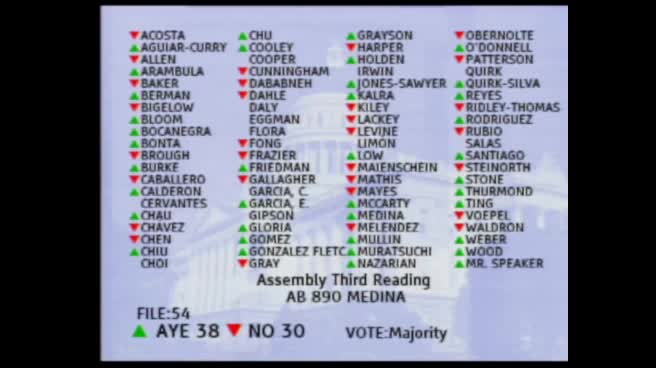
| Jun 1, 2017 | Read third time. Refused passage. (Ayes 33. Noes 37. Page 2087.). |
| May 30, 2017 | Read second time and amended. Ordered returned to second reading. |
| May 26, 2017 | From committee: Amend, and do pass as amended. (Ayes 10. Noes 6.) (May 26). |
| May 17, 2017 | In committee: Set, first hearing. Referred to APPR. suspense file. |
| May 2, 2017 | Re-referred to Com. on APPR. |
| May 1, 2017 | Read second time and amended. |
| Apr 27, 2017 | From committee: Amend, and do pass as amended and re-refer to Com. on APPR. (Ayes 4. Noes 2.) (April 26). |
| Apr 20, 2017 | Re-referred to Com. on H. & C.D. |
| Apr 19, 2017 | Read second time and amended. |
| Apr 18, 2017 | From committee: Amend, and do pass as amended and re-refer to Com. on H. & C.D. (Ayes 7. Noes 3.) (April 17). |
| Apr 3, 2017 | In committee: Set, first hearing. Hearing canceled at the request of author. |
| Mar 2, 2017 | Referred to Coms. on NAT. RES. and H. & C.D. |
| Feb 15, 2017 | From printer. May be heard in committee March 17. |
| Feb 14, 2017 | Read first time. To print. |
|
Date
|
Description
|
Location
|
Votes
|
|
|---|---|---|---|---|
| Jun 1, 2017 | AB 663 BLOOM Assembly Third Reading | Assembly Floor |
Failed |
|
| May 26, 2017 | Do pass as amended. | Assembly Standing Committee on Appropriations |
Passed |
|
| Apr 26, 2017 | Do pass as amended and be re-referred to the Committee on [Appropriations] | Assembly Standing Committee on Housing and Community Development |
Passed |
|
| Apr 17, 2017 | Do pass as amended and be re-referred to the Committee on [Housing and Community Development] | Assembly Standing Committee on Natural Resources |
Passed |
This list shows positions taken on this bill by organizations on the date displayed, which is linked to the original source.
Positions by individuals are not included.
|
Organization
|
Position
|
Date
|
|---|---|---|
| California Apartment Association | * Against | Apr 26, 2017 |
| California Association Of Realtors | * Against | Apr 26, 2017 |
| California Building Industry Association | * Against | Apr 26, 2017 |
| California Business Industry Association | ** Against | Apr 14, 2017 |
| California Business Properties Association | ** Against | Apr 24, 2017 |
| California Chamber Of Commerce | * Against | Apr 26, 2017 |
| California Coastal Commission | ** Support | Apr 24, 2017 |
| Coastal Land Use Consultants | ** Support | Apr 14, 2017 |
| Individuals | ** Support | Apr 24, 2017 |
| Keep Neighborhoods First | ** Support | Apr 24, 2017 |
| LeadingAge | * Support | Apr 17, 2017 |
| LeadingAge California | ** Support | Apr 24, 2017 |
| NFIB | ** Against | Apr 24, 2017 |
| POWER | ** Support | Apr 24, 2017 |
| Sierra Club California | ** Support | Apr 14, 2017 |
| Venice Action Alliance | ** Support | Apr 24, 2017 |
| Venice Community Housing Corporation | ** Support | Apr 24, 2017 |
| Western Alliance for Nature | ** Support | Apr 14, 2017 |
ASSEMBLY THIRD READING
ATR Bill Id:AB 663
Author:(Bloom)
As Amended Ver:May 30, 2017
Majority vote
Committee | Votes | Ayes | Noes |
Natural Resources | 7-3 | Cristina Garcia, Chau, Eggman, Limón, McCarty, Muratsuchi, Mark Stone | Acosta, Travis Allen, Harper |
Housing | 4-2 | Chiu, Chau, Kalra, Limón | Steinorth, Choi |
Appropriations | 10-6 | Gonzalez Fletcher, Bloom, Bocanegra, Bonta, McCarty, Quirk, Friedman, Eduardo Garcia, Muratsuchi, Reyes | Bigelow, Brough, Fong, Gallagher, Gray, Obernolte |
SUMMARY: Requires, until January 1, 2023, housing opportunities for persons of low and moderate income to be protected, encouraged, and, where feasible, provided by the California Coastal Act of 1976 (Coastal Act). Specifically, this bill:
- Repeals the prohibition on the California Coastal Commission (Commission) to require housing policies and programs in a local coastal program (LCP).
- Requires, no later than January 1, 2019, the Commission to adopt interpretive guidelines for the development, implementation, and construction of housing opportunities for persons of low- and moderate-income in the coastal zone.
- Prohibits the Commission from enter into a PILOT agreement with a property owner of a low-income housing project.
- Sunsets the Commission's low and moderate income housing authority on January 1, 2023.
EXISTING LAW, pursuant to the Coastal Act:
- Establishes the Commission in the Natural Resources Agency and requires the Commission to consist of 15 members (3 non-voting and 12 voting).
- Requires the membership of the Commission include six members of the public at large and six from local governments' representatives from six coastal regions.
- Provides that the Governor, the Speaker of the Assembly, and Senate Rules Committee each appoint four of the members.
- Requires the Governor, the Senate Committee on Rules, and the Speaker of the Assembly to make good faith efforts to assure that their appointments, as a whole, reflect, to the greatest extent feasible, the economic, social, and geographic diversity of the state.
- Requires a person planning to perform or undertake any development in the coastal zone to obtain a coastal development permit (CDP) from the Commission or local government enforcing a LCP.
- Defines "development" to mean, among other things, the placement or erection of any solid material or structure on land or in water. "Structure" includes, but is not limited to, any building, road, pipe, flume, conduit, siphon, aqueduct, telephone line, and electrical power transmission and distribution line.
- Requires lower cost visitor and recreational facilities to be protected, encouraged, and, where feasible, provided. Declares a preference for developments providing public recreational opportunities.
- Prohibits LCP's from being required to include housing policies and programs.
- Authorizes the Commission to consider environmental justice, or the equitable distribution of environmental benefits throughout the state when acting on a CDP, the issuing agency, or the Commission on appeal.
- Declares that the Legislature finds that it is important for the Commission to encourage the protection of new affordable housing opportunities for persons of low and moderate income in the coastal zone.
FISCAL EFFECT: According to the Assembly Appropriations Committee, the costs associated with the new authority in this bill are minor and absorbable within its existing resources. While this bill will increase Commission costs by expanding their jurisdiction, that expanded authority will include requiring developers to either create a certain portion of housing units for lower-income individuals or pay some in-lieu fee to fund creation of lower-income and middle-income housing. As such, the Commission will generate significant revenues for these types of projects.
COMMENTS:
- Coastal Commission. The Commission was established by voter initiative in 1972 (Proposition 20) and later made permanent by the Legislature through adoption of the Coastal Act. In partnership with coastal cities and counties, the Commission plans and regulates the use of land and water in the coastal zone. Development activities, which are broadly defined by the Coastal Act to include construction of buildings, divisions of land, and activities that change the intensity of use of land or public access to coastal waters, generally require a CDP from either the Commission or the local government with a certified LCP.
The Commission is an independent, quasi-judicial state agency, and is composed of 12 voting members, appointed equally (4 each) by the Governor, the Senate Rules Committee, and the Speaker of the Assembly. Six of the voting commissioners are locally elected officials and six are appointed from the public at large. Three ex officio (non-voting) members represent the Natural Resources Agency, the Transportation Agency, and the State Lands Commission.
According to the Commission's mission statement:
The Commission is committed to protecting and enhancing California's coast and ocean for present and future generations. It does so through careful planning and regulation of environmentally-sustainable development, rigorous use of science, strong public participation, education, and effective intergovernmental coordination.
The Commission's implementation of the Coastal Act included guidelines for the protection of affordable housing, which were adopted in 1977. The Commission prohibited the demolition of low and moderate income housing for reasons other than health and safety. The Commission also included density bonuses and reduced parking requirements in their guidelines to prioritize new affordable housing opportunities. The guidelines were revised in 1979 and 1981 to require in-lieu fees, land dedication, and housing credits in certain circumstances. The Commission also required specified percentages of proposed housing units set aside for low and moderate income households. According to the Commission, its inclusionary housing program resulted in the approval of approximately 5,000 affordable units between 1977 and 1981. The Commission also states that it denied the demolition of more than 1,100 existing affordable units. The Commission also required approximately $2,000,000 in "in lieu" fees for affordable housing between 1977 and 1981. In 1981, SB 626 (Mello), Chapter 1007, Statutes of 1981, repealed the Commission's authority to protect and provide affordable housing, but persevered its authority to protect and provide lower cost visitor and recreational facilities.
- Affordable housing. According to the California Housing Partnership Corporation, California needs 1,541,386 more affordable rental homes to meet the needs of it lowest income renters. At the same time market pressures have driven prices up farther inland from the coastline, widening the gap that low and moderate-income communities must cross to access the coast. The Coastal Act states:
The Legislature finds and declares that it is important for the Commission to encourage the protection of existing and the provision of new affordable housing opportunities for persons of low and moderate income in the coastal zone.
However, the Commission is prohibited from requiring LCPs from having affordable housing policies. The Commission believes it is largely powerless to address the issue of affordable housing because of this prohibition. This bill would repeal that prohibition for 5 years and require the Commission to protect and provide affordable housing. The Commission voted unanimously to support this bill.
Analysis Prepared by: Michael Jarred / NAT. RES. / (916) 319-2092 FN: 0000898
Date of Hearing: May 17, 2017
ASSEMBLY COMMITTEE ON APPROPRIATIONS
Lorena Gonzalez Fletcher, Chair
ABPCA Bill Id:AB 663
Author:(Bloom) – As Amended Ver:May 1, 2017
Policy Committee: | Natural Resources | Vote: | 7 - 3 |
Housing and Community Development | 4 - 2 | ||
|
|
Urgency: No State Mandated Local Program: No Reimbursable: No
SUMMARY:
This bill requires housing opportunities for persons of low- and moderate-income to be protected, encouraged, and, where feasible, provided, under the Coastal Act of 1976 (Act). Specifically, this bill:
- Requires the Coastal Commission to adopt interpretive guidelines for the development, implementation, and construction of housing opportunities for low-and moderate-income individuals in the coastal zone by January 1, 2019.
- Suspends the prohibition, until January 1, 2023, that specifies local coastal programs (LCPs) are not required to include housing policies and programs.
- Prohibits the Coastal Commission from entering into a payment in lieu of taxes (PILOT) agreement with a property owner of a low-income housing project that is eligible for the partial property tax exemption.
FISCAL EFFECT:
According to the Coastal Commission, the costs associated with the new authority in this bill are minor and absorbable within its existing resources. While this bill will increase Coastal Commission costs by expanding their jurisdiction, that expanded authority will include requiring developers to either create a certain portion of housing units for lower-income individuals or pay some in-lieu fee to fund creation of lower-income and middle-income housing. As such, the Coastal Commission will generate significant revenues for these types of projects.
COMMENTS:
- Purpose. The purpose of this bill is to restore the Commission's housing authority to provide low-and moderate income housing along the coast.
- Background. The Coastal Commission was established by voter initiative in 1972 (Proposition 20) and later made permanent by the Legislature through adoption of the Coastal Act. In partnership with coastal cities and counties, the Commission plans and regulates the use of land and water in the coastal zone. Development activities, which are broadly defined by the Coastal Act to include construction of buildings, divisions of land, and activities that change the intensity of use of land or public access to coastal waters, generally require a coastal development permit (CDP) from either the Commission or the local government with a certified local coastal plan (LCP).
- Affordable housing in the coastal zone. As originally enacted in 1976, the Act provided that "housing opportunities for persons of low- and moderate-income shall be protected, encouraged, and, where feasible, provided." In 1977, the Commission developed statewide guidelines for the implementation of this requirement. As a condition of CDPs, the guidelines included a number of provisions related to affordable housing, such as inclusionary housing requirements, in-lieu fees, density bonus provisions, land donation requirements, reduced parking requirements, and demolition limitations. The revised guidelines also made findings to support the economic feasibility and policy rationales for requiring specific percentages of affordable units to be set aside for affordable housing through deed restrictions and rent controls. All versions of the guidelines provided that affordable housing could not be used as a trade-off for protecting coastal resources and that any housing, affordable or otherwise, would only be permitted consistent with coastal resource protection, including public access. According to the Commission, this resulted in approximately 5,000 units of affordable housing being approved over a period of 5 years statewide, without undermining other Act policies protecting wetlands, habitat, access, agricultural lands, scenic views or community character.
In 1981, SB 626 (Mello), Chapter 1007 Statutes of 1981, set new standards for preserving housing for persons and families with low- and moderate-incomes in the coastal zone. It repealed the Commission’s authority to protect and provide affordable housing in the coastal zone, and provided that LCPs cannot be required to include housing policies and programs. SB 626 also authorized the conversion or demolition of affordable units in coastal zones, so long as replacement units were constructed within the same city or county and, if not feasible for development within the coastal zone, located within three miles of the coastal zone.
- Lower cost accommodations. The Commission has carried out the Coastal Act mandate to protect and provide lower cost visitor-serving accommodations in various ways. The Commission has certified LCP policies throughout the coastal zone. Through CDP actions, the Commission has in some cases denied permit applications for development that would eliminate existing lower cost facilities, and has in other cases required lower cost accommodations to be constructed in conjunction with new higher cost hotels either on or off site.
The Commission has also collected over $24 million in “in-lieu” fee mitigation for impacts to lower cost accommodations, and more than $10 million of those fees have resulted in the development of significant lower cost accommodations along the California coast, including support for the 260-bed Santa Monica Hostel, the restoration of Crystal Cove Cottages in Orange County, and nearly 200 new State Parks campsites. However, millions of dollars in in-lieu fees remain unspent, and the Commission is currently engaged in an effort to document all past “in lieu” fee requirements. The Commission partnered with State Parks, the Coastal Conservancy, regional agencies, local governments, and non-profits on projects that spend in-lieu fees.
Analysis Prepared by: Jennifer Galehouse / APPR. / (916) 319-2081
Date of Hearing: April 26, 2017
ASSEMBLY COMMITTEE ON HOUSING AND COMMUNITY DEVELOPMENT
David Chiu, Chair
ABPCA Bill Id:AB 663 (
Author:Bloom) – As Amended Ver:April 19, 2017
SUBJECT: Coastal resources: housing
SUMMARY: Requires, under the Coastal Act of 1976 (Act), housing opportunities for persons of low- and moderate-income to be protected, encouraged, and, where feasible, provided. Repeals the provision specifying that local coastal programs (LCPs) are not required to include housing policies and programs. Includes a sunset date of 1/1/2023.
EXISTING LAW, pursuant to the Act:
- Establishes the Coastal Commission (Commission) in the Natural Resources Agency and requires the Commission to consist of 15 members (3 non-voting and 12 voting).
- Requires the membership of the Commission include six members of the public at large and six from local governments’ representatives from six coastal regions.
- Provides that the Governor, the Speaker of the Assembly, and Senate Rules Committee each appoint four of the members.
- Requires the Governor, the Senate Committee on Rules, and the Speaker of the Assembly to make good faith efforts to assure that their appointments, as a whole, reflect, to the greatest extent feasible, the economic, social, and geographic diversity of the state ((Public Resources Code Section 30301).
- Requires a person planning to perform or undertake any development in the coastal zone to obtain a coastal development permit (CDP) from the Commission or local government enforcing a LCP (Public Resources Code Section 30600).
- Defines "development" to mean, among other things, the placement or erection of any solid material or structure on land or in water. "Structure" includes, but is not limited to, any building, road, pipe, flume, conduit, siphon, aqueduct, telephone line, and electrical power transmission and distribution line (Public Resources Code Section 30106).
- Defines the “coastal zone” as the land and water area of the State of California from the Oregon border to the border of the Republic of Mexico, extending seaward to the state's outer limit of jurisdiction, including all offshore islands, and extending inland generally 1,000 yards from the mean high tide line of the sea. In significant coastal estuarine, habitat, and recreational areas, the coastal zone extends inland to the first major ridgeline paralleling the sea or five miles from the mean high tide line of the sea, whichever is less. In developed urban areas, the zone generally extends inland less than 1,000 yards. The coastal zone does not include the area of jurisdiction of the San Francisco Bay Conservation and Development Commission, nor any area contiguous thereto, including any river, stream, tributary, creek, or flood control or drainage channel flowing into such area (Public Resources Code Section 30103).
- Requires lower cost visitor and recreational facilities to be protected, encouraged, and, where feasible, provided. Declares a preference for developments providing public recreational opportunities (Public Resources Code Section 30213).
- Prohibits LCPs from being required to include housing policies and programs (Public Resources Code Section 30500.1).
- Authorizes the Commission to consider environmental justice, or the equitable distribution of environmental benefits throughout the state when acting on a CDP, the issuing agency, or the Commission on appeal (Public Resources Code Section 30013).
- Provides that nothing in the Act shall exempt local governments from meeting the requirements of state and federal law with respect to providing low- and moderate-income housing, replacement housing, relocation benefits, or any other obligation related to housing imposed by existing law or any law hereafter enacted (Public Resources Code Section 30007).
- Provides that the Legislature finds and declares that it is important for the Commission to encourage the protection of existing and the provision of new affordable housing opportunities for persons of low- and moderate-income in the coastal zone. (Public Resources Code Section 30604).
- Requires the Commission to encourage housing opportunities for low-and moderate-income households. Provides that the Commission may not take measures that reduce the density of a housing project below the level allowed by local zoning ordinances and state density bonus law unless the Commission makes a finding that there is no feasible method to accommodate the density without creating a significant adverse impact on coastal resources (Public Resources Code Section 30604).
- Provides, pursuant to the Mello Act, requirements for preserving housing for persons and families with low- and moderate-incomes in the coastal zone (Govt. Code Section 65590).
FISCAL EFFECT: Unknown
COMMENTS:
Background: The Commission was established by voter initiative in 1972 (Proposition 20) and later made permanent by the Legislature through adoption of the Coastal Act. In partnership with coastal cities and counties, the Commission plans and regulates the use of land and water in the coastal zone. Development activities, which are broadly defined by the Coastal Act to include construction of buildings, divisions of land, and activities that change the intensity of use of land or public access to coastal waters, generally require a CDP from either the Commission or the local government with a certified LCP.
The Commission is an independent, quasi-judicial state agency, and is composed of 12 voting members, appointed equally (4 each) by the Governor, the Senate Rules Committee, and the Speaker of the Assembly. Six of the voting commissioners are locally elected officials and six are appointed from the public at large. Three ex officio (non-voting) members represent the Natural Resources Agency, the Transportation Agency, and the State Lands Commission.
A person planning to undertake any development in the coastal zone is required to obtain a CDP from the Commission or local government enforcing a LCP. 85% of the coastal zone is currently governed by LCPs drafted by cities and counties, and certified by the Commission. In these certified jurisdictions, local governments issue CDPs pursuant to detailed planning and design standards. There are 14 jurisdictions without LCPs- also known as "uncertified" jurisdictions- where the Commission is still the permitting authority for CDPs. One exception to this is the City of Los Angeles, which implements the Act directly by issuing CDPs, despite not having a certified LCP. However, every city-issued CDP can be appealed to the Commission.
Affordable housing in the coastal zone: As originally enacted in 1976, the Act provided that "housing opportunities for persons of low- and moderate-income shall be protected, encouraged, and, where feasible, provided." In 1977, the Commission developed statewide guidelines for the implementation of this requirement. They were subsequently revised on July 16, 1979, and May 5, 1981. As a condition of CDPs, the guidelines included a number of provisions related to affordable housing, such as inclusionary housing requirements, in-lieu fees, density bonus provisions, land donation requirements, reduced parking requirements, and demolition limitations. The revised guidelines also made findings to support the economic feasibility and policy rationales for requiring specific percentages of affordable units to be set aside for affordable housing through deed restrictions and rent controls. All versions of the guidelines provided that affordable housing could not be used as a trade-off for protecting coastal resources and that any housing, affordable or otherwise, would only be permitted consistent with coastal resource protection, including public access. According to the Commission, "this resulted in approximately 5,000 units of affordable housing being approved over a period of 5 years statewide, without undermining other Coastal Act policies protecting wetlands, habitat, access, agricultural lands, scenic views or community character."
As with most land use requirements involving limits on local control, the Commission's affordable housing policies were not without controversy. In 1981, SB 626 (Mello), Ch. 1007 Statutes of 1981, set new standards for preserving housing for persons and families with low- and moderate-incomes in the coastal zone. It repealed the Commission’s authority to protect and provide affordable housing in the coastal zone, and provided that LCPs cannot be required to include housing policies and programs. SB 626 also authorized the conversion or demolition of affordable units in coastal zones, so long as replacement units were constructed within the same city or county and, if not feasible for development within the coastal zone, located within three miles of the coastal zone.
Staff comment: This bill would once again grant authority to the Commission to protect, encourage, and, where feasible, provide housing opportunities for persons of low- and moderate- income. It would also remove the prohibition on requiring LCPs to include housing policies and programs. These provisions would remain in effect until the bill's sunset date of January 1, 2023. The bill does not specify how the Commission will move forward with implementing affordable housing policies, either in the context of jurisdictions with LCPs or in uncertified jurisdictions where the Commission is still the permitting authority. When these policies were in place from 1976 through 1981, the Commission adopted a series of implementation guidelines. The Committee may wish to consider requiring the Commission to adopt guidelines to implement this bill.
In 2014, SB 1203 (Jackson), Chapter 693, Statutes of 2014 and AB 1760 (Chau), Chapter 671, Statutes of 2014, prohibited a local government from entering into a “payment in lieu of tax” (PILOT) agreement with a property owner of a low-income housing project eligible for the welfare exemption from property tax on or after January 1, 2015. "Local government" is defined as any city, county, city and county, housing authority, housing successor to a redevelopment agency, or a joint powers agency that has approved land use entitlements or building permits, provided land or financing, or approved the issuance of tax-exempt bonds pursuant to the federal Tax Equity and Fiscal Responsibility Act for the low-income housing project. The Committee may wish to consider extending the prohibition on PILOT agreements to the Commission.
Arguments in support: According to the Commission, which supports the bill, in the nearly forty years since the affordable housing requirement was repealed from the Act, "the need for affordable housing in the coastal zone has steadily increased. Market pressures have also driven prices up farther inland from the coastline, widening the gap that low- and moderate-income communities must cross to access the coast. Stripped of its original authority, the Commission is largely powerless to address these issues." Supporters contend that the Mello Act has not been effective at preserving affordable housing. Supporter POWER contends that the most meaningful effect of this bill will be to ensure that the 14 uncertified jurisdictions will include affordable housing policies in their LCPs. In the meantime, "it will give the Commission the authority to protect our existing affordable housing stock as a valuable coastal resource."
Arguments in opposition: Opponents believe that this bill will create conflicts between the Commission and those cities that are working diligently to encourage housing. In opponents' view, the Commission will be granted the authority to implement its own policies such as rent control, negative inclusionary zoning laws, and downzoning restrictions that are harmful to housing production, while simultaneously imposing unreasonable environmental restrictions that will delay housing production. The Commission, according to opponents, is not the appropriate government agency to review and implement the state’s housing policies and is ill‐equipped to address housing affordability, which ultimately involves increasing overall supply.
Committee amendments:
The proposed Committee amendments do the following:
1. Provide that the Commission shall not enter into a payment in lieu of taxes (PILOT) agreement with a property owner of a low-income housing project.
2. Require the Commission to adopt interpretive guidelines by no later than January 1, 2019 to implement this section.
Related legislation:
AB 250 (Gonzalez Fletcher, 2017): Requires the State Coastal Conservancy (SCC) to develop and implement a Lower Cost Coastal Accommodations Program (Program) to improve the availability of lower cost accommodations within three miles of the coast. Requires SCC to prepare an assessment to determine the availability of lower cost coastal accommodations and authorizes the SCC to develop and implement a pilot program. This bill is on suspense in the Assembly Committee on Appropriations.
AB 2616 (Burke), Chapter 578, Statutes of 2016: Specifies that one of the members appointed to the Commission by the Governor is required to work directly with communities in the state that are most burdened by, and vulnerable to, high levels of pollution and issues of environmental justice. Allows the Commission to address environmental justice concerns.
SB 619 (Ducheny), Chapter 793, Statutes of 2003: Requires the Commission to encourage housing opportunities for low-and moderate-income households. Provides that the Commission may not take measures that reduce the density of a housing project below the level allowed by local zoning ordinances and state density bonus law unless the Commission makes a finding that there is no feasible method to accommodate the density without creating a significant adverse impact on coastal resources.
SB 626 (Mello), Ch. 1007 Statutes of 1981: Sets requirements for preserving housing for persons and families with low or moderate incomes in California's Coastal Zone. Repealed the Commission’s authority to protect and provide affordable housing for persons of low- and moderate-income in the coastal zone, and provided that LCPs cannot be required to include housing policies and programs.
Double referred: This bill is double referred. It was heard in the Assembly Committee on Natural Resources and passed out on a vote of 7-3 on April 17, 2017.
REGISTERED SUPPORT / OPPOSITION:
Support
California Coastal Commission
Keep Neighborhoods First
LeadingAge California (support if amended)
POWER
Venice Action Alliance
Venice Community Housing Corporation
Individuals (2)
Opposition
California Apartment Association
California Association of Realtors
California Building Industry Association
California Business Properties Association
California Chamber of Commerce
NFIB
Analysis Prepared by: Rebecca Rabovsky / H. & C.D. / (916) 319-2085
Date of Hearing: April 17, 2017
ASSEMBLY COMMITTEE ON NATURAL RESOURCES
Cristina Garcia, Chair
ABPCA Bill Id:AB 663 (
Author:Bloom) – As Introduced Ver:February 14, 2017
SUBJECT: Coastal resources: housing
SUMMARY: Requires housing opportunities for persons of low and moderate income to be protected, encouraged, and, where feasible, provided.
EXISTING LAW, pursuant to the California Coastal Act of 1976 (Coastal Act):
- Establishes the Commission in the Natural Resources Agency and requires the Commission to consist of 15 members (3 non-voting and 12 voting).
- Requires the membership of the Commission include six members of the public at large and six from local governments’ representatives from six coastal regions.
- Provides that the Governor, the Speaker of the Assembly, and Senate Rules Committee each appoint four of the members.
- Requires the Governor, the Senate Committee on Rules, and the Speaker of the Assembly to make good faith efforts to assure that their appointments, as a whole, reflect, to the greatest extent feasible, the economic, social, and geographic diversity of the state.
- Requires a person planning to perform or undertake any development in the coastal zone to obtain a coastal development permit (CDP) from the Commission or local government enforcing a Local Coastal Program (LCP).
- Defines "development" to mean, among other things, the placement or erection of any solid material or structure on land or in water. "Structure" includes, but is not limited to, any building, road, pipe, flume, conduit, siphon, aqueduct, telephone line, and electrical power transmission and distribution line.
- Defines the “coastal zone” as the land and water area of the State of California from the Oregon border to the border of the Republic of Mexico, extending seaward to the state's outer limit of jurisdiction, including all offshore islands, and extending inland generally 1,000 yards from the mean high tide line of the sea. In significant coastal estuarine, habitat, and recreational areas, the coastal zone extends inland to the first major ridgeline paralleling the sea or five miles from the mean high tide line of the sea, whichever is less. In developed urban areas, the zone generally extends inland less than 1,000 yards. The coastal zone does not include the area of jurisdiction of the San Francisco Bay Conservation and Development Commission, nor any area contiguous thereto, including any river, stream, tributary, creek, or flood control or drainage channel flowing into such area.
- Requires lower cost visitor and recreational facilities to be protected, encouraged, and, where feasible, provided. Declares a preference for developments providing public recreational opportunities.
- Prohibits LCP’s from being required to include housing policies and programs.
- Authorizes the Commission to consider environmental justice, or the equitable distribution of environmental benefits throughout the state when acting on a CDP, the issuing agency, or the Commission on appeal.
- Declares that the Legislature finds that it is important for the Commission to encourage the protection of new affordable housing opportunities for persons of low and moderate income in the coastal zone.
FISCAL EFFECT: Unknown
COMMENTS:
- Author’s statement:
Affordable housing in the coastal zone was originally intended to be protected with the same rigor as public access, wetlands, agriculture and other coastal resources. As was originally enacted in 1976, until 1981, the Coastal Act included broad policy language requiring the protection and provision of affordable housing in the coastal zone.
Restoring these policies will ensure that affordable housing in coastal areas will be a priority in land use plans and permits. The Commission’s impressive track record from 1976-1981 demonstrates that affordable housing can be built in meaningful numbers without compromising coastal protection. This bill will reverse an unfortunate legislative action from another era that has contributed to the current lack of housing in our coastal communities.
The drafters of the Coastal Act understood that gentrification and loss of affordable housing in the coastal zone would be an unfortunate and unintended consequence of coastal protection. The original language of Section 30213 was intended to mitigate those impacts. To implement that policy, the Commission adopted three sets of interpretive guidelines between 1977-1981, and approved approximately 5,000 affordable units during that time. The guidelines featured a combination of approaches, including inclusionary deed restricted units, land dedications, and in-lieu fees.
Land development patterns during that time included numerous large subdivisions of vacant land, which afforded the opportunity for hundreds of new, inclusionary units to be built within large-scale market rate subdivisions in Southern California. Today’s land use patterns afford fewer such opportunities. Should this bill become law, the Commission could consider regulations or interpretive guidelines that would clarify how the agency would implement the policy in the context of current land use trends.
AB 663 restores the Coastal Acts authority to require affordable housing in the coastal zone.
- Coastal Commission. The Commission was established by voter initiative in 1972 (Proposition 20) and later made permanent by the Legislature through adoption of the Coastal Act. In partnership with coastal cities and counties, the Commission plans and regulates the use of land and water in the coastal zone. Development activities, which are broadly defined by the Coastal Act to include construction of buildings, divisions of land, and activities that change the intensity of use of land or public access to coastal waters, generally require a CDP from either the Commission or the local government with a certified LCP.
The Commission is an independent, quasi-judicial state agency, and is composed of 12 voting members, appointed equally (4 each) by the Governor, the Senate Rules Committee, and the Speaker of the Assembly. Six of the voting commissioners are locally elected officials and six are appointed from the public at large. Three ex officio (non-voting) members represent the Natural Resources Agency, the Transportation Agency, and the State Lands Commission.
According to the Commission’s mission statement:
The Commission is committed to protecting and enhancing California’s coast and ocean for present and future generations. It does so through careful planning and regulation of environmentally-sustainable development, rigorous use of science, strong public participation, education, and effective intergovernmental coordination.
The Commission’s implementation of the Coastal Act included guidelines for the protection of affordable housing, which were adopted in 1977. The Commission prohibited the demolition of low and moderate income housing for reasons other than health and safety . The Commission also included density bonuses and reduced parking requirements in their guidelines to prioritize new affordable housing opportunities. The guidelines were revised in 1979 and 1981 to require in-lieu fees, land dedication, and housing credits in certain circumstances. The Commission also required specified percentages of proposed housing units set aside for low and moderate income households. According to the Commission, its inclusionary housing program resulted in the approval of approximately 5,000 affordable units between 1977 and 1981. The Commission also states that it denied the demolition of more than 1,100 existing affordable units. The Commission also required approximately $2,000,000 in “in lieu” fees for affordable housing between 1977 and 1981. In 1981, SB 626 (Mello), Chapter 1007, Statutes of 1981, repealed the Commission’s authority to protect and provide affordable housing, but persevered its authority to protect and provide lower cost visitor and recreational facilities.
- Lower cost accommodations. The Commission has carried out the Coastal Act mandate to protect and provide lower cost visitor-serving accommodations in various ways. The Commission has certified LCP policies throughout the coastal zone. Through CDP actions, the Commission has in some cases denied permit applications for development that would eliminate existing lower cost facilities, and has in other cases required lower cost accommodations to be constructed in conjunction with new higher cost hotels either on or off site.
The Commission has also collected over $24 million in “in-lieu” fee mitigation for impacts to lower cost accommodations, and more than $10 million of those fees have resulted in the development of significant lower cost accommodations along the California coast, including support for the 260-bed Santa Monica Hostel, the restoration of Crystal Cove Cottages in Orange County, and nearly 200 new State Parks campsites. However, millions of dollars in in-lieu fees remain unspent, and the Commission is currently engaged in an effort to document all past “in lieu” fee requirements. The Commission partnered with State Parks, SCC, regional agencies, local governments, and non-profits on projects that spend in-lieu fees.
- Affordable housing. According to the California Housing Partnership Corporation, California needs 1,541,386 more affordable rental homes to meet the needs of it lowest income renters. At the same time market pressures have driven prices up farther inland from the coastline, widening the gap that low and moderate-income communities must cross to access the coast. The Coastal Act states:
The Legislature finds and declares that it is important for the Commission to encourage the protection of existing and the provision of new affordable housing opportunities for persons of low and moderate income in the coastal zone.
However, the Commission is prohibited from requiring LCPs from having affordable housing policies. The Commission believes it is largely powerless to address the issue of affordable housing because of this prohibition. AB 663 would repeal that prohibition and require the Commission to protect and provide affordable housing. The Commission voted unanimously to support AB 663. An almost identical provision was in AB 2616 (Burke), Chapter 578, Statutes of 2016 when it passed out of this committee, but was removed during the legislative process.
If the Commission is given the authority to protect and provide affordable housing it may develop regulations that include similar requirements to what it did, prior to 1981, or what it currently requires to protect lower cost accommodations. This could include “in lieu” fees. There are currently concerns with the “in lieu” fees generated from CDP that do not provide adequate lower cost accommodations because they are small relative to the total cost of a lower cost accommodation project. In addition, “in lieu” fees are a condition of an individual CDP and often have geographic and nexus requirements that makes it more complicated to find appropriate projects for the “in lieu” fees. These same concerns may apply to any “in lieu” fees required by the Commission to protect affordable housing.
- Amendments. The author and committee may wish to consider clarifying amendments that the Commission may use this reinstated authority on CDPs acted upon after January 1, 2018 and that the authority will sunset on January 1, 2023.
- Double referral. This bill is double referred to the Housing and Community Development Committee.
REGISTERED SUPPORT / OPPOSITION:
Support
California Coastal Commission
Coastal Land Use Consultants
Sierra Club California
Western Alliance for Nature
Opposition
California Apartments Association
California Association of Realtors
California Business Industry Association
California Business Properties Association
California Chamber of Commerce
National Federation of Independent Business
Analysis Prepared by: Michael Jarred / NAT. RES. /
Discussed in Hearing
 10MIN
Assembly Floor
 1H
Assembly Standing Committee on Appropriations
 11MIN
Assembly Standing Committee on Housing and Community Development
 11MIN
Assembly Standing Committee on Natural Resources
Bill Author

Bill Co-Author(s):