AB 779: Gambling establishments.
- Session Year: 2017-2018
- House: Assembly
- Latest Version Date: 2017-04-20
Existing law, the Gambling Control Act, provides for the licensure and regulation of various legalized gambling activities and establishments by the California Gambling Control Commission and the Department of Justice. The act prohibits the commission from issuing a gambling license unless it is satisfied that the applicant, among other things, is a person of good character, honesty, and integrity. The act establishes criminal penalties for a violation of specific provisions.
This bill would modify definitions establishing certain classifications of employees of gambling establishments and specific requirements for their licenses. The bill would authorize, rather than require, the commission to deny a license to an applicant for specific reasons, including, among others, conviction of a felony or being less than 21 years of age. The bill would prohibit requiring a key employee to be on the premises of a gambling establishment while the establishment is open to the public, if certain conditions are met. The bill would also specify that the commission is prohibited from issuing a gambling license unless it is satisfied that the applicant is a person of good moral character, honesty, and integrity. The bill would state the Legislatures intent to provide comprehensive reforms to the Gambling Control Act by this measure.
Existing law, the Gambling Control Act, provides for the licensure and regulation of various legalized gambling activities and establishments by the California Gambling Control Commission and the Department of Justice. A person who willfully violates any of the provisions of the Gambling Control Act for which a penalty is not expressly provided is guilty of a misdemeanor. The act establishes criminal penalties for a violation of specific provisions.
This bill would declare the intent of the Legislature to enact legislation that adopts modify definitions establishing certain classifications of employees of gambling establishments and specific requirements for their licenses. The bill would authorize, rather than require, the commission to deny a license to an applicant for specific reasons, including, among others, conviction of a felony or being less than 21 years of age. The bill would prohibit requiring a key employee to be on the premises of a gambling establishment while the establishment is open to the public, if certain conditions are met. The bill would state the Legislatures intent to provide comprehensive reforms to the Gambling Control Act relating to the licensing of gambling establishments in the state, streamlines the licensing process, and allows additional resources to be devoted to regulation and oversight of the gambling industry. by this measure.
Existing law, the Gambling Control Act, provides for the licensure and regulation of various legalized gambling activities and establishments by the California Gambling Control Commission and the Department of Justice. A person who willfully violates any of the provisions of the Gambling Control Act for which a penalty is not expressly provided is guilty of a misdemeanor.
This bill would declare the intent of the Legislature to enact legislation that adopts comprehensive reforms to the Gambling Control Act relating to the licensing of gambling establishments in the state, streamlines the licensing process, and allows additional resources to be devoted to regulation and oversight of the gambling industry.
The Legislature intends this act to provide comprehensive reforms to the Gambling Control Act relating to the licensing of gambling establishments, streamlining the licensing process, and allowing additional resources to be devoted to regulation and oversight of the gambling industry.
SEC. 2.Section 19805 of the Business and Professions Code is amended to read:19805.As used in this chapter, the following definitions shall apply:
(a)Affiliate means a person who, directly or indirectly through one or more intermediaries, controls, is controlled by, or is under common control with, a specified person.
(b)Applicant means any person who has applied for, or is about to apply for, a state gambling license, a key employee license, a registration, a finding of suitability, a work permit, a manufacturers or distributors license, or an approval of any act or transaction for which the approval or authorization of the commission or department is required or permitted under this chapter.
(c)Banking game or banked game does not include a controlled game if the published rules of the game feature a player-dealer position and provide that this position must be continuously and systematically rotated amongst each of the participants during the play of the game, ensure that the player-dealer is able to win or lose only a fixed and limited wager during the play of the game, and preclude the house, another entity, a player, or an observer from maintaining or operating as a bank during the course of the game. For purposes of this section, it is not the intent of the Legislature to mandate acceptance of the deal by every player if the department finds that the rules of the game render the maintenance of or operation of a bank impossible by other means. The house shall not occupy the player-dealer position.
(d)Chief means the head of the entity within the department that is responsible for fulfilling the obligations imposed upon the department by this chapter.
(e)Commission means the California Gambling Control Commission.
(f)Controlled gambling means to deal, operate, carry on, conduct, maintain, or expose for play any controlled game.
(g)Controlled game means any controlled game, as defined by subdivision (e) of Section 337j of the Penal Code.
(h)Department means the Department of Justice.
(i)Director means any director of a corporation or any person performing similar functions with respect to any organization.
(j)Finding of suitability means a finding that a person meets the qualification criteria described in subdivisions (a) and (b) of Section 19857, and that the person would not be disqualified from holding a state gambling license on any of the grounds specified in Section 19859.
(k)Game and gambling game means any controlled game.
(l)Gambling means to deal, operate, carry on, conduct, maintain, or expose for play any controlled game.
(m)Gambling enterprise means a natural person or an entity, whether individual, corporate, or otherwise, that conducts a gambling operation and that by virtue thereof is required to hold a state gambling license under this chapter.
(n)Gambling enterprise employee means any natural person employed by a gambling establishment who is licensed to conduct any controlled game, including, without limitation, dealers, floor personnel, security employees, countroom personnel, cage personnel, collection personnel, surveillance personnel. personnel, data processing personnel, and maintenance personnel. A gambling enterprise employee shall not include an employee whose duties do not involve gaming activities, including, but not limited to, a cocktail server, bartender, janitorial worker, or other person engaged exclusively in preparing or serving food or beverages.
(o)Gambling establishment, establishment, or licensed premises, except as otherwise defined in Section 19812, means one or more rooms where any controlled gambling or activity directly related thereto occurs.
(p)Gambling license or state gambling license means any license issued by the state that authorizes the person named therein to conduct a gambling operation.
(q)Gambling operation means exposing for play one or more controlled games that are dealt, operated, carried on, conducted, or maintained for commercial gain.
(r)Gross revenue means the total of all compensation received for conducting any controlled game, and includes interest received in payment for credit extended by an owner licensee to a patron for purposes of gambling, except as provided by regulation.
(s)Hours of operation means the period during which a gambling establishment is open to conduct the play of controlled games within a 24-hour period. In determining whether there has been expansion of gambling relating to hours of operation, the department shall consider the hours in the day when the local ordinance permitted the gambling establishment to be open for business on January 1, 1996, and compare the current ordinance and the hours during which the gambling establishment may be open for business. The fact that the ordinance was amended to permit gambling on a day, when gambling was not permitted on January 1, 1996, shall not be considered in determining whether there has been gambling in excess of that permitted by Section 19961.
(t)House means the gambling enterprise, and any owner, shareholder, partner, key employee, or landlord thereof.
(u)Independent agent, except as provided by regulation, means any person who does either of the following:
(1)Collects debt evidenced by a credit instrument.
(2)Contracts with an owner licensee, or an affiliate thereof, to provide services consisting of arranging transportation or lodging for guests at a gambling establishment.
(v)Initial license means the license first issued to a person authorizing that person to commence the activities authorized by that license.
(w)Institutional investor means any retirement fund administered by a public agency for the exclusive benefit of federal, state, or local public employees, any investment company registered under the Investment Company Act of 1940 (15 U.S.C. Sec. 80a-1 et seq.), any collective investment trust organized by banks under Part Nine of the Rules of the Comptroller of the Currency, any closed-end investment trust, any chartered or licensed life insurance company or property and casualty insurance company, any banking and other chartered or licensed lending institution, any investment advisor registered under the Investment Advisors Act of 1940 (15 U.S.C. Sec. 80b-1 et seq.) acting in that capacity, and other persons as the commission may determine for reasons consistent with the policies of this chapter.
(x)Key employee means any natural person employed in the operation of a gambling enterprise in a supervisory capacity and empowered to make discretionary decisions that regulate gambling operations, including, without limitation, pit bosses, shift bosses, credit executives, cashier operations supervisors, gambling operation managers and assistant managers, managers or supervisors of security employees, or any other natural person designated as a key employee by the department for reasons consistent with the policies of this chapter.
(y)Key employee license means a state license authorizing the holder to be employed as a key employee.
(z)License means a gambling license, key employee license, or any other license issued by the commission pursuant to this chapter or regulations adopted pursuant to this chapter.
(aa)Licensed gambling establishment means the gambling premises encompassed by a state gambling license.
(ab)Limited partnership means a partnership formed by two or more persons having as members one or more general partners and one or more limited partners.
(ac)Limited partnership interest means the right of a general or limited partner to any of the following:
(1)To receive from a limited partnership any of the following:
(A)A share of the revenue.
(B)Any other compensation by way of income.
(C)A return of any or all of his or her contribution to capital of the limited partnership.
(2)To exercise any of the rights provided under state law.
(ad)Owner licensee means an owner of a gambling enterprise who holds a state gambling license.
(ae)Person, unless otherwise indicated, includes a natural person, corporation, partnership, limited partnership, trust, joint venture, association, or any other business organization.
(af)Player means a patron of a gambling establishment who participates in a controlled game.
(ag)Player-dealer and controlled game featuring a player-dealer position refer to a position in a controlled game, as defined by the approved rules for that game, in which seated player participants are afforded the temporary opportunity to wager against multiple players at the same table, provided that this position is rotated amongst the other seated players in the game.
(ah)Publicly traded racing association means a corporation licensed to conduct horse racing and simulcast wagering pursuant to Chapter 4 (commencing with Section 19400) whose stock is publicly traded.
(ai)Qualified racing association means a corporation licensed to conduct horse racing and simulcast wagering pursuant to Chapter 4 (commencing with Section 19400) that is a wholly owned subsidiary of a corporation whose stock is publicly traded.
(aj)Renewal license means the license issued to the holder of an initial license that authorizes the license to continue beyond the expiration date of the initial license.
(ak)Work permit means any card, certificate, or permit issued by the commission, or by a county, city, or city and county, whether denominated as a work permit, registration card, or otherwise, authorizing the holder to be employed as a gambling enterprise employee or to serve as an independent agent. A document issued by any governmental authority for any employment other than gambling is not a valid work permit for the purposes of this chapter.
SEC. 3.Section 19850 of the Business and Professions Code is amended to read:19850.Except as otherwise provided in this chapter, it is unlawful for a person, either as owner, lessee, or employee, whether for hire or not, either solely or in conjunction with others, to deal, operate, carry on, conduct, maintain, or expose for play any controlled game in this state, or to receive, directly or indirectly, any compensation or reward, or any percentage or share of the money or property played for keeping, running, or carrying on any controlled game in this state, without having applied for and obtained from the commission, and thereafter maintain, a valid state gambling license, key employee license, or registration permit, as specified in this chapter. In any criminal prosecution for violation of this section, the punishment shall be as provided in Section 337j of the Penal Code.
SEC. 4.Section 19854 of the Business and Professions Code is amended to read:19854.(a)Every key employee shall apply for and obtain a key employee license.(b)No person may be issued a key employee license unless the person would qualify for a state gambling license.(c)(1)Except as provided in paragraph (2), a key employee license shall entitle the holder to work as a key employee in any key employee position at any gambling establishment, provided that the key employee terminates employment with one gambling establishment before commencing work for another.(2)Notwithstanding paragraph (1), a key employee with a valid personal portable license may work as a key employee in any key employee position in more than one gambling establishment.(d)The commission shall establish a program for portable personal licenses for key employees, as well as a process by which valid key employee licenses then in effect shall be converted to personal portable licenses. The commission may, as part of that process, establish a fee to be paid by a key employee when seeking a personal portable license.(e)A gambling establishment shall not be required to have a key employee on the premises at all times the gambling establishment is open to the public. If a key employee is not on the premises while the gambling establishment is open to the public, a gambling establishment shall designate which owner or employee is responsible for and has authority to ensure compliance with this chapter and the regulations of the commission and the department.SEC. 5.SEC. 4.Section 19857 of the Business and Professions Code is amended to read:19857.No gambling license shall be issued unless, based on all of the information and documents submitted, the commission is satisfied that the applicant is all of the following:
(a)A person of good moral character, honesty, and integrity.
(b)A person whose prior activities, criminal record, if any, reputation, habits, and associations do not pose a threat to the public interest of this state, or to the effective regulation and control of controlled gambling, or create or enhance the dangers of unsuitable, unfair, or illegal practices, methods, and activities in the conduct of controlled gambling or in the carrying on of the business and financial arrangements incidental thereto.
(c)A person that is in all other respects qualified to be licensed as provided in this chapter.
SEC. 6.Section 19859 of the Business and Professions Code is amended to read:19859.The commission may deny a license to any applicant who is disqualified for any of the following reasons:(a)Failure of the applicant to clearly establish eligibility and qualification in accordance with this chapter.(b)Failure of the applicant to provide information, documentation, and assurances required by this chapter or requested by the chief, or failure of the applicant to reveal any fact material to qualification, or the supplying of information that is untrue or misleading as to a material fact pertaining to the qualification criteria.(c)Conviction of a felony, including a conviction by a federal court or a court in another state for a crime that would constitute a felony if committed in California.(d)Conviction of the applicant for any misdemeanor involving dishonesty or moral turpitude within the 10-year period immediately preceding the submission of the application, unless the applicant has been granted relief pursuant to Section 1203.4, 1203.4a, or 1203.45 of the Penal Code; provided, however, that the granting of relief pursuant to Section 1203.4, 1203.4a, or 1203.45 of the Penal Code shall not constitute a limitation on the discretion of the commission under Section 19856 or affect the applicants burden under Section 19857.(e)Association of the applicant with criminal profiteering activity or organized crime, as defined by Section 186.2 of the Penal Code.(f)Contumacious defiance by the applicant of any legislative investigatory body, or other official investigatory body of any state or of the United States, when that body is engaged in the investigation of crimes relating to gambling; official corruption related to gambling activities; or criminal profiteering activity or organized crime, as defined by Section 186.2 of the Penal Code.(g)The applicant is less than 21 years of age.It is the intent of the The Legislature to enact legislation that adopts intends this act to provide comprehensive reforms to the Gambling Control Act relating to the licensing of gambling establishments in the state, streamlines establishments, streamlining the licensing process, and allows allowing additional resources to be devoted to regulation and oversight of the gambling industry.
SEC. 2.Section 19805 of the Business and Professions Code is amended to read:19805.As used in this chapter, the following definitions shall apply:
(a)Affiliate means a person who, directly or indirectly through one or more intermediaries, controls, is controlled by, or is under common control with, a specified person.
(b)Applicant means any person who has applied for, or is about to apply for, a state gambling license, a key employee license, a registration, a finding of suitability, a work permit, a manufacturers or distributors license, or an approval of any act or transaction for which the approval or authorization of the commission or department is required or permitted under this chapter.
(c)Banking game or banked game does not include a controlled game if the published rules of the game feature a player-dealer position and provide that this position must be continuously and systematically rotated amongst each of the participants during the play of the game, ensure that the player-dealer is able to win or lose only a fixed and limited wager during the play of the game, and preclude the house, another entity, a player, or an observer from maintaining or operating as a bank during the course of the game. For purposes of this section, it is not the intent of the Legislature to mandate acceptance of the deal by every player if the department finds that the rules of the game render the maintenance of or operation of a bank impossible by other means. The house shall not occupy the player-dealer position.
(d)Chief means the head of the entity within the department that is responsible for fulfilling the obligations imposed upon the department by this chapter.
(e)Commission means the California Gambling Control Commission.
(f)Controlled gambling means to deal, operate, carry on, conduct, maintain, or expose for play any controlled game.
(g)Controlled game means any controlled game, as defined by subdivision (e) of Section 337j of the Penal Code.
(h)Department means the Department of Justice.
(i)Director means any director of a corporation or any person performing similar functions with respect to any organization.
(j)Finding of suitability means a finding that a person meets the qualification criteria described in subdivisions (a) and (b) of Section 19857, and that the person would not be disqualified from holding a state gambling license on any of the grounds specified in Section 19859.
(k)Game and gambling game means any controlled game.
(l)Gambling means to deal, operate, carry on, conduct, maintain, or expose for play any controlled game.
(m)Gambling enterprise means a natural person or an entity, whether individual, corporate, or otherwise, that conducts a gambling operation and that by virtue thereof is required to hold a state gambling license under this chapter.
(n)Gambling enterprise employee means any natural person employed in the operation of a gambling enterprise, by a gambling establishment who is licensed to conduct any controlled game, including, without limitation, dealers, floor personnel, security employees, countroom personnel, cage personnel, collection personnel, surveillance personnel, data-processing personnel, appropriate maintenance personnel, waiters and waitresses, and secretaries, or any other natural person whose employment duties require or authorize access to restricted gambling establishment areas. personnel. A gambling enterprise employee shall not include an employee whose duties do not involve gaming activities, including, but not limited to, a cocktail server, bartender, janitorial worker, or other person engaged exclusively in preparing or serving food or beverages.
(o)Gambling establishment, establishment, or licensed premises, except as otherwise defined in Section 19812, means one or more rooms where any controlled gambling or activity directly related thereto occurs.
(p)Gambling license or state gambling license means any license issued by the state that authorizes the person named therein to conduct a gambling operation.
(q)Gambling operation means exposing for play one or more controlled games that are dealt, operated, carried on, conducted, or maintained for commercial gain.
(r)Gross revenue means the total of all compensation received for conducting any controlled game, and includes interest received in payment for credit extended by an owner licensee to a patron for purposes of gambling, except as provided by regulation.
(s)Hours of operation means the period during which a gambling establishment is open to conduct the play of controlled games within a 24-hour period. In determining whether there has been expansion of gambling relating to hours of operation, the department shall consider the hours in the day when the local ordinance permitted the gambling establishment to be open for business on January 1, 1996, and compare the current ordinance and the hours during which the gambling establishment may be open for business. The fact that the ordinance was amended to permit gambling on a day, when gambling was not permitted on January 1, 1996, shall not be considered in determining whether there has been gambling in excess of that permitted by Section 19961.
(t)House means the gambling enterprise, and any owner, shareholder, partner, key employee, or landlord thereof.
(u)Independent agent, except as provided by regulation, means any person who does either of the following:
(1)Collects debt evidenced by a credit instrument.
(2)Contracts with an owner licensee, or an affiliate thereof, to provide services consisting of arranging transportation or lodging for guests at a gambling establishment.
(v)Initial license means the license first issued to a person authorizing that person to commence the activities authorized by that license.
(w)Institutional investor means any retirement fund administered by a public agency for the exclusive benefit of federal, state, or local public employees, any investment company registered under the Investment Company Act of 1940 (15 U.S.C. Sec. 80a-1 et seq.), any collective investment trust organized by banks under Part Nine of the Rules of the Comptroller of the Currency, any closed-end investment trust, any chartered or licensed life insurance company or property and casualty insurance company, any banking and other chartered or licensed lending institution, any investment advisor registered under the Investment Advisors Act of 1940 (15 U.S.C. Sec. 80b-1 et seq.) acting in that capacity, and other persons as the commission may determine for reasons consistent with the policies of this chapter.
(x)Key employee means any natural person employed in the operation of a gambling enterprise in a supervisory capacity or and empowered to make discretionary decisions that regulate gambling operations, including, without limitation, pit bosses, shift bosses, credit executives, cashier operations supervisors, gambling operation managers and assistant managers, managers or supervisors of security employees, or any other natural person designated as a key employee by the department for reasons consistent with the policies of this chapter.
(y)Key employee license means a state license authorizing the holder to be employed as a key employee.
(z)License means a gambling license, key employee license, or any other license issued by the commission pursuant to this chapter or regulations adopted pursuant to this chapter.
(aa)Licensed gambling establishment means the gambling premises encompassed by a state gambling license.
(ab)Limited partnership means a partnership formed by two or more persons having as members one or more general partners and one or more limited partners.
(ac)Limited partnership interest means the right of a general or limited partner to any of the following:
(1)To receive from a limited partnership any of the following:
(A)A share of the revenue.
(B)Any other compensation by way of income.
(C)A return of any or all of his or her contribution to capital of the limited partnership.
(2)To exercise any of the rights provided under state law.
(ad)Owner licensee means an owner of a gambling enterprise who holds a state gambling license.
(ae)Person, unless otherwise indicated, includes a natural person, corporation, partnership, limited partnership, trust, joint venture, association, or any other business organization.
(af)Player means a patron of a gambling establishment who participates in a controlled game.
(ag)Player-dealer and controlled game featuring a player-dealer position refer to a position in a controlled game, as defined by the approved rules for that game, in which seated player participants are afforded the temporary opportunity to wager against multiple players at the same table, provided that this position is rotated amongst the other seated players in the game.
(ah)Publicly traded racing association means a corporation licensed to conduct horse racing and simulcast wagering pursuant to Chapter 4 (commencing with Section 19400) whose stock is publicly traded.
(ai)Qualified racing association means a corporation licensed to conduct horse racing and simulcast wagering pursuant to Chapter 4 (commencing with Section 19400) that is a wholly owned subsidiary of a corporation whose stock is publicly traded.
(aj)Renewal license means the license issued to the holder of an initial license that authorizes the license to continue beyond the expiration date of the initial license.
(ak)Work permit means any card, certificate, or permit issued by the commission, or by a county, city, or city and county, whether denominated as a work permit, registration card, or otherwise, authorizing the holder to be employed as a gambling enterprise employee or to serve as an independent agent. A document issued by any governmental authority for any employment other than gambling is not a valid work permit for the purposes of this chapter.
SEC. 3.Section 19850 of the Business and Professions Code is amended to read:19850.Every person who, Except as otherwise provided in this chapter, it is unlawful for a person, either as owner, lessee, or employee, whether for hire or not, either solely or in conjunction with others, deals, operates, carries on, conducts, maintains, or exposes to deal, operate, carry on, conduct, maintain, or expose for play any controlled game in this state, or who receives, to receive, directly or indirectly, any compensation or reward, or any percentage or share of the money or property played, played for keeping, running, or carrying on any controlled game in this state, shall apply for and obtain from the commission, without having applied for and obtained from the commission, and shall thereafter maintain, a valid state gambling license, key employee license, or work registration permit, as specified in this chapter. In any criminal prosecution for violation of this section, the punishment shall be as provided in Section 337j of the Penal Code.
SEC. 4.Section 19854 of the Business and Professions Code is amended to read:19854.(a)Every key employee shall apply for and obtain a key employee license.
(b)No person may be issued a key employee license unless the person would qualify for a state gambling license.
(c)(1)Except as provided in paragraph (2), a key employee license shall entitle the holder to work as a key employee in any key employee position at any gambling establishment, provided that the key employee terminates employment with one gambling establishment before commencing work for another.
(2)Notwithstanding paragraph (1), a key employee with a valid personal portable license may work as a key employee in any key employee position in more than one gambling establishment.
(d)The commission shall establish a program for portable personal licenses for key employees, as well as a process by which valid key employee licenses then in effect shall be converted to personal portable licenses. The commission may, as part of that process, establish a fee to be paid by a key employee when seeking a personal portable license. The commission shall seek to implement the requirements imposed by this subdivision on or before July 1, 2008.
(e)A gambling establishment shall not be required to have a key employee on the premises at all times the gambling establishment is open to the public. If a key employee is not on the premises while the gambling establishment is open to the public, a gambling establishment shall designate which owner or employee is responsible for and has authority to ensure compliance with this chapter and the regulations of the commission and the department.
SEC. 5.Section 19857 of the Business and Professions Code is amended to read:19857.No gambling license shall be issued unless, based on all of the information and documents submitted, the commission is satisfied that the applicant is all of the following:
(a)A person of good moral character, honesty, and integrity.
(b)A person whose prior activities, criminal record, if any, reputation, habits, and associations do not pose a threat to the public interest of this state, or to the effective regulation and control of controlled gambling, or create or enhance the dangers of unsuitable, unfair, or illegal practices, methods, and activities in the conduct of controlled gambling or in the carrying on of the business and financial arrangements incidental thereto.
(c)A person that is in all other respects qualified to be licensed as provided in this chapter.
SEC. 6.Section 19859 of the Business and Professions Code is amended to read:19859.The commission shall may deny a license to any applicant who is disqualified for any of the following reasons:
(a)Failure of the applicant to clearly establish eligibility and qualification in accordance with this chapter.
(b)Failure of the applicant to provide information, documentation, and assurances required by this chapter or requested by the chief, or failure of the applicant to reveal any fact material to qualification, or the supplying of information that is untrue or misleading as to a material fact pertaining to the qualification criteria.
(c)Conviction of a felony, including a conviction by a federal court or a court in another state for a crime that would constitute a felony if committed in California.
(d)Conviction of the applicant for any misdemeanor involving dishonesty or moral turpitude within the 10-year period immediately preceding the submission of the application, unless the applicant has been granted relief pursuant to Section 1203.4, 1203.4a, or 1203.45 of the Penal Code; provided, however, that the granting of relief pursuant to Section 1203.4, 1203.4a, or 1203.45 of the Penal Code shall not constitute a limitation on the discretion of the commission under Section 19856 or affect the applicants burden under Section 19857.
(e)Association of the applicant with criminal profiteering activity or organized crime, as defined by Section 186.2 of the Penal Code.
(f)Contumacious defiance by the applicant of any legislative investigatory body, or other official investigatory body of any state or of the United States, when that body is engaged in the investigation of crimes relating to gambling; official corruption related to gambling activities; or criminal profiteering activity or organized crime, as defined by Section 186.2 of the Penal Code.
(g)The applicant is less than 21 years of age.
It is the intent of the Legislature to enact legislation that adopts comprehensive reforms to the Gambling Control Act relating to the licensing of gambling establishments in the state, streamlines the licensing process, and allows additional resources to be devoted to regulation and oversight of the gambling industry.
|
Date
|
Status
|
|---|---|
| Sep 6, 2017 | Ordered to inactive file at the request of Senator Dodd. |
| Aug 22, 2017 | Read second time. Ordered to third reading. |
| Aug 21, 2017 | From committee: Be ordered to second reading pursuant to Senate Rule 28.8. |
| Jul 11, 2017 | From committee: Do pass and re-refer to Com. on APPR. (Ayes 13. Noes 0.) (July 11). Re-referred to Com. on APPR. |
| Jun 14, 2017 | Referred to Com. on G.O. |
| Jun 1, 2017 | In Senate. Read first time. To Com. on RLS. for assignment. |
| May 31, 2017 | Read third time. Passed. Ordered to the Senate. (Ayes 73. Noes 0. Page 1903.) |
| May 18, 2017 | Read second time. Ordered to third reading. |
| May 17, 2017 | From committee: Do pass. (Ayes 15. Noes 0.) (May 17). |
| Apr 27, 2017 | From committee: Do pass and re-refer to Com. on APPR. (Ayes 17. Noes 0.) (April 27). Re-referred to Com. on APPR. |
| Apr 24, 2017 | Re-referred to Com. on G.O. |
| Apr 20, 2017 | From committee chair, with author's amendments: Amend, and re-refer to Com. on G.O. Read second time and amended. |
| Mar 27, 2017 | Re-referred to Com. on G.O. |
| Mar 23, 2017 | From committee chair, with author's amendments: Amend, and re-refer to Com. on G.O. Read second time and amended. |
| Mar 23, 2017 | Referred to Com. on G.O. |
| Feb 16, 2017 | From printer. May be heard in committee March 18. |
| Feb 15, 2017 | Read first time. To print. |
|
Date
|
Description
|
Location
|
Votes
|
|
|---|---|---|---|---|
| Jul 11, 2017 | Do pass, but first be re-referred to the Committee on [Appropriations] | Senate Standing Committee on Governmental Organization |
Passed |
|
| May 31, 2017 | AB 779 BURKE Assembly Third Reading | Assembly Floor |
Passed |
|
| May 17, 2017 | Do pass. | Assembly Standing Committee on Appropriations |
Passed |
|
| Apr 27, 2017 | Do pass and be re-referred to the Committee on [Appropriations] | Assembly Standing Committee on Governmental Organization |
Passed |
This list shows positions taken on this bill by organizations on the date displayed, which is linked to the original source.
Positions by individuals are not included.
|
Organization
|
Position
|
Date
|
|---|---|---|
| Agua Caliente Band Of Cahuilla Indians | * Indeterminate | Apr 27, 2017 |
| Capitol Casino | * Support | Apr 27, 2017 |
| Kings Casino | ** Support | Apr 26, 2017 |
| Lucky Chances Casino | ** Support | Apr 26, 2017 |
| Pechanga Band Of Luiseno Mission Indians | * Indeterminate | Apr 27, 2017 |
| Seven Mile Casino | ** Support | Apr 26, 2017 |
| United Auburn Indian Community | * Indeterminate | Apr 27, 2017 |
| Viejas Band of Kumeyaay Indians | * Neutral | Apr 27, 2017 |
Office of Senate Floor Analyses (916) 651-1520 Fax: (916) 327-4478 | AB |
THIRD READING
Bill No: AB 779
:
SENATE GOVERNMENTAL ORG. COMMITTEE: 13-0, 7/11/17
AYES: Dodd, Berryhill, Bradford, Cannella, Gaines, Galgiani, Glazer, Hill, Hueso, Lara, Mendoza, Portantino, Vidak
SENATE APPROPRIATIONS COMMITTEE: Senate Rule 28.8
ASSEMBLY FLOOR: 73-0, 5/31/17 - See last page for vote
DIGEST: This bill modifies the definition of a “gambling enterprise employee” to no longer include an employee whose duties do not involve gaming activities, including, but not limited to, a cocktail server, bartender, janitorial worker, or other person engaged exclusively in preparing or serving food or beverages.
ANALYSIS:
Existing law:
- Provides, under the Gambling Control Act (Act), for the licensure and regulation of various legalized gambling activities and establishments by the California Gambling Control Commission (CGCC) and the enforcement of those gambling activities by the Department of Justice (DOJ).
- Prohibits the CGCC from issuing a gambling license unless it is satisfied that the applicant, among other things, is a person of good character, honesty, and integrity.
- Defines a “gambling enterprise employee” to mean any natural person employed in the operation of a gambling enterprise including, without limitation, dealers, floor personnel, security employees, count room personnel, cage personnel, collection personnel, surveillance personnel, data-processing personnel, appropriate maintenance personnel, waiters and waitresses, and secretaries, or any other natural person whose employment duties require or authorize access to restricted gambling establishment areas.
- Defines a “key employee” to mean any natural person employed in the operation of a gambling enterprise in a supervisory capacity or empowered to make discretionary decisions that regulate gambling operations, including, without limitation, pit bosses, shift bosses, credit executives, cashier operations supervisors, gambling operation managers, and assistant managers, managers or supervisors of security employees, or any other natural person designated as a key employee by DOJ for reasons consistent with the policies of the Act.
This bill:
- Modifies the definition of a “gambling enterprise employee” to no longer include an employee whose duties do not involve gaming activities, including, but not limited to, a cocktail server, bartender, janitorial worker, or other person engaged exclusively in preparing or serving food or beverage.
- Specifies that the CGCC is prohibited from issuing a gambling license unless it is satisfied that the applicant is a person of good moral character, honesty, and integrity.
- Modifies the definition of a “key employee” to mean any natural person employed in the operation of a gambling enterprise in a supervisory capacity and empower to make discretionary decisions that regulate the gambling operations.
- States the Legislature’s intent to provide comprehensive reforms to the Act relating to the licensing of gambling establishments, streamlining the licensing process, and allowing additional resources to be devoted to regulation and oversight of the gambling industry.
Background
Gambling Control Act. Prior to 1998, California's gambling industry was essentially unregulated. In 1984, the Legislature enacted the Gaming Registration Act, which required the Attorney General's office to provide uniform, minimum regulation of California card rooms. However, the scope of the Attorney General's authority was extremely limited and funding was inadequate. Recognizing the need for broader oversight of California's gambling industry, the Legislature enacted the Act in 1997.
The Act provides CGCC with jurisdiction over the operation of gambling establishments in California. The Act requires every owner, lessee, or employee of a gambling establishment to obtain and maintain a valid state gambling license and assigns CGCC the responsibility of assuring that gambling licenses are not issued to, or held by, unqualified or disqualified persons, or by persons whose operations are conducted in a manner that is harmful to the public health, safety, or welfare.
The Act directs CGCC to issue licenses only to those persons of good character, honesty, and integrity, whose prior activities, criminal record, reputation, habits, and associations do not pose a threat to the public interest of this state. The Bureau of Gambling Control (Bureau), within DOJ, conducts background and field investigations, and enforces the provisions of the Act in this regard.
Work permits. The Act requires that all individuals employed as gambling enterprise employees hold a valid work permit. The work permit is issued by the local jurisdiction. Should the city or county not have a work permit process in place, or where a locally issued work permit is not required, an application for a work permit shall be made to the CGCC.
The process to obtain a work permit varies depending on the city or county in which the application is submitted. In the event the work permit must be obtained from the state, the process entails a fingerprint scan and an ordinary criminal history background check performed by the Bureau. The work permit application process is streamlined and less stringent than the process to obtain a key employee license or any other state gambling license, which requires a deeper background investigation by the Bureau. According to the CGCC’s Web site, there are 356 individuals with an active work permit.
By changing the definition of “gambling enterprise employee”, AB 779 removes the work permit requirement specifically for waiters, waitresses, and secretaries or an employee whose duties do not involve gaming activities, including, but not limited to, a cocktail server, bartender, janitorial worker, or other person engaged in preparing or serving food or beverages.
Licensing Backlog. A significant backlog has existed within the licensing division of the Bureau, within DOJ. At its height, there were approximately 3,000 gaming license applications that needed to be investigated by the Bureau and ultimately approved or denied by the CGCC. The backlog is due to a combination of additional responsibilities being assumed by the Bureau through the Governor’s 2013 Reorganization Plan, a more complex investigation process, and an increase in the number of applicants.
In an attempt to begin reducing the backlog, the 2015-2016 State Budget included 20 full-time positions to the Bureau’s licensing division in an attempt to dramatically reduce the backlog. To date, the Bureau has filled 16 of 20 positions and expects to fulfill all 20 positions in the coming months.
The Bureau estimates that the current status of the backlog is approximately 2180 applications, with the majority of those being applications for Third Party Proposition Player Licenses. The majority of these applicants are eligible to receive a temporary license that allows them to work while their application is pending.
The rest of those applications include key employee licenses, state gambling licenses and work permits. It should be noted that work permits only account for 47 applications in the backlog.
Comments
Purpose of the bill. According to the author’s office, “the Act regulating card clubs in the state has been in effect for nearly 20 years. During that period of time both regulators and the industry have learned a variety of things which could be improved to result in stronger and more efficient regulation of the industry. It is important that provisions of the Act be updated, based on experience, to provide regulators with additional expertise and resources to improve field enforcement of the Act, while also addressing the significant backlog of license applications experienced under the Act.”
Related/Prior Legislation
AB 987 (Garcia, 2017) increases the membership of the Gaming Policy Advisory Committee from 10 to 12 members. (Senate Inactive File)
AB 1168 (Gipson, 2017) extends the gambling moratorium related to the expansion of cardrooms and of new cardroom licenses from January 1, 2020, to January 1, 2023. (Pending on the Senate Floor)
AB 2218 (Burke, 2016) would have extended a licensing exemption for the owners of the card room located at the old Hollywood Park Racetrack. (Vetoed by Governor Brown)
AB 903 (Garcia, 2015) would have permitted a person between 18 to 21 years of age to work in a gambling establishment in a classification that entails providing services on and off the gaming floor that are not involved in play of any controlled game. (Held on the Senate Inactive File)
AB 2526 (Hall, 2012) would have revised the definition of a "key employee" to any person employed in the operation of a gambling enterprise in a supervisory capacity or empowered to make discretionary decisions with regard to the gambling operations. (Held on the Senate Inactive File)
SB 730 (Florez, Chapter 438, Statutes of 2007) made various changes to the licensing and regulatory processes related to key employees for gambling establishments under the Act.
SB 8 (Lockyer, Chapter 867, Statutes of 1997) repealed the Gaming Regulation Act, and instead enacted the Gambling Control Act.
FISCAL EFFECT: Appropriation: Fiscal Com.: Local:
None received
OPPOSITION: (Verified 8/21/17)
None received
ASSEMBLY FLOOR: 73-0, 5/31/17
AYES: Acosta, Aguiar-Curry, Travis Allen, Arambula, Baker, Berman, Bigelow, Bloom, Bocanegra, Bonta, Brough, Burke, Caballero, Calderon, Cervantes, Chau, Chávez, Chiu, Chu, Cooley, Cooper, Cunningham, Dababneh, Dahle, Daly, Flora, Fong, Frazier, Friedman, Gallagher, Cristina Garcia, Eduardo Garcia, Gipson, Gloria, Gomez, Gonzalez Fletcher, Gray, Grayson, Holden, Irwin, Jones-Sawyer, Kalra, Kiley, Lackey, Levine, Limón, Low, Maienschein, Mathis, McCarty, Medina, Mullin, Muratsuchi, Nazarian, Obernolte, O'Donnell, Quirk, Quirk-Silva, Reyes, Ridley-Thomas, Rodriguez, Rubio, Salas, Santiago, Steinorth, Mark Stone, Thurmond, Ting, Voepel, Waldron, Weber, Wood, Rendon
NO VOTE RECORDED: Chen, Choi, Eggman, Harper, Mayes, Melendez, Patterson
8/22/17 16:36:49
**** END ****
SENATE COMMITTEE ON GOVERNMENTAL ORGANIZATION
Senator Bill Dodd
Chair
2017 - 2018 Regular
Bill No: AB Hearing Date: 7/11/2017
Author: | Burke | ||
Version: | Amended | ||
Urgency: | Fiscal: | ||
Consultant: | |||
SUBJECT:
DIGEST: This bill modifies the definition of a “gambling enterprise employee” to no longer include an employee whose duties do not involve gaming activities, including, but not limited to, a cocktail server, bartender, janitorial worker, or other person engaged exclusively in preparing or serving food or beverages.
ANALYSIS:
Existing law:
- Provides, under the Gambling Control Act (Act), for the licensure and regulation of various legalized gambling activities and establishments by the California Gambling Control Commission (CGCC) and the enforcement of those gambling activities by the Department of Justice (DOJ).
- Prohibits the CGCC from issuing a gambling license unless it is satisfied that the applicant, among other things, is a person of good character, honesty, and integrity.
- Defines a “gambling enterprise employee” to mean any natural person employed in the operation of a gambling enterprise including, without limitation, dealers, floor personnel, security employees, count room personnel, cage personnel, collection personnel, surveillance personnel, data-processing personnel, appropriate maintenance personnel, waiters and waitresses, and secretaries, or any other natural person whose employment duties require or authorize access to restricted gambling establishment areas.
- Defines a “key employee” to mean any natural person employed in the operation of a gambling enterprise in a supervisory capacity or empowered to make discretionary decisions that regulate gambling operations, including, without limitation, pit bosses, shift bosses, credit executives, cashier operations supervisors, gambling operation managers, and assistant managers, managers or supervisors of security employees, or any other natural person designated as a key employee by DOJ for reasons consistent with the policies of the Act.
This bill:
- Modifies the definition of a “gambling enterprise employee” to no longer include an employee whose duties do not involve gaming activities, including, but not limited to, a cocktail server, bartender, janitorial worker, or other person engaged exclusively in preparing or serving food or beverage.
- Specifies that the CGCC is prohibited from issuing a gambling license unless it is satisfied that the applicant is a person of good moral character, honesty, and integrity.
- Modifies the definition of a “key employee” to mean any natural person employed in the operation of a gambling enterprise in a supervisory capacity and empower to make discretionary decisions that regulate the gambling operations.
- States the Legislature’s intent to provide comprehensive reforms to the Act relating to the licensing of gambling establishments, streamlining the licensing process, and allowing additional resources to be devoted to regulation and oversight of the gambling industry.
Background
Purpose of the bill. According to the author’s office, “the Act regulating card clubs in the state has been in effect for nearly 20 years. During that period of time both regulators and the industry have learned a variety of things which could be improved to result in stronger and more efficient regulation of the industry. It is important that provisions of the Act be updated, based on experience, to provide regulators with additional expertise and resources to improve field enforcement of the Act, while also addressing the significant backlog of license applications experienced under the Act.”
Gambling Control Act. Prior to 1998, California's gambling industry was essentially unregulated. In 1984, the Legislature enacted the Gaming Registration Act, which required the Attorney General's office to provide uniform, minimum regulation of California card rooms. However, the scope of the Attorney General's authority was extremely limited and funding was inadequate. Recognizing the need for broader oversight of California's gambling industry, the Legislature enacted the Act in 1997.
The Act provides CGCC with jurisdiction over the operation of gambling establishments in California. The Act requires every owner, lessee, or employee of a gambling establishment to obtain and maintain a valid state gambling license and assigns CGCC the responsibility of assuring that gambling licenses are not issued to, or held by, unqualified or disqualified persons, or by persons whose operations are conducted in a manner that is harmful to the public health, safety, or welfare.
The Act directs CGCC to issue licenses only to those persons of good character, honesty, and integrity, whose prior activities, criminal record, reputation, habits, and associations do not pose a threat to the public interest of this state. The Bureau of Gambling Control (Bureau), within DOJ, conducts background and field investigations, and enforces the provisions of the Act in this regard.
Work Permits. The Act requires that all individuals employed as gambling enterprise employees hold a valid work permit. The work permit is issued by the local jurisdiction. Should the city or county not have a work permit process in place, or where a locally issued work permit is not required, an application for a work permit shall be made to the CGCC.
The process to obtain a work permit varies depending on the city or county in which the application is submitted. In the event the work permit must be obtained from the state, the process entails a fingerprint scan and an ordinary criminal history background check performed by the Bureau. The work permit application process is streamlined and less stringent than the process to obtain a key employee license or any other state gambling license, which requires a deeper background investigation by the Bureau. According to the CGCC’s Web site, there are 356 individuals with an active work permit.
By changing the definition of “gambling enterprise employee”, AB 779 would remove the work permit requirement specifically for waiters, waitresses, and secretaries or an employee whose duties do not involve gaming activities, including, but not limited to, a cocktail server, bartender, janitorial worker, or other person engaged in preparing or serving food or beverages.
Licensing Backlog. A significant backlog has existed within the licensing division of the Bureau, within DOJ. At its height, there were approximately 3,000 gaming license applications that needed to be investigated by the Bureau and ultimately approved or denied by the CGCC. The backlog is due to a combination of additional responsibilities being assumed by the Bureau through the Governor’s 2013 Reorganization Plan, a more complex investigation process, and an increase in the number of applicants.
In an attempt to begin reducing the backlog, the 2015-2016 State Budget included 20 full-time positions to the Bureau’s licensing division in an attempt to dramatically reduce the backlog. To date, the Bureau has filled 16 of 20 positions and expects to fulfill all 20 positions in the coming months.
The Bureau estimates that the current status of the backlog is approximately 2180 applications, with the majority of those being applications for Third Party Proposition Player Licenses. The majority of these applicants are eligible to receive a temporary license that allows them to work while their application is pending.
The rest of those applications include key employee licenses, state gambling licenses and work permits. It should be noted that work permits only account for 47 applications in the backlog.
Prior/Related Legislation
AB 987 (Garcia, 2017) would increase the membership of the Gaming Policy Advisory Committee from 10 to 12 members. (Pending on the Senate Floor)
AB 1168 (Gipson, 2017) would extend the gambling moratorium related to the expansion of cardrooms and of new cardroom licenses from January 1, 2020, to January 1, 2023. (Pending in the Senate Governmental Organization Committee)
AB 2218 (Burke, 2016) would have extended a licensing exemption for the owners of the card room located at the old Hollywood Park Racetrack. (Vetoed by Governor Brown)
AB 903 (Garcia, 2015) would have permitted a person between 18 to 21 years of age to work in a gambling establishment in a classification that entails providing services on and off the gaming floor that are not involved in play of any controlled game. (Held on the Senate inactive file)
AB 2526 (Hall, 2012) would have revised the definition of a "key employee" to any person employed in the operation of a gambling enterprise in a supervisory capacity or empowered to make discretionary decisions with regard to the gambling operations. (Held on the Senate inactive file)
SB 730 (Florez, Chapter 438, Statutes of 2007) made various changes to the licensing and regulatory processes related to key employees for gambling establishments under the Act.
SB 8 (Lockyer, Chapter 867, Statutes of 1997) repealed the Gaming Regulation Act, and instead enacted the Gambling Control Act.
FISCAL EFFECT: Appropriation: No Fiscal Com.: Yes Local: No
SUPPORT:
None received
OPPOSITION:
None received
ASSEMBLY THIRD READING
ATR Bill Id:AB 779
Author:(Burke)
As Amended Ver:April 20, 2017
Majority vote
Committee | Votes | Ayes | Noes |
Governmental Organization | 17-0 | Gray, Bigelow, Acosta, Aguiar-Curry, Bocanegra, Bonta, Cooper, Daly, Eduardo Garcia, Gipson, Gloria, Jones-Sawyer, Levine, Low, Rubio, Salas, Waldron | |
Appropriations | 15-0 | Gonzalez Fletcher, Bigelow, Bloom, Levine, Bonta, Calderon, Quirk, Eggman, Fong, Thurmond, Eduardo Garcia, Gray, Muratsuchi, Obernolte, Reyes |
SUMMARY: Makes changes to the definition of "gambling enterprise employee" within the Gambling Control Act (Act). Specifically, this bill:
- Removes "waiters" and "waitresses", and "secretaries" from the definition of "gambling enterprise employee"
- Further specifies a "gambling enterprise employee" shall not include an employee whose duties do not involve gaming activities, including, but not limited to, a cocktail server, bartender, janitorial worker, or other person engaged exclusively in preparing or serving food or beverages.
- Specifies that the California Gambling Control Commission (CGCC) is prohibited from issuing a gambling license unless it is satisfied that the applicant is a person of good moral character, honesty, and integrity.
- Provides intent language that the purpose of the bill is to provide comprehensive reforms to the Act relating to the licensing of gambling establishments, streamlining the licensing process, and allowing additional resources to be devoted to regulation and oversight of the gambling industry.
EXISTING LAW:
- Existing law, the Act, provides for the licensure of certain individuals and gambling establishments involved in various gambling activities, and for the regulation of those activities, by the CGCC.
- Provides for the enforcement of those gambling activities by Department of Justice (DOJ).
- Prohibits the commission from issuing a gambling license unless it is satisfied that the applicant, among other things, is a person of good character, honesty, and integrity.
- Defines "gambling enterprise employee" as any natural person employed in the operation of a gambling enterprise, including, without limitation, dealers, floor personnel, security employees, countroom personnel, cage personnel, collection personnel, surveillance personnel, data-processing personnel, appropriate maintenance personnel, waiters and waitresses, and secretaries, or any other natural person whose employment duties require or authorize access to restricted gambling establishment areas.
- Requires a gambling enterprise employee – prior to employment – to obtain a valid work permit issued by the county, city, or city and county. Should the county, city, or city and county not have a work permit process in place, or where a locally issued work permit is not required, an application for a work permit shall be made to the CGCC.
- Defines "Key employee" as any natural person employed in the operation of a gambling enterprise in a supervisory capacity or empowered to make discretionary decisions that regulate gambling operations, including, without limitation, pit bosses, shift bosses, credit executives, cashier operations supervisors, gambling operation managers and assistant managers, managers or supervisors of security employees, or any other natural person designated as a key employee by the department.
- Requires every key employee to apply for and obtain a key employee license from the CGCC.
FISCAL EFFECT: Unknown. This bill is keyed non-fiscal by the Legislative Counsel.
COMMENTS:
Purpose of the bill: According to the author, "The Gambling Control Act regulating card clubs in the state has been in effect for nearly twenty years. During that period of time both regulators and the industry have learned a variety of things which could be improved to result in stronger and more efficient regulation of the industry. It is important that provisions of the Act be updated, based on experience, to provide regulators with additional expertise and resources to improve field enforcement of the Act, while also addressing the significant backlog of license applications experienced under the current Act."
Background: Prior to 1998, California's gambling industry was essentially unregulated. In 1984, the Legislature enacted the "Gaming Registration Act," which required the Attorney General's office to provide uniform, minimum regulation of California card rooms. However, the scope of the Attorney General's authority was extremely limited and funding was inadequate. Recognizing the need for broader oversight of California's gambling industry, the Legislature enacted the "Gambling Control Act" in 1997.
The Act provides CGCC with jurisdiction over the operation of gambling establishments in California. The Act requires every owner, lessee, or employee of a gambling establishment to obtain and maintain a valid state gambling license and assigns CGCC the responsibility of assuring that gambling licenses are not issued to, or held by, unqualified or disqualified persons, or by persons whose operations are conducted in a manner that is harmful to the public health, safety, or welfare. The Act directs CGCC to issue licenses only to those persons of good character, honesty and integrity, whose prior activities, criminal record, if any; reputation, habits and associations do not pose a threat to the public interest of this state. The Bureau of Gambling Control (Bureau), within the Department of Justice (DOJ), conducts background and field investigations and enforces the provisions of the Act in this regard.
Work Permits: The Act requires that all individuals employed as gambling enterprise employees hold a valid work permit. The work permit is issued by the local jurisdiction. Should the city or county not have a work permit process in place, or where a locally issued work permit is not required, an application for a work permit shall be made to the CGCC.
The process to obtain a work permit varies depending on the city or county in which the application is submitted. In the event the work permit must be obtained from the state, the process entails a fingerprint scan and an ordinary criminal history background check performed by the Bureau. The work permit application process is streamlined and less stringent than the process to obtain a key employee license or any other state gambling license, which requires a deeper background investigation by the Bureau.
By changing the definition of "gambling enterprise employee", this bill would remove the work permit requirement specifically for a waiters and waitresses, and secretaries. Furthermore, it removes the requirement for "any employee whose duties do not involve gaming activities, including, but not limited to, a cocktail server, bartender, janitorial worker, or other person engaged exclusively in preparing or serving food or beverages".
Licensing Backlog: A significant backlog has existed within the licensing division of the Bureau – reaching nearly 3,000 gaming license applications that need to be investigated by the Bureau and ultimately approved or denied by the CGCC. The backlog is due to a combination of additional responsibilities being assumed by the Bureau through the Governor's 2013 Reorganization Plan, a more complex investigation process, and an increase in the number of applicants.
In an attempt to begin reducing the backlog, the 2015-2016 State Budget included twenty full-time positions to the Bureau's licensing division. To date, the Bureau has Filled 15 of 20 positions – 1 Manager, 12 Associate Governmental Program Analysts (AGPA), and 2 Staff Services Analysts (SSA).
So far this fiscal year the Bureau has completed a large number of cases – 2,671 in total. However, they have received 2,449 new applications this year. This increase of new applications has prevented the Bureau from making a significant reduction in the number of cases that need to be completed, which leaves the current status of the backlog at 2,983 applications. The majority of the backlog consists of applications for Third Party Proposition Player Licenses (2,240), while the rest consists of applications for Key Employee Licenses, State Gambling Licenses and work permits. It is important to note that work permits only account for 44 applications within the backlog.
Support: Lucky Chances Casino, Capitol Casino, Seven Mile Casino, and Kings Casino write in support: "This measure seeks to remedy California law to help concentrate the regulatory resources of the CGCC and the Bureau on their oversight and enforcement efforts. The current stringent statutory mandates on employee licensing has created a significant backlog of applications, while taking away critical regulatory focus from oversight of the industry. For only 72 active Gambling Establishments, there are currently 686 Licensed (157 Interim) Key Employees and 426 licensed (56 temporary) work permittees, which require bi-annual licensing scrutiny by the regulatory authorities. The resources devoted to the initial licensing and renewal of these employees has caused a significant strain on the resources of the regulatory agencies. By changing the strict licensing mandates on employees, licensing resources can be focused on owners and chief officers of the gambling establishments. Furthermore, additional resources can be focused on the oversight of the gambling operations so that the State can ensure that the public is playing games conduced honesty and free from corruptive influences."
Prior/Related Legislation: AB 1033 (Garcia), of the current legislative session. Allows a person between 18 and 21 years of age to work in a gambling establishment in a classification that entails providing services on and off the gaming floor that are not involved in play of any controlled game. (Pending in Senate Governmental Organization Committee)
AB 1188 (Gipson) of 2015. Would have revised the definition of "key employee" to mean any natural person employed in the operation of a gambling enterprise in a supervisory capacity or empowered to make discretionary decisions with regard to gambling operations. (Substantially amended on Senate Floor)
AB 2218 (Burke) of 2016. Would have extended a licensing exemption for the owners of the card room located at the old Hollywood Park Racetrack. Additionally, extends the time after receipt of an order by the Gambling Control Commission (CGCC) within which a person must apply for a gambling license or a finding of suitability. (Vetoed by Governor)
AB 903 (Garcia) of 2015. Would have permitted a person between 18 and 21 years of age to work in a gambling establishment in a classification that entails providing services on and off the gaming floor that are not involved in play of any controlled game. (Died on Senate inactive file)
AB 2526 (Hall) of 2012. Would have revised the definition of a "key employee" to any person employed in the operation of a gambling enterprise in a supervisory capacity or empowered to make discretionary decisions with regard to the gambling operations. (Died on Senate inactive file)
SB 1678 (Florez) of 2008. Would have added to the definition of "license" any other license issued by the CGCC pursuant to the Gambling Control Act or by a regulation adopted pursuant to that Act. Gutted and amended in the Assembly. Held in Assembly Rules Committee.
SB 730 (Florez), Chapter 438, Statutes of 2007. Makes various changes to the licensing and regulatory processes related to key employees for gambling establishments under the Gambling Control Act (Act).
AB 1753 (Governmental Organization Committee), Chapter 546, Statutes of 2005. Deletes the residency requirement for key employees of California card rooms. Revises the penalties for violations of California's gambling related laws.
SB 8 (Lockyer), Chapter 867, Statutes of 1997. Repealed the Gaming Regulation Act, and instead enacted the Gambling Control Act, which provided for DOJ to investigate and enforce controlled gambling in the state. It also establishes CGCC to regulate gambling in this state to issue, suspend, or revoke gambling licenses.
Analysis Prepared by: Kenton Stanhope / G.O. / (916) 319-2531 FN: 0000460
Date of Hearing: May 17, 2017
ASSEMBLY COMMITTEE ON APPROPRIATIONS
Lorena Gonzalez Fletcher, Chair
ABPCA Bill Id:AB 779
Author:(Burke) – As Amended Ver:April 20, 2017
Policy Committee: | Governmental Organization | Vote: | 17 - 0 |
|
| ||
|
|
Urgency: No State Mandated Local Program: No Reimbursable: No
SUMMARY:
This bill modifies the definition of “gambling enterprise employee” within the Gambling Control Act by excluding from that definition any employee not involved in gaming activities, such as janitorial workers or those engaged exclusively in preparing or serving food and beverages.
FISCAL EFFECT:
No new state costs.
COMMENTS:
- Background. The Gambling Control Act requires all individuals employed as gambling enterprise employees to hold a valid work permit. The process to obtain a work permit varies depending on the city or county in which the application is submitted. In the event the work permit must be obtained from the state, the process entails a fingerprint scan and an ordinary criminal history background check performed by the Department of Justice’s Bureau of Gambling Control (Bureau). The work permit application process is streamlined and less stringent than the process to obtain a key employee license or any other state gambling license, which requires a deeper background investigation by the Bureau.
- Bureau’s Backlog. Significant backlog has existed within the licensing division of the Bureau – reaching nearly 3,000 gaming license applications that need to be investigated by the Bureau. The backlog is due to a combination of additional responsibilities being assumed by the Bureau through the Governor’s 2013 Reorganization Plan, a more complex investigation process, and an increase in the number of applicants. In an attempt to begin reducing the backlog, the 2015-2016 State Budget included twenty full-time positions to the Bureau’s licensing division.
- Purpose. According to the author, AB 779 will update the Gambling Control Act, which has been in effect for nearly 20 years. Supporters of the bill note that outdated employee licensing process has created a significant backlog of applications. This bill, by removing some licensing requirements related to employees not involved in gaming activities, hopes to make regulation more efficient while reducing the Bureau’s current backlog.
Analysis Prepared by: Luke Reidenbach / APPR. / (916) 319-2081
Date of Hearing: April 27, 2017
ASSEMBLY COMMITTEE ON GOVERNMENTAL ORGANIZATION
Adam Gray, Chair
ABPCA Bill Id:AB 779 (
Author:Burke) – As Amended Ver:March 23, 2017
SUBJECT: Gambling establishments
SUMMARY: Makes changes to the definition of “gambling enterprise employee” within the Gambling Control Act (Act). Specifically, this bill:
- Removes “waiters” and “waitresses”, and “secretaries” from the definition of “gambling enterprise employee”
- Further specifies a “gambling enterprise employee” shall not include an employee whose duties do not involve gaming activities, including, but not limited to, a cocktail server, bartender, janitorial worker, or other person engaged exclusively in preparing or serving food or beverages.
- Specifies that the California Gambling Control Commission (CGCC) is prohibited from issuing a gambling license unless it is satisfied that the applicant is a person of good moral character, honesty, and integrity.
- Provides intent language that the purpose of the bill is to provide comprehensive reforms to the Act relating to the licensing of gambling establishments, streamlining the licensing process, and allowing additional resources to be devoted to regulation and oversight of the gambling industry.
EXISTING LAW:
- Existing law, the Act, provides for the licensure of certain individuals and gambling establishments involved in various gambling activities, and for the regulation of those activities, by the CGCC.
- Provides for the enforcement of those gambling activities by Department of Justice (DOJ).
- Prohibits the commission from issuing a gambling license unless it is satisfied that the applicant, among other things, is a person of good character, honesty, and integrity.
- Defines “gambling enterprise employee” as any natural person employed in the operation of a gambling enterprise, including, without limitation, dealers, floor personnel, security employees, countroom personnel, cage personnel, collection personnel, surveillance personnel, data-processing personnel, appropriate maintenance personnel, waiters and waitresses, and secretaries, or any other natural person whose employment duties require or authorize access to restricted gambling establishment areas.
- Requires a gambling enterprise employee –prior to employment –to obtain a valid work permit issued by the county, city, or city and county. Should the county, city, or city and county not have a work permit process in place, or where a locally issued work permit is not required, an application for a work permit shall be made to the CGCC.
- Defines “Key employee” as any natural person employed in the operation of a gambling enterprise in a supervisory capacity or empowered to make discretionary decisions that regulate gambling operations, including, without limitation, pit bosses, shift bosses, credit executives, cashier operations supervisors, gambling operation managers and assistant managers, managers or supervisors of security employees, or any other natural person designated as a key employee by the department.
- Requires every key employee to apply for and obtain a key employee license from the CGCC.
FISCAL EFFECT: Unknown
COMMENTS:
Purpose of the bill: According to the author, “The Gambling Control Act regulating card clubs in the state has been in effect for nearly twenty years. During that period of time both regulators and the industry have learned a variety of things which could be improved to result in stronger and more efficient regulation of the industry. It is important that provisions of the Act be updated, based on experience, to provide regulators with additional expertise and resources to improve field enforcement of the Act, while also addressing the significant backlog of license applications experienced under the current Act.”
Background: Prior to 1998, California's gambling industry was essentially unregulated. In 1984, the Legislature enacted the "Gaming Registration Act," which required the Attorney General's office to provide uniform, minimum regulation of California card rooms. However, the scope of the Attorney General's authority was extremely limited and funding was inadequate. Recognizing the need for broader oversight of California's gambling industry, the Legislature enacted the "Gambling Control Act” in 1997.
The Act provides CGCC with jurisdiction over the operation of gambling establishments in California. The Act requires every owner, lessee, or employee of a gambling establishment to obtain and maintain a valid state gambling license and assigns CGCC the responsibility of assuring that gambling licenses are not issued to, or held by, unqualified or disqualified persons, or by persons whose operations are conducted in a manner that is harmful to the public health, safety, or welfare. The Act directs CGCC to issue licenses only to those persons of good character, honesty and integrity, whose prior activities, criminal record, if any; reputation, habits and associations do not pose a threat to the public interest of this state. The Bureau of Gambling Control (Bureau), within the Department of Justice (DOJ), conducts background and field investigations and enforces the provisions of the Act in this regard.
Work Permits: The Act requires that all individuals employed as gambling enterprise employees hold a valid work permit. The work permit is issued by the local jurisdiction. Should the city or county not have a work permit process in place, or where a locally issued work permit is not required, an application for a work permit shall be made to the CGCC.
The process to obtain a work permit varies depending on the city or county in which the application is submitted. In the event the work permit must be obtained from the state, the process entails a fingerprint scan and an ordinary criminal history background check performed by the Bureau. The work permit application process is streamlined and less stringent than the process to obtain a key employee license or any other state gambling license, which requires a deeper background investigation by the Bureau.
By changing the definition of “gambling enterprise employee”, AB 779 would remove the work permit requirement specifically for a waiters and waitresses, and secretaries. Furthermore, it removes the requirement for “any employee whose duties do not involve gaming activities, including, but not limited to, a cocktail server, bartender, janitorial worker, or other person engaged exclusively in preparing or serving food or beverages”.
Licensing Backlog: A significant backlog has existed within the licensing division of the Bureau – reaching nearly 3,000 gaming license applications that need to be investigated by the Bureau and ultimately approved or denied by the CGCC. The backlog is due to a combination of additional responsibilities being assumed by the Bureau through the Governor’s 2013 Reorganization Plan, a more complex investigation process, and an increase in the number of applicants.
In an attempt to begin reducing the backlog, the 2015-2016 State Budget included twenty full-time positions to the Bureau’s licensing division. To date, the Bureau has Filled 15 of 20 positions – 1 Manager, 12 Associate Governmental Program Analysts (AGPA), and 2 Staff Services Analysts (SSA).
So far this fiscal year the Bureau has completed a large number of cases – 2,671 in total. However, they have received 2,449 new applications this year. This increase of new applications has prevented the Bureau from making a significant reduction in the number of cases that need to be completed, which leaves the current status of the backlog at 2,983 applications. The majority of the backlog consists of applications for Third Party Proposition Player Licenses (2,240), while the rest consists of applications for Key Employee Licenses, State Gambling Licenses and work permits. It is important to note that work permits only account for 44 applications within the backlog.
Support: Lucky Chances Casino, Capitol Casino, Seven Mile Casino, and Kings Casino write in support: “This measure seeks to remedy California law to help concentrate the regulatory resources of the CGCC and the Bureau on their oversight and enforcement efforts. The current stringent statutory mandates on employee licensing has created a significant backlog of applications, while taking away critical regulatory focus from oversight of the industry. For only 72 active Gambling Establishments, there are currently 686 Licensed (157 Interim) Key Employees and 426 licensed (56 temporary) work permittees, which require bi-annual licensing scrutiny by the regulatory authorities. The resources devoted to the initial licensing and renewal of these employees has caused a significant strain on the resources of the regulatory agencies. By changing the strict licensing mandates on employees, licensing resources can be focused on owners and chief officers of the gambling establishments. Furthermore, additional resources can be focused on the oversight of the gambling operations so that the State can ensure that the public is playing games conduced honesty and free from corruptive influences.”
Prior/Related Legislation: AB 1033 (Garcia), 2016/2017 Legislative Session. Allows a person between 18 and 21 years of age to work in a gambling establishment in a classification that entails providing services on and off the gaming floor that are not involved in play of any controlled game. (Pending in Assembly Appropriations Committee)
AB 1188 (Gipson), 2015/2016 Session. Would have revised the definition of “key employee” to mean any natural person employed in the operation of a gambling enterprise in a supervisory capacity or empowered to make discretionary decisions with regard to gambling operations. (Gut and amended on Senate Floor)
AB 2218 (Burke), 2015/2016 Legislative Session. Would have extended a licensing exemption for the owners of the card room located at the old Hollywood Park Racetrack. Additionally, extends the time after receipt of an order by the Gambling Control Commission (CGCC) within which a person must apply for a gambling license or a finding of suitability. (Vetoed by Governor)
AB 903 (Garcia), 2015/2016 Legislative Session. Would have permitted a person between 18 and 21 years of age to work in a gambling establishment in a classification that entails providing services on and off the gaming floor that are not involved in play of any controlled game. (Died on Senate inactive file)
AB 2526 (Hall), 2011/2012 Legislative Session. Would have revised the definition of a "key employee" to any person employed in the operation of a gambling enterprise in a supervisory capacity or empowered to make discretionary decisions with regard to the gambling operations. (Died on Senate inactive file)
SB 1678 (Florez), 2007/2008 Legislative Session. Would have added to the definition of "license" any other license issued by the CGCC pursuant to the Gambling Control Act or by a regulation adopted pursuant to that Act. Gutted and amended in the Assembly. Held in Assembly Rules Committee.
SB 730 (Florez), Chapter 438, Statutes of 2007. Makes various changes to the licensing and regulatory processes related to key employees for gambling establishments under the Gambling Control Act (Act).
AB 1753 (Governmental Organization Committee), Chapter 546, Statutes of 2005. Deletes the residency requirement for key employees of California card rooms. Revises the penalties for violations of California's gambling related laws.
SB 8 (Lockyer), Chapter 867, Statutes of 1997. Repealed the Gaming Regulation Act, and instead enacted the Gambling Control Act, which provided for DOJ to investigate and enforce controlled gambling in the state. It also establishes CGCC to regulate gambling in this state to issue, suspend, or revoke gambling licenses.
REGISTERED SUPPORT / OPPOSITION:
Support
Capitol Casino
Kings Casino
Lucky Chances Casino
Seven Mile Casino
Opposition
None on file
Analysis Prepared by: Kenton Stanhope / G.O. / (916) 319-2531
Discussed in Hearing
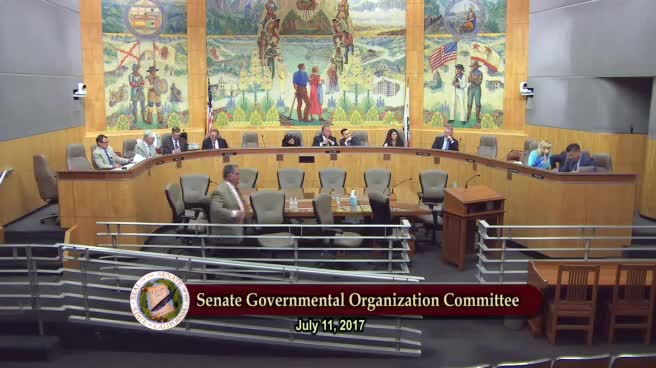 3MIN
Senate Standing Committee on Governmental Organization
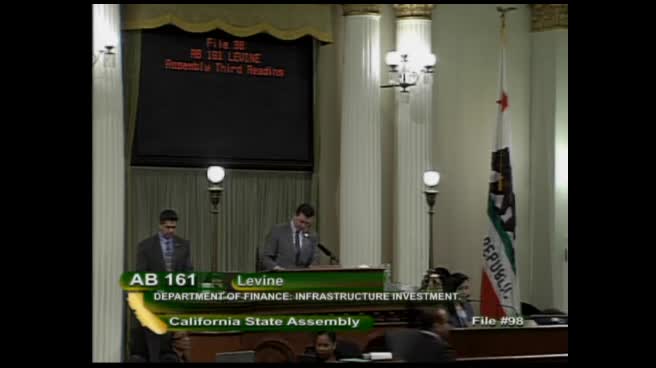 1MIN
Assembly Floor
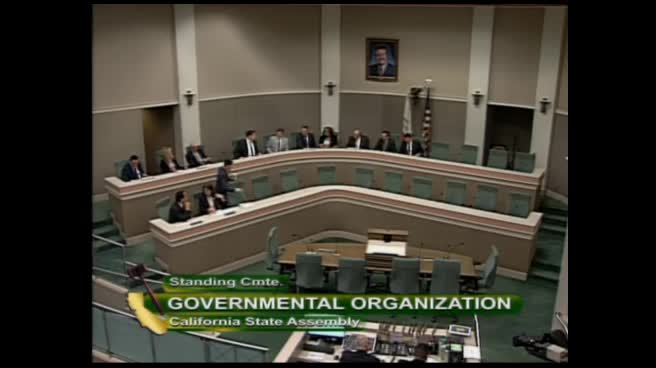 6MIN
Assembly Standing Committee on Governmental Organization
Bill Author

Bill Co-Author(s):