AB 85: General assistance: employable veterans.
- Session Year: 2017-2018
- House: Assembly
- Latest Version Date: 2017-06-29
Existing law requires each county to provide aid to its indigent residents not supported by other means. These county programs are known as general assistance programs. Existing law permits a county to prohibit an employable individual from receiving general assistance benefits for more than 3 months in any 12-month period, whether or not the months are consecutive, if he or she has been offered an opportunity to attend job skills or job training sessions.
This bill would, commencing July 1, 2018, exempt from that prohibition an employable veteran who was honorably discharged from the United States Armed Forces, unless the county enacts an ordinance, by July 1, 2018, making the prohibition applicable to an employable veteran who was honorably discharged from the United States Armed Forces. By requiring a county to expand eligibility for general assistance programs, or enact an ordinance to make the prohibition applicable to an employable veteran, this bill would impose a state-mandated local program.
Existing law requires the Legislative Analyst, in consultation with the State Department of Social Services, among other specified entities, to conduct an evaluation of the impact of the above-described prohibition and other specified requirements, standards, or restrictions imposed by a county for purposes of receiving general assistance benefits, and the method of aid, on general assistance recipients and applicants.
This bill would delete that evaluation requirement as of July 1, 2018.
The California Constitution requires the state to reimburse local agencies and school districts for certain costs mandated by the state. Statutory provisions establish procedures for making that reimbursement.
This bill would provide that, if the Commission on State Mandates determines that the bill contains costs mandated by the state, reimbursement for those costs shall be made pursuant to the statutory provisions noted above.
Existing law requires each county to provide aid to its indigent residents not supported by other means. These county programs are known as general assistance programs. Existing law permits a county to prohibit an employable individual from receiving general assistance benefits for more than 3 months in any 12-month period, whether or not the months are consecutive, if he or she has been offered an opportunity to attend job skills or job training sessions.
This bill would, commencing July 1, 2018, exempt from that prohibition an employable veteran who was honorably discharged from the United States Armed Forces, unless the county enacts an ordinance ordinance, by July 1, 2018, making the prohibition applicable to an employable veteran who was honorably discharged from the United States Armed Forces. By requiring a county to expand eligibility for general assistance programs, or enact an ordinance to make the prohibition applicable to an employable veteran, this bill would impose a state-mandated local program.
The California Constitution requires the state to reimburse local agencies and school districts for certain costs mandated by the state. Statutory provisions establish procedures for making that reimbursement.
This bill would provide that, if the Commission on State Mandates determines that the bill contains costs mandated by the state, reimbursement for those costs shall be made pursuant to the statutory provisions noted above.
Existing law requires each county to provide aid to its indigent residents not supported by other means. These county programs are known as general assistance programs. Existing law permits a county to prohibit an employable individual from receiving general assistance benefits for more than 3 months in any 12-month period, whether or not the months are consecutive, if he or she has been offered an opportunity to attend job skills or job training sessions.
This bill would, commencing July 1, 2018, exempt from that prohibition an employable veteran who was honorably discharged from the Armed Forces, unless the county enacts an ordinance making the prohibition applicable to an employable veteran who was honorably discharged from the Armed Forces. By requiring a county to expand eligibility for general assistance programs, or enact an ordinance to make the prohibition applicable to an employable veteran, this bill would impose a state-mandated local program.
The California Constitution requires the state to reimburse local agencies and school districts for certain costs mandated by the state. Statutory provisions establish procedures for making that reimbursement.
This bill would provide that, if the Commission on State Mandates determines that the bill contains costs mandated by the state, reimbursement for those costs shall be made pursuant to the statutory provisions noted above.
This act shall be known known, and may be cited cited, as the General Assistance Thank You for Your Service Act of 2017.
SEC. 2.Section 17001.5 of the Welfare and Institutions Code is amended to read:17001.5.(a)Notwithstanding any other provision of law, including, but not limited to, Section 17000.5, the board of supervisors of each county, or the agency authorized by the county charter, may do any of the following:
(1)(A)Adopt residency requirements for purposes of determining a persons eligibility for general assistance. Any residence requirement under this paragraph shall not exceed 15 days.
(B)Nothing in this paragraph shall be construed to authorize the adoption of a requirement that an applicant or recipient have an address or to require a homeless person to acquire an address.
(2)(A)Establish a standard of general assistance for applicants and recipients who share housing with one or more unrelated persons or with one or more persons who are not legally responsible for the applicant or recipient. The standard of general assistance aid established pursuant to Section 17000.5 for a single adult applicant or recipient may be reduced pursuant to this paragraph by not more than the following percentages, as appropriate:
(i)Fifteen percent if the applicant or recipient shares housing with one other person described in this subparagraph.
(ii)Twenty percent if the applicant or recipient shares housing with two other persons described in this subparagraph.
(iii)Twenty-five percent if the applicant or recipient shares housing with three or more other persons described in this paragraph.
(B)Any standard of aid adopted pursuant to this paragraph shall constitute a sufficient standard of aid for any recipient who shares housing.
(C)Counties with shared housing reductions larger than the amounts specified in subparagraph (A) as of August 19, 1992, may continue to apply those adjustments.
(3)Discontinue aid under this part for a period of not more than 180 days with respect to any recipient who is employable and has received aid under this part for three months if the recipient engages in any of the following conduct:
(A)Fails, or refuses, without good cause, to participate in a qualified job training program, participation of which is a condition of receipt of assistance.
(B)After completion of a job training program, fails, or refuses, without good cause, to accept an offer of appropriate employment.
(C)Persistently fails, or refuses, without good cause, to cooperate with the county in its efforts to do any of the following:
(i)Enroll the recipient in a job training program.
(ii)After completion of a job training program, locate and secure appropriate employment for the recipient.
(D)For purposes of this paragraph, lack of good cause may be demonstrated by a showing of any of the following:
(i)The willful failure, or refusal, of the recipient to participate in a job training program, accept appropriate employment, or cooperate in enrolling in a training program or locating employment.
(ii)Not less than three separate acts of negligent failure of the recipient to engage in any of the activities described in clause (i).
(4)Prohibit an employable individual from receiving aid under this part for more than three months in any 12-month period, whether or not the months are consecutive. This paragraph shall apply to aid received on or after the effective date of this paragraph. This paragraph shall apply only to those individuals who have been offered an opportunity to attend job skills or job training sessions.
(5)Notwithstanding paragraph (3), discontinue aid to, or sanction, recipients for failure or refusal without good cause to follow program requirements. For purposes of this subdivision, lack of good cause may be demonstrated by a showing of either (A) willful failure or refusal of the recipient to follow program requirements, or (B) not less than three separate acts of negligent failure of the recipient to follow program requirements.
(b)(1)The Legislative Analyst shall conduct an evaluation of the impact of this section on general assistance recipients and applicants.
(2)The evaluation required by paragraph (1) shall include, but need not be limited to, all of the following:
(A)The impact on the extent of homelessness among applicants and recipients of general assistance.
(B)The rate at which recipients of general assistance are sanctioned by county welfare departments.
(C)The impact of the 15-day residency requirement on applicants or recipients of general assistance, including how often the requirement is invoked.
(3)The Legislative Analyst shall, in the conduct of the study required by this section, consult with the State Department of Social Services, the County Welfare Directors Association, and organizations that advocate on behalf of recipients of general assistance.
(c)A county may provide aid pursuant to Section 17000.5 either by cash assistance, in-kind aid, a two-party payment, voucher payment, or check drawn to the order of a third-party provider of services to the recipient. Nothing shall restrict a county from providing more than one method of aid to an individual recipient.
(d)This section shall become inoperative on July 1, 2018, and, as of January 1, 2019, is repealed.
SEC. 3.Section 17001.5 is added to the Welfare and Institutions Code, to read:17001.5.(a)Notwithstanding any other law, including, but not limited to, Section 17000.5, the board of supervisors of each county, or the agency authorized by the county charter, may do any of the following:
(1)(A)Adopt residency requirements for purposes of determining a persons eligibility for general assistance. Any residence requirement under this paragraph shall not exceed 15 days.
(B)Nothing in this paragraph shall be construed to authorize the adoption of a requirement that an applicant or recipient have an address or to require a homeless person to acquire an address.
(2)(A)Establish a standard of general assistance for applicants and recipients who share housing with one or more unrelated persons or with one or more persons who are not legally responsible for the applicant or recipient. The standard of general assistance aid established pursuant to Section 17000.5 for a single adult applicant or recipient may be reduced pursuant to this paragraph by not more than the following percentages, as appropriate:
(i)Fifteen percent if the applicant or recipient shares housing with one other person described in this subparagraph.
(ii)Twenty percent if the applicant or recipient shares housing with two other persons described in this subparagraph.
(iii)Twenty-five percent if the applicant or recipient shares housing with three or more other persons described in this paragraph.
(B)Any standard of aid adopted pursuant to this paragraph shall constitute a sufficient standard of aid for any recipient who shares housing.
(C)Counties with shared housing reductions larger than the amounts specified in subparagraph (A) as of August 19, 1992, may continue to apply those adjustments.
(3)Discontinue aid under this part for a period of not more than 180 days with respect to any recipient who is employable and has received aid under this part for three months if the recipient engages in any of the following conduct:
(A)Fails, or refuses, without good cause, to participate in a qualified job training program, participation of which is a condition of receipt of assistance.
(B)After completion of a job training program, fails, or refuses, without good cause, to accept an offer of appropriate employment.
(C)Persistently fails, or refuses, without good cause, to cooperate with the county in its efforts to do any of the following:
(i)Enroll the recipient in a job training program.
(ii)After completion of a job training program, locate and secure appropriate employment for the recipient.
(D)For purposes of this paragraph, lack of good cause may be demonstrated by a showing of any of the following:
(i)The willful failure, or refusal, of the recipient to participate in a job training program, accept appropriate employment, or cooperate in enrolling in a training program or locating employment.
(ii)Not less than three separate acts of negligent failure of the recipient to engage in any of the activities described in clause (i).
(4)(A)Prohibit an employable individual, other than an employable veteran who was honorably discharged from the United States Armed Forces, from receiving aid under this part for more than three months in any 12-month period, whether or not the months are consecutive. This paragraph shall apply only to those individuals who have been offered an opportunity to attend job skills or job training sessions.
(B)The board of supervisors of a county may enact an ordinance, by July 1, 2018, providing that any employable individual is subject to the limitation contained in subparagraph (A) notwithstanding the fact that he or she is an employable veteran who was honorably discharged from the United States Armed Forces.
(5)Notwithstanding paragraph (3), discontinue aid to, or sanction, recipients for failure or refusal without good cause to follow program requirements. For purposes of this subdivision, lack of good cause may be demonstrated by a showing of either (A) willful failure or refusal of the recipient to follow program requirements, or (B) not less than three separate acts of negligent failure of the recipient to follow program requirements.
(b)(1)The Legislative Analyst shall conduct an evaluation of the impact of this section on general assistance recipients and applicants.(2)The evaluation required by paragraph (1) shall include, but need not be limited to, all of the following:(A)The impact on the extent of homelessness among applicants and recipients of general assistance.(B)The rate at which recipients of general assistance are sanctioned by county welfare departments.(C)The impact of the 15-day residency requirement on applicants or recipients of general assistance, including how often the requirement is invoked.(3)The Legislative Analyst shall, in the conduct of the study required by this section, consult with the State Department of Social Services, the County Welfare Directors Association, and organizations that advocate on behalf of recipients of general assistance.(c)(b)A county may provide aid pursuant to Section 17000.5 either by cash assistance, in-kind aid, a two-party payment, voucher payment, or check drawn to the order of a third-party provider of services to the recipient. Nothing shall restrict a county from providing more than one method of aid to an individual recipient.
(d)(c)This section shall become operative on July 1, 2018.
SEC. 4.If the Commission on State Mandates determines that this act contains costs mandated by the state, reimbursement to local agencies and school districts for those costs shall be made pursuant to Part 7 (commencing with Section 17500) of Division 4 of Title 2 of the Government Code.
This act shall be known and may be cited as the General Assistance Thank You for Your Service Act of 2017.
SEC. 2.Section 17001.5 of the Welfare and Institutions Code is amended to read:17001.5.(a)Notwithstanding any other provision of law, including, but not limited to, Section 17000.5, the board of supervisors of each county, or the agency authorized by the county charter, may do any of the following:
(1)(A)Adopt residency requirements for purposes of determining a persons eligibility for general assistance. Any residence requirement under this paragraph shall not exceed 15 days.
(B)Nothing in this paragraph shall be construed to authorize the adoption of a requirement that an applicant or recipient have an address or to require a homeless person to acquire an address.
(2)(A)Establish a standard of general assistance for applicants and recipients who share housing with one or more unrelated persons or with one or more persons who are not legally responsible for the applicant or recipient. The standard of general assistance aid established pursuant to Section 17000.5 for a single adult applicant or recipient may be reduced pursuant to this paragraph by not more than the following percentages, as appropriate:
(i)Fifteen percent if the applicant or recipient shares housing with one other person described in this subparagraph.
(ii)Twenty percent if the applicant or recipient shares housing with two other persons described in this subparagraph.
(iii)Twenty-five percent if the applicant or recipient shares housing with three or more other persons described in this paragraph.
(B)Any standard of aid adopted pursuant to this paragraph shall constitute a sufficient standard of aid for any recipient who shares housing.
(C)Counties with shared housing reductions larger than the amounts specified in subparagraph (A) as of August 19, 1992, may continue to apply those adjustments.
(3)Discontinue aid under this part for a period of not more than 180 days with respect to any recipient who is employable and has received aid under this part for three months if the recipient engages in any of the following conduct:
(A)Fails, or refuses, without good cause, to participate in a qualified job training program, participation of which is a condition of receipt of assistance.
(B)After completion of a job training program, fails, or refuses, without good cause, to accept an offer of appropriate employment.
(C)Persistently fails, or refuses, without good cause, to cooperate with the county in its efforts to do any of the following:
(i)Enroll the recipient in a job training program.
(ii)After completion of a job training program, locate and secure appropriate employment for the recipient.
(D)For purposes of this paragraph, lack of good cause may be demonstrated by a showing of any of the following:
(i)The willful failure, or refusal, of the recipient to participate in a job training program, accept appropriate employment, or cooperate in enrolling in a training program or locating employment.
(ii)Not less than three separate acts of negligent failure of the recipient to engage in any of the activities described in clause (i).
(4)Prohibit an employable individual from receiving aid under this part for more than three months in any 12-month period, whether or not the months are consecutive. This paragraph shall apply to aid received on or after the effective date of this paragraph. This paragraph shall apply only to those individuals who have been offered an opportunity to attend job skills or job training sessions.
(5)Notwithstanding paragraph (3), discontinue aid to, or sanction, recipients for failure or refusal without good cause to follow program requirements. For purposes of this subdivision, lack of good cause may be demonstrated by a showing of either (A) willful failure or refusal of the recipient to follow program requirements, or (B) not less than three separate acts of negligent failure of the recipient to follow program requirements.
(b)(1)The Legislative Analyst shall conduct an evaluation of the impact of this section on general assistance recipients and applicants.
(2)The evaluation required by paragraph (1) shall include, but need not be limited to, all of the following:
(A)The impact on the extent of homelessness among applicants and recipients of general assistance.
(B)The rate at which recipients of general assistance are sanctioned by county welfare departments.
(C)The impact of the 15-day residency requirement on applicants or recipients of general assistance, including how often the requirement is invoked.
(3)The Legislative Analyst shall, in the conduct of the study required by this section, consult with the State Department of Social Services, the County Welfare Directors Association, and organizations that advocate on behalf of recipients of general assistance.
(c)A county may provide aid pursuant to Section 17000.5 either by cash assistance, in-kind aid, a two-party payment, voucher payment, or check drawn to the order of a third-party provider of services to the recipient. Nothing shall restrict a county from providing more than one method of aid to an individual recipient.
(d)This section shall become inoperative on July 1, 2018, and, as of January 1, 2019, is repealed.
SEC. 3.Section 17001.5 is added to the Welfare and Institutions Code, to read:17001.5.(a)Notwithstanding any other law, including, but not limited to, Section 17000.5, the board of supervisors of each county, or the agency authorized by the county charter, may do any of the following:
(1)(A)Adopt residency requirements for purposes of determining a persons eligibility for general assistance. Any residence requirement under this paragraph shall not exceed 15 days.
(B)Nothing in this paragraph shall be construed to authorize the adoption of a requirement that an applicant or recipient have an address or to require a homeless person to acquire an address.
(2)(A)Establish a standard of general assistance for applicants and recipients who share housing with one or more unrelated persons or with one or more persons who are not legally responsible for the applicant or recipient. The standard of general assistance aid established pursuant to Section 17000.5 for a single adult applicant or recipient may be reduced pursuant to this paragraph by not more than the following percentages, as appropriate:
(i)Fifteen percent if the applicant or recipient shares housing with one other person described in this subparagraph.
(ii)Twenty percent if the applicant or recipient shares housing with two other persons described in this subparagraph.
(iii)Twenty-five percent if the applicant or recipient shares housing with three or more other persons described in this paragraph.
(B)Any standard of aid adopted pursuant to this paragraph shall constitute a sufficient standard of aid for any recipient who shares housing.
(C)Counties with shared housing reductions larger than the amounts specified in subparagraph (A) as of August 19, 1992, may continue to apply those adjustments.
(3)Discontinue aid under this part for a period of not more than 180 days with respect to any recipient who is employable and has received aid under this part for three months if the recipient engages in any of the following conduct:
(A)Fails, or refuses, without good cause, to participate in a qualified job training program, participation of which is a condition of receipt of assistance.
(B)After completion of a job training program, fails, or refuses, without good cause, to accept an offer of appropriate employment.
(C)Persistently fails, or refuses, without good cause, to cooperate with the county in its efforts to do any of the following:
(i)Enroll the recipient in a job training program.
(ii)After completion of a job training program, locate and secure appropriate employment for the recipient.
(D)For purposes of this paragraph, lack of good cause may be demonstrated by a showing of any of the following:
(i)The willful failure, or refusal, of the recipient to participate in a job training program, accept appropriate employment, or cooperate in enrolling in a training program or locating employment.
(ii)Not less than three separate acts of negligent failure of the recipient to engage in any of the activities described in clause (i).
(4)(A)Prohibit an employable individual, other than an employable veteran who was honorably discharged from the United States Armed Forces, from receiving aid under this part for more than three months in any 12-month period, whether or not the months are consecutive. This paragraph shall apply only to those individuals who have been offered an opportunity to attend job skills or job training sessions.
(B)The board of supervisors of a county may enact an ordinance ordinance, by July 1, 2018, providing that any employable individual is subject to the limitation contained in subparagraph (A) notwithstanding the fact that he or she is an employable veteran who was honorably discharged from the United States Armed Forces.
(5)Notwithstanding paragraph (3), discontinue aid to, or sanction, recipients for failure or refusal without good cause to follow program requirements. For purposes of this subdivision, lack of good cause may be demonstrated by a showing of either (A) willful failure or refusal of the recipient to follow program requirements, or (B) not less than three separate acts of negligent failure of the recipient to follow program requirements.
(b)(1)The Legislative Analyst shall conduct an evaluation of the impact of this section on general assistance recipients and applicants.
(2)The evaluation required by paragraph (1) shall include, but need not be limited to, all of the following:
(A)The impact on the extent of homelessness among applicants and recipients of general assistance.
(B)The rate at which recipients of general assistance are sanctioned by county welfare departments.
(C)The impact of the 15-day residency requirement on applicants or recipients of general assistance, including how often the requirement is invoked.
(3)The Legislative Analyst shall, in the conduct of the study required by this section, consult with the State Department of Social Services, the County Welfare Directors Association, and organizations that advocate on behalf of recipients of general assistance.
(c)A county may provide aid pursuant to Section 17000.5 either by cash assistance, in-kind aid, a two-party payment, voucher payment, or check drawn to the order of a third-party provider of services to the recipient. Nothing shall restrict a county from providing more than one method of aid to an individual recipient.
(d)This section shall become operative on July 1, 2018.
SEC. 4.If the Commission on State Mandates determines that this act contains costs mandated by the state, reimbursement to local agencies and school districts for those costs shall be made pursuant to Part 7 (commencing with Section 17500) of Division 4 of Title 2 of the Government Code.
This act shall be known and may be cited as the General Assistance Thank You for Your Service Act of 2017.
SEC. 2.Section 17001.5 of the Welfare and Institutions Code is amended to read:17001.5.(a)Notwithstanding any other provision of law, including, but not limited to, Section 17000.5, the board of supervisors of each county, or the agency authorized by the county charter, may do any of the following:
(1)(A)Adopt residency requirements for purposes of determining a persons eligibility for general assistance. Any residence requirement under this paragraph shall not exceed 15 days.
(B)Nothing in this paragraph shall be construed to authorize the adoption of a requirement that an applicant or recipient have an address or to require a homeless person to acquire an address.
(2)(A)Establish a standard of general assistance for applicants and recipients who share housing with one or more unrelated persons or with one or more persons who are not legally responsible for the applicant or recipient. The standard of general assistance aid established pursuant to Section 17000.5 for a single adult applicant or recipient may be reduced pursuant to this paragraph by not more than the following percentages, as appropriate:
(i)Fifteen percent if the applicant or recipient shares housing with one other person described in this subparagraph.
(ii)Twenty percent if the applicant or recipient shares housing with two other persons described in this subparagraph.
(iii)Twenty-five percent if the applicant or recipient shares housing with three or more other persons described in this paragraph.
(B)Any standard of aid adopted pursuant to this paragraph shall constitute a sufficient standard of aid for any recipient who shares housing.
(C)Counties with shared housing reductions larger than the amounts specified in subparagraph (A) as of August 19, 1992, may continue to apply those adjustments.
(3)Discontinue aid under this part for a period of not more than 180 days with respect to any recipient who is employable and has received aid under this part for three months if the recipient engages in any of the following conduct:
(A)Fails, or refuses, without good cause, to participate in a qualified job training program, participation of which is a condition of receipt of assistance.
(B)After completion of a job training program, fails, or refuses, without good cause, to accept an offer of appropriate employment.
(C)Persistently fails, or refuses, without good cause, to cooperate with the county in its efforts to do any of the following:
(i)Enroll the recipient in a job training program.
(ii)After completion of a job training program, locate and secure appropriate employment for the recipient.
(D)For purposes of this paragraph, lack of good cause may be demonstrated by a showing of any of the following:
(i)The willful failure, or refusal, of the recipient to participate in a job training program, accept appropriate employment, or cooperate in enrolling in a training program or locating employment.
(ii)Not less than three separate acts of negligent failure of the recipient to engage in any of the activities described in clause (i).
(4)Prohibit an employable individual from receiving aid under this part for more than three months in any 12-month period, whether or not the months are consecutive. This paragraph shall apply to aid received on or after the effective date of this paragraph. This paragraph shall apply only to those individuals who have been offered an opportunity to attend job skills or job training sessions.
(5)Notwithstanding paragraph (3), discontinue aid to, or sanction, recipients for failure or refusal without good cause to follow program requirements. For purposes of this subdivision, lack of good cause may be demonstrated by a showing of either (A) willful failure or refusal of the recipient to follow program requirements, or (B) not less than three separate acts of negligent failure of the recipient to follow program requirements.
(b)(1)The Legislative Analyst shall conduct an evaluation of the impact of this section on general assistance recipients and applicants.
(2)The evaluation required by paragraph (1) shall include, but need not be limited to, all of the following:
(A)The impact on the extent of homelessness among applicants and recipients of general assistance.
(B)The rate at which recipients of general assistance are sanctioned by county welfare departments.
(C)The impact of the 15-day residency requirement on applicants or recipients of general assistance, including how often the requirement is invoked.
(3)The Legislative Analyst shall, in the conduct of the study required by this section, consult with the State Department of Social Services, the County Welfare Directors Association, and organizations that advocate on behalf of recipients of general assistance.
(c)A county may provide aid pursuant to Section 17000.5 either by cash assistance, in-kind aid, a two-party payment, voucher payment, or check drawn to the order of a third-party provider of services to the recipient. Nothing shall restrict a county from providing more than one method of aid to an individual recipient.
(d)This section shall become inoperative on July 1, 2018, and, as of January 1, 2019, is repealed.
SEC. 3.Section 17001.5 is added to the Welfare and Institutions Code, to read:17001.5.(a)Notwithstanding any other law, including, but not limited to, Section 17000.5, the board of supervisors of each county, or the agency authorized by the county charter, may do any of the following:
(1)(A)Adopt residency requirements for purposes of determining a persons eligibility for general assistance. Any residence requirement under this paragraph shall not exceed 15 days.
(B)Nothing in this paragraph shall be construed to authorize the adoption of a requirement that an applicant or recipient have an address or to require a homeless person to acquire an address.
(2)(A)Establish a standard of general assistance for applicants and recipients who share housing with one or more unrelated persons or with one or more persons who are not legally responsible for the applicant or recipient. The standard of general assistance aid established pursuant to Section 17000.5 for a single adult applicant or recipient may be reduced pursuant to this paragraph by not more than the following percentages, as appropriate:
(i)Fifteen percent if the applicant or recipient shares housing with one other person described in this subparagraph.
(ii)Twenty percent if the applicant or recipient shares housing with two other persons described in this subparagraph.
(iii)Twenty-five percent if the applicant or recipient shares housing with three or more other persons described in this paragraph.
(B)Any standard of aid adopted pursuant to this paragraph shall constitute a sufficient standard of aid for any recipient who shares housing.
(C)Counties with shared housing reductions larger than the amounts specified in subparagraph (A) as of August 19, 1992, may continue to apply those adjustments.
(3)Discontinue aid under this part for a period of not more than 180 days with respect to any recipient who is employable and has received aid under this part for three months if the recipient engages in any of the following conduct:
(A)Fails, or refuses, without good cause, to participate in a qualified job training program, participation of which is a condition of receipt of assistance.
(B)After completion of a job training program, fails, or refuses, without good cause, to accept an offer of appropriate employment.
(C)Persistently fails, or refuses, without good cause, to cooperate with the county in its efforts to do any of the following:
(i)Enroll the recipient in a job training program.
(ii)After completion of a job training program, locate and secure appropriate employment for the recipient.
(D)For purposes of this paragraph, lack of good cause may be demonstrated by a showing of any of the following:
(i)The willful failure, or refusal, of the recipient to participate in a job training program, accept appropriate employment, or cooperate in enrolling in a training program or locating employment.
(ii)Not less than three separate acts of negligent failure of the recipient to engage in any of the activities described in clause (i).
(4)(A)Prohibit an employable individual, other than an employable veteran who was honorably discharged from the Armed Forces, from receiving aid under this part for more than three months in any 12-month period, whether or not the months are consecutive. This paragraph shall apply only to those individuals who have been offered an opportunity to attend job skills or job training sessions.
(B)The board of supervisors of a county may enact an ordinance providing that any employable individual is subject to the limitation contained in subparagraph (A) notwithstanding the fact that he or she is an employable veteran who was honorably discharged from the Armed Forces.
(5)Notwithstanding paragraph (3), discontinue aid to, or sanction, recipients for failure or refusal without good cause to follow program requirements. For purposes of this subdivision, lack of good cause may be demonstrated by a showing of either (A) willful failure or refusal of the recipient to follow program requirements, or (B) not less than three separate acts of negligent failure of the recipient to follow program requirements.
(b)(1)The Legislative Analyst shall conduct an evaluation of the impact of this section on general assistance recipients and applicants.
(2)The evaluation required by paragraph (1) shall include, but need not be limited to, all of the following:
(A)The impact on the extent of homelessness among applicants and recipients of general assistance.
(B)The rate at which recipients of general assistance are sanctioned by county welfare departments.
(C)The impact of the 15-day residency requirement on applicants or recipients of general assistance, including how often the requirement is invoked.
(3)The Legislative Analyst shall, in the conduct of the study required by this section, consult with the State Department of Social Services, the County Welfare Directors Association, and organizations that advocate on behalf of recipients of general assistance.
(c)A county may provide aid pursuant to Section 17000.5 either by cash assistance, in-kind aid, a two-party payment, voucher payment, or check drawn to the order of a third-party provider of services to the recipient. Nothing shall restrict a county from providing more than one method of aid to an individual recipient.
(d)This section shall become operative on July 1, 2018.
SEC. 4.If the Commission on State Mandates determines that this act contains costs mandated by the state, reimbursement to local agencies and school districts for those costs shall be made pursuant to Part 7 (commencing with Section 17500) of Division 4 of Title 2 of the Government Code.
|
Date
|
Status
|
|---|---|
| Jul 11, 2017 | In committee: Set, first hearing. Held without recommendation. |
| Jun 29, 2017 | Read second time and amended. Re-referred to Com. on V.A. |
| Jun 28, 2017 | From committee: Amend, and do pass as amended and re-refer to Com. on V.A. (Ayes 5. Noes 0.) (June 27). |
| Jun 14, 2017 | Referred to Coms. on HUMAN S. and V.A. |
| Jun 1, 2017 | In Senate. Read first time. To Com. on RLS. for assignment. |
| May 31, 2017 | Read third time. Passed. Ordered to the Senate. (Ayes 70. Noes 1. Page 1963.) |
| May 30, 2017 | Read second time. Ordered to third reading. |
| May 26, 2017 | From committee: Do pass. (Ayes 14. Noes 0.) (May 26). |
| Apr 5, 2017 | In committee: Set, first hearing. Referred to APPR. suspense file. |
| Mar 22, 2017 | From committee: Do pass and re-refer to Com. on APPR. (Ayes 8. Noes 0.) (March 21). Re-referred to Com. on APPR. |
| Mar 8, 2017 | From committee: Do pass and re-refer to Com. on V.A. (Ayes 7. Noes 0.) (March 7). Re-referred to Com. on V.A. |
| Mar 2, 2017 | Re-referred to Com. on HUM. S. |
| Mar 1, 2017 | From committee chair, with author's amendments: Amend, and re-refer to Com. on HUM. S. Read second time and amended. |
| Jan 19, 2017 | Referred to Coms. on HUM. S. and V.A. |
| Jan 6, 2017 | From printer. May be heard in committee February 5. |
| Jan 5, 2017 | Read first time. To print. |
|
Date
|
Description
|
Location
|
Votes
|
|
|---|---|---|---|---|
| Jun 27, 2017 | Do pass as amended, but first amend, and re-refer to the Committee on [Veterans Affairs] | Senate Standing Committee on Human Services |
Passed |
|
| May 31, 2017 | AB 85 RODRIGUEZ Assembly Third Reading | Assembly Floor |
Passed |
|
| May 26, 2017 | Do pass. | Assembly Standing Committee on Appropriations |
Passed |
|
| Mar 21, 2017 | Do pass and be re-referred to the Committee on [Appropriations] | Assembly Standing Committee on Veterans Affairs |
Passed |
|
| Mar 7, 2017 | Do pass and be re-referred to the Committee on [Veterans Affairs] | Assembly Standing Committee on Human Services |
Passed |
This list shows positions taken on this bill by organizations on the date displayed, which is linked to the original source.
Positions by individuals are not included.
|
Organization
|
Position
|
Date
|
|---|---|---|
| American G.I. Forum of California | ** Support | Mar 20, 2017 |
| Amvets, Department Of California | ** Support | Mar 20, 2017 |
| California State Association Of Counties | ** Against | Jul 6, 2017 |
| California Welfare Directors Association Of California | ** Against | Jul 6, 2017 |
| Coalition of Welfare Rights Organizations | ** Support | Jul 6, 2017 |
| CWDA | ** Against | Jun 23, 2017 |
| MISC DEPOSIT | * Support | Mar 7, 2017 |
| RCRC | ** Against | Jun 23, 2017 |
| Rural County Representatives of California | ** Against | Jul 6, 2017 |
| Urban Counties of California | ** Against | Jul 6, 2017 |
SENATE COMMITTEE ON
Senator Josh Newman, Chair
2017 - 2018 Regular
Bill No: Hearing Date: 7/11/17
Author: | Rodriguez | ||
Version: | Amended | ||
Urgency: | Fiscal: | ||
Consultant: | |||
Subject:
DESCRIPTION
Summary:
This bill enacts the “General Assistance ‘Thank You for Your Service’ Act of 2017.” The bill requires counties to exclude an eligible employable veteran from the existing prohibition against receiving general assistance/general relief (GA/GR) for more than three months in any 12-month period. The bill also allows a county to opt out of the extended eligibility period for GA to eligible veterans by enacting an ordinance, by July 1, 2018, stating that an eligible veteran is subject to the three month limitation.
Existing law:
Welfare and Institutions Code:
- Requires every city and county to provide relief and support to all residents who are indigent, incapacitated by age, disease, or accident, and not supported and relieved by relatives or friends, their own means, or state hospitals or other institutions.
- Authorizes the board of supervisors in any county to adopt a general relief standard of aid, including cash assistance, in-kind benefits, and voucher payments.
- Authorizes the board of supervisors of each county or the agency authorized by the county charter, to establish eligibility standards for general assistance provided to indigent and dependent poor individuals living in the county, which may include prohibiting an employable individual from receiving general assistance for more than three months in any 12-month period, as specified, if the individual has been offered an opportunity to attend job skills or job training sessions.
Military and Veterans Code:
- Authorizes county boards of supervisors to grant financial assistance, relief, and support to indigent veterans through military, naval, or marine organizations created for the purpose of aiding veterans, as specified.
This bill:
- Authorizes counties to, as of July 1, 2018, exclude an eligible employable veteran from the prohibition on receiving GA/GR for more than three months in any 12-month period, as specified.
- Allows a county board of supervisors to enact an ordinance, no later than July 1, 2018, stipulating that eligible employable veterans are not exempt from the three-month-per-year limit on receipt of GA/GR, as specified.
- Makes technical changes
BACKGROUND
Homeless veterans. Typically, veterans are overrepresented among the homeless. Largely due to its favorable year-round climate, California is home to a disproportionately large percentage of the nation’s homeless, including homeless veterans. In January, 2016, the U.S. Department of Housing and Urban Development reported the following data to Congress (numbers rounded):
- 550,000 people are homeless in the United States, and 21.5 percent (118,000) of them live in California.
- 40,000 of the nation’s homeless are veterans, and 24 percent (9,600) of them live in California.
- 58 percent (5,600) of California’s homeless veterans are unsheltered.
According to the California Legislative Analyst’s Office report entitled “Understanding the Veteran Services Landscape in California (January 2017),” about 1.8 million veterans reside in California. This is more than in any other state. According to the report, veterans returning to civilian life face myriad barriers to employment, including mental health challenges and access to affordable housing. As of 2016, it is estimated that over 90 percent of California’s veterans are male, more than half of California’s veterans are over age 60, and veterans who served in the Vietnam War make up the largest share of the veteran population. Younger veterans — those who began service after September 11, 2001 — make up 15 percent of California’s veteran population, but that share is rising rapidly.
Fiscal Impact. According to the Assembly Appropriations Committee, this bill will likely have the following fiscal impact:
- Potentially significant ongoing state-reimbursable costs in the low millions of dollars (General Fund) for counties to provide additional GA benefits to employable veterans. GA benefits for every 1,000 honorably discharged employable veterans for an additional six months would cost about $1.4 million based on an average GA benefit of $236 per month. Subject to a determination by the Commission on State Mandates, these costs are likely to be reimbursable by the state.
- Likely minor one-time costs (Local) for counties to enact an ordinance opting out of the provision of extended eligibility for GA to employable veterans. As the provision to enact a county ordinance is optional, these local costs are likely to be non-reimbursable.
COMMENT
Committee Comments:
The bill’s only formal opponents all represent county government and have signed onto a common letter. Their opposition argument is as follows:
AB 85 bill presents a significant infringement on counties’ statutory GA authority by imposing a statewide mandate for a specific population without identifying a source of funding for the requirement. The ‘opt out’ provision in the bill is not a true solution, as it puts counties in the untenable position of having to agendize the issue and take a difficult public vote against the veterans receiving these services, which sets up a Catch-22 situation for Boards of Supervisors, given the sympathetic nature of the group affected by the bill.
The opponents have asked for an amendment making the program “opt-in.”
Prior/Related Legislation:
AB 2311 (Bradford, 2014) was substantially similar to this bill and would have enacted the “General Assistance ‘Thank You for Your Service’ Act of 2014.” (Held on Suspense, Senate Appropriations Committee)
SB 134 (Hueso, Chapter 283, Statutes of 2013) exempted honorably discharged veterans from mandatory participation in CalFresh employment and training programs in participating counties.
POSITIONS
Sponsor: Coalition of Welfare Rights Organizations
Support: None received (except sponsor).
Oppose:
California State Association of Counties
California Welfare Directors Association of California
Rural County Representatives of California
Urban Counties of California
-- END --
SENATE COMMITTEE ON HUMAN SERVICES
Senator Wiener, Chair
2017 - 2018 Regular
Bill No: AB 85
Author: | Rodriguez | ||
Version: | March 1, 2017 | Hearing Date: | June 27, 2017 |
Urgency: | No | Fiscal: | Yes |
Consultant: | Taryn Smith | ||
Subject: General assistance: employable veterans
SUMMARY
This bill requires counties to exclude an eligible employable veteran from the limit on receipt of general assistance/general relief (GA/GR) for more than three months in any 12-month period, as specified. A county may opt-out of the extended eligibility period for GA to eligible veterans by enacting an ordinance, by July 1, 2018, stating that an eligible veteran is subject to the three month limitation.
ABSTRACT
Existing law:
- Requires every city and county to provide relief and support to all residents who are indigent, incapacitated by age, disease, or accident, and not supported and relieved by their relatives or friends, by their own means, or by state hospitals or other state or private institutions. (WIC 17000)
- Authorizes the board of supervisors in any county to adopt a general relief standard of aid, including cash assistance, in-kind benefits, and voucher payments as specified. (WIC 17000.5)
- Authorizes the board of supervisors of each county, or the agency authorized by the county charter, to establish eligibility standards for general assistance provided to indigent and dependent poor individuals living in the county, which may include prohibiting an employable individual from receiving general assistance for more than three months in any 12-month period, as specified, if the individual has been offered an opportunity to attend job skills or job training sessions. (WIC 17001.5 (a))
- Authorizes county boards of supervisors to grant financial assistance, relief, and support to indigent veterans through military, naval, or marine organizations created for the purpose of aiding veterans, as specified. (MVC 921)
This bill:
- Authorizes counties to, as of July 1, 2018, exclude an eligible employable veteran from the prohibition on receipt of general assistance/general relief (GA/GR) for more than three months in any 12-month period, as specified.
- Allows a county board of supervisors to enact an ordinance, no later than July 1, 2018, stipulating that eligible employable veterans are not exempt from the three-month-per-year limit on receipt of GA/GR, as specified.
- Makes technical changes
FISCAL IMPACT
According to an analysis performed by the Assembly Appropriations Committee, this bill will likely have the following fiscal impact:
- Potentially significant ongoing state-reimbursable costs in the low millions of dollars (General Fund) for counties to provide additional GA benefits to employable veterans. GA benefits for every 1,000 honorably discharged employable veterans for an additional six months would cost about $1.4 million based on an average GA benefit of $236 per month. Subject to a determination by the Commission on State Mandates, these costs are likely to be reimbursable by the state.
- Likely minor one-time costs (Local) for counties to enact an ordinance opting out of the provision of extended eligibility for GA to employable veterans. As the provision to enact a county ordinance is optional, these local costs are likely to be non-reimbursable.
BACKGROUND AND DISCUSSION
Purpose of the bill:
A recent homelessness count revealed that California has 137,000 homeless in California, 9,612 of those are veterans. According to the author, “Honorably discharged veterans should be provided every benefit available, especially when they have fallen on the hardest of times.” However, the three month limitation on general assistance benefits in many counties is a contributing factor to veteran homelessness across California. “AB 85 would make critical changes to address this crisis,” the author states.
Poverty
According to the official poverty measure, nearly 6 million (15.3 percent) Californians lived in poverty in 2015. According to the supplemental poverty measure, a more refined measure that takes into account cost of food, clothing and shelter and utilities and other factors, 8 million (20.6 percent) Californians lived in poverty in 2015. Using a slightly different methodology, the Public Policy Institute of California (PPIC) placed the statewide poverty rate at 22 percent. The same PPIC report indicates that 19 percent of adults over 65 years of age were living in poverty.
General Assistance/General Relief
There are a number of government-funded anti-poverty programs, most of which target families and children and focus on improving employability of benefit recipients. California’s General Assistance or General Relief is designed to provide relief and support to indigent adults who are not supported by their own means, other public funds, or assistance programs. Benefits include emergency food, housing, and food cash or vouchers and are available for individuals not otherwise eligible for state and federal assistance programs.
By law, counties are required to have a GA/GR program, but they have flexibility in how they establish and fund these programs. For example, they are permitted to establish their own eligibility standards which may include prohibiting an employable individual from receiving general assistance for more than three months in any 12-month period, as specified.
Due to this flexibility, benefits, payment levels, and eligibility requirements vary among each of California's 58 counties. Some counties provide cash grants or in-kind grants, such as direct housing payments, utilities, or medical expenses, or a combination of cash grants and in-kind grants. Most counties offer GA/GR for three months, but Los Angeles county offers 9 months of benefits for every qualified recipient. Sacramento County provides benefits in the form of an electronic benefits transfer, vouchers, or in-kind grants that range from $234.93 to $315.30 depending on eligibility status and family size. In some counties, benefits are considered a type of loan such that recipients are required to pay the county back for benefits received. Other counties have opted instead to waive repayment as a condition of receiving GA/GR benefits.
Many recipients of GA/GR are also eligible for CalFresh benefits, which provide food benefits to raise the level of nutrition among low-income households and some counties require GA/GR recipients to seek aid from other public assistance programs for which they are eligible as a condition of receiving GA/GR benefits. Depending on the recipient’s circumstances, these public assistance programs may supplement or replace GA/GR.
According to DSS, the statewide monthly caseload for GA/GR benefits in November 2016 was approximately 100,000 individuals. The average grant was approximately $236.46 per person in the month of November 2016. However, it is important to note that the benefit amount and the way in which the benefit is delivered varies by county.
Homeless Veterans in California
According the California Legislative Analyst’s Office 2017 report entitled “Understanding the Veteran Services Landscape in California,” about 1.8 million veterans reside in California. This is more than in any other state. According to the report, veterans returning to civilian life face myriad barriers to employment, including mental health challenges and access to affordable housing. As of 2016, it is estimated that over 90 percent of California’s veterans are male, more than half of California’s veterans are over age 60, and veterans who served in the Vietnam War make up the largest share of the veteran population. Younger veterans—those who began service after September 11, 2001—make up 15 percent of California’s veteran population.
The U.S. Department of Housing and Urban Development (HUD) conducted a point-in-time count in January 2016 and found that approximately 39,471 veterans across the country experienced homelessness each night and 9,612 veterans in California experienced homelessness. This data shows about 24 percent of the country’s homeless veteran population live in California. Of those, 5,600 (58.3 percent) were unsheltered.
Related legislation:
AB 2311 (Bradford, 2014) was substantially similar to this bill and would have enacted the General Assistance “Thank You for Your Service” Act of 2014. This bill was held in the Senate Appropriations Committee.
SB 134 (Hueso, Chapter 283, Statutes of 2013) exempted honorably discharged veterans from mandatory participation in CalFresh Employment and Training programs in participating counties.
Double referral:
This bill has been double-referred. Should this bill pass out of this committee, it will be referred to the Senate Committee on Veterans Affairs.
COMMENTS
In order to provide the extended benefits to honorably discharged veterans, counties would have to verify that a GA/GR applicant was honorably discharged. Because a veteran who has been honorably discharged and meets service requirements is eligible for veterans’ benefits, obtaining such verification may ultimately enable the veteran to be eligible for veterans’ benefits, and perhaps no longer eligible for GA/GR.
PRIOR VOTES
Assembly Floor: | 70 - 1 |
Assembly Appropriations Committee: | 14 - 0 |
Assembly Human Services Committee: | 7 - 0 |
POSITIONS
Support:
Coalition of Welfare Rights Organizations (Sponsor)
Oppose:
CSAC/CWDA/RCRC/Urban Counties of California
-- END --
ASSEMBLY THIRD READING
ATR Bill Id:AB 85
Author:(Rodriguez)
As Amended Ver:March 1, 2017
Majority vote
Committee | Votes | Ayes | Noes |
Human Services | 7-0 | Rubio, Choi, Arambula, Gonzalez Fletcher, Maienschein, Mark Stone, Thurmond | |
Veterans Affairs | 8-0 | Irwin, Daly, Frazier, Gloria, Cervantes, Quirk-Silva, Salas, Voepel | |
Appropriations | 14-0 | Gonzalez Fletcher, Bloom, Bocanegra, Bonta, Calderon, McCarty, Quirk, Fong, Friedman, Eduardo Garcia, Gray, Muratsuchi, Obernolte, Reyes |
|
SUMMARY: This bill establishes the General Assistance "Thank You for Your Service" Act of 2017. Specifically, this bill:
- Authorizes counties to, as of July 1, 2018, exclude an eligible employable veteran from the prohibition on receipt of general assistance/general relief (GA/GR) for more than three months in any 12-month period, as specified.
- Allows a county board of supervisors to enact an ordinance, no later than July 1, 2018, stipulating that eligible employable veterans are not exempt from the three-month-per-year limit on receipt of GA/GR, as specified.
- Makes technical changes
EXISTING LAW:
- Requires every city and county to provide relief and support to all residents who are indigent, incapacitated by age, disease, or accident, and not supported and relieved by their relatives or friends, by their own means, or by state hospitals or other state or private institutions. (Welfare and Institutions Code (WIC) 17000)
- Authorizes the board of supervisors in any county to adopt a general relief standard of aid, including in-kind benefits, as specified. (WIC 17000.5)
- Authorizes the board of supervisors of each county, or the agency authorized by the county charter, to establish eligibility standards for general assistance provided to indigent and dependent poor individuals living in the county, which may include prohibiting an employable individual from receiving general assistance for more than three months in any 12-month period, as specified, if the individual has been offered an opportunity to attend job skills or job training sessions. (WIC 17001.5 (a))
- Authorizes county boards of supervisors to grant financial assistance, relief, and support to indigent veterans through military, naval, or marine organizations created for the purpose of aiding veterans, as specified. (Military and Veterans Code (MVC) 921)
FISCAL EFFECT: According to the Assembly Appropriations Committee this bill may result in the following costs:
- Potentially significant ongoing state-reimbursable costs in the low millions of dollars (General Fund) for counties to provide additional GA benefits to employable veterans. GA benefits for every 1,000 honorably discharged employable veterans for an additional six months would cost about $1.4 million based on an average GA benefit of $236 per month. Subject to a determination by the Commission on State Mandates, these costs are likely to be reimbursable by the state; and
- Likely minor one-time costs (Local) for counties to enact an ordinance opting out of the provision of extended eligibility for GA to employable veterans. As the provision to enact a county ordinance is optional, these local costs are likely to be non-reimbursable.
COMMENTS:
General Assistance/General Relief (GA/GR): The California Department of Social Services (DSS) administers the General Assistance/General Relief (GA/GR) program which provides relief and assistance to adults who are otherwise not supported by their own means or other forms of public funds and assistance. Each county administers its own GA/GR program, and is 100% funded by the county's Board of Supervisors. As such, each county is responsible for determining benefits, payment levels, and eligibility requirements for its own jurisdiction. Many recipients of the GA/GR program are eligible for nutrition assistance through the state's CalFresh program, and some counties require GA/GR recipients seek aid from other public assistance programs for which they are eligible as a condition of receiving GA/GR benefits.
According to DSS, the monthly caseload for GA/GR benefits in November 2016 was approximately 100,000 individuals throughout the state. The average grant was approximately $236.46 per person in the month of November 2016. However, it is important to note that the benefit amount and the way in which the benefit is delivered varies throughout the state. Some counties provide either cash grants or in-kind grants, such as direct housing payments, utilities, or medical expenses, or a combination of cash grants and in-kind grants. For example, Sacramento County provides benefits in the form of electronic benefits transfer (EBT), vouchers, or in-kind grants; grant amounts in Sacramento County range from $234.93 to $315.30 depending on eligibility status and family size. It is also important to note that in some counties, benefits are considered a type of loan such that recipients are required to pay the county back for benefits received. Other counties have opted instead to waive repayment as a condition of receiving GA/GR benefits; for example, Santa Clara County, as of January 1, 2014, no longer requires GA/GR recipients to pay back the county if certain eligibility requirements are met.
Veterans in California: According to a January 2017 report published by the California Legislative Analyst's Office entitled "Understanding the Veterans Services Landscape in California," an estimated 1.8 million veterans reside in California— more than in any other state. Veterans returning to civilian life face myriad barriers to employment, including mental health challenges and access to affordable housing. Based on the most recent Point-In-Time Count conducted by the U.S. Department of Housing and Urban Development (HUD), as of January 2016, approximately 39,471 veterans across the country experienced homelessness each night. Based on HUD's data, as of January 2016, 9,612 veterans in California experienced homelessness, which accounts for 24% of the homeless veteran population across the country. Of those 9,612 homeless veterans, 5,600 (58.3%) were unsheltered. HUD estimates that between 2015 and 2016, California reduced its homeless veteran population by 1,699 individuals, or roughly 15%; between the years of 2009 and 2016, California reduced its homeless veteran population by 8,361 (46.5%).
Need for this bill: According to the author's office, "Honorably discharged veterans should be provided every benefit available, especially when they have fallen on the hardest of times. The three month limitation on benefits in many counties is a contributing factor to veteran homelessness across California. 68% of veterans reside in principle cities. 50% of the homeless are aged 51 or older, and the most recent homelessness count revealed that California has 137,000 homeless veterans. A Los Angeles Times article cited a study showing that 16% of the veterans in Los Angeles County are living in poverty. [This bill] would make critical changes to address this crisis."
PRIOR LEGISLATION:
AB 2311 (Bradford), of 2014, was substantially similar to this bill and would have enacted the General Assistance "Thank You for Your Service" Act of 2014. This bill was held on the Senate Appropriations suspense file.
Analysis Prepared by: Kelsy Castillo / HUM. S. / (916) 319-2089 FN: 0000650
Date of Hearing: April 5, 2017
ASSEMBLY COMMITTEE ON APPROPRIATIONS
Lorena Gonzalez Fletcher, Chair
ABPCA Bill Id:AB 85
Author:(Rodriguez) – As Amended Ver:March 1, 2017
Policy Committee: | Human Services | Vote: | 7 - 0 |
Veterans Affairs | 8 - 0 | ||
|
|
Urgency: No State Mandated Local Program: Yes Reimbursable: Yes
SUMMARY:
Beginning July 1, 2018, this bill requires a county to expand eligibility for General Assistance (GA) by exempting an honorably discharged employable veteran from the prohibition on providing GA for more than three months in a 12-month period. A county may opt-out of the extended eligibility period for GA to eligible veterans by enacting an ordinance, by July 1, 2018, stating that an eligible veteran is subject to the three month limitation.
FISCAL EFFECT:
- Potentially significant ongoing state-reimbursable costs in the low millions of dollars (General Fund) for counties to provide additional GA benefits to employable veterans. GA benefits for every 1,000 honorably discharged employable veterans for an additional six months would cost about $1.4 million based on an average GA benefit of $236 per month. Subject to a determination by the Commission on State Mandates, these costs are likely to be reimbursable by the state.
- Likely minor one-time costs (Local) for counties to enact an ordinance opting out of the provision of extended eligibility for GA to employable veterans. As the provision to enact a county ordinance is optional, these local costs are likely to be non-reimbursable.
COMMENTS:
- Purpose. The author states, “Honorably discharged veterans should be provided every benefit available, especially when they have fallen on the hardest of times. The three-month limitation on benefits in many counties is a contributing factor to veteran homelessness across California. 68% of veterans reside in principle cities and 50% of the homeless are aged 51 or older, and the most recent homelessness count revealed that California has 137,000 homeless veterans. A Los Angeles Times article cited a study showing that 16% of the veterans in Los Angeles County are living in poverty. [This bill] would make critical changes to address this crisis.”
- Background. Existing law requires every city and county to provide relief and support to all residents who are indigent, incapacitated by age, disease, or accident, and not supported and relieved by their relatives or friends, by their own means, or by state hospitals or other state or private institutions. Existing law establishes a county’s right to adopt requirements, as specified, for determining a person’s eligibility for GA.
Existing law authorizes a county to prohibit an employable individual from receiving GA for more than three months in any 12-month period, as specified, if the individual has been offered an opportunity to attend job skills or job training sessions.
Each county GA program is 100 percent county-funded, with no state or federal share of costs. Based on caseload and expenditure data from November 2016 from the Department of Social Services' GR 237 report, the statewide average monthly GA caseload is about 100,000 cases, and the statewide average monthly GA payment is $236, although the average monthly GA benefit per county varies significantly. Counties provide either cash or in-kind grants or a mix of both.
- Veterans in California. According to estimates from the US Department of Veterans Affairs, California is home to nearly 1.8 million of the approximately 22 million national veteran population – more than in any other state. More than 90% of the state's veterans are male, over half are over age 60, and those who served in Vietnam make up the largest share.
Data from the US Department of Housing and Urban Development revealed that on a single night in 2016, there were approximately 9,600 homeless veterans in California, over half of which were unshletered. The actual number is likely greater. HUD estimates that between 2015 and 2016, California reduced its homeless veteran population by roughly 15%; between the years of 2009 and 2016, California reduced its homeless veteran population by 46.5%.
- Prior Legislation.
- AB 2311 (Bradford) of the 2014-15 Legislative Session, was substantially similar to this bill. That bill was held on the Senate Appropriations Committee's suspense file.
- SB 134 (Hueso), Chapter 283, Statutes of 2013 exempted honorably discharged veterans from mandatory participation in CalFresh Employment and Training programs in participating counties.
Analysis Prepared by: Jennifer Swenson / APPR. / (916) 319-2081
Date of Hearing: March 21, 2017
ASSEMBLY COMMITTEE ON VETERANS AFFAIRS
Jacqui Irwin, Chair
ABPCA Bill Id:AB 85 (
Author:Rodriguez) – As Amended Ver:March 1, 2017
SUBJECT: General assistance: employable veterans
SUMMARY: This bill establishes the General Assistance “Thank You for Your Service” Act of 2017.
Specifically, this bill:
- Authorizes counties to, as of July 1, 2018, exclude an eligible employable veteran from the prohibition on receipt of general assistance/general relief (GA/GR) for more than three months in any 12-month period, as specified.
- Allows a county board of supervisors to enact an ordinance, no later than July 1, 2018, stipulating that eligible employable veterans are not exempt from the three-month-per-year limit on receipt of GA/GR, as specified.
- Makes technical changes.
EXISTING LAW:
- Requires every city and county to provide relief and support to all residents who are indigent, incapacitated by age, disease, or accident, and not supported and relieved by their relatives or friends, by their own means, or by state hospitals or other state or private institutions. (WIC 17000)
- Authorizes the board of supervisors in any county to adopt a general relief standard of aid, including in-kind benefits, as specified. (WIC 17000.5)
- Authorizes the board of supervisors of each county, or the agency authorized by the county charter, to establish eligibility standards for general assistance provided to indigent and dependent poor individuals living in the county, which may include prohibiting an employable individual from receiving general assistance for more than three months in any 12-month period, as specified, if the individual has been offered an opportunity to attend job skills or job training sessions. (WIC 17001.5 (a))
- Authorizes county boards of supervisors to grant financial assistance, relief, and support to indigent veterans through military, naval, or marine organizations created for the purpose of aiding veterans, as specified. (MVC 921)
FISCAL EFFECT: Unknown at this time.
COMMENTS:
This bill will extend General Assistance benefits provided by counties to honorably discharged veterans who meet specified requirements for up to 12 months in a calendar year. These benefits include emergency food, housing, and food cash or vouchers and are available for individuals not otherwise eligible for state and federal assistance programs.
Approximately 1.8 million veterans reside in California— more than in any other state. Men and women veterans returning to California face a number of barriers to employment including mental health challenges, access to affordable housing, and other difficulties transitioning back into civilian life. Point in time data from the US Department of Housing and Urban Development revealed that on a single night in 2013, there were 15,179 homeless veterans in California. This number only captures those individuals surveyed, and the actual number of veterans who experienced homelessness throughout the year is likely greater. Additionally, according to a CalVet housing fact sheet, whereas homelessness for Vietnam veterans was expected to occur within 13 years of returning home, veterans from more recent wars are experiencing homelessness or near-homelessness within three years of their transition from active duty status.
The California Department of Social Services (DSS) administers the General Assistance/General Relief (GA/GR) program which provides relief and assistance to adults who are otherwise not supported by their own means or other forms of public funds and assistance. Each county administers its own GA/GR program, and is 100% funded by the county’s Board of Supervisors. As such, each county is responsible for determining benefits, payment levels, and eligibility requirements for its own jurisdiction. Many recipients of the GA/GR program are eligible for nutrition assistance through the state’s CalFresh program, and some counties require GA/GR recipients seek aid from other public assistance programs for which they are eligible as a condition of receiving GA/GR benefits.
The GA/GR for many counties is limited to 3 months. Los Angeles County currently provides GA/GR for veterans for 12 months with a work requirement. If a county does not wish to follow this requirement, there is a six month time period in which a county can pass an ordinance in order to keep the 3 month limit.
According to the author’s office:
Honorably discharged veterans should be provided every benefit available, especially when they have fallen on the hardest of times. The three month limitation on benefits in many counties is a contributing factor to veteran homelessness across California. 68% of veterans reside in principle cities and 50% of the homeless are aged 51 or older. A Los Angeles Times article cited a study showing that 16% of the veterans in Los Angeles County are living in poverty. [This bill] would make critical changes to address this crisis.
Prior Legislation:
AB 2311 (Bradford) 2014 was substantially similar to this bill and would have enacted the General Assistance “Thank You for Your Service” Act of 2014. This bill was held on the Senate Appropriations suspense file.
REGISTERED SUPPORT / OPPOSITION:
Support
Coalition of California Welfare Rights Organizations (Sponsor)
American G.I. Forum of California
AMVETS, Department of California
Opposition
None on File.
Analysis Prepared by: Jenny Callison / John Spangler / V.A. / 916-319-3550
Date of Hearing: March 7, 2017
ASSEMBLY COMMITTEE ON HUMAN SERVICES
Blanca Rubio, Chair
ABPCA Bill Id:AB 85 (
Author:Rodriguez) – As Amended Ver:March 1, 2017
SUBJECT: General assistance: employable veterans
SUMMARY: This bill establishes the General Assistance “Thank You for Your Service” Act of 2017.
Specifically, this bill:
- Authorizes counties to, as of July 1, 2018, exclude an eligible employable veteran from the prohibition on receipt of general assistance/general relief (GA/GR) for more than three months in any 12-month period, as specified.
- Allows a county board of supervisors to enact an ordinance, no later than July 1, 2018, stipulating that eligible employable veterans are not exempt from the three-month-per-year limit on receipt of GA/GR, as specified.
- Makes technical changes
EXISTING LAW:
- Requires every city and county to provide relief and support to all residents who are indigent, incapacitated by age, disease, or accident, and not supported and relieved by their relatives or friends, by their own means, or by state hospitals or other state or private institutions. (WIC 17000)
- Authorizes the board of supervisors in any county to adopt a general relief standard of aid, including in-kind benefits, as specified. (WIC 17000.5)
- Authorizes the board of supervisors of each county, or the agency authorized by the county charter, to establish eligibility standards for general assistance provided to indigent and dependent poor individuals living in the county, which may include prohibiting an employable individual from receiving general assistance for more than three months in any 12-month period, as specified, if the individual has been offered an opportunity to attend job skills or job training sessions. (WIC 17001.5 (a))
- Authorizes county boards of supervisors to grant financial assistance, relief, and support to indigent veterans through military, naval, or marine organizations created for the purpose of aiding veterans, as specified. (MVC 921)
FISCAL EFFECT: Unknown.
COMMENTS:
General Assistance/General Relief (GA/GR): The California Department of Social Services (DSS) administers the General Assistance/General Relief (GA/GR) program which provides relief and assistance to adults who are otherwise not supported by their own means or other forms of public funds and assistance. Each county administers its own GA/GR program, and is 100% funded by the county’s Board of Supervisors. As such, each county is responsible for determining benefits, payment levels, and eligibility requirements for its own jurisdiction. Many recipients of the GA/GR program are eligible for nutrition assistance through the state’s CalFresh program, and some counties require GA/GR recipients seek aid from other public assistance programs for which they are eligible as a condition of receiving GA/GR benefits.
According to DSS, the monthly caseload for GA/GR benefits in November 2016 was approximately 100,000 individuals throughout the state. The average grant was approximately $236.46 per person in the month of November 2016. However, it is important to note that the benefit amount and the way in which the benefit is delivered varies throughout the state. Some counties provide either cash grants or in-kind grants, such as direct housing payments, utilities, or medical expenses, or a combination of cash grants and in-kind grants. For example, Sacramento County provides benefits in the form of electronic benefits transfer (EBT), vouchers, or in-kind grants; grant amounts in Sacramento County range from $234.93 to $315.30 depending on eligibility status and family size. It is also important to note that in some counties, benefits are considered a type of loan such that recipients are required to pay the county back for benefits received. Other counties have opted instead to waive repayment as a condition of receiving GA/GR benefits; for example, Santa Clara County, as of January 1, 2014, no longer requires GA/GR recipients to pay back the county if certain eligibility requirements are met.
Veterans in California: According to a January 2017 report published by the California Legislative Analyst’s Office entitled “Understanding the Veterans Services Landscape in California,” an estimated 1.8 million veterans reside in California— more than in any other state. Veterans returning to civilian life face myriad barriers to employment, including mental health challenges and access to affordable housing. Based on the most recent Point-In-Time Count conducted by the U.S. Department of Housing and Urban Development (HUD), as of January 2016, approximately 39,471 veterans across the country experienced homelessness each night. Based on HUD’s data, as of January 2016, 9,612 veterans in California experienced homelessness, which accounts for 24% of the homeless veteran population across the country. Of those 9,612 homeless veterans, 5,600 (58.3%) were unsheltered. HUD estimates that between 2015 and 2016, California reduced its homeless veteran population by 1,699 individuals, or roughly 15%; between the years of 2009 and 2016, California reduced its homeless veteran population by 8,361 (46.5%).
Need for this bill: According to the author’s office, “Honorably discharged veterans should be provided every benefit available, especially when they have fallen on the hardest of times. The three month limitation on benefits in many counties is a contributing factor to veteran homelessness across California. 68% of veterans reside in principle cities. 50% of the homeless are aged 51 or older, and the most recent homelessness count revealed that California has 137,000 homeless veterans. A Los Angeles Times article cited a study showing that 16% of the veterans in Los Angeles County are living in poverty. [This bill] would make critical changes to address this crisis.”
PRIOR LEGISLATION:
AB 2311 (Bradford), 2014, was substantially similar to this bill and would have enacted the General Assistance “Thank You for Your Service” Act of 2014. This bill was held on the Senate Appropriations suspense file.
DOUBLE REFERRAL. This bill has been double-referred. Should this bill pass out of this committee, it will be referred to the Assembly Committee on Veterans Affairs.
REGISTERED SUPPORT / OPPOSITION:
Support
Coalition of California Welfare Rights Organizations (Sponsor)
Opposition
None on File.
Analysis Prepared by: Kelsy Castillo / HUM. S. / (916) 319-2089
Discussed in Hearing
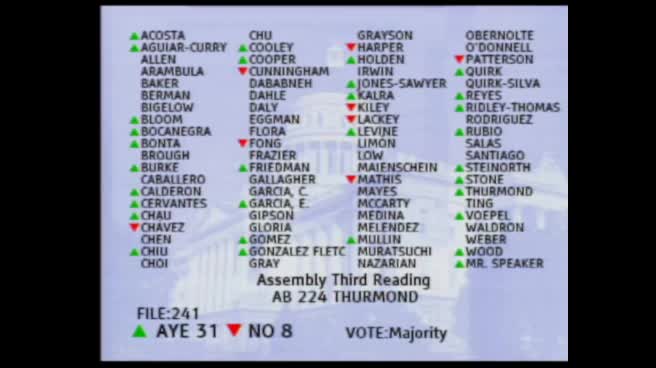 1MIN
Assembly Floor
 1H
Assembly Standing Committee on Appropriations
 7MIN
Assembly Standing Committee on Veterans Affairs
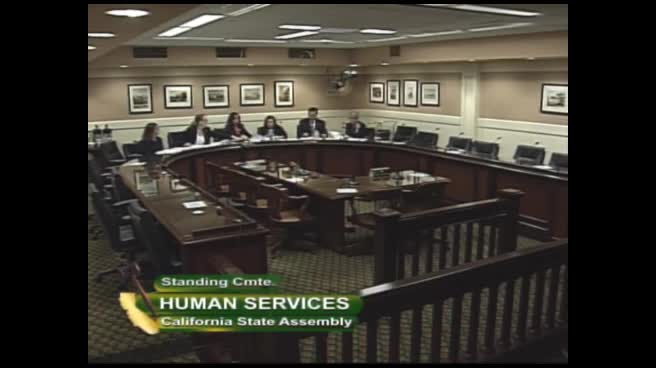 7MIN
Assembly Standing Committee on Human Services
Bill Author

Bill Co-Author(s):