ACA 10: Elections: voter qualifications.
- Session Year: 2017-2018
- House: Assembly
- Latest Version Date: 2017-03-06
The California Constitution allows a United States citizen who is at least 18 years of age and a resident of California to vote.
This measure would reduce the minimum voting age to 17.
Resolved by the Assembly, the Senate concurring, That the Legislature of the State of California at its 2017-18 Regular Session commencing on the fifth day of December 2016, two-thirds of the membership of each house concurring, hereby proposes to the people of the State of California, that the Constitution of the State be amended as follows:
A United States citizen 18 who is at least 17 years of age and resident in this State may vote.
|
Date
|
Status
|
|---|---|
| Aug 31, 2018 | Reconsideration granted. |
| Sep 12, 2017 | Read third time. Refused adoption. |
| May 30, 2017 | Read second time. Ordered to third reading. |
| May 26, 2017 | Coauthors revised. |
| May 17, 2017 | In committee: Set, first hearing. Referred to APPR. suspense file. |
| May 10, 2017 | From committee: Be adopted, and re-refer to Com. on APPR. Re-referred. (Ayes 4. Noes 2.) (May 10). Re-referred to Com. on APPR. |
| Apr 20, 2017 | Referred to Com. on E. & R. |
| Mar 7, 2017 | From printer. May be heard in committee April 6. |
| Mar 6, 2017 | Read first time. To print. |
|
Date
|
Description
|
Location
|
Votes
|
|
|---|---|---|---|---|
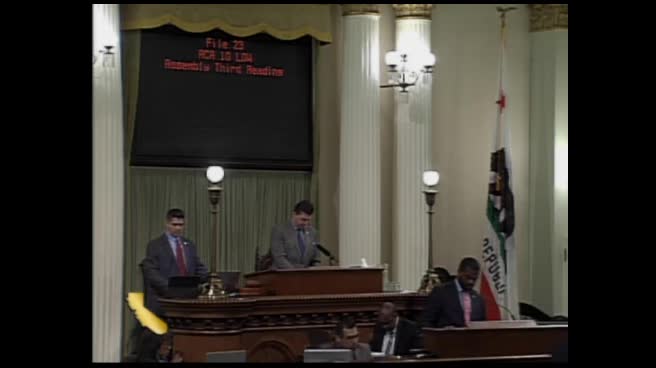
| Sep 12, 2017 | ACA 10 LOW Assembly Third Reading | Assembly Floor |
Passed |
|
| May 26, 2017 | Be adopted. | Assembly Standing Committee on Appropriations |
Passed |
|
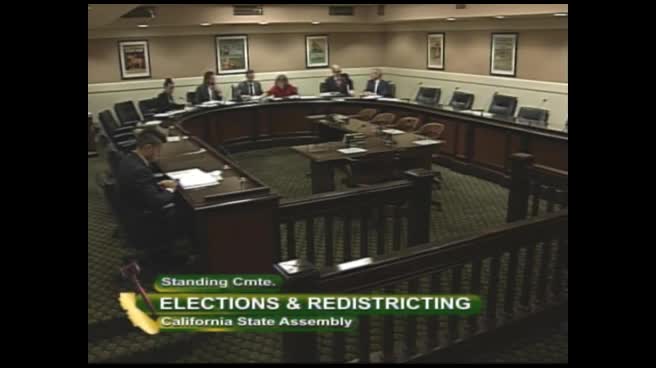
| May 10, 2017 | Be adopted and re-referred to the Committee on [Appropriations] | Assembly Standing Committee on Elections and Redistricting |
Passed |
This list shows positions taken on this bill by organizations on the date displayed, which is linked to the original source.
Positions by individuals are not included.
|
Organization
|
Position
|
Date
|
|---|---|---|
| Mi Familia Vota | ** Support | May 8, 2017 |
| National Youth Rights Association | ** Support | May 8, 2017 |
| San Francisco Youth Commission | ** Support | May 8, 2017 |
| Women's March California | ** Support | May 8, 2017 |
ASSEMBLY THIRD READING
ATR Bill Id:ACA 10
Author:(Low)
As Introduced Ver:March 6, 2017
2/3 vote
Committee | Votes | Ayes | Noes |
Elections | 4-2 | Berman, Calderon, Low, Mullin | Harper, Cunningham |
Appropriations | 12-5 | Gonzalez Fletcher, Bloom, Bocanegra, Bonta, Calderon, McCarty, Quirk, Friedman, Eduardo Garcia, Gray, Muratsuchi, Reyes | Bigelow, Brough, Fong, Gallagher, Obernolte |
SUMMARY: Lowers the voting age from 18 years of age to 17 years of age.
EXISTING LAW:
- Permits a person who is a United States citizen, a resident of California, not imprisoned or on parole for the conviction of a felony, and at least 18 years of age at the time of the next election to register to vote in any local, state, or federal election.
- Allows a person who is at least 16 years old and otherwise meets all voter eligibility requirements to register to vote. Provides that the registration will be deemed effective as soon as the affiant is 18 years old at the time of the next election.
FISCAL EFFECT: According to the Assembly Appropriations Committee:
- One-time General Fund costs of several hundred thousands of dollars for printing and mailing costs to place the measure on the ballot on June 5, 2018. For example, at a cost of $69,000 per page in the voter guide, assuming a total of four pages, the cost would be $276,000 to place this measure on the ballot. The actual costs would depend on the length of the title and summary, analysis by the Legislative Analyst's Office, proponent and opponent arguments, and text of the proposal.
- Unknown, potential state costs to the Department of Motor Vehicles, the Secretary of State, and other state agencies to update voter registration information and databases to reflect the lower voting age.
- Unknown, nonreimbursable local costs to update voter registration information.
COMMENTS: According to the author, "Our country was founded on resisting taxation without representation, and yet every election cycle, teenagers face this centuries-old disenfranchisement. Young people are our future. Lowering the voting age will help give them a voice in the democratic process and instill a lifelong habit of voting."
The Twenty Sixth Amendment to the United States Constitution states, "The right of citizens of the United States, who are eighteen years of age or older, to vote shall not be denied or abridged by the United States or by any state on account of age." Additionally, the California Constitution Article II, Section 2 states, "A United States citizen 18 years of age and resident in this State may vote." Because the U.S. Constitution only addresses abridging the right to vote and this measure expands voting rights there appears to be no conflict with the federal constitution. In an opinion dated April 12, 2004, the Legislative Counsel opined that an amendment to the California Constitution to permit a person under the age of 18 to vote would not violate federal law.
This measure breaks with traditional notions of the age of majority and the responsibilities and privileges attached thereto. For the most part, California law does not allow minors to enter into civil contracts, including marriage, or to be held to the same standards of accountability in criminal matters, absent extenuating circumstances.
With a few limited exceptions (most notably the legal drinking age and, as of last year, the legal smoking age), California confers the legal rights and responsibilities attendant with adulthood on those individuals who are 18 years of age or older.
Please see the policy committee analysis for a full discussion of this measure.
Analysis Prepared by: Nichole Becker / E. & R. / (916) 319-2094 FN: 0000649
Date of Hearing: May 17, 2017
ASSEMBLY COMMITTEE ON APPROPRIATIONS
Lorena Gonzalez Fletcher, Chair
ABPCA Bill Id:ACA 10
Author:(Low) – As Introduced Ver:March 6, 2017
Policy Committee: | Elections and Redistricting | Vote: | 4 - 2 |
|
| ||
|
|
Urgency: State Mandated Local Program: No Reimbursable: No
SUMMARY:
This measure is a constitutional amendment that would be placed on the ballot to determine by a vote of the state’s electorate whether the voting age in the state should be lowered to the age of 17.
FISCAL EFFECT:
- One-time GF costs of several hundred thousands of dollars for printing and mailing costs to place the measure on the ballot on June 5, 2018. For example, at a cost of $69,000 per page in the voter guide, assuming a total of four pages, the cost would be $276,000 to place this measure on the ballot. The actual costs would depend on the length of the title and summary, analysis by the Legislative Analyst’s Office, proponent and opponent arguments, and text of the proposal.
- Unknown, potential state costs to the Department of Motor Vehicles, the Secretary of State, and other state agencies to update voter registration information and databases to reflect the lower voting age.
- Unknown, nonreimbursable local costs to update voter registration information.
COMMENTS:
- Background. The California Constitution currently provides the right to vote to individuals who are 18 years of age or older. With a few exceptions, such as the legal drinking age and smoking age, California confers the legal rights and responsibilities of adulthood on those individuals who are 18 years of age or older.
- Purpose. According to the author, “Our country was founded on resisting taxation without representation, and yet every election cycle, teenagers face this centuries-old disenfranchisement. Young people are our future. Lowering the voting age will help give them a voice in the democratic process and instill a lifelong habit of voting.” In addition, Generation Citizen—VOTE16USA, the sponsors of the bill indicate that, “Like many states, California suffers from low voter participation. Extending voting rights to 17-year-olds can spur long-term increase in turnout, because voting is habitual, and research shows that age 17 is a better time than 18 to establish that habit.”
Analysis Prepared by: Jessica Peters / APPR. / (916) 319-2081
Date of Hearing: May 10, 2017
ASSEMBLY COMMITTEE ON ELECTIONS AND REDISTRICTING
Marc Berman, Chair
ABPCA Bill Id:ACA 10 (
Author:Low) – As Introduced Ver:March 6, 2017
SUBJECT: Elections: voter qualifications.
SUMMARY: Lowers the voting age from 18 years of age to 17 years of age.
EXISTING LAW:
- Permits a person who is a United States citizen, a resident of California, not imprisoned or on parole for the conviction of a felony, and is at least 18 years of age at the time of the next election to register to vote in any local, state, or federal election.
- Allows a person who is at least 16 years old and otherwise meets all voter eligibility requirements to register to vote. Provides that the registration will be deemed effective as soon as the affiant is 18 years old at the time of the next election.
FISCAL EFFECT: Unknown
COMMENTS:
- Purpose of the Constitutional Amendment: According to the author:
Our country was founded on resisting taxation without representation, and yet every election cycle, teenagers face this centuries-old disenfranchisement. Young people are our future. Lowering the voting age will help give them a voice in the democratic process and instill a lifelong habit of voting.
- Consistent with United States Constitution: The Twenty Sixth Amendment to the United States Constitution states, "The right of citizens of the United States, who are eighteen years of age or older, to vote shall not be denied or abridged by the United States or by any state on account of age." Additionally, Article II, Section 2 of the California Constitution states, "A United States citizen 18 years of age and resident in this State may vote." Because the U.S. Constitution only addresses abridging the right to vote and this measure expands voting rights there appears to be no conflict with the federal constitution. In an opinion dated April 12, 2004, the Legislative Counsel opined that an amendment to the California Constitution to permit a person under the age of 18 to vote would not violate federal law.
- Other States: According to data from the National Conference of State Legislatures, in an effort to increase youth engagement in state and local elections, eleven states allow 16 year olds to preregister to vote, including California, and twenty-two states and the District of Columbia permit 17 year olds to vote in the primary elections or caucuses if the voter will turn 18 before the general election.
Furthermore, two localities–Takoma Park and Hyattsville, Maryland – have gone even further, and allow 16 year olds to vote in their municipal elections. Takoma Park held its first elections with 16 year olds voting in 2013 and Hyattsville had its first in 2015.
Here in California, voters in the City of Berkeley approved a charter amendment last November that will allow the City Council to lower the voting age to 16 years old for school board elections, as specified.
- Age of Majority: This measure breaks with traditional notions of the age of majority and the responsibilities and privileges attached thereto. For the most part, California law does not allow minors to enter into civil contracts, including marriage, or to be held to the same standards of accountability in criminal matters, absent extenuating circumstances.
With a few limited exceptions (most notably the legal drinking age and, as of last year, the legal smoking age), California confers the legal rights and responsibilities attendant with adulthood on those individuals who are 18 years of age or older. The committee should consider whether it is appropriate to confer one specific legal right—the right to vote—on certain individuals who have not yet reached the age of majority.
- Arguments in Support: In support, the Generation Citizen - VOTE16USA writes:
Like many states, California suffers from low voter participation. Extending voting rights to 17-year-olds can spur long-term increase in turnout, because voting is habitual, and research shows that age 17 is a better time than 18 to establish that habit. California has already taken important steps to encourage youth engagement, including allowing 16-year-olds to preregister to vote and establishing High School Voter Education Weeks. ACA 10 builds on these efforts with a solution that has proven effective in the dozen countries that allow voting by citizens under age 18, and in the municipalities in the United States that have taken such a step.
Many young adults' first contact with the political process is in their high school government class. But these classes risk falling short by teaching young people how government works without any ability to actually participate in it. ACA 10 ensures students can translate their civic knowledge into action. Many 18-year-olds are in a time of intense transition, but at 17, young people can cast their crucial first votes at a time when they are still connected to their school, home, and community.
- Previous Legislation: ACA 2 (Mullin) of 2016, would have allowed a person who is 17 years of age, and who will be 18 years old at the time of the next general election, to vote in any intervening primary or special election that occurs before the next general election. No vote was taken on the Assembly Floor and the measure died on the Inactive File. ACA 7 (Mullin) of 2013, ACA 2 (Furutani) of 2009, ACA 17 (Mullin) of 2005 and ACA 25 (Mullin) of 2004, were substantially similar to ACA 2 of 2016. ACA 7 (Mullin) was approved by this committee, but held in the Assembly Appropriations Committee. Both ACA 2 of 2009 and ACA 17 were approved by this committee and the Assembly Appropriations Committee, but no vote was taken on the Assembly Floor and both measures died on the Inactive File. ACA 25 was approved by this committee and the Assembly Appropriations Committee, but failed passage on the Assembly Floor.
ACA 7 (Gonzalez) of 2016, would have permitted 16 and 17 year olds to vote in school and community college district governing board elections, as specified. No vote was taken in this committee on this measure.
AB 2517 (Thurmond) of 2016, would have allowed a charter city to permit 16 and 17 year olds to vote in school district elections if those elections are governed by the city's charter, as specified. No vote was taken in this committee on this bill.
AB 30 (Price), Chapter 364, Statutes of 2009, allows a person who is 17 years of age to pre-register to vote, provided he or she would otherwise meet all eligibility requirements. SB 113 (Jackson), Chapter 619, Statutes of 2014, expands pre-registration by authorizing a 16-year-old to pre-register to vote, provided he or she meets all other eligibility requirements.
SCA 19 (Vasconcellos) of 2004, initially proposed to lower the voting age to 14 years, with votes by 14 and 15 year olds counting as one-quarter of a vote, and votes by 16 and 17 year olds counting as one-half of a vote. SCA 19 subsequently was amended instead to lower the voting age to 16, with all votes counting equally as a single vote. SCA 19 failed passage in the Senate Appropriations Committee.
ACA 23 (Speier) of 1995, proposed lowering the voting age to 14, but was never set for a hearing in the Assembly Elections, Reapportionment, and Constitutional Amendments Committee.
- Approval by Voters: As a constitutional amendment, this measure requires the approval of the voters to take effect. Legislation making statutory changes necessary to implement this measure would also be required.
REGISTERED SUPPORT / OPPOSITION:
Support
Generation Citizen - VOTE16USA
Mi Familia Vota
National Youth Rights Association
San Francisco Youth Commission
Women's March California
Opposition
None on file.
Analysis Prepared by: Nichole Becker / E. & R. / (916) 319-2094
Discussed in Hearing
 28MIN
Assembly Floor
 1H
Assembly Standing Committee on Appropriations
 20MIN






