AJR 44: Trade with the People’s Republic of China.
- Session Year: 2017-2018
- House: Assembly
- Latest Version Date: 2018-08-28
This measure would declare that the Legislature actively supports continued coordination and collaboration between California and the Peoples Republic of China to increase mutually beneficial economic opportunities and strengthen the substantial, bilateral relationship in the areas of people-to-people exchange, trade, climate change, education, tourism, technology, innovation, and green development, and would urge the President of the United States and the Congress of the United States to support existing legislation and to enact new legislation to actions that further strengthen economic links between California the United States, including California, and China.
This measure would declare that the Legislature actively supports continued coordination and collaboration between California and the Peoples Republic of China to increase mutually beneficial economic opportunities and strengthen the substantial, bilateral relationship in the areas of people-to-people exchange, trade, climate change, education, tourism, technology, innovation, and green development, and would urge the President of the United States and the Congress of the United States to support existing legislation and to enact new legislation to further strengthen economic links between California and China.
WHEREAS, California is one of the most important partners in the United States to the Peoples Republic of China; and
WHEREAS, There are approximately two million Chinese and Chinese Americans living in California; and
WHEREAS, There are more than 20 daily flights between California and major cities in China, including Beijing, Shanghai, Guangzhou, Xian, Chengdu, Wuhan, and Qingdao; and
WHEREAS, There are more than 20 pairs of sister cities between California and China; and
WHEREAS, California and China are actively committed to green development and have been playing positive roles in addressing climate change; and
WHEREAS, China is the fifth largest source of tourists to the United States, with almost 1.5 million Chinese tourists visiting California in 2016; and
WHEREAS, In 2013, California became the first state to establish trade promotion agreements with individual Chinese provinces. According to the statistics of the Rhodium Group, China invested $29.4 billion in the United States in 2017, $4.7 billion of which was invested in California; and
WHEREAS, California does more business with China than any other state. In 2017, the total trade volume between California and China was $175.6 billion, accounting for 27.6 percent of the United States trade with China and California has accounted for 21.5 percent of Chinas total investment in the United States since 2000; China; and
WHEREAS, With an increase of about 14.5 percent annually, Californias exports to China amounted to $16.43 billion in 2017, accounting for 12.6 percent of the United States exports to China. Californias imports from China increased at a rate of about 10.5 percent annually, and amounted to $159.2 amounted to $159.1 billion in 2017, approximately 31.5 36.1 percent of the United States total imports from China; and
WHEREAS, The Chinese government attaches great importance to friendly and cooperative relations with California; now, therefore, be it
Resolved by the Assembly and the Senate of the State of California, jointly, That the Legislature actively supports continued coordination and collaboration between California and the Peoples Republic of China to increase mutually beneficial economic opportunities and strengthen the substantial, bilateral relationship in the areas of people-to-people exchange, trade, climate change, education, tourism, technology, innovation, and green development. The Legislature urges the President of the United States and the Congress of the United States to support existing legislation and to enact new legislation to actions that further strengthen economic links between California the United States, including California, and China; and be it further
Resolved, That the Chief Clerk of the Assembly transmit copies of this resolution to the President of the United States, to each Senator and Representative from California in the Congress of the United States, and to the author for appropriate distribution.
WHEREAS, California is one of the most important partners in the United States to the Peoples Republic of China; and
WHEREAS, There are approximately two million Chinese and Chinese Americans living in California; and
WHEREAS, There are more than 20 daily flights between California and major cities in China, including Beijing, Shanghai, Guangzhou, Xian, Chengdu, Wuhan, and Qingdao; and
WHEREAS, There are more than 20 pairs of sister cities between California and China; and
WHEREAS, California and China are actively committed to green development and have been playing positive roles in addressing climate change; and
WHEREAS, China is the fifth largest source of tourists to the United States, with almost 1.5 million Chinese tourists visiting California in 2016; and
WHEREAS, In 2013, California became the first state to establish trade agreements with individual Chinese provinces. According to the statistics of the Rhodium Group, China invested $29.4 billion in the United States in 2017, $4.7 billion of which was invested in California; and
WHEREAS, California does more business with China than any other state. In 2017, the total trade volume between California and China was $175.6 billion, accounting for 27.6 percent of the United States trade with China and California has accounted for 21.5 percent of Chinas total investment in the United States since 2000; and
WHEREAS, With an increase of about 14.5 percent annually, Californias exports to China amounted to $16.43 billion in 2017, accounting for 12.6 percent of the United States exports to China. Californias imports from China increased at a rate of about 10.5 percent annually, and amounted to $159.2 billion in 2017, approximately 31.5 percent of the United States total imports from China; and
WHEREAS, The Chinese government attaches great importance to friendly and cooperative relations with California; now, therefore, be it
Resolved by the Assembly and the Senate of the State of California, jointly, That the Legislature actively supports continued coordination and collaboration between California and the Peoples Republic of China to increase mutually beneficial economic opportunities and strengthen the substantial, bilateral relationship in the areas of people-to-people exchange, trade, climate change, education, tourism, technology, innovation, and green development. The Legislature urges the President of the United States and the Congress of the United States to support existing legislation and to enact new legislation to further strengthen economic links between California and China; and be it further
Resolved, That the Chief Clerk of the Assembly transmit copies of this resolution to the President of the United States, to each Senator and Representative from California in the Congress of the United States, and to the author for appropriate distribution.
|
Date
|
Status
|
|---|---|
| Aug 31, 2018 | In Senate. To Com. on RLS. |
| Aug 30, 2018 | Adopted and to Senate. |
| Aug 28, 2018 | Amended. Ordered to Consent Calendar. |
| Aug 27, 2018 | From committee: Amend, and be adopted as amended. To Consent Calendar. (Ayes 5. Noes 0.) (August 27). |
| Jun 28, 2018 | Referred to Com. on J., E.D., & E. |
| Jun 21, 2018 | From printer. |
| Jun 20, 2018 | Introduced. To print. |
|
Date
|
Description
|
Location
|
Votes
|
|
|---|---|---|---|---|
| Aug 30, 2018 | AJR 44 LOW Consent Calendar Second Day Regular Session | Assembly Floor |
Passed |
|
| Aug 27, 2018 | Be adopted as amended. To Consent Calendar. | Assembly Standing Committee on Jobs, Economic Development, and the Economy |
Passed |
This list shows positions taken on this bill by organizations on the date displayed, which is linked to the original source.
Positions by individuals are not included.
|
Organization
|
Position
|
Date
|
|---|---|---|
| - None Of File | ** Against | Aug 27, 2018 |
| 319-2090 | ** Against | Aug 27, 2018 |
| G-DECK Technologies | * Support | Aug 27, 2018 |
| J., E.D., & E. | ** Against | Aug 27, 2018 |
Date of Hearing: August 27, 2018
ASSEMBLY COMMITTEE ON JOBS, ECONOMIC DEVELOPMENT, AND THE ECONOMY
Sharon Quirk-Silva, Chair
ABPCA Bill Id:AJR 44 (
Author:Low) – As Introduced Ver:June 20, 2018
SUBJECT: Trade with the People’s Republic of China
SUMMARY: Memorializes the California Legislature's active support for the continued coordination and collaboration between California and the People’s Republic of China (China) on issues of mutual economic, cultural, and environmental benefit. The resolution also urges the US President and the US Congress to support legislative actions that further strengthen ties between California and China. Specifically, this resolution:
- Makes findings and declarations, including, but not limited to:
- California is one of the most important partners in the US and China trade relationship;
- There are approximately two million Chinese and Chinese Americans living in California;
- There are more than 20 daily flights between California and major cities in China, including Beijing, Shanghai, Guangzhou, Xi’an, Chengdu, Wuhan, and Qingdao;
- There are more than 20 pairs of sister cities between California and China;
- California and China are actively committed to green development and have been playing positive roles in addressing climate change;
- China is the fifth largest source of tourists to the US, with almost 1.5 million Chinese tourists visiting California in 2016;
- In 2013, California became the first state to establish trade agreements with individual Chinese provinces. According to the statistics of the Rhodium Group, China invested $29.4 billion in the United States in 2017, $4.7 billion of which was invested in California;
- California does more business with China than any other state. California’s exports to China amounted to $16.43 billion in 2017, accounting for 12.6% of all the US’ exports to China. California’s imports from China were $159.2 billion in 2017, approximately 31.5% of total US imports from China; and
- The Chinese government attaches great importance to friendly and cooperative relations with California.
- Resolves that the California Legislature:
- Actively supports continued coordination and collaboration between California and the People’s Republic of China to increase mutually beneficial economic opportunities and strengthen the substantial, bilateral relationship in the areas of people-to-people exchange, trade, climate change, education, tourism, technology, innovation, and green development;
- Urges the President of the United States and the Congress of the United States to support actions that provide economic opportunities between the US and existing legislation and to enact new legislation to further strengthen economic links between California and China; and
- Requires the Chief Clerk of the Assembly to transmit copies of this resolution to the US President, to each Senator and Representative from California in the US Congress, and to the author for appropriate distribution.
EXISTING LAW:
- Designates the Governor as the primary state officer representing California’s interest in international affairs, to the extent that representation is not in conflict with federal law or the California Constitution.
- Establishes GO-Biz within the Governor's Office for the purpose of serving as the state's principal entity for issues relating to international trade and foreign investment, excluding agricultural issues.
- Recognizes the state single point of contact (SPOC) as the liaison between the state and the Office of the United States Trade Representative (USTR) on trade-related matters and requires the SPOC to:
- Promptly disseminate correspondence or information from the USTR to the appropriate state agencies, departments, and legislative committees;
- Work with the appropriate state agencies and departments, and the Legislature, to review the effects on the California environment, and California businesses, workers, and general lawmaking authority, of any proposed or enacted trade agreement provisions, and communicate those findings to the United States Trade Representative; and
- Serve as liaison to the Legislature on matters of trade policy oversight.
FISCAL EFFECT: None
POLICY FRAME: Trade and foreign investment play an important role within California's $2.7 trillion economy. AJR 44 seeks to rise above the current trade disputes and express a constructive and affirmative policy toward developing stronger economic ties with China.
Rather than choosing sides, AJR 44 identifies the value of California's current economic relationship with China, including the $16.43 billion of goods California exported to China in 2017. The resolution asks both the state, as well as the federal government, to take steps to increase mutually beneficial economic opportunities and strengthen the already substantial bilateral relationship.
The analysis discusses the importance of the state's engagement on international trade issues. To provide background, the analysis includes information on the California trade-based economy, current trade activity with China, a summary and update on US and retaliatory tariffs, as well as concerns by financial and business leaders with the expanding trade dispute. Suggested technical amendments are included in Comment 9.
COMMENTS:
- How Trade Adds Value to the Economy: International trade and foreign investment are important components of California's $2.7 trillion economy supporting over 4 million California jobs. The value of trade to the California economy is increasing as reflected by the percentage of California jobs tied to trade having more than doubled from 1992 to 2013: 10.6% vs. 21.8%. Nationally, jobs supported by US exports totaled 10.7 million with nearly 684,000 of those jobs being in California.
Businesses from a range of industry sectors support trade and foreign investment activities in California. Among other advantages, the workers in these businesses earn on average 13% to 28% higher wages than the national average. California ranks second nationally in export-related jobs, behind Texas.
Advances in transportation and communication technologies are encouraging the development of previously undeveloped markets and expanding multinational business opportunities for California firms. With more than 95% of consumers located outside the US and emerging economies experiencing a growing middle class, accessing these global markets is key to California's continued economic growth. Today, four of California's top five exports include component parts, which leave the state to be combined and assembled into a final product in a foreign country.
California's land, sea, and air ports-of-entry serve as key international commercial gateways. In 2016, $573.5 billion in products entered and exited the US through these ports. If California were a country, it would be the 28th largest exporter and the 10th largest importer in the world, based on 2016 trade numbers. Exports out of California were valued at $171.9 billion and represented 11.1% of total US exports in 2017. Imports into California were valued at $440 billion and represented 18.8% of total US imports in 2017.
Chart 1 shows data of the export of goods to the state's top six trade partners, based on origin of movement. Please note that federal reporting separates data from China and Hong Kong. If combined, California's largest export market in 2017 would have been, who received over $28.5 billion in California products. Top-ranking export destinations not shown on the chart include Germany, the Netherlands, and the United Kingdom.
Chart 1 - California Exports of Goods for 2011 to 2017 (billions of dollars) | ||||||||
Partner | 2011 | 2012 | 2013 | 2014 | 2015 | 2016 | 2017 | |
World | $159.4 | $161.7 | $168.0 | $174.1 | $165.3 | $163.5 | $171.9 | |
1 | Mexico | $25.8 | $26.3 | $23.9 | $25.4 | $26.7 | $25.2 | $26.7 |
2 | Canada | $17.2 | $17.4 | $18.8 | $18.2 | $17.2 | $16.1 | $16.7 |
3 | China | $14.2 | $13.9 | $16.2 | $16.0 | $14.3 | $14.3 | $16.4 |
4 | Japan | $13.1 | $13.0 | $12.7 | $12.2 | $11.7 | 411.7 | $12.8 |
5 | Hong Kong | $7.6 | $7.8 | $7.7 | $8.5 | $8.7 | $9.6 | $12.1 |
6 | South Korea | $8.4 | $8.2 | $8.3 | $8.6 | $8.6 | $8.2 | $9.6 |
Source and presentation breakdown: International Trade Administration, accessed 03/08/2018 | ||||||||
- Global Supply Chains: In today's globally linked economy, manufacturing utilizes products from across the US, as well as other nations. As an example, in 2012, 61% ($1.3 trillion) of the products imported into the US were inputs and components intended for use by American producers. China is similarly accessing global supply chains to make "Chinese" products. According to the OECD, in 2014, 15.1% of US exports and 29.4% of exports from China contained materials that originated from a foreign country.
In 2017, the US exported $1.5 trillion worldwide with $129.8 billion of those products being exported to China. California exports to China represented 21.9% ($16.4 billion to mainland China and $12.1 billion to Hong Kong) of all US products exported to China. Chart 2 displays data on the top six products California exported to China in 2017, many of which include components and production resources.
Chart 2 - California Trade with China 2017 (Top 6 Products) | ||
NAICS Code – Product Type | Export Value in Dollars ($) | Percent of Total Exports to China |
334-Computer And Electronic Products | $4,363,892,026 | 26.6% |
336-Transportation Equipment | $2,548021,783 | 15.5% |
333-Machinery, Except Electrical | $2,050,118,388 | 12.5% |
910-Waste and Scrap | $1,709,350,901 | 10.4% |
325-Chemicals | $1,270,495,510 | 7.7% |
111-Agricultural Products | $732,139,077 | 4.4% |
Total Exports - All Products | $16,427,200,509 | 100% |
Source: International Trade Administration, accessed 03/08/2018 | ||
California also exports services to businesses, consumers, other organizations, and governments around the world. Between 2006 and 2016, the export of California services has increased 87%, increasing from $73 billion to $136 billion in services. California's largest service sectors in 2016 included:
- Royalties and License Fees at $37.5 billion;
- Travel Services at $32.9 billion;
- Business, Professional, and Technical Services at $28.4 billion;
- Transportation Services at $12.2 billion;
- Financial Services at $11.2 billion; and
- Telecommunications, Computer, and Information Services at $10.4 billion.
Canada was California's largest service export market receiving $9.4 billion in services in 2016, which supported an estimated 61,315 jobs. California's second largest service export market was China with $9.1 billion in services in 2016 and support for 61,349 jobs.
In addition to exporting goods and services, the California economy benefits from foreign-owned firms. The federal International Trade Administration estimates that in 2015 (most recent data) over 710,000 California workers have benefited from jobs with foreign-owned firms.
California has had the highest level of employment in foreign-owned firms in the nation since at least 1997. In 2015, jobs in California foreign-owned firms represented 5.1% of all private sector jobs in the state, up from 4.1% in 2013. Along with employment, foreign-owned firms own more property, plants, and equipment in California than in any other state.
- Current US Actions: Foreign trade policies were among the top discussion points in the 2016 election cycle. One of the first official acts of Donald Trump upon being sworn-in as the President of the US was to direct the USTR to serve notice that the US was withdrawing from the Trans-Pacific Partnership (TPP). On a going forward basis, the Trump Administration's policy was to pursue individual trade negotiations, rather than multilateral agreements like TPP.
The rejection of TPP was supported by a number of domestic stakeholders, including labor, who believed that TPP, as negotiated, did not have sufficient worker and environmental protections. Supporters of the negotiated, and waiting to be ratified, TPP had hoped that its implementation would result in a robust single-market, as well as help maintain the balance of power within a region that is increasingly being economically pressured by China.
While the abandonment of TPP was considered by some as fortunate for China's investment aspirations, US foreign policy also continued to raise issues with the scale of Chinese imports into the US, as well as China's regulatory environment to foreign businesses. As an example, President Trump issued a memorandum to the USTR to initiate an investigation into China’s policies and practices related to technology transfer, intellectual property, and innovation. According to a related 2018 report, the purpose of the investigation was to "confront China over its state-led, market-distorting forced technology transfers, intellectual property practices, and cyber intrusions of U.S. commercial networks. The goal is to address unfair Chinese economic practices and create a level playing field that will give all Americans a better chance to succeed."
Following public hearings and two public comment periods, the USTR made the following determinations:
- China uses joint venture requirements, foreign investment restrictions, and administrative review and licensing processes to force or pressure technology transfers from American companies.
- China uses discriminatory licensing processes to transfer technologies from US companies to Chinese companies.
- China directs and facilitates investments and acquisitions which generate large-scale technology transfers.
- China conducts and supports cyber intrusions into US computer networks to gain access to valuable business information.
According to the White House and USTR, technology-related issues are just one area of dispute between the US and China. Research conducted by the US government determined that China’s trade and foreign business policies resulted in at least $50 billion in harm to the US economy. President Trump has directed USTR to file a formal complaint with the World Trade Organization based on these findings and to develop commensurate tariff recommendations on Chinese products. Initially, 10% tariffs were to be placed on certain imported goods from China, but later the Administration increased the amount to 25%.
In retaliation to the $50 billion in US tariffs and potential subsequent US actions, China announced new tariffs on $50 billion of US products. In response to China placing new restrictions on US products, the US is proposing an additional $200 billion in tariffs on Chinese products. For their part, China has stated that they will retaliate with $60 billion in new tariffs.
In addition to these tariffs specifically focused on Chinese goods, the Trump Administration is also pursuing tariffs on products generally, including washing machines, steel, and aluminum. Some countries impacted by these tariffs are taking defensive positions as well.
- Examples of Trade Barriers placed on US Products by Foreign Countries: The 2018 National Trade Estimate (NTE) highlights a number of trade barriers and focuses, among other things, on barriers to digital trade. Specific examples involving China include:
- Restrictions on Cross-Border Data Flows and Data Localization Requirements: China’s 2017 Cybersecurity Law and 2015 National Security Law prohibit or severely restrict routine cross-border transfers of information and impose data localization requirements on companies in "critical information infrastructure sectors."
- Restrictions on Leased Lines and VPNs: In 2017, China issued a guidance document that imposes severe restrictions on the use of leased lines and virtual private networks (VPNs), which are commonly used in the course of supplying a wide range of services to ensure the security and confidentiality of information transferred across borders.
- Cloud Computing Restrictions: China severely restricts investment in cloud computing services, which affects companies that supply cloud computing services and those that need to source such services. In addition, the 2017 guidance document on leased lines and VPNs effectively prohibits the use of leased lines and VPNs in providing cloud computing services on a cross-border basis.
- Web Filtering and Blocking: China continues to engage in extensive blocking of legitimate websites. China currently blocks 12 of the top 30 global sites and up to 3,000 sites in total, affecting billions of dollars in potential US business.
China, however, is not the only country cited for maintaining digital trade barriers. Russia, Nigeria, South Korea, and Turkey, among others, are cited in the annual NTE for trade impediments. These trade impediments include data localization requirements and restrictions on cross border data flows. As an example, the 2018 NTE states: "Russian law requires that certain data on Russian citizens collected electronically by companies be processed and stored in Russia. Many US companies face a choice between withdrawing from the Russian market and operating under significant legal uncertainty."
- Concerns with Global Economic Slowdowns: The International Monetary Fund (IMF) in its World Economic Update (July 2018) identified increasing downside risks resulting from the US' anticipated tariff increases (some enacted and others proposed) and trade partner retaliatory measures. The IMF states: "These could derail the recovery and depress medium-term growth prospects, both through their direct impact on resource allocation and productivity and by raising uncertainty and taking a toll on investment.
"Financial market conditions remain accommodative for advanced economies—with compressed spreads, stretched valuations in some markets, and low volatility—but this could change rapidly. Possible triggers include rising trade tensions and conflicts, geopolitical concerns, and mounting political uncertainty."
The IMF also states that in order to preserve the continued global expansion, countries should avoid adopting protectionist measures and, instead, seek cooperative solutions to economic disputes.
These concerns are echoed by other economic leaders who have noted the increased likelihood of escalating trade tensions and actions. The Board of the US Federal Reserve Bank, as an example, expressed concern at their August 2018 meeting that US tariffs could hurt the current economic recovery but were waiting to see evidence of any damage in the data. Several of the Federal Reserve Districts reported that businesses may cut back on capital expenditures and hiring, should trade tensions not be resolved soon.
The US Chamber of Commerce has issued individual state-specific fact sheets on how US tariffs can threaten the state economy. For California, the fact sheet notes that $7.9 billion in California exports are threatened by tariffs, including $6.3 billion in exports to China. Each US Chamber of Commerce fact sheet also states, among other things, "Tariffs imposed by the United States are nothing more than a tax increase on American consumers and businesses, including manufacturers, farmers, and technology companies, who will pay more for commonly used products and materials. Retaliatory tariffs imposed by other countries on U.S. exports will make American-made goods more expensive, resulting in lost sales and ultimately lost jobs here at home."
Tariffs also impact the US as Chinese investors may potentially choose to invest elsewhere. According to a report prepared for the American Chamber of Commerce in Shanghai, among others, two-way foreign direct investment (FDI) between the US and China was valued at $43.4 billion in 2017, representing a 28% drop from the prior year. While FDI from the US to China remained the same, Chinese FDI to the US was $29 billion, down from $46 billion in 2016. Drops in FDI particularly impact California because the state is historically the largest receiver. The state also has 530 Chinese establishments (businesses), which provide 16,000 jobs. In 2017, more than 2,000 jobs were added in Chinese majority-owned companies in California.
- California's Relationship with China: As discussed earlier in the analysis, China is California's top export market for goods and second largest market for services, supporting jobs, businesses, and the local, state, and federal tax bases. In order to support trade with China and other key foreign markets, the Governor's Office of Business and Economic Development (GO-Biz) implements an International Trade and Investment Program. Existing law mandates that the program be focused on attracting employment producing direct foreign investment, supporting California businesses' access to foreign markets, and engaging in other trade and foreign investment activities assigned by the Governor.
Governor Brown has placed a high priority on the development of diplomatic, environmental, and business exchanges between California and China. In addition to approving California's only foreign trade office to be opened in Shanghai, the Governor conducted a trade mission to China in 2013, entered into cooperation agreements with China on business and climate-related issues, has held many bilateral and multilateral meetings with high ranking Chinese officials, and has three times met with President Xi Jinping to discuss issues of mutual interest.
Governor Brown joined President Xi Jinping in China in June 2017 at the Clean Energy Ministerial, an annual meeting of 24 national and European Union energy ministers and other high-level delegates from 24 nations and the European Union. He also cohosted with China's Ministry of Science and Technology the "Under2 Clean Energy Forum," a meeting of cities, states, countries, businesses, and non-governmental organizations that have committed to take actions to limit rising global temperatures and address climate change. Chart 3, below, summarizes several of these cooperation agreements and includes links for additional information.
Chart 3 - Selection of California and China Cooperation Agreements | ||
Date Signed | Title/Purpose | Link to Governor’s Press Release |
April 10, 2013 | Memorandum of Understanding between California and the National Ministry of Commerce and the relevant provinces of the People's Republic of China on establishing "China Provinces and the US California Joint Working Group on Trade and Investment Cooperation" | http://www.business.ca.gov/Portals/0/Files/MOU-Min_of_Commerce_China.pdf?ver=2016-10-03-143836-057 |
April 14, 2013 | Memorandum of Understanding on friendly cooperation between California and the Jiangsu Province of the People's Republic of China | http://www.business.ca.gov/Portals/0/Files/MOU-Jiangsu_China.pdf?ver=2016-10-03-143835-260 |
April 14, 2013 | Memorandum of Understanding on strategic cooperation between GO-Biz and the Administration Committee of Shanghai Zhangjiang High-Tech Park | http://www.business.ca.gov/Portals/0/Files/MOU-Shanghai_China.pdf?ver=2016-10-03-143835-913 |
April 15, 2013 | Memorandum of Understanding on the Friendly Exchanges and Cooperation between California and Guangdong Province of the People's Republic of China | |
April 16, 2013 | Memorandum of Understanding to foster cooperation on trade and investment promotion between GO-Biz and the Municipality of Chongqing Foreign Trade and Economic Relations Commission of the People's Republic of China | http://www.business.ca.gov/Portals/0/Files/MOU-Chongqing_China.pdf?ver=2016-10-03-143835-320 |
October 14, 2013 | Memorandum of Understanding for further promoting bilateral trade and investment between California and the Inner Mongolia Autonomous Region of China | http://www.business.ca.gov/Portals/0/Files/MOU-Inner_Mongolia.pdf?ver=2016-10-03-143835-087 |
September 21, 2014 | Establishes a Sister State Relationship between California and Guangdong Province of the People's Republic of China | |
Key elements of these agreements are the importance of promoting trade and investment missions, encouraging innovation, and strengthening the capacity of both parties to participate in business development activities that are mutually beneficial. Examples of priority initiatives covered within these agreements include, but are not limited to, the following industry and issues areas:
- Agriculture
- Biological Medicine
- Business Exhibitions
- Coordination of inbound trade missions
- Cultural Tourism
- Ecological Environmental Protection
- Energy Development
- Information Technologies
- Infrastructure and Modern Logistics
- Manufacturing
- Rare Earth, Coal, and Nonferrous Metals
- Strengthening cooperative relationships between cities and regions within the two countries
- Technology Development
Formal and informal bilateral working groups have been established to support the implementation of these cooperation agreements. Examples of projects that have resulted from these formal agreements, as well as activities that have organically developed through California's and China's ongoing dialogue and engagement, include the following:
- Clean Tech Working Group: In October 2016, GO-Biz and the California Energy Commission convened the Joint Working Group in Beijing to discuss ways to strengthen economic opportunities for California clean tech companies and encourage Chinese foreign direct investment. Other members of California's delegation included the California Asian Pacific Chamber of Commerce, Los Angeles World Trade Center, the City of Sacramento, the Bay Area Council, and LARExC, as well as a dozen clean energy executives and California business representatives.
- Business Summits: GO-Biz hosted two business summits to bring together investors and businesses in California and China. The first summit was held in Sacramento and focused on businesses engaged in clean technology, water innovation, sustainable development, and zero-emission vehicles. The second summit, held in Los Angeles, focused on bioscience, advanced transportation, and aerospace. Investors and businesses from Japan, Korea, Singapore, and Malaysia also attended the Los Angeles Event. According to the East-West Center, which has been following this process, between 2000 and the first quarter of 2017, California secured 441 incoming investment deals from China.
In September 2018, Governor Brown is co-chairing the Global Climate Action Summit with senior representatives from China and the United Nations, among others.
- Congressional and State Engagement on US Trade Policy: US trade policy, as provided for by the US Constitution, advances two mechanisms for negotiating and approving treaties and trade promotion agreements. The first (Article II, Section 2, Clause 2, of the US Constitution) empowers the President to chiefly negotiate treaties with the advice and consent of a supermajority of the US Senate. The second method is structured as a congressional-executive agreement in which the US Congress authorizes the President to negotiate trade promotion-related agreements, but ratification is achieved through the adoption of an agreement in the form of a bill by a majority vote of both Houses. This second method is more commonly called Fast Track or Presidential Trade Promotion Authority. When granting Fast Track authority, the US Congress is prohibited from making substantive amendments to the enacting resolution and, instead, participates in an early consultation period with the Administration and then, upon the passage of the ratifying bill, has the option to send the President related legislation to mitigate the potentially negative impacts of the final trade promotion agreement on communities, workers, and businesses.
In recognition of this inability to substantively modify elements of already negotiated trade agreements and their far reaching impact on state and local economies, Congress has also directed the US Trade Representative (USTR) to seek advice from states during the negotiation process through a Governor appointed State Point of Contract (SPOC). Under California law (§ 99501 of the Government Code) the SPOC is required to share with the Legislature information received from the USTR and then work with the Legislature to assess its impact on California.
In addition to the SPOC process, the USTR maintains 28 trade-related advisory committees, including the Intergovernmental Policy Advisory Committee on Trade (IGPAC). The IGPAC is currently comprised of 19 state and local officials, including members of state legislatures, state trade directors, and related national associations. Mayor Acquanetta Warren, Mayor of the City of Fontana, California, is the only California member of IGPAC.
The foundation of US trade policy is its membership in the WTO and the Marrakesh Agreement Establishing the WTO, which sets rules governing trade among the WTO's 154 members, including China. From this foundation, the US has specific Free Trade Agreements in force with 20 countries, including Australia, Bahrain, Canada, Chile, Colombia, Costa Rica, the Dominican Republic, El Salvador, Guatemala, Honduras, Israel, Jordan, Korea, Mexico, Morocco, Nicaragua, Oman, Panama, Peru, and Singapore. US Free Trade Agreements include both bilateral (US and one other country) and multilateral (US and multiple countries) agreements. The North American Free Trade Agreement is an example of a multilateral Free Trade Agreement.
The US also pursues its trade policies through 53 Trade and Investment Framework Agreements, which also include bilateral and multilateral agreements, including the US-Mongolian Trade and Investment Framework Agreement. Further, the US uses Bilateral Investment Treaties to promote US exports, as well as to protect private investors in emerging economies while a country pursues market-oriented policies. The US currently has 42 Bilateral Investment Treaties in force with, but not limited to, Jordan, Panama, and Azerbaijan.
In addition to Free Trade Agreements, Trade and Investment Frameworks, and Bilateral Investment Treaties, the US maintains a number of trade preference programs that allow special access to the US market for countries that are considered developing markets and/or where the US wants to cultivate a stronger relationship. The Andean Trade Preference Act (ATPA) and the Andean Trade Promotion and Drug Eradication Act (ATPDEA) are examples of two such trade programs which assist Bolivia, Colombia, Ecuador, and Peru in promoting "broad-based economic development, diversification of exports, consolidation of democracy, and to help defeat the scourge of drug trafficking by providing sustainable economic alternatives to drug-crop production in beneficiary countries."
- Does California have a Role in Foreign Trade Discussions? Over the last decade, a growing number of individual states and stakeholders have become more engaged on the development and approval of international trade agreements. While trade agreements previously concerned themselves with issues exclusively within federal jurisdiction, many trade agreements now include rules on issues that are within the traditional purview of state government. Trade agreements now affect such issues as public procurement, professional licensing, and investor rights. Further, businesses are increasingly using the terms of trade agreements and other international rules to challenge laws related to environmental standards, the hiring of local workers, and the purchase of local products.
In the last few years, California Legislative Members and stakeholder groups have emphasized the importance of California's engagement on trade actions in order to ensure California communities are not disadvantaged. For example, in 2011, the Legislature adopted AJR 15 (Alejo), which urged the US government to consider the potential negative economic impact of the Colombian Free Trade Agreement on the California economy, especially as it related to the California floriculture industry. The issue was raised, not from a protectionist perspective, but based on the US' significant involvement under the ATPA and the ATPDEA in the development of the Colombian cut flower industry. In 2011, the Colombian cut flower industry, with its US subsidized infrastructure and $333 (589,500 pesos) per month minimum wage, competed directly with California producers.
As illustrated in the Colombian example, the US and California economies are increasingly entwined with business and consumer markets in other countries. These trade agreements and other trade policies can have direct economic impacts on domestic workers and businesses. State consultation and resolutions such as AJR 15 express the state's priorities on the negotiation framework and ratification of US treaties and trade promotion agreements. The policy parameters serve as the economic foundation for the development of new business opportunities and the development of new consumers for California and US products and services.
In the case of AJR 44, the resolution addresses not one industry, but rather the broader California economy. The resolution seeks to remind state and federal government partners on the importance of the US and China economic relationship. In times of escalating trade disputes, a reminder of the broader economic goals may be helpful.
- Proposed Amendments: Below is a list of amendments the committee members may wish to review when considering the bill.
- Update and make technical changes to the international trade figures; and
- Modify the resolved clause to urge the US President and US Congress to support actions that strengthen economic links between the US, including California, and China, rather than supporting existing and future legislation that only supports the economic link between California and China.
- Related Legislation: Below is a list of bills from the current and prior sessions.
- AJR 3 (Alejo) Normalizing Trade Relations with Cuba: This resolution memorializes the California Legislature's support for the normalization of diplomatic relations with Cuba and calls on the US Congress to advance legislation to remove barriers to full diplomatic relations and to help increase trade between the US and Cuba. Status: Adopted by the Legislature, Resolution Chapter 166, Statutes of 2016.
- AJR 4 (Hueso and V. Manuel Pérez) United States-Mexico Border Infrastructure: This resolution states the Legislature’s support for federal funding of necessary infrastructure improvements to the San Ysidro, Calexico, and Otay Mesa Ports of Entry. Status: Adopted, Chapter 24, Statutes of 2013.
- AJR 12 (Gatto) Foreign Minimum Wage: This resolution states the Legislature’s support for raising minimum wage in foreign countries when discussing international treaties and trade agreements. Status: Adopted, Chapter 152, Statutes of 2013.
- AJR 14 (Chu) Reauthorization of the US Export-Import Bank: This resolution memorializes the California Legislature's support for re-authorization of the federal Export-Import Bank, which offers insurance and credit products to support US companies' participation within the broader global economy. Status: Adopted by the Legislature, Resolution Chapter 84, Statutes of 2015.
- SJR 22 (Hueso) Funding for the Calexico West Land Port of Entry Project: This resolution memorializes the California Legislature's support for the final federal funding to complete the Calexico West Land Port of Entry expansion and reconfiguration project. Status: Adopted by the Legislature, Resolution Chapter 102, Statutes of 2016.
- SR 20 (Emmerson, Berryhill, DeSaulnier, Liu, Steinberg, Walters, and Wright) Transatlantic Trade and Investment Partnership: This resolution urges the President and United States Senate to negotiate and ratify, respectively, the Transatlantic Trade and Investment Partnership agreement with the European Union. Status: Approved, by the Senate, Statutes of 2013.
REGISTERED SUPPORT / OPPOSITION:
Support - None on file
Opposition - None of file
Analysis Prepared by: Toni Symonds / J., E.D., & E. / (916) 319-2090
Discussed in Hearing
 13MIN
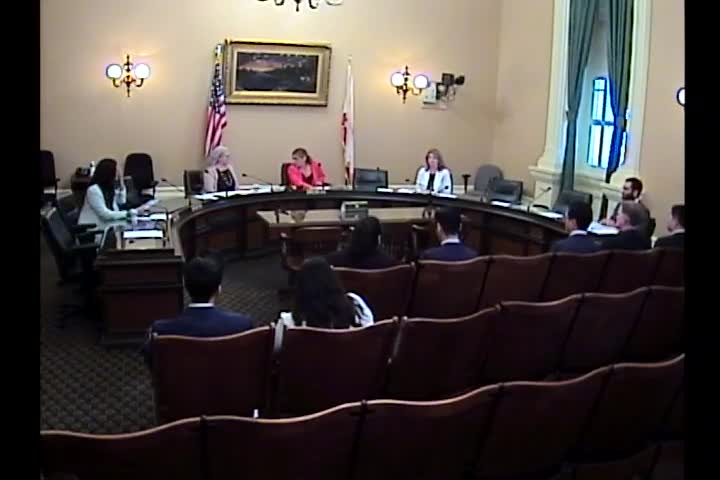
Assembly Standing Committee on Jobs, Economic Development, and the Economy
Bill Author

Bill Co-Author(s):