AJR 50: Federal Clean Air Act.
- Session Year: 2017-2018
- House: Assembly
- Latest Version Date: 2018-08-23
This measure would state that the Legislature strongly and unequivocally supports the existing Clean Car Standards fuel economy and greenhouse gas emissions standards and Californias federal Clean Air Act waivers; will consider any and all appropriate actions to maintain vehicle emissions standards for the protection of public health, consumers, California residents, and the economy; and strongly urges the President and Vice President of the United States States, the Secretary of the United States Department of Transportation, and the Administrator of the United States Environmental Protection Agency to reject the Safer and Affordable Fuel Efficient Vehicles Proposed Rule for Model Years 2021-2026. 20212026.
This measure would state that the Legislature strongly and unequivocally supports the existing Clean Car Standards and Californias federal Clean Air Act waivers; will consider any and all appropriate actions to maintain vehicle emissions standards for the protection of public health, consumers, and the economy; and strongly urges the President and Vice President of the United States and the Administrator of the United States Environmental Protection Agency to reject the Safer and Affordable Fuel Efficient Vehicles Proposed Rule for Model Years 2021-2026.
WHEREAS, In recognition of Californias unique and severe air pollution problems and the associated public health impacts, California has been developing innovative laws and standards since the 1960s to address its air pollution problems, including the nations first mandate on vehicle emissions technologies and emissions standards; standards to reduce vehicle emissions; and
WHEREAS, When the United States Congress enacted the federal Clean Air Act (42 U.S.C. Sec. 7401 et seq.), in acknowledgment of Californias unique air pollution problems and its leadership in fighting air pollution, the United States Congress allowed the Administrator of the United States Environmental Protection Agency (EPA) to grant California a waiver from the federal Clean Air Act preemption provisions to enact and enforce emissions standards for new motor vehicles that are more protective than the federal standard and allowed for other states to follow Californias standards; and
WHEREAS, Over nearly five decades, from Governor Ronald Reagan to Governor Edmund G. Brown Jr., California has requested and been granted over 130 waivers under the federal Clean Air Act to enact stronger emissions standards, and 12 other states plus the District of Columbia have elected to follow Californias stronger rules, representing over one-third of the new car market in the United States; and standards; and
WHEREAS, These waivers have had bipartisan support from lawmakers for over one-half of a century; and
WHEREAS, Twelve other states plus the District of Columbia have elected to follow Californias stronger rules, representing over one-third of the new car market in the United States and taking historic steps to improve air quality and reduce greenhouse gas emissions; and
WHEREAS, In 2010, the federal government followed Californias lead by enacting national greenhouse gas emissions and fuel economy standards for passenger vehicles in model years 2012 to 2016, inclusive, under a historic agreement between California, automakers, federal agencies, states, labor groups, and environmental groups; and
WHEREAS, In 2012, the federal government followed Californias lead by enacting the Clean Car Standards fuel economy and greenhouse gas emissions standards for cars in model years 2017 to 2025, inclusive, that would double the current fuel economy performance and reduce greenhouse gas emissions by cumulatively 436 million metric tons by 2025; and
WHEREAS, Automakers have met the Clean Car Standards fuel economy and greenhouse gas emissions standards earlier and at lower costs than first estimated while increasing vehicle sales; and
WHEREAS, As a result of Californias cleaner emissions rules and the Clean Car Standards, fuel economy and greenhouse gas emissions standards, vehicles have become more fuel efficient, less polluting, and safer while simultaneously improving horsepower and acceleration, and these improvements have saved consumers California residents tens of billions of dollars in gas costs, saved consumers California residents tens of billions of dollars in health costs, and reduced air pollution-related deaths; and
WHEREAS, Analyses on the Clean Car Standards fuel economy and greenhouse gas emissions standards have found that the standards will create more than 100,000 jobs in the United States and boost the gross domestic product by more than $13 billion in 2025 and, in California alone, will support more than 10,000 manufacturing and engineering jobs that build fuel-efficient technologies; and
WHEREAS, Policies enacted under Californias waivers from the federal Clean Air Act have significantly reduced air pollution throughout the state and nation, but much more still needs to be done as California still has unacceptably high levels of ozone and particulate matter in many areas of the state, contributing to high asthma rates, cardiovascular health problems, missed days of school and work, increased hospital admissions, and premature death; and
WHEREAS, Despite the benefits to consumers, California residents, the economy, air pollution, and the environment, the National Highway Traffic Safety Administration (NHTSA) and the EPA proposed a draft rule this month, misleadingly named the so-called Safer and Affordable Fuel Efficient Vehicles Proposed Rule for Model Years 20212026, inclusive, which proposes to halt fuel economy targets in 2020 and to withdraw Californias waiver to set its own greenhouse gas emissions standards and its successful zero-emission vehicle programs; programs that have been in place for over 20 years; and
WHEREAS, No administrator Administrator of the EPA has ever tried to withdraw a waiver, and there is no a process in the federal Clean Air Act for withdrawing a waiver; and
WHEREAS, NHTSA has reinvoked a flawed interpretation of the Energy Policy and Conservation Act of 1975 (Public Law 94-163), seeking to preempt California and other states from adopting and maintaining emissions standards, an action that has previously been rejected by two federal courts and is inconsistent with nearly a decade of successful program implementation; and
WHEREAS, Withdrawing Californias waiver and freezing the Clean Car Standards fuel economy and greenhouse gas emissions standards will result in the emission of millions of tons of smog-forming and climate-disrupting pollution that will severely damage the states ability to achieve federal clean air standards and the states greenhouse gas emissions reduction requirements; and
WHEREAS, Withdrawing Californias waiver and freezing the Clean Car Standards fuel economy and greenhouse gas emissions standards will have a drastic negative impact on public health and the economy and will cost more than $36 billion in costs to consumers California residents from 2020 to 2030, inclusive, to the benefit of the oil companies; now, therefore, be it inclusive; and
WHEREAS, The so-called Safer and Affordable Fuel Efficient Vehicles Proposed Rule for Model Years 20212026 is estimated to increase oil consumption by 500,000 barrels of oil per day; now, therefore, be it
Resolved by the Assembly and the Senate of the State of California, jointly, That the Legislature strongly and unequivocally supports the existing Clean Car Standards fuel economy and greenhouse gas emissions standards and Californias federal Clean Air Act waivers; and be it further
Resolved, That the Legislature will consider any and all appropriate actions to maintain vehicle emissions standards for the protection of public health, consumers, California residents, and the economy; and be it further
Resolved, That the Legislature strongly urges the President and Vice President of the United States States, the Secretary of the United States Department of Transportation, and the Administrator of the United States Environmental Protection Agency to reject the Safer and Affordable Fuel Efficient Vehicles Proposed Rule for Model Years 2021 2026; 20212026; and be it further
Resolved,That the Chief Clerk of the Assembly transmit copies of this resolution to the President and the Vice President of the United States, the Secretary of the United States Department of Transportation, the Administrator of the United States Environmental Protection Agency, the Speaker of the United States House of Representatives, the Majority Leader of the United States Senate, each Senator and Representative from California in the Congress of the United States, the Governor, and the author for appropriate distribution.
WHEREAS, In recognition of Californias unique and severe air pollution problems and the associated public health impacts, California has been developing innovative laws and standards since the 1960s to address its air pollution problems, including the nations first mandate on vehicle emissions technologies and emissions standards; and
WHEREAS, When the United States Congress enacted the federal Clean Air Act (42 U.S.C. Sec. 7401 et seq.), in acknowledgment of Californias unique air pollution problems and its leadership in fighting air pollution, the United States Congress allowed the Administrator of the United States Environmental Protection Agency (EPA) to grant California a waiver from the federal Clean Air Act to enact and enforce emissions standards for new motor vehicles that are more protective than the federal standard and allowed for other states to follow Californias standards; and
WHEREAS, Over nearly five decades, from Governor Ronald Reagan to Governor Edmund G. Brown Jr., California has requested and been granted over 130 waivers under the federal Clean Air Act to enact stronger emissions standards, and 12 other states plus the District of Columbia have elected to follow Californias stronger rules, representing over one-third of the new car market in the United States; and
WHEREAS, In 2012, the federal government followed Californias lead by enacting the Clean Car Standards for cars in model years 2017 to 2025, inclusive, that would double the current fuel economy performance by 2025; and
WHEREAS, Automakers have met the Clean Car Standards earlier and at lower costs than first estimated while increasing vehicle sales; and
WHEREAS, As a result of Californias cleaner emissions rules and the Clean Car Standards, vehicles have become more fuel efficient, less polluting, and safer while simultaneously improving horsepower and acceleration, and these improvements have saved consumers tens of billions of dollars in gas costs, saved consumers tens of billions of dollars in health costs, and reduced air pollution-related deaths; and
WHEREAS, Analyses on the Clean Car Standards have found that the standards will create more than 100,000 jobs in the United States and boost the gross domestic product by more than $13 billion in 2025 and, in California alone, will support more than 10,000 manufacturing and engineering jobs that build fuel-efficient technologies; and
WHEREAS, Policies enacted under Californias waivers from the federal Clean Air Act have significantly reduced air pollution throughout the state and nation, but much more still needs to be done as California still has unacceptably high levels of ozone and particulate matter in many areas of the state, contributing to high asthma rates, cardiovascular health problems, missed days of school and work, increased hospital admissions, and premature death; and
WHEREAS, Despite the benefits to consumers, the economy, air pollution, and the environment, the EPA proposed a draft rule this month, misleadingly named the Safer and Affordable Fuel Efficient Vehicles Proposed Rule for Model Years 20212026, inclusive, which proposes to halt fuel economy targets in 2020 and to withdraw Californias waiver to set its own greenhouse gas emissions standards and its successful zero-emission vehicle programs; and
WHEREAS, No administrator of the EPA has ever tried to withdraw a waiver, and there is no a process in the federal Clean Air Act for withdrawing a waiver; and
WHEREAS, Withdrawing Californias waiver and freezing the Clean Car Standards will result in the emission of millions of tons of smog-forming and climate-disrupting pollution that will severely damage the states ability to achieve federal clean air standards and the states greenhouse gas emissions reduction requirements; and
WHEREAS, Withdrawing Californias waiver and freezing the Clean Car Standards will have a drastic negative impact on public health and the economy and will cost more than $36 billion in costs to consumers from 2020 to 2030, inclusive, to the benefit of the oil companies; now, therefore, be it
Resolved by the Assembly and the Senate of the State of California, jointly, That the Legislature strongly and unequivocally supports the existing Clean Car Standards and Californias federal Clean Air Act waivers; and be it further
Resolved, That the Legislature will consider any and all appropriate actions to maintain vehicle emissions standards for the protection of public health, consumers, and the economy; and be it further
Resolved, That the Legislature strongly urges the President and Vice President of the United States and the Administrator of the United States Environmental Protection Agency to reject the Safer and Affordable Fuel Efficient Vehicles Proposed Rule for Model Years 2021 2026; and be it further
Resolved,That the Chief Clerk of the Assembly transmit copies of this resolution to the President and the Vice President of the United States, the Administrator of the United States Environmental Protection Agency, the Speaker of the United States House of Representatives, the Majority Leader of the United States Senate, each Senator and Representative from California in the Congress of the United States, the Governor, and the author for appropriate distribution.
|
Date
|
Status
|
|---|---|
| Aug 31, 2018 | In Senate. To Com. on RLS. |
| Aug 30, 2018 | Coauthors revised. |
| Aug 23, 2018 | Amended. Ordered to third reading. |
| Aug 22, 2018 | From committee: Amend, and be adopted as amended. (Ayes 7. Noes 1.) (August 20). |
| Aug 16, 2018 | Referred to Com. on NAT. RES. |
| Aug 7, 2018 | From printer. |
| Aug 6, 2018 | Introduced. To print. |
|
Date
|
Description
|
Location
|
Votes
|
|
|---|---|---|---|---|
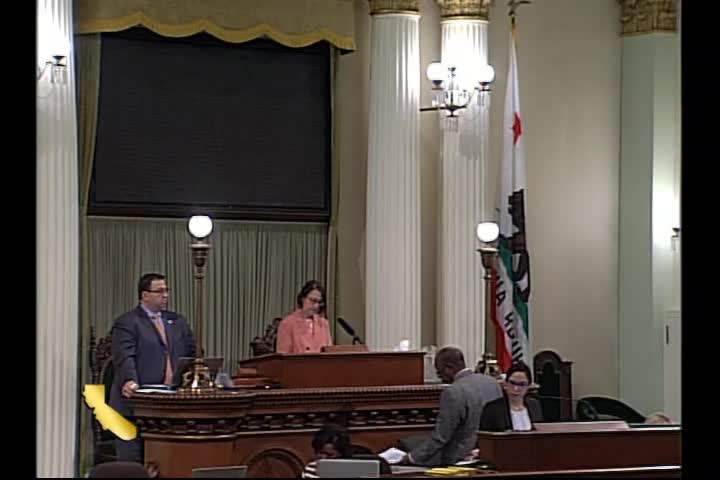
| Aug 30, 2018 | AJR 50 REYES Assembly Third Reading | Assembly Floor |
Passed |
|
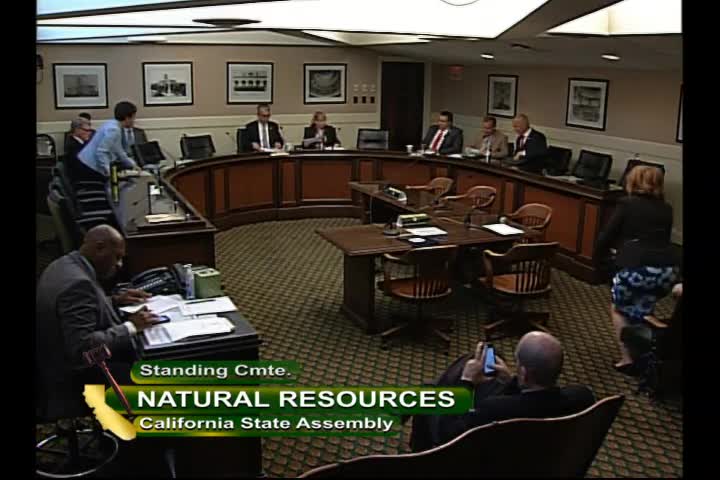
| Aug 20, 2018 | Be adopted as amended. | Assembly Standing Committee on Natural Resources |
Passed |
This list shows positions taken on this bill by organizations on the date displayed, which is linked to the original source.
Positions by individuals are not included.
|
Organization
|
Position
|
Date
|
|---|---|---|
| 350 Bay Area | ** Support | Aug 17, 2018 |
| American Lung Association | ** Support | Aug 17, 2018 |
| Asian Pacific Environmental Network | ** Support | Aug 17, 2018 |
| Audubon California | ** Support | Aug 17, 2018 |
| California Environmental Justice Alliance | ** Support | Aug 17, 2018 |
| California League Of Conservation Voters | * Support | Aug 20, 2018 |
| California Public Interest Research Group | ** Support | Aug 17, 2018 |
| Calstart | ** Support | Aug 17, 2018 |
| Central Valley Air Quality Coalition | ** Support | Aug 17, 2018 |
| Coalition For Clean Air | ** Support | Aug 17, 2018 |
| Electric Vehicle Charging Association | ** Support | Aug 17, 2018 |
| Environmental Defense Fund | ** Support | Aug 17, 2018 |
| National Parks Conservation Association | ** Support | Aug 17, 2018 |
| Natural Resources Defense Council | ** Support | Aug 17, 2018 |
| NextGen California | ** Support | Aug 17, 2018 |
| Planning And Conservation League | ** Support | Aug 17, 2018 |
| Plug In America | ** Support | Aug 17, 2018 |
| Sierra Club California | ** Support | Aug 17, 2018 |
| The Nature Conservancy | ** Support | Aug 17, 2018 |
| Union Of Concerned Scientists | ** Support | Aug 17, 2018 |
| Valley Clean Air Now | ** Support | Aug 17, 2018 |
ASSEMBLY THIRD READING
ATR Bill Id:AJR 50
Author:(Reyes and Arambula)
As Introduced Ver:August 6, 2018
Majority vote
Committee | Votes | Ayes | Noes |
Natural Resources | 7-1 | Muratsuchi, Acosta, Chau, Eggman, Limón, McCarty, Mark Stone | Melendez |
SUMMARY: Declares the Legislature's strong and unequivocal support for existing fuel economy and greenhouse gas emission standards and California's federal Clean Air Act Waivers. Specifically, this resolution:
- States a number of findings including:
- Over nearly five decades, from Governor Reagan to Governor Brown, California has requested and been granted over 130 waivers under the Federal Clean Air Act to enact stronger emissions standards, and 12 other states and the District of Columbia have elected to follow California's stronger rules;
- Automakers have met the fuel economy and greenhouse gas emission standards earlier and at lower costs than first estimated while increasing vehicles sales;
- Policies enacted under California's waivers from the Federal Clean Air Act have significantly reduced air pollution throughout the state and nation; and,
- Despite the benefits, the United States Environmental Protection Agency's (US EPA) proposed a draft rule this month, which proposes to halt fuel economy targets in 2020 and to withdraw California's wavier to set its own greenhouse gas emissions standards and its successful zero-emission vehicles program.
- Despite the benefits, the National Highway Traffic Safety Administration and the US EPA proposed a draft rule this month, which proposes to halt fuel economy targets in 2020 and to withdraw California's wavier to set its own greenhouse gas emissions standards and its successful zero-emission vehicles (ZEVs) program.
EXISTING LAW:
- Pursuant to the federal Clean Air Act,
- Requires the US EPA Administrator (Administrator) to prescribe and revise motor vehicle standards to control the emissions of any air pollutant from any class or classes of new motor vehicles or new motor vehicle engines, which in his or her judgment cause, or contribute to, air pollution that may reasonably be anticipated to endanger public health or welfare.
- Prohibits a state from adopting or attempting to enforce any standard relating to the control of emissions from new motor vehicles or new motor vehicle engines subject to the federal Clean Air Act. Requires the Administrator to waive the prohibition for any state which has adopted standards for the control of emissions from new motor vehicles or new motor vehicle engines prior to March 30, 1966 (i.e. California), if the state determines that the state standards will be, in the aggregate, at least as protective of public health and welfare as applicable federal standards. Prohibits waivers if the Administrator finds the standards are arbitrary and capricious, the state does not demonstrate sufficient need for the standard, or the standard is not consistent with the federal Clean Air Act.
- Requires, in the case the state's waiver is granted, compliance with the state standards is treated as compliance with applicable federal standards.
- Requires the Air Resources Board (ARB) to endeavor to achieve the maximum degree of emissions reductions possible from vehicular and other mobile sources in order to achieve attainment of state ambient air standards.
- Requires the ARB to develop and adopt, by January 1, 2005, regulations that achieve the maximum feasible and cost-effective reduction of greenhouse gas (GHG) emissions from passenger, light-duty, and other non-commercial vehicles.
- Requires the ARB, pursuant to California Global Warming Solutions Act of 2006 [AB 32 (Núñez), Chapter 488, Statutes of 2006], to adopt a statewide GHG emissions limit equivalent to 1990 levels by 2020 and adopt regulations to achieve maximum technologically feasible and cost-effective GHG emissions reductions.
- Requires the ARB to reduce GHG emissions at least 40% below the statewide GHG emissions limit no later than December 31, 2030. Authorizes, until December 31, 2030, ARB to permit the use of market-based compliance mechanisms (i.e., the Cap-and-Trade Program) to comply with GHG reduction regulations once specified conditions are met.
- Establishes the Charge Ahead California Initiative pursuant to SB 1275 (de León), Chapter 530, Statutes of 2014, that, among other things, included the goal of placing at least one million ZEVs and near-zero-emission vehicles (NZEVs) into service by January 1, 2023.
FISCAL EFFECT: This bill is keyed non-fiscal by the Legislative Counsel.
COMMENTS: When Congress amended the Clean Air Act in 1970, it empowered the US EPA to set new national standards on air pollution for both stationary and mobile sources. It was considered the federal government's most aggressive attempt ever to address the dangers of smog and toxic air pollution. California had already been dealing with smog for two decades. In 1954, Arie Jan Haagen-Smit, a Dutch chemist working at the California Institute of Technology, identified that smog was tied to the gases that came out of car tailpipes. Six years later, the state established laws to restrict air pollution from car tailpipes.
When Congress began drafting the Clean Air Act, California fought to maintain its ongoing regulatory scheme. It argued that its program should be left alone, since it was successful, and that its air problems were worse than other states.
California succeeded in preserving its authority and can ask the Administrator for a waiver to restrict tailpipe pollution more stringently than the federal government. If its proposed rules are "at least as protective of public health and welfare" as the US EPA's, then the Administrator must grant the waiver.
This power is reserved alone for California, and it only covers pollution from motor vehicles. No other state can ask for a waiver. When President Obama took office in 2009, his administration negotiated what some have called the "clean car peace treaty" with car makers, states, labor, and environmental groups. This includes national emissions standards and a waiver for California's GHG emissions standards. In 2012 California and the Obama administration agreed again to a single standard through 2025 with a midterm evaluation. The midterm evaluation was completed in early 2017 with no recommended change to the standard.
In 2017, the Alliance of Automobile Manufacturers and the Association of Global Automakers sent letters to the Administrator asking to reopen the midterm evaluation and a relaxing of the standards. However, the Trump Administration went further than what the automakers asked for, and proposed to freeze standards at 2020 levels and revoke California's standard, which has never occurred before. California's waiver and the higher standards for post 2020 are vital for California to meet its GHG emissions reduction goals and Federal clean air mandates. These rollbacks will also harm California's goal of one million ZEVs and NZEVs in service by January 1, 2023.
Analysis Prepared by: Michael Jarred / NAT. RES. / (916) 319-2092 FN: 0004715
Date of Hearing: August 20, 2018
ASSEMBLY COMMITTEE ON NATURAL RESOURCES
Al Muratsuchi, Acting Chair
ABPCA Bill Id:AJR 50 (
Author:Reyes and Arambula) – As Introduced Ver:August 6, 2018
SUBJECT: Federal Clean Air Act.
SUMMARY: Declares the Legislature’s strong and unequivocal support for existing Clean Car Standards and California’s federal Clean Air Act Waivers.
EXISTING LAW:
- Pursuant to the federal Clean Air Act,
- Requires the United States Environmental Protection Agency’s (US EPA) Administrator (Administrator) to prescribe and revise motor vehicle standards to control the emissions of any air pollutant from any class or classes of new motor vehicles or new motor vehicle engines, which in his or her judgment cause, or contribute to, air pollution that may reasonably be anticipated to endanger public health or welfare.
- Prohibits a state from adopting or attempting to enforce any standard relating to the control of emissions from new motor vehicles or new motor vehicle engines subject to the federal Clean Air Act. Requires the Administrator to waive the prohibition for any state which has adopted standards for the control of emissions from new motor vehicles or new motor vehicle engines prior to March 30, 1966 (i.e. California), if the state determines that the state standards will be, in the aggregate, at least as protective of public health and welfare as applicable federal standards. Prohibits waivers if the Administrator finds the standards are arbitrary and capricious, the state does not demonstrate sufficient need for the standard, or the standard is not consistent with the federal Clean Air Act.
- Requires, in the case the state’s waiver is granted, compliance with the state standards is treated as compliance with applicable federal standards.
- Requires the United States Environmental Protection Agency’s (US EPA) Administrator (Administrator) to prescribe and revise motor vehicle standards to control the emissions of any air pollutant from any class or classes of new motor vehicles or new motor vehicle engines, which in his or her judgment cause, or contribute to, air pollution that may reasonably be anticipated to endanger public health or welfare.
- Requires the Air Resources Board (ARB) to endeavor to achieve the maximum degree of emissions reductions possible from vehicular and other mobile sources in order to achieve attainment of state ambient air standards.
- Requires the ARB to develop and adopt, by January 1, 2005, regulations that achieve the maximum feasible and cost-effective reduction of greenhouse gas (GHG) emissions from passenger, light-duty, and other non-commercial vehicles.
- Requires the ARB, pursuant to California Global Warming Solutions Act of 2006 [AB 32 (Nuñez), Chapter 488, Statutes of 2006], to adopt a statewide GHG emissions limit equivalent to 1990 levels by 2020 and adopt regulations to achieve maximum technologically feasible and cost-effective GHG emissions reductions.
- Requires the ARB to reduce GHG emissions at least 40% below the statewide GHG emissions limit no later than December 31, 2030. Authorizes, until December 31, 2030, ARB to permit the use of market-based compliance mechanisms (i.e., the Cap-and-Trade Program) to comply with GHG reduction regulations once specified conditions are met.
- Establishes the Charge Ahead California Initiative pursuant to SB 1275 (de León), Chapter 530, Statutes of 2014, that, among other things, included the goal of placing at least one million zero-emission vehicles (ZEVs) and near-zero-emission vehicles (NZEVs) into service by January 1, 2023.
THIS RESOLUTION:
- States a number of findings including:
- Over nearly five decades, from Governor Reagan to Governor Brown, California has requested and been granted over 130 waivers under the Federal Clean Air Act to enact stronger emissions standards, and 12 other states and the District of Columbia have elected to follow California’s stronger rules;
- Automakers have met the Clean Car Standards earlier and at lower costs than first estimated while increasing vehicles sales;
- Policies enacted under California’s waivers from the Federal Clean Air Act have significantly reduced air pollution throughout the state and nation; and,
- Despite the benefits, the US EPA proposed a draft rule this month, which proposes to halt fuel economy targets in 2020 and to withdraw California’s wavier to set its own greenhouse gas emissions standards and its successful zero-emission vehicles program.
- Over nearly five decades, from Governor Reagan to Governor Brown, California has requested and been granted over 130 waivers under the Federal Clean Air Act to enact stronger emissions standards, and 12 other states and the District of Columbia have elected to follow California’s stronger rules;
- Declares that the Legislature strongly and unequivocally supports the existing Clean Car Standards and California’s federal Clean Air Act Waivers.
FISCAL EFFECT: Non-fiscal
COMMENTS:
- Background. When Congress amended the Clean Air Act in 1970, it empowered the US EPA to set new national standards on air pollution for both stationary and mobile sources. It was considered the federal government’s most aggressive attempt ever to address the dangers of smog and toxic air pollution. California had already been dealing with smog for two decades. In 1954, Arie Jan Haagen-Smit, a Dutch chemist working at the California Institute of Technology, identified that smog was tied to the gases that came out of car tailpipes. Six years later, the state established laws to restrict air pollution from car tailpipes.
When Congress began drafting the Clean Air Act, California fought to maintain its ongoing regulatory scheme. It argued that its program should be left alone, since it was successful, and that its air problems were worse than other states.
California succeeded in preserving its authority and can ask the Administrator for a waiver to restrict tailpipe pollution more stringently than the federal government. If its proposed rules are “at least as protective of public health and welfare” as the US EPA’s, then the Administrator must grant the waiver.
This power is reserved alone for California, and it only covers pollution from motor vehicles. No other state can ask for a waiver. When President Obama took office in 2009, his administration negotiated what some have called the “clean car peace treaty” with car makers, states, labor, and environmental groups. This includes national emissions standards and a waiver for California’s GHG emissions standards. In 2012 California and the Obama administration agreed again to a single standard through 2025 with a midterm evaluation. The midterm evaluation was completed in early 2017 with no recommended change to the standard.
In 2017, the Alliance of Automobile Manufacturers and the Association of Global Automakers sent letters to the Administrator asking to reopen the midterm evaluation and a relaxing of the standards. However, the Trump Administration went further than what the automakers asked for, and proposed to freeze standards at 2020 levels and revoke California’s standard, which has never occurred before. California’s waiver and the higher standards for post 2020 are vital for California to meet its GHG emissions reduction goals and Federal clean air mandates. These rollbacks will also harm California’s goal of one million ZEVs and NZEVs in service by January 1, 2023.
- Amendments. The author and committee may wish to consider the following amendments:
- Use the more specific term fuel economy and greenhouse and emission standards rather than clean car standards;
- Specify that the waivers have had bipartisan support;
- Clarify there were two separate agreements for national standards;
- Include the U.S. Secretary of Transportation in the list of recipients; and,
- Make other clarifying changes.
REGISTERED SUPPORT / OPPOSITION:
Support
350 Bay Area
American Lung Association
Asian Pacific Environmental Network
Audubon California
California Environmental Justice Alliance
California League of Conservation Voters
California Public Interest Research Group
CALSTART
Central Valley Air Quality Coalition
Coalition for Clean Air
E2 (Environmental Entrepreneurs)
Electric Vehicle Charging Association
Environmental Defense Fund
National Parks Conservation Association
Natural Resources Defense Council
NextGen California
Planning and Conservation League
Plug In America
Sierra Club California
The Nature Conservancy
Union of Concerned Scientists
Valley Clean Air Now
Opposition
None on file
Analysis Prepared by: Michael Jarred / NAT. RES. /
Discussed in Hearing
 6MIN
Assembly Floor
 10MIN
Assembly Standing Committee on Natural Resources





Bill Co-Author(s):