SB 950: Energy: transportation fuels: inventories: turnaround and maintenance.
- Session Year: 2023-2024
- House: Senate
- Latest Version Date: 2024-08-28
Current Status:
Failed
(2024-08-28: From committee with author's amendments. Read second time and amended. Re-referred to Com. on RLS.)
Introduced
In Committee
First Chamber
In Committee
Second Chamber
Enacted
(1)Existing law, beginning on June 26, 2023, establishes the Independent Consumer Fuels Advisory Committee within the State Energy Resources Conservation and Development Commission (Energy Commission) to advise the Energy Commission and the Division of Petroleum Market Oversight, as provided. Existing law prescribes the composition of the 8-member committee, including 6 specified members appointed by the Governor, one member appointed by the Speaker of the Assembly, and one member appointed by the Senate Rules Committee.
This bill would repeal the Independent Consumer Fuels Advisory Committee and instead would establish a 6-member Expert Advisory Committee to advise the Energy Commission and division, as provided. The bill would require 4 of the members of the committee to be appointed by the Governor, one member to be appointed by the Speaker of the Assembly, and one member to be appointed by the Senate Rules Committee. The bill would, among other things, require all members of the committee to either hold an academic appointment in, or demonstrate expertise of, economics or business operations of the transportation fuels market, and would prohibit all members of the committee from having been employed by, contracted with, or received direct compensation from, a company that produces, refines, distributes, trades in, markets, or sells any petroleum product in the preceding 12 months.
(2)Existing law requires the Energy Commission, in consultation with the Labor and Workforce Development Agency and labor and industry stakeholders, to consider ways to manage necessary refinery turnarounds and maintenance that would protect the health and safety of employees and the public, and minimize the impacts of maintenance-related production losses on fuel prices. Existing law authorizes the commission, by regulation, to impose requirements governing the timing of turnaround and maintenance.
This bill would expressly authorize those regulations to include criteria that are required to be met before a refinery commences a turnaround or maintenance event, as provided.
This bill would require the Energy Commission, in consultation with the Expert Advisory Committee, to consider the effects of refiners inventories of fuel and feedstocks and blending components on the price of transportation fuels in California. The bill would authorize the Energy Commission, by regulation, to develop and impose requirements for refiners operating in the state to maintain minimum levels of inventories of refined transportation fuels meeting California specifications, including any feedstocks and blending components, as specified.
This bill would impose an administrative civil penalty on a refiner or person who fails to comply with regulations adopted pursuant to the above-described authority and would authorize the Energy Commission to seek any form of injunctive or remedial relief to enforce compliance with those regulations, as provided.
(3)Existing law requires the Energy Commission, on or before January 1, 2024, and every 3 years thereafter, to submit an assessment to the Governor and the Legislature that, among other things, identifies methods to ensure a reliable supply of affordable and safe transportation fuels in California, as provided.
This bill, beginning with the first assessment submitted after January 1, 2025, would require that assessment to also include (A) an evaluation of Californias future petroleum product import needs and identified steps that can be taken to ensure that marine infrastructure and port facilities will be adequate to accommodate the efficient movement of petroleum products, and, for those purposes, would require the Energy Commission to consult with specified entities, and (B) an evaluation of the effects on supplies of transportation fuels of state regulations that the Energy Commission identifies may be causing supply constraints, or for which the Energy Commission believes alternative compliance pathways should be considered by state agencies to mitigate potential impacts on supply.
Existing law authorizes the Department of Corrections and Rehabilitation (CDCR) to contract for the establishment and operation of community correctional reentry centers to provide an enhancement program to increase the likelihood of a successful parole and to assist inmates with educational and employment training, among other objectives. Existing law provides for the Medi-Cal program, which is administered by the State Department of Health Care Services, under which qualified low-income individuals receive health care services. The Medi-Cal program is, in part, governed and funded by federal Medicaid program provisions.Existing federal law provides for the federal Supplemental Nutrition Assistance Program (SNAP), known in California as CalFresh, under which supplemental nutrition assistance benefits allocated to the state by the federal government are distributed to eligible individuals by each county. Existing federal law generally prohibits a resident of a correctional institution from receiving supplemental nutrition assistance benefits. Existing law requires the State Department of Social Services, if the department deems it necessary to maximize CalFresh enrollment outcomes or employment placement success rates for individuals reentering the community from the state prison or a county jail, to request from the United States Department of Agricultures Food and Nutrition Service a waiver of that prohibition to allow for preenrollment of applicants prior to their release.This bill would require CDCR to ensure that all eligible and willing residents of a community correctional reentry center are enrolled in the Medi-Cal program within 30 days of eligibility, and would require CDCR, in partnership with the State Department of Health Care Services, to maximize Medi-Cal benefits received by those residents, including homelessness prevention services, among others. The bill would require CDCR, in partnership with the State Department of Social Services, to maximize CalFresh benefits for eligible and willing residents of a community correctional reentry center, such as employment and training services for which matching federal funding is available, to the extent the county has opted into a specified program. The bill would authorize a county to locate community health workers in or near public defenders offices to connect clients with specified services, including substance use disorder treatment services, and to designate a supervising provider, as defined.Existing law authorizes the Department of Corrections and Rehabilitation (CDCR) to contract for the establishment and operation of community correctional reentry centers to provide an enhancement program to increase the likelihood of a successful parole and to assist inmates with educational and employment training, among other objectives. Existing law provides for the Medi-Cal program, which is administered by the State Department of Health Care Services, under which qualified low-income individuals receive health care services. The Medi-Cal program is, in part, governed and funded by federal Medicaid program provisions.
This bill would require CDCR to work with the California Department of Aging, among others, to develop a report exploring alternatives to incarceration for individuals who are advanced in age or disabled and who would otherwise qualify for a community correctional reentry center. The bill would also require CDCR to convene a working group of certain vendors holding community-based reentry contracts to develop a plan for establishing statewide in-reach efforts available under specified Medi-Cal programs. The bill would require CDCR to make these recommendations and reports to the Legislature on or before March 31, 2026. The bill would require CDCR to work in collaboration with community organizations to allow a person incarcerated in a correctional facility to apply for and receive a replacement social security card.Existing federal law provides for the federal Supplemental Nutrition Assistance Program (SNAP), known in California as CalFresh, under which supplemental nutrition assistance benefits allocated to the state by the federal government are distributed to eligible individuals by each county. Existing federal law generally prohibits a resident of a correctional institution from receiving supplemental nutrition assistance benefits. Existing law requires the State Department of Social Services, if the department deems it necessary to maximize CalFresh enrollment outcomes or employment placement success rates for individuals reentering the community from the state prison or a county jail, to request from the United States Department of Agricultures Food and Nutrition Service a waiver of that prohibition to allow for preenrollment of applicants prior to their release.
This bill would require CDCR to ensure that all eligible and willing residents of a community correctional reentry center are enrolled in the Medi-Cal program within 30 days of entry at the center eligibility, and would require CDCR, in partnership with the State Department of Health Care Services, to maximize Medi-Cal benefits received by those residents, including homelessness prevention services, among others. The bill would require CDCR, in partnership with the State Department of Social Services, to maximize CalFresh benefits for eligible and willing residents of a community correctional reentry center, such as employment and training services for which matching federal funding is available, to the extent the county has opted into a specified program. The bill would authorize a county to locate community health workers in or near public defenders offices to connect clients with specified services, including substance use disorder treatment services services, and to designate a supervising provider, as defined.
Existing law authorizes the Department of Corrections and Rehabilitation (CDCR) to contract for the establishment and operation of community correctional reentry centers to provide an enhancement program to increase the likelihood of a successful parole and to assist inmates with educational and employment training, among other objectives. Existing law provides for the Medi-Cal program, which is administered by the State Department of Health Care Services, under which qualified low-income individuals receive health care services. The Medi-Cal program is, in part, governed and funded by federal Medicaid program provisions.
This bill would require CDCR to work with the California Department of Aging, among others, to develop a report exploring alternatives to incarceration for individuals who are advanced in age or disabled and who would otherwise qualify for a community correctional reentry center. The bill would also require CDCR to convene a working group of certain vendors holding community-based reentry contracts to develop a plan for establishing statewide in-reach efforts available under specified Medi-Cal programs. The bill would require CDCR to make these recommendations and reports to the Legislature on or before March 31, 2026. The bill would require CDCR to work in collaboration with community organizations to allow a person incarcerated in a correctional facility to apply for and receive a replacement social security card.
Existing federal law provides for the federal Supplemental Nutrition Assistance Program (SNAP), known in California as CalFresh, under which supplemental nutrition assistance benefits allocated to the state by the federal government are distributed to eligible individuals by each county. Existing federal law generally prohibits a resident of a correctional institution from receiving supplemental nutrition assistance benefits. Existing law requires the State Department of Social Services, if the department deems it necessary to maximize CalFresh enrollment outcomes or employment placement success rates for individuals reentering the community from the state prison or a county jail, to request from the United States Department of Agricultures Food and Nutrition Service a waiver of that prohibition to allow for preenrollment of applicants prior to their release.
This bill would require CDCR to ensure that all eligible residents of a community correctional reentry center are enrolled in the Medi-Cal program within 30 days of entry at the center and would require CDCR, in partnership with the State Department of Health Care Services, to maximize Medi-Cal benefits received by those residents, including homelessness prevention services, among others. The bill would require CDCR, in partnership with the State Department of Social Services, to maximize CalFresh benefits for eligible residents of a community correctional reentry center, such as employment and training services for which matching federal funding is available, to the extent the county has opted into a specified program. The bill would authorize a county to locate community health workers in or near public defenders offices to connect clients with substance use disorder treatment services and designate a supervising provider, as defined.
Existing law establishes the Board of State and Community Corrections to provide statewide leadership, coordination, and technical assistance to promote effective state and local efforts and partnerships in Californias adult and juvenile criminal justice system, as specified. Under existing law, the board administers several grant programs, including a mentally ill offender crime reduction grant program, a medication-assisted treatment grant program, and a violence intervention and prevention grant program. Existing law authorizes CDCR authorizes the Department of Corrections and Rehabilitation (CDCR) to contract for the establishment and operation of community correctional reentry centers to provide an enhancement program to increase the likelihood of a successful parole and to assist inmates with educational and employment training, among other objectives. Existing law provides for the Medi-Cal program, which is administered by the State Department of Health Care Services, under which qualified low-income individuals receive health care services. The Medi-Cal program is, in part, governed and funded by federal Medicaid program provisions.
This bill would require the board to work in collaboration with drug and alcohol recovery experts and reentry advocates, among others, to develop recommendations for expanding existing grant programs to better serve people with special needs with permanent supportive housing options. The bill would require CDCR to work with the California Department of Aging, among others, to develop a report exploring alternatives to incarceration for individuals who are advanced in age or disabled and who would otherwise qualify for a community correctional reentry center. The bill would also require CDCR to convene a working group of certain vendors holding community-based reentry contracts to develop a plan for establishing statewide in-reach efforts available under specified Medi-Cal programs. The bill would require the board and CDCR to make these recommendations and reports to the Legislature on or before March 31, 2025. 2026. The bill would require CDCR to work in collaboration with community organizations to allow a person incarcerated in a correctional facility to apply for and receive a replacement social security card.
Existing federal law provides for the federal Supplemental Nutrition Assistance Program (SNAP), known in California as CalFresh, under which supplemental nutrition assistance benefits allocated to the state by the federal government are distributed to eligible individuals by each county. Existing federal law generally prohibits a resident of a correctional institution from receiving supplemental nutrition assistance benefits. Existing law requires the State Department of Social Services, if the department deems it necessary to maximize CalFresh enrollment outcomes or employment placement success rates for individuals reentering the community from the state prison or a county jail, to request from the United States Department of Agricultures Food and Nutrition Service a waiver of that prohibition to allow for preenrollment of applicants prior to their release.
This bill would require CDCR to ensure that all eligible residents of a community correctional reentry center are enrolled in the Medi-Cal program within 30 days of entry at the center and would require CDCR, in partnership with the State Department of Health Care Services, to maximize Medi-Cal benefits received by those residents, including homelessness prevention services, among others. The bill would require CDCR, in partnership with the State Department of Social Services, to maximize CalFresh benefits for eligible residents of a community correctional reentry center, such as employment and training services for which matching federal funding is available. To the extent that the requirement that the department maximizes the pre-enrollment of eligible people into the CalFresh Program prior to their discharge from a state prison or a county jail results in an increase in enrollments, the bill would constitute a state-mandated local program. available, to the extent the county has opted into a specified program.
The California Constitution requires the state to reimburse local agencies and school districts for certain costs mandated by the state. Statutory provisions establish procedures for making that reimbursement.This bill would provide that, if the Commission on State Mandates determines that the bill contains costs mandated by the state, reimbursement for those costs shall be made pursuant to the statutory provisions noted above.Existing federal law establishes various disability benefits programs, including the Supplemental Security Income (SSI) program, under which cash assistance is provided to qualified low-income aged, blind, and disabled persons. Existing federal law requires the federal Commissioner of Social Security to develop a system under which an individual can apply for SSI benefits prior to the discharge or release of the individual from a public institution.
Existing law also provides for the Medi-Cal program, which is administered by the State Department of Health Care Services, under which qualified low-income individuals receive health care services. The Medi-Cal program is, in part, governed and funded by federal Medicaid program provisions.
This bill would require the Secretary of the Department of Corrections and Rehabilitation (CDCR) to establish and maintain a statewide memoranda of understanding with the federal Social Security Administration to allow a person incarcerated in a correctional institution to apply for and receive a replacement social security card and to allow the administration to process SSI claims under the prerelease program.
Existing law establishes the Board of State and Community Corrections to provide statewide leadership, coordination, and technical assistance to promote effective state and local efforts and partnerships in Californias adult and juvenile criminal justice system, as specified. Under existing law, the board administers several grant programs, including a mentally ill offender crime reduction grant program, a medication-assisted treatment grant program, and a violence intervention and prevention grant program. Existing law authorizes CDCR to contract for the establishment and operation of community correctional reentry centers to provide an enhancement program to increase the likelihood of a successful parole and to assist inmates with educational and employment training, among other objectives.
This bill would require the board to work in collaboration with drug and alcohol recovery experts and reentry advocates, among others, to develop recommendations for expanding existing grant programs to better serve people with special needs with permanent supportive housing options. The bill would require CDCR to work with the California Department of Aging, among others, to develop a report exploring alternatives to incarceration for individuals who are advanced in age or disabled and who would otherwise qualify for a community correctional reentry center. The bill would also require CDCR to convene a working group of certain vendors holding community-based reentry contracts to develop a plan for establishing statewide in-reach efforts available under specified Medi-Cal programs. The bill would require the board and CDCR to make these recommendations and reports to the Legislature on or before March 31, 2025.
Existing federal law provides for the federal Supplemental Nutrition Assistance Program (SNAP), known in California as CalFresh, under which supplemental nutrition assistance benefits allocated to the state by the federal government are distributed to eligible individuals by each county. Existing federal law generally prohibits a resident of a correctional institution from receiving supplemental nutrition assistance benefits. Existing law requires the State Department of Social Services, if the department deems it necessary to maximize CalFresh enrollment outcomes or employment placement success rates for individuals reentering the community from the state prison or a county jail, to request from the United States Department of Agricultures Food and Nutrition Service a waiver of that prohibition to allow for preenrollment of applicants prior to their release.
This bill would require CDCR to ensure that all eligible residents of a community correctional reentry center are enrolled in the Medi-Cal program within 30 days of entry at the center and would require CDCR, in partnership with the State Department of Health Care Services, to maximize Medi-Cal benefits received by those residents, including homelessness prevention services, among others. The bill would require CDCR, in partnership with the State Department of Social Services, to maximize CalFresh benefits for residents of a community correctional reentry center, such as employment and training services for which matching federal funding is available. To the extent that the requirement that the department maximizes the pre-enrollment of eligible people into the CalFresh Program prior to their discharge from a state prison or a county jail results in an increase in enrollments, the bill would constitute a state-mandated local program.
The California Constitution requires the state to reimburse local agencies and school districts for certain costs mandated by the state. Statutory provisions establish procedures for making that reimbursement.
This bill would provide that, if the Commission on State Mandates determines that the bill contains costs mandated by the state, reimbursement for those costs shall be made pursuant to the statutory provisions noted above.
Existing law requires, if an individual is sentenced to imprisonment in the state prison, the judgment to direct that the defendant be delivered into the custody of the Director of Corrections at the state prison or institution designated by the director as the place for the reception of persons convicted of felonies, except as specified.This bill would make technical, nonsubstantive changes to that provision.Existing law requires, if an individual is sentenced to imprisonment in the state prison, the judgment to direct that the defendant be delivered into the custody of the Director of Corrections at the state prison or institution designated by the director as the place for the reception of persons convicted of felonies, except as specified.
This bill would make technical, nonsubstantive changes to that provision.
The commission, in consultation with the Labor and Workforce Development Agency and labor and industry stakeholders, shall consider ways to manage necessary refinery turnarounds and maintenance that would protect the health and safety of employees and the public, and minimize the impact of maintenance-related production losses on fuel prices. The commission may, by regulation, impose requirements governing the timing of turnaround and maintenance developed through consultations under this section. section, including, but not limited to, criteria that are required to be met before a refinery commences a turnaround or maintenance event, such as demonstrating to the satisfaction of the executive director of the commission, through a report required by subdivision (m) of Section 25354, that the refiner has made resupply plans or other arrangements sufficient to ensure that the loss of production during the turnaround or maintenance event does not adversely affect the California transportation fuels market.
SEC. 2.Section 25354.4 is added to the Public Resources Code, to read:25354.4.(a)The commission, in consultation with the Expert Advisory Committee formed under Section 25373, shall consider the effects of refiners inventories of fuel and feedstocks and blending components on the price of transportation fuels in California. The commission may, by regulation, develop and impose requirements for refiners operating in the state to maintain minimum levels of inventories of refined transportation fuels meeting California specifications, including any feedstocks and blending components for those fuels.
(b)Regulations adopted under this section may provide for, but are not limited to, any of the following:
(1)A process for establishing minimum inventory levels specified for each refiner and for each fuel or blending component type.
(2)The locations of inventory storage and additional storage-based considerations.
(3)A process for adjusting minimum inventory requirements based on region, season, and changes in regional or statewide supply and demand for refined transportation fuels meeting California specifications.
(4)Conditions under which a refiner would be permitted or required to draw down its inventories below an established level and requirements for the rebuilding of those drawn-down inventories.
(c)Notwithstanding subdivision (a), the commission shall not adopt a regulation pursuant to this section unless it finds that the likely benefits to consumers from avoiding price volatility outweigh the potential costs to consumers. In making that determination, the commission shall consider all of the following factors, but no single factor shall be determinative:
(1)Whether it is likely that the minimum levels of inventories of refined transportation fuels will lead to greater supply in the California transportation fuels market than would exist without the minimum levels of inventories.
(2)Whether it is likely that the minimum levels of inventories of refined transportation fuels will lead to lower average retail prices on an annual basis than would exist without the minimum levels of inventories, and whether it is likely that the minimum levels of inventories will reduce the severity of retail price volatility.
(3)Whether easing of supply chain inefficiencies or constraints would lead to greater supply in the California transportation fuels market than requirements to establish minimum levels of inventories of refined transportation fuels.
(4)Whether it is likely that supply gains achieved through the adoption of the minimum levels of inventories of refined transportation fuels will be offset by actions of market participants not subject to these regulations and thereby have the effect of reducing supply in the market.
(d)One year after the adoption of any regulation pursuant to this section, and each year thereafter in which a regulation pursuant to this section is in effect, the commission shall submit a report to the Legislature, in accordance with Section 9795 of the Government Code, that includes a reevaluation of the effectiveness of that regulation, including whether the regulation continues to meet the cost effectiveness test described in subdivision (c), and shall provide an update on the factors identified in subdivision (c) regarding the implemented regulation.
SEC. 3.Section 25354.6 is added to the Public Resources Code, to read:25354.6.(a)The commission shall notify a refiner or person who fails to comply with the requirements of Section 25354.2 or 25354.4, or fails to comply with the regulations adopted under those sections. If, within three days after being initially notified of the failure to comply, the refiner or person continues or persists in its noncompliance, the refiner or person shall be subject to an administrative civil penalty of not less than one hundred thousand dollars ($100,000), and not more than one million dollars ($1,000,000), per day for each day that the noncompliance occurs or persists.
(b)The executive director of the commission shall issue and serve a complaint on the refiner or person, and the commission shall hold a hearing, adopt a decision, and require payment of the penalty in accordance with the procedures described in Section 25534.1, with the penalty to be assessed based on each day of noncompliance following the third day after the initial notification by the commission.
(c)Judicial review and enforcement of an order imposing an administrative civil penalty under this section may be had in accordance with the procedures described in Section 25534.2.
(d)The commission may seek any form of injunctive or remedial relief from a court of competent jurisdiction to enforce compliance with Sections 25354.2 and 25354.4, and regulations adopted under those sections.
SEC. 4.Section 25367 of the Public Resources Code is amended to read:25367.(a)Except as otherwise provided, the adoption of, or amendment to, regulations or orders implementing this chapter shall be considered by the Office of Administrative Law as an emergency, and necessary for the immediate preservation of the public peace, health, safety, and general welfare. Notwithstanding any other law, the emergency regulations or orders adopted to implement this chapter shall remain in effect for two years. Although the commission may adopt regulations to further define terms or prescribe reporting procedures or calculation methodologies pursuant to this chapter, or prescribe any other method of implementing this chapter, the provisions of this chapter are self-executing and shall not require any implementing regulation to be effective.
(b)The commission may enter into contracts to implement this chapter, and the contracts shall not require the review, consent, or approval of the Department of General Services or any other state department or agency and do not need to comply with requirements under the State Contracting Manual or the Public Contract Code.
(c)(1)Any regulation, guideline, other standard adopted, or decision rendered, by the commission under this chapter is not a project for purposes of the California Environmental Quality Act (Division 13 (commencing with Section 21000)). However, nothing in this section exempts any project undertaken pursuant to a regulation, guideline, or standard adopted, or decision rendered, pursuant to this chapter from the California Environmental Quality Act.
(2)This subdivision is declarative of existing law and shall apply to all regulations, guidelines, other standards adopted, or decisions rendered, under this chapter whether before or after the effective date of this subdivision.
SEC. 5.Section 25371 of the Public Resources Code is amended to read:25371.(a)(1)Notwithstanding Section 10231.5 of the Government Code, on or before January 1, 2024, and every three years thereafter, the commission shall submit an assessment to the Legislature, in accordance with Section 9795 of the Government Code, and to the Governor that does all of the following:
(A)Identifies methods to ensure a reliable supply of affordable and safe transportation fuels in California. The assessment shall include estimates for the level of transportation fuels at the state level, and, to the extent feasible, at regional and local levels, and individual refineries if relevant, that should be held in reserve by refiners to prevent gasoline price spikes. The assessment shall consider all factors causing price fluctuation in retail gasoline prices when recommending adequate reserve levels. The commission shall consider all relevant evidence from any reasonably available source, including, but not limited to, information about imports, by amount, source, if known, and data received by the commission pursuant to existing laws, economic and business experts, and information from any local, state, and federal agencies. The commission shall transmit to the Legislature, in accordance with Section 9795 of the Government Code, any proposals it deems appropriate for mandatory reserve levels and the terms of a program to implement reserve levels.
(B)Evaluates the price of transportation fuels, including branded and unbranded retail prices, alternate formulations of gasoline with lower carbon impact, and other products suitable for production from refineries in California. This evaluation shall consider the market demand for these products at 3-, 7-, 10- and 20-year intervals from the date of the assessment and shall rely on the most recent transportation forecasting and assessment activities conducted pursuant to Section 25304. This evaluation shall include both of the following:
(i)An examination of whether branded fuel additives have any impact, and if so, how much, on fuel efficiency and vehicle emissions.
(ii)An assessment of the presence and availability of retail outlets, including monitoring changes in availability of retail outlets that contribute to increasing retail prices in local and regional areas.
(C)Considers different levels of supply conditions and assesses the impact of potential refinery closures in California.
(D)Includes an analysis of the impacts on production of refinery planned maintenance, unplanned maintenance, and turnaround. The assessment shall evaluate ways to manage necessary maintenance among the various facilities that would protect the health and safety of employees and the public, and minimize the impact of maintenance-related production losses. Notwithstanding any other law, the Department of Industrial Relations and Division of Occupational Safety and Health shall disclose to the commission, upon request, any information the department and division have received under Section 7872 of the Labor Code to ensure all aspects of refinery safety are incorporated into the assessment. All information designated confidential shall be treated as confidential by the commission.
(E)Evaluates the utility and feasibility of alternative methods to maintain adequate supplies of transportation fuels, including delivery alternatives for fuel and components of refined fuel, such as delivery by rail, a publicly maintained strategic fuel reserve, and other solutions beyond the activities of refineries and petroleum market participants.
(F)Proposes solutions to mitigate any impacts described in the assessment. The solutions shall include an assessment of the employment impacts and the cost and cost-effectiveness cost effectiveness of any proposal, including cost impacts to all impacted sectors, both public and private. The assessment shall include recommendations and alternatives.
(G)Beginning with the first assessment submitted after January 1, 2025, evaluates Californias future petroleum product import needs and identifies steps that can be taken to ensure that marine infrastructure and port facilities will be adequate to accommodate the efficient movement of petroleum products. In preparing the evaluation pursuant to this subparagraph, the commission shall consult with the ports in California at which petroleum and refined transportation fuels are imported, tanker terminal operators in California ports, the State Lands Commission, the California Coastal Commission, and the San Francisco Bay Conservation and Development Commission.
(H)Beginning with the first assessment submitted after January 1, 2025, evaluates the effects on supplies of transportation fuels of state regulations that the commission identifies may be causing supply constraints, or for which the commission believes alternative compliance pathways should be considered by state agencies to mitigate potential impacts on supply.
(2)The first assessment shall include the evaluation of oil and gas extraction and refining that the State Air Resources Board outlined in the most recent update to the scoping plan prepared pursuant to Section 38561 of the Health and Safety Code.
(b)The assessment shall be separate from the report submitted pursuant to Section 25302 and shall be developed in a public process. The assessment shall be available to the public within the proceeding docket and shall be approved by a vote of the commission at its business meeting.
(c)The commission may enter into contracts to perform the assessment required by subdivision (a) and the contracts shall not require the review, consent, or approval of the Department of General Services or any other state department or agency and do not need to comply with requirements under the State Contracting Manual or the Public Contract Code.
(d)The Division of Petroleum Market Oversight shall provide input to and otherwise support other divisions of the commission in preparation of the assessment required by subdivision (a).
(e)The Expert Advisory Committee formed under Section 25373 shall provide input to the commission in preparation of the assessment required by subdivision (a).
SEC. 6.Section 25372.2 of the Public Resources Code is amended to read:25372.2.(a)The division shall do all of the following:
(1)Provide independent oversight and analysis of the transportation fuels markets for the protection of consumers by identifying market design flaws, market power abuses, and any other manner by which market participants act to harm competition or act contrary to the best interests of consumers in the state.
(2)Provide guidance and recommendations to the commission relating to the development of the assessment required by Section 25371 and the Transportation Fuels Transition Plan described in Section 25371.3.
(3)Provide guidance and recommendations to members of the commission, other divisions of the commission, and the California Department of Tax and Fee Administration relating to the reports described in Section 25355.7.
(4)Provide guidance and recommendations to the Governor, members of the commission, and other divisions of the commissions commission on any other issues related to transportation fuels pricing and transportation decarbonization in California.
(5)Report its findings and recommendations to improve market performance at least annually to the Legislature, in accordance with Section 9795 of the Government Code, the Governor, the commission, the Attorney General, and the California Department of Tax and Fee Administration.
(b)(1)The division may subpoena witnesses, compel their attendance and testimony, administer oaths and affirmations, take evidence and require by subpoena the production of any books, papers, records, or other items material to the performance of the divisions duties or exercise of its powers, including, but not limited to, current and historical pricing and sales data and contracts with other petroleum industry participants.
(2)With respect to the division, the director of the division is the head of a department for purposes of, and the division may undertake investigations in the manner described in, Article 2 (commencing with Section 11180) of Chapter 2 of Part 1 of Division 3 of Title 2 of the Government Code.
(c)The division may confidentially refer potential violations of law to the Attorney General confidentially at any time.
SEC. 7.Section 25373 of the Public Resources Code is repealed.25373.(a)The commission and division shall be advised by the Independent Consumer Fuels Advisory Committee which is hereby established within the commission. The committee shall consist of the following members:(1)Six members appointed by the Governor as follows:(A)A member who holds an academic appointment and has knowledge of economics or business operations of the transportation fuels market.(B)A member representing the California petroleum fuels industry.(C)A member representing consumers.(D)A member representing labor.(E)A member with expertise in community, environmental, or environmental justice issues.(F)A member with expertise in antitrust law.(2)One member appointed by the Speaker of the Assembly.(3)One member appointed by the Senate Committee on Rules.(b)(1)Except for the member described in subparagraph (B) of paragraph (1) of, or subparagraph (D) of paragraph (1) of, subdivision (a), no member of the committee shall have been employed by, contracted with, or received direct compensation from, a company that produces, refines, distributes, trades in, markets, or sells any petroleum product in the preceding 12 months.(2)Except for the member described in subparagraph (B) of paragraph (1) of, or subparagraph (D) of paragraph (1) of, subdivision (a), before accepting appointment, members of the committee shall agree, in writing, not to be employed by, contract with, or receive direct compensation from companies described in paragraph (1) for the 12 months following the completion of their service on the committee.(c)Each member of the committee shall receive a per diem of one hundred dollars ($100) for each day actually spent in the discharge of official duties, and shall be reimbursed for traveling and other expenses necessarily incurred in the performance of official duties.(d)The duties, organization, and schedule of meetings of the Independent Consumer Fuels Advisory Committee shall be prescribed by the commission. The commission may delegate the authority under this subdivision to the executive director of the commission.(e)The Independent Consumer Fuels Advisory Committee shall have access to aggregated or otherwise anonymized information submitted to the commission or to the division necessary to fulfill its duties under conditions as the commission determines necessary to ensure that any public disclosure of the specific information would not result in unfair competitive disadvantage to the person supplying the information or adversely affect market competition. The members of the committee shall also agree, in writing, to maintain the confidentiality of all information received.(f)The executive director of the commission shall ensure that any confidential information shared with the members of the Independent Consumer Fuels Advisory Committee is subject to a nondisclosure agreement and is maintained in a way that protects it from inadvertent disclosure.SEC. 8.Section 25373 is added to the Public Resources Code, to read:25373.(a)(1)The commission and the division shall be advised by an Expert Advisory Committee, which is hereby established within the commission. The committee shall consist of the following six members:
(A)Four members appointed by the Governor.
(B)One member appointed by the Speaker of the Assembly.
(C)One member appointed by the Senate Committee on Rules.
(2)All members of the committee shall either hold an academic appointment in, or demonstrate expertise of, economics or business operations of the transportation fuels market. All members of the committee shall serve at the pleasure of their appointing authority.
(b)(1)No member of the committee shall have been employed by, contracted with, or received direct compensation from, a company that produces, refines, distributes, trades in, markets, or sells any petroleum product in the preceding 12 months.
(2)Before accepting appointment, members of the committee shall agree, in writing, not to be employed by, contract with, or receive direct compensation from companies described in paragraph (1) for the 12 months following the completion of their service on the committee.
(c)Each member of the committee shall receive a per diem of one hundred dollars ($100) for each day actually spent in the discharge of official duties, and shall be reimbursed for traveling and other expenses necessarily incurred in the performance of official duties.
(d)(1)The duties, organization, and schedule of meetings of the Expert Advisory Committee shall be prescribed by the commission. The commission may delegate the authority under this subdivision to the executive director of the commission.
(2)At a minimum, the Expert Advisory Committee shall evaluate all issues identified in paragraph (1) of subdivision (a) of Section 25371.
(e)The Expert Advisory Committee shall have access to all information submitted to the commission or to the division necessary to fulfill its duties, and shall assist the division in data analysis, providing recommendations, and identification of market behaviors. The members of the committee shall agree, in writing, to maintain the confidentiality of all information received.
(f)The executive director of the commission shall ensure that any confidential information shared with the members of the Expert Advisory Committee is maintained in a way that protects it from inadvertent disclosure.
(g)Members of the Expert Advisory Committee shall, from time to time, provide briefings and perspective to the Speaker of the Assembly, the President pro Tempore of the Senate, and the chair of the relevant policy committees of both houses of the Legislature, upon the request of one of these designated members of the Legislature.
SECTION 1.It is the intent of the Legislature to improve the public health of communities receiving people reentering the community from jail or prison, the likelihood of drug and alcohol addiction recovery, and overall success of people reentering their communities.SEC. 2.Section 6258.5 is added to the Penal Code, to read:6258.5.(a)To the extent possible under federal law, guidance, and waivers, the Department of Corrections and Rehabilitation shall ensure that all eligible and willing residents of a community correctional reentry center established pursuant to this chapter are enrolled in Medi-Cal within 30 days of eligibility.(b)In partnership with the State Department of Health Care Services, the department shall maximize Medi-Cal benefits received by eligible and willing residents of, and individuals being released from, community correctional reentry centers, including, but not limited to, health care services, homelessness prevention services, and other services known to prevent recidivism.(c)If a county has established and opted to administer a CalFresh Employment and Training program pursuant to Section 18926.5 of the Welfare and Institutions Code, and to the extent the participant qualifies and is willing, the department shall, in partnership with the State Department of Social Services, maximize CalFresh benefits and services that are received by eligible and willing residents of, and individuals being released from, community correctional reentry facilities, which shall include, but not be limited to, employment and training program services for which matching federal funding is available.(d)A county may locate community health workers in or near public defenders offices to connect clients with services, including, but not limited to, the control and prevention of chronic conditions, infectious diseases, or behavioral health conditions, preventive services, and substance use disorder treatment services, and to designate a supervising provider.(e)For purposes of this section, a supervising provider is an enrolled Medi-Cal provider that is authorized to supervise a community health worker pursuant to the federally approved Medicaid state plan amendment and that ensures that a community health worker meets the qualifications as required by the State Department of Health Care Services. The supervising provider shall directly or indirectly oversee community health workers and the services that they deliver to Medi-Cal members.It is the intent of the Legislature to improve the public health of communities receiving people reentering the community from jail or prison, the likelihood of drug and alcohol addiction recovery, and overall success of people reentering their communities.
SEC. 2.Section 5067 is added to the Penal Code, to read:5067.(a)The Department of Corrections and Rehabilitation shall work in collaboration with community organizations, including contracted organizations, to allow a person incarcerated in a correctional facility subject to this code to apply for and receive a replacement social security card. The collaborative efforts shall comply with the Privacy Act of 1974, as amended (5 U.S.C. Sec. 552a), Section 1106 of the federal Social Security Act (42 U.S.C Sec. 1306), and the federal Social Security Administrations disclosure regulations and guidance promulgated thereunder.(b)The department shall assess and make recommendations or internally address the overall increased costs to providers or community organizations to support these collaborative efforts.(c)The collaborative efforts pursuant to subdivision (a) shall not supplant any prior related agreement a correctional facility has entered into with the federal Social Security Administration.SEC. 3.Section 5067.5 is added to the Penal Code, to read:5067.5.(a)The Department of Corrections and Rehabilitation shall work in collaboration with the California Department of Aging, the State Department of Social Services, probation workers and their representatives, probation chiefs or their designee reentry advocates, advocates for people who are advanced in age or have disabilities, and providers of permanent supportive housing to develop a report exploring alternatives to incarceration for individuals who are advanced in age or disabled and who would otherwise qualify for community correctional reentry centers. This report shall include an assessment or plan for the department to develop or implement the potential creation of higher or specific modality community correctional reentry centers for individuals advanced in age or those with disabilities. The report shall include, at a minimum, the departments plan to ensure that individuals advanced in age or who have disabilities leave with a reentry plan according to their needs. The department shall report those recommendations to the Legislature on or before March 31, 2026.(b)The Department of Corrections and Rehabilitation shall convene a working group of department nonprofit vendors holding community-based reentry contracts to develop a plan for establishing statewide in-reach efforts available under CalAIM. This plan shall include a determination of process to help effectuate the ability for reentry providers to engage individuals who are incarcerated during the period authorized under justice involved in-reach efforts, and include a plan on determining rates for these services. The department shall report those recommendations to the Legislature on or before March 31, 2026.(c)(1)A report to be submitted pursuant to this section shall be submitted in compliance with Section 9795 of the Government Code.(2)Pursuant to Section 10231.5 of the Government Code, this section is repealed on March 31, 2029.SEC. 4.SEC. 2.Section 6258.5 is added to the Penal Code, to read:6258.5.(a)To the extent possible under federal law, guidance, and waivers, the Department of Corrections and Rehabilitation shall ensure that all eligible and willing residents of a community correctional reentry center established pursuant to this chapter are enrolled in Medi-Cal within 30 days of entering the facility. eligibility.
(b)In partnership with the State Department of Health Care Services, the department shall maximize Medi-Cal benefits received by eligible and willing residents of, and individuals being released from, community correctional reentry centers, including, but not limited to, health care services, homelessness prevention services, and other services known to prevent recidivism.
(c)If a county has established and opted to administer a CalFresh Employment and Training program pursuant to Section 18926.5 of the Welfare and Institutions Code, and to the extent the participant qualifies, qualifies and is willing, the department shall, in partnership with the State Department of Social Services, maximize CalFresh benefits and services that are received by eligible and willing residents of, and individuals being released from, community correctional reentry facilities, which shall include, but not be limited to, employment and training program services for which matching federal funding is available.
(d)A county may locate community health workers in or near public defenders offices to connect clients with services, including, but not limited to, the control and prevention of chronic conditions, infectious diseases, or behavioral health conditions, preventive services, and substance use disorder treatment services services, and to designate a supervising provider.
(e)For purposes of this section, a supervising provider is an enrolled Medi-Cal provider that submits claims for services provided by a community health worker. The supervising provider ensures that a community health worker meets the qualifications as required by the department and directly or indirectly oversees community health workers and the services they deliver to Medi-Cal beneficiaries. A supervising provider may be a licensed provider, a hospital, an outpatient clinic, a local health jurisdiction, or a community-based organization. is authorized to supervise a community health worker pursuant to the federally approved Medicaid state plan amendment and that ensures that a community health worker meets the qualifications as required by the State Department of Health Care Services. The supervising provider shall directly or indirectly oversee community health workers and the services that they deliver to Medi-Cal members.
It is the intent of the Legislature to improve the public health of communities receiving people reentering the community from jail or prison, the likelihood of drug and alcohol addiction recovery, and overall success of people reentering their communities.
SEC. 2.Section 5067 is added to the Penal Code, to read:5067.(a)The Department of Corrections and Rehabilitation shall work in collaboration with community organizations, including contracted organizations, to allow a person incarcerated in a correctional facility subject to this code to apply for and receive a replacement social security card. The collaborative efforts shall comply with the Privacy Act of 1974, as amended (5 U.S.C. Sec. 552a), Section 1106 of the federal Social Security Act (42 U.S.C Sec. 1306), and the federal Social Security Administrations disclosure regulations and guidance promulgated thereunder.
(b)The department shall assess and make recommendations or internally address the overall increased costs to providers or community organizations to support these collaborative efforts.
(c)The collaborative efforts pursuant to subdivision (a) shall not supplant any prior related agreement a correctional facility has entered into with the federal Social Security Administration.
SEC. 3.Section 5067.5 is added to the Penal Code, to read:5067.5.(a)The Department of Corrections and Rehabilitation shall work in collaboration with the California Department of Aging, the State Department of Social Services, probation workers and their representatives, probation chiefs or their designee reentry advocates, advocates for people who are advanced in age or have disabilities, and providers of permanent supportive housing to develop a report exploring alternatives to incarceration for individuals who are advanced in age or disabled and who would otherwise qualify for community correctional reentry centers. This report shall include an assessment or plan for the department to develop or implement the potential creation of higher or specific modality community correctional reentry centers for individuals advanced in age or those with disabilities. The report shall include, at a minimum, the departments plan to ensure that individuals advanced in age or who have disabilities leave with a reentry plan according to their needs. The department shall report those recommendations to the Legislature on or before March 31, 2026.
(b)The Department of Corrections and Rehabilitation shall convene a working group of department nonprofit vendors holding community-based reentry contracts to develop a plan for establishing statewide in-reach efforts available under CalAIM. This plan shall include a determination of process to help effectuate the ability for reentry providers to engage individuals who are incarcerated during the period authorized under justice involved in-reach efforts, and include a plan on determining rates for these services. The department shall report those recommendations to the Legislature on or before March 31, 2026.
(c)(1)A report to be submitted pursuant to this section shall be submitted in compliance with Section 9795 of the Government Code.
(2)Pursuant to Section 10231.5 of the Government Code, this section is repealed on March 31, 2029.
SEC. 4.Section 6258.5 is added to the Penal Code, to read:6258.5.(a)To the extent possible under federal law, guidance, and waivers, the Department of Corrections and Rehabilitation shall ensure that all eligible residents of a community correctional reentry center established pursuant to this chapter are enrolled in Medi-Cal within 30 days of entering the facility.
(b)In partnership with the State Department of Health Care Services, the department shall maximize Medi-Cal benefits received by residents of of, and individuals being released from from, community correctional reentry centers, including, but not limited to, health care services, homelessness prevention services, and other services known to prevent recidivism.
(c)If a county has established and opted to administer a CalFresh Employment and Training program pursuant to Section 18926.5 of the Welfare and Institutions Code, and to the extent the participant qualifies, the department shall, in partnership with the State Department of Social Services, maximize CalFresh benefits and services that are received by residents of, and individuals being released from, community correctional reentry facilities, which shall include, but not be limited to, employment and training program services for which matching federal funding is available.
(d)A county may locate community health workers in or near public defenders offices to connect clients with substance use disorder treatment services and designate a supervising provider.
(e)For purposes of this section, a supervising provider is an enrolled Medi-Cal provider that submits claims for services provided by a community health worker. The supervising provider ensures that a community health worker meets the qualifications as required by the department and directly or indirectly oversees community health workers and the services they deliver to Medi-Cal beneficiaries. A supervising provider may be a licensed provider, a hospital, an outpatient clinic, a local health jurisdiction, or a community-based organization.
It is the intent of the Legislature to improve the public health of communities receiving people reentering the community from jail or prison, the likelihood of drug and alcohol addiction recovery, and overall success of people reentering their communities.
SEC. 2.Section 5067 is added to the Penal Code, to read:5067.(a)The Secretary of the Department of Corrections and Rehabilitation shall establish and maintain both of the following memoranda of understanding with the federal Social Security Administration:(1)A statewide memorandum of understanding that would allow a person incarcerated in a correctional facility subject to this code to apply for and receive a replacement social security card. The memorandum shall also be required to comply with the Privacy Act of 1974, as amended (5 U.S.C. Sec. 552a), Section 1106 of the federal Social Security Act (42 U.S.C. Sec. 1306), and the federal Social Security Administrations disclosure regulations and guidance promulgated thereunder.(2)A statewide memorandum of understanding that would allow the federal Social Security Administration to process Supplemental Security Income claims under the prerelease program established by Section 1631(m) of the federal Social Security Act (42 U.S.C. Sec. 1383(m)) and the regulations promulgated thereunder.(b)A memorandum of understanding established pursuant to subdivision (a) shall not supplant any prior related agreement a correctional facility has entered into with the federal Social Security Administration.SEC. 2.Section 5067 is added to the Penal Code, to read:5067.(a)The Department of Corrections and Rehabilitation shall work in collaboration with community organizations, including contracted organizations, to allow a person incarcerated in a correctional facility subject to this code to apply for and receive a replacement social security card. The collaborative efforts shall comply with the Privacy Act of 1974, as amended (5 U.S.C. Sec. 552a), Section 1106 of the federal Social Security Act (42 U.S.C Sec. 1306), and the federal Social Security Administrations disclosure regulations and guidance promulgated thereunder.
(b)The department shall assess and make recommendations or internally address the overall increased costs to providers or community organizations to support these collaborative efforts.
(c)The collaborative efforts pursuant to subdivision (a) shall not supplant any prior related agreement a correctional facility has entered into with the federal Social Security Administration.
SEC. 3.Section 6028.15 is added to the Penal Code, to read:6028.15.(a)The Board of State and Community Corrections shall work in collaboration with drug and alcohol recovery experts, reentry advocates, formerly incarcerated people, advocates for people who are advanced in age or have disabilities, providers of permanent supportive housing, and all relevant county agencies and departments, to develop recommendations for expanding existing grant programs to better serve people with special needs with permanent supportive housing options. The board shall report those recommendations to the Legislature on or before March 31, 2025.(b)SEC. 3.Section 5067.5 is added to the Penal Code, to read:5067.5.(a)The Department of Corrections and Rehabilitation shall work in collaboration with the California Department of Aging, the State Department of Social Services, probation workers and their representatives, probation chiefs or their designee reentry advocates, advocates for people who are advanced in age or have disabilities, and providers of permanent supportive housing to develop a report exploring alternatives to incarceration for individuals who are advanced in age or disabled and who would otherwise qualify for community correctional reentry centers. This report shall include an assessment or plan for the department to develop or implement the potential creation of higher or specific modality community correctional reentry centers for individuals advanced in age or those with disabilities. The report shall include, at a minimum, the departments plan to ensure that individuals advanced in age or who have disabilities leave with a reentry plan according to their needs. The department shall report those recommendations to the Legislature on or before March 31, 2025. 2026.
(c)(b)The Department of Corrections and Rehabilitation shall convene a working group of department nonprofit vendors holding community-based reentry contracts to develop a plan for establishing statewide in-reach efforts available under CalAIM. This plan shall include a determination of process to help effectuate the ability for reentry providers to engage individuals who are incarcerated during the period authorized under justice involved in-reach efforts, and include a plan on determining rates for these services. The department shall report those recommendations to the Legislature on or before March 31, 2025. 2026.
(d)(c)(1)A report to be submitted pursuant to this section shall be submitted in compliance with Section 9795 of the Government Code.
(2)Pursuant to Section 10231.5 of the Government Code, this section is repealed on March 31, 2029.
SEC. 4.Section 6258.5 is added to the Penal Code, to read:6258.5.(a)To the extent possible under federal law, guidance, and waivers, the Department of Corrections and Rehabilitation shall ensure that all eligible residents of a community correctional reentry center established pursuant to this chapter are enrolled in Medi-Cal within 30 days of entering the facility.
(b)In partnership with the State Department of Health Care Services, the department shall maximize Medi-Cal benefits received by residents of and individuals being released from community correctional reentry centers, including, but not limited to, health care services, homelessness prevention services, and other services known to prevent recidivism.
(c)In partnership with the State Department of Social Services, the department shall If a county has established and opted to administer a CalFresh Employment and Training program pursuant to Section 18926.5 of the Welfare and Institutions Code, and to the extent the participant qualifies, the department shall, in partnership with the State Department of Social Services, maximize CalFresh benefits and services that are received by residents of of, and individuals being released from from, community correctional reentry facilities, which shall include, but not be limited to, employment and training program services for which matching federal funding is available.
SEC. 5.If the Commission on State Mandates determines that this act contains costs mandated by the state, reimbursement to local agencies and school districts for those costs shall be made pursuant to Part 7 (commencing with Section 17500) of Division 4 of Title 2 of the Government Code.It is the intent of the Legislature to improve the public health of communities receiving people reentering the community from jail or prison, the likelihood of drug and alcohol addiction recovery, and overall success of people reentering their communities.
SEC. 2.Section 5067 is added to the Penal Code, to read:5067.(a)The Secretary of the Department of Corrections and Rehabilitation shall establish and maintain both of the following memoranda of understanding with the federal Social Security Administration:
(1)A statewide memorandum of understanding that would allow a person incarcerated in a correctional facility subject to this code to apply for and receive a replacement social security card. The memorandum shall also be required to comply with the Privacy Act of 1974, as amended (5 U.S.C. Sec. 552a), Section 1106 of the federal Social Security Act (42 U.S.C. Sec. 1306), and the federal Social Security Administrations disclosure regulations and guidance promulgated thereunder.
(2)A statewide memorandum of understanding that would allow the federal Social Security Administration to process Supplemental Security Income claims under the prerelease program established by Section 1631(m) of the federal Social Security Act (42 U.S.C. Sec. 1383(m)) and the regulations promulgated thereunder.
(b)A memorandum of understanding established pursuant to subdivision (a) shall not supplant any prior related agreement a correctional facility has entered into with the federal Social Security Administration.
SEC. 3.Section 6028.15 is added to the Penal Code, to read:6028.15.(a)The Board of State and Community Corrections shall work in collaboration with drug and alcohol recovery experts, reentry advocates, formerly incarcerated people, advocates for people who are advanced in age or have disabilities, providers of permanent supportive housing, and all relevant county agencies and departments, to develop recommendations for expanding existing grant programs to better serve people with special needs with permanent supportive housing options. The board shall report those recommendations to the Legislature on or before March 31, 2025.
(b)The Department of Corrections and Rehabilitation shall work in collaboration with the California Department of Aging, the State Department of Social Services, probation workers and their representatives, probation chiefs or their designee reentry advocates, advocates for people who are advanced in age or have disabilities, and providers of permanent supportive housing to develop a report exploring alternatives to incarceration for individuals who are advanced in age or disabled and who would otherwise qualify for community correctional reentry centers. This report shall include an assessment or plan for the department to develop or implement the potential creation of higher or specific modality community correctional reentry centers for individuals advanced in age or those with disabilities. The report shall include, at a minimum, the departments plan to ensure that individuals advanced in age or who have disabilities leave with a reentry plan according to their needs. The department shall report those recommendations to the Legislature on or before March 31, 2025.
(c)The Department of Corrections and Rehabilitation shall convene a working group of department nonprofit vendors holding community-based reentry contracts to develop a plan for establishing statewide in-reach efforts available under CalAIM. This plan shall include a determination of process to help effectuate the ability for reentry providers to engage individuals who are incarcerated during the period authorized under justice involved in-reach efforts, and include a plan on determining rates for these services. The department shall report those recommendations to the Legislature on or before March 31, 2025.
(d)(1)A report to be submitted pursuant to this section shall be submitted in compliance with Section 9795 of the Government Code.
(2)Pursuant to Section 10231.5 of the Government Code, this section is repealed on March 31, 2029.
SEC. 4.Section 6258.5 is added to the Penal Code, to read:6258.5.(a)To the extent possible under federal law, guidance, and waivers, the Department of Corrections and Rehabilitation shall ensure that all eligible residents of a community correctional reentry center established pursuant to this chapter are enrolled in Medi-Cal within 30 days of entering the facility.
(b)In partnership with the State Department of Health Care Services, the department shall maximize Medi-Cal benefits received by residents of and individuals being released from community correctional reentry centers, including, but not limited to, health care services, homelessness prevention services, and other services known to prevent recidivism.
(c)In partnership with the State Department of Social Services, the department shall maximize CalFresh benefits and services that are received by residents of and individuals being released from community correctional reentry facilities, which shall include, but not be limited to, employment and training program services for which matching federal funding is available.
SEC. 5.If the Commission on State Mandates determines that this act contains costs mandated by the state, reimbursement to local agencies and school districts for those costs shall be made pursuant to Part 7 (commencing with Section 17500) of Division 4 of Title 2 of the Government Code.
SECTION 1.Section 1202a of the Penal Code is amended to read:1202a.If the judgment is for imprisonment in the state prison the judgment shall direct that the defendant be delivered into the custody of the Secretary of the Department of Corrections and Rehabilitation at the state prison or institution designated by the secretary as the place for the reception of persons convicted of felonies, except where the judgment is for death in which case the defendant shall be taken to the warden of the California State Prison at San Quentin.Unless a different place or places are so designated by the secretary, the judgment shall direct that the defendant be delivered into the custody of the secretary at the California State Prison at San Quentin. The secretary shall designate a place or places for the reception of persons convicted of felonies by order, which order or orders shall be served by registered mail, return receipt requested, upon each judge of each superior court in the state. The secretary may change the place or places of commitment by the issuance of a new order. Nothing contained in this section affects any provision of Section 3400.If the judgment is for imprisonment in the state prison the judgment shall direct that the defendant be delivered into the custody of the Director of Corrections Secretary of the Department of Corrections and Rehabilitation at the state prison or institution designated by the Director of Corrections secretary as the place for the reception of persons convicted of felonies, except where the judgment is for death in which case the defendant shall be taken to the warden of the California State Prison at San Quentin.
Unless a different place or places are so designated by the Director of Corrections, secretary, the judgment shall direct that the defendant be delivered into the custody of the Director of Corrections secretary at the California State Prison at San Quentin. The Director of Corrections secretary shall designate a place or places for the reception of persons convicted of felonies by order, which order or orders shall be served by registered mail, return receipt requested, upon each judge of each superior court in the state. The Director of Corrections secretary may change the place or places of commitment by the issuance of a new order. Nothing contained in this section affects any provision of Section 3400.
|
Date
|
Status
|
|---|---|
| Aug 28, 2024 | From committee with author's amendments. Read second time and amended. Re-referred to Com. on RLS. |
| Aug 27, 2024 | Re-referred to Com. on RLS. pursuant to Assembly Rule 97. |
| Aug 20, 2024 | Read second time. Ordered to third reading. |
| Aug 19, 2024 | Read second time and amended. Ordered to second reading. |
| Aug 15, 2024 | From committee: Do pass as amended. (Ayes 11. Noes 0.) (August 15). |
| Aug 7, 2024 | August 7 set for first hearing. Placed on suspense file. |
| Jun 18, 2024 | From committee: Do pass and re-refer to Com. on APPR. with recommendation: To consent calendar. (Ayes 7. Noes 0.) (June 18). Re-referred to Com. on APPR. |
| Jun 4, 2024 | From committee with author's amendments. Read second time and amended. Re-referred to Com. on PUB. S. |
| May 28, 2024 | Referred to Com. on PUB. S. |
| May 23, 2024 | In Assembly. Read first time. Held at Desk. |
| May 22, 2024 | Read third time. Passed. (Ayes 39. Noes 0. Page 4134.) Ordered to the Assembly. |
| May 20, 2024 | Read second time. Ordered to third reading. |
| May 16, 2024 | Read second time and amended. Ordered to second reading. |
| May 16, 2024 | From committee: Do pass as amended. (Ayes 7. Noes 0. Page 3965.) (May 16). |
| May 10, 2024 | Set for hearing May 16. |
| Apr 29, 2024 | April 29 hearing: Placed on APPR suspense file. |
| Apr 22, 2024 | Set for hearing April 29. |
| Apr 9, 2024 | From committee: Do pass and re-refer to Com. on APPR. (Ayes 5. Noes 0. Page 3533.) (April 9). Re-referred to Com. on APPR. |
| Mar 28, 2024 | Set for hearing April 9. |
| Mar 20, 2024 | Re-referred to Com. on PUB S. |
| Mar 13, 2024 | From committee with author's amendments. Read second time and amended. Re-referred to Com. on RLS. |
| Feb 14, 2024 | Referred to Com. on RLS. |
| Jan 19, 2024 | From printer. May be acted upon on or after February 18. |
| Jan 18, 2024 | Introduced. Read first time. To Com. on RLS. for assignment. To print. |
|
Date
|
Description
|
Location
|
Votes
|
|
|---|---|---|---|---|
| Aug 15, 2024 | Do pass as amended. | Assembly Standing Committee on Appropriations |
Passed |
|
| Jun 18, 2024 | Do pass and be re-referred to the Committee on [Appropriations] with recommendation: To Consent Calendar | Assembly Standing Committee on Public Safety |
Passed |
|
| May 22, 2024 | Senate 3rd Reading SB950 Skinner et al. | Senate Floor |
Passed |
|
| May 16, 2024 | Do pass as amended | Senate Standing Committee on Appropriations |
Passed |
|
| Apr 29, 2024 | Placed on suspense file | Senate Standing Committee on Appropriations |
Passed |
|
| Apr 9, 2024 | Do pass, but first be re-referred to the Committee on [Appropriations] | Senate Standing Committee on Public Safety |
Passed |
This list shows positions taken on this bill by organizations on the date displayed, which is linked to the original source.
Positions by individuals are not included.
|
Organization
|
Position
|
Date
|
|---|---|---|
| Aclu California Action | ** Support | |
| Alameda County Homeless Action Center | ** Support | |
| All Home | ** Support | |
| All of Us or None Bakersfield | ** Support | |
| Alliance for Boys and Men of Color | ** Support | |
| Amity Foundation | ** Support | |
| Amnesty International | ** Support | |
| Bend the Arc: Jewish Action California | ** Support | |
| California Alliance for Youth and Community Justice | ** Support | |
| California Association Of Food Banks | ** Support | |
| California Attorneys For Criminal Justice | ** Support | |
| California Catholic Conference | ** Support | |
| California Innocence Coalition | ** Support | |
| California Public Defenders Association | ** Support | |
| California Safe Schools | * Support | Apr 29, 2024 |
| California State Association of Psychiatrists | ** Support | |
| Californians for Safety and Justice | ** Support | |
| Communities United for Restorative Youth Justice | ** Support | |
| Cure California | ** Support | |
| East Bay Community Law Center | ** Support | |
| Eco Sustainability | * Support | Apr 29, 2024 |
| Ella Baker Center For Human Rights | ** Support | |
| Empowering Women Impacted by Incarceration | ** Support | |
| End Poverty in California Action | ** Support | |
| ESP | * Support | Apr 29, 2024 |
| Families Inspiring Reentry & Reunification for Everyone | ** Support | |
| Felony Murder Elimination Project | ** Support | |
| Food for People, the Food Bank for Humboldt County | ** Support | |
| Freedom 4 Youth | ** Support | |
| Friends Committee On Legislation Of California | ** Support | |
| Glide | ** Support | |
| Grace Institute - End Child Poverty in Ca | ** Support | |
| Grandparents for Action | * Support | Apr 29, 2024 |
| Grandparents for Action and Safe Agriculture | * Support | Apr 29, 2024 |
| Grip Training Institute | ** Support | |
| HealthRight 360 | ** Support | |
| Initiate Justice | ** Support | |
| Initiate Justice Action | ** Support | |
| Interfaith Coalition for Earth Justice | * Support | Apr 29, 2024 |
| LA Defensa | ** Support | |
| Lawyers Committee for Civil Rights of the San Francisco Bay Area | ** Support | |
| Legal Aid At Work | ** Support | |
| Legal Aid Foundation of Los Angeles | ** Support | |
| Legal Services for Prisoners with Children | ** Support | |
| Los Angeles Regional Reentry Partnership | ** Support | |
| Milpa Collective | ** Support | |
| National Health Law Program | ** Support | |
| National Institute for Criminal Justice Reform | ** Support | |
| North County Equity and Justice Coalition | * Support | Apr 29, 2024 |
| Prosecutors Alliance of California | ** Support | |
| Root & Rebound | ** Support | |
| Root & Rebound | * Support | Apr 9, 2024 |
| Rubicon Programs | ** Support | |
| RYSE | ** Support | |
| San Francisco Public Defender | ** Support | |
| Santa Cruz Barrios Unidos | ** Support | |
| Second Harvest Food Bank of Orange County | ** Support | |
| second harvest food bank of santa cruz county | ** Support | |
| Silicon Valley De-Bug | ** Support | |
| Smart Justice California | ** Support | |
| Steinberg Institute | ** Support | |
| The Glide Foundation | * Support | Apr 9, 2024 |
| Transformative In-Prison Workgroup | ** Support | |
| United Way of Greater Los Angeles | ** Support | |
| Urban Peace Movement | ** Support | |
| Vera Institute Of Justice | * Support | Apr 9, 2024 |
| WestCare California | ** Support | |
| Westcare California Inc | * Support | Apr 9, 2024 |
| western center on law & poverty | ** Support | |
| Young Women’s Freedom Center | ** Support | |
| Youth ALIVE! | ** Support | |
| Youth Forward | ** Support | |
| Youth Leadership Institute | ** Support |
SENATE THIRD READING
STR Bill Id:SB 950
Author:(Skinner)
As Amended Ver:August 19, 2024
Majority vote
SUMMARY
Requires the Department of Corrections and Rehabilitation ("CDCR") to help incarcerated persons obtain support services and enrollment in eligible programs.
Major Provisions
- Requires CDCR, to the extent possible under federal law, guidance, and waivers, to ensure that all eligible and willing residents of a community correctional reentry center are enrolled in Medi-Cal within 30 days of eligibility.
- Requires CDCR, in partnership with the Department of Health Care Services ("DHCS"), to maximize Medi-Cal benefits received by all eligible and willing residents of, and individuals being released from community correctional reentry centers, including, but not limited to, health care services, homelessness prevention services, and other services known to prevent recidivism.
- Requires CDCR, in partnership with the State Department of Social Services, to maximize CalFresh benefits and services that are received by eligible and willing residents of, and individuals being released from, community correctional reentry facilities, including employment and training program services for which matching federal funding is available, if a county has established and opted to administer a CalFresh Employment and Training program, and that the participant qualifies and is willing.
- Allows a county to locate community health workers, in or near public defender's offices to connect clients services, including, but not limited to, the control and prevention of chronic conditions, infectious diseases, or behavioral health conditions, preventative services, and substance use disorder treatment services, and to designate a supervising provider.
- Defines "supervising provider" as an enrolled Medi-Cal provider that is authorized to supervise a community health worker pursuant to the federally approved Medicaid state plan amendment and that ensures that a community health workers meets the qualifications as required by the State Department of Health Care Services. Requires a supervising provider to directly or indirectly oversee community health care workers and the services that they deliver to Medi-Cal members.
COMMENTS
According to the Author
"California's rehabilitative programs, MCRP and FCRP, have been proven methods to lower recidivism, and provide transformative services for those preparing to return to their communities. These facilities allow qualified incarcerated individuals to serve their final 24 months of incarceration in a community-based facility that provides access to ongoing substance use treatment, education, and employment services, and more to support the individual's full reintegration back into their community. SB 950 will provide people in CCRPs and MCRPs access to Medi-Cal and CalFresh to support reentry by providing ongoing substance abuse recovery support, specifically fentanyl addiction. SB 950 will also identify ways to expand reentry programs to target people advanced in age or severely disabled who would benefit from specialized care. Finally, SB 950 will identify ways to pre-enroll incarcerated individuals into supportive services. The programs introduced in SB 950 will decrease recidivism and increase public safety for Californians."
Arguments in Support
According to the Amity Foundation, a Co-Sponsor of this bill, "The California Department of Rehabilitations (CDCR) launched Male Community Reentry Programs (MCRPs) and Female Community Reentry Programs (FCRPs) in an effort to provide greater rehabilitation services for individuals in their last two years of custody. MCRPs and FCRPs have shown great strides in lowering recidivism compared to serving their final years in prison by offering treatment, social, work, and education services in communal housing. Despite the efforts these programs have achieved, an estimated 60% of people in reentry are struggling with drug addiction and need additional health services.
SB 950 will help address drug addiction and further lower recidivism by helping incarcerated people pre-enroll into Medicaid/Medical, SSI, CalFresh, and other programs making them eligible to receive these critical social benefits upon their release. This bill also intends to have the Department look for pathways to expand these successful programs to those advanced in age or that have disabilities. SB 950 creates a healthy pathway from release to reentry by providing necessary services to people impacted by the carceral system that they need and rightfully deserve."
Arguments in Opposition
None.
FISCAL COMMENTS
According to the Assembly Appropriations Committee:
- Costs (General Fund) to CDCR of an unknown amount in increased workload to facilitate provision of state and federal benefits to people incarcerated in state prisons and community correctional reentry centers.
- Costs (General Fund) of an unknown but potentially significant amount to DHCS and CDSS for administration of Medi-Cal and CalFresh benefits to qualifying community correctional center residents.
VOTES
SENATE FLOOR: 39-0-1
YES: Alvarado-Gil, Archuleta, Ashby, Atkins, Becker, Blakespear, Bradford, Caballero, Cortese, Dahle, Dodd, Durazo, Eggman, Glazer, Gonzalez, Grove, Hurtado, Jones, Laird, Limón, McGuire, Menjivar, Min, Newman, Nguyen, Niello, Ochoa Bogh, Padilla, Portantino, Roth, Rubio, Seyarto, Skinner, Smallwood-Cuevas, Stern, Umberg, Wahab, Wiener, Wilk
ABS, ABST OR NV: Allen
ASM PUBLIC SAFETY: 7-0-1
YES: McCarty, Alanis, Lackey, Stephanie Nguyen, Reyes, Ting, Zbur
ABS, ABST OR NV: Wilson
ASM APPROPRIATIONS: 11-0-4
YES: Wicks, Arambula, Bryan, Calderon, Wendy Carrillo, Mike Fong, Grayson, Haney, Hart, Pellerin, Villapudua
ABS, ABST OR NV: Sanchez, Dixon, Jim Patterson, Ta
UPDATED
VERSION: August 19, 2024
CONSULTANT: Elizabeth Potter / PUB. S. / (916) 319-3744 FN: 0004024
Date of Hearing: August 7, 2024
ASSEMBLY COMMITTEE ON APPROPRIATIONS
Buffy Wicks, Chair
SBPCA Bill Id:SB 950
Author:(Skinner) – As Amended Ver:June 4, 2024
Policy Committee: | Public Safety | Vote: | 7 - 0 |
|
| ||
|
|
Urgency: No State Mandated Local Program: No Reimbursable: No
SUMMARY:
This bill requires the California Department of Corrections and Rehabilitation (CDCR) to help incarcerated people obtain social security cards and help people in community correctional reentry centers obtain Medi-Cal and CalFresh Benefits. The bill also requires CDCR to study alternatives to correctional reentry centers for aging and disabled incarcerated people.
Specifically, this bill:
- Requires CDCR to work with community organizations, including contracting organizations, to allow an eligible incarcerated person to obtain a replacement social security card.
- Requires CDCR to ensure, to the extent possible under applicable federal law, that each eligible resident of a community correctional reentry center is enrolled in Medi-Cal within 30 days of entering the facility.
- Requires CDCR, in partnership with the Department of Health Care Services (DHCS) and the California Department of Social Services (CDSS), to maximize Medi-Cal and CalFresh benefits received by qualifying current and former residents of community correctional reentry centers.
- Permits a county to locate community health workers in or near public defenders’ offices to connect clients with substance use disorder treatment services and designate a supervising provider.
This bill also includes two provisions that address the same topics as portions of SB 108 (Committee on Budget), Chapter 35, Statutes of 2024. Specifically, this bill:
- Requires CDCR to work with specified entities to develop a report exploring alternatives to incarceration for individuals who are advanced in age or disabled and who would otherwise qualify for community correctional reentry centers, and submit the report to the Legislature on or before March 31, 2026.
- Requires CDCR to convene a working group of department nonprofit vendors holding community-based reentry contracts to develop a plan for establishing statewide in-reach efforts under California Advancing and Innovating Medi-Cal (CalAIM), and submit a report to the Legislature including its plan and recommendations on or before March 31, 2029.
FISCAL EFFECT:
- Costs (General Fund) to CDCR of an unknown but significant amount in increased workload, potentially in the hundreds of thousands of dollars annually. This bill requires CDCR to facilitate provision of state and federal benefits to people incarcerated in state prisons and community correctional reentry centers, and to develop two reports. CDCR may need to hire additional staff or authorize overtime to fulfill these requirements.
- Costs (General Fund) of an unknown but potentially significant amount to DHCS and CDSS for administration of Medi-Cal and CalFresh benefits to qualifying community correctional center residents.
- Costs (General Fund, local funds) of an unknown amount to the California Department of Aging, CDSS, and county probation departments to contribute to CDCR’s report on alternatives to incarceration for aging and disabled people.
According to the Legislative Analyst’s Office, the General Fund faces a structural deficit in the tens of billions of dollars over the next several fiscal years.
COMMENTS:
- Purpose. According to the author:
California’s rehabilitative programs, MCRP and FCRP, have been proven methods to lower recidivism, and provide transformative services for those preparing to return to their communities. These facilities allow qualified incarcerated individuals to serve their final 24 months of incarceration in a community-based facility that provides access to ongoing substance use treatment, education, and employment services, and more to support the individual's full reintegration back into their community…The programs introduced in SB 950 will decrease recidivism and increase public safety for Californians.
- Background. Community correctional reentry centers permit a qualifying incarcerated person to serve the end of their sentence while living in a community program instead of state prison. CDCR operates two programs – the Male Community Reentry Program (MCRP) and the Female Community Reentry Program (FCRP) – which have locations in multiple counties. These programs permit a qualifying incarcerated person to live in a residential facility located in a community (instead of a remote prison facility) and work with contracted vendors to obtain substance abuse treatment, mental health services, employment, housing, and family reunification services. Research has shown that incarcerated people who participate in a community correctional reentry program have a lower rate of recidivism than other incarcerated people.
- Related Legislation. SB 1254 (Becker) requires CDSS to partner with CDCR, state prisons, and county jails to pre-enroll qualifying incarcerated people for the CalFresh program prior to their release. SB 1254 is pending in this committee.
Analysis Prepared by: Annika Carlson / APPR. / (916) 319-2081
Date of Hearing: June 18, 2024
Consultant: Elizabeth Potter
ASSEMBLY COMMITTEE ON PUBLIC SAFETY
Kevin McCarty, Chair
SBPCA Bill Id:SB 950
Author:(Skinner) – As Amended Ver:June 4, 2024
SUMMARY: Expands reentry services and program assistance for incarcerated persons who are in community correctional reentry centers and requires the Department of Corrections and Rehabilitation (“CDCR”) to help incarcerated persons obtain support services and enrollment in eligible programs. Specifically, this bill:
- Requires CDCR to work and collaborate with community organizations, including contracting organizations, to allow an eligible incarcerated person in a correctional facility to apply for and receive a replacement social security card.
- Requires CDCR to comply with the Privacy Act of 1974 and the federal Social Security Administration’s (“SSA”) disclosure regulations and guidance promulgated, as specified.
- Requires CDCR to assess and make recommendations or internally address the overall increased cost to providers or community organizations to support these collaborative efforts.
- Specifies that these collaborative efforts do not supplant any prior related agreement a correctional facility has entered into with the federal SSA.
- Requires CDCR to work with the following entities to develop a report exploring alternatives to incarceration for individuals who are advanced in age or disabled and who would otherwise qualify for community correctional reentry centers:
- The California Department of Aging;
- The State Department of Social Services;
- Probation workers and their representatives;
- Advocates for people who are advanced in age or have disabilities; and,
- Providers of permanent housing.
- The California Department of Aging;
- Requires the report to include an assessment or plan for CDCR to develop or implement the potential creation of higher or specific modality community correctional reentry centers for individuals advanced in age or those with disabilities, which would include a customized reentry plan.
- Requires CDCR to submit a report with specified recommendations to the Legislature on or before March 31, 2026.
- Requires CDCR to convene a working group of department nonprofit vendors holding community-based reentry contracts to develop a plan for establishing statewide in-reach efforts available under California Advancing and Innovating Medi-Cal (CalAIM).
- Requires the plan to include a determination of process to help effectuate the ability for reentry providers to engage individuals who are incarcerated during the period authorized under justice involved in-reach efforts, and include a plan on determining rates for these services.
- Requires CDCR to submit a report on the plan with recommendations to the Legislature on or before March 21, 2026.
- Requires CDCR, to the extent possible under federal law, guidance, and waivers, to ensure that all eligible residents of a community correctional reentry center are enrolled in Medi-Cal within 30 days of entering the facility.
- Requires CDCR, in partnership with the Department of Health Care Services (“DHCS”), to maximize Medi-Cal benefits received by residents of, and individuals being released from community correctional reentry centers, including, but not limited to, health care services, homelessness prevention services, and other services known to prevent recidivism.
- Requires CDCR, in partnership with the State Department of Social Services, to maximize CalFresh benefits and services that are received by residents of, and individuals being released from, community correctional reentry facilities, including employment and training program services for which matching federal funding is available, if a county has established and opted to administer a CalFresh Employment and Training program.
- Allows a county to locate community health workers, in or near public defender’s offices to connect clients with substance use disorder treatment services and designate a supervising provider.
- Defines “supervising provider” as an enrolled Medi-Cal provider that submits claims for services provided by a community health worker and who ensures that a community health worker meets the qualifications as required by the department and directly or indirectly oversees community health workers and the services they deliver to Medi-Cal beneficiaries.
- States that a supervising provider may be a licensed provider, a hospital, an outpatient clinic, a local health jurisdiction, or a community-based organization.
EXISTING LAW:
- Authorizes the Secretary of CDCR to contract for the establishment and operation of separate community correctional reentry centers for men and women. Authorizes CDCR to enter into long-term agreements for transfer of incarcerated individuals to, or placement of incarcerated individuals in, community correctional reentry centers. (Pen. Code, § 6258, subd. (a).)
- Provides that the purpose of the community correctional reentry center is to provide an enhancement program to increase the likelihood of a successful parole, and the objective of the program is to make incarcerated individuals aware of their responsibility to society, and to assist incarcerated individuals with educational and employment training to ensure employability once on parole. (Pen. Code, § 6258, subd. (b).)
- Requires a community correctional reentry center to prepare each incarcerated individual for reintegration into society, provide counseling in the areas of drug and alcohol abuse, stress, employment skills, victim awareness, and to, in general, prepare the individual for return to society. Additionally requires the program to emphasize literacy training and utilize computer-supported training so that the incarcerated individual can read and write at least at a 9th-grade level. (Pen. Code, § 6258, subd. (c).)
- Requires the Secretary of CDCR, in awarding contracts for community correctional reentry centers, to advertise the potential contract and may entertain proposals for the establishment and operation of community correctional reentry centers from public and private entities. (Pen. Code, § 6258, subd. (d).)
- Requires the Secretary of CDCR when awarding contracts for community correctional reentry centers to give preference to the following community correctional reentry centers:
- Centers located near large population centers;
- Centers with approved state or local land use;
- Centers that provide a rehabilitative, supportive setting and programming that is trauma-informed, culturally responsive, and community oriented in order to improve the outcome of the participants and reduce recidivism; and
- Centers operated by a nonprofit organization that has demonstrated experience successfully operating community correctional reentry centers. (Pen. Code, § 6258, subd. (d).)
- Centers located near large population centers;
- Establishes that all the following eligibility criteria must be met for transfer to a community correctional reentry facility:
- The incarcerated individual must apply for a transfer to a community correctional reentry facility;
- The incarcerated individual cannot have a current or prior conviction for an offense that requires registration as a sex offender, as specified;
- The incarcerated individual has less than two years left to serve in a correctional facility;
- The incarcerated individual does not have a history, within the prior 10 years, of an escape, as specified; and,
- CDCR determines that the incarcerated individual would benefit from the transfer. (Pen. Code, § 6258.1.)
- Establishes the Medi-Cal Program, administered by DHCS, to provide comprehensive health benefits to low-income individuals who meet specified eligibility criteria. (Welf. & Inst. Code, § 14000 et seq.)
- Establishes the Cal-Fresh Program, a statewide program, to enable eligible recipients to receive federal Supplemental Nutrition Assistance Program benefits. (Welf. & Inst. Code, § 18900 et seq.)
- Makes findings and declarations that incarcerated persons should have educational, rehabilitative, and restorative justice programs available so that their behavior may be modified and they are prepared to reenter the community. (Pen. Code, § 1170, subd. (a)(2).)
- Requires CDCR to develop and implement a plan to obtain additional rehabilitation and treatment services for prisoners and parolees. (Pen. Code, § 2062.)
FISCAL EFFECT: Unknown.
COMMENTS:
- Author's Statement: According to the author, “California’s rehabilitative programs, MCRP and FCRP, have been proven methods to lower recidivism, and provide transformative services for those preparing to return to their communities. These facilities allow qualified incarcerated individuals to serve their final 24 months of incarceration in a community-based facility that provides access to ongoing substance use treatment, education, and employment services, and more to support the individual's full reintegration back into their community. SB 950 will provide people in CCRPs and MCRPs access to Medi-Cal and CalFresh to support reentry by providing ongoing substance abuse recovery support, specifically fentanyl addiction. SB 950 will also identify ways to expand reentry programs to target people advanced in age or severely disabled who would benefit from specialized care. Finally, SB 950 will identify ways to pre-enroll incarcerated individuals into supportive services. The programs introduced in SB 950 will decrease recidivism and increase public safety for Californians.”
- Community Correctional Reentry Centers: The goal of community correctional reentry centers is to give individuals the opportunity to serve the end of their sentence in community programs in lieu of confinement in state prison, and connect participants to community rehabilitative services and programs focused on issues such as substance abuse treatment, education, housing, family reunification, vocational training and employment services. Such centers serve male and female prisoners and are available throughout the state.
According to CDCR, “The Male Community Reentry Program (“MCRP”) is a voluntary program for eligible males who have two years or less of their prison sentence left to serve. This allows eligible people committed to state prison to serve the end of their sentences in the community, in lieu of confinement in state prison. MCRP is facilitated by the Division of Rehabilitative Programs (DRP). [] Launched in 2015, MCRP is designed to provide a range of community-based, rehabilitative services that assist with substance use disorder, mental health care, medical care, employment, education, housing, family reunification, and social support. MCRP assists participants to successfully reenter the community from prison and contributes to reduced recidivism by using community-based rehabilitative services. Rehabilitative services may include guidance and support, family reunification, community resources, education, employment, health care services, recovery groups, and housing.”[1]
In contrast, “[t]he Female Community Reentry Program (FCRP) allows eligible female individuals with serious and violent crimes, as well as non-serious committed to State prison to serve their sentence in the community at a FCRP as designated by the Department, in lieu of confinement in State prison and at the discretion of the Secretary. The FCRP will provide a range of rehabilitative services that assist with alcohol and drug recovery, employment, education, housing, family reunification, and social support. [] Under FCRP, one day of participation counts as one day of incarceration in State prison, and participants in the program are also eligible to receive any sentence reductions that they would have received had they served their sentence in State prison. Participants may be returned to an institution to serve the remainder of their term at any time with or without cause.”[2]
“Female participants who volunteer for FCRP will be placed into the program with a minimum of 45 days and a maximum of 32 months to participate prior to their release date. All of the participants receiving services through the FCRP will be required to reside at the FCRP program. CDCR will have the final decision regarding program placements and retains the right to remove participants from the program at any time.”[3]
This bill would require CDCR to work and collaborate with community organizations, including contracting organizations, to allow an eligible incarcerated person in a correctional facility to apply for and receive a replacement social security card. This bill aims to expand benefits and services for eligible incarcerated persons who are in community correctional centers by requiring CDCR to enroll participants in Medi-Cal and CalFresh. In addition, this bill would allow a county to locate community health workers, in or near public defender’s offices to connect clients with substance use disorder treatment services and designate a supervising provider. Additionally, SB 950 would requires CDCR to work with specified entities develop a report exploring alternatives to incarceration for individuals who are advanced in age or disabled and who would otherwise qualify for community correctional reentry centers. - Community Correctional Reentry Programs and Reduced Recidivism: A study conducted by Stanford University in 2021 showed positive outcomes for incarcerated individuals who participate in community correctional reentry programs. It found that “[o]verall, our results suggest that participating in MCRP is likely to reduce rearrests when offenders participate in the program for at least 7 months and is likely to reduce reconvictions for those who participate for more than 9 months. The estimated reductions in rearrests and reconvictions at over 7 and 9 months of participation were qualitatively large, as recidivism rates have proved very difficult to change over time. More specifically, the respective 7 and 13 percentage point drops in rearrest rates after 7 and 9 months of participation were equal to a 20% and 37% decrease in the average one-year rearrest rate (35%) of the control group in the present study. For the reconviction rate, the 11 percentage point decrease after 9 months of participation was equal to a 92% decrease in the average one-year reconviction rate (12%) of the control group in the present study. These findings suggest that MCRP is a promising program for policymakers and practitioners with the goal of reducing recidivism rates, but substantially longer durations of participation than the average duration of 4 to 5 months are necessary for achieving that goal.”[4]
- Argument in Support: According to the Amity Foundation, a Co-Sponsor of this bill, “The California Department of Rehabilitations (CDCR) launched Male Community Reentry Programs (MCRPs) and Female Community Reentry Programs (FCRPs) in an effort to provide greater rehabilitation services for individuals in their last two years of custody. MCRPs and FCRPs have shown great strides in lowering recidivism compared to serving their final years in prison by offering treatment, social, work, and education services in communal housing. Despite the efforts these programs have achieved, an estimated 60% of people in reentry are struggling with drug addiction and need additional health services.
SB 950 will help address drug addiction and further lower recidivism by helping incarcerated people pre-enroll into Medicaid/Medical, SSI, CalFresh, and other programs making them eligible to receive these critical social benefits upon their release. This bill also intends to have the Department look for pathways to expand these successful programs to those advanced in age or that have disabilities. SB 950 creates a healthy pathway from release to reentry by providing necessary services to people impacted by the carceral system that they need and rightfully deserve.” - Argument in Opposition: None submitted.
- Related Legislation
- AB 1353 (Maienschein), Chapter 472, Statutes of 2023, established a pilot program for the San Diego Sheriff’s Department and the Department of Motor Vehicles (DMV) to provide incarcerated persons with a valid identification card or a renewed driver’s license.
- Prior Legislation
- SB 629 (Roth), Chapter 645, Statutes of 2021, changed the eligibility criteria for an incarcerated person to be issued a state identification card upon release.
- AB 3073 (Wicks), Chapter 225, Statutes of 2020, required the California Department of Social Services (CDSS), no later than or before September 1, 2022, to issue an all-county letter (ACL) containing recommendations to county human services agencies to enroll formerly incarcerated individuals into CalFresh and connect them with employment or employment and training opportunities, and requires CDSS, if it deems it necessary, to submit a waiver to the United States Department of Agriculture (USDA) Food and Nutrition Service (FNS) to allow for the pre-enrollment of applicants prior to their release from state prison or county jail
- SB 629 (Roth), Chapter 645, Statutes of 2021, changed the eligibility criteria for an incarcerated person to be issued a state identification card upon release.
REGISTERED SUPPORT / OPPOSITION:
Support
Amity Foundation (Co-Sponsor)
Health Right 360 (Co-Sponsor)
Westcare California INC. (Co-Sponsor)
ACLU California Action
Alameda County Families Advocating for The Seriously Mentally Ill
Alameda County Homeless Action Center
All Home
All of Us or None Bakersfield
Alliance for Boys and Men of Color
Amnesty International USA
Bend the Arc: Jewish Action California
California Alliance for Youth and Community Justice
California Association of Food Banks
California Catholic Conference
California Innocence Coalition
California Public Defenders Association
California State Association of Psychiatrists
Californians for Safety and Justice
Communities United for Restorative Youth Justice
Communities United for Restorative Youth Justice (CURYJ)
Community Legal Services in East Palo Alto
Cure California
East Bay Community Law Center
Ella Baker Center for Human Rights
Empowering Women Impacted by Incarceration
End Poverty in California Action Aka Epic Action, a Project of Tides Advocacy
Families Inspiring Reentry & Reunification for Everyone
Felony Murder Elimination Project
Food for People, the Food Bank for Humboldt County
Freedom 4 Youth
Friends Committee on Legislation of California
Glide
Grace Institute - End Child Poverty in Ca
Grip Training Institute
Initiate Justice
Initiate Justice Action
LA Defensa
Lawyers Committee for Civil Rights of The San Francisco Bay Area
Lawyers' Committee for Civil Rights of The San Francisco Bay Area
Legal Aid At Work
Legal Aid Foundation of Los Angeles
Legal Services for Prisoners With Children
Los Angeles County District Attorney's Office
Los Angeles Regional Reentry Partnership (LARRP)
Milpa Collective
National Health Law Program
National Institute for Criminal Justice Reform
Prosecutors Alliance
Prosecutors Alliance of California
Root & Rebound
Rubicon Programs
Ryse Center
San Francisco Public Defender
Santa Cruz Barrios Unidos
Second Harvest Food Bank of Orange County
Second Harvest Food Bank of Santa Cruz County
Silicon Valley De-bug
Smart Justice California, a Project of Tides Advocacy
Steinberg Institute
Transformative In-prison Workgroup
United Way of Greater Los Angeles
Urban Peace Movement
Vera Institute of Justice
Western Center on Law & Poverty
Young Women's Freedom Center
Youth Alive!
Youth Forward
Youth Leadership Institute
Other
County Welfare Directors Association of California
Neighborhood Legal Services of Los Angeles County
Analysis Prepared by: Elizabeth Potter / PUB. S. / (916) 319-3744
California Department of Corrections and Rehabilitation, Male Community Reentry Program [accessed June 12, 2024], available at: https://www.cdcr.ca.gov/rehabilitation/pre-release-community-programs/mcrp/ ↑
California Department of Corrections and Rehabilitation, Female Community Reentry Program [accessed June 12, 2024], available at: https://www.cdcr.ca.gov/rehabilitation/pre-release-community-programs/fcrp/ ↑
Ibid. ↑
Higuera et. al., Effects of Male Community Reentry Program (MCRP) on Recidivism in the State of California (June 2021), p. 43, available at: MCRP_Final_060421.pdf (stanford.edu) ↑
SENATE RULES COMMITTEE Office of Senate Floor Analyses (916) 651-1520 Fax: (916) 327-4478 | SB 950 |
THIRD READING
Bill No: SB 950
Author: Skinner (D), et al.
Amended: 5/16/24
Vote: 21
SENATE PUBLIC SAFETY COMMITTEE: 5-0, 4/9/24
AYES: Wahab, Seyarto, Bradford, Skinner, Wiener
SENATE APPROPRIATIONS COMMITTEE: 7-0, 5/16/24
AYES: Caballero, Jones, Ashby, Becker, Bradford, Seyarto, Wahab
SUBJECT: Reentry from incarceration: programs and benefits
SOURCE: Amity Foundation
HealthRight 360
WestCare California
DIGEST:
This bill improves and expands access to reentry services by: 1) requiring the California Department of Corrections and Rehabilitation (CDCR) to work in collaboration with community organizations to allow a person incarcerated in a correctional facility to apply for and receive a replacement social security card; 2) requiring CDCR, to the extent possible, to ensure that all eligible residents of a community correctional reentry center are enrolled in the Medi-Cal program within 30 days of entry at the center; 3) requiring CDCR to partner with the Department of Health Care Services (DHCS) to maximize Medi-Cal benefits received by community correctional reentry center residents; and 4) requiring CDCR to partner with the Department of Social Services (CDSS) to maximize CalFresh benefits for residents of, and individuals being released from, a community correctional reentry center, if a county has established and opted to administer a CalFresh Employment and Training Program.
ANALYSIS:
Existing law:
- Authorizes the Secretary of CDCR to contract for the establishment and operation of separate community correctional reentry centers for men and women. Authorizes CDCR to enter into long-term agreements for transfer of incarcerated individuals to, or placement of incarcerated individuals in, community correctional reentry centers. (Pen. Code, § 6258, subd. (a).)
- Provides that the purpose of the community correctional reentry center is to provide an enhancement program to increase the likelihood of a successful parole. Provides that the objective of the program is to make incarcerated individuals aware of their responsibility to society, and to assist incarcerated individuals with educational and employment training to ensure employability once on parole. (Pen. Code, § 6258, subd. (b).)
- Requires a community correctional reentry center to prepare each incarcerated individual for reintegration into society. Requires these centers to provide counseling in the areas of drug and alcohol abuse, stress, employment skills, victim awareness, and to, in general, prepare the individual for return to society. Requires the program to emphasize literacy training and utilize computer-supported training so that the incarcerated individual can read and write at least at a 9th-grade level. (Pen. Code, § 6258, subd. (c).)
- Requires the Secretary of CDCR, in awarding contracts for community correctional reentry centers, to advertise the potential contract and may entertain proposals for the establishment and operation of community correctional reentry centers from public and private entities. (Pen. Code, § 6258, subd. (d).)
- Establishes the following eligibility criteria for transfer to a community correctional reentry facility:
- The incarcerated individual must apply for a transfer to a community correctional reentry facility.
- The incarcerated individual cannot have a current or prior conviction for an offense that requires registration as a sex offender, as specified.
- The incarcerated individual has less than two years left to serve in a correctional facility.
- The incarcerated individual does not have a history, within the prior 10 years, of an escape, as specified.
- CDCR determines that the incarcerated individual would benefit from the transfer. (Pen. Code, § 6258.1.)
- Establishes the Medi-Cal Program, administered by DHCS, to provide comprehensive health benefits to low-income individuals who meet specified eligibility criteria. (Welf. & Inst. Code, § 14000 et seq.)
- Establishes the Cal-Fresh Program, a statewide program to enable eligible recipients to receive federal Supplemental Nutrition Assistance Program benefits. (Welf. & Inst. Code, § 18900 et seq.)
This bill:
- Requires CDCR to work in collaboration with community organizations to allow a person incarcerated in a correctional facility to apply for and receive a replacement social security card. Requires CDCR to assess and make recommendations or internally address the overall increased cost to providers or community organizations to support these collaborative efforts. Specifies that these collaborative efforts do not supplant any prior related agreement a correctional facility has entered into with the federal SSA.
- Requires CDCR to work in collaboration with the Department of Aging, CDSS, probation workers and their representatives, probation chiefs or their designee reentry advocates, advocates for people who are advanced in age or have disabilities, and providers of permanent supportive housing to develop a report exploring alternatives to incarceration for individuals who are advanced in age or disabled and who would otherwise qualify for community correctional reentry centers. Requires the report to include an assessment or plan for CDCR to develop or implement the potential creation of higher or specific modality community correctional reentry centers for individuals advanced in age or those with disabilities. Requires the report to include, at a minimum, CDCR’s plan to ensure that individuals advanced in age or who have disabilities leave with a reentry plan according to their needs. Requires CDCR to report those recommendations to the Legislature on or before March 31, 2026.
- Requires CDCR to convene a working group of department nonprofit vendors holding community-based reentry contracts to develop a plan for establishing statewide in-reach efforts available under CalAIM. Requires the plan to include a determination of process to help effectuate the ability for reentry providers to engage individuals who are incarcerated during the period authorized under justice involved in-reach efforts, and include a plan on determining rates for these services. Requires CDCR to report those recommendations to the Legislature on or before March 31, 2026.
- Requires CDCR, to the extent possible under federal law, guidance, and waivers, to ensure that all eligible residents of a community correctional reentry center are enrolled in Medi-Cal within 30 days of entering the facility.
- Requires CDCR, in partnership with DHCS, to maximize Medi-Cal benefits received by residents of and individuals being released from community correctional reentry centers, including, but not limited to, health care services, homelessness prevention services, and other services known to prevent recidivism.
- Requires CDCR, in partnership with CDSS, to maximize CalFresh benefits and services that are received by residents of, and individuals being released from, community correctional reentry facilities, including employment and training program services for which matching federal funding is available, if a county has established and opted to administer a CalFresh Employment and Training program.
Background
CDCR’s community correctional reentry centers provide individuals the opportunity to serve the end of their sentence in community programs in lieu of confinement in state prison and connect participants to community rehabilitative services and programs focused on skills such as substance abuse treatment, education, housing, family reunification, vocational training and employment services. (https://www.cdcr.ca.gov/rehabilitation/programs/.) The purpose of a community correctional reentry center is to provide an enhancement program to increase the likelihood of a successful reentry. (Pen. Code, § 6258, subd. (b).)
Current law requires a community correctional reentry center to prepare each incarcerated individual for reintegration into society. (Pen. Code, § 6258, subd. (c).) These centers are specifically required to provide counseling in the areas of drug and alcohol abuse, stress, employment skills, victim awareness, and general preparation for the individual for return to society. (Id.) Penal Code section 6258.1 establishes the following eligibility criteria for transfer to a community correctional reentry facility:
- The incarcerated individual must apply for a transfer to a community correctional reentry facility.
- The incarcerated individual cannot have a current or prior conviction for an offense that requires registration as a sex offender, as specified.
- The incarcerated individual has less than two years left to serve in a correctional facility.
- The incarcerated individual does not have a history, within the prior 10 years, of an escape, as specified.
- CDCR determines that the incarcerated individual would benefit from the transfer.
CalFresh
CalFresh provides monthly food benefits to qualified low-income individuals and families to assist with the purchase of the food they need to maintain adequate nutrition levels. The program is administered by CDSS at the state level, and the counties are responsible for administering CalFresh at the local level. This bill requires CDCR, to the extent possible under federal law, guidance, and waivers, to ensure that all eligible residents of a community correctional reentry center are enrolled in Medi-Cal within 30 days of entering the facility. This bill additionally requires CDCR, in partnership with CDSS, to maximize CalFresh benefits and services that are received by residents of, and individuals being released from, community correctional reentry facilities, including employment and training program services for which matching federal funding is available, if a county has established and opted to administer a CalFresh Employment and Training program.
Medi-Cal
Medi-Cal is the state’s Medicaid program which is public health insurance program that provides low-income individuals and families. The program is administered by DHCS at the state level, and county human services departments at the local level. This bill requires CDCR to partner with DHCS to maximize Medi-Cal benefits received by residents of and individuals being released from community correctional reentry centers, including, but not limited to, health care services, homelessness prevention services, and other services known to prevent recidivism.
Related/Prior Legislation
California Advancing and Innovating Medicine (CalAIM) Justice-Involved Initiative
In recent years, there have been various efforts to improve continuity of health care for those re-entering society following incarceration. In 2023, California became the first state in the nation to receive federal approval to offer a targeted set of Medicaid services to youth and eligible adults in state prisons, county jails, and youth correctional facilities for up to 90 days prior to release. By establishing pre-release Medi-Cal enrollment strategies to ensure individuals have continuity of coverage upon their release and access to key services, the state hopes to improve health outcomes in this population and facilitate a successful return to their communities.
Pre-release services are available to Medi-Cal members who meet the following eligibility criteria:
- Adults who meet one or more of the following health needs criteria: confirmed or suspected mental health diagnosis, a substance use disorder or suspected diagnosis, a chronic clinical condition or significant non-chronic clinical condition, a traumatic brain injury, intellectual or development disability, a positive test or diagnosis of human immunodeficiency virus (HIV) or acquired immunodeficiency syndrome (AIDS), or are pregnant or within a 12-month postpartum period.
- Youth who are in custody of a youth correctional facility; they do not need to meet clinical criteria
Pre-release Medi-Cal services include the following:
- Reentry care management services.
- Physical and behavioral health clinical consultation services provided through telehealth or in person, as needed, to diagnose health conditions, provide treatment as appropriate, and support pre-release care managers’ development of a post-release treatment plan and discharge planning. Laboratory and radiology services.
- Medications and medication administration.
- Medication Assisted Therapy for all Food and Drug Administration-approved medications, including coverage for counseling.
- Services provided by community health workers with lived experience.
(DHCS, Transformation of Medi-Cal: Justice-Involved, pp. 2-3 available at <https://www.dhcs.ca.gov/CalAIM/Documents/CalAIM-JI-a11y.pdf .)
AB 3073 (Wicks), Chapter 225, Statutes of 2020, required CDSS to issue an All-County Letter containing recommendations and suggested methods for county human services agencies to partner with CDCR and county jails to pre-enroll incarcerated individuals into the CalFresh program. The department issued an All County Welfare Directors Letter on November 18, 2022, including information on the benefits of enrolling formerly incarcerating individuals in CalFresh, acceptable forms of verification, how to connect individuals released from state prison with employment or employment opportunities, and recommendations for County Welfare Directors to partner with CDCR and county jails for the purpose of CalFresh pre-release applications.
FISCAL EFFECT: Appropriation: No Fiscal Com.: Yes Local: No
According to the Senate Appropriations Committee:
- Unknown, ongoing General Fund costs for the Department of Corrections and Rehabilitation (CDCR) for staffing resources.
- Unknown, potential General Fund costs for the Department of Health Care Services (DHCS) and for the California Department of Social Services (CDSS) for state administration.
SUPPORT: (Verified 5/16/24)
Amity Foundation (co-source)
HealthRight 360 (co-source)
WestCare California (co-source)
ACLU California Action
Alameda County Homeless Action Center
All Home
All of Us or None Bakersfield
Alliance for Boys and Men of Color
Amnesty International
Bend the Arc: Jewish Action California
California Alliance for Youth and Community Justice
California Association of Food Banks
California Attorneys for Criminal Justice
California Catholic Conference
California Innocence Coalition
California Public Defenders Association
California State Association of Psychiatrists
Californians for Safety and Justice
Communities United for Restorative Youth Justice
CURE California
East Bay Community Law Center
Ella Baker Center for Human Rights
Empowering Women Impacted by Incarceration
End Poverty in California Action
Families Inspiring Reentry & Reunification for Everyone
Felony Murder Elimination Project
Food for People, the Food Bank for Humboldt County
Freedom 4 Youth
Friends Committee on Legislation of California
GLIDE
Grace Institute - End Child Poverty in CA
GRIP Training Institute
Initiate Justice
Initiate Justice Action
La Defensa
Lawyers’ Committee for Civil Rights of the San Francisco Bay Area
Legal Aid at Work
Legal Aid Foundation of Los Angeles
Legal Services for Prisoners With Children
Los Angeles Regional Reentry Partnership
MILPA Collective
National Health Law Program
National Institute for Criminal Justice Reform
Prosecutors Alliance of California
Root & Rebound
Rubicon Programs
RYSE
San Francisco Public Defender
Santa Cruz Barrios Unidos
Second Harvest Food Bank of Orange County
Second Harvest Food Bank of Santa Cruz County
Silicon Valley De-Bug
Smart Justice California
Steinberg Institute
Transformative In-Prison Workgroup
United Way of Greater Los Angeles
Urban Peace Movement
Western Center on Law & Poverty
Youth Alive!
Young Women’s Freedom Center
Youth Forward
Youth Leadership Institute
OPPOSITION: (Verified 5/16/24)
None received
Prepared by: Stephanie Jordan / PUB. S. /
5/17/24 16:07:03
**** END ****
SENATE COMMITTEE ON APPROPRIATIONS
Senator Anna Caballero, Chair
2023 - 2024 Regular Session
SB 950 (Skinner) - Reentry from incarceration: programs and benefits
Version: March 13, 2024 | Policy Vote: PUB. S. 5 - 0 |
Urgency: No | Mandate: Yes |
Hearing Date: May 16, 2024 | Consultant: Agnes Lee |
Bill Summary:
SB 950 would make changes to improve and expand access to reentry services.
*********** ANALYSIS ADDENDUM – SUSPENSE FILE ***********
The following information is revised to reflect amendments
adopted by the committee on May 16, 2024
Fiscal Impact:
- Unknown, ongoing General Fund costs for the Department of Corrections and Rehabilitation (CDCR) for staffing resources.
- Unknown, potential General Fund costs for the Department of Health Care Services (DHCS) and for the California Department of Social Services (CDSS) for state administration.
Author Amendments:
Delete the required MOU between the CDCR and the federal Social Security Administration and instead require the CDCR to work with community organizations, as specified; delete the required Board of State and Community Corrections report; and limit the requirement to maximize CalFresh benefits to counties that have opted into a specified program.
-- END --
SENATE COMMITTEE ON
Senator Anna Caballero, Chair
2023 - 2024 Regular Session
SB 950 (Skinner) - Reentry from incarceration: programs and benefits
Version: | Policy Vote: |
Urgency: | Mandate: |
Hearing Date: | Consultant: Agnes Lee |
Bill Summary:
SB 950 would make changes to improve and expand access to reentry services.
Fiscal Impact:
- The Department of Corrections and Rehabilitation (CDCR) estimates potential General Fund costs, likely millions, for staffing resources for activities related to the memoranda of understanding with the federal Social Security Administration; and unknown staff workload impacts from ensuring the enrollment of eligible individuals into the Medi-Cal program under the specified timeline.
- The Board of State and Community Corrections (BSCC) estimates one-time General Fund costs of $300,000 to develop a working group and submit a report.
- Unknown, potential General Fund costs for the Department of Health Care Services (DHCS) and for the California Department of Social Services (CDSS) for state administration.
- To the extent the bill would result in new, program enrollment workload requirements on counties, the cost to counties for administration would be potentially reimbursable by the state, subject to a determination by the Commission on State Mandates.
Background:
CDCR’s community correctional reentry centers provide individuals the opportunity to serve the end of their sentence in community programs in lieu of confinement in state prison and connect participants to community rehabilitative services and programs focused on skills such as substance abuse treatment, education, housing, family reunification, vocational training and employment services. The purpose of a community correctional reentry center is to provide an enhancement program to increase the likelihood of a successful reentry. Current law requires a community correctional reentry center to prepare each incarcerated individual for reintegration into society. These centers are specifically required to provide counseling in the areas of drug and alcohol abuse, stress, employment skills, victim awareness, and general preparation for the individual for return to society.
Current law provides that the mission of the BSCC is to provide statewide leadership, coordination, and technical assistance to promote effective state and local efforts and partnerships in California’s adult and juvenile criminal justice system, including addressing gang problems. The BSCC administers several grant programs, including a mentally ill offender crime reduction grant program, a medication-assisted treatment grant program, and a juvenile justice prevention grant program.
In recent years, there have been various efforts to improve continuity of health care for those re-entering society following incarceration. Under the state’s California Advancing and Innovating Medi-Cal (CalAIM) initiative, California became the first state in the nation to receive federal approval to offer a targeted set of Medicaid services to youth and eligible adults in state prisons, county jails, and youth correctional facilities for up to 90 days prior to release.
In November 2022, the CDSS issued a guidance letter, which included information on the benefits of enrolling formerly incarcerated individuals in CalFresh, acceptable forms of verification, how to connect individuals released from state prison with employment or employment opportunities, and recommendations for county welfare departments to partner with CDCR and county jails for the purpose of CalFresh pre-release applications.
Proposed Law:
Specific provisions of the bill would:
- Require the Secretary of CDCR to establish and maintain both of the following memoranda of understanding (MOU) with the federal Social Security Administration:
- A statewide MOU that would allow a person incarcerated in a correctional facility to apply for and receive a replacement social security card.
- A statewide MOU that would allow the federal Social Security Administration to process Supplemental Security Income claims under the prerelease program, as specified.
- Require the BSCC to work in collaboration with drug and alcohol recovery experts, reentry advocates, formerly incarcerated people, advocates for people who are advanced in age or have disabilities, providers of permanent supportive housing, and all relevant county agencies and departments, to develop recommendations for expanding existing grant programs to better serve people with special needs with permanent supportive housing options; and require the board to report those recommendations to the Legislature on or before March 31, 2025.
- Require CDCR to work in collaboration with the California Department of Aging, the CDSS, probation workers and their representatives, probation chiefs or their designee reentry advocates, advocates for people who are advanced in age or have disabilities, and providers of permanent supportive housing to develop a report exploring alternatives to incarceration for individuals who are advanced in age or disabled and who would otherwise qualify for community correctional reentry centers, as specified; and require the department to report those recommendations to the Legislature on or before March 31, 2025.
- Require CDCR to:
- Convene a working group of department nonprofit vendors holding community-based reentry contracts to develop a plan for establishing statewide in-reach efforts available under CalAIM.
- Ensure that all eligible residents of a community correctional reentry center are enrolled in Medi-Cal within 30 days of entering the facility, as specified.
- In partnership with the DHCS, maximize Medi-Cal benefits received by residents of and individuals being released from community correctional reentry centers, as specified.
- In partnership with the CDSS, maximize CalFresh benefits and services that are received by residents of and individuals being released from community correctional reentry facilities, as specified.
-- END --
SENATE COMMITTEE ON PUBLIC SAFETY
Senator Aisha Wahab, Chair
2023 - 2024 Regular
Bill No: SB 950 Hearing Date: April 9, 2024
Author: | Skinner | ||
Version: | March 13, 2024 | ||
Urgency: | No | Fiscal: | Yes |
Consultant: | SJ | ||
Subject: Reentry from incarceration: programs and benefits
HISTORY
Source: Amity Foundation
Prior Legislation: SB 135 (Comm. on Budget & Fiscal Rev.), Ch. 190, Stats. 2023
AB 1329 (Maienschein), Ch. 472, Stats. 2023
SB 629 (Roth), Ch. 645, Stats. 2021
AB 3073 (Wicks), Ch. 225, Stats. 2020
SB 708 (Skinner), held in Senate Appropriations in 2017
AB 720 (Skinner), Ch. 646, Stats. 2013
Support: Alameda County Homeless Action Center; All of Us or None Bakersfield; Alliance for Boys and Men of Color; California Alliance for Youth and Community Justice; California Association of Food Banks; California Public Defenders Association; California State Association of Psychiatrists; Californians for Safety and Justice; Coalition of California Welfare Rights Organizations; Communities United for Restorative Youth Justice; Ella Baker Center for Human Rights; Felony Murder Elimination Project; Friends Committee on Legislation of California; Grace Institute - End Child Poverty in CA; Initiate Justice; Initiate Justice Action; La Defensa; Lawyers’ Committee for Civil Rights of the San Francisco Bay Area; Legal Aid at Work; Legal Services for Prisoners With Children; National Institute for Criminal Justice Reform; Prosecutors Alliance of California; Root & Rebound; San Francisco Public Defender; Smart Justice California; Transformative In-Prison Workgroup; Urban Peace Movement; Young Women’s Freedom Center; Youth Forward; Youth Leadership Institute
Opposition: None known
PURPOSE
The purpose of this bill is to improve and expand access to reentry services by: 1) requiring the Secretary of the California Department of Corrections and Rehabilitation (CDCR) to establish and maintain a memorandum of understanding (MOU) with the federal Social Security Administration (SSA) to allow a person incarcerated in a correctional institution to apply for and receive a replacement social security card and to allow the administration to process Supplemental Security Income (SSI) claims under the prerelease program; 2) requiring CDCR to ensure that all eligible residents of a community correctional reentry center are enrolled in the Medi-Cal program within 30 days of entry at the center; 3) requiring CDCR to partner with the Department of Health Care Services (DHCS) to maximize Medi-Cal benefits received by community correctional reentry center residents; and 4) requiring CDCR to partner with the Department of Social Services (CDSS) to maximize CalFresh benefits for residents of a community correctional reentry center.
Existing law establishes the BSCC. (Pen. Code, § 6024, subds. (a).)
Existing law provides that the mission of the BSCC is to provide statewide leadership, coordination, and technical assistance to promote effective state and local efforts and partnerships in California’s adult and juvenile criminal justice system, including addressing gang problems. (Pen. Code, § 6024, subd. (b).)
Existing law establishes several grant programs administered by the BSCC, including a mentally ill offender crime reduction grant program, a medication-assisted treatment grant program, and a juvenile justice prevention grant program. (Pen. Code, §§ 6045, 6047.1, Welf. & Inst. Code, § 1450.)
Existing law authorizes the Secretary of CDCR to contract for the establishment and operation of separate community correctional reentry centers for men and women. Authorizes CDCR to enter into long-term agreements for transfer of incarcerated individuals to, or placement of incarcerated individuals in, community correctional reentry centers. (Pen. Code, § 6258, subd. (a).)
Existing law provides that the purpose of the community correctional reentry center is to provide an enhancement program to increase the likelihood of a successful parole. Provides that the objective of the program is to make incarcerated individuals aware of their responsibility to society, and to assist incarcerated individuals with educational and employment training to ensure employability once on parole. (Pen. Code, § 6258, subd. (b).)
Existing law requires a community correctional reentry center to prepare each incarcerated individual for reintegration into society. Requires these centers to provide counseling in the areas of drug and alcohol abuse, stress, employment skills, victim awareness, and to, in general, prepare the individual for return to society. Requires the program to emphasize literacy training and utilize computer-supported training so that the incarcerated individual can read and write at least at a 9th-grade level. (Pen. Code, § 6258, subd. (c).)
Existing law requires the Secretary of CDCR, in awarding contracts for community correctional reentry centers, to advertise the potential contract and may entertain proposals for the establishment and operation of community correctional reentry centers from public and private entities. Requires preference be given to the following community correctional reentry centers:
- Centers located near large population centers.
- Centers with approved state or local land use.
- Centers with an identified facility with appropriate capacity to serve not greater than 200 individuals.
- Centers that provide a rehabilitative, supportive setting and programming that is trauma-informed, culturally responsive, and community oriented in order to improve the outcomes of the participants and reduce recidivism.
- Centers operated by a nonprofit organization that has demonstrated experience successfully operating community correctional reentry centers.
(Pen. Code, § 6258, subd. (d).)
Existing law establishes the following eligibility criteria for transfer to a community correctional reentry facility:
- The incarcerated individual must apply for a transfer to a community correctional reentry facility.
- The incarcerated individual cannot have a current or prior conviction for an offense that requires registration as a sex offender, as specified.
- The incarcerated individual has less than two years left to serve in a correctional facility.
- The incarcerated individual does not have a history, within the prior 10 years, of an escape, as speficied.
- CDCR determines that the incarcerated individual would benefit from the transfer.
(Pen. Code, § 6258.1.)
Existing law establishes the Medi-Cal Program, administered by DHCS, to provide comprehensive health benefits to low-income individuals who meet specified eligibility criteria. (Welf. & Inst. Code, § 14000 et seq.)
Existing law establishes the Cal-Fresh Program, a statewide program to enable eligible recipients to receive federal Supplemental Nutrition Assistance Program benefits. (Welf. & Inst. Code, § 18900 et seq.)
This bill provides that is the intent of the Legislature to improve the public health of communities receiving people reentering the community from jail or prison, the likelihood of drug and alcohol addiction recovery, and overall success of people reentering their communities.
This bill requires the Secretary of CDCR to establish and maintain both of the following MOUs with the federal SSA:
- A statewide MOU that would allow a person incarcerated in a correctional facility subject to this code to apply for and receive a replacement social security card.
- A statewide MOU that would allow the federal SSA to process Supplemental Security Income claims under the prerelease program, as specified.
This bill provides that an MOU established pursuant to the provisions of this bill does not supplant any prior related agreement a correctional facility has entered into with the federal SSA.
This bill requires the BSCC to work in collaboration with drug and alcohol recovery experts, reentry advocates, formerly incarcerated people, advocates for people who are advanced in age or have disabilities, providers of permanent supportive housing, and all relevant county agencies and departments, to develop recommendations for expanding existing grant programs to better serve people with special needs with permanent supportive housing options. Requires the BSCC to report those recommendations to the Legislature on or before March 31, 2025.
This bill requires CDCR to work in collaboration with the Department of Aging, CDSS, probation workers and their representatives, probation chiefs or their designee reentry advocates, advocates for people who are advanced in age or have disabilities, and providers of permanent supportive housing to develop a report exploring alternatives to incarceration for individuals who are advanced in age or disabled and who would otherwise qualify for community correctional reentry centers. Requires the report to include an assessment or plan for CDCR to develop or implement the potential creation of higher or specific modality community correctional reentry centers for individuals advanced in age or those with disabilities. Requires the report to include, at a minimum, CDCR’s plan to ensure that individuals advanced in age or who have disabilities leave with a reentry plan according to their needs. Requires CDCR to report those recommendations to the Legislature on or before March 31, 2025.
This bill requires CDCR to convene a working group of department nonprofit vendors holding community-based reentry contracts to develop a plan for establishing statewide in-reach efforts available under CalAIM. Requires the plan to include a determination of process to help effectuate the ability for reentry providers to engage individuals who are incarcerated during the period authorized under justice involved in-reach efforts, and include a plan on determining rates for these services. Requires CDCR to report those recommendations to the Legislature on or before March 31, 2025.
This bill requires CDCR, to the extent possible under federal law, guidance, and waivers, to ensure that all eligible residents of a community correctional reentry center are enrolled in Medi-Cal within 30 days of entering the facility.
This bill requires CDCR, in partnership with DHCS, to maximize Medi-Cal benefits received by residents of and individuals being released from community correctional reentry centers, including, but not limited to, health care services, homelessness prevention services, and other services known to prevent recidivism.
This bill requires CDCR, in partnership with CDSS, to maximize CalFresh benefits and services that are received by residents of and individuals being released from community correctional reentry facilities, including employment and training program services for which matching federal funding is available.
COMMENTS
- Need For This Bill
According to the author:
California’s rehabilitative programs, CCRP and MCRP, have been proven methods to lower recidivism, and provide transformative services for those preparing to return to their communities. These facilities allow qualified incarcerated individuals to serve their final 24 months of incarceration in a community based facility that provides access to ongoing substance use treatment, education and employment services, and more to support the individuals full reintegration back into their community. SB 950 will provide people in CCRPs and MCRPs access to Medi-Cal and CalFresh to support reentry by providing ongoing substance abuse recovery support, specifically fentanyl addiction. SB 950 will also identify ways to expand reentry programs to target people advanced in age or severely disabled who would benefit from specialized care. Finally, SB 950 will identify ways to pre-enroll incarcerated individuals into supportive services, and to expand housing opportunities for those reentering. The programs introduced in SB 950 will decrease recidivism and increase public safety for Californians.
- CDCR MOUs with SSA
This bill requires the Secretary of CDCR to establish and maintain both of the following MOUs with the federal Social Security Administration:
- A statewide MOU that would allow a person incarcerated in a correctional facility subject to this code to apply for and receive a replacement social security card.
- A statewide MOU that would allow the federal SSA to process SSI claims under the prerelease program, as specified.
The Social Security Administration’s website explains why an MOU is necessary:
Why does SSA have MOUs with prison facilities to enumerate prisoners?
Some prison inmates need an SSN card to participate in work or educational programs while incarcerated, or to gain employment upon release from prison, but prisoners generally do not have access to the types of identity documents required for enumeration purposes. SSA can enter into a formal MOU with the correctional facility enabling SSA to consider a certification of prisoner identity statement from a prison official as evidence of identity, and, thereby, make it possible for inmates to get SSN replacement cards.
Under the terms of a signed MOU, field offices (FOs) process properly completed SS-5 applications from certain prison inmates when accompanied by a certification statement from an authorized prison official as evidence of the inmate’s identity. The MOU outlines specific procedures for the correctional facility and SSA to follow to ensure the integrity of the SSN replacement card issuance process for inmates. The MOU also addresses issues of security to protect SSNs and SSN cards from misuse in order to protect the privacy of the inmates. (https://secure.ssa.gov/poms.nsf/lnx/0110225125.)
- Community Correctional Reentry Centers
CDCR’s community correctional reentry centers provide individuals the opportunity to serve the end of their sentence in community programs in lieu of confinement in state prison and connect participants to community rehabilitative services and programs focused on skills such as substance abuse treatment, education, housing, family reunification, vocational training and employment services. (https://www.cdcr.ca.gov/rehabilitation/programs/.) The purpose of a community correctional reentry center is to provide an enhancement program to increase the likelihood of a successful reentry. (Pen. Code, § 6258, subd. (b).)
Current law requires a community correctional reentry center to prepare each incarcerated individual for reintegration into society. (Pen. Code, § 6258, subd. (c).) These centers are specifically required to provide counseling in the areas of drug and alcohol abuse, stress, employment skills, victim awareness, and general preparation for the individual for return to society. (Id.) Penal Code section 6258.1 establishes the following eligibility criteria for transfer to a community correctional reentry facility:
- The incarcerated individual must apply for a transfer to a community correctional reentry facility.
- The incarcerated individual cannot have a current or prior conviction for an offense that requires registration as a sex offender, as specified.
- The incarcerated individual has less than two years left to serve in a correctional facility.
- The incarcerated individual does not have a history, within the prior 10 years, of an escape, as specified.
- CDCR determines that the incarcerated individual would benefit from the transfer.
CalFresh
CalFresh provides monthly food benefits to qualified low-income individuals and families to assist with the purchase of the food they need to maintain adequate nutrition levels. The program is administered by CDSS at the state level, and the counties are responsible for administering CalFresh at the local level. This bill requires CDCR, to the extent possible under federal law, guidance, and waivers, to ensure that all eligible residents of a community correctional reentry center are enrolled in Medi-Cal within 30 days of entering the facility. This bill additionally requires CDCR to partner with CDSS to maximize CalFresh benefits and services that are received by residents of and individuals being released from community correctional reentry facilities, including employment and training program services for which matching federal funding is available.
Medi-Cal
Medi-Cal is the state’s Medicaid program which is public health insurance program that provides low-income individuals and families. The program is administered by DHCS at the state level, and county human services departments at the local level. This bill requires CDCR to partner DHCS to maximize Medi-Cal benefits received by residents of and individuals being released from community correctional reentry centers, including, but not limited to, health care services, homelessness prevention services, and other services known to prevent recidivism.
- Prior Initiatives Intended to Increase Access to Public Benefits
California Advancing and Innovating Medicine (CalAIM) Justice-Involved Initiative
In recent years, there have been various efforts to improve continuity of health care for those re-entering society following incarceration. In 2023, California became the first state in the nation to receive federal approval to offer a targeted set of Medicaid services to youth and eligible adults in state prisons, county jails, and youth correctional facilities for up to 90 days prior to release. By establishing pre-release Medi-Cal enrollment strategies to ensure individuals have continuity of coverage upon their release and access to key services, the state hopes to improve health outcomes in this population and facilitate a successful return to their communities.
Pre-release services are available to Medi-Cal members who meet the following eligibility criteria:
- Adults who meet one or more of the following health needs criteria: confirmed or suspected mental health diagnosis, a substance use disorder or suspected diagnosis, a chronic clinical condition or significant non-chronic clinical condition, a traumatic brain injury, intellectual or development disability, a positive test or diagnosis of human immunodeficiency virus (HIV) or acquired immunodeficiency syndrome (AIDS), or are pregnant or within a 12-month postpartum period.
- Youth who are in custody of a youth correctional facility; they do not need to meet clinical criteria
Pre-release Medi-Cal services include the following:
- Reentry care management services.
- Physical and behavioral health clinical consultation services provided through telehealth or in person, as needed, to diagnose health conditions, provide treatment as appropriate, and support pre-release care managers’ development of a post-release treatment plan and discharge planning. Laboratory and radiology services.
- Medications and medication administration.
- Medication Assisted Therapy for all Food and Drug Administration-approved medications, including coverage for counseling.
- Services provided by community health workers with lived experience.
(DHCS, Transformation of Medi-Cal: Justice-Involved, pp. 2-3 available at <https://www.dhcs.ca.gov/CalAIM/Documents/CalAIM-JI-a11y.pdf>.)
AB 3073
AB 3073 (Wicks), Chapter 225, Statutes of 2020, required CDSS to issue an All-County Letter containing recommendations and suggested methods for county human services agencies to partner with CDCR and county jails to pre-enroll incarcerated individuals into the CalFresh program. The department issued an All County Welfare Directors Letter on November 18, 2022, including information on the benefits of enrolling formerly incarcerating individuals in CalFresh, acceptable forms of verification, how to connect individuals released from state prison with employment or employment opportunities, and recommendations for County Welfare Directors to partner with CDCR and county jails for the purpose of CalFresh pre-release applications.
- Other Provisions
In order to improve and expand access to reentry services, this bill additionally requires:
- BSCC to work in collaboration with drug and alcohol recovery experts, reentry advocates, formerly incarcerated people, advocates for people who are advanced in age or have disabilities, providers of permanent supportive housing, and all relevant county agencies and departments, to develop recommendations for expanding existing grant programs to better serve people with special needs with permanent supportive housing options.
- CDCR to work in collaboration with the Department of Aging, CDSS, probation workers and their representatives, probation chiefs or their designee reentry advocates, advocates for people who are advanced in age or have disabilities, and providers of permanent supportive housing to develop a report exploring alternatives to incarceration for individuals who are advanced in age or disabled and who would otherwise qualify for community correctional reentry centers.
- CDCR to convene a working group of department nonprofit vendors holding community-based reentry contracts to develop a plan for establishing statewide in-reach efforts available under CalAIM.
Each of these directives requires either the BSCC or CDCR to report those recommendations to the Legislature on or before March 31, 2025.
- Argument in Support
The Coalition of California Welfare Rights Organizations writes:
SB 950 aims to reduce recidivism and drug addiction of individuals impacted by incarceration by ensuring that necessary healthcare, supportive systems, and substance use treatments are created.
The California Department of Rehabilitations (CDCR) launched Male Community Reentry Programs (MCRPs) and Community Correction Reentry Programs (CCRPs) in an effort to provide greater rehabilitation services for individuals in their last two years of custody. MCRPs and CCRPs have shown great strides in lowering recidivism compared to traditional prison by offering social, work, and education services as well as communal housing. Despite the efforts these programs have achieved, 60% of people in reentry are struggling with drug addiction and need additional health services.
SB 950 will help address drug addiction and further lower recidivism by helping incarcerated people pre-enroll into Medicaid/Medical, SSI, CalFresh, and other programs making them eligible to receive benefits upon release. Also, this bill will enroll MCRP and CCRP participants into food, healthcare, and other support systems based on eligibility. Finally, SB 950 will require the Board of State and Community Corrections (BSCC) and CDCR to work with experts to help secure housing for incarcerated individuals prior to release. SB 950 creates a healthy pathway from release to reentry by providing necessary services to people impacted by the carceral system that they need and rightfully deserve.
-- END --
Discussed in Hearing
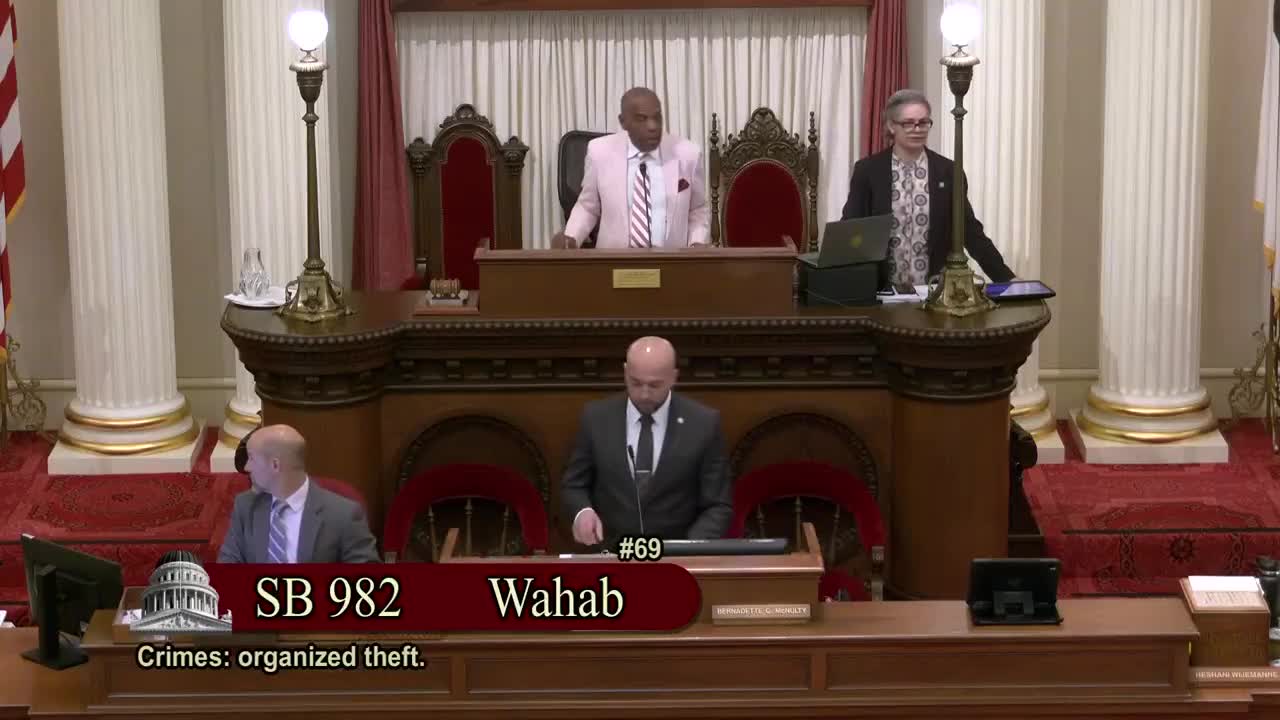 4MIN
Senate Floor
 34SEC
Senate Standing Committee on Appropriations
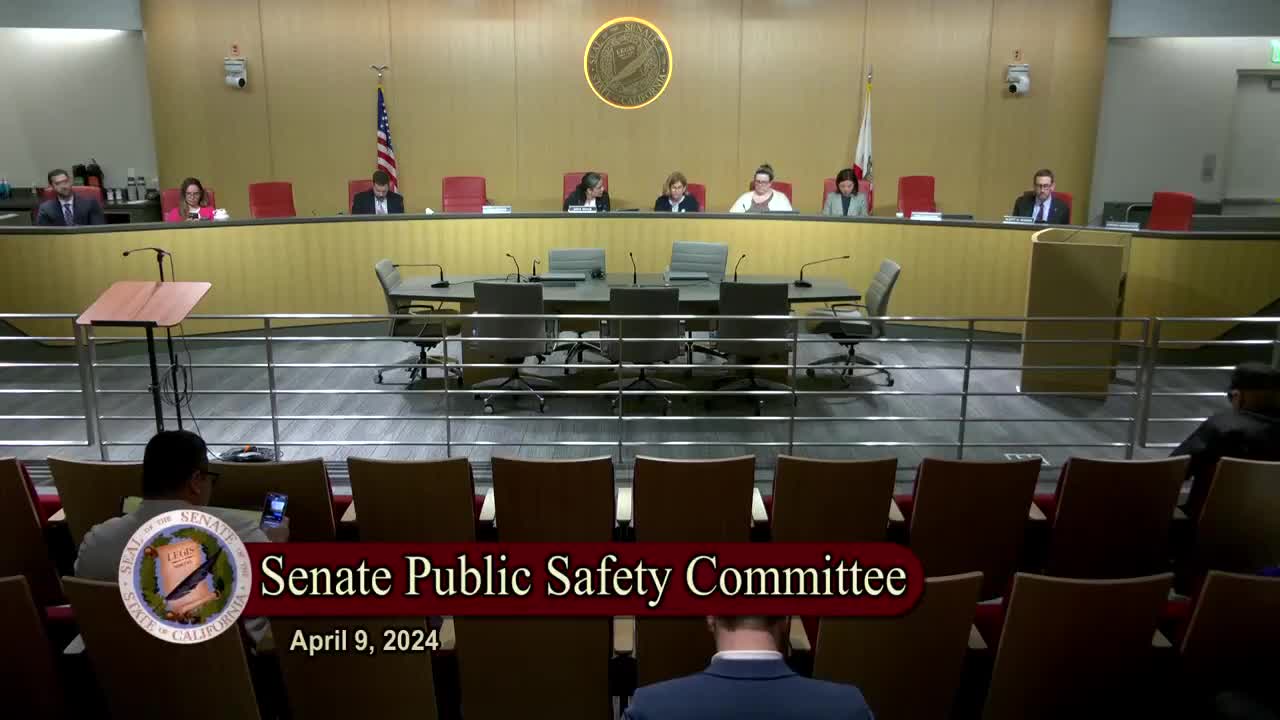 8MIN
Senate Standing Committee on Public Safety


Bill Co-Author(s):