AB 1000: California State University: student success fees.
- Session Year: 2015-2016
- House: Assembly
- Latest Version Date: 2015-10-08
Existing law establishes the California State University, under the administration of the Trustees of the California State University, as one of the segments of public postsecondary education in this state. Existing law authorizes the trustees by rule to require all persons to pay fees, rents, deposits, and charges for services, facilities, or materials provided by the trustees to those persons. Existing law prohibits specified California State University campus-based mandatory fees from being reallocated without an affirmative vote of the majority of the members of either the student body or a specified campus fee advisory committee voting on the fee reallocation, unless the vote that established the fee authorizes an alternative or automatic reallocation mechanism for that fee.
Existing law prohibits a campus or the Chancellor of the California State University from approving a student success fee, as defined, before January 1, 2016. Existing law requires the chancellor to conduct a review of the trustees fee policy related to student success fees, submit recommended changes to the fee policy to the trustees, consider specified information in conducting that review and in preparing his or her recommended changes to the policy, and to submit a report regarding those proposed changes to the Department of Finance and the appropriate fiscal and policy committees of the Legislature, on or before February 1, 2015.
This bill would revise and recast the requirements related to student success fees. The bill would prohibit a campus of the California State University, or the Chancellor of the California State University, from imposing a student success fee, as defined, unless certain requirements are met. The bill would establish procedures for campus elections for the adoption or rescission of student success fees. The bill would require the chancellor to report a summary of the fees adopted or rescinded in the prior academic year, and the uses of proposed and currently implemented fees, annually to the Department of Finance and the Legislature.
(a)(1)A campus of the California State University, or the Chancellor of the California State University, or both, shall not approve a new student success fee or an increase to an existing student success fee, as defined in subdivision (g), before all of the following requirements are satisfied:
(A)The campus undertakes a rigorous consultation process that informs and educates students on the uses, impact, and cost of any proposed student success fee or student success fee increase.
(B)The campus informs its students of all of the following circumstances, which shall apply to these fees:
(i)That, except as provided in clauses (ii) and (iii), a student success fee may be rescinded by a majority vote of the students, as specified in subdivision (c).
(ii)That a student success fee may not be rescinded earlier than six years following the vote to implement the fee.
(iii)If any portion of the student success fee is committed to support a long-term obligation, that portion of the fee may not be rescinded until the obligation has been satisfied.
(C)The campus shall hold a binding student election on the implementation of any proposed student success fees, or any increase to an existing student success fee, and a majority of the student body voting on the fee must vote affirmatively.
(2)Implementation of a fee supported by a majority of the campus student body voting on the fee is contingent upon the final approval of the Chancellor of the California State University.
(3)A student success fee proposal may not be brought before the student body more frequently than once per academic year.
(b)A student success fee in place on January 1, 2016, may be rescinded by a binding student vote under the procedures authorized in subdivision (c) only after at least six years have elapsed following the implementation of the fee.
(c)(1)Student success fees may be rescinded with a binding student vote wherein a simple majority of those students voting vote to rescind the fee. The student vote shall comply with all of the following:
(A)A campus decision to vote is formally approved by the recognized student government.
(B)Rescission vote proposals shall not be brought before the student body more frequently than once per academic year.
(C)In the process of reconsidering a student success fee, and before the student vote occurs, the students shall be informed, if a portion of the fee is supporting a long-term obligation, the dollar amount of that portion, and the date on which the long-term obligation would be satisfied.
(2)No new contractual or other obligation that would be supported by the rescinded student success fee may be entered into following a vote to rescind the fee.
(d)The Chancellor of the California State University shall ensure that all of the following occur on each campus:
(1)There is majority student representation in campus student success fee allocation oversight groups.
(2)There is an annual report from each campus to the chancellor on student success fees.
(3)There is uniform, transparent, online accountability in the decisionmaking process for, and a detailed accounting of, the allocation of student success fees.
(e)The Chancellor of the California State University shall establish appropriate reporting procedures to ensure that a campus is in compliance with the requirements of this section.
(f)The chancellor shall report, by December 1 of each year, to the Department of Finance, and the Legislature pursuant to Section 9795 of the Government Code, a summary of the fees adopted or rescinded in the prior academic year, and the uses of proposed and currently implemented fees.
(g)For purposes of this section, a student success fee is a type of category II campus-based mandatory fee that is required to be paid by a student before that student may enroll or attend a campus of the California State University, as determined by that campus or the Chancellor of the California State University.
(a)(1)A campus of the California State University, or the Chancellor of the California State University, or both, shall not approve a new student success fee or an increase to an existing student success fee, as defined in subdivision (f), (g), before all of the following requirements are satisfied:
(A)The campus undertakes a rigorous consultation process that informs and educates students on the uses, impact, and cost of any proposed student success fee or student success fee increase.
(B)The campus informs its students of all of the following: following circumstances, which shall apply to these fees:
(i)That, except as provided in clauses (ii) and (iii), a student success fee may be rescinded by a majority vote of the students, as specified in subdivision (c).
(ii)That a student success fee may not be rescinded earlier than six years following the vote to implement the fee.
(iii)If any portion of the student success fee is committed to support ongoing or long-term obligations, a long-term obligation, that portion of the fee may not be rescinded until the obligation has been satisfied or the campus has identified, pursuant to the process established in subdivision (e), an alternative funding source for the ongoing or long-term obligation. satisfied.
(C)The campus shall hold a binding student election on the implementation of any proposed student success fees, or any increase to an existing student success fee, and a majority of the student body voting on the fee must vote affirmatively.
(2)Implementation of a fee supported by a majority of the campus student body voting on the fee is contingent upon final approval of the Chancellor of the California State University.
(3)A student success fee proposal may not be brought before the student body more frequently than once per academic year.
(b)A student success fee in place on January 1, 2016, may be rescinded by a binding student vote under the procedures authorized in subdivision (c) only after at least six years have elapsed following the implementation of the fee.
(c)(1)Student success fees may be rescinded with a binding student vote wherein a simple majority of those students voting vote to rescind the fee. The student vote shall comply with all of the following:
(A)A campus decision to vote is formally approved by the recognized student government.
(B)Rescission vote proposals shall not be brought before the student body more frequently than once per academic year.
(C)In the process of reconsidering a student success fee, and before the student vote occurs, the students shall be informed, if a portion of the fee is supporting ongoing or long-term obligations, a long-term obligation, the dollar amount of that portion, and the date on which the ongoing or long-term obligation would be satisfied or rescinded, as described in clause (ii) of subparagraph (B) of paragraph (1) of subdivision (a). satisfied.
(2)No new contractual or other obligation that would be supported by the rescinded student success fee may be entered into following a vote to rescind the fee.
(3)Upon rescission of a student success fee that funds an ongoing or long-term obligation, a campus shall review, pursuant to the process established in subdivision (e), the potential for that obligation to be funded by other university funding sources.
(d)The Chancellor of the California State University shall ensure that all of the following occur on each campus:
(1)There is majority student representation in campus student success fee allocation oversight groups.
(2)There is an annual report from each campus to the chancellor on student success fees.
(3)There is uniform, transparent, online accountability in the decisionmaking process for, and a detailed accounting of, the allocation of student success fees.
(e)The Chancellor of the California State University shall do all of the following:
(1)Define an ongoing or long-term obligation for purposes of this section.
(2)Define a process for a campus to review the possible transition of funding for an ongoing and long-term obligation from a student success fee that has been rescinded to other university funding sources.
(3) Establish
(e)The Chancellor of the California State University shall establish appropriate reporting procedures to ensure that a campus is in compliance with the requirements of this section.
(f)The chancellor shall report, by December 1 of each year, to the Department of Finance, and the Legislature pursuant to Section 9795 of the Government Code, a summary of the fees adopted or rescinded in the prior academic year, and the uses of proposed and currently implemented fees.
(g)For purposes of this section, a student success fee is a type of category II campus-based mandatory fee that is required to be paid by a student before that student may enroll or attend a campus of the California State University, as determined by that campus or the Chancellor of the California State University.
(a)(1)A campus of the California State University, or the Chancellor of the California State University, or both, shall not approve a new student success fee or an increase to an existing student success fee, as defined in subdivision (f), before all of the following requirements are satisfied:
(A)The campus undertakes a rigorous consultation process that informs and educates students on the uses, impact, and cost of any proposed student success fee or student success fee increase.
(B)The campus informs its students of both all of the following:
(i)That, except as provided in clause (ii), clauses (ii) and (iii), a student success fee may be rescinded by a majority vote of the students, as specified in subdivision (c). The
(ii)That a student success fee may not be rescinded earlier than six years following the vote to implement the fee.
(ii)
(iii)If any portion of the student success fee is committed to support ongoing or long-term obligations, that portion of the fee may not be rescinded until the obligation has been satisfied or the campus has identified, pursuant to the process established in subdivision (e), an alternative funding source for the ongoing or long-term obligation.
(C)The campus shall hold a binding student election on the implementation of any proposed student success fees, or any increase to an existing student success fee, and a majority of the student body voting on the fee must vote affirmatively.
(2)Implementation of a fee supported by a majority of the campus student body voting on the fee is contingent upon final approval of the Chancellor of the California State University.
(3)A student success fee proposal may not be brought before the student body more frequently than once per academic year.
(b)A student success fee in place on January 1, 2016, may be rescinded by a binding student vote under the procedures authorized in subdivision (c) only after at least six years have elapsed following the implementation of the fee.
(c)(1)Student success fees may be rescinded with a binding student vote wherein a simple majority of those students voting vote to rescind the fee. The student vote shall comply with all of the following:
(A)A campus decision to vote is formally approved by the recognized student government.
(B)Rescission vote proposals shall not be brought before the student body more frequently than once per academic year.
(C)In the process of reconsidering a student success fee, and before the student vote occurs, the students shall be informed, if a portion of the fee is supporting ongoing or long-term obligations, the dollar amount of that portion, and the date on which the ongoing or long-term obligation would be satisfied or rescinded, as described in clause (ii) of subparagraph (B) of paragraph (1) of subdivision (a).
(2)No new contractual or other obligation that would be supported by the rescinded student success fee may be entered into following a vote to rescind the fee.
(3)Upon rescission of a student success fee that funds an ongoing or long-term obligation, a campus shall review, pursuant to the process established in subdivision (e), the potential for that obligation to be funded by other university funding sources.
(d)The Chancellor of the California State University shall ensure that all of the following occur on each campus:
(1)There is majority student representation in campus student success fee allocation oversight groups.
(2)There is an annual report from each campus to the chancellor on student success fees.
(3)There is uniform, transparent, online accountability in the decisionmaking process for, and a detailed accounting of, the allocation of student success fees.
(e)The Chancellor of the California State University shall do all of the following:
(1)Define an ongoing or long-term obligation for purposes of this section.
(2)Define a process for a campus to review the possible transition of funding for an ongoing and long-term obligation from a student success fee that has been rescinded to other university funding sources.
(3)Establish appropriate reporting procedures to ensure that a campus is in compliance with the requirements of this section.
(f)The chancellor shall report, by December 1 of each year, to the Department of Finance, and the Legislature pursuant to Section 9795 of the Government Code, a summary of the fees adopted or rescinded in the prior academic year, and the uses of proposed and currently implemented fees.
(g)For purposes of this section, a student success fee is a type of category II campus-based mandatory fee that is required to be paid by a student before that student may enroll or attend a campus of the California State University, as determined by that campus or the Chancellor of the California State University.
(a)(1)A campus of the California State University, or the Chancellor of the California State University, or both, shall not approve a new student success fee or an increase to an existing student success fee, as defined in subdivision (f), before all of the following requirements are satisfied:
(A)The campus undertakes a rigorous consultation process that informs and educates students on the uses, impact, and cost of any proposed student success fee or student success fee increase.
(B)The campus informs its students of both of the following:
(i)That, except as provided in clause (ii), a student success fee may be rescinded by a majority vote of the students, as specified in subdivision (c). The fee may not be rescinded earlier than six years following the vote to implement the fee.
(ii)If any portion of the student success fee is committed to support ongoing or long-term obligations, that portion of the fee may not be rescinded until the obligation has been satisfied or, if the obligation extends beyond 12 years, that portion of the fee committed to the obligation shall be rescinded not sooner than 12 years following the vote to implement the fee, by a majority vote of the students as specified in subdivision (c). or the campus has identified, pursuant to the process established in subdivision (e), an alternative funding source for the ongoing or long-term obligation.
(C)The campus shall hold a binding student election on the implementation of any proposed student success fees, or any increase to an existing student success fee, and a majority of the student body voting on the fee must vote affirmatively.
(2)Implementation of a fee supported by a majority of the campus student body voting on the fee is contingent upon final approval of the Chancellor of the California State University.
(3)A student success fee proposal may not be brought before the student body more frequently than once per academic year.
(b)A student success fee in place on January 1, 2016, may be rescinded by a binding student vote under the procedures authorized in subdivision (c) only after at least six years has have elapsed following the vote to implement implementation of the fee.
(c)(1)Student success fees may be rescinded with a binding student vote wherein a simple majority of those students voting vote to rescind the fee. The student vote shall comply with all of the following:
(A)A campus decision to vote is formally approved by the recognized student government.
(B)Rescission vote proposals shall not be brought before the student body more frequently than once per academic year.
(C)In the process of reconsidering a student success fee, and before the student vote occurs, the students shall be informed, if a portion of the fee is supporting ongoing or long-term obligations, the dollar amount of that portion, and the date on which the ongoing or long-term obligation would be satisfied or rescinded, as described in clause (ii) of subparagraph (B) of paragraph (1) of subdivision (a).
(2)No new contractual or other obligation that would be supported by the rescinded student success fee may be entered into following a vote to rescind the fee.
(3)Upon rescission of a student success fee that funds an ongoing or long-term obligation, a campus shall review, pursuant to the process established in subdivision (e), the potential for that obligation to be funded by other university funding sources.
(d)The Chancellor of the California State University shall ensure that all of the following occurs occur on each campus:
(1)There is majority student representation in campus student success fee allocation oversight groups.
(2)There is an annual report from each campus reporting to the chancellor on student success fees.
(3)There is uniform, transparent, online accountability in the decisionmaking process for, and a detailed accounting of of, the allocation of student success fees.
(e)The Chancellor of the California State University shall do all of the following:
(1)Define an ongoing or long-term obligation for purposes of this section.
(2)Define a process for a campus to review the possible transition of funding for an ongoing and long-term obligation from a student success fee that has been rescinded to other university funding sources.
(3)Establish appropriate reporting procedures to ensure that a campus is in compliance with the requirements of this section.
(e)
(f)The chancellor shall report, by December 1 of each year, to the Department of Finance, and the Legislature pursuant to Section 9795 of the Government Code, a summary of the fees adopted or rescinded in the prior academic year, and the uses of proposed and currently implemented fees.
(f)
(g)For purposes of this section, a student success fee is a type of category II campus-based mandatory fee that is required to be paid by a student before that student may enroll or attend a campus of the California State University, as determined by that campus or the Chancellor of the California State University.
(a)A campus of the California State University, or the Chancellor of the California State University, or both, shall not approve a student success fee, as defined in subdivision (d), before January 1, 2016.
(b)During the 201415 fiscal year, the chancellor shall conduct a review of the California State University Student Fee Policy relating to student success fees and recommend to the trustees changes to the fee policy. In conducting the review and preparing recommended changes to the fee policy, the chancellor shall consider all of the following:
(1)The approval process for student success fees, including, but not limited to, the benefit of utilizing a student election or the consultative process in the approval process.
(2)The need for statewide policies governing a student election, the consultative process, or both, for approving a proposed student success fee, including, but not necessarily limited to, policies requiring campuses to issue a voter pamphlet, or other informational document, or both, that provides an objective analysis of the proposed fee, a detailed description of the proposed fee uses, statements for and against the proposed fee action, and a notification to students regarding the dates, times, and locations available to either vote, for purposes of a student election, or confer with campus leadership, for purposes of the consultative process, regarding a proposed fee.
(3)The means to improve transparency and accountability regarding a campus use of student success fee funds for the benefit of members of the campus community, including, but not necessarily limited to, students, faculty, staff, and the general public.
(4)The development of an annual report describing the use of student success fee funds by each campus in the prior academic year, to be posted on each campus Internet Web site.
(5)The approval of a statewide policy to prohibit a campus from implementing a student success fee for a period exceeding five years unless a continuance of that fee is approved by an affirmative vote of the majority of the student body voting, or through the consultative process. Approval to continue an approved fee shall be required every five years.
(6)The impact of student success fees on campuses academic programs and services available for students, including, but not necessarily limited to, low-income students.
(7)A provision for financial assistance to offset the cost of the fee for low-income students.
(c)(1)The chancellor shall report to the Department of Finance and the appropriate fiscal and policy committees of the Legislature, on or before February 1, 2015, regarding the chancellors proposed revisions to the California State University Student Fee Policy related to student success fees.
(2)This subdivision is inoperative on January 1, 2019, pursuant to Section 10231.5 of the Government Code.
(d)For purposes of this section, the following terms have the following meanings:
(1)Low-income student means an undergraduate student who has an expected family contribution, as defined in subdivision (g) of Section 69432.7, at any time during the students matriculation at the institution that would qualify the student to receive a federal Pell Grant. The calculation of a students expected family contribution shall be based on the Free Application for Federal Student Aid (FAFSA) application or an application determined by the California Student Aid Commission to be equivalent to the FAFSA application submitted by that applicant.
(2)A student success fee is a type of category II campus-based mandatory fee that must be paid by a student to enroll or attend a campus of the California State University, as determined by that campus or the Chancellor of the California State University.
SEC. 2.Section 89712 is added to the Education Code, to read:89712.(a)(1)A campus of the California State University, or the Chancellor of the California State University, or both, shall not approve a new student success fee or an increase to an existing student success fee, as defined in subdivision (f), before all of the following requirements are satisfied:
(A)The campus undertakes a rigorous consultation process that informs and educates students on the uses, impact, and cost of any proposed student success fee or student success fee increase.
(B)The campus informs its students of both of the following:
(i)That, except as provided in clause (ii), a student success fee may be rescinded by a majority vote of the students, as specified in subdivision (c). The fee may not be rescinded earlier than six years following the vote to implement the fee.
(ii)If any portion of the student success fee is committed to support ongoing or long-term obligations, that portion of the fee may not be rescinded until the obligation has been satisfied or, if the obligation extends beyond 12 years, that portion of the fee committed to the obligation shall be rescinded not sooner than 12 years following the vote to implement the fee, by a majority vote of the students as specified in subdivision (c).
(C)The campus shall hold a binding student election on the implementation of any proposed student success fees, or any increase to an existing student success fee, and a majority of the student body voting on the fee must vote affirmatively.
(2)Implementation of a fee supported by a majority of the campus student body voting on the fee is contingent upon final approval of the Chancellor of the California State University.
(3)A student success fee proposal may not be brought before the student body more frequently than once per academic year.
(b)A student success fee in place on January 1, 2016, may be rescinded by a binding student vote under the procedures authorized in subdivision (c) only after at least six years has elapsed following the vote to implement the fee.
(c)(1)Student success fees may be rescinded with a binding student vote wherein a simple majority of those students voting vote to rescind the fee. The student vote shall comply with all of the following:
(A)A campus decision to vote is formally approved by the recognized student government.
(B)Rescission vote proposals shall not be brought before the student body more frequently than once per academic year.
(C)In the process of reconsidering a student success fee, and before the student vote occurs, the students shall be informed, if a portion of the fee is supporting ongoing or long-term obligations, the dollar amount of that portion, and the date on which the ongoing or long-term obligation would be satisfied or rescinded, as described in clause (ii) of subparagraph (B) of paragraph (1) of subdivision (a).
(2)No new contractual or other obligation that would be supported by the rescinded student success fee may be entered into following a vote to rescind the fee.
(d)The Chancellor of the California State University shall ensure that all of the following occurs on each campus:
(1)There is majority student representation in campus student success fee allocation oversight groups.
(2)There is annual campus reporting to the chancellor on student success fees.
(3)There is uniform, transparent, online accountability in the decisionmaking process and a detailed accounting of the allocation of student success fees.
(e)The chancellor shall report, by December 1 of each year, to the Department of Finance, and the Legislature pursuant to Section 9795 of the Government Code, a summary of the fees adopted or rescinded in the prior academic year, and the uses of proposed and currently implemented fees.
(f)For purposes of this section, a student success fee is a type of category II campus-based mandatory fee that is required to be paid by a student before that student may enroll or attend a campus of the California State University, as determined by that campus or the Chancellor of the California State University.
|
Date
|
Status
|
|---|---|
| Jun 29, 2015 | In committee: Set, first hearing. Hearing canceled at the request of author. |
| Oct 8, 2015 | Chaptered by Secretary of State - Chapter 636, Statutes of 2015. |
| Oct 8, 2015 | Approved by the Governor. |
| Sep 10, 2015 | Enrolled and presented to the Governor at 4 p.m. |
| Sep 1, 2015 | Senate amendments concurred in. To Engrossing and Enrolling. (Ayes 80. Noes 0.). |
| Sep 1, 2015 | Senate amendments concurred in. To Engrossing and Enrolling. (Ayes 80. Noes 0. Page 2741.). |
| Sep 1, 2015 | Assembly Rule 77 suspended. (Page 2729.) |
| Sep 1, 2015 | Assembly Rule 77 suspended. |
| Aug 31, 2015 | Read third time. Passed. Ordered to the Assembly. (Ayes 40. Noes 0. Page 2300.). |
| Aug 31, 2015 | Read third time. Passed. Ordered to the Assembly. |
| Aug 31, 2015 | In Assembly. Concurrence in Senate amendments pending. May be considered on or after September 2 pursuant to Assembly Rule 77. |
| Aug 25, 2015 | Read second time. Ordered to third reading. |
| Aug 24, 2015 | Read third time and amended. Ordered to second reading. |
| Aug 18, 2015 | Read second time. Ordered to third reading. |
| Aug 17, 2015 | From committee: Be placed on second reading file pursuant to Senate Rule 28.8. |
| Jul 15, 2015 | From committee: Do pass and re-refer to Com. on APPR. (Ayes 9. Noes 0.) (July 15). Re-referred to Com. on APPR. |
| Feb 26, 2015 | Read first time. To print. |
| Jun 11, 2015 | Referred to Com. on ED. |
| Jun 2, 2015 | Read third time. Passed. Ordered to the Senate. (Ayes 79. Noes 0. Page 1757.) |
| Jun 2, 2015 | Read third time. Passed. Ordered to the Senate. |
| Jun 2, 2015 | In Senate. Read first time. To Com. on RLS. for assignment. |
| Jun 1, 2015 | Read second time. Ordered to third reading. |
| May 28, 2015 | Read second time and amended. Ordered returned to second reading. |
| May 28, 2015 | From committee: Amend, and do pass as amended. (Ayes 17. Noes 0.) (May 28). |
| May 13, 2015 | In committee: Set, first hearing. Referred to APPR. suspense file. |
| May 7, 2015 | Re-referred to Com. on APPR. |
| May 6, 2015 | From committee chair, with author's amendments: Amend, and re-refer to Com. on APPR. Read second time and amended. |
| Apr 29, 2015 | Re-referred to Com. on APPR. |
| Apr 28, 2015 | Read second time and amended. |
| Apr 27, 2015 | From committee: Amend, and do pass as amended and re-refer to Com. on APPR. (Ayes 13. Noes 0.) (April 21). |
| Mar 16, 2015 | Referred to Com. on HIGHER ED. |
| Feb 27, 2015 | From printer. May be heard in committee March 29. |
|
Date
|
Description
|
Location
|
Votes
|
|
|---|---|---|---|---|
| Sep 1, 2015 | AB 1000 WEBER Concurrence in Senate Amendments | Assembly Floor |
Passed |
|
| Aug 31, 2015 | Assembly 3rd Reading AB1000 Weber By Leyva | Senate Floor |
Passed |
|
| Jul 15, 2015 | Do pass, but first be re-referred to the Committee on [Appropriations] | Senate Standing Committee on Education |
Passed |
|
| Jun 2, 2015 | AB 1000 WEBER Assembly Third Reading | Assembly Floor |
Passed |
|
| May 28, 2015 | Do pass as amended. | Assembly Standing Committee on Appropriations |
Passed |
|
| Apr 21, 2015 | Do pass as amended and be re-referred to the Committee on [Appropriations] | Assembly Standing Committee on Higher Education |
Passed |
This list shows positions taken on this bill by organizations on the date displayed, which is linked to the original source.
Positions by individuals are not included.
|
Organization
|
Position
|
Date
|
|---|---|---|
| California Federation Of Teachers | ** Support | Aug 31, 2015 |
| California State Student Association | ** Support | Aug 31, 2015 |
| California State University | ** Against | Aug 31, 2015 |
| CSU Stanislaus | * Support | Jul 15, 2015 |
| HIGHER ED. | ** Against | Apr 21, 2015 |
| u California State University | ** Against | Aug 31, 2015 |
AB 1000
Page 3
CONCURRENCE IN SENATE AMENDMENTS
AB 1000
(Weber)
As Amended August 24, 2015
Majority vote
ASSEMBLY: |
79-0 |
June 2, 2015 |
SENATE: |
40-0 |
(August 31, 2015) |
Original Committee Reference: HIGHER ED.
SUMMARY: Establishes various requirements for the implementation and rescission of California State University (CSU) student success fees (fees). Specifically, this bill:
Prohibits a CSU campus or the CSU Chancellor from approving a new student success fee or increasing an existing fee until the campus:
Undertakes a consultation process to inform students on a fee's uses, impacts, and costs.
Holds a binding student election and a majority of students voting vote affirmatively. The fee would then be adopted contingent on final approval by the Chancellor.
Informs students that the fee may be rescinded by a majority vote of the students, but not less than six months after a vote to implement the fee. Rescission is not allowed, however, for the portion of the fee committed to support long-term obligations.
Stipulates that a fee proposal may not be brought before the student body more than once per academic year.
Provides that a success fee in place as of January 1, 2016, may be rescinded by student vote only after six years have elapsed following implementation.
Requires the Chancellor to:
Ensure there is majority student representation in success fee oversight groups, an annual report to the chancellor from each campus on its success fee, and a transparent process for allocation of success fee revenues.
Report annually on December 1, to the Legislature and the Department of Finance, a summary of fees adopt or rescinded in the prior academic year, and on the uses of proposed and implemented fees.
The Senate amendments add a coauthor and make another non-substantive change.
EXISTING LAW:
Prohibits a campus-based mandatory student fee at the CSU established through a student vote from being reallocated without an affirmative student vote unless a majority of the members of either the student body or a campus fee advisory committee voting on the fee support the reallocation and the fee authorized the alternative allocation mechanism. (Education Code Section 89711)
Prohibits a CSU campus or CSU Chancellor from approving a student success fee before January 1, 2016, and requires the CSU Chancellor to conduct a review and report on student success fees currently in place, as follows. (Education Code Section 89712)
Requires, during the 2014-15 fiscal year, the CSU Chancellor to conduct a review of the CSU Student Fee Policy relating to student success fees and recommend to the trustees changes to the fee policy; and requires the review to consider:
The approval process for student success fees, including the benefit of using a student election or the consultative process in the approval process;
The need for statewide policies governing a student election, the consultative process, or both, for approving a proposed student success fee;
The means to improve transparency and accountability regarding a campus' use of student success fee funds for the benefit of members of the campus' community;
The development of an annual report describing the use of student success fee funds by each campus in the prior academic year, to be posted on each campus' Internet Web site;
The approval of a statewide policy to prohibit a campus from implementing a student success fee for a period exceeding five years unless a continuance of that fee is approved by an affirmative vote of the majority of the student body voting;
The impact of student success fees on campuses' academic programs and services available for students, including, but not necessarily limited to, low-income students; and,
A provision for financial assistance to offset the cost of the fee for low-income students.
Requires the CSU Chancellor to report to the Department of Finance and the appropriate fiscal and policy committees by February 1, 2015.
FISCAL EFFECT: According to the Senate Appropriations Committee, pursuant to Senate Rule 28.8, negligible state costs.
COMMENTS: A number of CSU campuses have adopted student success fees, which, in some cases, substantially increase the cost of attendance at a CSU. Since 2008, 12 of the 23 CSU campuses have adopted such fees. These fees, which were adopted largely in response to significant state funding reductions, are required to be paid by students enrolling in these campuses. Concern over the amount of these fees, the process used for adoption on campuses, and the impact of the fees on low-income students led to the Legislature placing an 18-month moratorium on new fees and establishing CSU reporting requirements in the 2013-14 Budget Act education trailer bill (SB 860 (Budget and Fiscal Review Committee), Chapter 34, Statutes of 2014).
In June 2014, the CSU Board of Trustees (BOT) formed a working group to study the role, process and enactment of student success fees. The working group found that fees had been used in a number of ways by the different campuses. At some campuses, fees support technology, campus-wide WiFi, library hours, veteran services, career services, athletics and additional otherwise unfunded services. Some campuses, however, have used these fees to fund educational needs that have traditionally been supported by tuition and state appropriation such as faculty, advisors, counselors and tutors, and to provide more courses.
According to the working group, of the 12 campuses with fees, only two had referendums where a majority of students voted in favor of the fee, and one of those two allowed students to vote only if they attended alternative consultation meetings about the proposal. At a third campus students voted to rejected the proposed fee and the fee was imposed despite the student rejection. At remaining campuses "alternative consultation" meetings were used instead of student votes.
At the January 27-28, 2015, meeting of the CSU Board of Trustees (Trustees), the Trustees adopted a resolution memorializing the final recommendations of the working group. This bill is largely consistent with the requirements of the CSU BOT resolution.
Analysis Prepared by: Laura Metune / HIGHER ED. / (916) 319-3960 FN: 0001850
AB 1000
Page 7
|
Office of Senate Floor Analyses (916) 651-1520 Fax: (916) 327-4478 |
THIRD READING
Bill No: AB 1000
Amended: 8/24/15 in Senate
SENATE EDUCATION COMMITTEE: 9-0, 7/15/15
AYES: Liu, Runner, Block, Hancock, Leyva, Mendoza, Monning, Pan, Vidak
SENATE APPROPRIATIONS COMMITTEE: Senate Rule 28.8
ASSEMBLY FLOOR: 79-0, 6/2/15 - See last page for vote
SUBJECT: California State University: student success fees
DIGEST: This bill deletes existing provisions and establishes new requirements regarding the implementation, rescission and reporting, of student success fees at the California State University (CSU).
Senate Floor Amendments of 8/24/15 add a coauthor.
Existing law:
Defines “student success fee” as a type of category II campus-based mandatory fee that must be paid by a student to enroll or attend a campus of the CSU, as determined by that campus or the Chancellor of the CSU.
Prohibits a CSU campus, or the Chancellor of the CSU, or both, from approving a student success fee, before January 1, 2016, and requires the Chancellor to review the CSU Student Fee Policy relating to student success fees and to recommend any changes to the trustees during the 2014-15 fiscal year. Existing law requires a report to the Department of Finance (DOF) and the appropriate fiscal and policy committees of the Legislature, on or before February 1, 2015, regarding the Chancellor’s proposed revisions to these policies.
Requires the Chancellor’s review and recommendations to consider:
The approval process and the benefit of utilizing a student election or the consultative process in the approval process.
The need for statewide policies governing a student election, the consultative process, or both, for approving a proposed student success fee.
The means to improve transparency and accountability regarding a campus’ use of student success fee funds.
The development of an annual report describing the use of student success fee funds by each campus.
The approval of a statewide policy to prohibit a campus from implementing a student success fee for a period exceeding five years unless a continuance of that fee is approved by an affirmative vote of the majority of the student body voting, or through the consultative process.
The impact of student success fees on campuses’ academic programs and services available for students.
The provision for financial assistance to offset the cost of the fee for low-income students. (Education Code § 89712)
This bill deletes existing provisions and establishes the following new requirements regarding student success fees:
Prohibits a campus of the CSU, or the Chancellor of the CSU or both from approving, or increasing an existing, student success fee before doing all of the following:
Undertaking a rigorous consultation process that informs and educates students on the uses, impact and cost of the proposed fee or fee increase.
Informing students that a student fee may be rescinded by a majority vote of the students, but may not be rescinded earlier than six years following the vote to implement the fee, except that any portion of a fee committed to a long-term obligation may not be rescinded until the obligation has been satisfied.
Holding a binding student election in which a majority of the student body votes to implement or increase a student success fee, contingent upon final approval by the Chancellor of the CSU.
Limiting the bringing of such a proposal to the student body to once per academic year.
Authorizes student success fees to be rescinded with a binding student vote of a simple majority of the students voting. It requires that:
a) A student success fee in place on January 1, 2016 be rescinded by a binding student vote only after six years have elapsed following the implementation of the fee.
b) For rescission of all other student success fees it:
i) Provides that the fee may be rescinded by a simple majority of the voting students.
ii) Requires that a student vote be formally approved by the
recognized student government, that rescission vote proposals be
brought to students only once per academic year, and that prior to
reconsidering a fee and before a vote that students be informed of
specified information regarding the use of the fee for long-term
obligations.
Requires the Chancellor of the CSU to:
Ensure that any campus fee allocation oversight group have majority student representation, that each campus prepare an annual report, that there is uniform, transparent, online accountability in the decision making process for, detailed accounting of, the allocation of student success fees.
Establish appropriate reporting procedures to ensure compliance with requirements.
Report by December 1 or each year, a summary of the fees adopted or rescinded in the prior academic year and the uses of proposed and implemented fees.
Defines a "student success fee" as a category II campus based mandatory fee that must be paid by a student to enroll or attend a CSU campus, as specified.
Comments
Need for the bill. According to the author, this bill is the next step in the process of addressing student success fees at the CSU. Its provisions are generally based upon a recently adopted resolution by the CSU Trustees regarding student success fees. The author states that by putting into statute many of these recommendations, the Legislature can ensure that students will continue to have a voice in fees that directly affect them.
History. In an attempt to make-up for budget cuts experienced during the recession, a number of CSU campuses adopted student success fees, which, in some cases, substantially increased the cost of attendance at a CSU. Since 2011, 12 of the 23 CSU campuses had adopted such fees. The process for determining these fees differed at each campus. According to the author, at some campuses this fee results in an additional cost of $2000 annually.
As part of the 2014-15 Budget Act, SB 860 (Committee on Budget and Fiscal Review, Chapter 34, Statutes of 2014) was enacted to prohibit a CSU campus, or the Chancellor, from approving a student success fee before January 1, 2016, and to require the Chancellor to conduct a review of, and recommend changes to, the CSU student fee policy during the 2014-15 fiscal year. The Chancellor was required to report to the DOF and the appropriate fiscal and policy committees of the Legislature, on February 1, 2015, regarding proposed revisions to the CSU student fee policy related to student success fees.
Related report. In compliance with the requirements of SB 860, the CSU issued its report January 30, 2015 summarizing the process and findings of the Student Success Fee Working Group (Working Group) and the recommendations of the Trustees. In addition, at its January 27-28 meeting the Trustees adopted a resolution memorializing the final recommendations of the Working Group which required all the following:
A binding student vote, prior to the implementation of any proposed new student success fee, and a rigorous consultation process prior to the vote, to educate students on uses, impact, and cost and to inform students that a fee that supports ongoing and or long-term obligations will remain in place until the obligation is satisfied regardless of a subsequent vote to rescind the fee.
All student success fees currently in place remain unchanged, however a new addition to an existing fee must be approved by a binding student vote, the campus must receive approval on the process for approval from the CSU Chancellor's Office, and a fee proposal may only be brought to the student body once per academic year.
Student success fees accepted by a majority of students voting may not be implemented without the approval of the CSU Chancellor and the campus president, and if for a proposed use historically covered by tuition and state funding, the Chancellor is required to consult with the Board of Trustees before granting final approval.
Student success fees may be rescinded at any time after six years with another binding majority student vote, except that student success fees supporting ongoing and long-term obligations may not be rescinded until the obligation is satisfied. Current student success fees may not be rescinded until after January 1, 2021.
Student success fee implementation and fee rescinding proposals may only be brought before the student body once per academic year.
Each campus is required to have transparent, online accountability protocols that clarify the decision process and allocation of the student success fees, with annual reporting to the Chancellor by October 15th, and any campus advisory group on student success fees is required to include a majority student representation.
This bill is generally consistent with the provisions of the resolution adopted by the Trustees.
Existing student success fees. Existing law prohibits the adoption of any new student success fees until January 1, 2016. As part of the report required by SB 860, the CSU was required to examine the uses and processes related to existing fees, and was specifically tasked with reviewing financial aid considerations for low-income students. The Trustees formed a working group to study the role, process, and enactment of these fees, as well as make recommendations regarding their future use.
According to the CSU, the Working Group determined that these fees had been used for new technology, campus-wide Wi-Fi, library hours, veteran services, career services, athletics, and additional benefits for students. While one campus rejected the use of these fees for purposes historically covered by tuition and state funding, other campuses used fees for purposes of funding educational needs traditionally supported by these sources, including to hire additional faculty, advisors, counselors, tutors, and to provide more courses. The Working Group recommended no policy changes relative to financial aid to offset costs for low-income students as they found that there is sufficient coverage through a variety of private, institutional, state, and federal financial aid programs.
In addition, of the 12 campuses with success fees, two had referendums, although one of these allowed students to vote only if they attended alternative consultation meetings about the fee proposal. A third campus imposed a fee without a campus-wide referendum and despite a vote by the Student Fee Advisory Committee rejecting the proposed fee.
FISCAL EFFECT: Appropriation: No Fiscal Com.: Yes Local: No
California Federation of Teachers
California State Student Association
OPPOSITION: (Verified 8/17/15)
California State University
ASSEMBLY FLOOR: 79-0, 6/2/15
AYES: Achadjian, Alejo, Travis Allen, Baker, Bigelow, Bloom, Bonilla, Bonta, Brough, Brown, Burke, Calderon, Campos, Chang, Chau, Chiu, Chu, Cooley, Cooper, Dababneh, Dahle, Daly, Dodd, Eggman, Frazier, Beth Gaines, Gallagher, Cristina Garcia, Eduardo Garcia, Gatto, Gipson, Gomez, Gonzalez, Gordon, Gray, Grove, Hadley, Harper, Roger Hernández, Holden, Irwin, Jones, Jones-Sawyer, Kim, Lackey, Levine, Linder, Lopez, Low, Maienschein, Mathis, Mayes, McCarty, Medina, Melendez, Mullin, Nazarian, Obernolte, O'Donnell, Olsen, Patterson, Perea, Quirk, Rendon, Ridley-Thomas, Rodriguez, Salas, Santiago, Steinorth, Mark Stone, Thurmond, Ting, Wagner, Waldron, Weber, Wilk, Williams, Wood, Atkins
NO VOTE RECORDED: Chávez
Prepared by: Kathleen Chavira / ED. / (916) 651-4105
8/25/15 15:46:10
AB 1000 (Weber) Page 6 of 6
SENATE COMMITTEE ON EDUCATION
Senator Carol Liu, Chair
2015 - 2016 Regular
Bill No: AB 1000
Author: |
Weber |
||
Version: |
May 28, 2015 Hearing Date: July 15, 2015 |
||
Urgency: |
No |
Fiscal: |
Yes |
Consultant: |
Kathleen Chavira |
||
Subject: California State University: student success fees
SUMMARY
This bill deletes existing provisions and establishes new requirements regarding the implementation, rescission and reporting, of student success fees at the California State University (CSU).
BACKGROUND
Existing law defines “student success fee” as a type of category II campus-based mandatory fee that must be paid by a student to enroll or attend a campus of the CSU, as determined by that campus or the Chancellor of the CSU.
Existing law prohibits a CSU campus, or the Chancellor of CSU, or both, from approving a student success fee, before January 1, 2016, and requires the Chancellor to review the CSU Student Fee Policy relating to student success fees and to recommend any changes to the trustees during the 2014-15 fiscal year. Existing law requires a report to the Department of Finance and the appropriate fiscal and policy committees of the Legislature, on or before February 1, 2015, regarding the chancellor’s proposed revisions to these policies.
Existing law requires the Chancellor’s review and recommendations to consider:
The approval process and the benefit of utilizing a student election or the consultative process in the approval process.
The need for statewide policies governing a student election, the consultative process, or both, for approving a proposed student success fee.
The means to improve transparency and accountability regarding a campus’ use of student success fee funds.
The development of an annual report describing the use of student success fee funds by each campus.
The approval of a statewide policy to prohibit a campus from implementing a student success fee for a period exceeding five years unless a continuance of that fee is approved by an affirmative vote of the majority of the student body voting, or through the consultative process.
The impact of student success fees on campuses’ academic programs and services available for students.
The provision for financial assistance to offset the cost of the fee for low-income students. (Education Code § 89712)
ANALYSIS
This bill deletes existing provisions and establishes the following new requirements regarding student success fees:
Prohibits a campus of the California State University (CSU), or the Chancellor of the CSU or both from approving, or increasing an existing, student success fee before doing all of the following:
Undertaking a rigorous consultation process that informs and educates students on the uses, impact and cost of the proposed fee or fee increase.
Informing students that a student fee may be rescinded by a majority vote of the students, but may not be rescinded earlier than six years following the vote to implement the fee, except that any portion of a fee committed to a long-term obligation may not be rescinded until the obligation has been satisfied.
Holding a binding student election in which a majority of the student body votes to implement or increase a student success fee, contingent upon final approval by the Chancellor of the CSU.
Limiting the bringing of such a proposal to the student body to once per academic year.
Authorizes student success fees to be rescinded with a binding student vote of a simple majority of the students voting. It requires that:
A student success fee in place on January 1, 2016 be rescinded by a binding student vote only after six years have elapsed following the implementation of the fee.
For rescission of all other student success fees it:
Provides that the fee may be rescinded by a simple majority of the voting students.
Requires that a student vote be formally approved by the recognized student government, that rescission vote proposals be brought to students only once per academic year, and that prior to reconsidering a fee and before a vote that students be informed of specified information regarding the use of the fee for long-term obligations.
Requires the Chancellor of the CSU to:
Ensure that any campus fee allocation oversight group have majority student representation, that each campus prepare an annual report, that there is uniform, transparent, online accountability in the decision making process for, detailed accounting of, the allocation of student success fees.
Establish appropriate reporting procedures to ensure compliance with requirements.
Report by December 1 or each year, a summary of the fees adopted or rescinded in the prior academic year and the uses of proposed and implemented fees.
Defines a "student success fee" as a category II campus based mandatory fee that must be paid by a student to enroll or attend a California State University (CSU) campus, as specified.
STAFF COMMENTS
Need for the bill. According to the author, this bill is the next step in the process of addressing student success fees at the CSU. Its provisions are generally based upon a recently adopted resolution by the CSU Trustees regarding student success fees. The author states that by putting into statute many of these recommendations, the Legislature can ensure that students will continue to have a voice in fees that directly affect them.
History. In an attempt to make-up for budget cuts experienced during the recession, a number of CSU campuses adopted student success fees, which, in some cases, substantially increased the cost of attendance at a CSU. Since 2011, 12 of the 23 CSU campuses had adopted such fees. The process for determining these fees differed at each campus. According to the author, at some campuses this fee results in an additional cost of $2000 annually.
As part of the 2014-15 Budget Act, SB 850 (Chapter 34, Statutes of 2014) was enacted to prohibit a CSU campus, or the Chancellor, from approving a student success fee before January 1, 2016, and to require the Chancellor to conduct a review of, and recommend changes to, the CSU student fee policy during the 2014-15 fiscal year. The Chancellor was required to report to the Department of Finance (DOF) and the appropriate fiscal and policy committees of the Legislature, on February 1, 2015, regarding proposed revisions to the CSU student fee policy related to student success fees.
Related Report. In compliance with the requirements of SB 860, the CSU issued its report January 30, 2015 summarizing the process and findings of the Student Success Fee Working Group and the recommendations of the Trustees. In addition, at its January 27-28 meeting the Trustees adopted a resolution memorializing the final recommendations of the working group which required all the following:
A binding student vote, prior to the implementation of any proposed new student success fee, and a rigorous consultation process prior to the vote, to educate students on uses, impact, and cost and to inform students that a fee that supports ongoing and or long-term obligations will remain in place until the obligation is satisfied regardless of a subsequent vote to rescind the fee.
All student success fees currently in place remain unchanged, however a new addition to an existing fee must be approved by a binding student vote, the campus must receive approval on the process for approval from the CSU Chancellor's Office, and a fee proposal may only be brought to the student body once per academic year.
Student success fees accepted by a majority of students voting may not be implemented without the approval of the California State University (CSU) Chancellor and the campus president, and if for a proposed use historically covered by tuition and state funding, the Chancellor is required to consult with the Board of Trustees before granting final approval.
Student success fees may be rescinded at any time after six years with another binding majority student vote, except that student success fees supporting ongoing and long-term obligations may not be rescinded until the obligation is satisfied. Current student success fees may not be rescinded until after January 1, 2021.
Student success fee implementation and fee rescinding proposals may only be brought before the student body once per academic year.
Each campus is required to have transparent, online accountability protocols that clarify the decision process and allocation of the student success fees, with annual reporting to the Chancellor by October 15th, and any campus advisory group on student success fees is required to include a majority student representation.
This bill is generally consistent with the provisions of the resolution adopted by the Trustees.
Existing student success fees. Current law prohibits the adoption of any new student success fees until January 1, 2016. As part of the report required by SB 850, the CSU was required to examine the uses and processes related to existing fees, and was specifically tasked with reviewing financial aid considerations for low-income students. The Trustees formed a working group to study the role, process, and enactment of these fees, as well as make recommendations regarding their future use.
According to the CSU, the Working Group determined that these fees had been used for new technology, campus-wide Wi-Fi, library hours, veteran services, career services, athletics, and additional benefits for students. While one campus rejected the use of these fees for purposes historically covered by tuition and state funding, other campuses used fees for purposes of funding educational needs traditionally supported by these sources, including to hire additional faculty, advisors, counselors, tutors, and to provide more courses. The working group recommended no policy changes relative to financial aid to offset costs for low-income students as they found that there is sufficient coverage through a variety of private, institutional, state, and federal financial aid programs.
In addition, of the 12 campuses with success fees, two had referendums, although one of these allowed students to vote only if they attended alternative consultation meetings about the fee proposal. A third campus imposed a fee without a campus-wide referendum and despite a vote by the Student Fee Advisory Committee rejecting the proposed fee.
Student Success Fees. According to the California State University (CSU), student success fees are category 2 campus-based mandatory fees. This bill’s provisions maintain the definition to codify it as one of five categories of fees which have been established by CSU Executive Order 1054, and the provisions of this bill, as well the Trustees resolution only affect category 2 campus-based fees. The chart below summaries these fees.
CSU FEES |
||
Types of Fees |
Description |
Examples |
Category 1 |
Systemwide mandatory fees that must be paid to apply to, enroll in, or attend the university, or to pay the full cost of instruction required of some students by statute |
Tuition fee, non-resident tuition fee, application fee, professional program fee |
Category 2 |
Campus mandatory fees that must be paid to enroll in or attend the university |
Health facilities fee, health services fee, university union fee, associated student body fee, materials services and facilities fee, instructionally related activities fee, orientation fee, athletics recreation and transit fees |
Category 3 |
Fees associated with state-supported courses. Specifically for materials and services used in concert with the basic foundation of an academic course offering |
Course fees, field trip fees |
Category 4 |
Fees paid to receive materials services, or for the use of facilities provided by the university; and fees or deposit to reimburse the university for additional costs resulting from dishonored payments, late submissions, or misuse of property as a security or guaranty |
Late fees, library fees, diploma fees, check return fees, etc. |
Category 5 |
Fees paid to self-support programs |
Parking fees/fines, housing fees/fines and continuing or extended education fees/fines, student fees and fines |
Prior legislation. AB 938 (Weber) as amended by this Committee, required that a campus of the CSU that has implemented a “student success fee” must use its institutional aid to cover the cost of these fees for low-income students, as defined. Upon returning to the Assembly for concurrence, AB 938 was referred to the Assembly Higher Education Committee, but was never heard at the request of the author.
SUPPORT
California Federation of Teachers
California State Student Association
OPPOSITION
California State University
-- END --
AB 1000
Page 7
|
Office of Senate Floor Analyses (916) 651-1520 Fax: (916) 327-4478 |
THIRD READING
Bill No: AB 1000
Amended: 5/28/15 in Assembly
SENATE EDUCATION COMMITTEE: 9-0, 7/15/15
AYES: Liu, Runner, Block, Hancock, Leyva, Mendoza, Monning, Pan, Vidak
SENATE APPROPRIATIONS COMMITTEE: Senate Rule 28.8
ASSEMBLY FLOOR: 79-0, 6/2/15 - See last page for vote
SUBJECT: California State University: student success fees
DIGEST: This bill deletes existing provisions and establishes new requirements regarding the implementation, rescission and reporting, of student success fees at the California State University (CSU).
Existing law:
Defines “student success fee” as a type of category II campus-based mandatory fee that must be paid by a student to enroll or attend a campus of the CSU, as determined by that campus or the Chancellor of the CSU.
Prohibits a CSU campus, or the Chancellor of the CSU, or both, from approving a student success fee, before January 1, 2016, and requires the Chancellor to review the CSU Student Fee Policy relating to student success fees and to recommend any changes to the trustees during the 2014-15 fiscal year. Existing law requires a report to the Department of Finance (DOF) and the appropriate fiscal and policy committees of the Legislature, on or before February 1, 2015, regarding the Chancellor’s proposed revisions to these policies.
Requires the Chancellor’s review and recommendations to consider:
The approval process and the benefit of utilizing a student election or the consultative process in the approval process.
The need for statewide policies governing a student election, the consultative process, or both, for approving a proposed student success fee.
The means to improve transparency and accountability regarding a campus’ use of student success fee funds.
The development of an annual report describing the use of student success fee funds by each campus.
The approval of a statewide policy to prohibit a campus from implementing a student success fee for a period exceeding five years unless a continuance of that fee is approved by an affirmative vote of the majority of the student body voting, or through the consultative process.
The impact of student success fees on campuses’ academic programs and services available for students.
The provision for financial assistance to offset the cost of the fee for low-income students. (Education Code § 89712)
This bill deletes existing provisions and establishes the following new requirements regarding student success fees:
Prohibits a campus of the CSU, or the Chancellor of the CSU or both from approving, or increasing an existing, student success fee before doing all of the following:
Undertaking a rigorous consultation process that informs and educates students on the uses, impact and cost of the proposed fee or fee increase.
Informing students that a student fee may be rescinded by a majority vote of the students, but may not be rescinded earlier than six years following the vote to implement the fee, except that any portion of a fee committed to a long-term obligation may not be rescinded until the obligation has been satisfied.
Holding a binding student election in which a majority of the student body votes to implement or increase a student success fee, contingent upon final approval by the Chancellor of the CSU.
Limiting the bringing of such a proposal to the student body to once per academic year.
Authorizes student success fees to be rescinded with a binding student vote of a simple majority of the students voting. It requires that:
a) A student success fee in place on January 1, 2016 be rescinded by a binding student vote only after six years have elapsed following the implementation of the fee.
b) For rescission of all other student success fees it:
i) Provides that the fee may be rescinded by a simple majority of the voting students.
ii) Requires that a student vote be formally approved by the
recognized student government, that rescission vote proposals be
brought to students only once per academic year, and that prior to
reconsidering a fee and before a vote that students be informed of
specified information regarding the use of the fee for long-term
obligations.
Requires the Chancellor of the CSU to:
Ensure that any campus fee allocation oversight group have majority student representation, that each campus prepare an annual report, that there is uniform, transparent, online accountability in the decision making process for, detailed accounting of, the allocation of student success fees.
Establish appropriate reporting procedures to ensure compliance with requirements.
Report by December 1 or each year, a summary of the fees adopted or rescinded in the prior academic year and the uses of proposed and implemented fees.
Defines a "student success fee" as a category II campus based mandatory fee that must be paid by a student to enroll or attend a CSU campus, as specified.
Comments
Need for the bill. According to the author, this bill is the next step in the process of addressing student success fees at the CSU. Its provisions are generally based upon a recently adopted resolution by the CSU Trustees regarding student success fees. The author states that by putting into statute many of these recommendations, the Legislature can ensure that students will continue to have a voice in fees that directly affect them.
History. In an attempt to make-up for budget cuts experienced during the recession, a number of CSU campuses adopted student success fees, which, in some cases, substantially increased the cost of attendance at a CSU. Since 2011, 12 of the 23 CSU campuses had adopted such fees. The process for determining these fees differed at each campus. According to the author, at some campuses this fee results in an additional cost of $2000 annually.
As part of the 2014-15 Budget Act, SB 860 (Committee on Budget and Fiscal Review, Chapter 34, Statutes of 2014) was enacted to prohibit a CSU campus, or the Chancellor, from approving a student success fee before January 1, 2016, and to require the Chancellor to conduct a review of, and recommend changes to, the CSU student fee policy during the 2014-15 fiscal year. The Chancellor was required to report to the DOF and the appropriate fiscal and policy committees of the Legislature, on February 1, 2015, regarding proposed revisions to the CSU student fee policy related to student success fees.
Related report. In compliance with the requirements of SB 860, the CSU issued its report January 30, 2015 summarizing the process and findings of the Student Success Fee Working Group (Working Group) and the recommendations of the Trustees. In addition, at its January 27-28 meeting the Trustees adopted a resolution memorializing the final recommendations of the Working Group which required all the following:
A binding student vote, prior to the implementation of any proposed new student success fee, and a rigorous consultation process prior to the vote, to educate students on uses, impact, and cost and to inform students that a fee that supports ongoing and or long-term obligations will remain in place until the obligation is satisfied regardless of a subsequent vote to rescind the fee.
All student success fees currently in place remain unchanged, however a new addition to an existing fee must be approved by a binding student vote, the campus must receive approval on the process for approval from the CSU Chancellor's Office, and a fee proposal may only be brought to the student body once per academic year.
Student success fees accepted by a majority of students voting may not be implemented without the approval of the CSU Chancellor and the campus president, and if for a proposed use historically covered by tuition and state funding, the Chancellor is required to consult with the Board of Trustees before granting final approval.
Student success fees may be rescinded at any time after six years with another binding majority student vote, except that student success fees supporting ongoing and long-term obligations may not be rescinded until the obligation is satisfied. Current student success fees may not be rescinded until after January 1, 2021.
Student success fee implementation and fee rescinding proposals may only be brought before the student body once per academic year.
Each campus is required to have transparent, online accountability protocols that clarify the decision process and allocation of the student success fees, with annual reporting to the Chancellor by October 15th, and any campus advisory group on student success fees is required to include a majority student representation.
This bill is generally consistent with the provisions of the resolution adopted by the Trustees.
Existing student success fees. Existing law prohibits the adoption of any new student success fees until January 1, 2016. As part of the report required by SB 860, the CSU was required to examine the uses and processes related to existing fees, and was specifically tasked with reviewing financial aid considerations for low-income students. The Trustees formed a working group to study the role, process, and enactment of these fees, as well as make recommendations regarding their future use.
According to the CSU, the Working Group determined that these fees had been used for new technology, campus-wide Wi-Fi, library hours, veteran services, career services, athletics, and additional benefits for students. While one campus rejected the use of these fees for purposes historically covered by tuition and state funding, other campuses used fees for purposes of funding educational needs traditionally supported by these sources, including to hire additional faculty, advisors, counselors, tutors, and to provide more courses. The Working Group recommended no policy changes relative to financial aid to offset costs for low-income students as they found that there is sufficient coverage through a variety of private, institutional, state, and federal financial aid programs.
In addition, of the 12 campuses with success fees, two had referendums, although one of these allowed students to vote only if they attended alternative consultation meetings about the fee proposal. A third campus imposed a fee without a campus-wide referendum and despite a vote by the Student Fee Advisory Committee rejecting the proposed fee.
FISCAL EFFECT: Appropriation: No Fiscal Com.: Yes Local: No
California Federation of Teachers
California State Student Association
OPPOSITION: (Verified 8/17/15)
California State University
ASSEMBLY FLOOR: 79-0, 6/2/15
AYES: Achadjian, Alejo, Travis Allen, Baker, Bigelow, Bloom, Bonilla, Bonta, Brough, Brown, Burke, Calderon, Campos, Chang, Chau, Chiu, Chu, Cooley, Cooper, Dababneh, Dahle, Daly, Dodd, Eggman, Frazier, Beth Gaines, Gallagher, Cristina Garcia, Eduardo Garcia, Gatto, Gipson, Gomez, Gonzalez, Gordon, Gray, Grove, Hadley, Harper, Roger Hernández, Holden, Irwin, Jones, Jones-Sawyer, Kim, Lackey, Levine, Linder, Lopez, Low, Maienschein, Mathis, Mayes, McCarty, Medina, Melendez, Mullin, Nazarian, Obernolte, O'Donnell, Olsen, Patterson, Perea, Quirk, Rendon, Ridley-Thomas, Rodriguez, Salas, Santiago, Steinorth, Mark Stone, Thurmond, Ting, Wagner, Waldron, Weber, Wilk, Williams, Wood, Atkins
NO VOTE RECORDED: Chávez
Prepared by: Kathleen Chavira / ED. / (916) 651-4105
8/19/15 20:39:08
AB 1000
Page 3
ASSEMBLY THIRD READING
AB 1000
(Weber)
As Amended May 28, 2015
Majority vote
Committee |
Votes |
Ayes |
Noes |
Higher Education |
13-0 |
Medina, Baker, Bloom, Chávez, Harper, Irwin, Jones-Sawyer, Levine, Linder, Low, Santiago, Weber, Williams |
|
Appropriations |
17-0 |
Gomez, Bigelow, Bonta, Calderon, Chang, Daly, Eggman, Gallagher, Eduardo Garcia, Gordon, Holden, Jones, Quirk, Rendon, Wagner, Weber, Wood |
|
SUMMARY: Establishes various requirements for the implementation and rescission of California State University (CSU) student success fees (fees). Specifically, this bill:
Prohibits a CSU campus or the CSU Chancellor from approving a new student success fee or increasing an existing fee until the campus:
Undertakes a consultation process to inform students on a fee's uses, impacts, and costs.
Holds a binding student election and a majority of students voting vote affirmatively. The fee would then be adopted contingent on final approval by the Chancellor.
Informs students that the fee may be rescinded by a majority vote of the students, but not less than six months after a vote to implement the fee. Rescission is not allowed, however, for the portion of the fee committed to support long-term obligations.
Stipulates that a fee proposal may not be brought before the student body more than once per academic year.
Provides that a success fee in place as of January 1, 2016, may be rescinded by student vote only after six years have elapsed following implementation.
Requires the Chancellor to:
Ensure there is majority student representation in success fee oversight groups, an annual report to the chancellor from each campus on its success fee, and a transparent process for allocation of success fee revenues.
Report annually on December 1, to the Legislature and the Department of Finance, a summary of fees adopt or rescinded in the prior academic year, and on the uses of proposed and implemented fees.
EXISTING LAW:
Prohibits a campus-based mandatory student fee at the CSU established through a student vote from being reallocated without an affirmative student vote unless a majority of the members of either the student body or a campus fee advisory committee voting on the fee support the reallocation and the fee authorized the alternative allocation mechanism. (Education Code Section 89711)
Prohibits a CSU campus or CSU Chancellor from approving a student success fee before January 1, 2016, and requires the CSU Chancellor to conduct a review and report on student success fees currently in place, as follows. (Education Code Section 89712)
Requires, during the 2014-15 fiscal year, the CSU Chancellor to conduct a review of the CSU Student Fee Policy relating to student success fees and recommend to the trustees changes to the fee policy; and requires the review to consider:
The approval process for student success fees, including the benefit of using a student election or the consultative process in the approval process;
The need for statewide policies governing a student election, the consultative process, or both, for approving a proposed student success fee;
The means to improve transparency and accountability regarding a campus' use of student success fee funds for the benefit of members of the campus' community;
The development of an annual report describing the use of student success fee funds by each campus in the prior academic year, to be posted on each campus' Internet Web site;
The approval of a statewide policy to prohibit a campus from implementing a student success fee for a period exceeding five years unless a continuance of that fee is approved by an affirmative vote of the majority of the student body voting;
The impact of student success fees on campuses' academic programs and services available for students, including, but not necessarily limited to, low-income students; and,
A provision for financial assistance to offset the cost of the fee for low-income students.
Requires the CSU Chancellor to report to the Department of Finance and the appropriate fiscal and policy committees by February 1, 2015.
FISCAL EFFECT: According to the Assembly Appropriations Committee, the bill's requirements are generally consistent with a recent policy adopted by the CSU Trustees, though placing these requirements in statute would reduce CSU's flexibility to adjust its policy in reaction to reductions in state support.
COMMENTS: A number of CSU campuses have adopted student success fees, which, in some cases, substantially increase the cost of attendance at a CSU. Since 2008, 12 of the 23 CSU campuses have adopted such fees. These fees, which were adopted largely in response to significant state funding reductions, are required to be paid by students enrolling in these campuses. Concern over the amount of these fees, the process used for adoption on campuses, and the impact of the fees on low-income students led to the Legislature placing an 18-month moratorium on new fees and establishing CSU reporting requirements in the 2013-14 Budget Act education trailer bill (SB 860 (Budget and Fiscal Review Committee), Chapter 34, Statutes of 2014).
In June 2014, the CSU Board of Trustees (BOT) formed a working group to study the role, process and enactment of student success fees. The working group found that fees had been used in a number of ways by the different campuses. At some campuses, fees support technology, campus-wide WiFi, library hours, veteran services, career services, athletics and additional otherwise unfunded services. Some campuses, however, have used these fees to fund educational needs that have traditionally been supported by tuition and state appropriation such as faculty, advisors, counselors and tutors, and to provide more courses.
According to the working group, of the 12 campuses with fees, only two had referendums where a majority of students voted in favor of the fee, and one of those two allowed students to vote only if they attended alternative consultation meetings about the proposal. At a third campus students voted to rejected the proposed fee and the fee was imposed despite the student rejection. At remaining campuses "alternative consultation" meetings were used instead of student votes.
At the January 27-28, 2015, meeting of the CSU Board of Trustees (Trustees), the Trustees adopted a resolution memorializing the final recommendations of the working group. The resolution requires all of the following:
A binding student vote, where all eligible students are authorized to vote, prior to the implementation of any proposed new student success fee and a rigorous consultation process prior to the vote, students must be informed prior to the vote of their rights to rescind the fee and any limitations surrounding ongoing and/or long-term obligations supported by the fee;
Student success fees currently in place shall remain unchanged, however a new addition to an existing fee must be approved by a binding student vote and the campus must receive approval from the CSU Chancellor's Office on the process.
Student success fees accepted by a majority of students voting may not be implemented without the approval of the CSU Chancellor and the campus president. If the proposed uses of the fee were historically covered by tuition and state funding, the Chancellor is required to consult with the Board of Trustees.
Student success fees may be rescinded at any time after six years with another binding majority student vote, except that student success fees supporting ongoing and long-term obligations may not be rescinded until the obligation is satisfied. Current student success fees may not be rescinded until after January 1, 2021;
Student success fee implementation and fee rescinding proposals may not be brought before students more than once per academic year; and,
Each campus is required to have transparent, online accountability protocols that clarify the decision process and allocation of the student success fees, with annual reporting to the Chancellor by October 15th;
This bill is largely consistent with the requirements of the CSU BOT resolution, the CSU Chancellor's Office is currently in the process of establishing an Executive Order consistent with the requirements of the resolution
Analysis Prepared by: Laura Metune / HIGHER ED. / (916) 319-3960 FN: 0000747
AB 1000
Page 2
Date of Hearing: May 13, 2015
ASSEMBLY COMMITTEE ON APPROPRIATIONS
Jimmy Gomez, Chair
AB 1000
(Weber) – As Amended May 6, 2015
Policy Committee: |
Higher Education |
Vote: |
13 - 0 |
|
|
|
|
|
|
|
|
Urgency: No State Mandated Local Program: No Reimbursable: No
SUMMARY:
This bill imposes several requirements on the California State University (CSU) regarding the implementation and rescission of student success fees. Specifically, this bill:
Prohibits a CSU campus or the CSU Chancellor from approving a new student success fee or increasing an existing fee until the campus:
Undertakes a consultation process to inform students on a fee's uses, impacts, and costs.
Holds a binding student election and a majority of students voting vote affirmatively. The fee would then be adopted contingent on final approval by the Chancellor.
Informs students that the fee may be rescinded by a majority vote of the students, but not less than six months after a vote to implement the fee. Rescission is not allowed, however, for the portion of the fee committed to support ongoing or long-term obligations until satisfied, unless the campus has identified an alternative funding source.
Stipulates that a fee proposal may not be brought before the student body more than once per academic year.
Provides that a success fee in place as of January 1, 2016, may be rescinded by student vote only after six years have elapsed following implementation.
Requires the Chancellor to:
Ensure there is majority student representation in success fee oversight groups, an annual report to the chancellor from each campus on its success fee, and a transparent process for allocation of success fee revenues.
Define an ongoing or long-term obligation for purposes of the above.
Report annually on December 1, to the Legislature and the Department of Finance, a summary of fees adopt or rescinded in the prior academic year, and on the uses of proposed and implemented fees.
FISCAL EFFECT:
The bill's requirements are generally consistent with a recent policy adopted by the CSU Trustees, though placing these requirements in statute would reduce CSU's flexibility to adjust its policy in reaction to reductions in state support. There would be potential cost pressure to substitute, with other CSU funds (including state General Funds), the portion of any rescinded fee dedicated for a long-term obligation. CSU indicates that, of the $95 million in student success fees generated systemwide, about $38 million are for long-term obligations, ranging from $2 million to $9.5 million on individual campuses.
COMMENTS:
Background and Purpose. Since 2008, 12 of the 23 CSU campuses have adopted student success fees, which were adopted largely in response to significant state funding reductions, and are required to be paid by students enrolling in these campuses. Concern over the amount of these fees, the process used for adoption on campuses, and the impact of the fees on low-income students led to the Legislature placing a 18-month moratorium on new fees and establishing CSU reporting requirements in a trailer bill to the 2014-15 Budget Act (SB 860, Chapter 34, Statutes of 2014).
In June 2014, the CSU Trustees formed a working group to study the role, process and enactment of student success fees. The working group found that fees had been used in a number of ways by the different campuses, such as to support technology, campus-wide WiFi, library hours, veteran services, career services, athletics and additional otherwise unfunded services. Some campuses have used these fees, however, to fund educational needs traditionally supported by tuition and state appropriation, such as faculty, advisors, counselors and tutors, and to provide more courses.
In January 2015, the Trustees adopted a resolution memorializing the final recommendations of the work group. The CSU Chancellor's Office is reportedly in the process of establishing an Executive Order consistent with the requirements of the resolution. This bill is largely consistent with the requirements of the trustees resolution.
Analysis Prepared by: Chuck Nicol / APPR. / (916) 319-2081
AB 1000
Page 5
Date of Hearing: April 21, 2015
ASSEMBLY COMMITTEE ON HIGHER EDUCATION
Jose Medina, Chair
AB 1000
(Weber) – As Introduced February 26, 2015
SUBJECT: California State University: student success fees
SUMMARY: Establishes various requirements for the implementation and rescission of California State University (CSU) student success fees (fees). Specifically, this bill:
Requires a campus of the CSU, or the Chancellor of the CSU, to do all of the following prior to approving new or increasing current fees:
The campus to undertake a rigorous consultation process to inform students of the uses, impact, and cost of any proposed new or increased fee.
The campus to inform students that: a student success fee may be rescinded by a majority vote of the students no earlier than six years following the vote to implement the fee; and, any portion of the fee that supports an ongoing or long-term obligation may not be rescinded until after the obligation has been satisfied or 12 years following the vote to implement the fee.
The campus to hold a binding student election on the fee or increase, and a majority of the student body must vote in favor of the fee.
Implementation of the fee to be contingent upon approval of the CSU Chancellor.
Prohibits a fee from being brought before the student body more than once per academic year.
Provides that a fee in place on January 1, 2016, may be rescinded by a binding student vote under the procedures authorized above only after at least six years has elapsed following the vote to implement the fee.
Provides that a fee may be rescinded with a binding student vote wherein a simple majority of those students voting vote to rescind the fee, and requires the student vote to comply with all of the following:
A campus decision to vote must be approved by the recognized student government.
Rescission vote proposals may not be brought before the student body more frequently than once per academic year.
In the process of reconsidering a fee, and before the student vote occurs, the students must be informed, if a portion of the fee is supporting ongoing or long-term obligations, the dollar amount of that portion, and the date on which the ongoing or long-term obligation would be satisfied or rescinded.
Provides that no new contractual or other obligation that would be supported by the rescinded fee may be entered into following a vote to rescind the fee.
Requires the CSU Chancellor to ensure that all of the following occurs on each campus:
There is majority student representation in campus fee allocation oversight groups;
There is annual campus reporting to the chancellor on fees.
There is uniform, transparent, online accountability in the decision-making process and a detailed accounting of the allocation of fees.
Requires the CSU chancellor shall report, by December 1 of each year, to the Department of Finance, and the Legislature a summary of the fees adopted or rescinded in the prior academic year, and the uses of proposed and currently implemented fees.
Defines a “student success fee” to mean a type of category II campus-based mandatory fee that is required to be paid by a student before that student may enroll or attend a campus of the CSU, as determined by that campus or the Chancellor of the CSU.
EXISTING LAW:
Prohibits a campus-based mandatory student fee at the CSU established through a student vote from being reallocated without an affirmative student vote unless a majority of the members of either the student body or a campus fee advisory committee voting on the fee support the reallocation and the fee authorized the alternative allocation mechanism. (Education Code Section 89711)
Prohibits a CSU campus or CSU Chancellor from approving a student success fee before January 1, 2016, and requires the CSU Chancellor to conduct a review and report on student success fees currently in place, as follows. (Education Code Section 89712)
Requires, during the 2014-15 fiscal year, the CSU Chancellor to conduct a review of the CSU Student Fee Policy relating to student success fees and recommend to the trustees changes to the fee policy; and requires the review to consider:
The approval process for student success fees, including the benefit of using a student election or the consultative process in the approval process;
The need for statewide policies governing a student election, the consultative process, or both, for approving a proposed student success fee;
The means to improve transparency and accountability regarding a campus’ use of student success fee funds for the benefit of members of the campus’ community;
The development of an annual report describing the use of student success fee funds by each campus in the prior academic year, to be posted on each campus’ Internet Web site;
The approval of a statewide policy to prohibit a campus from implementing a student success fee for a period exceeding five years unless a continuance of that fee is approved by an affirmative vote of the majority of the student body voting;
The impact of student success fees on campuses’ academic programs and services available for students, including, but not necessarily limited to, low-income students; and,
A provision for financial assistance to offset the cost of the fee for low-income students.
Requires the CSU Chancellor to report to the Department of Finance and the appropriate fiscal and policy committees by February 1, 2015.
FISCAL EFFECT: Unknown
COMMENTS: Background. A number of CSU campuses have adopted student success fees, which, in some cases, substantially increase the cost of attendance at a CSU. Since 2008, 12 of the 23 CSU campuses have adopted such fees. These fees, which were adopted largely in response to significant state funding reductions, are required to be paid by students enrolling in these campuses. Concern over the amount of these fees, the process used for adoption on campuses, and the impact of the fees on low-income students led to the Legislature placing a 18-month moratorium on new fees and establishing CSU reporting requirements in the 2013-14 Budget Act education trailer bill (SB 860, Chapter 34, Statutes of 2014).
In June 2014, the CSU Board of Trustees (BOT) formed a working group to study the role, process and enactment of student success fees. The working group found that fees had been used in a number of ways by the different campuses. At some campuses, fees support technology, campus-wide WiFi, library hours, veteran services, career services, athletics and additional otherwise unfunded services. Some campuses, however, have used these fees to fund educational needs that have traditionally been supported by tuition and state appropriation such as faculty, advisors, counselors and tutors, and to provide more courses.
According to the working group, of the 12 campuses with fees, only two had referendums where a majority of students voted in favor of the fee, and one of those two allowed students to vote only if they attended alternative consultation meetings about the proposal. At a third campus students voted to rejected the proposed fee and the fee was imposed despite the student rejection. At remaining campuses "alternative consultation" meetings were used instead of student votes.
At the January 27-28, 2015, meeting of the CSU Board of Trustees (Trustees), the Trustees adopted a resolution memorializing the final recommendations of the working group. The resolution requires all of the following:
A binding student vote, where all eligible students are authorized to vote, prior to the implementation of any proposed new student success fee and a rigorous consultation process prior to the vote, students must be informed prior to the vote of their rights to rescind the fee and any limitations surrounding ongoing and/or long-term obligations supported by the fee;
Student success fees currently in place shall remain unchanged, however a new addition to an existing fee must be approved by a binding student vote and the campus must receive approval from the CSU Chancellor's Office on the process.
Student success fees accepted by a majority of students voting may not be implemented without the approval of the CSU Chancellor and the campus president. If the proposed uses of the fee were historically covered by tuition and state funding, the Chancellor is required to consult with the Board of Trustees.
Student success fees may be rescinded at any time after six years with another binding majority student vote, except that student success fees supporting ongoing and long-term obligations may not be rescinded until the obligation is satisfied. Current student success fees may not be rescinded until after January 1, 2021;
Student success fee implementation and fee rescinding proposals may not be brought before students more than once per academic year; and,
Each campus is required to have transparent, online accountability protocols that clarify the decision process and allocation of the student success fees, with annual reporting to the Chancellor by October 15th;
This bill is largely consistent with the requirements of the CSU BOT resolution, with the exception of the provision regarding long-term and ongoing obligations and the authority to rescind current fees. Committee staff understands that the CSU Chancellor's Office is currently in the process of establishing an Executive Order consistent with the requirements of the resolution. Once the executive order is finalized, and if it is determined by the author to be consistent with the author's intent, the author may wish to consider amending this bill to require compliance with the executive order rather than establishing the specific requirements in statute.
Low-income students. As previously noted, CSU was required to specifically consider the provision of financial assistance to offset the cost of student success fees for low-income students. According to the CSU Chancellor's Office report, the working group did not recommend policy changes in this area because it was determined that there is sufficient coverage through private, institutional, state, and federal financial aid programs. Like other campus-based mandatory fees, student success fees are included in the cost of attendance. While CSU indicates that most low-income students would have these fees covered via their award package, there is no specific policy providing for the provision of financial assistance for purposes of meeting the costs of student success fees. Committee staff understands that some low-income students cover student success fees with funds that would otherwise be used to support cost of living expenses, for example, the Cal Grant B Access Award. The author and Committee may wish to consider the impact on a student's ability to cover college "access" costs if they are required to pay the student success fees by financial aid awards intended to fund "access" costs for low-income students.
Long-term and ongoing obligations. As previously outlined, this bill would authorize students to vote to rescind a student success fee, including rescinding the portion of the fee that supports long-term and ongoing obligations after the obligation has been satisfied or 12 years following the vote to implement the fee. As noted, several student success fees currently in place are being used to support ongoing and long-term obligations such as faculty, counselors, and expanded course offerings. The California State Student Association (CSSA) has requested an amendment to this bill to remove the 12-year limitation on ongoing and long-term obligations. The author and committee may wish to consider an amendment to remove the 12 year provision and to instead: (1) requiring the CSU Chancellor to establish a clear definition of a long-term and/or ongoing obligation; (2) requiring the CSU Chancellor to create a process to review the possible transition of funding for long-term and ongoing obligations from student success fees to other university sources, if the students have voted to rescind the student success fee; and (3) requiring the CSU Chancellor to establish appropriate procedures to ensure campus compliance.
Fees currently in place. Under the resolution approved by the CSU BOT, student success fees currently in place may not be rescinded until after January 1, 2021. This bill would allow current student success fees to be rescinded after at least six years have passed following the vote to implement the fee. Because not all current fees were implemented through a student vote, committee staff recommends a clarifying amendment to read:
89712 (b). A student success fee in place on January 1, 2016, may be
rescinded by a binding student vote under the procedures authorized
in subdivision (c) only after at least six years has elapsed
following the vote to implement implementation of
the fee.
Related legislation. AB 42 (Kim), currently pending in this committee, prohibits a student success fee from being imposed on a campus of the CCC, CSU, or UC unless the fee has been approved by a favorable vote of a majority of students within the preceding 48 months; and, defines a student success fee to mean a type of campus-based mandatory fee that must be paid by a student to enroll or attend a campus of the CCC, CSU, or the UC.
REGISTERED SUPPORT / OPPOSITION:
Support
California Federation of Teachers
California State Student Association
Opposition
California State University
Analysis Prepared by: Laura Metune / HIGHER ED. / (916) 319-3960
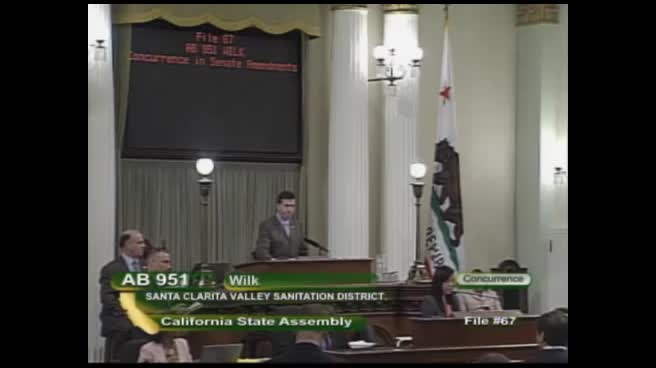
Bill Author




