AB 1016: Public postsecondary education: Student Transfer Achievement Reform Act.
- Session Year: 2015-2016
- House: Assembly
- Latest Version Date: 2015-10-02
Existing law establishes the California Community Colleges and the California State University as 2 of the segments of public postsecondary education in this state. Existing law, the Student Transfer Achievement Reform Act, encourages community colleges to facilitate the acceptance of credits earned at other community colleges toward the associate degree for transfer. The act requires the California State University to guarantee admission with junior status to a community college student who meets the requirements for the associate degree for transfer, and provides that admission to the California State University under these provisions does not guarantee admission for specific majors or campuses.
This bill would require the Office of the Chancellor of the California Community Colleges to report to the Legislature, on or before December 1, 2016, the status of each community colleges compliance with the acts provisions related to creating associate degrees for transfer. To the extent this reporting requirement would place additional requirements on community college districts, it would impose a state-mandated local program.
This bill would require the California State University to submit 2 reports to the Legislature on campus acceptance of transfer model curricula by concentration, on or before December 1, 2016, and on or before December 1, 2017, respectively. The bill would require the California State University, commencing December 1, 2016, to annually, until November 30, 2021, publicly post available data, including, among other data, the number of students with an associate degree for transfer who applied to a campus of the California State University and were redirected to another campus than that indicated in the application, and the proportion of students with an associate degree for transfer who graduate from the California State University, as specified.
The California Constitution requires the state to reimburse local agencies and school districts for certain costs mandated by the state. Statutory provisions establish procedures for making that reimbursement.
This bill would provide that, if the Commission on State Mandates determines that the bill contains costs mandated by the state, reimbursement for those costs shall be made pursuant to these statutory provisions.
Existing law establishes the California Community Colleges and the California State University as 2 of the segments of public postsecondary education in this state. Existing law, the Student Transfer Achievement Reform Act, encourages community colleges to facilitate the acceptance of credits earned at other community colleges toward the associate degree for transfer. The act requires the California State University to guarantee admission with junior status to a community college student who meets the requirements for the associate degree for transfer, and provides that admission to the California State University under these provisions does not guarantee admission for specific majors or campuses.
This bill would require the Office of the Chancellor of the California Community Colleges to report to the Legislature, on or before March December 1, 2016, the status of each community colleges compliance with the acts provisions related to creating associate degrees for transfer. To the extent this reporting requirement would place additional requirements on community college districts, it would impose a state-mandated local program.
This bill would require the California State University to submit 2 reports to the Legislature on campus acceptance of transfer model curricula by concentration, on or before March December 1, 2016, and on or before March December 1, 2017, respectively. The bill would require the California State University, commencing December 1, 2016, to annually, until November 30, 2021, publicly post available data, including, among other data, the number of students with an associate degree for transfer who applied to a campus of the California State University and were redirected to another campus than that indicated in the application, and the proportion of students with an associate degree for transfer who graduate from the California State University, as specified.
The California Constitution requires the state to reimburse local agencies and school districts for certain costs mandated by the state. Statutory provisions establish procedures for making that reimbursement.
This bill would provide that, if the Commission on State Mandates determines that the bill contains costs mandated by the state, reimbursement for those costs shall be made pursuant to these statutory provisions.
Existing law establishes the California Community Colleges and the California State University as 2 of the segments of public postsecondary education in this state. Existing law, the Student Transfer Achievement Reform Act, encourages community colleges to facilitate the acceptance of credits earned at other community colleges toward the associate degree for transfer. The act requires the California State University to guarantee admission with junior status to a community college student who meets the requirements for the associate degree for transfer, and provides that admission to the California State University under these provisions does not guarantee admission for specific majors or campuses.
This bill would require the Office of the Chancellor of the California Community Colleges to report to the Legislature, on or before March 1, 2016, the status of each community colleges compliance with the acts provisions related to creating associate degrees for transfer. To the extent this reporting requirement would place additional requirements on community college districts, it would impose a state-mandated local program.
This bill would require the California State University to submit 2 reports to the Legislature on campus acceptance of transfer model curricula by concentration, on or before March 1, 2016, and on or before March 1, 2017, respectively. The bill would require the California State University, commencing December 1, 2016, to annually post, annually, until November 30, 2021, publicly post available data, including, among other data, the number of students with an associate degree for transfer who applied to a campus of the California State University and were redirected to another campus than that indicated in the application, and the proportion of students with an associate degree for transfer who graduate from the California State University, as specified.
The California Constitution requires the state to reimburse local agencies and school districts for certain costs mandated by the state. Statutory provisions establish procedures for making that reimbursement.
This bill would provide that, if the Commission on State Mandates determines that the bill contains costs mandated by the state, reimbursement for those costs shall be made pursuant to these statutory provisions.
Existing law establishes the California Community Colleges and the California State University as 2 of the segments of public postsecondary education in this state. Existing law, the Student Transfer Achievement Reform Act, encourages community colleges to facilitate the acceptance of credits earned at other community colleges toward the associate degree for transfer. The act requires the California State University to guarantee admission with junior status to a community college student who meets the requirements for the associate degree for transfer, and provides that admission to the California State University under these provisions does not guarantee admission for specific majors or campuses.
This bill would require the Office of the Chancellor of the California Community Colleges to report to the Legislature, on or before March 1, 2016, the status of each community colleges compliance with the acts provisions related to creating associate degrees for transfer. To the extent this reporting requirement would place additional requirements on community college districts, it would impose a state-mandated local program.
This bill would require the California State University to submit 2 reports to the Legislature on campus acceptance of transfer model curricula by concentration, on or before March 1, 2016, and on or before March 1, 2017, respectively. The bill would require the California State University, commencing November December 1, 2018, 2016, to annually post, until October 31, 2023, November 30, 2021, publicly available data on the extent to which the California State University admitted associate degree transfer students to the students first choice campus and to a program that is similar to their transfer degree, and to post data concerning associate degree transfer student outcomes, as specified. data, including, among other data, the number of students with an associate degree for transfer who applied to a campus of the California State University and were redirected to another campus than that indicated in the application, and the proportion of students with an associate degree for transfer who graduate from the California State University, as specified.
The California Constitution requires the state to reimburse local agencies and school districts for certain costs mandated by the state. Statutory provisions establish procedures for making that reimbursement.
This bill would provide that, if the Commission on State Mandates determines that the bill contains costs mandated by the state, reimbursement for those costs shall be made pursuant to these statutory provisions.
Existing law establishes the California Community Colleges and the California State University as 2 of the segments of public postsecondary education in this state. Existing law, the Student Transfer Achievement Reform Act, encourages community colleges to facilitate the acceptance of credits earned at other community colleges toward the associate degree for transfer. The act requires the California State University to guarantee admission with junior status to a community college student who meets the requirements for the associate degree for transfer, and provides that admission to the California State University under these provisions does not guarantee admission for specific majors or campuses.
This bill would require the Office of the Chancellor of the California Community Colleges to report to the Legislature, on or before March 1, 2016, the status of each community colleges compliance with the acts provisions related to creating associate degrees for transfer. To the extent this reporting requirement would place additional requirements on community college districts, it would impose a state-mandated local program.
This bill would require the California State University to submit 2 reports to the Legislature on campus acceptance of transfer model curricula by concentration, on or before March 1, 2016, and on or before March 1, 2017, respectively. The bill would require the California State University, commencing November 1, 2018, to annually post post, until October 31, 2023, publicly available data on the extent to which the California State University admitted associate degree transfer students to the students first choice campus and to a program that is similar to their transfer degree, and to post data concerning associate degree transfer student outcomes, as specified.
The California Constitution requires the state to reimburse local agencies and school districts for certain costs mandated by the state. Statutory provisions establish procedures for making that reimbursement.
This bill would provide that, if the Commission on State Mandates determines that the bill contains costs mandated by the state, reimbursement for those costs shall be made pursuant to these statutory provisions.
Existing law establishes the California Community Colleges and the California State University as 2 of the segments of public postsecondary education in this state. Existing law, the Student Transfer Achievement Reform Act, encourages community colleges to facilitate the acceptance of credits earned at other community colleges toward the associate degree for transfer. The act requires the California State University to guarantee admission with junior status to a community college student who meets the requirements for the associate degree for transfer, and provides that admission to the California State University under these provisions does not guarantee admission for specific majors or campuses.
This bill would require the Office of the Chancellor of the California Community Colleges to report to the Legislature, on or before March 1, 2016, the status of each community colleges compliance with the acts provisions related to creating associate degrees for transfer. To the extent this reporting requirement would place additional requirements on community college districts, it would impose a state-mandated local program.
This bill would require the California State University to submit 2 reports to the Legislature on campus acceptance of transfer model curricula by concentration, on or before March 1, 2016, and on or before March 1, 2017, respectively. The bill would require the California State University, commencing November 1, 2018, to annually post publicly available data on the extent to which the California State University admitted associate degree transfer students to the students first choice campus and to a program that is similar to their transfer degree, and to post data concerning associate degree transfer student outcomes, as specified.
The California Constitution requires the state to reimburse local agencies and school districts for certain costs mandated by the state. Statutory provisions establish procedures for making that reimbursement.
This bill would provide that, if the Commission on State Mandates determines that the bill contains costs mandated by the state, reimbursement for those costs shall be made pursuant to these statutory provisions.
(a)The Office of the Chancellor of the California Community Colleges shall report to the Legislature on or before December 1, 2016, the status of each community colleges compliance with the provisions of this article related to creating associate degrees for transfer.
(b)The California State University shall submit two reports to the Legislature on campus acceptance of transfer model curricula by concentration, on or before December 1, 2016, and on or before December 1, 2017, respectively.
(c)(1)The California State University shall annually, commencing December 1, 2016, publicly post available data on all of the following:
(A)The number of students admitted with an associate degree for transfer.
(B)The proportion of students with an associate degree for transfer who graduate from the California State University within two or three years.
(C)The number of students with an associate degree for transfer who applied to a campus of the California State University and were redirected to another campus than that indicated in the application.
(D)The number of students described in subparagraph (C) who ultimately enrolled at a California State University campus.
(2)This subdivision shall become inoperative on November 30, 2021.
(d)(1)The requirements for submitting reports on or before December 1, 2016, imposed under subdivisions (a) and (b) are inoperative on December 1, 2020, and the requirement for submitting a report on or before December 1, 2017, imposed under subdivision (b) is inoperative on December 1, 2021, pursuant to Section 10231.5 of the Government Code.
(2)Reports to be submitted pursuant to subdivisions (a) and (b) shall be submitted in compliance with Section 9795 of the Government Code.
SEC. 2.If the Commission on State Mandates determines that this act contains costs mandated by the state, reimbursement to local agencies and school districts for those costs shall be made pursuant to Part 7 (commencing with Section 17500) of Division 4 of Title 2 of the Government Code.
(a)The Office of the Chancellor of the California Community Colleges shall report to the Legislature on or before March December 1, 2016, the status of each community colleges compliance with the provisions of this article related to creating associate degrees for transfer.
(b)The California State University shall submit two reports to the Legislature on campus acceptance of transfer model curricula by concentration, on or before March December 1, 2016, and on or before March December 1, 2017, respectively.
(c)(1)The California State University shall annually, commencing December 1, 2016, publicly post available data on all of the following:
(A)The number of students admitted with an associate degree for transfer.
(B)The proportion of students with an associate degree for transfer who graduate from the California State University within two or three years.
(C)The number of students with an associate degree for transfer who applied to a campus of the California State University and were redirected to another campus than that indicated in the application.
(D)The number of students described in subparagraph (C) who ultimately enrolled at a California State University campus.
(2)This subdivision shall become inoperative on November 30, 2021.
(d)(1)The requirements for submitting reports on or before March December 1, 2016, imposed under subdivisions (a) and (b) are inoperative on March December 1, 2020, and the requirement for submitting a report on or before March December 1, 2017, imposed under subdivision (b) is inoperative on March December 1, 2021, pursuant to Section 10231.5 of the Government Code.
(2)Reports to be submitted pursuant to subdivisions (a) and (b) shall be submitted in compliance with Section 9795 of the Government Code.
SEC. 2.If the Commission on State Mandates determines that this act contains costs mandated by the state, reimbursement to local agencies and school districts for those costs shall be made pursuant to Part 7 (commencing with Section 17500) of Division 4 of Title 2 of the Government Code.
(a)The Office of the Chancellor of the California Community Colleges shall report to the Legislature on or before March 1, 2016, the status of each community colleges compliance with the provisions of this article related to creating associate degrees for transfer.
(b)The California State University shall submit two reports to the Legislature on campus acceptance of transfer model curricula by concentration, on or before March 1, 2016, and on or before March 1, 2017, respectively.
(c)(1)The California State University shall annually, commencing December 1, 2016, post publicly post available data on all of the following:
(A)The number of students admitted with an associate degree for transfer.
(B)The proportion of students with an associate degree for transfer who graduate from the California State University within two or three years.
(C)The number of students with an associate degree for transfer who applied to a campus of the California State University and were redirected to another campus than that indicated in the application.
(D)The number of students described in subparagraph (C) who ultimately enrolled at a California State University campus.
(2)This subdivision shall become inoperative on November 30, 2021.
(d)(1)The requirements for submitting reports on or before March 1, 2016, imposed under subdivisions (a) and (b) are inoperative on March 1, 2020, and the requirement for submitting a report on or before March 1, 2017, imposed under subdivision (b) is inoperative on March 1, 2021, pursuant to Section 10231.5 of the Government Code.
(2)Reports to be submitted pursuant to subdivisions (a) and (b) shall be submitted in compliance with Section 9795 of the Government Code.
SEC. 2.If the Commission on State Mandates determines that this act contains costs mandated by the state, reimbursement to local agencies and school districts for those costs shall be made pursuant to Part 7 (commencing with Section 17500) of Division 4 of Title 2 of the Government Code.
(a)The Office of the Chancellor of the California Community Colleges shall report to the Legislature on or before March 1, 2016, the status of each community colleges compliance with the provisions of this article related to creating associate degrees for transfer.
(b)The California State University shall submit two reports to the Legislature on campus acceptance of transfer model curricula by concentration, on or before March 1, 2016, and on or before March 1, 2017, respectively.
(c)(1)The California State University shall annually, commencing November December 1, 2018, 2016, post publicly available data on both all of the following:
(A)The extent to which the California State University admitted associate degree transfer students to the students first choice campus and to a program that is similar to their transfer degree. number of students admitted with an associate degree for transfer.
(B)(i)Associate degree transfer student outcomes, including all of the following data:
(I)The number of transferable California community college units taken before the start of a students first semester at the California State University.
(II)The number of units taken as a fully matriculated California State University student.
(III)
(B)The proportion of students with an associate degree for transfer who graduate from the California State University within two or three years.
(ii)The data made publicly available pursuant to clause (i) shall distinguish between students admitted pursuant to subparagraph (A) of paragraph (1) of subdivision (a) of Section 66747 and students admitted pursuant to subparagraph (B) of paragraph (1) of subdivision (a) of Section 66747.
(C)The number of students with an associate degree for transfer who applied to a campus of the California State University and were redirected to another campus than that indicated in the application.
(D)The number of students described in subparagraph (C) who ultimately enrolled at a California State University campus.
(2)This subdivision shall become inoperative on October 31, 2023. November 30, 2021.
(d)The first annual posting of data pursuant to subdivision (c) on November 1, 2018, shall include data on students entering Fall 2014 to Fall 2016, inclusive. Each annual posting thereafter shall include data only on students entering the prior school year.
(e)
(d)(1)The requirements for submitting reports on or before March 1, 2016, imposed under subdivisions (a) and (b) are inoperative on March 1, 2020, and the requirement for submitting a report on or before March 1, 2017, imposed under subdivision (b) is inoperative on March 1, 2021, pursuant to Section 10231.5 of the Government Code.
(2)Reports to be submitted pursuant to subdivisions (a) and (b) shall be submitted in compliance with Section 9795 of the Government Code.
SEC. 2.If the Commission on State Mandates determines that this act contains costs mandated by the state, reimbursement to local agencies and school districts for those costs shall be made pursuant to Part 7 (commencing with Section 17500) of Division 4 of Title 2 of the Government Code.
(a)The Office of the Chancellor of the California Community Colleges shall report to the Legislature on or before March 1, 2016, the status of each community colleges compliance with the provisions of this article related to creating associate degrees for transfer.
(b)The California State University shall submit two reports to the Legislature on campus acceptance of transfer model curricula by concentration, on or before March 1, 2016, and on or before March 1, 2017, respectively.
(c)(1)The California State University shall annually, commencing November 1, 2018, post publicly available data on both of the following:
(1)
(A)The extent to which the California State University admitted associate degree transfer students to the students first choice campus and to a program that is similar to their transfer degree.
(2)(A)
(B)(i)Associate degree transfer student outcomes, including all of the following data:
(i)
(I)The number of transferable California community college units taken before the start of a students first semester at the California State University.
(ii)
(II)The number of units taken as a fully matriculated California State University student.
(iii)
(III)The proportion of students who graduate from the California State University within two or three years.
(B)
(ii)The data made publicly available pursuant to subparagraph (A) clause (i) shall distinguish between students admitted pursuant to subparagraph (A) of paragraph (1) of subdivision (a) of Section 66747 and students admitted pursuant to subparagraph (B) of paragraph (1) of subdivision (a) of Section 66747.
(2)This subdivision shall become inoperative on October 31, 2023.
(d)The first annual posting of data pursuant to subdivision (c) on November 1, 2018, shall include data on students entering Fall 2014 to Fall 2016, inclusive. Each annual posting thereafter shall include data only on students entering the prior school year.
(e)(1)The requirements for submitting reports on or before March 1, 2016, imposed under subdivisions (a) and (b) are inoperative on March 1, 2020, and the requirement for submitting a report on or before March 1, 2017, imposed under subdivision (b) is inoperative on March 1, 2021, pursuant to Section 10231.5 of the Government Code.
(2)Reports to be submitted pursuant to subdivisions (a) and (b) shall be submitted in compliance with Section 9795 of the Government Code.
SEC. 2.If the Commission on State Mandates determines that this act contains costs mandated by the state, reimbursement to local agencies and school districts for those costs shall be made pursuant to Part 7 (commencing with Section 17500) of Division 4 of Title 2 of the Government Code.
(a)The Office of the Chancellor of the California Community Colleges shall report to the Legislature on or before March 1, 2016, the status of each community colleges compliance with the provisions of this article related to creating associate degrees for transfer.
(b)The California State University shall submit two reports to the Legislature on campus acceptance of transfer model curricula by concentration, on or before March 1, 2016, and on or before March 1, 2017, respectively.
(c)The California State University shall annually, commencing November 1, 2018, post publicly available data on both of the following:
(1)The extent to which the California State University admitted associate degree transfer students to the students first choice campus and to a program that is similar to their transfer degree.
(2)(A)Associate degree transfer student outcomes, including all of the following data:
(i)The number of transferable California community college units taken before the start of a students first semester at the California State University.
(ii)The number of units taken as a fully matriculated California State University student.
(iii)The proportion of students who graduate from the California State University within two or three years.
(B)The data made publicly available pursuant to subparagraph (A) shall distinguish between students admitted pursuant to subparagraph (A) of paragraph (1) of subdivision (a) of Section 66747 and students admitted pursuant to subparagraph (B) of paragraph (1) of subdivision (a) of Section 66747.
(d)The first annual posting of data pursuant to subdivision (c) on November 1, 2018, shall include data on students entering Fall 2014 to Fall 2016, inclusive. Each annual posting thereafter shall include data only on students entering the prior school year.
(e)(1)The requirements for submitting reports on or before March 1, 2016, imposed under subdivisions (a) and (b) are inoperative on March 1, 2020, and the requirement for submitting a report on or before March 1, 2017, imposed under subdivision (b) is inoperative on March 1, 2021, pursuant to Section 10231.5 of the Government Code.
(2)Reports to be submitted pursuant to subdivisions (a) and (b) shall be submitted in compliance with Section 9795 of the Government Code.
SEC. 2.If the Commission on State Mandates determines that this act contains costs mandated by the state, reimbursement to local agencies and school districts for those costs shall be made pursuant to Part 7 (commencing with Section 17500) of Division 4 of Title 2 of the Government Code.
|
Date
|
Status
|
|---|---|
| Jun 11, 2015 | Referred to Com. on ED. |
| Oct 2, 2015 | Chaptered by Secretary of State - Chapter 437, Statutes of 2015. |
| Oct 2, 2015 | Approved by the Governor. |
| Sep 3, 2015 | Enrolled and presented to the Governor at 4 p.m. |
| Aug 27, 2015 | Senate amendments concurred in. To Engrossing and Enrolling. (Ayes 79. Noes 0.). |
| Aug 27, 2015 | Senate amendments concurred in. To Engrossing and Enrolling. (Ayes 79. Noes 0. Page 2615.). |
| Aug 25, 2015 | In Assembly. Concurrence in Senate amendments pending. May be considered on or after August 27 pursuant to Assembly Rule 77. |
| Aug 24, 2015 | Read third time. Passed. Ordered to the Assembly. (Ayes 40. Noes 0. Page 2149.). |
| Aug 24, 2015 | Read third time. Passed. Ordered to the Assembly. |
| Jul 14, 2015 | Read second time. Ordered to third reading. |
| Jul 13, 2015 | From committee: Do pass. (Ayes 7. Noes 0.) (July 13). |
| Jul 8, 2015 | From committee chair, with author's amendments: Amend, and re-refer to committee. Read second time, amended, and re-referred to Com. on APPR. |
| Jun 30, 2015 | Read second time and amended. Re-referred to Com. on APPR. |
| Jun 29, 2015 | From committee: Amend, and do pass as amended and re-refer to Com. on APPR. with recommendation: To Consent Calendar. (Ayes 9. Noes 0.) (June 24). |
| Feb 26, 2015 | Read first time. To print. |
| Jun 2, 2015 | Read third time. Passed. Ordered to the Senate. (Ayes 77. Noes 0. Page 1812.) |
| Jun 2, 2015 | Read third time. Passed. Ordered to the Senate. |
| Jun 2, 2015 | In Senate. Read first time. To Com. on RLS. for assignment. |
| Jun 1, 2015 | Read second time. Ordered to third reading. |
| May 28, 2015 | Read second time and amended. Ordered returned to second reading. |
| May 28, 2015 | From committee: Amend, and do pass as amended. (Ayes 17. Noes 0.) (May 28). |
| May 13, 2015 | In committee: Set, first hearing. Referred to APPR. suspense file. |
| Apr 29, 2015 | From committee: Do pass and re-refer to Com. on APPR. (Ayes 12. Noes 0.) (April 28). Re-referred to Com. on APPR. |
| Apr 14, 2015 | Re-referred to Com. on HIGHER ED. |
| Apr 13, 2015 | From committee chair, with author's amendments: Amend, and re-refer to Com. on HIGHER ED. Read second time and amended. |
| Mar 19, 2015 | Referred to Com. on HIGHER ED. |
| Feb 27, 2015 | From printer. May be heard in committee March 29. |
|
Date
|
Description
|
Location
|
Votes
|
|
|---|---|---|---|---|
| Aug 27, 2015 | AB 1016 SANTIAGO Concurrence in Senate Amendments | Assembly Floor |
Passed |
|
| Aug 24, 2015 | Assembly 3rd Reading AB1016 Santiago By Block | Senate Floor |
Passed |
|
| Jul 13, 2015 | Do pass | Senate Standing Committee on Appropriations |
Passed |
|
| Jun 24, 2015 | Do pass as amended, but first amend, and re-refer to the Committee on [Appropriations] with the recommendation: To Consent Calendar | Senate Standing Committee on Education |
Passed |
|
| Jun 2, 2015 | AB 1016 SANTIAGO Assembly Third Reading | Assembly Floor |
Passed |
|
| May 28, 2015 | Do pass as amended. | Assembly Standing Committee on Appropriations |
Passed |
|
| Apr 28, 2015 | Do pass and be re-referred to the Committee on [Appropriations] | Assembly Standing Committee on Higher Education |
Passed |
This list shows positions taken on this bill by organizations on the date displayed, which is linked to the original source.
Positions by individuals are not included.
|
Organization
|
Position
|
Date
|
|---|---|---|
| Board of Governors, California Community Colleges | ** Support | Aug 24, 2015 |
| California Chamber Of Commerce | ** Support | Aug 24, 2015 |
| California College And University Police Chiefs Association | * Support | Jul 13, 2015 |
| California Narcotic Officers' Association | * Support | Jul 13, 2015 |
| Campaign For College Opportunity | ** Support | Aug 24, 2015 |
| Community College League of California | ** Support | Jun 2, 2015 |
| Mccallum Group, Inc. | * Support | Jul 13, 2015 |
| u None received. | ** Against | Jul 13, 2015 |
AB 1016
Page 2
CONCURRENCE IN SENATE AMENDMENTS
AB 1016
(Santiago)
As Amended July 8, 2015
Majority vote
ASSEMBLY: |
77-0 |
(June 2, 2015) |
SENATE: |
40-0 |
(August 24, 2015) |
Original Committee Reference: HIGHER ED.
SUMMARY: Requires the California Community Colleges (CCC) Chancellor's Office (CCCCO) to report to the Legislature, on or before December 1, 2016, the status of each community college's compliance with the Student Transfer Achievement Reform (STAR) Act's provision related to creating associate degrees for transfer (ADTs); requires the California State University (CSU) to submit two reports to the Legislature, as specified, on campus acceptance of transfer model curricula (TMC) by concentration; and, requires the CSU to publicly post available data on associate degree for transfer students as specified.
The Senate amendments:
Change the month that the various reports are due, as specified, from March to December.
Change the month the reporting requirements sunset, as specified, from March to December.
Make clarifying corrections.
EXISTING LAW:
Establishes the STAR Act and requires CCC to develop two-year (60 semester unit) associate degrees for transfer, which deems the student eligible for transfer into CSU. The associate degrees for transfer are required to include a minimum of 18 units in a major or area of emphasis, as determined by CCC, and an approved set of general education requirements (Education Code Section 66746).
Requires the CSU to guarantee admission with junior status to any community college student who meets the specified requirements in 1) above, but provides that the student is not guaranteed admission for specific majors or campuses. However, the CSU is required to grant a student priority admission to his or her local CSU campus and to a program or major that is similar to his or her community college major or area of emphasis, as determined by the CSU campus to which the student is admitted. Students that utilize the associate transfer degree process are required to receive priority over all other community college transfer students, except for community college students who have entered into a transfer agreement between a community college and the CSU prior to the fall term of the 2012-13 academic year (Education Code Section 66747).
Requires the Legislative Analyst's Office (LAO) to review and report, as specified, on the implementation of the STAR Act by spring of 2012 (Education Code Section 66749).
FISCAL EFFECT: According to the Senate Appropriations Committee, both the CCCCO and the CSU indicate that costs would be minor and absorbable to implement this bill.
COMMENTS: Background. As a way to address long standing issues and concerns about the need to ensure a clearer, transparent and more navigable transfer process between the CCC and CSU, the Legislature and Governor enacted SB 1440 (Padilla), Chapter 428, Statutes of 2010. This legislation required community colleges to create two-year 60 unit associate degrees for transfer that are fully transferable to CSU. These degrees require completion of: 1) a minimum of 18 units in a major or area of emphasis, as determined by each community college, and 2) an approved set of general education requirements. Students who earn such a degree are automatically eligible to transfer to the CSU system as an upper-division student in a bachelor's degree program. Though these students are not guaranteed admission to a particular CSU campus or into a particular degree program, SB 1440 gives them priority admission to a CSU program that is "similar" to the student's CCC major or area of emphasis, as determined by the CSU campus to which the student is admitted. Once admitted, SB 1440 students need only complete two additional years (an additional 60 units) of coursework to earn a bachelor's degree.
SB 440 (Padilla), Chapter 720, Statutes of 2013, requires, prior to the 2014-15 academic year, a CCC create an ADT in every major that has a TMC. Once a TMC is approved by faculty, community colleges use it to design an ADT in that particular major.
Legislative Analyst's Office (LAO) Report. "Implementation Update: Reforming Transfer from CCC to CSU," which was released on February 2, 2015, found, among others, that there has been continued progress in the implementation of the STAR Act, but some of the CCC and CSU campuses are not fully on track to meeting the Legislature's targets for implementation. The LAO contends that the state's transfer reform is too recent to fully assess its effectiveness in a comprehensive way. That said, according to the report, the CCC, appears on track to make additional progress in accepting ADTs as similar to its majors and concentrations.
As a way to ensure more students are familiar with the ADT and its direct path for CSU transfer, and to help the Legislature monitor how the segments are implementing the STAR Act, the report recommended one near-term report from the CCC and two from the CSU to track the segments' progress in creating ADTs and accepting TMC; and, require the CSU to annually provide data on certain student outcomes (including admittance to campuses and programs of choice, units taken, and graduation rates), beginning Fall 2018.
Purpose of this bill. According to the author, the STAR Act does not require the CCC to update the Legislature on ADT development or require the CSU to report on TMC acceptance or ADT Student outcomes. The author states, "AB 1016, by providing more information in the coming years, will help the Legislature track CCC/CSU progress in implementing transfer reform. Furthermore, this bill will help transfer students more easily achieve their educational and career goals."
Analysis Prepared by: Jeanice Warden / HIGHER ED. / (916) 319-3960 FN: 0001278
AB 1016
Page 6
|
Office of Senate Floor Analyses (916) 651-1520 Fax: (916) 327-4478 |
THIRD READING
Bill No: AB 1016
Amended: 7/8/15 in Senate
SENATE EDUCATION COMMITTEE: 9-0, 6/24/15
AYES: Liu, Runner, Block, Hancock, Leyva, Mendoza, Monning, Pan, Vidak
SENATE APPROPRIATIONS COMMITTEE: 7-0, 7/13/15
AYES: Lara, Bates, Beall, Hill, Leyva, Mendoza, Nielsen
ASSEMBLY FLOOR: 77-0, 6/2/15 - See last page for vote
SUBJECT: Public postsecondary education: Student Transfer Achievement Reform Act
DIGEST: This bill requires the Chancellor’s Office of the California Community Colleges (CCC) to report to on the status of each community college’s compliance with the creation of associate degrees for transfer under the Student Transfer Achievement Reform Act and requires the California State University (CSU) to similarly report on campus acceptance of transfer model curricula by concentration, to the Legislature, as specified, and also requires the CSU to post specified publicly available data on associate degree for transfer students.
Existing law:
Establishes the Student Transfer Achievement Reform Act under which a CCC district is required to develop and grant a transfer associate degree that deems the student eligible for transfer into the CSU, when the student meets specified course requirements. (Education Code § 66746)
Requires the CSU to guarantee admission with junior status to any community college student who meets these requirements, but provides that the student is not guaranteed admission for specific majors or campuses. However, the CSU is required to grant a student priority admission to his or her local CSU campus and to a program or major that is similar to his or her community college major or area of emphasis, as determined by the CSU campus to which the student is admitted. Students that utilize the associate transfer degree process are required to receive priority over all other community college transfer students, except for community college students who have entered into a transfer agreement between a community college and the California State University prior to the fall term of the 2012-13 academic year. (EC § 66747)
Requires the Legislative Analyst’s Office to review and report, as specified, on the implementation of the Act by spring of 2012. (EC § 66749)
This bill:
Requires the Chancellor’s Office of the CCC to report to the Legislature the status of each community college’s compliance with the creation of associate degrees for transfer by December 1, 2016.
Requires the CSU to submit two reports on campus acceptance of transfer model curricula by concentration by December 1, 2016, and by December 1, 2017.
Sunsets the March 2016 reporting requirements on December 1, 2020, and the December 2017 reporting requirements on December 1, 2021.
Requires, beginning December 1, 2016, and until November 30, 2021, the CSU to annually post publicly available data on:
The number of students admitted with an associate degree for transfer.
The proportion of students with an associate degree for transfer who graduate from the CSU within two or three years.
The number of students with an associate degree for transfer who applied to one campus and were redirected to another campus other than that indicated on the application.
The number of those students who ultimately enrolled at a CSU campus.
Comments
History. In an effort to address long standing issues and concerns about the need to ensure a clearer, transparent and more navigable transfer process between the CCC and the CSU, the Legislature and Governor enacted SB 1440 (Padilla, Chapter 428, Statutes of 2010). The legislation required community colleges to create two-year 60 unit associate degrees for transfer that are fully transferable to CSU. These degrees require completion of (a) a minimum of 18 units in a major or area of emphasis, as determined by each community college, and (b) an approved set of general education requirements. Students who earn such a degree are automatically eligible to transfer to the CSU system as an upper-division student in a bachelor's degree program. Though these students are not guaranteed admission to a particular CSU campus or into a particular degree program, SB 1440 gives them priority admission to a CSU program that is "similar" to the student's CCC major or area of emphasis, as determined by the CSU campus to which the student is admitted. Once admitted, SB 1440 students need to only complete two additional years (an additional 60 units) of coursework to earn a bachelor's degree.
SB 440 (Padilla, Chapter 720, Statutes of 2013) expanded these provisions to require that the CCC create associate transfer degrees in every major, and in areas of emphasis, and required that the CSU accept these degrees, and develop an admissions redirection process for students who complete these degrees but are denied admission to the CSU campus to which they have applied. SB 440 also required the CCC and the CSU to establish a student-centered communication and marketing strategy to increase the visibility of the associate degree for transfer pathway.
Legislative Analyst’s Office (LAO) Report - 2012. In May 2012, the LAO issued Reforming the State's Transfer Process: A Progress Report on Senate Bill SB 1440. According to the LAO, although the CCC and CSU had made notable progress on multiple fronts, both segments had much room for improvement. According to the LAO, an average of just four associate degrees for transfer had been developed per community college. In addition, a number of community colleges expressed reluctance to create more than a handful of such degrees despite the CCC Chancellor's Office goal that, by 2014, each community college have a Transfer Model Curriculum (TMC) aligned associate degree for transfer in every major it offered. The LAO also reported that CSU campuses and academic programs varied significantly in terms of accepting the associate transfer degrees for their bachelor's degree programs. Although the CSU Chancellor's Office had set a goal for each CSU campus to offer at least one similar degree for each TMC-aligned associate degree for transfer, only six CSU campuses had achieved this goal.
The LAO made several recommendations in their report, including that the Legislature provide additional guidance and clarification to CCC and CSU on their responsibilities, as well as continued oversight to track their progress.
Updated report. The LAO recently updated its 2012 report with its February 2015 report, “Implementation Update: Reforming Transfer from CCC to CSU.” The LAO found that since 2012, both CCC and CSU have made substantial progress in meeting the legislation’s goals. The 33 model curricula developed to date cover majors selected by roughly 80 percent of CCC to CSU transfer students. Although some community colleges and CSU campuses were lagging in meeting specific statutory targets, both segments were making a good faith effort to comply with the legislation. Other specific findings included the following:
Several colleges offer all the associate degrees they are required to offer by fall 2015, and others have developed these degrees and are awaiting approval. Most colleges, however, still have a few degrees left to develop and a few colleges are lagging far behind.
Despite various communication efforts, most CCC students are unfamiliar with the new degrees and mistakenly believe that the regular associate degree they have earned is an associate degree for transfer. The LAO notes that recent CCC investments in education planning for students could improve understanding of transfer reform.
CSU admitted every applicant the system identified as earning an associate degree for transfer and nearly all students who earned the degree but were not identified during the application process. The CSU was unable to provide data on the extent to which students were admitted into their campus or major of choice.
Most CSU campuses accept associate degrees for transfer and honor the 60-unit guarantee in at least one concentration within each related major. Nonetheless, a few campuses are lagging in acceptance, and a few majors have low acceptance among several campuses.
While growing numbers of students are earning an associate degree for transfer and successfully transferring to CSU, outcome data are too preliminary to draw conclusions, since most students currently completing degrees began their postsecondary education prior to transfer reform.
To help the Legislature monitor these reform efforts, the LAO recommends one near-term report from CCC (in fall 2015) and two from CSU (in fall 2015 and fall 2016) to track the segments’ progress in creating associate degrees for transfer and accepting transfer model curricula. LAO also recommends the Legislature require the CSU annually to provide data on certain student outcomes (including admittance to campuses and programs of choice, units taken, and graduation rates) beginning fall 2018.
This bill generally implements these recommendations.
FISCAL EFFECT: Appropriation: No Fiscal Com.: Yes Local: Yes
According to the Senate Appropriations Committee, both the CCC Chancellor’s Office and the CSU indicate that costs would be minor and absorbable to implement this bill.
Board of Governors, California Community Colleges
California Chamber of Commerce
Campaign for College Opportunity
OPPOSITION: (Verified 7/14/15)
None received
ASSEMBLY FLOOR: 77-0, 6/2/15
AYES: Achadjian, Alejo, Travis Allen, Baker, Bigelow, Bloom, Bonilla, Bonta, Brough, Brown, Burke, Calderon, Campos, Chang, Chau, Chiu, Chu, Cooley, Cooper, Dababneh, Dahle, Daly, Dodd, Eggman, Frazier, Beth Gaines, Gallagher, Cristina Garcia, Eduardo Garcia, Gatto, Gipson, Gomez, Gonzalez, Gordon, Gray, Hadley, Harper, Roger Hernández, Holden, Irwin, Jones, Jones-Sawyer, Kim, Lackey, Levine, Linder, Lopez, Low, Maienschein, Mathis, Mayes, McCarty, Medina, Mullin, Nazarian, Obernolte, O'Donnell, Olsen, Patterson, Perea, Quirk, Rendon, Ridley-Thomas, Rodriguez, Salas, Santiago, Steinorth, Mark Stone, Thurmond, Ting, Wagner, Waldron, Weber, Wilk, Williams, Wood, Atkins
NO VOTE RECORDED: Chávez, Grove, Melendez
Prepared by: Kathleen Chavira / ED. / (916) 651-4105
7/14/15 18:33:10
**** END ****
AB 1016 (Santiago) Page 2 of 2
SENATE COMMITTEE ON APPROPRIATIONS
Senator Ricardo Lara, Chair
2015 - 2016 Regular Session
AB 1016 (Santiago) - Public postsecondary education: Student Transfer Achievement Reform Act
|
|
Version: July 8, 2015 |
Policy Vote: ED. 9 - 0 |
Urgency: No |
Mandate: Yes |
Hearing Date: July 13, 2015 |
Consultant: Jillian Kissee |
This bill does not meet the criteria for referral to the Suspense File.
Bill Summary:
This bill requires the California Community Colleges Chancellor’s Office (CCCCO) and the California State University (CSU) to submit reports, as specified, regarding the status of creating associate degrees for transfer (ADT).
Fiscal Impact:
Both the CCCCO and the CSU indicate that costs would be minor and absorbable to implement this bill.
Background:
SB 1440 (Padilla, Chapter 428, Statutes of 2010) required community colleges to create two-year 60 unit associate degrees that are fully transferable to CSU. These degrees require completion of (1) a minimum of 18 units in a major or area of emphasis, as determined by each community college, and (2) an approved set of general education requirements. Students who earn such a degree are automatically eligible to transfer to the CSU system as an upper-division student in a bachelor's degree program. Though these students are not guaranteed admission to a particular CSU campus or into a particular degree program, SB 1440 gives them priority admission to a CSU program that is "similar" to the student's CCC major or area of emphasis, as determined by the CSU campus to which the student is admitted. Once admitted, SB 1440 students need to only complete two additional years (an additional 60 units) of coursework to earn a bachelor's degree.
SB 440 (Padilla, Chapter 720, Statutes of 2013) expanded these provisions to require that the California Community College (CCC) create ADTs in every major, and in areas of emphasis, and required that the CSU accept these degrees, and develop an admissions redirection process for students who complete these degrees but are denied admission to the CSU campus to which they have applied. SB 440 also required the CCC and the CSU to establish a student-centered communication and marketing strategy to increase the visibility of the associate degree for transfer pathway.
This bill generally implements the recommendations of a recent Legislative Analyst’s Office (LAO) report that came out in spring 2015. It recommends one near-term report from the CCC (in fall 2015) and two from CSU (in fall 2015 and fall 2016) to track the segments’ progress in creating ADTs and accepting transfer model curricula. LAO also recommends the Legislature require the CSU annually to provide data on certain student outcomes (including admittance to campuses and programs of choice, units taken, and graduation rates) beginning fall 2018.
Proposed Law:
This bill requires the CCCCO to report to the Legislature by December 1, 2016 on the status of creating ADT.
This bill also requires the CSU to submit two reports to the Legislature on campus acceptance of transfer model curricula by concentration by December 1, 2016 and December 1, 2017, respectively. Beginning December 1, 2016, the CSU is required to annually, until November 30, 2021, publicly post data on all of the following:
The number of students admitted with an ADT.
The proportion of students with an ADT who graduate from CSU within two or three years.
The number of students with an ADT who applied to a particular CSU campus and were redirected to another campus.
The number of students who were redirected and who ultimately enrolled at a CSU campus.
Staff Comments:
This bill is keyed as a state mandate. However, since this bill imposes requirements upon the CCCCO and not community college districts, the requirements of this bill are unlikely to be considered a reimbursable state mandate by the Commission on State Mandates. In addition, according to the CCCCO, it already produces the information required by this bill through ADT Progress Reports, so there will be no fiscal impact on colleges or the CCCCO. There would be absorbable costs to publish formal reports to be transmitted to the Legislature and LAO.
-- END --
AB 1016 (Santiago) Page 4 of 4
SENATE COMMITTEE ON EDUCATION
Senator Carol Liu, Chair
2015 - 2016 Regular
Bill No: AB 1016
Author: |
Santiago |
||
Version: |
May 28, 2015 Hearing Date: June 24, 2015 |
||
Urgency: |
No |
Fiscal: |
Yes |
Consultant: |
Kathleen Chavira |
||
Subject: Public postsecondary education: Student Transfer Achievement Reform Act
SUMMARY
This bill requires the Chancellor’s Office of the California Community Colleges (CCC) to report to on the status of each community college’s compliance with the creation of associate degrees for transfer under the Student Transfer Achievement Reform Act and requires the California State University (CSU) to similarly report on campus acceptance of transfer model curricula by concentration, to the Legislature, as specified and also require the CSU to post specified publicly available data on associate degree for transfer students.
BACKGROUND
Existing law establishes the Student Transfer Achievement Reform Act under which a CCC district is required to develop and grant a transfer associate degree that deems the student eligible for transfer into the CSU, when the student meets specified course requirements. (Education Code § 66746)
Existing law also requires the CSU to guarantee admission with junior status to any community college student who meets these requirements, but provides that the student is not guaranteed admission for specific majors or campuses. However, the CSU is required to grant a student priority admission to his or her local CSU campus and to a program or major that is similar to his or her community college major or area of emphasis, as determined by the CSU campus to which the student is admitted. Students that utilize the associate transfer degree process are required to receive priority over all other community college transfer students, except for community college students who have entered into a transfer agreement between a community college and the California State University prior to the fall term of the 2012-13 academic year.
(EC § 66747)
Existing law requires the Legislative Analyst’s Office to review and report, as specified, on the implementation of the Act by Spring of 2012. (EC § 66749)
ANALYSIS
This bill:
Requires the Chancellor’s Office of the California Community Colleges (CCC) to report to the Legislature the status of each community college’s compliance with the creation of associate degrees for transfer by March 1, 2016.
Requires the California State University (CSU) to submit 2 reports on campus acceptance of transfer model curricula by concentration by March 1, 2016 and by March 1, 2017.
Sunsets the March 2016 reporting requirements on March 1, 2020, and the March 2017 reporting requirements on March 1, 2021.
Requires, beginning December 1, 2016 and until November 30, 2021, the CSU to annually post publicly available data on:
The number of students admitted with an associate degree for transfer.
The proportion of students with an associate degree for transfer who graduate from the CSU within 2 or 3 years.
The number of students with an associate degree for transfer who applied to one campus and were redirected to another campus other than that indicated on the application.
The number of those students who ultimately enrolled at a CSU campus.
STAFF
COMMENTS
Need for the bill. This bill responds to recent recommendations of the Legislative Analyst regarding transfer reform implementation. It will provide additional information for the Legislature to track the progress of the CCC/CSU implementation of the Student Transfer Achievement Reform Act.
Technical amendment. It is the intent of this bill that the CSU annually post available data, as specified, in a manner which is publicly accessible. Staff recommends the bill be amended on page 3 line 4 to insert a comma after “publicly.”
History. In an effort to address long standing issues and concerns about the need to ensure a clearer, transparent and more navigable transfer process between the CCC and the CSU, the Legislature and Governor enacted SB 1440 (Padilla, Chapter 428, Statutes of 2010). This legislation required community colleges to create two-year 60 unit associate degrees for transfer that are fully transferable to CSU. These degrees require completion of (1) a minimum of 18 units in a major or area of emphasis, as determined by each community college, and (2) an approved set of general education requirements. Students who earn such a degree are automatically eligible to transfer to the CSU system as an upper-division student in a bachelor's degree program. Though these students are not guaranteed admission to a particular CSU campus or into a particular degree program, SB 1440 gives them priority admission to a CSU program that is "similar" to the student's CCC major or area of emphasis, as determined by the CSU campus to which the student is admitted. Once admitted, SB 1440 students need to only complete two additional years (an additional 60 units) of coursework to earn a bachelor's degree.
SB 440 (Padilla, Chapter 720, Statutes of 2013) expanded these provisions to require that the California Community College (CCC) create associate transfer degrees in every major, and in areas of emphasis, and required that the California State University (CSU) accept these degrees, and develop an admissions redirection process for students who complete these degrees but are denied admission to the CSU campus to which they have applied. SB 440 also required the CCC and the CSU to establish a student-centered communication and marketing strategy to increase the visibility of the associate degree for transfer pathway.
LAO Report - 2012. In May 2012, the Legislative Analyst’s Office (LAO) issued Reforming the State's Transfer Process: A Progress Report on Senate Bill SB 1440. According to the LAO, although the CCC and CSU had made notable progress on multiple fronts, both segments had much room for improvement. According to the LAO, an average of just four associate degrees for transfer had been developed per community college. In addition, a number of community colleges expressed reluctance to create more than a handful of such degrees despite the CCC Chancellor's Office goal that, by 2014, each community college have a Transfer Model Curriculum (TMC) aligned associate degree for transfer in every major it offered. The LAO also reported that CSU campuses and academic programs varied significantly in terms of accepting the associate transfer degrees for their bachelor's degree programs. Although the CSU Chancellor's Office had set a goal for each CSU campus to offer at least one similar degree for each TMC-aligned associate degree for transfer, only six CSU campuses had achieved this goal.
The LAO made several recommendations in their report, including that the Legislature provide additional guidance and clarification to CCC and CSU on their responsibilities, as well as continued oversight to track their progress.
Updated report. The LAO recently updated its 2012 report with its February 2015 report, “Implementation Update: Reforming Transfer from CCC to CSU.” The LAO found that since 2012, both CCC and CSU have made substantial progress in meeting the legislation’s goals. The 33 model curricula developed to date cover majors selected by roughly 80 percent of CCC to CSU transfer students. Although some community colleges and CSU campuses were lagging in meeting specific statutory targets, both segments were making a good faith effort to comply with the legislation. Other specific findings included the following:
Several colleges offer all the associate degrees they are required to offer by fall 2015, and others have developed these degrees and are awaiting approval. Most colleges, however, still have a few degrees left to develop and a few colleges are lagging far behind.
Despite various communication efforts, most CCC students are unfamiliar with the new degrees and mistakenly believe that the regular associate degree they have earned is an associate degree for transfer. The LAO notes that recent CCC investments in education planning for students could improve understanding of transfer reform.
CSU admitted every applicant the system identified as earning an associate degree for transfer and nearly all students who earned the degree but were not identified during the application process. The California State University (CSU) was unable to provide data on the extent to which students were admitted into their campus or major of choice.
Most CSU campuses accept associate degrees for transfer and honor the 60-unit guarantee in at least one concentration within each related major. Nonetheless, a few campuses are lagging in acceptance, and a few majors have low acceptance among several campuses.
While growing numbers of students are earning an associate degree for transfer and successfully transferring to CSU, outcome data are too preliminary to draw conclusions, since most students currently completing degrees began their postsecondary education prior to transfer reform.
To help the Legislature monitor these reform efforts, Legislative Analyst’s Office (LAO) recommends one near-term report from California Community College (CCC) (in fall 2015) and two from CSU (in fall 2015 and fall 2016) to track the segments’ progress in creating associate degrees for transfer and accepting transfer model curricula. LAO also recommend the Legislature require the CSU annually to provide data on certain student outcomes (including admittance to campuses and programs of choice, units taken, and graduation rates) beginning fall 2018.
This bill generally implements these recommendations.
SUPPORT
Board of Governors, California Community Colleges
Cal Chamber
Campaign for College Opportunity
OPPOSITION
None received.
-- END --
AB 1016
Page 3
ASSEMBLY THIRD READING
AB 1016
(Santiago)
As Amended May 28, 2015
Majority vote
Committee |
Votes |
Ayes |
Noes |
Higher Education |
12-0 |
Medina, Baker, Bloom, Chávez, Harper, Irwin, Levine, Linder, Low, Santiago, Weber, Williams |
|
Appropriations |
17-0 |
Gomez, Bigelow, Bonta, Calderon, Chang, Daly, Eggman, Gallagher, Eduardo Garcia, Gordon, Holden, Jones, Quirk, Rendon, Wagner, Weber, Wood |
|
SUMMARY: Requires the California Community Colleges (CCC) Chancellor's Office (CCCCO) to report to the Legislature, on or before March 1, 2016, the status of each community college's compliance with the Student Transfer Achievement Reform (STAR) Act's provision related to creating associate degrees for transfer (ADTs); and, requires the California State University (CSU) to submit two reports to the Legislature, as specified, on campus acceptance of transfer model curricula (TMC) by concentration. Specifically, this bill:
Requires the CCCCO, on or before March 1, 2016, to report to the Legislature on the status of each CCCs compliance with the provisions of this article related to creating ADTs.
Requires the CSU to submit two reports to the Legislature on campus acceptance of TMC by concentration, on or before March 1, 2016, and on or before March 1, 2017, respectively.
Requires the CSU, beginning December 1, 2016, and until November 30, 2021, to annually post publicly available data on all of the following:
The number of students admitted with an ADT; and,
The proportion of students with an ADT who graduate from the CSU within two or three years.
Specifies that the requirements for the reports the CCCCO shall submit, on or before March 1, 2016, will be inoperative on March 1, 2020; and, the report the CSU shall issue, on or before March 1, 2017, will be inoperative on March 1, 2021.
Allows for reimbursement to the appropriate entities should the Commission on State Mandates determine that there are mandated state costs.
EXISTING LAW:
Establishes the STAR Act and requires CCC to develop two-year (60 semester unit) associate degrees for transfer, which deems the student eligible for transfer into CSU. The associate degrees for transfer are required to include a minimum of 18 units in a major or area of emphasis, as determined by CCC, and an approved set of general education requirements (Education Code Section 66746).
Requires the CSU to guarantee admission with junior status to any community college student who meets the specified requirements in 1), above, but provides that the student is not guaranteed admission for specific majors or campuses. However, the CSU is required to grant a student priority admission to his or her local CSU campus and to a program or major that is similar to his or her community college major or area of emphasis, as determined by the CSU campus to which the student is admitted. Students that utilize the associate transfer degree process are required to receive priority over all other community college transfer students, except for community college students who have entered into a transfer agreement between a community college and the CSU prior to the fall term of the 2012-13 academic year (Education Code Section 66747).
FISCAL EFFECT: According to the Assembly Appropriations Committee, costs to the CCC and CSU will be minor and absorbable.
COMMENTS: Background. As a way to address long standing issues and concerns about the need to ensure a clearer, transparent and more navigable transfer process between the CCC and CSU, the Legislature and Governor enacted SB 1440 (Padilla), Chapter 428, Statutes of 2010. This legislation required community colleges to create two-year 60 unit associate degrees for transfer that are fully transferable to CSU. These degrees require completion of 1) a minimum of 18 units in a major or area of emphasis, as determined by each community college, and 2) an approved set of general education requirements. Students who earn such a degree are automatically eligible to transfer to the CSU system as an upper-division student in a bachelor's degree program. Though these students are not guaranteed admission to a particular CSU campus or into a particular degree program, SB 1440 gives them priority admission to a CSU program that is "similar" to the student's CCC major or area of emphasis, as determined by the CSU campus to which the student is admitted. Once admitted, SB 1440 students need only complete two additional years (an additional 60 units) of coursework to earn a bachelor's degree.
Senate Bill 440 (Padilla), Chapter 720, Statutes of 2013, requires, prior to the 2014-15 academic year, a CCC create an ADT in every major that has a TMC. Once a TMC is approved by faculty, community colleges use it to design an ADT in that particular major.
Legislative Analyst's Office (LAO) Report. "Implementation Update: Reforming Transfer from CCC to CSU," which was released on February 2, 2015, found, among others, that there has been continued progress in the implementation of the STAR Act, but some of the CCC and CSU campuses are not fully on track to meeting the Legislature's targets for implementation. The LAO contends that the state's transfer reform is too recent to fully assess its effectiveness in a comprehensive way. That said, according to the report, the CCC, appears on track to make additional progress in accepting ADTs as similar to its majors and concentrations.
As a way to ensure more students are familiar with the ADT and its direct path for CSU transfer, and to help the Legislature monitor how the segments are implementing the STAR Act, the report recommended one near-term report from the CCC and two from the CSU to track the segments' progress in creating ADTs and accepting TMC; and, require the CSU to annually provide data on certain student outcomes (including admittance to campuses and programs of choice, units taken, and graduation rates), beginning Fall 2018.
Purpose of this measure. According to the author, the STAR Act does not require the CCC to update the Legislature on ADT development or require the CSU to report on TMC acceptance or ADT Student outcomes. The author states, "AB 1016, by providing more information in the coming years, will help the Legislature track CCC/CSU progress in implementing transfer reform. Furthermore, this bill will help transfer students more easily achieve their educational and career goals."
Analysis Prepared by: Jeanice Warden / HIGHER ED. / (916) 319-3960 FN: 0000760
AB 1016
Page 2
Date of Hearing: May 13, 2015
ASSEMBLY COMMITTEE ON APPROPRIATIONS
Jimmy Gomez, Chair
AB 1016
(Santiago) – As Amended April 13, 2015
Policy Committee: |
Higher Education |
Vote: |
12 - 0 |
|
|
|
|
|
|
|
|
Urgency: No State Mandated Local Program: Yes Reimbursable: Yes
SUMMARY:
This bill requires the California Community Colleges Chancellor's Office (CCCCO) and the California State University (CSU) to report to the Legislature on each system's compliance with provisions of the Student Transfer Achievement (STAR) Act. Specifically, this bill:
Requires the CCCCO, by March 1, 2016, to report on the status of each community college's compliance regarding the creation of associate degrees for transfer.
Requires the CSU to report on campus acceptance of transfer model curricula (TMC) by concentration, by March 1, 2016 and again by March 1, 2017.
Requires CSU, by November 1, 2018, and annually thereafter through 2022, to publicly post data on admittance of associate degree for transfer students to their first-choice campus and a program similar to their degree, and on these students' outcomes, as specified.
FISCAL EFFECT:
CSU indicates that students do not current rank the campuses to which they apply, thus there will be one-time General Fund costs of $500,000 to $1 million for programming to capture and report this data and to train staff regarding the new coding requirements.
Costs to the CCC will be minor and absorbable.
COMMENTS:
Background. As a way to address long standing issues and concerns about the need to ensure a clearer, transparent and more navigable transfer process between the CCC and CSU, SB 1440 (Padilla), Chapter 428, Statutes of 2010, required community colleges to create two-year 60 unit associate degrees for transfer that are fully transferable to CSU. Students who earn such a degree are automatically eligible to transfer to the CSU system as an upper-division student in a bachelor's degree program. Though these students are not guaranteed admission to a particular CSU campus or into a particular degree program, SB 1440 gives them priority admission to a CSU program that is "similar" to the student's CCC major or area of emphasis, as determined by the CSU campus to which the student is admitted. Once admitted, SB 1440 students need only complete two additional years (an additional 60 units) of coursework to earn a bachelor's degree.
Senate Bill 440 (Padilla), Chapter 720, Statutes of 2013, required a CCC, prior to the 2014-15 academic year, to create a transfer degree in every major that has a TMC. Once approved by faculty, community colleges use a TMC to design a transfer degree in that particular major.
Purpose. As a way to ensure more students are familiar with the ADT and its direct path for CSU transfer, and to help the Legislature monitor how the segments are implementing the STAR Act, the Legislative Analyst's Office, in a recent status report on the STAR Act, recommended one near-term report from the CCC and two from the CSU to track the segments' progress in creating associate degrees for transfer and accepting TMCs; and, recommended requiring CSU to annually provide data on certain student outcomes, beginning Fall 2018.
Analysis Prepared by: Chuck Nicol / APPR. / (916) 319-2081
AB 1016
Page 3
Date of Hearing: April 28, 2015
ASSEMBLY COMMITTEE ON HIGHER EDUCATION
Jose Medina, Chair
AB 1016
(Santiago) – As Amended April 13, 2015
SUBJECT: Public postsecondary education: Student Transfer Achievement Reform Act
SUMMARY: Requires the California Community Colleges (CCC) Chancellor's Office (CCCCO) to report to the Legislature, on or before March 1, 2016, the status of each community college's compliance with the Student Transfer Achievement Reform (STAR) Act's provision related to creating associate degrees for transfer (ADTs); and, requires the California State University (CSU) to submit two reports to the Legislature, as specified, on campus acceptance of transfer model curricula (TMC) by concentration. Specifically, this bill:
Requires the CCCCO, on or before March 1, 2016, to report to the Legislature on the status of each CCCs compliance with the provisions of this article related to creating ADTs.
Requires the CSU to submit two reports to the Legislature on campus acceptance of TMC by concentration, on or before March 1, 2016, and on or before March 1, 2017, respectively.
Requires the CSU, beginning November 1, 2018, and until October 31, 2023, to annually post publicly available data on both of the following:
The extent to which the CSU admitted associate degree transfer students to the students’ first choice campus and to a program that is similar to their transfer degree; and,
Associate degree transfer student outcomes, including all of the following data:
The number of transferable CCC units taken before the start of a student’s first semester at the CSU,
The number of units taken as a fully matriculated CSU student, and,
The proportion of students who graduate from the CSU within two or three years.
Specifies that the data made publicly available, as specified, shall differentiate between the extent to which the CSU admitted ADT students to their first campus of choice and to a program that is similar to their transfer degree.
Specifies that the first annual posting of data on November 1, 2018, shall include data on students entering Fall 2014 to Fall 2016, inclusive; and, each annual posting in subsequent years shall include data only on students entering the prior school year.
Specifies that the requirements for the reports the CCCCO shall submit, on or before March 1, 2016 will be inoperative on March 1, 2020; and, the report the CSU shall issue, on or before March 1, 2017, will be inoperative on March 1, 2021.
Allows for reimbursement to the appropriate entities should the Commission on State Mandates determine that there are mandated state costs.
EXISTING LAW:
Establishes the STAR Act and requires CCC to develop two-year (60 semester unit) associate degrees for transfer, which deems the student eligible for transfer into CSU. The associate degrees for transfer are required to include a minimum of 18 units in a major or area of emphasis, as determined by CCC, and an approved set of general education requirements (Education Code Section 66746).
Requires the CSU to guarantee admission with junior status to any community college student who meets the specified requirements in 1) above, but provides that the student is not guaranteed admission for specific majors or campuses. However, the CSU is required to grant a student priority admission to his or her local CSU campus and to a program or major that is similar to his or her community college major or area of emphasis, as determined by the CSU campus to which the student is admitted. Students that utilize the associate transfer degree process are required to receive priority over all other community college transfer students, except for community college students who have entered into a transfer agreement between a community college and the CSU prior to the fall term of the 2012-13 academic year (EC Section 66747).
FISCAL EFFECT: Unknown
COMMENTS: Background. As a way to address long standing issues and concerns about the need to ensure a clearer, transparent and more navigable transfer process between the CCC and CSU, the Legislature and Governor enacted SB 1440 (Padilla), Chapter 428, Statutes of 2010. This legislation required community colleges to create two-year 60 unit associate degrees for transfer that are fully transferable to CSU. These degrees require completion of (1) a minimum of 18 units in a major or area of emphasis, as determined by each community college, and (2) an approved set of general education requirements. Students who earn such a degree are automatically eligible to transfer to the CSU system as an upper-division student in a bachelor's degree program. Though these students are not guaranteed admission to a particular CSU campus or into a particular degree program, SB 1440 gives them priority admission to a CSU program that is "similar" to the student's CCC major or area of emphasis, as determined by the CSU campus to which the student is admitted. Once admitted, SB 1440 students need only complete two additional years (an additional 60 units) of coursework to earn a bachelor's degree.
Senate Bill 440 (Padilla), Chapter 720, Statutes of 2013, requires, prior to the 2014-15 academic year, a CCC create an ADT in every major that has a TMC. Once a TMC is approved by faculty, community colleges use it to design an ADT in that particular major.
Legislative Analyst's Office (LAO) Report. "Implementation Update: Reforming Transfer from CCC to CSU," which was released on February 2, 2015, found, among others, that there has been continued progress in the implementation of the STAR Act, but some of the CCC and CSU campuses are not fully on track to meeting the Legislature's targets for implementation. The LAO contends that the state's transfer reform is too recent to fully assess its effectiveness in a comprehensive way. That said, according to the report, the CCC, appears on track to make additional progress in accepting ADTs as similar to its majors and concentrations.
As a way to ensure more students are familiar with the ADT and its direct path for CSU transfer, and to help the Legislature monitor how the segments are implementing the STAR Act, the report recommended one near-term report from the CCC and two from the CSU to track the segments' progress in creating ADTs and accepting TMC; and, require the CSU to annually provide data on certain student outcomes (including admittance to campuses and programs of choice, units taken, and graduation rates), beginning Fall 2018.
Purpose of this measure. According to the author, the STAR Act does not require the CCC to update the Legislature on ADT development or require the CSU to report on TMC acceptance or ADT Student outcomes. The author states, "AB 1016, by providing more information in the coming years, will help the Legislature track CCC/CSU progress in implementing transfer reform. Furthermore, this bill will help transfer students more easily achieve their educational and career goals."
Policy consideration. As drafted, the bill uses the term "program that is similar to their transfer degree" (see 66749.5 (c)(1) (A)); if the author's intent is for data to show how many ADT transfer students who applied to an impacted program but did not gain access, but were accepted to a similar non-impacted program, the term "program that is similar to their transfer degree" may not be necessary. Moving forward, the author may wish to delete the reference of "program that is similar to their transfer degree".
REGISTERED SUPPORT / OPPOSITION:
Support
California Chamber of Commerce
Community College League of California
Opposition
None on file.
Analysis Prepared by: Jeanice Warden / HIGHER ED. / (916) 319-3960
Discussed in Hearing
 38SEC
Assembly Floor
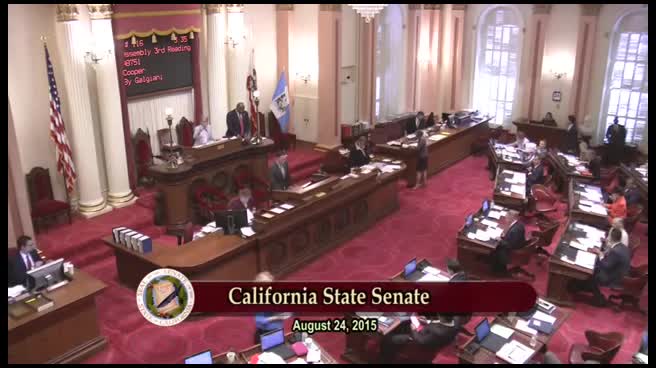 1MIN
Senate Floor
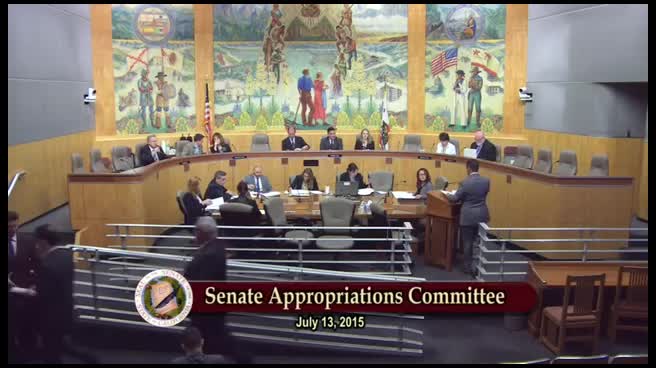 2MIN
Senate Standing Committee on Appropriations
 45SEC
Assembly Floor
Bill Author

Bill Co-Author(s):