AB 1023: Public Utilities Commission: proceedings: ex parte communications.
- Session Year: 2015-2016
- House: Assembly
- Latest Version Date: 2015-09-16
The California Constitution establishes the Public Utilities Commission, with jurisdiction over all public utilities and authorizes the commission to establish rules for all public utilities, subject to control by the Legislature, and to establish its own procedures, subject to statutory limitations or directions and constitutional requirements of due process. The Public Utilities Act requires the commission to determine whether a proceeding requires a hearing and, if so, to determine whether the matter requires a quasi-legislative, an adjudication, or a ratesetting hearing. For these purposes, quasi-legislative cases are cases that establish policy rulemakings and investigations which may establish rules affecting an entire industry, adjudication cases are enforcement cases and complaints except those challenging the reasonableness of any rates or charges, and ratesetting cases are cases in which rates are established for a specific company, including general rate cases, performance-based ratemaking, and other ratesetting mechanisms. Existing law requires the commission, upon initiating a hearing, to assign one or more commissioners to oversee the case and an administrative law judge, where appropriate. The act regulates communications in hearings before the commission and defines ex parte communication to mean any oral or written communication between a decisionmaker and a person with an interest in a matter before the commission concerning substantive, but not procedural, issues that does not occur in a public hearing, workshop, or other public proceeding, or on the official record of the proceeding on the matter. Existing law requires the commission, by regulation, to adopt and publish a definition of the terms decisionmaker and persons for those purposes, along with any requirements for written reporting of ex parte communications and appropriate sanctions for noncompliance with any rule proscribing ex parte communications.
This bill would require the commission to establish and maintain a weekly communications log summarizing all oral and written ex parte communications, as specified, and to make each log available to the public on the commissions Internet Web site.
The California Constitution establishes the Public Utilities Commission, with jurisdiction over all public utilities and authorizes the commission to establish rules for all public utilities, subject to control by the Legislature, and to establish its own procedures, subject to statutory limitations or directions and constitutional requirements of due process. The Public Utilities Act requires the commission to determine whether a proceeding requires a hearing and, if so, to determine whether the matter requires a quasi-legislative, an adjudication, or a ratesetting hearing. For these purposes, quasi-legislative cases are cases that establish policy rulemakings and investigations which may establish rules affecting an entire industry, adjudication cases are enforcement cases and complaints except those challenging the reasonableness of any rates or charges, and ratesetting cases are cases in which rates are established for a specific company, including general rate cases, performance-based ratemaking, and other ratesetting mechanisms. Existing law requires the commission, upon initiating a hearing, to assign one or more commissioners to oversee the case and an administrative law judge, where appropriate. The act regulates communications in hearings before the commission and defines ex parte communication to mean any oral or written communication between a decisionmaker and a person with an interest in a matter before the commission concerning substantive, but not procedural, issues that does not occur in a public hearing, workshop, or other public proceeding, or on the official record of the proceeding on the matter. Existing law requires the commission, by regulation, to adopt and publish a definition of the terms decisionmaker and persons for those purposes, along with any requirements for written reporting of ex parte communications and appropriate sanctions for noncompliance with any rule proscribing ex parte communications.
This bill would require the commission to establish and maintain a weekly communications log summarizing all oral or and written ex parte communications, as specified, and to make each log available to the public on the commissions Internet Web site.
The California Constitution establishes the Public Utilities Commission, with jurisdiction over all public utilities and authorizes the commission to establish rules for all public utilities, subject to control by the Legislature, and to establish its own procedures, subject to statutory limitations or directions and constitutional requirements of due process. The Public Utilities Act requires the commission to determine whether a proceeding requires a hearing and, if so, to determine whether the matter requires a quasi-legislative, an adjudication, or a ratesetting hearing. For these purposes, quasi-legislative cases are cases that establish policy rulemakings and investigations which may establish rules affecting an entire industry, adjudication cases are enforcement cases and complaints except those challenging the reasonableness of any rates or charges, and ratesetting cases are cases in which rates are established for a specific company, including general rate cases, performance-based ratemaking, and other ratesetting mechanisms. Existing law requires the commission, upon initiating a hearing, to assign one or more commissioners to oversee the case and an administrative law judge, where appropriate. The act regulates communications in hearings before the commission and defines ex parte communication to mean any oral or written communication between a decisionmaker and a person with an interest in a matter before the commission concerning substantive, but not procedural, issues that does not occur in a public hearing, workshop, or other public proceeding, or on the official record of the proceeding on the matter. Existing law requires the commission, by regulation, to adopt and publish a definition of the terms decisionmaker and persons for those purposes, along with any requirements for written reporting of ex parte communications and appropriate sanctions for noncompliance with any rule proscribing ex parte communications.
This bill would require the commission to establish and maintain a weekly communications log summarizing all oral or written ex parte communications, as specified, and to make each log available to the public on the commissions Internet Web site.
The commission shall establish and maintain a weekly communications log summarizing all oral and written ex parte communications, as defined in Section 1701.1, made in that week. The communications log shall include a summary of all oral and written communications that meet the definition of an ex parte communication that occur between a person with an interest in a matter before the commission and a commissioner, all policy advisors to a commissioner, the executive director of the commission, a deputy executive director, a director of a division that is not acting as a party in a related proceeding, or an administrative law judge. Each communication log shall include the date of each communication, the persons involved in the communication, and, to the extent known, any proceedings that were the subject of each communication. Each log shall be made available to the public on the commissions Internet Web site.
The commission shall establish and maintain a weekly communications log summarizing all oral and written ex parte communications, as defined in Section 1701.1, made in that week. The communications log shall include a summary of all oral and written communications that meet the definition of an ex parte communication that occur between a person with an interest in a matter before the commission and a commissioner, all policy advisors to a commissioner, the executive director of the commission, a deputy executive director, a director of a division that is not acting as a party in a related proceeding, or an administrative law judge. Each communication log shall include the date of each communication, the persons involved in the communication, and, to the extent known, any proceedings that were the subject of each communication. Each log shall be made available to the public on the commissions Internet Web site.
The commission shall establish and maintain a weekly communications log summarizing all oral or and written ex parte communications, as defined in Section 1701.1, made in that week. The communications log shall include a summary of all oral and written communications that meet the definition of an ex parte communication that occur between a person with an interest in a matter before the commission and a commissioner, advisor all policy advisors to a commissioner appointed pursuant to Section 309.1, commissioner, the executive director of the commission, a deputy executive director, a director of a division that is not acting as a party in a related proceeding, or an administrative law judge. Each communication log shall include the date of each communication, the persons involved in the communication, and, to the extent known, any proceedings that were the subject of each communication. Each log shall be made available to the public on the commissions Internet Web site.
The commission shall establish and maintain a weekly communications log summarizing all oral or written ex parte communications, as defined in Section 1701.1, made in that week. The communications log shall include a summary of all oral and written communications that meet the definition of an ex parte communication that occur between a person with an interest in a matter before the commission and a commissioner, advisor to a commissioner appointed pursuant to Section 309.1, the executive director of the commission, a deputy executive director, a division director, director of a division that is not acting as a party in a related proceeding, or an administrative law judge. Each communication log shall include the date of each communication, the persons involved in the communication, and, to the extent known, any proceedings that were the subject of each communication. Each log shall be made available to the public on the commissions Internet Web site.
The commission shall establish and maintain a weekly communications log summarizing all oral or written ex parte communications, as defined in Section 1701.1, made in that week. The communications log shall include a summary of all oral and written communications that meet the definition of an ex parte communication that occur between a person with an interest in a matter before the commission and a commissioner, advisor to a commissioner appointed pursuant to Section 309.1, the executive director of the commission, a deputy executive director, a division director, or an administrative law judge. Each communication log shall include the date of each communication, the persons involved in the communication, and, to the extent known, any proceedings that were the subject of each communication. Each log shall be made available to the public on the commissions Internet Web site.
|
Date
|
Status
|
|---|---|
| Aug 18, 2015 | Read second time and amended. Re-referred to Com. on APPR. |
| Jan 19, 2016 | Consideration of Governor's veto stricken from file. |
| Oct 9, 2015 | Vetoed by Governor. |
| Sep 25, 2015 | Enrolled and presented to the Governor at 2 p.m. |
| Sep 11, 2015 | Senate amendments concurred in. To Engrossing and Enrolling. (Ayes 79. Noes 0.). |
| Sep 11, 2015 | Senate amendments concurred in. To Engrossing and Enrolling. (Ayes 79. Noes 0. Page 3148.). |
| Sep 11, 2015 | Senate amendments concurred in. To Engrossing and Enrolling. |
| Sep 10, 2015 | Read third time. Passed. Ordered to the Assembly. (Ayes 40. Noes 0. Page 2704.). |
| Sep 10, 2015 | Read third time. Passed. Ordered to the Assembly. |
| Sep 10, 2015 | In Assembly. Concurrence in Senate amendments pending. |
| Sep 8, 2015 | Read second time. Ordered to third reading. |
| Sep 4, 2015 | Read third time and amended. Ordered to second reading. |
| Aug 25, 2015 | Read second time. Ordered to third reading. |
| Aug 24, 2015 | From committee: Be placed on second reading file pursuant to Senate Rule 28.8. |
| Feb 26, 2015 | Read first time. To print. |
| Aug 17, 2015 | From committee: Amend, and do pass as amended and re-refer to Com. on APPR. (Ayes 11. Noes 0.) (July 13). |
| Jun 29, 2015 | In committee: Hearing postponed by committee. |
| Jun 4, 2015 | Referred to Com. on E., U., & C. |
| May 22, 2015 | Read third time. Passed. Ordered to the Senate. (Ayes 74. Noes 0. Page 1563.) |
| May 22, 2015 | Read third time. Passed. Ordered to the Senate. |
| May 22, 2015 | In Senate. Read first time. To Com. on RLS. for assignment. |
| May 14, 2015 | Read second time. Ordered to Consent Calendar. |
| May 13, 2015 | From committee: Do pass. To Consent Calendar. (Ayes 17. Noes 0.) (May 13). |
| Apr 28, 2015 | From committee: Do pass and re-refer to Com. on APPR. (Ayes 15. Noes 0.) (April 27). Re-referred to Com. on APPR. |
| Apr 21, 2015 | Re-referred to Com. on U. & C. |
| Apr 20, 2015 | From committee chair, with author's amendments: Amend, and re-refer to Com. on U. & C. Read second time and amended. |
| Mar 19, 2015 | Referred to Com. on U. & C. |
| Feb 27, 2015 | From printer. May be heard in committee March 29. |
|
Date
|
Description
|
Location
|
Votes
|
|
|---|---|---|---|---|
| Sep 11, 2015 | AB 1023 RENDON Concurrence in Senate Amendments | Assembly Floor |
Passed |
|
| Sep 10, 2015 | Assembly 3rd Reading AB1023 Rendon By Hill | Senate Floor |
Passed |
|
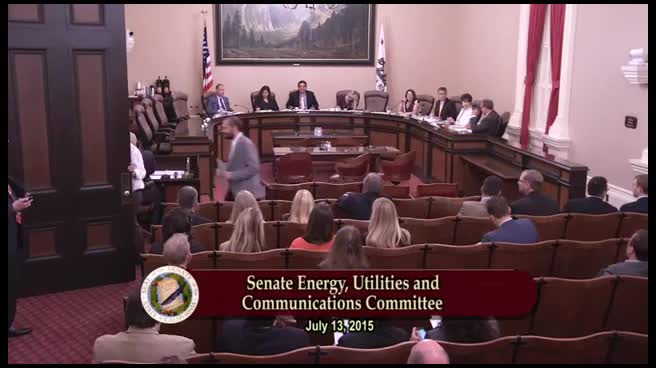
| Jul 13, 2015 | Do pass as amended, but first amend, and re-refer to the Committee on [Appropriations] | Senate Standing Committee on Energy, Utilities and Communications |
Passed |
|
| May 22, 2015 | AB 1023 RENDON Consent Calendar Second Day Regular Session | Assembly Floor |
Passed |
|
| May 13, 2015 | Do pass. To Consent Calendar. | Assembly Standing Committee on Appropriations |
Passed |
|
| Apr 27, 2015 | Do pass and be re-referred to the Committee on [Appropriations] | Assembly Standing Committee on Utilities and Commerce |
Passed |
This list shows positions taken on this bill by organizations on the date displayed, which is linked to the original source.
Positions by individuals are not included.
|
Organization
|
Position
|
Date
|
|---|---|---|
| Sierra Club California | ** Support | Sep 10, 2015 |
GOVERNOR'S VETO
AB 1023
(Rendon)
As Enrolled September 16, 2015
2/3 vote
ASSEMBLY: |
74-0 |
(May 22, 2015) |
SENATE: |
40-0 |
(September 10, 2015) |
ASSEMBLY: |
79-0 |
(September 11, 2015) |
|
|
|
Original Committee Reference: U. & C.
SUMMARY: Requires the California Public Utilities Commission (CPUC) to establish and maintain a weekly communications log summarizing all oral or written ex parte communications, as specified.
The Senate amendments make minor technical and clarifying changes, including changes to address chaptering out conflicts.
EXISTING LAW:
Requires the CPUC to determine whether a proceeding requires a hearing, and whether the matter requires a quasi-legislative, adjudication, or a ratesetting hearing. (Public Utilities Code Section 1701.1)
Requires the CPUC to establish regulations regarding ex parte communication on case categorization issues. (Public Utilities Code Section 1701.1)
Requires the CPUC, upon initiating a hearing, to assign one or more commissioners to oversee the case and an administrative law judge (ALJ) where appropriate. The assigned commissioner shall schedule a prehearing conference. The assigned commissioner shall prepare and issue by order or ruling a scoping memo that describes the issues to be considered and the applicable timetable for resolution. (Public Utilities Code Section 1701.1)
Defines "ex parte communication" to mean any oral or written communication between a decision maker and a person with an interest in a matter before the Commission concerning substantive, but not procedural issues which does not occur in a public hearing, workshop, or other public proceeding, or on the official record of the proceeding on the matter. (Public Utilities Code Section 1701.1)
FISCAL EFFECT: According to the Senate Appropriations Committee, pursuant to Senate Rule 28.8, negligible state costs.
COMMENTS:
Author’s Statement: "In recent months, revelations have shown a pattern of informal and private contacts by CPUC members with regulated entities. In response, CPUC management set up a weekly communications log that summarizes oral and written ex parte communications. This bill would codify the requirement that the CPUC maintain that contact log."
Background: In 2014, revelations surfaced that members of the CPUC repeatedly had informal private contacts with entities under its regulatory purview. As a result, on October 18, 2014, the CPUC Executive Director issued a memo implementing new reporting procedures for communications between certain CPUC staff and CPUC-regulated entities. The memo directed division directors and above, as well as voluntarily asked commissioners, their advisors, and the chief ALJ to provide a communications log summarizing all oral or written ex parte communications that occur between themselves and CPUC-regulated entities who are interested persons to a ratesetting or adjudicatory proceeding. The communications log must include the date of each communication, the persons involved, and to the extent known, any proceedings that were the subject of each communication. The communications log must be provided on a weekly basis and be made available on the CPUC's Web site. Since October 15, 2014, the CPUC began publishing these logs every other week since the policy was established.
This bill codifies the provisions of the CPUC policy that requires the CPUC to establish and maintain a weekly communications log summarizing all oral or written ex parte communications between a person with an interest in a matter before the CPUC and a commissioner, all policy advisors to a commissioner, the executive director, a deputy executive director, a division director, or an ALJ. The bill would expand the reporting to include quasi-legislative proceedings, advice letters, and scoping memos.
These bills aim to improve the public accessibility and transparency in decision-making at the Public Utilities Commission.
There are many important and needed reforms in this package of bills. Unfortunately, taken together there are various technical and conflicting issues that make the over fifty proposed reforms unworkable. Some prudent prioritization is needed.
These reforms should include greater public access through technology improvements, incorporating public comments into the record, more Commission meetings outside of San Francisco, amending Section 583 of the Public Utilities Code to require more information to be publicy available, facilitating greater deliberation among Commissioners through Bagley-Keene reform to improve decisionmaking and some tightening the rules on certain ex-parte communications.
I am directing my office to work with the authors on drafting these reforms and to ensure the Commission receives the necessary resources to implement them swiftly and effectively.
Analysis Prepared by: Edmond Cheung / U. & C. / (916) 319-2083 FN: 0002519
AB 1023
Page 2
CONCURRENCE IN SENATE AMENDMENTS
AB 1023
(Rendon)
As Amended September 4, 2015
Majority vote
ASSEMBLY: |
74-0 |
(May 22, 2015) |
SENATE: |
40-0 |
(September 10, 2015) |
Original Committee Reference: U. & C.
SUMMARY: Requires the California Public Utilities Commission (CPUC) to establish and maintain a weekly communications log summarizing all oral or written ex parte communications, as specified.
The Senate amendments make minor technical and clarifying changes, including changes to address chaptering out conflicts.
EXISTING LAW:
Requires the CPUC to determine whether a proceeding requires a hearing, and whether the matter requires a quasi-legislative, adjudication, or a ratesetting hearing. (Public Utilities Code Section 1701.1)
Requires the CPUC to establish regulations regarding ex parte communication on case categorization issues. (Public Utilities Code Section 1701.1)
Requires the CPUC, upon initiating a hearing, to assign one or more commissioners to oversee the case and an administrative law judge (ALJ) where appropriate. The assigned commissioner shall schedule a prehearing conference. The assigned commissioner shall prepare and issue by order or ruling a scoping memo that describes the issues to be considered and the applicable timetable for resolution. (Public Utilities Code Section 1701.1)
Defines "ex parte communication" to mean any oral or written communication between a decision maker and a person with an interest in a matter before the Commission concerning substantive, but not procedural issues, which does not occur in a public hearing, workshop, or other public proceeding, or on the official record of the proceeding on the matter. (Public Utilities Code Section 1701.1)
FISCAL EFFECT: According to the Senate Appropriations Committee, pursuant to Senate Rule 28.8, negligible state costs.
COMMENTS:
Author’s Statement: "In recent months, revelations have shown a pattern of informal and private contacts by CPUC members with regulated entities. In response, CPUC management set up a weekly communications log that summarizes oral and written ex parte communications. AB 1023 would codify the requirement that the CPUC maintain that contact log."
Background: In 2014, revelations surfaced that members of the CPUC repeatedly had informal private contacts with entities under its regulatory purview. As a result, on October 18, 2014, the CPUC Executive Director issued a memo implementing new reporting procedures for communications between certain CPUC staff and CPUC-regulated entities. The memo directed division directors and above, as well as voluntarily asked commissioners and their advisors and the chief ALJ to provide a communications log summarizing all oral or written ex parte communications that occur between themselves and CPUC-regulated entities who are interested persons to a ratesetting or adjudicatory proceeding. The communications log must include the date of each communication, the persons involved, and to the extent known, any proceedings that were the subject of each communication. The communications log must be provided on a weekly basis and be made available on the CPUC’s website. Since October 15, 2014, the CPUC began publishing these logs every other week since the policy was established.
This bill codifies the provisions of the CPUC policy that requires the CPUC to establish and maintain a weekly communications log summarizing all oral or written ex parte communications between a person with an interest in a matter before the CPUC and a commissioner, all policy advisors to a commissioner, the executive director, a deputy executive director, a division director, or an ALJ. The bill would expand the reporting to include quasi-legislative proceedings, advice letters, and scoping memos.
Analysis Prepared by: Edmond Cheung / U. & C. / (916) 319-2083 FN: 0002264
AB 1023
Page 5
|
Office of Senate Floor Analyses (916) 651-1520 Fax: (916) 327-4478 |
THIRD READING
Bill No: AB 1023
Amended: 9/4/15 in Senate
SENATE ENERGY, U. & C. COMMITTEE: 11-0, 7/13/15
AYES: Hueso, Fuller, Cannella, Hertzberg, Hill, Lara, Leyva, McGuire, Morrell, Pavley, Wolk
SENATE APPROPRIATIONS COMMITTEE: Senate Rule 28.8
ASSEMBLY FLOOR: 74-0, 5/22/15 (Consent) - See last page for vote
SUBJECT: Public Utilities Commission: proceedings: ex parte communications
DIGEST: This bill requires the California Public Utilities Commission (CPUC) to establish and maintain a weekly log that summarizes all ex parte communications in CPUC proceedings between decisionmakers, as defined, and persons with an interest.
Senate Floor Amendments of 9/4/15 are exclusively technical as they move the language from one code section to another to avoid chaptering issues with other CPUC related bills.
Existing law:
Establishes the CPUC with five members appointed by the Governor and confirmed by the Senate and empowers it to regulate privately-owned public utilities in California. Specifies that the Legislature may prescribe that additional classes of private corporations or other persons are public utilities. (Article XII of the California Constitution; Public Utilities Code §301 et seq.)
Requires the CPUC to determine whether a proceeding requires a hearing and whether it is quasi-legislative, adjudication or ratesetting. Provides rules governing each type of proceeding, including prohibiting any substantive communication between a decision maker and a party in adjudicative cases. (Public Utilities Code §§1701.1 and 1701.2)
This bill:
Requires the CPUC to establish and maintain a weekly communications log summarizing all oral or written ex parte communications for quasi-legislative, rate-setting and adjudicative proceedings.
Requires the communications log to include a summary of oral and written ex parte communications between a person with an interest in a matter before the CPUC and a commissioner, advisor to a commissioner, the executive director of the CPUC, a deputy executive director, director of a division not acting as a party, or an administrative law judge.
Requires that each communication log entry include the date of each communication, the persons involved, and any proceedings that were the subject of each communication.
Requires the CPUC to make the log available on its website.
Background
Ex parte communications. Substantive communication outside of the public record that occurs between a decisionmaker and a party with an interest in a CPUC proceeding are known as “ex parte” communications. Statute recognizes that ex parte communications can conflict with the need for public decision at the CPUC. Current law directs the CPUC to adopt regulations requiring reporting of ex parte communications. The regulations are to require the interested party to report the communication within three working days of the communication and include:
The date, time, and location of the communication, and whether it was oral, written, or a combination.
The identity of the recipient and the person initiating the communication, as well as the identity of any persons present during the communication.
A description of the party’s, but not the decisionmaker’s, communication and its content.
Statute does not require a CPUC decisionmaker to report ex parte communication with an interested party.
Statute directs CPUC to identify each of its proceedings according to one of three categories – adjudicatory, quasi-legislative, and ratesetting – and provides ex parte rules applicable to each type of proceeding. The types of proceedings and the statutory ex parte rules applicable to each are:
Adjudication cases – enforcement cases and complaints, except those challenging the reasonableness of rates or charges. Statute expressly prohibits ex parte communication related to an adjudicatory proceeding.
Quasi-legislative cases – those that establish policy, including, but not limited to, rulemakings and investigations which may establish rules affecting an entire industry. Statute expressly allows for ex parte communication without restriction in these types of proceedings.
Ratesetting cases – cases in which rates are established for a specific company. Statute expressly prohibits ex parte communication related to ratesetting cases. However, despite the prohibition, statute provides circumstances in which ex parte communication is permitted and procedures for reporting and managing such communication.
The CPUC has adopted regulations regarding ex parte communications. The regulations define ex parte communication as oral or written communication that: (1) concerns any substantive issue in a formal proceeding, (2) takes place between an interested person and a decisionmaker, and (3) does not occur in a public hearing, workshop, or other public forum noticed by ruling or order in the proceeding, or on the record of the proceeding. The regulations define “decisionmaker” as any commissioner, the chief administrative law judge, any assistant chief administrative law judge, the assigned administrative law judge, or the law and motion administrative law judge. The ex parte regulations applicable to decisionmakers are also applicable to commissioners’ “personal advisors,” with certain exceptions regarding ratesetting proceedings.
Related Legislation
AB 825 (Rendon, 2015) proposes a suite of reforms of the CPUC largely directed at increased transparency of the activities of the agency, including expanding the roles and responsibilities of the public advisor, specifying additional requirements of commissioners, increased transparency of electric utilities’ procurement, among others. The bill is currently under consideration on the Senate Floor.
SB 48 (Hill, 2015) proposes a suite of reforms of the CPUC, including modifying the role of the president, meeting location requirements, and other reforms. The bill is currently under consideration on the Assembly Floor.
SB 215 (Leno, 2015) proposes a suite of reforms of the CPUC related to governance and operations, including disqualifying commissioners from proceedings, modifying the role of the president, modifying ex parte rules, and other reforms. The bill was held in the Senate Committee on Energy, Utilities and Communication after merging much of its contents with SB 660 (see below).
SB 660 (Leno/Hueso, 2015) proposes a suite of reforms of the CPUC focused on ex parte communications rules, addressing the disqualification of commissioners in proceedings, and others. The bill is currently under consideration on the Assembly Floor.
FISCAL EFFECT: Appropriation: No Fiscal Com.: Yes Local: No
Sierra Club California
None received
ARGUMENTS IN SUPPORT: According to the author, there have been revelations in recent months that have shown a pattern of informal and private contacts by CPUC members with regulated entities. On October 18, 2014, the CPUC’s executive director established a policy that requires high-level CPUC personnel and asks commissioners, advisors, and the chief administrative law judge to provide a communication log summarizing oral and written communications that occur between CPUC personnel and interested parties in adjudicatory and rate setting proceedings. AB 1023 codifies this new CPUC policy.
ASSEMBLY FLOOR: 74-0, 5/22/15
AYES: Achadjian, Travis Allen, Baker, Bigelow, Bloom, Bonilla, Bonta, Brough, Brown, Burke, Calderon, Campos, Chang, Chau, Chávez, Chiu, Chu, Cooley, Cooper, Dababneh, Dahle, Daly, Dodd, Eggman, Frazier, Beth Gaines, Gallagher, Cristina Garcia, Eduardo Garcia, Gatto, Gipson, Gomez, Gonzalez, Gordon, Gray, Grove, Hadley, Harper, Roger Hernández, Holden, Irwin, Jones-Sawyer, Kim, Lackey, Levine, Linder, Lopez, Low, Maienschein, Mathis, Mayes, McCarty, Medina, Melendez, Mullin, Nazarian, Obernolte, Patterson, Perea, Quirk, Rendon, Ridley-Thomas, Rodriguez, Salas, Santiago, Steinorth, Mark Stone, Thurmond, Ting, Wagner, Wilk, Williams, Wood, Atkins
NO VOTE RECORDED: Alejo, Jones, O'Donnell, Olsen, Waldron, Weber
Prepared by: Nidia Bautista / E., U., & C. / (916) 651-4107
9/8/15 14:55:33
**** END ****
AB 1023
Page 5
|
Office of Senate Floor Analyses (916) 651-1520 Fax: (916) 327-4478 |
THIRD READING
Bill No: AB 1023
Amended: 8/18/15 in Senate
SENATE ENERGY, U. & C. COMMITTEE: 11-0, 7/13/15
AYES: Hueso, Fuller, Cannella, Hertzberg, Hill, Lara, Leyva, McGuire, Morrell, Pavley, Wolk
SENATE APPROPRIATIONS COMMITTEE: Senate Rule 28.8
ASSEMBLY FLOOR: 74-0, 5/22/15 (Consent) - See last page for vote
SUBJECT: Public Utilities Commission: proceedings: ex parte communications
DIGEST: This bill requires the California Public Utilities Commission (CPUC) to establish and maintain a weekly log that summarizes all ex parte communications between decisionmakers, as defined, and persons with an interest in CPUC proceedings.
Existing law:
Establishes the CPUC with five members appointed by the Governor and confirmed by the Senate and empowers it to regulate privately-owned public utilities in California. Specifies that the Legislature may prescribe that additional classes of private corporations or other persons are public utilities. (Article XII of the California Constitution; Public Utilities Code §301 et seq.)
Requires the CPUC to determine whether a proceeding requires a hearing and whether it is quasi-legislative, adjudication or ratesetting. Provides rules governing each type of proceeding, including prohibiting any substantive communication between a decision maker and a party in adjudicative cases. (Public Utilities Code §§1701.1 and 1701.2)
This bill:
Requires the CPUC to establish and maintain a weekly communications log summarizing all oral or written ex parte communications for quasi-legislative, rate-setting and adjudicative proceedings.
Requires the communications log to include a summary of oral and written ex parte communications between a person with an interest in a matter before the CPUC and a commissioner, advisor to a commissioner, the executive director of the CPUC, a deputy executive director, director of a division not acting as a party, or an administrative law judge.
Requires that each communication log entry include the date of each communication, the persons involved, and any proceedings that were the subject of each communication.
Requires the CPUC to make the log available on its website.
Background
Ex parte communications. Substantive communication outside of the public record that occurs between a decisionmaker and a party with an interest in a CPUC proceeding are known as “ex parte” communications. Statute recognizes that ex parte communications can conflict with the need for public decision at the CPUC. Current law directs the CPUC to adopt regulations requiring reporting of ex parte communications. The regulations are to require the interested party to report the communication within three working days of the communication and include:
The date, time, and location of the communication, and whether it was oral, written, or a combination.
The identity of the recipient and the person initiating the communication, as well as the identity of any persons present during the communication.
A description of the party’s, but not the decisionmaker’s, communication and its content.
Statute does not require a CPUC decisionmaker to report ex parte communication with an interested party.
Statute directs CPUC to identify each of its proceedings according to one of three categories – adjudicatory, quasi-legislative, and ratesetting – and provides ex parte rules applicable to each type of proceeding. The types of proceedings and the statutory ex parte rules applicable to each are:
Adjudication cases – enforcement cases and complaints, except those challenging the reasonableness of rates or charges. Statute expressly prohibits ex parte communication related to an adjudicatory proceeding.
Quasi-legislative cases – those that establish policy, including, but not limited to, rulemakings and investigations which may establish rules affecting an entire industry. Statute expressly allows for ex parte communication without restriction in these types of proceedings.
Ratesetting cases – cases in which rates are established for a specific company. Statute expressly prohibits ex parte communication related to ratesetting cases. However, despite the prohibition, statute provides circumstances in which ex parte communication is permitted and procedures for reporting and managing such communication.
The CPUC has adopted regulations regarding ex parte communications. The regulations define ex parte communication as oral or written communication that: (1) concerns any substantive issue in a formal proceeding, (2) takes place between an interested person and a decisionmaker, and (3) does not occur in a public hearing, workshop, or other public forum noticed by ruling or order in the proceeding, or on the record of the proceeding. The regulations define “decisionmaker” as any commissioner, the chief administrative law judge, any assistant chief administrative law judge, the assigned administrative law judge, or the law and motion administrative law judge. The ex parte regulations applicable to decisionmakers are also applicable to commissioners’ “personal advisors,” with certain exceptions regarding ratesetting proceedings.
Related Legislation
AB 825 (Rendon, 2015) proposes a suite of reforms of the CPUC largely directed at increased transparency of the activities of the agency, including expanding the roles and responsibilities of the public advisor, specifying additional requirements of commissioners, increased transparency of electric utilities’ procurement, among others. The bill was placed on the suspense file and will be heard by the Senate Committee on Appropriations on August 27th.
SB 48 (Hill, 2015) proposes a suite of reforms of the CPUC, including modifying the role of the president, meeting location requirements, and other reforms. The bill was placed on the suspense file and will be heard by the Assembly Committee on Appropriations on August 27th.
SB 215 (Leno, 2015) proposes a suite of reforms of the CPUC related to governance and operations, including disqualifying commissioners from proceedings, modifying the role of the president, modifying ex parte rules, and other reforms. The bill was held in the Senate Committee on Energy, Utilities and Communication after merging much of its contents with SB 660 (see below).
SB 660 (Leno/Hueso, 2015) proposes a suite of reforms of the CPUC focused on ex parte communications rules, addressing the disqualification of commissioners in proceedings, and others. The bill is scheduled to be heard August 26th in the Assembly Committee on Appropriations.
FISCAL EFFECT: Appropriation: No Fiscal Com.: Yes Local: No
Sierra Club California
OPPOSITION: (Verified 8/25/15)
None received
ARGUMENTS IN SUPPORT: According to the author, there have been revelations in recent months that have shown a pattern of informal and private contacts by CPUC members with regulated entities. On October 18, 2014, the CPUC’s executive director established a policy that requires high-level CPUC personnel and asks commissioners, advisors, and the chief administrative law judge to provide a communication log summarizing oral and written communications that occur between CPUC personnel and interested parties in adjudicatory and rate setting proceedings. AB 1023 codifies this new CPUC policy.
ASSEMBLY FLOOR: 74-0, 5/22/15
AYES: Achadjian, Travis Allen, Baker, Bigelow, Bloom, Bonilla, Bonta, Brough, Brown, Burke, Calderon, Campos, Chang, Chau, Chávez, Chiu, Chu, Cooley, Cooper, Dababneh, Dahle, Daly, Dodd, Eggman, Frazier, Beth Gaines, Gallagher, Cristina Garcia, Eduardo Garcia, Gatto, Gipson, Gomez, Gonzalez, Gordon, Gray, Grove, Hadley, Harper, Roger Hernández, Holden, Irwin, Jones-Sawyer, Kim, Lackey, Levine, Linder, Lopez, Low, Maienschein, Mathis, Mayes, McCarty, Medina, Melendez, Mullin, Nazarian, Obernolte, Patterson, Perea, Quirk, Rendon, Ridley-Thomas, Rodriguez, Salas, Santiago, Steinorth, Mark Stone, Thurmond, Ting, Wagner, Wilk, Williams, Wood, Atkins
NO VOTE RECORDED: Alejo, Jones, O'Donnell, Olsen, Waldron, Weber
Prepared by: Nidia Bautista / E., U., & C. / (916) 651-4107
8/25/15 15:29:40
**** END ****
AB 1023 (Rendon) Page 4 of 4
SENATE COMMITTEE ON ENERGY, UTILITIES AND COMMUNICATIONS
Senator Ben Hueso, Chair
2015 - 2016 Regular
Bill No: AB 1023 Hearing Date: 7/13/2015
Author: |
Rendon |
||
Version: |
4/20/2015 As Amended |
||
Urgency: |
No |
Fiscal: |
Yes |
Consultant: |
Nidia Bautista |
||
SUBJECT: Public Utilities Commission: proceedings: ex parte communications
DIGEST: This bill requires the California Public Utilities Commission to establish and maintain a weekly log that summarizes all ex parte communications between decisionmakers, as defined, and persons with an interest.
ANALYSIS:
Existing law:
Establishes the California Public Utilities Commission (CPUC) with five members appointed by the governor and confirmed by the Senate and empowers it to regulate privately-owned public utilities in California. Specifies that the Legislature may prescribe that additional classes of private corporations or other persons are public utilities. (Article XII of the California Constitution; Public Utilities Code §301 et seq.)
Requires the CPUC to determine whether a proceeding requires a hearing and whether it is quasi-legislative, adjudication or ratesetting. Provides rules governing each type of proceeding, including prohibiting any substantive communication between a decision maker and a party in adjudicative cases. (Public Utilities Code §§1701.1 and 1701.2)
This bill:
Requires the CPUC to establish and maintain a weekly communications log summarizing all oral or written ex parte communications for quasi-legislative, rate-setting and adjudicative proceedings.
Requires the communications log to include a summary of oral and written ex parte communications between a person with an interest in a matter before the CPUC and a commissioner, advisor to a commissioner, the executive director of the CPUC, a deputy executive director, director of a division not acting as a party, or an administrative law judge.
Requires that each communication log entry include the date of each communication, the persons involved, and any proceedings that were subject of each communication.
Requires the CPUC to make the log available on its website.
Background
Ex parte communications. Substantive communication outside of the public record that occurs between a decisionmaker and a party with an interest in a CPUC proceeding are known as “ex parte” communications. Statute recognizes that ex parte communications can conflict with the need for public decision at the CPUC. Current law directs the CPUC to adopt regulations requiring reporting of ex parte communications. The regulations are to require the interested party to report the communication within three working days of the communication and include:
The date, time, and location of the communication, and whether it was oral, written, or a combination.
The identity of the recipient and the person initiating the communication, as well as the identity of any persons present during the communication.
A description of the party’s, but not the decisionmaker’s, communication and its content.
Statute does not require a CPUC decisionmaker to report ex parte communication with an interested party.
Statute directs CPUC to identify each of its proceedings according to one of three categories – adjudicatory, quasi-legislative, and ratesetting – and provides ex parte rules applicable to each type of proceeding. The types of proceedings and the statutory ex parte rules applicable to each are:
Adjudication cases – enforcement cases and complaints, except those challenging the reasonableness of rates or charges. Statute expressly prohibits ex parte communication related to an adjudicatory proceeding.
Quasi-legislative cases – those that establish policy, including, but not limited to, rulemakings and investigations which may establish rules affecting an entire industry. Statute expressly allows for ex parte communication without restriction in these types of proceedings.
Ratesetting cases – cases in which rates are established for a specific company. Statute expressly prohibits ex parte communication related to ratesetting cases. However, despite the prohibition, statute provides circumstances in which ex parte communication is permitted and procedures for reporting and managing such communication.
The CPUC has adopted regulations regarding ex parte communications. The regulations define ex parte communication as oral or written communication that: (1) concerns any substantive issue in a formal proceeding, (2) takes place between an interested person and a decisionmaker, and (3) does not occur in a public hearing, workshop, or other public forum noticed by ruling or order in the proceeding, or on the record of the proceeding. The regulations define “decisionmaker” as any commissioner, the chief administrative law judge, any assistant chief administrative law judge, the assigned administrative law judge, or the law and motion administrative law judge. The ex parte regulations applicable to decisionmakers are also applicable to commissioners’ “personal advisors,” with certain exceptions regarding ratesetting proceedings.
There are inconsistencies between the reference in statute noted in this bill stating one advisor per commissioner and the actual number of personal advisors per commissioner, which is four and five for the president. The author and committee may wish to amend the bill language related to advisors of the commissioners by striking reference to Section 309.1and adding language specifying the policy advisors for each commissioner.
Prior/Related Legislation
AB 825 (Rendon, 2015) proposes a suite of reforms of the CPUC largely directed at increased transparency of the activities of the agency, including expanding the roles and responsibilities of the public advisor, specifying additional requirements of commissioners, increased transparency of electric utilities’ procurement, among others. The bill is waiting to be heard by the Senate Committee on Appropriations.
SB 48 (Hill, 2015) proposes a suite of reforms of the CPUC, including modifying the role of the president, meeting location requirements, and other reforms. The bill is scheduled to be heard July 15th in the Assembly Committee on Appropriations.
SB 215 (Leno, 2015) proposes a suite of reforms of the CPUC related to governance and operations, including disqualifying commissioners from proceedings, modifying the role of the president, modifying ex parte rules, and other reforms. The bill was held in this committee after merging much of its contents with SB 660.
SB 660 (Leno/Hueso, 2015) proposes a suite of reforms of the CPUC focused on ex parte communications rules, addressing the disqualification of commissioners in proceedings, modifying the powers of the president, and others. The bill is scheduled to be heard July 13th in the Assembly Committee on Utilities and Commerce.
FISCAL EFFECT: Appropriation: No Fiscal Com.: Yes Local: No
ASSEMBLY VOTES:
Assembly Floor (74-0)
Assembly Appropriations Committee (17-0)
Assembly Utilities and Commerce Committee (15-0)
SUPPORT:
Sierra Club California
OPPOSITION:
None received
ARGUMENTS IN SUPPORT: In recent months, revelations have shown a pattern of informal and private contacts by CPUC members with regulated entities. On October 18, 2014, the CPUC’s executive director established a policy that requires high-level CPUC personnel and asks commissioners, advisors, and the chief administrative law judge to provide a communication log summarizing oral and written communications that occur between CPUC personnel and interested parties in adjudicatory and rate setting proceedings. AB 1023 codifies this new CPUC policy.
-- END --
AB 1023
Page 1
Date of Hearing: May 13, 2015
ASSEMBLY COMMITTEE ON APPROPRIATIONS
Jimmy Gomez, Chair
AB 1023
(Rendon) – As Amended April 20, 2015
Policy Committee: |
Utilities and Commerce |
Vote: |
15 - 0 |
|
|
|
|
|
|
|
|
Urgency: No State Mandated Local Program: No Reimbursable: No
SUMMARY:
This bill requires the Public Utilities Commission (PUC) to establish and maintain a weekly communications log that summarizes ex parte communications. Specifically, this bill:
Requires all oral or written ex parte communication to be included in the weekly log.
For the purposes of the log, defines ex parte communication as communication that occurs between a person with an interest in a matter before the PUC and either a Commissioner, advisor to a Commission, an administrative law judge, or the Executive Director, Deputy Executive Director or the Director of a division.
Requires the log to include the date of the communication, the persons involved, and any known proceeding that was the subject of the communication and to be published weekly on the PUC website.
FISCAL EFFECT:
Absorbable costs to the PUC of less than $150,000 (special fund).
COMMENTS:
Purpose. In recent months, revelations have shown a pattern of informal and private contacts by PUC members with regulated entities. In response, PUC management set up a weekly communications log that summarizes oral and written ex parte communications.
This bill expands existing PUC policy to include quasi-legislative proceedings, advice letters, and scoping memos, and increase publishing to every week.
Background. In 2014, revelations surfaced that members of the PUC repeatedly had informal private contacts with entities under its regulatory purview. As a result, on October 18, 2014, the PUC Executive Director issued a memo implementing new reporting procedures for communications between certain PUC staff and PUC-regulated entities.
Since October 15, 2014, the PUC began publishing these logs every other week.
Analysis Prepared by: Jennifer Galehouse / APPR. / (916) 319-2081
AB 1023
Page 3
Date of Hearing: April 27, 2015
ASSEMBLY COMMITTEE ON UTILITIES AND COMMERCE
Anthony Rendon, Chair
AB 1023
(Rendon) – As Amended April 20, 2015
SUBJECT: Public Utilities Commission: proceedings: ex parte communications
SUMMARY: This bill would require the California Public Utilities Commissions (CPUC) policy to establish and maintain a weekly communications log summarizing all oral or written ex parte communications, as specified. Specifically, this bill:
Requires the CPUC to establish and maintain a weekly communications log summarizing all oral or written ex parte communications made in that week.
Requires the communications log to include a summary of all oral and written communications that meet the definition of an ex parte communication that occur between a person with an interest in a matter before the CPUC and a commissioner, advisor to a commissioner appointed, executive director of the CPUC, deputy executive director, a division director, or an administrative law judge.
Requires that each communication log include the date of each communication, the persons involved in the communication, and to the extent known, and any proceedings that were the subject of each communication.
Requires each communications log to be posted on the CPUCs website.
EXISTING LAW:
Requires the CPUC to determine whether a proceeding requires a hearing, and whether the matter requires a quasi-legislative, an adjudication, or a ratesetting hearing. (Public Utilities Code Section 1701.1)
Requires the CPUC to establish regulations regarding ex parte communication on case categorization issues. (Public Utilities Code Section 1701.1)
Requires the CPUC, upon initiating a hearing, to assign one or more commissioners to oversee the case and an administrative law judge where appropriate. The assigned commissioner shall schedule a prehearing conference. The assigned commissioner shall prepare and issue by order or ruling a scoping memo that describes the issues to be considered and the applicable timetable for resolution. (Public Utilities Code Section 1701.1)
Defines “quasi-legislative cases” to mean cases that establish policy, including, but not limited to, rulemakings and investigations which may establish rules affecting an entire industry. (Public Utilities Code Section 1701.1)
Defines “adjudication cases” to mean enforcement cases and complaints, except those challenging the reasonableness of any rates or charges, as specified. (Public Utilities Code Section 1701.1)
Defines “ratesetting cases” to mean cases in which rates are established for a specific company, including, but not limited to, general rate cases, performance-based ratemaking, and other ratesetting mechanisms. (Public Utilities Code Section 1701.1)
Defines “ex parte communication” to mean any oral or written communication between a decision maker and a person with an interest in a matter before the commission concerning substantive, but not procedural issues, that does not occur in a public hearing, workshop, or other public proceeding, or on the official record of the proceeding on the matter. (Public Utilities Code Section 1701.1)
FISCAL EFFECT: Unknown.
COMMENTS:
Author’s Statement: “In recent months, revelations have shown a pattern of informal and private contacts by California Public Utilities Commission members with regulated entities. In response, CPUC management set up a weekly communications log that summarizes oral and written ex parte communications. AB 1023 would codify the requirement that the CPUC maintain that contact log.”
Background: In 2014, revelations surfaced that members of the CPUC repeatedly had informal private contacts with entities under its regulatory purview. As a result, on October 18, 2014, the CPUC Executive Director issued a memo implementing new reporting procedures for communications between certain CPUC staff and CPUC-regulated entities. The memo was issued in order to enhance the transparency of the CPUC’s process and its accountability to the public. The memo directed Division Directors and above, as well as voluntarily asked Commissioners and their Advisors and the Chief Administrative Law Judge to provide a communications log summarizing all oral or written ex parte communications that occur between themselves and CPUC-regulated entities who are interested persons to a ratesetting or adjudicatory proceeding. The communications log must include the date of each communication, the persons involved, and to the extent known, any proceedings that were the subject of each communication. The communications log must be provided on a weekly basis and be made available on the CPUC’s website.
Since October 15, 2014, the CPUC began publishing these logs every other week since the policy was established. But the policy limited the scope of the policy to only adjudicatory and ratesetting proceedings, and did not require reporting on communications between high-level CPUC personnel and interested parties on quasi-legislative proceedings, advice letters, and scoping memos.
This bill would codify the provisions of the CPUC policy that requires the CPUC to establish and maintain a weekly communications log summarizing all oral or written ex parte communications between a person with an interest in a matter before the CPUC and a commissioner, an appointed advisor to a commissioner, the executive director, a deputy executive director, a division director, or an administrative law judge. The bill would expand the reporting to include quasi-legislative proceedings, advice letters, and scoping memos.
Arguments in Support: According to the Sierra Club of California, “This bill would improve accountability and transparency at the [CPUC.] The bill does this by requiring the [CPUC] to establish and maintain weekly communications log summarizing all oral or written ex parte communication and requires the [CPUC] to make each log available to the public on the [CPUC’s] internet website.”
REGISTERED SUPPORT / OPPOSITION:
Support
Sierra Club California
Opposition
None on file.
Analysis Prepared by: Edmond Cheung / U. & C. / (916) 319-2083
Discussed in Hearing
 1MIN
Assembly Floor
 1MIN
Senate Floor
 2MIN
Senate Standing Committee on Energy, Utilities and Communications
Bill Author

Bill Co-Author(s):