AB 1031: Public Employees’ Medical and Hospital Care Act: contracting entities.
- Session Year: 2015-2016
- House: Assembly
- Latest Version Date: 2015-09-09
The Public Employees Medical and Hospital Care Act (PEMHCA), which is administered by the Board of Administration of the Public Employees Retirement System, governs the funding and provision of postemployment health care benefits for eligible retired public employees and their families. PEMHCA permits certain public entities that meet specified eligibility criteria to elect to obtain health benefit plans through PEMHCA as contracting members.
This bill would specify that a contracting agency that has elected to be subject to PEMHCA is required to fulfill its employer contribution obligations for health benefits, which may include reimbursement for Medicare Part B premiums, as specified.
The Public Employees Medical and Hospital Care Act (PEMHCA), which is administered by the Board of Administration of the Public Employees Retirement System, governs the funding and provision of postemployment health care benefits for eligible retired public employees and their families. PEMHCA permits certain public entities that meet specified eligibility criteria to elect to obtain health benefit plans through PEMHCA as contracting members.
This bill would specify that a contracting agency that has elected to be subject to PEMHCA is required to fulfill its employer contribution obligations for health benefits, including which may include reimbursement for Medicare Part B premiums, as specified.
The Public Employees Medical and Hospital Care Act (PEMHCA), which is administered by the Board of Administration of the Public Employees Retirement System, governs the funding and provision of postemployment health care benefits for eligible retired public employees and their families. PEMHCA permits certain public entities that meet specified eligibility criteria to elect to obtain health benefit plans through PEMHCA as contracting members.
This bill would specify that a contracting agency that has elected to be subject to PEMHCA is required to fulfill its employer contribution obligations for health benefits, including reimbursement for Medicare Part B premiums, as specified.
A contracting agency that has elected to be subject to this part shall fulfill its obligations with respect to employer contributions for health benefits, which may include reimbursement for Medicare Part B premiums, as mutually agreed upon through collective bargaining or as required by statute, or pursuant to a vesting schedule statutorily imposed or approved in a memorandum of understanding.
A contracting agency that has elected to be subject to this part shall fulfill its obligations with respect to employer contributions for health benefits, including which may include reimbursement for Medicare Part B premiums, as mutually agreed upon through collective bargaining or as required by statute, or pursuant to a vesting schedule statutorily imposed or approved in a memorandum of understanding.
A contracting agency that has elected to be subject to this part shall fulfill its obligations with respect to employer contributions for health benefits, including reimbursement for Medicare Part B premiums, as mutually agreed upon through collective bargaining or as required by statute, or pursuant to a vesting schedule statutorily imposed or approved in a memorandum of understanding.
|
Date
|
Status
|
|---|---|
| Jun 23, 2015 | Withdrawn from committee. |
| Jan 15, 2016 | Consideration of Governor's veto stricken from file. |
| Oct 10, 2015 | Vetoed by Governor. |
| Sep 16, 2015 | Enrolled and presented to the Governor at 4 p.m. |
| Sep 4, 2015 | Senate amendments concurred in. To Engrossing and Enrolling. (Ayes 79. Noes 0.). |
| Sep 4, 2015 | Senate amendments concurred in. To Engrossing and Enrolling. (Ayes 79. Noes 0. Page 2919.). |
| Sep 4, 2015 | Senate amendments concurred in. To Engrossing and Enrolling. |
| Sep 4, 2015 | Assembly Rule 77 suspended. (Page 2915.) |
| Sep 4, 2015 | Assembly Rule 77 suspended. |
| Sep 3, 2015 | Read third time. Passed. Ordered to the Assembly. (Ayes 33. Noes 6. Page 2454.). |
| Sep 3, 2015 | Read third time. Passed. Ordered to the Assembly. |
| Sep 3, 2015 | In Assembly. Concurrence in Senate amendments pending. May be considered on or after September 5 pursuant to Assembly Rule 77. |
| Jun 24, 2015 | Read second time. Ordered to third reading. |
| Feb 26, 2015 | Read first time. To print. |
| Jun 23, 2015 | Ordered to second reading. |
| Jun 22, 2015 | From committee chair, with author's amendments: Amend, and re-refer to committee. Read second time, amended, and re-referred to Com. on APPR. |
| Jun 9, 2015 | From committee: Do pass and re-refer to Com. on APPR. (Ayes 3. Noes 1.) (June 8). Re-referred to Com. on APPR. |
| May 21, 2015 | Referred to Coms. on P.E. & R. and APPR. |
| May 11, 2015 | Read third time. Passed. Ordered to the Senate. (Ayes 79. Noes 0. Page 1380.) |
| May 11, 2015 | Read third time. Passed. Ordered to the Senate. |
| May 11, 2015 | In Senate. Read first time. To Com. on RLS. for assignment. |
| May 7, 2015 | Read second time. Ordered to third reading. |
| May 6, 2015 | From committee: Do pass. (Ayes 7. Noes 0.) (May 6). |
| Mar 19, 2015 | Referred to Com. on P.E., R., & S.S. |
| Feb 27, 2015 | From printer. May be heard in committee March 29. |
|
Date
|
Description
|
Location
|
Votes
|
|
|---|---|---|---|---|
| Sep 4, 2015 | AB 1031 THURMOND Concurrence in Senate Amendments | Assembly Floor |
Passed |
|
| Sep 3, 2015 | Assembly 3rd Reading AB1031 Thurmond By McGuire | Senate Floor |
Passed |
|
| Jun 8, 2015 | Do pass, but first be re-referred to the Committee on [Appropriations] | Senate Standing Committee on Public Employment and Retirement |
Passed |
|
| May 11, 2015 | AB 1031 THURMOND Assembly Third Reading | Assembly Floor |
Passed |
|
| May 6, 2015 | Do pass. | Assembly Standing Committee on Public Employees, Retirement, and Social Security |
Passed |
This list shows positions taken on this bill by organizations on the date displayed, which is linked to the original source.
Positions by individuals are not included.
|
Organization
|
Position
|
Date
|
|---|---|---|
| California Professional Firefighters | ** Support | Sep 3, 2015 |
| Peace Officers Research Association Of California | ** Support | Sep 3, 2015 |
GOVERNOR'S VETO
AB 1031
(Thurmond)
As Enrolled September 9, 2015
2/3 vote
ASSEMBLY: |
79-0 |
(May 11, 2015) |
SENATE: |
33-6 |
(September 3, 2015) |
ASSEMBLY: |
79-0 |
(September 4, 2015) |
|
|
|
Original Committee Reference: P.E., R., & S.S.
SUMMARY: Specifies that an employer who contracts with the California Public Employees' Retirement System (CalPERS) for health care coverage pursuant to the Public Employees' Medical and Hospital Care Act (PEMHCA) is required to meet its obligation to provide any collectively bargained, statutorily required or vested retiree health care contribution, which may include reimbursement for Medicare Part B premiums, as specified.
The Senate amendments are technical and clarifying.
EXISTING LAW:
Establishes PEMHCA under the administration of CalPERS.
Requires a public agency that elects to participate in PEMHCA to adopt a resolution and forward it to CalPERS. CalPERS does not currently collect, nor does it maintain records of bargaining agreements between the employer and its employees' exclusive representatives as they relate to health benefits.
Provides the following three vesting options for contracting agencies under PEMHCA:
A contracting agency could opt to make the employer contribution amount equal for both active employees and annuitants. Under this option, an employee who retires and meets the definition of annuitant becomes 100% vested and receives an employer contribution amount equal to what the active employees receive.
A contracting agency that joins PEMHCA on or after January 1, 1986, has the option to temporarily pay a lesser employer contribution amount for annuitants than for active employees provided the agency increases its contribution for annuitants each year, over a 20-year period, until it equals the agency's contributions for active employees.
A contracting agency has the option to establish a pre-set "vesting schedule" which establishes specific percentages of employer contributions based on an employee's credited years of service. Under this option, an employee must have 10 years of CalPERS service, with at least five of those years performed with the contracting agency to qualify for a 50% employer contribution toward annuitant health care, increasing 5% for each year of service, until the employee is 100% vested at 20 years of service.
Provides for eligible annuitants to receive health care coverage in any of the CalPERS basic health plans available to active employees until they are eligible for Medicare, whereupon they are able to enroll in Medicare and elect one of the CalPERS coordinated Medicare health plans.
FISCAL EFFECT: Unknown. This bill is keyed non-fiscal by the Legislative Counsel.
COMMENTS: Medicare is a federal health insurance program that covers individuals age 65 and older. Medicare also covers some individuals under age 65 with Social Security-qualified disabilities and with End-Stage Renal Disease. The Social Security Administration (SSA) is the federal agency responsible for Medicare eligibility determination, enrollment and premiums.
Medicare Part A is hospital insurance that helps pay for inpatient hospital stays, skilled nursing facilities, hospice care and some home health care. Retirees and their dependents may become eligible for premium-free Part A at age 65 with a work history of 10 years (40 quarters) with Social Security/Medicare-covered employment, or through the work history of a current, former or deceased spouse. Individuals that entered public employment prior to April 1, 1986, and were not subject to Social Security, were not initially subject to the Medicare tax, and are therefore not eligible for Medicare Part A and B benefits without additional payments.
Medicare Part B is medical insurance that helps pay for outpatient health care expenses, including doctor visits. Individuals are responsible for paying the Part B premiums to the SSA. If an individual is receiving SSA benefits, the premiums will be deducted from his or her Social Security benefits.
CalPERS annuitants must have Medicare Part B in order to participate in a CalPERS Medicare health plan. Existing statute requires CalPERS to reimburse State of California and California State University retirees enrolled in a CalPERS Medicare plan for all or a portion of the Medicare Part B premiums they pay on behalf of themselves and their spouses. This reimbursement appears as a credit on the annuitant's benefit warrant.
According to the author, "If a firefighter, or any employee, who is NOT in Social Security or Medicare and is covered by a statute or agreement providing an employer paid post-employment health care contribution, then the employer would directly pay to the health plan the full premium cost or proportion thereof as obligated by that statute or agreement.
"However, if a firefighter is Medicare eligible and enrolled in a Medicare Part A and B plan (as required by PEMHCA), the Medicare Part B premium must be taken directly out of the firefighter's Social Security warrant. Additionally, in cases where the firefighter is in Medicare only then the retired firefighter is directly billed for the Part B premium. In these cases, the firefighter should be reimbursed by the employer for the amount of the Part B premium, or whatever amount is consistent with the employer contribution obligation."
"Because some firefighters participate in Medicare and others do not, a disparity exists in the way that post-employment healthcare premiums are paid. In instances where a retiree is promised a post-employment healthcare contribution from his or her employer that would cover some or all of their Part B premium, the retiree is entitled to reimbursement for that obligated amount. However, a problem arises when the employer fails to provide that reimbursement."
The author concludes, "AB 1031 ensures equal treatment of all firefighter retirees under the Public Employees' Medical and Hospital Care Act (PEMHCA) with respect to an employer's participation in the payment of an annuitant's post-retirement health care contribution."
In the Fiscal Year 2015-16 state budget, the SSA is proposing trailer bill language, to prohibit all state officers who are eligible to receive benefits who are first appointed or elected on or after January 1, 2016, and to prohibit all employees and annuitants first hired on or after January 1, 2016, by the state or a state entity, including, but not limited to the Legislature, the judicial branch, and the California State University, from being reimbursed for the cost of Medicare Part B premiums for themselves or their enrolled family members, as specified.
This bill creates ambiguity and could be interpreted to expand retiree health benefits by requiring local governments contracting with the California Public Employees' Retirement System to reimburse retirees' Medicare Part B premiums.
These benefits should continue to be collectively bargained at the local level, not imposed by the state. This is particularly true, given the massive unfunded liability of state and local retiree health plans.
Analysis Prepared by: Karon Green / P.E.,R., & S.S. / (916) 319-3957 FN: 0002498
AB 1031
Page 3
CONCURRENCE IN SENATE AMENDMENTS
AB 1031
(Thurmond)
As Amended June 22, 2015
Majority vote
ASSEMBLY: |
79-0 |
(May 11, 2015) |
SENATE: |
33-6 |
(September 3, 2015) |
Original Committee Reference: P.E., R., & S.S.
SUMMARY: Specifies that an employer who contracts with the California Public Employees' Retirement System (CalPERS) for health care coverage pursuant to the Public Employees' Medical and Hospital Care Act (PEMHCA) is required to meet its obligation to provide any collectively bargained, statutorily required or vested retiree health care contribution, which may include reimbursement for Medicare Part B premiums, as specified.
The Senate amendments are technical and clarifying.
EXISTING LAW:
Establishes PEMHCA under the administration of CalPERS.
Requires a public agency that elects to participate in PEMHCA to adopt a resolution and forward it to CalPERS. CalPERS does not currently collect, nor does it maintain records of bargaining agreements between the employer and its employees' exclusive representatives as they relate to health benefits.
Provides the following three vesting options for contracting agencies under PEMHCA:
A contracting agency could opt to make the employer contribution amount equal for both active employees and annuitants. Under this option, an employee who retires and meets the definition of annuitant becomes 100% vested and receives an employer contribution amount equal to what the active employees receive.
A contracting agency that joins PEMHCA on or after January 1, 1986, has the option to temporarily pay a lesser employer contribution amount for annuitants than for active employees provided the agency increases its contribution for annuitants each year, over a 20-year period, until it equals the agency's contributions for active employees.
A contracting agency has the option to establish a pre-set "vesting schedule" which establishes specific percentages of employer contributions based on an employee's credited years of service. Under this option, an employee must have 10 years of CalPERS service, with at least five of those years performed with the contracting agency to qualify for a 50% employer contribution toward annuitant health care, increasing 5% for each year of service, until the employee is 100% vested at 20 years of service.
Provides for eligible annuitants to receive health care coverage in any of the CalPERS basic health plans available to active employees until they are eligible for Medicare, whereupon they are able to enroll in Medicare and elect one of the CalPERS coordinated Medicare health plans.
FISCAL EFFECT: Unknown. This bill is keyed non-fiscal by the Legislative Counsel.
COMMENTS: Medicare is a federal health insurance program that covers individuals age 65 and older. Medicare also covers some individuals under age 65 with Social Security-qualified disabilities and with End-Stage Renal Disease. The Social Security Administration (SSA) is the federal agency responsible for Medicare eligibility determination, enrollment and premiums.
Medicare Part A is hospital insurance that helps pay for inpatient hospital stays, skilled nursing facilities, hospice care and some home health care. Retirees and their dependents may become eligible for premium-free Part A at age 65 with a work history of 10 years (40 quarters) with Social Security/Medicare-covered employment, or through the work history of a current, former or deceased spouse. Individuals that entered public employment prior to April 1, 1986, and were not subject to Social Security, were not initially subject to the Medicare tax, and are therefore not eligible for Medicare Part A and B benefits without additional payments.
Medicare Part B is medical insurance that helps pay for outpatient health care expenses, including doctor visits. Individuals are responsible for paying the Part B premiums to the SSA. If an individual is receiving SSA benefits, the premiums will be deducted from his or her Social Security benefits.
CalPERS annuitants must have Medicare Part B in order to participate in a CalPERS Medicare health plan. Existing statute requires CalPERS to reimburse State of California and California State University retirees enrolled in a CalPERS Medicare plan for all or a portion of the Medicare Part B premiums they pay on behalf of themselves and their spouses. This reimbursement appears as a credit on the annuitant's benefit warrant.
According to the author, "If a firefighter, or any employee, who is NOT in Social Security or Medicare and is covered by a statute or agreement providing an employer paid post-employment health care contribution, then the employer would directly pay to the health plan the full premium cost or proportion thereof as obligated by that statute or agreement.
"However, if a firefighter is Medicare eligible and enrolled in a Medicare Part A and B plan (as required by PEMHCA), the Medicare Part B premium must be taken directly out of the firefighter's Social Security warrant. Additionally, in cases where the firefighter is in Medicare only then the retired firefighter is directly billed for the Part B premium. In these cases, the firefighter should be reimbursed by the employer for the amount of the Part B premium, or whatever amount is consistent with the employer contribution obligation."
"Because some firefighters participate in Medicare and others do not, a disparity exists in the way that post-employment healthcare premiums are paid. In instances where a retiree is promised a post-employment healthcare contribution from his or her employer that would cover some or all of their Part B premium, the retiree is entitled to reimbursement for that obligated amount. However, a problem arises when the employer fails to provide that reimbursement."
The author concludes, "AB 1031 ensures equal treatment of all firefighter retirees under the Public Employees' Medical and Hospital Care Act (PEMHCA) with respect to an employer's participation in the payment of an annuitant's post-retirement health care contribution."
In the Fiscal Year 2015-16 state budget, the SSA is proposing trailer bill language, to prohibit all state officers who are eligible to receive benefits who are first appointed or elected on or after January 1, 2016, and to prohibit all employees and annuitants first hired on or after January 1, 2016, by the state or a state entity, including, but not limited to the Legislature, the judicial branch, and the California State University, from being reimbursed for the cost of Medicare Part B premiums for themselves or their enrolled family members, as specified.
Analysis Prepared by: Karon Green / P.E., R., & S.S. / (916) 319-3957 0001093
AB 1031
Page 6
|
Office of Senate Floor Analyses (916) 651-1520 Fax: (916) 327-4478 |
THIRD READING
Bill No: AB 1031
Amended: 6/22/15 in Senate
SENATE PUBLIC EMP. & RET. COMMITTEE: 3-1, 6/8/15
AYES: Pan, Beall, Hall
NOES: Morrell
NO VOTE RECORDED: Fuller
ASSEMBLY FLOOR: 79-0, 5/11/15 - See last page for vote
SUBJECT: Public Employees’ Medical and Hospital Care Act: contracting entities
SOURCE: California Professional Firefighters
DIGEST: This bill requires an employer that contracts with the California Public Employees’ Retirement System (CalPERS) for health care coverage pursuant to the Public Employees’ Medical and Hospital Care Act (PEMHCA) to meet its obligation to provide any collectively bargained, statutorily required, or vested retiree health care contribution, which may include reimbursement for Medicare Part B premiums.
ANALYSIS:
Existing law:
Establishes PEMHCA under the administration of CalPERS.
Allows a local public employer to contract with CalPERS for PEMHCA coverage for its employees and retirees and requires that the contract must provide coverage for both.
Provides the following three contract options for the purpose of setting the employer contribution toward PEMHCA coverage for retirees:
The contracting agency may choose to make the employer contribution toward PEMHCA premiums equal for both active employees and retirees. Under this option, an employee who retires and meets the definition of annuitant (i.e., a retiree who is receiving a monthly benefit) receives an employer contribution amount equal to what the active employees receive.
A contracting agency that joins PEMHCA on or after January 1, 1986, has the option to temporarily pay a lesser employer contribution for retirees than for active employees provided the agency increases its contribution for retirees each year, over a 20-year period, until the contribution for retirees equals the employer’s contributions for active employees.
The contracting agency may opt for a pre-set “vesting schedule” that establishes specific percentages of employer contributions based on an employee’s credited years of service. Under this option, an employee must have at least 10 years of CalPERS service, with at least five of those years performed with the contracting agency, to qualify for an employer contribution equal to 50% of the average premium cost of the 4 most highly utilized PEMHCA health care plans. The employer contribution increases 5% for each additional year of service until the employee is eligible for a 100% contribution for 20 or more years of service. Under this option, the retiree’s spouse is eligible for a contribution equal to 90% of the contribution for the retiree. This employer contribution formula is sometimes referred to as the 100/90 formula.
Establishes, with regard to specific contracting agencies, alternative vesting and employer contribution schedules that have been agreed to in collective bargaining and approved in statute by the Legislature for those specific agencies.
Allows a covered retiree to choose health care coverage in any of the PEMHCA health plans available to active employees until the retiree is eligible for Medicare.
Requires the retiree to pay, from his or her retirement warrant, any PEMHCA premium costs not covered by the employer contribution.
Requires, when a retiree becomes eligible for Medicare, that he or she enroll in Medicare and elect one of the PEMHCA coordinated Medicare health plans. In general, these plans, referred to as Medicare supplement plans, are cheaper than the full-coverage plans because they are coordinated with Medicare Part A and Part B benefits. A retiree that is not eligible remains enrolled in one of the full-coverage health care plans.
Requires, in the case of state retirees who are enrolled in Medicare supplement plans, that the retirees receive reimbursement for the personal costs of their Medicare Part B plans. The total cost of the reimbursement added to the premium cost of the PEMHCA Medicare supplement plan cannot result in an employer contribution higher than the maximum employer contribution the retiree is eligible for.
Allows a contracting agency to elect to participate in a Medicare reimbursement program by amending its PEMHCA contract to do so.
This bill requires that a local employer that contracts for PEMHCA must meet its obligation to retirees with respect to the amount of the employer contribution for health care benefits, which may include reimbursement for Medicare Part B premiums, as mutually agreed upon through collective bargaining or as specified in statute.
Background
Medicare is a federal health insurance program that covers individuals age 65 and older. Medicare also covers some individuals under age 65 with Social Security-qualified disabilities and with End-Stage Renal Disease. The Social Security Administration (SSA) is the federal agency responsible for Medicare eligibility determination, enrollment and premiums.
Medicare Part A is hospital insurance that helps pay for inpatient hospital stays, skilled nursing facilities, hospice care and some home health care. Retirees and their dependents may become eligible for premium-free Part A at age 65 with a work history of 10 years (40 quarters) with Social Security/Medicare-covered employment, or through the work history of a current, former or deceased spouse.
Medicare Part B is medical insurance that helps pay for outpatient health care expenses, including doctor visits. Individuals are responsible for paying the Part B premiums to the SSA. If an individual is receiving SSA benefits, the premiums will be deducted from his or her Social Security benefits.
CalPERS annuitants must have Medicare Part B in order to participate in a PEMHCA Medicare supplemental health plan. Existing statute requires CalPERS to reimburse State of California and California State University retirees enrolled in a PEMHCA Medicare plan for all or a portion of the Medicare Part B premiums they pay on behalf of themselves and their spouses. This reimbursement appears as a credit on the annuitant’s benefit warrant. The total of the reimbursement added to the supplemental plan premium cost cannot exceed the maximum employer contribution amount that the retiree would be eligible for.
Individuals that entered public employment prior to April 1, 1986 and were not subject to Social Security were not initially subject to the Medicare tax, and are therefore not eligible for Medicare Part A and B benefits without additional payments.
FISCAL EFFECT: Appropriation: No Fiscal Com.: No Local: No
California Professional Firefighters (source)
California State Firefighters Association
Peace Officers Research Association of California
OPPOSITION: (Verified 6/23/15)
None received
ARGUMENTS IN SUPPORT:
According to the sponsor, the California Professional Firefighters:
AB 1031 requires an employer that contracts with CalPERS for health care pursuant to the Public Employees’ Medical and Hospital Care Act (PEMHCA) to continue to meet its obligation to provide any collectively bargained, statutorily required or vested post-retirement healthcare contribution, including reimbursement of Medicare Part B premiums that are owed to an annuitant when that annuitant becomes eligible for Medicare.
Some California public agencies currently provide a guaranteed post-retirement health care contribution to their retired annuitants through a collectively bargained agreement, a statutory requirement or a vesting schedule that has been adopted by the agency. In some cases, that mutually-agreed upon or statutorily required, post-retirement health care contribution is intended to pay for 100% of an annuitant’s health care premium costs.
If a firefighter, or any employee, who is not covered by Social Security or Medicare, but is covered by a statute or agreement that extends an employer-paid, post-employment health care contribution, their employer pays their full premium cost, or proportion thereof, directly to the health plan, as obligated by that statute or agreement.
However, if a firefighter is Medicare eligible and enrolled in a Medicare Part A and B plan (as required by PEMHCA), the Medicare Part B premium must be taken directly out of the firefighter’s Social Security warrant. Additionally, in cases where the firefighter is in Medicare only then the retired firefighter is directly billed for the Part B premium. In these cases, the firefighter should be reimbursed by the employer for the amount of the Part B premium, or whatever amount is consistent with the employer contribution obligation.
Because some firefighters participate in Medicare and others do not, a disparity exists in the way that post-employment healthcare premiums are paid. In instances where a retiree is promised a post-employment healthcare contribution from his or her employer that would cover some or all of their Part B premium, the retiree is entitled to reimbursement for that obligated amount.
ASSEMBLY FLOOR: 79-0, 5/11/15
AYES: Achadjian, Alejo, Travis Allen, Baker, Bigelow, Bloom, Bonilla, Bonta, Brough, Brown, Burke, Calderon, Campos, Chang, Chau, Chávez, Chiu, Chu, Cooley, Cooper, Dababneh, Dahle, Daly, Dodd, Eggman, Frazier, Beth Gaines, Gallagher, Cristina Garcia, Eduardo Garcia, Gatto, Gipson, Gomez, Gonzalez, Gordon, Gray, Grove, Hadley, Harper, Roger Hernández, Holden, Irwin, Jones, Jones-Sawyer, Kim, Lackey, Levine, Linder, Lopez, Low, Maienschein, Mathis, Mayes, McCarty, Medina, Melendez, Mullin, Nazarian, Obernolte, O’Donnell, Olsen, Patterson, Perea, Quirk, Rendon, Ridley-Thomas, Rodriguez, Salas, Santiago, Steinorth, Mark Stone, Thurmond, Ting, Wagner, Waldron, Weber, Wilk, Williams, Wood
NO VOTE RECORDED: Atkins
Prepared by: Pamela Schneider / P.E. & R. / (916) 651-1519
6/24/15 15:30:50
**** END ****
AB 1031 (Thurmond) Page 5 of 5
SENATE COMMITTEE ON
PUBLIC EMPLOYMENT AND RETIREMENT
Dr. Richard Pan, Chair
2015 - 2016 Regular
Bill No: AB 1031 Hearing Date: 6/08/15
Author: |
Thurmond |
||
Version: |
2/26/15 As introduced |
||
Urgency: |
No |
Fiscal: |
No |
Consultant: |
Pamela Schneider |
||
Subject: Public Employees’ Medical and Hospital Care Act: contracting entities
SOURCE: California Professional Firefighters
ASSEMBLY VOTES:
Assembly Floor: |
79 - 0 |
Assembly Public Employees, Retirement/Soc Sec Committee: |
7 - 0 |
DIGEST: This bill requires an employer that contracts with the California Public Employees' Retirement System (CalPERS) for health care coverage pursuant to the Public Employees' Medical and Hospital Care Act (PEMHCA) to meet its obligation to provide any collectively bargained, statutorily required, or vested retiree health care contribution, including reimbursement for Medicare Part B premiums.
ANALYSIS:
Existing law:
Establishes PEMHCA under the administration of CalPERS.
Allows a local public employer to contract with CalPERS for PEMHCA coverage for its employees and retirees and requires that the contract must provide coverage for both.
Provides the following three contract options for the purpose of setting the employer contribution toward PEMHCA coverage for retirees:
The contracting agency may choose to make the employer contribution toward PEMHCA premiums equal for both active employees and retirees. Under this option, an employee who retires and meets the definition of annuitant (i.e., a retiree who is receiving a monthly benefit) receives an employer contribution amount equal to what the active employees receive.
A contracting agency that joins PEMHCA on or after January 1, 1986, has the option to temporarily pay a lesser employer contribution for retirees than for active employees provided the agency increases its contribution for retirees each year, over a 20-year period, until the contribution for retirees equals the employer's contributions for active employees.
The contracting agency may opt for a pre-set "vesting schedule" that establishes specific percentages of employer contributions based on an employee's credited years of service. Under this option, an employee must have at least10 years of CalPERS service, with at least five of those years performed with the contracting agency, to qualify for an employer contribution equal to 50% of the average premium cost of the 4 most highly utilized PEMHCA health care plans. The employer contribution increases 5% for each additional year of service until the employee is eligible for a 100% contribution for 20 or more years of service. Under this option, the retiree’s spouse is eligible for a contribution equal to 90% of the contribution for the retiree. This employer contribution formula is sometimes referred to as the 100/90 formula.
Establishes, with regard to specific contracting agencies, alternative vesting and employer contribution schedules that have been agreed to in collective bargaining and approved in statute by the Legislature for those specific agencies.
Allows a covered retiree to choose health care coverage in any of the PEMHCA health plans available to active employees until the retiree is eligible for Medicare.
Requires the retiree to pay, from his or her retirement warrant, any PEMHCA premium costs not covered by the employer contribution.
Requires, when a retiree becomes eligible for Medicare, that he or she enroll in Medicare and elect one of the PEMHCA coordinated Medicare health plans. In general, these plans, referred to as Medicare supplement plans, are cheaper than the full-coverage plans because they are coordinated with Medicare Part A and Part B benefits. A retiree that is not eligible remains enrolled in one of the full-coverage health care plans.
Requires, in the case of state retirees who are enrolled in Medicare supplement plans, that the retirees receive reimbursement for the personal costs of their Medicare Part B plans. The total cost of the reimbursement added to the premium cost of the PEMHCA Medicare supplement plan cannot result in an employer contribution higher than the maximum employer contribution the retiree is eligible for.
Allows a contracting agency to elect to participate in a Medicare reimbursement program by amending its PEMHCA contract to do so.
This bill:
Requires that a local employer that contracts for PEMHCA must meet its obligation to retirees with respect to the amount of the employer contribution for health care benefits, including reimbursement for Medicare Part B premiums, as mutually agreed upon through collective bargaining or as specified in statute.
Background
Medicare is a federal health insurance program that covers individuals age 65 and older. Medicare also covers some individuals under age 65 with Social Security-qualified disabilities and with End-Stage Renal Disease. The Social Security Administration (SSA) is the federal agency responsible for Medicare eligibility determination, enrollment and premiums.
Medicare Part A is hospital insurance that helps pay for inpatient hospital stays, skilled nursing facilities, hospice care and some home health care. Retirees and their dependents may become eligible for premium-free Part A at age 65 with a work history of 10 years (40 quarters) with Social Security/Medicare-covered employment, or through the work history of a current, former or deceased spouse.
Medicare Part B is medical insurance that helps pay for outpatient health care expenses, including doctor visits. Individuals are responsible for paying the Part B premiums to the SSA. If an individual is receiving SSA benefits, the premiums will be deducted from his or her Social Security benefits.
CalPERS annuitants must have Medicare Part B in order to participate in a PEMHCA Medicare supplemental health plan. Existing statute requires CalPERS to reimburse State of California and CSU retirees enrolled in a PEMHCA Medicare plan for all or a portion of the Medicare Part B premiums they pay on behalf of themselves and their spouses. This reimbursement appears as a credit on the annuitant's benefit warrant. The total of the reimbursement added to the supplemental plan premium cost cannot exceed the maximum employer contribution amount that the retiree would be eligible for.
Individuals that entered public employment prior to April 1, 1986 and were not subject to Social Security were not initially subject to the Medicare tax, and are therefore not eligible for Medicare Part A and B benefits without additional payments.
Prior/Related Legislation
In the FY 2015-16 State budget, the Administration is proposing trailer bill language (RN 15 09900), to prohibit all state officers who are eligible to receive benefits who are first appointed or elected on or after January 1, 2016, and to prohibit all employees and annuitants first hired on or after January 1, 2016, by the state or a state entity, including, but not limited to the Legislature, the judicial branch, and the California State University, from being reimbursed for the cost of Medicare Part B premiums for themselves or their enrolled family members.
FISCAL EFFECT: Appropriation: No Fiscal Com.: No Local: No
SUPPORT:
California Professional Firefighters (source)
California State Firefighters Association
Peace Officers Research Association of California
OPPOSITION:
None received
ARGUMENTS IN SUPPORT:
According to the sponsor:
AB 1031 requires an employer that contracts with CalPERS for health care pursuant to the Public Employees’ Medical and Hospital Care Act (PEMHCA) to continue to meet its obligation to provide any collectively bargained, statutorily required or vested post-retirement healthcare contribution, including reimbursement of Medicare Part B premiums that are owed to an annuitant when that annuitant becomes eligible for Medicare.
Some California public agencies currently provide a guaranteed post-retirement health care contribution to their retired annuitants through a collectively bargained agreement, a statutory requirement or a vesting schedule that has been adopted by the agency. In some cases, that mutually-agreed upon or statutorily required, post-retirement health care contribution is intended to pay for 100% of an annuitant’s health care premium costs.
If a firefighter, or any employee, who is not covered by Social Security or Medicare, but is covered by a statute or agreement that extends an employer-paid, post-employment health care contribution, their employer pays their full premium cost, or proportion thereof, directly to the health plan, as obligated by that statute or agreement.
However, if a firefighter is Medicare eligible and enrolled in a Medicare Part A and B plan (as required by PEMHCA), the Medicare Part B premium must be taken directly out of the firefighter’s Social Security warrant. Additionally, in cases where the firefighter is in Medicare only then the retired firefighter is directly billed for the Part B premium. In these cases, the firefighter should be reimbursed by the employer for the amount of the Part B premium, or whatever amount is consistent with the employer contribution obligation.
Because some firefighters participate in Medicare and others do not, a disparity exists in the way that post-employment healthcare premiums are paid. In instances where a retiree is promised a post-employment healthcare contribution from his or her employer that would cover some or all of their Part B premium, the retiree is entitled to reimbursement for that obligated amount.
AB 1031
Page 3
ASSEMBLY THIRD READING
AB 1031
(Thurmond)
As Introduced February 26, 2015
Majority vote
Committee |
Votes |
Ayes |
Noes |
Public Employees |
7-0 |
Bonta, Waldron, Cooley, Jones-Sawyer, O'Donnell, Rendon, Wagner |
|
SUMMARY: Specifies that an employer who contracts with the California Public Employees' Retirement System (CalPERS) for health care coverage pursuant to the Public Employees' Medical and Hospital Care Act (PEMHCA) is required to meet its obligation to provide any collectively bargained, statutorily required or vested retiree health care contribution, including reimbursement for Medicare Part B premiums, as specified.
EXISTING LAW:
Establishes PEMHCA under the administration of CalPERS.
Requires a public agency that elects to participate in PEMHCA to adopt a resolution and forward it to CalPERS. CalPERS does not currently collect, nor does it maintain records of bargaining agreements between the employer and its employees' exclusive representatives as they relate to health benefits.
Provides the following three vesting options for contracting agencies under PEMHCA:
A contracting agency could opt to make the employer contribution amount equal for both active employees and annuitants. Under this option, an employee who retires and meets the definition of annuitant becomes 100% vested and receives an employer contribution amount equal to what the active employees receive.
A contracting agency that joins PEMHCA on or after January 1, 1986, has the option to temporarily pay a lesser employer contribution amount for annuitants than for active employees provided the agency increases its contribution for annuitants each year, over a 20-year period, until it equals the agency's contributions for active employees.
A contracting agency has the option to establish a pre-set "vesting schedule" which establishes specific percentages of employer contributions based on an employee's credited years of service. Under this option, an employee must have 10 years of CalPERS service, with at least five of those years performed with the contracting agency to qualify for a 50% employer contribution toward annuitant health care, increasing 5% for each year of service, until the employee is 100% vested at 20 years of service.
Provides for eligible annuitants to receive health care coverage in any of the CalPERS basic health plans available to active employees until they are eligible for Medicare, whereupon they are able to enroll in Medicare and elect one of the CalPERS coordinated Medicare health plans.
FISCAL EFFECT: Unknown. This bill is keyed non-fiscal by the Legislative Counsel.
COMMENTS: Medicare is a federal health insurance program that covers individuals age 65 and older. Medicare also covers some individuals under age 65 with Social Security-qualified disabilities and with End-Stage Renal Disease. The Social Security Administration (SSA) is the federal agency responsible for Medicare eligibility determination, enrollment and premiums.
Medicare Part A is hospital insurance that helps pay for inpatient hospital stays, skilled nursing facilities, hospice care and some home health care. Retirees and their dependents may become eligible for premium-free Part A at age 65 with a work history of 10 years (40 quarters) with Social Security/Medicare-covered employment, or through the work history of a current, former or deceased spouse. Individuals that entered public employment prior to April 1, 1986, and were not subject to Social Security, were not initially subject to the Medicare tax, and are therefore not eligible for Medicare Part A and B benefits without additional payments.
Medicare Part B is medical insurance that helps pay for outpatient health care expenses, including doctor visits. Individuals are responsible for paying the Part B premiums to the SSA. If an individual is receiving SSA benefits, the premiums will be deducted from his or her Social Security benefits.
CalPERS annuitants must have Medicare Part B in order to participate in a CalPERS Medicare health plan. Existing statute requires CalPERS to reimburse State of California and CSU retirees enrolled in a CalPERS Medicare plan for all or a portion of the Medicare Part B premiums they pay on behalf of themselves and their spouses. This reimbursement appears as a credit on the annuitant’s benefit warrant.
According to the author, "If a firefighter, or any employee, who is NOT in Social Security or Medicare and is covered by a statute or agreement providing an employer paid post-employment health care contribution, then the employer would directly pay to the health plan the full premium cost or proportion thereof as obligated by that statute or agreement.
"However, if a firefighter is Medicare eligible and enrolled in a Medicare Part A and B plan (as required by PEMHCA), the Medicare Part B premium must be taken directly out of the firefighter's Social Security warrant. Additionally, in cases where the firefighter is in Medicare only then the retired firefighter is directly billed for the Part B premium. In these cases, the firefighter should be reimbursed by the employer for the amount of the Part B premium, or whatever amount is consistent with the employer contribution obligation."
"Because some firefighters participate in Medicare and others do not, a disparity exists in the way that post-employment healthcare premiums are paid. In instances where a retiree is promised a post-employment healthcare contribution from his or her employer that would cover some or all of their Part B premium, the retiree is entitled to reimbursement for that obligated amount. However, a problem arises when the employer fails to provide that reimbursement."
The author concludes, "AB 1031 ensures equal treatment of all firefighter retirees under the Public Employees' Medical and Hospital Care Act (PEMHCA) with respect to an employer's participation in the payment of an annuitant's post-retirement health care contribution."
In the Fiscal Year 2015-16 State budget, the Administration is proposing trailer bill language (RN 15 09900), to prohibit all state officers who are eligible to receive benefits who are first appointed or elected on or after January 1, 2016, and to prohibit all employees and annuitants first hired on or after January 1, 2016, by the state or a state entity, including, but not limited to the Legislature, the judicial branch, and the California State University, from being reimbursed for the cost of Medicare Part B premiums for themselves or their enrolled family members, as specified.
Analysis Prepared by: Karon Green / P.E.,R., & S.S. / (916) 319-3957 FN: 0000291
Discussed in Hearing
 36SEC
Assembly Floor
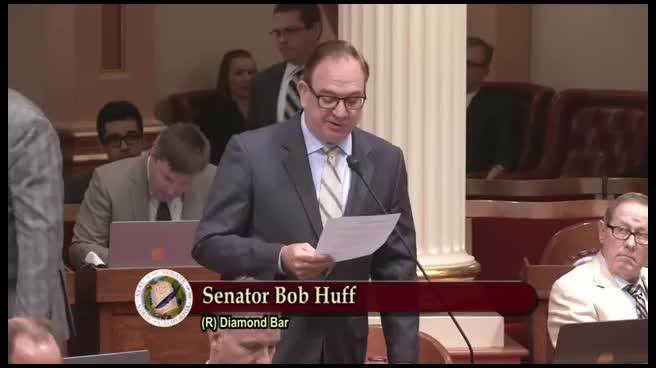 2MIN
Senate Floor
 2MIN
Senate Standing Committee on Public Employment and Retirement
 5MIN
Assembly Floor
Bill Author

Bill Co-Author(s):