AB 1043: Highways: State Highway Route 43.
- Session Year: 2015-2016
- House: Assembly
- Latest Version Date: 2015-09-10
Existing law requires certain transportation funds made available for transportation capital improvement projects to be programmed and expended in specified amounts for interregional improvements and regional improvements. Existing law specifies the state highway routes that are included in the interregional road system and the state highway routes that are eligible interregional and intercounty routes.
This bill would include State Highway Route 43 as an eligible interregional and intercounty route.
For purposes of Section 164.3, the eligible interregional and intercounty routes shall include all of the following:
Route 36, between Route 5 and Route 395.
Route 37, between the east urban limits of San Francisco-Oakland near Novato and the west urban limits of San Francisco-Oakland near Vallejo.
Route 38, between the east urban limits of San Bernardino-Riverside and Route 18 west of Big Bear Lake.
Route 40.
Route 41, between Route 1 and Yosemite National Park.
Route 43.
Route 44, between the east urban limits of Redding and Route 36.
Route 46, between Route 1 and Route 99.
Route 49, between Route 41 and Route 89.
For purposes of subdivision (e) of Section 164.3, the eligible interregional and intercounty routes shall include all of the following:
Route 36, between Route 5 and Route 395.
Route 37, between the east urban limits of San Francisco-Oakland near Novato and the west urban limits of San Francisco-Oakland near Vallejo.
Route 38, between the east urban limits of San Bernardino-Riverside and Route 18 west of Big Bear Lake.
Route 40.
Route 41, between Route 1 and Yosemite National Park.
Route 43.
Route 44, between the east urban limits of Redding and Route 36.
Route 46, between Route 1 and Route 99.
Route 49, between Route 41 and Route 89.
|
Date
|
Status
|
|---|---|
| Jun 17, 2015 | From committee: Do pass and re-refer to Com. on APPR. (Ayes 9. Noes 0.) (June 16). Re-referred to Com. on APPR. |
| Jan 15, 2016 | Consideration of Governor's veto stricken from file. |
| Oct 9, 2015 | Vetoed by Governor. |
| Sep 17, 2015 | Enrolled and presented to the Governor at 4 p.m. |
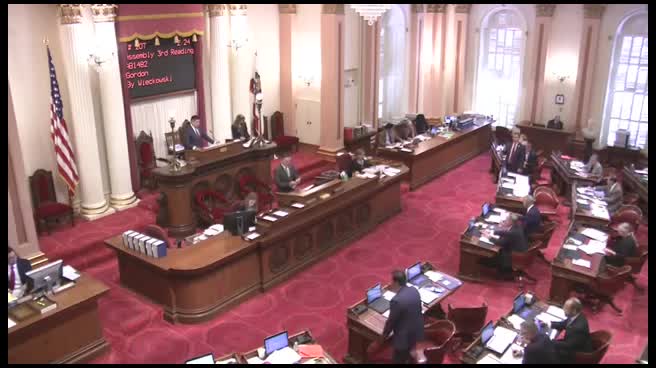
| Sep 8, 2015 | Read third time. Passed. Ordered to the Assembly. (Ayes 31. Noes 8. Page 2583.). |
| Sep 8, 2015 | Read third time. Passed. Ordered to the Assembly. |
| Sep 8, 2015 | In Assembly. Ordered to Engrossing and Enrolling. |
| Sep 1, 2015 | Read second time. Ordered to third reading. |
| Aug 31, 2015 | From committee: Do pass. (Ayes 5. Noes 2.) (August 27). |
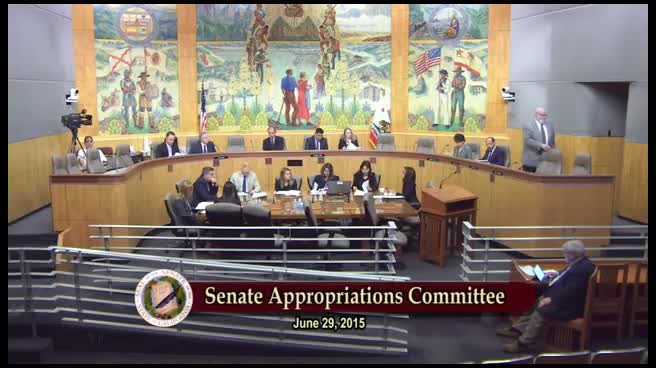
| Jun 29, 2015 | In committee: Referred to APPR. suspense file. |
| Feb 26, 2015 | Read first time. To print. |
| May 21, 2015 | Referred to Com. on T. & H. |
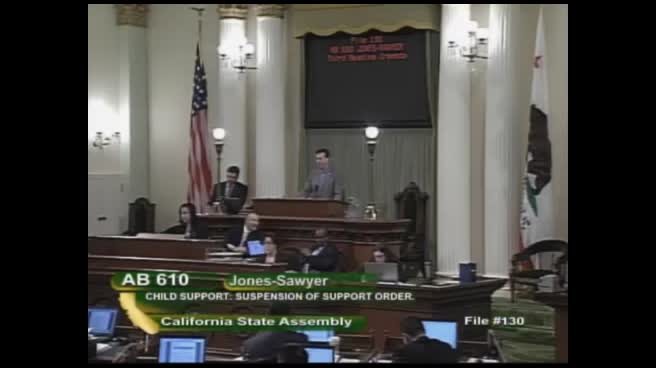
| May 7, 2015 | Read third time. Passed. Ordered to the Senate. (Ayes 60. Noes 14. Page 1337.) |
| May 7, 2015 | Read third time. Passed. Ordered to the Senate. |
| May 7, 2015 | In Senate. Read first time. To Com. on RLS. for assignment. |
| Apr 30, 2015 | Read second time. Ordered to third reading. |
| Apr 29, 2015 | From committee: Do pass. (Ayes 12. Noes 5.) (April 29). |
| Apr 14, 2015 | From committee: Do pass and re-refer to Com. on APPR. (Ayes 13. Noes 2.) (April 13). Re-referred to Com. on APPR. |
| Mar 19, 2015 | Referred to Com. on TRANS. |
| Feb 27, 2015 | From printer. May be heard in committee March 29. |
|
Date
|
Description
|
Location
|
Votes
|
|
|---|---|---|---|---|
| Sep 8, 2015 | Assembly 3rd Reading AB1043 Salas By Vidak | Senate Floor |
Passed |
|
| Aug 27, 2015 | Do pass | Senate Standing Committee on Appropriations |
Passed |
|
| Jun 29, 2015 | Placed on suspense file | Senate Standing Committee on Appropriations |
Passed |
|
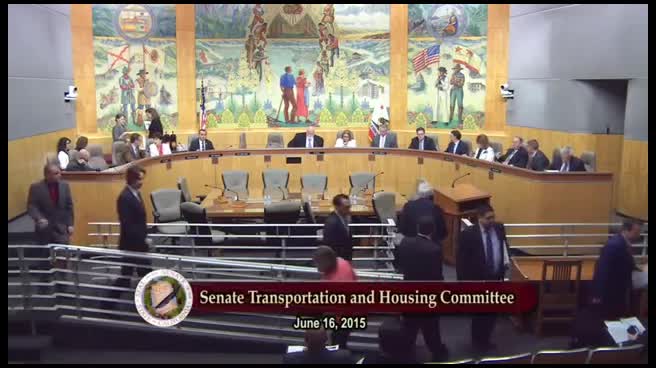
| Jun 16, 2015 | Do pass, but first be re-referred to the Committee on [Appropriations] | Senate Standing Committee on Transportation and Housing |
Passed |
|
| May 7, 2015 | AB 1043 SALAS Assembly Third Reading | Assembly Floor |
Passed |
|
| Apr 29, 2015 | Do pass. | Assembly Standing Committee on Appropriations |
Passed |
|
| Apr 13, 2015 | Do pass and be re-referred to the Committee on [Appropriations] | Assembly Standing Committee on Transportation |
Passed |
This list shows positions taken on this bill by organizations on the date displayed, which is linked to the original source.
Positions by individuals are not included.
|
Organization
|
Position
|
Date
|
|---|---|---|
| Fresno Council of Governments | ** Support | Sep 8, 2015 |
| JG Boswell Company | ** Support | Sep 8, 2015 |
| Kern Council Of Governments | ** Support | Sep 8, 2015 |
| Kern County Council of Governments | ** Support | Apr 29, 2015 |
| Kings County Association of Governments | ** Support | Sep 8, 2015 |
GOVERNOR'S VETO
AB 1043
(Salas)
As Enrolled September 10, 2015
2/3 vote
Committee |
Votes |
Ayes |
Noes |
Transportation |
13-2 |
Frazier, Achadjian, Baker, Bloom, Campos, Chu, Daly, Dodd, Eduardo Garcia, Gomez, Medina, Nazarian, O'Donnell |
Kim, Melendez |
Appropriations |
12-5 |
Gomez, Bloom, Bonta, Calderon, Daly, Eggman, Eduardo Garcia, Holden, Quirk, Rendon, Weber, Wood |
Bigelow, Chang, Gallagher, Jones, Wagner |
ASSEMBLY: |
60-14 |
(May 7, 2015) |
SENATE: |
31-8 |
(September 8, 2015) |
SUMMARY: Adds State Highway Route (SR) 43 to the list of interregional and intercounty highway routes that are eligible to use specific state transportation funds.
EXISTING LAW:
Establishes the state highway system through a listing and description of segments of the state's regional and interregional roads that are owned and operated by the Department of Transportation (Caltrans). A "state highway" is defined as any roadway that is acquired, laid out, constructed, improved, or maintained as a state highway pursuant to constitutional or legislative authorization.
Further defines the interregional road system as a subset of the state highway system.
Requires certain transportation funds to be made available for transportation capital improvement projects and to be programmed and expended for interregional and regional improvements.
Directs the allocation of funds for transportation capital improvements as follows:
Twenty-five percent for interregional improvements as identified in the Interregional Transportation Improvement Program (ITIP); and,
Seventy-five percent for regional improvements, as identified in regional transportation improvement programs.
Of the 25% of funds for interregional improvements, 60% of these funds must be used for improvements on highways identified in statute as part of the interregional road system and outside the boundaries of an urban area and for intercity rail improvements; the remaining 40% of funds made available to the state for work on other state highways must be distributed 40% to northern California counties and 60% to southern California counties.
FISCAL EFFECT: According to the Assembly Appropriations Committee, "Addition of this route could change priorities for funding interregional projects, but would not likely change the level of funding made available for such projects."
COMMENTS: The state highway system serves a diverse range of needs for the interregional movement of people and goods between rural and highly urbanized areas. While all state routes are important, the interstate system, interregional road system routes, and other major freeway trade corridors form a transportation network that is most critical to interregional mobility and connectivity statewide. Together, these routes carry over 80% of the total vehicle miles travelled annually on the state highway system.
The interregional road system is a statutorily defined series of state highway routes, outside the urbanized areas, that provide access to, and links between, the state's economic centers, major recreation areas, and urban and rural regions. The interregional road system routes are intended to provide the following service:
Carry a major portion of the trips entering, traveling through, or leaving the state.
Serve corridors of substantial statewide, interstate, and international significance.
Connect all metropolitan areas and those urban areas with populations concentrations over 25,000 and all county seats not otherwise served.
Serve those agricultural, natural resource areas, public-owned recreational areas, and other travel generators of statewide or major regional importance not otherwise served.
Of the 265 state highway routes, 93 are statutorily designated as interregional routes. Of these, 10 are considered focus routes--that is, routes that are the highest priority for use of ITIP funds. Improving these routes to freeway or expressway standards will provide a backbone highway system connecting regions of the state. Money to provide such improvements, however, is woefully limited. Funding identified in the 2014 ITIP is less than $1.3 billion over the next five years. This level of funding is well below what is needed to address the preservation and expansion needs of the system.
SR 43 is located in the central San Joaquin Valley and traverses the area in a north-south direction. Agriculture is the most dominant land use along highway corridor. The route is primarily rural with the exception of segments located within the Cities of Wasco, Shafter, and Selma and on the outer fringes of Corcoran and Hanford. The highway often experiences a high volume of truck traffic with several segments experiencing truck counts as high as 30% to 40% of total traffic volume.
This bill would add SR 43 to the statutorily defined interregional road system, thereby making it eligible to receive ITIP funds. In theory, adding SR 43 to the list of eligible routes in an already-severely constrained program would increase the competition for funds amongst other interregional routes. In practice, it is doubtful that SR 43 will rise to the level of a high emphasis route or focus route in the foreseeable future and, consequently, may not present any real competition for these limited funds.
Please see the policy committee analysis for full discussion of this bill.
This bill adds State Route 43 to the list of interregional routes, thereby making it eligible to compete for state interregional funds to cover the costs of capital improvement projects.
However, Caltrans has determined that State Route 43 is not an interregional route eligible for this funding. Therefore, I cannot sign this bill.
A better alternative to funding improvements to State Route 43 is to enact a long-term, sustainable transportation funding solution in the current special session.
Analysis Prepared by: Janet Dawson / TRANS. / (916) 319-2093 FN: 0002512
AB 1043
Page 5
|
Office of Senate Floor Analyses (916) 651-1520 Fax: (916) 327-4478 |
THIRD READING
Bill No: AB 1043
Introduced: 2/26/15
SENATE TRANS. & HOUSING COMMITTEE: 9-0, 6/16/15
AYES: Beall, Cannella, Allen, Galgiani, Leyva, McGuire, Mendoza, Roth, Wieckowski
NO VOTE RECORDED: Bates, Gaines
SENATE APPROPRIATIONS COMMITTEE: 5-2, 8/27/15
AYES: Lara, Beall, Hill, Leyva, Mendoza
NOES: Bates, Nielsen
ASSEMBLY FLOOR: 60-14, 5/7/15 - See last page for vote
SUBJECT: Highways: State Highway Route 43
DIGEST: This bill adds roughly 100 miles of rural highway to the routes eligible for interregional funding by adding State Route (SR) 43 to the list of interregional routes.
Existing law:
Requires the California Transportation Commission (CTC) to adopt every two years the State Transportation Improvement Program (STIP), a plan that determines which state highway, intercity rail, or public transit projects will be funded by the state and when they will be constructed. Regional transportation agencies propose projects to be included in the STIP through regional transportation plans.
Requires that 75% of all STIP funds be used for these regional projects. The Department of Transportation (Caltrans) recommends projects for the remaining 25% of funding, and those projects are included in the Interregional Transportation Improvement Program (ITIP).
Divides the funds dedicated to the regionally proposed projects in the STIP geographically by what is known as the north-south split. Statute allocates 60% of these funds to the 13 southernmost counties, while all other counties receive the remaining 40%. These regional funds are further divided into county shares based on population and highway center-line miles.
Requires Caltrans to make recommendations to the CTC for projects to be included in the ITIP based on different statutory formulas. Existing law limits 60% of funds in the ITIP either to highway projects outside of urbanized areas or intercity rail projects.
Specifies the 93 interregional state routes providing access to and links between the state’s urban and rural regions that are eligible to compete for this portion of ITIP funding.
Requires ITIP funding be used exclusively for transportation improvement projects that facilitate interregional movement of people and goods. Caltrans guidelines require that interregional routes accomplish one of the following:
Carry a major portion of the trips entering, traveling through, or leaving the state;
Serve corridors of substantial statewide, interstate, and international significance;
Connect all metropolitan areas and those urban areas with population concentrations over 2,500 and all county seats not otherwise served; or
Serve those agricultural, natural resource, or public-owned recreational areas, and other travel-generating areas of statewide or major regional importance not otherwise served.
This bill adds roughly 100 miles of rural highway to the routes eligible for ITIP funding by adding SR 43 to the list of interregional routes.
Comments
Purpose. According to the author, it is important to add SR 43 to the list of routes eligible for ITIP funding because of its level of truck traffic and overall traffic volume. Supporters of this bill emphasize that commuters use SR 43 from Fresno, Corcoran, and Wasco to get to two state prisons that are located on SR 43. Furthermore, supporters note that, in times of accidents on SR 99, SR 43 is used as an alternate route and is easily overwhelmed with traffic. The author contends that it is only fair that SR 43 be eligible to compete for specific transportation funds dedicated to interregional transportation projects.
Funding constraints. Due to a variety of external pressures, total STIP funding has declined significantly over time. In 2002, more than $7 billion was available to be programmed for new transportation projects over the following five years. In 2012, only half that amount, or roughly $3.5 billion, was available to program new projects in the five years following the adoption of the plan. Because it is determined by statutory formula, the amount available for ITIP funding has decreased proportionally over that time.
Is this an interregional route? SR 43 appears to generally run within one particular region of California. Extending from south of Fresno to just west of Bakersfield and paralleling SR 99, this route doesn’t seem to connect two or more regions, but instead bisects or traverses one general region of the state. Further, it is not clear that SR 43 meets the general definition of an interregional route contained in Caltrans guidelines. It certainly does not carry a major portion of trips entering or leaving the state. Nor does it connect urban areas or provide access to agricultural or recreational areas not otherwise served, as it runs parallel to SR 99 and services generally the same areas.
Inviting too many guests to the party. The Legislature has included about 68% of the state highway system in the statutorily designated interregional road system, while only 25% of STIP funding is dedicated to the ITIP. With dwindling resources for every part of the STIP, the challenge of qualifying for ITIP funding has increased. Adding additional routes to the statutorily designated interregional road system is akin to inviting too many guests to a party at a local restaurant. The eatery is at capacity, and there is a long line of guests waiting to get in. While adding one more guest to the end of the line may not impact the crowded restaurant, it may not provide much benefit to the newest invitee either.
Prior Legislation
AB 680 (Salas, 2013) proposed the same addition to the ITIP as this bill. The bill died in the Senate Appropriations Committee.
FISCAL EFFECT: Appropriation: No Fiscal Com.: Yes Local: No
According to the Senate Appropriations Committee, this bill is likely to incur unknown future cost pressures in the millions, beginning in 2016-17, to provide state ITIP funds for improvements on SR 43 (State Highway Account), potentially displacing funding for other interregional projects.
City of Corcoran
Fresno Council of Governments
JG Boswell Company
Kern Council of Governments
Kings County Association of Governments
OPPOSITION: (Verified 8/28/15)
None received
ASSEMBLY FLOOR: 60-14, 5/7/15
AYES: Achadjian, Alejo, Baker, Bloom, Bonilla, Bonta, Brown, Burke, Calderon, Chau, Chávez, Chiu, Chu, Cooley, Cooper, Dababneh, Daly, Dodd, Eggman, Frazier, Cristina Garcia, Eduardo Garcia, Gatto, Gipson, Gomez, Gonzalez, Gordon, Gray, Grove, Hadley, Holden, Irwin, Jones-Sawyer, Lackey, Levine, Lopez, Low, Mathis, McCarty, Medina, Mullin, Nazarian, Obernolte, O'Donnell, Olsen, Patterson, Perea, Quirk, Rendon, Ridley-Thomas, Rodriguez, Salas, Santiago, Mark Stone, Thurmond, Ting, Weber, Williams, Wood, Atkins
NOES: Travis Allen, Bigelow, Brough, Chang, Beth Gaines, Harper, Jones, Kim, Linder, Maienschein, Mayes, Melendez, Wagner, Waldron
NO VOTE RECORDED: Campos, Dahle, Gallagher, Roger Hernández, Steinorth, Wilk
Prepared by: Eric Thronson / T. & H. / (916) 651-4121
9/1/15 21:30:31
AB 1043 (Salas) Page 2 of 2
SENATE COMMITTEE ON APPROPRIATIONS
Senator Ricardo Lara, Chair
2015 - 2016 Regular Session
AB 1043 (Salas) - Highways: State Highway Route 43.
|
|
Version: February 26, 2015 |
Policy Vote: T. & H. 9 - 0 |
Urgency: No |
Mandate: No |
Hearing Date: June 29, 2015 |
Consultant: Mark McKenzie |
This bill meets the criteria for referral to the Suspense File.
Bill Summary:
AB 1043 would add State Highway Route (SR) 43 to the list of eligible interregional and intercounty routes on the state highway system that are eligible for state interregional transportation improvement project (ITIP) funding.
Fiscal Impact:
Unknown future cost pressures, in the millions beginning in 2016-17, to provide state ITIP funds for improvements on SR 43 (State Highway Account), potentially displacing funding for other interregional projects.
Background:
Existing law requires that 25 percent of funds appropriated for capital improvements programmed into the state transportation improvement program (STIP) be spent for interregional improvements, while the remaining 75 percent must be spent for regional improvements, as specified. The Department of Transportation (Caltrans) recommends projects that facilitate interregional movement of people and goods for inclusion in the ITIP, and 60 percent of ITIP funds must be dedicated to highway projects outside of urban areas or intercity rail projects.
Existing law specifies 93 state highways that comprise the interregional road system (IRRS), and within this network there is a subset of 34 high-emphasis routes consisting of most of the interstate highways, and ten non-interstate “focus routes” that represent the most critical interregional corridors with the highest priority for upgrades. Caltrans guidelines require that interregional routes carry large volumes of traffic into or out of the state, serve corridors of substantial statewide interstate or international significance, connect metropolitan and urban areas, and all county seats not otherwise served, and serve other destinations of statewide or regional importance not otherwise served.
SR 43 connects Hanford, the county seat of Kings County, to other south-central San Joaquin Valley communities over a distance of 98 miles through the Counties of Kern, Kings, and into Fresno, from southwest of Bakersfield in the south to an interchange with SR 99 in Selma at the northern terminus. The highway roughly parallels SR 99 and primarily traverses agricultural areas.
Proposed Law:
AB 1043 would add SR 43 to the statutory list of interregional and intercounty state highways that are eligible for ITIP funding.
Related Legislation:
AB 680 (Salas), which was held on this committee’s Suspense File in 2013, is identical to this bill.
AB 2143 (Parra), introduced in the 2005-06 legislative session, would have added SR 43 to the IRRS. That bill failed passage on the Senate Floor.
Staff Comments:
Due to a variety of external pressures, total STIP funding has declined significantly over time. The 2014 STIP includes approximately $1.35 billion in funding for IRRS projects over the five-year planning period. Adding the approximately 100 miles of SR 43 to the IRRS would exacerbate an already severely overburdened program for funding interregional projects. As such, the bill would create significant new cost pressures that could result in the diversion of funding from interregional projects that would otherwise receive funding, absent the bill. Staff notes, however, that the bill is not likely to result in the appropriation of any new funds for the ITIP, and Caltrans is not likely to include SR 43 as a focus route eligible for priority funding in the near future.
To the extent that highways are reclassified as interregional routes instead of regional routes, there are increased cost pressures on the state's share of capital improvement funds.
-- END --
AB 1043 (Salas) Page 4 of 4
SENATE COMMITTEE ON TRANSPORTATION AND HOUSING
Senator Jim Beall, Chair
2015 - 2016 Regular
Bill No: AB 1043 Hearing Date: 6/16/2015
Author: |
Salas |
||
Version: |
2/26/2015 |
||
Urgency: |
No |
Fiscal: |
Yes |
Consultant: |
Eric Thronson |
||
SUBJECT: Highways: State Highway Route 43
DIGEST: This bill adds roughly 100 miles of rural highway to the routes eligible for interregional funding by adding State Route (SR) 43 to the list of interregional routes.
ANALYSIS:
Every two years, the California Transportation Commission (CTC) adopts the State Transportation Improvement Program (STIP), a plan that determines which state highway, intercity rail, or public transit projects will be funded by the state and when they will be constructed. Regional transportation agencies propose projects to be included in the STIP through regional transportation plans. Existing law requires that 75% of all STIP funds be used for these regional projects. The Department of Transportation (Caltrans) recommends projects for the remaining 25% of funding, and those projects are included in the Interregional Transportation Improvement Program (ITIP).
Existing law geographically divides the funds dedicated to the regionally proposed projects in the STIP by what is known as the north-south split. Statute allocates 60% of these funds to the 13 southernmost counties, while all other counties receive the remaining 40%. Existing law further divides the regional funds into county shares based on population and highway center line miles.
Caltrans makes recommendations to the CTC for projects to be included in the ITIP based on different statutory formulas. Existing law limits 60 percent of funds in the ITIP either to highway projects outside of urbanized areas or intercity rail projects. Statute specifies the 93 interregional state routes providing access to and links between the state’s urban and rural regions that are eligible to compete for this portion of ITIP funding. Existing law requires ITIP funding be used exclusively for transportation improvement projects that facilitate interregional movement of people and goods. Caltrans guidelines require that interregional routes accomplish one of the following:
Carry a major portion of the trips entering, traveling through, or leaving the state;
Serve corridors of substantial statewide, interstate, and international significance;
Connect all metropolitan areas and those urban areas with population concentrations over 2,500 and all county seats not otherwise served; or
Serve those agricultural, natural resource, or public-owned recreational areas, and other travel-generating areas of statewide or major regional importance not otherwise served.
Due to a variety of external pressures, total STIP funding has declined significantly over time. In 2002, over $7 billion was available to be programmed for new transportation projects over the following five years. In 2012, only half that amount, or roughly $3.5 billion, was available to program new projects in the five years following the adoption of the plan. Because it is determined by statutory formula, the amount available for ITIP funding has decreased proportionally over that time.
This bill adds roughly 100 miles of rural highway to the routes eligible for ITIP funding by adding SR 43 to the list of interregional routes.
COMMENTS:
Purpose. According to the author, it is important to add SR 43 to the list of routes eligible for ITIP funding because of its level of truck traffic and overall traffic volume. Supporters of the bill emphasize that commuters use SR 43 from Fresno, Corcoran, and Wasco to get to two state prisons that are located on SR 43. Furthermore, supporters note that, in times of accidents on SR 99, SR 43 is used as an alternate route and is easily overwhelmed with traffic. The author contends that it is only fair that SR 43 be eligible to compete for specific transportation funds dedicated to interregional transportation projects.
Is this an interregional route? SR 43 appears to generally run within one particular region of California. Extending from south of Fresno to just west of Bakersfield and paralleling SR 99, this route doesn’t seem to connect two or more regions, but instead bisects or traverses one general region of the state. Further, it is not clear that SR 43 meets the general definition of an interregional route contained in Caltrans guidelines. It certainly does not carry a major portion of trips entering or leaving the state. Nor does it connect urban areas or provide access to agricultural or recreational areas not otherwise served, as it runs parallel to SR 99 and services generally the same areas. Given the scarce resources dedicated to interregional routes, the committee may want to consider whether it should define a route as eligible for interregional funding that questionably qualifies as an interregional route.
Inviting too many guests to the party. The Legislature has included about 68% of the state highway system in the statutorily designated interregional road system, while only 25% of STIP funding is dedicated to the ITIP. With dwindling resources for every part of the STIP, the challenge of qualifying for ITIP funding has increased. Adding additional routes to the statutorily designated interregional road system is akin to inviting too many guests to a party at a local restaurant. The eatery is at capacity, and there is a long line of guests waiting to get in. While adding one more guest to the end of the line may not impact the crowded restaurant, it may not provide much benefit to the newest invitee either. Given the already crowded list of state routes eligible for ITIP funding, the committee may want to consider the benefit of adding names to an already overbooked guest list.
Related Legislation:
AB 680 (Salas) of 2013 — proposed the same addition to the ITIP as this bill. This bill was held in the Senate Appropriations Committee.
Assembly votes:
Floor: 60-14
Appr: 12-5
Trans: 13-2
FISCAL EFFECT: Appropriation: No Fiscal Com.: Yes Local: No
POSITIONS: (Communicated to the committee before noon on Wednesday,
June 10, 2015.)
SUPPORT:
City of Corcoran
Fresno Council of Governments
JG Boswell Company
Kern Council of Governments
Kings County Association of Governments
OPPOSITION:
None received
-- END --
AB 1043
Page 2
ASSEMBLY THIRD READING
AB 1043
(Salas)
As Introduced February 26, 2015
Majority vote
Committee |
Votes |
Ayes |
Noes |
Transportation |
13-2 |
Frazier, Achadjian, Baker, Bloom, Campos, Chu, Daly, Dodd, Eduardo Garcia, Gomez, Medina, Nazarian, O'Donnell |
Kim, Melendez |
Appropriations |
12-5 |
Gomez, Bloom, Bonta, Calderon, Daly, Eggman, Eduardo Garcia, Holden, Quirk, Rendon, Weber, Wood |
Bigelow, Chang, Gallagher, Jones, Wagner |
SUMMARY: Adds State Highway Route (SR) 43 to the list of interregional and intercounty highway routes that are eligible to use specific state transportation funds.
EXISTING LAW:
Establishes the state highway system through a listing and description of segments of the state's regional and interregional roads that are owned and operated by the Department of Transportation (Caltrans). A "state highway" is defined as any roadway that is acquired, laid out, constructed, improved, or maintained as a state highway pursuant to constitutional or legislative authorization.
Further defines the interregional road system as a subset of the state highway system.
Requires certain transportation funds to be made available for transportation capital improvement projects and to be programmed and expended for interregional and regional improvements.
Directs the allocation of funds for transportation capital improvements as follows:
Twenty-five percent for interregional improvements as identified in the Interregional Transportation Improvement Program (ITIP); and,
Seventy-five percent for regional improvements, as identified in regional transportation improvement programs.
Of the 25% of funds for interregional improvements, 60% of these funds must be used for improvements on highways identified in statute as part of the interregional road system and outside the boundaries of an urban area and for intercity rail improvements; the remaining 40% of funds made available to the state for work on other state highways must be distributed 40% to northern California counties and 60% to southern California counties.
FISCAL EFFECT: According to the Assembly Appropriations Committee, "Addition of this route could change priorities for funding interregional projects, but would not likely change the level of funding made available for such projects."
COMMENTS: The state highway system serves a diverse range of needs for the interregional movement of people and goods between rural and highly urbanized areas. While all state routes are important, the interstate system, interregional road system routes, and other major freeway trade corridors form a transportation network that is most critical to interregional mobility and connectivity statewide. Together, these routes carry over 80% of the total vehicle miles travelled annually on the state highway system.
The interregional road system is a statutorily defined series of state highway routes, outside the urbanized areas, that provide access to, and links between, the state’s economic centers, major recreation areas, and urban and rural regions. The interregional road system routes are intended to provide the following service:
Carry a major portion of the trips entering, traveling through, or leaving the state.
Serve corridors of substantial statewide, interstate, and international significance.
Connect all metropolitan areas and those urban areas with populations concentrations over 25,000 and all county seats not otherwise served.
Serve those agricultural, natural resource areas, public-owned recreational areas, and other travel generators of statewide or major regional importance not otherwise served.
Of the 265 state highway routes, 93 are statutorily designated as interregional routes. Of these, 10 are considered focus routes--that is, routes that are the highest priority for use of ITIP funds. Improving these routes to freeway or expressway standards will provide a backbone highway system connecting regions of the state. Money to provide such improvements, however, is woefully limited. Funding identified in the 2014 ITIP is less than $1.3 billion over the next five years. This level of funding is well below what is needed to address the preservation and expansion needs of the system.
SR 43 is located in the central San Joaquin Valley and traverses the area in a north-south direction. Agriculture is the most dominant land use along highway corridor. The route is primarily rural with the exception of segments located within the Cities of Wasco, Shafter, and Selma and on the outer fringes of Corcoran and Hanford. The highway often experiences a high volume of truck traffic with several segments experiencing truck counts as high as 30% to 40% of total traffic volume.
This bill would add SR 43 to the statutorily defined interregional road system, thereby making it eligible to receive ITIP funds. In theory, adding SR 43 to the list of eligible routes in an already-severely constrained program would increase the competition for funds amongst other interregional routes. In practice, it is doubtful that SR 43 will rise to the level of a high emphasis route or focus route in the foreseeable future and, consequently, may not present any real competition for these limited funds.
Please see the policy committee analysis for full discussion of this bill.
Analysis Prepared by: Janet Dawson / TRANS. / (916) 319-2093 FN: 0000231
AB 1043
Page 2
Date of Hearing: April 29, 2015
ASSEMBLY COMMITTEE ON APPROPRIATIONS
Jimmy Gomez, Chair
AB 1043
(Salas) – As Introduced February 26, 2015
Policy Committee: |
Transportation |
Vote: |
13 - 2 |
|
|
|
|
|
|
|
|
Urgency: No State Mandated Local Program: No Reimbursable: No
SUMMARY:
This bill adds State Route (SR) 43 to the list of eligible interregional and inter-county highway routes, thus making projects on this highway eligible for use of funds designated for these routes.
FISCAL EFFECT:
Addition of this route could change priorities for funding interregional projects, but would not likely change the level of funding made available for such projects.
COMMENTS:
Background. The interregional road system comprises 34,000 lane-miles of the state highway system's 50,000 lane-miles, and is statutorily defined as a series of 93 state highway routes, outside the urbanized areas, providing access to, and links between, the state’s economic centers, major recreation areas, and urban and rural regions. Within the interregional road system, there is a subset of 34 high-emphasis routes (24,000 lane-miles) consisting of most of the interstate highways and 10 non-interstate focus routes. These 10 routes represent the most critical interregional corridors and the state’s highest priority for upgrading, often to freeway-expressway standards to the extent feasible.
Funding for such improvements is limited, however. About $1.3 billion is identified for interregional routes over the next five years in the 2014 Interregional Transportation Improvement Program (ITIP)—a level well below that needed to address the preservation and expansion needs of the system.
SR 43 is located in the central San Joaquin Valley and traverses the area in a north-south direction. Agriculture is the most dominant land use along highway corridor. The route is primarily rural with the exception of segments located within the cities of Wasco, Shafter, and Selma and on the outer fringes of Corcoran and Hanford. The highway often experiences a high volume of truck traffic with several segments experiencing counts as high as 30% to 40% of total traffic volume.
Purpose. In support of the bill, the Kern County Association of Governments notes that commuters use SR 43 from Fresno and Corcoran and Wasco to get to two state prisons that are located on SR 43 and that, in times of accidents on SR 99, SR 43 is used as an alternate route and is easily overwhelmed with traffic.
AB 680 adds SR 43 to the statutorily defined interregional road system, thereby making it eligible for funds directed to high-priority routes. In theory, adding SR 43 to the list of eligible routes in an already-severely constrained program would increase the competition for funds amongst other interregional routes. In practice, it is doubtful that SR 43 will rise to the level of a high emphasis route or focus route in the foreseeable future and, consequently, may not present any real competition for these limited funds.
Prior Legislation. AB 1043 (Salas) of 2013, an identical bill, was held on Suspense in Senate Appropriations.
Analysis Prepared by: Chuck Nicol / APPR. / (916) 319-2081
AB 1043
Page 3
Date of Hearing: April 13, 2015
ASSEMBLY COMMITTEE ON TRANSPORTATION
Jim Frazier, Chair
AB 1043
(Salas) – As Introduced February 26, 2015
SUBJECT: Highways: State Highway Route 43
SUMMARY: Adds State Highway Route (SR) 43 to the list of interregional and intercounty highway routes that are eligible to use specific state transportation funds.
EXISTING LAW:
Establishes the state highway system through a listing and description of segments of the state's regional and interregional roads that are owned and operated by the Department of Transportation (Caltrans). A "state highway" is defined as any roadway that is acquired, laid out, constructed, improved, or maintained as a state highway pursuant to constitutional or legislative authorization.
Further defines the interregional road system as a subset of the state highway system.
Requires certain transportation funds to be made available for transportation capital improvement projects and to be programmed and expended for interregional and regional improvements.
Directs the allocation of funds for transportation capital improvements as follows:
Twenty-five percent for interregional improvements as identified in the Interregional Transportation Improvement Program (ITIP); and,
Seventy-five percent for regional improvements, as identified in regional transportation improvement programs.
Of the 25% of funds for interregional improvements, 60% of these funds must be used for improvements on highways identified in statute as part of the interregional road system and outside the boundaries of an urban area and for intercity rail improvements; the remaining 40% of funds made available to the state for work on other state highways must be distributed 40% to northern California counties and 60% to southern California counties.
FISCAL EFFECT: Unknown
COMMENTS: The state highway system serves a diverse range of needs for the interregional movement of people and goods between rural and highly urbanized areas. While all state routes are important, the interstate system, interregional road system routes, and other major freeway trade corridors form a transportation network that is most critical to interregional mobility and connectivity statewide. Together, these routes carry over 80 percent of the total vehicle miles travelled annually on the state highway system.
The interregional road system is a statutorily defined series of state highway routes, outside the urbanized areas, that provide access to, and links between, the state’s economic centers, major recreation areas, and urban and rural regions. The interregional road system routes are intended to provide the following service:
Carry a major portion of the trips entering, traveling through, or leaving the state.
Serve corridors of substantial statewide, interstate, and international significance.
Connect all metropolitan areas and those urban areas with populations concentrations over 2,5000 and all county seats not otherwise served.
Serve those agricultural, natural resource areas, public-owned recreational areas, and other travel generators of statewide or major regional importance not otherwise served.
Of the 265 state highway routes, 93 are statutorily designated as interregional routes. Of these, 10 are considered focus routes--that is, routes that are the highest priority for use of ITIP funds. Improving these routes to freeway or expressway standards will provide a backbone highway system connecting regions of the state. Money to provide such improvements, however, is woefully limited. Funding identified in the 2014 ITIP is less than $1.3 billion over the next five years. This level of funding is well below what is needed to address the preservation and expansion needs of the system.
SR 43 is located in the central San Joaquin Valley and traverses the area in a north-south direction. Agriculture is the most dominant land use along highway corridor. The route is primarily rural with the exception of segments located within the cities of Wasco, Shafter, and Selma and on the outer fringes of Corcoran and Hanford. The highway often experiences a high volume of truck traffic with several segments experiencing truck counts as high as 30% to 40% of total traffic volume.
AB 1043 would add SR 43 to the statutorily defined interregional road system, thereby making it eligible to receive ITIP funds. In theory, adding SR 43 to the list of eligible routes in an already-severely constrained program would increase the competition for funds amongst other interregional routes. In practice, it is doubtful that SR 43 will rise to the level of a high emphasis route or focus route in the foreseeable future and, consequently, may not present any real competition for these limited funds.
Writing in support of the bill, the Kern County Association of Governments notes that commuters use SR 43 from Fresno and Corcoran and Wasco to get to two state prisons that are located on SR 43 and that, in times of accidents on SR 99, SR 43 is used as an alternate route and is easily overwhelmed with traffic.
Previous legislation: AB 680 (Salas) of 2013 was nearly identical to this bill. AB 680 was held in the Senate Appropriations Committee on the suspense file.
SB 532 (Cogdill), Chapter 189, Statutes of 2009, added a segment of SR 108 to the interregional road system so that an alternative project on the route could be funded in lieu of the previously programmed Oakdale Bypass project.
AB 2143 (Para) of 2006, would have added SR 43 to the interregional road system. AB 2143 failed passage on the Senate floor.
SB 532 (Torlakson) Chapter 598, Statutes of 2003, added a portion of SR 84 and all of SR 239 to the interregional road system.
REGISTERED SUPPORT / OPPOSITION:
Support
Kern County Council of Governments
Opposition
None on file
Analysis Prepared by: Janet Dawson / TRANS. / (916) 319-2093
Discussed in Hearing
 1MIN
Senate Floor
 27SEC
Senate Standing Committee on Appropriations
 2MIN
Senate Standing Committee on Transportation and Housing
 59SEC
Assembly Floor
 2MIN
Assembly Standing Committee on Appropriations
Bill Author

Bill Co-Author(s):