AB 1059: California Communities Environmental Health Screening.
- Session Year: 2015-2016
- House: Assembly
- Latest Version Date: 2015-10-08
Existing law requires the Secretary for Environmental Protection to convene a Working Group on Environmental Justice to assist the secretary in developing an agencywide strategy for identifying and addressing gaps in existing programs, policies, or activities of the agencys boards, departments, and offices that may impede the achievement of environmental justice.
Existing law requires the California Environmental Protection Agency to identify disadvantaged communities as part of a 3-year investment plan developed by the Department of Finance for the moneys collected by the State Air Resources Board resulting from a market-based compliance mechanism.
This bill would require the Office of Environmental Health Hazard Assessment, in the next update of the California Communities Environmental Health Screening tool, developed by the agency and the office to implement the above requirements, or not later than January 1, 2017, to report to the Legislature on specified data necessary for updating the indicators in the tool for communities in the California-Mexico border region, including barriers to accessing that data and studies and plans for obtaining that data. The bill would require the office, when such data of sufficient quality are available, to include that data in the next update of the tool.
Existing law requires the Secretary for Environmental Protection to convene a Working Group on Environmental Justice to assist the secretary in developing an agencywide strategy for identifying and addressing gaps in existing programs, policies, or activities of the agencys boards, departments, and offices that may impede the achievement of environmental justice.
Existing law requires the California Environmental Protection Agency to identify disadvantaged communities as part of a 3-year investment plan developed by the Department of Finance for the moneys collected by the State Air Resources Board resulting from a market-based compliance mechanism.
This bill would require the Office of Environmental Health Hazard Assessment to include Assessment, in the next update of the California Communities Environmental Health Screening, Screening tool, developed by the agency and the office to implement the above requirements, relevant necessary environmental data relating to the or not later than January 1, 2017, to report to the Legislature on specified data necessary for updating the indicators in the tool for communities in the California-Mexico border region, as specified. including barriers to accessing that data and studies and plans for obtaining that data. The bill would require the office to make a report to the Legislature on that data not later than January 1, 2017. office, when such data of sufficient quality are available, to include that data in the next update of the tool.
Existing law requires the Secretary for Environmental Protection to convene a Working Group on Environmental Justice to assist the secretary in developing an agencywide strategy for identifying and addressing gaps in existing programs, policies, or activities of the agencys boards, departments, and offices that may impede the achievement of environmental justice.
Existing law requires the California Environmental Protection Agency to identify disadvantaged communities as part of a 3-year investment plan developed by the Department of Finance for the moneys collected by the State Air Resources Board resulting from a market-based compliance mechanism.
This bill would require the Office of Environmental Health Hazard Assessment to include in the next update of the California Communities Environmental Health Screening, developed by the agency and the office to implement the above requirements, by using any relevant necessary environmental data relating to known impacts on the environmental quality of the communities in the California-Mexico border region. region, as specified. The bill would require the office to make a report to the Legislature on any barriers to accessing that data not later than January 1, 2017.
Existing law requires the Secretary for Environmental Protection to convene a Working Group on Environmental Justice to assist the secretary in developing an agencywide strategy for identifying and addressing gaps in existing programs, policies, or activities of the agencys boards, departments, and offices that may impede the achievement of environmental justice.
Existing law requires the California Environmental Protection Agency to identify disadvantaged communities as part of a 3-year investment plan developed by the Department of Finance for the moneys collected by the State Air Resources Board resulting from a market-based compliance mechanism.
This bill would require the Office of Environmental Health Hazard Assessment to update the California Communities Environmental Health Screening, developed by the agency and the office to implement the above requirements, by using any relevant environmental data relating to known impacts on the environmental quality of the communities in the California-Mexico border region. The bill would require the office to make a report to the Legislature on any barriers to accessing that data.
(a)For purposes of this part, the following terms have the following meanings:
(1)Office means the Office of Environmental Health Hazard Assessment.
(2)Tool means the California Communities Environmental Health Screening, also known as CalEnviroScreen, that is used to identify disadvantaged communities pursuant to Section 39711 of the Health and Safety Code.
(b)(1)In the next update of the tool or by January 1, 2017, whichever is sooner, the office shall report to the Legislature on air quality, water quality, and toxic release and hazardous waste site data necessary for updating the indicators in the tool for communities located in the California-Mexico border region, including both of the following:
(A)Deficiencies in and barriers to accessing necessary data.
(B)Current and future monitoring studies and plans for obtaining the data.
(2)A report submitted pursuant to this subdivision shall be submitted in compliance with Section 9795 of the Government Code.
(c)For the purposes of subdivision (b), necessary data and information may include, but need not be limited to, the following:
(1)Air quality measurements for ozone and particulate matter 2.5 microns and smaller in size in the border region.
(2)Vehicle emissions at border crossings.
(3)Complete traffic density data within 150 meters of the border.
(4)Water quality data for waterways that cross the border.
(5)Feasibility of incorporating into the tool information from Mexico contained in the Pollutant Release and Transfer Registry.
(d)When such data of sufficient quality identified in subdivisions (b) and (c) are available for the communities in the California-Mexico border region, the office shall include that data in the next update of the tool.
(a)For purposes of this part, the following terms have the following meanings:
(1)Office means the Office of Environmental Health Hazard Assessment.
(2)Tool means the California Communities Environmental Health Screening, also known as CalEnviroScreen, that is used to identify disadvantaged communities pursuant to Section 39711 of the Health and Safety Code.
(b)(1)In the next update of the tool or by January 1, 2017, whichever is sooner, the office shall report to the Legislature on air quality, water quality, and toxic release and hazardous waste site data necessary for updating the indicators in the tool for communities located in the California-Mexico border region, including both of the following:
(A)Deficiencies in and barriers to accessing necessary data.
(B)Current and future monitoring studies and plans for obtaining the data.
(2)A report submitted pursuant to this subdivision shall be submitted in compliance with Section 9795 of the Government Code.
(c)For the purposes of subdivision (b), necessary data and information may include, but need not be limited to, the following:
(1)Air quality measurements for ozone and particulate matter 2.5 microns and smaller in size in the border region.
(2)Vehicle emissions at border crossings.
(3)Complete traffic density data within 150 meters of the border.
(4)Water quality data for waterways that cross the border.
(5)Feasibility of incorporating into the tool information from Mexico contained in the Pollutant Release and Transfer Registry.
(d)When the relevant necessary such data of sufficient quality identified in subdivisions (b) and (c) are available for the communities in the California-Mexico border region, the office shall include that data in the next update of the tool.
(a)For purposes of this part, the following terms have the following meanings:
(1)Office means the Office of Environmental Health Hazard Assessment.
(2)Tool means the California Communities Environmental Health Screening, also known as CalEnviroScreen, that is used to identify disadvantaged communities pursuant to Section 39711 of the Health and Safety Code.
(b)The office shall update the tool by using any relevant environmental data relating to known impacts on the environmental quality of the communities in the California-Mexico border region, including, but not limited to, air pollution, water pollution, and toxic sites.
(c)(1)The office
(b)(1)In the next update of the tool or by January 1, 2017, whichever is sooner, the office shall report to the Legislature on any barriers in accessing the data described in subdivision (b) in the next update of the tool or by January 1, 2017, whichever is sooner. air quality, water quality, and toxic release and hazardous waste site data necessary for updating the indicators in the tool for communities located in the California-Mexico border region, including both of the following:
(2)A report submitted pursuant to paragraph (1) shall be submitted in compliance with Section 9795 of the Government Code.
(A)Deficiencies in and barriers to accessing necessary data.
(B)Current and future monitoring studies and plans for obtaining the data.
(2)A report submitted pursuant to this subdivision shall be submitted in compliance with Section 9795 of the Government Code.
(c)For the purposes of subdivision (b), necessary data and information may include, but need not be limited to, the following:
(1)Air quality measurements for ozone and particulate matter 2.5 microns and smaller in size in the border region.
(2)Vehicle emissions at border crossings.
(3)Complete traffic density data within 150 meters of the border.
(4)Water quality data for waterways that cross the border.
(5)Feasibility of incorporating into the tool information from Mexico contained in the Pollutant Release and Transfer Registry.
(d)When the relevant necessary data identified in subdivisions (b) and (c) are available for the communities in the California-Mexico border region, the office shall include that data in the next update of the tool.
(a)For purposes of this part, the following terms have the following meanings:
(1)Office means the Office of Environmental Health Hazard Assessment.
(2)Tool means the California Communities Environmental Health Screening, also known as CalEnviroScreen, that is used to identify disadvantaged communities pursuant to Section 39711 of the Health and Safety Code.
(b)The office shall update the tool by using any relevant environmental data relating to known impacts on the environmental quality of the communities in the California-Mexico border region, including, but not limited to, air pollution, water pollution, and toxic sites.
(c)(1)The office shall report to the Legislature on any barriers in accessing the data described in subdivision (b) in the next update of the tool or by January 1, 2017, whichever is sooner.
(2)A report submitted pursuant to paragraph (1) shall be submitted in compliance with Section 9795 of the Government Code.
|
Date
|
Status
|
|---|---|
| Aug 31, 2015 | Read third time. Passed. Ordered to the Assembly. (Ayes 40. Noes 0. Page 2309.). |
| Aug 24, 2015 | In Senate. Held at Desk. |
| Aug 24, 2015 | Ordered to the Senate. |
| Aug 26, 2015 | Action rescinded whereby the bill was read third time, passed, and to Assembly. |
| Aug 26, 2015 | Ordered to third reading. |
| Aug 26, 2015 | Read third time and amended. Ordered to second reading. |
| Aug 27, 2015 | Read second time. Ordered to third reading. |
| Aug 31, 2015 | In Assembly. Concurrence in Senate amendments pending. May be considered on or after September 2 pursuant to Assembly Rule 77. |
| Aug 31, 2015 | Read third time. Passed. Ordered to the Assembly. |
| Aug 20, 2015 | Read third time. Passed. Ordered to the Assembly. (Ayes 38. Noes 0. Page 2110.). |
| Sep 1, 2015 | Assembly Rule 77 suspended. |
| Sep 1, 2015 | Assembly Rule 77 suspended. (Page 2729.) |
| Sep 1, 2015 | Senate amendments concurred in. To Engrossing and Enrolling. (Ayes 78. Noes 0. Page 2741.). |
| Sep 1, 2015 | Senate amendments concurred in. To Engrossing and Enrolling. (Ayes 78. Noes 0.). |
| Sep 10, 2015 | Enrolled and presented to the Governor at 4 p.m. |
| Oct 8, 2015 | Approved by the Governor. |
| Oct 8, 2015 | Chaptered by Secretary of State - Chapter 584, Statutes of 2015. |
| Feb 26, 2015 | Read first time. To print. |
| Aug 20, 2015 | Read third time. Passed. Ordered to the Assembly. |
| Aug 20, 2015 | In Assembly. Concurrence in Senate amendments pending. May be considered on or after August 22 pursuant to Assembly Rule 77. |
| Jul 7, 2015 | Read second time. Ordered to third reading. |
| Jul 6, 2015 | From committee: Be placed on second reading file pursuant to Senate Rule 28.8. |
| Jun 24, 2015 | Read second time and amended. Re-referred to Com. on APPR. |
| Jun 23, 2015 | From committee: Amend, and do pass as amended and re-refer to Com. on APPR. (Ayes 7. Noes 0.) (June 17). |
| May 14, 2015 | Referred to Com. on E.Q. |
| May 4, 2015 | Read third time. Passed. Ordered to the Senate. (Ayes 76. Noes 0. Page 1260.) |
| May 4, 2015 | Read third time. Passed. Ordered to the Senate. |
| May 4, 2015 | In Senate. Read first time. To Com. on RLS. for assignment. |
| Apr 30, 2015 | Read second time. Ordered to third reading. |
| Apr 29, 2015 | From committee: Do pass. (Ayes 17. Noes 0.) (April 29). |
| Apr 15, 2015 | From committee: Do pass and re-refer to Com. on APPR. (Ayes 7. Noes 0.) (April 14). Re-referred to Com. on APPR. |
| Mar 19, 2015 | Referred to Com. on E.S. & T.M. |
| Feb 27, 2015 | From printer. May be heard in committee March 29. |
|
Date
|
Description
|
Location
|
Votes
|
|
|---|---|---|---|---|
| Sep 1, 2015 | AB 1059 GARCIA, E. Concurrence in Senate Amendments | Assembly Floor |
Passed |
|
| Aug 31, 2015 | Assembly 3rd Reading AB1059 Eduardo Garcia By Leno | Senate Floor |
Passed |
|
| Aug 20, 2015 | Assembly 3rd Reading AB1059 Eduardo Garcia By Leno | Senate Floor |
Passed |
|
| Jun 17, 2015 | Do pass as amended, but first amend, and re-refer to the Committee on [Appropriations] | Senate Standing Committee on Environmental Quality |
Passed |
|
| May 4, 2015 | AB 1059 GARCIA, E. Assembly Third Reading | Assembly Floor |
Passed |
|
| Apr 29, 2015 | Do pass. | Assembly Standing Committee on Appropriations |
Passed |
|
| Apr 14, 2015 | Do pass and be re-referred to the Committee on [Appropriations] | Assembly Standing Committee on Environmental Safety and Toxic Materials |
Passed |
This list shows positions taken on this bill by organizations on the date displayed, which is linked to the original source.
Positions by individuals are not included.
|
Organization
|
Position
|
Date
|
|---|---|---|
| California Labor Federation, Afl-Cio | * Support | May 6, 2015 |
| Comite Civico Del Valle | * Support | Jun 17, 2015 |
| Community Food and Justice Coalition | ** Support | Apr 29, 2015 |
| Desert Protective Society | ** Support | Aug 31, 2015 |
| Eastside Coalition Against Exide | ** Support | Aug 31, 2015 |
| Environmental Justice Coalition for Water | ** Support | Apr 29, 2015 |
| Greenaction for Health and Environmental Justice | ** Support | Apr 29, 2015 |
| Imperial County Air Pollution Control District | ** Support | Aug 31, 2015 |
| La Union Hace la Fuerza | ** Support | Aug 31, 2015 |
| Labelgmos.org | ** Support | Aug 31, 2015 |
| Our Roots Multi-Cultural Center | ** Support | Aug 31, 2015 |
| Physicians for Social Responsibility-Los Angeles | ** Support | Aug 31, 2015 |
| Seeley Citizens United | ** Support | Aug 31, 2015 |
| The Family Treehouse | ** Support | Aug 31, 2015 |
| Tri-Valley CAREs (Communities Against a Radioactive Environment | ** Support | Apr 29, 2015 |
| Tri-Valley Communities Against a Radioactive Environment | ** Support | Aug 31, 2015 |
| Valley Improvement Projects | ** Support | Aug 31, 2015 |
| West Berkeley Alliance for Clean and Safe Jobs | ** Support | Aug 31, 2015 |
AB 1059
Page 2
CONCURRENCE IN SENATE AMENDMENTS
AB 1059
(Eduardo Garcia)
As Amended August 26, 2015
Majority vote
ASSEMBLY: |
76-0 |
(May 4, 2015) |
SENATE: |
40-0 |
(August 31, 2015) |
Original Committee Reference: E.S. & T.M.
SUMMARY: Requires the Office of Environmental Health and Hazard Assessment (OEHHA) to update its California Communities Environmental Health Screening Tool (CalEnviroScreen 2.0) tool by using relevant environmental data relating to known impacts of air pollution, water pollution, and toxic sites on the environmental quality of the communities in the California-Mexico border region.
The Senate amendments added specific data elements to be consider for inclusion in the Cal EnviroSceen including:
Air quality measurements for ozone and particulate matter 2.5 microns and smaller in size in the border region;
Vehicle emissions at border crossings;
Water quality data for waterways that cross the border; and
Feasibility of incorporating into the tool information from Mexico contained in the Pollutant Release and Transfer Registry.
EXISTING LAW:
Requires the investment plan related to the Greenhouse Gas Reduction Fund (GHGR Fund) that is developed and submitted to the Legislature to allocate:
A minimum of 25% of the available moneys in the GHGR Fund to projects that provide benefits to identified disadvantaged communities; and,
A minimum of 10% of the available moneys in the GHGR Fund to projects located within identified disadvantaged communities.
Requires the California Environmental Protection Agency (CalEPA) to develop a methodology that identifies priority community areas for investment opportunities related to the GHGR Fund. Requires that these "priority community investment areas" be identified and updated at least every two years based on specified geographic, socioeconomic, and environmental hazard criteria. To meet this requirement OEHHA has developed the CalEnviroScreen.
FISCAL EFFECT: According to the Senate Appropriations Committee, pursuant to Senate Rule 28.8, negligible state costs.
COMMENTS:
Need for this bill: According to the author, "The levels of air pollution in the border region cannot be accurately assessed without additional air quality monitoring in the area. This current lack of reliable information may impact funding for pollution reduction from carbon fees implemented in AB 32 [(Núñez), Chapter 488, Statutes of 2006]."
Investing in priority community investments areas and most impacted and disadvantaged communities: SB 535 (De León), Chapter 830, Statutes of 2012, required California Environmental Protection Agency (CalEPA) to identify disadvantaged communities for investment opportunities using the Greenhouse Gas Reduction Fund (GHGR Fund). Pursuant to this requirement, OEHHA has developed the CalEnviroScreen that will use existing environmental, health, and socioeconomic data to determine the extent to which communities across the state are burdened by and vulnerable to pollution. Current law provides for the allocations for GHGR Fund investments in projects within priority community investment areas if certain investment levels related to those communities are not met. A minimum of 10% of revenues deposited into the GHGR Fund is required to be allocated to fund programs or projects that reduce greenhouse gas emissions or mitigate direct health impacts of climate change in the "most impacted and disadvantaged communities" in California.
CalEnviroScreen and border health concerns: Areas of concerns or gaps in the data used by CalEnviroScreen 2.0 that may need to be addressed include how pollution originating in Mexico contributes to the pollution burden in census tracts along the California-Mexico border. Some of the specific areas of concern include:
Air monitoring data for ozone and particulate matter (PM) 2.5 from Mexico may be needed to account for the air quality impacts on United States (U.S.) border communities;
Diesel particulate matter impacts from idling trucks at the border crossings;
Traffic density measurement from roads in Mexico in close proximity to communities along the U.S.-Mexico border; and
Toxic releases and hazardous waste from Mexican facilities in proximity to the U.S.-Mexico border and their potential for adverse effects.
The California State Assembly Environmental Safety and Toxic Materials (ESTM) Committee hearings on cross border river water quality: On March 19, 2015, and March 20, 2015, the ESTM Committee held a two-part series of hearings in Southern California focusing on California's role in managing binational river water quality issues and on ensuring that border communities, especially disadvantaged communities, are not left behind in water quality restoration efforts. The first hearings focused on the progress and challenges facing the Tijuana and the New River restoration efforts.
Analysis Prepared by: Bob Fredenburg / E.S. & T.M. / (916) 319-3965 FN: 0001759
AB 1059
Page 8
|
Office of Senate Floor Analyses (916) 651-1520 Fax: (916) 327-4478 |
THIRD READING
Bill No: AB 1059
Amended: 8/26/15 in Senate
SENATE ENVIRONMENTAL QUALITY COMMITTEE: 7-0, 6/17/15
AYES: Wieckowski, Gaines, Bates, Hill, Jackson, Leno, Pavley
SENATE APPROPRIATIONS COMMITTEE: Senate Rule 28.8
ASSEMBLY FLOOR: 76-0, 5/4/15 - See last page for vote
SUBJECT: California Communities Environmental Health Screening
SOURCE: Comité Cívico del Valle
DIGEST: This bill requires the Office of Environmental Health Hazard Assessment (OEHHA) to report to the Legislature on air quality, water quality, and toxic release and hazardous waste site data, as specified, necessary for updating indicators in the California Communities Environmental Health Screening tool (CalEnviroScreen) for the California-Mexico border region. This bill also requires the OEHHA to include the identified data in the next update of CalEnviroScreen.
Senate Floor Amendments of 8/26/15 clarify that, when updating the CalEnviroScreen tool for the California-Mexico border region, as specified, the data shall be “of sufficient quality.”
Existing law:
Establishes the Greenhouse Gas Reduction Fund (GGRF) as a special fund in the State Treasury; requires that all moneys, except for fines and penalties, collected pursuant to a market-based mechanism be deposited in the fund; and requires the Department of Finance, in consultation with the state board and any other relevant state agency, to develop, as specified, a three-year investment plan for the moneys deposited in the GGRF. (Government Code §16428.8)
Under the GGRF Investment Plan and Communities Revitalization Act, requires the California Environmental Protection Agency (CalEPA) to identify disadvantaged communities based on geographic, socioeconomic, public health, and environmental hazard criteria, including areas disproportionately affected by environmental pollution. (HSC §39713)
Requires the GGRF investment plan to allocate a minimum of 25% of the funds to projects that benefit disadvantaged communities and to allocate 10% of the funds to projects located within disadvantaged communities. (HSC §39713)
Requires the ARB, in consultation with CalEPA, to develop funding guidelines for administering agencies receiving allocations of GGRF funds that include a component for how agencies should maximize benefits to disadvantaged communities. (HSC §39715)
This bill:
Requires OEHHA to report to the Legislature in the next update of the CalEnviroScreen tool or by January 1, 2017, on air quality, water quality, and toxic release and hazardous waste site data necessary for updating indicators in the tool for the California-Mexico border region, including:
Deficiencies in, and barriers to accessing, necessary data.
Current and future monitoring studies.
Specifies that necessary data and information may include:
Air quality measurements for ozone and particulate matter 2.5
Vehicle emissions at border crossings
Complete traffic density data within 150 meters of the border.
Water quality data for cross-border waterways
Feasibility of incorporating toxic site and hazardous waste data from Mexico.
Requires OEHHA to update the CalEnviroScreen tool by using specified data that is “of sufficient quality” for the California-Mexico border region once the data is available.
Background
The CalEnviroScreen Tool and Disadvantaged Communities. CalEnviroScreen was developed by OEHHA, at the request of CalEPA, to determine a list of disadvantaged communities in California that are the most vulnerable and pollution-burdened. The tool will be used to help direct those GGRF investments targeted for disadvantaged communities, as well as to guide CalEPA in administering its Environmental Justice Small Grants Program and prioritizing resources for cleanup and abatement projects and outreach efforts by the Agency.
CalEnviroScreen 2.0 is the most recent version, adopted in August 2014, after previous drafts underwent public review with input from boards and departments that would be using the tool. According to CalEPA, the current version incorporates 19 indicators, including the addition of indicators for drinking water and unemployment rate, enhances the geographic scale by using approximately 8,000 census tracts instead of zip codes, and has incorporated the most up-to-date information. Indicators include those for exposures, such as ozone concentrations, particulate matter [PM] 2.5 concentrations, drinking water contaminants, and toxic releases from facilities, as well as for environmental effects, such as groundwater threats, hazardous waste, and impaired water bodies. Indicators for sensitive populations and socioeconomic factors are also incorporated.
CalEnviroScreen Updates for the California-Mexico Border. According to the “Summary of Major Changes in CalEnviroScreen 2.0” update document, in October 2014 CalEnviroScreen 2.0 was updated to account for gaps in environmental data along the U.S.-Mexico border, including the incorporation of information on:
Diesel particulate matter emissions, to account for emissions from idling trucks waiting to cross from Mexico into the U.S., specifically for the Otay and Calexico East border crossings, and
Traffic density for a portion of the roads in Mexico in close proximity to California (within a 150m buffer, as was previously applied to other census tracts within the state).
These changes were made in response to public workshops and comment periods following the release of the August 2014 CalEnviroScreen draft.
The “Responses to Public Comments on the Method to Identify Disadvantaged Communities Under Senate Bill 535” document was also released in October 2014. In this report, one of the major comments to which OEHHA and CalEPA responded was to “address gaps in the data used by CalEnviroScreen 2.0 to evaluate how pollution originating in Mexico contributes to pollution burden in census tracts along the California-Mexico border.”
Though the aforementioned updates to diesel PM and traffic density at the border were incorporated, the ARB reported that, for ozone and PM2.5 air monitoring measurements from stations in Mexico, the data are not currently complete or of sufficient quality to be incorporated into the CalEnviroScreen. However, the United States Environmental Protection Agency (US EPA) is placing two new PM2.5 monitors at the border, including one at Calexico, with completion estimated to be Spring 2017, at which time ARB can evaluate the data.
For traffic density, OEHHA reports that the office “recognizes that there are other major roadways within 150 meters of the U.S.-Mexico border. Resources permitting, OEHHA will work with the California Department of Public Health (the source of data for CalEnviroScreen’s traffic density indicator) to look into whether additional traffic information is available and of sufficient quality to use in future versions of CalEnviroScreen.”
For toxic releases and hazardous waste from Mexican facilities in close proximity to the border, OEHHA states that “resources permitting, OEHHA could consult with US EPA and the Department of Toxic Substances Control to determine the feasibility of incorporating Mexican data into CalEnviroScreen indicators.”
California-Mexico Memorandum of Understanding (MOU) to Enhance Cooperation on Climate Change and the Environment. In July of 2014, California and Mexico signed an MOU to improve and protect the environment as part of a four-year effort. The MOU calls for the development of a Joint Action Plan with four priority action areas, including climate change, air quality, wildfires, and clean vehicles. The goals of this MOU are to share knowledge, information, and experience, as well as coordinate planning efforts for air quality along the border and improve air quality data comparability between the two countries.
Health and Environmental Quality in Imperial County and the California-Mexico Border Region. According to the California Department of Public Health, as of 2012, children in Imperial County were hospitalized for asthma at a rate that was three times higher than the state average.
Per the US EPA Green Book list of nonattainment counties for all criteria pollutants, as of January 2015, portions of Imperial County were classified as serious for PM-10 and moderate for PM-2.5. PM-2.5, referring to the fine particle size of 2.5 micrometers in diameter, along with ozone, cause significant adverse health effects, including heart and lung disease, and are measured by a network of ARB air monitoring stations across the state, though not all cities have stations.
The New River, which flows north from Mexico, through Calexico, to the Salton Sea, is one of the most polluted rivers in the country, due to discharges from urban, agricultural, and industrial sources in both Mexico and the U.S. In response to concerns about the lack of data factored in to CalEnviroScreen regarding polluted waterways that cross the border, OEHHA responds, “Locations along the US-Mexico border present a special challenge, particularly with respect to sources of impact that originate outside of California for which there are not reliable and comparable quantitative measures. Some contributions are included in CalEnviroScreen, such as rivers designated by U.S. government entities as impaired that flow into the U.S. from Mexico.”
Comments
Purpose of the Bill. According to the author, “Border communities along the California-Mexico border are severely impacted by idled vehicles and trucks at the border. According to data from the San Diego Association of Governments (SANDAG), on average approximately 2,400 trucks cross per day in Otay, 832 in Calexico East, 151 in Tecate, and less than one in Andrade. In my 56th Assembly District, specifically in Imperial County whose economy is primarily driven by agriculture, idling vehicles and trucks moving goods across the border combined with agricultural related air quality impacts places significant environmental stress on the community. This places the health and safety of the public living along the border at risk. Having accurate air quality measuring tools is essential to better understand the severity of the issue and formulate action plans, as well as to help the same communities better compete for AB 32 funding.”
Use of CalEnviroScreen. As noted by OEHHA Director George Alexeeff, “Rather than looking at individual types of pollution in isolation, CalEnviroScreen helps policymakers and scientists examine multiple pollutants and factors at once.” Thus, the goal of the tool is to look at a number of indicators concurrently, in order to have a comprehensive understanding of those areas throughout the state that are most vulnerable to impacts from environmental pollution.
With this in mind, it is important to update all relevant indicators, including socioeconomic and sensitive population indicators, so that the tool remains as comprehensive as possible. Furthermore, indicators should be regularly updated throughout the state, as new information is available, and OEHHA has acknowledged that they are aware of a number of potential data gaps in various regions.
Statutory Guidance on Border Updates. Per the latest update to CalEnviroScreen, the areas within which the majority of disadvantaged communities were identified included the San Joaquin Valley, parts of Los Angeles and the Inland Empire, and large portions of the Coachella and Imperial Valleys and Mojave Desert, in addition to communities located near industrial areas and major roadways.
Given OEHHA’s recognition of data deficiencies at the border, the need to balance data analysis with availability of agency resources, and the high numbers of disadvantaged communities in this area of the state, perhaps the statutory direction in AB 1059 would provide guidance in further updating this portion of the tool.
It should be noted that data gaps exist in some areas across the state, not only the border region, and OEHHA works to fill those gaps and keep the tool current. Given its international border, the region in this bill is somewhat unique. While a report on data gaps for this specific region will provide additional clarity for interested groups, it may also set a precedent of regionally-focused reporting requirements which can slow down the update process for the tool.
Research to CalEnviroScreen. OEHHA and CalEPA are aware of the deficiencies in data and work is being conducted currently that would inform future CalEnviroScreen updates. As well, CalEnviroScreen already incorporates the broad categories of air and water pollution and toxic sites in their indicators. Per OEHHA and CalEPA’s comments as of the October 2014 update, it seems that all data of sufficient quality available to-date has been included, and deficiencies in air quality and toxic site data have been acknowledged.
To address the deficiencies, in collaboration with academic, state, and federal partners, agencies are conducting studies to evaluate air quality in communities in the southern part of San Diego County, in the southern parts of Imperial County, including the Calexico border, and near the San Ysidro border crossing for fine particles.
Prior Legislation
SB 535 (De Leon, Chapter 830, Statutes of 2012) required the GGRF investment plan to allocate 25% of the funds to projects that benefit disadvantaged communities and 10% to projects located within those communities.
AB 1079 (V.M. Perez, Chapter 382, Statutes of 2009), required the California-Mexico Border Relations Council to create a strategic plan to study, monitor, remediate and enhance the water quality of the New River in Imperial County to protect human health and develop a river parkway suitable for public use and enjoyment.
FISCAL EFFECT: Appropriation: No Fiscal Com.: Yes Local: No
According to the Assembly Appropriations Committee:
Absorbable additional costs, if any.
Desert Protective Society
Eastside (LA) Coalition Against Exide
Imperial County Air Pollution Control District
Labelgmos.org
La Union Hace la Fuerza
Our Roots Multi-Cultural Center
Physicians for Social Responsibility-Los Angeles
Seeley Citizens United
The Environmental Justice Coalition for Water
The Family Treehouse
Tri-Valley Communities Against a Radioactive Environment
Valley Improvement Projects
West Berkeley Alliance for Clean and Safe Jobs
OPPOSITION: (Verified 8/28/15)
None received
ARGUMENTS IN SUPPORT: According to a coalition of organizations in support, “There is currently an absence of empirical evidence that tells the story of the California-Mexico border. OEHHA and California Air Resources Board (ARB) have acknowledged the deficiency and have recommended further study. Given the characteristics of the border, both natural and man-made, there are several variables to consider. Many vehicles sit idle while waiting for both Customs and Immigration inspections. This process of thorough inspection requires time which results in increased carbon emissions, negative health impacts and could potentially limit economic feasibility.”
ASSEMBLY FLOOR: 76-0, 5/4/15
AYES: Achadjian, Alejo, Travis Allen, Baker, Bigelow, Bloom, Bonilla, Bonta, Brough, Brown, Burke, Calderon, Chang, Chau, Chávez, Chiu, Chu, Cooley, Cooper, Dababneh, Daly, Dodd, Eggman, Frazier, Gallagher, Cristina Garcia, Eduardo Garcia, Gatto, Gipson, Gomez, Gonzalez, Gray, Grove, Hadley, Harper, Roger Hernández, Holden, Irwin, Jones, Jones-Sawyer, Kim, Lackey, Levine, Linder, Lopez, Low, Maienschein, Mathis, Mayes, McCarty, Medina, Melendez, Mullin, Nazarian, Obernolte, O'Donnell, Olsen, Patterson, Perea, Quirk, Rendon, Ridley-Thomas, Rodriguez, Salas, Santiago, Steinorth, Mark Stone, Thurmond, Ting, Wagner, Waldron, Weber, Wilk, Williams, Wood, Atkins
NO VOTE RECORDED: Campos, Dahle, Beth Gaines, Gordon
Prepared by: Laurie Harris / E.Q. / (916) 651-4108
8/28/15 16:42:21
**** END ****
AB 1059
Page 2
CONCURRENCE IN SENATE AMENDMENTS
AB 1059
(Eduardo Garcia)
As Amended June 24, 2015
Majority vote
ASSEMBLY: |
76-0 |
(May 4, 2015) |
SENATE: |
38-0 |
(August 20, 2015) |
Original Committee Reference: E.S. & T.M.
SUMMARY: Requires the Office of Environmental Health and Hazard Assessment (OEHHA) to update its California Communities Environmental Health Screening Tool (CalEnviroScreen 2.0) tool by using relevant environmental data relating to known impacts of air pollution, water pollution, and toxic sites on the environmental quality of the communities in the California-Mexico border region.
The Senate amendments added specific data elements to be considered for inclusion in the CalEnviroScreen including:
Air quality measurements for ozone and particulate matter 2.5 microns and smaller in size in the border region;
Vehicle emissions at border crossings;
Water quality data for waterways that cross the border; and
Feasibility of incorporating into the tool information from Mexico contained in the Pollutant Release and Transfer Registry.
EXISTING LAW:
Requires the investment plan related to the Greenhouse Gas Reduction Fund (GHGR Fund) that is developed and submitted to the Legislature to allocate:
A minimum of 25% of the available moneys in the GHGR Fund to projects that provide benefits to identified disadvantaged communities; and,
A minimum of 10% of the available moneys in the GHGR Fund to projects located within identified disadvantaged communities.
Requires the California Environmental Protection Agency (CalEPA) to develop a methodology that identifies priority community areas for investment opportunities related to the GHGR Fund. Requires that these "priority community investment areas" be identified and updated at least every two years based on specified geographic, socioeconomic, and environmental hazard criteria. To meet this requirement OEHHA has developed the CalEnviroScreen.
FISCAL EFFECT: According to the Senate Appropriations Committee, pursuant to Senate Rule 28.8, negligible state costs.
COMMENTS:
Need for the bill: According to the author, "The levels of air pollution in the border region cannot be accurately assessed without additional air quality monitoring in the area. This current lack of reliable information may impact funding for pollution reduction from carbon fees implemented in AB 32 [(Núñez), Chapter 488, Statutes of 2006]."
Investing in priority community investments areas and most impacted and disadvantaged communities: SB 535 (De León), Chapter 830, Statutes of 2012, required CalEPA to identify disadvantaged communities for investment opportunities using the GHGR Fund. Pursuant to this requirement, OEHHA has developed the CalEnviroScreen that will use existing environmental, health, and socioeconomic data to determine the extent to which communities across the state are burdened by and vulnerable to pollution. Current law provides for the allocations for GHGR Fund investments in projects within priority community investment areas if certain investment levels related to those communities are not met. A minimum of 10% of revenues deposited into the GHGR Fund is required to be allocated to fund programs or projects that reduce greenhouse gas emissions or mitigate direct health impacts of climate change in the "most impacted and disadvantaged communities" in California.
CalEnviroScreen and border health concerns: Areas of concerns or gaps in the data used by CalEnviroScreen 2.0 that may need to be addressed include how pollution originating in Mexico contributes to the pollution burden in census tracts along the California-Mexico border. Some of the specific areas of concern include:
Air monitoring data for ozone and particulate matter (PM) 2.5 from Mexico may be needed to account for the air quality impacts on United States (U.S.) border communities;
Diesel particulate matter impacts from idling trucks at the border crossings;
Traffic density measurement from roads in Mexico in close proximity to communities along the U.S.-Mexico border; and
Toxic releases and hazardous waste from Mexican facilities in proximity to the U.S.-Mexico border and their potential for adverse effects.
The California State Assembly Environmental Safety and Toxic Materials (ESTM) Committee hearings on cross border river water quality: On March 19, 2015, and March 20, 2015, the ESTM Committee held a two-part series of hearings in Southern California focusing on California's role in managing binational river water quality issues and on ensuring that border communities, especially disadvantaged communities, are not left behind in water quality restoration efforts. The first hearings focused on the progress and challenges facing the Tijuana and the New River restoration efforts.
Analysis Prepared by: Bob Fredenburg / E.S. & T.M. / (916) 319-3965 FN: 0001145
AB 1059
Page 8
|
Office of Senate Floor Analyses (916) 651-1520 Fax: (916) 327-4478 |
THIRD READING
Bill No: AB 1059
Amended: 6/24/15 in Senate
SENATE ENVIRONMENTAL QUALITY COMMITTEE: 7-0, 6/17/15
AYES: Wieckowski, Gaines, Bates, Hill, Jackson, Leno, Pavley
SENATE APPROPRIATIONS COMMITTEE: Senate Rule 28.8
ASSEMBLY FLOOR: 76-0, 5/4/15 - See last page for vote
SUBJECT: California Communities Environmental Health Screening
SOURCE: Comité Civico del Valle
DIGEST: This bill requires the Office of Environmental Health Hazard Assessment (OEHHA) to report to the Legislature on air quality, water quality, and toxic release and hazardous waste site data, as specified, necessary for updating indicators in the California Communities Environmental Health Screening tool (CalEnviroScreen) for the California-Mexico border region. This bill also requires the OEHHA to include the identified data in the next update of CalEnviroScreen.
Existing law:
Requires, under the California Global Warming Solutions Act of 2006, the California Air Resources Board (ARB) to determine the 1990 statewide greenhouse gas (GHG) emissions level, to approve a statewide GHG emissions limit equivalent to that level that will be achieved by 2020, and to adopt GHG emissions reductions measures by regulation. The ARB is authorized to include the use of market-based mechanisms to comply with the regulations. (Health and Safety Code (HSC) §38500 et seq.)
Establishes the Greenhouse Gas Reduction Fund (GGRF) as a special fund in the State Treasury; requires that all moneys, except for fines and penalties, collected pursuant to a market-based mechanism be deposited in the fund; and requires the Department of Finance, in consultation with the state board and any other relevant state agency, to develop, as specified, a three-year investment plan for the moneys deposited in the GGRF. (Government Code §16428.8)
Requires, under the GGRF Investment Plan and Communities Revitalization Act, for investment opportunities related to the GGRF investment plan, the California Environmental Protection Agency (CalEPA) to identify disadvantaged communities based on geographic, socioeconomic, public health, and environmental hazard criteria, including areas disproportionately affected by environmental pollution. (HSC §39713)
Requires the GGRF investment plan to allocate a minimum of 25% of the funds to projects that benefit disadvantaged communities and to allocate 10% of the funds to projects located within disadvantaged communities. (HSC §39713)
Requires the ARB, in consultation with CalEPA, to develop funding guidelines for administering agencies receiving allocations of GGRF funds that includes a component for how agencies should maximize benefits to disadvantaged communities. (HSC §39715)
This bill:
Requires OEHHA to report to the Legislature in the next update of the CalEnviroScreen tool or by January 1, 2017, on air quality, water quality, and toxic release and hazardous waste site data necessary for updating indicators in the tool for the California-Mexico border region, including:
Deficiencies in, and barriers to accessing, necessary data.
Current and future monitoring studies.
Specifies that necessary data and information may include:
Air quality measurements for ozone and particulate matter 2.5.
Vehicle emissions at border crossings.
Complete traffic density data within 150 meters of the border.
Water quality data for cross-border waterways.
Feasibility of incorporating toxic site and hazardous waste data from Mexico.
Requires OEHHA to update the CalEnviroScreen tool by using the specified data for the California-Mexico border region once the data is available.
Background
The CalEnviroScreen Tool and Disadvantaged Communities. CalEnviroScreen was developed by OEHHA, at the request of CalEPA, to determine a list of disadvantaged communities in California that are the most vulnerable and pollution-burdened. The tool will be used to help direct those GGRF investments targeted for disadvantaged communities, as well as to guide CalEPA in administering its Environmental Justice Small Grants Program and prioritizing resources for cleanup and abatement projects and outreach efforts by the Agency.
CalEnviroScreen 2.0 is the most recent version, adopted in August 2014, after previous drafts underwent public review with input from boards and departments that would be using the tool. According to CalEPA, the current version incorporates 19 indicators, including the addition of indicators for drinking water and unemployment rate, enhances the geographic scale by using approximately 8,000 census tracts instead of zip codes, and has incorporated the most up-to-date information. Indicators include those for exposures, such as ozone concentrations, particulate matter [PM] 2.5 concentrations, drinking water contaminants, and toxic releases from facilities, as well as for environmental effects, such as groundwater threats, hazardous waste, and impaired water bodies. Indicators for sensitive populations and socioeconomic factors are also incorporated.
CalEnviroScreen Updates for the California-Mexico Border. According to the “Summary of Major Changes in CalEnviroScreen 2.0” update document, in October 2014 CalEnviroScreen 2.0 was updated to account for gaps in environmental data along the U.S.-Mexico border, including the incorporation of information on:
Diesel particulate matter emissions, to account for emissions from idling trucks waiting to cross from Mexico into the U.S., specifically for the Otay and Calexico East border crossings, and
Traffic density for a portion of the roads in Mexico in close proximity to California (within a 150m buffer, as was previously applied to other census tracts within the state).
These changes were made in response to public workshops and comment periods following the release of the August 2014 CalEnviroScreen draft.
The “Responses to Public Comments on the Method to Identify Disadvantaged Communities Under Senate Bill 535” document was also released in October 2014. In this report, one of the major comments to which OEHHA and CalEPA responded was to “address gaps in the data used by CalEnviroScreen 2.0 to evaluate how pollution originating in Mexico contributes to pollution burden in census tracts along the California-Mexico border.”
Though the aforementioned updates to diesel PM and traffic density at the border were incorporated, the ARB reported that, for ozone and PM2.5 air monitoring measurements from stations in Mexico, the data are not currently complete or of sufficient quality to be incorporated into the CalEnviroScreen. However, the United States Environmental Protection Agency (US EPA) is placing two new PM2.5 monitors at the border, including one at Calexico, with completion estimated to be Spring 2017, at which time ARB can evaluate the data.
For traffic density, OEHHA reports that the office “recognizes that there are other major roadways within 150 meters of the U.S.-Mexico border. Resources permitting, OEHHA will work with the California Department of Public Health (the source of data for CalEnviroScreen’s traffic density indicator) to look into whether additional traffic information is available and of sufficient quality to use in future versions of CalEnviroScreen.”
For toxic releases and hazardous waste from Mexican facilities in close proximity to the border, OEHHA states that “resources permitting, OEHHA could consult with US EPA and the Department of Toxic Substances Control to determine the feasibility of incorporating Mexican data into CalEnviroScreen indicators.”
California-Mexico Memorandum of Understanding (MOU) to Enhance Cooperation on Climate Change and the Environment. In July of 2014, California and Mexico signed an MOU to improve and protect the environment as part of a four-year effort. The MOU calls for the development of a Joint Action Plan with four priority action areas, including climate change, air quality, wildfires, and clean vehicles. The goals of this MOU are to share knowledge, information, and experience, as well as coordinate planning efforts for air quality along the border and improve air quality data comparability between the two countries.
Health and Environmental Quality in Imperial County and the California-Mexico Border Region. According to the California Department of Public Health, as of 2012, children in Imperial County were hospitalized for asthma at a rate that was three times higher than the state average.
Per the US EPA Green Book list of nonattainment counties for all criteria pollutants, as of January 2015, portions of Imperial County were classified as serious for PM-10 and moderate for PM-2.5. PM-2.5, referring to the fine particle size of 2.5 micrometers in diameter, along with ozone, cause significant adverse health effects, including heart and lung disease, and are measured by a network of ARB air monitoring stations across the state, though not all cities have stations.
The New River, which flows north from Mexico, through Calexico, to the Salton Sea, is one of the most polluted rivers in the country, due to discharges from urban, agricultural, and industrial sources in both Mexico and the U.S. In response to concerns about the lack of data factored in to CalEnviroScreen regarding polluted waterways that cross the border, OEHHA responds, “Locations along the US-Mexico border present a special challenge, particularly with respect to sources of impact that originate outside of California for which there are not reliable and comparable quantitative measures. Some contributions are included in CalEnviroScreen, such as rivers designated by U.S. government entities as impaired that flow into the U.S. from Mexico.”
Comments
Purpose of the Bill. According to the author, “Border communities along the California-Mexico border are severely impacted by idled vehicles and trucks at the border. According to data from the San Diego Association of Governments (SANDAG), on average approximately 2,400 trucks cross per day in Otay, 832 in Calexico East, 151 in Tecate, and less than one in Andrade. In my 56th Assembly District, specifically in Imperial County whose economy is primarily driven by agriculture, idling vehicles and trucks moving goods across the border combined with agricultural related air quality impacts places significant environmental stress on the community. This places the health and safety of the public living along the border at risk. Having accurate air quality measuring tools is essential to better understand the severity of the issue and formulate action plans, as well as to help the same communities better compete for AB 32 funding.”
Use of CalEnviroScreen. As noted by OEHHA Director George Alexeeff, “Rather than looking at individual types of pollution in isolation, CalEnviroScreen helps policymakers and scientists examine multiple pollutants and factors at once.” Thus, the goal of the tool is to look at a number of indicators concurrently, in order to have a comprehensive understanding of those areas throughout the state that are most vulnerable to impacts from environmental pollution.
With this in mind, it is important to update all relevant indicators, including socioeconomic and sensitive population indicators, so that the tool remains as comprehensive as possible. Furthermore, indicators should be regularly updated throughout the state, as new information is available, and OEHHA has acknowledged that they are aware of a number of potential data gaps in various regions.
Statutory Guidance on Border Updates. Per the latest update to CalEnviroScreen, the areas within which the majority of disadvantaged communities were identified included the San Joaquin Valley, parts of Los Angeles and the Inland Empire, and large portions of the Coachella and Imperial Valleys and Mojave Desert, in addition to communities located near industrial areas and major roadways.
Given OEHHA’s recognition of data deficiencies at the border, the need to balance data analysis with availability of agency resources, and the high numbers of disadvantaged communities in this area of the state, perhaps the statutory direction in AB 1059 would provide guidance in further updating this portion of the tool.
It should be noted that data gaps exist in some areas across the state, not only the border region, and OEHHA works to fill those gaps and keep the tool current. Given its international border, the region in this bill is somewhat unique. While a report on data gaps for this specific region will provide additional clarity for interested groups, it may also set a precedent of regionally-focused reporting requirements which can slow down the update process for the tool.
Research to CalEnviroScreen. OEHHA and CalEPA are aware of the deficiencies in data and work is being conducted currently that would inform future CalEnviroScreen updates. As well, CalEnviroScreen already incorporates the broad categories of air and water pollution and toxic sites in their indicators. Per OEHHA and CalEPA’s comments as of the October 2014 update, it seems that all data of sufficient quality available to-date has been included, and deficiencies in air quality and toxic site data have been acknowledged.
To address the deficiencies, agencies are conducting studies to evaluate air quality in communities in the southern part of San Diego County (conducted by the University of Washington in 2015-2017), in the southern parts of Imperial County, including the Calexico border (University of Washington and the California Environmental Health Tracking Program), and near the San Ysidro border crossing for fine particles (US EPA and San Diego Air Pollution Control District).
Prior/Related Legislation
SB 535 (De Leon, Chapter 830, Statutes of 2012) required the GGRF investment plan to allocate 25% of the funds to projects that benefit disadvantaged communities and 10% to projects located within those communities.
AB 1079 (V.M. Perez, Statutes of 2009, Chapter 382) required the California-Mexico Border Relations Council to create a strategic plan to study, monitor, remediate and enhance the water quality of the New River in Imperial County to protect human health and develop a river parkway suitable for public use and enjoyment.
FISCAL EFFECT: Appropriation: No Fiscal Com.: Yes Local: No
Comité Cívico del Valle (source)
Desert Protective Society
Eastside (LA) Coalition Against Exide
Imperial County Air Pollution Control District
Labelgmos.org
La Union Hace la Fuerza
Our Roots Multi-Cultural Center
Physicians for Social Responsibility-Los Angeles
Seeley Citizens United
The Environmental Justice Coalition for Water
The Family Treehouse
Tri-Valley Communities Against a Radioactive Environment
Valley Improvement Projects
None received
ARGUMENTS IN SUPPORT: According to a coalition of organizations in support, “There is currently an absence of empirical evidence that tells the story of the California-Mexico border. OEHHA and California Air Resources Board (ARB) have acknowledged the deficiency and have recommended further study. Given the characteristics of the border, both natural and man-made, there are several variables to consider. Many vehicles sit idle while waiting for both Customs and Immigration inspections. This process of thorough inspection requires time which results in increased carbon emissions, negative health impacts and could potentially limit economic feasibility.”
ASSEMBLY FLOOR: 76-0, 5/4/15
AYES: Achadjian, Alejo, Travis Allen, Baker, Bigelow, Bloom, Bonilla, Bonta, Brough, Brown, Burke, Calderon, Chang, Chau, Chávez, Chiu, Chu, Cooley, Cooper, Dababneh, Daly, Dodd, Eggman, Frazier, Gallagher, Cristina Garcia, Eduardo Garcia, Gatto, Gipson, Gomez, Gonzalez, Gray, Grove, Hadley, Harper, Roger Hernández, Holden, Irwin, Jones, Jones-Sawyer, Kim, Lackey, Levine, Linder, Lopez, Low, Maienschein, Mathis, Mayes, McCarty, Medina, Melendez, Mullin, Nazarian, Obernolte, O'Donnell, Olsen, Patterson, Perea, Quirk, Rendon, Ridley-Thomas, Rodriguez, Salas, Santiago, Steinorth, Mark Stone, Thurmond, Ting, Wagner, Waldron, Weber, Wilk, Williams, Wood, Atkins
NO VOTE RECORDED: Campos, Dahle, Beth Gaines, Gordon
Prepared by: Laurie Harris / E.Q. / (916) 651-4108
7/13/15 10:22:29
**** END ****
AB 1059 (Eduardo Garcia) Page 8 of 8
SENATE COMMITTEE ON ENVIRONMENTAL QUALITY
Senator Wieckowski, Chair
2015 - 2016 Regular
Bill No: AB 1059
Author: |
Eduardo Garcia |
||
Version: |
2/26/2015 |
Hearing Date: |
6/17/2015 |
Urgency: |
No |
Fiscal: |
Yes |
Consultant: |
Laurie Harris |
||
SUBJECT: California Communities Environmental Health Screening
ANALYSIS:
Existing law:
Under the California Global Warming Solutions Act of 2006, requires the California Air Resources Board (ARB) to determine the 1990 statewide greenhouse gas (GHG) emissions level, to approve a statewide GHG emissions limit equivalent to that level that will be achieved by 2020, and to adopt GHG emissions reductions measures by regulation. ARB is authorized to include the use of market-based mechanisms to comply with the regulations. (Health and Safety Code (HSC) §38500 et seq.)
Establishes the Greenhouse Gas Reduction Fund (GGRF) as a special fund in the State Treasury; requires that all moneys, except for fines and penalties, collected pursuant to a market-based mechanism be deposited in the fund; and requires the Department of Finance, in consultation with the state board and any other relevant state agency, to develop, as specified, a three-year investment plan for the moneys deposited in the GGRF. (Government Code §16428.8)
Under the GGRF Investment Plan and Communities Revitalization Act, for investment opportunities related to the GGRF investment plan, requires the California Environmental Protection Agency (CalEPA) to identify disadvantaged communities based on geographic, socioeconomic, public health, and environmental hazard criteria, including areas disproportionately affected by environmental pollution. (HSC §39713)
Requires the GGRF investment plan to allocate a minimum of 25% of the funds to projects that benefit disadvantaged communities and to allocate 10% of the funds to projects located within disadvantaged communities. (HSC §39713)
Requires the ARB, in consultation with CalEPA, to develop funding guidelines for administering agencies receiving allocations of GGRF funds that includes a component for how agencies should maximize benefits to disadvantaged communities. (HSC §39715)
This bill:
Requires the Office of Environmental Health Hazard Assessment (OEHHA) to update the California Communities Environmental Health Screening (CalEnviroScreen) tool by using any relevant environmental data relating to known impacts on the environmental quality in communities at the California-Mexico border region, including, but not limited to, air pollution, water pollution, and toxic sites.
Requires OEHHA to report to the Legislature on any barriers to accessing data for updating the tool by its next update or by January 1, 2017, whichever is earlier.
Background
The CalEnviroScreen Tool and Disadvantaged Communities.
CalEnviroScreen was developed by OEHHA, at the request of CalEPA, to determine a list of disadvantaged communities in California that are the most vulnerable and pollution-burdened. The tool will be used to help direct those GGRF investments targeted for disadvantaged communities, as well as to guide CalEPA in administering its Environmental Justice Small Grants Program and prioritizing resources for cleanup and abatement projects and outreach efforts by the Agency.
CalEnviroScreen 2.0 is the most recent version, adopted in August 2014, after previous drafts underwent public review with input from boards and departments that would be using the tool. According to CalEPA, the current version incorporates 19 indicators, including the addition of indicators for drinking water and unemployment rate, enhances the geographic scale by using approximately 8,000 census tracts instead of zip codes, and has incorporated the most up-to-date information. Indicators include those for exposures, such as ozone concentrations, particulate matter [PM] 2.5 concentrations, drinking water contaminants, and toxic releases from facilities, as well as for environmental effects, such as groundwater threats, hazardous waste, and impaired water bodies. Indicators for sensitive populations and socioeconomic factors are also incorporated.
CalEnviroScreen Updates for the California-Mexico Border.
According to the “Summary of Major Changes in CalEnviroScreen 2.0” update document, in October 2014 CalEnviroScreen 2.0 was updated to account for gaps in environmental data along the U.S.-Mexico border, including the incorporation of information on:
Diesel particulate matter emissions, to account for emissions from idling trucks waiting to cross from Mexico into the U.S., specifically for the Otay and Calexico East border crossings, and
Traffic density for a portion of the roads in Mexico in close proximity to California (within a 150m buffer, as was previously applied to other census tracts within the state).
These changes were made in response to public workshops and comment periods following the release of the August 2014 CalEnviroScreen draft.
The “Responses to Public Comments on the Method to Identify Disadvantaged Communities Under Senate Bill 535” document was also released in October 2014. In this report, one of the major comments to which OEHHA and CalEPA responded was to “address gaps in the data used by CalEnviroScreen 2.0 to evaluate how pollution originating in Mexico contributes to pollution burden in census tracts along the California-Mexico border.”
Though the aforementioned updates to diesel PM and traffic density at the border were incorporated, the ARB reported that, for ozone and PM2.5 air monitoring measurements from stations in Mexico, the data are not currently complete or of sufficient quality to be incorporated into the CalEnviroScreen. However, the United States Environmental Protection Agency (US EPA) is placing two new PM2.5 monitors at the border, including one at Calexico, with completion estimated to be Spring 2017, at which time ARB can evaluate the data.
For traffic density, OEHHA reports that the office “recognizes that there are other major roadways within 150 meters of the U.S.-Mexico border. Resources permitting, OEHHA will work with the California Department of Public Health (the source of data for CalEnviroScreen’s traffic density indicator) to look into whether additional traffic information is available and of sufficient quality to use in future versions of CalEnviroScreen.”
For toxic releases and hazardous waste from Mexican facilities in close proximity to the border, OEHHA states that “resources permitting, OEHHA could consult with US EPA and the Department of Toxic Substances Control to determine the feasibility of incorporating Mexican data into CalEnviroScreen indicators.”
California-Mexico Memorandum of Understanding (MOU) to Enhance Cooperation on Climate Change and the Environment.
In July of 2014, California and Mexico signed an MOU to improve and protect the environment as part of a four-year effort. The MOU calls for the development of a Joint Action Plan with four priority action areas, including climate change, air quality, wildfires, and clean vehicles. The goals of this MOU are to share knowledge, information, and experience, as well as coordinate planning efforts for air quality along the border and improve air quality data comparability between the two countries.
Health and Environmental Quality in Imperial County and the California-Mexico Border Region.
According to the California Department of Public Health, as of 2012, children in Imperial County were hospitalized for asthma at a rate that was three times higher than the state average.
Per the US EPA Green Book list of nonattainment counties for all criteria pollutants, as of January 2015, portions of Imperial County were classified as serious for PM-10 and moderate for PM-2.5. PM-2.5, referring to the fine particle size of 2.5 micrometers in diameter, along with ozone, cause significant adverse health effects, including heart and lung disease, and are measured by a network of ARB air monitoring stations across the state, though not all cities have stations.
The New River, which flows north from Mexico, through Calexico, to the Salton Sea, is one of the most polluted rivers in the country, due to discharges from urban, agricultural, and industrial sources in both Mexico and the U.S. In response to concerns about the lack of data factored in to CalEnviroScreen regarding polluted waterways that cross the border, OEHHA responds, “Locations along the US-Mexico border present a special challenge, particularly with respect to sources of impact that originate outside of California for which there are not reliable and comparable quantitative measures. Some contributions are included in CalEnviroScreen, such as
rivers designated by U.S. government entities as impaired that flow into the U.S. from Mexico.”
Comments
Purpose of Bill.
According to the author, “Border communities along the California-Mexico border are severely impacted by idled vehicles and trucks at the border. According to data from the San Diego Association of Governments (SANDAG), on average approximately 2,400 trucks cross per day in Otay, 832 in Calexico East, 151 in Tecate, and less than one in Andrade. In my 56th Assembly District, specifically in Imperial County whose economy is primarily driven by agriculture, idling vehicles and trucks moving goods across the border combined with agricultural related air quality impacts places significant environmental stress on the community. This places the health and safety of the public living along the border at risk. Having accurate air quality measuring tools is essential to better understand the severity of the issue and formulate action plans, as well as to help the same communities better compete for AB 32 funding.”
Use of CalEnviroScreen.
As noted by OEHHA Director George Alexeeff, “Rather than looking at individual types of pollution in isolation, CalEnviroScreen helps policymakers and scientists examine multiple pollutants and factors at once.” Thus, the goal of the tool is to look at a number of indicators concurrently, in order to have a comprehensive understanding of those areas throughout the state that are most vulnerable to impacts from environmental pollution.
With this in mind, it is important to update all relevant indicators, including socioeconomic and sensitive population indicators, so that the tool remains as comprehensive as possible. Furthermore, indicators should be regularly updated throughout the state, as new information is available, and OEHHA has acknowledged that they are aware of a number of potential data gaps in various regions.
Statutory Guidance on Border Updates.
Per the latest update to CalEnviroScreen, the areas within which the majority of disadvantaged communities were identified included the San Joaquin Valley, parts of Los Angeles and the Inland Empire, and large portions of the Coachella and Imperial Valleys and Mojave Desert, in addition to communities located near industrial areas and major roadways.
Given OEHHA’s recognition of data deficiencies at the border, the need to balance data analysis with availability of agency resources, and the high numbers of disadvantaged communities in this area of the state, perhaps the statutory direction in AB 1059 would provide guidance in further updating this portion of the tool.
It should be noted that data gaps exist in some areas across the state, not only the border region, and OEHHA works to fill those gaps and keep the tool current. Given its international border, the region in this bill is somewhat unique. While a report on data gaps for this specific region will provide additional clarity for interested groups, it may also set a precedent of regionally-focused reporting requirements which can slow down the update process for the tool.
Broad Goals need to be Clarified.
The current language in the bill is very broad, requesting updates to air and water pollution and toxic sites from any relevant data. Per OEHHA and CalEPA’s comments as of the October 2014 update, it seems that all data of sufficient quality available to-date has been included, and deficiencies in air quality and toxic site data have been acknowledged.
Additionally, agencies are conducting studies to evaluate air quality in communities in the southern part of San Diego County (conducted by the University of Washington in 2015-2017), in the southern parts of Imperial County, including the Calexico border (University of Washington and the California Environmental Health Tracking Program), and near the San Ysidro border crossing for fine particles (US EPA and San Diego Air Pollution Control District).
Given that OEHHA and CalEPA are aware of the deficiencies in data and work is being conducted currently that would inform future CalEnviroScreen updates, in addition to the fact that CalEnviroScreen already incorporates the broad categories of air and water pollution and toxic sites in their indicators, the following proposed amendments are needed to provide clarity and focus in obtaining the necessary data for incorporation into the tool:
In order to list the provisions of the bill in chronological order to improve flow, the reporting requirement of the bill (subdivision (c), lines 20-25) should be moved to precede the update to the tool in subdivision (b).
In order to provide clarity about what data needs to be updated, strike “any relevant environmental data” and add language to specify deficiencies, barriers to access, and current and future studies and plans to obtain data regarding air quality, water quality, and toxic sites necessary for updating the tool.
In order to provide additional focus on what data is necessary, add language that the reporting requirement may include, but not be limited to, those gaps noted previously by OEHHA, including air quality measurements for ozone and PM2.5, vehicle emissions at border crossings, complete traffic density data within 150 meters of the border, water quality data for waterways that cross the border, and the feasibility of incorporating Pollutant Release and Transfer Registry information from Mexico into the tool.
In order to allow OEHHA and CalEPA to most efficiently update and utilize the tool, the update requirement (subdivision (b), lines 15-19) should be modified to note that, once the relevant data is identified, as specified, the office shall include the data in the next update of the tool.
Related/Prior Legislation
SB 535 (De Leon), Chapter 830, Statutes of 2012, required the GGRF investment plan to allocate 25% of the funds to projects that benefit disadvantaged communities and 10% to projects located within those communities.
AB 1079 (V. Perez, Statutes of 2009, Chapter 382), required the California-Mexico Border Relations Council to create a strategic plan to study, monitor, remediate and enhance the water quality of the New River in Imperial County to protect human health and develop a river parkway suitable for public use and enjoyment.
SOURCE:
Comité Cívico del Valle
SUPPORT:
Desert Protective Society
Eastside (LA) Coalition Against Exide
Imperial County Air Pollution Control District
Labelgmos.org
La Union Hace la Fuerza
Our Roots Multi-Cultural Center
Seeley Citizens United
The Environmental Justice Coalition for Water
The Family Treehouse
Tri-Valley Communities Against a Radioactive Environment (CAREs)
Valley Improvement Projects (VIP)
OPPOSITION:
None received
ARGUMENTS IN SUPPORT:
According to a coalition of organizations in support, “There is currently an absence of empirical evidence that tells the story of the California-Mexico border. OEHHA and California Air Resources Board (ARB) have acknowledged the deficiency and have recommended further study. Given the characteristics of the border, both natural and man-made, there are several variables to consider. Many vehicles sit idle while waiting for both Customs and Immigration inspections. This process of thorough inspection requires time which results in increased carbon emissions, negative health impacts and could potentially limit economic feasibility.”
-- END --
AB 1059
Page 2
ASSEMBLY THIRD READING
AB 1059
(Eduardo Garcia)
As Introduced February 26, 2015
Majority vote
Committee |
Votes |
Ayes |
Noes |
Environmental Safety |
7-0 |
Alejo, Dahle, Gallagher, Gonzalez, Gray, McCarty, Ting |
|
Appropriations |
17-0 |
Gomez, Bigelow, Bloom, Bonta, Calderon, Chang, Daly, Eggman, Gallagher, Eduardo Garcia, Holden, Jones, Quirk, Rendon, Wagner, Weber, Wood |
|
SUMMARY: Requires the addition of border environmental health data in the California Communities Environmental Health Screening Tool (CalEnviroScreen 2.0) program. Specifically, this bill:
Requires the Office of Environmental Health and Hazard Assessment (OEHHA) to update its CalEnviroScreen 2.0 tool by using any relevant environmental data relating to known impacts of air pollution, water pollution, and toxic sites on the environmental quality of the communities in the California-Mexico border region.
Requires OEHHA to make a report to the Legislature at the earlier of next update of the tool or by January 1, 2017, on any barriers to accessing the data.
FISCAL EFFECT: According to the Assembly Appropriations Committee, absorbable additional costs, if any.
COMMENTS:
Need for the bill: According to the author, "The levels of air pollution in the border region cannot be accurately assessed without additional air quality monitoring in the area. This current lack of reliable information may impact funding for pollution reduction from carbon fees implemented in AB 32 [(Núñez), Chapter 488, Statutes of 2006]."
Investing in priority community investments areas and most impacted and disadvantaged communities: SB 535 (De León), Chapter 830, Statutes of 2012, required California Environmental Protection Agency (CalEPA) to identify disadvantaged communities for investment opportunities using the Greenhouse Gas Reduction Fund (GHGR Fund). Pursuant to this requirement, OEHHA has developed the CalEnviroScreen that will use existing environmental, health, and socioeconomic data to determine the extent to which communities across the state are burdened by and vulnerable to pollution. Current law provides for the allocations for GHGR Fund investments in projects within priority community investment areas if certain investment levels related to those communities are not met. A minimum of 10% of revenues deposited into the GHGR Fund is required to be allocated to fund programs or projects that reduce greenhouse gas emissions or mitigate direct health impacts of climate change in the "most impacted and disadvantaged communities" in California.
According to OEHHA, CalEnviroScreen 2.0 is primarily designed to assist CalEPA in carrying out its environmental justice mission to conduct its activities in a manner that ensures the fair treatment of all Californians, including minority and low-income populations.
CalEnviroScreen and border health concerns: Areas of concerns or gaps in the data used by CalEnviroScreen 2.0 that may need to be addressed include how pollution originating in Mexico contributes to the pollution burden in census tracts along the California-Mexico border. Some of the specific areas of concern include:
Air monitoring data for ozone and particulate matter (PM) 2.5 from Mexico may be needed to account for the air quality impacts on United States (U.S.) border communities;
Diesel particulate matter impacts from idling trucks at the border crossings;
Traffic density measurement from roads in Mexico in close proximity to communities along the U.S.-Mexico border; and
Toxic releases and hazardous waste from Mexican facilities in proximity to the U.S.-Mexico border and their potential for adverse effects.
The California State Assembly Environmental Safety and Toxic Materials (ESTM) Committee hearings on cross border river water quality: On March 19, 2015, and March 20, 2015, the ESTM Committee held a two-part series of hearings in Southern California focusing on California's role in managing binational river water quality issues and on ensuring that border communities, especially disadvantaged communities, are not left behind in water quality restoration efforts. The first hearings focused on the progress and challenges facing the Tijuana and the New River restoration efforts.
Analysis Prepared by: Bob Fredenburg / E.S. & T.M. / (916) 319-3965 FN: 0000230
AB 1059
Page 2
Date of Hearing: April 29, 2015
ASSEMBLY COMMITTEE ON APPROPRIATIONS
Jimmy Gomez, Chair
AB 1059
(Eduardo Garcia) – As Introduced February 26, 2015
Policy Committee: |
Environmental Safety and Toxic Materials |
Vote: |
7 - 0 |
|
|
|
|
|
|
|
|
Urgency: No State Mandated Local Program: No Reimbursable: No
SUMMARY:
This bill requires the addition of border environmental health data in the California Communities Environmental Health Screening Tool (CalEnviroScreen 2.0) program. Specifically, this bill:
Requires the Office of Environmental Health and Hazard Assessment (OEHHA) to update its CalEnviroScreen 2.0 tool by using any relevant environmental data relating to known impacts of air pollution, water pollution, and toxic sites on the environmental quality of the communities in the California-Mexico border region.
Requires OEHHA to make a report to the Legislature at the next update of the tool or by January 1, 2017, (whichever is earlier) on any barriers to accessing the data.
FISCAL EFFECT:
Absorbable additional costs, if any.
COMMENTS:
Purpose. According to the author, the levels of air pollution in the border region cannot be accurately assessed without additional air quality monitoring in the area. This current lack of reliable information may impact funding and investment opportunities made available through the state's Greenhouse Gas Reduction Fund (GGRF)
Background. The California Global Warming Solutions Act of 2006 (AB 32) requires ARB to adopt: a) statewide GHG emissions limit equivalent to 1990 levels by 2020; and b) regulations, including market-based compliance mechanisms, to achieve maximum technologically feasible and cost-effective GHG emission reductions.
As part of the implementation of AB 32 market-based compliance measures, ARB adopted a cap-and-trade program that caps the allowable statewide emissions and provides for the auctioning of emission credits, the proceeds of which are quarterly deposited into the GGRF available for appropriation by the Legislature.
The 2014-15 Budget Act allocates cap-and-trade revenues for the 2014-15 fiscal year and establishes a long-term plan for the allocation of cap-and-trade revenues beginning in fiscal year 2015-16.
The Budget continuously appropriates 35% of cap-and-trade funds for investments in transit, affordable housing, and sustainable communities. Twenty-five percent of the revenues are continuously appropriated to continue the construction of high-speed rail. The remaining 40% will be appropriated annually by the Legislature for investments in programs that include low-carbon transportation, energy efficiency and renewable energy, and natural resources and waste diversion.
Disadvantaged Communities. SB 535 (De León), Chapter 830, Statutes of 2012, requires no less than 10% of cap-and-trade revenues fund projects located within disadvantaged communities, and that 25% of available revenues fund projects that benefit those communities.
In October 2014, CalEPA released its list of disadvantaged communities for the purpose of SB 535. CalEPA relied on CalEnviroScreen, to identify the areas disproportionately burdened by and vulnerable to multiple sources of pollution. CalEnviroScreen is a tool that assess all census tracts in California to identify the areas disproportionally affected and vulnerable to multiple sources of pollution.
OEHAA. Work that is relevant to improving the understanding of the environmental quality of the border region is already underway. After the OEHAA evaluates the data for quality and reliability, the data for the border region may be incorporated into CalEnviroScreen.
OEHAA and other agencies are undertaking the following projects:
In 2015-2017, an air monitoring study of communities in the southern part of San Diego County, including the community of San Ysidro near a major border crossing. This study will be conducted by the University of Washington.
The University of Washington and the California Environmental Health Tracking Program are conducting a similar air quality monitoring study in the southern parts of Imperial County, including the Calexico border crossing area.
The U.S. Environmental Protection Agency and the San Diego Air Pollution Control District recently installed an air monitor to measure the concentrations of fine particles near the San Ysidro border crossing.
This work can be incorporated into the requirements of the bill.
Analysis Prepared by: Jennifer Galehouse / APPR. / (916) 319-2081
AB 1059
Page 3
Date of Hearing: April 14, 2015
ASSEMBLY COMMITTEE ON ENVIRONMENTAL SAFETY AND TOXIC MATERIALS
Luis Alejo, Chair
AB 1059
(Eduardo Garcia) – As Introduced February 26, 2015
SUBJECT: California Communities Environmental Health Screening
SUMMARY: Requires the addition of border environmental health data in the California Communities Environmental Health Screening Tool (CalEnviroScreen 2.0) program. Specifically, this bill:
Requires the Office of Environmental Health and Hazard Assessment (OEHHA) to update its CalEnviroScreen 2.0 tool by using any relevant environmental data relating to known impacts of air pollution, water pollution, and toxic sites on the environmental quality of the communities in the California-Mexico border region.
Requires OEHHA to make a report to the Legislature at the earlier of next update of the tool or by January 1, 2017 on any barriers to accessing the data.
EXISTING LAW:
Requires the investment plan related to the Greenhouse Gas Reduction Fund (GHGR Fund) that is developed and submitted to the Legislature to allocate:
A minimum of 25% of the available moneys in the GHGR Fund to projects that provide benefits to identified disadvantaged communities; and,
A minimum of 10% of the available moneys in the GHGR Fund to projects located within identified disadvantaged communities.
Requires the California Environmental Protection Agency (CalEPA) to develop a methodology that identifies priority community areas for investment opportunities related to the GHGR Fund. Requires that these "priority community investment areas" be identified and updated at least every two years based on specified geographic, socioeconomic, and environmental hazard criteria. To meet this requirement OEHHA has developed the CalEnviroScreen.
FISCAL EFFECT: Not Known.
COMMENTS:
Need for the bill: According to the author, "The levels of air pollution in the border region cannot be accurately assessed without additional air quality monitoring in the area. This current lack of reliable information may impact funding for pollution reduction from carbon fees implemented in AB 32.
Investing in priority community investments areas and most impacted and disadvantaged communities: In 2012, SB 535 (De Leon), Chapter 830 required CalEPA to identify disadvantaged communities for investment opportunities using the GHGR Fund. Pursuant to this requirement, OEHHA has developed the CalEnviroScreen that will use existing environmental, health, and socioeconomic data to determine the extent to which communities across the state are burdened by and vulnerable to pollution. Current law provides for the allocations for GHGR Fund investments in projects within priority community investment areas if certain investment levels related to those communities are not met. A minimum of 10 percent of revenues deposited into the GHGR Fund is required to be allocated to fund programs or projects that reduce GHG emissions or mitigate direct health impacts of climate change in the "most impacted and disadvantaged communities" in California.
According to OEHHA, CalEnviroScreen 2.0 is primarily designed to assist CalEPA in carrying out its environmental justice mission to conduct its activities in a manner that ensures the fair treatment of all Californians, including minority and low-income populations. The development of the tool was a step in the implementation of the Agency’s 2004 Environmental Justice Action Plan, which called for the development of guidance to analyze the impacts of multiple pollution sources in California communities.
Factors that contribute to a community’s pollution burden or vulnerability are often referred to as stressors. A community impact assessment from multiple pollution sources and stressors is complex and difficult to approach with traditional risk assessment practices. Chemical-by-chemical, source-by-source, route-by-route risk assessment approaches are not well suited to the assessment of community-scale impacts, especially for identifying the most impacted places across all of California. Although traditional risk assessment may account for the heightened sensitivities of some groups, such as children and the elderly, it has not considered other community characteristics that have been shown to affect vulnerability to pollution, such as socioeconomic factors or underlying health status.
CalEnviroScreen and border health concerns: Areas of concerns or gaps in the data used by CalEnviroScreen 2.0 that may need to be addressed include how pollution originating in Mexico contributes to the pollution burden in census tracts along the California-Mexico border. Some of the specific areas of concern include:
Air monitoring data for ozone and PM2.5 from Mexico may be needed to account for the air quality impacts on U.S. border communities;
Diesel particulate matter impacts from idling trucks at the border crossings;
Traffic density measurement from roads in Mexico in close proximity to communities along the U.S.-Mexico border; and
Toxic releases and hazardous waste from Mexican facilities in proximity to the U.S.-Mexico border and their potential for adverse effects.
The California State Assembly Committee on Environmental Safety and Toxic Materials (ESTM) hearings on cross border river water quality: On March 19 and 20th, 2015, the ESTM Committee held a two-part series of hearings in Southern California focusing on California's role in managing binational river water quality issues and on ensuring that border communities, especially disadvantaged communities, are not left behind in water quality restoration efforts. The first hearing was held in Imperial Beach and focused on the progress and challenges facing the Tijuana River recovery strategy. The second hearing was held in Calexico and focused on the New River restoration efforts.
Dozens of community members, local elected officials, members of international bodies and officials from the states of Baja California and California attended the hearings. Prioritization of cross border water quality issues, dedicated funds for water quality enhancement that can be used on both sides of the border, and delineating an entity to coordinate and collaborate on cross-border water quality issues were common themes of the testimony presented at the New River hearing.
REGISTERED SUPPORT / OPPOSITION:
Support
Community Food and Justice Coalition
Desert Protective Society
Environmental Justice Coalition for Water
Greenaction for Health and Environmental Justice
La Union Hace la Fuerza
Our Roots Multi-Cultural Center
Our Roots Multi-Cultural Center
Seeley Citizens United
The Family Treehouse
Tri-Valley CAREs (Communities Against a Radioactive Environment
Valley Improvement Projects
Valley Improvement Projects
Opposition
None on file.
Analysis Prepared by: Bob Fredenburg / E.S. & T.M. / (916) 319-3965
Discussed in Hearing
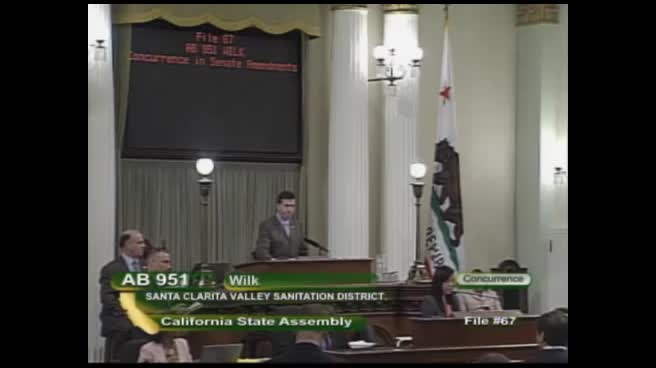 39SEC
Assembly Floor
 2MIN
Senate Floor
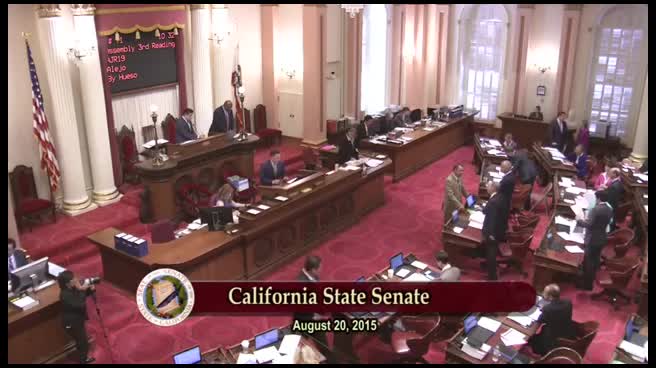 1MIN
Senate Floor
 10MIN
Senate Standing Committee on Environmental Quality
 2MIN
Assembly Standing Committee on Appropriations
 2MIN
Assembly Floor
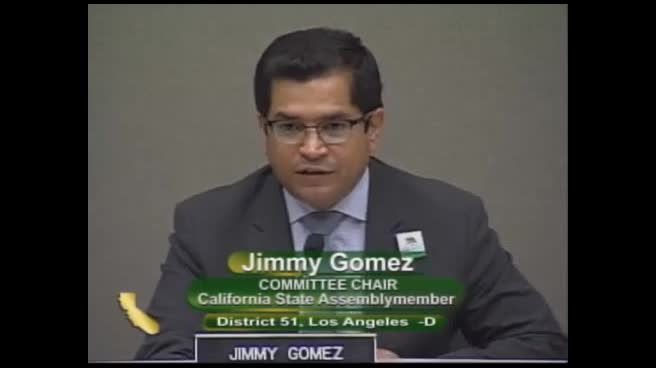 38SEC
Assembly Standing Committee on Appropriations
Bill Author

Bill Co-Author(s):