AB 1110: Greenhouse gases emissions intensity reporting: retail electricity suppliers.
- Session Year: 2015-2016
- House: Assembly
- Latest Version Date: 2016-09-26
Under existing law, entities offering electric services in California are required to disclose information on the sources of energy that are used to provide electric services. Existing law requires every retail supplier, as defined, that makes an offer to sell electricity that is consumed in California to disclose its electricity sources for the previous calendar year. These disclosures are required to be made to end-use consumers and potential end-use consumers. Existing law requires a retail supplier to disclose its electricity sources as a percentage of annual sales that is derived from specified sources of energy, including eligible renewable energy resources. Existing law requires that retail suppliers annually report to the State Energy Resources Conservation and Development Commission (Energy Commission) certain information for each electricity offering from specified sources, as defined, for the previous calendar year and authorizes the Energy Commission to verify environmental claims made by retail suppliers.
This bill would, among other things, require the Energy Commission, in consultation with the State Air Resources Board, to adopt a methodology for the calculation of greenhouse gas emissions intensity for each purchase of electricity by a retail supplier to serve its retail customers. The bill would require a retail supplier, including an electrical corporation, local publicly owned electric utility, electric service provider, and community choice aggregator, to also disclose both the greenhouse gases emissions intensity of any electricity portfolio offered to its retail customers, as specified, and the Energy Commissions calculation of the greenhouse gas emissions intensity associated with all statewide retail electricity sales. The bill would require a retail supplier to annually report to the Energy Commission certain additional information for each electricity offering for the previous calendar year and would authorize the Energy Commission to verify procurement claims, in addition to environmental claims, made by retail suppliers. The bill would require the Energy Commission, on or before January 1, 2018, to adopt guidelines, through an open process, subject to public comment, and adopted by a vote of the Energy Commission, for the reporting and disclosure of greenhouse gas emissions intensity. The bill would require retail suppliers, beginning June 1, 2020, to report data on greenhouse gas emissions intensity associated with retail sales occurring after December 31, 2018, except as provided.
The Public Utilities Act makes any public utility and any corporation other than a public utility guilty of a crime, if the public utility or corporation violates the act or fails to comply with any part of any order, decision, rule, direction, demand, or requirement of the commission.
Because the provisions of this bill would be a part of the act and because a violation of an order or decision of the commission implementing its requirements by an electrical corporation or electric service provider would be a crime, the bill would impose a state-mandated local program by expanding what is a crime. By placing additional reporting duties upon local publicly owned electric utilities, the bill would impose a state-mandated local program.
The California Constitution requires the state to reimburse local agencies and school districts for certain costs mandated by the state. Statutory provisions establish procedures for making that reimbursement.
This bill would provide that no reimbursement is required by this act for specified reasons.
Under existing law, entities offering electric services in California are required to disclose information on the sources of energy that are used to provide electric services. Existing law requires every retail supplier, as defined, that makes an offer to sell electricity that is consumed in California to disclose its electricity sources for the previous calendar year. These disclosures are required to be made to end-use consumers and potential end-use consumers. Existing law requires a retail supplier to disclose its electricity sources as a percentage of annual sales that is derived from specified sources of energy, including eligible renewable energy resources. Existing law requires that retail suppliers annually report to the Energy Commission certain information for each electricity offering from specified sources, as defined, offering for the previous calendar year. year and authorizes the Energy Commission to verify environmental claims made by retail suppliers.
This bill would would, among other things, require the Energy Commission to calculate the greenhouse gas emissions intensity for each purchase of electricity from specified sources, as defined, and, Commission, in consultation with the State Air Resources Board, to establish adopt a methodology for the calculation of greenhouse gas emissions intensity factors for electricity from unspecified sources. for each purchase of electricity by a retail supplier to serve its retail customers. The bill would require a retail supplier, including an electrical corporation, local publicly owned electric utility, electric service provider, and community choice aggregator, to also disclose both the greenhouse gases emissions intensity of any electricity portfolio offered to its retail customers, as specified, and the Energy Commissions calculation of the greenhouse gas emissions intensity associated with all statewide retail electricity sales. The bill would prohibit an adjustment in the calculation of greenhouse gas emissions intensity through the application of unbundled renewable energy credits, carbon offset credits, or credits associated with any greenhouse gas reductions unrelated to the production of electricity. The bill would require a retail supplier to annually report to the Energy Commission certain additional information for each electricity offering for the previous calendar year. year and would authorize the Energy Commission to verify procurement claims, in addition to environmental claims, made by retail suppliers. The bill would require the Energy Commission, on or before January 1, 2018, to adopt guidelines guidelines, through an open process, subject to public comment, and adopted by a vote of the Energy Commission, for the reporting and disclosure of greenhouse gas emissions intensity, subject to public hearing. intensity. The bill would require retail suppliers, beginning June 1, 2020, to report to the Energy Commission data on greenhouse gas emissions intensity associated with retail sales occurring after December 31, 2018, except as provided.
The Public Utilities Act makes any public utility and any corporation other than a public utility, if the public utility or corporation violates the act or fails to comply with any part of any order, decision, rule, direction, demand, or requirement of the commission, guilty of a crime.
Because the provisions of this bill would be a part of the act and because a violation of an order or decision of the commission implementing its requirements by an electrical corporation or electric service provider would be a crime, the bill would impose a state-mandated local program by expanding what is a crime. By placing additional reporting duties upon local publicly owned electric utilities, the bill would impose a state-mandated local program.
The California Constitution requires the state to reimburse local agencies and school districts for certain costs mandated by the state. Statutory provisions establish procedures for making that reimbursement.
This bill would provide that no reimbursement is required by this act for specified reasons.
Under existing law, entities offering electric services in California are required to disclose information on the sources of energy that are used to provide electric services. Existing law requires every retail supplier, as defined, that makes an offer to sell electricity that is consumed in California to disclose its electricity sources for the previous calendar year. These disclosures are required to be made to end-use customers consumers and potential end-use customers. consumers. Existing law requires a retail supplier to disclose its electricity sources as a percentage of annual sales that is derived from specified sources of energy, including eligible renewable energy resources. Existing law requires that retail suppliers annually report to the Energy Commission certain information for each electricity from specified sources, as defined, offering for the previous calendar year.
This bill would require the Energy Commission to calculate the greenhouse gas emissions intensity for each purchase of electricity from specified sources, as defined, and, in consultation with the State Air Resources Board, to establish greenhouse gas emissions intensity factors for electricity from unspecified sources. The bill would require a retail supplier, including an electrical corporation, local publicly owned electric utility, electric service provider, and community choice aggregator aggregator, to also disclose the greenhouse gases emissions intensity associated with its electricity sources. of any electricity portfolio offered to its retail customers, as specified, and the Energy Commissions calculation of the greenhouse gas emissions intensity associated with all statewide retail electricity sales. The bill would prohibit an adjustment in the calculation of emissions of greenhouse gases gas emissions intensity through the application of unbundled renewable energy credits, carbon offset credits, or other environmental attributes acquired from any facility not generating the electricity procured by the retail supplier and delivered to the balancing authority in which the customers of the retail supplier are located. or credits associated with any greenhouse gas reductions unrelated to the production of electricity. The bill would require a retail supplier to annually report to the Energy Commission certain additional information for each electricity offering for the previous calendar year. The bill would require the Energy Commission, on or before January 1, 2017, to specify 2018, to adopt guidelines for the reporting and disclosure of greenhouse gas emissions intensity, subject to public hearing. The bill would require retail suppliers, beginning June 1, 2019, 2020, to report to the Energy Commission data on annual emissions of greenhouse gases greenhouse gas emissions intensity associated with retail sales occurring after December 31, 2017, 2018, except as provided.
The Public Utilities Act makes any public utility and any corporation other than a public utility, if the public utility or corporation violates the act or fails to comply with any part of any order, decision, rule, direction, demand, or requirement of the commission, guilty of a crime.
Because the provisions of this bill would be a part of the act and because a violation of an order or decision of the commission implementing its requirements by an electrical corporation or electric service provider would be a crime, the bill would impose a state-mandated local program by expanding what is a crime. By placing additional reporting duties upon local publicly owned electric utilities, the bill would impose a state-mandated local program.
The California Constitution requires the state to reimburse local agencies and school districts for certain costs mandated by the state. Statutory provisions establish procedures for making that reimbursement.
This bill would provide that no reimbursement is required by this act for specified reasons.
Under existing law, entities offering electric services in California are required to disclose information on the sources of energy that are used to provide electric services. Existing law requires every retail supplier, as defined, that makes an offer to sell electricity that is consumed in California to disclose its electricity sources for the previous calendar year. These disclosures are required to be made to end-use customers and potential end-use customers. Existing law requires a retail supplier to disclose its electricity sources as a percentage of annual sales that is derived from specified sources of energy, including eligible renewable energy resources.
This bill would require a retail supplier, including an electrical corporation, local publicly owned electric utility, electric service provider, and community choice aggregator to also disclose the greenhouse gases emissions intensity associated with its electricity sources. The bill would prohibit an adjustment in the calculation of emissions of greenhouse gases through the application of renewable energy credits, carbon offset credits, or other environmental attributes acquired from any facility not providing the actual delivered electricity used to serve a retail customer. generating the electricity procured by the retail supplier and delivered to the balancing authority in which the customers of the retail supplier are located. The bill would require the Energy Commission, on or before January 1, 2017, to specify guidelines for the reporting of greenhouse gas emissions intensity, subject to public hearing. The bill would require retail suppliers, beginning June 1, 2019, to report to the Energy Commission data on annual emissions of greenhouse gases occurring after December 31, 2017, except as provided.
The Public Utilities Act makes any public utility and any corporation other than a public utility, if the public utility or corporation violates the act or fails to comply with any part of any order, decision, rule, direction, demand, or requirement of the commission, guilty of a crime.
Because the provisions of this bill would be a part of the act and because a violation of an order or decision of the commission implementing its requirements by an electrical corporation or electric service provider would be a crime, the bill would impose a state-mandated local program by expanding what is a crime. By placing additional reporting duties upon local publicly owned electric utilities, the bill would impose a state-mandated local program.
The California Constitution requires the state to reimburse local agencies and school districts for certain costs mandated by the state. Statutory provisions establish procedures for making that reimbursement.
This bill would provide that no reimbursement is required by this act for specified reasons.
Under existing law, entities offering electric services in California are required to disclose information on the sources of energy that are used to provide electric services. Existing law requires every retail supplier, as defined, that makes an offer to sell electricity that is consumed in California to disclose its electricity sources for the previous calendar year. These disclosures are required to be made to end-use customers and potential end-use customers. Existing law requires a retail supplier to disclose its electricity sources as a percentage of annual sales that is derived from specified sources of energy, including eligible renewable energy resources.
This bill would require a retail supplier, including an electrical corporation, local publicly owned electric utility, electric service provider, and community choice aggregator to also disclose the emissions of greenhouse gases emissions intensity associated with its electricity sources. The bill would prohibit an adjustment in the calculation of emissions of greenhouse gases through the application of renewable energy credits, carbon offset credits, or other attributes acquired from any facility not providing the actual delivered electricity used to serve a retail customer.
The Public Utilities Act makes any public utility and any corporation other than a public utility, that violates the act, or that if the public utility or corporation violates the act or fails to comply with any part of any order, decision, rule, direction, demand, or requirement of the commission, guilty of a crime.
Because the provisions of this bill would be a part of the act and because a violation of an order or decision of the commission implementing its requirements by an electrical corporation or electric service provider would be a crime, the bill would impose a state-mandated local program by expanding what is a crime. By placing additional reporting duties upon local publicly owned electric utilities, the bill would impose a state-mandated local program.
The California Constitution requires the state to reimburse local agencies and school districts for certain costs mandated by the state. Statutory provisions establish procedures for making that reimbursement.
This bill would provide that no reimbursement is required by this act for specified reasons.
Under existing law, entities offering electric services in California are required to disclose information on the sources of energy that are used to provide electric services. Existing law requires every retail supplier, as defined, that makes an offer to sell electricity that is consumed in California to disclose its electricity sources for the previous calendar year. These disclosures are required to be made to end-use customers and potential end-use customers. Existing law requires a retail supplier to disclose its electricity sources as a percentage of annual sales that is derived from specified sources of energy, including eligible renewable energy resources.
This bill would require a retail supplier, including an electrical corporation, local publicly owned electric utility, electric service provider, and community choice aggregator to also disclose the emissions of greenhouse gases associated with its electricity sources. The bill would prohibit an adjustment in the calculation of emissions of greenhouse gases through the application of renewable energy credits, carbon offset credits, or other attributes acquired from any facility not providing the actual delivered electricity used to serve a retail customer.
The Public Utilities Act makes any public utility and any corporation other than a public utility, that violates the act, or that fails to comply with any part of any order, decision, rule, direction, demand, or requirement of the commission, guilty of a crime.
Because the provisions of this bill would be a part of the act and because a violation of an order or decision of the commission implementing its requirements by an electrical corporation or electric service provider would be a crime, the bill would impose a state-mandated local program by expanding what is a crime. By placing additional reporting duties upon local publicly owned electric utilities, the bill would impose a state-mandated local program.
The California Constitution requires the state to reimburse local agencies and school districts for certain costs mandated by the state. Statutory provisions establish procedures for making that reimbursement.
This bill would provide that no reimbursement is required by this act for specified reasons.
Under existing property tax law, unpaid property taxes are declared delinquent and subject to penalties and costs, and, if the taxes remain unpaid, the property is declared tax-defaulted and subject to sale. Existing law authorizes the tax collector to provide notification of the tax-defaulted status of the property to the property owner, as specified, and authorizes the property to be redeemed until the right of redemption is terminated. Existing law requires the tax collector to issue a certification of redemption when tax-defaulted property is redeemed, as specified. Existing law authorizes a tax collector, if that tax collector has erroneously computed the amount necessary to redeem a parcel of property as to which a redemption certificate has been issued and that error resulted in an underpayment of the amount required to redeem the property, to collect the amount of the redemption deficiency if the tax collector sends notice of, or a bill for, the underpayment, as specified. Existing law requires the redemption deficiency to be collected, as provided, if payment of the redemption deficiency is not made by the property owner within 30 days following the mailing of the notice or bill.
This bill would instead extend the time available to make a redemption deficiency from 30 days to 45 days following the mailing of the notice or bill.
(a)The Legislature finds and declares that there is a need for reliable, accurate, timely, and consistent information regarding fuel sources for electric generation offered for retail sale in California.
(b)The purpose of this article is to establish a program under which entities offering electric services in California disclose accurate, reliable, and simple to understand information on the sources of energy, and the associated emissions of greenhouse gases, that are used to provide electric services.
SEC. 2.Section 398.2 of the Public Utilities Code is amended to read:398.2.The definitions set forth in this section shall govern the construction of this article.
(a)Greenhouse gas emissions intensity means the sum of all annual emissions of greenhouse gases associated with a generation source divided by the annual production of electricity from the generation source.
(b)Retail supplier means an entity that offers an electricity product for sale to retail consumers in California, including an electrical corporation, local publicly owned electric utility, electric service provider, and community choice aggregator.
(c)System operator means the Independent System Operator with responsibility for the efficient use and reliable operation of the transmission grid, as provided by Section 345, or a local publicly owned electric utility that does not utilize the Independent System Operator.
(d)Purchases of electricity from specified sources or purchases from specified sources means electricity transactions that are traceable to specific generation sources by any auditable contract trail or equivalent, such as a tradable commodity system, that provides commercial verification that the electricity source claimed has been sold once and only once to a retail consumer. Retail suppliers may rely on annual data to determine whether a transaction meets this definition, rather than hour-by-hour matching of loads and resources.
(e)Electricity from unspecified sources means electricity that is not traceable to specific generation sources by any auditable contract trail or equivalent, including a tradable commodity system, that provides commercial verification that the electricity source claimed has been sold once, and only once, to a retail consumer.
SEC. 3.Section 398.4 of the Public Utilities Code is amended to read:398.4.(a)Every retail supplier that makes an offering to sell electricity that is consumed in California shall disclose its electricity sources and the associated greenhouse gases emissions intensity for the previous calendar year.
(b)The disclosures required by this section shall be made to potential end-use consumers in all product-specific written promotional materials that are distributed to consumers by either printed or electronic means, including the retail suppliers Internet Web site, if one exists, except that advertisements and notices in general circulation media shall not be subject to this requirement.
(c)The disclosures required by this section shall be made annually to end-use consumers of the offered electricity. The annual disclosure shall be made by the end of the first complete billing cycle for the third quarter of the year, and shall be consistent with information provided to the Energy Commission pursuant to Section 398.5. A retail supplier may distribute the disclosures required by this section via email to any end-use consumer that has consented to receive email in lieu of printed materials.
(d)The disclosures required by this section shall be made separately for each portfolio offering made by the retail supplier.
(e)On or before January 1, 1998, the Energy Commission shall specify guidelines for the format and means for disclosure required by Section 398.3 and this section, based on the requirements of this article and subject to public hearing.
(f)The costs of making the disclosures required by this section shall be considered to be generation related.
(g)The disclosures required by this section shall comply with the following:
(1)A retail suppliers disclosure of its electricity sources shall be expressed as a percentage of annual sales derived from each of the following categories:
(A)Electricity from unspecified sources.
(B)Purchases of electricity from specified sources.
(2)A retail suppliers disclosure of its electricity sources shall also separately identify total California system electricity, which is the sum of all in-state generation and net electricity imports by fuel type.
(h)Each of the categories specified in subdivision (g) shall be additionally identified as a percentage of annual sales that is derived from the following fuels, sources of energy, or electricity products:
(1)Coal.
(2)Large hydroelectric (greater than 30 megawatts).
(3)Natural gas.
(4)Nuclear.
(5)Eligible renewable energy resources pursuant to the California Renewables Portfolio Standard Program (Article 16 (commencing with Section 399.11)), including any of the following:
(A)Biomass and biowaste.
(B)Geothermal.
(C)Eligible hydroelectric.
(D)Solar.
(E)Wind.
(6)Other categories as determined by the Energy Commission.
(7)The portion of annual sales derived from unbundled renewable energy credits shall be included in the disclosures in a format determined by the Energy Commission. A retail supplier may include additional information related to the sources of the unbundled renewable energy credits.
(i)All electricity sources disclosed as purchases of electricity from specified sources shall meet the requirements of subdivision (d) of Section 398.2.
(j)Purchases of electricity from specified sources identified pursuant to this section shall be from sources connected to the Western Electricity Coordinating Council interconnected grid.
(k)(1)Each retail supplier shall disclose both the greenhouse gas emissions intensity of any electricity portfolio offered to its retail customers and the Energy Commissions calculation of greenhouse gas emissions intensity associated with all statewide retail electricity sales, consistent with the requirements of this subdivision.
(2)The Energy Commission shall do all of the following:
(A)Adopt a methodology, in consultation with the State Air Resources Board, for the calculation of greenhouse gas emissions intensity for each purchase of electricity by a retail supplier to serve its retail customers.
(B)Calculate the greenhouse gas emissions intensity associated with statewide retail electricity sales based on the greenhouse gas emissions for total California system electricity.
(C)Rely on the most recent verified greenhouse gas emissions data while ensuring that greenhouse gas emissions intensity factors for electricity from specified and unspecified sources are available to retail suppliers with sufficient advance notice to permit timely reporting.
(D)Establish guidelines for adjustments to a greenhouse gas emissions intensity factor for a reporting year for any local publicly owned electric utility demonstrating generation of quantities of electricity in previous years in excess of its total retail sales and wholesale sales from specified sources that do not emit any greenhouse gases. Adjustments authorized by the guidelines established by the Energy Commission shall not permit excess generation procured in a single year to be counted more than once or to be resold to another retail supplier as a specified source.
(E)Ensure that there is no double-counting of the greenhouse gas emissions or emissions attributes associated with any unit of electricity production reported by a retail supplier for any specific generating facility or unspecified source located within the Western Electricity Coordinating Council when calculating greenhouse gas emissions intensity.
(F)(i)On or before January 1, 2018, adopt guidelines, through an open process, subject to public comment, and adopted by a vote of the Energy Commission, for the reporting and disclosure of greenhouse gas emissions intensity associated with retail sales based on the requirements of this subdivision. Beginning June 1, 2020, retail suppliers shall be required to report data on greenhouse gas emissions intensity associated with retail sales occurring after December 31, 2018.
(ii)Any new community choice aggregator formed after January 1, 2016, shall not be required to report data on greenhouse gas emissions intensity associated with retail sales until at least 24 months, but shall be required to report that data no later than 36 months, after serving its first retail customer.
(3)Any marketing or retail product claims relating to the greenhouse gas emissions intensity of the electric supply portfolio of a retail supplier shall be consistent with the methodology adopted by the Energy Commission pursuant to this section. Retail suppliers may provide additional information to customers describing other actions relating to greenhouse gases that are unrelated to the electric supply portfolio.
(l)The provisions of this section shall not apply to generators providing electric service onsite, under an over-the-fence transaction as described in Section 218, or to an affiliate or affiliates, as defined in subdivision (a) of Section 372.
SEC. 4.Section 398.5 of the Public Utilities Code is amended to read:398.5.(a)Retail suppliers shall annually report to the Energy Commission, for each electricity offering for the previous calendar year, each of the following:
(1)The kilowatthours purchased, by generator and fuel type during the previous calendar year, consistent with the meter data, including losses, reported to the system operator.
(2)The kilowatthours purchased from unspecified sources in California and from unspecified sources imported into California from other subregions within the Western Electricity Coordinating Council.
(3)For each electricity offering, the kilowatthours sold at retail.
(4)For each electricity offering, the disclosures made to consumers pursuant to Section 398.4.
(b)Information submitted to the Energy Commission pursuant to this section that is a trade secret as defined in subdivision (d) of Section 3426.1 of the Civil Code shall not be released except in an aggregated form such that trade secrets cannot be discerned.
(c)The Energy Commission shall specify guidelines and standard formats, based on the requirements of this article and subject to public hearing, for the submittal of information pursuant to this article.
(d)In developing the rules and procedures specified in this section, the Energy Commission shall seek to minimize the reporting burden and cost of reporting that it imposes on retail suppliers.
(e)The provisions of this section shall not apply to generators providing electric service onsite, under an over-the-fence transaction as described in Section 218, or to an affiliate or affiliates, as defined in subdivision (a) of Section 372.
(f)The Energy Commission may verify environmental and procurement claims made by retail suppliers.
SEC. 5.No reimbursement is required by this act pursuant to Section 6 of Article XIIIB of the California Constitution because a local agency or school district has the authority to levy service charges, fees, or assessments sufficient to pay for the program or level of service mandated by this act or because costs that may be incurred by a local agency or school district will be incurred because this act creates a new crime or infraction, eliminates a crime or infraction, or changes the penalty for a crime or infraction, within the meaning of Section 17556 of the Government Code, or changes the definition of a crime within the meaning of Section 6 of Article XIIIB of the California Constitution.
(a)The Legislature finds and declares that there is a need for reliable, accurate, timely, and consistent information regarding fuel sources for electric generation offered for retail sale in California.
(b)The purpose of this article is to establish a program under which entities offering electric services in California disclose accurate, reliable, and simple to understand information on the sources of energy, and the associated emissions of greenhouse gases, that are used to provide electric services.
SEC. 2.Section 398.2 of the Public Utilities Code is amended to read:398.2.The definitions set forth in this section shall govern the construction of this article.
(a)Greenhouse gas emissions intensity means the sum of all annual emissions of greenhouse gases associated with a generation source divided by the annual production of electricity from the generation source.
(b)Retail supplier means an entity that offers an electricity product for sale to retail consumers in California, including an electrical corporation, local publicly owned electric utility, electric service provider, and community choice aggregator.
(c)System operator means the Independent System Operator with responsibility for the efficient use and reliable operation of the transmission grid, as provided by Section 345, or a local publicly owned electric utility that does not utilize the Independent System Operator.
(d)Purchases of electricity from specified sources or purchases from specified sources means electricity transactions that are traceable to specific generation sources by any auditable contract trail or equivalent, such as a tradable commodity system, that provides commercial verification that the electricity source claimed has been sold once and only once to a retail consumer. Retail suppliers may rely on annual data to determine whether a transaction meets this definition, rather than hour-by-hour matching of loads and resources.
(e)Electricity from unspecified sources means electricity that is not traceable to specific generation sources by any auditable contract trail or equivalent, including a tradable commodity system, that provides commercial verification that the electricity source claimed has been sold once, and only once, to a retail consumer.
SEC. 3.Section 398.4 of the Public Utilities Code is amended to read:398.4.(a)Every retail supplier that makes an offering to sell electricity that is consumed in California shall disclose its electricity sources and the associated greenhouse gases emissions intensity for the previous calendar year.
(b)The disclosures required by this section shall be made to potential end-use consumers in all product-specific written promotional materials that are distributed to consumers by either printed or electronic means, including the retail suppliers Internet Web site, if one exists, except that advertisements and notices in general circulation media shall not be subject to this requirement.
(c)The disclosures required by this section shall be made annually to end-use consumers of the offered electricity. The annual disclosure shall be made by the end of the first complete billing cycle for the third quarter of the year, and shall be consistent with information provided to the Energy Commission pursuant to Section 398.5. A retail supplier may distribute the disclosures required by this section via email to any end-use consumer that has consented to receive email in lieu of printed materials.
(d)The disclosures required by this section shall be made separately for each portfolio offering made by the retail supplier.
(e)On or before January 1, 1998, the Energy Commission shall specify guidelines for the format and means for disclosure required by Section 398.3 and this section, based on the requirements of this article and subject to public hearing.
(f)The costs of making the disclosures required by this section shall be considered to be generation related.
(g)The disclosures required by this section shall comply with the following:
(1)A retail suppliers disclosure of its electricity sources shall be expressed as a percentage of annual sales derived from each of the following categories:
(A)Electricity from unspecified sources.
(B)Purchases of electricity from specified sources.
(2)A retail suppliers disclosure of its electricity sources shall also separately identify total California system electricity, which is the sum of all in-state generation and net electricity imports by fuel type.
(h)Each of the categories specified in subdivision (g) shall be additionally identified as a percentage of annual sales that is derived from the following fuels, sources of energy, or electricity products:
(1)Coal.
(2)Large hydroelectric (greater than 30 megawatts).
(3)Natural gas.
(4)Nuclear.
(5)Eligible renewable energy resources pursuant to the California Renewables Portfolio Standard Program (Article 16 (commencing with Section 399.11)), including any of the following:
(A)Biomass and biowaste.
(B)Geothermal.
(C)Eligible hydroelectric.
(D)Solar.
(E)Wind.
(F)Unbundled renewable energy credits.
(6)Other categories as determined by the Energy Commission.
(7)The portion of annual sales derived from unbundled renewable energy credits shall be included in the disclosures in a format determined by the Energy Commission. A retail supplier may include additional information related to the sources of the unbundled renewable energy credits.
(i)All electricity sources disclosed as purchases of electricity from specified sources shall meet the requirements of subdivision (d) of Section 398.2.
(j)Purchases of electricity from specified sources identified pursuant to this section shall be from sources connected to the Western Electricity Coordinating Council interconnected grid.
(k)(1)Each retail supplier shall disclose both the greenhouse gas emissions intensity of any electricity portfolio offered to its retail customers and the Energy Commissions calculation of greenhouse gas emissions intensity associated with all statewide retail electricity sales, consistent with the requirements of this subdivision.
(2)The Energy Commission shall do all of the following:
(A)Calculate the greenhouse gas emissions intensity for each purchase of electricity from a specified source using data reported to the State Air Resources Board under the regulations for the Mandatory Greenhouse Gas Reporting program or a successor program. If emissions data is unavailable or restricted due to confidentiality, the Energy Commission may establish default emissions intensity factors for purchases from specified sources.
(B)Establish, in consultation with the State Air Resources Board, default emissions intensity factors for electricity from unspecified sources located in California, electricity from unspecified sources imported into the state from other regions, and electricity from sources without a reporting obligation.
(A)Adopt a methodology, in consultation with the State Air Resources Board, for the calculation of greenhouse gas emissions intensity for each purchase of electricity by a retail supplier to serve its retail customers.
(C)
(B)Calculate the greenhouse gas emissions intensity associated with statewide retail electricity sales based on the greenhouse gas emissions for total California system electricity.
(D)
(C)Rely on the most recent verified greenhouse gas emissions data while ensuring that greenhouse gas emissions intensity factors for electricity from specified and unspecified sources are available to retail suppliers with sufficient advance notice to permit timely reporting.
(E)Retain the right to verify any procurement claims made by a retail supplier, including the right to review any underlying procurement contracts, the associated electronic tags demonstrating that the claimed electricity was delivered to the retail supplier, and all related financial settlements.
(3)The Energy Commission shall not authorize a retail seller to make any adjustments to the calculation of greenhouse gas emissions intensity beyond those permitted under the market-based compliance mechanism adopted by the State Air Resources Board. A retail seller shall not make adjustments due to the use of offset credits, credits associated with any greenhouse gas reductions unrelated to the production of electricity, or unbundled renewable energy credits.
(4)The Energy Commission may authorize an adjustment
(D)Establish guidelines for adjustments to a greenhouse gas emissions intensity factor for a reporting year for any local publicly owned electric utility demonstrating procurement generation of quantities of electricity in a single year previous years in excess of its total retail sales from purchases and wholesale sales from specified sources that do not emit any greenhouse gases. Any request for adjustments by an eligible local publicly owned electric utility shall be considered in an open process, subject to public comment, and adopted through a vote of the full Energy Commission. An adjustment Adjustments authorized by the guidelines established by the Energy Commission shall not permit excess generation procured in a single year to be counted more than once or to be resold to another retail supplier as a purchase from a specified source.
(5)The Energy Commission shall ensure
(E)Ensure that there is no double counting double-counting of the greenhouse gas emissions or emissions attributes associated with any unit of electricity production reported by a retail supplier for any specific generating facility or unspecified source located within the Western Electricity Coordinating Council when calculating greenhouse gas emissions intensity.
(6)(A)
(F)(i)On or before January 1, 2018, the Energy Commission shall adopt guidelines adopt guidelines, through an open process, subject to public comment, and adopted by a vote of the Energy Commission, for the reporting and disclosure of greenhouse gas emissions intensity associated with retail sales based on the requirements of this subdivision and subject to public hearing. subdivision. Beginning June 1, 2020, retail suppliers shall be required to report data on greenhouse gas emissions intensity associated with retail sales occurring after December 31, 2018.
(B)
(ii)Any new community choice aggregator formed after January 1, 2016, shall not be required to report data on greenhouse gas emissions intensity associated with retail sales until at least 24 months, but shall be required to report that data no later than 36 months, after serving its first retail customer.
(7)
(3)Any marketing or retail product claims relating to the greenhouse gas emissions intensity of the electric supply portfolio of a retail supplier shall be consistent with the methodology required under adopted by the Energy Commission pursuant to this section. Retail suppliers may provide additional information to customers describing other actions relating to greenhouse gases that are unrelated to the electric supply portfolio.
(l)The provisions of this section shall not apply to generators providing electric service onsite, under an over-the-fence transaction as described in Section 218, or to an affiliate or affiliates, as defined in subdivision (a) of Section 372.
SEC. 4.Section 398.5 of the Public Utilities Code is amended to read:398.5.(a)Retail suppliers shall annually report to the Energy Commission, for each electricity offering for the previous calendar year, each of the following:
(1)The kilowatthours purchased, by generator and fuel type during the previous calendar year, consistent with the meter data, including losses, reported to the system operator.
(2)The kilowatthours purchased from unspecified sources in California and from unspecified sources imported into California from other subregions within the Western Electricity Coordinating Council.
(3)Any kilowatthours supplied to the retail seller directly or indirectly by a first deliverer of electricity into the state.
(4)
(3)For each electricity offering offering, the kilowatthours sold at retail.
(5)
(4)For each electricity offering offering, the disclosures made to consumers pursuant to Section 398.4.
(b)Information submitted to the Energy Commission pursuant to this section that is a trade secret as defined in subdivision (d) of Section 3426.1 of the Civil Code shall not be released except in an aggregated form such that trade secrets cannot be discerned.
(c)The Energy Commission shall specify guidelines and standard formats, based on the requirements of this article and subject to public hearing, for the submittal of information pursuant to this article.
(d)In developing the rules and procedures specified in this section, the Energy Commission shall seek to minimize the reporting burden and cost of reporting that it imposes on retail suppliers.
(e)The provisions of this section shall not apply to generators providing electric service onsite, under an over-the-fence transaction as described in Section 218, or to an affiliate or affiliates, as defined in subdivision (a) of Section 372.
(f)The Energy Commission may verify environmental and procurement claims made by retail suppliers.
SEC. 5.No reimbursement is required by this act pursuant to Section 6 of Article XIIIB of the California Constitution because a local agency or school district has the authority to levy service charges, fees, or assessments sufficient to pay for the program or level of service mandated by this act or because costs that may be incurred by a local agency or school district will be incurred because this act creates a new crime or infraction, eliminates a crime or infraction, or changes the penalty for a crime or infraction, within the meaning of Section 17556 of the Government Code, or changes the definition of a crime within the meaning of Section 6 of Article XIIIB of the California Constitution.
(a)The Legislature finds and declares that there is a need for reliable, accurate, timely, and consistent information regarding fuel sources for electric generation offered for retail sale in California.
(b)The purpose of this article is to establish a program under which entities offering electric services in California disclose accurate, reliable, and simple to understand information on the sources of energy, and the associated emissions of greenhouse gases, that are used to provide electric services.
SEC. 2.Section 398.2 of the Public Utilities Code is amended to read:398.2.The definitions set forth in this section shall govern the construction of this article.
(a)Greenhouse gas emissions intensity means the sum of all annual emissions of greenhouse gases associated with a generation source divided by the annual production of electricity from the generation source.
(a)
(b)Retail supplier means an entity that offers an electricity product for sale to retail consumers in California, including an electrical corporation, local publicly owned electric utility, electric service provider, and community choice aggregator.
(b)
(c)System operator means the Independent System Operator with responsibility for the efficient use and reliable operation of the transmission grid, as provided by Section 345, or a local publicly owned electric utility that does not utilize the Independent System Operator.
(c)Specific purchases
(d)Purchases of electricity from specified sources or purchases from specified sources means electricity transactions that are traceable to specific generation sources by any auditable contract trail or equivalent, such as a tradable commodity system, that provides commercial verification that the electricity source claimed has been sold once and only once to a retail consumer. Retail suppliers may rely on annual data to meet this requirement, determine whether a transaction meets this definition, rather than hour-by-hour matching of loads and resources.
(d)Unspecified sources of power
(e)Electricity from unspecified sources means electricity that is not traceable to specific generation sources by any auditable contract trail or equivalent, including a tradable commodity system, that provides commercial verification that the electricity source claimed has been sold once, and only once, to a retail consumer.
SEC. 3.Section 398.4 of the Public Utilities Code is amended to read:398.4.(a)Every retail supplier that makes an offering to sell electricity that is consumed in California shall disclose its electricity sources and the associated greenhouse gases emissions intensity for the previous calendar year.
(b)The disclosures required by this section shall be made to potential end-use consumers in all product-specific written promotional materials that are distributed to consumers by either printed or electronic means, including the retail suppliers Internet Web site, if one exists, except that advertisements and notices in general circulation media shall not be subject to this requirement.
(c)The disclosures required by this section shall be made annually to end-use consumers of the offered electricity. The annual disclosure shall be made by the end of the first complete billing cycle for the third quarter of the year, and shall be consistent with information provided to the Energy Commission pursuant to Section 398.5.
(d)The disclosures required by this section shall be made separately for each portfolio offering made by the retail supplier.
(e)On or before January 1, 1998, the Energy Commission shall specify guidelines for the format and means for disclosure required by Section 398.3 and this section, based on the requirements of this article and subject to public hearing.
(f)The costs of making the disclosures required by this section shall be considered to be generation related.
(g)The disclosures required by this section shall comply with the following:
(1)A retail suppliers disclosure of its electricity sources shall be expressed as a percentage of annual sales derived from each of the following categories:
(A)Unspecified sources of electricity. Electricity from unspecified sources.
(B)Specific purchases. Purchases of electricity from specified sources.
(2)A retail suppliers disclosure of its electricity sources shall also separately identify total California system electricity, which is the sum of all in-state generation and net electricity imports by fuel type.
(h)Each of the categories specified in subdivision (g) shall be additionally identified as a percentage of annual sales that is derived from the following fuels or fuels, sources of energy: energy, or electricity products:
(1)Coal.
(2)Large hydroelectric (greater than 30 megawatts).
(3)Natural gas.
(4)Nuclear.
(5)Eligible renewable energy resources pursuant to the California Renewables Portfolio Standard Program (Article 16 (commencing with Section 399.11)), including any of the following:
(A)Biomass and biowaste.
(B)Geothermal.
(C)Eligible hydroelectric.
(D)Solar.
(E)Wind.
(F)Unbundled renewable energy credits.
(6)Other categories as determined by the Energy Commission.
(i)All electricity sources disclosed as specific purchases of electricity from specified sources shall meet the requirements of subdivision (c) (d) of Section 398.2.
(j)Specific purchases Purchases of electricity from specified sources identified pursuant to this section shall be from sources connected to the Western Electricity Coordinating Council interconnected grid.
(k)(1)The greenhouse gases emissions intensity associated with a retail suppliers electricity sources shall be reported by the retail supplier to the customer as the sum of all annual emissions of greenhouse gases divided by annual retail electric sales. Emissions of greenhouse gases shall be calculated using the emissions reported for electricity supplied by entities required to report emissions of greenhouse gases pursuant to Article 2 (commencing with Section 95100) of Subchapter 10 of Chapter 1 of Division 3 of Title 17 of the California Code of Regulations. Emissions of greenhouse gases shall include any emissions otherwise attributable to any first deliverer, as defined in paragraph (178) of subdivision (a) of Section 95102 of Title 17 of the California Code of Regulations, supplying electricity directly or indirectly to the retail supplier.
(2)For purposes of this subdivision, no adjustment shall be made to the calculation of emissions of greenhouse gases assigned to any retail supplier through the application of the following:
(A)Renewable energy credits, as defined in subdivision (h) of Section 399.12.
(B)Offset credits issued pursuant to Article 5 (commencing with Section 95801) of Subchapter 10 of Chapter 1 of Division 3 of Title 17 of the California Code of Regulations.
(C)Other environmental attributes acquired from any facility not generating the electricity procured by the retail supplier and delivered to the balancing authority in which the customers of the retail supplier are located.
(3)The Energy Commission shall ensure that the calculation of greenhouse gas emissions attributed to a retail supplier is consistent with treatment under the market-based compliance mechanism adopted by the State Air Resources Board for the following:
(A)Procurement from electric generation without a compliance obligation pursuant to Section 95852.2 of Title 17 of the California Code of Regulations.
(B)Procurement satisfying the requirements of paragraph (4) of subdivision (b) of Section 95852 of Title 17 of the California Code of Regulations.
(4)For purposes of determining greenhouse gas intensity pursuant to this section, the Energy Commission shall determine the appropriate treatment for production from any electricity source located behind the meter of a customer served by a retail supplier. At a minimum, any reported electricity production shall be verified using a revenue grade meter and added to the calculation of the retail electric sales for the retail supplier.
(5)The calculation of greenhouse gas emissions intensity shall not be determined based upon whether the procurement is either assigned to any particular portfolio content category under subdivision (b) of Section 399.16 or classified as counting in full pursuant to subdivision (d) of Section 399.16.
(6)The Energy Commission shall, in consultation with the State Air Resources Board and consistent with the requirements of this subdivision, establish emissions intensity factors for electricity sources reported by retail suppliers.
(7)Each retail supplier shall separately identify the greenhouse gases emissions intensity associated with statewide retail electricity sales in the same year. The Energy Commission, in consultation with the State Air Resources Board, shall calculate the greenhouse gases emissions intensity associated with statewide retail electricity sales based on the emissions of greenhouse gases for total California system electricity.
(8)(A)On or before January 1, 2017, the Energy Commission shall specify guidelines for the reporting and disclosure of greenhouse gas emissions intensity, based on the requirements of this subdivision and subject to public hearing. Beginning June 1, 2019, retail suppliers shall be required to report to the Energy Commission data on annual emissions of greenhouse gases occurring after December 31, 2017.
(B)Any new community choice aggregator formed after January 1, 2016, shall not be required to report to the Energy Commission data on annual emissions of greenhouse gases occurring until at least 24 months, but no later than 36 months, after serving its first retail customer.
(9)Any marketing or retail product claims relating to the greenhouse gas emissions intensity of the electricity sources of a retail supplier shall be consistent with the methodology required under this section. Retail suppliers may provide additional information to customers describing other actions relating to greenhouse gas emissions.
(k)(1)Each retail supplier shall disclose the greenhouse gas emissions intensity of any electricity portfolio offered to its retail customers and the Energy Commissions calculation of greenhouse gas emissions intensity associated with all statewide retail electricity sales, consistent with the requirements of this subdivision.
(2)The Energy Commission shall do all of the following:
(A)Calculate the greenhouse gas emissions intensity for each purchase of electricity from a specified source using data reported to the State Air Resources Board under the regulations for the Mandatory Greenhouse Gas Reporting program or a successor program. If emissions data is unavailable or restricted due to confidentiality, the Energy Commission may establish default emissions intensity factors for purchases from specified sources.
(B)Establish, in consultation with the State Air Resources Board, default emissions intensity factors for electricity from unspecified sources located in California, electricity from unspecified sources imported into the state from other regions, and electricity from sources without a reporting obligation.
(C)Calculate the greenhouse gas emissions intensity associated with statewide retail electricity sales based on the greenhouse gas emissions for total California system electricity.
(D)Rely on the most recent verified greenhouse gas emissions data while ensuring that greenhouse gas emissions intensity factors for electricity from specified and unspecified sources are available to retail suppliers with sufficient advance notice to permit timely reporting.
(E)Retain the right to verify any procurement claims made by a retail supplier, including the right to review any underlying procurement contracts, the associated electronic tags demonstrating that the claimed electricity was delivered to the retail supplier, and all related financial settlements.
(3)The Energy Commission shall not authorize a retail seller to make any adjustments to the calculation of greenhouse gas emissions intensity beyond those permitted under the market-based compliance mechanism adopted by the State Air Resources Board. A retail seller shall not make adjustments due to the use of offset credits, credits associated with any greenhouse gas reductions unrelated to the production of electricity, or unbundled renewable energy credits.
(4)The Energy Commission may authorize an adjustment to a greenhouse gas emissions intensity factor for any local publicly owned electric utility demonstrating procurement of quantities of electricity in a single year in excess of its total retail sales from purchases from specified sources that do not emit any greenhouse gases. Any request for adjustments by an eligible local publicly owned electric utility shall be considered in an open process, subject to public comment, and adopted through a vote of the full Energy Commission. An adjustment authorized by the Energy Commission shall not permit excess generation procured in a single year to be counted more than once or to be resold to another retail supplier as a purchase from a specified source.
(5)The Energy Commission shall ensure that there is no double counting of the greenhouse gas emissions or emissions attributes associated with any unit of electricity production reported by a retail supplier for any specific generating facility located within the Western Electricity Coordinating Council when calculating greenhouse gas emissions intensity.
(6)(A)On or before January 1, 2018, the Energy Commission shall adopt guidelines for the reporting and disclosure of greenhouse gas emissions intensity associated with retail sales based on the requirements of this subdivision and subject to public hearing. Beginning June 1, 2020, retail suppliers shall be required to report data on greenhouse gas emissions intensity associated with retail sales occurring after December 31, 2018.
(B)Any new community choice aggregator formed after January 1, 2016, shall not be required to report data on greenhouse gas emissions intensity associated with retail sales until at least 24 months, but no later than 36 months, after serving its first retail customer.
(7)Any marketing or retail product claims relating to the greenhouse gas emissions intensity of the electric supply portfolio of a retail supplier shall be consistent with the methodology required under this section. Retail suppliers may provide additional information to customers describing other actions relating to greenhouse gases that are unrelated to the electric supply portfolio.
(l)The provisions of this section shall not apply to generators providing electric service onsite, under an over-the-fence transaction as described in Section 218, or to an affiliate or affiliates, as defined in subdivision (a) of Section 372.
SEC. 4.Section 398.5 of the Public Utilities Code is amended to read:398.5.(a)Retail suppliers that disclose specific purchases pursuant to Section 398.4 shall annually report to the Energy Commission, for each electricity offering for the previous calendar year, each of the following:
(1)The kilowatthours purchased, by generator and fuel type during the previous calendar year, consistent with the meter data, including losses, reported to the system operator.
(2)The kilowatthours purchased from unspecified sources in California and from unspecified sources imported into California from other subregions within the Western Electricity Coordinating Council.
(3)Any kilowatthours supplied to the retail seller directly or indirectly by a first deliverer of electricity into the state.
(2)
(4)For each electricity offering the kilowatthours sold at retail.
(3)
(5)For each electricity offering the disclosures made to consumers pursuant to Section 398.4.
(b)Information submitted to the Energy Commission pursuant to this section that is a trade secret as defined in subdivision (d) of Section 3426.1 of the Civil Code shall not be released except in an aggregated form such that trade secrets cannot be discerned.
(c)The Energy Commission shall specify guidelines and standard formats, based on the requirements of this article and subject to public hearing, for the submittal of information pursuant to this article.
(d)In developing the rules and procedures specified in this section, the Energy Commission shall seek to minimize the reporting burden and cost of reporting that it imposes on retail suppliers.
(e)The provisions of this section shall not apply to generators providing electric service onsite, under an over-the-fence transaction as described in Section 218, or to an affiliate or affiliates, as defined in subdivision (a) of Section 372.
(f)The Energy Commission may verify environmental claims made by retail suppliers.
SEC. 4.SEC. 5.No reimbursement is required by this act pursuant to Section 6 of Article XIIIB of the California Constitution because a local agency or school district has the authority to levy service charges, fees, or assessments sufficient to pay for the program or level of service mandated by this act or because costs that may be incurred by a local agency or school district will be incurred because this act creates a new crime or infraction, eliminates a crime or infraction, or changes the penalty for a crime or infraction, within the meaning of Section 17556 of the Government Code, or changes the definition of a crime within the meaning of Section 6 of Article XIIIB of the California Constitution.
(a)The Legislature finds and declares that there is a need for reliable, accurate, and timely timely, and consistent information regarding fuel sources for electric generation offered for retail sale in California.
(b)The purpose of this article is to establish a program under which entities offering electric services in California disclose accurate, reliable, and simple to understand information on the sources of energy, and the associated emissions of greenhouse gases, that are used to provide electric services.
SEC. 2.Section 398.2 of the Public Utilities Code is amended to read:398.2.The definitions set forth in this section shall govern the construction of this article.
(a)Retail supplier means an entity that offers an electricity product for sale to retail consumers in California, including an electrical corporation, local publicly owned electric utility, electric service provider, and community choice aggregator.
(b)System operator means the Independent System Operator with responsibility for the efficient use and reliable operation of the transmission grid, as provided by Section 345, or a local publicly owned electric utility that does not utilize the Independent System Operator.
(c)Specific purchases means electricity transactions that are traceable to specific generation sources by any auditable contract trail or equivalent, such as a tradable commodity system, that provides commercial verification that the electricity source claimed has been sold once and only once to a retail consumer. Retail suppliers may rely on annual data to meet this requirement, rather than hour-by-hour matching of loads and resources.
(d)Unspecified sources of power means electricity that is not traceable to specific generation sources by any auditable contract trail or equivalent, including a tradable commodity system, that provides commercial verification that the electricity source claimed has been sold once, and only once, to a retail consumer.
SEC. 3.Section 398.4 of the Public Utilities Code is amended to read:398.4.(a)Every retail supplier that makes an offering to sell electricity that is consumed in California shall disclose its electricity sources and the associated greenhouse gases emissions intensity for the previous calendar year.
(b)The disclosures required by this section shall be made to potential end-use consumers in all product-specific written promotional materials that are distributed to consumers by either printed or electronic means, including the retail suppliers Internet Web site, if one exists, except that advertisements and notices in general circulation media shall not be subject to this requirement.
(c)The disclosures required by this section shall be made annually to end-use consumers of the offered electricity. The annual disclosure shall be made by the end of the first complete billing cycle for the third quarter of the year, and shall be consistent with information provided to the Energy Commission pursuant to Section 398.5.
(d)The disclosures required by this section shall be made separately for each offering made by the retail supplier.
(e)On or before January 1, 1998, the Energy Commission shall specify guidelines for the format and means for disclosure required by Section 398.3 and this section, based on the requirements of this article and subject to public hearing.
(f)The costs of making the disclosures required by this section shall be considered to be generation related.
(g)The disclosures required by this section shall comply with the following:
(1)A retail suppliers disclosure of its electricity sources shall be expressed as a percentage of annual sales derived from each of the following categories:
(A)Unspecified sources of electricity.
(B)Specific purchases.
(2)A retail suppliers disclosure of its electricity sources shall also separately identify total California system electricity, which is the sum of all in-state generation and net electricity imports by fuel type.
(h)Each of the categories specified in subdivision (g) shall be additionally identified as a percentage of annual sales that is derived from the following fuels or sources of energy:
(1)Coal.
(2)Large hydroelectric (greater than 30 megawatts).
(3)Natural gas.
(4)Nuclear.
(5)Eligible renewable energy resources pursuant to the California Renewables Portfolio Standard Program (Article 16 (commencing with Section 399.11)), including any of the following:
(A)Biomass and biowaste.
(B)Geothermal.
(C)Eligible hydroelectric.
(D)Solar.
(E)Wind.
(6)Other categories as determined by the Energy Commission.
(i)All electricity sources disclosed as specific purchases shall meet the requirements of subdivision (c) of Section 398.2.
(j)Specific purchases identified pursuant to this section shall be from sources connected to the Western Electricity Coordinating Council interconnected grid.
(k)(1)The greenhouse gases emissions intensity associated with a retail suppliers electricity sources shall be reported by the retail supplier to the customer as the sum of all annual emissions of greenhouse gases divided by annual retail electric sales. Emissions of greenhouse gases shall be calculated using the emissions reported for electricity supplied by entities required to report emissions of greenhouse gases pursuant to Article 2 (commencing with Section 95100) of Subchapter 10 of Chapter 1 of Division 3 of Title 17 of the California Code of Regulations. Emissions of greenhouse gases shall include any emissions otherwise attributable to any first deliverer, as defined in paragraph (178) of subdivision (a) of Section 95102 of Title 17 of the California Code of Regulations, supplying electricity directly or indirectly to the retail supplier.
(2)For purposes of this subdivision, no adjustment shall be made to the calculation of emissions of greenhouse gases assigned to any retail supplier through the application of the following:
(A)Renewable energy credits, as defined in subdivision (h) of Section 399.12.
(B)Offset credits issued pursuant to Article 5 (commencing with Section 95801) of Subchapter 10 of Chapter 1 of Division 3 of Title 17 of the California Code of Regulations.
(C)Other environmental attributes acquired from any facility not providing the actual delivered electricity used to serve a retail customer. generating the electricity procured by the retail supplier and delivered to the balancing authority in which the customers of the retail supplier are located.
(3)The Energy Commission shall ensure that the calculation of greenhouse gas emissions attributed to a retail supplier is consistent with treatment under the market-based compliance mechanism adopted by the State Air Resources Board for the following:
(A)Procurement from electric generation without a compliance obligation pursuant to Section 95852.2 of Title 17 of the California Code of Regulations.
(B)Procurement satisfying the requirements of paragraph (4) of subdivision (b) of Section 95852 of Title 17 of the California Code of Regulations.
(4)For purposes of determining greenhouse gas intensity pursuant to this section, the Energy Commission shall determine the appropriate treatment for production from any electricity source located behind the meter of a customer served by a retail supplier. At a minimum, any reported electricity production shall be verified using a revenue grade meter and added to the calculation of the retail electric sales for the retail supplier.
(5)The calculation of greenhouse gas emissions intensity shall not be determined based upon whether the procurement is either assigned to any particular portfolio content category under subdivision (b) of Section 399.16 or classified as counting in full pursuant to subdivision (d) of Section 399.16.
(6)The Energy Commission shall, in consultation with the State Air Resources Board and consistent with the requirements of this subdivision, establish emissions intensity factors for electricity sources reported by retail suppliers.
(3)
(7)Each retail supplier shall separately identify the greenhouse gases emissions intensity associated with statewide retail electricity sales in the same year. The commission, Energy Commission, in consultation with the State Air Resources Board, shall calculate the greenhouse gases emissions intensity associated with statewide retail electricity sales based on the emissions of greenhouse gases for total California system electricity.
(8)(A)On or before January 1, 2017, the Energy Commission shall specify guidelines for the reporting and disclosure of greenhouse gas emissions intensity, based on the requirements of this subdivision and subject to public hearing. Beginning June 1, 2019, retail suppliers shall be required to report to the Energy Commission data on annual emissions of greenhouse gases occurring after December 31, 2017.
(B)Any new community choice aggregator formed after January 1, 2016, shall not be required to report to the Energy Commission data on annual emissions of greenhouse gases occurring until at least 24 months, but no later than 36 months, after serving its first retail customer.
(9)Any marketing or retail product claims relating to the greenhouse gas emissions intensity of the electricity sources of a retail supplier shall be consistent with the methodology required under this section. Retail suppliers may provide additional information to customers describing other actions relating to greenhouse gas emissions.
(l)The provisions of this section shall not apply to generators providing electric service onsite, under an over-the-fence transaction as described in Section 218, or to an affiliate or affiliates, as defined in subdivision (a) of Section 372.
SEC. 4.No reimbursement is required by this act pursuant to Section 6 of Article XIIIB of the California Constitution because a local agency or school district has the authority to levy service charges, fees, or assessments sufficient to pay for the program or level of service mandated by this act or because costs that may be incurred by a local agency or school district will be incurred because this act creates a new crime or infraction, eliminates a crime or infraction, or changes the penalty for a crime or infraction, within the meaning of Section 17556 of the Government Code, or changes the definition of a crime within the meaning of Section 6 of Article XIIIB of the California Constitution.
(a)The Legislature finds and declares that there is a need for reliable, accurate, and timely information regarding fuel sources for electric generation offered for retail sale in California.
(b)The purpose of this article is to establish a program under which entities offering electric services in California disclose accurate, reliable, and simple to understand information on the sources of energy, and the associated emissions of greenhouse gases, that are used to provide electric services.
SEC. 2.Section 398.2 of the Public Utilities Code is amended to read:398.2.The definitions set forth in this section shall govern the construction of this article.
(a)Retail supplier means an entity that offers an electricity product for sale to retail consumers in California, including an electrical corporation, local publicly owned electric utility, electric service provider, and community choice aggregator.
(b)System operator means the Independent System Operator with responsibility for the efficient use and reliable operation of the transmission grid, as provided by Section 345, or a local publicly owned electric utility that does not utilize the Independent System Operator.
(c)Specific purchases means electricity transactions that are traceable to specific generation sources by any auditable contract trail or equivalent, such as a tradable commodity system, that provides commercial verification that the electricity source claimed has been sold once and only once to a retail consumer. Retail suppliers may rely on annual data to meet this requirement, rather than hour-by-hour matching of loads and resources.
(d)Unspecified sources of power means electricity that is not traceable to specific generation sources by any auditable contract trail or equivalent, including a tradable commodity system, that provides commercial verification that the electricity source claimed has been sold once, and only once, to a retail consumer.
SEC. 3.Section 398.4 of the Public Utilities Code is amended to read:398.4.(a)Every retail supplier that makes an offering to sell electricity that is consumed in California shall disclose its electricity sources and the associated emissions of greenhouse gases emissions intensity for the previous calendar year.
(b)The disclosures required by this section shall be made to potential end-use consumers in all product-specific written promotional materials that are distributed to consumers by either printed or electronic means, including the retail suppliers Internet Web site, if one exists, except that advertisements and notices in general circulation media shall not be subject to this requirement.
(c)The disclosures required by this section shall be made annually to end-use consumers of the offered electricity. The annual disclosure shall be made by the end of the first complete billing cycle for the third quarter of the year, and shall be consistent with information provided to the Energy Commission pursuant to Section 398.5.
(d)The disclosures required by this section shall be made separately for each offering made by the retail supplier.
(e)On or before January 1, 1998, the Energy Commission shall specify guidelines for the format and means for disclosure required by Section 398.3 and this section, based on the requirements of this article and subject to public hearing.
(f)The costs of making the disclosures required by this section shall be considered to be generation related.
(g)The disclosures required by this section shall comply with the following:
(1)A retail suppliers disclosure of its electricity sources shall be expressed as a percentage of annual sales derived from each of the following categories:
(A)Unspecified sources of electricity.
(B)Specific purchases.
(2)A retail suppliers disclosure of its electricity sources shall also separately identify total California system electricity, which is the sum of all in-state generation and net electricity imports by fuel type.
(h)Each of the categories specified in subdivision (g) shall be additionally identified as a percentage of annual sales that is derived from the following fuels or sources of energy:
(1)Coal.
(2)Large hydroelectric (greater than 30 megawatts).
(3)Natural gas.
(4)Nuclear.
(5)Eligible renewable energy resources pursuant to the California Renewables Portfolio Standard Program (Article 16 (commencing with Section 399.11)), identified by the corresponding categories described in subdivision (b) of Section 399.16, including any of the following:
(A)Biomass and biowaste.
(B)Geothermal.
(C)Eligible hydroelectric.
(D)Solar.
(E)Wind.
(6)Other categories as determined by the Energy Commission.
(i)All electricity sources disclosed as specific purchases shall meet the requirements of subdivision (c) of Section 398.2.
(j)Specific purchases identified pursuant to this section shall be from sources connected to the Western Electricity Coordinating Council interconnected grid.
(k)(1)The emissions of greenhouse gases emissions intensity associated with a retail suppliers electricity sources shall be reported as the sum of all annual emissions of greenhouse gases divided by annual retail electric sales. Emissions of greenhouse gases shall be calculated using the emissions reported for electricity supplied by entities required to report emissions of greenhouse gases pursuant to Article 2 (commencing with Section 95100) of Subchapter 10 of Chapter 1 of Division 3 of Title 17 of the California Code of Regulations. Emissions of greenhouse gases shall include any emissions otherwise attributable to any first deliverer, as defined in paragraph (178) of subdivision (a) of Section 95102 of Title 17 of the California Code of Regulations, supplying electricity directly or indirectly to the retail supplier. For
(2)For purposes of this calculation, subdivision, no adjustment shall be made to the calculation of emissions of greenhouse gases assigned to any retail supplier through the application of the following:
(1)
(A)Renewable energy credits, as defined in subdivision (h) of Section 399.12.
(2)
(B)Offset credits issued pursuant to Article 5 (commencing with Section 95801) of Subchapter 10 of Chapter 1 of Division 3 of Title 17 of the California Code of Regulations.
(3)
(C)Other attributes acquired from any facility not providing the actual delivered electricity used to serve a retail customer.
(3)Each retail supplier shall separately identify the greenhouse gases emissions intensity associated with statewide retail electricity sales in the same year. The commission, in consultation with the State Air Resources Board, shall calculate the greenhouse gases emissions intensity associated with statewide retail electricity sales based on the emissions of greenhouse gases for total California system electricity.
(l)The provisions of this section shall not apply to generators providing electric service onsite, under an over-the-fence transaction as described in Section 218, or to an affiliate or affiliates, as defined in subdivision (a) of Section 372.
SEC. 4.No reimbursement is required by this act pursuant to Section 6 of Article XIIIB of the California Constitution because a local agency or school district has the authority to levy service charges, fees, or assessments sufficient to pay for the program or level of service mandated by this act or because costs that may be incurred by a local agency or school district will be incurred because this act creates a new crime or infraction, eliminates a crime or infraction, or changes the penalty for a crime or infraction, within the meaning of Section 17556 of the Government Code, or changes the definition of a crime within the meaning of Section 6 of Article XIIIB of the California Constitution.
(a)The Legislature finds and declares that there is a need for reliable, accurate, and timely information regarding fuel sources for electric generation offered for retail sale in California.
(b)The purpose of this article is to establish a program under which entities offering electric services in California disclose accurate, reliable, and simple to understand information on the sources of energy energy, and the associated emissions of greenhouse gases, that are used to provide electric services.
SEC. 2.Section 398.2 of the Public Utilities Code is amended to read:398.2.The definitions set forth in this section shall govern the construction of this article.
(a)Retail supplier means an entity that offers an electricity product for sale to retail consumers in California. California, including an electrical corporation, local publicly owned electric utility, electric service provider, and community choice aggregator.
(b)System operator means the Independent System Operator with responsibility for the efficient use and reliable operation of the transmission grid, as provided by Section 345, or a local publicly owned electric utility that does not utilize the Independent System Operator.
(c)Specific purchases means electricity transactions which that are traceable to specific generation sources by any auditable contract trail or equivalent, such as a tradable commodity system, that provides commercial verification that the electricity source claimed has been sold once and only once to a retail consumer. Retail suppliers may rely on annual data to meet this requirement, rather than hour-by-hour matching of loads and resources.
(d)Unspecified sources of power means electricity that is not traceable to specific generation sources by any auditable contract trail or equivalent, including a tradable commodity system, that provides commercial verification that the electricity source claimed has been sold once, and only once, to a retail consumer.
SEC. 3.Section 398.4 of the Public Utilities Code is amended to read:398.4.(a)Every retail supplier that makes an offering to sell electricity that is consumed in California shall disclose its electricity sources and the associated emissions of greenhouse gases for the previous calendar year.
(b)The disclosures required by this section shall be made to potential end-use consumers in all product-specific written promotional materials that are distributed to consumers by either printed or electronic means, including the retail suppliers Internet Web site, if one exists, except that advertisements and notices in general circulation media shall not be subject to this requirement.
(c)The disclosures required by this section shall be made annually to end-use consumers of the offered electricity. The annual disclosure shall be made by the end of the first complete billing cycle for the third quarter of the year, and shall be consistent with information provided to the Energy Commission pursuant to Section 398.5.
(d)The disclosures required by this section shall be made separately for each offering made by the retail supplier.
(e)On or before January 1, 1998, the Energy Commission shall specify guidelines for the format and means for disclosure required by Section 398.3 and this section, based on the requirements of this article and subject to public hearing.
(f)The costs of making the disclosures required by this section shall be considered to be generation related.
(g)The disclosures required by this section shall comply with the following:
(1)A retail suppliers disclosure of its electricity sources shall be expressed as a percentage of annual sales derived from each of the following categories:
(A)Unspecified sources of electricity.
(B)Specific purchases.
(2)A retail suppliers disclosure of its electricity sources shall also separately identify total California system electricity, which is the sum of all in-state generation and net electricity imports by fuel type.
(h)Each of the categories specified in subdivision (g) shall be additionally identified as a percentage of annual sales that is derived from the following fuels or sources of energy:
(1)Coal.
(2)Large hydroelectric (greater than 30 megawatts).
(3)Natural gas.
(4)Nuclear.
(5)Eligible renewable energy resources pursuant to the California Renewables Portfolio Standard Program (Article 16 (commencing with Section 399.11)), identified by the corresponding categories described in subdivision (b) of Section 399.16, including any of the following:
(A)Biomass and biowaste.
(B)Geothermal.
(C)Eligible hydroelectric.
(D)Solar.
(E)Wind.
(6)Other categories as determined by the Energy Commission.
(i)All electricity sources disclosed as specific purchases shall meet the requirements of subdivision (c) of Section 398.2.
(j)Specific purchases identified pursuant to this section shall be from sources connected to the Western Electricity Coordinating Council interconnected grid.
(k)Compliance with this section by a local publicly owned electric utility shall constitute compliance with paragraph (2) of subdivision (b) of Section 387.
(k)The emissions of greenhouse gases associated with a retail suppliers electricity sources shall be reported as the sum of all annual emissions of greenhouse gases divided by annual retail electric sales. Emissions of greenhouse gases shall be calculated using the emissions reported for electricity supplied by entities required to report emissions of greenhouse gases pursuant to Article 2 (commencing with Section 95100) of Subchapter 10 of Chapter 1 of Division 3 of Title 17 of the California Code of Regulations. Emissions of greenhouse gases shall include any emissions otherwise attributable to any first deliverer, as defined in paragraph (178) of subdivision (a) of Section 95102 of Title 17 of the California Code of Regulations, supplying electricity directly or indirectly to the retail supplier. For purposes of this calculation, no adjustment shall be made to the calculation of emissions of greenhouse gases assigned to any retail supplier through the application of the following:
(1)Renewable energy credits, as defined in subdivision (h) of Section 399.12.
(2)Offset credits issued pursuant to Article 5 (commencing with Section 95801) of Subchapter 10 of Chapter 1 of Division 3 of Title 17 of the California Code of Regulations.
(3)Other attributes acquired from any facility not providing the actual delivered electricity used to serve a retail customer.
(l)The provisions of this section shall not apply to generators providing electric service onsite, under an over-the-fence transaction as described in Section 218, or to an affiliate or affiliates, as defined in subdivision (a) of Section 372.
SEC. 4.No reimbursement is required by this act pursuant to Section 6 of Article XIIIB of the California Constitution because a local agency or school district has the authority to levy service charges, fees, or assessments sufficient to pay for the program or level of service mandated by this act or because costs that may be incurred by a local agency or school district will be incurred because this act creates a new crime or infraction, eliminates a crime or infraction, or changes the penalty for a crime or infraction, within the meaning of Section 17556 of the Government Code, or changes the definition of a crime within the meaning of Section 6 of Article XIIIB of the California Constitution.
SECTION 1.Section 4115 of the Revenue and Taxation Code is amended to read:4115.If payment of the redemption deficiency is not made within 45 days following the mailing of the notice or bill required by Section 4114, the deficiency shall be transferred to the secured roll prepared or being prepared for the assessment year in which such notice or bill is mailed to the assessee, and shall thereafter be treated and collected like other taxes on such roll; provided, however, that if before the date of transfer to the secured roll, with the date of entry specified thereon, the real property on which such redemption deficiency constitutes a lien has been transferred or conveyed to a bona fide purchaser for value or becomes subject to a bona fide encumbrance for value, such redemption deficiency shall not create, impose or constitute a lien on such real property but shall be transferred to the unsecured roll in the name of the assessee at the time the original insufficient payment was made and shall thereafter be treated and collected like other taxes on said roll.
The entry on the roll shall be followed with Deficiency in Redemption of Parcel Number ____ on __________, 20_. The foregoing entry may be made on a document separate from the roll if reference is made on the roll to the document wherein the entry is made. The delinquent tax abstract from which the redemption deficiency is transferred may, at the option of the county, serve as the separate document.
If payment of the redemption deficiency is not made within 30 45 days following the mailing of the notice or bill required by Section 4114, the deficiency shall be transferred to the secured roll prepared or being prepared for the assessment year in which such notice or bill is mailed to the assessee, and shall thereafter be treated and collected like other taxes on such roll; provided, however, that if prior to before the date of transfer to the secured roll, with the date of entry specified thereon, the real property on which such redemption deficiency constitutes a lien has been transferred or conveyed to a bona fide purchaser for value or becomes subject to a bona fide encumbrance for value, such redemption deficiency shall not create, impose or constitute a lien on such real property but shall be transferred to the unsecured roll in the name of the assessee at the time the original insufficient payment was made and shall thereafter be treated and collected like other taxes on said roll.
The entry on the roll shall be followed with Deficiency in Redemption of Parcel Number ____ on __________, 19 _ 20_. The foregoing entry may be made on a document separate from the roll if reference is made on the roll to the document wherein the entry is made. The delinquent tax abstract from which the redemption deficiency is transferred may, at the option of the county, serve as the separate document.
|
Date
|
Status
|
|---|---|
| Aug 22, 2016 | Read second time. Ordered to third reading. |
| Aug 31, 2015 | Read second time. Ordered to third reading. |
| Sep 3, 2015 | Read third time and amended. Ordered to second reading. |
| Sep 4, 2015 | Read second time. Ordered to third reading. |
| Sep 8, 2015 | Ordered to inactive file at the request of Senator Wolk. |
| Aug 4, 2016 | From inactive file. |
| Aug 4, 2016 | Ordered to second reading. |
| Aug 4, 2016 | Read second time and amended. Ordered returned to second reading. |
| Aug 8, 2016 | Read second time. Ordered to third reading. |
| Aug 19, 2016 | Read third time and amended. Ordered to second reading. |
| Aug 27, 2015 | From committee: Do pass. (Ayes 5. Noes 2.) (August 27). |
| Aug 23, 2016 | Read third time. Passed. Ordered to the Assembly. |
| Aug 23, 2016 | Read third time. Passed. Ordered to the Assembly. (Ayes 26. Noes 12. Page 5307.). |
| Aug 25, 2016 | In Assembly. Concurrence in Senate amendments pending. May be considered on or after August 28 pursuant to Assembly Rule 77. |
| Aug 29, 2016 | Joint Rule 62(a), file notice suspended. |
| Aug 29, 2016 | Joint Rule 62(a), file notice suspended. (Page 6328.) |
| Aug 29, 2016 | Re-referred to Com. on U. & C. pursuant to Assembly Rule 77.2. |
| Aug 30, 2016 | From committee: That the Senate amendments be concurred in. (Ayes 11. Noes 3.) (August 30). |
| Aug 31, 2016 | Senate amendments concurred in. To Engrossing and Enrolling. |
| Sep 9, 2016 | Enrolled and presented to the Governor at 2:30 p.m. |
| May 21, 2015 | Referred to Com. on GOV. & F. |
| Mar 1, 2015 | From printer. May be heard in committee March 31. |
| Mar 2, 2015 | Read first time. |
| Mar 19, 2015 | Referred to Com. on REV. & TAX. |
| Apr 13, 2015 | In committee: Hearing postponed by committee. |
| May 5, 2015 | From committee: Do pass. To Consent Calendar. (Ayes 9. Noes 0.) (May 4). |
| May 6, 2015 | Read second time. Ordered to Consent Calendar. |
| May 11, 2015 | In Senate. Read first time. To Com. on RLS. for assignment. |
| May 11, 2015 | Read third time. Passed. Ordered to the Senate. |
| May 11, 2015 | Read third time. Passed. Ordered to the Senate. (Ayes 79. Noes 0. Page 1389.) |
| Feb 27, 2015 | Introduced. To print. |
| Jun 19, 2015 | From committee chair, with author's amendments: Amend, and re-refer to committee. Read second time, amended, and re-referred to Com. on GOV. & F. |
| Jun 23, 2015 | Re-referred to Com. on RLS. |
| Jun 23, 2015 | Withdrawn from committee. |
| Jun 25, 2015 | Re-referred to Com. on E., U., & C. |
| Jun 29, 2015 | In committee: Hearing postponed by committee. |
| Aug 17, 2015 | From committee: Amend, and do pass as amended and re-refer to Com. on APPR. (Ayes 9. Noes 0.) (July 13). |
| Aug 18, 2015 | Read second time and amended. Re-referred to Com. on APPR. |
| Aug 24, 2015 | In committee: Referred to APPR. suspense file. |
|
Date
|
Description
|
Location
|
Votes
|
|
|---|---|---|---|---|
| Aug 31, 2016 | AB 1110 TING Concurrence in Senate Amendments | Assembly Floor |
Passed |
|
| Aug 30, 2016 | With recommendation: That Senate amendments be concurred in. | Assembly Standing Committee on Utilities and Commerce |
Passed |
|
| Aug 23, 2016 | Assembly 3rd Reading AB1110 Ting By Wolk | Senate Floor |
Passed |
|
| Aug 27, 2015 | Do pass | Senate Standing Committee on Appropriations |
Passed |
|
| Aug 24, 2015 | Placed on suspense file | Senate Standing Committee on Appropriations |
Passed |
|
| Jul 13, 2015 | Do pass as amended, but first amend, and re-refer to the Committee on [Appropriations] | Senate Standing Committee on Energy, Utilities and Communications |
Passed |
|
| May 11, 2015 | AB 1110 TING Consent Calendar Second Day Regular Session | Assembly Floor |
Passed |
|
| May 4, 2015 | Do pass. To Consent Calendar. | Assembly Standing Committee on Revenue and Taxation |
Passed |
This list shows positions taken on this bill by organizations on the date displayed, which is linked to the original source.
Positions by individuals are not included.
|
Organization
|
Position
|
Date
|
|---|---|---|
| Air Club California | * Support | Aug 30, 2016 |
| Born Clean Energy | * Neutral | Aug 30, 2016 |
| California Clean Power | ** Support | Aug 23, 2016 |
| California Manufacturers And Technology Association | * Neutral | Aug 30, 2016 |
| California Municipal Utilities Association | ** Against | Aug 23, 2016 |
| California State Association Of Electrical Workers | * Support | Aug 30, 2016 |
| California State Pipe Trades Council | ** Support | Aug 23, 2016 |
| Cities Association of Santa Clara County | ** Against | Aug 23, 2016 |
| City of Brisbane | ** Against | Aug 23, 2016 |
| Coalition of California Utility Employees | ** Support | Aug 23, 2016 |
| Lancaster Choice Energy | ** Against | Aug 23, 2016 |
| Lean Energy Us | ** Against | Aug 23, 2016 |
| Marin Clean Energy | ** Against | Aug 23, 2016 |
| Morin Clean Energy | * Against Unless Amend | Jul 13, 2015 |
| Morin County | * Support | Jul 13, 2015 |
| North Valley Labor Federation | ** Support | Aug 23, 2016 |
| Northern California Power Agency | ** Against | Aug 23, 2016 |
| Northern California Power Agency | ** Support | Aug 23, 2016 |
| Renewable Energy Markets Association | ** Against | Aug 23, 2016 |
| San Diego Gas and Electric | * Neutral | Aug 30, 2016 |
| San Francisco Local Agency Formation Commission | ** Against | Aug 23, 2016 |
| SFPEC | * Neutral | Aug 30, 2016 |
| Sierra Club California | ** Support | Aug 23, 2016 |
| SMUD | * Neutral | Aug 30, 2016 |
| Sonoma Clean Power | ** Against | Aug 23, 2016 |
| Sonoma County Conservation Action | ** Support | Aug 23, 2016 |
| The Utility Reform Network | ** Support | Aug 23, 2016 |
| Vote Solar | ** Support | Aug 23, 2016 |
| Western States Council Of Sheet Metal Workers | ** Support | Aug 23, 2016 |
CONCURRENCE IN SENATE AMENDMENTS
CSA2 Bill Id:AB 1110
Author:(Ting)
As Amended Ver:August 19, 2016
Majority vote
ASSEMBLY: |
| (May 11, 2015) | SENATE: | 26-12 | (August 23, 2016) |
(vote not relevant)
COMMITTEE VOTE: | 11-3 | (August 30, 2016) | RECOMMENDATION: | concur |
(U. & C.)
Original Committee Reference: Rev. & Tax.
SUMMARY: Modifies current requirements to report sources of electricity by every retail supplier of electricity in California to also annually report to its customers the greenhouse gases (GHG) emissions intensity of the supplier's electricity sources.
The Senate amendments delete the previous content of the bill and replace it with the following:
- Require the California Energy Commission (CEC), on or before January 1, 2018, to adopt guidelines for the reporting and disclosure of greenhouse gas emissions intensity and requires retail supplies to begin to report GHG data beginning January 1, 2020.
- Require the CEC to calculate GHG intensity for total California electricity sales and to adopt guidelines for reporting and disclosing GHG emissions associated with retail electricity sales;
- Allow publicly-owned utilities (POUs) to include, in its annual disclosures, GHG-free generation from prior years as authorized by the CEC.
- Make conforming changes to definitions in existing law relating to disclosure requirements.
- Provide a Community Choice Aggregator (CCA) formed after January 1, 2016, up to three years to comply with the GHG reporting requirements.
- Require retail suppliers, beginning June 1, 2020, to report data on GHG emissions intensity associated with retail sales occurring after December 31, 2018, except as provided.
EXISTING LAW:
- Requires entities offering electric services in California disclose accurate, reliable, and simple to understand information on the sources of energy that are used to provide electric service. (Public Utilities Code Section 398.1)
- Defines the terms "specific purchases" and "unspecified sources of power." (Public Utilities Code Section 398.2)
- Specifies requirements for an annual disclosure of sources of electricity associated with electricity sales by retail suppliers of electricity. (Public Utilities Code Section 398.4)
- Requires retail sellers of electricity to report sales and its annual disclosure of sources of electricity to the CEC and requires the CEC to specify guidelines and standard formats for disclosures. (Public Utilities Code Section 398.5)
- Requires retail sellers of electricity – investor-owned utilities (IOUs), CCAs, and energy service providers (ESPs) – and POUs to increase purchases of renewable energy such that at least 50% of retail sales are procured from renewable energy resources by December 31, 2030. This is known as the Renewable Portfolio Standard (RPS). (Public Utilities Code Section 399.11 et seq.)
- Requires all renewable electricity products counting toward RPS requirements to from one of three product categories (or "buckets") and specifies maximum allowed quantities: a) renewable resources directly connected to a California balancing authority or provided in real time without substitution from another energy source; b) energy not connected or delivered in real time yet still delivering electricity; and c) unbundled renewable energy credits (RECs). (Public Utilities Code Section 399.16.)
- Requires the reduction of statewide emissions of GHGs to 1990 levels by 2020. This is known as the Global Warming Solutions Act of 2006. (Health and Safety Code Section 38500 et seq.)
FISCAL EFFECT: Unknown.
COMMENTS:
- Background: Suppliers of electricity must disclose power sources. Existing statute requires retail suppliers – IOUs, POUs, CCAs, and ESPs – to disclose fuel source information to potential end-use customers in a way that is accurate, reliable, and simple to understand. The disclosure is governed by the CEC's Power Source Disclosure Program, by which the CEC specifies a standard format the retail suppliers are to use. That format is known as the Power Content Label.
The Power Content Label presents retail supplier fuel source information in two broad categories: a) specific purchases and b) unspecified sources of power. The label breaks out the first category, specific purchases, into several subcategories: eligible renewables (meaning eligible for RPS credit), coal, large hydroelectric, natural gas, nuclear, and other. The label provides no additional detail to the second category, unspecified sources of power, because such electricity, by definition, is not traceable to a specific generation source. In addition, the label presents comparison data on the power mix for all retail electricity deliveries in California.
The Power Content Label is not without controversy. Some parties contend the bill potentially confuses customers, despite the statutory direction that the label is to be accurate, reliable, and simple to understand. For example, some parties have complained that the reporting periods and reporting specifications required of retail suppliers of electricity differ from the reporting periods and reporting specifications of other state programs. Others contend the label misleads customers on the supplier's progress in meeting the RPS.
Still others contend that the Power Content Label, first created nearly two decades ago, needs updating to reflect the state's current environmental policies and priorities. Specifically, bill proponents argue the current Power Content Label does not currently include information on GHG intensity associated with the sellers' sources of electricity. This bill would add a GHG emissions intensity factor to the statute requiring power source disclosure.
- Rollover Credits? This bill establishes a new provision in the disclosure rules that would allow a POU to "rollover" GHG credits from prior years and use them in a current year. This bill requires the CEC to establish guidelines for these adjustments that demonstrate generation of quantities of electricity in previous years in excess of total retail and wholesale sales.
This specific provision allows the carryover of excess zero GHG electricity "generation" in a manner that limits applicability only if certain conditions are met, specifically, the POU must generate electricity, with its own utility-owned facilities, more zero GHG electricity than is needed to satisfy its entire retail sales. A POU that procures electricity from a third-party could not meet the conditions to quality to use rollover GHG credits from prior years. At this time, the only POU that appears to qualify for this provision is San Francisco.
The same provision references the ability to adjust the GHG emissions intensity factor for one year based on "previous years." There is no definition of what is meant by "previous years." This is open to interpretation by the CEC, therefore the committee may want to recommend that the CEC limit the historic period available for carryover to no earlier than the date of enactment of this bill. Further, the committee may want to recommend disclosure whenever GHG emission factors are included from previous years.
This provision also permits the carryover of zero GHG value if the excess power is sold into the market as an "unspecified source." If the zero GHG value of this power is being applied to a future year, the CEC should consider adjusting the GHG emissions intensity of "system power" to ensure that the zero GHG quality of such sales is not included in the calculation of the "system power" intensity factor.
- Prior/Related Legislation:
SB 1305 (Sher), Chapter 796, Statutes of 1997: First required retail suppliers to disclose their power sources.
AB 162 (Ruskin), Chapter 313, Statutes of 2009: Modifies and streamlines power source disclosure reporting requirements for POUs and other electricity providers.
SB 456 (Padilla) of 2013-14: Would have added two categories of fuel source information to the Power Content Label: energy storage and out-of-state generation. Died in the Assembly Utilities and Commerce Committee.
Analysis Prepared by: Sue Kateley / U. & C. / (916) 319-2083 FN: 0004994
CONCURRENCE IN SENATE AMENDMENTS
CSA1 Bill Id:AB 1110
Author:(Ting)
As Amended Ver:August 19, 2016
Majority vote
ASSEMBLY: |
| (May 11, 2015) | SENATE: | 26-12 | (August 23, 2016) |
(vote not relevant)
Original Committee Reference: REV. & TAX.
SUMMARY: Modifies current requirements to report sources of electricity by every retail supplier of electricity in California to also annually report to its customers the greenhouse gases (GHG) emissions intensity of the supplier's electricity sources.
The Senate amendments delete the previous content of the bill and replace it with the following:
- Require the CEC, on or before January 1, 2018, to adopt guidelines for the reporting and disclosure of greenhouse gas emissions intensity and requires retail supplies to begin to report GHG data beginning January 1, 2020.
- Require the California Energy Commission (CEC) to calculate GHG intensity for total California electricity sales and to adopt guidelines for reporting and disclosing GHG emissions associated with retail electricity sales;
- Allow Publicly Owned Utilities (POUs) to include, in its annual disclosures, GHG-free generation from prior years as authorized by the CEC.
- Make conforming changes to definitions in existing law relating to disclosure requirements.
- Provide a Community Choice Aggregator (CCA) formed after January 1, 2016, up to three years to comply with the GHG reporting requirements.
- Require retail suppliers, beginning June 1, 2020, to report data on GHG emissions intensity associated with retail sales occurring after December 31, 2018, except as provided.
EXISTING LAW:
- Requires entities offering electric services in California disclose accurate, reliable, and simple to understand information on the sources of energy that are used to provide electric service. (Public Utilities Code Section 398.1)
- Defines the terms "specific purchases" and "unspecified sources of power." (Public Utilities Code Section 398.2)
- Specifies requirements for an annual disclosure of sources of electricity associated with electricity sales by retail suppliers of electricity. (Public Utilities Code Section 398.4)
- Requires retail sellers of electricity to report sales and its annual disclosure of sources of electricity to the CEC and requires the CEC to specify guidelines and standard formats for disclosures. (Public Utilities Code Section 398.5)
- Requires retail sellers of electricity – investor-owned utilities (IOUs), CCAs, and energy service providers (ESPs) – and publicly-owned utilities (POUs) to increase purchases of renewable energy such that at least 50% of retail sales are procured from renewable energy resources by December 31, 2030. This is known as the Renewable Portfolio Standard (RPS). (Public Utilities Code Section 399.11 et seq.)
- Requires all renewable electricity products counting toward RPS requirements to from one of three product categories (or "buckets") and specifies maximum allowed quantities: a) renewable resources directly connected to a California balancing authority or provided in real time without substitution from another energy source; b) energy not connected or delivered in real time yet still delivering electricity; and c) unbundled renewable energy credits (RECs). (Public Utilities Code Section 399.16.)
- Requires the reduction of statewide emissions of GHGs to 1990 levels by 2020. This is known as the Global Warming Solutions Act of 2006. (Health and Safety Code Section 38500 et seq.)
FISCAL EFFECT: Unknown
COMMENTS:
- Background: Suppliers of electricity must disclose power sources. Existing statute requires retail suppliers – IOUs, POUs, CCAs, and ESPs – to disclose fuel source information to potential end-use customers in a way that is accurate, reliable, and simple to understand. The disclosure is governed by the CEC's Power Source Disclosure Program, by which the CEC specifies a standard format the retail suppliers are to use. That format is known as the Power Content Label.
The Power Content Label presents retail supplier fuel source information in two broad categories: a) specific purchases and b) unspecified sources of power. The label breaks out the first category, specific purchases, into several subcategories: eligible renewables (meaning eligible for RPS credit), coal, large hydroelectric, natural gas, nuclear, and other. The label provides no additional detail to the second category, unspecified sources of power, because such electricity, by definition, is not traceable to a specific generation source. In addition, the label presents comparison data on the power mix for all retail electricity deliveries in California.
The Power Content Label is not without controversy. Some parties contend the bill potentially confuses customers, despite the statutory direction that the label is to be accurate, reliable, and simple to understand. For example, some parties have complained that the reporting periods and reporting specifications required of retail suppliers of electricity differ from the reporting periods and reporting specifications of other state programs. Others contend the label misleads customers on the supplier's progress in meeting the RPS.
Still others contend that the Power Content Label, first created nearly two decades ago, needs updating to reflect the state's current environmental policies and priorities. Specifically, bill proponents argue the current Power Content Label does not currently include information on GHG intensity associated with the sellers' sources of electricity. This bill would add a GHG emissions intensity factor to the statute requiring power source disclosure.
- Rollover credits? This bill establishes a new provision in the disclosure rules that would allow a Publicly Owned Utility to "rollover" GHG credits from prior years and use them in a current year. This bill requires the CEC to establish guidelines for these adjustments that demonstrate generation of quantities of electricity in previous years in excess of total retail and wholesale sales.
- Prior/Related Legislation:
SB 1305 (Sher), Chapter 796, Statutes of 1997: First required retail suppliers to disclose their power sources.
AB 162 (Ruskin), Chapter 313, Statutes of 2009: Modifies and streamlines power source disclosure reporting requirements for POUs and other electricity providers.
SB 456 (Padilla) of 2014: Would have added two categories of fuel source information to the Power Content Label: energy storage and out-of-state generation. Died in the Assembly Utilities and Commerce Committee.
Analysis Prepared by: Sue Kateley / U. & C. / (916) 319-2083 FN: 0004826
Office of Senate Floor Analyses (916) 651-1520 Fax: (916) 327-4478 | AB |
THIRD READING
Bill No: AB 1110
: 6
SENATE ENERGY, U. & C. COMMITTEE: 9-0, 7/13/15
AYES: Hueso, Cannella, Hertzberg, Hill, Lara, Leyva, McGuire, Pavley, Wolk
NO VOTE RECORDED: Fuller, Morrell
SENATE APPROPRIATIONS COMMITTEE: 5-2, 8/27/15
AYES: Lara, Beall, Hill, Leyva, Mendoza
NOES: Bates, Nielsen
ASSEMBLY FLOOR: 79-0, 5/11/15 - See last page for vote
SOURCE: The Utility Reform Network
DIGEST: This bill requires every retail supplier of electricity in California annually to report to its customers the greenhouse gases (GHG) emissions intensity of the supplier’s electricity sources.
Senate Floor Amendments of 8/19/16 deletes the more-prescriptive methodology by which the California Energy Commission (CEC) is to require the GHG emissions intensity reporting associated with a load-serving entity’s electricity procurement and replaces it with more general direction to CEC to make reporting requirements via a regulatory proceeding.
Senate Floor Amendments of 8/4/16 significantly alter the GHG emissions methodology and add certain exceptions but do not alter the effect of the bill – to require retail suppliers of electricity to disclose GHG emissions intensity of the electricity they sell in California.
Senate Floor Amendments of 9/3/15 provides additional direction on the calculation and reporting of a retail electricity supplier’s GHG emissions.
Existing law:
- Requires every retail supplier of electricity to disclose the sources of the supplier’s electricity for the previous calendar year. Each supplier is to make the disclosure annually and in all product-specific written promotional material. Statute directs the CEC to specify guidelines for the annual disclosure. The disclosure is to be reliable, accurate, timely and simple to understand. (Public Utilities Code §§398.1-398.5)
- Requires retail sellers of electricity – investor-owned utilities (IOU), community choice aggregators (CCAs), and energy service providers (ESPs) – and publicly-owned utilities (POUs) to increase purchases of renewable energy such that at least 33 percent of retail sales are procured from renewable energy resources by December 31, 2020. This is known as the Renewable Portfolio Standard (RPS). (Public Utilities Code §399.11 et seq.)
- Requires all renewable electricity products to meet the requirements of a "loading order" that mandates minimum and maximum quantities of three product categories (or "buckets"), which includes (a) renewable resources directly connected to a California balancing authority or provided in real time without substitution from another energy source, (b) energy not connected or delivered in real time yet still delivering electricity, and (c) unbundled renewable energy credits (RECs). (Public Utilities Code §399.16.)
- Requires the reduction of statewide emissions of GHGs to 1990 levels by 2020. This is known as the Global Warming Solutions Act of 2006. (Health and Safety Code §38500 et seq.)
This bill:
- Defines “greenhouse gas (GHG) emissions intensity as the sum of all annual emissions of GHGs associated with an electricity generation source divided by the annual production of electricity from the generation source.
- Defines a retail supplier as an electrical corporation, local publicly owned electric utility, ESP, and CCA.
- Requires, as of June 1, 2018, retail suppliers of electricity to report to CEC data on GHG emissions intensity associated with retail sales occurring December 31, 2018.
- Modifies the existing requirement that a retail supplier disclose its electricity sources by adding the requirement that the retail supplier disclose the GHG emissions intensity associated with those electricity sources.
- Adds an additional category a retail supplier must include on the annual disclosure—unbundled renewable energy credits, in a format to be determined by CEC, as well as the GHG emissions intensity of the retail supplier’s electricity portfolio and statewide GHG emissions intensity.
- Directs CEC to:
- Adopt, in consultation with ARB, a methodology for the calculation of GHG emissions intensity for each purchase of electricity by a retail supplier.
- Calculate the GHG emissions intensity associated with all statewide retail electricity sales.
- Establish guidelines for adjustment to a GHG emissions intensity factor for a reporting year any POU demonstrating generation in electricity in previous years in excess of its total sales from specified sources that do not emit any GHGs.
- Ensure there is no double-counting of GHGs or emission attributes.
- Adopt guidelines, on or before January 1, 2018, for reporting and disclosure of GHG emissions intensity associated with retail sales of electricity.
- Exempts a new CCA formed after January 1, 2016, from the requirement to report to CEC data on annual emissions of GHG associated with retail sales until at least 24 months, but no later than 36 months, after serving its first retail customer.
- Requires that any marketing or retail product claims relating to the GHG emissions intensity of the electricity sources of a retail supplier be consistent with the methodology required by this bill, while allowing a retail supplier to provide additional information to customers describing other actions relating to GHG emissions.
- Authorizes a retail supplier to make via email the required disclosure of electricity sources and GHG emissions intensity of those sources.
Background
Suppliers of electricity must disclose power sources. Existing statute requires retail suppliers – IOUs, POUs, CCAs, and ESPs – to disclose fuel source information to potential end-use customers in a way that is accurate, reliable, and simple to understand. The disclosure is governed by the CEC’s Power Source Disclosure Program, by which the CEC specifies a standard format the retail suppliers are to use. That format is known as the Power Content Label.
The Power Content Label presents retail supplier fuel source information in two broad categories: (1) specific purchases and (2) unspecified sources of power. The label breaks out the first category – specific purchases – into several subcategories: eligible renewables (meaning eligible for RPS credit), coal, large hydroelectric, natural gas, nuclear, and other. The label provides no additional detail to the second category – unspecified sources of power – because such electricity, by definition, is not traceable to a specific generation source. In addition, the label presents comparison data on the power mix for all retail electricity deliveries in California. See PG&E’s current Power Content Label below, as an illustration of the Power Content Label:
Pacific Gas and Electric Company | |||
| 2013 | 2013 CA | |
ENERGY | POWER MIX | POWER MIX** | |
RESOURCES | (Actual) |
| |
Eligible Renewable | 22% | 19% | |
-- Biomass & waste | 4% | 3% | |
-- Geothermal | 5% | 4% | |
-- Small hydroelectric |
| 2% | 1% |
-- Solar | 5% | 2% | |
-- Wind | 6% | 9% | |
Coal | 0% | 8% | |
Large Hydroelectric | 10% | 8% | |
Natural Gas | 28% | 44% | |
Nuclear | 22% | 9% | |
Other | 0% | 0% | |
Unspecified sources of power* | 18% | 12% | |
TOTAL |
| 100% | 100% |
* "Unspecified sources of power" means electricity from transactions that are not traceable to specific generation sources. | |||
** Percentages are estimated annually by the California Energy Commission based on the electricity sold to California consumers during the previous year. | |||
For specific information about this electricity product, contact Pacific Gas and Electric Company. For general information about the Power Content Label, contact the California Energy Commission at 1-800-555-7794 or www.energy.ca.gov/consumer. | |||
It is important to note that the Power Content Label is not meant to show a retail supplier’s progress on meeting the requirements of the RPS, which entails multi-year compliance periods. Rather, the label shows a retail supplier’s electricity sources for the previous calendar year. In this way, the label provides customers a snapshot of how “green” a retail supplier’s power was for a given period.
The Power Content Label is not without controversy. Some parties contend the bill potentially confuses customers, despite the statutory direction that the label be accurate, reliable, and simple to understand. For example, some parties have complained that the reporting periods and reporting specifications required of retail suppliers of electricity differ from the reporting periods and reporting specifications of other state programs. Others contend the label misleads customers on the supplier’s progress in meeting the RPS.
Still others contend that the Power Content Label, first created nearly two decades ago, needs updating to reflect the state’s current environmental policies and priorities. Specifically, bill proponents argue the current Power Content Label should be modified to include a single number – a GHG emissions intensity – that allows customers to easily and reliably understand the effect of their energy use on the environment. Further, this bill’s proponents argue that the prescriptions that apply to calculation of a GHG emissions factor to be included on the Power Content Label should govern all such disclosures made by a retail seller, including printed and electronic promotional material. This bill would achieve these ends, by adding a GHG emissions intensity factor to the statute requiring power source disclosure.
Prior/Related Legislation
SB 456 (Padilla, 2014) would have added two categories of fuel source information to the Power Content Label: energy storage and out-of-state generation. The bill passed the Senate on a vote of 35-0 but was never heard in the Assembly.
AB 162 (Ruskin, Chapter 313, Statutes of 2009) modified and streamlined power source disclosure reporting requirements for POUs and other electricity providers.
SB 1305 (Sher, Chapter 796, Statutes of 1997) first required retail suppliers to disclose their power sources.
FISCAL EFFECT: Appropriation: Fiscal Com.: Local:
According to the Senate Appropriations Committee, Annual on-going costs of approximately $130,000 from the Energy Resources Program Account (General Fund) for additional workload associated with expanding the information on the Power Content Label.
The Utility Reform Network (source)
Northern California Power Agency
OPPOSITION: (Verified 8/22/16)
None received
ARGUMENTS IN SUPPORT: The author contends the disclosure of GHG emissions associated with end-use electricity consumption is entirely unregulated. Currently, a provider of electricity to end users can make any GHG emissions claim using any calculation methodology. Consumers are subjected to either no GHG emission information or potentially unsubstantiated or conflicting GHG emission information. California’s electricity consumers need easy-to-understand and reliable GHG emissions disclosures so they can make informed decisions about their electricity usage in order to reduce their carbon footprint.
ASSEMBLY FLOOR: 79-0, 5/11/15
AYES: Achadjian, Alejo, Travis Allen, Baker, Bigelow, Bloom, Bonilla, Bonta, Brough, Brown, Burke, Calderon, Campos, Chang, Chau, Chávez, Chiu, Chu, Cooley, Cooper, Dababneh, Dahle, Daly, Dodd, Eggman, Frazier, Beth Gaines, Gallagher, Cristina Garcia, Eduardo Garcia, Gatto, Gipson, Gomez, Gonzalez, Gordon, Gray, Grove, Hadley, Harper, Roger Hernández, Holden, Irwin, Jones, Jones-Sawyer, Kim, Lackey, Levine, Linder, Lopez, Low, Maienschein, Mathis, Mayes, McCarty, Medina, Melendez, Mullin, Nazarian, Obernolte, O'Donnell, Olsen, Patterson, Perea, Quirk, Rendon, Ridley-Thomas, Rodriguez, Salas, Santiago, Steinorth, Mark Stone, Thurmond, Ting, Wagner, Waldron, Weber, Wilk, Williams, Wood
NO VOTE RECORDED: Atkins
8/23/16 9:48:08
**** END ****
Office of Senate Floor Analyses (916) 651-1520 Fax: (916) 327-4478 | AB |
THIRD READING
Bill No: AB 1110
: 6
SENATE ENERGY, U. & C. COMMITTEE: 9-0, 7/13/15
AYES: Hueso, Cannella, Hertzberg, Hill, Lara, Leyva, McGuire, Pavley, Wolk
NO VOTE RECORDED: Fuller, Morrell
SENATE APPROPRIATIONS COMMITTEE: 5-2, 8/27/15
AYES: Lara, Beall, Hill, Leyva, Mendoza
NOES: Bates, Nielsen
ASSEMBLY FLOOR: 79-0, 5/11/15 (Consent) - See last page for vote
SOURCE: The Utility Reform Network
DIGEST: This bill requires retail suppliers of electricity to disclose the greenhouse gas (GHG) emissions intensity of the electricity portfolio the supplier offers to its customers. This bill establishes a methodology for the calculation of GHG emissions intensity and makes certain exceptions to the disclosure requirement.
Senate Floor Amendments of 8/4/16 significantly alter the GHG emissions methodology and add certain exceptions but do not alter the effect of the bill – to require retail suppliers of electricity to disclose GHG emissions intensity of the electricity they sell in California.
Senate Floor Amendments 9/3/15 provide additional direction on the calculation and reporting of a retail electricity supplier’s GHG emissions.
Existing law:
- Requires every retail supplier of electricity to disclose the sources of the supplier’s electricity for the previous calendar year. Each supplier is to make the disclosure annually and in all product-specific written promotional material. Statute directs the California Energy Commission (CEC) to specify guidelines for the annual disclosure. The disclosure is to be reliable, accurate, timely and simple to understand. (Public Utilities Code §§398.1-398.5)
- Requires retail sellers of electricity – investor-owned utilities (IOU), community choice aggregators (CCAs), and energy service providers (ESPs) – and publicly owned utilities (POUs) to increase purchases of renewable energy such that at least 33 percent of retail sales are procured from renewable energy resources by December 31, 2020. This is known as the Renewable Portfolio Standard (RPS). (Public Utilities Code §399.11 et seq.)
- Requires all renewable electricity products to meet the requirements of a "loading order" that mandates minimum and maximum quantities of three product categories (or "buckets"), which includes (a) renewable resources directly connected to a California balancing authority or provided in real time without substitution from another energy source, (b) energy not connected or delivered in real time yet still delivering electricity, and (c) unbundled renewable energy credits (RECs). (Public Utilities Code §399.16.)
- Requires the reduction of statewide emissions of GHGs to 1990 levels by 2020. This is known as the Global Warming Solutions Act of 2006. (Health and Safety Code §38500 et seq.)
This bill:
- Defines a retail supplier as an electrical corporation, local publicly owned electric utility, ESP, and CCA.
- Defines GHG emissions intensity to mean the sum of all annual emissions of GHGs associated with a generation source divided by the annual production of electricity from the generation source.
- Requires the CEC to calculate the GHG emissions intensity for a variety of energy products and to calculate the GHG emissions intensity associated with statewide retail electricity sales.
- Requires every retail supplier that makes an offering to sell electricity that is consumed in California to disclose the associated GHG emissions intensity for the previous calendar year.
- Directs CEC to prohibit a retail supplier from adjusting the calculation of its GHG emissions intensity beyond adjustments permitted under the market-based compliance mechanism adopted by California Air Resource Boards (ARB).
- Prohibits a retail supplier from adjusting the calculation of its GHG emissions intensity for the use of offset credits, credits associated with the any GHG reductions unrelated to the production of electricity, or unbundled RECs.
- Allows CEC to authorize an adjustment to a GHG emissions intensity factor for any local publicly owned electric utility demonstrating procurement quantities of electricity in a single year in excess of it total retail sales from purchases of unspecified sources that do not emit any GHGs.
- Requires CEC, by January 1, 2018, to adopt guidelines to require every retail suppliers to disclose the GHG intensity associated with its retail sales.
- Requires retail suppliers, as of June 1, 2020, to report data on GHG emissions intensity associated with retail sales.
- Specifies that any new CCA formed after January 1, 2016, shall not be required to report data on GHG emissions intensity associated with retail sales until at least 24 months, but no later than 36 months, after serving its first retail customer.
- Requires any marketing material or retail product clams relating to the GHG emissions intensity of the electric supply portfolio a retail supplier to be consistent with the methodology required by this bill.
Background
Suppliers of electricity must disclose power sources. Existing statute requires retail suppliers – IOUs, POUs, CCAs, and ESPs – to disclose fuel source information to potential end-use customers in a way that is accurate, reliable, and simple to understand. The disclosure is governed by the CEC’s Power Source Disclosure Program, by which the CEC specifies a standard format the retail suppliers are to use. That format is known as the Power Content Label.
The Power Content Label presents retail supplier fuel source information in two broad categories: (1) specific purchases and (2) unspecified sources of power. The label breaks out the first category – specific purchases – into several subcategories: eligible renewables (meaning eligible for RPS credit), coal, large hydroelectric, natural gas, nuclear, and other. The label provides no additional detail to the second category – unspecified sources of power – because such electricity, by definition, is not traceable to a specific generation source. In addition, the label presents comparison data on the power mix for all retail electricity deliveries in California. See PG&E’s current Power Content Label below, as an illustration of the Power Content Label:
Pacific Gas and Electric Company | |||
| 2013 | 2013 CA | |
ENERGY | POWER MIX | POWER MIX** | |
RESOURCES | (Actual) |
| |
Eligible Renewable | 22% | 19% | |
-- Biomass & waste | 4% | 3% | |
-- Geothermal | 5% | 4% | |
-- Small hydroelectric |
| 2% | 1% |
-- Solar | 5% | 2% | |
-- Wind | 6% | 9% | |
Coal | 0% | 8% | |
Large Hydroelectric | 10% | 8% | |
Natural Gas | 28% | 44% | |
Nuclear | 22% | 9% | |
Other | 0% | 0% | |
Unspecified sources of power* | 18% | 12% | |
TOTAL |
| 100% | 100% |
|
|
|
|
* "Unspecified sources of power" means electricity from transactions that are not traceable to specific generation sources. | |||
** Percentages are estimated annually by the California Energy Commission based on the electricity sold to California consumers during the previous year. | |||
For specific information about this electricity product, contact Pacific Gas and Electric Company. For general information about the Power Content Label, contact the California Energy Commission at 1-800-555-7794 or www.energy.ca.gov/consumer. | |||
It is important to note that the Power Content Label is not meant to show a retail supplier’s progress on meeting the requirements of the RPS, which entails multi-year compliance periods. Rather, the label shows a retail supplier’s electricity sources for the previous calendar year. In this way, the label provides customers a snapshot of how “green” a retail supplier’s power was for a given period.
Bill proponents contend that the Power Content Label, first created nearly two decades ago, needs updating to reflect the state’s current environmental policies and priorities. Specifically, bill proponents argue the current Power Content Label should be modified to include a GHG emissions intensity that allows customers to easily and reliably understand the effect of their energy use on the environment, Further, this bill’s proponents argue that the prescriptions that apply to calculation of a GHG emissions intensity to be included on the Power Content Label should govern all such disclosures made by a retail seller, including marketing or retail product claims. This bill would achieve these ends by requiring the CEC to adopt guidelines for the reporting and disclosure of the GHG emissions intensity associated with retail sales.
Key to proponents’ concerns is that the current Power Source Disclosure Program does not, in the proponents’ opinion, accurately represent the environmental effects of the energy products that make up a retail supplier energy portfolio. For example, oftentimes, the energy resources described by a retail supplier as “eligible renewables” represent two-part transactions by which the supplier (1) procures electricity generated by conventional energy resources, such as natural gas and coal, and (2) buys unbundled RECs [A REC is a market instrument that represents the renewable and environmental attributes of a unit of energy production. An unbundled REC is one for which the underlying energy has been separated from the renewable and environmental attributes of a unit of energy production.] in an amount equivalent to the electricity produced, thereby allowing the supplier to characterize the electricity as renewable and GHG emissions free (or nearly free), its underlying generation source notwithstanding. Bill proponents contend it is appropriate to report electricity sources based on the source of that electricity, not based upon a subsequent contractual transaction that, consistent with existing law, allows the retail supplier to count the electricity towards its RPS procurement obligation.
Opponents to this bill – specifically, CCAs – object that this bill prescribes a methodology that will lead to the reporting of inaccurate information to customers and imprecise accounting, and discourage retail suppliers from aggressively meeting or exceeding the requirements of the RPS. The CCAs report they would welcome a bill that, in contrast to this bill, generally directs the CEC to begin a proceeding to identify a uniform standard for the reporting of GHG emissions intensity by retail suppliers of electricity.
FISCAL EFFECT: Appropriation: Fiscal Com.: Local:
According to the Senate Committee on Appropriations, annual on-going costs of approximately $130,000 from the Energy Resources Program Account (General Fund) for additional workload associated with expanding the information on the Power Content Label.
The Utility Reform Network (source)
Northern California Power Agency
OPPOSITION: (Verified 8/10/16)
California Municipal Utilities Association
Marin Clean Energy
Sonoma Clean Power
ARGUMENTS IN SUPPORT: The author contends the disclosure of GHG emissions associated with end-use electricity consumption is entirely unregulated. Currently, a provider of electricity to end users can make any GHG emissions claim using any calculation methodology. Consumers are subjected to either no GHG emission information or potentially unsubstantiated or conflicting GHG emission information. California’s electricity consumers need easy-to-understand and reliable GHG emissions disclosures so they can make informed decisions about their electricity usage in order to reduce their carbon footprint.
ARGUMENTS IN OPPOSITION: Several CCAs write in opposition to this bill, contending it will lead to inaccurate or misleading reporting of GHG emissions intensity and discourage aggressive attainment or surpassing of the state’s RPS requirements.
ASSEMBLY FLOOR: 79-0, 5/11/15
AYES: Achadjian, Alejo, Travis Allen, Baker, Bigelow, Bloom, Bonilla, Bonta, Brough, Brown, Burke, Calderon, Campos, Chang, Chau, Chávez, Chiu, Chu, Cooley, Cooper, Dababneh, Dahle, Daly, Dodd, Eggman, Frazier, Beth Gaines, Gallagher, Cristina Garcia, Eduardo Garcia, Gatto, Gipson, Gomez, Gonzalez, Gordon, Gray, Grove, Hadley, Harper, Roger Hernández, Holden, Irwin, Jones, Jones-Sawyer, Kim, Lackey, Levine, Linder, Lopez, Low, Maienschein, Mathis, Mayes, McCarty, Medina, Melendez, Mullin, Nazarian, Obernolte, O'Donnell, Olsen, Patterson, Perea, Quirk, Rendon, Ridley-Thomas, Rodriguez, Salas, Santiago, Steinorth, Mark Stone, Thurmond, Ting, Wagner, Waldron, Weber, Wilk, Williams, Wood
NO VOTE RECORDED: Atkins
8/10/16 15:35:03
**** END ****
AB 1110
Page 7
|
Office of Senate Floor Analyses (916) 651-1520 Fax: (916) 327-4478 |
THIRD READING
Bill No: AB 1110
Amended: 9/3/15 in Senate
SENATE ENERGY, U. & C. COMMITTEE: 9-0, 7/13/15
AYES: Hueso, Cannella, Hertzberg, Hill, Lara, Leyva, McGuire, Pavley, Wolk
NO VOTE RECORDED: Fuller, Morrell
SENATE APPROPRIATIONS COMMITTEE: 5-2, 8/27/15
AYES: Lara, Beall, Hill, Leyva, Mendoza
NOES: Bates, Nielsen
ASSEMBLY FLOOR: 79-0, 5/11/15 - See last page for vote
SUBJECT: Greenhouse gases emissions intensity reporting: retail electricity suppliers
SOURCE: The Utility Reform Network
DIGEST: This bill requires every retail supplier of electricity in California annually to report to its customers the greenhouse gases (GHG) emissions intensity of the supplier’s electricity sources.
Senate Floor Amendments 9/3/15 provides additional direction on the calculation and reporting of a retail electricity supplier’s GHG emissions.
Existing law:
Requires every retail supplier of electricity to disclose the sources of the supplier’s electricity for the previous calendar year. Each supplier is to make the disclosure annually and in all product-specific written promotional material. Statute directs the California Energy Commission (CEC) to specify guidelines for the annual disclosure. The disclosure is to be reliable, accurate, timely and simple to understand. (Public Utilities Code §§398.1-398.5)
Requires retail sellers of electricity – investor-owned utilities (IOU), community choice aggregators (CCAs), and energy service providers (ESPs) – and publicly-owned utilities (POUs) to increase purchases of renewable energy such that at least 33 percent of retail sales are procured from renewable energy resources by December 31, 2020. This is known as the Renewable Portfolio Standard (RPS). (Public Utilities Code §399.11 et seq.)
Requires all renewable electricity products to meet the requirements of a "loading order" that mandates minimum and maximum quantities of three product categories (or "buckets"), which includes (a) renewable resources directly connected to a California balancing authority or provided in real time without substitution from another energy source, (b) energy not connected or delivered in real time yet still delivering electricity, and (c) unbundled renewable energy credits (RECs). (Public Utilities Code §399.16.)
Requires the reduction of statewide emissions of GHGs to 1990 levels by 2020. This is known as the Global Warming Solutions Act of 2006. (Health and Safety Code §38500 et seq.)
This bill:
Defines a retail supplier as an electrical corporation, local publicly owned electric utility, ESP, and CCA.
Adds to the disclosure requirement the GHGs emissions intensity associated with the electricity sources, calculated as the sum of all annual emissions of GHGs divided by annual retail electric sales, and consistent with the California Air Resources Board’s (ARB) GHG emissions reporting requirements.
Disallows adjustment to GHG emissions reporting resulting from: (1) RECs, (2) offset credits, or (3) other attributes acquired from any facility not generating the electricity procured by the retail supplier and delivered to the balancing authority in which the customers of the retail supplier are located.
Requires the Energy Commission, in consultation with the Air Resources Board, to establish emissions intensity factors for electricity sources reported by retail suppliers.
Directs the Energy Commission to determine appropriate treatment of production from an electricity source located behind the meter of customer served by a retail supplier.
Explicitly prohibits determination of GHG emissions intensity based upon the assignment of the electricity procurement to product a product content category of the RPS program or whether it is classified as counting in full for purposes of the RPS program.
Requires the Energy Commission, on or before January 1, 2017, to adopt guidelines for the reporting and disclosure of GHG emissions intensity.
Requires a retail supplier, as of June 1, 2019, to begin reporting to the Energy Commission data on annual emissions of GHGs occurring after December 31, 2017.
Exempts a new CCA formed after January 1, 2016, from the requirement to report to the Energy Commission data on annual emissions of greenhouse gases occurring until at least 24 months, but no later than 36 months, after serving its first retail customer.
Requires that any marketing or retail product claims relating to the GHG emissions intensity of the electricity sources of a retail supplier be consistent with the methodology required by this bill, while allowing a retail supplier to provide additional information to customers describing other actions relating to GHG emissions.
Background
Suppliers of electricity must disclose power sources. Existing statute requires retail suppliers – IOUs, POUs, CCAs, and ESPs – to disclose fuel source information to potential end-use customers in a way that is accurate, reliable, and simple to understand. The disclosure is governed by the CEC’s Power Source Disclosure Program, by which the CEC specifies a standard format the retail suppliers are to use. That format is known as the Power Content Label.
The Power Content Label presents retail supplier fuel source information in two broad categories: (1) specific purchases and (2) unspecified sources of power. The label breaks out the first category – specific purchases – into several subcategories: eligible renewables (meaning eligible for RPS credit), coal, large hydroelectric, natural gas, nuclear, and other. The label provides no additional detail to the second category – unspecified sources of power – because such electricity, by definition, is not traceable to a specific generation source. In addition, the label presents comparison data on the power mix for all retail electricity deliveries in California. See PG&E’s current Power Content Label below, as an illustration of the Power Content Label:
Pacific Gas and Electric
Company |
|||
|
2013 |
2013 CA |
|
ENERGY |
POWER MIX |
POWER MIX** |
|
RESOURCES |
(Actual) |
|
|
Eligible Renewable |
22% |
19% |
|
-- Biomass & waste |
4% |
3% |
|
-- Geothermal |
5% |
4% |
|
-- Small hydroelectric |
|
2% |
1% |
-- Solar |
5% |
2% |
|
-- Wind |
6% |
9% |
|
Coal |
0% |
8% |
|
Large Hydroelectric |
10% |
8% |
|
Natural Gas |
28% |
44% |
|
Nuclear |
22% |
9% |
|
Other |
0% |
0% |
|
Unspecified sources of power* |
18% |
12% |
|
TOTAL |
|
100% |
100% |
* "Unspecified sources of power" means electricity from transactions that are not traceable to specific generation sources. |
|||
** Percentages are estimated annually by the California Energy Commission based on the electricity sold to California consumers during the previous year. |
|||
For specific information about this electricity product, contact Pacific Gas and Electric Company. For general information about the Power Content Label, contact the California Energy Commission at 1-800-555-7794 or www.energy.ca.gov/consumer. |
|||
It is important to note that the Power Content Label is not meant to show a retail supplier’s progress on meeting the requirements of the RPS, which entails multi-year compliance periods. Rather, the label shows a retail supplier’s electricity sources for the previous calendar year. In this way, the label provides customers a snapshot of how “green” a retail supplier’s power was for a given period.
The Power Content Label is not without controversy. Some parties contend the bill potentially confuses customers, despite the statutory direction that the label be accurate, reliable, and simple to understand. For example, some parties have complained that the reporting periods and reporting specifications required of retail suppliers of electricity differ from the reporting periods and reporting specifications of other state programs. Others contend the label misleads customers on the supplier’s progress in meeting the RPS.
Still others contend that the Power Content Label, first created nearly two decades ago, needs updating to reflect the state’s current environmental policies and priorities. Specifically, bill proponents argue the current Power Content Label should be modified to include a single number – a GHG emissions intensity – that allows customers to easily and reliably understand the effect of their energy use on the environment. Further, this bill’s proponents argue that the prescriptions that apply to calculation of a GHG emissions factor to be included on the Power Content Label should govern all such disclosures made by a retail seller, including printed and electronic promotional material. This bill would achieve these ends, by adding a GHG emissions intensity factor to the statute requiring power source disclosure.
Prior/Related Legislation
SB 1305 (Sher, Chapter 796, Statutes of 1997) first required retail suppliers to disclose their power sources.
AB 162 (Ruskin, Chapter 313, Statutes of 2009) modified and streamlined power source disclosure reporting requirements for POUs and other electricity providers.
SB 456 (Padilla, 2014) would have added two categories of fuel source information to the Power Content Label: energy storage and out-of-state generation. The bill passed the Senate on a vote of 35-0 but was never heard in the Assembly.
FISCAL EFFECT: Appropriation: No Fiscal Com.: Yes Local: Yes
According to the Senate Appropriations Committee, Annual on-going costs of approximately $130,000 from the Energy Resources Program Account (General Fund) for additional workload associated with expanding the information on the Power Content Label.
The Utility Reform Network (source)
California Clean Power
California Labor Federation
California State Association of Electrical Workers
California State Pipe Trades Council
Coalition of California Utility Employees
North Valley Labor Federation
Northern California Power Agency
Sierra Club California
Sonoma County Conservation Action
Vote Solar
Western States Council of Sheet Metal Workers
California Municipal Utilities Association
Cities Association of Santa Clara County
City of Brisbane
Lancaster Choice Energy
LEAN Energy US
Marin Clean Energy
Renewable Energy Markets Association
San Francisco Local Agency Formation Commission
Sonoma Clean Power
ARGUMENTS IN SUPPORT: The author contends the disclosure of GHG emissions associated with end-use electricity consumption is entirely unregulated. Currently, a provider of electricity to end users can make any GHG emissions claim using any calculation methodology. Consumers are subjected to either no GHG emission information or potentially unsubstantiated or conflicting GHG emission information. California’s electricity consumers need easy-to-understand and reliable GHG emissions disclosures so they can make informed decisions about their electricity usage in order to reduce their carbon footprint.
ARGUMENTS IN OPPOSITION: Opponents argue the requirements of this bill conflict with reporting requirements established by the RPS program and AB 32 (Nuñez/Pavley, Chapter 488, Statutes of 2006).
ASSEMBLY FLOOR: 79-0, 5/11/15
AYES: Achadjian, Alejo, Travis Allen, Baker, Bigelow, Bloom, Bonilla, Bonta, Brough, Brown, Burke, Calderon, Campos, Chang, Chau, Chávez, Chiu, Chu, Cooley, Cooper, Dababneh, Dahle, Daly, Dodd, Eggman, Frazier, Beth Gaines, Gallagher, Cristina Garcia, Eduardo Garcia, Gatto, Gipson, Gomez, Gonzalez, Gordon, Gray, Grove, Hadley, Harper, Roger Hernández, Holden, Irwin, Jones, Jones-Sawyer, Kim, Lackey, Levine, Linder, Lopez, Low, Maienschein, Mathis, Mayes, McCarty, Medina, Melendez, Mullin, Nazarian, Obernolte, O'Donnell, Olsen, Patterson, Perea, Quirk, Rendon, Ridley-Thomas, Rodriguez, Salas, Santiago, Steinorth, Mark Stone, Thurmond, Ting, Wagner, Waldron, Weber, Wilk, Williams, Wood
NO VOTE RECORDED: Atkins
Prepared by: Jay Dickenson / E., U., & C. / (916) 651-4107
9/4/15 17:54:39
**** END ****
AB 1110
Page 6
|
Office of Senate Floor Analyses (916) 651-1520 Fax: (916) 327-4478 |
THIRD READING
Bill No: AB 1110
Amended: 8/18/15 in Senate
SENATE ENERGY, U. & C. COMMITTEE: 9-0, 7/13/15
AYES: Hueso, Cannella, Hertzberg, Hill, Lara, Leyva, McGuire, Pavley, Wolk
NO VOTE RECORDED: Fuller, Morrell
SENATE APPROPRIATIONS COMMITTEE: 5-2, 8/27/15
AYES: Lara, Beall, Hill, Leyva, Mendoza
NOES: Bates, Nielsen
ASSEMBLY FLOOR: 79-0, 5/11/15 (Consent) - See last page for vote
SUBJECT: Greenhouse gases emissions intensity reporting: retail electricity suppliers
SOURCE: The Utility Reform Network
DIGEST: This bill requires every retail supplier of electricity in California annually to report to its customers the emissions of greenhouse gases associated with the supplier’s electricity sources.
Existing law:
Requires every retail supplier of electricity to disclose the sources of the supplier’s electricity for the previous calendar year. Each supplier is to make the disclosure annually and in all product-specific written promotional material. Statute directs the California Energy Commission (CEC) to specify guidelines for the annual disclosure. The disclosure is to be reliable, accurate, timely and simple to understand. (Public Utilities Code §§398.1-398.5)
Requires retail sellers of electricity – investor-owned utilities (IOU), community choice aggregators (CCAs), and energy service providers (ESPs) – and publicly-owned utilities (POUs) to increase purchases of renewable energy such that at least 33 percent of retail sales are procured from renewable energy resources by December 31, 2020. This is known as the Renewable Portfolio Standard (RPS). (Public Utilities Code §399.11 et seq.)
Requires all renewable electricity products to meet the requirements of a "loading order" that mandates minimum and maximum quantities of three product categories (or "buckets"), which includes (a) renewable resources directly connected to a California balancing authority or provided in real time without substitution from another energy source, (b) energy not connected or delivered in real time yet still delivering electricity, and (c) unbundled renewable energy credits (RECs). (Public Utilities Code §399.16.)
Requires the reduction of statewide emissions of greenhouse gases (GHGs) to 1990 levels by 2020. This is known as the Global Warming Solutions Act of 2006. (Health and Safety Code §38500 et seq.)
This bill:
Defines a retail supplier as an electrical corporation, local publicly owned electric utility, ESP, and CCA.
Requires a retail supplier to disclose RPS-eligible energy resources according to the three product content categories defined in the RPS statute, commonly known as bucket one, bucket two, and bucket three.
Adds to the disclosure requirement the emission of GHGs associated with the electricity sources, calculated as the sum of all annual emissions of GHGs divided by annual retail electric sales, and consistent with the California Air Resources Board’s (ARB) GHG emissions reporting requirements.
Disallows adjustment to GHG emissions reporting resulting from: (1) RECs, (2) offset credits, or (3) other attributes acquired from any facility not providing the actual delivered electricity used to serve a retail customer.
Background
Suppliers of electricity must disclose power sources. Existing statute requires retail suppliers – IOUs, POUs, CCAs, and ESPs – to disclose fuel source information to potential end-use customers in a way that is accurate, reliable, and simple to understand. The disclosure is governed by the CEC’s Power Source Disclosure Program, by which the CEC specifies a standard format the retail suppliers are to use. That format is known as the Power Content Label.
The Power Content Label presents retail supplier fuel source information in two broad categories: (1) specific purchases and (2) unspecified sources of power. The label breaks out the first category – specific purchases – into several subcategories: eligible renewables (meaning eligible for RPS credit), coal, large hydroelectric, natural gas, nuclear, and other. The label provides no additional detail to the second category – unspecified sources of power – because such electricity, by definition, is not traceable to a specific generation source. In addition, the label presents comparison data on the power mix for all retail electricity deliveries in California. See PG&E’s current Power Content Label below, as an illustration of the Power Content Label:
Pacific Gas and Electric
Company |
|||
|
2013 |
2013 CA |
|
ENERGY |
POWER MIX |
POWER MIX** |
|
RESOURCES |
(Actual) |
|
|
Eligible Renewable |
22% |
19% |
|
-- Biomass & waste |
4% |
3% |
|
-- Geothermal |
5% |
4% |
|
-- Small hydroelectric |
|
2% |
1% |
-- Solar |
5% |
2% |
|
-- Wind |
6% |
9% |
|
Coal |
0% |
8% |
|
Large Hydroelectric |
10% |
8% |
|
Natural Gas |
28% |
44% |
|
Nuclear |
22% |
9% |
|
Other |
0% |
0% |
|
Unspecified sources of power* |
18% |
12% |
|
TOTAL |
|
100% |
100% |
* "Unspecified sources of power" means electricity from transactions that are not traceable to specific generation sources. |
|||
** Percentages are estimated annually by the California Energy Commission based on the electricity sold to California consumers during the previous year. |
|||
For specific information about this electricity product, contact Pacific Gas and Electric Company. For general information about the Power Content Label, contact the California Energy Commission at 1-800-555-7794 or www.energy.ca.gov/consumer. |
|||
It is important to note that the Power Content Label is not meant to show a retail supplier’s progress on meeting the requirements of the RPS, which entails multi-year compliance periods. Rather, the label shows a retail supplier’s electricity sources for the previous calendar year. In this way, the label provides customers a snapshot of how “green” a retail supplier’s power was for a given period.
The Power Content Label is not without controversy. Some parties contend the bill potentially confuses customers, despite the statutory direction that the label be accurate, reliable, and simple to understand. For example, some parties have complained that the reporting periods and reporting specifications required of retail suppliers of electricity differ from the reporting periods and reporting specifications of other state programs. Others contend the label misleads customers on the supplier’s progress in meeting the RPS.
Still others contend that the Power Content Label, first created nearly two decades ago, needs updating to reflect the state’s current environmental policies and priorities. Specifically, bill proponents argue the current Power Content Label should be modified to include a single number – a GHG emissions factor – that allows customers to easily and reliably understand the effect of their energy use on the environment. Further, this bill’s proponents argue that the prescriptions that apply to calculation of a GHG emissions factor to be included on the Power Content Label should govern all such disclosures made by a retail seller, including printed and electronic promotional material. This bill would achieve these ends, by adding a GHG emissions factor to the statute requiring power source disclosure.
Prior/Related Legislation
SB 1305 (Sher, Chapter 796, Statutes of 1997) first required retail suppliers to disclose their power sources.
AB 162 (Ruskin, Chapter 313, Statutes of 2009) modified and streamlined power source disclosure reporting requirements for POUs and other electricity providers.
SB 456 (Padilla, 2014) would have added two categories of fuel source information to the Power Content Label: energy storage and out-of-state generation. The bill passed the Senate on a vote of 35-0 but was never heard in the Assembly.
FISCAL EFFECT: Appropriation: No Fiscal Com.: Yes Local: Yes
According to the Senate Appropriations Committee, Annual on-going costs of approximately $130,000 from the Energy Resources Program Account (General Fund) for additional workload associated with expanding the information on the Power Content Label.
The Utility Reform Network (source)
California Clean Power
California Labor Federation
California State Association of Electrical Workers
California State Pipe Trades Council
Coalition of California Utility Employees
North Valley Labor Federation
Sierra Club California
Sonoma County Conservation Action
Vote Solar
Western States Council of Sheet Metal Workers
OPPOSITION: (Verified 8/28/15)
California Municipal Utilities Association
Cities Association of Santa Clara County
City of Brisbane
LEAN Energy US
Marin Clean Energy
Northern California Power Agency
San Francisco Local Agency Formation Commission
Sonoma Clean Power
ARGUMENTS IN SUPPORT: The author contends the disclosure of GHG emissions associated with end-use electricity consumption is entirely unregulated. Currently, a provider of electricity to end users can make any GHG emissions claim using any calculation methodology. Consumers are subjected to either no GHG emission information or potentially unsubstantiated or conflicting GHG emission information. California’s electricity consumers need easy-to-understand and reliable GHG emissions disclosures so they can make informed decisions about their electricity usage in order to reduce their carbon footprint.
ARGUMENTS IN OPPOSITION: Opponents argue the requirements of this bill conflict with reporting requirements established by the RPS program and AB 32 (Nuñez/Pavley, Chapter 488, Statutes of 2006).
ASSEMBLY FLOOR: 79-0, 5/11/15
AYES: Achadjian, Alejo, Travis Allen, Baker, Bigelow, Bloom, Bonilla, Bonta, Brough, Brown, Burke, Calderon, Campos, Chang, Chau, Chávez, Chiu, Chu, Cooley, Cooper, Dababneh, Dahle, Daly, Dodd, Eggman, Frazier, Beth Gaines, Gallagher, Cristina Garcia, Eduardo Garcia, Gatto, Gipson, Gomez, Gonzalez, Gordon, Gray, Grove, Hadley, Harper, Roger Hernández, Holden, Irwin, Jones, Jones-Sawyer, Kim, Lackey, Levine, Linder, Lopez, Low, Maienschein, Mathis, Mayes, McCarty, Medina, Melendez, Mullin, Nazarian, Obernolte, O'Donnell, Olsen, Patterson, Perea, Quirk, Rendon, Ridley-Thomas, Rodriguez, Salas, Santiago, Steinorth, Mark Stone, Thurmond, Ting, Wagner, Waldron, Weber, Wilk, Williams, Wood
NO VOTE RECORDED: Atkins
Prepared by: Jay Dickenson / E., U., & C. / (916) 651-4107
8/31/15 16:39:38
**** END ****
AB 1110 (Ting) Page 2 of 2
SENATE COMMITTEE ON APPROPRIATIONS
Senator Ricardo Lara, Chair
2015 - 2016 Regular Session
AB 1110 (Ting) - Greenhouse gases emissions intensity reporting: retail electricity suppliers.
|
|
Version: August 18, 2015 |
Policy Vote: E., U., & C. 9 - 0 |
Urgency: No |
Mandate: Yes |
Hearing Date: August 24, 2015 |
Consultant: Marie Liu |
This bill meets the criteria for referral to the Suspense File.
Bill Summary:
AB 1110 would expand the disclosure requirements for entities offering electric services in California to include the GHG emissions intensity of the electricity it provides.
Fiscal Impact:
Annual on-going costs of approximately $130,000 from the Energy Resources Program Account (General Fund) for additional workload associated with expanding the information on the Power Content Label.
Background:
Existing law requires every retail electricity supplier in the state to disclose its electricity sources for the previous calendar year in a manner consistent with CEC guidelines and is accurate, reliable, and simple to understand. This requirement applies to all retail suppliers, that is investor-owned utilities, publicly owned utilities, community choice aggregators, and energy service providers. The format of this disclosure is known as the Power Content Label.
The Power Content Label presents information in two broad categories: (1) specific purchases and (2) unspecified sources of power. The label breaks out the first category – specific purchases – into several subcategories: eligible renewables (meaning eligible for RPS credit), coal, large hydroelectric, natural gas, nuclear, and other. The label provides no additional detail to the second category – unspecified sources of power – because such electricity, by definition, is not traceable to a specific generation source. In addition, the label presents comparison data on the power mix for all retail electricity deliveries in California.
Proposed Law:
This bill would expand the disclosure requirements for entities offering electrical services in California to include the GHG emissions intensity of the electricity provided. Specifically, the GHG emissions intensity shall be reported as a sum of all annual GHG emissions divided by annual retail electric sales. Retailers would not be allowed to make adjustments for renewable energy credits, offset credits, or any other attribute acquired by a facility that is not actually delivering electricity to the retail customer.
This bill would also require the CEC, in consultation with the ARB, to calculate the GHG emissions intensity associated with the statewide retail electricity sales.
Staff Comments:
To develop the new GHG requirements for the Power Content Label, including rulemaking and hosting workshops, and then to conduct reporting compliance and verification, the CEC anticipates on-going annual costs of approximately $130,000 for one position.
The ARB anticipates that it will have minor and absorbable costs to consult with the CEC on the GHG methodology calculations.
-- END --
AB 1110 (Ting) Page 8 of 8
SENATE COMMITTEE ON ENERGY, UTILITIES AND COMMUNICATIONS
Senator Ben Hueso, Chair
2015 - 2016 Regular
Bill No: AB 1110 Hearing Date: 7/13/2015
Author: |
Ting |
||
Version: |
6/19/2015 As Amended |
||
Urgency: |
No |
Fiscal: |
Yes |
Consultant: |
Jay Dickenson |
||
SUBJECT: Emissions of greenhouse gases reporting: retail electricity suppliers
DIGEST: This bill requires every retail supplier of electricity in California annually to report to its customers the emissions of greenhouse gases associated with the supplier’s electricity sources.
ANALYSIS:
Existing law:
Requires every retail supplier of electricity to disclose the sources of the supplier’s electricity for the previous calendar year. Each supplier is to make the disclosure annually and in all product-specific written promotional material. Statute directs the California Energy Commission (CEC) to specify guidelines for the annual disclosure. The disclosure is to be reliable, accurate, timely and simple to understand. (Public Utilities Code §§398.1-398.5)
Requires retail sellers of electricity – investor-owned utilities (IOU), community choice aggregators (CCAs), and energy service providers (ESPs) – and publicly-owned utilities (POUs) to increase purchases of renewable energy such that at least 33 percent of retail sales are procured from renewable energy resources by December 31, 2020. This is known as the Renewable Portfolio Standard (RPS). (Public Utilities Code §399.11 et seq.)
Requires all renewable electricity products to meet the requirements of a "loading order" that mandates minimum and maximum quantities of three product categories (or "buckets"), which includes (a) renewable resources directly connected to a California balancing authority or provided in real time without substitution from another energy source, (b) energy not connected or delivered in real time yet still delivering electricity, and (c) unbundled renewable energy credits (RECs). (Public Utilities Code §399.16.)
Requires the reduction of statewide emissions of greenhouse gases (GHGs) to 1990 levels by 2020. This is known as the Global Warming Solutions Act of 2006. (Health and Safety Code §38500 et seq.)
This bill:
Defines a retail supplier as an electrical corporation, local publicly owned electric utility, ESP, and CCA.
Requires a retail supplier to disclose RPS-eligible energy resources according to the three product content categories defined in the RPS statute, commonly known as bucket one, bucket two, and bucket three.
Adds to the disclosure requirement the emission of GHGs associated with the electricity sources, calculated as the sum of all annual emissions of GHGs divided by annual retail electric sales, and consistent with the California Air Resources Board’s (ARB) GHG emissions reporting requirements.
Disallows adjustment to GHG emissions reporting resulting from: (1) RECs, (2) offset credits, or (3) other attributes acquired from any facility not providing the actual delivered electricity used to serve a retail customer.
Background
Suppliers of electricity must disclose power sources. Existing statute requires retail suppliers – IOUs, POUs, CCAs, and ESPs – to disclose fuel source information to potential end-use customers in a way that is accurate, reliable, and simple to understand. The disclosure is governed by the CEC’s Power Source Disclosure Program, by which the CEC specifies a standard format the retail suppliers are to use. That format is known as the Power Content Label.
The Power Content Label presents retail supplier fuel source information in two broad categories: (1) specific purchases and (2) unspecified sources of power. The label breaks out the first category – specific purchases – into several subcategories: eligible renewables (meaning eligible for RPS credit), coal, large hydroelectric, natural gas, nuclear, and other. The label provides no additional detail to the second category – unspecified sources of power – because such electricity, by definition, is not traceable to a specific generation source. In addition, the label presents comparison data on the power mix for all retail electricity deliveries in California. See PG&E’s current Power Content Label below, as an illustration of the Power Content Label:
Pacific Gas and Electric
Company |
|||
|
2013 |
2013 CA |
|
ENERGY |
POWER MIX |
POWER MIX** |
|
RESOURCES |
(Actual) |
|
|
Eligible Renewable |
22% |
19% |
|
-- Biomass & waste |
4% |
3% |
|
-- Geothermal |
5% |
4% |
|
-- Small hydroelectric |
|
2% |
1% |
-- Solar |
5% |
2% |
|
-- Wind |
6% |
9% |
|
Coal |
0% |
8% |
|
Large Hydroelectric |
10% |
8% |
|
Natural Gas |
28% |
44% |
|
Nuclear |
22% |
9% |
|
Other |
0% |
0% |
|
Unspecified sources of power* |
18% |
12% |
|
TOTAL |
|
100% |
100% |
|
|
|
|
* "Unspecified sources of power" means electricity from transactions that are not traceable to specific generation sources. |
|||
** Percentages are estimated annually by the California Energy Commission based on the electricity sold to California consumers during the previous year. |
|||
For specific information about this electricity product, contact Pacific Gas and Electric Company. For general information about the Power Content Label, contact the California Energy Commission at 1-800-555-7794 or www.energy.ca.gov/consumer. |
|||
It is important to note that the Power Content Label is not meant to show a retail supplier’s progress on meeting the requirements of the RPS, which entails multi-year compliance periods. Rather, the label shows a retail supplier’s electricity sources for the previous calendar year. In this way, the label provides customers a snapshot of how “green” a retail supplier’s power was for a given period.
The Power Content Label is not without controversy. Some parties contend the bill potentially confuses customers, despite the statutory direction that the label be accurate, reliable, and simple to understand. For example, some parties have complained that the reporting periods and reporting specifications required of retail suppliers of electricity differ from the reporting periods and reporting specifications of other state programs. Others contend the label misleads customers on the supplier’s progress in meeting the RPS.
Still others contend that the Power Content Label, first created nearly two decades ago, needs updating to reflect the state’s current environmental policies and priorities. Specifically, bill proponents argue the current Power Content Label should be modified to include a single number – a GHG emissions factor – that allows customers to easily and reliably understand the effect of their energy use on the environment. Further, this bill’s proponents argue that the prescriptions that apply to calculation of a GHG emissions factor to be included on the Power Content Label should govern all such disclosures made by a retail seller, including printed and electronic promotional material. This bill would achieve these ends, by adding a GHG emissions factor to the statute requiring power source disclosure.
It’s not easy being green. As described above, this bill adds to the each retail supplier’s Power Content Label a standard GHG emissions factor. The bill also requires the retail supplier to include the GHG emissions factor in all product-specific written promotional materials. Some retail suppliers already include information on GHG emissions in disclosures made to customers and in promotional materials.
Consider, for example, Marin Clean Energy (MCE), a CCA operating within PG&E’s service territory. MCE describes itself as “committed to assembling a power supply portfolio that not only exceeds the renewable energy content offered by the incumbent utility (PG&E) but also provides customers with a “cleaner” energy alternative, as measured by a comparison of the attributed portfolio GHG emission rate offers several energy products.” To realize this commitment, MCE offers several energy products, including a “Light Green” product and a “Deep Green” product. According to MCE’s 2013 Power Content Label (see figure below), 51 percent of the electricity supplied by the Light Green product came from RPS-eligible renewable energy resources, while 100 percent of the electricity supplied under the Deep Green product came from such energy resources.1
POWER CONTENT LABEL |
|||
ENERGY RESOURCES |
MCE 2013 LIGHT GREEN POWER MIX |
MCE 2013 DEEP GREEN POWER MIX |
2013 CA POWER MIX** (for comparison) |
Eligible Renewable: |
51% |
100% |
19% |
-Biomass & waste |
6% |
0% |
3% |
-Geothermal |
0% |
0% |
4% |
-Eligible hydroelectric |
12% |
0% |
1% |
-Solar |
<1% |
0% |
2% |
-Wind |
33% |
100% |
9% |
Coal |
0% |
0% |
8% |
Large Hydroelectric |
10% |
0% |
8% |
Natural Gas |
0% |
0% |
44% |
Nuclear |
0% |
0% |
9% |
Other |
0% |
0% |
0% |
Unspecified sources of power* |
39% |
0% |
12% |
TOTAL |
100% |
100% |
100% |
* “Unspecified sources of power” means electricity from transactions that are not traceable to specific generation sources at the time of purchase. |
|||
** Percentages are estimated annually by the California Energy Commission based on the electricity sold to California consumers during the previous year.
|
|||
For specific information about these electricity products, contact MCE at 1 (888) 632-3674 or [email protected]. For general information about the Power Content Label, contact the California Energy Commission at 1 (800) 555-7794 or www.energy.ca.gov/consumer. |
|||
Relatedly, as shown below, MCE reports on its website2 and elsewhere that its Light Green energy product emits 380 pounds of carbon dioxide per megawatt hour, while its Deep Green energy product emits zero GHG emissions.

MCE disclosure does not qualify the proportion of electricity that came from RPS-eligible energy resources. Nor does it qualify its depiction of the GHG emissions, other than to note that the depiction considers renewable energy, hydroelectric and nuclear resources as GHG free.
Oftentimes, the energy resources described by a retail supplier as “eligible renewables” represent two-part transactions by which the supplier (1) procures electricity generated by conventional energy resources, such as natural gas and coal, and (2) buys unbundled RECs3 in an amount equivalent to the electricity produced, thereby allowing the supplier to characterize the electricity as renewable and GHG emissions free (or nearly free), its underlying generation source notwithstanding. Bill proponents contend it is appropriate to report electricity sources based on the source of that electricity, not based upon a subsequent contractual transaction that, consistent with existing law, allows the retail supplier to count the electricity towards its RPS procurement obligation. Proponents say such disclosure, in a standard format, allows consumers to easily and reliably understand the environmental effect of their energy consumption.
Unbundled RECs are RPS eligible. As mentioned, existing statute authorizes a retail seller of electricity to use unbundled RECs to comply with the RPS procurement requirements. Generally speaking, unbundled RECs are RPS-eligible renewable energy products, though there are statutory restrictions on the amount of such energy products a retail seller may use in any compliance period.
The proponents of this bill describe their intent as requiring a common methodology for the disclosure of GHG emissions to empower the customer. It is unclear what relation statutory renewable energy product content categories have to that intent. Therefore, the author and committee may wish to consider striking the language that modifies disclosure requirements relevant to eligible renewable energy resources, as follows:
(5)
Eligible renewable energy resources pursuant to the California
Renewables Portfolio Standard Program (Article 16 (commencing with
Section 399.11)),
identified by the
corresponding
categories described in subdivision (b) of Section
399.16,
including any of the following:
(A) Biomass and biowaste.
(B) Geothermal.
(C) Eligible hydroelectric.
(D) Solar.
(E) Wind.
Compared to what? The Power Content Label, according to statute, is to be accurate, reliable, and simple to understand. Basing the reporting of GHG emissions on ARB’s reporting requirements, which do not adjust GHG emissions based on offsets projects or RECs, should help ensure the GHG emissions disclosed by retail suppliers is accurate and reliable. However, this bill complicates the Power Content Label by adding an additional data point: GHG emissions divided by retail sales. The resulting figure – the GHG emissions intensity of retail supplier power mix – may be simple, yet not simple to understand, at least from the customer’s perspective. This is because the customer has no immediately available point of reference against which to gauge the GHG emissions factor. To give context and meaning to the GHG emissions intensity disclosure, the author and committee may wish to amend the bill to require the disclosure of each retail supplier of electricity to include the emissions of GHGs associated with the state’s overall annual retail electricity sales divided by the state’s overall annual retail electricity sales, as determined by CEC in consultation with ARB.
In addition, this bill calls for disclosure of each retail supplier’s emissions of GHGs. However, the calculation required by this bill yields not GHG emissions, but GHG emissions intensity (the sum of all annual emissions of GHGs divided by annual retail sales). The author and committee may wish to amend the bill to replace reference to “emissions of greenhouse gases” with reference to “greenhouse gas emissions intensity.”
Prior/Related Legislation
SB 1305 (Sher, Chapter 796, Statutes of 1997) first required retail suppliers to disclose their power sources.
AB 162 (Ruskin, Chapter 313, Statutes of 2009) modified and streamlined power source disclosure reporting requirements for POUs and other electricity providers.
SB 456 (Padilla, 2014) would have added two categories of fuel source information to the Power Content Label: energy storage and out-of-state generation. The bill passed the Senate on a vote of 35-0 but was never heard in the Assembly.
FISCAL EFFECT: Appropriation: No Fiscal Com.: Yes Local: Yes
SUPPORT:
The Utility Reform Network (source)
California Clean Power
California State Association of Electrical Workers
California State Pipe Trades Council
Coalition of California Utility Employees
Sierra Club California
Vote Solar
Western States Council of Sheet Metal Workers
OPPOSITION:
California Municipal Utilities Association
Marin Clean Energy, unless amended
Northern California Power Agency
Sonoma Clean Power, unless amended
ARGUMENTS IN SUPPORT: The author contends the disclosure of GHG emissions associated with end-use electricity consumption is entirely unregulated. Currently, a provider of electricity to end users can make any GHG emissions claim using any calculation methodology. Consumers are subjected to either no GHG emission information or potentially unsubstantiated or conflicting GHG emission information. California’s electricity consumers need easy-to-understand and reliable GHG emissions disclosures so they can make informed decisions about their electricity usage in order to reduce their carbon footprint.
ARGUMENTS IN OPPOSITION: Opponents argue the requirements of this bill conflict with reporting requirements established by the RPS program and AB 32 and, therefore, undermine both those programs, as well as certain suppliers’ to provide a cleaner energy mix. Opponents further contend the bill cuts short related regulatory efforts at the CEC and CPUC.
-- END --
1 http://www.mcecleanenergy.org/wp-content/uploads/2013-Power-Content-Label-Final.pdf
2 http://www.mcecleanenergy.org/power-sources/
3 A REC is a market instrument that represents the renewable and environmental attributes of a unit of energy production. An unbundled REC is one for which the underlying energy has been separated from the renewable and environmental attributes of a unit of energy production.
AB 1110
Page 2
Date of Hearing: May 4, 2015
ASSEMBLY COMMITTEE ON REVENUE AND TAXATION
Philip Ting, Chair
AB 1110
(Ting) – As Introduced February 27, 2015
Majority vote.
SUBJECT: Property taxation: redemption deficiency
SUMMARY: Extends the time available to make a redemption deficiency payment from 30 days to 45 days following the mailing of the notice or bill.
EXISTING LAW:
Provides that, unpaid property taxes are declared delinquent and subject to penalties and costs. If the taxes remain unpaid, the property is declared tax-defaulted and subject to sale.
Authorizes the tax collector to provide notification of the tax-defaulted status of the property to the property owner, as specified, and authorizes the property to be redeemed until the right of redemption is terminated.
Requires the tax collector to issue a certification of redemption when tax-defaulted property is redeemed, as specified.
Authorizes a tax collector to collect the amount of redemption deficiency for the underpayment, if that tax collector has erroneously computed the amount necessary to redeem a parcel of property as to which a redemption certificate has been issued and that error resulted in an underpayment of the amount required to redeem the property.
Requires that, if payment of the redemption deficiency is not made within 30 days following the mailing of the notice or bill, the deficiency shall be transferred to the secured roll (prepared or being prepared for the assessment year in which such notice or bill is mailed to the assesse) and be treated and collected like any other taxes on such roll.
FISCAL EFFECT: Unknown.
COMMENTS: Under existing law, if unpaid property taxes are declared delinquent, the property will be declared tax-defaulted and subject to sale. The tax collector is then required to provide notice to the owner of the tax-defaulted status of the property. If the tax collector has incorrectly calculated the necessary amount to redeem the property and that error leads to an underpayment of the amount necessary to redeem the property, the tax collector can collect on remaining underpayment if the tax collector sends notice of, or a bill for the underpayment. If payment is not made within 30 days of the notice or bill, the deficiency will be transferred to the secured roll and treated/collected like any other tax on such a roll. This bill extends the time available to make a redemption deficiency payment from 30 to 45 days before the deficiency is transferred to the secured roll.
REGISTERED SUPPORT / OPPOSITION:
Support
None on file
Opposition
None on file
Analysis Prepared by: Paul Kim / REV. & TAX. / (916) 319-2098
Discussed in Hearing
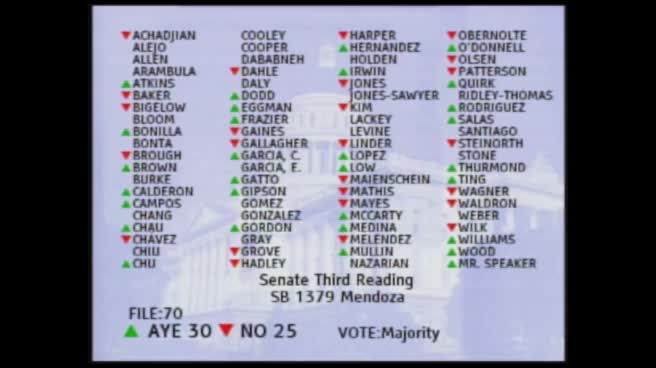 1MIN
Assembly Floor
 7MIN
Assembly Standing Committee on Utilities and Commerce
 8MIN
Senate Floor
 46SEC
Senate Standing Committee on Appropriations
 27MIN
Senate Standing Committee on Energy, Utilities and Communications
Bill Author

Bill Co-Author(s):